PALESTINE

Wed 27 Mar 2024 8:39 pm - Jerusalem Time

Yedioth Ahronoth: The War Council meets to discuss Hamas’ response in the negotiations

Yedioth Ahronoth newspaper said that the Israeli War Council will hold a session this evening, Wednesday, to discuss the response of the Islamic Resistance Movement (Hamas) to the proposed prisoner exchange deal, while Israeli reports indicate that the main dispute is currently focused on the return of displaced Palestinians to the northern Gaza Strip.


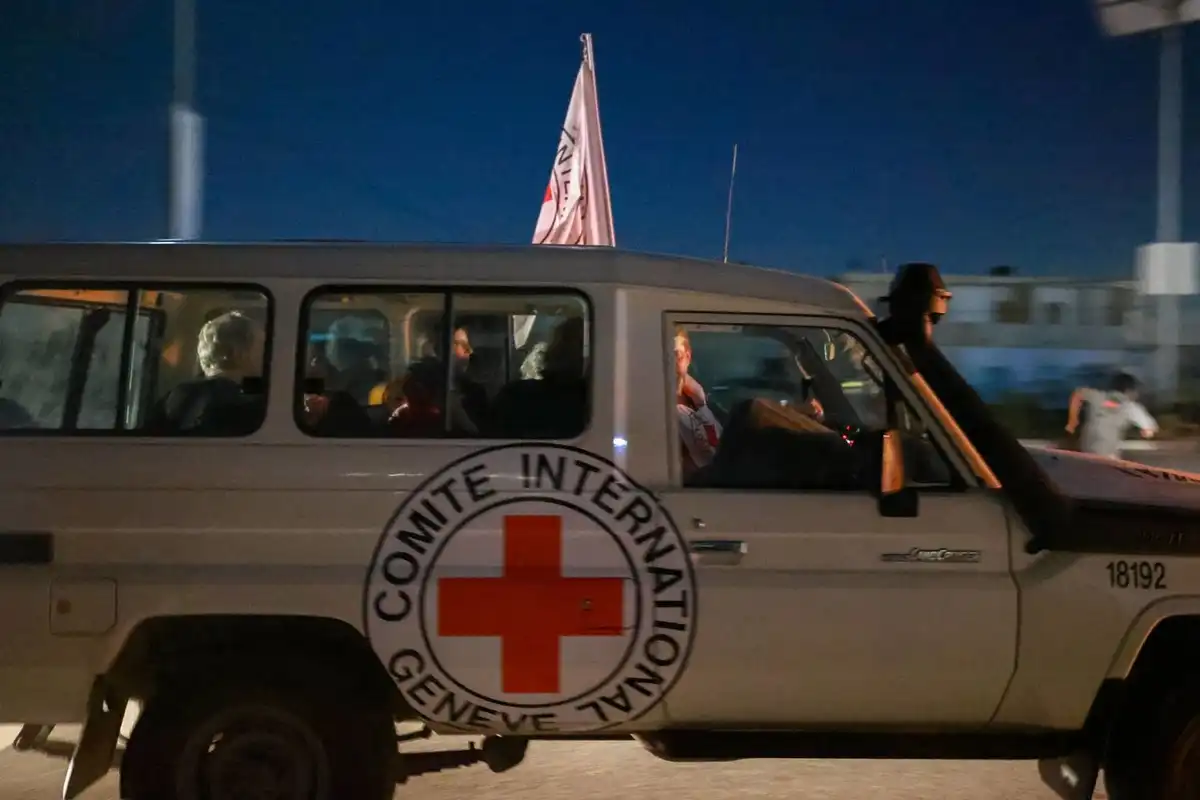
Earlier today, the Israeli Broadcasting Authority said that indirect negotiations between Hamas and Israel are still continuing to reach an agreement to exchange prisoners and ceasefire, despite reports that Tel Aviv has summoned its negotiating delegation from the Qatari capital, Doha.


The Broadcasting Corporation quoted unnamed Israeli sources as saying, “Despite Hamas’s negative response to the proposal related to the prisoner exchange deal, negotiations with the movement are continuing.”


A foreign source told the Commission that the main point of disagreement revolves around the return of the displaced to the northern Gaza Strip, but a settlement can still be reached.


At the same time, an Israeli source said that reaching a compromise on the return of the displaced was possible, but the Israeli delegation was not authorized to resolve the issue, he said.


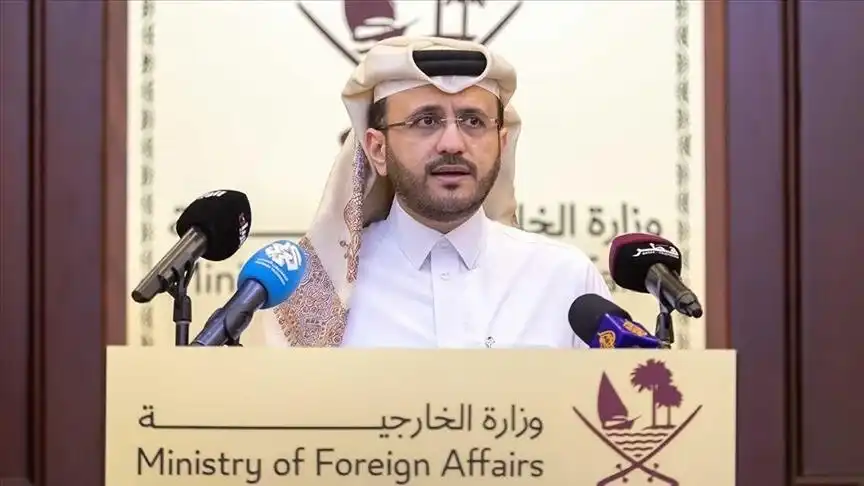
Yesterday, Tuesday, the Qatari Foreign Ministry announced that talks are still ongoing between the parties at the level of technical teams, and clarified that there is no timetable for negotiations.


Indirect negotiations are being conducted between Hamas and Israel through Qatari and Egyptian mediation, with the participation of the United States, in light of the continuation of the Israeli war on Gaza since last October.


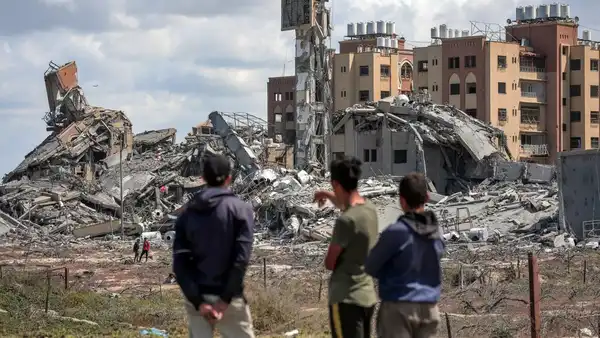
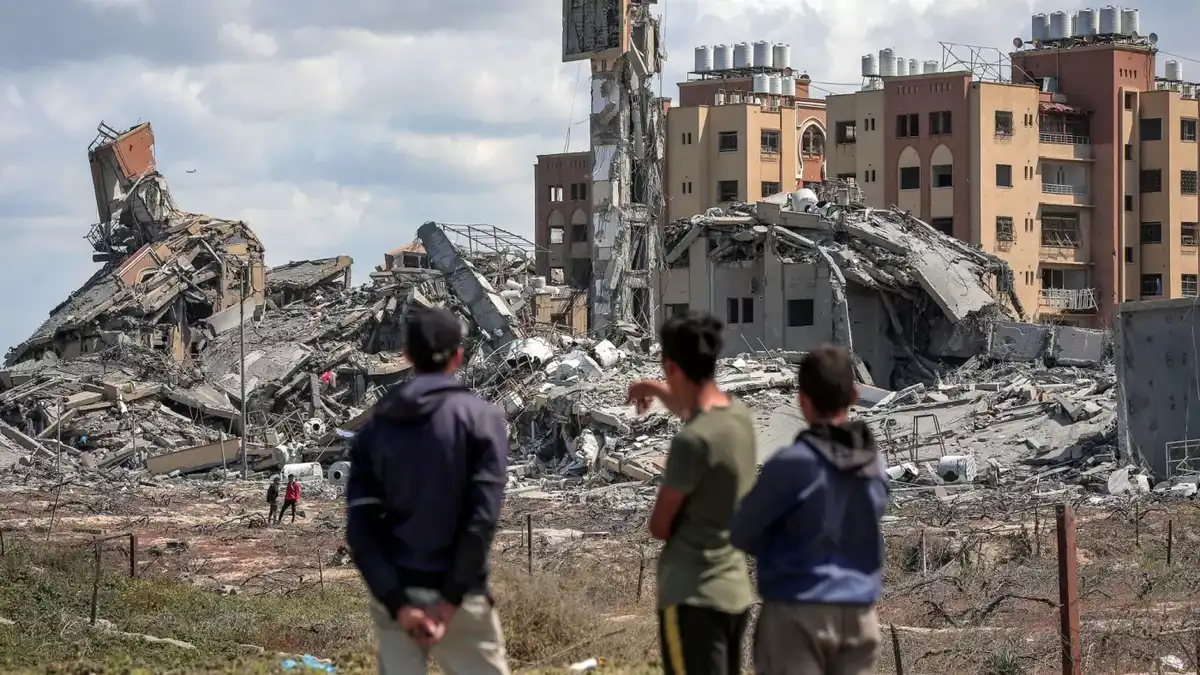
The bombing forced about two million Palestinians to flee their areas in the Gaza Strip, which has been besieged by Israel for 17 years and is inhabited by about 2.2 million people in catastrophic conditions.


Hamas sticks to its position

For his part, the head of the Hamas movement abroad, Khaled Meshaal, confirmed that “the movement’s leadership is waging a negotiating battle no less fierce than the battle of the field, and God willing, we will defeat them in the field and in the negotiating battle.”


Meshaal added - in a speech he gave during an event in Jordan - that the movement insists in the negotiations on “stopping the aggression, withdrawing from Gaza, returning the displaced to their places, especially in northern Gaza, and providing all necessary relief, shelter, reconstruction, and ending the siege.”


He continued, "We will not release their prisoners until we achieve these goals and manage the negotiating battle firmly."


Hamas said that the basic principles underlying its vision of the negotiation file, which it presented to the mediators in Egypt and Qatar, are based on five main points: a ceasefire, an unconditional return of the displaced, the withdrawal of the Israeli occupation army from Gaza, the entry of aid and relief materials, and reconstruction.


A truce was previously held between Hamas and Israel for a week from November 24 to December 1, 2023, during which there was a ceasefire, an exchange of prisoners, and the entry of limited humanitarian aid into Gaza.

PALESTINE

Wed 27 Mar 2024 7:39 pm - Jerusalem Time

A young man died from his wounds as a result of an Israeli bombing of the Jenin camp

A young man was killed this Wednesday evening, as a result of his critical injury, as a result of an Israeli drone bombing on the Jenin camp in the morning.


According to local sources, the young man, Walid Louay Walid Al-Osta (19 years old), from the city of Nablus, died as a result of his critical injury as a result of the Israeli march’s bombing of the camp.


ARAB AND WORLD

Wed 27 Mar 2024 7:16 pm - Jerusalem Time

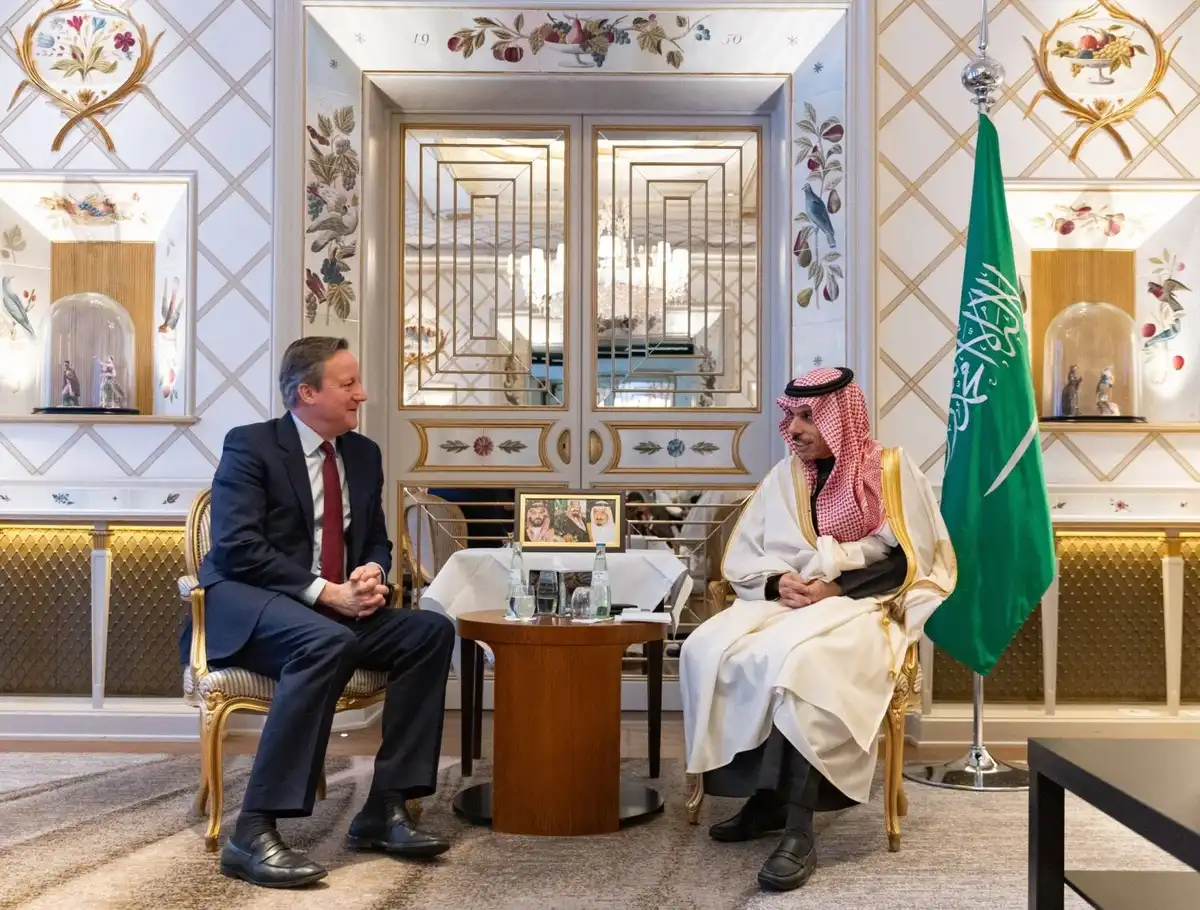
The foreign ministers of Saudi Arabia and Britain discuss developments in Gaza

On Wednesday, Saudi Foreign Minister Faisal bin Farhan discussed with his British counterpart, David Cameron, developments in the Gaza Strip.


This came in a phone call during which the two ministers reviewed bilateral relations between the two countries, and regional and international issues of common interest, according to a statement by the Saudi Foreign Ministry.


The statement stated that the Saudi minister received a phone call from his British counterpart, David Cameron.


He added that during the call, bilateral relations between the two countries and regional and international issues of common interest were discussed, especially developments in the Gaza Strip.


Earlier Wednesday, the Saudi Foreign Minister also discussed with his French counterpart, Stephane Ségornet, developments in Gaza and “the efforts made regarding them.”


On Monday evening, the UN Security Council issued a resolution for an immediate ceasefire in the Gaza Strip during the month of Ramadan, “in a step towards a permanent and sustainable ceasefire.”

PALESTINE

Wed 27 Mar 2024 3:51 pm - Jerusalem Time

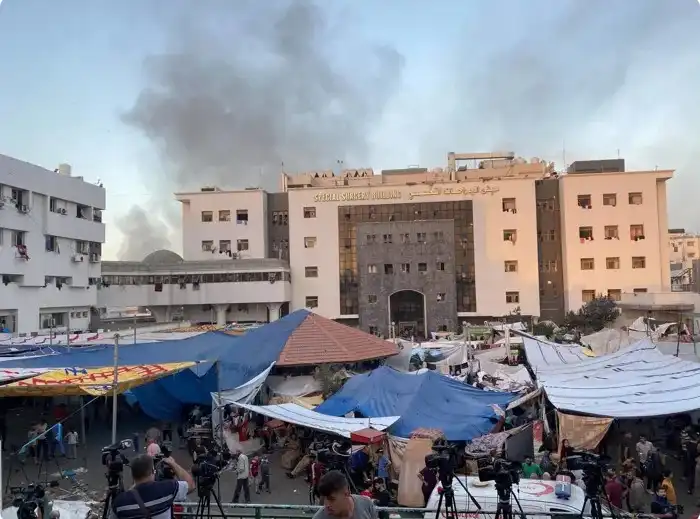
Euro-Med documents the execution of 13Palestinian children by “Israel” in Al-Shifa Hospital

The Euro-Mediterranean Human Rights Monitor said that it documented the execution of 13 Palestinian children by the Israeli army in the Al-Shifa Medical Complex and its surroundings in Gaza City, in flagrant violation of the rules of international humanitarian law.


The Observatory added that these actions constitute “war crimes and crimes against humanity in and of themselves, and come in the context of the murders committed by Israel in implementation of the crime of genocide against the Palestinian people in the Gaza Strip.”


According to the Observatory, the occupation army committed and continues to commit horrific crimes systematically during its military operations for more than a week inside and around Al-Shifa Hospital, including premeditated killings and extrajudicial executions against Palestinian civilians.


The Observatory reported that its field team received identical testimonies and testimonies regarding executions and murders against Palestinian children between the ages of 4 and 16 years, some of them while they were besieged by the Israeli army with their families inside their homes, and others during their attempt to flee along paths that the Israeli army had specified for them in advance, after the they were forced to move from their homes and places of residence.


“Islam Ali Saloha,” a resident of the vicinity of Al-Shifa Hospital, said that Israeli forces killed his son, the child “Ali” (9 years old), and the child “Saeed Muhammad Sheikha” (6 years old) in front of their families and the residents of the area after deliberately targeting them with live bullets.


At dawn on March 18, the Israeli army began a comprehensive military operation in which it transformed the Al-Shifa Medical Complex into a military barracks, and the surrounding area and the streets leading to it into a military zone and a war zone.


The Euro-Mediterranean Monitor urged the United Nations Special Rapporteur on arbitrary or extrajudicial executions to take urgent action to investigate and document the killings committed by Israeli forces in the Al-Shifa Complex and its environs.


The Observatory reminded of the need to ensure the protection of Palestinian children who are at greater risk and who no longer enjoy any type of protection assigned to them under international law.

PALESTINE

Wed 27 Mar 2024 3:48 pm - Jerusalem Time

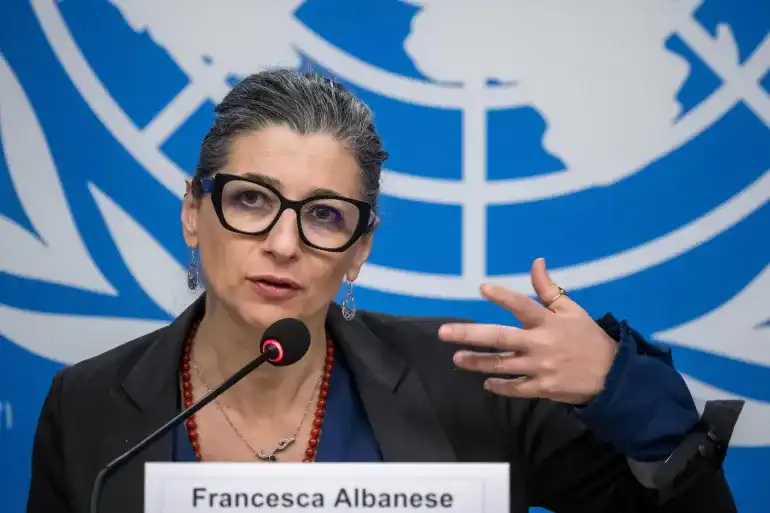
UN Rapporteur: I was threatened since the beginning of preparing my report on the genocide in Gaza

The United Nations Special Rapporteur on human rights in the Palestinian territories, Francesca Albanese, said that she had been subjected to attacks and received numerous threats since she began her mission to prepare a report on Israeli crimes in the Gaza Strip.


Albanese confirmed, during a press conference about her report submitted to the Human Rights Council on the devastating Israeli war on the Gaza Strip, that after 5 months of analyzing the massacres carried out by Israel in Gaza, the reports confirm the presence of elements indicating that Israel is committing the crime of genocide in Gaza. Its elements have been completed.


She said that Israel is carrying out three acts that fall within the framework of genocide, which are killing Palestinians in Gaza, displacing them, and imposing living conditions that lead to partial or complete physical destruction against them.


She stressed that Israel is using banned weapons against the Palestinians in Gaza and is starving them, "and this is a set of war crimes that have never occurred before in the occupied Palestinian territories."


She said that what Israel is doing in Gaza is creating conditions that make life impossible for the Palestinians, and that what Israel is committing reflects its intention to destroy everything, which is classified as a crime of genocide.


She pointed out that Israel said that its goal was to destroy the Islamic Resistance Movement (Hamas), but its actions led to the killing of many Palestinian civilians.


A call to stop Israel's crimes

The UN rapporteur called on the world to confront Israel's brutality and force it to abide by international law, and stressed that Israel has manipulated international humanitarian law to justify the violations it is committing in Gaza.


She also confirmed that the Palestinian people have lived through practices that pave the way for genocide since 1947, and added, "We need more research to determine whether what happened in 1948 was genocide," in reference to the Palestinian Nakba.


Albanese stressed, during a symposium at the United Nations in Geneva - yesterday, Tuesday - on the sidelines of the work of the Human Rights Council, that Israel has been committing many crimes and violations that have been continuing for decades against the Palestinians, including the crime of apartheid.


The UN rapporteur called for all necessary measures to be taken to defend the Palestinians’ right to life and to end crimes against them.


She added, "I find reasonable reasons to believe that the minimum threshold indicating the commission of the crime of genocide against the Palestinians as a group in Gaza has been met."


Killing, harming and subjugating

In her report, the UN rapporteur enumerated three types of acts of genocide: “killing members of the group, causing serious harm to the physical or mental integrity of members of the group, and deliberately subjecting the group to living conditions that would lead to complete or partial physical destruction.”


Hamas said that the statements of the UN rapporteur on genocide are additional confirmation from a senior UN official.


The movement added - in a statement - that this puts the international community and the United Nations before a real test to protect humanity, and to stand up to their responsibilities to prevent acts of genocide that humanity exceeded decades ago.


The movement called on the International Criminal Court "to move beyond the silence and take urgent action to hold the occupation leaders accountable for the genocide and ethnic cleansing they are committing against our Palestinian people in the Gaza Strip in full view of the world."


Israel has been waging a devastating war on the Gaza Strip for more than 5 months, leaving more than 32,000 martyrs and about 75,000 wounded, most of whom are children and women, amid warnings from international organizations of famine, especially in the northern Gaza Strip, as a result of the occupation restricting the entry of aid.


For its part, Israel rejected the findings of the Special Rapporteur.


Agence France-Presse quoted an American official - in response to the report of the UN rapporteur - that the United States has no reasons to believe that Israel committed acts of genocide in Gaza.


The American official said that his country reaffirms its long-term rejection of the mandate given to this special rapporteur who is biased against Israel, as he described it.

PALESTINE

Wed 27 Mar 2024 3:46 pm - Jerusalem Time

Netanyahu: Washington’s failure to use its veto encouraged Hamas to rely on international pressure

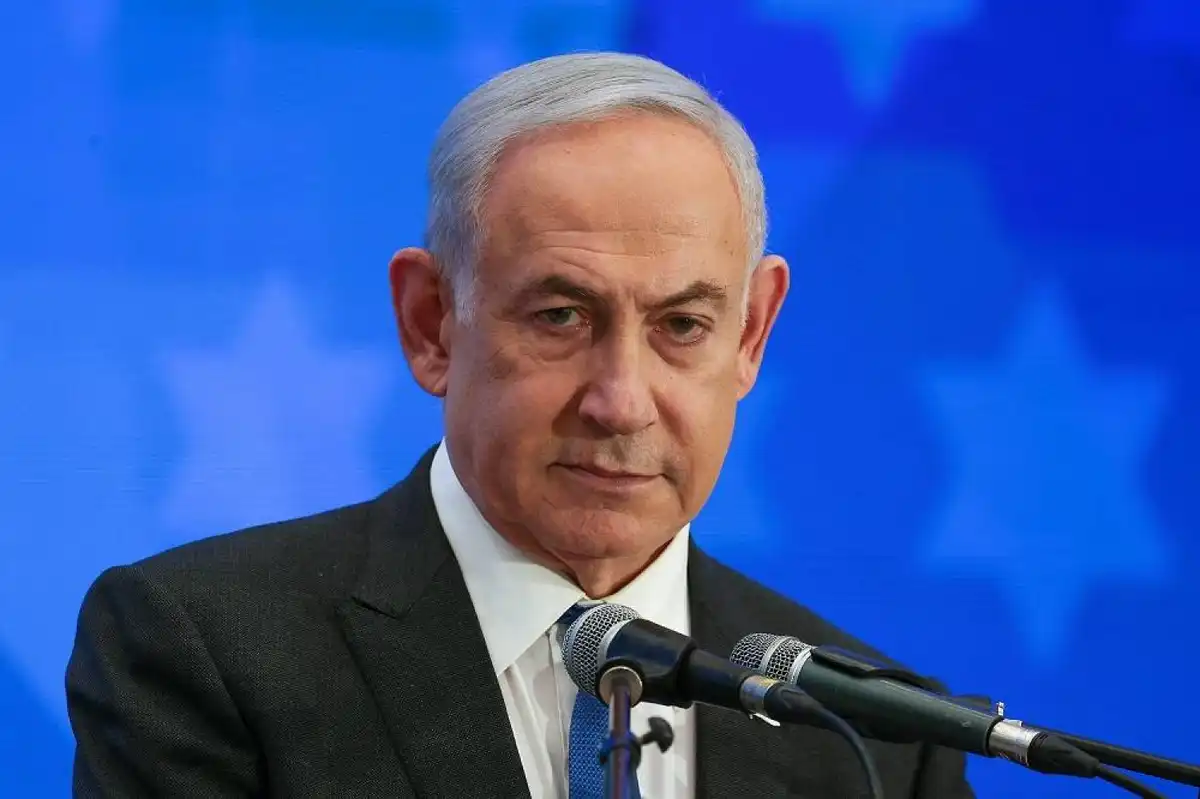
Israeli Prime Minister Benjamin Netanyahu met on Wednesday with US Senator Rick Scott in his office in Jerusalem.


Netanyahu touched on Washington's decision not to use its veto on a resolution calling for an "immediate ceasefire" in Gaza, saying that "this encouraged Hamas to adopt a tougher stance and rely on international pressure that may hinder Israel from freeing its kidnappers and destroying Hamas."


He pointed out, "The decision I took not to let the Israeli delegation travel to Washington was a message to Hamas, so that they do not rely on this pressure. This will not work."

PALESTINE

Wed 27 Mar 2024 2:02 pm - Jerusalem Time

Israel withdraws its negotiators from Qatar and blames the Security Council resolution

Israel withdrew its negotiators from Qatar, blaming the failure to reach a hostage deal with Hamas on a UN Security Council resolution that called for a ceasefire during Ramadan in Gaza.


Hamas officials said on Monday that the Palestinian movement is still seeking to reach a hostage agreement that includes a permanent ceasefire and an Israeli withdrawal from Gaza, a position that Israel has repeatedly rejected.


Israeli Prime Minister Benjamin Netanyahu's office said in a statement, "Hamas' position clearly shows its absolute lack of interest in a negotiated agreement and attests to the damage caused by the UN Security Council resolution."


The statement from Netanyahu’s office added: “Hamas has once again rejected the American settlement proposal and repeated its extreme demands: an immediate halt to the war, the complete withdrawal of the Israeli army from the Gaza Strip, and keeping its administration in place so that it can repeat the October 7 massacre as it promised to do over and over again.” .


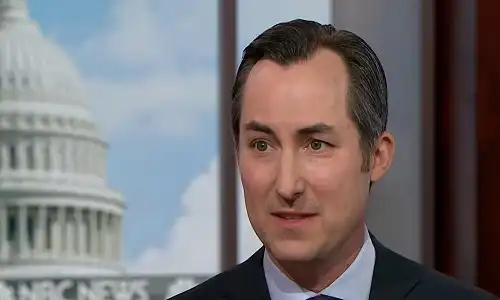
The United States rejected the claim that the Security Council resolution was responsible. State Department spokesman Matt Miller said Netanyahu's position was "inaccurate in almost every respect, and unfair to the hostages and their families." He said that Hamas prepared the statement before the Security Council resolution was issued.


Netanyahu and other Israeli officials are angry with the United States for not blocking the Security Council resolution. The United States abstained from voting, but it had previously used its veto power against three resolutions calling for a ceasefire in Gaza.


The United States downplayed the importance of the resolution, saying it was "non-binding" and would not affect Israeli military operations. The United Nations and other member states have disputed the US claim, saying the resolution is binding and must be followed.


In response to the United States not vetoing the resolution, Netanyahu canceled a delegation to the United States that was supposed to discuss Israeli plans to attack Rafah. Despite the disagreement, there is no indication that the United States will change its policy of unconditional military support for the slaughter and starvation of Palestinians in Gaza.

PALESTINE

Wed 27 Mar 2024 11:37 am - Jerusalem Time

Israeli Broadcasting Corporation: The main dispute with Hamas relates to the return of the displaced.. Details

The Israeli Broadcasting Corporation said, on Wednesday, March 27, 2024, that indirect negotiations are continuing between Israel and the Hamas movement to reach an agreement to exchange prisoners and ceasefire, while the main dispute centers on the return of the displaced to the northern Gaza Strip.


This comes the day after Israeli media reports that the negotiations had reached a dead end, and that Tel Aviv had summoned its negotiating delegation from the Qatari capital, Doha.


Truce negotiations in Gaza are continuing


The Broadcasting Corporation quoted unnamed sources in Israel that “despite Hamas’s negative response to the proposal regarding an exchange deal (for prisoners), negotiations with the movement are continuing,” while a senior Israeli official said that “the United States is continuing to communicate with the Egyptian and Qatari mediators.” 


A major point of contention in the truce negotiations


An informed foreign source, who was not named by the Commission, said, “The main point of disagreement revolves around the return of the displaced to the northern Gaza Strip, but it is still possible to reach a settlement.”

The Israeli bombing forced about two million Palestinians to flee their areas in the Gaza Strip, which has been besieged by Israel for 17 years and is inhabited by about 2.3 million people in catastrophic conditions.


According to an informed Israeli source, “reaching a compromise regarding the return of the displaced was possible, but the (Israeli) delegation was not authorized to resolve the issue.”


Earlier, the Hamas resistance movement held Israeli Prime Minister Benjamin Netanyahu responsible for the failure of the negotiations, and said that it informed the mediators of its adherence to the vision it presented on March 14.


This vision includes 4 main points: a comprehensive ceasefire, the withdrawal of the Israeli army from the Gaza Strip, the return of the displaced, and a real exchange of prisoners.


Tel Aviv holds at least 9,100 Palestinians in its prisons, and estimates that there are about 134 Israeli prisoners in Gaza, while Hamas announced that 70 of them were killed in random Israeli raids.


Since October 7, 2023, Israel has been waging a devastating war on Gaza, leaving tens of thousands of civilian casualties, most of them children and women, and massive destruction and famine that claimed the lives of children and the elderly, according to Palestinian and UN data.


Israel continues this war despite the issuance of a UN Security Council resolution calling for an immediate ceasefire during the month of Ramadan, and despite being tried for the first time before the International Court of Justice on charges of committing “genocide.”


PALESTINE

Wed 27 Mar 2024 11:34 am - Jerusalem Time

Hebrew newspaper: Israel is exposed to sanctions if it ignores the UN Security Council resolution

International law experts said on Tuesday that Israel would be subject to sanctions if it ignored the UN Security Council resolution calling for a ceasefire in the Gaza Strip.


According to their statements to the Hebrew newspaper "Haaretz", Israel's failure to comply with the resolution may encourage countries to impose sanctions on it.


In turn, Dr. Tamar Hostovsky Brands from the Academic College in Kiryat Ono (centre) said: “It was countries, not the Security Council, that imposed the sanctions on Russia after its invasion of Ukraine, including severing economic relations, severing aviation relations, and isolating it from the banking system.” According to the newspaper.


She added, "These are dangerous measures that Israel will find very difficult to accept."


She pointed out that “the resolution taken in the Security Council, the orders issued against Israel by the Court of Justice in The Hague, and the advisory opinion that the Court will issue in The Hague regarding the legal consequences of Israeli actions in the Palestinian territories, all of these matters together create an image of a state that does not respect the law.” International".


As for Professor Eliav Lieblich from Tel Aviv University, he believes that if Israel does not comply with the Security Council resolution, its isolation in the world will increase, according to the same source.


He explained that "non-compliance will push other countries to consider imposing sanctions on Israel, for example: stopping the transfer of weapons to it."


But Dr. Roi Schendorff, former deputy judicial advisor to the occupation government for international affairs, believes that the whole matter on the international arena is a “political issue,” and according to him, “if countries want to, they can move against Israel, as they could have moved even before the decision.” 


Security Council resolution

On Monday evening, the UN Security Council adopted a resolution for an immediate ceasefire in the Gaza Strip during the month of Ramadan, after 14 countries voted in favor of the resolution presented by 10 elected members of the Council, while the United States abstained from voting.


He also called for the "immediate and unconditional release of all hostages," as well as guaranteed access to humanitarian aid, medical and other humanitarian needs.


This comes at a time when the Israeli army has been waging, since October 7, a devastating war on Gaza that has left tens of thousands dead and wounded, most of them children and women, according to Palestinian sources, which necessitated Tel Aviv’s trial before the International Court of Justice on the grounds of “genocide.” 


PALESTINE

Wed 27 Mar 2024 11:29 am - Jerusalem Time

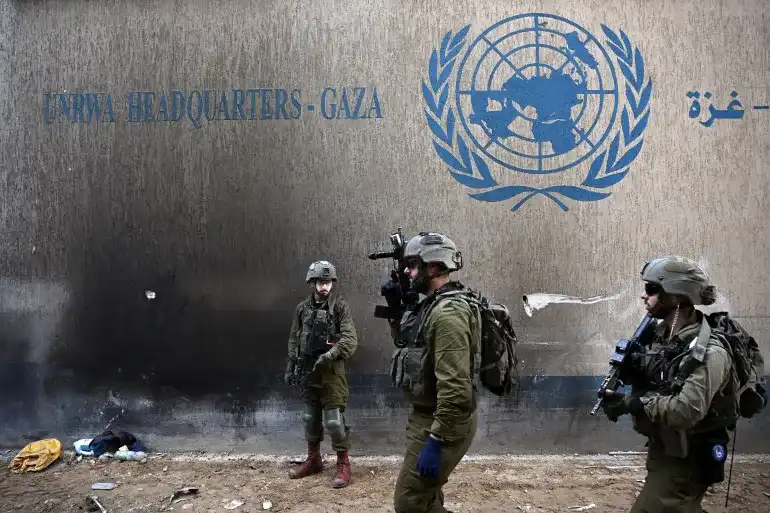
A lawsuit was filed against the British Foreign Office over its suspension of funding for UNRWA

The International Center for Justice for Palestinians (ICGB) announced its intention to file a lawsuit against the British Foreign Office, due to London’s decision to suspend funding for the United Nations Relief and Works Agency for Palestine Refugees (UNRWA).


The center - which is based in Britain - explained in a statement that the complaint will be submitted by the law firm Bindmans LLP on behalf of a British citizen of Palestinian origin seeking to protect his family registered with UNRWA.


The statement indicated that the International Center for Justice would provide evidence and financial support for the lawsuit, and that a letter had been submitted to the British Foreign Office demanding the possibility of raising the decision to suspend aid to UNRWA to court.


He added that the plaintiff asked the government to withdraw the decision and resume funding for UNRWA, and to give it until the second of next April to make that decision, otherwise a “judicial review” will begin.


Decision 'without evidence'

The statement explained that the British government - which suspended its funding to the UN agency on January 27 - took this decision without taking into account evidence, responsibilities and international obligations.


He also pointed out that the family of the British citizen of Palestinian origin resides in the Jabalia refugee camp in the northern Gaza Strip, and that they depend entirely on UNRWA aid, and now face great challenges in securing their basic needs.


The statement stated that the complaint accuses Israel of potentially being “complicit” in openly violating the articles of the Genocide Convention and the Geneva Convention.


Since January 26, 18 countries and the European Union have suspended their funding for UNRWA, against the backdrop of Israeli accusations against agency employees of participating in the attack on settlements adjacent to the Gaza Strip on October 7, before some countries retracted this decision. At the same time, the agency announced that it was investigating these allegations.


UNRWA was established by a decision of the United Nations General Assembly in 1949, and was mandated to provide assistance and protection to refugees in its five areas of operations - Jordan, Syria, Lebanon, the West Bank, and the Gaza Strip - until a just solution to their issue is reached.


PALESTINE

Wed 27 Mar 2024 8:54 am - Jerusalem Time

On the 172nd day... dead and wounded in separate Israeli raids on the Gaza Strip

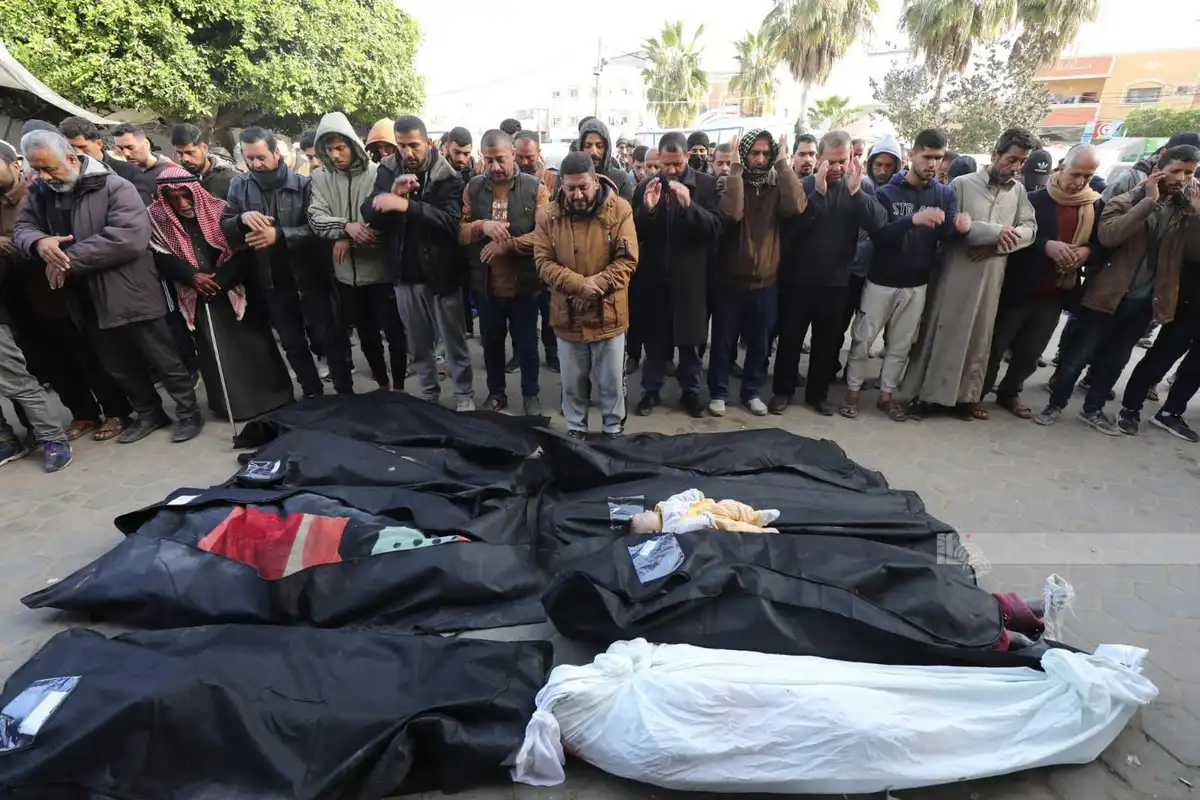
A child was killed and others were injured, Tuesday evening, when the Israeli warplanes bombed a house east of Rafah, south of the Gaza Strip.


Local sources reported that the child Eileen Al-Athamna was killed as a result of the Israeli bombing of her family’s home in the Al-Geneina neighborhood, east of Rafah.


The number of killed in the Israeli raid on a family rest house housing displaced people north of Rafah rose to 19, including 9 children.

Two citizens were killed and others were injured, as a result of the Israeli targeting a group of citizens while they were recovering bodies from under the rubble of a house in Nuseirat in the central Gaza Strip.


The Israeli artillery bombed the city of hope, west of the Nuseirat camp, and the Israeli aircraft also launched raids on the camp.


The Israeli aircraft launched raids in the vicinity of Al-Shifa Medical Complex, west of Gaza City, and on the town of Beit Hanoun and Jabalia Camp, north of the Gaza Strip.


The bodies of 12 dead arrived at the European Gaza Hospital in Khan Yunis, south of the Gaza Strip, after they were recovered following the bombing of the Israeli aircraft in the Al-Mawasi area.


The toll of the ongoing Israeli aggression on the Gaza Strip since the seventh of last October has risen to 32,414 killed and 74,787 injuries, and a number of victims are still under the rubble and on the roads, and ambulance and rescue crews are unable to reach them.

PALESTINE

Wed 27 Mar 2024 8:01 am - Jerusalem Time

Updated:: 3 Palestinians killed and 7 injured as a result of Israeli incursion in Jenin city

At dawn today, Wednesday, 3 young men were killed and 7 others were injured as a result of the Israeli incursion in the city of Jenin.


According to the Ministry of Health, the martyrs are: Ayman Youssef Azouqa (19 years old), Muhammad Nasser Al-Sabti (19 years old), and Hamza Hossam Arawi.


Local sources reported that confrontations and clashes, described as "violent", took place in the Al-Marah neighborhood next to Al-Madina Supermarket in Jenin. Israeli soldiers seized surveillance cameras in the neighborhood and carried out acts of violence and orgy.


ARAB AND WORLD

Tue 26 Mar 2024 11:02 pm - Jerusalem Time

Ben Gvir: Biden prefers his narrow interests to Israel’s victory

Extremist Israeli National Security Minister Itamar Ben Gvir attacked US President Joe Biden, saying that he "prefers his narrow political interests to Israel's victory."


Ben Gvir said in an interview with Channel 13: “The United States is our friend, but Biden prefers his narrow political interests to the victory of the State of Israel, and Trump will be better for us.”


He stressed that Israeli Prime Minister Benjamin Netanyahu's cancellation of sending the Tel Aviv delegation to Washington in response to the American Security Council resolution was a "correct step" and we must continue in this direction.


ARAB AND WORLD

Tue 26 Mar 2024 10:11 pm - Jerusalem Time

“Humanitarian disaster”.. Austin to Gallant: Protecting the Palestinians is a moral necessity

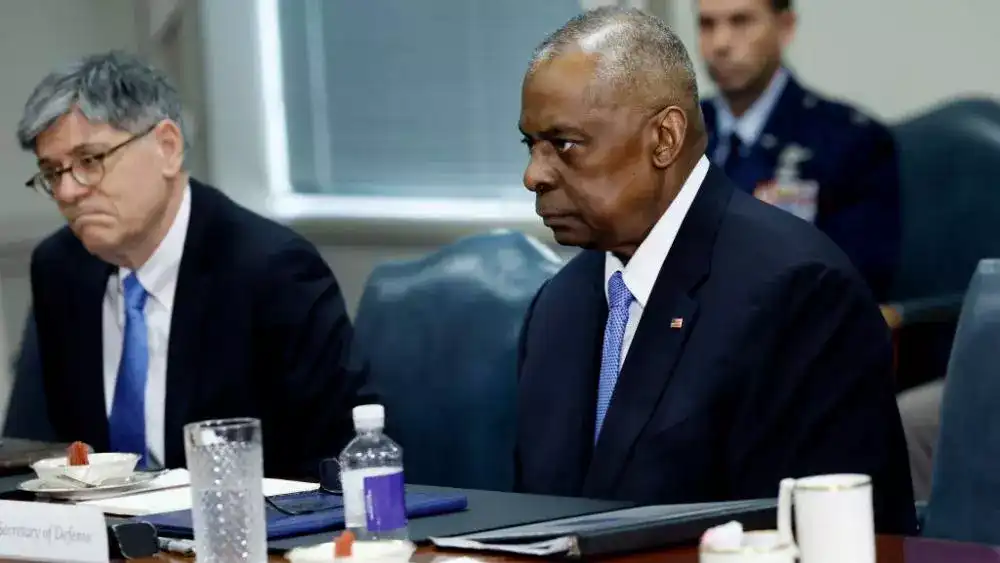
US Secretary of Defense Lloyd Austin said on Tuesday that protecting Palestinian civilians from harm is a moral and strategic necessity, describing the situation in the Gaza Strip, which is subject to Israeli aggression, as a "humanitarian catastrophe."


Austin added at the beginning of his meeting with Israeli Security Minister Yoav Gallant at the Pentagon: “In Gaza today, the number of civilian casualties is very high and the volume of humanitarian aid is very low.”


He added, "Gaza is suffering a humanitarian catastrophe."


Tension in US-Israeli relations

The meeting comes as relations between US President Joe Biden and Israeli Prime Minister Benjamin Netanyahu declined to their lowest level during the Israeli aggression on Gaza, which entered its 172nd day, and led to the death of 32,414 people and the injury of 74,787 others since the seventh of last October.


The aggression also caused catastrophic humanitarian conditions for 2.3 million Palestinians, amid food and medicine shortages and repeated waves of displacement as a result of Israeli bombing.


Austin's meeting with Gallant came after Netanyahu on Monday canceled a separate visit to Washington for two of his senior aides, who were scheduled to listen to American ideas regarding operational alternatives.


"Genocide" in Gaza

Netanyahu's relations with Biden collapsed due to Washington's decision not to use its veto power against a UN Security Council resolution seeking an immediate ceasefire in Gaza after more than five months of aggression, and in light of the United States abstaining from voting after it obstructed previous attempts to issue a resolution by resorting to Veto power.


Yesterday, Monday, residents of Rafah welcomed the aforementioned Security Council resolution, but they seemed skeptical about the ability of the international community to oblige Israel to implement it.


On the other hand, international calls are being made to prevent the collapse of matters in Gaza as a result of the Israeli aggression, as Francesca Albanese, the United Nations Special Rapporteur in the occupied Palestinian territories, confirmed today, Tuesday, that the Israeli military campaign in Gaza amounts to genocide, and called on countries to impose sanctions and an arms embargo on Immediately.

ARAB AND WORLD

Tue 26 Mar 2024 7:27 pm - Jerusalem Time

Netanyahu Coalition Under Strain After Standoff with US Over Gaza Vote

Israeli Prime Minister Benjamin Netanyahu faced growing strains on his divided coalition on Tuesday after an angry standoff with Washington worsened disagreements over proposals to draft ultra-Orthodox Jews into the military.

Israeli media reported that a cabinet meeting to discuss the planned changes to the conscription law had been called off, with only days left before the government has to present proposals to the Supreme Court. Asked about the reports, a Netanyahu aide said a cabinet session had yet to be scheduled.

The hold-up came a day after Netanyahu's fraught relations with US President Joe Biden broke down over Washington's decision not to veto a UN Security Council resolution seeking an immediate ceasefire in Gaza.

Amid growing international pressure for a halt to the fighting and a stop to Israeli plans to launch a ground assault on the southern Gaza city of Rafah, Netanyahu cancelled a scheduled visit to Washington by two of his most senior aides who were due to hear US ideas about operational alternatives.

The open show of defiance towards Israel's strongest ally was welcomed by his religious-nationalist coalition partners but implicitly criticized by centrist former Defense Minister Benny Gantz, who joined the war cabinet last year and who said the delegation should go to Washington.

Despite plunging approval ratings for Netanyahu himself, surveys indicate the Israeli public largely supports the government's determination to dismantle Hamas as a military force in Gaza, giving him a motivation for digging in his heels against Washington. However, the divisions underscored the growing pressure on the government internationally.

The conservative Israel Hayom newspaper, normally supportive of Netanyahu, backed the decision not to send the delegation but said public support from Biden was what was needed more than anything by Israel at a time when "the legitimacy of its actions is disintegrating at frightening speed".

Netanyahu's position remains dependent on holding together his coalition with hard-right religious nationalist parties that are resolutely opposed to any let-up in the war or any concession to international demands for a broad-based political settlement with the Palestinians.

But the conscription law, which could potentially remove exemptions keeping ultra-Orthodox Jews from serving in the military, is shaping up as a significant obstacle, highlighting a longstanding divide between secular and religious Israelis.

The proposals have sharpened divisions between allies of Gallant, who has been pushing for a widening of conscription laws, and the ultra-Orthodox parties in the coalition who want the exemptions to remain.


OPINIONS

Tue 26 Mar 2024 7:22 pm - Jerusalem Time

The One Idea That Could Save American Democracy

Al Sharq Al Awsat- “Al-Quds” dot com

Al Sharq Al Awsat- “Al-Quds” dot com

Opinion Writer

By Astra Taylor and Leah Hunt-Hendrix

These days, we often hear that democracy is on the ballot. And there’s a truth to that: Winning elections is critical, especially as liberal and progressive forces try to fend off radical right-wing movements. But the democratic crisis that our society faces will not be solved by voting alone.

For years, solidarity’s strongest associations have been with the left and the labor movement — a term invoked at protests and on picket lines. But its roots are much deeper, and its potential implications far more profound, than we typically assume. Though we rarely speak about it as such, solidarity is a concept as fundamental to democracy as its better-known cousins: equality, freedom and justice. Solidarity is simultaneously a bond that holds society together and a force that propels it forward. After all, when people feel connected, they are more willing to work together, to share resources and to have one another’s backs. Solidarity weaves us into a larger and more resilient “we” through the precious and powerful sense that even though we are different, our lives and our fates are connected.

We have both spent years working as organizers and activists. If our experience has taught us anything, it is that a sense of connection and mutualism is rarely spontaneous. It must be nurtured and sustained. Without robust and effective organizations and institutions to cultivate and maintain solidarity, it weakens and democracy falters. We become more atomized and isolated, suspicious and susceptible to misinformation, more disengaged and cynical, and easily pitted against one another.

Democracy’s opponents know this. That’s why they invest huge amounts of energy and resources to sabotage transformative, democratic solidarity and to nurture exclusionary and reactionary forms of group identity. Enraged at a decade of social movements and the long-overdue revival of organized labor, right-wing strategists and their corporate backers have redoubled their efforts to divide and conquer the American public, inflaming group resentments in order to restore traditional social hierarchies and ensure that plutocrats maintain their hold on wealth and power. In white papers, stump speeches and podcasts, conservative ideologues have laid out their vision for capturing the state and using it as a tool to remake our country in their image.

If we do not prioritize solidarity, this dangerous and anti-democratic project will succeed. Far more than just a slogan or hashtag, solidarity can orient us toward a future worth fighting for, providing the basis of a credible and galvanizing plan for democratic renewal. Instead of the 20th-century ideal of a welfare state, we should try to imagine a solidarity state.

We urgently need a countervision of what government can and should be, and how public resources and infrastructure can be deployed to foster social connection and repair the social fabric so that democracy can have a chance not just to limp along, but to flourish. Solidarity, here, is both a goal worth reaching toward and the method of building the power to achieve it. It is both means and ends, the forging of social bonds so that we can become strong enough to shift policy together.

Historically, the question of solidarity has been raised during volatile junctures like the one we are living through. Contemporary conceptions of solidarity first took form after the democratic revolutions of the 18th century and over the course of the Industrial Revolution. As kings were deposed and the church’s role as a moral authority waned, philosophers and citizens wondered how society could cohere without a monarch or god. What could bind people in a secular, pluralistic age?

The 19th-century thinkers who began seriously contemplating and writing about the idea of solidarity often used the image of the human body, where different parts work in tandem. Most famously, the French sociologist Émile Durkheim put solidarity at the center of his inquiry, arguing that as society increased in complexity, social bonds between people would strengthen, each person playing a specialized role while connected to a larger whole. Solidarity and social cohesion, he argued, would be the natural result of increasing social and economic interdependence. But as Durkheim himself would eventually recognize, the industrial economy that he initially imagined would generate solidarity would actually serve to weaken its fragile ties, fostering what he called anomie, the corrosive hopelessness that accompanied growing inequality.

In the United States, solidarity never achieved the same intellectual cachet as in Europe. Since this nation’s founding, the concept has generally been neglected, and the practice actively suppressed and even criminalized. Attempts to forge cross-racial solidarity have met with violent suppression time and again, and labor organizing, effectively outlawed until the New Deal era, still occupies hostile legal ground. Decades of market-friendly policies, promoted by Republicans and Democrats alike, have undermined solidarity in ways both subtle and overt, from encouraging us to see ourselves as individual consumers rather than citizens to fostering individualism and competition over collectivity and cooperation.

As our profit-driven economy has made us more insecure and atomized — and more susceptible to authoritarian appeals — the far right has seized its opportunity. A furious backlash now rises to cut down the shoots of solidarity that sprung up as a result of recent movements pushing for economic, racial, environmental and gender justice. In response, programs that encourage diversity and inclusion are being targeted by billionaire investors, while small acts of solidarity — like helping someone get an abortion or bailing protesters out of jail — have been criminalized.

Awaiting the return of Mr. Trump, the Heritage Foundation has mapped out a plan to remake government and society, using the full power of the state to roll back what it calls “the Great Awokening” and restore a Judeo-Christian, capitalist “culture of life” and “blessedness.” “Woke” has been turned into a pejorative so that the word can be wielded to tarnish and break the solidarity that people have only just begun to experience.

Our vision of a solidarity state offers a pointed rejoinder to this project. Social democrats and socialists have been right to emphasize the need for redistribution and robust public investment in goods and services. We must restructure our economy so that it works for the many and not the few. But unlike conservatives — think, for example, of Margaret Thatcher, the prime minister of Britain who in 1981 said, “Economics are the method; the object is to change the heart and soul” — liberals and leftists have tended to downplay the role of policy in shaping public sensibilities. This is a mistake.

The New York Times

PALESTINE

Tue 26 Mar 2024 7:08 pm - Jerusalem Time

New video contradicts Israeli medic's account of 7 October sexual assault, report says

Video seen by New York Times undermines account of unnamed military paramedic whose testimony was key part of its own report alleging sexual assault in Kibbutz Be'eri

The New York Times has cast doubt on its own reporting of an alleged episode of sexual assault during the 7 October Hamas-led attacks by admitting that new video footage appears to contradict the account of an Israeli paramedic quoted by the newspaper.

Footage taken from an Israeli soldier who was in Kibbutz Be'eri, where the alleged assault was supposed to have taken place, shows the bodies of three female victims, fully clothed and with no apparent signs of sexual violence, according to the US paper.

The bodies are reportedly shown at a home where many of Be'eri's residents had believed the assaults occurred. 

On 28 December, the New York Times published an article headlined, "'Screams Without Words': How Hamas Weaponized Sexual Violence on Oct. 7," in which an unnamed paramedic, part of an Israeli commando unit, said that he had discovered the bodies of two partially clothed teenage girls who had been sexually assaulted.

The Associated Press, CNN and The Washington Post were among several media outlets to publish similar accounts sourced to an anonymous military paramedic.


Earlier this month, Michal Paikin, a spokesperson for the Kibbutz Be'eri, denied that two of the girls, who were sisters, had been sexually assaulted.

"You're talking about the Sharabi girls?" he told The Intercept. "No, they… were shot and were not subjected to sexual abuse."

Gillian Brisley, the girls' grandmother, also denied the allegations. "They were just shot, nothing else had been done to them," she told Israel's Channel 12. 

Responding to the new video footage, residents of the kibbutz told the New York Times that there was only one home in Be'eri in which two teenage girls had been killed, and that because of this they had concluded that the girls had not been sexually assaulted. 

"This story is false," said Nili Bar Sinai, a member of the kibbutz group that investigated claims of sexual assault at the house, said. 

The unnamed paramedic, whose testimony formed a core part of the 28 December New York Times story, declined to tell the US paper whether he still stood by his account. 

Later, an Israeli military spokesman said that the medic did stand by his testimony, but that he might have misremembered the place where he saw the teenage girls.

Anat Schwartz, one of the report's authors, is being investigated by the paper after it emerged that she had liked a social media post calling for Gaza to be turned into a "slaughterhouse".

Schwartz, who worked on the story with her 24-year-old nephew Adam Sella and veteran New York Times reporter Jeffrey Gettleman, also reportedly liked social media posts calling on Israel to execute Palestinians if hostages in Gaza were not released, and said that westerners had to be "scared" into believing Hamas was like the Islamic State group. 

OPINIONS

Tue 26 Mar 2024 7:03 pm - Jerusalem Time

War on Gaza: Israel's lethal charade hides its real goals in plain sight

Middle East Eye

Middle East Eye

Opinion Writer

By Ammiel Alcalay

 Forget Israel’s stated goals about destroying Hamas. Its real, undeclared goal has always been to make Gaza uninhabitable and destroy as many traces of Palestinian life as possible

Afriend in Gaza recently wrote: "The undeclared goals of the war: kill as many people as possible, destroy as many homes and buildings as possible, shrink the surface of the Strip and divide it. Control the gas resources. Prevent the establishment of a Palestinian state; Hamas, hostages are marginal issues."

The accuracy of these "undeclared goals" gets clearer by the minute, as the charade of official blather continues, despite the latest UN resolution demanding a ceasefire in Gaza.

After the grotesque ice-cream cone declaration by US President Joe Biden, mumbling about being assured of a "ceasefire" in Gaza by Ramadan, and that “my national security adviser tells me… we’re close… My hope is by next Monday we’ll have a ceasefire", that Monday and many more came and went, but the mumbo-jumbo continued. 

And the platitudes continued, too: White House spokesperson John Kirby droned on about "Israel having the right to defend itself", that the "US is doing more than anyone to bring in humanitarian aid", and, of course, "it all started 7 October". 

If anyone could possibly be more smug and odious, the efforts of State Department spokesperson Matthew Miller are noteworthy, with teary-eyed Secretary of State Antony Blinken nodding off just behind, method-acting his way through a role riddled with the angst of "moral consciousness" on full public display. 


As if all this weren’t nauseating enough, top virtue signaller Vice President Kamala Harris struggled to put a few coherent sentences together as the alarm clock on the 2024 campaign apparently woke her out of deep slumber.

The docile press corps raised its voice an octave or two but no one asked precise questions, such as “Why are the Israelis both blocking aid and shooting people trying to reach a bag of flour?”, or “Why isn’t the US telling their ally to open land crossings?”

But they all back off obediently, so they’ll be called on again at the next exercise in the charade.

'Astonishing asymmetry'

But as it continues, others have taken the stage. Last month, US Air Force serviceman Aaron Bushnell set himself on fire outside the Israeli embassy in Washington DC, shouting “Free Palestine”. He died later that evening.

Other veterans publicly burned their uniforms in protest of the US role in Gaza. Protesters continue to shut down public speakers and politicians. 

People all over the world are aware, outraged, and active: an Irish artist in Dublin painting murals about Gaza finds herself in touch with the mother of a child killed by the Israelis; millions demonstrate weekly in Yemen. 

Holding a “ceasefire now” sign in Washington, DC, recently retired 17-year US Army veteran Josephine Guilbeau, speaking over an Israeli drone video, said: “We have technology that we can see exactly who is in these locations… they’re targeting and bombing homes knowing who and how many children were actually inside… this is not self-defence. The civilian casualties are catastrophic… The elite that sit in Capitol Hill… lie over and over and over… one of the biggest awakenings… I’ve had… is just how corrupt our government is and that anyone that’s in the military is simply just one chess piece that they use at their leisure for their own internal gain to protect their own internal assets and money.”

With widgets for the US arms industry manufactured in practically every congressional district in the country, the revolving door between lobbyists and government officials just keeps on turning, and the bloated “defence budget” keeps growing. 

And as for what began this deadly charade, we need to look as far back as the 1917 Balfour Declaration. The 67-word text is a blueprint for the political and juridical state of exception Palestinians still find themselves in, and which imperial powers, international conferences, Arab puppet regimes, and various other players on the stage still find themselves dancing around or bombing to the tune of. 

As Lebanese economist Georges Corm wrote, it is, “a text notable for its esoteric racism in which the whole Palestinian drama has been inscribed… there is not one word… about the political rights of… the Palestinian people, whom they refuse to name, just as any possibility of their collective existence is eliminated by depriving them of any and all political rights.” 

Noting its “astonishing asymmetry”, he called it: “A futurist text… the declaration is inscribed in the Arab memory as a monument to perversion.”

Extraordinarily cynical move

All the major issues this “futurist” text mobilised are fully laid out: asymmetry, political rights and demography - but, also, the tip of the imperial spear.

The “outpost of civilisation against barbarism”, as David Ben-Gurion put it, or, as then-Senator Biden forcefully declaimed in 1986: “It’s about time we stop… apologising for our support for Israel… It is the best $3bn investment we make. Were there not an Israel, the United States of America would have to invent an Israel to protect her interests in the region.” 

It seems not at all incongruous for Biden to now be the one overseeing the present genocide. Even as a thought experiment, it is well worth contemplating how the liberal establishment might have reacted to the situation in Gaza had it taken place under a Donald Trump presidency.

It is well worth contemplating how the liberal establishment might have reacted to the situation in Gaza had it taken place under a Donald Trump presidency

One can only imagine media pundits, politicians, Hollywood and academia, all ranting in unison about white rage, the arrival of fascism, the end of democracy, and all the rest of it.

As for asymmetry, it is the air we breathe, the fuel energising the propaganda machine producing the relentless drumbeat of cognitive dissonance. The same airspace Gazans look up to in terror with nothing to shield them from the constant Israeli surveillance drones and aerial bombardment is now a source of outdated non-halal meals parachuted in by the US, who also deliver the weapons. 

In an extraordinarily cynical move, the US is adding a new port to the mix, using the rubble of destroyed Palestinian homes and institutions.

Maybe parts of hospitals or universities will find themselves submerged with the remains of decomposed bodies never recovered from under the rubble. Whether this becomes a military base or an exit port for mass expulsion is yet to be seen but, as the American phrase has it, “you can’t make this stuff up”. 

Law of ever-greater destruction

As all this genocidal, geopolitical and mental shrapnel resounds through what is left of our rational faculties - along with Israeli snipers and artillery aiming at Palestinians desperately seeking food - the global populace is subjected to things that make absolutely no sense.

US spokespersons claim there can be no place for Hamas in the political process referring to declarations long superseded, while the US tramples on treaties it is still a signatory to. 

Throughout, Israel operates by the law of ever-greater destruction as a way of both sweeping earlier destruction under the carpet and creating the illusion that there are “two sides” and not one overpowering force hell-bent on the suffocation of all forms of resistance, autonomy and independence.

As we see pictures of children starved to death, who remembers fake news of a rocket, falsely attributed to the Islamic Jihad, that killed dozens of people at al-Ahli Arab hospital?

Despite its enormous might, Israel has failed to meet the minimum of its stated objectives. It has not repatriated its hostages, and Hamas forces continue to resist

As widespread famine and disease masterminded by Israel kill more and more people, who remembers the controlled demolition of universities and the targeted assassination of academics and journalists? If Palestinians in Gaza are forced over the border en masse, who will remember Deir Yassin and the Nakba?

Despite its enormous might, Israel has failed to meet the minimum of its stated objectives. It has not repatriated its hostages, and Hamas forces continue to resist. Amid the chaos of airdrops and the "flour massacre", Gaza police struggled to regain control, distributing leaflets barring people from the deadly roundabouts.

On 17 March, met by cheering crowds, over a dozen aid trucks - the first food convoys to reach the north of Gaza without incident in four months - arrived to orderly lines of people assembled at the Unrwa warehouse in Jabalia. 

But the latest attack on al-Shifa hospital, and the targeted assassination of Faiq Mabhouh, operations director of the Gaza police, on the same day, tells you everything you need to know about Israel’s aims, as reported in an essential Mondoweiss piece. Other police officers, with their families, were assassinated, along with dozens of aid workers. Any order not dictated and imposed by Israel must be obliterated.

Unprecedented cruelty

The obvious conclusion can only be that Israel’s stated goals are not its real goals, as my friend in Gaza wrote. Israel’s real goals are what is now underway: making Gaza uninhabitable, and destroying as many traces of Palestinian life as possible, both present and past.  

But in order to accomplish that, the occupation machine must introduce new forms of collaboration, something that Hamas, often with severity, put an end to in Gaza. This is at the root of Israel’s policy of unprecedented cruelty as they continue the onslaught.

And Israel does this most effectively by perpetrating its biggest lie, by enacting asymmetry in every single attack, whether a bombing campaign, a house demolition, a land grab or a mass round-up, making every single act of resistance a potential capital crime. 

A nuclear power that has never signed the non-proliferation treaty or allowed its facilities in Dimona to be inspected - with the most sophisticated weaponry and technology in the world available at its disposal, with an air force, navy, and a total of some 635,000 troops - continues to promote the charade that a coalition of 30,000 guerilla fighters with no tanks, no anti-aircraft artillery, no air force and no navy, is right on the verge of destroying the "Jewish state".

And all while at the time criminalising and utterly obliterating any and all forms of civilian resistance to the decades-long state of siege they have been under.

If that makes any sense at all, keep reading - I’ve got more than a few bridges to sell you.

OPINIONS

Tue 26 Mar 2024 6:57 pm - Jerusalem Time

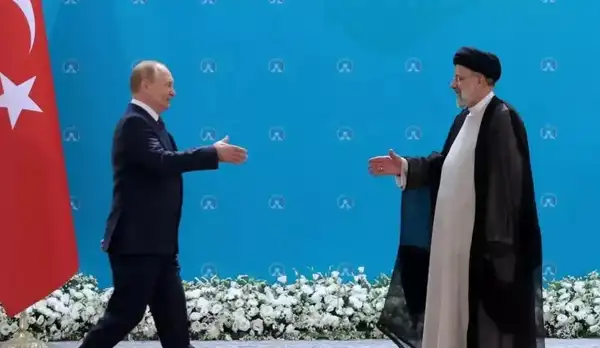
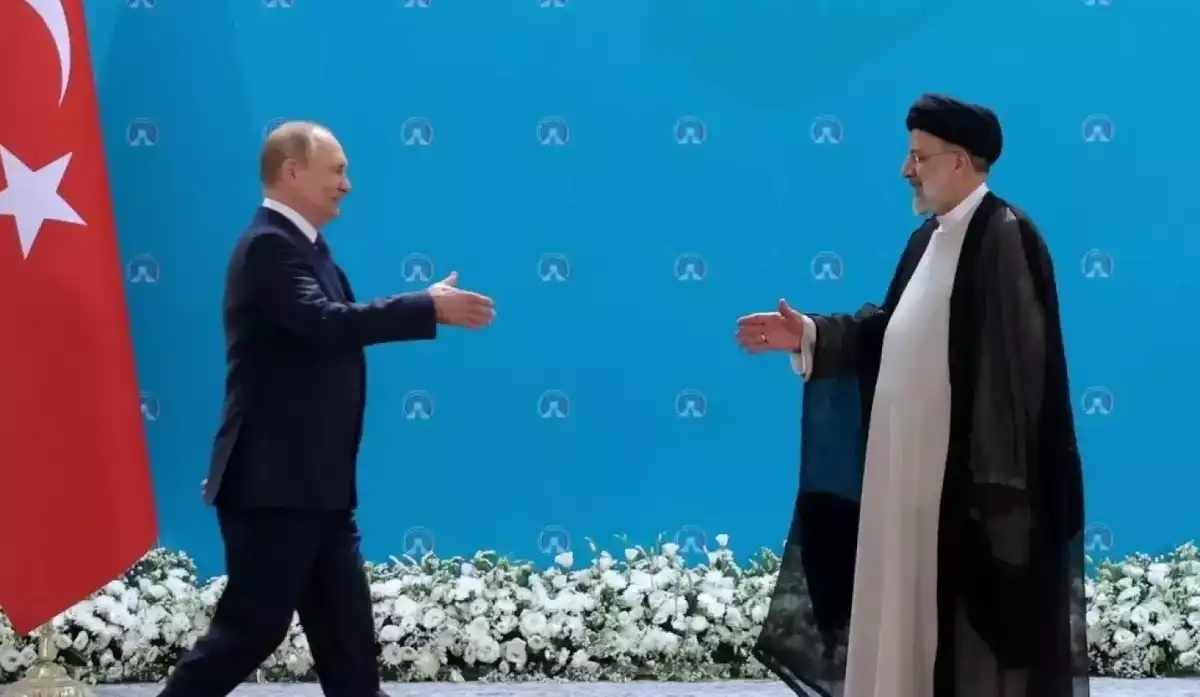
War on Gaza: There is no China-Russia-Iran axis

Middle East Eye

Middle East Eye

Opinion Writer

By Giorgio Cafiero


Beijing and Moscow have not helped the Palestinian cause in concrete ways, as they seek to preserve ties with Israel


The war on Gaza has put the issue of Palestine front and centre in global affairs. No major power can avoid addressing this question. Laid to rest is the idea that the Palestinian struggle can be buried under the Abraham Accords. 

The way in which China and Russia have navigated the fallout from Gaza has been informative of their foreign policies vis-a-vis the Middle East. Ultimately, Israel’s war on Gaza, which the International Court of Justice (ICJ) has ruled to be a plausible case of genocide, has been a gift to Beijing and Moscow, given the ease with which they can highlight the West’s hypocrisy on human rights.

Hussein Ibish, a senior resident scholar at the Arab Gulf States Institute in Washington, said the Palestinian issue is “useful” to China and Russia because it helps build their respective cases against the international and regional orders that they challenge.

It also makes it easier for both powers to accuse the West of double standards “by asserting a supposedly rules-based order which nonetheless allows exceptions for specially favoured client states like Israel, and against particularly disfavoured or inconvenient peoples such as the Palestinians”, Ibish told Middle East Eye.

But China and Russia have not helped the Palestinian cause in concrete ways. They could have done far more to pressure Israel through economic and commercial sanctions, severing (or at least downgrading) diplomatic relations with Tel Aviv, joining other countries at the ICJ, or implementing travel restrictions.


Their own national interests explain such inaction. Put simply, Beijing and Moscow benefit in many ways from their multifaceted relationships with Tel Aviv. Regardless of all the death, destruction and starvation in Gaza, China and Russia are seeking to preserve their ties with Israel.

“Both China and Russia have really important trading relationships with Israel. They don’t want to disrupt that,” Nader Hashemi, director of Georgetown University’s Prince Alwaleed bin Talal Center for Muslim-Christian Understanding, told MEE.

Similar interests

According to Mark Katz, a politics professor at George Mason University, China and Russia have similar interests when it comes to Israel and the Gaza war.

“Beijing wants to align itself with Arab and Muslim public opinion, but also wants to preserve cooperation with Israel which it values,” he told MEE. “This similarity in Russian and Chinese policy, though, need not have been coordinated between them, but may simply be the result of each pursuing its own interests which largely coincide.”

It is no surprise that the Kremlin seeks to preserve “relatively good ties” with Tel Aviv, considering that several influential Russian billionaires have Israeli citizenship, Nikola Mikovic, a Belgrade-based political analyst, told MEE. “Also, the fact that Israel did not join anti-Russian sanctions and did not (at least officially) supply Ukraine with weapons, allows Moscow to ‘sit in two chairs’ and act as a ‘friend’ of both Israel and the Palestinians,” Mikovic added.

Beijing, Moscow and Tehran 'do not share an ideological vision, a preferred global or regional outcome, or even a set of interests that dictate common responses to emergent crises'

In addition, with Moscow bogged down in Ukraine while the frozen Moldova-Transnistria conflict risks unfreezing, Russia cannot afford to become excessively involved in the war on Gaza, especially considering the conflict’s regional and international dimensions. 

For the Iran-led “axis of resistance”, the war on Gaza is a wake-up call that China and Russia are not allies of Tehran and aligned groups, such as Lebanon’s Hezbollah. 

There has been “a lot of hyperventilation” around the notion of a China-Russia-Iran axis, Yun Sun, co-director of the East Asia Program at the Stimson Center, told MEE. 

“Russia, China and Iran share some common interest, such as in countering US influence in the region,” she said. “But they are not always on completely the same page. China doesn’t believe in [a] strategy of chaos, and its oil imports actually depend on stability in the region.”

'Wishful thinking'

According to Katz, Moscow could have made it more difficult for Israel to hit Iranian and Hezbollah targets “through turning over more air defence assets to Syria, Iran or Hezbollah, and/or letting it be known that Russian forces were being embedded with Iranian and Hezbollah fighters” so that Israel would be open to Russian retaliation if it attacked either.

Hashemi also dismissed the idea of an emerging China-Russia-Iran “axis”, saying it comes down to “wishful thinking among some people on the left in the West who are rightfully upset about US policy and western policy around the world, including in Israel-Palestine, and [are] hoping that Russia, China and Iran can form an axis to push back against US imperialism”.

He added: “I don’t think Russia and China really have a ‘dog in this fight’ when it comes to Israel-Palestine.”

Ibish described China, Russia and Iran as “revisionist” powers with anti-status-quo agendas, noting that “the US- and western-dominated post-Cold War international system that emerged after the downfall of the Soviet Union is inappropriate, undesirable, and ultimately intolerable”. 

But, he added, Beijing, Moscow and Tehran “do not share an ideological vision, a preferred global or regional outcome, or even a set of interests that dictate common responses to emergent crises”. It is thus a “wild overstatement” to imagine them forming a trilateral alliance or axis.

National interests have ultimately prevented their partnerships from becoming formal alliances. Over the past two decades, Mikovic said, Russia has abandoned Iran “at every juncture” as required by its own interests. 

“Historically, Russia has used Iran as a counterweight or source of leverage to balance its relations with the West,” he said. “Although Iran now supplies Russia with weapons, that doesn’t mean the two countries have the same goals when it comes to the war in Gaza.

“Moscow and Beijing are not taking any practical steps to help the Palestinians and stop Israeli actions in Gaza,” he added. “While Russia remains preoccupied with the war in Ukraine, China is unlikely [to be] willing to jeopardise its relations [with] the US - Beijing’s main trade partner - over Israel.”

ARAB AND WORLD

Tue 26 Mar 2024 6:55 pm - Jerusalem Time

The dispute between Biden and Netanyahu expands, and Israel cancels the delegation’s visit

According to what was reported by the Washington Post on Tuesday, senior officials in the administration of US President Joe Biden believe that they made clear to their Israeli counterparts in ongoing talks over the weekend (last) the possibility of the United States abstaining from voting - instead of using its veto power - on a Security Council resolution. The United Nations on Monday called for an immediate ceasefire in Gaza.


But the White House was surprised by what happened after the abstention vote: Prime Minister Benjamin Netanyahu abruptly canceled a high-level delegation's trip to Washington, which President Biden had specifically requested in a phone call last week, to discuss US concerns about Israeli Plans for a large-scale military operation in the city of Rafah, south of the Gaza Strip.


State Department spokesman Matthew Miller downplayed the administration's "shock" reaction, describing the cancellation as "surprising and unfortunate."


The remarkable turn of events has turned the growing rift between Biden and Netanyahu into a major rift. Administration officials were quick to insist that there was no change in US policy, that Israeli plans for the Rafah operation were by no means imminent, that negotiations on the hostage release would continue, and that they looked forward to future talks with Netanyahu and his government. 


Despite intense consultations at the end of last week, while US Secretary of State Anthony Blinken was in Tel Aviv, and without any effort on his part to communicate with Biden directly, Netanyahu claimed in a statement issued by his office after the vote that the United States had “abandoned its policy in the United Nations.” Unfortunately, the United States did not use its veto power against the new resolution, No. 2728, which calls for a ceasefire that does not depend on the release of the hostages. The statement said that this is “a clear departure from the American position.”


The meeting scheduled to be held by Ron Dermer, Netanyahu's chief strategic advisor, in Washington this week was cancelled.


The newspaper says of Monday's Security Council resolution: “The full-page resolution was born out of an attempt to bridge differences that made the Security Council - the world's main body for maintaining international peace and security - appear weak and ineffective in the multiple attempts to stop the humanitarian catastrophe in Gaza. The United States had vetoed three previous ceasefire resolutions, and Russia and China objected to its proposal on Friday for a measure linking an immediate ceasefire to the release of hostages.


Monday's resolution was introduced by the ten non-permanent members of the UN Security Council, who represent the rest of the world except for the five countries - Britain, China, France, Russia and the United States - who have veto power against any resolution.


Israel objected to much of the language, calling for the removal of the word “permanent” before the ceasefire language, and insisted that the demand for the release of Israelis held hostage by Hamas be linked to any cessation of fighting. The United States shared these concerns: it persuaded the sponsors of the draft resolution to delete the word “permanent” and at least place the call for a ceasefire and the release of hostages separately in the same paragraph.


The final version called for an “immediate ceasefire” lasting at least until the end of the holy month of Ramadan two weeks from now, “leading to a permanent and sustainable end” to the fighting.


In the same lengthy sentence, it also demanded "the immediate and unconditional release of all hostages, as well as guaranteed humanitarian access." He did not mention Israel or Hamas by name.


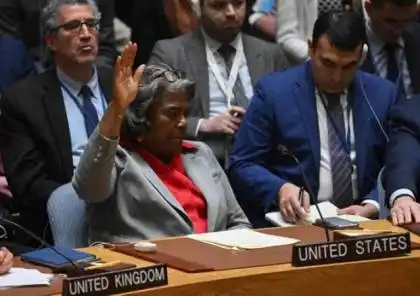
“We did not agree with everything” in the final document, Linda Thomas-Greenfield, the US ambassador to the United Nations, told the council. The United States still wants a clear condemnation of Hamas and a link between the release of the hostages and a ceasefire, and it also continues its efforts in the ongoing negotiations between Israel and Hamas, but it is clear that in the end, Washington felt that this was enough.


Hours after the vote, National Security Council spokesman John Kirby sought to downplay the sense of bilateral tension, telling reporters at the White House that the United States would continue to "have Israel's back" and press for the release of all hostages held by Hamas.


However, he described Netanyahu's decision to cancel the delegation's trip as disappointing. “We're confused about this,” Kirby said, reiterating the administration's assertion that the abstention does not represent a change in policy. “It appears the Prime Minister's Office is choosing to create a perception of daylight here when they don't need to do so.”


For Biden, who has a deep and profound attachment to Israel and has been extremely reluctant to break with Netanyahu, the breach was the culmination of months of frustration. Since the Israeli war on Gaza began on October 7, 2023, after the attack by Hamas fighters, which resulted - according to Israeli claims - in the killing of about 1,160, including 311 Israeli soldiers (according to the Israeli occupation army), and the capture of at least 250 hostages, as well as It led to the deaths of more than 32,000 people and the wounding of more than 75,000 Palestinian citizens, most of them children and women. The war launched by Israel on the besieged Gaza Strip destroyed more than 80% of Gaza, and the vast majority of the Strip’s population of 2.3 million people were displaced. .


Biden, his administration, and his senior aides have fully supported Israel at every turn.


“Support continues even as Netanyahu has publicly challenged the United States on almost all major issues, including the administration’s desire to see the return of the Palestinian Authority to Gaza, a massive increase in the amount of humanitarian aid reaching the Strip, and the path to a Palestinian state,” according to the newspaper. 


In the face of growing international isolation over the tens of thousands of Palestinians killed in Israeli air and ground strikes in Gaza and the hundreds of thousands more approaching starvation, the administration has repeatedly responded by supporting “Israel’s right to defend itself” and has continued to send weapons to Israel.


The newspaper attributed to Frank Lowenstein, a former State Department official who helped lead the Israeli-Palestinian negotiations in 2014, that three main factors may have led to Monday’s events: Deep disagreements between Washington and Israel over a large-scale invasion of Rafah, where nearly a million and a half residents reside. Residents of Gaza. They took refuge in Rafah as a refuge from Israeli attacks in the far north. the catastrophic humanitarian situation; and Israel's announcements of new settlements during Secretary of State Anthony Blinken's visit to the country on Friday.


“Biden has done everything he can for months to avoid a major public fight,” Lowenstein said. “It reflects a very dangerous shift in the White House’s position on how to conduct the Israelis throughout the remainder of this war. Either the Israelis will pay attention now or we will likely continue on this path."


It is noteworthy that last weekend, Israel said that it would no longer allow UNRWA, the main United Nations aid agency operating in Gaza, to provide any humanitarian aid in the northern region of the Gaza Strip. Despite private US appeals, Israel has refused to take action to expedite the passage of aid trucks into and through Gaza, prompting Biden to order the US military to airdrop food pallets and build a temporary pier on the Gaza coast to begin a sea bridge to supply humanitarian aid.


The administration was particularly angry at the aggressive activities carried out by the Israeli occupation army and settlers against Palestinians in the West Bank, along with announcements of new settlements that it described as illegal. White House officials have told Israel that new construction undermines its long-term security by angering and radicalizing the Palestinian population and preventing the possibility of a two-state solution.


It is noteworthy that while Blinken was visiting Tel Aviv to hold meetings with Netanyahu and his senior aides, Israel announced on Friday (3/22/2024) the largest confiscation of land in the occupied West Bank since 1993. This step was considered a major blow to the American president, and a tremendous sign of disrespect by Israel. Far-right Finance Minister Bezalel Smotrich - viewed by the United States as a particularly problematic member of Netanyahu's government, along with National Security Minister Itamar Ben Gvir - have bragged about confiscating land and building settlements.


The newspaper attributed to Mara Rodman, who served as Middle East envoy during the Obama administration, that although the basic relationship can withstand the recent dispute, “the personal dynamics between Biden and Netanyahu are likely to be particularly tense.” She added: "Geopolitical relations, like personal relations, are going through difficult periods, even in marital relations. The United States and Israel are present in this tense moment now."


It is noteworthy that Netanyahu's relationship with former President Barack Obama was tense, and the United States' decision to abstain from voting in the United Nations Security Council condemning Israeli settlements in late 2016 led to increased tensions between them. In 2015, Netanyahu came to Washington to deliver a joint speech to Congress in which he criticized the nuclear deal Obama was working on with Iran, bypassing traditional protocol and angering White House officials.


The relationship with Biden, which extends back several decades, was expected to be different. Biden, who has often said he tells Netanyahu: “I love you, Bibi (Netanyahu), even if I can't stand you,” has been repeating his historically superior love for Israel, dating back to his (Biden's) tenure as a member of the House of Representatives. However, he has come under enormous political and international pressure in recent months to publicly break with the Israeli leader and his far-right government.


President Biden has faced protesters at his political events and an ongoing campaign by voters in key states to withhold their support from him during this year's presidential race. More than 100,000 voters in the state of Michigan voted last month with their ballots marked “not committed” during the presidential primary elections in that state, as many Arab American voters said that Biden would lose their votes in the upcoming November 5 elections.


While some activists welcomed the UN Security Council vote on Monday, others called on Biden to go further by restricting the transfer of US weapons to Israel.


Eva Borgwardt, spokeswoman for the American Jewish group IfNotNow, which has opposed the Israeli campaign in Gaza, said in a statement to the organization: “We are pleased that the United States is no longer effectively blocking calls for a ceasefire, but it is time for the Biden administration to use all of its influence — including stopping... Arms transfers - to press for an immediate and permanent ceasefire, and the exchange of hostages.”


The effort has gone beyond rank-and-file activists, to include senior lawmakers within the president's own party, and some, including Senate Majority Leader Chuck Schumer (D-N.Y.), one of Israel's biggest historical supporters, have used their platform to publicly propose replacing Netanyahu.

PALESTINE

Tue 26 Mar 2024 6:49 pm - Jerusalem Time

War on gaza: Israeli raids on Rafah, Nuseirat, and Khan Yunis leaves dead and wounded

A child was killed and others were injured, Tuesday evening, when the Israeli warplanes bombed a house east of Rafah, south of the Gaza Strip.


Local sources reported that the child Eileen Al-Athamna was killed as a result of the Israeli bombing of her family’s home in the Al-Geneina neighborhood, east of Rafah.


The number of dead in the Israeli raid on a family rest house housing displaced people north of Rafah rose to 19, including 9 children.


Two citizens were killed and others were injured, as a result of the Israeli targeting a group of citizens while they were recovering bodies from under the rubble of a house in Nuseirat in the central Gaza Strip.


The Israeli artillery bombed the city of hope, west of the Nuseirat camp, and the occupation aircraft also launched raids on the camp.


The Israeli aircraft launched raids in the vicinity of Al-Shifa Medical Complex, west of Gaza City, and on the town of Beit Hanoun and Jabalia Camp, north of the Gaza Strip.


The bodies of 12 dead arrived at the European Gaza Hospital in Khan Yunis, south of the Gaza Strip, after they were recovered following the bombing of the Israeli aircraft in the Al-Mawasi area.


The toll of the ongoing Israeli aggression on the Gaza Strip since the seventh of last October has risen to 32,414 people and 74,787 injuries, and a number of victims are still under the rubble and on the roads, and ambulance and rescue crews are unable to reach them.

ARAB AND WORLD

Tue 26 Mar 2024 6:49 pm - Jerusalem Time

Israeli newspapers: Netanyahu has become a tool to destroy his country

The Israeli newspapers Haaretz and Yedioth Ahronoth covered the issue of the United States abstaining from using its veto power against the Security Council resolution demanding an immediate ceasefire in Gaza.


The first newspaper saw that the matter constituted a new failure for Prime Minister Benjamin Netanyahu's policy, while the second considered that US President Joe Biden, with this act, threw Israel under the wheels of the bus, because the decision only benefits the Islamic Resistance Movement (Hamas).


Haaretz said - in its editorial - that Netanyahu added to the list of his “glorious failures” a diplomatic crisis with Israel’s closest allies and protector abroad, which had done its best to stand by its side since the beginning of the war.


Instead of admitting his failure, changing his position on Washington, apologizing to the Israelis for what he brought upon them and resigning, Netanyahu chose to continue denouncing and provoking the Americans, according to Haaretz.


Without the slightest bit of humility, Netanyahu canceled sending a delegation scheduled to Washington, and accused America of abandoning the “steadfast American position” and thus “harming the war effort.” His office accused Washington of undermining efforts to free the hostages and giving the same support to Hamas, in a move that means “ Accusing the Americans of supporting terrorism,” according to Haaretz.


A burden on Israel

The newspaper's editorial noted that the Americans did their best to make clear to Israel that their patience had run out, and they expressed their strong opposition to carrying out a large-scale military operation in Rafah.


But that did not prevent Netanyahu from underestimating the importance of American support. He even boasted, “If necessary, we will do it alone,” as if Israel did not depend on America to provide support, military aid, and the “diplomatic Iron Dome.”


The Haaretz editorial concluded that Netanyahu had become a burden on Israel, exposing it to strategic risks that could cost it dearly, and called on him to resign to give Israel a chance to save itself from the damage he inflicted on it.


More radical measures

As for Yedioth Ahronoth, it blamed Washington, and said that its choice not to use its veto against the Security Council resolution, even without releasing the Israeli detainees, represents a noticeable deterioration in relations between the two countries, and indicates a noticeable shift in the position of the Biden administration, which strongly supported Israel’s right to defense. About itself and its efforts to dismantle Hamas militarily and politically.


The newspaper saw this step as a warning to Israel, threatening to take more radical measures, such as reducing or stopping shipments of weapons and ammunition to it.


She said the United States is ready to take further action, even if it means deviating from established political norms in bilateral relations.


A scandalous move

Yedioth Ahronoth considered that the step taken by the Biden administration severely undermines the struggle of "a Western democratic country against extremist Islamic terrorism."


She believed that the American decision, instead of helping to accelerate the outcome of the war, risks prolonging its duration, and that the main beneficiaries of this transformation are Hamas and other terrorist organizations in Gaza.


However, given the power dynamics between the two countries and Israel's dependence on American aid and support for arms purchases, defense assistance, and continued diplomatic and political support even after the recent decision, Yedioth Ahronoth urged Israel to exercise restraint and avoid acting hastily based on fleeting emotions.

This newspaper concluded that Israel must take advantage of the current situation to launch a military operation in Rafah with the aim of dismantling the four Hamas brigades in the region, or begin a military campaign targeting the remaining Hamas forces in the central Gaza Strip, so that the United States realizes that this equation has two sides, despite the force. The overwhelming and generous aid provided by one party to the other.


Constant stubbornness

Writer Alon Pinkas stressed that no one should be surprised by what happened, saying, “We have written repeatedly since last November that this is what will happen.”


Washington also constantly warned Israel that this was possible, “but Israel ignored the threats, and is now deceptively pretending to be surprised and shocked,” he said.


In his article in Haaretz newspaper, Pinkas stressed that over the past four months, Washington has been reviewing its assessment of Israel negatively during the Netanyahu era.


The writer attributed this to the fact that Netanyahu does not act as an ally, and has accumulated a devastating credibility deficit over the years on many issues and behavioral patterns, in addition to his failure to develop a plan for post-war Gaza, not to mention serious doubts that he is prolonging the war for the sake of his political survival. 


The writer concluded that all this continued stubbornness eventually exhausted Washington's patience.


Source: Haaretz + Yedioth Ahronoth

PALESTINE

Tue 26 Mar 2024 6:44 pm - Jerusalem Time

El Pais newspaper editorial: The Security Council resolution is a severe defeat for Israel

In its editorial entitled “A Serious Warning to Israel,” the second in two days, El Pais newspaper wrote on Tuesday that the Security Council has finally moved to confront what is happening in the Gaza Strip, stressing the difficulty of Israel’s relations with Washington regarding the Palestinian issue, and stressing at the same time that the resolution For Israel, it was a “severe diplomatic defeat.”


Its editorial said: “It took half a year for the UN Security Council to react in the only appropriate way to a disastrous war such as the one launched by Israel in response to the Hamas attacks on October 7.” Resolution 2728 adopted yesterday calls for an immediate and permanent ceasefire and links it, without making it conditional, to the arrival of humanitarian aid and the unconditional release of hostages still held by Hamas and Islamic Jihad.” It appears that despite the threats of the Netanyahu government, Washington refrained this time from using its veto against the UN resolution.


It considers the resolution “the first sign of hope for the Security Council, which has been paralyzed since the start of the Russian aggression against Ukraine, first because of Russia and China’s use of vetoes against resolutions condemning Russian aggression, and then because of the United States’ use of the resolution calling for a permanent truce in the Israeli invasion of Gaza.” The editorial highlights that, for Israel, the decision represented a “severe diplomatic defeat, as it indicated its international isolation and represented the point of greatest tension with the White House.”


Despite Israel's refusal to comply with the resolution and the difficulty of forcing it to implement it, this does not prevent a change in the American position, which now envisages the success of the negotiations, stopping the invasion of Gaza, and lifting the ban on the entry of aid.


Yesterday, Monday, El Pais newspaper published another editorial, highlighting how Israel applies collective punishment against the Palestinians through the weapon of starvation, and stressing the need to hold those responsible for this situation accountable.

PALESTINE

Tue 26 Mar 2024 6:39 pm - Jerusalem Time

Spiegel: American policy is witnessing a real change regarding dealing with Israel

The German magazine Spiegel revealed reasons related to US President Joe Biden adopting a new way of dealing with Israel, especially Netanyahu. After monitoring Washington’s recent behavior in the Security Council regarding Gaza, the magazine said that American policy is witnessing a real change for the first time regarding dealing with Israel, so that it was forced Biden to deal seriously with Benjamin Netanyahu. Pointing out that the pressure on the American president has become greater than he can bear, especially since the pressure on him has also become internal, and not external as before. According to German experts,


The sight of the US Ambassador to the United Nations, Linda Thomas-Greenfield, applauding after the adoption of Resolution 2728 in the Security Council in New York is considered the beginning of a shift to a more stringent policy.


The 15 members of the UN Security Council have tried four times to reach a resolution on the Gaza war. They also failed four times: three times with a veto from the United States, and once - last Friday - with a veto from China and Russia.


On Monday, Resolution 2728 was approved. It was introduced by the ten non-permanent members of the Security Council, and demands an “immediate ceasefire,” which will initially be temporary for the duration of the holy month of Ramadan, and then will transform into a “permanent and sustainable truce.” This was made possible because four out of the five permanent members agreed this time, and the United States abstained. This is not a breakthrough, and the Gaza war will not end on its own, especially because no mechanism has been identified to implement the decision.


Nevertheless, the decision is good news, especially for the United Nations itself, whose legitimacy, in the eyes of the superpower, was now in doubt. It was unusual, but not surprising, for Security Council members to line themselves up with applause after the vote on Monday.


It was clear to observers that the Israeli government's interest in a ceasefire was questionable. Prime Minister Benjamin Netanyahu has repeatedly made clear that his goal is not a ceasefire, but rather a “complete victory” over Hamas, even at the cost of a ground attack on the city of Rafah in the southern Gaza Strip, where more than a million people currently reside. 


Netanyahu also spoke out against Resolution 2728 and criticized the US government: its abstention gives Hamas “hope that international pressure will allow it to agree to a ceasefire, even without the release of the kidnappers.”


Immediately after the vote in New York, Netanyahu canceled a trip that two of his closest associates were scheduled to take to Washington. Not vetoing the resolution would have been a “clear retreat” by the US government from its previous position, and would harm Israel and the hostages.


John Kirby, spokesman for the National Security Council in Washington, disagreed, saying: “Our voting behavior does not, and I repeat, does not mean a change in our policy,” downplaying the significance of the US abstention. “Nothing has changed in our policy. nothing."


A hidden but direct message to Netanyahu

According to the German magazine, the American reassurances to Israel are incorrect, as, for the first time, Washington has proven that it is capable of achieving a turning point in the Gaza war, and this is due to the great dissatisfaction of the American administration with Israel’s actions in the war. “Israel forced the United States of America to do so.” According to expert Joan, he holds the position of head of the International Crisis Group at the United Nations, and one of the best UN experts. He continues: “Israel must now abandon United Nations support to continue its war, and it is necessary to begin serious negotiations.


It appears that US President Biden is facing increasing international pressure regarding the crisis in Palestine, which has prompted him to take more firm positions and effective mediation to escalate and achieve peace. Biden is also facing internal pressure in the United States, where he must express more balanced and responsible positions on the Palestinian crisis, especially with the growing support for Palestine from the public and politicians in the United States.


The German magazine said: “The Biden team knew that abstaining from voting, even on a resolution that included a reference to a ceasefire, would arouse Netanyahu’s anger. The explanation for this seems clear to analysts: this behavior is a hidden but direct message to Netanyahu to force him to reduce his military campaign. Washington's change in direction is clear, even if it does not question its relationship with Israel itself, but only its military plans.


The horrific images and rising numbers of casualties from Gaza have not only isolated Israel internationally. It has also increasingly damaged the reputation of the Biden government in the eyes of the world, and in the United States, where elections will be held in November. Even Biden's opponent, Donald Trump, recently attracted attention by warning that Israel must end its war, and said in an interview with an Israeli news platform: “The destruction that Israel is causing presents a very bad image to the world. “The world sees this.”


Given these images, which also seem to upset Donald Trump, abstaining from voting in the UN Security Council might seem a relatively prudent measure. Washington will undoubtedly have other means to impose its will, such as a limited arms embargo, which other US presidents have used in previous terms, including against Israel.


But this abstention is also a means of applying pressure, and it serves as a reminder that the United Nations remains a global forum through which you can send a political signal to the entire world, and this time all eyes are on the next Israeli response.

PALESTINE

Tue 26 Mar 2024 12:49 pm - Jerusalem Time

Qatari Foreign Ministry denies the departure of the Israeli delegation, and negotiations continue

Qatari Foreign Ministry spokesman Majid Al-Ansari said today, Tuesday, that talks on the truce in Gaza and the exchange of prisoners between Hamas and Israel are continuing between the parties at the level of technical teams, adding, “We are in a state of continuous hope, but it is not possible to talk now about a timetable.”


Contrary to what was leaked this morning by the Israeli media that the professional staff in the Israeli negotiating team will leave Doha and return to Tel Aviv after the talks faltered, Al-Ansari revealed that part of the Israeli delegation “is still present in Doha because the negotiations are continuing at the level of the technical teams.”


He stressed that the talks are continuing in Doha and no party has withdrawn from them despite the difficulties on the ground, before adding, "We are counting on the talks on the ground to reach a truce and the Security Council resolution or any international pressure in this direction will help reach this goal."


He also said that "there is nothing new that can be announced regarding the negotiations taking place in Doha today except that they are continuing."


Regarding the United Nations Security Council’s adoption, for the first time yesterday, of a resolution calling for an “immediate ceasefire” in Gaza, Al-Ansari said, “We did not see a direct impact of the UN Security Council resolution on the negotiations in Doha,” expressing his hope that it will reflect positively on the cease-fire negotiations. 


On the other hand, the Qatari Foreign Ministry spokesman revealed that ideas were renewed during the negotiations, indicating that he was not aware of any new American proposals.


Regarding the catastrophic and deteriorating humanitarian situation in Gaza as a result of the Israeli war, Al-Ansari said that the waterway that the United States is establishing in Gaza is not an alternative to bringing humanitarian aid via land, announcing that a new plane of humanitarian aid provided by Qatar to Gaza will arrive at Al-Arish Airport in Egypt Today.


He stressed that there is no alternative to the United Nations Relief and Works Agency for Palestine Refugees (UNRWA), and that "in all the areas where it operates, and in Gaza in particular, there is an urgent need for support, and therefore we have increased our support for it as part of our commitment to support United Nations agencies."

PALESTINE

Tue 26 Mar 2024 12:25 pm - Jerusalem Time

International organization: 3,000 munitions dropped on Gaza did not explode

The international humanitarian organization Handicap International said that Israel dropped 45,000 bombs on the Gaza Strip from October 7 until mid-January, and that at least 3,000 of them did not explode, which poses a threat to the residents of this besieged Strip.


Radio France Internationale quoted Jean-Pierre Delomier, Deputy Director of International Operations, as saying, “There are 3,000 bombs out of these 45,000 bombs that did not explode, and they will pose an additional danger to civilians when they return to the areas from which they were displaced, at a time when humanitarian aid must be distributed.” 


Delomier, who visited the city of Rafah in the south of the Gaza Strip during the current war, said that his organization is waiting for a ceasefire in Gaza in order to have a clear vision on this matter and begin the work of removing mines and bombs left by the war.


The Washington Post quoted Charles Burch, an explosive clearance expert at the United Nations Mine Action Service, as saying last December that Gaza is currently filled with hundreds, if not thousands, of unexploded ordnance, ranging from makeshift rockets to high-tech munitions provided by the United States. United for Israel, he added, "The pollution will be unbelievable, like something from World War II."


Risks for generations

Birch, who visited Gaza at the height of the Israeli bombing campaign, said that these unexploded ordnances may be the most widespread threat, because they will last long after the war, posing risks to civilians for generations. Even in times of relative peace in Gaza, bombs left over from previous rounds of fighting regularly killed and maimed, and the problem is now exponentially worse.


Yesterday, Monday, the UN Security Council adopted a resolution calling for a ceasefire in Gaza, more than 5 months after the Israeli war, with the death of more than 32,000 Palestinians and the injury of more than 75,000.


This resolution - presented by non-permanent members of the Security Council - calls for an immediate ceasefire in the Gaza Strip, stressing the urgent need to increase aid and demanding the removal of all obstacles to its delivery.

ARAB AND WORLD

Tue 26 Mar 2024 12:18 pm - Jerusalem Time

Washington considers Israel to be committed to international humanitarian law for the use of American weapons

The official spokesman for the US State Department, Matthew Miller, said on Monday that the United States considers Israel to be committed to US President Joe Biden’s national security memorandum, which stipulates that recipients of US weapons must comply with international law, and may not prevent the provision of humanitarian assistance.


Miller said that Israel is obligated to provide written guarantees by Sunday through a “credible high-level official who has the capacity and authority to make decisions and commitments on the issues that constitute the core of the guarantees.”


The Biden administration had sent a memorandum on February 8, asking Israel and six other countries to provide written guarantees by March 24 confirming their commitment to American conditions. The US State Department now has until May 8 to provide Congress with a report on Israel’s compliance with these conditions.


The seven countries that the US administration asked for written guarantees are: Israel, Kenya, Colombia, Iraq, Somalia, Nigeria and Ukraine.


Miller continued: "These guarantees are possible, but our view on them is of course based on our ongoing assessments of Israel's behavior in the war in Gaza."


"We have conducted ongoing assessments of Israel's compliance with international humanitarian law. We have not found that it is in violation, whether with regard to the conduct of the war or the provision of humanitarian assistance. We look at those assurances through this ongoing work," he added. "We have done that," he added.


Dozens of Democrats in Congress, along with several leading international NGOs, have warned that Israel is not adhering to the memorandum (sent on February 8). Likewise, senior State Department and USAID officials insisted that Israeli guarantees failed to take into account facts on the ground.


“When it comes to finding a violation of international humanitarian law, it requires a fact-intensive analysis of the relevant factors related to international humanitarian law,” Miller noted.


He said, "We have ongoing processes to look into these matters, and these are the processes that began before President (Joe Biden) signed this memorandum, but so far, we have not reached a conclusion that Israel is violating international humanitarian law."


The memorandum represents a number of first steps - including credible, written assurances from countries in advance of arms transfers, as well as assurances that they will not deny or restrict assistance efforts in conflict areas where weapons supplied (sold) by the United States to those countries are being used, to ensure that Violation of human rights with American weapons.


It is noteworthy that the memorandum did not contain within it any mechanism to implement its provisions or hold accountable countries that violate American, international, or humanitarian law - or are used in ways that are inconsistent with mitigating the harm caused to civilians.

PALESTINE

Tue 26 Mar 2024 12:05 pm - Jerusalem Time

The Security Council holds an open meeting on Palestine today

Today, Tuesday, the UN Security Council will hold its monthly open session on the Palestinian issue, followed by a closed consultation session.


The Special Coordinator for the Middle East Peace Process, Tor Wennesland, will brief Council members on the situation in occupied Palestine, including settlements.


Yesterday, the UN Security Council adopted Resolution 2728, which calls for an immediate ceasefire in the Gaza Strip during the holy month of Ramadan, leading to a “permanent and sustainable ceasefire,” and the lifting of all obstacles preventing the provision of humanitarian assistance on a large scale.


The draft resolution was presented by the elected members of the Security Council: Algeria, Ecuador, Guyana, Japan, Malta, South Korea, Sierra Leone, Mozambique, Slovenia, and Switzerland, and received 14 supportive votes, while the United States of America abstained from voting.

PALESTINE

Tue 26 Mar 2024 9:38 am - Jerusalem Time

Hamas informs the mediators of its adherence to its demands for a comprehensive ceasefire

The Islamic Resistance Movement (Hamas) announced its adherence to the demands of a comprehensive ceasefire, the withdrawal of Israeli forces from the Gaza Strip, the return of the displaced, and a real exchange of prisoners.


The movement said in a statement - yesterday evening, Monday - that it informed the mediators of its adherence to the vision it presented on March 14, because the occupation’s response did not respond to any of its demands.


In its statement, the movement blamed Israeli Prime Minister Benjamin Netanyahu. His government bears full responsibility for thwarting all negotiation efforts and obstructing reaching an agreement.


There has been no comment yet from Netanyahu's office on Hamas' statement.


Hamas said in its proposal that the initial release of Israelis would include women, children, the elderly and the sick in exchange for the release of between 700 and 1,000 Palestinians detained in Israeli prisons, according to the proposal.


This includes the release of "Israeli female soldiers."


Hamas also indicated that it wants the exchange of Palestinian prisoners and Israeli detainees to be part of a comprehensive ceasefire agreement that ends the war.


Netanyahu's office responded to Hamas' proposal, saying that it was still based on "unrealistic demands," vowing to press ahead with its ground offensive until Hamas is eliminated.


Qatar and Egypt are trying to reduce the differences between Israel and Hamas over what a ceasefire should look like in light of the worsening humanitarian crisis that exposes the residents of the Gaza Strip to the risk of famine.


Today, Monday, the United Nations Security Council adopted a resolution demanding an immediate ceasefire between Israel and Hamas after the United States abstained from voting, sparking a dispute with its ally Israel.


The remaining 14 members of the Council supported the resolution proposed by the 10 elected members of the Council, which also demands the immediate and unconditional release of all hostages.

PALESTINE

Tue 26 Mar 2024 9:09 am - Jerusalem Time

War on Gaza: Israel commits 8 new massacres in Gaza, claiming the lives of 81 citizens

The Israeli army committed 8 new massacres in the Gaza Strip, claiming 81 killed and 93 injuries during the past 24 hours.


According to the Ministry of Health, a number of victims are still under rubble and on the roads, and the Israeli forces are preventing ambulance and civil defense crews from reaching them.


It indicated that the toll of the aggression rose to 32,414 dead and 274,787 injuries since the seventh of last October.


Here are the latest developments: Israeli aircraft targeted a group of citizens east of Al-Maghazi camp, leading to the death of two of them.


There were dead and wounded as a result of the Israeli aircraft bombing a tent for displaced persons in Mawasi Khan Yunis.


Also, 30 citizens were killed as a result of an Israeli bombing of a house belonging to the Abu Hasira family in the vicinity of Al-Shifa Medical Complex, west of Gaza City.


According to the government media office in Gaza, 18 Palestinians were killed due to incorrect landings of aid from aircraft, including 12 who drowned and 6 due to the stampede.


The Red Crescent announced that Al Amal Hospital would be out of service after the international community failed to provide the necessary protection for its staff, patients and displaced people.


Israel continues its siege and targeting of hospitals in the Gaza Strip, as it continues its military operations in the Shifa Medical Complex and its surroundings for the ninth day in a row.


9 citizens were killed after they drowned in the Gaza Sea, and 5 others went missing while trying to obtain aid dropped from the air.


A number of citizens were injured as a result of Israeli artillery shelling on the Al-Nasr neighborhood, northeast of Rafah. The Israeli vehicles also penetrated the vicinity of Asdaa Prison, Street 5, and the Western Line in Khan Yunis, amid artillery shelling and gunfire.


The Israeli army continued to target areas northwest of Gaza City and Beit Lahia with fire belts, while Israeli warplanes and artillery bombardment targeted various areas in the Gaza Strip, especially the city of Rafah, resulting in the death and injury of dozens of citizens, including children and women.


Health sources in the Gaza Strip reported that there were at least 15 killed, including 4 children, and dozens of injuries in an Israeli bombing that targeted a house housing displaced people north of Rafah, south of the Gaza Strip.


Local sources in Rafah previously reported hearing a large explosion following an Israeli raid on the city, coinciding with the Israeli launching air strikes and violent artillery shelling in the northern Gaza Strip.


Two citizens were killed and others were injured when Israeli army bombed a group of residents in the Saudi neighborhood, west of Rafah.


Beit Lahia, in the northern Gaza Strip, witnessed attacks with fire belts, tank advances, and Israeli army artillery fire towards targets in the city.


The western regions of northern Gaza also witnessed fire belts from Israeli warplanes, resulting in dead and wounded, including children and women.


Israeli vehicles entered the schools square in the center of Beit Hanoun in the northern Gaza Strip.


In addition, the Red Crescent reported that Al-Amal Hospital in Khan Yunis was out of service after the Israeli forces forced the hospital staff and wounded to evacuate it.


The Red Crescent said, according to an unsourced source: Our crews at Al-Amal Hospital in Khan Yunis, numbering 27 people, were evacuated, in addition to 6 patients and one escort, and the bodies of two dead who died inside the hospital, one of whom was the volunteer Amir Abu Aisha, one of the staff of the emergency operations room.


The Israeli army continues its aggression against the Gaza Strip since the 7th of last October, by land, sea and air, leaving 32,333 dead, the majority of whom are children and women, and more than 74,694, since the start of the Israeli war on the 7th of last October.