PALESTINE

Wed 03 Apr 2024 5:37 am - Jerusalem Time

Biden strongly criticizes Israel after targeting aid activists

On Wednesday, US President Joe Biden strongly criticized Israel for targeting a convoy of the World Central Kitchen team, which provides humanitarian relief activities to the residents of the Gaza Strip, which led to the death of 7 people, including 6 foreign activists of the organization with different nationalities, including an American.


Biden said in a press statement, as reported on the Hebrew website Ynet, that unfortunately, Israel is not doing enough to prevent harm to aid workers.


Biden added: This is not an isolated incident, but rather these events have been repeated during this bloodiest conflict for humanitarian relief workers.


He continued: The incident of killing aid workers should not happen.. Israel is repeating its mistake and not doing enough to protect aid workers who are trying to deliver aid to those who desperately need it.. This incident is not the first.. and this is the main reason behind the difficulty of distributing humanitarian aid in Gaza. 


PALESTINE

Wed 03 Apr 2024 5:20 am - Jerusalem Time

The death of its perpetrator...a young man from inside, running over 4 members of the occupation police

After midnight, 4 Israeli police officers were injured after being run over in the area called Kochav Yair, next to the city of Tira in the occupied interior, close to the Qalqilya Governorate.


According to the Hebrew website Ynet, the condition of one of the injured was serious, while the rest of the injuries were described as moderate to minor.


In the details of the operation, a speeding vehicle ran over Israeli police officers during their activity in that area, then its driver fled towards the Eliyahu checkpoint between Qalqilya and the Green Line areas. He got out of his vehicle and tried to stab a security guard before he was neutralized and killed on the spot.


The website stated that the perpetrator of the operation was Wahb Shabita, 26 years old, and a resident of Tira in the occupied interior.

ARAB AND WORLD

Tue 02 Apr 2024 11:58 pm - Jerusalem Time

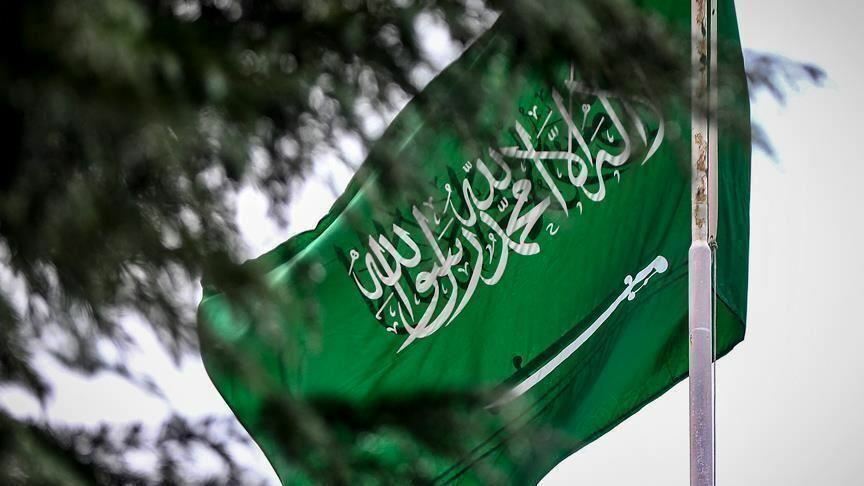
Saudi Arabia condemns the targeting of the World Central Kitchen convoy in Gaza

The Saudi Ministry of Foreign Affairs expressed the Kingdom of Saudi Arabia’s condemnation and denunciation of the targeting of the World Central Kitchen convoy in the Gaza Strip, in a systematic continuation of the crimes and violations of the Israeli occupation of international humanitarian law.


The Ministry offered the Kingdom's sincere condolences and sympathy to the families of the victims, reiterating the Kingdom's categorical rejection of targeting missions, relief organizations and their workers.


It also called on the international community to do its part to stop these violations, protect defenseless civilians and workers in humanitarian and relief organizations, and work to bring in more urgent humanitarian aid to avoid worsening the humanitarian crisis in the Gaza Strip.

PALESTINE

Tue 02 Apr 2024 11:37 pm - Jerusalem Time

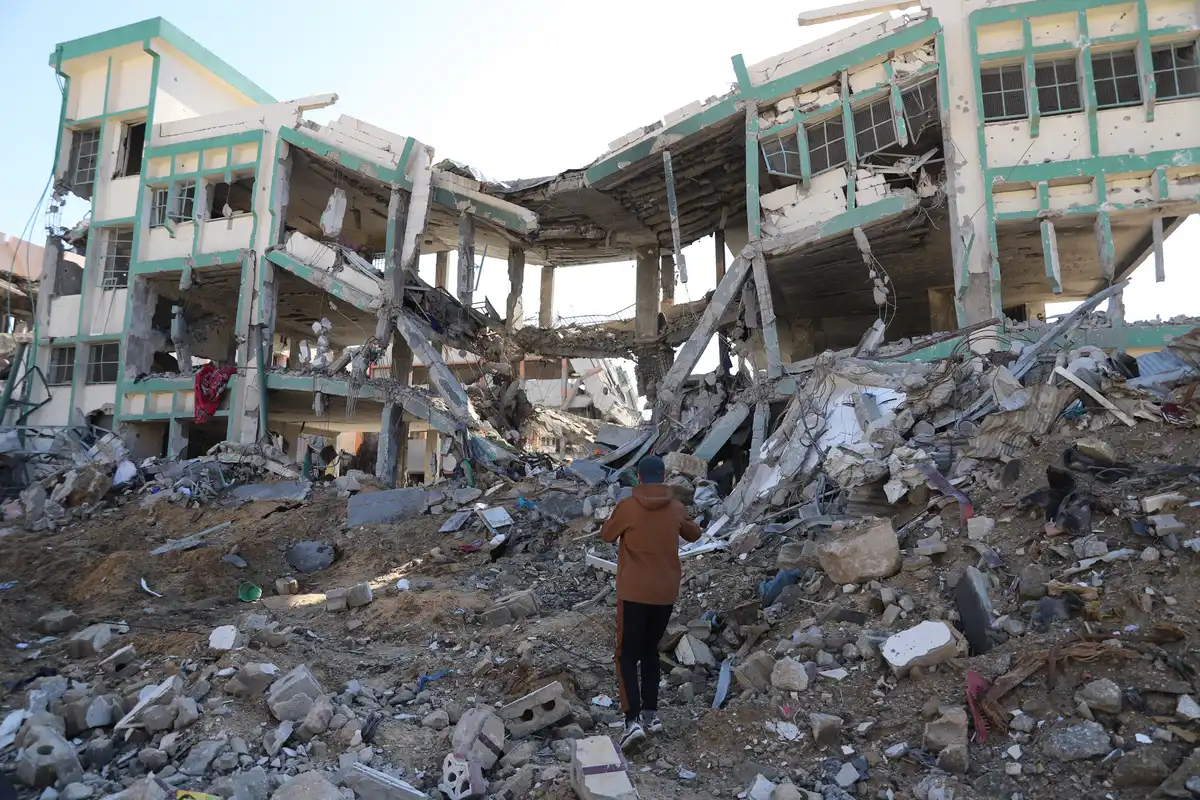
World Bank: Damage in Gaza is estimated at $18.5 billion, and half the population is on the verge of famine

The Israeli war caused damage to infrastructure in Gaza estimated at $18.5 billion, according to a new World Bank report published on Tuesday.


The World Bank noted in its non-final assessment of the damages that the figure represents 97% of the combined economic output of the occupied West Bank and Gaza in the year 2022.


The assessment covers the period between the outbreak of war on October 7 and the end of January.


The report, prepared in cooperation with the United Nations and the European Union, concluded that structural damage was caused to “all sectors of the economy,” and that more than 70% of the estimated costs were due to the destruction of homes.


“In several sectors, the rate of damage appears to be stabilizing, with some assets remaining intact,” the World Bank said.


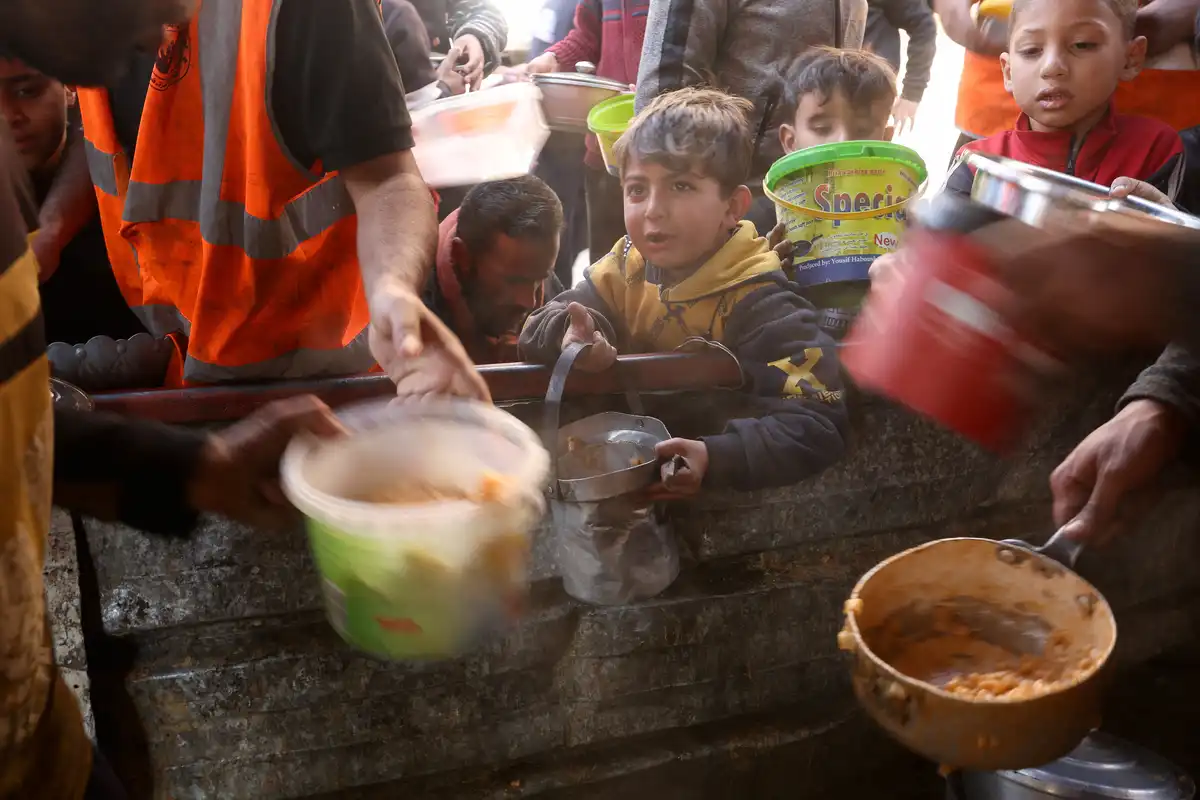
Beyond structural damage, the report concluded that more than half of Gaza's population is on the brink of famine, and the entire population of the Strip "suffers from severe food insecurity and malnutrition."


It is estimated that 84% of health facilities in Gaza were either damaged or destroyed, while the war displaced 75% of the population, leaving more than a million people without homes.


The report, which was prepared based on sources for collecting remote data, concluded that the water and sanitation networks in Gaza are “almost collapsed” and are operating at less than 5% of their capacity compared to before the outbreak of the war.


100% of Gaza’s children are without schools due to the collapse of the educational system, while 92% of the main roads in the Strip are either destroyed or damaged, according to the World Bank.


The report called for increasing humanitarian and food aid, "providing shelter and finding cost-effective and scalable housing solutions for the displaced, and resuming basic services."

PALESTINE

Tue 02 Apr 2024 11:34 pm - Jerusalem Time

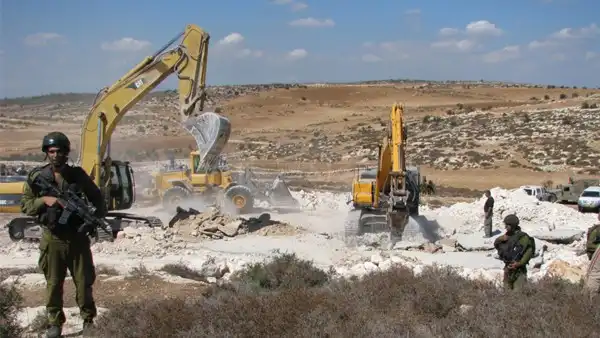
West Bank: Israel seizes 170 dunums east of Bethlehem

The Israeli authorities seized 170 dunums (a dunum is equivalent to a thousand square metres) of Palestinian land in the Arab Al-Taamra area, east of the city of Bethlehem, in the south of the West Bank, under the pretext that it is state land.


The Wall and Settlement Resistance Commission said that the seizure is the third operation under the same pretexts since the beginning of this year, bringing the total land seized by the occupation to 11 thousand dunums of Palestinian land in Jerusalem, Nablus and Bethlehem.


The Commission said last Saturday that the area of Palestinian territory controlled by the occupation amounted to 2,380 square kilometers, equivalent to 42% of the total territory of the West Bank, and 69% of the total areas classified as (C).

OPINIONS

Tue 02 Apr 2024 11:30 pm - Jerusalem Time

Khaled Meshaal… Is Neither The First Nor The Last

Nadim Koteich

Nadim Koteich

Opinion Writer


Instead of seeking more blood in Gaza and giving up on his pursuit of an illusional victory by raising the number of Palestinian casualties, Khaled Meshaal, the head of the Hamas's office in the diaspora, wants to expand the scope of war and death. In a video recording, Meshaal addressed his “Jordanian brothers," calling on the "masses of the nation to engage in the battle of Al-Aqsa Flood" and stressing the need for "blending blood of this nation with the blood of the people of Palestine, so that it can attain honor and decide this conflict in our favor, Inshallah." Meshaal's remarks, which Amman considers dangerous incitement, were made around 6 months into the Gaza war instigated by the Hamas attack on October 7, 2023, that has led to the deaths of tens of thousands of Palestinians, the displacement of Gazans to Rafah on the border with Egypt, and the total destruction of the Strip.

Notably, Iran did not engage in this war, which, according to Meshaal, is a major step towards a glaring victory. According to Reuters, Iranian Supreme Leader Ali Khamenei asked Chairman Hamas Political Bureau Ismail Haniyeh, during their first meeting in Tehran, to silence the voices calling on Iran to support Gaza and open fronts against Israel. Khamenei bluntly told Mr. Haniyeh that Hamas had not consulted anyone before launching the attack and that Iran would not fight for them.

 For its part, Hezbollah contented itself with skirmishes with Israel and retaliations that have not at all been proportional to the unprecedented Israeli assault that has violated all of Lebanon, as well as making significant progress in weakening the party on the ground. As for the role that Iraqi militias have played in this war of support, it diminished around a month ago following a painful US drone strike in Baghdad that took out prominent Iraqi Hezbollah leaders: head of logistics Abu Baqir al-Saadi, and Arkan al-Alayawi, who runs the group’s information system.

In parallel, the Houthi militia has waged its own conflict in the Red Sea in the name of the Gaza war. While the militia claims its actions are meant to support Gaza, they have had no real impact on the course of the disaster befalling the Strip and its inhabitants. Iran behaves like a partner in profits only, while refusing to be a partner in losses. It is striving to discourage Hezbollah from taking risks that could leave the party meeting the same fate that has befallen Hamas in Gaza, as Iran is aware that the party had raised expectations with its rhetoric and bravado before the war to a degree that makes merely standing aside untenable.

Meshaal made his perverse attempt at inciting Jordanians against their state, security, and stability against the backdrop of the Resistance Axis’s inaction, while he has yet to really criticize the limited support that Iran and its proxies have provided. On the surface, his incitement seems to be the result of the despair within the Movement following the unprecedented war that has been waged against it and the shock of being abandoned by its allies. The sources of this despair are many. Hamas made several losing bets - from the theory of the “unity of fronts” being put into action to exploiting the sentiments of Muslims during Ramadan - that it thought would allow for expanding the war, as well as imposing suicidal realities and destroying the overall security and stability of the Middle East.

It is as though Hamas, after having failed to drown Israel in the blood of Gaza's people, now seeks to drown it with more blood, starting with that of the Jordanians. However, the incitement is rooted in different considerations as well. It seems that some elements of the Muslim Brotherhood seek to resume their war against the Arab political system. Jordan is the first target in their sights, but they are looking further as well. Following the Brotherhood’s fall from power in Egypt and Tunisia, its decline in Morocco, its collapse in Sudan, and its Turkish patron's shift towards reconciling with the Arab political system, the Gaza war has opened as a new window from which the Brotherhood - now armed with the discourse of resistance and the theory of "unity in collapses" rather than unity of battlefields - can rear its head.

Khaled Meshaal is no fool. He was aware of the consequences that the October 7 operation would give rise to. However, he sees, in the tragedies of his people in Gaza, a political opportunity to traffic in resistance and invest in disaster. If that were not the case, why haven't we heard Meshaal call on the people of the West Bank to join the glorious holy war that his organization has waged? Why is he not bewildered by the fact that the West Bank and its sensible people are trying to preserve what remains of their land in order to build their national project over it? Why would Iran try so hard to turn the tables in the West Bank, and why would it have to resort to smuggling arms as - as was revealed last week - if the West Bank's people were in favor of the military option? The attempts to destabilize Jordan have been relentless, taking many forms, from suicide drones and border skirmishes through organizations and smugglers linked to Iran, to "Captagon incursions," to Iraqi militias targeting US bases on the Iraqi-Jordanian border. We have now seen the most dangerous step to date following Khaled Meshaal's call for engagement in the Gaza war, through a clash between the Jordanian people and their state! Hamas's attempt to force the Jordanian front open is a dangerous game that goes beyond a military strategy aimed at expanding the scale of its confrontation with Israel. This is an effort to mobilize Islamists under the guise of supporting Gaza which undermines Jordan's unity and prosperity. It is the abhorrent resumption of the ideological struggle in the Arab world, a systematic battle against the peace camp in the region, and an effort to ensure that the Arab world remains an alternative that can be exploited by Iran. Unfortunately, defending the legitimate grievances of Palestinians has long been accompanied by policies that exploit these grievances to incite internal Arab conflicts and to get ahead in broader struggles for influence. Meanwhile, immediate and long-term consequences for the stability of the region and the lives of millions are neglected. This dangerous feature, which has characterized much of Palestinian national action, is not new to Hamas. What is new is that this time, the Palestinians alone will bear the costs of undermining prospects for peace and the manipulation of their basic interests by those purporting to speak on behalf of their future.

Source: Alsharq Alawsat

OPINIONS

Tue 02 Apr 2024 11:23 pm - Jerusalem Time

Israeli Newspaper: Rafah is a strategic trap, and also a last chance

N12 channel

N12 channel

Opinion Writer

By Ziv Yisrael

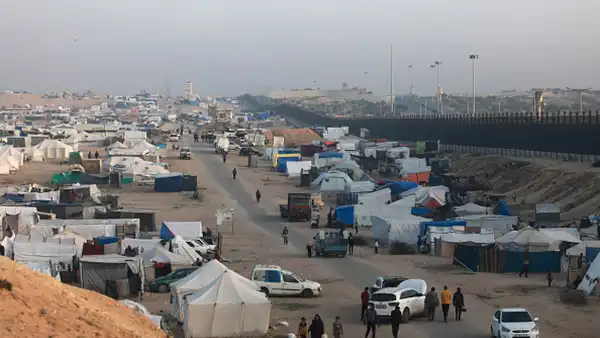
There are now more than 1,200,000 displaced people in Rafah, and more than 300,000 residents of Rafah. The place is like a boiling pot that threatens to explode at any moment. The infrastructure there is unable to contain the size of the community, the nutritional situation changes according to the pace of supply, and the level of health is disastrous. Under these circumstances, Hamas is trying to establish the last authority that is still under its control, after its failed attempt to revive as an organization in Al-Shifa Hospital, and the army’s “smart” campaign there.

Hamas, which had the majority of its organizational and military structures destroyed in the north and center of the Gaza Strip, has made a great effort to rebuild itself in the last three months. It turned Al-Shifa Hospital into its main camp, and rebuilt its command centers, and that of Islamic Jihad, in the large medical center. The Shin Bet and the Southern Command worked intelligently, allowing this structure to be built and developed, and they even gave them a feeling that the hospital was a safe place. In this way, the place attracted about 1,000 “saboteurs” and a large chain of command who settled there.

Weeks earlier, in a well-planned and controlled campaign, the forces surrounded the hospital, took control of central areas inside it, and besieged “saboteurs” inside the buildings, in a way that would not allow anyone to escape. Very few fought until the end, and about 100 were assassinated - and the forces fought there, face to face, and more than 500 “saboteurs” surrendered. What was found there were combat equipment, intelligence and people. Despite all this, no harm was caused to patients or medical staff. Al-Shifa Hospital has become a target of war, due to the serious operational achievement that has caused great damage to Hamas's ability to revive and rebuild itself in the northern Gaza Strip.

The dismantling of the last Hamas outpost in Rafah could take place in two ways: either military-tactical, as happened in Khan Yunis, or a military campaign that dismantles the four brigades there. If we put aside the extent of the complexity in implementing the operation, from a military perspective, this achievement did not change the reality that exists in most areas of the Gaza Strip - “Hamas” disintegrated, but it did not surrender. An uncoordinated military campaign, meaning a "strategic trap." At the same time, a coordinated military operation, part of a larger plan for the “day after the war,” would represent an evolution in the sector’s decisive ability, and could lead to the strategic achievement required to achieve the war objectives as set by the political echelon.


The “failure” that prompted the world to intervene

Rafah is not just a difficult problem of fighting in a densely populated location, home to a million and a half people; Rafah has also turned into a major international political problem - Israel is living in its own trap. The key is the humanitarian problem that Israel failed to manage, which distorted Israel's image in the world, and harmed relations with the United States. Today, two United Nations organizations and an Emirati force are operating in Rafah, and the Egyptians have shown a willingness to act. Therefore, any uncoordinated operation will immediately lead to a dangerous international clash.

Although this may seem like a mockery, the demonstration of a group of individuals who prevented trucks from entering Kerem Shalom, the government's disregard for the humanitarian issue, and the apparently intentional failure of the Ben Gvir police to do their part - all of these were the central reason for the international intervention in the sector. Today, because of Israel's perception that it is promoting famine among the residents of the Gaza Strip, countries around the world are launching food supplies there.

This is the failure that prompted the establishment of a temporary international port, which would return Qatar to the Gaza Strip, force the army to guarantee its security, and could very quickly turn into a target for operations. If we fail to manage the humanitarian situation and do not decide on civilian control, this will be an achievement for Hamas. Israel gave Hamas what it had not succeeded in doing alone: a terrible image of Israel, an international political crisis, and the construction of a port in Gaza with cover and funding from the main financier of Hamas - the Emirate of Qatar.

Occupying Rafah in the first way, and also the only international corridor, will lead to the recognition that Israel has completely occupied the Gaza Strip. Therefore, the standards of international law and full responsibility for the Strip and its residents will apply to it as an occupying power - which will push Israel to impose military rule and deal with two and a half million people in the occupied zone.


The "Sabra and Shatila" trap


Militarily, entering a densely populated area could bring Israel into the “Sabra and Shatila” trap, which the Lebanese capital witnessed in 1982, when the Phalange Party entered Palestinian refugee camps, under the cover of the Israeli army, and committed a massacre that claimed the lives of hundreds of people - and it was accused of Israel. In Rafah, Hamas will do the same, and Israel will be held responsible for any mass killing, despite its warning against entering. Needless to say, our already weak international position will disintegrate so completely that the United States will take important steps - a situation that will see Israel forced to withdraw from Gaza with its guilt at its feet.

Because Rafah is a border city with Egypt, there is great Egyptian sensitivity about what is happening there, to the point that Egypt threatened Israel that in the event of an uncoordinated entry and the start of the flow of refugees into Egyptian areas, Egypt will violate the peace agreement with Israel. Practically, every unilateral operation by Israel in Rafah will be a major failure.

Despite this, Israel can exploit Rafah to carry out a strategic change in all of Gaza. This will happen by proceeding with a joint plan with the Americans and friendly Arab countries (which have a desire no less than Israel’s desire to dismantle Hamas), by coordinating the first phase of evacuating the population to an organized tent city that will be under the control of friendly countries, with protection forces from one party. These countries. In return, a humanitarian corridor will be opened under the control of these countries to the Philadelphia axis. This will be done by isolating Hamas’ capabilities and not allowing it to control it in a way that makes the humanitarian situation outside the movement’s control.

All of this will represent the first phase of the plan that the Americans expect. As for the second phase, it will allow the army to take military control of Rafah for a coordinated time, up to a few weeks, with the aim of “cleansing” the remnants of the brigades there. The army will not remain there after that, in order to prevent the emergence of a situation in which it occupies the Gaza Strip. The third stage will allow international forces to establish a local police that is not affiliated with Hamas, and begin to gradually control Rafah, then Al-Mawasi, and after that, Khan Yunis, and in the end, the northern Gaza Strip. The coalition of friendly countries will train the police and provide them with equipment. In the fourth phase, this coalition will work to reconstruct the Strip, and ultimately, over a period of 5 years, Gaza’s political future will be decided.

This plan can be in line with the spirit of the words of the Minister of Defense who spoke with the Americans, and without a doubt, it will lead to a better solution that this government can afford. The advantage of this step is that it builds an alternative to Hamas, and exposes it to great new pressures that will, without a doubt, push the exchange deal. The international balance, as well as the presence of the “war cabinet” and the government in Israel, relate to that. The failure to return the hostages will be a disgrace to the government, and opens A painful wound in society as a whole - a wound that will never heal.

The government's margin of maneuver regarding decision-making has ended. If it is about achieving a breakthrough and returning the hostages, this is the way. If it is not concerned with decision-making, it seems that it is not fit to continue managing the war.

OPINIONS

Tue 02 Apr 2024 11:20 pm - Jerusalem Time

Israeli Newspaper: Is there a third goal for the war in Gaza?

Haaretz

Haaretz

Opinion Writer

Editorial

Prime Minister Benjamin Netanyahu set two primary goals for the war: eliminating Hamas and returning the kidnapped. So far, neither of these goals has been achieved, but Israel appears to be pushing forward with a third goal, which is the permanent occupation of the northern Gaza Strip.

As happened during the occupation of the West Bank, Israel creates events on the ground through its army, based on urgent security considerations, and in parallel, it uses the settlement project and its representatives in the Knesset and in the government, who exploit every opportunity in order to achieve their regional aspirations.

In fact, a proposal for decisions was put on the government's agenda this week, entitled "Increasing the government's powers in the area of settlements." The goal is to transfer responsibility for the Settlements Department from the Ministry of Agriculture to the Minister of Settlements and National Missions, Ewit Struck, from the Religious Zionism Party, noting that financial control over the department’s activities will, from now on, be carried out from the department, and not from an entity outside it. In other words, the goal is to remove restrictions imposed on the Settlement Division, which acts as an arm of the government and the Zionist Histadrut in the interest of sensitive investments beyond the Green Line. Ostensibly, this means “only” the settlements in the West Bank. 

The government appears to be implementing an agreement reached in the coalition agreement with the Religious Zionism Party, long before October 7. But against the backdrop of calls to prevent the return of Palestinians to the northern Gaza Strip, and the call for Jewish settlement, transferring the settlement department to Minister Struck could be used as a basis for quickly establishing settlements in the northern Gaza Strip.

It is not only the settlement project and its arms in the government that are preparing to establish a Jewish presence in Gaza for a long time. The army is also pushing forward with two projects that indicate readiness for a long stay in the Strip: establishing a security zone adjacent to the border fence, one kilometer wide, and extending over 16% of the Strip’s territory; Creating a corridor of control separating the northern and southern Gaza Strip, and allowing the Israeli army to supervise movement on strategic roads. This issue is related to the core of the negotiations with Hamas.

The combination of security interests and settlement ambitions constituted an existential catastrophe that led to Israel’s involvement in an occupation that spoiled everything good about it. 

The messianic right, which calls for annexation, must not be allowed to exploit the horrific “massacre,” and the war that broke out in its aftermath, in order to cancel the disengagement [from Gaza, in 2005] and push forward a second Nakba, with the Israeli army remaining in Gaza. All this while abandoning the kidnapped people. There is an urgent need to overthrow this government, and whoever heads it, because, every day, they deepen the hole into which they dropped Israel.

PALESTINE

Tue 02 Apr 2024 11:08 pm - Jerusalem Time

EU reaches 'political agreement' to sanction extremist Israeli settlers

By Jorge Liboreiro & Maria Psara

Foreign ministers met in Brussels on Monday to discuss Russia's invasion of Ukraine and the war between Israel and Hamas.


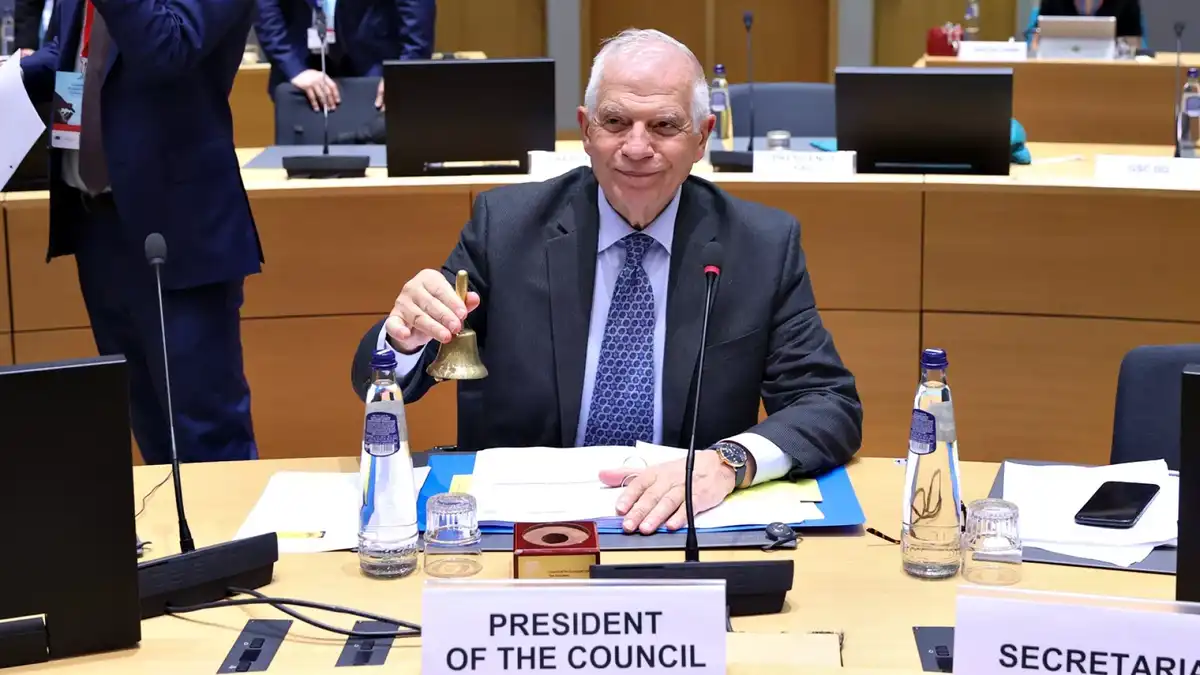
After weeks of disagreements, the European Union has reached a "political agreement" to sanction extremist Israeli settlers, announced Josep Borrell.


The breakthrough came during a meeting of European Union foreign ministers on Monday, where the issue was put on the table to give diplomacy another chance.


"We discussed sanctions against Hamas. And we agreed on sanctions against extremist settlers. This was not possible at the last Foreign Affairs Council. This time, it "is possible. A solid compromise has been found at the working level and I hope this will continue until full adoption soon", announced the head of foreign policy of the European Union, Josep Borrell, at the end of the meeting, "but the political agreement is there".


The sanctions have been in the works for months and were initially blocked by a handful of countries, including Germany, the Czech Republic and Austria, which are among Israel's strongest supporters in the European Union.


But the devastation of the Gaza Strip and continuing reports of violence by Israeli nationals against Palestinians lent urgency to the talks, which intensified further after the United States, The United Kingdom and France have taken the lead and sanctioned a handful of extremist settlers.


The final obstacle was Hungary, which, according to diplomats, indicated last week that it would lift the opposition, raising hopes of a breakthrough on Monday March 18, 2024.


The political agreement still needs to be adopted by ambassadors. Only then will the identities of the blacklisted settlers be known.


West Bank settlements are illegal under international law and are seen as a major obstacle to achieving lasting peace under the two-state solution.


The move is part of a careful diplomatic choreography that coincides with new sanctions against Hamas, which the European Union considers a terrorist organization.


In response to the October 7 attacks, which killed more than 1,100 civilians in Israel, the European Union established a specific sanctions regime targeting any person or entity suspected of supporting, materially or financially, Hamas and Islamic Jihad. 

Six financiers were added to the blacklist on January 19.


Open-air cemetery

Monday's foreign ministers' meeting came as the Integrated Food Security Classification Framework (IPC) released a new report highlighting the extreme severity of the humanitarian crisis in Gaza, where more than 31,000 people have been killed since the start of the Israeli offensive, according to Hamas.


According to the IPC, "the entire population of the Gaza Strip (2.23 million people) faces high levels of acute food insecurity", with half of the population classified as "catastrophe". ". In the northern part of the enclave, famine is “imminent”.


The military conflict, the scarcity of humanitarian aid and limited access to food, health care, water and sanitation are all factors that explain the deterioration of the situation.


"The escalation of hostilities has caused considerable damage to property and infrastructure essential for survival. Around 50% of buildings - and more than 70% in the northern governorates - have been damaged or destroyed," the report said.


Before heading to the meeting, EU foreign policy chief Josep Borrell painted a bleak picture of the situation on the ground.


"Gaza was before the war the largest open-air prison. Today it is the largest open-air cemetery. A cemetery for tens of thousands of people, but also a cemetery for many of the most important principles of humanitarian law,” Josep Borrell told journalists.


Josep Borrell also said he would propose a "political orientation debate" on the future of the EU-Israel association agreement, in force since 2000. Last month, Spain and Ireland, two of the Union's most critical voices towards Prime Minister Benjamin Netanyahu, joined forces and called for an "urgent review" of the agreement.


However, during the ministerial meeting, at least six member states spoke out against this revision: "Germany, Italy, Austria, the Czech Republic, Bulgaria and Hungary", several diplomats told Euronews , on condition of anonymity.


One diplomat noted that most states supported the idea of inviting Israeli Foreign Minister Yisrael Katz to discuss this and other issues in Brussels.

Source: Euronews


ARAB AND WORLD

Tue 02 Apr 2024 11:07 pm - Jerusalem Time

Israel renews its bombing of several towns in southern Lebanon

On Tuesday evening, Israeli aircraft renewed its bombing of several towns in southern Lebanon.


The Israeli warplanes launched raids on the towns of Ainata and Blida, while the occupation artillery targeted the towns of Hula and Shihin, coinciding with the flight of military and reconnaissance aircraft in the airspace of southern Lebanon.

ARAB AND WORLD

Tue 02 Apr 2024 11:03 pm - Jerusalem Time

Bloomberg: The shadow war between Israel and Iran has entered a new phase

The American Bloomberg Agency said that the shadow war between Israel and Iran has entered a new dangerous phase since the start of the war between the Israeli army and the Islamic Resistance Movement (Hamas) in the Gaza Strip on the seventh of last October.


She added that this shadow war has been shaping the Middle East for decades, highlighting that it is the most explosive among many other conflicts that have ravaged the region.


The agency's senior editor for Middle East affairs, Ethan Brunner, explained - in his report - that the joining of other Iranian-backed armed groups into the raging fighting between Israel and Hamas, "which is also supported" by Tehran - as he put it - has entered the region into a new dangerous phase of the conflict.


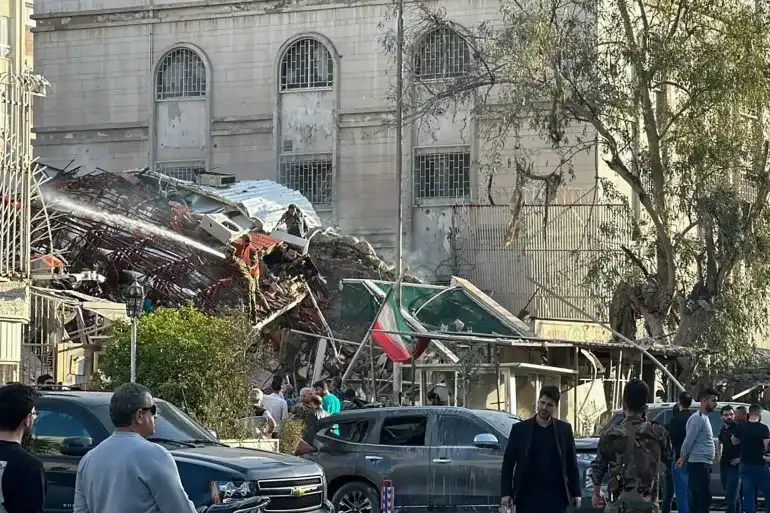
Iranian official television reported yesterday, Monday, that an Israeli air strike targeted buildings belonging to the Iranian consulate in the Syrian capital, Damascus, killing a senior commander in the Iranian Revolutionary Guard and others.


Although Israel and Iran were previously allies during the rule of Shah Mohammad Reza Pahlavi, that situation changed after the success of the Islamic Revolution led by Ayatollah Khomeini in overthrowing the previous regime in 1979. Since then, the new leaders in Iran have adopted a strong anti-Israel stance, describing it as An imperial power, according to a Bloomberg article.


For its part, Israel considers Iran's ability to manufacture nuclear weapons a threat to its existence, which is why it is believed to be behind a sabotage campaign against Tehran's nuclear program.


Israeli officials have hinted more than once that Tel Aviv will use air power to strike Iran's nuclear program if Tehran is on the verge of producing nuclear weapons, as it did before when it destroyed the Iraqi nuclear reactor in 1981, and bombed what was suspected to be a Syrian nuclear reactor in 2007. .


Older front

Broner described Lebanon as the oldest front in the confrontation between Israel and Iran, saying that the Hezbollah group was formed following the Israeli invasion of the south of the country in 1982.


He claimed that the party had since become “somewhat of a proxy” for the Iranian Revolutionary Guard, and had repeatedly engaged in battles with Israel; Most notably in the 2006 war.


The writer reviewed some of the events that took place in the region that reflect the nature of the relationship between Hezbollah and Iran, especially during the civil war in Syria, where Tehran supported its ally, President Bashar al-Assad, and facilitated the transfer of weapons to Hezbollah in Lebanon via Iraq and Syria.


He said that there is another aspect of the shadow war between Israel and Iran, which is evident in the retaliatory attacks since 2019 on commercial ships related to each of them.


Although both sides deny responsibility for these attacks, it is widely believed that the two countries are behind them.


Another front

In an escalation of the shadow war, the Bloomberg article referred to the attempts of the Ansar Allah group (Houthis) in Yemen to strike Israel with missiles and drones, and to target what it believes are “ships belonging to or linked to Israel” in the Red Sea.


Although Iran has mostly absorbed Israeli strikes on its interests in Syria, in 2018 its forces there fired a barrage of missiles towards Israeli positions in the occupied Golan Heights. Israel, for its part, responded with a much greater show of force, Brunner said.


The confrontations - or the shadow war, as the author of the article calls it - did not stop there, but rather extended to Israel assassinating 5 Iranian nuclear scientists since 2010, and launching numerous attacks on nuclear facilities inside Iran, which it pledged to respond to.


Source: Bloomberg

ARAB AND WORLD

Tue 02 Apr 2024 10:55 pm - Jerusalem Time

New York Times: Trump's call on Israel to end the war worries his allies

The New York Times said that the recent statements made by former US President Donald Trump, in which he urged an end to the war in Gaza without insisting on the release of Israeli detainees first, were another departure from conservative support for Israeli Prime Minister Benjamin Netanyahu.


The newspaper reviewed - in a report written by Jonathan Swan - what two Israeli journalists said who traveled to Florida in the hope of obtaining a strong expression from Trump of his support for their country’s war in Gaza, but what they heard, as they say, “shocked us to the core.”


Ariel Kahane, a right-wing settler and chief diplomatic correspondent for the "Israel Today" newspaper, said, "Both US presidential candidates, current President Joe Biden and Trump, are turning their backs on Israel."


Annoying message

What did Trump say that worried Kahane? The two journalists said that Israel had begun to lose popular support for its attack on Gaza, that images of destruction were damaging to Israel's global image, and that Netanyahu must end his war soon, because such Biden-worthy statements are not the encouragement Netanyahu was expecting from Republicans in Washington.


Trump told reporters, "You have to end your war. You have to get it done. We have to reach peace. We cannot allow this to happen." These are statements that seem to have bothered Kahane more than Biden's warnings to Israel - according to the newspaper - especially since Trump did not prepare for his call. Israel to end the war by insisting on the release of detainees.


Kahane wrote, “Trump overtook Biden to the left when he expressed his willingness to stop this war so that Israel could return to the great country it was before,” stressing that “there is no way to embellish, diminish, or cover up this problematic message.”


Are they wrong interpretations?

Although Trump’s aides insist that the interpretation is wrong, and that what their candidate means is “to fully support Israel’s right to defend itself and eliminate the terrorist threat,” it is not possible - according to the newspaper - to circumvent the apparent division between Trump and congressional Republicans who are competing to show support. To the Netanyahu government.


The newspaper pointed out that what Trump told the newspaper "Israel Today" is only the latest in a long series of statements he made to undermine Netanyahu, who has not yet been forgiven for congratulating Biden as the winner of the 2020 elections.


Trump and Netanyahu

In 2021, Trump told a journalist that he had concluded that Netanyahu “never wants peace” with the Palestinians. He also criticized Netanyahu and the Israeli intelligence services in his first reaction to the October 7 attack, and his advisers even privately implored him to correct his comments.


Right-wing supporters of Israel, and Israelis like Kahane, analyze every word of Trump's statements, fearing that he will not be an unreliable ally, unlike he was in his first term, when he gave Netanyahu almost everything he wanted, including moving the US embassy to Jerusalem and recognizing Israel's sovereignty over the country. Golan Heights.


“Those who support Trump and strongly support Israel's efforts to win the war need to understand that when the administration speaks out on both sides at a critical moment, it creates a sense of instability,” said John Podhoretz, editor-in-chief of Commentary magazine and former Ronald Reagan speechwriter.


Trump does not go beyond words

Podhoretz explained, "The only difference between Trump and Biden is that Biden's actions match his words. All Trump does is talk, and he is not making any policy that would make anyone feel comfortable."


For his part, Trump's former ambassador to Israel, David Friedman, insisted in an interview that people are misreading Trump's statements, pointing out that Kahane, despite his respect for him, exaggerated in interpreting Trump's statements, and said, "I understand the fear of Republican isolationism, because there is There is a movement within the Republican Party moving in this direction, but I heard him (Trump) saying, “Complete the mission, defeat it (Hamas) decisively, defeat it as quickly as possible.” And then move on."


Some of Trump's former advisors filled the policy vacuum with their own ideas for resolving the conflict - as the newspaper says - and his son-in-law Jared Kushner said that "the Gaza waterfront could be of great value" and that the Palestinians should be "removed from it." Friedman also suggested that Israel demand full sovereignty over it. The West Bank, which permanently ends the possibility of a two-state solution, while depriving the Palestinians of citizenship.


However, it is not known whether Trump will support these ideas, even though he has long clung to the possibility of reaching a grand deal between Israel and the Palestinians, and insisted that he alone is capable of brokering the “deal of the century,” even if he acted unbalanced in favor of Israel while in office. To the point that the two-state solution he presented was not realistic at all.


Source: New York Times

PALESTINE

Tue 02 Apr 2024 10:51 pm - Jerusalem Time

Founder of “International Kitchen”: “Israel” must stop its random crimes

The founder of the “World Central Kitchen” organization, Spanish chef José Andrés, called on the international community on Tuesday to “stop Israel’s indiscriminate crimes.”


Andres said, in a post on social media platforms, on Tuesday, that he is heartbroken and feels sorry for the families of the International Kitchen employees who lost their lives due to the Israeli strike, yesterday, Monday.


He added: “These people...the angels...are not anonymous, they are not without names, they are colleagues I worked with in Ukraine, Gaza, Turkey, Morocco, the Bahamas, and Indonesia.”


He addressed the international community, saying: “The indiscriminate crimes committed by the Israeli government must be stopped.”


He stressed that the Israeli government must stop restricting humanitarian aid, killing civilians and aid workers, and using food as a weapon, and “no more innocent lives should be lost.”


He added, "Peace begins with our common humanity. It must begin now."


On Monday evening, the Israeli army targeted the “International Kitchen” convoy in Deir al-Balah in the central Gaza Strip, killing 7 people who held the nationalities of Australia, Poland, Britain, the United States, Canada, and Palestine.


Earlier Tuesday, the organization announced the suspension of its operations to transport humanitarian aid in Gaza, expressing its feeling of “shock” at the killing of 7 members of its team in an Israeli army raid on Gaza.


The organization explained that “despite coordination with the Israeli army, the convoy was bombed while leaving the Deir al-Balah warehouse (central Gaza Strip).”


Israeli Prime Minister Benjamin Netanyahu acknowledged on Tuesday that the occupation army “unintentionally” killed seven aid workers in an air strike on the Gaza Strip, according to his claim.


Since Monday evening, Arab and international condemnations have continued for targeting international aid workers while they were trying to mitigate the effects of the “starvation war” practiced by Israel on Gaza, in addition to the catastrophic destruction it inflicted on the Strip over a period of 6 months.

PALESTINE

Tue 02 Apr 2024 9:40 pm - Jerusalem Time

West Bank: Israeli forces demolished houses and conduct arrests in Hebron

Today, Tuesday, Israeli forces demolished two houses in the town of Al-Samou, south of Hebron, arrested a citizen and his two sons, and attacked citizens in Masafer Yatta.


Local sources said that the Israeli forces demolished two brick houses in Khirbet Al-Adas, owned by Amal Hamad Abu Awad and Khalaf Abdel Aziz Mahariq.


The Israeli forces also arrested the citizen Mahmoud Khalil and his two sons, Osama and Khalil, from the village of Susiya. They also attacked the citizens while they were on their lands, during which a young man from the Abu Qubaita family was injured in the face, and others suffered bruises and bruises.

ARAB AND WORLD

Tue 02 Apr 2024 9:11 pm - Jerusalem Time

The King of Jordan and the President Abbas discuss developments in Gaza

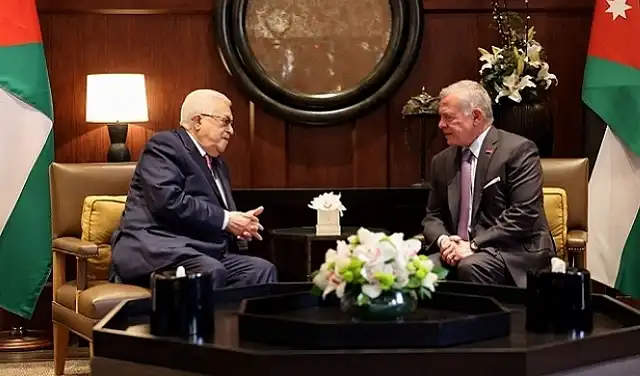
Today, Tuesday, King Abdullah II of Jordan discussed with Palestinian President Mahmoud Abbas the “dangerous” developments in the Gaza Strip, in light of the Israeli war that has been ongoing for 6 months.


This came during a phone call that King Abdullah received from Abbas, according to a statement by the Jordanian Royal Court.


The statement stated that the call "addressed the dangerous developments in Gaza," while King Abdullah stressed "the necessity of reaching an immediate and permanent ceasefire, protecting civilians, and ensuring adequate and sustainable access to aid."


According to the statement, “President Abbas appreciated Jordan’s role, under the leadership of King Abdullah, in standing by the Palestinian people and supporting them in obtaining their full legitimate rights. He appreciated his firm stances and tireless efforts to stop the war on Gaza, reject the displacement of the Palestinians, and preserve and protect the Islamic and Christian sanctities in Jerusalem through custodianship.” The Hashemites are on it.”


Since October 7, 2023, Israel has been waging a devastating war on the Gaza Strip with American support, leaving tens of thousands of civilian casualties, most of them children and women, and massive destruction, subjecting Israel to trial before the International Court of Justice. On charges of committing "genocide".

PALESTINE

Tue 02 Apr 2024 9:07 pm - Jerusalem Time

Hamas: Netanyahu’s statements regarding formulating a new proposal are evasive “to escape internal pressures”

Hamas spokesman Jihad Taha said that all the Israeli negotiating delegation wants is to “buy time,” stressing that this “demonstrates a lack of seriousness and eagerness to continue the aggression for the personal and political goals of Prime Minister Benjamin Netanyahu.”


This came in statements made by Taha in response to a statement issued by Netanyahu’s office, on behalf of the Mossad, and he said that “in the framework of the talks in Cairo, the mediators drafted a new proposal (waiting) for Hamas’ response,” without revealing the details of the alleged new proposal.


While the statement indicated that the Israeli negotiating delegation, which included representatives of the Mossad, Shin Bet, and the Israeli army, held “intensive talks” during this round, it said that Israel expects the mediators to “make a greater effort” to pressure Hamas.


He claimed that "the State of Israel continues to make all necessary efforts to release the hostages from the grip of Hamas and return them to Israel," and pointed out that "Egyptian mediation is useful in pushing the negotiations forward with the aim of reaching an agreement."


At the same time, the Hamas spokesman affirmed that, “In any case, the Hamas movement is open to and studies all initiatives and proposals, which are based on the principles mentioned, with international guarantees and obligations in that regard.”

He added: “There is no doubt that the Egyptian-Qatari efforts are continuing to reach an agreement between the two sides, as the mediators are trying to bring viewpoints closer and address all controversial issues,” stressing that “Hamas’ principles are not new in this, which are a ceasefire, the return of the displaced, withdrawal, and the entry of convoys.” Relief services for all parts of the sector.


A continuation of evasion by Netanyahu and his government

Al-Arabi Al-Jadeed newspaper quoted an unnamed Hamas leader as saying, “The announcement is a continuation of the evasion pursued by the prime minister of the Israeli government.”


He stated, "What is happening is that Netanyahu and the extreme right are once again trying to escape internal pressure, with the escalation of demonstrations in Tel Aviv against them due to their failure to take the prisoner recovery issue seriously."


He pointed out that "it has become commonplace that whenever the pressure on Netanyahu from the families of the prisoners and the Israeli street increases, he tries (falsely) to pass the opposite messages by responding to the pressure and throwing the ball in the resistance's court."


He added that Netanyahu "wants to tell the Israeli street that we have responded to you, and that the resistance is the one that rejects what we proposed, and that is not true, as what was proposed does not carry a real change in line with the determinants announced by the resistance."


The same source said, "What they are talking about as a new scenario is nothing more than a slight increase in the number of women and children who can be returned to the northern Gaza Strip, and not what the resistance is adhering to is an unconditional number for all displaced people, and that families should be whole, not women and children."


He pointed out that "what they say is a new scenario, which includes among its details a preliminary truce during the days of Eid, as part of pressure on the resistance to accept the proposal that does not meet any of the principles that the resistance specified regarding the ceasefire and prisoner exchange agreement."

PALESTINE

Tue 02 Apr 2024 8:05 pm - Jerusalem Time

War on Gaza: Deaths and wounded in an Israeli raid on the Nuseirat camp

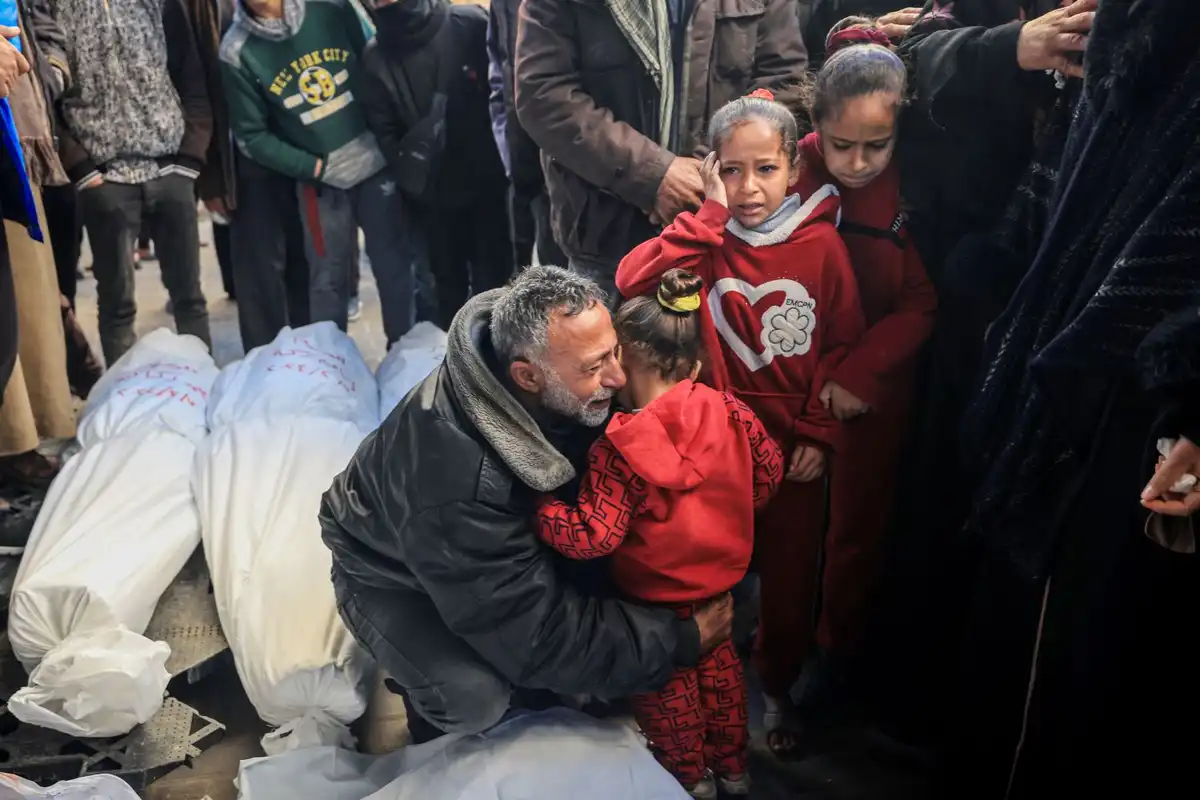
Six citizens, including two women and a child, were killed, and others were injured, when the Israeli aircraft bombed a residential apartment in the Nuseirat camp in the central Gaza Strip.


Local sources reported that 6 citizens, including two women and a child, were killed, and others were injured, in an Israeli raid that targeted a residential apartment for the Al-Muqayd family in Al-Ittihad Tower 2, west of Al-Nuseirat Camp.


The Israeli aircraft launched raids on the Al-Zaytoun neighborhood, southeast of Gaza City, and the Israeli forces also fired bullets at citizens’ homes in the Sheikh Ajlin neighborhood, southwest of the city.


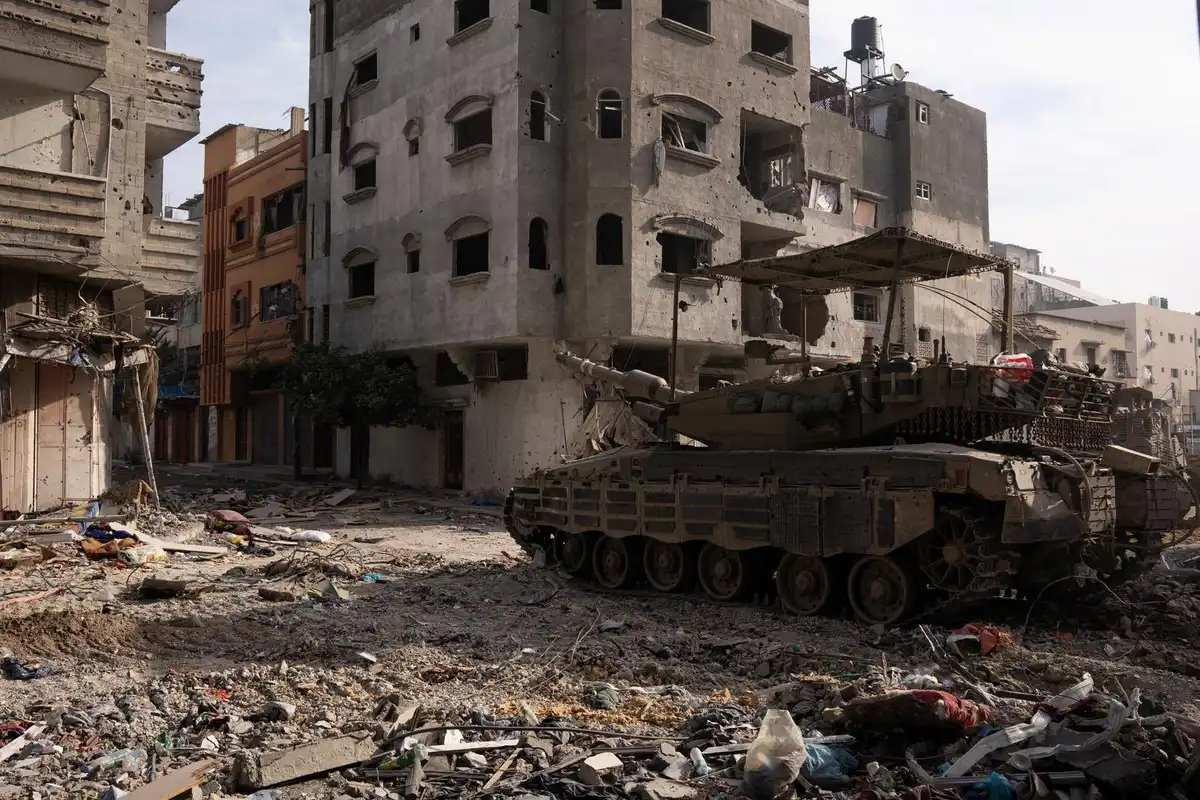
The Israeli forces blew up residential homes east of the city of Khan Yunis, south of the Gaza Strip, in conjunction with intense Israeli artillery shelling of the Al-Amal neighborhood and its environs in the city.


In a related context, ambulance and rescue crews recovered the bodies of 10 martyrs from under the rubble of the Zorob family home west of Rafah, in the southern Gaza Strip, which was bombed by Israeli Israeli aircraft last night.


In an infinite toll, the number of martyrs in the Gaza Strip reached 32,916, the majority of whom were children and women, and the number of wounded was 75,494, since the start of the Israeli aggression on the seventh of last October.

PALESTINE

Tue 02 Apr 2024 6:00 pm - Jerusalem Time

World Health Organization: An increasing number of newborns are dying in Gaza

The number of deaths among newborns in the Gaza Strip is increasing, as infants are born at lower than normal weight, according to the World Health Organization.


The spokeswoman for the World Health Organization, Margaret Harris, said in a press briefing in Geneva, today, Tuesday, that “various doctors, specifically in maternity hospitals, are reporting a significant increase in the number of children born with low birth weight.”


She stressed that "they do not survive the postpartum period, given that they were born very young."

She added that at Kamal Adwan Medical Complex, the only children's hospital in northern Gaza, "at least 15 malnourished children enter (the facility) every day, and the needs are increasing more sharply than ever before."


The World Health Organization cannot provide accurate statistics on deaths among children as a result of the devastation that befell the Gaza Strip after six months of war between Israel and Hamas, as Harris indicated that many people do not even go to the hospital.


Referring to a patient stabilization center established last week, she said that the patients sleeping in the center are usually children suffering from diseases and malnutrition.


On Monday, the Israeli army withdrew from the Al-Shifa Medical Complex in Gaza City after a two-month military operation that destroyed most parts of the complex, where bodies were scattered. The complex was the largest hospital in the Strip.


Harris reported that the Shifa Complex “is no longer able to function in any way as a hospital.”

She added, "Destroying Al-Shifa means uprooting the heart of the health system," noting that it was a major hospital with 750 beds, 25 surgical operating rooms, and 30 intensive care wards.

OPINIONS

Tue 02 Apr 2024 5:47 pm - Jerusalem Time

Western obsession with Netanyahu is misplaced. Most Israelis want war to go on

Middle East Eye

Middle East Eye

Opinion Writer

By Antony Loewenstein


Getting rid of Netanyahu would solve nothing. He might be personally unpopular among Israelis, but his policies in Gaza and the West Bank enjoy huge public support

Israel has a "refugee problem". So wrote the editor-in-chief of Israeli newspaper Haaretz in a recent article.

Aluf Benn explained that Israeli Prime Minister Benjamin Netanyahu was on the verge of having to decide how to manage the huge number of Palestinians who were forcibly displaced from northern Gaza after Israel invaded the area after 7 October 2023.

“The issue,” Benn wrote, “is whether Israel will allow Palestinians to return to the northern Gaza Strip, from which they were expelled at the beginning of the war, or whether they will be permanently displaced from there, leaving the area under Israeli control.”

Note the use of language and the passivity of describing ethnic cleansing (though it’s unclear if Benn himself has a strong opinion about the subject).

Haaretz is a prominent and daily opponent of Netanyahu, but seems torn between the mainstream Israeli view of the Gaza onslaught, publishing a slew of nationalistic and militaristic stories in the last six months, and a more humane position that correctly understands Israel is committing horrific abuses in Gaza that will stain the country forever. 


Benn’s analysis frames the debate in the Israeli political elite as between two irreconcilable positions. The “centrist parties” in the country want to make a deal with Hamas and get the Israeli hostages released, while the right prefers to ignore the fate of the hostages and instead focus on re-establishing colonial outposts in the north of Gaza, a wish of many in Netanyahu’s far-right coalition.

While this is true to some extent, it also wilfully ignores the political shift that’s occurred in Israel in the last few decades, long before 7 October. Netanyahu has been prime minister for longer than other Israeli leaders since the country’s birth in 1948 and is increasingly unpopular, but many of his policies in Gaza and the occupied West Bank enjoy huge Israeli support.

West's obsession with Netanyahu

The problem in Israel isn’t solely Netanyahu. He’s the symptom of a major larger societal shift. Replacing him with another carbon copy will change little for the millions of Palestinians who live under a brutal military occupation.

One possible successor, Benny Gantz, has spent his career proudly promoting the destruction he’s caused in Gaza in previous wars. 

There’s long been a western obsession with Netanyahu, wrongly believing that he’s the impediment to a more humane "Jewish state". It’s the same mistake recently made by US President Joe Biden and Senate Leader Chuck Schumer, who argued that Netanyahu was blocking any prospect of peace in the region.

It’s his belligerence, we’re told, that makes ending the Gaza onslaught impossible.

While it’s undeniably true that Netanyahu wants to prolong the war for as long as possible, desperate to avoid a public reckoning for the profound intelligence and military failures on 7 October, it’s delusional to believe that his removal is the answer.

When cautiously questioned by CNN recently, Netanyahu said that he wasn’t some fringe player in Israel but a leader who spoke for many Israelis, pursuing policies in Gaza with broad mainstream backing.

He was right, and ignoring this reality doesn’t make it go away. 

Undeniable truths

Back in 2019, I wrote for the Jewish Forward outlet in the US that anti-Palestinian racism was ubiquitous in Israel, undeniably exploding since 7 October, and Netanyahu had simply been a reflection of contemporary Israel. 

A 2016 poll found that close to half of Jewish citizens wouldn’t live in the same apartment blocks as Arabs. Fast forward to early 2024 and 68 percent of Israeli Jews opposed facilitating humanitarian aid to Gaza, according to an Israeli Democracy Institute study.

This is at a time when Palestinians in Gaza are starving to death due to Israel’s deliberate policy of withholding lifesaving aid into the besieged territory. 

As far back as a 2012 poll, a majority of Israeli Jews opposed voting rights for Arabs if the Jewish state annexed the West Bank, and one-third of Israelis wanted Arabs in Israel to be denied the right to vote. 

In other words, apartheid was the Israeli vision for Palestine.  

Rather than acknowledging these undeniable truths, many in the western media peddle the fiction that Israelis crave democracy and just need a bold leader to lead them out of the morass. 

Enter the New York Times columnist Thomas Friedman. He’s a former journalist who has grossly misjudged every major US action since 9/11, backing the US-led “war on terror” for years in Afghanistan and Iraq.

In 2019, he told an audience in New York that, “Israel had me at hello… In times of crisis, I know where I will be. When the Jewish state is under threat.”

Since 7 October, he’s become one of the most outspoken opponents of Netanyahu, constantly telling his readers that the Israeli leader is a disaster for the Jewish state. Friedman’s vision for the future involves an Israeli alliance with the corrupt and unpopular Palestinian Authority in the West Bank to build the conditions for a two-state solution. 

In denial

But who exactly is he talking to? The vast bulk of Israeli Jews have no interest in working with Palestinians, and Israel’s far-right settler movement successfully hijacked the state’s institutions years ago. 

It often feels like Friedman is in denial about a country, Israel, that he’s spent decades fawning over and can’t accept that it’s become in large part wholly opposed to Palestinian self-determination or even equal rights.

ARAB AND WORLD

Tue 02 Apr 2024 5:30 pm - Jerusalem Time

The Guardian: Are Israel's allies really retreating from their support?

The British newspaper The Guardian confirmed in a lengthy report that the United States allowing the ceasefire resolution to be passed at the United Nations was a clear warning to Israel that its policies no longer enjoy support as in the beginning.


The report explained that the United States, which was Israel's permanent shield in the United Nations, refused to use its veto, which allowed the Council's demand for an immediate truce to be passed, although it did not include any condemnation of the massacre committed by Hamas against the Israelis, which sparked the war.


It continued that the message was clear, and its content was that the administration of President Joe Biden is no longer willing to allow the credibility of the United States on the world stage to disappear by defending the Israeli government, which “did not heed its calls to stop bombing civilian areas and open the gates to humanitarian aid.”


The report added that the Palestinian envoy to the Security Council, Riyad Mansour, said about that moment, “This must be a turning point.” According to the Guardian, further evidence emerged in the next few days that the West was changing its position, at least in terms of its rhetoric.


A shift in discourse

On Tuesday, German Foreign Minister Annalena Baerbock announced that Berlin would send a delegation to clearly remind Israel of its commitment to the Geneva Conventions, warning it not to go ahead with the planned attack on the city of Rafah, in the far south of the Gaza Strip. This is considered a noticeable change in tone from Germany, which was the second largest supporter and supplier of weapons to Israel.


Meanwhile, British Foreign Secretary David Cameron has been increasing his criticism of Israel – particularly for blocking aid from reaching Gaza – while at the same time being very careful to dodge answering questions about whether the Foreign Office now believes Benjamin Netanyahu's government is breaking the law. International Humanitarian.


The attempt to achieve this balance has created real and increasingly visible tensions within the British government and the Conservative Party.


This clear shift in international positions has not changed anything yet for the 2.3 million people trapped in Gaza, and the bombing and sniping have not stopped. Politicians may be recalibrating their calculations, but not quickly enough for those in the line of fire, the Guardian confirms.


The supply of weapons to Israel by the United States also continued. Four days after the issuance of the Security Council resolution, the Washington Post announced more US arms shipments, including 1,800 Mark 84 bombs that weigh 2,000 pounds, which are huge munitions that caused... Huge losses of life and property during the ongoing war on Gaza.


Ineffective threats

The Biden administration has made clear to its allies that threatening to stop arms supplies to Israel as a means of pressure is not on the table.


In Britain, there is a growing feeling that legal issues and issues related to arms sales cannot be avoided for much longer.


The Observer newspaper quoted the chair of the Conservative Foreign Affairs Committee, Alicia Cairns - a former employee at the Foreign Office and the Ministry of Defense - at a fundraising event for the Conservative Party, in which she said that the British Foreign Office was legally given advice stating that Israel had violated international humanitarian law, but the ministry chose not to publish it. on public.


The book indicated that Cameron evaded questions about whether he had seen such legal advice, while appearing before a parliamentary committee, saying, “I cannot remember every piece of paper that was put in front of me. I do not want to answer that question.”


The Guardian adds that, as is the case in the United States, the United Kingdom's tone may shift to a more critical tone toward Israel.


In contrast, Netanyahu continues to implement his own plans, as he has proven that he is able to withstand American and other international pressures, and in doing so he is supported by popular support, as the percentage of support for the war in Gaza currently stands at around 80%.


The Guardian adds that what is most worrying about Washington's hopes of containing the conflict is the presence of more than 70% of Israeli popular support for a large-scale military operation against Hezbollah in Lebanon, which Washington has so far been able to thwart.


Source: Guardian

ARAB AND WORLD

Tue 02 Apr 2024 5:27 pm - Jerusalem Time

Independent: Netanyahu is leading Israel to a bloody dead end and he must get out

The Independent newspaper argued in its editorial that Israeli Prime Minister Benjamin Netanyahu is leading Israel towards a bloody dead end. It said that the massive demonstrations that Israel witnessed in recent days show the extent of opposition to the way it managed this cruel war in Gaza and its military consequences.


It commented, saying that the killing of 1,200 Israelis and the capture of 232 others led to the world “practically” standing with Israel, and all Israelis “practically” supporting Netanyahu’s government, and the latter even called on his rival, Benny Gantz, to join the war government.


It said that the people were united by grief to defend themselves against what she described as “the worst anti-Semitic crime since World War II!” And as a divisive man, he received support at home to bring the prisoners and neutralize Hamas.


This is no longer the case. The massive demonstrations in Israel, in which thousands of Israelis participated, calling for Netanyahu’s removal from the position of prime minister, reveal the extent of the opposition to him and his cruel war in Gaza.


Opinion polls in Israel reflect the despair expressed by the demonstrators regarding the way the war was being conducted. The Prime Minister is unpopular. More than 32,000 Palestinians were killed and 74,000 wounded, a large number of them children and women, according to the Gaza Ministry of Health.


The conflict also harmed regional stability and Israel's security, isolating it internationally. And more than this, according to the point of view of the demonstrators, who are the families of the prisoners who are still in Gaza, many of whom died, and some of whom were killed by fire from the same forces that were sent to rescue them. This is an intolerable situation, and it does not seem that Netanyahu can solve it. Despite starving Palestinian civilians, children orphaned by war, hospitals reduced to charred ruins, destitution and tens of thousands who have died, Netanyahu is losing the war. Only a small number of Hamas leaders were killed, creating a new generation of oppressed Palestinians in Gaza, ready for a new round of fighting. Netanyahu was able to alienate Israel's most important and strongest ally, the United States.


It is fair to say that anger against the Israeli government in the West and the Islamic world is not unprecedented. The shocking defeat of Turkish President Recep Tayyip Erdogan in the municipal elections stems from dissatisfaction with his policy towards Israel.


When the President of the United States and the Israeli Prime Minister are talking little, it is time for the people of Israel to understand the damage Netanyahu has done to their country. A large number of Western leaders are discussing reducing support for Israel in order to feel comfortable.


The newspaper said that if Netanyahu left a will for his successor, if the worst happened to him (after he underwent surgery that required complete anesthesia), it would be to continue the campaign against Rafah.


Always stubborn, Netanyahu pits himself against not only Hamas, but against innocent civilians in Gaza, Western public opinion, and now his own citizens.


Hamas itself will not believe that, after six months of attacks, it has lured Netanyahu into its trap, and it does not care, as the newspaper claims, about the well-being of its people like Netanyahu, and this is another Palestinian tragedy.


However, Netanyahu seems unable to understand the basic truth, and the fact that it will not surrender to him no matter how many Palestinians die. Hamas is interested in instability and creating chaos to serve its interests. Unfortunately, it succeeded in this, and it has new allies in Yemen, the Houthi gangs, which forced maritime navigation to divert from the Suez Canal. Hamas sabotaged diplomatic efforts to normalize relations between Israel and its neighbors from Morocco to the United Arab Emirates. Currently, the Abraham Accords are dead, and Netanyahu's dream of a regional economic bloc has faded with them.

America is concerned about the return of Iranian influence and the terrorist activities it supports in the region, as well as its close relationship with Russia. Western countries are discussing ways to push Israel towards a ceasefire that is in its interest, even if they make concessions to Hamas and its sustainability. The newspaper claims that “Hamas” does not want to stop the war that serves its geopolitical interests. Once again, Netanyahu makes it easier for the extremist group to reject his conditions.


America now refuses to use its veto automatically to protect an ally that it believes is out of control. Israel must, for the first time, answer charges of genocide before the International Court of Justice. The Israelis now rose up against their government.


The newspaper believes that the fact that the conflict has not spread to the West Bank and Lebanon saves Netanyahu and his people from a dangerous expansion of the war.


Tactically, Netanyahu is leading his people towards a bloody dead end. The deep problem is that he has no vision for forming a framework for peaceful coexistence with the Palestinians, and he rejects the two-state solution. There are no easy answers to conflicts in the Middle East. But Netanyahu's lack of interest in a solution is unusual, which is why he should not lead Israel.


PALESTINE

Tue 02 Apr 2024 5:16 pm - Jerusalem Time

346 thousand children in Gaza under the age of five face the risk of malnutrition

Save the Children warned on Tuesday that 346,000 children under the age of five in the Gaza Strip were exposed to malnutrition, in light of the continued deterioration of health conditions as a result of the Israeli siege.


The global organization said in a statement, "Gaza's 346,000 children under the age of five are most at risk of malnutrition, with the catastrophic situation across the Strip rapidly deteriorating."


The organization explained that current estimates indicate that “one in three children under the age of two in northern Gaza suffers from wasting, compared to one in six children last January, according to the Global Nutrition Group.”


It stated that children suffering from malnutrition in Gaza "do not receive the food and medical care they need to survive in light of the prevention of food entry and the collapse of the health system."


The World Health Organization continuously warns of the consequences of the collapse of the health system in Gaza as a result of the ongoing Israeli war on the Strip for more than half a year.


Since the start of its war on Gaza on October 7, Israeli forces have targeted medical facilities and hospitals in various areas of the Strip with systematic and continuous attacks, causing the destruction of the health system, a humanitarian catastrophe, and the deterioration of the infrastructure.


Israel continues the war despite the issuance of a UN Security Council resolution demanding an immediate ceasefire during Ramadan, and despite its appearance before the International Court of Justice on charges of committing "genocide."


PALESTINE

Tue 02 Apr 2024 3:13 pm - Jerusalem Time

Updated:: Israeli settlers attack citizens in Nablus and Hebron

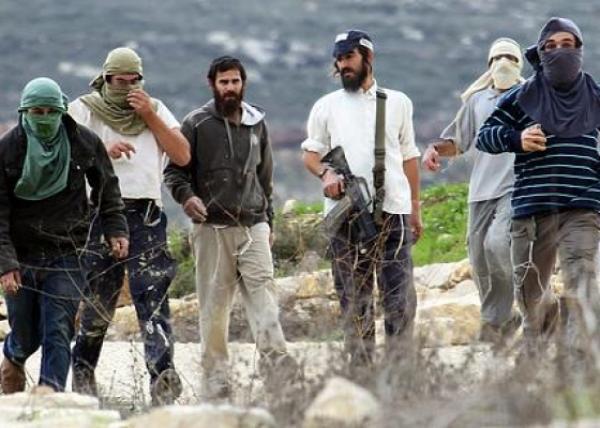
Today, Tuesday, settlers, under the protection of the Israeli forces, attacked a woman, farmers, and livestock herders in Masafer Yatta, south of Hebron.


According to local sources, the settlers of "Givat Yair" and "Susya", which were established on citizens' lands and property in Msafer and Shifa Yatta, attacked the citizen Samiha Ismail Salama Al-Nawajaa (50 years old), causing her to suffer bruises and bruises, after which she was treated in the field.


Heavily armed settlers also attacked citizens, insulted them with obscene language, and chased away livestock herders and farmers.


In Nablus, settlers attacked citizens' vehicles on the road near the "Yitzhar" settlement, after engaging in orgies.


There was a heavy presence of Israeli soldiers on the same street, which has become almost closed to vehicles bearing Palestinian registration plates.

PALESTINE

Tue 02 Apr 2024 2:37 pm - Jerusalem Time

Netanyahu's office: The mediators have developed a new proposal, awaiting Hamas' response

Israel announced that its security negotiating delegation returned today, Tuesday, from the Egyptian capital, where it held a new round of talks in an attempt to conclude a prisoner exchange deal with Hamas under the condition of an agreement on a ceasefire in the Gaza Strip.


The Israeli government said, in a statement issued by the office of its president, Benjamin Netanyahu, that “in the framework of the talks in Cairo, the mediators drafted a new proposal (waiting) for Hamas’ response,” without revealing the details of the alleged new proposal.


While it indicated that the Israeli negotiating delegation, which included representatives of the Mossad, Shin Bet, and the Israeli army, held “intensive talks” during this round, the statement said that Israel expects the mediators to “make a greater effort” to pressure Hamas.


It claimed that "the State of Israel continues to make all necessary efforts to release the hostages from the grip of Hamas and return them to Israel," and pointed out that "Egyptian mediation is useful in pushing the negotiations forward with the aim of reaching an agreement."

ARAB AND WORLD

Tue 02 Apr 2024 2:10 pm - Jerusalem Time

Sullivan heads to Saudi Arabia this week to discuss prospects for Saudi-Israeli normalization

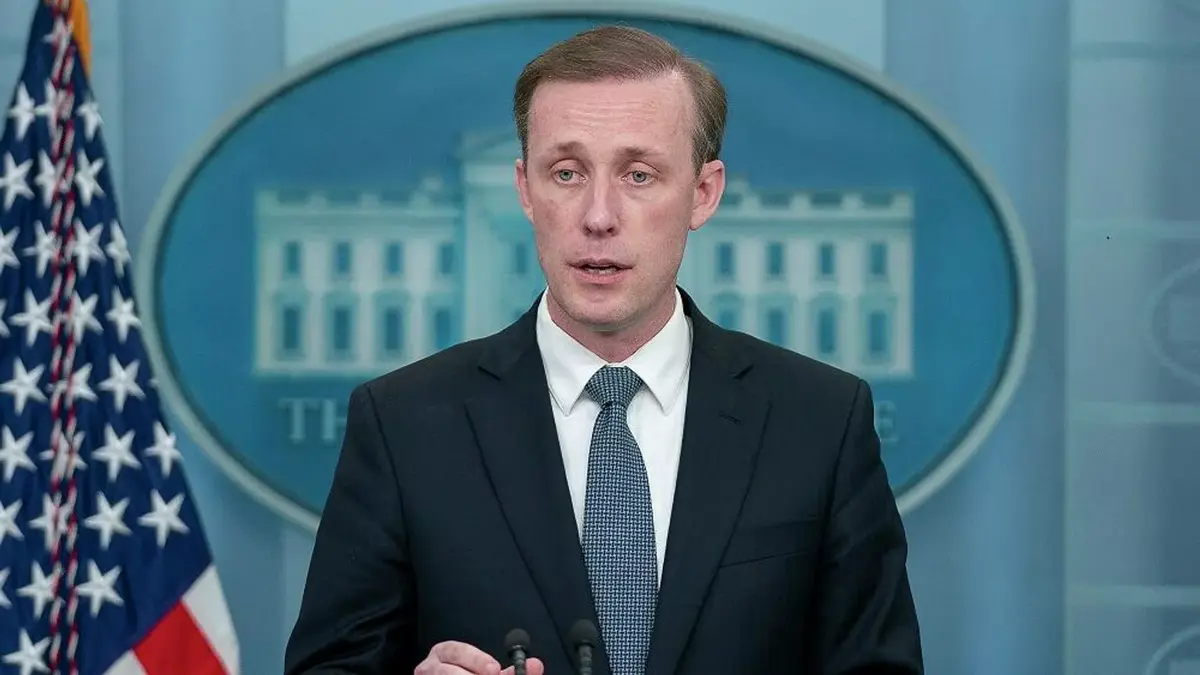
The website "Axios" revealed, today, Tuesday, that the US National Security Advisor, Jake Sullivan, is preparing to visit the Kingdom of Saudi Arabia this week, where he will meet with Crown Prince Mohammed bin Salman, to discuss a "potential huge deal" that includes normalization with Israel and a defense treaty between Washington and Riyadh. .


The website quoted four American and Israeli officials as saying that Sullivan's visit "comes as part of the White House's efforts to work on drafting a defense treaty between America and Saudi Arabia, and understandings related to the United States' support for a Saudi civil nuclear program."


According to the site's report, American officials hope to reach a "bilateral agreement" with Saudi Arabia during the visit, which will then be presented to the Prime Minister of Israel, Benjamin Netanyahu, noting that the Israeli side of the agreement "includes a commitment to a path that leads to a two-state solution."


Axios says that the White House refused to comment on the site, and that the Saudi embassy in Washington did not respond to a request from the site to comment on the issue.


According to the website, an Israeli official told him, “There has been significant progress in talks between the United States and Saudi Arabia on their draft defense treaty. They want to finalize their side of the deal before putting it on our table, and they are telling us: Accept it or leave it.”


The normalization talks stopped following Israel’s launch of its ongoing war since last October 7, which claimed the lives of 32 Palestinian citizens, most of them women and children, “but the talks have resumed in the past few months,” according to the site’s claim.


On Tuesday, Reuters quoted an American official as saying that Sullivan “intends to hold talks with the Saudi Crown Prince regarding this issue, but he does not expect to achieve a major breakthrough.”


A second American official said that Sullivan would conduct broad consultations on a number of matters, explaining: “He has not visited Saudi Arabia for a while and there is a lot that can be discussed.”


US Secretary of State, Anthony Blinken, said on March 21 that the United States and Saudi Arabia had made “good progress” in the talks on normalizing relations between the Kingdom and Israel, without providing a timetable for concluding an agreement.


US President Joe Biden said during a campaign fundraising event in New York last week that the Saudis are “ready to fully recognize Israel,” according to Axios.


Biden added: “But there must be a plan for Gaza, and there must be a path to reach a two-state solution. That should not happen today.”


Saudi Arabia, which does not recognize Israel, sets several conditions for normalization with it, including obtaining security guarantees from Washington and helping it develop a civilian nuclear program. It also confirmed its demand for the establishment of a Palestinian state, something it reaffirmed after Israel launched its war on the Gaza Strip.


Netanyahu rejects the establishment of a Palestinian state, and even boasts that he was the one who prevented the establishment of this state since the Oslo Accords, which prompted the American Jewish senator and head of the Democratic majority in the Senate to describe Netanyahu last month as an obstacle to peace.

PALESTINE

Tue 02 Apr 2024 11:48 am - Jerusalem Time

(Reuters): Palestinian Authority to push for vote this month on full United Nations membership

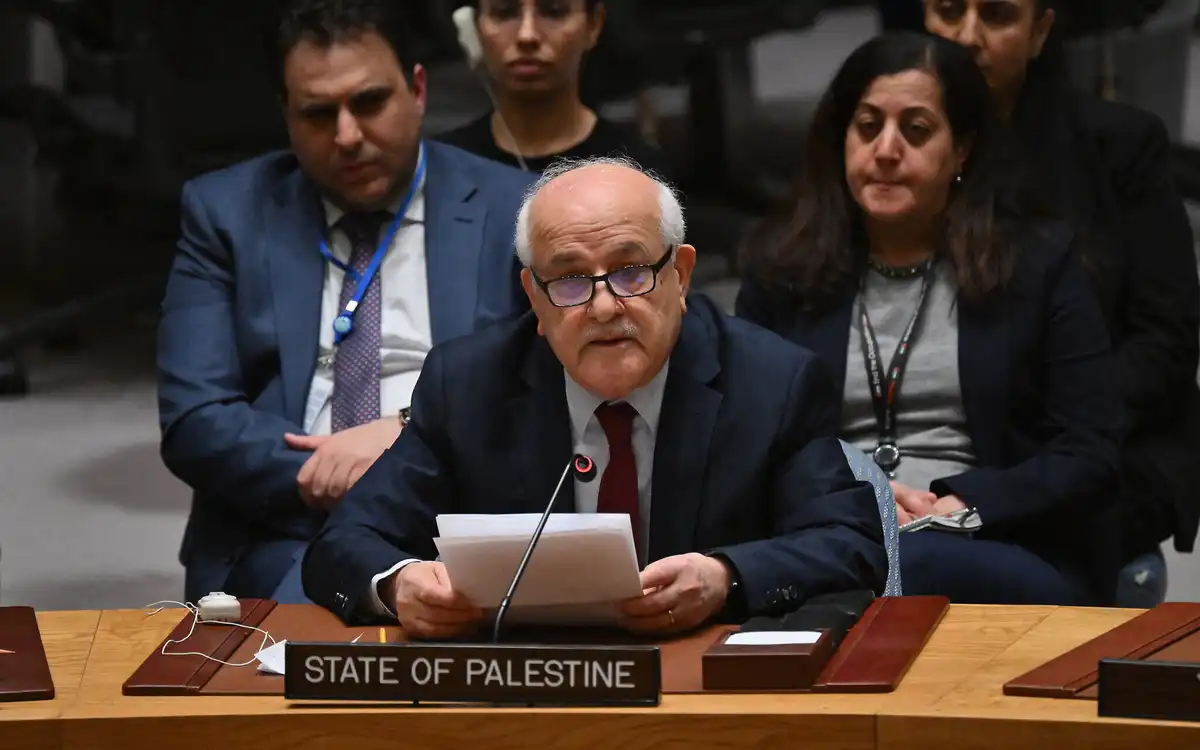
The Palestinian Permanent Observer to the United Nations, Riyad Mansour, told Reuters on Monday that the Palestinian Authority wants the United Nations Security Council to vote this month on full membership of the State of Palestine in the international organization, a step that could be thwarted by the United States of America, Israel’s ally.

Riyad Mansour, who has permanent observer status at the United Nations, announced the Palestinian plan as the war waged by Israel on the Gaza Strip approaches the completion of its sixth month, and the expansion of Israel’s settlement activity in the occupied West Bank.

Mansour told Reuters that the goal is for the Security Council to take a decision at a ministerial meeting scheduled to be held on April 18 regarding the Middle East, but a date for voting on it has not yet been set.

He stated that the Palestinian application submitted since 2011 for full membership is still pending because the 15-member council has not taken an official decision.

He added that the goal is to put the request to a vote in the Security Council this month.

In addition to efforts to end the war, global pressure is increasing to resume mediation efforts to reach a two-state solution to establish an independent Palestinian state alongside Israel.

The war began after Hamas fighters attacked Israel on October 7, which Israeli statistics indicate killed 1,200 and took 253 hostages.

Israel responded to the Hamas attack by imposing a complete siege on Gaza and then launched an air and ground attack that health authorities in Gaza say led to the death of more than 32,000 Palestinians.

United Nations approval:-

An application for full UN membership must be approved by the UN Security Council, where the United States can veto, and then approved by at least two-thirds of the 193-member General Assembly.

The US Mission to the United Nations has not yet responded to a request for comment.

A Security Council committee considered the Palestinian request in 2011 for a few weeks. But the committee did not reach a unanimous position, and the council never voted on a resolution recommending Palestinian membership.

Diplomats said at the time that the Palestinians did not receive enough support in the Security Council to make the United States need to use its veto. The resolution requires at least nine supportive votes and no veto from the United States, which said it opposes this step, or from Russia, China, France, or Britain, which are permanent members of the Security Council.

Instead of pressing for a council vote, due to the negative US stance on their request, the Palestinians went to the UN General Assembly seeking to become a non-member state with observer status. The Assembly agreed to raise Palestinian representation from “observer entity” to “non-member observer state” in November 2012, which implies recognition of it as a sovereign state.

Little progress has been made towards establishing a Palestinian state since the signing of the Oslo Accords between Israel and the Palestinian Authority in the early 1990s. Among the obstacles is the expansion of Israeli settlements.

The Palestinian Authority, headed by President Mahmoud Abbas, exercises limited self-rule in the West Bank, and Israel participated in the Oslo Accords. Hamas also carried out a separatist coup and excluded the Palestinian Authority in 2007 from administering the Gaza Strip.

Volker Türk, the United Nations High Commissioner for Human Rights, said last month that Israeli settlements threaten to eliminate any potential Palestinian state. He said that Israel's transfer of its population to the occupied territories amounts to a war crime.

The administration of US President Joe Biden said last February that Israel's expansion into West Bank settlements is inconsistent with international law, which indicates a reversal of the long-standing US policy on this issue, which the previous administration of Donald Trump deviated from.


New York-(Reuters)

OPINIONS

Tue 02 Apr 2024 11:40 am - Jerusalem Time

As war rages in Gaza, the West Bank has been transformed

Alencontre.org

Alencontre.org

Opinion Writer

By Gideon Levy and Alex Levac


Over the past six months, the occupied West Bank has undergone a metamorphosis. War broke out in the Gaza Strip, but the “punishment” inflicted on the West Bank for the events of October 7 was not long in coming. You don’t need to have a particularly keen eye to notice the revolution on the ground. It doesn't take much insight to understand that Israel and the settler communities have exploited the dark nightmare of war to alter the situation in the West Bank: to intensify the occupation, to expand the perimeters of settlements, to remove final limits in interactions with the Palestinian population and let them run wild, all far from the eyes of the world.


It is impossible to overestimate the depth and scale of the changes that have taken place in the West Bank in recent months. Most, if not all, of them are probably irreversible. The combination of a war waged against the Palestinians, albeit at a distance from the West Bank, a radical right-wing extremist government in which settlers occupy positions that give them decisive power over the occupation, the rise in power of armed and uniformed settler militias and the general indifference of public opinion has led to a new situation. In these circumstances, the vulnerability of the Palestinians only adds fuel to the fire. This massive fire rages, but everyone's gaze is directed far away, towards the killing fields between Gaza City and Rafah. However, perhaps even more than in Gaza, the repercussions of the revolution taking place in the West Bank will not be limited to this territory. They will infiltrate deeply into every corner of Israel.


Some changes are immediately visible to anyone traveling in the West Bank, others are less so. The West Bank is closed and besieged. Virtually every Palestinian town and village has some or even several access roads that have been closed. Indeed, most of the barred entrance doors, omnipresent in these localities, were locked by the Israeli Defense Forces as of October 8. With such a system of gates and other barriers, a total lockdown of the West Bank can be implemented in a short time. Result? Life has become intolerable for three million people. It's not just the time lost in prolonged travel from one place to another; it is also the fact that we never know if we will arrive at our destination following the painful waits and the indignities suffered at checkpoints.


In addition to the locked gates, there were dozens of ad hoc roadblocks erected by soldiers. They appear and disappear suddenly. When they are in place, traffic becomes a nightmare for any Palestinian who encounters them. The West Bank has gone back almost a quarter of a century, to the time of the second Intifada, but this time without the Intifada.

A friend whose 105-year-old father died this week – and who lives in a village near Tul Karm – has told family and friends not to bother with the custom of paying a visit from condolences, because traffic in and out of this city is from nightmare to impossibility due to the abundance of local checkpoints. Instead, he went to Ramallah for a day to receive visitors.


Some 150,000 Palestinians from the West Bank who were legally allowed to work in Israel have been barred from doing so since October 8. The consequences for the Palestinian (and Israeli) economy are obvious. Likewise, the consequences of the forced inactivity of tens of thousands of people are equally clear and predictable. Another source of income for many Palestinians – the olive harvest – has also been blocked by the war. The olive groves adjacent to the settlements are now completely inaccessible to Palestinians, not even through “coordination” with Israeli authorities, as was possible in previous years. The result: about a third of the crop remained on the trees at a time when most other income disappeared.


What is the direct link between the olive harvest in the West Bank and the war in Gaza? There is none, but the war apparently provided a great opportunity for the settlers and their partners in government. An opportunity that the West Bank settlers were only waiting for to mistreat Palestinians with impunity, make their lives intolerable, dispossess them and humiliate them until they flee or are driven out. Perhaps this is why the settlers seemed particularly joyful this week, on the occasion of the [March 23-24] holiday of Purim?


***


One of the most serious phenomena concerns Israeli authorities who prevent Palestinians from accessing and working on their land, sometimes in anticipation of expulsion. Dror Etkes of the non-governmental organization Kerem Navot, which monitors Israel's land policies in the occupied territories, estimates that Palestinians have been deprived of at least 100,000 dunams (25,000 acres, about 101 km2) of pasture land. and agricultural land since October 7 – and this is a conservative estimate, he adds.


At the same time, a silent transfer of population continues, little by little but systematically, in particular for the weakest inhabitants – those from pastoral communities, mainly – at the two poles of the West Bank: the Jordan Valley in the north and the South Hebron Hills on the other side. Dror Etkes, who has unrivaled knowledge of the settlements, notes that residents of 24 communities have been evicted or forced from their homes and lands due to settler terror since October 7. All residents of 18 of them fled, while in the other six, only a few residents felt forced to leave. A population transfer, albeit clandestine.


Several months ago, an article reported on one of these abandoned enclaves: It was heartbreaking to see the residents packing and loading their meager possessions into a few old pickup trucks, including their livestock, leaving, probably forever, the land on which they and their ancestors were born, heading towards an unknown world.


Another criminal act was revealed when we documented the confiscation of 700 sheep from their owners, carried out by settler-soldiers on the orders of the Jordan Valley Regional Council which technically has no coercive authority over local Palestinian residents . The group of poverty-stricken shepherds were forced to immediately pay 150,000 shekels (about $41,000) to get their flock back – a huge sum that went straight into the settlers' coffers. A few weeks later, Hagar Shezaf in Haaretz reported that the legal adviser to the Civil Administration – the local arm of the Israeli military government – declared the settlers' heinous and despicable action illegal.

The fact that hordes of settlers have donned IDF uniforms appears to have only increased their violence. In recent months, the wartime "emergency security squads" created in virtually every colony and outpost, as well as the mobilization of thousands of reservist settlers following a decree of emergency, apparently gave them the right to intensify their acts of violence against the Palestinians as lords of the land, ostensible representatives of the law and the state. Many Palestinians have described incidents in which settlers launched pogroms, arriving suddenly in uniform in off-road vehicles, sowing violence, making residents feel even more powerless. There is apparently no one to protect the pastoral communities, except for a handful of Israeli volunteers seeking justice.


Dror Etkes mentions at least 11 outposts established without permits in the past six months, including two on land that Palestinian herders fled or were expelled from. This week, he discovered another. The anti-occupation news site Local Call reported that ten days after beginning to build an outpost nearby, settlers frightened residents of one of these communities, who fled en masse.


An outpost like this is sometimes nothing more than a farm – a shack housing a few violent gangsters whose sole purpose is to scare away Palestinians. Recently, their task has been made even easier. An interim report by Dror Etkes, to mark six months of war, notes at least ten roads, a number of large fenced areas of land and even roadblocks, all created by settlers without permission. Additionally, the Israeli government declared 2,640 dunams near the urban settlement of Ma'aleh Adumim, and 8,160 dunams in the town of Aqraba, near Nablus [1].


***


Hundreds of Palestinians, mainly children and adolescents, have been killed, most for no apparent reason. Soldiers deployed to the West Bank appear to be more trigger-happy than before. Perhaps they are envious of their comrades in Gaza, who are apparently allowed to kill people indiscriminately? Do the inhabitants of the West Bank want to behave like them, to take revenge on the Palestinians as such, because of the horrors of October 7? Are the IDF and border police turning a blind eye to the violent events taking place in the West Bank more than before?


The data we present below speaks for itself. The hand on the trigger is light and IDF commanders and the Israeli public are apathetic. But anyone who thinks that this seemingly sanctioned mass violence and the deaths will remain within the borders of the West Bank may be mistaken.


When it comes to assassination cases, many appear unprovoked and criminal. Already on October 8, soldiers killed Yasser Kasba, 18, who the army said had thrown a Molotov cocktail – no one was injured and he did not endanger anyone – at the Qalandiyah checkpoint , near Jerusalem. The shooting was broadcast live by the US Arabic-language satellite television channel Alhurra. Kasba was shot in the back as he fled.


This incident opened the floodgates. Over the next two months, 31 people were killed in the Ramallah area, including a mother of seven, in front of her husband and children; 42 people were killed in the Tulkarem region in the first six weeks, including a 63-year-old mentally disabled man and a 15-year-old who was shot twice in the head. Through the end of February, a total of 396 people were killed in the West Bank, including 100 children and teenagers – the vast majority by soldiers – according to carefully verified data collected by the Israeli rights organization. 'B'Tselem man. More than half of the minors, B’Tselem notes, were killed in circumstances that did not justify the use of lethal weapons.

Young West Bank residents begin writing documents that resemble their final wishes. We reported on one last month – that of Abdel Rahman Hamad, almost 18, whose dream was to study medicine (Haaretz, February 17, 2024). He left detailed instructions on what to do if he was killed: “Don’t put me in the refrigerator in the morgue,” he wrote. “Bury me immediately. Lay me on my bed, cover me with blankets and carry me to burial. When you take me down to the grave, stay by my side. But don't be sad. Remember only the beautiful moments you have of me and do not lament over my fate.


There were other incidents as well. Two young people of American nationality were killed in the space of a few weeks. The young man who was knocked off his bike by a military jeep and shot at point blank range. The soldiers and settlers who, probably together, fired around ten bullets at a vehicle carrying two young people on an excursion, killing one of them. The 32 bullets that struck a car carrying a family – during security forces' pursuit of a vehicle that had passed through a checkpoint without stopping – killing a 5-year-old girl, whose body was not was returned to the family only 10 days later.


A missile killed seven young men, including four brothers, outside Jenin. Another missile, fired at the center of the Nur Shams refugee camp [Tulkarem governorate], killed six people and injured seven, who were denied medical treatment for more than an hour. Two young people with special needs were also affected, one fatally. Three brothers returning home from picking akoub, edible thistle-like plants, on the Israeli side of the separation barrier were victims of a manhunt during which soldiers killed two of the brothers , injured the third, then arrested a fourth who arrived on the scene later. Equally shocking is the incident of the 10-year-old boy who was shot in his father's pickup truck and fell into the arms of his dead 7-year-old brother.


And a word about the mass arrests, the exact scale of which we don’t even know. In the first two months of the war, 4,785 people were arrested in the West Bank, according to the United Nations. One of them, Munther Amira, was an administrative detainee (incarcerated without trial), whose story, marked by torture, beatings and humiliation at Ofer prison, the Israeli “Guantanamo”, was was told here last week [see the March 23 translation of this article on this site]. Even this cruel prison looked very different before the war broke out in Gaza. (Article published by Haaretz on March 30, 2024; editorial translation A l’Encontre)


______


[1] On March 22, during the visit of Secretary of State Antony Blinken, Finance Minister Bezalel Smotrich announced this major land seizure – the largest since the so-called Oslo peace of 1993 – and described it as “a 'a spectacular and important new measure for Jewish colonization' in the West Bank. (Ed.)


ARAB AND WORLD

Tue 02 Apr 2024 11:27 am - Jerusalem Time

Spain: We will recognize the State of Palestine before the summer

Spanish Prime Minister Pedro Sanchez announced his country's intention to recognize the Palestinian state before the summer.


Sanchez's statements came in an interview with reporters on board the plane, on Tuesday, while he was heading to Jordan, his first stop on his three-day tour of the Middle East.


Sanchez expressed his belief that there will be important developments in the international community between this April and next June regarding the conflict between Israel and Hamas, according to Spanish media.


He added that attention should be paid to discussions aimed at recognizing Palestine as a full member state in the United Nations during the coming weeks.


He pointed out that the joint decision taken with the prime ministers of Ireland, Malta and Slovenia regarding recognition of the Palestinian state will be implemented before the summer if appropriate conditions exist.


Sanchez explained that Spain will take the decision to recognize the Palestinian state first in the Council of Ministers, and then it will be presented to Parliament.


He stressed his belief that the only way to ensure peace and security in the region during the open war between Israel and Hamas is to recognize the State of Palestine.


After Jordan, the Spanish Prime Minister is scheduled to head to Saudi Arabia and Qatar.

PALESTINE

Tue 02 Apr 2024 11:00 am - Jerusalem Time

Gaza: Palestinian Citizens drowned while trying to get aid

The bodies of a group of citizens were recovered today, Tuesday, after they drowned off the coast of the Al-Waha area in Gaza City.


Al-Quds.com correspondent reported that citizens drowned yesterday evening after trying to obtain aid delivered by planes, and a group of them fell into the sea.

PALESTINE

Tue 02 Apr 2024 10:48 am - Jerusalem Time

3,700 detainees in the West Bank since the beginning of the war on Gaza

Israeli data reported on Tuesday that 3,700 Palestinians have been arrested from all areas of the West Bank since the beginning of the war on the Gaza Strip.


According to the Seventh Hebrew Channel, about 1,600 Palestinian detainees are linked to the Hamas movement.


It claimed that the majority of detainees are wanted by Israeli forces.


According to an announcement by the Israeli army, its forces arrested 22 Palestinians last night from various areas in the West Bank.