PALESTINE

Tue 05 Nov 2024 8:53 am - Jerusalem Time

Israeli Knesset passes law targeting Palestinian education

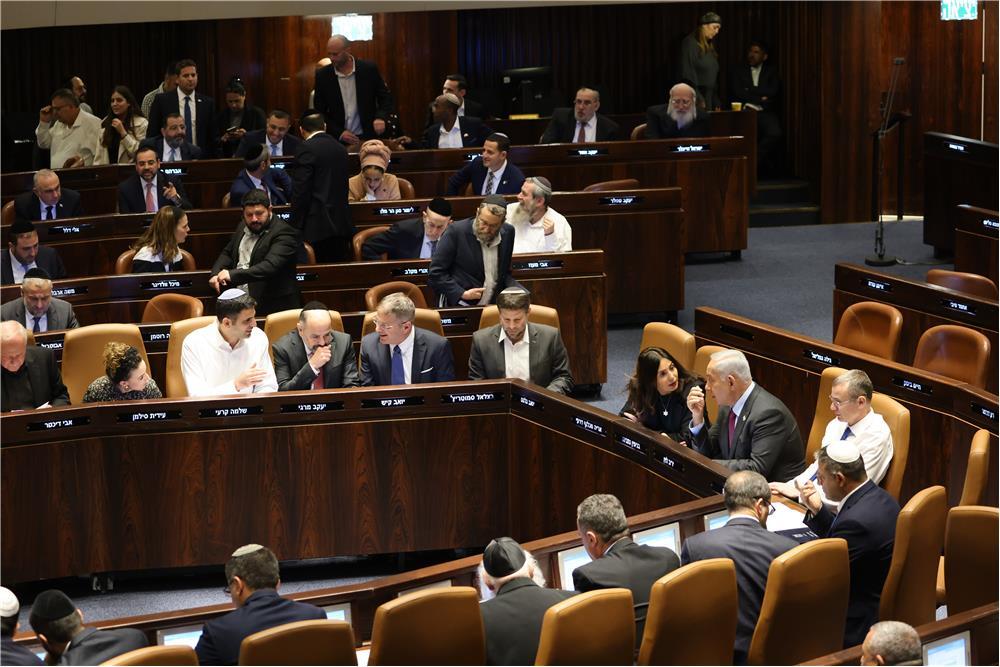
The Israeli Knesset plenum approved, on Tuesday, in the second and third readings, a bill that allows the Israeli Minister of Education to issue an order to stop any budgets for schools that “identify with any terrorist act.”


The bill mainly targets Palestinian schools in occupied Jerusalem and the occupied interior.


The law also stipulates that the Director General of the Israeli Ministry of Education can immediately dismiss any teacher or administrative employee who shows “identification with any terrorist organization or terrorists,” or publishes “words of praise and sympathy.”


The law was approved by a majority of 55 in favor and 45 against.

OPINIONS

Tue 05 Nov 2024 8:45 am - Jerusalem Time

My Hope for Palestine

The Atlantic

The Atlantic

Opinion Writer

By Samer Sinijlawi

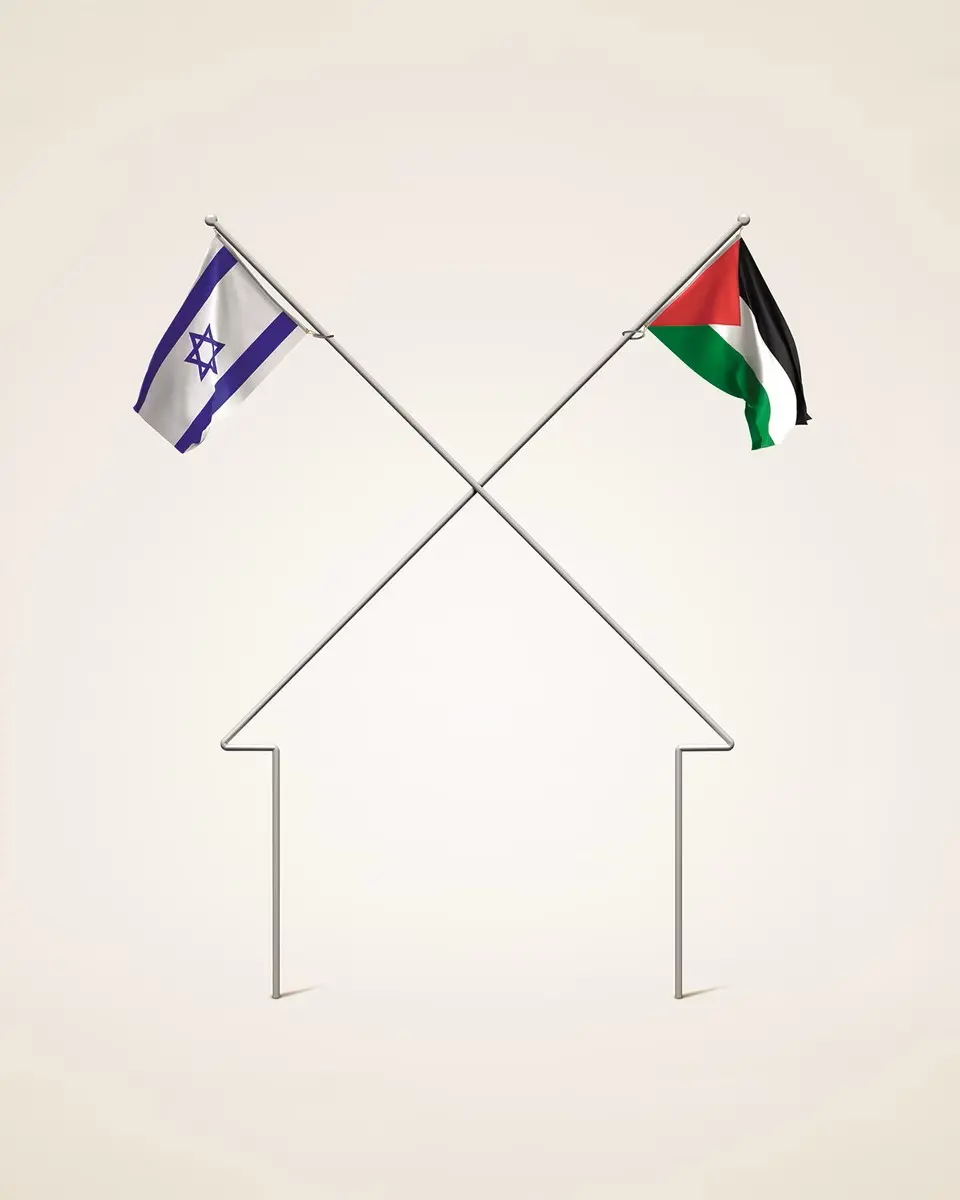
There’s still a path to lasting peace. But we’ll need a new set of leaders.

The conflict between Israelis and Palestinians is often assumed to be impossible to solve, a matter of two national movements with irreconcilable aspirations for one tiny piece of land. It has felt like this for nearly a century, and perhaps never more so than during the past year of anger and grief.


But as a Palestinian who was born in Jerusalem’s Old City, who has lived through the occupation, who sat in an Israeli prison for five years, I see a way out. Even today, with the pain so fresh, I believe it’s possible for Palestinians to get our state, and for the two peoples to coexist. But to arrive there, both sides will need to radically change their thinking—and their leadership.

The future I imagine is in some ways rooted in a past I remember from my childhood in the early ’80s. In the busy streets of the Old City, you knew which community you belonged to, but everyone shared the space. As a boy, before I had any understanding of who was above whom, I knew only that everyone was bustling at the end of the week, with Jews going to synagogue, Christians heading to church, and Muslims following the sound of the muezzin to prayer. My family is Muslim, but I attended a Christian school. I never questioned how natural this layered reality was.

But then, in 1987, the First Intifada began. I was 14. All at once, I felt pulled into the conflict, drawn to what I heard on the streets and saw on television, which was a more straightforward story than what I’d known in Jerusalem—the struggle of my people, armed with stones, standing up to tanks. I wanted to throw stones as well, to feel a part of it. And so I did. And like many of my teenage friends, I was eventually arrested, and sentenced by a military judge to five years’ imprisonment.

This was the most painful moment of my life. My childhood was over. I wasn’t able to finish high school. But my experience in prison changed me in unexpected ways. It gave me a different kind of education. I was elected as a spokesperson to negotiate with the prison authorities, whether for better food or special permits for family visits. And my understanding of my enemy grew.

Out in the street, we wore keffiyehs over our faces, and they saw us only through the scope of a rifle. But now I got to know some Israelis. I could see their eyes, and they could see mine. I learned Hebrew. I learned their names. And I saw for the first time that these people, whom I had feared as my oppressors, had their own fears. They were scared of us, the Palestinians, of the violence we might cause them, of the violence we were causing them. It’s hard for my own people, oppressed as we feel by Israeli power, to appreciate this, but the fears of Israelis are real, not exaggerated or invented. The images of October 7 are seared into their minds. Especially since the massacre, they desire the sort of security that any of us would want, and they will never bargain away the safety of their families. They are not a suicidal people.

I also learned how to negotiate with Israelis. Maybe because of their own history of survival, they can be stubborn. You cannot expect to get anything through pressure tactics. Believe me, Palestinians have tried: The strategy for decades has been to use violence against Israeli civilians while beseeching the world to force Israel into making concessions. But this hasn’t worked. Trying to get the American president to use carrots and sticks with the Israelis is pointless. We need to deal with them directly. That’s the only way. And just as we have needs—dignity, rights, independence—they have needs as well, and we must find ways to reassure them of their security, to defeat their fears.

I have often thought of the conflict as having DNA. The need for security is one strand, and the other is a desire for dignity. This did not require any special education for me to learn. It comes with the reality of being a Palestinian. We live in a state of constant humiliation: at each checkpoint, every time we need to cross a border, when settlers in the West Bank attack and kill our people and burn our fields with impunity. Half of our lives seem to be spent waiting in line as an Israeli soldier stands over us with a gun. We lack freedom. We are denied basic human dignity. And this existence, to feel forever trampled on, has been ours now for at least three generations.

This is the DNA, a desire for both safety and self-determination. By acknowledging and attending to these twin desires—rather than parsing right from wrong or replaying history—people of goodwill can solve the conflict. I am part of an initiative—organized by Ehud Olmert, the former Israeli prime minister, and Nasser al‑Kidwa, the former Palestinian foreign-affairs minister—to do just that. We envision a cease-fire in Gaza and a return of the hostages held by Hamas since October 7, and we have worked out the details of a two-state solution, proposing a plan for drawing borders, determining the status of Jerusalem, and rebuilding Gaza.

The contours are not hard to imagine, but many obstacles stand in the way. I see four main ones, two within our own societies and two from the outside.

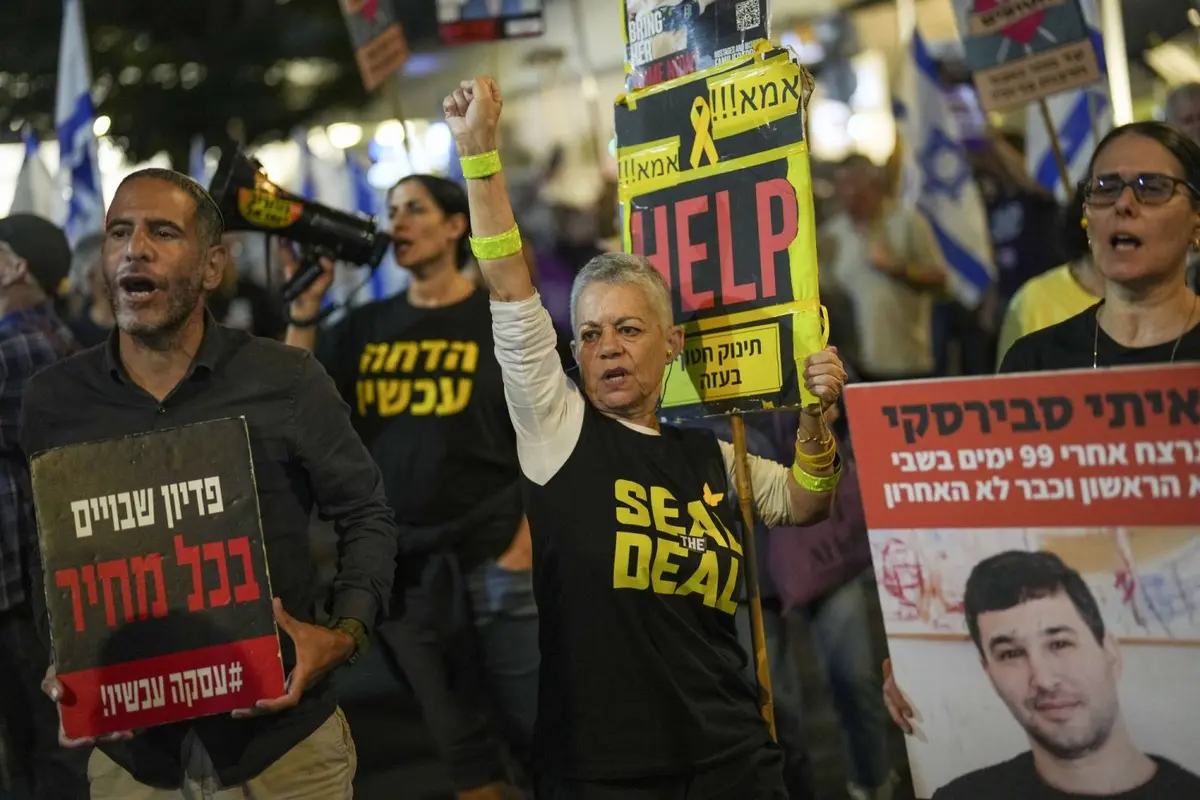
Israeli Prime Minister Benjamin Netanyahu and his right-wing government aren’t interested in making any concessions to the Palestinians. They hardly see us, and are intent on ignoring our demands indefinitely. But I don’t think they represent the majority of Israelis, who dislike Netanyahu and want his rule to end. I believe that those who protest by the tens of thousands every week in Tel Aviv and Jerusalem know that the status quo is not acceptable for either people.

This is the first obstacle: Netanyahu and his reactionary, racist allies. Israelis must find a way to vote him and the extremists out. Nothing will change until Israeli leaders see the benefit of creating a Palestinian state, and do not act with such indifference to our lives and needs. But the second obstacle I see is closer to home for me, and just as crucial: the corrupt and ineffective leadership of Mahmoud Abbas, the president of the Palestinian Authority.

I first met Abbas as part of a Fatah youth delegation soon after the First Intifada ended. After being released from prison, in 1993, I became involved with the party, the largest faction in Palestinian politics at the time. My fellow delegates and I were in our 20s; Abbas was then in his 50s and Fatah’s second-in-command. “You are tomorrow’s leaders,” he told us. Today, Abbas is nearly 90, and we are in our 50s. Over the years, he has worked to ensure that the tomorrow he promised never arrived. He was elected president in 2005 to serve for four years. He has served for almost 20, without a single reelection. Over that period, he has compromised our democracy, our security, our economy, and our dignity.

Abbas lost the 2006 legislative elections to Hamas, and then lost Gaza to Hamas control the following year. But he could have taken the past two decades to build up the West Bank, creating transparent, accountable institutions that would represent a thriving alternative to Hamas. Because he didn’t, he allowed the extremists to fill the vacuum. As recently as 2021, Abbas canceled planned elections, this time after Fatah split into three factions. Younger, reformist Fatah leaders were ready to try to create that alternative, and might have offered a counterbalance to the extremism that led to October 7. But Abbas stood in their way.

Palestinians want change. Polls show that about 90 percent of the population wants Abbas to resign. But removing him isn’t just important for the West Bank and the possibility of negotiating with the Israelis. It’s also essential to Gaza’s “day after.” As brutal and oppressive as the Hamas regime has been, the people of Gaza don’t want to see Hamas replaced with Abbas.

Instead, Palestinian political leaders should form a unity government that includes nonpartisan national figures; Fatah reformists such as al‑Kidwa, the former security czar Mohammed Dahlan, and, with any luck, the imprisoned Fatah leader Marwan Barghouti; and even members of nonextremist Islamist factions like the Ra’am party, in Israel’s Parliament. This broad coalition would be responsible for reconstructing Gaza and unifying it with the West Bank. It would need the support of Arab countries and the international community—and, of course, recognition by Israel.

All of this is impossible while Netanyahu and Abbas remain in power, which is why they are the biggest internal obstacles. But there are also two external ones.

The first is obvious: Iran is the mutual enemy of both Israelis and Palestinians who want peace, as well as of all the moderate forces in the Middle East. Iran has propped up Hamas and Hezbollah, whose ideologies and actions will lead to nothing but endless war. The best way to counter Iran is for Israel to build relationships with the Emiratis and the Saudis and a reformed Palestinian Authority. But to do that, Abbas and Netanyahu need to go.

Palestinians need a strategy that prioritizes the security of Israelis—not for the Israelis’ sake, but for our own national interest.

The second external obstacle might seem surprising, but it’s no less important to acknowledge: the extreme sentiments in the West. I understand what has motivated the protests on American college campuses. I have grieved the death of every Gazan, and I am certainly not against peaceful demonstration. But I think that some of those who call themselves pro-Palestine and rally under the Palestinian flag are doing us real harm—and I would say the same about some of those who rally under the Israeli flag and call themselves pro-Israel.

These protests have merely hardened the positions of Hamas and Netanyahu. They apply the wrong kind of pressure: against compromise. Against seeing each other and finding ways to move closer. They alienate everyday Israelis and Palestinians. As far as I’m concerned, there is only one idea to rally behind; only one pro-Israel, pro-Palestine slogan: “Stop the war and free the hostages.” Nothing else is helpful, certainly not slogans such as “From the river to the sea, Palestine will be free.”

Iknow how hard these obstacles will be to overcome; as a Palestinian, I am accustomed to endless heartbreak. It’s far easier to remain self-righteous, to believe that with enough yelling or missiles, things will change for the better. But they won’t, not until the two sides begin to look at each other honestly.

I have talked with many Israelis over the years, after I was elected international secretary for Fatah youth, and then as the head of Israeli relations for the party. I have become close friends with many of them, and not just with people on the left and in the center, but with those on the right as well. I’ve learned some lessons from all of this talking.

Primarily, I decided not to hate them. For a simple reason: We have killed them and they have killed us. Hate has never achieved anything for the Palestinians besides more misery. Additionally, I decided never to lecture Israelis on morality, on what to do and what not to do. I chose instead to focus on my side, on the example that I set.

That’s why I went to Kfar Aza, one of the kibbutzim attacked on October 7, for a condolence visit early this year. Standing in front of cameras, I condemned the acts of Hamas. I didn’t want history to document that no Palestinian spoke up against this atrocity. In Kfar Aza—a mile away from the city of Beit Hanoun, over the border in Gaza—I could see smoke, and I could hear bombs, and I knew what was happening there, but I had come only to denounce what Hamas had done in the name of Palestinians, in my name. One day, an Israeli will stand in front of us and denounce what has happened in Gaza. I don’t have to lecture them. All I can do is offer my example.

I know it’s controversial to say, but this is why I think Palestinians need to make the first move. There is more urgency for us than for the Israelis. They are suffering because of the conflict, but not as much as we are. They can wait another 75 years until it becomes necessary for them to share the land. We cannot wait another 75 hours. They have an air force; we don’t. They have tanks; we don’t. We have spent decade after decade not achieving any progress with them. As a practical person, I’ve concluded that we ought to try something else.

Palestinians need to put in place a strategy that prioritizes the security of Israelis—not for the Israelis’ sake, but for our own national interest. We need to make sure that the Palestinian Authority properly criminalizes violence committed by Palestinians—just as Israel must end settler violence in the West Bank and respect that the lives of Palestinians are as sacred as the lives of Israelis. Both sides in this conflict need to gain control over their violent tendencies. And then our message to the Israelis will be: more for more. If we make you feel safer, if we build institutions that clamp down on violence effectively, that build a successful economy for Palestinians, that create stability and transparency, we expect from you more dignity, freedom, and trust.

The two-state solution feels impossible at this moment, so we need to build it step-by-step, offering more for more. Then we’ll be ready for the tough decisions. This needs to start at the top, which is why I care so much about changing the leadership. People need to see how trust can form. If I were the prime minister of the future state of Palestine, I would want the Israeli prime minister to be my best friend. I would have him and his family over for dinner and let them get to know my wife and kids. Mutual trust between the top leaders will help facilitate trust among the people.

Even today, after tens of thousands have been killed in Gaza in the past year, I still maintain that the majority of mainstream Palestinians and mainstream Israelis want to find a way out of this.

I recently decided to pursue a master’s degree in conflict resolution at Hebrew University, in Jerusalem. Every Monday, when I show up for class, I get a vivid illustration of what the future could be. When I was younger, Hebrew University seemed off-limits to Palestinians; even just walking by the campus gates felt disloyal. But these days, the student population is nearly 20 percent Arab, and there are many young women wearing hijabs.

When I look at these students, I see that many of them, Israeli and Palestinian alike, wear nearly identical pendants depicting the same territory—between the Jordan River and the Mediterranean Sea—which each side claims in its entirety for their own people. (And I bet both pendants were made in the same factory in China.) But then they go to the same classes and listen to the same professors, and sometimes a professor will assign two Israeli students and two Palestinian students to the same research group, and those students, each with their own necklace, will work together. At this moment, their differences become irrelevant; they are just trying to get their studies done. And I promise you: They do not want to throw each other into the sea.

They wear those pendants because they are confused, because their political leaders have poisoned their minds. These young people, who know how to work so well together, who know how to give and take, already know how to be neighbors. They just need leadership that will reinforce the possibility. This leadership doesn’t exist now, and that is the real enemy for both Israelis and Palestinians.


PALESTINE

Tue 05 Nov 2024 8:24 am - Jerusalem Time

War on gaza: Dead and wounded in the Gaza Strip

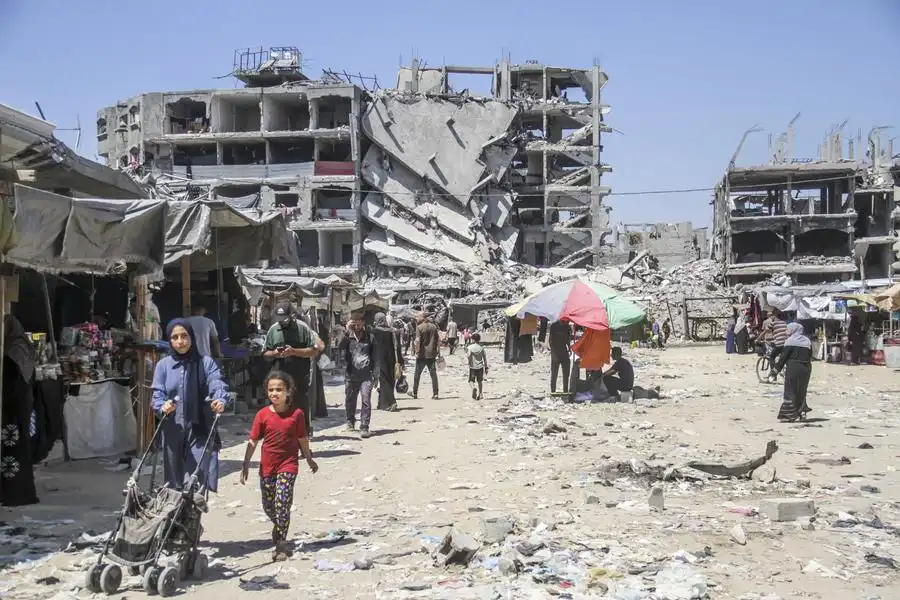
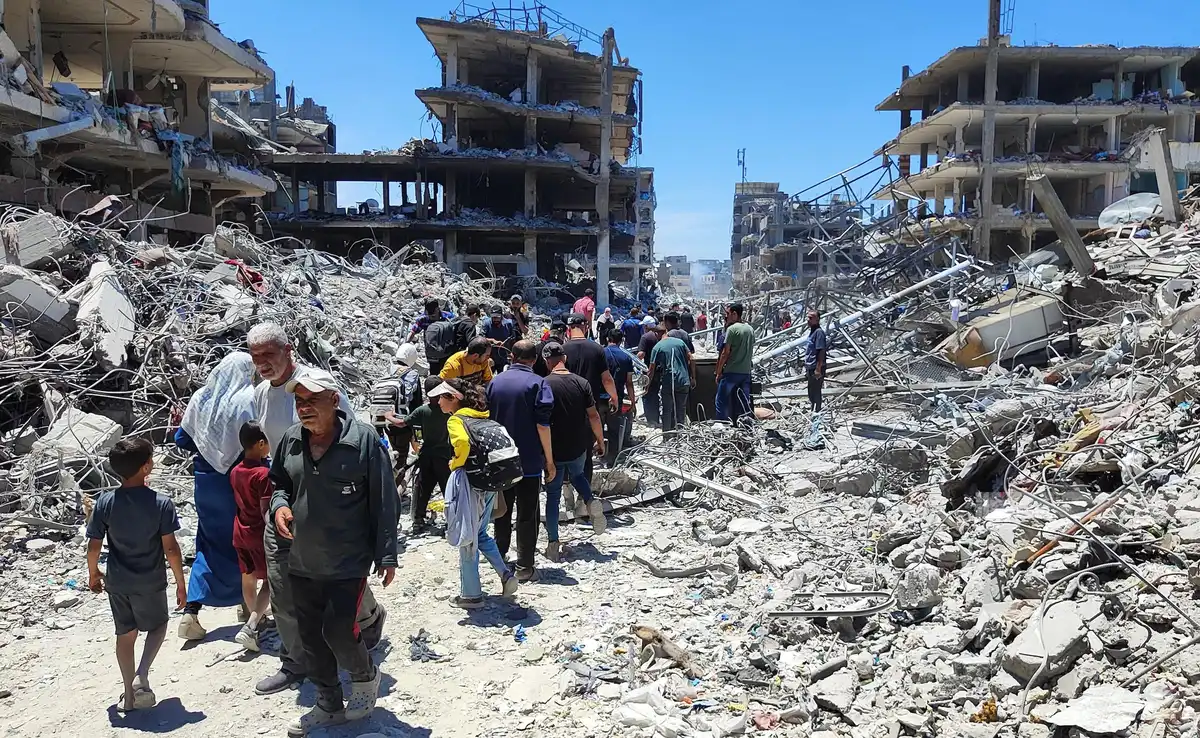
The Israeli war of extermination continues in the Gaza Strip, leaving more victims as a result of a series of scattered raids in the Strip.


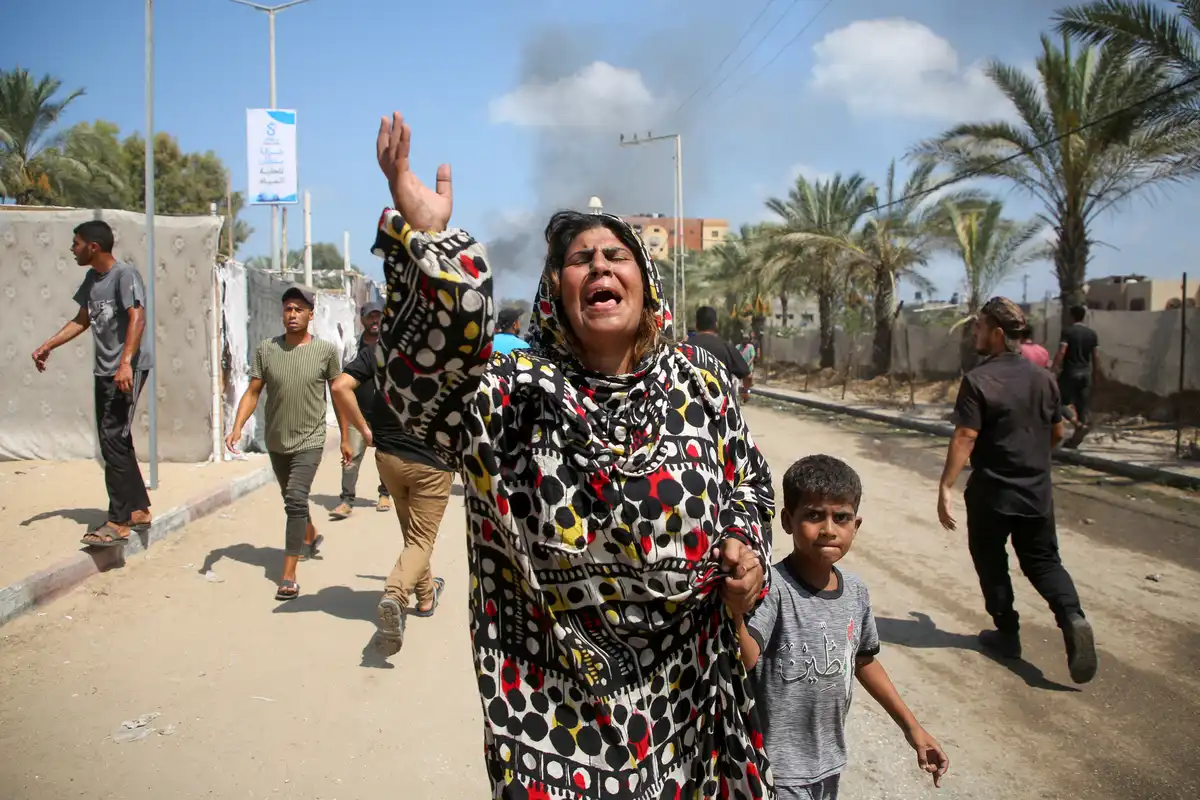
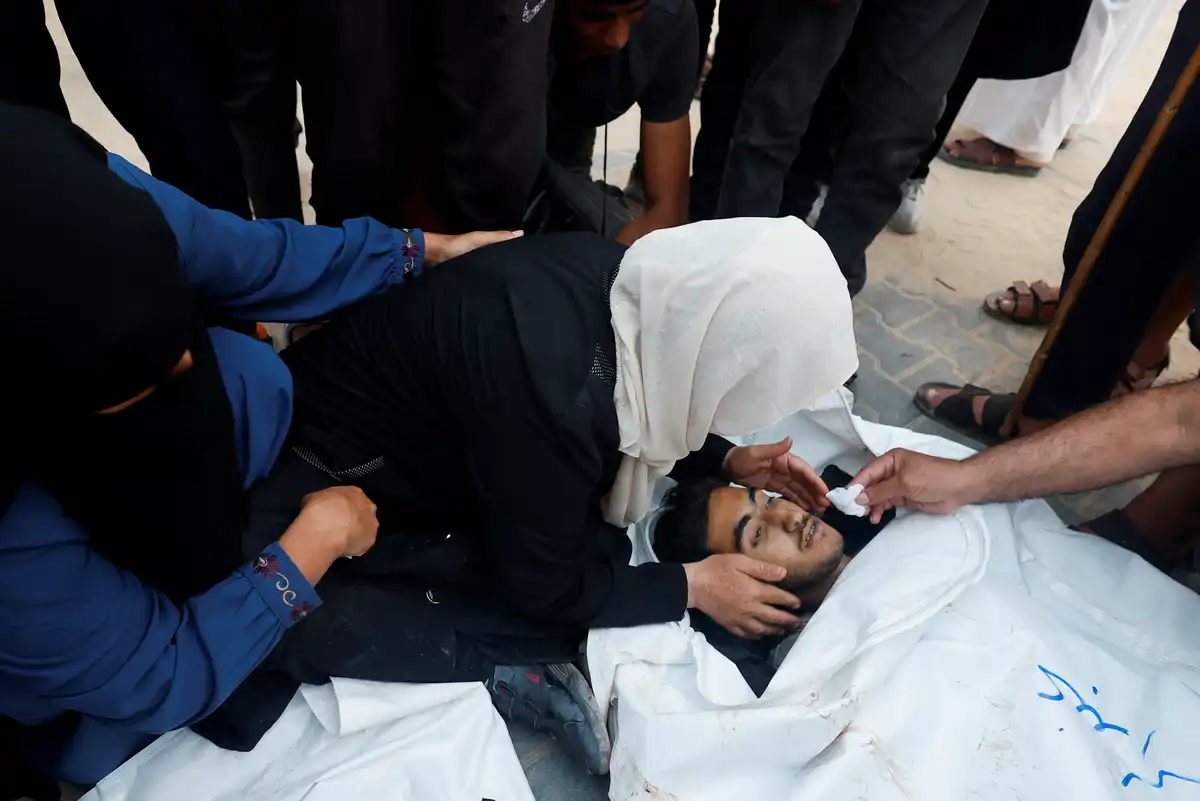
At least 29 citizens, including children and women, were killed at dawn on Tuesday as a result of Israeli occupation aircraft bombing homes and tents housing displaced people in several areas of the Gaza Strip, including Beit Lahia, Deir al-Balah, Az-Zawayda, and Khan Yunis.


In Beit Lahia, north of the Gaza Strip, 20 citizens were killed as a result of violent shelling that targeted a house that was sheltering displaced people, while the occupation's shelling of a displaced people's tent in Deir al-Balah, central Gaza Strip, resulted in the death of two people and the injury of others, including children.


Four citizens were killed and others were injured as a result of the bombing of a displaced persons' tent in the Al-Zawaida area.


In the Maan area, east of Khan Yunis, three citizens, including a child, were killed when a tent housing displaced people was targeted.


In a related context, local sources reported that a number of citizens were injured as a result of the occupation's shelling of a house in the town of Abasan al-Kabira, east of Khan Yunis. The vicinity of the Shuhada al-Zaytoun clinic in the al-Zaytoun neighborhood also witnessed artillery shelling, coinciding with heavy gunfire from the occupation's vehicles.

PALESTINE

Tue 05 Nov 2024 8:19 am - Jerusalem Time

Injuries and arrests during Israeli raids in the West Bank

Several citizens were injured and arrested on Tuesday during a campaign of arrests and raids in various areas of the West Bank.


The Israeli occupation forces arrested two young men from the Dhnaba suburb east of Tulkarm, one of whom was injured.


Local sources reported that a number of occupation vehicles stormed the suburb and surrounded one of the houses of the Sayyah family behind the cemetery in the suburb, while occupation soldiers fired live bullets at it.


She added that the occupation forces arrested from inside the house, Muhammad Bilal Abu Sayyah, and his brother Imad, who was injured by the occupation's bullets, and his fate is still unknown.


Two young men from Qalqilya were also arrested.


Local sources reported that the occupation forces arrested the two young men, Ahmed Al-Khatib and Ali Al-Shanti, after raiding and searching their homes.


The occupation forces stormed the city since the early morning hours from its eastern entrance, and spread out in several residential neighborhoods, including: Al-Masakwa neighborhood and Al-Wadi Street.


A number of citizens suffered from suffocation after midnight, when the occupation forces stormed the town of Al-Khader, south of Bethlehem.


The occupation forces stormed Al-Khader and took up positions in the gate areas and around the Grand Mosque, and fired tear gas and sound bombs towards the houses, which led to a number of citizens suffering from suffocation.


While the villages of Burin and Madama, south of Nablus, were stormed.


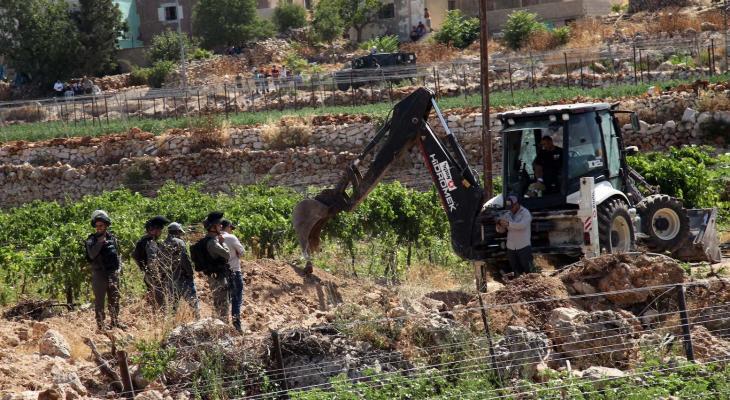
Local sources reported that more than 20 occupation army vehicles, accompanied by a military bulldozer, stormed Madama, coinciding with the storming of a group of settlers into the southern area of the village.


She pointed out that the occupation army raided several homes in the village, detained the residents, searched them, and tampered with their contents, and distributed threatening leaflets to the citizens.


In the village of Burin, local sources reported that the occupation forces stormed the village, closed its entrances, and began a raid and search operation of several homes in the village.

PALESTINE

Tue 05 Nov 2024 8:13 am - Jerusalem Time

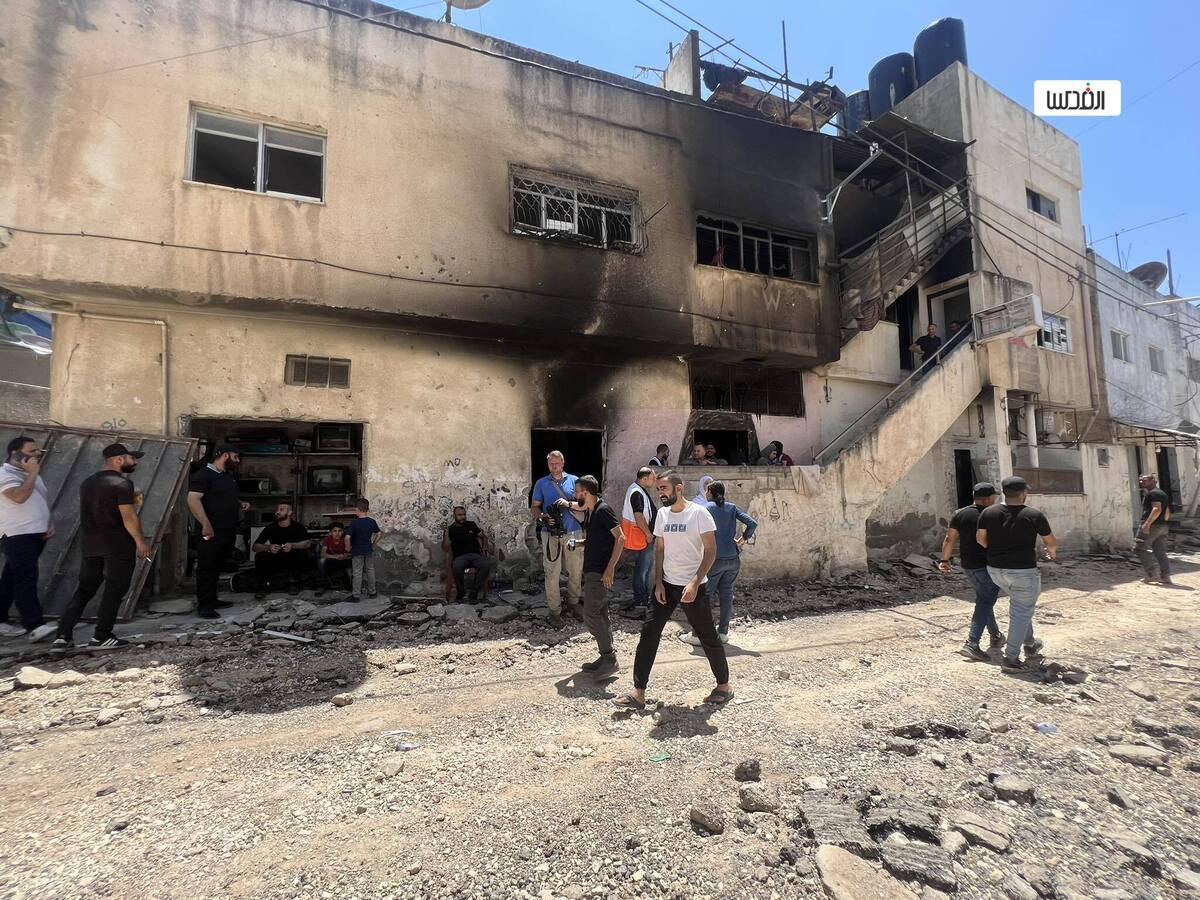
West Bank: 4 Palestinians killed in Jenin and Tammun

Four citizens were killed this morning, Tuesday, as a result of the Israeli aggression on Jenin and Tammun.


Two citizens were killed when an Israeli drone bombed a site in the village of Muthalath al-Shuhada, south of Jenin.


An Israeli drone bombed a site in the village, during the ongoing aggression on the town of Qabatiya and the surrounding area, which led to the martyrdom of two citizens.


The occupation has been continuing its aggression on the town of Qabatiya for more than 7 hours, and is sending military reinforcements to the entrances of the town, while violent clashes are taking place at the Martyrs' Roundabout at the main entrance to the town.


In Tamoun, south of Tubas, two citizens were killed after being targeted inside a house in the town.


The occupation forces surrounded a house in Tamoun and bombed it with "Energa" shells before withdrawing from the vicinity of the house, where the body of a martyr was recovered, while another was detained.


Earlier, a drone bombed the "Al-Rafid" area in the town of Tamoun with more than one missile, but no injuries were recorded.


The occupation forces' storming of the town of Tamoun coincided with a similar storming of the Far'a camp, south of Tubas, where local sources reported that the occupation forces stormed the camp with several military patrols accompanied by a tracked bulldozer (D9), after leaving the Hamra military checkpoint.


The occupation forces were stationed on the main street leading to the camp from the south for more than an hour before storming it, amidst intensive flying of reconnaissance drones, while the bulldozer caused damage to the main street.


Local sources reported that the occupation forces deliberately destroyed the infrastructure in the camp, including bulldozing water lines, especially in the camp market and Al-Madaris Street.


The occupation forces also raided many citizens' homes inside the camp, and fired bullets inside the alleys.

PALESTINE

Mon 04 Nov 2024 10:39 pm - Jerusalem Time

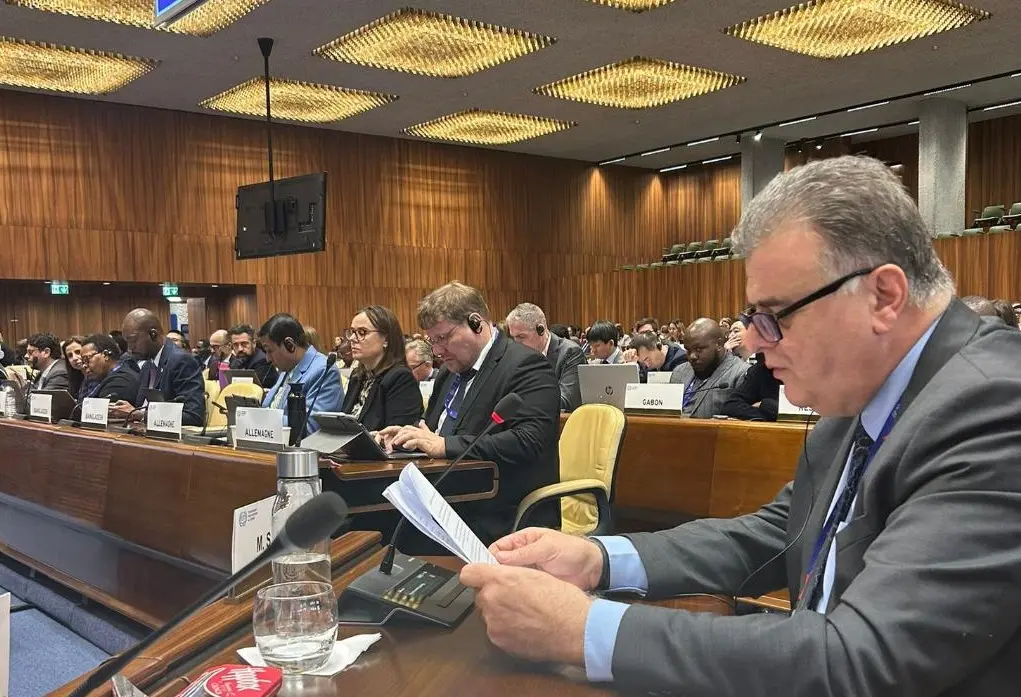
Palestine's accreditation as an observer state in the International Labor Organization

The Governing Body of the International Labour Organization adopted a decision to transfer Palestine in the organization from a national liberation movement to an observer state.

This came at the conclusion of the meeting of the organization's Board of Directors on Palestine - Workers' Group, with the participation of the President of the Arab Trade Union Federation, Secretary-General of the Palestine Trade Union Federation, Shaher Saad, along with representatives of the Arab and international federations affiliated with the United Nations. The text issued by the meeting included the Organization's Board of Directors Resolution No. 352 accepting Palestine.

Saad said that the decision will be finally adopted at the International Labor Conference in June 2025, noting that the decision grants Palestine full participation in all structures of the International Labor Organization, and gives it the opportunity to move to associate membership.

He added that for the first time, Palestine will participate in 2025 with an official tripartite delegation referred to as participation (government - workers - employers).

He pointed out that the majority in the ILO meeting hall welcomed the decision with warm applause, with the exception of Israel, the occupying state, which opposed it.

The International Trade Union Confederation welcomed the decision of the ILO Governing Body to change Palestine's status from "liberation movement" to "non-member observer state" (having the rights of a state based on the UN resolution accepting Palestine as an observer state).

“This recognition by the ILO is a sign of hope and solidarity with the Palestinian people, who face enormous challenges to their human and labour rights,” said Luc Triangle, General Secretary of the International Trade Union Confederation, adding that “recognition of the State of Palestine is essential for sustainable peace.”

ARAB AND WORLD

Mon 04 Nov 2024 9:20 pm - Jerusalem Time

Washington condemns Israeli settler violence, calls on Israel to hold perpetrators accountable and stop their actions

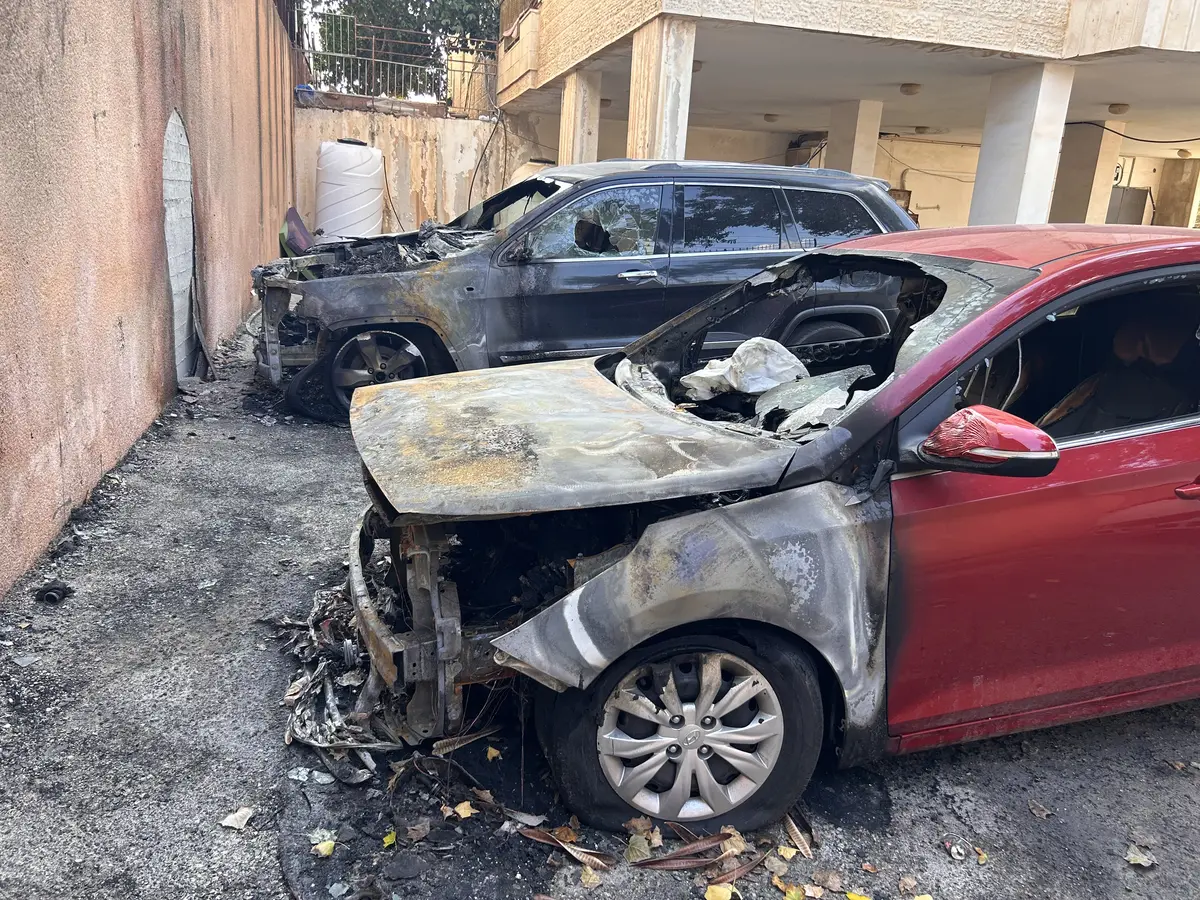
The United States has condemned the escalation of settler violence against Palestinian civilians in the occupied West Bank, and the US State Department on Monday urged Israel to take action on settler violence in the West Bank, expressing concern after nearly 20 cars were burned near Ramallah.


"The United States is deeply concerned by these and other recent reports of increased extremist settler violence in the West Bank," State Department spokesman Matthew Miller told reporters.


In addition to Monday's car burnings, Miller pointed to settler attacks in the West Bank on homes, killing of Palestinian livestock and obstruction of the olive harvest.


“It is critical that the Government of Israel deter extremist settler violence and take the necessary measures to protect all communities from harm in accordance with its international obligations,” Miller said.


“This includes intervening, preventing and stopping such violence. It is also the responsibility of the relevant authorities to do everything in their power to calm tensions and hold all perpetrators of violence against civilians equally accountable, regardless of the background of the perpetrator or victim,” he said.


In response to a question from the Jerusalem correspondent about whether the United States would demand the extradition of extremist settlers who committed acts of violence against Palestinians, Miller said that this was up to the US Department of Justice.


The United States has repeatedly expressed concern and imposed sanctions over settler violence in the West Bank in conjunction with Israel's war in Gaza.


Jewish settlers burned 20 cars during an attack on Palestinian property on the outskirts of Ramallah on Monday, residents said, in one of their boldest raids yet in the area that serves as the seat of the Palestinian government in the occupied West Bank.


They said about ten masked attackers carrying firebombs targeted the al-Bireh area adjacent to Ramallah at around 3 a.m. and burned cars within minutes.


Resident Ihab Al-Zaben said he shouted at the settlers but they continued to burn the vehicles anyway.


"When we went down to try to put out the fire, they started shooting at us," he said.


The facade of an apartment building was left blackened by fires that started in cars parked outside the building.


The Israeli police spokesman said in a statement that the Israeli police and the internal security service (Shin Bet) are investigating after receiving a report that a number of Palestinian cars were burned.


Jewish settler violence against Palestinian communities in the West Bank has drawn international condemnation and led to sanctions against violent settlers by some governments, particularly the United States, which has urged Israel to do more to stop the attacks.


The Ramallah-based Palestinian Authority condemned the “brutal attack by settler militias.” The Foreign Ministry called for “comprehensive sanctions targeting the entire settler-colonial regime.”


Hamas official Abdel Rahman Shadid said the attack represented an escalation by the settlers and required "escalating the confrontation and confronting these crimes," according to a statement issued by the Palestinian group.


Israel views the West Bank as biblical Judea and Samaria, and settlers cite biblical links to the land.


Settler violence was on the rise before the Gaza war, and has worsened since the conflict began just over a year ago.


In an interview with Reuters last week, a settler community leader expressed confidence that Donald Trump, if he wins the US presidential election, would lift what settlers see as illegal sanctions imposed over attacks on Palestinians.


Most countries consider the settlements illegal under international law. In 2019, the then-Trump administration abandoned the long-standing US position that the settlements were illegal before President Joe Biden restored it.

PALESTINE

Mon 04 Nov 2024 9:09 pm - Jerusalem Time

War on gaza: Three dead, including a child, inIsraeli bombing of Gaza City

Three citizens, including a child, were killed and others were injured on Monday evening in an Israeli bombing of Gaza City.

Medical and local sources reported that two citizens were killed after an Israeli drone bombed citizens near Al-Shati camp, west of Gaza City, while a child was killed and others were injured by the fire of the occupation forces north of Gaza City.


A number of citizens were also injured by bullets fired by a Quadcopter aircraft at the Gifted School in the Sheikh Radwan neighborhood in Gaza City. The occupation also bombed the area surrounding the Sheikh Radwan clinic.


The occupation forces have continued their aggression by land, sea and air on the Gaza Strip since October 7, 2023, resulting in the death of 43,374 citizens and the injury of 102,261 others, while thousands of victims are still under the rubble and on the roads, and ambulance and civil defense crews cannot reach them.

PALESTINE

Mon 04 Nov 2024 7:46 pm - Jerusalem Time

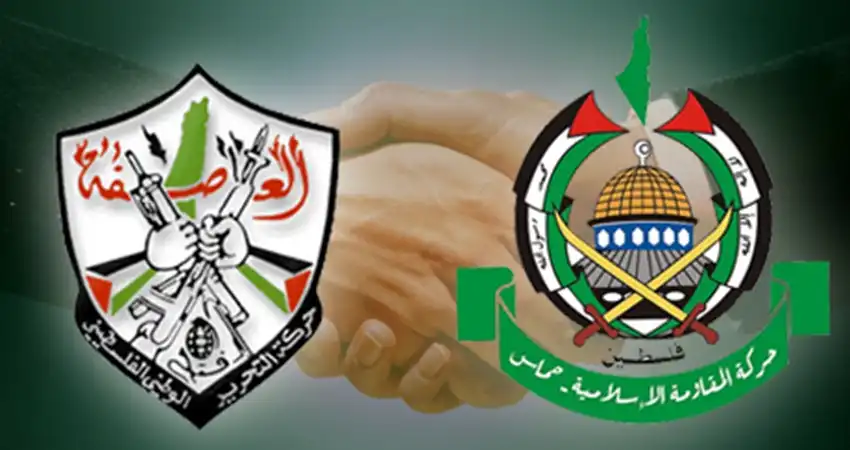
Hamas: We discussed with Fatah the formation of a body to follow up on Gaza affairs

Hamas said on Monday evening that it had discussed with Fatah the formation of a body to follow up on the affairs of the Gaza Strip and its needs in various issues, during a meeting that brought them together in the Egyptian capital, Cairo.


The movement's leader, Osama Hamdan, added in a video statement: "In continuation of the meetings held by the movement's leadership with various Palestinian factions, a meeting was held with the brothers in the Fatah movement at the kind invitation of Egypt."


According to Hamdan, the two parties discussed "various national issues, especially the war on Gaza and ways to work nationally to confront the plans of the occupation and those who support it, on the basis of the Palestinian national consensus to reject any arrangements that are intended to be imposed on us."


He continued: "Many ideas were discussed, including forming a body to follow up on Gaza's affairs and its needs in various issues, until the conditions are prepared to form a national consensus government. The atmosphere of the meeting was positive and frank."


He pointed out that the two parties stressed that "the management of the affairs of the Palestinian people, whether in the Gaza Strip, the West Bank or the diaspora, is a purely Palestinian affair that is carried out through national consensus."


Hamdan stressed that Hamas leadership will continue meetings and contacts with Fatah and all Palestinian factions, "to reach the most appropriate solutions and formulas that serve our people in general and Gaza and its people in particular."

ARAB AND WORLD

Mon 04 Nov 2024 7:13 pm - Jerusalem Time

Mikati: Israel rejected all proposed solutions for a ceasefire


Lebanon's caretaker Prime Minister Najib Mikati said on Monday that Israel rejected all proposed solutions for a ceasefire and continued its aggression against Lebanon.

In a statement, Mikati called on the international community to pressure Israel to stop its aggression against his country.

Mikati stressed that "the Israeli enemy's persistence in its aggression against Lebanon and the crimes it is committing in terms of killing and destruction are the fault of the international community, which is silent on what is happening, at a time when countries that carry the banner of humanity and human rights should be exerting maximum pressure on Israel to stop its aggression."

Mikati added, "The Lebanese government has explicitly declared its commitment to Resolution 1701, and its determination to strengthen the army in the south, and welcomed all positions calling for a ceasefire, but the Israeli enemy has turned against all proposed solutions and continued to commit war crimes against various Lebanese regions."

PALESTINE

Mon 04 Nov 2024 7:11 pm - Jerusalem Time

Borrell: Israel's severing of ties with UNRWA could deprive millions of people of life-saving services

EU foreign policy chief Josep Borrell said Israel's decision to cut ties with UNRWA could deprive millions of people of life-saving services.


Borrell added on his page on the "X" website, today, Monday, that the three hospitals that are partially operating in northern Gaza are being targeted with a severity that has not been seen in modern wars.


He stressed the need to end this war and ensure that humanitarian aid reaches Gaza without hindrance. He also stressed that it is time to stop the settlers' violence and destruction in the West Bank, and to put an end to the illegal occupation of Palestinian lands.

PALESTINE

Mon 04 Nov 2024 6:10 pm - Jerusalem Time

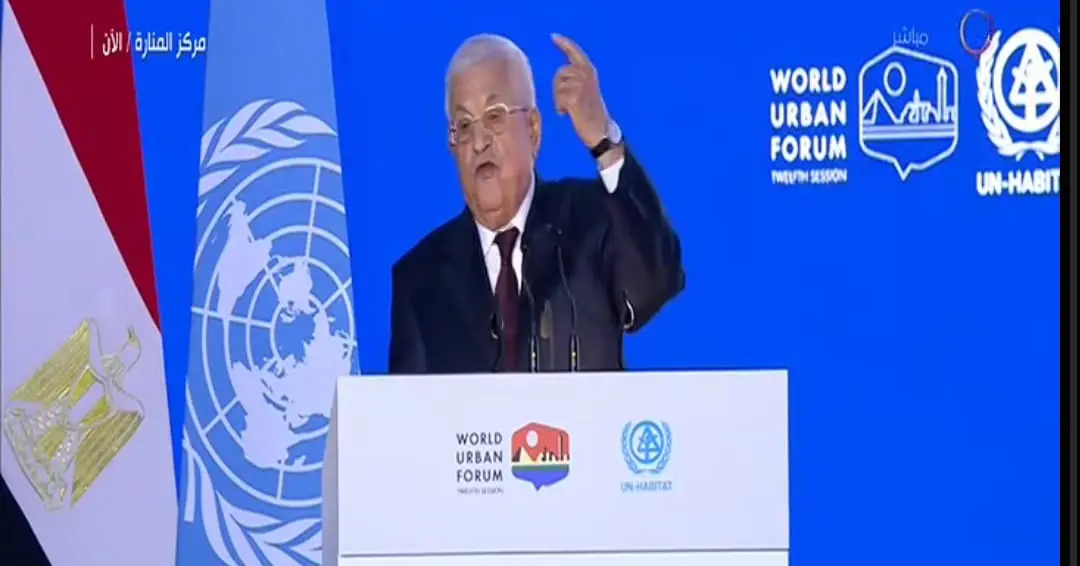
Abbas: The occupation imposes major challenges that hinder sustainable development efforts

President of the State of Palestine Mahmoud Abbas said that the Israeli occupation imposes major challenges that hinder sustainable urban development efforts in more than 60% of the West Bank and the entire city of East Jerusalem.

His Excellency added in his speech at the 12th World Urban Forum of the United Nations Program, which opened in the Egyptian capital, Cairo, today, Monday, that the occupation is practicing crimes of genocide and ethnic cleansing, and has destroyed more than 80% of the homes, facilities, hospitals and schools in the Gaza Strip, and is committing crimes of stealing land and natural resources in the West Bank, including East Jerusalem.

The President called on the international community to stop the occupying state and hold it accountable and punish it for its crimes and actions as if it were an authority above international law.

His Excellency reiterated the necessity of holding the occupying state accountable for its failure to fulfill its obligations towards its acceptance of membership in the United Nations in 1949, and its failure to implement General Assembly Resolutions 181 and 194, which requires taking the necessary measures against it.

The President stressed that implementing the relevant UN resolutions, the latest of which is the General Assembly resolution on the advisory opinion of the International Court of Justice, and the State of Palestine obtaining full membership in the United Nations, is a fundamental right to achieve justice and stability in the region.

The President stressed the necessity of implementing Security Council Resolution No. 2735 regarding an immediate ceasefire, the withdrawal of the occupation from the entire Gaza Strip, relief and shelter for the displaced in preparation for reconstruction, and the State of Palestine assuming its full duties therein.

His Excellency stressed that establishing the foundations of security and peace will open the door wide for implementing sustainable urban development programmes in Palestine, in line with the goals of the United Nations, and in a way that achieves resilience and sustainability.

Below is the text of the President's speech:

Leaders, Heads of Delegations, Distinguished Guests

This year, the State of Palestine is participating in the World Urban Forum of the United Nations Programme, in light of the destruction, crimes of genocide, ethnic cleansing, and crimes of theft of land and natural resources practiced by the Israeli occupation against our Palestinian people in the Gaza Strip, the West Bank, and East Jerusalem.

This imposes major challenges on us that hinder sustainable urban development efforts in more than 60% of the West Bank and the entire city of East Jerusalem, in addition to the destruction of more than 80% of the Gaza Strip’s housing, facilities, hospitals and schools, in addition to the martyrdom and injury of more than one hundred and fifty thousand Palestinians.

The international community is required to stop the occupying state, hold it accountable, and punish it for its crimes and actions as if it were an authority above international law. We reiterate here the necessity of holding the occupying state of Israel accountable for its failure to fulfill its obligations towards its acceptance of membership in the United Nations in 1949, and its failure to implement General Assembly Resolutions 181 and 194, which requires taking the necessary measures against it, in the event that it does not fulfill its obligations.

Implementing the relevant United Nations resolutions, the latest of which is the General Assembly resolution on the advisory opinion of the International Court of Justice, leading to the end of the Israeli occupation of the land of the State of Palestine with East Jerusalem as its capital on the 1967 borders, and the State of Palestine obtaining full membership, is a fundamental right to achieve justice and stability in the region.

It is time, after more than a year of genocide against our Palestinian people, to implement Security Council Resolution 2735 regarding an immediate ceasefire, the withdrawal of the Israeli occupation forces from the entire Gaza Strip, relief and shelter for the displaced in preparation for reconstruction, and the State of Palestine assuming its full duties therein, reiterating also the importance of implementing Security Council Resolution 2334.

Establishing the foundations of security and peace will open the door wide for implementing sustainable urban development programs in Palestine, in line with the goals of the United Nations, and in a way that achieves resilience and sustainability, and creates job opportunities within the framework of a green economy, and a digital transformation that keeps pace with development standards, which requires building national and international partnerships in order to advance the economy and secure the future of future generations.

We extend our sincere thanks to His Excellency President Abdel Fattah El-Sisi for his kind invitation and hospitality, and we renew our appreciation for the great achievements made by our sister country Egypt in the field of sustainable urban development. Thanks also go to the United Nations and all the organizers of this important forum, which we wish success and prosperity.

PALESTINE

Mon 04 Nov 2024 5:59 pm - Jerusalem Time

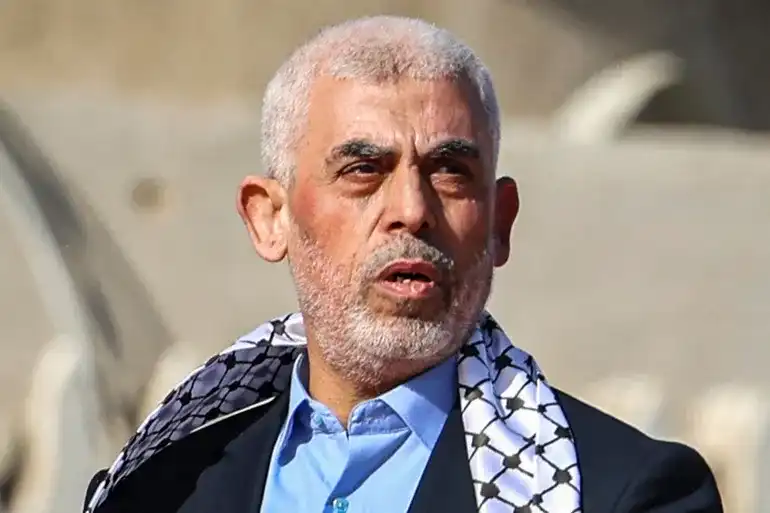
The "Sinwar Documents" Case: A New Israeli Officer Arrested and the Opposition Questions Netanyahu

Israeli authorities arrested an army officer on Monday on suspicion of involvement in the leak of security documents from Prime Minister Benjamin Netanyahu's office.

The official Israeli Broadcasting Corporation said, "Another suspect in the document leak case has been arrested, an Israeli army officer," without specifying his name or rank.

The Magistrate's Court in the central city of Rishon LeZion lifted the publication ban on this case, which allowed the disclosure of the arrest of 4 people in the case, in which the Broadcasting Authority said that the main defendant among them is Eli Feldstein, one of Netanyahu's spokesmen.


It appears that Netanyahu's aides have secret channels within the army that leak documents to them without the knowledge of the Israeli Chief of Staff himself, and that they obtained documents drafted by the head of the Hamas political bureau, Yahya Sinwar, before his martyrdom, or that he was aware of them.


The leaked documents indicate that Hamas is not interested in ending the aggression on Gaza, and that it is exploiting Israeli Defense Minister Yoav Galant and the families of the prisoners to pressure Netanyahu to force Israel to conclude a prisoner exchange deal.


The Shin Bet internal intelligence service and the military opened an investigation into the leaks in September, after the London-based Jewish Chronicle and the German Bild newspaper published two reports based on secret military documents, one of which claimed to have revealed a document showing that Sinwar and the Israeli prisoners in Gaza would be smuggled out of the Strip into Egypt via the Philadelphi corridor on the Gaza-Egypt border, they claimed.

The second report was based on what was said to be an internal memo from Hamas leadership regarding Sinwar’s strategy to obstruct prisoner release negotiations.


The first leaked document turned out to be forged, while the internal memo was actually drafted by Hamas activists who do not hold senior positions, according to Israeli press reports.

The Israeli court said that publishing the documents could have caused "serious harm to state security," adding that "as a result, the ability of the security services to free the hostages could have been compromised, as part of the war's objectives."

Opposition leader Yair Lapid said the details of the "serious security affair in Netanyahu's office should concern every Israeli," and "the investigation must determine whether this was not on his orders."

"This is not a case of suspected leaks, but of exploiting state secrets for political purposes," said Benny Gantz, a prominent opposition figure.

Netanyahu on Friday denied the allegations, saying that "the document published by Bild never reached" his office. Without mentioning Feldstein's name, he said the former aide "never took part in security meetings or viewed classified documents."


PALESTINE

Mon 04 Nov 2024 4:55 pm - Jerusalem Time

Malaysia prepares draft resolution to expel Israel from UN

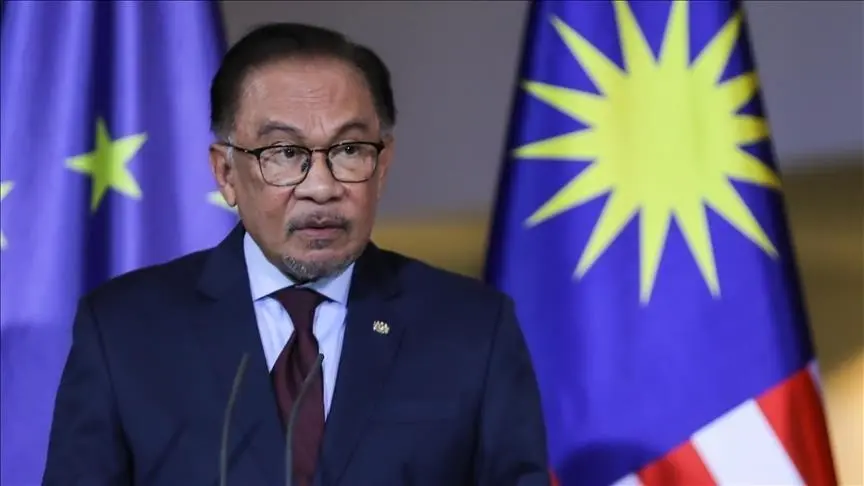
Malaysian Prime Minister Anwar Ibrahim said that his country is preparing a draft resolution to submit to the United Nations General Assembly to expel Israel from the United Nations if it continues to violate international law regarding Palestine.

Ibrahim added in a session of the Malaysian parliament today, Monday, that the negotiation process on this draft is currently underway, and it is expected to be presented to the United Nations General Assembly for approval.

On 31 October 2024, Malaysia joined the “core group” that prepared the draft resolution requesting an advisory opinion from the International Court of Justice regarding Israel’s obligation to allow the activities of UN organizations.

He explained that if the project is accepted in the UN General Assembly, it will pave the way for the United Nations Relief and Works Agency for Palestine Refugees (UNRWA) to continue providing aid to Palestinians in Gaza, the West Bank, Jordan, Lebanon and Syria.

-

ARAB AND WORLD

Mon 04 Nov 2024 4:51 pm - Jerusalem Time

On Election Eve, Harris Speaks Out About Horrific Horrors in Gaza

At a campaign rally in East Lansing, Michigan, Vice President Kamala Harris, the Democratic candidate for Tuesday's presidential election, spoke about the Israeli war on Gaza at the beginning of her speech, in her last appearance in the crucial state before the start of voting, seeking to attract Arab and Muslim voters.

Michigan is one of the seven crucial states, and is also the state with the largest number of Arab and Muslim voters, which the two candidates, Democrat Harris and Republican Donald Trump, are trying to attract to their camp.

“We are joined today by leaders of the Arab American community, which has deep and proud roots here in Michigan,” Harris said. “I want to say that this has been a difficult year, given the scale of death and destruction in Gaza and given the civilian casualties and displacement in Lebanon, it is devastating.”

“As president, I will do everything in my power to end the war in Gaza, bring the hostages home, end the suffering in Gaza, ensure Israel’s security and ensure the Palestinian people’s ability to realize their right to dignity, freedom, security and self-determination,” she added.

Harris said she would also work to find a "diplomatic solution across the border between Israel and Lebanon to protect civilians and provide lasting stability."

After talking about the war in Gaza, Harris stuck to her usual campaign rhetoric. Her lines on reproductive rights and abortion received the most applause and cheers from the crowd, which was filled with younger voters.

As the race for the White House approaches, and the Israeli war on Gaza and Lebanon continues, Arab and Muslim circles in the United States continue to discuss the comparison between former President Donald Trump and Vice President Kamala Harris, as well as the usefulness of voting for one of the “third party” candidates.

Perhaps this is the first time that large numbers of Arabs and Muslims have abstained from voting (by a majority) for the Democratic presidential candidate, or voting for a third party in the crucial state of Michigan, while most of them consider Trump a threat to democracy.

Opinion polls indicate that Arab and Muslim American voters are increasingly voting for third parties, even though they have often voted for Democratic candidates in the past.

The latest poll by the Council on American-Islamic Relations (CAIR), released Friday, four days before the election, found that 42 percent of Muslim voters favor Stein, 41 percent support Vice President Harris, 10 percent support the former president, 1 percent support Libertarian candidate Chase Oliver, and only 5 percent do not plan to vote.

A poll conducted by the organization in late August showed that 29.4 percent of Muslims supported Harris, while Stein received a very close percentage of 29.1 percent.

The organization estimates the number of Muslim voters at about 2.5 million, considering that they are in a position to once again play a decisive role in shaping the American political landscape, especially with their large presence in key swing states.

Support for Stein, a Jewish American, has grown among Arab and Muslim American voters in key competitive states, such as Michigan, Arizona and Wisconsin.

Stein is seeking the support of these groups, whose most important demands are to stop the Israeli war on Gaza. During her election campaign, Stein called for a permanent ceasefire in the Gaza Strip and an immediate ban on the transfer of American weapons to Israel.

It is noteworthy that if Stein obtains five percent of the votes in the presidential elections, she will guarantee that she will receive government support that will help her participate politically more effectively in the future.

Polls predict Stein will get about 1 percent of the vote, a small percentage, but experts expect it to have a big impact on the results of the two major party candidates, Harris and Trump, who are nearly tied in most polls.

Trump and Harris are competing to win the support of Arab-American, Muslim-American and Jewish voters, especially in swing states such as Michigan and Pennsylvania.

ARAB AND WORLD

Mon 04 Nov 2024 4:38 pm - Jerusalem Time

Jordanian Foreign Ministry: Settlers burned a car designated for the Jordanian surgical station in Ramallah

The Ministry of Foreign Affairs and Expatriates condemned in the strongest terms the violence and terrorism of settlers in the occupied Palestinian territories, the latest of which was a group of settlers setting fire to several cars in the Al-Bireh area of Ramallah.


The ministry said that one of the vehicles that was attacked was allocated by the Palestinian government for use by the Jordanian surgical station in Al-Bireh in Ramallah, holding Israel, as the occupying power, responsible for ensuring the protection of the brotherly Palestinian people and humanitarian relief crews working in the occupied Palestinian territory.


The official spokesman for the Ministry, Ambassador Dr. Sufyan Al-Qudah, stressed the Kingdom's absolute rejection of these attacks and the escalation of settler terrorism against the Palestinian people, in continuation of the dangerous escalation witnessed in the occupied Palestinian territories by extremist settlers since the beginning of the Israeli aggression on the Gaza Strip.

ARAB AND WORLD

Mon 04 Nov 2024 3:38 pm - Jerusalem Time

Families of Israeli hostages demand investigation into leak of secret documents

Families of hostages held in Gaza called on Monday for an investigation into the leak of secret documents by a former aide to the prime minister, which could undermine efforts to return the captives in the blockaded territory.


An Israeli court said on Sunday that Eliezer Feldstein was arrested along with three other people, including members of security services, on charges of leaking documents to foreign media.


The case prompted the opposition to question whether Netanyahu was involved in the leaks, which the Prime Minister's Office denied, according to Agence France-Presse.


"The families of the hostages demand that all suspects of sabotage and undermining state security be investigated," the Israeli Forum of Hostages and Missing Persons said in a statement.


He added: "Such actions, especially during war, put the hostages at risk, threaten their chances of return, and leave them at risk of being killed by Hamas terrorists."


The forum represents most of the families of the 97 hostages still being held in the Gaza Strip, 34 of whom the military says are dead.


According to the forum, “there are suspicions that individuals linked to the prime minister acted to carry out one of the largest frauds in the country’s history.”


The forum considered that "this is an act that reflects moral degradation, and it is a severe blow to the remaining trust between the government and its citizens."


Netanyahu's critics have long accused him of stalling on a truce and prolonging the war to please his far-right coalition partners.


The Shin Bet domestic intelligence agency and the military opened an investigation into the leaks in September, after the Jewish Chronicle in London and the German newspaper Bild published reports based on secret military documents.


One of the reports claimed to have uncovered a document showing that Hamas leader Yahya Sinwar, who was later killed by Israel, and the hostages in Gaza would be smuggled out of the Strip into Egypt via the Philadelphi Corridor on the Gaza-Egypt border.


The second report was based on what was said to be an internal memo from the Hamas leadership regarding Sinwar’s strategy to obstruct negotiations for the release of the hostages.


The first leaked document turned out to be forged, while the internal memo was actually drafted by Hamas activists who do not hold senior positions, according to Israeli press reports.


The Israeli court said that publishing the documents would likely cause "serious harm to state security."


She added, "As a result, it was possible to undermine the ability of the security services to free the hostages, as part of the war's objectives."


Hamas still holds 97 hostages in the Gaza Strip and the army says 34 of them are dead (AFP)


Israel vowed to "eliminate" Hamas after its attack on the Jewish state, which killed 1,206 people, most of them civilians, according to a count by Agence France-Presse, based on official data. 251 people were also kidnapped during the attack.


Since then, Israel has been waging a campaign of concentrated bombing and ground operations in the Gaza Strip, killing at least 43,341 Palestinians, most of them women and children, according to the latest data from the Hamas-run Health Ministry, which the United Nations considers reliable.

PALESTINE

Mon 04 Nov 2024 3:11 pm - Jerusalem Time

Israeli occupation prevents citizens from picking olives west of Bethlehem

Today, Monday, the Israeli occupation forces prevented citizens from picking olives in Husan, west of Bethlehem.


According to local sources, these forces prevented a number of citizens from reaching their lands in the areas of Wadi Qadis and the center of the Beitar Illit settlement, which is located on citizens’ lands, to pick olives.


It is noteworthy that the occupation forces and their settlers have escalated their attacks against citizens in Husan and other villages in the governorate, by preventing them from reaching their lands and picking olives.

PALESTINE

Mon 04 Nov 2024 2:54 pm - Jerusalem Time

Health disaster in Israeli Negev prison as scabies continues to spread

The Commission of Prisoners' Affairs and the Palestinian Prisoners' Club said that a health disaster is looming over the Negev prison, where thousands of prisoners are being held, due to the spread of scabies - or what is known as scabies - among hundreds of prisoners, causing them to suffer from difficult and complex health symptoms, while the prison administration continues to deliberately consolidate the basic causes that led to its spread, as well as deliberately depriving prisoners of treatment, and using it as a tool to torture them physically and psychologically.


The Commission and the Club continued that through several visits conducted by the Commission and the Club’s lawyers recently to (35) prisoners and detainees in the Negev Prison from October 27-30, the prisoners’ testimonies reflected the tragic detention conditions that degrade human dignity in which they live, which confirms once again that the prison system seeks to kill prisoners by any possible means, including contributing to the spread of diseases among them, in addition to a series of systematic crimes, the basis of which are torture crimes and medical crimes, especially since there are hundreds of prisoners in the aforementioned prison who are sick and have chronic and difficult health conditions.


The Commission and the Club pointed out that the prison administration has recently deliberately transferred many sick prisoners to the Negev prison, which has been and continues to be a site for crimes of torture, sexual assault, and the spread of diseases, specifically scabies, with the aim of killing them. Among the (35) prisoners who were visited in the Negev prison, there were (25) prisoners who were infected with scabies.


In this context, the Commission and the Club confirm that this is a small sample of hundreds of injured prisoners who are subjected to systematic medical crimes and torture around the clock, through the prison administration’s use of illness as a tool to torture them. The prisoners’ testimonies included all very harsh details about their suffering from the disease without receiving any kind of treatment, and without the prison administration attempting to address the causes that contributed and contribute to the continued spread of the disease, the most prominent of which are:

(Lack of cleaning materials, prisoners’ inability to shower regularly, lack of clean clothes, as most prisoners only have one change of clothes, lack of washing machines, as prisoners are forced to wash their clothes by hand, and the prison administration prevents them from hanging them out to dry, so they remain damp, which has contributed greatly to the spread of skin diseases among prisoners. The prison administration also does not respond to prisoners’ repeated requests to provide treatment or even take them to the clinic).

PALESTINE

Mon 04 Nov 2024 2:43 pm - Jerusalem Time

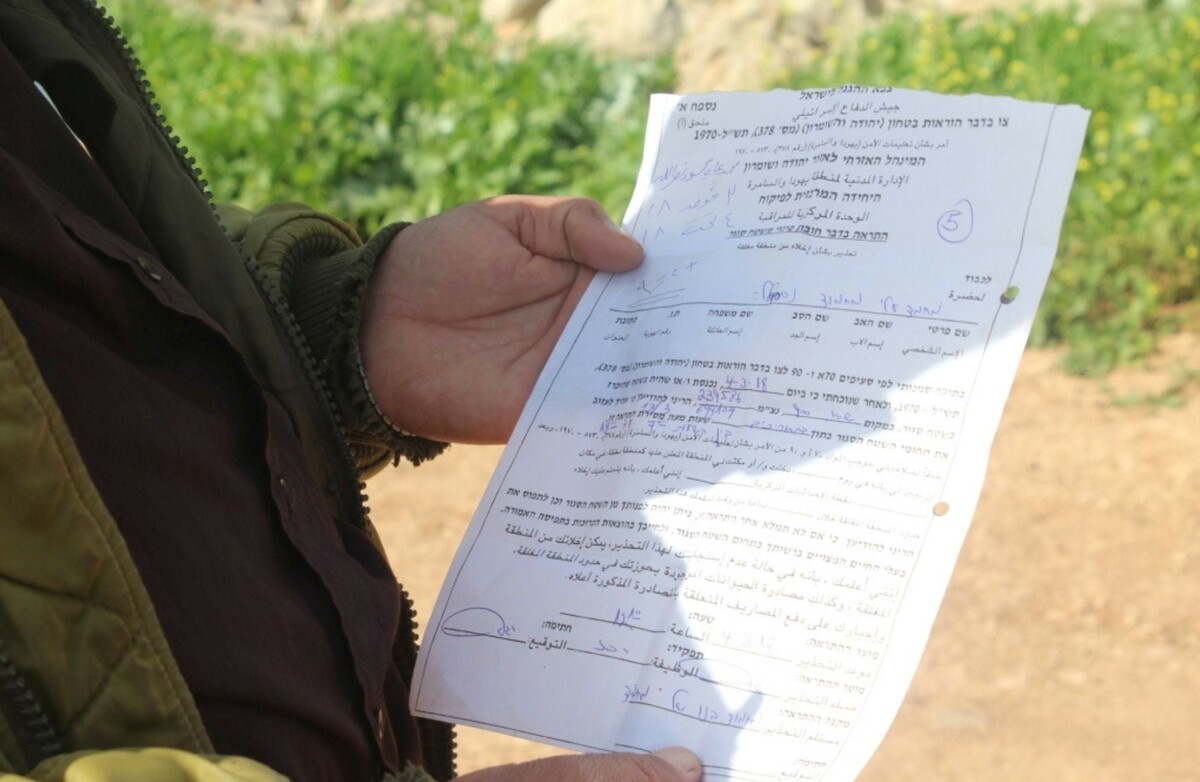
Israeli Occupation forces deliver two stop-work notices in New Nablus

Today, Monday, the Israeli occupation forces delivered two notices to stop construction and demolish two houses in the New Nablus area.


Local sources reported that the occupation forces stormed the New Nablus area, southwest of the city, and delivered two notices to two houses under construction belonging to the Hamama and Antar families, on the pretext of building without a permit.

PALESTINE

Mon 04 Nov 2024 2:20 pm - Jerusalem Time

Israeli occupation forces the teaching staff at Al-Maleh School in the northern Jordan Valley to evacuate it

Today, Monday, the Israeli occupation forces raided Al-Maleh Elementary School in the northern Jordan Valley, and forced the teaching staff to leave it.


Local sources said that the occupation forces raided the school, forced the teaching staff to leave it, and photographed the school rooms and its facilities, which caused panic and fear among the students, amid fears of its demolition in the future.

PALESTINE

Mon 04 Nov 2024 2:17 pm - Jerusalem Time

The death toll from Israeli occupation's aggression on Gaza rises to 43,374

The Ministry of Health in Gaza announced, on Monday evening, that the death toll from the Israeli occupation's aggression on Gaza has risen to 43,374 dead and 102,261 wounded, since October 7, 2023.


It added that the occupation forces committed 3 massacres against families in the Gaza Strip during the past 24 hours, resulting in the death of 33 citizens and the injury of 156 others.


It pointed out that thousands of victims are still under the rubble and on the streets, and ambulance and civil defense crews cannot reach them.

ARAB AND WORLD

Mon 04 Nov 2024 2:14 pm - Jerusalem Time

A stifling recruitment crisis is sweeping the Israeli occupation army

Yedioth Ahronoth revealed the seriousness of the acute crisis facing the Israeli army in recruiting a sufficient number of elements to join its ranks, in light of its involvement in wars on multiple fronts.


The Israeli newspaper highlighted the refusal of the Orthodox Jewish (Haredim) group to perform military service, and attempts to enact a new law in the Knesset that would enshrine their exemption from it, in addition to the increasing extent of evasion and medical exemptions granted to candidates for it.


The newspaper's military affairs analyst, Yossi Yehoshua, confirmed that military estimates indicate that the army urgently needs 7,000 soldiers, but it finds it very difficult to reach this number.


He pointed out that "the army has been seeking to recruit about 3,000 Haredim (religiously ultra-Orthodox Jews) since last August, but actual statistics reveal that these plans are facing clear obstacles."


Yehoshua goes on to detail the reality of the crisis facing the army, saying, “The data shows that the target number may not be easily achieved, as last year only 1,200 Haredim were recruited out of about 13,000 candidates for military service.”


Categories and excuses

“With the demand for additional forces increasing, the army issued 3,000 draft calls to the Haredim last summer, distributed among several age groups. The calls were divided into the following categories: About half were directed to Haredim under the age of 21, while 40% of the calls were directed to recipients up to the age of 23, and the rest to those eligible up to the age of exemption from military service. However, only 240 individuals showed up for the draft, which is equivalent to only about 8% of those called up,” the military analyst added.


But the statistics on a broader scale are even more alarming, according to Yehoshua. “The data is clear: In recent years, 33%, or one in three of those required to enlist (excluding the Arab public), did not make it to military service, 15% dropped out during their service and never entered the reserve group, while the number of beneficiaries of medical and mental health exemptions jumped from 4% to 8%. During service, this excuse is the most common in cases of discharge from service.”


The military affairs analyst also highlighted another angle to the Israeli army's crisis, which is the evasion of reserve soldiers - who constitute the army's backup force - from service.


Yehoshua cited statistics that said there were 18,000 combat reserve soldiers who did not show up when called up. He quoted Maj. Gen. Yaniv Asor as saying, “These were serial evaders who could not be brought in by force,” and recommended “a radical change in the pay and recognition programs for those who serve, significant benefits for those who serve more, and a loss of rights for those who do not serve at all.”


In addition to the above, Yehoshua recalled a report by Ynet and Yedioth Ahronoth stating that “the Israeli combat system has suffered further erosion due to the significant decline in the qualifications of the men who are recruited,” noting that “every year in recent years there has been an average decrease of 1% of all those who are recruited.”


The army fails to achieve its goals

The military affairs analyst concluded that the army would not be able to achieve its recruitment goals based on these numbers, "since recruiting 9,000 Haredim as planned may not be possible with continued low attendance rates."


To overcome this challenge, the military leadership recommended increasing the target quota for the Haredim to several thousand more. However, this recommendation requires the approval of the political leadership and instructions from the Minister of Defense.


Therefore, Yehoshua believes that “increasing the number of fighters recruited for compulsory service is a very important element in filling the ranks, in light of the number of dead and wounded in the war, and of course easing the burden on the outdated and nervous reserve system.”


Therefore, he calls for "the creation of a new regular battalion, which can provide an average of 12 months of operational work for reserve battalions, especially when you see fighters serving a triple-digit number of reserve days per year, it is necessary for them to breathe air."


“This issue could lead to tensions in the political leadership, as it has become clear that Defense Minister Yoav Galant could find himself replaced, especially if he is unable to gain sufficient support for the new recruitment policies,” Yehoshua says.


He concludes his article by saying, “Analysts expect that a new defense minister will be chosen who is more compatible with the requirements of the ruling coalition, without Israel witnessing large numbers of Haredim joining the military service.”

ARAB AND WORLD

Mon 04 Nov 2024 2:06 pm - Jerusalem Time

Iran: We don't fear war, but we didn't seek it

Iranian President Masoud Pezeshkian confirmed on Monday that his country does not fear military war, while the Iranian Foreign Ministry stressed that Tehran did not seek war, but is ready to defend its territory.


The Iranian president added that those he described as "Iran's enemies" know that a military war will not defeat his country, but they are waging an economic war, pointing to Tehran's efforts to overcome it.


Pezeshkian said that Iran has turned to manufacturing missiles as part of a deterrence policy, so that enemies, including Israel, cannot bomb any place at any time, according to his description.


In a press conference, Iranian Foreign Ministry spokesman Esmail Baghaei said that Tehran had warned the international community and regional players of the consequences of any disaster in the region.


destabilization

He stressed that his country avoided military confrontation and did not want war, but he confirmed that Iran would respond forcefully to any aggression from Israel.

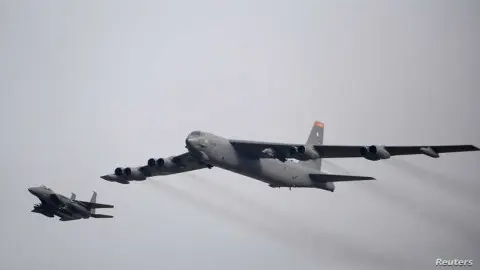
He also criticized what he described as the "destabilizing" presence of the United States after it sent B-52 bombers to the region.


He pointed out that sending American bombers to the region will not deter Iran from defending itself, according to his expression.


Two days ago, Iranian Supreme Leader Ali Khamenei said that enemies, including the United States and Israel, “will receive a firm response to what they do against Iran and the resistance.”


This comes in light of Iran's vow to respond to the Israeli attack that targeted military sites in three Iranian cities on October 26.

ARAB AND WORLD

Mon 04 Nov 2024 1:32 pm - Jerusalem Time

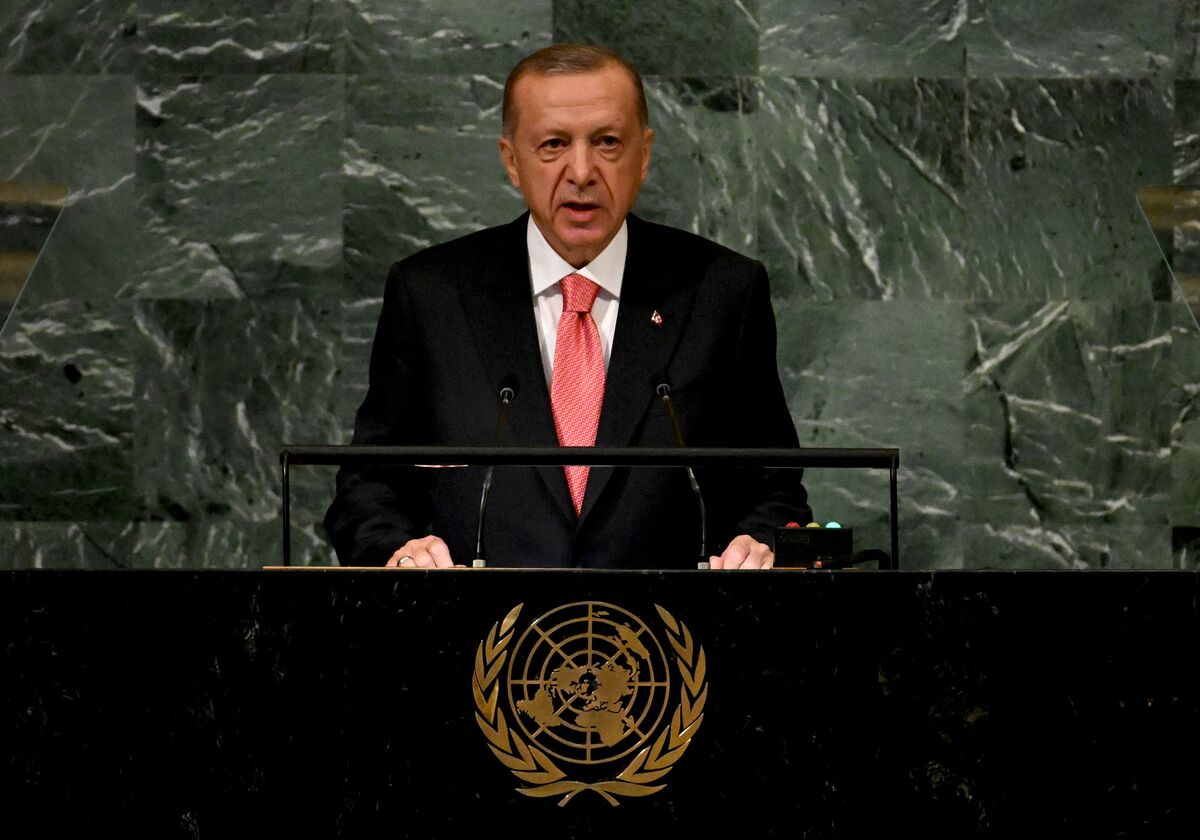
Erdogan: Gaza is witnessing the most brutal massacre in the last century

Turkish President Recep Tayyip Erdogan described Israel's actions against Palestinians in the Gaza Strip as one of the most brutal acts of genocide in the 21st century.


This came in a speech he delivered at the opening of the 40th meeting of the Standing Committee for Economic and Commercial Cooperation of the Organization of Islamic Cooperation (COMCEC) on Monday in Istanbul.


The Turkish President pointed out that the geography of the Islamic world has become synonymous with blood, pain, tears and violence as never before in its history.


Erdogan said: "The Zionist regime and its supporters have committed all kinds of massacres and injustice for 13 months, but they have not been able to bring our Palestinian brothers to their knees."


Regarding relief aid, he explained, "We have so far delivered more than 85,000 tons of humanitarian aid to Gaza, facilitated by the Egyptian authorities."


He considered that the best response to the "Zionist aggression" in Gaza and Lebanon is for more countries in the world to recognize the State of Palestine.


The Turkish President stressed the importance of the Islamic world supporting the just struggle of the peoples of Palestine and Lebanon, and putting aside its differences.


The Turkish President pointed out that 50,000 Palestinians were killed and more than 100,000 were injured as a result of the Israeli attacks on Gaza.

He pointed out that two-thirds of the dead and injured in Gaza were women and children.


The Turkish President pointed to the lack of conscience towards what Israel is doing in Gaza and later in Lebanon, which brings to mind the extermination camps that were established in Central Europe during World War II.

ARAB AND WORLD

Mon 04 Nov 2024 12:35 pm - Jerusalem Time

US bombers confront Iranian threats... the threat that portends escalation!

Dr. Hassan Marhej: The Iranian response is inevitable and will be a wake-up call for the new US administration

Fares Sarfandi: Iran is obligated to respond to maintain its deterrent power after the end of the strategic patience phase

Ismail Al-Muslimmani: The arrival of B-52 bombers to the region is part of American efforts to protect Israel and send a warning to Iran

Dr. Abdullah Nehme: The increasing military escalation is a result of targeting one of the fuel components in the Iranian nuclear reactor


The chances of a direct confrontation between Iran and Israel have recently increased after media reports revealed that Iranian Supreme Leader Ali Khamenei instructed the Supreme National Security Council to prepare to attack Israel, while reports indicate statements by Israeli officials that Israel is prepared to launch more direct attacks on Iran, if necessary. Meanwhile, fears of the region slipping into an open war are heightened by the arrival of American B-52 bombers, which can carry nuclear warheads and travel long distances without needing to refuel, reflecting an unusual American readiness for a confrontation that could be comprehensive.


The New York Times quoted three Iranian officials as saying that Supreme Leader Ayatollah Ali Khamenei issued his instructions after reviewing a detailed report from senior military commanders on the extent of the damage to Iran’s missile production capabilities, air defense systems around Tehran, vital energy infrastructure, and a major port in the south.


“The scope of the Israeli attack, as well as the number of casualties, was so great that it could not be ignored, and not responding would mean admitting defeat,” the New York Times quoted Iranian officials as saying. The officials, who spoke on condition of anonymity, said that “military leaders were preparing a list of dozens of military targets inside Israel, but the attacks were likely to occur after the U.S. election, because Iran was concerned that another wave of tension and chaos in the region could benefit Republican Party candidate Donald Trump.”


Writers and analysts who spoke to "I" believe that the Iranian response is inevitable and will be a wake-up call for the new US administration, as Iran is obligated to respond to the Israeli attack to maintain its deterrent power after the end of the strategic patience phase. They also pointed out that the arrival of US B-52 bombers to the region increases the chances of an imminent confrontation, while others believe that the arrival of these bombers carries two messages: the first to Israel that America is committed to protecting it and that it is unable to protect itself without US support, and the second is a stern warning to Iran, and therefore America is not seeking to slide into an open and comprehensive war.


Iranian response scenarios

Dr. Hassan Marhej, an expert in Middle Eastern affairs, said: First, it must be noted that the Israeli targeting of Iran was clear from the beginning that Iran would respond, as part of establishing the equation of deterrence and counter-deterrence, and then came the statements of the Iranian leader to confirm that Tehran is preparing to respond to Israel, and this opens the door to interpretations of the response scenarios, which can be summarized in four scenarios.


As for the first scenario, according to Marhej, it can be said that Tehran’s announcement of closing its airspace before the US elections may be a preparation for a direct and major response against Israel. Here, too, it can be said that Tehran is directly saying that any future US president will have no influence on Iran’s future options. In the same context, it is a message to pressure the United States in order to force Israel to stop the war in Lebanon, Palestine, and the region in general.


The second scenario is that the Iranian response could come on the eve of the US elections, and the White House administration and the US military establishment are busy securing the elections, and thus we may witness an Iranian response to Israel at this time.


Regarding the third scenario, Marhej says: I believe that Iran’s response could be after the end of the US elections and knowing the winner, whether it is Trump or Harris. Iran’s response after knowing the winner includes political messages that it will not remain silent about any violation of its sovereignty under any international circumstances, and militarily to say that Iran has the military capabilities that enable it to respond to any regional or international power, and that it enjoys broad and influential influence and that the US should not provoke Iran further, and that any targeting will be responded to strongly and influentially.


As for the fourth scenario, Marhej points out that it can be said, regardless of the above, that the Iranian response will be of the same level as the Iranian response in April and October, and Iran realizes that its response will restore the deterrence equation to its correct place. Accordingly, and within the above givens, the Iranian response will be a political and military means to restore the concepts of deterrence. Whether Trump or Harris wins, what awaits them is Iran and its political and military ability to control the concepts of conflict.


Dr. Marhej stressed that the Iranian response is inevitable, whether before or after the American elections, but the response will be a wake-up call for the new American administration, and it must deal with Iran on the principle of equals.


The response is a means of confirming Iran's continued military cohesion.


In turn, the journalist specializing in Iranian affairs, Fares Sarfandi, confirmed that the Islamic Republic of Iran is now obligated to respond to any Israeli attacks, as it is keen to maintain its deterrent power after announcing the end of the phase of strategic patience.


Sarfandi pointed out that following the Iranian response to the assassination of Hamas political bureau chief Ismail Haniyeh in Tehran, Iran explicitly declared that any future Israeli aggression would be met with a stronger response.


He said that Iran sees the response as a way to confirm its continued military cohesion, especially after Israel recently announced that it was able to disable Iranian air defenses, including the Russian S-300 system, which requires Iran to send a clear message reaffirming that its military power is still cohesive.


Regarding the American position, Sarfandi stated that the United States sending bombers to the region and deploying this force carries a double message: the first to Iran as a warning, and the second to Israel, clarifying its inability to protect itself without American material and moral support.


The United States is not interested in open war.


Sarfandi pointed out that the most important question is: Will the United States intervene in the war? Expressing his belief that the United States is not interested in an open war with Iran.


He said that the deployment of US forces in the region aims to create a balance, not to prepare for an open war with Iran, as Washington realizes that such a scenario could lead to a comprehensive confrontation, as Iran could target US bases in the Gulf, which threatens to cross red lines, confirming what the Deputy Chairman of the Russian National Security Council, Dmitry Medvedev, said two days ago, about the possibility of a third world war.


Unusual readiness for a confrontation that may be comprehensive


Ismail Al-Muslimani, an expert on Israeli affairs, spoke about the escalating tensions in the Middle East following the arrival of American B-52 bombers to the region at dawn on Sunday.


Muslimani pointed out that this move comes within the clear American efforts to protect Israel, in addition to being a strict warning to Iran, describing the bombers as terrifying, as they can carry nuclear warheads and travel long distances without the need to refuel, which reflects an unusual readiness for a confrontation that may be comprehensive.


The region is clearly approaching the possibility of a regional war, especially with the Iranian threats that followed the statements of Iranian Supreme Leader Ali Khamenei, Musalmani added. In a speech he gave to students at a university last Saturday, Khamenei stressed that Iran will respond to the recent Israeli attacks, which included bombing Iranian bases and led to the deaths of four Iranians.


Iran wants to deal a painful blow to America and Israel


Muslimani pointed out that this escalation suggests that Iran wants to deal a painful blow to America and Israel in response to what it described as ongoing attacks.


However, Tehran left the door open, stressing that it is not interested in expanding the scope of the regional war, but the expected response comes within the framework of the United Nations Charter, which grants countries the right to self-defense according to Article 51.


Muslimani touched on the clear contradiction in the Israeli strategy, as many analysts believe that Israel wants to preempt an Iranian strike, especially with the statements of the leader of the Yisrael Beiteinu party, Avigdor Lieberman, who confirmed that previous attacks on Iran did not have a sufficient impact, and that Israel may resort to launching a more decisive strike before the US elections.


Muslimani added: The current scenario is frightening, as American B-52 bombers and other aircraft are now deployed in the region, indicating that the United States and Israel are preparing for escalating reactions that could lead to a regional clash, especially in light of Israel's continued targeting of the resistance in Gaza and Lebanon.


Iran's Options and the Future of the Region


Moslemani pointed out that Iran, which had relied on a policy of "strategic patience," now sees that this patience is running out, especially after a series of assassinations and strikes targeting Iranian sites. With the arrival of B-52 bombers, first used in World War II and improved in the 1950s, the region seems very close to a major explosion.


Muslimmani believes that the current situation puts the region on the brink of a comprehensive confrontation that may change the features of the conflict and put an end to settlement attempts, in light of mutual threats between Iran and Israel that put everyone on the brink of the abyss.


Israeli attack prompts Iran to escalate


Dr. Abdullah Nehme, a political analyst and strategic researcher in international relations, explained that the increasing military escalation in the Middle East region is a direct result of the Israeli army targeting one of the fuel components in the Iranian nuclear reactor, in a move aimed at stopping the Iranian nuclear program and obstructing its ambitions for several years.


He pointed out that this Israeli attack prompted Iran to escalate, as it declared its intention to eliminate Israel from existence and "make it pay the price" decisively.


Nehme added: Israel is preparing militarily and logistically to confront an expected Iranian response, while the United States has intensified its support for Israel by sending B-52 bombers and adding two nuclear submarines to the American fleet in the Mediterranean, in addition to large shipments of weapons that have recently arrived to strengthen the Israeli army.


The conflict between Israel and Hezbollah to limit Iran's influence


In the context of regional tensions, Nehme pointed out that the conflict between Israel and the Lebanese Hezbollah is part of the broader move to limit Iran's influence in the region, noting that Hezbollah, which is Iran's strongest arm in the Middle East, represents a strategic target for Israel and the United States, which seek to isolate Iran and weaken its allies.


Dr. Nehme stated that there is an international trend that may be represented in pressuring Lebanon to force it to comply with the American and Israeli conditions.


Regarding the general situation in the region, Nehme said: The American role in the region is not limited to monitoring, but rather constitutes the most prominent factor in reorganizing the Middle East according to a new vision, starting with what is currently happening in Lebanon.


Nehme stressed that the potential escalation in Lebanon could be a gateway to more tension in the Middle East, while any development in the situation remains dependent on the nature of the Iranian response and its repercussions on the international arena.


PALESTINE

Mon 04 Nov 2024 12:20 pm - Jerusalem Time

Israeli Settlers continue their attacks on citizens and their properties in the West Bank

Settlers continue their attacks on citizens and their property in various areas of the West Bank.


In Hebron, settlers attacked olive pickers in the Birin area, and the occupation army prevented farmers from picking olives in the Umm Nir area east of the town of Yatta.


According to local sources, the settler gangs assaulted and stoned the olive pickers from the Burqan family, namely Fayez Burqan and Bahjat Burqan, and tried to steal the vehicle of citizen Saud Al-Faqir while they were picking olives in the Birin area east of Yatta.


She added that the occupation forces forced farmers from the Al-Jabarin and Al-Habour families in the Umm Nir area to leave their lands and prevented them from picking olives.


He pointed to daily attacks by settlers and the occupation army on farmers, olive pickers and their property in Masafer Yatta, with the aim of seizing citizens' lands for the benefit of the settlement project.


In Ramallah, dozens of armed settlers stormed the village of Burqa from three axes: the Al-Hadab area, Wadi Al-Shami, and the tribal area, and set fire to citizens’ lands and three homes.


The settlers gathered near the boys' elementary school, in an attempt to storm it.


The residents appealed to the civil defense teams and citizens from the neighboring villages to confront the attack and put out the fires.

PALESTINE

Mon 04 Nov 2024 12:12 pm - Jerusalem Time

1800 dead and 4 thousand others injured since a month of siege in northern Gaza

The Government Media Office in Gaza reported that the occupation army, which has been continuing for a whole month with the "crime of ethnic cleansing and genocide" in the northern Gaza Strip, has so far led to the martyrdom of 1,800 citizens, the injury of 4,000 others, and hundreds of missing persons, in addition to the destruction of hospitals and infrastructure.


He added that the situation in the northern Gaza Strip is unprecedentedly tragic, due to the occupation's targeting of civilians who refused to leave, and its tightening of the siege on them.


On October 5, the occupation army began an unprecedented bombardment of areas in the northern Gaza Strip, before invading them, with a tight siege that put the hospitals in the northern governorate out of service, and halted civil defense services and Red Crescent ambulances.


The Israeli occupation also destroyed all hospitals in the northern Gaza Strip governorate, putting them out of service, while targeting civil defense crews, arresting some of them and putting them out of service as well, in addition to destroying the infrastructure, water networks, sewage networks, road networks and streets, which made the northern Gaza Strip governorate a disaster-stricken governorate in every sense of the word.


The occupation army used the weapon of starving and depriving civilians of water, preventing the arrival of 3,800 trucks of aid and goods to the northern Gaza Strip governorate, and deliberately starving nearly 400,000 people, including more than 100,000 children. It also destroyed dozens of displacement and shelter centers that house tens of thousands of displaced people who fled their homes in search of safety and security.

PALESTINE

Mon 04 Nov 2024 11:15 am - Jerusalem Time

West Bank: Israeli occupation forces accompanied by bulldozers storm the area west of Salfit

Today, Monday, the Israeli occupation forces, accompanied by military bulldozers, stormed the Wadi al-Saber area between the towns of Qaraweh Bani Hassan and Sarta, west of Salfit.


Local sources said that the occupation forces stormed the area - which is a barren land - with the aim of leveling it, as its owner, citizen Waddah Aziz Asi, had previously leveled it, and he was notified at the time to stop work and construction on the pretext that it is Area C, and construction is prohibited there.

PALESTINE

Mon 04 Nov 2024 10:08 am - Jerusalem Time

11,500 Palestinian prisoners suffer from "bitter" cold in Israeli prisons

The Commission of Prisoners' Affairs and Liberated Prisoners said on Monday that "11,500 male and female prisoners are suffering from the severe cold in the occupation prisons," noting that the Israeli occupation has been preventing the entry of heating devices and warm winter clothes since October 7 of last year.


The Commission added in a statement: “The prisoners do not have winter blankets and are deprived of bringing in new, warm clothes to protect them from the cold of winter, which has entered the harshest period of detention that the prisoners have experienced in many years, as the bitter cold eats away at their bodies, especially the sick and elderly among them. What made the situation worse is that the occupation prison administration removed all the windows of the prisoners’ rooms, which greatly increased the suffering of the prisoners and their feeling of cold, which increased the chances of many of them contracting seasonal diseases and almost permanent pain in the bones, joints and stomach as a result of the cold in the early morning and at night.”


She explained that most of the prisoners are worried about the onset of winter, especially in the occupation prisons located in the desert areas, which are coldest during the night and early morning. Most of them complained to the Authority’s lawyer about the lack of response from the prison administration to bring in clothes and blankets, calling on all human rights organizations to pressure the prison administration to bring in woolen clothes, blankets and winter mattresses, given that they only have one change of summer clothes after the occupation prevented the prisoners from their most basic rights to wear clean clothes after October 7, and prevented the entry of bathing and cleaning materials for the prisoners who were ravaged by the “scabies” disease.


The authority said: "The jailers confiscate heating equipment, if any, and any blankets that help keep the winter frost away from their emaciated bodies due to the poor quality and quantity of food, as meals are served cold and raw."


She added: "The question remains: what will the Palestinian prisoner do who owns one summer outfit that he spent the entire summer wearing, coinciding with the onset of winter, without clothes, blankets, or windows to prevent the entry of winter rains and cold weather, which allows any prisoner who has not been ravaged by scabies to turn into a sick prisoner due to the cold weather and harsh winter?"