PALESTINE

Tue 08 Oct 2024 9:39 pm - Jerusalem Time

Guterres warns against harming UNRWA: It is indispensable and irreplaceable

UN Secretary-General Antonio Guterres stressed on Tuesday that "UNRWA is indispensable and irreplaceable."


Speaking to the press at UN headquarters in New York, Guterres said he had written directly to Israeli Prime Minister Benjamin Netanyahu to express his deep concern about the bill, which could prevent UNRWA from continuing its essential work in the occupied Palestinian territory. He stressed that such a measure would stifle efforts to alleviate humanitarian suffering and tensions in Gaza, and in the occupied Palestinian territory as a whole.


"It would be a disaster," he added, asking: "Let's be clear in practical terms, what would such a measure mean? In practical terms, this legislation is likely to deal a devastating blow to the international humanitarian response in Gaza."


“Without UNRWA, the delivery of food, shelter and health care to most of the population of Gaza will cease,” the Secretary-General stressed, adding that “without UNRWA, Gaza’s 660,000 children will lose the only entity capable of resuming education, risking the fate of an entire generation.” Many health, education and social services will also end in the occupied West Bank, including East Jerusalem.


Guterres warned that "if this legislation is approved, it would be completely contrary to the United Nations Charter and would violate Israel's obligations under international law."


He added that "politically, such legislation would constitute a huge setback to sustainable peace efforts and the two-state solution, leading to further instability and insecurity."


Guterres spoke about the situation in Gaza, describing it as "horrible and abhorrent," as this was "the year of crises," and described what was happening as a "humanitarian, political, diplomatic, and moral crisis."


Guterres stressed: "We cannot and will not abandon our calls for irreversible action towards a two-state solution between Israel and Palestine," saying: "All peoples of the region deserve to live in peace."


The so-called "Foreign Affairs and Security" Committee in the Israeli "Knesset" approved last Sunday a bill to ban the work of the United Nations Relief and Works Agency for Palestine Refugees (UNRWA) in Israel. The committee's approval of the bill means referring it to a vote in the second and third readings in the Knesset plenum to become an effective law.

PALESTINE

Tue 08 Oct 2024 8:44 pm - Jerusalem Time

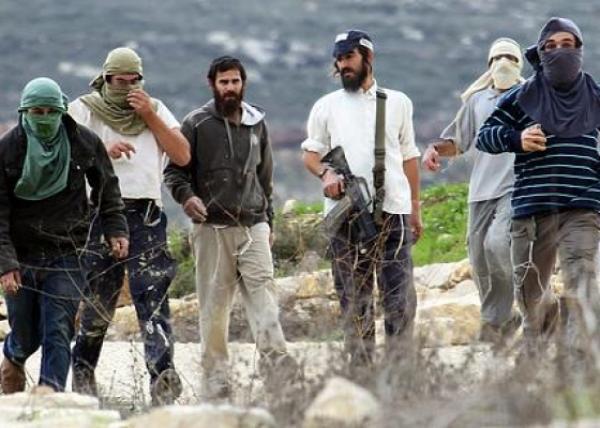
A Palestinian woman was injured in a settler attack on vehicles north of Nablus

A citizen was injured, Tuesday evening, in an attack by settlers on citizens' vehicles north of Nablus.


According to local sources, settlers attacked citizens' vehicles with stones while they were passing on the road between the cities of Jenin and Nablus, which led to a citizen who was riding in one of the vehicles being injured in the shoulder and eye, and she was transferred to a hospital in Nablus.


The same road witnesses repeated attacks by settlers who assault citizens and throw stones at their vehicles.

PALESTINE

Tue 08 Oct 2024 8:25 pm - Jerusalem Time

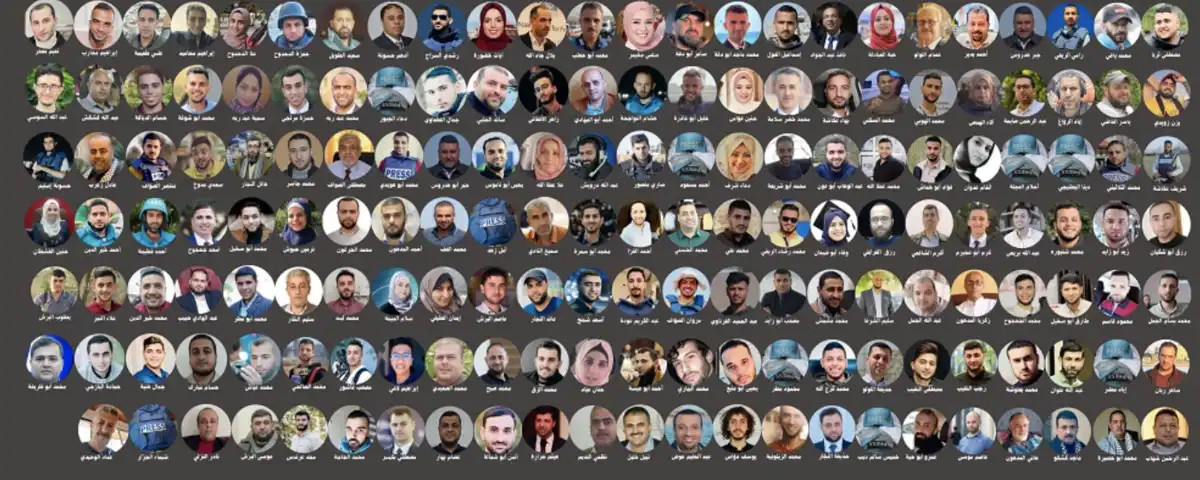
Journalists Syndicate: 1639 crimes and violations against the press since the beginning of the war of extermination

The Palestinian Journalists Syndicate said that the Israeli occupation committed the largest and most horrific massacre against the press in the world throughout history during a year of the war of extermination it is waging against our people.


The Syndicate stated in its report on the first anniversary of the Israeli war of extermination, issued by the Freedoms Committee, that “the occupation committed 1,639 crimes against journalists and media institutions, especially in the Gaza Strip, including the martyrdom of 167 journalists and media workers.”


The biggest massacre in history


According to the monitoring and follow-up of the Freedoms Committee in the Syndicate, the occupation has killed 167 journalists and workers in the Palestinian media sector since October 7, 2023, including 21 female journalists and one male journalist in the West Bank governorates, Ibrahim Mahameed from Nour Shams Camp in Tulkarm. These figures indicate that the occupation has killed 11% of Gaza’s journalists.


The union said, "The knights of truth from fellow journalists paid the price for the message of truth and conveying it to the world, and the Israeli occupation carried out the greatest massacre of assassinations against them to bury the truth and its witnesses."


The union pointed out that a number of colleagues were martyred and their bodies remained with their families under the rubble of their homes for months, as happened with colleagues Hiba Al-Abdallah (who is still under the rubble to this day), Salam Meema, and Ayat Khadura.


The Syndicate's report revealed 357 cases of injury among journalists during the year of the war of extermination, due to the occupation's missiles and direct bullets, in addition to toxic gas bombs and settler attacks.


The Syndicate explained that 101 injuries were a result of the occupation targeting journalists with its missiles and bullets, the latest of which was the serious injury of fellow journalist Ahmed Al-Zard, the injury of his mother, and the martyrdom of his brother and a number of his family members as a result of an Israeli bombardment that targeted their home in Khan Yunis.


The report added that a number of journalists sustained serious injuries that led to the amputation of their feet, such as colleague Sami Shehadeh, whose right foot was amputated as a result of being hit by an Israeli bombardment while covering the displacement movement in the Nuseirat camp in the central Gaza Strip, in addition to injuries among journalists in deadly locations, which indicates the desire to kill on the part of the Israeli army.


Al Jazeera correspondent Ismail Abu Omar's right leg was amputated during a bombing in the Mirage area north of Rafah, and his left leg was severely injured. The same was true for photojournalist Abdullah al-Hajj, who was injured while covering the news in al-Shati refugee camp west of Gaza City, which led to the amputation of one of his legs. Photographer Mohammed al-Za'anin was injured in his left eye after being targeted by a drone that dropped explosive bombs on him near Nasser Hospital in Khan Yunis.


The union indicated that the remaining injuries were distributed between 21 direct injuries from gas and sound bombs, 26 attacks by settlers, and 121 suffocation injuries from inhaling toxic gas.


The Israeli occupation arrested 125 journalists


The Syndicate's data indicated that the occupation authorities have arrested 125 journalists in the West Bank and Gaza Strip since October of last year, 61 of whom are still in occupation prisons.


The Syndicate said that 16 Palestinian female journalists were arrested by the occupation, 6 of whom are still under arrest. The occupation also deported journalist Siqal Qaddum (51 years old) from Hebron who works for Palestine TV to the Gaza Strip via the "Kerem Abu Salem" crossing.


The Syndicate noted that 33 journalists were subjected to what is called "administrative detention", and that the occupation courts exploited the so-called Israeli "emergency law" and accused some imprisoned journalists of incitement through the media and social media platforms, such as fellow journalist Rasha Harzallah at the Palestinian News and Information Agency "Wafa" and fellow journalist Ali Dar Ali, a correspondent for Palestine TV.


Since October 7, 2023, journalists Nidal Al-Wahidi (who works with Al-Najah TV and New Press platform) and Haitham Abdul Wahid (Ain Media Foundation) have been forcibly disappeared, and the occupation refuses to release any information about their fate or respond to all international and human rights efforts to find out their circumstances.


Total destruction of media institutions in Gaza and closures in the West Bank


The Israeli occupation destroyed 73 media institutions in the Gaza Strip, according to documentation by the Freedoms Committee in the Syndicate, including 21 local radio stations, 3 broadcast towers, 15 news agencies, 15 satellite channels, 6 local newspapers, and 13 media and press services offices.


The occupation also closed 15 institutions in the West Bank, most notably the Palestine TV office in Jerusalem, and the offices of Al-Mayadeen and Al-Jazeera channels, in addition to closing 12 press printing presses in various governorates of the West Bank.


514 martyrs from the families of journalists in Gaza


Journalists' families paid a heavy price as a result of their sons' profession, as figures from the Syndicate's Freedoms Committee indicate that 514 members of journalists' families were killed in Gaza as a result of missile attacks on journalists' homes and places of displacement.


The report added that the Israeli occupation targeted about 115 homes of Palestinian journalists’ families in the Gaza Strip with aircraft missiles and artillery shells. The families of a number of journalists were completely erased from the civil records of the population, such as Al-Quds Channel journalist Hussam Al-Dabaka, after his apartment was targeted and his wife, children and a number of other family members were killed in Al-Maghazi camp, Palestine TV correspondent Mohammed Abu Hatab and 11 of his family members, including his wife, children and brother, and journalist Salam Meema, her husband and three children Hadi, Ali and Sham, in the bombing of their home in Jabalia camp.


Bullets are the language the occupation uses to communicate with journalists.


The most widespread attack in the West Bank since the beginning of the war of extermination was the direct shooting at press crews, as 198 members of press crews were documented to have been exposed to these dangerous incidents, most of which occurred in the Jenin and Tulkarm governorates, which exposed them to the risk of death.


For example, the last quarter of 2023 saw 26 incidents recorded in this regard, while during the third quarter of this year the number of incidents rose to 106. Many colleagues were harmed by these attacks as well as their equipment (cameras and vehicles).


Colonial terrorism with governmental legitimacy


The report indicated that about 26 journalists were subjected to brutal attacks by settlers in the West Bank, and on many occasions this happened in the presence of the occupation police and army without their intervention to protect the journalists, and without any of them being held accountable by any party.


Examples of these incidents include: brandishing a weapon and threatening to kill, as happened with journalist Shuruq Issa after a settler brandished his weapon at her while she was covering events in the town of Beit Ummar, north of Hebron, and beating and smashing with the intent to kill, as happened with photojournalist Joseph Handal while he was passing through the “Container” military checkpoint east of Bethlehem, where he was assaulted and his vehicle was smashed with stones and sticks by a group of settlers, as well as being sprayed with poisonous pepper gas in his face, which led to him sustaining injuries and fractures.


In occupied Jerusalem, a large group of journalists were attacked by settlers, beaten and burned, such as what happened to journalist Saif Al-Qawasmi, who suffered burns to his hand as a result of settlers deliberately putting out cigarettes on his hands, as well as correspondent for Al-Hayat Al-Jadida newspaper, Diala Juwayhan, who was beaten and assaulted, her colleague, journalist Malak Arouq, correspondent for Al-Arabiya channel, Bara’a Abu Ramouz, and a large group of colleagues, both male and female.


Poison gas still makes journalists' eyes tear up and its bombs destroy their bodies


The report explained that 152 injuries among journalists were documented due to gas bombs, 140 of which were caused by inhaling toxic gas and 19 by the gas bomb hitting the journalists’ bodies, as happened with journalist Sidqi Rayyan, who was injured by a gas bomb in the head after the occupation targeted journalists in “Jabal Sabih”, on which the “Avitar” colonial outpost was forcibly established in the town of Beita, south of Nablus, as well as Reuters photographer Raneen Sawafta, who was injured by a gas bomb in the face and was transferred to the hospital in Jenin, after the occupation forces fired gas bombs at journalists.


A flood of crimes preventing crews from working


The Freedoms Committee report stated that there were 396 cases of detention of individuals and press crews, preventing them from working, and pursuing them with verbal threats and threats of shooting and arrest in the event of non-compliance, with a clear escalation in cases of prevention, even with pursuit and attempts to run them over with heavy bulldozers and military vehicles.


For example, on the road near the city of Tubas, an Israeli military jeep hit the vehicle of journalists Majdi and Ali Ishtia, while they were covering the news in the Tayasir area east of Tubas. The military vehicles also tried to run over Al Jazeera correspondent Guevara al-Badri, photographer Aref Tuffaha, Palestine TV correspondent Amir Shaheen, and a group of journalists.


A number of journalists were also subjected to an attempted run-over by an Israeli military bulldozer while covering the demolition of streets in the city of Jenin. Among them were Al-Arabiya TV correspondent Amid Shehadeh, Al-Ghad TV correspondent Diaa Hoshiya, Roya TV correspondent Hafez Abu Sabra, and Al-Quds newspaper correspondent Ali Samoudi.


Other forms of crime and assault


The Israeli occupation uses many forms of persecution, harassment and targeting of journalists, such as travel bans, seizure of personal and professional belongings, summons for investigation, unfair military courts, financial fines, threats, incitement and house arrest.


The submission of the Supreme Court, the highest judicial authority in the occupation system, reflects its complicity with the Israeli occupation government and army by rejecting the request of the Foreign Journalists Association to allow them to enter to work and cover the Gaza Strip.


The report concluded that the most prominent indications of the series of brutal crimes committed against Palestinian journalists and the ease with which they were killed are the result of a decision from the highest levels of political decision-making in the Israeli occupation government, and cannot be a field effort but rather the work of a “political institution” that the “security establishment” translates into this high level of killing.


The Syndicate stated in its report that the so-called Israeli Supreme Court’s rejection of the Foreign Journalists Association’s request to enter and cover the Gaza Strip is an indication of the occupation regime’s persistence in maintaining its monopoly over Palestinian journalists and casting doubt on the facts they transmit to the world.


She said that making the families of Palestinian journalists pay a heavy price, represented by losing their lives because of their sons’ profession, is something that history has never witnessed in terms of ugliness and moral decadence that is contrary to humanity.


She added that the increase in the number of bloody injuries caused by missile shrapnel and bullets to a level much higher than the injuries resulting from beating with clubs and kicks is also an indication of targeting with the intent to kill. In all the reports of the unions and human rights institutions in the world that cover wars and conflicts, you cannot find any convergence to these facts and figures.


She pointed out that the occupation aircraft's bombing of press offices with missiles, including those belonging to foreign media institutions, is a message of defiance from the occupation government to the world that it does not care about the series of crimes and genocide.


She pointed out that the dangerous increase in the level of targeting with live bullets to prevent crews from working in the West Bank is confirmation of the persistence of brutality and violations in order to create a state of terror and intimidation of journalists with the aim of concealing the truth.


She stressed that the continued detention of journalists without trial or visits from the International Committee of the Red Cross and families is contrary to all international agreements and conventions.


She pointed out the "continuous gang-style robbery by the occupation army of the property of journalists and press institutions without a court or any right, and the seizure of equipment and personal belongings without any documentation or acknowledgment of these thefts, which are called 'confiscations'."


The Syndicate indicated that the extent of targeting journalists according to the geographical and temporal distributions has implications for the Israeli targeting of Palestinian society. In the Gaza Strip, the occupation is working on genocide, believing that the extermination of journalists there will hide the truth of its brutal acts. The clear increase in targeting journalists in the northern West Bank governorates indicates the extent of targeting citizens in those governorates. Likewise, the clear chaos of the occupation army in the city of Jerusalem towards journalists indicates and confirms the targeting of components of the holy city. As for the temporal dimension, the higher the rate of targeting journalists in a certain area, this is a prelude to comprehensive targeting of that area.


She stressed that the noticeable increase in attacks and terrorism by settlers against journalists confirms that they have obtained legitimacy from the Israeli occupation government to commit massacres and dangerous acts against journalists and citizens.


The Journalists Syndicate recommended that clear decisions be issued by the United Nations and the UN Security Council demanding that the Israeli occupation government stop killing journalists.


She stressed that the International Court of Justice has a professional, moral and humanitarian responsibility, which requires it to take action to take a series of decisions to protect Palestinian journalists. The reputation and professionalism of the International Criminal Court is also at stake, as it has not yet considered the series of cases brought before it by the Syndicate regarding previous Israeli crimes, such as the assassination of journalist Shireen Abu Akleh and a number of journalists in the Gaza Strip who were martyred in previous years.


The union called on the International Federation of Journalists to continue its support and provide a union and human rights network in order to put more pressure on the International Criminal Court to try the leaders of the occupation, politicians, military personnel and colonists, to ensure that they do not escape punishment for their crimes.


She stressed the need for the Arab Journalists Union to lead a movement that includes Arab parliaments, the Arab League, unions and human rights institutions to support Palestinian journalists in practicing their profession and exposing the crimes of the occupation.


It recommended activating the Palestinian National Mechanism to End Impunity to follow up on providing protection for journalists at the Palestinian level in cooperation with the Palestinian Ministry of Foreign Affairs, the Ministry of Justice, departments of the Palestine Liberation Organization, the Palestinian Bar Association, the General Union of Palestinian Writers and Authors, the Independent Commission for Human Rights, the Al-Haq Foundation, and all relevant sectors.


She stressed that the Palestinian journalist, especially in the Gaza Strip, is in dire need of all means of legal and moral support, as well as means of a decent living in light of the lack of sources of income amidst this siege and the loss of many of their equipment, offices and crews.


She pointed out that she will continue, with all institutions working in the field, to monitor, document and publish the occupation's crimes and attacks on all journalists.


She stressed that local and Arab media outlets are required to provide press coverage of the occupation’s crimes against journalists, and to show their suffering and that of their families with clear humanity rather than being mere numbers. She also called on all staff working in the media sector to maintain their commitment to professional safety standards to preserve their lives, as well as to adhere to all ethical standards for the quality of sound news reporting.

OPINIONS

Tue 08 Oct 2024 8:05 pm - Jerusalem Time

Has Hamas become a burden on the Arab world after it caused the crushing of Hezbollah?

Translation for "Al-Quds" dot com

Translation for "Al-Quds" dot com

Opinion Writer

Since the beginning of the war, Hamas has become a burden on the Arab world, complicating the political and security situation in the region. In this article, we will review how Hamas transformed from a resistance movement into a burden on the Arab world, how its adventures affected the Shiite resistance axis, and finally how it was able to divide the arenas instead of uniting them.


Since the outbreak of the last war, Hamas has become a burden on the Arab world due to its policies and hardline positions. It has caused tension in relations between Arabs, as opinions were divided over supporting or opposing it. Some believe that Hamas is causing instability in the region and hindering peace efforts.


** Hamas's Impact on Hezbollah and the Resistance Axis


Hamas's adventures, led by Yahya Sinwar, crushed Hezbollah and the Shiite Resistance Axis. The Resistance Axis was severely damaged by Hamas's aggressive policies, which led to an escalation of tensions with Israel. This escalation led to painful military strikes against Hezbollah, which ended with the targeting of its Secretary-General Hassan Nasrallah and many of its leaders, which greatly weakened its position in the region. As a result, Hamas was left alone, as it no longer enjoyed the strong support of its former allies in the Resistance Axis. This decline in support reflects the damage to relations between Hamas and the rest of the Shiite factions, which led to a decline in their influence in the region.


Hezbollah, which was considered a strong supporter of Hamas, found itself in an unenviable position. On the one hand, it cannot abandon its support for the Palestinian cause, and on the other hand, it cannot bear the negative consequences of Hamas’s miscalculated adventures. These moves have weakened the axis of resistance, as each party in this axis now operates independently of the others, which has led to a decline in the regional influence of these forces combined.


** Dividing the arenas instead of unifying them


Instead of unifying the Arab and Islamic arenas against the Israeli occupation, Hamas has managed to divide them. Its policies have led to the division of the Palestinian factions, with opinions divided between supporters and opponents of Hamas' approach. This division has weakened the Palestinian position in general, and made it difficult to achieve national consensus on key issues. In addition, Hamas has caused tension in relations between Arab countries, which has led to a decline in Arab support for the Palestinian cause.


Hamas' policies have contributed to the division of the Arab and Islamic street. While everyone was sympathetic to the Palestinian cause, now there are questions about the wisdom of Hamas's moves and strategies, especially with regard to escalating military operations without considering the consequences. This division makes it difficult to achieve an Arab or Islamic consensus on the Palestinian cause, which serves the interests of the Israeli occupation, which exploits these divisions for its own benefit.


Hamas must realize that continuing with this approach may lead to the erosion of Arab and Islamic support for its cause, which may make it even more isolated. In the end.


In conclusion, it can be said that Hamas has become a burden on the Arab world since the beginning of the war. It has complicated the political and security situation in the region, negatively affected the Shiite resistance axis, and divided the arenas instead of uniting them. These policies and hardline positions of Hamas have made it difficult to achieve peace and stability in the region, and have weakened the Palestinian position in general.


The Arab countries, which previously supported Hamas almost completely, now find themselves in a critical position. On the one hand, they cannot abandon their political support for the Palestinian people, and on the other hand, they feel that Hamas has become a burden on them due to its military policies that may expose the region to the risk of slipping into greater confrontations. This new dynamic makes Hamas a harmful element to unifying the Arab ranks in the face of common challenges.


Source: Todaynews

OPINIONS

Tue 08 Oct 2024 7:47 pm - Jerusalem Time

Israel between the media of victory and its absence

walid Abdulhay

walid Abdulhay

Opinion Writer

Today I listened to the statements of the Israeli Defense Minister Galant, which he made on the Lebanese border with occupied Palestine, and I was keen to listen to him carefully, and it became clear to me that the man is disconnected from reality, as he says that Hezbollah is no longer able to threaten, and it is without leadership, and there is no one to make decisions in it, and that the return of the settlers to the north is imminent... while the field scene indicated a disastrous failure of his forces to cross even a few meters into southern Lebanon, and Haifa was hit by more than a hundred missiles, and electricity was cut off in three settlements, and we saw on television screens the smoke of his vehicles burning, and Ben Gurion Airport was shut down, and here we ask is all this happening without a "leadership directing the resistance"? 

The truth is that Galant’s allegations are not separate from a phenomenon that has been established throughout the confrontation from October 7 until now, which is that Israel has been the victor throughout the major confrontations with the Arabs in an undeniable way, which does not require it to lie or falsify the news, as the successful person does not twist the truth of his success, but rather the Arab recipient is accustomed to tending to believe the Israeli media because the reality was identical to what that media says, and the Arab media has been a model of lying and “stupid” falsification since the Ahmed Said phenomenon until now, almost. It may lie but intelligently, but the Arab media combined lying and stupidity in those periods, and it still suffers from some of the “viruses of that period.” But the new shift in this issue from the Israeli side appears in two aspects:


1- Israel is still unable to achieve great and clear successes, but sometimes faces many setbacks, which has caused its media to fall into a kind of confusion, as it is a media accustomed to reporting victory but is not accustomed to reporting stumbles, and from here came this confusion, otherwise how do we explain the following phenomena:

A- The great discrepancy in the numbers of dead and wounded from one source to another, which I have demonstrated in previous articles and with documented numbers, and in fact some relevant Israeli sources had the number of dead in the later report less than the number of dead in the previous report (as if some of the dead had returned to life) (you can refer to my documented articles in this regard), and the reports of Israeli hospitals are not consistent with the numbers announced by the official spokesman, but rather the numbers vary from one newspaper to another. 

B- Preventing the media from transmitting and photographing the material damage, and all we see is only individual efforts or a shot by a journalist from here or there, but the relevant media are not allowed to transmit that, and this became clear in the recent Iranian strike on some bases that Israel denied until the missiles reached them, then the Washington Post, the New York Times and the Wall Street Journal came out with expert analyses of satellite images that confirmed that there is a significant gap between what Israel said and what actually happened. 

C- Despite some Israeli writers pointing out the severe decline in Israel's image in the mind of world public opinion, the official bodies (the government, ministers, security leaders and the army) avoid addressing this matter completely as if it were a military secret. 


D- The discrepancy between the reports of the Israeli media itself, as what Haaretz says is far from what Yedioth Ahronoth or Maariv or Channel 12 or 13 says, and the discrepancy is not in the diversity but in the content of the same news about the same incident, in fact the bickering between ministers and opposition leaders and between politicians and military personnel appears in one newspaper and is denied by another. 


2- Breaking the monopoly of news through social media, as the Arab media used to say whatever it wanted because the Arab reader did not find other sources, especially in light of the official media’s monopoly of the entire scene, which makes the field of lies and forgery spacious, while the Israeli media did not need to lie previously, as there is no justification for the victor to lie, but now, due to its lack of decisive victory and the successive surprises it receives, it finds itself without the means to inform “non-victory” at the very least, and from here the confusion appeared on it, and the scene became more confusing for it that social media and the leaked or smuggled image or the one that can be sold to major media outlets at tempting prices have become uncontrollable, and from here the confusion increased. It is difficult to say that Israel has been defeated, but it has certainly not won yet, and hence its media is blind this time. Will it become blind? Perhaps.

ARAB AND WORLD

Tue 08 Oct 2024 7:13 pm - Jerusalem Time

36 killed and 150 wounded in the past 24 hours in Lebanon

The Lebanese Ministry of Health announced the death of 36 citizens and the injury of 150 during the past 24 hours in Lebanon.


The National News Agency said that the total number of martyrs has risen since September 23 to 2,119  and over 10,019 wounded.


It added: "During the past 24 hours, 137 airstrikes were recorded, bringing the total number of attacks since the beginning of the aggression to 9,400 attacks."


990 centres have also been opened to receive displaced persons, 781 of which have reached their maximum capacity.


It explained: "To date, 181,700 displaced persons have been registered in the shelters included in the regulations issued by the National Operations Room."


It pointed out that 304,897 Syrian citizens and 107,333 Lebanese crossed into Syrian territory, until October 8.

ARAB AND WORLD

Tue 08 Oct 2024 6:58 pm - Jerusalem Time

Biden called Netanyahu a damned liar who has no strategy

CNN reported Tuesday that the famous American author, Bob Woodward, who brought down former President Richard Nixon 50 years ago, says in his new book, “War,” that US President Joe Biden called Prime Minister Benjamin Netanyahu a damned liar and a son of a bitch” after the Israeli occupation army entered Rafah on May 6, “and he also shouted at the prime minister after an Israeli airstrike led to the assassination of a senior Hezbollah leader.”


The relationship between the two leaders became increasingly tense during the spring of 2024, according to the network, which obtained an advance copy of the book titled “War.”


According to excerpts, Biden asked Netanyahu in a phone call last April: “What’s your strategy, man?”


Netanyahu replied that Israel should enter Rafah, on the border between Gaza and Egypt, which “has become the last Hamas stronghold in Gaza,” to which Biden responded, “Bibi, you have no strategy.”


Also last April, Israel assassinated two Revolutionary Guard generals at the Iranian consulate in the Syrian capital, Damascus. After the United States and other allies helped Israel intercept most of the missiles Iran fired in response, Biden urged Netanyahu not to respond and to “win.” According to the book, Biden viewed Israel’s limited response to the Iranian attack as a success. “I know he’s going to do something,” Biden told advisers, “but the way I end it is to tell him not to do something.”


After Israel entered Rafah, Biden said of Netanyahu: "He is a damned liar."


According to Woodward, Biden said in a private session: “This son of a bitch, Bibi Netanyahu, he’s a bad man. He’s a bad, bad man!”


It is noteworthy that Politico magazine reported last February that Biden uses these expressions when talking about Netanyahu.


And when Israel assassinated Hezbollah’s top military commander, Fuad Shukr, on July 31, Biden shouted in their subsequent conversation, “Bibi, what the hell?” “You know, the perception of Israel around the world is increasingly that you are a rogue state, a rogue actor.”


The United States claimed that Fuad Shukr played a key role in the 1983 bombing of the U.S. Marine barracks in Beirut that killed 241 Marines. The United States had a $5 million bounty on Shukr's head when he was killed.


Woodward also wrote about US Secretary of State Antony Blinken’s meeting with Saudi Crown Prince Mohammed bin Salman about normalizing relations with Israel. Blinken asked whether the Saudis were insisting on a Palestinian state as the price for normalization.


“Do I want it?” Bin Salman asked. “It doesn’t matter much. Do I need it? Sure.”


Woodward gives priority and the largest space in the book to the Russian-Ukrainian war.

ARAB AND WORLD

Tue 08 Oct 2024 6:30 pm - Jerusalem Time

Washington rejects Israel's reoccupation of Gaza or any part of it

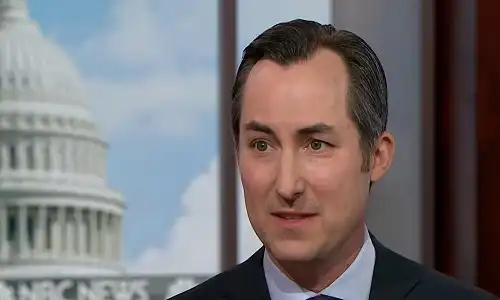
US State Department spokesman Matthew Miller said on Monday that the United States rejects the reoccupation of Gaza or any part of it by Israel as a result of the war that Israel is currently waging.


“We have seen these reports (about reoccupation or separating the south from the north); let me first and foremost emphasize very clearly that we do not want to see Gaza occupied by Israel. We do not want to see the territory of Gaza shrink in any way on a permanent basis,” Miller said in response to a question from a Quds.com correspondent about the current operation being carried out by the Israeli occupation army, especially in its quest to separate the north from the south, and to create buffer zones or for military or settlement concentration.


“When it comes to these reports (of Israeli control of Gaza or parts of it), we are engaging with the government of Israel to see exactly what they intend to do,” Miller said. “But I would say, in general, that we want to see people in Gaza able to return to their neighborhoods, not have to leave their neighborhoods.”


“Now, if there are Hamas militants operating under an apartment building, before Israel attacks those militants, I think you would want to see civilians evacuated,” Miller added. “That would be a good thing for those civilians, to see that they are out of harm’s way. But it goes back to this broader point that I made, which is that as long as you don’t have a political path forward and you don’t have a resolution to the real issues of governance, you can kill Hamas militants, but Hamas will continue to recruit other militants, you will continue to endanger the Palestinian people, and you will continue to endanger the security of Israel as well.”


“We want to see a ceasefire that brings the hostages home, alleviates the suffering of the Palestinian people, and allows humanitarian aid to flow into Gaza,” Miller said. “We want to see an agreement on a political path forward that ensures that the Palestinians choose their own leaders, and that Hamas no longer rules Gaza as a terrorist organization. Ultimately, we want to see Gaza and the West Bank united as an independent Palestinian state.”


In a related matter, former President Donald Trump (and Republican Party candidate in the upcoming elections on 5/11) said on the occasion of the one-year anniversary of October 7, 2023, in an interview with broadcaster Hugh Hewitt, who asked Trump, if Gaza, large areas of which were destroyed during Israeli air and ground strikes, could be “Monaco if it was rebuilt the right way? And be a place that all Palestinians would be proud of and want to live in?” Trump replied, “It could be better than Monaco. It has the best location in the Middle East, the best water, the best everything. It’s the best, I’ve said that for years. I’ve been there, and it’s tough. It’s a tough place, before, you know, before all the attacks and before everything that’s happened over the last two years.”


"They never took advantage of it. You know, as a developer, it could be the most beautiful place, the weather, the water, everything, the climate. It could be so beautiful... it could be one of the best places in the world," he continued.


The New York Times reported that there is no record of Trump visiting Gaza at all, during his presidency or as a businessman.


In 2017, his first year in office, Trump visited Israel and traveled to the West Bank, meeting with Palestinian Authority President Mahmoud Abbas in Bethlehem.


Commenting on Trump's claims of visiting Gaza, a Republican campaign official, who declined to be identified, said, "Gaza is in Israel" and that he had visited Israel.

PALESTINE

Tue 08 Oct 2024 6:03 pm - Jerusalem Time

Israeli settlers attack northwest of Ramallah

Settlers attacked the village of Umm Safa, northwest of Ramallah, on Tuesday evening.


According to local sources, settlers attacked the outskirts of the village, threw stones at citizens' homes, and set fire to areas near citizens' homes.


Sabah pointed out that the settlers and the Israeli occupation forces continue their settlement expansion operations in the village’s lands, through continuous bulldozing operations and placing mobile homes on the lands of citizens who have proof of ownership.

ARAB AND WORLD

Tue 08 Oct 2024 5:51 pm - Jerusalem Time

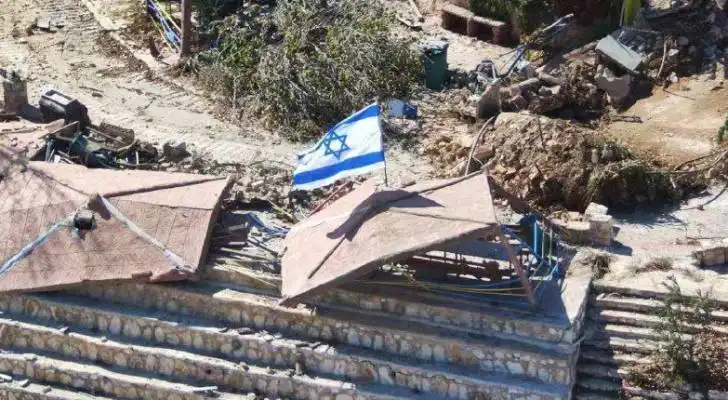
Israel claims control over the Maroun al-Ras area in southern Lebanon and raises the entity's flag

The Minister of Energy in the Israeli occupation government claimed that his soldiers, our soldiers, occupied the Maroun al-Ras area in southern Lebanon and destroyed houses from which Hezbollah had launched missiles.


The occupation army raised the entity's flag in Maroun al-Ras, claiming to control it, noting that the occupation army raised the flag in a building directly opposite the border strip and 20 meters away from the strip.


Earlier, the Israeli occupation army claimed that the Golani Brigade had taken control of a Hezbollah compound in Maroun al-Ras, southern Lebanon.


The occupation army said that it found a loaded launcher ready to fire rockets at settlements in the north of the occupied Palestinian territories.


The occupation army announced on Tuesday that it had launched raids targeting Hezbollah in southwestern Lebanon, while announcing the expansion of its ground operations after mobilizing additional forces.


The occupation army stated that the 146th Division began limited and focused operations against Hezbollah targets and infrastructure in southwestern Lebanon.


The occupation army indicated that it had monitored the launch of about 85 rockets from Lebanon towards the northern regions, including the city of Haifa, while confirming that it was launching raids targeting the southern suburbs of Beirut.


ARAB AND WORLD

Tue 08 Oct 2024 5:04 pm - Jerusalem Time

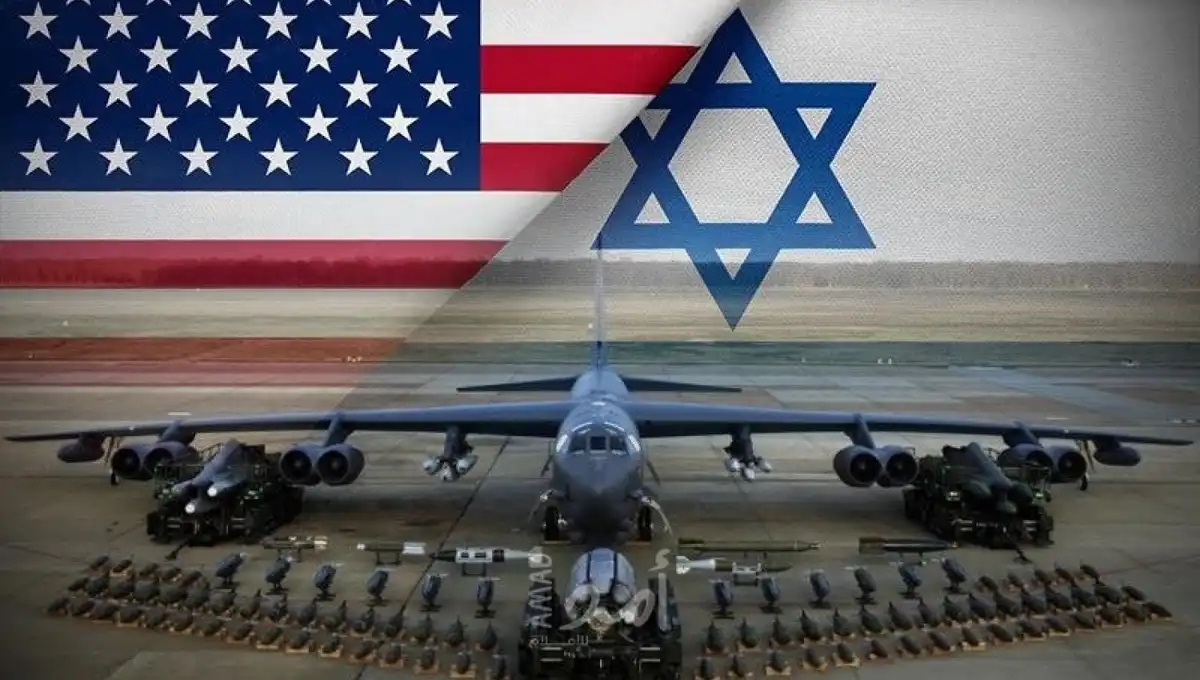
US military support to Israel exceeded $22.76 billion in one year

Supporting Israel's war on Gaza and other escalations in the Middle East has cost the United States at least $22.76 billion since October 7, 2023, the Costs of War Project at Brown University said in a research paper published Monday.


The cost of the war was arrived at, a very conservative estimate, by combining the cost of US military aid to Israel with the cost of related US military operations in the region, including the war against the Houthis in Yemen.


The report found that the US government approved at least $17.9 billion in military aid to support Israeli military operations in Gaza and elsewhere in the region over the past year, a figure far greater than any other year since the United States began providing military aid to Israel in 1959.


The report notes that tracking U.S. military support to Israel is difficult due to the Biden administration’s lack of transparency. “For example, the Biden administration has concluded at least 100 arms deals with Israel since October 2023, which were below the amount that would have triggered a requirement to notify Congress of the details,” the paper states.


The $17.9 billion figure also does not include a $20.3 billion major arms deal the Foreign Ministry approved for Israel last August, with the money to be spent over the coming years. It is also unclear at this time how much of the $20.3 billion, which includes an $18.8 billion deal for F-15 fighter jets, will be covered by U.S. military aid through 2028.


The paper details how the United States has supplied Israel with weapons for decades. “The United States has been Israel’s largest arms supplier for more than five decades. Israel is the world’s largest cumulative recipient of U.S. aid since World War II, and is in the midst of a 10-year, $38 billion military aid agreement negotiated under the Obama administration, covering fiscal years 2019 through 2028,” the paper states.


The report says the United States has spent at least $4.8 billion on its military operations in the Middle East, including $2.4 billion on intercepting Houthi missiles and drones and launching missile strikes in Yemen. Another $2.4 billion for spending on U.S. operations in the region was included in the $95 billion foreign military assistance bill that President Biden signed into law in April. The bill adds another $50 million to $70 million in additional combat pay for U.S. military personnel.


The cost to American taxpayers will continue to rise as there is no end in sight to Israel’s genocidal war in Gaza or its bombing and incursion campaign in Lebanon. The risk of a full-scale war with Iran is also high as the United States coordinates with Israel on plans to attack Iran in response to last week’s Iranian missile barrage that struck Israel, which was in response to several Israeli escalations. The U.S. bombing campaign in Yemen has also failed to deter the Houthis, who have vowed that they will not stop their attacks on shipping unless there is a ceasefire in Gaza.

PALESTINE

Tue 08 Oct 2024 4:37 pm - Jerusalem Time

Gaza Interior Ministry calls on Palestinians in the north not to respond to Israeli threats of evacuation

The Ministry of Interior in the Gaza Strip called on Palestinians in the northern areas not to respond to the occupation's threats of evacuation.


The Ministry of Interior in Gaza confirmed that the occupation is working to deceive citizens by claiming that there are safe corridors and displacement areas, and its lies have been proven.


In this context, Jordanian strategic expert Dr. Ibrahim Issa Al-Abadi revealed exciting details about the Israeli occupation’s goals for the war, especially after a year has passed since the start of the Battle of the Flood of Al-Aqsa, warning of dangerous indicators, especially with the division of the Gaza Strip between the south and the north.


He added that Tel Aviv wants northern Gaza because it overlooks a large gas reserve on the Palestinian coast, indicating that there is a dangerous indicator, which is that the occupation government has decided to rebuild the settlements that were dismantled in 2005.


He explained that there is a hypothesis that says that "Israel" does not want to eliminate Hamas and does not want to free the prisoners at the current stage, and that what it wants is to divide the north from the south to achieve its political goal.


PALESTINE

Tue 08 Oct 2024 4:30 pm - Jerusalem Time

Israeli bombing of areas in the Gaza Strip leaves dead and wounded

A number of citizens were killed and others were injured today, Tuesday, as a result of the occupation's bombing of various areas in the Gaza Strip.


Medical sources in the Gaza Strip reported that a number of citizens were killed when a warplane bombed a civilian vehicle at the western entrance to Nusairat in the central Gaza Strip. At least one young man was killed and others were injured when an Israeli warplane targeted agricultural land in the vicinity of the entrance to the town of Az-Zawayda in the central Gaza Strip.


Three citizens were injured with various wounds after the occupation aircraft bombed a tower in the Al-Alami area in Jabalia camp in the north, and a number of citizens were injured when the occupation helicopters fired on houses in the Beit Lahia project in the north, and the occupation aircraft bombed a house in Al-Shuhada Street in Al-Rimal neighborhood in the center of Gaza City.


A fire also broke out in a house as a result of Israeli shelling targeting the eastern areas of the Al-Zeitoun neighborhood, southeast of Gaza City.


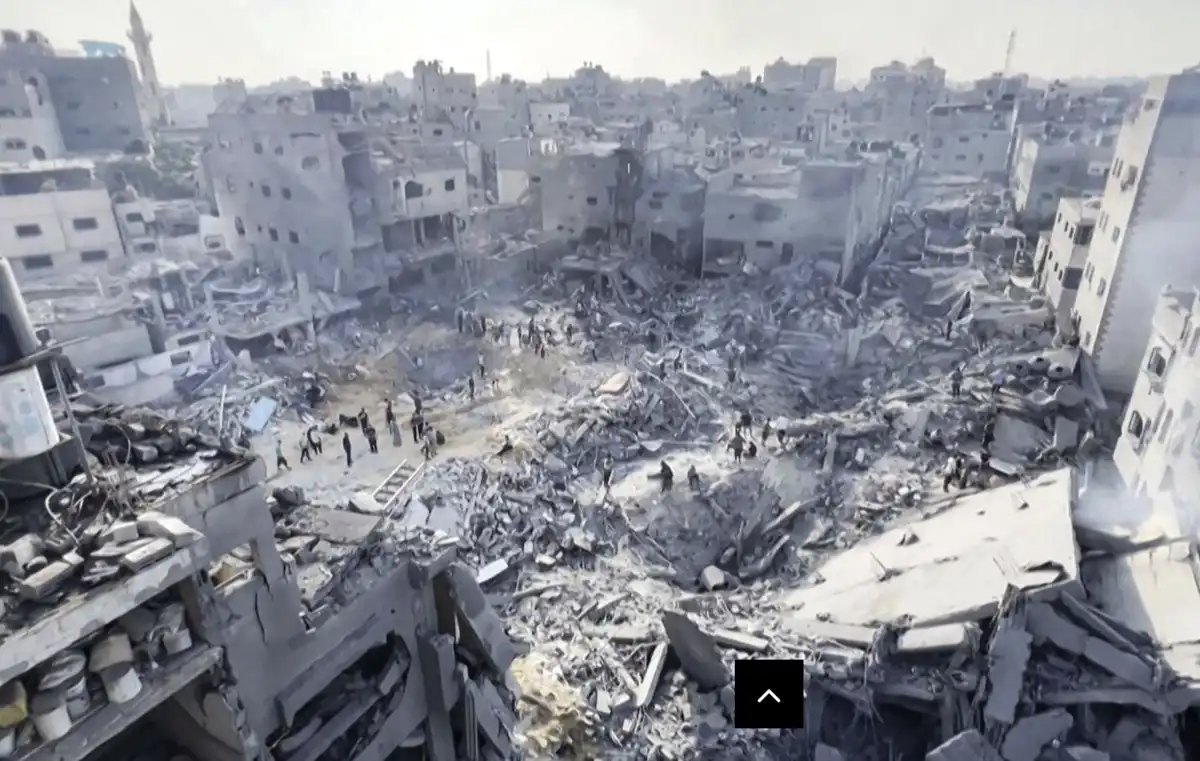
Since October 7, 2023, the occupation forces have continued their aggression on Gaza from land, sea and air, which has so far resulted in the death of 41,965 citizens and the injury of 97,590 others, including a large number of children and women. The numbers are expected to rise in light of the presence of thousands of missing people under the rubble, while rescue teams face enormous difficulties in reaching all affected areas.

PALESTINE

Tue 08 Oct 2024 2:42 pm - Jerusalem Time

78 Palestinians killed and 340 demolitions and bulldozing operations in Jerusalem during one year

The Jerusalem Governorate said today, Tuesday, that 78 people have been killed and 1,791 citizens have been arrested in the governorate since October 7, 2023.


The ministry explained in its report on the situation in the Jerusalem Governorate during the year of aggression that the frequency of repeated incursions into the blessed Al-Aqsa Mosque has increased in an unprecedented manner, as (50,475) settlers stormed the mosque, and these incursions have become part of a broader plan to impose the reality of temporal and spatial division on the Al-Aqsa Mosque.


According to the report, Jerusalem has also witnessed an unprecedented campaign to forcibly displace Palestinians from their historic neighborhoods, such as Sheikh Jarrah and Silwan, as the occupation seeks to empty these areas of their original inhabitants and replace them with settlers.


The demolition and seizure of Palestinian homes has not stopped for a year, but has systematically increased to create a new reality that serves the colonial project, as the governorate witnessed 340 demolition and bulldozing operations.


The occupation imposed a stifling economic siege on the residents of occupied Jerusalem, through restrictions on the movement of goods and people, and arbitrary measures taken by the Israeli occupation authorities against Jerusalemite merchants and investors.

PALESTINE

Tue 08 Oct 2024 2:37 pm - Jerusalem Time

Israeli forces injure a young Palestinian, arrest him, and deliver notices west of Hebron

Today, Tuesday, the Israeli occupation forces injured a young man, arrested him and handed him notices during their raid on the town of Beit Idhna, west of Hebron.


According to local sources, these forces shot a young man, directly hitting him, and detained and interrogated him before arresting him, without knowing his health condition yet.


It also raided the Wadi Risha area and delivered notices to demolish four barracks used for recycling scrap metal, belonging to: Khaled Mohammed Younis Abu Juhaisha, Mahmoud Muslim Abu Juhaisha, Ahmed Abu Juhaisha, and Dheeb Nidal Abu Juhaisha.


It is noteworthy that the occupation forces recently demolished more than ten barracks in the town as part of the punitive policy it is pursuing against the citizens.

PALESTINE

Tue 08 Oct 2024 2:04 pm - Jerusalem Time

War on Gaza: 56 dead and 278 injuries in the past 24 hours in Gaza

The Ministry of Health in Gaza reported today, Tuesday, that 56 citizens were killed and 278 others were injured in 8 massacres committed by the occupation during the past 24 hours.


The ministry confirmed in a brief statement that the death toll from the Israeli aggression has risen to 41,965 dead and 97,590 injuries since October 7.

ARAB AND WORLD

Tue 08 Oct 2024 1:49 pm - Jerusalem Time

US military support to Israel exceeded $22.76 billion in one year

Supporting Israel's war on Gaza and other escalations in the Middle East has cost the United States at least $22.76 billion since October 7, 2023, the Costs of War Project at Brown University said in a research paper published Monday.


The cost of the war was arrived at, a very conservative estimate, by combining the cost of US military aid to Israel with the cost of related US military operations in the region, including the war against the Houthis in Yemen.


The report found that the US government approved at least $17.9 billion in military aid to support Israeli military operations in Gaza and elsewhere in the region over the past year, a figure far greater than any other year since the US began providing military aid to Israel in 1959. The report notes that US military support to Israel is difficult to track due to the Biden administration’s lack of transparency.


“For example, the Biden administration has concluded at least 100 arms deals with Israel since October 2023 that were below the value that would have triggered a requirement to notify Congress of the details,” the paper said.


The $17.9 billion does not include a major $20.3 billion arms deal that the Foreign Ministry approved for Israel last August, with the money to be spent over the coming years. It is also unclear at this time how much of the $20.3 billion, which includes an $18.8 billion deal for F-15 fighter jets, will be covered by U.S. military aid through 2028. The paper details how the United States has supplied Israel with weapons for decades. “The United States has been Israel’s largest arms supplier for more than five decades.


“Israel is the largest cumulative recipient of U.S. aid in the world since World War II, and is in the midst of a 10-year, $38 billion military aid agreement negotiated under the Obama administration that covers fiscal years 2019 through 2028,” the paper states.


The report says the United States has spent at least $4.8 billion on its military operations in the Middle East, including $2.4 billion on intercepting Houthi missiles and drones and launching missile strikes on Yemen.


Another $2.4 billion for spending on U.S. operations in the region was included in the $95 billion foreign military assistance bill that President Biden signed into law in April.


The bill adds another $50 million to $70 million in additional combat pay for U.S. military personnel. The cost to American taxpayers will continue to rise as there is no end in sight to Israel’s genocidal war in Gaza or its bombing and incursion campaign in Lebanon.


The risk of a full-scale war with Iran is also very high as the United States is coordinating with Israel on its plans to attack Iran in response to the Iranian missile barrage that struck Israel last week, which was in response to several Israeli escalations.


The US bombing campaign in Yemen has also failed to deter the Houthis, who have vowed they will not stop their attacks on shipping unless there is a ceasefire in Gaza.

ARAB AND WORLD

Tue 08 Oct 2024 1:01 pm - Jerusalem Time

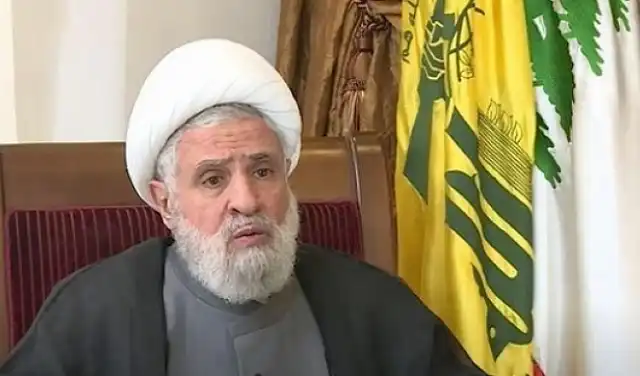
Hezbollah Secretary-General Naim Qassem: Netanyahu seeks a new Middle East...and our capabilities are good

Hezbollah Deputy Secretary-General Naim Qassem stressed during a speech he gave today, Tuesday, his second since the assassination of Hassan Nasrallah, that “the Al-Aqsa flood is an exceptional event and the beginning of changing the face of the Middle East,” a year after the start of the war on Gaza on October 7.


He also stressed that "Hezbollah's capabilities are good," and that the party "continues to confront Israel," adding: "We have overcome the painful blows that have struck us, and we have provided alternatives in all locations without exception."


Qassem said, "The occupation's goal is to completely end the resistance and exterminate the Palestinian people, to prevent them from demanding their rights," stressing that "the occupation's crimes are unparalleled throughout history, in its killing of children and civilians, and targeting of hospitals."


He said, "The resistance in Gaza is legendary, and it has withstood the aggression for a whole year."


He added, "The Zionist enemy, America, and the West are trying to pressure us to be afraid, but this will not happen," noting that "if it were not for American support, the Israeli aggression would have stopped within a month."


Qassem said, "The Israeli Chief of Staff, (Herzi) Halevi, has admitted to failing to protect his citizens, and will fail in the future."


He added: "We announced a support front from Lebanon to help in the confrontation, alleviate the burden on Gaza and support its victory."


Qassem stated that "history has proven that the Zionist entity is a threat to the region and the world," stressing that "Israel wants to subject all the surrounding countries and peoples of the region to its policies."


He continued: "Iran is the one who decides how to support and has proven its determination to support the resistance."


He considered that "the support front in Lebanon drained the enemy for 11 months, and expelled the settlers from the north," noting that "the enemy's war against us will not affect our will and determination to confront."


He stated that "the enemy's losses in the north are large, but it does not announce them and imposes censorship to prevent them from being revealed," stressing that Israel "targets civilians, in an attempt to pressure and create a dispute between the resistance and the Lebanese."


Qassem added: "We trust Nabih Berri's leadership and the political movement he is undertaking to stop the fire," but he stressed that "any discussion before the ceasefire is out of place for us."


Qassem said: “We will not beg for a solution, we are the people of the field, and the resistance will continue to fight,” adding that “the leadership, control, and management of the party are organized precisely, and according to what is practiced in Hezbollah.” He also stressed that the party “overcame the painful blows that struck us, and we provided alternatives in all locations without exception.”


He pointed out that the party "will elect the Secretary-General, according to the organizational mechanisms, and we will announce him upon completion."


The Deputy Secretary-General of Hezbollah stated that "resistance operations have increased significantly in the south, due to the presence of a unified leadership."

He stressed that "there is no alternative to resistance, steadfastness, and the rallying of our people in Lebanon around it, to defeat...

"Israel," he added, "We want to engage with the Israeli enemy on the battle fronts and in the front lines to prove its failure."


At the end of last month, Qassem confirmed in his first speech following the assassination of Hassan Nasrallah in Beirut that the party would continue to support the Gaza Strip in confronting Israel, and would soon elect a new secretary-general to succeed Nasrallah.


Qassem said at the time, "Despite the loss of some leaders, the attacks on civilians, and the assaults, we will not budge from our honest and honorable positions, and the Islamic Resistance (Hezbollah) will continue to confront the Israeli enemy in support of Palestine and in defense of Lebanon."


He added, "We will choose a secretary-general for the party as soon as possible according to the party's structure, and rest assured that the choices will be easy."


Qassem stated that "the resistance forces are ready to engage if the Israeli enemy decides to enter by land, and the party is continuing to pursue its goals, and the control and command system is continuing its work and implementing alternative plans."


He stressed that "contrary to what the Israeli enemy claimed, Sayyed Hassan Nasrallah was not meeting with 20 leaders, but rather with him was the commander of his guards and his advisor, in addition to the martyrs Ali Karaki and Abbas Nilforoushan."


He stated that "Hezbollah is continuing with its goals and the control and command system is continuing its work and implementing alternative plans," noting that Israel "will not be able to strike our capabilities... this is a dream they will not achieve."

PALESTINE

Tue 08 Oct 2024 12:07 pm - Jerusalem Time

UN: We provided 5.6 million medical consultations in Gaza

UN spokesman Stephane Dujarric said that the United Nations Relief and Works Agency for Palestine Refugees (UNRWA) has provided more than 5.6 million medical consultations to Palestinians in the Gaza Strip since October 7, 2023.


He added in press statements that the United Nations continues "wherever possible" to provide vital assistance to the Palestinians in Gaza, where Israel has been committing genocide for a year.


He explained that UNRWA has also reached nearly 1.9 million people with two rounds of flour supplies since October 2023.


Dujarric noted that field staff of the United Nations Office for the Coordination of Humanitarian Affairs (OCHA) are "very concerned" about the current situation in Gaza.


He pointed out that Israel continues to warn Palestinians to evacuate some areas in Gaza, while continuing to bomb homes and infrastructure.


He warned that "Israel merely issuing evacuation orders to civilians will not keep them safe if they do not have safe shelter and medicine to survive."

PALESTINE

Tue 08 Oct 2024 12:02 pm - Jerusalem Time

Prisoners Authority: The cubs in Megiddo prison suffer inhumane conditions

The Prisoners and Freed Prisoners Affairs Authority said, "The Israeli occupation forces continue to escalate the pace of arrests among children, while the prison administration continues to impose punitive measures against them, according to a recent visit conducted by the Authority's lawyer to the cubs."


The Commission added, in a statement, that the occupation's measures against child prisoners are no less than the retaliatory measures it imposed on adult prisoners since October 7, 2023.


She stressed that they are being held in cells devoid of anything, doubly isolated, and deprived of visiting their families, in light of the continued deprivation of thousands of prisoners from family visits. They also face a starvation policy implemented by the prison administration against them, as the food provided to them is poor in quantity and quality.


The Commission renewed its call for international human rights institutions to assume their responsibilities towards what is happening to prisoners, including children who are exposed to all forms of violations and horrific crimes.


It is noteworthy that the number of child prisoners (cubs) in the occupation prisons has exceeded 250 children, and they are detained in the "Megiddo" and "Ofer" prisons.

PALESTINE

Tue 08 Oct 2024 11:55 am - Jerusalem Time

Comment: It is time to stop the ongoing conflict and guarantee the rights of the Palestinian people

The current conflict between Israel and Hezbollah has become the focus of many people’s attention, but after a full year of the most severe tragedies and humanitarian hardships facing the Palestinian people, voices are rising calling for an immediate end to the bloody events in the Palestinian territories, as they constitute the nucleus of clouds of a potential comprehensive war that portends a dangerous escalation in the region. Voices are also rising calling for support for the Palestinian people in regaining their legitimate rights.


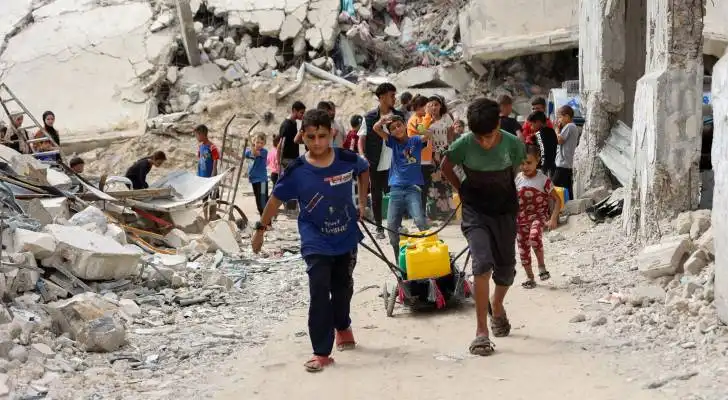
In the Gaza Strip, this narrow Palestinian coastal strip, Israeli attacks have killed nearly 42,000 Palestinians and injured more than 9,700 others, with many still under the rubble. Since October 7, 2023, civilians there have been living a miserable and hopeless life, in an endless nightmare in which they groan under the clutches of death and destruction as a result of being subjected to airstrikes and violent missile attacks, not to mention the continuous displacement of thousands of residents from time to time under evacuation orders, according to which they move from one area to another and even to unsafe places, where they live in plastic tents, under the burden of fear and disease on one meal a day that does not satisfy hunger, if they are lucky.


For 12 months now, 90 percent of civilians in the Gaza Strip have been suffering from conditions of siege, closure, and the denial of adequate humanitarian, food, and medical aid, as well as the ongoing killings and destruction of homes, infrastructure, and vital facilities by the Israeli army. The situation in the West Bank is no less tragic, with deadly and destructive operations continuing, some of them on a scale not seen in the past two decades.


It goes without saying that the international community, in various forums, including the United Nations General Assembly, is paying attention to supporting the Palestinian people in regaining their legitimate national rights. However, a feeling of frustration and despair arises when looking at the tragic situation of the Palestinian people, whose right to remain on their land has not yet been properly respected, let alone their right to development and other human rights, which have already become out of reach.


The main reason for the dangerous escalation lies in the failure to find a just and comprehensive solution to the Palestinian issue.


For decades, the Palestinian people have been suffering from a recurring injustice due to systematic violations of their rights, which calls attention to the need to address the root causes of the conflict and implement the rights of the Palestinian people in order to achieve peace at the regional and international levels.


It is important to know that it is now very important to intensify international calls for an immediate ceasefire. We are talking about a permanent truce, not a temporary truce limited to days like the truce that was implemented in November of last year or the truce of hours that the Gaza Strip witnessed during the polio vaccination campaign.


Let’s be clear: the people of the region, who are suffering from the repercussions of the situation in the Gaza Strip, are looking forward to a cessation of hostilities, especially the Lebanese, who feel panic and fear with every Israeli raid as they struggle to emerge from a severe economic crisis; and the Yemenis, who suffer from political division amid fears of wider retaliatory raids by Israel and its allies, the United States and Britain.


In order to realize the right to development of the Palestinian people and the affected peoples in the region, an independent Palestinian state must be established. In this regard, Israel must respond to the calls and demands of the international community to achieve peace and development, and abandon the policy of excessive use of force and violence. Such a policy has proven to be a failure, as it harms not only the Palestinians, but also the right of Israelis to security and development.


The United States, which claims to be a sponsor of the Middle East peace process and a defender of human rights, must stop its blind bias towards Israel and stop reading Middle East issues through its geopolitical considerations and special interests. It should also work sincerely to achieve a permanent truce between the Palestinians and the Israelis, and immediately begin implementing the two-state solution on the basis of international legitimacy resolutions.


In this path, we trust that the countries of the world that support peace will not delay in providing support and assistance to the Palestinian people in regaining their rights that have been usurped since 1948 after achieving a real, permanent truce.


It is time to end this conflict as soon as possible, and find a radical political solution that respects and guarantees the rights of the Palestinian people and the rights of other peoples affected by the repercussions of the current conflict.

PALESTINE

Tue 08 Oct 2024 10:37 am - Jerusalem Time

Prime Minister: Formation of the National Team for the Reconstruction of the Gaza Strip

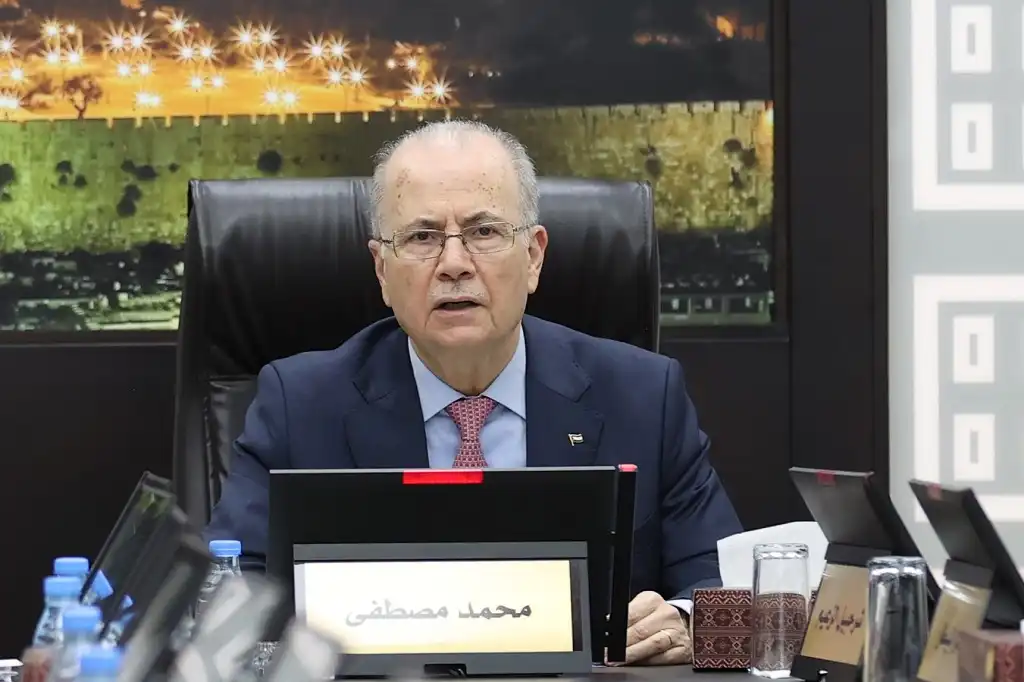
Prime Minister Mohamed Mustafa announced today, Tuesday, the formation of the National Team for the Reconstruction of the Gaza Strip, led by the Ministry of Planning, with the participation of relevant ministries and agencies, to complete the efforts that the government began some time ago, in cooperation with the private sector and international partners.


The Prime Minister explained, at the beginning of the government session held today, Tuesday, in the city of Ramallah, that the national team will prepare to restore basic services to citizens in Gaza, and develop detailed plans to rebuild the infrastructure, including suitable housing, and prepare to launch the economic recovery program in the sector.


He pointed out that the government did everything it could during the past year to alleviate the suffering of our people and support their steadfastness in all places where they are located, especially our people in the Gaza Strip, explaining that it continued to provide basic services, to the extent permitted by the security conditions, including health services, educational services, municipal services, and the entry of as much fuel as possible to operate water wells and wastewater pumps, and it also continued to provide operating expenses and salaries to finance various operations in the Strip, which amount to (275) million shekels per month (equivalent to 3.3 billion shekels annually).


He stressed that the government continues to provide social, food and non-food assistance to more than 400,000 families of our people in the Strip, in addition to cash assistance to about 210,000 families worth about 233 million shekels through the Ministry of Social Development, in coordination and cooperation with humanitarian and international organizations.


In this regard, the Prime Minister thanked all parties that extended a helping hand to our people in the Gaza Strip, stressing to our people that the government will continue, under the direction of President Mahmoud Abbas, to work to stop the aggression and provide everything possible to strengthen their steadfastness.


He pointed out that the government is also working in cooperation with all relevant parties to prepare for the implementation of the program announced by the President and the Executive Committee of the Palestine Liberation Organization in the Gaza Strip in the next phase, which is represented by seeking a ceasefire, ending the Israeli occupation of the Strip, unifying national institutions in Gaza and the West Bank, and providing the necessary services to our people until reconstruction, all within a clear political vision that aims to end the occupation and embody the establishment of a unified, independent State of Palestine with Jerusalem as its capital.


He pointed out that after a full year had passed since the genocidal war on the Gaza Strip, it can be said that it was the bloodiest and most destructive year for our people, as Israel reoccupied the Gaza Strip completely, tightly closed all the crossings that connect the Strip to the world, destroyed most of the Strip’s infrastructure, brutally killed and wounded more than one hundred and fifty thousand citizens, displaced about two million of our people in the Strip, and deprived more than six hundred thousand male and female students from attending their schools.


He stressed that the goal of the occupation plan in the Gaza Strip and the West Bank, including Jerusalem, is to establish separate systems in each part of it, undermine the institutions of the Palestinian state, and displace our people there by making it unlivable; this is accompanied by the escalating crimes of the occupation of killing, starvation, colonization, and attacks on holy sites; all of this in order to facilitate the reoccupation of the entire territory of the State of Palestine, and prevent the achievement of the independent Palestinian state.


In this regard, he stressed that our Palestinian people and their leadership, headed by Mr. President, are determined to thwart the occupation's plans and to complete our struggle in order to embody the independent state on the ground, despite Israel's arrogance and the magnitude of the challenges we face.


He pointed out that despite the hostile or hesitant positions of some international parties, there is broad official and popular international support for the rights of our people, and this is evident in the recognition of the State of Palestine by the majority of the world’s countries, and the majority of countries voting in favor of issuing the resolution submitted by the State of Palestine in the United Nations General Assembly, to adopt the advisory opinion of the International Court of Justice, and what followed after that of launching the international coalition, to establish an independent and fully sovereign State of Palestine.


He pointed out that all these important indicators confirm the success of the approach adopted by the Palestinian leadership in managing affairs, in these extremely complex circumstances.


In its session, the government saluted the steadfastness of our struggling people everywhere, and thanked all the brothers and friends who supported its efforts in this area.


The Prime Minister also thanked Mr. President, the members of the Executive Committee of the organization, and all the factions and forces of our people. We also commend the unions, syndicates, the private sector, civil society, and our civil and security apparatuses for what they are doing to serve our people in these difficult circumstances, and for their support of the government’s efforts in this area.


He stressed that with our unity and standing as one to uphold the interests of our people in dignity, justice, freedom and independence, we will overcome difficulties and strengthen the steadfastness of our people in confronting the occupation that seeks to destroy the work of our national institutions and besiege us financially.


In this regard, he appreciated the patience and steadfastness of our people in these difficult circumstances, stressing the continuation of diligent work to provide services to our people, the return of the regular educational process and health services, and the improvement of the percentage of salaries paid, despite the continued Israeli deductions from the clearing funds, and the complex security and political circumstances.


He stressed that the government will continue ambitious development and reform steps to alleviate financial and economic burdens and reduce the general budget deficit, according to a well-studied plan, within the framework of the national strategy to get rid of the political and economic blackmail of the occupation.


The Prime Minister concluded the government session by saying: I am confident that our people will rise again. We have gone through various tragedies, and our people have risen after every ordeal, picking up their wounds, carrying their pain, preserving their hope, determined to live, freedom, and independence.

OPINIONS

Tue 08 Oct 2024 8:59 am - Jerusalem Time

Messages of steadfastness from Gaza and the West Bank

op-ed - Al-Quds dot com

op-ed - Al-Quds dot com

Opinion Writer

On the anniversary of the aggression on the Gaza Strip, amidst the bombing, destruction, killing and displacement, and despite the stories of displacement and asylum, the resistance succeeded in passing important messages, within the framework of its tactical behavior to preserve the constants and achievements after a full year of aggression, through the ability to launch rockets at the settlements of the envelope and Tel Aviv and the speech of the military commander Abu Obeida, who emphasized the resistance’s continuation of the war of attrition, despite the losses and injuries, and the return of communication between the head of the Hamas political bureau, Yahya Sinwar, and the outside world, after Israel believed for a period of time that it had succeeded in assassinating him, during one of the bombings of one of the tunnels.


The Palestinian resistance wore the robe of pride and Gaza remained resistant to aggression. Despite the pain and wounds, it will inevitably be washed with the water of pride, presenting pictures of sacrifice, giving and sacrifices that are unprecedented in history, to make another cry, but it is the cry of a wounded lion, against whom circumstances have conspired. Despite everything that has happened, these messages are vital at this time to respond to the Israeli rumors regarding everything related to the course of the war.


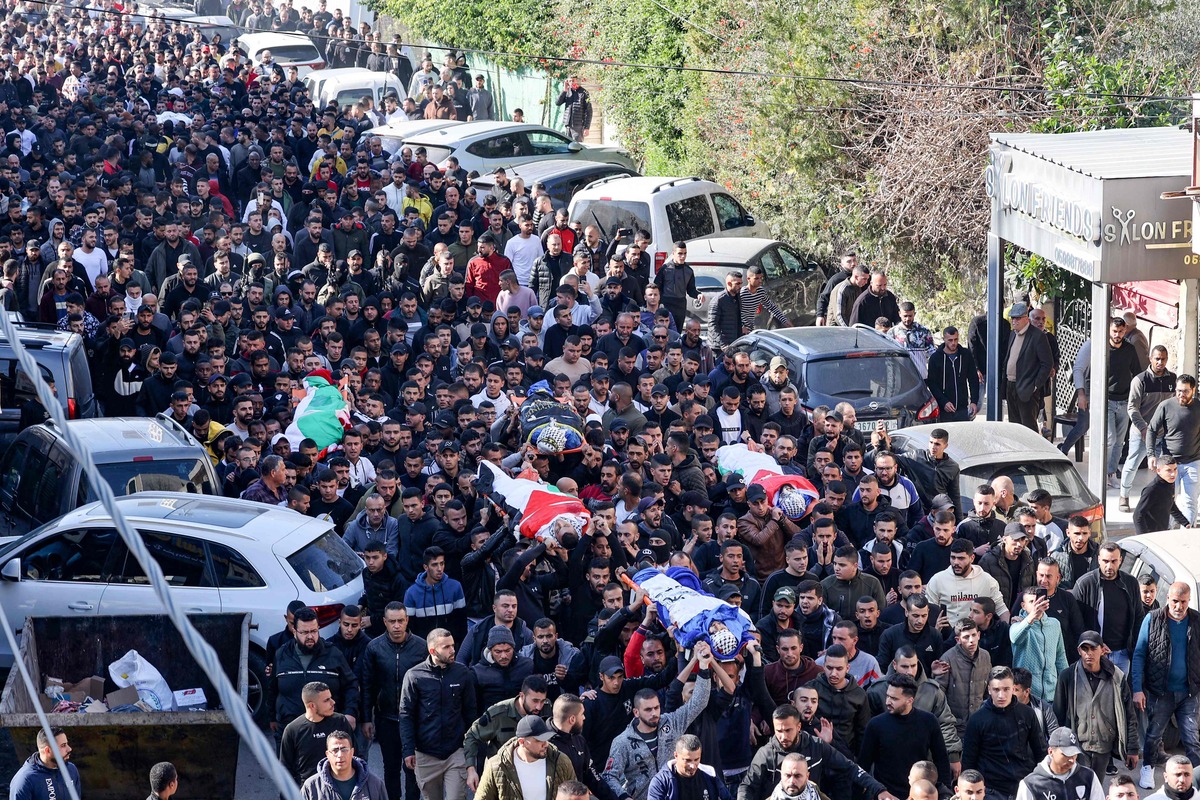
The West Bank, which Israel has placed at the forefront of targets for bombing, assassinations and raids, was yesterday on a date with a major Israeli escalation. Since the early morning hours, the raids were renewed in Jenin, Tulkarm, Qalqilya and Nablus in the north, passing through Ramallah and the northern neighborhoods of Jerusalem, Qalandia camp and Kafr Aqab, where the child martyr Hatem Ghaith was killed, and to Bethlehem, where the raids took place, and Hebron, specifically Dura, where the arrests took place, which led to the martyrdom of the elderly man Ziad Abu Halil, the owner of the famous saying (Bahmash) in one of his confrontations with the Israeli army.


Israel, through its intelligence agencies, primarily the Shin Bet and the army command, deliberately spread false news and rumors that activists in Gaza and the West Bank were preparing to carry out raids similar to what happened on October 7 of last year. This propaganda was exploited to increase the pace of bombing and killing civilians in the Gaza Strip, where the number of martyrs rose to more than fifty in 24 hours, while the army declared a state of alert in the West Bank, closed checkpoints and crossings, and claimed that a Palestinian cell was planning to booby-trap a vehicle in the Qalandia camp to target its forces. It launched a large-scale military campaign, confiscated dozens of cars, arrested a large number of young men, and targeted citizens with bullets after raiding and searching their homes.


The bottom line is that the occupation and its measures, hunger and deprivation, will not dissipate the determination of our people who stand in the way of all attempts to undermine their cause. This people, after long suffering and repressive measures, deserves a homeland, independence and freedom.

OPINIONS

Tue 08 Oct 2024 8:55 am - Jerusalem Time

A year after the Al-Aqsa flood... Is it time for evaluation?

 Hani Al Masry

Hani Al Masry

Opinion Writer

Yesterday marked the first anniversary of Operation Flood of Al-Aqsa. This historic, founding event, after which everything will be different from what came before it, and the question that arises again is: Is it time to evaluate and draw lessons and morals?


Answer: Evaluation is a constant need for any event to improve performance during war, and to ensure victory or at least not defeat, so how about an event of the size and impact of October 7?


After the flood and the war of extermination against our people in the Gaza Strip, the priority was to put out the fire inside the house, and not to be preoccupied with who started it and blame him for starting it. This is a matter that has its time, and the evaluation has become more necessary now after the war has lasted longer than it should have, and after it entered the third stage and the northern front was opened up more widely, and is a candidate for turning into an open regional war, in order to ensure that we come out of it with the best results.


History will record that the Al-Aqsa Flood is a qualitative military achievement, regardless of the final results, which may not be as political as the military achievement, due to the severe imbalance in the balance of power and the full American partnership in the war alongside the occupying state. However, the war has not ended or been decided definitively yet, and is likely to continue for several months at least.


What happened was a strategic failure for the occupying state, which appeared in a state of shock and surprise, was paralyzed for several hours, the deterrent power collapsed, and it became clear that Israel was vulnerable to defeat and needed the support of the United States and other Western countries to be able to defend itself. It also faced a reverse migration and suffered economic, moral, military and human losses - according to some Israeli sources - many times those announced.


Operation Flood of Al-Aqsa also provided evidence of the ability of the Palestinian resistance, specifically Hamas, to engage in strategic deception, strategic planning, and implementation, neutralize technological progress, and penetrate the surveillance system, walls, and highly advanced equipment.


On the other hand, the Al-Aqsa flood pushed the conflict to a decision at an inappropriate time for the Palestinians, as they are not capable of a decision, which poses a great risk that the occupation will be able to decide, and the decision does not mean a victory by a knockout blow, but by points, as a popular movement cannot be defeated in a crushing defeat.


The operation was also marred by miscalculations and major mistakes, regardless of who (from the Qassam Brigades or from other brigades or armed individuals and families who entered the line, as it was necessary to prepare for all possibilities), such as targeting some civilians and Thai foreigners. The biggest loophole in the great achievement represented by the Al-Aqsa Flood is that the goals focused on releasing prisoners, protecting Al-Aqsa, lifting the siege and great dreams, and did not set the goal of ending the occupation and independence as a basic, organizing goal that is commensurate with the size of the battle and the heroism and sacrifices that were made in it.

In order for the assessment to be correct, it must be noted that the size of the Israeli collapse and the Palestinian achievement were much greater than what was planned, and thus the size of the Israeli aggression and response was much greater than what was expected and what was prepared to confront it. However, it was possible to develop all scenarios and prepare for all possibilities when planning to carry out an action of this size.


Despite the great preparations and the legendary and continuing heroic resistance for the second year, which is no less important than October 7, we must see the reality as it is in order to work on it and be able to change it. As it appeared in the available data, there were no estimates that the occupation would continue its aggression throughout this period and wage a war of extermination. This was something that was supposed to be expected, and it can be explained by the fact that the far-right government considered this a fateful existential war, and an opportunity that must not be wasted, and that failure to win it would raise big question marks regarding Israel’s existence, role, future, and strategic position in the region.


There were estimates that Israel would not be able to endure a long war that would extend to its home front and incur various losses, especially human losses, and that there would be no ground war, especially at the beginning of the war, and that a temporary exchange and calm deal would be reached leading to a cessation of the war, in addition to an estimate that the response of the West Bank and 48 would be much greater than what happened, and the response of the Arab world, including the Arab peoples, would be much greater than what happened, while Arab helplessness and collusion were apparent, with the exception of the support fronts and some demonstrations witnessed in some Arab capitals, and sometimes it even reached the participation of some Arab parties in defending the aggression and facilitating the arrival of its needs.


There was also an apparently false perception that the change taking place at the global level and the overall world reaction, with the exception of the strong solidarity movements and the actions of the International Court of Justice and the International Criminal Court, including the response and support of the axis of resistance and the internal Israeli differences and contradictions, was capable of restricting the Israeli government, which found in what happened, with American support and partnership and Western support, a historic opportunity to implement its plan to resolve the conflict, liquidate the Palestinian issue, eliminate the axis of resistance and change the Middle East.


It is true that the war has not been decided yet, and that the war of extermination has not achieved its declared goals. The resistance has not been eliminated, nor have all prisoners and detainees been released, nor has the Gaza Strip ceased to pose a threat, nor have the Israeli refugees in the Gaza Strip and the north returned to their homes. However, the bad scenario is ahead of the other scenarios, and a major humanitarian catastrophe has been achieved against our people in the Gaza Strip. The Gaza Strip has been largely occupied and made an area uninhabitable for humans, and plans are underway to shape its future in isolation from the Palestinians.


Despite the failure to displace the people of the Strip, more than 120,000 have left the Gaza Strip, and many of the people of the Strip are forced to leave it, even temporarily, if the circumstances do not change and the crossing or any other passageway is not opened until it returns to being a livable area.

On the northern front, the occupation forces were able to deal a major blow to Hezbollah as punishment for supporting the Palestinian resistance, by assassinating most of its political and military leadership, headed by Sayyed Hassan Nasrallah, its Secretary-General and exceptional leadership figure. However, this blow did not eliminate it, and will not eliminate it, as it is an ideological party in which the influence of individuals is less than that of non-ideological political parties, as evidenced by the continuation of the resistance, the escalation of the support war, the launching of missiles, and the valiant battles on the borders, which resulted in large numbers of dead and wounded. However, the “Israeli achievements” in Lebanon cannot be discounted, but war, as they say, is a debate, one day for you and one day against you.


There is no escape from continuing steadfastness and resistance and focusing primarily on self-reliance, without neglecting the fronts and arenas of support and all forms of solidarity in the four corners of the globe that were able to increase the cost of the aggression but did not stop it, and realizing in light of the grave imbalance in the balance of power and the resounding political and moral collapse of the regional and international systems that the stage is not the stage of achieving Palestinian goals, but rather the stage of strengthening the factors of steadfastness and human survival on the land of Palestine, keeping the issue alive and reducing damage and losses, preserving what remains of the elements of strength and gains, striving to thwart the goals of the aggression and placing obstacles in its way, and continuing to work for unity on national, democratic and combative foundations that depend on the balance of power, interests, principles and what is possible, because the most dangerous thing that can happen is more fragmentation and division and opening the doors to sedition and internal fighting.


In this context, Hamas's readiness not to continue ruling the Gaza Strip, which paved the way for signing the Beijing Declaration, which included an agreement to form a national unity government with a national reference, can be considered a calculated step. As for the idea of forming an administrative committee of independent figures in the Gaza Strip, formed by consensus, and a presidential decree issued to form it, it may be a trap and a dangerous idea because it deals with the Gaza Strip in practice separately from the occupied West Bank without specifying when it will be formed, what its powers are, and what its reference is, especially with the failure to form a national consensus government that would be its reference even if the administrative committee is formed by a presidential decree and under the supervision of the current government, which is disputed, because the ones who proposed the administrative committee were the rulers of Washington and some regional parties first, and then the Arab mediators adopted it in an attempt to circumvent the Israeli opposition to the return of the authority without any guarantees of corresponding Israeli and American steps. What is proposed are only verbal American promises without any credit that its formation will end the occupation. Let us put the Biden administration to the test and provide pledges and guarantees for the return of the authority and the Israeli withdrawal, otherwise the Strip will become like the West Bank under a five-star occupation without bearing its responsibilities because there are those who pay the costs instead of it.


It should not be ignored that the Gaza Strip has been reoccupied, and there are plans to maintain Israeli control over the Rafah crossing and the Salah al-Din axis, called “Philadelphi,” and to establish buffer zones, especially in the north, and in the Martyrs’ axis, called “Netzarim,” as indicated by the generals’ plan that the Israeli government has adopted or is on its way to doing, which includes emptying the north of the hundreds of thousands who still reside there despite the hell they are living in, and it also includes placing the distribution of humanitarian aid in the hands of the occupation army to be used to create a new situation that helps the occupation to remain.


It should also not be ignored that there are voices in the Israeli government represented by Ministers Bezalel Smotrich and Itamar Ben-Gvir, and many Likud Party ministers and members of the Knesset, calling for the return of settlement to the Strip because it is the only one that provides protection for the Zionist presence.


It is understandable why Hamas and Fatah are considering the proposal to form an administrative committee, as the humanitarian situation is very stressful, in order to remove the pretexts from the hands of the occupation. However, approving this idea without even Israeli approval and before ensuring the Israeli withdrawal from the Strip or committing to the withdrawal, will grant legitimacy to the occupation, and encourage it to continue undermining the authority in the West Bank to eliminate any embodiment of a single national identity that keeps the door to embodying the state and independence open, and supports Washington’s idea of creating a renewed and effective authority; that is, one that is more responsive to the conditions of the occupation, and enables it to be a five-star occupation like the one in the West Bank, that is, one that does not bear responsibility for the occupation.


There must be a deep and not formal understanding that Washington’s talk of a two-state solution is nothing more than lip service, which does not prevent blessing it or remaining silent about what the occupation is doing. There are signs of a change in the American position from offering advice to Netanyahu’s government to admiring it and betting on its ability to shape a new Middle East, which is originally an American idea. Hasn’t Washington moved from demanding the return of the Authority to finding a renewed Authority, and from rejecting the occupation to understanding the need for a temporary occupation of the Gaza Strip? We know very well the meaning of temporary after 25 years have passed since the end of the transitional period stipulated in the Oslo Accords.


OPINIONS

Tue 08 Oct 2024 8:52 am - Jerusalem Time

Palestinian culture is a soft power in the face of genocide

Dr. Sarah Mohammed Al-Shammas

Dr. Sarah Mohammed Al-Shammas

Opinion Writer

Palestinian culture is a soft and effective force in the face of the cultural genocide attempts practiced by the Israeli occupation for decades, as the occupation seeks to erase the Palestinian identity and steal and Judaize its heritage. Despite these challenges, Palestinian culture remains a powerful weapon in preserving identity and history and transmitting them to future generations. Culture allows the Palestinian people to express their suffering and hopes through literature, music and the arts, which enhances international awareness of the Palestinian cause and opens a space for resisting the Israeli occupation through non-violent means, embodying the steadfastness of the Palestinians in the face of ongoing cultural genocide attempts.


Since the beginning of the Israeli occupation of Palestine, it has worked to destroy the Palestinian cultural heritage in direct and indirect ways, and today it continues its cultural attacks by imposing Israeli curricula on Palestinian schools in the 1948 territories with the aim of distorting historical awareness and erasing the Palestinian identity among new generations. The occupation seeks to replace the Palestinian cultural identity with an alleged Israeli identity by obliterating historical facts.


Despite these attempts, Palestinians continue to defend their heritage and identity through cultural production, including literature, arts, and music. This insistence on preserving heritage enhances the Arab and international world’s awareness of the Palestinian cause, and supports popular resistance against the Israeli occupation, making Palestinian culture a bulwark against attempts at cultural erasure and genocide. Therefore, Palestinian culture is not just a means of expressing identity, but rather one of the most prominent tools of resistance possessed by the Palestinian people, as is evident in literary, artistic, heritage, and culinary production, which has become a symbol of national identity in the face of the Israeli occupation over decades of struggle. Palestinian culture has become an influential soft power in the battle for survival and existence, based on a long cultural heritage of arts and popular literature. This heritage not only contributes to protecting identity, but also highlights it globally, and enhances the role of culture as an effective means of struggle.


Thus, culture becomes a weapon of resistance against attempts at cultural genocide, as current and previous generations affirm their right to exist and their connection to their land and heritage. Palestinian culture is not just a tool for preserving the past, but rather a force that motivates steadfastness and resistance against all attempts at obliteration since the founding of the Palestine Liberation Organization in 1964, where cultural struggle was an essential part of preserving identity and resisting the Israeli occupation.


The organization focused on promoting cultural identity by establishing cultural entities such as unions of writers, artists and journalists, in addition to prominent research and academic institutions such as the Institute for Palestine Studies and the Palestinian Research Center. In 2004, the Palestinian Cultural Fund was established in cooperation between the Palestinian Ministry of Culture and the Norwegian government, to support cultural creativity in Palestine.


Despite the great challenges faced by the cultural struggle, this struggle remains a force to be reckoned with in the face of attempts at cultural obliteration, supported by information technology and the growing global awareness of the crimes of the Israeli occupation. The Palestinian cultural struggle remains a witness to the authenticity of the Palestinian identity and an effective means of preserving the Palestinian presence and resisting the ongoing attempts at cultural genocide, so that the Palestinian people remain protectors of their heritage and identity in the face of the Israeli occupation.


In conclusion, Palestinian culture remains a symbol of steadfastness and resistance in the face of the Israeli occupation. It is not just a means of expressing identity and heritage, but rather a soft power whose roots extend deep into Palestinian history through literature, art, and folklore. Palestinians continue to defend their rights and highlight their identity on the global stage, defying attempts at cultural erasure and genocide. Thus, the cultural struggle remains a solid pillar in protecting the Palestinian existence and ensuring its continuity for future generations.

ARAB AND WORLD

Tue 08 Oct 2024 8:39 am - Jerusalem Time

Continuous shelling of southern Beirut and Hezbollah targets Israeli military sites

The Israeli army continued its wide-scale aggression on Lebanon on Tuesday, for the sixteenth day, by launching violent raids on the southern suburbs of Beirut and the cities and towns of southern Lebanon, in addition to its attempts to penetrate by land into some border areas, while Hezbollah announced that the resistance will remain ready to defend Lebanon and its people, confirming that it is targeting military sites and Israeli settlements.


This comes at a time when the Lebanese Hezbollah announced, on Monday night - Tuesday, the launch of a barrage of rockets at the "Glilot" base of the 8200 Military Intelligence Unit in the suburbs of Tel Aviv, while the army stated that it had monitored the launch of about five rockets from Lebanon towards Tel Aviv and areas in the center, some of which were intercepted and the rest fell in open areas.


The Israeli army issued a new evacuation warning to residents in specific buildings in the southern suburb of Beirut, which has been subjected to intensive raids for the second day, while four areas in northern Israel were declared "closed military zones."


It also announced that he would soon target the "marine area" in southern Lebanon, calling on fishermen and seafarers to stay away from it until further notice.


PALESTINE

Tue 08 Oct 2024 8:37 am - Jerusalem Time

Israel has gone crazy..!

The title article topped the front page of the Lebanese newspaper Al-Akhbar in its issue published yesterday, describing the debauchery of madness that possesses Netanyahu, along with the leaders of the political and military establishments who were his students and were fed by his ideas that he openly declared on this day a year ago, as he sharpened his knives to kill and slaughter children in their bedrooms and infants in their incubators, in the incident of their deliberate killing in Al-Shifa Hospital, when they were taken out of it, after their breathing was suffocated, and their souls were spilled in the hands of their paramedics.


This madness that exploded in October 2023, armed with the example that mimics the American September 11, which the wounded wolf has been waiting for the moment to seize to make another Wailing Wall out of, and to absolve his Western rival, the true bearer of its sin, who came to him, fully armed, weeping, generous to him from his excess power, with the latest products of his industry, to offer it as a bribe to whitewash his record, and wash his hands of the filth of the Holocaust, placing the responsibility on its victims who had nothing to do with it, neither near nor far.


The doctrine of the suburb, which was brought from the biblical texts, was practiced by the Zionist gangs about eight decades ago in Deir Yassin and Tantura, and here are their descendants reproducing it today in Jabalia, Al-Shati’ and Al-Shabura with more deadly and modern tools, benefiting from an international license that bought the narrative and inflated it to justify the rolling massacre, before it got out of control, by moving to the head after it had struck the arms, and was reassured by the enormity of what had befallen the broken wings.


It is unbridled madness that has no restrictions, and its crimes have no limits, as long as the killers are reassured by the imbalance of justice, which provides them with immunity and protection from accountability.


Who will control the madness? Who will curb the rampage? Stop the war of extermination now!

PALESTINE

Tue 08 Oct 2024 8:26 am - Jerusalem Time

Updated|| Israeli occupation forces arrest 5 Palestinians from Nablus and Bethlehem

The Israeli occupation forces arrested, at dawn today, Tuesday, 5 citizens from Nablus and Bethlehem.


According to local sources, these forces raided several homes in the town of Beit Furik, east of Nablus, and arrested the citizens: Abdul Karim Omar Malitat and Jasser Sami Khattab after raiding and searching their homes.


She pointed out that the occupation forces raided the town of Beita, south of Nablus, and fired tear gas canisters. They also stormed Madama, south of Nablus, and arrested the young man, Asid Abdul Nasser Qat, after raiding and searching his house.


In Bethlehem, the occupation forces arrested the two young men, Taher Mahmoud Taher Issa (20 years old) and Ahmed Muhammad Suleiman Salah (24 years old), after raiding and searching their parents’ homes in the town of Al-Khader.

PALESTINE

Tue 08 Oct 2024 8:16 am - Jerusalem Time

October 7th.. This is what we lost and what we gained!

Dr. Ahmed Rafiq Awad: Israel did not achieve its declared goals from the war, but rather its internal and international problems worsened

Mohammad Jaradat: Restoring some international support for the Palestinian cause and unprecedented Israeli global isolation

Dr. Abdul Majeed Sweilem: October 7th turned the tables on dangerous transformations and political arrangements that were being prepared for the region

Mohammad Manasra: The Palestinian people were subjected to widespread killings and lost sympathy from many in the world

Firas Yaghi: The balance of losses and profits cannot be evaluated until the dust of war and its ongoing repercussions settle.


On the anniversary of the events of October 7, major transformations in the course of the Palestinian-Israeli conflict emerge, as Israel received military and political blows that revealed its strategic weakness, despite the international support it receives, while the Palestinians suffered heavy losses in the Gaza Strip in particular. Despite this, the Palestinian issue has emerged again on the international scene, after it had been threatened with marginalization in recent years, which has re-shed light on the importance of finding a comprehensive solution to the conflict.


In separate interviews with "I", writers and political analysts believe that one of the most prominent repercussions of the events was the great exposure of Israeli military capabilities and the decline in its ability to achieve its strategic goals in Gaza and Lebanon. Despite carrying out some security operations and assassinations, Israel was unable to achieve the goals of the war by recovering the detainees or achieving internal security stability, which led to a crisis in its position on the international and regional arenas, while the Palestinian resistance continues to carry out its attacks, which reflects its ability to withstand, despite the heavy losses suffered by the Palestinians.


Writers and analysts point out that Israel's international isolation has deepened, while the Palestinian issue has gained new international momentum, and priorities have been reordered on the international scene. Despite the major challenges, the current scene indicates that the stability of the region depends primarily on achieving a just and comprehensive solution to the Palestinian issue.


Heavy Israeli losses


Writer and political analyst Dr. Ahmed Rafiq Awad reviews the losses and gains incurred by Israel and the Palestinian people as a result of the events of October 7.


Awad believes that Israel has suffered great losses, most notably the exposure of its military and political weakness, as events have shown that it is no longer able to withstand without Western and American support.


Awad points out that this weakness was evident in the collapse of the narratives that Israel was promoting regarding its military strength and the deterrent power it claimed, in addition to what he described as the internal rifts and erosion that affected Israeli social and political institutions.


Among the most prominent losses that Israel has also suffered, according to Awad, are the international blockade it is living under, and the significant decline in the legitimacy of the Israeli occupation in the eyes of the international community, as Israel has lost the ability to justify its existence and practices before the world, in addition to the human and economic losses that have increased significantly.


Despite all this information, Awad believes that Israel did not achieve its declared goals from this war, but rather its internal and international problems worsened.


The political ceiling of the Palestinian issue has declined


On the Palestinian side, Awad explains that the Palestinian people have suffered heavy losses in terms of lives and infrastructure, as the aggression has led to widespread destruction in Gaza and a de facto separation between the Gaza Strip and the West Bank.


He stresses that the political ceiling of the Palestinian issue has declined significantly, which has prevented any progress towards a peaceful settlement or internal Palestinian reconciliation.


Awad points out that the region's weak ability to resolve the Palestinian issue has become more apparent after October 7, and that the international community has not yet been able to provide a final and radical solution to the Palestinian-Israeli conflict.


But despite these losses, Awad believes that there are some gains that have been achieved for the Palestinians, the most important of which is the expansion of international recognition of the Palestinian cause as a central issue that must be dealt with.


Awad explains that Israel has been exposed to the world, making the Palestinian issue a focus of international attention that cannot be ignored.


There is no security or stability in the region without a Palestinian state.


Awad asserts that October 7th showed that the international system is sterile and unable to resolve ongoing conflicts, and that the regional system is exhausted and subject to Israeli control.


In his analysis of the strategic dimensions of the events of October 7, Dr. Awad asserts that these events raise a fundamental idea, which is that stability and peace cannot be achieved in the region, not even for Israel, without establishing an independent Palestinian state.


Awad believes that one of the most prominent repercussions of this day is to demonstrate the continued presence of the Palestinian cause on the international scene, and the impossibility of its absence. October 7 also raises questions about the type of settlement possible between the Palestinians and the Israelis. Is it a settlement between a slave and a master or between equal partners? Awad asserts that any attempt to settle peace between slaves and masters will be doomed to failure.


The absence of the Arab system from the international scene


Awad points out that October 7 revealed the great absence of the Arab system from the international scene, and showed the extent of the strategic vacuum in the region, as regional powers continue to control their fate and influence the course of events.


He believes that these shortcomings must be addressed, and that reforms must be carried out based on what the events of October 7 showed.


As for his expectations for the next stage, Awad believes that things are still at their peak, as the Israeli aggression has expanded to include several fronts, not just the Palestinian people.


Awad points out that Israel seeks, through this war, to close its strategic files with its enemies in Gaza, Lebanon, Iran, and other fronts.


Awad believes that Israel will not stop continuing the war in the near future, but it depends heavily on American support.


Awad raises the question of whether the United States will continue to support Israel with such strength, especially after the upcoming US presidential elections.


Awad points out that Israel considers this war a "second war of independence," believing that the war may continue until 2026 as Israel seeks to achieve its strategic goals.


turning point in the course of the conflict


Writer and political analyst Mohammed Jaradat examines the effects of October 7, one year after the “Al-Aqsa Flood,” tracing the gains and losses on both the Palestinian and Israeli sides.


According to Jaradat, this historic event reflects radical shifts at the political and military levels in the Palestinian-Israeli conflict, with a focus on how to revive the Palestinian cause in the international arena and its impact on Israel.


Jaradat points out that the “Al-Aqsa Flood” has revived the Palestinian cause after it had been threatened with marginalization since the Arab Spring, during the ten years following the Arab revolutions, when the Palestinian cause had receded from the international agenda. However, October 7 succeeded in restoring its luster to the international arena, and for the first time in a long time, the Palestinian cause has become a matter of wide interest, not only at the popular level but also at the international political level.


Jaradat explains that what happened following the war of extermination on the Gaza Strip led to the adoption of several resolutions supporting the Palestinian cause, whether by the UN Security Council or the UN General Assembly. This period also witnessed a wave of recognition of Palestine as a state, despite the challenges associated with this recognition.


For Jaradat, these developments are a gain for the Palestinians and a loss for Israel, which has been seeking to isolate the Palestinian cause politically.


Palestinian steadfastness...and a change in the international approach


In the same context, Jaradat cites international solidarity with the Palestinian cause, which was manifested in large demonstrations in various parts of the world, including American, European and Canadian universities. These movements no longer focus only on peaceful settlements, but rather view Palestine from the perspective of historical rights from the sea to the river, which reflects a major change in the way the international community deals with the Palestinian cause.


As for living conditions, Jaradat confirms that last year was a bloody year for the Palestinians, especially in the Gaza Strip, which was subjected to massacres and widespread destruction. The infrastructure was destroyed, hunger and poor health care spread, while workers in the West Bank lost their livelihoods due to Israeli restrictions. However, Jaradat points out that this bitter reality is temporary, despite the great human losses suffered by the Palestinians.


From the military side, Jaradat explains that the Palestinian resistance was able to maintain its capabilities, despite the great sacrifices.


Jaradat points out that a year after the October 7 attack, the resistance is still continuing its attacks on Tel Aviv and the Gaza Strip settlements, and carrying out qualitative operations, as happened on the first anniversary of the Al-Aqsa Flood, which reflects its control on the ground.


Jaradat asserts that the resistance has also held out on the political level, maintaining its cohesion and unity with other factions, such as the Islamic Jihad Movement, despite attempts to liquidate the Palestinian cause.


Israel faces major challenges


On the Israeli side, Jaradat believes that Israel is experiencing unprecedented global isolation since its founding in 1948. A year after the Al-Aqsa flood, Israel found itself facing major challenges on several levels, including social and economic.


Despite its success in carrying out some assassinations and security operations, Jaradat confirms that the security failure was clear in Israel, especially with regard to dealing with the resistance missiles, as Israel was unable to determine the sources of those missiles, which increased the state of confusion within its security ranks, pointing out that Israel was unable to achieve its strategic goals, despite its successes in assassinations and destruction.


On the other hand, Jaradat explains that Israel was unable to achieve its military goals in Gaza, as it failed to recover the detainees or establish a government affiliated with it in the Strip.


On the Lebanese front, Jaradat points out that Israel has not been able to return the northern settlers to their homes. On the contrary, the depth of displacement has increased as a result of the ongoing threats from Hezbollah, and Iran’s bombing of Israel has added another challenge to Israel’s deterrent power, which has declined significantly.


Jaradat points out that October 7 created profound strategic shifts in the Palestinian-Israeli conflict. Israel is now suffering from a crisis in terms of its military and political power, while the Palestinians have regained some international support for their cause, despite the great sacrifices they have made.


Jaradat believes that the “Al-Aqsa Flood” represents a major turning point in the course of the conflict, strengthening the position of the Palestinian cause in the international arena and weakening Israel’s strategic position.


The Middle East is witnessing major political transformations.


Writer and political analyst Dr. Abdul Majeed Suwailem believes that the Palestinian attack on October 7 was not just a random Palestinian response, but rather the result of careful planning and preparation in advance, aiming to turn the tables on the political arrangements that were being prepared for the region.


Suwailem points out that the Middle East is witnessing major political transformations, as a new Middle East is beginning to take shape led by Israel, which will transform into a regional leader under the umbrella of American support, starting with the era of former American presidents Barack Obama and Donald Trump, who sought to integrate Israel into the region and impose it as a pivotal power, while deliberately ignoring the Palestinian issue.


From Suwailem’s perspective, the Arab normalization process with Israel was translated into a clear bypassing of the Palestinian issue, as the focus was on economic interests away from the national rights of the Palestinian people. As these alliances developed, it seemed as if the Palestinian issue had become marginalized in regional and international politics, but the October 7 attack brought this issue back to the forefront.


Severe blows to Israel


Suwailem believes that this attack had a major impact on Israel’s position as a dominant power in the region. Since October 7, Israel has been subjected to severe blows, as it faces unprecedented challenges from the Palestinian factions in Gaza, which, after a year of war of extermination, have continued to launch rockets at Tel Aviv and the envelope areas, in addition to confronting Israeli forces on the ground.


Suwailem believes that Israel has suffered a devastating blow to its deterrent power, although it still has the ability to destroy and kill, but it has not achieved victory, as destruction does not achieve victory.


He points out that the Israeli failure to achieve any decisive victory, whether in Gaza or in Lebanon, reflects the beginning of the end of its ability to impose its hegemony in the region. In Lebanon, Israeli forces suffered heavy losses in ground operations, as they were unable to break the back of Hezbollah, whose fire now targets the northern regions and regularly bombs Israeli targets until it reached the equation that bombing the southern suburb means bombing Haifa.


Suwailem points out the participation of the resistance in Yemen, the Iraqi resistance, and Iran in this war. Yemen, for example, has come to control the sea lanes in the Red Sea, while the Iraqi resistance is carrying out special operations that contribute to strengthening the axis of resistance. As for Iran, it responded forcefully to Israel’s assassination of the head of the political bureau of Hamas, Ismail Haniyeh, and the Secretary-General of Hezbollah, Hassan Nasrallah. All of this reflects the expansion of the conflict and the deterioration of the regional situation.


In this context, Suwailem believes that Israel found itself trapped between two options: either continuing the war, which will not be of any use, or returning to the negotiating table.


Suwailem points out that open war between Israel and the axis of resistance will only lead to more destruction and losses, but will not achieve a decisive Israeli victory.


Palestinian losses do not affect the strategic balance of the conflict


On the Palestinian level, Suwailem acknowledges that the Palestinian people paid a heavy price as a result of this war, as tens of thousands lost their lives, and the infrastructure in the Gaza Strip was almost completely destroyed, turning it into an area unfit for living.


However, Suwailem stresses that these losses do not affect the strategic balance of the conflict, as the Palestinian resistance was able to remain strong and continue to strike Israel.


Suwailem points out that Israel finds itself in a deep predicament, not only at the level of the military conflict, but also at the level of its regional status, as its continuation of the war will only lead to further deterioration at the political, economic and security levels.


Suwailem expects that the war may end soon, either within a few weeks or months, but the question remains about what comes after this war, because Israel is in a predicament that threatens its existence.


For Suwailem, October 7 brought the Palestinian issue back to the international forefront, and forced everyone to recognize that the only solution to stability in the region is through a just solution to the Palestinian issue.


Suwailem believes that the axis of resistance, despite the enormous pressures it has been subjected to, has not been broken and is still able to withstand and achieve its goals, stressing that October 7th changed the balance of power in the region and rearranged priorities on the international scene.


The Palestinian people did not find sympathy from many


Writer and political analyst Muhammad Musa Manasra believes that the Palestinian people were led into a bloody and catastrophic confrontation, where they were subjected to widespread killings that did not find sympathy from many, including some intellectuals and local elites.


Manasra reviews a major problem that lies in some people projecting their political fantasies and wishes onto the events of October 7, considering that the goal was to resist the occupation and achieve the rights of the Palestinian people to self-determination and the establishment of an independent state.


Manasra believes that the Qassam Brigades lost the ability to fully control many months ago, as the fighters began to operate within a framework of decentralization after the martyrdom of the majority of the leaders, and only a few of them remained besides Sinwar.


Manasra addresses the massive human losses suffered by the Palestinians, noting that there were about 200,000 martyrs and wounded, and the widespread destruction of the Gaza Strip, making it uninhabitable.


Palestinians have lost control of their political destiny.


Manasra asserts that the Palestinians have lost control over their political destiny, and that major countries such as Israel, the United States, and the Arab countries will determine the future of the Palestinian cause within the framework of a new Middle East.


On the other hand, he criticizes the support of some Hamas leaders, whom he describes as completely out of touch with reality in Gaza, such as Khaled Meshaal, who described the huge losses as merely “tactical losses.”


Manasra warns that the Palestinian national cause is facing a bleak phase, as a result of what he describes as the Muslim Brotherhood’s adventures and wrong decisions, which lacked an accurate reading of the internal, regional and international situations.


Manasra points out that the major problem lies in the current Palestinian leadership’s refusal to evaluate what happened during the previous and current years of struggle, which puts the entire future of the cause at stake.


The repercussions of the war are still ongoing in the region.


Writer and political analyst Firas Yaghi believes that the balance of losses and gains in the raging war cannot be evaluated until the battle ends and the misleading dust that surrounds it due to its nature has settled.


Yaghi points out that the ongoing war and its repercussions are still ongoing, and are even expanding to include other areas in the region, including Lebanon, and may extend to other areas due to the policies of Israeli Prime Minister Benjamin Netanyahu.


Yaghi explains that Netanyahu seeks to change the name of the operation from “Iron Swords” to “The Resurrection War,” considering that this reflects its existential nature, as the conflict is presented as either “us or you,” in reference to Israel’s attempt to destroy its enemies at any cost, and subjugate them by force according to the Jabotinsky theory.


Yaghi believes that Israel, despite its extensive use of military force and its destruction of Gaza and parts of Lebanon, has not yet been able to achieve its declared or undeclared goals.


He points out that these undeclared goals relate to the concept of "security zeroing" that Netanyahu seeks, which revolves around permanently eliminating the Palestinian and Shiite presence in the region, by targeting the social and human environment, and not just a military confrontation.


Palestinians and Lebanese pay a heavy price


Despite the heavy losses suffered by Israel, Yaghi explains that the Palestinians and Lebanese are paying a heavy and unprecedented price in modern times due to the Israeli bombing and operations that are characterized by extreme brutality.


Yaghi stresses that what Israel is doing cannot be described as a traditional military battle, but rather as a genocide targeting both humans and stones, as humans are martyred and buildings are martyred.


Regarding the Israeli losses, Yaghi points out that Israel has not yet achieved its strategic goals, whether declared or undeclared, such as destroying the resistance factions in Gaza or southern Lebanon. On the contrary, the resistance continues to stand firm and deliver effective blows, despite the loss of life it is suffering, and despite the very high prices the Palestinian and Lebanese peoples have paid.


Yaghi links the possibility of ending this war to political transformations within Israel, or major American intervention, noting that the solution is through political settlements that include Israel’s withdrawal from Gaza, the return of the Palestinian Authority, and national agreements among all Palestinians.


However, Yaghi believes that this scenario is not possible under the current Netanyahu government, which continues to declare Israeli expansionist policies, in collusion with the United States and the West.


Resolving the Palestinian-Israeli conflict has become an international necessity


Yaghi stresses that resolving the Palestinian-Israeli conflict has become an international necessity, as the conflict has become part of the global agenda, and without resolving this conflict, the region will continue to suffer from wars and attrition.


But Yaghi hints that a solution may not be on the horizon, especially in light of the current political climate and the lack of a real intention for a settlement by Israel and the United States, and that matters will escalate or remain in place until the end of the American elections.


PALESTINE

Tue 08 Oct 2024 8:12 am - Jerusalem Time

A Year After... The Palestinian Issue from the Shadows to the Forefront

Adel Attia: The absence of a political horizon and the failure of the two-state solution pushed the Palestinian people to search for other options

Dr. Muhammad Bu Taleb: The Al-Aqsa Flood contributed to the advancement of the Palestinian cause and brought it out of stagnation and into painful action for the opponent

Hani Al-Gamal: The events of October 7th brought about a major change in the Middle East

Dr. Riad Al-Aila: This war has surpassed the brutality of World War II, as Israel continues its destruction and massacres.

Ziad Al-Hamouri: October 7 was a decisive turning point that thwarted attempts to exterminate the Palestinian people and confuse the political cards in the world

Wadih Abu Nassar: October 7 brought the Palestinian issue back to the forefront, but expanding the circle of conflict led to its neutralization once again


Writers and political analysts agreed that the Battle of the Flood of Al-Aqsa brought the Palestinian cause back to the center of global attention after long years of marginalization and neglect, after Israel succeeded in turning the peace process it began with the Palestinian side into a real maze, from which they cannot escape, and without any horizon for establishing a Palestinian state under an extremist right-wing government that does not recognize any kind of political rights for the Palestinian people, and begrudges them limited self-rule.


They pointed out that the Battle of the Flood of Al-Aqsa, which entered its second year yesterday, Monday, and despite the heavy losses inflicted on the Palestinian people in terms of the numbers of martyrs, wounded, missing, displaced, and the destruction of buildings, institutions, infrastructure, and others, brought the Palestinian cause out of oblivion, and reshaped the features of the region and even the world, by making the Palestinian cause a point of conflict between two global axes: an axis of evil that supports Israel and its crimes and supports them with politics and weapons, and an axis that stands by the Palestinian right as a collective human cause as much as it is a Palestinian and Arab cause.


Lack of political horizon


Palestinian diplomat Adel Attia told “Y”: What happened on October 7 of last year was the result of the absence of a political horizon, and Israel’s failure to implement all attempts to implement the two-state solution, which prompted the Palestinian people to search for other options, and this led to the operations carried out by the resistance.


Attia explained that the political situation in Israel today does not qualify it to accept the two-state solution, stressing that the extremist Israeli government led by Benjamin Netanyahu, and Israeli public opinion that is skewed towards the far right, categorically reject this solution.


He added that the international community, especially the European Union, has not shown any signs of changing its traditional strategy or adopting a more effective approach towards implementing the two-state solution.


He pointed out that the political situation in Europe now does not call for optimism, as the European Union countries are still divided; some countries adopt the Israeli narrative, others support the Palestinian narrative, while some countries remain neutral without taking a decisive position.


Division in the positions of the European Union countries


Attia explained that the division of the European Union countries limits their ability to play an effective role in pushing towards a two-state solution, despite their possession of sufficient tools to exert pressure on Israel.


He stressed that the European Union lacks political will, especially in light of the penetration of the right and the far right into European institutions, which makes it more inclined towards Israeli positions.


He pointed out that the European Union, over the course of thirty years, has provided financial support to build the institutions of the Palestinian Authority, but has not taken any real measures to stop the Israeli policies that hinder the establishment of a Palestinian state, such as settlements, land confiscation, ethnic cleansing and the erection of barriers. The European Union has contented itself with issuing statements condemning Israel’s practices without taking practical steps to stop those policies.


Attia expressed his regret that the two-state solution is far from reality in light of the current political formations in Israel and the European Union, in addition to the upcoming US elections. Despite this, Attia stressed that the two-state solution is still possible if the European Union adopts a more effective and practical strategy towards implementing this solution.


Israel's ugly face and its anti-peace project revealed


For his part, the writer and analyst in political sociology, Dr. Muhammad Najib Bou Taleb, told “Y”: Despite the destruction that occurred and despite the genocide carried out by the occupation army in Gaza, Israel’s ugly face and its project that is against peace and coexistence with a possible Palestinian state have been revealed to Israel’s supporters.


He added: "The Al-Aqsa Flood also revealed to the new generations of Palestinians, Arabs and Muslims the truth of what they studied, read in books and heard about."


Bou Taleb stressed that what happened at dawn on October 7 and what followed only renewed the spirit of resistance and supported it morally, and the majority of people rejected the stubborn occupation despite its forceful presence on the land of Palestine for seventy-six years.


The Tunisian analyst explained that this will establish a new spirit in resistance and in the methods of Palestinian national struggle towards its cause.


On the other hand, Bou Taleb pointed out that the Israeli political front suffers from divisions, in addition to the shaking of the structure of Israeli society, which was based on immigration.


Reverse migration from Israel


“We are now facing a counter-migration and the emptying of the State of Israel of its immigrant population under the influence of Zionist propaganda, and the reason is October 7,” he said, stressing that “this is happening slowly and in a dark way, but it will have an impact in the future, and it will be a prelude to new, more rapid trends in building the Palestinian state and recognizing it, its people, and its sovereignty, by force and without favor, because the opponent is calculating. In addition to that, the world is prepared today politically and morally to accept this and achieve it practically.”


Bou Taleb considered that this destabilizing event contributed to the advancement of the Palestinian cause and its exit from stagnation and cheap deals to the reality of real action that hurts the arrogant opponent, and returned it to its truth and showed it to itself and to the world that it is like any other small entity, its strength governed by the shadow of those who protect it and achieve the interests of the West in the region by destroying any renaissance and unity project in it.


He stressed that this achievement depends on the ability of Palestinian and Arab leaderships to invest in opportunities and change work strategies away from dependency and divisions.


Bou Taleb stressed that achieving historical accomplishments does not happen overnight, but rather requires patience, will, and continuous work, pointing out that the establishment of the Palestinian state will not be achieved by slogans, but rather by hard work and national solidarity, and this is what the people of Jabbarin have accustomed us to.


Emergence of new ideologies and projects


Egyptian political analyst Hani Al-Gamal said: The events of October 7 of last year caused a major change in the Middle East region.


He pointed out that the region is now witnessing the emergence of new ideologies and projects, focusing on targeting the Palestinian resistance, especially Hamas, and trying to reduce its influence by targeting its leaders and strangling it on various levels.


Al-Jamal added to “Y”: Israel seeks to transform the Hamas movement from a jihadist resistance movement into a political party under the umbrella of the Fatah movement, pointing to the possibility of holding meetings between the two movements in the future to achieve this goal, especially in light of the Israeli security grip on the Gaza Strip and its ongoing attempts to destroy the resistance infrastructure.
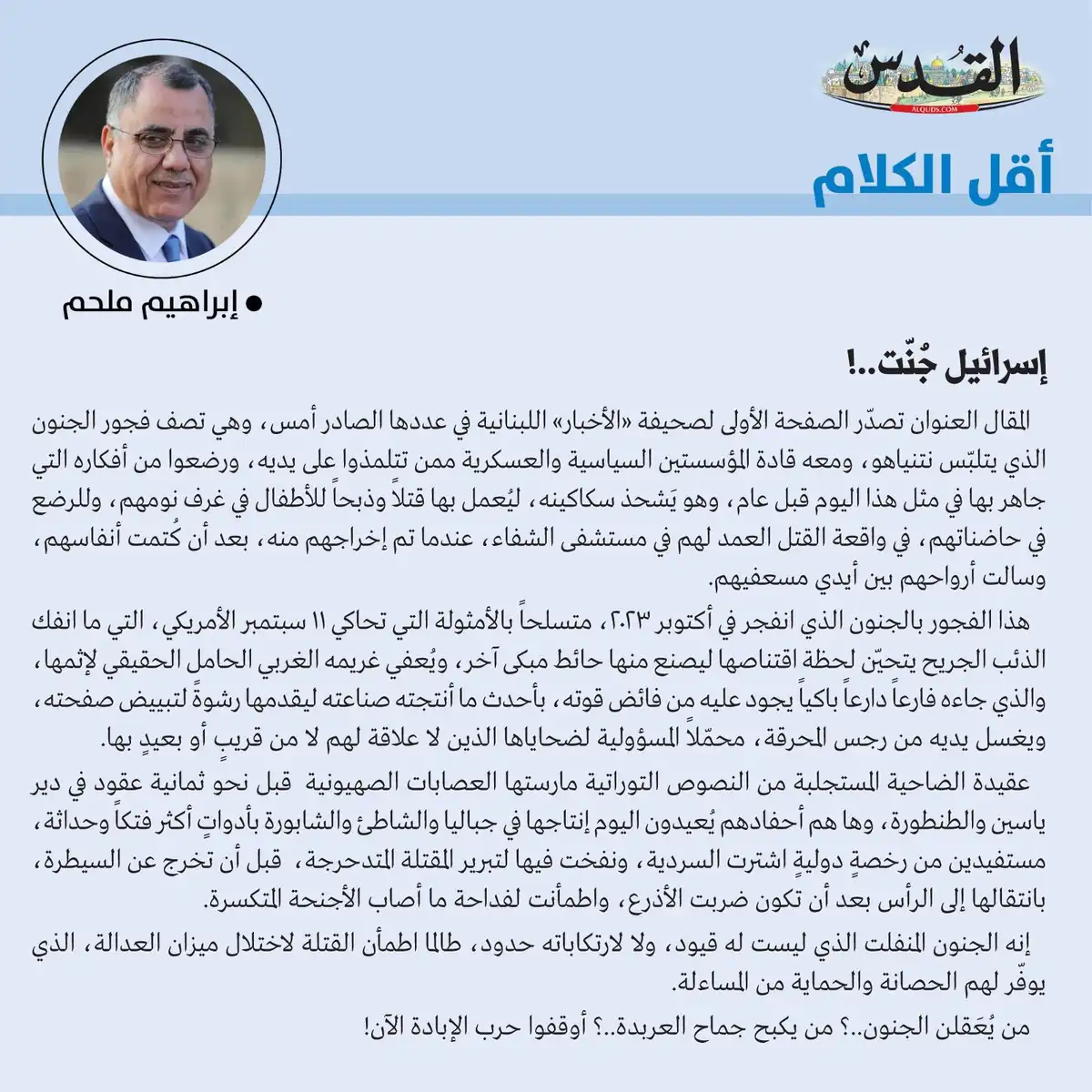

He explained that Israel has expanded its operations to include targeting the resistance's allies in the region, such as Hezbollah in Lebanon, some armed factions in Syria and Iraq, and the Houthis in Yemen.


He pointed out that this Israeli strategy aims to strangle the support fronts on which the Palestinian resistance depends.

Regarding Hezbollah, Al-Jamal pointed out that the party was subjected to painful blows by Israel as a result of a security and intelligence breach.


He explained that there are trends to reactivate the Security Council resolutions related to Hezbollah and its weapons, which may redraw the balance of power in Lebanon and open the door to a political solution to the conflict in the country, including the election of a new president for Lebanon.


The normalization project faces some challenges


In his speech, Al-Jamal addressed the normalization project within the framework of the "Abraham Accords", stressing that this project is facing some challenges, as some Arab countries link the normalization of their relations with Israel to resolving the Palestinian-Israeli conflict, establishing a Palestinian state, and the two-state solution.


He added: Any progress in this file will not be achieved except through strong Arab pressure on the United States and Israel, and normalization will not be free until the two-state solution is achieved, which according to the Arab and Islamic group is the best solution for the region.


Al-Jamal pointed out that the United States remains the main player in these transformations, whether under the Biden administration or if Trump returns to power.


He stressed that the future of the new Middle East depends on the geopolitical transformations taking place in the region, including the growing Iranian role and Israeli threats against Iranian nuclear facilities.


Al-Jamal warned that the continuation of tensions in the region could lead to the outbreak of a large-scale regional war, especially with the increase in extremism in Israel and the possibility of the collapse of the Israeli state and reverse migration due to these internal and external tensions, stressing that the International Criminal Court may find an opportunity to take action against Israeli leaders, such as Benjamin Netanyahu, but the American role remains decisive in determining the course of events.


Major changes at the local, regional and international levels


In turn, Dr. Riad Al-Aila, Professor of Political Science at Al-Azhar University, told “I”: The passing of a year since the events of October 7 and the Israeli war of extermination against the Palestinian people has led to major changes at the local, regional and international levels.


He explained that these changes were led by peoples who reject genocide, from the United States of America to the peoples of Latin American countries and the European Union, in addition to some European governments that demanded that the Palestinian people be granted their right to live in peace in their independent state with Jerusalem as its capital.


He said: The massive destruction left behind by the war of extermination, in which more than 220,000 Palestinians lost their lives, were injured or went missing, most of them children, women and the elderly, did not move the feelings of some Arab rulers or the American administration, which continued to provide weapons to Israel and support it politically by using the veto power to abort international resolutions calling for an end to the war.


Al-Aila added: This war exceeded in its brutality the war of extermination in World War II, as Israel continued to destroy cities and camps over the heads of civilians and supported massacres against Palestinians in the Gaza Strip and the West Bank.


Expanding the war to include Lebanon, Yemen and Syria


He pointed out that this war has expanded to include Lebanon, Yemen and Syria, which has negatively affected the project of establishing an independent Palestinian state, as regional and international governments have been preoccupied with the war instead of focusing on achieving a political solution.


In this context, Al-Aila stressed the need to stop the war of ethnic extermination immediately, and the need to demand that the US administration stop sending weapons used in the extermination of the Palestinian people, and to call on European countries to stop exporting weapons, similar to the French and Spanish positions, and to end the Palestinian division and work to achieve national unity in the face of this war, in a way that guarantees the realization of the dream of an independent Palestinian state with Jerusalem as its capital.


Al-Aila stressed that achieving these goals requires a unified Palestinian position and avoiding any external interventions that do not serve the Palestinian cause, stressing the importance of restoring national unity under the framework of the Palestine Liberation Organization.


October 7th is a global turning point


In turn, Jerusalemite political analyst Ziad Al-Hamouri confirmed to “Y” that what happened on October 7 was a major turning point, not only on the local level, but on the global level, as the Palestinian issue became the most prominent issue in the world.


He added that the repercussions resulting from this event will have a future impact on resolving the Palestinian issue and restoring rights to their owners, pointing out that the Israeli plans, which began in 1948, are now facing major failure.


Al-Hamouri explained that October 7 was a decisive turning point in thwarting attempts to exterminate the Palestinian people, considering that the current events will bring the Palestinians closer to establishing their independent state.


He added that victory in the current war will be an indicator of the future of the Palestinian cause, despite the challenges it faces at the international level.


Al-Hamouri pointed to the divisions within the European Union and the upcoming US elections as factors influencing the political path, but he stressed that what happened on October 7 shuffled the political cards at the global level.


Impact of protests in Europe and the United States


He said that protests and pressures within the United States and Europe began to affect governments, reflecting a major change in the colonial system that supported Israel.


He pointed out that these global variables will take time to crystallize, but they pave the way for new transformations in the future in favor of the Palestinian cause.


Al-Hamouri stressed that the Palestinian and Lebanese peoples are paying the price, along with the resistance peoples who are seeking liberation from the occupation, which shows the extent of the sacrifices made by these peoples in order to achieve their freedom and legitimate rights.


All eyes are on the possibility of a major war in the region.


Israeli affairs expert Wadih Abu Nassar told Al-Monitor that the October 7 attacks, despite bringing the Palestinian issue back to the forefront, were limited.


He added: Expanding the circle of conflict to include Lebanon, Iran and a number of regional countries has once again led to the neutralization of the Palestinian issue, as attention has become more focused on the possibility of a major war breaking out in the region, with the international community focusing on the Israeli-Iranian conflict.


Abu Nassar explained that the Palestinian issue, despite its return to international attention at first, does not seem any closer to a solution today than it was before October 7, pointing to several reasons that hinder its progress; the first of which is that the current right-wing Israeli government feels that it is above international law, and does not face any serious pressure from either Arab countries or international powers to push it towards a political solution.


The impact of political division


The second, according to Abu Nassar, is the continuation of the internal division among the Palestinians on the political and visionary levels, which weakens their position in seeking their rights.


He added: The absence of serious pressure from either Arab countries or the international community further complicates the situation.


He continued: With the expansion of the conflict to include countries such as Lebanon and Iran, the Palestinian issue has once again receded from the center of attention, especially with the escalation of tensions in the region during the past few weeks, noting that October 7th brought the Palestinian issue back to the table, but the situation got out of control with the expansion of the circle of conflict in the region.