ARAB AND WORLD

Mon 21 Oct 2024 10:31 am - Jerusalem Time

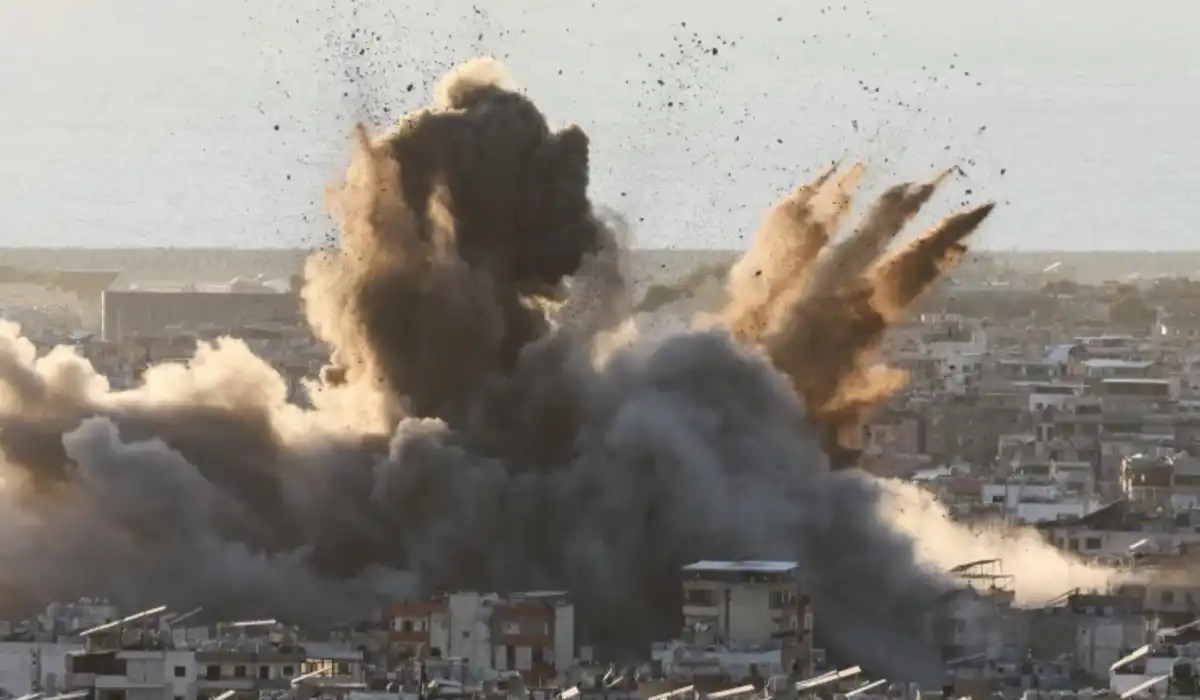
6 children and women killed in occupation bombing of Baalbek

Six children and women from one family were martyred, at dawn on Monday, in a new massacre committed by the Israeli occupation army in the "Nabi In'am" neighborhood in the city of Baalbek, east of Lebanon.

The Lebanese News Agency said, "The Israeli enemy committed a massacre against children and women in the Nabi Inam neighborhood in the city of Baalbek."

The agency added that an "enemy" drone launched a raid on the home of citizen Ali Abdo Othman, "in a neighborhood with close-knit and populated houses."

She explained that the targeting resulted in "the destruction of the building and damage to the neighboring houses, the martyrdom of 6 children and women from the Othman family, and the injury of 8 citizens in the neighborhood with injuries ranging from critical to moderate to minor, and they were transferred to hospitals."

The agency reported that the civil defense teams in the area worked to extinguish the fire in the targeted house, assist in rescue operations, and retrieve the bodies of the dead from under the rubble.

Volunteers from the Islamic Health Authority, the Lebanese Red Cross, and the Palestinian Al-Shifa Society participated in the search and rescue operations, according to the agency.

OPINIONS

Mon 21 Oct 2024 10:13 am - Jerusalem Time

War, Detainees and Migration

Dr. Ahmed Rafiq Awad

Dr. Ahmed Rafiq Awad

Opinion Writer

As Netanyahu said, he will not stop the war in the Gaza Strip in search of achieving impossible goals. He knows that very well, but he will not stop the war in order to justify his political survival and so that Israel does not collapse in front of the axis of resistance. Stopping the war means entering into real negotiations, and Netanyahu does not want that, and he cannot do that either. He is acting with the logic of a victor, not one seeking a settlement. He wants to continue the war to achieve its hidden goals. He does not care about the prisoners or uprooting the Hamas movement. What he cares about is erasing the place, ensuring calm for decades, and turning the Strip into a crossroads for transportation, communications, investments, and settlement. What he cares about is a complete change in the Palestinian demographics and geography in a way that will forever block any settlement with the Palestinian state, and an unprecedented separation between the Palestinian people’s communities so that they will no longer be able to build a society or establish a state. Destroying the Gaza Strip and displacing its people is the erasure of the geography that protected, embraced, and nourished the Palestinian national identity. These are Netanyahu's real goals in continuing his war on the Strip, as he may reduce its intensity, but he will certainly not end his occupation of the Strip, even if there are negotiations with Arab, international or Palestinian parties on how to manage the Strip. This time, Israel wants to control everything related to the life of the Strip and the lives of its people. These goals also include working to displace the Palestinian citizen by all available means. This ultimately means that Netanyahu is investing in the war to prolong his rule, prolong the occupation and prolong the conflict as well.

Almost all leaders in the East and West agree in their statements that the release of the Israeli prisoners in the Gaza Strip is their first demand. Nothing occupies, stops or concerns them except these prisoners. There are those who weep over them and point to the suffering of their families and the necessity of reuniting families, and there are those who point to their mistreatment and the harsh conditions under which they live. We are not against the release of every prisoner on the face of this earth because that guarantees the release of more than ten thousand Palestinian prisoners whom no one remembers, no one sympathizes with, and no one demands their release or work to improve their detention conditions despite all the horrific news about their detention conditions. Weeping over the Israeli prisoners is part of this hypocrisy, deception, duplicity and dominance of power. It reflects that the colonial West in particular gives Israel all it needs in terms of legitimacy, money, weapons, protection and adoption of the Israeli narrative of the entire conflict. In other words, these statements are not just words and not just a free compliment, but rather a complete vision of the conflict. The colonial West has dropped all the masks from its face, and no longer compliments anyone at all. It will not allow Israel to be defeated, criticized, or its actions to be delegitimized. This time, the West stands completely naked to reveal its ugly shame completely, as the German Foreign Minister expressed it by saying: “All Palestinian civilian targets lose their justification for protection because they are used as a shelter for terrorists,” or as she said… this is where things have come to.

We must admit that there is migration among our citizens, and I am not just saying young people, there are families migrating, yes, it must be said that this is happening. Away from the slogans and big words, the most common and used claim among these people is that everything has deteriorated, there is no security, no safety, no stability, no peaceful life, and that the occupation is restricting all means of living, and it is not only restricting it, but it is also depriving us of our means of living and depriving us of them as well. The occupation has made our lives an unbearable hell, it has confiscated land, dried up water, closed streets, and prevented construction and even hiking in the mountains. There is poverty, overcrowding, a non-existent infrastructure, and a polluted environment, as we know and do not know. There is social injustice, disparities, disharmony, and internal violence at all levels, and war or war conditions bring out the worst in people. For all of this, migration has become an easy, close, and available way out and solution for many reasons that are not hidden from any sane person. I say this with all my pain, and I do not claim solutions here nor do I propose ways out of this predicament. Preventing or reducing migration is not only due to social institutional efforts, but is an individual decision in the end. Migration is a torment for those who do not know, and staying in the homeland is also a torment, and one torment from another makes a big difference in reality.


..........


Crying over Israeli prisoners is part of this hypocrisy, deception, duplicity, and dominance of power, and it reflects that the colonial West itself gives Israel all it needs in terms of legitimacy, money, weapons, protection, and adoption of the Israeli narrative of the entire conflict.

PALESTINE

Mon 21 Oct 2024 9:15 am - Jerusalem Time

UNRWA: Israel rejected urgent request to evacuate people trapped under rubble in northern Gaza

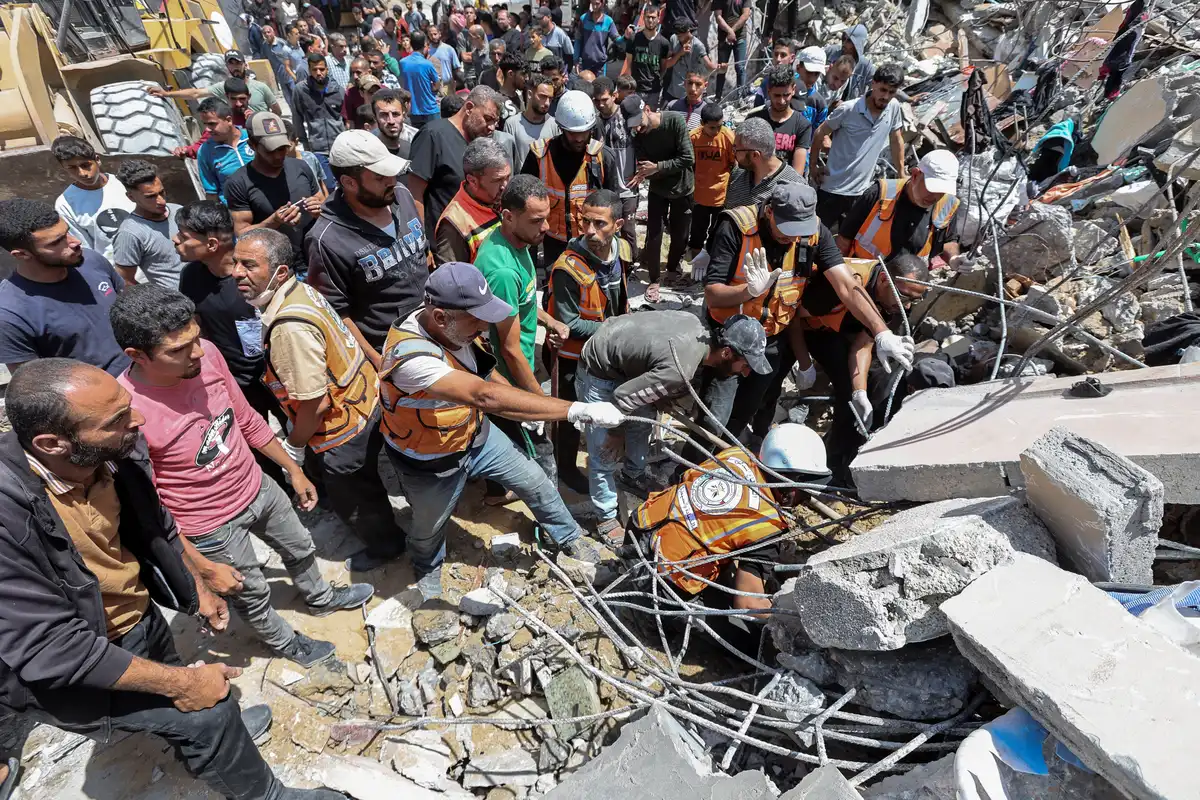
The media officer at the United Nations Relief and Works Agency for Palestine Refugees (UNRWA), Enas Hamdan, said that Israel rejected an urgent request submitted by the agency to evacuate those trapped under the rubble as a result of the genocide being committed in the northern Gaza Strip.

This came in statements made by Hamdan, at dawn today, while famine is worsening in the northern Gaza Strip due to the occupation's genocide and the policy of ethnic cleansing to which the citizens there are being subjected.

"Over the past two weeks, we have repeatedly warned that the tightening of the siege on Jabalia and the northern governorate in general is making the situation even more catastrophic, and the ongoing Israeli military operations are putting tens of thousands of civilians at imminent risk," the UN official said.

“Moreover, the military offensive in northern Gaza is cutting off people’s access to essentials for their survival, including water,” she added.

She warned that "Jabalia camp has been under siege for more than two weeks, and we are receiving information about families trapped in their homes, with water and food running out, and images coming from the camp showing residents running for their lives, with no safe place to go."

On the medical system, Hamdan said: “On October 18, two of the three remaining hospitals in the North Gaza Governorate were directly targeted (Al-Awda and the Indonesian Hospital), and these attacks exacerbate the humanitarian crisis in the North Gaza Governorate in a very worrying way.”

She continued: "In the Indonesian hospital, patients died due to power outages and lack of supplies, and since yesterday, an urgent request from the United Nations to reach northern Gaza to rescue the injured trapped under the rubble has not been implemented by the Israeli authorities."

The UN official called on Israel to "allow humanitarian and rescue teams to reach the sick, wounded and trapped without delay, because every minute of delay exacerbates the disaster."

ARAB AND WORLD

Mon 21 Oct 2024 8:37 am - Jerusalem Time

Israel hands Washington a document of principles to end the war on Lebanon

Axios reported, citing American and Israeli officials, that Israel presented the United States last week with a document of principles regarding its conditions for reaching a diplomatic solution to end the war in Lebanon.


The report added that Amos Hochstein, the US President's envoy, will visit Beirut today to discuss with Lebanese officials the possibility of a diplomatic solution to the conflict.


Walla website reported, citing American and Israeli officials, that the document of principles allows the displaced on both sides of the border to return to their homes.


The document also allows the Israeli army to ensure that Hezbollah does not rearm itself, and gives the Israeli Air Force freedom to operate in Lebanese airspace, according to the website.


The website indicated - quoting an American source - that the international community may not agree to Israel's conditions included in the document of principles.


It is noteworthy that since September 23, Israel has expanded the scope of its war and air strikes to include most of Lebanon, including the capital Beirut, and has also begun a "limited" ground invasion in the south of the country. The aggression on Lebanon has resulted in more than 2,350 deaths, 10,906 injuries, including a large number of women and children, in addition to more than 1,340,000 displaced persons, according to official Lebanese data.

Source: Axios + Al Jazeera + Israeli press

OPINIONS

Mon 21 Oct 2024 8:35 am - Jerusalem Time

Between Jabalia and Dresden!

Ibrahim Melhem

Ibrahim Melhem

Opinion Writer


The distance between Jabalia camp and the German city of Dresden is vast in terms of kilometers, but in terms of the waterfalls of blood and the immorality of the desires for revenge and retaliation, it is as close as the victims are to their blood, and the hungry and thirsty to their intestines.

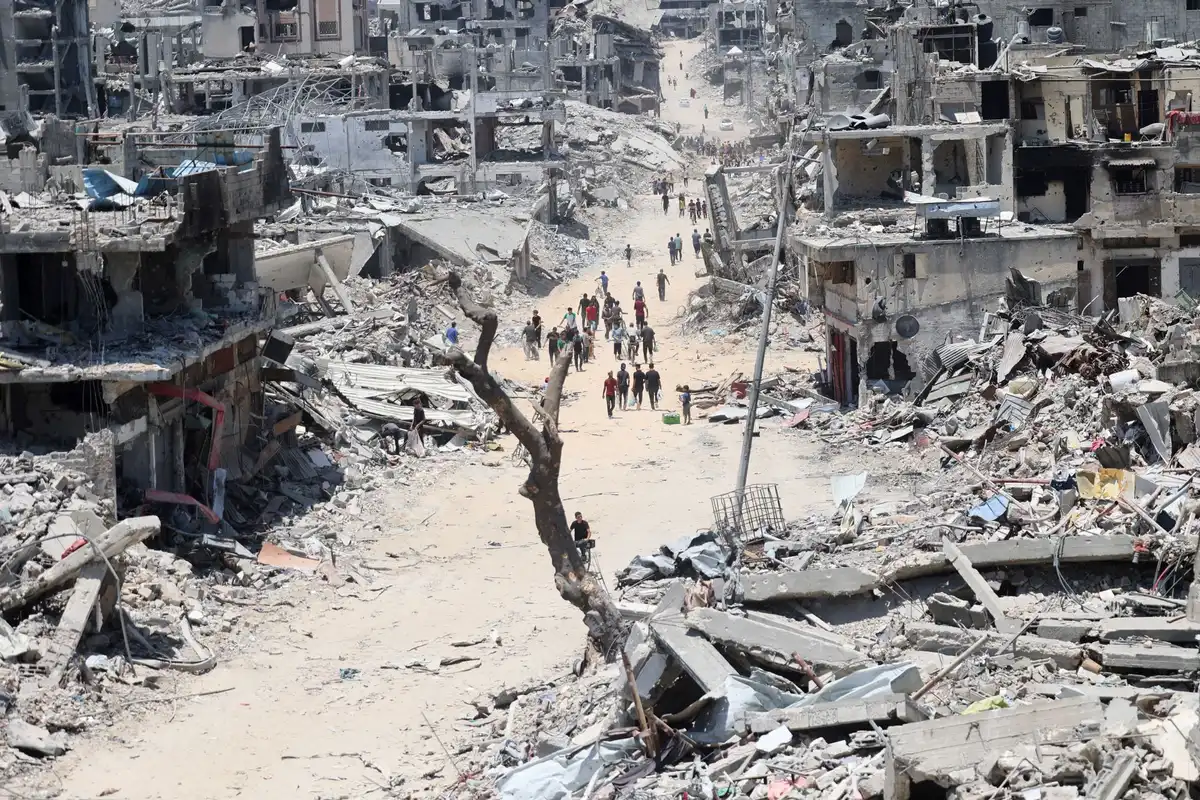
What has been happening in the stricken camp in terms of killing, destruction and starvation for the past sixteen days is beyond the capacity of a sane mind to comprehend, and is comparable to what the German city was subjected to at the end of World War II, in terms of raids launched by hundreds of British and American bombers, which left about 25,000 dead in three days, and at the time the British newspapers described those raids as horrific and unjustified.

In Jabalia camp, which is crowded with poor, destroyed homes and those on the verge of collapse, and is crowded with hundreds of thousands of refugees in brick houses, homes are being demolished on the heads of their residents, without prior warning, and ethnic cleansing is taking place in which hundreds are killed, wounded and missing, most of them children and women under the rubble, while ambulance and civil defense crews are prevented from reaching the besieged area, to rescue the injured and retrieve bodies from the streets.

With tank tracks and aircraft shells, the lines of longitude and latitude are drawn in the north, which is targeted for displacement, terror and killing at times, and starvation at other times, in a bloody implementation of the “generals’ plan,” which has exceeded all taboos.

Those besieged in Jabalia, Beit Lahia and all the camps and cities of the north are suffering from bleeding wounds and the pain of suffering, and they are being killed morning and evening, as punishment for their steadfastness and their sit-in in their homes. They are targeted for killing as they move and travel to their tents or to shelters, as the flying monsters distribute their incendiary bombs to them.


Stop the war of extermination now..!

ARAB AND WORLD

Mon 21 Oct 2024 8:33 am - Jerusalem Time

What role did US intelligence play in the killing of Sinwar?

The New York Times reported Sunday that days after Hamas attacked Israel on October 7, 2023, the Pentagon quietly sent several dozen commandos to Israel to help advise on hostage recovery efforts, U.S. officials said.

The JSOC forces were quickly joined by a group of intelligence officers, some working with the commandos in Israel and others at the CIA headquarters at Langley, Virginia, near Washington, DC.

For more than a year, much of the attention and criticism about U.S. support for Israel has focused on the American-made bombs and weapons that Israel has used to attack Gaza. But intelligence assistance to Israel has also been crucial. U.S. intelligence helped locate the four hostages rescued by Israeli commandos in June.

Almost from the beginning of the war, American military and intelligence cells focused not only on the search for hostages, but also on hunting down senior Hamas leaders.

Senior American leaders do not claim credit for the Israeli operation that killed Hamas leader Yahya Sinwar, the architect of the October 7 attack. But they say their intelligence helped in the hunt.

“Shortly after the October 7 massacre, I directed our special operations personnel and intelligence professionals to work alongside their Israeli counterparts to help locate and track Sinwar and other Hamas leaders hiding in Gaza,” US President Joe Biden said in a statement on Thursday after Israel announced it had killed Mr. Sinwar.

According to senior officials, during the course of the war in Gaza, American “fusion cells” shifted their focus based on the latest actionable intelligence. Sometimes the best tips were on the locations of hostages. At other times, the cells focused on the whereabouts of Hamas leaders. But neither mission was ever sidelined.

The two American intelligence analysis groups, in Israel and at CIA headquarters, regularly exchanged information and insights.

Defense officials insisted they did not directly support Israeli military operations on the ground in Gaza, a campaign that has killed tens of thousands of Palestinian civilians and reduced the area to rubble, but officials said the hunt for senior Hamas leaders was different, the newspaper reported.

“Hamas-led groups held about 250 hostages in attacks last year, including Americans. Mr. Sinwar and other senior Hamas leaders kept the captives close by, hoping to deter Israeli attempts to kill them with a bombing strike. Hamas leaders issued standing orders to shoot the hostages if Israeli forces were discovered nearby, a strategy designed to deter Israeli commando teams from entering the tunnel network where Mr. Sinwar was long believed to be hiding.”

Since the start of the more than year-long war, U.S. military officials have said that the search for the hostages has been their primary mission in Israel. But senior administration officials have described the search for the hostages and the Hamas leaders as intertwined.

It is noteworthy that in an interview conducted earlier this year, National Security Advisor Jake Sullivan said that “the US military and spy agencies gained experience in finding high-value targets from the pursuit of Osama bin Laden and other terrorists in Iraq and Afghanistan that was useful to the Israelis.”

“We have been using this expertise since the first weeks after October 7,” Mr. Sullivan said.

Senior White House officials have met regularly with William J. Burns, the CIA director, and Lloyd Austin III, the defense secretary, about what additional support targeting cells might need to accelerate the hunt for Mr. Sinwar, U.S. officials said.

Officials did not disclose many details about what kind of intelligence the cells provided to Israel.

At least six MQ-9 Reapers, operated by U.S. special operations forces, flew missions to help locate the hostages, monitor for signs of life and pass possible leads to the Israeli military, the officials said.

The drones cannot map Hamas’s vast underground tunnel network — Israel uses top-secret ground sensors to do that — but its infrared radar can detect the heat signatures of people entering or leaving the tunnels from above ground, officials said.

In the end, it was a random Israeli unit on patrol in southern Gaza that discovered Sinwar by chance, the highest-value target of all.

No U.S. forces were directly involved in the operation that killed the Hamas leader, Pentagon spokesman Maj. Gen. Patrick S. Ryder said Thursday. “This was an Israeli operation,” he said.

But American officials insist that the United States helped gather intelligence that helped the Israeli military narrow its search.

In the weeks since Hamas killed a group of hostages in tunnels in Rafah in southern Gaza, American and Israeli intelligence agencies have focused on the area, believing that this might be where Mr. Sinwar is hiding.

OPINIONS

Mon 21 Oct 2024 8:01 am - Jerusalem Time

Israel has taken human shields to a whole new criminal level

Al Jazeera

Al Jazeera

Opinion Writer

The use of Palestinian civilians as ‘human baits’ in Gaza demonstrates how racism informs Israel’s warfare practices.

Neve Gordon

Save articles to read later and create your own reading list.

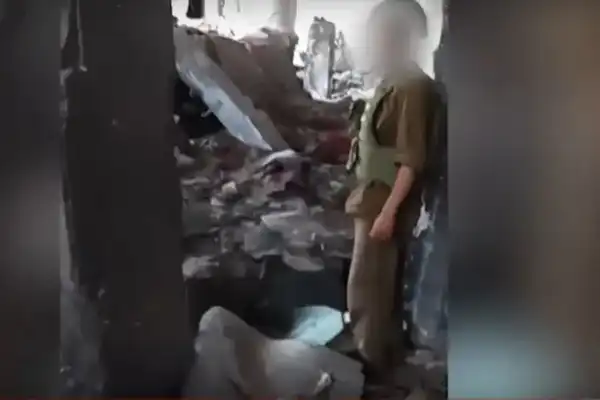
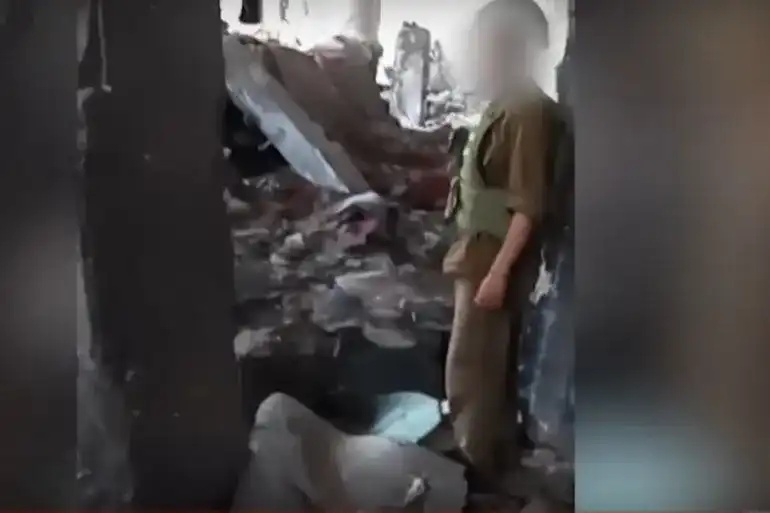
A screenshot from footage obtained by Al Jazeera shows a Palestinian man dressed in Israeli military forced to walk around in the rubble of a building in Gaza [Screenshot/Al Jazeera]

The use of human shields in war is not a new phenomenon. Militaries have forced civilians to serve as human shields for centuries. Yet, despite this long and dubious history, Israel has managed to introduce a new form of shielding in Gaza, one that appears unprecedented in the history of warfare.

The practice was initially revealed by Al Jazeera but, subsequently, Haaretz published an entire expose about how Israeli troops have abducted Palestinian civilians, dressed them in military uniforms, attached cameras to their bodies, and sent them into underground tunnels as well as buildings in order to shield Israeli troops.

 “[I]t’s hard to recognise them. They’re usually wearing Israeli army uniforms, many of them are in their 20s, and they’re always with Israeli soldiers of various ranks,” the Haaretz article notes. But if you look more closely, “you see that most of them are wearing sneakers, not army boots. And their hands are cuffed behind their backs and their faces are full of fear.”

In the past, Israeli troops have used robots and trained dogs with cameras on their collars as well as Palestinian civilians to serve as shields. However, Palestinians who were used as shields always wore civilian clothes and thus could be identified as civilians. By dressing Palestinian civilians in military garb and sending them into the tunnels, the Israeli military has, in effect, altered the very logic of human shielding.

Indeed, human shielding has historically been predicated on recognising that the person shielding a military target is a vulnerable civilian (or prisoner of war). This recognition is meant to deter the opposing warring party from attacking the target because the vulnerability of the human shield ostensibly invokes moral restraints on the use of lethal violence. It is precisely the recognition of vulnerability that is key to the purported effectiveness of human shielding and for deterrence to have a chance of working.

By dressing Palestinian civilians in Israeli military uniforms and casting them as combatants the Israeli military purposefully conceals their vulnerability. It deploys them as shields not to deter Palestinian fighters from striking Israeli soldiers, but rather to draw their fire and thus reveal their location, allowing the Israeli troops to launch a counterattack and kill the fighters. The moment these human shields, masked as soldiers, are sent into the tunnels, they are transformed from vulnerable civilians into fodder.

The Israeli army’s treatment of Palestinian civilians as expendable might not come as a surprise given the racialised form of colonial governance to which they have been subjected for decades. The deep-seated racism explains the ease with which Israeli President Isaac Herzog publicly claimed that there are “no innocent civilians” in the Gaza Strip as well as the prevailing indifference among Israel’s Jewish public to the tens of thousands of Palestinian civilians who have been killed.

Indeed, Israelis were not shocked when their political leaders repeatedly called to “erase” Gaza, “flatten” it, and turn it “into Dresden”. They have either supported or have been apathetic towards the damage and destruction of 60 percent of all civilian structures and sites in Gaza.

Within this context, dressing Palestinian civilians in military garb and sending them into tunnels is likely to be perceived in the eyes of most Israeli soldiers – and large sections within the Israeli public – as not much more than a detail.

Nonetheless, this new form of human shielding does shed important light on how racism plays out in the battlefield. It reveals that the military has taken to heart and operationalised Defence Minister Yoav Gallant’s racist guidelines that “we are fighting human animals”, exposing how Israeli soldiers are relating to Palestinians as either bait or prey. Like hunters who use raw meat to lure animals they want to capture or kill, the Israeli troops use Palestinian civilians as if they were bare flesh whose function is to attract the hunter’s prey.

Racism also informs Israel’s disregard for international law. By randomly detaining Palestinian civilians – including youth and the elderly – and then dressing them in military garb before forcing them to walk in front of soldiers, the Israeli troops violate not only the legal provision against the use of human shields but also the provision that deals with perfidy and prohibits warring parties from making use of military “uniforms of adverse Parties while engaging in attacks or in order to shield, favour, protect or impede military operations”. Two war crimes in a single action.

The horrifying truth, however, is that no matter how much evidence emerges around Israel’s use of this new human shielding practice or indeed any other breach of international law, the likelihood that it will change actions on the ground is small.

Hopes that international law will protect and bring justice to the Palestinian people have historically been misplaced because colonial racism – as critical legal scholars from Antony Anghie to Noura Erekat have pointed out – informs not merely Israel’s actions but also the international legal order, including the way the International Criminal Court (ICC) metes out justice. To get a glimpse of this racism, all one needs to do is browse the website of the International Criminal Court to see who it has been willing to indict.


ARAB AND WORLD

Sun 20 Oct 2024 10:17 pm - Jerusalem Time

Renewed occupation raids on the southern suburb of Beirut

This evening, Sunday, Israeli occupation aircraft launched raids on the southern suburb of the Lebanese capital, Beirut, and several towns in southern Lebanon.


The Lebanese News Agency reported that the occupation aircraft launched four raids on facilities in the neighborhoods of Al-Salam, Burj Al-Barajneh, and Al-Ghobeiry in the southern suburb.


It also reported that the occupation aircraft launched raids on the towns of: Houmin al-Fawqa, Shebaa, Arabsalim, Qalawieh, Ma'roub, Deir Qanoun al-Nahr, Tayr Dibba, Yanuh, Fron, Kounin, Hadatha, al-Tuwairi, Tibnin, Aita al-Shaab, Dibbin, Yatar, Shaqra, Deir Antar and Qabrikha, in conjunction with heavy artillery shelling on the towns of Majdal Silm, Tulin, Aita al-Shaab, Burj al-Muluk and al-Khiam.


The United Nations Interim Force in Lebanon (UNIFIL) announced in a statement that an Israeli army bulldozer deliberately demolished a watchtower and a fence surrounding a UN site in Marwahin.


The Lebanese Ministry of Health announced that the death toll since the start of the Israeli aggression on Lebanon on October 8th until yesterday, Saturday, has risen to 2,464, and the number of wounded has risen to 11,530.


It reported that 16 people were killed and 59 were injured yesterday, including 11 martyrs and 27 injured in the South, 5 martyrs and 23 injured in Nabatieh, and 9 injured in the Bekaa.

PALESTINE

Sun 20 Oct 2024 9:09 pm - Jerusalem Time

OCHA: More than 40,000 affected by Israeli demolitions in occupied Jerusalem

More than 40,000 Jerusalemites have been affected by the demolitions carried out by the Israeli occupation authorities in the Holy City since the start of the comprehensive aggression against our people on October 7, 2023.


According to data issued by the United Nations Office for the Coordination of Humanitarian Affairs in the occupied Palestinian territory (OCHA), the occupation authorities demolished 226 homes and facilities in Jerusalem, which led to the displacement of 621 Palestinians and affected 40,767 others.


OCHA explains that among the demolished facilities were 125 inhabited homes, 28 uninhabited housing units, 39 facilities that help their owners provide a livelihood, and 34 agricultural facilities. As for the reason, most of the facilities were demolished under the pretext of building without obtaining a permit from the occupation authorities, amounting to 218 facilities.


According to OCHA, the demolitions were carried out in 24 towns and neighborhoods in Jerusalem, but were more concentrated in the town of Jabal al-Mukaber, targeting 37 homes and facilities, 21 of which were inhabited, then the town of Silwan, with 31 facilities, 21 of which were inhabited, then the towns of al-Walaja, Beit Hanina, al-Issawiya, and the rest of the towns and neighborhoods of Jerusalem.


These statistics do not include towns in the Jerusalem Governorate, such as Anata and Hizma, which witnessed demolitions, even though they are classified in Area C.


Since 1967, the occupation authorities have continued their attempts to consolidate their control over Jerusalem by adopting unilateral practices that violate the rules of international law, all of which aim primarily to Israelize and Judaize the city and change the demographic, religious and historical reality existing there. These attacks include seizing lands and homes for the benefit of colonialism and settlers, restricting construction, and demolishing homes.


In addition to preventing any Palestinian urban expansion by seizing land and constructing settlements, the occupation authorities have adopted a series of structural planning policies aimed at preventing Jerusalemites from building on their land or expanding existing facilities.


As a result, the occupation authorities allow Palestinians to build and live on 13% of the area of occupied East Jerusalem. However, building permits in this area are very expensive and almost impossible to obtain due to the Israeli restrictions imposed and the racist measures and discriminatory policies followed by the occupation government in this regard. If they are granted, permits are granted at a rate of less than 2% of building permit applications; which forces Palestinians to build without obtaining permits, in line with the natural growth of their families. Thus, the occupation uses the lack of permits as an excuse to carry out demolitions or force Palestinians to demolish their homes.


In a related context, OCHA data indicates that the Israeli occupation forces demolished 988 homes and facilities in the so-called "C" area of the West Bank during the same period, which led to the displacement of 934 citizens and affected 44,072 others. The demolitions were concentrated in the cities and towns of Jericho, Anata, Tulkarm, Duma, Hizma and Idhna.


In Areas A and B, the occupation forces demolished 590 homes and facilities, displacing 2,953 citizens and affecting 446,833 others. The demolitions were concentrated in the Tulkarm, Nur Shams and Jenin camps, and the city of Jenin, which witnessed several ground invasions by the occupation forces, accompanied by widespread destruction of infrastructure and private and public facilities, since October 7, 2023.


In parallel with the unprecedented destruction of homes, buildings and facilities in the Gaza Strip, the Israeli occupation has escalated the demolition of citizens’ homes, especially in the so-called Area C, which constitutes about 60% of the West Bank.

ARAB AND WORLD

Sun 20 Oct 2024 8:45 pm - Jerusalem Time

3 Lebanese soldiers killed in Israeli shelling, Hezbollah attacks 3 military bases

The Lebanese army said that three of its soldiers were killed in an Israeli attack on an army vehicle on the Ain Ebel Hanin road in southern Lebanon. For its part, the Israeli army said that it had monitored the launch of about 175 rockets from Lebanon towards Israel since midnight.


Today, Sunday, the Lebanese Hezbollah announced that it had bombed 3 Israeli military bases with missiles, in response to intensive Israeli raids that targeted dozens of towns and villages.


The party stated in three statements that its fighters had bombarded with missiles the Tira Carmel base south of the coastal city of Haifa, the Beria base northeast of the city of Safed, in addition to the Shimshon base west of Lake Tiberias, which it had targeted "in response to the targeting of civilians."


Earlier today, Lebanese media and medical sources announced the killing of 11 citizens and the injury of others as a result of Israeli raids targeting various areas in the south.


Hezbollah also announced that it had bombed gatherings of Israeli soldiers and military headquarters in several areas, including Acre, Haifa, Safed, and the settlements of Shlomi, Admit, and Yara in the Galilee, which resulted in the injury of at least 4 Israelis.


Israeli media reported that 15 firefighting teams were trying to extinguish fires that broke out in the Upper Galilee as a result of rocket fire from Lebanon.


Bombing and destruction

For its part, the Israeli army bombed the southern suburbs of Beirut and several towns in southern Lebanon, and also blew up houses in 3 border towns.


Al Jazeera's correspondent reported renewed Israeli shelling of Haret Hreik in the southern suburbs of Beirut.


The Israeli occupation army had issued a warning to evacuate several buildings in Haret Hreik and the Hadath Beirut area in the southern suburb, in preparation for bombing them.


The army said it attacked a Hezbollah intelligence headquarters and an underground weapons production workshop in Beirut. It added in a statement that three senior members of the party were eliminated.


In a related context, the Israeli army, according to what the Lebanese National News Agency reported, carried out a large-scale bombing of homes in 3 towns in southern Lebanon.


The agency reported that the Israeli occupation army is carrying out a large-scale bombing operation in buildings in the town of Adaisseh, and is also carrying out the same operation in the neighboring towns of Rab Thalatheen and Markaba, amidst heavy raids that have targeted dozens of towns and villages in southern Lebanon.


Gallant's visit

For his part, Israeli Defense Minister Yoav Galant said that Israel's goal in its war on the northern border is to "clean the entire area to return citizens to their homes," as he put it.


During a visit to inspect the fighters of the 98th Division on the northern border, Galant confirmed that the army is carrying out the operation correctly, he said.


He pointed out that Israel has Hezbollah prisoners who "tell Israel about the fear of the party's fighters and their inability to deal with the attacks."


Galant expressed his belief that Hezbollah is collapsing on the lines of contact and in the areas of continuous strikes, as he put it.


The axes of the military confrontation between Hezbollah and Israel (Al Jazeera)

The axes of the military confrontation on the ground between Hezbollah and the Israeli army (Al Jazeera)

expensive

In a related context, Yedioth Ahronoth newspaper said that expanding the Israeli war in the north has cost $6.7 billion since the beginning of last September.


The newspaper quoted an Israeli military official as saying that the costs of one day of fighting in Lebanon amount to about $134 million and may increase soon.


She added that the expansion of the war requires an increase in the budget in the absence of funding sources, noting that the costs of ammunition used in Lebanon are very high.


At the same time, Yedioth Ahronoth quoted a senior economic official as saying that enduring a long war in the north and south is difficult for the Israeli economy.


After about a year of cross-border shelling, Israel has escalated its raids since September 23, targeting what it says are Hezbollah strongholds in the southern suburbs of Beirut and in southern and eastern Lebanon, before announcing at the end of the same month the start of ground incursions across the border.


At the same time, Hezbollah intensified its launch of rocket barrages and suicide drones targeting Israeli army positions, settlements near the border, and cities and towns deep inside Israel.

ARAB AND WORLD

Sun 20 Oct 2024 7:37 pm - Jerusalem Time

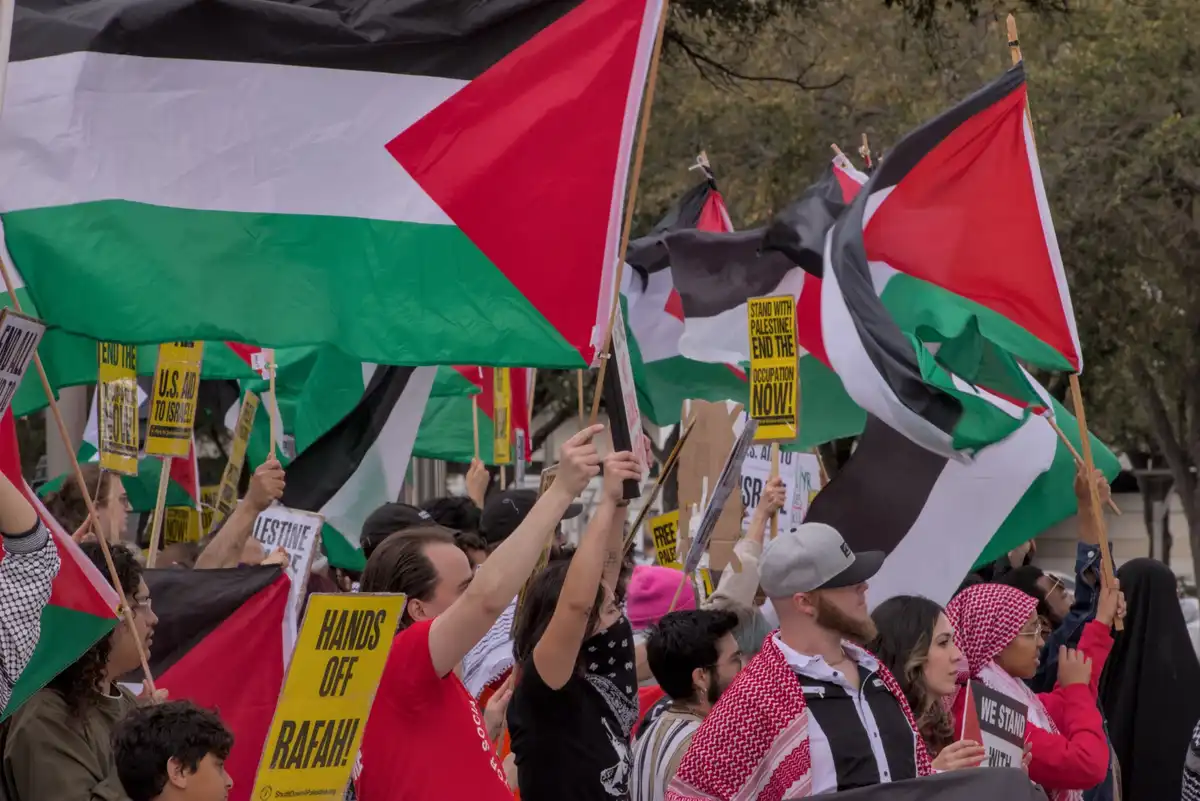
Demonstrations in world capitals and cities denouncing the aggression on the Gaza Strip

Today, Sunday, many capitals and cities around the world witnessed mass demonstrations denouncing the Israeli aggression on the Gaza Strip.


Thousands participated in demonstrations organized in New York State, the Norwegian capital Oslo, the Belgian capital Brussels, the Italian cities of Genoa, the Dutch cities of Rotterdam, and Gothenburg and Malmö in Sweden, in support of the Palestinian people, and to demand a ceasefire and the entry of humanitarian aid into the Gaza Strip.


The participants in the demonstrations raised Palestinian flags and banners denouncing the crimes committed by the Israeli occupation against our people.


Participants called for an end to double standards and the need to prosecute the occupation for its massacres against the Palestinian people, especially children, and denounced the genocide in the Gaza Strip.

PALESTINE

Sun 20 Oct 2024 7:24 pm - Jerusalem Time

The Israeli occupation army announces the killing of a brigade commander in Jabalia

The Israeli occupation army said that the commander of the 401st Brigade was killed in a battle in Jabalia, north of the Gaza Strip, and another officer was seriously wounded.


According to the army statement, the dead man is Colonel Ihsan Deksa.


Israeli media reported a serious security incident in the Gaza Strip before the army's announcement.


According to the reporter, this event is considered serious and major in terms of the number of dead soldiers and the rank of the slain colonel, who was 41 years old and had led a number of divisions until he reached his current rank.

PALESTINE

Sun 20 Oct 2024 6:27 pm - Jerusalem Time

Prisoners Affairs Authority: Israel carried out collective revenge against prisoners on October 7

The Palestinian Prisoners and Freed Prisoners Affairs Authority revealed, on Sunday, that "widespread repression" was carried out against Palestinian detainees in Israeli prisons on October 7.


This came according to a statement by the body affiliated with the Palestine Liberation Organization, in which it presented testimonies of detainees in Israeli prisons after a number of its lawyers were able to visit them recently.


Since the start of the Israeli genocide in the Gaza Strip on October 7, 2023, Israeli, Palestinian and international human rights organizations have spoken about the deteriorating conditions in Israeli prisons, especially in the notorious Sde Teiman.


The Commission said, "The Israeli prison administration carried out extensive raids in several prisons on October 7, as part of the policy of collective revenge, which is the most prominent systematic policy followed by the Israeli prison system against prisoners and detainees."


The Commission quoted a detainee, who only gave his first name (L.T.), in Ofer Prison, west of Ramallah in the central occupied West Bank, as saying that “the repressive forces stormed all sections, sprayed tear gas, and assaulted most of the detainees.”


Another detainee in the same prison added, "The repressive forces assaulted the detainees in the section where he was being held, resulting in minor injuries," according to the statement.


A third detainee reported that “a number of detainees, as a result of the repression, are still suffering from the effects of beatings, and the repression, searches and humiliation operations have recently been escalating, although they have not actually stopped since the beginning of the war until today.”


In Ramon Prison in southern Israel, a group of detainees reported to the Commission’s lawyers that “the repressive forces stormed their sections, tied them all up, and transferred them to the prison yard, in humiliating and degrading conditions, and assaulted them.”


The Authority's statement indicated that "the Israeli Prison Administration deliberately filmed the suppression operation, and the majority of the detainees suffered bruises in the chest and back."


The number of Palestinian detainees since that date has exceeded 11,300 Palestinians from the West Bank, including Jerusalem, according to prisoner institutions, while accurate numbers on detainees in the Gaza Strip are absent due to the Israeli blackout.


PALESTINE

Sun 20 Oct 2024 5:53 pm - Jerusalem Time

“They Forgot Their Modern History”: Why Israel Won’t Move Toward Peace

Former US Ambassador Ryan Crocker says what he fears most is “Israeli overconfidence in the wake of the killing of Hamas leader Yahya Sinwar.”


In a lengthy interview with Politico, Crocker, a veteran diplomat known as “America’s Lawrence of Arabia” for his deep understanding of the Middle East, believes that “the killing of Hamas leader Yahya Sinwar presents an opportunity that could lead to the release of Israeli hostages and a ceasefire, but history suggests that Israel and its enemies will not take advantage of it.”


It is noteworthy that Crocker spent nearly four decades representing America's interests in the Arab world, where he served as the US ambassador to Lebanon, Syria, Iraq and Kuwait, as well as to Afghanistan and Pakistan.


Crocker, now retired, believes that Israel’s war on Hamas and Hezbollah — as well as Iran — is nowhere near over. Sinwar’s death, which follows the assassination last month of Hezbollah leader Hassan Nasrallah and several other top commanders, “will essentially continue the guerrilla war unless the United States and Israel work hard toward a ceasefire,” he says. “It also increases the likelihood that Iran will ramp up its nuclear weapons program.”


The current situation, Crocker says, is strikingly similar to what happened four decades ago when the Israelis invaded Lebanon. “That invasion and subsequent Israeli occupation created Hezbollah, and that invasion will not end it,” he says. “One thing I’ve learned over the years, particularly in Iraq and Afghanistan, is that the concept of defeating an adversary only has meaning in the mind of that adversary. If that adversary feels defeated, they’re defeated. If they don’t, they’re not.”


What does the death of Yahya Sinwar mean? “I imagine that the reason Sinwar has survived so long is very similar to the reason Osama bin Laden has survived so long,” Crocker says. “In other words, these organizations have been operating without the direction of a leader. I don’t see much change on the battlefield itself. However, we know that Hamas has largely lost its organizational capacity, but that would be the case with or without Sinwar.”


On Israel’s claims of dramatic victories, including the killing of Hezbollah and Hamas leaders, culminating in Sinwar’s death this week, and Netanyahu’s claim that the “balance of power” in the region has shifted in Israel’s favor, Crocker says: “I would say that’s premature. Hezbollah is clearly continuing to fight. Rockets are still flying across the border, drones are still flying. It’s decentralized. Hamas and Hezbollah are clearly decentralized. They’ve certainly been reduced in their ability to provide anything resembling a meaningful response. But I expect a prolonged insurgency by Hamas.”


The dynamics in the north are quite different, notes Crocker, an expert on irregular armed movements, where Netanyahu has set expectations very high and is trying to stop the rocket fire in a decisive way so that 60,000 Israelis can return home. All Hezbollah has to do is keep enough rockets crossing the border to make that difficult. It’s a fog of war, and it’s very hard to see how strong Hezbollah is right now.


“I was in Lebanon in 1982 when Israel invaded Lebanon,” the former US ambassador notes. “They called their operation ‘Peace for Galilee.’ Forty-two years later, Lebanon is further from peace than it was in 1982 when that invasion began. That invasion and the subsequent Israeli occupation created Hezbollah, and this invasion will not end it.”


Crocker answers a question about the Israeli response to last week’s Iranian missile attack, where recent reports have suggested that the Israelis might not hit Iranian nuclear or oil sites, but rather military or intelligence targets, which would be less escalatory. “Assuming that analysis is correct, and that they won’t hit Iranian oil or nuclear facilities, that leaves them a lot of room for what they might hit, but wherever they hit it won’t materially change any power equation. What I think it will do is push the debate inside Iran toward nuclearization sooner rather than later.”


“I think so,” he added. “Again, they [the Israelis] just have to look at the world stage: You have the Libyan example of what would happen if you gave up nuclear capability, and the North Korean example of what would happen if you kept it.” So “if a country gave up its nuclear weapons program, as Libya did under Muammar Gaddafi in 2003, it’s all over. He was eventually overthrown and killed. But if you have nuclear weapons, you can prevent regime change, as North Korean leader Kim Jong Un seems to have; I think so. The more the Iranians look at non-nuclear options, whether it’s proxies like Hamas or Hezbollah, or a conventional missile capability, the more incentive there is in Tehran to choose that nuclear capability.”


“I worry that the Israelis have become overconfident,” Crocker says. “They hailed Operation Peace for the Galilee in 1982 as a great victory after the PLO withdrew from Beirut. And of course, what they got was Hezbollah, a more lethal enemy than the PLO ever dreamed of. So the idea that a ground invasion and subsequent occupation would make the Galilee safer is a fantasy.”


On the defeat of Hamas or Hezbollah, Crocker says, “One thing I’ve learned over the years, especially in Iraq and Afghanistan, is that the concept of defeating an opponent only has meaning in the mind of that opponent. If the opponent feels defeated, he’s defeated. If he doesn’t feel defeated, he’s not defeated. Do these beheadings make the opponent feel defeated? I think time will tell, but I’d bet against it.”


“I was in Lebanon when Hezbollah was being created, which we paid a high price for and the Israelis paid a higher price for,” he explains. “I was in Lebanon as the US ambassador when the Israelis first decapitated Hezbollah by assassinating Abbas Musawi [Hezbollah’s secretary-general who was killed in 1992 when Israeli helicopters fired missiles at his convoy]. I had to be evacuated because of credible intelligence that there was a plan to assassinate me in retaliation. Well, the decapitation didn’t completely weaken Hezbollah.”


On what the Israelis should do immediately, Crocker says, “Israel should accept victory; declare victory and let us work on the cessation of hostilities. In the north, there is UN Resolution 1701 on the table, as it has been since 2006 [calling for Hezbollah to withdraw from south of the Litani River in Lebanon, disarm and withdraw Israeli forces from Lebanon]. There is another UN resolution from 2004 with similar wording. These are the benchmarks, the texts that all parties involved should take into account. There may be some tough American diplomacy needed to broker a ceasefire in the north at least. In Gaza, I think everything should be geared toward getting the hostages back.”


“And that’s something we have to work toward. And maybe this is a period of time where Hezbollah and Iran for their own reasons might want to reach a ceasefire. But if you can get that — enough of a cessation of hostilities to allow the Israelis to go home — then you might be able to build toward some kind of implementation of Resolution 1701. And that, too, would be the best way to deal with Iran.”


What should be done to deal with Hamas? There are questions about who might take over the leadership of Hamas. Some suggest it could be Khaled Meshaal, the former Hamas leader living in Qatar, or Sinwar’s brother Mohammed, if he is still alive. “Any avenue that Sinwar’s death might open in terms of resolving the hostage issue is something that the Israelis should seize,” Crocker says. “Again, the insurgency will not stop. But the capacity that Hamas had to operate with has been largely eliminated for now. I would hope that Israel will indirectly work to arrange a ceasefire that would allow for the return of any remaining hostages. But we have no idea what is happening with Hamas inside Gaza. We have no idea how many hostages are still alive.”


“It’s very hard to know from the outside what the prospects are for some kind of political settlement,” the former ambassador says. “I’ve seen the reported reactions of the Palestinians in Gaza. Some say they are obligated to fight to the last Palestinian, others hope that Sinwar’s death will mean an end to the misery. If I were an Israeli policymaker, I would put all the resources and imagination I could into returning the hostages.”


“Expanding diplomatic relations between Israel and the region is certainly possible,” Crocker said of the prospects for Saudi-Israeli normalization. “One of the things that has not happened in the year since the Gaza war began is that any Arab country has severed relations with Israel. I think Saudi Arabia will gain momentum to move toward normalization with Israel, especially if Iran moves toward nuclear weapons capability. But that will not, of course, move anything toward a Palestinian settlement.”


“I doubt very much that anything meaningful will come out of the Israeli-Palestinian negotiations. What is missing in the current crisis, but has become somewhat more apparent given the severity of the situation in Gaza and Lebanon, is the West Bank. The Israeli actions there [in its attempt to forcibly uproot the Palestinian population], whether by the settlers or the IDF, do not bode well for any meaningful negotiations with the Palestinians.”


“Again, I remember when we thought that the Israeli invasion in 1982 and the evacuation of the Palestinians, brokered by the United States, would pave the way for a comprehensive peace in the Middle East. That was Reagan’s famous initiative. But it ended almost before it began. I don’t see this initiative as more optimistic. I go back to what I learned through bitter experience. Unless your enemy feels defeated, he isn’t.”


“If the Israelis convince themselves that their amazing achievements in weapons and intelligence actually constitute a victory, that is very dangerous. And it becomes even more dangerous if we start to believe that. Let’s go back to the Reagan initiative. If we think that the damage done to the leadership of Hezbollah and the elimination of Sinwar and other Hamas leaders somehow translates into a new dynamic for peace, and that we can somehow turn that into a far-sighted global settlement – that is madness.”


“I don’t see anything good coming from this,” Crocker explains. “I think the Israelis are thinking in terms of a long-term military occupation of Gaza, and that would simply lead to a long-term insurgency. One of the things that has fundamentally changed since October 7 is Israel’s willingness to accept a certain number of IDF casualties in the long term, a number that they could never have dreamed of before October 7. In the 18 years they spent in Lebanon, from 1982 to 2000, they lost about 1,100 soldiers. As of October 6, 2023, that was a huge number that no Israeli government would ever imagine losing again. But losing another 1,200 in a single day, soldiers, men, women, and children, has changed that calculus. So Israel’s willingness to accept a long-term insurgency in Gaza and an indefinite occupation is much higher than it was before October 7.”

PALESTINE

Sun 20 Oct 2024 5:18 pm - Jerusalem Time

Three Palestinian injuries in clashes east of Nablus

Three children were injured this evening, Sunday, in clashes with the Israeli occupation forces in the town of Beit Furik, east of Nablus.


Medical sources reported that Red Crescent crews dealt with the injury of 3 children with live bullets in the limbs, during clashes with the occupation forces in the town of Beit Furik.

PALESTINE

Sun 20 Oct 2024 4:01 pm - Jerusalem Time

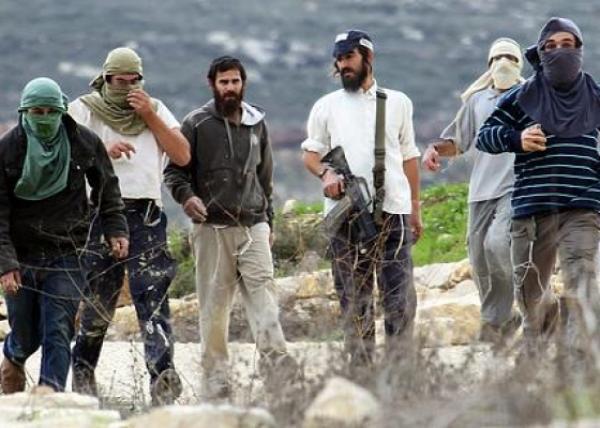
Israeli settlers attack olive pickers west of Nablus

Today, Sunday, a settler attacked olive pickers in the village of Burqa, northwest of Nablus.


According to local sources, a number of settlers attacked olive pickers in the "Al-Sahl" area in the village of Burqa.


Every day, settlers’ attacks are recorded in the villages and towns of Nablus, under the protection of the occupation, such as physical assault, forcing farmers to leave their lands, and stealing olive crops.

-

PALESTINE

Sun 20 Oct 2024 2:33 pm - Jerusalem Time

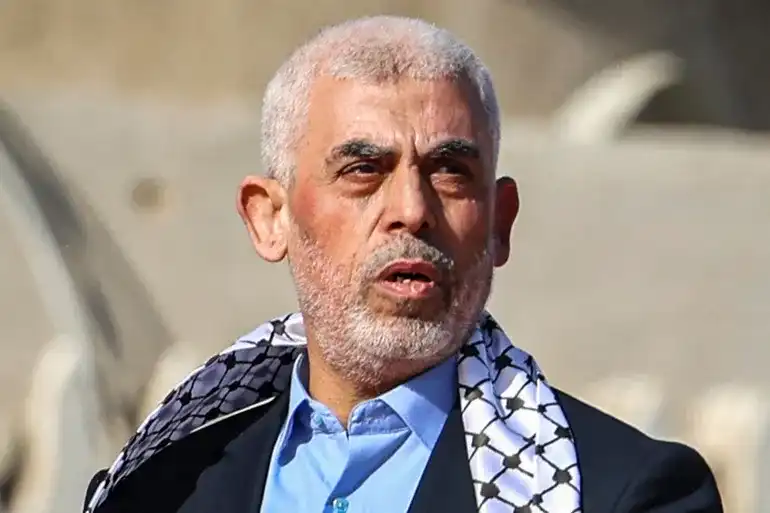
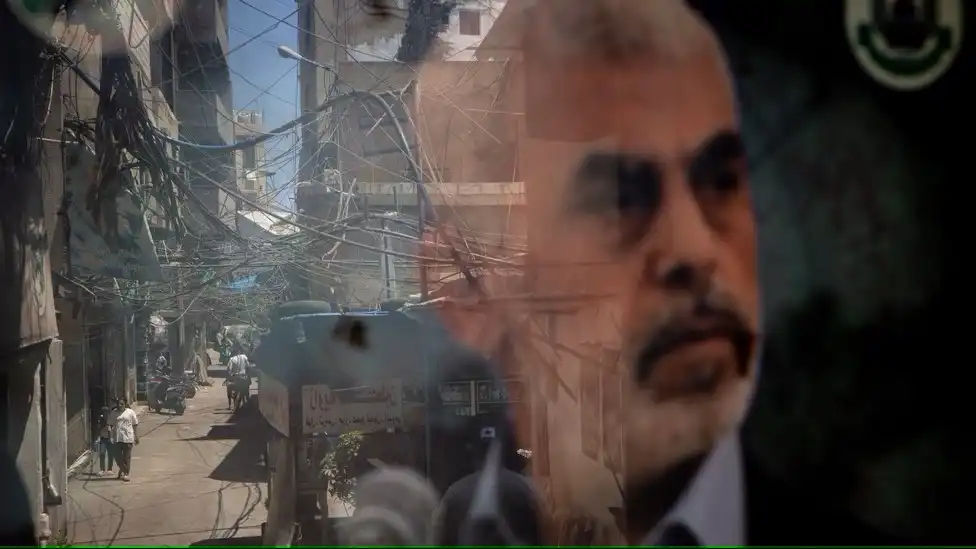
What comes after Sinwar's martyrdom? Escalation or the return of negotiations again?

Muhammad Hawash: Sinwar's martyrdom will not fundamentally affect the course of the war in Gaza or the structure of Hamas

Sari Samour: Sinwar's potential successor is likely to be from Gaza, whether residing abroad or inside the Strip

Dr. Qusay Hamed: Israel continues its war, and Sinwar’s martyrdom may return the movement’s political decision abroad

Firas Yaghi: The resistance ideology within Hamas will be strengthened, and whoever believes that moderate leaders will come after Sinwar is mistaken

Adnan Al-Sabah: It is not in Hamas' interest to announce a successor to Sinwar at the present time, given the current situation


The death of Hamas political bureau chief Yahya Sinwar in combat on the battlefield last Wednesday raises the possibility that this could affect the war in the Gaza Strip and the possibility of a prisoner exchange deal between Israel and Hamas.

In separate interviews with “I,” writers, political analysts, and university professors believe that his martyrdom will not have a fundamental impact on the course of the war on Gaza, nor will it shake Hamas’s position on the exchange deal.

They believe that Sinwar's martyrdom will not weaken Hamas, but they point out that the next leadership of the Hamas political bureau may return to the outside, as it was in the past, and this may reflect changes in the movement's internal balances and future orientations in light of the nature of the stage, indicating that the repercussions of Sinwar's martyrdom may strengthen the resistance ideology, especially within Hamas, as he has become a model for future leaders, which makes the continuation of the resistance a certainty.


Sinwar's martyrdom while fighting confirms the falsity of the occupation's narrative


Writer and political analyst Muhammad Hawash believes that “the Israeli narrative that portrayed the head of the political bureau of Hamas, Yahya Sinwar, in a negative light, indicating that he was hiding in tunnels, was refuted by the emergence of the truth of his martyrdom while fighting on the battlefield. The truth that emerged after his martyrdom revealed the falsity of the Israeli narrative, as it turned out that Sinwar was a fighter on the ground, and not hiding as Israel claimed.”


According to Hawash, "Although the exact details of how Sinwar was martyred are still unconfirmed, the information based on the occupation's narrative, which has been modified several times, has proven the lies of the Israeli attempts to distort his image."


He points out that the occupation was seeking to promote the image of the Palestinian as a terrorist, but the martyrdom of Sinwar and his pictures that showed his struggle on the battlefield confirmed that the Palestinian is a resister against the occupation, and this clearly refutes the Israeli propaganda, and reaffirms that resistance is a right for the Palestinians against the occupation.


Regarding the impact of Sinwar’s martyrdom on the course of the battle in the Gaza Strip, Hawash asserts that his absence will not have a fundamental impact on the course of the war in Gaza or on the structure of the Hamas movement. The battle has turned into an individual resistance that is spreading throughout all areas of the Gaza Strip, and is no longer limited to a central leadership as it was at the beginning of the war. Therefore, the absence of any leader will not significantly change the course of the war, despite the moral impact that his martyrdom may have.


As for Hamas, Hawash believes that Sinwar’s martyrdom will not affect its continuity or organizational structure. The movement has witnessed numerous assassinations of its leaders over the years, and these assassinations did not lead to weakening the movement. On the contrary, they always led to the emergence of new leaders who would lead the movement in various fields. In addition, the previous assassinations did not achieve Israel’s declared goals in this war, and will not lead to a real impact on the movement’s structure.


Hawash touched on the issue of the future leadership of Hamas, noting that the movement's Shura Council, which consists of broad sectors inside and outside Palestine, will discuss the issue of appointing a new leadership after Sinwar's martyrdom.


Hamas's leadership shifts abroad


Although the Gaza Strip had a great influence in the movement’s leadership during the past ten years, Hawash believes that the results of the battle may lead to this influence being transferred outside the Strip, especially since the next stage may require a leader from abroad, not a field military commander.


As for the balances within Hamas, Hawash explains that the movement, as a multi-spectrum political movement, includes differences of opinion, especially with regard to external alliances. While there are leaders who seek to distance themselves from the Iranian axis and prefer to adopt a balanced position between Iran and the Arab countries, the movement’s military wing is more inclined towards an alliance with Iran. However, these differences are resolved within the framework of the Shura Council, where the movement’s strategy is agreed upon collectively.


The Israelis are the ones who reject the deal.


Regarding the prisoner exchange deal, Hawash believes that the Israelis, specifically Prime Minister Benjamin Netanyahu and his government, are the ones who refuse to conclude the deal, not Hamas.


Hawash asserts that Sinwar's absence will not lead to a change in the terms of the deal, as Hamas is adhering to the terms that were previously agreed upon, the red lines of which Sinwar set before his martyrdom. This was confirmed by the deputy head of the Hamas political bureau, Khalil al-Hayya, in his statements following the announcement of Sinwar's martyrdom, which indicates that the movement will not back down from its previous positions regarding the exchange deal.


Israel continues its insistence on genocide in Gaza


Writer, political analyst and follower of Palestinian political parties, Sari Samour, points out that the Gaza holocaust is still ongoing, whether before or after the martyrdom of the head of the Hamas political bureau, Yahya Sinwar.


Samour confirms that Israel is continuing its insistence on exterminating the Palestinian people in the Gaza Strip, despite expectations that Sinwar's martyrdom might be a prelude to a ceasefire.


Samour explains that Sinwar's martyrdom while he was in a direct clash with the enemy proves that he is a rare figure in the history of the Palestinian resistance, and even in the history of global revolutions. Sinwar, due to his position and age, could have avoided participating in field confrontations, but he preferred to be in the front lines, which reflects his dedication and inspiration to many.


Samour considers Sinwar to be an exceptional man and a miracle in every sense of the word, pointing out that after his release from the Israeli occupation prisons after 23 years, he could have chosen a quiet life either in Gaza or to leave the Gaza Strip without anyone blaming him, but he preferred to stay in the field, proving that his actions reflect his words and that he was honest and sincere in his orientations.


Differences in visions within Israeli circles


Samour talks about the perceptions that emerged immediately after the announcement of Sinwar’s martyrdom, regarding the conclusion of a prisoner exchange deal, as some expected that this event might accelerate the conclusion of a prisoner exchange deal between Hamas and Israel, noting that some voices in the United States and Europe supported this idea, while some Israeli officials also raised it.


However, Samour explains that the Israeli aggression has not stopped, which indicates a difference in visions within Israeli circles. While some see the need to stop the war, others believe that continuing military operations achieves tangible achievements.


Samour touches on an important point related to the Israeli army leaking pictures of Sinwar before the official announcement of his martyrdom, suggesting that this leak may have been deliberate by the army to speed things up towards concluding a prisoner exchange deal.

Regarding Sinwar's potential successor, Samour believes that the next leader will likely be from the Gaza Strip, whether residing abroad, like Khalil al-Hayya, or from within the Strip, like Mohammed Sinwar, Yahya Sinwar's brother.


Despite Sinwar's martyrdom, Samour asserts that the impact of Sinwar's martyrdom on Hamas is not significant, given that the movement relies on institutions and a solid organizational structure, which ensures its continuity, despite the loss of its leaders in the field.


Sinwar's martyrdom does not mean the end of the war or the beginning of peace in Gaza


Dr. Qusay Hamed, Professor of Political Science at Al-Quds Open University, believes that the martyrdom of Yahya Sinwar, head of the political bureau of Hamas, will not lead to major changes in the Gaza Strip in the near term.


Hamed explains that Israel is continuing its comprehensive war that aims to impose a new reality on the Strip, and that the martyrdom of Sinwar does not mean the end of the war or the beginning of peace in Gaza, as the war continues.


Regarding the impact of Sinwar’s martyrdom on the Hamas movement, Hamed believes that his absence is a major blow to the movement, especially considering his position as one of the leaders who combined political and military power. Sinwar is considered one of the historical leaders and the most influential in the movement, whether at the level of decision-making in the Gaza Strip or at the level of Hamas’s organizational structure.


According to Hamed, Sinwar was an exceptional figure within the movement, which makes replacing him very difficult in the near future.


But on the other hand, Hamed points out that Hamas has organizational mechanisms that allow it to continuously reproduce leadership. Since its founding, the movement has become accustomed to dealing with the martyrdom or assassination of its leaders, and it always prepares alternative leaders from the field to assume responsibility.


However, Hamed believes that replacing a figure of Sinwar's weight and value in the near future will be difficult, given his great influence on the movement.


On the other hand, Hamed points out that Sinwar's martyrdom may return the leadership of the movement's political bureau to the outside, as his selection as the movement's leader from within was an exception to the rule that Hamas has followed since the establishment of its political bureau, where the leadership of the political bureau has always been based abroad.


Hamed believes that Sinwar's absence may bring back this tradition, pointing out that Ismail Haniyeh, who led the movement inside the country for a period, later went abroad, specifically to Qatar, which made it easier for him to manage affairs from abroad.


Regarding Sinwar's role in the last battle, Hamed explains that his martyrdom during a field clash indicates the extent of his personal involvement in leading daily operations.


Hamed points out that Sinwar was not only the mastermind behind the first “Al-Aqsa Flood” strike, but he was also directly managing the field operations and supervising their minute details. This commitment to field participation reflects Sinwar’s commitment to military action, and makes his martyrdom while engaged in the field unsurprising given his history as a field commander before being a political or military leader.


Sinwar's martyrdom will not speed up the completion of the deal


Regarding the impact of Sinwar's martyrdom on the prisoner exchange deal, Hamed believes that Sinwar's martyrdom will not speed up the completion of the deal, but may lead to Hamas clinging to its terms.


He points out that Sinwar was not an obstacle to completing the deal, but on the contrary, he was seeking to complete it under specific conditions set by the movement.


The real problem, according to Hamed, lies in Netanyahu's refusal to conclude the deal except according to limited Israeli conditions, most notably the release of Israeli soldiers held in Gaza without meeting Hamas's remaining conditions.


Hamed believes that Sinwar’s martyrdom may strengthen Hamas’s adherence to its demands, whether in loyalty to Sinwar or to the sacrifices made by the people of the Gaza Strip. This adherence to the conditions may be a response to Israel’s attempt to impose a new reality in the Strip, as Netanyahu wants to release the Israeli detainees without making concessions to the conditions set by Hamas: the occupation’s complete withdrawal from the Gaza Strip, the return of the displaced, the reconstruction of Gaza, and the release of prisoners.


The possibility of a prominent figure abroad taking over the leadership of the movement


As for Sinwar's successor in leading Hamas, Hamed believes that replacing Sinwar with a figure of equal weight and influence will be difficult.


Hamed believes that Hamas may move to appoint a new head of the political bureau from among its members outside Palestine, and may not announce the name of his successor publicly due to the ongoing Israeli targeting.


Hamed points to the possibility that a prominent figure abroad, such as Khaled Meshaal or Khalil al-Hayya, will assume the presidency of the movement's political bureau.


Hamed believes that Sinwar's martyrdom will not lead to the end of Hamas or its military wing, stressing that the movement still has a strong organizational structure and leaders ready to take over leadership and continue fighting, given its long history of Israeli targeting.


A heavy burden on whoever will succeed Sinwar


Writer and political analyst Firas Yaghi believes that the martyrdom of Yahya Sinwar, the leader of the "Al-Aqsa Flood", while he was on the front lines of the battlefield, will place a great burden on whoever succeeds him in leading the Hamas movement.


Yaghi explains that Sinwar's martyrdom in the field is a model and example for every new leader, which means that the resistance will continue, and that the next leader must be on the battlefield as well, as Sinwar has become an icon of the Palestinian resistance, and no other leader can ignore this symbolism.


Yaghi links the martyrdom of Sinwar to the period following the martyrdom of the late President Yasser Arafat (Abu Ammar), who set red lines for the concept of peace, whereby the understandings or positions that preceded it cannot be crossed.


Yaghi points out that Sinwar's martyrdom does not only affect Gaza or the Hamas movement, but leaves a profound impact on the Palestinian interior as a whole, as it represents a continuation of the ideology of resistance against the occupation, and a message that the conflict with Israel is long and draining.


Yaghi believes that Sinwar came with the "Al-Aqsa Flood" battle to return the conflict to its roots, as he confirms that the occupation is the basis of the issue, and that resisting it is an inevitable duty.


He discusses the possible scenarios for Hamas leadership after Sinwar's martyrdom, noting that the movement may choose not to publicly announce his successor, and rely on a collective leadership to avoid targeting elected leaders by the occupation.


But Yaghi confirms that the repercussions of Sinwar's martyrdom will strengthen the resistance ideology within Hamas, and that whoever believes that moderate leaders will come after him is mistaken, because the battle has gone beyond the borders of Gaza and Hamas, and has become regional, encompassing the entire region.


Yaghi believes that Sinwar's martyrdom in the Tel Sultan area, which the Israeli occupation army has controlled for about four months, shows the nature of his humble personality and his understanding of his role as a leader.


According to Yaghi, Sinwar could have hidden in a safe place, but he chose to be with his soldiers in the field, defending the cause on the ground.


Yaghi explains that Sinwar's presence on the battlefield sends a strong message that the war is open and everyone must participate in it, from the commander to the soldier.


Yaghi points out that Sinwar's martyrdom came to refute all the Israeli incitement against the resistance leaders, claiming that they hide and do not participate in the battles. On the contrary, Sinwar advanced the ranks and was in areas of Israeli control, far from civilians, which refuted the occupation's false narrative on a global level, and Israeli propaganda is being attacked.


Yaghi points out that Sinwar's martyrdom may greatly complicate any attempts to resolve the prisoner exchange deal, as Hamas will adhere to Sinwar's previous demands and will not give them up.


Netanyahu doesn't seem interested in a ceasefire and a deal


In contrast, Yaghi points out that Israeli Prime Minister Benjamin Netanyahu does not seem interested in striking a deal or moving towards a ceasefire, as Netanyahu seeks to continue the war, believing that this gives him an opportunity to strike Iran and deal a fatal blow to the resistance factions in the region, which will enable him to declare his final victory and control the Gaza Strip and the West Bank to achieve his vision of a “new Israel” with greater influence in the region.


Yaghi believes that Netanyahu's calculations are wrong, as the continuation of the battle and the entry of the United States into the arena could lead to a long war of attrition that includes the entire region, not just Gaza. If Netanyahu does not seek to conclude deals or reach settlements, he will lose all the tactical gains that he believes he has achieved so far.


Yaghi points out that Netanyahu will not move towards any political settlement, whether in the south or the north, because he still aspires to achieve his goals by force.


The impact of Sinwar's martyrdom will be positive on Hamas


Writer and political analyst Adnan Al-Sabah believes that the martyrdom of Yahya Sinwar, head of the political bureau of Hamas, despite his importance and symbolism that increased after October 7, will not affect the organizational structure of the movement.


Al-Sabah points out that Hamas relies on an electoral system based on Shura, and has deep and historically organized institutions, which makes it able to continue without any organizational shakeup.


Al-Sabah believes that the impact of Sinwar's martyrdom will be positive on the movement, especially symbolically, as he will continue to be remembered as a leader who was martyred while fighting.


This image, according to Al-Sabah, will remain in the minds of generations, not only today, but throughout history, likening it to the symbolism left by the martyr leader Abdul Qader Al-Husseini, who was martyred as a fighter in the Battle of Qastal.


Al-Sabah confirms that this image will enhance the status of Hamas and its future, both among its bases and among the Palestinian masses in general.


Al-Sabah stresses the importance of the way in which Sinwar was martyred, which came to refute the image that Israel tried to paint of him, as the occupation sought to portray him as a leader hiding in a tunnel and using detainees as human shields, but his martyrdom on the battlefield, participating in the fighting alongside his comrades, completely destroyed this narrative.


Al-Sabah believes that this new image of Sinwar, a leader who participates in daily battles, will remain engraved in the minds of the Palestinian people, and will enhance his status as a popular hero and not just a military leader.


Sinwar's martyrdom is not just a passing event


Al-Sabah believes that Sinwar's martyrdom is not just a passing event, but rather a strong message confirming that the Palestinian resistance, and Hamas in particular, will not retreat from the path of resistance that Sinwar has drawn with his blood.


According to Al-Sabah, the martyrdom of a leader of Sinwar's stature will not be an opportunity for the occupation to achieve its goals, but on the contrary, it will increase the resistance's adherence to its firm positions.


Regarding Sinwar's succession, Al-Sabah believes that it is not in Hamas's interest to announce his successor at this time, given the current situation and difficult circumstances experienced by the Palestinian people, especially the Hamas movement.


Al-Sabah points out that it might be better for the movement to keep the position of the head of the political bureau secret, as Hezbollah did when it did not announce a successor to its Secretary-General Hassan Nasrallah at critical stages.


Al-Sabah confirms that Hamas at this stage does not need to disclose the alternative leadership, indicating that maintaining secrecy may be in the interest of the movement in light of the ongoing Israeli targeting, noting that it is better for observers and analysts not to enter into the race of speculation about who will succeed Sinwar for fear that they will provide information that serves the Israeli occupation.


Al-Sabah stresses that the martyrdom of Sinwar will not disrupt Hamas's path, but will strengthen its steadfastness and continuity, and increase its adherence to the line drawn by the martyr.


OPINIONS

Sun 20 Oct 2024 1:34 pm - Jerusalem Time

Sinwar’s Death Changes Nothing

The Atlantic

The Atlantic

Opinion Writer

The Gaza war will go on until both sides stop wanting it to.

By Hussein Ibish

The killing on Thursday of the Hamas leader Yahya Sinwar, the principal architect of the October 7 attack on southern Israel, offers a golden opportunity for Prime Minister Benjamin Netanyahu to declare victory and begin pulling troops out of Gaza. But that is not going to happen. Most likely, nothing will change, because neither Netanyahu nor Hamas wants it to.

Netanyahu’s calculation is no mystery. Should he leave political office, he faces a criminal-corruption trial and a probable inquiry into the security meltdown on October 7. He has apparently concluded that the best way to stay out of prison is to stay in power, and the best way to stay in power is to keep the war going—specifically, the war in Gaza. The battle against Hezbollah in Lebanon is too volatile, and involves too many other actors, including the United States, Iran, and Gulf Arab countries, for Israel to keep control of its trajectory. For this reason, Lebanon is much less useful than Gaza as a domestic political tool.

For Israel, the war in Gaza has become a counterinsurgency campaign with limited losses day to day. This level of conflict likely seems manageable for the short term, and appears beneficial to Netanyahu. Hamas, for its part, seems to think it can hold out in the short term, and gain in the long term. An insurgency requires little sophistication by way of organizational structure or weaponry—only automatic rifles, crude IEDs, and fighters who are prepared to die. Years, possibly a decade or longer, of battles against Israeli occupation forces for control of Palestinian land in Gaza are intended to elevate the Hamas Islamists over the secular-nationalist Fatah party as the nation’s bloodied standard-bearer. Hamas leaders may well see no reason to abandon this path to political power just because Sinwar is dead.
Franklin Foer: Yahya Sinwar finally got what he deserved

Some more moderate members of the Qatar-based Hamas politburo, such as Moussa Abu Marzouk, have expressed discomfort with the October 7 attack and Sinwar’s “permanent warfare” strategy. But they are not likely to prevail over more hard-line counterparts, such as the former Hamas leader and ardent Muslim Brotherhood ideologue Khaled Mashal (some sources are already reporting that he has been named to succeed Sinwar). The truth is that none of these exiled politicians may wind up exerting much control over events on the ground in Gaza. Sinwar, who was himself a gunman and served time in an Israeli prison, once derided them as “hotel guys” because of their relatively plush accommodations in Qatar, Turkey, and Lebanon. Real power flowed to military leaders such as himself.

Sinwar effectively controlled Hamas starting from 2017 at the latest, even though Ismail Haniyeh, based in Qatar, was the group’s official chairman. Only after Israel assassinated Haniyeh in Tehran on July 31 did Sinwar formally become the leader he had long actually been. Today, fighters such as Sinwar’s younger brother Mohamed, the commander of the southern brigade, and Izz al-Din Haddad, the commander in northern Gaza, are ready to step into the leadership role with or without official titles. The political figureheads in Qatar will most likely continue to do what they’ve done for at least the past decade, serving mainly as diplomats, tasked with securing money and arms, as well as defending and promoting Hamas policies on television.

The only scenario in which Sinwar’s death would lead the “hotel guys” to gain real authority instead of these fighters would be if the group’s remaining leadership cadres decided that Hamas should stand down long enough to rebuild. This could be a tactical pause; it could also be a strategic decision, if the group finds itself so exhausted that it prefers making a deal to continuing an insurgency that could take many years to achieve its political purpose. In either of these scenarios, Hamas would be looking above all for reconstruction aid—which would give the exiled leaders, who are best placed to secure such aid, leverage over the militants on the ground.

But these are not likely outcomes. The Hamas insurgency was gaining momentum before Sinwar’s death, and Israel was poised to impose a draconian siege on northern Gaza in response. Nothing suggests that Israeli leaders are closer to recognizing what a counterinsurgency campaign will really entail—and that such efforts tend to become quagmires, because they don’t usually yield a decisive victory, and withdrawing without one will look like capitulation, whether it happens now or in several years.

That’s why the death of Sinwar offers such an important inflection point for Israel. It’s an opportunity to end a conflict that otherwise threatens to go on indefinitely. But the history of this war is dispiriting in this regard: Israel already squandered just such an inflection point earlier this year.

Graeme Wood: Yahya Sinwar’s death was preordained

That chance came when the Israel Defense Forces overran Rafah, the southernmost town in Gaza, in stages from May to August. For almost a year, the Israeli military had smashed its way through the Gaza Strip from north to south, destroying everything it considered of value to Hamas, including much of what was indispensable for sustaining its 2.2 million Palestinian residents. Now the IDF had effectively reached the Egyptian border. No more obvious Hamas assets remained, at least aboveground.

Israel could have declared Hamas defeated and made a near-complete withdrawal contingent on the release of all remaining hostages—a deal that Hamas appears to have been willing to take in the past, and which public sentiment in Gaza would have rendered politically devastating to reject. Hamas would have surely crawled out of its tunnels and declared a pyrrhic victory of its own. But the group would then own the devastation of its realm, and with Israel gone, ordinary Palestinians would have a chance to reckon with Hamas’s decision to sign 2.2 million of them up for martyrdom without any consultation.

Instead, Israel chose to remain in Gaza, becoming the inevitable focus of Palestinian anger and terror.

Open-ended conflict is certainly what Sinwar wanted. It’s evidently what Netanyahu wants. And no viable alternative leadership for Hamas or Israel appears to be emerging, nor are critical masses of Israelis or Palestinians demanding an end to the hostilities. Sinwar is gone—but the insurgency he set in motion seems set to live on into the foreseeable future.

PALESTINE

Sun 20 Oct 2024 1:27 pm - Jerusalem Time

Israeli occupation closes the Ibrahimi Mosque for two days

The Israeli occupation forces closed the Ibrahimi Mosque in the Old City of Hebron for two days, under the pretext of Jewish holidays.


Director General of Hebron Endowments, Ghassan Al-Rajabi, said that the occupation forces closed the Ibrahimi Mosque and its corridors to Palestinians for two days, as part of the temporal and spatial division, which permanently stole about 36% of its corridors.


Al-Rujabi condemned the continuous closure of the Ibrahimi Mosque, as the occupation allows settlers to exploit the mosque in all its corridors, in a provocative manner.


He explained that these closures and attacks aim to impose a new reality that allows Jews to be present in the sanctuary at many times, while depriving Muslims and Palestinians of the rights of freedom of worship and access to places of worship.


The occupation authorities exploit Jewish holidays and occasions to oppress citizens and impose collective punishments on them, by closing checkpoints and tightening military measures at them, obstructing the movement of citizens and preventing them from reaching holy places, while facilitating the settlers’ incursions into Palestinian cities, Islamic and archaeological sites in the West Bank, especially the Ibrahimi Mosque in Hebron and Al-Aqsa Mosque in Jerusalem.

PALESTINE

Sun 20 Oct 2024 1:25 pm - Jerusalem Time

1399 settlers storm Al-Aqsa on the fourth day of "Sukkot"

Since Sunday morning, 1,399 settlers have stormed the courtyards of Al-Aqsa Mosque from the Mughrabi Gate, under heavy protection from the Israeli occupation police, on the fourth day of the Jewish Sukkot holiday.


The Jerusalem Governorate reported that about 1,399 settlers and 300 tourists stormed Al-Aqsa Mosque, under heavy guard from the occupation police in groups, and organized provocative tours in its courtyards, and performed Talmudic rituals in front of the Dome of the Rock prayer hall before leaving the courtyards from the direction of Bab al-Silsila.


The Islamic Endowments Department in Jerusalem said that dozens of settlers performed Talmudic rituals in the Cotton Market and at the gates of Al-Aqsa, while one of the settlers blew the trumpet, and others performed what is called “epic prostration” in the courtyards of Al-Aqsa.


The occupation forces tightened their restrictions on the entry of Jerusalemites into the mosque, and prevented some from entering it, amid strict measures to secure the settlers’ storming on the fourth day of the “Feast of Tabernacles.”


The mass incursions of settlers into Al-Aqsa come in response to calls launched by the so-called "Temple Groups" to carry out extensive incursions into Al-Aqsa throughout the "Throne" days, which last for eight days. A colony blew the trumpet on the eastern side of Al-Aqsa Mosque, a few meters away from Bab Al-Rahma, under the eyes and protection of the occupation forces.


The so-called "Temple Groups" are seeking to carry out the widest possible incursions into Al-Aqsa, throughout the days of the "Feast of Tabernacles", which continues until next Wednesday, a period that is expected to witness great tensions.


The occupation police turned the Old City of Jerusalem and the surroundings of Al-Aqsa into a military barracks, and set up military checkpoints on the main roads and streets, to secure the Jewish celebrations of the Feast of Tabernacles.

PALESTINE

Sun 20 Oct 2024 1:06 pm - Jerusalem Time

The death toll from the occupation's aggression on Gaza rises to 42,603

The Ministry of Health in Gaza announced today, Sunday, that the death toll in the Gaza Strip has risen to 42,603, the majority of whom are children and women, since the beginning of the Israeli occupation aggression on October 7.


It added that the number of injuries has risen to 99,795 since the start of the aggression, while thousands of victims are still under the rubble.


It pointed out that the occupation forces committed 7 massacres against families in the Strip, 84 dead and 158 injuries arrived at hospitals during the past 24 hours, indicating that the occupation massacre against citizens in the Beit Lahia project last night resulted in 87 martyrs and missing persons under the rubble and more than 40 injuries, including very critical cases.


It explained that a number of victims are still under the rubble and on the roads, and ambulance and civil defense crews cannot reach them.

PALESTINE

Sun 20 Oct 2024 11:38 am - Jerusalem Time

For the sixteenth day... the occupation continues its siege and genocide crimes in northern Gaza

For the sixteenth consecutive day, the Israeli occupation continues its tight siege on the northern Gaza Strip governorate, amidst escalating ethnic cleansing crimes and committing horrific massacres that have claimed the lives of hundreds of citizens, the latest of which was in the Beit Lahia project, in addition to targeting hospitals and medical staff.


The occupation forces targeted a house in Jabalia camp, which led to the martyrdom of three citizens and the injury of a number of others with various injuries.


Last night, the occupation warplanes bombed a residential area in the Beit Lahia project, killing 73 citizens.


The occupation tanks also surrounded the Indonesian Hospital in the Sheikh Zayed area and demolished part of its walls. They targeted the upper floors of Al-Awda Hospital three times, and the bombing also targeted Al-Yaman Al-Saeed Hospital.


The occupation bombed the surroundings of Kamal Adwan Hospital, targeting water tanks and the electricity network.


The occupation artillery targeted Jabalia and its surroundings violently and intensively, and columns of smoke were seen rising from the camp and its surroundings, coinciding with the movements of machinery and the demolition, destruction, and burning of residential buildings, using explosive barrels and booby-trapped robots.


The occupation army surrounded the shelters with a large number of military vehicles in a "terrifying" scene, and subjected women and children to searches and intimidation, before allowing them to leave the shelters, and arrested a number of men and boys, amid an almost complete disruption of the work of ambulance and civil defense crews as a result of targeting them or preventing them from performing their duties.


(350) thousand citizens were forced to flee due to the brutal bombing of the occupation by aircraft and artillery, and hospitals are still deprived of medical and non-medical supplies, which has directly affected their ability to provide medical services to patients and the injured. In addition, the reality in the northern Gaza Strip has led to the displacement of medical competencies, which has left citizens in a state of medical exposure.

ARAB AND WORLD

Sun 20 Oct 2024 11:28 am - Jerusalem Time

5 dead in two raids on the towns of Srifa and Kfardounin, south Lebanon

Five people were killed today, Sunday, in two raids carried out by Israeli occupation aircraft on the towns of Srifa, Tyre District, and Kfardounin, Bint Jbeil District, southern Lebanon.


The Lebanese National News Agency reported that the occupation aircraft raided a house in the town of Srifa, which led to the death of three martyrs, and also raided a house in the town of Kafr Dunin, which led to the death of two martyrs.


She added that the occupation aircraft raided the town of Hanin, which led to the destruction of a number of homes.

PALESTINE

Sun 20 Oct 2024 11:12 am - Jerusalem Time

Settlers establish a new colonial outpost on citizens' lands east of Hebron

Today, Sunday, settlers established a new colonial outpost on citizens' lands east of Hebron, in the southern West Bank.


According to local sources, a group of armed settlers from the settlements of Susya, Bnei Hefer, and Kiryat Arba set up a caravan and a large tent with an area of more than 300 square meters, and raised the flags of the occupying state on citizens’ lands in the Khallet al-Forn area, which is affiliated with the village of Birin.


He added that the settlers protected the occupation forces by transporting large numbers of sheep to the tent, expressing his fear that this step would be a prelude to seizing that area and turning it into farms for the settlers.


He explained that this attack comes within the framework of the ongoing attempts of the occupation forces and settlers to control and seize large areas of the village's lands, for the benefit of colonial expansion, building new colonial outposts, and establishing a network of roads to connect those outposts and colonies to each other.

OPINIONS

Sun 20 Oct 2024 10:34 am - Jerusalem Time

The drone that made Netanyahu lose sleep!

op-ed - Al-Quds dot com

op-ed - Al-Quds dot com

Opinion Writer

While Israel is still celebrating the death of Yahya Sinwar, believing that it assassinated him through intelligence efforts, and that it was only coincidence that ended the life of the instigator of the Flood Revolution, the challenges facing Israel have become clear and tangible, confirming the disastrous intelligence failure it suffers from, as it boasts about the strength of its defensive systems.


After Israel's disastrous failure to repel the October 7, 2023 attack and a long series of failures, exciting and important events during the past week opened the door wide to raise more questions about Israel's defensive capabilities, which were exhausted by the recent precision strikes, starting with the failed intelligence analysis in describing Sinwar's condition as a man hiding in tunnels, and the truth that appeared in public and his presence at the forefront of the fighters above the ground, through the drone operation in southern Haifa, which hit the Golani Brigade base with force, and reaching the sleepless nights of the head of the Israeli pyramid Netanyahu by targeting his home directly in Caesarea, in addition to other failures, the most important of which is the inability to repel numerous bombing operations such as the "Allenby" crossing operation and the Tel Aviv operation, on the day when Iran succeeded in deepening Israel's losses and reaching the heart of the army camps, and a successful infiltration operation south of the Dead Sea on Friday, which the occupation did not discover until a quarter of an hour after breaching the border.


While Israel boasts about what it describes as the strength of its army and security apparatus, the facts proven by the events on the ground do not match the Israeli claims that are based on exaggerated statements by senior officials and army leaders, which only smell of revenge and retaliation against the Palestinian and Lebanese peoples, such as what is currently happening in the war of extermination and massacres that the human mind cannot describe in the northern Gaza Strip, and accusations against Iran of being responsible for the attempt to assassinate Netanyahu yesterday, for him to appear on the stage after many hours to say that whoever tried to assassinate him and his wife committed a grave mistake, and that this situation will not prevent him, nor will it deter Israel from continuing the war.


Israel has failed a lot, and Hezbollah has succeeded in sending important messages to the occupying entity, which will inevitably realize that it is facing a strong opponent, and cannot easily manage the battle, as it believes. It seems that the occupation will only resort to the language of revenge to achieve what the Hebrew media describes as achievements, but in reality they are failures that Israel is covering up with a comprehensive war of extermination against our people in all sectors.


OPINIONS

Sun 20 Oct 2024 10:31 am - Jerusalem Time

Annexation of the northern Gaza Strip and American responsibility

Sari Al Qudwa

Sari Al Qudwa

Opinion Writer

The Israeli occupation forces' comprehensive siege of the northern Gaza Strip, isolating it from the rest of the Palestinian territories in the Strip, and carrying out relentless military operations to force hundreds of thousands to evacuate their homes and deport them from their land, burning the displaced in their tents, and destroying what remains of the homes in the Jabalia camp, are war crimes punishable by international law. They represent a challenge and provocation to the countries of the world and the United Nations, and a violation of international and humanitarian law.


Attempts to destroy UNRWA and end its work are an integral part of the plan to annex the northern Gaza Strip, and dismantling UNRWA has become a goal of the war. The occupation Knesset is working to legislate and issue laws to dismantle UNRWA so that they can displace the remaining population due to military pressure and starve those who remain to force them to leave their lands and homes and depart within the details of a new catastrophe, which the occupation government is renewing with all arrogance and haughtiness and relying on the American position so that the majority of the population of the Gaza Strip is crowded into an area that does not exceed 10% of the entire area of the Strip, and about 400 thousand people are stuck in the northern Gaza Strip and face Israeli targeting within the war of extermination committed by the occupation army.


The US administration bears responsibility for the ongoing war of extermination waged by the Israeli occupation against our people in the Gaza Strip and the West Bank, including Jerusalem, the latest of which is the occupation forces’ complete siege of the northern Gaza Strip and its isolation, in addition to the ongoing aggression for days on Jabalia and the rest of the Palestinian cities, villages and camps.


The continued support of the American administration, politically, financially and militarily, for the occupation, has made it continue its aggression against the Palestinian people. Rather, it has become a partner of the occupation in its war and the crimes of genocide committed by the occupying state, and in doing so, it defies all resolutions of international legitimacy and international law, relying on biased American support that stands in the way of the international community and prevents holding the occupation accountable for its crimes.


What is required of the American administration is to force the Israeli occupation, its strategic ally, to stop its aggression, comply with international legitimacy decisions and the decisions of international courts, and not give it support to continue its brutal crimes, which have ignited the region and are leading it to a comprehensive explosion whose consequences no one will be able to bear.


The occupation government continues its aggression and its plan to eliminate UNRWA in order to liquidate the refugee issue, in light of the real absence of the UN Security Council due to the American policy supporting the occupation and its policies, which bears responsibility for its insistence on challenging the international will that agrees on the necessity of stopping the aggression and preventing the occupation from being held accountable for its crimes and aggression, which have violated all the prohibitions of international law, and even provides this criminal occupation with all kinds of financial and military support, which has encouraged it to commit these heinous crimes against our people and the peoples of the region.


The occupation's plans to separate the northern Gaza Strip from the rest of the occupied Palestinian State are rejected and condemned. These rejected policies will not bring security and stability, and the only solution to the region's problems is to end the Israeli occupation and establish a Palestinian state in accordance with Palestinian, Arab and international legitimacy. In these difficult circumstances, everyone must stand under the umbrella of the Palestine Liberation Organization and its national policies, in order to preserve the national project, Jerusalem and the holy sites, and work to embody the independence of the State of Palestine on the 1967 borders with East Jerusalem as its capital. Without this, the region will face ongoing wars, instability and unending destruction.

OPINIONS

Sun 20 Oct 2024 10:30 am - Jerusalem Time

Germany's absolute support for Israel: a guilt complex or a continuation of guilt?

Dr. Ammar Al-Duwaik

Dr. Ammar Al-Duwaik

Opinion Writer

As usual, Germany is standing on the wrong side of history today, from which it seems that it has not learned the necessary lessons. At a time when Israel is waging the most heinous and bloodiest aggression against the Palestinian people since the Nakba, Germany is increasing its levels of political, military and economic support for Israel, making it a direct or indirect partner in the annihilation of Gaza, the starvation of its population and the prolongation of the war, which raises questions about the real motives behind this support.


German officials often justify this position on the basis of their commitment to Israel’s security, which for them has become a Staatsräson, or “supreme interest of the state,” or even “the raison d’être of the state.” This stems from a sense of guilt over the crimes committed by Nazi Germany against the Jews in the 1930s and 1940s, and even during World War II. But the question here is: Is this sense of guilt/commitment enough to justify unlimited support for Israel’s criminal policies and practices, to the point where the German Foreign Minister justified burning civilians alive in tents set up for the displaced in hospital yards, UNRWA schools, shelters, and elsewhere? These statements encourage Israel to continue its approach, and this is perhaps what led to its actions in the courtyard of the Al-Aqsa Martyrs Hospital last week.


Remorse for the Nazi genocide of Jews and other minorities should be a motive to avoid repeating any form of genocide or racism. However, what we see today in terms of German support for Israel in its war against the Palestinians indicates that Germany has not learned the historical lesson that was supposed to establish a categorical rejection of all forms of discrimination and racism. On the contrary, this support reflects, to some extent, the rise of racism and hatred towards immigrants and Muslims within German society, a phenomenon that has been increasing in recent years, reminiscent of the rise of racism in Germany in the 1930s.


It is clear that Germany has not yet rid itself of its historical legacy of racism, but this racism has taken on new forms. Under the cover of supporting Israel under the pretext of fighting anti-Semitism, Germany hides the rise of hatred of Muslims (“Islamophobia”) within the joints of German society and its official institutions.


In our Arab region, the Arab peoples have not historically held a grudge against Germany, as it did not have a direct colonial role in the region. However, Germany’s absolute support for Israel is increasingly causing resentment in the Arab street and distorting its image, which was once exemplary, which will inevitably affect Germany’s relations with the Arab peoples, its commercial interests, and its position in the long term.


In addition, Germany itself suffers internally from the impact of this support on its democratic values. The restrictions imposed on protest movements and peaceful expression of opinion under the pretext of “fighting anti-Semitism” are damaging German democracy, which has long been one of the country’s most proud values.


Germany, which introduced the world to the philosophers of rationalism and enlightenment, and played a pivotal role in establishing the rules of international law and creating its institutions, including international courts, finds itself today in a position that contradicts its values and the principles it has adopted over the past decades, which requires a profound review. Germany is required to seriously reconsider its positions on Palestine, especially with regard to unconditional support for Israel, which has become more blatant after the events of October 7.


After the end of World War II and the fall of the Nazi regime, the Germans wondered how they had supported the atrocities of the Nazi regime. The day may come when the Germans will wake up from the state of blind support for Israel, which may in the future be viewed as another painful chapter in Germany's modern history.

OPINIONS

Sun 20 Oct 2024 10:29 am - Jerusalem Time

Prolonging the war of extermination.. This is what Netanyahu seeks

Bahaa Rahal

Bahaa Rahal

Opinion Writer

It has become certain that the duration of the ongoing war of extermination is not linked to the assassination of the leader of the flood, nor to the date of the American elections, but to Netanyahu’s desires, who seeks to continue the war on all sides and fronts. In doing so, he is pushing away the danger of the disintegration and fall of his government, which is based on a racist, extremist coalition that aims to control and influence the region and impose military, political and economic hegemony that expands and extends in all directions, in addition to continuing his search to achieve an image of victory that restores his prestige. He was not satisfied with all the killing, destruction and devastation he caused, nor was he satisfied with the hundreds of tons of bombs and missiles that were dropped on Gaza.


Returning to the maps that Netanyahu and Smotrich displayed in international forums, they were not a slip, or just a drawing on paper or a typo, but rather their doctrine of control, occupation and expansion towards the east and west, and that map that included nibbling away at Jordan, Sinai, southern Lebanon and areas of the Syrian Golan, is what Netanyahu and those with him are seeking to achieve, and its purpose is to establish Greater Israel according to their Talmudic teachings, and for this reason the war of extermination continues and is ongoing in the complete absence of the international voice and international positions, and in the face of all of this, the Arab positions appear weak and fragile, and are unable to stop the war and curb the rampage of Netanyahu and his government.


The absence of international positions and the absence of serious and realistic political initiatives means giving Netanyahu more time to continue the war of extermination, under the cover and umbrella of America and its allies, who bear witness to everything that has happened and is happening, and declare full support every day, and send money and weapons, which makes Netanyahu go ahead with his plan, and is not prepared to stop the war, and enjoys the devastation, destruction and siege, and this gives him more opportunities to market illusions to his audience.

As for his opponents, they have so far failed to exploit the cards that would bring down his government and coalition.


Stopping the war requires an American position and an international decision, and this has not been achieved so far. Rather, all the statements issued by the White House are in agreement with the statements of the occupation government, and the strength of support is increasing in various fields, which explains Netanyahu’s insistence on continuing and expanding the war.


OPINIONS

Sun 20 Oct 2024 10:28 am - Jerusalem Time

Bombing carries a political message

Hamada Faraana

Hamada Faraana

Opinion Writer

That the drone from Lebanon reached Caesarea on the Mediterranean, 70 kilometers from the Lebanese-Palestinian border, and targeted Netanyahu’s personal home, is a moral development and a very important message, even if it did not achieve any casualties. It is known that Netanyahu has been living in the official Prime Minister’s residence in West Jerusalem since he assumed the premiership, but targeting his personal home in Caesarea and hitting him demonstrates Hezbollah’s knowledge, its ability to reach, and the availability of military technology tools to reach the target.


The colony's devices and air defenses, including the "Iron Dome" and "David's Sling", failed to intercept the missiles and drones. This failure was previously recorded when the Israeli Binyamina base in northern Palestine was bombed, which prompted the United States to provide the advanced "Thaad" air defense system to carry out the mission of protecting Israeli airspace after its facilities were destroyed and directly hit by Lebanese missiles and drones.


The United States has taken practical steps towards partnership with the colony’s forces, and has not only provided military, financial and technological assistance, but has also transferred part of its forces to contribute to protecting Israeli airspace, and has become a direct partner in the confrontation between the colony’s forces and the Arab resistance forces with their various factions.


The United States and Iran have been keen throughout the past year to control the pace of the battles so that they do not develop into a regional war, and for the Palestinian-Israeli conflict to remain the basis, the title, and the priority. However, Netanyahu continued his persistence, to expand the arena of the conflict so that it is not limited to the confrontation within Palestine, and he succeeded in doing so, reaching his declared goal that the conflict is Israeli-Iranian, with subordinate Arab tools: Hamas, Islamic Jihad, Hezbollah, the Ansar Allah movement, and the Iraqi Popular Mobilization Forces factions.


What the October 7 operation detonated has important repercussions in the rise and strengthening of the Arab nationalist trend, and the interconnectedness of the Arabs’ interests with each other, in one trench, the trench of confrontation against: the one national, nationalist, religious and human enemy: the Israeli colony.


The bombing of Netanyahu’s house in Caesarea, and targeting him personally, is an indication of awareness and direction, and a political and moral response to the assassination of the most prominent leaders of the resistance: Sheikh Hassan Nasrallah and Yahya Sinwar. Even if the Lebanese and Palestinian capabilities were unable to reach any of the Israeli leaders and decision-making centers, it is a reflection of the balance of power and the gap in capabilities between the two parties, in favor of the colony through tangible American support. However, the steadfastness of the resistance remains based on its popular incubator first, the justice of the cause for which it works second, and its noble motives towards work, reaching dignity, return and freedom for the people of Palestine third. The capabilities of the colony, no matter how superior they may seem, are based on injustice, occupation and colonialism, and its fate will be failure and defeat, as happened to all the experiences of American superiority in Vietnam, the Soviets in Afghanistan, the French in Algeria, and the defeat of the racist regime in South Africa.


The colony has the specifications and superiority of those who were defeated, and the Palestinian people, with their modest capabilities, will achieve victory, no matter how far the distance, and no matter how great the sacrifices. This is the summary of the experiences of peoples who triumphed over their occupiers.


ARAB AND WORLD

Sun 20 Oct 2024 10:27 am - Jerusalem Time

Top Secret.. Details of the leaks about the expected strike on Iran

An American source confirmed to CNN that the leaked documents regarding preparations for an Israeli attack on Iran are authentic and real.


Another source said: "These two documents are bad, but not catastrophic. The fear is that additional information will be leaked."


The details are as follows:

Israel: Air Force continues preparations for strike on Iran, conducts second force exercise, October 15-16, 2024.


The Israeli Air Force continued to engage airborne ballistic missiles (ALBMs), control drones, and conducted a second Low Force Employment Exercise (LFE) on October 15-16, 2024, according to imagery analysis. The Israeli Air Force has engaged at least 16 Golden Horizon ALBMs and at least 1,502 Rocks ALBMs since October 8, according to imagery analysis.


The IAF continued to engage airborne ballistic missiles at Hatzerim Air Base on October 15, 2024. Concealment screens were placed on six F-15I hardened aircraft entrances on October 16, indicating that airborne missile engagement had taken place in the hardened area. We cannot differentiate whether this activity was related to IS02 missiles or Golden Horizon ALBMs. Three Golden Horizon ALBM-related dummies were observed in the vicinity, but no additional personnel were observed in the airborne missile engagement area at Hatzerim Air Base on October 16.


The IAF operated air-to-ground missiles at Ramat David Air Base and Ramon Air Base from October 15-16. Precision-guided munitions were operated at Ramat David Air Base on October 15.


The Israeli Air Force conducted a secret drone activity at the Ramon Air Base during the period from October 15-16.


On October 15, the Israeli Air Force conducted a Level Force Employment (LFE) exercise, the second since October 13, to practice aerial refueling and combat search and rescue operations. At least three KC-707 tankers and G-550 aircraft were involved.