PALESTINE

Sun 03 Nov 2024 3:19 pm - Jerusalem Time

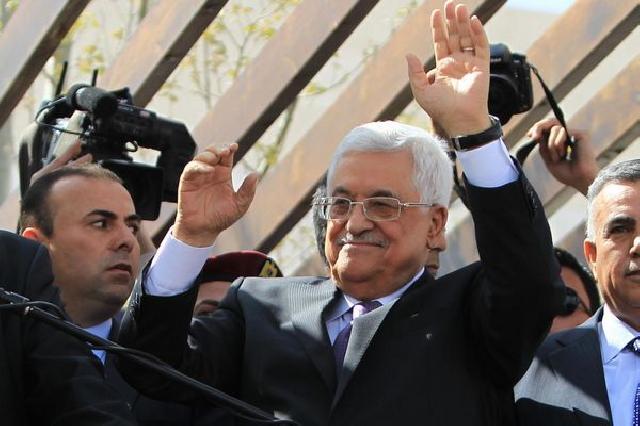
President Abbas arrives in Egypt on official visit

President of the State of Palestine Mahmoud Abbas arrived in the Arab Republic of Egypt today, Sunday, on an official visit, in response to an invitation from Egyptian President Abdel Fattah El-Sisi, to participate in the opening session of the 12th session of the World Urban Forum.


He was received at the presidential lounge at Cairo International Airport by Minister of Housing, Utilities and Urban Communities Sherif El-Sherbiny, and the staff of the Embassy and Delegation of the State of Palestine to the League of Arab States and the Consulate General of the State of Palestine in Alexandria.


The President is accompanied on the visit by: Secretary of the Executive Committee of the Palestine Liberation Organization Hussein al-Sheikh, Head of the General Intelligence Service Major General Majed Faraj, Chief Justice of Palestine, Advisor to the President for Religious Affairs and Islamic Relations Mahmoud al-Habbash, Advisor to the President for Diplomatic Affairs Majdi al-Khalidi, and Ambassador of the State of Palestine to Egypt Diab al-Louh.

ARAB AND WORLD

Sun 03 Nov 2024 2:19 pm - Jerusalem Time

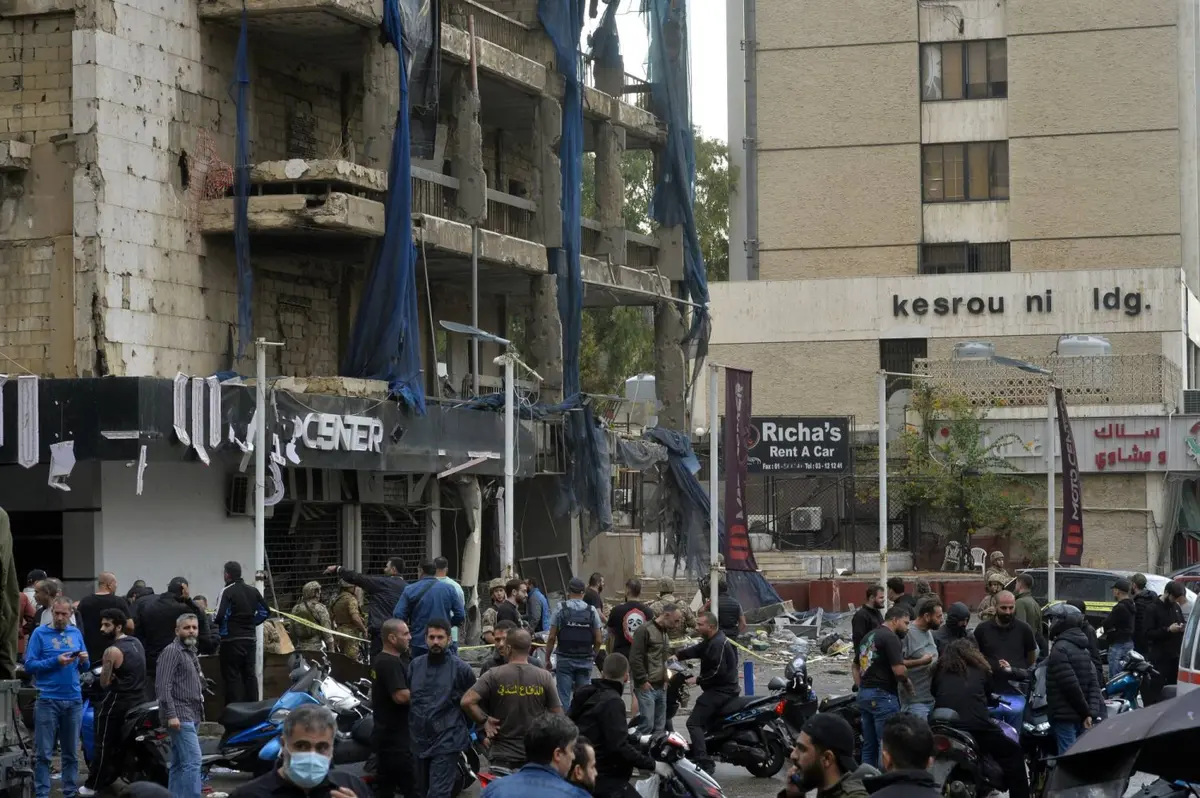
New evacuation instructions for Baalbek residents...and 10 rockets fired from Lebanon at Israel

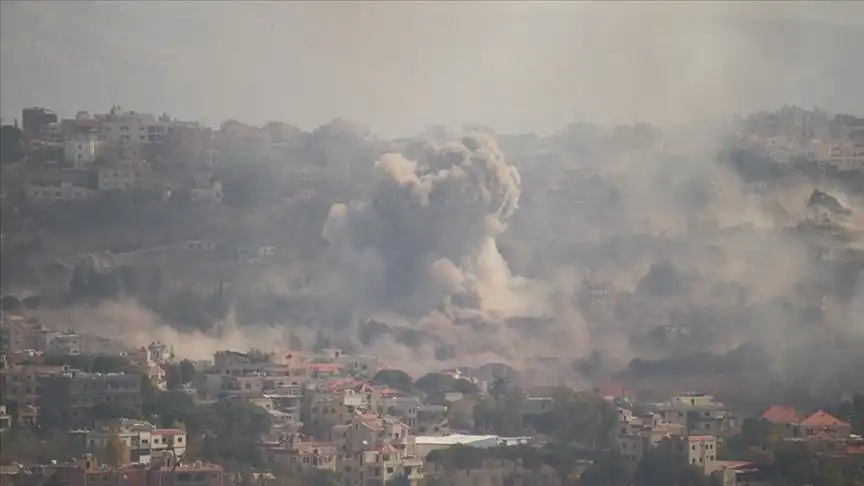
Today, Sunday, the Israeli occupation army issued new evacuation instructions for the residents of the Lebanese province of Baalbek, warning of striking it due to the "presence of interests" belonging to "Hezbollah" there.


Israeli army spokesman Avichay Adraee warned residents of Baalbek and the village of Douris (southwest) via his X account against being “near Hezbollah facilities, as the IDF will act against them.” He attached maps to his posts that included buildings that he called for to be evacuated “and to stay away from them at a distance of no less than 500 meters, within the next four hours.”


The Israeli army announced the launch of about 10 rockets into northern Israel, in the latest barrage of rockets launched from Lebanon.


The Israeli military said it intercepted some of the rockets, while others landed in open ground, The Times of Israel reported Sunday. There were no immediate reports of any casualties.


The Israeli army announced earlier this morning that a suspicious aerial target crossed into Israel from the east, following alerts that were sounded in the southern Golan Heights, starting at 6:45 a.m. local time.


In a parallel context, the Bangladeshi Foreign Ministry announced today that one of its nationals was killed in an airstrike in Lebanon, while Israeli bombing is hampering efforts to recover its citizens.


The Foreign Ministry in Dhaka estimates that between 70,000 and 100,000 of its citizens work in Lebanon.


The first flights organised by the Bangladesh government in collaboration with the International Organisation for Migration brought back dozens of Bangladeshi nationals from Beirut last month.


Bangladesh's ambassador to Lebanon, Javed Tanveer Khan, said in a statement that Mohammad Nizam, 31, was killed on Saturday afternoon in a strike when he stopped at a cafe on his way to work in Beirut.


The war that has been going on in the Gaza Strip for more than a year between Israel and Hamas has expanded to include Lebanon, where Israel has been carrying out intensive air strikes against Hezbollah since September 23. On September 30, it began “limited” ground operations in the south.


The war has displaced hundreds of thousands in Lebanon, where at least 1,930 people have been killed since September 23, according to a tally based on health ministry data, but the actual number is likely higher.


The Israeli army reports that 38 soldiers have been killed in Lebanon since September 30.

PALESTINE

Sun 03 Nov 2024 1:56 pm - Jerusalem Time

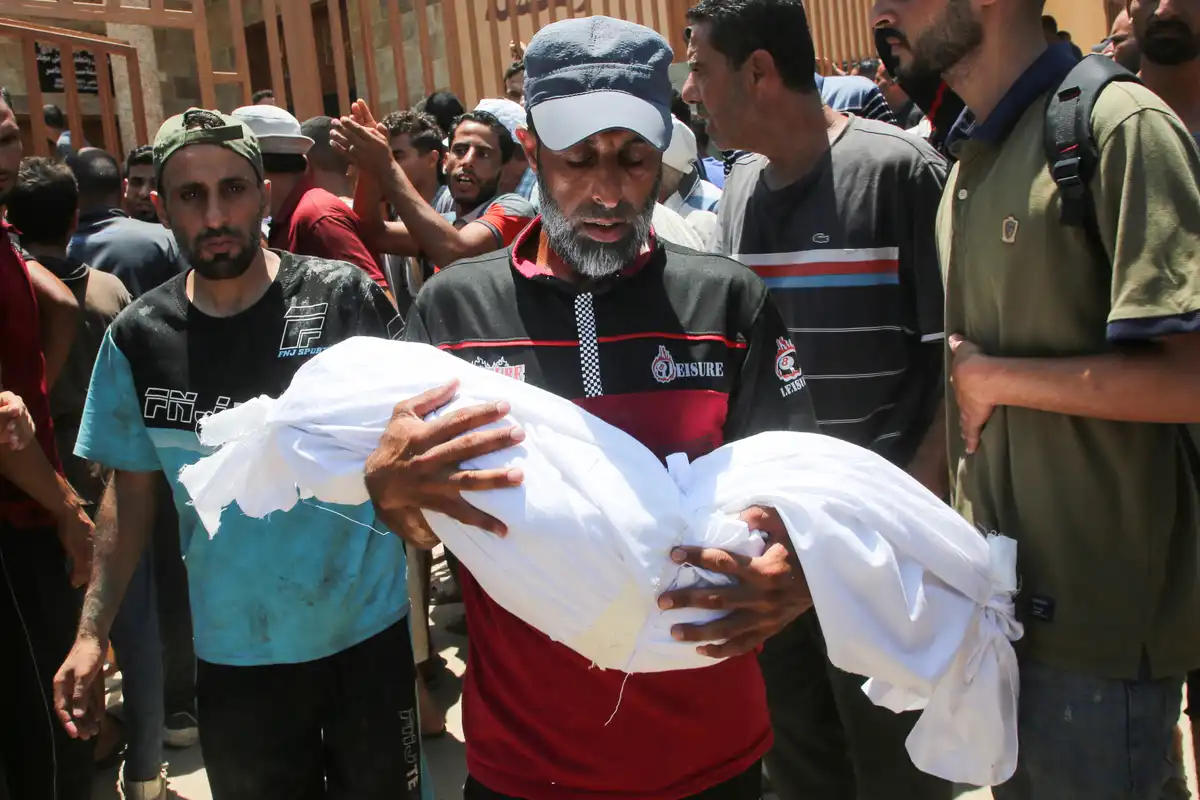
The death toll from the Israeli aggression on the Gaza Strip rises to 43,341 dead

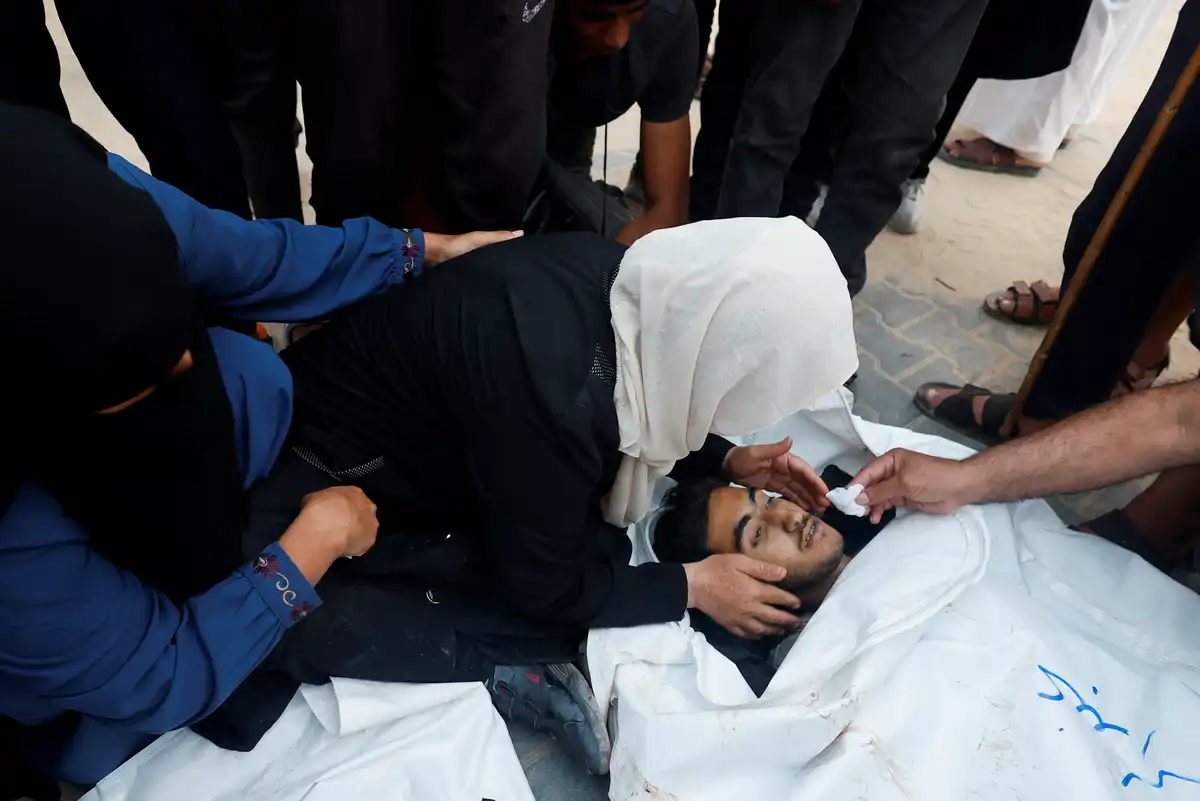
The Ministry of Health in Gaza reported today, Sunday, that the Israeli occupation committed 4 massacres against families in the Gaza Strip, resulting in 27 dead and 86 injuries arriving at hospitals during the past 24 hours.


It pointed out that the death toll from the Israeli aggression has risen to 43,341 dead and 102,105 injuries since October 7, 2023.

PALESTINE

Sun 03 Nov 2024 1:29 pm - Jerusalem Time

Prisoners Authority: 95 Palestinian female prisoners face harsh detention conditions

The Commission of Prisoners' Affairs and Freed Prisoners reported that the total number of female detainees to date has reached 95, who are suffering from the harshest and worst detention conditions in the occupation's prisons, and their severity has increased since the beginning of the aggression on the Gaza Strip on October 7, 2023.


The Commission explained, in a statement issued today, Sunday, that the occupation prison administration deliberately imposed additional retaliatory punishments on the female detainees, by depriving them of the most basic human requirements of clothing, food, and treatment, and completely isolating them from the world, in addition to what they are exposed to in terms of strip searches, beatings, and repression, the latest of which was the storming of several sections in the "Damon" prison, and the abuse of the female detainees on 10/27/2024.


She pointed out that the Commission’s lawyer visited the following detainees and checked on them: Fawzan Awida (20 years old) from the city of Nablus, who was arrested on 03/27/2024, Diala Aida from the city of Ramallah, whose administrative detention was extended for the third time, and she is expected to be released on 01/14/2025, and Shaima Ramadan, who was arrested in July 2024.


She added that there are 3 female detainees held in solitary confinement: (Khalida Jarrar, Saja Daraghmeh, and Nawal Abu Fatiha).

PALESTINE

Sun 03 Nov 2024 12:32 pm - Jerusalem Time

Updated: Israeli attacks on citizens and their property in the West Bank

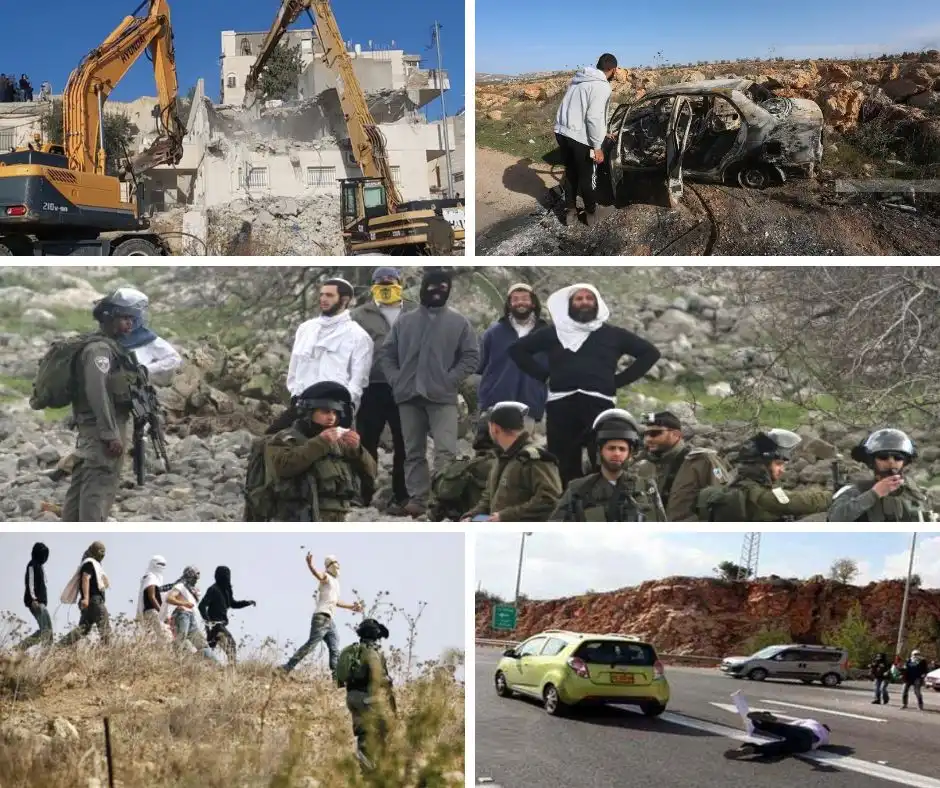
Today, Sunday, the Israeli occupation forces and its settlers attacked farmers in the town of Tarqumiya, west of Hebron, and forcibly prevented them from reaching their lands threatened with seizure to pick olives.


According to local sources, the settlers, accompanied by occupation soldiers, forced the citizens to leave their lands in the Taybeh area of Tarqumiya.


She added that the area of land planted with olives that citizens were unable to harvest amounts to 3,000 dunums in Taybeh, and the occupation authorities did not allow farmers to access many areas in the governorate, such as the areas of Tel Armida, Farsh al-Hawa, and the lands surrounding the "Kiryat Arba" settlement.


In Ramallah, dozens of settlers accompanied by occupation forces stormed the village of Al-Mughayyir, and picked olives from trees belonging to the citizens: Samir Abu Aliya, Rateb Al-Naasan, and Nael Al-Hajj Muhammad, and stole them.


According to the Wall and Settlement Resistance Commission, the West Bank governorates witnessed a dangerous wave of terrorism last month during the olive season, with 360 attacks, most of them in Nablus, 245 acts of vandalism and theft, and the uprooting of 1,401 trees.

ARAB AND WORLD

Sun 03 Nov 2024 12:23 pm - Jerusalem Time

Netanyahu's office asks to lift publication ban on security leaks

The Israeli Broadcasting Authority reported on Sunday that Prime Minister Benjamin Netanyahu's office had requested to join a request to lift the gag order on the leak of sensitive material to the media, after his office spokesman was accused of leaking classified information, leading to a government crisis.


She said that Netanyahu's spokesman - the main suspect in leaking classified information from his office - had not received his salary for months, had failed to obtain a security clearance, and had been forced to leave his position, but had continued to work effectively for Netanyahu.


She stressed that the leak case in Netanyahu's office sparked an unprecedented crisis between the political and security levels in Israel.


Leak details

For its part, Maariv newspaper reported that information it described as confidential was stolen from the Military Intelligence Division and ended up in the hands of one of Netanyahu's men, and from there to the foreign media.


Netanyahu's spokesman leaked "top secret" documents that were forged to the German newspaper Bild and the British newspaper Jewish Chronicle.


Netanyahu's office claimed that the leaked documents were found on a private computer belonging to the leadership of the Islamic Resistance Movement (Hamas), with the aim of influencing public opinion in Israel regarding the prisoner exchange negotiations.


The leaked documents claim that the late Hamas political bureau chief Yahya Sinwar was not interested in a swap deal and was seeking to smuggle the detainees to Iran.


According to Israeli intelligence expert Ronen Bergman, the Israeli security leadership confirmed that what was stated in the leaked documents was not true.


He added that the leaking of forged documents to the foreign press led to a lack of trust between the security and military levels on the one hand and the political and governmental levels on the other.


According to Bergman, the anger centered around two publications published by the German newspaper Bild and the British newspaper Jewish Chronicle, in early September, which were claimed to be secret internal documents of the Hamas leadership and reflect the atmosphere within the movement’s top leadership and the orders issued by its leader, Yahya Sinwar, with the aim of entrenching and deepening divisions within Israeli society and disintegrating it.


Media expert Nir Hefetz confirmed in an interview with Israel's Channel 12 that Netanyahu has a strong relationship with the owners of the German newspaper Bild, which published these forged documents.


impose censorship

The scandal of these forged documents has returned to occupy the Israeli media after the military censor imposed a strict ban on the details, after the security services arrested senior officials from Netanyahu's office, who quickly denied any connection to the prime minister.


The American website Axios suggested that the arrests that took place were "the biggest scandal within the Israeli government since the beginning of the war in Gaza."


He pointed out that the leaks scandal is likely to deepen the state of mistrust and tension between Netanyahu and the army and intelligence services.


Haaretz newspaper said - in an analysis by its chief analyst Yossi Verter - that when the ban is lifted, the facts will be revealed, and it will become clear that Netanyahu's office is made up of corruption that serves his interests, and that this is evidence that Netanyahu has installed a criminal organization above Israel and its national security interests to serve him.

PALESTINE

Sun 03 Nov 2024 12:20 pm - Jerusalem Time

Euro-Mediterranean: The international system failed to stop the genocide in northern Gaza

The Euro-Mediterranean Human Rights Monitor said that the international system’s reluctance to take decisive decisions regarding Israel’s massacres in the Gaza Strip - especially in the north - makes it a partner in these crimes and represents a green light for Israel to proceed with escalating the crime of genocide, and also reflects a shocking disregard for the lives and dignity of the Palestinians.


The Euro-Mediterranean Human Rights Monitor pointed out in a statement that the international system - including the International Criminal Court, the International Court of Justice, the European Union and various United Nations organizations - have all failed to achieve the basic goals and principles on which they were founded, and have demonstrated a shameful failure over the course of 13 months to commit to protecting civilians and stopping the crime of genocide committed by Israel against the Palestinians in Gaza, which is supposed to be at the core of its work and the reason for its existence.


The Euro-Mediterranean Human Rights Monitor added that the continuation of Israeli crimes throughout the occupied Palestinian territories - especially in the Gaza Strip - indicates a structural defect in the collective security system that was established to prevent serious crimes and impose the rule of law at the global level, which makes the international system lose its credibility and reveals its fragility and farce in the face of political calculations and the influence of major countries that are partners in the genocide and opens the way for the consecration of a culture of impunity.


The Euro-Mediterranean Human Rights Monitor confirmed that the international community and international justice mechanisms did not deal seriously with the crimes committed despite their seriousness and atrocity, but rather largely ignored them, while some parties limited themselves, at best, to timid statements that did not call things by their correct names, which encouraged Israel to expand those crimes with support and armament from the United States of America and a number of European countries.


ARAB AND WORLD

Sun 03 Nov 2024 12:15 pm - Jerusalem Time

Israeli occupation builds 200 additional shelters in Galilee and Golan

Israeli Channel 12 said on Sunday that the Ministry of Defense has begun fortifying and protecting buildings in several towns adjacent to the northern border with Lebanon.


The channel added that the fortification includes adding more than 200 shelters in towns in the Golan Heights, Upper Galilee and the West.


The revelation of the new fortifications comes as Israeli cities and settlements from the border with Lebanon in the north to Haifa and Tel Aviv in the south are subjected to daily missile strikes by the Lebanese Hezbollah.


Hundreds of thousands of Israelis are forced to take shelters every day due to Hezbollah missiles and drones.


The party recently called on the residents of 25 Israeli settlements in the north to leave their homes immediately, before starting to bombard them with missiles and drones, stressing that they have become legitimate targets for it because they have become a place for the deployment and settlement of Israeli forces.


Yesterday, Saturday, Israel expanded restrictions on gatherings in the Lower Galilee and the southern Golan Heights, and it was decided to suspend studies today, Sunday, in the city of Acre due to the missile bombardment by Hezbollah.

ARAB AND WORLD

Sun 03 Nov 2024 11:55 am - Jerusalem Time

Israeli Minister: Iran's response to our attack will allow us to continue implementing our strategy

Israeli Education Minister Yoav Kisch said on Sunday that if Iran made a "mistake" and decided to respond to the Israeli attack last October, it would allow his country to continue implementing its strategy in the region.


This came in statements made by the minister from the ruling Likud party led by Prime Minister Benjamin Netanyahu, to the Israeli Army Radio.


"If Iran makes a mistake and decides to respond (to the Israeli attack), perhaps there will be an advantage in that, because it will allow us to continue implementing our strategy," Kish said, without giving further details.


The army radio described the Israeli minister's statements as "surprising."


On the dawn of October 26, the Israeli army announced that it had launched a 4-hour attack on Iran, which confirmed that it had "successfully confronted the Zionist entity's attempts to attack some points in Tehran and the country," while the attack led to the killing of 4 Iranian soldiers, according to an official statement.


Since then, Israel has raised its alert level by deploying the US THAAD air defence system, in anticipation of an Iranian response.


Earlier on Sunday, Yisrael Beiteinu party leader Avigdor Lieberman said: "I expect that Iran will not attack Israel before the US elections (scheduled for the day after tomorrow, Tuesday), and we must strike it and not wait."


"There must be a crushing response to Iran that includes all of their energy infrastructure and nuclear facilities," Lieberman, a former defense minister, told the Hebrew newspaper Maariv.


He warned against a weak response to Iran, saying: "We cannot afford another war of attrition against Iran, and we must deal it a crushing blow."


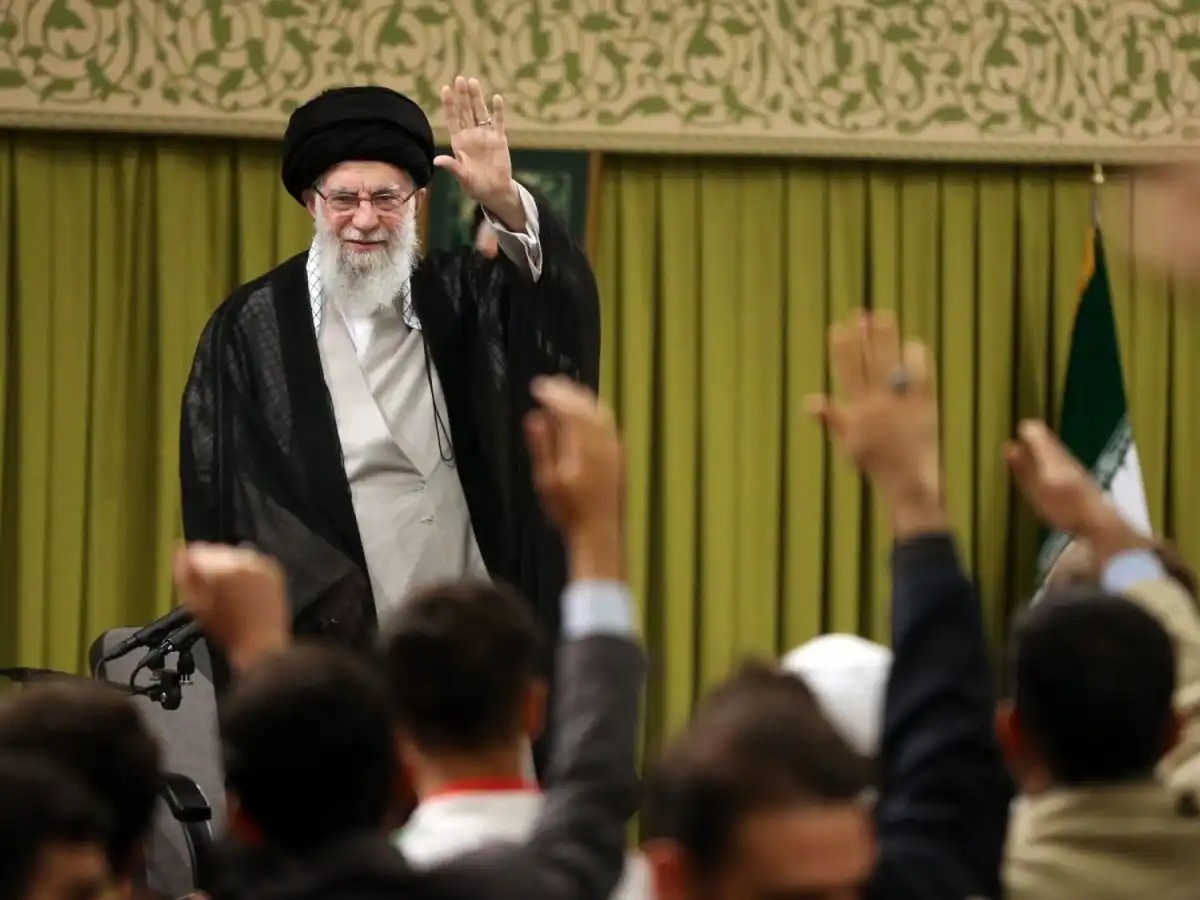
On Saturday, Iranian Supreme Leader Ali Khamenei threatened both the United States and Israel with a "harsh response" for what the two countries did against Tehran.


Khamenei said in a speech to a large group of students in the capital, Tehran, on the occasion of "Student Day": "We will do whatever is necessary on the military level, armament or political action to confront...

Arrogance, and the authorities are currently busy doing this.”


The latest Israeli attack came after Iran fired more than 180 rockets at Israel in early October, in an attack that Tehran said was "revenge" for the assassination of Ismail Haniyeh, head of Hamas's political bureau; Hassan Nasrallah, secretary-general of Hezbollah; and Revolutionary Guard commander Abbas Nilforoushan.

OPINIONS

Sun 03 Nov 2024 11:47 am - Jerusalem Time

Yes, it is genocide

Local Call Magazine- Translation for Al quds

Local Call Magazine- Translation for Al quds

Opinion Writer

By: Amos Goldberg 4/17/2024

In most cases of genocide, from Bosnia to Namibia, from Rwanda to Armenia, the perpetrators said they were acting in self-defense. The fact that what is happening in Gaza does not resemble the Holocaust, writes Holocaust researcher Amos Goldberg, does not mean that it is not genocide


Yes, it is genocide. Although it is so difficult and painful to admit this and despite all efforts to think otherwise, at the end of six months of a brutal war it is no longer possible to escape this conclusion. Jewish history will henceforth be stained with the sign of Cain of the "crime of crimes", which will not be able to be erased from its forehead. As such it will stand the test of time.

From a legal point of view, it is not yet known what the International Court of Justice in The Hague will decide, although in light of its temporary rulings so far and in light of the increasing number of reports by jurists, international organizations and journalist-investigators, it seems that the direction is quite clear.

From Moum Moom to Haag Schmag: Has the end of Israeli immunity come?

Already on January 26, the court ruled by an overwhelming majority (14 to 2) that Israel may be committing genocide in Gaza. On March 28, following the deliberate starvation that Israel imposes on Gaza, the court issued additional orders (and this time by a majority of 15 to 1, Judge Aharon Barak) calling on Israel not to deny the Palestinians their rights protected by the Genocide Convention.

The detailed and reasoned report of the UN Special Mission on the Human Rights Situation in the Occupied Palestinian Territories, Francesca Albanza, reached a slightly more decisive conclusion and is another step in establishing the insight that Israel is indeed committing genocide. The detailed and updated report by Dr. Lee Mordechai, which gathers information on the level of Israeli violence in Gaza, reaches the same conclusion. Very senior academics such as Jeffrey Sachs, professor of economics at Columbia University (and a Jew with a warm attitude towards traditional Zionism), who is regularly consulted by heads of state all over the world on international issues, speaks of the Israeli genocide as a matter of course.

Excellent investigations such as those by Yuval Avraham in "Tasha Mekimim", and especially his recent investigation on the artificial intelligence systems used by the army in selecting and harming those destined for elimination, further deepen this accusation. The fact that the army allowed, for example, the killing of 300 innocent people and the destruction of an entire residential district in order to harm one Hamas general, shows that military goals are almost incidental goals for killing the civilians and that the Palestinian mind in Gaza is in fact a son of death. This is the logic of genocide.


yes. I know, they are all anti-Semitic or self-hating Jews. Only we, the Israelis, who feed on the messages of the IDF spokesperson and are only exposed to the images that the Israeli media filters for us, see the reality present. As if endless literature has not been written about the social and cultural denial mechanisms of societies that commit serious war crimes. Israel is truly a paradigmatic case of such societies. , a case that will be studied in every university seminar in the world dealing with the subject.

It will be a few years before the court in The Hague gives its verdict, but we should not look at the catastrophic reality only through legal glasses. What is happening in Gaza is genocide because the level and pace of the indiscriminate killing, the destruction, the mass deportations, the displacement, the starvation, the executions, the elimination of cultural and religious institutions, the crushing of the elites (including the killing of journalists), and the sweeping dehumanization of the Palestinians - create an overall picture of genocide, of intentional and conscious crushing of the Palestinian existence in Gaza.


In known ways, Palestinian Gaza as a geographical-political-cultural-human complex no longer exists. Genocide is the deliberate destruction of a collective or part of it - not all of its individuals. And this is what is happening in Gaza. The result is undoubtedly genocidal. The numerous declarations of extermination by senior officials in the Israeli government, and the general destructive public atmosphere, which was rightly pointed out by Carolina Landsman, show that this was also the intention.

Israelis are wrong to think that genocide should look like the Holocaust. They imagine trains, gas chambers, incinerators, killing pits, concentration and extermination camps, and a systematic persecution of all members of the victim group until the last one. An event of this kind does not take place in Gaza. Similar to what happened in the Holocaust, most Israelis also imagine that the group of victims is not involved in violent activity or in an actual conflict, and the killers are destroying them due to a crazy and irrational ideology. This is not the case of Gaza either.

The brutal Hamas attack of October 7 was a heinous and terrible crime. During it, about 1,200 people were killed or murdered, of which more than 850 were Israeli citizens (and foreigners), including many children and the elderly, about 240 living Israelis were abducted to Gaza and even atrocities such as rape were committed. This is an event with catastrophic, deep and lasting traumatic effects, for many years, certainly for the direct victims and their immediate circle, but also for Israeli society as a whole. The attack forced Israel to respond in self-defense.


However, although each case of genocide has a different character, in terms of the scope of the murder and its characteristics, the common denominator of most of them is that they were committed out of an authentic sense of self-defense. From a legal point of view, an event cannot be both an event of self-defense and an event of genocide. These two legal categories are mutually exclusive. But historically, self-defense is not at odds with genocide, but is usually one of its central factors, if not the main one.

In Srebrenica - which the International Criminal Tribunal for the former Yugoslavia determined in two instances, that genocide took place in July 1995 - "only" about 8,000 Bosnian Muslim boys and men, over the age of 16, were murdered. The women and children were deported earlier.

The attack by the Bosnian Serb forces, who were responsible for the murder, took place in the midst of a bloody civil war, during which both sides committed war crimes (though the Serbs far more) and which erupted following a unilateral decision by the Muslim Croats and Bosnians to secede from Yugoslavia and establish an independent Bosnian state, in which the Serbs were a minority.

The Bosnian Serbs, with painful past memories of persecution and murder from World War II, felt threatened. The complexity of the conflict, in which neither side was innocent, did not prevent the tribunal from recognizing the Srebrenica massacre as an act of genocide, which went beyond the other war crimes committed by the parties, since these crimes cannot justify genocide. The court reasoned this by the fact that the Serbian forces deliberately destroyed, through murder, deportation and destruction, the Bosnian-Muslim existence in Srebrenica. Today, by the way, Muslim Bosnians live there again, and some of the mosques that were destroyed have been restored. But the genocide continues to haunt the descendants of the killers and the victims alike.

The case of Rwanda is quite different. There, for a long time, as part of the Belgian colonial control mechanism, which was based on a policy of divide and rule, the Tutsi minority group ruled, and it oppressed the Hutu majority group. However, in the 1960s a revolution took place, and upon gaining independence from Belgium in 1962, the Hutu took over the country and adopted an oppressive and discriminatory policy against the Tutsi, again this time with the support of the colonial powers.


Gradually, this policy became intolerable, and as a result, a brutal and bloody civil war broke out in 1990, which began with the invasion of a Tutsi army, the Rwanda Patriotic Front, which consisted mainly of Tutsis who fled Rwanda after the fall of the colonial government. As a result, in the eyes of the Hutu regime, the Tutsi became collectively identified with an actual military enemy.

During the war, both sides committed serious crimes on the soil of Rwanda, and also on the soil of other countries to which the war spilled over. There were no absolute righteous and absolute wicked. The civil war ended with the Arusha Accords, which were signed in 1993 and were supposed to lead to the participation of the Tutsi in the government institutions, the army and the mechanisms of the state.

But these agreements collapsed, and in April 1994 the plane of the president of Rwanda, a member of the Hutu tribe, was shot down. To this day, it is not known who shot down the plane, and it is believed that it was Hutu fighters. However, the Hutus were convinced that the crime was committed by Tutsi underground fighters, and this was perceived as a real threat to the state. The Tutsi genocide was underway. The official rationale for the act of genocide was the need to remove the Tutsi existential threat once and for all.

The case of the Rohingya, which the Biden administration just recently recognized as genocide, is very different. Initially, after the independence of Myanmar (formerly Burma) in 1948, the Rohingya Muslims were seen as equal citizens and part of the national body, which is mostly Buddhist. But over the years, and especially after the establishment of the military dictatorship in 1962, Burmese nationalism has been identified with several dominant ethnic groups, mainly Buddhists, which did not include the Rohingya.

In 1982 and later, citizenship laws were enacted, which deprived most of the Rohingya of their citizenship and rights. They were perceived as foreigners and as a threat to the existence of the state. The Rohingya, who in the past had small rebel groups among them, made an effort not to be drawn into violent resistance, but in 2016 many of them felt that through peaceful means they were unable to prevent the denial of their rights, the oppression, the violence of the state and the mob against them, and the gradual and underground deportation of their children The Rohingya attacked Myanmar police stations.


The reaction was brutal. In the raids of the security forces of Myanmar, most of the Rohingya were expelled from their villages, many of them were massacred and the villages were completely destroyed. When Foreign Minister Anthony Blinken read the announcement at the Holocaust Museum in Washington in March 2022 acknowledging that what was done to the Rohingya was genocide, he said that in 2016 and 2017, about 850,000 Rohingya were deported to Bangladesh and about 9,000 of them were murdered. This was enough to recognize what was done to the Rohingya as the eighth genocide

The reaction was brutal. In the raids of the security forces of Myanmar, most of the Rohingya were expelled from their villages, many of them were massacred and the villages were completely destroyed. When Foreign Minister Anthony Blinken read the announcement at the Holocaust Museum in Washington in March 2022 acknowledging that what was done to the Rohingya was genocide, he said that in 2016 and 2017, about 850,000 Rohingya were deported to Bangladesh and about 9,000 of them were murdered. This was enough to recognize what was done to the Rohingya as the eighth genocide recognized by the US, apart from the Holocaust. The case of the Rohingya reminds us of what many genocide researchers have established in terms of research, and it is very relevant to the case of Gaza: a connection between ethnic cleansing and genocide.

The connection between the two phenomena is twofold, and both are relevant to Gaza, where the vast majority of the population was expelled from their places of residence, and only Egypt's refusal to accept masses of Palestinians in its territory prevented their departure from the Strip. On the one hand, ethnic cleansing signifies the willingness to eliminate the enemy group at any cost and without compromise, and for that reason it easily slips into genocide or is part of it. On the other hand, ethnic cleansing usually creates conditions that allow or cause (eg diseases and hunger) the partial or complete destruction of the victim group.

The sense of threat in the small settler community in Namibia, numbering only a few thousand, was real, and Germany feared that it had lost its deterrent power against the natives


In the case of Gaza, the "safe zones" have often turned into death traps and intentional extermination zones, and in these refuge areas Israel is deliberately starving the population. For this reason, there are quite a few commentators who estimate that ethnic cleansing is the goal of the war in Gaza.

The genocide of the Armenians during the First World War also had a connection. During the decline of the Ottoman Empire, the Armenians developed their own national identity and demanded self-determination. Their religious and ethnic diversity, as well as their strategic location on the border between the Ottoman and Russian empires, made them a dangerous population in the eyes of the Ottoman government.


Terrible outbreaks of violence against the Armenians occurred already at the end of the 19th century, and because of that some Armenians did sympathize with the Russians and saw them as potential liberators. Small Armenian-Russian groups even cooperated with the Russian army against the Turks, calling their brothers across the border to join them, which led to the strengthening of the sense of existential threat in the eyes of the Ottoman government beyond all proportion. This sense of threat, which developed during a deep crisis of the empire, was a central factor in the development of the Armenian Genocide, which also began during the process of deportation.

The first genocide in the twentieth century was also carried out out of a concept of self-defense by the German settlers against the Herero and Nama people in South-West Africa (today's Namibia). As a result of the harsh oppression of the German settlers, the locals rebelled and in a brutal attack murdered about 123 (perhaps more) unarmed German men. The sense of threat in the small settler community, which numbered only a few thousand, was real, and Germany feared that it had lost its power of deterrence against the natives.


The response was accordingly. Germany sent an army led by an uninhibited commander, and there, too, out of a sense of self-defense, most of the members of these tribes were murdered between 1904 and 1908 - some by direct killing, some by the conditions of hunger and thirst that the Germans imposed on them (again by deportation, this time to the Omaka desert) and some in camps Imprisonment and brutal labor. Similar processes also occurred during the deportation and extermination of the indigenous peoples in North America, mainly during the 19th century.

In all these cases, the perpetrators of the genocide felt an existential threat, more or less justified, and genocide came as a response. The collective destruction of the victims was not opposed to the act of self-defense, but from an authentic motive of self-defense.

In 2011, I published a short article in the Haaretz newspaper about the genocide in South-West Africa, and concluded with the following words: "From the genocide of the Herero and the Nama, we can learn how colonial control, based on a sense of cultural and racial superiority, could slide, in the face of the rebellion of the local inhabitants, into crimes Horrific like mass deportation, ethnic cleansing and genocide. The case of the Herero rebellion should serve as a horrific warning sign for us here in Israel, which has already known one Nakba in its history."

PALESTINE

Sun 03 Nov 2024 11:36 am - Jerusalem Time

ARTICLE BY HAARETZ DIRECTOR CAUSES SCANDAL Amos Schocken Denounces Israel’s Apartheid

Newspaper boss says Israel imposes 'apartheid' and should be punished; Ministries Order Boycott, Propose Budget Cuts

By Stuart Winer


The Interior, Education and Diaspora Ministries cut ties with the Haaretz newspaper on Thursday, while the Communications Minister proposed a boycott by all government bodies, after publisher Amos Schocken told a conference that Palestinian terrorists were “freedom fighters” and that Israel was imposing an “apartheid regime” on the Palestinians.


In a letter to his spokesperson’s office, Interior Ministry Director-General Ronen Peretz wrote that Schocken’s remarks “provoke disgust and demonstrate a disconnect from fundamental values.”


He said Israel is in the midst of a war “that could not be more justified” following the pogrom carried out by the Palestinian terror group Hamas on October 7, 2023 in southern Israel, in which some 6,000 Gazans including 3,800 terrorists stormed southern Israel on October 7, 2023, killing more than 1,200 people, mostly civilians, kidnapping 251 hostages of all ages, and committing numerous atrocities and using sexual violence as a weapon on a large scale.


“Our ministry is in charge of the campaign against the delegitimization of Israel and it is astonishing to see a supposedly Israeli organization acting against Israel from within,” Diaspora Affairs Ministry Director General Avi Cohen-Scali said.


Education Ministry Director General Meir Shimoni also ordered an end to all cooperation with Haaretz, saying in a letter to staff that Schocken’s remarks “contradict the values of the educational system.”


Communications Minister Shlomo Karhi speaks at the Knesset plenum in Jerusalem on October 30, 2024. (Dani Shem-Tov/Knesset)

Meanwhile, Communications Minister Shlomo Karhi proposed that the government end all interaction with Haaretz, including announcements by the government press service.


Such action, he wrote in his proposal, “will reduce the harsh impact that Israeli citizens feel, not only because of the newspaper’s publications, but also because they are forced to fund it with their taxes.”


Such a boycott would not have a disproportionate impact on freedom of expression, Karhi stressed.


He noted that Haaretz must take into account that its position, as expressed by Schocken, upsets some of its clients, including the State of Israel.


In his remarks, delivered Sunday at a Haaretz conference in London and circulated on social media in a video apparently compiled from several excerpts of his speech, Schocken is seen saying: “The [Prime Minister Benjamin] Netanyahu government does not care about imposing a cruel apartheid regime on the Palestinian population. It rejects the costs to both sides of defending the [West Bank] settlements while fighting Palestinian freedom fighters whom Israel labels terrorists.”


“In a sense, what is happening in the Occupied Territories and parts of Gaza is a second Nakba,” Schocken said, invoking the Arabic term for the displacement of Arabs during the creation of the State of Israel and the War of Independence.


He said the only way to establish a necessary Palestinian state is "to impose sanctions against Israel, against the leaders who oppose it and against the settlers [residents of the settlements]." Israel rejects accusations of apartheid in the Palestinian territories, saying that Palestinians living there are citizens of the Palestinian Authority (PA), which has a form of autonomy, and that Arab Israelis enjoy equal rights with their Jewish counterparts.


The Choose Life Forum, which represents some terror victims and their families, said it filed a complaint with police, accusing Schocken of incitement and encouraging harm to the state and its security forces.


“Such statements go beyond the limits of freedom of expression and amount to incitement,” the forum said in a statement. By calling the terrorists “freedom fighters,” Schocken is “supporting the enemies of the state.”


Karhi had previously called for the government to end ties with Haaretz in November 2023, citing the left-wing newspaper’s reporting on Israel’s war against the Palestinian terror group Hamas, following the latter’s October 7, 2023 pogrom on Israeli soil.

OPINIONS

Sun 03 Nov 2024 11:32 am - Jerusalem Time

Could Harris' approach to Arab-American voters cost her the White House?

Haaretz- "Al-Quds" dot com

Haaretz- "Al-Quds" dot com

Opinion Writer

Ben Samuels

Kamala Harris' approach – and the rhetoric of her surrogates – during the campaign's home stretch has done nothing but stick a finger in the eye of her disillusioned base. And all this at a time when she needs to secure support from every corner she can find it


One of the most persistent storylines of the 2024 U.S. presidential election has been the Democratic nominees' failure to quell concerns from voters disillusioned by the Biden administration's policies toward the Israeli-Palestinian conflict.

When U.S. President Joe Biden announced he was dropping out of the race in July, many of these frustrated voters – hundreds of thousands of whom reside in battleground states where their votes could very well swing the election – expressed optimism that new nominee Kamala Harris would adopt a more progressive track.

She has accordingly taken pains to articulate her vision for a potential two-state solution with a cease-fire to the Gaza war being the first necessary step, hinting at potential changes should she be elected.

On the campaign trail, however, she has undoubtedly prioritized securing the support of moderates and portions of the electorate more traditionally sympathetic toward Israel over the Palestinians.

To the Harris campaign and many of its liberal surrogates, this should not be considered a binary issue and approaching it as such is among the core reasons the conflict has been so intractable.

However, her approach – and the rhetoric of her surrogates – during the campaign's home stretch has done nothing but stick a finger in the eye of her disillusioned base. And all this at a time where she needs to secure support from every corner she can find it.

One of her biggest own goals, in the eyes of these voters, was the Democratic National Convention's failure to afford time to a Palestinian-American speaker. The Uncommitted National Movement provided the DNC and the Harris campaign with a list of speakers and prepared remarks, in an effort to indicate that it was not trying to antagonize or self-sabotage the party.

Months after this request was ignored, the campaign has again declined to provide any of these speakers with a platform in hopes of securing their vote. Instead, Harris has prioritized the support of "moderates" like Liz Cheney – one of the Republican Party's most vocal foreign policy hawks for years before she found herself exiled from the GOP.

Republican presidential nominee Donald Trump has seized upon Harris' embrace of Cheney to illustrate why he deserves the support of the Arab-American community. He has parlayed this into support from leading community members while also emphasizing the support of socially conservative Muslims, as Republican operatives funded by megadonors have attempted to further drive a wedge using bad-faith tactics and oversimplified arguments amid the backdrop of antisemitic tropes.

Even Harris' traditional Democratic allies, such as former U.S. President Bill Clinton, have been overtly dismissive of these voters while trafficking in bizarre oversimplications of their own.

"Hamas did not care about a homeland for the Palestinians. They wanted to kill Israelis and make Israel uninhabitable. I got news for them – they were there first before their faith existed. They were there in the time of King David in the southernmost tribes, had Judea and Samaria," he told a Michigan rally. "When I read people in Michigan are thinking about not voting because they're mad at the Biden administration for honoring its historic obligation to try to keep Israel from being destroyed, I think that's a mistake," he added.

Sen. Bernie Sanders, meanwhile, has attempted to directly engage with these voters, stressing that Trump would be far worse than Harris on this issue and there is potential to move her in the desired policy direction.

Harris' running mate, Tim Walz, directly addressed these voters in an interview with CBS earlier this week, saying: "There's one ticket here that is going to find the pathway to stabilization in the Middle East, but also one that is going to respect their human rights here."

While this may be true, the Harris campaign is heading into the weekend before the election leaving many of these voters on the table. Whether or not this serves as a validation of her strategy or a precursor to her defeat will be clear soon enough.

ARAB AND WORLD

Sun 03 Nov 2024 10:19 am - Jerusalem Time

Germany: Protesters arrested in pro-Palestine march

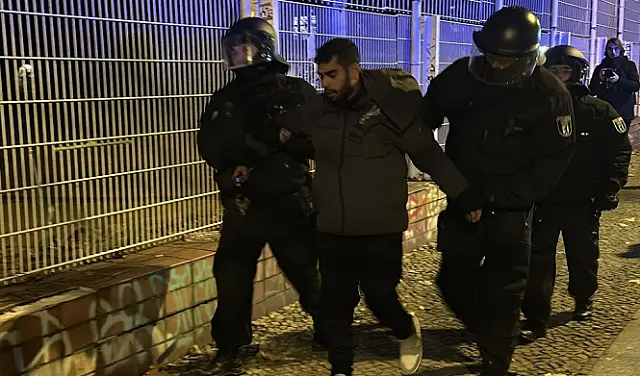
German police forces arrested several demonstrators during a march held on Saturday in the capital, Berlin, in solidarity with the Palestinian people against the genocide committed by Israel against them, especially in the Gaza Strip.


More than a thousand people gathered near the Platz der Luftbrücke metro station to denounce the attacks that Israel has been carrying out on Gaza for more than a year, and to show solidarity with the Palestinian people.


The demonstrators later marched around the station, waving Palestinian flags and banners demanding that the German government stop supplying Israel with weapons used to kill the Palestinian people.


The correspondent pointed out that clashes occurred during the march between demonstrators and police forces, which led to many participants supporting Palestine being subjected to violence and arrest.


The demonstrators were forced to end the demonstration near the Gneisenau metro station after police intervened to disperse them. After they refused to leave the place, the police arrested another large group of demonstrators. Germany expresses its support for Israel explicitly through its officials, and has agreed to sell weapons and military equipment to Israel worth 31 million euros in the past few weeks.


On October 16, the Ministry of Economy and Climate Protection stated that the government had approved the sale of weapons and military equipment to Israel worth 45.74 million euros during the current year.


With full American support, the Israeli genocidal war in Gaza, which has been ongoing for more than a year, has left more than 145,000 Palestinians dead and wounded, and more than 10,000 missing, amidst massive destruction and famine that has killed dozens of children and elderly people.


Tel Aviv continues its massacres, ignoring the UN Security Council resolution to end them immediately, and the International Court of Justice’s orders to take measures to prevent acts of genocide and improve the catastrophic humanitarian situation in Gaza.


OPINIONS

Sun 03 Nov 2024 10:11 am - Jerusalem Time

(We love life if we can find a way to it)

op-ed - Al-Quds dot com

op-ed - Al-Quds dot com

Opinion Writer

The poem of the late Mahmoud Darwish, the genius of Palestinian poetry, reconnects the entire scene in the Gaza Strip, mixing life and death, and the strange mixture of planting and martyrdom, to confirm that construction is not hindered by death, and rises one layer after another despite the destruction, and this is what our great people in the Gaza Strip are characterized by.


The love of life and education, despite the sinful aggression, yesterday gave birth to the opening of the largest and most massive school inside the shelter camps in the southern Gaza Strip. The children appeared with smiles on their faces, dancing, playing and having fun in a place not far from the sound of shelling and cannons, and the buzzing of planes that killed the dreams and hopes of large families, as happened in Jabalia, Beit Lahia and in the Asmaa School massacre in Al-Shati’ yesterday, where there was a great desire and enthusiasm to welcome the first school day, in more than a year.


One of the teachers gives an explanation to the media, saying: Today the largest field school in the southern Gaza Strip was opened, and greets the children of Gaza who deserve everything beautiful, as the children pass through the morning line, and the camera moves to tents set up inside the shelter camp with school desks, and a clown playing with the children, and the ribbon cutting in the presence of officials and the people, to the rhythm of a video clip that tells about the difficult days and life, but we can appreciate it, and we are a people who change what does not change, then another teacher appears and says: Even in a tent or anywhere, and despite the war, we must continue life, and a tape of a popular Palestinian dabke passes, and its heroes are wearing the keffiyeh of the martyr symbol Abu Ammar, and a student says: I am excited, and another: I love school very much, and a third: I am happy and a child is happy and a clown says: Despite everything, we must teach the sweet children, then the photographer captures a scene of a girl in a wheelchair, and how many of these scenes are due to the occupation’s attacks on the children of Gaza in an attempt to eliminate Their wishes and dreams.


A nurse speaks and says: “Masha’Allah, an abnormal turnout of excited and happy children.” A guide discusses the meanings of steadfastness, challenge and will, as a title for the lives of Palestinians from inside the tents. A guide thanks the Sultanate of Oman for its initiative, and concludes by opening the registration and expressing her pride in the contributors and participants in the opening.


In another spot, life was embodied through the opening of the first phase of the rehabilitation and equipping of Al-Rantisi Children’s Hospital in Gaza City, where there is an urgent need for all the hospitals and health centers that were destroyed by Israel, to provide their medical services to tens of thousands of wounded who need operations and surgical interventions, and shelter, care and attention in hospitals due to the seriousness of their conditions.


Darwish was honest in describing the suffering of the Palestinian people in an interesting and wonderful way. At the beginning of his poem, we sense the emotional human tendency when he says (and we love life), to present the most beautiful description of a people like the rest of the peoples of the earth, who have the right and the power to live and survive, because they love life and do not turn to death and killing as Israel imagines.


This is how the proud Palestinian people rise from under the rubble to rebuild their homeland and land, despite the pain, massacres and smell of death that Israel and its army spread everywhere. This is a message to the entire world that the Palestinian people, their students and all their groups love life and seek it with pride. Is it time to stop this aggression?


Israel responds by deploying a new brigade, the Kfir Brigade, alongside the Givati Brigade and the 401st Brigade, continuing its massacres and killing of a people who love life, depriving them of this right, in an unprecedented crime in the history of humanity.

OPINIONS

Sun 03 Nov 2024 10:10 am - Jerusalem Time

The weight of the book in gold

Ramzi Al-Ghazawi

Ramzi Al-Ghazawi

Opinion Writer

A writer friend confided in me that he feared for his venerable library, which he had collected over more than sixty years. He feared that these treasures would end up as scrap or trash on the side of containers. He confided that he regretted spending most of his life reading, writing, researching, and taking life seriously. He asked me sadly: What have my books given me? They haven’t even fed me bread or onions.


I remembered Al-Jahiz with the whisper of a friend. Al-Jahiz who died after his library fell on him with its shelves and heavy books. But I do not believe that his death was a coincidence. Rather, I am certain that it was a planned suicide, after he felt in a moment of anger that his fatigue and sleepless nights reading, writing, composing and researching would not find an echo in others.


Perhaps this is the same reason that prompted the philosopher of poets and poet of philosophers, Abu Al-Ala Al-Maari, to burn his books, thinking that they were against people who did not appreciate his efforts. Many did the same thing to their books. Yusuf bin Asbat put his books in an unknown cave and then closed its door. Abu Sulayman Al-Darani gathered his many books in an oven and lit them on fire, saying: By God, I did not burn you until I almost burned myself with you. The crown of the nation, Dawud Al-Ta’i, threw his books into the sea so that they would not reach the people who did not take him by the hand. Sufyan Al-Thawri tore them up and threw them in the wind, saying: I wish my hand had been cut off from here, or rather from there, and I had never written a single letter!


I was not convinced by the incident of one of the Abbasid caliphs, when he wanted to encourage science and literature, so he ordered that the writer who wrote or translated a book be given the weight of that book in gold. But what I liked very much was that one of the opportunists thought more about gold; so he engraved his book on a heavy rock, and rolled it to the caliph’s court, so that he would be given gold for it.


I do not dream that a writer will be given the weight of his book in gold, but I wish that writers in our country could eat their bread from the proceeds of their books. But we have contented ourselves with lamenting our situation and have not done anything that would restore the book to its true value.


Of course, I do not like it when a writer despairs or offers his books and efforts as a sacrifice to the unknown or to the fire of hell, on the pretext that others do not deserve it, and that time is unfair. I do not like it when readers despair either, and it pains me when they get rid of books that may be their last resort in a time when friends are scarce.

OPINIONS

Sun 03 Nov 2024 10:08 am - Jerusalem Time

"PLO" .. between the Al-Aqsa flood and the iron swords

Majdi Al-Shomali

Majdi Al-Shomali

Opinion Writer

Since October 7, 2023, two battles have been taking place. The first is the Al-Aqsa Flood, which was planned and executed by the Hamas leadership, and the second battle is an Israeli aggression called “Iron Swords,” which aims to kill and displace civilians and destroy infrastructure and service facilities.


The Palestinian Authority has no role, neither in the Battle of the Flood of Al-Aqsa, nor in the negotiations, nor in stopping this battle.

The second battle included air, artillery and tank shelling of civilians, infrastructure and civilian facilities.


This led to demonstrations all over the world, South Africa and others turning to the International Court of Justice and the International Criminal Court to accuse Israel of genocide, and the issuance of global condemnations of the aggression, the severing of relations, the withdrawal of ambassadors, and international recognition of the Palestinian state. The aggression also led to the entry of support fronts from Lebanon, Yemen and Iraq, with the aim of stopping this aggression.


The role of the Authority was clear in international courts and discussions of the Security Council and the General Assembly of the United Nations. Some Palestinian ambassadors also played a role in demonstrations and marches.


In the first battle, there is no role for the Authority, and in the legal battle, there is no role for Hamas.


The Authority and the Palestine Liberation Organization behind it are the competent legal body accepted in international courts and foreign relations, and it alone bears responsibility for political moves to stop the aggression on Gaza and the West Bank.


The role of the Palestinian embassies in 100 countries has not been at the required level, nor is it commensurate with the size and number of these missions and the tasks that the Palestinian people expect from them. With limited exceptions, you rarely hear about the activity of these embassies and diplomatic missions. At the same time, we expect the Palestinian Foreign Ministry and its embassies to begin preparing files that condemn Israel, and those who stand with it publicly and secretly, from foreigners and Arabs, on charges of participating in the genocide of the Palestinian people.


The Palestinian media and diplomatic missions should start coordinating with the friendly Western media to spread the facts about the genocide taking place in Palestine. The West should know that it is accused and a partner in the war of extermination.


The terms "genocide" and "ethnic cleansing" must be spread in every corner of the West and Western and global institutions. This is the minimum role of the hundred Palestinian embassies and consulates abroad.


After the battles are over, the Authority and Hamas can sit down and discuss how to heal the wounds, how to rebuild Gaza, and how to prosecute Israel for its crimes. This is how unity is embodied, and this is the least we can do.

OPINIONS

Sun 03 Nov 2024 9:29 am - Jerusalem Time

The Battle of negotiations

Hamada Faraana

Hamada Faraana

Opinion Writer

The negotiation battle between the colony on one side, and the two parties of the Palestinian-Lebanese resistance; Hamas and Hezbollah, mediated by Egypt, Qatar and the United States, is no less than the battle of clash, confrontation and fighting between the two parties of the bloody war and conflict. The attacks of the extremist, barbaric colony forces that clearly and prominently target civilians, whether in the Gaza Strip or across Lebanon, are no different from the attacks of the colony and its toxic deal offered by it and adopted by the Americans and attempts to pass it, with the aim of imposing political victory for the colony as a result of bombing, destruction, devastation and assassinations, so that the colony’s superior air force weapon is the tool for imposing political results on the two factions of the Palestinian and Lebanese resistance.


The negotiation battle from the perspective of the colony and the United States requires separating the war on Lebanon from the war on the Gaza Strip, with the aim of continuing the Israeli monopoly on the Strip and the Palestinian resistance and maintaining the return of the occupation forces to the Gaza Strip, and even the return of settlement to achieve the central title of the Israeli expansionist colonial project: occupying the entire map of Palestine, to be the desired “Jewish state” for them, according to the mentality, positions and concepts of the Israeli coalition of the Netanyahu government: 1- The extreme right-wing political parties, 2- With the extremist Jewish religious parties.


The proposals submitted by the colony government do not include the four headings: 1- A complete ceasefire, 2- The return of the displaced to their homes in the northern Gaza Strip, 3- The withdrawal of the occupation forces from the Gaza Strip, 4- The exchange of prisoners.


The four titles are the title of victory or defeat for both sides of the Palestinian-Israeli conflict, and therefore the Netanyahu government rejects any of the four titles and their contents, because they mean the current operational situation moving from a position of failure: 1- Failure to end the resistance despite the assassinations, comprehensive bombing, and destruction of homes, schools, and hospitals, 2- Failure to release the Israeli prisoners without an exchange, and even his failure to discover their locations despite his occupation of the entire Gaza Strip, 3- Failure to displace the Palestinians outside their country from the Strip to Sinai, 4- And the fourth failure will be the rejection of his proposals for a temporary and partial ceasefire.


What Netanyahu achieved in killing tens of thousands of Palestinian civilians, destroying cities, villages and neighborhoods, and carrying out assassinations using the superiority of the air force, American and European support, and the lack of ground defenses for the Palestinians and the Lebanese, but he was not able to impose surrender, defeat or submission on Hamas and Hezbollah, and he was not able to impose defeat on the Palestinians and end their steadfastness.


Hezbollah's declared position is:

1- Rejecting any amendment to the provisions of Resolution 1701, or to its implementation mechanisms.

2- The party still adheres to its position in support of the Palestinian people, and rejects the disengagement between the Lebanese front and the Palestine front in Gaza.

3- For him, the weapon of resistance is not negotiable, and that resistance is his obligatory title, and anything else contradicts his ideological reference and political thinking.

Hamas's position is based on:

1- A complete, comprehensive and permanent ceasefire.

2- Complete withdrawal from the Gaza Strip.

3- The return of the displaced to their homes and residences.

4- Lifting the unjust siege on the Gaza Strip and its people.

5- Conducting a prisoner exchange.

6- Providing life requirements such as food, water, medicine and reconstruction.


Therefore, because the proposals submitted by the parties regarding a limited temporary truce, increasing the number of aid trucks, and a partial exchange of prisoners do not meet the minimum Palestinian demands, they are therefore rejected, without closing the door to negotiations, neither by Hezbollah nor by Hamas.

The battle will remain open, hot militarily and sharp politically, until the conditions and pressing factors are available, imposing victory or defeat, or the intervention of a neutral third party, which is not available yet.

ARAB AND WORLD

Sun 03 Nov 2024 9:26 am - Jerusalem Time

US alert as Iran threatens Israel

Coinciding with an Iranian threat to respond to Israel, Washington announced readiness to deploy an aircraft carrier in the Middle East.


Defense Secretary Lloyd Austin ordered the deployment of B-52 long-range bombers, destroyers and aircraft to help defend Israel and American interests in the region.


“If Iran or its proxies target American personnel or interests in the region, the United States will take all necessary measures to defend them,” Pentagon press secretary Pat Ryder said. Axios, however, quoted a US official and a former Israeli official as saying that the US had warned Iran in recent days against launching another attack on Israel and that it would not be able to restrain Israel if Tehran attacked again.


Yesterday, Iranian Supreme Leader Ali Khamenei vowed to respond to “the two enemies, America and Israel, in a crushing and harsh manner,” and said: “Be confident of that.”


In Iraq, the “Islamic Resistance” claimed responsibility for carrying out 4 drone attacks against “vital targets” in the southern Israeli city of Eilat. The Israeli army announced the interception of 3 drones launched from the east over the Red Sea.

OPINIONS

Sun 03 Nov 2024 9:26 am - Jerusalem Time

Northern truce...will it be a "window of salvation" for Gaza?

Alaa Kanaan

Alaa Kanaan

Opinion Writer

There has been much talk recently about the possibility of reaching a ceasefire between Lebanon and Israel, and leaks have spread about Hezbollah’s agreement to separate the Lebanese front from the Gaza Strip front. Hence, many are wondering about the extent of the impact of these negotiations on the war in the Gaza Strip and on the Hamas movement.


Hamas and its leadership abroad face a favorable opportunity to play a strategic role in stopping the war on the Strip and starting reconstruction, as it has a narrow window of opportunity to exploit the current developments to reach a deal that guarantees its survival, which requires greater flexibility and the ability to maneuver politically to conclude a deal or agreement that may grant Gaza a kind of stability that it has lacked, and ensure Hamas’s continuity within a formula that preserves its interests.

In the world of politics, where balances are constantly shifting, it is clear that Hamas has a limited opportunity to exploit what is happening in Lebanon. Time is a crucial factor, especially in light of the Lebanese Prime Minister’s talk about progress in negotiations towards a ceasefire, which makes the region ready for major transformations that could change the balance of power.

While the focus of international negotiations is on calming Israel’s northern border, it is necessary to remind the world of the tragedy of Gaza. There are 2.3 million people there who aspire to a safe and stable life, but cannot find a way to do so. The talk of a ceasefire between Lebanon and Israel indicates a regional trend towards a limited calm, which may have a positive impact on the situation in Gaza, but it may put additional pressure on Hamas to adjust its role regionally and achieve a strategic balance that ensures its survival without weakening its ability as an effective force in the region.

As the pace of negotiations accelerates northward, fears remain that the train will miss Gaza, leaving it once again outside any path to peace and calm, amid ongoing tension. This is what makes time crucial; the world’s response now may be the most prominent factor in giving the people of Gaza a chance to emerge from their isolation and achieve the desired stability.

With the growing international recognition that stability in the Middle East is of long-term strategic importance, the world can support a real effort to stabilize Gaza, which represents a unique case and one of the most prominent challenges, and the world can, if it wants, support efforts to calm it down. Here comes the importance of this moment in reaching an agreement that reduces the suffering of Gaza, and Hamas may consider following the option of "peaceful popular resistance", according to previous statements by its leaders, which may open the way for it.

The daily suffering of the Gazans is not just a passing headline; it is the daily reality of life for millions of men, women and children. There is an entire generation that has known nothing but war and siege, as the people of Gaza live in miserable conditions amidst a complete collapse of basic services.


The images of killing, destruction, war and massacres call for the world to act in support of Gaza, where the West has the ability to influence negotiations and support efforts to achieve a comprehensive truce that will restore some life to the Strip. It is essential to realize that peace in Gaza is an integral part of peace in the region as a whole, and that the world’s support for initiatives to alleviate humanitarian suffering is an important step towards broader stability.

Gaza deserves more than a temporary ceasefire; it deserves a permanent solution that makes life possible there and enables its people to regain their basic rights away from a harsh siege and an uncertain future. A ceasefire in Lebanon may be an opportunity, but if its effects do not extend to Gaza, the international community will miss out on supporting a purely humanitarian cause.

The children, women and elderly of Gaza deserve the world’s attention and a genuine desire to support their basic rights as human beings, like any other human being on the face of this earth.


ARAB AND WORLD

Sun 03 Nov 2024 9:24 am - Jerusalem Time

4.8 magnitude earthquake hits northern Iran

An earthquake measuring 4.8 on the Richter scale struck Semnan province in northern Iran on Sunday.


According to a statement by the Iranian National Earthquake Monitoring Center, the earthquake occurred in Garmsar district at dawn on Sunday.


The statement indicated that the earthquake occurred at a depth of 11 kilometers below the surface of the earth.


The Emergency Management Center in Semnan province announced that no casualties or property losses were recorded.

PALESTINE

Sun 03 Nov 2024 9:19 am - Jerusalem Time

" Wall Resistance Agency": 1,490 attacks carried out by Israeli forces and settlers last month

Minister Mu'ayyad Shaaban, head of the Wall and Settlement Resistance Commission, said that the Israeli occupation forces and settlers carried out 1,490 attacks during last October, in a continuation of the ongoing series of terrorism by the occupation state against the Palestinian people, their lands and their properties.


Shaaban explained in the commission's monthly report, "Occupation Violations and Colonial Expansion Procedures," that the occupation forces carried out 1,130 attacks, while the settlers carried out 360 attacks. The total attacks were concentrated in the governorates of Nablus with 307 attacks, Hebron with 280 attacks, and the Jerusalem governorate with 179 attacks.


He pointed out that the attacks ranged from armed attacks on Palestinian villages, to imposing facts on the ground, to field executions, to vandalism, to bulldozing of land, to uprooting trees, to seizing property, to closures, and to setting up checkpoints that cut off the ties of Palestinian geography.


A dangerous wave of terrorism in the olive season

360 attacks, most of them in Nablus, 245 acts of vandalism and theft, and the uprooting of 1,401 trees

The settlers' attacks reached 360 attacks, concentrated in Nablus Governorate with 108 attacks, Hebron Governorate with 81 attacks, Ramallah with 48 attacks, Salfit with 40 attacks, Bethlehem with 37 attacks, and Tulkarm with 19 attacks.


According to the report, settlers carried out 245 acts of vandalism, preventing access and stealing Palestinian property against olive pickers, including stealing olive crops in 26 cases, stealing harvesting equipment in 22 cases, in addition to stealing 15 tents and caravans belonging to citizens, and 3 cases of vehicle theft. Settler attacks also resulted in the uprooting of 1,401 trees, including 1,339 olive trees in the governorates of Hebron with 740 trees, Nablus with 193 trees, Ramallah with 178 trees, Bethlehem with 160 trees, Salfit with 100 trees, and Qalqilya with 30 trees.


The current olive season is witnessing an unprecedented wave of terrorist attacks prepared by the official establishment in the occupying state by unleashing gangs of settlers on defenseless farmers, who are safe on their lands.


He added that the occupying state is targeting the olive season as an emotional season that demonstrates the original relationship between the Palestinian citizen and the land, and that everything the occupying state is doing now falls within the framework of undermining the strong relationship with the land, in declared and clear plans to control the Palestinian geography and prevent citizens from reaching it.

He said that the Palestinian citizens, by their steadfastness on the land and their insistence on going to the olive groves, foiled the settlers' premeditated plans and brought back to the forefront the courage of the Palestinian owner of the land who does not give in to terrorism and does not retreat.


The Wall and Settlement Resistance Commission, in addition to partner institutions and popular committees, enabled citizens, through the national olive harvest campaign, to reach vast areas that had been closed by settler gangs for years, in preparation for controlling them, stressing that the success of the season has certainly become a failure for the occupation’s plans.


Attempt to establish 7 new colonial outposts

The settlers have attempted to establish 7 new colonial outposts since the beginning of last October, which were predominantly agricultural and pastoral in nature. These outposts were distributed by establishing a new colonial outpost on the lands of the Hebron Governorate with three outposts, an outpost on the lands of Ramallah and another in Jerusalem, another in Salfit, Tulkarm, and the last in Ramallah.


According to the report, the decision to establish colonial outposts comes under directives from within the occupation's "cabinet", which sponsors the colonial project and provides facilities to the colonists in order to implement plans to control the land and forcibly displace them, while the occupation government later volunteers to turn these measures into a reality.


The occupation seizes 84 dunums of citizens' land

Last month, the occupation authorities seized 84 dunums of citizens’ lands in the governorates of Jerusalem, Jenin, and Salfit, through 3 military orders that were monitored, aiming to impose new facts, under the pretext of security and military purposes, including the military order that requires the construction of a road to replace the main road of the city of Salfit.


After reviewing the maps of the military order, it became clear that the occupation army is deceiving the citizens who will object in court against the decision by claiming that the seizure came for security reasons, but in reality the military order wants to control the course and outcomes of the street under the pretext of security and military, without objection from the citizens in the case of closing the road in front of them on the first street that was allocated for the benefit of the settlers of "Ariel" only, and controlling the opening of the second road.


45 facilities demolished and 38 others notified to demolish

During the past month, the occupation authorities carried out 34 demolition operations, affecting 45 facilities, including 12 inhabited homes, 6 uninhabited ones, and 19 agricultural and other facilities. They were concentrated in the Hebron governorates, with the demolition of 16 facilities, then the Jerusalem and Bethlehem governorates, with the demolition of 4 facilities in each.


The occupation authorities distributed 38 demolition notices to Palestinian facilities, concentrated in Jenin Governorate with 17 notices, then Jericho Governorate with 8 notices, Jerusalem with 7 notices, and Hebron with 5 notices.


Legitimizing a new colonial focus and studying 15 structural plans

Last month, the planning authorities in the occupying state studied a total of 14 master plans (approval and deposit) for the purpose of expanding the settlements of the West Bank and Jerusalem, including the approval of 7 master plans, while a total of 8 other plans were deposited.


The plans targeting the West Bank aimed to build a total of 1,151 colonial units on an area estimated at 584 dunums of citizens’ land, while the plans within the borders of the city of Jerusalem aimed to build 500 colonial units on an area estimated at 107 dunums of citizens’ land.


Upon reviewing the maps of the plans and the files attached to them, it became clear that the occupation intends to settle the situation of “legalizing” a new colonial outpost, through plan number (Yusha/8/237), and to consider it a new colonial neighborhood affiliated with the “Eli” colony, which was built on citizens’ lands south of the Nablus Governorate.

PALESTINE

Sun 03 Nov 2024 9:15 am - Jerusalem Time

War on Gaza: Nine killed in Israeli bombing of Jabalia, Beit Lahia and Rafah

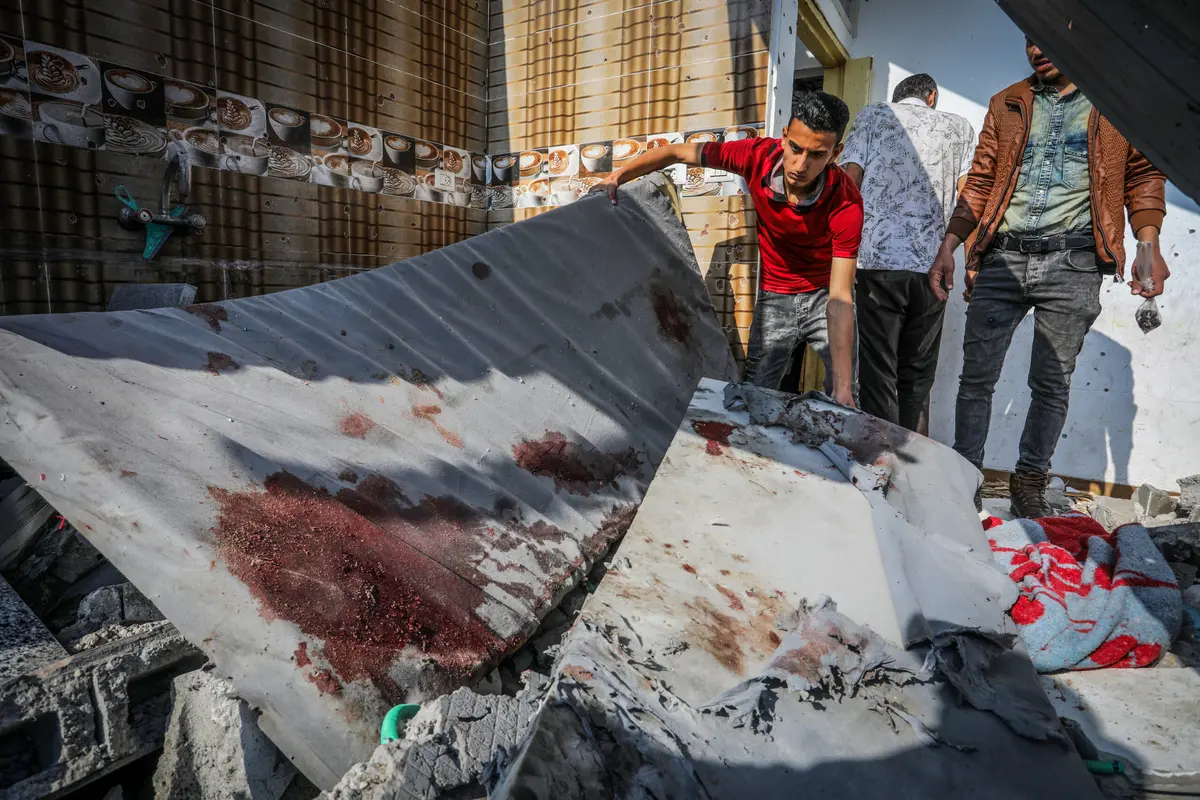
Nine citizens were killed today, Sunday, in the occupation's bombing of two houses in Jabalia and Beit Lahia in the northern Gaza Strip, and Rafah in the south.


Local sources reported that the occupation warplanes bombed the house of the Al-Najjar family in Jabalia Al-Balad, which led to the martyrdom of three citizens and the injury of others.


She added that the occupation bombed another house in Beit Lahia, which led to the martyrdom of five citizens and the injury of others.


A citizen was killed and two others were injured in an Israeli drone strike northeast of Rafah, south of the Gaza Strip.


The occupation forces continue their aggression on the Gaza Strip by land, sea and air since October 7, 2023, which resulted in the death of 43,314 citizens and the injury of 102,019 others, while thousands of victims are still under the rubble and on the roads, and rescue teams cannot reach them.

ARAB AND WORLD

Sun 03 Nov 2024 9:07 am - Jerusalem Time

Series of Israeli raids target towns in southern Lebanon

Last night and Sunday morning, the Israeli army launched a series of raids on several towns in southern Lebanon.


The Lebanese National News Agency reported on Sunday that "Israeli aircraft targeted the eastern town of Zawtar in the Nabatieh district (south) with two waves of raids."


Before midnight, the town of Kfarfila in the Iqlim al-Tuffah region, the outskirts of the town of Ansar in the Nabatieh district, and the towns of Hanin and Shaqra in the Bint Jbeil district (south) were subjected to airstrikes launched by enemy aircraft, according to the same agency.


Until 09:30 (06:30 GMT), the agency had not reported any deaths or injuries as a result of the Israeli raids.


After clashes with factions in Lebanon, including Hezbollah, which began after Israel launched a genocidal war on the Gaza Strip on October 7, 2023, which resulted in the killing and wounding of more than 145,000 Palestinians, Tel Aviv expanded the scope of the genocide since September 23 to include most areas of Lebanon, including the capital Beirut, through air strikes, and also began a ground invasion in the south.

The aggression on Lebanon resulted in a total of 2,968 deaths and 13,319 injuries, including a large number of children and women, in addition to about 1.4 million displaced persons. Most of the victims and displaced persons were recorded after September 23, according to Anadolu Agency’s monitoring of the latest official Lebanese data announced until Saturday evening.


Every day, Hezbollah responds by launching missiles, drones, and artillery shells targeting military sites, intelligence headquarters, military gatherings, and settlements. While Israel announces some of its human and material losses, military censorship imposes a strict blackout on most of the losses, according to observers.

PALESTINE

Sun 03 Nov 2024 9:02 am - Jerusalem Time

National consensus between Fatah and Hamas: an urgent necessity to remove pretexts and close gaps

Dr. Ahmed Rafiq Awad: Some parties’ attempt to reshape the Palestinian political system prompted Hamas and Fatah to take action

Ahmad Zakarneh: Palestinian reconciliation can provide a framework for a unified national vision supported by Saudi Arabia and the Arab group

Sari Arabi: National consensus is necessary and has become the main pillar to save the Gaza Strip from genocide crimes

Khalil Shaheen: Talking about agreements is due to Fatah and Hamas’ concern about the future more than it is a response to the needs of the stage

Samer Anabtawi: Ending the division and differences between Fatah and Hamas is no longer an option but a national necessity imposed by developments in reality


Attempts to reach an agreement between the Fatah and Hamas movements are increasing in light of the tragic conditions and the war of extermination in the Gaza Strip, as national unity has become a necessity to confront regional and international challenges, and to try to reach an agreement on the administration of the Gaza Strip by the Palestinian Authority, in anticipation of any Israeli, regional or international ideas in this regard.


In separate interviews with “I”, writers and political analysts believe that international and regional pressure and the suffering of the Gaza Strip have prompted the two movements to consider strengthening cooperation to confront attempts to reshape the Palestinian political system. Although the agreement may not be comprehensive, it could put them in a stronger position towards these transformations.


Writers and political analysts point out that Palestinian consensus enhances the possibility of support from Arab countries, which may lead to support for efforts to save Gaza and stop the aggression. Reconstruction in Gaza also requires an internationally recognized Palestinian leadership, which may push Hamas to accept the role of the Palestinian Authority in managing the sector, especially since the continued control of Hamas may hinder the arrival of international support.


They stress that national consensus is the basis for saving Gaza from genocide, as the Palestinian people need national unity to confront the Israeli aggression, and that the unity of the Palestinian position is necessary to establish Palestinian rights and prevent the occupation from consolidating its influence, and that the agreement between Fatah and Hamas may represent a positive step in the face of Israeli challenges, and may contribute to alleviating the severity of the aggression on Gaza.


Attempts to achieve reconciliation between Fatah and Hamas


Writer and political analyst Dr. Ahmed Rafiq Awad confirms that in light of the worsening conditions inside the Palestinian territories, new attempts to achieve reconciliation between the Fatah and Hamas movements are emerging on the horizon, which has become urgent in light of the exceptional circumstances that the Palestinian arena in general and the Gaza Strip in particular are going through.


Awad believes that several factors make reaching an agreement between the two movements possible and appropriate for the current stage, even if this does not mean a comprehensive and complete agreement on all points.


Awad explains that both Fatah and Hamas are currently in a "bottleneck" as a result of the increasing pressures on the Palestinian national project from regional, international and Israeli parties.


Awad points out that there is a serious attempt by some parties to reshape the Palestinian political system in a new way, whether by marginalizing some political forces, or by imposing restrictive conditions, or even making radical changes in the structure of the Palestinian leadership, whether in the Gaza Strip or the West Bank, which is what prompted the Fatah and Hamas movements to take action.


Awad confirms that this situation prompted the two movements to think about enhancing ways of cooperation, even at a minimal level, to confront these pressures, in order to preserve their existence in the face of regional and international transformations.


Compatibility is a necessity, not an option.


He believes that agreement between Fatah and Hamas has become a necessity and not an option, as the two movements need to agree at this difficult stage in order to confront the current political challenges.


Awad stresses that the main goal of any agreement will be to protect the two movements from external pressures, and to avoid any attempts to eliminate them or force them to abandon the Palestinian national project.


He stressed that the alliance of the two movements could represent an important step in confronting the regional and international powers that seek to impose their own visions on the Palestinian scene, pointing out that the extent of the current pressures is unprecedented, and includes expected changes at the level of structure, ideologies and trends, which calls for immediate action to reach a minimum level of consensus.


Awad explains that the agreement between the two movements may be the basis for reducing the intensity of the Israeli aggression on Gaza, especially since Israel is waging an intensive war aimed at emptying the Gaza Strip, as it continues to direct strikes targeting the infrastructure and civilians, amidst a lack of response to any ceasefire initiatives except under strict Israeli conditions.


Awad believes that such an agreement will provide the international community with a basis on which to demand that Israel make concessions to stop the aggression, as unifying the Palestinian ranks will create a framework acceptable to international parties to stop the aggression on the Strip.


Regarding the reconstruction of Gaza, Awad points out that Hamas also realizes that it will not be able to rebuild the Strip if it continues to control its administration, because donor agencies will not deal with it directly, and therefore reconstruction requires a unified Palestinian leadership and internationally recognized legitimacy.


According to Awad, from this standpoint, it seems that Hamas may accept that the Palestinian Authority assume responsibility for managing Gaza, if consensus is achieved, to facilitate the arrival of international support and enhance donor confidence.


Awad points out that current evidence suggests that the understanding between the two movements may include the formation of a special committee to manage the sector under the supervision of the Palestinian Authority, which would contribute to providing an internationally acceptable framework that could open the way to providing the basic needs of the residents of the sector.


But Awad points out that the success of this approach depends to a large extent on the willingness of the international community, especially regional parties, such as Saudi Arabia, to pressure Israel to accept the new formula for managing the sector.


Despite the potential impact of the agreement between Fatah and Hamas on the field and political levels, Awad warns that Israel will not deal easily with this change.


According to Awad, Israel does not want any strong Palestinian leadership to emerge in the Gaza Strip, but rather seeks to impose new conditions, whether in terms of security control or the economy, to prevent any return of Palestinian organizations to the arena in an influential manner.


Israeli efforts to dismantle any unity between the West Bank and the Gaza Strip


Awad asserts that Israel is adopting a policy aimed at dismantling any unity between the West Bank and the Gaza Strip, as it seeks to separate the two regions through policies aimed at creating a new Palestinian leadership that is subject to Israel’s requirements and deals with the Strip and the West Bank separately.


Hence, Awad believes that Palestinian consensus, even if limited, may create an incentive for Arab countries and countries supporting the Palestinians to intensify pressure on Israel and push it to deal with the emerging Palestinian unity as an official political framework.


Awad views the possibility of the Palestinian Authority taking over the administration of the Strip as a positive step that may help ease the current aggression, provided that Arab, American and European pressure is activated on Israel to accept this situation.


He believes that this step requires Arab and international consensus that stands in the face of the expected Israeli conditions, as Israel will seek to impose strict conditions that limit the effectiveness of the Authority in the Strip, in a way that ensures maintaining its military control over the region.


Awad stresses that the chances of success of this step remain dependent on the extent of the readiness of international and regional parties to activate pressure on Israel, which will certainly seek to place obstacles in the way of this agreement, especially in light of the absence of an effective role for some major powers capable of changing the equations on the ground.


Reconciliation between Fatah and Hamas is closer than ever


Writer and political analyst Ahmed Zakarna believes that reaching an agreement between the Fatah and Hamas movements is closer than ever in light of the bloody events taking place in the Gaza Strip, specifically the northern part of the Strip.


Zakarna explains that the “extermination war” that the Palestinian people in Gaza are being subjected to has contributed to creating a new environment towards unity, which makes the time appropriate to achieve this necessary agreement.


Zakarneh believes that the agreement between the two movements will have a major impact on the efforts to save Gaza and cease fire, as Palestinian unity is a basic element to support Arab and international movements in this context, especially the movements led by the Kingdom of Saudi Arabia within the framework of what is known as the international coalition to establish the Palestinian state, which requires Palestinian unity to support the efforts aimed at reaching a two-state solution.


He explains that Palestinian reconciliation could provide a framework for a unified Palestinian vision supported by Saudi Arabia and the Arab group, and presented to international allies to establish the Palestinians’ right to establish a sovereign state.


Zakarna confirms that this agreement will have tangible field and political effects, especially in light of the moves aimed at stopping the aggression and strengthening Palestinian legitimacy.


Regarding the Hamas movement’s orientations, Zakarneh believes that the movement has accepted for some time the PA’s management of the Gaza Strip, noting that Hamas does not seek to return to leadership of the Strip, for several reasons, the most prominent of which is that the world will not deal with the Gaza Strip under the rule of a factional movement, but rather prefers to deal with the Palestinian Authority, which represents the executive arm of the Palestine Liberation Organization.


Zakarna stresses that the reconstruction of the Gaza Strip requires the existence of an internationally agreed-upon political address, which makes Hamas’s acceptance of the administration of the Authority something expected and accepted internationally and regionally.


Zakarneh explains that Hamas’s losses, whether on the political or field level, in addition to the damage inflicted on the structure that the movement established over the past seventeen years, prevent it from regaining sole rule over the Strip. Although it may be a partner in the administration, its role will be secondary and not at the forefront.


The impact of the Authority's management of Gaza on efforts to stop the war


Regarding the impact of the PA’s management of the Gaza Strip on efforts to stop the war, Zakarna believes that this step may contribute tangibly to achieving this, as it is expected to be used as an important political card by the countries of the region and by the Western allies, in addition to international pressures led by the BRICS countries, Russia and a number of allies.


Zakarneh believes that redefining the role of the Palestinian Authority as an executive arm of the PLO will be a pivotal point, especially with efforts to prevent Israel from redefining political and security relations in Gaza to serve its interests.


National unity is a necessary condition to face challenges


Writer and political analyst Sari Arabi asserts that Palestinian national consensus constitutes the fundamental pillar for saving Gaza from the threat of genocide, explaining that achieving national unity is a necessary condition for confronting the profound challenges surrounding the Palestinian cause, not only in Gaza, but in all of Palestine.


Arabi believes that the Israeli occupation's aggression on the Gaza Strip might have been less fierce if there had been Palestinian national unity, pointing out that the Palestinian people are being subjected to systematic attacks by the Israeli war machine, which exploits military and logistical superiority to achieve its goals, while Palestine lacks the sufficient capabilities to confront this comprehensive war.


Arabi explains that confronting the Israeli aggression requires a unified vision and an agreed-upon national program, considering that the current dispersion hinders the efforts of the Palestinians and increases the size of the challenges imposed on them.


Arabi stresses that national consensus is not just an option in confronting aggression, but also a basic condition for advancing the Palestinian cause and stopping the attempts at genocide being practiced against the Palestinians in Gaza.


Arabi points out that the Israeli occupation's efforts to succeed in implementing its plans in Gaza aim to consolidate the Zionist project, which seeks to expand its influence and control over the Palestinian territories, so that it is not limited to Gaza alone, but rather extends to include the rest of Palestine, which threatens the Palestinian identity and the rights of the Palestinian people.


Arabi stresses that the national interests of all Palestinian political forces require reaching a national agreement, pointing out that Hamas has shown a willingness to give up the administration of the Gaza Strip on several occasions before the current war, such as the 2017 agreement, where the movement announced its willingness to do so and dissolved the administrative committee in Gaza, as well as the 2014 agreement, which witnessed similar steps.


Hamas shows greater flexibility regarding giving up control of the Gaza Strip


Under the current circumstances, Arabi explains that Hamas is showing greater flexibility regarding the possibility of relinquishing the administration of the Gaza Strip, but it stipulates that Gaza not be subject to any Israeli, regional or international guardianship, but rather that the agreement be made according to a purely Palestinian vision.


Arabi believes that the emergence of a unified national position can play a positive role in attempts to stop the Israeli war, even if the Palestinians face major challenges in imposing a halt to the aggression, stressing that national unity remains an urgent necessity in the face of a historical enemy that seeks to undermine Palestinian rights.


Arabi stresses that the solution to the issue does not lie in the ideas, proposals or available visions; since the Palestinian division, many ideas have emerged that contribute to resolving the issue of division and achieving unity, but the real problem lies in the political will and the agreement of the national forces to achieve common aspirations, considering that the responsible national position towards the war on Gaza requires serious work to confront the comprehensive and ongoing war on the Palestinians, whether in Gaza or in the West Bank, and Palestinian consensus is important as it is a common national interest and a collective responsibility.


Arabi points out that the Israeli occupation is targeting the Palestinian people in the West Bank as well, through policies that aim to eliminate any political entity for the Palestinians, which makes Palestinian unity an unavoidable necessity.


US Election Options Between “Bad” and “Worse”


Writer and political analyst Khalil Shaheen believes that the recent moves towards understanding between the Fatah and Hamas movements in light of the rapid regional and international changes, especially with the approach of the US presidential elections, come in the context of the two movements’ concern about the future and uncertainty regarding US policies towards the Palestinian issue, more than being a direct response to the needs of the current stage.


He explains that the upcoming US elections may bring the Palestinian Authority options ranging from “bad” to “worse.” Even if current US Vice President Kamala Harris wins, no fundamental change in US policy towards the Palestinians is expected, given that she was a partner in the decisions taken by the Biden administration during the war on Gaza.


Harris, Shaheen believes, is not a candidate for a radical shift, as she is likely to continue the approach taken by the previous Democratic administration, including continuing the partnership with Israel on many issues without serious pressure to change the current reality.


But the most dangerous and worst scenario, according to Shaheen, is the possibility of former President Donald Trump winning, which brings to mind the “nightmares of the deal of the century.” His return to power means reviving ideas that focus on enabling Israel to extend its full sovereignty over Jerusalem, and ensuring Israel’s freedom to operate in the West Bank, including the possibility of annexing parts of it.


Shaheen also points to Trump's previous statements about "the small size of Israel," which suggests the possibility of supporting Israeli plans aimed at expanding its geographical influence, and perhaps re-introducing plans for forced displacement or encouraging immigration.

For the people of Gaza, with the aim of creating a new reality and perhaps beyond that.


Shaheen believes that the Gaza Strip is at the heart of this future concern. The Palestinian Authority believes that Trump’s victory may reinforce Israeli-American tendencies that push toward creating a military administration for the Gaza Strip, and leave the Palestinians there with two choices: accepting a situation in which Israel controls security matters, or emigrating from the Strip. On the other hand, the Hamas movement, which has been subjected to pressure and assassinations of its leaders such as Ismail Haniyeh and Yahya Sinwar, finds itself in a difficult defensive position, as it seeks to find an administrative formula that allows it to control the Strip without losing its influence there.


In this context, Shaheen refers to previous statements by the former head of Hamas's political bureau, the martyr Ismail Haniyeh, when he said after relinquishing the presidency of the tenth government: "Hamas is relinquishing the government, but it is not leaving power."


Hamas moves to maintain its influence in the Gaza Strip


Shaheen believes that this strategy will continue, as Hamas is now moving towards maintaining its influence in the Gaza Strip by providing basic services to the population and resisting the occupation.


Shaheen highlights the complexities of reaching an administrative or governmental agreement between Fatah and Hamas, as attempts to agree on an “administrative committee” to administer Gaza have failed, while Shaheen points out that disagreements have emerged over the authority and powers of this committee; will it be under the management of the national consensus government headed by Prime Minister Dr. Mohammed Mustafa, or will it be a new government that is agreed upon? President Mahmoud Abbas is also hesitant to grant the committee expanded powers to administer the sector during the reconstruction phase, which prompted Mohammed Mustafa to form a parallel committee with the aim of preempting any powers that might be granted to the agreed upon committee.


Due to the complexities of this file, Shaheen believes that returning to the initial dialogue has become inevitable, expecting that any serious move towards Palestinian unity will be postponed until the results of the US elections become clear, and the new US administration assumes its duties until next March, as the matter will depend largely on the possibility of Trump winning or not, and the orientations of the new US administration that will take over after the elections.


A common Palestinian vision to thwart attempts to control Gaza


On the other hand, Shaheen stresses that achieving internal Palestinian consensus has become a strategic need to ensure the formulation of a common Palestinian vision that will block Israel’s attempts to control the Gaza Strip after the war, as the existence of a Palestinian agreement will be an indicator of the independence of the Palestinian decision, and will show that the Palestinians alone decide their affairs, which will make it difficult for countries that may propose alternative plans for the Strip to continue their efforts.


Shaheen believes that the presence of a unified Arab position, even if reluctantly, will lead to support for the Palestinian position on the international scene, including Russian, Chinese and perhaps European support, which puts the United States in a complicated position and makes it more submissive to listening to Palestinian demands.


Shaheen believes that the changes on the northern front and with Iran, and the developments in the conflict in the region, have made communication with regional parties more necessary, especially since the files have become interconnected. Reaching an agreement on Gaza may be reflected on the northern front and vice versa, which means that everyone is waiting to see what the US elections will lead to in order to know the fate of the regional file in general.


He stresses that these regional and international variables are pushing the Palestinian Authority and Hamas to achieve internal Palestinian consensus, especially with the possibility of changes in the US foreign policy discourse about not eliminating Hamas, but rather wanting the movement to not be in power the day after the war, such that it has been observed that there is a tendency to manage the conflict instead of liquidating it, which imposes on the Palestinians a new readiness to deal with any scenario that may appear after the upcoming US presidential elections.


A systematic policy to liquidate the Palestinian cause


Writer and political analyst Samer Anabtawi believes that the escalation of current events in Palestine reflects a systematic policy by the Zionist movement aimed at completely liquidating the Palestinian cause.


Anbatawi points out that this policy constitutes an unprecedented escalation against the Gaza Strip, and extensive attempts to impose new facts on the ground in the West Bank through settlement, in addition to strict measures targeting prisoners, holy sites, and any element that represents the Palestinian identity.


In this context, Anabtawi believes that the responsibility of ending the division between the Fatah and Hamas movements is no longer an option, but rather a national necessity imposed by developments in reality, stressing that the shedding of Palestinian blood requires the Palestinian parties to confront these challenges as one in order to emerge from the crisis.


He points out that this situation requires the Palestinian parties to form a unified national leadership, which has been repeatedly agreed upon during meetings held in Arab and foreign capitals in the presence of the secretaries-general of the Palestinian factions.


Anbatawi points out that the Palestinian Central and National Councils approved a number of decisions supporting unity, but none of them were implemented, which kept internal differences between the Fatah and Hamas movements on various political and administrative issues.


Anbatawi explains that if these decisions had been implemented based on the Palestinian constants of liberating the land, resisting the occupation, completely severing relations with Israel, and rebuilding Palestinian society on the basis of it being a people under occupation that resists, this would have had a direct impact on the current events in Gaza.


He points out that the internal division represents a loophole exploited by the United States of America, Israel and some regional parties to implement their own ambitions in Gaza.


Hamas will not accept the authority's administration of the Gaza Strip


On the other hand, Anabtawi believes that Hamas will most likely not accept the Palestinian Authority administering the Gaza Strip as long as the fundamental differences between the two sides continue.


Anbatawi points out that the repetition of the authority’s positions, which he sees as ineffective in confronting the war of extermination, and the increasing impact of the division on the bases and leaders of the two movements, reinforce this rejectionist position in the Hamas movement.


Anbatawi believes that Hamas has a different vision for managing the Gaza Strip, and that reaching a deep consensus between the two movements regarding Gaza requires that no regional or international party interfere in this matter.


Regarding the impact of the PA taking over the administration of Gaza on the current war or ceasefire, Anabtawi believes that Israel will not accept this scenario, even if the PA is the party that administers the Strip.


Netanyahu's government seeks annexation and deepens Palestinian division


Anbatawi asserts that Netanyahu's far-right government is adopting a policy aimed at annexing most of the West Bank and controlling parts of Gaza.


He points out that Israel's acceptance of the existence of a unified Palestinian entity, even if it is under the authority's administration, is considered an obstacle to its strategy, as this approach contradicts Netanyahu and his government's plans to dismantle and weaken the Palestinian Authority to prevent the establishment of an independent Palestinian state in the future, which is what Netanyahu's government does not want by rejecting the Palestinian entity.


Anbatawi believes that the Israeli strategy aims to deepen the Palestinian division and maintain the status quo in Gaza as part of a policy of gradually cleansing it of its population and turning it into an area unfit for living, while the occupation continues to control large parts of the West Bank.


Anbatawi points out that the Israeli occupation state aims to gradually seize about 60% of the West Bank lands, by gradually weakening the Palestinian Authority until it abolishes its existence and powers, and by escalating the conflict between settlers and Palestinian citizens in the West Bank.


Thus, Anbatawi believes that Israel ultimately seeks to eliminate any Palestinian political entity that could claim its rights and represent the aspirations of the Palestinian people to self-determination and the establishment of an independent state.


Anbatawi believes that this complex situation requires Palestinian leaders to realize the extent of the surrounding risks and work to strengthen unity to confront the increasing challenges, but achieving this goal requires a real will for national unity and overcoming any obstacles that prevent its achievement.


PALESTINE

Sun 03 Nov 2024 8:53 am - Jerusalem Time

A promise from someone who does not own land to someone who does not deserve it.. The tank exploded after 107 years

Dr. Suleiman Abu Sitta: The Palestinian issue has returned to its basic roots, which are the direct conflict with the Israeli occupation

Hatim Abdel Qader: The Balfour Declaration is the cornerstone that enabled Israel to commit massacres and violations against the Palestinian people

Dr. Rifat Sayed Ahmed: The resistance is steadfast and will win if it can prevent Israel from achieving its strategic goals of displacement and division

Dr. Saleh Abdel Jawad: The historical injustice that happened in the past is being repeated today in a more horrific way as a result of the unipolar world order.

Jawdat Manna: New alliances led by Russia, China, Iran and Turkey will lead to an inevitable change in the management of international conflicts

Dr. Abdul Rahim Jamous: Legal complaints must be filed against Britain and Israel to hold them accountable for their crimes against the Palestinian people


The 107th anniversary of the infamous Balfour Declaration coincides with the war of extermination waged by the occupying state on the Gaza Strip, killing more than 150,000 martyrs and wounded, and causing almost complete destruction of the Gaza Strip, which led to turning more than two million Palestinian citizens into displaced and homeless people, searching for salvation with their lives, and for what keeps them alive, such as food and water.


This unprecedented Israeli aggression in its brutality was tried by the occupying state to justify it under the pretext of the attack of October 7, 2023, in a desperate attempt to promote the narrative that the conflict began with that attack launched by the Palestinian resistance on that day and not 76 years ago. Many hypocritical countries in the world, especially the old colonial countries, have adopted this narrative, ignoring the reality of the oppression and injustice that the Palestinian people have been living for nearly a century, especially the people of the Gaza Strip who have been living a life of misery and suffering for seventeen years due to the siege imposed on them.


The anniversary of the Balfour Declaration comes to remind the world that the conflict in Palestine began when this promise was given by “those who do not own to those who do not deserve,” as a culmination of colonial ambitions that established a racist colonial entity on the land of Palestine, at the expense of the Palestinian people, their land, and their existence.


The Palestinian issue is the root of the regional conflict


Writer and political analyst Dr. Suleiman Abu Sitta said in an interview with “I” on the occasion of the anniversary of the Balfour Declaration: The Palestinian issue has returned to its basic roots, which are the direct conflict with the Israeli occupation.


Abu Sitta pointed out that the high prices paid by the Palestinian people, especially in light of what he described as the "criminal war of extermination" in Gaza, have begun to highlight the continuation of the Palestinian cause as the root of the regional conflict, as security cannot be achieved in this vital region without stopping the occupation's attacks.


Abu Sitta added: "The recent events, which began in Gaza on October 7, have gone beyond the borders of the Strip and moved to Lebanon, bringing the region closer to an open regional war, which could lead to the disruption of navigation and threaten vital interests of the West, such as oil transportation."


He pointed out that these conditions prompted the United States to redirect its focus towards the Middle East at the expense of major international issues such as the Taiwan and Ukraine issues.


He added: In light of the ongoing massacres committed by the occupation in Gaza, Israel has not yet been able to resolve the conflict, but rather finds itself facing a long war of attrition, whether in Gaza or Lebanon. According to recent estimates, it has lost twenty soldiers in Gaza, most of them from the elite brigades, in addition to sixty soldiers in other confrontations.


The goal is to change the political and geographical structure of the Gaza Strip.


In another context, Abu Sitta pointed out the major challenges currently facing the Palestinian people, as the occupation seeks to change the political and geographical structure of the Gaza Strip, which is evident in the harsh living conditions faced by the citizens there.


He said: "The Palestinian people, despite their steadfastness and the qualitative resistance operations carried out from time to time, still suffer from a lack of effective support to confront the ongoing genocide."


He explained that this reality raises crucial questions about the Palestinians' ability to defend themselves, especially if the occupation government, led by the extreme right-wing movements such as Smotrich and Ben Gvir, moves to expand the circle of violence towards the West Bank and the interior.


Abu Sitta also pointed out that the anniversary of the Balfour Declaration comes this year amid a state of official Arab inability to confront the ongoing genocide against the Palestinians, which could ignite popular Arab anger that could develop into a movement similar to the Arab Spring.


The region is heading towards a long war.


He added: "The current indicators point to the escalation of Arab popular anger towards these conditions, as we witnessed in limited protests in Jordan, but they may be an indicator of broader anger to come."


As for the outcome of the conflict, Abu Sitta believes that the region is heading towards a long war that could extend to the West Bank, Jerusalem and the Palestinian interior, as a result of the Netanyahu government’s insistence on “resolving the conflict” with the axis of resistance. Netanyahu has stated that his goal is to “change the shape of the region and eliminate Hamas,” something that seems difficult to achieve in light of the current confrontation.


Abu Sitta stressed the necessity for the Palestinians to hasten to regain their strength, strengthen their unity, and engage in a comprehensive confrontation with the occupation, to pressure the occupation to stop its aggression by strengthening resistance action everywhere, because the Palestinians will pay the increasing price in all cases, whether they initiate confrontation or remain in the waiting column.


The disastrous repercussions of the Balfour Declaration


In turn, Hatem Abdel Qader, Secretary-General of the Islamic Christian Commission for the Defense of Jerusalem and Holy Sites, confirmed in a statement to “I” that “the 107th anniversary of the Balfour Declaration reminds us of the catastrophic repercussions that continue to affect the Palestinian people.”


Abdul Qader pointed out that the Balfour Declaration, by which Britain granted Palestinian land to the Zionist movement, represents the beginning of the catastrophes that the Palestinians were subjected to, as successive Palestinian generations witnessed continuous tragedies of displacement, killing and destruction.


Abdul Qader explained that what the Palestinian people are facing today, in light of the war of genocide in Gaza, comes with the support and cover of Western countries, most notably Britain, which he believes bears legal, historical and moral responsibility for the Palestinian suffering that has continued for more than a hundred years.


He added, "The Balfour Declaration is the cornerstone that enabled Israel to commit massacres and violations against the Palestinian people in all their components, and contributed to uprooting them from their land and eliminating their right to exist."


Britain must admit responsibility for this “historic crime”


Abdul Qader called on Britain to fully acknowledge this "historical crime," stressing the need for it to apologize to the Palestinian people for the material and moral damages they suffered as a result of this ominous promise.


He stressed that Britain's duty also extends to supporting the rights of the Palestinians by recognizing the State of Palestine and working to restore the Palestinian people's legitimate rights on their land.


Speaking about the catastrophic circumstances that the Palestinians are currently going through, Abdel Qader pointed out that the passage of 107 years since the Balfour Declaration, under the current conditions, will not push the Palestinian people to surrender or raise the white flag in the face of the Israeli occupation.


He said: "Despite the difficult times and great challenges, we have the determination and will to adhere to our legitimate national rights, foremost of which is the establishment of our Palestinian state with Jerusalem as its capital."


Abdul Qader stressed that Israeli crimes and violations will not deter the Palestinians from continuing the struggle to regain their full rights.


A regional war led by America and Israel against Arabs and Muslims


For his part, Egyptian strategic expert Dr. Rifat Sayed Ahmed said: This anniversary comes in the midst of a new war with a different character in light of the current escalation in Gaza.


He added: This Israeli war on the Palestinians goes beyond being a local conflict, but rather is a "regional war" led by the United States and Israel against the Arab peoples and Islamic countries.


He explained that the conflict today is not limited to the confrontation between the Palestinians and the Israelis, but that the United States is the main party in this war, as it exerts pressure and uses its modern technologies to strike the Lebanese and Palestinian resistance, specifically by targeting Hezbollah sites and its leaders. In his view, this is an "American-Arab round" and not just an Israeli-Arab confrontation.


He pointed out that the world is witnessing a new fascism led by Israel, where difficult choices are imposed on the Palestinian people: "Either they live in humiliation, or are displaced, or are killed." He also expressed his concern about the total collapse of the global order, considering that this order has become completely biased in favor of Israel thanks to the Western alliance led by the United States.


Despite this, Ahmed sees a glimmer of hope for the future. He asserts that the resistance is still steadfast, and that it will win if it can prevent Israel from achieving its strategic goals, such as displacement and partition.


He also sees Hezbollah's continuation, despite the blows it has suffered, as a victory for the resistance as a whole, in addition to the Palestinian people's continuation of their resistance, which has sent the Israelis into shelters.


Ahmed called on the Arab peoples and their armies to move to support the Palestinians, stressing that patience and steadfastness are the keys to the coming victory, and that failure to achieve Israeli goals is a defeat in itself.


The international system has been flawed from the start.
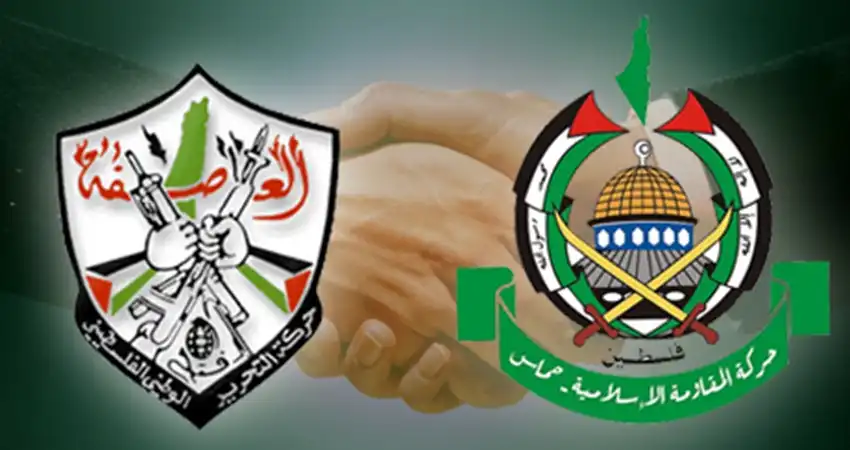

Historian and political science professor, Professor Saleh Abdel Jawad, believes that the problem is that the international system has had flawed standards since the beginning, and that there has never been a period in which the values of justice and democracy prevailed in the world.
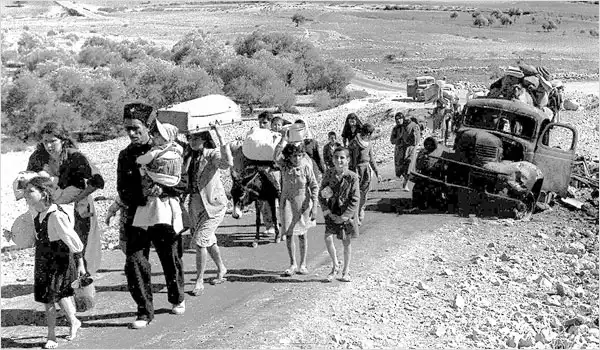

He pointed out that "the directed media, which is controlled by Western colonial capitalism, has succeeded in influencing us and deceiving us that there is a kind of justice."


Abdul Jawad stressed that the Balfour Declaration itself, which was issued 107 years ago, is evidence of the injustice of the past, as Britain, the country that has no right to Palestine, gave Palestine to the Jews without right.


He pointed out that the historical injustice that occurred in the past is being repeated today, albeit in a more horrific manner, as a result of the global system after 1990 becoming unipolar.


He stressed that "what is happening today in terms of American and international support for Israel is not only related to political interests, but also to Israel's success, from his point of view, in penetrating the world and influencing the leaderships of many countries, including, unfortunately, a superpower such as the United States, Britain, France, or Germany."


Abdul Jawad stressed that the real hope is that part of the international system that is currently in the process of formation will respond to the suffering of the Palestinian people, stressing the need to rely on the Palestinian people’s own efforts, which is what is happening in practice.


Formation of economic interests and distribution of influence


In turn, Jawdat Manna, coordinator of the International Campaign to Defend Jerusalem, said: The Balfour Declaration had repercussions that began with the British colonial forces launching a wide-scale campaign of arrests among the Palestinian people, and imposing a ban on their possession of weapons. It is natural for the Palestinian people to take the initiative to resist the British army to defend the homeland.


He explained that the promise was not issued by chance, but was preceded by events that left their mark on European countries as a result of the formation of economic interests and the distribution of influence of major countries around the world.


He said: “In the midst of the struggle for influence between the European countries, the Zionist movement began to practice practices that focused on Germany, and had an impact on the nature of German economic, social and political life. The Jews gained influence that led to the growth of anti-Jewish sentiment that extended to European countries, where Germany experienced suspicious events that preceded World War II, and as a result of which the Holocaust occurred.”


He pointed out that "it is not possible to separate the Zionist ambitions from the British and European desires to get rid of the Jews and transfer them to settle in Palestine, and this partnership will remain an important element in the process of settling the Jews and occupying Palestine from the river to the sea after the aggression of June 5."


Manaa stated that, “With the passage of time, the Palestinian people mobilized their forces, and the Palestine Liberation Organization led their legitimate struggle, in accordance with the United Nations resolutions that stipulated the necessity of establishing a Palestinian state on part of the land of Palestine, in conjunction with the partition resolution.”


Resistance crowned with the Battle of the Flood of Al-Aqsa


Manaa stressed that the continuous attacks on worshipers, the storming of the blessed Al-Aqsa Mosque, and the daily attacks on Islamic and Christian holy sites left no room for the Palestinian people to prepare to defend their homeland. This resistance was crowned by the Battle of the Flood of Al-Aqsa, which led to a war of extermination against the Palestinian people after a malicious propaganda campaign based on lies to justify waging the largest war on the Palestinian people.


While the Israeli war of extermination against the Palestinian people continues, Manna’ sees the number of Palestinian victims increasing, resulting in the destruction of the Gaza Strip and the displacement of its citizens to homeless places after the water, oil, food and medicine were banned from two and a half million Palestinians.


He explained that "the war revealed the lack of political morality of Tel Aviv's allies, who supplied the occupation army with huge quantities of weapons that led to unprecedented destruction and the fall of an unprecedentedly large number of victims."


Waqqa: Despite US President Biden’s manipulation of words to show deceptive emotions when he pretended to pressure Israel to allow the passage of food supplies to the citizens of the Strip and not to bomb populated areas, this did not happen, but rather the opposite is true.


Manaa also criticized the positions of some European countries, such as Germany, France and Britain, which supported the Israeli aggression and considered it self-defense, ignoring the fact that these lands are occupied and that what Israel claims is a slander against the Palestinian people.


He believed that this Western moral decline was preceded by its experience in the Ukrainian-Russian conflict, where European countries imposed sanctions on Russia, thus threatening the stability of the Middle East region.


Manaa pointed out that the new alliances led by Russia in cooperation with China, Iran, Turkey and the BRICS countries will lead to an inevitable change in the management of international conflicts, and will redistribute influence among the growing powers in our contemporary world.


The ominous promise casts a heavy shadow over the Palestinian people


For his part, writer and member of the National Council, Dr. Abdul Rahim Jamous, stressed that this ominous promise, by virtue of which British Foreign Secretary Arthur Balfour granted the land of Palestine to the Zionist movement, still casts a heavy shadow over the Palestinian people, who are today facing the worst aggression since the Great Nakba, especially in the Gaza Strip.


Jamous described what the Palestinians are facing today as crimes of genocide and ethnic cleansing committed in full view of the world, which is unable to impose a ceasefire or end the aggression.


Jamous added: "The colonial policy of Britain and America is old and renewed. It began with the Balfour Declaration in 1917, and continued in subsequent positions supporting Israeli superiority in the region, passing through American presidents such as Donald Trump and Joe Biden."


Jamous considered that British and then American colonialism represented a fixed approach that changed in its methods while its goals remained the same, which is to destroy Palestinian rights.


Jamous pointed out that the Balfour Declaration was a promise from “the one who does not own to the one who does not deserve,” and paved the way for the establishment of the Israeli colony, which represents the last colonial occupation supported by Britain and America.


The United States completes the colonial approach


He added: "Britain does not apologize for its actions, but rather takes pride in them and celebrates the anniversary of the Balfour Declaration annually. Today, the United States is completing this colonial approach by supporting Israel without limits, thus defying the most basic principles of international law."


Jamous called on Britain to officially apologize to the Palestinian people for the historical crimes that resulted from the Balfour Declaration, and to work to support the Palestinians’ rights to return, self-determination, and the establishment of an independent state.


He also stressed the need to file legal complaints against Britain and Israel to hold them accountable for the crimes committed against the Palestinian people, calling for raising cases in international judicial forums and demanding the right of the Palestinian people to resist the occupation by all possible means.


Jamous stressed that the Palestinian people, with their steadfastness and resistance, will not give up their legitimate rights, and that they will continue to demand justice and freedom, relying on the justice of their cause and their tireless efforts to restore their usurped rights.

PALESTINE

Sun 03 Nov 2024 8:47 am - Jerusalem Time

Gaza shakes the wavering consciences

Two days before “Super Tuesday” in the US elections, polarization is intensifying, and competition is heating up in the heated race for the White House between the two arch rivals, Harris and Trump.


In the race, Gaza is strongly present in the propaganda narrative of the two competitors, who are trying to bring the voters’ wheat, each to his mill, at the decisive moment in which Gaza determines the outcomes and destinies, and the identity of the new occupant of the White House for the next four years.


By voting for one of the two traditional competitors, or by withholding them from them, and voting for the Green Party candidate Jill Stein, as punishment for the two parties that are partners in the war of extermination in Gaza and Lebanon, new facts are growing about the size and weight of the Arab vote and its influence in determining the identity of the new resident of the White House, which was not present before, as it is present today.


With the bleeding of its wounds, the pain of its suffering, the groans of its children, the wailing of its women, the crying of its elderly, and the rubble of its homes, Gaza shakes the votes with its hand, drenched in the blood of the raging genocide, sifting them, and sterilizing them before they reach the ballot boxes.


The deep wounds of Gaza and the blood of its children will haunt the silent ones whose silence was bullets and bombs that killed the Gazans, and will punish the partners and accomplices with the votes of American voters who reject the policies and orientations of their politicians, which contradict the values of the founding fathers of the state that once created a statue of liberty, before its face was stained with the blood of Gaza’s children.


Stop the war of extermination now..!

PALESTINE

Sun 03 Nov 2024 8:40 am - Jerusalem Time

Israeli occupation forces launch arrest campaign in the West Bank

The Israeli occupation forces launched a wide-scale arrest campaign in the West Bank at dawn and this Sunday morning.


In Nablus, the occupation forces stormed Askar camp, raided several homes, and arrested citizen Ghassan Al-Masry and his two sons, Yassin and Mahmoud.


In Tubas, the occupation forces arrested the young man, Alaa Suleiman Bani Odeh, after raiding and searching his family’s home in the village.


In Qalqilya, the occupation forces stormed the city from its eastern entrance, and fired live bullets randomly on Nablus Street, which resulted in a young man being injured by a live bullet fragment in the foot, and his injury was described as moderate.

In Ramallah, the occupation forces arrested the citizen Saleh Hassan Ankoush (70 years old), and his two sons Hassan and Yousef, after raiding their homes in the village of Deir Abu Mash’al, west of Ramallah, and the young man Salam Ayyad, from the town of Silwad, east of Ramallah.


The same sources added that the occupation forces opened fire at a citizen's vehicle in the village of Al-Madiyah, west of Ramallah, causing it to collide with a concrete wall, without any injuries or arrests being reported. Meanwhile, the occupation forces stormed the towns and villages of Ni'lin, Deir Qadis, Beit Sira, Beit Liqya and Kafr Ni'ma, west of Ramallah.


In Hebron, the occupation forces stormed Al-Fawar camp and searched several homes, and arrested the two young men, Khaled Abu Omar and Salah Al-Din Al-Maghalsa, after raiding and searching their homes.


PALESTINE

Sat 02 Nov 2024 10:06 pm - Jerusalem Time

WHO: Children injured in bombing of vaccination center in northern Gaza

The World Health Organization reported that 6 Palestinians, including 4 children, were injured when the Israeli occupation forces bombed a polio vaccination center in northern Gaza.


"The Sheikh Radwan Primary Health Care Center for Polio Vaccination in Gaza, northern Gaza, was bombed while parents were taking their children to be vaccinated against polio," said WHO Director-General Tedros Adhanom Ghebreyesus.


He added, "The region is witnessing a humanitarian truce that was agreed upon to allow the vaccination process to continue."


The occupation army launched a drone bomb on a medical clinic during the second round of polio vaccination in Gaza.


The march also opened fire on an ambulance transporting wounded people in the Sheikh Radwan neighborhood of Gaza City.


The occupation forces launched a bombardment on several areas in the Gaza Strip, including the Nuseirat camp, Jabalia, Beit Lahia and Tel al-Zaatar, while violent clashes took place between the occupation army and the Palestinian resistance in the Jabalia camp.

ARAB AND WORLD

Sat 02 Nov 2024 9:49 pm - Jerusalem Time

Rashida Tlaib declines to endorse Kamala Harris

Democratic Congresswoman Rashida Tlaib declined to endorse her party's presidential nominee and Vice President Kamala Harris during a union rally in Michigan, one of the seven swing states expected to decide the presidential race.


Tlaib, the first Palestinian-American member of Congress, urged those present to vote, but focused her remarks on local polls that will coincide with the presidential election next Tuesday.


"Don't underestimate the power that you all have. It's bigger than those ads, those signs, those billboards," she told participants at a rally organized by the United Auto Workers in Detroit, Michigan, on Friday night.


“You all have a greater power to rally people who understand that we have to fight against corporate greed in our country,” she continued.


Tlaib is the only one of the four left-wing Democratic congresswomen known as the Squad who has not declared her support for Kamala Harris.


The Palestinian-American representative criticized the Democrats' position on the war on Gaza, especially after the party held its general conference in Chicago last August without including any Palestinian-American speakers.


The Guardian newspaper pointed out that Tlaib's refusal to support Harris comes at a time when a poll showed that 43% of American Muslims support Green Party candidate Jill Stein, who called for an end to the genocide in Gaza.


Democrats blamed Stein for Hillary Clinton's defeat to Republican Donald Trump in 2016, saying she was responsible for their losses in Michigan and Wisconsin. Some Democrats fear the same could happen this election.

PALESTINE

Sat 02 Nov 2024 8:30 pm - Jerusalem Time

Fatah and Hamas discuss in Cairo the establishment of a committee to administer Gaza

An Egyptian source announced, on Saturday evening, the start of a meeting between the Fatah and Hamas movements in Cairo, to discuss the establishment of a committee to manage the affairs of the Gaza Strip, in addition to continuing efforts to reach a ceasefire in the Strip.


The Egyptian Cairo News Channel quoted a security source described as responsible and informed, confirming "the launch of meetings between the Fatah and Hamas movements in Cairo regarding the Gaza Strip through the Community Support Committee to manage the affairs of the Gaza Strip."


He explained that "the meetings are a purely Palestinian affair and the Egyptian efforts aim to unify the Palestinian ranks and alleviate the suffering of the Palestinian people."


He pointed out that the Fatah and Hamas movements "showed more flexibility and positivity towards establishing the Community Support Committee to manage the affairs of the Gaza Strip," and said that the committee is affiliated with the Palestinian Authority and includes independent figures and is issued by presidential decree from Palestinian President Mahmoud Abbas and is responsible for managing the Gaza Strip.


The source stated that "Fatah and Hamas have a positive view of the Egyptian moves regarding the formation of the Community Support Committee despite the challenges facing the Palestinian cause," and stressed that "the Fatah and Hamas meeting in Cairo sought to achieve Palestinian unity and not separate the West Bank from the Gaza Strip."


cease-fire

In a related context, the source revealed that "there are intensive Egyptian contacts to urge the Palestinian and Israeli sides to reach a ceasefire agreement in the Gaza Strip," and stressed that there is "international support for the Egyptian efforts with the Palestinian and Israeli sides with the aim of reaching a ceasefire in the Gaza Strip and restoring calm there, despite the unwillingness of either side to respond to those efforts."


He pointed out that Hamas insists on not dividing the negotiations for fear of handing over the prisoners and then the Israeli side returning to fire.


On Thursday, Egyptian President Abdel Fattah el-Sisi discussed with CIA Director William Burns in the capital, Cairo, the latest developments in joint efforts to calm the situation in the Gaza Strip, in light of the ongoing Israeli war, according to a statement by the Egyptian presidency.


The visit came days after a meeting hosted by Doha, attended by Burns, to discuss reviving the ceasefire negotiations in Gaza, which have been stalled for about two months.


Since October 7, 2023, Israel, with full American support, has been waging a genocidal war on Gaza, resulting in more than 144,000 Palestinian martyrs and wounded, most of them children and women, and more than 10,000 missing, amid massive destruction and an unprecedented humanitarian disaster.


Despite the ongoing mediation efforts of Qatar and Egypt for about a year, alongside Washington, and the presentation of one agreement proposal after another to end the war on Gaza and exchange prisoners, Israeli Prime Minister Benjamin Netanyahu insists on setting new conditions that include the continuation of the war and the rejection of Hamas’s presence in the administration of the Strip.