ARAB AND WORLD

Tue 19 Nov 2024 7:21 am - Jerusalem Time

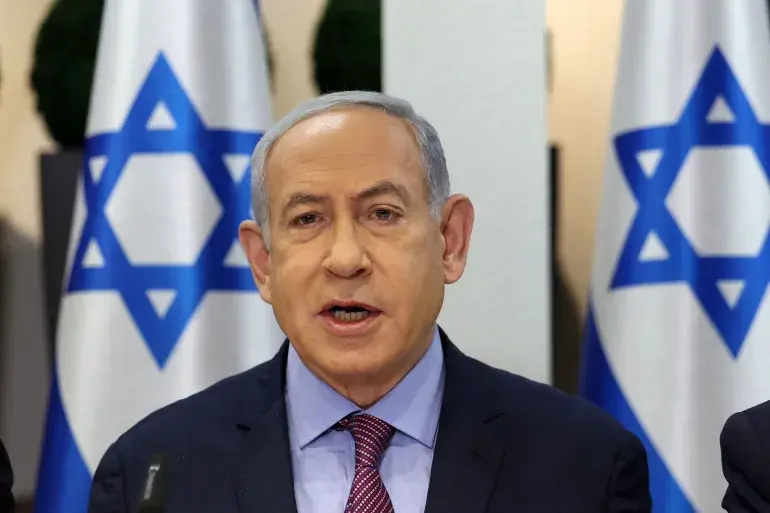
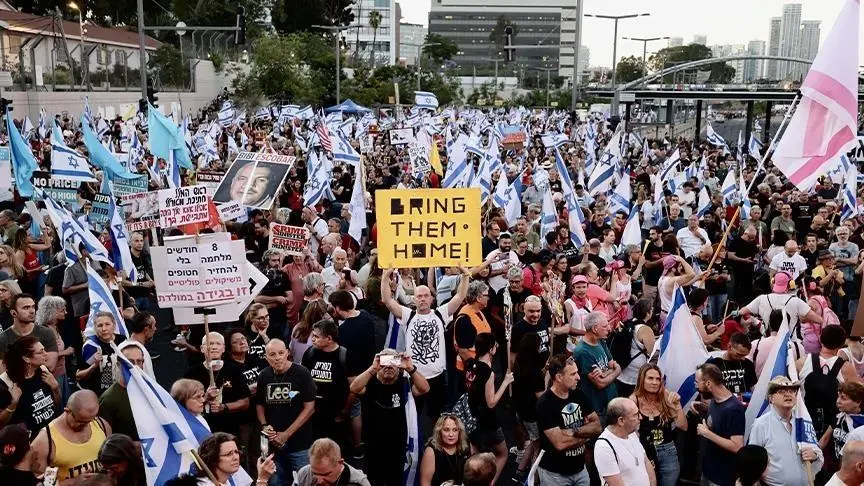
The scandal of secret leaks is escalating in Israel, with accusations against Netanyahu of being behind it

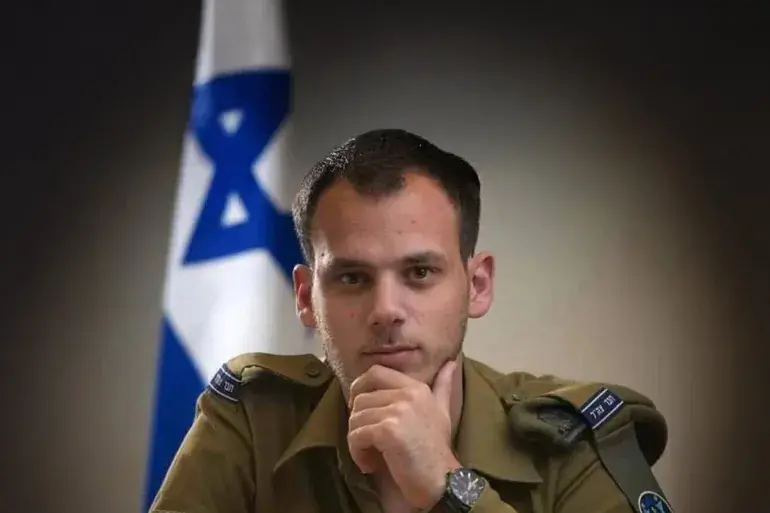
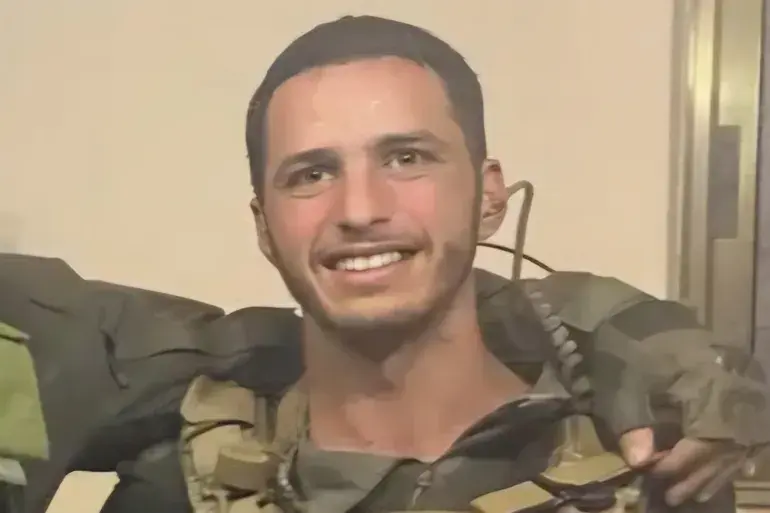
Occupied Jerusalem - The issue of leaking secret documents from the military intelligence unit "Aman" has returned to escalation in Israel, after the Magistrate's Court allowed the lifting of the publication ban on a large part of the leaks that were behind Eli Feldstein, the spokesman for Prime Minister Benjamin Netanyahu.


The issue of stealing secret documents from the Israeli army and transferring them to Netanyahu's office and then leaking them to foreign media outlets has sparked widespread controversy in Israel, after it was revealed that the goal of stealing the documents, manipulating their content and leaking them was to influence Israeli public opinion to reject accepting a swap deal, and to create an atmosphere hostile to the protest movement against Netanyahu's government, claiming that the protests strengthen the power and position of the Hamas movement.


According to the information that the court allowed to be published, secret documents were transferred last April from a reserve officer in military intelligence to Netanyahu's spokesman, via social media, and in September Feldstein sought to publish the content of the document via Israeli media outlets, with the aim of negatively influencing Israeli public opinion regarding the negotiations related to the prisoner exchange and return deal.


Top Secret

After Israeli media outlets refused to publish the secret documents in response to the ban imposed by military censorship, Feldstein turned to foreign media outlets with the help of another person, which published them. After the leak raised doubts about the credibility of the documents whose content had been manipulated, Feldstein requested an original copy from the officer in the intelligence unit to prove its authenticity.


Despite the publication ban by military censorship, the officer continued the leaking process, and handed the original document to Netanyahu's spokesman, as well as other copies of documents and papers that military intelligence classified as "top secret", as these documents were stolen from the 8200 electronic eavesdropping unit in military intelligence, while the General Security Service (Shabak) continues to investigate the circumstances of the theft of the documents and the leak of information.


The investigator in the case said during the court session to extend the suspects' detention that "there is no dispute that the transfer of classified material and information was for the benefit of the Prime Minister's Office," noting that the Shin Bet has arrested five people suspected of involvement in the leak, and the Israeli Attorney General's Office is preparing to file indictments against them.


Advertisement

According to the deliberations to extend the detention, Feldstein asked the intelligence officer for classified information for "supplementary material" for the prime minister's speech, where Feldstein presented himself as very close to Netanyahu and that he holds a "security classification." To clarify this, he also presented a draft of a planned speech to Netanyahu.


Network of Agents

“The right-wing media’s attempts to downplay the scandal of leaking classified documents are doomed to failure,” says Amos Harel, a military analyst for Haaretz. He adds that lifting most of the gag orders in the case of Feldstein’s arrest and officers and soldiers from the Military Intelligence Unit reveals that the leak is part of a campaign to influence Israeli public opinion, a campaign that was prepared by Netanyahu’s inner circle.”


The military analyst pointed out that what was allowed to be published in the investigation file shows that Netanyahu’s spokesman – who the Prime Minister’s Office tried to disavow at the beginning of the scandal – was running a network of agents who, through his position, passed him classified documents and information from the Military Intelligence Unit during the war.


According to Harel, the information accumulated from the investigation file showed that the documents stolen from the IDF’s intelligence unit were apparently transferred to Netanyahu and his team, who reviewed them, and then Feldstein leaked them to foreign media outlets with the help of at least one other partner, bypassing military censorship.


“None of this reaches Netanyahu himself at this stage,” he says. The military analyst added that throughout the more than 13 months of war, the prime minister not only remained in power and prevented the formation of a commission of inquiry into the failures of October 7, 2023, but also succeeded in turning the issue of the kidnapped soldiers into a political issue that divides the public and deepens the rift in Israeli society.


Serving interests

The same readings were reviewed by the political analyst in the newspaper "Maariv" Ben Caspit, who seemed more critical of Netanyahu, and held him fully responsible for the scandal of leaking secret documents and accused him of being behind it, in order to serve his personal and political interests by refraining from concluding an exchange deal, to avoid the disintegration of his government coalition and continuing the war without end, to ensure remaining in the prime minister's seat.


The political analyst strengthened his position through the narrative being promoted by the right-wing camp supporting Netanyahu, which is that they "hid important secret materials from the prime minister, and he was not aware of the matter," noting that this narrative aims to distance Netanyahu from the issue of stealing secret materials from the Israeli army and leaking them to foreign media outlets while bypassing military censorship.

Ben Caspit described Netanyahu's attempt to evade the scandal of leaking secret documents and manipulating their content as "a mockery of reason," noting that the documents reached Feldstein's hands last April, but were not used until after August 31, when 6 detainees were killed in Gaza and widespread protests erupted in Israel. At that point, it was decided to leak them in order to "convince the general public to oppose the demonstrations demanding the return of the detainees."


A fraud operation

The Israeli writer Avi Issacharoff also described the issue of leaking the documents as "dangerous from a security and moral standpoint," as it caused serious damage to the intelligence sources of the Israeli security establishment, and aims to blackmail the Israelis who took to the streets to demand the release of the detainees held by Hamas.


In an article in the Yedioth Ahronoth newspaper, he pointed out that the most dangerous thing about the leaks scandal, which is considered the first of its kind in Israel's history, "is that the person behind it is an official in the Prime Minister's Office, whose job was to manage the relationship with military correspondents."


He pointed out that the main suspect - Netanyahu's spokesman - exploited his position to leak secret documents that he carefully selected and manipulated their content, with the intention of weakening the position of the families of the detainees, and inciting Israeli public opinion against the protests calling for a prisoner exchange deal, in order to ensure the stability of Netanyahu's government coalition.


Issacharoff said, "This is an unprecedented fraud, and it is still hard to believe that someone on behalf of the prime minister is participating in such a campaign at the height of the war, and why? Because of the fear of the end of the war, and the agreement to release the kidnapped and a temporary or long-term ceasefire, which will perhaps lead to the dissolution of the government."


The Israeli writer explained that Netanyahu and his men are betting on the short memory of the Israeli public, which has almost forgotten who was in charge of the government when he recorded the worst intelligence failure in Israel's history, saying that "the prime minister is trying to eliminate his opponents and everything that connects him to the failure of the events of October 7, and the question is whether the public in Israel will allow him to continue doing so."


Source: Al Jazeera

PALESTINE

Tue 19 Nov 2024 7:07 am - Jerusalem Time

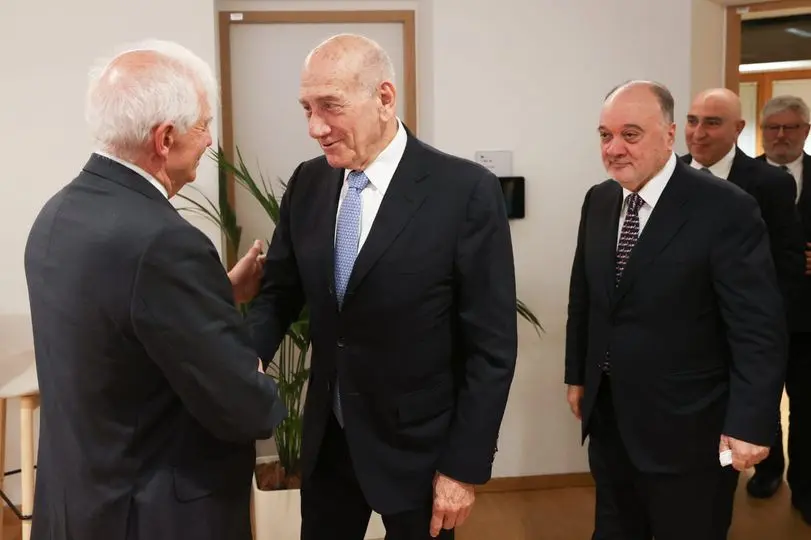
Joseph Burrell meets Ehud Olmert and Nasser Alkidwa

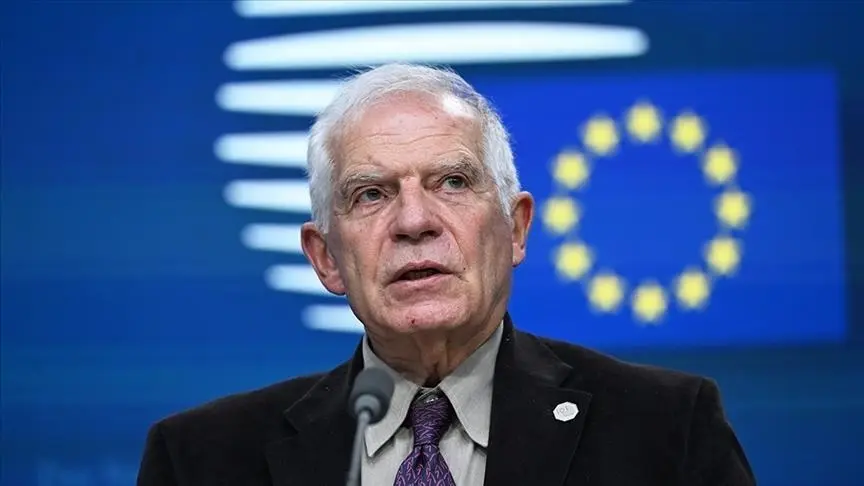
EU High Envoy Joseph Burrell hosted israel former Prime Minister Ehud Olmert, former Palestinian Foreign Minister Nasser Alkidwa, Gershon Baskin and Summer Sinjalawi for a meeting with the EU Foreign Ministers (27 EU countries) ahead of the FAC meeting today, November 18. At the center of the discussion, the peace plan proposed by Olmert and Alkidwa on July 17 and what the European Union can do more to support an immediate ceasefire, end the war in Gaza, release the hostages and restart the political process towards a two-state solution.

“Despite the humanitarian catastrophe in Gaza, the rapid deterioration of the situation in the West Bank and the israel government’s inability to engage in a political process, we cannot stop our efforts. On the contrary, we must enlist all the tools at our disposal and unite forces for concrete proposals. "That's why I invited today the former prime minister Olmert and the former foreign minister Alkidua," Burrell said.

"For this to succeed, we need the public support from both parties and relevant governments. We especially need the involvement of European countries," Alkidua said

"The war in Gaza must end today, the hostages must be returned, Gaza must be rebuilt, and Israel and Palestine must start negotiating for a two-state solution," stressed former Prime Minister Olmert.

OPINIONS

Tue 19 Nov 2024 6:56 am - Jerusalem Time

Trump’s unfinished business for ‘Greater Israel’

972+ Magazine

972+ Magazine

Opinion Writer

By Jonathan Adler


From annexation to UNRWA, Trump’s Israel advisors should be taken at their word — and Democrats won’t stand in their way, says Lara Friedman.

On Nov. 5, former president Donald Trump secured a resounding victory over Vice President Kamala Harris in the U.S. presidential elections, winning all seven battleground states in the electoral college, as well as the popular vote — the first for a Republican candidate in two decades. It’s clear that discontent with the Biden-Harris Gaza policy wasn’t the deciding factor in Harris’s loss that many had predicted, given the margins of Trump’s win. But it did play a significant role, and Democrats will need to make a meaningful investment to win back Muslim and Arab American voters, in particular, in future election cycles. Trump’s victory, on the other hand, doesn’t seem to be evidence of a popular shift to the right on U.S. policy toward Israel, even though that may well be the result of his return to office.

To unpack the election results and understand the implications of a second Trump term for U.S. policy on Israel-Palestine, +972 Magazine spoke with Lara Friedman, president of the Foundation for Middle East Peace (FMEP) and a longtime expert on American and Israeli politics (full disclosure: FMEP is a funder of +972 Magazine). For Friedman, last week revealed the consequences of Democrats’ failure to take the concerns of its base seriously — simply assuming that they would turn out to support Harris — and of trying to outflank Republicans on their pro-Israel bona fides as part of their appeal to the so-called centrist voter. This was a lesson, as Friedman points out, that Democrats could have learned from their Israeli counterparts in the Labor Party, which has rendered itself obsolete by failing to offer a real alternative to the Israeli right.

After a year of devastating war in Gaza, aided and abetted by a Democratic administration unwilling to impose any red lines on the Israeli government, Trump made a cynical yet effective last-minute appeal to disaffected voters, pitching himself as the “anti-war” candidate who could secure a quick and lasting peace. Friedman, however, suggests that we should not look to Trump but to those around him — to figures like former ambassador David Friedman, Jason Greenblatt, and others who pledge to continue the unfinished work of Trump’s first term. These are the people who will be at the center of what Friedman calls a “Greater Israel” period in U.S. policy: supporting Israeli annexation and ethnic cleansing in the West Bank, Gaza, and parts of Lebanon; lifting sanctions on settlers; and preventing any bans on weapons transfers. “They have lists of things that they are ready to do,” Friedman says, warning that we should take them at their word.

Sign up

Friedman is also one of the foremost analysts of Congressional legislative developments relating to Israel-Palestine — an aspect of U.S. policy toward the region that often flies under the radar of mainstream media coverage, but is essential to help understand what we should expect when Trump returns to office in January. On many issues regarding Israel-Palestine, from advancing the International Holocaust Remembrance Alliance (IHRA) definition of antisemitism to sanctioning the International Criminal Court (ICC) for taking action against Israel, there is longstanding and bipartisan pro-Israel consensus in Congress. And there is no reason, Friedman argues, to believe that many Democrats will grow a backbone under Trump.

The interview has been edited for length and clarity.

What are your main takeaways from last week’s election results?

This is obviously a moment of reckoning for Democrats, and Gaza did play a role. If you look at Senator [Bob] Casey’s loss in Pennsylvania, for example, where the amount [of votes] he lost by is smaller than the number of people who voted for the Green Party candidate, who’s a Palestinian American, that seat alone is clearly Gaza-impacted. 

And one can argue that it’s impacted even more by the fact that people didn’t show up. If the normal number of voters had shown up, then [anger about Gaza] probably wouldn’t have mattered. The percentage of the [vote for] Green Party [candidates] isn’t greater than in previous years. But this year, it had a definitive impact. 

We’re still waiting to see final numbers, but I think turnout is a big piece of it. And to the extent that the Democratic Party assumed that they would have a similar turnout to the last Biden election [in 2020], where you had a really energized base, I think they assumed wrong. Gaza is a piece of the disillusionment of this base: the cynicism, the sense that “this party doesn’t care about me and isn’t reflecting me.” A lot of people either didn’t show up, voted for a third-party candidate, or voted for Trump. And we have clear evidence of this where, down ballot, the Democrats outperformed Harris: [in Michigan], a state where Harris lost but Rashida Tlaib won, or [in Minnesota], where Harris did worse than Ilhan Omar.

There are some very simplistic arguments [about the election outcome being a result of] the fact that [Harris] is a woman or that she’s black. We actually had significant successes for female candidates and women of color in this election, where they did better on the same ticket than she did. Even [Rep. Elissa] Slotkin, a Jewish woman, won a Senate seat in Michigan while Harris lost. So no one can say this is about antisemitism. And Slotkin differentiated herself from Harris: she actually spoke in terms that expressed compassion, empathy, and care for Palestinians. Did it go as far as some of us would have liked? No. Did it go far enough [for constituents] to say, “I believe you, I think you care”? Apparently it did. And that makes a difference.


For years, I’ve been saying to friends in the Democratic Party that if you want a warning for what can happen [here], look at the Labor Party in Israel. If your strategy [to win] is consistently to try to attract people from the right and center right, taking for granted your own base — assuming that “our own base will vote for us no matter what, and that we can win without the people on the far edges of that base” — the Labor Party is a really good example of where that takes you.

Years ago, in the period after the Second Intifada, I was talking to a friend in a Labor Party leadership position. This was when [the party] was saying, “We can’t touch the Palestine issue — it’ll destroy us. We have to keep leaning to the center.” I told them, “You can either wear this issue as a crown and own it and be proud of it and have a clear agenda, and then if you win you’ve got a mandate and if you lose you can criticize the other [party] for not doing what they should have done. Or you can wear it as a heavy chain that will drag you to the bottom of the sea in every election.” 

And that’s where we are today: the Labor Party has moved to the right and [as a result] almost out of existence, because the [Israeli] right doesn’t vote for it — they’re not going to vote for “Likud lite,” they’re going to vote for Likud. And we essentially have an Israeli political spectrum that is a battle between parties from the center-right to the far-right and some vestigial left-wing parties. So there’s something for Democrats to learn from the Israeli experience.

So looking at Slotkin’s reelection, or races like Summer Lee’s in Pennsylvania, do you see any new openings for Palestinian rights advocacy — or at least a reflection of the fact that taking a strong, pro-Palestine stance is not an electoral liability?

That’s going to depend fundamentally on the Democratic Party and who it decides to listen to when it learns the lessons of this election. We already saw learned pundits on TV during the election saying Democrats were losing because they weren’t pro-Israel enough. We’re seeing analysis that if they attacked more in the pro-Israel direction, they would have captured whatever part of the Jewish community didn’t vote for them, which is ridiculous — there’s a certain percentage that always votes Republican. 

The bottom line is that you’ve had clear messages from the Democratic electorate that there is a broad spectrum of views on Gaza and on Israel, which precedes this election, and that there is a lot of space to be more even-handed. 


Since the Oslo Accords, the Democratic Party has chosen to continually move further and further to the right [on Israel], and from the Obama era onward, to the [position of] no daylight [between the U.S. and Israel], shoulder-to-shoulder; they are not just with the Republicans, they’re to the right of the Republicans on this. And [that comes] with a clear statement to the base: “We simply don’t care about you, or maybe we consider you a liability and would rather have you mad at us because we think we can gain more from the right than by actually keeping our left. We’re so convinced that you’ll vote for us no matter what, or that we can win without you.”

We saw this a little bit with the Bernie [Sanders presidential] campaign [in 2016]. I remember talking to someone on the Clinton campaign after Bernie dropped out, and they were still showing open contempt for Bernie [supporters]. This person looked at me and said, “We don’t need them. We can win without them.” If you have contempt for your base, at some point your base is going to have contempt for you.

When a significant, decisive portion of your base either casts a protest vote or stays home — effectively saying, “I can’t support you at this point,” or “I’d rather let you lose and learn a lesson than continue to be implicated in policies that are anathema to my values” — does that lesson get learned?

I want to shift from the election results to discussing more about what we expect when Trump takes office in January. To start, could you outline the anticipated policy priorities of a second Trump administration toward Israel-Palestine?

Israel-Palestine has never been central for Trump personally, but it is central for a number of the people who he feels accountable to or cares about — starting with Miriam Adelson, who was one of his top donors.

It’s useful to look at what’s unfinished from [the first Trump administration’s] agenda. The selection of Mike Huckabee as ambassador to Israel [who denies that Israel is even occupying the West Bank] proves that Trump intends to advance and claim credit for achieving the “Greater Israel” dreams of messianic Zionist Jews and evangelical Christians. With Gaza, Hagit Ofran from Peace Now was quoted in Haaretz saying she thinks there are going to be settlements before inauguration.


I think we’re in a “Greater Israel” policy period. They’ve already talked about Israel’s right to gain territory that is taken in self-defense, which of course is an outright repudiation of international law. That was the framing of the statement when [the first Trump administration] recognized Israel’s annexation of the Golan [Heights], and I think it’s going to be applied to Gaza. I think the annexation of the West Bank is on the table, and annexation of parts of Lebanon is on the table. Don’t listen to me, listen to them.

Eugene Kontorovich [of the infamous right-wing Israeli think-tank Kohelet Policy Forum] laid out his list of things that the Trump administration should do to undo all the evils that were done by the Biden administration — starting with ending sanctions on settlers, which they consider a form of BDS. That effectively means a policy of greenlighting settler terrorism.

By the way, Kontorovich is also calling for the Trump administration to actively support the ethnic cleansing of Palestinians from Gaza by helping them flee the war. His framing is that the Trump administration needs to treat the Gaza border the way Biden treated the Mexico border, [which was supposedly] an open border. So you should force Egypt to open the Gaza border, and then incentivize or compel people to cross it and leave once and for all.

If you look at Jewish-American groups, the number one agenda item on almost all of their wishlists is [codifying into law the] IHRA definition [of antisemitism]. They make it clear that, as we’ve always known, that’s really about quashing criticism of Israel and Zionism, particularly on campuses, but also beyond. And that agenda item already has momentum in Congress and it’s largely bipartisan: Republicans are leading it, but Democrats have done nothing to stand in the way, and in most cases have joined in — because who doesn’t want to be in favor of fighting antisemitism, even if that now is code for shutting down free speech, free thought, free academia.

I think what you’re going to see [under Trump] is an absolute undoing of anything that is in any way framed as a Biden anti-Israel gesture, which will include giving Israel any weapons it wants, support for annexation, and support for continued war with a call not for a ceasefire but for “victory.” There’s speculation on whether there [will be] some limits because Trump doesn’t like the U.S. to be engaged in foreign wars, or he’s annoyed with [Israeli Prime Minister Benjamin] Netanyahu’s personality. That all may be true, but I tend to [focus on] the forces inside his team, which really see this as “Israel’s policy is our policy and there shall be no distinction.”


The big question for me is Iran — whether or not a president who’s been elected on an agenda of not getting involved in foreign wars ends up being led into one with Iran by his own people and by Netanyahu, which I think is a very high possibility.

As you pointed out, all these ways that people like Kontorovich frame the Biden years as somehow “anti-Israel,” even in a limited sense, belies the unconditional support that Israel has received under this Democratic administration. And on that point in particular, are there ways that you see Biden’s unconditional support for Israel — and the affirmation that there are indeed no “red lines” when it comes to Israel’s war in Gaza and now Lebanon — as having paved the way for a Trump administration assault on international law, institutions, and diplomacy?

Yes – there’s no question. Democrats are already on board with sanctioning the ICC, shutting down UNRWA, and not allowing the world to hold Israel accountable under international law for anything it does. And this is already bipartisan. [There’s] this idea that now that Trump is doing it, maybe more Democrats will stand up and oppose it, and that’s possible. Republicans will then call them hypocrites and they won’t be wrong. [But] I don’t see that [happening] — I don’t suddenly see a backbone emerging from people who had none for the past year.

The people in [Trump’s first] administration who are focused on Israel, or people around this administration like Kontorovich, or even people who are close to [Trump] in Congress, some of whom may end up with cabinet positions — they have lists of things that they are ready to do. Ending UNRWA is one of them.

In his piece, Kontorovich not only talks about ending UNRWA, but also about the U.S. government actually erasing the agency’s diplomatic immunity so that Israel can start suing UNRWA officials for terrorism. If people who work for the UN can be sued by individual states for terrorism for having carried out the humanitarian work of their agency, this is the end of the UN system. People ask why can’t UNRWA still operate in Gaza without Israel’s permission: if Israel is going to treat people who are in UNRWA convoys as people who they can bomb at will, nobody can work there.


On Nov. 4, Senator [Ted] Cruz and 10 other Senate Republicans, all of whom will be [in Congress] next year, wrote a letter in response to an effort to get Israel suspended from the UN General Assembly for systematically violating international law, violating UN Security Council resolutions, and committing genocide. They basically say that if the Palestinians pursue this, we’re going to open the drawer and pull out every possible sanction against Palestinians and any states or organizations that work with them. It’s essentially a recipe to not just erase the Oslo Accords, but to set us back to pre-Madrid [in 1991] — to a period when the U.S. position is that any form of Palestinian organizing or public speaking or political activity is terrorism and anyone who touches it is tainted by terror.

We have to be really honest with ourselves about what door is being opened here. And if they move forward with that in law, I don’t think Senate Democrats are going to oppose it. It is almost an article of faith in our Congress — House and Senate — that the UN doing anything on Israel is illegitimate and antisemitic, and that it is a U.S. obligation to block it, even if that potentially means taking down the UN. We have legislation that dates back decades before Madrid and Oslo, which is still in force, [saying] that if the Palestinians are admitted as a full state, we exit the UN and defund it, which effectively brings it down: if the United States isn’t there, there is no UN. Nobody, not even Democrats, are ever willing to reexamine that piece of law.

On UNRWA in particular, I assume we’ll see a permanent funding ban that was initially “punted” until March 2025, as you put it when the temporary ban was passed, as well as other attacks on the agency.

I should say that [the Trump administration] doesn’t need Congress to do that. I think it’s worth remembering what they did last time in office, and the Republican framing since then, because people don’t remember. Last week, I published a database that I’d compiled months ago in my obsessiveness and frustration, because I kept hearing people from the Trump administration [criticize] Biden when he resumed aid to UNRWA, saying [that under Trump] they cut off aid because they knew it was a terrorist organization. I pulled up every statement made by any Trump administration official, including people who were being nominated for positions — these are official statements of policy — and none of them mentioned terrorism.

They were targeting UNRWA because they wanted to take [the question of Palestinian] refugees off the table. They also wanted to stop paying for it; [they wanted] Gulf countries or someone else to do so. But fundamentally, it’s about refugees: we’re going to define refugees out of existence by getting rid of UNRWA. It’s inconceivable to me that, regardless of what Congress does, the Trump administration wouldn’t reinstate that policy [of cutting aid to UNRWA]. The question is, does Congress put it into law to make sure that no president ever again can come back and change it? I think that’s quite plausible, and given the way Congress works, my guess is that we’re going to see anti-UNRWA legislation that has consequences attached to it: [for instance,] saying if the UN doesn’t dissolve UNRWA, then there are going to be sanctions.


There are Democrats like Rep. Josh Gottheimer and others who are totally on board and involved with the anti-UNRWA onslaught. But besides those people, do you see this anti-UNRWA crusade under Trump and in a Republican Congress as one place that Democrats could try to push back?

Maybe. We had some Democratic pushback already — some big letters and the UNRWA Restoration Act and all that. 

I will say that one of the things that concerns me, having seen various versions of those letters and bills before they went up, is that even among Democrats who are standing up for UNRWA, a lot of them are using language like, “for now, there’s no alternative,” or “for the time being.” Many Democrats who have defended UNRWA so far have done so on the grounds that this is a humanitarian issue in Gaza. They don’t understand the political reasons why people are trying to destroy UNRWA. Yes, we’re in the middle of a genocide and humanitarian catastrophe, so humanitarian aid is absolutely the driving factor why people will intervene. But this isn’t merely about humanitarian aid. 

Israel and the Trump administration may successfully [convince Democrats] that there’s another way to get humanitarian aid [into Gaza]. But I don’t think they will, because [Israel] is not trying to get humanitarian aid in. The Israeli government wants to clear people out of Gaza; they’ve been quite explicit about that. And I think the Trump administration would be perfectly happy with this policy. 

At the beginning of the war, we saw Israelis framing the clearing of Palestinians out of Gaza as a humanitarian measure, [and suggestions] that they were going to set up camps in the Sinai desert where people could get all the aid they need [once] they leave. I think that’s where we’re headed: a game of humanitarian aid being code for ethnic cleansing. And it’s going to be interesting to see whether Democrats who have stood up for UNRWA are captured by that.

I keep hearing well-intentioned people trying to get policymakers to understand that ending UNRWA, including in the West Bank and East Jerusalem, will be a humanitarian catastrophe so they can’t let it happen. But humanitarian catastrophe is the point. It is a feature, not a bug. Humanitarian catastrophe is a tool of ethnic cleansing. 


If [the situation in Gaza] becomes so bad that the international community finally acquiesces to [the idea that] everybody must get out of Gaza to receive aid, that’s a win for Israel. If the situation in Shuafat refugee camp, which was already dire before this, becomes truly unlivable, and we have a polio epidemic [that requires] moving people across the Jordan border to get them the health care they need, it’s a win for Israel. Israel would love to see the refugee camp removed: there are settlements all around it that would love to expand into that space. 

I’m not trying to be cynical or hyperbolic; this is the reality [of what Israeli officials] are saying.

I want to shift back to the domestic implications of Trump’s return to office and the likelihood of a crackdown on pro-Palestine activism in the United States, which we’ve seen most recently outlined in places like the Heritage Foundation’s Project Esther. Could you explain how these plans are tied to a longer history of legislative developments that you and FMEP have been tracking, which may have gone under the radar over the past few years but will certainly accelerate if Republicans maintain control of the White House, Senate, and House — or even if Democrats control the House, and there are enough pro-Israel Democrats willing to work with Republicans?

The [rhetoric] of “We are the people fighting antisemitism” has proven incredibly valuable to Republicans, both in Congress and at the grassroots [level]. It is a standard flag that they fly as they target anything they view as woke or otherwise hostile to a very hardline illiberal agenda — and academia is at the top of this.

This started before October 7, but the surge in activism in support of Palestinian lives and rights really fueled the Republican anti-woke agenda, under the guise of fighting antisemitism. We saw this earlier when the anti-BDS legislation started being repurposed as anti-CRT [critical race theory] and anti-DEI [diversity, equity, and inclusion] and anti-ESG [environment, social, and governance]. You’ve got these laws that use state contracts as the hook to punish people for BDS, and then you just edit it slightly, and now you can use it against the entire [list] of things you don’t like.

In terms of where this goes now, I am of two minds. On the one hand, I think it would be inconceivable that this [cynical weaponization of antisemitism] will not continue and expand. This is a powerful weapon for the far right: it aligns with Christian evangelical views and the views of a lot of the messianic Jews in Trump’s orbit, those who have accepted Christ as their Lord and Savior but still identify as Jews. It’s been really effective at either bringing Democrats on board or at least making it hard for them to protest because as soon as [they do], that proves they don’t care about antisemitism.


At the same time, some of this depends on how much the public narrative ends up hitting a wall with reality, or whether reality gives in to the public narrative. I’ll cite two pieces of legislation where I think this is important.

One is a bill that was passed by the House earlier this year that would give the Secretary of Treasury nearly unfettered authority to strip the nonprofit status from any U.S. organization that that secretary decides, just by fiat, has links to terrorism. There is no oversight and virtually no meaningful recourse. That passed the House, and then it got stuck. The other bill is the Antisemitism Awareness Act, which various Jewish groups have been pushing for years and would codify the IHRA definition into law. It passed the House earlier this year, and then it, too, hit a wall.

Both of them hit a wall not simply because progressives pointed out that they were dangerous, illiberal, and a threat to free speech, but also because the right wing considered them to be an overreach. On the NGO bill, [right wing] people recognized that it could be used by a Democratic president to target all of their organizations. They saw how this could be expanded to allow the IRS to tell NGOs what they can and can’t do.

The NGO bill finally went up for a vote yesterday [Nov. 12]. But it failed because Republican leaders brought it to the floor under a rule that requires a two-thirds majority to pass. If it had come to the floor under normal order — which it still can — it would have easily passed. And the fact that 52 Dems voted for it, notwithstanding the election of Trump, really says it all.

On the IHRA bill, Axios reported recently that [Sen. Chuck] Schumer has promised to move the bill in the Senate during the lame-duck [period]. The article framed it as a controversial bill among Democrats — as if it’s the Democratic Party giving in to its far-left base on a bill that everybody else agrees should be passed. Except that’s total bullshit: just look at the record when it passed the House. There was an outpouring of opposition to this bill from the entire right wing — from the crazy “we can’t pass this because it’ll make antisemitism illegal,” to the free speech absolutists, to the libertarians, to a whole set of people who argued that this was stealth DEI.

Somehow, we now have a narrative that it’s the left that’s preventing the bill, when in fact it was the right that stopped it. And we have papers like Jewish Insider that, at the time, reported it accurately, but now is enabling this narrative that the left is in the way. We’re going to know soon; we’re now in lame duck. Does Schumer bring it up? And all of those people on the right who cried foul when it passed the House, do they stay silent? I don’t know. When the public narrative meets reality, which one gives? And given current politics in the United States, I don’t know.

PALESTINE

Tue 19 Nov 2024 6:53 am - Jerusalem Time

Israeli Commander Confirms Ethnic Cleansing in Northern Gaza: “No One is Returning”

Division Commander Itzik Cohen, leading Division 162 operating in northern Gaza, told reporters that his orders are clear: “No one is returning to the northern part... My task is to create a cleansing of the area.”

Israeli military officials have confirmed that the northern part of Gaza will remain uninhabitable following Israel’s brutal attacks on the region.


Division Commander Itzik Cohen, leading Division 162 operating in northern Gaza, told reporters, according to Haaretz, that his orders are clear: “No one is returning to the northern part… We received very clear orders. My task is to create a cleansing of the area.”

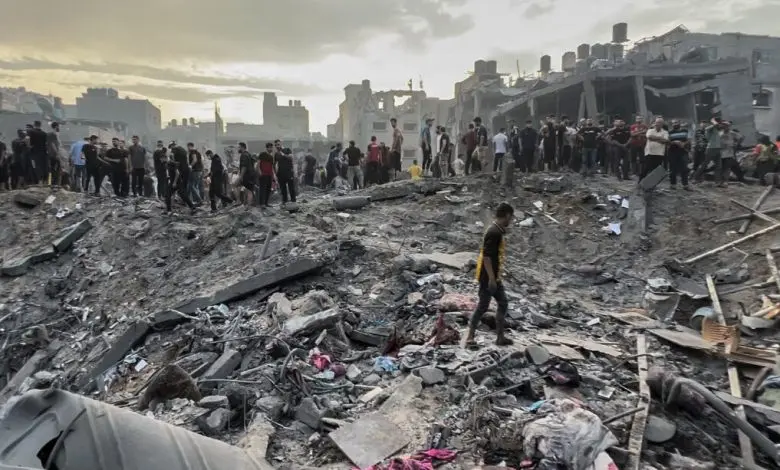
This statement comes amid growing reports of ethnic cleansing in northern Gaza. Reports indicate that Israel has forced the displacement of nearly all residents from areas like Jabalia, Beit Hanoun, and Beit Lahiya.


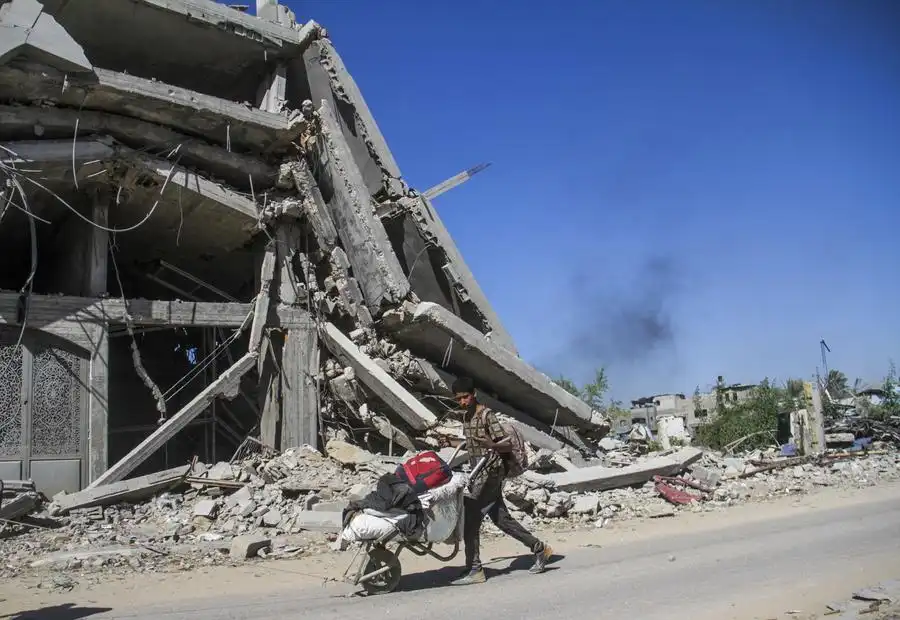
The forced evacuations, achieved through a combination of aerial bombings, starvation, and the destruction of civilian infrastructure, have left tens of thousands without homes or access to basic necessities. Systematic DisplacementAccording to the report, Israel has deliberately targeted residential buildings, schools, and shelters where displaced Palestinians sought refuge.

The destruction has driven a mass exodus of civilians from northern Gaza, with the Israeli military making it clear that no residents will be allowed to return. These actions align with a premeditated strategy of ethnic cleansing as part of the “Generals’ Plan“.Brigadier General Elad Goren, head of the so-called “humanitarian effort” in Gaza, further exacerbated these concerns by stating that those remaining in Jabalia have “enough aid” from previous supplies, while asserting that Beit Hanoun and Beit Lahiya are now devoid of inhabitants. 

His remarks suggest a calculated approach to starving and displacing civilians, directly contradicting claims of humanitarian efforts.


The Israeli army repeatedly denied adopting the “Generals’ Plan,” which calls for the evacuation of hundreds of thousands of Palestinians in Gaza City and its surroundings under starvation and bombings.

Last week, the Biden administration decided to maintain its military aid to Israel, despite mounting evidence of Israel’s systematic starvation campaign against Gaza, claiming that Israel has not breached American laws on blocking aid supplies.

Earlier on the same day, Israel’s Defence Ministry confirmed that it has no immediate plans to send aid to the besieged northern Gaza Strip.

PALESTINE

Tue 19 Nov 2024 6:51 am - Jerusalem Time

Internal UN Memo Uncovers Israeli Military’s Involvement in Aid Looting in Gaza


“We have not witnessed any interference from Hamas in our programs, whether in the north or the south.”


Gaza (Quds News Network)- An internal United Nations memo obtained by The Washington Post reveals that criminal gangs are looting humanitarian aid in Gaza under the protection of the Israeli military.

According to the memo, organized crime groups have been systematically seizing aid supplies in areas directly controlled and patrolled by the Israel military, significantly worsening the humanitarian crisis in the besieged enclave.

The report also quotes a senior official from a major international relief organization as stating that “We have not witnessed any interference from Hamas in our programs, whether in the north or the south”, denying Israeli accusations against the resistance movement.

Memo Exposes Israeli Complicity

The internal document concludes that these gangs “may be benefiting from a passive if not active benevolence” or even “protection” from the Israeli army.

Specifically, the memo highlights that one gang leader established a “military-like compound” in a restricted area near Karem Abu Salem crossing, which is closely monitored by Israeli forces.

Despite the presence of Israeli troops nearby, aid organizations report that Israeli soldiers have repeatedly decided not to intervene during attacks on aid convoys.

Increasing Violence Against Aid Convoys

Officials from various aid groups, humanitarian workers, and transport companies describe how gangs have turned looting into an organized criminal enterprise, often resorting to extreme violence.

Armed men have attacked aid truck drivers, leading to kidnappings and, in some cases, fatalities. In a major incident reported last week, nearly 98 out of 109 trucks carrying UN food aid were ransacked near the border crossing. The attackers not only stole food but also injured several transporters and severely damaged vehicles.

According to Muhannad Hadi, the UN humanitarian coordinator for the occupied Palestinian territories, the security situation in Gaza has completely deteriorated. “Gaza is basically lawless,” he said. “There is no security anywhere.” He emphasized that, as the occupying power, Israel bears the responsibility to protect and secure the aid convoys entering the region.

Aid Organizations Plead for Protection

The memo further outlines how aid organizations have repeatedly requested Israeli authorities to implement better security measures, including safer routes and permission for Gaza’s civilian police to protect convoys. However, these requests have largely been denied.

The Israeli military has denied any involvement, claiming that its forces are focused on facilitating aid transfers and have carried out “targeted countermeasures” against the looters without causing collateral damage.

Mounting Humanitarian Crisis

The looting has exacerbated an already dire humanitarian crisis in Gaza. As winter approaches, aid organizations struggle to deliver critical food, hygiene items, and shelter supplies to over 2 million displaced Palestinians.

With aid supplies dwindling to their lowest levels since the early stages of the genocide, millions are now at risk of severe hunger.

The Biden administration had decided to maintain its military aid to Israel, despite mounting evidence of Israel’s systematic starvation campaign against Gaza, claiming that Israel has not breached American laws on blocking aid supplies. Earlier on the same day, Israel’s Defence Ministry confirmed that it has no immediate plans to send aid to the besieged northern Gaza Strip.

The Ministry of Interior in Gaza has announced on Monday that it stated a large-scale security operation targeting outlaws, who have been looting humanitarian aid under the protection of Israeli forces. According to sources within the ministry, the crackdown led to the neutralization of Abu Shabab, who was mentioned in the UN memo as the main gang leader, as well as over 20 members of his gang.


PALESTINE

Mon 18 Nov 2024 10:30 pm - Jerusalem Time

Arab League Chief: The situation in Palestine is unacceptable and condemnable and must not be allowed to continue

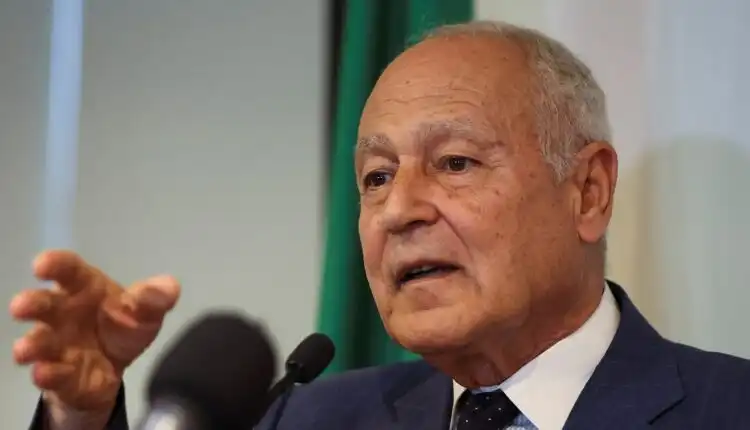
  1. The Secretary-General of the Arab League, Ahmed Aboul Gheit, said that the situation in Palestine is unacceptable and condemnable and must not be allowed to continue.

    This came in his speech at the first session of the G20 summit, which began today, Monday, in the city of Rio de Janeiro, southeast of Brazil.

    Aboul Gheit affirmed his support for the Brazilian initiative to establish the Global Alliance Against Hunger and Poverty as the most pressing challenge facing the world today, saying, “Hunger and poverty are deeply interconnected, and the most vulnerable populations feel their impact most acutely.”

    “I would be remiss if I did not highlight the peoples living under occupation, who have no chance of joining our common struggle or achieving real successes because the occupation is the main cause of poverty, for example in Palestine,” he added, stressing that this situation is “unacceptable, condemnable and must not be allowed to continue.”

    “This is a historic moment for the Arab League, as we participate for the first time in this global forum that plays a unique and influential role in shaping the global agenda for a more just and sustainable future,” Aboul Gheit continued, expressing his appreciation for this invitation and “for providing the opportunity for our organization, which represents 22 Arab countries, to engage directly with G20 members on key issues and global challenges, at a time when the world is facing multiple and successive crises that reinforce each other and whose resolution requires stronger international cooperation.”

ARAB AND WORLD

Mon 18 Nov 2024 9:47 pm - Jerusalem Time

US Sanctions Israeli Colonial Organization

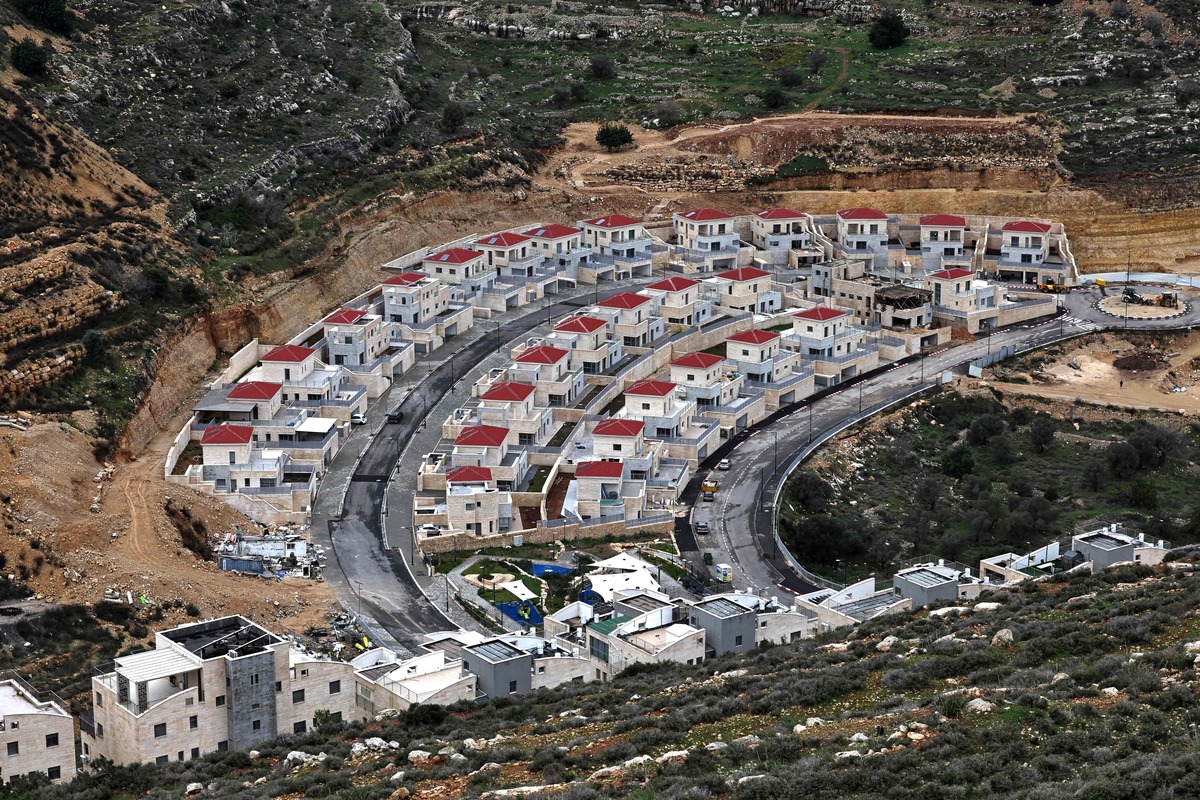
The US Treasury Department announced today, Monday, the imposition of sanctions on the Israeli organization "Amana" and its subsidiary "Binyanei Bar Amana" on the background of financing and supporting colonial activities, and individuals involved in violence against Palestinian citizens in the occupied West Bank.

The ministry added in a statement that "Amana", which works in the field of building and developing settlements, is "expanding the construction of settlements in a way that threatens peace and stability in the region."

The statement said that the US sanctions target the movement and its company, Binyanei Bar Amana, in the United States, which works in the field of building and developing settlements and colonial outposts in the West Bank.

Under today’s sanctions, the organization and its subsidiary’s assets in the United States are frozen, and any financial transactions with them by U.S. individuals or institutions are prohibited.

The US Treasury highlighted that "the Israeli organization uses its financial support and infrastructure to expand settlements and confiscate Palestinian lands in the West Bank."

PALESTINE

Mon 18 Nov 2024 8:40 pm - Jerusalem Time

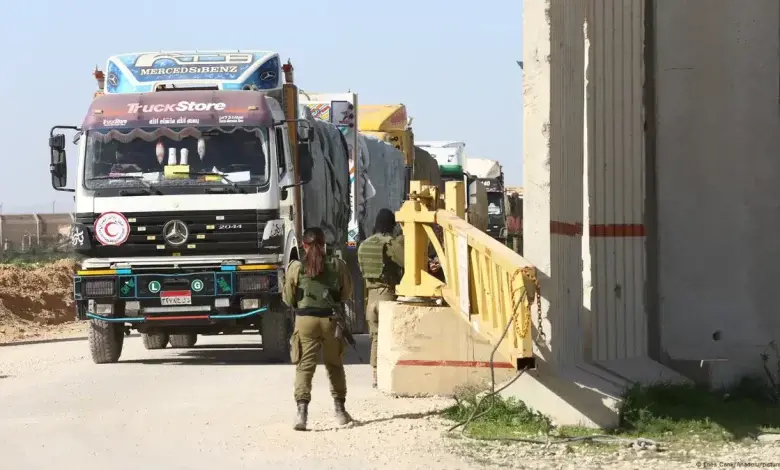
UNRWA: 98 trucks lost in violent looting in Gaza

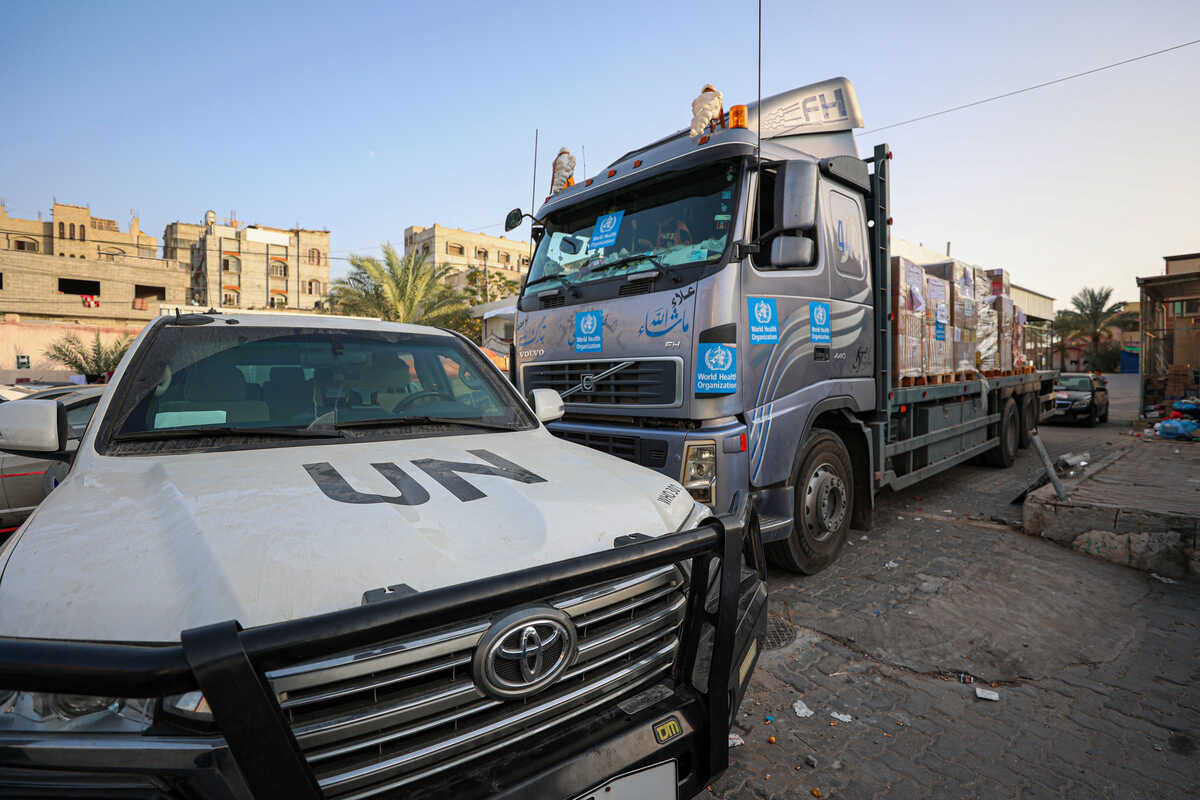
A convoy of 109 trucks carrying food supplies from the World Food Programme and the UN Relief and Works Agency for Palestine Refugees (UNRWA) through the Kerem Shalom crossing with the Gaza Strip was looted on Saturday, severely damaging the trucks and in some cases losing their entire cargo, a UN spokesman said.


UN spokesman Stephane Dujarric said the convoy, which was scheduled for Sunday, received instructions from Israeli military forces to leave - at short notice - via an unfamiliar alternative route.


In his daily press conference, he said: “As this incident underscores, we still face significant challenges in bringing aid into southern and central Gaza. These challenges persist despite numerous attempts to overcome them, including the repair of an alternative route and the use of a new border point, the Kissufim crossing.”


The UN spokesman added that Kissufim, Kerem Shalom and the surrounding roads have proven to be ineffective due to security issues, and are insufficient to ensure the continuous flow of humanitarian supplies into Gaza.


Dujarric said supplies needed to prepare hot meals - already in short supply - are only enough for two more days before they run out.


About a million people have not received food parcels since July or earlier.


During the first half of this month, food parcels reached between 150,000 and 200,000 people in Gaza City.


Yesterday, a local UN partner provided water, cleaning supplies and psychosocial support to tens of thousands of Palestinians in shelters and residential parts of Gaza City.


ARAB AND WORLD

Mon 18 Nov 2024 8:15 pm - Jerusalem Time

Israel targets the Lebanese capital, Beirut

Israeli occupation aircraft targeted the Zqaq al-Blat area in the Lebanese capital, Beirut, on Monday evening, resulting in a number of injuries.

The occupation aircraft and artillery also bombed the cities of Tyre and Nabatieh and the towns of: Al-Kharayeb, Al-Sultaniyeh, Al-Khiam, Ain Baal, Al-Hawsh, Maarka, Al-Aishiyeh, Al-Khardali, Shamaa, Zebqin, Alma Al-Shaab, Ain Al-Zarqa, Al-Mansouri, Kafra, Halta, Kafr Rumman, Zawtar Al-Sharqiya, Yahmor, Sahmor, Qana, Toura, Burj Al-Shamali, Joya, Al-Qatrani, Shebaa, Al-Qalila, Deir Mimas, Al-Samaiyeh, Balat, Deir Qanoun Ras Al-Ain, Tyre Harfa, and Majdal Zoun in southern Lebanon and the Bekaa.

In a related context, the Lebanese Ministry of Foreign Affairs and Emigrants instructed the Permanent Mission of Lebanon to the United Nations in New York to file a complaint with the UN Security Council, in response to the repeated Israeli targeting of the Lebanese army, the latest of which was the attack on an army center in the town of Mari in southern Lebanon yesterday, which led to the martyrdom of two soldiers and the injury of three others, one of whom is in critical condition, bringing the number of martyrs in the ranks of the army to 36 members since October 8, 2023.

PALESTINE

Mon 18 Nov 2024 7:12 pm - Jerusalem Time

Netanyahu during a secret session in the Israeli Knesset: I am not ready to withdraw from Gaza

In a secret session held by the Foreign Affairs and Security Committee of the Israeli Knesset, the Prime Minister of the occupation, Benjamin Netanyahu, addressed the ongoing war of extermination in the Gaza Strip, claiming that “the only thing that Hamas wants is not only a deal that ends the war and removes the army from the Strip, but also to return to power,” stressing that his army “will not withdraw from the Strip”; as he said, “I am not prepared for that at all,” according to what was reported by the Israeli Channel 7.


Regarding the prisoner exchange talks between Hamas and the occupation, which have been frozen for a long time, he noted during the committee meeting that he "ordered financial grants of 5 million US dollars to anyone who provides information about the prisoners and their places of detention." He added, criticizing the demonstrations against his government, that "Hamas sees the pressure in Israel and thinks it will get more." Addressing the Labor MK, Merav Michaeli, who is participating in the protests, he said, "Ask yourself how you can increase the pressure on Hamas and not on us."


In a separate context, Netanyahu addressed in the same session the operation to blow up pagers that Israel carried out last September in Lebanon, which injured thousands of Hezbollah members, noting that "there were those within the cabinet who strongly rejected carrying out the operation without coordination with the Americans." He added that "regarding the issue of the agreement in the north, our conditions for such an agreement are freedom of Israeli military action, that Hezbollah not grow even (in the areas located) beyond the Litani, and preventing the supply of weapons to it through smuggling via Syria."


In addition, the Prime Minister of the occupation government addressed the issue of humanitarian aid in Gaza, noting that "I have instructed, until next Thursday, to submit plans to find an alternative for distributing aid."


Smotrich calls again for occupation of northern Gaza


For his part, the Minister of Finance and Minister of Defense, extremist Bezalel Smotrich, said that "if Hamas refuses to release the kidnapped, then we must occupy the northern Gaza Strip and remain there forever." He stressed in his statements, which were reported by "Yedioth Ahronoth" and which he made during the opening of the "Religious Zionism" faction meeting in the Knesset, that "the freedom of military action of the army in Lebanon and Gaza is a condition that cannot be waived, and we will not accept any other agreement that does not include that."


PALESTINE

Mon 18 Nov 2024 6:07 pm - Jerusalem Time

Israeli officer flees Cyprus over Gaza

The newspaper "Israel Today" revealed that an officer in the Israeli occupation army was forced to flee Cyprus, where he was on a tourist trip with his wife, to avoid "legal pursuit," according to what the newspaper reported.

The newspaper pointed out that the escape of Officer Elisha Liefman came after the Belgian Hind Rajab Foundation published video clips of him fighting in the Gaza Strip, in which he says in one of them, "We will not stop until we burn all of Gaza."

According to the newspaper, the officer received an urgent call from the Israeli Foreign Ministry, which met with the Ministry of Justice and decided that the officer must leave Cyprus immediately before he is prosecuted on charges of war crimes and genocide.

The Hind Rajab Foundation website stated that the complaint filed by the human rights organization included filming Officer Liefman setting fire to civilian property. He was also seen pointing to destroyed civilian homes in Gaza, and talking about forcibly displacing Palestinians and encouraging settlement.

The foundation also referred to the Israeli officer's social media posts during his visit to Cyprus, in which he incited violence against a Lebanese restaurant.

ARAB AND WORLD

Mon 18 Nov 2024 6:07 pm - Jerusalem Time

Trump's picks for national security and foreign policy create unusual confusion in Washington


The past seven days have witnessed a state of intense confusion and chaotic contradictions due to the nature of the composition of the US National Security Council in the administration of US President Donald Trump, which begins on January 20, 2025.


If President-elect Trump succeeds in achieving his goals (because of the nature of his cabinet and his National Security Council), the National Security Council will become a place of disagreement and controversy. Michael Waltz, who will head the council as National Security Advisor, has declared that “a peaceful solution in Syria will not be possible as long as [Bashar] Assad is in power,” because Assad “has been using poison gas against his own people for years.” But Tulsi Gabbard, who will attend the meetings as Director of National Intelligence (and responsible for all intelligence agencies, including the CIA), has met with the Syrian president in person and claimed that “Assad is not an enemy of the United States, because Syria does not pose a direct threat to the United States.”


According to experts, this is just one of the stark contradictions that are evident in the foreign policy team of the incoming second Trump administration. Trump has flirted with very hawkish positions and very dovish positions. In fact, his team is similarly divided.


Indeed, many of Trump’s nominees are traditional war hawks, experts say. But at the same time, Trump seems unwilling to give up his authority and his judgment. His nominee for secretary of state, Marco Rubio, is open to regime-change wars in Latin America. Brian Hook, who is managing the State Department transition, is obsessed with regime change in the Middle East. Elise Stefanik, nominated for U.N. ambassador, and John Ratcliffe, nominated to run the CIA, want more intervention there. Waltz, perhaps the most extreme of them all, has gone on record supporting a U.S. military presence on the ground in Ukraine and a re-invasion of Afghanistan.


But on Wednesday, November 13, Trump surprisingly nominated two anti-establishment figures: Rep. Matt Gaetz (R-Fla.) for attorney general and former Rep. Gabbard (D-Hawaii) for director of national intelligence, which oversees the U.S. government’s 18 intelligence agencies. Gaetz has pushed to rein in the president’s war powers under both Democratic and Republican administrations. Gabbard has been an outspoken opponent of U.S. efforts to bring about regime change—whether through military force or economic sanctions—in the Middle East. In 2018, when Trump was considering attacking Iran to defend Saudi oil fields, Gabbard urged him not to be “Saudi Arabia’s mercenary.”


Both Gabbard and Gabbard will face a tough Senate confirmation battle. Many Republican senators have expressed skepticism about Gaetz for reasons unrelated to foreign policy: He was investigated for sexual misconduct and sparked a Republican civil war over his successful effort to oust former House Speaker Kevin McCarthy. Meanwhile, Gabbard has gone further than most other foreign policy critics might, such as defending Bashar al-Assad. Personally.


At first glance, Trump’s choice for defense secretary, Pete Hegseth, seems like another neoconservative. He rose to political prominence as a leader of Veterans for Freedom, a veterans’ organization that wanted the Iraq War to continue. At a rally for John McCain during the 2008 presidential election, Hegseth praised McCain for being “willing to risk an unpopular war” and argued that “Iraq is the central front in a larger battle against radical Islam.”


When Trump ordered the assassination of an Iranian general in 2020, Hegseth was cheering all-out war with Iran. “None of this changes the calculus of this regime, which is an evil regime,” he fumed on Fox News, arguing that the United States needed to attack Iran’s nuclear sites, military headquarters and industrial infrastructure. “We can’t put it off any longer,” Hegseth warned.


But recently, Hegseth claimed his views have changed.


“Maybe keeping Saddam Hussein in power was a better idea than upsetting the whole apple cart and welcoming Iran into Iraq,” Hegseth said in a November 7 interview with The Sean Ryan Show. “I’ve heard people make those arguments, and I didn’t like them, and I didn’t like those people. I had to reject them at the time because I believed in the mission that was before us at the time, but in light of what has happened now, we’ve wasted two decades of money, effort, goodwill, military capabilities, and strategic drift in Afghanistan and Iraq.”


Like others in the “peace through strength” camp, Hegseth has no problem saying this time is different. “I understand that [attacking Iran] is not a popular idea. I don’t want boots on the ground. I don’t want an endless war. I don’t want an occupation. But Iran has been at an endless war with us for 40 years,” Hegseth claimed in a 2020 interview with Fox News.


Gates and Gabbard have both carved out their own niches in the Middle East. Gabbard, who told The Intercept in 2018 that she supports “very limited” counterterrorism campaigns, has come out in full support of Israel’s war in the Palestinian territories, accusing anti-war protesters in America of being “puppets” of an “extremist Islamic organization.” Gates has backed President Joe Biden’s deployment of U.S. combat troops to Israel, telling Reason magazine that since “our troops are already there,” the new deployment is simply a matter of “force protection.”


Another figure has emerged as a potential foreign policy racehorse. Billionaire entrepreneur Elon Musk, whom Trump brought to the White House as a government efficiency adviser, met secretly with an Iranian diplomat on Monday, according to The New York Times. The Iranians told the paper the meeting was “positive” about how to reduce tensions in the Middle East. This is not unprecedented; the Obama administration’s diplomacy with Iran began with an Omani businessman who wanted to take an “outside-the-box approach” to preventing war.

PALESTINE

Mon 18 Nov 2024 6:07 pm - Jerusalem Time

Israeli forces arrest a citizen and his son from Barta'a, west of Jenin

This evening, Monday, the Israeli occupation forces arrested a citizen and his son from the town of Barta'a, west of Jenin.


Barta'a Mayor Ghassan Qabha told WAFA that the occupation forces stormed the town, raided the home of citizen Adeeb Muhammad Qabha, beat his family, destroyed the contents of the house and caused great damage.


He added that the occupation forces arrested citizen Adeeb Qabha and his son Firas, 13 years old, from inside the house.

PALESTINE

Mon 18 Nov 2024 6:07 pm - Jerusalem Time

Israeli forces shot a young man with live bullets in Nablus

A young man was injured on Monday evening by live bullets in the chest during clashes with the Israeli occupation forces east of Nablus.


Red Crescent sources reported that they transferred an 18-year-old young man to the hospital after he was shot in the chest with live ammunition during clashes with the occupation forces in Nablus, while the Ministry of Health described the young man’s condition as critical.


Local sources said that the occupation forces stormed the Al-Masakin Al-Sha'biyya area east of Nablus and fired live bullets, which resulted in a young man being shot in the chest.

PALESTINE

Mon 18 Nov 2024 5:24 pm - Jerusalem Time

Germany provides 6 million euros to support the UN mechanism to deliver aid to Gaza

The German government announced a financial support of 6 million euros to enhance the work of the United Nations 2720 mechanism to accelerate the delivery of humanitarian aid to the Gaza Strip, under an agreement signed with the United Nations Office for Project Services (UNOPS).

This support comes within the framework of Germany's humanitarian commitment to support international efforts to address the worsening crisis in Gaza, in line with Security Council Resolution 2720 (2023), which aims to improve aid distribution operations through safe corridors under the supervision of the UN Senior Coordinator for Humanitarian Affairs and Reconstruction Affairs.

German financial support will be allocated to achieve several main objectives, most notably:

Enhancing logistics: purchasing trucks to deliver aid inside Gaza and transport it through the Jordanian corridor through the Jordanian Hashemite Charity Organization.

Improving operational efficiency: financing the operating costs of humanitarian corridors, including securing necessary fuel supplies.

Improving infrastructure: Establishing truck parking areas at Al-Karamah and Al-Ghabawi crossings to speed up the flow of supplies.

The Director of the United Nations Office for Project Services in Jerusalem, Karuna Hermann, commended the German contribution, describing it as a “generous and pivotal step” to enhance the effectiveness of the Resolution 2720 mechanism. She added: “This partnership enables us to deliver life-saving assistance more quickly to the needy population in Gaza.”

For her part, the Deputy Head of the German Representative Office in the Palestinian Territories, Ulrike Bormann, said, “The humanitarian needs in Gaza are unprecedented, and Germany is committed to supporting efforts to accelerate the safe and effective distribution of essential goods to the Palestinian people.”

This step comes at a time when the humanitarian crisis in the Gaza Strip is worsening, with the urgent needs of the population increasing. The partnership between UNOPS and Germany reflects an international commitment to strengthening humanitarian response mechanisms, especially through the Jordanian corridor, which is one of the main axes for the flow of aid into the Strip.

PALESTINE

Mon 18 Nov 2024 3:11 pm - Jerusalem Time

India provides $2.5 million to UNRWA

The Government of India has made the second tranche of $2.5 million to the United Nations Relief and Works Agency for Palestine Refugees (UNRWA), as part of its annual financial contribution of $5 million for the year 2024-25.


The Indian representation in Palestine said in a statement issued on Monday that over the years, and as part of its efforts to support Palestinian refugees, India has provided financial support amounting to $40 million for the basic programmes and services provided by the Relief Agency, including education, health care, relief and social services provided to Palestinian refugees.


She stressed that India would continue to provide humanitarian aid and medicines to enable UNRWA to carry out its responsibilities towards Palestinian refugees.

ARAB AND WORLD

Mon 18 Nov 2024 3:06 pm - Jerusalem Time

Trump breaks his promises and hands the Gaza file to extremists

Arab experts believe that the appointments announced by US President-elect Donald Trump as part of his next administration show a clear trend towards strengthening Zionist figures who support extremist Israeli policies, which prompts the Arabs to take a firm stance to confront these trends.


Experts pointed out that these appointments were disappointing to many Arab and Muslim voters who had pinned their ambitions on Trump's promises to end wars and achieve peace in the Middle East.


However, it was not surprising, as it reflects an expected approach from Trump, and continues the strong support he provided to Israel during his first term in office (2017-2021).


Controversial appointments

Before he officially assumes the presidency on January 20, Trump has revealed, in recent days, the names of prominent candidates for key positions in his next administration, many of whom are known for their strong support for the policies of the far-right in Israel.


Among these controversial names, the nomination of Republican Senator Marco Rubio for the position of Secretary of State stands out. Rubio is a “hawk” known for his unconditional support for Israel, as evidenced by his public statements since he became a member of the Senate in 2011, and his membership in the Foreign Relations Committee.


As for the Defense Department, Trump has chosen TV host and former military officer Pete Hegseth, a staunch supporter of right-wing Israeli politics. Hegseth has called for “destroying Gaza,” supported the US assassination of Iranian Quds Force commander Qassem Soleimani in 2020, and urged the US to directly bomb Iran.


For the position of US ambassador to the United Nations, Trump nominated Elise Stefanik, who is known for her strong support for Israel. She has previously accused the UN of being “steeped in anti-Semitism,” a common charge used by Israeli politicians and their allies to “silence” criticism of Israel’s policies.


Trump also announced the nomination of Mike Huckabee as his country's ambassador to Israel. Huckabee is a prominent supporter of settlements in the occupied Palestinian territories, an opponent of the two-state solution, and refuses to describe the West Bank as occupied territory.


Among other appointments, Trump nominated businessman Steven Witkoff as Middle East envoy. Witkoff is known for his close ties to Israel and support for its regional positions.


The appointments have sparked a wave of frustration among many Arab and Muslim voters who backed Trump in the November 6 election, hoping he would reverse the approach taken by his predecessor, Joe Biden, toward the region.


They based their decision on Trump's election promises to end conflicts and achieve peace in the Middle East, promises that now seem far-fetched in light of these controversial appointments.


Zionist figures

Commenting on Trump’s appointments, Dr. Sami Al-Arian, head of the Center for Islamic Studies and Global Affairs at Turkey’s Sabahattin Zaim University, said, “Trump’s nominations are dominated by figures with Zionist backgrounds, as achieving Zionist goals is considered a strategic priority that must be implemented.”


Al-Arian explained that “these figures believe that the United States must provide full support to Israel to achieve all its goals. Some of them even belong to what can be described as the new Crusaders, who believe in the theory of the end times wars.”


The term “New Crusaders” is used to refer to figures or movements in the West, often associated with hardline evangelical groups that believe in biblical prophecies related to what are known as “end-times wars,” which they believe will pave the way for the return of Christ and the establishment of his rule on earth.


In this context, the “new Crusaders” adopt absolute support for Israel, as they believe that supporting Israel, including its settlement expansion and control of Jerusalem, is a religious and political duty to fulfill those prophecies.


Al-Arian indicated that Trump may give Israel significant freedom of action before his official inauguration on January 20, but he ruled out that Israel would be able to achieve all of its military goals.


He said: “Accordingly, it is likely that the Trump administration, in cooperation with Israel, will seek to achieve its goals through political settlements rather than entering into a comprehensive war.”


Al-Arian added that "all these plans depend largely on the nature of the expected Iranian response" to the Israeli attack on October 26.


He expected that the Trump administration would send messages urging Iran not to respond militarily to Israel, to open the way for a political settlement in Gaza and Lebanon.


He explained that this is the same approach that the “deceptive” Biden administration took with Iran to disrupt its response (which it carried out early last October) to what it said was Tel Aviv’s assassination of former Hamas leader Ismail Haniyeh while he was in Tehran at the end of July.


Al-Arian expected that Iran would respond, but the question remains about the nature and strength of this response, and whether it would lead to the outbreak of a comprehensive war or not.


He pointed out that "the United States, whether under the Democrats or the Republicans, does not want to engage in a direct confrontation or a comprehensive war in the region with Iran."


Just election promises

Regarding the growing talk about Trump breaking his promises to Arab and Muslim voters to end wars through his nominations for his upcoming administration, Al-Arian said that the matter is related to achieving American and Israeli goals, whether militarily or politically.


“Trump has a domestic political agenda that he seeks to focus on, and therefore he may give Israeli Prime Minister Benjamin Netanyahu excessive support until his inauguration or shortly after to achieve his goals. When he fails to achieve these goals, there will be an attempt to stop the war,” he explained.


He pointed out that "the American policy is based on giving the Zionist entity great freedom to strike the resistance, but the entity cannot take a decision of its own free will to confront a country like Iran without the American green light. This is a red line that cannot be crossed."


“Trump’s policies during his first term clearly demonstrated this trend, from moving the US embassy to Jerusalem to cutting aid to the United Nations Relief and Works Agency for Palestine Refugees (UNRWA). These are known hostile steps that serve the Zionist agenda. Therefore, no fundamental changes can be expected from a president who continues this extremist approach,” he added.


He described what Trump promised during his election campaign as “just election promises, which will not have reality on the ground.”


The real confrontation in the field

Regarding the role of the Arabs in confronting these policies, Al-Arian stressed that “the real confrontation is on the ground by the resistance; when Israel fails to achieve its field goals, and when its forces are exhausted, the enemy will be forced to retreat and come down from the tree (give up its rigid positions).”


Al-Arian ruled out the possibility of there being “real pressure” from regional countries on Israel, considering that the greatest impact would come from military and field pressure.


He said: “If Israel is forced to retreat as a result of field losses in Gaza or Lebanon, only then can the war stop and the aggression stop.”


Trump's appointments are no surprise.

For his part, writer and researcher in international affairs, Hossam Shaker, said: “Trump’s appointments should not surprise us, given the nature of his unruly personality and his precedents during his first term.”


He added that the appointments also reflect his “broad alliances with various sectors in the American arena, including real estate interests, businessmen, movements supporting the Israeli occupation, and others with ideological, racist, and opportunistic orientations.”


“Trump relies on a network of interests and supporters who implement his visions in government,” Shaker added. “Therefore, the nature of these appointments did not come as a surprise, although he has the opportunity to choose wiser figures to present to the world. However, what is clear is that he is heading towards appointments that deepen his previous policies.”


He continued: “Some were disappointed by these appointments, but I do not see them as a surprise given the nature of Trump’s personality.”


Regarding Trump’s position on wars, Shaker pointed out that Trump said that if he were in power, the war would not have broken out in Gaza, or in the “Middle East,” as he put it, but that “does not mean that he promised to stop the war on Gaza in fairness to the Palestinian people.”


Shaker pointed out that Israel, in contrast, sees Trump’s term as an opportunity to strengthen its control over the region. He said: “The occupation has relied on the Trump era as a historic opportunity to achieve further settlement expansion, annex the West Bank, and deepen its regional hegemony.”


Consequences of the war on Gaza

Regarding the future of the war on Gaza under the Trump administration, Shaker considered that there is ambiguity surrounding how far the war could go under Trump.


He said, "Trump will remain a figure whose behavior cannot be determined, and I imagine that there is also concern on the part of Benjamin Netanyahu's government about the actual behavior that Trump will take in certain files."


Shaker pointed out that the nature of Trump's personality, and because of his experience with Netanyahu, who was quick to congratulate Biden after his victory in the previous elections, leaves the door open to the possibility of him taking positions that may not completely agree with Israeli desires, especially since he is in his second and final term.


He continued, "But the ideologues he chose (in his administration) are the best ones to represent the interests of the Israeli occupation to the United States, and we must remember that Trump, in his first term, considered Jerusalem the capital of the occupation. This approach will most likely continue, but in what manner and at what pace, this will remain open."


Regarding the Palestinian resistance’s positions on these appointments and the future of the expected escalation, Shaker said: “The Palestinian side, the resistance and its line in general, I imagine that it means a war of extermination witnessed by the Palestinian people, which did not move the Palestinian resistance from its line.”


Regarding the Palestinian resistance's positions on Trump's new appointments and the potential Israeli escalation in light of them, Shaker said that the Palestinian resistance maintained its approach despite the war of extermination waged by Israel in Gaza.


He added: "Trump will not add much in terms of pressure on the resistance other than the fact of waging a war of extermination, assassinations, and starvation in the manner we have witnessed; therefore, I do not expect the Palestinian resistance to change its known positions in this regard."


Interest deals

For his part, Ammar Kahf, director of the Omran Center for Studies, pointed out that “President Trump’s upcoming policy seems clearly transactional, as he deals with each issue separately and relies on deals as a basic approach” to managing international files.


“Trump’s appointments reflect his campaign promises and are a reward for his friends and supporters in the Republican Party, as well as his network of relationships with influential figures who helped bring him to power,” Qahf explained. “These appointments are part of a strategy that seeks to achieve private gains, regardless of the traditional orientations of American foreign policy.”


“While hopes were pinned on Trump’s drive to end foreign wars, his current appointments to his administration suggest that this promise is conditional on a broader strategy to reduce the influence of certain parties without reaching lasting solutions” to existing conflicts, he added.


Qahf pointed out that Trump “seems committed to supporting Israeli trends to a large extent, despite his statements about ending wars.”


He said: "Trump may avoid escalating the situation in Gaza, but he is not expected to change his position in clearly supporting the Israeli positions."


He stressed, "Through these appointments, it appears that Trump is leaning towards temporary stability through deals that serve his interests and those of his Israeli allies, instead of seeking to achieve a permanent and just peace in the Palestinian issue."


He continued: “This approach reflects Trump’s view of the Palestinian issue as a negotiable file based on personal interests, and not as a real political commitment.”


New Arab Approach

Regarding how Arabs can confront these policies, Qahf stressed the importance of Arab countries adopting a flexible approach based on redistributing their interests towards the East, which enhances their political and economic balance and enables them to achieve greater influence in negotiations with the next US administration.


He added: “With the United States seeking to reduce Iranian influence, Arab countries can take advantage of this moment to coordinate their positions.


The Turkish position today is more ready to negotiate with the United States, which opens the way for regional alliances capable of influencing American decision-making.”


“Unlike the Biden administration, Trump seems more serious about striking deals that promote relative stability that serves his political and personal legacy and achieves economic gains for him and his partners,” Qahf concluded. “This approach may provide an opportunity for Arab countries to benefit from these deals for their regional interests, provided they negotiate intelligently and realistically.”

ARAB AND WORLD

Mon 18 Nov 2024 2:55 pm - Jerusalem Time

Families of Israeli prisoners demonstrate outside Netanyahu's home to demand exchange deal


Families of Israeli prisoners in Gaza demonstrated on Monday outside Prime Minister Benjamin Netanyahu's home in West Jerusalem to demand a prisoner exchange agreement with resistance factions in the Strip.


Protesters gathered near Netanyahu's home, holding a large red banner that read: "End the war, hostage deal immediately" and "The kidnapped will not survive another winter in captivity."


According to a video clip circulating on social media, the demonstrators carried pictures of a number of Israeli prisoners in Gaza, and chanted slogans demanding an exchange agreement.


The families escalated their activities demanding an agreement after accusing Netanyahu of ignoring the prisoners in Gaza and continuing the war on the Strip.


The families expressed their surprise at Netanyahu's intention to reach a ceasefire agreement in Lebanon and his refusal to reach a ceasefire agreement in Gaza.


The families of the prisoners said in a post on the X platform on Monday: “Last night, the Prime Minister held a discussion with government ministers and other ministers, along with the heads of the security services, regarding the broad outlines for the release of the kidnapped.”


She added, "The heads of the security services told Netanyahu in a clear and unambiguous manner: The time for the kidnapped is running out. It is time to make a deal and allow everyone to be released."


The families continued: “Hamas has been subdued and all of its leaders have been eliminated, including: (Yahya) Sinwar, (Mohammed) Deif, and (Ismail) Haniyeh. The Israeli army and the security establishment have achieved unprecedented military and security achievements, and they declare that we can return to Gaza if necessary.”


She believed that "there will be no victory for Israel and Hamas will not be defeated as long as it holds even one hostage in its hands, alive or dead."


The families again accused Netanyahu of obstructing an agreement.


She said: "Meanwhile, the headquarters of the families of the kidnapped ones expresses its astonishment at the depth of the ongoing campaign being carried out by those close to the Prime Minister to thwart the kidnapping deal and Israel's adherence to its duty to return the kidnapped ones."


"The serious acts attributed to the suspects in the case have serious implications for the demand for the return of all the kidnapped," the families added, referring to an accusation that an official in Netanyahu's office leaked documents with the aim of influencing public opinion that Hamas rejects the agreement.


On Sunday evening, the Israeli Broadcasting Authority expected that by next Thursday, an indictment would be filed against Eli Feldstein, the main suspect in the security leaks case in Netanyahu's office.


According to preliminary investigations, according to the authority, one of the documents that Feldstein leaked to foreign media is classified as “top secret,” with the aim of influencing Israeli public opinion, which is demanding a prisoner exchange deal with Palestinian factions in the Gaza Strip.


Investigations revealed that Feldstein acted "illegally" after the killing of 6 Israeli prisoners in the Gaza Strip last August.


She pointed out that their killing sparked a wave of protests against Netanyahu's government, so Feldstein sought to change the public discourse by accusing the then-Hamas leader Yahya Sinwar of thwarting the potential deal and holding him responsible for the deaths of the prisoners.


At that time, Hamas announced that the six prisoners were killed by Israeli army fire, and repeatedly accused Netanyahu of thwarting efforts to reach a prisoner exchange and ceasefire agreement.


The families headquarters (as it calls itself) continued, "It adheres to its only demand, which is that the state must pay the required prices to return all the kidnapped, the living for rehabilitation, and the dead for burial in their homeland," it said.


"The kidnappers' time is running out. It's time to bring them home," she added.


Tel Aviv is holding no less than 9,500 Palestinians in its prisons, and estimates that there are 101 Israeli prisoners in Gaza, half of whom are believed to be dead, while Hamas has announced the killing of dozens of them in random Israeli raids.

ARAB AND WORLD

Mon 18 Nov 2024 2:53 pm - Jerusalem Time

Escalation in Lebanon...an attempt to put out fire with fire!

  1. Major General Wassef Erekat: Announcing the bombing of all parts of Lebanon every two hours is evidence of the fragility of the Israeli army’s field situation and the failure to achieve ground progress

Yasser Manna: The Israeli expansion of aggression against Lebanon reflects a new strategy based on negotiation within the context of military escalation

Dr. Ahmed Rafiq Awad: The situation may push Lebanon towards a new phase of war, especially in light of the failure of negotiations or the failure to reach a settlement

Dr. Aql Salah: What is happening in Lebanon is similar to the scenario of the war on Gaza, where Israel is following the strategy of “negotiating with fire and destruction.”

Akram Atallah: Experience has proven that Israel was not deterred by diplomatic and political action and international interventions, but by military force on the ground.

Nihad Abu Ghosh: The intense escalation across Lebanon is multi-dimensional and in line with the permanent Israeli principle of “negotiating under fire”


Israeli operations against Lebanon are escalating significantly, coinciding with the Israeli occupation’s announcement that it will expand its targeting to include bombing various parts of Lebanon every two hours, at a time when it seems that the Israeli military escalation is trying to resolve the negotiation files by force of arms, which reflects a new strategy adopted by Israel to negotiate with fire to bring about field transformations.


In separate interviews with “I”, writers, political analysts and specialists believe that Israel is trying to create an environment that opposes the Lebanese resistance by deepening civilian losses and destroying the infrastructure, and trying to pressure people to accept the Israeli conditions for reaching a settlement and achieving the goal of separating the Lebanese front from Gaza, while they confirm that Israel’s policy in its escalation against Lebanon is similar to what happened in Gaza.


Writers, analysts and specialists believe that Israel will continue its crimes without deterrence due to the continued American and Western support and the Arab silence on what is happening, while they point out that stopping these crimes requires the resistance to achieve achievements on the ground, and that there be a supportive Arab popular movement.


Difficulty of the Israeli army achieving the desired ground advance


Retired Major General Wassef Erekat, a strategic military and security expert, sees Israel’s announcement that it will bomb all of Lebanon every two hours as evidence of the fragility of its field situation and the difficulty of the Israeli army achieving the desired ground advance, despite the massive firepower used.


According to Erekat, this force revealed weaknesses in the performance of the Israeli army, especially in its direct field confrontation with the Lebanese resistance, and deepened the gap between the achievements it had previously made in its battles against conventional armies and its current stumbling in light of the resistance’s valiant resistance.


Erekat explains that this situation imposes additional pressures on Israel as time diminishes, as it tries to pressure the Lebanese home front by deepening divisions, creating an atmosphere of disagreements, and creating an environment that opposes the resistance by doubling the number of civilian casualties, targeting infrastructure, and destroying the basic necessities of life, just as happened and is happening in the Gaza Strip, based on Ze’ev Jabotinsky’s doctrine that calls for the use of escalating force to achieve goals.


He points out that this doctrine may be effective when confronting regular armies, where control is imposed based on field superiority, but it fails against resistance movements that wage asymmetric guerrilla warfare and rely on popular support and resistance culture, as is the case in Lebanon and Palestine.


In this context, Erekat sees three possible scenarios for the situation: The first is similar to what happened in 2006, when the Israeli leadership, led by Chief of Staff Dan Halutz, was forced to accept the 1701 Agreement after concluding that it was impossible to achieve tangible progress and to avoid greater losses in a long war of attrition.


The second scenario, in which Erekat expects the war to continue in its current form, with intensified bombing and expanded attacks on civilians, with the possibility of deepening the involvement of ground forces in southern Lebanon in uncalculated adventures, as Israeli Prime Minister Benjamin Netanyahu did previously in the Gaza Strip. One indication of this trend, according to Erekat, is the dismissal of Defense Minister Yoav Galant and his replacement by Yisrael Katz, who made statements that reflect a limited understanding of the capabilities of the Lebanese resistance, which are superior to their Palestinian counterparts in Gaza.

As for the third scenario, Erekat points to Israel continuing to “negotiate with fire,” and this requires more use of destructive force and the withdrawal of some of its military divisions to reduce the extent of losses and inflict greater losses among Lebanese civilians, and through

Continuing to target the Lebanese infrastructure, which the Lebanese resistance realizes and seeks to lure the army into more direct engagement, realizing that the element pressuring Netanyahu is: the increasing volume of Israeli losses due to the strikes of the Palestinian resistance in Gaza and the Lebanese resistance in Lebanon. These losses, which have caused an imbalance in the balance of deterrence through the use of precision missiles, drones, and a bank of sensitive vital targets, and targeted Israel's demographic, geographic, and economic strategic depth, have begun to affect Israeli public opinion, as opinion polls have shown that 61% of Israelis now prefer to stop the war and negotiate.


The moral downfall of the Israeli army


Erekat confirms that the capabilities of the Israeli army are still available, but the morale of its soldiers collapses with every field failure.


Erekat believes that the moral downfall of the Israeli army, represented by destruction and killing, may lead to its military collapse, as happened with other armies throughout history.


Erekat points out that the current war comes in the context of escalating the confrontation with Iran and changing American leadership, which puts Israel in a more complex position and makes the results of the war more ambiguous.


Israel seeks to separate wars on Lebanon and Gaza


The writer and expert on Israeli affairs, Yasser Manna, points out that the Israeli expansion of aggression against Lebanon reflects a new strategy based on negotiation within the context of military escalation.


Manaa explains that this strategy revolves around targeting Lebanese civilian areas to pressure Hezbollah, as Israel sees that causing the greatest amount of damage to civilian infrastructure is a means of psychological and moral pressure on the party, with the aim of forcing it to engage in a political settlement that could mitigate the severity of the confrontation.


Manna believes that Israel is primarily seeking to separate the war in Lebanon from the war in the Gaza Strip, with the aim of achieving specific gains on the northern front, without being directly affected by the explosive situation in the south. This effort aims to achieve relative stability on the northern border, so that the Israeli army can more effectively direct its efforts towards escalation with the Palestinian resistance in Gaza, or at least reduce the simultaneous challenges on two fronts.


However, Manaa points out that Hezbollah, with its military experience and strong resistance structure, is confronting the Israeli strategy in an escalating manner, as the party has gradually expanded the scope of its operations against specific Israeli targets. This strategic expansion aims to exhaust the Israeli occupation forces and thwart any attempts at ground penetration deep inside Lebanon.


Manaa points out that the battles taking place in southern Lebanon have proven that Hezbollah's defenses are capable of thwarting Israeli plans, which has forced the Israeli military leadership to reconsider its tactics and resort to new methods, including the systematic destruction of border villages.


The confrontation has deep political dimensions.


Manaa points out that this confrontation is not just a traditional military war, but rather carries deep political dimensions through which Israel seeks to change the balance of power in the region.


Manaa explains that the field resistance led by Hezbollah currently constitutes the most important deterrent to Israel achieving its goals. Whenever the Israeli occupation forces attempt to advance or expand the scope of their operations, they face fierce resistance that contributes to establishing the balance of deterrence.


This resistance, according to Manaa, complicates Israeli calculations and makes achieving any sustainable field achievement difficult, in light of the ongoing pressures from the strategic operations managed by the Lebanese resistance.


Manaa points out that the scene in Lebanon is not just a military battle, but rather part of a larger battle aimed at imposing new rules for the regional game, as Israel is trying through field pressure to change the course of events, while Hezbollah’s steadfastness and ability to maneuver remain the main factor hindering this change.


Fundamental reasons, the most important of which is the failure of negotiations


Writer and political analyst Dr. Ahmed Rafiq Awad points out that the intense Israeli escalation against Lebanon, which reflects Israel’s announcement that it is bombing Lebanese territory at a rate of one attack every two hours, has fundamental reasons, the most important of which is the stumbling of negotiations to stop the war.


Awad believes that the failure of the ongoing ceasefire negotiations is one of the central factors in the escalation, as Hezbollah refuses to surrender or engage in a calm that affects Lebanon’s sovereignty, pointing to a strict Lebanese position that rejects any agreement that undermines national sovereignty.


This Lebanese insistence is met by Hezbollah, which, according to Awad, appears to be regaining its military health, as it escalates its attacks to reach sensitive areas inside Israel, and Israel in turn responds by trying to paralyze the party’s capabilities, which creates heavy Israeli losses in terms of lives and equipment, in addition to the major impact on the daily life of the economy, tourism and work in Israel.


According to Awad, Israel's escalation policy aims to weaken Hezbollah and push it back to just before the Litani River, as the goal of the intensive attacks is to paralyze the party and force it to accept a settlement according to Israeli conditions.


Awad points out that part of the Israeli strategy is to try to exhaust the Lebanese people, which may put pressure on Hezbollah's social incubator and push it to pressure it to end the fighting and enter into a settlement.


Awad likens this approach to what happened in Gaza during the Israeli war on it, where Israel sought to destroy the infrastructure and make daily life unbearable as a means of weakening the resistance.


Awad points out that the ongoing Israeli bombing is causing widespread destruction to the Lebanese infrastructure, harming the Lebanese economy and making daily life more difficult.


Awad asserts that this strategy aims to weaken both Hezbollah and the Lebanese state, and force everyone to negotiate on Israeli terms.


Awad warns that this situation could push Lebanon towards a new phase of war, especially in light of the failure of negotiations or the failure to reach a settlement.


Awad points to the possibility that Israel will advance slowly in southern Lebanon, where it has already destroyed 27 border villages, and may penetrate to distances of up to five or six kilometers and perhaps further, warning that Israel may continue its war to be long and reach deeper areas, recalling scenes of the Israeli war on Lebanon in 1982, and its arrival by land to Beirut.


Awad confirms that Hezbollah seeks to exhaust Israel and trap it in the Lebanese quagmire, while Israel is trying to weaken the party by penetrating the south.


Awad believes that both sides are relying on the idea of exhausting the other, which could significantly prolong the war.


Awad explains that Iran also has a major role, as it does not want to see Hezbollah weaken or give up its advanced position politically, militarily, security-wise and socially in Lebanon.


Awad stresses that Israel is adopting a "negotiation with fire" strategy, which is based on achieving the greatest possible gains on the ground before sitting at the negotiating table.


The field, as Awad describes it, is what determines the form of negotiations, whether between victors, losers, or those seeking a settlement.


Awad points out that Israel is exploiting this stage as an opportunity and is relying on Western support, especially from the colonial powers that give it a mandate to escalate military operations before entering into negotiations.


Israel seeks military pressure and then negotiation


Awad believes that Israel, which is an expert in this strategy, seeks to exert military pressure and then enter into negotiations to achieve gains that it could not achieve on the ground.


Dr. Awad discusses the idea of deterring Israel, pointing to three main aspects that could deter the occupation. The first is the “field,” where facts indicate Israel’s involvement in long and costly wars, whether in Gaza or Lebanon. These battles are not easy, but rather cause great losses in lives and equipment, and drain Israeli economic and military capabilities. This drain puts pressure on Israel and makes it reconsider its calculations.


The second side is European and American pressure, according to Awad, who points out that this war is very costly and may drag Israel into an uncertain future, which prompts influential countries to pressure Tel Aviv to curb its operations. However, he points out that the nature of this pressure differs in intensity, as American pressure is not like European pressure, and the effectiveness of this pressure depends on the level of international action.


According to Awad, the third party is the Arab world and the region, and Awad wonders about the extent to which Israel can take regional considerations into account in its war against the Palestinians and the Lebanese.


Awad points out that Israel may eventually have to take this dimension into account, especially in its relations with Arab countries, so as not to ruin all bridges and live in complete isolation, but he acknowledges that these considerations are not sufficient to completely deter Israel.


Awad confirms that the field war and the resistance on the various fronts remain the most influential factor in curbing Israel, especially with the losses it is suffering.


Awad assumes that this attrition may eventually push Tel Aviv to stop the war, but only after it has achieved part of its goals or realized that the cost of the war is greater than the expected gains.


Pressure tools to force Lebanon to accept Israel's conditions


Dr. Aql Salah, a specialist in ideological movements, researcher and political writer, believes that the intensification of Israeli escalation and the ongoing attacks on Lebanon constitute pressure tools aimed at embarrassing Hezbollah and forcing the Lebanese negotiator to accept Israeli conditions.


Salah points out that the Israeli strategy depends on trying to dismantle the links between the resistance fronts, specifically between Gaza and Hezbollah, to weaken the power of mutual influence between them.


Salah confirms that history has not recorded the existence of a real front supporting Palestine, whether from countries or resistance movements, throughout the years of the Israeli occupation, as has happened since the Battle of the Flood until today from the Lebanese front “Loyalty to Jerusalem” and the Iraqi and Yemeni fronts, and he says: “I am certain that this front will continue, and this is the will of the Secretary-General of Hezbollah, the martyr Hassan Nasrallah.”


Salah believes that the repeated Israeli strikes on Lebanon every two hours and their expansion to various parts of Lebanon, as announced by the occupation, come in the context of a message to remind the Lebanese of creating double pressures internally in order to push them to accept the conditions dictated by Israel.


Salah points out that what is happening now in Lebanon is very similar to the scenario that took place in the ongoing war on the Gaza Strip, where Israel is following a strategy of "negotiating with fire and destruction."


Salah believes that this strategy aims to dismantle Lebanese cohesion and weaken the rally around the resistance by striking at morale and stirring up internal disputes, while trying to impose a fait accompli policy through American and Israeli dictates.


Salah explains that Israel, despite its escalation, is suffering from a real crisis due to Hezbollah's operations that have imposed a new deterrence equation, stressing that Israel is making every effort to end this file at any cost.


The next stage will be comprehensively escalating.


He stressed that Hezbollah will not remain idle in the face of the crimes of the Israeli occupation, expecting the responses to be intensified qualitatively and quantitatively, while expanding the scope of resistance operations to achieve a balance of deterrence.


Aql explains that the next stage will be a comprehensive escalation, with Hezbollah rejecting the Israeli conditions that it sees as humiliating, especially after the sacrifices made by the party.


On the Israeli level, Salah believes that Israeli Prime Minister Benjamin Netanyahu is seeking to prolong the war to achieve political gains and ensure his continued hold on power, while the circle of Israeli displacement is expanding as a result of Hezbollah’s operations.


Salah stresses the importance of having a strong, official Arab position that can pressure Israel to stop its crimes, but he expresses his doubts about this being achieved on the official level.


Meanwhile, Salah believes that the Arab popular movement, along with the continuation of resistance operations that are inflicting heavy losses on the occupation, may be decisive factors in stopping the Israeli attacks on Lebanon, which is the same equation required in Gaza.


A state of stalemate in efforts to reach a settlement


Writer and political analyst Akram Atallah believes that the expansion of Israeli bombing operations on Lebanon reflects a state of intractability in efforts to reach a settlement so far, and that this is an attempt to force Lebanon to accept strict Israeli conditions, aiming to restore the image of Israeli deterrence in the region.


Atallah points out that the Israeli message from the current bombing is its ability to strike any target in Lebanon, in addition to repeated attempts to weaken Hezbollah's power by targeting weapons sites and the party's military infrastructure, which has been managing a war with Israel for more than thirteen months.


Atallah points out that the situation in Lebanon so far seems unwilling to accept a settlement on Israel’s terms, which impose demands that he describes as “surrender terms” for Lebanon and Hezbollah. These terms have pushed matters towards further escalation, as Israel continues negotiations using the method of excessive force, in what Atallah called “negotiating with fire.”


Atallah asserts that Hezbollah, which is not prepared to submit, will confront this by strengthening its position, which may lead to an increase in the pace of Israeli attacks that may extend to areas beyond the border villages, within the framework of what Israel describes as a second phase of fighting.


Atallah explains that Israel relies mainly on a strategy of military pressure, through negotiation under threat, noting that it acts as if "a gun is pointed to the head."


Israel, according to Atallah, employs all its power to intimidate its opponents or achieve what it considers necessary conditions for its security, even though these conditions represent complete surrender from Hezbollah's point of view.


Regarding the issue of deterrence, Atallah explains that experiences have proven that Israel has not been deterred by diplomatic, political, or international interventions, whether from the United States, European powers, or even Arab and Islamic countries. Rather, the only force that has so far succeeded in deterring Israel is the military force on the ground.


Atallah points out that Hezbollah has so far managed to inflict significant losses on the Israeli army in the border villages, which raises serious questions within Israel about its readiness to face the consequences of military responses if they go beyond the border villages, and to endure a more violent confrontation.


Bringing back the scenes of the brutal attacks in Gaza


Writer and political analyst Nihad Abu Ghosh points out that the intensive Israeli attacks on various parts of Lebanon, which targeted civilian and commercial facilities, in addition to targeting civilians and displaced persons, bring to mind scenes of the brutal attacks in the Gaza Strip.


He explains that this Israeli escalation aims to increase the human and societal suffering of the Palestinian and Lebanese peoples.

Abu Ghosh believes that Tel Aviv seeks to establish the idea that the Lebanese and Palestinian resistances are responsible for the suffering, while ignoring the crimes and brutality of its army.


Abu Ghosh points out that the goal of the Israeli escalation is multi-dimensional. On the one hand, there is a clear tendency towards revenge that reflects Israel’s desire to make Lebanon pay a heavy price. On the other hand, it seems that this escalation aims to create an internal division in Lebanese society, whether on the social or political level, in order to increase pressure on the resistance and the Lebanese state to make concessions in the negotiations to stop the fighting.


Abu Ghosh explains that the Israeli escalation is in line with its permanent principle of “negotiating under fire,” as Israel usually resorts to negotiations only when it feels it is in a position of strength, which it seeks to achieve through military force.


He believes that the extensive bombing to include all parts of Lebanon, and the transition from targeting the suburb to bombing other areas, comes in the context of the ground operation that began with clearing the first line of Lebanese villages adjacent to the border with occupied Palestine.


Abu Ghosh refers to Israel's attempts to amend the essence of UN Resolution 1701, which would give it the freedom to violate Lebanese airspace, and give the Israeli army the right to move and implement its military decisions without the need for international authorization or referring to the relevant authorities, if it claims that violations have occurred.


Clear contradictions in Israeli statements


Abu Ghosh believes that there are clear contradictions in the Israeli statements, which may reflect differences between the political and military levels. On the one hand, some military leaders claim that the army has accomplished the required tasks, such as dismantling Hezbollah’s infrastructure in the border areas, while others, both regular and reserve officers, believe that the time has come to reach a political settlement. These people believe that not quickly investing military achievements in political gains will give Hezbollah a chance to restore its capabilities.


Abu Ghosh points out that, on the other hand, there are hardline political statements, such as those of the new Israeli Minister of War, Israel Katz, who confirms that the main goal is to completely eliminate Hezbollah, which reflects a hardline political line that seeks to achieve long-term goals.


Abu Ghosh comments on the Israeli army’s shift from targeting the first line of villages to the second villages deep inside Lebanon, and believes that the military escalation reflects a firm belief that military force alone is not enough to achieve political goals.


Abu Ghosh stresses the importance of international political pressures, but the United States plays a major role in supporting Israel, whether through joint initiatives or blatant bias that affects Lebanese sovereignty and reflects an American position that is in line with Israeli positions.


Abu Ghosh talks about the role of the United States in strengthening the Israeli war machine, pointing out that Washington adopts a position that guarantees Israel impunity from international punishment.


Abu Ghosh explains that American military and financial support covers all of Israel's losses and protects it from any accountability in international forums.


Abu Ghosh believes that this American and Western collusion, as well as the silence of some Arab regimes, contributes to the continuation of Israeli crimes, whether in Gaza or Lebanon, without any real international deterrent.


Abu Ghosh stresses that the only factor that might push Israel to review its aggressive policies is for the Israeli citizen to feel that his personal security and well-being are in real danger.


Abu Ghosh points out that the human and material losses among the Israelis, and the depletion of the army due to the long wars, could have a tangible impact on the possibility of stopping the war.


This is explained by the fact that the Israeli army, despite its strength, has been exhausted by a long war of attrition that required the call-up of reserve soldiers and officers several times, and inflicted heavy losses in lives and equipment, which requires the restructuring and restoration of the forces, which is what officers in the Israeli army are demanding.


Abu Ghosh points out that Israel is waging an open war against irregular forces and rebellious peoples, a war that cannot be decided by conventional methods.


Abu Ghosh stresses that these battles are not subject to the rules of classical warfare, which makes it impossible for Israel to achieve a quick and decisive victory.


Abu Ghosh points out that the occupation continues its aggression because it realizes that it will remain beyond punishment, thanks to unlimited American support, and because Israel assumes that it has been above accountability since its inception, relying on this ongoing international cover.


PALESTINE

Mon 18 Nov 2024 2:42 pm - Jerusalem Time

Smotrich puts Area C infrastructure at the mercy of settlers' ambitions

Abdul Rahim Jamous: The Israeli occupation has sought expansion and annexation through systematic settlement projects since its inception.

Dr. Amjad Shehab: The increasing attacks by settlers on villages and towns aims to displace their residents and carries dangerous implications

Lawyer Hassan Malihat: The Israeli plan to control the West Bank has been ready for years, and there is no real political or legal deterrent to it

Dr. Ramzi Odeh: The Trump administration prefers that the annexation take place within the framework of a political agreement that requires long negotiations and regional approval

Adel Shadid: Developments in Areas C and B in the West Bank reveal the future intentions of the occupation authorities

Firas Al-Alami: A deliberate Israeli policy that comes within a systematic plan to evacuate Palestinians from Area C and control them


The announcement by the extremist Israeli Finance Minister Bezalel Smotrich last week that he had instructed the Settlement Administration to prepare plans to apply sovereignty over the West Bank lands, and his assertion that 2025 “will be the year of sovereignty,” as well as the increasing attacks by settlers on Palestinian villages and towns, carry dangerous implications for the future of the West Bank, in light of the escalating pace of settlement and the confiscation of tens of thousands of dunams, which confirms that Smotrich’s plan has become a strategy for the extreme right-wing Israeli government led by Benjamin Netanyahu, which seeks practically and on the ground to consolidate the annexation of the West Bank.


Analysts and observers who spoke to us believe that these attacks clearly aim to displace the residents of villages near the settlement outposts towards the main cities in the West Bank, especially in areas classified as (C), which constitute about 61% of the area of the West Bank, in addition to areas classified as (B), which means that 83% of the area of the West Bank is now greatly threatened with confiscation.


They pointed out that Donald Trump's victory in the US presidential elections and his return to power once again prompted Smotrich to officially announce the annexation plan, while Netanyahu intends to put the issue back on his government's agenda, as he believes that Trump's return will enable his government to achieve its goals without international pressure.


Unprecedented escalation of settlement attacks


Writer and political analyst Abdul Rahim Jamous explained that the Israeli occupation has been seeking, since its inception, to expand and annex through systematic settlement projects, adding that the escalating attacks by settlers, with the support of the occupation army, target Palestinian villages and cities on a large scale.


He pointed out that these attacks come in the context of a racist settlement plan that aims to dismember the Palestinian territories and isolate their cities and villages, in violation of the rules of international law and the Geneva Conventions that prohibit the transfer of the population of the occupied state to the occupied territories.


He said: "The Israeli entity is flouting all international rules, which requires a unified Palestinian position and a comprehensive plan to confront these plans that include expanding settlements in Jerusalem and the West Bank, and even re-settling in the Gaza Strip."


Jamous expected that "next year will witness an escalation in attacks on Palestinian residents and their property, which requires a comprehensive Palestinian response."


Forming popular committees to protect Palestinian villages and cities


He called for the formation of popular committees to protect Palestinian villages and cities from settler attacks, in conjunction with escalating political and diplomatic efforts to confront the occupation's plans.


Jamous stressed that the occupation's plans are not limited to the West Bank, but also include the Gaza Strip, where the occupation seeks to reoccupy parts of it to settle them, stressing the need for the Palestinian people to be aware of the dangers of these plans, and to work to protect the land and the population from repeated attacks.


Jamous appreciated the efforts of the Palestinian Authority and the PLO in the international political arena, as they work to expose the practices of the occupation and mobilize international support to condemn settlements.


The importance of activating the role of Arab countries


He pointed out the importance of activating the role of Arab countries in providing the necessary support to confront these challenges, calling for a joint Palestinian-Arab plan to protect Islamic and Christian holy sites in Jerusalem and Bethlehem.


Jamous said: "There is no doubt that diplomatic efforts are continuing, especially at the level of communication with international powers, but there must be more effective steps on the ground, complementing these political efforts."


Jamous described the current Israeli government as a "dual right-wing government," noting that it adopts an expansionist agenda aimed at seizing more Palestinian lands.


He added that this government represents a great danger to the future of the Palestinian cause, which requires unifying popular and official efforts to confront these challenges.


Jamous stressed that the next stage requires Palestinian and Arab vigilance at all levels, saying: “The confrontation will be on the ground through the formation of popular committees to protect the population, and at the international level through mobilizing support to confront the occupation’s plans. This is a major responsibility that requires concerted efforts to thwart the occupation’s plans and support the steadfastness of the Palestinian people on their land.”


Displacement of residents of villages near settlement outposts


Jerusalemite political analyst Dr. Amjad Shehab pointed out that the increasing attacks by settlers on Palestinian villages and towns in the West Bank carry dangerous implications for the future of the region, in light of the escalating pace of settlement, the occupation of hills, and the confiscation of tens of thousands of dunams.


He stressed that these attacks clearly aim to displace the residents of Palestinian villages near the settlement outposts towards the main cities in the north, centre and south of the West Bank, especially in areas classified as (C), which constitute about 61% of the area of the West Bank, in addition to areas classified as (B), which means that 83% of the area of the West Bank is now greatly threatened.


Shehab explained that "these practices pave the way for the plan to annex the West Bank in an official and pre-planned manner. The absence of legal accountability for the settlers and their obtaining the green light to continue their attacks reflects that the next stage will be very difficult."
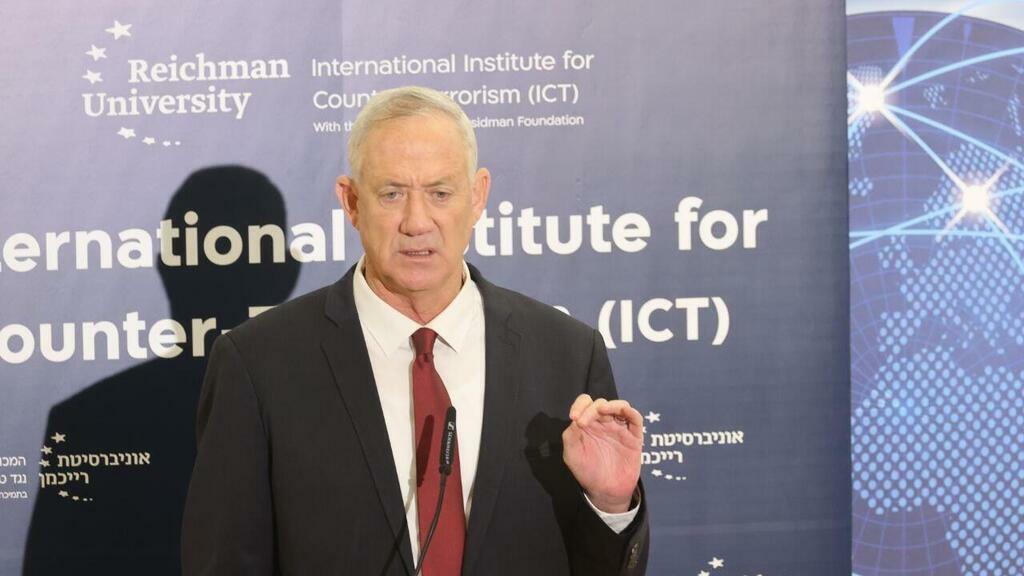

Therefore, the Palestinian Authority must take fateful decisions to protect Palestinian villages and strengthen the steadfastness of their residents, especially in the areas most at risk, such as Areas C and B.


2025 could be a decisive year for the Palestinian file


According to a BBC report, Israeli Prime Minister Benjamin Netanyahu said in closed meetings that “the issue of annexing the West Bank must return to the agenda with President Trump’s return to power.” This suggests that 2025 could be a crucial year in the far-right Israeli government’s attempt to resolve the Palestinian issue, as stated in its 2022 election program.


The Jerusalemite analyst pointed out that the Israeli far right, led by Netanyahu, is optimistic about the possibility of imposing Israeli sovereignty over the West Bank, especially with the expected support from the US administration headed by Trump and figures who support the annexation plans.


Shehab explained that “Israel has been implementing steps on the ground for years to impose a silent annexation reality on several levels, paving the way for official annexation with almost certain American approval. Among the most important repercussions of this annexation is the official burial of the two-state solution project, which is the goal that Netanyahu has sought to achieve since he first assumed the premiership in 1996, when he pledged at the time to eliminate the idea of establishing a Palestinian state on the 1967 borders.”


He stressed that "despite the issuance of a decision by the International Criminal Court considering settlement in the West Bank illegal and a flagrant violation of international conventions, including the United Nations Charter, which prohibits annexation using the threat and force of occupation, the current Israeli government continues its complete disregard for international law and the decisions of international courts."


Shehab believes that the current stage requires a clear Palestinian position and a comprehensive strategy to confront the imminent dangers, including strengthening the steadfastness of the villages and mobilizing the international community to pressure Israel to stop its attacks and annexation plans.


Settlers' chaos has reached an unprecedented level


The general supervisor of the Al-Baidar Organization for the Defense of Bedouin Rights, Attorney Hassan Malihat, pointed out that “the rampant repressive practices of settler gangs supported by the occupation authorities against the Palestinian people and the pillars of their life and national and human existence, especially the Bedouin communities that stand in open confrontation with the settlers, have reached an unprecedented level of fascism and racism, in the absence of effective and deterrent steps from the international community, and that the persistence of settler gangs in their attacks against Bedouin communities is a recipe for a religious war that will lead the region to the brink of the abyss and explosion.”

He stressed that "the problem in these serious issues is not only the occupation and its crimes, but also the silence of the international community on these crimes, whose silence is considered complicity with the occupation authorities and their plans, or at least translates into a disastrous failure of the international community to carry out its moral and legal duties and responsibilities towards the Palestinian people, as stipulated in the Fourth Geneva Conventions."


Malehat pointed out that the continued Israeli attacks on Palestinians, especially those carried out by settlers under the protection of the Israeli army and under direct instructions from ministers in the Israeli government, such as Bezalel Smotrich and Itamar Ben Gvir, represent an accurate translation of the extremist Zionist strategy.


He stressed that the Israeli plan for control over the West Bank has been ready for years, and was drawn up as part of the plan of the century approved by Trump during his first term in 2017, while the occupation began implementing its steps practically in recent years by expanding settlements, seizing Palestinian lands in the West Bank, supporting settler militias with weapons and money, in addition to intensifying the policy of demolishing homes, and displacing Palestinian Bedouin communities in the Palestinian Jordan Valley.


There is no real political or legal deterrent to the settlement plan.


He said: There is no real political and legal deterrent to the settlement plan in the West Bank, while the Palestinian Authority and the Arab countries have reached a stage of political and international weakness, to the point of being unable to defend their existence, or even the lands they have in the West Bank, explaining that Smotrich's announcement will be implemented as an inevitable matter in light of the international support for the occupying state, and the penetration of religious Zionism, while there will be no alternative to confrontation.


Malihat considered the announcement extremely dangerous, especially with Trump returning to the US presidency, and Smotrich’s announcement could be a “test of the waters” for reactions to the issue. He said: The Palestinians will find themselves under direct military occupation, without being given political or economic rights or even freedom of worship, which will lead the region into the throes of open war.


Israeli annexation of the West Bank is not expected in 2025


In turn, Dr. Ramzi Odeh, Secretary-General of the International Academic Campaign Against Occupation and Apartheid, said: The Trump administration is unlikely to give the green light to Israel to annex the West Bank, especially in the first year of its term.


Awda explained that the Trump administration prefers that the annexation take place within the framework of a political agreement that requires long negotiations and regional approval, especially from Saudi Arabia.


He added that Saudi Arabia rejects any normalization with Israel without reaching a two-state solution, which complicates the issue of annexation.


Awda pointed out that the Trump administration will not risk its relations with its regional allies, such as Saudi Arabia, Jordan and Egypt. He stressed that the recent Riyadh Arab-Islamic summit stressed the need to activate the international coalition to establish a two-state solution, and to reject the marginalization of the role of the Palestinian National Authority, especially in the wake of the recent Israeli aggression.


He stressed that Israel needs US approval to legitimize any annexation, which seems unlikely in 2025.


However, the possibility of partial annexation in the following year remains, especially if it is linked to political trade-offs, such as normalizing relations with Saudi Arabia in exchange for freezing or reducing the scope of the annexation, as happened with the United Arab Emirates four years ago.

He explained that partial annexation may include settlements and the Jordan Valley, which is in line with the "Deal of the Century" formula.


Awda believes that this step could be used to pressure the Palestinian National Authority to conclude a final peace agreement with Israel, based on a modified version of the Deal of the Century that the Trump administration may put back on the table.


Smotrich's announcement was not surprising.


Adel Shadid, an expert on Israeli affairs, confirmed that the recent announcement by Israeli Finance Minister Bezalel Smotrich that 2025 will be the year of annexation was not surprising, but rather based on facts and movements that have been studied and ongoing since the end of Trump's first term until today.


Shadid pointed out that the years following the end of Trump's term witnessed the highest rates of confiscation of Palestinian lands, and the largest number of housing units built in settlements.


He explained that the current government headed by Benjamin Netanyahu, which includes extremist parties such as "Religious Zionism" and "Jewish Power", is a settlement government par excellence, as it is working systematically to accelerate annexation and settlement projects.


He pointed out that the developments witnessed in the areas classified as (C) and (B) in the West Bank reveal the future intentions of the occupation.


The government has expanded settlements, strengthened settlement construction in Area C, in addition to what is known as “whitening” more than 25 random settlement outposts and turning them into legal settlements, and establishing 79 new settlement outposts in preparation for whitening and legalizing them if the current government continues.


A systematic Israeli policy aimed at imposing a new reality


He explained that the Israeli government has worked to restructure vital positions in the so-called "Civil Administration" and the Knesset, so that it focuses on strengthening its control over the West Bank.


It also intensified its efforts to limit Palestinian construction in Areas B and C, while accelerating settlement construction in those areas.


Shadid believes that Smotrich's announcement of the date of annexation reflects a systematic Israeli policy aimed at imposing a new demographic and geographical reality in the West Bank by 2025.


Stressing that these policies constitute a serious threat to the Palestinian national project, and require urgent action at the local and international levels to confront them.


Escalation of events, especially during the peak of the olive harvest season


Commenting on the escalation of events, especially at the height of the olive harvest season, human rights activist Firas Al-Alami of Yesh Din Human Rights Organization said, “Settler attacks in the West Bank continue and escalate, and their intensity is increasing, in light of the negligence of the so-called Israeli law enforcement authorities, who are not doing the minimum of their duty to limit this crime, which has become organized and systematic, supported by Israeli political leaders, including ministers and members of the Knesset.”


Al-Ilmi summarized the violent incidents against Palestinians in the West Bank during the month of October as follows:

In October, Yesh Din documented 110 incidents of violence by settlers and armed soldiers against Palestinians. This is an average of more than five incidents per day. The violence occurred in 49 Palestinian towns and villages in the West Bank.


Incidents included shootings (including fatal shootings), violent assaults and threats, deportation and expulsion of farmers and Bedouin communities, prevention of harvest, theft of crops and agricultural equipment, cutting down of trees, and more.


In 61 incidents, settlers and soldiers forcibly prevented Palestinians from harvesting their olive trees. In approximately 70% of these cases, members of the occupation forces were present, but instead of protecting the Palestinian victims, as their duties require, they cooperated with the settlers and gave them protection and legitimacy to continue.


In 11 incidents, settlers cut down or burned hundreds of trees. In 26 incidents, settlers harvested and stole olives from private Palestinian land.


The vast majority of these incidents occurred on private Palestinian land that the army prevents the owners from entering, allowing trees to be cut down and crops to be stolen.


Al-Ilmi added: The escalation of events and cooperation between settlers and members of the army and police forces leads to the conclusion that preventing the harvest from the Palestinians in the West Bank is a deliberate Israeli policy that comes within a systematic policy and plan to evacuate the Palestinians from Area C and control those areas.

PALESTINE

Mon 18 Nov 2024 2:38 pm - Jerusalem Time

Palestinian PM: Palestinian journalists played a pivotal role in exposing the crimes of the occupation

Prime Minister Mohammad Mustafa stressed the pivotal role played by Palestinian journalists in exposing the crimes of the occupation and its plans for displacement and genocide, especially in light of the occupation’s prevention of Arab and foreign journalists from entering the Strip.


This came during his speech at the launch of the first international conference for the development of Palestinian media, which was opened today, Monday, in Ramallah, in the presence of the Governor of Ramallah and Al-Bireh, Laila Ghanem, the President of the International Federation of Journalists, Dominic Bradley, a number of members of the Federation, a number of members of the Executive Committee of the Palestine Liberation Organization, the Central Committee of the Fatah Movement, ministers, the General Supervisor of Official Media, Minister Ahmed Assaf, the President of the Journalists Syndicate, Nasser Abu Bakr, members of the Syndicate, representatives of media institutions and the diplomatic corps in Palestine, and a number of journalists.


Mustafa said: “Palestinian journalists have been brave in publishing the facts that the occupation tried to hide. They documented the killing of children, exposed the policy of deliberate starvation against civilians, the bombing and storming of hospitals, and then forced displacement to empty areas of the Strip.”


He added: "All these facts that condemn the occupation and hold it accountable were conveyed and documented by Palestinian journalists with courage and professionalism to various platforms, screens and international newspapers. If it were not for the loyalty and professionalism of the Palestinian journalist, the streets of the world would not have been filled with free people calling for a ceasefire, stopping the genocide and holding its perpetrators accountable."


The Prime Minister conveyed the greetings of President Mahmoud Abbas to the conference attendees, especially the guests, stressing his support for the efforts of the conference organizers and his wishes for its success.


Mustafa said: “We meet today with our eyes and hearts directed towards the beloved Gaza Strip, which is still suffering from a brutal war of extermination and bitter humanitarian conditions that have affected all its components, and at the heart of them are the journalists who conveyed the truth, our story and our tragedy to the world.”


The Prime Minister explained: “The press community has offered its best sons as a price for the truth, as we have lost the largest number of journalist victims who fell in a single war since World War II, and by their continued assassination, the occupation is trying to complete what it started; to assassinate the truth.”


Mustafa added: "As we list the achievements of the Palestinian press and its role, we appreciate the role played by the esteemed Palestinian Journalists Syndicate, in cooperation with the International Federation of Journalists, in documenting the occupation's crimes against journalists, to hold accountable those responsible for targeting them, and to support the brave journalists of Gaza."


The Prime Minister called on all national and international institutions and bodies, and all those who believe in freedom, to intensify pressure to provide international protection for Palestinian journalists, and not to leave them vulnerable to abuse and assassination, stressing that this role is our collective responsibility, and is part of the efforts of our Palestinian diplomacy to defend all sectors of our people in international forums.


Mustafa pointed out that in the context of the international effort, it is necessary to recall some important political achievements, especially the UN General Assembly resolution, which is based on the advisory opinion of the International Court of Justice, as one of the most important UN resolutions calling for ending the occupation and removing its effects within a year.


The Prime Minister added: "This decision was followed by the launch of the international coalition to implement the two-state solution with the participation of 90 countries, and at the same time our diplomatic efforts continue, led by the President's efforts to gain more international recognition for the State of Palestine and to embody the independent Palestinian state with full sovereignty on the ground."


Mustafa added: "They say they want to...

Annexation, and we say that we will continue our efforts to embody the Palestinian state and remove the occupation. We are patient, and we will not tire or get bored in knocking on all doors and making every effort to achieve Palestinian rights.


He stressed that the government is putting all its capabilities to facilitate the work of journalists and ensure their continued performance of their professional and national duties, in the belief in the necessity of strengthening freedoms, especially freedom of the press and media, and its readiness to provide all possible support in order to make the message of the Palestinian media and its national mission a success.

PALESTINE

Mon 18 Nov 2024 1:33 pm - Jerusalem Time

Israeli occupation prevents farmers from picking olives east of Nablus

Today, Monday, the Israeli occupation forces prevented farmers from the town of Beit Furik, east of Nablus, from picking olives.


Local sources reported that the occupation forces expelled farmers from the Wadi al-Azab area near the Itamar settlement, west of Beit Furik, under the pretext of cancelling coordination, and prevented them from picking olives.


This year, the olive harvest season in the West Bank is witnessing repeated attacks by settlers and occupation forces, which have reached the point of killing, burning and cutting down olive trees, stealing the crop, and preventing farmers from reaching their lands.

ARAB AND WORLD

Mon 18 Nov 2024 1:26 pm - Jerusalem Time

Borrell: No words to express Gaza tragedy, Israel must be pressured to stop war

European Union foreign policy coordinator Josep Borrell stressed on Monday the need for the bloc to exert pressure on Israel to stop its war on Gaza, ignoring calls to respect international law.


This came in press statements on the sidelines of a meeting held by European Union foreign ministers in Brussels, to discuss a proposal submitted by Borrell to suspend political dialogue with Israel for its failure to respect international law in its war on the Strip for more than a year.


The political dialogue between the European Union and Israel is regulated by the partnership agreement between the two sides that entered into force in 2000, and its suspension does not mean the suspension of the partnership agreement between the two sides, according to EU diplomats.


Borrell's proposal includes a ban on the import of Israeli products produced in Israeli settlement factories established on the occupied Palestinian territories (meaning after 1967, over which the international community does not recognize Israel's authority).


"We must acknowledge the failure of our approach and apply international laws without discrimination," Borrell said.


He added: "I no longer have words to explain and describe what is happening in the Middle East. I no longer have words to express the magnitude of the tragedy in Gaza."


He explained that "more than 44 thousand people were killed in Gaza, 70 percent of whom were women and children."


Borrell renewed Israeli Prime Minister Benjamin Netanyahu's call to stop the war on Gaza and Lebanon.


Regarding his proposal to suspend political dialogue with Israel, Borrell said: “We must put pressure on the Israeli government to stop the war in Gaza.”


In this context, he added: "We will consider not purchasing products from Israeli settlements that are manufactured in the occupied Palestinian territories."


He stressed, "Until the last day of my term, I will continue to encourage member states (of the European Union) to support the establishment of a Palestinian state, not only in words but in deeds."


For his part, French Foreign Minister Jean-Noel Barrot said, "It is in Israel's interest for settlements in the West Bank to stop."


He said that "the European Union will consider imposing sanctions on those who destabilize the Middle East."


"We are preparing for a third round of sanctions against institutions or settlers who participated in acts of violence against Palestinians," Baro added.


In turn, Belgian Foreign Minister Hadja Lahbib praised Borrell for his "unrelenting struggle to stop the Israeli war on Gaza and Lebanon."


Lahbib expressed her "concern over the developments and the catastrophic situation in Lebanon, as well as in Gaza, which is witnessing an outbreak of famine."


"In the face of this, we have no choice but to defend international law, which is being violated more and more, and international agreements, which are being ignored," she said.


She stated that she would call for a meeting with Israel as an important economic partner, stressing that this partnership must respect all the provisions of its agreement, including Article Two.


"It is very important that we are able to raise a unified voice to defend international values and the foundations of the European Union," Lahbib continued.


German Foreign Minister Annalena Baerbock said, "There is no justification for humanitarian aid not reaching Gaza."

PALESTINE

Mon 18 Nov 2024 1:25 pm - Jerusalem Time

A new massacre.. 17 Palestinians killed as a result of Israeli bombing a house in Beit Lahia

The Ministry of Health in Gaza announced today, Monday, that the death toll from the ongoing occupation aggression against our people in the Gaza Strip has risen to 43,922 dead, since October 7, 2023.


She added that the number of injured rose during the same period to 103,898, while thousands of victims are still under the rubble and on the roads, and rescue teams cannot reach them.


She pointed out that the occupation forces committed 4 massacres against families in the Gaza Strip, resulting in 76 dead and 158 wounded arriving at hospitals during the past 24 hours.


Here are the latest developments: 17 citizens were killed and others were injured, after the occupation bombed a house near Kamal Adwan Hospital, north of the Gaza Strip.


The occupation targeted a house near Abu Al-Jidyan roundabout on the road to Kamal Adwan Hospital in the Beit Lahia project.

PALESTINE

Mon 18 Nov 2024 12:38 pm - Jerusalem Time

Israeli occupation begins demolitions in Jerusalem and the northern Jordan Valley

Today, Monday, the Israeli occupation forces began demolishing the homes of citizens in the Umm al-Jamal community in the northern Jordan Valley, whose residents were displaced three months ago.


According to local sources, the occupation began demolishing the citizens’ homes that remained in the Umm al-Jimal community, after displacing the community’s families three months ago.


In occupied Jerusalem, Israeli occupation bulldozers demolished a commercial store in the town of Qalandia and bulldozed lands between the towns of Rafat and Qalandia, northwest of Jerusalem.


Local sources reported that the occupation forces demolished a shop consisting of several iron sheets and sheds for selling vegetables and fruits at Qalandia roundabout, while its machinery began bulldozing lands located between the towns of Qalandia and Rafat.

PALESTINE

Mon 18 Nov 2024 12:36 pm - Jerusalem Time

A citizen was injured by Israeli forces’ bullets, south of Hebron

Today, Monday, a woman was injured after the occupation soldiers opened fire on her vehicle in Masafer Yatta, south of Hebron.


According to local sources, the occupation forces stationed at the entrance to the village of Al-Litwani opened fire on a vehicle, which resulted in a woman being injured in her hand.


The occupation forces closed the area and prevented Red Crescent crews, peace activists and foreign solidarity activists from reaching the place.


The occupation forces continue their siege and pursuit of citizens in all the gatherings and villages in Masafer Yatta, in the context of pressuring the citizens to displace them from their lands.

ARAB AND WORLD

Mon 18 Nov 2024 11:54 am - Jerusalem Time

Hezbollah submits its comments on the US proposal on the eve of Hochstein’s arrival

Lebanese government sources told Al Jazeera that Hezbollah has submitted its comments on the US draft to Lebanese Parliament Speaker Nabih Berri, while US envoy Amos Hochstein is expected to head to Beirut tomorrow, Tuesday, to hold talks on a ceasefire in Lebanon.


Lebanese government sources told Al Jazeera that Hezbollah is dealing openly with the American draft for a ceasefire.


For his part, an official Lebanese source told Al Jazeera that Lebanon is open to the content of the draft American proposal and is dealing with it positively and is seeking to put the final touches on it, noting that the proposal aims to build an implementation plan for a ceasefire.


The source confirmed that Lebanon is dealing with the draft American proposal based on the reference of Resolution 1701, and does not object to strengthening the work of the tripartite committee tasked with monitoring the ceasefire and implementing this resolution, provided that it is preceded by an Israeli withdrawal and the deployment of the Lebanese army.


The source confirmed that the comments on the draft will be discussed with Hochstein upon his arrival in Beirut.


Visit Hochstein

Hochstein is expected to head to Beirut tomorrow, Tuesday, before heading to Israel the day after tomorrow, Wednesday, as part of the efforts being made to reach a ceasefire agreement.


Israel's Channel 12 said that Hochstein's scheduled visit to Israel on Wednesday indicates progress in the ceasefire negotiations.


The Israeli Broadcasting Corporation quoted political sources as saying, "Tel Aviv expects significant progress in the ceasefire talks with Lebanon, during the coming week, coinciding with Hochstein's visit."


For its part, the Israeli "Kan" channel revealed some details of the draft settlement agreement between Lebanon and Israel, and indicated that the proposal stipulates the placement of 5,000 Lebanese soldiers in the southern regions of the country, a pledge from Israel not to attack Lebanon, and the re-demarcation of the land borders between the two countries.


On Friday, the Broadcasting Authority said that Israel is awaiting a Lebanese response to the American proposal for a ceasefire within a few days.


The proposal, according to the Broadcasting Authority, includes Hezbollah and Israel's commitment to Security Council Resolution 1701, and the deployment of the Lebanese army as the sole armed force in southern Lebanon, alongside UNIFIL forces.


It also includes preventing the rearmament of unofficial armed groups in Lebanon, and that any sale of weapons to Lebanon or their production within it will be under the supervision of the Lebanese government.


It includes granting the Lebanese security forces the powers to “supervise the entry of weapons across the Lebanese border, supervise facilities not recognized by the government that produce weapons, dismantle them, and dismantle any armed infrastructure that does not abide by the obligations contained in the agreement.”


According to the Broadcasting Authority, the American proposal also includes Israel's withdrawal from southern Lebanon within 7 days to be replaced by the Lebanese army under international supervision, in addition to disarming armed groups south of the Litani River within 60 days of signing the agreement.


It is noteworthy that since September 23, Israel has expanded the scope of its war on Lebanon to include most areas, including the capital, through air strikes. The occupation army also began a ground invasion of the south.


According to official Lebanese data, the Israeli aggression resulted in a total of 3,445 martyrs and 14,599 wounded, including a large number of children and women, in addition to about 1.4 million displaced persons.


In a related context, former member of the Israeli War Council, Benny Gantz, said that the condition of any Israeli agreement with Lebanon is absolute freedom of action for the Israeli army in return for any breach of the agreement by Hezbollah.

ARAB AND WORLD

Mon 18 Nov 2024 11:17 am - Jerusalem Time

Israeli raid on Mar Elias area in Beirut

Israeli aircraft launched an airstrike on the Mar Elias area in the Lebanese capital Beirut, killing two people and wounding 22, according to the Lebanese Ministry of Health.


In turn, firefighting teams tried to control the fires, while explosions were heard in the area. Al Jazeera correspondent Nasser Shadid monitored the destruction at the site of the raid.

PALESTINE

Mon 18 Nov 2024 11:13 am - Jerusalem Time

Israel continues its retaliatory punishments against Palestinian young prisoners in "Megiddo"

The Prisoners and Freed Prisoners Affairs Authority said on Monday, "The number of minor prisoners has reached nearly 280 prisoners, more than half of whom are in Megiddo Prison, and are suffering from the worst living conditions."


The lawyer for the Prisoners' Affairs Authority added after her last visit to Megiddo Prison, "Most of them have lost a lot of weight due to the poor quality and quantity of food, and the searches and beatings are still ongoing, and the situation has worsened with the onset of winter and the lack of clothing. The prisoners have only one summer outfit, and they lack blankets and mattresses, and the ones that are available are very thin and have a bad smell."


She stressed that the spread of Scabies did not exclude anyone, as most of the prisoners were infected with it to varying degrees, and the prison administration deliberately deprived them of treatment, providing it partially and after they had been infected with advanced stages of the disease.


According to the testimony of prisoner Asid Osama Abu Jado (15 years old) from Aida camp/Bethlehem, he is still suffering from inflammation and wounds as a result of constant scratching and boils that have appeared all over his body.


Note that Abu Jado was arrested on 07/02/2024, and no verdict has been issued against him yet, and he has a court appearance today.


The prisoner, Montaser Iyad Saqr (18 years old), from Askar camp/Nablus, who was arrested on 04/18/2024, was also visited. He was sentenced to 4 months of administrative detention, which was extended for another 4 months.

ARAB AND WORLD

Mon 18 Nov 2024 11:02 am - Jerusalem Time

Gantz: The condition for any agreement with Lebanon is our complete freedom of action against any violation

Israeli opposition party leader Benny Gantz renewed his demand on Monday that the army be given the freedom to attack Lebanon in any ceasefire agreement if there is any violation.


Gantz said, via the "X" platform: "The condition for any agreement with Lebanon is complete Israeli freedom of action against any violation."


The United States, an ally of Israel, is mediating to reach a ceasefire agreement between Tel Aviv and Beirut, to end the ongoing Israeli war on Lebanon since September 23.


The Israeli Broadcasting Corporation said on Sunday that US envoy Amos Hochstein will arrive in Beirut on Tuesday to meet with Lebanese officials and obtain the Lebanese government's response to the US proposal for a ceasefire.


Hochstein is expected to visit Tel Aviv on Wednesday.


Israel is demanding that it be given the right to attack targets in Lebanon if Hezbollah violates the ceasefire, which Beirut has so far strongly rejected.


On Friday, Lebanese Parliament Speaker Nabih Berri said he had received an American proposal for a ceasefire, which "does not include any kind of freedom of movement for the Israeli army in Lebanon."


According to the Broadcasting Corporation, the United States will send a "separate letter of assurances" to Israel informing it that it has the right to launch an attack if it detects any violation of the agreement.


After clashes with factions in Lebanon, most notably Hezbollah, which began the day after Israel launched a war of genocide on the Gaza Strip on October 7, 2023, resulting in the martyrdom and injury of more than 147,000 Palestinians, Tel Aviv expanded the scope of the genocide since September 23 to include most areas of Lebanon, including the capital Beirut, through air strikes, and also began a ground invasion in the south.


The Israeli aggression on Lebanon resulted in a total of 3,481 martyrs and 14,786 wounded, including a large number of children and women, in addition to about 1,400,000 displaced persons. Most of the victims and displaced persons were recorded after September 23.


Every day, Hezbollah responds by launching missiles, drones, and artillery shells targeting military sites, intelligence headquarters, military gatherings, and settlements. While Israel announces some of its human and material losses, military censorship imposes a strict blackout on most of the losses, according to observers.


Israel has occupied Arab lands in Lebanon, Syria and Palestine for decades, and rejects the establishment of an independent Palestinian state on the borders before the 1967 war with East Jerusalem as its capital.