OPINIONS

Fri 22 Nov 2024 9:47 am - Jerusalem Time

Annexation is not destiny!!

Nabhan Khreisha

Nabhan Khreisha

Opinion Writer

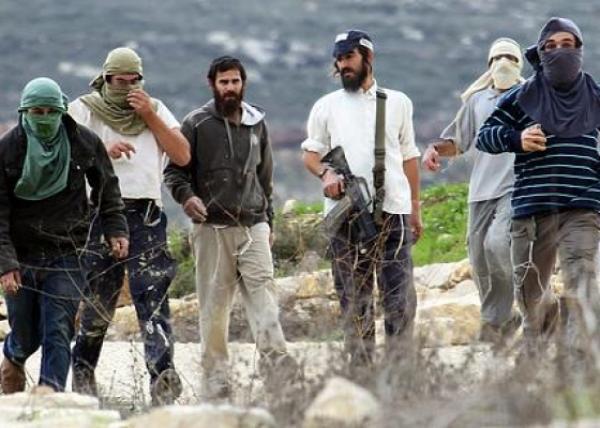
At the recommendation of the settlers, the “Settlement Administration” was established in 2023 in the Israeli Civil Administration, whose mission is to decide the future of Area C in the West Bank in favor of the settlers. In the same year, Yehuda Eliyahu was appointed head of this administration in the Ministry of Defense. Eliyahu is the right-hand man of Bezalel Smotrich, the Minister of Finance and Minister of Settlement in the West Bank in the Ministry of Defense, and both are founders of the “Regavim” organization, which fights what it calls the “Palestinian presence” in Area C of the West Bank. This administration was formed pursuant to a document issued by the “Shilo Forum” settlement organization in 2020, and not by a government decision.


The Shiloh Forum is a settlement strategic studies center, most of whose ideas, work programs and recommendations find their way to implementation by the Israeli government. The forum accused the Civil Administration in a document issued by it of not having the necessary tools to deal with the illegal “Palestinian occupation” of Area C, and of being slow to respond to the challenges facing the settlers. In the end, the recommendations of the Shiloh Forum were realized, by placing the future of the C lands in the West Bank on the government’s agenda, regularizing the status of 70 settlement outposts, and declaring large areas of West Bank land as state land, with the aim of registering these lands in the Israeli Land Registry in the future, which means their complete and final annexation.


The settlers and the extreme right, led by Netanyahu and the duo Smotrich and Ben Gvir, see the appointment of Mike Huckabee, a settlement enthusiast, as US ambassador to Israel, as raising great hopes regarding the imposition of Israeli sovereignty over the West Bank, in light of the fact that Trump had planned in his first term to declare Israeli sovereignty over parts of it as part of the "Deal of the Century" plan. The estimates of the settler leaders and their representatives in the government indicate that in light of the composition of the new US administration, Trump will not oppose the imposition of Israeli sovereignty over the West Bank or parts of it. According to the newspaper "Israel Today", high-level sources in the Israeli government see Trump's new term as an opportunity that will not be repeated, and that plans to declare partial sovereignty over the settlement blocs in the West Bank must be pushed forward from now.


Trump's unjust policy towards the Palestinians during his first term is still fresh in people's minds, so it is unreasonable to expect that his policy during his second term will be different from the previous one. It is not true that he will not support Israel's annexation plans because he no longer needs the support of the Israeli lobby in Washington, "AIPAC", because his current term is his last, or that he will punish Jews who voted for the Democratic Party in the elections, or that he will take revenge on Netanyahu for congratulating Biden on winning in 2020. The appointments made by Trump to senior administration officials leave no room for doubt that he will resume his policy towards the Palestinian-Israeli conflict in the next four years from where he left off during his first term, which requires a Palestinian confrontation at the regional and international levels, no matter how high the price of this confrontation, because the lack of confrontation will cause serious damage to the Palestinian entity, the consequences of which in the future, if the annexation is implemented, will include the displacement of millions of Palestinian people, and what may follow from plans in later stages.


The annexation of the West Bank or parts of it by Israel “is not an inevitable fate. It can be addressed based on international law, which considers settlements an attack on Palestinian territory, as confirmed by the ruling issued by the International Court of Justice in July 2024, which demands that Israel end the occupation of the West Bank and East Jerusalem. The establishment of settlements and outposts is a flagrant violation of international law, as stated in UN Security Council Resolution No. 2334 issued in December 2016.


But some will ask in disapproval: Since when has Israel complied with international legitimacy resolutions, or adhered to international law? Yes, that is true. Israel has never implemented UN resolutions on the Palestinian issue since it was established in 1948. It also does not abide by international law, many of whose agreements it has signed. It is determined to move forward with implementing annexation plans, disregarding international law, and then moving on to the "conflict resolution" plan, which constitutes the political program on the Palestinian issue of the Religious Zionism Party led by Smotrich, which has also become an undeclared program of action for the Israeli government. The summary of this plan is for the Palestinian people to lose hope in establishing a Palestinian state, and to create a difficult and complex living reality for the Palestinians with the aim of displacing the largest possible number of them, on the path to undermining the Palestinian entity.


Some may also argue that the Palestinian Authority, in its current state, is unable to confront the Israeli annexation plans for objective and subjective reasons, but this is not accurate, because it has pressure cards to confront the Israeli annexation project with American support, but these cards need to be activated, which cannot be done without a decisive political will, especially since annexation is a battle for existence, first the existence of the Palestinian people, and that what comes after annexation will affect the Palestinian Authority with all its components as well. These cards include, but are not limited to, stopping all forms of relations with Israel, regardless of what measures Israel may take against the Authority, its leadership, and the Palestinian people.


The Authority can also escalate its diplomatic activity on the international scene, by mobilizing support for a draft resolution to be presented to the United Nations General Assembly to boycott Israel based on the International Court of Justice’s decision in July 2024, similar to General Assembly Resolution No. (1761) issued in 1962 against the apartheid regime of South Africa, which called on member states to sever diplomatic relations and trade with the regime (arms exports in particular), in addition to all forms of political, economic, cultural and sports boycott. The Palestinian Authority can also benefit from international support (especially in Europe) for the Palestinian people and their cause, resulting from the Israeli war of extermination on the Gaza Strip, and urge the international community to translate this solidarity into thwarting the annexation plan and recognizing the Palestinian state.


The Trump administration will find it difficult to “convince” America’s allies in the region if it decides to recognize Israel’s annexation of the West Bank or parts of it, because many countries in the region have changed their alliances and ties with international powers competing with the United States in the four years between Trump’s first and second terms. This may force Trump not to provide cover for Israel to move forward with its annexation plans, especially since, as a merchant seeking to conclude profitable deals, he may resort to exchanging his non-support for the Israeli annexation plan in exchange for normalizing Israel’s relations with Arab countries.


Despite all of this, the danger of Israel’s annexation plans cannot be underestimated, and by betting on the possibility that the Trump administration will not provide political cover for these plans, this annexation is also not an inevitable fate for the Palestinians!!

PALESTINE

Fri 22 Nov 2024 9:45 am - Jerusalem Time

UN: Lives of more than two million Palestinians in Gaza at stake

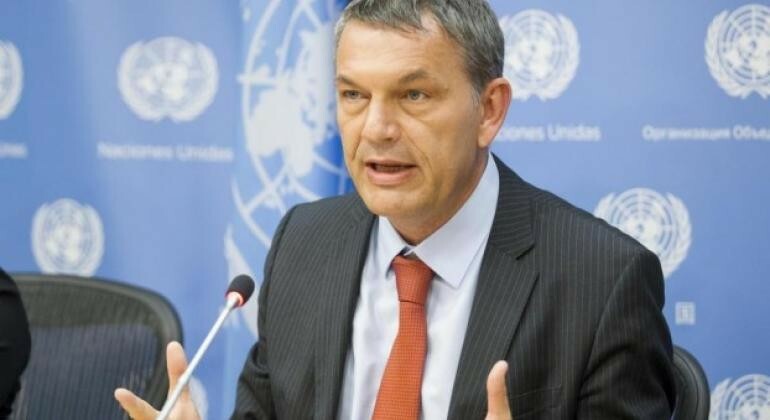
The Humanitarian Coordinator for the occupied Palestinian territory, Muhannad Hadi, warned of the halt in the delivery of essential aid throughout Gaza, including food, water, fuel and medical supplies.


Hadi said in a press statement on Friday that the survival of more than two million Palestinians in Gaza is at stake, noting that the Israeli occupation authorities have, over the past six weeks, prevented commercial imports.


“Palestinian civilians are struggling to survive in unlivable conditions as hostilities continue,” Hadi added. “They are being pushed to the brink and lacking access to the critical support they desperately need, suffering an unparalleled humanitarian catastrophe.”


He stressed that humanitarian agencies in Gaza remain committed to staying and working, but questions are increasingly being raised about their ability to work, calling for the need for humanitarian aid to reach the Gaza Strip safely and without hindrance through legal means.

PALESTINE

Fri 22 Nov 2024 9:43 am - Jerusalem Time

Israeli forces arrest citizens in Bethlehem and Hebron

Today, Friday, the Israeli occupation forces arrested two citizens in Bethlehem and Hebron.


In Bethlehem, the occupation forces arrested citizen Muhammad Khalaf Nawawra (35 years old) from the Jabal Nawawra area, after raiding and searching his family’s home.


In Hebron, the occupation forces raided the town of Idhna and searched the home of prisoner Adel Abu Asaad. They raided the homes of his two sons, Muhammad and Shadi, ransacked their contents, and arrested Shadi from his home in the Wadi Aziz neighborhood.


In the same context, the occupation forces continued to close the entrances to towns, camps and the city of Hebron with iron gates, and tightened their measures in the neighborhoods of the Old City and the military checkpoints near the Ibrahimi Mosque.

PALESTINE

Fri 22 Nov 2024 9:36 am - Jerusalem Time

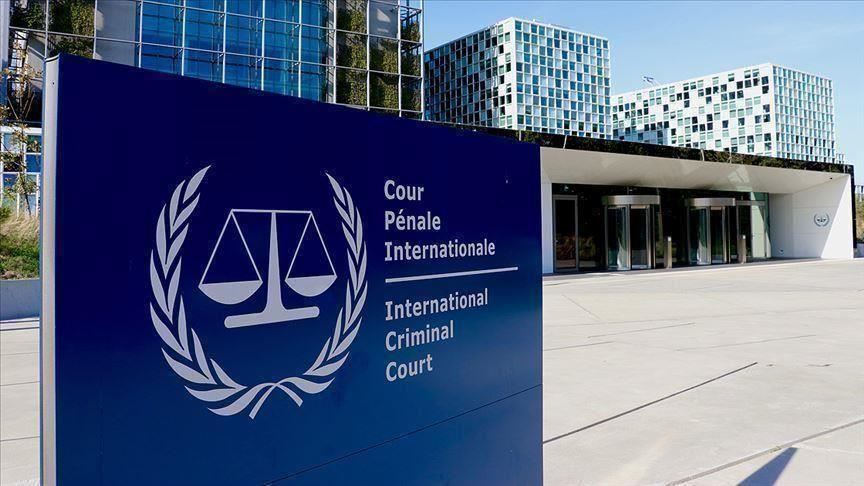
Arrest warrants in The Hague.. Earthquake hits "Al-Karya"

Dr. Raed Abu Badawiyya: The decision opens the door for the court to issue more arrest warrants against Israeli officials involved in war crimes

Akram Atallah: A historic and important decision despite the pressures exerted on the court, and it has wide repercussions, but it will face implementation challenges

Dr. Abdul Majeed Suwailem: A sudden political and security earthquake struck Israel, causing a major shock and its impact will extend to the entire international community.

Firas Yaghi: Netanyahu may escape the repercussions of the decision by regional escalation because any calm may strengthen his weak position domestically and internationally

Nihad Abu Ghosh: The decision inaugurates a new phase of international legal work to contain Israel’s policies and paves the way for holding it accountable

Dr. Hussein Al-Deek: The decision will push Netanyahu and Galant to be cautious in their foreign visits, especially to countries that have signed the agreement regulating the work of the court

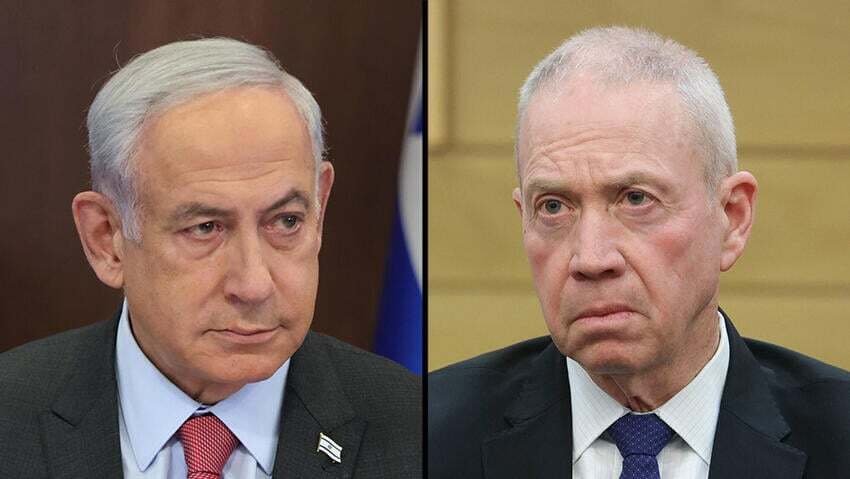
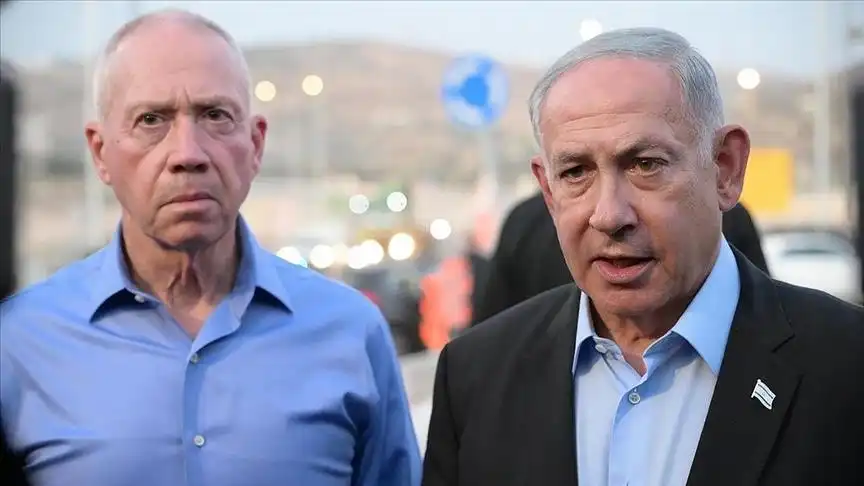
After months of waiting, the International Criminal Court issued two arrest warrants for Israeli Prime Minister Benjamin Netanyahu and Defense Minister Yoav Galant, which represents an unprecedented legal and political development, and is an earthquake that Israel is witnessing for the first time in its history, as the decision affects the highest levels of leadership in Israel.


In separate interviews with “I”, writers, political analysts, specialists and university professors believe that the sudden timing of the decision confused the Israeli leadership, which has repeatedly tried to obstruct the course of international investigations with American and European support, while the decision represents a test for the member states of the Rome Statute regulating the court.


They point out that the decision will deepen the Israeli political crisis and increase pressure on Netanyahu, especially from the opposition, which sees these accusations as a threat to the occupying state as a whole, and affects its image internationally.

A qualitative and exceptional step within the framework of international law

Dr. Raed Abu Badawiyeh, Professor of International Law and International Relations at the Arab American University, confirms that the decision of the International Criminal Court regarding Israeli Prime Minister Benjamin Netanyahu is a qualitative and exceptional step within the framework of international law.


The decision, according to Abu Badawiya, affects the head of Israeli diplomacy and political and military leadership, and not just a lower-level military or political official, which enhances its influence on the occupation government, especially in the international arena, especially Europe, where the member states of the Rome Statute establishing the International Criminal Court are obligated to implement the decision.


Abu Badawiya explains that the decision came as a surprise to Israel, which had sought over the past months, with American and European support, to obstruct the issuance of such a decision by the court. However, the timing of the decision confused the Israeli leadership.


Abu Badawiya points out that the European position towards implementing the decisions of the International Criminal Court has been clearly expressed in advance by the commitment to implementing the decisions of the court.


On the American side, Abu Badawiya expects Israel to resort to the Biden and Trump administrations to help it pressure the court and member states, pointing to what happened in the period prior to Trump’s presidency when he imposed sanctions on the court’s judges.


Regarding the international legal implications, Abu Badawiya asserts that the issuance of an arrest warrant against Netanyahu and Galant obliges member states of the Rome Statute to carry out the arrest if they set foot on their territory, which is an extremely dangerous development. The decision also opens the door for the court’s prosecutor to issue more arrest warrants against Israeli political and military officials involved in war crimes and crimes against humanity, whether in relation to the aggression on Gaza or other crimes against the Palestinians.


Abu Badawiya believes that this decision gives a strong impetus to European judicial and legal institutions, whether at the national or international level, to move in the same direction by filing lawsuits demanding accountability of Israeli officials.


Abu Badawiya points out that European countries that export weapons to Israel will face a legal and moral dilemma, because continuing to supply weapons in the face of accusations of war crimes puts them in an embarrassing legal position.


On the political level, Abu Badawiya explains that the decision will deprive Netanyahu, as the head of Israeli diplomacy, of working freely in the European arena, which is one of the most important arenas of international relations for Israel.


Abu Badawiya points out that the decision may affect trade and economic relations between Israel and the European Union countries, especially those related to economic cooperation linked to Israeli war behavior.


Regionally, Abu Badawiya points out that the decision provides an opportunity for Arab countries to cooperate with Europe in taking steps to besiege Israel.


Abu Badawiya explains that international conditions are now ripe for this, as Europe and the Arab countries share in rejecting Israeli expansions and attacks on Gaza and the West Bank, and the decision provides these countries with legal tools that enhance their efforts to pressure Israel internationally and regionally.


On the other hand, Abu Badawiya confirms that the decision will have repercussions on the Israeli home front in two aspects: legal and political.


On the legal level, Abu Badawiya points out that the legal advisor to the occupation government had previously requested the opening of internal investigations to avoid international trials, but her request was rejected. With the issuance of the international resolution, this request may be strengthened again and place the advisor in a stronger position within the Israeli legal system.


Politically, Abu Badawiya expects the decision to increase pressure on Netanyahu to remove him from political life, especially from the opposition, which sees his continued presence as a threat to the state due to the international accusations against him.


Abu Badawiya points to statements by opposition leader Yair Lapid, who condemned the decision but called for early elections, as evidence of the beginning of this growing political pressure.


Regarding the military establishment, Abu Badawiya explains that the decision represents a dangerous precedent, as for the first time direct accusations are being made against Israeli officials at the level of the Minister of War or the Prime Minister. This development could undermine confidence within the Israeli military establishment and raise fears of legal prosecution of its members, which could negatively affect the morale of the army and exacerbate the phenomenon of evasion of military service.


On another note, Abu Badawiya warns that Israel may resort to imposing sanctions on the Palestinian Authority as a retaliatory measure, which confirms the need for the Authority to prepare to confront the repercussions of this disastrous scenario.

Major legal shift on the international scene

Writer and political analyst Akram Atallah describes the recent decision of the International Criminal Court as a historic and important decision, despite the enormous pressures exerted on it publicly and secretly by the United States of America and other countries, noting that the decision will have repercussions but will face implementation challenges.


Atallah explains that the decision reflects a major legal shift on the international scene, and opens the way for holding Israel and its Prime Minister Netanyahu accountable as accused of committing war crimes.


Atallah points out that the repercussions of the decision go beyond the mere possibility of prosecuting Netanyahu, which may seem difficult to implement, to place Israel as a state in the category of historically criminal states.


Atallah believes that labeling the Israeli prime minister as a war criminal will cast a shadow over its international image, as Netanyahu is now in a similar position to leaders of countries associated with gross human rights violations.


Atallah stresses that the decision remains linked to implementation procedures that require Netanyahu to visit a country that is a signatory to the Rome Statute.


Atallah explains that countries such as the United States, Russia and China are not obligated to implement the decision because they have not joined the agreement, which gives them the freedom not to comply with the court’s decisions.


Atallah points out that some European countries, such as the Netherlands, have expressed a clear position that they will commit to handing Netanyahu over to the court if he visits their territory, which makes it difficult for Netanyahu to venture to visit those countries, as he will face the risk of arrest.


Regarding the American position, Atallah points out that the United States is the most prominent opponent of the International Criminal Court, which may escalate after the decision is issued, especially with Trump coming to the White House, given his pro-Israel and anti-international institutions positions.


Atallah explains that the decision has a legal character, but Washington and Israel will seek to politicize it and distort its legal nature by promoting it as part of a political targeting of Israel.


Atallah points out that the decision represents a major legal challenge for Israel, despite the difficulty of implementing it practically, but it constitutes a blow to its image and confirms the importance of the legal path in confronting international violations.

A severe blow to the Israeli leadership

Writer and political analyst Dr. Abdul Majeed Suwailem asserts that the ICC’s decision regarding Netanyahu and Galant represents a “real earthquake” whose repercussions are reverberating in political, security, and military circles within Israel, and whose impact extends to the entire international community, and constitutes a major shock within Israeli society.


The decision, which Suwailem described as “surprising and astonishing,” comes after years of Israeli feeling that American support and Western complicity provide immunity from any international legal accountability.


Suwailem points out that this decision is a severe blow to the Israeli leadership, which now finds itself in an unprecedented confrontation with international law institutions, and is now directly threatened by decisions that affect prominent figures with the status of the Prime Minister and Minister of War, which deepens the crisis and political divisions within Israel over how to deal with the crisis.


Suwailem expects that the decision will create a large gap between the United States and Europe, as European countries will not be able to fully identify with the American position in this context, and will find themselves facing a real test of their credibility regarding commitment to international law, and this commitment may cause a rift in American-European relations, which will negatively affect Washington’s ability to maneuver in international issues.


Suwailem points out that the United States' continued absolute support for Israel will be viewed as a form of "political and moral shame," not only globally, but within American society itself.


Suwailem believes that the American behavior in confronting the decisions of the International Criminal Court will enhance the negative image of American policies in the world, about American double standards that will become more apparent, leading to the erosion of its credibility as a country that claims to defend democracy and human rights.


According to Suwailem, this American position reflects "a blatant form of racism and bias towards a state that is practicing genocide against the Palestinian people."


Although the ICC focuses on holding individuals accountable, Suwailem points out that the consequences of the decision will affect Israel as a state, and it is expected that Israel will face great difficulties in marketing its usual narrative to the Western media, which it has become accustomed to throughout the 14 months of crimes committed in the war of extermination on Gaza.

Enforcement of court decisions will be relatively easy.

According to Suwailem, implementing the court’s decisions will be relatively easy, as most of the countries that signed the court’s protocol will commit to cooperating. If Israeli officials, such as Netanyahu or Galant, visit any of these countries, their arrest may become a fait accompli.


On the other hand, Suwailem believes that the decision may push Israel to search for quick solutions to get out of the crisis, such as accelerating the reaching of political agreements in Gaza or Lebanon, and these agreements may be an attempt by the Israeli leadership to rearrange its political and security cards in light of the increasing international pressure.


Despite the expected Israeli accusations that the court is biased against it, Suwailem explains that the court has also issued arrest warrants against Palestinian figures, such as Ismail Haniyeh, Mohammed Deif, and Yahya Sinwar, which reflects its legal neutrality, although it is unfair. However, this neutrality deprives Israel of the pretext of claiming that the court is politicized, which will weaken its position on the international stage.


In light of these developments, Suwailem believes that Israel's attempts to circumvent the decision will face great difficulties, as European countries have already begun to announce their commitment to the decision, and the scope of the impact will be broad and comprehensive, making it difficult for Israel to escape the consequences of the decision.


Suwailem stresses that the decision represents a major turning point in the Palestinian-Israeli conflict, with repercussions that could change the balance of power at the regional and international levels.


Suwailem stresses that while Israel is trying to absorb the shock of the “earthquake,” the entire world is watching how these developments will reshape the political and diplomatic landscape in the region.

An unprecedented step with historic dimensions

Writer and political analyst Firas Yaghi believes that the ICC decision is an unprecedented step with historic dimensions, carrying major repercussions for Israel and its prime minister, and raising questions about the future of Israel as a state that claims democracy, while facing accusations of crimes against humanity and war crimes. The decision is a “real earthquake” for Israel as a state, and for Netanyahu, who sees himself above the law domestically and internationally.


According to Yaghi, this court decision places Israel in the ranks of dictatorial states, even though it claims to be a democratic state that adopts Western liberal values. For the first time in the history of the International Criminal Court, a decision has been taken against the head of government of a state classified as a democracy, which adds great shock at the international level.


Yaghi explains that this step exposes Israel to the world, and makes it appear as a third world country ruled by oppressive and authoritarian policies, instead of being a beacon of democracy as it claims.


Yaghi confirms that the immediate repercussions of the decision affect Netanyahu personally, and he will be banned from visiting 124 countries that signed the Rome Statute, for fear of being arrested.


According to Yagi, these countries may face pressure to prevent any military aid to Israel, because that could mean supporting the continuation of the crimes being investigated by the court.


On the other hand, Yaghi explains that Israeli officials working under Netanyahu will in turn face charges of committing war crimes in the future, because they are working on orders issued by a prime minister who is internationally accused of being a criminal, which puts the future of the Israeli military establishment at stake.

A heavy burden on Israel and its international reputation

Although the court’s decision was attacked by the opposition, the ruling coalition and the United States, Yaghi asserts that the decision represents a great burden on Israel and its international reputation, just as Netanyahu has become a burden on the Hebrew state. The decision may open the door to radical change within Israel, as the “deep state” may begin to seriously consider its future away from Netanyahu, who seems to be leading Israel towards international isolation and internal collapse.


Yaghi expects Netanyahu to resort to further regional escalation in an attempt to escape the repercussions of the decision, and may launch military strikes in Syria, Lebanon, Iraq, or even Iran or Yemen, because any calm may strengthen his weak position domestically and internationally.


Yaghi asserts that the court’s decision could have a significant impact on the Israeli economy, and that damage to Israel’s reputation could negatively impact its trade and investment relations, especially with Western countries, which would increase pressure on Netanyahu’s government.


On the other hand, Yaghi points out that the United States will not abandon its support for Israel. The American administration, especially under the leadership of Donald Trump, sees Israel as an indispensable strategic ally, and despite international criticism, American support for Israel’s policies will continue, especially with regard to the West Bank.

Opening the door to hold the occupation leaders and generals accountable

The writer, political analyst and specialist in American affairs, Dr. Hussein Al-Deek, confirms that the recent decision of the International Criminal Court represents a historic step towards achieving international justice, by opening the door to holding the leaders and generals of the Israeli occupation accountable before international law.


Al-Deek believes that the timing of the decision carries great significance, as it reflects the high professionalism and transparency with which the court dealt with the case, based on the statute of the Rome Statute, of which Palestine is a member.


Al-Deek points out that the decision is evidence of the failure of American pressures exerted on the court, whether from Congress, the Senate, or the American administration, with the aim of dissuading its judges from performing their duties. Despite these attempts, the court adhered to the principles of international law and its statute. The decision also highlights the embarrassment that will befall Israel’s allied countries, especially the European countries that signed the Rome Statute, if Netanyahu or Galant visited their territories.


Al-Deek points out that the decision will put these countries in a real confrontation with their legal obligations, which may push them to take decisive positions, or evade under political pretexts to preserve their relations with Israel and the United States.


It is expected that the decision will be met with a wave of Israeli escalation against the Palestinians, in response to the Authority’s complaint submitted to the International Criminal Court.

The decision will encourage the extreme Israeli right to escalate its aggression.

Al-Deek believes that the decision will encourage the extreme Israeli right to escalate its oppressive policies, accelerate its settlement plans, and implement what is known as the “decisive plan,” which seeks to annex the entire West Bank, coinciding with Trump’s assumption of office in the White House, which will strengthen US support for these policies, especially with the control of the Republicans, allies of the Israeli right, over Congress.


Al-Deek points out that these developments regarding the court’s decision may lead to the imposition of further economic and financial restrictions on the Palestinian people and the Palestinian Authority, within the framework of Israel’s policy of collective punishment.


Despite the importance of the decision, Al-Deek stresses that its implementation faces many obstacles, most notably the absence of an executive mechanism for the International Criminal Court, which relies on the governments of member states of the Rome Statute to implement arrest warrants.


Al-Deek explains that implementing the arrest requires the cooperation of these countries, which remains non-binding on them, as the agreement does not include texts imposing sanctions on countries that refuse to implement.


Al-Deek points out that European countries, which have strong strategic relations with Israel and the United States, may not arrest Netanyahu or Galant, which would weaken the practical value of the decision. In contrast, other countries, which do not have strong relations with Israel, may take a stricter stance if Israeli officials enter their territories.


Al-Deek believes that the decision will push Netanyahu and Galant to be cautious in their foreign visits, especially to countries that are signatories to the agreement regulating the work of the court, which may hand them over to the International Criminal Court.


Al-Deek asserts that the decision may open the door to an American and Israeli escalation against the International Criminal Court, especially with the return of Trump to power, who is known for his hostile positions towards international institutions and those supporting Israel.


Al-Deek asserts that the decision represents a major legal shift, but it also highlights the political struggle surrounding international justice.


Despite these obstacles, Al-Deek points out that the decision remains a step towards establishing international justice and opening the way for holding accountable those who committed crimes against the Palestinian people.

The resolution delegitimizes Israel's brutal actions.

Nihad Abu Ghosh, a writer and political analyst specializing in Israeli affairs, believes that the decision issued by the International Criminal Court represents a fundamental development in the path of international justice regarding crimes committed against the Palestinian people, noting that legal experts agree that this decision cannot be appealed, as the court’s judicial system does not allow this. However, the accused can defend themselves after appearing before the court and presenting their arguments and evidence during the judicial process.


Abu Ghosh explains that issuing an arrest warrant against Israeli officials, including Prime Minister Benjamin Netanyahu and Defense Minister Yoav Galant, indicates the availability of compelling evidence and indications that prompted the court to take this step, as the warrant was based on public statements and official documents that are no longer hidden from anyone, and were carefully documented by the court.


In addition, Abu Ghosh points out that any Israeli official who participated in making decisions or issued directives at the level of the Israeli War Cabinet or General Staff is considered an accomplice in crimes that require trial.


Abu Ghosh points out that the 124 countries that signed the Rome Statute are obligated to arrest the accused and hand them over to the International Criminal Court immediately upon their entry into their territories.


However, Abu Ghosh explains that the court itself does not have executive tools such as the International Police to force the accused to appear before it, which makes the implementation of this decision linked to the will of the countries concerned and their commitment to international law.


Abu Ghosh points out that Israel, which has been accustomed to escaping accountability for eight decades, finds itself today facing a new challenge that could threaten its international legitimacy.


Abu Ghosh believes that the recent American veto, which was used to prevent a UN resolution condemning Israel, encouraged the latter to commit more massacres in Beit Lahia and the Sheikh Radwan suburb in Gaza, which claimed the lives of about 100 martyrs.


But Abu Ghosh stresses that the impact of the judicial decision will be felt later, when Israeli leaders begin to worry about the possibility of future legal prosecution.


Abu Ghosh points out that Israel resorted to various means to obstruct the issuance of this resolution, through diplomatic pressure and direct and indirect threats. The Israeli Mossad also played a role in attempts to obstruct the resolution, while the United States intervened with all its weight to prevent its issuance. In addition, some European allies, such as Germany, tried to provide support to Israel. However, strong and documented evidence prevented ignoring Israeli crimes, which led the court to make its historic decision.


Abu Ghosh asserts that the resolution delegitimizes Israel's brutal actions, especially in the context of the ongoing war on Gaza, and refutes Israeli claims that these crimes are committed in self-defense.


Abu Ghosh believes that the decision represents a major turning point in strengthening international efforts to boycott, impose sanctions on, and divest from Israel, noting that this development gives Palestine supporters around the world a strong incentive to intensify their efforts to besiege Israel.


According to Abu Ghosh, this decision will push Israel to reconsider its practices and policies, especially in light of the increasing international condemnation of its actions.


Although Israeli leaders are not expected to actually appear before the court, Abu Ghosh believes that accusing Israeli leaders of committing war crimes will affect its international standing and weaken its legitimacy.


Abu Ghosh points out that the decision will not only have an impact on the present, but will have long-term repercussions. It may lead to imposing more restrictions on Israel’s armament operations, and encourage many countries to reconsider their relations with Tel Aviv. The decision also strengthens legal efforts to besiege Israel, especially if it is added to other decisions that have been issued or may be issued, such as the decision of the International Court of Justice regarding the legality of the occupation, settlement activities, or genocide.


Abu Ghosh stresses the importance of this decision for the Palestinian people, as it represents a victory for the victims and contributes to alleviating the suffering of the Palestinians by pressuring Israel to allow the entry of humanitarian aid and partially lift the siege.


But Abu Ghosh stresses that this legal battle is long and complex, and requires unified efforts by the Palestinian Authority, the factions, and the international community.


Abu Ghosh believes that the decision inaugurates a new phase of international legal work to contain Israeli policies, which contributes to strengthening Palestinian national rights and paves the way for holding Israel accountable for its ongoing crimes.


PALESTINE

Fri 22 Nov 2024 9:21 am - Jerusalem Time

New survey by Awrad Center monitors changes in citizens’ attitudes as genocide continues

Dr. Nader Saeed: A significant deterioration in living conditions... and relative optimism reflects the Palestinians' adherence to hope as an important element of steadfastness

A large gap in the relationship between the public and the leadership: 69% are completely dissatisfied with the president’s performance and the government’s performance is less satisfied


Dr. Ibrahim Rabaya: The relief situation is deteriorating in the Gaza Strip as a result of the occupation’s obstacles, mismanagement of aid, and repeated displacement

Sinwar's assassination is a pivotal event on the political level, and the Knesset returned from its vacation in a state of "legislative frenzy."

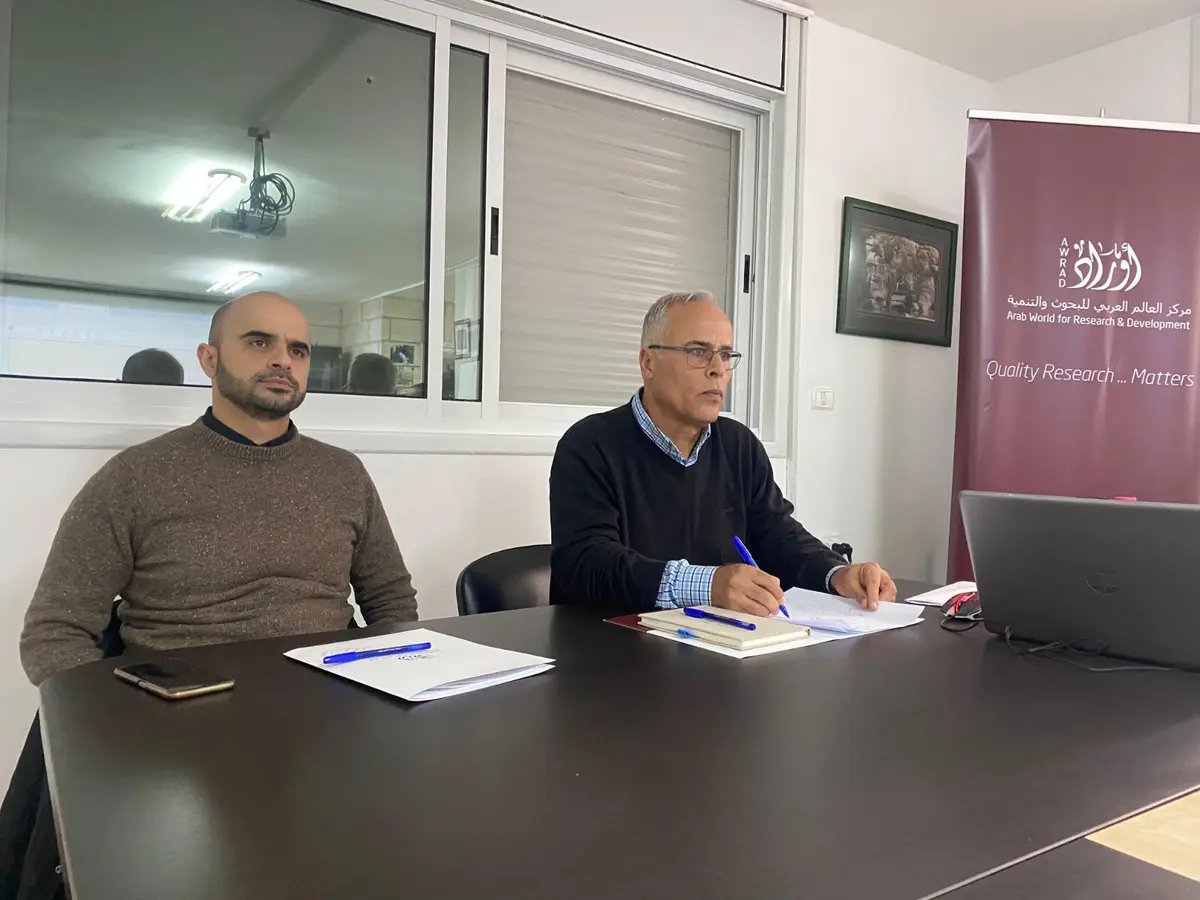
During the “Round Table” workshop the day before yesterday, Dr. Nader Saeed, Director General of the Arab World Center for Research and Development (AWRAD), presented the most important results of the Palestinian public opinion poll conducted by the center between October 6 and 17, 2024 in the West Bank and Gaza Strip.


Saeed explained that this poll is an extension of two previous polls conducted in May and August 2024, with the aim of exploring the shifts in Palestinian attitudes in light of the military escalation, large-scale displacement, and the worsening humanitarian crisis, in addition to the absence of a clear political horizon.


In the context of the results, Saeed said in a special interview with “I”: “Living conditions are witnessing a significant deterioration, as 93% of those surveyed confirmed that their economic situation is worse compared to the previous year.” Despite this reality, the survey showed that there is relative optimism among some Palestinians about the possibility of improving conditions in the future, which Saeed considered a reflection of the Palestinians’ adherence to hope as an important element of steadfastness in the face of difficult circumstances.

Big gap between the public and the leadership

When discussing the relationship between the public and the Palestinian leadership, the Director General of Awrad Center stressed the existence of a large gap reflected in the low levels of satisfaction with the performance of the leadership. In the West Bank, 69% of respondents expressed complete dissatisfaction with the performance of the Palestinian President, while the performance of the government was less satisfactory, with an overall satisfaction rate of 21%, stressing that these results represent a dangerous indicator that requires the Palestinian leadership to improve its communication with the public and work to restore its trust.

Humanitarian aid: a political tool that exacerbates suffering

As for humanitarian aid and reconstruction, the survey revealed widespread dissatisfaction with the fairness of aid distribution. Saeed pointed out that aid has become a tool used to politically manage the Gaza Strip, which has further complicated the crisis facing affected families. He called for the need to ensure fair distribution of aid as a human right, far from any political considerations.

Resistance receives support... and negotiations are an option in Gaza

Regarding political orientations, the results showed continued Palestinian support for armed resistance, especially in the West Bank, where 37% of respondents expressed support for comprehensive confrontation. In contrast, support for negotiations as a means of resolving the Palestinian issue emerged, especially in Gaza at 64%, which reflects a difference in orientations between the West Bank and Gaza, and confirms the complexity of the Palestinian political scene.

Factions in a dilemma

Speaking about the decline in support for political factions, Saeed noted that 51% of Palestinians did not express support for any political faction, an unprecedented indicator of general frustration with the status quo. He stressed that this shift requires a radical review of existing political projects and efforts to rebuild trust between the factions and the public.


Saeed concluded his talk to “I” by emphasizing the importance of Palestinian leaders listening to the voice of the public as a necessary step to strengthen national unity and develop policies that reflect the aspirations of the Palestinian people, noting that the relative optimism expressed by some Palestinians should be viewed as an opportunity to bring about real change that serves the Palestinian cause, stressing that the current phase represents a critical historical moment that calls for unified efforts and sustainable strategies to achieve the aspirations of the Palestinian people for a better future.

Starvation has become a major weapon.

In an interview with “I”, Dr. Ibrahim Rabaya, academic and political researcher, discussed the results of the latest opinion poll, highlighting the major transformations reflected in the results, and pointing to the worsening living conditions in the Gaza Strip, where starvation has become a major weapon, especially in the northern part of the Strip.


Rabaya pointed to the deteriorating relief situation as a result of the occupation’s obstructions and mismanagement of aid, with reports indicating that 85% of trucks have been stolen, according to the Washington Post. In addition, repeated displacement has exacerbated the suffering, with escalating violence and the destruction of infrastructure.

The Israeli Annexation Project: Killing Hope as a Systematic Policy

Rabaya pointed to the impact of Yahya Sinwar's martyrdom as a pivotal event on the political level, whether in the West Bank or Gaza, especially in light of the Israeli Knesset's return from its vacation in a state of "legislative frenzy", to complete the package of laws related to the project to annex the West Bank and implement the plans of the occupation's Finance Minister Bezalel Smotrich, which aim to kill hope among the Palestinians. He also discussed the targeting of UNRWA and the pressure on the financial resources of the Palestinian Authority, which undermined its ability to work.

Alternative media in Gaza

Rabaya spoke about the media transformations in Gaza after the destruction of traditional media institutions, where media professionals resorted to alternative platforms such as Telegram and TikTok, saying, “These platforms, despite their importance, raised challenges related to credibility and verification, which made them an easy tool for directing public opinion and information flooding, compared to traditional platforms that have become more declining.”

Relative optimism reflects the Palestinian will to persevere

Rabaya stressed that the poll reflects a general belief in the deterioration of living and economic conditions, and the absence of effective political responses locally, regionally and internationally, explaining that Israeli policy aims to kill hope, through measures such as temporarily opening crossings to give false hope, followed by intensive bombing that exacerbates the crisis. However, he pointed out that there is relative optimism among Palestinians, due to personal and religious convictions that constitute psychological support for steadfastness.


As for resistance, the poll showed continued Palestinian support for it, especially in the West Bank, where armed action enjoys the support of 58% of the public. However, Rabaya noted a variation in support rates between different areas of the West Bank, reflecting the disparity in the experience of contact with the occupation.


Regarding Palestinian identity, he pointed out the impact of the war on the fragmentation of national identity and the decline of national consensus, which leaves Palestinians in a state of political vacuum and pushes them to form individual convictions in the absence of a comprehensive national vision. This loss of a unified vision is reflected in the lack of confidence in international and local aid, and the emergence of limited support for the idea of international governance as an option to get out of the crisis.

Elections are the gateway to salvation

As for the political factions, Rabaya pointed to the decline in support for the Fatah and Hamas movements, as the results showed that 51% of Palestinians do not support any faction. He said, “This decline reflects a deep internal crisis within the factions, which requires radical reforms to rebuild trust with the public.” He also spoke about the importance of elections as the only outlet for reshaping the Palestinian political space, despite the field challenges facing their achievement.


Rabaya concluded his talk to "Y" by referring to the challenges facing the Fatah movement in forming a unified list for the parliamentary elections, and the decline in support for the Hamas movement in Gaza, stressing that the Palestinian factions, together, face a historic test to prove their ability to adapt to the changing reality, and to reunite the national ranks to confront regional and international challenges.

PALESTINE

Fri 22 Nov 2024 8:57 am - Jerusalem Time

"Al-Quds" stands in the queues of the hungry and feels their pain.. The hungry are screaming

Naaman Al-Kafarna: A kilo of tomatoes costs 50 shekels, and fruits are a precious treasure that only the wealthy can afford.

Bakeries are closed and a 25kg bag of flour has reached $200!

Muhammad Abu Abasa: My brothers often sleep without food.. Are they waiting for us to die?!

Vegetables in the shops of the vendors for the wealthy consumers.. and their families do not get a share of them

Trader Muhammad Abu Amra: The profit is almost negligible in light of the high prices and the inability to buy


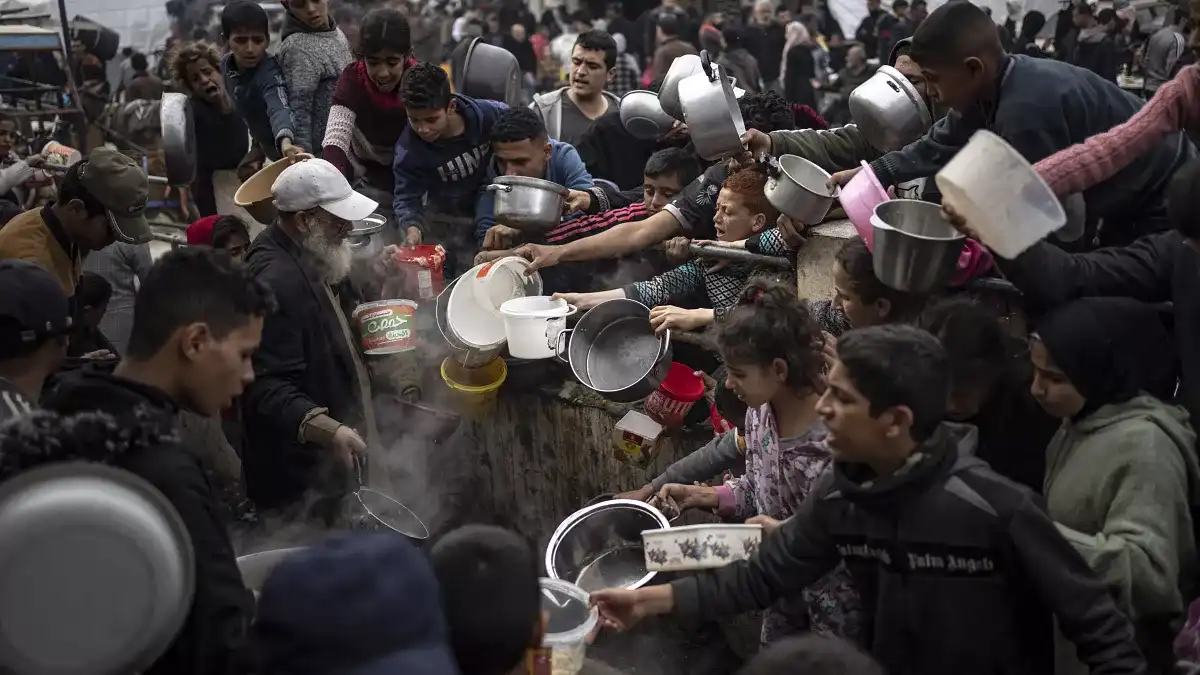
“I gave birth to my children after 18 years and I can’t feed them,” with these words, citizen Naaman Al-Kafarna summed up his condition and tragic situation after the Israeli occupation prevented aid trucks from entering the Gaza Strip.


Hunger is eating away at the bodies of Gazan citizens, young and old, in light of the closure of bakeries due to the lack of flour, not to mention the lack of vegetables, and if certain types are available, their prices are exorbitant, and citizens cannot afford to buy them.


Al-Kafarna told Al-Quds.com: “I was displaced from the north of the Gaza Strip to the center, hoping to find a livelihood that would satisfy my children’s hunger. I did not know that the greatest suffering was evident here.”


Al-Kafarna was walking confused in the Deir al-Balah market in the middle of the Strip, where all types of vegetables cost more than what he earns. He continued: “A kilo of tomatoes today costs 50 shekels, as well as eggplant, cucumbers and zucchini, and I don’t have enough money to buy them at this price.” He added: “The prices are crazy. We are dying of hunger and no one cares about us.”


My children want to eat apples


As for fruits, they are absent from all the markets in the sector, and if a certain type of them is available, it is like a precious treasure that only the wealthy can obtain. He continues: “My children want to eat apples... apples have become a big thing that we cannot obtain.”


He added, his eyes shining with tears: “I swear, every day I go to bed crying because I can’t afford to eat.”


The famine was not limited to the lack of vegetables and fruits in the markets, but also extended to bakeries that were closed due to the lack of flour, and if it was available in very small quantities, bread was at high prices.


Al-Kafarna continued to explain his tragedy: “I have been waiting for more than four hours at the bakery that sells saj bread, and I did not get any bread because the quantity ran out, not to mention that the price of a 25-kilogram bag of flour reached $200,” he added: “Where can I get it to buy it? They are killing us and relieving us of this life.”


He continued: "We no longer have the strength to be patient, but I hope the world and the Arab peoples feel for us and our suffering, because the price we pay for our daily sustenance is very high."


Displaced people depend on charitable donations for their food


The same situation is experienced by the displaced person, Muhammad Abu Abasa, from the Zeitoun neighborhood in Gaza City, where he was cut off from his way and became the sole breadwinner for his family after he was displaced with his mother and sisters, without his father who remained in the north.


“I cannot meet my family’s needs. I see vegetables, and I do not have enough money to buy them,” Abu Abasa told Al-Quds.com. “My sisters are starving and often go to sleep without food,” he added.


He asks in frustration and helplessness: “What are you waiting for us to die for?” He adds: “I go to sleep crying because I am unable to satisfy my mother and sisters’ hunger.”

Most of the displaced people depend on the charitable soup kitchens for their food, and if they close, they try to make ends meet with canned food. He continues: “Every day, our breakfast is flour and oil, and for lunch, I go to the soup kitchen line and wait my turn to bring whatever food is available.”


Sellers are like everyone else.


Hunger is not limited to citizens only, but even the vendors are like other people, they buy vegetables at a very high price just to sell them, and they cannot buy them for their families.


Muhammad Abu Amra, the owner of a vegetable shop in Deir al-Balah market, told Al-Quds.com: “I am forced to buy the available vegetables at a high price in order to earn my daily bread, and the profit is almost negligible in light of the high prices and the citizens’ inability to buy.”


He continues: “Citizens pass by my shop and ask about the price. Some of them buy one or two tomatoes, while others cannot buy them. The price of one kilo of tomatoes has exceeded 50 shekels due to their unavailability.”


The lack of interest from citizens in buying caused the goods to pile up in Abu Amra’s shop, rot and become unfit for consumption, so he was forced to sell them at a lower price and lose money on them.


He says: “If the situation remains as it is, I will be forced to close my shop, as I have closed it in the past, due to the unavailability of goods and their high price.”


In turn, the World Food Program confirmed yesterday that its supplies had run out in the central and southern Gaza Strip, stressing that they were doing their utmost to bring in more food aid.


"The humanitarian response to the needs in Gaza is on the verge of collapse as the risk of famine increases," he said.

ARAB AND WORLD

Thu 21 Nov 2024 10:28 pm - Jerusalem Time

Congress Passes Bill Imposing Strict Restrictions on Pro-Palestinian Nonprofits


The U.S. House of Representatives narrowly passed a bill that would simplify the process of removing tax exemptions from nonprofits accused of providing support to groups the U.S. government accuses of supporting foreign terrorism.


The bill, known as the Stop Terrorist Financing and Tax Sanctions on American Hostages Act, is the most significant piece of legislation yet targeting the pro-Palestinian protest movement and the most coherent example of how the crackdown on pro-Palestinian protests has expanded far and wide. The issue is among the most important free speech debates in America ahead of President-elect Donald Trump’s inauguration.


The vote was 219 to 184, with 30 abstentions and 15 Democrats who broke ranks with the Republicans (who owe their seats in Congress to the American Israel Public Affairs Committee).


After passing the House, a bill that would give the Treasury secretary unilateral authority to shut down any nonprofit the government deems a “terrorist-supporting organization” will now head to the Senate.


The American Civil Liberties Union (ACLU) led a coalition of more than 180 nonprofits — including Planned Parenthood, the American Federation of Labor, the United Auto Workers, and the National Association for the Advancement of Colored People — explaining why this bill is unnecessary and provides future administrations with a playbook to illegitimately constrain power, silence dissent, and target unfavorable groups and vulnerable communities.


Experts believe the bill will be part of a larger body of evidence outlined in the so-called “2025 Project” and “Esther Project,” both authored by the right-wing Heritage Foundation, detailing how the claim to combat anti-Semitism is a crackdown on free speech.


Pro-Israel lobby organizations such as the American Israel Public Affairs Committee (AIPAC), the Anti-Defamation League (ADL), the Orthodox Union and a number of other American Jewish organizations have publicly supported the bill, arguing that its opponents are exaggerating its flaws and that the U.S. government should crack down on nonprofits that openly fund terrorist groups.


Other Jewish organizations have expressed strong opposition to the bill, calling it a threat to civil rights and democratic values.


Rabbi Gil Jacobs, CEO of the T’ruah Foundation, expressed disappointment in the vote but stressed the commitment to resistance, saying, “We are proud to demonstrate that faith-based and civil society organizations are willing to stand up to Trump’s agenda.” Jacobs highlighted the unity of 55 Jewish groups that quickly came together to oppose the bill.


Hadar Suskind, president and CEO of Americans for Peace Now, warned in a statement that the bill would not address pressing issues such as the release of hostages from Gaza or terrorism, but would instead enable a political agenda that could lead to the targeting of marginalized communities. “Palestinian and other Arab American groups are at the forefront of this terrible line, but Jews and others will be next in line,” Suskind said, emphasizing the need to oppose the bill to protect civil society.


In a press release, Jamie Beran, executive director of Bend the Arc: Jewish Action, noted the stark contrast in support for the bill compared to earlier this year, when a large majority of Democrats now voted against it. Beran emphasized the power of unity in resisting divisive political forces, saying that American Jews understand the dangers of tyranny and must stand together to protect democratic norms and freedoms. “We are all safe in a country that protects due process and the democratic norms that guarantee our freedom,” Beran concluded.

ARAB AND WORLD

Thu 21 Nov 2024 9:24 pm - Jerusalem Time

Dozens of killed and wounded as the occupation continues its aggression on Lebanon

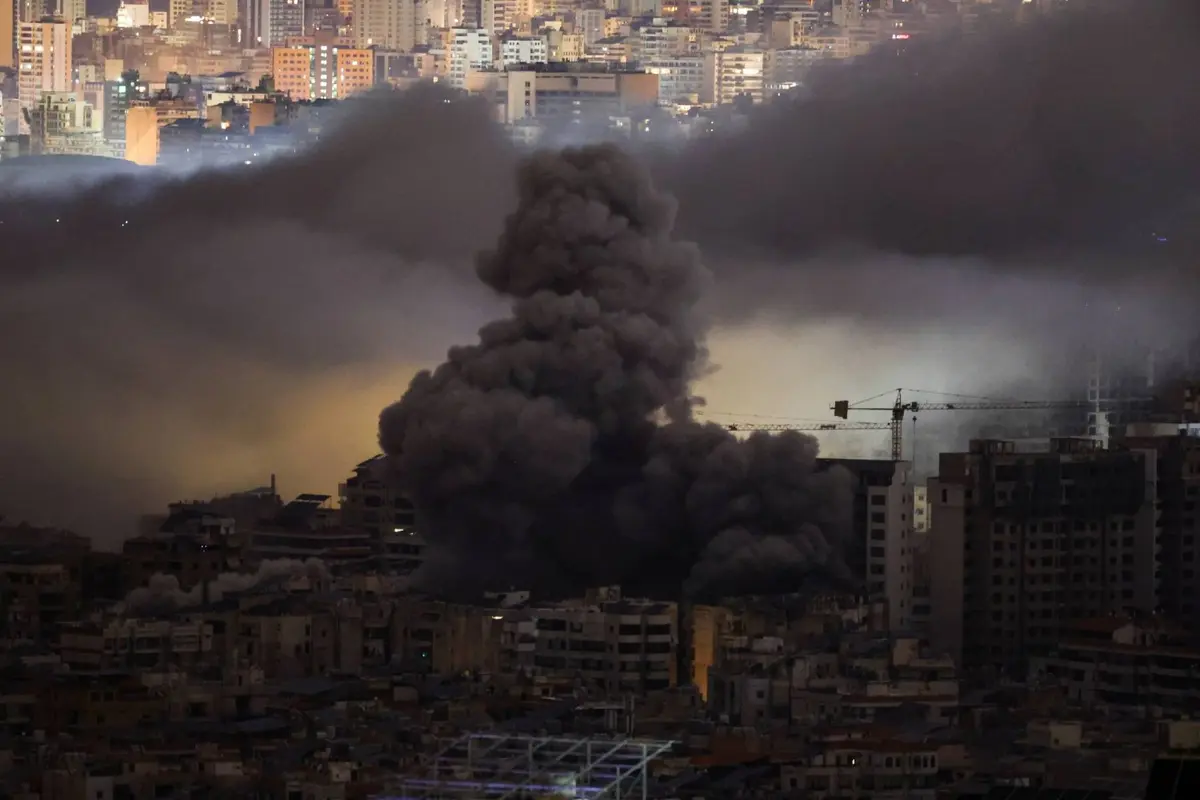
Dozens of Lebanese citizens were killed and injured today, Thursday, as a result of the ongoing Israeli occupation aggression on Lebanon, amid widespread destruction of buildings, facilities and infrastructure.

Medical and local sources reported the death  of 41 citizens and the injury of others, as a result of raids targeting the towns of Nabha, Amshki, Arabsalim, Maqna, Younin, Flawi, Khosh al-Rafiqa, Brital, Tayr Dibba and al-Shaitiya in southern Lebanon and the Bekaa.

The occupation aircraft renewed their bombing of the areas of Shiyah, Ghobeiry, Haret Hreik, Hadath, Laylaki and Al-Mashrafiyah in the southern suburbs of the capital, Beirut.

The occupation's aircraft and artillery also bombed the cities of Tyre and Nabatieh and the towns of Hanin, Deir Qanoun al-Nahr, Zawtar al-Gharbiya, Beit Shama, Khiam, Mansouri, Nahle, al-Safri, Jdeidet Marjeyoun, al-Burj al-Shamali, Zawtar al-Sharqiya, al-Ma'shouq, al-Sha'itiya, Barish, Blat, Beit Msheik, Bouday, al-Sawaniyeh, al-Sarrin, al-Shabriha and Yanuh in southern Lebanon and the Bekaa.

The Lebanese Ministry of Health stated that the occupation raids yesterday, Wednesday, resulted in the death of 25 people and the injury of 21 others, bringing the number of martyrs and wounded since the beginning of the aggression on October 8, 2023, to 3,583 martyrs and 15,244 wounded.

ARAB AND WORLD

Thu 21 Nov 2024 7:33 pm - Jerusalem Time

Washington rejects ICC decision to arrest Netanyahu and Galant


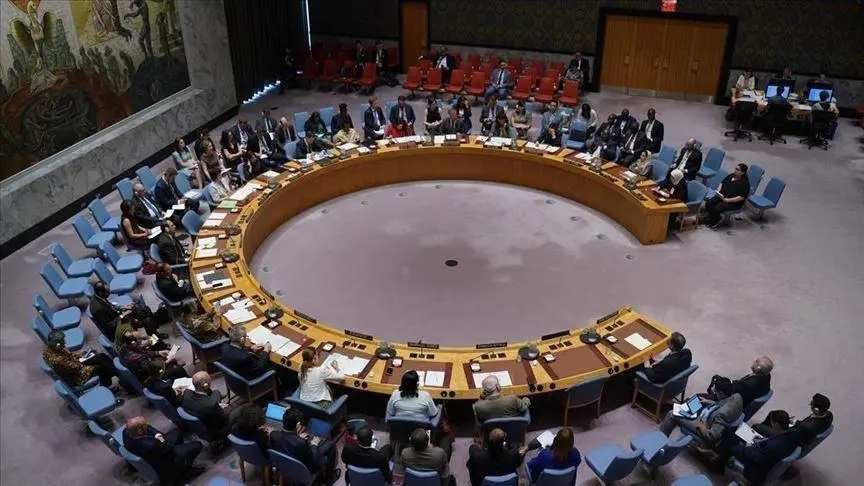
The United States rejects the International Criminal Court’s (ICC) decision to issue arrest warrants on Thursday for Israeli Prime Minister Benjamin Netanyahu and his former chief of defense, Yoav Galant, a White House National Security Council spokesman said. “The United States fundamentally rejects the court’s decision to issue arrest warrants for senior Israeli officials,” the spokesman said.


“We remain deeply concerned by the prosecutor’s rush to seek arrest warrants and the troubling procedural errors that led to this decision,” he added, saying the United States is discussing next steps with its partners.


"The United States has been clear that the ICC has no jurisdiction over this matter," the spokesman said.


For his part, Mike Waltz, the new National Security Advisor in the administration of US President-elect Donald Trump, denounced the court’s decision, and defended Israeli crimes, accusing the ICC’s decision of “anti-Semitic bias by the International Criminal Court and the United Nations,” vowing to punish them next January (1/20/2025) when Trump takes office.


“The ICC has no credibility, and the US government has refuted these allegations,” Waltz said on the X platform.


His comments reflected broader anger among Republicans, with some calling on the U.S. Senate to impose sanctions on the ICC, which has 124 national members who are theoretically obligated to arrest individuals subject to arrest warrants.


It is noteworthy that neither the United States nor Israel are members of the International Criminal Court, and both have rejected its jurisdiction.


The statement did not mention an arrest warrant also issued by the International Criminal Court against Mohammed Deif, the military commander of Hamas.


Netanyahu's office said on Thursday in response to the court's decision that Israel rejects the ICC's decision to issue an arrest warrant against Benjamin Netanyahu and former Defense Minister Yoav Galant, describing it as a "biased and discriminatory political body."


Netanyahu's office stressed in a statement that "Israel rejects with disgust the ridiculous and false allegations and accusations against it by the International Criminal Court."


The statement added that "the decision was issued by a corrupt prosecutor seeking to save himself from serious allegations against him regarding sexual harassment, and by biased judges motivated by anti-Semitic hatred towards Israel."


The statement indicated that "Netanyahu will not submit to pressure, and will not back down or stop until all the war goals that Israel set at the beginning of the battle are achieved."


In turn, Israeli Foreign Minister Gideon Sa'ar described the ICC decision as a "black moment" in the court's history, stressing that it "has lost all legitimacy."


Sa'ar accused the court of acting as a political tool in "the service of extremist groups seeking to destabilize security and stability in the Middle East," considering that "the decision does not only target Netanyahu and Galant personally, but rather represents an attack against Israel, which faces ongoing threats and is considered the only country in the world that is subject to public calls for its destruction."


On Thursday, the International Criminal Court issued arrest warrants against Netanyahu, Galant, and Mohammed Deif, commander of the Izz ad-Din al-Qassam Brigades, the armed wing of Hamas.


The Hague-based court said that "the court has issued arrest warrants against Benjamin Netanyahu and Yoav Galant in cases of crimes against humanity and war crimes committed between October 8, 2023 and at least May 20, 2024, the date on which the prosecution submitted requests for the issuance of arrest warrants," adding that an arrest warrant had also been issued against Al-Dhaif.


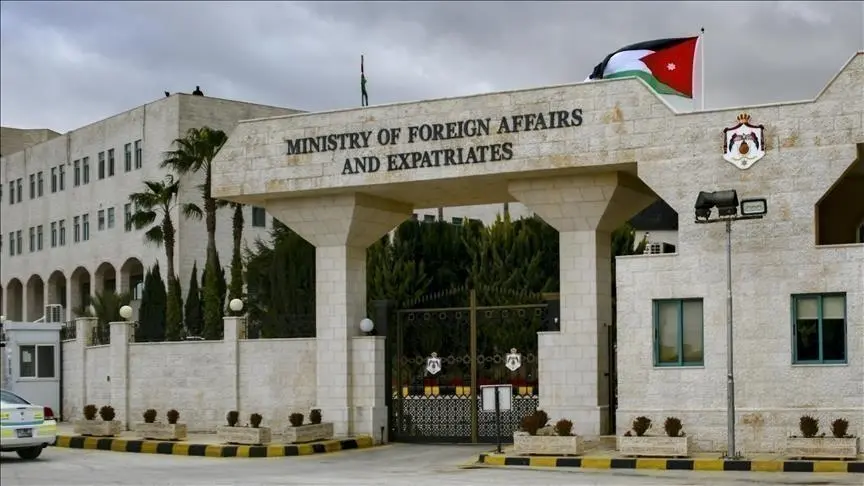
For his part, Jordanian Foreign Minister Ayman Safadi said on Thursday that the decisions of the International Criminal Court must be "implemented and respected" and that the Palestinians deserve justice.


This came in response to arrest warrants issued by the International Criminal Court against Israeli Prime Minister Benjamin Netanyahu and former Defense Minister Yoav Galant.


On Thursday, the International Criminal Court issued arrest warrants against Netanyahu, Galant, and Mohammed Deif, commander of the Izz ad-Din al-Qassam Brigades, the armed wing of Hamas.

PALESTINE

Thu 21 Nov 2024 7:09 pm - Jerusalem Time

What are the implications of the ICC issuing arrest warrants against Netanyahu and Galant?

The International Criminal Court has finally issued two arrest warrants against the head of the occupation government, Benjamin Netanyahu, and his former war minister, Yoav Galant, despite the enormous Western pressure that the court and its president, Karim Khan, were subjected to, to prevent the issuance of these warrants.

The war crimes of which Netanyahu and Galant are charged include “starvation of civilians as a method of warfare, willfully causing great suffering, or serious injury to body or health, willful killing or murder, and intentionally directing attacks against a civilian population. Crimes against humanity include extermination and/or willful killing, including in the context of death resulting from starvation, persecution, and other inhumane acts.”

Who will execute the arrest warrants?
Arrest warrants include details of the suspect, a description of his crime and the legal basis for issuing them. The arrest warrants are then sent to the 124 states party to the Rome Statute of the International Criminal Court, which are obligated to cooperate with the court to execute the arrest warrants.


Can Netanyahu and Galant travel?
Netanyahu and Galant will have to think carefully before deciding to travel to any of these 124 countries around the world, for fear of being arrested, which means that they will be internationally wanted, which will limit their movement and international travel.

What are the obstacles to the court's decision?
Some countries do not recognize the court's authority, such as the United States, Russia, and China, which could make it difficult to enforce the arrest warrants against Netanyahu and Galant.

Despite the legal obligation of the member states of the court, some of them may face difficulties in implementing arrest warrants due to political or diplomatic pressures. For example, some states may hesitate to arrest high-level officials such as heads of state due to political or economic relations.

Some states consider heads of state to enjoy sovereign immunity, although the court does not recognize such immunity for international crimes.

Some countries also avoid carrying out arrests to avoid political or military tensions with the countries concerned, and for fear of the consequences.

Can a court order be temporarily suspended?
The rules of the court allow the UN Security Council to adopt a resolution suspending or deferring an investigation or trial for a year, with the possibility of renewing that indefinitely.

In previous cases where a state has ignored its obligation to arrest a person facing an arrest warrant from the ICC, the most that state has faced has been a reprimand.

But the law states that if a signatory state refuses to execute an arrest warrant, the ICC can refer the matter to the UN Security Council or take diplomatic action to condemn the state.


When did Khan request the arrest warrants?
On May 20, the court’s prosecutor, Karim Khan, requested the issuance of arrest warrants against Netanyahu and Galant, for their responsibility for war crimes and crimes against humanity in the Gaza Strip since October 7, 2023. Later, Khan reiterated his request to quickly issue arrest warrants against Netanyahu and Galant, asking the court’s judges to make their decision quickly and without delay.

"Any unjustified delay in these proceedings negatively impacts the rights of victims," Khan said, stressing that the court has jurisdiction over Israelis who commit atrocities in the Palestinian territories, and asking the court's judges to reject appeals filed by dozens of governments and other parties.

Does Israel recognize the International Court?
Israel does not recognize the jurisdiction of the court, which was established in 2002. After 13 years, Palestine was accepted as a member of the court. It is an independent international body not affiliated with the United Nations or any other international institution, and its decisions are binding.

Israel insists on continuing its war of genocide in defiance of arrest warrants against Netanyahu and Galant.
It also ignores two UN Security Council resolutions calling for an immediate end to the war, and orders from the International Court of Justice to take measures to prevent acts of genocide and improve the dire humanitarian situation in Gaza.

Israel has turned the Gaza Strip into the largest prison in the world, besieging it for the 18th year, and its war has forced about two million of its citizens, numbering about 2.3 million Palestinians, to flee in catastrophic conditions, with a severe and deliberate shortage of food, water and medicine, in addition to killing 44 thousand since the beginning of the war.

ARAB AND WORLD

Thu 21 Nov 2024 7:06 pm - Jerusalem Time

Netherlands: We will arrest Netanyahu in implementation of the decision of the International Criminal Court

P

ARAB AND WORLD

Thu 21 Nov 2024 7:05 pm - Jerusalem Time

Australia bans former Israeli minister from entering

Australian authorities have denied a former Israeli minister a visa to enter the country to participate in a conference, citing the possibility that she could "incite sedition."

The Israeli newspaper Maariv said today, Thursday, that "former minister and Knesset member Ayelet Shaked was prevented from entering Australia."

The Times of Israel website quoted Australian media reports that Shaked's visa application was rejected because she might "incite sedition."

Australian law prohibits entry to those who "defame a segment of Australian society or incite sedition."

PALESTINE

Thu 21 Nov 2024 4:46 pm - Jerusalem Time

Israeli indictment against 3 Palestinians for allegedly planning to assassinate Ben Gvir and his son

The Israeli prosecution filed an indictment against 3 Palestinians from the city of Hebron, in the southern occupied West Bank, for allegedly planning an assassination attempt on National Security Minister Itamar Ben-Gvir, according to Hebrew media on Thursday.

Ben-Gvir is the leader of the far-right Jewish Power party, a settler in Hebron, and an official in charge of the Israeli police.

The Israeli Broadcasting Authority said on Thursday: “A serious indictment was filed against three Palestinians from the city of Hebron who formed a cell to assassinate Ben Gvir and his son.”

She added: “The indictment submitted this week to the military court revealed that, during June 2024, the main defendant, Ismail Ibrahim Odeh, made contacts with various parties to establish a military cell, obtain weapons, and prepare explosive devices to confront Israeli security forces.”

She continued: “The list also revealed that Awda collected information by following Ben Gvir and his son’s travel routes, knowing the type of cars they were driving, and the number of guards surrounding them.”

The broadcast authority did not address the identity of the other Palestinians, and it was not possible to obtain a comment from Odeh's lawyer or his relatives regarding the accusations.

Ben Gvir said, via the X platform: “Thank you to the police and the General Security Service (Shabak) for arresting and bringing to justice the group that planned to assassinate me and my son Shoval.”

ARAB AND WORLD

Thu 21 Nov 2024 4:44 pm - Jerusalem Time

New protests at White House over Biden's pro-Israel policy


The internal opposition to President Joe Biden’s policy of unparalleled support for Israel continues to accumulate, but has made little difference in the final months of his term, sources said Wednesday. In a letter obtained by the National Security Daily, a group of at least 20 White House staffers criticized the Biden administration for failing to follow through on demands issued by Secretary of State Antony Blinken and Pentagon Secretary Lloyd Austin on October 13, in partnership with Secretary of State Antony Blinken, which called on Israel to take “concrete measures” within 30 days to improve the humanitarian crisis in Gaza.


The deadline expired on November 12, but the Biden administration announced that it would not abide by its pledge to impose any sanctions on Israel, even though Israel did not comply with the American threat to allow aid in.


The letter represents the latest domestic backlash against the White House's policy toward the Israeli offensive on Gaza and calls for a cut in military aid to Israel.


“Your time to do the right thing is running out, but decisive action can save precious lives in the next two months,” the employees wrote.


The employees, who work in the executive office of the president and are not directly involved in Middle East policy, were granted anonymity for fear of professional retaliation, the newspaper said.


So far, such messages have done little to move U.S. policy. Biden has repeatedly pledged “strong” support for Israel, and the Biden administration has backed away from its ultimatum to condition military aid to Israel on the deteriorating humanitarian situation in Gaza. The death toll has reportedly risen to more than 43,000 since October 2023, including dozens killed in airstrikes on Sunday, believed to be mostly women and children.


Still, these types of messages provide further clarity about the intense domestic resistance Biden and his top aides are facing in their support for Israel as the death toll in Gaza rises. In this case, the letter is likely a last-ditch effort to persuade the outgoing president to change course before he leaves office (and before Trump’s allies begin preparing for a sweeping purge of the federal workforce).


One senior White House official explained why they sent the letter: “One of the things that drew me to this was the legacy,” the official said. “If the trajectory continues, it will be a legacy of horror.”


A similar push failed Wednesday in the Senate. The U.S. Senate blocked a bill that would have halted some arms sales to Israel, introduced by independent Sen. Bernie Sanders, along with several Democratic lawmakers.


The bill was supported by 18 members, while 79 of the 100 members of the Senate opposed the resolution, which, if passed, would have stopped the sale of tank ammunition to Israel.


The Senate is scheduled to vote later on two other resolutions that would halt shipments of two other types of offensive military equipment.


All votes in favor of the measure were from Democrats, while those who opposed it included representatives from both the Democratic and Republican parties.


Supporters of the bill hoped that forcing a vote would encourage the Israeli government and President Joe Biden's administration to do more to protect civilians in the Gaza Strip.


Israel appears to have ignored all previous calls to restore humanitarian aid even after the deadline, which has instead fallen to its lowest levels in several months. UNRWA said more than 100 food trucks were looted as they entered Gaza this morning, suggesting Israel was failing in its legal obligations to allow more aid trucks through.


While the staffers acknowledge in the new letter that Biden is on his way out, they allege that U.S. support for Israeli military operations violates several federal laws, including the Conventional Arms Transfer Policy, the Foreign Assistance Act, and the Leahy Laws.


One of the signatories resigned after signing, citing the administration's policy toward Israel.


A White House National Security Council spokesman said the description of doing nothing was "not accurate at all."


The spokesman said that the administration had received some humanitarian commitments from Israel in response to its demands and that it had seen some improvement in the humanitarian situation in Gaza.


This is the latest in a series of messages from US government officials urging Biden to cut or restrict US support for Israel as humanitarian crises in Gaza and Lebanon worsen amid Israel’s brutal war on Gaza for more than a year (and on Lebanon for two months).


In April, 185 lawyers in the United States and abroad — including dozens inside the administration — sent a letter to senior White House officials arguing that sending arms to Israel in the context of the ongoing war was illegal. Other senior U.S. officials challenged Blinken in an internal memo on whether Israel was using U.S.-supplied weapons in accordance with the law. And in July, more than 500 appointees and staffers issued an open letter condemning the profound humanitarian impact of U.S. policy in funding the war in Gaza.

PALESTINE

Thu 21 Nov 2024 3:48 pm - Jerusalem Time

Israeli Settlers close a watercourse in Al-Auja Spring, north of Jericho

Today, Thursday, settlers closed a water stream in Al-Auja Spring, north of Jericho.


According to local sources, settlers blocked a watercourse in the Auja spring with stones, which is considered a primary source of irrigation and drinking water for Bedouin communities and farmers in Auja.

ARAB AND WORLD

Thu 21 Nov 2024 3:42 pm - Jerusalem Time

Qatar calls on the UN to continue using Resolution No. 377 against the veto

Qatar called on the United Nations General Assembly to take a more comprehensive stance on the veto power based on its role in maintaining international peace and security, by continuing to use the “Uniting for Peace” initiative, under Resolution No. 377.


On December 12, 2023, the United Nations General Assembly held an emergency special session to demand an immediate end to the Gaza war, after the United States used its veto against a similar move in the Security Council. The session was held under Resolution No. 377 “Uniting for Peace,” which is used on an exceptional basis.


She stressed the importance of taking measures to stop the Israeli aggression on the Gaza Strip.


This came according to what Qatar's Permanent Representative to the United Nations, Alia Ahmed bin Saif Al Thani, stated on Wednesday before the General Assembly at its headquarters in New York regarding the use of the veto, according to a statement by the Qatari Foreign Ministry.


Bin Youssef pointed out that "Qatar's interest in the veto initiative reflects its firm awareness of its importance in embodying the important role of the General Assembly in accordance with the United Nations Charter, which granted it jurisdiction over matters related to the maintenance of international peace and security."


She referred to the "Uniting for Peace Initiative established under General Assembly Resolution No. 377."


The Qatari delegate stressed that it "represents an important step in the framework of strengthening the role of the General Assembly in maintaining international peace and security."


She stressed "the need for the General Assembly to continue to play this role, and to continue to discuss issues in which the veto is used within the most comprehensive representative body in the United Nations."


The Qatari delegate explained that "the role of the General Assembly has grown significantly with regard to maintaining international peace and security, since the adoption of General Assembly Resolution No. 377."


She stressed that "the 'Uniting for Peace' initiative helped formulate a more effective and integrated relationship between the two bodies (the General Assembly and the Security Council) within the framework of maintaining international peace and security, especially in light of the (Security) Council's inability to carry out its role and responsibilities in responding to the catastrophic humanitarian situation in the Gaza Strip, as a result of the use of the veto by permanent member states."


In the same speech, Qatar also called on the United Nations General Assembly to take the necessary measures, in accordance with its mandate, to ensure an immediate cessation of the ongoing Israeli aggression on the Gaza Strip and the West Bank, by implementing its relevant resolutions.


On November 3, 1950, the United Nations General Assembly passed a resolution allowing a special session to be held within 24 hours with the participation of members of the General Assembly if there appeared to be a threat or breach of international peace and security if the Security Council was unable to act due to the use of the veto. No country in the General Assembly has the right to veto, unlike the Security Council, and its decisions are considered non-binding, but they have political and diplomatic weight.


On Wednesday evening, the United States again used its veto against a draft resolution calling for an immediate ceasefire in Gaza and the release of all prisoners.


The draft resolution was supported by 14 of the 15 council members, but was not adopted due to a veto by the United States, one of the five permanent members of the council along with Britain, France, China and Russia.

PALESTINE

Thu 21 Nov 2024 3:09 pm - Jerusalem Time

Haaretz: Death of Gaza's Ghost Doctor Exposes Israel's Hypocrisy and Twisted Conscience

Prominent Israeli writer Gideon Levy has criticised Israel's immoral treatment of Palestinians, following the horrific torture that Dr. Adnan al-Barsh was subjected to, leading to his death in an Israeli prison.


In his article in the Israeli newspaper Haaretz, Levy describes Dr. Adnan as a surgeon and head of the orthopedic department at Al-Shifa Hospital in Gaza City. He was a handsome man with a charming and influential personality who used social media to document his work in “unfathomable” conditions, with no electricity, no medicine, no anesthesia, and often no beds.


In one of the videos, he was seen holding a shovel in his hand and digging a mass grave in the hospital yard for deceased patients after the refrigerators were filled with bodies. Levy said that Al-Barsh became a local hero during his lifetime, and an international hero after his death.


His widow, Yasmine, is quoted as saying that he could barely return home after the war broke out; he and his medical team were forced to flee three hospitals destroyed by the Israeli army “in strict compliance with international law,” a comment that is painfully ironic and mocks an army that prides itself on respecting that law.


Levy, a leftist writer hated by the occupation state, recounted details of the Israeli army’s arrest of Al-Barsh last December from Al-Awda Hospital in Jabalia, the last medical facility where he worked, when they summoned him outside the hospital and kidnapped him.


He explained that he was subjected to "horrific" torture during the few months he spent in an interrogation center of the General Security Service (Shabak), and later in the Sde Teiman detention camp, so much so that a Palestinian doctor who saw him in the detention center said he barely recognized him.


The man who used to take care of his physical fitness and practice swimming a lot has turned into a ghost, as Levy described in his article.


From Sde Liman prison, he was then transferred to Ofer prison, where he answered his Lord’s call on April 19. The writer noted that Israel ignored his death in prison, in an act that reflects the characteristics of the occupying state.


According to the article, dozens of detainees have died in Israeli prisons this year, similar to what happens in the world's most notorious prisons.


But Al-Barsh - in Levy's opinion - has become a "ghost" doctor whose personality, life and death refuse to be forgotten. Sky News published his picture last week as part of an investigative report in which it revealed that his captors threw him into the courtyard of Ofer Prison while he was severely wounded and naked from the waist down.


Francesca Albanese, the UN Special Rapporteur on the occupied Palestinian territories, even raised the possibility that he had been sexually assaulted before his death, given the report that he was found semi-naked.


For her part, Israeli investigative journalist Ilana Dayan complained to Christiane Amanpour's program on the American CNN channel that Israeli channels do not adequately cover the human suffering in Gaza, and instead present another report about the "heroism" of the army.


So who killed Barash, and how? Levy asks, and answers: “We will never know.” But he adds that the Barash killing taught him once again how “immoral and selective” Israel is in its concern for human life.


He concluded that a society in which at least some people feel horror and panic over the fate of the Israeli hostages, “and care about them day and night, protest noisily and hang banners in the streets, is the same society that shows no concern for other human beings and determines their cruel fate.”


He concluded his article by saying that this "hypocrisy" could not be defended, adding that Barash's death exposed Israel's "irreparably twisted" conscience.


PALESTINE

Thu 21 Nov 2024 3:00 pm - Jerusalem Time

Lazzarini: The civil system in Gaza has been completely destroyed

The Commissioner-General of the United Nations Relief and Works Agency for Palestine Refugees (UNRWA), Philippe Lazzarini, confirmed today, Thursday, that the civil system in Gaza has been completely destroyed, and the residents cannot find a safe haven, and are now searching for the basics of life.


Lazzarini said, via the "X" platform, that 80 percent of the Gaza Strip is a high-risk area, noting that northern Gaza is suffering under a stifling siege, and people have not received humanitarian aid for more than 40 days.

PALESTINE

Thu 21 Nov 2024 2:03 pm - Jerusalem Time

ICC issues arrest warrants for Netanyahu and former Defense Minister Galant

The International Criminal Court issued two arrest warrants today, Thursday, against Israeli Prime Minister Benjamin Netanyahu and former Security Minister Yoav Galant, on the grounds of their responsibility for war crimes and crimes against humanity committed by the Israeli army in its war on the Gaza Strip.


The court had received requests in this regard from Attorney General Karim Khan last May, in which she demanded that legal action be taken against Israeli officials. Khan had called in August for the issuance of the warrants to be expedited.

ARAB AND WORLD

Thu 21 Nov 2024 1:56 pm - Jerusalem Time

Jordan: Israel's bombing of a neighborhood in Beit Lahia and a house in Sheikh Radwan is a "war crime"

Jordan condemned in the strongest terms, on Thursday, Israel's bombing of a residential neighborhood in the town of Beit Lahia, in the North Gaza Governorate, and a house in the Sheikh Radwan neighborhood in Gaza City.


He considered this a "war crime added to the ongoing crimes of the Israeli occupation in the Gaza Strip."


Earlier on Thursday, "66 Palestinians, including children and women, were killed when Israeli warplanes bombed a residential area around Kamal Adwan Hospital in the Beit Lahia project."


Meanwhile, a child was killed and his parents were injured as a result of an Israeli drone strike that targeted them in the Sheikh Radwan neighborhood, north of Gaza City, according to a medical source at Al-Shifa Hospital.


The Jordanian Foreign Ministry condemned, in a statement, "in the strongest terms the crime of Israel's bombing of a residential neighborhood in Beit Lahia and a house in the Sheikh Radwan neighborhood in the Gaza Strip, which resulted in the deaths of more than 80 people and the injury of dozens, most of them women and children."


She stressed that this represents a "flagrant violation of the rules of international law, especially the Geneva Convention relative to the Protection of Civilian Persons in Time of War of 1949, and a war crime added to the ongoing crimes of the Israeli occupation in the Strip."


The Jordanian Foreign Ministry stressed "the Kingdom's absolute rejection and condemnation of Israel's continued violations of international law and international humanitarian law, and its continued systematic targeting of innocent civilians."


The ministry also noted that this is happening "in light of the Security Council's failure, once again yesterday, Wednesday, to reach a resolution imposing a ceasefire, destruction and humanitarian catastrophe caused by the ongoing Israeli aggression on Gaza."


In the Foreign Ministry’s statement, Jordan renewed its call for the international community to “assume its legal and moral responsibilities and compel Israel to immediately stop its ongoing aggression against Gaza, its ongoing violations of international law and international humanitarian law, stop its crimes against the brotherly Palestinian people, and hold those responsible accountable.”


On Wednesday evening, the United States used its veto power again against a draft resolution calling for an immediate ceasefire in Gaza and the release of all prisoners.


The draft resolution received the support of 14 members of the Council to 15, but it was not adopted because the United States, a permanent member of the Council, used its veto power.


The draft resolution that the Security Council failed to adopt stressed "the demand that the parties comply with their obligations under international law with regard to the persons they detain and to enable the civilian population in the Gaza Strip to immediately obtain basic services and humanitarian assistance necessary for their survival."


The draft resolution at the same time rejected "any action that would lead to the starvation of the Palestinians, and called for the full, rapid, safe and unhindered entry of humanitarian aid into the Gaza Strip and all its areas."


He called on all parties to "fully comply with international law, including international humanitarian law, in particular its provisions relating to the protection of civilians, including in particular women, children and persons hors de combat, as well as its provisions relating to the protection of civilian objects."

PALESTINE

Thu 21 Nov 2024 1:56 pm - Jerusalem Time

The death toll in Gaza Strip rises to 44,056

The Ministry of Health in Gaza announced today, Monday, that the death toll from the ongoing occupation aggression against our people in the Gaza Strip has risen to 44,056 dead since October 7, 2023.


She added that the number of injured rose during the same period to 104,268, while thousands of victims are still under the rubble and on the roads, and rescue teams cannot reach them.


She pointed out that the occupation forces committed 5 massacres against families in the Gaza Strip, resulting in 71 dead and 176 wounded arriving at hospitals during the past 24 hours.

ARAB AND WORLD

Thu 21 Nov 2024 1:24 pm - Jerusalem Time

America: End of war in Lebanon may be near

The US government believes that Israel has achieved some important goals in its war against the Lebanese Hezbollah, and that the end of the war may be near.


"What we have seen is that Israel has achieved a number of important objectives," State Department spokesman Matthew Miller said at a news conference in Washington on Wednesday.


“We have seen Israel, over the last two months, be very effective in clearing out Hezbollah infrastructure near the border, and that is why we believe we are in a place where we can reach a diplomatic solution now,” Miller added.


Meanwhile, US envoy Amos Hochstein has arrived in Israel, where he is scheduled to meet with Prime Minister Benjamin Netanyahu, according to media reports.


Hochstein, who came from Beirut, is expected to present a draft US agreement for a ceasefire and an end to the ongoing war between Israel and Hezbollah in Lebanon. Hochstein is scheduled to meet with Netanyahu on Thursday, according to media outlets, including Haaretz.


Hezbollah reportedly views the US proposal as a basis for future negotiations.


On Wednesday, Hochstein said that talks on a ceasefire between Israel and Hezbollah had made further progress after discussions he had with Lebanese Parliament Speaker Nabih Berri, who is negotiating on behalf of Hezbollah.


"The meeting on Wednesday built on the meeting on Tuesday and made further progress," Hochstein added.


According to Lebanese security sources, the American proposal stipulates that Israel and Hezbollah will initially cease hostilities for 60 days. During this period, the Israeli army is scheduled to withdraw from Lebanon, and the Lebanese armed forces will deploy along the border.


If the ceasefire holds, Israel and Lebanon are expected to hold negotiations within 60 days on the full implementation of UN Resolution 1701, issued 18 years ago.


The resolution gives sole authority to the Lebanese army and UN peacekeeping forces in areas south of the Litani River, which is about 30 kilometres from the actual border with Israel.

PALESTINE

Thu 21 Nov 2024 1:09 pm - Jerusalem Time

UN Fourth Committee adopts resolutions on settlements and UNRWA

The Fourth Committee, Special Political and Decolonization, at the United Nations, adopted three draft resolutions focusing on the suffering of the Palestinian people due to settlements, and the United Nations Relief and Works Agency for Palestine Refugees (UNRWA).


The text on “Israeli settlements in the Occupied Palestinian Territory, including East Jerusalem”, document A/C.4/79/L.16, was approved by a recorded vote of 152 in favour, 9 against, with 19 abstentions.


Under the resolution, the General Assembly will demand that Israel, the occupying power, comply with its legal obligations, as set out in the Advisory Opinions of the International Court of Justice in 2024, including ending its illegal presence in the occupied Palestinian territory as soon as possible, ceasing all new settlement activity immediately and evacuating all settlers from the occupied Palestinian territory.


Furthermore, the resolution will affirm Israel's responsibility, as an occupying power, to investigate all acts of violence committed by settlers against Palestinian civilians.


The Committee also approved a draft resolution on “Assistance to Palestine refugees (document A/C.4/79/L.13)), by a recorded vote of 165 in favour, 3 against, with 9 abstentions.


By its provisions, the General Assembly stresses the need for the continuation of the work of the United Nations Relief and Works Agency for Palestine Refugees in the Near East (UNRWA) and the importance of its continued unimpeded operation.


The General Assembly calls upon all donors to strengthen their efforts to meet the Agency's projected needs, including those related to increased expenditures and requirements resulting from conflicts and instability in the region, as well as those mentioned in recent emergency, recovery and reconstruction appeals and plans for the Gaza Strip.


A text on “Palestine refugee property and revenues”, document A/C.4/79/L.14, was also approved by a recorded vote of 161 in favour, 6 against, with 10 abstentions.


The draft resolution requests the Secretary-General to take all appropriate steps, in consultation with the United Nations Conciliation Commission for Palestine, to protect Arab property, assets and property rights in Israel, and again calls upon Israel to provide all facilities and assistance to the Secretary-General in implementing this resolution.


The Permanent Representative of the State of Palestine to the United Nations, Riyad Mansour, welcomed the vote on the draft resolutions, noting that this vote sends a message of hope to our people that the world has not abandoned them.


He pointed out that the world's vote on the draft resolution on settlements confirms once again that there is an international consensus to oppose illegal Israeli settlements and the colonization of occupied Palestine.


He stressed that the global consensus on the draft resolution on UNRWA confirms the international community's rejection of the campaign launched by Israel, the occupying power, to eliminate UNRWA and deny the status of refugees and the rights of Palestinian refugees.

PALESTINE

Thu 21 Nov 2024 1:02 pm - Jerusalem Time

Arrests and attacks on citizens and their property in the West Bank

Today, Thursday, the Israeli occupation forces and their settlers continue their attacks against citizens and their property in the West Bank.


In Ramallah, the occupation forces stormed the village of Khartha al-Misbah and arrested: Muhammad Ibrahim Yusef Muslih (16 years old), Nour Daraj (16 years old), Mahmoud Muslih (15 years old), and Hamoudi Rami (15 years old), after raiding and searching their families’ homes.
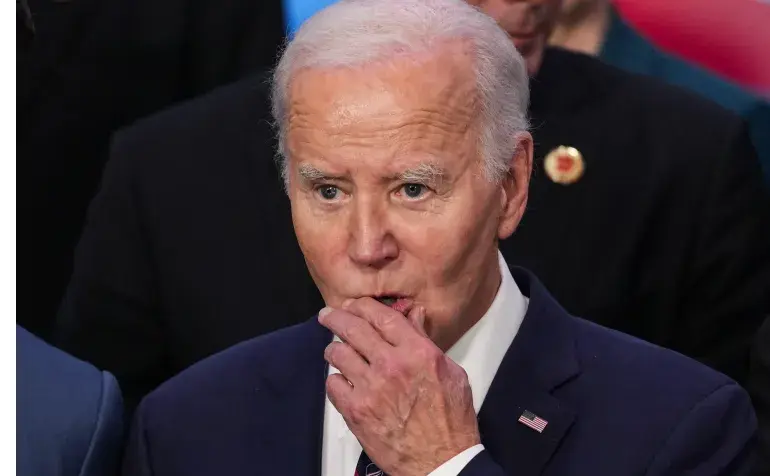

On November 14, the Israeli Knesset approved a law allowing the imposition of prison sentences on children under the age of 14.


In Tubas, the young man, Muhammad Arafat Daraghmeh (23 years old), was arrested while passing through the Tayasir military checkpoint, after being detained for hours.


In the same context, settlers destroyed the vehicle of a citizen from the town of Yasuf, east of Salfit.


According to local sources, the settlers attacked the vehicle of citizen Mujahid Radi Atiani while he was picking olives in the Mahour area.


In the northern Jordan Valley, settlers brought a herd of cows from distant areas to Al-Hamma in the Jordan Valley, near the tents of citizens in the area.


According to local sources, a truck belonging to the settlers brought equipment to build a residential pergola for them, amid fears among citizens that the settlers will build cow pens in the near future.


In Khallet Hamad, in Al-Hamma, there is a colonial outpost that was established in the summer of 2016, and the settlers there began to close the pastures to Palestinian citizens.

PALESTINE

Thu 21 Nov 2024 11:23 am - Jerusalem Time

Israeli Settlers publish a picture simulating the construction of the temple on the ruins of Al-Aqsa Mosque

Settler groups published a picture simulating the construction of the alleged temple on the ruins of the blessed Al-Aqsa Mosque.


The publication of the photo comes within the framework of incitement against Al-Aqsa Mosque in light of the unprecedented attack it is being subjected to, including a siege and incursions in large numbers, and the performance of all the rituals of the temple, including prayer, epic collective prostration, blowing the trumpet, and attempts to bring in offerings, while preventing the entry of worshipers and removing the guards during the incursions.


Far-right colonial groups known as the "Temple Mount Activists" had previously published a video clip modified using artificial intelligence, showing a large fire in the Dome of the Rock and inside and around the walls of Al-Aqsa Mosque. They accompanied the video with the phrase "absolute victory", and then republished the video a second time and commented on it with the phrase "soon in these days".


Al-Aqsa is subjected to daily raids by settlers under the protection of the occupation forces, in two periods, morning and evening, in an attempt to change the status quo at Al-Aqsa, and to attempt to divide it temporally.


While the Old City of Jerusalem and its gates are witnessing strict military measures, including thorough searches of citizens and worshippers in Al-Aqsa, assaulting them, and preventing them from entering the mosque during settler incursions.

PALESTINE

Thu 21 Nov 2024 11:18 am - Jerusalem Time

Double suffering for Negev prisoners with the arrival of winter

The Prisoners and Freed Prisoners Affairs Authority said that detainees in the Negev prison are suffering from difficult conditions with the approach of winter.


In a statement issued on Thursday, it explained that due to the prison being located in the Negev desert, southwest of the city of Beersheba, which is characterized by extremely cold weather at night, the prison administration deliberately keeps the detainees in very light summer clothes, and deprives them of blankets and covers, to double their suffering.


In another context, the Commission reported that all the detainees who were visited were infected with scabies, and were not provided with any type of treatment or medical follow-up. They confirmed that there are a number of other prisoners who have reached advanced stages of the disease, and because of the spread of boils and infections, they cannot eat or move except with the help of other detainees.


She pointed out that its crews were recently able to visit a number of detainees in the Negev prison, to check on them and follow up on their health and detention conditions. The following were visited:


- Detainee Mohammed Hassan Al-Barghouthi (24 years old) from Ramallah, who was beaten and abused more than 15 times since the beginning of the war on Gaza, and lost about 30 kilograms of his weight. He was arrested on 01/28/2017, and was sentenced to 9 years in prison.

- The detainee Muhammad Awad Awda (30 years old) from Bethlehem, who was arrested on 05/09/2024, and was sentenced to 6 months of administrative imprisonment, and his sentence was confirmed for the second time on 11/18/2024.


- Detainee Musa Hassan Issa Hula (40 years old) from Tulkarm, detained since 01/15/2004, and sentenced to 23 years in prison.


- Detainee Osama Asida Jabri (53 years old) from Nablus, arrested on 05/02/2002, and sentenced to 27 years in prison.


- Detainee Muhammad Darwish Hashash (23 years old), sentenced to 5 years in prison, and detained since 11/17/2020

ARAB AND WORLD

Thu 21 Nov 2024 10:42 am - Jerusalem Time

Former US Ambassador : Trump is forming an administration that will create problems for him in the Middle East

Former US Ambassador to Egypt and Israel Daniel Kurtzer shed light on the future of the Middle East under the administration of US President-elect Donald Trump, noting that the president is forming a government that "will only create problems for him" in the region, and wondering if Trump is prepared to pay the price the Saudis want in exchange for normalization with Israel?


This came in an interview with Kurtzer with CNN, where he said: "As you know, we are in an extraordinary moment with a president-elect who probably has the most important mandate of almost any president in history: the popular vote, the electoral vote, the Senate, the House of Representatives, and a very significant majority on the Supreme Court."


“A skilled politician can lead in many directions, both domestically and in foreign policy, especially in the Middle East. But the president-elect seems to be forming a government that will only create more problems for him. They seem intent on undermining the way the government works. Sure, the government needs to be reformed, but if you look at the various candidates (for Trump administration positions), they are in the category of those who want to destroy rather than build,” he continued.


“So the first order of business for the president-elect today, let alone on January 20 (the official inauguration day), is to figure out what he wants to achieve. And when it comes to the Middle East, if he really wants to achieve a ceasefire and some degree of return to normalcy, he’s going to have to pay some attention to what his advisers are saying, what his spokespeople are saying, and he’s going to have to put some leverage behind American policy toward Israel and toward the Arabs who have influence over Hamas.”


“The Saudis are still very interested in an improved relationship with the United States and a relationship with Israel, which they have had a longstanding bilateral relationship with, but in secret,” the former US diplomat continued. “But the Saudis are now constrained by the fact that they will come under enormous pressure within the Arab world in general and among their own people if they normalize relations with Israel without achieving anything for the Palestinians. They have defined that as a serious and irreversible path to a Palestinian state. The president, as we know — the president-elect, as we know — has a plan on the table as of 2020 that was not acceptable to anybody, but maybe he can build on it and make it minimally acceptable to the Palestinians.” He continued: “So if you start with the idea that the Saudis want to do this and you know what the cost is, or the price, the question is, is the president-elect willing to pay that price?”

ARAB AND WORLD

Thu 21 Nov 2024 9:52 am - Jerusalem Time

Biden sets record just weeks before leaving office

US President Joe Biden turned 82 on Wednesday, an age no sitting US president has ever reached.


The president had no public events on his schedule yesterday, after returning from a trip to South America late Tuesday night.


His family, friends and colleagues, including first lady Jill Biden and former President Barack Obama, celebrated Biden on social media.


“Happy Birthday to my dear friend and our amazing President Joe Biden,” Vice President Kamala Harris wrote on Instagram.


Biden dropped out of the presidential race in July after some voters thought he was too old for the job, and raised questions about his mental fitness after his poor debate performance against Republican Donald Trump in June.


Trump, 78, defeated Democratic candidate Kamala Harris, 60, in the Nov. 5 election, and Trump could surpass Biden's age record in his next term, as he will be 82 years and 7 months old when the next presidential transition takes place in 2029.


The previous record for oldest serving president was held by Republican Ronald Reagan, who completed his second four-year term at the age of 77.

OPINIONS

Thu 21 Nov 2024 9:20 am - Jerusalem Time

The American Veto: A True Partnership in the War of Extermination of Our People

op-ed "AlQuds" dot com

op-ed "AlQuds" dot com

Opinion Writer

It was not at all surprising that the United States used its veto power in the UN Security Council to abort the draft resolution for a ceasefire in Gaza, because it plays the role of a real partner in the war of extermination and ethnic cleansing that Israel is waging against our Palestinian people in the Gaza Strip and the West Bank. In fact, it is the one who directs the conflict in Israel’s favor and controls everything, and from here it is the one who makes the decision that undoubtedly gives Israel the cover and permission to continue the war of extermination and massacres against our Palestinian people.


The United States is repeating its aggressive policies against the Palestinian people, not only when it takes these decisions that protect Israel and encourage it to continue its massacres, war and deprivation of our people of their most basic rights, but also when it supports Israel with weapons, ammunition, equipment and bombs, with which Israel kills all the elements of life for a defenceless civilian people in the Gaza Strip. Thus, it proves once again that it is actually participating on the ground in the crimes of killing children and women, and that it is responsible for the war of extermination, ethnic cleansing, starvation and displacement, in addition to destroying all aspects of civilian life in the Strip.


This time, the UN Security Council intervened with a draft resolution that could have actually led to an immediate halt to Israel’s aggression against the Gaza Strip, and contributed to saving what could be saved from the terrible humanitarian catastrophe, by withdrawing the occupation from the Strip, and giving our people a glimmer of hope with its leadership, in determining their fate and starting the path of reconstruction, and restoring health even after many years. However, the United States decided to continue its policy biased towards Israel, in addition to controlling the will of the international community and challenging it, and from here it is the one who designs the path of wars, death and destruction in the Middle East and elsewhere.


The great condemnation of this decision by the Palestinian presidency, which denounced and condemned yesterday evening the US administration’s use of the veto for the fourth time, considering that it encourages the Israeli occupation to continue its crimes against the Palestinian people and the brotherly Lebanese people, and its defiance of all international legitimacy resolutions and international law, must be coupled with practical measures in an attempt to pressure the world to implement the advisory opinion of the International Court of Justice issued in the UN General Assembly resolution, which called for a halt to the aggression, an end to the occupation, and an Israeli withdrawal from the Gaza Strip, in addition to the necessity of exposing and laying bare the US role that is completely biased in favor of Israel.


Palestinian factions and forces, most notably Hamas, the Popular Front, and Islamic Jihad, have condemned this unjust decision, which reveals the truth of the hostile American role. The question that arises is: If the United States is seriously and truly concerned with stopping the war, as it carries out daily diplomatic moves and sends its officials on shuttle visits to the region, why does it use a poisoned right that prevents stopping this war?


It simply wants the aggression to end at the time Israel wants and in agreement with it, to truly prove the inability of the international system, which is mortgaged and governed by American and Israeli arrogance and hegemony.


We must assume full responsibility towards our Palestinian people, by working immediately to stop the aggression, massacres, wars of extermination, displacement, starvation and destruction. This is the right of our people to be saved from the clutches of these crimes that have crossed all red lines. We demand that the extermination be stopped forever, and the United States must stop supporting this criminal entity that denies all Palestinian rights.

ARAB AND WORLD

Thu 21 Nov 2024 9:01 am - Jerusalem Time

US Senate Opposes Bid to Halt Arms Sales to Israel

The US Senate has blocked a bill that would have halted some arms sales to Israel, introduced by independent Senator Bernie Sanders, along with a number of Democratic lawmakers.


The bill was supported by 18 members, while 79 of the 100 members of the Senate opposed the resolution, which, if passed, would have stopped the sale of tank ammunition to Israel.


The Senate is scheduled to vote later on two other resolutions that would halt shipments of two other types of offensive military equipment.


All votes in favor of the measure were from Democrats, while those who opposed it included representatives from both the Democratic and Republican parties.


Supporters of the bill hoped that forcing a vote would encourage the Israeli government and President Joe Biden's administration to do more to protect civilians in the Gaza Strip.


The bill was introduced amid the escalating humanitarian catastrophe facing Palestinians in the Gaza Strip, and comes after the expiry of a 30-day deadline set by the Biden administration earlier this month for Israeli Prime Minister Benjamin Netanyahu to "improve the humanitarian situation" in the Gaza Strip and allow relief aid to be delivered.


The resolution was expected to fail, as many members of Congress have shown steadfast support for Israel, a historic U.S. ally, and approval to block the sale, if it were to happen, would represent a shift in congressional support for Israel, which for years has been the largest recipient of U.S. military aid.


Washington accused of collusion

Earlier, left-wing members of the US Senate called on President Joe Biden's administration to stop supplying Israel with weapons, accusing Washington of complicity in the atrocities of the war on the Gaza Strip.


Independent Senator Bernie Sanders (I-Va.) and several Democratic lawmakers introduced several texts condemning U.S. aid to Israel, which constitute the draft resolution voted on today.


He stressed that "the United States is complicit in these atrocities, and this complicity must stop, and this is the content of these draft resolutions."


"What is happening in Gaza is unspeakable," Sanders said at a news conference, referring to the killing of tens of thousands of civilians in the Palestinian enclave, the destruction of buildings, and "Israel's prevention of the entry of much-needed humanitarian aid."


"But what makes the situation even more painful is that the bulk of what is happening there is being carried out with American weapons and with the support of American taxpayers," he added.


Today, Sanders returned to accusing Israeli Prime Minister Benjamin Netanyahu of violating international and American law and human rights and obstructing the delivery of aid to the Gaza Strip.


During a press conference held at the US Senate, Sanders showed pictures showing the humanitarian tragedy in Gaza, as a result of the genocide carried out by Israel.


The proposed aid to Israel, which according to the rejected bill is banned, includes tank ammunition, F-15IA aircraft and mortars.


The Israeli aggression on Gaza has so far resulted in about 148 thousand martyrs and wounded, most of them children and women, and more than 10 thousand missing, amidst massive destruction and famine that killed dozens of children and elderly people, in one of the worst humanitarian disasters in the world.