PALESTINE

Sun 24 Nov 2024 1:16 pm - Jerusalem Time

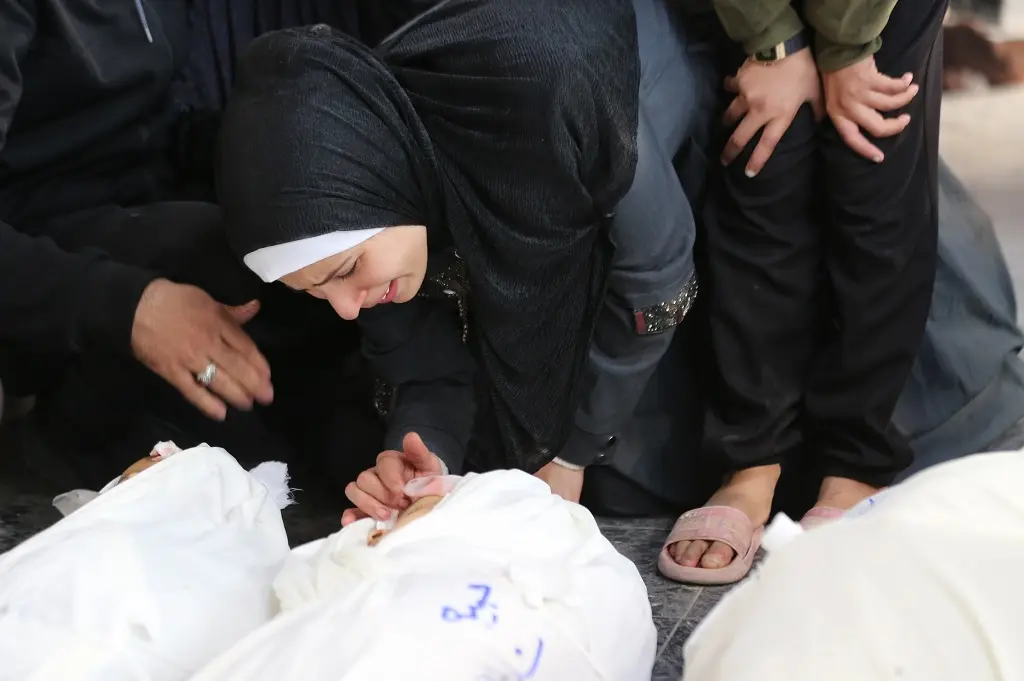
Gaza Health: 35 dead and 94 injured arrived at hospitals in 24 hours

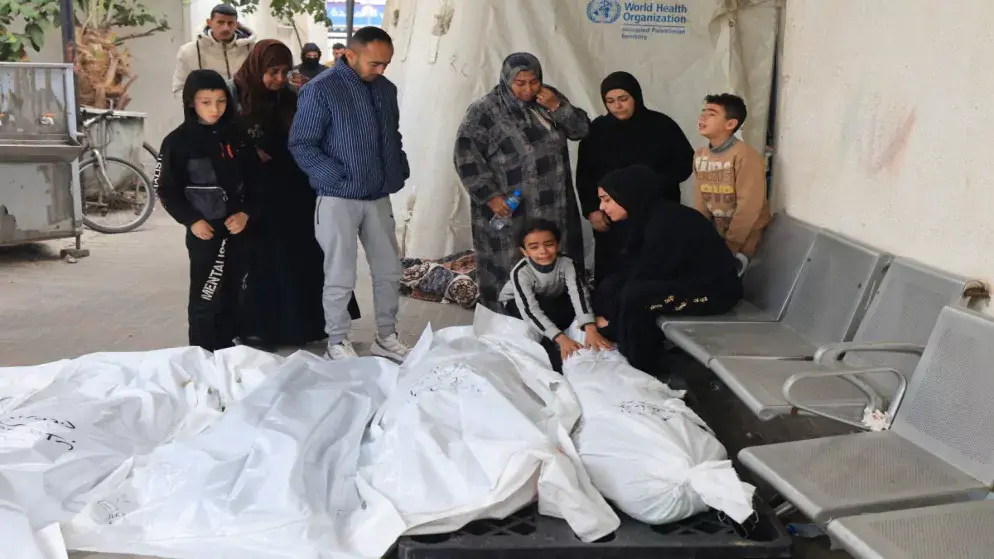
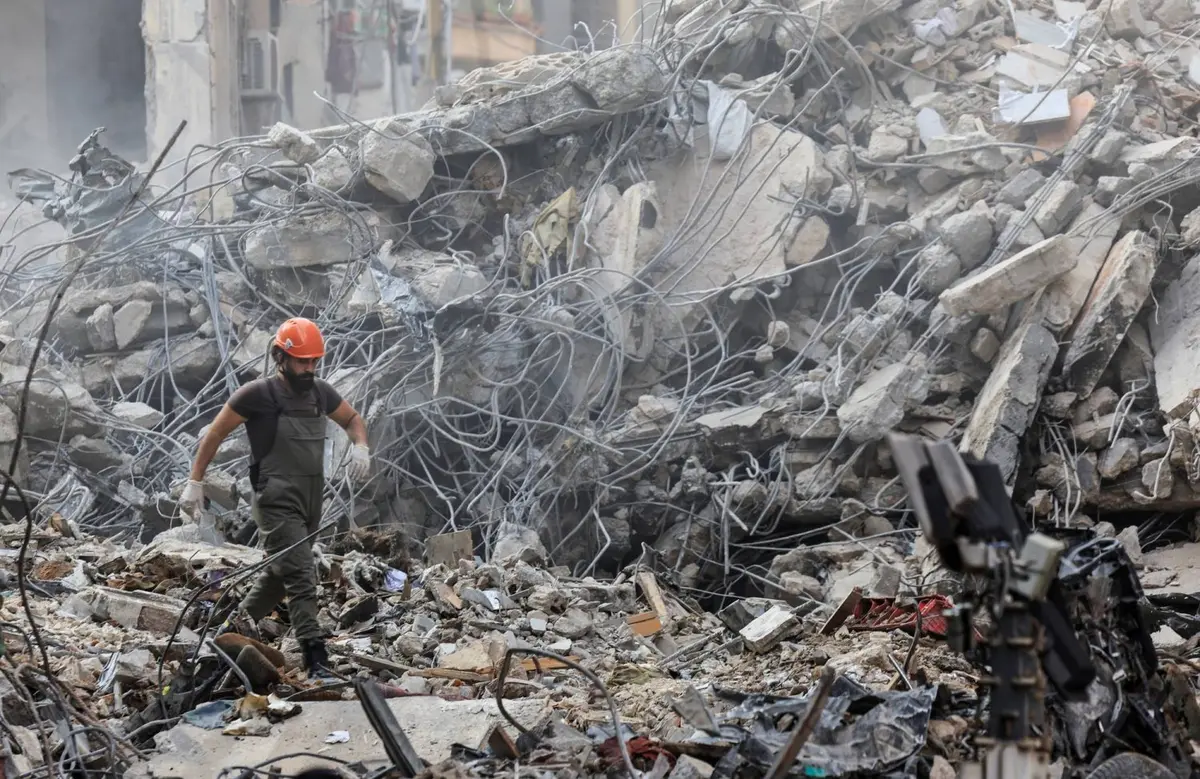
The Ministry of Health in Gaza reported today, Sunday, that the Israeli occupation committed 4 massacres against families in the Gaza Strip, resulting in 35 dead and 94 injuries arriving at hospitals during the past 24 hours.


The ministry confirmed in a brief statement that the death toll from the Israeli aggression has risen to 44,211 dead and 104,567 injuries since October 7, 2023.


She pointed out that there are a number of victims still under the rubble and on the roads, and ambulance and civil defense crews cannot reach them.


PALESTINE

Sun 24 Nov 2024 12:06 pm - Jerusalem Time

144 Israeli settlers storm Al-Aqsa Mosque

Dozens of settlers stormed the courtyards of Al-Aqsa Mosque in occupied Jerusalem today, Sunday, under the protection of the Israeli occupation police.


Eyewitnesses reported that 144 settlers stormed Al-Aqsa Mosque in groups, carried out provocative tours in its courtyards, and performed Talmudic rituals, under the protection of the occupation forces.

ARAB AND WORLD

Sun 24 Nov 2024 12:06 pm - Jerusalem Time

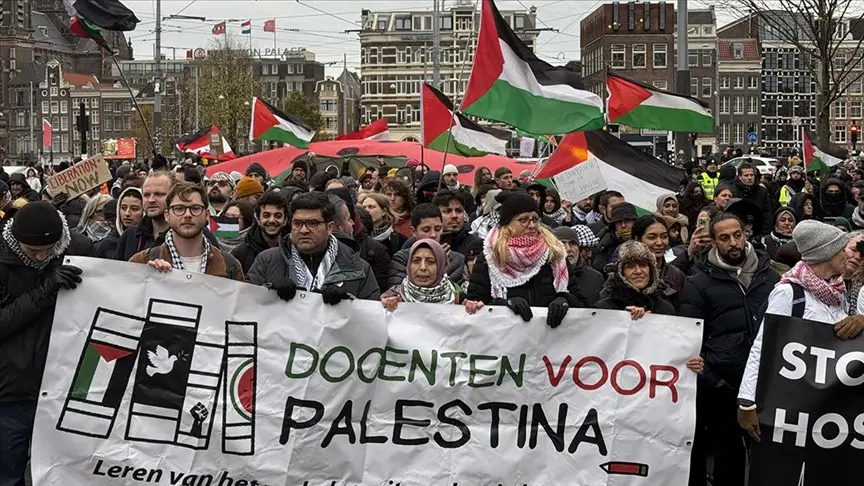
Hundreds of protesters demand arrest of Netanyahu and Galant in the Netherlands

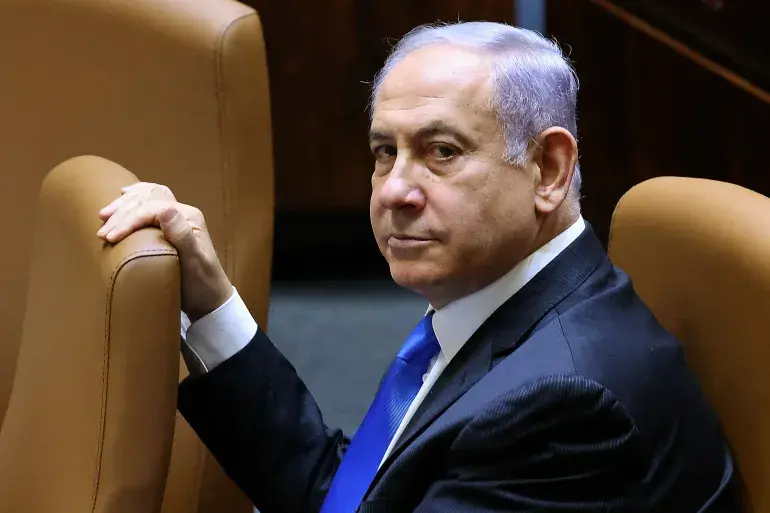
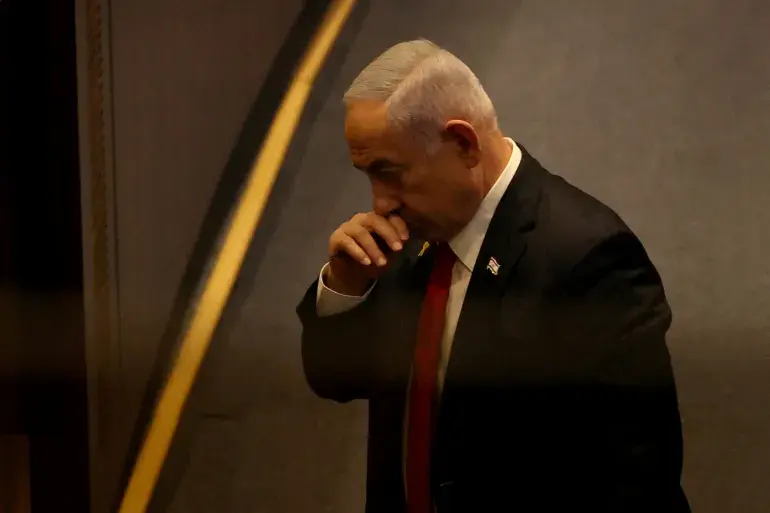
Hundreds of demonstrators in the Dutch capital Amsterdam on Saturday demanded the immediate implementation of the arrest warrant issued by the International Criminal Court against Israeli Prime Minister Benjamin Netanyahu and his former defense minister, Yoav Galant.


Demonstrators gathered in Dam Square to express their anger at Israel's continued genocide in Gaza, expressing their discontent with Western countries, primarily the Netherlands, the United States, Britain and Germany, for their support of Israel despite its violations in Gaza.


The demonstrators set off from Dam Square towards the city's central train station in a march that lasted about two hours.


During the march, the demonstrators chanted slogans such as "Free Palestine," "Free Lebanon," and "Stop the genocide."


In a speech at the demonstration, the head of the European Youth League, Murat Gok, demanded that the arrest warrant issued by the International Criminal Court against Netanyahu and Galant be entered into immediately.


Another spokesman said that the health system in Gaza had completely collapsed, and that the wounded were now waiting to die from pain without treatment.


On Thursday, the International Criminal Court issued two international arrest warrants against Netanyahu and Galant, on charges of committing war crimes and crimes against humanity during the ongoing genocide committed by Israel against Palestinians in the Gaza Strip since October 7, 2023.


With American support, Israel has been committing genocide in Gaza since October 7, 2023, leaving more than 148,000 Palestinians dead and wounded, most of them children and women, and more than 10,000 missing, amid massive destruction and famine that killed dozens of children and the elderly, in one of the worst humanitarian disasters in the world.


Israel continues its massacres, ignoring the UN Security Council resolution to end them immediately, and the International Court of Justice’s orders to take measures to prevent acts of genocide and improve the catastrophic humanitarian situation in Gaza.

PALESTINE

Sun 24 Nov 2024 11:58 am - Jerusalem Time

Israeli occupation threatens to demolish homes and photographs facilities and roads in occupied Jerusalem

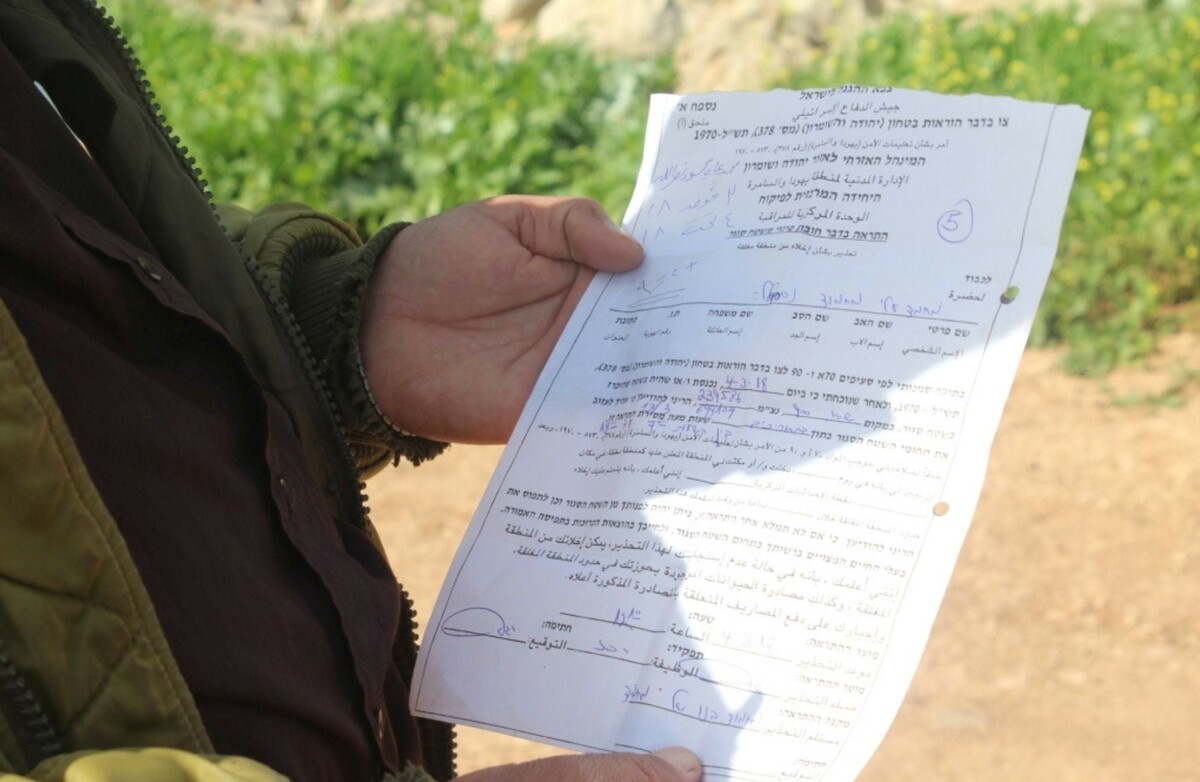
The Israeli occupation authorities notified, on Sunday afternoon, the demolition of homes in the town of Silwan, south of the blessed Al-Aqsa Mosque in the occupied city of Jerusalem.


The Wadi Hilweh Information Center reported that the occupation municipality crews in Jerusalem posted demolition orders in the Al-Bustan neighborhood for homes belonging to the Abu Shafe’ family, and gave them a period of 14 days to evacuate them.


The same sources added that the occupation municipality crews stormed Al-Bustan neighborhood since morning, distributed demolition notices, and photographed facilities and roads in the neighborhood.


A short while ago, the occupation municipality crews, with military reinforcements, stormed the Ein Al-Lawza neighborhood in the town of Silwan, and posted inspection orders on several homes.

ARAB AND WORLD

Sun 24 Nov 2024 11:17 am - Jerusalem Time

Israel calls on its citizens to avoid "unnecessary travel" to the Emirates


Israel on Sunday called on its citizens to "avoid non-essential travel" to the UAE, after the body of Rabbi Zvi Kogan, who had been missing since last Thursday, was found.


This came in a statement by the Israeli National Security Council, published by the private Hebrew Channel (12).


The statement read: "Following reports of the killing of Zvi Kogan in the United Arab Emirates as a result of a terrorist act, the National Security Council has tightened its recommendation to avoid non-essential travel to the country."


He added: "The National Security Council asks (Israelis in the Emirates) to exercise increased vigilance in public places, avoid displaying Israeli symbols, and avoid posting details of the trip on social media."


Earlier on Sunday, Israeli Prime Minister Benjamin Netanyahu's office and the Israeli Foreign Ministry said in a joint statement that "the intelligence and security authorities in the UAE have found the body of Kogan, who has been missing since Thursday, November 21, 2024."


He added: "The Israeli Embassy in Abu Dhabi has been in contact with the family since the beginning of the incident and continues to accompany them during their difficult time."


He continued, "The murder of Zvi Kogan is a criminal, anti-Semitic terrorist incident, and Israel will act by all means and bring to justice the criminals responsible for his murder."


There was no immediate comment from the UAE authorities on this matter until (08:30 GMT).


On Saturday, Netanyahu's office and the Mossad intelligence agency said in a joint statement that Rabbi Zvi Kogan, an Israeli citizen of Moldovan origin who lives in the UAE, "disappeared under mysterious circumstances since Thursday afternoon."


The UAE authorities also announced on Saturday that they are searching for a Moldovan citizen who is missing in the country.


Majid Al Mansouri, Director of the Foreign Nationals Department at the UAE Ministry of Foreign Affairs, said in a statement that "the ministry is closely following the case of the disappearance of a Moldovan citizen named Yezvi Kogan."


Al Mansouri added that the Ministry of Foreign Affairs "is in contact with Kogan's family and is providing them with all necessary support," and that the ministry "is in continuous contact with the Moldovan Embassy in Abu Dhabi in this regard."


He explained that "the competent authorities in the country began search and investigation operations immediately after receiving the report."


According to the Hebrew newspaper Yedioth Ahronoth, Kogan was officially residing in the UAE as an assistant to the Chief Rabbi of Abu Dhabi.


Chabad is an extremist organization that does not believe in the existence of Palestinians and calls for their expulsion from occupied Palestine. It opposes any agreement that would give them part of the land.


The organization's members are present in several countries, including the United States, France, and Canada, in addition to the Emirates, where they established the Jewish community center, which contains a synagogue and Torah scrolls. The center is headed by Rabbi Levi Duchman.

ARAB AND WORLD

Sun 24 Nov 2024 10:54 am - Jerusalem Time

Israeli phosphorous shelling on the outskirts of Mari near an army checkpoint in Lebanon

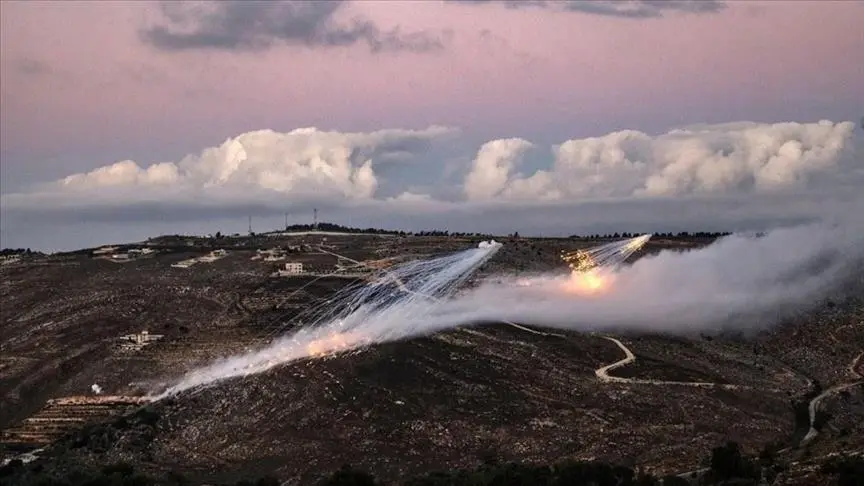
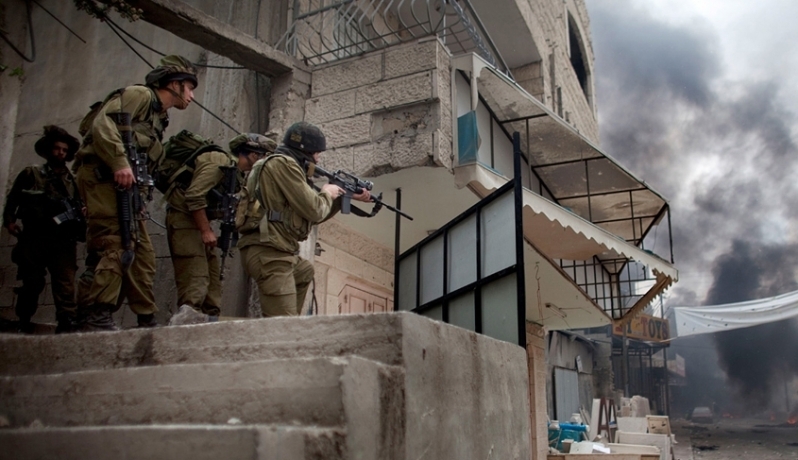
Today, Sunday, Israeli forces bombed the outskirts of the village of Mari in southern Lebanon with phosphorous shells near a checkpoint of the country's army, coinciding with the implementation of raids on the city of Khiyam, which the Israeli occupation army continues to try to control.


The official Lebanese News Agency reported that the Israeli raids targeted the villages of Kfar Shouba, Al-Khiam in Nabatieh, the Al-Rahebat neighborhood, between Al-Numayriyeh and Al-Sharqiya, Mayfadoun, Shukin, Harouf, Al-Jabal Al-Ahmar, and others.


According to the same source, "the Israeli occupation forces bombed the outskirts of Al-Mari at night, near the army checkpoint, with phosphorous shells, in conjunction with carrying out raids on the city of Khiam, booby-trapping houses and blowing them up."


The Israeli air force raided the Khardali road (between Nabatieh and Marjeyoun), cutting it off.


Israeli movements continue in Deir Mimas (Marjeyoun), and soldiers are deployed with tanks among the olive groves and near the monastery west of Deir Mimas, according to the agency.


The agency added: "The Israeli air force launched two raids on the city of Khiyam, and its operations included blowing up houses in Shama and Tayr Harfa, while fierce clashes are taking place between the resistance (Hezbollah) and the occupation forces around the Khiyam municipality.


Israel considers Khiyam a "strategic gateway that enables it to quickly penetrate" Lebanese territory, according to the agency.


Clashes erupted between Hezbollah fighters and Israeli army forces at the "Maroun al-Ras-Ainata-Bint Jbeil" triangle, while the party targeted Israeli army positions at the outskirts of Shama and al-Bayada, amid ongoing clashes, according to the news agency.


In Tyre, in the southern governorate, the agency reported that the Israeli army's aircraft "carried out a belt of fire on Sunday morning by launching more than one raid on the towns of Shaqra and Barashit, destroying a number of buildings and residential apartments, without details about casualties or injuries."

ARAB AND WORLD

Sun 24 Nov 2024 10:15 am - Jerusalem Time

Israel announces finding the body of the missing rabbi in the Emirates


Israel officially announced, on Sunday, that the body of Rabbi Zvi Kogan, who has been missing since Thursday in the United Arab Emirates, has been found.


"The UAE intelligence and security authorities have found the body of Zvi Kogan, who has been missing since Thursday," Israeli Prime Minister Benjamin Netanyahu's office and the Israeli Foreign Ministry said in a joint statement.


The statement described Kogan's killing as "a heinous anti-Semitic terrorist act," noting that Israel will do its utmost "until justice is served."


Zvi Kogan, a representative of the Jewish Chabad movement in the Emirates, holds Moldovan citizenship in addition to Israeli citizenship.


There was no immediate comment from the UAE authorities on the Israeli announcement of the rabbi's killing.

ARAB AND WORLD

Sun 24 Nov 2024 10:06 am - Jerusalem Time

Israel demands that the residents of 5 towns in southern Lebanon evacuate them

The Israeli army called in a statement, today, Sunday, on the residents of 5 towns in southern Lebanon to evacuate them in preparation for bombing them, warning the residents against heading south.


The five towns are: East Zawtar, West Zawtar, Arnoun, Yahmor, and Al-Qasiba.


The Israeli army said: "You must evacuate your homes immediately and move to the north of the Awali River. To ensure your safety, you must evacuate without delay. Anyone who is near Hezbollah elements, installations or weapons is putting his life in danger."


The Israeli army also said in a separate statement that sirens sounded in central Israel due to rockets fired from Lebanon.


The army added that it had detected 6 missiles crossing from Lebanon into Israeli territory, and said that its air forces intercepted 5 of them, and the last one fell in an open area.

OPINIONS

Sun 24 Nov 2024 9:42 am - Jerusalem Time

Israel increases the rate of killing Palestinians

op-ed "AlQuds" dot com

op-ed "AlQuds" dot com

Opinion Writer

Israel has increased the rate of killing Palestinians in various areas of the Gaza Strip, in response to the International Criminal Court’s decisions to issue arrest warrants against war criminals Netanyahu and Galant.


The statement issued by Netanyahu's office in response to the decision that he will continue his war and there is no force to stop him seems to be in harmony with the increase in the unjustified killing of civilians, but Israel has a means to continue its war, according to its claims, against what it describes as "Palestinian terrorism." This description contains a very dangerous equation. Israel, which kills and destroys everything in Gaza, is interested at this stage in continuing its massacres and war of extermination, because the United States, which has rejected international resolutions, and is the greatest devil of humanity that directs Israel, provides it with cover and supports it, is interested in continuing the war at the same pace, if not more, because any halt or reduction in operations will raise question marks in international public opinion. Therefore, Israel has decided to continue its aggression based on the slogans it raises, the most prominent of which is that it is waging the most just war in the world against terrorism, and this slogan alone is enough to make it continue killing and slaughtering civilians in the Gaza Strip.


The rate of killing has increased everywhere in the Strip. In one day, more than 120 people were killed and about 300 others were injured, in an indication of clear Israeli intentions to turn the Strip into a sea of blood even bigger than it is now.


Yesterday's toll was seven massacres, raising the total number of martyrs to more than 44,180. This toll is likely to rise dramatically in the coming days if Israel is not stopped and stopped from this most ferocious war in human history, in which women and children are killed in tents and shelters, and even those heading for a drink of water or a piece of bread, are cut off by planes and drones and their bodies are turned into pieces. This is what happened in Zeitoun, Nuseirat, Bureij, Khan Yunis and Rafah, in addition to the massacres in northern Gaza.


The mere rejection by the United States and the White House leadership in its current guise, or the one that will be renewed on January 20 with the inauguration of Trump as president, of the International Criminal Court’s decision, considering that what Israel is doing in the Gaza Strip of massacres against humanity are war crimes, means a new green light for the occupying entity to continue its crimes, and this rejection alone is enough to encourage Israel to tighten its grip on the Strip, and move to carry out more massacres of genocide, at the hands of an army that is the most dangerous to humanity through its racism and its orientation towards a war of revenge in response to October 7, 2023.


Before the ICC decision, the United Nations and Human Rights Watch issued two separate reports last week accusing Israel of having practices during the Gaza war that were consistent with the characteristics of genocide and amounted to a war crime. The Israeli military accused Human Rights Watch of “bias against Israel and distorting the facts,” and said in a statement: “This report, like other reports before it, presents selective information in a way that obscures the context, in addition to making some blatant distortions.” For its part, the United States considered that there was “no basis” for a special UN committee to consider that Israel’s practices during the Gaza war were “consistent with the characteristics of genocide.”


“This is something we disagree with unequivocally,” the State Department spokesman said, adding, “We believe that such formulations and such accusations are absolutely without merit,” and denouncing the Human Rights Watch report.


These statements and positions provide a clear answer to the question: Why does Israel continue its war of extermination? But the more important questions are: Can it be forced to implement the procedures of the Security Council resolutions and international courts? How can Israel be held accountable? And will the Arab and Western countries take the necessary measures to ensure the implementation of the will of the international community?


Answer: No, and the result is that the killing of Palestinians will continue indefinitely.


OPINIONS

Sun 24 Nov 2024 9:41 am - Jerusalem Time

Providing urgent and immediate protection for Palestinian children

Sari Al Kidwa

Sari Al Kidwa

Opinion Writer

The practices of the Israeli occupation against Palestinian children are escalating, and the extremist occupation government is committing all forms of genocide, starvation, and deliberate killing within the ethnic cleansing war waged by the occupying state. It has become necessary to work to provide urgent and immediate protection for Palestinian children, in light of the systematic targeting of them by the occupation, coinciding with the International Children's Day, which falls on the twentieth of November of each year.


The international community must not exclude Palestinian children from international protection, as they suffer from many calamities, especially with the escalation of inhumane and disastrous practices and the violation of their most basic rights, most importantly the right to life. The latest statistics on the number of child martyrs reflect the hideousness of the ongoing genocidal war that targets innocent people without discrimination, especially children who pay the highest price.


Children in Gaza are facing a real threat, with hundreds of thousands estimated to be suffering from severe shortages of food and clean drinking water. Palestinian children in the West Bank are subjected to arrest and military trials that violate their basic rights, with 85% of them handcuffed and blindfolded, and many arrested at night, in flagrant violation of all international norms and agreements, including the Convention on the Rights of the Child, which guarantees special protection for children from arrest and violence. Some 70 Palestinians, including children, are under house arrest as a result of the increased restrictions since October 2023.


The racist law passed by the Israeli Knesset in November 2024, which allows the detention of Palestinian children under the age of 14 if they are convicted of “terrorist” crimes, as they call them, or similar activities, including murder, constitutes a serious escalation against their rights and increases their suffering, in addition to the disastrous consequences of banning UNRWA activities on the services provided to children, whether health, education or living.


The international community must take urgent action to ensure that the occupying state respects all international covenants and treaties, most notably the Convention on the Rights of the Child, as children in the Gaza Strip are the ones paying the heavy price for the ongoing occupation aggression since October 7, 2023, in full view of the world, which is still unable to stop this genocide. The bodies of children in the Gaza Strip have been exposed to various weapons, including missiles and bombs, and the most hideous forms of killing and destruction, in addition to the dozens who have been killed by hunger, thirst and disease as a result of the siege, and thousands of them have become orphans.


Palestinian childhood is still being robbed in light of the continued brutal aggression of the occupation against the Palestinian people and the violation of the rights of Palestinian children, in a clear challenge to the International Convention on the Rights of the Child, and all the special rights it includes that are binding on all countries and governments. These numbers are not just statistics, but rather reflect human suffering that requires action from the international community to save children, guarantee their basic rights, and assume its legal and moral responsibilities towards these crimes.


International organizations and countries of the world must move to ensure relief for children and their families, prevent famine, facilitate the evacuation of the injured and sick for treatment in hospitals outside the Strip, provide health and humanitarian services, and the importance of working hard to end this genocide and save human life that is at risk of extinction, end the longest occupation on earth, build a just and secure future for the children of Palestine, and hold the leaders of the occupation and its soldiers accountable for the crimes and massacres committed against them before the international judiciary.

OPINIONS

Sun 24 Nov 2024 9:32 am - Jerusalem Time

Facts about Palestine's accession to ICC and the arrest warrants

Dr. Dalal Saeb Erekat

Dr. Dalal Saeb Erekat

Opinion Writer

I am writing today’s article to introduce the reader to the details of Palestine’s journey to join the International Criminal Court, leading up to the arrest warrants. Today’s article documents and explains the diplomatic efforts and legal steps that Palestine took to reach this historic moment. I will put the steps in their time frame so that the reader can understand the challenges and patience required for the diplomatic work that we are reaping the fruits of today.


* 1998 Adoption of the Rome Statute: The Rome Statute was signed, regulating the work of the International Criminal Court, and aims to hold individuals accountable for crimes of genocide, war crimes, and crimes against humanity.


* 2002 Establishment of the International Criminal Court: The court was officially established and began its work to hold accountable individuals accused of committing the major crimes covered by the statute.


* 2011 Palestine's status at the UN is upgraded: Palestine began efforts to upgrade its status at the UN as a first step towards joining the ICC. The PLO requested that its status at the UN be upgraded from "observer entity" to "non-member observer state."


This was part of a diplomatic strategy aimed at strengthening its international standing, allowing it to accede to international treaties and agreements, including the Rome Statute of the International Criminal Court. This was the cornerstone of a long and arduous legal diplomatic process. Unfortunately, the PLO failed to obtain the votes required in the Security Council to raise the status of a full member state, so it turned to the General Assembly under the item of Uniting for Peace.


* 2012 Palestine was granted non-member observer state status at the United Nations: This General Assembly resolution allowed Palestine to join several international conventions and treaties, including the possibility of joining the International Criminal Court. 138 voted in favor and Palestine was granted non-member observer state status at the United Nations through General Assembly resolution 67/19.


* June 2014 - The Government of the State of Palestine, by a declaration made pursuant to Article 12(3) of the Rome Statute, accepted the jurisdiction of the International Criminal Court, effective 13 June 2014.


* January 2015, Submission of the Application to Join the Rome Statute: Palestine submitted its official application to join the International Criminal Court. The PLO, led by Dr. Saeb Erekat, formed the Supreme National Committee to follow up on the file of international courts, and confirmed its commitment to the Rome Statute. On January 1, 2015, the PLO officially submitted the accession documents.


* April 1, 2015 Palestine officially joined the court: The Rome Statute entered into force for the State of Palestine, and Palestine became an official member of the court. This day was considered a historic milestone in the Palestinian struggle to achieve justice. The Palestinians then submitted a request to the Office of the Prosecutor of the International Criminal Court to investigate violations of the Rome Statute in the Palestinian territories occupied by Israel in 1967 regarding war crimes and crimes against humanity, most notably the prisoners and settlement files. The High Committee was working to intensify referrals and follow-up, which angered Israel and America.


* 2019-2020 Request to confirm the Court’s jurisdiction: After receiving objections from several countries, including the United States and Israel, Prosecutor Fatou Bensouda asked the Pre-Trial Chamber for its opinion on the Court’s jurisdiction over the Palestinian territories after Israel questioned this jurisdiction.


* February 5, 2021 Confirmation of the Court’s Jurisdiction: The International Criminal Court issued a decision confirming its jurisdiction over the Palestinian territories occupied in 1967, including the West Bank, East Jerusalem and the Gaza Strip.


* October 2023 Palestinian diplomacy and the multilateral sector activated the international legal file to try to stop the ceasefire in Gaza.


* 17 November 2023 Referrals were submitted by the Republic of South Africa, the Republic of Bangladesh, the Plurinational State of Bolivia, the Union of the Comoros, and the Republic of Djibouti regarding the crime of genocide in Gaza.


* January 18, 2024 Additional referrals made by the Republic of Chile and the United Mexican States.


* May 2024 - Prosecutor’s announcement on arrest warrants: Karim Khan, the Court’s prosecutor, announced his intention to issue arrest warrants against political and military figures from Israel and the Gaza Strip, including Benjamin Netanyahu, Yoav Galant, Ismail Haniyeh, Yahya Sinwar and Mohammed Deif.


* On 26 September 2024, Israel challenged the jurisdiction of the Court over the situation in the State of Palestine in general, and specifically in relation to Israeli nationals, on the basis of Article 19(2) of the Statute. In its second request, Israel requested the Chamber to order the Prosecution to submit a new notification to its authorities regarding the commencement of an investigation pursuant to Article 18(1) of the Statute. Israel also requested the Chamber to stay any proceedings before the Court relating to the situation, including the consideration of the applications for arrest warrants against Benjamin Netanyahu and Yoav Galant, submitted by the Prosecution on 20 May 2024.


* November 21, 2024 - Arrest warrants issued: The International Criminal Court issued arrest warrants for Benjamin Netanyahu and Yoav Galant, six months after Karim Khan's announcement.


In parallel with the arrest warrants, 2024 November - The Court issued two decisions dismissing the challenges brought by Israel under Articles 18 and 19 of the Rome Statute, confirming the validity of the Court’s decisions. With regard to the first challenge, the Chamber noted that Israel’s acceptance of the Court’s jurisdiction was not required, as the Court could exercise its jurisdiction based on the territorial jurisdiction of the State of Palestine, as determined by Pre-Trial Chamber I in its previous configuration.


Furthermore, the Chamber considered that, pursuant to Article 19(1) of the Statute, States are not entitled to challenge the Court’s jurisdiction under Article 19(2) before an arrest warrant is issued. Israel’s challenge is therefore premature.


However, this decision does not affect any potential future challenges to the jurisdiction and/or admissibility of any particular case. The Chamber also rejected Israel’s request under Article 18(1) of the Statute. It explained that the Prosecution notified Israel of the commencement of the investigation in 2021. At that time, and despite a request for clarification from the Prosecution, Israel chose not to pursue any request to postpone the investigation. The Chamber also considered that the parameters of the investigation into the situation remained the same and that there was therefore no need for a new notification to the State of Israel. Accordingly, the judges concluded that there was no reason to discontinue the consideration of the requests for the issuance of arrest warrants issued against Benjamin Netanyahu and Yoav Galant, for crimes against humanity and war crimes committed at least between 8 October 2023 and 20 May 2024, the day on which the Prosecution submitted the requests for the issuance of arrest warrants.


The arrest warrants were classified as “secret” to protect witnesses and ensure the proper conduct of investigations. However, the Department has decided to release the information related to them, as it appears that conduct similar to that described in the arrest warrant is still ongoing. In addition, the Department considers that it is in the best interests of the victims and their families to be aware of the existence of these warrants.


So now, there are 124 member states of the Rome Statute that are obligated to implement the court’s decisions, while 7 countries, including South Africa, Bolivia, Djibouti, Bangladesh, Comoros, Chile and Mexico, have returned their referrals regarding the crime of genocide, which is a historic achievement for humanity and international justice. These developments represent an important turning point in international law and the fact that Israel has repeatedly escaped punishment under the cover of international legitimacy. The arrest warrants have strengthened the court’s role in restoring confidence in the international system and law to hold war criminals accountable, despite attempts by Israel and the United States to obstruct the court’s work. Member states that have declared their defiance of the arrest warrants will be held accountable, and it is not unlikely that human rights organizations and individuals will file lawsuits against them and find their persons under indictment in their local courts and the International Criminal Court, as international law is superior to local law and the signatory states to the Statute are obligated to implement and harmonize domestic laws.


The International Criminal Court was established in 2002 with the aim of holding individuals accountable for committing crimes against humanity and war crimes, including genocide. The Statute of the International Criminal Court was adopted in Rome in 1998. Palestine’s accession to the court was not a simple matter; it was a diplomatic process that required a lot of patience, deliberation, teamwork, and strategic leadership. It was not an automatic accession, but rather began with a request to the United Nations to raise Palestine’s status in 2012 to a non-member state, which allowed it to join a group of international agreements and conventions. Here, the Palestinian application to join the Rome Statute of the court was submitted in 2014-2015.


Prosecutor Fatou Bensouda accepted the mandate and intended to open an investigation into the referral of Israeli criminals under the war crimes clause, but Israel quickly objected on the grounds that Palestine is not a sovereign state, i.e. it questioned the territorial jurisdiction of the court. Therefore, the Prosecutor asked the Pre-Trial Chamber for its opinion on territorial jurisdiction to confirm Bensouda’s position that the court’s position on having legal jurisdiction over the West Bank, East Jerusalem and the Gaza Strip would enable her to open the investigation. The response was expected to come within a period not exceeding 120 days since the end of 2019, and we were hoping that the court would begin investigating the files of Israeli criminals in early 2020, but we witnessed successive extensions by the court, which is further evidence that the process is complex and requires a lot of patience, diligence and work. The Pre-Trial Chamber invited Israel to submit observations on January 28, 2020, but the latter chose not to respond directly legally, but rather continued to question and direct political accusations at the court and the Prosecutor. On 2/5/2021, the Pre-Trial Chamber of the International Criminal Court issued a decision regarding the court’s jurisdiction to consider war crimes committed, confirming its jurisdiction over the Palestinian territories occupied in 1967, including the West Bank, East Jerusalem, and the Gaza Strip. This decision means that the subject of the court’s territorial jurisdiction over Palestine is beyond doubt, and it has become an official and legal headquarters.


The court was expected to practically begin accelerating its judicial procedures to investigate the files brought before it, including the crimes committed by Israel during the occupation’s three-time aggression on the Gaza Strip, and the files of prisoners and settlements since 2014, i.e. since Palestine joined the Charter, and not retroactively according to the law. Under the Rome Statute, the International Criminal Court only prosecutes cases in which national authorities clearly fail to ensure accountability. In this context, any examination of the Israeli judicial system regarding violations of Palestinian rights falls under the jurisdiction of the International Criminal Court. In 2015, the Palestinians submitted a request to the Office of the Prosecutor of the International Criminal Court to investigate violations of the Rome Statute in the Palestinian territories occupied by Israel in 1967, beginning in 2014. The court wasted years adjudicating jurisdictional issues before finally confirming, in 2021, that it had the mandate to conduct legal investigations in the occupied territories. When Israel failed to prevent the Palestinians’ accession, it began to practice coercive “diplomacy” through economic sanctions and withholding Palestinian tax revenues that it was legally required to transfer to the Palestinian Authority, and imposed a variety of restrictions on Palestinian officials, and threatened to punish the Palestinian Authority in additional ways, while the United States made its displeasure clear, and directed its retaliatory measures directly at the International Criminal Court, and Washington imposed sanctions on Fatou Bensouda, Karim Khan’s predecessor.


This is how Washington has informed the ICC that it has no right to investigate Israel’s crimes against the Palestinians or the US’s conduct in Afghanistan. Now, smear campaigns and sexual suspicions against Karim Khan are being launched, all in an attempt to pressure and intimidate the court. In 2002, the US adopted legislation known as the Hague Invasion Act, which allows the US military to invade the Netherlands, a NATO member, and release any US citizen held by the ICC. Meanwhile, the Europeans, who are members of the Rome Statute, have continued to affirm their support for the ICC while presenting the court with false legal arguments insisting that it has no jurisdiction over Palestine.


It is necessary to reactivate the Supreme National Committee for the Follow-up of the International Courts File, which includes representatives of all factions, including Hamas, and representatives of Palestinian human rights and official institutions. The objectives of the National Committee were to follow up on the necessary preparations for submitting files related to Israeli war crimes, especially the settlement and Gaza files, and to work on formulating the legal evidence and documents required to submit them to the International Criminal Court, in addition to coordinating with Palestinian and international bodies to collect documents proving Israeli violations and ensuring Palestine’s compliance with the requirements of the Rome Statute. This comprehensive national committee was part of the Palestinian national strategy to promote recourse to international law as a means of achieving justice and holding the occupation accountable for crimes committed in the Palestinian territories on the basis of national unity.


Israel is currently committing a brutal genocide in the Gaza Strip, prompting many jurists to file cases against Israel before the International Criminal Court and the International Court of Justice. These cases, particularly the South Africa v. Israel case, where Germany filed a request for intervention and South Africa subsequently accused the United States and the United Kingdom of complicity in the crime of genocide, constitute a pivotal stage of the point of no return in international law. The charges and referrals regarding the crime of genocide are important, but it is necessary to reactivate and intensify referrals for all crimes against humanity, including the files of settlements, prisoners and the repeated aggression on Gaza.


The arrest warrants reaffirm the importance of diplomatic and legal tools and the need to build on them and invest in them. Diplomacy is a long journey that requires effort, time and money, but this path has branded Israel with a new brand that is an organized terrorist state and has proven the criminality of its leadership as a historical precedent.

OPINIONS

Sun 24 Nov 2024 9:29 am - Jerusalem Time

Hamas initiative

Hamada Faraana

Hamada Faraana

Opinion Writer

In its editorial on Friday, November 22, 2024, the Hebrew newspaper Haaretz described the arrest warrant against Netanyahu and Galant as having placed the colony “at an unprecedented moral low, as a state whose leaders are accused of war crimes against the Palestinian population in the Gaza Strip,” and said: “Netanyahu hopes that President-elect Donald Trump will save him from the distress with the help of sanctions on the court, its judiciary, and Attorney General Karim Khan.”


“You can expect a strong response to anti-Semitic bias from the International Criminal Court and the United Nations in January,” wrote Mike Waltz, Trump’s nominee to be national security adviser, when Trump is inaugurated on January 20, 2025.


Netanyahu has treated the International Criminal Court with pre-emptive hostility, calling it “anti-Semitic” and “the enemy of humanity,” and making multiple and immoral accusations against the prosecutor in his conduct and harming his reputation. In short, he has treated the court with denunciation and attack.


The general political atmosphere at the international level is tense and tense. There is a deep division between those who sympathize, support and stand in solidarity with the Palestinian people and their suffering and pain, primarily the youth of American and European universities, and those who stand against them, whether for political and security reasons related to the official government bias towards the Israeli colony, as the United States and the major European countries, Britain, France, Germany, Italy, as well as Canada and Australia, do. This requires comprehensive Palestinian, Arab, Islamic and Christian work and activity, and by progressive forces that stand against colonialism, occupation, fascism and racism that have begun to appear in the colony, its army, its apparatuses and the coalition that leads it, which Haaretz described as "the worst coalition in the history of Israel."


The conflict, disagreement, disparity and gap between the trends that support the Palestinian people and those that are hostile to them or at least do not support them requires Palestinian action first, and specifically by the Hamas movement, especially since it committed blatant mistakes, coupled with the courageous and proactive struggle of the unprecedented October 7 operation. The mistakes were:


First: Detaining Israeli civilians, whether women, the elderly or children.


Secondly: It did not charge the Palestinian President, the PLO, and the Palestinian Authority to negotiate with it as partners for one cause.


Hamas still has the ability and time, even if it is late, to take a courageous initiative to release all the Israeli civilian prisoners it is holding, especially since it has 91 officers and soldiers, and even if half of them are killed, it still has enough military personnel to bargain and exchange, not to talk about exchanging civilian prisoners.


Hamas needs to restore its reputation as a militant faction with an Islamic reference that respects people and does not practice hatred or revenge. It is an organization that works for the freedom and dignity of its people, and this should not be at the expense of others, even if they are Jews.


The Zionist movement exploited the suffering of the Jews and the injustice they were subjected to at the hands of Russian Tsarism, German Nazism and Italian Fascism, and allied with the colonial countries and established its colonial project on the land and homeland of the Palestinians at their expense, persecuting them, displacing them and tearing them apart through killing and displacement. Therefore, the Hamas movement must present an Islamic, national, humanitarian alternative that is the opposite of Zionism and its racist, fascist, colonial practices on the land of Palestine.

ARAB AND WORLD

Sun 24 Nov 2024 9:25 am - Jerusalem Time

Jordan comments on shooting incident near Israeli embassy

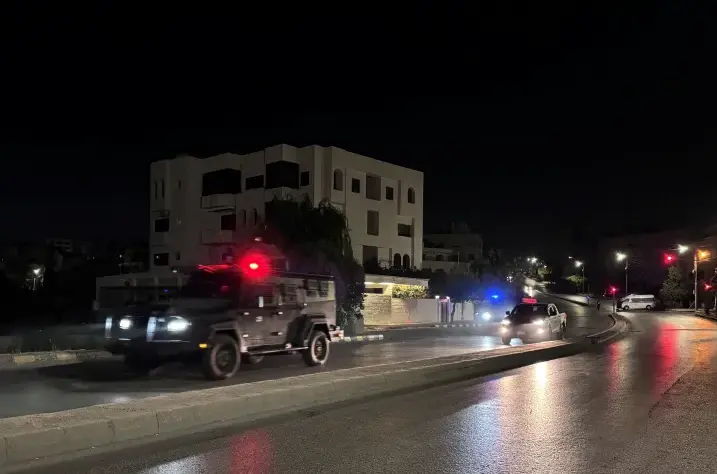
The Jordanian government said on Sunday that the shooting incident that took place earlier today in the Rabieh area near the Israeli embassy "is a terrorist attack" on public security forces carrying out their duty.


In the first official comment on the incident, Minister of State for Government Communication Mohammad al-Momani said that "any attack on the security of the country and any assault on security personnel will be met with firmness," after three security personnel were injured when a person opened fire on them before being killed near the Israeli embassy in Amman.


He added that the attack was carried out by a person he described as an outlaw with a criminal record related to drugs, stressing that investigations are still ongoing, without adding further details.


He also stressed that "Jordan's strength and stability are the solid foundation for supporting the nation's issues, foremost of which is the Palestinian issue," according to his expression.


Incident details

This morning, Sunday, the Jordanian Public Security announced the killing of a person who opened fire on security personnel and injured three of them in the vicinity of the Israeli embassy in the capital, Amman.


The Jordanian Public Security explained that a person opened fire on a patrol in the area, and a security force moved to the site and located the shooter who tried to escape.


He explained that he was chased and surrounded, so he started firing bullets at the security force, which in turn applied the rules of engagement, which resulted in the killing of the perpetrator, whose identity has not been determined.


The vicinity of the Israeli embassy in Jordan had previously witnessed angry popular demonstrations against the aggression launched by the Israeli army on the Gaza Strip.

PALESTINE

Sun 24 Nov 2024 9:23 am - Jerusalem Time

Israeli forces seize a house in Ramallah

Today, Sunday, the Israeli occupation forces seized a house in the village of Al-Mughayyir, northeast of Ramallah, and turned it into a military barracks.


Local sources reported that the occupation forces have continued to storm the town since yesterday evening, and have turned the home of citizen Wahid Abu Naim into a military barracks, and raised the occupation flag on its roof.

PALESTINE

Sun 24 Nov 2024 9:21 am - Jerusalem Time

War on Gaza: Dead and wounded in Israeli raids on the Gaza Strip

Seven citizens, including four children, were killed and others were injured, at dawn and on Sunday morning, in raids launched by Israeli occupation aircraft on the Al-Maghazi and Al-Bureij camps in the central Gaza Strip.


Local sources reported that two children were killed and others were injured when the occupation forces bombed a house in the Al-Maghazi camp in the central Gaza Strip, and that a citizen was killed and three others were injured when an occupation drone bombed a tent housing displaced people in the camp. Four citizens were also killed, including the two sisters, Aya (12 years old) and Tala Abu Al-Nahl (11 years old), and their mother and two girls were seriously injured when the occupation forces bombed the Mansour family’s house in the Al-Bureij camp in the central Gaza Strip.


In a related context, ambulance and rescue crews recovered the bodies of two dead from the Saftawi area, northwest of Gaza City.


The occupation forces fired heavy bullets towards Salah al-Din Street, from al-Tahlia roundabout to the Ma'an area east of Khan Yunis, in the southern Gaza Strip.


A number of citizens were injured, some of them seriously, when the occupation targeted a gathering of citizens near Al-Aqqad School in Khirbet Al-Adas, north of Rafah city, in the southern Gaza Strip.


After midnight yesterday, the Israeli occupation renewed its targeting of the Martyr Kamal Adwan Hospital in the town of Beit Lahia, north of the Gaza Strip, where it bombed the main oxygen station, which led to the injury of a number of medical personnel.


The occupation forces continue their aggression on the Gaza Strip, by land, sea and air, since October 7, 2023, which resulted in the death of 44,176 citizens, the majority of whom are women and children, and the injury of 104,473 others, in an incomplete toll, as thousands of victims are still under the rubble and on the roads, and ambulance and rescue crews cannot reach them.

PALESTINE

Sun 24 Nov 2024 9:07 am - Jerusalem Time

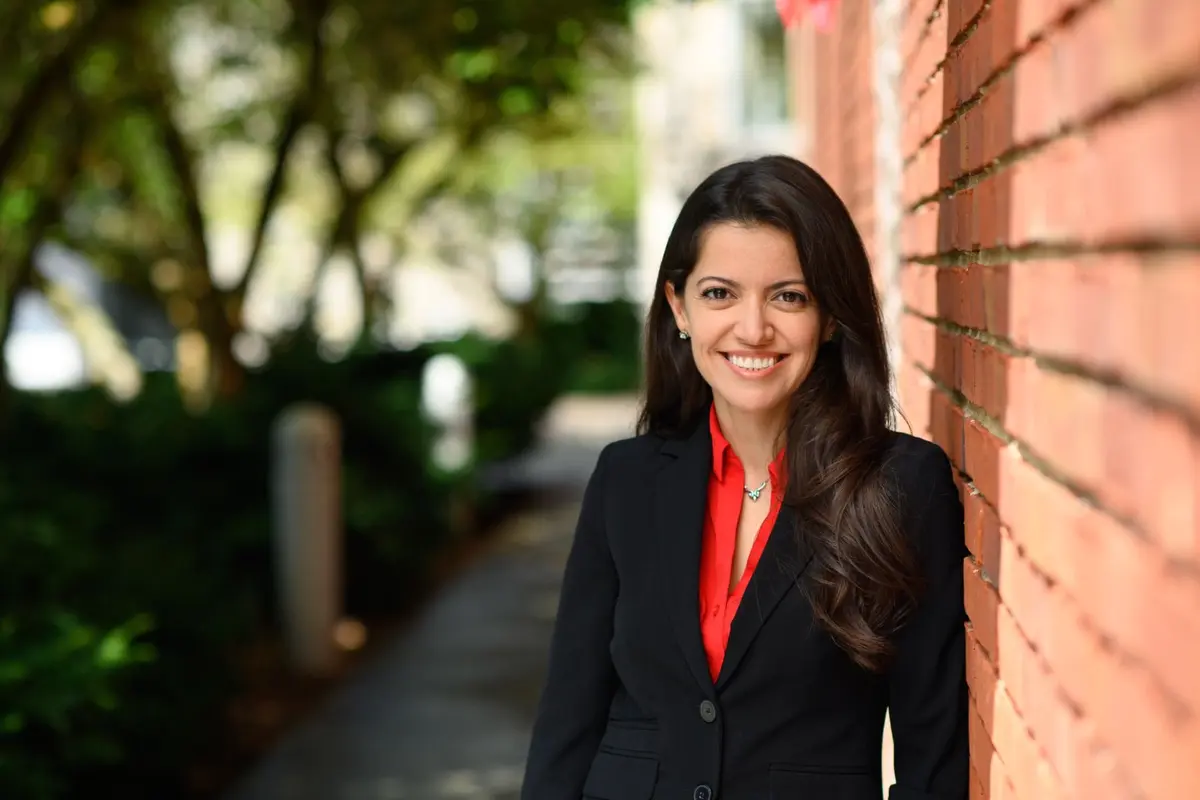
Diplomatic Consul at the US Office of Palestinian Affairs, Carissa Gonzalez, to Al-Quds Newspaper Exclusive: Palestinian students studying in America become ambassadors for their culture and build bridges between the two peoples

  • Studying at American universities gives Palestinian students the opportunity to obtain a high-level education and build their skills.
  • The higher education system in America focuses primarily on dialogue, critical thinking, and the exchange of different points of view.
  • More than 11,000 persons benefitted from nearly 800 programs at the America Houses in Jerusalem, Ramallah and Hebron during the past year.
  • There are approximately four thousand accredited higher education institutions in America, which enables students to choose the university that suits them.
  • The number of Palestinian students who enrolled in American universities during the last academic year reached 466 male and female students.
  • We provide advisory services to Palestinian students regarding studying in the United States through the “Education USA” program.


On the occasion of International Education Week, the America House in Jerusalem hosted an educational fair for school principals, teachers, students, and parents to learn about the Regional English Language Office, provide advice on education in the United States, and explain consular services related to student visas, professional leadership, and higher education exchange programs.


Al-Quds Newspaper met with Carissa Gonzalez, Diplomatic Consul at the U.S. Office of Palestinian Affairs, to discuss the America House and International Education Week events, and highlight the benefits of studying in the United States and the educational opportunities available. Below is the text of the interview:


Q: Could you please give us a brief about the America House in Jerusalem and the Open Day event?

We are very excited to offer the Education Fair to the general public and specifically to Palestinian youth. There were a variety of activities throughout the week, including an Education Fair last Friday from 11:00 a.m. to 5:00 p.m., attended by about 100 youths, both males and females, as well as teachers and family members. It provided useful information about educational and study opportunities in the United States, as well as those implemented by the America Houses in Jerusalem and the West Bank.


The event included three main sections:


Educational Opportunities and University Programs: Comprehensive information is provided about university majors in the United States, how to apply, and scholarships offered by the US government.


Consular Section: We provide guidance on the procedures for obtaining a study visa and advice related to it.


Local Programs at the America Houses: We highlighted year-round activities that support Palestinian youth and help prepare them for the job market in many areas, including entrepreneurship, encouraging youth to participate in science, technology, engineering and mathematics, developing linguistic and cultural skills in English, and digital media.


More than 11,000 Palestinian youth benefited from nearly 800 programs in the America Houses in Jerusalem, Ramallah and Hebron over the past year.


Q: On the occasion of International Education Week.. What activities did the America House organize during this week?

In celebration of International Education Week, the U.S. Office of Palestinian Affairs held in-person and virtual events at the America Houses in Jerusalem, Ramallah, and Hebron. One of our most prominent activities is providing advisory services through the Education USA program, funded by the U.S. government. This program provides Palestinian students with free advice on studying in the United States, including selecting suitable universities, scholarships, and applying for visas.


Program advisors are available year-round to provide advice to students, answer their questions, and help them achieve their academic goals in the USA.


Q: What are the advantages of studying in the United States that make it a distinctive destination for Palestinian students?

This is a very important question. The United States of America continues to invest in Palestinian youth through education, because studying in the United States has many advantages:


Quality of Education: American universities provide high-quality education, which helps students build their academic and personal skills.


Cultural Exchange: Palestinian students studying in America become ambassadors of their culture, and contribute to building strong cultural bridges between the Palestinian and American peoples.


Scientific Research and Innovation: Studying in America provides Palestinians with opportunities to develop critical skills for success in all fields and to meet global challenges. The higher education system in the United States is unparalleled and continues to attract future leaders from around the world, because studying at American universities is different from studying in many countries around the world. The focus is primarily on dialogue and critical thinking. American professors give students the opportunity for dialogue, academic freedom, exchanging different points of view, and presenting new ideas.


American universities also provide advanced laboratories and opportunities for students to conduct scientific research and work together with professors.

Academic Flexibility: The American education system allows students to choose courses that match their interests, creating a personalized and enriching learning experience.


There are approximately four thousand accredited higher education institutions in the United States, enabling students to choose the university that is right for them.


According to the Open Doors report, the number of Palestinian students who enrolled in American universities during the last academic year reached 466 students, reflecting the growing interest in education in the United States.


Q: Any final words? How can those who were unable to attend the events find out more information?

I encourage everyone to follow the activities of the US Office of Palestinian Affairs on social media, where we constantly post information about programs and events.


Our doors are always open to everyone, and we welcome anyone who would like to benefit from our services.


ARAB AND WORLD

Sun 24 Nov 2024 9:04 am - Jerusalem Time

Death toll from Israeli raids on Lebanon rises, drone launched towards Haifa

The Lebanese Ministry of Health said that 58 people were killed and dozens were injured in a preliminary toll of Israeli raids that targeted several areas of the country, while the Israeli army announced the interception of a drone and a missile that targeted Haifa and Safed.


The Ministry of Health stated that among the victims were 20 people and 66 injured in an updated toll of the Israeli raid that targeted the Basta area in the capital Beirut, in addition to the destruction of 5 buildings.


A Lebanese security source denied to Al Jazeera the presence of a Hezbollah leader in the building targeted by the Israeli raid on Al-Basta.


The Lebanese News Agency reported that Beirut woke up on Saturday morning to a horrific massacre, as Israeli warplanes completely destroyed an 8-storey residential building on Al-Mamoun Street in the Basta area after bombing it with 5 missiles.


The Lebanese Ministry of Health also said that among the dead were 14 people in the raids that targeted the city of Tyre and the towns of Ain Baal and Roumin, in addition to 24 dead in raids on the Bekaa region, including 4 children.


The ministry pointed out that 3,670 people were killed and 15,413 injured since the start of the Israeli aggression on Lebanon.


In the same context, Israeli raids targeted the southern suburb of Beirut on Saturday, and the Israeli army said in a statement that it targeted "Hezbollah command centers and other infrastructure" in the southern suburb.


Al Jazeera's correspondent said that Israel launched an airstrike on the town of Mashghara in the western Bekaa, east of Lebanon.


On Saturday, Israeli drones pursued paramedics in the Tyre district in southern Lebanon, before killing two of them and wounding four others.

The Lebanese Ministry of Health said that an Israeli drone targeted an ambulance team on Saturday while it was heading to the town of Ain Baal in Tyre district to complete its rescue work.


She added that when a second ambulance team rushed to rescue the injured from the first team, an Israeli drone also pursued it and targeted it, which led to the deaths of two people and the injury of four from both teams.


According to the Ministry of Health figures, during the current war on Lebanon and until the end of Friday, Israel targeted 94 medical and emergency centers, 40 hospitals, and 250 health sector vehicles, and carried out attacks on 67 hospitals and 229 emergency associations.


Drone and missile

On the other hand, the Israeli army stated that it intercepted a drone off the coast of Haifa launched from Lebanon.


Channel 12 reported that air defenses intercepted a missile in the sky of the city of Safed in the Upper Galilee.


The Israeli Home Front Command also announced that sirens would be sounded in Metula, Kiryat Shmona and their surroundings in the Galilee Finger to warn of falling rockets.


Hezbollah said it had fired a barrage of rockets at the settlements of Kfar Blum and Ilit Hashahar.


The party also announced that it was engaged in clashes with Israeli forces on the northeastern outskirts of the town of Al-Bayada in southern Lebanon.

PALESTINE

Sun 24 Nov 2024 9:03 am - Jerusalem Time

The Criminal Court finally takes action against the perpetrators.. Values of justice in the "Scale of Justice"

Dr. Amjad Abu Al-Ezz: The International Criminal Court’s issuance of an arrest warrant against Netanyahu poses political and legal challenges to countries regarding the end of his era

Khalil Shaheen: The court’s decision imposes itself on international media discourse, which will reshape attitudes towards Israel and its crimes

Dr. Dalal Erekat: The decision is an important development.. and the American and Israeli pressures to confront the "criminal" are based on the federal "Hague invasion" law

Dr. Aql Salah: The decision is a legal and political earthquake on the international scene and places Israel before the mirror of truth in the eyes of the international community

Dr. Jamal Harfoush: Washington fears that the court will turn into an arena for holding American or Israeli officials accountable for international crimes

Dr. Saad Nimr: The next stage will be full of challenges for Netanyahu and Galant, and they will face great difficulty in traveling to any country


The International Criminal Court’s issuance of arrest warrants for Israeli Prime Minister Benjamin Netanyahu and his former Defense Minister Yoav Galant continues to reverberate, marking a major shift on both the political and legal levels, and reflecting a shift in the international position towards Israel, which has long benefited from strong support, especially from the United States.


In separate interviews with “I”, writers, political analysts, specialists and university professors confirm that the decision raises major challenges for European countries, which find themselves between adhering to the principles of international justice or maintaining their strategic relations with Israel. They point out that the international media’s coverage of the issuance of the two warrants against Netanyahu and Galant was based on the positions of their countries, but the decision was mostly discussed, which confirms the existence of an earthquake that is striking the Israeli narrative about the events of October 7.


Writers, experts and university professors believe that the decision will lead to major changes in international politics, especially in the relationship with Israel, and will directly affect the future moves of the leaders of the Israeli occupation on the international scene.


"A political and legal slap" to Netanyahu and his government


Dr. Amjad Abu Al-Ezz, a writer, political analyst, and professor of international relations at the Arab American University, asserts that the ICC decision is a very important development, and represents a “political and legal slap” to Netanyahu and his government. The decision reflects a shift in the international community’s dealings with Israel, which had relied almost entirely on American support to avoid legal accountability, as Netanyahu ignored international institutions and international law throughout the war on Gaza.


Abu Al-Ezz asserts that this behaviour has led to a clash between political relations, which represent the interests of states and strategic alliances, and legal relations, which embody the values of justice and international rights.


Abu Al-Ezz points out that Europe, which was a pioneer in establishing international legal and human rights institutions after World War II to address war crimes, is now facing a moral and political crisis, and finds itself between two choices: either to adhere to its principles and values, or to maintain its strategic relations with Israel.


Abu Al-Ezz points out that one European official described the issue of the International Criminal Court as a “chronic headache” for his country’s foreign policy, explaining that this headache arises from the contradiction between supporting decisions issued by credible international human rights and judicial institutions, and the commitment of Western countries to their alliance with Israel.


Abu Al-Ezz stresses that adhering to international judicial decisions means strengthening the credibility of these countries, while ignoring them reflects political hypocrisy that weakens their moral standing.


The ICC decision is believed to be a severe blow to Netanyahu at both the domestic and international levels. The decision shows that Netanyahu has become a burden on the Israeli political system itself, as the Israeli Prime Minister is now being pursued as a war criminal. The decision also weakens the position of the United States, which used to support Israel unconditionally, and embarrasses it in front of its European allies, who have begun to take tougher positions towards Netanyahu’s policies.


Abu Al-Ezz believes that this decision may lead to the legal and economic isolation of Israel, and poses major legal and political challenges for European countries to deal with the end of Netanyahu’s era, and to reconsider Netanyahu’s consideration as a reliable strategic partner for Europe.


Abu Al-Ezz expects the decision to deepen the division between the United States and Europe over Israel, as the United States continues to support Israel, but Europe is moving towards preserving its democratic values and principles. Abu Al-Ezz believes that this clash is not in the interest of the Palestinians at the present time, as the United States is still the dominant power on the international scene, and the one with the final say in major political issues, including the Palestinian-Israeli conflict.


Abu Al-Ezz addresses the Iranian experience, which provides a clear example of this reality; the Iranians tried to exploit the difference between the European and American positions on the nuclear file, but the final result was in favor of Washington, which actually leads foreign policy.


Regarding the repercussions of the decision at the international level, Abu Al-Ezz does not rule out that it is part of a larger political deal aimed at prosecuting Netanyahu for the war crimes he committed, in exchange for exonerating the Israeli political system as a whole.


Abu Al-Ezz stresses that lifting the political cover and international legitimacy from Netanyahu represents an important turning point in the Israeli-Palestinian conflict, and that Israel must now confront the repercussions of this decision, which restores respect for international law and affirms the role of human rights institutions in holding perpetrators of war crimes accountable.


Major media organizations face shock as a result of the decision


Writer and political analyst Khalil Shaheen believes that the decision of the International Criminal Court represents a political earthquake within Israel, and carries political and legal repercussions in world capitals that support Israel. The decision created a state of shock and hysteria in Israel, as the Israeli political and media consensus was focused on attacking the court and accusing it of anti-Semitism, in an attempt to portray Israel as a victim since World War II.


Shaheen points out that the accusations, although they only targeted two people, they hold the highest positions in the political and military decision-making circle, and therefore they represent a direct condemnation of the policies pursued by Israel during its war on the Gaza Strip and what it is committing in the West Bank.


Shaheen stresses that the court's decision is not subject to a statute of limitations and cannot be appealed, which means that Netanyahu and Galant will remain subject to legal prosecution even after they leave power.


Regarding the international media, Shaheen believes that part of it reflects the positions of the countries to which the media outlets belong, as some major powers in Europe appear to be in a state of embarrassment or hesitation between abiding by the court’s decision or continuing to support Israel.


He explains that major media institutions are facing a shock as a result of this decision, as they are now forced to deal with the fact that Israel is being accused, for the first time, of committing war crimes at an official international level, even if the powers of the International Criminal Court relate to prosecuting individuals and not states.


Shaheen points out that despite the passage of more than a year since the war in Gaza, some international media outlets still hesitate to use the term “genocide” to describe what happened, which reflects the political pressures facing these institutions, or the bias of their media discourse towards the narrative of the occupying state.


He added: However, the court's decision imposes itself on the international media discourse, which will lead to a reshaping of attitudes towards Israel and its crimes.


On the other hand, Shaheen points out that the United States, Israel's largest partner, is responsible for the continuation of Israeli crimes, as it provides full political and military support to it.


Shaheen believes that Israel is doing in Palestine what the United States did to the indigenous people (the Red Indians), where it exterminated 100 million people, and left the indigenous people at a rate that does not exceed 1% of the total population today.


Shaheen points out that this colonial settlement culture explains part of the American positions supporting Israel and justifying its crimes against the Palestinians, especially during the recent war on Gaza.


Shaheen believes that issuing arrest warrants against Netanyahu and Galant is the first step in a long process of holding the leaders of the Israeli occupation accountable.


Shaheen points out that the legal team that follows up on the files of Israeli crimes and violations, consisting of international human rights institutions, organizations and figures, and with the follow-up of the Palestinian Ministry of Foreign Affairs, in addition to the efforts of Palestinian human rights institutions, has been working for years to collect evidence and document the crimes committed by Israeli political and military leaders, including settler leaders.


Shaheen confirms that these efforts may result in the issuance of more arrest warrants in the coming period, as expectations indicate that the charges may include dozens of Israeli politicians, officers and soldiers.


Shaheen explains that the decision of the International Criminal Court places restrictions on the movements of Israeli officials, as they are now threatened with arrest in countries that have signed the Rome Statute establishing the International Criminal Court, pointing out that this situation affects diplomatic and political relations between Israel and these countries.


Shaheen points out that in an attempt to circumvent the decision, Israeli officials may resort to meeting their counterparts on airplanes, which they consider to be Israeli sovereign territory, noting that the implementation of arrest warrants includes the entry of any of the accused into the sovereign airspace of countries. Despite these attempts, the court’s decision poses new challenges for Israel on the international scene.


With US President Donald Trump set to return to power, Shaheen points to mounting pressure on the court, including new sanctions.


Shaheen points out that Israel may respond to the court’s decision by intensifying its measures against the Palestinians, including escalating its open annexation of the West Bank and legalizing settlements, and may resort to more retaliatory steps in Gaza, which requires Palestinian human rights organizations to redouble their efforts to document crimes and provide more evidence to the International Criminal Court.


The decision is an important legal and diplomatic development.


Dr. Dalal Erekat, Professor of Diplomacy and Conflict Resolution at the Arab American University, confirms that the decision of the International Criminal Court to issue arrest warrants for Israeli Prime Minister Benjamin Netanyahu and former Defense Minister Yoav Galant represents an important legal and diplomatic development in the field of international justice.


Erekat points out that this decision sparked mixed reactions in the international media, as some media outlets welcomed it as a step towards holding accountable perpetrators of crimes against humanity and war crimes, while others considered it a politicized decision that unfairly targets Israel.


Erekat points out that these different positions of the international media reflect the international political and diplomatic divisions over the Palestinian issue, as well as the media’s bias towards some global powers.


Erekat believes that this decision puts the member states of the International Criminal Court before a real test of their commitment to international law, as they must cooperate in implementing arrest warrants, including arresting and surrendering the accused.


However, Erekat stresses that this process could face serious diplomatic and political obstacles, especially if the United States intervenes to protect Israel by pressuring or threatening member states.


Erekat points out that the United States is not a member of the International Criminal Court, and has previously rejected the court's jurisdiction in the Palestinian territories.


Erekat explains that Washington considers these steps politicized and affect its strategic interests and those of its allies, including Israel.


She points out that the United States has used a federal law issued in 2002 known as the “American Servicemembers Protection Act,” or the so-called “Hague Invasion Act,” which gives the US president broad powers, including the use of military force, to protect US citizens and their allies from any trial before the International Criminal Court, which indicates that US and Israeli pressure is based on the federal “Hague Invasion Act.”


Erekat explains that international law is above domestic laws, and that arrest warrants issued by the court oblige member states of the Rome Statute to implement them.


Erekat points out that many countries have declared their readiness to cooperate with the court in arresting the accused if they enter their territories.


However, Erekat stresses that achieving justice remains dependent on the extent to which the member states of the court are not affected and are independent from American and Israeli pressures.


Erekat urges the need to follow up on the files related to the occupation's crimes, including the issues of prisoners and settlements, stressing that this path is long but essential to achieving justice for the Palestinian people.


Erekat stressed that the recent legal achievement should be the beginning of building international momentum to support Palestinian rights and put an end to impunity.


Erekat calls on human rights and humanitarian institutions in the countries that signed the Rome Statute to mobilize support for the implementation of the decisions of the International Criminal Court, by pressuring their governments to fulfill their international obligations.


Erekat explained that these institutions can play a pivotal role in enhancing the chances of arresting and extraditing suspects, despite the political and diplomatic challenges they may face in countries with close relations with Israel and the United States.


She stressed the importance of this decision in the context of the Palestinian legal and diplomatic struggle, noting that achieving justice requires perseverance and commitment to transferring the files of the occupation’s crimes to international institutions, stressing that this achievement should be an incentive to enhance legal efforts to hold accountable all those involved in crimes against the Palestinian people.


Israel has become exposed to the world


In turn, writer and political researcher Dr. Aql Salah confirms that the decision of the International Criminal Court represents a legal and political earthquake for Israel on the international scene, and places Israel before the mirror of truth in the eyes of the international community, especially the Western countries that have always supported it.


Salah points out that Israel, which has always claimed to be a civilized democratic state similar to Western democracies, has been exposed to the world after this official decision issued by the highest international judicial body.


Salah asserts that this development reflects a qualitative shift in the Western media narrative towards Israel, as it has become difficult for the Western media, especially the media of countries allied with Israel, to question the credibility of the International Criminal Court or directly attack the decision, with the exception of some voices that have tried to defend Israel.


Salah explains that the court’s decision legally stigmatized Israel internationally for committing war crimes, genocide, and widespread destruction in the Gaza Strip, even if the decision concerns individuals and not countries, but it prosecutes the top of the political and military pyramid in Israel.


Salah points out that this decision was a severe blow to the Israeli narrative, especially that related to the events of October 7, 2023, which attempted to exploit those events to justify its criminal military actions in Gaza, and which became exposed and rejected by world public opinion.


Legally binding on all member states


Salah stresses that the ICC's decision is legally binding on all 124 member states, meaning that Netanyahu and Galant will not be able to enter these countries without facing the risk of arrest.


Salah stresses that this decision puts Israel's allied countries in an embarrassing position, as they are required to implement the decision in accordance with their international obligations.


Salah asserts that Washington, despite not being a member of the International Criminal Court, is working to provide full support to Israel in its war on Gaza, noting that the United States, which was founded on principles similar to Israel’s history of genocide against indigenous peoples, is no stranger to hostility towards the International Criminal Court.


Salah points out that the American double standards were clearly evident, as it supported the court when it issued an arrest warrant for Russian President Vladimir Putin, but is now trying to find solutions and exits to protect Israel from the decision.


An important opportunity to mobilize international efforts to hold Netanyahu accountable


Salah points out that the United States has used its veto four times since October 7, 2023, in an attempt to block any international resolutions condemning Israel. The last use of the veto was hours before the ICC decision was issued, when it used its veto against a draft resolution submitted by the UN Security Council calling for an immediate, unconditional and permanent ceasefire in the Gaza Strip.


Salah stresses that this decision represents an important opportunity to mobilize international efforts to hold Netanyahu and Galant accountable before the international judiciary, and it also strengthens the Palestinian narrative, which has become clearer and more legitimate before the international community.


Salah stresses that the decision opens the door to stronger action to stop the war of extermination in Gaza, especially in light of the escalating international pressure on Israel to isolate it in various fields, including academic, cultural and sports.


Salah stressed that the decision of the International Criminal Court is an unprecedented development in the context of supporting Palestinian rights, noting that this decision may lead to long-term repercussions on Israel's international standing, which will enhance efforts to end the aggression on Gaza and prosecute the perpetrators of crimes against the Palestinian people.


For his part, Professor Dr. Jamal Harfoush, Professor of Scientific Research Methods and Political Studies at the University of the Academic Research Center in Brazil, explains that the issuance of an arrest warrant by the International Criminal Court against figures of the stature of Netanyahu and Galant constitutes a legal and political earthquake that is directly reflected in the global media.


Harfoush says: “On the one hand, Western media outlets stand out among attempts to justify Israel’s positions and defend its policies, and on the other hand, independent media outlets that speak on behalf of oppressed peoples are witnessing widespread interest in this decision, and are focusing on the moral and legal dimension of holding accountable those behind crimes against humanity.


Harfoush asserts that this echo reflects a clear division between currents seeking to protect Israeli influence and others calling for the necessity of achieving international justice and applying the law regardless of political considerations.


On the other hand, Harfoush stresses that the next step after the issuance of the arrest warrants requires strategic action on several levels, the most important of which are: diplomatic, media, and legal.


He added: Diplomatically, pressure must be put on the states parties to the Rome Statute to ensure their commitment to implementing the memorandum if Netanyahu and Galant enter their territories, with a focus on activating the legal mechanisms that allow for the extradition of wanted persons.


He continues: As for the media and legal aspects, it is necessary to mobilize international public opinion and document the violations committed, in a way that strengthens the position of the court and prevents any attempts to undermine its powers. This includes cooperating with international human rights organizations and highlighting the crimes that led to the issuance of the memorandum to ensure maintaining international momentum.


On the other hand, Harfoush explains that Washington opposes the International Criminal Court because it sees it as a direct threat to its sovereignty and the interests of its allies, most notably Israel.


Harfoush points out that Washington fears that the court will turn into an arena for holding American or Israeli officials accountable for international crimes, which opens the door to broad demands for international justice that may include former or current American leaders.


The United States is trying to impose a selective international order.


According to Harfoush, this hostility reflects the United States’ insistence on imposing a selective international system that serves its interests, far from international laws that might restrict its hegemony or limit its alliances with regimes involved in violations.


Harfoush points out that any decline in America's support for Israel in the face of such decisions may be viewed as weakness in the face of its opponents in the Middle East, which is what Washington seeks to avoid.


Meanwhile, Harfouche stresses that there must be movement on several levels, as it is necessary to submit complete and documented files to the national judiciary in the countries that signed the Rome Statute, to ensure the issuance of local executive orders in line with the court’s memorandum.


Harfoush stresses the need to enhance cooperation with local and international human rights and humanitarian organizations to pressure governments to respect their legal obligations and avoid providing a safe haven for wanted persons.


Harfoush points to the need to launch focused media campaigns to clarify the importance of implementing the resolution from the perspective of international justice and combating impunity, with a focus on the moral and legal repercussions of any failure to implement the resolution.


Harfoush explains that this movement should not be limited to Arab or Islamic countries, but rather include every country that believes in the principles of justice and the rule of international law.


International consensus on the need to hold Israeli officials accountable


For his part, Dr. Saad Nimr, a professor of political science at Birzeit University, says that the decision of the International Criminal Court regarding the crimes committed by Israeli officials, headed by Prime Minister Benjamin Netanyahu and Minister of War Yoav Galant, received wide attention in the international media.


Nimer points out that this decision was welcomed by many international newspapers, as it seemed clear that there was international consensus on the necessity of holding these officials accountable for the crimes they committed against the Palestinian people, especially those that fall within the category of war crimes and crimes against humanity.


Nimr confirms that this interest was not limited to European countries only, but also included non-European countries, which reflects the fact that the trial of Israeli officials is no longer just a local political issue, but has become a subject of an international nature.


Nimer points out that this decision came as a result of the commitment of many countries that signed the Rome Statute establishing the International Criminal Court to implement these decisions, as these countries are committed to arresting Netanyahu and Galant if they set foot on their territory.


Nimr explains that approximately 124 countries have expressed their commitment to implementing this decision, knowing that some small countries have expressed their desire to receive Netanyahu despite the decision, but the court has the authority to impose sanctions on countries that evade implementing the decisions.


On the other hand, Nimr points out that the next stage will be full of challenges for Netanyahu and Defense Minister Galant, as they will face great difficulty in traveling to any international country and will face legal risks, which will put them in an awkward position if they decide to visit any country that may be a signatory to the Rome Statute.


"Even if Netanyahu or Galant tried to travel to the United States, in the event of any emergency, such as an emergency landing in a country that is a signatory to the Rome Statute establishing the International Criminal Court, that country would be obligated to implement the court's decision," Nimer says.


America on the defensive over the ICC decision


In another context, Nimr asserts that the United States, which has always supported Israel politically and militarily, now finds itself in a defensive position regarding the decision of the International Criminal Court, as the prosecutions may extend to include some American officials who supported Israel in its crimes against the Palestinians, if the court continues to issue more arrest warrants for Israeli officials for crimes committed in the mass killings and genocide in the Gaza Strip.


Nimr stresses that countries and international parties must work to encourage countries to declare their commitment to the resolution, especially with regard to boycotting Israel on the political and economic levels.


Nimr believes that this decision is not only a legal step, but has serious political repercussions on Israel's image in the international community.


Nimr points out that Israel today has been convicted before the International Criminal Court on charges of committing war crimes, and that international human rights organizations must take advantage of this moment to pressure the international community to hold Israel accountable.


Nimr calls on human rights organizations to work to raise international awareness about the crimes committed by Israel against the Palestinians, encourage countries to abide by the court’s decision, and urge the International Criminal Court to prosecute more Israeli military leaders who participated in these crimes.


Nimr stresses the need to invest this decision politically, economically and socially, whether at the level of pressuring people in countries around the world to approve a boycott against Israel or at the level of spreading awareness about this issue, which confirms the need for a program to invest this decision.


PALESTINE

Sun 24 Nov 2024 8:54 am - Jerusalem Time

West Bank: Israeli forces injure a young man and arrest others

This morning, Sunday, the Israeli occupation forces injured a young man and arrested others in the West Bank.


In Tulkarm, the occupation forces arrested Ahmed Shraim after raiding his home in the city, and Malek Musleh, Mahmoud Mahna, Ali Mahna, and Amr Ghaleb from their homes in the Shuwaika suburb.


The occupation forces also raided the home of Ali Awda in the southern neighborhood of Tulkarm, conducted a search inside it, destroyed its contents, and subjected its residents to interrogation under the pretext of pressuring his brother to surrender himself.


In Nablus, a young man was injured by the occupation forces’ bullets during their raid on Balata camp.


The Red Crescent reported that ambulance crews dealt with a 17-year-old young man who was shot with live ammunition in the thigh area and was transferred to the hospital, during the occupation forces’ storming of Balata camp.


PALESTINE

Sun 24 Nov 2024 8:48 am - Jerusalem Time

The night of the arrest of the "Führer"!

The night is not far off when the killers will be arrested and brought under guard to appear before the court.


Anyone who followed the covers of major international newspapers and magazines that were published the day after the earthquake decision, which featured pictures of the perpetrators, knows very well the value of the court’s decision and its impact on the minds of future generations.


Years, months and days may pass, and we are waiting to arrest those who considered themselves to be in the axis of light against the axis of darkness, and they will find themselves, along with all those who supported and colluded with them, outcasts in the frost of isolation, even if the United States embraces them with its warmth and tenderness.


In vain do the perpetrators try to escape after being trapped in the four corners of the earth, they cannot travel, even if they receive an invitation from Hungary.


In vain do the exclusive sponsors of the Holocaust and the actual partners in the massacre try to present arguments and justify policies that were exposed by the statements welcoming the court’s decision, when the accused is the Russian Putin or the Sudanese Omar al-Bashir.


The snow has melted and the meadow has become clear of the falsehood of the deceptive calls to adhere to international law, international humanitarian law, and the values of truth, justice, and freedom. It turned out that they are a product of Western countries and have nothing to do with humanity.

It is a night that must come to prosecute the criminals, sooner or later, "for he who covers himself with days is naked."


Stop the crime of the century, and arrest the perpetrators now..!

ARAB AND WORLD

Sun 24 Nov 2024 8:28 am - Jerusalem Time

Report reveals "surprise" .. This is what Trump believes about the Israeli prisoners in Gaza

The American news website "Axios" revealed on Saturday that President-elect Donald Trump believed that most of the Israeli prisoners held by Palestinian factions in the Gaza Strip were dead.


The website quoted informed sources as saying that Israeli President Isaac Herzog called Trump to congratulate him on his election victory, and the Israeli president told Trump that securing the release of the 101 hostages is an "urgent issue."


Weeks ago, Israeli Prime Minister Benjamin Netanyahu confirmed that there are 101 hostages remaining in the Gaza Strip, about half of whom are alive.


Axios sources continued: "Herzog told Trump: You have to save the hostages, and the American president-elect replied: Almost all of the hostages are probably dead, so the Israeli president told Trump that the Israeli intelligence services believe that half of them are still alive, and according to the agency, Trump was surprised and said that he was not aware of that."


The website explained that Trump will bear responsibility for the release of the seven Americans held in Gaza, four of whom are believed to be alive.


White House press secretary Caroline Levitt said: "President Trump will serve as the lead negotiator for the United States, and will work to return the hostages to their homes."


Axios also quoted an Israeli official as saying that "if a ceasefire agreement is reached in Lebanon, it will increase pressure on Hamas and refocus efforts on reaching a deal to release the hostages and a ceasefire in Gaza."


It also reported that Israeli officials said that Trump wants the war in Gaza to end quickly, and "he will have much more influence over Netanyahu than current President Joe Biden."

OPINIONS

Sun 24 Nov 2024 8:20 am - Jerusalem Time

The Saudi Solution?

Foreign Affairs

Foreign Affairs

Opinion Writer

By Maria Fantappie and Bader Al-Saif


How Riyadh’s Ties to America, Iran, and Israel Could Foster Stability

Over the past decade, and especially since the signing of the Abraham Accords in 2020, Israel has assumed that its military, intelligence, and technological prowess can buy it allies among the Arab Gulf states. In more recent months, Israeli officials also came to believe that escalation would turn the regional equilibrium in their favor: a wider war between Israel and Iran and its proxies could force the Arab states, particularly Saudi Arabia, to finally and fully join with the Israelis.

If war engulfed the Middle East, Israeli leaders thought, the responses of Iran and its proxies to Israel’s provocations would erode the already fragile reconciliation between the Gulf states and Iran, leaving them—and Saudi Arabia, in particular—dependent on security guarantees from Israel’s main ally, the United States. Israeli officials believed that Arab leaders’ opposition to Israeli operations in Gaza and their diplomatic efforts in support of the Palestinians were, ultimately, not their primary concern; their own self-interest was. And thus escalation by Israel would confirm that Iran was the main threat to its Arab neighbors, leaving the Gulf states no choice but to align themselves more closely with Israel. Israeli Prime Minister Benjamin Netanyahu openly articulated this calculus in his September speech at the UN, referring to the Gulf states as Israel’s “Arab partners of peace” and called for Saudi Arabia to ally with it to counter “Iran’s nefarious designs.”

Israel’s presumptions, however, have proved erroneous. In fact, Israel’s war in Gaza and the wider region is driving Saudi Arabia and Iran closer together. Israeli operations have indeed targeted some of Saudi Arabia’s enemies, such as the Houthis in Yemen and Hezbollah in Lebanon. But the prospect of an all-out war in the Middle East—and Israeli dominance in the region—has put Saudi Arabia on the offensive. Riyadh has proactively recommitted to the cause of Palestinian statehood and sought to keep its strategic options open, engaging with the United States on the one hand and Iran and China on the other. Israel’s escalations against Iran and its proxies will no doubt press Tehran, fearing isolation, to intensify its security talks with Riyadh and, potentially, offer the Gulf states bolder security guarantees. For Saudi Arabia, such guarantees are more important than any intelligence that Israel can offer against Iranian attacks.

To Washington, the Saudi rapprochement with Iran may seem like bad news. U.S. officials, after all, have spent years pushing for Israel and Saudi Arabia to normalize relations. But the United States should welcome Riyadh’s pivot. If Saudi Arabia can forge working ties with both Iran and Israel, the country can play a new and useful role in moderating Middle Eastern tensions. It can act as a broker between competing parties, perhaps putting an end to the current Iranian-Israeli tit for tat. The events of the past year have upended long-standing redlines, deterrence parameters, and traditional rules of engagement among foes, and Riyadh is in a uniquely strong position to midwife a better regional order.

MISTAKEN IDENTITY

Israel’s recent show of military might has three main objectives: to incapacitate Iran and its proxies, to showcase Israel’s value as an ally to other neighboring countries, and to force Saudi Arabia to normalize diplomatic relations with Israel by emphasizing Riyadh’s security dependence on Washington. Israeli officials hoped that greater regional insecurity would pressure Saudi Arabia to lean harder on the United States’ security guarantees—guarantees that are, as of now, conditioned on Riyadh’s willingness to eventually normalize diplomatic relations with Israel. Events last spring appeared to support this calculus: as Iran lobbed missiles and drones at Israel, Jordan and other Gulf states cooperated with the United States to intercept them, giving the impression that concerted military cooperation between Israel and the Gulf states was finally in the offing. Back then, escalating against Iran appeared to have delivered results for Israel. By expanding the war beyond Gaza, Israel had provoked Iran into a direct response, and that had pushed the Gulf states to seek further protection under the United States’ security umbrella.

Although Saudi Arabia has been making efforts for years to restore ties with Iran, including a March 2023 deal brokered by China, Israeli officials have always been skeptical that these gestures were serious. Iran, after all, supports nonstate actors that threaten Saudi interests. Iran has also repeatedly criticized Saudi Arabia and other Gulf countries for their lack of support for Palestinian statehood. Ironically, Israeli and U.S. officials have often bought into Iran’s criticism, doubting Saudi Arabia’s commitment to a Palestinian state and assuming, in particular, that younger Gulf leaders have little empathy for Palestinian suffering. Over the past year of war, a selective reading of the Gulf states’ actions may have played into this assumption. To many, it seemed that Bahrain and the United Arab Emirates (UAE), by retaining their diplomatic ties with Israel, were already showing that they prioritized their national security over Palestinian statehood; it also seemed that Saudi Arabia, by negotiating a defense pact with the United States that did not close the door to normalization with Israel, was proving the same.

Saudi Arabia wants to become a key stabilizer in the Middle East.

Yet Israel’s read of Saudi Arabia, in particular, misunderstood the country’s comprehensive strategy. Saudi Arabia’s pursuit of its national interest and its support of an independent Palestinian state were never mutually exclusive. Both were part of a segmented strategy that started with the U.S.-Saudi defense deal, to be followed by a discussion on Palestinian statehood in coordination with the Palestinian Authority. Although Saudi Arabia’s priority has been to spare its territory from conflict, Saudi leaders believe that they must lead the region and support a Palestinian state to ensure their national security. Championing Palestinian statehood also offers Riyadh an opportunity to unify the other countries in the Gulf Cooperation Council (GCC)—Bahrain, Kuwait, Oman, Qatar, and the UAE—in hedging between Iran and Israel. It also helps the kingdom renew its role as a regional and global power.

Saudi Arabia wants to become a key stabilizer in the Middle East. To that end, over the past year, Riyadh has left its policy options open. It has continued to engage with U.S. officials on normalization with Israel in exchange for a U.S.-Saudi defense pact, but it premised normalization on Palestinian statehood and kept talking with Iran. This multipronged approach has paid dividends. In August, Riyadh convinced Washington to lift its three-year embargo on selling offensive weapons to the kingdom by leveraging the prospect of normalization with Israel. But by continuing to engage with Tehran, Riyadh was able to secure safe passage for Saudi ships transiting the Red Sea and protect Saudi oil installations against attacks from Iranian-affiliated groups.

Other Gulf states pursued a similar strategy, neutralizing security risks and leveraging opportunities offered by the regional conflict to boost their standing. Qatar did so by mediating between Hamas and Israel. Oman continued its mediations with the Houthis. The UAE used the rotating seat it gained in 2022 on the UN Security Council to push for resolutions calling for a humanitarian cease-fire in Gaza and leveraged its ties with Israel to deliver more humanitarian aid to the region and negotiate a day-after plan.

STATE IN PLAY

But as conflict in the region expanded, Saudi Arabia’s policy risked backfiring, and the country changed course. Israel’s intensifying operations in Gaza and its attacks in Lebanon, coupled with the fresh exchanges between Iran and Israel in September and October, demonstrated that the United States was unable or unwilling to rein Israel in. These escalations also revealed the extent of Israel’s determination to use raw military power to assert primacy in the region and to expose Saudi Arabia’s security vulnerabilities, narrowing Riyadh’s strategic options.

Since September, Saudi Arabia has thus begun to shift from quiet, behind-the-scenes diplomacy toward more forceful, public criticism of Israel and support for Palestinian statehood. Saudi leaders are showing that they are not willing to be locked into an exclusive alliance with the United States and, by extension, with Israel that would prevent them from forging other alliances. In a key September speech to the Shura Council, the deliberative body that advises the Saudi monarch, Saudi Crown Prince Mohammed bin Salman openly stated that normalization with Israel would be conditional on the establishment of an independent Palestinian state. In a Financial Times op-ed in early October, Saudi Foreign Minister Faisal bin Farhan reiterated this message. 

Saudi leaders have sought to demonstrate their power to organize Palestinian allies by hosting a Joint Arab Islamic Extraordinary Summit on Israeli Aggression Against the Palestinian People in November 2023 that convened representatives from more than 50 countries and called for the creation of a Palestinian state. And they have expanded their efforts beyond the Middle East, launching in September the Global Alliance for the Implementation of the Two-State Solution, which is set to meet again in Brussels in late November. Indeed, over the past months, Saudi Arabia has established a raft of new multilateral coalitions and alliances with other countries pushing for the establishment of a Palestinian state.

The cause of Palestinian statehood has also prompted an unprecedented level of coordination between the Gulf states (Saudi Arabia included) and Iran. On October 3, Doha welcomed the newly elected Iranian president to the Asia Cooperation Dialogue Summit, where GCC leaders reinforced their solidarity with the Palestinians and condemned Israeli aggression. On the same day, the Gulf Cooperation Council hosted a rare informal joint GCC-Iranian ministerial meeting, the first in more than 17 years, during which members affirmed the Gulf states’ unwillingness to allow their territory and airspace to be used to launch attacks against Iran. The UAE’s deputy prime minister and foreign minister even recently announced that the United Arab Emirates was “not ready to support” day-after planning for Gaza “without the establishment of a Palestinian state.”

GIFT HORSE

Israel is counting on the hope that its escalations will tip the regional power balance. And it is betting that the United States will eventually be drawn into this dynamic, yielding a weaker Iran and a stable Middle Eastern future anchored by alliances between Israel and the Gulf states. That vision may have underpinned the development of the Abraham Accords, but five years later, it can no longer guide a profoundly transformed region. Israel is much more willing now than it was then to use violence to bolster its deterrence. Saudi Arabia relies less solely on the United States, having diversified its engagements by strengthening its ties with China and stepping up security talks with Iran. The issue of Palestinian statehood can no longer be glossed over. And a Palestinian state cannot be achieved merely by a transaction between Israel and the Gulf states; it has become a global cause led by Saudi Arabia and backed by a wide variety of countries, including Iran.

Although U.S. President-elect Donald Trump may try to pursue normalization between Saudi Arabia and Israel following the template of the Abraham Accords, Saudi Arabia should counter that by advancing a two-state solution right away, before normalization. This may disappoint Trump, but the United States should welcome such a Saudi effort as a way to end the conflict that currently engulfs the region. In fact, the new kind of balancing that Saudi Arabia and the Gulf states have begun to pursue makes them increasingly well placed to de-escalate regional tensions. They have positioned themselves as acceptable to all regional actors, a position neither Iran nor Israel holds.

For Riyadh to maintain its strategy, it will have to extract security guarantees from Tehran, such as a mutual nonaggression pact. It could then use these guarantees to push Israel to acknowledge that its escalatory strategy is backfiring by strengthening ties between the Gulf states and Iran and diminishing the prospects for normalization with Saudi Arabia. Riyadh’s efforts to coordinate a coherent GCC position on Palestinian statehood can also help calm regional tensions by pressuring the United States, Europe, and powers such as China and Russia to back their approach to end the conflict in the Middle East. That kind of broad backing could eventually yield a coexistence framework between Israel and Iran with the Gulf states as mediators—a paradigm that requires Israel to halt its provocative attacks and Iran to restrain its retaliatory responses.

Above all, Washington should realize that a stronger Saudi Arabia serves everyone. It can dilute Iran’s power. It can also push Israel to make peace with the Palestinians. In doing so, the Saudis are uniquely positioned to help halt the fighting that has wreaked havoc across the Middle East.

OPINIONS

Sun 24 Nov 2024 7:40 am - Jerusalem Time

Trump and Jordanian Options

Translation for "Alquds" dot com

Translation for "Alquds" dot com

Opinion Writer

Marwan Muasher

Anyone who bet on US President-elect Trump to solve the Palestinian issue satisfactorily in his second administration may be reconsidering his calculations today. The appointments announced by Trump for his administration related to the Palestinian issue are not only extreme in favor of Israel, but can also be described as Talmudic. All appointments related to the Arab-Israeli conflict, from the National Security Advisor to the Secretary of State to the Special Envoy for the Middle East to the US Ambassador to Israel to the US Ambassador to the United Nations, will be filled by people who are excessively loyal to Israel and disdainful of the Palestinians. Perhaps the clearest expression of these positions is what was said by Mick Huckabee, the former governor of Arkansas and the newly appointed ambassador to Israel, who stated that the land of Palestine was given by God to the Prophet Abraham and his descendants (the Jews) after him, and that there is no people called the Palestinians nor a land called the West Bank, but rather Judea and Samaria, which is supposed to be the land of Israel.


What does this mean? There is only one explanation for this position. After we feared the annexation of Area C in the West Bank by Israel, Israeli Finance Minister Smotrich came out to announce hours after the Arab-Islamic summit that 2025 will be the year of the annexation of the West Bank to Israel. It does not seem that the new American administration will oppose this. In fact, the deal of the century, which calls for a fragmented Palestinian state surrounded by Israel on all sides, is no longer acceptable to Israel, which now considers any Palestinian state a “reward for terrorism.” Even Trump, the originator of the idea of the “deal of the century,” recently stated that he no longer believes in the two-state solution, and that he believes that Israel’s current borders are small. In short, the annexation of the West Bank to Israel has become possible in light of the harmony between the new American administration and the extremist Israeli government. By the nature of the solution, Israel does not talk about annexing land and population, because that increases the number of Palestinians in the State of Israel. The talk here is only about annexing land. What will happen to the population then? The Palestinian side fears that Israel’s goal is to expel the largest number of residents and empty the Palestinian land of its owners. Jordan also fears that the issue of displacement and attempts to resolve the issue at its expense have become a strong possibility today, after it was believed in the past that the Jordanian-Israeli peace treaty had ended this scenario.


The appointments announced by Trump for his administration related to the Palestinian issue are not only extreme in favor of Israel, but can be described as Talmudic


What are Jordan's options today to confront these possibilities? We realize, of course, that Jordan alone cannot confront these attempts to liquidate the Palestinian issue, but a clear plan must be developed to do what is possible.


I believe that the first step lies in putting aside the internal differences between the various components of Jordanian political society, and realizing that the main goal today is to confront these American and Israeli policies with prudence, reason, and national consensus. This calls for a serious and in-depth national dialogue, in order to expand the circle of consultation among the decision-maker, and for all components of society to realize the depth of the challenges that Jordan will face and agree on how to deal with them. There is no party today that can claim to understand the dangerous transformations taking place in American society or that it has all the answers to all the questions. There is an urgent need to combine all efforts through a national dialogue that has become a necessity and not a luxury.


It is imperative today to adopt a new policy that knows how to deal with the new American administration, and this is not an easy matter, as most of the pillars of this administration are new and Jordan does not know them well. We must clarify the dangers of annexation not only on the Palestinian side, but also on Jordan. For this, we must intensify communications with Jordan's friends, especially in Congress and American decision-making centers, to explain Jordan's concerns and the impact of these destructive policies on it. And to make everyone understand that annexing the West Bank means an open apartheid system that the world will not accept in the end. This means strengthening the role of the Jordanian embassy in Washington, which will entail a double effort to reach the largest number of pillars of the new administration and Congress, Republicans and Democrats, and Jordan's friends inside and outside the administration.

It is true that there is no unified Arab position today on the Palestinian issue, and it is also true that Arab priorities differ today according to the Arab countries themselves, but that should not prevent, despite all the overt and covert obstacles, Jordan from intensifying its contacts with a number of Arab countries that may play important roles in the coming stage, most notably the Kingdom of Saudi Arabia, Egypt, Qatar, and the United Arab Emirates, in addition to the Palestinian National Authority, of course. It is imperative to try to reach a minimum level of consensus to confront any possible scenario of Israel annexing the West Bank, while acknowledging the difficulty of this. Jordan is facing existential challenges today, just as the Palestinians are facing. However, despite the difficulty of the scene, Jordan cannot stand by and watch while Israel continues its policy of annexing Palestinian lands with public American blessing. This requires a wise policy, which His Majesty King Abdullah II described best when he said that Jordan is “a state with a strong identity that does not gamble with its future,” and at the same time that “Jordan’s future will not be subject to policies that do not serve its interests or deviate from its principles.” Reconciling these two goals is the responsibility of all Jordanians today, which means the need for serious and sustainable internal openness.


Former Jordanian Foreign Minister

ARAB AND WORLD

Sun 24 Nov 2024 6:58 am - Jerusalem Time

Israeli Newspaper: Netanyahu brought the arrest warrant on himself and is now crying over anti-Semitism

A Haaretz article said that Israeli Prime Minister Benjamin Netanyahu has only himself to blame for the arrest warrant issued by the International Criminal Court against him and former Defense Minister Yoav Galant, but as expected, the “man of principles” began to blame anti-Semitism and use it as an excuse to avoid responsibility for his actions.


The article noted that Netanyahu’s government has taken measures that have weakened Israel’s legal immunity, launched a campaign for years against the judicial system, acted without regard for international law in Gaza, and allowed settlers to expand their operations.


The article, written by Israeli journalist Yossi Verter, asserted that the formation of a government commission of inquiry into the events of October 7, on the advice of Attorney General Gali Baharav-Miara, “could have prepared Israel to deal with the threat” of the court or even remove it, but Netanyahu, “with his usual stubbornness and arrogance,” rejected the advice.


Instead of taking steps to improve the image of the Israeli judiciary, he harnessed the capabilities of the government, the Knesset, social media, and parts of the media affiliated with the ruling establishment to criticize and defame the plaintiff, and the writer described the smear campaign against her as “one of the most despicable and dangerous phenomena in the history of the country.”


The article also described the government’s behavior on the international scene as “amateurish and shocking,” citing examples such as National Security Minister Itamar Ben-Gvir’s encouragement of militias to “burn trucks carrying humanitarian aid,” and the article added that “the first person responsible is the prime minister, and the power is in his hands.”


The article also harshly criticized Netanyahu’s handling of the current crises in the Middle East, ignoring demands to manage the situation in Gaza differently, and not paying attention to calls to expand the powers of the prisoner negotiation teams and support them, and the article asserted that public opinion in the country had turned against him.


According to the article, all of these issues have increased Netanyahu’s tension at home, especially with his continued efforts to evade accountability for his actions, especially his trial in the corruption case.


The article accused the Israeli "dictator" of manipulating the families of the prisoners with "hollow words" and empty promises, and mentioned his assertion that "dozens of kidnapped" would soon return, without making concrete plans for that, which later allowed him to blame "Hamas' refusal" to reach an agreement to release the prisoners.


Source: Haaretz + Al Jazeera

ARAB AND WORLD

Sun 24 Nov 2024 6:56 am - Jerusalem Time

Two British newspapers: The ICC decision is an earthquake that shook the world

Two British newspapers analyzed the International Criminal Court's arrest warrants for Israeli Prime Minister Benjamin Netanyahu and his former Defense Minister Yoav Galant.


On Thursday, the International Court issued arrest warrants for Netanyahu and Galant, and said that there are "reasonable grounds" to believe that they committed war crimes and crimes against humanity in the Gaza Strip.


It also issued an arrest warrant for the commander of the Izz ad-Din al-Qassam Brigades, the military wing of the Islamic Resistance Movement (Hamas), Mohammed Deif.


Earthquake

Julian Borger, the Guardian's chief international affairs correspondent, considered the arrest warrants an "earthquake" that shook the legal arenas around the world, as it is the first time an international judicial body has charged a "Western ally from a modern democratic state" with war crimes and crimes against humanity.


He stated in his analysis that the arrest warrants against Netanyahu and Galant will not have an immediate impact inside Israel, but may mobilize popular support for the prime minister.


However, he believes that the "seriousness of the charges" against Netanyahu and Galant may weigh on them over time, reducing the area in which they can move on the globe, noting that the stigma of being accused of being war criminals is difficult to get rid of.


He claimed that the approval of the ICC judges of the warrants will "forever" change the status of the international judicial body in the world, adding that the United States - which is not a member - rejected the two warrants, and stated that it will coordinate with its partners, including Israel, regarding the "next steps".


Europe

As for Israel's other allies - such as Germany - they will distance themselves from this matter, but it will be a difficult moment for Keir Starmer's government in Britain, which is likely to be subjected to American pressure to dissuade it from supporting the ICC decision. However, the newspaper's correspondent believes that this pressure will seriously damage Britain's credibility in other parts of the world.


The Guardian report suggested that many other countries that have until now viewed the ICC as a tool of the Western world will adopt the decision and the court itself. The court will be widely seen, especially in the global South, as the most effective defender of the UN Charter, according to the reporter.


Brugger completely rules out the possibility that the two warrants will lead to Netanyahu’s downfall or even his weakening, noting that this is of utmost importance; as many observers believe that the war in Gaza will continue as long as he clings to power.


Challenges

The report goes on to state that there is a long list of member states of the International Criminal Court that Netanyahu and Galant will not be able to visit.


The United States, Russia and China are not members, but for the current White House at least, a visit by either man would be extremely embarrassing. As for the incoming US administration led by President-elect Donald Trump, that would be another matter.


For its part, the Times newspaper indicated that British Prime Minister Keir Starmer supported the decision, and pledged to implement it, meaning that Netanyahu faces the risk of arrest if he enters the United Kingdom.


It said this was the first time the ICC had issued such a warrant against the leader of a Western democratic state, meaning that the court's 124 member states would be obliged to arrest Netanyahu if he entered their territory.


But the newspaper reported that the British government's decision was met with criticism from Conservative Party members who opposed the ICC investigations when they were in government and called on the court to drop it.


It quoted Shadow Foreign Secretary Priti Patel as describing the warrant as "disturbing and provocative," calling on the Labour government to condemn and challenge the court's decision.


Source: Times + Guardian+ Al Jazeera

ARAB AND WORLD

Sun 24 Nov 2024 6:49 am - Jerusalem Time

Mossad investigates disappearance of Israeli cleric in UAE

Mossad and Emirati intelligence services are investigating the disappearance of an Israeli Jewish cleric in Abu Dhabi, amid reports that he was “kidnapped or killed” by “terrorist groups,” while Israeli reports indicated that these groups were linked to Iran or Turkey.


The Israeli Prime Minister’s Office confirmed, in a statement issued on behalf of Mossad, on Saturday evening, that “the Israeli-Moldovan citizen and the Chabad movement’s envoy in the Emirates, Zvi Cogen, has disappeared since Thursday afternoon.”


The statement explained that, “based on information indicating that Cogen may have been involved in a terrorist incident, an intensive investigation has been opened in the Emirates.” The statement added that “Israeli intelligence and security services are working non-stop to follow up on the case and ensure Cogen’s safety.”


The Mossad noted that the Israeli National Security Council had issued a travel warning to the Emirates (at a medium level) due to potential terrorist threats. It called on travelers to avoid unnecessary visits and take strict security measures.


The Walla website quoted two informed sources as saying that the information available to Israel indicates “the possibility that the cleric was being monitored by ‘terrorist’ groups before his disappearance.”


The cleric's family had noted that they had lost contact with him in recent days, according to a report published by Yedioth Ahronoth.


The newspaper reported that Israeli security services are working to locate him in coordination with the Emirati authorities.


No further details have been published about the circumstances of his disappearance.

ARAB AND WORLD

Sat 23 Nov 2024 10:27 pm - Jerusalem Time

Lebanon: 23 dead and 42 wounded in violent Israeli raids on Baalbek

23 people were killed and others were injured on Saturday, following a series of violent raids launched by Israeli occupation aircraft on several towns in the Baalbek district in eastern Lebanon.


The Lebanese News Agency said that Israeli warplanes raided a house in the town of Shamshtar, which led to a massacre that resulted in the death of 13 people, including a mother and her four children, and the injury of 13 others.


The Lebanese Ministry of Health stated in a series of statements on the "X" platform that the occupation raids on the Baalbek district resulted in the martyrdom of 5 people and the injury of 5 others, including two in critical condition in the town of Boudai, the martyrdom of 4 people and the injury of 3 in the town of Flawi, the martyrdom of one person in the town of Brital, the injury of 18 people in the town of Ras al-Ain, and the injury of 3 people in the town of Hortala.


In Zahle district in the Bekaa Governorate (east), an airstrike launched by Israeli occupation aircraft on the Al-Fikani neighborhood in the central Bekaa region resulted in the death of one person and the injury of 3 others, according to a statement by the Ministry of Health.


Baalbek is a historic city dating back about 3,000 years and is listed on the UNESCO World Heritage List. Lebanese officials fear that Israeli raids will destroy historical landmarks there, after previous raids damaged them.


Earlier, 14 people were killed and 43 injured, following a series of Israeli occupation raids on several towns in the Nabatieh and South Governorates in southern Lebanon.


In the Nabatieh district of the governorate of the same name, the Lebanese Ministry of Health said in a series of statements that 5 people were killed and 3 others were injured, including two in critical condition, as a result of an Israeli airstrike on the town of Romin. As a result of other violent Israeli airstrikes on the Nabatieh district, the Lebanese Ministry of Health reported injuries of 5 in the town of Meifdoun, 4 in the town of Zefta, and 3 in the city of Nabatieh, the center of the district.


In the same district, the Lebanese News Agency reported the martyrdom of two Sudanese as a result of an Israeli drone strike that targeted a motorcycle on a road in the town of Kfar Rman. It explained that the two martyrs worked as guards for a house in the area.


In Marjeyoun district in Nabatieh governorate, the Ministry of Health reported that two people were injured in an Israeli fighter jet raid on the town of Dibbin.


In the South Governorate, the ministry reported that an Israeli warplane launched a raid on the city of Tyre, the center of the district bearing the same name, which led, according to a preliminary toll, to the martyrdom of 5 people and the injury of 19 others.


As a result of other violent raids by Israeli warplanes on the same district, the Ministry of Health reported the death of two people and the injury of another in critical condition in the town of Ain Baal, and the injury of 6 people in the town of Batouleh.


The Israeli aggression on Lebanon since October 8 has resulted in 3,670 dead and 15,413 wounded, including a large number of children and women, in addition to about 1.4 million displaced persons. Most of the victims and displaced persons were recorded after September 23.


The Lebanese Ministry of Health stated that the occupation raids yesterday, Friday, resulted in the death of 25 people and the injury of 58 others.

ARAB AND WORLD

Sat 23 Nov 2024 10:12 pm - Jerusalem Time

US Senator vows to punish countries supporting Netanyahu's arrest

Republican US Senator Lindsey Graham has threatened to impose sanctions on countries that have announced they will comply with the arrest warrant issued by the International Criminal Court against Israeli Prime Minister Benjamin Netanyahu and former Defense Minister Yoav Galant.


This came in an interview with Graham on Sky News on Saturday, in which he discussed the International Criminal Court's decision to arrest Netanyahu and Galant on charges of committing war crimes and crimes against humanity in the Gaza Strip.


He noted that he is preparing a new bill on the ICC resolution in the US Congress with Republican Senator Tom Cotton of Arkansas.


"I am working to pass legislation as soon as possible to impose sanctions on any country that aids and abets the arrest of any Israeli politician," Graham said.


Explaining that the bill would also include US allies, he said: "If any ally, such as Canada, Britain, France or Germany, tries to provide assistance to the International Criminal Court, we will impose sanctions on them."


Asked by the interviewer what punishment should be imposed, especially on Canadian Prime Minister Justin Trudeau, after he called on everyone to comply with international law following the ICC ruling, Graham said: “We have to destroy his economy.”


Graham noted that there are more resolutions condemning Israel at the United Nations than condemning all other countries combined, and claimed that the international organization is an "anti-Semitic institution."


On Thursday, the International Criminal Court issued two international arrest warrants against Netanyahu and Galant, on charges of committing war crimes and crimes against humanity during the ongoing genocide committed by Israel against Palestinians in the Gaza Strip since October 7, 2023.


On May 20, the International Criminal Court's Prosecutor, Karim Khan, requested the issuance of arrest warrants against Netanyahu and Galant for their responsibility for war crimes and crimes against humanity in Gaza.


Khan also asked the court again last August to quickly issue arrest warrants for Netanyahu and Galant.

ARAB AND WORLD

Sat 23 Nov 2024 9:49 pm - Jerusalem Time

US, UK, France, Germany welcome IAEA's adoption of resolution against Iran

The United States, Britain, France and Germany announced in a joint statement today, Saturday, their welcome of the adoption by the Board of Governors of the International Atomic Energy Agency of a resolution censuring Iran for what it described as its failure to cooperate with the agency.


A statement by the four countries explained that the decision comes in response to Iran's failure to provide the International Agency with information and its failure to cooperate with it on long-standing issues.


The statement expressed the four countries' concern about Iran's reaction to the agency's decision.


The four countries expressed concern about Iran's intention to operate a group of new centrifuges as part of its nuclear program, and urged Tehran to strengthen cooperation with the International Atomic Energy Agency.
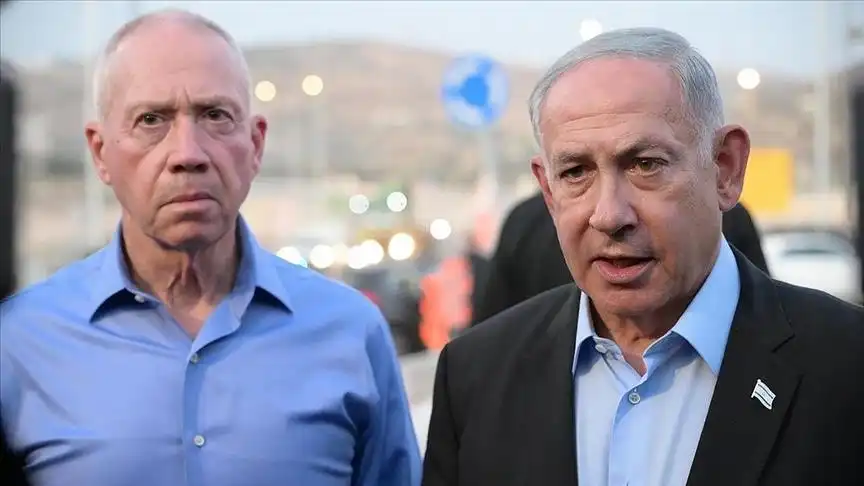

In the joint statement, it stressed that it was “deeply concerned that Iran, instead of cooperating after the resolution was issued, intends to increase its nuclear program activities in ways that have no peaceful justification,” and that resolving the issue of finding nuclear materials in Iranian sites would help the agency provide assurances regarding the peaceful nature of the Iranian nuclear program.


The statement added that America, Britain, France and Germany expect Iran to return to dialogue and cooperation with the Atomic Energy Agency.


Iran had said it would take several measures, including the use of advanced centrifuges, in response to the decision taken against it by the International Atomic Energy Agency on Thursday evening.

ARAB AND WORLD

Sat 23 Nov 2024 8:58 pm - Jerusalem Time

Israeli aggression targets the Jusiyah crossing in the countryside of Homs in Syria

The Syrian Arab News Agency (SANA) reported that a new Israeli aggression targeted, today, Saturday, the Jusiyah crossing in the Qusayr area in the Homs countryside.


The crossing director, Dabbah Al-Mashaal, said that the Israeli aggression on the crossing caused material damage.


The Jousieh border crossing is one of the five crossings on the border between Syria and Lebanon, linking the village of Jousieh, west of the city of Qusayr in Syria, and the villages of Al-Qaa in the Baalbek-Hermel Governorate in Lebanon.