ARAB AND WORLD

Tue 26 Nov 2024 8:03 pm - Jerusalem Time

Blinken: We want the people of Gaza to live without Hamas

US Secretary of State Anthony Blinken said that a post-war plan must be developed so that the residents of the Gaza Strip can live without the Islamic Resistance Movement (Hamas), as he put it.


The US Secretary of State said that his country has been working for weeks and months to implement a ceasefire plan in Lebanon, stressing that by calming tensions in the region, the conflict in Gaza can be ended.


Blinken said, "Hamas relied on opening several fronts to support it, but the ceasefire in Lebanon will deprive it of this support."


Blinken stressed that his ministry is committed to working with the incoming administration of US President-elect Donald Trump on a ceasefire in Gaza and other issues.


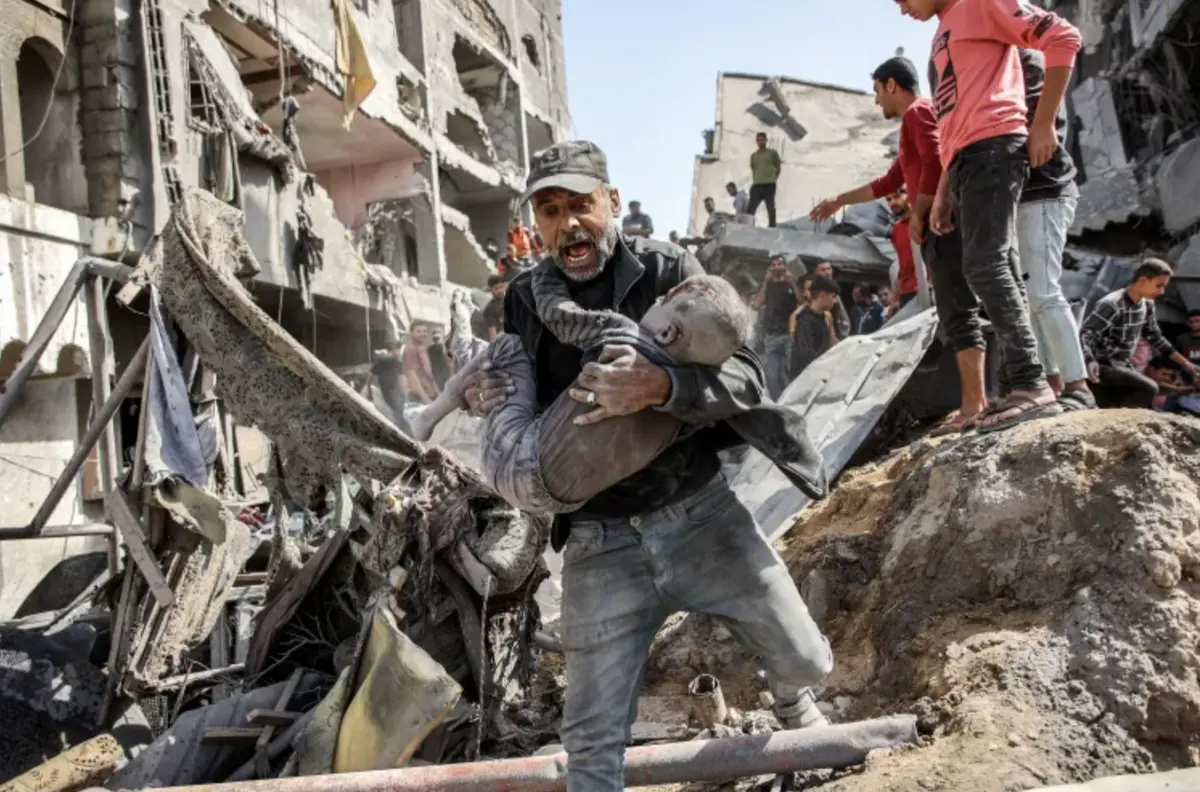
With absolute American support, Israel has been committing genocide in Gaza since October 7, 2023, leaving about 149,000 Palestinian martyrs and wounded, most of them children and women, and more than 10,000 missing, amid massive destruction and famine that killed dozens of children and the elderly, in one of the worst humanitarian disasters in the world.

PALESTINE

Tue 26 Nov 2024 7:37 pm - Jerusalem Time

Euro-Mediterranean: Tel Aviv prevents the entry of clothes and blankets despite the severe cold in Gaza

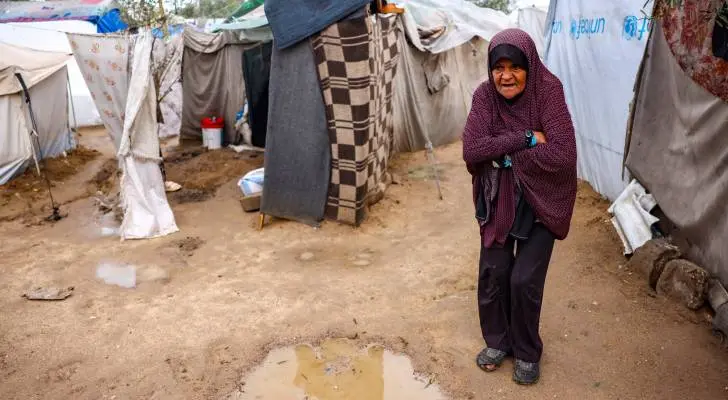
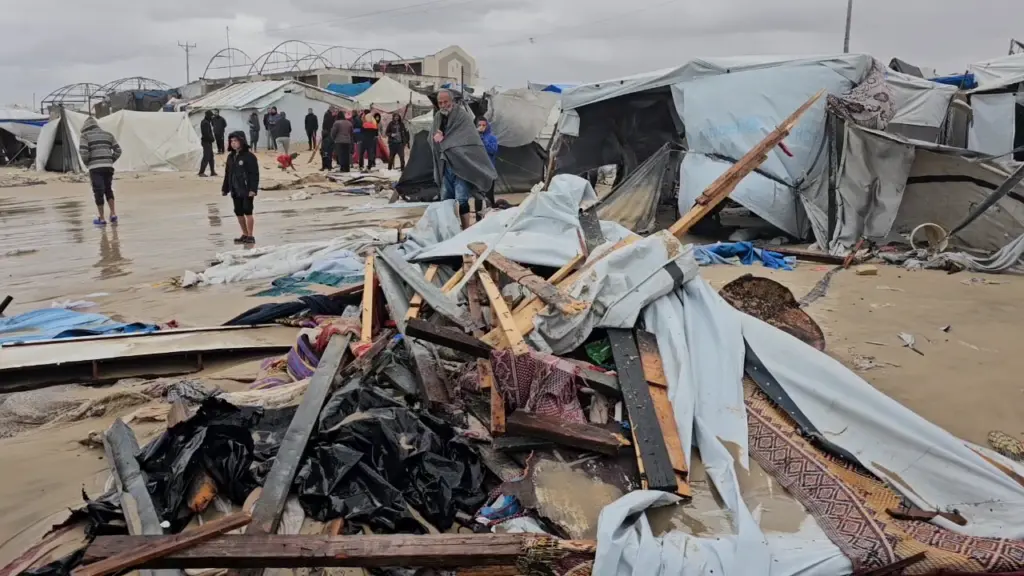
The Euro-Mediterranean Human Rights Monitor confirmed that Tel Aviv has continued to prevent the entry of clothes, blankets and shoes into the Gaza Strip for more than a year, including children's needs, despite the catastrophic humanitarian conditions and the onset of the harsh winter season.


The observatory explained, in a statement on Tuesday, that this ban violates international law, which does not justify imposing restrictions on the entry of these essentials to civilians, noting that these practices come within the framework of a deliberate policy to keep Palestinians under harsh living conditions, which constitutes a violation that amounts to the crime of genocide.


The observatory indicated that the amount of trucks entering the sector in recent months does not exceed 6% of the daily needs of the population, most of which are food items, while the percentage related to clothing and shoes does not exceed 0.001%.


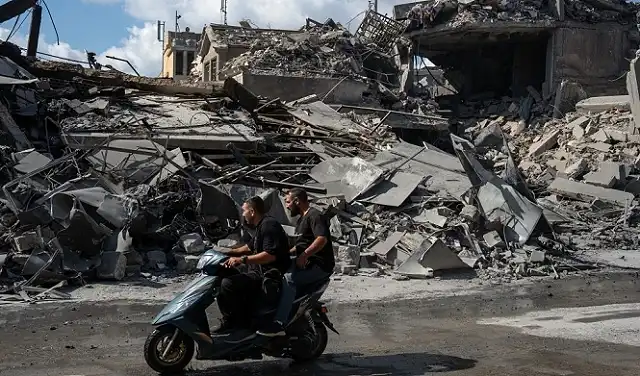
He pointed out that this shortage caused a severe crisis, especially after the destruction of about 70% of the homes in the Strip, in addition to the majority of shops and markets, which led to an almost complete paralysis in the availability of these goods.


He added that about two million Palestinians, out of 2.3 million in Gaza, live as displaced and forcibly displaced people in tents, schools or the remains of destroyed homes, after being forced to leave their homes several times, often leaving without being able to take their clothes and basic necessities.

ARAB AND WORLD

Tue 26 Nov 2024 6:54 pm - Jerusalem Time

South Africa: Holding Israel Accountable for Child Killings Is Not Anti-Semitism

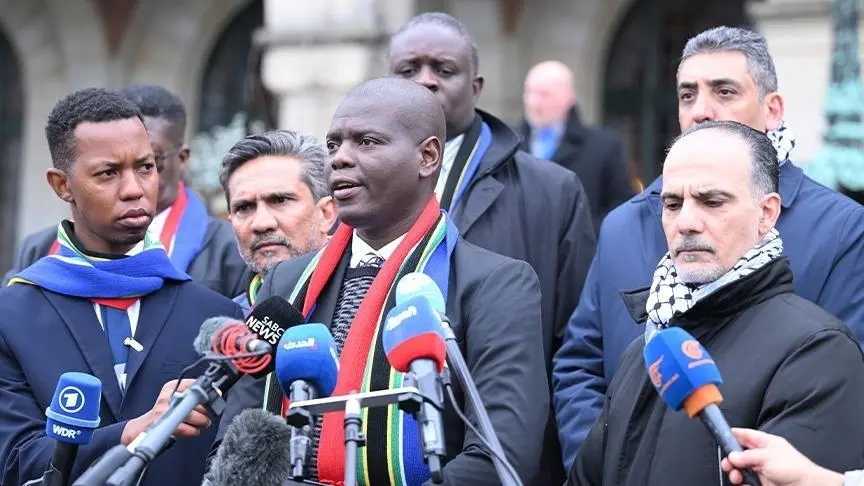
South Africa's Minister of International Relations and Cooperation, Ronald Lamola, said Tuesday that demanding accountability for the killing of countless Palestinian children in Israeli attacks is "not anti-Semitic."


This came during a speech he gave during his participation in an event in solidarity with the Palestinian people in Pretoria, the administrative capital of the Republic of South Africa.


"Any criticism of Israel cannot be considered anti-Semitic," Lamolla added.


He pointed out that "interrogating the person responsible for the countless bodies of children found in the rubble of homes destroyed by Israeli bombs is not an act of anti-Semitism, but a profound appeal to the conscience of humanity, and a call for justice."


He stressed that Nelson Mandela's statement, "South Africa will not be free until Palestine is free," sums up South Africa's view of the Palestinian issue.


He stressed that his country's solidarity with the Palestinian people did not begin last year, as some are promoting, nor at the behest of another country.


Lamolla explained that a just and fair solution to the Palestinian issue is a prerequisite for achieving peace and security in the Middle East, and described the ongoing Israeli attacks since October 7, 2023, as "genocide."


Lamola pointed out that 10 countries, including Turkey, joined the genocide case filed by South Africa against Israel before the International Court of Justice, on December 29, 2023.


"The court found the evidence of genocide to be reasonable and ordered provisional measures," he added.

PALESTINE

Tue 26 Nov 2024 6:04 pm - Jerusalem Time

Smotrich calls again to displace half of Gaza's population

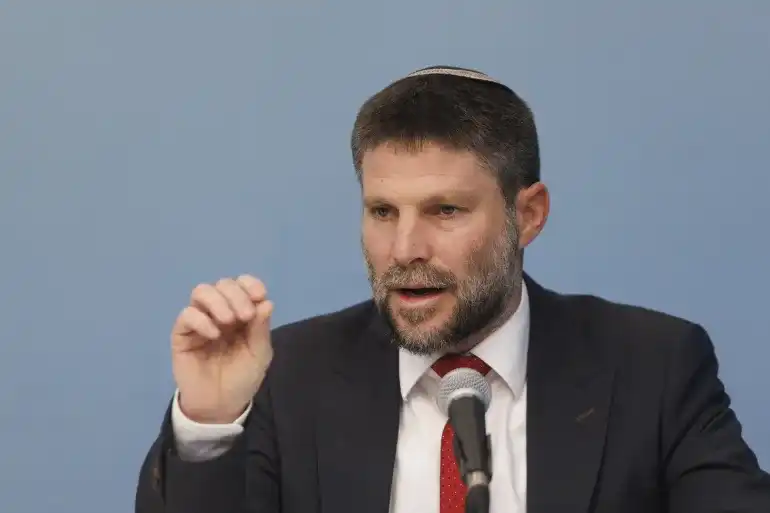
Israeli Finance Minister Bezalel Smotrich has once again called for occupying the Gaza Strip and encouraging half of its 2.2 million residents to emigrate within two years, raising concerns about the existence of a real plan for this.


Speaking at a conference organized by the Yesha Council, an organization representing Israeli settlement municipalities in the West Bank, Smotrich said: “We can occupy Gaza and reduce its population by half in two years, through a strategy of encouraging voluntary emigration.” He added: “It is possible to create such a situation… It would not cost a lot of money, and even if it is expensive, we should not be afraid to pay the price.”


Smotrich’s demands to occupy Gaza are not new, but they reinforce many concerns that these repeated demands reflect undeclared goals for the current war in Gaza, including a long-term occupation, military rule, and the resumption of settlement activity there. Although the declared goals of the war remain the same: “eliminating Hamas” and “recovering the captives,” what is happening in Tel Aviv and the Gaza Strip itself does not support this, and points to other goals. Israeli Prime Minister Benjamin Netanyahu is refraining from laying out a plan for the day after in the Gaza Strip, and Israel is working in Gaza to deepen its control by expanding the axes and establishing what resemble permanent “military sites.”


Israel appears to be planning not only military rule, which has become somewhat apparent, but also to resume settlement there, which would be a more controversial move if it happened.


The bloody military operation in the northern Gaza Strip, which involves displacing Palestinians under fire and isolating part of the north from the rest of the divided Gaza Strip, raises fears that the army is preparing the ground for the return of settlers.


Earlier last week, at the height of the orchestrated Israeli offensive, Israeli soldiers in Gaza helped a settler leadership enter the Strip to survey potential sites for Jewish settlements without getting permission from their leaders.


The Israeli Broadcasting Authority said at the time that Daniela Weiss, who is leading the efforts to re-settle northern Gaza, had toured the Israeli side of the Gaza border fence. She and her group had crossed the border, through unclear means, and walked a short distance inside the Strip, stressing that she intended to take advantage of the military presence in Gaza to gradually settle Jews there.


There is a direct link between the displacement of Palestinians and the establishment of new settlements in Gaza. Israel had 21 settlements in Gaza, all of which were dismantled under the 2005 disengagement plan, which also led to the withdrawal of the Israeli army from the Strip.


Smotrich’s statements make it clear that he is budgeting for the occupation of Gaza. “Occupation of Gaza is not a dirty word,” Smotrich said. “If the cost of security control (of the Strip) is 5 billion shekels ($1.37 billion), I will accept it with open arms. If that is what is needed to ensure Israel’s security, so be it.”


Smotrich was responding to concerns raised by the Israeli security establishment and the Treasury Department about the massive consequences that the occupation of Gaza could have on the Israeli economy.


Smotrich insisted that the only way to defeat Hamas was to replace its rule in Gaza, and that Israel was the only party capable of doing so, even if it meant assigning the Israeli military to manage the civilian affairs of the Palestinians in Gaza.


Smotrich claimed that once the “encouraging immigration” policy had proven successful in Gaza, it could be replicated in the West Bank, where 3 million Palestinians live.


The head of the Religious Zionism party has long called for annexing large parts of the West Bank, and earlier this month declared that the victory of US President-elect Donald Trump in the elections provided an opportunity to realize this vision.


Smotrich was one of several government ministers who attended an event last month calling for the reestablishment of Jewish settlements in Gaza. Smotrich said ahead of the conference that territory Israel had previously ceded had become “Iranian terror outposts” and put the country at risk.


But can Smotrich reoccupy and settle Gaza? For many, yes. Others believe he can’t, and that it will likely depend on how the war in the Strip ends. Writing in The Times of Israel, Eran Hildesheim accused Smotrich of trying to sell the public a new narrative, in which if Israel achieves its goals in the war and defeats its enemies, peace and security will return to the region.


“On the surface, this narrative seems logical, but in reality it is an empty slogan,” Hildesheim said. “It seems that this narrative is primarily intended to prepare public opinion for the continuation of the war, while at the same time promoting the vision of settlement in the Gaza Strip, which is the central goal of Smotrich and his supporters. But history tells a completely different story.”


“History shows that prolonged wars exact a heavy economic price from Israel and do not contribute to growth,” he added. “The end of the war, as Smotrich presents it, means taking over large areas of the Gaza Strip. In the first stage, the minister is pushing for the army to distribute food to the population. After this step is accepted by the public, Smotrich plans to move to the next stage: implementing full military rule in the Strip and directly managing the lives of the Palestinian population. The ultimate goal of this grand plan is to resettle the Gaza Strip.”


The writer believed that “Smotrich’s vision places an unbearable financial burden on Israel,” noting that estimates of an additional cost amount to about 20 billion shekels annually, an amount that the state does not have, without taking into account the costs of rebuilding the Strip and the heavy price of soldiers’ lives. Israel will be forced to adopt the “economy with God’s help” plan to get out of this situation safely.


The writer spoke about external threats more important than Hamas, such as Iran, and internal threats represented by the threat that undermines the “national resilience” more than any enemy. He said: “Smotrich’s claim that victory will bring security, and security will lead to growth, ignores the complex reality,” and the fact that economic and social security is not achieved through endless wars and military rule, but through regional stability. He added: “But all of these things contradict Smotrich’s main goal, which is to settle the Gaza Strip; therefore, he can only continue to sell illusions to the public.”

PALESTINE

Tue 26 Nov 2024 5:47 pm - Jerusalem Time

15 dead in Israeli bombing of a school for displaced people in Gaza

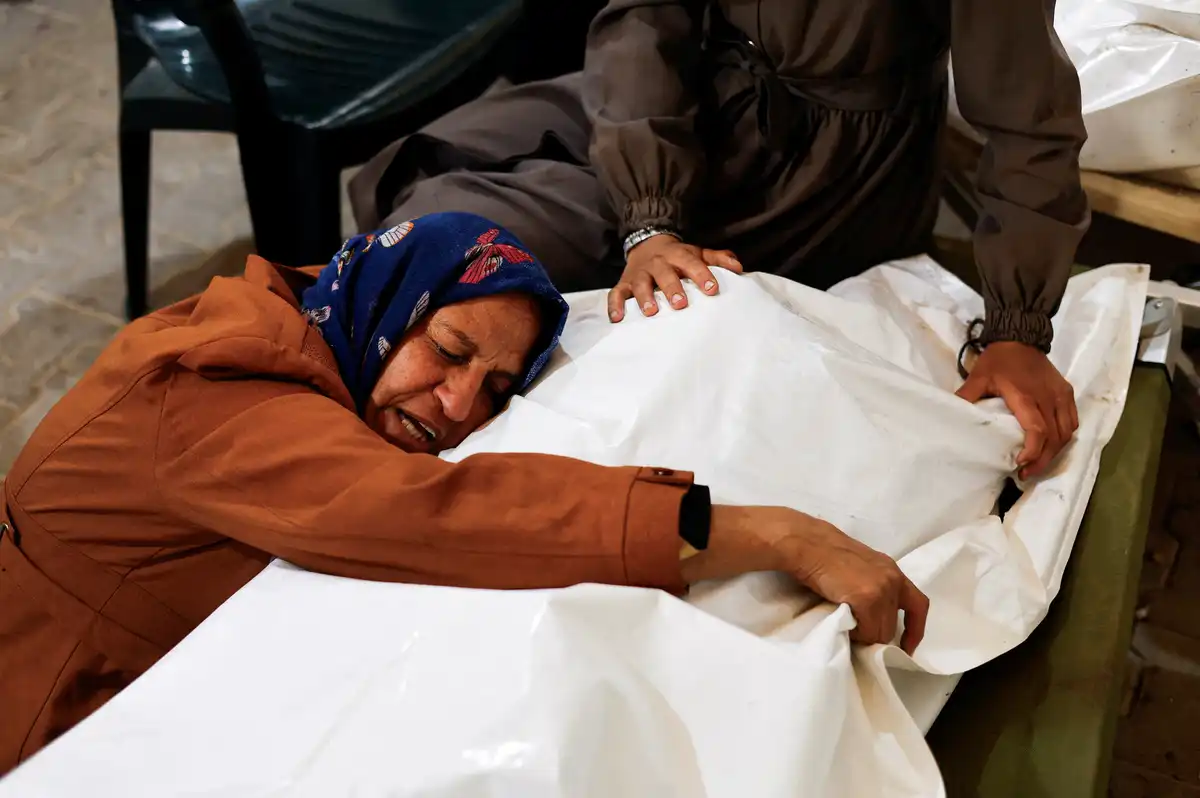
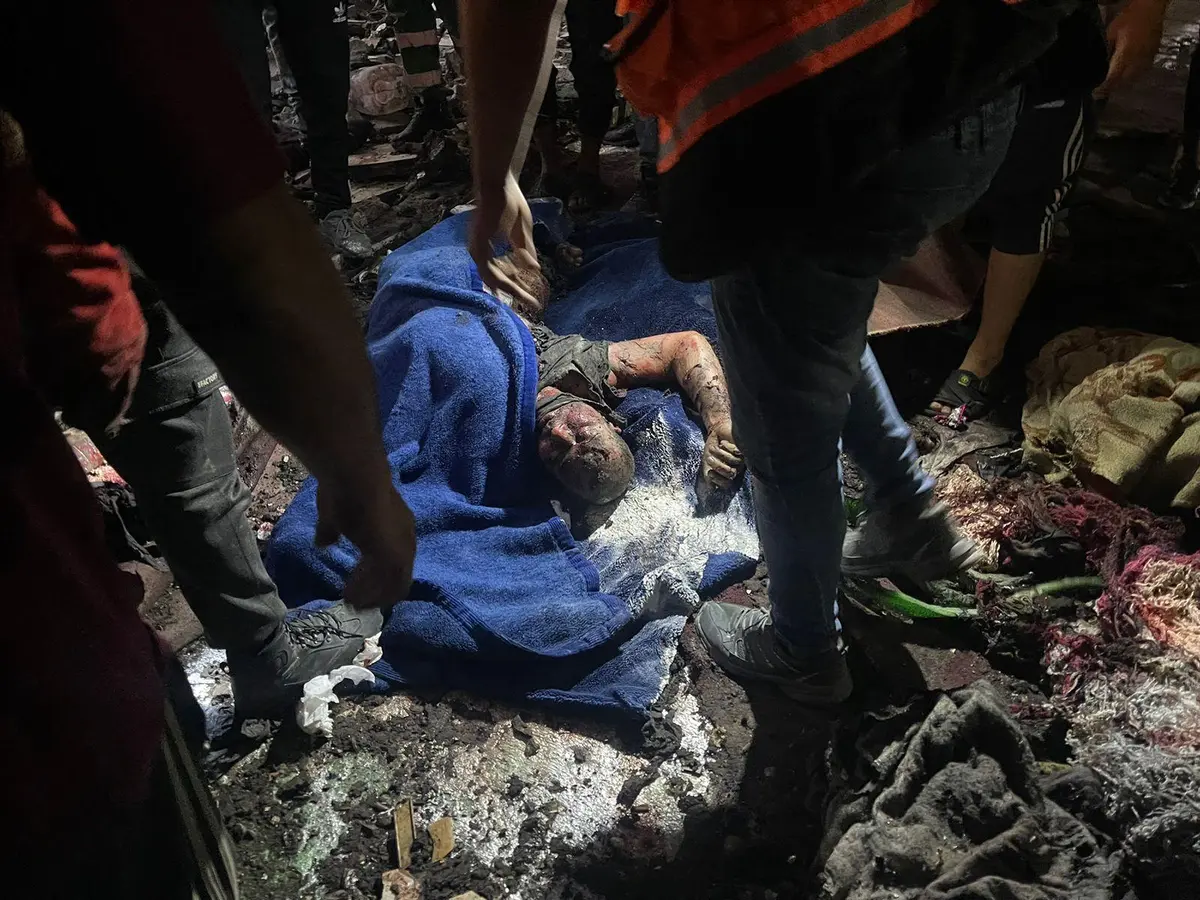
15 Palestinians were killed and others were injured on Tuesday in an Israeli bombardment that targeted a school housing hundreds of displaced people in the Zeitoun neighborhood, southeast of Gaza City.


The Israeli occupation army targeted Al-Hurriya School, which shelters hundreds of displaced people. Anadolu Agency said that some of the martyrs who arrived at Al-Maamoudiya Hospital were "body parts."


Large numbers of injured people arrived at the hospital in difficult scenes, including children and women. Al Jazeera's correspondent reported that more than 30 injured people were transferred to the hospital.


One person was killed and others were injured in an Israeli bombardment of the Saftawi area northwest of Gaza City, and a number of Palestinians were injured in Israeli raids on the Shuja'iyya neighborhood east of Gaza City.


In Jabalia al-Nazla, north of the Gaza Strip, a Palestinian was killed and others were injured in an Israeli drone attack that targeted a group of citizens.


Israel continues its air and artillery bombardment of various areas of the Gaza Strip, resulting in martyrs and wounded among Palestinian civilians.


This is happening in conjunction with artillery shelling and bombing of Palestinian civilian homes, and the occupation forces preventing ambulances and civil defense crews from working in those areas, especially after Gaza City was completely separated from the northern Gaza Strip.


The artillery shelling is also concentrated on the town of Beit Lahia and Muslim Street in the northern Gaza Strip, noting that the occupation forces are also continuing their incursion into the Zeitoun neighborhood in the south of Gaza City for the 94th day, amid artillery shelling of the neighborhood. The Israeli artillery has also renewed its shelling of the Tel al-Hawa neighborhood in the south of the city.


Civil defense vehicles stopped

Earlier on Tuesday, the Palestinian Civil Defense announced that its vehicles had stopped operating in the Gaza Strip due to Israel's continued refusal to allow the entry of fuel needed to operate them.


The occupation army repeatedly targets shelters and displacement centers to cause the largest number of victims, most of whom are children and women, according to previous statements by the government media office in Gaza.


The Ministry of Health in Gaza announced that 18 Palestinians were martyred in the past 24 hours, and that Israel completely wiped out 1,410 families in the Strip.


According to the government media office in Gaza, the number of people displaced inside the Strip since the beginning of the war has reached two million people out of a total of 2.3 million Palestinians.


With American support, Israel has been committing genocide in Gaza since October 7, 2023, leaving about 149,000 Palestinian martyrs and wounded, most of them children and women, and more than 10,000 missing, amid massive destruction and famine that killed dozens of children and the elderly, in one of the worst humanitarian disasters in the world.

ARAB AND WORLD

Tue 26 Nov 2024 5:37 pm - Jerusalem Time

Guterres calls for achieving peace through international law and implementing UN resolutions

UN Secretary-General Antonio Guterres called on Tuesday for achieving peace in Palestine and Lebanon, through international law.


This came in his speech at the 10th Global Forum of the Alliance of Civilizations in the Portuguese city of Cascais, which is being held between 25 and 27 November.


“Tensions are rising everywhere, human rights are under attack, the climate crisis continues to worsen. All kinds of sectarianism are spreading,” he said.


"Conflicts and wars feed and exacerbate these problems, and we need peace in these times," he added.


He stressed the need to "achieve an urgent ceasefire and establish immediate, unconditional peace in Gaza, and deliver humanitarian aid effectively and without hindrance."


He stressed the need to exert more efforts in multicultural societies, institutions, environments and the Internet, while protecting the foundations of peaceful and just societies.

ARAB AND WORLD

Tue 26 Nov 2024 5:23 pm - Jerusalem Time

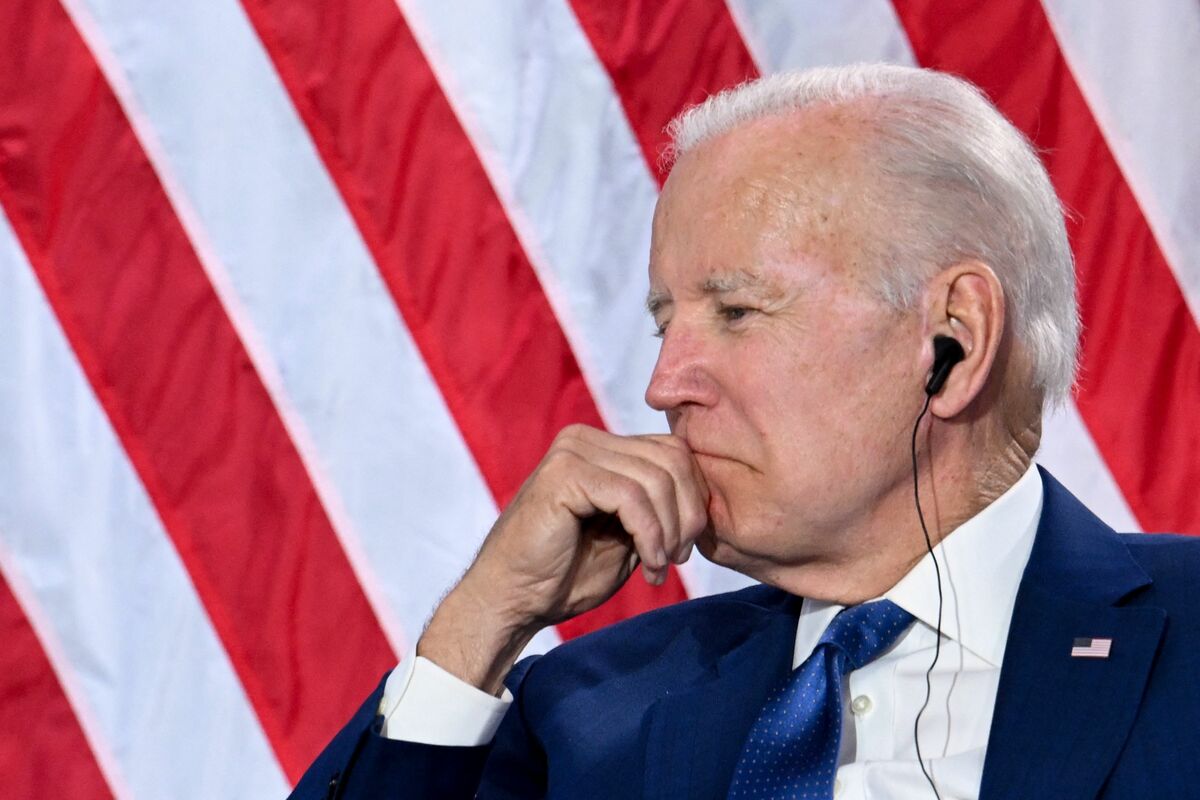
Israeli media: Biden announces ceasefire in Lebanon tonight

The Israeli Broadcasting Corporation reported that US President Joe Biden will announce a ceasefire in Lebanon at 10:00 tonight.


This was confirmed by the Axios website, which quoted a senior Israeli official as saying that Biden may announce a ceasefire in Lebanon this evening.


The website indicated that after the announcement of the agreement this evening, the ceasefire is expected to begin implementation on Wednesday morning.

PALESTINE

Tue 26 Nov 2024 5:09 pm - Jerusalem Time

PA Council of Ministers approves the contract with the World Health Organization to bring emergency medical supplies to Gaza hospitals

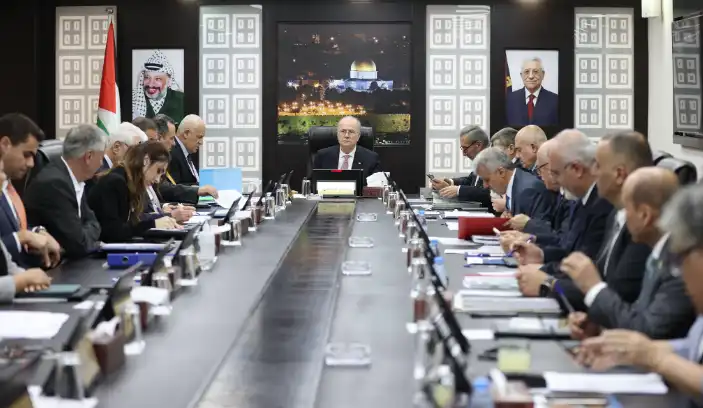
The Council of Ministers approved a contract with the World Health Organization to purchase emergency medical supplies for hospitals in the Gaza Strip at a value of $2.3 million, and to implement a program to enhance mental and family health services in the Strip at a value of $4.8 million within the project to enhance the effectiveness and efficiency of the Palestinian health system implemented by the Ministry of Health with funding from the World Bank.


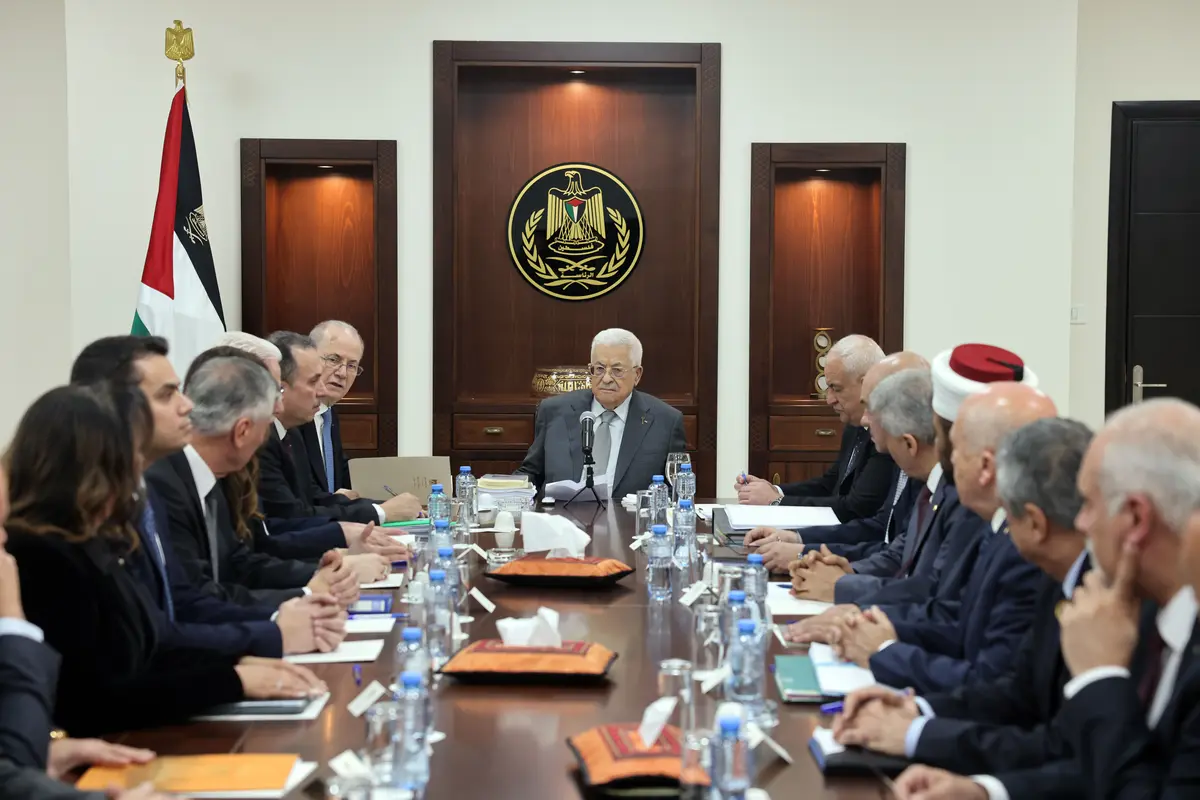
The Council of Ministers decided during its weekly session today, Tuesday, which was chaired by President Mahmoud Abbas at the presidential headquarters in the city of Ramallah, to assign the Ministry of Public Works and Housing, in coordination with the Ministry of Finance, to directly address the damage to the infrastructure resulting from the weather conditions in the winter, which will contribute to alleviating the suffering of our people.


The Cabinet approved the recommendations of the Special Ministerial Committee for Emergency Action, most notably the provision of an emergency budget of 15 million shekels to the unified account for dealing with the effects of the occupation’s aggression on the West Bank. This decision will accelerate the work of government field teams to address the infrastructure, improve services such as roads, water, electricity and sewage, and repair damage to buildings and property, which will enhance the resilience of citizens in the targeted areas.


The Cabinet approved the first reading of the draft system obligating preference for national products in public purchases by no less than 15%. This will support local industry and the national product, and provide greater job opportunities for our people.


The Council also approved the re-operation of the Al-Arroub wastewater treatment plant, and the importance of this project in removing the damage to the lands of citizens in the town of Sa’ir, and it is consistent with the government’s reform plans and correcting the work of institutions in a way that serves to provide the best services to our people.


In addition, the Council approved, in the first reading, the national strategy to empower small and micro enterprises, increase their number, improve their opportunities to obtain support and financing, empower them technologically, and enhance the access of their products to regional and international markets.


President Mahmoud Abbas chaired the weekly cabinet session today, Tuesday, at the presidential headquarters in Ramallah.


Prime Minister and Minister of Foreign Affairs Mohamed Mustafa gave His Excellency a detailed explanation of the work of the Palestinian government during the past period, according to the letter of assignment given by His Excellency when forming the government, and the efforts it made to serve the homeland and the Palestinian citizen, despite all the difficulties that hinder its work, foremost of which is the ongoing Israeli aggression against our people and our land, in addition to the occupation’s withholding of Palestinian clearing funds, and other punitive measures.


He explained that thanks to His Excellency's directives and the efforts exerted by the government, many goals have been worked on and achieved, expressing his hope to achieve the political, security and financial stability that we seek, which supports the steadfastness of our people on their land, noting that the necessary plans have been put in place to implement this and provide the best service to the Palestinian citizen.


For his part, Prime Minister Mohamed Mustafa gave an extensive presentation of the government’s most prominent interventions and efforts since its appointment, as it worked to enhance coordination with international and relief organizations to bring aid into the Gaza Strip, and to bring fuel into hospitals, desalination plants, and sewage treatment plants, in addition to continuing to transfer financial allocations to the Strip despite Israeli deductions, expanding social protection programs, and enhancing the e-learning system.


In addition to relief work, the Prime Minister referred to the government plans that were prepared for the post-aggression phase, such as providing temporary housing and expanding relief work, leading to reconstruction.


Regarding government efforts in the West Bank, including Jerusalem, the Prime Minister reviewed the efforts made to strengthen the steadfastness of our people, and the emergency interventions to address the effects of the repeated occupation incursions by repairing the infrastructure, reconnecting services, and providing temporary shelter for affected citizens, especially in the camps in the northern West Bank.


The Prime Minister presented the main pillars of the National Development and Development Program in its first phase, which the government is working to implement over the next two years, including two main axes: the first axis: 7 development initiatives to enhance the quality of services and economic advancement, while the second axis includes 4 pillars to develop the legislative environment and improve institutional performance. The initiatives include: localizing health services, shifting to renewable energy sources, comprehensive social protection, sustainability of local government bodies, food security, education for development, and digital transformation. The 4 pillars include: developing financial policies and public finance management, strengthening the government system and the rule of law, improving the legislative and regulatory environment for investment and business, and improving the level of basic services provided to our people.


The Minister of Jerusalem informed the Council members of the escalating Israeli measures targeting the city of Jerusalem, including demolition and confiscation, and the efforts of the Ministry and the Governorate to support the steadfastness of our people in Jerusalem and provide legal and financial support in the face of the occupation’s measures.


The Minister of Culture also informed the Council members of the Ministry’s efforts to register Palestinian symbols on the World Heritage List in order to preserve and protect Palestinian heritage and history.

ARAB AND WORLD

Tue 26 Nov 2024 4:25 pm - Jerusalem Time

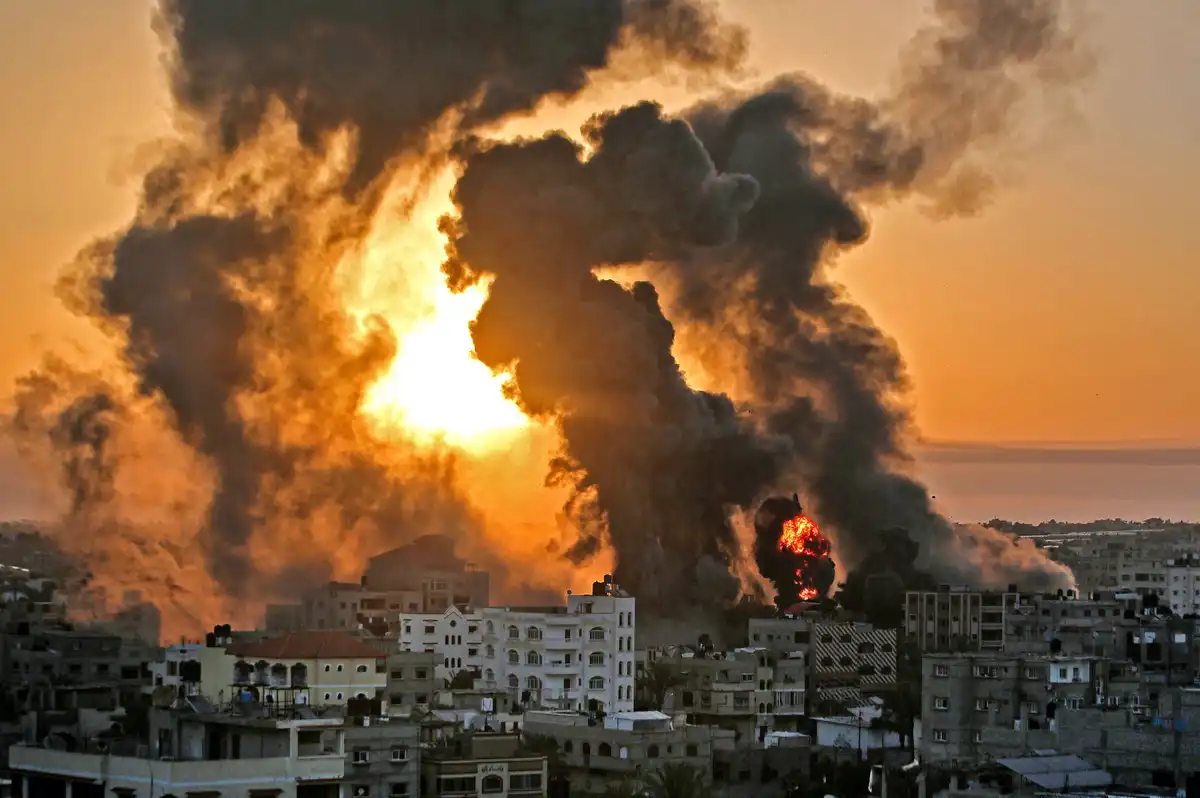
Israeli raid destroys building housing displaced people in heart of Beirut, fire belt hits suburb

Despite talk of an approaching ceasefire, the Israeli occupation army is still launching violent raids on several areas in Lebanon, especially in the capital Beirut and its southern suburbs.


Without prior warning, the Israeli air force targeted a building in the Nuwairi area, in the vicinity of the Khatam al-Anbiya complex, in the heart of the capital Beirut, causing it to completely collapse in a violent raid.


According to information reported by Lebanese media, the building consists of 4 floors, and was used as a kitchen to prepare meals for the displaced, and it also houses many displaced people.


Also, a series of simultaneous raids targeted the southern suburb of Beirut on Tuesday, in an unprecedented manner, shortly after the Israeli army issued warnings to evacuate twenty buildings in the area, which is considered one of the most prominent strongholds of Hezbollah near the capital.


Huge clouds of smoke and dust rose one after the other from at least five locations, following airstrikes that echoed in Beirut.


The escalation came ahead of a meeting of the Israeli Security Cabinet on Tuesday evening to decide on a ceasefire in Lebanon.


The Israeli air force launched simultaneous and violent raids, targeting Burj al-Barajneh and al-Raml al-Ali - Tahwitat al-Ghadeer, forming a belt of fire that enveloped the area.


In the afternoon, the Israeli army issued an evacuation warning for 20 buildings in Hadath, Haret Hreik, Ghobeiry and Burj al-Barajneh, before targeting them.


The Israeli army spokesman, Avichay Adraee, issued two urgent warnings to all residents in the southern suburb area, specifically in the buildings specified in the attached maps and the buildings adjacent to them in the following areas: Burj al-Barajneh, Tahwitat al-Ghadeer. He said: “You are located near facilities and interests belonging to Hezbollah, which the IDF will act against in the near future. For your safety and the safety of your family members, you must evacuate these buildings and those adjacent to them immediately and move away from them at a distance of no less than 500 meters.”

ARAB AND WORLD

Tue 26 Nov 2024 4:05 pm - Jerusalem Time

Egyptian-American coordination to push ceasefire efforts in Gaza

Egypt and the United States are holding ongoing consultations to advance efforts to conclude a truce in the Gaza Strip similar to the one that appears imminent between Lebanon and Israel, according to a statement by the Egyptian Foreign Ministry on Tuesday.


Egypt and America, along with Qatar, have been mediating for more than a year to exchange detainees and stop the Israeli war in the Strip, which has killed 44,249 people and injured 104,746, according to the Palestinian Ministry of Health in Gaza.


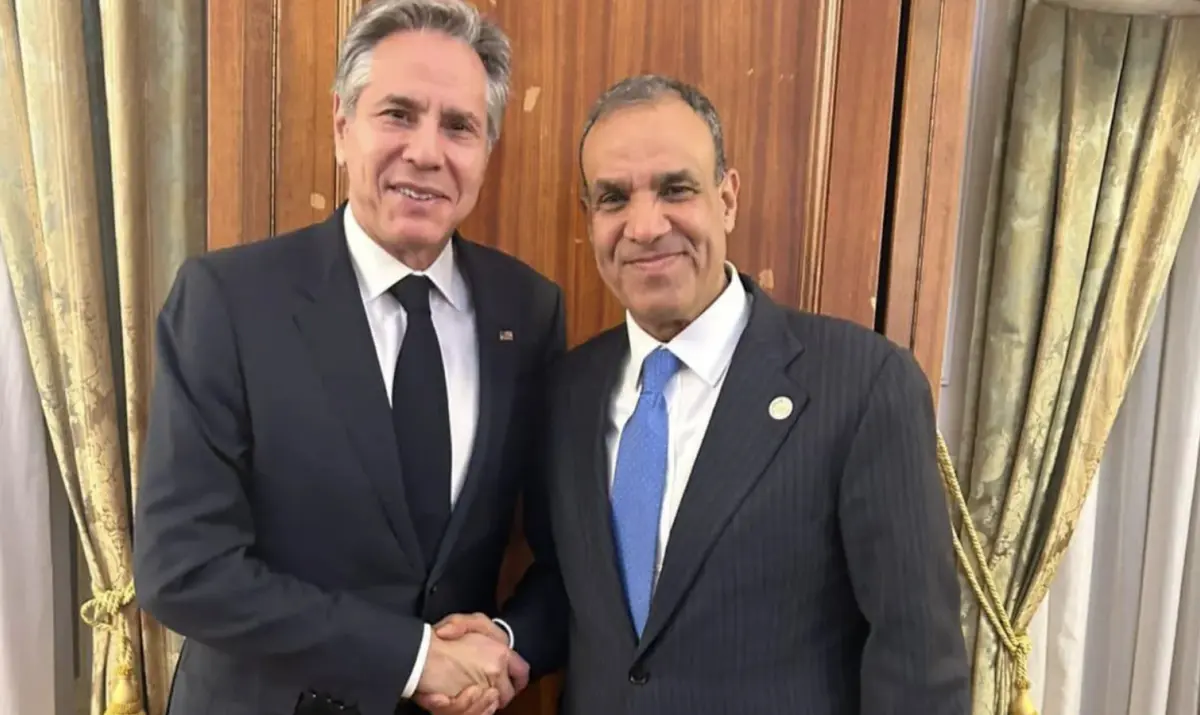
The Egyptian Foreign Ministry said that the meeting of Egyptian Foreign Minister Badr Abdel Aati with his American counterpart Anthony Blinken, on Monday evening, on the sidelines of the G7 foreign ministers meeting in Italy, came within the framework of “coordination, periodic consultation and joint work to contain the escalation in the Middle East, and to discuss the latest developments regarding the negotiations for an immediate ceasefire in both the Gaza Strip and Lebanon.”


Abdel-Ati said that “security and stability will not be achieved in the region without the Palestinian people regaining their legitimate rights and ending the Israeli occupation of Palestinian lands,” warning of “the grave danger of the continuation of aggressive Israeli policies towards the Palestinian people and their disastrous repercussions on the security and stability of the region and the entire world, in light of the ongoing violations of international law and international humanitarian law.”


The Egyptian Foreign Minister stressed the need for "humanitarian aid to reach the Gaza Strip in light of the tragic conditions experienced by the Palestinians," referring to the ministerial conference that Cairo will host to enhance the humanitarian response in Gaza next Monday.


Israel is expected to make a decision on Tuesday on a ceasefire after two months of war against Hezbollah in Lebanon. Israeli Defense Minister Israel Katz said during his meeting in Tel Aviv with the UN envoy to Lebanon, Jeanine Hennis-Plasschaert, that any breach of the potential ceasefire agreement, such as rearmament in the south, would push the Hebrew state to act “firmly.”


The United States, the European Union and the United Nations have intensified their efforts in recent days to reach a truce between Israel and Hezbollah.


In another meeting with his Italian counterpart Antonio Tajani, Egyptian Minister Abdel Aati warned of the seriousness of the situation in the West Bank as a result of Israel's continued settlement expansion policy.

ARAB AND WORLD

Tue 26 Nov 2024 3:41 pm - Jerusalem Time

How American Universities Cracked Down on Pro-Palestinian Activism

The New York Times revealed in an investigation how American colleges and universities tightened rules related to protests, closed campus gates, and imposed stricter penalties after the unrest witnessed by pro-Palestinian demonstrations and camps last spring.


"It seems that the efforts are bearing fruit," according to the newspaper.


The investigation indicates that there have been nearly 950 protests on college campuses so far this semester, compared with 3,000 last semester, according to a tally by the Nonviolent Action Lab at Harvard’s Ash Center. About 50 people have been arrested so far this academic year in protests on college campuses, according to figures compiled by The New York Times, compared with more than 3,000 last semester.


When students protested this fall, academic administrators imposed (often literally) new rules created in response to protests against Israel’s genocide of Palestinians in Gaza last spring. The moves created scenes that were previously unimaginable, especially on campuses that once cherished and celebrated their history of student activism.


In December 2023, Harvard University temporarily banned dozens of students and faculty from its libraries after they participated in silent “study sessions”—where protesters sat at library tables holding signs opposing the war in Gaza—though a similar protest on another issue the same month did not result in similar punishment. At Indiana University in Bloomington, some students and faculty who attended a candlelight vigil were disciplined under a new ban on expressive activity after 11 p.m. Penn officials and campus police officers, holding plastic handcuffs, told the vigil participants to move because they had not reserved the space in compliance with the newly created rules.


At Montclair State University in New Jersey, police officers are often outnumbered at a weekly demonstration where protesters hold signs with pictures of children killed in Gaza and the words “We grieve.”


“They say it’s to keep us safe, but I think it’s to keep us under control,” Tasneem Abdul Aziz, a student in the university’s teaching program, told the newspaper.


The changes come in the wake of federal civil rights complaints, lawsuits and intense scrutiny from the US Congress, which has “accused universities of tolerating anti-Semitism” after some protesters praised Hamas and denounced Israeli violence.


“Some students and faculty have welcomed the quieter campus, while others see the relative calm as the bitter fruit of a crackdown on pro-Palestinian speech. They worry that President-elect Donald J. Trump, who as a candidate called on universities to “defeat extremists,” could increase the pressure,” the paper says.


While the details vary, similar restrictions and procedures are imposed on where and when protests can take place and, in many cases, universities are enforcing rules they adopted before the start of the academic year.


The restrictions have made people afraid, Todd Wolfson, president of the American Association of University Professors and an associate professor of media studies at Rutgers University, told the newspaper.


“They feel like they're being watched and scrutinized; I think there's a strong degree of self-censorship going on,” he said.


“But Jewish students who felt targeted by protesters praised the rules — and the speed with which the universities enforced them — for helping to restore order and safety,” the paper says. “Naomi Lamb, director of Hillel at Ohio State University, said the school’s new protest policies appear to be effective.”


Some of the tactics protesters used last semester have also been met with harsh responses this academic year. At the University of Minnesota, 11 people were arrested after occupying a campus building. Last academic year, some universities allowed protesters to occupy buildings overnight and even for days.


At Pomona College, California, the president used “extraordinary authority” to bypass the standard disciplinary process and suspend or ban some pro-Palestinian protesters who took over a building on Oct. 7 of this year (a year into Israel’s war on Gaza). The unusual step was justified because the students’ takeover damaged property, threatened safety and disrupted classes, a college spokeswoman said, noting that the students were given opportunities to respond to the charges against them.


On some campuses, protesters have adopted new tactics to challenge the new restrictions.


Courses such as those at Harvard, Ohio State University, Tulane University and the University of Texas at Austin have also been held to protest the Israeli war. Students often wear Palestinian keffiyehs and stick signs on their laptops with messages such as “Our tuition money is funding genocide.”


“This is designed to put the administration in this predicament where it either ignores it, or imposes rules that it finds foolish,” Jay Ulfelder, director of the research project at Harvard’s Nonviolent Action Lab, told the newspaper.


A Harvard spokesperson said a statement from university leadership in January 2024 made clear that demonstrations were not permitted in libraries or other areas of campus used for academic activities.


During Sukkot, the Jewish holiday that celebrates the year’s harvest, members of the anti-Zionist Jewish Voice for Peace organization set up “solidarity sukkots” on about 20 college campuses, including Northwestern University (Chicago) and the University of California, Los Angeles. The sukkots commemorate the structures that the Israelites lived in during their 40-year wandering in the desert and are often decorated with pumpkins, fruit and lights. Members of Jewish Voice for Peace added signs that read, “Stop arming Israel.”


According to Jewish Voice for Peace, the sukkots were removed at nine universities, with administrators citing new rules prohibiting unauthorized structures.


“They don’t care about our ability or right to practice our religion; they just care about restricting Palestinian freedom of expression,” said Paz Bom, a Jewish student who supports Palestinian rights.

PALESTINE

Tue 26 Nov 2024 3:24 pm - Jerusalem Time

Eleven dead in Israeli bombing of a school sheltering displaced people in the Zeitoun neighborhood

11 citizens were killed and dozens were injured today, Tuesday, when the occupation bombed a school sheltering displaced people in the Al-Zeitoun neighborhood, south of Gaza City.


Local sources reported that the occupation warplanes bombed Al-Hurriya School, which shelters displaced people in Al-Zeitoun neighborhood, killing 11 citizens and wounding dozens.


A young man was also killed in an Israeli drone strike on Beit Hanoun, north of the Gaza Strip.


The occupation forces continue their aggression on the Gaza Strip, by land, sea and air, since October 7, 2023, which resulted in the death of 44,249 citizens, the majority of whom are women and children, and the injury of 104,746 others, in an incomplete toll, as thousands of victims are still under the rubble and in the streets, and ambulance and rescue crews cannot reach them.

ARAB AND WORLD

Tue 26 Nov 2024 3:21 pm - Jerusalem Time

McGurk to Saudi Arabia to discuss Gaza ceasefire prospects

The White House said on Monday that US President Joe Biden's Middle East envoy, Brett McGurk, will visit Saudi Arabia this week in hopes of using the diplomatic momentum behind a potential ceasefire in Lebanon to advance similar efforts in Gaza.


White House deputy spokesman Andy Bates told reporters Monday that McGurk will visit the kingdom "where he will discuss using the possibility of a ceasefire in Lebanon as a catalyst for a potential ceasefire in Gaza, the return of hostages and increased stability in the region."


The spokesman did not explain how McGurk's presence in Saudi Arabia to monitor what is happening in Lebanon will help reach a ceasefire in Gaza.


The White House earlier acknowledged "significant progress" in efforts to broker a ceasefire between Israel and Lebanon's Hezbollah group but said more work remained before an agreement could be finalized, while State Department spokesman Matthew Miller noted significant progress toward a ceasefire.


"We continue to work to find a diplomatic solution that will allow civilians on both sides of the Blue Line to safely return to their homes," Miller said, referring to the de facto Israeli-Lebanese border.


The Blue Line refers to a demarcation line separating Lebanon from Israel and the Syrian Golan Heights, which has been occupied by Israel since 1967.


For his part, National Security Council spokesman John Kirby said later that the White House believes that the "path" of the talks is "going in the right direction" after US envoy Amos Hochstein returned to Washington after his latest round of mediation between Lebanon and Israel.


However, Kirby cautioned that the deal was "not done yet," but declined to comment on specific components of the unfinished agreement "so as not to in any way undermine the efforts to actually complete it."


“This remains a top priority for President Biden, which is why we are working hard to broker this deal so that people can return to their lives and homes around the Blue Line, and the rockets and missiles can stop,” he added.


The White House comments come after multiple Israeli media reports indicated that a ceasefire agreement is expected to be announced within two days.


The Israeli Public Broadcasting Corporation Kan reported, quoting an Israeli source, that Prime Minister Benjamin Netanyahu had agreed to a US-backed ceasefire with Lebanon.


The report came a day after Hochstein threatened on Sunday to withdraw from mediation efforts to broker a ceasefire agreement between Israel and Lebanon if Tel Aviv did not accept the US proposal, according to Israeli media.


Israel has stepped up air strikes in Lebanon against what it claims are Hezbollah targets as part of a year-long war against the Lebanese group since the start of the Gaza war last year.


More than 3,600 people have been killed in Israeli attacks in Lebanon, more than 15,300 injured and more than a million displaced since October 2023, according to Lebanese health authorities.


It is noteworthy that on October 1, 2024, Israel expanded the scope of the conflict by launching a ground invasion of southern Lebanon.

PALESTINE

Tue 26 Nov 2024 2:26 pm - Jerusalem Time

President Abbas during his chairing of the Cabinet session: The priority is to stop the aggression on the Gaza Strip

Today, Tuesday, President of the State of Palestine Mahmoud Abbas chaired the Cabinet session at the presidential headquarters in the city of Ramallah.


Prime Minister and Minister of Foreign Affairs, Mohammed Mustafa, gave His Excellency a detailed explanation of the work of the Palestinian government during the past period, according to the letter of assignment from President Abbas when forming the government, and the efforts it made to serve the homeland and the Palestinian citizen, despite all the difficulties that hinder its work, foremost of which is the ongoing Israeli aggression against our people and our land, in addition to the occupation’s withholding of Palestinian clearance funds, and other punitive measures.


He explained that thanks to the directives of President Abbas and the efforts exerted by the government, many goals have been worked on and achieved, expressing his hope to achieve the political, security and financial stability that we seek, which supports the steadfastness of our people on their land, noting that the necessary plans have been put in place to implement this and provide the best service to the Palestinian citizen.


The President briefed the Cabinet on the latest developments in the political situation and the efforts made to stop the Israeli aggression against our Palestinian people, in accordance with UN Resolution 2735, which stipulates a ceasefire, the entry of aid into the Gaza Strip, the Israeli withdrawal from the Gaza Strip, enabling the State of Palestine to assume its full responsibilities in the Gaza Strip as well as in the West Bank, stopping Israeli attacks in the West Bank, including Jerusalem, and emphasizing the implementation of the UN General Assembly resolution on the advisory opinion of the International Court of Justice on ending the occupation and settlement.


He stressed his full support for the government's work and its efforts to develop government work, in a way that serves the interests of citizens and alleviates their suffering due to the difficult circumstances that our people and our land are going through as a result of the continued occupation aggression, stressing the provision of all available capabilities to help our people in the Gaza Strip who are being subjected to a war of genocide by the occupation army, in addition to the importance of strengthening the steadfastness of the citizen on his land, improving the services provided to him, and strengthening the steadfastness of our people in Jerusalem who are facing and continuing to build the institutions of the State of Palestine, and strengthening the national economy.


The President stressed the importance of enhancing cooperation between the public and private sectors, and civil society institutions, in a way that contributes to strengthening the steadfastness of the citizen, stressing the importance of implementing the plans in place, so that the citizen can see their positive results on the ground.

PALESTINE

Tue 26 Nov 2024 1:31 pm - Jerusalem Time

Suffocation injuries during Israeli storming of Al-Khader town in Bethlehem

This Tuesday afternoon, a number of school students suffered from suffocation due to the occupation forces firing tear gas bombs during their storming of the town of Al-Khader in Bethlehem.


Local sources reported that the occupation forces attacked students of Al-Khader schools located in the Old City, while they were leaving their schools after the end of the official school day, by firing tear gas and sound bombs in the “Tall” area, which led to a number of them suffering from suffocation.


It is noteworthy that the occupation forces have been deliberately attacking school students for some time now, terrorizing them by firing tear gas and sound bombs, and chasing them through the neighborhoods.

PALESTINE

Tue 26 Nov 2024 1:29 pm - Jerusalem Time

Continued harsh detention conditions and abuse of prisoners in Ofer Prison

The Prisoners and Freed Prisoners Affairs Authority revealed, on Tuesday, the continued poor living and detention conditions experienced by prisoners in Ofer Prison, imposed on them according to the escalation policy that began on October 7, 2023.


The Commission explained, according to its lawyer’s visit to the prison, that the prison administration is still depriving prisoners of blankets and winter clothes in Sections 18 and 21, in light of the severe cold and the onset of winter.


The prisoners who were visited by the Commission’s lawyer reported that the food was scarce, bad, raw, and served without salt or sugar. The prison guards also seized everything they could see in the rooms, including bedding, empty boxes, eating and living utensils, Qur’ans, and prayer rugs.


The committee’s lawyer reported that the prison guards are jamming the visiting phones, and that at least five soldiers are standing behind the door of the visiting room to disrupt the prisoner and the lawyer. He pointed out that the prisoners who were visited went out for the visit in a bad condition, as they were assaulted by beatings before the visit and remained handcuffed and blindfolded.


Regarding the prisoners who were visited, the Commission’s lawyer stated that prisoner Asid Hamed (21 years old) from the village of Silwad, east of Ramallah, who was arrested on 10/30/2023, suffers from tooth and stomach pain and is not receiving the necessary treatment.


As for prisoner Muhammad Abu Sakout (26 years old), who was arrested on 9/8/2023, he suffers from hemorrhoids, but he refused to go to the Ramla prison clinic because of the torture that prisoners are subjected to during their transfer to the clinic, as prisoners wait for long hours and return with additional diseases and are subjected to insults and violence during the transfer and waiting process to enter what is called the Ramla prison clinic.

ARAB AND WORLD

Tue 26 Nov 2024 1:18 pm - Jerusalem Time

Critical hours in the north.. escalation preceding cooling

Dr. Tamara Haddad: Hezbollah refuses that Israel intervene or be able to influence Lebanese sovereignty or southern Lebanon

Samer Anabtawi: The Lebanese resistance proved its strength and dealt strategically with the calm proposals and turned the crisis towards Israel

Dr. Ashraf Badr: A large gap between what Israel aspires to and what Hezbollah can accept makes the continuation of the confrontation a likely option

Suleiman Basharat: Hezbollah seeks to establish a new equation in the conflict with Israel based on firepower as a strategic tool

Nizar Nazzal: The recent escalation may be an indication that Hezbollah has received a green light from Iran to intensify and expand its strikes

Imad Moussa: Hezbollah wanted, through its escalation, to redraw the equation of proportionality in the conflict and respond to attempts to “negotiate with fire.”

The military escalation on the northern front between Hezbollah and Israel raises questions about the possibility of reaching a settlement or continuing the open confrontation, especially after Hezbollah escalated significantly over the past two days by targeting Israeli targets.


In separate interviews with “I,” writers, political analysts and specialists believe that Hezbollah seeks to prove its military and political capabilities by escalating its operations and intensifying the launch of missiles and drones, while Israel faces increasing challenges in containing the repercussions of these attacks on the security and economic levels.


The book and analysts explain that Hezbollah aims through escalation to strengthen its negotiating position, stressing its rejection of any Israeli interference in Lebanese sovereignty, and its commitment to imposing its rules, most notably implementing UN Security Council Resolution 1701 without conditions or amendments that might restrict Lebanon. In contrast, it seems that Israel is seeking to prolong the war to impose a new reality that weakens the party and gives it more freedom to intervene in Lebanon.


They point out that despite international efforts to calm the situation, the current situation reflects a large gap between the goals of the two parties, which increases the chances of regional escalation.

Multiple dimensions and objectives of Hezbollah's escalation

Writer and political researcher on regional affairs, Dr. Tamara Haddad, confirms that Hezbollah’s escalation in firing rockets towards Israel has multiple dimensions and goals, which go beyond the military aspect to reach political and strategic demands to meet its conditions related to Lebanese sovereignty and the implementation of international resolutions.


Haddad explains that the primary goal of the escalation is to pressure the Lebanese to fulfill demands related to a ceasefire and the withdrawal of Israeli occupation forces from the areas in which they are present in southern Lebanon. The party also seeks to force Israel to abide by UN Security Council Resolution 1701 without any new amendments or annexes that could restrict Lebanese sovereignty or give Israel the freedom to intervene in security and military matters inside Lebanon.


Haddad points out that Hezbollah refuses that Israel be able to influence Lebanese sovereignty or interfere in any future threats from southern Lebanon, especially with regard to preventing the passage of weapons through Syria. The party also insists on strengthening the presence of the Lebanese army after implementing Resolution 1701, while the tasks of the UNIFIL forces continue to be fully coordinated with the Lebanese army and in accordance with internal Lebanese understandings.


Haddad touched upon the fact that Hezbollah relies on negotiating strategies that depend on military escalation, as it possesses two powerful pressure cards: the first is the “Radwan” force, which consists of about 40,000 fighters, and the second is the huge missile arsenal that has not been fully used yet.

The current escalation may not lead to a settlement soon.

Regarding the situation on the ground, Haddad confirms that the current escalation may not lead to a settlement soon, given that Israel seeks to prolong the war to impose a fait accompli that weakens Hezbollah. Israel also wants to obtain American guarantees that allow it the freedom to penetrate Lebanese airspace and intervene in the event of future security threats.


However, Haddad believes that the continuation of the escalation may lead to an increase in the intensity of the confrontations, especially if it affects the Lebanese state’s infrastructure, which may lead Lebanon to a state of comprehensive economic and security collapse.


Haddad points out that civil peace in Lebanon is still relatively stable, despite the increasing pressures, but the continuation and escalation of the war may lead to the social, economic and security depletion of Lebanon.


Haddad points out that the Israeli interior is facing a state of turmoil as a result of the growing concern over the situation of two million people in shelters, and the worsening economic and social pressures, while feelings of fear and frustration are increasing among Israelis, whether among civilians or soldiers.

Clear qualitative transformations that confused the Israeli security system

Writer and political analyst Samer Anabtawi confirms that the recent escalation led by the Lebanese Hezbollah was characterized by clear qualitative transformations, as the party used large and unprecedented quantities of missiles and drones, and expanded the scope of its operations in a remarkable way, which greatly confused the Israeli security system.


Anbatawi explains that these moves reflect a new strategy of the Lebanese resistance, which wanted through this escalation to convey several messages and achieve a set of goals.


Anbatawi points out that Israel has been seeking for some time to exert pressure on Hezbollah and the Lebanese state, with the aim of imposing its conditions to reach a negotiated agreement under military pressure. In return, the Lebanese resistance responded through a clear escalation to send a message that it will not allow the occupying state to impose its agenda.


Anbatawi explains that Hezbollah wanted to prove through its recent operations that its capabilities have not declined as Israeli propaganda claims, but rather that it possesses more capabilities in confronting the occupation. The party also aims to achieve the Beirut versus Tel Aviv equation after the violent Israeli targeting of the southern suburb of Beirut.


Anbatawi stresses that Hezbollah wants to send a clear message, which is that even if it decides to enter into any truce, it will do so from a position of strength and ability to protect Lebanon and its people from any threats or pressures.

"Finger-biting operation" between the two parties

Anbatawi believes that what is currently happening represents a "finger-biting process" between the two parties, as each tries to gain more cards until the last moment.


Anbatawi believes that the escalation led by Hezbollah may be a prelude to imposing the resistance's conditions before any possible calm.


But on the other hand, Anabtawi points out that Israeli Prime Minister Benjamin Netanyahu may exploit this escalation to disrupt the calm efforts, as he did previously in the Gaza Strip, with the aim of placing the responsibility on the resistance and obstructing any agreement.


Anbatawi warns that the continuation of the escalation may push matters towards a comprehensive confrontation at the regional level, pointing out that the situation is still open to all scenarios, especially with the continued tension in Gaza and the West Bank, and Iran’s failure to respond so far to the threats it has been subjected to.


Anbatawi points out that Netanyahu does not want to calm the situation, as he believes that this could harm his political future and the project of his right-wing government, which seeks to resolve the conflict with the Palestinian people and settle its scores with the axis of resistance in the region.


Anbatawi explains that Hezbollah and the Lebanese resistance showed strategic intelligence in dealing with the calm file, and did not reject the proposals related to that, as they avoided transferring the conflict to the Lebanese interior and focused their operations on the Israeli interior.


Anbatawi confirms that the Lebanese resistance did not reject any calm proposals, but linked its escalation to Israeli steps, and this escalation caused deep confusion inside Israel, as the party’s operations targeted the Israeli depth in an effective manner, which led to increased pressure on the Israeli government to reach an agreement with Lebanon, and perhaps with Gaza as well.


Anbatawi points out that the Israeli home front is suffering from divisions and disturbances as a result of this war, which constitutes an additional pressure factor on the occupation government, which finds itself facing limited options in confronting the complexities of the regional and internal conflict.

Hezbollah's escalation carries strategic messages

The writer, political analyst and specialist in Israeli affairs, Dr. Ashraf Badr, believes that the current escalation by Hezbollah carries strategic messages aimed at confirming to Israel that the party still maintains its military power and is able to influence the field. Hezbollah also seeks, through intensifying its military operations, to prove that its missile arsenal is still in good condition, and that it has the ability to impose its conditions if matters move towards serious negotiations.


Despite press leaks talking about the imminent conclusion of an agreement between Hezbollah and Israel, Badr believes that there is a large gap between what Israel aspires to and what Hezbollah can accept as a minimum. This gap makes the continuation of the confrontation a likely option, as Hezbollah has not been defeated, and Israel has not achieved a clear victory, which means that the next stage may witness further escalation.


Badr stresses that the unwillingness of either party to make concessions increases the possibility of an escalation of the confrontation instead of moving towards a settlement. The next stage may witness either a long-term war of attrition, or a more severe escalation from both sides.


Badr believes that the ongoing escalation may cast a heavy shadow over the Lebanese interior, as it is expected to lead to an increase in the intensity of political differences and polarization within Lebanese society. These tensions may result from the pressures imposed by the military escalation on the Lebanese economy, in addition to the differences between the various political forces regarding the management of the crisis.

Deepening internal divisions in Israel

On the Israeli side, Badr explains that the ongoing escalation deepens internal divisions between those who support the continuation of the war, who are mostly from the extreme right-wing camp, and those who demand the imposition of a settlement, who are the groups that suffer great losses as a result of the continuation of the war on the economic, social and political levels.


Badr stresses that the current situation reflects the complexity of the regional scene, as there does not seem to be a clear horizon for ending the escalation. On the other hand, any increase in the intensity of military operations may lead to the expansion of the scope of the confrontation to include more dangerous regional dimensions.

Message to Israel: Continuing the war has no horizon or future

Writer and political analyst Suleiman Basharat believes that Hezbollah seeks to establish a new equation in the conflict with Israel, based on firepower as a strategic tool.


This equation, as Basharat points out, aims to send a clear message to Israel that the continuation of the war has no horizon or future, and puts the occupation in a complex and costly position, forcing it to rethink its political and military options.


Basharat believes that the current war is at a critical juncture; either a political agreement will be reached that stops the escalation and establishes a new phase of relations based on mutual deterrence, or things will head towards greater escalation with higher ceilings than the situation was in the first weeks of the war.


According to Basharat, Hezbollah believes that its continuation of the previous escalation equations will only lead to turning Lebanon into an experience similar to what the Gaza Strip is suffering from, where the Israeli occupation is the only one imposing its conditions.


Basharat points out that Hezbollah is trying to balance its political position and its military arena, but at the same time it is increasing the pace of targeting and the intensity of fire as a means of strengthening its negotiating position.


Escalation in this way, as Basharat explains, constitutes a double message: on the one hand, it is to pressure the Israeli occupation to accept a political solution, and on the other hand, it is to emphasize that the resistance will not stand idly by in the face of the occupation’s attempts to change the rules of engagement.


However, Basharat explains that the escalation could open the door to complex possibilities. While Hezbollah seeks an agreement that establishes Lebanese sovereignty and adopts Resolution 1701 as a basic reference, Israel may see any agreement as an opportunity to separate the fronts, which could isolate Gaza from Lebanese support and allow the occupation to continue its aggression in the Strip without regional interventions. However, this raises questions about whether Hezbollah will accept this or not.


Basharat believes that Hezbollah’s position is complicated for several reasons. On the one hand, it cannot depart from the Lebanese consensus, as any violation of that may open the door to internal disputes that would further complicate the Lebanese scene. On the other hand, the party’s steps are linked to Iranian political calculations, especially in light of recent statements that seem to be leaning towards accepting a political proposal that may not guarantee a halt to the war in Gaza, but contributes to calming the Lebanese front.


Basharat points out that the next few days will reveal the features of the next stage, as they will show the directions that the parties will take, whether towards calm or escalation, and how these movements can turn into political or military outcomes.

Possible scenarios if the escalation continues

Basharat discusses the possible scenarios if the escalation continues, as the first scenario is to go beyond the current political stage, which may lead to an escalation much higher than the current level.


In this scenario, Basharat believes that Israel will move towards targeting the Lebanese infrastructure, including vital facilities such as airports, ports and government institutions. This escalation will put Hezbollah before the choice of facing major challenges, as it may be forced to expand the scope of targeting inside Israel to include vital and populated areas, which may lead to things getting out of control and the region entering a state of total destruction.


Basharat addresses the second scenario, which is a limited escalation in the context of attrition with specific brakes on the conflict, without reaching a comprehensive confrontation. However, this option may not be beneficial for both parties, because it may change the existing balance of power without achieving real gains.


The third scenario, which is the most dangerous, according to Basharat, is that the escalation will continue for a long time, which will plunge Lebanon and Israel into a state of comprehensive destruction.


In this context, Basharat points to the possibility of the confrontation expanding to include other arenas outside Lebanon, such as Syria, Yemen and Iraq, and Hezbollah may resort to intensive and comprehensive targeting inside Israel, which complicates the regional scene and increases the possibility of direct intervention by international parties.


Basharat points out that Israel may exploit any potential agreement with Lebanon to strengthen its position in Gaza, which may put Hezbollah before a difficult test regarding its relationship with other fronts of the Palestinian resistance.


On the Israeli side, Basharat believes that there is a state of discontent among the popular and political circles as a result of the continuation of the war. This discontent is evident in the protests of the heads of local councils in the north, and the increasing pressure on Netanyahu’s government to accept a political solution. However, Israel may refuse to make major concessions, which complicates the chances of reaching an agreement.


As for the Lebanese interior, Basharat believes that the complexities of the social and sectarian fabric add an additional dimension to the crisis, as Hezbollah faces major challenges in maintaining internal unity, especially in light of the economic and political pressures that Lebanon is suffering from.

Israel will not agree to a ceasefire unless under military pressure

Nizar Nazzal, a researcher specializing in Israeli affairs and conflict issues, believes that Hezbollah has become convinced that Israel is continuing its current war and will not agree to a ceasefire except under intense military pressure. Based on this, the party has resorted to intensifying its attacks to achieve a number of strategic goals, most notably putting pressure on Israel by targeting new areas and central cities, which aims to push Israel to accept an agreement that reflects the balance of power between the two parties.


According to Nazzal, Hezbollah seeks for any potential agreement between the two parties to be based on the principle of parity, not defeat, as the party wants to conclude an agreement with terms that reflect its image as a victorious party capable of imposing its dictates, not as a defeated party. From the party’s point of view, military escalation has become a strategic necessity to prevent Israel from exploiting its field superiority to expand its combat operations and inflict more destruction and killing, in light of the Israeli street’s adaptation to the usual missile attacks launched by Hezbollah.


Nazzal points out that the coming days, especially until the end of the week, will be decisive in light of the threats of the American mediator Amos Hochstein to withdraw from his efforts to mediate between the two parties.


Nazzal points out that the recent escalation may be an indication that Hezbollah has received a green light from Iran to intensify its strikes and expand the scope of its targeting to include new areas that have not been subjected to its attacks in the past.


Nazzal believes that Hezbollah believes that escalation is the way to impose a ceasefire on its own terms, noting that this strategy may lead to further escalation rather than achieving a truce.

Israel is moving towards targeting the Lebanese state in general

But Israel, according to Nazzal's estimates, is taking clear steps towards targeting the Lebanese state in general, and not just Hezbollah sites or the southern suburb of Beirut.


Nazzal points to the mutual escalation between the two parties, as Hezbollah threatened to target Tel Aviv if the Lebanese capital Beirut was subjected to direct Israeli attacks. Tel Aviv was indeed targeted twice recently, which reflects the party’s readiness to expand the scope of the confrontation.


Nazzal believes that the region is heading towards a completely different phase if Hezbollah continues at the same pace of escalation that it has witnessed in recent days.


However, Nazzal does not believe that this escalation will lead to an agreement between the two parties, as Israel seeks to impose its own conditions on any potential agreement, while Hezbollah is trying to impose its conditions that reflect the balance of power.


Nazzal confirms that Israel is trying to appear victorious in any future agreement, while Hezbollah is trying to confirm that it is a strong rival to it.


Nazzal believes that Israel's current behavior reflects its desire to achieve a calm that shows Hezbollah as a defeated party, something that the party's leadership strongly rejects.


On the domestic front, Nazzal points to the complexities facing Lebanon as a result of its diverse and contradictory social fabric, where political and sectarian tensions further complicate the current situation, and these complexities make it difficult to manage military escalation without major repercussions on the Lebanese interior, which is suffering from worsening economic and social crises.


In Israel, Nazzal points to a state of discontent within Israeli society, especially among the mayors of local municipalities in Haifa and Acre, who have expressed their dissatisfaction with the continuation of the war.


Nazzal points out that the Israeli street has come to realize that a military solution with Hezbollah is not possible, which has prompted some to pressure the Israeli government to reach an agreement. However, the Israeli government, led by Benjamin Netanyahu, is still maneuvering to avoid making major concessions.


Nazzal believes that the American position reflects a difference in dealing with the escalation in Lebanon compared to Gaza and the West Bank, and while the United States is pressing for a ceasefire in Lebanon, it seems less concerned with ending the escalation in Gaza and the West Bank.

Hezbollah has drawn a clear equation in the rules of engagement

Writer and political analyst Imad Moussa believes that since the beginning of its support for Gaza, the Lebanese Hezbollah has drawn up a clear equation in the rules of engagement, based on three main axes: directing weapons at the Israeli army, its headquarters, bases and personnel, avoiding targeting civilians directly as much as possible, and adhering to its combat doctrine based on religion and the principles of international humanitarian law.


According to Musa, these rules reflected a balanced strategy of the Lebanese resistance, which was keen to target military installations such as eavesdropping towers and information gathering centers, while sparing civilians the horrors of war.


Moussa believes that Hezbollah's intensification of rocket fire, especially heavy ones, towards Tel Aviv, carries a clear strategic significance, and is a response to Benjamin Netanyahu's statement that negotiations are conducted with fire.


Moussa asserts that through this escalation, the party wanted to redraw the equation of proportionality in the conflict, so that it would be Tel Aviv versus Beirut, in reference to the party’s ability to balance military deterrence.

Netanyahu is obsessed with the idea of genocide and control

Mousa points out that Benjamin Netanyahu has become obsessed with the idea of annihilation and control, and he seeks to achieve dual goals by prolonging the war.


The first goal, according to Musa, is to achieve military gains that will enable him to impose his conditions on the Palestinian and Lebanese resistance.


The second goal, Musa points out, is to boost the chances of US President-elect Donald Trump after returning to the White House, as Netanyahu is counting on the Trump administration to support his plans in the region, including pressuring the International Criminal Court to reverse its decisions targeting his arrest personally and his former war minister, Yoav Galant.


Mousa points out that Netanyahu is trying to exploit the war to send a message to the Americans that the influence of the "Zionist spiral" and the forces supporting it is what imposes the equations, noting that the relationship between Israel and the American military-industrial complex represents an alliance that exceeds the importance of NATO in some aspects.


He stresses that Netanyahu seeks to prolong the war to achieve his strategic goals, especially in light of his attempts to strike a blow to international institutions such as the International Criminal Court.


These attempts, according to Musa, come within a broader context of settling scores with the Palestinian and Lebanese resistance, and ensuring Israeli control over the region, from Gaza to Lebanon, passing through Iraq and Yemen.


PALESTINE

Tue 26 Nov 2024 1:06 pm - Jerusalem Time

Drop the masks on the complicit countries.. ICC decision exposed the fabricated narrative

Dr. Manawil Hassassian: The decision is a historic turning point in the court’s work and poses a major challenge to Israel on both the legal and international levels

Johnny Mansour: Israel's options are now limited and it will depend mainly on American support to confront the consequences of the arrest warrants

Amir Makhoul: The decision is now in effect, but Israel will seek, through the Trump administration, to undermine the legitimacy of the court, marginalize it, and disrupt its funding

Dr. Muhammad Bu Taleb: The only solution for Israel is to overthrow the extremist government from within and without and withdraw from the Gaza Strip and Lebanon

Alaa Muhajna: Israel will seek to thwart the ICC decision through political means and pressure on the signatory states

Muhammad Shaheen: UN institutions found themselves facing a real test of their credibility and neutrality after more than a year of Israeli crimes

Dr. Munther Hawarat: The decision will affect Israel’s diplomatic dynamics, especially when the prime minister is the person wanted

The decision issued by the International Criminal Court on Thursday 11-21-2024 has become an irreversible reality, and is binding on the 124 signatory states to the Rome Statute, including those that have close relations with Israel and have provided it with a lot of support during its war of extermination that it has been waging on the Gaza Strip for the fourteenth consecutive month.


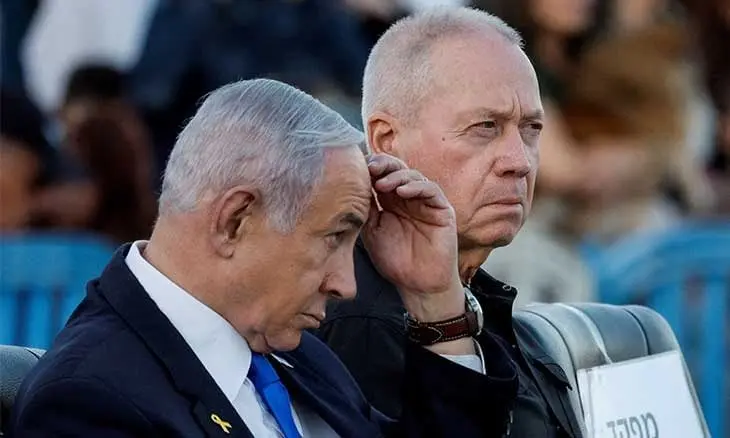
So what will Israel do to empty this resolution of its content, and to provide protection for its war criminal Prime Minister Benjamin Netanyahu and his dismissed Minister of War Yoav Galant, who will no longer be able to move freely in many countries of the world?


Diplomats and academic analysts who spoke to “I” expected that Israel would seek the help of its main ally and partner in the war of extermination, the United States, to prevent the implementation of the ICC decision, whether by demonizing this court, besieging it and preventing its funding on the one hand, as it did with the United Nations Relief and Works Agency for Palestine Refugees (UNRWA), and on the other hand, by exerting political and economic pressure on the countries that signed the Rome Statute so that they refrain from implementing the decision, as well as to prevent the issuance of similar decisions against hundreds of officers and soldiers involved in committing war crimes, and to protect them from prosecution.

Legal and political predicament for Israel

Diplomat and Professor Manuel Hassassian, the Palestinian ambassador to Denmark, said that Israel is facing a major legal and political dilemma due to the implications of the possibility of arresting Prime Minister Benjamin Netanyahu based on the decisions of the International Criminal Court.


He added: "According to international law, the 126 countries that signed the Rome Statute are obligated to implement the court's decisions, including arresting wanted persons against whom arrest warrants have been issued.


Hassassian pointed out that this decision would result in restricting Netanyahu's travel to the court's member states, especially in Europe and Africa.


He explained that the ICC decision also enhances Netanyahu's image internationally as a figure accused of committing war crimes, noting that this matter could have a major impact on Israel in terms of its international reputation and economy, especially in the sectors of aviation, tourism, advanced technology, and arms trade.


He said that implementing the court's decision could take a long time, and would depend on the extent to which member states were committed to cooperating with the International Criminal Court.

Historic shift in the work of the court

However, Hassassian considered that directing these charges represents a qualitative leap and a historic shift in the work of the court, and is the beginning towards holding those responsible for serious crimes accountable.


He also stressed that the decision could accelerate the collapse of Netanyahu's government, as boycotting Israel economically could weaken its domestic position.


He expected that there would be new elections in Israel in the near future if international pressure continued, which would weaken Netanyahu's extremist government and pave the way for political transformations within Israel.


Hassassian considered that the decision of the International Criminal Court poses a major challenge to Israel on the legal and international levels, adding that the actual implementation of the decision will test the extent of the international community's commitment to international laws and will contribute to formulating a new phase in the path of international justice.

Israel's options are limited after the decision

In turn, historian and researcher in Middle Eastern affairs, Johnny Mansour, confirmed that Israel's legal options after the issuance of the arrest warrant for its Prime Minister Benjamin Netanyahu and former Defense Minister Yoav Galant appear limited, given the commitment of 124 countries that signed the International Criminal Court Charter.


He explained that these countries are legally and morally obligated to respect its signature and implement the court's decisions.


Mansour pointed out that Israel will rely mainly on American support to confront the consequences of these memoranda.

“The United States, which has not signed the ICC statute, has treated the court with contempt for years. Under former President Donald Trump, Washington strongly attacked the court, describing it as an organization that commits gross errors. Therefore, it is expected that the United States will seek to support Israel in mitigating the consequences of this decision, and perhaps finding a way out that will return Israel to international forums,” he added.


He explained that Israel's global reputation is at stake, especially since it has always promoted itself as an "oasis of democracy in the Middle East," boasting of party life, diversity, and the rights of Palestinians inside Israel, including their political participation and candidacy for the Knesset.

Israel's image is damaged

Mansour pointed out that this image was severely damaged by the arrest warrant, which has nothing to do with the internal political scene, but is linked to specific policies pursued by the Israeli government. He said: “The warrants came against the backdrop of the repression and starvation practices carried out by Netanyahu and Galant against the Palestinian people. Galant’s statements, in which he described the Palestinians as “human animals and monsters,” and announced the cessation of food, water and fuel supplies after October 7, reflect a systematic policy aimed at starving the Palestinians and forcing them to forcibly displace them.”


Mansour stressed that the International Criminal Court addressed Israel's policies on the ground, which aim to deport Palestinians and prevent them from returning to their homes under flimsy pretexts.


"Galant has repeatedly stated his desire to carry out comprehensive erasure of Palestinian infrastructure, to ensure that residents will not return to their areas. This policy allows the Israeli government to annex lands and strengthen settlements, as we have already seen on the ground," he said.

Israel will have to live with the decision

For his part, writer and political analyst Amir Makhoul said that Israel will have to live with the International Criminal Court’s decision.


He explained that Israel, through the Trump administration, will seek to undermine the legitimacy of the court, marginalize it, and even disrupt its funding, but this will not change the fact that the decision has become practically enforceable and binding on many countries that have signed the Rome Statute.


Makhoul pointed out that the Israeli Prime Minister, despite his reliance on American support, is facing a real crisis on both the internal and external levels.


He said: "Netanyahu cares deeply about his reputation and his judicial status, especially in light of the overlapping internal and external crises that are increasingly putting pressure on him."

Thousands of soldiers and officers face the risk of prosecution

He added: Israeli concerns are not limited to Netanyahu alone, but extend to thousands of Israeli soldiers and officers who may face arrest warrants on charges of war crimes and crimes against humanity.


He continued: "If arrest warrants are issued against these people, this will create a serious crisis for Israel, especially with regard to the movement of its citizens outside the country."


Makhoul stressed that these repercussions could have a disintegrating effect within Israeli society, pointing out that Israel is no longer considered a safe place for Jews in the world, according to the Zionist doctrine, and does not provide security or legal immunity for its citizens who participated in the war and seek in the future to roam around the world.


Makhoul explained that the International Criminal Court's decision has two main dimensions: the first is judicial, related to the prosecution of individuals involved in the crimes, and the second is political, represented in isolating Israel at the international level.


"We may see action taken against Israeli institutions such as universities and companies that include individuals accused of war crimes, which will increase pressure on Israel," he said.


Makhoul stressed the importance of the role expected to be played by the Palestinian side and the supporting countries in following up on the implementation of the resolution.


He added: "The implementation of this decision will not be achieved automatically, but rather through continuous diplomatic efforts by the Palestinians and Arab countries, in addition to the role of popular movements and economic and cultural elites."


Makhoul considered that the decision issued by the International Criminal Court constitutes a historic shift in the path of international justice, but it requires careful follow-up and continuous efforts to ensure its implementation, stressing that achieving international justice depends on the extent of countries’ commitment to cooperating with the court.

A new mechanism in international law besieges Israel


For his part, the writer and political sociology analyst Dr. Muhammad Najib Bou Taleb from Tunisia considered the decision of the International Criminal Court to prosecute Israeli war criminals to be an unprecedented development in international law, as it adopts a new mechanism that separates responsibilities and makes each state that signed the Rome Statute solely responsible for implementing the decision, far from the traditional collective structure of the Security Council and the General Assembly of the United Nations.


Bou Taleb explained that this mechanism depends on holding each country individually politically and morally responsible, which places it before a critical sovereign test.


He added: "The failure to implement the decision by a state that is a signatory to the ICC Charter represents an embarrassment to this state, especially since it is committed to the legitimacy of the court according to its signature."


He pointed out that this new approach brings about a radical change in dealing with war criminals, as it directly targets individuals, which increases its impact on Israel and its international relations.


Bou Taleb addressed the repercussions of the decision on Benjamin Netanyahu and his government, pointing to his repeated attempts to evade responsibility by pretending to be the victim.

The decline of the slogan "Anti-Semitism"

He explained that these attempts are gradually losing their power, especially in light of the declining influence of the slogan "anti-Semitism," which he described as having become "a ridiculous slogan that is unacceptable even to its main ally, the United States."


He added: "Netanyahu and his government are heading towards stifling international isolation, at a time when he is trying to promote his expansionist project to establish a Middle East led by Israel. However, this project clashes with Israel's demographic and political weakness, in addition to the increasing economic and military siege."


According to Dr. Bou Taleb, Israel is facing a new reality that makes it difficult for it to continue its aggressive policies in the region.


"The only possible solution for Israel is to topple the extremist government from within and without, and to withdraw from Gaza and southern Lebanon. In the end, Netanyahu and his ministers may find themselves trapped inside Israel, living in constant fear and under the burden of conscience, if they have one," he said.


Bou Taleb stressed that pursuing Israeli officials personally would have a major impact on the Israeli entity, as it would limit their international movement and place them under the law.

Israel does not have the ability to legally cancel the decision.

In turn, lawyer and legal researcher Alaa Muhajna said that Israel will make great efforts to thwart the decision issued by the International Criminal Court and empty it of its content through various political and diplomatic tools.


He explained that these attempts will be carried out in cooperation with its allies, led by the United States, especially with the entry of the Donald Trump administration into the White House early next year.


Muhajna stressed that Israel will seek to break the political isolation imposed by the decision by exerting intense pressure on the countries that signed the Rome Statute, which is the legal framework for the International Criminal Court.


He added: "These pressures may include political, military, and even economic steps, up to imposing sanctions on these countries so that they do not comply with the resolution, with the aim of undermining it and preventing any legal or practical effects resulting from it."


On the legal level, Muhajna pointed out that Israel does not have the ability to legally cancel the decision, but it will focus its efforts on preventing the International Criminal Court from issuing arrest warrants against Israeli army leaders and officers.


He said: "This scenario in particular is a major concern for Israel, as it fears its political and legal repercussions, and its impact on its international image."

The "Criminal" decision shook Israel's image in the world

Writer and political analyst Muhammad Zahdi Shahin said that the International Criminal Court’s decision to issue arrest warrants against Netanyahu and his former defense minister, Galant, caused great moral damage to Israel and shook its image globally.


Shaheen explained that the decision is a historical precedent, and will have several political and legal repercussions in the short and long term, noting that the most prominent of these repercussions is that it negated the misleading image that Israel sought to embody as an established fact that Israel is a democratic state.


He said: This decision proved to the global collective consciousness that Israel is not a democratic state as it claims, but rather an entity that pursues policies of genocide and carries out organized terrorism.


He added that the international institutions found themselves facing a real test of their credibility and neutrality, especially after more than a year of crimes committed against the Palestinian people.


He stressed that the hostile Israeli behaviour puts these institutions in an embarrassing position and tests their ability to play their historical role with transparency and independence.


Shaheen stressed that Israel's options to confront this decision are very limited, describing the situation as being between "bad and worse."


He said: The moral damage has already occurred, and it will be recorded as a moral impact in the pages of history. On the practical level, Israel may resort to legal steps to challenge the decision, even though it is not a member of the International Criminal Court.

Expect internal pressure and movement to oust Netanyahu

He expected Netanyahu to face internal pressures that could lead to political action to remove him, but he said that the chances of this possibility happening are very low due to the unity of the Israeli position that was evident through attacking the International Criminal Court.


He expected that Israel would resort to attacking the International Criminal Court and rejecting its decision outright, while relying on American support to use international influence to pressure the countries that signed the Rome Statute not to implement the arrest warrants.


Shaheen said: "Israel will work to break the decision by mobilizing its allies, especially the United States, to pressure the member states of the court, which will put international courts before great challenges in how to deal with countries that refuse to implement their decisions."


He pointed out that the repercussions of this decision will cast a shadow over the international community, stressing that international institutions will face major challenges in enforcing respect for international law.


Shaheen concluded by saying: This decision is a real test of the neutrality and integrity of international courts, and will determine their ability to hold accountable countries that challenge their legitimacy.

Israel does not recognize the jurisdiction of the International Criminal Court

For his part, Jordanian writer and political analyst Dr. Munther Hawarat stressed that the decision of the International Criminal Court to issue arrest warrants against Netanyahu and former Defense Minister Galant represents a dramatic shift in the course of international justice, and opens the door to a series of challenges for Israel on the legal and diplomatic levels.


Dialogues indicated that Israel, which does not recognize the jurisdiction of the International Criminal Court and has not signed the Rome Statute, may completely refuse to deal with the resolution.


He added: "Israel will ignore the arrest warrants, and base its position on strong international support led by the United States and some European countries that may denounce the decision and pressure the court to reverse its implementation."


He explained that the American position stands out as a major challenge, as the United States did not welcome the court's decision against Netanyahu and Galant, in contrast to its previous support for the arrest warrant for Russian President Vladimir Putin.


He said: "Israel may use the influence of the United States and European countries to question the legitimacy of the decision and challenge it, but this puts Washington in an embarrassing position, especially if it continues to support Netanyahu, who is involved in international and local issues."


He pointed out that one scenario that Israel might follow is to restrict the movement of its officials, so that they avoid visiting countries that are signatories to the Rome Statute to avoid the risk of arrest.


"This restriction will affect Israel's diplomatic dynamics, especially when the prime minister is the person in question. Israel will face isolation in its international relations, which will weaken its ability to maneuver politically," he said.


Hawarat stressed that Israel may resort to filing legal appeals against the court’s decision, by questioning the legitimacy of the procedures and evidence, which may lead to postponing the implementation of the arrest warrants.


He explained that Israel may also take escalatory political steps such as: severing relations with some countries or international organizations, and taking retaliatory measures against parties that support the decision.

He added: All of these options carry great risks and affect Israel's status and relations with the international community, especially with traditional supporters, some of whom have shown respect for the decision, which raises questions about the future of their support for Israel.

PALESTINE

Tue 26 Nov 2024 1:05 pm - Jerusalem Time

The death toll in the Gaza Strip rises to 44,249

The Ministry of Health in Gaza announced today, Tuesday, that the death toll in the Gaza Strip has risen to 44,249, the majority of whom are children and women, since the start of the Israeli occupation aggression on October 7, 2023.


She added that the number of injuries has risen to 104,746 since the beginning of the aggression, while thousands of victims are still under the rubble.


She pointed out that the occupation forces committed 3 massacres, which resulted in the death of 14 citizens and the injury of 108 others.

ARAB AND WORLD

Tue 26 Nov 2024 12:21 pm - Jerusalem Time

In preparation for bombing it... Israel warns the Lebanese to evacuate buildings in the suburbs of Beirut

Today, Tuesday, the Israeli occupation army called on Lebanese citizens in a number of neighborhoods in the southern suburb of the capital, Beirut, to evacuate their homes in preparation for bombing them.


An occupation army spokesman posted maps of three buildings in the southern suburb on the “X” platform, saying in the post: “To all residents in the southern suburb area, specifically in the buildings specified in the attached maps and the buildings adjacent to them in Burj al-Barajneh and Tahwitat al-Ghadeer, you must evacuate these buildings and those adjacent to them immediately and stay away from them for a distance of no less than 500 meters.”


In recent days, the occupation army has intensified its air attacks on the southern suburb.


Several areas in Lebanon are witnessing a displacement movement, fleeing the ongoing occupation raids.

PALESTINE

Tue 26 Nov 2024 12:20 pm - Jerusalem Time

Israel committed 7,160 massacres and wiped out 1,410 entire families in Gaza since October 7

Medical sources in the Gaza Strip announced today, Tuesday, that the occupation forces committed 7,160 massacres against Palestinian families in the Gaza Strip from October 7, 2023 until the beginning of November.


The same sources noted that the occupation forces "completely erased about 1,410 families, comprising 5,444 individuals, from the civil registry during the monitored period."


She explained that the number of families that were completely wiped out, with only one survivor remaining, amounted to about 3,463, with the number of their members reaching 7,934 Palestinians during the same period.


She indicated that the number of families that were subjected to Israeli massacres and had more than one survivor was about 2,287, with 9,577 members.


She pointed out that the families that lost the most members were the Al-Najjar family, with 520 members, followed by the Al-Masry family, of which Israel killed about 287 members, then the Ashour family, which lost 217, followed by the Hijazi and Awad families, which lost 199 and 198 members respectively.


The occupation army continues to bomb various targets in the Gaza Strip, most of which are inhabited homes, especially in the northern governorate, which has been under a tight siege for 53 days, resulting in the death and injury of thousands.

PALESTINE

Tue 26 Nov 2024 10:59 am - Jerusalem Time

Red Crescent: More than 10,000 tents flooded in Khan Yunis

Bashar Murad, Director of Health Programs and Director of Al-Quds Hospital of the Red Crescent Society in the Gaza Strip, said that more than 10,000 tents in Mawasi Khan Yunis were blown away by strong winds and rain, forcing the displaced to move their tents to areas far from the beach in very difficult and harsh conditions.


Murad added to Voice of Palestine Radio that citizens suffer from various chest diseases, especially the elderly and children, due to the lack of winter clothing, heating devices and blankets, in light of the significant drop in temperatures.


Murad noted the spread of famine in the Gaza Strip, and the percentage of children suffering from malnutrition reaching 40% in the south, as a result of the occupation authorities preventing the entry of relief aid and the significant increase in food prices.

PALESTINE

Tue 26 Nov 2024 9:57 am - Jerusalem Time

So that it is not said that justice is gone!

The ICC decision calls for recalling the historical incident that occurred during the time of Umar ibn al-Khattab, whose heroes fulfilled their promise and pardoned, out of fear of losing the values of pardon and loyalty in a society that manages its affairs slowly and calmly.


This call stems from a burning sense of fear of the absence of justice in a stifling international environment, suffering from imbalances in its biases, multiple agendas, and double standards in dealing with human rights issues, a double standard that has seemed to expose those who have been hiding behind false slogans for years.


As much as the ICC’s decision was fair to the victims, tarnished the reputation of the rogue state, and exposed its fabricated narratives, it also implied a defense of the court itself and its prestige in how it dealt with the chapters of a genocide crime that has been continuing for more than a year without respite, and with live and direct broadcast, fueled by people and stones, which could cause it to lose its justification for existence if it does not take the decisions it has taken that restore consideration to the values of truth and justice, and instill hope in the souls of the victims.


The level of fear has increased, due to the deliberate procrastination and delay in opening the burning files, following the campaign of vilification and defamation that the public prosecutor of the court and its judges were subjected to, and threatening them if their vigilant consciences tempted them to issue a summons decision for the criminal killers.


With their earthquake decision, the respected judges have put the court’s reputation above their own, and its prestige above their interests. In doing so, they are trying to salvage what can be salvaged from the widespread erosion of values, which are the basis for the survival, growth and progress of nations. Without them, the world becomes a jungle, ruled and controlled by ferocious beasts.


Stop the genocide now..!

ARAB AND WORLD

Tue 26 Nov 2024 9:52 am - Jerusalem Time

Raids on towns in southern Lebanon and a rocket barrage on Nahariya

The Israeli aggression on Lebanon continues for the 65th consecutive day, while Hezbollah continues to confront the attempts of Israeli forces to penetrate the ground in southern Lebanon, and to target military sites and Israeli towns with missile barrages and booby-trapped drones.


The Israeli Air Force intensified its bombing of the capital Beirut, and launched a series of raids on several towns in the south, while Hezbollah targeted Israeli forces in southern Lebanon, in addition to targeting military sites and Israeli border towns with rocket barrages.


Hezbollah announced the outcome of its operations carried out during the past 24 hours, where the party carried out 21 operations, including confronting attempts by Israeli forces to advance on the border and confronting drones and warplanes, in addition to targeting sites, bases, army deployments and towns in northern Israel.

All this comes as efforts continue to reach a ceasefire agreement, with increasing statements about the imminent reaching of an agreement to end the war in Lebanon, while the White House said that no agreement is ready yet, and that efforts have reached a positive point.

ARAB AND WORLD

Tue 26 Nov 2024 9:47 am - Jerusalem Time

Germany puts 4 people on trial for alleged Hamas links

The German Federal Prosecutor's Office announced that it has requested that four people be referred to court on charges of belonging to the Islamic Resistance Movement (Hamas) and collecting weapons in Europe for the movement.


The four suspects were arrested in Berlin and the Netherlands, and the State Security Department of the Berlin State Court of Appeal will consider the case and issue a decision on whether to accept it or not, and set a trial date if it is accepted.


"They had all been working for Hamas abroad for years and held important positions in it, in connection with the management of the military branch" of the movement, which the European Union officially classified as a "terrorist" organization in 2003, the prosecutor's office specializing in terrorism, based in the western city of Karlsruhe, wrote.


According to the prosecution statement, “In the spring of 2019, one of the four defendants set up a warehouse for ammunition and weapons in Bulgaria. In the summer of 2019, he emptied a weapons cache in Denmark and brought a pistol from it to Germany. The man traveled to Bulgaria again in August of the same year to search for the warehouse.”


The prosecution continued, "Between June and December 2023, all the accused, in varying formations, searched several times for a weapons cache in Poland from Berlin, but ultimately the location of this cache could not be located."


The German Federal Prosecutor's Office confirmed that "Hamas organized weapons concealment operations in various European countries to carry out possible attacks against Jewish institutions in Europe, including the Israeli embassy in Berlin, the American base in Ramstein (southwest Germany) and the area surrounding the former Tempelhof Airport in Berlin."

PALESTINE

Tue 26 Nov 2024 9:44 am - Jerusalem Time

Israeli occupation forces destroy a warehouse in Qalqilya

Today, Tuesday, the Israeli occupation forces destroyed a warehouse in the city of Qalqilya.


Local sources reported that the occupation forces stormed the southern area of the city and bulldozed a warehouse (40 square meters) located in the "Al-Masakwa" neighborhood, containing motorcycles belonging to the citizen Alaa Maskawi.

PALESTINE

Tue 26 Nov 2024 9:25 am - Jerusalem Time

Displaced people tell Al-Quds about their suffering on that night when their mattresses were soaked and their tents blew away

- Outbreak of influenza and cases of bedwetting among children, with no treatment in hospitals

- Umm Faras: Our tent was blown away in the middle of the night and rainwater flooded all over us.

The family sleeps on one mattress... with worn-out, tattered covers.

- Sabreen Al-Khatib: I wake up terrified by the strong wind and cold, and I am afraid of staying outdoors.

- Umm Muhammad Al-Sarsak: My tent was flooded and I don’t have enough money to buy a tarpaulin that costs more than $200.


"The tent blew up in the middle of the night and rainwater flooded us," in a tragic scene as the displaced woman, Umm Firas Khalifa, began to narrate the suffering she experiences every winter while displaced inside a tent.


She told Al-Quds.com: “After our house was bombed in Al-Shati refugee camp in Gaza City, and my three sons were martyred, and I and the rest of my family were injured, we decided to move to Deir al-Balah and set up a tent inside the displacement camps.”


Umm Firas did not know that the situation would last long, and that she would remain inside the tent for more than a year. She continues: “The tent’s tarpaulin was worn out, and the nylon that was wrapped around it was burned by the summer sun. I had to put it on the ground for us to sleep on, and I put blankets instead.”


But what was not expected was that it would rain and flood the cloth covers, she added: “At half past two in the morning it rained and flooded our tent and the tarpaulin flew away. We stayed awake all night trying to gather it to protect us from the water.”


She added: “The tarpaulin of our tent was torn, so rainwater was getting in. I had to put plates and cooking pots in them so that the water would run off, not to mention the mud that I slipped in many times, and I had to have surgery on my foot.”


As for the covers and bedding, this is where the biggest disaster lies. Umm Firas says: “We don’t have enough bedding. My husband, I, and two of my children sleep on one mattress with one cover.” She continues with tears on her face: “We are dying, and no one asks about us.”


And about the most difficult situations that Umm Firas was unable to face? She answers: “When my little child, who was no more than three years old, ran to my arms at night and told me that my arms made him feel warm, but I don’t know how my arms would warm him?!”


The same situation is experienced by the displaced Sabreen Al-Khatib, who told “I” and “Al-Quds” Dot Com: “I wake up in the middle of the night terrified by the strong wind and cold. I am afraid that the tent will fly away and we will be left in the open without shelter.”


Not only were the tents flooded, but influenza spread among the children, and there was no treatment in the hospitals, not to mention the uncontrolled urination that afflicted them due to the severe cold.


She continued: “My children got sick, and I couldn’t find a treatment for them, especially since they wake up terrified at night from the cold, and I try to warm them up and calm them down, but it’s in vain, not to mention that when it rains they run away into the tent.”


She added: "The children now run away from the rain inside the tent. They used to love it and play under it, but now it has become a source of terror for them."


She cries over her tragic situation and asks, “When the tent blows away, where will we go?” She adds, “We will remain in the open without shelter.”


As for Umm Muhammad Al-Sarsak, she is no easier than her predecessors. She stayed up all night trying to sew her torn and worn-out tent, especially since she has been living in it for more than a year.


She told Al-Quds.com: “My entire tent was flooded. I tried to put pieces of sponge inside the openings, but even through them, the rainwater entered us.”


She added: “Because our tent is covered with covers, it is easy for the tent to get wet and flooded, and I do not have enough money to buy a tarpaulin, which costs more than $200, and I can hardly find a living for my ten children.”


For most of the displaced people living in tents, winter has become a nightmare, due to the severity of the suffering they endure. Umm Muhammad says: “If it had been cold again, we would have left our tent using a fishing oar.”

PALESTINE

Tue 26 Nov 2024 9:12 am - Jerusalem Time

Israeli occupation launches an arrest campaign in the West Bank

This morning, Tuesday, the Israeli occupation forces launched an arrest campaign in the West Bank.


In Bethlehem, the occupation forces arrested Abdullah Faisal Maali and Jihad Ahmed Hamash from the Deheishe refugee camp in the south, and Imad Muhammad Dhuib (50 years old) from the town of Za’tara in the east, after raiding and searching their homes.


The occupation forces also stormed the Karkafa area in central Bethlehem, and raided and searched a number of homes belonging to citizens from the Zawahra family, without any arrests being reported.


In the town of Tuqu', southeast of Bethlehem, the occupation forces raided a number of homes belonging to citizens: Muhammad Mahmoud Abu Mufreh, Nasri Al-Amur, Ibrahim Khalil Abu Mufreh, and the brothers Mahmoud and Baraa Khalil Al-Badan.


In Ramallah, the occupation forces stormed Birzeit University in the town of Birzeit, north of Ramallah, and arrested four students from inside its campus.


Local sources reported that the occupation soldiers stormed the university campus and arrested the four students, and vandalized the contents of the activity rooms belonging to the student movement. The detainees are: Hassan Saleh, Amr Kayed, Amjad Nobani, and Fadi Abu Al-Sa'adeen.


In Nablus, the occupation forces stormed Balata camp accompanied by a bulldozer, amid heavy gunfire, raided a number of homes and arrested citizen Moaz Al-Zubaidi.


The occupation forces also stormed the town of Awarta and raided the home of citizen Abdul Salam Awad and arrested him after assaulting him and his family and tampering with the contents of his home.


In Hebron, the occupation forces stormed a number of neighborhoods in the town of Adh Dhahiriya, and interrogated about 14 citizens inside a house, which they turned into a field investigation center, and which belongs to the citizen Muhammad Al-Tal.

PALESTINE

Tue 26 Nov 2024 9:09 am - Jerusalem Time

Dead and wounded in the occupation's bombing of a house in Jabalia

A number of citizens were killed and injured this morning, Tuesday, when the occupation warplanes bombed a house in Jabalia Al-Nazla, north of the Gaza Strip.


Medical sources reported that dozens were killed and injured when the occupation bombed a house belonging to the Shehadeh family near Al-Nazla School.


The occupation continues its artillery shelling in the north, center and south of the Gaza Strip.


The occupation forces continue their aggression on the Gaza Strip, by land, sea and air, since October 7, 2023, which resulted in the death of 44,235 citizens, the majority of whom are women and children, and the injury of 104,638 others, in an incomplete toll, as thousands of victims are still under the rubble and in the streets, and ambulance and rescue crews cannot reach them.

PALESTINE

Mon 25 Nov 2024 10:52 pm - Jerusalem Time

Smotrich: Gaza Strip must be occupied

The Israeli Broadcasting Corporation quoted Israeli Finance Minister Bezalel Smotrich as saying that the Gaza Strip should be occupied and its population reduced to less than half of its current population.


He added, "We have an opportunity with the Trump administration to encourage voluntary migration from Gaza, and within two years the number of Palestinians can be reduced by half."