OPINIONS

Sun 29 Dec 2024 9:57 am - Jerusalem Time

The hospital, the doctor, the patient... a martyr!

Reema Mohammed Zanada

Reema Mohammed Zanada

Opinion Writer

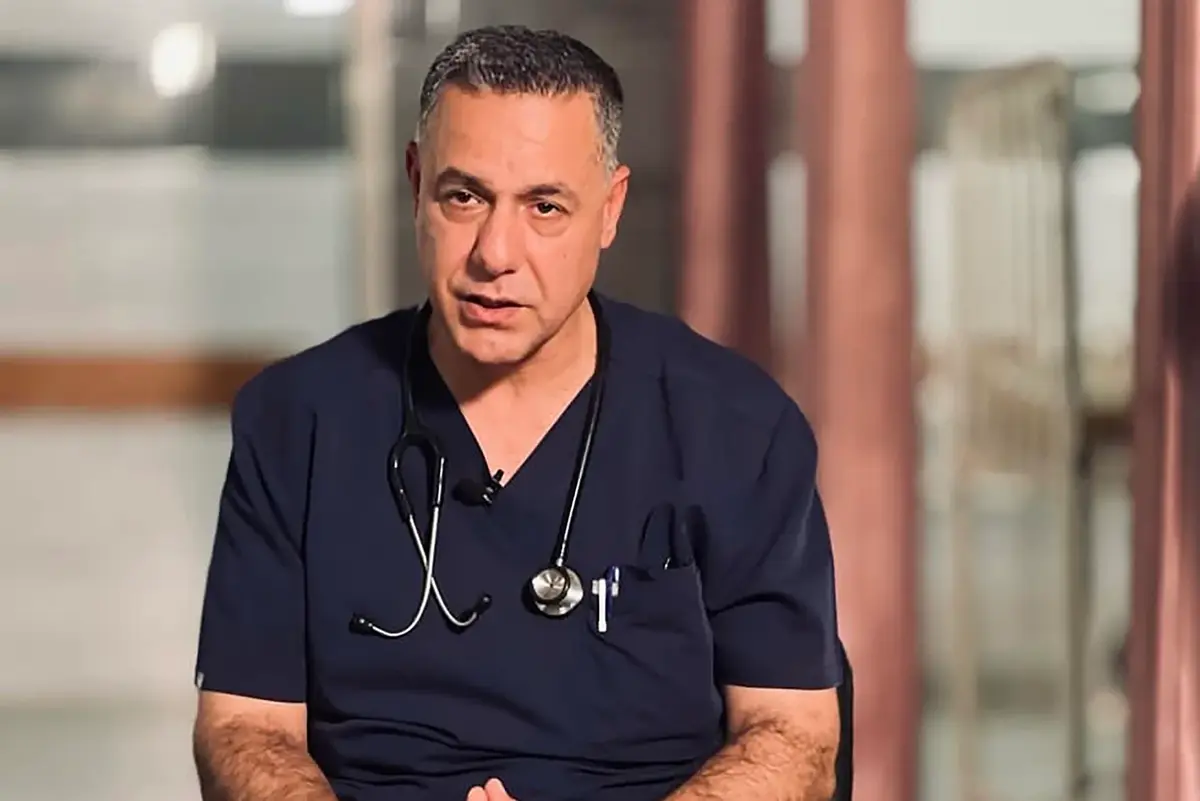
Dr. Saeed Joda was hurrying his steps to reach Kamal Adwan Hospital in the northern Gaza Strip. The need was urgent, as dozens of wounded and martyrs had arrived, which made him, as much as possible, hasten his steps despite the extreme fatigue that had exhausted his body after long months of work and moving between hospitals, due to the severe shortage in their numbers because of their being targeted by the criminal occupation’s missiles.

Although he was wearing a white coat that confirmed his immunity as a doctor, that did not help him in the eyes of the occupation army, which deliberately executes doctors.

The targeting was deliberate, as he was targeted by a quadcopter equipped with surveillance devices capable of distinguishing that he was a doctor and not carrying a weapon in his hand.

The nature of the head injury confirmed that his execution was deliberate, although there is no justification for executing a doctor who was rushing to save the wounded.

Dr. Saeed is not the first, and will not be the last, in the repeated executions of medical personnel by the occupation’s missiles. More than 1,060 medical personnel were executed, and more than 319 medical personnel were arrested, a number of whom were later executed in the occupation’s prisons.

The executions of medical personnel were planned, especially since the occupation was deliberately killing doctors with rare specialties, which created a major deficit and shortage in many medical specialties.

Dr. Medhat Saidam is a very rare doctor in the Gaza Strip. He is one of the founders of the Burns Department at Al-Shifa Hospital in Gaza City.

It was a balm for Gaza's wounds, especially in wars, due to the damage and severe injuries that result to the wounded, as a number of them need a difficult operation related to burns and plastic surgery.

The occupation did not only execute him, but also executed his wife, children, and more than 25 of his relatives.

The white coat did not intercede for him either, although he enjoys immunity according to all international laws, Gaza is exempt from this immunity in the eyes of the unjust occupation.

One can imagine the amount of pressure that doctors, nurses and all medical staff are under. They are not only exhausted by the huge numbers that reach them after every massacre that leaves a large number of martyrs and wounded; they also work under missiles that bombard dilapidated hospitals and target them inside their corridors. Despite that, they continue their work with dedication. None of them left the wounded unless they became wounded or martyred like them.

It does not stop there; sometimes the doctor is surprised by the arrival of martyrs and wounded, some or all of whom are from his family. Then the injury becomes great, but despite that, he continues his work with his heart in pain and tears flooding his face, exhausted from fatigue, pain and sadness.

All that effort, and he lives on minimal food. All the medical staff gets after long hours of work is a small piece of bread, if there is one, just to keep him alive.

The white ambulances, with their clear features, identity and mission, were not spared from the occupation’s missiles, along with the paramedics and wounded inside them.

The continuation of the unjust war for a year and two months has exhausted the health sector and its staff, especially after the depletion of medical supplies, tools, and medicines. Even the anesthesia substance is no longer available, and many operations are performed without anesthesia.

There are many injuries that have baffled doctors in dealing with them, because the occupation uses advanced weapons that are classified as internationally prohibited, which cause the flesh and bones to melt, which has made finding many bodies impossible.

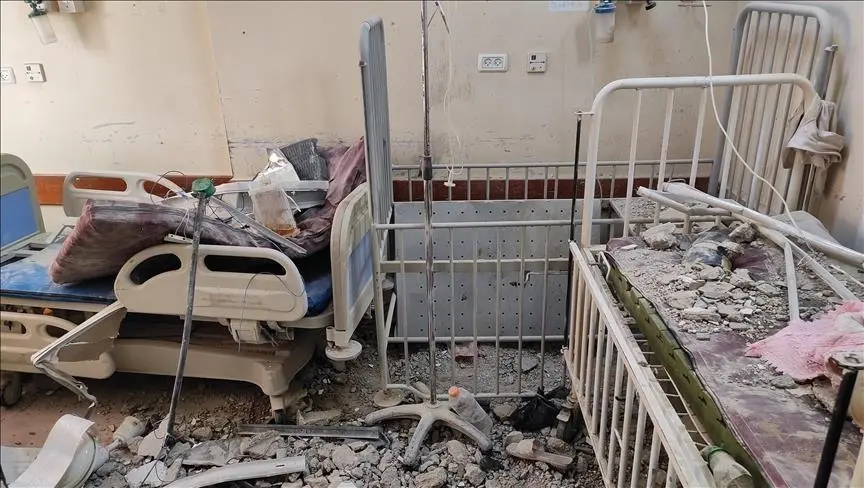
Many operations have been postponed, despite the wounded needing them, but there is nothing we can do about it, as the remaining dilapidated hospitals are unable to accommodate these operations.

Many of the wounded are not seriously injured, but because the occupation prevents the ambulance from reaching them, the wounded person bleeds for hours until he dies.

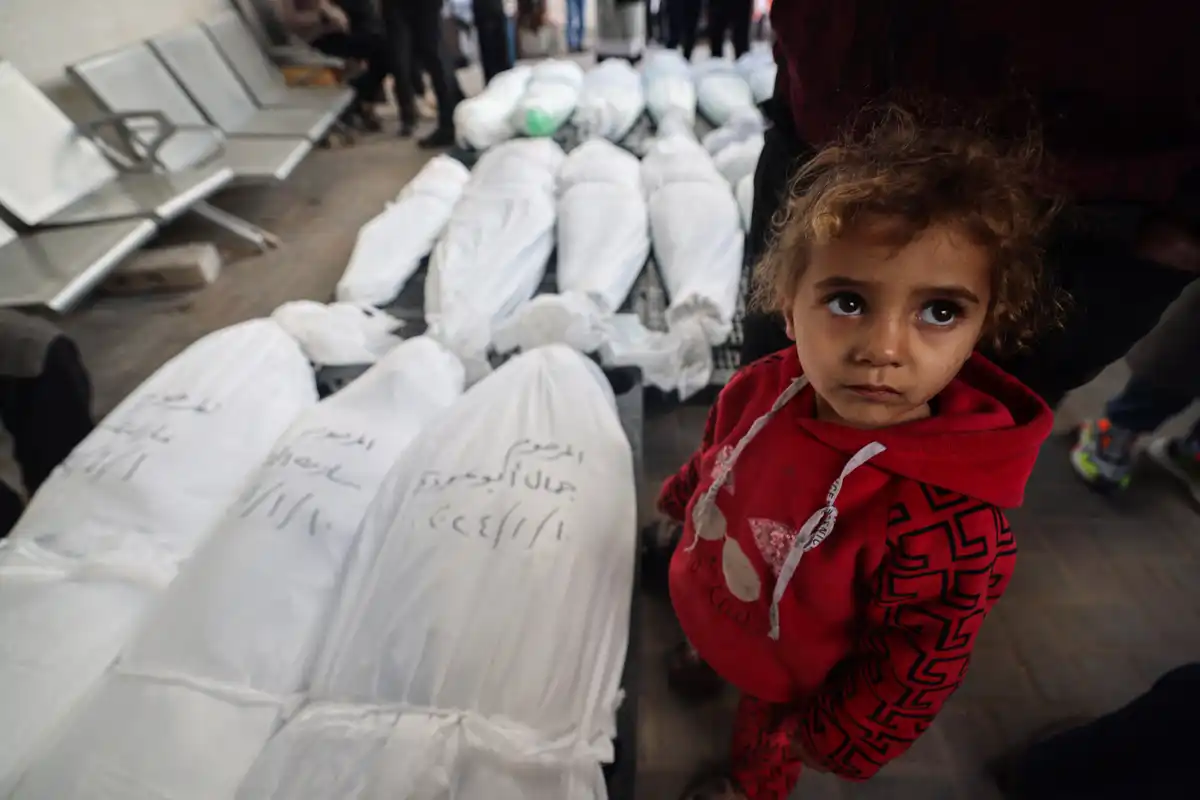
Patients are also in the circle of deliberate targeting. The young boy Ahmed, who was sitting in his wheelchair, physically exhausted, was injured in one of the raids. When he was transferred to Kamal Adwan Hospital, and as soon as he arrived at the reception department, the hospital was targeted, which led to his immediate martyrdom.

He thought he would find safety in this place, but the truth was different. Everything is targeted by the occupation army, including patients, nurses, paramedics, and doctors.

Words fail to describe the medical situation in the Gaza Strip. The lived reality is much more difficult and greater than words can describe, especially since the hospitals and medical staff wearing white coats, as well as the patients in the Gaza Strip, are beyond any immunity in the eyes of the occupation army.

While writing these lines, Kamal Adwan Hospital was targeted repeatedly, its electricity was cut off, and its water tanks were targeted, which led to the oxygen devices stopping for patients, and the death of a number of them, and the same thing happened in the premature babies’ nursery department...

The last words uttered by the hospital director, Dr. Hussam Abu Safia, the medical staff and the patients: “We are dying.”

OPINIONS

Sun 29 Dec 2024 9:54 am - Jerusalem Time

Reshaping Political Thought in the New Middle East... Between State Borders and Peoples' Rights

Dr. Dalal Saeb Erekat

Dr. Dalal Saeb Erekat

Opinion Writer

In light of the geopolitical and regional transformations, we must return to the events and outcomes of the post-9/11 period and the plans associated with the idea of the “New Middle East.” It seems clear that there is a redrawing of borders and a reshaping of political thought in the region, and a fundamental question arises here about the goals of the Palestinian struggle: Do the Palestinian people seek a state within the 1967 borders, or is the primary goal freedom and independence regardless of borders?


This question needs special study after the recent developments in the region, where we are witnessing the implementation of an American-Israeli policy that was adopted to create a Greater Israel in the Middle East. This vision includes expanding Israel's borders not only by annexing land in the West Bank through the settlement policy, but also by destroying the political regimes or unofficial actors in the countries of the region (whether opposition or resistance movements) that support the establishment of a Palestinian state on the 1967 borders, which means clear borders for Israel, and this is what America and Israel do not want. The world voted by an absolute majority for the establishment of a Palestinian state, and the American rejection was explicit and not shy, so we must realize the fact that what is happening in the region from demonizing the resistance movements or the fall of successive Arab regimes, and the progressive normalization Abraham Accords, all come within the strategy of war under the pretext of eliminating what they called the "axis of evil", and we have witnessed this policy in Lebanon, Iraq, Sudan, Somalia, Libya and now Syria.


In reshaping political thought, the logic of political realism emerges, which states that the Palestinian issue has never been merely an issue of borders or geography, but rather an issue of liberation and dignity. The borders that represent the June 4, 1967 line may be a political reference for negotiations and proposed solutions that guarantee rights, but they do not encapsulate the struggle of the Palestinian people, which extends to their historical right to self-determination, return to their homeland, and live in freedom and dignity on their land. The call to establish a Palestinian state on the 1967 borders comes in the context of seeking a political solution proposed by the international community to end the occupation and put an end to the suffering of the Palestinian people. However, at the same time, it may sometimes be reduced to a narrow framework that does not address the essence of the issue, as borders are a condition for recognizing states and a tool for achieving independence, but they do not necessarily express the ultimate goal of liberation from all forms of occupation and settlement, and the restoration of the historical and sovereign rights of the Palestinian people. If borders are the framework, then freedom and independence are the essence. The Palestinian people, as history has shown, are struggling to regain their usurped rights, whether these rights are in Jerusalem, Gaza, the West Bank, or in the diaspora. Liberation means ending the occupation in all its forms, whether settlement, military, or political, and establishing a fully sovereign state that provides its people with dignity and freedom without external restrictions.


Talking about a new Middle East poses additional challenges, as “political realism” is marketed as an alternative to complete liberation, and economic or geographical solutions are proposed that ignore national rights. However, the Palestinian people, with their long history of struggle, realize that freedom is not reduced to lines drawn on maps, and that borders will be meaningless if they do not achieve dignity and full sovereignty. The Palestinian people are fully aware that economic or security solutions, although necessary, do not replace political solutions. The answer to this question lies in the will of the Palestinian people themselves, and in their ability to adhere to their legitimate rights despite all the challenges. The ultimate goal must remain freedom in all its meanings: freedom of the land, freedom of the human being, and freedom to make decisions away from any pressures or dictates. These people believe that borders may be a step towards achieving this goal, but they are not the end, and here I emphasize that the stability of the Middle East is in danger as long as Israel’s borders are not drawn.


Freedom and independence are the foundation upon which any discussion of the future of the Palestinian state must be built. This is the choice that befits a people that has made sacrifices and faced all forms of oppression to remain committed to its rights and national identity. In this dialectical equation, we cannot deny that this ideology, which presents the principles of individual freedom on the borders of a neoliberal system, serves the project of the Greater State of Israel, and this is what we are witnessing within the framework of the new Middle East.


In light of Israeli policies aimed at imposing new facts on the ground, from Jerusalem to the Golan Heights to expand settlements, and attempts to establish an isolated “Gaza State” and annex what they call “Judea and Samaria,” the question becomes more urgent, and is adopted by pragmatists, supporters of the realist school: Will the Palestinians accept solutions that restrict their aspirations within narrow geographical borders, or will they continue their struggle to achieve a comprehensive vision of liberation and independence?

ARAB AND WORLD

Sun 29 Dec 2024 8:19 am - Jerusalem Time

The New York Times highlights the deterioration of the situation in Gaza and the organizations’ condemnations of the Israeli occupation

In an investigation, The New York Times describes how Fadia Nasser, a Palestinian widow who has taken refuge in Deir al-Balah in central Gaza, has been surviving on a small sandwich of herbs for breakfast and a tomato that she shares with her daughter for lunch over the past few weeks.


For the past few weeks, eleven miles away in a tent camp in southern Gaza, Saeed Lulu, who used to run a small coffee stand in Gaza City, says he has been suffering from kidney pain but has no access to the clean water doctors say he should drink to prevent his condition from worsening, the newspaper reported.


Ola Moein, in Beit Lahia in the northern Gaza Strip, is also afraid to go outside because of the frequent airstrikes. But she doesn’t feel she has a choice: She says she spends her days searching pharmacies for burn creams and painkillers for her 9-year-old nephew, whose legs were broken and burned in an Israeli airstrike last October.


As mediators try to secure a ceasefire between Israel and Hamas, which now seems far-fetched, Palestinians and human rights organizations say the humanitarian situation is growing increasingly desperate.


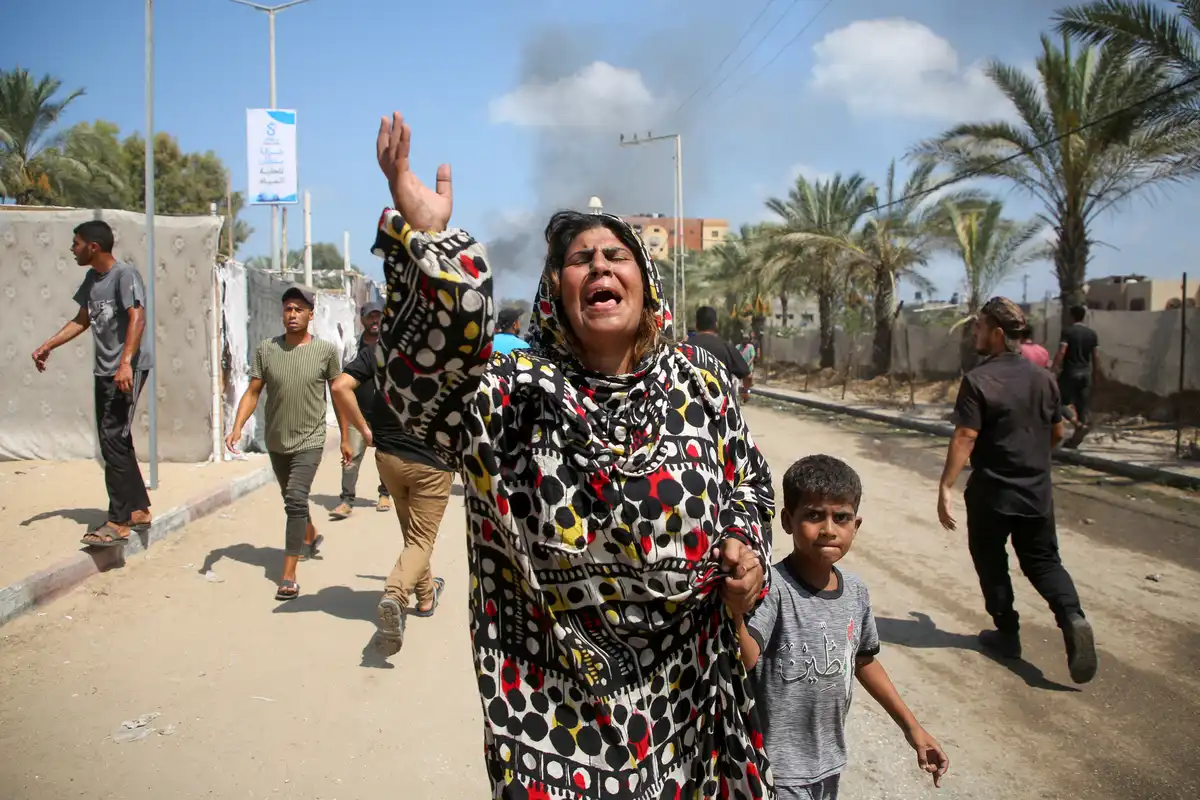
In the 14 months since Israel launched its invasion, military bombardment has turned cities into rubble-strewn wastelands, and 90 percent of Gaza’s 2.1 million people have been displaced at least once. Winter adds to the misery. A doctor at a hospital in Khan Younis, in southern Gaza, said four babies in tent camps had died of the cold in the past week.


Israel says its target is Hamas and that it is doing everything it can to minimize civilian casualties. But the increasingly deteriorating humanitarian situation has prompted harsh condemnation of Israel by the United Nations and international human rights organizations.


According to the newspaper, the following is a closer look at three parts of the humanitarian crisis in Gaza:


Food


Yasser Shaaban, a 58-year-old civil servant for the Palestinian Authority who lives with six people in a tent in Gaza City, relies on limited supplies of food — beans, lentils and pasta — brought in by humanitarian organizations.


When those supplies run out, he begs for food or uses the few shekels he has left to buy items from the market at vastly inflated prices. Fruit and meat are out of reach, he said. Eggs, which cost 15 shekels, or $4, are a rare treat. “I’m not looking for delicious, healthy or fancy food,” he said. “The goal is just to beat hunger.”


The United Nations warned in November that 1.95 million people were at risk of famine and that without a significant increase in food aid, people would begin to starve to death. On December 24, it said that humanitarian deliveries remained inadequate, especially in the north, where Israel has ordered evacuations and imposed severe restrictions on access. Israel is pressing Gaza to launch a new offensive there in an attempt to crush what it calls a resurgence of Hamas, which has unleashed some of the most devastating military offensives yet.


Even when Israeli authorities allow humanitarian aid shipments in, they sometimes strip the shipments of vital components, such as fuel needed to power generators in hospitals and shelters, said Georgios Petropoulos, a senior U.N. official based in the southern city of Rafah. Israel says the fuel cannot be sent to areas where militants are active.


“From where we are in Gaza, it feels like the aid system has been weaponized,” Petropoulos said. “Every day as an aid worker in Gaza, you are forced to make horrific decisions: Do I let people die of hunger or of cold?”


On December 5, Amnesty International accused Israel of committing genocide in Gaza, citing widespread hunger, the risk of famine and lack of access to aid as contributing factors. Israel has rejected the claim, and the Israeli body that coordinates the flow of goods into Gaza said on social media that the group’s accusation that it was obstructing aid deliveries and causing famine “deliberately and inaccurately ignores Israel’s extensive humanitarian efforts,” listing recent deliveries of food, fuel and medical supplies.


There is no doubt that aid to Gaza has been greatly reduced, both because of Israeli restrictions and because of fears of looting. For Ms. Nasser, what matters is that she still doesn’t have enough food. There is food on the market—often smuggled in or looted from aid convoys—so to outsiders it may not look like famine, she said.


“But when food becomes so expensive that most people can’t afford it, is it still available?”


Water


“Lulu, a former coffee vendor, does not have regular access to a water tap,” the paper says. “He lives in a tent camp in Rafah, in southern Gaza, and water there is delivered by tankers to a central area, where residents wait in lines for hours to fill their jars and buckets, for two shekels or fifty cents a gallon.”


But the quality is questionable: it’s foul-smelling, cloudy, and stained with debris. “The only good thing about it,” he said, “is that it’s less bad than seawater.” He knows drinking the water would aggravate his kidney problems, but bottled water is expensive.


It wasn’t always this way. Gaza has water treatment plants, desalination facilities, and three pipelines carrying fresh water from Israel. But in a report released on December 19, Human Rights Watch said that Israel is deliberately depriving Palestinians in Gaza of adequate access to safe water for drinking and sanitation.


The report found that pipelines were closed and damaged by shelling early in the war and only partially reopened a month later. Israeli restrictions on fuel imports have all but halted desalination activities. Water and sanitation infrastructure has been severely damaged, the report found. Israel has also blocked the import of equipment and chemicals, such as chlorine, needed to purify water, saying they risk being used by Hamas.


As a result, Gazans have little access to clean water. The report recorded 669,000 cases of acute watery diarrhea since the war began, and more than 132,000 cases of jaundice, a symptom of hepatitis. Both diseases are spread through contaminated water.


The Israeli Defense Ministry said in response to the report that Israeli pipelines send millions of gallons of water to Gaza, and that Israel has helped repair damage to water infrastructure caused by Hamas. Human Rights Watch noted that water from the pipelines has not been enough to make up for the decline in water production from other sources.


Moein says she spends two hours a day waiting in line to buy drinking water — at 19 shekels a gallon, or more than $5, in northern Gaza. She still has to boil and filter it. “At least I don’t see worms in it,” she said. “That’s our standard now.”


Treatment and medicine


When Alaa Moein’s home in Beit Lahia was bombed last October, most of her immediate family members died. Others were injured and still need medical treatment. But painkillers, antibiotics and medications for chronic conditions like diabetes are impossible to find.


She fears getting sick or injured. She says going to the hospital is out of the question. They are unclean, smell of death and blood, and lack the most basic supplies. Few are functioning properly. On Friday, the Israeli military forced patients and staff to leave one of the last functioning hospitals in northern Gaza, saying it was a Hamas stronghold. Fighting around the facility, Kamal Adwan Hospital, has raged for nearly three months. On Saturday, the Israeli military said it had arrested about 240 militants in and around Kamal Adwan over the past two days and found weapons in and around the hospital. It said the hospital’s director, Dr. Hussam Abu Safia, had been detained for questioning, saying without providing evidence that he was a suspected militant. A December 19 report by Doctors Without Borders described repeated Israeli military attacks on civilians and medical infrastructure in Gaza, along with “the systematic denial of humanitarian aid,” as “clear signs of ethnic cleansing.” Israel’s foreign minister criticized the report as “bloody slander.”


Alaa Moein said she doesn’t need a report to tell her what’s happening in Gaza. She also doesn’t think the report will make a difference.


“It has been more than a year of mass killing, famine, displacement and misery, and no one seems to care,” she said.

PALESTINE

Sun 29 Dec 2024 8:19 am - Jerusalem Time

Israeli occupation army targets the "Baptist" hospital in Gaza

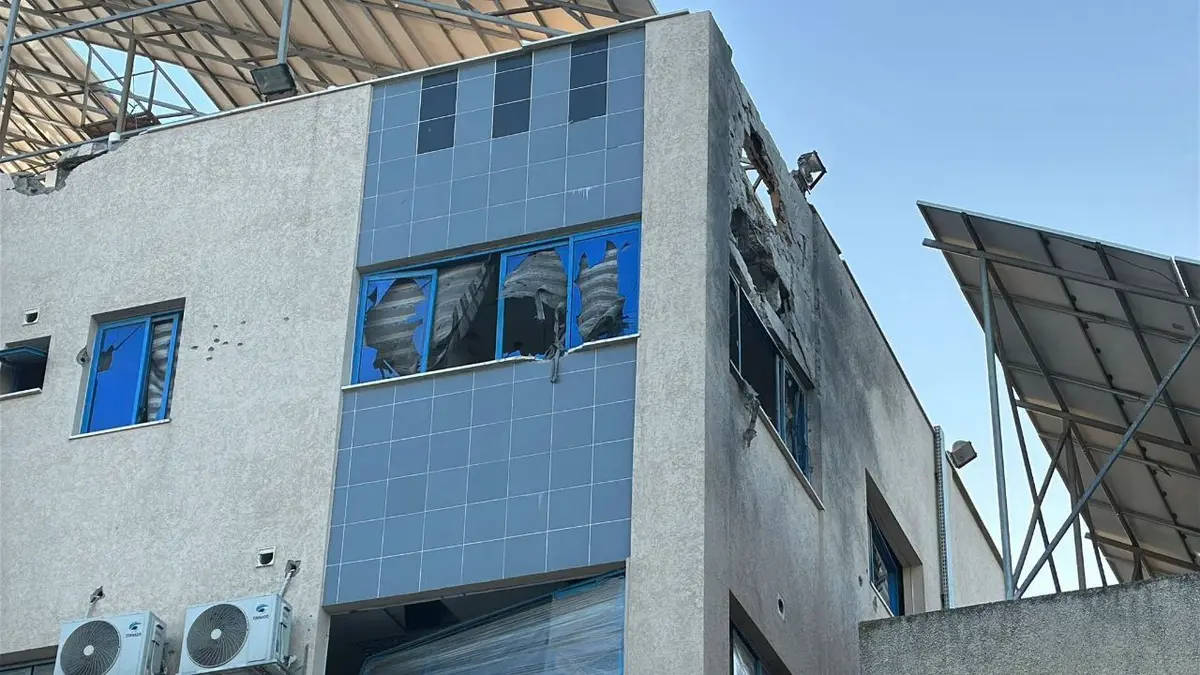
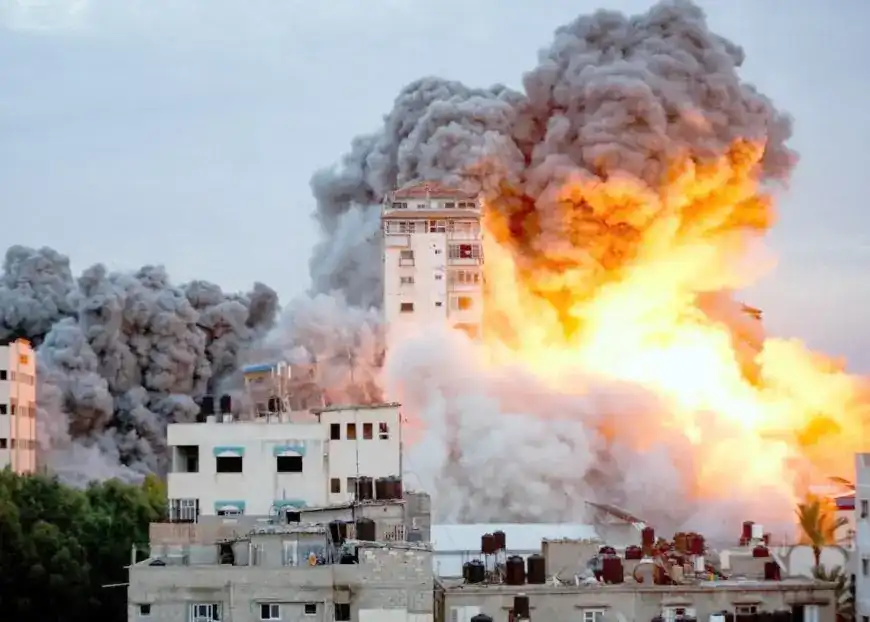
Today, Sunday, the Israeli occupation army bombed the Arab Baptist Hospital in Gaza City, as part of the ongoing genocide it is committing in the Strip, especially in the northern regions.

Local sources reported that the occupation artillery directly bombed the top floor of the Baptist Hospital, which is considered the only hospital still operating in the northern Gaza Strip, after Kamal Adwan Hospital was put out of service after it was destroyed and sections in it were burned.

The day before yesterday, Friday, the occupation army stormed Kamal Adwan Hospital, before setting it on fire and putting it completely out of service. Not only that, but it also detained more than 350 people who were inside, including its director, Hussam Abu Safiyeh, 180 medical staff, 75 wounded and sick people and their companions, and took them to an unknown location.

Since the occupation army's attack on the northern governorate on October 5, which coincided with a strict military siege, the hospital has been subjected to dozens of attacks with missiles and gunfire.

This operation caused the health system to go almost completely out of service, in addition to stopping the work of the Civil Defense and Red Crescent ambulances.

In October 2023, the occupation warplanes bombed the Baptist Hospital, which led to the martyrdom of about 500 citizens at the time.

-

OPINIONS

Sun 29 Dec 2024 8:19 am - Jerusalem Time

Fixing the factions!

Ibrahim Melhem

Ibrahim Melhem

Opinion Writer

Calls for reform are often linked to governments, either as a condition for receiving aid, or as an extortion to modify policies, in line with the latest fashions, in Western standards and specifications.

Under the sword of reforms, governments are cracking down on conditions, and are rushing in panic to develop plans, programs, policies, and matrices, and for this purpose they call upon the best experts to sew the garment that impresses observers and attracts the approval of donors.

On the other hand, the front of factions and organizations remains immune from these demands, as it is greater than review and change, and is loftier than accountability and re-evaluation, and is immune from sins, as falsehood does not come to it from before it or from behind it.

Behind the clamor of revolutionary slogans and throaty speeches, calls for amending policies, programs and orientations are hidden, and they do not care about the difference in time, nor about the change of times and balances, in a volatile world in which standards are disturbed.

A workshop is required to reform the factions, to sterilize the minds from sorcery, improvisations, gambling, and light decision-making without any calculations, and to work on withdrawing the driver’s license, after the recurrence of fatal accidents, and to rehabilitate them, rationalize their orientations, and curb their impulses.

In the biographies of all revolutionary factions, with their different banners, orientations, agendas and biases, since the first bullets were fired, there is what indicates that they are hostile to evaluation, and do not acknowledge the mistakes and sins that they consider tactical, dictated by security necessities, and are often above Palestinian, as they are not asked about what they do, even if there is not a stone left standing in the homeland.


Stop the genocide now...!

PALESTINE

Sun 29 Dec 2024 7:44 am - Jerusalem Time

A Palestinian citizen and his wife were killed in an Israeli bombing north of Rafah city

Two citizens were killed at dawn on Sunday in an Israeli occupation forces' bombardment north of Rafah, south of the Gaza Strip.


Local sources said that a citizen and his wife were killed and several others were injured in an occupation bombing that targeted their home in the Kaf Miraj area, north of Rafah city, in the southern Gaza Strip.


The occupation forces continue their aggression by land, sea and air on the Gaza Strip, since October 7, 2023, which resulted in the death of 45,484 citizens, the majority of whom are women and children, and the injury of 108,090 others, in an incomplete toll, as thousands of victims are still under the rubble and in the streets, and ambulance and rescue crews cannot reach them.

PALESTINE

Sun 29 Dec 2024 7:10 am - Jerusalem Time

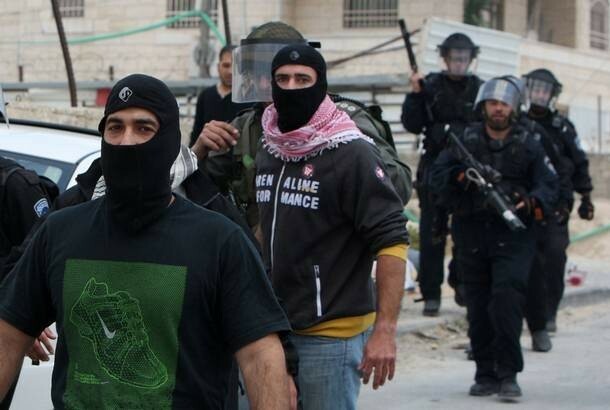
A Palestinian Journalist killed after being shot during Jenin events

Medical sources announced the death of journalist Shaza Sabbagh, a journalism student at Al-Quds Open University, on Saturday evening, after she was shot in the head during the events that took place in Jenin camp.


In a statement, the Palestinian security forces condemned in the strongest terms the crime that took place on Saturday evening on Mahyoub Street in Jenin camp, which resulted in the death of journalist Shaza Sabbagh after she was shot in the head. The attackers also caused extensive damage to a house, which was burned and randomly shot at, according to a statement issued by the Palestinian security forces.


The statement added that according to initial investigations and eyewitness testimonies, Palestinian security forces were not present at the scene when the crime occurred. The security forces condemned this crime, affirming their full commitment to implementing the rule of law and ensuring that the perpetrators are brought to justice as soon as possible. The security forces also called on all citizens to cooperate with the security services to report any information that may contribute to uncovering the circumstances of the crime and arresting those involved.


For its part, the Palestinian Journalists Syndicate mourned Shaza Sabbagh, a journalism student at Al-Quds Open University, who was killed after being shot in the head during the events in Jenin camp. The Syndicate also called for the formation of an independent investigation committee, in which a representative of the Syndicate would participate, to determine the truth of what happened and hold the killers accountable and prevent them from escaping punishment.


  1. For more than 3 weeks, the city and camp of Jenin have been witnessing an intensive security campaign carried out by the security services of the Palestinian Authority against those it calls “outlaws.”

OPINIONS

Sun 29 Dec 2024 7:03 am - Jerusalem Time

The Golan Heights Peace Park

Gershon Baskin

Gershon Baskin

Opinion Writer

The collapse of the regime of Bashar al-Assad has opened new possibilities for Syria and Israel. The new Syrian leadermAhmed al-Sharaa, better known by his nom de guerre Abu Mohammad al-Julani, seems to be trying to present a new face to the world of Syria not in conflict with Israel and not part of the Shia axis aligned with Iran. Israel is taking necessary precautions of eliminating any potential threat from Syria by preemptively destroying weapons caches, the Syrian air force and air defense systems, chemical weapons and other military targets. Israel has also crossed into the 235-square-kilometer demilitarized buffer zone that was established in the 1974 Agreement on Disengagement between Israel and Syria, which concluded the Yom Kippur War, and has been manned for decades by UN peacekeepers. Israel has also entered into sovereign Syrian territory beyond the buffer zone.  This a provocation that goes beyond caution and has the potential of leading to military responses that could be avoided. 


There is logic to the Israeli steps in sending a clear message to the Syrian regime that Israel is prepared to use all military means at its disposal to prevent Syria from endangering Israel. This is an important message, but perhaps there is a better way of determining if the new Syrian regime is a potential partner for future normalization and perhaps even peace. Before pursuing war, perhaps it is better for Israel to offer some steps that could lead to positive developments in the potential relations between the two countries. 


Perhaps we can learn some lessons from other parts of the world in this regard. In 1997 South Africa President Nelson Mandela, Prince Bernhard of the Netherlands and Dr. Anton Rupert created a plan to rewild southern Africa and to do that cross boundary between countries. Together they created the Peace Parks Foundation that set out on a mission that became Africa’s largest nature conservation initiative. With an initial focus on bringing Heads of State together to create transboundary landscapes called “Peace Parks”. Early successes saw the creation of 10 transfrontier conservation areas. This placed 11.3 million hectares of land under conservation. The Israel-Syria context is of course different from the African case and their successes of creating Peace Parks, but perhaps we can be inspired by the basic idea of cross boundary zones which foster peace and designated such an area as one that would serve both sides and provide opportunities for mutual benefit. 


Peace Parks has evolved over the past 27 years, continuously adapting to maximise impact, drawing on valuable lessons learned along the way. My proposal to Israel and to the new Syria is to transform the 235-square-kilometer buffer zone between the two countries into a new Peace Park. This zone of peace would have open borders from both sides with border and security checks being taken by each country prior to entering the zone. Nationals from both sides would be allowed to enter the Peace Park after security checks and would return on to their own side. International monitors and verifiers could be added to the security clearances until more trust is developed between the two sides. The two sides would have to agree on security arrangements for the area of the Peace Park on equitable terms enabling an agreed upon number of armed police personnel to patrol the Park and ensure security for all of the visitors. Agreements on the economic development of the Peace Park would have to be reached in order to provide facilities for visitors to the park area that would also enable both sides to profit equally from the zone. Tourism is a vital component for the financial sustainability of the Peace Park and perhaps outside investors could be encouraged to help to develop the area as well.  Both sides should be interested in ecotourism to preserve and conserve the unique topography and ecosphere of the area. I don’t think that either side would like to see over-development of the area that would destroy the amazing natural scenery, but some level of development can be agreed to. 


The creation of the Golan Peace Park would be a measure in developing constructive cooperation between Israel and Syria and could provide opportunities for Israeli and Syrian citizens to engage positively immediately reducing fears and suspicions existing from decades of animosity and war. The challenge of both sides working together would be to create a sound joint business environment by the advancement of nature-positive inclusive businesses that would promote sustainability and peace. The Israel-Syria Golan Peace Park would make a genuine contribution to peace and prosperity by reducing conflict between the two countries and by creating a safe and secure space for communities promoting peaceful coexistence between the two countries. 


The writer is a political and social entrepreneur who has dedicated his life to peace between Israel and her neighbors. He is a founding member of “KolEzraheiha - KolMuwanteneiha” (All of the Citizens) political party in Israel. He is now the Middle East Director for ICO - International Communities Organization, a UK based NGO.


PALESTINE

Sat 28 Dec 2024 10:12 pm - Jerusalem Time

West Bank: Israeli occupation forces shot and arrested a young man south of Tulkarm

This evening, Saturday, the Israeli occupation forces opened fire at a vehicle south of Tulkarm city, wounding its driver before arresting him.


According to local sources, the occupation forces stormed the city of Tulkarm from its southern entrance, intercepted citizens' vehicles, pursued one of them near the Shobaki roundabout in the southern neighborhood, and opened fire at it, which resulted in the injury of a young man who was driving it.


She added that the occupation forces arrested the injured young man, without knowing his identity or the nature of his injury until now.

ARAB AND WORLD

Sat 28 Dec 2024 9:44 pm - Jerusalem Time

Demonstrations in world capitals and cities to demand an end to the Israeli aggression against Palestine

Today, Saturday, many world capitals and cities witnessed mass demonstrations denouncing the Israeli aggression on the Gaza Strip.


Thousands participated in demonstrations organized in the British capital, London, and the city of Brighton, the Danish capital, Copenhagen, and the city of Aarhus, the Swedish capital, Stockholm, the German capital, Berlin, the French capital, Paris, and the Canadian cities of Toronto and Montreal, in support of the Palestinian people, and to demand a ceasefire and the entry of humanitarian aid into the Gaza Strip.


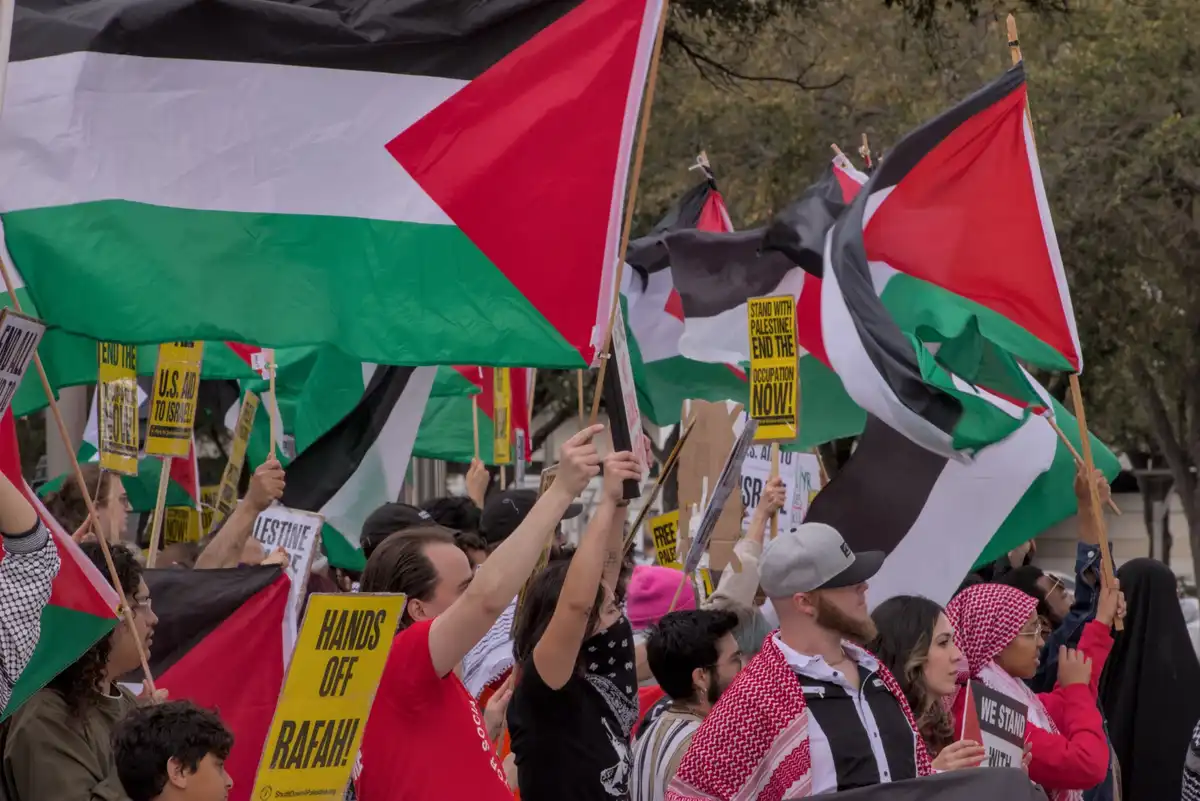
The participants in the demonstrations raised Palestinian flags and banners denouncing the crimes committed by the Israeli occupation against our people.


Participants called for an end to double standards and the need to prosecute the occupation for its massacres against the Palestinian people, especially children, and denounced the genocide in the Gaza Strip.

ARAB AND WORLD

Sat 28 Dec 2024 9:24 pm - Jerusalem Time

Qatar discusses with Hamas ways to push Gaza ceasefire negotiations forward

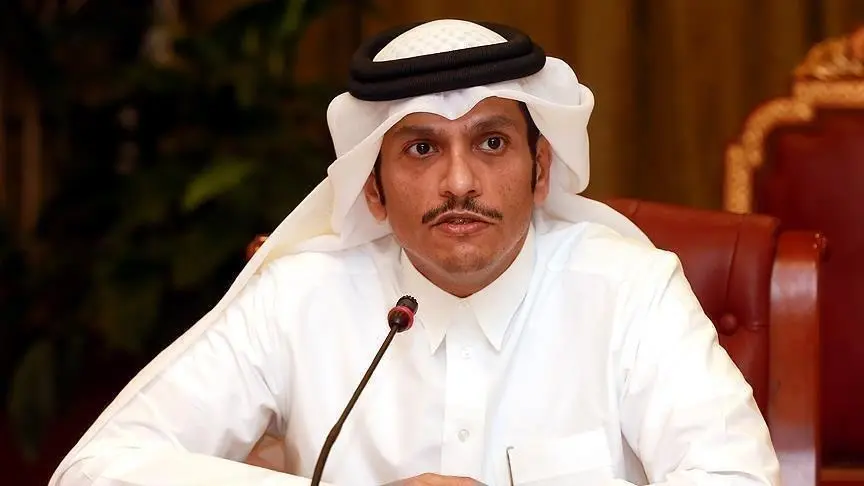
On Saturday, Qatari Prime Minister and Foreign Minister Mohammed bin Abdulrahman Al Thani discussed with a delegation from Hamas the latest developments in the ceasefire negotiations in the Gaza Strip and ways to move them forward.


The Qatari Ministry of Foreign Affairs said in a statement that Ibn Abdul Rahman "received in Doha today the Hamas delegation for the ceasefire negotiations in the Gaza Strip, headed by Khalil Al-Hayya."


The ministry added that "during the meeting, the latest developments in the ceasefire negotiations in Gaza were reviewed, and ways to push them forward were discussed to ensure reaching a clear and comprehensive agreement that puts an end to the ongoing war in the Strip."


Last Wednesday, Hamas accused Israel of "setting new issues and conditions related to the withdrawal (from Gaza), the ceasefire, the prisoners, and the return of the displaced, which delayed reaching an agreement that was available."


Hamas confirmed in a statement at the time that this was happening despite the fact that the negotiations were "progressing seriously in Doha" and despite its showing "responsibility and flexibility" to make them a success.


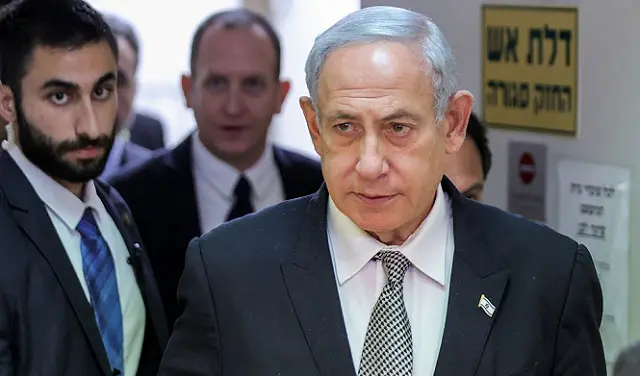
But the office of Israeli Prime Minister Benjamin Netanyahu claimed in a statement that the Palestinian movement was the one creating "new obstacles" to reaching a deal.


The prisoner exchange negotiations, mediated by Qatar, Egypt and the United States, have stumbled more than once, due to Netanyahu’s insistence on “continuing control over the Philadelphi Corridor on the border between Gaza and Egypt, and the Rafah crossing in Gaza, and preventing the return of Palestinian faction fighters to northern Gaza by searching returnees through the Netzarim corridor in the middle of the Strip.”


For its part, Hamas insists on a complete Israeli withdrawal from the Gaza Strip and a complete cessation of war, in order to accept any agreement.


PALESTINE

Sat 28 Dec 2024 9:07 pm - Jerusalem Time

Families of Israeli prisoners in Gaza: Netanyahu and his ministers are thwarting a swap deal

Relatives of Israeli prisoners in the Gaza Strip said on Saturday that Prime Minister Benjamin Netanyahu and his government ministers are deliberately sabotaging a prisoner exchange deal with Palestinian factions for political purposes.


This came in a press conference organized by the families of the prisoners in front of the Ministry of Defense headquarters in Tel Aviv.


According to the official Israeli Broadcasting Authority, a relative of one of the prisoners in the Gaza Strip said: “Netanyahu and his ministers continue to be the main obstacle to the deal. Whoever declares that he does not intend to end the war does not want to recover the prisoners.”


He added: "Whoever adds new conditions at the last minute before completing the deal is imposing a death sentence on the prisoners."


He continued: "We remember how Netanyahu launched a political game in July called the Philadelphi Corridor (between the Gaza Strip and Egypt), and today we are talking about a new manipulation of the lists of prisoners."


The father of one of the prisoners in Gaza called on US President-elect Donald Trump to put pressure on Netanyahu, saying that he "is trying to deceive you, you may be the last person able to pressure the prime minister."


He continued: "Do not accept a partial deal that would be a death sentence for the remaining prisoners and would not lead to ending the war."


“Netanyahu and his extremist partners are sacrificing civilians and soldiers for the sake of their political illusions,” said a relative of another prisoner.


On Wednesday, Hamas announced the postponement of reaching a ceasefire agreement in the Gaza Strip due to Israel setting new conditions related to withdrawal, prisoners, and the return of displaced persons.


Hamas said in a statement: "The ceasefire and prisoner exchange negotiations are proceeding in Doha with Qatari-Egyptian mediation in a serious manner, and the movement has shown responsibility and flexibility."


She continued: "The (Israeli) occupation set new issues and conditions related to withdrawal, ceasefire, prisoners, and the return of the displaced, which delayed reaching the agreement that was available."


On Wednesday, the Israeli Broadcasting Authority (official) said that there are tangible difficulties in the negotiations with Hamas regarding the path of the exchange deal.


The agency quoted informed sources as saying, "The negotiations have not reached a dead end, and we are at a stage where the political level must make decisions."


The opposition and the prisoners' families accuse Netanyahu of obstructing reaching an agreement to preserve his position and government, as extremist ministers, including National Security Minister Itamar Ben-Gvir and Finance Minister Bezalel Smotrich, threaten to withdraw from the government and bring it down if a complete end to the war on Gaza is accepted.


The prisoner exchange negotiations, mediated by Qatar, Egypt and the United States, have faltered more than once, due to Netanyahu’s insistence on “continuing control over the Philadelphi Corridor on the border between Gaza and Egypt, and the Rafah crossing in Gaza, and preventing the return of Palestinian faction fighters to northern Gaza by searching returnees through the Netzarim corridor in the middle of the Strip.”


For its part, Hamas insists on a complete Israeli withdrawal from the Strip and a complete cessation of war, in order to accept any agreement.


Tel Aviv is holding more than 10,300 Palestinians in its prisons, while it estimates that there are 100 Israeli prisoners in the Gaza Strip, while Hamas announced the killing of dozens of its prisoners in random Israeli raids.

PALESTINE

Sat 28 Dec 2024 8:31 pm - Jerusalem Time

Dead and wounded in Israeli occupation raids on Gaza and Khan Yunis

Two citizens were killed and others were injured, Saturday evening, when Israeli occupation aircraft bombed a group of citizens on Al-Jalaa Street, west of Gaza City.


According to local sources, the occupation aircraft bombed a group of citizens on Al-Jalaa Street, which resulted in the martyrdom of citizens Muhammad Ibrahim Al-Khatib and Mahmoud Muhammad Al-Arini.


The occupation aircraft also launched a raid on a house in Jabalia al-Balad, north of the Gaza Strip, which resulted in a number of martyrs and wounded.


In the southern Gaza Strip, a number of citizens were injured as a result of an airstrike launched by the occupation forces on a house in the Qizan al-Najjar area, south of Khan Yunis.


Medical sources reported that 36 citizens were killed in the occupation raids on the Gaza Strip since dawn today, 24 of them in the northern Gaza Strip.


In a related context, the Israeli occupation issued new "evacuation orders" to citizens in the northern Gaza Strip, including the town of Beit Hanoun, as part of the genocide and ethnic cleansing operation it has been carrying out for about 3 months, which included imposing a siege on hospitals and bombing them, and destroying and burning the Martyr Kamal Adwan Hospital on Friday.


On October 5, the Israeli occupation forces invaded the northern Gaza Strip again, under the pressure of bloody bombing and preventing the entry of food, water and medicine.


The occupation forces continue their aggression by land, sea and air on the Gaza Strip, since October 7, 2023, which resulted in the martyrdom of 45,484 citizens, the majority of whom are women and children, and the injury of 108,090 others, in an incomplete toll, as thousands of victims are still under the rubble and in the streets, and ambulance and rescue crews cannot reach them.

ARAB AND WORLD

Sat 28 Dec 2024 7:09 pm - Jerusalem Time

Israel commits 8 new violations of the ceasefire with Lebanon

The Israeli army committed 8 violations of the ceasefire with Hezbollah in Lebanon on Friday, bringing the total number of violations since the agreement went into effect 31 days ago to 319.


According to various news published by the official Lebanese News Agency, today's violations were concentrated in the Bint Jbeil district in the Nabatieh Governorate (south), the Tyre district in the South Governorate (south), and the Zahle district in the Bekaa Governorate (east).


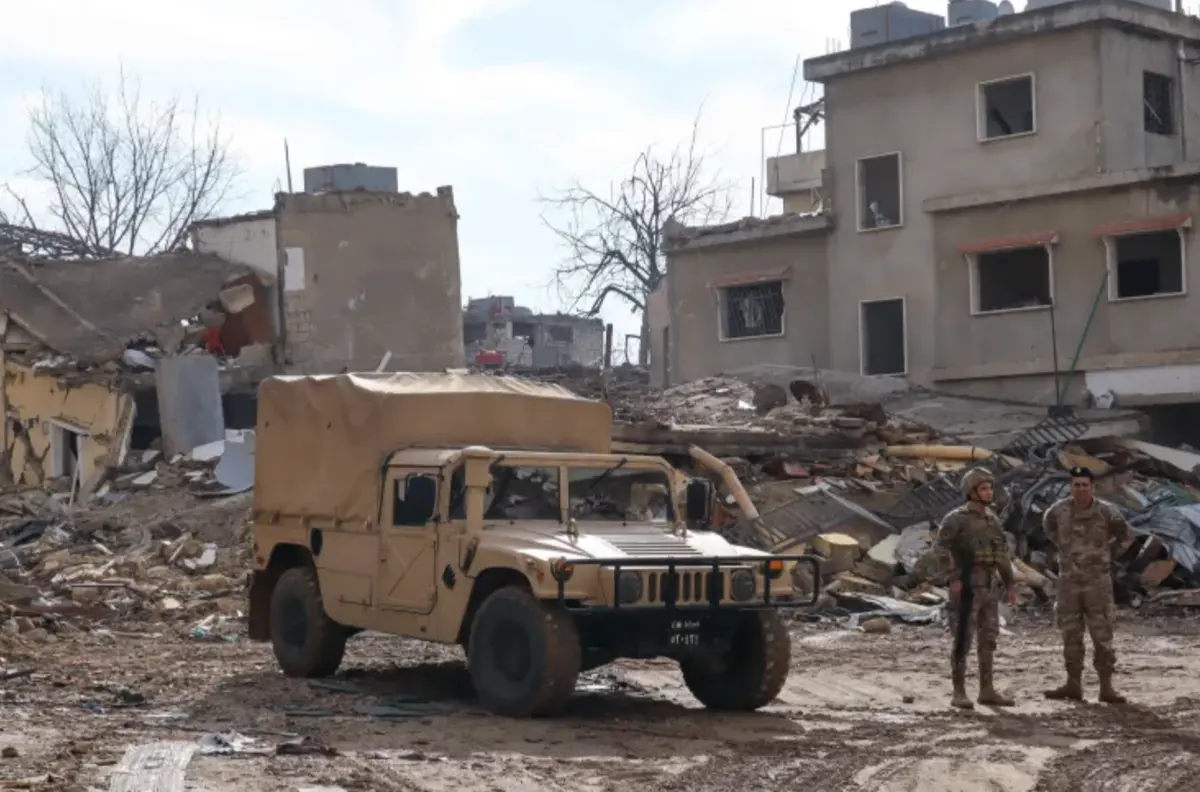
The violations included shelling by warplanes and artillery, and the demolition of homes. In the Bint Jbeil district, the Israeli artillery launched two consecutive shellings on the town of Aita al-Shaab, and in the Tyre district, the Israeli army carried out new demolition operations on homes in the towns of Yaroun and Naqoura.


In the skies of Zahle district, Israeli warplanes were recorded flying at a low altitude, before later targeting 3 sites in the forests of the town of Qousaya.


Release of two Syrians

On the other hand, Israel released on Friday two Syrians who were arrested by the Israeli army on Thursday in southern Lebanon.


The official Lebanese News Agency said that Israeli forces released the two Syrian detainees, Ahmed Amin and Taher Remi, who were kidnapped yesterday, Thursday, from Wadi al-Hujayr in southern Lebanon.


The agency indicated that the Israeli army handed over the two freed men to the United Nations Interim Force in Lebanon (UNIFIL) at the Israeli Abbad site, and then the Lebanese Red Cross received them.


On Thursday, the Lebanese army said in a statement that Israeli army vehicles had penetrated several areas in the south of the country, in a continuation of violating the ceasefire agreement and attacking Lebanon's sovereignty.


The official Lebanese News Agency reported at the time that Israeli army vehicles had penetrated through Wadi al-Hujayr into the town of Qantara in southern Lebanon.


French visit

Meanwhile, French Ministers of the Armed Forces and Foreign Affairs, Sébastien Lecornu and Jean-Noël Barrot, will visit Lebanon from Monday to Wednesday to meet with French soldiers in the UNIFIL force on the occasion of the New Year, according to the Ministry of the Armed Forces.


Le Cornu is scheduled to meet on Monday in Beirut with Lebanese Army Commander General Joseph Aoun, who will lead the deployment of troops in the south of the country after the ceasefire between Israel and Hezbollah.


General Aoun's name has been mentioned as a potential candidate for the position of President of the Republic, which has been vacant for more than two years.


On Wednesday, he is scheduled to meet with General Edgar Landaus, commander of the South Litani Sector, who represents Lebanon in the ceasefire monitoring committee.


This committee, which includes Lebanon, Israel, the United States, France and UNIFIL, is responsible for monitoring the implementation of the ceasefire agreement that came into effect on November 27, after two months of open war between Israel and Hezbollah.


Lecornu and Baroux will then head to UNIFIL's camp at Deir Kifa to spend New Year's Eve with some of the 700 French soldiers.


The New York Times quoted the head of the UNIFIL mission as saying that they are concerned about the continued shooting and demolition by Israeli forces around Naqoura, adding that the town of Khiam is the only one that Israel has evacuated and in which the Lebanese army has deployed.


Ceasefire violations

Since November 27, a fragile ceasefire has prevailed, ending an exchange of fire between Israel and Hezbollah that began on October 8, 2023, and then turned into a full-scale war on September 23.


Under the pretext of confronting threats from Hezbollah, Israel committed 319 violations of the ceasefire in Lebanon, resulting in a total of 32 deaths and 38 injuries, according to a statistic by Anadolu Agency based on data from the Lebanese Ministry of Health.


These violations prompted Hezbollah to respond, on December 2nd, for the first time since the agreement came into effect, with a missile attack targeting the Ruwaysat al-Alam military site in the occupied Lebanese hills of Kfar Shuba.


The most prominent provisions of the ceasefire agreement include Israel's gradual withdrawal to the south of the Blue Line separating it from Lebanon within 60 days, and the deployment of Lebanese army and security forces along the border, crossing points, and the southern region.


Under the agreement, the Lebanese army will be the only entity allowed to carry weapons in the south of the country, with the dismantling of military infrastructure and sites, the confiscation of unauthorized weapons, and the establishment of a committee to oversee and help ensure the implementation of these obligations.


The Israeli aggression on Lebanon resulted in 4,063 martyrs and 16,663 wounded, including a large number of children and women, in addition to the displacement of about 1.4 million people. Most of the victims and displaced persons were recorded after the escalation of the aggression on September 23.


ARAB AND WORLD

Sat 28 Dec 2024 6:58 pm - Jerusalem Time

Sa'ar: Israel must remain the controlling power in Gaza

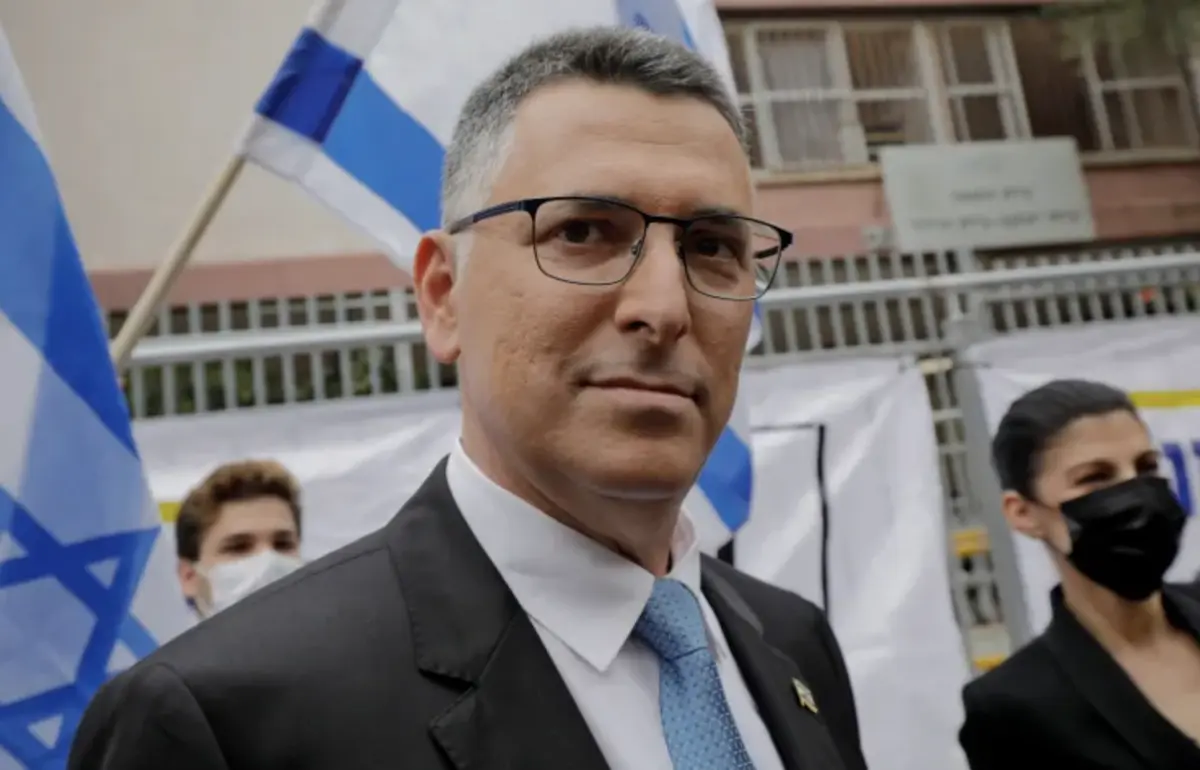
The Jerusalem Post quoted Israeli Foreign Minister Gideon Sa'ar as saying that Israel must remain the dominant power in the Gaza Strip, given that there is no entity capable of providing security in the area. "In the short term, we are the only entity that can guarantee our security," Sa'ar said.


He added that the occupation government does not plan to return Israeli settlements to Gaza.


Sa'ar expressed optimism about the future of Israeli-American relations during President-elect Donald Trump's second term, praising his past policies such as recognizing Israel's sovereignty over the Golan Heights and moving the US embassy to Jerusalem, and anticipating additional steps to strengthen the alliance, including legislation that could target the International Criminal Court.


Sa'ar touched on the humanitarian challenges in the Gaza Strip, claiming that aid reaching the Strip "is often exploited by Hamas to strengthen its military power." He stressed the need to re-evaluate the methods of managing aid to avoid its use against Israel.


These statements come against the backdrop of regional and international challenges facing Israel, as the new foreign minister focuses on strengthening alliances and re-prioritizing to ensure Israel's security in the region and its strategic interests.

PALESTINE

Sat 28 Dec 2024 6:25 pm - Jerusalem Time

West Bank: Suffocation injuries in Rojib, east of Nablus

Today, Saturday, the Israeli occupation forces stormed the town of Rojib, east of Nablus.


According to local sources, several Israeli military vehicles stormed Rojib, raided several homes, searched them, ransacked their contents, and fired tear gas canisters, causing a number of citizens to suffocate.

PALESTINE

Sat 28 Dec 2024 5:53 pm - Jerusalem Time

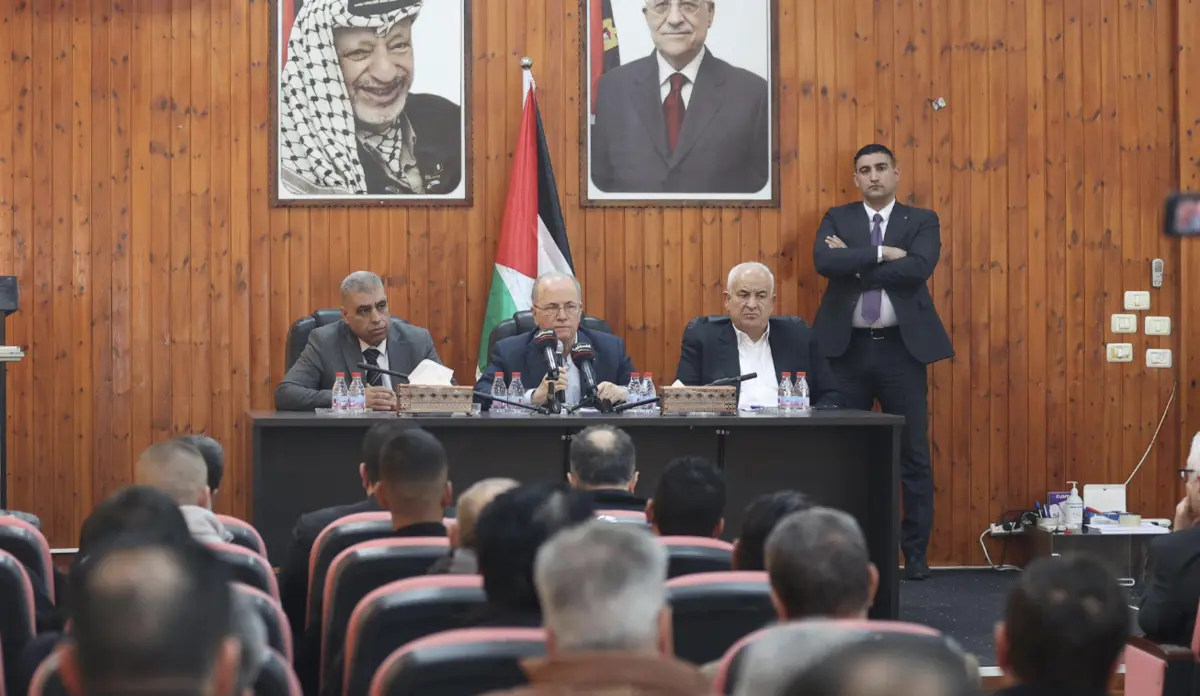
PA Prime Minister: The challenges we face require our unity and not allowing our compass and national goals to be diverted

Prime Minister Mohamed Mustafa stressed that the challenges we face require our unity as a Palestinian people under our legitimate leadership in accordance with the Palestine Liberation Organization’s program, managing our affairs carefully and not allowing our compass and national goals to be diverted.


This came during his visit, today, Saturday, to Qalqilya Governorate and his meeting with its Governor, Major General Hussam Abu Hamdeh, and local authorities, events, and official and dignitaries in the governorate, conveying the greetings of President Mahmoud Abbas, saying: "Our people have proven that they are able to overcome difficulties, and we will pass this difficult stage with our solidarity, and we salute the steadfastness of our people in all places where they are present, especially in the Gaza Strip and the camps, which are among our national priorities."


Mustafa added: "Our visit to Qalqilya Governorate is to learn about the needs of the governorate and our people there, and to study and meet them according to the available capabilities. Qalqilya Governorate has a special status, given that it is surrounded by unjust settlements from all sides."


The Prime Minister offered his condolences in the town of Kafr Qaddum for the martyr of national duty, First Lieutenant Ibrahim Jumaa Al-Qaddoumi, from the ranks of the Preventive Security Service, who was killed by bullets of outlaws in Jenin.


Mustafa said: "We offer our condolences on behalf of President Mahmoud Abbas to the martyr of the homeland Ibrahim Al-Qaddoumi, the martyr of the security establishment, and his fellow martyrs Saher Arheel, Mahran Qadous, Hassan Bani Odeh, and Hussein Nassar. We will be loyal to them, God willing, and we will continue the march until Palestine and Jerusalem are victorious and the banners are united under the banner of Palestine. We pray for the families of the martyrs to have patience and solace, and for the wounded to recover."


He added: "We must stand together to reach safety despite the massacres our people are being subjected to in the Gaza Strip and throughout Palestine, but with the patience of our people we will overcome these challenges."


The Prime Minister was accompanied on his tour by the Minister of Interior, Major General Ziad Hab Al-Reeh, the Secretary-General of the Council of Ministers, Dawas Dawas, the Minister of Health, Majed Abu Ramadan, the Minister of Agriculture, Rizq Salimiya, the Minister of Social Development, Samah Hamad, the Head of the Prime Minister’s Office, Mohammed Al-Ahmad, and the Undersecretary of the Ministry of Local Government, Raed Muqbil.

PALESTINE

Sat 28 Dec 2024 5:02 pm - Jerusalem Time

Israeli special forces kidnap a young Palestinian east of Nablus

Israeli special forces kidnapped a young man east of Nablus today, Saturday.


According to local sources, Israeli special forces stormed Jerusalem Street east of the city and kidnapped the young man Hisham Duweikat.

PALESTINE

Sat 28 Dec 2024 4:04 pm - Jerusalem Time

Israeli bombing of a tent sheltering displaced people leaves dead in Khan Yunis and Gaza

Four citizens were killed and others were injured, Saturday evening, in the Israeli occupation's bombing of Khan Yunis and Gaza City.


According to local sources, two citizens were killed and others were injured in an occupation raid that targeted a tent for displaced people next to the Qatari camp in Mawasi, Khan Yunis.


The sources added that two other citizens were killed when the occupation bombed a motorcycle near the Al-Maznar intersection on Al-Shifa Street in Gaza City.


The occupation forces continue their aggression by land, sea and air on the Gaza Strip since October 7, 2023, which resulted in the martyrdom of 45,484 citizens, the majority of whom are women and children, and the injury of 108,090 others.

PALESTINE

Sat 28 Dec 2024 3:15 pm - Jerusalem Time

The death toll from the aggression on Gaza rises to 45,484 martyrs and 108,090 wounded

Medical sources announced today, Saturday, that the death toll from the Israeli aggression on the Gaza Strip has risen to 45,484 dead and 108,090 wounded, since October 7, 2023.


It explained that the Israeli occupation committed two massacres against families in the Gaza Strip during the past 24 hours, resulting in 48 dead and 52 injuries arriving at hospitals, noting that ambulance and civil defense crews are unable to reach the victims who are under the rubble and in the streets.

PALESTINE

Sat 28 Dec 2024 2:10 pm - Jerusalem Time

Action Aid: More than a million Palestinians lack winter supplies in Gaza

Reham Al-Jaafari, Director of Support and Advocacy at ActionAid, called for opening the crossings, a ceasefire, and the entry of aid into the Gaza Strip in light of a tragic reality that has exceeded all levels of disaster.


Al-Jaafari pointed out in an interview with Voice of Palestine Radio, Saturday morning, that the Palestinian people are paying the price for the aggression against the Gaza Strip, at a time when the entry of food aid is witnessing a sharp decline, accompanied by the onset of winter and the citizens’ need for its requirements.

She added that only 23% of citizens in the Gaza Strip received winter supplies, while more than one million citizens remained without them, pointing to the poor quality of the supplies that were brought in and distributed.

PALESTINE

Sat 28 Dec 2024 2:09 pm - Jerusalem Time

Ramallah: Injuries and arrests in settlers' and occupation army's attack on Silwad

Two citizens were injured and another was arrested today, Saturday, in an attack by settlers and the Israeli occupation army on the town of Silwad, east of Ramallah.


The mayor of Silwad, Raed Nimer Hamed, explained to the "Wafa" agency that a number of armed settlers, under the protection of the occupation army, stormed the town from the direction of a colonial outpost that has been established for 20 days in the "Al-Burj" area to the west, and attacked citizens on agricultural lands and severely beat them.


He added that two citizens were injured and bruised, while the occupation forces arrested citizen Islam Raji Hamed, while he was working in agriculture on those lands.


PALESTINE

Sat 28 Dec 2024 11:39 am - Jerusalem Time

Five dead and wounded in Israeli occupation's bombing of Jabalia al-Balad and al-Nazla

Five citizens were killed and others were injured today, Saturday, when the occupation bombed a gathering of citizens in Jabalia al-Balad and al-Nazla, north of the Gaza Strip.


Medical sources reported that the occupation's drones targeted a group of citizens on "Sarari" Street in Jabalia al-Balad, which led to the death of three citizens and the injury of others.


The occupation also targeted a group of citizens in Jabalia Al-Nazla, which led to the martyrdom of two citizens.


The occupation artillery shelled various parts of the northern governorate, amidst gunfire from helicopters and military vehicles.


The southern areas of Gaza City, especially the Sabra neighborhood, witnessed artillery shelling amid heavy gunfire.


In the southern Gaza Strip, eyewitnesses reported that the occupation's drones fired at the tents of the displaced in the Al-Mawasi area west of Khan Yunis, which resulted in a number of injuries, in conjunction with the occupation's artillery intermittently shelling areas east of Khan Yunis and northwest of Rafah.


The Israeli army continued, at dawn on Saturday, to carry out bombing operations against buildings and residential areas in the city of Rafah in the southern Gaza Strip and in the northern governorate.

PALESTINE

Sat 28 Dec 2024 11:38 am - Jerusalem Time

Israeli occupation arrests the director of Kamal Adwan Hospital, Dr. Hussam Abu Safiyeh

The Israeli occupation forces arrested the director of Kamal Adwan Hospital, Dr. Hussam Abu Safiyeh, one night after storming it and burning and destroying most of its departments.


The occupation forces stormed Kamal Adwan Hospital yesterday after hours of besieging it, burned its facilities and abused the patients, injured and medical staff inside, before arresting a number of them and forcing others to take off their clothes in the bitter cold and forcibly evacuate, while shooting and shelling were taking place around it.


Medical sources reported that the patients and injured who were forcibly evacuated from Kamal Adwan to the Indonesian hospital lived a "harsh night" in a very difficult and miserable situation, with no water, no electricity, no blankets, no food, and no supplies.


It said that the countdown has begun for their lives to be lost, as the occupation is detaining most of the medical staff so that they cannot join the patients in the Indonesian hospital, noting that the occupation had previously destroyed the infrastructure of the "Indonesian" before forcibly evacuating the patients to it.

OPINIONS

Sat 28 Dec 2024 10:21 am - Jerusalem Time

Israel cuts off the oxygen of life to the Gaza Strip

op-ed "AlQuds" dot com

op-ed "AlQuds" dot com

Opinion Writer


Amidst all the violations, attacks, massacres and war crimes that Israel is waging on the Gaza Strip, without a deadline or time limit.

With the increasing killing rates due to targeting civilians, Israel insists on killing all forms of life for innocent Palestinians, by targeting hospitals, patients, medical and health staff. Its soldiers committed an unprecedented heinous crime by burning and destroying Kamal Adwan Hospital, killing a large number of its health cadres and workers, forcing them out of the hospital grounds with a large number of patients, forcing them to take off their clothes in the bitter cold, interrogating them and taking them to unknown locations.

The Israeli crime is much bigger than its description, when its soldiers, with their absolute fascism, cut off the oxygen of life from the patients after detaining them, and keeping those who remained inside the hospital without treatment and preventing them from obtaining it, until they inhale the gas and smoke emanating from the operating and surgery departments, the laboratory, maintenance and ambulance units that they burned, and expelling another number to the Indonesian hospital that was destroyed by the occupation several days ago.

Israel is deliberately and horribly attacking the health system in the Gaza Strip, committing an unprecedented war crime, and continuing to disregard the global humanitarian values system.

Kamal Adwan Hospital is the last operating hospital in the northern Gaza Strip. This targeting means the complete destruction of the health system in the northern Gaza Strip. With the distress calls that came from inside the hospital, and with the lack of basic supplies to provide medical services, and with the loss of contact with patients and medical resources, Israel has dealt a severe and fatal blow to this hospital, which means risking the lives of dozens of patients and exposing them to imminent death, especially since they are patients who have lost their ability to move and are suffering from catastrophic health conditions.

Israel bears full responsibility for these horrific crimes, along with the American administration that provides it with cover and space to continue the ongoing war of extermination in the Gaza Strip. Will the world realize the reality and nature of the brutal practices that Israel is committing, which are shameful, and wake up from its coma, or will it remain in a deep sleep until Israel cuts off the last breaths and prevents the oxygen of life from reaching the poor children and patients?

The world and the Arabs have let down our Palestinian people, and it is no longer possible for us to pin our hopes on any serious move or initiative from them to stop this unprecedented humanitarian catastrophe, because we are certain that whoever swears the oath of allegiance to the United States and Israel, whoever he may be, is a coward and has no conscience. Therefore, we are only waiting for divine solutions to the massacres of killing that Israel continues to carry out without supervision or accountability.

OPINIONS

Sat 28 Dec 2024 10:20 am - Jerusalem Time

Isn't it time for us to change our national anthem?

Zuhair Aldubai

Zuhair Aldubai

Opinion Writer

The call to change the Palestinian national anthem may be understood as a kind of vulgarity in the midst of the very harsh conditions imposed by the occupiers on Palestine, the homeland, the people, the cause, and on the Charter of Human Rights.

The call may be understood as aiming to divert attention from the horrors, pains and disasters that are crushing all generations of our people in besieged and destroyed Gaza, whose people’s blood is being shed with all arrogance, racism, haughtiness, violence, brutality and haughtiness.

The call to change our national anthem stems from our urgent need to strengthen and activate our resistance to become more serious, deeper and more fruitful, by ceasing to rely on the hero who has all the qualities and capabilities of heroes and which generations have expressed with the word (fedayeen). What is required is to expand the scope of the resistance that has always relied on (fedayeen), and to call this type of resistance by proxy another type that is more powerful, effective, serious and useful, which is collective, cooperative and participatory resistance.

Betting on the heroism, pride, courage and loftiness of a thousand or a few thousand fedayeen while the majority watches, prays and asks God to guide their aim, make their feet firm and grant them victory. Collective, participatory resistance stems from the fact that resisting local opponents or external enemies is the duty and responsibility of every citizen. Therefore, resistance must not become a profession in which a number of citizens specialize. Just as the occupation does not exempt a single citizen from its terrorism, there are no exceptions in the duty of resistance; because it is a collective, participatory, cooperative effort by everyone, by everyone and for everyone.

Based on our belief and Sharia, jihad in the way of God is not a privilege for anyone and is not limited to anyone, just like prayer, fasting, and zakat. Is it permissible for us to establish a party or group for those who pray, another for those who fast, a third for those who pay zakat, and a fourth for pilgrims and Umrah performers? Resisting all internal injustice and all external aggression is a basic component of religion and a requirement of fearing God Almighty, because injustice in all its forms, shapes and levels violates the Creator’s honoring of man: “And We have certainly honored the children of Adam and carried them on the land and sea and provided for them of the good things and preferred them over much of what We have created, with [definite] preference” (Al-Isra’ 17:70). And because God Almighty has commanded justice, and everything that the Creator commands becomes an obligation for every believer: “Indeed, God commands justice.” And doing good, and giving to relatives, and forbidding immorality, and wrongdoing, and oppression. He instructs you that perhaps you will be reminded. (An-Nahl 16:90)

Resisting collective and individual injustice becomes an individual duty for every believer, because religion is not an afterlife project, but rather for this world and the hereafter. God Almighty says: “And seek, through that which God has given you, the home of the Hereafter; and do not neglect your portion of this world. And do good as God has done good to you.” (Al-Qasas 28:77)

The purpose of religion is broader and deeper than building mosques, shrines and shrines, and performing rituals, rites and ceremonies. Rather, its purpose is to liberate man from everything that violates his dignity and basic rights, such as slavery, tyranny, sectarianism, racism, exploitation, corruption and occupation.

The purpose of religion is not limited to salvation from hell and winning paradise on the Day of Judgment only, but rather to build a life in which no human being controls another human being, does not steal the effort and sweat of a human being, and does not oppress a human being because of his religion, sect, race, gender, color, language, or social status.

How much we boasted about the “Islamic awakening” which had good, beneficial, blessed and positive fruits, but it was not serious and deep enough to contribute to “social peace”, to the liberation of the country and its people, and to the success of development plans.

Our Palestinian national anthem mentions the word “fedayeen” (26) times, and mentions the word “Palestine” twice, in addition to words such as: my land, ancestors, my people, eternity, my fire, volcano, my revenge, mountains, struggle, winds, weapons, struggle, oath, flag, pain.

Our national anthem expressed our reliance on the fighter who sacrifices his soul, blood and life for his country, people and just cause, and this was translated into actions and not just words. The martyr Abdul Rahim Mahmoud in his poem (The Fedayeen) which begins:

I will carry my soul in my palm and throw it into the abyss of destruction

Either a life that pleases a friend or a death that angers an enemy.

By your life, this is the death of men, and whoever seeks an honorable death is alone.

By your life, I see my death, but I hasten to it

Our poetess Fadwa Touqan said about Abdul Rahim Mahmoud, “His greatest poem was at the time of his martyrdom.” It is well known that the martyr Abdul Rahim Mahmoud left his teaching position at An-Najah National College in Nablus, bought a rifle with his own money, and fell as a martyr in the village of Al-Shajara in the Galilee in the year 1948.

As generations of martyrs have translated this for more than a hundred years, the fedayeen are the closest thing to a saint who is full of truthfulness, honesty, integrity, integrity, loyalty and devotion. Therefore, the fedayeen in all ages is a translation of his love for the message of the messengers and prophets that the Creator wanted to liberate man from everything that disgraces him, such as injustice, baseness, greed, selfishness, cruelty and corruption.

It is noteworthy that the anthem (Fedayeen) does not mention Jerusalem, the Isra’i Mosque, the Church of the Holy Sepulchre, the olive tree, or the theft of the homeland and displacement. Perhaps someone might ask: Is it required that the national anthem mention the capital of the homeland or any other of the landmarks and components of the homeland? The answer is that there is no homeland in contemporary history that has been and is being subjected to a series of ethnic cleansing crimes as Palestine and the generations of our people and our nation have been subjected to.

I see in (The Flower of Cities) sung by Fairuz, and the lyrics and music of the Rahbani brothers, what expresses our homeland, our suffering, our sorrows, and our will with elegant, profound, creative, and influential artistic professionalism, and harmoniously combines the components of our identity that racists are working to make into a state of conflict and struggle instead of the natural state that has continued for centuries in a state of harmony and integration, such as:

Embracing ancient churches

And wipe away sadness from the mosques

O Night of Isra, O path of those who passed to heaven

The child in the cave and his mother Mary, two crying faces

After talking about sadness and anger, the poem opens doors to confidence, determination, will and hope:

The door of our city will not close, I am going to pray

I will knock on doors and I will open them

And the face of power will be defeated

With our own hands we will restore the splendor of Jerusalem

Peace is coming to Jerusalem

The pillar and axis of our Palestinian national anthem is (the Fedayeen), and it is time for us to learn that betting on the sanctity, majesty, courage and greatness of the Fedayeen was not sufficiently fruitful, as evidenced by the additional exploitation of the racist occupiers. We need a strong, serious, deep, influential and fruitful school of collective, participatory, cooperative resistance to protect, accumulate and develop the most precious and greatest achievement of the generations of our people, which has resulted in the survival and steadfastness of more than (7) million Arabs in Palestine despite the terrorism, violence and racist laws of the occupiers.


How beautiful and valuable it is to announce a competition for a new Palestinian national anthem that addresses a number of topics:

1- Our grandfathers and grandmothers are the ones who planted the plains and mountains of Palestine with the blessed olive tree hundreds of years before the birth of our Master Christ, peace be upon him.

2- Palestine was known as the homeland of coexistence, based on faith and respect for the principles of pluralism and diversity. Baghdad, Aleppo, Cordoba and Granada were also distinguished by the harmony between all components, religions, sects and races.

3- Behind the Isra’ of the Messenger Muhammad, may God bless him and grant him peace, from Mecca to Jerusalem, from where he ascended to heaven, are lessons from God Almighty regarding the doctrinal connection between the Sacred Sanctuary of Mecca and the Sacred Sanctuary of Jerusalem, and that Jerusalem is the path to heaven and the gate to heaven.

4- Palestine is the original and first homeland of Christianity. Our Lord Jesus Christ was born in Bethlehem, grew up and was raised in Galilee, and called to God with insight in Jerusalem. The pioneers of believers, saints, monasteries, churches, and martyrs were and still are in Palestine.

5- The Palestinians were food producers and exported surplus food to Europe, such as the famous Jaffa oranges, Beersheba barley, and cotton, which was exported from the port of Acre in the eighteenth century. From the surplus olive oil, our ancestors made excellent soap and exported large quantities of it to many countries.


6- The Palestinians were displaced by excessive bloody violence based on written policies, plans and instructions, and the occupiers are still imposing racist laws and procedures, and are working with a policy of killing and destruction to implement new stages of displacement.

7- Generations of children, mothers, and others have suffered the horrors and pains of displacement in dozens of camps, and outside them, with patience, faith, awareness, and steadfastness. From the ashes and rubble of the complex suffering, the Palestinians in the homeland and diaspora have given a large number of doctors, teachers, researchers, engineers, judges, writers, artists, and other women and men of public service.

We all know that the national anthem of countries does not usually include many facts, but Palestine, the homeland, the people and the cause, is being subjected to more cruelty, violence and brutality by the racist occupiers, and to frantic attempts to impose the Zionist narrative brimming with lies, deception, fraud, myths and legends, and targeting our identity, heritage and memory under the pretext that the Palestinians are nothing but tribes of nomadic Bedouins who came to Palestine two or three decades before the (War of Independence) and settled in the desert, forests and swamps in a deliberate denial of our deep and distant cultural presence in Palestine.

Is there anything wrong with the lyrics of the new anthem being written by a citizen from Algeria, Kuwait or the Sultanate of Oman, and the lyrics being composed by a musician from Yemen, Djibouti or the Kingdom of Morocco? For our brothers in Iraq, their national anthem has been “My Homeland” for more than thirty years, a poem by Ibrahim Touqan and music by Mohammed Fleifel from Lebanon.

I have to admit that changing the Palestinian national anthem (is neither fattening nor satisfying), if it does not embody a change in our mentality and our awareness that the duty to defend the homeland and protect the generation of our children and grandchildren requires embodying the idea of collective, participatory, cooperative resistance with its Arab, Islamic, Christian, and human depth, and putting an end to the (privatization) of resistance; because resistance is jihad and jihad is the responsibility of every citizen, and all free people who refuse to submit and prostrate themselves, as they realize the danger of militarization and its countless consequences.

Our message and our path have never been to kill, destroy a home, usurp another’s right, or attack a synagogue or any holy place. Our message is to restore security, safety, and stability to our homeland, and to restore dignity, freedom, justice, and peace to our people and our nation, and to all the victims of injustice, racism, cruelty, violence, and brutality. Our message is a message of life, and we translated this truth into a collective anthem more than fifty years ago in the old Nablus prison:

Yes, we will not die, but we will eradicate death from our land.


...........


It is time to learn that betting on the holiness, majesty, courage and greatness of the freedom fighter was not sufficiently fruitful as evidenced by the additional exploitation of the racist occupiers. We need a strong, serious, deep, influential and fruitful school of collective, participatory, cooperative resistance to protect, accumulate and develop the most precious and greatest achievement of our people’s generations.


OPINIONS

Sat 28 Dec 2024 10:19 am - Jerusalem Time

Netanyahu is going to open war with Yemen

Rassem Obaidat

Rassem Obaidat

Opinion Writer


Israeli leaders, from Netanyahu to his Minister of War, have threatened Yemen with paying a heavy price in light of its escalation of its support war with suicide drones and hypersonic missiles, such that Yemen has become the main support arena in light of the ceasefire in Lebanon, the geostrategic transformations in Syria, and the American-Israeli pressures on the Iraqi government to stop the support war through the Popular Mobilization Forces, because Iraq is unable to bear the consequences of an Israeli-American aggression against it.

Netanyahu and his Minister of War, who promised Yemen a fate similar to that of Haniyeh in Tehran, His Eminence Sayyed Nasrallah in Beirut, and Sinwar in the Gaza Strip, and that what will happen to Yemen is similar to what happened to those leaders, from assassinations and liquidations, as well as targeting infrastructure, ports, airports, power stations and electricity (i.e. economic, civilian, service and vital targets), not to mention the efforts to destroy Yemeni military capabilities with ballistic missiles and suicide drones.

Yemen, in light of the calm of other support fronts, has turned into the main support arena, where it has increased the rates and pace of launching hypersonic missiles "Palestine 2", and the "Jaffa" attack drones. These missiles and drones, which all Israeli and American air defense systems with their multiple layers have failed to intercept, whether the "Iron Domes", or "David's Sling", and "Arrow 1 and 3", and the American "THAAD" and Patriot systems, and the lowest cost of an interceptor missile launched at Yemeni missiles reaches 50 thousand dollars, and the highest cost reaches 3 million dollars.

This Yemeni escalation has clearly stated that the Israeli home front has become exposed to Yemeni missiles and drones, that Israeli security and deterrence have been severely damaged, and that the Israeli home front is now living in a state of anxiety and fear, and that about two million settlers are running to shelters on a daily basis to the sound of Yemeni hypersonic missiles, not to mention the disruption of air traffic at Lod Airport, and the resulting human and economic losses.

Israel's leaders in the military and security establishments realize that Yemen is difficult to "tame" or dissuade from continuing its support battle, and that destroying its military and armament capabilities and its stockpile of hypersonic missiles and attack drones, and eliminating its leaders, is not possible through an air war. Rather, this requires a ground war, and for Israel to have military bases in neighboring countries. The distance between Yemen and Israel is 2,000 km, which pushes Israel to send support aircraft for the attacking warplanes in order to refuel them in the air, and this does not achieve the desired results.

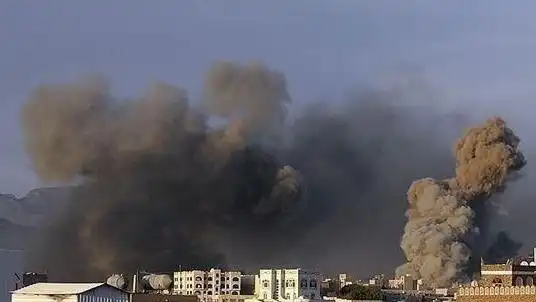
Yesterday, Israel launched a large-scale aggression on Yemen, with the participation and facilitation of the American and British naval forces, while Imam Abdul-Malik al-Houthi was giving his speech. The attacking aircraft targeted Sana’a International Airport, the port of Hodeidah - Ras Issa port, and power and electricity stations. The attack coincided with the presence of UN missions in Yemen, including the Director of the World Health Organization and the UN Resident Coordinator in Yemen. This attack clearly expressed Israel’s inability to confront Yemen, as compensation for its failure to confront the Yemeni hypersonic missiles. Therefore, it resorted to striking airports, ports, power and electricity stations, i.e. civilian structures.

Yemen responded to the Israeli attack by launching a hypersonic missile at Lod Airport, and a suicide drone at Jaffa, where Israel admitted that 18 people were injured, according to what it says was a result of the stampede, and Israel always covers up and conceals its losses.

There is no place among the Yemenis for what is known as the Iranian policy of strategic patience, nor the Syrian policy of responding at the appropriate time and place, which was followed by the late Syrian regime, nor the policy of waiting, and betting on the international community and international institutions, the state, the army and the Lebanese resistance.

Yemen translates its decisions into direct action on the ground, as the popular saying goes, “Strike while the iron is hot.”

Avigdor Lieberman, leader of "Israel Beiteinu", commented on the Yemeni hypersonic missiles, saying, "Yemenis wearing sandals are directing an entire country in the middle of the night to shelters."

The leaders of the State of Israel, military and security personnel, experts, opinion writers, military and political commentators, and retirees in the military and security establishments acknowledge two things: the first is that there is no point in betting on the effectiveness of subjugating Yemen and breaking its will to bring it to the stage of abandoning the option of confrontation with Israel, as Yemen has a courageous leadership, ideological armed forces, and a broad popular state that embraces the idea of supporting Palestine. The second is that there is no point in betting on disabling the Yemeni military capabilities that have proven to be qualitative, highly effective, and capable of reaching deep into Israel, in addition to its ability to continue protecting the achievement of preventing ships heading to Israel via the Red Sea.

What are Netanyahu and his war leaders threatening Yemen with in this open war? One of two options, or both? Targeting army sites and civilian infrastructure, assassinations in the style of Lebanon, and perhaps even massacres of civilians in the style of Gaza, or both. Here the question becomes: How will Yemen deal with such an open war? Will it be, as His Eminence Sayyed Nasrallah said, a war without limits, rules, or controls? Or will it maintain the same pace of response and targeting? The data indicates that Yemen has not used all its energies, capabilities, capacities, and cards, and that the response will include identifying targets inside the occupying state in order to target them, i.e. an airport for an airport, a port for a port, a power station for a power station, a gas platform for a power station, and civilian population centers for population centers. The essential thing here is that Yemen has a solid, cohesive and ideological internal front that is ready to pay the price, while there is an Israeli internal front that believes that stopping targeting it with Yemeni ballistic missiles, hypersonic missiles and drones, the shortest way to stop it, is to go to an exchange deal, stop the war and withdraw from the Gaza Strip.

Yemen, which will expand its target bank inside Israel, is fully aware that this aggressive war being waged against it is in partnership with the US and Britain, which has carried out more than one attack on Yemen. Without this support and partnership with Israel, it would not have persisted in its aggression and arrogance politically and practically against the region, the province and Yemen. Therefore, Yemen said with a full mouth that any country that facilitates aggression against it or participates in it, its lands and the US bases located on it will be exposed to Yemeni targeting, and American warships and destroyers will not be immune from Yemeni targeting. Yemen is the only Arab country that has its own decision, and has struck American destroyers and warships in the Red Sea and forced them to flee, after damaging many of them, from Roosevelt to Nicolun to Eisenhower, and after that Truman.

Therefore, the American and British partners in particular will bear responsibility for the Israeli aggression against Yemen, and Yemen, if the war and aggression against it intensifies, will not hesitate to close Bab al-Mandab, and beyond that, close the Strait of Hormuz, which means paralyzing the movement of global trade, and the oil and gas trade in particular, and this will lead to collapses in the energy market, and unimaginable increases in oil prices, and repercussions on the stock markets and stock exchanges, and even on Europe, which has lost its Russian supplier and has only the supply sources that cross the Red Sea.


...........

Yemen has a solid, cohesive and ideological internal front that is ready to pay the price, while there is an Israeli internal front that believes that stopping targeting it with Yemeni ballistic missiles, hypersonic missiles and drones, the shortest way to stop it, is to go to an exchange deal, stop the war and withdraw from the Gaza Strip.

ARAB AND WORLD

Sat 28 Dec 2024 10:13 am - Jerusalem Time

Israel prepares to intensify its attacks on Yemen with US assistance


According to American media, Israel is preparing to escalate its attacks and raids against the Houthis in Yemen, as all indications point to a possible long campaign that would take the battle far from Israel's borders, and with direct support from the United States.


The Houthi movement, which controls parts of Yemen and is backed by Iran, was previously seen by the Israeli security establishment as a more manageable threat than Hamas in Gaza or Hezbollah in Lebanon, according to intelligence experts in Washington. The Houthis began their attacks on Israel in support of Hamas, shortly after the movement led an offensive on the Gaza envelope on October 7, 2023.


Since then, the Houthis have fired on or intercepted commercial and naval vessels transiting the Red Sea. In recent weeks, they have also stepped up their attacks on Israel, sending missiles flying toward Israeli cities, most of which have been intercepted but have forced millions of people into shelters almost every night.


The Houthis are “more technologically advanced than many people realize” and should not be “underestimated,” an Israeli official told The Washington Post, speaking on condition of anonymity because he was not authorized to speak to the media.


With Iranian support, the Houthis have been able to take “practical steps” in pursuing their ideology, which calls for confronting the United States and Israel, he said. Experts say their drones, rockets and missiles have been able to circumvent air defense systems that Israel once boasted of, and have brought to the fore a perennial Israeli military dilemma: how to defeat an enemy armed with a relatively cheap and effective stockpile of weapons. “The Houthis want a war of attrition on Israel, to keep shooting so they can say, ‘We are the real resistance,’” Yoel Guzansky, a former Israeli National Security Council official who is now a senior fellow at the Institute for National Security Studies in Tel Aviv, told The Washington Post.


But calculating the cost is complicated for Israel. The Houthi drones and missiles cost around several thousand dollars each — while each Israeli interception costs at least tens of thousands of dollars.


“Because it’s very cheap for them to try to get a drone or a missile into Israel every few days or weeks, they can win this,” Guzansky said. “The question now is, how does Israel avoid falling into their trap?”


The Israeli occupation government, headed by Benjamin Netanyahu, claims that it is leading Israel in a war on seven fronts: Gaza, the West Bank, Lebanon, Syria, Yemen, Iraq and Iran.


Unlike other elements of the Axis of Resistance, the Houthis are more than 1,000 miles from Israel, experts say, and are located in mountainous areas without any “center of gravity” of infrastructure — places or assets that are such a focal point for their operations that hitting their positions would render them helpless.


Experts believe that the Houthi group represents an unconventional armed group that has been able to harm the Israeli interior, but it is difficult to pinpoint its exact locations in Sana’a. Therefore, it is not unlikely that Israel will follow the policy of assassinations against Houthi leaders, which it previously used in an effective manner against Hamas and Hezbollah leaders, provided that the United States provides assistance in locating these leaders, especially since it classifies this group as a terrorist group.


Israel has intensified its strikes on Yemen in recent weeks in response to the Houthis. An Israeli airstrike hit Sanaa International Airport on Thursday as World Health Organization Director-General Tedros Adhanom Ghebreyesus was about to board a flight there — prompting UN Secretary-General Antonio Guterres to call on Israel and the militants in Yemen to halt their military actions and exercise restraint.


“The airstrikes on Sana’a International Airport, Red Sea ports and power plants in Yemen are particularly worrying,” Guterres said in a statement on social media.


Local media reported that the attack killed at least three people at the airport, and injured a member of the plane's crew contracted with the World Food Programme, among dozens of others.


Tedros said on Friday that the United Nations had evacuated him and his infected colleague to Jordan, "where he will receive further medical treatment."


“Attacks on civilians and humanitarian workers everywhere must stop,” Tedros wrote on Twitter. Orbach said Israel’s situation was further complicated by the fact that the United States and Britain, which had led efforts to deter Houthi attacks on Israel and on Red Sea shipping lanes, appeared to be backing down, perhaps to save their interceptor missiles and drones.


Experts believe that there is a scarcity of interceptor missiles due to other wars in the world in which the United States plans to use them, and there is also a belief that the West is reluctant to reignite this war because it means a large-scale humanitarian disaster.


White House National Security Council spokesman John Kirby told reporters at a briefing on Friday that Israel “has the right to defend itself” against Houthi attacks. He declined to comment directly on the airport strike but said “how they defend themselves matters.”


"We want to see them conduct their operations with minimal impact on civilian infrastructure and certainly with much less risk to the civilian population," Kirby said.


But Israeli officials have said they cannot afford to allow the Houthis to continue attacking Israel while the country faces Iranian-backed proxies on several other fronts.


In Gaza, Israel has escalated its attacks on the besieged enclave in an unprecedented manner. In Lebanon, Israel continues to blatantly violate the November 27 ceasefire agreement. In Syria, the Israeli occupation forces continue their aggression without mercy, occupying Mount Hermon, Quneitra and a number of villages.

OPINIONS

Sat 28 Dec 2024 10:11 am - Jerusalem Time

Kamal Adwan's assassination!

Ibrahim Melhem

Ibrahim Melhem

Opinion Writer

After the assassination of the name, came the assassination of the symbol and the lasting effect, which soothed the wounds of the wounded, calmed the fearful, reassured the souls of the anxious, fed the hungry, restored smiles to the lips of the grieving, and instilled hope in the hearts of the desperate over the years.

These meanings were not absent from the criminal perpetrators, as they lay in wait for “Kamal the hospital and the example,” just as they lay in wait for him and his two companions, Kamal Nasser and Abu Youssef Al-Najjar, in Beirut in 1973.

The killers thought that Kamal Adwan and his two companions had been turned over and their history erased by their assassination, like all the martyr leaders, without knowing that the lives of people like them, who are noble, have opinions, and are leaders of thought, who are of high stature and noble values, only begin at the moment of their death, with what they left behind of beneficial knowledge and a memory that raises.

The scenes of burning and destruction caused by the occupation army in Kamal Adwan Hospital, as well as the scenes of patients, wounded, doctors and nurses, who were forced to go out naked under threat of arms, will one day be preserved in the museum of memory and heroism of a people who endured pain, suffering and bleeding wounds. These scenes, fixed and moving, will be placed next to the photos taken of all the invaders who came to the land of sad oranges, and it will be written under them: This is what the Israeli occupiers did in the years 2023-2024 in the Gaza Strip, whose buildings will then embrace the sky, and its lights will sparkle on the surface of the water.


Stop the genocide now...!

PALESTINE

Sat 28 Dec 2024 9:30 am - Jerusalem Time

Beating and stripping.. Two survivors recount the Israeli army’s storming of Kamal Adwan Hospital

Two women, one of whom is a doctor working at Kamal Adwan Hospital, which was forcibly evacuated of patients and doctors by the army forces and burned and destroyed in the northern Gaza Strip, recount horrific details about the conditions of their detention, where they and other women and men were subjected to beatings, humiliation and stripping of their clothes.


The women who reached Gaza City, the closest to the north of the Strip, walked more than 8 kilometers in harsh conditions.


Yesterday, Friday, the government media office in the Gaza Strip announced that the Israeli army had burned and destroyed Kamal Adwan Hospital, putting it out of service, and taking medical crews and wounded people to an unknown location.


strip


Dr. Shorouk Al-Rantisi, who was forced to flee Kamal Adwan Hospital after the army stormed it, said: “We were surprised by the army’s siege of the hospital and its burning of the archives, as the fire spread to the rest of the departments.”


She added to Anadolu Agency: "We informed the army to evacuate the hospital, and the injured who could walk were asked to leave the place. We later left with part of the medical staff and walked a very long distance on foot."


She pointed out that the army "separated the men from the women, then took us in groups, forced us to take off our clothes, and those who refused to take off their clothes were beaten. They also confiscated mobile phones."


She added that the soldiers forced the women to take off their clothes as they did with the men, in a scene full of mockery and ridicule.


The doctor confirmed that the soldiers conducted thorough searches, then made them sit for between one and two hours before allowing them to walk long distances.


She continued: "There was constant surveillance from a military jeep in front of us and another behind us until they left us in an area near Gaza City."


She pointed out that "we do not know anything about the rest of the people who were in the hospital, but there are about 25 to 30 people who were requested by the army and no one knows their fate anymore."


under threat of arms


Citizen Maha Masoud described what happened to Anadolu Agency, saying: “At midnight, the Israeli army began a military operation around the hospital, and at dawn, the soldiers stormed it and forced us to leave it at gunpoint.”


She said, "The occupation soldiers began calling from inside their tanks for Dr. Hussam Abu Safia, the hospital director, to evacuate the place of patients, medical staff and displaced persons."


"They asked everyone to go out to the square, without any consideration for our humanitarian conditions," Masoud, who was displaced inside the hospital, added.


She explained that the hospital was completely evacuated, and those present were transferred to a nearby area under harsh conditions and in the extreme cold.


She continued: "They did not take into account our humanitarian situation, but rather treated us brutally. The soldiers assaulted us, asked the women to remove their veils, and stripped the men of their clothes and assaulted them without any mercy."


Regarding their exit from the northern Gaza Strip, Masoud indicated that Israeli tanks accompanied the displaced people all the way from the time they left the hospital until they reached the nearest point on the outskirts of Gaza City.


"The soldiers warned us not to look back during the march," she said.


"I saw great destruction in all the areas we passed through on the way," Masoud added.


She added: "On the way out, there were children, disabled people and injured people crying from the intensity of the pain and the difficulty of the situation, but the soldiers did not care about their condition and did not provide them with any assistance."


Regarding their siege inside the hospital, she said that they suffered from hunger, lack of water, and severe siege, noting that they refused to leave despite the harsh conditions, until the Israeli army forced them to do so by force.


The military operation included arrests of medical staff, patients and displaced persons. Among the detainees were journalist Mohammed Al-Sharif and his father, who were besieged inside the hospital.

Al-Sharif was known for his continuous coverage of the Israeli genocide in northern Gaza despite the risks.

Duaa Al-Sharif, the sister of journalist Mohammed, confirmed on her Facebook account that the Israeli army arrested her brother and father from inside Kamal Adwan Hospital.

The army acknowledged in its statement the evacuation of the hospital's patients, staff and surrounding residents through what it called "specific evacuation routes."


More than once, displaced people said that they were being targeted, killed and arrested on the evacuation routes and roads designated by the Israeli army, and that it also set up military and security checkpoints for inspection.