PALESTINE

Thu 02 Jan 2025 12:01 pm - Jerusalem Time

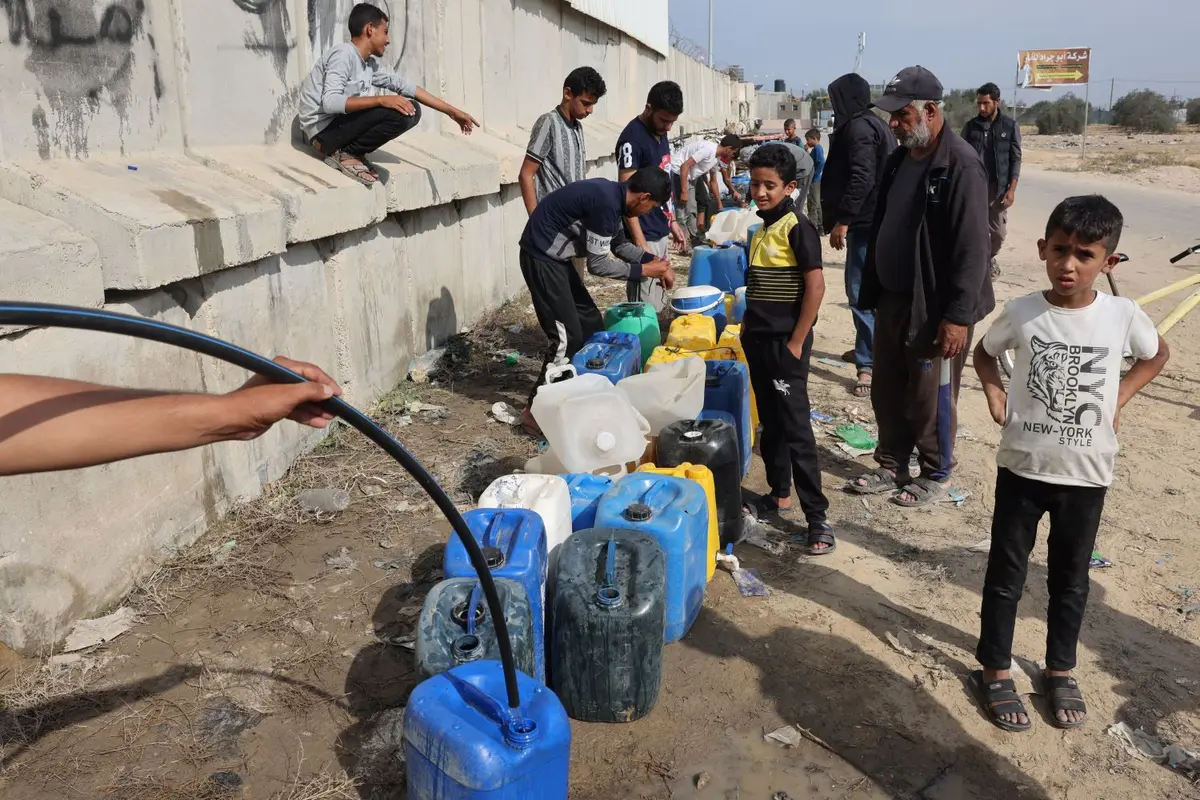
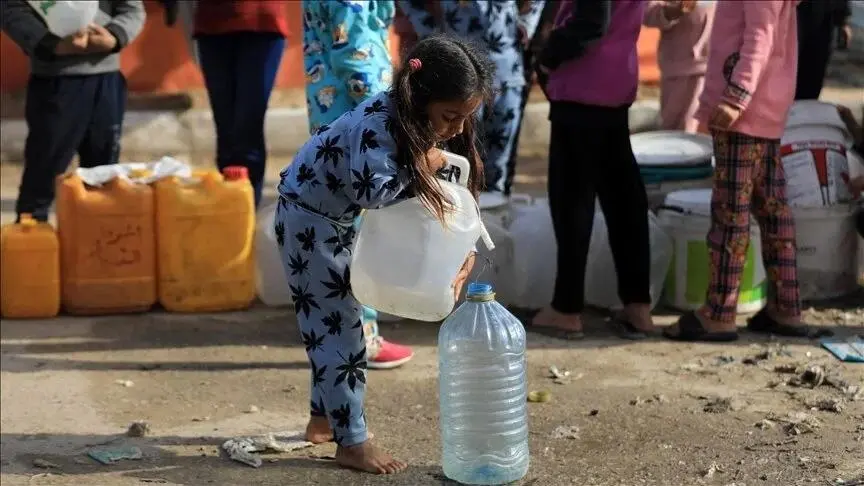
Water Authority: Water pollution rates in Gaza are very high, threatening a health disaster

The Water Authority confirmed that "the rates of drinking water pollution in the Gaza Strip are very high, due to the destruction of more than 80% of the sewage infrastructure, which leads to its leakage and mixing with drinking water."


Saadi Ali, the Director of Projects at the Water Authority in Gaza, warned in an interview with Voice of Palestine Radio of a real health disaster that could result from the scarcity of potable water in the Gaza Strip.

PALESTINE

Thu 02 Jan 2025 10:56 am - Jerusalem Time

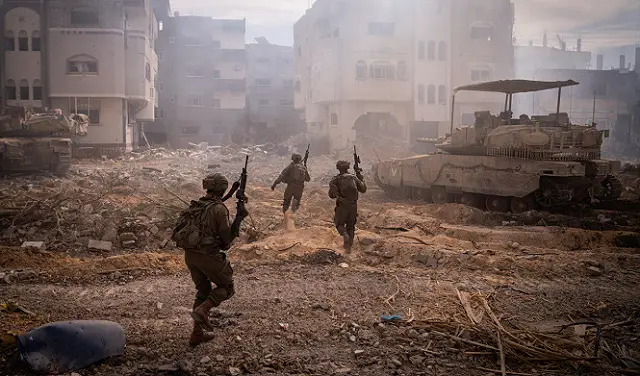
The Israeli army admits that 891 of its soldiers have been killed since the beginning of the war

The Israeli army acknowledged in new data issued today, Thursday, about its human losses since October 7, 2023, a large number of deaths amounting to 891, in the largest human losses it has suffered since the October 6, 1973 war.


Last year, according to what the Israeli army admitted, witnessed about 28 suicide cases, a sharp increase that is expected to increase during the current year, which the Israeli army attributed to “the war and the unprecedented pressures that the soldiers were exposed to.”


In 2024, the army saw a significant increase in the number of deaths due to “road accidents”, with 20 soldiers killed in accidents, compared to only 9 in 2023.


The army also noted that 60 soldiers were killed in "operational incidents" during ground operations in the Gaza Strip, representing 15% of the total killed in these operations, while 5 soldiers were killed in "operational incidents" in Lebanon, representing 10% of the total killed there.


As for suicide cases, 28 soldiers have died in suicide incidents since the beginning of the war, including 16 reserve soldiers, or about 60%.


Regarding suicide incidents, the data showed that 16 of the 28 cases were reservists, or about 60% of the total cases. The Israeli army said that “the war and the unprecedented pressures that the soldiers were subjected to had a clear impact on this increase in suicide cases,” which represents the highest rate since 2011.


In an effort to curb the phenomenon, the army noted that a 24-hour telephone support center had been opened, which had received 3,900 calls since the beginning of the war, claiming that "many suicides had been avoided thanks to this support." The number of military psychological counselors had also been expanded, with some 800 recruited from the reserves.

PALESTINE

Thu 02 Jan 2025 10:34 am - Jerusalem Time

A child was injured by Israeli forces' bullets east of Qalqilya

A child was injured today, Thursday, by Israeli occupation forces’ bullets in the town of Jayyous, east of Qalqilya.


The Red Crescent reported that its crews dealt with an injury to a 14-year-old child in the foot, and he was transferred to the hospital.


According to local sources, the child was shot with live ammunition near the racist separation and expansion wall in the town of Jayyous.

PALESTINE

Thu 02 Jan 2025 10:07 am - Jerusalem Time

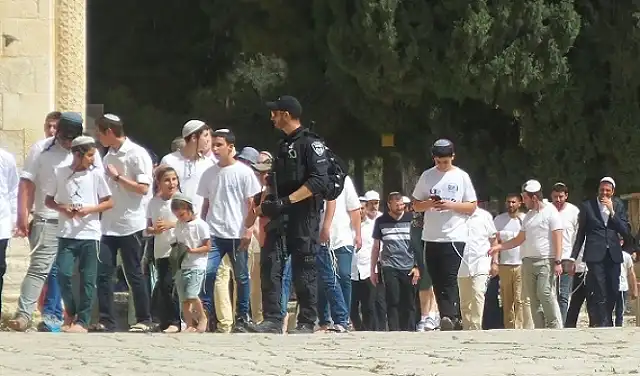
Dozens of settlers storm Al-Aqsa Mosque

Today, Thursday, settlers stormed the blessed Al-Aqsa Mosque, from the Al-Maghariba Gate, under heavy protection from the occupation police.


Local sources reported that dozens of settlers, including extremist Rabbi Yisrael Shalita, stormed Al-Aqsa, carried out provocative tours in its courtyards, and performed Talmudic rituals.


Since the beginning of the comprehensive Israeli aggression against our people in the Gaza Strip and the West Bank, in October 2023, the occupation forces have tightened their measures at the gates of Al-Aqsa Mosque and the entrances to the Old City, where more than 68,000 settlers stormed Al-Aqsa.


The monthly report of the Ministry of Endowments and Religious Affairs on the violations of the occupation and its settlers against places of worship documented 22 incursions into the blessed Al-Aqsa Mosque during the month of December.

ARAB AND WORLD

Thu 02 Jan 2025 9:07 am - Jerusalem Time

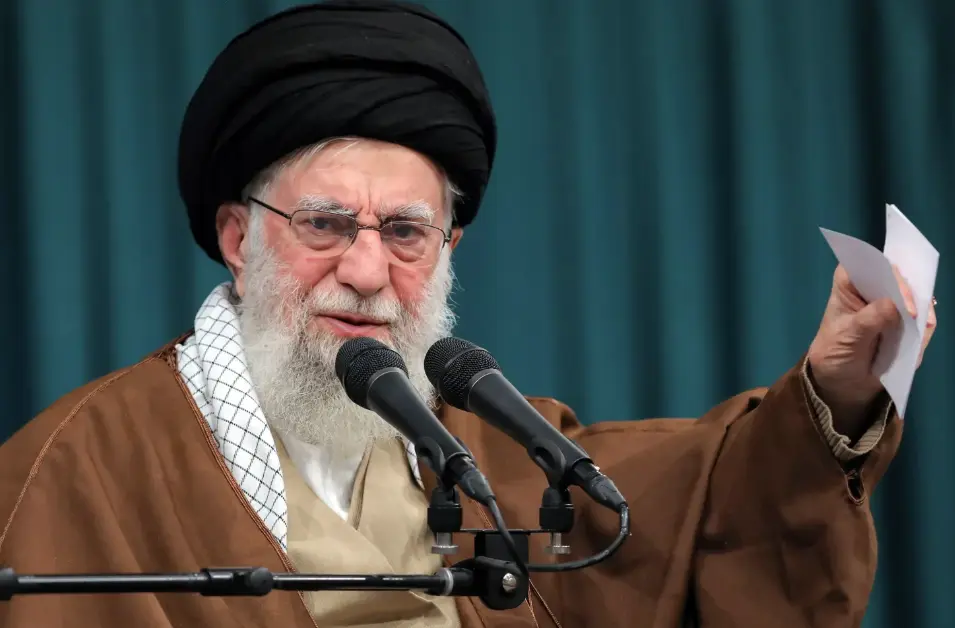
Khamenei threatens US bases in Syria

Iranian Supreme Leader Ali Khamenei threatened the US forces present in Syria, indicating that the continuation of their bases would be “impossible.”


Khamenei said at a ceremony marking the fifth anniversary of the assassination of the architect of Iran’s regional strategy, General Qassem Soleimani, that Syria “is in a state of chaos, and its lands are being occupied by foreign powers; America on the one hand, the Zionist entity on the other, and some aggressive countries on the third.” He believed that “the Syrian people will triumph, sooner or later, over the occupiers, and the resistance of Yemen, Palestine, and Lebanon will continue.” He criticized the “successive construction” of American bases in Syria. He continued, saying: “The aggressor must leave the nation’s land, otherwise he will be expelled; therefore, American military bases will be trampled under the feet of Syrian youth.”


Khamenei defended his country’s regional strategy, speaking of Soleimani’s role in training and qualifying combat forces against US forces since the US invasion of Afghanistan in 2001 and Iraq in 2003, noting that he “thwarted an American plot that targeted Iran.” He added that Soleimani’s strategy was to “revive the resistance front” using “national forces and youth” in Syria, Lebanon and Iraq. Meanwhile, the deputy commander of the Quds Force, Brigadier General Iraj Masjedi, said that US President-elect Donald Trump “must be held accountable” for ordering the killing of Soleimani five years ago.

OPINIONS

Thu 02 Jan 2025 9:02 am - Jerusalem Time

Reducing the area of Gaza and displacing its people...the most dangerous Israeli plans

op-ed - Al-Quds dot com

op-ed - Al-Quds dot com

Opinion Writer

A map of Israeli control in the Gaza Strip at the beginning of 2025 showed that the Israeli army occupied 36 percent of the area of the Strip. This is a dangerous indicator of Israeli intentions to continue occupying about a third of the area of the Strip in order to establish military buffer zones in which the Israeli army will remain to protect the settlements built on the lands of the Strip from resistance missiles, and to prevent a recurrence of the Al-Aqsa Flood scenario on October 7, 2023.


At the same time, it is clear from the comprehensive review of the population of historical Palestine presented by Dr. Ola Awad, head of the Palestinian Central Bureau of Statistics, on New Year’s Eve, which dealt with the Israeli aggression on the Gaza Strip, its targeting of people, buildings and infrastructure, its turning of cities into rubble, the erasure of entire neighborhoods and the extermination of families from the civil registry, that after the martyrdom of more than 45,500 Palestinians, the presence of 11,000 missing persons and the departure of 100,000 citizens from the Strip, the population of the Strip has decreased by 6 percent, and this is another dangerous indicator.


The statement made by Eli Cohen, the Israeli Foreign Minister, after the beginning of the war that Israel's goal was not only to eliminate Hamas, but also to reduce the area of Gaza was not spontaneous. This goal has become close to being achieved by the force of the occupation, as the army is working on it. Its interpretation is that Israel seeks to keep its army in the Strip for as long as possible, in addition to the goals of establishing buffer zones and seizing large areas of the Strip's lands and occupying them. Perhaps the future goal will also be to establish settlements on them, to strengthen the settlement outposts around the Gaza Strip envelope.


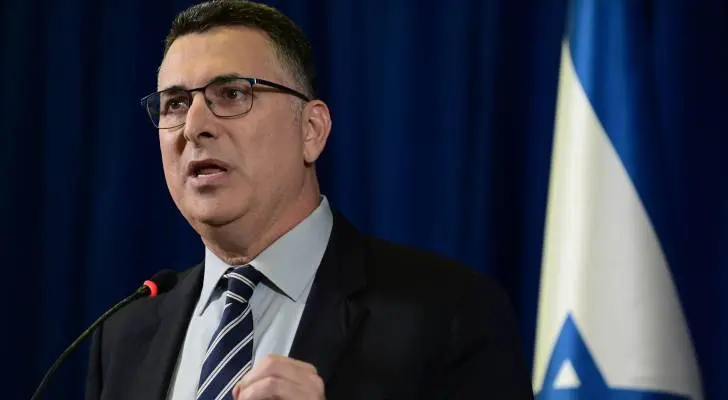
In reading the statements of the former member of the political and security cabinet, Gideon Sa'ar, when he said that the war on the Gaza Strip is a lesson to anyone who deals with Israel, and that Gaza must be made to pay a price by cutting off an area from its north and south, and imposing a security cordon and a comprehensive siege, threatening that whoever starts will lose land, this is another confirmation of the Israeli intentions regarding the Gaza Strip.


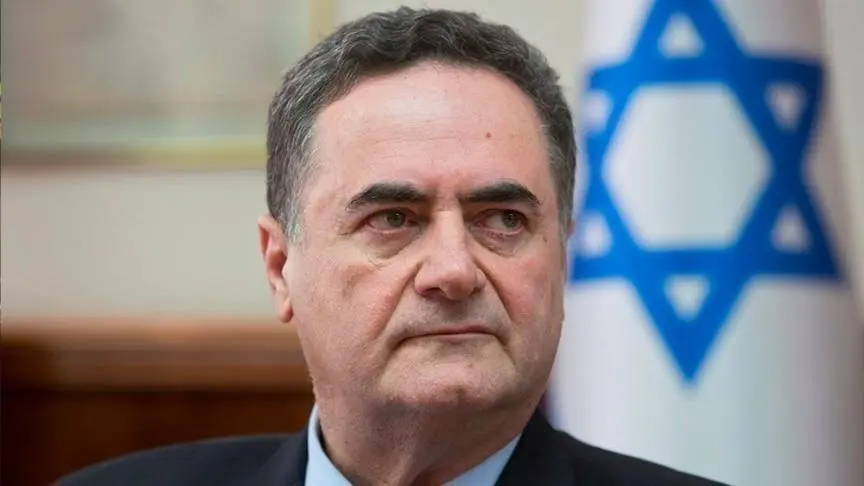
Israel, whose new Defense Minister Yisrael Katz declared yesterday that it wants to reach a swap deal, is only making media statements through its officials. It is not at all interested in reaching an agreement or ending the war, because it wants to occupy the largest area of the Gaza Strip, and this is the reality of the situation today in the Strip, by dividing it into three sections, north, center and south. With the start of implementing the generals’ plan, work is also being done to isolate Jabalia from the north of the Strip and divide the north into three regions, and this is exactly what Israel seeks to implement, but that requires the expulsion and displacement of the residents of the north, and this is another dangerous plan that Israel is implementing.


The insistence of a large number of citizens in the northern Gaza Strip not to be displaced cost them harsh and unjust hunger, or brutal and horrific killing. In light of the Israeli war machine’s inability to complete the plan of displacement and expulsion, it has expanded the war of extermination and committed massacres on a daily basis. This is what Katz clearly indicated when he threatened Hamas to release the detainees, otherwise Gaza will be exposed to more disasters and sanctions.


Israel's continuous demands and appeals for our people to leave the north of the Gaza Strip for its center and south are a clear attempt to displace and expel the Palestinians. With the occupation of large areas of the north, center and south of the Gaza Strip, Israel has completed the rings of its colonial plans, which prove the truth of its quest to continue occupying the Gaza Strip and implementing the most dangerous projects to control what remains of Palestinian land and expel its inhabitants.


Who will stop the war of extermination, starvation and displacement, and who will confront the annexation and partition plans? This is a question without an answer, because the world no longer listens to Gaza, which has grown tired of knocking on the doors of calls and appeals.

OPINIONS

Thu 02 Jan 2025 8:59 am - Jerusalem Time

Gaza.. The beginning of a new year and the genocide continues

Bahaa Rahal

Bahaa Rahal

Opinion Writer

Death by cold is no longer a word in people’s dictionary as a metaphor for a situation that does not happen. Rather, it has unfortunately become a reality amidst the ongoing war of extermination and the world’s silence. We are witnessing the death of infants and children after their bodies froze, in displacement tents that do not protect from the rain, nor do they prevent the cold and frost on these coldest nights, while they are in the open without a shelter suitable for living, and without blankets to warm their bodies, and under the fire of continuous shelling from all sides.


The death of children from cold wounds the conscience, pains the soul, and hurts the spirit, and gives us a thousand reasons for disappointment. With the continuation of the war of extermination and our entry into the new year, our hopes that we had attached to stopping this massacre before the beginning of the year have been shattered, but the occupation government insists on continuing its sinful aggression, and insists on procrastinating in reaching an agreement that stops this massacre, and brings the people of Gaza out of the suffering of their days, and out of the darkness of fate, because Netanyahu does not want this war to end, and does not want it to stop. Rather, he and his government and soldiers relish the death and killing of people, and all the terrifying scenes in sound and image that come out of Gaza.


A new year has begun, and on New Year’s Eve, while people around the world were gathering their private and public wishes, near a warm fireplace, a house with a roof and walls, and children with promising dreams, people in Gaza were living that night like all other nights in a tent amidst the cold and heavy rain, and under the bombardment that continued and did not stop for even an hour, and the soldiers were celebrating our death and holding their celebrations on our bodies and remains from their tanks and planes, and they were delighted by the death of our children from cold, bombardment, and hunger, and they were bragging about their crimes that they were committing intentionally and with premeditation, deliberation, and persistence in doing them, those crimes that are against humanity, and against all customs, laws, and religions.


The days of the war of extermination in Gaza do not know the end of one year or the beginning of another, because the people of Gaza count their time by the second and the minute, by the torments of their fates and their days, by the wounds, pain and suffering, and by waiting for the time when this massacre will stop. They pin their hopes on the awakening of the global conscience to impose a halt to this war and lift the suffering of the people who live in a difficult and impossible reality.

OPINIONS

Thu 02 Jan 2025 8:56 am - Jerusalem Time

UNRWA and the battle to delegitimize it

Fathi Kleeb

Fathi Kleeb

Opinion Writer

It is no longer a secret that Israel is not the only one waging the battle to delegitimize UNRWA. Rather, there are many countries that share this battle with Israel, regardless of their political positions in support of the agency and its role. This battle is no longer limited to Israeli accusations and allegations that UNRWA’s donor countries know are false and misleading, and they know that the goal is not what Israel and some of its allied countries claim. Rather, it has begun to touch on red lines and the interests and rights of more than six million Palestinian refugees who still cling to the right of return in accordance with international resolution 194.


It is wrong to believe that the declared Israeli war against UNRWA began on October 7, as a result of accusations that some of the agency’s employees participated in that battle, nor with the Israeli Knesset’s approval of a law banning UNRWA’s activities in Israel and in the territories under its control, nor with the cancellation of the headquarters agreement with UNRWA, which resulted in the withdrawal of recognition of UNRWA, despite it being part of the United Nations system and not a Palestinian institution, with all the resulting withdrawal of privileges, immunities, financial, tax and customs exemptions that this organization enjoyed, based on that agreement and Article 105 of the United Nations Charter. Rather, the strategies to get rid of UNRWA began at the beginning of the first term of US President Trump in 2017, within the framework of the plan known as the “Deal of the Century”, where the issue of targeting the agency and ending its services occupied an advanced position in this plan. Despite Trump’s departure, Israel continued to target UNRWA, using means of incitement, lies and deception as a way to achieve its goal of getting rid of the agency and what it symbolizes in terms of a political dimension in direct contact with the issue of Palestinian refugees. And their right to return.


It was clear that there was a plan developed by Israeli institutions on how to deal with UNRWA in the future, and it was divided into three stages: “distorting UNRWA’s image in the eyes of donors, not allowing UNRWA to provide its services directly, especially in the Strip, proposing international organizations as an alternative, transferring all of UNRWA’s tasks to the body that will govern Gaza after the end of the war, and canceling the agreement signed by UNRWA. The UN Secretary-General expressed his rejection of this plan for more than one reason, including: “that all UN organizations are not prepared to assume the responsibilities that UNRWA undertakes, and that UNRWA’s operating costs are much less than the operating costs of other UN agencies, for example, that “the costs with UNRWA are much less than the costs with other agencies. The salaries paid by UNRWA represent a third of the salaries paid by UNICEF, the World Food Program, or other UN organizations.”


Despite this, Israel continued its campaign, and did not leave any means of pressure without resorting to it, and practiced all forms of incitement that affected all components of the agency, whether related to programs and policies or educational curricula, employees and facilities, even if the incitement was misleading and lacked credibility. However, the message was to make this international organization a subject of permanent doubt in order to weaken international confidence in its role, in preparation for stripping it of its political and legal status on which the right of return for millions of Palestinian refugees is based, according to its founding resolution No. 302 issued by the United Nations in December 1949.


Israel has failed in all its attempts, which aimed, as the Commissioner-General has stated on more than one occasion, to delegitimize UNRWA. But the failure of those attempts did not mean for a moment that the war on the agency had been closed. Rather, Israel and its allies continued their war in more than one form. The collective decision of about 18 countries at the beginning of 2024 to suspend funding sounded an alarm bell that may continue and interact in the coming months, even if most countries resumed their funding, as a result of the embarrassment caused by Israel’s failure to provide evidence of its accusations against UNRWA.


The new development that is feared is what two donor countries announced a few days ago about providing significant financial support to international organizations other than UNRWA, which indicates an imminent danger that must be addressed now at the international, Arab and Palestinian levels. The Swedish government, for example, announced that it will stop funding UNRWA and will instead increase total humanitarian aid to the Gaza Strip through other channels ($72.44 million). The Japanese government also announced that it will provide new aid to Palestine (about $100 million), and this amount will be allocated to support the Palestinian Authority, health care, shelter, education, psychological and social support, industry, and food provision, through international organizations other than UNRWA.


Despite the importance of Japanese and Swedish support, excluding UNRWA from this support raises more than one question mark about the credibility of the position of these two countries, which still, to this moment, confirm their political support for UNRWA. Indeed, the establishment of alternative organizations to UNRWA constitutes a direct partnership with Israel in its position on UNRWA.


Since 2017, Israel has been calling for UNRWA to be replaced by alternative organizations that provide services to Palestinian refugees on its behalf. For this reason, and no other, it has targeted UNRWA warehouses and headquarters in the Gaza Strip, destroyed its schools and health centers, killed dozens of its employees, prevented it from performing its role in Israel, and taken other measures aimed at preventing UNRWA from performing its function and presenting the world with a fait accompli that will ultimately lead to the creation of international organizations that provide services to refugees, thus contributing to the gradual elimination of the Relief Agency.


In 2022, the Commissioner-General of UNRWA said: “The problem can be solved by providing services from international organizations on behalf of UNRWA.” These positions were met with widespread official, factional, and popular Palestinian rejection, which prompted the Commissioner-General to declare his commitment to the text of Article 18 of Resolution 302, which refers to cooperation and coordination with United Nations organizations, not providing services on behalf of UNRWA. What raised the refugees’ concerns was that the Commissioner-General’s statements regarding the “possibility” of referring services to United Nations bodies coincided with the public positions of Israeli Prime Minister Netanyahu in 2017, when he explicitly called for the abolition of UNRWA and the transfer of its services to the High Commissioner for Refugees.


It seems clear that the Commissioner-General’s declaration of his commitment to Article 18 was not sufficient and did not deter Israel and some countries from repeating their attempts to find alternative organizations to provide services on behalf of UNRWA. Here lies the step of the Swedish government, which, although it announced that the reason for its step to stop funding UNRWA was the Israeli ban that would make directing aid to the Palestinians through the agency more difficult, the intended meaning is that Sweden did not act in accordance with its declared foreign policy of supporting UNRWA and in accordance with the values to which it is committed, especially human rights and justice, but rather based on a fait accompli that Israel is working to impose and Sweden has responded to it.


There are some Palestinians who try to bury their heads in the sand when they feel reassured and consider that Resolution 302 still constitutes protection for the agency, which still enjoys the confidence of the international community within the UN General Assembly. Although we agree with the relative validity of this conclusion, what is happening is that the targeting of UNRWA comes through titles that do not include canceling Resolution 302, but rather through incitement against the agency, employees and educational curricula, and by pushing donor countries to cut their funding to the agency. Therefore, what is happening is working to end the agency from within and empty it of any political, social and economic content by pressuring donor countries to stop funding it so that international organizations can come forward as an alternative to UNRWA. Here lies the danger in Swedish and Japanese support by directing it to alternative organizations, which contributes to the plan to delegitimize UNRWA.


The support of Sweden, Japan and other donor countries is appreciated and should be increased to be in line with the growing needs. However, what is required is to call on traditional and emerging donor countries to balance the distribution of their financial contributions to the basic priorities of the refugees, and through UNRWA and not alternative organizations.

Because repeating this and generalizing it to other donor countries would achieve the actual Israeli goal, which is to empty UNRWA of its content through funding and make it a bankrupt agency, and this will push some donor countries to direct their financial contributions towards alternative organizations under the pretext of the difficulty in delivering services to those who deserve them, as Sweden justified its position. Thus, instead of punishing Israel for violating its commitment and pledges by not respecting the UN Charter and facilitating the work of its organizations, a gift is being given to Israel by donor countries to facilitate its plans, despite their certainty that these plans are not based on any legal or political basis.


What must be emphasized is that the laws and decisions taken by Israel, although they constitute a great danger and a qualitative shift in dealing with one of the most comprehensive and practical United Nations organizations, especially in terms of their political and humanitarian repercussions, their impact on the right of return will remain limited, especially if the United Nations and the countries supporting the agency and its mandate have the will to reject Israeli laws and procedures, not deal with them and make them a reality. The right of return does not derive its strength only from the existence of UNRWA, as important as the agency’s existence is. The United Nations’ response to Israel’s letter to cancel the 1967 headquarters agreement and the positions of many international officials came to confirm a number of axioms: Despite the danger posed by the UNRWA law and the cancellation of the headquarters agreement, as it will increase the humanitarian suffering of refugees who depend on UNRWA’s services completely, it will not affect the existence of the agency that exists with a UN mandate. In addition, banning the agency’s work will mean that Israel, as the occupying power, will be the one concerned with the humanitarian aspects of refugees in the West Bank and Gaza Strip.


Despite all of this, the seriousness of the Israeli war on UNRWA, which is one of the institutions on which the right of return is based, should not be underestimated. What the Israeli laws have proposed is the opening of a new battle that will be added to the series of national battles that the Palestinian people are fighting. Because Israel, even if it is able to impose the application of the law with its military and occupation force in the West Bank and Gaza Strip, is not able to harm UNRWA, its legitimacy and its international mandate, which makes this battle a necessarily winning battle, as it is a battle to defend not only the refugee issue, the right of return and UNRWA, but also a battle to defend the United Nations and its resolutions, and even the credibility of the entire international system.

ARAB AND WORLD

Thu 02 Jan 2025 8:31 am - Jerusalem Time

Hezbollah threatens to respond to Israeli violations: a political move or a prelude to renewed escalation?

Dr. Bilal Al-Shobaki: A threat that has a political rather than a military nature to send a warning message to Israel and international mediators without any intention of escalation

Dr. Omar Rahhal: Hezbollah has a large strategic stockpile of heavy weapons that ensures its continuation as an effective force in any future confrontation

Imad Moussa: The party is trying to reassure its audience that it maintains its strength and sends a message to Israel that it possesses military capabilities that enable it to resume the war

Dr. Abdul Majeed Suwailem: The region is on the brink of an escalation much greater than what we have witnessed in light of the regional and international contradictions that hinder any attempts at calming down

Hani Abu Al-Sabaa: The current equation in the region, especially with the internal situation in Lebanon, is pushing Hezbollah to wait until the end of the sixty-day period

Dr. Raed Nairat: The way the Lebanon front ended suggests that it is a preparatory phase for the outbreak of a new confrontation between Hezbollah and Israel


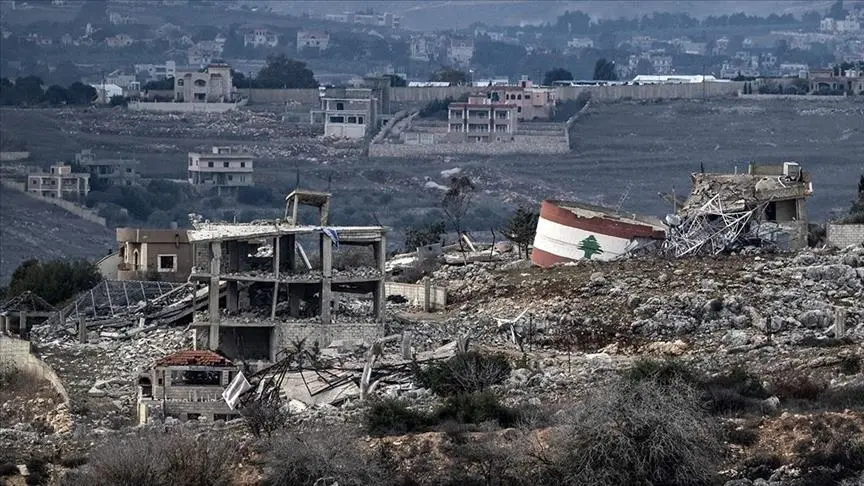
The Lebanese arena is witnessing escalating tension against the backdrop of the continued violations by the Israeli occupation of the agreement that led to the end of the war in southern Lebanon on November 27th. These developments prompted Hezbollah to threaten to respond, in a move that carries multilateral messages, amid warnings of the Lebanese front igniting again.


In separate interviews with “I”, writers, political analysts and university professors explained that despite Hezbollah’s threat to respond, the party prefers calm for now, given the internal Lebanese circumstances and regional changes. However, the continuation of Israeli violations after the deadline for withdrawal has expired may push Hezbollah to take more severe steps, which threatens to reshuffle the cards in the region.


They point out that in light of these violations, Israel is exploiting the American guarantees that were given to it prior to the conclusion of the agreement, to justify its continued violations of Lebanese airspace and territory, amidst the absence of any indications of the occupation’s withdrawal from the areas it controlled during the last confrontation, which reflects Israeli intentions to establish new facts, including the establishment of a buffer zone by force in southern Lebanon.


Writers, analysts and university professors believe that this situation has raised questions about the effectiveness of the five-member committee tasked with following up on the agreement and its ability to force the occupying Israeli state to abide by its terms.


An attempt to push mediators to pressure Israel to abide by the agreement


Dr. Bilal Al-Shoubaki, a professor of political science at Hebron University, believes that the Lebanese Hezbollah’s threat to respond to the Israeli occupation’s violations represents an attempt to push the mediators, who contributed to the conclusion of the agreement that ended the war in Lebanon, to pressure Israel to abide by what was agreed upon.


Al-Shoubaki explains that Israel showed from the first moments of the agreement’s success that it was not committed to it, relying on American guarantees that would allow it to carry out “security operations” inside Lebanon if it deemed that the circumstances permitted it.


He points out that Israel exploited these guarantees, which was reflected in the continuation of violations inside Lebanese territory, and the absence of any indications of its withdrawal from the areas it occupied during the last confrontation.


Al-Shoubaki points out that the five-member committee tasked with following up on the implementation of the agreement in Lebanon appears, so far, to be ineffective in forcing Israel to abide by its terms.


Al-Shoubaki explains that Israel seeks to portray itself as a party imposing new facts on Hezbollah and the Lebanese people, without making any significant concessions. This situation may have prompted Hezbollah to review its strategies, as the party believes that continued Israeli violations undermine any reason for its commitment to the agreement.


He believes that Hezbollah's current position is not inclined towards military escalation, despite the challenges it faces, while Al-Shoubaki points out that the internal circumstances in Lebanon, and the regional changes, especially in Syria, in addition to the Iranian position, make returning to military confrontation an unlikely option at this stage.


Al-Shoubaki believes that Hezbollah's threat to respond has a political rather than a military character, as it aims to send a warning message to Israel and international mediators without any actual intention to escalate.


Al-Shoubaki points out that Hezbollah entered the agreement under difficult circumstances, and the current situation does not seem better for the party, which makes the option of escalation less attractive.


According to Al-Shoubaki, Israel aims to impose a new reality in southern Lebanon, which is to create a buffer zone by force, exploiting international and regional circumstances to its advantage. There is also talk about Israel’s intention to exceed the 60-day time frame for withdrawing from the areas it has occupied, which could put Hezbollah in a difficult position.


However, Al-Shoubaki believes that Hezbollah currently prefers to resort to diplomatic steps rather than military escalation.


Al-Shoubaki points out that the Israeli violations are not necessarily an attempt to provoke the party and ignite the region, but rather part of a long-term Israeli strategy to impose its control over southern Lebanon.


Al-Shoubaki confirms that Hezbollah is still monitoring developments with caution, and that despite the pressures, it does not seem ready to escalate at the current stage.


Al-Shoubaki points out that the continuation of Israeli violations after the specified time limit may push the party to take more severe steps, which may reshuffle the cards in the region.


The truce is temporary and fragile due to the ongoing Israeli violations.


Dr. Omar Rahhal, writer and political analyst, explains that the current truce between the Lebanese Hezbollah and the Israeli occupation state, which was sponsored by the United States and France, is temporary and fragile, due to the continued violations by the Israeli occupation that did not abide by its terms, in addition to the failure of the mediators to fulfill their obligations.


Rahhal points out that Israel has committed several violations of the agreement, including the assassination of Lebanese citizens and the launching of continuous bombing operations inside Lebanese territory, in addition to the continued Israeli military presence inside Lebanon, and the statements of occupation officials confirming the continuation of the occupation in some Lebanese areas, and the fact that Israeli aircraft do not leave Lebanese airspace, which reflects the insistence of the occupying state to thwart the truce and not abide by its terms.


Rahhal explains that these violations prompted Hezbollah to threaten and consider responding, and to emphasize its ability to resume fighting if Israel continues to violate the terms of the agreement.


He points out that Hezbollah agreed to the truce on the condition that Israel withdraws and ceases fire, but the party wants to send a message that it is ready to respond to any violations that may occur.


Rahhal points out the statements of the Chief of Staff of the occupation army, in which he claimed to eliminate Hezbollah and dismantle its military structure, which are considered misleading and unrealistic, as events have proven that Hezbollah still maintains its military capabilities and the ability to take the initiative and initiate.


Regarding Hezbollah’s seriousness in responding to Israeli violations, Rahhal asserts that Hezbollah historically links statements to actions, and if it says it will respond, it will do so. He points out that the party has demonstrated in recent confrontations its ability to strike deep inside Israel, including major cities, causing significant human and economic losses to the occupation.


Rahhal points out that Israeli Prime Minister Benjamin Netanyahu was forced to accept the ceasefire as a result of the painful blows that the occupation army suffered inside Lebanese territory, in addition to the heavy losses that the occupying state suffered in lives and infrastructure.


Dr. Rahhal touched on the regional situation and its impact on Hezbollah, pointing out that the fall of Bashar al-Assad’s regime in Syria poses a major challenge to the party’s military presence, which cannot be ignored in the future.


However, Rahhal believes that Hezbollah has other supply lines and a large strategic stockpile of heavy weapons, especially missiles, which ensures its continued presence as an effective force in any future confrontation.


Rahhal points out that Netanyahu is still seeking by all means to strike Iran, stressing that his moves in Lebanon aim to ignite the region and drag the United States into a regional confrontation.


Rahhal points out that the previous US administration, headed by Joe Biden, was trying to avoid a broad escalation in the Middle East in order to preserve its interests, and not out of sympathy for Arabs or Muslims. But Rahhal warns that Donald Trump’s return to power could mean a new escalation, as Trump is not a statesman, and does not possess any wisdom. He is a narcissist, a merchant, and at best a businessman who focuses on deals, including political deals with economic dimensions.


Rahhal asserts that Israel seeks to engineer the region in a manner consistent with its colonial aspirations, by striking Iran and igniting a regional war.


He points out that the fall of Syria is a political earthquake that will have violent repercussions and profound political repercussions on the region, especially on Palestine and Lebanon, and the normalization processes with the occupying state that will follow, and the division of roles and interests between regional and international players.


Rahhal points out that Iran today poses a threat to the interests of the United States and Israel, from both the American and Israeli points of view, so there will be two scenarios during the year 2025 and beyond: the first is confrontation, and the second is containment with Iran withdrawing within its regional borders, within a political deal that will have repercussions on Lebanon, Iraq, Yemen and Palestine.


Rahhal believes that Netanyahu is exploiting this situation to advance the interests of the occupation, in light of increasing American support, which indicates that what is coming may be worse if these Israeli moves continue.


Rahhal stresses that the region is facing a dangerous phase, where Israeli policies could lead to destabilization and ignite a large-scale regional conflict.


Two main messages behind the threat of a response


Writer and political analyst Imad Moussa believes that the Lebanese Hezbollah’s threat to respond to the Israeli occupation’s violations carries two basic messages. The first message is directed at the Lebanese interior, aiming to reassure its audience that the party still maintains its strength despite the challenges. The second message targets Israel and the region, stating that Hezbollah possesses military capabilities that enable it to absorb the strikes and resume the war if necessary.


Musa points out that the regional situation and geopolitical transformations, especially what happened in Syria, contributed to strengthening Israel's ability to move freely in the region. Targeting Syrian military bases, including airports and ports, led to reducing Hezbollah's margin of maneuver.


Musa points out that Israel's strategy of isolating the various arenas through destruction, genocide and displacement has contributed to weakening those arenas.


It is believed that Israel's expansion in using the strategy of isolating each arena of resistance weakened Hezbollah on the military and political levels, and stirred up the stagnant waters against it internally, which prompted it to adopt a discourse of threatening to respond to enhance its image as an effective force.


On the regional level, Moussa believes that Israel is now more prepared than ever to strike Iran with “mini-nuclear bombs,” which could set Iran back more than three decades of military and technological development.


Musa believes that the fall of the Bashar al-Assad regime in Syria, one of Iran's most important allies, and the erosion of Hezbollah's deterrent power, in addition to the comprehensive destruction of the Gaza Strip, are factors that contributed to strengthening Israel's readiness to implement its plans.


He points out that Israel, with American and Western assistance, may carry out a double strike targeting both Iran and Yemen, considering that the success of such a strike will pave the way for redrawing the map of the region, as Britain did during the last century.


Musa discusses Turkey's role in the regional equation, pointing out that it is no longer considered an independent regional power, noting that Turkey's expansion into Syrian territory is now contingent on Israeli approval within broader regional arrangements.


The party is fed up with the escalation of Israeli violations.


Writer and political analyst Dr. Abdul Majeed Suwailem believes that Hezbollah’s threat to respond to Israeli violations in southern Lebanon reflects the party’s frustration with the escalation of these violations.


Suwailem points out that these violations, which are carried out in a showy manner, reflect the Israeli government's desire to achieve internal political gains, especially in the north, where pressure from displaced settlers is increasing.


Suwailem explains that the recent Israeli behavior revolves around political parades aimed at compensating for what the Israelis consider a "lack of achievement" after Israel was forced to cease fire without achieving its military objectives against Hezbollah.


Suwailem points out that Hezbollah has undermined the Israeli narrative about the destruction of its capabilities, especially when it fired nearly 400 rockets at northern and deep Israeli areas during a day that the Israelis described as “Black Sunday.”


Suwailem points out that these missiles, which included precise and highly effective weapons, revealed the limited Israeli intelligence and military success, despite Israel’s claims of achieving successes in destroying infrastructure and assassinating prominent leaders in the party.


Suwailem points out that these facts prompted Israel to accept the ceasefire, under pressure from the United States and the Israeli army leadership, which saw that the army could not expand its ground operations to the third stage without great risks.


He believes that Hezbollah is fully aware of the dimensions of these Israeli shows, but it is committed to a policy of temporary patience due to internal Lebanese considerations. However, the party’s patience will not last long, as it will respond to Israeli violations when things reach a certain point, not with the aim of “saving face,” but to send a clear message to Israel that the policy of shows will not give it any advantage in the confrontation.


Suwailem stresses that the battle is not over yet, as several chapters are still on the agenda, including developments in Syria and Yemen, which could greatly affect the regional scene.


Regarding Syria, Suwailem points out that the Syrian crisis has not been resolved as some might think, but rather is in the stage of reshaping power and political equations amidst the contradiction between the allies who contributed to the overthrow of Bashar al-Assad’s regime. This contradiction places the Syrian arena in a state of explosive stagnation, especially with Israel’s attempts to weaken Iran through Syria.


Suwailem believes that the Yemeni arena plays a similar role in heating up the atmosphere for upcoming rounds that may extend to Iran, making the Middle East a flaming mass that could explode at any moment.


On the Israeli side, Suwailem believes that Benjamin Netanyahu's government seeks to keep the region on fire through small wars or continuous provocations, as a means of ensuring the continuation of the fascist right in power.


He points out that this government realizes that the right's loss of power could be a decisive end for it, which prompts it to risk adventurous policies without long-term calculations.


Suwailem believes that the policies of the Israeli right aim to swallow the "liberal democratic" Israeli state, which may lead to an internal crisis that exceeds all previous crises. Suwailem explains that this complex internal situation may lead to opening new doors of escalation in the region, as Israel seeks to exploit any opportunity to strike or provoke Iran.


On the other hand, Suwailem confirms that Iran sees any potential confrontation with Israel as an existential battle and not just a passing political or military conflict.


Suwailem points out that the Iranian regime possesses great capabilities that exceed imagination, which makes it ready to use all means to defend its existence in the event of a direct conflict.


He points out that Iran's loss of some positions in Syria does not mean its complete retreat, but rather that it may rebuild the axis of resistance with new methods and means that are in line with the current challenges.


Suwailem believes that the region is on the brink of a much greater escalation than what we have witnessed in recent months, as regional and international contradictions continue to hinder any attempts at calm.


Suwailem asserts that the US administration's attempts to impose new arrangements in the Middle East will face resistance from the axis of resistance, making the Middle East a rolling mass of flames that cannot be easily controlled.


Dual messages ranging from warning to readiness


Writer and political analyst Hani Abu Al-Sabaa believes that Hezbollah’s threat to respond to Israeli violations in southern Lebanon reflects dual messages, ranging between warning and readiness, especially in light of the continued Israeli violations that have exceeded 300 since the signing of the agreement concluded more than a month ago.


Abu Al-Sabaa points out that these violations, according to the Lebanese army’s reports, varied between blowing up buildings and targeting with warplanes, in addition to targeting with drones that resulted in the deaths of martyrs, while Hezbollah was satisfied with a single response to the Shebaa Farms as an implicit message confirming its readiness for any possible escalation.


Abu Al-Sabaa believes that the current equation in the region, especially with the internal situation in Lebanon, is pushing the party to wait until the end of the sixty-day period specified in the agreement, after which any Israeli breach will be considered a crossing of the red lines.


Abu Al-Sabaa points out that the coordination between Hezbollah and Iran plays a role in controlling the rhythm in the region, especially with the losses that Iran has suffered in Syria and the collapse of Bashar Al-Assad’s regime, which has reduced Iran’s and Hezbollah’s capabilities to secure supply lines. These complex circumstances have prompted Iran to try to ease tensions in the region, in line with its new policies seeking rapprochement with the world and rebuilding its relations with neighboring countries, as part of a strategy to ease international isolation and lift economic sanctions, in Iranian messages that it wants to avoid military escalation.


Abu Al-Sabaa stresses that despite these challenges, Iran is still seeking to maintain its regional influence through its various arms, especially in Yemen, where the escalation there is witnessing greater interest from Tehran than in the Lebanese arena.


In contrast, Abu Al-Sabaa points out that Israel believes that the current circumstances allow it to expand its operations against Hezbollah, especially in light of what it considers to be weakness in the supply lines and the disruption of the party’s military capabilities, after the Israeli strikes in Syria, with the aim of undermining Hezbollah’s capabilities.


Israel, according to Abu Al-Sabaa, is trying to provoke Hezbollah into an open confrontation, taking advantage of regional changes and the difficult internal conditions in Lebanon. With the return of US President Donald Trump to power, Israel believes that it has a favorable opportunity to carry out strategic strikes that may push Hezbollah back, or strike Iran, even though Trump is an economist and is trying to put an end to wars.


However, Abu Al-Sabaa believes that Hezbollah is aware of these calculations and is choosing to wait in order not to be drawn into an uncalculated confrontation at the present time, especially since Lebanon is still suffering from the consequences of its economic and political crises, in addition to the damage inflicted on southern Lebanon during previous rounds of escalation, and the remaining effects of the war in the southern suburbs of Beirut, which reinforces the logic of appeasement that Hezbollah is currently adopting.


Abu Al-Sabaa stresses that despite this, the equation of resistance remains strongly present in Hezbollah’s discourse, as it seeks to maintain its popularity among its popular base, especially if Israeli violations continue after the end of the sixty-day period.


Abu Al-Sabaa stresses that the decision to ignite the region again is not easy for any party, whether Hezbollah, Israel or Iran. International and regional changes, including the situation in Syria and the repercussions of the war in Gaza, constitute pressure factors that push all parties to reconsider their calculations. Although Israel is exploiting the current circumstances to strengthen its strategy in Lebanon and Syria, Hezbollah and Iran are adopting a long-term policy, waiting for more suitable circumstances to redraw the regional balances.


Questions about the ambiguity surrounding the Hezbollah file


Dr. Raed Nairat, writer, political analyst, and professor of political science, believes that there are several questions about the ambiguity surrounding the Hezbollah file after the end of the last confrontation with Israel.


Nairat points to three main issues that raise question marks: the first relates to the way the war ended abruptly, the second is the absence of any official funeral ceremony for Hezbollah Secretary-General Hassan Nasrallah, which raises many speculations, and the third is Israel’s failure to commit to withdrawing and implementing the terms of the agreement, amidst a conspicuous silence from Hezbollah.


Nairat explains that the way the Lebanese front ended suggests that this ending may be a preparatory stage for the outbreak of a new confrontation between Hezbollah and Israel.


Nairat believes that Hezbollah's threat to respond to Israeli violations may carry a political message to the Lebanese parties and international mediators, with the aim of pressuring the Israeli occupation to abide by the terms of the agreement.


However, Nairat sees a realistic possibility of war breaking out again, especially given the ambiguity surrounding the agreement and the abrupt manner in which the war ended.


Regarding the Iranian file, Nairat stresses that striking Iran will not be a mere confrontation between two countries, but will be considered a complex international file with strategic dimensions that affect major alliances including China and Russia.


Nairat points out that any major escalation against Iran could ignite the region and possibly lead to the outbreak of a world war, making the possibility of striking Iran on a large scale currently unlikely.


PALESTINE

Thu 02 Jan 2025 8:30 am - Jerusalem Time

In the tents... under the shells and rain!

If you stand or sit, you will die. If you sleep or stay up late, you will die. If you leave your house or go to your tent, you will die.

You die if you are in bread lines in front of bakeries, and waiting for water and food in front of charitable hospices.


And you will die if a monster spots you walking under its eyes and fangs, carrying a bag of flour on your shoulder.


You will die with your children if your soul, which commands you to be extremely hungry, tempts you to eat a meal of poisonous rabbitfish, which quickly makes its eater nauseous and takes the life of anyone who is forced, unwillingly or unjustly, to eat it to satisfy his hunger and the hunger of his children.


Wherever you turn in the devastated Gaza Strip, you see death staring at you, in your sleep and in your wake, in the dilapidated houses and worn-out tents, in the bulldozed streets and destroyed buildings.


In Gaza, children are dying of cold in their sleep, and of tank shells and drone bullets, inside tents.


In Gaza, the Gazans eat their hunger and drink their thirst, and sleep eludes their eyes as they lean over their children, feeling their bodies, day and night, for fear that their limbs will freeze and their hearts will stop under thin covers that neither warm nor protect from the cold, and worn-out tents that the winds flutter around.


Stop the genocide now...!


PALESTINE

Thu 02 Jan 2025 8:18 am - Jerusalem Time

Updated:: Israeli occupation launches an arrest campaign in the West Bank

Today, Thursday, the Israeli occupation forces launched an arrest campaign in the West Bank.


In Bethlehem, the occupation forces arrested both: Montaser Hussein Shakhtur (31 years old) from Ras Ein near the Church of the Nativity, and Ayman Kanaan from the Karkafeh area in the center of the city, after raiding their parents’ homes and searching them.


Meanwhile, the occupation forces stormed the town of Beit Fajjar in the south, raided the home of citizen Samir Taqatqa, searched it, and ransacked its contents. They also seized a vehicle owned by citizen Abdullah Barakat Thawabtah.


In Qalqilya, the occupation forces arrested the two young men, Omar Bassam Hussein and Sayyaf Qasim Salmi, after raiding and searching their homes.


In Nablus, the occupation forces arrested citizen Fadi Al-Qani, after raiding and searching his house in the village of Kafr Qallil, and seized his vehicle.


PALESTINE

Thu 02 Jan 2025 8:17 am - Jerusalem Time

Updated: Dead and wounded in Israeli raids on the Gaza Strip

A number of citizens were killed and injured today, Thursday, in separate Israeli raids on the Gaza Strip.


In the middle of the Gaza Strip, four citizens were killed and others were injured in an Israeli airstrike east of Deir al-Balah.


A number of citizens were also killed and injured when the occupation bombed a gathering of citizens near Bahlol station in Al-Maghazi camp in the central Gaza Strip.


In Gaza City, four citizens were killed and others were injured when the occupation aircraft bombed a gathering of citizens in the Al-Shati refugee camp.


Two citizens were also killed in the occupation's bombing of Jabalia al-Balad, and another citizen was killed in al-Shaghaf Street, east of Gaza City.


Since dawn today, 15 citizens have been killed and dozens injured in the occupation's bombing of various parts of the Gaza Strip, 11 of them in Khan Yunis.


Local sources reported that the occupation aircraft targeted a tent housing displaced persons in the Al-Mawasi area west of Khan Yunis in the southern Gaza Strip, which resulted in the martyrdom of 11 citizens, including children and women, and the injury of 15 others with various injuries.


He added that two brothers were martyred in the occupation forces' shelling of northern Gaza, while the occupation artillery shelled the western areas of the Nuseirat camp in the central Gaza Strip.


The Israeli occupation continues its aggression on the Gaza Strip, by land, sea and air, since October 7, 2023, which resulted in the death of 45,553 citizens, the majority of whom are women and children, and the injury of 108,379 others, in an incomplete toll, as thousands of victims are still under the rubble and in the streets, and ambulance and rescue crews cannot reach them.

PALESTINE

Thu 02 Jan 2025 8:13 am - Jerusalem Time

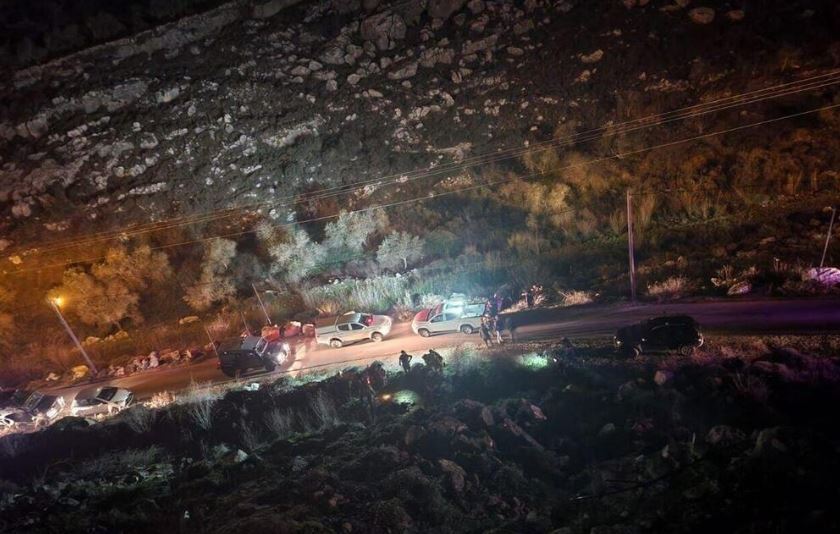
West Bank: Israeli occupation demolishes a house east of Tulkarm

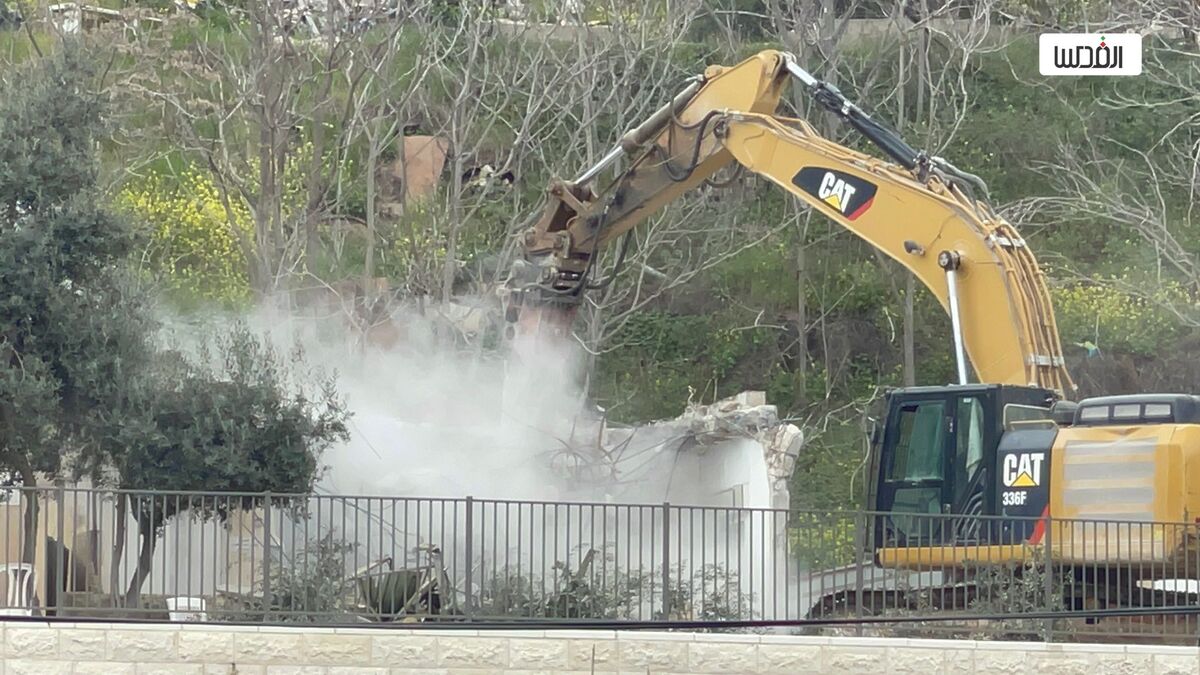
Last night, the Israeli occupation forces demolished the house of the detainee, Muhammad Talal Farid Abu Yassin, in the town of Bal'a, east of Tulkarm.


Local sources said that about 30 military vehicles, accompanied by two military bulldozers, stormed the town from the neighboring town of Anabta, and surrounded the targeted house in the western neighborhood of the town, before proceeding to demolish it.


The house consists of two floors and a storeroom, and was inhabited by the detainee Abu Yassin and his family, who were forced to evacuate it after receiving a demolition notice.


A week ago, the Abu Yassin family received a notice from the occupation to demolish their home, seize it, and prevent further construction on the site.


The occupation forces arrested Muhammad Abu Yassin in January 2024 from his home.


According to the Wall and Settlement Resistance Commission, the occupation authorities carried out 52 demolition operations last November, affecting 63 facilities, including 27 inhabited homes, 2 uninhabited ones, and 17 agricultural and other facilities.

PALESTINE

Wed 01 Jan 2025 11:01 pm - Jerusalem Time

Hebrew media claims reaching an "understanding" between Israel and Hamas regarding a prisoner exchange deal

The Israeli Broadcasting Authority (official) claimed on Wednesday evening that Israel and Hamas, through mediators, had reached "understandings" regarding a prisoner exchange deal and a ceasefire in Gaza, during which it was decided to "postpone discussion of the controversial issues in the negotiations until the second stage of the agreement."


The Authority said: "There are many points of contention between Israel and Hamas within the negotiations, most notably the list of abductees (prisoners in Gaza) expected to be released, which Israel insists on obtaining."


She added that "Hamas rejects Israel's request to provide a list of the names of the living kidnapped, however, there are understandings that have been reached between Israel and the movement through mediators (she did not mention them, but Doha, Cairo and Washington are active in mediation)," according to the same source.


The Authority claimed that "one of the understandings is to postpone all the disputed issues to the discussions in the second phase of the deal, in order to begin implementing the first phase, which is the humanitarian phase."


Tel Aviv is holding more than 10,300 Palestinians in its prisons, and estimates that there are 100 Israeli prisoners in the Gaza Strip, while Hamas announced the killing of dozens of them in random Israeli raids.


Since the only ceasefire prisoner exchange in late November 2023, Israeli Prime Minister Benjamin Netanyahu has occasionally hinted at progress in negotiations, then gone on a killing spree against the Palestinians.


The Authority quoted Israeli sources familiar with the progress of the negotiations between Israel and Hamas as saying: "The agreement is almost ready, and the obstacles can be overcome."


She claimed that Hamas "does not oppose completing the deal in two stages."


She continued: "Hamas is prepared to include abductees of reserve age (up to 40 years old) in the humanitarian standard, even though it considers them soldiers, in exchange for the release of Palestinian prisoners with long sentences and life sentences."


According to the Authority, Hamas demands that Israeli warplanes and drones stop flying over the Gaza Strip during the initial phase of the ceasefire, which will last for a week, so that it can collect information about the Israeli prisoners.


Hamas also insists on "an Israeli and international commitment to move forward to complete the deal (i.e., that Tel Aviv not be satisfied with the first stage), end the war, and withdraw the Israeli army from the Gaza Strip."


Until 20:00 GMT, Hamas has not commented on the Israeli Broadcasting Authority report.


According to what informed Israeli sources recently reported to Hebrew media, Tel Aviv is seeking a deal that will actually be divided into two parts - a humanitarian deal (including women, female soldiers, the wounded and the elderly), and only after that a deal that could lead to the end of the war and the withdrawal of the Israeli army from the Gaza Strip.


On Tuesday, the Broadcasting Authority also claimed that Hamas had proposed a one-week truce during which it would present a list of Israeli prisoners in the Gaza Strip, while the movement did not comment.


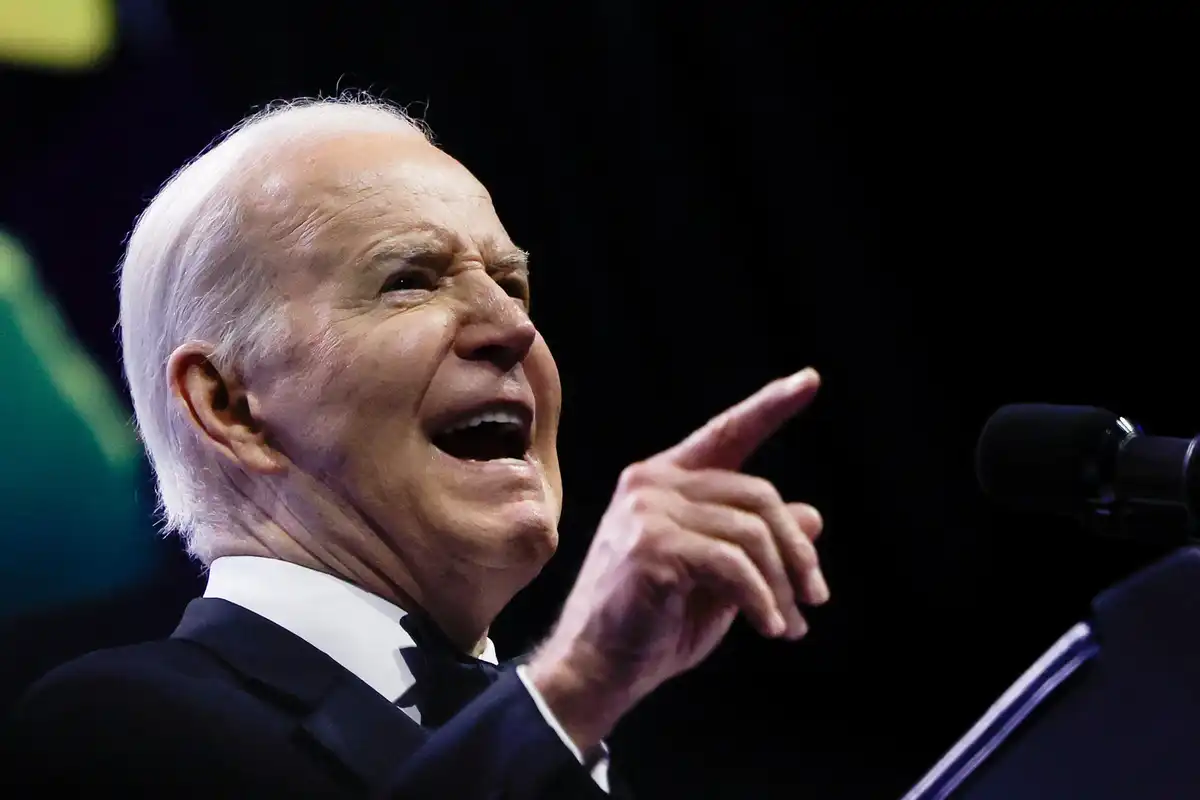
Hamas has repeatedly confirmed in recent months its readiness to conclude an agreement, and even announced its approval last May of a proposal put forward by US President Joe Biden.


However, Netanyahu backed down from the proposal, putting forward new conditions, most notably the continuation of the genocidal war and the failure to withdraw the army from Gaza, while Hamas insists on a complete cessation of the war and a complete withdrawal of the Israeli army.


The opposition and the families of Israeli prisoners accuse Netanyahu of obstructing an agreement to preserve his position, as extremist ministers, including National Security Minister Itamar Ben-Gvir and Finance Minister Bezalel Smotrich, threaten to leave the government and bring it down if it accepts an end to the genocide in Gaza.


Tel Aviv continues its massacres, ignoring two arrest warrants issued by the International Criminal Court on November 21 against Netanyahu and former Defense Minister Yoav Galant, on charges of committing war crimes and crimes against humanity against the Palestinians in Gaza.


Gaza has been transformed into the largest prison in the world, under siege for the 18th year, and the war of extermination has forced about two million of its citizens, numbering about 2.3 million Palestinians, to flee in tragic conditions with a severe and deliberate shortage of food, water and medicine.

PALESTINE

Wed 01 Jan 2025 10:41 pm - Jerusalem Time

Live bullet injuries during clashes in the Old City of Nablus

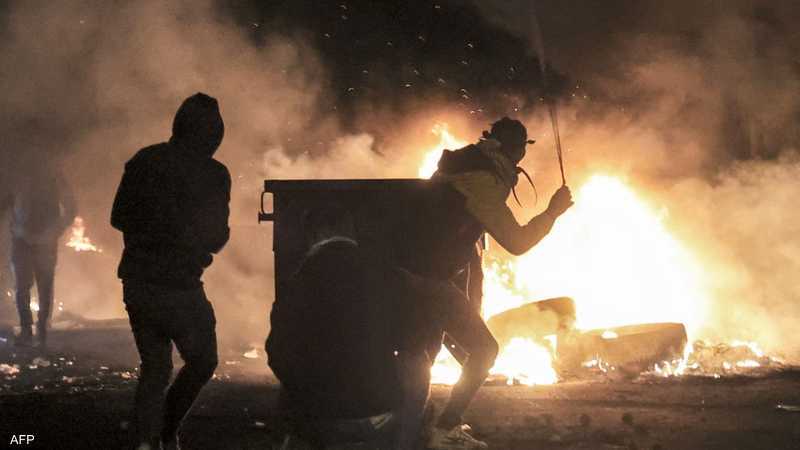
The Old City of Nablus witnessed violent clashes on Wednesday evening after a special force from the occupation army surrounded a café in the area.


The occupation forces sent heavy military reinforcements towards the western part of the town, where they arrested three young men, including an injured young man.


The Palestinian Red Crescent reported that a 26-year-old man was shot in the thigh with live ammunition and was rushed to the hospital for treatment.


The Palestinian Ministry of Health stated that the total number of injuries that arrived at Rafidia Governmental Hospital from the Old City of Nablus as a result of the occupation's aggression included a serious injury from live bullets in the back, two young men were moderately injured from live bullets in the leg and thigh, and a moderate injury as a result of assault.

ARAB AND WORLD

Wed 01 Jan 2025 10:06 pm - Jerusalem Time

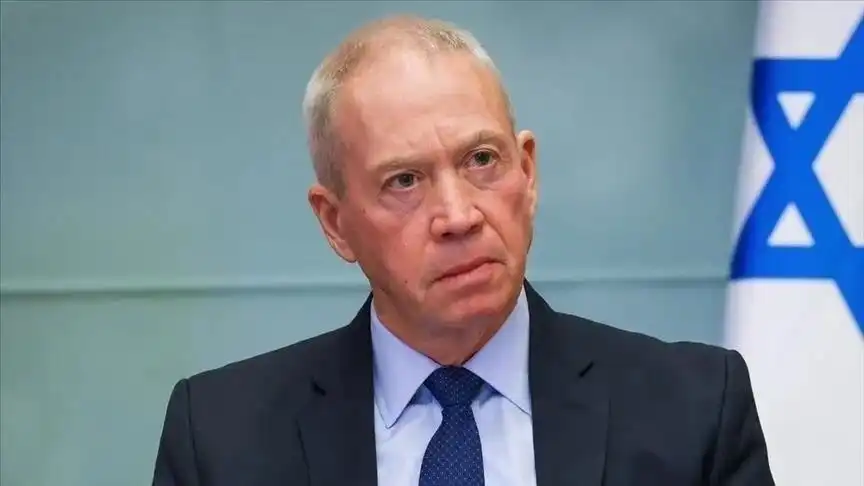
Former Israeli Defense Minister Galant resigns from Knesset

Former Israeli Defense Minister Yoav Galant said Wednesday he had resigned from parliament after often taking an independent line from Prime Minister Benjamin Netanyahu and his far-right allies in the government.


Netanyahu dismissed Galant from the government in November, after months of disagreements over how to manage the war on Hamas in the Gaza Strip, but he retained his seat as an elected member of the Knesset.


"Just as on the battlefield, so it is in public service. There are moments when one must stop, evaluate and choose a direction in order to achieve goals," Galant said in a televised statement.


Galant has frequently fallen out with Netanyahu and his allies in the far-right and religious coalition, including over exemptions for ultra-Orthodox Jews from military service, a hot-button issue in Israel.


In March 2023, Netanyahu fired Galant after he demanded a halt to a highly controversial government plan to reduce the powers of the Supreme Court. His dismissal sparked mass protests, prompting Netanyahu to back down.


The International Criminal Court has issued arrest warrants for Galant and Netanyahu, along with a Hamas leader, on charges of war crimes and crimes against humanity in the Gaza conflict. Israel rejects the court’s ruling on Galant and Netanyahu.


Abed Afif, a Druze, is expected to replace former Defense Minister Yoav Galant of the Likud, after his resignation from the Knesset, according to Hebrew media reports.


Afif was placed 44th on the Likud list in the 2022 Knesset elections, and if he enters the Knesset, Afif will be the only Druze lawmaker in the ruling coalition, according to the Times of Israel.

PALESTINE

Wed 01 Jan 2025 9:48 pm - Jerusalem Time

Katz threatens Hamas with attacks 'unseen in Gaza' for a long time

Israeli Defense Minister Yisrael Katz threatened Hamas on Wednesday evening that it would "receive the strongest blows that Gaza has not seen in a long time" unless it allows the return of prisoners held by it and stops firing rockets at Israel.


This came during his inspection of the city of Netivot in southern Israel, after it was targeted by two rockets from the central Gaza Strip at midnight on Tuesday/Wednesday. The Israeli army said it intercepted one of them and the other fell in an open area, according to the newspaper Yedioth Ahronoth.


"If Hamas does not soon allow the release of the kidnapped Israelis from Gaza, despite Israel's willingness to make far-reaching concessions, and continues to fire at Israeli towns - it will receive heavy blows that Gaza has not seen for a long time," Katz said.


He added that the Israeli army will intensify and strengthen its activities in Gaza until the kidnapped soldiers are released and Hamas is eliminated.

Hamas has repeatedly confirmed, over the past months, its readiness to conclude a prisoner exchange and ceasefire agreement, and even announced its approval last May of a proposal put forward by US President Joe Biden.


However, Netanyahu backed down from the proposal, putting forward new conditions, most notably the continuation of the genocidal war and the failure to withdraw the army from Gaza, while Hamas insists on a complete cessation of the war and a complete withdrawal of the Israeli army.


The opposition and the families of Israeli prisoners accuse Netanyahu of obstructing an agreement to preserve his position, as extremist ministers, including National Security Minister Itamar Ben-Gvir and Finance Minister Bezalel Smotrich, threaten to leave the government and bring it down if it accepts an end to the genocide in Gaza.


Tel Aviv continues its massacres, ignoring two arrest warrants issued by the International Criminal Court on November 21 against Netanyahu and former Defense Minister Yoav Galant, on charges of committing war crimes and crimes against humanity against the Palestinians in Gaza.


Israel has turned Gaza into the world's largest prison, besieging it for the 18th year, and the war of extermination has forced about two million of its citizens, numbering about 2.3 million Palestinians, to flee in tragic conditions with a deliberate severe shortage of food, water and medicine.


For decades, Israel has occupied lands in Palestine, Syria and Lebanon, and refuses to withdraw from them and establish an independent Palestinian state, with East Jerusalem as its capital, on the borders before the 1967 war.

PALESTINE

Wed 01 Jan 2025 9:38 pm - Jerusalem Time

Israeli occupation arrests an injured child from Hebron

The Israeli occupation forces arrested a child from the city of Hebron this evening, Wednesday.


According to local sources, the occupation forces stormed the house of citizen Ishaq Jaber in the Bab al-Zawiya area, and arrested his son Naseem (16 years old), after assaulting him, noting that he was shot in the foot by the occupation forces about a week ago.

PALESTINE

Wed 01 Jan 2025 9:04 pm - Jerusalem Time

UN: Pollution of drinking water in Gaza Strip has reached alarming levels

The United Nations Office for the Coordination of Humanitarian Affairs (OCHA) said that the pollution of drinking water in the Gaza Strip has reached alarming levels that harm the health of the population.


The United Nations added, in a post on the "X" platform, today, Wednesday, that recent monitoring of water quality in the Gaza Strip reveals alarming rates of pollution.


She explained that there is a UN mission in the displacement sites in Gaza City, and it found very poor conditions in terms of drinking water, sanitation and hygiene.


The United Nations indicated that the Palestinians in the Gaza Strip, exhausted as a result of the ongoing aggression for more than 15 months, in addition to the repeated displacement, are facing a severe and continuous water shortage.

PALESTINE

Wed 01 Jan 2025 8:59 pm - Jerusalem Time

Decision to stop broadcasting and freeze all activities of Al Jazeera satellite channel, its employees and its office in Palestine

The competent ministerial committee, consisting of the Ministries of Culture, Interior, and Communications, decided to stop broadcasting and freeze all the work of Al Jazeera TV and its office in Palestine, and to temporarily freeze the work of all journalists, employees, crews, and channels affiliated with it, until its legal status is rectified, due to Al Jazeera TV violating the laws and regulations in force in Palestine.


This decision came after Al Jazeera insisted on broadcasting provocative material and reports that were misleading, inciting sedition, tampering and interfering in Palestinian internal affairs.

PALESTINE

Wed 01 Jan 2025 8:12 pm - Jerusalem Time

Israeli occupation army announces the "neutralization" of a person who carried out a run-over attack west of Ramallah

The Israeli occupation army announced, on Wednesday evening, the "neutralization" of a person who carried out a run-over operation near the village of Deir Qadis, west of Ramallah.


According to local sources, the occupation army claimed that the driver of the vehicle intended to carry out a run-over operation against its soldiers in the area.


In the same context, the occupation army shot the driver of the car after he tried to run over a female soldier near Ramallah in the West Bank.

PALESTINE

Wed 01 Jan 2025 7:19 pm - Jerusalem Time

Two dead in Israeli bombing of Jabalia al-Balad, north of Gaza

Two citizens were killed, Wednesday evening, in an Israeli occupation bombing in the northern Gaza Strip.


Our correspondent reported that an Israeli drone bombed a group of citizens near Al-Halabi roundabout in Jabalia Al-Balad, north of the Strip, which led to the martyrdom of two citizens and the injury of others.


The Israeli occupation continues its aggression on the Gaza Strip, by land, sea and air, since October 7, 2023, which resulted in the death of 45,553 citizens, the majority of whom are women and children, and the injury of 108,379 others, in an incomplete toll, as thousands of victims are still under the rubble and in the streets, and ambulance and rescue crews cannot reach them.

ARAB AND WORLD

Wed 01 Jan 2025 6:59 pm - Jerusalem Time

Hezbollah threatens to respond to Israeli ceasefire violations 'at the appropriate time'

Amidst continued Israeli violations of the ceasefire agreement between the Hebrew state and Hezbollah, and the return of warplanes to intensive flights in Lebanese airspace, Hezbollah Secretary-General Naim Qassem began the new year on Wednesday by announcing “giving the Lebanese state a chance to prove itself” and “bear responsibility” for Israel’s withdrawal from Lebanon, while affirming that “the resistance has regained its health.”


Qassem said in a speech during a conference to honor cleric Mohammad Taqi Mesbah Yazdi in Tehran, which was broadcast via video technology: “The attack that took place in southern Lebanon is an attack on the (Lebanese) state and the international community.”


He added: "The resistance is continuing, it has regained its health, and it has the faith and the faithful group that enables it to become stronger."


He explained that "Hezbollah decided in the post-ceasefire phase to give the opportunity, and for the state to assume its responsibility, and to be a sponsor of the agreement, and the responsibility falls on it and on the countries sponsoring the agreement until Israel leaves Lebanon." He continued: "We proved through resistance that we did not allow the enemy to advance, and now is the opportunity for the Lebanese state to prove itself."


In the same context, member of the party's parliamentary bloc, MP Hussein Al-Hajj Hassan, pointed out that "since the cessation of hostilities, the enemy has been committing daily violations of this agreement, in many forms, including assassination, violence, killing, bulldozing orchards and homes, and incursions."


He said: “The areas that he could not reach during the aggression, he reaches today in many villages after the ceasefire, under the eyes of the five-member committee and international public opinion, and in the eyes of those claiming sovereignty, who did not utter a single word or statement, and they turned a deaf ear to national sovereignty and the international community that protects and colludes with the enemy, especially America and the five-member committee (to monitor the ceasefire). The collusion is clear and well-known, despite the Lebanese complaints, and America, France, the United Nations and the international community do not listen.”


Al-Hajj Hassan said: “The resistance is monitoring and following up on the violations of sovereignty. UNIFIL, which is supposed to have a role in implementing Resolution 1701, has received threats from the enemy. It is better for the great powers that are trusted by those claiming sovereignty to explain the violations and attacks that are taking place. What is happening reinforces our logic that the international community is complicit and does not protect. As for the resistance, it is monitoring and following up, and it will have the appropriate position and response at the appropriate time.”


Return of Israeli aviation

In addition, Israeli warplanes carried out a new round of intensive flights in the skies of the capital Beirut and the southern suburb, after a hiatus that lasted for days. Israeli aircraft also flew at low altitude in the skies of Sidon and its east.


Preparing for a major withdrawal of the Israeli army

Israeli violations of the ceasefire agreement in Lebanon continue, despite the announcement of the Israeli army's readiness to withdraw from southern Lebanon.


The Israeli Broadcasting Corporation (Kan) revealed that a month after concluding the ceasefire agreement with Lebanon, the Israeli army is preparing for a major withdrawal from southern Lebanon.


According to Kan, army camps will be built near the settlements adjacent to the border strip. It also said: “The withdrawal comes in coordination with the United States of America.”


Targeting Hezbollah elements and a weapons depot

Despite talk of the Israeli army withdrawing, Israeli army spokesman Avichay Adraee posted a video on the social networking site “X” on Wednesday morning, which he said showed “Hezbollah elements transporting combat equipment from a weapons depot in southern Lebanon to a nearby vehicle.”


"In a rapid surveillance and targeting operation, the vehicle and the weapons depot were attacked from the air to remove the threat," he added.


He pointed out that "the Israeli army remains committed to the understandings reached between Israel and Lebanon, and is deployed in the southern Lebanon region, to work to remove any threat against Israel."

ARAB AND WORLD

Wed 01 Jan 2025 6:52 pm - Jerusalem Time

Gaza ceasefire deal likely to slip through Biden's fingers

As January 1, 2025 approaches, 20 days before US President Joe Biden leaves office, ceasefire talks between Hamas and the Israeli government of Benjamin Netanyahu appear to have reached a dead end, making any agreement unlikely before the end of the Biden administration on the 20th of this month.


Hamas, which is holding dozens of Israelis, both military and civilian, in the Gaza Strip, which it seized in its bold attack that surprised Israel and the world on October 7, 2023, insists on Israel’s commitment to a permanent truce, something that the Israeli occupation authorities are currently ruling out.


The lack of progress toward a ceasefire and prisoner swap for Palestinians and Israelis is a blow to President Biden’s team, which has invested significant time and political capital in a futile push for an agreement, U.S. officials say. It is also a disappointment to Palestinians in Gaza, who have been subjected to nearly 15 months of bombing, massacres, starvation and destruction. They have been calling on social media for Hamas to accept a deal that would help end the war, even if it falls short of other goals such as freeing thousands of Palestinian prisoners in Israeli jails, something experts say is unlikely.


In Israel, the families of the detainees are putting intense pressure on Israeli Prime Minister Benjamin Netanyahu to strike a deal that would secure their release, arguing that every day of captivity puts their lives in danger.


Hopes for a deal in Gaza rose after the Lebanese Hezbollah militia agreed to a cease-fire with Israel on that front in late November. The deal left Hamas’s exhausted ranks isolated in its fight against the Israeli occupation army, and mediators hoped the cease-fire on the Lebanese front would create momentum for another deal.


Hamas told mediators at the time that it was willing to postpone discussion of a permanent end to the fighting in Gaza until later rounds of negotiations, raising hopes that at least some of the hostages could be released in exchange for a cessation of hostilities.


According to the mediators, the two sides were considering a 60-day ceasefire that would see the release of up to 30 hostages held in Gaza. In return, Israel would release Palestinian prisoners and allow more humanitarian aid into Gaza.


White House National Security Adviser Jake Sullivan said after a mid-December meeting with Netanyahu in Israel that he believed the release of the hostages and a ceasefire in Gaza were close.


But the talks stalled as they got deeper into details, and both sides hardened their positions. Mediators said Israel insisted on accepting only live hostages in any exchange and refused to agree to the release of some Palestinian prisoners sought by Hamas, while Hamas revived its demand for a way to end the war. Netanyahu’s office declined a request for comment but has publicly accused Hamas of reneging on its commitments.


Hamas has accused Israel of changing the terms of its demands but said the negotiations, though delayed, had not yet failed. “We are continuing to work on this as hard as we can to try to reach a ceasefire agreement before we leave office,” National Security Council spokesman John Kirby said Friday. “Hamas is putting up obstacles or refusing to move on any of these details, and that is why we have not reached a conclusion yet.”


A US official, who asked not to be named, said the structure of the potential deal had not changed since the spring, but the most important issue dividing the two sides now concerns Israeli detainees and Palestinian prisoners.


The collapse highlights the continuing mistrust and gaps between the two sides despite more than a year of heavy fighting and months of efforts by the United States, Egypt and Qatar to persuade the sides to reach an agreement. More than 45,000 Palestinians have been killed in Gaza, most of them women and children, since the October 7 attacks, according to Palestinian health authorities. Israel continues its brutal war on the Gaza Strip, which has been particularly brutal recently in the northern Gaza Strip.


Arab mediators have been quoted in several US media outlets as saying they expect the two sides to return to the negotiating table after the Trump administration takes office on January 20. President-elect Trump said on Truth Social that there would be “hell to pay” in the Middle East if the hostages were not released before he takes office. Israel says there are 96 hostages remaining in Gaza, most of them Israelis. They include dual nationals and at least 30 hostages Israel has concluded are no longer alive. With four additional hostages taken before October 7, 2023, the total number rises to 100.


But Hamas has so far refused to provide a full list of the hostages to the mediators, saying it needs more time and a cessation of hostilities to confirm their locations and conditions. In October, Israel killed Yahya Sinwar, the Hamas leader who had insisted that a deal must include a complete end to the war and the withdrawal of all Israeli forces from Gaza.


There is speculation that Hamas is now being led by a collective leadership, including officials from the Palestinian diaspora, until a successor to Sinwar is chosen. The mediators said Hamas is now demanding guarantees from the United States, Qatar and Egypt that negotiations on a permanent ceasefire and a full Israeli withdrawal from Gaza will continue after the initial deal is completed.


Most of Gaza's 2.2 million people (before the Israeli war began) have been displaced by the war, with many living in makeshift tent camps near the beach in southern Gaza. As temperatures drop and storms hit the enclave, Gazans say conditions in the camps have become increasingly harsh, with a number of children dying from freezing to death.

ARAB AND WORLD

Wed 01 Jan 2025 5:18 pm - Jerusalem Time

An exciting statement by Israeli foreign minister about the new administration in Syria

Israeli Foreign Minister Gideon Sa'ar said in statements to the official radio that the new administration in Syria is led by a very extremist jihadist group.


Sa'ar added that this administration will be evaluated based on its actions, noting that the current behavior does not seem encouraging.


In a related context, the US Embassy in Damascus affirmed, in a statement on the occasion of the beginning of the year 2025, the United States’ full support for the Syrian people and its aspiration for a brighter future for the country.


The statement said: “After five decades of tyranny by the Assad regime, Syrians have a rare opportunity to rebuild their country and achieve change.”


The embassy added that the United States is committed to working with the Syrian people to help them seize this historic opportunity.


She pointed out that Syrians today have a unique opportunity to reshape their country and build a new society that enjoys freedom and inclusiveness.


The embassy expressed its support for Syria's efforts to achieve a future of hope and prosperity, and affirmed its continued commitment to stand by the Syrian people at this pivotal stage in their history.

PALESTINE

Wed 01 Jan 2025 4:50 pm - Jerusalem Time

Criticism of Knesset preventing mother of Israeli prisoner in Gaza from entering parliament

Knesset security on Wednesday prevented the mother of an Israeli soldier held captive in the Gaza Strip from entering the parliament building, sparking sharp criticism.


Tel Aviv is holding more than 10,300 Palestinians in its prisons, and estimates that there are 100 Israeli prisoners in Gaza, while Hamas announced the killing of dozens of them in random Israeli raids.


"This morning I planned to come to the Knesset to present to the blindfolded (criticizing the members of parliament) the Health Ministry report explaining the hell that Matan (her son) and the other kidnapped people are living in," said Einav Tsingokar, the soldier's mother.


She added via the X platform: "Unfortunately, Knesset Speaker Amir Ohana, who is in the service of (Prime Minister Benjamin) Netanyahu, decided to silence me... The coalition members (government parties) are trying to silence the families of the kidnapped."


As of 10:15 GMT, the Knesset has not issued a statement on this matter.


The opposition and the families of Israeli prisoners accuse Netanyahu of obstructing an agreement to preserve his position, as extremist ministers, including National Security Minister Itamar Ben-Gvir and Finance Minister Bezalel Smotrich, threaten to leave the government and bring it down if it accepts an end to the genocide in Gaza.


With American support, Israel has been committing genocide in Gaza since October 7, 2023, leaving about 154,000 Palestinian martyrs and wounded, most of them children and women, and more than 11,000 missing, amid massive destruction and deadly famine.


Opposition leader and Yesh Atid party leader Yair Lapid, via X, described the Knesset's decision to bar Tsingokar from entering as "miserable and humiliating."


"The Knesset Speaker, government ministers and coalition MKs must listen with humility to what (Tsingokar) has to say and return her son to her, and not treat her like a gang of cowards," Lapid said.


MK Meir Cohen of the Yesh Atid party wrote on Twitter: "The decision to prevent Einav Tsinghaukar from entering the Knesset must be immediately rescinded. I have approached the Knesset Speaker with a request to address the issue."


Meanwhile, MK Gilad Kariv from the opposition Democratic Alliance described the ban decision as “another shameful chapter in the history of the Knesset,” calling for “the Knesset to dissolve itself.”


"There is no more appropriate way for this Knesset and its leadership to begin 2025 than to block the entry of Einav Tsinghakar," Kariv said via X.


He added, "The government is preventing the conclusion of a prisoner exchange deal, and the Knesset is preventing the entry of members of the families of the kidnapped."


Since the prisoner exchange within the only ceasefire in late November 2023, Netanyahu has hinted from time to time at progress in indirect negotiations, then he has gone on a rampage against the Palestinians.


For more than a year, Hamas has affirmed its readiness to conclude an agreement, and even announced its approval in May 2024 of a proposal put forward by US President Joe Biden.


However, Netanyahu backed down from the proposal by putting forward new conditions, most notably the continuation of the genocide and the failure to withdraw the army from Gaza, while Hamas insists on a complete cessation of the war and a complete withdrawal of the Israeli army.


Israel continues its massacres, ignoring two arrest warrants issued by the International Criminal Court on November 21 against Netanyahu and former Defense Minister Yoav Galant, for committing war crimes and crimes against humanity against the Palestinians.


For decades, Israel has occupied lands in Palestine, Syria and Lebanon, and refuses to withdraw from them and establish an independent Palestinian state, with East Jerusalem as its capital, on the borders before the 1967 war.

PALESTINE

Wed 01 Jan 2025 4:16 pm - Jerusalem Time

Israeli Channel: Netanyahu's Government Considers Occupying Gaza City

Channel 14 News, which is close to Israeli Prime Minister Benjamin Netanyahu, said the government is considering ordering the army to occupy Gaza City soon, due to the stalemate in prisoner swap negotiations, the channel reported.


The channel added on Tuesday evening that the government "is watching with great satisfaction the excellent results of the maneuvers carried out by the Israeli army in recent weeks in the northern Gaza Strip," referring to the invasion, ground incursion, and bloody aerial bombardment in areas of the Gaza Strip, and the accompanying ethnic cleansing and genocide that included the displacement of residents and the destruction of homes and hospitals.


The channel reported that the political level is considering issuing an order to the Israeli army to head south and occupy Gaza City in the near future, and said that this operation is possible now, "especially in light of the ceasefire in Lebanon and the availability of more army forces to carry out large-scale and prolonged maneuvers."


She added that the final decision on this matter has not yet been made, "as the political-security cabinet meeting, which was scheduled for tomorrow, Thursday, was postponed due to Netanyahu's admission to the hospital."


According to the channel, "Israel has begun to realize that the only thing that really hurts the Islamic Resistance Movement (Hamas) is the loss of territory, so we will not be surprised if we see the Israeli army occupying Gaza City soon."


PALESTINE

Wed 01 Jan 2025 4:06 pm - Jerusalem Time

Health: Collecting more than 3,000 units of blood for our people in Gaza

The Ministry of Health announced that more than 3,000 units of blood and blood products were collected, donated by citizens in the northern governorates for the benefit of our people in the southern governorates, as part of the fourth round of the “Our Blood is One” campaign.


The ministry explained in a brief statement today, Wednesday, that the campaign will continue until Wednesday evening, and blood units and blood products will be shipped tomorrow evening, Thursday, in cooperation with the Rahma Foundation around the world.


Minister of Health Dr. Majed Abu Ramadan said: “We will continue to work to provide everything our people in the southern governorates deserve, and the great turnout of donors in the fourth round of the “Our Blood is One” campaign is a confirmation of the great amount of giving among our one people.”

PALESTINE

Wed 01 Jan 2025 2:37 pm - Jerusalem Time

Six dead as Israeli occupation forces bombed a residential apartment in Shuja'iyya

Six citizens were killed and others were injured on Wednesday in an Israeli bombing that targeted a residential apartment in the Shuja'iyya neighborhood east of Gaza City.


Local sources reported that an occupation drone targeted a residential apartment of the Al-Suwairki family on Mashtaha Street in the Shuja'iyya neighborhood, which led to the death of six citizens, including three children and two women.


It added that the occupation's drones opened fire on residents in the Sheikh Radwan neighborhood, west of the city, which led to the injury of a number of citizens.

The Israeli occupation continues its aggression on the Gaza Strip, by land, sea and air, since October 7, 2023, which resulted in the death of 45,553 citizens, the majority of whom are women and children, and the injury of 108,379 others, in an incomplete toll, as thousands of victims are still under the rubble and in the streets, and ambulance and rescue crews cannot reach them.

PALESTINE

Wed 01 Jan 2025 1:53 pm - Jerusalem Time

Action Aid: 77% of Gazans do not receive the relief supplies they need

ActionAid Advocacy and Support Director Reham Al-Jaafari said that 77% of citizens in the Gaza Strip do not receive the relief supplies they need, which enter in very small quantities.


Al-Jaafari pointed out in an interview with Voice of Palestine Radio that the past three months were the most difficult for our people, in light of the spread of famine and diseases, the collapse of the health sector, the deterioration of tents, and the shortage of winter clothing.