PALESTINE

Wed 08 Jan 2025 9:49 am - Jerusalem Time

A Palestinian succumbed to his wounds from Israeli forces’ bullets in Tubas

A young man died today, Wednesday, from his wounds caused by Israeli occupation bullets in the town of Tamoun, south of Tubas.


The General Authority of Civil Affairs informed the Ministry of Health of the death of the young man, Abdul Rahman Muhammad Eid Bani Odeh (24 years old), who succumbed to critical wounds he sustained from the occupation’s bullets in the town of Tamoun yesterday, Tuesday.

PALESTINE

Wed 08 Jan 2025 9:40 am - Jerusalem Time

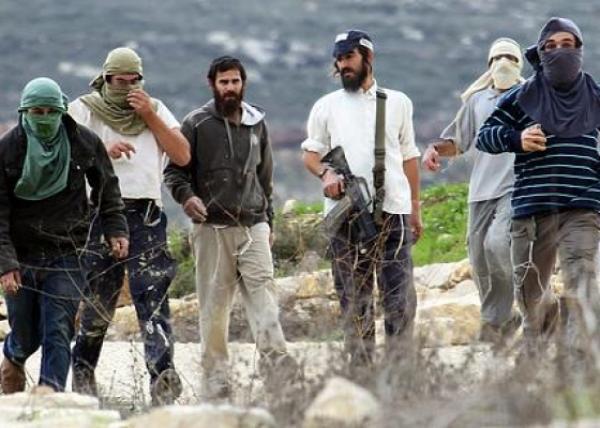
Israeli settlers attack citizens' vehicles south of Nablus

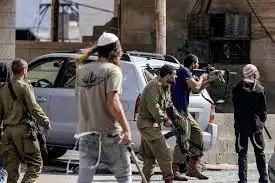
Today, Wednesday, settlers attacked citizens' vehicles near the town of Beita, south of Nablus.


Eyewitnesses reported that a group of settlers attacked citizens' vehicles by throwing stones near Mount Sabih, which is part of the lands of the town of Beita.

OPINIONS

Wed 08 Jan 2025 9:37 am - Jerusalem Time

Iron gates and military barriers

Bahaa Rahal

Bahaa Rahal

Opinion Writer

Iron gates and soldiers blocking the way for travelers, settlers with military equipment, permanent closures, and narrow, winding, twisting roads that are unfit for driving, without lighting or signs, with the deliberate prevention of the presence of police to supervise the implementation of the laws, prevent violations, and remove obstacles and impediments. This is what the occupation imposes to make the situation difficult and the circumstances impossible, amidst a complex life and living reality. In a narrow area called the West Bank, which is barely the size of a single city in the world, getting from Bethlehem to Ramallah is called a journey, and even an arduous journey fraught with extreme danger and suffering, and with the complications of military checkpoints and closed gates spread at the entrances to cities and villages, to disrupt people's lives and make things difficult for them.


What is happening in the West Bank in terms of political, economic and social strangulation is the result of a clear racist right-wing policy announced by the occupation, whose direct goal is to restrict people’s lives, strangle human life and make it a highly miserable place, with little security and safety, and turn cities, villages and camps into narrow prisons crowded with people, whose communication with each other is governed by the decision to open or close the iron gates and military checkpoints subject to the orders of soldiers.


A reality planned by the Netanyahu government for the West Bank to be like this, and everyone who lives in the West Bank feels this, and is forced to live it in a daily confrontation that is inevitable. This reality is carefully studied according to the policies of apartheid and oppression of the lives of Palestinians, the annexation and annexation of lands, the construction of settlements, the severing of the cities and villages from each other, and making the distance as long as the hours of the day, so you cannot reach your work, and if you do, you will not be able to accomplish what you traveled for, and an hour of travel from Bethlehem to Ramallah becomes five hours in traffic and perhaps more, and in this way the racism of the occupation continues to create a reality on the ground that is not livable.


The occupation does not care about imposing its policies on the ground, and it is enshrining a complete racist form that does not stop at certain borders, nibbling away at vast areas for the benefit of settlement operations and the construction of settlement roads, and at the same time it blocks the road in front of the Palestinians in every way, and imposes a confusing and difficult reality, within the plans of displacement, expulsion and Judaization of the land.


A policy pursued by the Netanyahu government, imposed by force of racist rampage, threats of further annexation and Judaization, and more arbitrary measures, all of which are happening simultaneously with the ongoing war of extermination and ethnic cleansing in Gaza. So who will stop this rampage? Who will prevent this arrogant right from implementing its plans?

ARAB AND WORLD

Wed 08 Jan 2025 9:32 am - Jerusalem Time

Iran rejects Macron's remarks on its role in the Middle East

Iran on Wednesday said French President Emmanuel Macron's comments that Tehran is the main security and strategic challenge in the Middle East were "baseless."


Iranian Foreign Ministry spokesman Esmail Baghaei described the remarks as "baseless, contradictory and based on speculation."


The spokesman called on France to "reconsider its unconstructive approaches to peace and stability" in the region.


He also considered Macron's statements about the Iranian nuclear file "deceptive."


Baghaei stressed that the Iranian program is "peaceful and falls within the framework of international law."


Macron said on Tuesday before French ambassadors at the Elysee Palace, "Iran is the main strategic and security challenge for France, the Europeans, the entire region and much beyond."


He warned that "the acceleration of its nuclear program is leading us to the point of collapse," stressing that the issue of Iran will be a priority in the dialogue he will initiate with the next US President, Donald Trump.


Tehran insists that its nuclear programme is for civilian purposes only and denies any intention of possessing nuclear weapons.


According to the International Atomic Energy Agency, Iran is the only country without nuclear weapons that has enriched uranium to 60%, close to the 90% needed to manufacture a nuclear weapon.


Tensions over Iran's nuclear program escalated after Washington, during Trump's first term, unilaterally withdrew from the nuclear deal that provided for the easing of Western sanctions on Tehran in exchange for curbing its nuclear ambitions.


PALESTINE

Wed 08 Jan 2025 9:25 am - Jerusalem Time

Salfit: Israeli occupation forces storm the town of Kafr ad-Dik in preparation for demolishing two houses

Today, Tuesday, the Israeli occupation forces stormed the town of Kafr ad-Dik, west of Salfit.


Local sources reported that the occupation forces stormed the Al-Shaab area west of the town, and headed towards two inhabited houses owned by the family of citizen Talab Dheeb, and demanded that they evacuate immediately, in preparation for their demolition.

ARAB AND WORLD

Wed 08 Jan 2025 9:22 am - Jerusalem Time

Israeli threat to Lebanon to postpone withdrawal.. Reading the fragile truce

Abdul Marouf: The Israeli army will continue its attacks and violations, but will not launch a large-scale war on Lebanon

Dr. Khaled Al-Azzi: The Israelis are working to create flimsy pretexts to continue their aggression, claiming that Hezbollah is continuing its violations

Nevin Abu Rahmoun: Hezbollah is currently adopting a military and security mentality that relies on reducing information and public statements

Rassem Obeidat: Hezbollah is closer to dissolving the agreement due to violations that have crossed all red lines

Dr. Hassan Marhej: The situation in Lebanon, especially in the south, is complex as a result of being affected by many regional and international factors.

Dr. Abdullah Nehme: Joseph Aoun is the most likely candidate for the presidency of Lebanon with Arab and international support and a large Lebanese consensus


The violations committed by the occupation army since the ceasefire agreement came into effect more than a month ago, which number more than 350 violations so far, clearly show the occupation state’s disregard for international agreements and norms, and reveal the truth of Israel’s intentions and plans for its forces to remain in Lebanon, especially in the areas south of the Litani River, which was officially issued by officials in Netanyahu’s government who said openly that they are not obligated to withdraw from southern Lebanon after the expiry of the sixty days stipulated in the agreement sponsored by the United States and France, and the ready excuse is Hezbollah’s failure to abide by its terms.


The recent statements of Hezbollah Secretary-General Sheikh Naim Qassem indicate the imminent explosion of the situation and the return of escalation, in light of the Israeli violations and breaches, as he said that resistance is a “cultural, religious, political and jihadi choice,” stressing that the opposite of resistance is “submitting to the enemy in what he wants to do for fear that he will harm us temporarily, but he takes everything for the future.”


Qassem explained that “the leadership of the resistance is the one that decides when to resist, how to resist, the method of resistance, and the weapon it uses,” stressing that “there is no timetable that determines the performance of the resistance, neither by agreement nor after the end of the 60-day period in the agreement. We said that we are giving an opportunity to prevent Israeli violations and implement the agreement, and that we will be patient. This does not mean that we will be patient for 60 days, nor does this mean that we will be patient for less or more than 60 days.”


Analysts and writers who spoke to "I" said that Israel is working to create flimsy pretexts to continue its aggression against Lebanon, claiming that Hezbollah continues its violations, stressing that Hezbollah is closer to dissolving the agreement due to the repeated violations that have crossed all red lines, but it is currently adopting a new military and security mentality that depends on reducing information and public statements.


The occupation army violated the agreement with Lebanon more than 350 times


Palestinian writer Abdul Marouf, who lives in Lebanon, said that since the signing of the ceasefire agreement on October 28, between Lebanon on behalf of Hezbollah and Israel, the Israeli occupation army has violated the terms of the agreement more than 350 times.


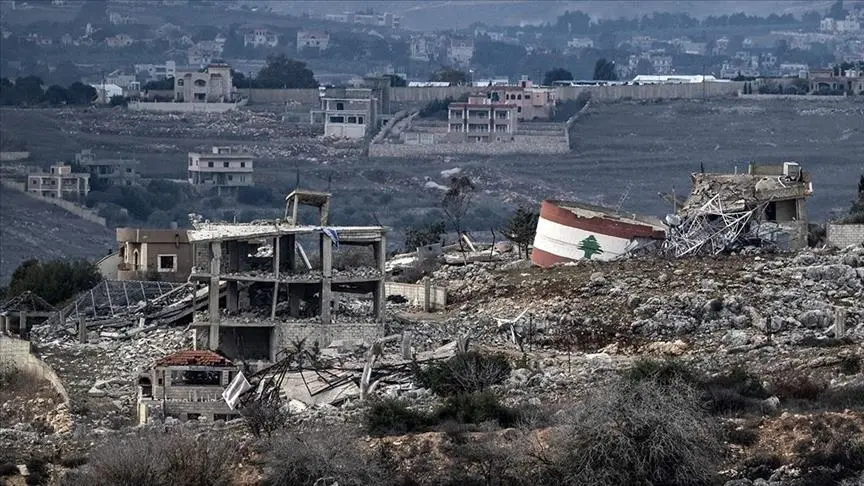
Marouf explained that these violations included the continued occupation of large areas of southern Lebanese territory, raids by Israeli warplanes on areas in southern Lebanon and deep inside Lebanese territory, in addition to the demolition and destruction of homes in occupied Lebanese towns and villages, and threatening residents of towns and villages in southern Lebanon not to return to their homes, properties and sources of livelihood.


Marouf pointed out that the Israeli occupation is still in a state of war with the Lebanese Hezbollah, and is still carrying out its aggressive actions despite Hezbollah’s commitment to the ceasefire decision and not responding to the sources of Israeli war fire. Hezbollah was satisfied that it would follow a policy of patience and waiting until then.


Marouf stated that in light of this military and political scene in southern Lebanon, the Israeli leadership is threatening that its army will not withdraw from the areas it occupied last summer, and it has confirmed that the army will remain in southern Lebanon until Hezbollah abides by all the signed terms and ensures the deployment of the Lebanese army in cooperation with the international emergency forces in the areas south of the Litani River.


Israel considers the ceasefire agreement a victory for it


He added: Tel Aviv accuses the Lebanese side of not withdrawing Hezbollah's elite forces and strategic weapons from southern Lebanon, and the Lebanese army has not yet deployed and taken over Hezbollah's sites and tunnels.


Marouf believes that the Israeli army will continue its attacks and violations, but will not launch a large-scale war against Lebanon as was the case last summer.


He pointed out that Tel Aviv sees the ceasefire agreement with Lebanon as a victory for it, and that it has guaranteed many of its goals, and therefore it is exerting pressure through its attacks on Lebanon to pressure the Lebanese government to withdraw Hezbollah forces and weapons, and hand over its positions under the supervision of the international emergency forces and the five-member committee.


He said: "In light of the deteriorating internal Lebanese situation, it seems that Hezbollah does not see that it is in its interest to have a large-scale war with the Israeli army, and therefore it is no longer in the interest of the Lebanese and Israeli sides to have a large-scale war in southern Lebanon."


Possibility of extending the truce with Lebanon for a month or two


Marouf expected that the visit of the American envoy, sponsor of the agreement, and with the approaching end of the truce on December 27, the international community would work with the approval of the parties to the Lebanese and Israeli conflict to extend the truce for another month or two, stressing that the Israeli army would not stop its attacks, aggression and violations against Lebanese sovereignty during this period.


Marouf pointed out that the difficult financial, economic, military and political conditions that Hezbollah and Lebanon in general are suffering from, in addition to the ambiguity of talk about the possibility of electing a new president for Lebanon on the scheduled date of January 9, will keep the military situation in southern Lebanon as it is in the coming days, not only because of the Israeli demands, but also because the Israeli Prime Minister believes that through war and aggression he will achieve his goals of eliminating the resistance in the Gaza Strip and southern Lebanon.


The situation in southern Lebanon is still very difficult.


For his part, Lebanese analyst Dr. Khaled Al-Azzi confirmed that the situation in southern Lebanon is still very difficult, as the Israelis continue to carry out their attacks within the framework of the agreed-upon terms. This is represented in responding to what they see as a security or abnormal threat through air strikes and the use of drones, under the pretext of targeting Hezbollah military sites.


He believes that the Israeli side claims that Hezbollah has not implemented the agreed-upon terms yet, and seeks through its Chief of Staff and Minister of Defense to emphasize that if Hezbollah does not commit to implementing Agreement No. 1701, Israel will be obligated to either withdraw from this agreement or extend it for a future period.


Al-Azzi stressed that the Israelis are working to create flimsy pretexts to continue their aggression against Lebanon, claiming that Hezbollah is continuing its violations and preventing the implementation of the decisions that allow the Lebanese army and the international emergency forces to deploy south of the Litani River.


The Lebanese army takes over only two towns!


He said: "So far, the Lebanese army has only taken over two towns. The first is the town of Khiyam, where the army has begun work on removing mines and war remnants, in addition to removing the rubble and recovering the bodies that are still under the rubble.


Yesterday, the Israelis agreed to hand over the town of Naqoura to the Lebanese army, so that its forces could withdraw to the Ras al-Naqoura area.


However, Al-Azzi stressed that the Israeli army continues its clear violations, such as storming, burning, or demolishing homes, under the pretext that they pose a strategic threat. The Israelis insist on removing Hezbollah to the north of the Litani River and handing over its weapons to the Lebanese state.


He pointed out that the Israelis claim that the Lebanese army is not yet ready to take over these areas and search for weapons, warehouses and tunnels. The Israelis justify their violations with security arguments to ensure their continued presence in the region, claiming that there is a permanent threat in southern Lebanon, which justifies their continued military preparations and targeting.


Al-Azzi explained that the Israelis intend to strengthen their security measures, including the establishment of new barriers to protect the border settlements. Some wonder whether these barriers will be concrete walls similar to the apartheid wall in Jerusalem, or violent security measures that prevent residents of the southern villages from returning to their homes.


Hezbollah is trying to circumvent the agreement!


In contrast, Al-Azzi said that Hezbollah is trying to circumvent the agreement it signed, which indicates the responsibility of the Lebanese state to implement it. So far, the details of the agreement have not been clearly revealed, whether it is related to the withdrawal only north of the South Litani area, or the gradual handover of weapons and the drawing of borders.


He said that the new statements of the Secretary-General of Hezbollah confirm that the party has regained its strength and is ready to respond if the truce ends, adding: The party says that Israel bears responsibility for violating the agreement, and that the Israeli occupation of the southern territories will justify Hezbollah's resumption of resistance operations.


Al-Azzi stressed that this escalation redirects the scene towards a new cycle of conflict, as Israel exploits these circumstances to continue its violations, including the use of drones and targeting Lebanese sovereignty, without reaching a clear understanding that guarantees the protection of Lebanon's security and sovereignty.


The new regional reality and Israeli plans


In turn, political analyst specializing in Israeli affairs, Nevin Abu Rahmon, confirmed that she is not convinced that Israel will abide by the ceasefire.


She pointed out that there are two main reasons behind this: the first is Israel's failure to achieve its most important goal of eliminating the resistance, and the second is its exploitation of the new Syrian situation, which represents a gateway to bypass Lebanon again, with the aim of achieving the goal that was not achieved in the war, which is crushing the resistance.


Abu Rahmon explained that the new regional reality has given Israel the opportunity to continue its war through other means, pointing to the existence of a broad political project that includes Syria, Iraq, and Lebanon, and even extends to many Arab countries.


Abu Rahmon pointed out that Israel has strategic plans based on the doctrine of "Greater Israel", which reflects its expansionist ambitions aimed at changing the geography and sovereignty in the region to achieve control over natural resources such as water, gas and sea destinations.


Abu Rahmoun referred to the speech of Hezbollah Secretary-General Sheikh Naim Qassem, and said, "The party appears different this time as a result of the lessons and morals learned from the war."


Hezbollah is currently adopting a new military and security mentality.


She explained that Hezbollah is currently adopting a new military and security mentality that relies on reducing information and public statements related to its military capabilities, readiness, and future plans.


She added: "We no longer hear threats at the level of deterrence as was customary in the party, and there is no participation in military or security details, nor even in publicly revealing breaches."


She stressed that the party's military strategy and combat doctrine are witnessing a transformation at this stage, a transformation stemming from the party's internal circumstances and regional changes.


She pointed out that this change reflects the flexibility of the resistance and its ability to adapt and recover, in line with the lessons learned from the war, which contributes to changing the paths of the party's security mentality.


She explained that this new strategy shows strength and balance in dealing with Israel, which is a security and colonial case, in addition to taking into account the internal Lebanese affair and Syrian developments.


Abu Rahmon concluded her speech by saying: “This stage is one of the most difficult stages that our Palestinian people, and indeed the entire Arab nation, are going through, in terms of identity and the features of the region. The coming days will be difficult on all levels.”


Netanyahu seeks to impose new deterrent equations


Writer and political analyst Rasim Obeidat said that the armistice agreement in southern Lebanon, based on UN Resolution 1701, is facing the risk of collapse in light of the continued intensive Israeli violations and geostrategic shifts in the region.


Obeidat confirmed that Israel has violated the truce more than 380 times since the signing of the agreement, as it launched raids and bombed Hezbollah sites, and targeted the Bekaa and the border crossings between Syria and Lebanon.


He explained that Israeli Prime Minister Benjamin Netanyahu seeks to impose new deterrent equations based on the "battle between two wars" strategy, taking advantage of regional changes, especially in Syria.


Obaidat pointed out that the committee supervising the implementation of the agreement, which includes the United States and France, is completely biased towards Israel, which reinforces its sense of immunity and encourages it to expand its attacks.


He added that the international community has not taken any steps to pressure Israel to stop its violations.


Obeidat believes that Hezbollah made a mistake by accepting to abide by the agreement without referring to the Security Council, and today it is giving the Lebanese state an opportunity to deal with the Israeli violations.


However, he stressed that the party was closer to dissolving the agreement due to the repeated violations, which crossed all red lines.


Incident of inspection of the plane returning from Iran


He said: "In recent statements, Hezbollah's Deputy Secretary-General, Naim Qassem, confirmed that the resistance's patience is linked to its decision regarding the timing of the response to Israeli violations."


He added: "The leadership of the resistance is the one that decides when and how to confront the aggression," noting that the resistance's patience may run out before the 60-day deadline for the agreement expires.


Obeidat pointed out that Israel is working to exploit the current circumstances to strengthen its control, including destroying Hezbollah's tunnels and infrastructure and building a new defense system in southern Lebanon.


He added that US support for Israel, including an $8 billion arms deal, bolsters Tel Aviv's plans for regional hegemony.


On the domestic front, Obeidat stressed that some Lebanese political forces allied with the West are seeking to weaken the resistance and destabilize national unity.


He referred to the incident of searching the Lebanese plane returning from Iran, which targeted passengers from a certain sect, considering it an indication of attempts to inflame sectarian divisions.


Obaidat explained that the truce agreement in the south faces major challenges, in light of ongoing Israeli violations, clear international bias, and complex regional transformations. He said, "With the 60-day deadline approaching, it seems that the region is heading towards a potential escalation, amid the absence of any signs of a comprehensive political or security solution."


Escalation in Lebanon is not ruled out


In turn, the expert in Middle East affairs, Dr. Hassan Marhej, confirmed that the situation in Lebanon, especially in the south, is complex as a result of being affected by many regional and international factors.


He pointed out that the ceasefire file and the implementation of the agreement decision are governed by a number of scenarios that may vary according to developments in the scene.


Marhej explained that if the Israeli violations continue and the Lebanese government and Hezbollah refuse to implement the agreements, we may witness a military escalation. It is expected that Hezbollah will respond to these violations, which will lead to a new round of confrontations and the renewal of the war.


He stressed that such a scenario requires a political settlement that the parties concerned with the Lebanese file, including the United Nations and major powers, are working on to ensure Israel's withdrawal and the establishment of borders, which may contribute to calming the situation.


Marhej stressed that failure to reach an agreement could lead to continued exchange of violations and threats, which would exacerbate the suffering of civilians in the region.


He added: This scenario calls for international intervention through monitoring missions or diplomatic pressure to impose an agreement that ensures stability in the south and prevents escalation.


Marhej stressed that the proposed scenarios depend on how the concerned parties interact with events on the ground.

At the end of his interview with Al-Quds, Marhej pointed out the important role of regional and international powers in finding practical and sustainable solutions that guarantee stability in Lebanon and reduce tension between the Lebanese and Israeli sides.


Lebanon's infrastructure will be the target of any potential escalation


Lebanese analyst Dr. Abdullah Nehme said that under the assumption that war will return to Lebanon, the infrastructure throughout Lebanese territory will be subject to major targeting, which did not happen in the last aggression on Lebanon.


He explained that the cost of destroying this infrastructure would be very huge, and could exceed two billion US dollars within only 15 days of the aggression.


"The tourism sector, which lost about 3 billion US dollars last year, will witness additional huge losses in the event of a new aggression," Nehme added.


He also pointed out that the GDP could suffer a significant decline of more than 10% per day if economic activity is targeted as a result of a military escalation.


Nehme touched on the Lebanese presidential elections scheduled for January 9, expecting that Joseph Aoun would be the most likely candidate with Arab and international support and a large Lebanese consensus.


He stressed that Saudi Arabia and Egypt support this trend, which bodes well for Lebanon's return to the path of economic prosperity and reconstruction.


He also pointed out that Lebanon today enjoys international attention that it has not witnessed since its independence in 1943, while stressing the implementation of UN Resolution 1701 to the letter without amendment.


Nehme expressed his confidence in Lebanon's future, which will witness excellent relations with all countries of the world, noting that the country has become under international care after it moved away from the Iranian axis, which no longer has an influence on Lebanon, and its influence will also decline in Syria and Gaza soon.

PALESTINE

Wed 08 Jan 2025 9:13 am - Jerusalem Time

Pursuing occupation soldiers in world capitals... "Hind Rajab" pursues killers and impunity is a thing of the past

Dr. Raed Abu Badawiya: Trial of war criminals before national courts in some countries thwarts the American project to impose sanctions on those cooperating with the "Criminal"

Talal Okal: International accountability will open the door to prosecuting Israel as a state and society, which will force a radical review of its policies and future strategies.

Nour Odeh: These steps contribute to creating a feeling among Israeli soldiers that they are being persecuted and break the feeling of protection from accountability.

Muhammad Abu Allan Daraghmeh: The occupying state has begun to realize that there are international bodies working to hold it accountable and that these measures constitute increasing political and legal pressure on it.

Daoud Kuttab: International moves to hold war criminals accountable will accelerate with the presence of broad networks of human rights activists and activists seeking to implement international law

Yasser Manna: Lapid's statements about the Palestinians' superiority in the international arena carry an implicit admission of Israel's declining ability to influence international public opinion


The international arena is witnessing a qualitative shift in dealing with the Israeli crimes committed against the Palestinian people, with the escalation of efforts to hold Israeli soldiers accused of committing war crimes accountable, in remarkable developments that have emerged in countries such as Brazil and Sri Lanka, where local courts have begun to take serious steps to prosecute the perpetrators of these crimes, reflecting the escalation of international pressure to stop the policy of impunity that Israel has long relied on.


In separate interviews with “I”, writers, political analysts, specialists and university professors confirm that the national courts in these countries’ initiation of prosecution of Israeli soldiers shows a new development in the work of international and local human rights institutions, which seek to promote international justice. They point out that the “Hind Rajab” Foundation, which filed the complaint in Brazil, is a prominent example of the organized efforts of international human rights institutions.


Writers, analysts, specialists and university professors believe that these steps, although local in nature, complement international efforts represented by the International Criminal Court, which issued arrest warrants against Israeli Prime Minister Benjamin Netanyahu and former Defense Minister Yoav Galant, confirming that this approach represents a clear message to everyone involved in war crimes that they will not be immune from accountability, whether they are political leaders or soldiers in the field.


They believe that Israel faces increasing diplomatic challenges as global public opinion changes towards it, as reflected in the statements of Israeli opposition leader Yair Lapid, in which he acknowledged the superiority of the Palestinians in the international arena, and which reflect internal concerns about losing control over the international narrative, which puts Israel in an unprecedented defensive position and opens the door to accelerating legal prosecutions in various countries around the world.


Increasing international efforts to activate the principle of "universal jurisdiction"


Dr. Raed Abu Badawiyeh, Professor of International Law and International Relations at the Arab American University, believes that the recent remarkable developments in the international arena in dealing with Israeli war crimes, where international courts, most notably in Brazil and Sri Lanka, have begun to take serious steps to try Israeli soldiers accused of committing war crimes and crimes against humanity, are part of growing international efforts to activate the principle of “universal jurisdiction,” which allows war criminals to be held accountable in the national courts of countries, regardless of their nationality or the place where the crimes were committed.


Abu Badawiya believes that Brazil's move, in particular, to prosecute and prosecute Israeli soldiers who committed crimes of genocide in Gaza reflects serious activity by human rights institutions supporting Palestine at the global level.

Abu Badawiya points out that the Hind Rajab Foundation, which filed the complaint in Brazil, is a prominent example of the organized efforts of international human rights institutions.


According to Abu Badawiya, this organization bears the name of a child who was martyred in Gaza. It operates from its headquarters in Belgium and works globally to initiate criminal lawsuits against perpetrators of war crimes.


Abu Badawiya explains that these efforts reinforce the idea of activating the principle of universal jurisdiction in national courts, which allows for the trial of war criminals and perpetrators of genocide in the courts of member states of the International Criminal Court, stressing that these moves represent the beginning of a broader activation of this principle, which is an important development towards achieving international criminal justice.


Abu Badawiya points out that these steps come in the context of increasing pressure on Israel since the issuance of international arrest warrants against Israeli Prime Minister Benjamin Netanyahu and former Defense Minister Yoav Galant. With the escalation of international efforts, complaints are no longer limited to political leaders, but have also begun to target soldiers and officers who participated in military operations against the Palestinians.


Abu Badawiya believes that these moves not only constitute legal pressure on Israel, but also contribute to its diplomatic embarrassment on the international scene, and limit the ability of the United States to protect Israel from legal accountability, as the trial becomes not only before the International Criminal Court.


He points out that there is a US bill under consideration that aims to impose sanctions on anyone who cooperates with the International Criminal Court, which reflects the extent of the political pressures facing the court, but activating national trials in countries relieves that pressure on the ICC and could be an attempt to thwart US efforts to pressure the court.


Abu Badawiya believes that prosecuting Israelis who hold dual nationalities represents an additional pressure tool on Israel, noting that many Israelis hold European nationalities, which opens the way for the courts of those countries to prosecute them based on their national laws.


Abu Badawiya stresses that this type of trial could put great pressure on the Israeli government and the military establishment, especially in light of the growing fears of the prosecution of soldiers and officers who participated in the recent aggression on the Gaza Strip.


On the other hand, Abu Badawiya refers to the statements of the leader of the Israeli opposition, Yair Lapid, in which he expressed his concern about the superiority of the Palestinians over the Israelis in the international arena, as they reflect an implicit admission of the failure of Israeli diplomacy in confronting the Palestinian narrative, which has become more influential on world public opinion.


Abu Badawiya explains that the human rights and media institutions supporting Palestine played a major role in exposing the crimes of the Israeli occupation, which led to strengthening the status of the Palestinian narrative at the international level.


Abu Badawiya believes that traditional media and social media platforms have contributed greatly to revealing the facts, which made it difficult for the Israeli media machine to cover up the crimes committed in the Gaza Strip.


According to Abu Badawiya, the next stage is expected to witness an escalation in legal efforts against Israeli soldiers, with the increasing evidence and complaints submitted by international human rights institutions.


Abu Badawiya points out that European countries such as Belgium have already begun to implement the principle of universal jurisdiction, which enhances the chances of holding Israeli war criminals accountable.


He believes that activating this principle, in addition to prosecuting dual nationals, may lead to creating a state of increasing pressure on Israel, which contributes to strengthening international efforts to hold accountable those who commit crimes against the Palestinians.


Abu Badawiya expressed his hope that the International Criminal Court would be able to overcome the political and legal pressures imposed on it, especially from the United States, noting that the steps taken by countries such as Brazil could provide moral support for the court, encouraging it to proceed with issuing new arrest warrants against Israeli officials.


He points out that international efforts to hold Israel accountable represent an important step towards achieving criminal justice, stressing the need to continue legal and diplomatic pressure to ensure that perpetrators of crimes against the Palestinian people are held accountable.


Abu Badawiya stresses that the combined efforts of international and national human rights institutions can contribute to strengthening the process of accountability, and place Israel before a new wave of international isolation and legal trials.


Israel continues to bet on America to avoid accountability


Writer and political analyst Talal Okal points out that Israel, which has long disregarded the decisions of the International Criminal Court and the International Court of Justice, as well as numerous investigations accusing it of committing genocide and crimes against international humanitarian law, continues to bet on American protection to avoid international accountability.


This approach, according to Okal, is misleading to Israeli society and concealing the dangers that await the Israeli state and society due to the crimes committed.


Okal explains that there are tangible developments that indicate the expansion of the scope of international accountability against Israelis, as some countries, including countries that have good relations with Israel, have begun to take strict vetting procedures related to granting visas to Israeli citizens. These procedures include a careful review of the history of applicants for military service, and investigations into their possible involvement in violations of international laws.


This trend, according to Okal, reflects a widespread international readiness to pursue and hold accountable hundreds or thousands of Israelis involved in crimes, making the issue a concern for all of Israeli society, not just the government.

Awkal stresses that the repercussions are not limited to political and military institutions, but extend to individuals and institutions, as everyone who has reached the age of conscription in Israel is required to carry out service orders, whether regular or reserve.


Awkal believes that the danger of this situation goes beyond internal political maneuvers and attempts by parties to exploit the issue, as it relates to the fate of an entire country and its society at the level of individuals and institutions, even if governments and titles change.


Okal asserts that Israeli society faces an existential challenge that goes beyond immediate calculations, considering that this international accountability will open the door to prosecuting the Israeli state and society as a whole, which imposes a radical review of its policies and future strategies.


A natural development of the work of international and local human rights institutions


Nour Odeh, a writer and political analyst specializing in diplomatic affairs and international relations, confirms that the steps that began in Brazil and Sri Lanka, and similar efforts in other countries, to prosecute Israeli soldiers accused of committing war crimes, reflect a natural development in the work of international and local human rights institutions.


The return of these local trials, based on national laws or international law, is an important development in the process of holding perpetrators of serious crimes accountable, especially those who hold dual nationality.


Awda stresses that these courts are not international, but rather local courts in which cases are brought individually in the countries concerned. However, they complement international efforts to hold Israeli war criminals accountable, such as the orders issued by the International Criminal Court to arrest Israeli Prime Minister Benjamin Netanyahu and former Defense Minister Yoav Galant.


Awda explains that these steps contribute to creating a feeling among Israeli soldiers that they are being pursued for their actions, which breaks the sense of protection from accountability that they have long relied on.


Awda stresses that this effort does not replace the role of the International Criminal Court, but it enhances the efforts of international justice and puts Israeli soldiers and officials in a state of constant anxiety.


Awda believes that the soldiers’ cold-blooded publication of photos and videos of their crimes has now become a weapon that can be used as evidence in international and local courts.


Awda spoke about the changes in global awareness towards Israel, considering that the world has begun to realize the seriousness of the crimes committed by the occupying state, not only in Gaza, but also in the West Bank, including Jerusalem.


Awda points out that this shift is not limited to supporting the Palestinians, but also stems from a global awareness that normalizing Israeli crimes means opening the way for their repetition in other places around the world, which threatens the entire international justice system.


Awda explains that there are countries that have already begun taking practical steps, such as South Africa, which informed its citizens who hold dual citizenship that it will open investigations into their participation in service in the Israeli occupation army.


Awda believes that these transformations indicate that the world is fed up with Israel’s crimes, even if these transformations are not reflected in government policies in some countries because of their connection to political or economic interests with Israel.


Awda discussed the statements of the Israeli opposition leader Yair Lapid, who indicated that the Palestinians have outperformed the Israelis in the international arena, describing these statements as reflecting an internal Israeli crisis, as the Israeli media is trying to mislead the people and obscure the extent of international condemnation of Israel’s crimes, especially in Gaza.


Awda expected that the legal prosecutions against Israeli soldiers would escalate, noting that there are hundreds of published evidences and documents proving that they committed crimes against Palestinian civilians in Gaza and the West Bank.


Awda confirms that these steps come within the framework of preserving the international justice system that was built over 80 years, as many countries in the world today refuse to abandon this system in favor of protecting Israel from accountability.


Awda points out that Israeli soldiers now fear traveling to many countries because of the possibility of being prosecuted legally, considering that this feeling of fear is a natural result of the accumulation of legal and diplomatic efforts, which must be built upon to achieve justice.


Awda asserts that Israel today faces unprecedented challenges on the international scene, as it is no longer able to cover up its crimes as easily as it did in the past. Although the road is still long, the accumulation of these efforts puts Israel in a defensive position and strengthens hope for holding the perpetrators of crimes accountable and achieving justice for the Palestinian people.


A snowball that expands over time.


The writer and expert on Israeli affairs, Muhammad Abu Allan Daraghmeh, confirms that the steps taken recently by the Brazilian court, and before it by a court in Sri Lanka, to arrest and investigate Israeli soldiers for committing war crimes, represent a major and unprecedented development in the pursuit of Israeli soldiers involved in committing crimes against humanity.


Draghmeh points out that the occupying state has begun to realize that there are serious international bodies working to hold it accountable, even if they do not succeed in prosecuting it completely, as these measures constitute increasing political and legal pressure on it.


Draghmeh asserts that despite the Israeli soldier’s escape from the Brazilian court, the matter reflects the efforts made to document crimes and prosecute their perpetrators. These steps also show a change in the global judicial approach towards Israel, as 12 attempts to prosecute Israeli soldiers in international courts have been documented in recent months.


According to Draghmeh, these efforts could turn into a “snowball” that expands over time if the necessary executive tools and international support are available.


Draghmeh stresses that the success of these efforts requires global cooperation and a retreat from the policy of collusion pursued by many countries with Israel, which hinders the progress of criminal cases against it.


Draghmeh points to the international efforts supporting the Palestinians that seek to document the crimes, as what the Israeli soldiers themselves publish on social media sites has been monitored, and their data, names, photos and locations are documented.


It is expected that international measures will escalate against Israeli soldiers involved in war crimes, noting that there are lists that include hundreds, and there are those who spoke about thousands of soldiers whose names and photos were documented on social media sites, and these data have become part of international efforts to prosecute them legally.


Draghmeh points out that some Israeli journalists recently spoke about Israeli soldiers who asked not to be photographed during their visit to military sites in southern Lebanon and the recently occupied southern Syrian territories, for fear that these photos would be used to prosecute them internationally.


Despite the important developments in the international arena, Draghmeh stresses that what is more important than media deterrence is achieving field deterrence on the ground, to stop the crimes of genocide and violations committed against the Palestinians.


Draghmeh believes that this requires a strong executive body at the international level that works seriously to implement these prosecutions and transform them into effective pressure tools against Israel.


Regarding the statements of the Israeli opposition leader Yair Lapid, in which he asked about the stage at which “the Palestinians have surpassed the Israelis in the international arena,” Draghmeh believes that these statements come within the framework of internal political disputes in Israel.


Draghmeh explains that the Israeli opposition, led by Lapid, no longer has a strong influence on the course of events inside Israel.


Draghmeh points out that Lapid's statements cannot be separated from the context of the political conflict between him and Netanyahu. While it was expected that he would defend the soldiers because the issue concerns the military institution, he chose to direct criticism at Netanyahu's government, in an attempt to achieve political gains at Netanyahu's expense.


Countries that supply weapons to war criminals are complicit in the crimes.


Writer and political analyst Daoud Kuttab explains that the Rome Statute of 1998, which established the International Criminal Court, represents one of the fundamental pillars of international law in the prosecution of war criminals. This treaty, which was signed by 120 countries around the world from the five continents, includes all countries of Europe, South America and Australia, while 112 countries have committed to incorporating its provisions into their national legislation, making it legally binding on these countries.


Writers point out that commitment to the provisions of the Rome Statute includes cooperation with the International Criminal Court in arresting and surrendering war criminals, which is an international legal responsibility that falls on all signatory states.


Writers assert that countries that supply war criminals with weapons and ammunition are considered partners in crimes according to international humanitarian law, which exposes them to legal accountability.


Writers believe that international movements to hold war criminals accountable will continue and accelerate, especially with the presence of broad networks of human rights activists and activists around the world who work to implement international law.


These efforts, according to the writers, are not limited to pursuing the individuals involved only, but extend to include countries and institutions that support or collude with the perpetrators of the crimes.


In a related context, writers discussed the statements of the Israeli opposition leader, which included an implicit admission of the decline in Israel’s ability to control international public opinion.


Writers explain that these statements reflect the reality that Israel is trying to deny to its people through media outlets that deliberately ignore the crimes committed in Gaza and the global reactions to the “genocidal war.”


Writers confirm that digital media and social media platforms have become effective tools in exposing violations, making it difficult for Israel to cover up what is happening in Gaza.


Writers believe that the opposition leader's admission reflects growing internal concern about the repercussions of the ongoing crimes on the international scene, in light of the increasing calls to hold those responsible for these violations accountable before international courts.


The writers stress the importance of escalating international legal and diplomatic efforts, considering that continuing pressure on Israel represents a necessary step towards achieving justice and holding accountable those who committed crimes against the Palestinian people.


Signs of a decline in Israel's immunity


Writer and expert on Israeli affairs Yasser Manna believes that the legal steps taken by courts in countries such as Brazil and Sri Lanka against Israeli soldiers accused of committing war crimes carry profound implications for the decline of the immunity that Israel has enjoyed for decades at the international level.


Manna believes that these legal steps show an increasing willingness on the part of international courts to deal seriously with accusations of war crimes committed in the Palestinian territories. This trend is an indication of the escalation of international pressure against Israel, as countries become more daring in confronting human rights violations committed by the occupation forces.


Manna asserts that this shift exposes Israeli officials to the possibility of legal accountability, which opens the door to a new wave of international legal proceedings that may affect Israeli leaders and soldiers alike.


On the political level, Manna believes that these developments enhance support for the Palestinian cause by highlighting the violations suffered by the Palestinian people. They also embarrass Israel internationally and portray it as a state that defies international laws, which could lead to tension in diplomatic relations with countries that adopt such legal steps.


Manna points out that these measures may contribute to strengthening Israel's international isolation in the long term, especially if countries and courts continue to prosecute Israeli soldiers involved in genocide and human rights violations.


Regarding the statements of Israeli opposition leader Yair Lapid, in which he expressed his surprise at the Palestinians’ superiority over the Israelis in the international arena, Manna believes that they reflect growing internal fears of this shift.


Mana believes that Lapid's statements carry an implicit admission of Israel's declining ability to influence international public opinion, which reflects the weakness of Israeli diplomacy in the face of the growing wave of international sympathy for the Palestinian cause.


Manna points out that these statements come in the context of the Israeli opposition’s criticism of the current government, holding it responsible for failing to confront international changes. They also reflect fears that the continuation of this trend may lead to an escalation of legal and diplomatic pressures on Israel, which may lead to serious repercussions on the level of international relations, especially with its traditional allies.


According to Manna, there are strong indications that legal action against Israeli soldiers may escalate in the near future, and as evidence of hundreds of soldiers’ involvement in genocide and human rights abuses grows, the international community is becoming more willing to hold these soldiers and officials accountable.


Manna points out that the intensive activity of human rights organizations enhances the momentum of these measures, as these organizations strongly push for holding those responsible for the violations accountable, which places Israel before more trials that affect its leaders and soldiers.


In another context, Manna believes that the change in the international climate and the increase in popular support for the Palestinian cause are two decisive factors in pushing more countries to file legal cases against Israel. With the continuation of escalatory Israeli policies, Israel may find itself facing a growing wave of international isolation, accompanied by escalating legal and diplomatic pressures.


Manna asserts that these developments pose a strategic challenge to Israel, as the possibility of international accountability looms on the horizon in an unprecedented manner, which could lead to serious repercussions that threaten its political and diplomatic standing on the world stage.


PALESTINE

Wed 08 Jan 2025 9:12 am - Jerusalem Time

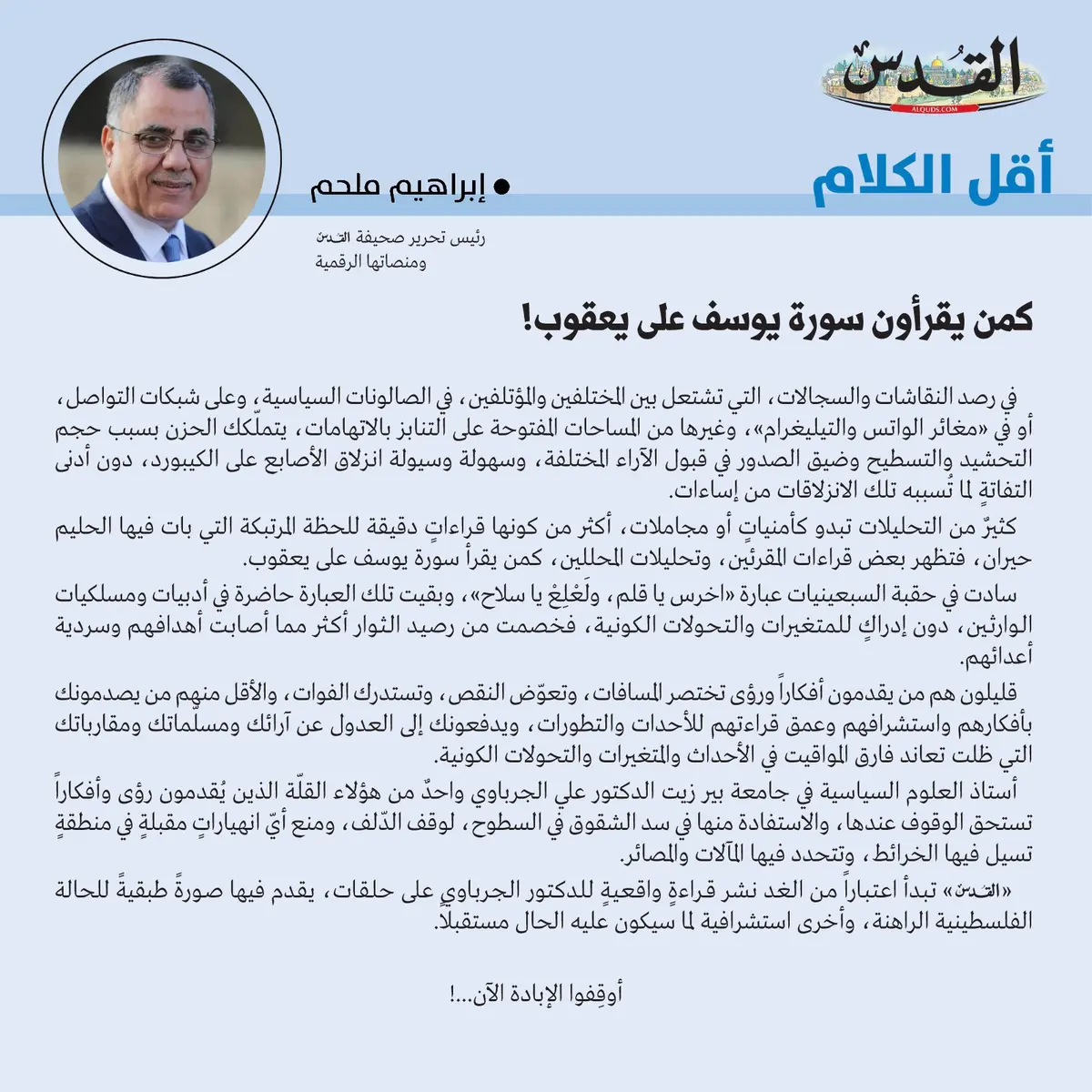
Like those who read Surah Yusuf to Jacob!

When observing the discussions and debates that flare up between those who disagree and those who agree, in political salons, on social media networks, or in the “WhatsApp and Telegram caves,” and other spaces open to mutual accusations, you become saddened by the extent of the mobilization, superficiality, and narrow-mindedness in accepting different opinions, and the ease and fluidity of fingers slipping on the keyboard, without the slightest attention to the insults that those slips cause.


Many analyses seem like wishes or compliments, rather than accurate readings of the confusing moment in which the wise man became perplexed. Some of the readings of the reciters and the analyses of the analysts appear like someone reading Surat Yusuf to Jacob.


In the seventies, the phrase “Shut up, pen, and slap, weapon” prevailed, and that phrase remained present in the literature and behavior of the inheritors, without awareness of the global changes and transformations, so it detracted from the revolutionaries’ credit more than it affected their goals and the narrative of their enemies.


Few are those who offer ideas and visions that shorten distances, compensate for shortcomings, and make up for lost time. Even fewer are those who shock you with their ideas, insights, and depth of reading of events and developments, and push you to abandon your opinions, assumptions, and approaches that have been stubbornly defying the time difference in events, variables, and universal transformations.


Professor of Political Science at Birzeit University, Dr. Ali Al-Jarbawi, is one of the few who present visions and ideas that are worth considering and benefiting from in filling cracks in the surfaces, stopping the leakage, and preventing any future collapses in a region where maps are flowing and outcomes and fates are determined.


"I" will start publishing, starting tomorrow, a realistic reading by Dr. Al-Jarbawi in episodes, in which he presents a layered picture of the current Palestinian situation, and another prospective picture of what the situation will be like in the future.


Stop the genocide now...!

PALESTINE

Wed 08 Jan 2025 9:09 am - Jerusalem Time

UNRWA: Hospitals in Gaza have become death traps

The United Nations Relief and Works Agency for Palestine Refugees (UNRWA) said on Wednesday that "hospitals in Gaza have become death traps."


She explained in a post on the "X" platform that families in Gaza are disintegrating, children are dying from the cold, and hunger is decimating lives.


UNRWA's statements come in light of the ongoing shelling and direct targeting of hospitals, as the three public hospitals in the northern Gaza Strip, namely Kamal Adwan, Beit Hanoun, and the Indonesian, have become out of service due to the escalation of the occupation's aggression. Only 14 hospitals out of 36 in Gaza are now partially operating and are facing a severe shortage of supplies, according to the Palestinian Ministry of Health.

PALESTINE

Wed 08 Jan 2025 9:04 am - Jerusalem Time

Occupation forces launch a large-scale arrest campaign in the West Bank

The Israeli occupation forces launched a wide-scale arrest campaign in the West Bank at dawn and this morning, Wednesday.


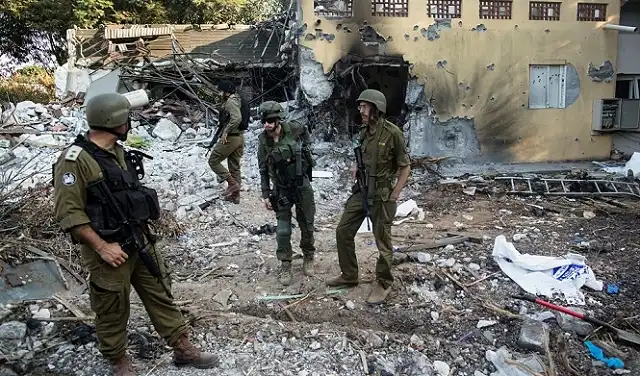
In Hebron, the occupation forces stormed the town of Sa'ir and raided a large number of citizens' homes, and arrested: Muhammad Sharif Jaradat and his son Sharif Muhammad Jaradat, Muhammad Yunis Kawazbeh, Muhammad Ahmad Hamed Jabarin, Wassim Ismail Matour, Muhammad Nawaf Shalaldeh, and the brothers Amjad Saed and Haitham Jaradat. They also detained dozens and subjected them to field investigation in one of the homes after turning it into a military barracks.


In the town of As-Samu, to the south, the occupation forces arrested Wasim Jihad Ismail Al-Hawamdeh, Diaa Munir Issa Al-Hawamdeh, Muhammad Shahada Musa Rawashdeh, Muhammad Hakam Mahariq, Nadim Muhammad Ahmad Al-Hawamdeh, Ibrahim Hassan Shahada Rawashdeh, Mazen Ahmad Muhammad Al-Hawamdeh, Muhammad Nidal Muhammad Al-Hawamdeh, Jamil Muhammad Jamil Al-Daghmin, and Ismail Hassani Al-Hawamdeh, after raiding their homes and vandalizing their contents.


In Qalqilya, the occupation forces stormed the city from its eastern entrance, and deployed in various neighborhoods, including: Kafr Saba neighborhood, Nablus Street, and Al-Malaab-Al-Hadiqa Street. They deployed snipers around the Nazzal neighborhood, and began searching citizens’ homes.


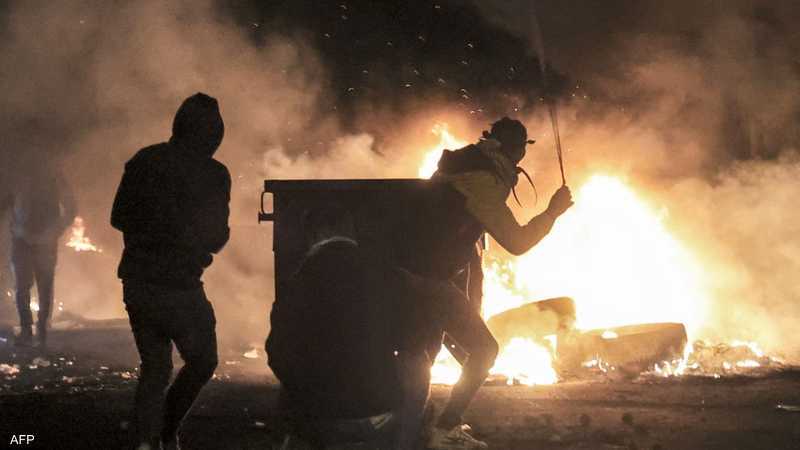
Clashes erupted between young men and the occupation forces, who fired sound bombs and live bullets at them, and deliberately damaged the tires of a number of vehicles.


Local sources said that the occupation forces arrested Hamza, Ramzi and Sufyan "Taym" from Al-Quraan neighborhood, after raiding and searching their homes.


In the same context, last night, settlers threw stones at citizens' vehicles on the Qalqilya-Nablus highway known as "55", and near the entrances to the villages of "Kafr Laqif, Jinsafut, Amatin, and Al-Funduq", causing damage to many of them.


In Tulkarm, the occupation forces arrested: Raed Al-Nabulsi, Mu’ayyad Omar Badir, Munir Mustafa Abu Diab, and Fadi Adwan, after raiding their homes, searching them, and tampering with their contents in the town of Far’oun.


In Tubas, the occupation forces arrested: Sameh Amin Abu Ara, Obada Abdul Rahman Abu Ara from the town of Aqaba, and Karim Imad Abu Mohsen from Tubas, after raiding their homes.


The occupation forces stormed the city of Tubas and Aqaba in the north, after Israeli forces infiltrated the town, followed by reinforcements from the Tayasir military checkpoint.


In Nablus, the occupation forces stormed the new Askar camp, raided a number of homes, searched them, and arrested seven citizens: Laith Ajouri, Nihad Ajouri, Mahmoud Ajouri, Suhaib Ajouri, Abdul Karim Tak, Mahmoud Imad Tak, and Ibrahim Muhammad.


The occupation forces also arrested: Wadih Yousef Ahmed Musa from the town of Sarra, Abdul Rahman Kayed Sabah, and Louay Adel Sabah from the town of Urif in the south, after raiding and searching their homes.


PALESTINE

Wed 08 Jan 2025 9:01 am - Jerusalem Time

For the 460th day... Israeli occupation continues its aggression on the Gaza Strip, leaving dead and wounded

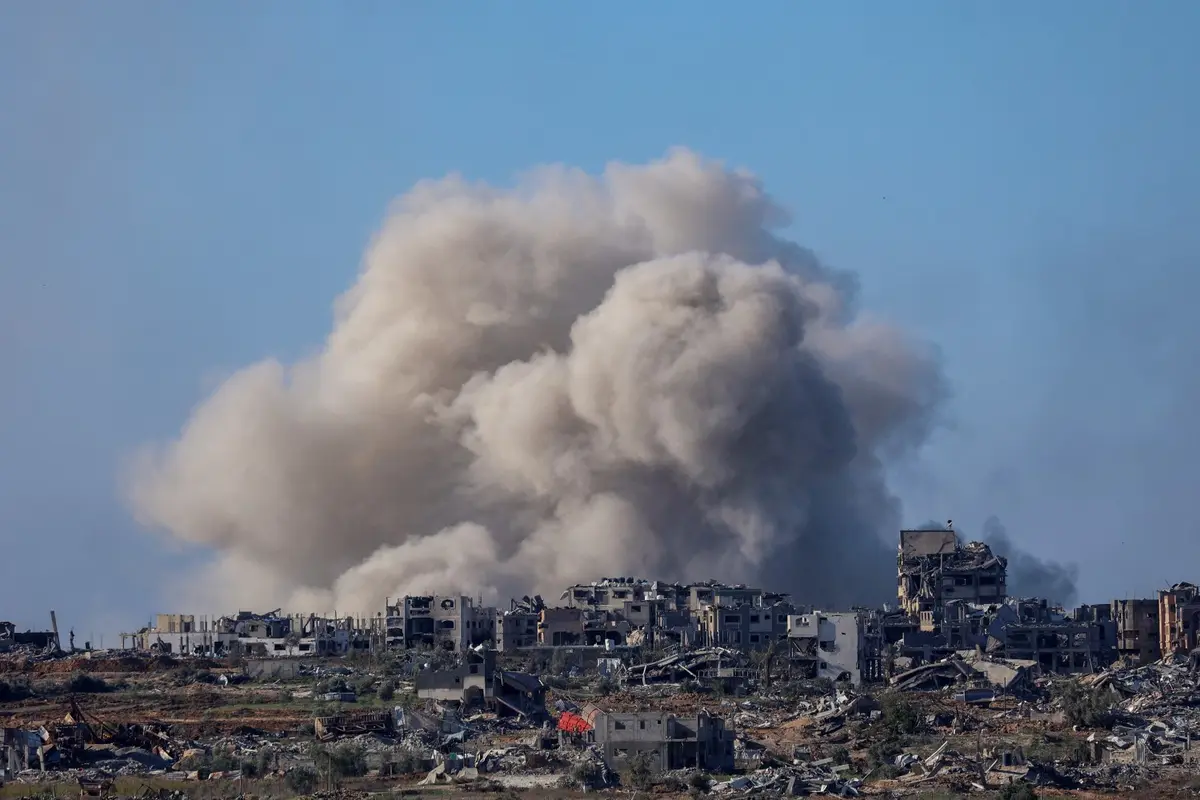
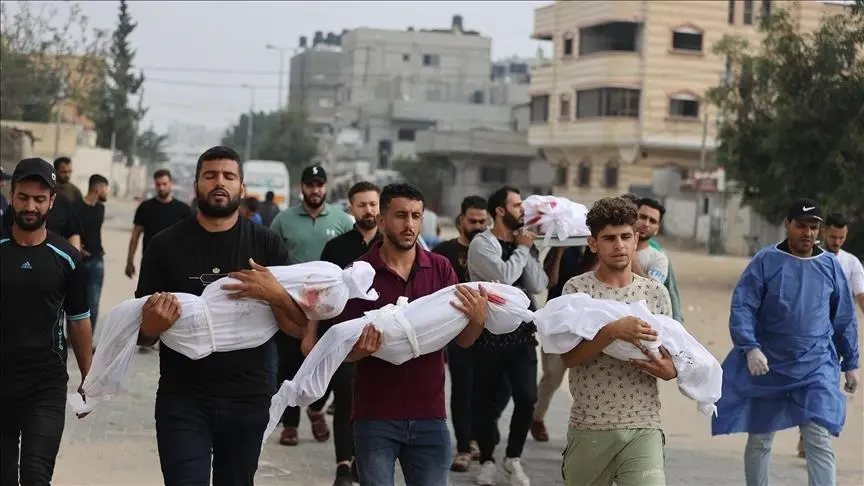
A number of citizens, including children and women, were killed and injured this Wednesday morning in the ongoing occupation aggression on Gaza City and Khan Yunis in the southern Gaza Strip, which is entering its 460th day, amidst intensive bombing by air, land and sea, targeting shelters and inhabited homes.


Local sources reported, quoting medical sources, that a child died of his wounds after his tent was targeted yesterday in the Al-Mawasi area, west of Khan Yunis.


The same sources added that rescue teams recovered a martyr and a number of injured people, as a result of the occupation bombing of the Kalab family's house in the Sheikh Radwan area, north of Gaza City.


It pointed out that an infant was killed when the occupation forces bombed his family's house in Gaza City.


The occupation forces continue their artillery shelling of the Tel al-Hawa neighborhood, southwest of Gaza City.


According to medical sources, 15 citizens were killed in two separate raids on the northern Gaza Strip since dawn today.

ARAB AND WORLD

Wed 08 Jan 2025 8:54 am - Jerusalem Time

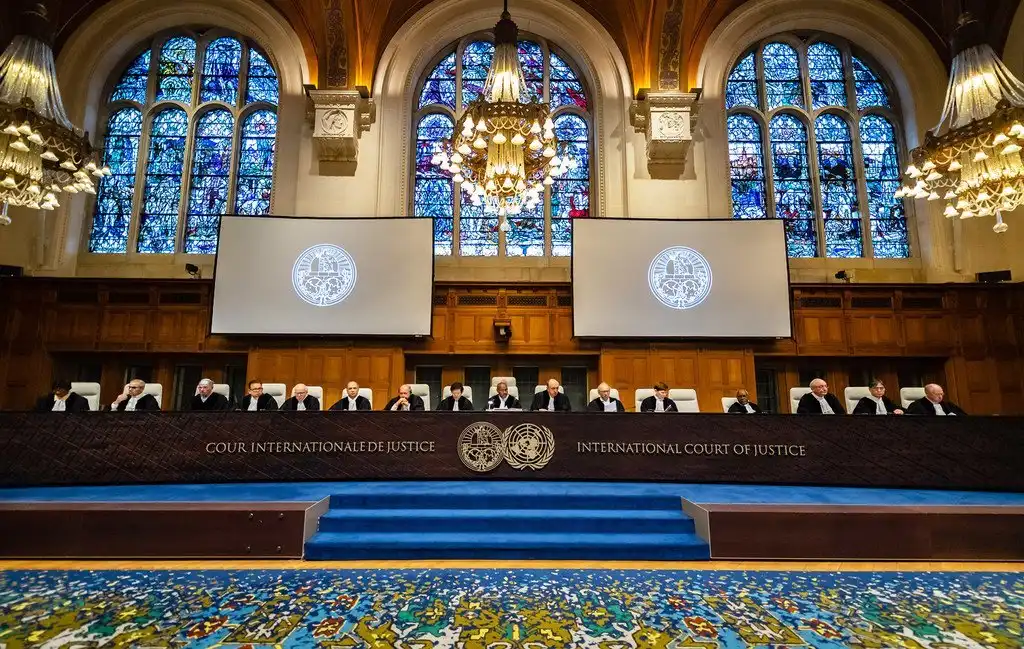
Ireland joins South Africa's genocide case against Israel

Ireland has formally joined South Africa's genocide case against Israel, the International Court of Justice said Tuesday.


The filing, made on Monday, comes months after Ireland announced plans to intervene in the case before the UN's highest judicial body.


“Ireland, acting under Article 63 of the Statute of the Court, has filed in the Registry of the Court a declaration of intervention in the case concerning the application of the Convention on the Prevention and Punishment of the Crime of Genocide in the Gaza Strip,” the court said in a statement on Tuesday.


South Africa brought its case to the International Court of Justice in December 2023, accusing Israel of committing genocide in Gaza. Israel strongly rejected the allegation, calling South Africa’s submission a “despicable and contemptible exploitation of the court.”


In a preliminary ruling in January 2024, the court ordered Israel to curb its attacks in Gaza, and in May ordered the country to immediately halt its military offensive in the southern Gaza city of Rafah.


The United Nations allows states to "intervene" in proceedings if they are parties to the 1948 UN Genocide Convention.


A spokesman for Ireland’s foreign ministry confirmed the application had been filed on Tuesday. “It is important for the court, in considering any multilateral agreement, to understand how the other parties to that agreement interpret and apply it,” he said in a statement.


The filing of the application had been long expected. Last month, the government agreed a plan to present its arguments in the case, with Deputy Prime Minister and Foreign Minister Micheal Martin saying it would be presented in The Hague, where the court is based, within weeks.


“There has been collective punishment of the Palestinian people by intent and effect from Israel’s military operations in Gaza, which have killed 44,000 people and displaced millions of civilians,” Martin said in December, adding that Ireland would ask the court to broaden its interpretation of what constitutes genocide by a state. “We are concerned that an overly narrow interpretation of what constitutes genocide is leading to a culture of impunity that reduces the protection of civilians,” he said.


Experts say the court is not expected to rule on the genocide charge for years to come.


The decision to intervene in the case reflects Ireland's long-standing support for Palestinian civilians, rooted in part in a shared history of British colonialism and in Ireland's own experience of a seemingly intractable sectarian conflict - the Troubles, which ended with the Good Friday Agreement in 1998.


Last month, Israel announced it would close its embassy in Dublin, citing what it said were the “extreme anti-Israel policies of the Irish government.” Israeli officials said the move did not mean Israel was severing diplomatic ties with Ireland.

PALESTINE

Tue 07 Jan 2025 10:23 pm - Jerusalem Time

Clashes with Israeli occupation in the towns of Beita and Sebastia in Nablus

Clashes erupted with the Israeli occupation forces, Tuesday evening, in the towns of Beita and Sebastia in Nablus Governorate.


According to local sources, the occupation forces stormed a house south of Nablus, which led to the outbreak of clashes, during which the soldiers fired live bullets, sound bombs and toxic gas, without any injuries being reported.


In Sebastia, northwest of Nablus, the occupation forces stormed the archaeological area and several neighborhoods in the town, which led to the outbreak of clashes during which soldiers fired live bullets, sound bombs, and toxic gas between the houses.

PALESTINE

Tue 07 Jan 2025 10:07 pm - Jerusalem Time

Qatar: Gaza negotiations still ongoing, no time limit can be set

Qatar announced on Tuesday evening that negotiations aimed at stopping the Israeli genocide against the Palestinians in the Gaza Strip "are still ongoing," but "no time limit can be set" for them.


This was stated by the Advisor to the Prime Minister and Spokesperson for the Qatari Ministry of Foreign Affairs, Majed Al-Ansari, in a weekly briefing during a press conference in Doha, according to a statement by the ministry.


Al-Ansari said that the negotiations "are still ongoing at the technical level," and "there is always Qatar's belief in the necessity of continuing these efforts, no matter how difficult the conditions are during the negotiations."


He added that "the delegations representing all parties meet on a permanent basis, whether in Doha or Cairo."


He added: "However, a time limit cannot be set for these negotiations, and there are no expectations at the moment, and this will be announced if immediate results are reached."

ARAB AND WORLD

Tue 07 Jan 2025 9:19 pm - Jerusalem Time

Trump opens fire on the Middle East, Canada and Mexico

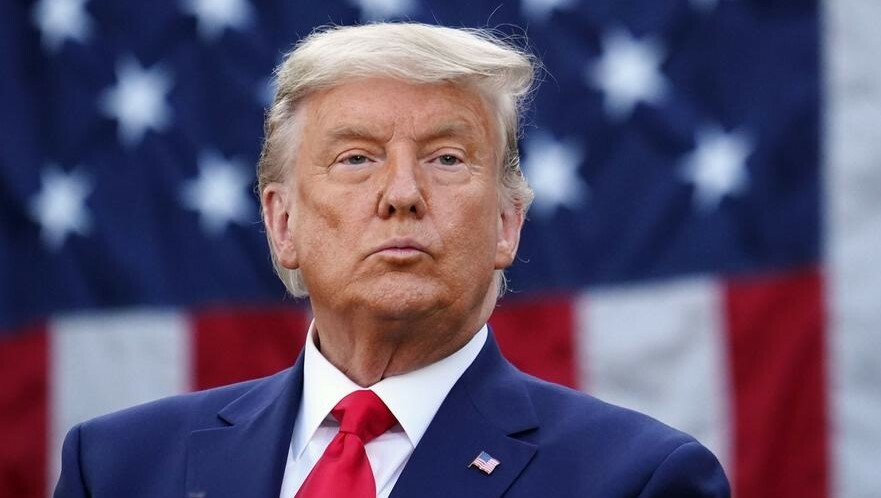
US President-elect Donald Trump said that if the hostages held in Gaza are not returned before he takes office, the Middle East will witness "hell" in light of the current tense situation.


Read also: Trump on the war in Gaza: I don’t want people to continue being killed and I support any solution that achieves peace


Trump stressed in his statements that the world must take his threats seriously, considering that delaying the resolution of the hostage crisis will pave the way for further escalation in the region.


In a related context, Trump's envoy to the Middle East expressed his hope for achieving "good results" regarding the hostage talks in Gaza before the inauguration of the new president.


The envoy added that the negotiations must result in satisfactory solutions in order to avoid any escalation that could lead to further damage in the region.


Mexico and Canada

In domestic affairs and international relations, Trump announced that he would change the name of the Gulf of Mexico to the "Gulf of America," in a move he described as reflecting his commitment to U.S. sovereignty and strengthening its position in the region. He added that Mexico must stop allowing "millions of people" to flow into the United States, stressing that this is part of the country's national security.


Trump also stressed that he would impose strict tariffs on Mexico and Canada as part of the protectionist trade policy that he would adopt upon taking office, in an attempt to reduce unbalanced trade with his neighbors.


Greenland

On the international front, Trump stressed that the United States needs Greenland for purposes related to protecting American national security and ensuring the protection of the “free world.” This statement sparked widespread interest in Trump’s plan to benefit from Greenland’s strategic position in light of global political tensions.


The remarks come at a sensitive time before Trump takes office in January, as the president-elect continues to take tough stances on national security and foreign policy.

ARAB AND WORLD

Tue 07 Jan 2025 8:57 pm - Jerusalem Time

WHO: HMBV virus in China is common and not a threat

The World Health Organization on Tuesday offered reassurances about HMBV, a respiratory infection spreading in China, saying the virus is not new or particularly dangerous.


A WHO spokeswoman said the organization was in contact with the Chinese Center for Disease Control and Prevention. She said the WHO had been informed that several respiratory infections were circulating in China, as is typical in winter, including “influenza, RSV, COVID-19 and HMBV.”


In early December, Chinese media began reporting on the rise in cases of human papillomavirus (HMPV), raising global health concerns five years after the outbreak of the Covid-19 pandemic in China.


But Beijing and the World Health Organization have been trying to calm concerns in recent days.


Margaret Harris, a spokeswoman for the World Health Organization in Geneva, said HMBV attracts a lot of attention because it is not a household name, but was discovered in 2001.


She explained that HMBV is a common virus that spreads in winter and spring.


“The levels of respiratory infections reported in China are within the normal range for the winter season,” Harris added. “Authorities report that hospital use is currently lower than it was at this time last year, and there have been no emergency announcements or responses.”

PALESTINE

Tue 07 Jan 2025 8:32 pm - Jerusalem Time

Israel insists on continuing the war...and Hamas demands a comprehensive withdrawal

Israeli Prime Minister Benjamin Netanyahu is insisting on continuing the war in the Gaza Strip even after a deal, while Hamas is demanding a complete withdrawal from the Strip in any deal, making negotiations over a potential deal complicated before US President Donald Trump arrives in the White House on January 20.


Hamas leader Osama Hamdan said that the experience of negotiating with Israel “proved that the only solution to restore the rights of the Palestinian people is to engage with the Israeli enemy and force it to retreat.”


Hamdan said in a press conference in Algeria on Tuesday that the occupation was working to disrupt the negotiations at every moment, stressing that the movement's position in the negotiations is clear, and that it is represented by a ceasefire and the withdrawal of the occupation. He added: "Our clear position in the negotiations is a ceasefire, the withdrawal of the occupation, the exchange of prisoners, and the reconstruction of Gaza, without Israeli conditions."


Hamdan said Trump was hasty in saying there would be a “heavy price” if the hostages were not released by his inauguration. “He should be more disciplined and diplomatic and work to stop the war instead of threatening,” he said.


Hamdan's comments came as Israel stressed that it would not end the war until Hamas was eliminated and all the hostages were released. Israeli Minister of Innovation, Science and Technology Gila Gamaliel, of the ruling right-wing Likud party, said that there would be no Israeli withdrawal from the Gaza Strip before all the kidnapped soldiers were returned.


Hamas and Israeli officials are holding talks mediated by Egypt and Qatar amid months of intense efforts to reach a ceasefire in the Gaza Strip. The administration of outgoing US President Joe Biden has called for an effort to reach a deal before he leaves office, and many in the region now view Trump’s inauguration as an unofficial deadline.


But as the deadline approaches, both sides are accusing each other of sticking to conditions that have stymied all previous attempts to reach an agreement over more than a year. On Monday, Israel postponed the trip of Mossad chief David Barnea to Qatar, awaiting answers from Hamas about the fate of the kidnapped soldiers on the list of 34 names that Israel had previously presented to Hamas and which the movement finally agreed to release.


The current disagreements raise concerns that reaching an agreement will be complicated before Trump arrives in the White House, especially with Netanyahu insisting that he will return to war.


Netanyahu refuses to stop the war in the Gaza Strip, and does not have a plan for the day after there. There is controversy in Israel about this. Senior officials in the Israeli security establishment have demanded finding an alternative to Hamas rule even before reaching a deal; because without it, Israel will lose “the gains of the war, and we will not achieve one of the main goals of the war: the collapse of Hamas.”


This view is consistent with the position of senior officials in the Israeli army and the General Security Service (Shin Bet), who believe that despite the near-total destruction of Hamas’s military capabilities, its ability to manage the Strip remains. However, a political source confirmed that Netanyahu will return to war after any deal, and that he does not accept dealing with a fait accompli that keeps Hamas in Gaza, and therefore believes that “the plans for the ‘day after’ in Gaza cannot be implemented until the movement is completely destroyed.” The source went on to stress that “the policy led by the prime minister in Gaza is that in any case, neither Hamas nor the Palestinian Authority can control Gaza or the distribution of humanitarian aid. Therefore, various alternatives are being examined in this context.”


Netanyahu's insistence on returning to fighting after the deal is one of the obstacles to reaching an agreement, along with the issue of the 34 names, the withdrawal, and the fate of Palestinian prisoners.


In a remarkable development, Natan Eshel, one of Netanyahu's aides, called for an immediate cessation of fighting in Gaza, saying that the continuation of the fighting was "unnecessary" and "brings no hostages or military achievements," and that it "results in heavy losses in the lives of soldiers and wounded."


In private correspondence, excerpts of which were published in Israeli newspapers, Eshel presented an alternative strategy based on a blockade and the monitoring of humanitarian aid, in addition to providing the option of exit for residents who wished to do so. Eshel said: “Whoever does not want to live and does not leave in an organized and disciplined manner will either die by an Israeli soldier’s bullet or die of hunger... This method has proven its effectiveness throughout history.”


Referring to US policy, Eshel claimed that the Biden administration was not interested in reaching a full agreement on Gaza, but in preserving its ability to manipulate Israel. He suggested waiting another two weeks until the Trump administration enters the White House, and then implementing the proposed strategy. According to him, such a move would be “good for Israel and good for the citizens of Gaza who are not participating and who have lives.” Netanyahu and his office did not immediately respond to Eshel’s call.


Meanwhile, the Israeli army continues its operations in the Gaza Strip on almost all fronts, stressing that it will continue until “the elimination of Hamas.” However, a senior Israeli official warned (Tuesday) in an interview with the Ynet website that “Hamas is frustrated by the situation and is looking for achievements elsewhere.” The official said that “Hamas is pushing to carry out attacks against targets outside the country’s borders.” According to him, there is growing concern in Israel about attempts by Hamas and Islamic Jihad to carry out attacks against Israeli and Jewish targets abroad.


The website said that during the long war in the Gaza Strip, many attacks against Israeli targets around the world were thwarted. It added: “Iranian-inspired organizations seek to harm individuals, embassies and other Jewish targets.”

PALESTINE

Tue 07 Jan 2025 8:04 pm - Jerusalem Time

4 Palestinian children killed in Israeli raid on displaced persons' tent west of Khan Yunis

Four children were killed on Tuesday evening in an Israeli occupation forces' bombardment of Khan Yunis, south of the Gaza Strip.


According to local sources, an Israeli drone bombed a tent housing displaced people west of Khan Yunis, killing four children.


The Israeli occupation continues its aggression on the Gaza Strip, by land, sea and air, since October 7, 2023, which resulted in the death of 45,885 citizens, the majority of whom are women and children, and the injury of 109,196 others, in an incomplete toll, as thousands of victims are still under the rubble and in the streets, and ambulance and rescue crews cannot reach them.

ARAB AND WORLD

Tue 07 Jan 2025 7:20 pm - Jerusalem Time

Lebanese army completes deployment in western sector after Israeli withdrawals

Lebanese army units continued to deploy in the Naqoura border area and towns in the western and central sectors, after the Israeli army withdrew from it, while the Lebanese Prime Minister sent a “clear message” that Israeli violations must stop and that there must be a complete withdrawal from Lebanese territory.


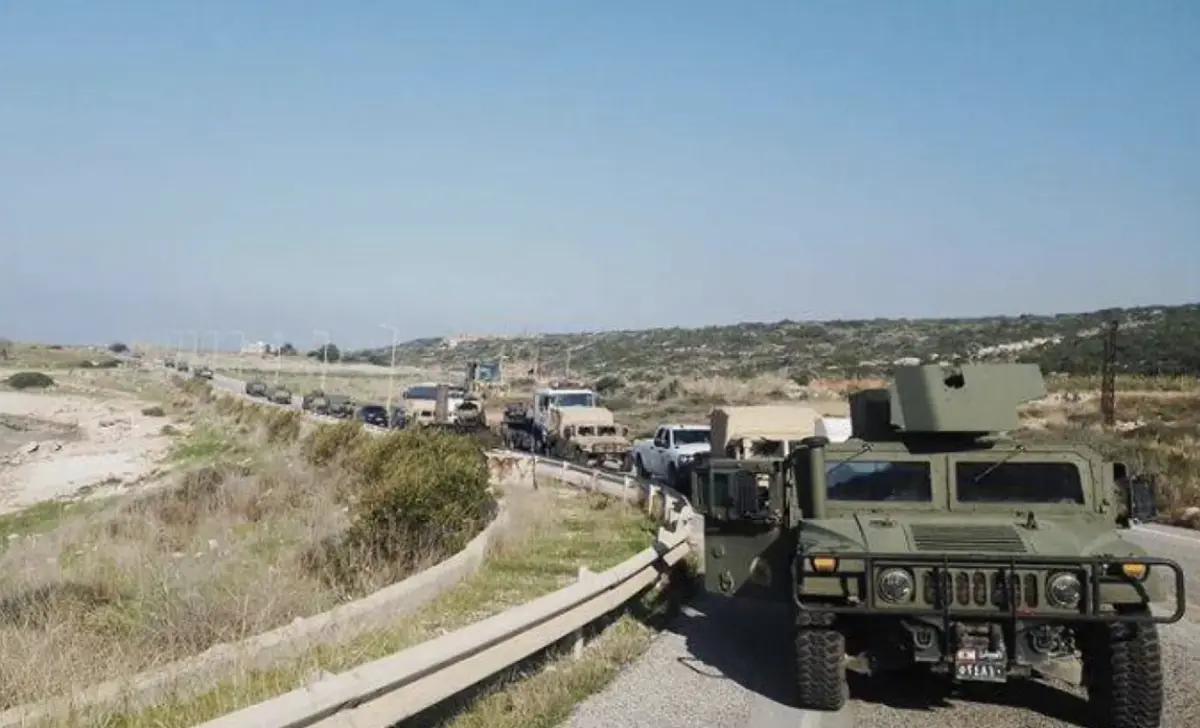
The Lebanese Army Command said in a statement: “Army units have begun deploying to position themselves in Ras al-Naqoura, Alma al-Shaab, Tyre Harfa - Tyre, Beit Lif - Bint Jbeil and other towns in the western and central sectors, after the Israeli enemy withdrew from them, while deployment in Naqoura is being completed.” It added: “Specialized units are continuing the engineering survey with the aim of removing unexploded ordnance, opening roads and removing rubble, in coordination with the United Nations Interim Force in Lebanon (UNIFIL) and the five-member committee supervising the ceasefire agreement, and in conjunction with a tour of the region by the head of the committee, the American general, and its two members, the French general and the commander of the South Litani sector in the army.”


The army command called on citizens not to approach the area and to adhere to the instructions of the military units until the end of the deployment. On Monday, the southern Lebanese border witnessed important developments represented by the withdrawal of the Israeli army from several areas in the western sector, especially the town of Naqoura, before the end of the ceasefire period set at sixty days.


This step came after a meeting of the five-member committee in Ras al-Naqoura, in the presence of US envoy Amos Hochstein.


"Clear message"

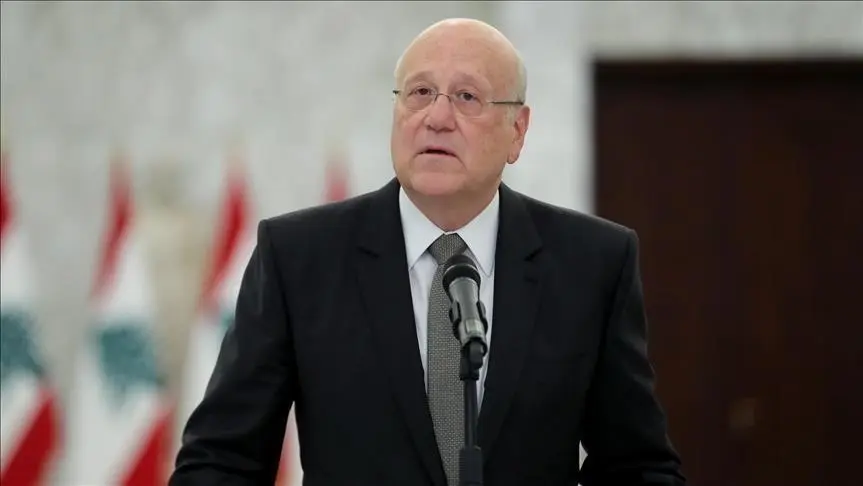
For his part, Prime Minister Najib Mikati stressed that he “sent a clear message to the international sponsors of the ceasefire agreement that violations must stop and there must be a complete withdrawal from the occupied Lebanese territories, and that commitment to implementing 1701 is not only Lebanon’s responsibility but is also binding on the Israeli enemy.”


He added: "We warned against continuing to violate the ceasefire understanding, because it threatens the entire understanding, and I do not think anyone wants to happen." He expressed his hope that "this opening will be a sign of a final and comprehensive cessation of aggression and its repercussions, the completion of the army's deployment throughout the south, and the return of all displaced Lebanese."


Almost complete destruction

For the first time since the outbreak of the Lebanon war, fishermen entered the port of Naqoura accompanied by the Lebanese army, and inspected their boats with the mayor, Abbas Awada. Some boats were seen sunken in the port as a result of their collision with the dock, and some of them were damaged.


Naqoura Mayor Abbas Awada confirmed that “the town of Naqoura is almost completely destroyed.” Awada called on the town’s residents to “wait before returning, awaiting a field inspection for fear of the presence of unexploded ordnance.”


On Monday, the Naqoura Municipality announced that the Lebanese army had begun deploying to its positions inside the town, noting that “to facilitate the passage of army vehicles and their logistical and engineering teams to the town, and in coordination with the army and the relevant official authorities, the residents will be informed of the timing and plan for the return if the necessary serious information is available.” The municipality confirmed that “the safe return will be exclusively with the support of an army force and civil defense teams, after ensuring that there is no potential danger.”


Israeli reminder to the residents of the south

The invitation of the mayor of Naqoura was preceded by a “reminder” from the Israeli army to the residents of southern Lebanon. Israeli army spokesman Avichay Adraee said via the “X” platform: “A new reminder to the residents of southern Lebanon that until further notice, you are prohibited from moving south to the village line and its surroundings.”


US Embassy Statement

In addition, the US Embassy announced in a statement that “the Chairman of the Cessation of Hostilities Implementation Mechanism Committee, US General Jasper Jeffers, and French General Guillaume Ponchamp, joined this morning in a visit to the headquarters of the Lebanese Army’s Fifth Brigade in the western sector of southern Lebanon.”


The headquarters is located five kilometers northeast of the town of Naqoura, which is now under the control of the Lebanese Army after the first phase of the Israeli withdrawal was implemented on Monday. The embassy statement noted that “as part of the transition process enabled by the committee, the Lebanese Army immediately deployed its forces to the area to clear roads, remove unauthorized munitions, and provide security for the Lebanese people.” According to the statement, Generals Jeffers and Bonchamp “were briefed on the weapons stockpiles that will be destroyed in the coming days, which the Lebanese Army seized from unauthorized armed groups.”


Jeffers praised the work of the Lebanese army, stressing that "the Lebanese army is the legitimate institution that provides security for Lebanon, and it continues to prove to me and the rest of the committee that it has the ability, the intention, and the leadership to secure and defend Lebanon. It acted decisively, quickly, and with clear expertise."


“Today we saw an example of that with the soldiers of the 5th Brigade,” he added. “The engineering regiment in particular is full of true professionals who remove hundreds of pieces of unexploded ordnance every week and make them safe.”

PALESTINE

Tue 07 Jan 2025 6:36 pm - Jerusalem Time

Israeli Settlerscitizens Palestinian citizens' vehicles south of Nablus

Settlers attacked citizens' vehicles in the town of Huwara, south of Nablus, on Tuesday evening.


According to local sources, dozens of settlers gathered at Salman al-Farsi roundabout north of the town and attacked citizens' vehicles with stones, causing damage to a number of them.

ARAB AND WORLD

Tue 07 Jan 2025 6:02 pm - Jerusalem Time

Families of Israeli prisoners held in Gaza demonstrate outside the Ministry of Defense

Families of Israeli prisoners in Gaza demonstrated on Tuesday in front of the Israeli Defense Ministry headquarters in Tel Aviv (center), demanding a prisoner exchange agreement with Hamas.


Dozens of Israelis participated in the demonstration.


The Israeli newspaper Haaretz said that the demonstration was organized in conjunction with a meeting of the Israeli Security and Political Affairs Cabinet, headed by Prime Minister Benjamin Netanyahu, to discuss negotiations aimed at reaching an agreement and the situation in the West Bank.


She explained that the meeting was held at the "Kirya" military base, which includes the ministry's headquarters in the region.


The newspaper pointed out that the demonstrators closed one of the entrances to the base using a large banner bearing the names of the 100 Israeli prisoners in Gaza.


In recent weeks, the families of the Israeli prisoners have stepped up their activities demanding a prisoner exchange agreement and a ceasefire in Gaza.


The opposition and the families of Israeli prisoners accuse Netanyahu of obstructing an agreement to preserve his position, as extremist ministers, including National Security Minister Itamar Ben-Gvir and Finance Minister Bezalel Smotrich, threaten to leave the government and bring it down if it accepts an end to the genocide in Gaza.


On Friday, the Israeli delegation returned to Doha to resume indirect negotiations with Hamas, mediated by Qatar and Egypt.


The prisoner exchange negotiations, mediated by Qatar, Egypt and the United States, have stumbled more than once due to Israeli Prime Minister Benjamin Netanyahu’s insistence on maintaining control over the Philadelphi Corridor on the border between Gaza and Egypt, and the Rafah crossing in Gaza, and preventing the return of Palestinian faction fighters to northern Gaza by searching returnees through the Netzarim corridor in the middle of the Strip.


For its part, Hamas insists on a complete Israeli withdrawal from the Gaza Strip and a complete cessation of war, in order to accept any agreement.

ARAB AND WORLD

Tue 07 Jan 2025 5:06 pm - Jerusalem Time

Mikati directs 3 demands to Israel through the sponsors of the ceasefire

On Tuesday, Lebanese Prime Minister Najib Mikati, through the sponsors of the ceasefire agreement, sent a "clear message" to Israel, including 3 demands.


This came in a statement by Mikati during his patronage of the opening of the "Nuhad Al-Saeed Cultural Wing" at the National Museum in Beirut, at the invitation of the Ministry of Culture and the National Heritage Foundation.


Mikati called on "everyone (in Lebanon) to join hands to extinguish all signs of moving sedition and hateful divisions that we follow daily, and the fate of the Lebanese remains that we live together under one roof."


He added: "Today we commemorate an occasion that was postponed since September 18th due to the (recent) Israeli aggression on Lebanon."


He continued: "We look forward to this opening being a sign of a final and comprehensive cessation of aggression and its repercussions, the completion of the army's deployment throughout the south, and the return of all displaced Lebanese to their homes."


Since November 27, a ceasefire has been in place, ending the exchange of fire between Israel and Hezbollah that began on October 8, 2023, and then turned into a full-scale war on September 23.


Mikati said: "We sent a clear message to the international sponsors of the ceasefire understanding (the United States and France)."


He explained that the message includes "the necessity of stopping the (Israeli) violations, and a complete withdrawal from the occupied Lebanese territories, and that the commitment to implementing Resolution 1701 is not only Lebanon's responsibility, but is also binding on the Israeli enemy."


Under the pretext of "confronting threats from Hezbollah," the Israeli army committed 395 violations of the ceasefire until Monday afternoon, leaving 32 dead and 39 wounded, according to a tally by Anadolu Agency based on official Lebanese data.


On August 11, 2006, the UN Security Council adopted Resolution 1701, which called for a complete cessation of hostilities between Israel and Hezbollah.


He also called for the creation of an area between the "Blue Line" (between Lebanon and Israel) and the Litani River in southern Lebanon, free of any armed men, military equipment and weapons, except those belonging to the Lebanese army and the United Nations Interim Force in Lebanon (UNIFIL).


Mikati warned against "continuing to violate the ceasefire understanding (by Israel), because it threatens the entire understanding, which is something I don't think anyone wants to happen."


Under the ceasefire agreement, a five-member committee was formed to monitor its implementation, including Lebanon, Israel, the United States, France and UNIFIL.


The most prominent provisions of the agreement include Israel's gradual withdrawal to the south of the Blue Line (the line marking Israel's withdrawal from Lebanon in 2000) within 60 days, and the deployment of Lebanese army and security forces along the border, crossing points, and the southern region.


Under the agreement, the Lebanese army will be the only entity allowed to carry weapons in the south of the country, with the dismantling of infrastructure and military sites, and the confiscation of unauthorized weapons.


ARAB AND WORLD

Tue 07 Jan 2025 4:45 pm - Jerusalem Time

Trump says he's Israel's 'best friend' ever, repeats threat to Hamas

President-elect Donald Trump said Monday he is Israel's "best friend" ever and repeated a threat that there would be "hell to pay" if Hamas did not release the hostages by the time he is inaugurated.


Trump made the comments when asked by radio host Hugh Hewitt if he would provide “uninterrupted” military aid to Israel, saying: “I am the best friend Israel has ever had. Look at what happened with all the things I did for Israel, including having Jerusalem as its capital, building the embassy.”


The president-elect, who will take office in less than two weeks, said that anything “big” that has happened to Israel in recent years “has been done through him,” including the normalization deals with the United Arab Emirates and Bahrain, known as the Abraham Accords.


Trump was then asked what he meant when he said there would be “hell to pay” if the hostages were not released, a threat he first made more than a month ago. “If those hostages are not released by the time I take office (at noon on Jan. 20), there will be hell to pay,” he told Hewitt. “I don’t think I have to get into that anymore.”


In his original threat, Trump appeared to suggest that the United States might take direct action against Hamas. “Those responsible will be hit harder than anyone in the long and storied history of the United States of America,” he wrote on Truth Social on December 1. “Release the hostages now!”


Hardliners in Israel celebrated Trump’s victory and view his next term as an opportunity to annex the West Bank. In a sign that the Trump administration is likely to back such a move, Trump appointed former Arkansas Gov. Mike Huckabee, a strong supporter of settlements and annexation of the occupied West Bank, as U.S. ambassador to Israel.


“I believe that Israel has a title to Judea and Samaria,” Huckabee said during a visit to a West Bank settlement in 2017. “There are certain words I refuse to use. There is no such thing as the West Bank. It is Judea and Samaria. There is no such thing as settlements. They are communities, they are neighborhoods, they are cities. There is no such thing as occupation.”

PALESTINE

Tue 07 Jan 2025 4:02 pm - Jerusalem Time

Updated: 4 injured Israeli occupation bullets in clashes in Al-Fawar camp

This evening, Tuesday, four citizens were injured by Israeli occupation bullets during clashes that erupted in Al-Fawar camp, south of Hebron.


According to Red Crescent sources, its crews dealt with four injuries, three of which were in the foot and one in the back, and were described as stable.


Local sources indicated that the occupation forces stormed the center of the camp, which led to the outbreak of clashes between the occupation forces and citizens, during which live bullets, toxic gas bombs and sound bombs were fired.

PALESTINE

Tue 07 Jan 2025 2:56 pm - Jerusalem Time

Israeli forces arrest a Palestinian citizen and his son in Tubas

Today, Tuesday, the Israeli occupation forces arrested a citizen and his son from Tamoun, south of Tubas.


The director of the Prisoners Club in Tubas, Kamal Bani Odeh, reported that the occupation forces arrested citizen Muhammad Basharat and his son Moamen from Tamoun after raiding his home in the town.

PALESTINE

Tue 07 Jan 2025 2:13 pm - Jerusalem Time

Israeli occupation forces arrest a number of workers from occupied Jerusalem

Today, Tuesday, the Israeli occupation forces arrested a number of workers from occupied Jerusalem.


Eyewitnesses said that the occupation forces arrested a number of workers from the towns of Beit Hanina, north of Jerusalem, and Al-Issawiya, northeast of the governorate, and assaulted citizens.

PALESTINE

Tue 07 Jan 2025 1:26 pm - Jerusalem Time

With the help of an Iraqi surgeon, a child in Gaza regains a hand amputated by the occupation

With a unique and complex surgery amidst poor health conditions, an Iraqi surgeon succeeded in renewing joy in the heart of the child Maryam Sabah (9 years old) in the middle of the Gaza Strip, by reattaching her amputated hand, which was found with difficulty from under the rubble 3 days after a violent Israeli bombardment.


God’s grace, which preserved the amputated hand under the rubble, enabled the Iraqi doctor, consultant peripheral nerve surgeon, Mohammed Al-Tahir, from the “Fajr Scientific” Foundation, to reattach it in a unique and complex surgery that lasted hours despite the weak medical capabilities in the sector.


Al-Taher said in a video recording that he arrived at Al-Aqsa Martyrs Hospital in Deir al-Balah in the central Gaza Strip with many injuries as a result of a series of raids launched by Israeli occupation aircraft on the area.


The Iraqi surgeon added that during his inspection of the reception and emergency department, he found a 9-year-old girl whose hand had been amputated and who had suffered a severe stomach injury. He quickly asked her father about the location of the limb (the amputated hand), and the father told him that it remained under the rubble.


"I asked them, 'Can you bring me the limb?'" Taher continued, adding that the father "was surprised and said, 'We'll try.'"

After a while, the girl's family was able to bring the amputated limb, where the Iraqi surgeon performed an autopsy and found that it could be reattached.


The surgeon said: “The weather was freezing, the hand was cold, and when I dissected it, I found it ready to be reattached.”


Despite the success of the operation, which took hours, there are concerns that the limb may become infected, especially given that it was contaminated with chemicals as a result of the missile explosion, according to what the surgeon indicated.


During the previous days, the Gaza Strip witnessed intensive Israeli raids on various areas, which resulted in massacres that claimed the lives of dozens of martyrs and wounded.


These raids coincided with extremely cold weather, frost waves and heavy rains that hit the Strip, causing the death of a number of citizens, especially children, and the drowning and drifting of hundreds of displaced people’s tents.


The same sources indicated that the Iraqi surgeon Taher worked for 5 months during the genocidal war committed by the Israeli occupation in the Gaza Strip without "tiring or getting bored" to save the wounded.


She continued: "He concluded his operations with a special operation during which he brought a girl's hand back to life after it was amputated due to the occupation's bombing of her home."


The Iraqi surgeon said that he "witnessed many difficult cases during his work in the northern Gaza Strip, which could have been saved, but lost their lives either due to a shortage of specialized medical staff, or treatment and medical supplies."


Al-Tahir pointed out that the remaining health facilities in northern Gaza "lack the minimum surgical tools and supplies."


He called on medical cadres with various surgical specialties around the world to come to the sector, in order to save the lives of the wounded.


He also called on international and UN institutions to work on bringing in medical supplies to save the wounded.


PALESTINE

Tue 07 Jan 2025 1:17 pm - Jerusalem Time

Presidency: Publishing Israeli maps is unacceptable and will not achieve security in the region

The official spokesman for the presidency, Nabil Abu Rudeineh, said that the publication of maps of the region by official accounts affiliated with the occupation authorities, including Palestinian and Arab lands, and the publication of racist statements calling for the annexation of the West Bank and the establishment of settlements in the Gaza Strip, are condemned and rejected calls, and constitute a flagrant violation of all international legitimacy resolutions and international law.


Abu Rudeineh added that these extremist Israeli policies are what ignited the region and led to the wars we are currently witnessing. Therefore, the priority now is an immediate ceasefire in accordance with UN Security Council Resolution 2735, the complete withdrawal of the occupation forces from the Gaza Strip, and the State of Palestine assuming its full responsibilities in the Strip, as a prelude to implementing international legitimacy resolutions and the Arab Peace Initiative to achieve peace, security and stability in the region and the world.


He called on the next US administration to work to stop all Israeli policies, actions and procedures that do not serve security and peace in the region.


The official spokesman for the presidency pointed out that these provocations carried out by the occupation authorities, which are accompanied by settler attacks in the West Bank, the ongoing incursions into the blessed Al-Aqsa Mosque, and the ongoing incitement against the Palestinian people and their leadership, require an urgent international stance to stop the war, destruction, and killing that the Palestinian people are being subjected to, which has claimed the lives of tens of thousands of our people.

PALESTINE

Tue 07 Jan 2025 12:10 pm - Jerusalem Time

Israeli occupation forces arrest four brothers south of Tubas

Today, Tuesday, the Israeli occupation forces arrested four brothers after raiding their family home in the town of Tamoun, south of Tubas.


The director of the Prisoners Club in Tubas, Kamal Bani Odeh, said that the occupation forces arrested the brothers: Mujahid, Iyad, Zakaria, and Ahmed Abdel Rahman Bani Odeh, after raiding and searching their family home in the town.


He added that the occupation forces raided a number of homes and caused damage to them.


Since midnight last night, the town of Tamoun and the Far'a camp have been witnessing aggression by the occupation forces, which led to the martyrdom of two young men and the injury of five others in Tamoun, and the destruction of the infrastructure in the camp.

PALESTINE

Tue 07 Jan 2025 12:00 pm - Jerusalem Time

31 dead in 24 hours, the death toll from the aggression rises to 45,885

The Ministry of Health in Gaza reported that the Israeli occupation committed 3 massacres against families in the Gaza Strip, resulting in 31 dead and 57 injuries arriving at hospitals during the past 24 hours.


The ministry confirmed that the death toll from the Israeli aggression has risen to 45,885 dead and 109,196 injuries since October 7, 2023.

It pointed out that there are still a number of victims under the rubble and on the roads, and ambulance and civil defense crews cannot reach them.