PALESTINE

Mon 17 Mar 2025 9:45 am - Jerusalem Time

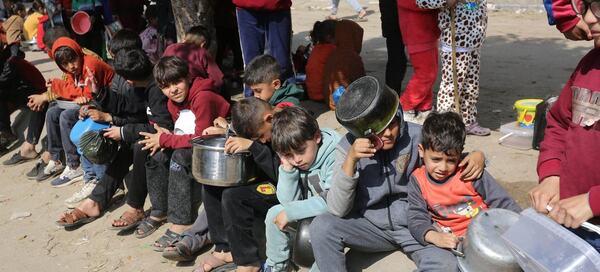
UNICEF: One million Palestinian children in the Gaza Strip are struggling for survival.

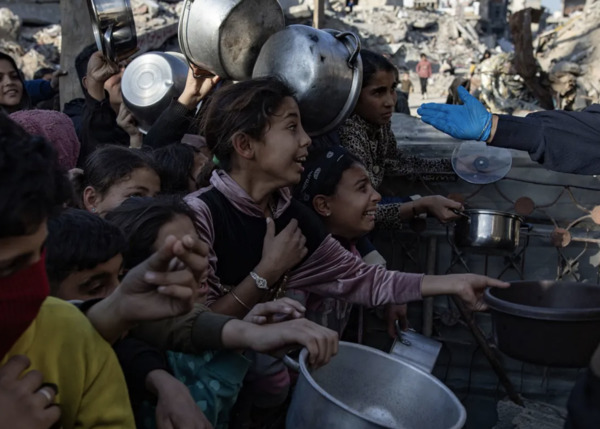
The United Nations Children's Fund (UNICEF) said that one million children in the Gaza Strip are struggling to survive, lacking basic necessities.


She explained that hundreds of thousands in the Gaza Strip lack clean water and sanitation services.


She stressed that a sustainable truce and unrestricted access to aid could save lives in the Gaza Strip.

PALESTINE

Mon 17 Mar 2025 9:39 am - Jerusalem Time

Citizen Ahmed Diab to Al-Quds: The occupation is deliberately trying to displace us from Jenin, but it will fail.

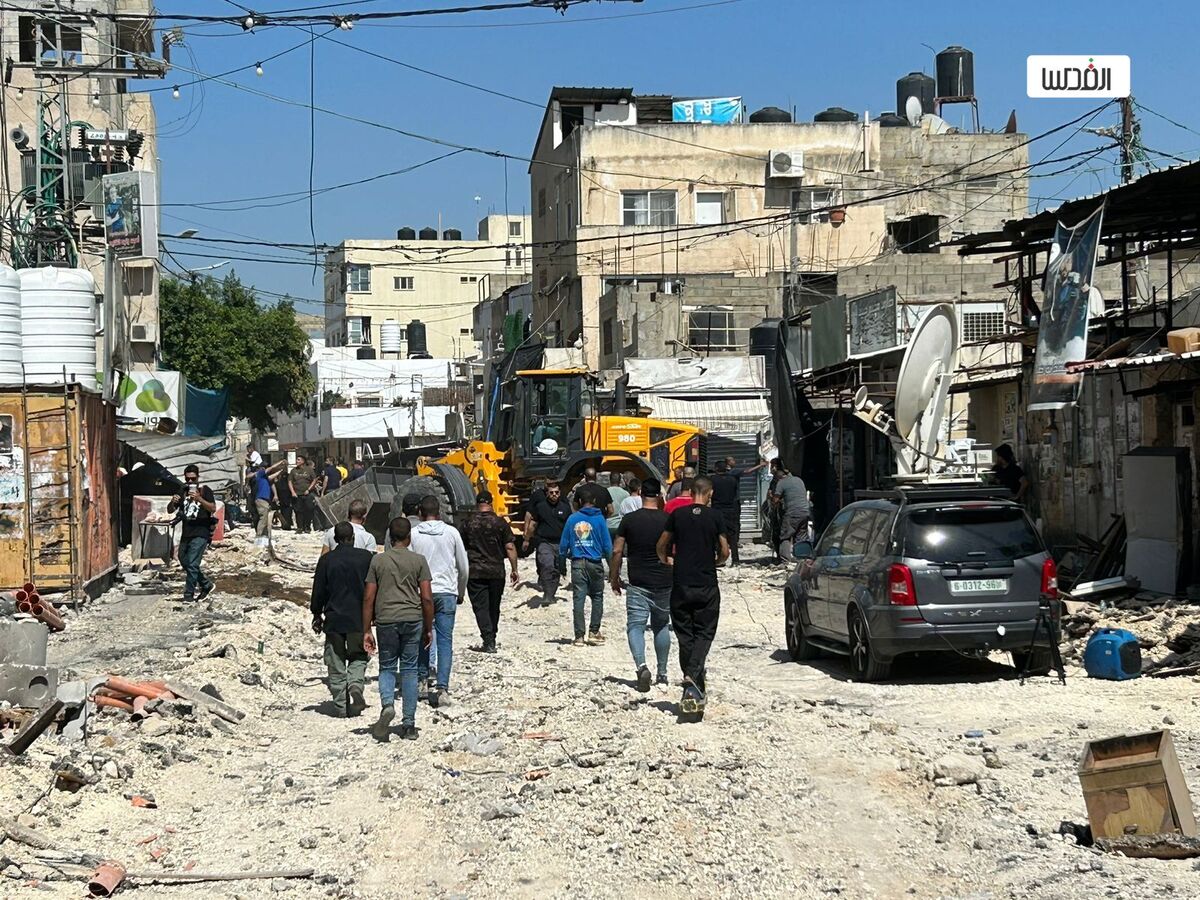
Since the beginning of the ongoing aggression on the city of Jenin and its camp, the occupation has adopted a policy of occupying and controlling homes, turning them into military barracks and observation and monitoring points after expelling their residents, whose lives have been transformed into hell and suffering. This was the case with the residents of the "Al-Rayyan" building located in the Al-Mahta neighborhood in the city of Jenin, on the main street leading to the Horse Roundabout at the western entrance to the camp.

Despite the building and the area being approximately 100 meters away from the camp, it is considered a target of the occupation, as citizen Ahmed Diab explained, during every invasion and aggression against Jenin and the camp. He added, "At the beginning of every military operation, the occupation takes over the building and detains all residents under dire and tragic conditions."


During the recent aggression, the occupation closed off the Al-Sawha neighborhood and placed earth barriers at all its entrances. After isolating it, bulldozers destroyed the streets surrounding the neighborhood and the buildings all the way to the camp entrance. Dhiyab says, “The neighborhood was transformed into a military barracks, and the army took full control of it. It destroyed and ruined the streets, then stormed our homes and forced us to flee until further notice.” He added, “The occupation established a permanent base and a center for assembling tanks and bulldozers, deployed military reinforcements, and imposed strict measures that exacerbated the suffering of the citizens, who became homeless.”

Ahmed Diab is one of the victims of this occupation policy. He says, "My house is on the top floor of the Al-Rayyan building, and even though I own it, I am still prohibited from returning to my home or entering it." He added, "The occupation forces expelled us from our homes with just our clothes on and without any belongings. Our lives are difficult and harsh in light of this bitter reality."

Every day, the citizen, Dhiab, comes to the area, waiting at every moment for the occupation to withdraw and to be freed from the journey of forced displacement. He says, “This is the seventh time that the occupation has confiscated the building during the past period. They stormed our homes, expelled us, and seized the building since the beginning of the current invasion.” He added, “I tried several times to return to my home and bring our clothes and some of our belongings, but the occupation is still preventing us, and we face great suffering in providing housing, due to the large number of displaced people from the camp, its surroundings, and the area.”


He continued, "The aggression has destroyed our lives. Even the schools are closed, and the occupation has deprived our children of education and movement from one place to another due to checkpoints and arbitrary measures."

Citizen Dhiab and his family of seven have been living in the Al-Rayyan building since he bought an apartment 13 years ago, but the occupation makes their life miserable due to the repeated incursions. He says, “We have lost the taste of security, life, and stability, and we live with great suffering even on normal days, because with every incursion, the occupation confiscates the building and turns it into a military barracks and forces us to leave our homes without taking our circumstances into consideration.” He adds, “Our life is currently very difficult. There is no other shelter, not even houses to rent, due to the huge number of displaced people.”


"I felt pain and bitterness when we welcomed the holy month of Ramadan as displaced and homeless, living as guests of one of our relatives. This affected us greatly, like the rest of our people who suffer from the occupation's plans and policies of displacement and expulsion," he added. "This policy is a return to the occupation's fundamental plan in the 1948 Nakba, and it is being renewed again today, but we are steadfast and will not leave. My return to see my home despite its occupation confirms my identity in my home, my land and my country. They are pressuring us and want us to be permanently displaced, but we will remain steadfast and steadfast on our land, our country, our roots and our ancestors there." Citizen Dhiab expresses a firm position of steadfastness embodied by citizens who have been harmed by the occupation's policies, but who are committed to returning and continuing their lives to thwart Israeli plans aimed at uprooting, displacement and forced migration.

PALESTINE

Mon 17 Mar 2025 9:32 am - Jerusalem Time

760 settlement units and a Jewish religious institute.. Tafakji to Al-Quds: The occupation municipality is separating the Old City geographically and demographically with a huge settlement bloc.

In an act of blackmail and fait accompli, the Jerusalem municipality has officially joined the planning process with extremist settler groups, as a prelude to a settlement construction plan in East Jerusalem.


The District Planning and Building Committee will discuss next Wednesday the Jerusalem Municipality's acceptance of two controversial plans aimed at expanding Jewish construction in the heart of Palestinian neighborhoods – in Sheikh Jarrah and Umm Lisson/Sur Baher.

Ran Yaron, a spokesman for the anti-settlement organization Ir Amim, revealed that the plan in Sheikh Jarrah includes the construction of a Jewish seminary called Or Simach on private land in the heart of a Palestinian neighborhood. Yaron said, "After the municipality was criticized for not serving all residents of the Palestinian neighborhood, the local committee decided to confiscate 40 percent of the land for public use. At the same time, however, it also decided to have the Jerusalem municipality officially join as a sponsor of the plan, giving it significant institutional support and advancing settlement in a neighborhood that has been a source of tension and conflict between extremist settlers and the neighborhood's original Palestinian residents."


The municipality's most obvious involvement, Yaron added, "appears in the Am Lisson plan, which aims to establish 450 Jewish settlement units within an existing Palestinian neighborhood. The only entrance to the Palestinian neighborhood is narrow and does not allow for construction."


The Ir Amim spokesperson continued, "Because the settlers don't own the land, they are unable to widen the road themselves. This is where the Jerusalem municipality intervenes, joining the plan to overcome this obstacle and working to widen the road, effectively facilitating the establishment of a Jewish settlement within the Palestinian neighborhood."


Ir Amim rejects the claim that the municipality's goal is simply to improve infrastructure, stating, "This is the first time the Jerusalem municipality has played the role of sponsor of a settlement plan in the heart of a Palestinian neighborhood." An Ir Amim report stated, "This is a purely political move. The Jerusalem municipality could have decided not to widen the road to serve a Jewish settlement project within a Palestinian neighborhood—but it chose the opposite."


She added: "With this, the municipality demonstrates its intention to advance settlement in Palestinian neighborhoods and villages in occupied East Jerusalem - not only by imposing a reality of planning discrimination against Palestinians, but also by exploiting its authority as a local authority to circumvent legal and planning restrictions, with the aim of facilitating the establishment of new Jewish settlements in Palestinian areas originally designated for natural Palestinian expansion, with the aim of strangling these neighborhoods and preventing their development and expansion."


Settlement and land expert Khalil Al-Tafakji said: “The project has been under discussion for a long time by extremist religious groups whose interests have converged with a group of extremist officials in the occupation municipality. Together, they approached the local committee in the occupation municipality to establish a religious institute consisting of nine floors above the ground and three below it, claiming that the land belongs to the “Israel Lands Authority,” which oversees the lands confiscated in 1968 as part of the largest confiscation operation carried out during that period, which included 3,345 dunams.”

Al-Tafakji added to Al-Quds: “The project is huge in a high-rise building in the heart of the Sheikh Jarrah neighborhood, which was the scene of settler violence led by the extremist former minister Itamar Ben-Gvir, and the neighborhood is plagued by settlements and extremist settlers.”


Al-Tafkaji explained: "The occupation municipality granted the settlers a large building percentage in that area - 9,615 square meters on a land area of 4 dunams. He warned that this construction and settlement will harm and cause the expulsion and uprooting of several Palestinian families to the north of this project in order to build a five-story building with 10 housing units for the settlers. To the east of this school, a six-story building will be built to house offices for this huge settlement complex."


He said that this settlement will bring hundreds of settlers almost daily to the heart of the Sheikh Jarrah neighborhood, which connects northern Jerusalem, the Old City, and Al-Aqsa Mosque. This will increase friction and violence, he said, as protecting these settlers will require a permanent Israeli military and police presence in this Palestinian neighborhood plagued by settlements and extremist settlers.


Al-Tafakji warned of the danger of what is being plotted and planned for the Sheikh Jarrah neighborhood, linking settlements there to West Jerusalem, the Hebrew University, Israeli police buildings, and the headquarters of the largest extremist settler organization, "Amona," near the eye hospital.


He said: "A huge project has been proposed on an area of 17 dunams, including 316 settlement units. The occupation municipality aims through this project to link the settlement outposts in the eastern part, passing through the settlement of Kerem al-Mufti, reaching the Mount Scopus area, which includes the Hebrew University and the towers project."

Massive settlement expansion on Mount Scopus land to expand Hebrew University housing, a hospital, and Israeli police and government buildings in Sheikh Jarrah.


Al-Tafkaji stated that the combined goal of these projects is to create a massive settlement bloc that would form a wall dividing the neighborhood into a north and a south, facilitating control over it, and to connect the eastern and western parts of Jerusalem by establishing settlement outposts within Palestinian neighborhoods. This would prevent a geographical and demographic connection between the Old City and the Palestinian neighborhoods east of the city (Shuafat, Beit Hanina, and Qalandia), thus preventing the re-division of Jerusalem into east and west once again. He pointed out that part of these projects (building settlement units, Jewish synagogues, and public buildings belonging to the Israeli government) falls within the no-man's land (the buffer zone between the 1948 and 1967 borders) to erase the so-called Green Line.


Also, the Supreme Planning Council of the Israeli military government/Civil Administration will approve plans for 1,211 housing units in West Bank settlements next Wednesday, including two large plans in the Ma'ale Amos settlement (comprising 561 housing units) that expand the settlement's boundaries northward to connect it with the Efe Nahal settlement. Efe Nahal is considered a separate settlement, but in practice, it constitutes a neighborhood of Ma'ale Amos.


Since December 2024, the Supreme Planning Council has been holding weekly meetings to approve settlement plans. Prior to this date, it held four meetings. The council's weekly meetings not only normalize settlement construction, but also increase it. This is confirmed by the fact that it has approved the construction of 10,167 settlement units since the beginning of 2025, in a period of less than three months.


On Wednesday, the council will also approve construction plans in the settlement of Etz Efraim, which include the construction of 252 units, in the settlement of Mitzpe Shalem - 168, and in the settlement of Beitar Illit - 230 housing units.

PALESTINE

Mon 17 Mar 2025 9:25 am - Jerusalem Time

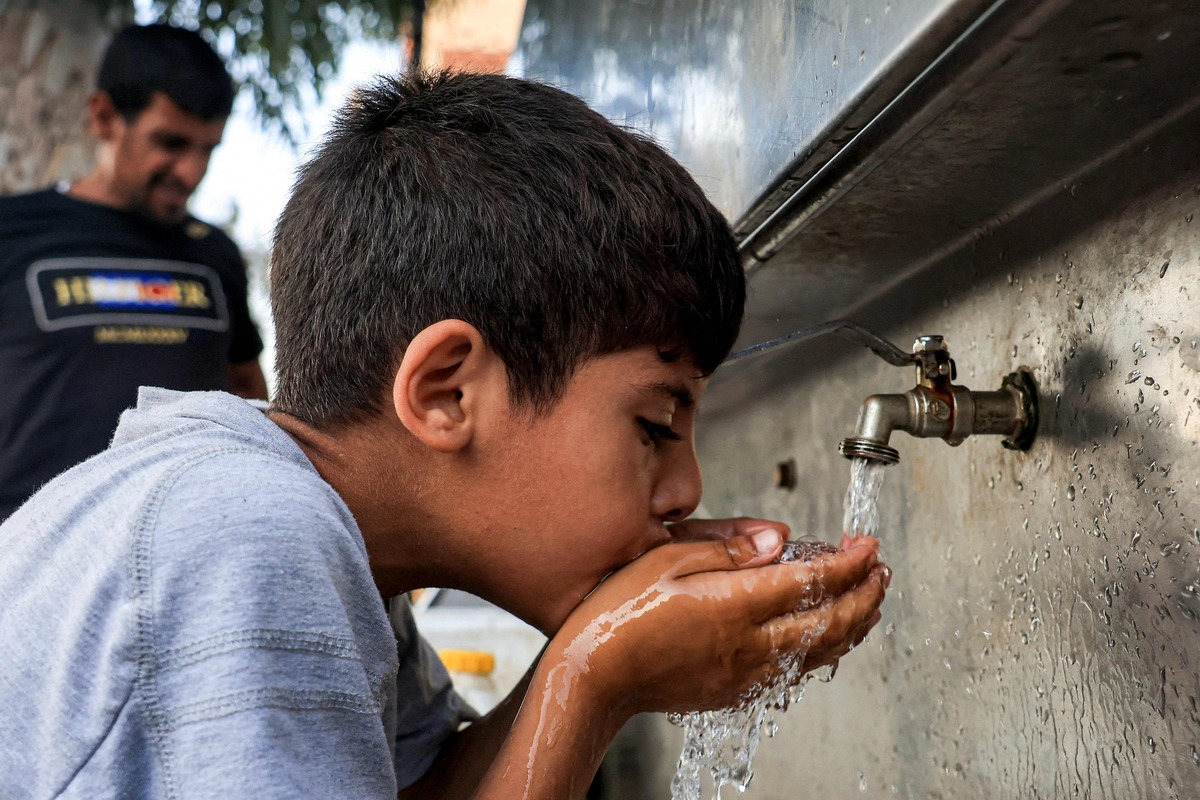
Only 10% of Gaza's population has access to safe drinking water.

British Minister for the Middle East, Tariq Ahmad, said that the humanitarian situation in the Gaza Strip is critical, with only 10% of the population having access to safe drinking water.


He added in a press statement that Israel's blockade has obstructed aid from reaching the Gaza Strip, and that it must work to prevent the suffering from worsening.


The British minister urged the occupation to lift restrictions on humanitarian aid in the Gaza Strip.


It is noteworthy that the Kerem Shalom and Beit Hanoun (Erez) crossings have been closed for 16 days, with no time for aid to enter.

OPINIONS

Mon 17 Mar 2025 9:22 am - Jerusalem Time

Will the Central Council achieve comprehensive reform and confront fateful national challenges?

Bassam Zakarneh

Bassam Zakarneh

Opinion Writer

As the Palestinian Central Council convenes in mid-May, interest is growing regarding what needs to be discussed and decisions made at this crucial stage the Palestinian people are going through. Given the current circumstances of the escalating Israeli occupation, the wars on Gaza and the West Bank, and internal challenges, there is an urgent need to discuss several vital issues that could constitute an important step toward strengthening Palestinian unity and defining clearer paths for the Palestinian cause. Among the most prominent issues that should occupy the Central Council are:


Reforming the Palestine Liberation Organization

The current situation requires a comprehensive reform of the Palestine Liberation Organization (PLO) and a careful evaluation of the membership of the National Council. Some individuals have been admitted to the organization without clear legal justification, while others have been excluded from unions, syndicates, and other figures who could contribute to strengthening national action. It is essential that the reinstatement of membership be discussed democratically, through a vote to include unions, syndicates, and individuals previously excluded. This reform must take place within the framework of a healthy democratic process in which all Palestinian factions and vital forces in society participate.


Reforming the Palestinian National Authority

Among the important issues that must occupy the Central Council at this critical moment is the reform of the Palestinian National Authority. The Authority has faced numerous challenges due to administrative corruption and weak governance, which have affected its ability to provide basic services to the Palestinian people and achieve their aspirations to build an independent Palestinian state. A comprehensive reform plan for the Authority must be developed, focusing on rehabilitating its institutions, strengthening transparency and accountability, and preventing corruption. These reforms must include legal, administrative, and economic aspects, with the aim of making the Authority more effective and resilient in the face of current challenges. In this context, the importance of judicial independence and reform of the Palestinian National Authority's financial system must be emphasized, ensuring the improvement of the lives of Palestinian citizens, free from any external interference or individual discretion.


Revitalizing unions and federations

Freedom of association and the right to freedom of expression are fundamental rights for the Palestinian people. Unfortunately, many Palestinian unions and federations have experienced a long period of tyranny and domination of their leadership by certain figures without the presence of truly democratic elections. At this critical stage, the revival of union life and the restoration of citizens' political and social rights must be raised, so that unions and federations can truly represent the interests of the Palestinian people. Every individual must have the right to participate and express their opinion, and unions must be effective tools in defending the rights of workers and employees.


Facing Challenges in Gaza and the West Bank

The war on Gaza was not just a military war, but a war against humanity as a whole. The Central Council's priorities must include working to rebuild Gaza and supporting the people there sustainably through international organizations. The challenges in the West Bank are no less significant, as the Palestinian people suffer from ongoing displacement, especially in the Jenin, Tulkarm, and Far'a refugee camps. This requires an immediate response to ensure security and stability in these areas.


Ending the Palestinian division

The prolonged Palestinian division has become a stumbling block to achieving national goals. The Central Council must work to develop a comprehensive plan to end the division, ensuring the unification of ranks among all Palestinian factions, including those not part of the Palestine Liberation Organization, and establishing a clear mechanism for the upcoming Palestinian elections, with the Beijing Agreement as a reliable basis.


Appointment of a Vice President and the Role of the Bylaws

One of the controversial issues that requires serious discussion is the appointment of a vice president. There are legal discussions surrounding this matter, as the organization's bylaws do not explicitly mention this position. At the same time, the political reality requires an assessment of this issue in terms of its necessity in light of the current situation, while emphasizing that the bylaws stipulate that the President of the National Council deputizes for the President in his absence, while the President of the Legislative Council assumes the duties of the President in his absence. Therefore, there must be a clear presentation of this issue to ensure political stability.


Palestinian elections and the importance of holding them

One of the most important issues the Central Council must discuss is the holding of presidential and legislative elections. Conducting these elections on a sound legal basis can significantly contribute to rebuilding Palestinian institutions, especially in light of the challenges facing the Palestinian people in Jerusalem and the West Bank, including the occupation's prevention of participation in the elections. The Central Council is required to establish a mechanism that overcomes these complexities and allows all Palestinians to participate in the elections, achieving true representation of the people.


Reviewing relations with Israel

It has become clear that Israel does not recognize the right of the Palestinian people to establish a Palestinian state, and it renounces all signed agreements. In these circumstances, a comprehensive review of relations with Israel must be conducted, including withdrawing recognition of it and halting any normalization with the occupation, especially in light of the ongoing crimes against humanity in Gaza and the West Bank. The decision to reoccupy the West Bank cannot pass without real international accountability. Therefore, work must be done to change the policy towards the occupation, most notably implementing the previous decisions of the Central Council, which approved the cessation of security coordination with Israel, especially since there is no reward for it, but rather an increase in the violations and crimes of the occupation and the financial siege of the Palestinian National Authority.


The American role and international pressures

The role of the United States in the Palestinian-Israeli conflict has become clear in its unconditional support for Israel, which threatens the continuation of the peace process. The Palestinian Central Council must work to exclude the United States as a mediator in any negotiations. An international peace conference must be called with the participation of countries with balanced positions, including the European Union and other major powers that respect the rights of the Palestinian people, to revive the two-state solution project that Israel has ended and the United States has disavowed, having originally sponsored it as part of its illusory projects for a solution.


Arab normalization with Israel

In light of Arab normalization with Israel, the Central Council must develop clear strategies to confront this phenomenon, which harms the Palestinian cause. There must be a clear call to halt any relations with countries that have normalized relations with the occupation until the Palestinian people achieve their right to establish their state. If necessary, relations with countries that support the occupation could be severed.

At these critical moments, the Palestinian situation requires decisive decisions that restore national unity and achieve social justice. Rebuilding institutions on democratic foundations, restoring union and individual freedoms, and ending the Palestinian division are essential steps toward achieving independence and freedom.

The Palestinian Central Council is called upon to confront military and political challenges and preserve the rights of our people under difficult circumstances. Unity and solidarity are the most important path to achieving justice and freedom for our people.

Palestine deserves actions, not words.


About "Sada News"


..............

At these critical moments, the Palestinian situation requires decisive decisions that restore national unity and achieve social justice. Rebuilding institutions on democratic foundations, restoring union and individual freedoms, and ending the Palestinian division are essential steps toward achieving independence and freedom.


PALESTINE

Mon 17 Mar 2025 9:21 am - Jerusalem Time

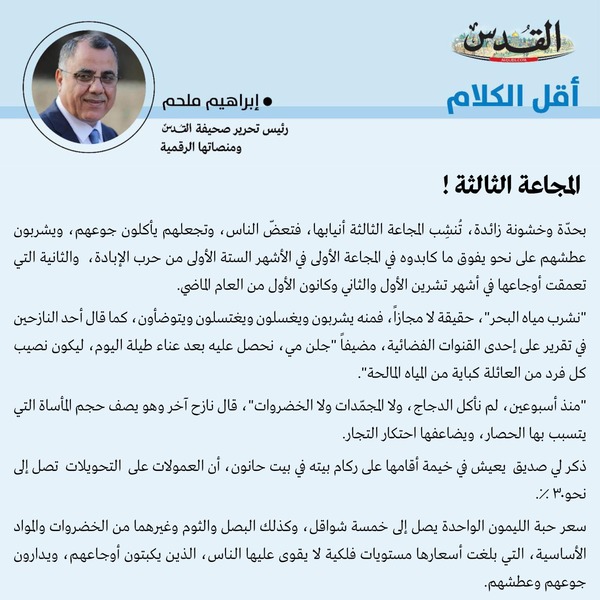
The third famine!

With increasing severity and brutality, the third famine digs its fangs in, biting people, making them eat their hunger and quench their thirst in a manner that exceeds what they suffered in the first famine during the first six months of the war of extermination, and the second, whose pains deepened in the months of October, January, and December of last year.


"We drink seawater," a fact, not a metaphor. It's what we drink, wash, bathe in, and perform ablutions with, as one displaced person said in a report on a satellite channel. He added, "We get it after toiling all day, so that each family member has a glass of salty water."


“For two weeks, we haven’t eaten chicken, frozen food, or vegetables,” said another displaced person, describing the scale of the tragedy caused by the siege, compounded by the monopoly of merchants.


A friend who lives in a tent he pitched on the rubble of his house in Beit Hanoun told me that the commission on transfers reaches about 30%.


The price of a single lemon has reached five shekels, and the same goes for onions, garlic, and other vegetables and basic goods, whose prices have reached astronomical levels that people, who are suppressing their pain and managing their hunger and thirst, cannot bear.

OPINIONS

Mon 17 Mar 2025 9:20 am - Jerusalem Time

Hamas is the first to violate the Arab Summit decisions!

Dr. Ramzi Awda

Dr. Ramzi Awda

Opinion Writer


Unfortunately, only days after the Arab Summit succeeded in proposing an Arab plan to respond to the displacement plan, Hamas entered into unilateral negotiations with the US administration, undermining all the decisions of the Arab Summit in Cairo. These included an Arab consensus on the Egyptian-Palestinian plan to rebuild the Gaza Strip, the formation of a community support committee linked to the Palestinian National Authority, and the empowerment of Palestinian security forces to manage the Strip's affairs. Although this Arab consensus succeeded in countering the displacement plan proposed by US President Trump, who quickly abandoned it in his press statements two days ago, emphasizing that he does not want to displace the Palestinian people, Hamas's unilateral approach in negotiating with the US President's hostage envoy, Adam Boehler, constituted a real challenge to the outcomes of the Arab Summit.

Despite the US administration's retreat from these direct talks, indirect negotiations continued between the two sides through US Middle East envoy Steve Witkoff. During his first round of negotiations in the region, Witkoff outlined a path to ending the fighting through the implementation of several principles, most notably the withdrawal of Hamas forces from the Gaza Strip, the end of its rule over the Strip, and the handover of Israeli detainees in a single batch. This would be in exchange for the delivery of aid to the Palestinian people, an Israeli withdrawal from the Gaza Strip, and a cessation of military operations. What's strange is that Hamas's positions in these negotiations deviated not only from the Arab Summit resolutions but also from the goals of the Palestinian national project. The movement insisted that it would not allow the Palestinian Authority or any other party to rule the Gaza Strip, and that it was prepared to sign a long-term truce of no less than 30 years, guaranteeing Israel's security and transforming itself into a political party that advocates peace, development, and stability. It also called on the United States to assist it in establishing a Palestinian state under its rule in the Gaza Strip, or any part of it (leaks say that the state proposed by Hamas is a mini-state located between Gaza City and Khan Yunis!). Unfortunately, all these demands are inconsistent with the Arab Summit resolutions. Indeed, they serve to undermine them.

The gap between US demands and Hamas's demands appears to be wide, prompting Butkov, who recently participated in the Doha negotiations, to propose an interim plan for a ceasefire to last several weeks in exchange for the delivery of aid and the release of a limited number of living and dead Israeli detainees. In other words, Butkov's second track proposes a temporary truce in exchange for aid and prisoners only, not a final resolution to the conflict.

In fact, I was not surprised by Hamas's position. In fact, the latest opinion poll conducted by the International Academic Campaign Against Occupation and Apartheid, the official results of which will be published today, Sunday (yesterday), indicates that Hamas will not facilitate the implementation of the Arab Summit resolutions, nor will it facilitate the empowerment of the legitimate Palestinian Authority to assume power and administer the Gaza Strip. The questions that arise in light of this Hamas intransigence are: Is Hamas's insistence on administering the Gaza Strip worth the price of the continued war of genocide waged by the occupation forces against the Gaza Strip? Why does Hamas insist on continuing its rule of the Strip, even though it has plunged the Strip into five wars that have achieved nothing but killing, genocide, and destruction for the Palestinian people? Isn't it time for this movement to review its strategies and admit its failure? Why do Hamas leaders praise national unity and reconciliation and hold Fatah responsible for the failure of reconciliation efforts, while they are conducting direct negotiations with the Americans under the slogan "There is no national authority in the Gaza Strip"? Does Hamas expect Arab countries to contribute to the reconstruction of the Gaza Strip and implement the decisions of the Arab Summit, if it insists on this position, to implement it, while these countries insist on their support for the return of the Palestinian Authority to the Strip and its participation in reconstruction efforts? These questions and others must be discussed by the Hamas leadership, and then new strategies must be developed that are beneficial not only to its members but also to the Palestinian people. This Hamas leadership, whose statements are contradictory and whose narratives differ, is the one that blessed the outcomes of the Arab Summit, but unfortunately, it is the first to deviate from these decisions!


................

Why does Hamas insist on continuing its rule over the Gaza Strip, despite having plunged the territory into five wars that have brought nothing but death, genocide, and destruction to the Palestinian people? Isn't it time for this movement to review its strategies and admit its failure?


OPINIONS

Mon 17 Mar 2025 9:19 am - Jerusalem Time

Position: Has Trump really backed down from the idea of deportation?


Muhannad Mustafa*


During his meeting with the Irish Prime Minister at the White House, US President Donald Trump said he would not expel Palestinians from the Gaza Strip, in response to a question from a journalist. Does this statement constitute a retreat by Trump from his idea of expelling Palestinians from the Gaza Strip?

Trump's statement has two interpretations:


First, he does not consider his plan to be an "expulsion" or displacement of Palestinians, but rather a fulfillment of their desires. Therefore, he did not understand the meaning of the question when it was directed to him about the expulsion, and he also dismissed the question, as he is convinced that his plan enjoys the support of Palestinians in the Gaza Strip.

Second, he actually backed down from his plan to displace the residents of Gaza. This was after he realized the difficulty of implementing this proposal, the Arab states' rejection of it, and his desire to achieve greater goals from the Gaza Strip. Displacement could create greater problems for him than the displacement itself and the gains he would gain from controlling the Gaza Strip.

The truth is that this debate is pointless, and it is risky to analyze his views on the idea of displacement based on a sentence he said in an interview, like many sentences he said and then retracted, or statements that were more harsh than realistic. Even Gaza itself bears witness to the man's claim regarding the release of all Israeli prisoners at once with a specific time limit, and nothing happened.

On the other hand, it is possible to risk misunderstanding the context of Trump's statement, which may indicate (i.e., the context, not the statement) that the idea of displacement is no longer a serious idea on the US administration's agenda. Hence, another statement by Trump regarding the annexation of the West Bank can be invoked.

During the joint meeting with Israeli Prime Minister Benjamin Netanyahu, in which he presented his plan to displace the residents of the Gaza Strip, Trump promised to examine the West Bank annexation project within four weeks and publish his position on the matter. The result was that nothing happened, and after four weeks, the White House has not issued any position on the idea of annexing the West Bank.

Trump believed the idea of displacement was "outside the box thinking," which is in fact how the Israelis described Trump's proposal. However, he encountered a unified Arab position against the proposal, as well as a new Arab initiative to rebuild Gaza and resolve the general political impasse, represented by the failure to grant Palestinians their national and political rights.

The Arab initiative took a political direction similar to Trump's approach, offering not only a plan for the reconstruction of Gaza, but also a clear and timetabled political horizon for "peace," a term Trump frequently uses.

While Trump's approach was to raise the ceiling of his demands to get what he wanted, the Arab initiative came with a political ceiling that went beyond reconstruction and preventing displacement, with the goal of reclaiming Gaza from the captivity of the displacement idea that Trump launched, which has become entrenched in the Israeli imagination, and has become a department within the Israeli Ministry of Defense to implement the proposal.

The clear Arab and international stances played a restraining role in curbing Trump's push for this plan. Regardless of his recent statement, the most important thing is that he does not repeat the proposal. His silence on the proposal is important, not his discussion of it, even in a single sentence. Failure to discuss the idea indicates a retreat from it or the US administration's skepticism about its feasibility.

In comparison to Trump's reiteration of his other plans, the idea of displacing Gaza has been a topic of little interest to him for some time, compared to the mineral deal with Ukraine, the annexation of Greenland, the imposition of tariffs on Canada, and other plans that Trump continues to repeat and boast about, unlike his proposal to displace the residents of the Gaza Strip.

The US administration understands that ceasefire negotiations in Gaza will lead to a reality that opposes displacement. There is no clearer evidence of this than the talks conducted by US Special Envoy for American Hostage Affairs Adam Boehler with Hamas, which discussed a truce for at least five years in the Gaza Strip—a truce that would last beyond the terms of Trump and Netanyahu.

Boehler emphasized that his discussions were personally endorsed and supported by Trump, which is further evidence that the idea of displacement is not a priority for the Trump administration or for him personally. Regardless of the success or failure of these discussions, what matters to us is this indicator regarding the displacement idea, which confirms that the displacement proposal is no longer realistic or practical in the eyes of the US administration.

Moreover, Trump realizes that displacement contradicts his most important ambition to achieve peace in the Middle East, as he understands and defines it. It undermines all his plans to revive the normalization project in the region, stabilize it, and prevent wars.

Displacement threatens regional stability, in addition to returning the conflict with Israel to its original point in 1948, when Israel expelled the Palestinians from their homeland. Displacement will not resolve the Arab-Israeli conflict; rather, it will return it to square one, after Trump believed this conflict no longer exists, as Israel also believed. Therefore, there is a contradiction between stability and displacement, and between normalization and displacement.

So, there are more important indicators than Trump's statement that the idea of displacement is declining in the man's thinking. Frequent silence is one indicator, and practice is another indicator that this idea is declining and may even be abolished.

However, the Zionist entourage behind Trump, led by Secretary of State Marco Rubio, National Security Advisor Michael Waltz, and others, should not be underestimated. They may be pushing to keep this proposal on the table with Trump, not to mention the idea's strong appeal to the Israeli side, which is awaiting the opportunity to implement it, or at least preparing for it and taking it seriously.

But Trump's retreat from his proposal will have an impact on the Israeli side. Indeed, voices in Israel have begun to rise against this proposal, either for moral or political reasons, considering it an unworkable plan. Discussing it will cause harm to Israel on both the regional and international levels, in addition to threatening the lives and safety of Israeli prisoners and hostages.


* Palestinian lecturer in political science and history, and researcher at the Mada al-Carmel Center for Social Research in Haifa.




OPINIONS

Mon 17 Mar 2025 9:18 am - Jerusalem Time

Washington's anti-Palestinian policies

Hamada Faraana

Hamada Faraana

Opinion Writer

Despite US President Trump's blatant bias toward the Israeli colony, which he strongly supports and backs, and his and his extremist Zionist political team's clear rejection of Palestinian rights, we must pause and pay attention to the practical steps taken by the White House President, namely:

First: Netanyahu was forced to accept a ceasefire in the Gaza Strip before assuming his constitutional powers on January 20, 2025.

Second: Imposing the idea of a ceasefire, opening the door and negotiating table regarding Ukraine, and forcing it to accept the idea of reaching a ceasefire agreement with Russia.

Third: He played a pivotal role in reaching an agreement between Ahmed al-Sharaa's government and the Kurdish Syrian Democratic Forces (SDF).

Fourth: Opening direct negotiations with Hamas, in contradiction with the policies of the colonial government and Netanyahu's policies.

Fifth: He practically and morally retreated from the issue of displacing Palestinians from the Gaza Strip, and publicly declared that no one would force them to leave.

He is a strong and extremist supporter of the colony, along with his political tools of ambassadors and ministers, the majority of whom are blatantly hostile to the Palestinian people, and therefore it is not expected that he will move from a state of support for the colony to support for the Palestinian people, or sympathize with their suffering in the Gaza Strip. However, despite the manifestations of racism and extremism devoted to the benefit of the colony, he can also be described as a practical, pragmatic person who prioritizes the interests of the United States, and seeks economic gains. His team is mostly from a commercial investment background, and their political backgrounds are low, and for this reason he rejected the option of war everywhere, and seeks practical settlements that end the option of wars as a solution to political issues.

Therefore, it must be dealt with, and the tools, means and methods that will make it responsive to Palestinian interests must be sought. First and foremost, there is a Palestinian people on Palestinian land, not a poor, helpless community, but a mighty, cohesive, steadfast and courageous people. It is the first and most important factor in the Palestinian-Israeli conflict, which cannot be ignored, ignored, erased or displaced. This is no longer in the Palestinians’ calculations or options.

The second factor is Israeli extremism, which has provoked the world and continues to provoke it, especially the Arab countries, especially Saudi Arabia, Egypt, Jordan, the Emirates, and Qatar, which are deeply involved in the political situation and are friends of the United States. They can play a very important role in serving its national and regional interests, and there is understanding and coordination between them. This is in addition to the Islamic countries that stand united with Palestine.

The third factor is the deepening positive European and international stance toward Palestine. Additional momentum lies in the American and Israeli popular movements against the war, and in the agreement reached to end the war.

The factors of conflict are in favor of Palestine, with the exception of the Palestinian division, which provides a free service to the colony. Both the Fatah authority in Ramallah and the Hamas authority in Gaza bear responsibility for the failure of understanding and coordination between them, based on the monopoly that binds their political behavior together.

Here is the statement issued by the G7 industrialized nations: Canada, France, Germany, Italy, Japan, Britain, the United States, and the European Union High Representative, issued at their meeting on Friday, March 14, 2025. This is the beginning of the retreat from support for the two-state solution, and the beginning of the Hanjala dance. The Palestinian division is the reason for the beginning of the retreat from the two-state solution.


.....

The factors of conflict are in favor of Palestine, with the exception of the Palestinian division, which provides a free service to the colony. Both the Fatah authority in Ramallah and the Hamas authority in Gaza bear responsibility for the failure of understanding and coordination between them, based on the monopoly that binds their political behavior together.


PALESTINE

Mon 17 Mar 2025 9:16 am - Jerusalem Time

150 Palestinians dead since the ceasefire, and the occupation continues to close the crossings.

The Israeli army continues to close the Gaza Strip's crossings, preventing the entry of aid, goods, and fuel for the 15th consecutive day. This exacerbates the humanitarian crisis facing the population, amid a stifling blockade and a sharp decline in humanitarian services provided by local authorities.


On the 56th day of the ceasefire agreement in Gaza, Israeli tanks opened heavy fire on the southern areas of Rafah and the eastern areas of Abasan al-Kabira and al-Jadidah, east of Khan Yunis in the southern Gaza Strip.


The Israeli army has expanded its aggression on the Gaza Strip, killing more than 15 Palestinians in the past 24 hours, bringing the death toll since the agreement came into effect to more than 150, according to the government media office in Gaza.


Hamas has once again demonstrated flexibility in negotiations by announcing its acceptance of the mediators' proposal to release Israeli-American soldier Idan Alexander and the bodies of four dual nationals. This is intended to allow for the resumption of negotiations on the second phase of the Gaza ceasefire and prisoner exchange agreement.


After days of procrastination, the Israeli Prime Minister's Office announced that Benjamin Netanyahu had directed the negotiating team to prepare for the resumption of the Gaza negotiations, based on the mediators' response to the proposal of US envoy Steve Witkoff.


The office said in a statement that Netanyahu "held an in-depth discussion on Saturday evening on the issue of the kidnapped soldiers, with the participation of ministers, the negotiating team, and heads of the security establishment."

PALESTINE

Mon 17 Mar 2025 9:01 am - Jerusalem Time

Israeli forces launch an arrest campaign in the West Bank

This morning, Monday, the Israeli occupation forces launched an arrest campaign in the West Bank.


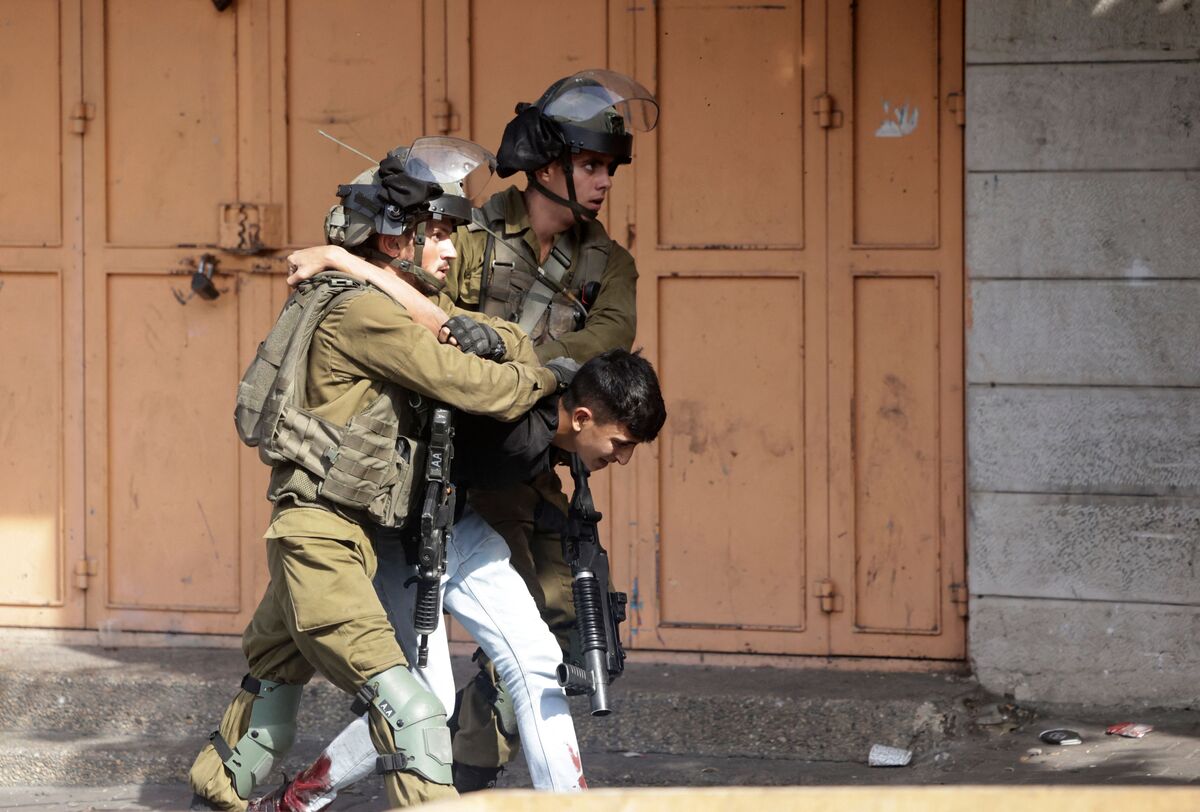
In Ramallah, occupation forces arrested two children, Abdul Qader Kamel Makhlouf and Ahmed Osama Alian, both 15 years old, after raiding and searching their parents' homes in the Jalazone refugee camp.


In Bethlehem, the occupation forces arrested: Laith Nidal Suman (24 years old) from Al-Saff Street, Ali Khaled Zawahra (25 years old), and Adi Bassam Zawahra (19 years old) from the Karkafa area in central Bethlehem, after raiding and searching their families’ homes.


In Hebron, occupation forces arrested freed prisoner Abdul Wahab Al-Atrash after raiding his home in the Qalqas area.


The occupation forces also raided and searched a number of homes in the Wadi al-Saman area, east of the city.


These forces also stormed Al-Arroub camp, firing live ammunition and sound bombs into the air, without recording any injuries or arrests.


In Tulkarm, occupation forces arrested Muqdad Ibrahim, Sayyaf Mustafa Ajouli, and Ayham Taama after raiding their homes in the town of Qaffin.

PALESTINE

Mon 17 Mar 2025 8:57 am - Jerusalem Time

Israeli occupation forces new families to flee from Tulkarm and Jenin.

The Israeli occupation forces continue their aggression on the city of Tulkarm and its camp for the 50th consecutive day, and on the Nour Shams camp for the 37th day, amid an unprecedented escalation that includes intensive raids on homes, forcing Palestinians to leave, and burning and bombing others. The siege and raids continue, amid continuous military reinforcements.


Israeli occupation forces have escalated their attacks on residents of Tulkarm refugee camp, threatening the remaining families in the Qaqun neighborhood with the need to leave, in a continuation of their policy of forced displacement against the camp's residents.


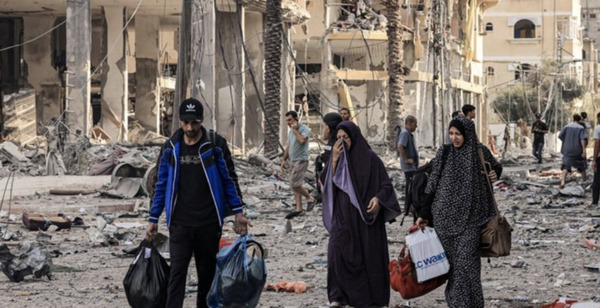
Local sources reported that 200 families were displaced from their homes in Tulkarm camp over the past 24 hours due to the escalation of the occupation's aggression and threats to residents that they must leave their homes and not return.


The occupation forces continued to raid homes and shops in Tulkarm camp, searching them, vandalizing and stealing their contents, and converting a number of them into military barracks. They also raided the Al-Awda Center for Child and Youth Rehabilitation, vandalizing its contents and stealing its belongings.


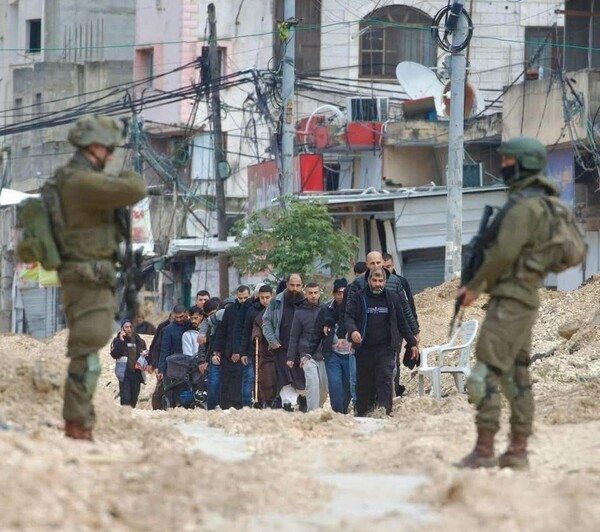
The Israeli occupation forces continue their aggression on the city and camp of Jenin for the 56th consecutive day, amidst bulldozing and burning homes, and converting others into military barracks.


Israeli occupation forces continued to burn homes in Jenin camp, setting fire to a number of homes, including the home of Samir al-Nursi, on al-Hurriya Theatre Street. Meanwhile, infantry forces deployed in the camp's main square, while flares were fired around al-Zahraa School.


Occupation forces closed the entrance to Jenin Governmental Hospital with earth mounds and continued their military operations around the camp and on several streets in the city.


Occupation tanks and armored vehicles are positioned around the camp, while bulldozers continue to clear streets and widen others to allow military vehicles to enter.


The occupation forces completely demolished approximately 120 homes in the camp's alleyways and neighborhoods, damaging dozens of others, and displacing approximately 20,000 residents.

ARAB AND WORLD

Sun 16 Mar 2025 8:59 pm - Jerusalem Time

US and Israel are asking East African countries to settle Palestinians on their lands.

The United States and Israel have asked three East African governments to accept Palestinians forcibly displaced from Gaza, according to American and Israeli officials who spoke to The Associated Press.


The Associated Press reported Friday that the United States and Israel began discussing the forced displacement of Palestinians last month with the governments of Sudan, Somalia, and the breakaway region of Somaliland.


This comes after US President Donald Trump indicated last February that the United States might "take over" the Gaza Strip and expel the Palestinians. His announcement prompted Egypt to formulate an alternative plan for Gaza's reconstruction, which was adopted by Arab leaders on March 4.


The Egyptian plan, which envisages $53 billion to rebuild Gaza, rejects the displacement of Palestinians, focusing instead on redeveloping the Strip without evacuating its Palestinian citizens.


Earlier this week, Trump appeared to hint that he was backing away from a proposed mass expulsion of Palestinians from Gaza, saying when asked about it during a White House meeting with Irish leader Micheál Martin: "Nobody wants to expel any Palestinians from Gaza."


The Associated Press reports that the United States responded to Arab governments' rejection of its plan to displace Palestinians last month by ignoring it.


The foreign ministers of Somalia and Somaliland on Friday denied receiving any proposal from the United States or Israel to resettle Palestinians in their countries.


Somali Foreign Minister Ahmed Moalim Fiqi stated that his country rejects "any proposal or initiative, from any party, that would undermine the right of the Palestinian people to live in peace on the land of their ancestors."


A senior Sudanese official also denied that Sudan had received any proposal, telling Reuters that such a plan was unacceptable.

PALESTINE

Sun 16 Mar 2025 8:33 pm - Jerusalem Time

Clashes with Israeli occupation forces east of Nablus

Clashes erupted with Israeli occupation forces on Sunday evening in the town of Beit Furik, east of Nablus.


According to local sources, occupation forces stormed the town, firing live ammunition, sound bombs, and tear gas, sparking clashes. No injuries were reported.

PALESTINE

Sun 16 Mar 2025 5:42 pm - Jerusalem Time

UNICEF calls for assistance for children in Gaza and the West Bank before it's too late.

UNICEF Regional Director for the Middle East and North Africa, Edouard Beigbeder, described the situation of children in the Gaza Strip and the West Bank as "extremely worrying," stressing that all of them are affected in one way or another by the consequences of the conflict.


At the conclusion of a four-day mission to the West Bank and Gaza, Beigbeder said in a statement published Sunday on the UNICEF website that some children in the region live in "extreme fear and anxiety," while others suffer "the real consequences of being denied humanitarian assistance and protection, or of displacement, destruction, or death."


"Almost all of the 2.4 million children living across the West Bank, including East Jerusalem, and the Gaza Strip are affected in some way," he added.


He continued in his statement: "Without aid entering the Gaza Strip, nearly one million children are once again living without the basics they need to survive."


He continued, "Unfortunately, approximately 4,000 newborns are currently unable to receive essential life-saving care due to the severe impact on medical facilities in the Gaza Strip. Every day without ventilators, lives are lost, particularly among vulnerable premature newborns in northern Gaza."


The UNICEF official noted that there are more than 180,000 doses of essential childhood vaccines located a few dozen kilometers outside the Gaza Strip, sufficient to fully vaccinate and protect 60,000 children under the age of two, in addition to 20 ventilators for neonatal intensive care units.


He called for these life-saving health supplies to be allowed into the country, saying, "There is no reason why this should not happen."


"Before it's too late"

In his statement, UNICEF's Regional Director for the Middle East and North Africa stressed the need to meet the basic needs of civilians in accordance with international humanitarian law, adding, "This requires facilitating the delivery of life-saving aid, whether there is a ceasefire or not."


A ceasefire in Gaza took effect on January 19, but was marred by some shelling. Israel has been preventing any aid from entering the Strip since March 2.


Beigbeder stressed that any further delay in aid delivery risks slowing or shutting down essential services and could quickly undo the gains made for children during the ceasefire.


"We need to get these supplies to children, including newborns, before it's too late. We must keep essential services running," he said.


The official expressed his regret over the power outage at the UNICEF-supported desalination plant in Khan Yunis, Gaza, noting that it had been the only facility receiving electricity since last November, before it was now cut off.


In the West Bank, including East Jerusalem, he noted that more than 200 Palestinian children have been killed since October 2023, "the highest number recorded in this period in the past two decades."


He concluded his statement by saying, "Tens of thousands of children have been killed and injured. We must not return to a situation that drives these numbers even higher."

PALESTINE

Sun 16 Mar 2025 4:04 pm - Jerusalem Time

US envoy: Hamas's chances are fading, and I advise them to look at what we did to the Houthis in Yemen.

US envoy Steve Witkoff said on Sunday, March 16, 2025, that Hamas's ceasefire proposal is not a suitable basis for negotiations.


"The response we received from Hamas regarding extending the ceasefire in Gaza is completely unacceptable," Witkoff told CNN.


Last Friday, Hamas announced its agreement to release an Israeli-American soldier being held captive, along with the bodies of four detained dual nationals, as part of the ceasefire between Israel and Hamas.


"Our proposal for a ceasefire in Gaza includes the release of five live hostages, including an American citizen," Witkoff explained during the interview.


He continued: "Our proposal includes the release of a large number of Palestinian prisoners, which would be great for their families."


The US envoy added, "Hamas's chances are fading, and I advise them to look at what we did to the Houthis in Yemen and to be more realistic in the negotiations."


It is noteworthy that Israeli Prime Minister Benjamin Netanyahu has directed the negotiating team to prepare for the resumption of Gaza negotiations, in accordance with the mediators' response to the proposal of US envoy Steve Witkoff.


The office said in a statement that Netanyahu "held an in-depth discussion on Saturday evening on the issue of the kidnapped soldiers, with the participation of ministers, the negotiating team, and heads of the security establishment."

ARAB AND WORLD

Sun 16 Mar 2025 3:51 pm - Jerusalem Time

The American right vehemently defends free speech—unless it is pro-Palestine.


For the American conservative commentators, it is rare that their issues have been as central to their political world as their supposed defense of “free speech” and the “First Amendment” to the US Constitution. Over the past decade, they have built a powerful political movement opposing the so-called cancel culture, which they claim has restricted open debate and punished free thinkers willing to express their opinions.


But with the Donald Trump administration seeking to deport Palestinian student and activist Mahmoud Khalil, a U.S. permanent resident (green card) holder married to an American-born woman who is eight months pregnant, from the country solely based on his political expression, many of these free speech advocates have changed their stance. The arrest and attempted deportation of Mahmoud Khalil demonstrates the blatant hypocrisy of many conservative voices regarding free speech in America. Conservatives who previously opposed "cancel culture" under the guise of defending free speech are now rushing to support state violence against critics of Israel by arresting and expelling these critics from American society.


On March 8, officials from the US Department of Homeland Security arrived at Khalil's home, arrested him, separated him from his wife, and transferred him to a detention center in Louisiana, a jurisdiction friendly to government lawsuits against immigrants. Although Judge Jesse Furman (of the Southern District of New York) temporarily blocked Trump's desire to immediately deport Mahmoud, the threat against him remains. The US government (which arbitrarily detained him) has not filed any criminal charges against him and has not presented any evidence to substantiate the Trump administration's propaganda claims that he "poses a threat to national security" and "incites violence," in the words of Tom Homan, the Trump administration's border official.


In fact, senior White House and Republican officials have essentially admitted that Khalil committed no crime. Secretary of State Marco Rubio justified his attempt to deport Khalil by claiming—without evidence—that he supports Hamas and “anti-Semitic activities.” This shows that even as Rubio blatantly misrepresents Khalil’s policies, he is actually trying to deport him because of his alleged policies. When asked what crime Khalil committed, House Speaker Mike Johnson reverted to propaganda talking points without any evidence.


It's worth noting what Khalil actually said in a 2024 interview with CNN, Mahmoud stated: "As a Palestinian student, I believe that the liberation of the Palestinian people and the Jewish people are intertwined and go hand in hand, and one cannot be achieved without the other. Our movement is a movement for social justice, freedom, and equality for all."


Perhaps that's why a large number of Jewish protesters took over the lobby of Trump Tower in New York City last Thursday (March 25, 2013) to demand Khalil's release. The Trump administration has argued that it has the authority to deport Khalil under the Immigration and Naturalization Act of 1952, which states that "any alien whose presence or activities in the United States, in the opinion of the Secretary of State, may have potentially adverse consequences for the foreign policy of the United States, shall be deportable." But the White House has not explained how a ceasefire and an end to Israel's genocide in Gaza would have "potential adverse foreign policy consequences," unless one considers that demanding an end to U.S. support for that genocide is "harmful" to U.S. national security. Under the Trump administration's sweeping interpretation of this language, any lawful permanent resident of the United States who criticizes any aspect of Trump's foreign policy—from Trump's desire to occupy Greenland to his abandonment of Ukraine—could be deported.


According to experts, this constitutes a clear attack on the First Amendment and constitutionally protected freedom of expression. A wide range of conservative voices who have repeatedly criticized “cancel culture” have rushed to defend the Trump administration’s ugly actions. To cite a number of examples: Conservative commentator Charlie Kirk, who has made opposing so-called “cancel culture” and defending free speech a core part of his political and advocacy discourse, used the same argument to defend the deportation of Mahmoud, whom Kirk described as a “Hamas promoter” and claimed, without evidence, that he “distributed Hamas propaganda leaflets”—baseless claims. Dinesh D’Souza, an Indian-born immigrant of American descent, followed a similar path, arguing against “cancel culture” on the one hand while calling for Khalil’s deportation based on his alleged offensive rhetoric against “Western civilization,” a claim that appears to be based on a fake Instagram post.


To be fair, there have been exceptions to this hypocrisy. Ann Coulter, the most famous, stated in her usual X-rated fashion, "There's almost no one I wouldn't deport, but unless they've committed a crime, isn't that a violation of the First Amendment?" Candice Owen questioned the lack of criminal charges against Khalil and refuted conservative claims about what Khalil said.


It's worth noting that, as with many of Trump's actions, his attack on Mahmoud's right to free speech may have backfired by provoking a dramatic backlash from advocates for Palestinian civil rights and freedom. Protests have resumed on campuses across the United States, and the American Civil Liberties Union announced it had joined Khalil's legal team. Several organizations have launched grassroots campaigns calling on universities to oppose Trump's actions and protect students' rights. Some elected Democrats have also taken a stand in support of Mahmoud Khalil, though many have remained silent. Senator Chris Murphy (D-Conn.) declared, "Today it's Mahmoud Khalil. Tomorrow it's me or you." Democrats on the Senate Judiciary Committee posted "Free Mahmoud Khalil" on Twitter and denounced Republican hypocrisy on free speech, saying, "They're so pro-'free speech' that Republicans will lock you up if you disagree with them. This is cancel culture."

PALESTINE

Sun 16 Mar 2025 3:34 pm - Jerusalem Time

US envoy: Hamas ceasefire proposal not suitable for negotiation

US President Donald Trump's Middle East envoy, Steve Witkoff, said in an interview with CNN that the ceasefire proposal presented by Hamas "is not a valid basis for negotiations."


The US official added, "The response we received from Hamas regarding extending the ceasefire in Gaza is completely unacceptable." He continued, "Our proposal includes the release of a large number of Palestinian prisoners, which would be a wonderful thing for their families."


According to Witkoff, the US proposal for a ceasefire in Gaza includes the release of five live hostages, including an American citizen.


"I think there is an opportunity for Hamas, but it is fading quickly," he added, stressing the need for the movement to be "more rational than it has been" in its approach to the negotiations.


For its part, Hamas has once again demonstrated flexibility in negotiations by announcing its acceptance of the mediators' proposal to release Israeli-American soldier Idan Alexander and the bodies of four dual nationals. This is intended to allow for the resumption of negotiations on the second phase of the Gaza ceasefire and prisoner exchange agreement.


After days of procrastination, the Israeli Prime Minister's Office announced that Benjamin Netanyahu had directed the negotiating team to prepare for the resumption of the Gaza negotiations, based on the mediators' response to the proposal of US envoy Steve Witkoff.


The office said in a statement that Netanyahu "held an in-depth discussion on Saturday evening on the issue of the kidnapped soldiers, with the participation of ministers, the negotiating team, and heads of the security establishment."

PALESTINE

Sun 16 Mar 2025 2:18 pm - Jerusalem Time

A Palestian citizen was injured in a settler attack in Hebron.

A citizen was injured on Sunday after settlers attacked him in the Old City of Hebron.


Activist Aref Jaber said that settlers carried out a provocative tour in Jaber neighborhood and assaulted the elderly man, Abdul Aziz Al-Shantir (64 years old), after storming his store in Jaber neighborhood near the Ibrahimi Mosque, which resulted in him suffering minor injuries to his head.

PALESTINE

Sun 16 Mar 2025 1:02 pm - Jerusalem Time

Government Office in Gaza: 80% of the Strip's population lacks food.

The Government Media Office said that 80% of the population of the Gaza Strip lacks regular access to food, stressing that the Strip is experiencing a famine. Meanwhile, the Gaza Municipality warned of the danger of stopping energy, fuel, and water supplies due to the Israeli army's continued closure of the crossings.


The government media office confirmed in a statement on Sunday that the Gaza Strip lacks everything after 15 days of aid restrictions. The office called on mediators to act to halt the Israeli occupation's crimes against more than two million people.


In early March, the Israeli military closed all crossings into Gaza to prevent the entry of humanitarian aid, following its reneging on the ceasefire agreement in the Strip, amid American disregard and international silence.


Accordingly, the Gaza Municipality warned of the danger of halting energy and fuel supplies due to the occupation's continued closure of crossings, the halting of the entry of energy sources and fuel needed to operate essential services and facilities, and the occupation's threat to halt the pumping of Mekorot water. The municipality emphasized that continuing these arbitrary measures threatens to exacerbate the situation and cut off access to life and water in the city.


The municipality confirmed in a statement on Sunday that the cessation of power supplies threatens to paralyze water and sewage facilities and other services, exacerbating the humanitarian and health catastrophe the city is experiencing due to the occupation's actions and aggression.

The Gaza Municipality said in a statement that the occupation's threat to halt the Mekorot water pipeline, which currently supplies the city with approximately 70% of its daily needs, portends a crisis.


The municipality called on international organizations to intervene, save the city's livelihoods, and pressure the occupation.

Meanwhile, a new batch of sick and wounded people left the Gaza Strip this Sunday morning via the Rafah border crossing in the southern Gaza Strip.

Civil Defense reported that the 44th batch of sick and injured patients from Gaza left via the Rafah border crossing to receive treatment abroad.

The evacuation of the wounded and sick from the Gaza Strip comes in accordance with the ceasefire agreement that entered into force on January 19.

PALESTINE

Sun 16 Mar 2025 12:51 pm - Jerusalem Time

Double the suffering of prisoners in Negev prison during the month of Ramadan

The Palestinian Prisoners' Affairs Commission confirmed that prisoners in the Negev prison are subjected to the worst forms of treatment by prison guards, having been subjected to repression, beatings, and rubber bullets more than once over the past week.


The authority added in a statement issued Sunday that the prison administration deliberately mixes prisoners infected with scabies with those who are not infected, in order to transmit the infection to them as a form of punishment. It also exploits the month of Ramadan to further restrict prisoners by reducing food quantities and degrading its quality.


During his last visit to the prison, the committee’s lawyer reported that prisoner Ahmed Radwan Hamamra (26 years old) from the town of Kafr Aqab, north of occupied Jerusalem, is in a very bad health condition, as he suffers from a very advanced stage of scabieiosis, with boils spreading all over his body and covering his features. As a result, he suffers from anemia. He was presented to the prison clinic on the tenth of this month, but was not given any kind of treatment.


Hamamra was arrested on February 13, 2023, and was sentenced to administrative detention, which was renewed more than once. He is expected to be released on March 24, 2025.


As for prisoner Alaa Shalalda (23 years old) from the city of Hebron, who has been detained since March 20, 2024, he suffers from joint pain, sinusitis, and shortness of breath, and was recently given an antibiotic.


Meanwhile, prisoner Mohammed Hazin (35 years old) from Qalandia camp suffers from diabetes and high blood pressure. He takes insulin injections regularly and his health condition is stable.


It is noteworthy that Hazin has been detained since August 27, 2024, and was sentenced to administrative detention. He is expected to be released on June 25, 2025.

PALESTINE

Sun 16 Mar 2025 12:42 pm - Jerusalem Time

The death toll in the Gaza Strip rises to 48,572.

The Ministry of Health in Gaza announced on Sunday that the death toll in the Gaza Strip has risen to 48,572, the majority of whom are children and women, since the start of the Israeli occupation's aggression on October 7, 2023.


It added that the death toll has risen to 112,032 since the start of the aggression, while a number of victims remain under the rubble, unable to be reached by ambulances and civil defense teams.


It pointed out that 29 martyrs (15 martyrs whose bodies were recovered, and 14 new martyrs) and 51 injuries arrived at Gaza Strip hospitals during the past 24 hours.

PALESTINE

Sun 16 Mar 2025 11:53 am - Jerusalem Time

A young Palestinian was injured by Israeli occupation forces' bullets at the Qalandia checkpoint, north of Jerusalem.

A young man was injured a short while ago by Israeli occupation forces' bullets at the Qalandia checkpoint, north of occupied Jerusalem.


The Red Crescent Society reported that a 33-year-old man was shot with live ammunition in the abdomen and thigh by the occupation forces while he was near the checkpoint, and was transferred to the hospital.

PALESTINE

Sun 16 Mar 2025 11:02 am - Jerusalem Time

Two Palestinians dead, one of them succumbed to his wounds in the Gaza Strip

Two citizens died this morning, one of them from his wounds, in the Gaza Strip.


According to local sources, 62-year-old Fayez al-Tawil was killed when an Israeli drone bombed a group of civilians in the Jhar al-Dik area in the central Gaza Strip.


Meanwhile, young woman Nada Issa succumbed to her injuries sustained in the bombing of her home in the Nuseirat camp in the central Gaza Strip.


The occupation army continues its violations of the ceasefire agreement in Gaza, with its ongoing attacks on various areas of the Strip.

PALESTINE

Sun 16 Mar 2025 10:57 am - Jerusalem Time

Israeli occupation threatens to demolish a house and continues to bulldoze lands in Salfit and Ramallah.

The Israeli occupation continues to bulldoze large areas of Palestinian land in the Wadi al-Matwi area, which connects the city of Salfit to the town of Bruqin to the west, for the fourth consecutive day.


Local sources reported that bulldozing is taking place across large areas to pave a new colonial road for the outpost built on the lands of the village of Farkha. Settlers have placed the occupation flag along the road, and machinery continues bulldozing and uprooting olive trees in the area.


From time to time, settlers carry out widespread attacks against citizens and their vehicles.


In the same context, the occupation forces continued to close the iron gate erected at the northern entrance to the city of Salfit for the fifth consecutive day.


In Ramallah, occupation forces stormed the village of Deir Ibzi' and served the family of the martyr Karajah with a notice to vacate their three-story home within 72 hours of receiving the notice, in preparation for its demolition.


Karajah was martyred on March 22nd, following a pursuit operation carried out by Israeli occupation forces involving a helicopter and a drone, amidst the presence of ambulances, in an area between the villages of Deir Ibzi' and Kafr Ni'ma.

PALESTINE

Sun 16 Mar 2025 10:22 am - Jerusalem Time

Updated: Israeli occupation continues its aggression on Jenin and Tulkarm.

The Israeli occupation continues its aggression on the city and camp of Jenin for the 55th consecutive day, amidst bulldozing and burning homes, and converting others into military barracks.


Local sources reported that the occupation forces continue to burn homes in Jenin camp. Yesterday, they burned a number of homes, including the home of Samir al-Noursi, on Freedom Theatre Street. Meanwhile, infantry forces deployed in the camp's main square, while flares were fired around al-Zahraa School.


The occupation forces also closed the entrance to Jenin Governmental Hospital with earth mounds, and continued their military operations around the camp and on several streets in the city.


Occupation tanks and armored vehicles are positioned around the camp, while bulldozers continue to clear streets and widen others to allow military vehicles to enter.


The occupation forces completely demolished approximately 120 homes in the camp's alleyways and neighborhoods, damaging dozens of others, and displacing approximately 20,000 residents.


In the town of Jalboun, north of Jenin, occupation forces raided a number of homes and turned them into military barracks.


Israeli occupation forces also stormed the town of Qabatiya, the village of Bir al-Basha, and the town of Ya'bad, patrolling the streets, but no arrests were reported.


The ongoing Israeli aggression on Jenin, which began on January 21, has resulted in the deaths of 34 civilians and the injury of dozens more, in addition to unprecedented destruction of infrastructure and public and private property.


* *Tulkarm**


The Israeli occupation forces continue their aggression on the city of Tulkarm and its camp for the 49th consecutive day, and on the Nour Shams camp for the 36th day, amid an unprecedented escalation that includes intensive raids on homes, forcing residents to leave, and burning and bombing others. The siege and raids continue, amid continuous military reinforcements.


Local sources reported that the occupation forces continue to demolish homes in various neighborhoods of Tulkarm camp, forcing residents to leave under threat and intimidation, and preventing them from returning. The areas of Hanoun Square, Qaqun, and Abu al-Ful are particularly targeted.


She added, citing eyewitnesses, that a displacement movement of residents occurred in Tulkarm camp after midnight last night, after the occupation forces raided homes, searched them, and destroyed their contents. Meanwhile, notices were delivered to residents of the Dhnaba suburb, in the area near the camp, to evacuate their homes by 12 noon today.


Yesterday, Saturday, the occupation forces forcibly forced the remaining residents of the Murabba'a Hanoun neighborhood in Tulkarm refugee camp to evacuate their homes, amid threats and warnings to arrest anyone found thereafter.


In a related development, infantry units deployed extensively this morning in and around the camp's alleyways, pursuing residents as they attempted to leave their homes and collect their basic necessities. They also seized additional homes within the camp, converting them into military barracks and sniper positions.


In another escalation, the occupation forces burned down the home of the Al-Ghoul family in the Al-Madaris neighborhood in Nour Shams camp. They also blew up the home of Saher Ra'iq and his mother in the same neighborhood, setting them on fire. They also raided homes in several locations in the camp, specifically in Jabal al-Nasr and al-Mahjar neighborhoods, searching them, destroying their contents, detaining their residents, and subjecting them to field interrogation.


Meanwhile, the occupation forces deployed military reinforcements toward the city and its two camps, passing through its main streets, obstructing the movement of citizens and vehicles. They reinforced their heavy machinery and bulldozers in front of buildings they had seized on Nablus Street, turning them into military barracks, and around the Tulkarm and Nur Shams camps. They set up mobile checkpoints to restrict the movement of citizens.


In the same context, last night, occupation forces raided a number of shops on Shuweika Street in the city's northern neighborhood, conducting thorough searches and interrogating employees before forcing the owners to close their stores. They also fired sound bombs and live ammunition to terrorize residents.

During this campaign, Moaz Abu Shamla was arrested after his shop was raided, its contents were vandalized, and he was assaulted and detained. He was then transferred to the hospital for treatment.

These attacks come amid the ongoing escalation by Israeli occupation forces in the city of Tulkarm and its two camps, which has resulted in the deaths of 13 civilians, including a child and two women, one of whom was eight months pregnant. Dozens more have been injured and arrested, and more than 12,000 people have been forcibly displaced from Nour Shams camp and another 12,000 from Tulkarm camp.


The aggression also caused widespread destruction to the infrastructure, including water, electricity, sewage, and communications networks, as well as homes, shops, and vehicles, which were completely and partially demolished, burned, vandalized, looted, and stolen.

PALESTINE

Sun 16 Mar 2025 9:35 am - Jerusalem Time

Israel continues to close the Kerem Shalom and Beit Hanoun crossings for the 15th day.

The Israeli occupation forces continue to close the Kerem Shalom and Beit Hanoun (Erez) crossings for the fifteenth consecutive day, completely halting the entry of aid.


Following the decision to close border crossings and halt the flow of goods, governmental and international organizations warned of a return to starvation in the Gaza Strip if the closure remains in place.


As a result of this arbitrary decision, the humanitarian situation has worsened, with prices of basic goods and commodities skyrocketing immediately and dramatically, and most goods disappearing from the market.

PALESTINE

Sun 16 Mar 2025 9:21 am - Jerusalem Time

In the volatility of politics and the coup of politicians!


In the 1980s, a popular saying was made to mock some politicians sitting on the left of the screen, who quickly changed their positions, under a thick cover of synonymous words, in the language of Dad, which is full of faces, directions, orientations, and agendas.

D

"He winks left, then you see him swerve right." This saying has not gone out of fashion, despite the passage of time, nor has its expiration date expired, despite the onslaught of adversity. It can be reproduced or repackaged, just like the wholesaler or candy factory owner who renews production dates to reap more profits, without concern for the health of poor consumers.


On the art scene, artist Emad Al-Farajin continues to perform with masterful acting, dazzling and entertaining viewers at iftar tables. On Palestine TV, the director of the Ramadan series "Umm Al-Yasmeen," along with the cast and camera crew, delights us with performances no less than those of their counterparts in major Arab production houses. Our friend Ahmed Abu Saloum excels in his portrayal of "Tareefah," making you laugh, cry, pause, and pause all at once.


In the political arena, and among all factions of national action, without exception, there are more than the falcon, his “definition,” and the owner of the candy factory treated with new production dates and shiny wrappers, who will not be punished with a fine exceeding ten dinars, according to what the laws stipulate.


Take a quick look at the political scene these days... and you won't be able to close your eyes!

PALESTINE

Sun 16 Mar 2025 9:20 am - Jerusalem Time

Displaced An'am Awad to Al-Quds: Our current catastrophe is harsh, and Ramadan is sad away from the camp.

She has been plagued by pain and illnesses, even though she hasn't suffered any health problems in years. Her forced displacement and migration, far from her home in Jenin camp, has caused her all the tragedies that displaced An'am Awad, "Umm Muhammad," is currently experiencing, she said.

"Our situation is deplorable," Awad, the displaced woman, added, amidst her tears. "We never expected to experience the catastrophe of our ancestors. In fact, these days are more difficult and harsher than the catastrophe we've heard about and whose details and stories we remember. How long will we continue to pay the price?"

In a rented house in Burqin, west of Jenin, displaced Umm Muhammad and her family of six are facing extreme difficulty in adapting to a life of displacement and homelessness, especially during the holy month of Ramadan. She says, "We wished this disaster would end so we could return to our homes and spend Ramadan there, no matter how devastated and devastated they are. There is no place in the world more wonderful and beautiful for us than the Al-Izza and Al-Sumoud camp."

She added, "54 days have passed and we are still displaced, and every moment we feel regret and pain because of our separation from the camp. This is not life. We die a thousand times every moment, and the whole world is drowning in silence. No one feels our bitterness, our disappointment, and our pain."

She said: "This is the most difficult Ramadan of my life. How can we feel its taste and meaning while we are displaced and unable to return to the camp? There is no taste to drink or food as long as we are displaced."

Umm Muhammad only sat down at the iftar table she had prepared for her family for a few minutes. She performed the Maghrib prayer and sat sadly among her children, who were only talking about the conditions and news of the camp. She said, "Our bodies are here, but our souls and hearts are there. We are waiting for this nightmare to end so we can return to our homes, regardless of their condition. We are thinking only of the camp and our unknown future, especially in light of the occupation's talk of continuing its aggression until the end of the year."

She added, "We cannot comprehend the continuation of this nightmare. We are all living in a state of shock and grief. Everything in life is different, and we are displaced and deprived of our most basic right: to reclaim and return to our homes."

She said, "Despite everyone's love, appreciation, and embrace of us, nothing can compensate us for the place where we were born and live, where all our memories, lives, and dreams were stolen from us by the occupation. We are no longer able to bear this pain and this bleeding wound."

The Awad family's home is located on Ottoman Railway Street in the middle of Jenin camp. Since they were displaced, they have been unable to reach it or learn of its fate, due to its location and the occupation army's control over the area. She says: "From the first moments of the attack on the camp, our area was one of the first areas targeted by the army because of its proximity to the western entrance and the Return Roundabout. They stormed our homes and expelled us in the blink of an eye. They took us out in our clothes and without even allowing us to bring our identification papers."

She added, "They forced us into forced displacement. We could not believe that, seven decades after the Nakba, we would relive its chapters and have them repeat themselves before our eyes once again, and that we would become displaced once again."

She added, "We expected the world to stand with us, but they let us down just as they let down our ancestors during the Nakba, the consequences of which we fear will be repeated and we will become displaced forever."

She says: "Despite the hardships of displacement and what we are exposed to, we will not abandon the camp. We have chosen the village of Burqin to stay close to it, and we pray to the Lord of the Worlds during the blessed days of Ramadan to relieve our distress. We will remain steadfast until we return to the camp soon, God willing."

OPINIONS

Sun 16 Mar 2025 9:17 am - Jerusalem Time

Palestinian presence and Israeli decline

Hamada Faraana

Hamada Faraana

Opinion Writer

The Palestinians are now armed with significant political leverage, thanks to their sacrifices and resilience in the face of Israeli failure and crimes against the Palestinian people, which have left them isolated and relegated to the background, despite the strongest American support.

The Palestinians have a set of political factors that have clearly and prominently formed supportive levers for them:

First, their exceptional steadfastness in the Gaza Strip, in the face of the invasion, aggression, barbarism and fascism of the colony in a blatant manner represented by: killing, destruction and targeting of civilians, which turned into a state of human sympathy supporting and backing them.

Second, the decisions of the Arab Summit in Cairo on March 4, 2025, preceded by the five-nation summit in Riyadh on February 21, 2025.

Third, the decisions of the extraordinary meeting of the Organization of Islamic Cooperation on March 7, 2025 in Jeddah.

Fourth, the continuation of the Arab effort, through the five-member ministerial delegation of foreign ministers from Egypt, Saudi Arabia, Jordan, Qatar, and the UAE, along with PLO Executive Committee member Hussein al-Sheikh, and its efforts to support and back the Palestinian position and meet its requirements, including direct negotiations with representatives of the US administration:

1- Steve Witkoff, the US administration's political envoy to the Arab world, Moscow, and Ukraine.

2- Eric Trager, Middle East affairs officer at the US National Security Council.

Fifth: Western European countries that expressed their sympathy and support for the urgent Palestinian demands.

The outcome of Palestinian steadfastness, Arab-Islamic solidarity with the justness of Palestinian demands, and the legitimacy of the Palestinian struggle to regain their plundered rights and occupied land, in a gradual, multi-stage process, is met with a state of Israeli failure and disgrace:

1- Failure to recover Israeli prisoners without an exchange.

2- The failure to end and eliminate the Palestinian resistance, despite the killing, assassination, and destruction caused by the October 7, 2023 operation.

3- The expansion of Israeli protests against the war, demanding the continuation of negotiations and a shift towards the option of negotiation and prisoner exchange.

4- The decisions of the army and intelligence regarding not resuming the war, as there are no strategic objectives that can be achieved, and the statement of the new Chief of Staff, Eyal Zamir: “The resumption of the war will be limited to bombing, which is what is currently happening with the fall of civilian martyrs as a result of the air, land and sea bombardment, and the concentrated assault, meaning that the invasion operations and the continued presence of the occupation forces inside the sites and neighborhoods of the Gaza Strip do not constitute a gain for the occupation army, but rather provide the resistance with freedom of movement, and to snipe at the occupation forces and their vehicles, due to the logistical factor and the obstacles caused by the dust and piles of destroyed buildings.

5- A split within the enemy front between Israeli priorities and American priorities, as direct American negotiations with Hamas took place to release prisoners with dual citizenship, weakening Israel's negotiating position and increasing Israeli protests and opposition to the Netanyahu government's behavior.

The danger of negotiating with Hamas is that it will intensify the deliberate Palestinian division. Therefore, Palestinian sacrifices and resilience must be invested in strengthening the unity of Palestinian decision-making institutions, not in responding to weakening them. This will not be achieved without Palestinian coordination and understanding in two steps: the first, unity of the Fatah movement, and the second, unity of the Palestinian household.


..................

The outcome of Palestinian steadfastness, Arab-Islamic solidarity with the justness of Palestinian demands, and the legitimacy of the Palestinian struggle to regain their plundered rights and occupied land, in a gradual, multi-stage process, is met with Israeli failure and disastrous consequences.