PALESTINE

Thu 09 Nov 2023 4:06 pm - Jerusalem Time

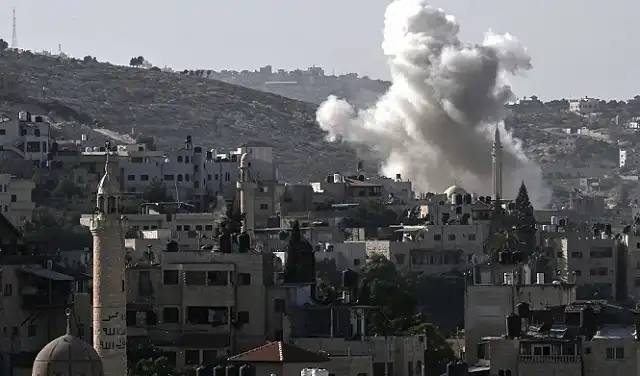
10 dead and more than 20 injuries in clashes and bombing by drones in Jenin

The Palestinian Ministry of Health confirmed in a brief statement, “The death toll in Jenin has risen to 10, in addition to 20 injuries, including serious cases.”


10 people were killed and at least 20 were injured of varying severity, today, Thursday, as a result of being bombed by an Israeli occupation drone in the Jenin camp in the occupied West Bank, while a person died as a result of being hit by occupation bullets this morning in the Al-Amari camp.


An Israeli drone targeted a number of young men in Jenin camp, where Israeli occupation forces prevented medical teams from arriving to evacuate the wounded.


OPINIONS

Thu 09 Nov 2023 3:58 pm - Jerusalem Time

The occupation of Gaza City and the temporary displacement of the population is the Israeli step that broke the balance

Translation for "Al-Quds" dot com

Translation for "Al-Quds" dot com

Opinion Writer

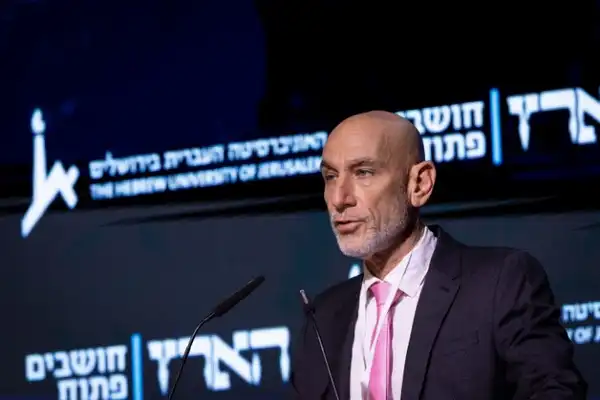
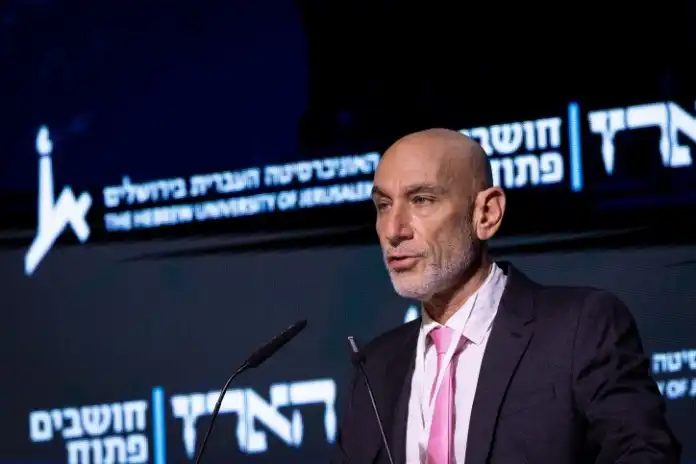
By Aluf bin

Israel's main strategic step in the war against Hamas is to expel the residents of Gaza to the south, even temporarily, and demolish the city. The army spokesman's press conferences, which focus on tactical steps - the number of targets targeted, the number of "terrorists killed", the tunnels that were closed - like the prime minister's slogan-filled speeches, are things that distort the broad picture of the war: the occupation of the northern Gaza Strip, and clearing the place of Hamas forces, gradually. This is the story.


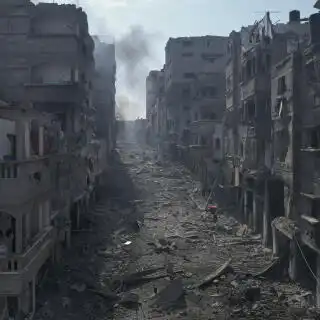
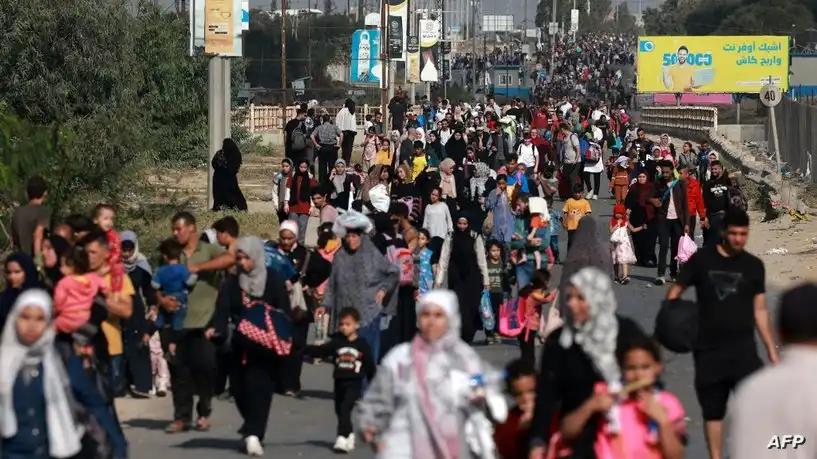
Expelling the Palestinian residents, turning their homes into rubble, and imposing restrictions on the entry of fuel into the Gaza Strip were balance-breaking steps that Israel used in the current confrontation, unlike previous rounds in the south. The October 7 "massacre" carried out by Hamas in the "cover towns", in addition to the kidnapping of hundreds of Israelis to Gaza, all gave Israel internal and international legitimacy to activate unprecedented force, in terms of firepower and the continuation of the operation. Even if a ceasefire is announced soon, under American pressure, Israel will not rush to withdraw and allow residents to return to the northern Gaza Strip. And even if they did return - where would they go back? They will have no homes, no roads, no educational institutions, no shops, and no modern city infrastructure.


The British military thinker Basil Liddell Hart, whose theories many army officers learned, wrote that the goal of war was to influence the mind of the enemy's leadership, not just to kill its soldiers. According to him, the goal of strategy is to subjugate the enemy, by providing force, and not to wage bloody battles. Israel is working to harm Hamas forces holed up in the tunnels, and is trying to hunt down its leaders, Yahya Al-Sinwar and Muhammad Al-Deif. However, the step that aims to "dismantle" the organization and its ability to control Gaza is the orders issued to one million residents of the northern Gaza Strip to head to its south. The lack of clarity about their possibility of returning to their homes constitutes a psychological move, described by Liddell Hart, as aiming to paralyze the enemy's freedom of movement.


Hamas cannot force the return of residents to Israel, and unlike in the past, it finds it difficult to mobilize international pressure on Israel in order to “prevent a humanitarian crisis” and withdraw from the Gaza Strip without conditions. Even if the Palestinians were able to cause deaths among the army, and Israel were to withdraw its ground forces, or most of them, to the Green Line, it could prevent the population from returning to the north, through aerial bombardment. Hamas has no way to defend them, and in any case, it does not try, and prefers that civilian victims pressure governments in the West, Egypt and Jordan, to restrain Israel.


It is not yet clear, and may not be clear at all, what was Sinwar and Deif's assessment of Israel's response when they ordered the "massacre" to be carried out on October 7. It can be estimated that they believed, as did the army leadership and the leadership of Israel, and they prepared for war as before: violent aerial bombardment, the possibility of a hesitant ground entry, a ceasefire mixed with international pressure, Israel’s fatigue due to the deaths, and concern for the kidnapped. It can be said that, just as no one in Israel imagined the “reverse Nakba” plan that Hamas implemented in the “cover towns,” neither did Sinwar think in his hideout that Israel would displace half of the Gaza Strip’s population and demolish their homes, under the pretext that it was a humanitarian plan to protect them.


The war is nowhere near over, and could spiral into a continuous and bloody war of attrition; Meanwhile, Israel will have to take care of hundreds of thousands of internal refugees for whom it is responsible, from the south to the north, as it is not clear when they will be able to return to their homes, in addition to the hundreds of kidnapped and missing people. But in long wars, what is decided is the numerical, economic and diplomatic balance of power, which tends to favor Israel. 

When Gaza is destroyed and empty of the majority of its population, Hamas will not be able to return and control the Strip, as happened during the past 16 years. Israel will not agree to withdraw, return the population, and allow the reconstruction of the city, as long as its keys are still with Hamas. 

The difficult picture that will emerge from the shelter centers in Khan Yunis, Deir al-Balah and Rafah, as well as the winter and mud season and the upcoming threat of epidemics, are things that will push the international community and the Arab countries to find someone to take over Gaza, instead of Sinwar. These are the forecasts for the coming winter.


ARAB AND WORLD

Thu 09 Nov 2023 2:54 pm - Jerusalem Time

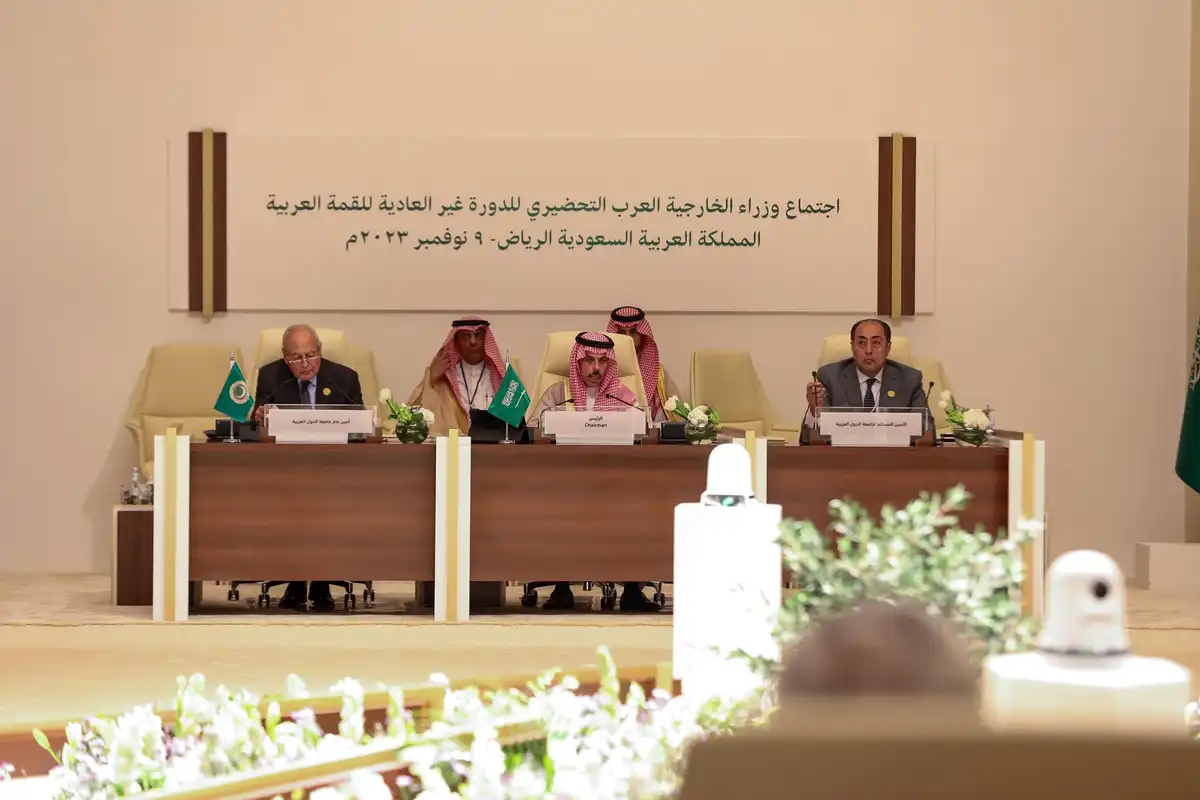
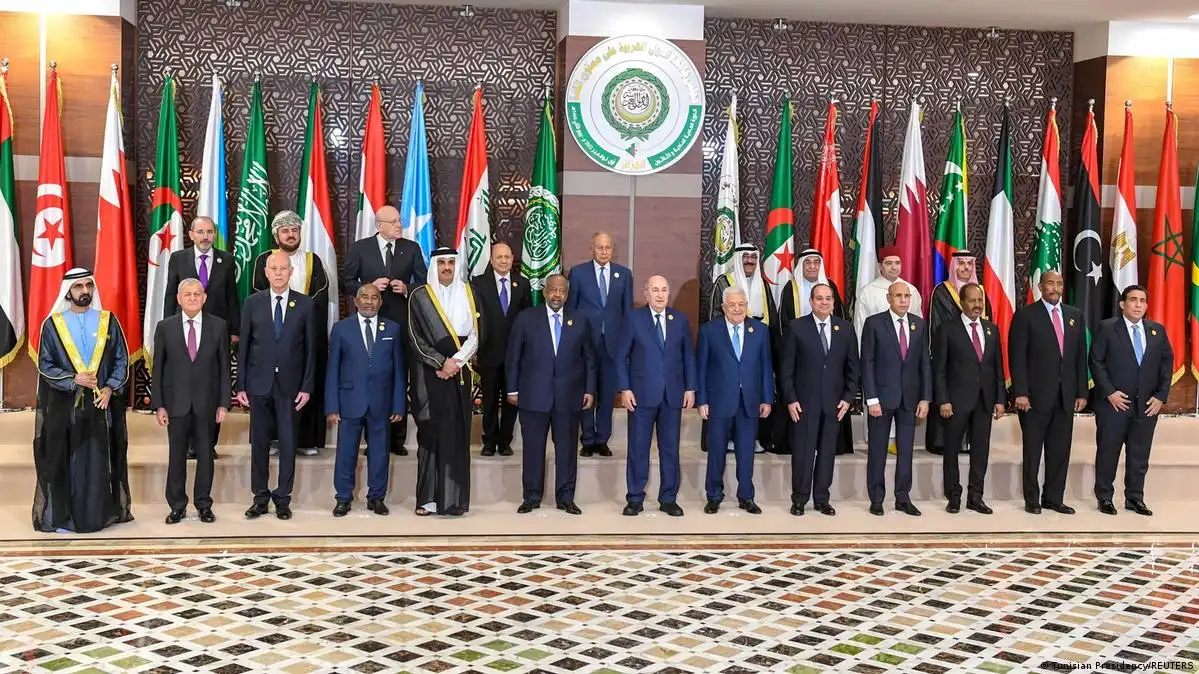
Riyadh: The work of the Arab League Council begins at the level of Arab foreign ministers

Today, Thursday, the work of the Arab League Council at the level of Arab foreign ministers began in the Saudi capital, Riyadh, to prepare for the emergency Arab summit scheduled to be held next Saturday, at the request of the State of Palestine and the Kingdom of Saudi Arabia, and with the participation of the Minister of Foreign Affairs and Expatriates, Riyad Al-Maliki.


Assistant Secretary-General of the League of Arab States, Ambassador Hossam Zaki, said that the meeting is dedicated to preparing the draft resolution that will be presented to the Arab leaders, related to the only item on the agenda, which is the Israeli aggression against the Gaza Strip.


Zaki added that the draft resolution, which will be issued at the conclusion of the summit, will express the collective Arab position on the Israeli aggression against the Palestinian people, and how the Arabs will move on the international scene to stop it, support Palestine and its people, and condemn the Israeli occupation and hold it accountable for its crimes.


PALESTINE

Thu 09 Nov 2023 2:52 pm - Jerusalem Time

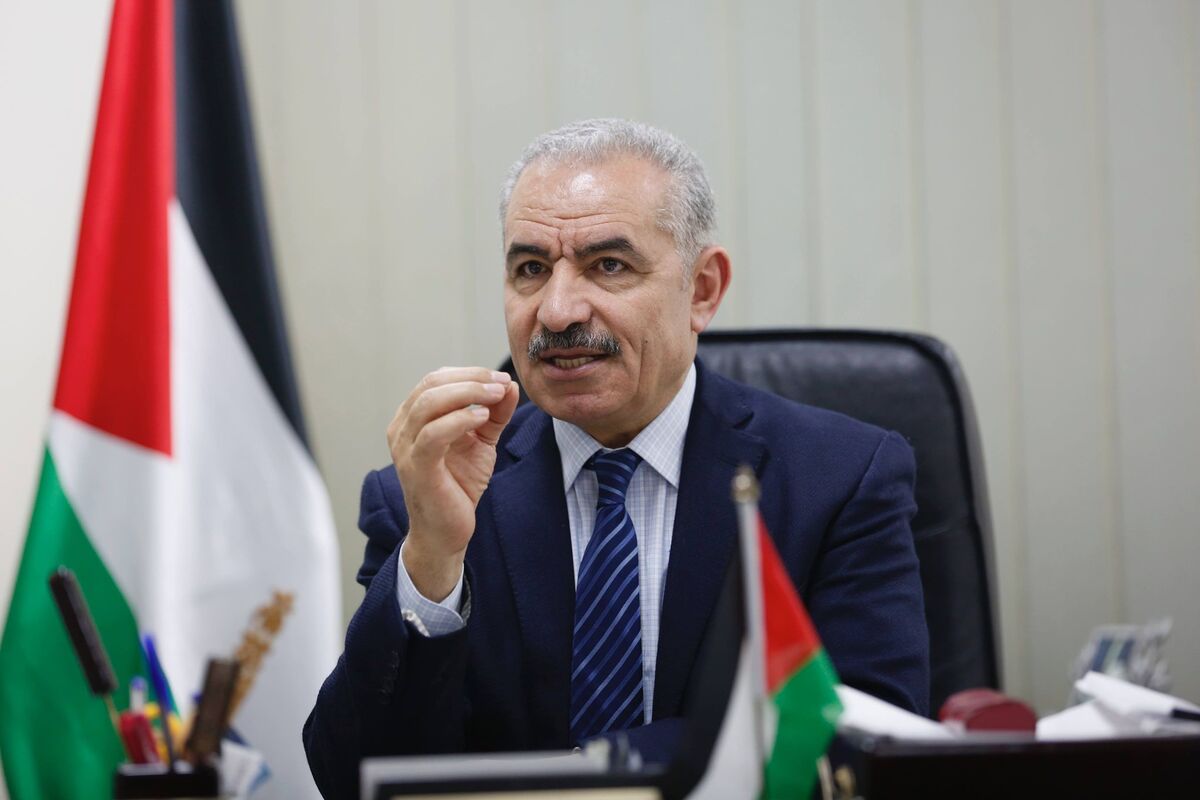
Palestine Premier calls for an immediate ceasefire: Time is running out of blood in the Gaza Strip

Prime Minister Muhammad Shtayyeh said, “Time is blood in the Gaza Strip. Every hour, Israel kills 6 children and 4 women,” calling on the international community for an immediate ceasefire.


This came during his participation, today, Thursday, in the International Conference for Gaza Relief in Paris, called for by French President Emmanuel Macron, with high-level international participation.


The Prime Minister said that the "Palestinian Path of Pain" did not begin on October 7, but rather is 75 years old, in refugee camps, in the diaspora, in the West Bank and Jerusalem, and under siege and war in the Gaza Strip.


He added: Self-defense does not give a country the right to occupy the lands of another country. We are the victim of the occupation, and we are the ones who have the right to defend ourselves.


He continued: “Israel violates international humanitarian law and commits crimes against innocent people, including murder, siege, displacement and starvation,” stressing that Israel’s war is not against Hamas, but against all the Palestinian people.


He said: “What is required is to stop the war immediately so that humanitarian relief becomes meaningful. What does it mean for a Palestinian to get dinner and be killed the next day?”


He added: "This international community must move away from double standards," stressing that the Palestinian people, in Gaza and the West Bank, need international protection and an end to the war.


He stressed that the Palestinian territories are indivisible. It is not possible to talk about the day after the Gaza Strip without talking about the day after all the Palestinian territories. Partial solutions will not produce results, stressing the necessity of a political horizon that ends the suffering of the Palestinian people by ending the occupation.


The Prime Minister called for the leaders of the occupying state to be tried in the International Court for the war crimes they carried out against the Palestinian people, saying: International courts must take a clear stand to try criminals, and international humanitarian law must not be divided.


ARAB AND WORLD

Thu 09 Nov 2023 2:28 pm - Jerusalem Time

The French President calls for action to achieve a ceasefire in the Gaza Strip

Today, Thursday, during the opening of the humanitarian conference on Gaza in Paris, French President Emmanuel Macron called for “working towards a ceasefire” in the Gaza Strip.

Macron said in his speech during the opening of the conference, “In the near term, we must work to protect civilians. For this reason, there is a need for a quick humanitarian truce and we must work for a ceasefire.”

The French President stressed that it is "necessary" to protect civilians in the Gaza Strip and that there can be no double standards with regard to protecting human lives. He added, "This is non-negotiable."


He pointed out that the humanitarian situation is deteriorating "more every day" in Gaza, calling for aid to be coordinated and organized in a concrete way so that it can be transferred.

Macron also announced that his country would increase its aid to the Gaza Strip to 100 million euros.

It is noteworthy that Prime Minister Muhammad Shtayyeh is participating in the International Conference for Gaza Relief in Paris, at the initiative of French President Emmanuel Macron, and with high-level international participation.

The conference is held to call for respect for international humanitarian law, protect civilians and humanitarian workers, enhance access to humanitarian aid, meet the humanitarian and relief needs of the Gaza Strip in the health, water, energy and food sectors, and call for mobilizing financial support in order to support effective international agencies and organizations. On the field.

Participating in the conference are: the President of the European Union, the President of the Council of Europe, the President of Cyprus, the Prime Ministers of Greece, Norway, Ireland, Belgium, and Luxembourg, in addition to the Canadian, British, and Dutch Ministers of Cooperation, the Foreign Ministers of Sweden, Portugal, and Turkey, the Egyptian Foreign Minister, and the President of the Jordanian Hashemite Commission. The US Deputy Secretary of State for Humanitarian Affairs and the German Deputy Foreign Minister.


The heads of United Nations organizations will also participate in the conference, including: the heads of UNRWA, the World Health Organization, the World Food Programme, UNICEF, and others.

ARAB AND WORLD

Thu 09 Nov 2023 2:28 pm - Jerusalem Time

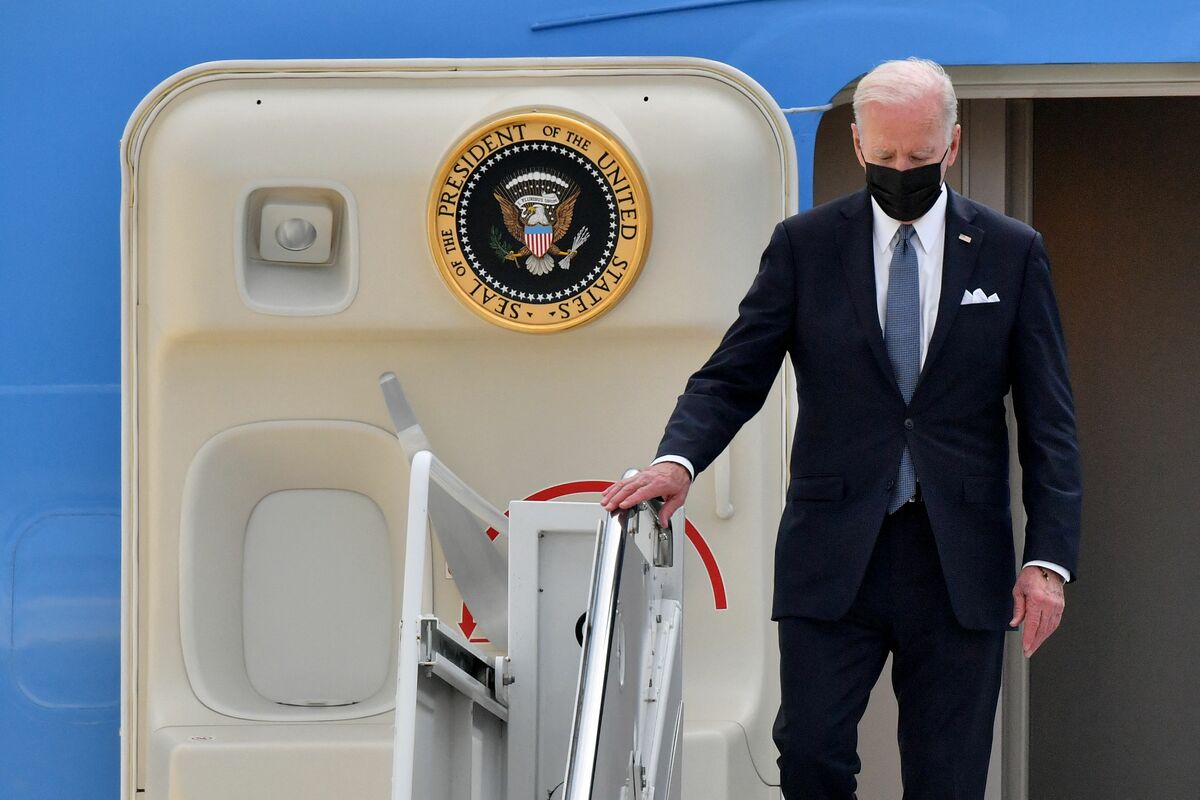
They called for the protection of civilians in Gaza.. A message from 26 senators to Biden

26 Democratic members of the US Senate expressed their concern in a letter addressed to US President Joe Biden regarding the Israeli military operations targeting Hamas in the Gaza Strip, which led to a rise in the death toll among Palestinian civilians, especially among children and women.


In the letter to Biden, the members asked US administration officials to brief Congress on how Israel is carrying out its military operations to mitigate civilian casualties in Gaza while achieving its goal of eliminating Hamas, the Palestinian resistance movement that the United States classifies as a terrorist movement.


The letter says, "We have joined you in condemning the brutal terrorist attacks launched by Hamas against Israel. We agree with you that Israel has the right to defend itself and hold Hamas accountable. We also thank your efforts that led to the release of two American citizens who were being held hostage, and we support your continued efforts to free the remaining hostages." ".


The letter was signed by Democratic members of the Senate Armed Services Committee, including the committee's chairman, Senator Jack Reed (D-Rhode Island), and members of the Senate Foreign Relations Committee, including Senators Chris Van Hollen (D-Md.). Murphy (D-Connecticut) and Brian Schatz (D-Hawaii).


The list of signatories also included Democratic Senators: Peter Welch, Angus King Jr., Jeanne Shaheen, Jeffrey Merkeley, Tina Smith, Amy Klobuchar, Raphael Warnock, Jon Assoff, Ray Lujan, Tammy Duckworth, Elizabeth Warren, Sheldon Whitehouse, and Martin Heinrich. , Sherrod Brown, Tim Kaine, Bernard Sanders, Edward Markey, Mazie Hirono, Tammy Baldwin, Thomas Carper, and Richard Durbin.


“We respectfully ask your team to provide us with information related to these two clear American priorities: supporting an Israeli strategy that will effectively reduce and defeat the threat posed by Hamas, and taking all possible measures to protect civilians in Gaza,” the senators wrote.


They said: “We ask that you inform us of the specific mechanisms the administration is putting in place to ensure that Israeli military operations inside Gaza are carried out in accordance with international humanitarian law and to ensure that any equipment provided by the United States is used in a manner consistent with international humanitarian law and with US law.”


They added, "It is in America's interest to ensure that any military plans to fight Hamas do not result in the same strategic mistakes committed by many American military operations over the past few decades."


They continued: “As we review the administration’s supplemental request for military assistance to Israel, we respectfully ask you (Biden) to share with us your assessment of the feasibility of the Israeli military strategy in Gaza, and whether it prioritizes the release of hostages.”


The senators asked whether there is an achievable plan to govern Gaza when the Israeli military operation ends, as well as whether Israel supports the conditions necessary to eventually achieve a two-state solution to the Israeli-Palestinian conflict.


The members who signed the letter stressed the need to provide additional assistance to Israel, including five main areas: (1) curbing the threat posed by Hamas, (2) giving priority to the release of hostages, (3) developing a plan to work towards a two-state solution to establish a Palestinian state, (4) ) Commitment to US resolutions and international law while protecting civilians and (5) providing humanitarian assistance to civilians in Gaza.


“The information requested in this letter will help us ensure that American support for Israel’s operations inside Gaza achieves these goals,” they wrote.


The lawmakers also asked Biden to obtain assurances from Israeli Prime Minister Benjamin Netanyahu that “American supplies of rifles will not reach the hands of extremist Israeli settlers in the West Bank who are accused of committing violence and killing Palestinians in villages adjacent to the illegal lands of Israeli communities.” Based on assurances from the President of the Palestinian Authority, Mahmoud Abbas, that his government is taking steps to suppress any acts of violence against Israelis.”


The signatories of the letter asked the Biden administration to provide them with information “about how our assistance will advance our efforts to engage with Israel, Egypt, and the broader international community to address the ongoing humanitarian catastrophe in Gaza.”


They said: “As we consider providing additional military assistance to Israel, our role must not only be limited to providing urgently needed humanitarian relief to Gaza, but we must also insist that Israel take all necessary measures to help us facilitate this relief for the two million civilians living there, half of whom children, including fully restoring water, electricity and communications services, accelerating fuel deliveries through well-established systems to avoid diversion to Hamas, and opening the Kerem Shalom crossing in southern Israel to increase much-needed humanitarian aid to Gaza. Aid workers and civilian sites such as schools and hospitals must also be protected. and United Nations facilities.

ARAB AND WORLD

Thu 09 Nov 2023 1:22 pm - Jerusalem Time

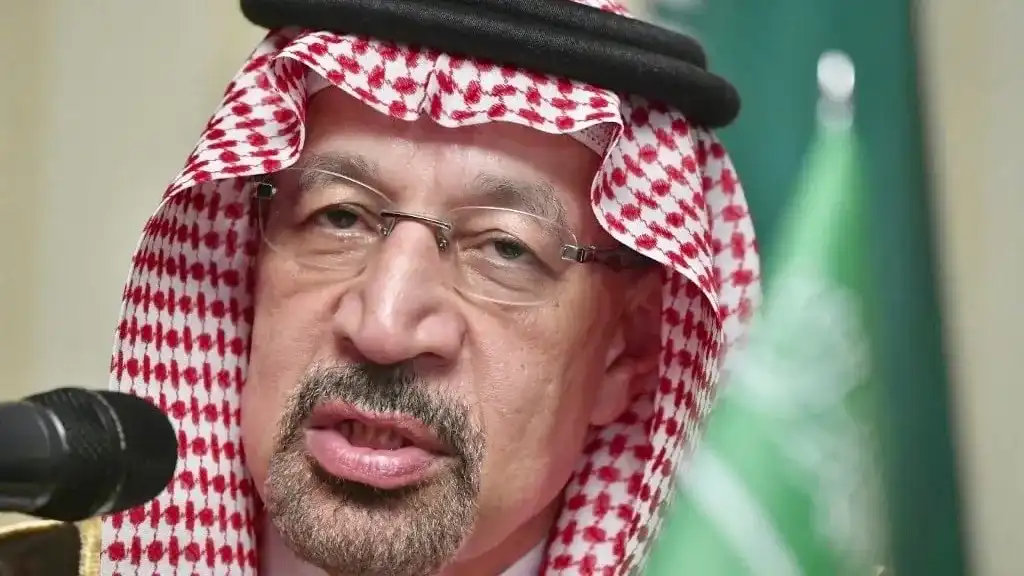
Normalization with Israel 'still on the table': Saudi minister

The Saudi minister rejected the possibility of using oil as leverage to force a ceasefire in Gaza.

The Saudi Minister of Investment, Khalid bin Abdulaziz al-Falih, confirmed that the issue of normalizing relations between the kingdom and Israel is still on the table, but it is conditional on a peaceful solution to the Palestinian issue.


Falih responded to a question about normalization in a discussion session at the Bloomberg New Economy Forum held in Singapore: “This matter was on the table, and it is still on the table, and it is clear that the recent withdrawal (from the talks) explains why Saudi Arabia is so determined to make a solution to the Palestinian conflict part of broader normalization in [West Asia].”

When Falih was asked whether Saudi Arabia would use economic tools, such as the price of oil, to achieve a ceasefire in the Gaza Strip, he laughed and replied: “This is not on the table today. Saudi Arabia is trying to achieve peace through talks that seek peace.”


In 1973, Saudi Arabia imposed an oil embargo on the United States and other countries for their support of Israel in the Yom Kippur War against Egypt and Syria.

According to Falih, in the coming days Saudi Arabia is expected to host three separate summits with the participation of Arab, African and Islamic countries, aimed at promoting a peaceful solution to the Israeli-Palestinian conflict.


Before the war between Hamas and Israel erupted on 7 October, Tel Aviv and Riyadh were in advanced talks to normalize relations. Saudi Crown Prince Mohammad bin Salman (MbS) was reportedly asking the US for security guarantees and access to civilian nuclear technology and advanced weapons in exchange for a deal.

Saudi diplomats also stated Israel must agree to the establishment of a Palestinian state as detailed by the 2002 Saudi Peace Initiative. Though allowing a Palestinian state was rejected by Israeli Prime Minister Benjamin Netanyahu and several Jewish supremacist ministers in his government, reports continued to emerge that a deal was close. 


However, following Hamas’ surprise attack on Israel on 7 October and Israel’s brutal bombing campaign in Gaza, which many describe as genocide, it was widely assumed that a normalization deal between Tel Aviv and Riyadh was now not possible, as public anger in Saudi Arabia and other Arab countries regarding Israel’s killing of Palestinians has skyrocketed.

source: The cradle

OPINIONS

Thu 09 Nov 2023 1:09 pm - Jerusalem Time

Haaretz Chief Editor: The New Nakba Is Israel’s Tiebreaker in War Against Hamas

Jewish press

Jewish press

Opinion Writer

By David Israel

Aluf Benn, Editor in Chief of Haaretz, on Thursday published commentary that could have been written by Bezalel Smotrich, headlined, “The occupation of Gaza City and the temporary deportation of its residents are Israel’s tiebreaker.” The sub-headline reads: “Israel expelled the residents of the northern Gaza Strip to the south on the grounds that it was a humanitarian measure designed to protect their lives, but now it has a strategic card in its hands: it will not agree to withdraw, return the residents, and allow the reconstruction of the city – as long as the keys are to be handed over to Hamas.”


Benn, 58, has worked as an investigative journalist since 1986, exposing, among other things, corruption in the group that transferred German pensions to survivors, the transformation of the Association for the Wellbeing of Israel’s Soldiers into an IDF service provider, and the corruption of Air Force Brigadier General Rami Dotan, and anticipated the collapse of the 2000 Camp David talks between PM Ehud Barak and Yasser Arafat. He is left++, but his commentary on Thursday reveals a thinking Israeli patriot willing to examine facts without ideological preconceptions.


“The expulsion of the Palestinian residents, turning their homes into piles of construction debris, and restricting the entry of supplies and fuel into the Strip were the tiebreaking measures Israel used in the current conflict, in contrast to all previous rounds of fighting in the south,” Benn comments.


“The October 7 massacre carried out by Hamas in the Gaza envelope settlements, and the abduction of hundreds of Israelis to Gaza, gave Israel internal legitimacy as well as international support for an unprecedented use of force in both the intensity and duration of the operation. Even if a ceasefire of some kind is announced soon under American pressure, Israel will not be in a hurry to withdraw and allow the population to return to the northern Gaza Strip. And even if they return – where will they return to? After all, they will not have homes, streets, educational institutions, shops, and the rest of the infrastructure of a modern city.”


He points out that “Hamas cannot force Israel to return the residents, and unlike in the past, it is having difficulty mobilizing international pressure on Israel to ‘prevent a humanitarian crisis and withdraw unconditionally from the Strip. And even if the Palestinians manage to inflict casualties on the IDF, and Israel withdraws its ground forces or most of them to the Green Line, it will be able to prevent the return of the residents with aerial bombardment. Hamas has no way to protect them, and is not trying anyway, and prefers that the civilian casualties in the Gaza Strip force the governments of the West, Egypt and Jordan to restrain Israel.”

Benn wonders if Yahya Sinwar expected his mass murder spree to turn out this way, suggesting the terrorist commanders were victims of their own “conceptzia,” whereby Israel is only capable of a half-hearted retaliation and begs to negotiate the release of its hostages. They most likely did not expect Israel to apply as much destructive force as it has been, to the point where a third of the Gaza Strip lays in ruin, and the attacks continue.

“The war is not near its end and may be dragged into prolonged and bloody attrition, with Israel also having to take care of its hundreds of thousands of internal refugees from the south and the north, about whom it isn’t clear when they will be able to return to their settlements, and of course, there are the hundreds of kidnapped and missing people,” Benn writes, adding, “But in long wars the balance of numerical, economic and diplomatic forces, which tend to side with Israel, determine the outcome. 


With Gaza destroyed and empty of the vast majority of its residents, Hamas will not be able to return to controlling the Strip as it did in the previous 16 years. And Israel will not agree to withdraw, return the residents and allow the reconstruction of the city as long as the keys are to be handed over to Hamas.”


“The difficult images that will be seen from the refugee concentrations in Khan Yunis, Deir al-Balah and Rafah, the rainy season and the mud and the danger of epidemics at the door, should put pressure on the international community and Arab countries to find someone to take over Gaza instead of Sinwar,” he concludes, noting: “This is the forecast for the coming winter.”


PALESTINE

Thu 09 Nov 2023 12:48 pm - Jerusalem Time

“Disagreements and doubts”.. Will the European Union accept sending peacekeeping forces to the Gaza Strip?

By Hani Al-Masry 

“Disagreements and doubts”.. Will the European Union accept sending peacekeeping forces to the Gaza Strip?

There is talk in Western circles about how to manage the Gaza Strip in the future, assuming that the Israeli occupation will achieve its goal of eliminating the Islamic resistance movement “Hamas.”


The American Al-Monitor website shed light on the European position, noting that there are doubts about Europe’s participation in the so-called “peacekeeping forces” in Gaza.


The website said, “The main goals of the Israeli army in this war are to destroy Hamas and ensure the safe return of the hostages.”


It noted that “if the Israeli army achieves this goal, there will be a need for a plan to govern the Gaza Strip.”


European disputes

Analysts rule out that the European Union will commit to sending peacekeeping forces to Gaza if Israel succeeds in overthrowing the Hamas movement in the territories that have ruled the Strip since 2007.


Al-Monitor said: “Since the Al-Qassam Brigades, the armed wing of the Hamas movement, launched its surprise attack on October 7, 2023 - which killed 1,400 people and took at least 240 hostages - the Israeli army has been bombing the Gaza Strip.”


It added that the army “also began a ground operation in the Strip, to encircle Gaza City, and ordered civilians to evacuate the area and move towards the south.”


The Palestinian Ministry of Health said, “About 11,000 people have been killed in Gaza and the West Bank since the outbreak of the war, most of them women and children, and the number of wounded has exceeded 27,000 Palestinians.”


Multiple condemnations of the Israeli military response were issued by Arab countries, while the European Union and the United States supported Israel's right to defend itself, stressing the need to adhere to international law and reduce civilian deaths to the minimum possible, according to the report.


The British news agency Reuters reported - citing informed sources - that the United States and Israel are exploring options for the future of the Gaza Strip, including establishing a multinational force to maintain security, until a more stable leadership is formed for the Strip.


Complex reality

For his part, analyst at the International Crisis Group, Alessandro Accorsi, said that “the idea of the European Union deploying forces on the ground was raised by EU officials,” but he believes that the proposal “is no longer on the table at the present time.”


“The main discussions are about how to provide humanitarian aid, without calling for a ceasefire,” said Accorsi, a former European Union official.


He pointed out that “the European Council was unable to agree on a unified policy regarding the conflict, whether on a complete immediate ceasefire, or on a short-term humanitarian truce that would allow aid to enter Gaza and the evacuation of civilians.”


He stated that “the disagreement between European countries means that it is unlikely that they will agree to send forces to Gaza.”


According to Accorsi, “There are some member states, such as Austria, who say that their goal in this war is anything that pleases Israel, while other countries doubt that.”


Despite taking this idea into account, Barnes-Dacey “very much doubts that there is sufficient political will and capabilities to achieve this, amid the complex dynamics on the ground in Gaza.”


He pointed out that “there is a strong consensus in Europe that Israel has the right to defend itself, but their opinions differ on the form that the Israeli military response should take.”


While countries such as Germany and Austria strongly supported Israel's right to launch a sustained military attack and rejected calls for a ceasefire, other countries such as Ireland and Spain were more active in pushing for a ceasefire on humanitarian grounds, according to Al-Monitor.


Barnes-Dacey concluded by saying: “My feeling is that these differences will become more apparent in the coming days and weeks as the humanitarian crisis worsens, especially if Israel does not do more to lift the siege on Gaza.”

PALESTINE

Thu 09 Nov 2023 12:31 pm - Jerusalem Time

Politico: Why doesn't Biden stop this war on Gaza?

Politico magazine published a report prepared by Nahal Toosi, Alexander Ward, and Lara Seligman, in which they said that the Biden administration is facing pressure from progressive Democrats, Arab officials, and even some American diplomats to help end the war between Israel and Hamas. But the White House doesn't necessarily want to stop the fighting, at least not now. Even if he did, Israel likely would not listen to him.


In conversations with eight diplomats, analysts and administration officials, in addition to reviewing what the American, Israeli and Arab leaders said or did not say publicly, the picture becomes clear about Joe Biden and his administration’s refusal to call for a ceasefire.


As the body count rises, the calculations could change dramatically. For now, here is a sobering review of the decisions being made from Washington to Amman:


When US officials lay out their goals in this new conflict, the report said, they mention four specific details: making clear that the United States strongly supports Israel, preventing the fighting from spreading beyond the Gaza Strip, releasing more than 200 people detained by Hamas, and helping to ease the humanitarian crisis. . But stopping the war between Israel and Hamas is not on the list.


This is primarily because the United States agrees with Israel's goal of destroying Hamas, even if it is not entirely clear what that will ultimately look like.


When President Biden was asked last month by CBS News whether he believed “Hamas should be completely eliminated,” he said: “Yes, I think so.”


Currently, the US administration is pressuring Israel to allow a cessation of fighting for humanitarian purposes and to be cautious in targeting it. But it will not support a long-term ceasefire.


“We still do not believe a general ceasefire is appropriate at this time,” US National Security Council spokesman John Kirby told reporters on Monday. He added: “When we talk about a general ceasefire, what that means is a complete cessation of fighting throughout Gaza, which we believe at this stage benefits Hamas.”


Retired Major General in the Israeli Army, Yaakov Amidror, the Israeli National Security Advisor from 2011 to 2013, said that his country’s government does not currently feel any real pressure from the United States to end the war. He said that the only pressure “is to reduce the number of civilians who must be killed, and the second pressure is to allow more humanitarian aid to be provided to civilians in Gaza.”


What is not said publicly is that destroying, or at least weakening, Hamas is in the interest of the United States on multiple levels.


Hamas is a proxy for Iran, the United States' main adversary, so dismantling it would weaken Tehran. Hamas is also seen as a destabilizing force in a region that remains critical to US economic and security interests. One American official, who requested anonymity, added that Hamas does not recognize Israel's right to exist, making it a major obstacle to the two-state solution.


In addition, a public break with the Israelis could harm US relations with a partner that is crucial to the front lines, including intelligence sharing. Israel may be ignoring the United States anyway, but Washington has important tools it can use to pressure Israel beyond the words that officials are using now.


Washington could threaten to cut off military aid to Israel, stop defending it at the United Nations, or abandon long-term efforts to help Israel normalize diplomatic relations with Arab countries. Some Democrats in Congress are even considering legislation to limit intelligence sharing with Israel. However, the Biden administration strongly rejected such moves.


Even in normal times, the Israeli government has not always listened to Washington. For example, US officials have for years unsuccessfully urged Israel to stop building settlements on West Bank land claimed by the Palestinians. When Biden was Vice President, the Israeli government announced the construction of new settlements during his visit to Israel.


  And there are Arab officials. Many Arab governments secretly hate Hamas, not least for its Islamic roots and ties to Iran. So they wouldn't mind seeing the movement weakened. “There was a big difference between the public and private reactions of Arab countries,” a senior Israeli official told reporters in Washington last month. Most Arab countries consider Hamas an “enemy and want to deter it.”


Despite their dislike of Hamas, many Arab leaders are privately and publicly urging the United States to pressure Israel to accept a ceasefire. This is partly due to their concern that Arab citizens' anger at images of dead and wounded Palestinians will turn against them. “By sending a lot of equipment and a lot of money to Israel, [the United States] is encouraging them to put pressure and escalate instead of looking for a solution,” said an Arab diplomat based in Washington.


Israel does not seem to be heeding the warnings of people like Jordanian Foreign Minister Ayman Safadi to “stop this madness.” Officials insist they are doing what they must to neutralize civilians, but the level of Palestinian suffering is increasingly difficult for Israel to explain.


Although Iran is not directly involved in the war, it is deeply interested in the conflict. Iran supports Hamas with funding, weapons, and training, and has long sought to expel American forces from the Middle East.

Israel does not seem to be heeding the warnings of people like Jordanian Foreign Minister Ayman Safadi to “stop this madness.” Officials insist they are doing what they must to neutralize civilians, but the level of Palestinian suffering is increasingly difficult for Israel to explain.


Although Iran is not directly involved in the war, it is deeply interested in the conflict. Iran supports Hamas with funding, weapons, and training, and has long sought to expel American forces from the Middle East.


Tehran took advantage of this moment to create more instability in the region. Its proxies have attacked US forces in Iraq and Syria with drones and missiles at least 38 times since October 17, even as the Pentagon sends an increasing amount of firepower to the region.


But US officials privately say they believe Iran is simply trying to increase pressure on Washington, not provoke a broader regional war. The best evidence for this calculation is the nature and scale of the attacks, especially compared to Iran's response to the assassination of Qassem Soleimani, in 2020.


On the one hand, Iran's proxy groups have relied almost exclusively on cheap, one-directional attack drones and missiles to launch mostly unsuccessful attacks. Pentagon spokesman Brigadier General Patrick Ryder described such moves as “harassment.” Although Ryder said the United States would hold Iran responsible for the strikes, Tehran has not claimed responsibility for them.


By contrast, in January 2020, the Iranian Revolutionary Guard fired more than a dozen ballistic missiles at multiple US bases in Iraq, sustaining traumatic brain injuries to more than 100 US soldiers. Iran said it was retaliation for the killing of Soleimani.


Tehran did not use the current crisis as an opportunity to escalate its harassment of commercial ships in the Persian Gulf, behavior that had previously drawn condemnation from the United States. The limited American response, or lack thereof, to the recent attacks is also telling. Biden ordered an air strike on October 26 on two facilities in Syria used by Iran-linked groups, but the attacks did not kill any militants.


PALESTINE

Thu 09 Nov 2023 12:30 pm - Jerusalem Time

Shtayyeh participates in the International Conference for Gaza Relief in Paris

Today, Thursday, Prime Minister Muhammad Shtayyeh participates in the International Gaza Relief Conference in Paris, at the initiative of French President Emmanuel Macron, and with high-level international participation.


The conference is held to call for respect for international humanitarian law, protect civilians and humanitarian workers, enhance access to humanitarian aid, meet the humanitarian and relief needs of the Gaza Strip in the health, water, energy and food sectors, and call for mobilizing financial support in order to support effective international agencies and organizations. On the field.


Participating in the conference are: the President of the European Union, the President of the Council of Europe, the President of Cyprus, the Prime Ministers of Greece, Norway, Ireland, Belgium, and Luxembourg, in addition to the Canadian, British, and Dutch Ministers of Cooperation, the Foreign Ministers of Sweden, Portugal, and Turkey, the Egyptian Foreign Minister, and the President of the Jordanian Hashemite Commission. The US Deputy Secretary of State for Humanitarian Affairs and the German Deputy Foreign Minister.


The heads of United Nations organizations will also participate in the conference, including: the heads of UNRWA, the World Health Organization, the World Food Program, UNICEF, and others.

PALESTINE

Thu 09 Nov 2023 11:38 am - Jerusalem Time

Israeli authorities arrest leaders amongst Arab Israelis coinciding with a stance against the war

On Thursday morning, the Israeli police arrested several Arab Israeli leaders, including the head of the Supreme Follow-up Committee for Palestinians, Muhammad Baraka, in conjunction with a stance against the ongoing Israeli aggression against Gaza.


The Israeli police initially arrested the head of the Supreme Follow-up Committee for Internal Palestinians, Muhammad Baraka, in the city of Nazareth, when he was on his way to participate in a protest to stop the war. This was followed by the arrest of the head of the National Rally, Sami Abu Shehadeh, former MP Haneen Zoabi, and other leaders.


The National Democratic Rally denounced the unjustified attack on the stand initiated by the leaders of the Arab community at home and the Supreme Follow-up Committee against the war and against the bloodshed that continues to this day, as the police attacked and arrested the participants, and which continues its hostile policy against any position or expression of a moral and humanitarian position. Against the war and for stopping it.


The gathering stressed that this attack on the leaders of the Arab community is a dangerous precedent that contains a clear political message to silence our national, moral and humanitarian voice and to reject any voice against the war and silence the mouths of the Arab community inside.


The gathering also demanded the release of all detainees in a pause, including the head of the follow-up committee, Muhammad Baraka, the head of the National Democratic Rally, Sami Abu Shehadeh, the deputy secretary-general of the gathering, Youssef Tatour, and former MP Haneen Zoabi. The gathering demanded the release of all detainees who have been arrested since the beginning of the war until today. this.


PALESTINE

Thu 09 Nov 2023 11:20 am - Jerusalem Time

Updated| One Palestinian dead and four injured during Israel’s storming of Jenin camp

A Palestinian citizen was killed and at least four were injured, two of them in critical condition, by Israeli occupation forces’ bullets, during their storming of the city of Jenin and its camp, for the second time since Thursday morning.


Local sources said that large forces of Israeli army, accompanied by a military bulldozer, stormed the camp from several directions, and their snipers mounted the roofs of a number of buildings overlooking the camp, while the bulldozers destroyed the streets and infrastructure in the camp and its surroundings.


He added that violent confrontations broke out at the scene, resulting in at least three citizens being injured by live bullets so far.


The Red Crescent reported that Israeli occupation forces targeted an ambulance in Jenin, wounding an ambulance officer with a bullet in the back.

PALESTINE

Thu 09 Nov 2023 10:43 am - Jerusalem Time

Government media in Gaza: Israel bombed 8 hospitals in 3 days

The Government Information Office in Gaza announced on Thursday that the Israeli occupation army bombed 8 hospitals during the past three days, and that it caused 18 hospitals to be out of service since the start of the “aggression” on the Gaza Strip on October 7.


The office said: “As part of its dirty, criminal war on hospitals, Israel bombed the courtyard of Al-Shifa Hospital last night with an artillery shell, and a short while ago it bombed the gate of Al-Nasr Hospital.”


He stressed that "the Israel's permission to bomb hospitals and turn them into military targets is a 'war crime' according to international humanitarian law, and is criminalized by 16 international agreements and UN resolutions that impose protection for these health facilities."


He added: "Despite this supposed protection, the occupation (..) has so far directly bombed 8 hospitals over the past three days, leaving dozens of martyrs and wounded, and causing 18 hospitals to be out of service since the beginning of the aggression."


PALESTINE

Thu 09 Nov 2023 10:39 am - Jerusalem Time

Israeli army launches an arrest campaign in the West Bank

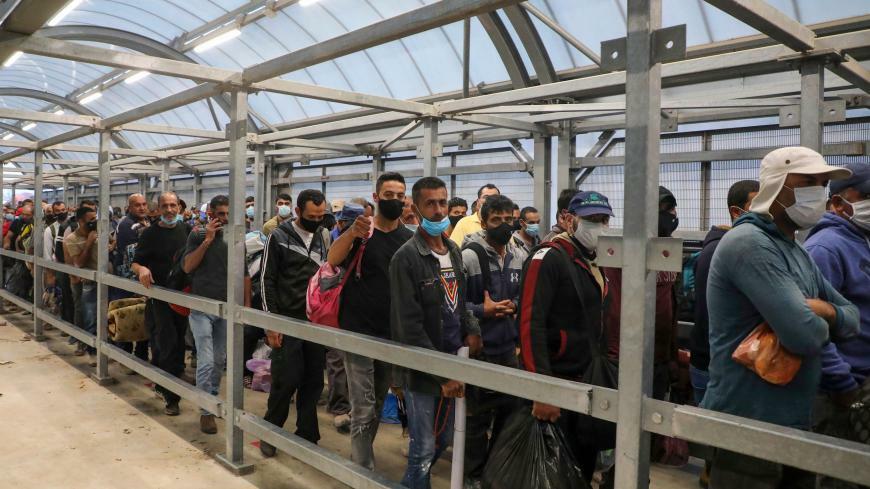
From yesterday evening until Thursday morning, the Israeli forces arrested at least (29) citizens from the West Bank, including a woman from Tubas, in addition to dozens of workers who were arrested from the town of Barta’a in the Palestinian territories occupied in 1948.


The arrests were concentrated in the governorates of: Jerusalem and Tubas, while the rest of the arrests were distributed in the governorates of: Ramallah, Bethlehem, Jenin, Nablus, and Hebron, accompanied by systematic operations of abuse against detainees and their families, and sabotage operations that affected citizens’ homes.


These ongoing arrest campaigns come within the framework of the comprehensive aggression against our people and the ongoing genocide in Gaza, after the seventh of last October.


Thus, the total number of arrests after the seventh of last October rose to more than (2,300) cases, and this total includes those who were arrested from homes, through military checkpoints, those who were forced to surrender themselves under pressure, and those who were held hostage.


It is noteworthy that the data related to arrest cases includes those who were kept in detention by the Israeli occupation, or those who were later released.

PALESTINE

Thu 09 Nov 2023 10:39 am - Jerusalem Time

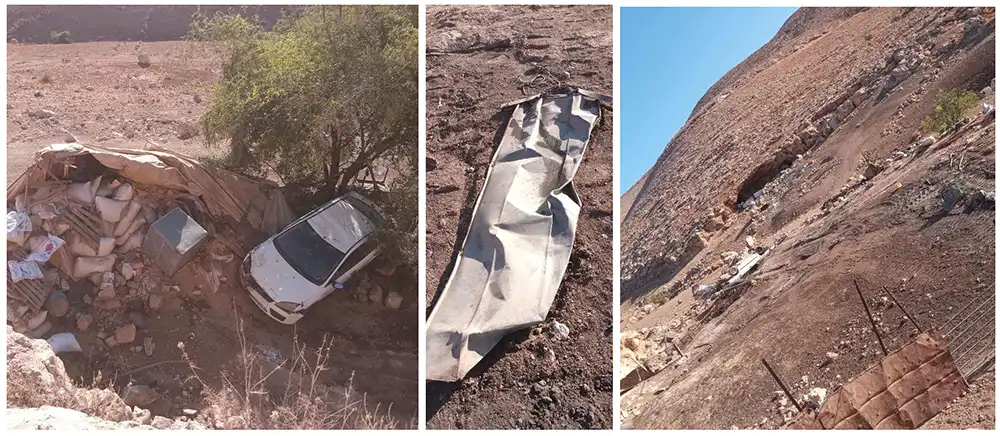
Israel forces about 20 families in Khirbet Tana, east of Nablus, to leave

Today, Thursday, the Israeli occupation forces forced citizens in Khirbet Tana, which is part of the lands of the town of Beit Furik, east of Nablus, to leave it, after demolishing a number of its homes.


The coordinator of the popular campaign to defend Tana lands, Thaer Hanani, said that the occupation forces stormed Khirbet, accompanied by a bulldozer, and proceeded to demolish citizens’ homes and tents, destroy a number of caves, and bulldoze farms there.


He confirmed that the Israeli forces forced about 20 families from Khirbet to leave, and prevented them from returning to their lands and from taking their sheep, in addition to destroying a number of beehives in the area.


ARAB AND WORLD

Thu 09 Nov 2023 9:54 am - Jerusalem Time

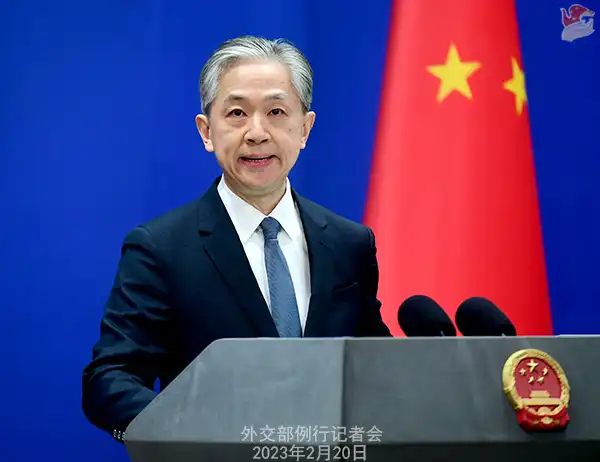
China to do utmost for Palestine-Israel ceasefire: FM spokesperson

As a permanent member of the UN Security Council and a responsible member of the international community, China will continue to maintain close communication with relevant parties and do its utmost to protect civilians, ease the situation, resume peace talks and realize peace, a Chinese foreign ministry spokesperson said on Wednesday.


Spokesperson Wang Wenbin made the remarks at a regular press briefing when asked about China's upcoming measures as the ongoing Palestinian-Israeli conflict reached the one-month milestone on Tuesday. Noting one month may be a short period of time for most people, but the past month has been excruciatingly long for the Palestinians, Wang said over 10,000 Palestinians, including many women and children, have lost their lives. "As we speak, civilian casualties continue rising by the hour," Wang added." 


We are deeply saddened by the civilian deaths on both sides in the conflict. It is heart-wrenching to see the humanitarian catastrophe worsening in Gaza. Neither Israelis nor Palestinians should become targets of armed attack or collective punishment," the spokesperson said. Noting violence does not bring true security and the use of force will not create lasting peace, Wang said to get detained civilians released, protect the safety and security of civilians and civilian facilities, open up humanitarian aid corridors and resume dialogue and negotiation is both the responsibility of the parties concerned and the goal that the international community must strive for.

He said China has been firmly committed to easing tensions and bringing about a ceasefire since the outbreak of the conflict. Wang said China's head of state has pointed out that the two-state solution is the fundamental way out of the recurring Palestinian-Israeli conflict. Member of the Political Bureau of the CPC Central Committee and Foreign Minister Wang Yi has had in-depth communication with foreign ministers, heads and political figures of 18 countries and international organizations, the spokesperson said."

The Special Envoy of the Chinese Government on the Middle East Issue visited five Middle East countries and attended the Cairo Peace Summit on the Palestinian question to consult extensively with relevant parties on this issue. He is scheduled to attend the international conference on humanitarian aid for Gaza's civilians to be held in France on November 9," Wang added.

China supports solidarity among Arab countries and the Islamic world, and greater mediation efforts for a ceasefire and resumption of peace talks, Wang said.

China calls for prompt and responsible Security Council action to protect civilians and ease the humanitarian situation in Gaza, Wang said.


China calls for an international peace conference with greater authority as soon as possible to build up new consensus on getting the two-state solution back on track, Wang added. 

OPINIONS

Thu 09 Nov 2023 9:44 am - Jerusalem Time

Why does Hezbollah's expansion of the war with Israel seem like "destined"?

Translation for "Al-Quds" dot com

Translation for "Al-Quds" dot com

Opinion Writer

By Fares Khashan

It has become clear that the Israeli government has put behind it the pressures it was exposed to from inside and outside, in order to “exploit the opportunity” and strike a strong blow at Hezbollah throughout Lebanon, but what remains ambiguous, for Israel and with it the countries that do not want to expand the scope of the war in the region. It revolves around the ability of Hezbollah, as the most prominent faction in the “Axis of Resistance,” to remain “disciplined” if it becomes clear that the war against the Gaza Strip will enable the Israeli army to actually turn the page on the “Martyr Izz al-Din al-Qassam Brigades,” the wing Military of "Hamas Movement"!


This question does not arise from nothing, but rather finds its basis in the fact that the “resistance axis” as a whole will emerge defeated, both materially and morally, if Israel succeeds in liquidating the “Hamas movement” in its most prominent strongholds of all, in exchange for the “normalization axis” reaping a major victory, such that His "pragmatism" in dealing with Israel appears rational, profitable, and purposeful!


The platform attacks carried out by the forces of the “Axis of Resistance” against the Arab countries that oppose them will be of no use, because public opinion, in the event of Hamas’ defeat, will sense, for once and for the last time, that summoning wars is nothing more than summoning defeats, destruction, massacres, and losses!


Accordingly, the ability of the “axis of resistance” to continue to have a productive existence, such that it imposes a balanced equation in the region, requires it to either prevent the defeat of “Hamas” or record a “parallel” victory, whatever its cost, through which the repercussions of defeat are mitigated, if it is achieved!


And here specifically, the fear of “Hezbollah” expanding the scope of the war with Israel finds its source, as it is the only organization in the “Axis of Resistance” capable, according to its belief, of exiting the war raising the sign of victory, because the Israeli army will not deal with it as it deals with the “Hezbollah Movement.” Hamas, as this party, in the end, may be a security and border threat, but it is not a fateful or existential danger!


In this case, in order to cover up the defeat in the Gaza Strip with a victory in Lebanon, Hezbollah will find itself forced to fight a war without paying much attention to the human and material cost, as the interest of the “axis of resistance” takes precedence over any other interest.


Accordingly, the United States of America is making every effort to dissuade Hezbollah and its successor, the Islamic Republic of Iran, from this plan, by affirming that “the calculation of the field will not match the calculation of Al-Baid,” just as the “Hamas movement” made a mistake in the analysis that encouraged it to carry out an attack. October 7th - On the cover of Gaza, Hezbollah also makes a mistake in analyzing the extent to which Israel can go with the support of its allies, not only if it decides to expand the extent of the war, but also continues to cling to igniting the border war as well.


In the content of the American messages, Hezbollah, in what it does in southern Lebanon, does not distract the Israeli army from its war in the Gaza Strip, not even by a “mustard seed,” as it says, as the forces that this army has brought into ground operations to date It was able to encircle the Gaza Strip and carry out operations inside Gaza City, which constitute only a small part of the forces it monitored for the originally designed ground battle, and the firepower possessed by the Israeli army will not be affected by the multiplicity of fronts, because the agreements concluded between it and a number of countries are led by the United States. America immediately provides him with what he might lack if he had to fight a war classified as “defensive.”


In the content of the messages that the Americans deliver to Hezbollah, the most recent of which was presidential envoy Amos Hochstein, this party’s expansion of the scope of the war against Israel will, in the end, only produce more losses on the “axis of resistance” and on the countries whose decisions it controls.


But does this type of message affect Hezbollah's decision?


Past experiences bear negative answers to this question, as Hezbollah does not think about direct losses, but rather about indirect losses. If the Hamas movement is defeated in the Gaza Strip, it will be defeated with it, if it does not cover the effects of defeat with another war, as its battle The truth currently is not against Israel, but against the “axis of normalization”, and therefore it is impossible for him to accept this result, but rather he must turn against it, thus paving the way for the “Hamas movement” to triumph over the Gaza result, by allowing it to continue its battle with its support from Lebanon, to say that Israel failed to achieve its goal in Gaza.


The huge problem that everyone is trying to dismantle, at the present time, revolves around one point: If Hezbollah had to choose between defeat and chaos, what would it prefer?


There are those who say that it is a rational party and therefore has no interest in chaos, but it is difficult for some, who have had enough experience, to believe that!

source: Annahar

PALESTINE

Thu 09 Nov 2023 9:40 am - Jerusalem Time

Israeli army arrests more than 50 Palestinian workers from the West Bank and Gaza inside 48 territories

At dawn today, Thursday, the Israeli forces launched a massive arrest campaign among workers in the town of Barta'a, which is isolated behind the apartheid wall, south of Jenin.


Barta'a Municipality Director Ahmed Qabha said that large forces from Israeli army stormed the town, raided dozens of homes and shops, and arrested more than 50 workers from the West Bank and Gaza Strip who were in the town.

ARAB AND WORLD

Thu 09 Nov 2023 9:34 am - Jerusalem Time

Blinken warns of "growing and dangerous" military relations between Pyongyang and Moscow

US Secretary of State Anthony Blinken warned Thursday of increasing military cooperation between North Korea and Russia, during his visit to South Korea.


“We share deep concerns about the growing and dangerous military cooperation between North Korea and Russia,” Blinken said during a joint press conference with his South Korean counterpart in Seoul.


Blinken also called on China to help prevent North Korea from carrying out "destabilizing" actions such as launching banned missiles.


“China has a unique relationship with North Korea,” Blinken said. “As a result, it has real influence and we hope that China will use this influence to play a constructive role in distancing North Korea from this irresponsible and dangerous behavior.”


OPINIONS

Thu 09 Nov 2023 9:25 am - Jerusalem Time

The Gaza war between Israel's weak calculations, Hamas' successful tactics, and the ambiguity of future solutions

Translation for "Al-Quds" dot com

Translation for "Al-Quds" dot com

Opinion Writer

By Riad Qahwaji


The Gaza war reveals the accuracy or poorness of each party's calculations. It is progressing at an increasing pace despite the limited field results in Israel's favor. Israeli forces are facing fierce resistance from Hamas fighters, preventing them from making decisive advances, while the tragedy is getting worse for Palestinian civilians in the Gaza Strip. 

As for the north, on the Lebanese-Israeli border specifically, the rules of engagement that are supposed to keep the clash confined to the areas facing the border strip are being violated daily and gradually, which increases the rate of its sliding into an open war that both sides say they want to avoid. As for Washington, it is working hard to convince its Arab partners that there is an opportunity to reach a two-state solution after the Gaza war, at a time when statements by Israeli officials indicate that they are in another valley and have no intention of implementing the two-state solution as seen by the international community.


Israeli forces are moving in the northern area of the Gaza Strip with extreme caution. It behaves like someone who got into trouble and is afraid of being slapped. Hamas fighters are well prepared and are facing off in high spirits. For them, the enemy is in front of them and the sea is behind them, and therefore they have no choice but to fight either for victory, death, or surrender. Tunnel networks enable them to move freely and safely, without being affected by violent Israeli bombing. This enabled them to surprise the Israeli forces in more than one place, especially on the northern front. They benefited from two important things:


The first is their possession of the Yassin 105 anti-armor missiles, which are manufactured locally. These missiles enabled them to confront Israeli armored vehicles, which constitute the tool of Israeli superiority in ground battles. Many videos have spread showing Hamas fighters emerging from tunnels to surprise Israeli forces and bombard them with Al-Yassin missiles, which have a double filling that sometimes enables them to penetrate the armor of Israeli armor such as the Merkava and Tiger. There is no doubt that these attacks confuse Israeli forces, especially when they come from the rear.


The second thing that Hamas benefited from is the cautious Israeli tactic that aims to reduce human losses among the army's ranks, and thus relies on the intensity of fire and on keeping infantry in the vehicles until it is certain that the targeted area is free of fighters, after which they go out to comb it. Urban warfare is an infantry and special forces war, and the role of armored vehicles in it is for fire support only. Armored vehicles cannot advance between buildings and in alleys without being exposed to precise ambushes. Infantry forces must advance or surround it to provide protection from defending forces hidden in buildings or among rubble. This Israeli caution in advancing enables Hamas fighters to set up ambushes and launch successful attacks from tunnels.


Israel does not appear to have made any significant progress in its quest to reach the main tunnel network of Hamas fighters. What its forces found in the northern Gaza Strip were secondary defense tunnels that were not connected to the bigger network of tunnels. To find tunnels effectively, heavy infantry forces must be used to search for them. But the Israeli leadership is aware of the huge cost to its soldiers if it does so, and it wants to keep its death tolls low in order to maintain the support of internal Israeli public opinion, which supports military action as long as the losses are acceptable.


Based on the movement of the Israeli forces, it appears that they want to impose a cordon on Gaza City with the aim of exhausting Hamas fighters. The Israeli leadership is talking about a long war for months, which means that the goal is to implement a scorched earth strategy while exhausting the Palestinian factions to force them to surrender or starve them and deprive them of the necessities of life. But this strategy needs open American-Western support that provides it with two goals: 

The first is political-media cover that enables it to continue its military operations that are killing thousands of civilians without oversight or accountability. 

The second is to provide financial support to help its economy, which is suffering severely from the consequences of the war, and to call up 350,000 reserve soldiers who, on normal days, constitute an essential part of the workforce in the Israeli economy.


But the problem that Israel and the West are discovering today is that social media has become more powerful than regular media. International news networks such as CNN and BBC are no longer able to monopolize information. Also, local media in America do not have the ability to limit the source of information. The Palestinian factions were able to use the Telegram network to broadcast their own videotapes, which were shared by people and placed on other social networks, which enabled them to reach all parts of the world, along with pictures of the victims of the Israeli bombing, including children and women. 

This caused a major shock to public opinion in the West and prompted tens of thousands of citizens to stage weekly protest movements, demanding an end to the war. Political forces within Western countries have begun to be influenced by the positions of public opinion supporting the Palestinians, which indicates that the ability of the governments of these countries to provide cover for Israeli military operations will be limited and will end within a period of time that may not exceed a few weeks.


The American administration is seeking to calm its Arab allies who are angry about what is happening in the Gaza Strip by stressing that it will turn the current crisis that Israel is facing in Gaza into an opportunity to impose the two-state solution option on the Hebrew state. 

The US Secretary of State makes shuttle tours to countries in the region and around the world for this purpose. But anyone who follows the statements of the Israeli Prime Minister and some of his far-right ministers concludes that they are not on the same wavelength as their American allies. They are exploiting the current situation to create a new reality in the West Bank and Gaza Strip based on their fragmentation and giving a greater security role to the Israeli forces there, which completely contradicts the two-state solution. 

This makes it difficult for Washington to convince its allies, and may force it to support the idea of changing the current Israeli government with one that is ready for the peace option. But will this be possible before the Gaza war ends? Is there a guarantee that new Israeli elections will not lead to right-wing parties winning a majority?


As for Israel's northern front, it seems that Hezbollah Secretary-General Hassan Nasrallah decided to continue the approach of constructive ambiguity in the interest of the axis of resistance, that is, to keep the front in southern Lebanon open in a limited way to prevent the Israeli forces from focusing entirely on Gaza. One of the most important things Nasrallah said in his speech on November 3 is that the title of the battle is Gaza and the Palestinian issue. Opening the northern front and other regional fronts will change the title of the war in Gaza from the Palestinian issue to threatening Iran and its allies in the axis of resistance. This will negatively affect the Palestinian cause and make Hamas's great achievement appear to Arab and international public opinion as if it was part of an Iranian plan to serve Tehran's interests and not an operation by the Palestinian resistance to regain its land. 

But can the rules of engagement be controlled in southern Lebanon? The mechanism for controlling the clash requires the cooperation of both parties to the conflict and gives either party the freedom to escalate dramatically towards war when it finds it in its interest. Regarding this front, the important question remains: Is there an interest for Lebanon as a state and people in opening it? How can this save Hamas in Gaza?

source: Annahar

ARAB AND WORLD

Thu 09 Nov 2023 9:14 am - Jerusalem Time

Why does Washington reject Israel's reoccupation of the Gaza Strip?

Israeli Prime Minister Benjamin Netanyahu's statements, in which he indicated that his country would seek to assume security responsibility in Gaza for an "indefinite period" after the war, raised concerns about Israel's future intentions in the Strip, amid calls made by American officials regarding the importance of not moving forward with this proposal.


On Wednesday, US Secretary of State Anthony Blinken confirmed that Israel “cannot occupy” the Gaza Strip, after the end of the war it is currently waging against Hamas.


Blinken said in statements to reporters from Tokyo: “Hamas cannot continue to run Gaza. This simply paves the way for a repeat of what happened on October 7th... It is also clear that Israel cannot occupy Gaza.”


The American minister also spoke about “the need for some transitional period at the end of the conflict.”


Before that, the White House confirmed on Tuesday that US President Joe Biden does not support Israel’s occupation of the Gaza Strip once the war ends.


In response to a question about Netanyahu's statements, John Kirby, spokesman for the White House National Security Council, said he would leave it to Netanyahu to clarify what he meant by controlling Gaza "for an indefinite period."


Netanyahu said in an interview with ABC News earlier this week that Israel would seek to assume responsibility for security in Gaza "indefinitely."


William Lawrence, professor of international affairs at George Washington University, says that Netanyahu's statements caused a state of frustration and dissatisfaction in the United States.


Lawrence adds to Al-Hurra website, "When the conflict began in Gaza, there was something like an agreement between the United States and Israel that the latter should not reoccupy Gaza."


Lawrence continues: “With the start of the conflict, Israel had repeatedly stated in public that it would not reoccupy Gaza, but Netanyahu’s statements indicate that it may have backed away from its declared and agreed-upon position with the United States.”


Therefore, Lawrence believes that "this matter may be what caused Blinken to come out publicly to confirm that Israel should not reoccupy Gaza and perhaps indicate that Washington is not in agreement with Israel in this context."


During the weeks following the outbreak of the conflict in Gaza, Netanyahu was widely criticized for not presenting a clear plan for what would happen in Gaza if Israel succeeded in its goal of overthrowing Hamas.


The Washington Post quotes American officials who requested anonymity as saying that Netanyahu's recent statements raised concerns among the Biden administration, which believes that Israel needs to avoid any proposal requiring an open occupation of Gaza.


The newspaper shows that American officials may be more nervous than before about Israel's post-conflict plans in Gaza.


In an analysis published by the newspaper on Wednesday, writer Adam Taylor says that Netanyahu has “failed” to date to formulate any kind of long-term plan for Gaza and its 2.3 million people, which is “something that cannot be justified” in any way.


Israeli officials appear to have backed away from Netanyahu's comments, with Defense Minister Yoav Galant saying, "It will not be Hamas, and it will not be Israel," when asked who would ultimately control Gaza after the war. “Everything else is possible,” he added.


Later, on Wednesday, Reuters quoted a senior Israeli official as saying that Israel has no intention of reoccupying the Gaza Strip or controlling it for a long time.


The Israeli official added to reporters in Washington on condition of anonymity, “We estimate that our current operations are effective and successful, and we will continue to push. They are not absolute or forever,” without mentioning a time frame.


Israel is still vague regarding its long-term plans for the Gaza Strip, which is run by the Hamas movement, if its air, land and sea operation, which came in the wake of the movement’s bloody attack on October 7 in southern Israel, is crowned with success.


Lawrence says, "The United States wants Israel to withdraw from Gaza as soon as possible after the end of the war and the elimination of Hamas, and for the Palestinians to rule Gaza."


He pointed out that "the United States will certainly be with any solution that is accepted by the Palestinians and the people of Gaza and is also approved by the Fatah movement."


Lawrence expressed his belief that "whoever governs Gaza after the end of the conflict must not depart from the currently existing Palestinian Authority or be handed over to a new Palestinian Authority to be established in Gaza."


Lawrence stipulates that the new authority "must be accepted by the residents of the Gaza Strip, as well as Israel, the United States, and the international community, and that it be created from a group of technocrats from the people of Gaza to replace Hamas."


Washington stresses the path of the two-state solution to end the crisis between the Palestinians and Israelis in the long term.


Source: Alhurra

PALESTINE

Thu 09 Nov 2023 9:09 am - Jerusalem Time

Newspaper: A "buffer zone" and "operational flexibility"... Israeli priorities in Gaza

Israeli officials said that their country is working to "ensure its security to leave no room for any attack" from the Gaza Strip, similar to what happened on October 7, according to what the American New York Times reported.


The newspaper reported on Wednesday that the assumption here is that Israel “will control the Gaza Strip until new arrangements are made to govern the Strip and carry out patrols in it, which may take a long time.”


This comes after statements by US Secretary of State, Anthony Blinken, on Wednesday, in which he stressed that “there will be no reoccupation of Gaza after the end of the current conflict,” adding that there may be a need for a “transitional period,” but after the current crisis, the Palestinians must govern the Strip. , according to Reuters.


This came after statements by Israeli Prime Minister Benjamin Netanyahu, in which he said, on Monday, to the American ABC News network, that Israel “will assume responsibility for security in Gaza indefinitely.”


The New York Times also quoted Israeli officials as saying, “Israel will never fully trust any Palestinian forces or even international peacekeeping to maintain Israel’s security,” in reference to the Gaza Strip.


The officials explained that “Israel’s priority is security,” and that it will continue to maintain what it says is “operational flexibility,” which means the ability to enter Gaza at a time when it feels its security is “at risk.”


The officials also added to the newspaper: “Israel intends to create a new buffer zone inside Gaza, which logic says may include an area on the Egyptian border, and give Israel full control over Gaza’s land borders.”


Israel controls all the crossings into the Gaza Strip except the Rafah land crossing on the Strip’s border with Egypt, through which humanitarian aid currently enters.


The newspaper also pointed out that officials talked about "dividing the Gaza Strip into areas like those in the West Bank, where Israeli forces have the freedom to carry out operations, in supposed cooperation with the Palestinian Authority, in areas under its control."


On Monday, Palestinian Prime Minister Muhammad Shtayyeh told the BBC network that the Palestinian Authority “is ready to be part of a solution in the Gaza Strip that deals with the Palestinian issue and the issue of the occupation.”


He continued: "Israel's primary goal is to kill every future possibility of establishing an independent, sovereign Palestinian state," and stressed: "We will not go to Gaza on board an Israeli army tank."

Source: Alhurra

PALESTINE

Thu 09 Nov 2023 8:48 am - Jerusalem Time

Newspaper: Egypt rejects a proposal to “temporarily take over security management” in the Gaza Strip

The Wall Street Journal said that Egypt rejected an American proposal to manage security in Gaza temporarily.

The American Wall Street Journal, citing senior Egyptian officials, reported on Wednesday that “the United States proposed to Egypt to manage security in the Gaza Strip temporarily,” but Cairo “rejected.”


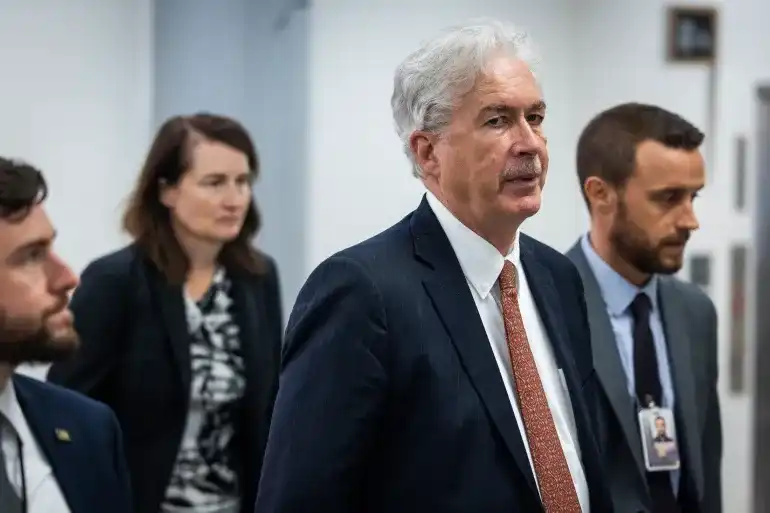
According to the newspaper, the Director of the US Central Intelligence Agency (CIA), William Burns, discussed the proposal with the Egyptian President, Abdel Fattah El-Sisi, and the head of intelligence in the North African country, Abbas Kamel.


The proposal comes, according to the American newspaper, “so that the Palestinian Authority can assume full responsibility after the defeat of Hamas” in the current war between Israel and the Palestinian movement, which is classified as a terrorist organization.


On the other hand, Sisi rejected the proposal, saying that “Egypt will not play a role in eliminating Hamas because it needs the armed group to help maintain security on the border,” according to what was reported by the Wall Street Journal.


The American website Axios reported earlier last week that the CIA director would visit Israel and other countries in the region, including Egypt and Qatar, to discuss the war in Gaza.


The CIA declined to comment on Burns' trip to the region.

Currently, the Palestinian Authority refuses to engage in any formal discussion about how to manage Gaza after the end of the war, insisting instead on the urgent need for a ceasefire.


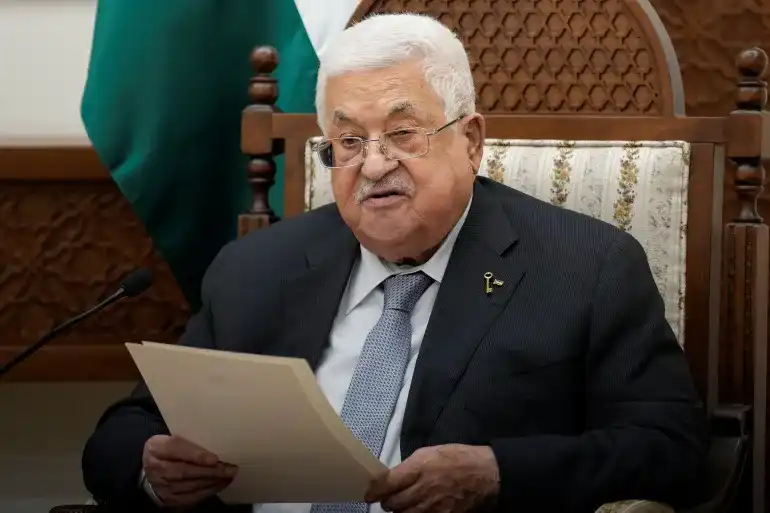
During a meeting held Monday in Ramallah, Palestinian Authority President Mahmoud Abbas refused to discuss post-war Gaza administration with US Secretary of State Anthony Blinken, according to Mahmoud Al-Habbash, a close Abbas advisor who was present at the meeting.


The US State Department did not immediately respond to the Wall Street Journal's request to comment on Al-Habbash's statements.


Reiterating his call for a ceasefire, Abbas told Blinken: “Today is more important than the next day,” blaming Washington for the continuation of the Israeli war on the Gaza Strip.


He added: "You, the United States, are the only side that can order the Israelis to stop the aggression."


However, Al-Habbash stressed that the Palestinian government for which he works “expects to participate in the management of the Gaza Strip in the future.” He continued: "The Palestinian Authority is the only side that bears responsibility for Gaza, East Jerusalem, and the West Bank."


He continued: "We did not leave Gaza," adding that the authority, which is based in Ramallah, continued to manage some of its ministries in Gaza.


"No to reoccupation"

Reuters reported on Monday that the Palestinian Authority “is still paying the salaries of health care workers in the Gaza Strip, despite Hamas’ management of public institutions, including the health sector.”


Hamas has run the Gaza Strip since 2007, following fighting with the Fatah movement, a year after it won the Palestinian legislative elections.


On Wednesday, the Israeli government considered that it was “too early” to talk about “scenarios” about the future of the Gaza Strip, which must be “demilitarized,” but indicated that it was “consulting with other countries regarding this situation.”


Government spokesman Elon Levy said: “It is too early to talk about post-Hamas scenarios.” He added: "I hope that the post-Hamas phase will happen next week, but it will likely take longer."


On Wednesday, the United States called for restrictions on Israel's control of Gaza after its war with Hamas, sending a general message to Israeli officials about expectations for an expanded Palestinian role there.


Senior American officials called for the Palestinian people to be at the heart of governance in Gaza - united with the West Bank under the leadership of the Palestinian Authority.


Statements by Israeli Prime Minister Benjamin Netanyahu, in which he indicated that his country would seek to assume security responsibility in Gaza for an "indefinite period" after the war, raised concerns about Israel's future intentions in the Strip, amid calls made by American officials regarding the importance of not moving forward with this proposal.

Blinken described a vision for rebuilding Gaza, a path toward Israelis and Palestinians living side by side “in their own space, with equal measures of security, freedom, opportunity, and dignity.”


On the sidelines of a meeting of foreign ministers of the Group of Seven industrialized countries, he said, "The United States objects to the forced displacement of Palestinians from Gaza."


Speaking from Tokyo, Blinken continued: “There will be no reoccupation of Gaza after the end of the conflict, and no attempt to besiege or besiege Gaza. And no reduction in the territory of Gaza.”


Later, the US National Security Council's Strategic Communications Coordinator, John Kirby, said: "We believe that the Palestinians must be responsible for their future and must be the decisive and active voice in their future."


The new letter from American officials shows how the administration of President Joe Biden differs with some Israeli officials about the future of Gaza, even as Washington continues to support the current Israeli military operation there, according to the same American newspaper.


Blinken's plan comes after a month of calm discussions he held with Israel, regional partners, as well as prominent global diplomats.


Taqa Al-Nuseirat, an analyst for American policy in the Middle East at the Atlantic Council Research Center, said, “This is the clearest statement we have heard about the United States’ perception of Gaza after the war.”


She added in her interview with the Wall Street Journal: “But it is not clear whether the Israeli leadership is thinking in a similar way, which would determine the next stage of the American-Israeli-Arab negotiations.”


The war broke out after a surprise attack launched by Hamas on southern Israel on October 7, which led to the deaths of more than 1,400 people, the majority of whom were civilians, including women and children, and the kidnapping of about 241 hostages, according to the Israeli authorities.


The death toll from the continuous Israeli bombing of Gaza since then has reached more than 10,000 people, most of them civilians, including women and children, according to the latest toll by the Gaza health authorities.


On Tuesday, the United States, Israel's main ally, expressed its opposition to the possibility of reoccupying the Gaza Strip, after Israeli Prime Minister Benjamin Netanyahu announced that his country would "take full responsibility for security" in Gaza for an "indefinite period."


"Blinken is increasingly struggling to bridge the growing gap between Israel, its neighbors, and the international community," said John Alterman, director of the Middle East Program at the Center for Strategic and International Studies in Washington.


He continued: "The United States can play a role, but there must be something direct between the Israelis and the Arabs."

source: Alhurra


OPINIONS

Thu 09 Nov 2023 8:39 am - Jerusalem Time

Hebrew press| It is uncertain whether the resumption of ground maneuvers will be possible after a truce

Yedioth Ahronoth

Yedioth Ahronoth

Opinion Writer

Author Nahum Barnea

Amos Hockstein is an American diplomat who was born in Israel, served in the Israeli army, and speaks Hebrew. He proved his abilities as a mediator when he reached an agreement to demarcate the maritime borders between Israel and Lebanon, an almost impossible task. The talks with Lebanon imposed direct and indirect contacts with Hezbollah. 

The relationships he built in Lebanon turned him into a vital partner in communications on the two fronts: the northern front facing Hezbollah, and the southern front facing Hamas. The interest is American, Qatar is the “tool,” and the Biden administration is the operator and the engine. Hochstein is accepted by people involved in communications on the Arab side, and he is also accepted by the Israeli government.


Since the first week of the war, the Americans have tried to push forward, through the Qataris, a partial deal that includes the release of children and women, and perhaps also adult men over the age of service in the Israeli army. This effort did not succeed, but the trend remained. In recent days, the Americans have shown some optimism, perhaps because of the military pressure that Hamas is suffering as a result of the Israeli military ground invasion, and perhaps because of the flexibility in the positions of the mini-ministerial council. The return of some of the abductees, but not all of them, according to what the Prime Minister said yesterday.


Meanwhile, the Israeli army continues its advance in the field towards the neighborhoods that form part of the urban area in Gaza. This progress allows for intensive treatment of the tunnels and the “Hamas saboteurs” inside them, but it also entails tough battles with these “saboteurs.” Hamas has prepared for this battle. It is true that it is losing many of its leaders and fighters, but it continues to fight. The backbone of the high command is still functioning, headed by Sinwar. Leaders can flee to the south and continue their work from there. Apparently, none of them did this.


The coming days could be the decisive final stage for both efforts: the fight against Hamas, and the American-Qatari attempt on a deal to release kidnapped persons. After this period, it will be difficult for Israel to stand against American pressure for a ceasefire, especially if there is a deal for kidnapped persons on the table. Time is running out.

Can Israel resume ground maneuvers after the ceasefire? Past experience in Gaza and Lebanon indicates that the opportunities are not great. 

The day after the ceasefire agreement, children return to school, residents return to work, settlement reconstruction begins, the world moves to another agenda, and reserve soldiers want to return to their homes, families, and jobs. The Israeli army will remain in Gaza and continue its movement there, but not with the current size of the forces.


It is important to maintain realistic expectations: it is not certain that the army will be able to reach Sinwar and his comrades in the current round. Even if they are assassinated, Hamas will not disappear; It is important to remember that we are not alone in this tragedy, and that we need the American administration, and we must listen to it. 


The votes that Biden is losing in the United States increase his urgent need for an imminent ceasefire in Gaza. It is important to remember that Gaza is only one piece of the devastation inflicted on Israel on October 7th. Now, the Israeli government is looking for a diplomatic solution that will lead to the expulsion of Hezbollah's Radwan Force from the northern border. Nasrallah has not turned into a lover of Zion, and the price he will demand will be high. Without removing Al-Radwan's forces, there is doubt that the residents will accept to return to their settlements in the north. This is without mentioning the issue of Hamas' demands in exchange for the return of some of the kidnapped persons.


When Netanyahu and others talk about a long-term war, they do not seem to mean the war that took shape in the first month, but rather a war of a different kind - focused assassinations, local incursions, and others. As long as the war continues, Netanyahu can curb the pressure demanding that he and his government bear responsibility. At the end of the first month of the war, there is no one in Israel who can celebrate victory. Sometimes, victory lies in realizing that there is no victory.


OPINIONS

Thu 09 Nov 2023 8:28 am - Jerusalem Time

Hebrew Press| Controlling Gaza is too big a task for the Authority - but it still has a job the next day

Maariv

Maariv

Opinion Writer

Author Michael Milstein

The progress of the military battle in Gaza poses the question of what the next day will look like after Hamas is removed from its position as a leader in the region. In this context, a new old idea is presented, which is essentially an Israeli wish, according to which the Authority will return and control the Gaza Strip as it was until 2007, before Hamas took control by force.

This goal must be analyzed carefully. Authority has been absent from Gaza for nearly 20 years, a period during which a young generation grew up, in whose awareness Hamas implanted that Abu Mazen is “one of the most severe enemies of the Palestinians” and “responsible for the distress of the people of Gaza.” Moreover, the Authority has no real bases in Gaza, Fatah is divided among competing camps, and Abu Mazen’s authority faces difficulties in controlling the West Bank. Therefore, controlling 2.2 million Palestinian rebels in an area would be completely devastating. This is beyond Abbas' capabilities. Most importantly of all - it does not seem that the authority is currently interested in carrying out this difficult task.

However, the Authority should not be ignored the next day. The set of strategic alternatives available to Israel is bad, and it must choose between bad and less bad. In this context, the possibility of establishing a local administration based on forces from within the Gaza Strip and not linked to Hamas, such as mukhtars, for example, prominent businessmen and academics, and officials from Fatah, emerges. All of this is due to deep interference from Israel, Egypt, America and the Arab countries, with the exception of Qatar, which has proven to have a negative influence in the Palestinian arena.


The future function of this entity will focus on providing services to the public, rebuilding the Gaza Strip, and maintaining public order. It is preferable that its relationship with the Authority be close, and that there be some kind of symbolic responsibility for Ramallah over the reality in Gaza. In the first stage, the general system of the new authority is likely to face major challenges, most notably the widespread public distrust. It may also face effective resistance from the remnants of Hamas and the rest of the “terrorist” organizations in the Gaza Strip. However, if it obtains external financial and political support, it could stabilize after some time, and allow the Palestinian Authority to establish itself as a single address for the two Palestinian areas.

This alternative is the “least bad,” and implementing it will force Israel to make contributions and concessions. First - when Gaza is no longer controlled by any party affiliated with “Hamas” - Israel will have to intervene in recruiting foreign aid to it - something that does not include stopping the supply of water and electricity and the transit of goods and people, which must be maintained in order to maintain the historical separation from the Gaza Strip. .

Secondly, it will be necessary to engage in in-depth dialogue on the future of relations with the Palestinian regime. In this context, the central dilemma that emerged in the October 7 massacre must be resolved: On the one hand, it is clear to the majority of Israelis today that there is no maturity for peace on the Palestinian side; On the other hand, it is clear that the two societies that live in a state of hostility cannot coexist in the same entity, an idea that has become clear and strengthened in recent years, mainly by right-wing parties, and has even developed in the wake of the expansion of settlements in the West Bank over the past year.

Israel will have to make a conscious move accompanied by the greatest possible geographic separation from the Palestinians - without a commitment to establishing a state on the borders; At the same time - Israel's existential interests, most notably control of the Jordan Valley and the border between Gaza and Egypt, require it to have the ability to intervene in what is happening in the Palestinian field at every stage.

One of the components of the theory that collapsed on October 7 is that it is possible to advance normalization with the Arab world, without addressing the Palestinian issue.


Instead of this theory, a realistic discussion should be held that avoids slogans, such as “wipe out Hamas” and “return to Gush Katif”; Or illusions, such as “the Authority returning to control Gaza,” or “changing the awareness of the Palestinians.” Instead, a conscious long-term strategy must be formulated in the Palestinian context, with the understanding that it requires patience, continuous investment, and, above all, a readiness to make historic decisions.


ARAB AND WORLD

Thu 09 Nov 2023 8:10 am - Jerusalem Time

Arabic Reports| Riyadh Summit... What can the Arabs have to stop the Gaza war?

With the escalation of the Israeli war on the Gaza Strip, Arab countries are preparing to hold an extraordinary summit in Saudi Arabia next Saturday, to discuss the Israeli aggression. Saudi Investment Minister Khalid Al-Falih confirmed yesterday, Wednesday, that the Kingdom will host two summits of Arab and Islamic countries in the coming days to discuss the Israeli-Palestinian conflict.


He said at the Bloomberg New Economy Forum in Singapore: “We will see this week and in the next few days, Saudi Arabia holding an emergency Arab summit in Riyadh, and an Islamic summit.”


The awaited Arab summit comes in light of major challenges, more than a month after the Israeli massacres against the Palestinian civilian population, which amounted to genocide, with escalating talk about transferring the residents of Gaza to other areas.


What is required of the leaders at the Riyadh summit

Regarding what is required of Arab leaders and leaders, Amr Hashim Rabie, Vice President of the Al-Ahram Center for Strategic Studies, said in an interview with Al-Araby Al-Jadeed that “what is required of the leaders gathered at the upcoming Arab summit is to use their capabilities to stop the war, and stop normalization with all that it means.” From withdrawing ambassadors and stopping airlines, trade, goods and security cooperation.”


He added, "Despite the ease of the measures that can be taken in this regard, the Arabs have a historical feeling of helplessness, and some of them have a historical feeling of fear, and there is a state of hesitation and excuses that this is not my battle, but rather Hamas created it. But no one thinks about the reasons." Which prompted Hamas to do so,” considering that “the first way for the summit to fail is to blame Hamas.”


Mukhtar Al-Ghobashi: Withdrawing and recalling ambassadors, and freezing relations, are things that the Arabs can do


Rabie continued: "The problem is that they deal with Israel as a state, but if they dealt with it as a settler colonial project, they would have the ability to deal with the situation." He believed that "the most effective means is the issue of cutting off oil supplies, but this is a topic that is far from being achieved to a large extent, but if only they implement what we mentioned about stopping normalization, this will be considered an indescribable historical achievement."


Vice President of the Arab Center for Political and Strategic Studies, Mukhtar Al-Ghobashi, saw that the Arab countries have a lot to do in confronting Israel. He said in an interview with Al-Araby Al-Jadeed: “The Arabs have 5.4 trillion dollars in their hands, deposits and investments in the United States and the Western world, as well as 252.6 billion dollars, debt securities and treasury assets, which 11 Arab countries bought from the US Treasury, and it is enough to return the debt bonds.”


Al-Ghubashi continued: “The Arabs also have the oil weapon in their hands, and he reviewed how the missile that the Houthis launched at a depth of 1,200 kilometers in the eastern region of Saudi Arabia raised the price of a barrel of oil by more than 3 dollars, and then the Western world and the United States rushed to Saudi Arabia to fix the problem, so that the Kingdom could maintain Its production volume exceeds 11 million barrels per day.


Al-Ghobashi stressed that the Arabs “have relations with the United States and the Western world, including economic, diplomatic and other relations, which makes the Western world listen to them attentively.” He added, "Withdrawing and recalling ambassadors, freezing relations, and canceling deals, are all things that the Arab world, which has the capabilities, can do."


But at the same time, he said, “The position of the Arab world is characterized by disappointment and suspicious silence, which is not broken by statements of denunciation, condemnation, and denunciation. All of this talk will be of no benefit to Israel, which has reached the point of threatening one of its ministers to drop a nuclear bomb on Gaza.”


Al-Ghobashi continued: “Is it appropriate for the Arab world, in such circumstances, to set a summit with this temporal dimension in light of this humiliation and what is happening inside the Gaza Strip?” He considered that “the summit has lost its value, in light of deadly strikes, and in light of calls for help and alert from many.” "The people of the world, even the countries that support Israel, and the Arab world are helpless."


He added: "The Arab summit was supposed to be held before or immediately after the peace summit held by Egypt, and mechanisms for stopping this conflict quickly would be discussed, in light of this death and destruction that is occurring inside the Gaza Strip."


Hossam El-Hamalawy: I rule out making decisions such as cutting off oil from the West

In turn, political science researcher Hossam El-Hamalawy told Al-Araby Al-Jadeed that “the holding of the Arab summit comes more than a month after the war, which raises the question about its feasibility.”

He added: "For a long time, the League of Arab States has not had any influential role in any of the events in the region. I do not expect any decision to be taken that could change the course of the conflict. There will be statements of denunciation and condemnation to relieve embarrassment from them, and some of them will be for propaganda."


Al-Hamalawy ruled out taking decisions “such as cutting off oil from the West or even threatening to do so, or cutting off diplomatic relations with the Zionist entity, by normalizing countries.” He also ruled out "severing diplomatic relations with Israel, closing its embassies in Arab capitals, and severing economic ties with it."


Potentials from the Arab Summit

For his part, the political analyst, Mohamed Sayed Ahmed, said in an interview with Al-Araby Al-Jadeed that “the Arab summit will not add anything new, and will revolve around the Cairo Peace Summit that was held in Egypt, because we know very well that the summit that was held in Egypt was not able to “Unfortunately, it has not even been able to complete a final statement.”


He believed that "the summit that will be held in Riyadh will be with the same countries, and within the same framework, and will not go beyond compliments, words, denunciations and condemnations, or demanding that the two sides stop combat operations in exchange for confirming the idea of opening humanitarian corridors and confirming the humanitarian dimension, but the Arab position will remain unclear and inconsistent." He is able to declare that the Zionist enemy is the oppressor and the usurper of the land, and he has no right to this land, and therefore we cannot equate the resistance that is defending itself with the Zionist enemy that says it is defending itself.”


Ahmed expressed his regret that “the Arab position is still revolving around the application of international legitimacy laws, but where is international legitimacy in the first place, from the first resolution in 1947 until now? They are all unjust decisions, because they gave the Zionist enemy a right that it does not have, for this land is not “His land from the beginning,” adding that “proposing the two-state solution at all summits will lead to the Zionist enemy granting the Palestinians an independent state, when it is the one that seized their lands?”


He continued: "Even if the enemy gives you an independent state, he wants it outside historical Palestine, in Sinai, meaning by seizing new land, and all of this is within the Zionist state according to the Zionist doctrine." Ahmed concluded by saying, "The diplomacy that takes place will neither advance nor delay anything, and there are no solutions with this Zionist enemy except armed confrontation and the liberation of the occupied Arab territory."

Source: Alaraby AlJadeed


PALESTINE

Thu 09 Nov 2023 8:04 am - Jerusalem Time

“A big, broad deal.” Israeli Channel 13: Tel Aviv is ready to exchange prisoners with Hamas.

On Wednesday, November 8, 2023, Israeli Channel 13 quoted informed Israeli officials as saying that Israel “is ready to consider releasing security prisoners (Palestinian prisoners), in exchange for a large and broad deal that includes the release of many prisoners held by the Hamas movement”  in Gaza.


The officials - who the channel did not name - said that “against the backdrop of attempts by Qatar and the United States to reach small deals that lead to a ceasefire, Israel is ready and willing to consider releasing security prisoners in exchange for a large and broad deal that includes the release of many kidnappers.”


The channel also quoted a senior Israeli official, saying: “There are many options on the table, but there is nothing concrete at the present time.”


It added, "With regard to the many reports this evening about progress in communications, senior Israeli officials say that there are many communications, on many axes, but in Israel they do not know of any significant progress."


This comes as there was no response from the office of Israeli Prime Minister Benjamin Netanyahu, to what was reported by the channel, until 19:50 GMT.


Netanyahu had said earlier today, Wednesday, during his meeting with the heads of settlements in the West Bank: “I would like to put aside all kinds of empty rumors that we hear from all directions,” and added: “I repeat one thing that is clear: there will be no ceasefire without the release of the hostages.” "Everything else is meaningless."


For its part, the American website Axios reported, citing American and Israeli officials, that US President Joe Biden urged Netanyahu to stop the fighting for “three days” to advance the release of prisoners held by the Palestinian resistance in Gaza.


According to the site, this came during a phone call between Biden and Netanyahu, Monday, November 6, 2023, while Netanyahu expressed his fear of “losing international support if the fighting stops for 3 days,” and informed Biden that he “does not trust Hamas’ intentions or its acceptance of a deal” regarding the hostages,” he said.


The website also noted that the United States, Israel and Qatar are "discussing a proposal under which Hamas would release 10 to 15 hostages, provided that the truce would be exploited in accordance with the agreement to verify the identity of all hostages and submit a list of them."


This comes as it is estimated that Hamas is holding about 180 prisoners, and Islamic Jihad is holding 40, while others are holding about 20, according to Axios.

ARAB AND WORLD

Thu 09 Nov 2023 7:38 am - Jerusalem Time

New details about the Gaza truce negotiations and the CIA director arrives in Qatar on Thursday

Sources told Al Jazeera that CIA Director William Burns will hold discussions in Qatar on Thursday, while press reports reported details of the ongoing Qatari-brokered negotiations to release a number of detainees held by the Palestinian resistance in the Gaza Strip in exchange for a humanitarian truce.
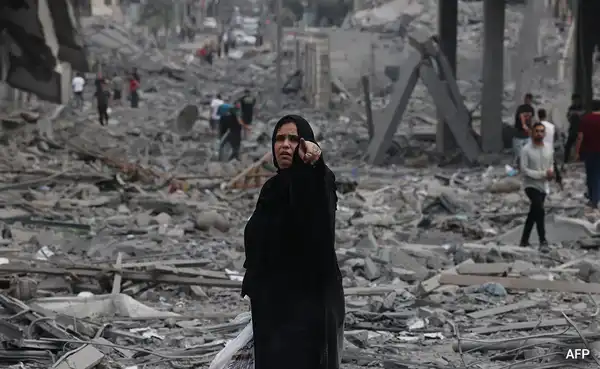
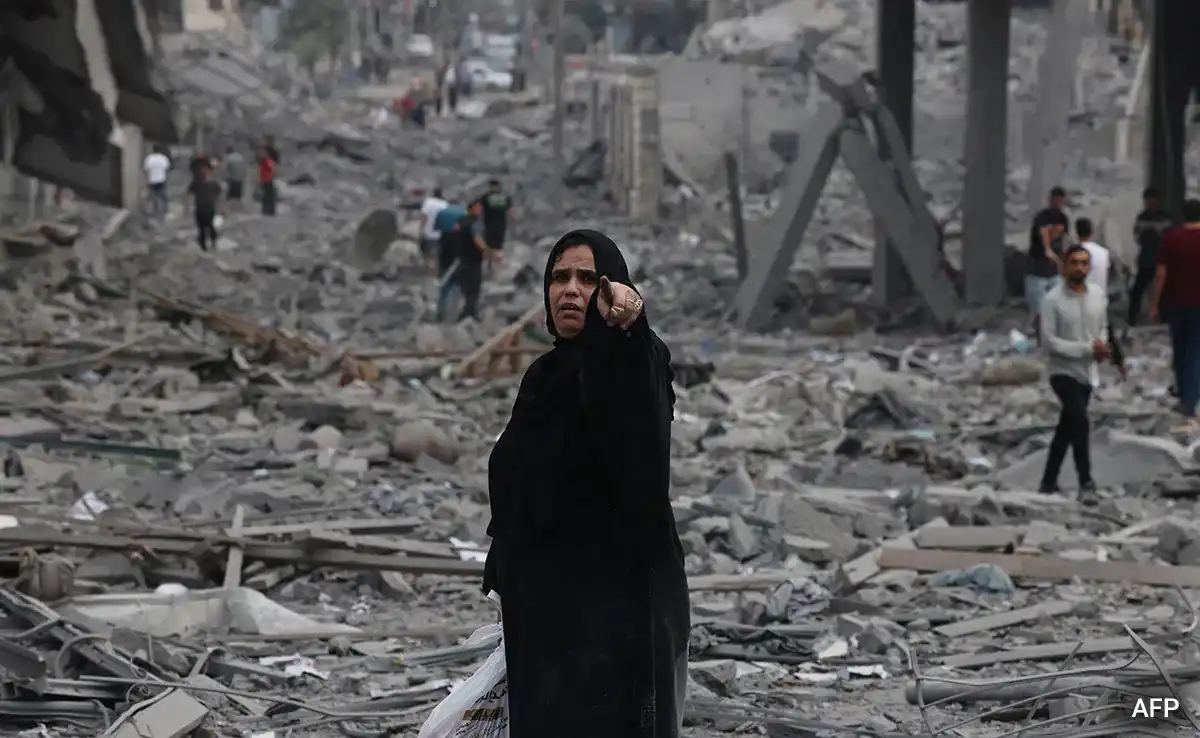

Burns visited Israel last Sunday, and the sources said that he will visit Qatar for the ongoing negotiations regarding the deal to release the detainees.


Meanwhile, Reuters quoted an informed source that the negotiations aim to release 10 to 15 people detained by the Islamic Resistance Movement (Hamas) in exchange for a humanitarian truce in Gaza for a day or two.


The source added that the negotiations are taking place in coordination with the United States, and that the truce will allow Hamas to collect details about all civilian detainees and release dozens of others.


The source - who requested that his name not be published - indicated that "the exact number is still unclear at this stage."


American pressure

The same agency quoted an Egyptian security source as saying that a ceasefire is expected for 24 to 48 hours, or a determination of the scope of the main operations during the next week in exchange for the release of detainees.


The Egyptian source stated that the United States and other countries have intensified pressure on Israel to achieve this matter.


Earlier, Agence France-Presse quoted a source familiar with the talks as saying that the negotiations are being mediated by Qatar in coordination with the United States to secure the release of 10 to 15 detainees in exchange for a ceasefire for a day or two, which is consistent with what Reuters later reported.


Likewise, the French Agency quoted a source close to the Hamas movement in the Gaza Strip that negotiations are underway regarding a three-day truce in exchange for the release of 12 detainees, “half of whom are Americans.”


The source stated that progress towards the truce currently depends on its duration and on “the northern Gaza Strip, which is witnessing large-scale combat operations,” pointing out that “Qatar is waiting for the Israeli response.”


On the other hand, the New York Times reported on Wednesday that indirect talks mediated by Qatar were close to reaching an agreement to release 50 detainees, but they faltered when Israel launched its ground attack on the Gaza Strip on October 27.


The day before yesterday, Tuesday, the Axios website quoted Israeli officials as saying that US President Joe Biden urged Netanyahu to stop the fighting for 3 days in order to achieve progress in the detainees file, but the Israeli Prime Minister informed him of his fear of losing international support in the event of a ceasefire for this period.


Tel Aviv estimates that there are about 240 Israelis and foreigners - both military and civilian - detained by Hamas and other Palestinian factions in the Gaza Strip.


Hamas position

The Al-Qassam Brigades, the military wing of the Hamas movement, confirmed - days after the launch of the Battle of Al-Aqsa Flood on October 7th - that it intends to release civilian detainees as soon as field conditions permit.


Hamas also said that it was ready to conclude a deal to exchange all its Israeli prisoners for all Palestinian prisoners in occupation prisons.


On Wednesday, Hamas leader Osama Hamdan said that the resistance would force the Israeli Prime Minister to pay the price in exchange for the release of his soldiers.


Hamdan added in a press conference in the Lebanese capital - that Netanyahu personally bears responsibility for obstructing the release of foreign detainees.


For his part, Hamas leader Basem Naeem said that civilians and those he described as guests could be released if conditions were created, most notably a ceasefire.


On the other hand, Netanyahu said on Wednesday that there will be no ceasefire in Gaza without the release of the hostages.


Extended deal

Meanwhile, Israeli Channel 13 reported that Tel Aviv is ready to consider releasing what it describes as security prisoners, in reference to Palestinian prisoners, in exchange for a “large and broad deal” to release detainees and prisoners held by the Hamas movement.


The channel quoted Israeli officials as saying, "In light of the attempts of Qatar and the United States to reach small deals that lead to a ceasefire, Israel is ready and willing to consider releasing security prisoners in exchange for a large and broad deal."


On the other hand, the US State Department said that, according to its information, there are about 10 Americans still detained by Hamas.


NBC quoted a senior American official as saying that the release of a large number of detainees requires more than a humanitarian truce "and more than a few hours."


Qatari mediation has so far succeeded in releasing two American women on October 20, and two Israeli women on the 23rd of the same month.


The Israeli war on the Gaza Strip continues for the 33rd day, with the number of martyrs reaching 10,569, including 4,324 children and 2,823 women, and 26,475 Palestinians were injured, amid a complete siege by the occupation and a collapse in the health system.


Source: Al Jazeera + agencies + Israeli press + New York Times

PALESTINE

Thu 09 Nov 2023 7:35 am - Jerusalem Time

Abbas: There is no security or military solution in the Gaza Strip, and we reject Israel’s plans to separate it

On Wednesday, Palestinian President Mahmoud Abbas expressed his rejection of any partial solutions to the Gaza Strip or its separation from the Palestinian state, adding that “there is no military or security solution for Gaza.”


Abbas's statements came during two separate phone calls he received from the Prime Ministers of Australia, Anthony Albanese, and Mark Rutte of the Netherlands, in which he stressed the need to immediately stop the Israeli aggression on the Gaza Strip, and bring in relief aid as soon as possible.


During his discussions with the prime ministers of the two countries, Abbas stressed the importance of recognizing the State of Palestine, and that there is no security or military solution for the Gaza Strip, which is an integral part of the Palestinian state, and it is not possible to accept or deal with the plans of the occupation authorities.


The Palestinian President said that what is happening in the Gaza Strip is genocide that must stop immediately, and the killings, destruction of hospitals and shelter centers, and starvation of our people are due to the Israeli siege imposed on them, and due to the failure to bring in medical materials and food, and the failure to provide water, electricity, and fuel.


On the other hand, the Palestinian President called on Israel to stop “the attacks of terrorist settlers and occupation forces” against Palestinians in the West Bank.


Blinken meeting

A few days ago, during his meeting with US Secretary of State Anthony Blinken in Ramallah, the Palestinian President expressed his readiness to “help manage the Strip” after “isolating” the Islamic Resistance Movement (Hamas).


Reuters quoted a senior American official as saying that Blinken informed the Palestinian President, during the meeting, that the Palestinian Authority must play a pivotal role in the future of Gaza.


The American official added, "The future of Gaza was not the focus of the meeting, but the Palestinian Authority seemed ready to play a role," noting that Blinken thanked Abbas for his help in maintaining calm in the West Bank.


Blinken suggested that the most logical solution for the Strip was for an “effective and revitalized Palestinian Authority” to eventually take over its management, but acknowledged that other countries and international agencies would likely play a security and governance role.


For its part, Agence France-Presse quoted sources as saying that Abbas linked the return of the Palestinian Authority to the Gaza Strip to a “comprehensive political solution.”