ARAB AND WORLD

Mon 13 Nov 2023 11:59 am - Jerusalem Time

Sunak dismisses the British Home Secretary

British Prime Minister Rishi Sunak fired controversial Interior Minister Suella Braverman on Monday, according to several media reports, as part of the adjustments Sunak is making to his team before the general elections expected next year.


Sunak has come under increasing pressure to sack Braverman, after her critics accused her of inflaming tensions during weeks of pro-Palestinian demonstrations and counter-protests in the United Kingdom.


ARAB AND WORLD

Mon 13 Nov 2023 11:54 am - Jerusalem Time

Israeli analysts: Israeli expectations of an imminent escalation against Hezbollah

Analysts: “The more time passes and the more the Israeli army’s operations in the Gaza Strip expand, the confrontation with Hezbollah will escalate. The risk of a misunderstanding on the northern front has increased significantly. The fear is that Israel does not actually control the pace and intensity of the escalation.”


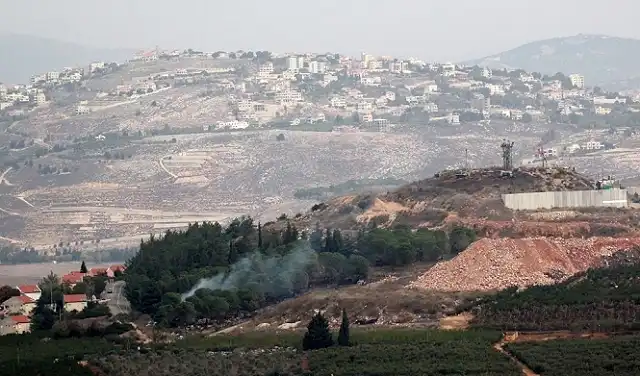
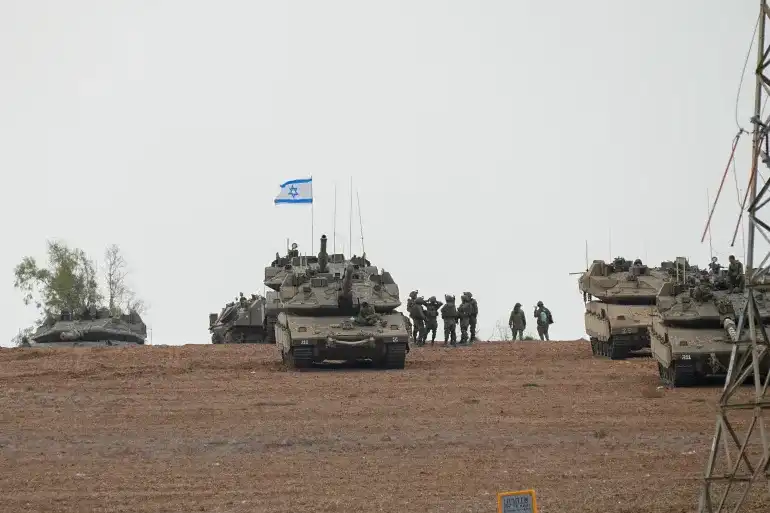
Israeli military analysts suggested today, Monday, that the Israeli army will escalate its operations against Hezbollah, following the increase in the frequency of launching rocket shells and targeting sites on the Lebanese border with anti-armor shells. Analysts believe that Hezbollah's escalation yesterday was represented by expanding the firing of rockets to distant areas south of the border, including the city of Acre and the cities in Haifa Bay.


Tal Lev Ram, a military analyst in the Maariv newspaper, pointed out that at the center of the Israeli security leadership’s dilemma is the belief that another escalation against Hezbollah would affect decision-making regarding the continued implementation of war plans in the Gaza Strip.


He added, "There is a realization (in Israel) that it is no longer possible to continue containing Hezbollah's aggression through defense alone, and that the cells should be attacked before or after they carry out shooting and attacking Hezbollah's infrastructure, and that there is a need to escalate offensive operations further, so that Hezbollah will pay a price, without deteriorating into a rapid escalation, which means moving the central battlefield north (facing Lebanon) and requires freezing the situation with everything related to the southern front versus Hamas.”


Lev Ram pointed out that "the more time passes and the Israeli army's operations expand to other areas in the Gaza Strip, the confrontation with Hezbollah will escalate in the coming period," and pointed out that "the threats on the northern front are much more dangerous to the State of Israel" than the situation in the Strip.


The position of the Israeli security leadership so far is that “the focus must be on the war against Hamas, and not allow Hezbollah to distract the Israeli army from its central efforts,” according to Lev Ram. However, an Israeli reserve officer considered that "the situation in the north now allows (an escalation against Hezbollah), and the initiative (to such an escalation) will be more difficult when the residents of the Israeli border towns return to their homes." However, this position does not represent the Israeli security leadership, according to Lev Ram.


On the other hand, the residents of the Israeli towns near the Lebanese border, who were evacuated from these towns, demand “removing the threat of the Radwan Force” in Hezbollah and removing its fighters from the border, in anticipation of a repeat of the October 7 scenario in these towns, and that without this, there will be no They agree to return to these towns.


According to Amos Harel, a military analyst in the Haaretz newspaper, “Officially, Hamas members in Lebanon were responsible for launching the rockets yesterday, but it is clear that Hezbollah is directing them from behind the scenes. Hezbollah is now playing a dangerous game of fire, This would lead to the complete opening of a second front.”


Harel considered that "the risk of a misunderstanding on the northern front has increased significantly. The fear is that Israel does not actually control the pace and intensity of the escalation. Hezbollah realizes, as it believes, that it is not only free to fire mortar shells, but also by very diverse means, including attack aircraft." Drones, Katyusha missiles, anti-tank missiles, and this began to exact a price from the Israeli army, at a time when the front line gradually moved south,” referring to the firing of rockets towards Haifa Bay.


Harel pointed out that the Israeli army further complicated the situation vis-à-vis Hezbollah by targeting its air defenses, when it “bombed for the first time at a depth of approximately 40 kilometers in Lebanese territory. The target was an Iranian SI-67 surface-to-air missile platform, which Hezbollah is trying to "May God bring down Israeli drones. The Israeli army is taking advantage of the escalation in order to remove nuisance factors that will be used later, including the sites of the Radwan commando force and a section of Hezbollah's anti-aircraft and anti-armor systems."


The occupation army continues its military pressure, focusing on the northern Gaza Strip and Gaza City, but reports from the Gaza Strip speak of fierce battles. In parallel, American and Arab press reports talk about a possible prisoner exchange deal, and if it is achieved, it will be partial, meaning not releasing all the Israeli prisoners in the Gaza Strip.


Harel saw that, “In the meantime, the Israeli government and army continue, daily, to obstruct a prisoner deal and political efforts to reach a deal. Minister Avi Dichter spoke on Channel 12 about the ‘Nakba 23’ that Israel is implementing in the northern Gaza Strip, with the displacement of the Palestinian population to the south.” ".


He added, "Videos filmed by Israeli officers and soldiers come out of Gaza almost daily, containing arrogant statements about the resettlement of Gush Katif (the settlement bloc in the Strip that was evacuated in 2005). Neither Prime Minister Netanyahu nor the Chief of General Staff succeed in controlling that".


PALESTINE

Mon 13 Nov 2023 11:33 am - Jerusalem Time

Palestine Premier talks about international pressure to release the funds deducted from the clearing house

Speech by the Prime Minister at the beginning of Cabinet Session No. 229


The 38th day of the aggression against our people in Gaza:


We are struggling in all international circles to stop the aggression, and to secure the delivery of food and medicine to all areas of the Gaza Strip, especially the north, and we are doing everything possible to save our people there.


We reject the establishment of temporary camps for the displaced, as the Israeli army requests from international organizations. We want our people to return to their homes from which they were displaced. In the history of Palestine, there is no such thing as “temporary,” as experience has taught us that the temporary is permanent.


It is unfortunate that some countries still call for Israel's right to defend itself. The aggressor has no right to self-defense. Occupying others' lands is not self-defense. We are the victims, and we are the ones who have the right to self-defense.


I call on the United Nations and the European Union to parachute aid into the Gaza Strip, especially the north, as happened in various experiences in the world. We ask that relief corridors be opened to Gaza and not be limited to the Rafah crossing only.


On behalf of the Council of Ministers, I call for the immediate implementation of the decisions of the Arab League, especially those related to relief, the delivery of aid, and challenging the occupation authorities. It is unthinkable that thousands of tons of aid are accumulating while people are hungry, the sick are without medicine, and the wounded are dying one after the other.


It has been proposed by some countries to establish a water corridor between Cyprus and Gaza. We want aid to arrive, but we do not accept the displacement of our people on ships for deportation under the name of aid.


I say to the Israeli Prime Minister, who opposes the return of authority to Gaza and wants to maintain the occupation for a long time, that his policy will bring calamity on them. The Gaza Strip is part of the land of Palestine that was occupied in 1967, and we do not need anyone’s permission to help our people there.


Whoever supplies Israel with weapons now is an accomplice to the aggression against the blood of children, women and innocent people of our people.


Regarding the money that Israel deducted from the clearing, I say that there is an intense international effort and pressure on the occupying state to release our money, and I realize that people need their salaries, but none of us accept stopping aid, treatment, education, medicines, water and electricity bills, and the salaries that we pay to our people in Gaza. Our money and we dispose of it according to the requirements of serving our people and their rights wherever they are. International pressure is focused, and I hope that it will produce the desired results.


A few days ago, I participated in a meeting in Paris dedicated to providing relief to our people in Gaza. We requested that aid be directed through the Palestinian Red Crescent and the institutions operating in the Gaza Strip, including the United Nations. I hope that the role of the United Nations will be effective in delivering aid and mobilizing the remaining needs.


Israel has made Al-Shifa Hospital the symbol of its control over Gaza, as if it were a military barracks, where the hospital contains wounded and sick people. Whatever the justification, bombing hospitals, cutting off electricity from them, and preventing fuel and oil from reaching them can only be considered a war crime according to international humanitarian law.


That Israel makes Al-Shifa Hospital the capital of Gaza, and its fall means the fall of Gaza, is nothing but a justification for killing the wounded, the sick, doctors, and paramedics.


This Cabinet session is dedicated to continuing to help our people in Gaza, removing injustice against them, and stopping this unjust aggression against them.

PALESTINE

Mon 13 Nov 2023 10:02 am - Jerusalem Time

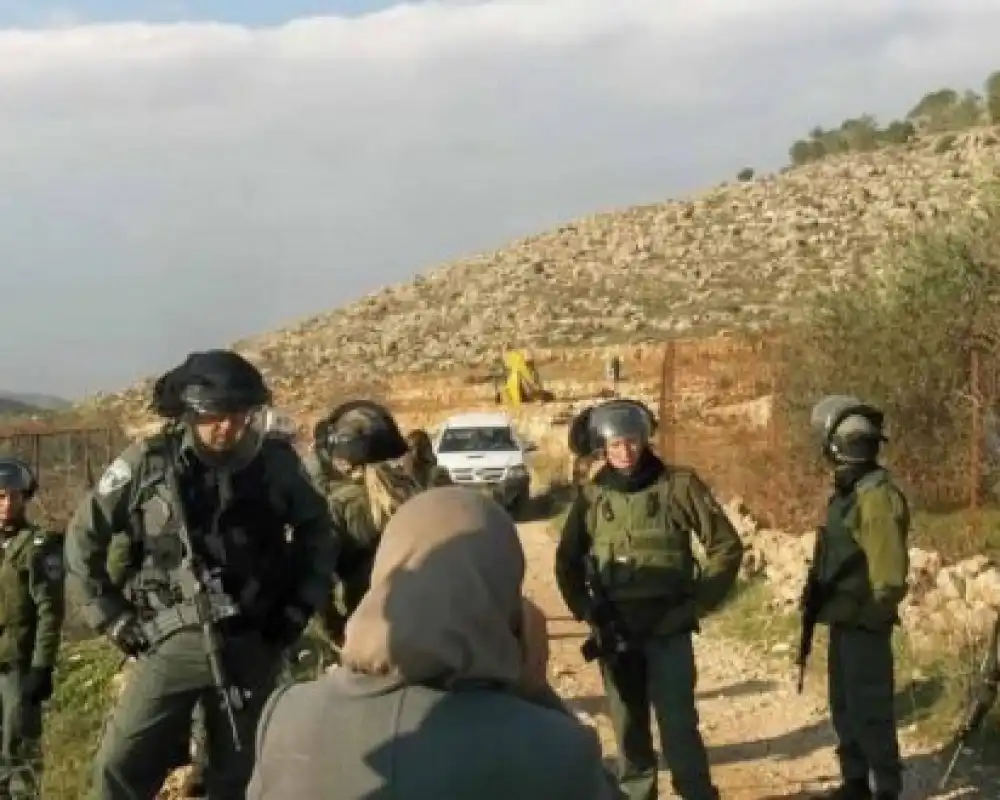
Israel's continuous arrest campaign in the West Bank, arresting 50 Palestinian citizens

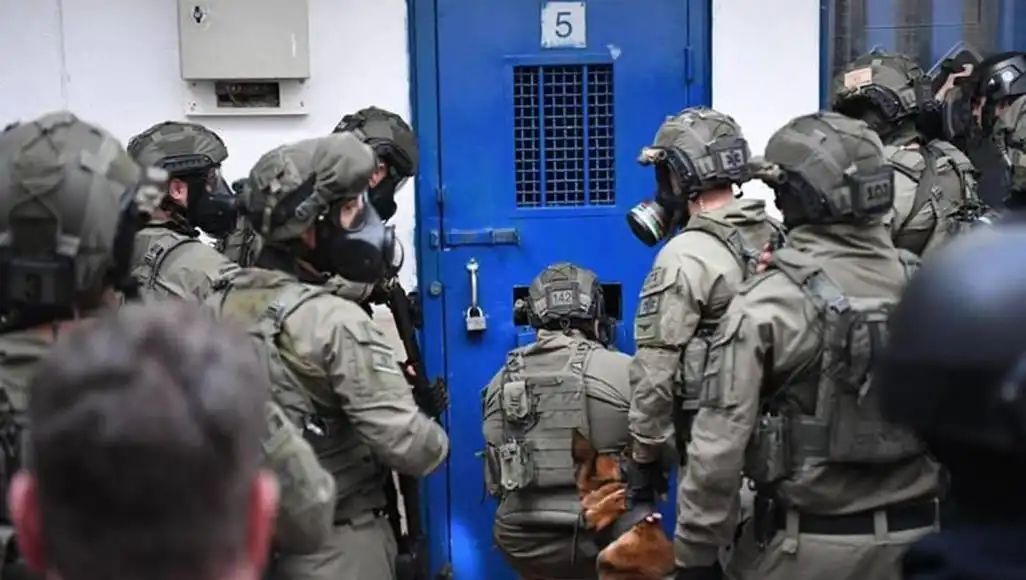
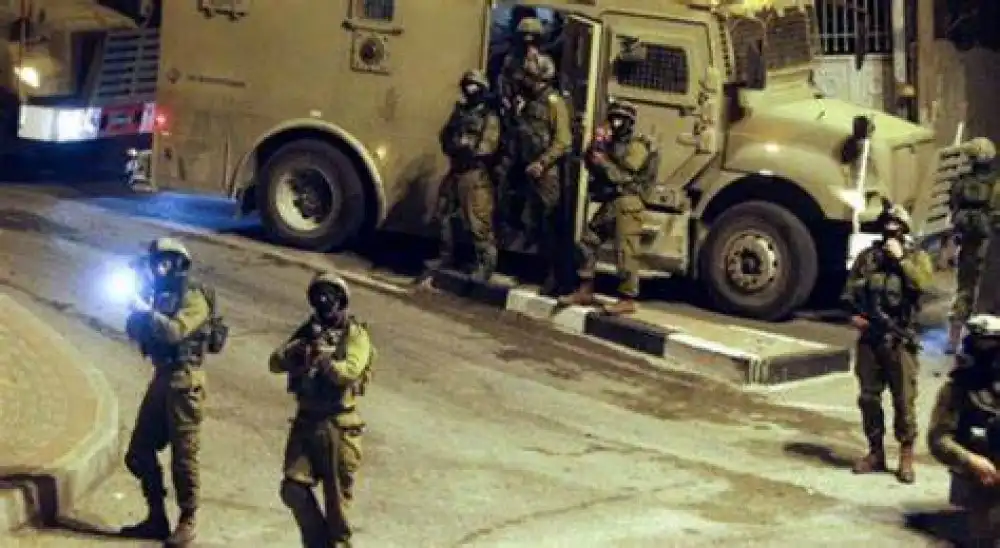
From yesterday evening until Monday dawn, the Israeli occupation forces arrested about (50) citizens from the West Bank, including former prisoners and a wounded man, in addition to nine citizens from Gaza who were arrested from the home of the (girls) family in Hebron.


The Commission and the Club said that the arrests were concentrated in the governorates of Jerusalem, Ramallah, and Hebron, while the rest of the arrests were distributed among the governorates of Jericho, Nablus, Qalqilya, and Jenin.


The arrest campaign was accompanied by widespread harassment, severe beatings, and threats against detainees and their families, in addition to widespread sabotage and destruction of citizens’ homes.


Thus, the total number of arrests after the seventh of last October rose to more than (2,520), and this total includes those who were arrested from homes, through military checkpoints, those who were forced to surrender themselves under pressure, and those who were held hostage.


The continuing arrest campaigns come within the framework of the comprehensive aggression against our people and the ongoing genocide in Gaza, after the seventh of last October.


It is noteworthy that the data related to arrest cases includes those who were kept in detention by the occupation, or those who were later released.

ARAB AND WORLD

Mon 13 Nov 2023 8:12 am - Jerusalem Time

World Health: The largest health complex in Gaza is “out of service” and conditions inside are “horrific”

The Director-General of the World Health Organization, Adhanom Ghebreyesus, announced on the “X” platform that the largest hospital in Gaza had stopped working, and that health workers at Al-Shifa Hospital described the situation there as “horrific and dangerous” with continued shooting and bombing. “It is unfortunate that the number of patient deaths has increased significantly,” Ghebreyesus said in his tweet, adding that the Shifa Complex “is no longer operating as a hospital anymore.” Al-Shifa Complex and other hospitals are subject to a stifling Israeli siege, and Israel says that Hamas has command centers under and near the hospitals.


Tedros Adhanom Ghebreyesus, Director-General of the World Health Organization, said on Sunday that the largest hospital in Gaza has stopped working, and that deaths among patients are on the rise, as the violent Israeli attack on the Gaza Strip, which is controlled by the Palestinian Islamic Resistance Movement Hamas, continues.


The WHO director said the organization was able to speak to health workers at Al-Shifa Hospital, who described the “horrific and dangerous” situation with continuous shooting and shelling exacerbating already critical conditions.


“It is unfortunate that the number of patient deaths has increased dramatically,” he said in a post on the X website, adding that Al-Shifa “no longer functions as a hospital.”


Tedros joined other senior UN officials in calling for an immediate ceasefire.


"The world cannot stand silent while hospitals, which should be safe havens, turn into scenes of death, destruction and despair," he said.


Israeli forces are besieging hospitals in the northern Gaza Strip, including the Shifa complex. Medical staff members said that hospitals are barely able to care for those inside them, with three newborns dying in Al-Shifa Hospital, while more are facing danger in light of the power outage amid fierce fighting in the area surrounding the hospital.


Israel says it is targeting Hamas fighters who launched deadly attacks in southern Israel on October 7, adding that the movement has command centers under and near hospitals.


Israel says it is trying to release more than 200 hostages taken by Hamas fighters on October 7, and says hospitals must be evacuated.


Shelling continues around hospitals


The bombing and battles continued in the vicinity of Gaza hospitals on Sunday between Hamas and the Israeli army, which is trying to penetrate the neighborhoods of the northern Gaza Strip, threatening the lives of thousands of people stranded in health facilities and forcing other hospitals to evacuate patients who are now “in the streets without medical care,” according to a local official.


Other areas in the Gaza Strip are being subjected to Israeli bombing, some of them in the south, where tens of thousands of Palestinians have arrived over the past days, and it is difficult for them to find shelter, food, medicine and water under a siege imposed by Israel in response to an attack launched by Hamas against it on October 7, which killed about 1,200 Israelis.


The Hamas government announced on Sunday that 11,180 Palestinians were killed in the ongoing Israeli bombing of the Gaza Strip, including 4,609 children and 3,100 women, in addition to the injury of 28,200 people.


Hamas Undersecretary of the Ministry of Health, Yousef Abu Al-Rish, announced that Israel had “completely destroyed the heart department building in Al-Shifa Hospital,” where tens of thousands of displaced, wounded, and sick people were still stranded.


Abu Al-Rish said that "five infants" and "seven patients in intensive care" died due to a power outage in the largest hospital in Gaza, adding, "We expect the number of martyrs to double."


According to him, “650 patients, about forty children in incubators, all of them threatened with death, and 15,000 displaced people” are in this hospital.


The hospital announced that nurses were resorting to manual artificial respiration to keep the infants alive, while a doctor from Doctors Without Borders indicated that 17 patients were in the intensive care department.


Witnesses inside the hospital confirmed that there had been a raid, which the French news agency could not independently verify.


The Israeli army had previously denied deliberately targeting the hospital, but it repeated the accusation that Hamas used the medical facilities as its headquarters and military infrastructure, which the movement denies.


Israeli Prime Minister Benjamin Netanyahu pointed out in an interview with CNN that about 100 patients were evacuated from Al-Shifa Hospital.


The director of Al-Shifa Complex, Muhammad Abu Salmiya, warned that “medical teams are unable to work, and the bodies in the dozens cannot be dealt with or buried.”


Source: (France 24 / AFP / Reuters)

PALESTINE

Mon 13 Nov 2023 8:12 am - Jerusalem Time

A Palestinian taxi driver was killed by Israeli army in the city of Hebron

A citizen was killed by Israeli occupation forces’ bullets, today, Monday, in the city of Hebron, in the southern West Bank.


Eyewitnesses said that the occupation forces stormed the Al-Hawuz neighborhood in the city of Hebron, and raided the administrative building of the Islamic Charitable Society for Orphan Care.


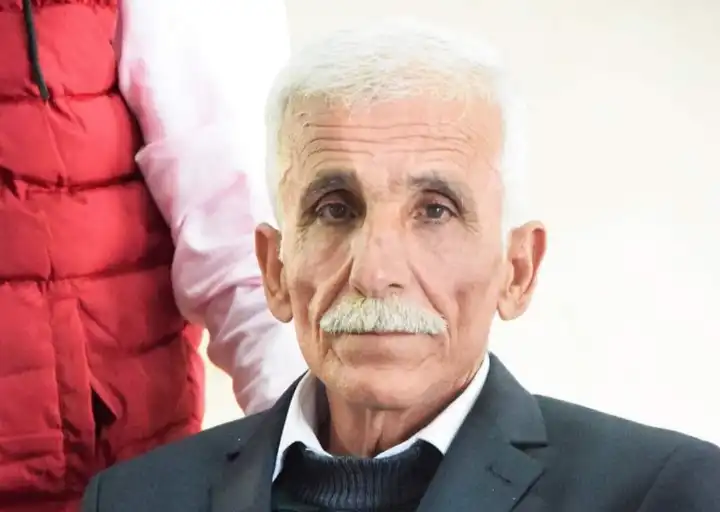
They added that the occupation soldiers opened fire on the citizen, Issa Ali Abdel Moneim Al-Qadi Al-Tamimi (65 years old), while he was driving his public vehicle near the association building, which led to him being shot in the head and killing him immediately.

Our correspondent reported that the occupation forces seized the charity's computers, files and property, and closed its doors with electric welding.


PALESTINE

Mon 13 Nov 2023 8:12 am - Jerusalem Time

Israeli war against Gaza on its 38th day: thousands are trapped in hospitals

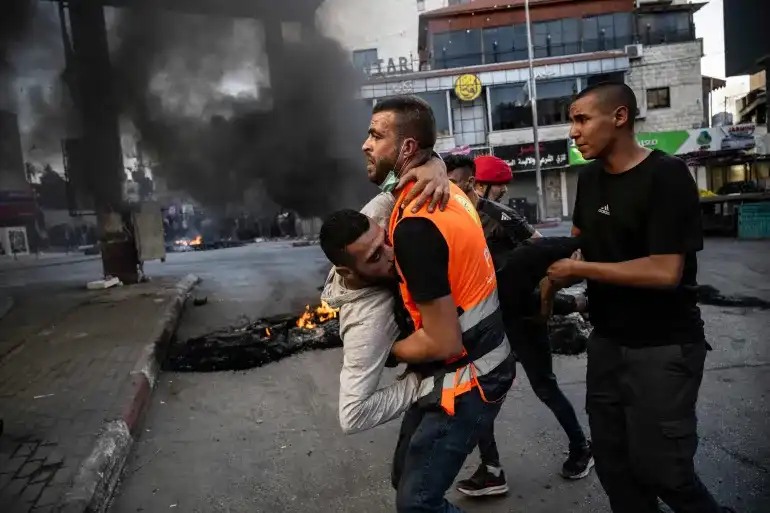
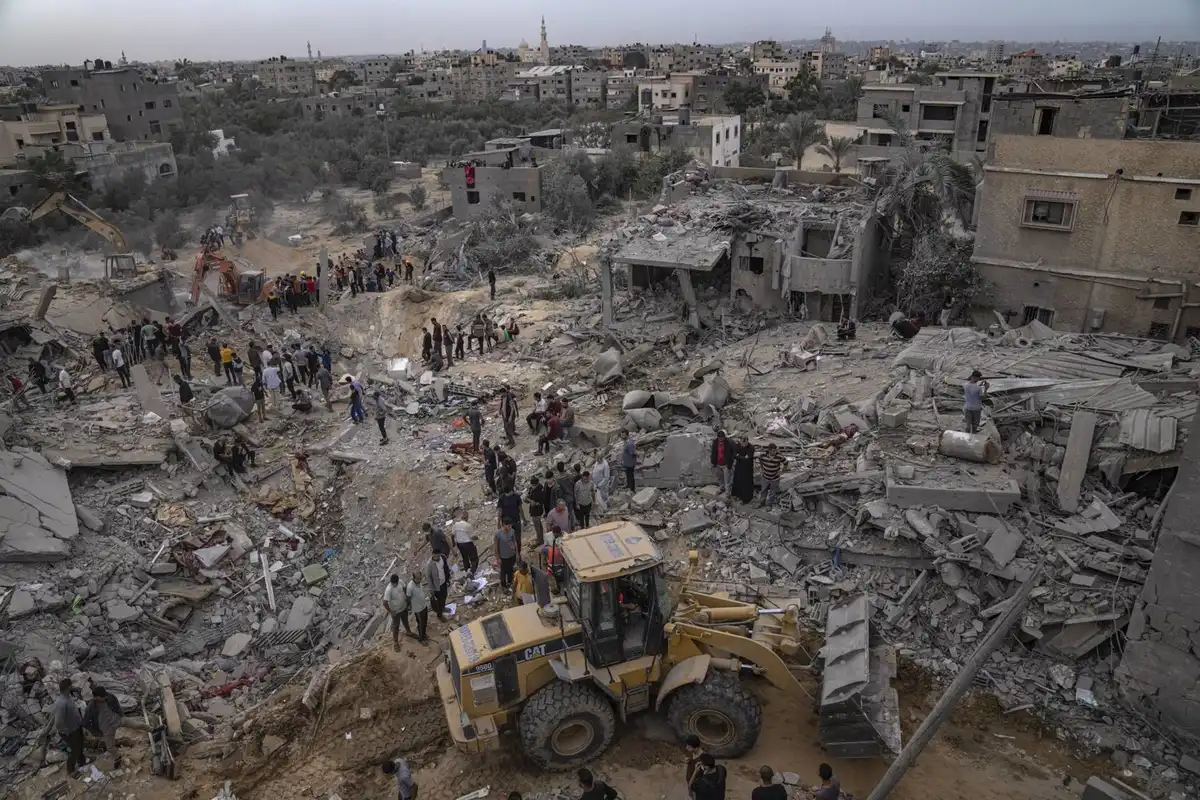
Dozens of citizens were injured today, Monday, as a result of continuous Israeli bombardment on the Gaza Strip, by land, sea and air, while thousands are still stranded in hospitals and health facilities, and others are “on the streets without medical care” in many areas.


The occupation aircraft bombed a house belonging to the Al-Agha family near Al-Amin Mosque in the western line of Khan Yunis, which led to casualties as a preliminary toll.


While the occupation warplanes continue their raids and bombing in the vicinity of hospitals, where they completely destroyed the heart department building in the Al-Shifa Medical Complex, and tens of thousands of displaced, wounded, and sick people are still stranded, after being besieged for the third day in a row, amid a complete outage of electricity, water, and food.


According to the Ministry of Health, 3 premature babies and 12 patients have been martyred inside the Al-Shifa Medical Complex so far, due to the outage of electricity and medical consumables, including two newborn babies.


All 3,000 oncology patients who were being treated in Al-Rantisi and Al-Turki hospitals were now left to die, after the occupation expelled them from the hospitals, in light of warnings of a real humanitarian catastrophe due to the absence of basic services.


The Palestine Red Crescent Society announced that Al-Quds Hospital in Gaza City was out of service and stopped working completely, yesterday, due to running out of fuel and a power outage.


23 out of 35 hospitals have completely stopped operating, and the occupation forces are still besieging many hospitals, preventing entry or exit to them for medical staff, paramedics, and patients.


The occupation warplanes also destroyed a brick factory and the adjacent Bani Suhaila cemetery, east of Khan Yunis Governorate.


The ongoing Israeli aggression on the Gaza Strip since the seventh of last October has resulted in more than 11,078 martyrs, including 4,506 children and 3,027 women, in addition to the injury of 27,490 citizens, the majority of whom are women and children, an infinite toll.


PALESTINE

Mon 13 Nov 2023 8:09 am - Jerusalem Time

The Washington Post: Hamas planned to ignite a regional war in Operation “Al-Aqsa Flood”

The American newspaper "The Washington Post" revealed the details of the Hamas attack on October 7, considering, according to Western and Middle Eastern intelligence sources, that its aim was "to ignite a major regional war in the Middle East."


The newspaper considered that four weeks after the Hamas attack, the reassembled parts began to reveal the features of the movement’s broader plan, a plan that analysts say was not only aimed at killing and capturing Israelis, but rather at “igniting a massive fire that would sweep region and lead to a broader conflict.”


This evidence, described by more than 10 current and former intelligence and security officials from four Western and Middle Eastern countries, reveals the intent of Hamas planners to “strike a strike of historic proportions, in the hope that their actions will lead to an overwhelming Israeli response.”


The newspaper quoted a number of officials who had not previously spoken about the matter, saying that intelligence information about the movement’s motives “has become stronger in recent days, and the results also shed new light on the tactics and methods used by Hamas to deceive the Israeli intelligence establishment that prides itself on its performance and thwart the initial efforts made by the  "Israel army to stop the attack."


Officials say the fighters "were carrying enough food, ammunition and equipment to last several days, and were instructed to continue pushing into Israel if the first wave of attacks were successful, potentially hitting larger Israeli cities."


The newspaper reported that one of the units “was carrying reconnaissance information and maps indicating an intention to continue the attack to the West Bank border,” according to two senior intelligence officials in the Middle East and a former American official with detailed knowledge of the evidence. “Hamas has also increased its communication with West Bank activists in recent months, although the movement says it did not inform its allies in the West Bank of its plans in advance.”


“If that had happened, it would have been a major propaganda victory, but a symbolic strike not only against Israel, but also against the Palestinian Authority,” said the former US official who was briefed on the matter.


The former official, like many others interviewed, spoke on condition of anonymity to discuss preliminary intelligence findings.


The newspaper added, “Hamas itself was surprised by the sweeping nature of the incursion, according to the group’s public statements and assessments shared privately with journalists. But the movement’s leaders expected their attack to result in more than just hostages,” current and former intelligence officials said.


Analysts said, "Hamas meticulously planned and prepared for a massacre of Israeli civilians on a scale that would likely prompt the Israeli government to send forces into Gaza. In fact, Hamas leaders have publicly expressed their willingness to accept heavy casualties, which are likely to include the death of many civilians in Gaza who live "Under its rule."


“They had a very clear vision about what would happen to Gaza the next day,” said a senior Israeli military official familiar with sensitive intelligence, including interrogations with Hamas fighters and intercepted communications, adding: “They wanted to buy their place in history — a place in history.” Jihad – at the cost of the lives of many people in Gaza.”


Secret planning and high-level deception

“Planning for the historic attack against Israel has been underway for more than a year, and Hamas officials have done their best to conceal preparations, even as senior leaders have dropped occasional hints about their intentions,” intelligence officials say.


Western and Middle Eastern intelligence officials added that "Hamas militants, during their training, carefully reviewed population centers and military bases to create a matrix of potential targets."


Hamas deployed inexpensive reconnaissance drones to generate maps of Israeli cities and military installations within a few miles of the separation wall system that Israel built to isolate Gaza at a cost of $1 billion and to obtain detailed intelligence.

Intelligence officials said they obtained "additional information from day laborers in Gaza, who were allowed to enter Israel to work." They also "monitored Israeli websites, studying real estate photos and social media posts depicting life inside kibbutzim and plans of buildings and homes."


“Intelligence gathering was not particularly complex, but it was systematic,” said Ali Soufan, a former FBI counterterrorism official and founder of The Soufan Group, a private security consulting firm in New York that works closely with Middle Eastern governments.


Soufan added, “If you are in prison, you have to study the prison security system, and this is what Hamas has been doing for 16 years.” He continued, “Their intelligence information on the ground was much better than anything the Iranians could provide them.”


The most important details appear to have been withheld from Hamas's political leadership and its main backers, Iran's Islamic Revolutionary Guard Corps and the Lebanon-based Hezbollah militant group, as officials from both organizations have publicly acknowledged.


Plant the seeds

The newspaper believes, “While the plot was progressing secretly, others in the Hamas leadership were busy planting the seeds of a highly sophisticated deception operation.”


It was a message the Israelis wanted to hear: “Hamas does not want more wars,” according to former head of Palestinian affairs at Aman, Michael Milstein.


Milstein, who met Sinwar briefly years ago, said, “October 7 bears a fundamental feature of Sinwar’s previous operations: knowing the basic awareness of the Israeli public.” In order to support this perception of moderation, clashes between Hamas and Israel stopped after that.


For many in Israel, it was further evidence that Hamas had changed and was no longer seeking a bloody conflict, with some reports suggesting that Hamas officials “passed intelligence about PIJ to the Israelis to reinforce the impression that they were cooperating.”


The relative calm on Israel's southwestern border was welcome, as Israeli officials were preoccupied with problems elsewhere, with Prime Minister Benjamin Netanyahu's government threatened by historic internal unrest, including unprecedented waves of demonstrations against judicial reform proposed by his far-right government. .


The Israeli army saw a much greater security threat from Hezbollah in the north and from violent Palestinian groups engaged in escalating clashes with Israeli soldiers and armed settlers in the West Bank.


Israeli concerns about the West Bank also increased over the summer with the discovery of new attempts by outside groups to arm Palestinians and incite them to violence.


Surprise

The attempts at deception and diversion eventually succeeded, and in Gaza, less than fifty miles from the West Bank, the arming and training of Hamas' assault squads were largely ignored.
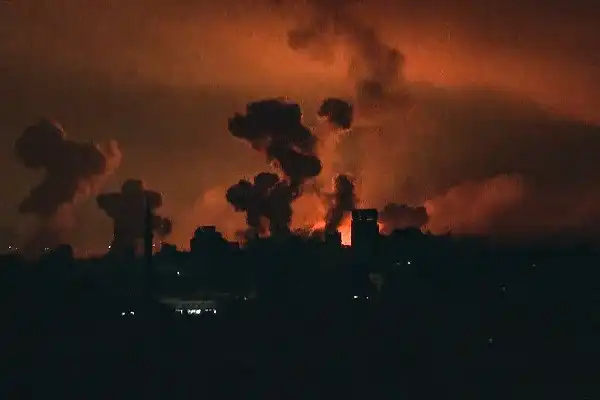

Surveillance footage and other data continued to flow to Israeli eavesdropping centers, but the most crucial communication occurred through channels that the Israelis could not access or failed to understand, current and former officials said.
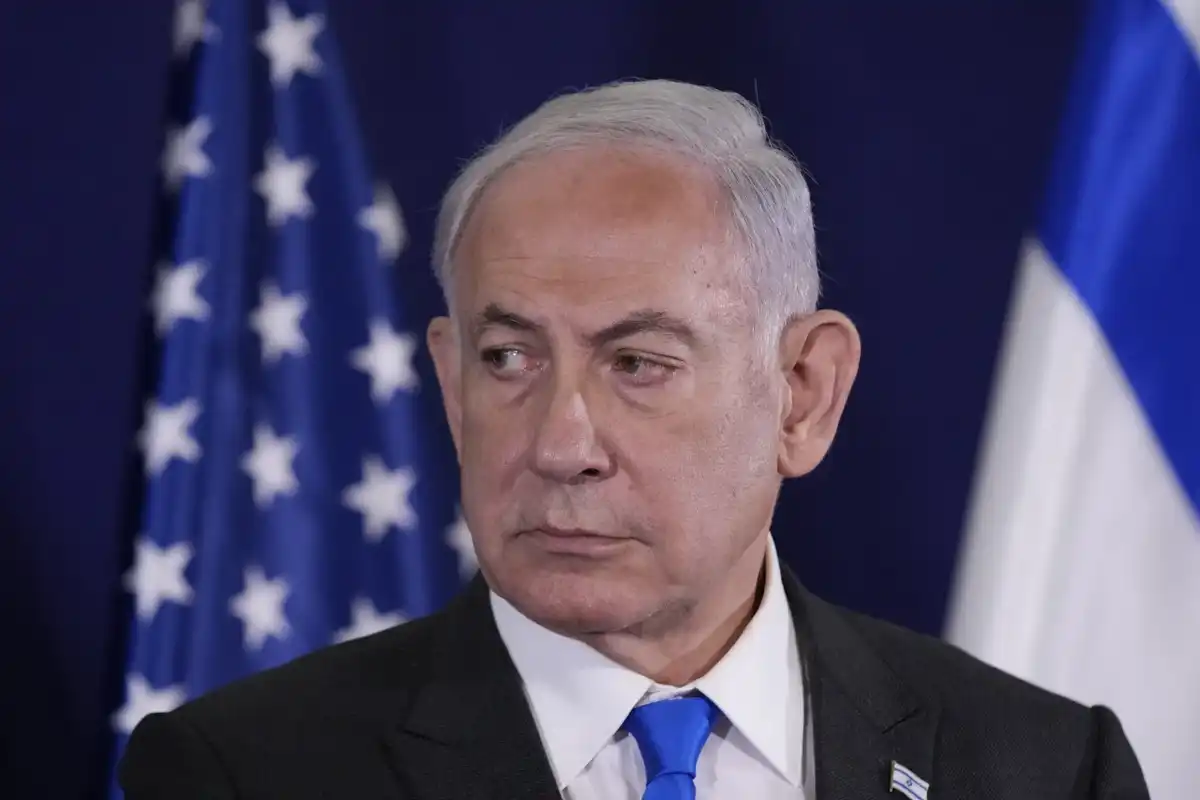

Eran Etzion, former deputy head of the Israeli National Security Council, said: “They were deceiving Israel at the strategic level, using portable radios, underground wire networks in tunnels and other communications that we could not listen to, while they were using the codes of the so-called open networks, which they were using.” They know we're listening."


"They were creating an alternative reality," he added.

Yadlin, the former head of Defense Intelligence, said that Israel "ultimately allowed the building of a Palestinian army by Hamas and kept telling itself that Hamas could be deterred."


“Israel has been deceived,” Yadlin said, while a Hamas spokesman said the movement’s firm position on regaining all former Palestinian lands should have made its intentions clear. Hamas acted out of the conviction that “we are being erased – our cause is being erased.”


Along with maps and other documents, many of the dead fighters were equipped with handcuffs and gas canisters, as well as instructions to set fire to homes. Witnesses and paramedics who arrived at the scene said the tactic was aimed at driving residents out of their safe rooms with smoke. Most worrying for some, Analysts are preparing for an expanded attack.


“They have planned a second phase, including major Israeli cities and military bases,” said a senior Israeli official, who spoke on the condition of anonymity to discuss classified intelligence.


It is unclear whether the attackers had realistic expectations of advancing as far as the West Bank, and Hamas officials said they were hoping to obtain hostages to exchange for prisoners held in Israel and did not expect nearly all of the October 7 assault teams to reach their initial objectives.

Annahar Alaraby


OPINIONS

Mon 13 Nov 2023 8:03 am - Jerusalem Time

It has become part of the past.. Who will rule Israel if Netanyahu leaves? A more extreme government or a centrist coalition?

Ramallah - “Al-Quds” dot com

Ramallah - “Al-Quds” dot com

Opinion Writer

For many years, Israel Hayom was known as “Bibiton,” a Hebrew word meaning “Bibi’s newspaper,” the nickname of Israeli Prime Minister Benjamin Netanyahu. It was founded by the late billionaire casino magnate Sheldon Adelson to be Netanyahu's mouthpiece, but today it calls for "Netanyahu's departure."


Last week, the newspaper's head of news, Uri Dagon, indicated a split in the ranks and called on the prime minister to "lead the country to victory and then leave," revealing that the ongoing political wrangling while the war rages has reached a new level.


In Israel's fractured and divided politics, it was a sign that Netanyahu's political era is teetering on its bitter end.


Israel's leaders fell after the 1973 and Lebanon wars

Netanyahu is widely blamed for security failures that allowed thousands of Hamas fighters to stream across the border from Gaza and carry out attacks unparalleled in Israel's history. Now the Israelis are preoccupied with the idea of “the days to come.” If the first day after that describes what happens in Gaza if Hamas is overthrown, then the second day seems like an expected reset of the country’s policy, in the post-Netanyahu era, which does not believe that only a few of those loyal to him will survive.


Many point to the historic change of the old guard in Israeli politics following the 1973 war, which was represented by the overthrow of Golda Meir and the end of the dominance of the Labor Party, which had ruled Israel since its founding in 1948.


Amit Segal, chief political commentator for Israel's Channel 2, recently told CNN: "History has taught us that every surprise and crisis leads to the collapse of the government." He added: "This was the case in 1973 with Golda Meir, in 1982 with Menachem Begin in the First Lebanon War, and in 2006 with Ehud Olmert in the Second Lebanon War. The clock is ticking."


The Hamas breakthrough came after a year of madness

It remains uncertain what Netanyahu's departure will look like and how he will be replaced. However, two words now frequently used to describe the new government are “normal” and “sane,” meaning that the far-right religious parties and nationalist settler parties, with which Netanyahu was in coalition, should be stripped of their influence.


In her Knesset office, Merav Michaeli, leader of the Labor Party, said she believes a reset “is not only a possible process, but also a necessity.” She described the Hamas attack as a “breakthrough” that comes at the end of a “crazy year” in which Netanyahu and his extreme right tried to dismantle the independence of one of the main pillars of what it describes as the democratic settlement in Israel, namely the country’s Supreme Court, sparking months of mass protests. She said: "The Israelis are disappointed. They did not get the security they were promised."


Netanyahu's departure

Protests against judicial amendments in Israel in March 2023 - Reuters

“I have never felt so unsafe,” she added. “We need to replace the leadership otherwise we won’t be able to rebuild anything.”


In the last election, in 2022, the left-wing Meretz party failed to cross the electoral threshold, meaning it gained no seats in the Knesset, while Labor's share fell to just four seats.


As the left and center-left collapsed, Israeli opposition parties shifted dramatically to the right, competing on crowded ground defined by the Likud Party.


The Likud Party, which holds 32 of the 120 seats in the Knesset, remains the most organized party among the Israeli parties. But Michaeli believes that it is no longer a party capable of winning more than 30 seats, the number that allowed it to lead several coalitions over the past fifteen years.


The tensions that Michaeli can see within Likud lead her to hope for a possible split, which reflects the experience of the Israeli left.

There is a broad opposition movement calling for Netanyahu's departure

For Haaretz columnist Yossi Verter, what marks the difference between the post-1973 reset and today is not just the media and social media being able to act more quickly, but also the presence of a broad anti-Netanyahu opposition movement that was already on the streets.


“There was corruption and decadence at that time too,” he wrote last week, referring to the 1970s and echoing Michaeli’s criticism. He added: "The situation has greatly worsened in Netanyahu's recent governments: unfortunate appointments to senior positions, the inclusion of mentally ill criminals in decision-making positions, the promotion of extremist and racist settlers who support Jewish terrorism to the most critical positions, and the establishment of a media poisoning machine that works 24 hours a day, 7 days a week, attacking... Everything that is good and reasonable in Israel, and everything that is evil and unclean is glorified,” he said.


Popular support for him and his allies is collapsing...and here is the most prominent beneficiary

This argument seems to be confirmed by recent opinion polls. A poll conducted by the Israeli newspaper Maariv, less than a week after the Hamas attack, showed that popular support for Netanyahu and his allies is collapsing. Voters are turning to Benny Gantz's National Unity Party, a center-right party, following his decision to join the government and form a war government.


The fact that Netanyahu, long mired in criminal cases and scandal, will not give up without a fight, has become clear in the month since October 7. In tweets that were later deleted, Netanyahu blamed the commander of the Israeli security forces for the mistakes that led to October 7, in an attempt to evade his responsibility.


Netanyahu's departure

Benny Gantz, a member of the war council formed by Netanyahu after the Al-Aqsa flood and the former Defense Minister, is considered the most prominent potential competitor to the current Israeli Prime Minister/Reuters

There were also allegations, since denied by Netanyahu, that during an off-camera press conference he linked the protest movement, in which thousands of reservists threatened to refuse to report for duty if the government carried out its highly controversial judicial reform, to Hamas' decision to attack.


Israel's Supreme Court has banned anti-war marches, but demonstrations by families of Hamas prisoners have been allowed outside Netanyahu's official residence, focusing attention on his handling of what has become Israel's most troubling emotional issue.


But he will not resign

Although Netanyahu, based on his past history, is unlikely to leave willingly and resign, calls for elections once the war against Hamas ends have continued in the past week, even within the war cabinet.


Labor Minister Yoav Ben Tzur of the Shas party said: “At the end of the war, Netanyahu will have to go to elections within 90 days.”


He added: "This will happen before an investigation committee of this or that kind is formed. This is my opinion." He continued, "We cannot continue like this. The public will have its say, and then we will see if Netanyahu gets the mandate."


For Dalia Sheindlin, a pollster, academic and columnist for Haaretz, the left is unlikely to benefit from any political reset. She said it was unlikely that either of the two left-wing parties, Labor and Meretz, would win enough votes to gain seats in the Knesset if elections were held next year.


The alternative may be more extreme

Although there is a possibility of forming a center-right coalition, the formation of a government more extreme than Netanyahu's is not ruled out.


Sheindlin added that even if there was a more centrist government, do not expect it to take a different approach to the Palestinian issue.


She said: “If a coalition led by someone like Benny Gantz emerges, it will not take a softer, more conciliatory line. It is very difficult to see a return to peace politics. My personal view is that the only thing that can mitigate the violence is international intervention, and this should be "The approach is imposed in some way."

Arabic post


PALESTINE

Mon 13 Nov 2023 8:00 am - Jerusalem Time

The occupation abuses prisoners...mass transfers and attacks against Palestinian detainees in prisons

The Israeli Prison Administration continued to escalate mass transfer operations against Palestinian prisoners, including “leaders from the prisoner movement,” according to what two Palestinian institutions concerned with prisoners’ affairs reported, Sunday, November 12, 2023.


The Prisoners' and Ex-Prisoners' Affairs Authority (affiliated with the Palestinian Authority) and the Prisoners' Club (independent, based in Ramallah) said, "The occupation prison administration continues to escalate the mass transfer operations against prisoners in its prisons."


Torture and attacks against prisoners

A statement issued by the two institutions, reported by the official Palestinian news agency “Wafa,” indicated that “this was accompanied by acts of abuse against them, the most prominent of whom was the detainee Nael Barghouti, who is entering his 44th year in the occupation’s detention centers.”


The statement added, "The occupation recently transferred detainee Nael Barghouti (66 years old) from Ofer prison to Gilboa prison, where he was subjected to abuse, which included severe beatings. He is one of the old detainees, as the total years of his detention amounted to about 44 years, including 34 years." He spent it continuously.”


The statement pointed out that the occupation prison administration, after the seventh of last October, “escalated the mass transfer operations against detainees, whether to departments within the prison, solitary confinement cells, or to other prisons, which affected hundreds, including sick detainees, and was carried out during operations.” Transportation is a massive attack against them.”


The rate of arrests has increased since the Al-Aqsa flood

According to data from the Prisoner Club, on Sunday, the total number of arrests since October 7 has risen to about 2,470 Palestinians, and this total includes those who were arrested from homes, through military checkpoints, those who were forced to surrender themselves under pressure, and those who were held hostage.


Various parts of the West Bank and Jerusalem witness daily raids and incursions into villages and towns by Israeli army forces, accompanied by confrontations, arrests, and the shooting and firing of gas bombs at Palestinians.


The pace of these campaigns increased in conjunction with a devastating war launched by Israel on the Gaza Strip since October 7, which left tens of thousands of civilians martyred and wounded, most of them children and women.

PALESTINE

Mon 13 Nov 2023 7:53 am - Jerusalem Time

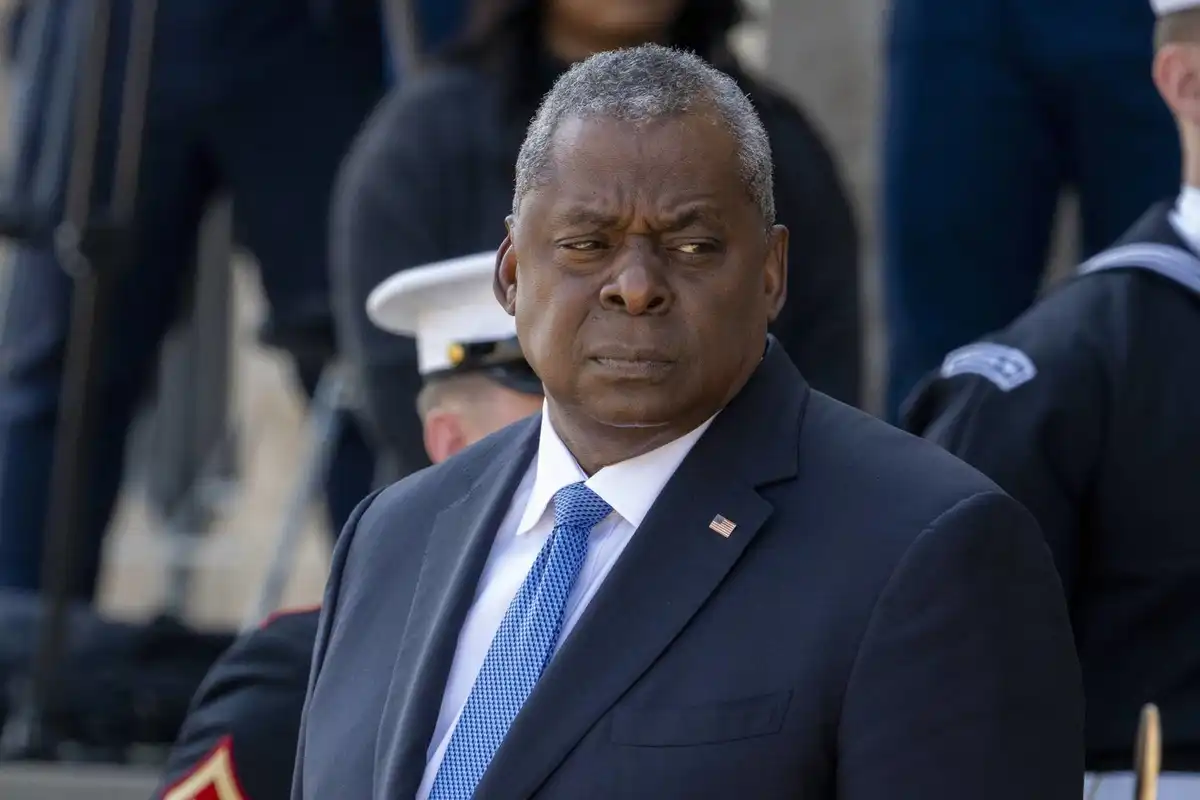
Axios: The US Secretary of Defense warned his Israeli counterpart against opening a front with Hezbollah.

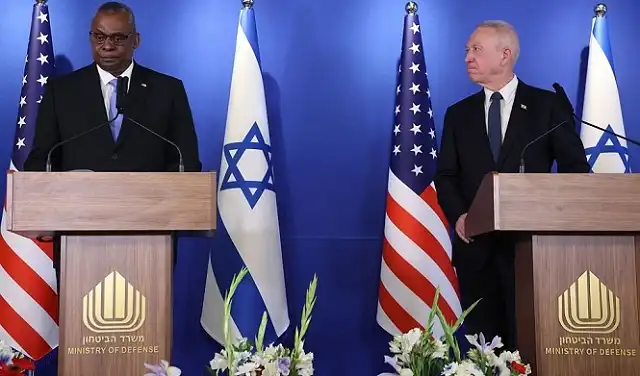
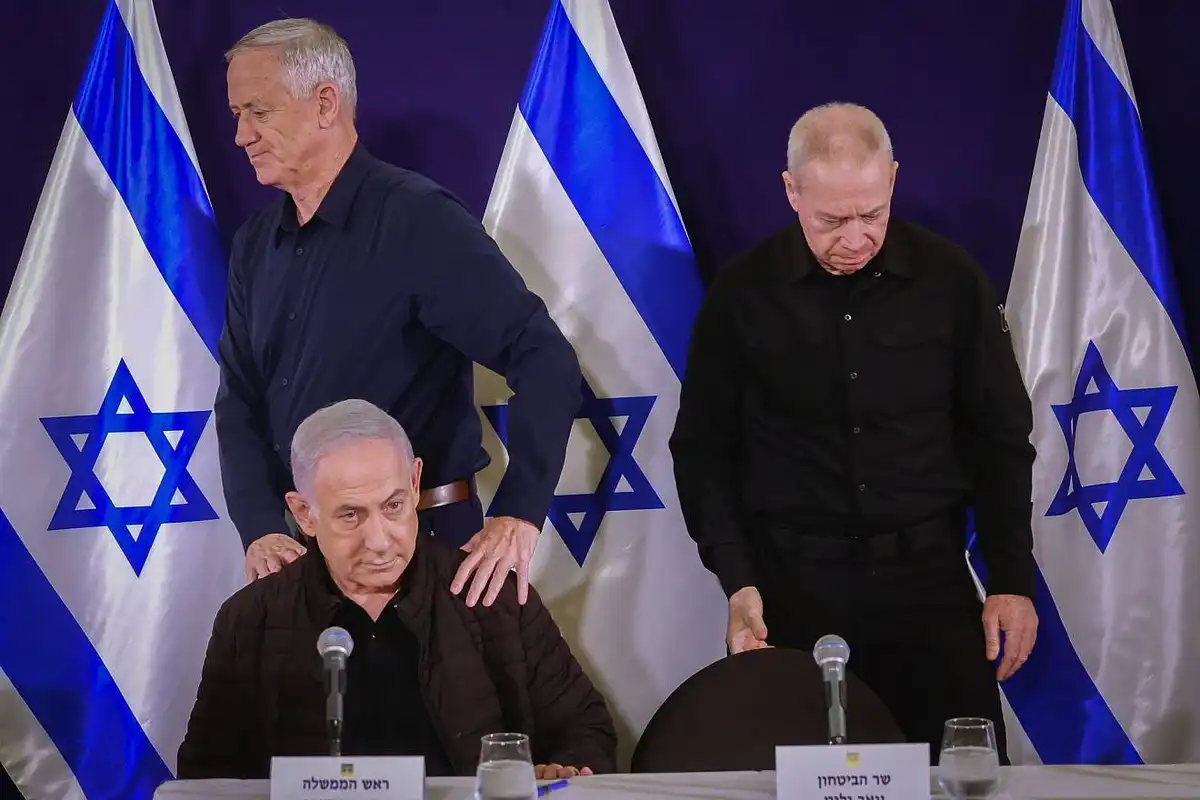
On Sunday, the Axios news website quoted Israeli and American sources as saying that US Defense Secretary Lloyd Austin warned his Israeli counterpart Yoav Gallant against military operations in Lebanon, noting that Austin asked Israel to avoid steps that might lead to an all-out war with Hezbollah.


Axios explained that Gallant informed his American counterpart that Israel's policy is not to open a second front in Lebanon, in addition to Gaza, and stressed that he does not believe this scenario will happen. The news site noted that Gallant informed his American counterpart that Hezbollah was escalating its attacks and that it was “playing with fire,” as he put it. Axios quoted an Israeli source as saying that the Biden administration is concerned about Gallant's public threats against Hezbollah and believes that these threats will only escalate tensions.


Yesterday, the Times of Israel newspaper quoted Gallant as saying that Hezbollah is dragging Lebanon into war, indicating that the Lebanese will be the ones who will pay the price. Gallant warned that Hezbollah "is close to committing a grave mistake that will end with Beirut residents fleeing their homes," he said. Gallant said that the Israeli Air Force is using less than a tenth of its capabilities in Gaza and that "our planes are directed towards the north."


For his part, Hezbollah Secretary-General Hassan Nasrallah said that “the South Lebanon Front will remain a pressure front,” and said that the supportive Lebanese political and popular stance is a “supportive and grateful stance” that makes it effective and influential.


PALESTINE

Mon 13 Nov 2023 7:20 am - Jerusalem Time

War on Gaza: Continuing clashes and hospitals “unable” to count deaths and wounded

In terms of field developments, fierce battles are taking place between groups of militants and occupation forces on several fronts west of Gaza City, amid escalating shelling and raids in the vicinity of hospitals.


The number of martyrs in Gaza rose to 11,180, including 4,609 children and 3,100 women, according to what the government media office in the besieged Strip confirmed on the 37th day of the war on Gaza, while Israeli aircraft intensified its raids and bombing in the vicinity of hospitals, while the Israeli Prime Minister, Benjamin Netanyahu, repeated: During an interview with CNN on Sunday, he said that Israel would be willing to discuss a ceasefire in the Gaza Strip only if it was in exchange for the release of all Hamas hostages.


This comes in light of the Israeli escalation against hospitals in the Gaza Strip, targeting and besieging them, as well as the bombing of their surroundings, especially in the north and west of Gaza City, as the occupation forces are trying to penetrate those areas. There were reports of a loss of communication with the Al-Shifa Complex, which has been out of service since yesterday, Saturday, and its electricity was completely cut off, which means that the devices that provide life to patients, including infants, are out of service.


Earlier today, the occupation forces bombed the Mahdi Maternity Hospital in the Al-Nasr neighborhood, west of Gaza City, killing two doctors and wounding a number of displaced people.


The Director General of Gaza Hospitals, Muhammad Zaqout, announced today the difficulty of counting the number of martyrs and wounded in the Strip, and said: “We are now unable to count the number of martyrs and wounded due to the inability to reach them,” in light of the continued Israeli bombing. He also explained that "the Israeli occupation intensively targeted the vicinity of the Indonesian Hospital in the northern Gaza Strip and the Mahdi Maternity Hospital in the Al-Nasr neighborhood, west of Gaza City," stressing that "the Al-Nasr and Al-Rantisi hospitals in the Al-Nasr neighborhood, west of Gaza City, were forcibly evacuated, and the patients are now in the streets without medical care."


In terms of field developments, fierce battles are taking place between groups of militants and the occupation forces on several fronts, while armed resistance groups clashed with the occupation forces on several fronts west of Gaza City.


OPINIONS

Mon 13 Nov 2023 7:15 am - Jerusalem Time

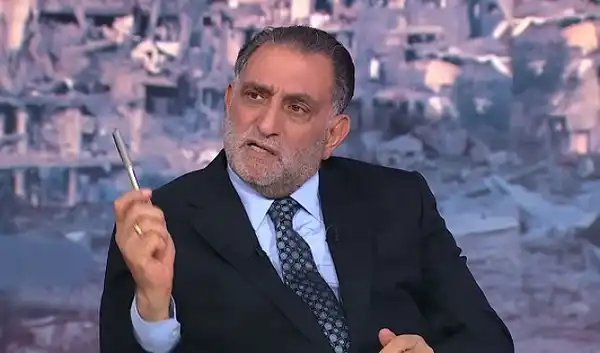
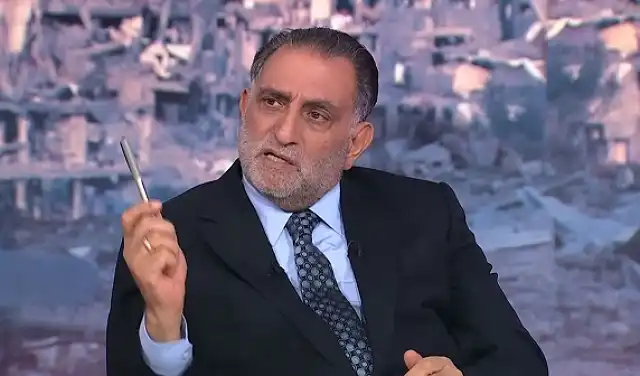
An interview with Azmi Bishara regarding the developments in the war: The Israelis realize that they are unable to remain in Gaza

Translation for "Al-Quds" dot com

Translation for "Al-Quds" dot com

Opinion Writer

Dr.. Azmi Bishara: The Israelis realize that they are unable to remain in Gaza || “Either there is a plan to displace the population of Gaza from north to south and from there to Sinai, or this is a reflection of Israeli confusion, and this is very possible.”


The Director of the Arab Center for Research and Policy Studies, Dr. Azmi Bishara, during an interview conducted with him on “Arab TV” on Sunday evening, regarding developments in the war on Gaza that began 37 days ago; He expressed his confidence that the Israelis realize that they are unable to remain in Gaza, pointing out that Israel did not have any plan for the “next day,” that is, after the elimination of the Hamas movement, if it succeeded in doing so.


Bishara expected that Israel would face more armed resistance in the Gaza Strip, suggesting that Israel would have an American deadline of no more than a month to “carry out the mission.”


Regarding the change in Israeli military priorities from focusing on the northern Gaza Strip and then moving to the south, Bishara explained that after what happened on October 7, Israeli officials were forced to develop a military plan and began to adapt the facts to be compatible with the hastily drawn up plan.


He added, "The focus on the north is because they initially decided to start the war in the north. Perhaps today they have discovered that the Hamas leadership and the prisoners are in the south, not the north."


He pointed out, "Either there is a plan to displace the population of Gaza from north to south and from there to Sinai, or this is a reflection of Israeli confusion, and this is very likely."


Bishara stressed that the Americans still share Israel's goals in the war, highlighting some positive observations about the Arab-Islamic summit and its decisions, compared to the low level of expectations that preceded the Riyadh summit, last Saturday.


He said, "The Arab-Islamic summit produced one practical decision, which is to break the siege imposed on the Gaza Strip," and stated that "relief and aid convoys must enter the Gaza Strip, without dependence on the Israeli military plan."


Bishara described the outcomes of the joint Arab-Islamic summit as some of them acceptable in light of the low level of expectations and in comparison with the weak Arab reality and the amount of differences that exist between the officials of the meeting countries.


According to him, the decisions translated the return of the Palestine issue to the center of attention, while stopping at the repetition of decisions that criticize normalization relations with Israel in isolation from the Palestinian issue and its just solution. Regarding this issue, Bishara said that there is only one practical decision, which is to stand with Egypt in order to break the siege, which is that opening and closing the crossing, at least for aid and relief, is subject to Israel’s approval, “and therefore now they must think about how to translate that decision that they took.”


Bishara stated during the dialogue that “Israel has not yet faced everything that the resistance has prepared in the Gaza Strip,” noting that “there are thousands of young people waiting for the moment of the ground battle.”


After recalling how difficult it is for Hamas to accomplish what it has already accomplished while it is under comprehensive siege, he said, “They (Hamas fighters) have no options but to resist.”


He pointed out that “it is clear that the issue of Israeli prisoners in Gaza does not represent a priority for (Israeli Prime Minister Benjamin) Netanyahu,” to which Bishara stressed that the matter for him is “purely military and perhaps in his subconscious he wishes to get rid of the prisoners in the Gaza Strip.” Gaza, and the pressure they are causing and what they will say after they leave if that happens under an agreement.


According to Bishara, one of the crises in the negotiations relates to the number of prisoners demanding their release, and here the problem arises that the Israelis assume larger numbers of prisoners than what exists among the Hamas or Islamic Jihad movements.


Bishara pointed out that “international complicity with Israel’s targeting of hospitals is unprecedented,” and he believed that “Israel is searching for an Arab partner who would accept managing the affairs of the population in the Gaza Strip after reducing their number,” and to establish a security coordination system for them similar to what is happening in the West Bank, with failure. .


He explained that this is a scenario that does not take into account the reaction of people who lost everything. “Then it is important not to forget that Israel has never been ready to pay the financial price of the occupation in terms of expenses and investments, so it will ask Arab countries to invest money to rebuild Gaza, as it had previously done.” I asked in the past.


While he pointed out that the Palestinian leaders missed repeated opportunities for unity, and that it is not possible to rule the West Bank or Gaza without Palestinian unity, Bishara saw that the Israelis realize that they cannot remain in Gaza, “with the need to remember that whoever withdrew from Gaza is a warlike person on the level of (the Prime Minister) Former Israeli Ariel Sharon.


The director of the Arab Center stated, “Just as the Israeli leadership did not have a plan to occupy Gaza, it did not have a plan for the next day, that is, after the end of the war and the elimination of the Hamas movement with its rule and military power.”


He also downplayed the importance of the American talk about the necessity of holding a new peace conference, because the Arab world went through “such a scenario after the occupation of Kuwait and the Madrid Conference and the failed conferences that followed under the title of two states and long negotiations. Likewise, the Americans know that Israel refuses to offer anything to the Arabs, especially today.” "After they failed to save a hospital and bring aid into the Gaza Strip.


Regarding the Israeli army’s targeting of hospitals, Bishara said that the occupation’s targeting of them in this systematic manner is mainly due to the Israeli conviction that it is impossible to displace a people without demolishing their hospitals and schools as safe havens.


He stressed that "the United States still shares Israel's goals in the war on Gaza," stressing that "American military support remains unconditional."


In this regard, Bishara agreed that the American administration is now facing internal problems and a rise in voices rejecting the official position within the leftist movement of the Democratic Party and among American Jews, “and this is an important matter,” in the estimation of Dr. Bishara, who assumes that these people have actually influenced the administration in public discourse, and it has become Netanyahu is forced to respond to American inquiries about the limits of the war and future plans. But in Bishara’s assessment, the official American pressure is still not real and is related to “providing advice,” and this is not pressure that will be achieved “when an Arab position arises that actually affects America, related to relations with Israel, security coordination, etc., and this has not happened yet.”


He stated that "Israel is exploiting the state of war to settle scores with the Palestinian people in the West Bank."


Bishara had indicated during an interview conducted with him on the fourth of this month that the three conditions for Israel to stop its aggression are that the Israeli consensus on the war be violated, that the American-Israeli agreement on the goal of the aggression, i.e. eliminating the Hamas movement, be disturbed, and that the major Arab countries take action. Real steps such as a serious threat to sever relations with Israel. He believed that it is in the interest of everyone at the level of countries and powers in the region that Israel does not achieve its goals in the war on Gaza.


Regarding Hezbollah, Bishara said in the previous meeting that any entry into the war would not change the situation in Gaza, but rather would increase the price paid by Israel.


The Director General of the Arab Center for Research and Policy Studies pointed out that as long as there is an Israeli consensus on restoring balance, prestige and revenge through war, and as long as the American-Israeli agreement continues on the goal of the war, and as long as there are no real steps from the Arab countries, the war of annihilation against the Gaza Strip will continue. .


ARAB AND WORLD

Mon 13 Nov 2023 7:05 am - Jerusalem Time

Report: American fears of Israeli efforts to create a pretext to expand the war on the Lebanon front

Washington fears an increase in Israeli attacks in Lebanon, in a way that will provoke Hezbollah and push it to escalate its attacks within the framework of the existing confrontations, which may create an excuse for Israel to expand the scope of its war on the Gaza Strip to include the Lebanese front, and enter into a comprehensive confrontation with Hezbollah.


The White House fears provocative Israeli attacks in Lebanon that might push Hezbollah to escalate its border operations, which might create pretexts for Israel to justify increasing its military operations in Lebanon and expanding the scope of the war Israel is waging against the besieged Gaza Strip, which would drag Washington into the heart of the conflict in Region.


This came according to what the Israeli “Walla” website reported in a report on Sunday evening, citing three sources familiar with the talks between Tel Aviv and Washington in this regard. The report pointed to the telephone conversation between US Secretary of Defense, Lloyd Austin, and his Israeli counterpart, Yoav Gallant, on Saturday evening, and said that it focused on this matter.


According to Walla, Austin, during a call with Gallant, expressed Washington’s concern about “the escalation of fighting on the northern border,” and pointed to fears that the escalation of confrontations between Hezbollah and the Israeli army may lead to the opening of another front in the war, and the report stated. Austin called on Gallant to avoid steps that might lead to an all-out war with Hezbollah.


The report stated that the message conveyed by Austin “reflects growing concern in the White House about what the Biden administration sees as increased military operations by the Israeli army in Lebanon that have exacerbated tensions along the border,” with the escalation of border confrontations that led to the killing of 10 Israelis, most of them soldiers, And dozens of Lebanese, most of whom are Hezbollah fighters.


The report said, “The administration of President Joe Biden is concerned that the attacks carried out by the Israeli army in Lebanon are aimed at provoking Hezbollah and creating a pretext for a broader Israeli military operation in Lebanon, which may drag the United States deeper into the crisis” in the region, which he denied. Officials in Tel Aviv.


According to Walla, senior military and political officials in Israel have informed their American counterparts on more than one occasion since the start of the war on the Gaza Strip that “Israeli citizens will not agree to return to the settlements (in the border area with Lebanon) as long as the Hezbollah threat remains present.” The other side of the border."


The report indicated that the Israeli authorities evacuated tens of thousands of civilians from towns and settlements located in the border region, south of Lebanon, for fear of a Hezbollah attack, similar to the Hamas attack on Israeli military sites and settlements in the vicinity of the Gaza Strip on October 7 last year.


Direct American messages


Walla stated that the Biden administration has exerted pressure on the Lebanese government and actors in the region, in recent weeks, to do everything in its power to prevent Hezbollah from joining the war with its full military strength. The report said that the unannounced visit of the US Special Envoy, Amos Hockstein, to the Lebanese capital, Beirut, last week, came in this context.


According to the report, Hockstein conveyed messages to Hezbollah through the Speaker of Parliament, Nabih Berri, in addition to other high-ranking Lebanese officials, in which he warned Hezbollah against escalating the situation in the region. Walla quoted two informed sources as saying that the picture formed by the American envoy was that Hezbollah and the other parties in Lebanon were not interested in a comprehensive war with Israel.


The report explained that Austin’s messages to Gallant regarding the escalation of Israeli attacks in Lebanon came at the behest of the White House, and in a statement published by the Pentagon about the conversation, it said that Austin stressed to Gallant the necessity of “containing the conflict in the Gaza Strip only and avoiding regional escalation,” without explicitly mentioning Lebanon. .


The website quoted two Israeli and American sources as saying that Austin “was very direct in his conversation with Gallant and specifically mentioned US concerns about the activities of the Israeli army in Lebanon.” An Israeli source said that Austin asked Gallant for clarifications regarding the strikes carried out by the Israeli army in Lebanon in recent days.


The report stressed that "Austin asked Israel to refrain from taking steps that might lead to an all-out war with Hezbollah." The Israeli source said that Gallant informed Austin that Israeli policy would not lead to the opening of a second front in Lebanon, and stressed that he did not believe that such a scenario would come true.


Gallant said during the conversation with Austin, “It was Hezbollah that escalated the fighting by launching drones at Israel, including the plane that was launched from Syria to Eilat.” The Israeli source quoted Gallant as saying during the call with Austin, “Hezbollah is playing... "By fire."


Two events created tension in the White House


The report stressed that the Biden administration’s anxiety had increased as a result of two events that occurred in recent days, and it considered that they could have pushed Hezbollah into a broad confrontation with Israel. The first: Israel’s targeting of a civilian vehicle in southern Lebanon led to the martyrdom of a grandmother and her three granddaughters.

Report: American fears of Israeli efforts to create a pretext to expand the war on the Lebanon front

Washington fears an increase in Israeli attacks in Lebanon, in a way that will provoke Hezbollah and push it to escalate its attacks within the framework of the existing confrontations, which may create an excuse for Israel to expand the scope of its war on the Gaza Strip to include the Lebanese front, and enter into a comprehensive confrontation with Hezbollah.


The White House fears provocative Israeli attacks in Lebanon that might push Hezbollah to escalate its border operations, which might create pretexts for Israel to justify increasing its military operations in Lebanon and expanding the scope of the war Israel is waging against the besieged Gaza Strip, which would drag Washington into the heart of the conflict in Region.


This came according to what the Israeli “Walla” website reported in a report on Sunday evening, citing three sources familiar with the talks between Tel Aviv and Washington in this regard. The report pointed to the telephone conversation between US Secretary of Defense, Lloyd Austin, and his Israeli counterpart, Yoav Gallant, on Saturday evening, and said that it focused on this matter.


According to Walla, Austin, during a call with Gallant, expressed Washington’s concern about “the escalation of fighting on the northern border,” and pointed to fears that the escalation of confrontations between Hezbollah and the Israeli army may lead to the opening of another front in the war, and the report stated. Austin called on Gallant to avoid steps that might lead to an all-out war with Hezbollah.


The report stated that the message conveyed by Austin “reflects growing concern in the White House about what the Biden administration sees as increased military operations by the Israeli army in Lebanon that have exacerbated tensions along the border,” with the escalation of border confrontations that led to the killing of 10 Israelis, most of them soldiers, And dozens of Lebanese, most of whom are Hezbollah fighters.


The report said, “The administration of President Joe Biden is concerned that the attacks carried out by the Israeli army in Lebanon are aimed at provoking Hezbollah and creating a pretext for a broader Israeli military operation in Lebanon, which may drag the United States deeper into the crisis” in the region, which he denied. Officials in Tel Aviv.


According to Walla, senior military and political officials in Israel have informed their American counterparts on more than one occasion since the start of the war on the Gaza Strip that “Israeli citizens will not agree to return to the settlements (in the border area with Lebanon) as long as the Hezbollah threat remains present.” The other side of the border."


The report indicated that the Israeli authorities evacuated tens of thousands of civilians from towns and settlements located in the border region, south of Lebanon, for fear of a Hezbollah attack, similar to the Hamas attack on Israeli military sites and settlements in the vicinity of the Gaza Strip on October 7 last year.


Direct American messages


Walla stated that the Biden administration has exerted pressure on the Lebanese government and actors in the region, in recent weeks, to do everything in its power to prevent Hezbollah from joining the war with its full military strength. The report said that the unannounced visit of the US Special Envoy, Amos Hockstein, to the Lebanese capital, Beirut, last week, came in this context.


According to the report, Hockstein conveyed messages to Hezbollah through the Speaker of Parliament, Nabih Berri, in addition to other high-ranking Lebanese officials, in which he warned Hezbollah against escalating the situation in the region. Walla quoted two informed sources as saying that the picture formed by the American envoy was that Hezbollah and the other parties in Lebanon were not interested in a comprehensive war with Israel.


The report explained that Austin’s messages to Gallant regarding the escalation of Israeli attacks in Lebanon came at the behest of the White House, and in a statement published by the Pentagon about the conversation, it said that Austin stressed to Gallant the necessity of “containing the conflict in the Gaza Strip only and avoiding regional escalation,” without explicitly mentioning Lebanon. .


The website quoted two Israeli and American sources as saying that Austin “was very direct in his conversation with Gallant and specifically mentioned US concerns about the activities of the Israeli army in Lebanon.” An Israeli source said that Austin asked Gallant for clarifications regarding the strikes carried out by the Israeli army in Lebanon in recent days.


The report stressed that "Austin asked Israel to refrain from taking steps that might lead to an all-out war with Hezbollah." The Israeli source said that Gallant informed Austin that Israeli policy would not lead to the opening of a second front in Lebanon, and stressed that he did not believe that such a scenario would come true.


Gallant said during the conversation with Austin, “It was Hezbollah that escalated the fighting by launching drones at Israel, including the plane that was launched from Syria to Eilat.” The Israeli source quoted Gallant as saying during the call with Austin, “Hezbollah is playing By fire."


Two events created tension in the White House


The report stressed that the Biden administration’s anxiety had increased as a result of two events that occurred in recent days, and it considered that they could have pushed Hezbollah into a broad confrontation with Israel. The first: Israel’s targeting of a civilian vehicle in southern Lebanon led to the martyrdom of a grandmother and her three granddaughters.


ARAB AND WORLD

Sun 12 Nov 2023 9:57 pm - Jerusalem Time

Experts: The disagreements between Netanyahu and his military leaders are caused by their attempts to evade accountability

Experts and analysts believe that the growing division within the Israeli war government is nothing but an attempt by each party to appear as a hero in the hope of avoiding the coming accountability, and that the United States is also trying to export an image that it does not agree with Israel in everything it wants and does.


According to the expert on Israeli affairs, Muhammad Halsa, Israel is living in a state of political bidding, because they know that the war will end and accountability will occur, and everyone is trying to appear as a hero, whether Prime Minister Benjamin Netanyahu or members of his government.


Halasa believes that Netanyahu feels that the pillars of the war government represent a threat to him, especially Yoav Galant and Benny Gantz, and that no one has a clear vision to present for the aftermath of the war.


In the same context, former US National Security Advisor David Bolger said, “The current war has extended longer than expected, but he believes that these disagreements that the Israeli government is experiencing are normal under these circumstances, because it is dealing with various security and political issues at the same time.” 


However, Bolger believes that Netanyahu faces many questions regarding the detainees and victims on both sides, stressing that external forces such as the United States and regional partners are demanding that he resolve the situation quickly.


Regarding the position of the Joe Biden administration, Bolger said that it is “determined to support Netanyahu, but at the same time it is determined to establish a ceasefire to stop the human tragedy.”


Bolger said, "Netanyahu will eventually be tried for his handling of the crisis, and that Biden and his Secretary of State, Anthony Blinken, have a strong record in dealing with various Israeli governments, and therefore Washington is ready to communicate with all parties, including the Israeli opposition."


Regarding the disagreement in statements regarding the future of Gaza, Halasa said that it is merely an attempt to beautify the image of the Biden administration and to say that he does not fully identify with Netanyahu due to internal and global pressures to stop the massacres, because the whole world knows that Washington gives Israel cover to do what it does.


Therefore, Halasa adds, Washington is trying to adjust the compass, because it knows that reoccupying the Gaza Strip will cause it problems in the region on the one hand, and show that it does not agree with everything Israel wants or does on the other hand, but the reality is exactly the opposite, and they both want to continue. War, in his opinion.


But Bolger disagrees with Halasa’s proposal, and says, “American-Israeli relations are historical and well-known, and they move from the standpoint of Israel’s right to defend itself amid an environment that is trying to effectively erase it, such as Hamas, Hezbollah, and others, but at the same time it does not ignore the Palestinians’ right to safety and security during the war.” ", as he put it.


Regarding the change in American and Western opinion towards the war, Bolger said, “The Biden administration is following everything and taking it into account, but what the Islamic Resistance Movement (Hamas) has done is what is moving this administration, stressing that the complexities of the current crisis will not be resolved overnight.” .


On the other hand, Halasa says that Israel is practicing madness not only in Gaza, but also in the West Bank, which is not subject to Hamas rule, and it is losing its political legitimacy internally as the war extends, stressing that there is growing restlessness and demands to put Netanyahu on trial, who has begun to realize that he no longer has much power. Time, and thus he will come down from the tree and deal with reality rationally.


Halasa concluded that internal public opinion is influencing Netanyahu’s position, and that there is a growing loss of confidence in him and calls for his resignation, which is historically unusual in Israel. He expressed his conviction that Israeli society has become convinced that Netanyahu is not qualified to continue this war until its end, and this is what will stop the war, in his opinion.

PALESTINE

Sun 12 Nov 2023 9:56 pm - Jerusalem Time

Israel-Palestine war: Patients face 'inevitable death' as Israeli troops besiege Gaza hospitals for third day

On war's 37th day, hospitals run out of fuel, civilians continue to flee the fighting, while Israel's security minister hints at occupation of enclave


Thousands of people remain trapped at Gaza's largest hospital, al-Shifa, on Sunday as Israeli forces continue to besiege and bombard the facility for the third day in a row, while a nearby hospital announced it was out of service due to the lack of fuel. 


As of Sunday evening, 22 hospitals and 49 medical centers have completely stopped working in Gaza, due to Israeli bombing and the severance of all fuel and electricity in the Strip since 9 October, a Palestinian government spokesperson said in a press conference from Gaza's Deir al Balah." Israeli forces have targeted the intensive care unit in the al-Shifa hospital, they have also destroyed the maternity ward and the operating room," he said, while updating the number of Palestinians killed since the beginning of hostilities on 7 October to 11,180 people. 


He added that Israeli bombings have also ignited a fire in one of the wards of the hospital, while an oxygen tank was destroyed. "Some doctors have been targeted and wounded while moving around inside the hospital. One person was wounded in the back of the neck." 

Gaza's government media office also stated that Israeli forces have fully destroyed seven mosques and three churches, while 153 mosques have been partially destroyed in bombings. Meanwhile, Palestinian health minister Mai al-Kaila said on Sunday that Israeli forces were "not evacuating people", but rather "forcing wounded patients onto the streets, leaving them to face inevitable death". 

According to the minister, this amounts to "expulsion under the threat of arms". She also noted that there was a "catastrophe unfolding" in all of Gaza's hospitals, with patients dying without being able to be treated.


Some of the worst-affected are those with kidney failure, who have not been able to undergo dialysis, she said. The minister also said that there are 3,000 cancer patients at the Rantisi and Turkish hospitals who face imminent death, while pregnant women were also in danger.

"All pregnant women, especially those with high-risk pregnancies, are now in imminent danger as they cannot find anyone to provide them with medical care and services in Gaza. Every woman about to give birth will find no medical assistance," she said. 

Likewise, a nurse who works in the maternity ward of al-Sahaba hospital in Gaza City told Middle East Eye it was forced to close the end of last week due to the lack of fuel. It was the last maternity ward in Gaza City, which means that pregnant women will not be able to undergo caesarean surgeries.


"There is no place where pregnant women can currently go to give birth. No maternity hospital or clinic is open now," Aya Muhammed, the 25-year-old nurse, told MEE.


"We expect that dozens of pregnant women will die as they will be forced to give birth alone at home."

Eyewitnesses told Middle East Eye that husbands and relatives of pregnant women who are expected soon to give birth roam their neighborhoods in search of doctors living or taking refuge nearby to help them give birth at home.

On Sunday morning, Israeli forces besieging al-Shifa hospital bombed its maternity ward, killing at least three nurses.

"A colleague nurse living in Tal al-Hawa street [southwest of Gaza City] told me she watched multiple bodies of people killed on the street from her window. No one could retrieve or approach them," Muhammed said.

"Those who were injured were left to bleed to death as Israeli snipers were directly shooting at anyone trying to approach them. We are watching the patients and wounded die while we can do nothing to save their lives."

Palestinian health officials say at least seven patients on life support have died since the siege on al-Shifa started on Friday, including two babies. Their deaths were the result of ventilators and infant incubators failing to work due to lack of electricity.

On Sunday morning, the Palestinian health ministry's director-general in Gaza, Dr Munir al-Borsh, told reporters that around 40 displaced people in the hospital attempted to leave through the main gate but were shelled by an Israeli tank stationed on the adjacent road.

Their bodies remained strewn on the street, as ambulance and staff, who were less than 100 meters away, could not get to them as Israeli forces shot at anyone who moved. 

Borsh said that Israeli forces also bombed the water wells in the medical complex overnight. Only one well was operating on Sunday, providing the equivalent of 12 cups of water per hour for 15,000 people trapped inside. 

The intensive care unit was hit again after being struck 24 hours earlier, he said.

WHO loses contact with staff at al-Shifa

The World Health Organization (WHO) said on Sunday morning that it has lost communication with its contacts at al-Shifa hospital.

"WHO has grave concerns for the safety of the health workers, hundreds of sick and injured patients, including babies on life support and displaced people who remain inside the hospital," the organization said.

"Patients seeking health care should never be exposed to fear, and health workers who have taken an oath to treat them should never be forced to risk their own lives to provide care."

WHO added that there have been reports that some people who fled the hospital have "been shot at, wounded and even killed".

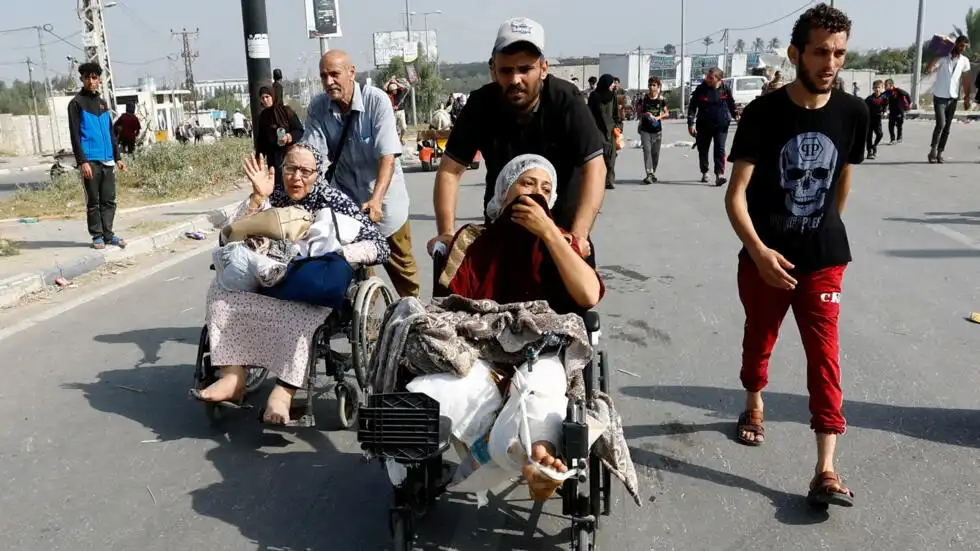
Palestinians arrive south of Gaza City on 12 November 2023, after fleeing their homes there and in the northern Gaza Strip  (AFP)

Meanwhile, the Palestinian Red Crescent (PRCS) announced on Sunday that al-Quds hospital in Gaza is now out of service after running out of fuel.

"The cessation of services is due to depletion of available fuel and power outages," the PRCS said in a statement.

"Medical staff are making every effort to provide care to patients and the wounded, even resorting to conventional medical methods amid dire humanitarian conditions and a shortage of medicine, food and fuel."

The PRCS said it had tried to reach out for humanitarian assistance from the international community, a day after al-Shifa hospital said it would be suspending services.

Israeli military officials have been speaking against al-Shifa hospital since the beginning of hostilities, claiming it is being used for military purposes, but have not provided evidence to substantiate the claim.

Palestinian officials and armed factions have denied the accusation, and Human Rights Watch said it found no evidence to corroborate the Israeli claim. 

Mads Gilbert, a Norwegian doctor who worked for 16 years at the hospital, said he never encountered any sign of a "military command center" there. 

Meanwhile, the Israeli rights group Physicians for Human Rights said that even if hospitals are used by armed groups, Israel "still has the obligation to avoid harming them".

Since the onslaught against Gaza was launched on 7 October, of the 11,180 Palestinians killed  by Israeli air strikes, more than 4,500 were children, 3,000 were women and 200 were health workers. 

In Israel, Palestinian-led attacks on 7 October have left around 1,200 people dead, including at least 31 children, according to Israeli officials cited by Israeli media.


OPINIONS

Sun 12 Nov 2023 9:46 pm - Jerusalem Time

Israel-Palestine war: Bernie Sanders' refusal to call for a ceasefire in Gaza is alienating his base

Middle East Eye

Middle East Eye

Opinion Writer

Mitchell Plitnick


The crisis in Gaza presents a political challenge for a senator who is not just a progressive leader but also a supporter of a 'socialist' Israel that no longer exists


On 2 November, as Israel continued to relentlessly bomb the Gaza Strip, a United States senator called for a ceasefire. He was the first senator to do so, and so far, none of his colleagues have joined him, despite the growing protests across the country against the US's callous support of Israel’s campaign of killing in Gaza.“ Let’s face it, this has gone on for decades,” said that senator. “Whatever the rationale for the beginning, it has now reached an intolerable level. We need to have a resolution in the Middle East that gives some promise for the future.” Pressed about whether he thought it was time for a ceasefire, the senator responded, “I think it is.”Given the makeup of the US Senate, one would assume that the senator who would go out on a limb and become the first, and still the only one, to call for a ceasefire would be progressive firebrand Bernie Sanders. But it wasn’t. Instead, it was Senator Dick Durbin of Illinois. 


Unpacked Durbin is known as a relatively liberal senator, but he’s never been a leader on the issue of Palestine. Sanders, on the other hand, has been the most outspoken member of the Senate on Palestine, although that is a pretty low bar. Still, in the past, he has been willing to speak out.


During his 2016 presidential run, Sanders offered some mild criticism of Israeli policies, but did so in Brooklyn, New York, defying fears that this would cause his Jewish supporters to bolt. But nothing of the kind happened. Sanders has also spoken about enforcing US law on arms sales to Israel, a subject so controversial in Washington that it is seen as politically toxic. He has repeatedly criticized Israel’s policies; but on Gaza, he has absolutely refused to call for a ceasefire. When asked, Sanders supported the Israeli view that military action must continue until Hamas is destroyed. “I don’t know how you can have a ceasefire, a permanent ceasefire, with an organization like Hamas, which is dedicated to turmoil and chaos and destroying the State of Israel,” Sanders told CNN. 


“I think what the Arab countries in the region understand is that Hamas has got to go.” Ignoring demands Two weeks ago, more than 300 former Sanders staffers and campaign workers published an open letter calling on him to support a ceasefire, an end to the blockade of Gaza and “US military funding for war crimes against the Palestinian people, the expansion of settlements, and the occupation of Palestinian lands.”


Last week, protesters visited Sanders’s office, demanding that he call for a ceasefire. The senator's chief of staff reportedly refused to meet with the protesters. It was an unusual cold shoulder from Sanders who has earned a reputation as a man of the people who listens to his constituents.


This past weekend, hundreds of thousands of people demonstrated in Washington, DC - the largest pro-Palestinian protest in US history - and across the country in support of a ceasefire and the protection of Palestinian lives. When members of Congress seem to bend over backwards to accommodate Israel, their motives are often ascribed to the powerful pro-Israel lobbying forces, led by the American Israel Public Affairs Committee (Aipac). But that explanation doesn’t work with Sanders, who has shown repeatedly that he is not concerned about alienating Aipac. 

Indeed, he has explicitly called out the group for its disruptive effect on American politics and its support of any candidate, no matter how pernicious, as long as they follow the group’s pro-Israel line. If more proof was needed, Aipac actually praised Sanders for his refusal to call for a ceasefire. Rather than try to pocket that as a small political win, Sanders blasted the group, while not mentioning Israel or Gaza.“Aipac has supported dozens of GOP extremists who are undermining our democracy. They’re now working hard to defeat progressive members of Congress. We won’t let that happen. Let us stand together in the fight for a world of peace, economic and social justice and climate sanity,” the senator stated. 

While that criticism did not relate to the current mass killings in Gaza, Sanders clearly is not intimidated by Aipac's considerable clout in Washington. So why is he taking this stance, one which does not sit well with so much of the movement he has spent the better part of the last decade trying to build? 


Bernie’s roots 

Writer David Klion believes Sanders’s motives stem from his background. As a Jew whose father lost his entire family in the Holocaust, the mass murder of fellow Jews has long been a key motivating factor in his social justice activism. Sanders also has a personal connection to Israel, having lived on a kibbutz near Haifa in 1963.Sanders must look at how his experience with a very different Israel six decades ago and his visceral reaction to Hamas’s attack may be affecting his judgement .

Sanders wrote about that experience in 2019: "It was there that I saw and experienced for myself many of the progressive values upon which Israel was founded. I think it is very important for everyone, but particularly for progressives, to acknowledge the enormous achievement of establishing a democratic homeland for the Jewish people after centuries of displacement and persecution." Sanders remembers a very different Israel from the one that exists today. In 1963, the fanatical religious Zionists that are the backbone of the current government were virtually non-existent, as the number of Orthodox Jews who supported Zionism was still negligible. Israel’s socialist system still existed, as did the ideals, even if those same idealists could not see that their colonial ambitions had dispossessed another people.

Those failures of Israeli consciousness are not lost on Sanders, who, in the same article, acknowledged that the founding of Israel was seen by Palestinians "as the cause of their painful displacement". And all of this explains Sanders’ history of being both well out in front of most of his colleagues on Palestine, but far behind the movement for Palestinian rights.

Protesters from the Franciscan Action Network call on US President Joe Biden to support a ceasefire in Gaza outside the White House in Washington, DC on 2 November 2023 (Reuters)But this moment presents more than just a political challenge for a senator who fancies himself as not just a progressive leader, but as someone on the vanguard, pushing the boundaries of humanistic and compassionate politics.

It demands that Sanders look at how his experience with a very different Israel six decades ago and his visceral reaction to the Palestinian fighters’ attack against Israel. On the political level, Sanders must ask himself if he is going to stand on principle, which means going against President Joe Biden, a man with whom Sanders has a four-decade relationship. Perhaps more importantly, Biden is a president Sanders is able to influence. Most other Democrats, and all Republicans, would not be swayed by Sanders’s pressure, as the voters he mobilizes are the progressive wing of the American public.


But that wing is growing and active, and Biden is aware that they played a big role in getting him elected. As a result, Sanders has been able to make progress on parts of his agenda, particularly in the realm of organized labor.

Sanders may not have wanted to risk that influence by angering Biden, who seems pompously unaware that he is suffering huge damage to his 2024 candidacy with his support of Israel’s massacres in Gaza.


In an interview on Democracy Now, Democratic activist and Arab-American leader Jim Zogby spoke about the plummeting support among Arab and Muslim Americans for Biden's re-election campaign. He shared that White House staff dismissed these concerns, saying those communities "are not going to vote for Donald Trump, because they don’t want [to return to] what he was doing during his four years, and so they’ll come around in a year." 

Zogby noted, however, that the disappointment in Biden goes beyond Arab and Muslim Americans. "It’s young people. It’s progressive Jews. It’s Black, Latino, and Asian voters.


There’s a significant decline that this president is encountering across the board. And, you know, Gaza is playing into it." 

The true test of one’s principles is whether you stick to them when it affects you personally. Sanders, whether due to his concern about Biden losing in 2024 or because his outrage at Hamas’s 7 October attack is eclipsing his compassion for the people of Gaza, is failing that test.


OPINIONS

Sun 12 Nov 2023 9:23 pm - Jerusalem Time

Israel-Palestine war: Israel is shredding US global influence one bomb at a time

Middle East Eye

Middle East Eye

Opinion Writer

David Hearst


US diplomats and intelligence chiefs are being told that US support for Israel's genocide in Gaza is destroying its image in the Muslim world


We are into the second month of the war on Gaza, and Israel has no credible exit strategy. There will be no "mission accomplished" moment, no equivalent of the speech George W Bush gave on the USS Abraham Lincoln, declaring victory in Iraq on 1 May 2003.Having resisted calls for a ceasefire, the US has found no means yet of getting Israel to produce a pause in the fighting, even for a few hours, let alone long enough to allow an exchange of hostages and prisoners.

For US President Joe Biden, Israel is a runaway train that has already wrecked his strategic military withdrawal from the region, the Abraham Accords, and much of his authority in the Muslim world and the Global South.

If he is not careful, the destructive power of this war could yet derail his plans for a second term of office. At home, he is running low on political capital.


In this war, the US is not even leading from behind - Barack Obama’s little joke about the disastrous unseating of the Libyan dictator Muammar Gaddafi. It is being dragged down a rabbit hole.


Bruising encounters 

US diplomats and intelligence chiefs are experiencing bruising encounters with their Arab and Turkish counterparts on their regional tours.

They are being told to their faces in meetings that last for hours that Israel is on a genocidal mission of revenge, that the US is supporting this genocide, and that its support for this war is shredding its image in the Muslim world. Forget war crimes. What exactly s US policy?


If the US waged war on the whole world to get rid of al-Qaeda, and both al-Qaeda and the Islamic State group (IS) still exist, why would a more disciplined and grounded movement like Hamas be got rid of by the Israelis? And why would you want to push Hamas out of Gaza? In Gaza, Hamas is localized. Has the US forgotten the days when Fatah, the first iteration of Palestinian armed resistance, abducted villagers and hijacked planes? Why make Hamas international?

US diplomats and security chiefs have no answer to these arguments. In private, they agree that Israel has no hope of eradicating Hamas, that Israel has no exit strategy, and that it stopped listening to them even before the war began.


Any hope that Biden could contain Israel by hugging it in the first days of the shock of the Palestinian fighters' attack on 7 October has backfired spectacularly.


Privately, US Secretary of State Anthony Blinken admits how bad relations with Netanyahu were before the war, and how frustrated the US is with him now. The penny may at last have dropped that the Middle East policy of an administration that declared that "America is back", is in deep trouble. This leaves the question of Arab leadership of how to manage this crisis wide open. 


Low expectations 

Over the weekend Saudi Arabia will host two summits in Riyadh. A meeting of the Arab League on Saturday will be followed by a summit of the Organization of Islamic Cooperation. Historically, expectations must be low. Neither forum has produced anything of substance, other than rhetoric. This time I am not expecting anything different. The strongest reactions to the bombardment have come from Egypt and Jordan, the two states that recognized Israel first. Both in reality are deeply compromised by their dependence on western aid and money. Take Egypt. The Egyptian army and deep state have made it clear that the ethnic cleansing of Gaza is unacceptable and that they will not surrender a grain of Sinai’s sand to the resettlement of the people of Gaza. 


That is one face of Egypt. Egypt, however, reveals its other face at the Rafah border with Gaza, the only one that remains intermittently open. In private, US diplomats and security chiefs agree that Israel has no hope of eradicating Hamas; it has no exit strategy. 


I understand that Egypt pushed to replace the officials controlling the border crossing on the Gaza side, manned currently by Palestinian Ministry of Interior officials run by Hamas. It wanted UN officials there but framed this as a US demand. When the US was questioned about this by a third Arab country, the US denied ownership. It turned out to be an Egyptian proposal only. 


There are other indications that the Egyptian stance is not as solid as it seems. Mada Masr reported two days after the Hamas attack that preparations were being coordinated by North Sinai Governor Mohamed Abdel Fadel Shousha for a huge influx of refugees. Shousha gave instructions to inventory resources at state-run mills, bakeries, markets and fuel stations, "as well as capacity at schools, residential units, vacant lands to be designated as humanitarian shelters if necessary." Public demonstrations of support for Gaza are another sign. Cairo saw the biggest demonstration for Palestine in a decade when Tahrir Square was opened up in the first days of the conflict. But quickly realizing political activism could get out of hand, the crackdown came swiftly and there have been no demonstrations since. Jordan, on the other hand, is sincerely alarmed. The Jordanian Foreign Minister Ayman Safadi said that any expulsion of Palestinians from Gaza would amount to a "declaration of war" for Jordan. Queen Rania of Jordan gave strong interviews to CNN.


However, Jordan stopped its people from going to the border with Israel and can only channel its policy through the international community. It withdrew its ambassador to Israel only after Bolivia cut all ties with Israel.


A weak response


Initially Syria issued a statement expressing support for the Palestinian people. On 26 October, President Bashar al-Assad said: "The core of the US policy is the military escalation and creating chaos." Israel-Palestine war: Arab regimes have betrayed Gaza. 


Saudi Arabia is still a work in progress. One of its neighbors, Qatar, which only recently emerged from a siege of its territory and air space, is reluctant to dismiss it as a lost cause, although there is visceral hostility in Doha to the United Arab Emirates.


Officially Saudi Arabia has condemned the killing of Palestinian civilians and its foreign minister has made a series of strong statements. However, no one yet knows what Crown Prince Mohamed bin Salman wants. He did not allow any protests - like the ones that took place in Amman, Cairo or Beirut. And the huge Riyadh Festival went ahead as planned as if nothing was happening on Saudi Arabia's doorstep.


Apart from Qatar, Turkey, Iran and Malaysia, none of the regional countries have said that Hamas is a legitimate partner in negotiations.

Turkey is about to flesh out its own proposal for a truce, maintained by guarantor countries. This may be similar to the role of UN forces in south Lebanon.

But if Turkey were to play such a role in Gaza, it would have to be convinced that the peace process it guaranteed would have a finite end. In other words, this push for peace would have to culminate soon in a Palestinian state, unlike the never-never land of Oslo.


Thousands of anti-Israel protestors rally in front of the White House, calling for an end to the Israel - Hamas war, in Washington, DC on 4 November, 2023 (Reuters)Israeli Prime Minister Benjamin Netanyahu has also destroyed his personal relationship with Russian President Vladimir Putin, which was once so close that the Israeli premier got Russia to pull a consignment of S400 missiles off the loader rail stocks in transit to Tehran.


The same has happened with China with whom Israel has been patiently building a strong trade relationship. Chinese Foreign Minister Wang Yi said China strongly condemns and opposes acts that harm civilians and violate international law, calling for an immediate ceasefire to stop the war, and ensuring basic living conditions of the people in Gaza. This was almost back to the days, as far as this conflict was concerned, of Chairman Mao.


'Israel is beatable'

Certainly Hamas is not behaving as if it has surrendered and is facing imminent extinction. It's exacting far heavier losses in tanks, personnel carriers and Israeli troops by the standards set in previous campaign. It admits to losing around 200 of its own fighters. That is out of a potential army 60,000 strong. 


If the one message Israel got from the war is that this conflict cannot be ended by force of arms, then progress will have been made, despite the unbearable suffering endured by civilians in this war.

For Abbas Kamel, the Egyptian security chief, and Qatar alike, Hamas remains the go-to address for stopping this conflict. And it has shown, despite the destruction wreaked by Israel on Gaza, that it can resist for more than one month a much more powerful force. 


This will not go unnoticed by future generations of Palestinian fighters. The 7 October attacks and all the fighting since have erected one large neon sign in the sky: "Israel is beatable." If the one message that Israel gets from the war is that this conflict can not be ended by force of arms, then progress will have been made, despite the unbearable suffering endured by civilians in this war.


More importantly, this war will have produced a significant shift in the international community, with America - and Europe - again ceding ground to the rest of the world. Its sphere of influence is shrinking, an atrophy speeded on by its own hubris. 


When put to the test, the West has proved unable to modify a policy of blind and unthinking support for Israel that has long since passed its sell-by date.


PALESTINE

Sun 12 Nov 2023 9:05 pm - Jerusalem Time

Israeli armed forces seize areas of land east of Bethlehem

Today, Sunday, Israeli occupation forces seized areas of land in the Al-Taamra area, east of Bethlehem.


The director of the Office of the Wall and Settlement Resistance Commission in Bethlehem, Hassan Barijiyah, reported that the occupation forces seized a land area of 5.5 dunams in Basin (5) in the Al-Murooj area, and Basin (4) in the Al-Uqban area of the Al-Taamara lands, for military purposes.

PALESTINE

Sun 12 Nov 2023 8:28 pm - Jerusalem Time

Escalation in the West Bank: Death, arrests, and injuries concentrated in the abdomen

Doctors Without Borders said that most of the wounded it receives in the city of Jenin, north of the occupied West Bank, suffered gunshot wounds to the abdomen and legs, at a time when Palestinians are being martyred one after another and raids and arrests continue.


A doctor in the intensive care unit in Jenin with Doctors Without Borders said that some of the wounded suffered shattered livers and spleens, while others suffered serious blood vessel injuries.


He stressed that the majority of Palestinian youth received by Jenin Hospital suffered wounds resulting from gunshots in the abdomen and lower thighs, saying that "most of the wounded we receive suffer from life-threatening injuries."


In the West Bank in general, Israel has continued to escalate the incursions it carries out on a daily basis, which often end in martyrs among Palestinian citizens.


Three Palestinians were martyred, and about 40 were arrested, as a result of the Israeli occupation forces storming various areas, including Jerusalem, Hebron, Tulkarm, and Nablus.


The Palestinian Ministry of Health announced the death of a young Palestinian man as a result of wounds he sustained at dawn today in the town of Burqa, Nablus district, which also witnessed a storming of the town of Beita.


This was preceded by the fall of two martyrs in the Jenin Governorate, last night, one in the town of Arraba, south of Jenin, and the other in the city of Jenin, during confrontations that took place with the occupation forces, which raised the number of martyrs in the West Bank to 186 since the beginning of the war on Gaza, and the number of detainees reached 2,470. Detained.


Hundreds arrested

For its part, Israel announced on Sunday the arrest of 950 activists from the Islamic Resistance Movement (Hamas) in the West Bank since the start of the war on October 7.


The Israeli army said - in a statement - that "since the outbreak of the current war, more than 1,570 wanted persons have been arrested throughout the West Bank, with more than 950 of them belonging to the Hamas organization."


He reported that 15 Palestinians were arrested last night throughout the West Bank, including 6 belonging to Hamas, according to the statement.


Curfew On the other hand, the Israeli human rights center B'Tselem said on Sunday that Tel Aviv has imposed a curfew on 11 neighborhoods in the Old City area in the city of Hebron, in the southern West Bank, since the start of the war.


The center reported - in a report - that businesses and stores were closed and about 750 families were imprisoned in their homes.


He continued, "Only on October 21, after two weeks of complete curfew, the army announced that residents could leave their homes, on Sundays, Tuesdays, and Thursdays, for one hour in the morning, and one hour in the evening each time."


The Old City area in Hebron is under Israeli responsibility, and is home to a number of Israeli settlers. B'Tselem reported that any exit from the house requires passing through checkpoints and confrontations with soldiers, which entails insults and severe physical searches.


He explained that this procedure takes a long time, and many residents who go out to shop are unable to pass through the checkpoint during the short time allotted to them.


Source: Al Jazeera + Anatolia

ARAB AND WORLD

Sun 12 Nov 2023 7:57 pm - Jerusalem Time

Israelis injured as a result of an anti-tank missile being fired from Lebanon

The Israeli occupation army announced that a number of civilians were injured as a result of the firing of anti-tank missiles from southern Lebanon, this afternoon, Sunday, targeting the "Dovive" northern border area between Israel and Lebanon.


The army said, in a statement, that militants "fired anti-tank missiles at the Doviv area." He added, "A number of civilians were injured as a result of the shooting, and Israeli army forces are attacking the sources of the fire with artillery."


The Israeli ambulance indicated that there were 6 injuries, including a critical condition, and 5 others in a serious condition, while the Israeli Electricity Company said that an anti-tank missile hit its workers while they were working in the north of the country.


In a second incident, the Israeli army reported that its forces “attacked a cell that was planning to fire from a civilian area in Lebanese territory.” A missile fired from southern Lebanon, Sunday morning, also landed in an open area in the Western Galilee.


For its part, Hezbollah confirmed, in a statement, "the targeting of a logistical force belonging to the occupation army that was in the process of installing transmission poles and eavesdropping and spying devices in a newly created gathering near the Doviev Barracks." Israeli occupation artillery bombed border towns in southern Lebanon.


The Israeli army announced the bombing of Hezbollah sites and infrastructure in southern Lebanon and bombing sites in Syria, last night, after Hezbollah adopted a series of operations on the country's northern border with southern Lebanon.

PALESTINE

Sun 12 Nov 2023 7:55 pm - Jerusalem Time

Israeli armed forces storm the city of Bethlehem

On Sunday evening, Israeli occupation forces stormed the city of Bethlehem.


Local sources reported that Israeli occupation forces stormed the city of Bethlehem, stationed themselves in the Jabal al-Mawaleh area, and raided a number of citizens’ homes.

PALESTINE

Sun 12 Nov 2023 7:42 pm - Jerusalem Time

Senior leader in Hamas: Gaza will only be governed by its people, and there will be no authority in it except a Palestinians

Hamas leader Osama Hamdan said on Sunday that “Gaza will only be governed by its people, and there will be no political or security authority there except the Palestinians.”


Hamdan added in a press conference held in Beirut that the decision of the Arab Islamic Summit to break the siege and impose the entry of aid into the besieged sector “is moving in the right direction, and we are awaiting its implementation,” according to what was reported by the Arab World News Agency.


The Arab-Islamic Summit, which was held on Saturday in the Saudi capital, Riyadh, decided to break the siege imposed on Gaza and “impose” the immediate entry of humanitarian aid, including fuel, into the Strip. It condemned any attempts to displace Palestinians from north to south Gaza or outside the Strip, the West Bank and Jerusalem. It also called on the Security Council to take a binding decision to stop the Israeli attack on Gaza.


Israeli media quoted Prime Minister Benjamin Netanyahu as saying, on Friday, that the army will remain in control of the Gaza Strip after the war, which may surprise the international community after it confirmed hours ago that Israel does not want to rule or “occupy” the Strip.


Netanyahu said in a meeting with the mayors of the towns adjacent to the Gaza Strip: “The army forces will remain in control of the Gaza Strip, and we will not hand it over to international forces,” according to the Arab World News Agency. He added: “There will be Israeli security control over the Gaza Strip, including This is complete disarmament, to ensure that there is no threat from Gaza to the citizens of Israel.”


This came after Netanyahu told the American Fox News network on Friday that Israel does not want to reoccupy or rule the Gaza Strip. He told the network: “We do not want to seek to rule Gaza, nor do we want to seek occupation, but we seek to give it and us a better future in the entire Middle East. This requires defeating Hamas.”

PALESTINE

Sun 12 Nov 2023 6:48 pm - Jerusalem Time

A new batch of foreigners and wounded were evacuated from Gaza through the Rafah crossing

Egyptian security sources said that a group of foreigners and injured Palestinians who were evacuated from Gaza arrived in Egypt - today, Sunday - after the reopening of the Rafah crossing, with the continued Israeli aggression against the Gaza Strip since the seventh of last October.


The sources said that several injured Palestinians arrived in Egyptian territory to receive treatment, in addition to 80 holders of foreign nationalities and their families, while others are subject to transit procedures.


Evacuation operations through the crossing were stopped for the third time on Friday after obstacles in transporting injured Palestinians from the northern Gaza Strip.


The General Authority for Crossings and Borders announced on Saturday evening the resumption of operation of the Rafah crossing on Sunday, and called on travelers “holders of foreign passports listed on the travel lists” to go to the crossing.


Since November 1, dozens of wounded Palestinians have been evacuated to Egyptian hospitals, and hundreds of dual nationals and foreigners have left, including Americans, French, Russians, and Poles.


The Rafah crossing, which is the only crossing into the Gaza Strip that is not controlled by Israel, was closed on Friday and Saturday.

ARAB AND WORLD

Sun 12 Nov 2023 6:39 pm - Jerusalem Time

Indonesian Jokowi comes to Washington with a sensitive yet promising to-do list

Even as Indonesia seeks to assert its global leadership role, President Joko Widodo, colloquially known as Jokowi, views foreign policy largely through the lens of its impact on domestic matters. His upcoming meeting on November 13 with US President Joe Biden at the White House, after which he will travel to the Asia Pacific Economic Cooperation Leaders’ Week in San Francisco, will reflect this mentality. 


As Chatham House’s Ben Bland effectively asserts in his excellent biography of Jokowi, the former businessman—who started in politics as a local mayor, no less—is laser-focused on domestic issues and economic development, attributable to both his professional background and the sheer scale of Indonesia’s economic needs.

One way this is reflected is in his infrequent overseas travel. He didn’t attend the United Nations General Assembly until his sixth year in office, and he may have only done so because it was held virtually. His 2022 trip to Russia and Ukraine was a high-profile exception. But in that case the domestic impact of Russia’s invasion of Ukraine was arguably the impetus for the trip, along with keeping the Group of Twenty (G20) Summit that Indonesia hosted later that year on track.


His visit comes at a sensitive moment in Jakarta and Washington due to cascading global challenges and presidential elections in both countries in 2024. Despite these sensitivities, Jokowi has a promising opportunity to advance progress on three issues important to securing his legacy during his final year in office: economic development, geopolitics, and the conflict in Gaza.


Economic development and job creation

As a country with 1.7 million young people entering the workforce annually, economic development and job creation are understandably among Jokowi’s top priorities. The prospect of economic strife casts a long shadow over Indonesian leaders, as economic crises have historically led to societal upheaval, violence, and regime change. They have even raised the specter of the country’s collapse. 


To meet Indonesia’s daunting economic needs, Jokowi has sought to improve infrastructure, foster a more favorable environment for foreign investment, incubate the country’s technology and critical minerals sectors, and mitigate the impact of climate change on the sprawling archipelago. In doing so, he has sought support from all sources willing to provide it, including but not limited to the United States, China, Japan, the European Union, Persian Gulf states, and Australia.

Expect Jokowi to push for action on market access, particularly in relation to critical minerals, as well as for investment in building a new capital for the country and transitioning to clean energy. The possibility of a US-Indonesia trade agreement on critical minerals has elicited pushback from a bipartisan group of US senators, who raised their concerns in a letter to the Biden administration in October. While these anxieties should be surmountable, they highlight the notoriously vexing nature of trade-related issues in US politics. By the same token, resource nationalism is a politically risky issue in Indonesia.


Geopolitics and regional stability

Like other Southeast Asian nations, Indonesia has expressed concern about growing tensions between the United States and China and doesn’t want to “pick a side” between the two behemoths. Jokowi has advanced this view, using his country’s perch as the Association of Southeast Asian Nations (ASEAN) rotating chair to call in September for the bloc to “lower heated tensions, to thaw frozen state of affairs, to create room for dialogue, to bridge existing differences.

Indonesia is a proud nation that believes it can and will chart its own geopolitical course. While it has increased defense cooperation with the United States and sought greater maritime autonomy in the North Natuna Sea, it has also constrained its actions there and elected to move ASEAN’s first joint naval drills away from it to the South Natuna Sea, away from areas disputed by China. Jokowi was also a notable guest at the Belt and Road Initiative Forum in Beijing in October, which drew notably fewer heads of state than it had in the past.

At a time when China hawks are on the ascent in Washington, Jokowi’s message of de-escalation may not be well-received in certain corners, and a time may come when Indonesia is forced to pick a side. With that said, Jokowi’s perspective is one that needs to be heard more often by US officials, as it’s one held by nations across the Global South. The Indonesian leader stands to benefit at home by advancing it, and if his track record is any indication, he will do so in a delicate yet certain fashion in Washington.


The conflict in Gaza

Indonesia is the world’s largest Muslim country, and the long-running conflict between the Israelis and Palestinians has always loomed large in Indonesian politics. As a recent editorial in the Jakarta Post put it, “Indonesia has consistently thrown its weight behind the Palestinian people’s struggle for independence under a two-state solution,” and it does not have formal diplomatic relations with Israel.


This mentality was on display earlier this week, when Jokowi held a press conference to announce the delivery of humanitarian assistance to the Gaza Strip. Indonesia’s presidential candidates have latched onto the issue as well: former Governor of Jakarta Anies Baswedan spoke at a massive pro-Palestinian rally, former Governor of Central Java Ganjar Pranowo reiterated his support for Palestinian independence, and Defense Minister Prabowo Subianto was front and center at Jokowi’s press conference announcing the aid delivery to Gaza.

Jokowi needs to show Indonesians that he’s standing up for Palestinians, and Washington provides a tailor-made forum for doing so. But, by doing so, he risks raising the ire of some US officials, particularly in Congress where many members hold strongly pro-Israel views. Of all the issues on Jokowi’s agenda, this one may be the most challenging for him to navigate, and he will need to do so adeptly if he is to make progress on the rest of his to-do list.

PALESTINE

Sun 12 Nov 2023 5:41 pm - Jerusalem Time

Israeli extremist settlers attack citizens' vehicles on the Ramallah-Nablus road

This Sunday evening, settlers attacked citizens’ vehicles on the Ramallah-Nablus road, causing material damage to a number of them.


Local sources reported that a group of settlers threw stones at citizens' vehicles on the main road near the town of Turmus Ayya, northeast of Ramallah, causing material damage to a number of them.


It added that a group of settlers smashed the windows of the vehicle of citizen Hosni Assaf from the town of Jama’in, on the main road near the “Shilo” settlement, which is built on citizens’ lands north of Ramallah.

PALESTINE

Sun 12 Nov 2023 5:32 pm - Jerusalem Time

Hamas suspended prisoner exchange negotiations due to the Shifa Hospital bombing

A Palestinian official familiar with the prisoner exchange negotiations in Gaza told Reuters on Sunday that Hamas suspended the negotiations because of what Israel is doing towards the Shifa Medical Complex in Gaza City.


Reports in the besieged Gaza Strip stated that the Israeli army imposed a siege on the Al-Shifa Medical Complex in Gaza City, and in addition bombed parts of it, such as the maternity hospital and the heart department, which led to deaths and injuries.


Inside the hospital, the wounded suffer from tragic conditions as fuel and medicines run out, amid warnings of immature children facing the risk of death due to the lack of supplies in the hospital.


"Progress in negotiations"

The suspension of negotiations comes, according to Reuters, after Western news reports reported that progress had occurred in negotiations between Hamas and Israel to complete a prisoner exchange deal between the two parties.


The American Politico news website reported that Israeli officials are cautiously optimistic about reaching a deal to exchange female prisoners and child prisoners with Hamas, despite the continuing fighting between the two sides.


But these officials, whose names the website did not reveal due to the sensitivity of the issue of detainees, confirmed that such a deal - if it takes place - will be temporary and limited.

ARAB AND WORLD

Sun 12 Nov 2023 5:27 pm - Jerusalem Time

Netanyahu interview on CNN: The number of civilian casualties in Gaza has decreased. Our priority is to destroy Hamas

Israeli Prime Minister Benjamin Netanyahu said on Sunday that the number of civilian casualties in the Gaza Strip had “decreased” due to Israel’s calls for civilians to move south.


Netanyahu added during an interview with CNN: “I think the number of civilian casualties has actually decreased because people are responding to our calls to leave the area.”


Netanyahu went on to say, "Hamas wants an endless series of (fire) pauses, which essentially dissipates the battle against it."


Netanyahu added that "there is no reason" not to evacuate patients from Al-Shifa Hospital, the largest hospital in Gaza.

Netanyahu added: “There is no reason why we should not get the patients out of there, instead of allowing Hamas to use it (the hospital) as a terrorist command center.”

Israel insists that Hamas uses hospitals and civilian infrastructure as shields for its attacks on Israel.

“We have asked for all patients to be evacuated from this hospital, and in fact 100 or so have already been evacuated,” he said.

Netanyahu stressed that Israel is helping patients "by creating safe corridors."

He explained that French President Emmanuel Macron sent a ship as a floating hospital, and Netanyahu said: “I asked the UAE to send a field hospital.”

Netanyahu added: "It is clear that we are treading carefully when it comes to hospitals, but we also will not grant immunity to terrorists. We want to keep all civilians out of harm's way, and Hamas is doing everything it can to keep them in harm's way."

When asked about Israel's post-war plans in Gaza, Netanyahu appeared to rule out handing control over to the Palestinian Authority, saying that the Palestinian Authority had failed to "disarm" and "de-radicalize" Gaza in the past.

Netanyahu added that Israel's first priority is to destroy Hamas.

Once this is achieved, Netanyahu continued, there must be a "dominant Israeli military presence" to avoid the return of terrorism.

He said that "the civil authority must cooperate to achieve two goals: the first is to demilitarize Gaza, and the second is to remove extremism from Gaza."


He explained: "I must say that the Palestinian Authority has unfortunately failed in both matters."

“We must give Gaza a better future, and let us not return it to a failed past,” he said, adding: “Let us create a different reality there.”


The Israeli Prime Minister refused to answer whether he would bear responsibility for the failure to prevent the October 7 attack on Israel, saying that there would be time for such “difficult” questions once the war ended.


In the interview, Netanyahu acknowledged that this was “a question that must be asked.” “And we will answer all these questions,” he said, adding: “Right now, I think what we have to do is unite the country for one goal: achieving victory.” He added: "Let's focus on victory. This is my responsibility now."


Regarding the hostages, Netanyahu said that Israel is “doing everything in its power around the clock” to release more than 200 hostages held by Hamas. He added: "This is one of our goals in the war. The first is to destroy Hamas and the second is to return our hostages."


When asked if he was doing enough, Netanyahu said: “We are doing everything we can around the clock, and I cannot, you know, talk about that.”


He added: "I have personally met the families of the hostages several times, and this is heartbreaking."


Netanyahu said that "the whole world must join us" in trying to release the hostages, and stressed that the only ceasefire that would be considered "is the one during which our hostages are released."


PALESTINE

Sun 12 Nov 2023 5:13 pm - Jerusalem Time

Al-Shifa Complex: The lives of 650 patients are at risk

The Director General of Hospitals in the Gaza Strip, Muhammad Zaqout, warned on Sunday that about 650 patients and wounded, including 36 children, had their lives in danger due to the catastrophic situation in the Shifa Medical Complex.


Zaqout said, in a press conference: “About 650 sick and wounded people, including 36 children, have their lives in danger due to the catastrophic situation in the Al-Shifa Complex, and we call on Egypt to save their lives.”


On a daily basis, humanitarian aid trucks enter Gaza from the Rafah land crossing with Egypt.


Since the outbreak of the war, Israel has cut off supplies of water, food, medicine, electricity, and fuel to the residents of Gaza, who are approximately 2.3 million Palestinians, who already suffer from extremely deteriorating conditions. As a result of an ongoing Israeli siege since 2006, he also confirmed the presence of “about 1,500 displaced people in the Al-Shifa Medical Complex (west of Gaza City), whose lives are in danger.”


He warned of “the accumulation of garbage and medical waste, the lack of water, and the power outage, which threatens everyone’s lives,” and Zaqout pointed out that “there is no safe place in the Al-Shifa Medical Complex and its surroundings.”


Al-Shifa Hospital and its surroundings, as well as other hospitals in the Gaza Strip, are constantly targeted by bombing by the Israeli army.


For the 37th day, the Israeli army is waging a devastating war on Gaza, which has left more than 11,110 dead, including more than 8,000 children and women, in addition to more than 28,000 wounded, according to official Palestinian sources on Saturday evening.

OPINIONS

Sun 12 Nov 2023 4:57 pm - Jerusalem Time

Israel’s military failed the nation, but that won’t end Israeli militarism

AlJazeera

AlJazeera

Opinion Writer

Haim Bresheeth-Žabner


The October 7 attack was a shock to the system in Israel that made clear there is no military solution in Palestine. But Israelis would not heed.


Israel before October 7 was a riven nation. After nine months of mass demonstrations against Prime Minister Benjamin Netanyahu and his judicial coup, polarization was at an all-time high. The bitterness and determination to bring down his government had galvanized more than half of the country. Remarkably the protests were joined by former officers from the army, Mossad and Shabak, as well as employees of leading high-tech companies which make up the backbone of the Israeli military industrial complex (MIC).It looked like Netanyahu would fall within months. As all eyes were focused on a much-awaited verdict of the Supreme Court on one of his government’s judicial legislation changes, no one was paying much attention to Gaza. Despite intelligence warnings from Egypt, Hamas’s attack on October 7 came as a surprise.

To fully comprehend the shock it inflicted on the Israeli society, one needs to go back to the point of creation of the Israeli nation.


A nation-building institution

The building of the Israeli army started well before the creation of Israel. The Zionist leadership in British-ruled Palestine was well aware of the need for a modern military force to take the land from its indigenous population. Zionist organizations controlled less than 7 percent of the Palestinian territories as late as 1946.Throughout the 1920s and 1930s, three competing organizations – Haggana, Irgun and Lehi – secretly and illicitly trained and armed tens of thousands of fighters and built rudimentary but efficient armament plants. By the end of the 1948 Arab-Israeli war, their ranks swelled to 120,000 troops, as thousands of British soldiers who had fought in World War II and survivors of Nazi Germany’s death camps joined them.


During the 1948 war, this formidable force easily defeated the few thousand untrained irregulars from Palestine and the rather inferior forces from the surrounding Arab polities – Jordan, Egypt, Syria and Iraq. As a result, some 750,000 Palestinians were expelled while the new state of Israel came to control 78 percent of Palestine. 

Newly created Israel had a large army but had no nation. The 650,000 Jews within the new polity were far from a homogenous group: They spoke numerous languages, came from diverse cultures and did not share a political ideology.

This was immediately noted by Israel’s first prime minister, David Ben-Gurion. The nation he would create would be a nation at arms, in a permanent state of neither peace nor war. To make this mode of existence into Israel’s modus vivendi, a major social engineering project lasting decades would follow, requiring constant renewal.


Thus, just as the Israeli state was created by the Zionist army, so too was the Israeli nation. After all, it was the largest, richest, and most powerful institution in Israel. Drafting all male adults, as well as many women, created a common experience on the basis of which common identity started to emerge, grounded in conflict with the Palestinians and the Arab nations.


Through a long series of wars initiated by Israel, as well as more limited military campaigns in between, a national identity was created totally dependent on the Israeli army. Other issues could divide the Israelis, but – almost – all were members of the largest club in society, one which cut across class, culture, language and religious boundaries. The army became an organization trusted by all Israeli Jews, as opposed to all other, civic and state organizations, which divided rather than united Israelis. Israel became a warrior democracy akin to a modern Sparta, with a citizen army of Jews and a small minority of Druze and Bedouins. 


From a professional army to a colonial police force. 

The army in Israel was elevated in public opinion to such heights that even when the Egyptian and Syrian forces dealt it a devastating blow in the 1973 war, the blame was mainly put on the politicians, like Prime Minister Golda Meir and Defense Minister Moshe Dayan, rather than on army officers.

The partial defeat was an early sign of an important process which had started in 1967, transforming the army into a glorified colonial police force. Its troops, instead of focusing on the threat of fighting back foreign armies, were tasked with subjugating more than a million Palestinians in the newly occupied West Bank and Gaza. As the Israeli state started settling these lands illegally, the military was deployed to guard and facilitate the process.

Another factor that further accelerated this transformation was peace-making and normalization with Arab states achieved with the help of Israel’s closest ally, the United States, pressuring these nations. These diplomatic efforts totally disregarded the Palestinians. 

Normalization started with Egypt signing a peace treaty in 1979, which was followed by Jordan in 1994. Then came the Abraham Accords of 2020 with the UAE, Bahrain, Morocco and Sudan also normalizing relations, and Saudi Arabia declaring plans to follow suit.

This process removed the threat of military attacks from neighboring Arab countries on Israel, allowing the Israeli army to focus on suppressing the Palestinian population. More confident than ever in its security arrangements, the Israeli state became also much more extreme in its policies towards the Palestinians. This escalated even further in 2023, when Prime Minister Benjamin Netanyahu returned to power, buoyed by the Abraham Accords and supported by extreme far-right settler parties. His government started to move even more aggressively towards the final stage of the Zionist project – that of dispossessing Palestinians of the 12 percent of historical Palestine still under their partial control.


Recently, as tension heightened in the West Bank due to settler pogroms, thousands of Israeli troops were moved there from the envelope around Gaza, to protect settlers in their continuing attacks on Palestinians and facilitate the expulsion of Palestinian families from their land. Amid this escalation, Netanyahu continued to believe that trouble from Gaza is most unlikely, as Hamas and Islamic Jihad could not possibly face the might of the Israeli army, with its technological superiority and vast intelligence apparatus. This only fitted his policy of helping Hamas in order to weaken the Palestinian Authority. The Palestinians were a disorganized, poor, and isolated nation, without a proper army, with no heavy weapons of any kind – what was there to worry about?


The shock of October 7

But then, out of the blue, came Hamas’s attack of October 7 and the sky caved in. A small Palestinian force of just more than 2,000 fighters moved in to take over several military bases and strongholds in Israel’s south. Like in 1973, the surprise attack caught the Israeli army unprepared, with some Israeli soldiers still in their underwear and without their rifles when they came under fire. 

Within hours, using a combination of missile attacks, drones, small arms, motorcycles, and power gliders, Hamas’s fighters were able to defeat all the forces defending the Gaza theatre, kill hundreds of Israeli soldiers, carry out massacres of civilians, and return to Gaza with more than 250 hostages, which they planned to exchange for the thousands of Palestinian prisoners in Israeli jails.

After the initial shock, the Israeli army struggled to launch a coordinated response. Some back-up units took hours to arrive on the scene and when they did, the battles with Hamas’s fighters were anything but well-thought-out. According to reports, civilians held as hostages and Israeli troops may have been killed in the crossfire or due to the use of indiscriminate firing, air raids and tanks to target Hamas fighters in the kibbutzim. The military was unable to re-establish full control over the south for several days. 

This was perhaps unsurprising given that the Israeli army has never won a battle decisively since 1967 and has not fought a regular army since 1973. When facing small resistance groups, like the PLO, Hezbollah, or Hamas, its success has been rather limited.


The reason for this is the transformation of the Israeli army into a brutal colonial police force that for decades has mostly fought unarmed men, women and children. It is no longer trained to fight a war and continuously underestimates the capabilities of its enemies.

What was especially shocking for Israelis about Hamas’s attack was the fact that army spokespeople and commanders admitted to the utter chaos and the innumerable mistakes made by all involved in the military response. The Israelis realized their army was not able to protect them, despite the enormous budget it has, the huge number of soldiers it retains, the advanced technologies it employs, etc. That the painful defeat was dealt by such an inferior opponent is the most hurtful insult to Israeli militarized identity. 


As most Israeli adults, men and women, served in the army, their identity, both personal and socio-national owes more to it than to any other institution in Israel. When the army fails so dramatically, it is a failure shared by all Israelis. The defeat of the Israeli military is a defeat of all Israeli Jews.

The socio-political change in Israel was immediate and all-encompassing turning the Jewish Israelis sharply to the racist right that many of them opposed before the Gaza crisis. Even famous academics, like the sociologist Sami Shalom Chetrit, found it acceptable and necessary to write, just two days after the attack: “First I wish to clarify: All Hamas members, from the head to the lowest murderer, will all die. I dislike wars (one was enough for me) but I am not a pacifist. I would shoot them myself.” This is typical of many reactions of the professional middle class, and is certainly not the most disturbing. One is tempted to think that this was written in the heat of the moment, but this is not so – the reaction to the Hamas attack, and the deep humiliation it caused to all Jewish Israelis has pushed them to a position which before was held by the far-right settler militias carrying out the pogroms, against all Palestinians. 

“Everyone in Gaza is Hamas” is a normalized by-line of many of the journalists and columnists right now, and the stakes are raised daily and ratchetted up, with the full support of the population. 


I do not believe this is either short-term or reversible. And there are no signs of any soul-searching in the Israeli public now that it is crystal clear that there is no military solution to the colonial conflict, unless Israel decides to undertake the elimination of everyone in Gaza.


This genocidal option has already been floated around by some Israeli ministers – one even suggested using nuclear weapons for the task. Unfortunately, as activist and journalist Orly Noy pointed out in a recent article, large sections of Israeli society have also embraced it. 

An internal document dated October 13 leaked to the Israeli media lays bare the Israeli endgame after the “expected defeat of Hamas”. It outlines three phases of the planned Israeli takeover of the Gaza Strip which include a bombing campaign focused on the north, a ground attack to clear the underground network of tunnels and bunkers and finally the expulsion of Palestinian civilians to Egypt’s Sinai Peninsula with no option for return.

Over the past few days, we have been witnessing this three-phase program take shape in the terrible landscape of the Israeli destruction of Gaza. At the time of writing, Israel has killed more than 10,000 Palestinians and injured tens of thousands, apart from nearly 3,000 missing under the rubble of destroyed buildings. Israel’s ire knows no bounds. The Israeli dehumanization of Palestinians is not a sign of social strength, but of a terminal ailment of the social fabric of Zionism. 


It is what will bring its dissolution, I believe. The Israeli army, the author and the executioner of the 1948 Nakba and the 1967 Naksa now carries out the 2023 Nakba. It is a terrifying act of genocide and ethnic cleansing, unlikely to be the last. There are still more than four million Palestinians between the river and the sea. The plan to expel them has been written a long time ago. 


The leaders of the West, in their political and moral criminality, have enthusiastically signed up to this plan, without even reading it. If they think this will help Israel and bring stability to the region, they must be very deluded.