PALESTINE

Mon 13 Nov 2023 4:53 pm - Jerusalem Time

Palestine Premier reiterates his refusal to establish temporary camps for Palestinians in Gaza

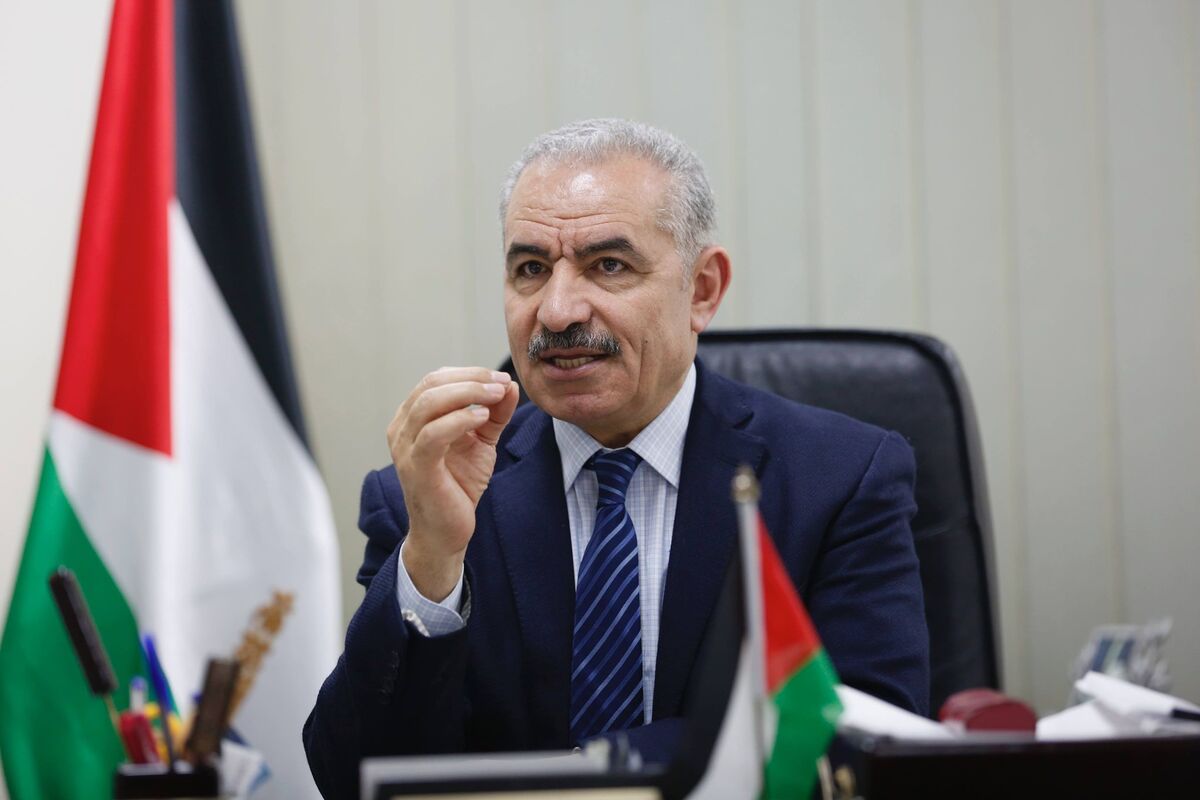
Palestinian Prime Minister Muhammad Shtayyeh announced today, Monday, his rejection of Israeli calls to establish temporary camps for the displaced in the southern Gaza Strip, during his speech at the weekly government meeting in the city of Ramallah in the West Bank.


Shtayyeh said: "We refuse to establish temporary camps for the displaced, as the Israeli army requests from international organizations. We want our people to return to their homes from which they were displaced. In the history of Palestine, there is no such thing as temporary. Experience has taught us that temporary is permanent."


He added: "We are struggling in all international circles to stop the aggression, and to secure the delivery of food and medicine to all areas of the Gaza Strip, especially the north, and we are doing everything possible to save our people there."


In this context, Shtayyeh called on the United Nations and the European Union to "drop aid into the Gaza Strip, especially the north, by parachute, as happened in various experiences in the world, and to open relief corridors to Gaza and not limit it to the Rafah crossing only."


He continued: “I say to Israeli Prime Minister Benjamin Netanyahu, who opposes the return of authority to Gaza and wants to maintain the occupation for a long time, that his policy will bring calamity on them,” noting that the Gaza Strip “is part of the land of Palestine that was occupied in 1967, and we do not need anyone’s permission to help our people.” there".


Al-Shifa Hospital

Shtayyeh expressed his "regret that some countries are still calling for Israel's right to defend itself," explaining that "the aggressor has no right to self-defense."


He continued: "Whoever supplies Israel with weapons now is a partner in the aggression against the blood of children, women and innocent people from our people," noting that Israel has made Al-Shifa Hospital "an address for its control over Gaza, as if it were a military barracks."


He added: "The (Al-Shifa) hospital contains wounded and sick people, and whatever the justification, bombing hospitals, cutting off their electricity, and preventing fuel and oil from reaching them can only be considered a war crime according to international humanitarian law."


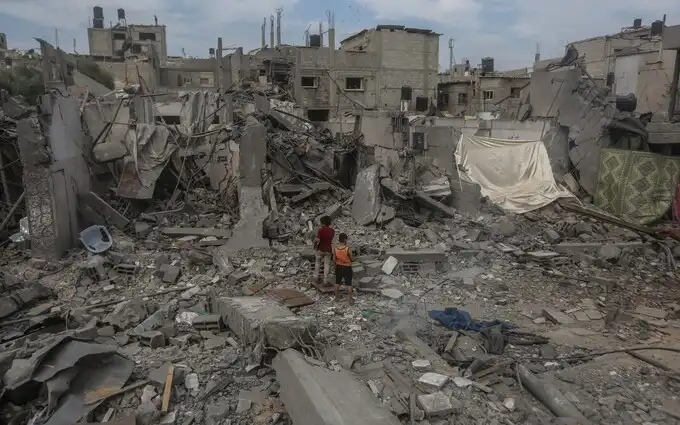
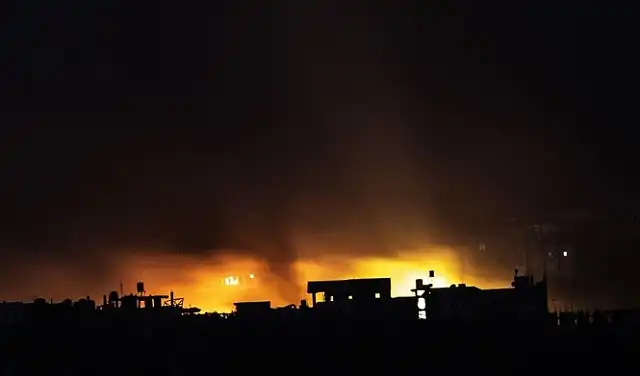
For 3 days, the Israeli occupation forces have besieged the vicinity of hospitals in the northern Gaza Strip, denying water, food and fuel to these health facilities. The occupation army is targeting Al-Shifa Hospital and its surroundings, and the rest of the hospitals in the Strip, with continuous bombing.


Earlier today, the director of the Shifa Medical Complex in Gaza City, Muhammad Abu Salamiya, announced that the number of martyrs due to the interruption of services and electricity in the hospital had risen to 20 people, including 6 premature babies and 9 wounded and other patients in the intensive care department.


OPINIONS

Mon 13 Nov 2023 3:41 pm - Jerusalem Time

There Might Be No Day After in Gaza

NATHAN J. BROWN

NATHAN J. BROWN

Opinion Writer

As the war continues, deterioration at the level of governance, security, and public order will likely be deepened by the absence of a political horizon, diplomatic process, or future prospects.


Initial reactions to Hamas’s October 7 bloody attack on Israelis and Israel’s declaration of war focused on the short term: how strongly would Israel react and what would its war aims be? It was precisely such short-term thinking—on the part of Israeli, Palestinian, American, and other leaders who sought to postpone rather than address issues—that contributed to the current crisis. Israel has finally spelled out war aims, but they are very ambitious: to oust Hamas from governance and to destroy its military capability. That new, yet limited, clarity has pushed public discussions and private, official meetings to begin arrangements for the day after.

But there is no sign of consensus, and even the most detailed authoritative statements lack clarity. U.S. Secretary of State Antony Blinken’s October 31 comments were the most specific offered yet, but they only suggested that the United States and other countries are looking at “a variety of possible permutations.” He mused that an “effective and revitalized Palestinian Authority” (PA) should ultimately govern Gaza but offered no clues on how to make the PA effective or overcome Israeli opposition. He only suggested vaguely that in the meantime, “there are other temporary arrangements that may involve a number of other countries in the region. It may involve international agencies that would help provide for both security and governance.” The nominees floated for this interim role include Arab states and the United Nations, supported by other governmental and nongovernmental international organizations.


THE RIGHT QUESTIONS

The lack of clarity has a cause: The question “How should Gaza be governed when the war is over?” will likely reveal itself to have no good answers and not even to be the right starting point. Instead, better questions ask: What does it mean to oust a party like Hamas from governance when it dominates all levels of Gaza’s government? What does it mean for Israel to attempt to end the military capability of Hamas, a social movement with a military wing that also oversees public security, administration, and other governmental functions—especially when it operates both above and below ground? What does victory mean? And whatever its goals, what will Israel actually achieve? How will anyone know that the war is over? These better questions show why it is a mistake for scenarios to assume a “day after” as if this were a conventional war that will clearly and cleanly give way to agreed or imposed postwar arrangements.


Many scenarios are based on what actors should do rather than what they are likely to do, which is also misleading. Such scenarios also risk seriously underestimating the difficulties of any diplomacy. Instead, policymakers should examine how unfolding events will affect what the actors are likely to do and the ways in which the violence may deepen divisions. Gazan governance may be so seriously undermined that political disintegration accompanied by social and economic deterioration are far more likely than any ideal (or even manageable) arrangements.


HAZY OUTCOMES

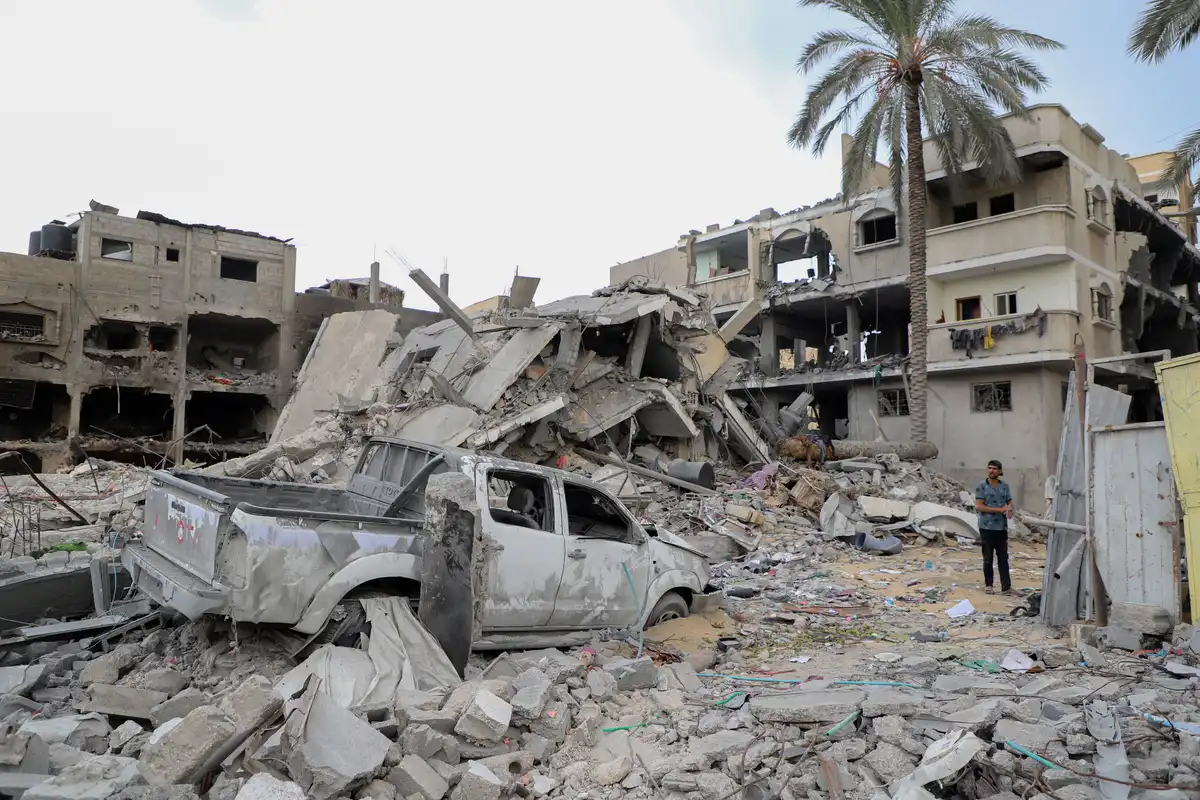
It seems safe to assume as well—and indeed it is rapidly becoming the case—that the Israeli military operation will kill many civilians and destroy part of Gaza, including housing, infrastructure, and critical aspects of civilian life. Israel will most likely impose significant military buffer zones within Gaza that will be inaccessible to Palestinians for a while, if not indefinitely. As fighting dies down, the ongoing Israeli military stance in Gaza will likely tighten the border and increase security forces’ capacity to conduct incursions into populated areas.


Israel will not likely reintroduce settlers into Gaza, but future military moves might include setting up military installations within Gaza. Israel will not be able to dominate Gaza to the same degree as the West Bank, but that level of control is not necessary anyway, as Israel’s principal aim in Gaza is to prevent the capacity of Gazan militias to attack Israel rather than to protect its settler enterprise.

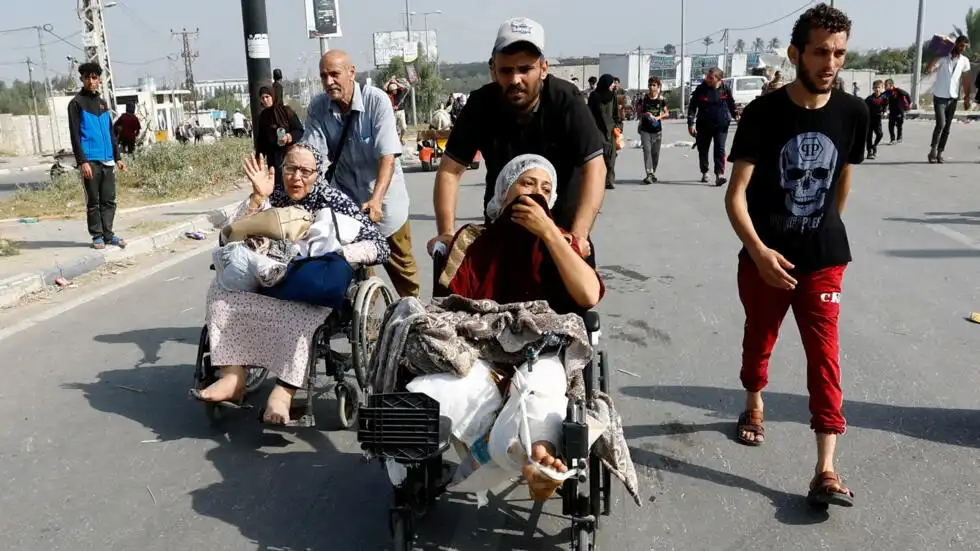
Besides displacing Gazans within Gaza, the effect of the Israeli military operation might force a significant number of people to leave Gaza into the Sinai Peninsula, despite Egypt’s blockade. That possibility seems to be receding, both as a result of external pressure and very sharp Egyptian resistance. But population shifts within the Gaza Strip are already occurring, as Gazans flee fighting and are warned by Israel that their lives are at risk if they do not. And further displacement and depopulation to create the buffer zones will further squeeze many Gazans into tenuous enclaves within enclaves. Parts of the north of Gaza might be in practice annexed—at least in security terms—and turned into a closed Israeli military zone.


EVOLVING ACTORS

Rather than a “day after,” what seems more likely is a shift from intensive to low-level combat that has no clear resolution. There will be efforts to devise arrangements, to be sure. But the most notable diplomatic fallout from the fighting might be that diplomacy becomes even more difficult. The coordination necessary to make any arrangements for governance functions may be extremely difficult to achieve.

And changes within each actor are likely to complicate matters further.

Hamas is not likely to be destroyed, though it will undoubtedly suffer tremendous losses. It may be that the movement’s political wing—since it operates aboveground—is a softer target than the military wing, which is both hardened and already partially underground. There is a significant possibility that the military wing will actually increase its hold on the organization—and that it will identify any postwar governance that targets the movement as collaboration with Israeli efforts to eliminate it.

The United States has played a dramatic role in the war’s initial stages, hardwiring the American and Israeli decision-making processes together in an unprecedented way. European states have followed their general pattern of tailing the United States while advocating a bit more publicly for civilian lives and longer-term diplomacy. The result may be that the United States gains real leverage with Israel—while many people in the region increasingly distrust the United States and place very strong pressures on their governments not to cooperate with U.S. diplomacy.

Multilateral institutions have been far more adept at service provision and humanitarian aid than governance. Some (such as the UN’s Relief and Works Agency for Palestine Refugees in the Near East, or UNRWA) do have extensive operations in some sectors (most notably education), but they are unlikely to wish to extend that programming especially if there is resistance among some of the population. The casualties already suffered by such agencies and the extraordinary vitriol directed by Israeli officials against the UN secretary general augur poorly for constructive arrangements if the fighting does ease.

Arab states never wished to be made responsible for Gaza; that preference is likely to be strengthened. Nor are they likely to band together to manage a problem they feel was caused by the recklessness of others. The few experiences of multilateral involvement by Arab states in “peacekeeping” or security arrangements do not provide positive models. In short, Arab states are unlikely to accept a role. And in the unlikely event they were persuaded to step in, such involvement would likely be ineffective in providing administration, much less security.

Israel’s future posture is unknown even to most Israelis. Over the short term, there is unity behind a military effort, but the underlying fissures in Israeli society seem more deferred than resolved. The religious nationalist camp has lost its centrality with the expansion of Israel’s governing coalition, but it retains key ministries for now, and its citizens’ violent activities against Palestinians in the West Bank have stepped up. Its vision for annexing the land but denying rights to non-Jewish inhabitants has already advanced very far. 


The country’s military and security leaders are both leading much of the country’s response, but they are also taking blame for missing the signs that Hamas would strike out; the tensions between the leadership and rightist politicians seem to be just below the surface. Leading Israeli political and security figures are divided about whether the Palestinian Authority in Ramallah is annoying, hostile, or a potential partner, but the idea that Palestinians are a national community that should be treated as such is accepted only in pockets of the Israeli political spectrum. The political configuration in Israel is volatile, and the stance and composition of the country’s leadership a year from now are difficult to foresee.


SO HOW WILL GAZA BE GOVERNED?

These evolving actors will struggle to devise a new governance system for Gaza.

Gaza has been governed in various ways by Hamas since 2006, and it is therefore only a minority of Gazans who remember anything different. Hamas is not particularly popular—it has some enthusiastic support, to be sure, but only from a minority. But asking Gazans whom they support is partly beside the point: no Palestinian has had a serious voice in choosing their leaders since 2006. A bizarre coincidence of interests among a variety of international and domestic actors has formed to prevent meaningful elections. Resignation is the currency of popular politics.

In the meantime, the administration and governance of the Gaza Strip gradually evolved into a party-state that is now in the crosshairs of Israeli military efforts. So what will be the fate of that structure—and the people it has governed?


Gazans will live in the surviving buildings and makeshift structures for a while. Any rebuilding will exclude significant portions of Gaza. Commerce, manufacturing, agriculture, and other businesses will be effectively destroyed, rendering Gazans completely dependent on humanitarian aid. Once a “besieged enclave,” Gaza will be reduced to a “supercamp” of internally displaced persons.


Israel has a choice here: its initial pledge to kill every member of Hamas has faded, but it remains unclear how Israeli forces will treat Hamas’s bureaucrats, teachers, judges, inspectors, and police. Will Israel simply raid and target Hamas’s military wing? Will it attempt to arrest, assassinate, or ignore government officials? Will it be systematic or ad hoc? Will governance structures in Gaza be decapitated, decimated, or partially incapacitated?


Disintegration of the central government in Gaza is not without precedent. After its 2006 election victory in Palestinian Authority elections, and even after the 2007 split in that body that left Hamas in control of Gaza, Hamas exercised tightening control of the security and political framework in Gaza. But it initially did not have total control of the services traditionally managed by the governments, and some key areas still lie outside of its oversight. Much of Gaza’s civil service remained on the Ramallah payroll—though when the West Bank ordered many employees in many sectors in Gaza to stay home, the result was that the Hamas government hired many of its own personnel. Over time, much of the apparatus of governance began to function again, with parts (such as education) coordinating with the West Bank but with Hamas placing almost all structures under those who either were loyal or accepted Hamas as inevitable.

But Hamas’s control has never been total. The Gaza government could not provide for all its people’s needs, and international bodies stepped in. Indeed, these organizations provided virtually the only institutions in Gaza not under the control of what was becoming a party-state. For example, a desalination plant was managed by the UN Children’s Fund, a power plant managed by the Palestinian Energy and Natural Resources Authority, some schools managed by UNRWA, and salaries of hospital staff paid by Ramallah. This setup was necessary to avoid essential services being cut off when the international community boycotted Hamas and to facilitate vital cooperation with Israel in running these services.


REINVENTING THE WHEEL OR BREAKING IT?

Most of the ideas about “the day after” that assume Hamas will soon be gone seem inspired by the set of ad hoc governance systems developed to provide social services while Israel blockaded Gaza and most international actors boycotted its government. The proposals are based on expanding the ad hoc arrangements with less involvement (or none at all) by formerly Hamas-led structures. Those who insist that Hamas rule must end do not spell out what they mean, but even a less ambitious scenario would leave only lower-level structures intact.

The question is not whether Israel will “reoccupy” Gaza. The most onerous aspects of Israel’s occupation never ended: what ended with the Oslo Accords was Israel’s post-1967 strong role in overseeing administration and internal security outside of settlements; what changed in 2005 was the withdrawal of Israel’s settlements and the attendant military presence. While some on the Israeli right have spoken of restoring settlements and even expelling Palestinians, louder voices seem to suggest that Israel will seek to hand administration over to someone else.


So “day after” plans focus on oversight and control over the governmental machinery in Gaza—perhaps greatly expanding the pre-2023 setup for some service provision with more involvement of the UN agencies and internationally sponsored organizations and possibly some Palestinian Authority or Arab involvement. Blinken’s comments rolled all these possibilities into one.

There is no real precedent in Gazan history for such loose arrangements—since the Gaza Strip emerged as a distinct entity at the end of the 1948 war, Egypt, Israel, the Palestinian Authority, and the Hamas-led government all took turns in overseeing Gaza’s administration, service provision, and security.

So who would oversee the assortment of UN agencies, various international aid agencies, nongovernmental organizations, elements of the Palestinian Authority, and remains of the Gazan bureaucracy? The various candidates put forward each seem implausible.

  • The PA is unlikely to restore its pre-2007 institutional and legal framework. First, Israel’s long-standing policy to disconnect Gaza from the West Bank and to treat Gaza as a nonentity in political and governing terms would have to be completely reversed, and that seems unlikely. Second, the PA lacks popular support to begin with; to be seen as the agent of Israeli invasion and U.S. complicity—which is how most Palestinians would see it—might be close to suicidal. 
  • The PA is clear on this point; its prime minister has said that “To have the Palestinian Authority go to Gaza and run the affairs of Gaza without a political solution for the West Bank, as if this Palestinian Authority is going aboard an F-16 or an Israeli tank? I don’t accept it. Our president [Mahmoud Abbas] does not accept it. 
  • None of us will accept it.” And the PA’s stubbornly passive behavior is consistent with this stance: PA officials have launched an initiative to engage in a humanitarian response in Gaza. They do not engage in strategic communication to promote a ceasefire. There is no political dialogue with Hamas nor other Palestinian factions. On top of that, the potential PA administration would be under Israel’s complete security control, similarly to the West Bank’s Area C. This complete control would likely bolster the image of the PA as an Israeli “contractor.” 
  • A “revitalized” PA capable of undertaking administration and providing security in Gaza would seem to require both elections and a very muscular diplomatic process within an acceptable horizon. Neither is likely; those now calling for a “revitalized” PA are precisely the same actors who have resisted such steps for many years.
  • The UN or any international coalition is unlikely to be effective at more than some service provision. Misleading comparisons to Kosovo or Iraq obscure the far more hostile context: UNRWA alone has already seen sixty-three of its workers killed; Israeli officials have heaped extraordinary vituperation on senior UN officials; and internal security has dissolved in Gaza. For the UN to establish a political or peacekeeping mission, a high degree of consensus would have to be possible in the UN Security Council, which is already deeply divided on many global issues.
  • Regional management seems even less plausible. Why would countries in the region want to take responsibility for administering Gaza under military control of Israel? And why would Israel want regional actors to have military control of Gaza?

Thus, while some of these actors might be involved in some way in some activities—service provision most especially—none acting individually or jointly would have the interest, ability, or capability to impose itself on Gaza as an overarching authority. Many might be willing to supply water, aid workers, school supplies, and food. The United States might press Israel to allow a supply of electricity and fuel. Gazan access to international financial systems might be restored.

But for the foreseeable future, there will be no central government for Gaza. Not only will no force be able to supply security in terms of public security and basic law and order, but also, continuous Israeli raids or Hamas attacks on perceived collaborators may be ongoing.

In that context, law and order on the streets will likely be handled—if they are handled at all—by camp committees and self-appointed gangs. And this deterioration at the level of governance, security, and public order will likely be deepened by the absence of a political horizon, diplomatic process, or future prospects: Gazans would be offered a dispiriting present and a future of statelessness and denial of dignity, national rights, and individual rights.

This seems less like the day after a conflict than a long twilight of disintegration and despair.


Source: Carnegie Endowment

PALESTINE

Mon 13 Nov 2023 3:38 pm - Jerusalem Time

A cameraman for Cairo News Channel was killed in front of Al-Shifa Hospital in Gaza

Cairo News Channel reported the death of the Cairo News photographer in Gaza.

The Journalist Ahmed Al-Tahri, head of the news channels sector at the United Media Services Company, announced the death of the “Cairo News” channel photographer assigned to cover the events in Gaza, specifically in front of the vicinity of Al-Shifa Hospital.


Ahmed Al-Tahri wrote on his personal Facebook account: “The day before yesterday we lost broadcasting in the vicinity of Al-Shifa Hospital in the Gaza Strip, and communication with our crew was cut off. I have now learned of the news of the photographer’s death and the injury of another colleague. There is no power nor strength except with Allah”


On the other hand, European Union Foreign Policy Commissioner Josep Borrell said on Monday, “We demand an immediate, temporary and multiple ceasefire and the opening of humanitarian corridors.”


Hebrew media said on Monday that European Union Foreign Minister Josep Borrell will visit Israel next Thursday.


According to the newspaper “Israel Today”, Tel Aviv is making efforts to renew the arrival of leaders from Europe in order to provide support to Israel in the war on Gaza.


ARAB AND WORLD

Mon 13 Nov 2023 3:22 pm - Jerusalem Time

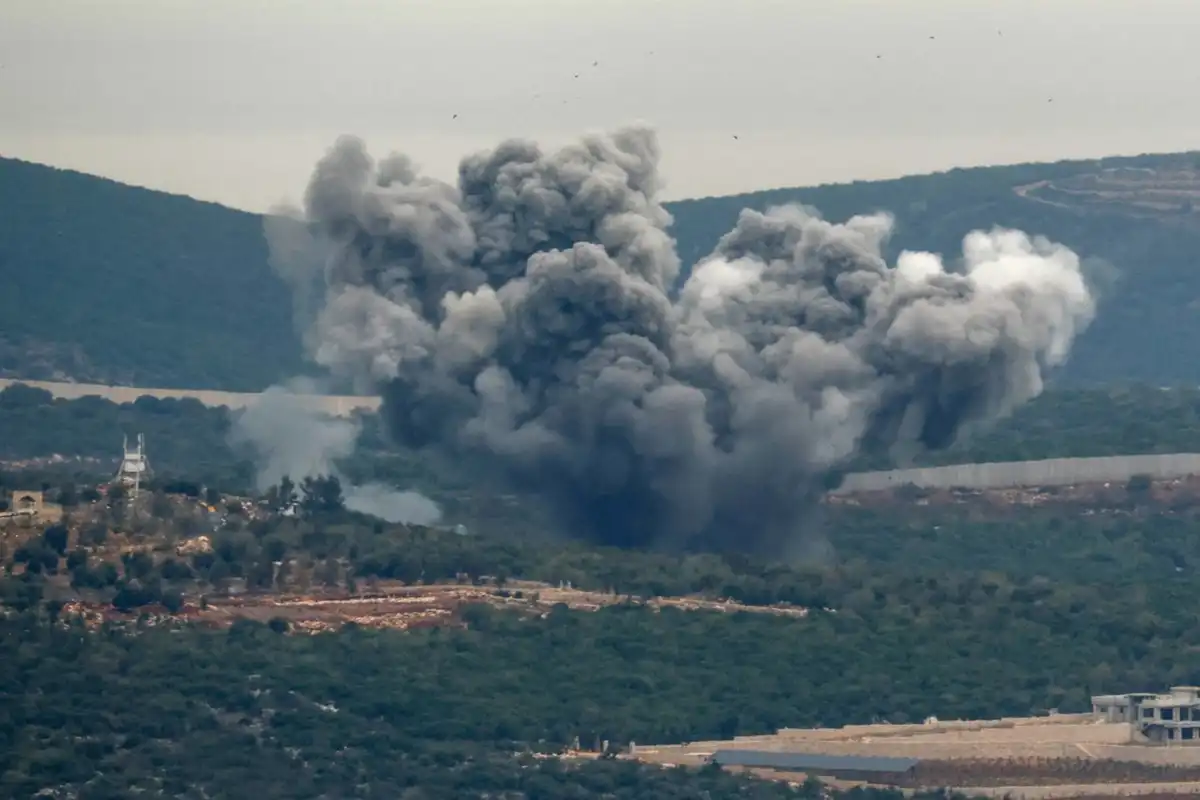
Israeli artillery shelling targets towns in southern Lebanon

Lebanese media reported on Monday that the outskirts of several towns were subjected to Israeli artillery shelling.


The National News Agency reported that “the outskirts of the towns of Tair Harfa, Shihin, and Umm al-Tut were subjected to enemy artillery shelling,” noting that a guided missile had been launched from inside Lebanese territory.


It pointed out that “the enemy fired, at night, a number of direct artillery shells on the vicinity of the town of Aita al-Shaab in the central sector,” explaining that “the night in the southern regions and along the border with occupied Palestine was tense due to the continuous flights of reconnaissance aircraft at low altitude, focusing their flight over The course of the Litani River, and continued until the early morning hours.


It said that “enemy flares did not miss the skies of the western and central sectors,” revealing that “most of the residents of the villages adjacent to the border have moved to safer areas, knowing that the services provided to the displaced in the centers of Tire do not meet the minimum aspects of livelihood and its necessities.”


PALESTINE

Mon 13 Nov 2023 3:18 pm - Jerusalem Time

The bodies of 100 dead decompose in the Al-Shifa Complex, and 34 deaths from premature infants and intensive care patients

The catastrophe of the Shifa Medical Complex in Gaza worsened today, Monday, as Israel continues to bomb its surroundings, besiege it from all sides, and prevent it from being supplied with fuel.


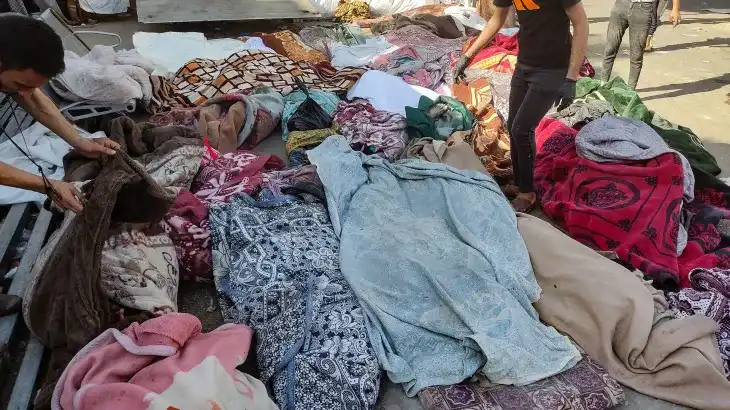
The authorities in Gaza reported that 100 bodies are currently decomposing in the compound’s courtyard, while dozens of premature babies and intensive care patients died as a result of the power outage resulting from the depletion of fuel.


The Director-General of the Ministry of Health in the Gaza Strip told Al Jazeera, "About 100 bodies are decomposing in the yard of Al-Shifa Hospital, and we cannot bury them."


He added that about 200 families are currently in the vicinity of Al-Shifa Hospital and cannot move from their homes.


The Ministry of Health in Gaza announced that the death toll since the day before yesterday, Saturday, had risen to 34 in Al-Shifa Hospital.


The Undersecretary of the Ministry of Health, Yousef Abu Al-Rish, confirmed, “The number of deaths has risen to 27 patients in intensive care, and 7 premature newborns due to the power outage.”


Al-Quds Hospital

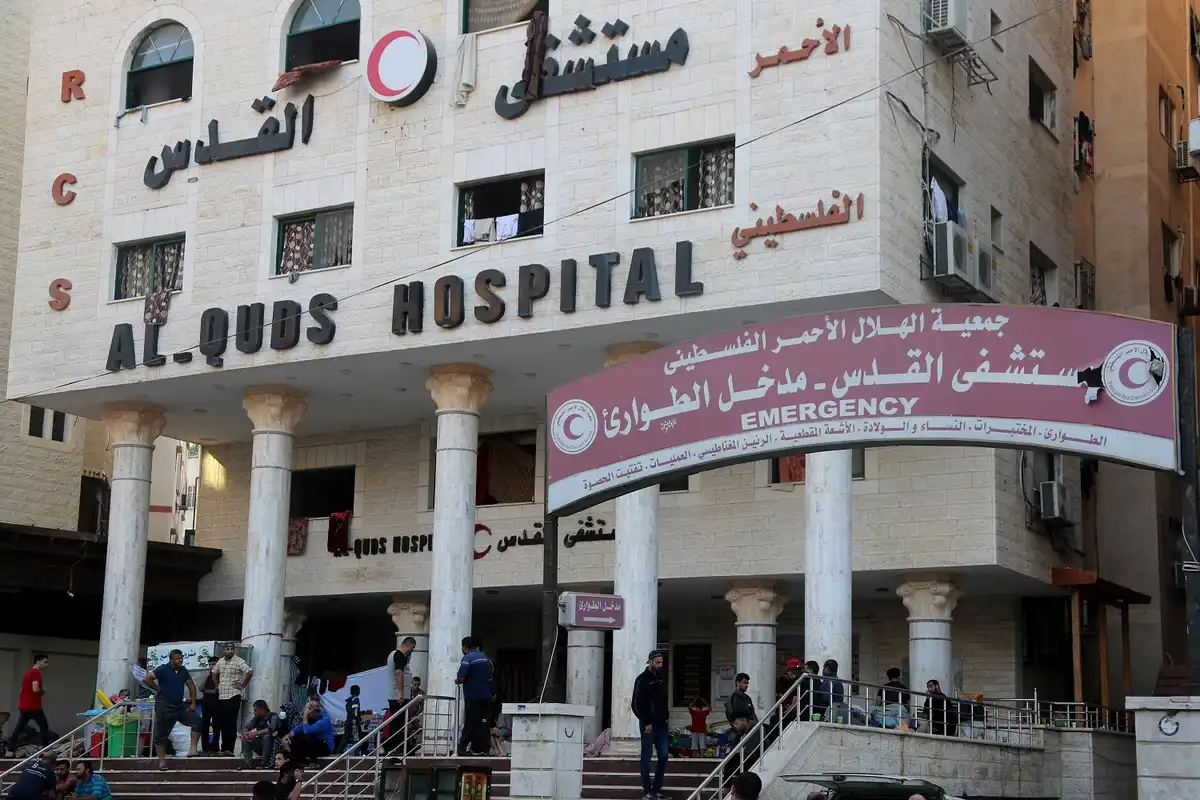
For its part, the Palestine Red Crescent Society announced - today, Monday - the cessation of the convoy of vehicles designated to evacuate patients and medical staff from Al-Quds Hospital in the Central Governorate, as a result of the dangerous conditions in the vicinity of the hospital.


The association said that heavy gunfire in the vicinity of the hospital located in the Tal al-Hawa area in Gaza City is continuing, noting that the sounds of shelling and violent explosions continue to be heard in the area.


She explained that the convoy of vehicles that set off from the southern Gaza Strip towards the hospital, accompanied by the Red Cross to ensure the evacuation of patients and medical staff, stopped in the Central Governorate, until it was able to continue on its way due to the dangerous conditions in the vicinity of the hospital.


Earlier, the association said - in a separate publication - that Israeli vehicles and tanks are stationed in the vicinity of Al-Quds Hospital from all sides, and that sounds of continuous shelling are being heard, in light of the preparations to evacuate the hospital with its patients and wounded, and their accompanying medical personnel.


Yesterday, Sunday, the association announced that the hospital it runs in Gaza had been out of service, due to the exhaustion of fuel and a power outage.


Source: Al Jazeera + agencies


ARAB AND WORLD

Mon 13 Nov 2023 3:11 pm - Jerusalem Time

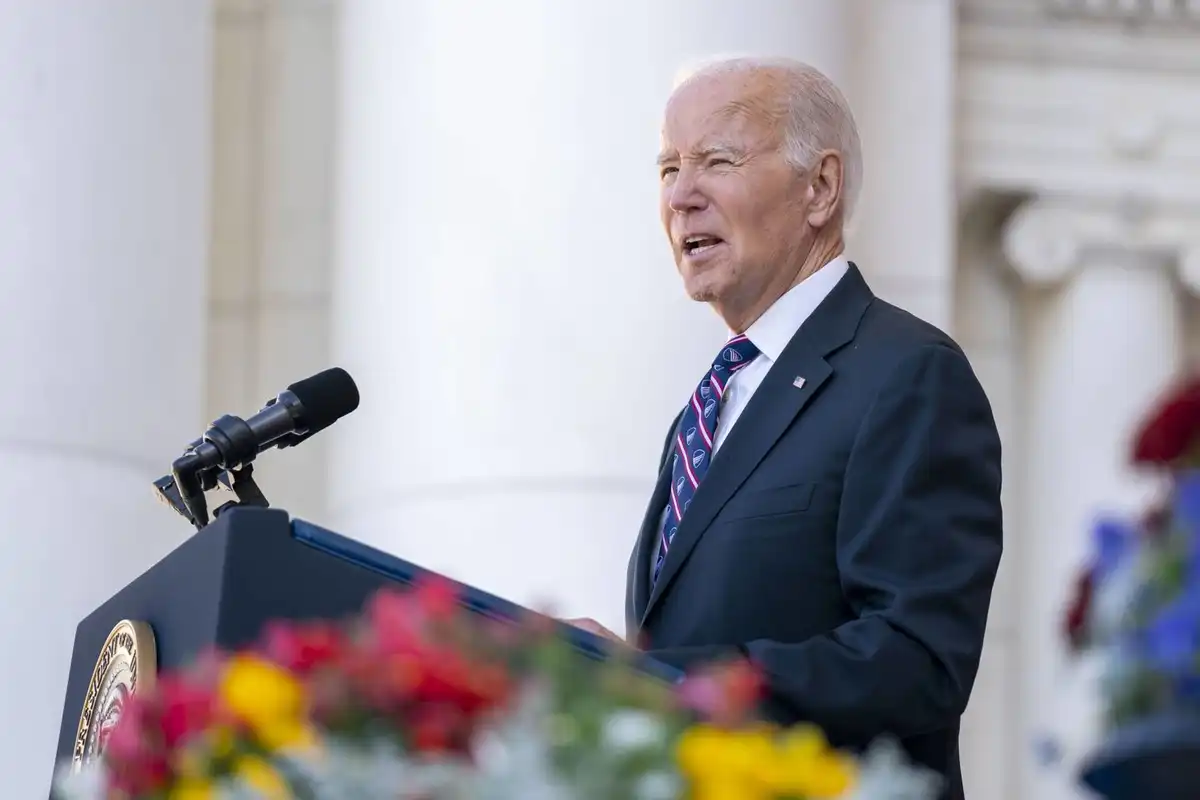
Axios news: A memorandum accuses Biden of spreading misleading information about the war in Gaza

The Axios news website reported on Monday that a memorandum signed by 100 employees of the US State Department and the International Development Agency accused US President Joe Biden of spreading “misleading” information about the war between Israel and the Hamas movement  according to what was reported by the Arab World News Agency. The memorandum stated that Israel was committing “war crimes” in Gaza.
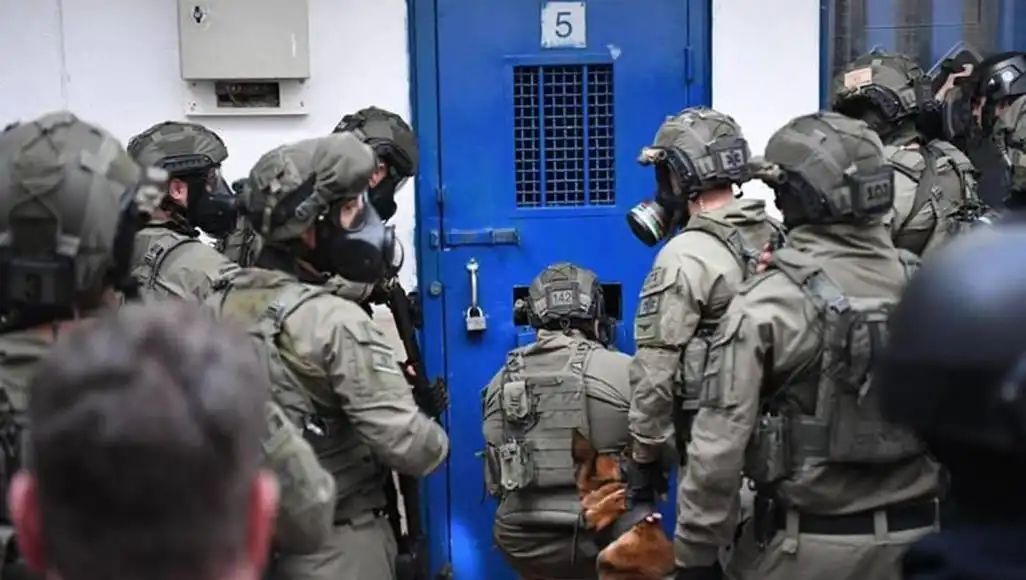
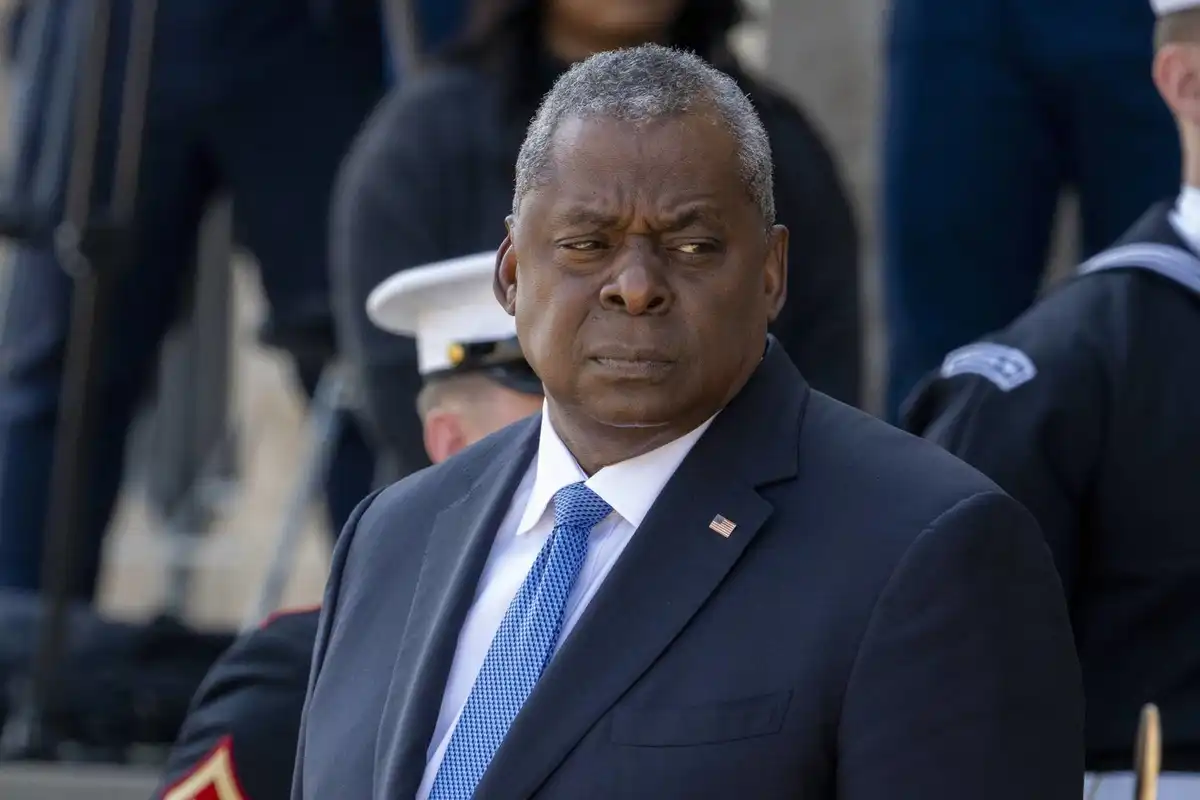

The memorandum included a recommendation that Washington call for the release of hostages by both Hamas and Israel, referring to the “thousands” of Palestinians detained in Israel, including those detained “without charges.”


OPINIONS

Mon 13 Nov 2023 2:56 pm - Jerusalem Time

Calculating the gains and risks in the US administration’s position on the war in Gaza

Translation for "Al-Quds" dot com

Translation for "Al-Quds" dot com

Opinion Writer

International and internal pressures are pushing the Biden administration to search for a way out of the war.


Since the first day of the war, the Biden administration has shown exceptional support for Israel at all political, diplomatic and military levels, promoted Israel’s right to defend itself, supported the Netanyahu government in its goals to destroy Hamas and its military structure, provided Israel with advanced weapons and unprecedented military aid, and took military steps. 

Intensive efforts to prevent the escalation of the war included strikes on Iranian agents in Syria, the deployment of two aircraft carriers and a nuclear-powered submarine in the region, and it sided with Israel in rejecting UN, international and Arab calls for a ceasefire until all the hostages were released, and in accusing Hamas of seizing civilians in Gaza as Human shields. It obstructed efforts in the Security Council to issue a resolution for a ceasefire in Gaza and the protection of civilians.


This war has made all countries of the world stand on their nerves in a state of anticipation and anxiety about how this unequal war is proceeding, and the Israeli brutality that carries suspicion of committing war crimes, genocide, ethnic cleansing, and forced displacement, the way it can be ended, and the plans for after the end of the war.


With the dangers of expanding war in the region, and the spread of anger across the capitals of the world in demonstrations in unprecedented numbers, the question arises: What can US President Joe Biden, who is most capable of restraining Israel and using his political weight to impose a ceasefire and establish peace, do? In the post-Hamas period and the resumption of a political process that achieves some rights for the Palestinians, the American administration is implementing its promises to proceed on the path of the two-state solution. But the United States has calculations of gains and losses in this war, and the development of events requires it to carefully review these calculations.


  Gains accounts

The United States agreed in its goals with Israel's goal of dismantling Hamas, destroying its military structure, and reducing its relations with Iran and other resistance factions. Military leaders realize that this goal takes time and has a high cost. The Biden administration gives the green light to achieve these goals, but it stressed in its call to Israel to avoid civilian casualties “as much as possible.” Although this call appears to be a call to protect the lives of the people of Gaza, it is also a call to the Israeli army to be patient and plan carefully without recklessness that leads to losses among the Israeli military  inside Gaza.


Despite the multiple pressures that Biden faces internally and externally, he realizes that a ceasefire does not only mean the defeat of Israel, but it also means the defeat of the United States, which faces many of the same Iranian and terrorist threats.


Biden enjoys great popularity in Israel as Israel's most important ally and supporter, especially after his visit to Tel Aviv and his participation - in an unusual precedent - in the meetings of the war government led by Benjamin Netanyahu. Analysts say that Biden can use this political influence to pressure the implementation of important initiatives, especially since the lives of tens of thousands in both Israel and Gaza are at stake.


It is certain that the Biden administration will allow Israel to achieve some achievements and deal a fatal blow to Hamas in a way that will enable Israel to promote victory in its war, and then demand that it extend the humanitarian truces until it reaches the request for a ceasefire.

Analysts say that Netanyahu wants to continue the war and promotes that the ceasefire means the victory of “Hamas,” and restricts Israel’s hand in confronting other threats on the northern front with Hezbollah, but it also threatens his political future and the investigations that await him related to the failure to anticipate an attack. Hamas” on October 7th and in relation to the corruption accusations it faces. This is also what could factor into the calculations of American gains, as the continued support for the Israeli Prime Minister could end with the end of the battle and leave Netanyahu to face his fate with cases, investigations and accusations.


American calculations expect that Israel will have a new leader after the war, and it hopes that this new person will realize that the only way to preserve the safety of the Israelis is to reach a peace agreement with the Palestinians.


Some officials in the American administration believe that the chances of achieving an Israeli-Palestinian peace after the war are favorable, and another group wants to allow time and prepare the stage for the emergence of other leaders, as both sides (Israeli and Palestinian) lack credible leaders, and therefore the Biden administration is calculating the creation of conditions that would encourage the emergence of leaders capable of making strong, pro-peace decisions after the end of the war.


American pragmatism

Washington blessed the Israeli military operations to target Hamas leaders and destroy the movement’s military infrastructure, but it has recently tended to carry out them more precisely without destroying Gaza and turning its entire neighborhoods into rubble. It advised Israel to use smaller bombs following the use of bombs weighing more than a thousand pounds in Targeting Jabalia camp, then pressured to allow a humanitarian truce, which decreased from the requirement to last three days, then 12 hours, and ended with a four-hour tactical truce.


One of the priorities of the Biden administration is the success of the hostage release negotiations, a file that took up a large part of the intelligence and diplomatic operations and the shuttle tours of senior American officials, which began with the tours of Secretary of State Anthony Blinken, then the Director of US Intelligence, William Burns, and then the expected visit of the White House Coordinator for Middle East Affairs, Brett McGurk. He arrives in Israel on Tuesday as part of a visit to several countries to reach an agreement that guarantees the release of many hostages held by Hamas in Gaza.

McGurk will first visit Brussels to hold talks with NATO and European Union officials, then visit Israel and meet with Prime Minister Benjamin Netanyahu, Defense Minister Yoav Galant, and security and intelligence officials, and then travel to Jordan, Saudi Arabia, Qatar and Bahrain. The White House refused to comment on reports of an agreement that could lead to the release of 80 hostages, most of them women and children, held by Hamas and Islamic Jihad.


If Washington succeeds in securing this deal, it will bring the Biden administration a political victory that can be exploited forcefully in the face of angry demonstrations, in the face of international and national criticism, and in the face of the progressive movement within the Democratic Party. It will enhance his chances in his electoral campaign and promote that he protects every American at home and abroad.


In order to calm the international community and Palestinian anger and encourage some Palestinian leaders to work with the American administration, American officials are putting forward some ideas to absorb the anger, including issuing public statements about the need to curb settler violence and stop building settlements, and sending signals such as preparing steps to reopen the American consulate in Jerusalem “in the near future” . It should take the step of abstaining from voting in the United Nations Security Council on resolutions calling for a ceasefire instead of using the right of veto.


Risk calculations

The United States' patience with Israel in the Gaza war cannot last forever, in light of the huge numbers of civilian casualties as the war enters its second month and internal preparations for a fierce electoral battle with 12 months remaining. Biden does not want to go into battle while carrying on his neck the weight of the American failure in Afghanistan, the continuation of the Russian-Ukrainian war without a glimmer of hope for ending it, and then the Israeli war against Hamas, which brings dangers from all directions.


Moral responsibility: With the loss of more than 11,000 civilians due to the ongoing Israeli bombing of civilians, the siege of hospitals, and the cutting off of aid delivery under Israel’s intransigence, all of them place the burden on the United States, which has always called for moral values and democratic principles. The matter is not limited to civilians in Gaza, most of whom are children and women, but statistics indicate that 100 United Nations employees were killed, in addition to the killing of 30 journalists. Accusations are increasing against the United States of collusion and supplying Israel with bombs and artillery shells with which Israel kills innocent people.


  The results of the vote in the United Nations General Assembly, with 120 countries voting in favor of a ceasefire, indicated the isolation of the United States on the international stage, with the French position shifting significantly to step out of the United States’ mantle, and strongly demanding a ceasefire, and the warnings of the Secretary-General of the United Nations, Antonio Guterres, of the brutality of the Israeli bombing. Who turned Gaza into a cemetery for children. Then the strong statement of the joint Arab-Islamic summit, which raised the White House’s fears of the countries of the region moving away from the United States, the increasing Saudi-Iranian rapprochement, and the Arab and Islamic rapprochement with both Russia and China, in addition to complicating and perhaps freezing the peace paths that the Biden administration dreamed of achieving a historic political achievement, in concluding further normalization agreements between Arab countries and Israel. The risks may threaten agreements already concluded.

Netanyahu seeks to exploit the war against Hamas to prolong the period during which he can avoid facing difficult questions about the failure to prevent the Hamas attack on October 7. He insists that the war against Hamas may take weeks and months, and he is trying to promote himself within the American society, through interviews with a number of American news networks, pushed the Jewish lobby organizations to put pressure on the Biden administration and raise fears of increasing anti-Semitism, and behind the scenes there are fears that Netanyahu - if he feels his end is approaching - will exploit skirmishes on the northern front between “Hezbollah” and the Israeli forces in Exploiting a mistake or miscalculation would spark a war with Hezbollah and Iran behind it.


All calculations of gains, risks, and pragmatic, political, and electoral goals will govern how history will write these events, and what the legacy of US President Joe Biden and the image of the United States will be from a moral standpoint.

Asharq Alawsat


PALESTINE

Mon 13 Nov 2023 2:43 pm - Jerusalem Time

Palestinians refute Israel's claims of completely evacuating northern Gaza

Palestinian photographers and journalists, through field tours in camps and cities in the northern Gaza Strip, documented visual scenes of the normal functioning of life and the presence of large numbers of citizens, to respond to the Israeli occupation’s claims that all residents of the north have been displaced and that its cities are empty.


Photographers posted scenes on their Instagram accounts showing aspects of people’s lives in Jabalia camp, Tal al-Zaatar, al-Fallujah, and Beit Lahia, and the footage shows the presence of thousands of families in the place.


The Ministry of Interior in Gaza indicated that about 900,000 Palestinians remain in Gaza City and the northern sector, which consists of 5 governorates.


The scene published by Palestinian photographer Fadi Al-Wahidi, via his Instagram account, showed life going on normally in the Jabalia camp in the northern Gaza Strip, with people wandering through the markets and carrying out daily activities on a routine basis, despite the suffering and difficult circumstances.


Al-Wahidi said that he filmed this scene during a field tour in the camp, to discredit the occupation army’s claims that the entire North Governorate had been evacuated.


Palestinian journalist Marah Atallah confirmed in visual scenes the presence of large numbers of citizens in the northern Gaza areas and presented an aspect of life there.


She commented, saying, “Do not serve Israel’s narrative, and imagine the north as empty of its people,” noting that the northern Gaza Strip is full of people, as there are 100 people in some of the homes next to it.


She added that Beit Lahia, Jabalia Camp, Tal Al-Zaatar, Al-Falujah, and all schools are full of evacuees, noting that this is the north that the media portrays as empty.


The population of Gaza City and its surrounding areas exceeds 1.1 million out of 2.2 million Palestinians living in the Strip, all of whom face extremely difficult living conditions due to the ongoing Israeli siege since 2006.


The occupation army has called more than once on the residents of Gaza City and the northern Gaza Strip to evacuate their homes despite international criticism, while its bombing continues for the 38th day in a row, resulting in the death of more than 11,000 Palestinians, including more than 8,000 children and women, and the injury of more than 28. Two thousand others.


Source: Al Jazeera

OPINIONS

Mon 13 Nov 2023 2:35 pm - Jerusalem Time

“Breaking the silence” in Israel... calls to stop the Gaza war with “diplomacy failing”

Translation for "Al-Quds" dot com

Translation for "Al-Quds" dot com

Opinion Writer

Amid the intense Israeli raids on the Gaza Strip that continued for the fifth week in a row, without the ground incursion contributing to the liberation of Israeli prisoners held by the Islamic Resistance Movement (Hamas), voices rose in Israel calling for a ceasefire and the conclusion of a comprehensive prisoner exchange deal, warning against the return of Occupation and settlement in the besieged sector.


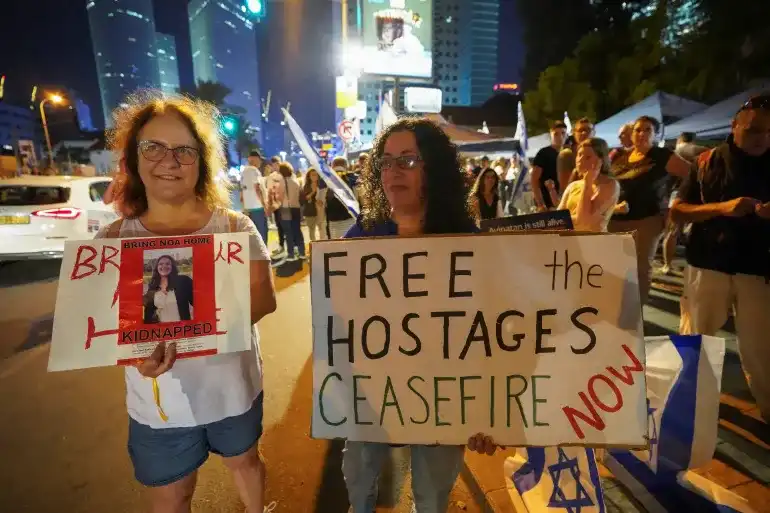
Opposition to the war on Gaza has escalated inside Israel, at a time when convictions have strengthened among large sectors that the Gaza battle cannot be resolved with military options, with the escalation of protests by families of Israeli prisoners held by Hamas in the Gaza Strip against Prime Minister Benjamin Netanyahu, and the repercussions of the delay in concluding an exchange deal that would lead to the liberation of all of them.


This movement comes with the decline in international support for Israel, and the consensus that Israeli diplomacy has failed to mobilize international support for the war, and that it has lost the battle of awareness against the Palestinians.


"The Suburb Doctrine"

The "Breaking the Silence" organization, or "Shofarim Shtika", joined the Israeli movement, which is an Israeli organization against the occupation, and specializes in publishing Israeli army soldiers' violations against Palestinians in the territories occupied in 1967.


The organization’s director, Nadav Vaiman, chose to circulate a message to Israeli society, in which he reviewed its participation in the fighting in Gaza in 2008. In his message, he called for a ceasefire and the liberation of Israeli prisoners, saying that “there is no military resolution to the battle of Gaza, and instead of Israel deliberately transferring the conflict, there must be A political path that guarantees an end to the Palestinian-Israeli conflict.”


Fayman says that while it will take some time before we get a complete picture of what is happening on the ground in Gaza, the statements of senior Israeli officials and the extent of the destruction in the Strip are already raising doubts that the army is acting on the same principle it has used in previous operations, the so-called “suburb” doctrine. .


He pointed out that "the suburb is a doctrine formulated around the Second Lebanon War, and its main point revolves around the disproportionate attack on civilian buildings and infrastructure." He explains, "If this is the prevailing principle in the war on Gaza, then the massive bombings that occurred in recent weeks were also used deliberately to damage the property and infrastructure of innocent civilians."


He referred to what he called the “combat rounds doctrine,” saying that it “does not aim for decisiveness but rather to deter, that is, postponing the next round of combat that will inevitably come, and it appears that the Israeli government today is choosing raids and bombardments with greater intensity than it chose to do in previous rounds.” He added, “Even the army spokesman made it clear that the focus is on damage and not on accuracy in hitting targets.”


Fayman noted that the right-wing government is exploiting the conditions of war, as voices are being raised for the occupation of Gaza and the re-settlement of Gush Katif, which was evacuated in 2005. “These voices reflect the systematic policies of right-wing governments towards the Palestinian issue, which have brought Israel to this reality. The war on Gaza has brought the Palestinian issue back to the forefront, and now enjoys the support of world public opinion, which Israel lost.”


Diplomatic failure

In a reading of the course of the war on Gaza, and the rising voices opposing it, even from the largest countries and leaders supporting Israel, Avi Issacharoff, an analyst for Arab and Palestinian affairs at Yedioth Ahronoth newspaper, says that what is happening “are signs of relative achievements of the military level in the field, in exchange for a miserable failure of Israeli diplomacy and propaganda.” "Globally."


Issakharov says, “Despite additional deaths among the Israeli army forces during the ground operation in the Gaza Strip, it must be noted that what began as the greatest military failure Israel has ever known, turned into a relatively successful military step, but at the same time, no we can ignore the failure of Israeli propaganda and the victory of Palestinian propaganda in the international arena.”


He added, "What is transforming before our eyes is considered one of the greatest political nightmares we have ever known. Most of the world sees us Israelis as terrorists, while Yahya Sinwar and the leaders of Hamas become freedom fighters, and they enjoy respect all over the world, including American and British public opinion" and, of course, the Arab countries.


The American position

From a military point of view, security and military issues expert Yossi Melman believes that “the good intention of the United States to support Israel in the war on Gaza will end soon.” Accordingly, he said in an assessment of the position of the Israeli newspaper “Haaretz” that “Israel must use this intention and exploit it now to free the detainees before it is too late.” "It's time."


Melman adds, "If Israel wants to continue operating with full force against Hamas, it must also understand that it is not subject to a blank check from the administration of President Joe Biden, who is entering an election year and a period of discouraging opinion polls against Donald Trump."


The security expert believes that the War Council should be more sensitive to American sensitivities, especially with regard to the humanitarian catastrophe in Gaza, and that the government should take advantage of the American position in support of the exchange deal negotiations and rapid action that leads to the release of prisoners.


Melman explained that even without requests or pressure from the United States, Israel must have a supreme interest in releasing the prisoners as quickly as possible, and exploit every crack and opportunity to achieve this, “even if Hamas is demanding not only a humanitarian truce, but also the release of Palestinian security prisoners in Israeli prisons.


Source: Al Jazeera

OPINIONS

Mon 13 Nov 2023 12:57 pm - Jerusalem Time

Newspaper: Hamas planned “larger-scale attacks” on October 7th

Translation from - Alhurra

Translation from - Alhurra

Opinion Writer

Five weeks after Hamas' attack on Israel, new evidence has emerged revealing the contours of the movement's broader plan, a plan that analysts say was not only aimed at killing and kidnapping Israelis, according to a report by the Washington Post.


New evidence

The evidence, reported by more than a dozen current and former intelligence and security officials from four Western and Middle Eastern countries, reveals Hamas' motives for launching a strike of "historic proportions."


The findings shed new light on the tactics and methods used by Hamas to thwart initial efforts by the Israeli army to stop the attack.


After breaching the Israeli border in about 30 places, Hamas militants carried out a “mass massacre of soldiers and civilians in at least 22 Israeli villages, towns and military sites,” according to the newspaper.


Unnamed officials told The Washington Post that some of the militants were carrying enough food, ammunition and equipment for several days, and were carrying instructions to continue the incursion into Israel if the first wave of attacks succeeded, which was likely to hit larger Israeli cities.


One unit carried Hamas “reconnaissance information and maps indicating an intention to continue the attack up to the West Bank border,” according to two senior Middle East intelligence officials and a former American official with detailed knowledge of the evidence.


The newspaper confirms that Hamas has increased its communication with West Bank activists in recent months, although the movement says that it did not notify its allies in the West Bank of its plans on October 7 in advance.


The former American official who was briefed on the matter said: If that had happened, it would have been a major victory, a symbolic strike not only against Israel, but also against the Palestinian Authority.


Analysts told the Washington Post that Hamas meticulously planned and prepared for a massacre of Israeli civilians on a scale that was likely to prompt the Israeli government to send troops into Gaza, as Hamas leaders publicly expressed their willingness to accept “heavy losses,” which would likely include Many civilians died in the Strip.


Hamas was willing to accept these sacrifices as the price for starting a new wave of violent Palestinian resistance in the region and thwarting efforts to normalize relations between Israel and Arab countries, according to current and former intelligence officials and counterterrorism experts.


“They have been very clear about what will happen to Gaza next,” said a senior Israeli military official familiar with sensitive intelligence, including interrogations with Hamas fighters and intercepted communications.


Secret planning and deception at a high level

Intelligence officials the Washington Post spoke with say that planning for an attack on Israel had been underway for more than a year before the events of October 7.


Hamas officials did their best to hide these preparations, even as senior leaders dropped occasional hints about their intentions.


Throughout the Gaza Strip, Hamas conducted military maneuvers above and below ground, and trained on the use of various weapons.


Western and Middle Eastern intelligence officials said that during Hamas training, fighters carefully scanned population centers and military bases to create a matrix of potential targets.


Over the past few days, the Israeli army has focused on targeting the leaders of the “Hamas elite unit,” which experts who spoke to Al-Hurra website describe as a “commando squad.” What is that unit, what are its combat capabilities, and how many members does it have?

To obtain detailed intelligence, Hamas deployed inexpensive reconnaissance drones for use in mapping Israeli cities and military installations within a few miles of the separation wall system that Israel built to isolate Gaza at a cost of $1 billion.


Intelligence officials said Hamas obtained additional information from “day laborers” in Gaza who were allowed into Israel to work, and the movement monitored Israeli sites, studying real estate photos and social media posts depicting life inside the kibbutzim.


Exact plans for how and where to attack were limited to a small circle of elite Hamas military planners, and the most important details appear to have been withheld even from the movement's political leadership.


“They were killed while waiting for the bus, dancing at a festival, doing morning chores, and hiding as best they could,” the evidence reveals details of Hamas’ surprise attack on Israel, which killed 1,200 Israelis, most of them civilians.

Israel believes that the main architect of the plan is Yahya Sinwar, the military commander of Hamas, as he and other leaders of the movement have begun issuing “hidden signals” in recent years indicating a “new practical direction.”


It was a message the Israelis wanted to hear: “Hamas does not want more wars,” said Michael Milstein, the former head of Palestinian affairs at Israeli military intelligence Aman.

To support this perception, clashes between Hamas and Israel stopped after 2021, and the movement notably refrained from intervening on several occasions when its ally in Gaza, Palestinian Islamic Jihad, fired rockets or clashed militarily with Israel.


Hamas left "Jihad"  faces her fate alone

A 3-day war in the Gaza Strip... Hamas’ calculations put it in a “spectator position”

During 3 days of battles between Israel and “Islamic Jihad” in the Gaza Strip, the Hamas movement that controls the Strip did not intervene to support “Jihad,” amid indications that the two movements were competing to “rule Gaza,” in light of wide “political and ideological” differences between the two parties. Which raises questions about the repercussions of this dispute.

For many in Israel, it was further evidence that “Hamas has changed and no longer seeks a bloody conflict.”


Some reports indicate that “Hamas officials passed intelligence information about Islamic Jihad in Palestine to the Israelis to reinforce the impression that they were cooperating,” the Washington Post confirms.


This is not to say that Hamas leaders did not occasionally call for the annihilation of Israel, and in a 2022 speech, Sinwar warned Israelis that Hamas would “march through your walls to uproot your regime.”


Unawares

Former Deputy Chairman of the Israeli National Security Council, Eran Etzion, said, “They were deceiving Israel at the strategic level, using portable radios, underground wire networks in tunnels and other communications that we could not listen to, while they were using the codes of so-called open networks, which "They knew we were listening."


In a related context, former Israeli intelligence official Amos Yadlin said that Israel “ultimately allowed the building of a Palestinian army by Hamas and kept telling itself that Hamas could be deterred,” adding, “Israel has been deceived.”


“They planned a second phase, including an attack on major Israeli cities and military bases,” said a senior Israeli official, who spoke on the condition of anonymity to discuss classified intelligence.


The war broke out between Israel and Hamas after a surprise attack launched by the movement on military sites and residential areas adjacent to the Gaza Strip on October 7, which led to the killing of 1,200 people, most of them civilians, and 239 people were kidnapped, according to the Israeli authorities.


Since then, Israel has responded with intense air, sea and ground bombardment on the besieged Gaza Strip, followed by a ground operation that is still ongoing. The death toll in Gaza reached 11,180, including 4,609 children and 3,100 women, in addition to 28,200 people being injured, according to what the Ministry of Defense announced. Hamas Health Ministry, Sunday.

ARAB AND WORLD

Mon 13 Nov 2023 12:42 pm - Jerusalem Time

David Cameron returns to the British government as Foreign Secretary


British Prime Minister Rishi Sunak on Monday chose former Prime Minister David Cameron as foreign minister, in a surprise move as Sunak reshuffled his cabinet.


As part of the adjustments he is making to his team before the general elections expected next year, he appointed Foreign Minister James Cleverly as Minister of the Interior, replacing the controversial dismissed Minister of the Interior, Suella Braverman.


Sunak has come under increasing pressure to sack Braverman after her critics accused her of inflaming tensions during weeks of pro-Palestinian demonstrations and counter-protests in the UK.


Sunak appointed Braverman to this ministerial position after assuming prime minister a year ago.


"Becoming Secretary of the Interior has been the greatest honor of my life," Braverman said after her dismissal. "I will make additional statements at the appropriate time."


Braverman's dismissal came as the ruling Conservative Party announced that it was making a cabinet reshuffle that would include key portfolios for the first time since the formation of the current government on October 25, 2022.


“Today Rishi Sunak is strengthening his government team to make long-term decisions for a more prosperous future,” a message to the party said via Ex.


PALESTINE

Mon 13 Nov 2023 12:39 pm - Jerusalem Time

Red Crescent: Shelling and violent explosions in the vicinity of Al-Quds Hospital in Gaza City

The Palestine Red Crescent Society said that the Israeli occupation forces continue shooting and violent bombing in the vicinity of Al-Quds Hospital in the Tal Al-Hawa area in Gaza City.


The association explained in a press statement on Monday that the convoy of vehicles that set off from the southern Gaza Strip towards the hospital, accompanied by the Red Cross to secure the evacuation of patients and medical staff, stopped in the Central Governorate until it was able to continue its journey due to the seriousness of the conditions in the vicinity of the hospital.


Yesterday, Sunday, the Red Crescent Society announced that Al-Quds Hospital in Gaza City had been out of service and had stopped working completely, due to the depletion of fuel and a power outage.


23 out of 35 hospitals have completely stopped operating, and the occupation forces are still besieging many hospitals, preventing entry or exit to them for medical staff, paramedics, and patients.


In an infinite toll, the ongoing Israeli aggression against the Gaza Strip since the 7th of last October has resulted in more than 11,078 martyrs, including 4,506 children and 3,027 women, in addition to the injury of 27,490 citizens, the majority of whom are women and children.


OPINIONS

Mon 13 Nov 2023 12:22 pm - Jerusalem Time

A war without evacuation ships

Nabil Amr

Nabil Amr

Opinion Writer

Two major wars were fought and are being fought by the Palestinians: one lasted 88 days, and resulted in heavy losses between both sides, but it led to the withdrawal of the Palestinian revolutionary forces from the south and Beirut, and later from Lebanon.


The Israeli name for the 1982 war was “Safety of Galilee.” Its declared goal was not to uproot the PLO, given its impossibility. Rather, as a final link in the effort aimed at ending the Palestinian military capabilities on the three fronts adjacent to Israel: the Jordanian front, which was accomplished in the year 1970, the Syrian front, which was accomplished by limiting, containing, withdrawing, and splitting, and the Lebanese front, by dispersing over many Arab geographies, which made the presence of the fighters on it a mere matter. Shelter no more.


Because this war was not aimed at ending the “PLO,” but merely to remove it from Lebanon, it coincided with the preparation of giant ships to evacuate the Palestinian fighters and their leader, Yasser Arafat, who chose Tunisian exile, as an expression of his dissatisfaction with the Assad regime, which Arafat had accused of hijacking the independent Palestinian decision-making process. 


The Palestinian warrior presence on the three fronts ended. In short: closing the military door to Arafat was coupled with opening the door to settlement, and this is what happened, without examining the time that this process took.


The biggest war, after the 1982 Lebanon War, is the current war on Gaza. Between the two great wars, many wars occurred with a smaller area and intensity.


The difference between the two wars, other than time and place, is the evacuation ships that the Americans provided through the efforts of their envoy, Philip Habib, and NATO took over their protection from where they set off to where they settled. As for Yasser Arafat, who considers victory merely his ability to raise his badge after the end of every war, he described sailing to the sea and staying away from the most important strategic incubator, as merely moving from one arena to another. However, he did not explicitly state that it was a transition from the geography of combat to the geography of settlement.


A deliberate focus was placed on the fact that the occupied territory is the only “backup” to the power of the “PLO”, as the effort was focused on the first intifada that brought power to some parts of the country.


The Gaza war did not require evacuation ships for the fighters who performed a legendary feat on October 7th, and who are fighting the strongest defensive war in history, between one of the strongest armies in the Middle East and the world, and the smallest geographical area, the most densely populated, and the poorest combat formation in terms of The modern armament that the opponent possesses, and uses all of it in this war.


Those gathered in the same sea that carried Arafat’s fighters from Lebanon were aircraft carriers that came to protect Israel from any danger to which it was exposed, and to deter the region so that it would remain free from Israel’s war on Gaza, for fear that any intervention would lead to the outbreak of a regional war that America does not want now. Not tomorrow.


The goals of the Israeli war, supported to the point of participation by the American administration, put Gaza under the risk of comprehensive destruction and mass killing, which no one knows how much it will reach until the war ends, and put the fighters before a choice in which there are no evacuation ships. But steadfastness and resistance.


What distinguishes this war from others is that its two sides do not have the luxury of retreat. Neither the resistance fighters are willing to raise a “white flag,” nor are the attackers thinking of getting rid of their agendas, which are based on an image of victory that convinces the Israeli public and removes the feeling of defeat from its soul.


The 1982 war, which ended with the evacuation of Palestinian fighters from the south and Beirut, brought them, after decades on the broken wings of Oslo, employees and security men.


As for the war of 2023, no one knows what paths it will take after it ends, but without evacuation ships and without white flags.


ARAB AND WORLD

Mon 13 Nov 2023 12:15 pm - Jerusalem Time

​Tehran has reservations about the “two-state solution” and the Palestinian Liberation Organization

On Sunday, Iranian Foreign Ministry spokesman Nasser Kanaani announced 4 reservations from Tehran regarding the final statement of the Arab-Islamic summit regarding the war in the Gaza Strip, despite his praise of the tone and phrases used in the Riyadh Declaration.


Iranian media quoted Kanaani as saying, “Despite the strong text, it includes a number of paragraphs that the Islamic Republic of Iran has previously always had reservations about.”


The official IRNA news agency stated that Iran will send a memorandum to the Organization of Islamic Cooperation to include it in the final report, noting that Iran has “4 reservations.” Kanaani said in this regard: “We announced at the summit of senior officials that the Islamic Republic has reservations about the two-state solution, the 1967 borders, and the Arab Peace Initiative.”


Kanaani also expressed Tehran’s reservations regarding what was stated in the final statement about affirming that the Palestine Liberation Organization is the sole legitimate representative of the Palestinian people, and calling on the Palestinian factions and forces to unite under its umbrella, and for everyone to bear their responsibilities in light of a national partnership led by the Palestine Liberation Organization.


Kanaani said, “All Palestinians and Palestinian groups, including the Palestine Liberation Organization, represent the Palestinian people and have the right to fight the occupier and achieve self-determination in accordance with international laws.”


Kanaani reviewed 10 proposals, which Tehran said were presented by the Iranian President in his speech before the Islamic-Arab Summit, and said, “Most of these proposals that the Islamic Republic presented during the negotiation of the document were included in the final decision.”


The Iranian government spokesman’s media website said that Kanaani’s position “came in response to allegations that Iran had no reservations regarding the final statement of the Riyadh summit,” without providing details.


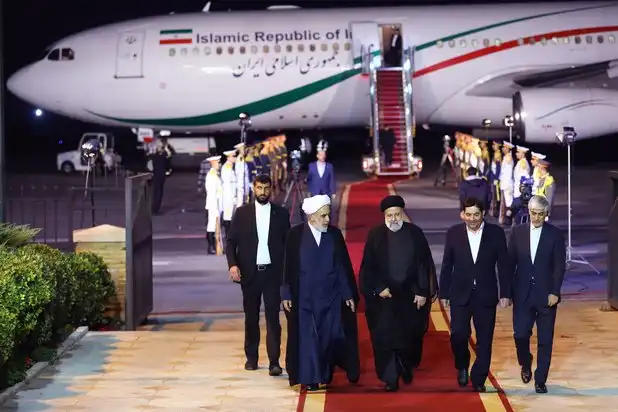
Immediately upon his return from Riyadh to Tehran, Iranian President Ebrahim Raisi raised Tehran’s reservations about the two-state solution. He said in press statements at Mehrabad Airport: “We are in this meeting, and contrary to what some say about the future of the Palestinian issue, within the framework of the two-state solution, we have proposed a democratic solution based on a return to the voices of all Palestinians, including Muslims, Christians, and Jews, to determine their fate.”


Iranian officials usually raise the idea of holding a comprehensive referendum in the historic Palestinian territories, without recognizing Israel, and say that it is “the Iranian guide’s proposal that Tehran sent to the United Nations.” Recently, Iranian officials repeated these allegations, despite international and regional silence.


Raisi said, “The passage of time does not give legitimacy to Israel and its right to ownership.” Pointing out that his participation in the Riyadh Summit was important in two ways: The first is that the meeting was held in the presence of all Islamic and Arab countries, and the second is that the topic of the summit was the world and all its peoples.


He continued: “One of the basic differences in our presence and speech, compared to other participants, was that America was considered the primary culprit in these crimes.”


For his part, Ali Shamkhani, political affairs advisor to Iranian Leader Ali Khamenei, said that “the statement of 57 Islamic and Arab countries at the Riyadh summit is a necessary condition for effective action against the increasing crimes of the Zionist entity,” but he considered that “insufficient.”


ARAB AND WORLD

Mon 13 Nov 2023 12:05 pm - Jerusalem Time

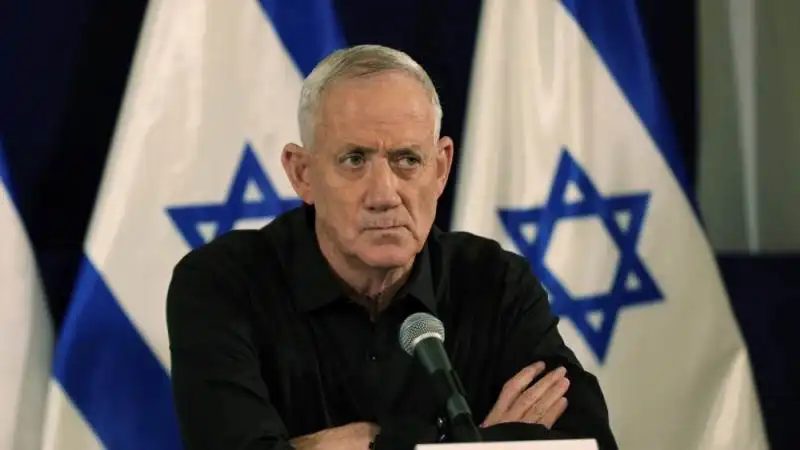
Israeli member of war Cabinet Gantz rejects calls to overthrow Netanyahu

The Israeli newspaper “Jerusalem Post” reported today that Benny Gantz, the minister in the Israeli War Council, opposes a possible political move brewing to overthrow Prime Minister Benjamin Netanyahu, according to what was reported by the “Arab World News Agency.” The newspaper quoted Gantz as saying, in private interviews, that Netanyahu cannot be replaced in times of war.


The newspaper also quoted sources it described as close to Gantz that the talks aimed at overthrowing Netanyahu “are nothing more than an illusion.”


The results of the latest opinion poll showed that most Israelis are influenced by the war in Gaza to decide their political opinions. In addition to the overwhelming hostility to the Hamas movement and support for the strikes on the Gaza Strip, they demand the overthrow of the far-right government, reject Netanyahu, and prefer Gantz, the son of the military establishment, and consider him the responsible leader. Who should be handed the keys to government after the war.


Source: Alsharq Al-Awsat

ARAB AND WORLD

Mon 13 Nov 2023 11:59 am - Jerusalem Time

Sunak dismisses the British Home Secretary

British Prime Minister Rishi Sunak fired controversial Interior Minister Suella Braverman on Monday, according to several media reports, as part of the adjustments Sunak is making to his team before the general elections expected next year.


Sunak has come under increasing pressure to sack Braverman, after her critics accused her of inflaming tensions during weeks of pro-Palestinian demonstrations and counter-protests in the United Kingdom.


ARAB AND WORLD

Mon 13 Nov 2023 11:54 am - Jerusalem Time

Israeli analysts: Israeli expectations of an imminent escalation against Hezbollah

Analysts: “The more time passes and the more the Israeli army’s operations in the Gaza Strip expand, the confrontation with Hezbollah will escalate. The risk of a misunderstanding on the northern front has increased significantly. The fear is that Israel does not actually control the pace and intensity of the escalation.”


Israeli military analysts suggested today, Monday, that the Israeli army will escalate its operations against Hezbollah, following the increase in the frequency of launching rocket shells and targeting sites on the Lebanese border with anti-armor shells. Analysts believe that Hezbollah's escalation yesterday was represented by expanding the firing of rockets to distant areas south of the border, including the city of Acre and the cities in Haifa Bay.


Tal Lev Ram, a military analyst in the Maariv newspaper, pointed out that at the center of the Israeli security leadership’s dilemma is the belief that another escalation against Hezbollah would affect decision-making regarding the continued implementation of war plans in the Gaza Strip.


He added, "There is a realization (in Israel) that it is no longer possible to continue containing Hezbollah's aggression through defense alone, and that the cells should be attacked before or after they carry out shooting and attacking Hezbollah's infrastructure, and that there is a need to escalate offensive operations further, so that Hezbollah will pay a price, without deteriorating into a rapid escalation, which means moving the central battlefield north (facing Lebanon) and requires freezing the situation with everything related to the southern front versus Hamas.”


Lev Ram pointed out that "the more time passes and the Israeli army's operations expand to other areas in the Gaza Strip, the confrontation with Hezbollah will escalate in the coming period," and pointed out that "the threats on the northern front are much more dangerous to the State of Israel" than the situation in the Strip.


The position of the Israeli security leadership so far is that “the focus must be on the war against Hamas, and not allow Hezbollah to distract the Israeli army from its central efforts,” according to Lev Ram. However, an Israeli reserve officer considered that "the situation in the north now allows (an escalation against Hezbollah), and the initiative (to such an escalation) will be more difficult when the residents of the Israeli border towns return to their homes." However, this position does not represent the Israeli security leadership, according to Lev Ram.


On the other hand, the residents of the Israeli towns near the Lebanese border, who were evacuated from these towns, demand “removing the threat of the Radwan Force” in Hezbollah and removing its fighters from the border, in anticipation of a repeat of the October 7 scenario in these towns, and that without this, there will be no They agree to return to these towns.


According to Amos Harel, a military analyst in the Haaretz newspaper, “Officially, Hamas members in Lebanon were responsible for launching the rockets yesterday, but it is clear that Hezbollah is directing them from behind the scenes. Hezbollah is now playing a dangerous game of fire, This would lead to the complete opening of a second front.”


Harel considered that "the risk of a misunderstanding on the northern front has increased significantly. The fear is that Israel does not actually control the pace and intensity of the escalation. Hezbollah realizes, as it believes, that it is not only free to fire mortar shells, but also by very diverse means, including attack aircraft." Drones, Katyusha missiles, anti-tank missiles, and this began to exact a price from the Israeli army, at a time when the front line gradually moved south,” referring to the firing of rockets towards Haifa Bay.


Harel pointed out that the Israeli army further complicated the situation vis-à-vis Hezbollah by targeting its air defenses, when it “bombed for the first time at a depth of approximately 40 kilometers in Lebanese territory. The target was an Iranian SI-67 surface-to-air missile platform, which Hezbollah is trying to "May God bring down Israeli drones. The Israeli army is taking advantage of the escalation in order to remove nuisance factors that will be used later, including the sites of the Radwan commando force and a section of Hezbollah's anti-aircraft and anti-armor systems."


The occupation army continues its military pressure, focusing on the northern Gaza Strip and Gaza City, but reports from the Gaza Strip speak of fierce battles. In parallel, American and Arab press reports talk about a possible prisoner exchange deal, and if it is achieved, it will be partial, meaning not releasing all the Israeli prisoners in the Gaza Strip.


Harel saw that, “In the meantime, the Israeli government and army continue, daily, to obstruct a prisoner deal and political efforts to reach a deal. Minister Avi Dichter spoke on Channel 12 about the ‘Nakba 23’ that Israel is implementing in the northern Gaza Strip, with the displacement of the Palestinian population to the south.” ".


He added, "Videos filmed by Israeli officers and soldiers come out of Gaza almost daily, containing arrogant statements about the resettlement of Gush Katif (the settlement bloc in the Strip that was evacuated in 2005). Neither Prime Minister Netanyahu nor the Chief of General Staff succeed in controlling that".


PALESTINE

Mon 13 Nov 2023 11:33 am - Jerusalem Time

Palestine Premier talks about international pressure to release the funds deducted from the clearing house

Speech by the Prime Minister at the beginning of Cabinet Session No. 229


The 38th day of the aggression against our people in Gaza:


We are struggling in all international circles to stop the aggression, and to secure the delivery of food and medicine to all areas of the Gaza Strip, especially the north, and we are doing everything possible to save our people there.


We reject the establishment of temporary camps for the displaced, as the Israeli army requests from international organizations. We want our people to return to their homes from which they were displaced. In the history of Palestine, there is no such thing as “temporary,” as experience has taught us that the temporary is permanent.


It is unfortunate that some countries still call for Israel's right to defend itself. The aggressor has no right to self-defense. Occupying others' lands is not self-defense. We are the victims, and we are the ones who have the right to self-defense.


I call on the United Nations and the European Union to parachute aid into the Gaza Strip, especially the north, as happened in various experiences in the world. We ask that relief corridors be opened to Gaza and not be limited to the Rafah crossing only.


On behalf of the Council of Ministers, I call for the immediate implementation of the decisions of the Arab League, especially those related to relief, the delivery of aid, and challenging the occupation authorities. It is unthinkable that thousands of tons of aid are accumulating while people are hungry, the sick are without medicine, and the wounded are dying one after the other.


It has been proposed by some countries to establish a water corridor between Cyprus and Gaza. We want aid to arrive, but we do not accept the displacement of our people on ships for deportation under the name of aid.


I say to the Israeli Prime Minister, who opposes the return of authority to Gaza and wants to maintain the occupation for a long time, that his policy will bring calamity on them. The Gaza Strip is part of the land of Palestine that was occupied in 1967, and we do not need anyone’s permission to help our people there.


Whoever supplies Israel with weapons now is an accomplice to the aggression against the blood of children, women and innocent people of our people.


Regarding the money that Israel deducted from the clearing, I say that there is an intense international effort and pressure on the occupying state to release our money, and I realize that people need their salaries, but none of us accept stopping aid, treatment, education, medicines, water and electricity bills, and the salaries that we pay to our people in Gaza. Our money and we dispose of it according to the requirements of serving our people and their rights wherever they are. International pressure is focused, and I hope that it will produce the desired results.


A few days ago, I participated in a meeting in Paris dedicated to providing relief to our people in Gaza. We requested that aid be directed through the Palestinian Red Crescent and the institutions operating in the Gaza Strip, including the United Nations. I hope that the role of the United Nations will be effective in delivering aid and mobilizing the remaining needs.


Israel has made Al-Shifa Hospital the symbol of its control over Gaza, as if it were a military barracks, where the hospital contains wounded and sick people. Whatever the justification, bombing hospitals, cutting off electricity from them, and preventing fuel and oil from reaching them can only be considered a war crime according to international humanitarian law.


That Israel makes Al-Shifa Hospital the capital of Gaza, and its fall means the fall of Gaza, is nothing but a justification for killing the wounded, the sick, doctors, and paramedics.


This Cabinet session is dedicated to continuing to help our people in Gaza, removing injustice against them, and stopping this unjust aggression against them.

PALESTINE

Mon 13 Nov 2023 10:02 am - Jerusalem Time

Israel's continuous arrest campaign in the West Bank, arresting 50 Palestinian citizens

From yesterday evening until Monday dawn, the Israeli occupation forces arrested about (50) citizens from the West Bank, including former prisoners and a wounded man, in addition to nine citizens from Gaza who were arrested from the home of the (girls) family in Hebron.


The Commission and the Club said that the arrests were concentrated in the governorates of Jerusalem, Ramallah, and Hebron, while the rest of the arrests were distributed among the governorates of Jericho, Nablus, Qalqilya, and Jenin.


The arrest campaign was accompanied by widespread harassment, severe beatings, and threats against detainees and their families, in addition to widespread sabotage and destruction of citizens’ homes.


Thus, the total number of arrests after the seventh of last October rose to more than (2,520), and this total includes those who were arrested from homes, through military checkpoints, those who were forced to surrender themselves under pressure, and those who were held hostage.


The continuing arrest campaigns come within the framework of the comprehensive aggression against our people and the ongoing genocide in Gaza, after the seventh of last October.


It is noteworthy that the data related to arrest cases includes those who were kept in detention by the occupation, or those who were later released.

ARAB AND WORLD

Mon 13 Nov 2023 8:12 am - Jerusalem Time

World Health: The largest health complex in Gaza is “out of service” and conditions inside are “horrific”

The Director-General of the World Health Organization, Adhanom Ghebreyesus, announced on the “X” platform that the largest hospital in Gaza had stopped working, and that health workers at Al-Shifa Hospital described the situation there as “horrific and dangerous” with continued shooting and bombing. “It is unfortunate that the number of patient deaths has increased significantly,” Ghebreyesus said in his tweet, adding that the Shifa Complex “is no longer operating as a hospital anymore.” Al-Shifa Complex and other hospitals are subject to a stifling Israeli siege, and Israel says that Hamas has command centers under and near the hospitals.


Tedros Adhanom Ghebreyesus, Director-General of the World Health Organization, said on Sunday that the largest hospital in Gaza has stopped working, and that deaths among patients are on the rise, as the violent Israeli attack on the Gaza Strip, which is controlled by the Palestinian Islamic Resistance Movement Hamas, continues.


The WHO director said the organization was able to speak to health workers at Al-Shifa Hospital, who described the “horrific and dangerous” situation with continuous shooting and shelling exacerbating already critical conditions.


“It is unfortunate that the number of patient deaths has increased dramatically,” he said in a post on the X website, adding that Al-Shifa “no longer functions as a hospital.”


Tedros joined other senior UN officials in calling for an immediate ceasefire.


"The world cannot stand silent while hospitals, which should be safe havens, turn into scenes of death, destruction and despair," he said.


Israeli forces are besieging hospitals in the northern Gaza Strip, including the Shifa complex. Medical staff members said that hospitals are barely able to care for those inside them, with three newborns dying in Al-Shifa Hospital, while more are facing danger in light of the power outage amid fierce fighting in the area surrounding the hospital.


Israel says it is targeting Hamas fighters who launched deadly attacks in southern Israel on October 7, adding that the movement has command centers under and near hospitals.


Israel says it is trying to release more than 200 hostages taken by Hamas fighters on October 7, and says hospitals must be evacuated.


Shelling continues around hospitals


The bombing and battles continued in the vicinity of Gaza hospitals on Sunday between Hamas and the Israeli army, which is trying to penetrate the neighborhoods of the northern Gaza Strip, threatening the lives of thousands of people stranded in health facilities and forcing other hospitals to evacuate patients who are now “in the streets without medical care,” according to a local official.


Other areas in the Gaza Strip are being subjected to Israeli bombing, some of them in the south, where tens of thousands of Palestinians have arrived over the past days, and it is difficult for them to find shelter, food, medicine and water under a siege imposed by Israel in response to an attack launched by Hamas against it on October 7, which killed about 1,200 Israelis.


The Hamas government announced on Sunday that 11,180 Palestinians were killed in the ongoing Israeli bombing of the Gaza Strip, including 4,609 children and 3,100 women, in addition to the injury of 28,200 people.


Hamas Undersecretary of the Ministry of Health, Yousef Abu Al-Rish, announced that Israel had “completely destroyed the heart department building in Al-Shifa Hospital,” where tens of thousands of displaced, wounded, and sick people were still stranded.


Abu Al-Rish said that "five infants" and "seven patients in intensive care" died due to a power outage in the largest hospital in Gaza, adding, "We expect the number of martyrs to double."


According to him, “650 patients, about forty children in incubators, all of them threatened with death, and 15,000 displaced people” are in this hospital.


The hospital announced that nurses were resorting to manual artificial respiration to keep the infants alive, while a doctor from Doctors Without Borders indicated that 17 patients were in the intensive care department.


Witnesses inside the hospital confirmed that there had been a raid, which the French news agency could not independently verify.


The Israeli army had previously denied deliberately targeting the hospital, but it repeated the accusation that Hamas used the medical facilities as its headquarters and military infrastructure, which the movement denies.


Israeli Prime Minister Benjamin Netanyahu pointed out in an interview with CNN that about 100 patients were evacuated from Al-Shifa Hospital.


The director of Al-Shifa Complex, Muhammad Abu Salmiya, warned that “medical teams are unable to work, and the bodies in the dozens cannot be dealt with or buried.”


Source: (France 24 / AFP / Reuters)

PALESTINE

Mon 13 Nov 2023 8:12 am - Jerusalem Time

A Palestinian taxi driver was killed by Israeli army in the city of Hebron

A citizen was killed by Israeli occupation forces’ bullets, today, Monday, in the city of Hebron, in the southern West Bank.


Eyewitnesses said that the occupation forces stormed the Al-Hawuz neighborhood in the city of Hebron, and raided the administrative building of the Islamic Charitable Society for Orphan Care.


They added that the occupation soldiers opened fire on the citizen, Issa Ali Abdel Moneim Al-Qadi Al-Tamimi (65 years old), while he was driving his public vehicle near the association building, which led to him being shot in the head and killing him immediately.

Our correspondent reported that the occupation forces seized the charity's computers, files and property, and closed its doors with electric welding.


PALESTINE

Mon 13 Nov 2023 8:12 am - Jerusalem Time

Israeli war against Gaza on its 38th day: thousands are trapped in hospitals

Dozens of citizens were injured today, Monday, as a result of continuous Israeli bombardment on the Gaza Strip, by land, sea and air, while thousands are still stranded in hospitals and health facilities, and others are “on the streets without medical care” in many areas.


The occupation aircraft bombed a house belonging to the Al-Agha family near Al-Amin Mosque in the western line of Khan Yunis, which led to casualties as a preliminary toll.


While the occupation warplanes continue their raids and bombing in the vicinity of hospitals, where they completely destroyed the heart department building in the Al-Shifa Medical Complex, and tens of thousands of displaced, wounded, and sick people are still stranded, after being besieged for the third day in a row, amid a complete outage of electricity, water, and food.


According to the Ministry of Health, 3 premature babies and 12 patients have been martyred inside the Al-Shifa Medical Complex so far, due to the outage of electricity and medical consumables, including two newborn babies.


All 3,000 oncology patients who were being treated in Al-Rantisi and Al-Turki hospitals were now left to die, after the occupation expelled them from the hospitals, in light of warnings of a real humanitarian catastrophe due to the absence of basic services.


The Palestine Red Crescent Society announced that Al-Quds Hospital in Gaza City was out of service and stopped working completely, yesterday, due to running out of fuel and a power outage.


23 out of 35 hospitals have completely stopped operating, and the occupation forces are still besieging many hospitals, preventing entry or exit to them for medical staff, paramedics, and patients.


The occupation warplanes also destroyed a brick factory and the adjacent Bani Suhaila cemetery, east of Khan Yunis Governorate.


The ongoing Israeli aggression on the Gaza Strip since the seventh of last October has resulted in more than 11,078 martyrs, including 4,506 children and 3,027 women, in addition to the injury of 27,490 citizens, the majority of whom are women and children, an infinite toll.


PALESTINE

Mon 13 Nov 2023 8:09 am - Jerusalem Time

The Washington Post: Hamas planned to ignite a regional war in Operation “Al-Aqsa Flood”

The American newspaper "The Washington Post" revealed the details of the Hamas attack on October 7, considering, according to Western and Middle Eastern intelligence sources, that its aim was "to ignite a major regional war in the Middle East."


The newspaper considered that four weeks after the Hamas attack, the reassembled parts began to reveal the features of the movement’s broader plan, a plan that analysts say was not only aimed at killing and capturing Israelis, but rather at “igniting a massive fire that would sweep region and lead to a broader conflict.”


This evidence, described by more than 10 current and former intelligence and security officials from four Western and Middle Eastern countries, reveals the intent of Hamas planners to “strike a strike of historic proportions, in the hope that their actions will lead to an overwhelming Israeli response.”


The newspaper quoted a number of officials who had not previously spoken about the matter, saying that intelligence information about the movement’s motives “has become stronger in recent days, and the results also shed new light on the tactics and methods used by Hamas to deceive the Israeli intelligence establishment that prides itself on its performance and thwart the initial efforts made by the  "Israel army to stop the attack."


Officials say the fighters "were carrying enough food, ammunition and equipment to last several days, and were instructed to continue pushing into Israel if the first wave of attacks were successful, potentially hitting larger Israeli cities."


The newspaper reported that one of the units “was carrying reconnaissance information and maps indicating an intention to continue the attack to the West Bank border,” according to two senior intelligence officials in the Middle East and a former American official with detailed knowledge of the evidence. “Hamas has also increased its communication with West Bank activists in recent months, although the movement says it did not inform its allies in the West Bank of its plans in advance.”


“If that had happened, it would have been a major propaganda victory, but a symbolic strike not only against Israel, but also against the Palestinian Authority,” said the former US official who was briefed on the matter.


The former official, like many others interviewed, spoke on condition of anonymity to discuss preliminary intelligence findings.


The newspaper added, “Hamas itself was surprised by the sweeping nature of the incursion, according to the group’s public statements and assessments shared privately with journalists. But the movement’s leaders expected their attack to result in more than just hostages,” current and former intelligence officials said.


Analysts said, "Hamas meticulously planned and prepared for a massacre of Israeli civilians on a scale that would likely prompt the Israeli government to send forces into Gaza. In fact, Hamas leaders have publicly expressed their willingness to accept heavy casualties, which are likely to include the death of many civilians in Gaza who live "Under its rule."


“They had a very clear vision about what would happen to Gaza the next day,” said a senior Israeli military official familiar with sensitive intelligence, including interrogations with Hamas fighters and intercepted communications, adding: “They wanted to buy their place in history — a place in history.” Jihad – at the cost of the lives of many people in Gaza.”


Secret planning and high-level deception

“Planning for the historic attack against Israel has been underway for more than a year, and Hamas officials have done their best to conceal preparations, even as senior leaders have dropped occasional hints about their intentions,” intelligence officials say.


Western and Middle Eastern intelligence officials added that "Hamas militants, during their training, carefully reviewed population centers and military bases to create a matrix of potential targets."


Hamas deployed inexpensive reconnaissance drones to generate maps of Israeli cities and military installations within a few miles of the separation wall system that Israel built to isolate Gaza at a cost of $1 billion and to obtain detailed intelligence.

Intelligence officials said they obtained "additional information from day laborers in Gaza, who were allowed to enter Israel to work." They also "monitored Israeli websites, studying real estate photos and social media posts depicting life inside kibbutzim and plans of buildings and homes."


“Intelligence gathering was not particularly complex, but it was systematic,” said Ali Soufan, a former FBI counterterrorism official and founder of The Soufan Group, a private security consulting firm in New York that works closely with Middle Eastern governments.


Soufan added, “If you are in prison, you have to study the prison security system, and this is what Hamas has been doing for 16 years.” He continued, “Their intelligence information on the ground was much better than anything the Iranians could provide them.”


The most important details appear to have been withheld from Hamas's political leadership and its main backers, Iran's Islamic Revolutionary Guard Corps and the Lebanon-based Hezbollah militant group, as officials from both organizations have publicly acknowledged.


Plant the seeds

The newspaper believes, “While the plot was progressing secretly, others in the Hamas leadership were busy planting the seeds of a highly sophisticated deception operation.”


It was a message the Israelis wanted to hear: “Hamas does not want more wars,” according to former head of Palestinian affairs at Aman, Michael Milstein.


Milstein, who met Sinwar briefly years ago, said, “October 7 bears a fundamental feature of Sinwar’s previous operations: knowing the basic awareness of the Israeli public.” In order to support this perception of moderation, clashes between Hamas and Israel stopped after that.


For many in Israel, it was further evidence that Hamas had changed and was no longer seeking a bloody conflict, with some reports suggesting that Hamas officials “passed intelligence about PIJ to the Israelis to reinforce the impression that they were cooperating.”


The relative calm on Israel's southwestern border was welcome, as Israeli officials were preoccupied with problems elsewhere, with Prime Minister Benjamin Netanyahu's government threatened by historic internal unrest, including unprecedented waves of demonstrations against judicial reform proposed by his far-right government. .


The Israeli army saw a much greater security threat from Hezbollah in the north and from violent Palestinian groups engaged in escalating clashes with Israeli soldiers and armed settlers in the West Bank.


Israeli concerns about the West Bank also increased over the summer with the discovery of new attempts by outside groups to arm Palestinians and incite them to violence.


Surprise

The attempts at deception and diversion eventually succeeded, and in Gaza, less than fifty miles from the West Bank, the arming and training of Hamas' assault squads were largely ignored.


Surveillance footage and other data continued to flow to Israeli eavesdropping centers, but the most crucial communication occurred through channels that the Israelis could not access or failed to understand, current and former officials said.


Eran Etzion, former deputy head of the Israeli National Security Council, said: “They were deceiving Israel at the strategic level, using portable radios, underground wire networks in tunnels and other communications that we could not listen to, while they were using the codes of the so-called open networks, which they were using.” They know we're listening."


"They were creating an alternative reality," he added.

Yadlin, the former head of Defense Intelligence, said that Israel "ultimately allowed the building of a Palestinian army by Hamas and kept telling itself that Hamas could be deterred."


“Israel has been deceived,” Yadlin said, while a Hamas spokesman said the movement’s firm position on regaining all former Palestinian lands should have made its intentions clear. Hamas acted out of the conviction that “we are being erased – our cause is being erased.”


Along with maps and other documents, many of the dead fighters were equipped with handcuffs and gas canisters, as well as instructions to set fire to homes. Witnesses and paramedics who arrived at the scene said the tactic was aimed at driving residents out of their safe rooms with smoke. Most worrying for some, Analysts are preparing for an expanded attack.


“They have planned a second phase, including major Israeli cities and military bases,” said a senior Israeli official, who spoke on the condition of anonymity to discuss classified intelligence.


It is unclear whether the attackers had realistic expectations of advancing as far as the West Bank, and Hamas officials said they were hoping to obtain hostages to exchange for prisoners held in Israel and did not expect nearly all of the October 7 assault teams to reach their initial objectives.

Annahar Alaraby


OPINIONS

Mon 13 Nov 2023 8:03 am - Jerusalem Time

It has become part of the past.. Who will rule Israel if Netanyahu leaves? A more extreme government or a centrist coalition?

Ramallah - “Al-Quds” dot com

Ramallah - “Al-Quds” dot com

Opinion Writer

For many years, Israel Hayom was known as “Bibiton,” a Hebrew word meaning “Bibi’s newspaper,” the nickname of Israeli Prime Minister Benjamin Netanyahu. It was founded by the late billionaire casino magnate Sheldon Adelson to be Netanyahu's mouthpiece, but today it calls for "Netanyahu's departure."


Last week, the newspaper's head of news, Uri Dagon, indicated a split in the ranks and called on the prime minister to "lead the country to victory and then leave," revealing that the ongoing political wrangling while the war rages has reached a new level.


In Israel's fractured and divided politics, it was a sign that Netanyahu's political era is teetering on its bitter end.


Israel's leaders fell after the 1973 and Lebanon wars

Netanyahu is widely blamed for security failures that allowed thousands of Hamas fighters to stream across the border from Gaza and carry out attacks unparalleled in Israel's history. Now the Israelis are preoccupied with the idea of “the days to come.” If the first day after that describes what happens in Gaza if Hamas is overthrown, then the second day seems like an expected reset of the country’s policy, in the post-Netanyahu era, which does not believe that only a few of those loyal to him will survive.


Many point to the historic change of the old guard in Israeli politics following the 1973 war, which was represented by the overthrow of Golda Meir and the end of the dominance of the Labor Party, which had ruled Israel since its founding in 1948.


Amit Segal, chief political commentator for Israel's Channel 2, recently told CNN: "History has taught us that every surprise and crisis leads to the collapse of the government." He added: "This was the case in 1973 with Golda Meir, in 1982 with Menachem Begin in the First Lebanon War, and in 2006 with Ehud Olmert in the Second Lebanon War. The clock is ticking."


The Hamas breakthrough came after a year of madness

It remains uncertain what Netanyahu's departure will look like and how he will be replaced. However, two words now frequently used to describe the new government are “normal” and “sane,” meaning that the far-right religious parties and nationalist settler parties, with which Netanyahu was in coalition, should be stripped of their influence.


In her Knesset office, Merav Michaeli, leader of the Labor Party, said she believes a reset “is not only a possible process, but also a necessity.” She described the Hamas attack as a “breakthrough” that comes at the end of a “crazy year” in which Netanyahu and his extreme right tried to dismantle the independence of one of the main pillars of what it describes as the democratic settlement in Israel, namely the country’s Supreme Court, sparking months of mass protests. She said: "The Israelis are disappointed. They did not get the security they were promised."


Netanyahu's departure

Protests against judicial amendments in Israel in March 2023 - Reuters

“I have never felt so unsafe,” she added. “We need to replace the leadership otherwise we won’t be able to rebuild anything.”


In the last election, in 2022, the left-wing Meretz party failed to cross the electoral threshold, meaning it gained no seats in the Knesset, while Labor's share fell to just four seats.


As the left and center-left collapsed, Israeli opposition parties shifted dramatically to the right, competing on crowded ground defined by the Likud Party.


The Likud Party, which holds 32 of the 120 seats in the Knesset, remains the most organized party among the Israeli parties. But Michaeli believes that it is no longer a party capable of winning more than 30 seats, the number that allowed it to lead several coalitions over the past fifteen years.


The tensions that Michaeli can see within Likud lead her to hope for a possible split, which reflects the experience of the Israeli left.

There is a broad opposition movement calling for Netanyahu's departure

For Haaretz columnist Yossi Verter, what marks the difference between the post-1973 reset and today is not just the media and social media being able to act more quickly, but also the presence of a broad anti-Netanyahu opposition movement that was already on the streets.


“There was corruption and decadence at that time too,” he wrote last week, referring to the 1970s and echoing Michaeli’s criticism. He added: "The situation has greatly worsened in Netanyahu's recent governments: unfortunate appointments to senior positions, the inclusion of mentally ill criminals in decision-making positions, the promotion of extremist and racist settlers who support Jewish terrorism to the most critical positions, and the establishment of a media poisoning machine that works 24 hours a day, 7 days a week, attacking... Everything that is good and reasonable in Israel, and everything that is evil and unclean is glorified,” he said.


Popular support for him and his allies is collapsing...and here is the most prominent beneficiary

This argument seems to be confirmed by recent opinion polls. A poll conducted by the Israeli newspaper Maariv, less than a week after the Hamas attack, showed that popular support for Netanyahu and his allies is collapsing. Voters are turning to Benny Gantz's National Unity Party, a center-right party, following his decision to join the government and form a war government.


The fact that Netanyahu, long mired in criminal cases and scandal, will not give up without a fight, has become clear in the month since October 7. In tweets that were later deleted, Netanyahu blamed the commander of the Israeli security forces for the mistakes that led to October 7, in an attempt to evade his responsibility.


Netanyahu's departure

Benny Gantz, a member of the war council formed by Netanyahu after the Al-Aqsa flood and the former Defense Minister, is considered the most prominent potential competitor to the current Israeli Prime Minister/Reuters

There were also allegations, since denied by Netanyahu, that during an off-camera press conference he linked the protest movement, in which thousands of reservists threatened to refuse to report for duty if the government carried out its highly controversial judicial reform, to Hamas' decision to attack.


Israel's Supreme Court has banned anti-war marches, but demonstrations by families of Hamas prisoners have been allowed outside Netanyahu's official residence, focusing attention on his handling of what has become Israel's most troubling emotional issue.


But he will not resign

Although Netanyahu, based on his past history, is unlikely to leave willingly and resign, calls for elections once the war against Hamas ends have continued in the past week, even within the war cabinet.


Labor Minister Yoav Ben Tzur of the Shas party said: “At the end of the war, Netanyahu will have to go to elections within 90 days.”


He added: "This will happen before an investigation committee of this or that kind is formed. This is my opinion." He continued, "We cannot continue like this. The public will have its say, and then we will see if Netanyahu gets the mandate."


For Dalia Sheindlin, a pollster, academic and columnist for Haaretz, the left is unlikely to benefit from any political reset. She said it was unlikely that either of the two left-wing parties, Labor and Meretz, would win enough votes to gain seats in the Knesset if elections were held next year.


The alternative may be more extreme

Although there is a possibility of forming a center-right coalition, the formation of a government more extreme than Netanyahu's is not ruled out.


Sheindlin added that even if there was a more centrist government, do not expect it to take a different approach to the Palestinian issue.


She said: “If a coalition led by someone like Benny Gantz emerges, it will not take a softer, more conciliatory line. It is very difficult to see a return to peace politics. My personal view is that the only thing that can mitigate the violence is international intervention, and this should be "The approach is imposed in some way."

Arabic post


PALESTINE

Mon 13 Nov 2023 8:00 am - Jerusalem Time

The occupation abuses prisoners...mass transfers and attacks against Palestinian detainees in prisons

The Israeli Prison Administration continued to escalate mass transfer operations against Palestinian prisoners, including “leaders from the prisoner movement,” according to what two Palestinian institutions concerned with prisoners’ affairs reported, Sunday, November 12, 2023.


The Prisoners' and Ex-Prisoners' Affairs Authority (affiliated with the Palestinian Authority) and the Prisoners' Club (independent, based in Ramallah) said, "The occupation prison administration continues to escalate the mass transfer operations against prisoners in its prisons."


Torture and attacks against prisoners

A statement issued by the two institutions, reported by the official Palestinian news agency “Wafa,” indicated that “this was accompanied by acts of abuse against them, the most prominent of whom was the detainee Nael Barghouti, who is entering his 44th year in the occupation’s detention centers.”


The statement added, "The occupation recently transferred detainee Nael Barghouti (66 years old) from Ofer prison to Gilboa prison, where he was subjected to abuse, which included severe beatings. He is one of the old detainees, as the total years of his detention amounted to about 44 years, including 34 years." He spent it continuously.”


The statement pointed out that the occupation prison administration, after the seventh of last October, “escalated the mass transfer operations against detainees, whether to departments within the prison, solitary confinement cells, or to other prisons, which affected hundreds, including sick detainees, and was carried out during operations.” Transportation is a massive attack against them.”


The rate of arrests has increased since the Al-Aqsa flood

According to data from the Prisoner Club, on Sunday, the total number of arrests since October 7 has risen to about 2,470 Palestinians, and this total includes those who were arrested from homes, through military checkpoints, those who were forced to surrender themselves under pressure, and those who were held hostage.


Various parts of the West Bank and Jerusalem witness daily raids and incursions into villages and towns by Israeli army forces, accompanied by confrontations, arrests, and the shooting and firing of gas bombs at Palestinians.


The pace of these campaigns increased in conjunction with a devastating war launched by Israel on the Gaza Strip since October 7, which left tens of thousands of civilians martyred and wounded, most of them children and women.

PALESTINE

Mon 13 Nov 2023 7:53 am - Jerusalem Time

Axios: The US Secretary of Defense warned his Israeli counterpart against opening a front with Hezbollah.

On Sunday, the Axios news website quoted Israeli and American sources as saying that US Defense Secretary Lloyd Austin warned his Israeli counterpart Yoav Gallant against military operations in Lebanon, noting that Austin asked Israel to avoid steps that might lead to an all-out war with Hezbollah.


Axios explained that Gallant informed his American counterpart that Israel's policy is not to open a second front in Lebanon, in addition to Gaza, and stressed that he does not believe this scenario will happen. The news site noted that Gallant informed his American counterpart that Hezbollah was escalating its attacks and that it was “playing with fire,” as he put it. Axios quoted an Israeli source as saying that the Biden administration is concerned about Gallant's public threats against Hezbollah and believes that these threats will only escalate tensions.


Yesterday, the Times of Israel newspaper quoted Gallant as saying that Hezbollah is dragging Lebanon into war, indicating that the Lebanese will be the ones who will pay the price. Gallant warned that Hezbollah "is close to committing a grave mistake that will end with Beirut residents fleeing their homes," he said. Gallant said that the Israeli Air Force is using less than a tenth of its capabilities in Gaza and that "our planes are directed towards the north."


For his part, Hezbollah Secretary-General Hassan Nasrallah said that “the South Lebanon Front will remain a pressure front,” and said that the supportive Lebanese political and popular stance is a “supportive and grateful stance” that makes it effective and influential.


PALESTINE

Mon 13 Nov 2023 7:20 am - Jerusalem Time

War on Gaza: Continuing clashes and hospitals “unable” to count deaths and wounded

In terms of field developments, fierce battles are taking place between groups of militants and occupation forces on several fronts west of Gaza City, amid escalating shelling and raids in the vicinity of hospitals.


The number of martyrs in Gaza rose to 11,180, including 4,609 children and 3,100 women, according to what the government media office in the besieged Strip confirmed on the 37th day of the war on Gaza, while Israeli aircraft intensified its raids and bombing in the vicinity of hospitals, while the Israeli Prime Minister, Benjamin Netanyahu, repeated: During an interview with CNN on Sunday, he said that Israel would be willing to discuss a ceasefire in the Gaza Strip only if it was in exchange for the release of all Hamas hostages.


This comes in light of the Israeli escalation against hospitals in the Gaza Strip, targeting and besieging them, as well as the bombing of their surroundings, especially in the north and west of Gaza City, as the occupation forces are trying to penetrate those areas. There were reports of a loss of communication with the Al-Shifa Complex, which has been out of service since yesterday, Saturday, and its electricity was completely cut off, which means that the devices that provide life to patients, including infants, are out of service.


Earlier today, the occupation forces bombed the Mahdi Maternity Hospital in the Al-Nasr neighborhood, west of Gaza City, killing two doctors and wounding a number of displaced people.


The Director General of Gaza Hospitals, Muhammad Zaqout, announced today the difficulty of counting the number of martyrs and wounded in the Strip, and said: “We are now unable to count the number of martyrs and wounded due to the inability to reach them,” in light of the continued Israeli bombing. He also explained that "the Israeli occupation intensively targeted the vicinity of the Indonesian Hospital in the northern Gaza Strip and the Mahdi Maternity Hospital in the Al-Nasr neighborhood, west of Gaza City," stressing that "the Al-Nasr and Al-Rantisi hospitals in the Al-Nasr neighborhood, west of Gaza City, were forcibly evacuated, and the patients are now in the streets without medical care."


In terms of field developments, fierce battles are taking place between groups of militants and the occupation forces on several fronts, while armed resistance groups clashed with the occupation forces on several fronts west of Gaza City.


OPINIONS

Mon 13 Nov 2023 7:15 am - Jerusalem Time

An interview with Azmi Bishara regarding the developments in the war: The Israelis realize that they are unable to remain in Gaza

Translation for "Al-Quds" dot com

Translation for "Al-Quds" dot com

Opinion Writer

Dr.. Azmi Bishara: The Israelis realize that they are unable to remain in Gaza || “Either there is a plan to displace the population of Gaza from north to south and from there to Sinai, or this is a reflection of Israeli confusion, and this is very possible.”


The Director of the Arab Center for Research and Policy Studies, Dr. Azmi Bishara, during an interview conducted with him on “Arab TV” on Sunday evening, regarding developments in the war on Gaza that began 37 days ago; He expressed his confidence that the Israelis realize that they are unable to remain in Gaza, pointing out that Israel did not have any plan for the “next day,” that is, after the elimination of the Hamas movement, if it succeeded in doing so.


Bishara expected that Israel would face more armed resistance in the Gaza Strip, suggesting that Israel would have an American deadline of no more than a month to “carry out the mission.”


Regarding the change in Israeli military priorities from focusing on the northern Gaza Strip and then moving to the south, Bishara explained that after what happened on October 7, Israeli officials were forced to develop a military plan and began to adapt the facts to be compatible with the hastily drawn up plan.


He added, "The focus on the north is because they initially decided to start the war in the north. Perhaps today they have discovered that the Hamas leadership and the prisoners are in the south, not the north."


He pointed out, "Either there is a plan to displace the population of Gaza from north to south and from there to Sinai, or this is a reflection of Israeli confusion, and this is very likely."


Bishara stressed that the Americans still share Israel's goals in the war, highlighting some positive observations about the Arab-Islamic summit and its decisions, compared to the low level of expectations that preceded the Riyadh summit, last Saturday.


He said, "The Arab-Islamic summit produced one practical decision, which is to break the siege imposed on the Gaza Strip," and stated that "relief and aid convoys must enter the Gaza Strip, without dependence on the Israeli military plan."


Bishara described the outcomes of the joint Arab-Islamic summit as some of them acceptable in light of the low level of expectations and in comparison with the weak Arab reality and the amount of differences that exist between the officials of the meeting countries.


According to him, the decisions translated the return of the Palestine issue to the center of attention, while stopping at the repetition of decisions that criticize normalization relations with Israel in isolation from the Palestinian issue and its just solution. Regarding this issue, Bishara said that there is only one practical decision, which is to stand with Egypt in order to break the siege, which is that opening and closing the crossing, at least for aid and relief, is subject to Israel’s approval, “and therefore now they must think about how to translate that decision that they took.”


Bishara stated during the dialogue that “Israel has not yet faced everything that the resistance has prepared in the Gaza Strip,” noting that “there are thousands of young people waiting for the moment of the ground battle.”


After recalling how difficult it is for Hamas to accomplish what it has already accomplished while it is under comprehensive siege, he said, “They (Hamas fighters) have no options but to resist.”


He pointed out that “it is clear that the issue of Israeli prisoners in Gaza does not represent a priority for (Israeli Prime Minister Benjamin) Netanyahu,” to which Bishara stressed that the matter for him is “purely military and perhaps in his subconscious he wishes to get rid of the prisoners in the Gaza Strip.” Gaza, and the pressure they are causing and what they will say after they leave if that happens under an agreement.


According to Bishara, one of the crises in the negotiations relates to the number of prisoners demanding their release, and here the problem arises that the Israelis assume larger numbers of prisoners than what exists among the Hamas or Islamic Jihad movements.


Bishara pointed out that “international complicity with Israel’s targeting of hospitals is unprecedented,” and he believed that “Israel is searching for an Arab partner who would accept managing the affairs of the population in the Gaza Strip after reducing their number,” and to establish a security coordination system for them similar to what is happening in the West Bank, with failure. .


He explained that this is a scenario that does not take into account the reaction of people who lost everything. “Then it is important not to forget that Israel has never been ready to pay the financial price of the occupation in terms of expenses and investments, so it will ask Arab countries to invest money to rebuild Gaza, as it had previously done.” I asked in the past.


While he pointed out that the Palestinian leaders missed repeated opportunities for unity, and that it is not possible to rule the West Bank or Gaza without Palestinian unity, Bishara saw that the Israelis realize that they cannot remain in Gaza, “with the need to remember that whoever withdrew from Gaza is a warlike person on the level of (the Prime Minister) Former Israeli Ariel Sharon.


The director of the Arab Center stated, “Just as the Israeli leadership did not have a plan to occupy Gaza, it did not have a plan for the next day, that is, after the end of the war and the elimination of the Hamas movement with its rule and military power.”


He also downplayed the importance of the American talk about the necessity of holding a new peace conference, because the Arab world went through “such a scenario after the occupation of Kuwait and the Madrid Conference and the failed conferences that followed under the title of two states and long negotiations. Likewise, the Americans know that Israel refuses to offer anything to the Arabs, especially today.” "After they failed to save a hospital and bring aid into the Gaza Strip.


Regarding the Israeli army’s targeting of hospitals, Bishara said that the occupation’s targeting of them in this systematic manner is mainly due to the Israeli conviction that it is impossible to displace a people without demolishing their hospitals and schools as safe havens.


He stressed that "the United States still shares Israel's goals in the war on Gaza," stressing that "American military support remains unconditional."


In this regard, Bishara agreed that the American administration is now facing internal problems and a rise in voices rejecting the official position within the leftist movement of the Democratic Party and among American Jews, “and this is an important matter,” in the estimation of Dr. Bishara, who assumes that these people have actually influenced the administration in public discourse, and it has become Netanyahu is forced to respond to American inquiries about the limits of the war and future plans. But in Bishara’s assessment, the official American pressure is still not real and is related to “providing advice,” and this is not pressure that will be achieved “when an Arab position arises that actually affects America, related to relations with Israel, security coordination, etc., and this has not happened yet.”


He stated that "Israel is exploiting the state of war to settle scores with the Palestinian people in the West Bank."


Bishara had indicated during an interview conducted with him on the fourth of this month that the three conditions for Israel to stop its aggression are that the Israeli consensus on the war be violated, that the American-Israeli agreement on the goal of the aggression, i.e. eliminating the Hamas movement, be disturbed, and that the major Arab countries take action. Real steps such as a serious threat to sever relations with Israel. He believed that it is in the interest of everyone at the level of countries and powers in the region that Israel does not achieve its goals in the war on Gaza.


Regarding Hezbollah, Bishara said in the previous meeting that any entry into the war would not change the situation in Gaza, but rather would increase the price paid by Israel.


The Director General of the Arab Center for Research and Policy Studies pointed out that as long as there is an Israeli consensus on restoring balance, prestige and revenge through war, and as long as the American-Israeli agreement continues on the goal of the war, and as long as there are no real steps from the Arab countries, the war of annihilation against the Gaza Strip will continue. .


ARAB AND WORLD

Mon 13 Nov 2023 7:05 am - Jerusalem Time

Report: American fears of Israeli efforts to create a pretext to expand the war on the Lebanon front

Washington fears an increase in Israeli attacks in Lebanon, in a way that will provoke Hezbollah and push it to escalate its attacks within the framework of the existing confrontations, which may create an excuse for Israel to expand the scope of its war on the Gaza Strip to include the Lebanese front, and enter into a comprehensive confrontation with Hezbollah.


The White House fears provocative Israeli attacks in Lebanon that might push Hezbollah to escalate its border operations, which might create pretexts for Israel to justify increasing its military operations in Lebanon and expanding the scope of the war Israel is waging against the besieged Gaza Strip, which would drag Washington into the heart of the conflict in Region.


This came according to what the Israeli “Walla” website reported in a report on Sunday evening, citing three sources familiar with the talks between Tel Aviv and Washington in this regard. The report pointed to the telephone conversation between US Secretary of Defense, Lloyd Austin, and his Israeli counterpart, Yoav Gallant, on Saturday evening, and said that it focused on this matter.


According to Walla, Austin, during a call with Gallant, expressed Washington’s concern about “the escalation of fighting on the northern border,” and pointed to fears that the escalation of confrontations between Hezbollah and the Israeli army may lead to the opening of another front in the war, and the report stated. Austin called on Gallant to avoid steps that might lead to an all-out war with Hezbollah.


The report stated that the message conveyed by Austin “reflects growing concern in the White House about what the Biden administration sees as increased military operations by the Israeli army in Lebanon that have exacerbated tensions along the border,” with the escalation of border confrontations that led to the killing of 10 Israelis, most of them soldiers, And dozens of Lebanese, most of whom are Hezbollah fighters.


The report said, “The administration of President Joe Biden is concerned that the attacks carried out by the Israeli army in Lebanon are aimed at provoking Hezbollah and creating a pretext for a broader Israeli military operation in Lebanon, which may drag the United States deeper into the crisis” in the region, which he denied. Officials in Tel Aviv.


According to Walla, senior military and political officials in Israel have informed their American counterparts on more than one occasion since the start of the war on the Gaza Strip that “Israeli citizens will not agree to return to the settlements (in the border area with Lebanon) as long as the Hezbollah threat remains present.” The other side of the border."


The report indicated that the Israeli authorities evacuated tens of thousands of civilians from towns and settlements located in the border region, south of Lebanon, for fear of a Hezbollah attack, similar to the Hamas attack on Israeli military sites and settlements in the vicinity of the Gaza Strip on October 7 last year.


Direct American messages


Walla stated that the Biden administration has exerted pressure on the Lebanese government and actors in the region, in recent weeks, to do everything in its power to prevent Hezbollah from joining the war with its full military strength. The report said that the unannounced visit of the US Special Envoy, Amos Hockstein, to the Lebanese capital, Beirut, last week, came in this context.


According to the report, Hockstein conveyed messages to Hezbollah through the Speaker of Parliament, Nabih Berri, in addition to other high-ranking Lebanese officials, in which he warned Hezbollah against escalating the situation in the region. Walla quoted two informed sources as saying that the picture formed by the American envoy was that Hezbollah and the other parties in Lebanon were not interested in a comprehensive war with Israel.


The report explained that Austin’s messages to Gallant regarding the escalation of Israeli attacks in Lebanon came at the behest of the White House, and in a statement published by the Pentagon about the conversation, it said that Austin stressed to Gallant the necessity of “containing the conflict in the Gaza Strip only and avoiding regional escalation,” without explicitly mentioning Lebanon. .


The website quoted two Israeli and American sources as saying that Austin “was very direct in his conversation with Gallant and specifically mentioned US concerns about the activities of the Israeli army in Lebanon.” An Israeli source said that Austin asked Gallant for clarifications regarding the strikes carried out by the Israeli army in Lebanon in recent days.


The report stressed that "Austin asked Israel to refrain from taking steps that might lead to an all-out war with Hezbollah." The Israeli source said that Gallant informed Austin that Israeli policy would not lead to the opening of a second front in Lebanon, and stressed that he did not believe that such a scenario would come true.


Gallant said during the conversation with Austin, “It was Hezbollah that escalated the fighting by launching drones at Israel, including the plane that was launched from Syria to Eilat.” The Israeli source quoted Gallant as saying during the call with Austin, “Hezbollah is playing... "By fire."


Two events created tension in the White House


The report stressed that the Biden administration’s anxiety had increased as a result of two events that occurred in recent days, and it considered that they could have pushed Hezbollah into a broad confrontation with Israel. The first: Israel’s targeting of a civilian vehicle in southern Lebanon led to the martyrdom of a grandmother and her three granddaughters.

Report: American fears of Israeli efforts to create a pretext to expand the war on the Lebanon front

Washington fears an increase in Israeli attacks in Lebanon, in a way that will provoke Hezbollah and push it to escalate its attacks within the framework of the existing confrontations, which may create an excuse for Israel to expand the scope of its war on the Gaza Strip to include the Lebanese front, and enter into a comprehensive confrontation with Hezbollah.


The White House fears provocative Israeli attacks in Lebanon that might push Hezbollah to escalate its border operations, which might create pretexts for Israel to justify increasing its military operations in Lebanon and expanding the scope of the war Israel is waging against the besieged Gaza Strip, which would drag Washington into the heart of the conflict in Region.


This came according to what the Israeli “Walla” website reported in a report on Sunday evening, citing three sources familiar with the talks between Tel Aviv and Washington in this regard. The report pointed to the telephone conversation between US Secretary of Defense, Lloyd Austin, and his Israeli counterpart, Yoav Gallant, on Saturday evening, and said that it focused on this matter.


According to Walla, Austin, during a call with Gallant, expressed Washington’s concern about “the escalation of fighting on the northern border,” and pointed to fears that the escalation of confrontations between Hezbollah and the Israeli army may lead to the opening of another front in the war, and the report stated. Austin called on Gallant to avoid steps that might lead to an all-out war with Hezbollah.


The report stated that the message conveyed by Austin “reflects growing concern in the White House about what the Biden administration sees as increased military operations by the Israeli army in Lebanon that have exacerbated tensions along the border,” with the escalation of border confrontations that led to the killing of 10 Israelis, most of them soldiers, And dozens of Lebanese, most of whom are Hezbollah fighters.


The report said, “The administration of President Joe Biden is concerned that the attacks carried out by the Israeli army in Lebanon are aimed at provoking Hezbollah and creating a pretext for a broader Israeli military operation in Lebanon, which may drag the United States deeper into the crisis” in the region, which he denied. Officials in Tel Aviv.


According to Walla, senior military and political officials in Israel have informed their American counterparts on more than one occasion since the start of the war on the Gaza Strip that “Israeli citizens will not agree to return to the settlements (in the border area with Lebanon) as long as the Hezbollah threat remains present.” The other side of the border."


The report indicated that the Israeli authorities evacuated tens of thousands of civilians from towns and settlements located in the border region, south of Lebanon, for fear of a Hezbollah attack, similar to the Hamas attack on Israeli military sites and settlements in the vicinity of the Gaza Strip on October 7 last year.


Direct American messages


Walla stated that the Biden administration has exerted pressure on the Lebanese government and actors in the region, in recent weeks, to do everything in its power to prevent Hezbollah from joining the war with its full military strength. The report said that the unannounced visit of the US Special Envoy, Amos Hockstein, to the Lebanese capital, Beirut, last week, came in this context.


According to the report, Hockstein conveyed messages to Hezbollah through the Speaker of Parliament, Nabih Berri, in addition to other high-ranking Lebanese officials, in which he warned Hezbollah against escalating the situation in the region. Walla quoted two informed sources as saying that the picture formed by the American envoy was that Hezbollah and the other parties in Lebanon were not interested in a comprehensive war with Israel.


The report explained that Austin’s messages to Gallant regarding the escalation of Israeli attacks in Lebanon came at the behest of the White House, and in a statement published by the Pentagon about the conversation, it said that Austin stressed to Gallant the necessity of “containing the conflict in the Gaza Strip only and avoiding regional escalation,” without explicitly mentioning Lebanon. .


The website quoted two Israeli and American sources as saying that Austin “was very direct in his conversation with Gallant and specifically mentioned US concerns about the activities of the Israeli army in Lebanon.” An Israeli source said that Austin asked Gallant for clarifications regarding the strikes carried out by the Israeli army in Lebanon in recent days.


The report stressed that "Austin asked Israel to refrain from taking steps that might lead to an all-out war with Hezbollah." The Israeli source said that Gallant informed Austin that Israeli policy would not lead to the opening of a second front in Lebanon, and stressed that he did not believe that such a scenario would come true.


Gallant said during the conversation with Austin, “It was Hezbollah that escalated the fighting by launching drones at Israel, including the plane that was launched from Syria to Eilat.” The Israeli source quoted Gallant as saying during the call with Austin, “Hezbollah is playing By fire."


Two events created tension in the White House


The report stressed that the Biden administration’s anxiety had increased as a result of two events that occurred in recent days, and it considered that they could have pushed Hezbollah into a broad confrontation with Israel. The first: Israel’s targeting of a civilian vehicle in southern Lebanon led to the martyrdom of a grandmother and her three granddaughters.


ARAB AND WORLD

Sun 12 Nov 2023 9:57 pm - Jerusalem Time

Experts: The disagreements between Netanyahu and his military leaders are caused by their attempts to evade accountability

Experts and analysts believe that the growing division within the Israeli war government is nothing but an attempt by each party to appear as a hero in the hope of avoiding the coming accountability, and that the United States is also trying to export an image that it does not agree with Israel in everything it wants and does.


According to the expert on Israeli affairs, Muhammad Halsa, Israel is living in a state of political bidding, because they know that the war will end and accountability will occur, and everyone is trying to appear as a hero, whether Prime Minister Benjamin Netanyahu or members of his government.


Halasa believes that Netanyahu feels that the pillars of the war government represent a threat to him, especially Yoav Galant and Benny Gantz, and that no one has a clear vision to present for the aftermath of the war.


In the same context, former US National Security Advisor David Bolger said, “The current war has extended longer than expected, but he believes that these disagreements that the Israeli government is experiencing are normal under these circumstances, because it is dealing with various security and political issues at the same time.” 


However, Bolger believes that Netanyahu faces many questions regarding the detainees and victims on both sides, stressing that external forces such as the United States and regional partners are demanding that he resolve the situation quickly.


Regarding the position of the Joe Biden administration, Bolger said that it is “determined to support Netanyahu, but at the same time it is determined to establish a ceasefire to stop the human tragedy.”


Bolger said, "Netanyahu will eventually be tried for his handling of the crisis, and that Biden and his Secretary of State, Anthony Blinken, have a strong record in dealing with various Israeli governments, and therefore Washington is ready to communicate with all parties, including the Israeli opposition."


Regarding the disagreement in statements regarding the future of Gaza, Halasa said that it is merely an attempt to beautify the image of the Biden administration and to say that he does not fully identify with Netanyahu due to internal and global pressures to stop the massacres, because the whole world knows that Washington gives Israel cover to do what it does.


Therefore, Halasa adds, Washington is trying to adjust the compass, because it knows that reoccupying the Gaza Strip will cause it problems in the region on the one hand, and show that it does not agree with everything Israel wants or does on the other hand, but the reality is exactly the opposite, and they both want to continue. War, in his opinion.


But Bolger disagrees with Halasa’s proposal, and says, “American-Israeli relations are historical and well-known, and they move from the standpoint of Israel’s right to defend itself amid an environment that is trying to effectively erase it, such as Hamas, Hezbollah, and others, but at the same time it does not ignore the Palestinians’ right to safety and security during the war.” ", as he put it.


Regarding the change in American and Western opinion towards the war, Bolger said, “The Biden administration is following everything and taking it into account, but what the Islamic Resistance Movement (Hamas) has done is what is moving this administration, stressing that the complexities of the current crisis will not be resolved overnight.” .


On the other hand, Halasa says that Israel is practicing madness not only in Gaza, but also in the West Bank, which is not subject to Hamas rule, and it is losing its political legitimacy internally as the war extends, stressing that there is growing restlessness and demands to put Netanyahu on trial, who has begun to realize that he no longer has much power. Time, and thus he will come down from the tree and deal with reality rationally.


Halasa concluded that internal public opinion is influencing Netanyahu’s position, and that there is a growing loss of confidence in him and calls for his resignation, which is historically unusual in Israel. He expressed his conviction that Israeli society has become convinced that Netanyahu is not qualified to continue this war until its end, and this is what will stop the war, in his opinion.