ARAB AND WORLD

Tue 21 Nov 2023 6:59 pm - Jerusalem Time

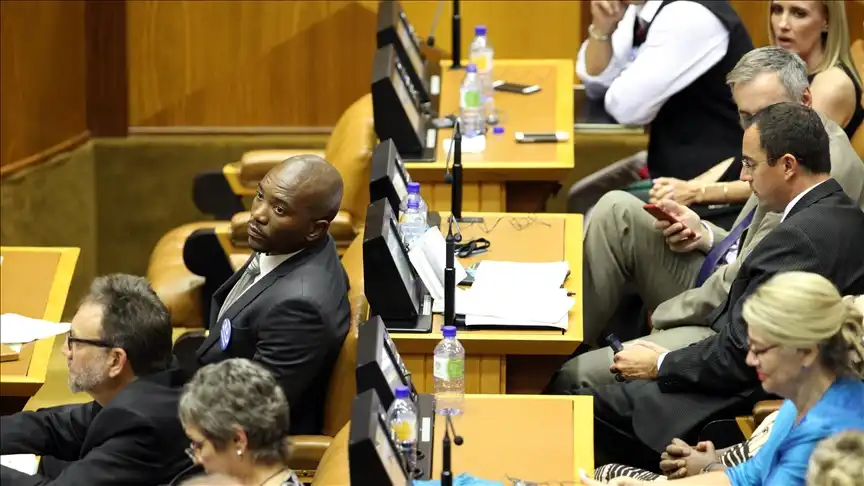
South African parliament calls on government to shutter Israeli embassy

South Africa’s parliament passes a resolution that urges the government to shutter the embassy of Israel, which the resolution calls an “apartheid state.”

A majority of 248 members of the National Assembly vote in favor of the non-binding resolution titled “Closure of the Israel Embassy in South Africa and suspension of all diplomatic relations with Israel” by lawmaker Julius Malema of the EFF opposition party.


The ruling African National Congress voted in favor of the resolution. But 91 lawmakers from opposition parties voted against it.

That government is not legally obligated to act on the motion. The vote follows a significant deterioration in Israel’s bilateral relationship with South Africa, whose president, Cyril Ramaphosa, has called Israel’s actions in Gaza a “genocide.” Pretoria is hosting a virtual meeting of BRICS — a group of major emerging economies that includes Brazil, Russia, India, China and South Africa — aimed at drawing up a common response to the Israel-Hamas war.


AFP 

PALESTINE

Tue 21 Nov 2023 6:55 pm - Jerusalem Time

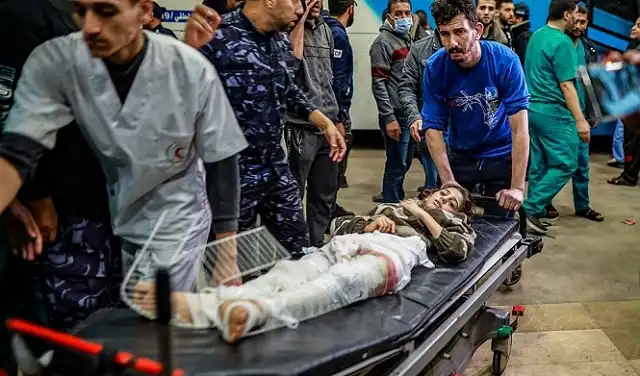
2,600 patients, displaced persons, and medical staff in the besieged Indonesian hospital in Gaza

The spokesman for the Palestinian Ministry of Health in Gaza, Ashraf Al-Qudra, announced today, Tuesday, that there are 400 wounded and their companions still inside the Indonesian hospital, in addition to 2,000 displaced persons and 200 medical staff.


Al-Qudra explained that “all the hospitals in the northern Gaza Strip are out of service, and we are coordinating with the United Nations to evacuate the besieged Indonesian hospital” from Israeli forces two days ago in the town of Jabalia (north).


He confirmed that the Israeli forces' targeting of the Indonesian hospital yesterday, Monday, led to the killing of 12 of the wounded, their companions, and medical staff, and the injury of dozens of others.


He added, "The Israeli occupation is trying to adopt criminal behavior in the Indonesian hospital, as it did in the Al-Shifa Medical Complex."


He pointed out that "a large number of displaced people fled from the Indonesian hospital on Monday, but Israeli forces targeted them, and their bodies are still lying on the ground in front of the hospital."


He continued: "Coordination was made with the Red Cross yesterday, Monday, and more than a hundred patients and wounded were evacuated from inside the hospital to hospitals in the southern Gaza Strip."


Al-Qudra stated, “Today, Tuesday, the International Committee of the Red Cross and the United Nations are trying to establish mechanisms to transfer the remaining wounded inside the Indonesian hospital to hospitals in the southern Gaza Strip.”


He said: “The occupation wants to turn the Indonesian facility into a military barracks, conduct combing operations inside it, and commit war crimes and acts of sabotage inside the hospital, which was the backbone of the health service in the north.”


He pointed out that Israeli forces are also besieging the Noura Al-Kaabi Medical Center, which is the “only” dialysis center in the northern Gaza Strip.


Regarding the developments in Al-Shifa Medical Complex, west of Gaza City, Al-Qudra said, “There are currently 259 wounded people there, in addition to a number of companions, displaced persons, and medical teams.”


He added: "A UN delegation from the World Health Organization visited Al-Shifa Hospital during the past few days, and coordination was being made to remove those remaining in the hospital."


He continued: “So far, there is no news or any date for the release of those remaining in Al-Shifa Medical Complex.”

Al-Qudra called for speedy action to evacuate those remaining in the hospital, before “the Israeli army commits a new massacre against them.”


Regarding the conditions in hospitals in the southern Gaza Strip, Al-Qudra stated that they “cannot handle the large numbers of injured people, especially after the wounded were transferred from Al-Shifa and Indonesian hospitals to them.”


A spokesman for the Ministry of Health in Gaza pointed out “the necessity of transporting those wounded in Israeli raids to receive treatment outside the Gaza Strip.”


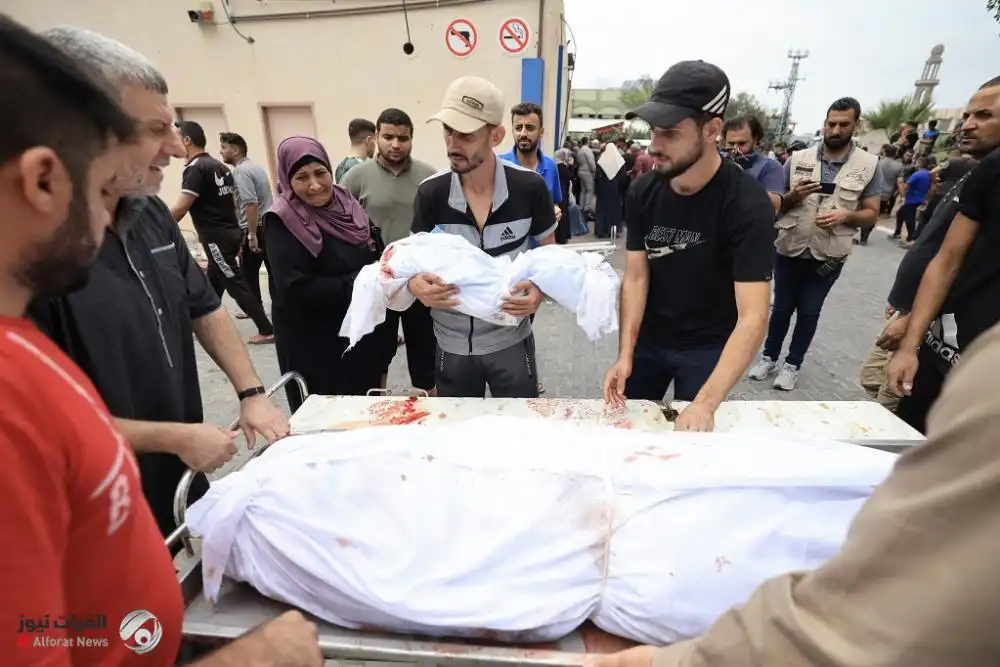
For 46 days, the Israeli army has been waging a devastating war on Gaza, leaving more than 13,300 Palestinians dead, including more than 5,600 children and 3,550 women, as well as more than 31,000 injured, 75 percent of whom are children and women, according to the media office. Government in Gaza.

PALESTINE

Tue 21 Nov 2023 6:28 pm - Jerusalem Time

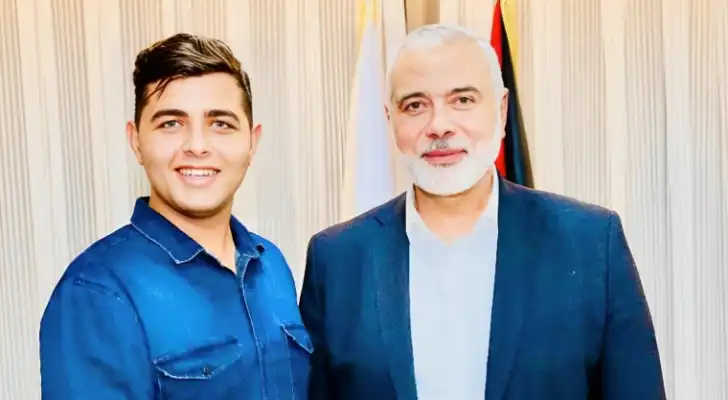
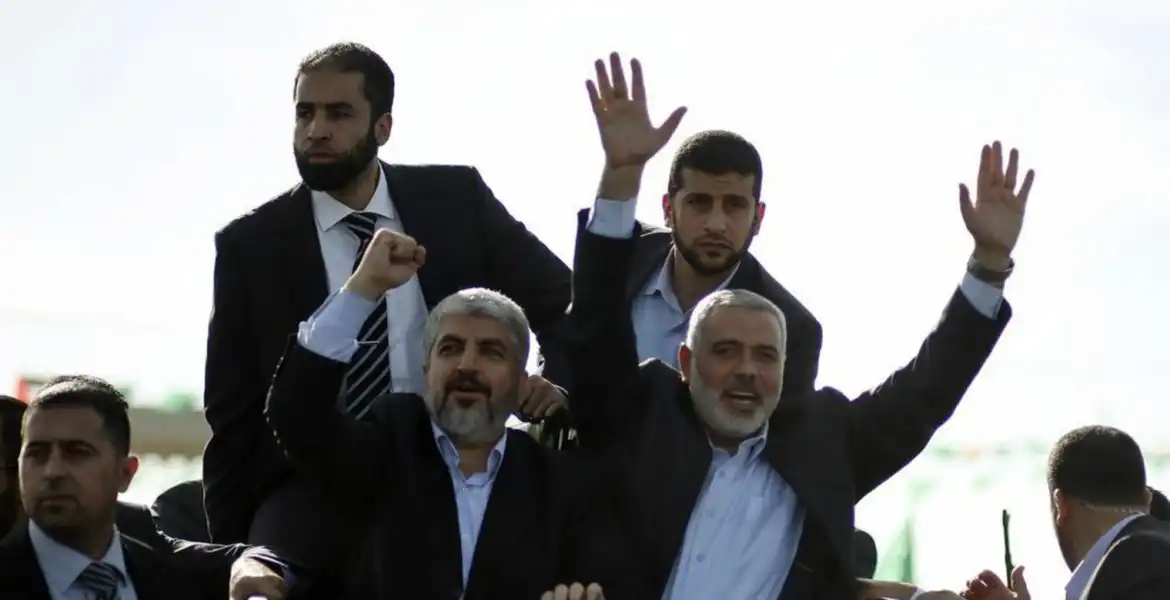
Death of Ismail Haniyeh's eldest grandson by Israeli bombing in the Gaza Strip

The eldest grandson of Ismail Haniyeh, head of the political bureau of the Islamic Resistance Movement “Hamas,” Jamal Muhammad Haniyeh, was killed on Tuesday in an occupation bombing of the Gaza Strip.


Haniyeh's granddaughter and about thirty of his nephews and first- and second-degree relatives were dead in the war on Gaza that broke out on the seventh of last October.


This came approximately 10 days after the death of Haniyeh's granddaughter, Rouaa Hammam Ismail Haniyeh, in the Shaheen family massacre in the Gaza Strip.


It is noteworthy that Ruaa is a student at the Faculty of Medicine at the Islamic University of Gaza, and the granddaughter of the head of the Hamas political bureau, Ismail Haniyeh.

ARAB AND WORLD

Tue 21 Nov 2023 6:27 pm - Jerusalem Time

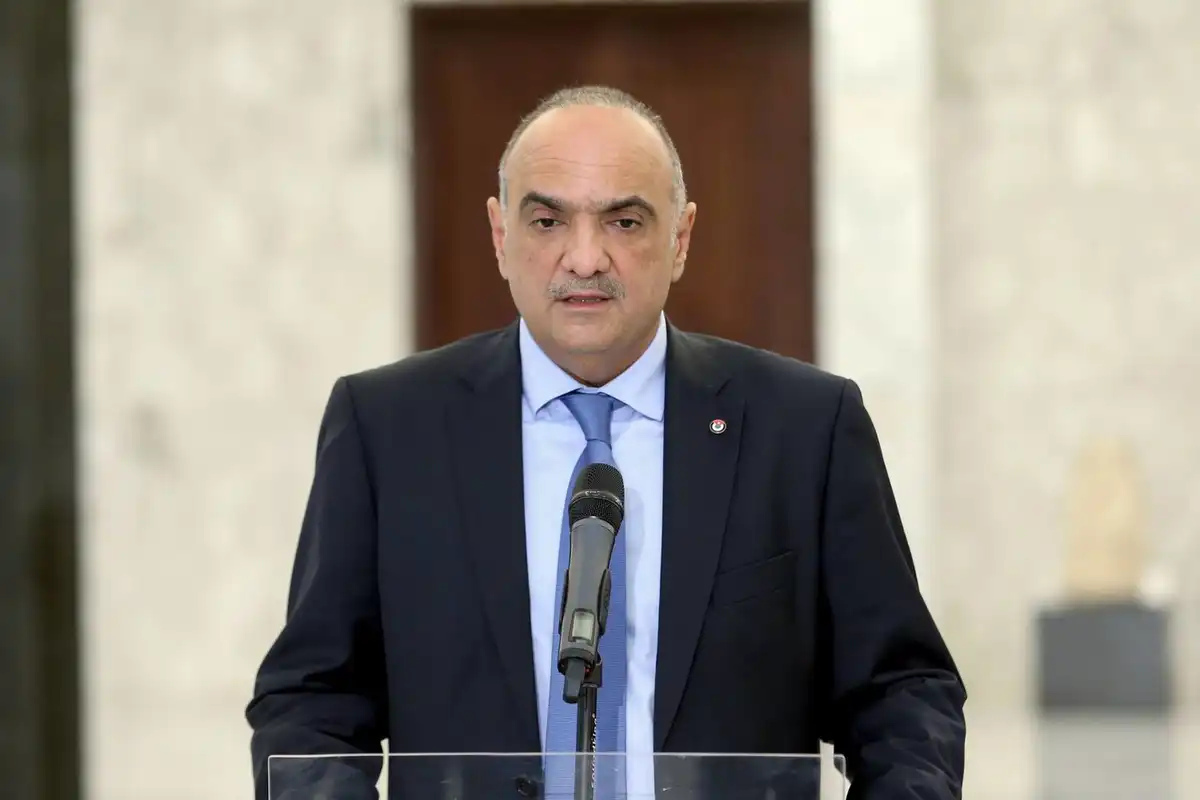
Jordan doesn't rule out war with Israel if Palestinians are expelled en masse

Jordanian Prime Minister Bisher Al-Khasawneh said today (Tuesday) that any attempts that would create conditions for the displacement of Palestinians from Gaza or the West Bank constitute a material breach of the peace agreement between Jordan and Israel, according to what was reported by the Arab World News Agency.


In a statement published by the Jordanian Prime Minister, Al-Khasawneh reiterated Jordan’s rejection of any such attempts, saying that they amount to “a declaration of war against us, as they constitute a material breach of the peace agreement.” This came during a meeting between the Jordanian Prime Minister and the Qatari Minister of International Cooperation, Lulwa Al Khater.


The day before yesterday, Jordanian King Abdullah II warned of the worsening humanitarian situation in the Gaza Strip, calling on the international community to stop this humanitarian disaster out of respect for international law and the Charter of the United Nations. He stressed that Israel's continuation of its hideous war on Gaza and its illegal violations in the West Bank and Jerusalem will lead to an explosion in the situation in the entire region. He reiterated the necessity of working seriously towards a political horizon for the Palestinian issue to achieve a just and comprehensive peace based on the two-state solution, pointing to the role of the European Union in this regard.

Source: Alsharq Alawsat

ARAB AND WORLD

Tue 21 Nov 2023 6:18 pm - Jerusalem Time

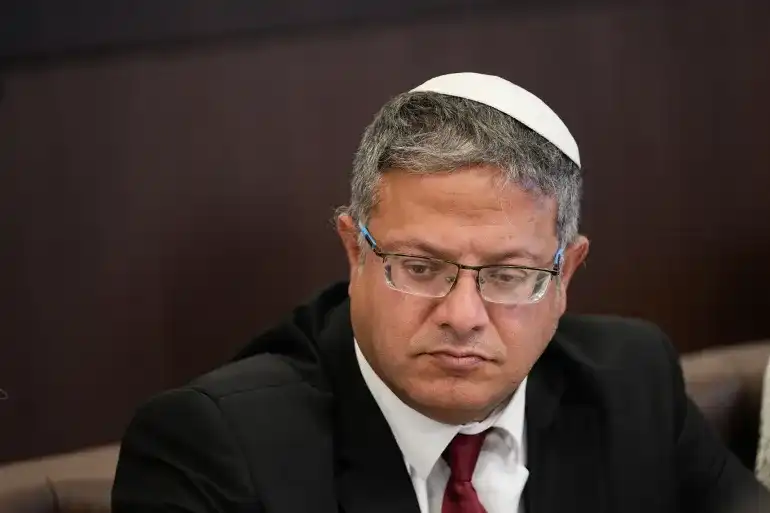
Ben Gvir: The expected exchange deal with Hamas will bring us disaster

Today, Tuesday, Israeli Minister of National Security Itamar Ben Gvir sharply criticized the prisoner exchange deal to be concluded with the Islamic Resistance Movement (Hamas), considering that it would bring disaster to Tel Aviv.


“I am very upset because they are talking about a deal that could bring us disaster,” said Ben Gvir, leader of the far-right Jewish Power party.


He continued that rumors say that the State of Israel will once again make a very big mistake in the "Shalit deal" method, referring to the exchange deal with Hamas that took place in 2011, and included more than 1,200 Palestinian prisoners in exchange for soldier Gilad Shalit.


Ben Gvir added, "You remember that we released Shalit, and we released the leader of the Hamas movement in Gaza, Yahya Sinwar, and his friends, and we brought this problem to ourselves."


The Israeli army says that there are 239 prisoners in Gaza since last October 7, while the Al-Qassam Brigades, the military wing of the Hamas movement, said that it and other Palestinian factions captured about 250 Israelis.


Ben Gvir continued that, unfortunately, Minister in the War Council Benny Gantz and “Minister Without Portfolio” Gadi Eisenkot are dragging the government into a bad area. It is noteworthy that Ben Gvir is not a member of the Israeli Military Ministerial Council.


Close deal

At dawn on Tuesday, the head of the Hamas political bureau, Ismail Haniyeh, confirmed that reaching a truce agreement with Israel was imminent.


Haniyeh said in a statement, “The movement delivered its response to the brothers in Qatar and the mediators, and we are close to reaching a truce agreement,” without further details.


For his part, Hamas leader Izzat al-Rishq told Al Jazeera that the details of the agreement will be revealed in the coming hours, explaining that "the brothers in Qatar are the ones who will announce the details of the truce agreement."


On Sunday evening, Qatari Prime Minister and Foreign Minister Sheikh Mohammed bin Abdul Rahman Al Thani said that “the completion of the exchange deal between Israel and Hamas is imminent,” without mentioning a specific date.


Hamas is offering Tel Aviv to release a number of Israeli prisoners, including those with foreign nationalities, in exchange for a truce for several days, the entry of fuel and food into the Gaza Strip, and the release of Palestinian prisoners from Israeli prisons.


OPINIONS

Tue 21 Nov 2023 6:05 pm - Jerusalem Time

A Palestinian state now...or else!

Nadim Qutaish

Nadim Qutaish

Opinion Writer

The Gaza war has confronted the Middle East and the world with an urgent and undeniable reality: the urgent establishment of a Palestinian state.


This matter, whether or not it occurs, entails results beyond regional borders that could redraw the entire global political landscape. Where no one expected, this file has directly weighed on the path of regional stability, international relations, and the dynamics and legitimacy of global leadership in ways we have not yet imagined.


The repeated rounds of violence in Gaza have always attracted international attention and intervention, but the current war has become a symbolic embodiment of all the consequences of the Israeli-Palestinian conflict, and has prompted, in an unprecedented way, to think about a radical solution to it, as a result of its potential to swallow all the foundations of stability in the entire Middle East. Therefore, if rational people in the region and in Israel were able to emerge from this bloody ordeal with a clear and quickly implemented agreement to establish a viable Palestinian state, three direct results would be achieved:


First, the establishment of a Palestinian state will open the door to a new era in Arab-Israeli relations, based on understandings and the peace path. It has become clear that all of Israel's military superiority does not replace the fact that normalizing relations between Israel and Arab countries is the only thing that can guarantee security and safety for all players, redefine regional alliances, and enhance the climate of cooperation. This paradigm shift is not limited only to diplomatic recognition, but includes a deeper reorganization of interests and the strengthening of political rationality in the Middle East, in a way that serves sustainable and productive stability.


Secondly, resolving the Gaza crisis through diplomatic channels, specifically through honest American leadership, would restore respect to the reputation and status of Western influence, especially American influence, in international affairs. A successful and just intervention in Gaza, leading to the formation of a Palestinian state, would strengthen conviction in the West's position as a trustworthy guardian of the leadership of the global order.

In light of the horrors that the world is witnessing in Gaza, including the unprecedented killing of civilians, the moral authority of the Western value system is eroding in a dramatic and dangerous manner, threatening the integrity of international law and international institutions, and turning all the constants of the global order into mere double standards devoid of any content.


Third, reaching a solution in Gaza that leads to the establishment of a Palestinian state would strip Tehran of this pretext, which could lead to the destabilization of its regional influence. It is no secret that Iran has benefited greatly and for a long time from the Palestinian issue to advance its regional agenda, justifying its support for militias and political groups that adopt its political line. Iran will then have to look for another external agenda that it can use to divert attention from its internal failure, or this development will be an incentive for the escalation of moderate and sensible forces within the Iranian regime, who do not want to drown in the costs of foreign adventures at the expense of the advancement of the Iranian state and the interests of its people.


In this context, it was noteworthy that the Gaza war brought these debates back to the forefront, especially through exciting statements by former Iranian Foreign Minister Mohammad Javad Zarif in which he sharply criticized Iranian parties that wanted to push the country to enter the war.


Inaction or failure to seize this moment to create a long-awaited Palestinian state could have adverse and dangerous repercussions. 


Failure to establish a Palestinian state will inevitably lead to the erosion of the peace camp, with the dangers it entails for Israel and the region, and the further deterioration of Western moral authority, which means the liberation of rogue powers from the controls of the international system, and the increasing audacity of the Iranian rejectionist position, which destabilizes the security of the Middle East. Such a scenario would not only exacerbate instability in the region, but would also threaten the foundations of stability in the global order.


In fact, the opportunity to radically address the Palestinian-Israeli issue should be an impetus for the birth of bold and different leadership in both Israel and Palestine. The emergence of a post-Benjamin Netanyahu Israeli government, which potentially offers him a way out of his legal dilemmas so that he does not continue to invest in a crazy war for his own personal reasons, could provide the necessary political environment for progress. On the Palestinian front, the formation of a technocratic government with modern Palestinian leadership, which knows how the world works, and is able to overcome the current division between the Ramallah and Gaza groups, would pave the way for a viable path to establishing a state, by redefining the Palestinian national project. 


The current crisis in Gaza could be just another link in the chain of long-term conflict, and it could be turned into a decisive turning point that has the potential to change the regional and global landscape, through the creation of a Palestinian state.


It is time to stop looking at the Palestinian question as a moral or emotional question, and highlight it now as a strategic focal point for the security of the region and the world. It is an opportunity that holds the promise of redefining the Middle East system, its pillars of stability and security, and the meanings of dignity for its people. It is also possible to reaffirm the values that should govern international relations.


It is an opportunity that the world cannot ignore.

Source: Alsharq Alawsat

ARAB AND WORLD

Tue 21 Nov 2023 6:05 pm - Jerusalem Time

Israeli pilot: The army may have implemented the “Hannibal Protocol” on October 7

Israeli military pilot Nof Erez said that it is possible that Israeli forces implemented the “Hannibal Protocol” during their response to the attack by the Islamic Resistance Movement (Hamas) on October 7th.


Hannibal, a controversial military protocol attributed to the use of the Israeli army since its official adoption in 2006, allows the lives of captured soldiers to be risked, and it returned to the forefront again after Palestinian factions in the Gaza Strip captured dozens of Israeli soldiers, including high-ranking military personnel, in Operation Al-Aqsa Flood on last October.


In a statement to the Haaretz newspaper on Tuesday, the pilot, Lieutenant Colonel Nof Erez, indicated the possibility of the Israeli army that intervened to deal with the Hamas attack implementing the Hannibal Protocol, which the occupation army uses to prevent the capture of its soldiers, even if it leads to their killing.


Erez said, "It is not known whether the warplanes and drones opened fire on the hostages when they responded to the attack launched by Hamas."


He added, "It appears that the Hannibal Protocol was implemented at some point on that day, because when a hostage situation was discovered, this required Hannibal, knowing that the Hannibal maneuvers that we conducted over the past 20 years were limited to one vehicle carrying hostages. As for what we saw in the  Al-Aqsa 'Flood' is considered a large-scale Hannibal.


According to news reported by the Israeli media, Lieutenant Colonel Erez was dismissed on October 31, after criticizing Israeli Prime Minister Benjamin Netanyahu.


The Israeli army announced that Erez was dismissed after he expressed his opinion on political issues while on active duty.


A report from the Haaretz newspaper showed, on Saturday, that an Israeli military helicopter opened fire on Israelis participating in a party organized near Kibbutz Ra'im in the border of the Gaza Strip on the 7th of last October.


"Haaretz" reported that the security establishment's assessments showed that an Israeli army combat helicopter arrived at the concert venue, opened fire on the perpetrators of the attacks there, and apparently also wounded some of the festival's participants (referring to the Israelis). It explained that the security assessment was based on investigations that conducted by Israeli police with Hamas militants who were arrested by Israel.


Source: Anadolu Agency

ARAB AND WORLD

Tue 21 Nov 2023 5:57 pm - Jerusalem Time

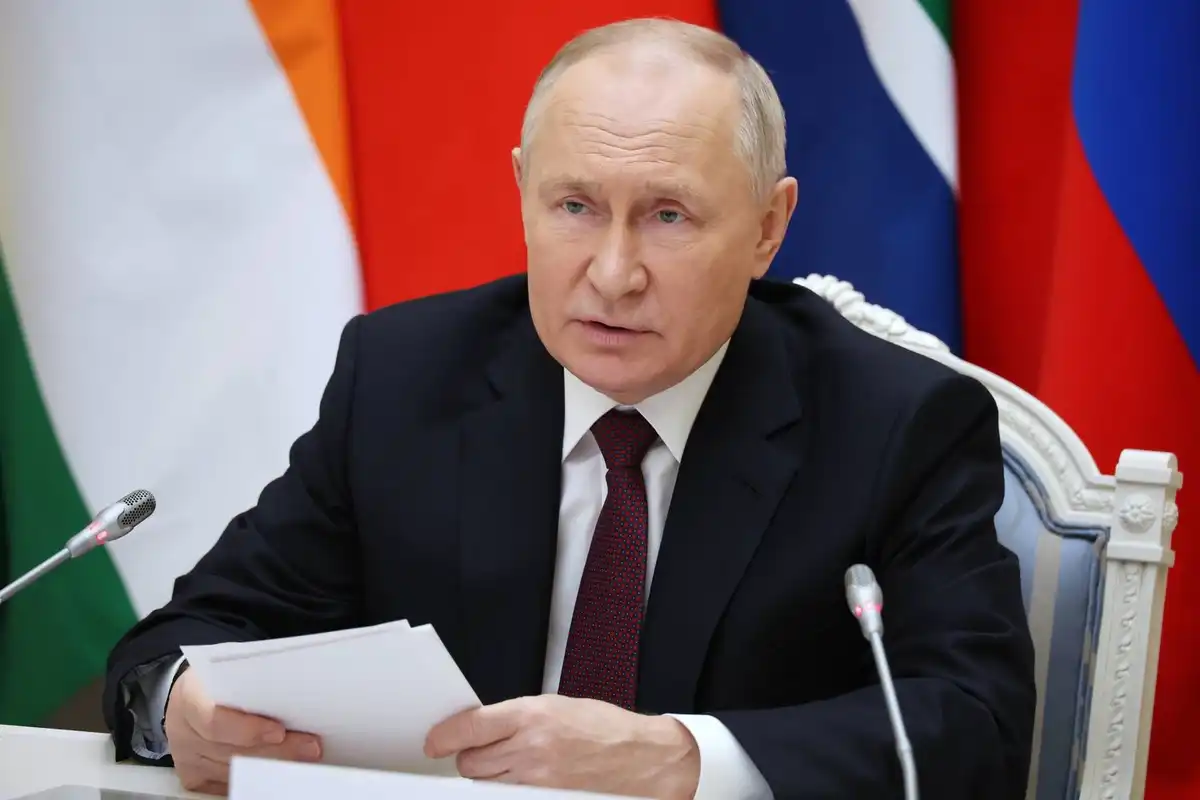
Putin: BRICS can help find a political solution to the conflict in Gaza

Russian President Vladimir Putin told the BRICS summit held online, today (Tuesday), that Russia calls for a political solution to the Israeli-Palestinian conflict, stressing that the countries of the region and the member states of the BRICS group can participate in efforts to reach a settlement.

Putin added that humanitarian truces are a correct step towards peace and that it is important not to drag other countries into the conflict.

Putin pointed out that the Middle East crisis was caused by the failure of American diplomacy in the region.

He added, "We call for the concerted efforts of the international community with the aim of calming the situation, achieving a ceasefire, and finding a political solution to the Palestinian-Israeli conflict." The BRICS countries and countries in the region can play a major role in this regard.”


Putin has repeatedly attacked American policy in previous statements, urging Israel to exercise restraint and expressing his sympathy for the plight of the Palestinians.

He warned Israel last month against imposing a blockade on Gaza in the same way that Nazi Germany besieged Leningrad during World War II, saying that a ground attack there would lead to the killing of an “absolutely unacceptable” number of civilians.

Putin said on Tuesday that the death of Palestinian children in large numbers is “horrific,” adding that seeing children undergoing operations without anesthesia “raises special feelings.”

He added, "Due to the violation of United Nations resolutions, which clearly stipulate the establishment of two independent and sovereign states, Israel and Palestine, to achieve peaceful coexistence between them, more than one generation of Palestinians has grown up in an atmosphere of injustice towards their people. The Israelis cannot fully guarantee security for their state" .

Source: Alsharq Alawsat


ARAB AND WORLD

Tue 21 Nov 2023 5:45 pm - Jerusalem Time

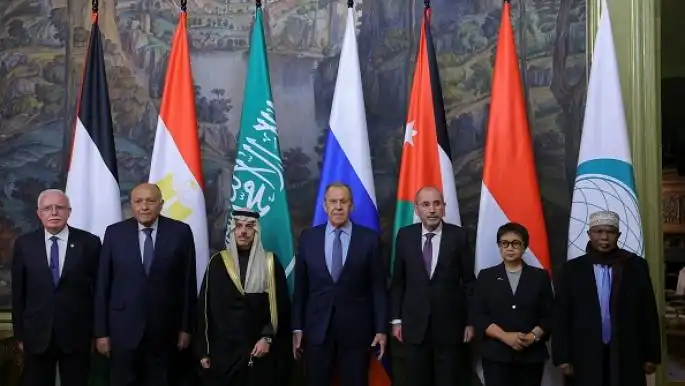
Lavrov and the Arab-Islamic Ministerial Committee meeting: to stop the war on the Gaza Strip

Russian Foreign Minister Sergei Lavrov met in Moscow on Tuesday with the ministerial committee assigned by the Arab-Islamic Summit of the Arab League and the Organization of Islamic Cooperation to discuss the situation in the Gaza Strip.


The committee stressed the need to stop the war on the Gaza Strip and put an end to Israeli violations of international law, calling on the Security Council to assume its responsibility in stopping attacks on the Palestinians, stressing that this is a priority for all Arab and Islamic countries.


The members of the committee pointed out the importance of immediately lifting the siege imposed on the Gaza Strip, releasing prisoners and hostages, and reactivating a serious and just peace process that enjoys the support of international legitimacy authorities.


The members of the Ministerial Committee called on the international community to fulfill its responsibility by rejecting all forms of selectivity in applying international legal and moral standards, and turning a blind eye to the heinous crimes committed by the Israeli occupation forces against defenseless Palestinian civilians, the Gaza Strip, the West Bank, and East Jerusalem.


They pointed out that the Israeli occupation’s continued violation of the rules of international law and non-compliance with international legitimacy resolutions, the latest of which was the Security Council resolution last week, weakens the legitimacy of the international system, the credibility of its defenders, and its ability to maintain regional peace, security and stability in the future, and also fuels the motives of extremism and violence.


The members of the Ministerial Committee stressed the importance of immediately allowing the delivery of humanitarian and food aid, water, fuel, and electricity to Gaza, which is a moral and legal responsibility for the entire international community, noting that depriving the people of Gaza of the basic requirements of life is a clear violation of international humanitarian law, especially the Convention. Fourth Geneva, transgressing all humanitarian values and principles.


The meeting was attended by Saudi Foreign Minister Prince Faisal bin Farhan Al Saud, Jordanian Deputy Prime Minister and Foreign Minister Ayman Al-Safadi, Egyptian Foreign Minister Sameh Shukri, Indonesian Foreign Minister Retno Marsudi, Palestinian Foreign Minister Riyad Al-Maliki, and Secretary-General of the Organization of Islamic Cooperation Hussein Ibrahim Taha.


Lavrov said in his speech that Russia “shares the assessments of the Organization of Islamic Cooperation regarding the need for a ceasefire in the Gaza Strip,” adding that “Russia is against terrorism in all its forms, and it must be combated without violating international humanitarian law.”


Lavrov stressed that "the volume of humanitarian aid entering Gaza is insufficient, and now the main priority is to stop hostilities, release the hostages, and resolve humanitarian issues," saying that Russia "calls for the start of preparations to resume the negotiation process to establish a Palestinian state at the present time."


Regarding the Arab role, the Russian minister said, “The Quartet of mediators in the Middle East did not include representatives from the Arab world, so it failed in its functions, as regional countries should also be represented in the mechanism for resolving the Palestinian-Israeli conflict.”


Pointing out that the United Nations neglected to involve Arab countries in peace efforts, he expressed his country's readiness to establish a mechanism to secure the conditions for a permanent solution in accordance with the two-state solution.


Lavrov stressed that "it is necessary to return to the Arab Peace Initiative and achieve the goal of establishing a Palestinian state according to a diplomatic mechanism in which the countries of the region participate."


In turn, Shukri considered that “the continuous bombing of the displaced in the southern Gaza Strip has a clear goal, which is to force the residents of the Strip to leave it,” stressing that Egypt “clearly announced its rejection of any attempt to displace the Palestinians.”

The Egyptian Foreign Ministry announced that Egypt "Prepared a new draft resolution to be presented to the Security Council on behalf of the Arab and Islamic groups, to address the existing imbalance in the entry of humanitarian aid into Gaza."


Egyptian Minister Sameh Shoukry said during the meeting with the Russian Foreign Minister: “We appreciate the support that Russia has provided to the Palestinian cause, and we encourage you to do more in the Security Council, to reach a permanent ceasefire in Gaza.”


Shukri asked: “How many Palestinian civilian casualties must fall in order for Israel’s goal in this war to be achieved?”


For his part, the Saudi Foreign Minister stressed the necessity of a ceasefire in Gaza, lifting the siege, releasing prisoners, and delivering aid, considering that the crimes committed against the Palestinian people angered the Arab and Islamic worlds.


He said: "It is necessary to activate the international accountability mechanism because Israel's crimes undermine the global order and threaten more violence."


Yesterday, Monday, the ministerial committee assigned by the Arab Islamic Summit, concerned with developing an international move to stop the war on Gaza, began a global tour to formulate an international position, and its first stop was China.

Source: Alaraby Aljadeed


ARAB AND WORLD

Tue 21 Nov 2023 5:39 pm - Jerusalem Time

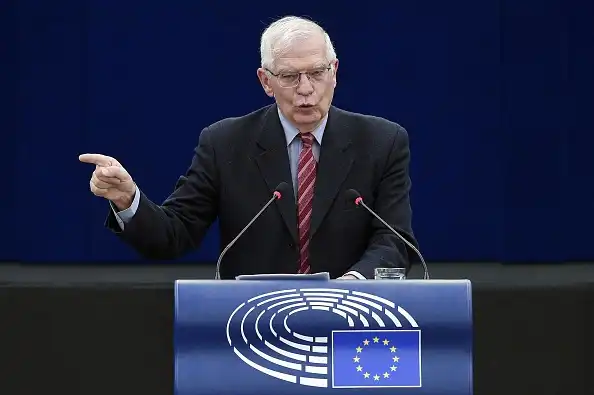
Borrell: Hostility towards EU has increased due to its position on the war in Gaza

European Union foreign policy chief Josep Borrell warned that the bloc is facing increasing feelings of hostility throughout the Islamic world, and even outside it, due to accusations of bias toward Israel and double standards regarding the war on Gaza.


Borrell said he feared such bitterness would undermine diplomatic support for Ukraine in the global South, and weaken the EU's ability to insist on human rights clauses in international agreements.


He added that the European Union must show "more compassion" regarding the loss of life suffered by Palestinian civilians in the Israeli war on the Gaza Strip.


Borrell's statements came in interviews with Reuters during a five-day tour in the Middle East, in which he visited Israel and several Arab countries.


During the tour, which he concluded yesterday evening, Monday, Borrell heard complaints from Arab leaders and Palestinian civil society activists that the European Union, which includes 27 countries, does not deal with Israel’s war on Gaza with the same standards that it applies to Russia’s war in Ukraine.


“They have all already criticized the European Union’s position and described it as biased,” Borrell said.


Waving his mobile phone, he said that he had already received messages from some ministers indicating that they would not support Ukraine the next time there was a vote at the United Nations.


He added: "If things continue like this for a few weeks, hostility towards the Europeans will increase."


In response to the criticism, Borrell stressed that human lives have the same value in all places, and that the European Union unanimously urged immediate humanitarian truces to deliver aid to the Palestinians in Gaza, and quadrupled its humanitarian aid to the Strip.


But Arab leaders want an immediate halt to Israeli bombing that has killed at least 13,300 Palestinians, including at least 5,600 children, according to the Palestinian Ministry of Health.


Arab leaders criticized the European Union and the United States for not condemning Israel's bombing campaign in Gaza, in contrast to the West's response to Russia's invasion of Ukraine.


Strong differences in European views


The European Union tasked Borrell, in his capacity as foreign policy chief, with formulating common positions among its member states.


The European Union, whose countries are located in the vicinity of the Middle East and are home to a large number of Jews and Muslims, has a major role to play in the recent crisis. Although it is not at the same level as the United States, the bloc enjoys diplomatic weight in the region, being - in particular - the largest donor of aid to the Palestinians.


But the bloc finds it difficult to take a unified position, except to condemn the Hamas attack. His efforts were largely limited to supporting Israel's right to defend itself within the framework of international law and calling for truces in the fighting.


At the same time, individual member states, such as Germany, Austria, the Czech Republic and Hungary, affirmed their strong support for Israel, while others, such as Ireland, Belgium and Spain, criticized Israel's military action.


France called for a humanitarian truce that would pave the way for a ceasefire.


Borrell, a veteran Spanish socialist politician, announced last month that some of Israel's actions contradict international law, alarming some European Union countries.


The European official said that the European Union must also make more efforts to show that it also cares about the lives of the Palestinians, and this may be achieved by issuing stronger calls for the delivery of aid to Gaza, and renewing the effort to establish a Palestinian state, within the framework of the so-called “two-state solution.”


Source: Alaraby Aljadeed + (Reuters)

ARAB AND WORLD

Tue 21 Nov 2023 5:19 pm - Jerusalem Time

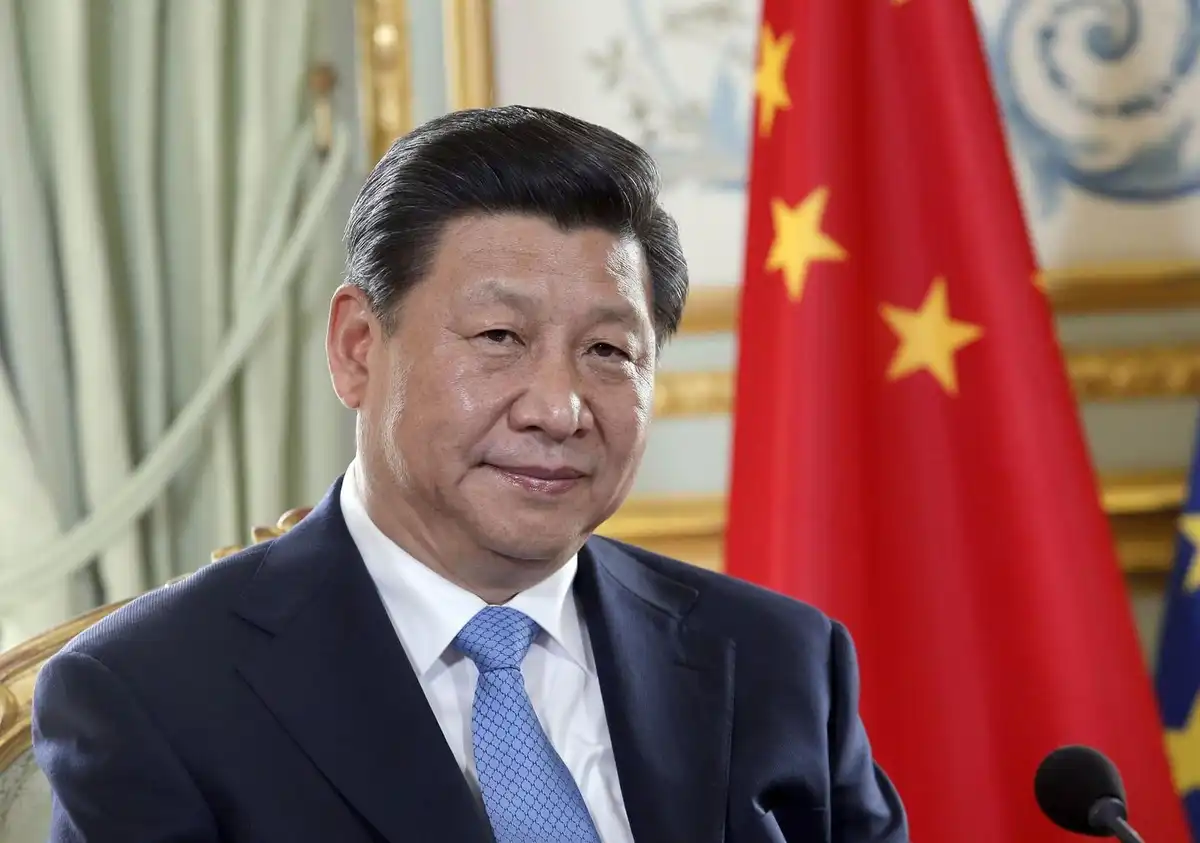
Promoting a ceasefire, ending the fighting, and achieving lasting peace and security

Speech by President of the People's Republic of China Xi Jinping at the virtual extraordinary summit of BRICS leaders on the Palestinian issue.

Your Excellency President Cyril Ramaphosa,

Colleagues:

This summit is considered the first meeting between the leaders of the BRICS countries after expanding its membership. At the outset, I would like to extend a welcome to the leaders of the new BRICS member states, and to thank President Cyril Ramaphosa and the Government of South Africa for the efforts made in organizing this meeting. In light of the current situation, the voice calling for justice and peace made by the BRICS countries on the Palestinian issue is very necessary and timely.


The Chinese side expresses its deep concern over the conflict in the Gaza Strip that lasted for more than a month, the resulting large number of deaths and injuries among civilians and the humanitarian catastrophe, and its trend towards expansion and extension.


The top priority now is: First, the parties to the conflict must cease fire and end the fighting immediately, stop all acts of violence and attacks against civilians, and release detained civilians, to avoid greater human losses.


Secondly, it is required to ensure the safety and smooth flow of humanitarian relief corridors, provide more humanitarian aid to the residents of the Gaza Strip, and stop collective punishment against them such as forced displacement and cutting off water, electricity and fuel supplies.


Third, the international community must take practical measures to prevent the expansion of the conflict and its impact on stability in the entire Middle East region. The Chinese side supports the resolution on the Palestinian-Israeli conflict that was adopted at the emergency special session of the United Nations General Assembly on October 27. All parties must implement the provisions of UN Security Council Resolution No. 2712, which was adopted under the presidency of China in its capacity as rotating president of the Council, on the ground.


The root cause of the Palestinian-Israeli situation today is the long-standing neglect of the rights of the Palestinian people to establish their state, to remain in their land, and to return. I have emphasized several times that the main way out to break the spiral of the Palestinian-Israeli conflict lies in implementing the “two-state solution,” restoring legitimate Palestinian national rights, and establishing an independent State of Palestine.


Lasting peace and stability in the Middle East cannot be achieved without a just solution to the Palestinian issue. The Chinese side calls for convening a more credible international peace conference as soon as possible to develop an international consensus on peace and advance a comprehensive, just and lasting solution to the Palestinian issue at an early date.


The Chinese side has made commendable efforts to advance peace negotiations, ceasefire and prevent fighting since the outbreak of this round of the Palestinian-Israeli conflict. In order to alleviate the humanitarian conditions in the Gaza Strip, China has provided urgent humanitarian aid worth two million US dollars through the Palestinian National Authority and United Nations agencies, in addition to urgent humanitarian supplies worth 15 million Chinese yuan, including food and medicine, to the Gaza Strip via Egypt. China will continue to provide material assistance according to the needs of the residents of the Gaza Strip. China, in its capacity as rotating president of the UN Security Council for the current month, pushed the Council to adopt the resolution calling for the extension of the humanitarian truce, the duration of humanitarian corridors, the protection of civilians, and the implementation of humanitarian relief operations.


Colleagues!

The BRICS cooperation mechanism is an important platform for enhancing solidarity and cooperation between emerging markets and developing countries and preserving their common interests. Today, we are coordinating positions and taking steps on the Palestinian issue, and this would constitute a good beginning for “cooperation within the framework of the BRICS” after expanding its membership. The Chinese side commends the important contributions made by South Africa, as the rotating chair of BRICS this year, to advance the development of the BRICS issue. Russia will assume the rotating presidency next year, and the Chinese side is keen to work together with other members to support the work of the Russian side, creating a new era for BRICS cooperation.


Thank you all!

ARAB AND WORLD

Tue 21 Nov 2023 5:00 pm - Jerusalem Time

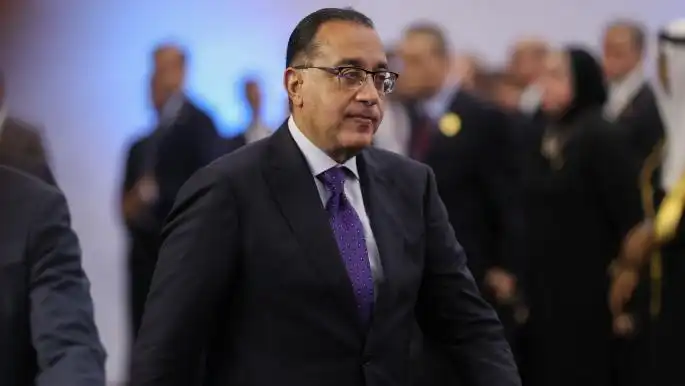
Egypt: There will be a “decisive response” if the Palestinians flee to Sinai

Egyptian Prime Minister Mostafa Madbouly said, "If any scenario occurs targeting the displacement of Palestinians to Egyptian territory, there will be a decisive response in accordance with international law."

He continued by saying during the House of Representatives session today: “If any scenario occurs targeting the displacement of Palestinians to Egyptian lands, there will be a decisive response,” adding: “Egypt’s position is decisive regarding respecting the peace treaty and adhering to its texts, but we look forward to a commitment from the Israeli side as well, especially with regard to displacement of Gaza Strip.


The Prime Minister stressed that any forced displacement of the people of the Gaza Strip represents a clear threat to the Egyptian state.

Madbouly stressed that Egypt adheres to its rejection of the displacement of the people of Palestine, noting that all officials in Egypt sent messages to all officials at the international level and a warning message against escalation in Palestine.


He pointed out that the displacement of the people of Palestine means liquidating the Palestinian cause, which is completely unacceptable, stressing that Egypt adheres to the establishment of an independent Palestinian state.


He continued: "I followed with interest all the briefing requests submitted by the representatives regarding the measures and actions taken by the Egyptian state to prevent the forced displacement of Palestinians from the Gaza Strip, which reflect an accurate and clear understanding of the challenges Egypt faces and the political and economic pressures it is exposed to."


The Prime Minister said: “A number of representatives expected pressure in the coming period due to the Egyptian position, but the pressure has been present for some time, and there are attempts to undermine countries that refuse to impose agendas on them, through weak points.”


He added: Egypt is and will continue to be exposed to significant pressures. The state is aware of these challenges, and that is why there have been persistent attempts from the first moment President Abdel Fattah El-Sisi assumed responsibility to accelerate the implementation of many national projects.


Prime Minister Dr. Mostafa Madbouly revealed that more than 11,000 tons of Egyptian aid had been directed to the Palestinians until November 19, including food, medicine, tents, fuel, and aid to alleviate the suffering of our brother and sisters in Gaza.


Madbouly said that this number comes despite the Egyptian economic crisis, and represents 4 times the volume of aid sent from 30 countries to the Palestinian people, which swallowed about 3 thousand tons from all countries of the world, noting that the beginning of this week witnessed the sending of the last convoy, which he was honored to launch to Gaza and included 200 vehicles and trucks to contain 2,500 tons of aid at once.

Source: Sama News

ARAB AND WORLD

Tue 21 Nov 2023 4:58 pm - Jerusalem Time

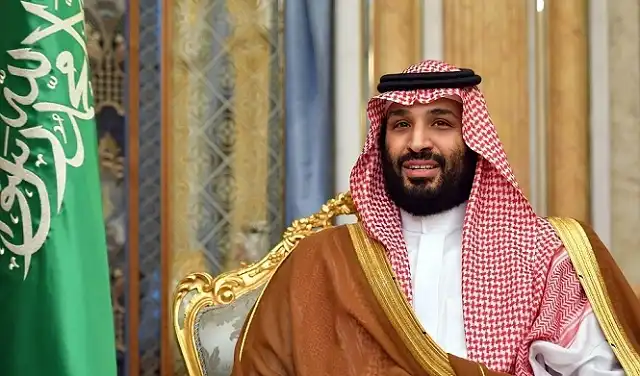
Bin Salman: “All countries must stop exporting weapons and ammunition to Israel.”

Today, Tuesday, Saudi Crown Prince Mohammed bin Salman called for an end to the export of weapons and ammunition to Israel.


This came in a speech during the extraordinary virtual meeting of the leaders of the BRICS group and the leaders of the countries invited to join regarding the deteriorating situation in Gaza. The Crown Prince said: “All countries must stop exporting weapons and ammunition to Israel.”


He added, "The humanitarian catastrophe in Gaza continues to worsen day after day, and decisive solutions must be developed for it."


At a time when the war and Israeli raids on the Gaza Strip have continued for 46 days, the talks to conclude a prisoner exchange deal between Israel and the Hamas movement have reached a final stage and are at the closest point to reaching an agreement.

ARAB AND WORLD

Tue 21 Nov 2023 4:46 pm - Jerusalem Time

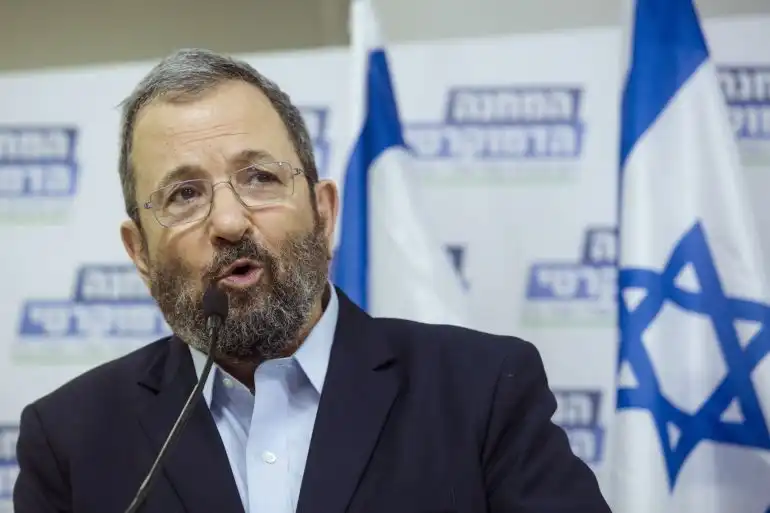
Ehud Barak acknowledges that Israel dug tunnels under Al-Shifa Hospital decades ago

Former Israeli Prime Minister Ehud Barak admitted that Israel was the one that built the shelters and dug the tunnels under Al-Shifa Hospital 40 or 50 years ago, in an interview on the American CNN channel.


This came in response to the questions of broadcaster Christiane Amanpour, who asked him about Israel's claims that there is a headquarters for the Islamic Resistance Movement (Hamas) under Al-Shifa Hospital in Gaza.


Barak answered these questions by saying that it has been known for many years that there are shelters built by Israeli contractors under Al-Shifa Hospital and used as a headquarters for Hamas, and the intersection of several tunnels is part of this system, as he put it.

In response to Barak, Amanpour said: Are you saying that this place was built by Israeli engineers? Did I make a mistake?


Barak replied, "We helped build these shelters probably 40 or 50 years ago (during the periods of occupation control over the former Gaza Strip), to provide more space for hospital operations within the limited area of the university campus."


The World Health Organization announced yesterday, Monday, that its teams had only seen civilians in Al-Shifa Hospital in the Gaza Strip, and that there was no evidence that it was used as a military headquarters by the Hamas movement.


For its part, Hamas said that the Israeli occupation army's statements about using the Shifa Medical Complex in Gaza to detain Israeli prisoners are misleading and false.


The movement added in a statement the day before yesterday, Sunday, in response to the Israeli army spokesman, that these statements aim to cover up the security and military failure of the occupation army.


Siege and storming

At dawn last Wednesday, the Israeli army stormed the Al-Shifa Medical Complex after besieging it for days, as it contains thousands of civilians who were displaced from their homes and hundreds of wounded as a result of the ongoing Israeli bombing of the Gaza Strip.


For 46 days, the Israeli army has been waging a devastating war on Gaza that has left more than 13,300 martyrs - including more than 5,600 children and 3,550 women - as well as more than 31,000 injured, 75% of whom are children and women, according to the government information office in Gaza.


Source: Anadolu Agency


PALESTINE

Tue 21 Nov 2023 4:37 pm - Jerusalem Time

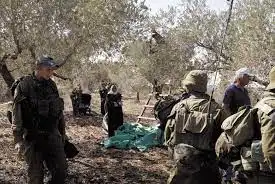
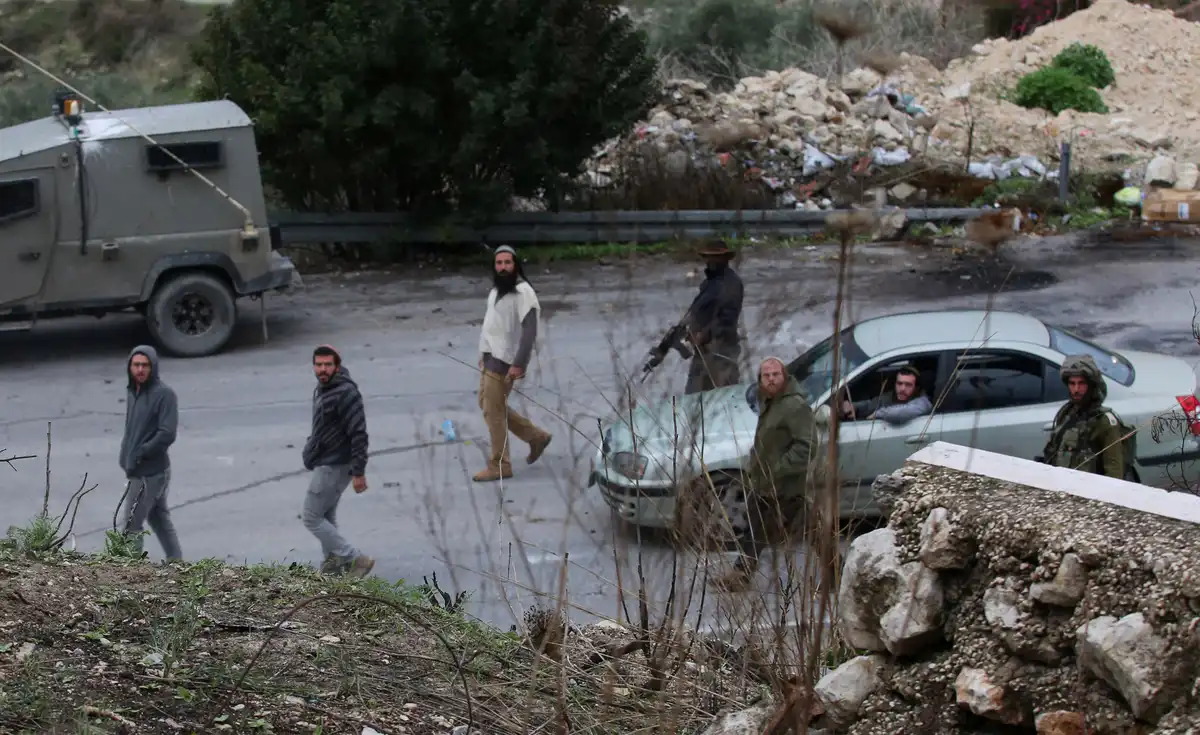
Israeli settlers attack olive pickers south of Nablus

Today, Tuesday, settlers attacked olive pickers in Yanun, which is part of the lands of the town of Aqraba, south of Nablus.


The head of the Yanun Village Council, Rashid Marar, said that settlers attacked farmers and olive pickers west of the village, opened fire on them, scattered the fruits on the ground and forced them to leave. They also smashed the windows of one of the vehicles, but no casualties were reported.


Marar added that the region is witnessing an escalation in settler attacks in Yanun, which is surrounded by several settlements and colonial outposts.

PALESTINE

Tue 21 Nov 2023 4:28 pm - Jerusalem Time

“It is not a group of militants that can be eliminated.” Haaretz: The war in Gaza will not harm Hamas or its political influence.

US Secretary of State Anthony Blinken announced during his visit to Qatar on October 13 that “dealing as usual with Hamas is no longer possible.” Standing next to Blinken was the Qatari Prime Minister, Sheikh Mohammed bin Abdul Rahman Al Thani, who refrained from commenting or delving into details. Blinken's statement was intended to appear "firm" and supportive of Israel.


When asked whether his country would stop hosting the Hamas leadership or sever its ties with the movement, Al Thani replied: “Our focus now is on open communication and trying to end this conflict.” The Israeli newspaper Haaretz says that at the present time, “open communication” between Qatar and Hamas is almost the only hope for the release of Israeli prisoners. Qatar relies on years of providing assistance and support to the Gaza Strip.


The State of Qatar is aware of the American pressure on it to sever relations with Hamas, but it does not pay attention to that. Four years after it was besieged by some of its neighbors to cut its ties with Iran or Hamas, Qatar did not abide by any of these countries’ demands and defied them. The blockade was eventually lifted, and Doha returned stronger to the Gulf and Arab embrace.


“Hamas is not a group of militants that can be eliminated.”

Despite all the American and Israeli pressure on Qatar, and despite all the talk about a “post-Hamas era” in Gaza, Hamas is not just a group of militants that can be easily eliminated or the threat they represent erased, as Haaretz newspaper says. Hamas is a movement that has deep-rooted military and political influence inside and outside Palestine. It has a strong presence in Lebanon, strong relations in Turkey, and representation in Malaysia, Algeria, and perhaps others.


The Hebrew newspaper says that the renewed rapprochement between Hamas and Syria, after it was interrupted in 2012 due to the massacres committed by the Assad regime against thousands of civilians, provided the movement with another option for support. There is no doubt that Iran will agree to host some of its leadership if it needs to.


In the US House of Representatives, there is already a proposed law that would allow sanctions to be imposed on countries that aid organizations such as Hamas and Islamic Jihad. The law is currently under consideration in the Senate, and even if it is passed, it will have a relatively minor impact on countries such as Syria, which is already subject to strict sanctions, Iran, or Malaysia, whose Prime Minister, Anwar Ibrahim, declared that it is a “unilateral law” and that his country Committed only to Security Council sanctions.


The other question is: How will Türkiye act? Despite its agreement to remove Hamas leaders from its lands within the framework of its renewed relationship with Israel, as Israeli newspapers claim, the movement’s representatives are still residing there, after some of them obtained citizenship. The recent statement of Turkish President Recep Tayyip Erdogan that Hamas is not a terrorist organization, but rather a national liberation movement and a political party that won the 2006 elections, may reveal and confirm this, as the newspaper says.


But Erdogan does not abide by the US sanctions imposed on Russia due to the war in Ukraine, and circumvents the sanctions imposed on Iran. Qatar, like other Gulf states, does not abide by US sanctions on Russia either, the newspaper says.


Haaretz newspaper says that the fact that Qatar hosts the largest US base in the Middle East, has huge investments in the United States and Western countries, and is one of the main gas suppliers to Europe, may be a buffer against sanctions. The most important question that arises is whether the United States wants, or can, take the next step and transfer its military base to another country, if Qatar strengthens its role and provides shelter and support to the Hamas leadership.


Although Qatar represents the political base for Hamas, Lebanon is currently the most suitable operational base for Hamas and Islamic Jihad, mainly due to its proximity to the Israeli border and their ability to launch direct attacks on it. However, their activity in Lebanon is subject to coordination with Hezbollah, whose considerations are not necessarily similar to theirs, and this stems from their limited participation in the “axis of resistance,” according to Haaretz.


“Hamas will have a role in shaping the political system.”

In 1969, the “Cairo Agreement” was signed between Yasser Arafat and Lebanese Army Commander Emile Boustani. This agreement allowed the Palestinians to bear arms and participate in their national struggle against Israel from Lebanon. It served as the basis for the establishment of “Fatah Land,” or Palestinian resistance, in southern Lebanon, but it was canceled in 1987 by President Amin Gemayel.


It would be naive to assume that Hezbollah, despite its support for the Palestinian cause, Hamas, and Islamic Jihad, would help establish “Hamas territory” on the Israeli border, because this could deprive it of a monopoly on the use of weapons against Israel and disturb the sensitive status quo in Lebanon, which Hezbollah is trying to restore. He moves it to his advantage, according to Haaretz. Turning Lebanon into a battlefield for the Palestinian resistance against Israel would undermine the foundations of Hezbollah’s strategy, because it presents itself as a Lebanese organization that maintains the deterrence equation against Israel for Lebanese, not foreign, Iranian, or Palestinian reasons.


However, Hamas can still play an important role in Palestinian politics inside Lebanon, influence Palestinian political behavior in the West Bank, Gaza, and East Jerusalem, and even launch attacks from anywhere on Israel. It is difficult to estimate the impact of the war on Palestinian popular support for Hamas now, and this support may develop and grow in the future.

But when Fatah figures - some of whom hold senior positions in the Palestinian Authority, such as former Prime Minister Salam Fayyad - speak or write about the day after the war, they do not rule out the assumption that Hamas will also have a place and a role in shaping the future political regime in Ramallah. In their opinion, it is necessary for Fatah and the Palestinian Authority to undergo structural and conceptual reform to serve Palestinian interests, and this requires the involvement of all factions, including Hamas and Islamic Jihad, to rightfully claim the title of “sole representative” of the Palestinian people. These ideas are not new.


It is noteworthy that Marwan Barghouti, the imprisoned Palestinian leader who is considered the natural successor to the leadership of the Palestinian Authority after Mahmoud Abbas, is very close to Hamas. Even seven years ago, Barghouti drafted a strategic document for political cooperation with Hamas. The movement often demanded his release in prisoner exchange deals with Israel, and may even try to impose his leadership the day after the war.

Source: Arabic \Post


ARAB AND WORLD

Tue 21 Nov 2023 4:15 pm - Jerusalem Time

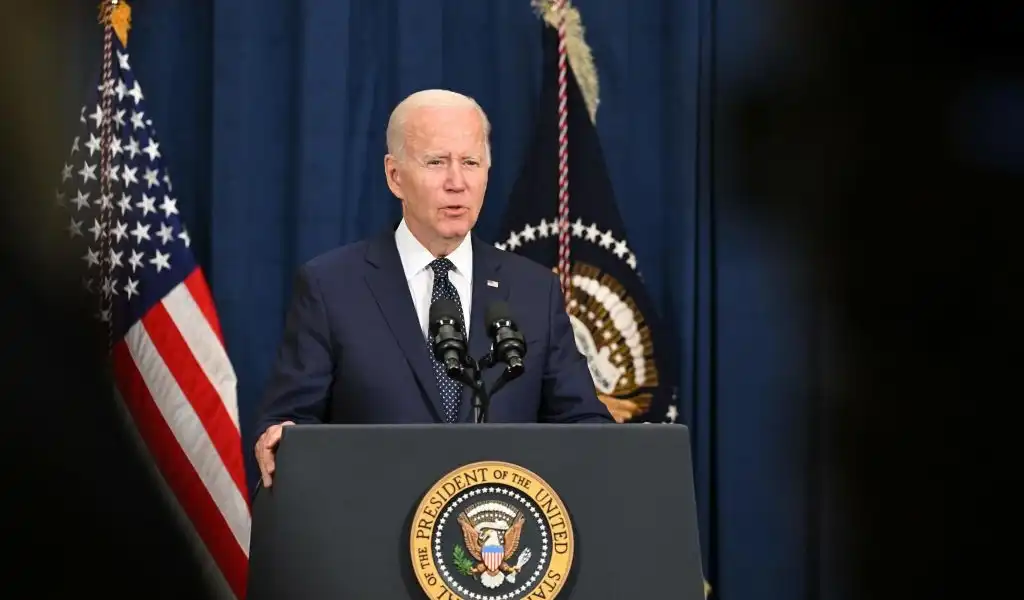
“Stop the fire in Gaza.” 1,200 political scientists demand that Biden end the occupation’s siege of Gaza

More than 1,200 political scientists, some of whom are the most prominent voices in this field, asked US President Joe Biden and other American politicians to press for an “immediate ceasefire” in the Gaza Strip and an end to the siege imposed by the Israeli occupation on the Strip.


The scholars said in an open letter that “an immediate ceasefire and the provision of aid are sufficient to prevent further catastrophic loss of civilian lives. The continuation of the conflict also threatens the hostages whose safe return depends on de-escalation of the clashes,” according to the American website Responsible Statecraft, November 21 2023.


The letter also stated, “The United States is Israel’s main sponsor and ally, and therefore bears a special responsibility for this crisis and has a special impact on it. The United States’ handling of the Gaza war so far has severely damaged its credibility and moral authority, and led to understandable skepticism about American statements about the rules-based international regime.”


The American website notes that the signatories to this letter, who also include prominent researchers in Middle East politics, join a growing list of academic and professional groups calling for a ceasefire, and saying that continued fighting will exacerbate the humanitarian crisis in Gaza, which has so far claimed many lives. At least 13 thousand dead and 31 thousand wounded.


While opinion polls show that the vast majority of Americans support a ceasefire, American politicians have rejected a permanent cessation of fighting, because President Joe Biden and many members of Congress claim that “this would be in the interest of Hamas.”


These efforts calling for a ceasefire, which “also condemn Hamas,” according to the American website, resemble an open letter issued in 2002 in which senior political scientists urged then-US President George W. Bush to stop the US invasion of Iraq.


The letters share some co-signatories, such as Professor John Mearsheimer of the University of Chicago and Harvard Professor Stephen Walt, both non-resident scholars at the Quincy Institute.


Other notable signatories of the Ceasefire Letter include Margaret Levy, Jane Mansbridge, Lisa Martin, Rogers Smith, and Carole Pittman, all of whom previously served as president of the American Political Science Association, the leading professional group in the field.


Prominent scholars of non-state and peacekeeping movements have also supported this call, such as James Scott, Paige Fortna, and Melanie Cammet.


Lisa Weeden, a professor at the University of Chicago who helped organize the letter, said the broad support from the political science community stems in part from the letter's careful wording. “It offers a comprehensive perspective that allows important scholars with diverse viewpoints to strongly advocate for a ceasefire, she said. She added, that she was grateful to her colleagues who agreed to soften the tone of her wording to build a broader coalition.


The letter also said that its signatories “may disagree on the broad outlines” of resolving the conflict, but it says that “the crisis facing Gaza is very serious, and we demand that we put aside any disagreements about the conflict as a whole and end it, and we note the urgent need for a ceasefire and the entry of humanitarian aid.”


For their part, some of those who refused to sign the letter said that a “humanitarian truce” was more appropriate than a ceasefire, while others claimed that “the Israeli campaign, no matter how brutal, is necessary to ensure the safety of Israelis,” according to Weeden.


The American website says that Weeden is realistic about the possibility that the letter will have an impact on US policy, but she hopes that this initiative will strengthen pro-peace efforts by “expressing anger at the Israeli attack and strengthening political solidarity among other political scientists.”

Source: arabic Post

PALESTINE

Tue 21 Nov 2023 4:12 pm - Jerusalem Time

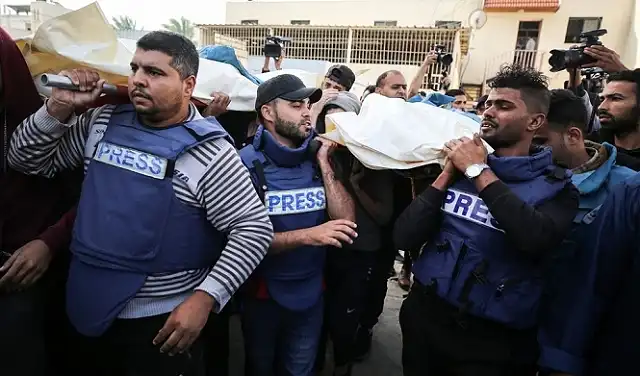
62 male and female journalists were killed in the Gaza Strip since October 7

The International Federation of Journalists, headquartered in the Belgian capital, Brussels, on Tuesday condemned Israel's killing of journalists in the Gaza Strip.


The number of journalists dead as a result of the ongoing Israeli war on the Gaza Strip has risen to 62 male and female journalists since last October 7.


The government media office in Gaza said, “The death of journalists Alaa Al-Hasanat and Ayat Khaddura in an Israeli bombing on Monday brings the number of killed journalists to 62 since the beginning of the Israeli aggression.”


The media office published photos and names of dead journalists, including 6 female journalists.


In a statement, the Union demanded an immediate investigation into the killing of journalists in the Gaza Strip.


UNCATEGORIZED

Tue 21 Nov 2023 4:04 pm - Jerusalem Time

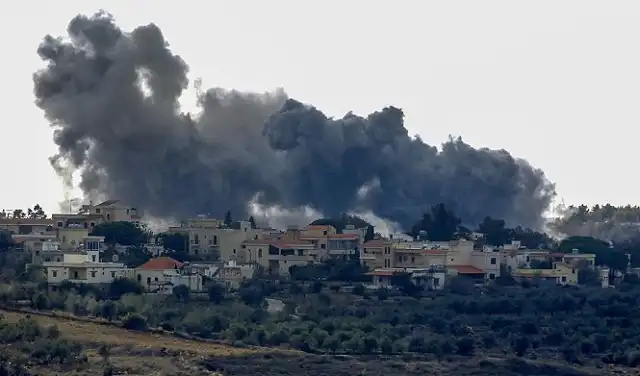
South Lebanon: 8 Lebanese, including two journalists, were killed by Israeli bombardments

Al-Mayadeen Channel mourned the two dead correspondents, Farah Omar, and the photographer, Rabie Al-Maamari, who were killed as a result of an Israeli bombardment , on Tuesday afternoon, in southern Lebanon. A Citizen Hussein Aqeel, who was accompanying the press team, was also dead. This was preceded, on Tuesday morning, by the martyrdom of an elderly Lebanese woman in the town of Kafr Kila.


Eight Lebanese citizens were killed this afternoon, Tuesday, including two journalists and two civilians, in an Israeli bombing of the Tayr Harfa-Al-Jabayn triangle area and the towns of Kafr Kila and Al-Shaiyatiya in the south of the country.


The agency indicated in its statement that “enemy aircraft attacked inhabited homes in the town of Kafr Kila, which led to the death of the citizen, Laiqa Sarhan, 80 years old, and the wounding of her granddaughter, Alaa Al-Qassem (Syrian nationality), who was subsequently transferred to the Marjayoun Governmental Hospital for treatment.”


The Lebanese National News Agency reported this afternoon, Tuesday, that “four people were martyred inside the car that was targeted by the enemy in the Shaitiyya area.”


Israeli reports stated that an anti-tank missile fired from Lebanon hit a house in Metulla.


Arab reports indicated that "an Israeli warplane raided the outskirts of the town of Aita al-Shaab in the central sector of southern Lebanon, and another targeted the outskirts of the towns of al-Jabayn and Tayr Harfa in the western sector of southern Lebanon, and the vicinity of the town of Kfar Shuba in the eastern sector of southern Lebanon was also targeted."


It is noteworthy that sirens sounded in various areas in the Upper Galilee on Saturday morning, on suspicion of the infiltration of a drone from Lebanon, and later the Home Front announced that “the event has ended.”


PALESTINE

Tue 21 Nov 2023 3:29 pm - Jerusalem Time

A Palestinian citizen died of wounds by Israeli soldiers east of Nablus

The Ministry of Health announced, Tuesday evening, the death of a citizen as a result of his wounds shot by the Israeli occupation forces during their aggression against Balata camp, east of Nablus, this morning.


According to local sources, a 45-year-old citizen died from critical wounds he sustained this morning during the storming of Balata camp.

PALESTINE

Tue 21 Nov 2023 2:02 pm - Jerusalem Time

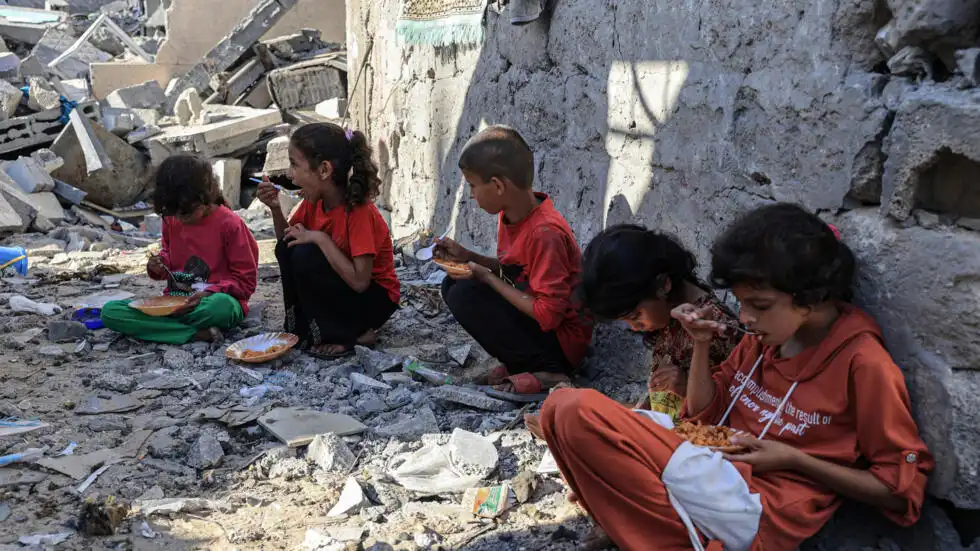
UNICEF warns of a "health tragedy" in the Gaza Strip due to outbreak of diseases

The United Nations Children's Fund (UNICEF) warned on Tuesday that a "health tragedy" was unfolding in the Gaza Strip, due to a shortage of fuel and water.


UNICEF spokesman James Elder said, during a press conference held in the Swiss capital, Geneva, “If fuel is not available in sufficient quantities, we will witness the collapse of sanitation facilities. In addition to missiles and bombs, we will have conditions conducive to the spread of diseases. These are ideal conditions for the spread of a diseases Tragedy".


He added, "There is an acute shortage of water. Feces spread in areas with high population density. There is an unacceptable shortage of toilets," stressing that it is very difficult to maintain personal hygiene, or even wash hands, in the Gaza Strip, since October 7. 


Elder added, “If children’s access to water and sanitation remains limited and insufficient, we will see a tragic rise in child deaths,” as they face an acute risk of mass epidemics spreading.”


World Health Organization spokesman Christian Lindmeier pointed out that no trace of cholera had been detected in the Gaza Strip, as the bacteria that caused this disease did not exist before the outbreak of the war.


On the other hand, he stressed that watery diarrhea, which thousands of physically tired people suffer from, also poses a great danger.


PALESTINE

Tue 21 Nov 2023 1:49 pm - Jerusalem Time

Palestinian Female detainees face inhuman detention conditions in Israeli prisons

The Prisoners and Ex-Detainees Affairs Authority reported that female detainees at Damoun Prison face very difficult detention conditions, in light of the penalties imposed on them since the start of the aggression on the Gaza Strip on the 7th of last October.


The authority explained, in a statement issued today, Tuesday, that the prison administration practiced many abusive measures against them, and severely restricted them in all aspects.


It indicated that the current number of female detainees in Damoun Prison is 74, in addition to other female detainees distributed among different cells and interrogation centers.


It explained that the occupation is carrying out a ferocious arrest campaign against Palestinian women in general, and is targeting Palestinians from the 1948 lands, under false pretexts and arguments, noting that the prison conditions are harsh and humiliating, as the rooms are small and monitored by cameras all the time.


It continued: Pillowcases and covers (thin blankets) are taken from 7 a.m. until 7 p.m., noting that the windows of the rooms remain open throughout the day and it is forbidden to close them, despite the cold weather and rain.


The female guards also conduct naked and humiliating searches of the detainees daily, morning and evening, and the female detainees are cut off from the outside world. There are no visits or contact with their families or lawyers, although some female detainees have court decisions allowing them to communicate, but the administration refuses to do so.


Female detainees are also prohibited from visiting the clinic and taking medications, despite the fact that a number of them suffer from illnesses that require major health care. Rooms and departments are suddenly raided several times. The female guards attack the detainees by beating, cursing, and threatening them without any reason. They close the cantina and provide very poor meals. In terms of quality, the courts are held via videoconference (VC), and this is an uncomfortable procedure, as there is no privacy to talk to the lawyer, as the jailers remain in the detainees at all times, and all electrical appliances, personal belongings, and daily necessities are withdrawn from the rooms.

PALESTINE

Tue 21 Nov 2023 1:01 pm - Jerusalem Time

Israeli settlers attack Palestinian travelers' vehicles south of Nablus

Today, Tuesday, Israeli settlers attacked citizens’ vehicles with stones, near the village of Awarta, south of Nablus.


According to local sources, a group of settlers attacked citizens’ vehicles at the eastern entrance to the village, causing damage to a number of them.

ARAB AND WORLD

Tue 21 Nov 2023 12:38 pm - Jerusalem Time

Guterres rejects the establishment of a UN-sponsored “protection system” in Gaza after the war

United Nations Secretary-General António Guterres refused to establish a “protection system” under the auspices of the United Nations in the Gaza Strip after the end of the current war, according to what was reported by the German News Agency.


Guterres said in a press conference yesterday (Monday): “I do not believe that a protection system under the auspices of the United Nations in Gaza is the solution,” and called, instead, for a transitional phase in which the United States and Arab countries participate.


He added: “Everyone must come together to create the necessary conditions for a transitional process that allows a strong Palestinian authority to assume responsibility in Gaza, and then, based on that, finally move in a firm and irreversible manner, towards a two-state solution based on the principles established by the international community to a significant limit which I have repeatedly identified.”


He continued: “I believe we need a multilateral approach in which various countries and entities cooperate.”


He concluded: “For Israel, the United States is, of course, the main guarantor of its security. For the Palestinians, neighboring countries and Arab countries in the region are essential.

PALESTINE

Tue 21 Nov 2023 11:41 am - Jerusalem Time

Israeli authorities demolished a Palestinian house in Jerusalem

Today, Tuesday, the Israeli occupation municipality demolished a house in the town of Al-Issawiya, northeast of occupied Jerusalem, with bulldozers after storming the town and besieging the neighborhood in which the house was located.


According to local sources, the house belongs to the citizen Mahran Darwish, and he lives in it with his family of five members, noting that the owner of the house was subjected to heavy financial fines imposed by the occupation municipality before it came to the town today to demolish it.


It is noteworthy that the occupation forces used the demolition of homes as collective punishment against Jerusalemites who are prevented from obtaining building permits from the occupation municipality.

ARAB AND WORLD

Tue 21 Nov 2023 11:25 am - Jerusalem Time

Amnesty International: Evidence that Israel committed war crimes in Gaza

Amnesty International said that it had monitored new evidence of Israel committing war crimes in Gaza, where civilians in schools and hospitals were directly bombed without warning, but it stressed that prosecuting Israel before international courts is difficult.


According to a member of the organization, Sami Abdel Moneim, he said yesterday that the organization concerned with defending human rights had received “calls for help from victims regarding the bombing of the shelters they were in without warning, which violates international laws and the rules of war.”


The organization said in a report issued yesterday that there is evidence that Israel committed “war crimes” in Gaza that resulted in the killing of 46 Palestinian civilians, stressing the need to investigate them.


It noted that it had documented, as part of its ongoing investigations into violations of the laws of war, two cases “that can be considered an example of Israeli practices in Gaza, in which Israeli raids killed 46 civilians, including 20 children.” The oldest victim was an 80-year-old woman, while the youngest victim was no more than three months old. “These two attacks must be investigated as war crimes.”


It explained that the two attacks, which took place on October 19 and 20, hit a church building where hundreds of displaced civilians had taken refuge in Gaza City, and a house in the Nuseirat refugee camp in the central Gaza Strip.


Abdel Moneim said: “Unfortunately, Israel is not a signatory to the convention regulating the International Criminal Court, and therefore prosecuting it is difficult.”


He considered that Israel's history in wars "testifies that it has never respected the rules of engagement or the rules stipulated in international law, such as respecting places of worship, schools, hospitals, or places where civilians resort to preserve their lives."


But he stressed that “matters will not become clear, nor will they be fully documented, to submit a file against the occupation forces to international justice until after the ceasefire.”


Abdel Moneim also revealed that the organization has evidence that “Israel is causing the greatest amount of destruction and injury to children and women, to instill terror on the residents of Gaza, urging them to move and leave the areas in which they live, and forcibly displacing them.”


He added that during the recent Israeli forces raids on hospitals, “there was no confrontation between the army and Palestinians. On the contrary, most of those present were civilians, which refutes the Israeli army’s narrative that there is a war. On the contrary, what we observed is that Israel is fighting civilians.”


According to Abdel Moneim, “Failure to implement the rules of engagement regulating wars is the biggest attack used by Israel against the people of Gaza. Since the beginning of the war, no direct confrontation has been observed.”


Abdel Moneim stressed that “the role of human rights organizations ends by submitting reports and exposing violations that occur on the ground. There are bodies entrusted with working and making decisions after that, such as the offices of special rapporteurs at the United Nations.”


The Amnesty International report attributed to Erika Guevara Rosas, the organization’s director of global research, advocacy and policy activities, saying that Israel’s “deadly and unlawful attacks are part of a documented pattern of disregard for the lives of Palestinian civilians, and demonstrate the devastating impact of the unprecedented Israeli military attack that has not leave any safe place in Gaza, regardless of where civilians live or seek shelter."


It urged the Prosecutor of the International Criminal Court to “take immediate concrete measures to accelerate the investigation into war crimes and other crimes under international law, which opened in 2021.”

ARAB AND WORLD

Tue 21 Nov 2023 10:20 am - Jerusalem Time

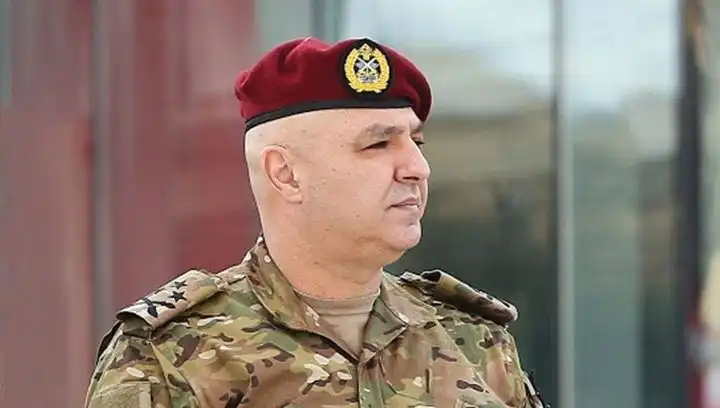
Lebanese Army Commander: Israel bombs southern towns with internationally banned munitions

The Commander of the Lebanese Army, General Joseph Aoun, said today (Tuesday) that his country faces “grave challenges at various levels,” which has a negative impact on state institutions, including the military, as a result of tension and mutual bombing on both sides of the border with Israel.


According to what was reported by the Arab World News Agency, Aoun said on the occasion of the eightieth anniversary of Lebanon’s independence: “Today, we stand before an extremely dangerous scene, as the Israeli enemy continues to commit the most horrific and bloodiest massacres in an unprecedented manner against the Palestinian people and repeats its attacks on the sovereignty of our homeland and our people.” In the southern border villages and towns, using internationally banned ammunition.”


He added: “Lebanon faces grave challenges at various levels, which are negatively reflected on state institutions, including the military institution, which today is facing a pivotal and sensitive stage in light of the political tensions, while the supreme national interest requires not to harm it, ensuring its continuity and cohesion, and maintaining morale of its soldiers.”


The Lebanese army plays limited roles in the border area with Israel, since Hezbollah decided to support fighters in Gaza by keeping the Israeli army busiy with its northern front.


The army, which is entrusted with the international forces (UNIFIL) to implement International Resolution 1701, which ended a 33-day war between Tel Aviv and Hezbollah in 2006, finds itself forced to limit its tasks to preventing Palestinian groups, as much as possible, from launching missiles towards Israel, by dismantling platforms found in the area. 


International Resolution 1701 stipulated the cessation of hostilities, the withdrawal of Israeli forces from Lebanon, and the deployment of an additional United Nations force tasked, in coordination with the Lebanese army, with monitoring the cessation of hostilities. It also stipulated the creation of an area between the Blue Line and the Litani River (known as the area south of the Litani) that would be free of any militants, military equipment and weapons other than those belonging to the Lebanese Armed Forces and UNIFIL forces.


However, this decision has witnessed many violations over the past 17 years, whether by Israel, which continued its continuous attacks, or by Hezbollah, which clearly did not withdraw its weapons and militants from the area south of the Litani.


The recent outbreak of the Southern Front raised more than one question mark about the fate of this resolution, whether it is still in effect, and whether a new UN resolution should be issued after the end of the fighting in Gaza and automatically in southern Lebanon.

PALESTINE

Tue 21 Nov 2023 10:04 am - Jerusalem Time

Israel arrests 45 citizens from the West Bank and Jerusalem

The Israeli occupation forces arrested, at dawn and Tuesday morning, 45 citizens from various parts of the West Bank and occupied Jerusalem.


OPINIONS

Tue 21 Nov 2023 9:48 am - Jerusalem Time

Towards crystallizing a national democratic alternative

Hani Al-Masry

Hani Al-Masry

Opinion Writer

Although presenting scenarios after the aggression and the war of annihilation is part of the psychological warfare carried out by the occupation government and its partners in Washington and some European capitals, the Palestinians must prepare for the next day, based on the conviction that what comes after the Al-Aqsa flood is different from what came before it. 

The government of Benjamin Netanyahu will fall after the war and a new government coalition will be formed, and the Palestinian Authority will be changed to achieve Palestinian national interests, or it will be dissolved, collapsed, or renewed as US President Joe Biden demanded, or we will be faced with an authority that embodies the national consensus and a tool of the unified Liberation Organization, we will have a new Hamas movement, and all of this and its extent will be determined according to the results of the war.

The scenario of defeating Hamas and the resistance is being portrayed as if it is the only and inevitable scenario whenever the future of Gaza is being researched. It is directly linked to isolation from Hamas, or after eliminating it and its military and civilian infrastructure, removing it from power, and preventing it from returning to it.

In fact, any war is likely to reach several outcomes, ranging from the defeat of one party to the victory of one party, or reaching a formula of no victor and no loser, which is the scenario most likely to occur, as indicated by the various indicators and facts on the battlefield and their repercussions on the various parties and countries, regionally and internationally. It is a formula in which no party is defeated decisively, and both parties or various parties can claim victory. If this scenario is achieved, the weak party will have stood firm and achieved some kind of victory simply because it did not enable the strong party to achieve its goals.

It is difficult that there is a victory for Israel, which has not achieved any specific goal, despite the fact that 45 days have passed since the start of the war, and it began with a crushing defeat, or even with an earthquake that shook it from the depths, and more than 1,200 people were killed, many times more wounded, and 240 prisoners and detainees, in addition to economic, psychological damages. 

It is also difficult for the resistance to win in light of the gross imbalance of power, the American conspiracy and partnership in the war, and the 50,000 dead, wounded and missing people it has left behind so far, and in light of the comprehensive destruction of large and numerous areas in the Gaza Strip and the destruction of half of the buildings and infrastructure.

Post-war scenarios

The first scenario: erasing the Gaza Strip
This scenario is based on the destruction of the Gaza Strip through a war of extermination, open massacres, ethnic cleansing, collective punishment, and a stifling siege, and the displacement of the people of the Strip to Sinai, Egypt, or to several countries that extend, according to one scenario, to various countries of the world.

This scenario collided with official and popular Palestinian opposition, as was evident in the steadfastness of people in the Gaza Strip. So much so that more than 800,000 residents still live in the northern Gaza Strip, despite the destruction of half of the homes and more than half of the infrastructure. It also collided with Arab, Islamic, and international opposition, especially Egyptian-Jordanian opposition, which led to it being withdrawn from circulation, or more correctly, temporarily frozen.

However, the continuation of the war of extermination and its targeting of comprehensive destruction and elimination of life and infrastructure in the northern Gaza Strip; It indicates that displacement is still a goal that the occupation seeks to achieve. Gila Gamliel, the Israeli Minister of Intelligence for the Likud Party, after Bezalel Smotrich, the Minister of Finance, called for settling the people of Gaza in Arab and foreign countries, and financing this process with money that will be spent on reconstruction, on the basis that if the occupation succeeds in completing the occupation of the northern Gaza Strip, it will go To the south.

It is reported that about 43% of the dead have fallen in the south, as was actually announced. This means that the people of the south and those who took refuge there will be exposed, if the ground war extends there, to a new refuge that the occupation forces plan and prefer to take outside the Gaza Strip. This is by putting Egypt in front of a fait accompli and finding other alternatives, through displacement from the sea as the occupation plans, and this appeared in the contacts it made with many countries to encourage them to approve programs to facilitate and encourage the reception of the people of Gaza.

An extension of the ground war to the south is possible

Completion of the ground war and its extension to the south is very likely; Because the resistance exists in the center and the south, as it still exists in the north, and therefore without completely occupying the Gaza Strip and liquidating the resistance and its military and civil infrastructure, the Israeli victory they seek cannot be achieved. Without a decisive victory, it is not possible to restore Israel's deterrent power, nor to restore Israel's strategic position among its people, its partners, and its Western allies, especially in the United States of America. Therefore, the war is likely to continue to test and exhaust the possibility of achieving this goal until the losses of its continuation become greater than the profits that can be achieved.

If occupying the entire sector and staying there is not possible; given the continued resistance this would lead to, emphasis could be placed on establishing buffer zones to provide security and control over very vital territory.

The displacement scenario is unlikely. Because it is rejected by Palestinians, Arabs, and internationally, but it can be partially implemented after the aggression stops, through the migration of some capital, expertise, and competencies, especially from young people, at rates higher than the migration rates that occurred during the last two decades.

The second scenario: establishing a temporary civil administration

This scenario is based on the establishment of a temporary civil administration affiliated with the occupation authorities, with security remaining in the hands of the occupation forces until a new situation is created that does not allow for a repetition of what happened. That is, threatening the occupying state again.

Here, the occupation will face the likely possibility that Palestinians, whether from the Gaza Strip or elsewhere, will not accept being part of this temporary administration. Because whoever agrees will be an agent of the occupation, and his people will treat him on this basis. Which means that, according to this scenario, the occupation will be forced to occupy the Gaza Strip, remain there, and bear its consequences and responsibility for more than two million people for an indefinite period. This is something that the United States and the entire world oppose, in addition to strong Palestinian, Arab, and Islamic opposition. But it is something sought by extremist religious and nationalist Zionist circles, which have even begun to call for the restoration of settlement in the Gaza Strip.

The third scenario: placing the Gaza Strip under Arab or international guardianship

This scenario is rejected by Palestinians, Arabs, and internationally unless it is part of a political project based on establishing a Palestinian state, and this is what Israel rejects. No one in the world wants to provide cover for the occupation and bear responsibility in its place in a region hat has witnessed humanitarian disasters with enormous humanitarian and economic consequences and repercussions.

Fourth scenario: return of Palestinian Authority to the Gaza Strip

This scenario needs the approval of the Authority that has shown willingness if it is part of a political solution based on the two-state solution. Although this scenario is acceptable in the Arab world and internationally, it is rejected by the Israeli government, as stated by Netanyahu, who said more than once that power in its current state cannot return to the Gaza Strip, first because it was there and Hamas turned against it, and because it is a “terrorist Authority.” Its president did not condemn the Al-Aqsa flood, it incites against Israel, its ministers praised the Al-Aqsa flood, it teaches its children hatred of Israel, and it pays salaries to “terrorists” and their families.

This scenario is unlikely, as the return of the Authority within the formulas proposed by Israel would make the Authority turn into a puppet authority, and thus lose any legitimacy to represent the Palestinians.

New Palestinian leadership and an honorary position for President Abbas
Perhaps what was stated in Joe Biden's article, published in the Washington Post, about the necessity of assuming renewed authority in the Gaza Strip, is an attempt to meet Netanyahu's demands by changing or renewing the Authority. There is a lot of talk in Washington and European and Arab capitals about the necessity of finding a new Palestinian leadership, even if President Mahmoud Abbas assumes an honorary position and transfers his powers to a council of ministers in accordance with what happened with the late President Yasser Arafat, and in implementation of what is contained in the amended Basic Law, changing Authority and renewing its legitimacy is to hold elections so that they are effective and exceed deficit, corruption.

This scenario is possible, and has an opportunity, if not a great one, but there is a major obstacle before it, which is that the Netanyahu government is not ready to deal with a political solution based on the two-state solution. Therefore, there will be a need to topple Netanyahu and his ruling coalition by holding early Israeli elections in which the opposition parties will win.

The question is: If Benny Gantz becomes prime minister, as various polls indicate, to what extent can he respond to a political initiative in light of his extremism and the prevalence of extremism in Israel before October 7 and its increase after it?

Yes, he may be different from Netanyahu in terms of form, but he adopts the well-known Israeli no’s, which include: no return to the June 4 lines, no division of Jerusalem, no removal of settlements, no approval of the right of return, and no establishment of a sovereign Palestinian state on 1967 borders.

Fifth scenario: dissolution or collapse of Palestinian Authority

The occurrence of this scenario will lead to a kind of chaos and security chaos, and the return of direct occupation, albeit in new forms that could include the creation of local administrations that can be called authorities in implementation of the Seven Emirates Plan proposed years ago by the Zionist researcher Mordechai Kedar.

Although this scenario is unlikely, it cannot be completely ruled out in light of the political, economic and financial crisis that the Authority is witnessing, the competition over who will succeed Abbas, the lack of an agreed-upon mechanism for the transitional period, and in light of an extremist Israeli government that behaves like a wounded, charging bull, without balance, and with difficulty of achieving these scenarios this scenario keeps popping up.

The magic turned against the magician
Based on the above, presenting post-war scenarios, without there being a possible or comfortable scenario for the occupation, further complicated the already complex situation. The return of the occupation is not a solution, as it was there in the Gaza Strip and emerged as a result of several reasons, including: resistance, the necessity of getting rid of the rule of more than two million Palestinians, seizing control of the political initiative for fear of imposing unwanted Israeli initiatives, and focusing efforts on settling the West Bank, Judaizing it, and deepening the occupation there. 


Sixth scenario: Change of Authority and rebuilding of the PLO
This scenario is the Palestinian favorite, and it cannot have a great chance of success unless a national, democratic alternative is built that includes the broadest national and popular mobilization. It is very necessary because it puts the fate of the Palestinians in their hands and not in the hands of others, but it is capable of blocking all other hostile scenarios.

This scenario is the national option due to the inability to accept the Authority or Palestinian figures from and outside the Gaza Strip to lead the Strip for a transitional or permanent period on the back of an Israeli tank, and under direct or indirect occupation. The occupation forces’ control over security for an indefinite period is unanimously agreed upon in Israel. The fact that the authority lost its legitimacy before October 7, and seemed to be no more relevant after that for several reasons, including:

First, the failure of its political program and the failure to adopt an alternative program;

Secondly, it does not appeal to the people by holding elections that would renew its popular legitimacy.

Third, the division occurred and there was no national consensus nor political will to end the division and restore national unity, in addition to the fact that the PLO was frozen. This requires the formation of a transitional leadership that can be called a “national steering committee” whose primary mission is to lead the stage without bypassing the PLO institutions in whose name decisions must be issued, until a new national council is formed by elections wherever possible, and by national consensus on national and objective foundations and standards. There is also a disagreement over the return of Palestinian Authority in the corridors of the Israeli government, and even in the Israeli War Council, between those who support its return as it is, or after changing it, and those who reject that, and there is a greater disagreement within the ruling coalition over the continued existence of the Authority as it represents the Palestinian identity, and its existence as a single authority keeps the door to establishing a Palestinian state open.

The solution is to build a national, democratic alternative

The path to the Israeli and American scenarios can certainly be blocked by building a national democratic Palestinian alternative through the development of a broad coalition, and the president must sponsor the process of change and renewal, and thus end his political career in a national and honorable manner, or resign and make room for a new leadership that works to accomplish what he was unable to accomplish. From another angle, the process of change could  takes place through accumulated political and public pressure through a national front or a broad national meeting, and then by appealing to the people to hold elections when possible after stopping the aggression.

The ball is in the court of the various forces, movements, institutions, and national figures inside and outside the country, especially the Fatah and Hamas movements. Change can - and must, and is better - begin with the crystallization of a comprehensive vision based on all national rights, and currently focused on a central goal, which is ending the occupation and embodying the free, independent state of Palestine no matter how possible or impossible it is to achieve. This is because the battle currently underway is focused on the fate of the West Bank and the Gaza Strip, provided that new strategies emerge, and a new authority and leadership will have the decision to make peace or resistance based on the requirements of the political program of struggle, which will be achieved by accumulating achievements and changing the balance of power on the ground, and working to invest them with political achievements. It is not a reproduction of the previous process; the process of negotiations for the sake of negotiations, and a process without peace aimed at covering up the facts established by the occupation, which made the Israeli solution the only possible and practically proposed solution.


A national salvation government whose reference is the leadership of the unified PLO

The desired vision could include the formation of a national salvation government whose reference will be the leadership of the unified PLO, and the only scenario is not for the factions to participate directly in it. Rather, it could be a government of technocrats to overcome the complex of rejecting the participation of “Hamas,” which will play a fundamental role by participating in its formation. This government is working to unify the institutions of the Authority, end the division, prepare to hold presidential and legislative elections as soon as possible, and organize an Arab and international process to rebuild the Gaza Strip.


ARAB AND WORLD

Tue 21 Nov 2023 9:43 am - Jerusalem Time

Prime Ministers of Belgium and Spain intend to visit Israel and Palestine

The Prime Ministers of Belgium, Alexander De Croo, and Spain, Pedro Sanchez, intend to visit Israel and Palestine to discuss the situation in the Gaza Strip, which has been subjected to a devastating Israeli attack for weeks.


The Belgian Prime Minister stated in a post on his account on the “X” platform, on Monday, that he will travel with his Spanish counterpart to the Middle East, without specifying a date for the visit.


De Croo said: “We in the European Union want to contribute effectively to stopping the escalation and reaching a possible political solution.”


He added: "We will hold talks about the humanitarian and political situation in Israel and Palestine."


According to the Anatolia correspondent, quoting sources in the Spanish Prime Minister, the Prime Ministers of Belgium and Spain are expected to meet, during their visit to the region, Israeli President Isaac Herzog, his Prime Minister Benjamin Netanyahu, and Palestinian President Mahmoud Abbas.


According to the same sources, during the talks, the issues of “protecting all civilians, releasing hostages, ensuring the entry of humanitarian aid into Gaza, and establishing lasting peace and security in the region on the basis of the two-state solution” will be discussed.


It is noteworthy that Sanchez had previously condemned what he considered to be the Hamas attack on Israel on October 7th. However, he also stressed that this attack "is not a justification for what is happening in Gaza in any way."


He indicated that his government will work to recognize the Palestinian state in Spain and Europe.


In turn, the Belgian government denounced the Hamas attack on Israel and expressed its solidarity with Tel Aviv on October 7. But she later said, after the intensification of Israeli attacks on Gaza, that the attacks were “no longer proportionate.”


Belgian Minister of Development Cooperation Caroline Jenes also called on the International Criminal Court to open an investigation into "Israeli war crimes."


Genis said that Belgium is considering recognizing the Palestinian state, and that many European Union member states and even large countries, including Spain, share the same thinking with Belgium.