PALESTINE

Mon 25 Dec 2023 2:16 pm - Jerusalem Time

Israel allocates $20 million to secure settlements in the West Bank

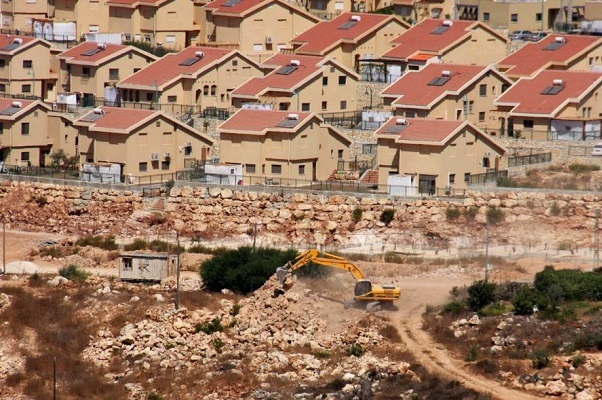
Yesterday, Sunday, the Israeli government approved the allocation of 75 million shekels ($20 million) to secure illegal settlement outposts in the West Bank, in conjunction with the campaign of raids and arrests it launches throughout the West Bank, and the violent aggression against the besieged Gaza Strip.


At its weekly meeting yesterday, the Israeli government approved Finance Minister Bezalel Smotrich’s proposal to allocate 75 million shekels for the security aspects of the illegal settlements in the West Bank, which are known as “young settlements,” according to the Yedioth Ahronoth newspaper.


Recently, many Israeli officials have faced criticism for continuing to allocate funds to settlement outposts during the war.


The term "settlement outposts" refers to small settlements established by settlers on Palestinian land without official approval from the Israeli government.


Source: Al Jazeera

PALESTINE

Mon 25 Dec 2023 12:53 pm - Jerusalem Time

West Bank: Israeli forces launch an arrest campaign in the West Bank, arresting 35 Palestinians

From yesterday evening until Monday morning, the Israeli occupation forces arrested at least (35) citizens from the West Bank, including children, with the continuation of systematic arrests and the comprehensive aggression launched by the occupation against our people.


The authority and the club said that the arrests were concentrated in the Jenin governorate, while the rest of the arrests were distributed in the governorates of: Bethlehem, Hebron, Ramallah, Tulkarm, Jericho, Tubas, and Jerusalem.


In addition to the arrests that were recorded, the occupation, since dawn today, continues to storm the town of Burqa/Nablus, and carries out field investigations with dozens of citizens, in addition to the ongoing raids on citizens’ homes, accompanied by widespread sabotage and destruction operations, and it has not been possible to confirm who the occupation has kept in detention. Until now.


It is noteworthy that the total number of arrests after October 7 amounted to about (4,730), and this total includes those who were arrested from homes, through military checkpoints, those who were forced to surrender themselves under pressure, and those who were held hostage.


Note that, in recent times, the occupation forces have been focusing on field investigation operations, where they arrest many citizens, with the aim of investigating them on the ground, and then release them later, after carrying out acts of abuse and torture against them.


PALESTINE

Mon 25 Dec 2023 11:42 am - Jerusalem Time

West Bank: Israeli colonists cut down 60 olive trees south of Nablus

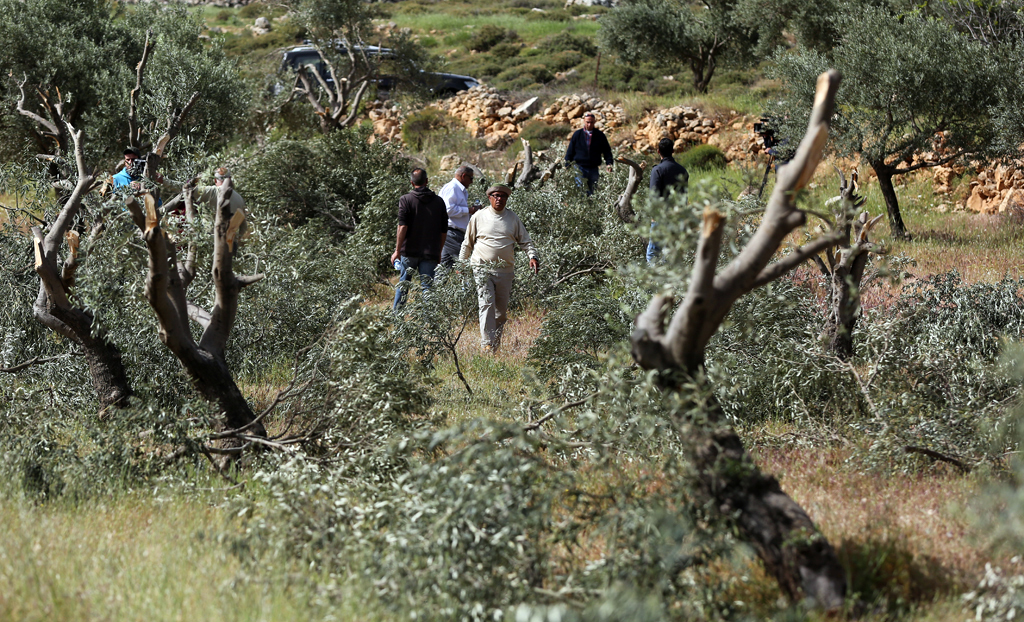
Last night, Israeli colonists cut down 60 olive trees on the lands of the village of Jalud, south of Nablus.


The head of the Jaloud Village Council, Raed Haj Muhammad, said that colonists stormed the “entire sector” area east of the village, cut down trees, and destroyed water tanks and irrigation pipes, owned by the citizen Nizar Youssef Odeh.

ARAB AND WORLD

Mon 25 Dec 2023 9:59 am - Jerusalem Time

New York Times: An investigation confirms the killing of Israelis in October 7th attack on Israeli orders

The American newspaper “The New York Times” documented, in an investigative report, the killing of Israeli civilians in a house that an Israeli military commander ordered to be bombed with a tank, on October 7, in Kibbutz Be’eri on the outskirts of the Gaza Strip.


The newspaper said in a lengthy report that took 10 weeks to prepare, and included an interview with 80 Israelis from the kibbutz and an analysis of dozens of video clips: “With a state of military chaos, General Barak Hiram was suddenly appointed responsible for the Israeli efforts to reclaim Be’eri and the surrounding area.”


It added: “General Hiram was considered a rising star in the army, as he lost one of his eyes during the Israeli invasion of Lebanon in 2006. He was scheduled to take command of the army’s Gaza Division next year (2024), and his division was operating in northern Israel and in the Israeli-occupied West Bank.” .


It added, “He arrived in Be’ri at around four in the afternoon, to find a disorganized mixture of Israeli units fighting in different parts of the town.”

According to the report, surveillance camera footage showed the soldiers reclaiming the town’s dining hall, spreading across the parking lot, and evacuating wounded residents through the same side gate that the attackers had used hours earlier to penetrate the town.


It added: “A complex situation was developing in Bessie Cohen’s house, where the 14 hostages were being held. To slow the soldiers’ advance, the kidnappers forced nearly half of the hostages, including the Dagan family, into the backyard of Ms. Cohen’s house, and placed the hostages between the troops and the house.” 


It continued: “Expecting an exchange of gunfire, the Dagan family lay down next to the wall of the house, and Mrs. Dagan was hugging her husband from behind.”


It noted, “At approximately four o’clock in the evening, the police SWAT team and the gunmen began exchanging fire, while the hostages in the backyard were trapped in the middle.”


It said: “A Palestinian fighter hid in the kitchen and began to take off his clothes (the Israeli army asks militants to take off their clothes to ensure that there are no weapons), and he grabbed Mrs. Porat while he was almost naked, and took her out of the house towards the SWAT team, which prompted the officers to stop shooting.” The Hamas fighter was surrendering, and Mrs. Borat was his human shield.”


It noted, “During another period of calm, Ms. Dagan opened her eyes to see at least two hostages and one of the kidnappers killed in the shooting, and she said it was not clear who killed them.”


It added: “As dusk approached, the Israeli Special Forces Commander and General Hiram began to argue, and the Special Forces Commander thought that more kidnappers might surrender, while the General wanted to resolve the situation at night.”

The newspaper continued: “Minutes later, the militants fired a rocket-propelled grenade, according to the general and other witnesses who spoke to the New York Times.”


The newspaper noted that “General Hiram remembers saying to the tank commander: ‘The negotiations have ended, storm (the house) even if it was at the cost of civilian casualties, and the tank fired two light shells towards the house.’”


It added: “A fragment of the second shell hit Mr. Dagan in the neck, cutting an artery and killing him, according to what his wife said.”


The newspaper continued: “The kidnappers were also killed during the clash, and only two of the 14 hostages survived, namely Mrs. Dagan and Mrs. Porat.”


In a related context, a former leader of the Israeli opposition, on Sunday, December 24, 2023, called for an investigation into the Israeli occupation army’s implementation of the “Hannibal” Protocol in Israeli towns surrounding the Gaza Strip, on October 7, 2023. The “Hannibal” Protocol requires the use of weapons Heavy duty in the event of an Israeli being captured, even if this poses a danger to him, to prevent the captors from leaving the site of the event, given that a dead Israeli is better than a captured Israeli.


Controversy arose over the Israeli army's implementation of this protocol, after information about the killing of Israelis by bullets from its soldiers during a Hamas attack on towns and military bases in the Gaza Strip on October 7.


The former leader of the Israeli Labor Party, Shelly Yachimovich, said in a tweet on the “X” platform: “There is a violent campaign to prevent any investigation or talk about the hell incident, in which Brigadier General Hiram ordered the firing of a tank and storming the house in (the) Bari area, and killing 12 hostages, including children, were deliberately taken.”


She considered that what happened was an implementation of the “Hannibal Protocol,” and commented sarcastically: “Hannibal is turning over in his grave.” She added: "The reason? Hiram, he is an Israeli hero. Israel's heroes protect the children of Israel and do not kill them. Who am I to judge? Who is he to kill?"


Israel did not officially recognize the application of the Hannibal Protocol in the Israeli towns surrounding the Gaza Strip.


According to Israeli media, the “Hannibal Protocol” is a military directive applied by the Israeli army and relates to how field units respond when a soldier is captured by hostile forces.


According to the Israeli media, the protocol was drafted in 1986, and was canceled in 2016 by a decision of the then Israeli Army Chief of Staff, Gadi Eisenkot, who currently holds the position of minister in the Military Ministerial Council.

Source: Sama News

ARAB AND WORLD

Mon 25 Dec 2023 9:52 am - Jerusalem Time

Washington faces increasing international isolation due to its steadfast support for “Israel”

When US President Joe Biden took office three years ago, he announced in an enthusiastic tone that “America is back!” To assume its international responsibilities after the isolationist policy pursued by his predecessor, Donald Trump, but Washington finds itself today in increasing international isolation. Because of its firm support for "Israel" in its war on Gaza.


Since the war began on October 7, Washington has more than once been forced to stand alone in international forums to defend its ally.


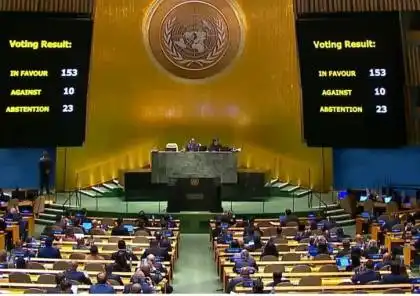
In the UN Security Council, for example, the United States used its veto power twice in a row to prevent the issuance of two resolutions calling for a “humanitarian ceasefire” in the Palestinian Strip.


However, on Friday, the most powerful country in the world emerged timidly from its isolation in the UN Security Council by deciding not to support a resolution calling for the introduction of “large-scale” humanitarian aid into the Gaza Strip.


Contrary to the position taken by some of its closest allies, such as Britain, France, and Japan, which voted in favor of the resolution, the United States abstained from voting.


A week before that, in the United Nations General Assembly, the United States found only Austria and the Czech Republic among its other European partners to vote against a resolution calling for a ceasefire in the Gaza Strip. This situation continues to have a negative impact on the image of the United States in the world.


Leslie Vinjamuri, an expert at the Chatham House Research Center in London, says: “The way all this is viewed in the rest of the world is that the United States cares about the Israelis and the Ukrainians,” and pays less attention to non-Western peoples.


Unlike his Republican predecessor, who supported “Israel” without any reservation, Biden lost his patience more than once with the Hebrew state, to the extent that he brought his differences with the government of Benjamin Netanyahu to public.


In his defense of the war that Israel is waging, US Secretary of State Anthony Blinken urged the world to put pressure on Hamas and not just the Hebrew state, reminding that the fuse of this war was lit by Hamas.


US administration officials repeatedly say: The pressure they are exerting on the Israeli government behind the scenes is bearing fruit, as the Hebrew state agreed to allow fuel tankers to enter Gaza, restore Internet service to the Strip, and open the crossings.


But Vinjamuri says; This narrative that Biden “hugs Netanyahu while pressing in secret” will not hold true for long.


"Total bias"

An opinion poll conducted by the Independent Organization on a sample of Arab people, the results of which were published at the end of November, showed that only 7 percent of those polled believed that the United States’ role in the war on Gaza was positive.


Twenty years ago, the invasion of Iraq damaged the reputation of the United States in the world.


Munqith Dagher, an official in the Al-Mustaqla organization, says: Until recently, America “still represents this image, of a country that embodies (...) democracy, human rights, freedom of expression (...), and many values that befit the famous American dream.”


But the torrent of horrific scenes from Gaza, circulated en masse on social media, “turned the situation upside down,” he added.


Dagher considers that this showed the Arabs "the United States' complete bias toward the Israelis, and their lack of respect for human rights when it comes to the Palestinians."


The first to benefit from this shift in public opinion were China and Russia, but the most prominent beneficiary was Iran.


China has greatly intensified its diplomatic efforts in the region, but the Biden administration has besieged it by urging it to use its influence with Tehran to stop attacks launched by the Houthis, from areas under their control in Yemen, on commercial ships in the Red Sea. While China has a limited military presence in the Middle East, the United States has recently established a military alliance to protect ship traffic in the region.


Brian Katulis, from the Middle East Research Institute, says: Many of the Arab countries that denounce Washington's foreign policy "are the same ones that benefit from the security system established by the United States."


He adds: "I notice a certain form of schizophrenia in many of the statements coming from the Arab world. They cannot live with us, but they cannot live without us either."


OPINIONS

Mon 25 Dec 2023 9:27 am - Jerusalem Time

In Dealing With the Israeli-Palestinian Conflict, America Has No Easy Way Out

Foreign Affairs

Foreign Affairs

Opinion Writer

By Aaron David Miller and Daniel C. Kurtzer


Wars in the Middle East rarely end cleanly. Some observers, however, have expressed the hope that the Israel-Hamas war could upend a dangerous status quo and eventually lead to more stability in the region. The war is often compared to the October 1973 Yom Kippur War between Israel and the combined forces of Egypt and Syria, largely because of the magnitude of Israel’s intelligence failures, the Israeli public’s loss of faith in their government, and the national trauma that followed. But the truth is that any meaningful comparison ends there. More than 2,800 Israelis were killed in the Yom Kippur War. Yet that conflict never incorporated the kind of sadistic, indiscriminate torture, killing, and hostage-taking that Hamas perpetrated in October 2023—nor the subsequent large-scale airstrikes by Israeli forces that have already resulted in thousands of civilian deaths. The 1973 war lasted merely three weeks and quickly entered a relatively well-structured disengagement agreement brokered by the United States, launching a process that led to a landmark Egyptian-Israeli peace treaty signed by two strong leaders: the charismatic, heroic Egyptian President Anwar al-Sadat and the tough Israeli Prime Minister Menachem Begin. By contrast, the two traumatized societies that emerge from the current war will face a level of anguish, casualties, and devastation that will demand a herculean task of physical reconstruction and psychological healing. As many as 1,400 Israelis and 18,000 Palestinians have died so far. Some 150,000 Israelis and more than 1.8 million Palestinians in Gaza have been displaced from their homes. In the West Bank, Israel Defense Forces (IDF) raids and extremist settler vigilantism have already led to the deaths of over 260 Palestinians, the arrests of nearly 2,000, and the displacement of almost 1,000 from their lands. The ideas that Israel, after completing its military operations to disable Hamas, will make a full exit from Gaza and that the Palestinian Authority (PA) can quickly and authoritatively take over are not realistic. And this war does not have heroic leaders: both sides suffer from profoundly ineffectual governance.    


There is no realistic prospect in the near term of a dramatic, uplifting denouement to the conflict that validates each side’s sacrifices and provides relief and hope for the future. In late October, U.S. President Joe Biden declared that the region must not return to its pre–October 7 status quo. If Biden wants change, however, his administration must undertake bolder policy moves—ones that firmly guide the region toward a two-state solution. Policymakers may wish to avoid bold moves in a fast-changing situation: such moves will be practically difficult and politically risky. But the facts on the ground suggest that the region cannot return to its unstable prewar status quo. Instead, without careful guidance, a new status quo is likely to emerge that will be even more problematic. Only bold American leadership now will support a good outcome in the aftermath of this war.


UNSTABLE EQUILIBRIUM 

In waging war in Gaza, Israeli officials have stated that their goals are to destroy Hamas and then demilitarize and deradicalize Gaza. What these leaders mean by “deradicalize” remains unclear. But even if the Israelis succeed in destroying Hamas’s military capabilities, they will not simply declare mission accomplished in Gaza and depart. Israel’s leaders have ruled out both Hamas and the PA as governing authorities, and Israel will thus likely remain in Gaza for an extended period. Israel already controls Gaza’s land, sea, and air access, as well as its electromagnetic spectrum. Even if Israel succeeds in ending Hamas’s rule in Gaza, it will undoubtedly want to retain some authority, ensuring at a minimum that all imports with dual-use military purposes are carefully monitored and controlled. Continued friction with the United Nations and other international aid organizations—already high thanks to Israel’s military operations and the deaths of thousands of Gazans, including UN aid workers—is inevitable. If Israel tries to remain in Gaza for an extended time, it will face residual attacks from Hamas and other terrorist organizations and enormous challenges in maintaining law and order. Even as some Israeli officials speak of exiting Gaza, they also talk openly about the necessity of creating long-term “buffer zones” and about Israel’s overall responsibility for security. But the Palestinians in Gaza and the West Bank and those in the Arab states will surely refuse to be subcontractors for Israel’s security operations. Simply put, no bright line will separate war from peace in this conflict. Instead, Israel’s military actions in Gaza will likely transition from an intensive air and ground campaign to more targeted operations, and Israel will be part of the Gazan landscape for some time. Try as Israel might to avoid former U.S. Secretary of State Colin Powell’s “Pottery Barn” rule—you break it, you own it—an extended Israeli presence in Gaza will inevitably involve taking on more, not less, responsibility for and involvement in the territory’s affairs. And that is likely to inflame tensions with whoever comes to formally govern Gaza.


A LIMITED PARTNER

On paper, the best option for Gaza’s future over the long term is Palestinian governance led by a revitalized and legitimized PA. The PA already helps cover Gaza’s public-sector employees’ salaries and assists in paying for the area’s electricity. The international community sees it as the legitimate authority in Gaza as well as in the West Bank. Earlier this month, in a meeting with PA President Mahmoud Abbas, U.S. National Security Adviser Jake Sullivan talked about the role a revitalized PA might play in governing Gaza. But because of its own dysfunction—and, in no small measure, Israeli policies—the PA has become weak and ineffectual. Palestinians perceive it to be corrupt, nepotistic, and authoritarian: in an Arab Barometer survey of Gazans conducted just before October 7, a majority of respondents considered the PA to be a burden on the Palestinian people. Abbas is 87 and in the 19th year of what was supposed to be a four-year term. He refused to hold new elections in 2021 and has increasingly lost touch with young Palestinians. When respondents in the same Arab Barometer poll were asked whom they would vote for if presidential elections were held in Gaza, 32 percent chose the imprisoned Fatah activist Marwan Barghouti and 24 percent chose the Hamas leader Ismail Haniyeh. Only 12 percent chose Abbas. During this war, the PA has been unable to protect Palestinians in the West Bank from IDF raids and attacks by settler vigilantes, let alone influence the course of Israel’s operations in Gaza. Hamas’s stock, meanwhile, has risen in the West Bank since its October 7 terror attack and its negotiated release of hundreds of Palestinian prisoners from Israeli jails. For many Palestinians who distrust Abbas and revile Israel’s recent actions, Hamas is becoming the only game in town.  


Restoring the Palestinians’ faith in the PA will take a great deal of effort and time. It would require the PA to run fair and free elections in the West Bank and Gaza and to convince voters that it really will aim to end Israel’s occupation and create an independent Palestinian state. Should it succeed, Israel would also need to demonstrate its commitment—in words and actions on the ground—to advancing a two-state outcome. And with the current Israeli government, this scenario is impossible.


POWER GRAB

In one sense, it is not a surprise that the Israel-Hamas war broke out in Gaza rather than in the West Bank. Gaza has often been at the center of tensions between the Israelis and the Palestinians: the first intifada began in Gaza in 1987, and in the twenty-first century, Gaza has been the focal point of at least six significant Israeli-Palestinian conflicts. But Israeli Prime Minister Benjamin Netanyahu’s right-wing coalition has focused on the West Bank, attempting to create the conditions for annexation. In the first half of 2023, Netanyahu’s government pushed any possibility of a two-state solution further away by advancing or approving permits for 13,000 new housing units in West Bank settlements, the highest number recorded since 2012.The fact that Netanyahu presided over the worst terror attack and the worst intelligence failure in Israel’s history, as well as the bloodiest single day for Jews since the Holocaust, has discredited his leadership. Many observers have reasonably presumed that his political career will soon reach its end, as Israeli Prime Minister Golda Meir’s did after the Yom Kippur War. But Netanyahu will fight to hang on to power. Facing indictments for breach of trust, bribery, and fraud, Netanyahu desperately wants to avoid jail. Already, he has broken with tradition by suggesting that he will organize the inquiry into the government failures that preceded Hamas’s attack; the resulting inquiry will lack the legal authority of a state commission.

For now, Netanyahu retains a comfortable 74-seat majority in the Knesset, and he has shown he is willing to pay any price to extremist and haredi partners to keep his ruling coalition intact. In May 2023, the Knesset passed Netanyahu’s budget, cementing the coalition’s grip on power until 2025. The terms of the emergency government Israel created days after the war broke out foreclosed taking up any legislation unrelated to the prosecution of the war. Netanyahu’s government is likely to survive for some time to come. Netanyahu will continue to come under public pressure to step down. Some well-respected former leaders of Israel’s security establishment have already called on him to resign. If he refuses to do so, however, there is no clear mechanism to remove him from office—even though his trial has now resumed. 


Should Netanyahu remain in power, the situation in the West Bank is likely to deteriorate.


In the meantime, Netanyahu is moving to shore up support among his right-wing partners. In fact, his administration appears to be taking advantage of the attention Gaza is drawing away from the West Bank to pursue more settlement expansion and repress the Palestinians. Since October 7, extremist settlers in the West Bank have been involved in scores of incidents of aggression and intimidation against Palestinians, forcing at least a thousand—including entire shepherding communities—off their land. A third of these episodes involved settlers drawing firearms on Palestinians. In almost half the total incidents, the IDF accompanied or actively supported the settlers.

If the IDF succeeds in its war aims by killing Hamas’s top leaders, Netanyahu could even regain some support. Israel’s electorate had shifted to the right well before this war. Hamas’s terrorism may well encourage a further radicalization of the Israeli population.


Should Netanyahu remain in power for any extended period, the situation in the West Bank is likely to continue to deteriorate, possibly leading to a Palestinian uprising stimulated in part by extremist settlers. He will also exploit for his own benefit whatever the United States decides to do or not do. 

If Biden tries to revive the peace process, Netanyahu will likely emphasize what he has already told his Likud Party: that only he can stop the creation of an independent Palestinian state. If, on the other hand, Biden assesses that the chances of a two-state peace process are nonexistent in the near term, Netanyahu will trumpet his ability to convince the Americans to stay out of his way.


BINARY OPTIONS

For the United States, the policy dilemmas appear terribly complex. But after 56 years of Israeli occupation with no end in sight, these dilemmas need to be settled sooner rather than later. The United States’ choice is binary—either try to help create the conditions for a two-state solution or adjust to a postconflict situation that is worse than the status quo ante, resolves no underlying issues, and probably sets up the conditions for another war. 


Pushing hard for a two-state solution would be complicated. 

The United States would have to help orchestrate several critical processes simultaneously: setting in place Gaza reconstruction mechanisms to be ready to operate the day the IDF leaves, bringing reluctant Arab parties on board to help maintain law and order and set up interim governance in Gaza, keeping the remnants of Hamas at bay, compelling the PA to restructure itself so it can regain the confidence of the Palestinian public, and addressing legitimate Israeli security concerns.

This course of action by the United States would also be politically risky: it could have the unintended effect of giving Netanyahu a campaign tool to remain in power. Success is far from assured. The United States will be dealing with traumatized leaders who may be unwilling or unable to make big decisions. And the Israelis and the Palestinians have failed many times to create a pathway to peace when the external context was far less fraught than it is today. Even if Netanyahu leaves office, no other top politician in Israel appears eager to embark down a path of peace.  As a potential peace broker, the United States also lacks credibility. To move toward a two-state solution, Arabs and Europeans would need to have faith in the United States’ intentions and follow-through. The United States’ vetoes and no votes in the UN Security Council and the General Assembly on resolutions for humanitarian cease-fires have not inspired confidence. And even those allies that trust Washington to implement its plans will wonder what will happen if Biden loses his upcoming reelection bid. But the alternative approach—hoping for a return to the pre–October 7 status quo without a serious effort by the United States to advance the prospects for a lasting peace—could be worse. Even if Netanyahu leaves office, no other current top politician in Israel appears eager to embark down a path of peace. And there are no Palestinian leaders with the gravitas and political weight to engage seriously with Israel in the aftermath of the conflict. Some speak of Barghouti as a potential Palestinian leader, but he is serving five life sentences for murdering Israelis and has no track record in political life that suggests he would be a peacemaker.


Stimulating the PA to reform itself is a task beyond the capability of the United States alone. Washington will need to act in concert with others to get the PA to do what it has resisted doing for decades: become less authoritarian, fight corruption, and agree to hold new elections for its presidency and its Legislative Council. Pressuring the PA to reestablish its legitimacy among Palestinians will require significant efforts by Egypt, Jordan, Saudi Arabia, and the United Arab Emirates—the so-called Arab Quartet—as well as the EU, which has always played an important role in Palestinian institution building. To bring about this multilateral effort, however, Arab actors will need to see a clear American policy that goes beyond Gaza and focuses on ending the decades-long conflict. 


CALCULATED RISK 

But the risks of advocating for a two-state approach are worth taking. Other actors will take the measure of U.S. credibility from what Washington is prepared to do to confront the inconvenient realities that will almost certainly define the postconflict landscape. The Biden administration has the smarts and the backbone to follow through even when the going gets tough. And the going will get tough. A bold effort to push a two-state solution, however, could attract support from Arab states to help ensure basic law and order, interim governance, and reconstruction in Gaza, as well as a safety net for the PA as it embarks on the necessary efforts to reform itself.

The question facing the Biden administration is what can it realistically do in the year before the upcoming U.S. presidential elections given the constraints posed by American politics and those it is likely to encounter in Israel, among the Palestinians, and throughout the Arab world. In the near term, the United States can take actions that would help overcome some early obstacles to a two-state solution. 

First, Biden should continue to press Israel to quickly end its intense ground and air campaign—which is certain to keep causing substantial civilian casualties—in favor of more focused and targeted operations.

His administration must also push hard for an increase in the amount of humanitarian assistance that enters Gaza, including by ensuring that the recently opened Kerem Shalom border crossing remains open and pressing for the resumption of negotiations to release Hamas’s remaining Israeli hostages. And the administration must press Israel and the PA to clamp down on violence by extremist settlers and Palestinian militants in the West Bank.

The risks of advocating for a two-state approach are worth taking, and the Biden administration has the smarts to follow through.

Third, the United States needs to ensure that Israel respects U.S. guidelines on Gaza, including no reduction of Gaza’s territory, no forced relocations of Gazans, and Palestinian governance. U.S. officials should make clear, both in their public statements and in their private contacts with Israelis and others, that Gaza and the West Bank must remain one integral unit and that the PA will eventually resume its governance of Gaza.

The United States will also need to be proactive in trying to ensure that conflict along the Israeli-Lebanese border does not erupt into a full-scale war. At least 60,000 Israelis have been displaced from their homes in the north of Israel. If the 2006 UN Security Council resolution mandating Hezbollah’s withdrawal north of the Litani River is not enforced, Israel may deploy its military to contain Hezbollah, which could prompt a full-blown war with a terrorist organization far more potent than Hamas. To blunt this risk, the United States will need to maintain the deterrent military forces it dispatched to the region in October 2023.Finally, the Biden administration must make sure that all regional players understand that a two-state solution is the United States’ preferred outcome. It must define a pathway toward that outcome that clarifies what steps each side must take to create the right environment for eventual negotiations. U.S. leaders should tell the Israeli people that it is time for them to face the fundamental choice the country has avoided since 1967: Will Israel occupy Palestinian territory indefinitely, or can it live alongside a Palestinian state? The United States must send the message to the Palestinians that the time has come for them, too, to make a choice: Will they remain under occupation or reform their governance? U.S. leaders must work closely with key Arab countries such as Egypt, the Gulf states, and Jordan to support these shifts. Saudi Arabia, given its interest in normalization with Israel, will have an especially important role to play.


THE ONLY GOOD BET

Can any of this succeed with the current Israeli and Palestinian leadership at the helm? Not a chance. Netanyahu must go. And Abbas, too. But even if they stay in power in the near term, the United States has stronger options. Biden must not threaten to withhold necessary military assistance from Israel. But he can make it clearer to the Israelis that the continued strength of their relationship with Washington rests on Israel understanding that it cannot reoccupy Gaza, and that their ultimate security guarantee will be a peace agreement with a similarly peace-minded Palestinian state. By framing his rhetoric as the kind of straight talk that Netanyahu avoids, Biden may be able to influence Israeli attitudes without diminishing his chances of reelection in 2024.Most government policy memos, including many we wrote during our service in the U.S. State Department, propose three options: a bold one that suggests moves the policymaker will find difficult to swallow, a status quo option that allows the policymaker to believe that not much needs to be done, and a “Goldilocks” option that proposes just enough action to show muscle but not enough to ruffle feathers. Often, the Goldilocks option is chosen: it affords a sense of movement while incurring minimal risks.Yet there will be no Goldilocks option available in the aftermath of the Israel-Hamas war. 

Biden should adopt a determined stance—in words and deeds—that seriously advances the prospect of a two-state solution. Should he gain a second presidential term, the groundwork he lays in 2024 toward a more lasting resolution to the Israeli-Palestinian conflict will position him well to engage more intensively: the situation cannot be allowed to deteriorate until after the U.S. election season passes. 


Great political and practical pressures weigh on Biden, should he should choose to be bold. But far greater risks may emerge if he doesn’t.


PALESTINE

Mon 25 Dec 2023 8:41 am - Jerusalem Time

Report: The magnitude of the loss of life in Gaza... sparked widespread anger and an urgent need for a ceasefire

More than 20,000 Palestinians have lost their lives in the Gaza Strip since the outbreak of the Israeli aggression on the Gaza Strip on October 7th. The number of Gaza residents reported killed during Israel's 11-week war there has effectively exceeded the death toll in any other Arab conflict with Israel in more than 40 years, and perhaps any other conflict since the founding of the State of Israel in 1948.


A state of anger spread across the Arab and even international streets over the massive loss of life, which truly constituted a horrific human tragedy. Many experts and researchers expressed their opinions regarding the situation in the Gaza Strip by following the latest developments, and we present some of them in this article.


The war on Gaza has crossed all borders


Hala Suleiman, a Jordanian journalist specializing in political affairs, said in an interview with Xinhua News Agency that the extent of the destruction caused by the Israeli war in the Gaza Strip is great, pointing out that Israel continues to ignore all international calls for an immediate ceasefire, but rather It violates all international laws by targeting hospitals, mosques, churches and schools.


Raed Mahmoud, political editor at the Jordanian Press Foundation, pointed out that the Jordanians were a strong voice from the beginning in supporting the people of Gaza, adding that Israel continues to commit its crimes and prevent the entry of humanitarian aid intended to be delivered to civilians in the Strip, which led to the death of many injured people in hospitals due to a lack of medical supplies and medicines.


Also regarding the health situation in which Gaza suffers from the cessation of basic services and is desperately trying to obtain vital supplies, Dr. Ahmed Al-Mandhari, Regional Director of the World Health Organization, explained in an interview via the Zoom application on the “Masaa DMC” program that out of 36 Hospital in the Gaza Strip, only 9 hospitals are now operating, including 4 hospitals that only provide first aid.


On the other hand, military experts confirmed that the shocking numbers of the Israeli war on Gaza cannot be compared to any other war, as Major General Nasr Salem, while speaking to the Egyptian newspaper ((Youm 7)) described the scene, saying that the goals of the Israeli war on Gaza exceeded what was declared "It reached a war of annihilation against the Palestinian people."


Mark Garlasco, a military expert and former intelligence analyst at the US Pentagon, agreed with this opinion, describing the conditions in Gaza as exceeding everything he had seen in his professional life, as the pace of killing of civilians accelerated and the most vulnerable groups, such as women and children, became the most affected, compared to the wars United States led in Afghanistan and Iraq which were widely criticized by human rights groups.


At the same time, Egyptian Foreign Minister Sameh Shoukry called for consideration of the extent of the massive destruction inflicted on the Gaza Strip, saying that it is unacceptable for civil society to deal with what is happening in Gaza in terms of killing and forced displacement outside the framework of the rules of international law.


Voices are rising with international impatience

António Guterres, Secretary-General of the United Nations, sent a message to the UN Security Council on December 6 regarding the Israeli war on the Gaza Strip, saying, “We face a grave danger of the collapse of the humanitarian system. The situation is rapidly deteriorating toward a catastrophe that may have irreversible consequences for the Palestinians and for peace and security in the region.”


After arduous international efforts, the UN Security Council adopted a key resolution on Friday emphasizing the need to take urgent steps to allow immediate delivery of humanitarian aid to stricken civilians in Gaza, without calling for an “urgent cessation of hostilities” between Israel and Hamas. This vote came after the United States used its veto power against a Russian amendment that restored the call for a “cessation of hostilities.”


In fact, the United States has thrown its support behind its old ally Israel, repeatedly objecting to draft resolutions submitted at the United Nations regarding the situation in Gaza. In October and December, it used its veto twice against a draft resolution calling for an immediate ceasefire in Gaza, despite the support of the vast majority of Security Council members, which increased the dissatisfaction and anger of the international community.


For her part, the Secretary-General of Amnesty International (Amnesty), Agnes Callamard, said on the social media platform (X) that the United States’ use of the veto “shows extreme disregard for the suffering of civilians in the face of the massive loss of life” in the Gaza Strip.

She also noted in the statement published on December 8 that Washington “brazenly resorted to the use of the veto and used it as a weapon to impose its opinion on the UN Security Council, which undermined its credibility and its ability to fulfill its mandate of maintaining international peace and security.”


For his part, Hossam Zaki, Assistant Secretary-General of the League of Arab States, said during the Russian-Arab Cooperation Forum in Marrakesh, Morocco last Wednesday, “We hope that the Security Council will be able to pass this resolution, and that there will not be a vote from a permanent member, especially the United States,” adding that "The Arab hope is that the United States will understand that international patience has run out with Israeli practices."


In the same forum, Ahmed Aboul Gheit, Secretary-General of the League of Arab States, stressed in a video speech from Cairo that everyone who stands against an immediate ceasefire in Gaza has the blood of innocent people on his hands.


A press statement issued by the Hamas government media office on Wednesday in Gaza indicated that more than 1.8 million displaced people in the Gaza Strip are clearly threatened in terms of food, water and medicine security, and are suffering from poor living and shelter, adding that the aid entering the Gaza Strip does not meet 2 percent of the Gaza Strip's enormous needs. The statement also holds the international community, the United States, and Israel fully responsible for the war.


Regarding Washington’s role in the Palestinian-Israeli conflict, Palestinian political writer Akram Atallah told Xinhua that the United States has moved in this war from an ally to a partner, a full partner that covers Israel diplomatically and politically and before international institutions, and has also isolated Israel’s opponents in the region, this will affect the ceasefire and weaken the prospects for calm.


On the other hand, James Zogby, an Arab-American academic and writer who heads the Arab American Institute in Washington, said that instead of dealing seriously with the huge loss of Palestinian lives and the extremely harsh conditions in which the displaced live, the United States continues to give priority to the imaginary Israeli military goal of "Eliminating Hamas."


Blatant double standards

At the same time, Sahar Khamis, a non-resident senior fellow at the Middle East Council for International Affairs, said that Western media has taken a clearly biased position in favor of Israel, causing the spread of misinformation about the crisis and the dehumanization of Palestinians to increase.

She added that while the Western media categorically classified October 7 as a “terrorist attack,” in contrast, they portrayed the Israeli attack on Gaza as an action that falls within the framework of “self-defense.”


In the same context, Rami Khoury, distinguished fellow at the American University of Beirut, said that the American media’s reluctance to use the word “genocide” in relation to the Israeli attacks on Gaza, along with its tendency to ignore or deny Israeli crimes against innocent Palestinians, indicates that Israel can continue the campaign of “murder with impunity".


Also, in November of this year, the Washington Post reported in a report that more than 750 journalists signed an open letter criticizing Western media coverage of the war. The letter includes two signatories from Reuters, the Los Angeles Times, the Boston Globe, and the Washington Post.


In the weeks before the new round of conflict and the weeks that followed, the Arab Barometer conducted a public opinion poll in Tunisia, the results of which revealed a major shift in respondents’ perceptions of the United States. In interviews conducted before October 7, 40 percent of Tunisians had “positive” or “somewhat positive” views of the United States, compared to 56 percent who had “unfavorable” views. But after the start of the war in Gaza, the results changed rapidly. At the end of the survey period, only 10 percent of Tunisians had “positive” opinions of the United States, while 87 percent had “unfavorable” impressions.


It seems that the leading thinkers in the Arab world share this perception with the Tunisians. In Al-Ahram newspaper, the Egyptian politician, writer, and thinker, Dr. Khaled Qandil, wrote about the prominent contradiction between American and European lip service all the time on issues of democracy, human rights, and adherence to international law, saying, “You read two realed news stories” one of them says: “America announces the provision of additional humanitarian aid to the Palestinian people,” while the American air bridge that began on the second day of the war continued to provide military support to the Israeli army.


In an exclusive interview with Al Jazeera Net, Kenneth Roth, former Executive Director of Human Rights Watch, said that the United States government is the largest provider of weapons and military assistance to Israel, and it should refrain from providing any weapons or assistance that could use them to bomb or attack Palestinian civilians. At the very least, any weapons or assistance must be formally linked to stopping these attacks.

PALESTINE

Mon 25 Dec 2023 8:41 am - Jerusalem Time

War on Gaza: Deaath toll from the Israeli bombing of Al-Maghazi camp rose to 78

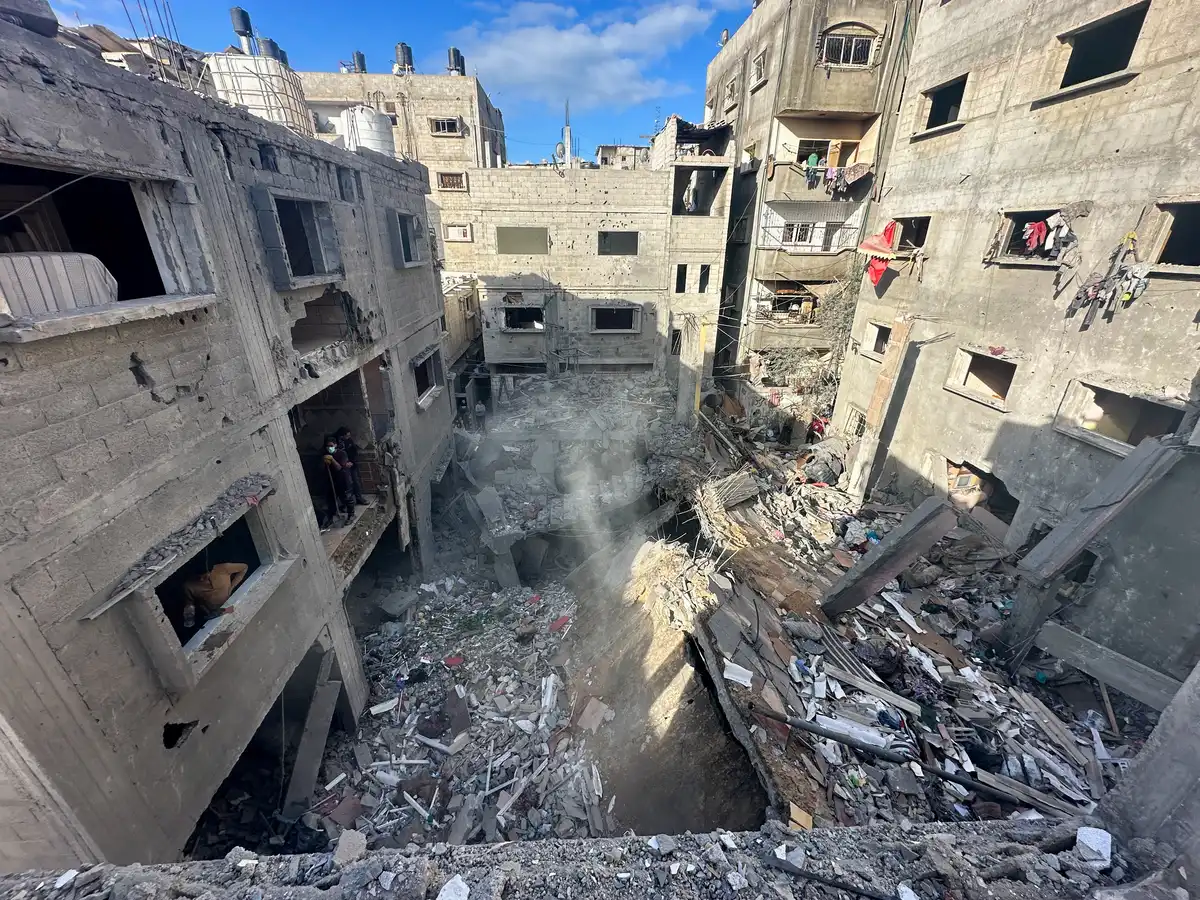
Palestinian television announced that the number of dead from the Israeli bombing of several homes in the Maghazi Palestinian refugee camp in the central Gaza Strip had risen to more than 78.


Medical sources at Al-Aqsa Martyrs Hospital confirmed the arrival of 78 dead, including those with body parts, as a result of the artillery shelling and raids that targeted many homes in Al-Maghazi camp, adding that a number of injured people also arrived at the hospital, including some in very serious conditions.


The spokesman for Al-Aqsa Martyrs Hospital said that most of the dead who arrived from the Maghazi and Bureij camps were children, women and the elderly.


The spokesman for the Ministry of Health in Gaza, Dr. Ashraf Al-Qudra, confirmed that what is happening in Al-Maghazi camp is the annihilation of an entire residential square, noting that the number of killed has reached 70, but the number is likely to increase with the presence of many people under the rubble.


The spokesman for the Ministry of Health stated that there are focused targets on the central region, pointing out that the occupation directs residents to the places of their mass killings in areas that it claims are safe.


Al-Qudra pointed out that the Israeli occupation forces are bombing the main road between the camps in the central region to impede the arrival of ambulances and civil defense vehicles to the various targeting locations.


PALESTINE

Mon 25 Dec 2023 8:41 am - Jerusalem Time

War on Gaza on its 80th day: renewed Israeli raids on the areas of central and southern Gaza

On the 80th day of the aggression against the Gaza Strip, today, Monday, the Israeli occupation forces continue their raids and bombardment on several areas in the Strip, concentrated in the center and south, which led to the death and injury of dozens of citizens, the majority of whom are children and women.


Local sources reported that the Israeli raids were renewed on several areas in the central and southern Gaza Strip, following a bloody night for the people of the Strip, after a massacre in the Al-Maghazi and Al-Bureij camps in the central Gaza Strip, which claimed the lives of about 95 persons, as the occupation warplanes and artillery bombed an entire residential square inn Al-Maghazi camp.


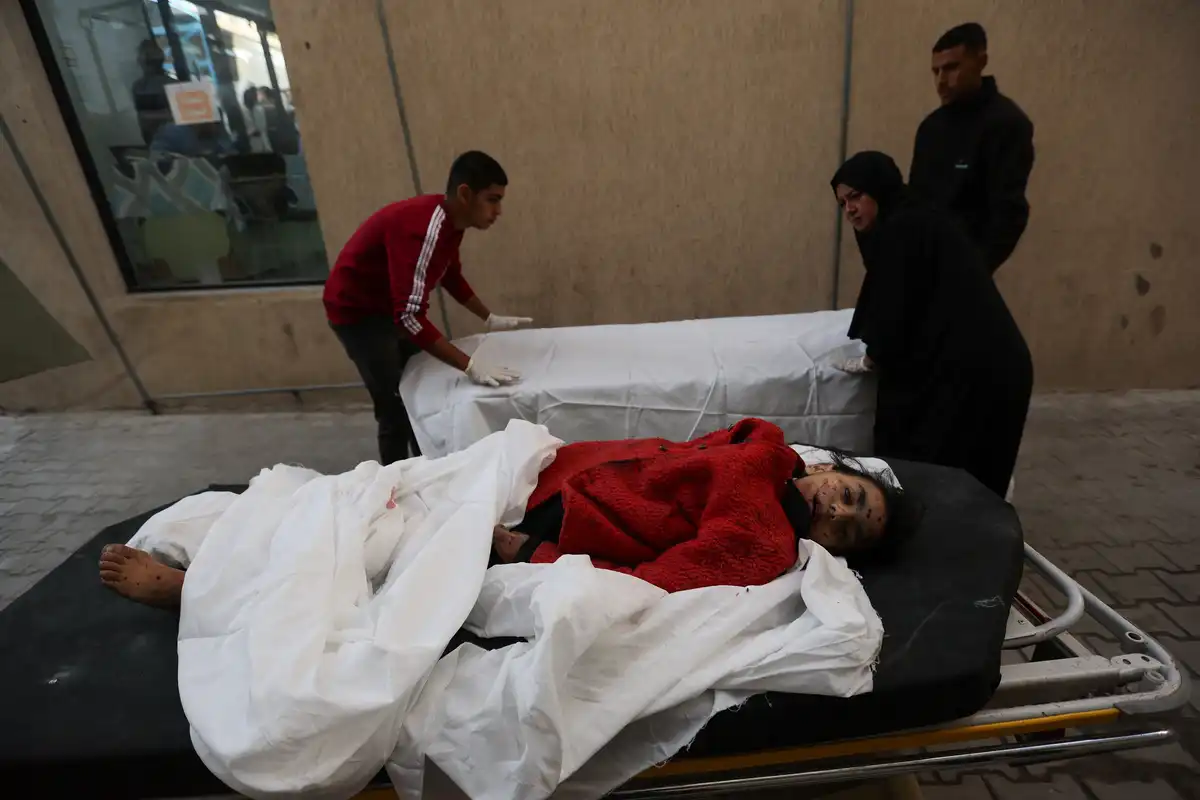
The courtyard of Al-Aqsa Martyrs Hospital in Deir Al-Balah in the central Gaza Strip is crowded with the bodies of dead, after the intense Israeli raids on the area, awaiting their burial.


The Medical Director of Al-Aqsa Martyrs Hospital, Dr. Khalil Al-Dakran: The hospital is full of wounded and dead, and a large number of wounded were piled up on the ground, in the corridors and in tents, and more than 70 dead, most of them body parts, as a result of the Maghazi and Bureij massacres in the central Gaza Strip.


He added that the hospital deals with the injured by saving their lives in a very modest way, because there are not many medicines and medical equipment, and the intensive care rooms are completely full, and the artificial respirators are no longer enough. We need medicines, medical teams, and field hospitals. This closure is a death sentence for the wounded and injured.


He pointed out that infectious diseases began to spread among the displaced people who were filling the hospital's courtyards to escape the Israeli bombing, and infectious, intestinal, and skin diseases spread widely among them, and there were no medicines or beds for them.


In addition, occupation artillery bombed agricultural land near the entrance to the town of Al-Zawaida in the central Gaza Strip, and also bombed the vicinity of Abu Helou schools in Al-Bureij, coinciding with the firing of smoke bombs in the area.


The occupation warplanes targeted agricultural land at the entrance to the Nuseirat camp, coinciding with columns of smoke rising in northern Gaza.


Eyewitnesses said that occupation artillery bombed the town of Jabalia, causing fires to break out in several locations.


The occupation warplanes launched a series of raids on Khan Yunis Governorate, south of the Gaza Strip, specifically in the eastern region.


At dawn today, 23 citizens were killed and dozens were injured, after the Israeli occupation warplanes bombed two homes in the Ma’an area, east of Khan Yunis.


The Red Crescent Society in Gaza reported that there were more than 8,000 reports of missing persons under the rubble in various areas of the Strip.


In an infinite toll, the ongoing Israeli aggression on the Gaza Strip since the 7th of last October has resulted in the death of 20,424 citizens and the wounding of about 54,036 citizens, more than 70% of whom are women and children.


ARAB AND WORLD

Mon 25 Dec 2023 8:21 am - Jerusalem Time

Hebrew Newspaper: China imposes sanctions on "Israel" against the backdrop of the war in Gaza

The Hebrew newspaper "Yedioth Ahronoth" said that high-tech factories in Israel find it difficult to import components from China, which imposes "sanctions on us" against the backdrop of the war in Gaza.


The newspaper says, citing importers, that the Chinese have begun to create bureaucratic difficulties for shipments to Israel of components that can be used for civilian and military purposes.


The newspaper also quoted a government source as saying: “It is clear that this is related to the war” on Gaza.


The components being discussed can also be used for military purposes.

Israeli importers say that Chinese suppliers have begun bureaucratic practices without announcing sanctions against Israel and are required to fill out many forms. They are delaying shipments under the pretext of not filling out the forms correctly, and the result is difficulties in obtaining supplies.


An Israeli government source told Yedioth Ahronoth newspaper that: “In recent weeks, high-tech companies have complained about delays in the supply of dual-use components (civilian and military) from China.”


The source adds, "In all the checks we conducted with official bodies, this was not a change in regulations, but rather a measure that had not been done in the past. We fear that the measure will be implemented strictly while we are at war (over Gaza). Appeals have been sent to the Chinese." "Their official response is that there is no change in policy. The problem is that until all the new requirements are met, it is impossible to know whether the supply will be carried out. It is clear to all of us that this is directly related to the war" on Gaza.


The Chinese government took a clearly pro-Palestinian line in the war.

A high-ranking source in one of the factories told Yedioth Ahronoth: “The Chinese are imposing some kind of sanctions on us. They do not announce this officially, but they are delaying shipments to Israel. They have various pretexts and excuses, such as asking suppliers from China to issue export licenses to Israel that were not It didn't exist before. In addition, it requires us to fill out a lot of forms, and it takes time. This has never happened to us before. And this is in many different types of components.. An electronic product has tens of thousands of components, but if it does not arrive, the product cannot be supplied.”


The newspaper says that importing through a third party caused a problem with high costs and delayed delivery time.


China, according to senior Israeli officials, refuses to send workers to Israel during the war. Against the backdrop of a shortage of workers in the construction and agricultural sectors.


According to senior officials, the Chinese are not interested in Israeli considerations such as “who is with us in the war and who is not with us.”


ARAB AND WORLD

Mon 25 Dec 2023 8:17 am - Jerusalem Time

Russia: Israel considered the UN Security Council resolution as permission to cleanse Gaza

Russia's First Deputy Representative to the United Nations, Dmitry Polyansky, said that the "indecisive resolution" adopted by the Security Council regarding the Gaza Strip was unable to stop the ongoing Israeli cleansing of the Strip.


Polyansky wrote on his Telegram channel: “What is happening (now) is exactly what we warned about during the voting process on the humanitarian resolution on Gaza. Israel interprets it as follows: Creating the conditions for a long ceasefire implies continued cleansing of the Strip.”


He added: "What the Palestinians and Arabs in general benefited from this text remains a mystery to me. Had it not been for their urgent requests, and even their pleas, we would have used the right of veto on this - inconclusive decision -."


This is how the diplomat commented on Israeli Prime Minister Benjamin Netanyahu's statement regarding the expansion of Tel Aviv's military operation in the Gaza Strip, which is suffering from the scourge of war.


Russia's Permanent Representative to the United Nations, Vasily Nebenzia, confirmed that he did not use his veto against the humanitarian resolution issued by the Security Council, only out of solidarity with the Arab countries.


Nebenzia stressed that Russia “categorically disagrees” with the content of the resolution adopted, and noted that “responsibility for all possible consequences will fall on those countries that gave their consent to its version, which was pushed by the United States, and we cannot agree to that.” .


He stressed before the vote that the United States included a dangerous element in the draft resolution it adopted that would allow Israel to cleanse the Gaza Strip, noting that with this decision, “the Israeli armed forces will have full scope to move to cleanse the Strip just as they are doing. Whoever votes on the resolution will be complicit and responsible for the destruction of Gaza.” ".


The UN Security Council adopted a draft resolution prepared by the Arab countries aimed at facilitating the flow of humanitarian aid to the Gaza Strip. 13 countries voted in favor of this document, and Russia and the United States abstained from voting.


ARAB AND WORLD

Mon 25 Dec 2023 8:00 am - Jerusalem Time

The Times: Netanyahu's next battle is to save his political future

One of the items on the Israeli government's agenda was to name the war on Gaza that Israel has been waging in Gaza for more than 11 weeks.


This will be Netanyahu's second attempt in this regard. In the first week of the war, the Israeli Prime Minister, for reasons known only to him, called it the “War of the Iron Swords.” The name was printed on official statements, but it was not widespread among the Israeli public. Even Netanyahu's ministers and Israeli army generals rarely used this term. This time, Netanyahu preferred to call it the “Genesis War” (derived from the biblical “Book of Genesis”).


It is, of course, an exercise in futility for politicians to try to name a war, says the British newspaper The Times, which says: “Netanyahu, the son of a historian, should realize that wars usually acquire their name over time, through popular culture, media usage, and finally the judgment of history".


Netanyahu gives a misleading name to the war on Gaza

But Netanyahu is keen to frame the narrative of what is happening in Gaza for his own political purposes, and the “Genesis War” conjures an epic event that has nothing to do with anything that came before it. It is an attempt to convince the Israeli public that the sudden Hamas attack on October 7 has nothing to do with his policies and management of Israel’s affairs during the long years that preceded the attack while he was prime minister.


These attempts have failed so far. In almost every poll and survey conducted since the war began, an overwhelming majority of the Israeli public has responded that it sees Netanyahu responsible and believes he should resign, either immediately or once the war is over. A clear majority of Israelis also want early elections.


Netanyahu would lose the elections if they were held today

If the elections were held today, most opinion polls predict that the Likud Party would lose about half the votes it received just one year ago, and that Benny Gantz, the former defense minister who joined the mini-war government that was formed days after the war began, would achieve a comfortable victory and become Next Prime Minister of Israel.


Netanyahu was in a difficult political position even before the war began. Due to corruption indictments and a lawsuit against him, in which he faces the possibility of ten years in prison, the centrist parties in the Knesset refused to join a government coalition under his leadership.


In June 2021, he lost power and remained in the opposition for a year and a half until he regained power at the end of 2022 in the fifth Israeli elections in four years.


Although his coalition of far-right and ultra-religious parties finally won a majority, Netanyahu struggled to control his new government, and was unpopular at the national level. Throughout the year, Israelis protested his government's controversial "judicial reform" program, which sought to weaken the independence of the Supreme Court.


He lacks a majority and distances himself from military decisions

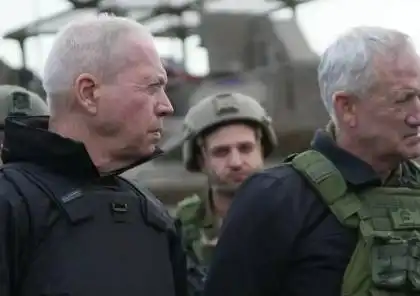
Netanyahu now heads the war government, but he lacks a numerical majority in it. In addition to Gantz, the government includes current Defense Minister Yoav Galant, a member of the Likud Party who has distanced himself from his party's leader since last March, when Netanyahu tried to dismiss him after criticizing the government's controversial plan to reform the Israeli judicial system. And Gadi Eisenkot, a political ally of Gantz. All three were former senior army generals, unlike Netanyahu, who only reached the rank of captain. His only ally in the war cabinet, Minister of Strategic Affairs Ron Dermer, moved to Israel only as an adult and with no military experience.


A senior ministerial aide said: “Most of the decisions in the war government are made by the three former generals, and Netanyahu is waiting to make his decision until he sees which way the wind is blowing. He is not involved in most of the day-to-day military decisions, and needs a lot of convincing before he signs on the biggest decisions.” 


He spends his time in propaganda and trying to absolve himself of negligence in the face of the Al-Aqsa flood

But that doesn't mean he's not busy. He spent long hours during the war in meetings with political advisers and sympathetic journalists, and at photo ops with world leaders and visiting celebrities like Elon Musk.


There were also carefully designed visits to troops in the field, whether to young recruits who had to hold their tongues, or on rare occasions to well-screened reserve forces.


However, at the beginning of the war there were a few incidents in which reserve soldiers harassed the Prime Minister and demanded that he resign.


In the coming days and weeks, the Israeli government will have to make a series of decisions that will determine the future of the war and its aftermath. Netanyahu will not be alone in taking it, but he will be strongly involved in the process since it will have political repercussions.


Netanyahu must make a decision to reduce the ground offensive

The most urgent decision is the timing of reducing the ground offensive in Gaza. While the Israeli government is not expected to agree to a ceasefire, the war will take a different form now that most of Hamas' strongholds in Gaza City have been destroyed and the Israeli army has occupied most of Khan Yunis, the second largest city in the Gaza Strip.


However, Hamas as a military force has not been defeated, as thousands of its fighters are still hiding in tunnels or have disappeared among the civilian population. The Israeli army believes it will take several more months to eliminate them, but the campaign will be more mobile, with smaller units deployed than the current full divisions.


And conclude a temporary truce

Another major decision will be whether or not to agree to another temporary truce with Hamas to allow for an agreement to release the hostages. There are still 120 Israeli hostages being held in Gaza. Hamas demands a comprehensive ceasefire as a condition for the talks. Although the government views the previous week-long truce as a success after Hamas released 110 hostages, the war cabinet was originally divided over whether to allow Hamas some breathing room. Netanyahu hesitated and did not take sides.


“The hostage agreement could have been concluded weeks earlier if Netanyahu had not been so hesitant,” said a security official advising the government. “It cost valuable time.” With Hamas expected to push a harder deal this time, and the hostage situation turning desperate, the dilemmas will be more severe.


And expanding the aid allowed into Gaza

The government will also have to decide whether to allow more humanitarian aid into Gaza for the more than two million people there, most of whom have been displaced by the fighting. Any such decision will lead to the division of the entire government. However, Netanyahu is also under intense pressure from Israel's main ally, the Biden administration, to make an effort to allow more aid to Gaza residents.


American pressure plays a major role in shaping Israel's strategy for the days that follow the war in Gaza. President Biden's stated policy envisions the Palestinian Authority assuming control of Gaza. Netanyahu has repeatedly opposed that plan, but this appears to be primarily a ploy to bolster his flagging nationalist base rather than a true final position.


He wants to create a subordinate Palestinian authority in Gaza, but the Americans refuse to do so

Last week, Netanyahu's national security advisor, Tzachi Hanegbi, published an opinion article on the London-based Arabic website Elaph, saying that there will be a need for a moderate Palestinian ruling body that enjoys broad support and popularity. He added: "In its current form, the (Palestinian) Authority finds it difficult to do this, and it will require great effort and assistance from the international community as well as from the countries of the region, and we are ready for this effort."


Hanegbi would not have written this without his boss's approval.


The Israeli prime minister appears stuck: the far-right parties that keep him in power are threatening to topple the government if the scope of the war is reduced and the Palestinian Authority is allowed to return to Gaza. However, Israel needs continued American support, and the more pragmatic Gantz may also leave the war cabinet if he believes that politics are guiding Netanyahu's decisions, and join calls for early elections.


Whatever Netanyahu does next, it will determine not only how the nameless war will proceed, but also his immediate political fate, his legacy at home and on the international stage, and perhaps his freedom.

ARAB AND WORLD

Mon 25 Dec 2023 7:57 am - Jerusalem Time

UN official calls for the establishment of a new international court for Israeli crimes in Gaza

Rajagopal noted that the current events in Gaza reflect “institutional impunity,” noting the importance of holding the occupation accountable, and bringing charges regarding war crimes, crimes against humanity, and even genocide.


UN Special Rapporteur on the right to housing, Balakrishnan Rajagopal, has called for the establishment of a new international court, if the ICC does not take effective action “in a very short time” regarding Israeli war crimes in Gaza.


In his post on the “X” platform, Rajagopal indicated that the current events in Gaza reflect “institutional impunity,” noting the importance of holding the occupation accountable, and bringing charges regarding war crimes, crimes against humanity, and even genocide.


He continued, explaining what he meant: “Impunity for: occupation, war of extermination, war crimes, crimes against humanity, and genocide.”


Rajagopal added: “If the International Criminal Court does not act very soon, we will need a special international court for Gaza, and action by states.”


Since last October 7, the Israeli army has been waging a war on Gaza, which as of Sunday left 20,424 dead, 54,36 wounded, most of them children and women, massive infrastructure destruction, and an unprecedented humanitarian catastrophe, according to authorities in the Gaza Strip and the United Nations. .

PALESTINE

Sun 24 Dec 2023 10:11 pm - Jerusalem Time

Washington Post: Israel’s war on Gaza is the most destructive war in a century

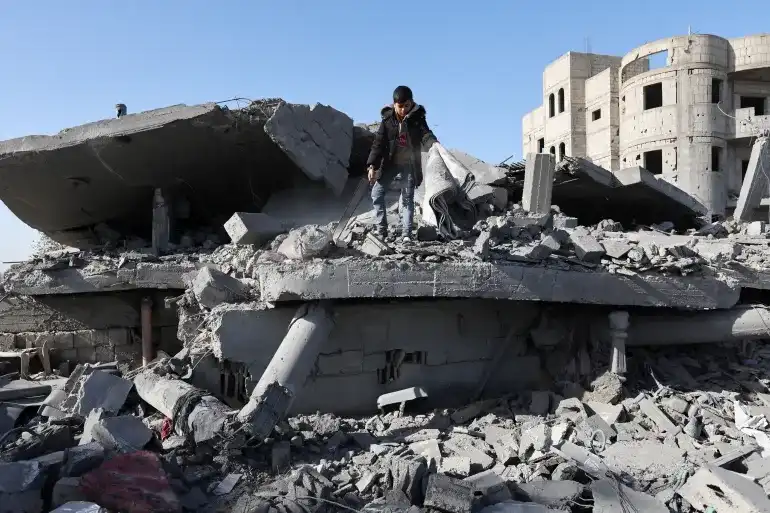
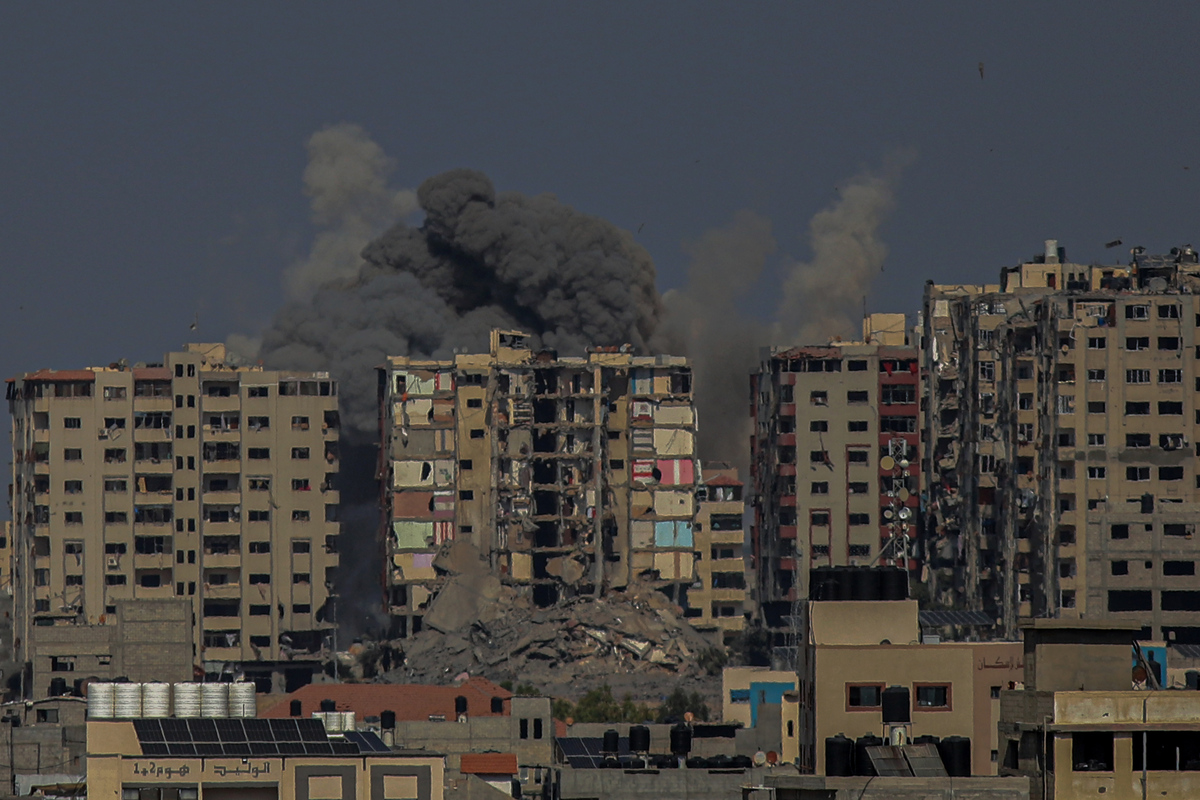
The American newspaper "The Washington Post" said that there is evidence proving that the damage inflicted by Israeli forces on Gaza exceeds what happened in other conflicts in the current century, and that this war is one of the most destructive wars.


It added that this war has claimed - so far - the lives of more than 20,57 people, displaced the vast majority of the population, and destroyed large areas of the besieged Gaza Strip.


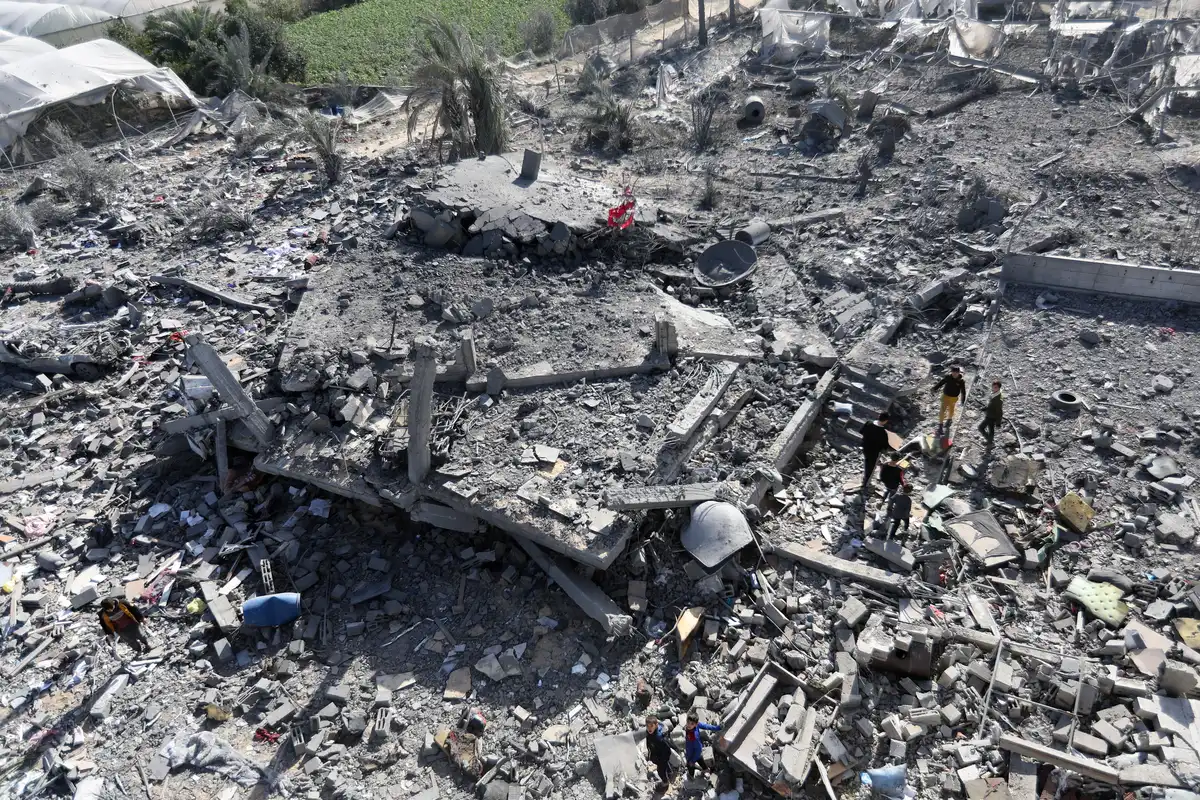
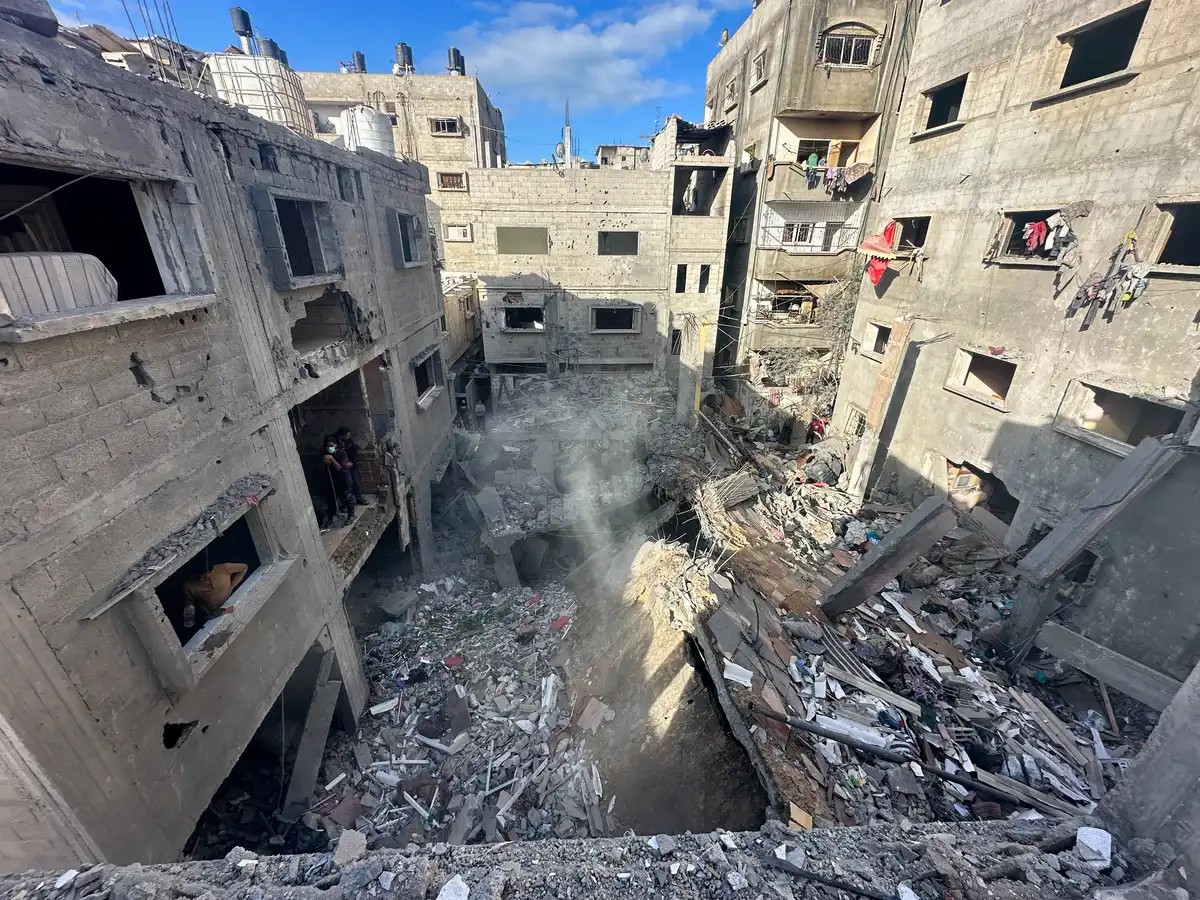
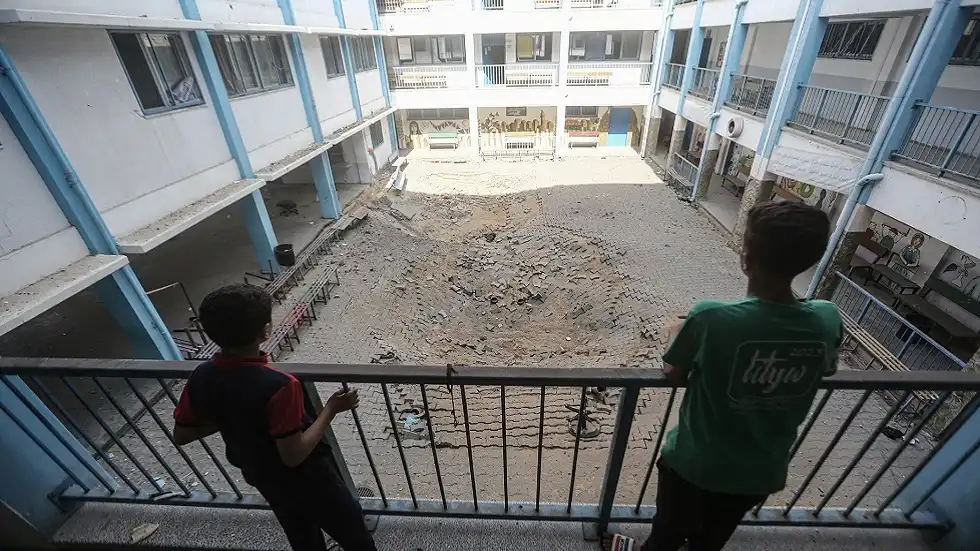
Perhaps the most ferocious attacks came from air strikes that flattened entire residential blocks and created craters in courtyards and gardens.


The American newspaper stated in its report that it analyzed satellite images, air strike data, and the United Nations assessment of the resulting damage, and conducted interviews with health care providers and experts in munitions and air warfare.


Huge destruction

It explained that the evidence she collected shows that Israel launched its war in Gaza at a pace and level of destruction that likely exceeds that caused by any modern conflict, and this was evident in the demolition of buildings in a shorter time than the devastation caused by the Syrian regime’s battles in Aleppo in the period between 2012 and 2016, and the campaign US-led military forces against ISIS in Mosul, Iraq, and Raqqa, Syria, in 2017.


The newspaper said it concluded that the Israeli army launched frequent and widespread air strikes near hospitals, “which are supposed to be given special protection under the laws of war.”


Satellite images, reviewed by the Washington Post, showed dozens of clear craters near 17 of the 28 hospitals in northern Gaza, the area that witnessed the heaviest bombing and fighting during the first two months of the war. 10 craters indicate the use of one-ton bombs. , which is the largest of its kind in continuous use.


The newspaper quoted the head of the International Committee of the Red Cross, Mirjana Spoliaric-Eger, who visited Gaza on December 4, as saying, “There is no safe area,” adding, “I passed through the streets and did not see a single street that escaped the destruction of civilian infrastructure, including hospitals.” ".


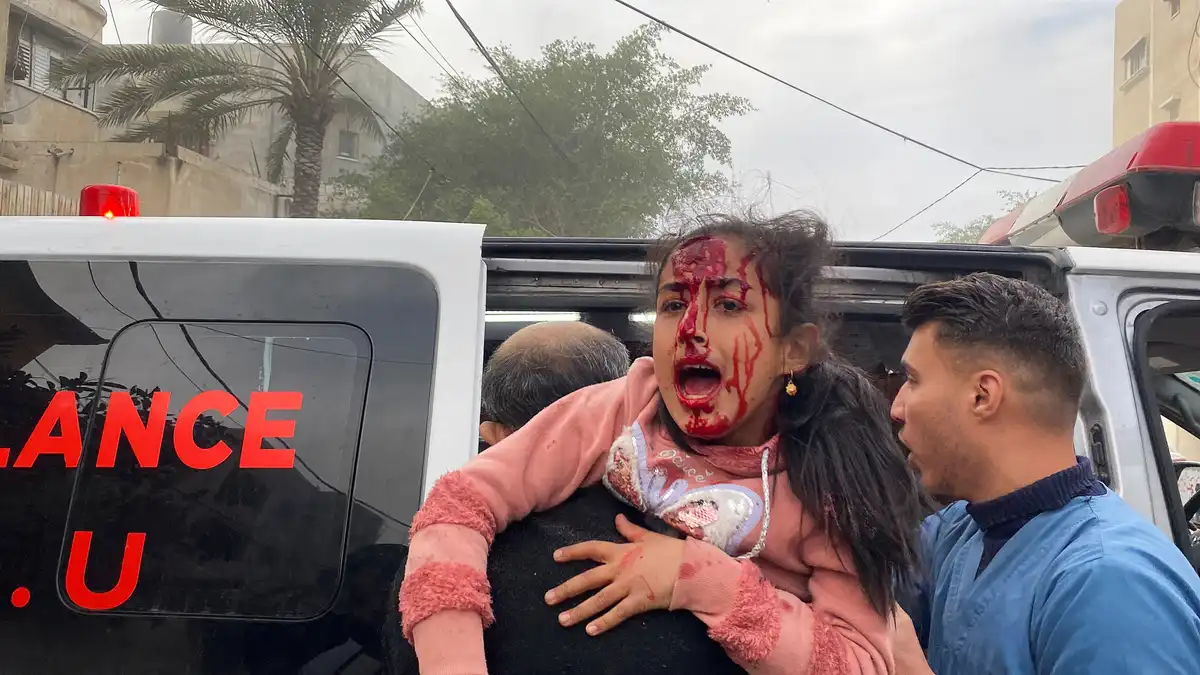
Terrifying numbers: The Washington Post quoted the Ministry of Health in Gaza, saying that the war resulted in the wounding of more than 53,320 people, and the killing of more than 7,700 Palestinian children.


Women and children make up about 70% of the dead, according to the United Nations Office for the Coordination of Humanitarian Affairs, which also says that 1.9 million people have been displaced from their homes, equivalent to 85% of the population. Michael Lynk - who served as the UN Special Rapporteur on the situation of human rights Humanity in the Occupied Palestinian Territories - “Palestinian civilian deaths in such a short period of time appear to be the highest rate of civilian casualties in the 21st century.”


The newspaper reported that Israeli Defense Minister Yoav Galant informed his forces on October 10 that they were “liberated from all restrictions” and that “Gaza will never return to what it was.”


On the same day, Israeli army spokesman Daniel Hagari said, "We are now focusing on what causes the most damage."


The Washington Post reported that, over a period of just over two months, the Israeli Air Force fired 29,000 surface-to-air missiles, 40% to 45% of which were unguided, according to a recent assessment from the Office of the Director of National Intelligence.


The Israeli army did not hide that it viewed Gaza's hospitals as military targets, according to the newspaper, which based this on Hagari's statement on November 5, in which he said, "Hamas is systematically exploiting hospitals as an essential cog in its war machine."


Source: Washington Post


PALESTINE

Sun 24 Dec 2023 8:53 pm - Jerusalem Time

War on Gaza: Israel intensifies bombing of northern Gaza Strip

On the 79th day of the Israeli aggression on Gaza, the Israeli artillery and air strikes on areas north of the Gaza Strip have not stopped since the morning hours.


This comes in conjunction with the announcement of the Izz al-Din al-Qassam Brigades, the military wing of the Islamic Resistance Movement (Hamas), that it targeted an Israeli force of 10 soldiers in Juhr al-Dik, and sniped Israeli soldiers in the Jabalia camp.


Fierce clashes continue between the Palestinian resistance and the occupation forces, which are trying to penetrate into Jabalia and its camp.


The Israeli army announced the killing of 9 soldiers and officers and the serious injury of others during the battles in the Gaza Strip, after announcing yesterday evening, Saturday, the killing of 5 of its officers and soldiers, bringing its announced death toll within hours to 14 and bringing the death toll of soldiers and officers killed since the start of the “Al-Aqsa Flood” battle to 486 dead including 157 killed since the start of the ground incursion into the Gaza Strip on October 27.


The death toll from the Israeli aggression on Gaza rose to 20,424 dead and 54,036 injured since October 7, after 166 people were killed, in addition to 384 others injured, during the past 24 hours, according to what the Ministry of Health in the Gaza Strip confirmed.

PALESTINE

Sun 24 Dec 2023 7:01 pm - Jerusalem Time

War on Gaza: Israeli aircraft and artillery continue to target various areas of the Gaza Strip

On Sunday evening, the occupation warplanes and artillery continued to target several areas of the Gaza Strip.


Since this morning, the occupation forces have continued their heavy artillery and occupation aircraft bombardment of areas north of the Gaza Strip, specifically Beit Hanoun and northern Jabalia.


Israeli infantry forces fired live bullets directly at a group of citizens south of Gaza City, while they were trying to return to their homes in the northern Gaza Strip, wounding a number of them.


The occupation artillery bombed agricultural land in the Nuseirat camp in the middle of the Gaza Strip, wounding a number of citizens, in addition to the death and injury of others in a bombing that targeted the southern region.

Local sources reported that the occupation artillery bombarded civilian homes east of Deir al-Balah in the central Gaza Strip.


It said that a number of injuries arrived at Al-Aqsa Martyrs Hospital as a result of the occupation’s targeting of the Martyrs’ Roundabout in Al-Bureij Camp.


It indicated that the occupation army carries out field executions on a daily basis, according to eyewitnesses and medical sources at Al-Aqsa Martyrs Hospital, and a number of killed and wounded arrived as a result of Israeli bombing near the Palace of Justice, south of Gaza City.


In the south, at least three citizens were murdered in an Israeli bombing on the vicinity of Al Awda Schools, east of Khan Yunis, south of the Gaza Strip.


Citizens were also killed and injured in an Israeli bombing on Old Crescent Street in the city of Khan Yunis.


The director of the Nasser Medical Complex in Khan Yunis said that severe and critical injuries occurred due to the occupation's use of weapons that may be internationally prohibited, adding that medical personnel and ambulances are unable to provide their services in Gaza.


Civil defense crews in Gaza indicated that a large number of martyrs had their bodies decomposed due to the difficulty of reaching them, especially in Jabalia, which is subject to a real genocide.


In an infinite toll, the ongoing Israeli aggression on the Gaza Strip since the 7th of last October has resulted in the death of 20,424 citizens and the wounding of about 54,036 citizens, more than 70% of whom are women and children.

ARAB AND WORLD

Sun 24 Dec 2023 6:25 pm - Jerusalem Time

Netanyahu: We will continue the war until we achieve complete victory over Hamas

Israeli Prime Minister Benjamin Netanyahu said in a video statement issued this evening, Sunday, that Israel is working to "deepen the war" on the Gaza Strip, stressing that his government "will continue the war until complete victory over the Hamas movement."


He considered that "this is the only way to return the hostages, eliminate Hamas, and ensure that Gaza will not pose a threat to Israel," and continued, "It will take some time, but we are united and determined to fight until the end: the fighters, the people and the government."


Netanyahu added, "War has a price, a very high price that we pay with the lives of our heroic warriors, and we are doing our best to preserve the lives of our warriors. But we will be careful not to do one thing, which is that we will not stop until we achieve victory."

OPINIONS

Sun 24 Dec 2023 5:52 pm - Jerusalem Time

Israeli Writer: 'Army investigates' Meanwhile, live reports are ignored

Amira Hass

Amira Hass

Opinion Writer

The army is investigating an allegation that Israeli soldiers killed unarmed men in full view of their families. This is what the army spokesman answered, in response to a question directed to him by the newspaper "Haaretz" regarding the control of an Israeli military force over a residential building in Gaza City, on the evening of Tuesday, December 19.

The first information in this regard arrived on the X platform (formerly Twitter) on Tuesday, before midnight, in the form of recorded and desperate audio calls calling for the rescue of the wounded. The next day, more tweets were added, and then the news sites added a few more details, based on reports from family members and the testimony of two women. 

The main report appeared on the website of the Euro-Mediterranean Human Rights Monitor, and includes the names of 11 men who were killed. While other reports indicated 13 names and 15 dead, their ages were approximately thirty years. However, one woman testified that her father was also shot dead, along with her husband and brothers.

After the soldiers shot the men, according to testimonies, the women and children, 27 people in number, were gathered in one room, something was fired in their direction, and then it exploded. The testimonies referred to a “shell,” and the testimony was translated in one report as saying that a hand grenade had been thrown and live bullets had been fired. A number of women, an infant girl, and two six-year-old children were injured, according to reports. In the Al-Awda building that was attacked, the Anan family lives, along with three families who were displaced from their homes, and are related to the family living in the building. These families are Al-Ashi, Al-Ghalayini, and Al-Sharafa.

Many details are missing or not detailed enough, and many questions were not asked, perhaps due to the objective difficulties in the field: the deployment of soldiers in the area, the prohibition of access to the site, and the inability to communicate with witnesses on an ongoing basis. While the United Nations Human Rights Committee issued a warning statement regarding the “disturbing information,” explaining that the killing of the men had been verified, but the circumstances of the incident required verification.

We, who cover life under the occupation regime on “normal days”, usually first verify the report independently, relying on the professional investigations of human rights organizations. But there are several reasons to go beyond this normal procedure, and I will list my initial reasons:

Until we can, if we can, conduct our own examination, a lot of time will pass, and it is reasonable to assume that the number of independent investigations will be small. Meanwhile, Arab television channels continue to show images of bodies distributed among piles of ruins, and bodies thrown next to hospitals in the northern Gaza Strip, and on the sides of the roads. Not mentioning these reports and field scenes, no matter how partial, urgent, and terrifying they may be, represents cooperation with the false advertising slogan launched by the army spokesman, stating that “the army is committed to opening fire orders and international law, and is taking precautions in order to reduce harm to those not involved in the fighting.”

The army spokesman's response that the allegations are under investigation, even though "the details of the incident described are not known to [the army]," differs from the definitive answer sent to Haaretz to another question related to how the army took over Kamal Adwan Hospital. In this case, the army spokesman said last Sunday, “The allegations that the army buried civilians alive in the vicinity of the hospital are dangerous and lack any basis.” This change in wording indicates that there is at least a grain of truth in the reporting of the events of the Al Awda Building.

Even on “normal days,” it is necessary to question the Israeli assumption that if a Palestinian is killed by an Israeli soldier, then he deserves to be killed. But especially these days, as sociologist Yagil Levy explained in an interview with Calcalist, the killing of three of the Israeli kidnapped by Hamas by IDF soldiers “fundamentally indicates that there is no real adherence to the firing rules in Gaza but the army treats Gaza as a sterile zone: it has ordered all residents to flee, and therefore, in the eyes of the army, any human wandering in the area is a legitimate target.” 


In addition, according to Levy, “the fear and exhaustion of the soldiers,” in addition to the tone of the Israeli discourse, which says, “The distinction between those involved and those not involved in the fighting has nothing to do with reality, after the events of October 7, because we consider that the ordinary Gazan bears responsibility.” Collective responsibility for what happened, and even if he does not bear responsibility for the events, we must not think about distinguishing between those involved in the fighting and those who are not, in order to achieve the goal of victory and the elimination of Hamas.”

Despite the order to evacuate the northern Gaza Strip, Khan Yunis, and then the center of the Gaza Strip, a large number of civilians remained in these areas, including women, the elderly, children, and youth.


They simply have no place to go, no shelter to take refuge in, and in the Gaza Strip, in any case, there is no safe place. These people are thirsty, hungry and exhausted, and lack protection and sympathy from the world's heads of state. The bombings have already killed their families and the families of their friends, and among them are determined, frightened and tired Israeli soldiers, with adrenaline, vengeance and anger coursing through their veins.

Meanwhile, journalists and human rights organizations in Gaza are no longer able to investigate the circumstances of the killing of any civilian, due to the large number of deaths, and because of the danger that threatens the life of every human being, everywhere. 


For this reason, ignoring live Palestinian allegations and reports creates a smokescreen that protects the Israeli army and its ambiguous statements, without raising any journalistic question marks.

ARAB AND WORLD

Sun 24 Dec 2023 5:39 pm - Jerusalem Time

Former Israeli General: Hamas is the one managing the conflict

Former Deputy Chief of Staff of the Israeli army, retired Major General Yair Golan, described the statements and actions of the occupation army minister, Yoav Galant, as "stupid and unnecessary."


Golan said in radio statements published by the Hebrew newspaper Maariv on Sunday that Israel waging a war “in which its best sons are sacrificed without military objectives is shocking.” Stressing that "the problem with the ground operation is that the political level does not clarify the goals of the war."


The "Israeli" military commander stressed that "it is impossible to ignore that the war began with an overwhelming failure for Israel, even if we get Yahya Al-Sinwar (head of the political bureau of Hamas in Gaza)."


Golan called on the political leadership in the occupying state to "tell the truth and delay the elimination of Hamas." Adding: "It is inevitable to reach an agreement with Hamas and not with any other actor."


He explained: “The government’s current lying approach means that our citizens will not return to their homes on the border (the Gaza envelope and the settlements in northern occupied Palestine). We must build a prosperous Zionist institution here, so how will we do that after everything that is happening?!”


He noted that "Hamas is the only one capable of releasing the kidnapped people (prisoners of the occupation held by the resistance in the Gaza Strip), not us."


He warned that the Hamas movement "entered the war (the Battle of Al-Aqsa Flood) realizing that the scenario of the destruction of the southern suburb (Lebanon) was possible." He stressed: “Hamas achieved a strategic goal when it said to Israel: I am the one managing the conflict.”


He reiterated that Gallant's statements regarding Sinwar are "stupid and meaningless war propaganda." Stating: “Gallant calls on Sinwar to go out to Gaza to see the extent of the destruction. These are foolish statements. Didn’t Sinwar see the destruction in the wars of 2014 and 2021? Didn’t he see what happened to the southern suburbs in Lebanon? This is foolishness!”


Former Major General in the occupation army, Yair Golan, considered that, despite the destruction caused by the occupation army in the Gaza Strip, "we appeared as a weak country that could not defend itself except with American assistance."


He demanded that "elections be held now." Explaining: "It is impossible to continue fighting with this government that is unable to define the goals of the war, and it is necessary to change the Netanyahu government as soon as possible."

ARAB AND WORLD

Sun 24 Dec 2023 5:21 pm - Jerusalem Time

“No Christmas as usual”: Pro-Palestinian demonstrators storm cities on “Great Saturday”

Pro-Palestinian demonstrators took to the streets on Super Saturday en masse, to protest the day before Christmas Eve, a time when shoppers often try to get last-minute gifts before the holidays.


The “Shut It Down for Palestine” movement, made up of pro-Palestinian groups, had plans to “organize boycotts, disruptions and rallies in malls on December 23,” according to the website of the activist group ANSWER.


Organizers say Israel's genocidal attack on Gaza continues with incredible brutality. “This Christmas, occupation forces are preying on Christians taking shelter in their besieged churches in Gaza, and Christians in Bethlehem have announced the cancellation of their celebrations. People everywhere must continue to declare that there can be no Christmas as usual during genocide.” !


The protests, which were called for on social media, succeeded in mobilizing thousands of large pro-Palestinian protests in cities such as New York City, Chicago, London, Los Angeles, and Toronto. In one clip, protesters in New York City appeared to chant: "While you're shopping, bombs are falling."


More than 20,000 people were killed in the enclave during the conflict between Israel and the Palestinian Hamas movement on Friday, Gaza health officials said. The war, which began on October 7 with a Hamas attack on Israel that killed 1,200 Israelis, is about to end three months later.


On Friday, the UN Security Council approved a resolution to increase aid to Gaza and also called for the rapid release of hostages currently held by Hamas. Although 13 countries voted in favor of the resolution, the United States and Russia abstained from voting.


“Colleagues, this Council made clear today that addressing the humanitarian crisis in Gaza must remain at the top of our agenda,” US Ambassador to the United Nations Linda Thomas-Greenfield said after the vote.

PALESTINE

Sun 24 Dec 2023 5:06 pm - Jerusalem Time

The Latin Patriarch of Jerusalem arrives at the Church of the Nativity in a "silent procession"

The convoy of the Latin Patriarch of Jerusalem, Cardinal Pier Battista Pizzaballa, arrived in the city of Bethlehem from the occupied city of Jerusalem today, Sunday, to preside over the Christmas midnight mass.


Patriarch Pizzaballa, who was accompanied by a group of bishops, senior patriarchal officials and parish notables, was received on the pavement of Manger Square by the recipients according to the usual status quo, led by the acting governor of Bethlehem, Muhammad Taha, the mayor of Bethlehem, Hanna Hanania, and the commander of the Bethlehem region, Brigadier General Nader Abu Omar, the Director General of the Governorate Police, Brigadier General Muhammad Abu Al-Rub, the notables of the Latin parish, and the priests of the Franciscan Fathers.


The procession started from the office of the Latin Patriarchate in Jerusalem towards the city of Bethlehem, arriving at the Monastery of Saint Elias, before continuing its progress to reach the Catholic Action Roundabout, after which it walked on foot to Manger Square, passing through Al-Najma and Ras Aftais Streets.


After receiving him in Manger Square, the Patriarch walked with his recipients, and in front of the church he was bid farewell by his recipients. Then he entered the church and presided over a special mass in the parish church of St. Catherine, in preparation for the midnight mass that he will preside over.

PALESTINE

Sun 24 Dec 2023 2:54 pm - Jerusalem Time

Egyptian initiative to stop the war in Gaza

Sources familiar with the Hamas movement's talks in Cairo reported to the Saudi Al-Sharq TV channel that the movement's delegation returned to Qatar to consult with the Political Bureau regarding the initiative proposed by Egypt, which includes three stages of a ceasefire between Israel and the Palestinian factions in the Gaza Strip.


The sources explained that the head of the movement’s political bureau, Ismail Haniyeh, arrived in Doha after the end of the 4-day talks in Cairo, indicating that “Hamas” will study, within the framework of its political bureau, the Egyptian initiative paper that it received in Egypt for a ceasefire.


A Hamas delegation led by Haniyeh arrived in the Egyptian capital, Cairo, last Wednesday, to discuss the issue of prisoners and files related to the Gaza Strip, such as relief aid, reconstruction, and what the sources described as “ending the division.”


Stages of a ceasefire


The first stage

The first phase includes the start of a humanitarian truce for two weeks, which can be extended for two or three weeks, during which Hamas releases 40 Israeli detainees, women and children (under 18 years old), and elderly males, especially the sick.


In return, Israel releases 120 Palestinian prisoners of the same two categories, during which hostilities cease, tanks withdraw, and food and medical aid, fuel and cooking gas flow to the Gaza Strip.


The second phase

Establishing a Palestinian national dialogue under Egyptian sponsorship with the aim of “ending the division,” and forming a government of technocrats (independents) that will supervise humanitarian relief issues, the Gaza Strip reconstruction file, and paving the way for Palestinian general and presidential elections.


Third level

A complete and comprehensive ceasefire, and a comprehensive prisoner exchange deal that includes all Israeli soldiers with Hamas, the Islamic Jihad movement, and other factions, during which an agreement will be reached on the number of Palestinian prisoners that Israel will release, including those with high convictions, and those who were arrested by Israel after October 7th.


The final stage includes an Israeli withdrawal from the cities of the Gaza Strip, and enabling the displaced to return to their areas in Gaza and the northern Strip.


"Technocratic" government

Informed sources reported to Al-Sharq TV that Egypt presented an initiative to the Palestinian forces to form a “technocratic” government after the end of the war in Gaza, to take over the administration of the West Bank and the Gaza Strip, in addition to the tasks of reconstruction and shelter, noting that the “Hamas” movement expressed its approval for this suggestion.


The sources indicated that it is expected that “Egypt will re-launch a Palestinian national dialogue after the formation of the government and not before it,” explaining that “Cairo realizes that launching a Palestinian-Palestinian dialogue now may face obstacles and disagreements regarding programs, quotas, etc., which may delay the launch of the reconstruction and relief process in the Gaza Strip.”


Hamas showed some flexibility regarding the management of Gaza after the war, and a movement official told Al-Sharq last November that Hamas prefers to form a Palestinian “technocratic” government capable of handling the huge responsibilities required to provide relief to the people of Gaza and rebuild the Strip. He added that such a government must be formed by national consensus.


PALESTINE

Sun 24 Dec 2023 2:53 pm - Jerusalem Time

Euro-Med: Deliberate Israeli attacks on UNRWA schools housing displaced people in Gaza

The Euro-Mediterranean Human Rights Observatory said that the Israeli occupation forces continue to invade schools where tens of thousands of displaced people have taken shelter, and carry out serious violations in them, including physical liquidations, arrests, abuse, and intimidation of civilians.


The Euro-Mediterranean Observatory said in a statement on Sunday: It documented the Israeli forces’ storming this morning of Al-Rafi’i School in Jabalia Al-Balad, which houses thousands of displaced people, and the arrest of males aged 15 years and above, after forcing them to strip naked and remain in their underwear, before the soldiers took them to an unknown destination and they forcefully remove women amid gunfire.


Euro-Med highlighted that Israeli forces have turned shelter centers, most of which are in schools run by the United Nations Relief and Works Agency for Palestine Refugees (UNRWA), and carrying the UN logo, into permissible targets since the first days of their large-scale war on the Gaza Strip.


The Euro-Mediterranean Observatory indicated that the Israeli military attacks took several forms. In the beginning, shelter centers were repeatedly targeted by aerial bombardment, which led to the killing of hundreds of citizens and the wounding of hundreds of others, as happened several times in Al-Fakhoura School, and dozens of other schools in Gaza and its north, in addition to Khan Yunis in the south of the Gaza Strip and Al-Bureij in the center of the Gaza Strip.


It stressed that the preliminary information he collected indicates that these attacks were unjustified and targeted unarmed civilians who took refuge in shelter centers after receiving Israeli displacement orders from their homes and areas of residence.


The Euro-Med Monitor stated that the second phase of targeting schools and shelter centers accompanied the ground incursion, indicating that it had received dozens of reports about Israeli army forces storming those schools after destroying their walls and gates with tanks, amid heavy gunfire and shells from tanks.


It highlighted that the Israeli forces carried out field executions in many of these schools, as happened in the “Shadia Abu Ghazaleh” school in Jabalia, where, after the Israeli forces withdrew from the area on December 13, it was found that there were nine bodies, including women and children.


In its testimony about what happened, the elderly person, “Youssef Khalil,” told Euro-Med that after the Israeli forces stormed the school, two soldiers opened direct fire on his family members while they were in one of the classrooms.


“Khalil” stated that after his family members were liquidated, Israeli forces arrested him and others for several days, during which he was beaten and tortured, before he was later released. After the Israeli forces withdrew from the vicinity of the school where they were stationed for a week, Khalil returned to the school to find the bodies of his family members nearly decomposed. Among the victims were a woman, her husband, and several of their children.


Video clips from the school monitored by the Euro-Mediterranean Observatory, filmed from December 13 to 15, showed destroyed classrooms, at least two bodies on the floor, a number of bodies of people, including a woman, a mattress soaked in blood, bullet holes, and bloodstains on the floor.


Euro-Med stated that in addition to the killings in shelter schools, the Israeli forces are detaining males from the age of 14 years and above, forcing them to take off their clothes and transporting them to other locations with inhuman torture and abuse. As for the women, they are subjected to investigation and interrogation, arresting some of them, and releasing the rest.


Eyewitnesses told the Euro-Mediterranean Monitor team that Israeli forces looted money and personal belongings of the displaced, including confiscating gold for women in several cases.


The Euro-Mediterranean Observatory stated that the third stage of violations against these schools and shelter centers centered on converting them into military barracks for tanks or using them as temporary headquarters for the occupation forces and centers for interrogation and abuse of citizens.


It pointed out that the fourth stage of targeting shelter centers is to destroy them, whether by planting explosives or completely destroying them, as the Israeli forces publish video clips of these destruction operations, as happened when they destroyed a school on December 12 of this month, near the Indonesian Hospital in Beit Lahia, north of Beit Lahia. Gaza.


Euro-Med stressed that while these schools are affiliated with the United Nations, and many of them were built with European funds from taxpayers in European Union countries, they are supposed to enjoy special protection at the height of military attacks. However, on the ground, Israeli forces continue to target it and celebrate - in many cases shown in video clips - its destruction and targeting.


It pointed out that the deliberate targeting of shelter centers and the perpetration of killing, destruction and abuse are a natural result of the policy of impunity and the state of international silence that encourages Israel to commit more war crimes and crimes against humanity.


It stressed that the ongoing killings, physical liquidations, and systematic destruction of buildings and facilities have no explanation or justification other than that they are part of systematic revenge operations, the price of which is paid by civilians protected in accordance with international humanitarian law.


The Euro-Mediterranean Observatory called for the opening of an urgent international investigation into the horrific crimes committed by the Israeli army in areas of its land incursions into the Gaza Strip, including field executions, arbitrary arrests, widespread torture of men and women, and the unnecessary destruction of schools.


It stressed that under international humanitarian law, Israel must take all possible precautions to avoid harming civilians, and ensure their ability to provide satisfactory conditions for safety and shelter, while stressing that civilians who choose to remain in areas designated for evacuation do not lose their protection and are prohibited from being targeted under any justification.


The Euro-Mediterranean Human Rights Monitor confirmed that an immediate ceasefire is the basic requirement that everyone must take action to achieve. To save what can be saved from the crime of genocide targeting 2.3 million people in the Gaza Strip, followed by activating all international mechanisms to investigate the crimes committed, in order to achieve accountability, justice and fairness.


PALESTINE

Sun 24 Dec 2023 2:24 pm - Jerusalem Time

Bethlehem commemorates Christmas without celebrations due to the Gaza war

The ongoing war in the Gaza Strip for the third month in a row casts a shadow over the atmosphere of Christmas celebrations in the city of Bethlehem. It was decided not to light the Christmas tree in the courtyard of the Church of the Nativity, as is usual, and to replace that with a model of the extent of the destruction that befell the Strip.


The model, created by the Palestinian artist, Tariq Selaa, represents the nativity scene in the middle of what appears to be a destroyed house. He called it “Nativity under the rubble” in a symbolic reference to the devastation that the Gaza Strip is witnessing as a result of the continuous Israeli bombing, in addition to statues of a Palestinian family during the Nakba.


Candles were lit and prayers were held in the courtyard of the Church of the Nativity, in the presence of a number of clergy, officials, members of the diplomatic corps accredited to the Palestinian Authority, and citizens.


Hanna Hanania, Mayor of Bethlehem, said during the opening ceremony of the artwork, “Here Gaza is present. The cave is not ordinary, as it was destroyed by bombing. Between its walls, it contains the Holy Family through its shape, which resembles the map of Gaza, and the children who rose as martyrs, like angels looking down from heaven.”


He added, "The light in the cave here is very dim because of the bombing and death, and in the middle the Virgin Mary embraces the child Jesus, declaring the new life for all of humanity."


He continued, saying, "Everything is exceptional this year, as Christmas comes under very difficult circumstances, in which thousands have been killed and wounded, and citizens have been displaced in Gaza."


He added, "Bethlehem, for the first time, the Christmas tree will not be placed, the streets of Bethlehem will not be lit, and the holiday will be limited to religious rituals only. It is a moral and national commitment. The shedding of blood eliminates any possibility of joy."


Residents of the city of Bethlehem used to begin Christmas celebrations by lighting a tree that was placed in the church square, eight meters high, and decorated with lights.


Rula Maayah, Minister of Tourism and Antiquities, said, “Merry Christmas is upon us this year as we live in the most difficult and darkest circumstances and times as a result of what our people are suffering in the besieged Gaza Strip and in all the cities, villages and camps of the West Bank and Holy Jerusalem as a result of the continuing aggression against our people.”


She added in her speech at the lighting ceremony of the cave, "The world is celebrating Christmas, and the city of Christmas is sad, depressing, and in pain. Its children, youth, women, and men are filled with fear, sadness, and pain from what is happening, and they do not know where things will go and how this massacre and tragedy will end."


The Minister reviewed the difficult situation in the city of Bethlehem, which is known as the city of the birthplace of Jesus Christ.


She said, "The city of the cradle, like the rest of the Palestinian cities, is completely besieged, closed and sad. No one can reach it or leave it. Its people and its people are without work and without hope as a result of the disruption and cessation of the tourist movement coming to it, which constitutes the backbone of its economy."


She added, "The city of the cradle, which annually received millions of tourists and pilgrims from all over the world, staying in its hotels, wandering in its alleys and roads, and shopping in its markets and stores, is today living in a state of complete recession."


Christian denominations that follow the Western calendar begin their Christmas celebrations by holding the midnight mass prayer in the Bethlehem Church.


ARAB AND WORLD

Sun 24 Dec 2023 12:54 pm - Jerusalem Time

Israel sends an envoy to Cairo as part of its efforts to exchange prisoners with Hamas

Israeli Army Radio revealed that Benjamin Netanyahu's government recently sent a senior official to Cairo, as part of its efforts to reach a prisoner exchange deal with Hamas, which insists on stopping the aggression before starting negotiations on this file.


Israeli Army Radio said that an Israeli official, whom it described as senior, visited the Egyptian capital, Cairo, last week, to discuss progress towards concluding a prisoner exchange deal with the Palestinian resistance factions in the Gaza Strip.


For its part, the Israeli Broadcasting Corporation reported that US Secretary of State Anthony Blinken spoke with Israeli Defense Minister Yoav Gallant about the possibility of proceeding with the “hostage” deal.


Yesterday evening, Saturday, Israeli Channel 12 quoted an Israeli official as saying, “We are in the waiting stage, preparing for days of decision regarding a new exchange deal.”


Israel's efforts to reach a prisoner exchange deal during a temporary truce come at a time when it is suffering more losses in life and equipment, and the killing of many of its prisoners in the raids it launches on the Gaza Strip.


Today, Sunday, the Israeli army announced that “485 soldiers and officers have been killed since the beginning of the war, including 158 killed since the start of the ground operation” in Gaza in late October.


Stop the aggression first

Hamas and Israel reached a temporary truce last November 4, which lasted for a week and during which they exchanged prisoners of women and children, with Qatari mediation and Egyptian-American support.


However, the Hamas movement currently refuses to negotiate a prisoner exchange before a permanent cessation of the Israeli aggression that has been ongoing for 79 days, which has led - so far - to the martyrdom of more than 20,000 Palestinians, most of whom are women and children.


Yesterday, Saturday, the leader of the movement, Osama Hamdan, said that there is no talk of exchanging prisoners before stopping the Israeli aggression completely and not temporarily.


Osama added that Hamas wants to return the Israeli prisoners and restore the Palestinian prisoners, while the government of Benjamin Netanyahu does not want that.


Israel says that Hamas is still detaining more than 130 Israelis in Gaza, while Hamas stresses that the price for releasing its detainees includes stopping the aggression first, lifting the siege, and emptying thousands of Palestinian prisoners from Israeli prisons.

PALESTINE

Sun 24 Dec 2023 12:09 pm - Jerusalem Time

Israel has arrested 4,695 citizens since last October 7

The Prisoners' Club and the Prisoners' and Ex-Prisoners' Affairs Authority said that the Israeli occupation forces have arrested about 4,695 citizens from the West Bank since the start of the Israeli occupation's aggression against our people on the seventh of last October.


The Prisoners' Club explained in a brief statement on Sunday that the toll includes those who were arrested from homes, through military checkpoints, those who were forced to surrender themselves under pressure, and those who were held hostage.


It pointed out that during the arrest campaigns, the occupation forces continue to carry out widespread abuse, severe beatings, field investigations, and threats against detainees and their families, in addition to widespread sabotage and destruction of citizens’ homes, and the seizure of their property.


It is noteworthy that the data related to arrest cases includes those who were kept in detention by the occupation and those who were later released.

PALESTINE

Sun 24 Dec 2023 11:44 am - Jerusalem Time

President Abbas: Israeli bombing does not distinguish between a Muslim and a Christian

President Mahmoud Abbas said today, Sunday, that the Israeli bombing does not distinguish between a Muslim and a Christian, in a scene that brings back memories of the Nakba of 1948.


Abbas’s speech came in a speech on the occasion of the birth of Christ, according to the Western calendar.


He added: "The brutal bombing committed by the occupation targeted the Evangelical Baptist Hospital in Gaza, the Orthodox Cultural Center, the Greek Orthodox Church Hall, and the Holy Family Church, in addition to mosques, schools, and hospitals. It did not differentiate between a Muslim and a Christian."


He continued: "The occupation's aggression targeted the Christian presence, all of our people, and our Islamic and Christian sanctities in Jerusalem and the West Bank."


Addressing his speech to the residents of Gaza, President Abbas said: “The sun of freedom and the independent state with East Jerusalem as its capital is inevitably coming, and is even just around the corner. The river of blood, the great sacrifices, the suffering, and the heroic steadfastness of our people on their land is the path towards freedom and dignity.”


He called for making Christmas this year “a time to stop the war and aggression against our people in Gaza and the rest of the occupied Palestinian territory, and an occasion for goodness, prosperity and stability for our people and all peoples.”


He added that Eid falls this year, "and the city of birth, Bethlehem (south of the West Bank), is experiencing a sadness that it has not seen before this day. The occupation forces oppress and kill the children of Palestine, and snatch the innocent smiles from the faces of the living among them."


He continued: "None of our people, women, men, and the elderly, were spared from this killing, terrorism, attempts at forced displacement, and the destruction of thousands of homes, which reminds us of what happened in the Nakba of 1948."


He added: "We will continue our struggle to obtain our legitimate rights to live on the soil of Palestine, in a free, independent and fully sovereign state."


Celebrations for Christian sects that follow the Western calendar will be held on December 25, while sects that follow the Eastern calendar will celebrate on January 7.


Last November, churches in occupied Jerusalem announced the cancellation of Christmas celebrations because of Israel's devastating war on the Gaza Strip.

PALESTINE

Sun 24 Dec 2023 11:02 am - Jerusalem Time

Israeli military analysts: Hamas tunnels hinder Israel's control

The American newspaper "Wall Street Journal" quoted Israeli military analysts as saying that the network of deep tunnels of the Islamic Resistance Movement (Hamas) hinders Israel's control over the territory of the Gaza Strip.


Military commentator Ron Ben Yishai revealed to the Yedioth Ahronoth newspaper that there was a gap in intelligence information in the occupation army regarding the spending file and its size.


He said, "On the other hand, in the Khan Yunis area and in the so-called 'middle camps' located north of the city, outlets and tunnel nozzles are available almost everywhere for Hamas forces to launch from. The Israeli army was surprised when it discovered that the set of tunnels and tunnel nozzles belonging to Hamas is 100% larger." 500% to 600% of his estimates.”


The military commentator continued: “If the army previously believed that there were 500 kilometers of tunnels and about 1,000 craters throughout the entire territory of the Gaza Strip, now it is known that there are thousands of kilometers of tunnels and thousands of tunnel craters. These are unimaginable numbers.”


PALESTINE

Sun 24 Dec 2023 10:21 am - Jerusalem Time

Dozens of Israeli settlers storm Al-Aqsa Mosque

Today, Sunday, dozens of settlers stormed the holy Al-Aqsa Mosque, amid heavy protection from the occupation police.


The settlers made provocative tours inside the courtyards of Al-Aqsa Mosque, and performed Talmudic rituals.


Groups of settlers storm Al-Aqsa on a daily basis except Friday and Saturday.

OPINIONS

Sun 24 Dec 2023 10:04 am - Jerusalem Time

Palestinian Christmas: A Birth Under the Ruins

op-ed Al Quds dot com

op-ed Al Quds dot com

Opinion Writer

The Christians of the world chant the angelic chant (Glory to God in the highest, and on earth peace, good will toward men), marking the advent of Merry Christmas among the Western sects. Happy New Year to everyone.


In Palestine, when eyes turn tonight to Bethlehem, the cradle of Jesus Christ, peace be upon him, for glorification, thanksgiving, and supplication at the climax of the Divine Liturgy, the celebratory prayer this year carries all the pain because it contains love and mercy for those who were befallen by the Nakba and who tasted the bitterness of deprivation in the brutal, prolonged aggression against Gaza. The sea was reassured next to it, and the war came to take away the joy of life from its people, and its children. But despite death, they remained armed with greatness, glory, exaltation, and honor, and Gaza’s status and value will remain engraved in all the minds of the unified people.


Bethlehem, while singing hymns of glory and Christmas hymns, decided to name (Birth under the Ruins) this year’s Christmas program, as the solidarity stand took place yesterday afternoon, Saturday, under the title (Birth Under the Ruins) and carried many messages, the first of which was that Bethlehem decided not to celebrate Christmas because our people are witnessing a horrific genocidal war and the whole world is watching.


The hearts of the residents of Bethlehem, and thousands of Palestinians in occupied Palestine and the diaspora, have been burdened with pain for eighty days as they witness this huge amount of destruction and ongoing war crimes without ever being condemned or held accountable.


Under this title, the procession of His Beatitude Patriarch Cardinal Peri Battista Pizzaballa will proceed to celebrate the holiday mass before midnight. Before that, the events will be brief and will focus on the reality of the pain that Gaza is experiencing, especially the expected message that the children of Bethlehem will send to the children of Gaza under the title (Gaza has become the capital of humanity. Free now).


The children of Bethlehem will extend their hands, hearts and souls to the children of Gaza because they are children of one homeland and believe in eternal freedom and a glorious Christmas. Bethlehem will chant for the suffering, crying, bloody and hungry Gaza, hoping to cross the borders to heal the wounded and the judiciary to warm the hearts.


The skies of Gaza do not hear the call to prayer or the church bells, and in Bethlehem they will raise the call to prayer and ring the church bells for the sake of Gaza, its freedom, peace and security.


Bethlehem hopes that peace will prevail and that light will come with an appeal to the world that has been silent about the truth. What is required is for this world to take action to stop the aggression on the Gaza Strip before it is too late.