ARAB AND WORLD

Sun 28 Jan 2024 9:32 am - Jerusalem Time

New York Times: Hamas and Israel are close to a prisoner exchange deal

The American New York Times newspaper quoted American officials yesterday evening, Saturday, that negotiators are close to reaching an agreement in which Israel suspends its war on the Gaza Strip for two months in exchange for the release of more than 100 prisoners held by the Islamic Resistance Movement (Hamas), an agreement that could be concluded within the next two weeks.


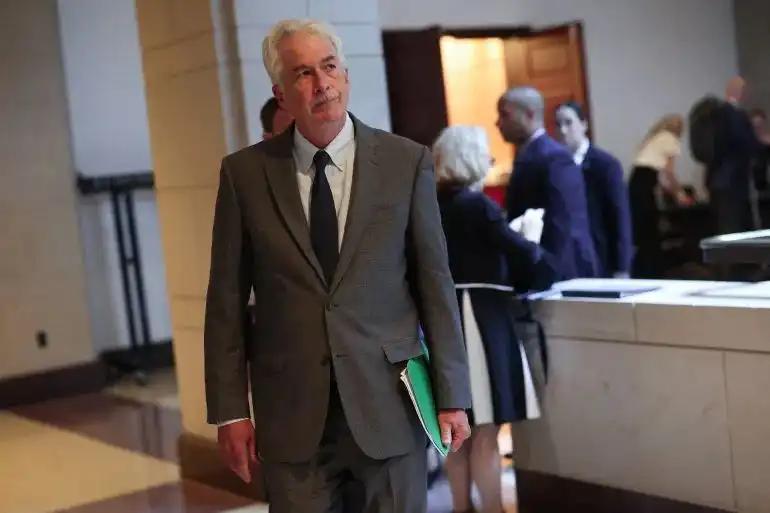
The officials told the newspaper that the negotiators have developed a draft of the agreement that combines the proposals of Hamas and Israel that were presented in the last ten days, and talks about it are being held in Paris on Sunday between the Director of the Central Intelligence Agency (CIA), William Burns, with officials from Qatar, Egypt and Israel.


While there are still important differences to be resolved, negotiators are cautiously optimistic that a final agreement is within reach, according to US officials who insisted on remaining anonymous.


Paris and Washington discussions

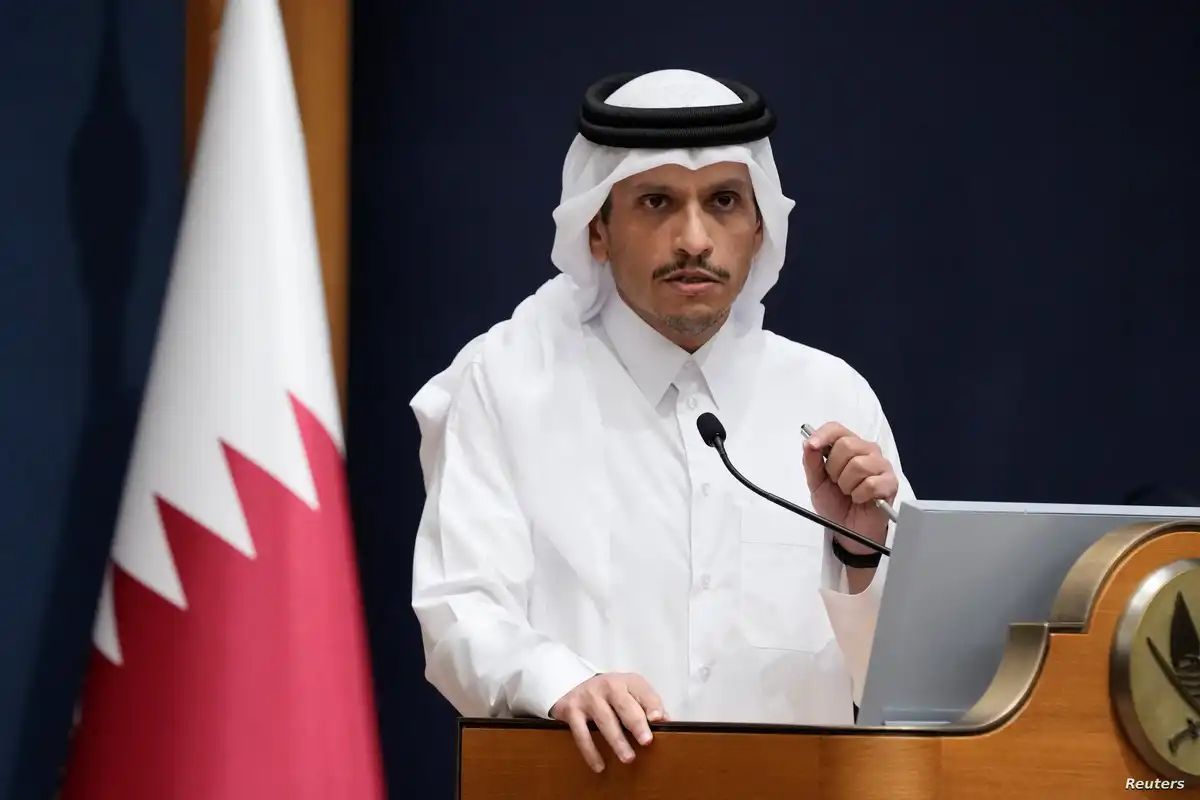
Qatari Prime Minister and Foreign Minister Sheikh Mohammed bin Abdul Rahman Al Thani is scheduled to head to the French capital, Paris, where he will join talks with the participation of the United States, Egypt and Israel to try to reach an agreement on the release of detainees in the Gaza Strip.


The Qatari official is expected to then head to Washington as part of his tour to discuss a new prisoner exchange agreement and a ceasefire in Gaza. According to the American newspaper Al-Monitor, the Qatari Prime Minister and Foreign Minister will meet with senior members of the US administration and senior legislators.


US President Joe Biden spoke by phone separately on Friday with the Emir of Qatar, Sheikh Tamim bin Hamad Al Thani, and Egyptian President Abdel Fattah Al-Sisi, in an attempt to narrow the remaining differences.


If Burns makes sufficient progress in the Paris talks, Biden may send his Middle East coordinator Brett McGurk, who has just returned to Washington, to the region to help finalize the agreement.


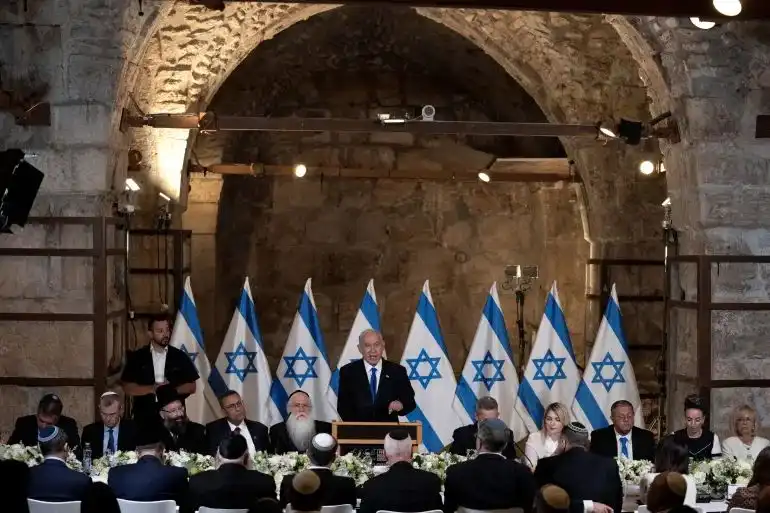
In a statement yesterday, Saturday, Prime Minister Benjamin Netanyahu affirmed his commitment to ensuring the release of detainees who were not released as part of a limited agreement last November. He said, "As of today, we have returned 110 of our hostages and we are committed to returning them all... We are dealing with this, and we are doing so around the clock."


Hamas conditions

The Israeli Channel 12 previously reported Hamas’ conditions for a new prisoner exchange deal, which are: 100 Palestinian prisoners for every Israeli prisoner, a complete withdrawal of the Israeli army from the Gaza Strip, a truce of between 10-14 days before the release of any Israeli prisoner, and a truce for two months. Between each stage of the deal.


On October 7, the Palestinian resistance, led by Hamas, launched an attack on Israeli military points and settlements around the Gaza Strip, during which about 1,200 Israelis were killed, about 5,431 were wounded, and at least 239 were captured, of whom Israel recovered about 105 in an exchange deal and a temporary truce with the Hamas movement. It lasted 7 days and ended in early December 2023.


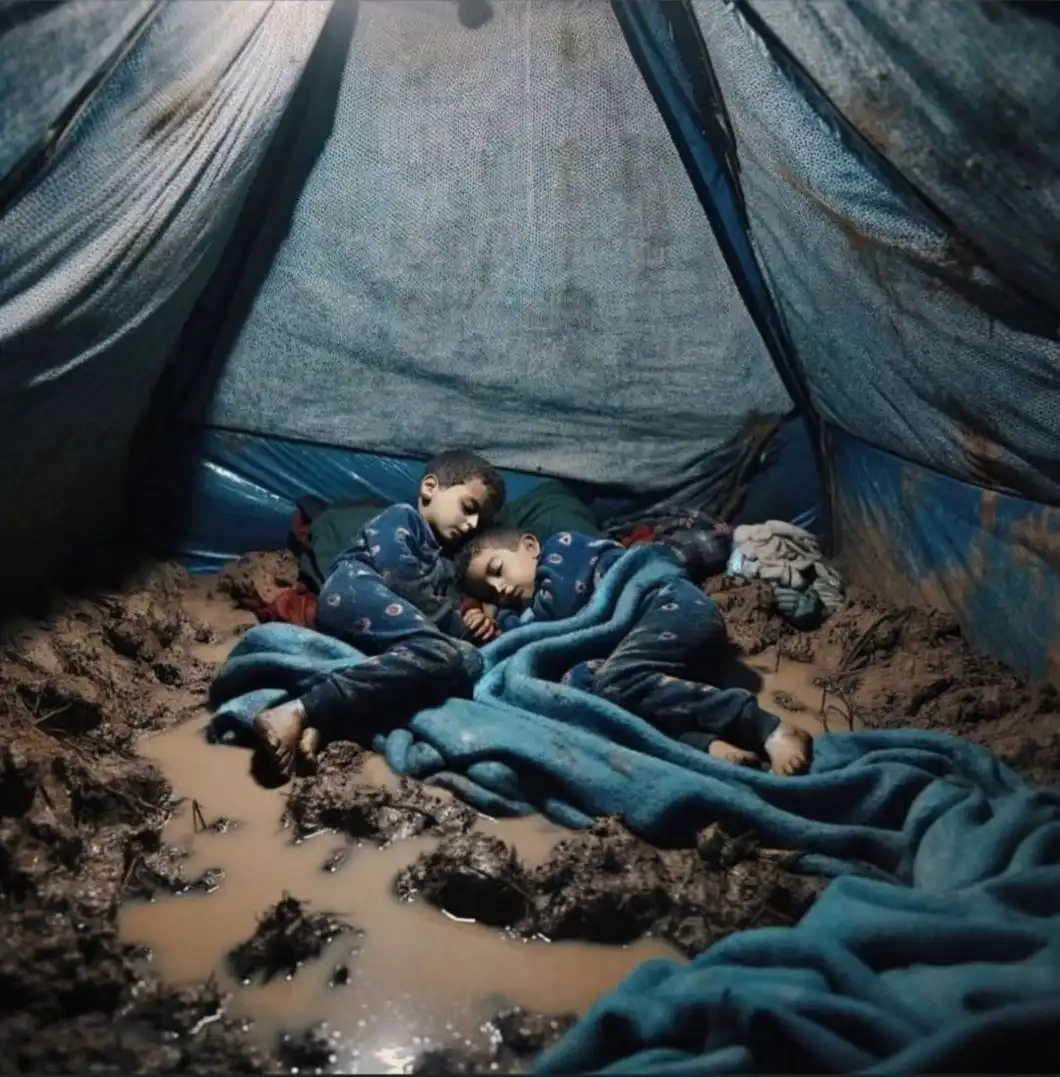
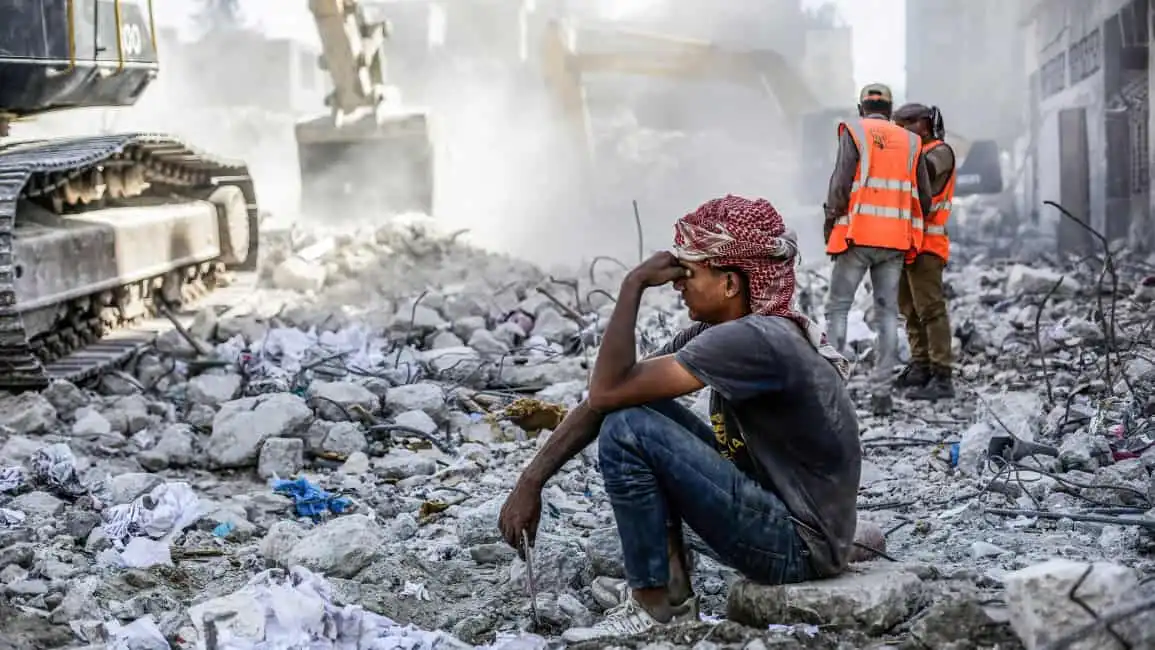
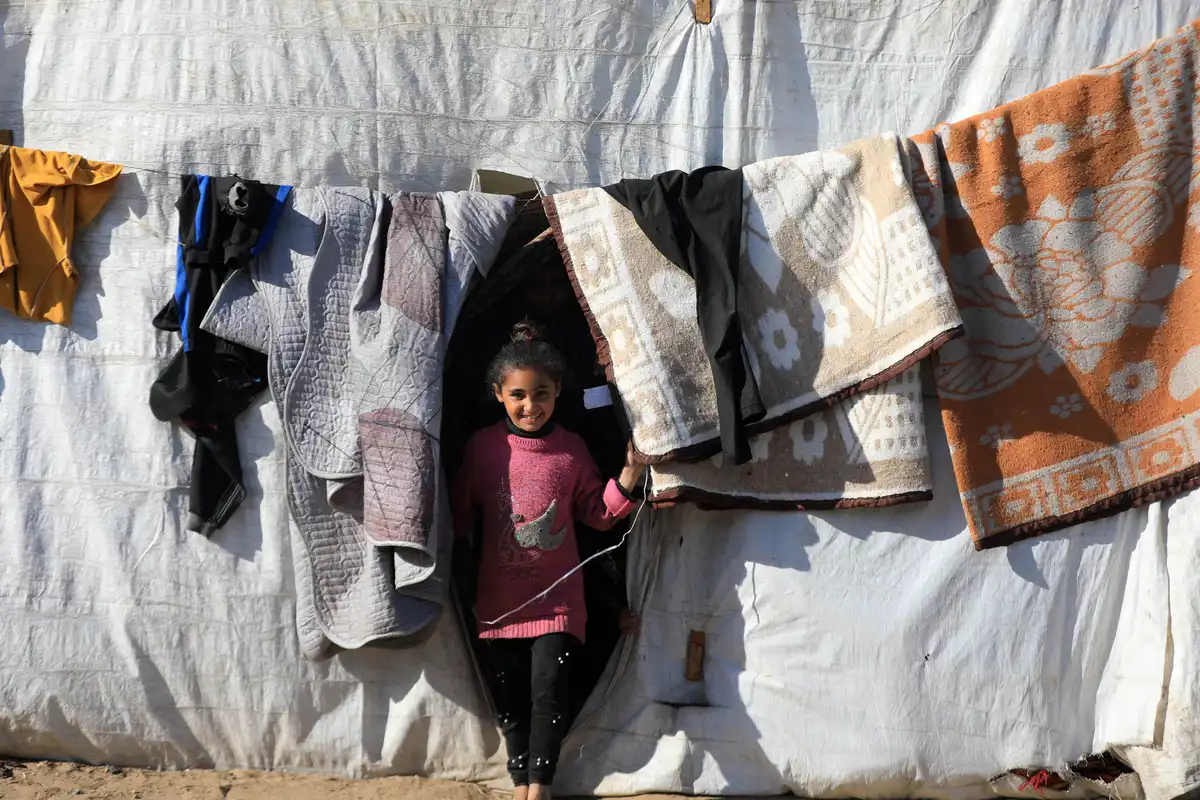
Since that day, the Israeli occupation army has been waging a devastating war on the Gaza Strip, which left more than 26,000 martyrs, most of them women and children, according to the Ministry of Health in the Strip. The war also caused massive destruction and an unprecedented humanitarian catastrophe, according to the United Nations.

PALESTINE

Sun 28 Jan 2024 9:28 am - Jerusalem Time

War on Gaza: Continuing massacres, Western pressure on UNRWA, and ceasefire initiatives

On the 114th day of the aggression against Gaza, the Israeli occupation army continues to commit massacres, after yesterday, Saturday, it committed 18 new massacres that resulted in the death of 174 civilians, while the Palestinian resistance is engaged in violent clashes with the occupation on several fronts, and has targeted a number of its vehicles.


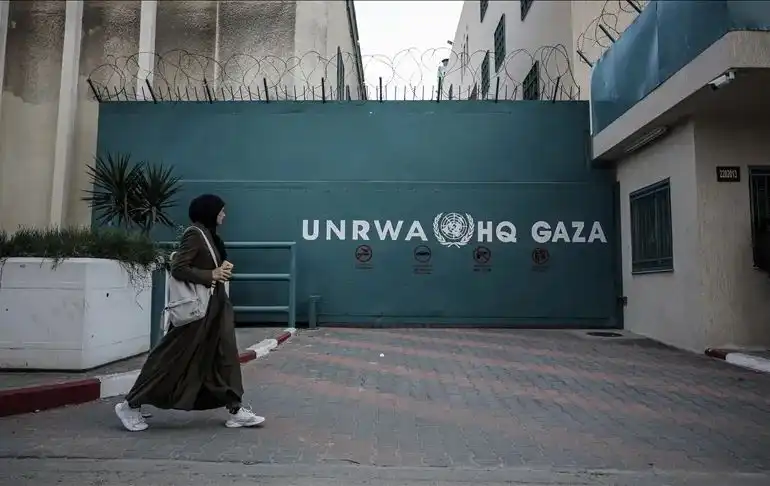
On the political level, the West is pressing to stop funding the United Nations Relief and Works Agency for Palestine Refugees (UNRWA), as 9 countries announced the suspension of their funding to the agency, in light of Israeli accusations against a number of its employees.


On the other hand, calls and initiatives for a ceasefire are increasing in the Gaza Strip, in light of the continued Israeli aggression that has left since last October 7 until yesterday, Saturday: 26,257 killed, and 64,797 injured, most of them children and women.

ARAB AND WORLD

Sun 28 Jan 2024 9:22 am - Jerusalem Time

“The boldness of the request shocked him.” An Israeli newspaper reveals details of the Emirati president’s rejection of a request from Netanyahu

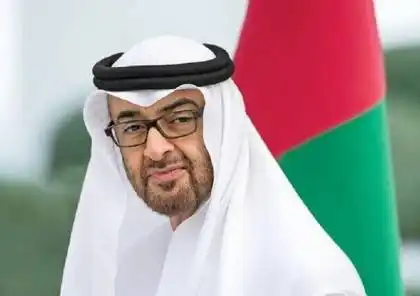
The Times of Israel newspaper said that Prime Minister Netanyahu pressured UAE President Mohammed bin Zayed so that Abu Dhabi would pay the salaries of Palestinian workers who were prevented by Tel Aviv from returning to their jobs.

The newspaper reported, quoting an Israeli official, that Bin Zayed rejected the idea completely and was shocked by the audacity of the request put forward by Netanyahu.

The Times of Israel reported that what the Israeli official said confirms the details of the report published by the Axios website.

The Israeli official explained that Netanyahu spoke with the Emirati president several times since October 7.

The newspaper noted that a senior Emirati official warned that the long war in Gaza risks turning Abu Dhabi's emerging relations with Israel into a "cold peace."

The official, who preferred to remain anonymous, said in a statement to The Times of Israel: “The longer this war lasts, Israel becomes more isolated, and even a warm peace could eventually turn into a cold peace.”

The newspaper reported that this warning is the most stringent that Israel has received since the outbreak of the war from its partners in the “Abraham Accords”, the UAE, Bahrain and Morocco, who normalized relations with Israel about four years ago.

The Times of Israel reported that the statements indicate that the UAE is not considering severing its relations with Israel, but that these relations may become similar to those that link Israel with Egypt and Jordan.

High-level government relations declined after the formation of Prime Minister Benjamin Netanyahu's hard-line government in December 2022 and have almost stopped since the war, noting that Israel continues to operate its embassy in Abu Dhabi, but there has been a decline in public events and meetings.

The Israeli army announced today, Saturday, that the number of wounded among its soldiers has risen to 2,757 people since October 7, 2023, while Israeli information and global military estimates indicate that the number of wounded Israeli soldiers is greater than the officially announced numbers.

The Israeli army also confirmed the killing of 557 officers and soldiers since October 7, 2023.

On the Palestinian side, the Ministry of Health in Gaza announced that the death toll from the Israeli bombing of the Strip had risen to 26,257 martyrs and 64,797 wounded since October 7.

ARAB AND WORLD

Sun 28 Jan 2024 9:20 am - Jerusalem Time

Olmert launches a violent attack on Netanyahu and members of his government

In a television interview on the Israeli Channel 4, former Israeli Prime Minister Ehud Olmert launched a violent attack on the current war government, and said that Prime Minister Benjamin Netanyahu does not want to implement a deal to liberate Israeli prisoners held by the Palestinian resistance, and this is what makes us, as he stated, “We manipulate the lives of prisoners.”


Olmert pointed out that Netanyahu made a mistake when he set a goal for the war that could not be achieved, and stressed that "all the achievements achieved by the army do not come close to the declared goal, which is the complete destruction of the Hamas movement." Olmert accused Netanyahu that all he seeks "is internal conflicts and a loss of confidence in the Chief of Staff and Israel's security leadership."


Ehud Olmert said, in his interview, that Benjamin Netanyahu brought “barbarians into the cabinet, and this is unprecedented,” in reference to the religious right parties in “Israel,” so he returned and attacked “National Security Minister,” Itamar Ben Gvir, saying that “Ben Gvir is the enemy of Israel, and I believe that this group (referring to the parties of the religious right) wants the war in Gaza to be only a corridor for the war they want in the West Bank.”


He said, "The Israeli government must decide to stop the military battle at this stage in order to be able to return the prisoners."


In an interview with the Financial Times on October 12, Olmert stressed that what awaits Israeli soldiers is “everything you can imagine, and worse,” adding that the matter “will not be simple, and it will not be fun.” This is based on his previous experience in the aggression launched by his government in 2008 on the Gaza Strip, which lasted three weeks. He has had more than one call, since the start of the war, to stop it, before “Israel” pays more expensive prices. He also always stressed that it was not possible to recover the prisoners without an exchange agreement with the resistance in Gaza.

OPINIONS

Sun 28 Jan 2024 9:14 am - Jerusalem Time

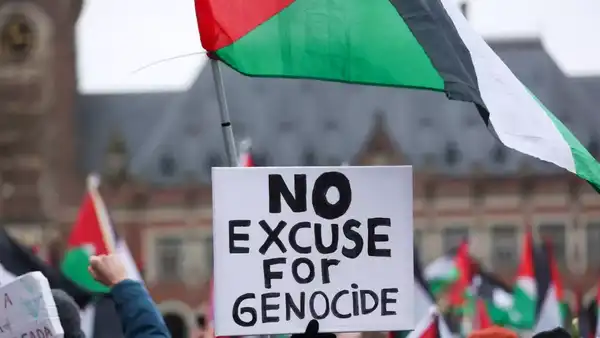
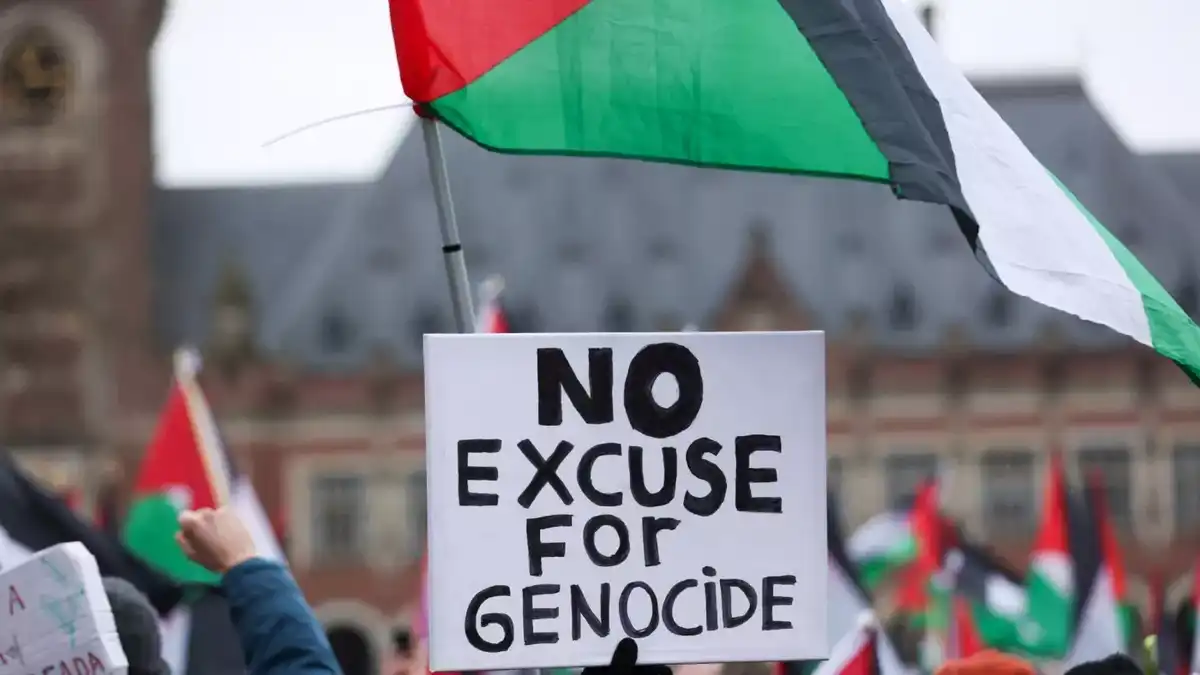
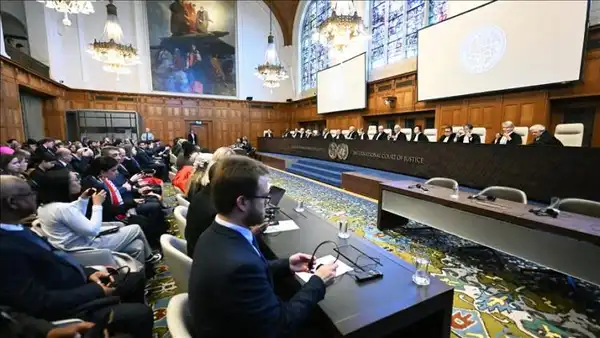
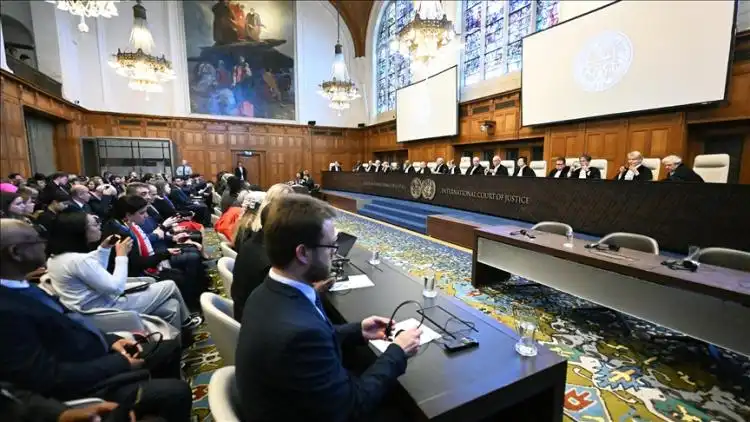
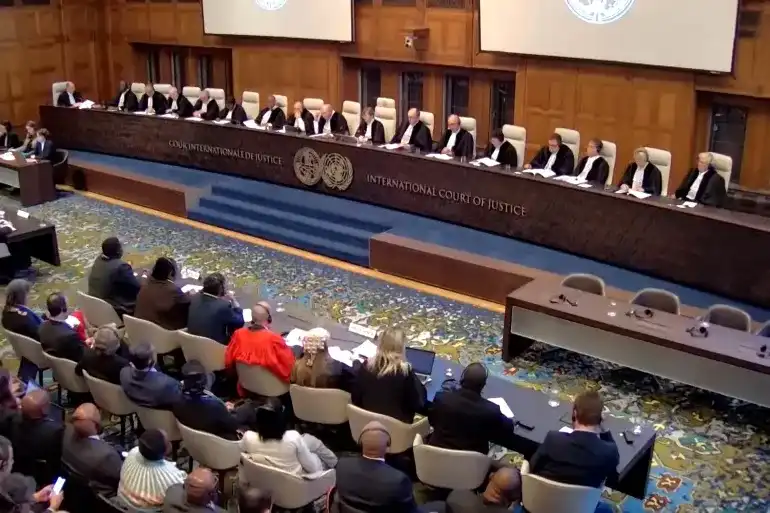
The World Court has put Israel and its allies on trial for genocide

Middle East Eye

Middle East Eye

Opinion Writer

By Jonathan Cook

The ICJ ruling has assured that the taint on Israel is not going away. The question is, how far will the disgrace and dishonour spread?

 It was easy to miss the welcome news from the International Court of Justice (ICJ) on Friday amid the huge wave of disappointment that swept Palestinians and much of the watching world when its judges failed to order an immediate halt to Israel's slaughter in Gaza.

The World Court's justices decided, by an overwhelming majority, that South Africa had made a plausible case that Israel is committing genocide against the Palestinians of Gaza. 

In doing so, many members of the 17-strong panel openly defied, and embarrassed, the governments of their own countries – not least the court's president, Joan Donoghue of the United States. 

US President Joe Biden's administration had called South Africa's case "meritless, counterproductive and completely without any basis in fact whatsoever". 

In a sign of how isolated Israel - and the US - is on the legal facts, its arguments found favour only with its own appointee, Aharon Barak, and Uganda's judge. Even Barak agreed that some of the provisional measures against Israel were needed to protect civilians. 


The ICJ ruled that Israel must obey the Genocide Convention, taking urgent steps to avoid the killing and harming of civilians. It should also avoid creating conditions in Gaza that might make life impossible for Palestinians in the territory. 

The court cited remarks from Israel's president, Isaac Herzog, and its defence minister, Yoav Gallant, that Israel had been doing precisely the opposite over the past three and a half months. Their statements suggested the intent was to punish civilians and make Gaza uninhabitable. 

The justices strongly implied that Israel had, to date, failed to honour its legal obligations under the convention and would need to prove to the court within a month that it had changed course.

Almost certainly Israel will defy the court and carry on as before. In the wake of the interim ruling, Israeli Prime Minister Benjamin Netanyahu vowed to continue until "absolute victory". 

Moral conundrum

The ICJ has, in effect, put Israel on trial for the most heinous of crimes, and one that Israel has long cited - in the form of the Nazi Holocaust – as the rationale for its own founding as a necessary sanctuary for Jews from European antisemitism.

In predictable fashion, Netanyahu called the genocide charge "outrageous" and "a mark of disgrace" on the court. He tried to weaponise the fact that the following day was Holocaust Remembrance Day, implying that only an antisemitic agenda could lead to the conclusion that it was Israel, not Hamas, carrying out a genocide.

In fact, the World Court has brought into the harsh light of day a moral conundrum western powers have long sought to obscure. 

By killing, maiming and ethnically cleansing Palestinians over the seven decades since Israel's establishment on the ruins of the Palestinian homeland, has a self-declared Jewish state not become the vehicle by which the victims of one genocide perpetrate another? 

After all, what is happening to Gaza today did not emerge out of nowhere.

Israel has been actively disappearing Palestine and the Palestinian people for more than three-quarters of a century. There have been episodes of intense war crimes, such as the ethnic cleansing operations of 1948 and 1967, as well as the invasion and occupation of Lebanon in the early 1980s. 

Those events have been interspersed with long periods of a protracted, slow-motion crime – that of apartheid – designed to divide, ghettoise and erase the Palestinians as a people. 

Back in 2006, in an attempt to bypass the sensitivities of Israelis, as well as overseas Jews and western publics, provoked by a direct accusation of genocide, the renowned Israeli scholar Baruch Kimmerling characterised Israel's crimes as "politicide". He did so the year before Israel began its horrifying 17-year siege of Gaza, turning it effectively into a concentration camp. 

In Kimmerling's view, however, Israel's actions even before the siege and current mass slaughter in Gaza amounted to something close to genocide. 

Court on trial

For the next few years of the court's deliberations, the question of whether Israel is committing the "crime of crimes" will be the front and centre of a legal debate. 

The Palestinians will have to continue enduring a real-time genocide, while the World Court sifts the evidence on whether Israel is actually carrying out what the judges already implicitly concede looks very much like a genocide 

That will be little comfort to the Palestinians, who will have to continue enduring a real-time genocide, while the World Court sifts the evidence on whether Israel is actually carrying out what the judges already implicitly concede looks very much like a genocide. 

But the justices will be under intense pressure to move faster than their usual snail's pace. The court itself, and the system of justice it supposedly upholds, is on trial too. It must do what it is supposed to do: stop a genocide unfolding, not give it label after it has already taken place. 

Even more on trial are all the states that have facilitated, sponsored and tried to shield from proper scrutiny Israel's slaughter in Gaza. They are now on legal notice that they could be investigated for complicity in genocide, conspiracy to genocide and incitement to genocide.

Yes, the trial process will take far too long. But it is now a cloud hanging over every Israeli action. Each attack on a hospital, the continuing denial of food, water and power to Gaza's population, the bombing of "safe zones" to which Israel has ordered Palestinians to flee will be listed and investigated as evidence of a genocide.

And in parallel, the pressure will rise considerably on the ICJ's much weaker sister court at the Hague, the International Criminal Court (ICC), to identify the individuals behind those war crimes. 

South Africa, the World Court agreed, made a plausible case. If Israel has persuaded 15 of the 17 World Court justices that there is a risk a genocide is taking place, the ICC should be actively seeking out those guilty of the many war crimes on which that assessment rests.

Complicit states

Israel will try to make much of the fact that no order was made for it to halt its military assault. 

The court's reluctance to back this demand from South Africa was doubtless driven by political considerations. Had it done so, it would have risked coming into direct confrontation with the real culprit: Washington. 

Israel would have refused to end its attacks, and the matter would then have been referred to the Security Council for enforcement. In turn, the Biden administration would have been forced to wield its veto to protect its client state.

Either way, there would have been no end to the slaughter of the Palestinians. But if the court had ordered a halt, it would have been even more evident than now that it is the US, more so than Israel, that is ensuring the genocide continues uninterrupted. Without US money and weapons, Israel would be in no position to keep bombing Gaza.

It seems that identifying Washington as the sponsor of genocide marked the limit of the World Court's courage


Nonetheless, the US and its allies are now in a tricky position. The day before the ICJ ruling, the Haaretz newspaper reported that Israel and the Pentagon were finalising a major arms agreement.

Israel is to use part of the huge sums of  "aid" it receives each year from Washington to buy 50 fighter jets and 12 attack helicopters made by Lockheed Martin and Boeing. It is also buying more "aerial munitions" because its stocks are running low from its relentless bombing of Gaza. 

According to Haaretz, the need for more attack helicopters, in particular, "is a direct lesson from the current war in Gaza", where existing aircraft have been used to "hit enemy targets and to assist IDF ground forces".

The paper reported senior Israeli officials saying the Biden administration had "expressed a commitment to ensure the rapid provision of weapons and munitions to Israel to assist the IDF in the current war". 

The World Court will now be investigating whether that commitment is, in fact, complicity – or even a conspiracy – to perpetrate genocide.

Legal jeopardy

The ICJ's ruling does not exist in a legal vacuum. On the same day, a federal district court in California heard a case brought against the Biden administration for complicity and failure to prevent an "unfolding genocide" in Gaza.

Other states are in similar jeopardy. Before the ruling, Israel's allies could plausibly argue that their transfer of arms to Israel were made in good faith, even if it was later shown that some of those weapons ended up being used, inadvertently or otherwise, in the commission of war crimes.  

But a suspicion by the World Court of genocide means that other states must act much more carefully to avoid the risk of being accused of complicity. The justices have raised a red flag over Israel's behaviour. Other states are required to take note.

Most European countries have been supplying Israel with arms for years that have been used against Palestinians. But some, not just the US, are actively assisting Israel as it pounds Gaza, helping to contribute to the death toll of at least 26,000 Palestinians so far, most of them women and children.

The UK has been using an air force base in Cyprus to fly dozens of reconnaissance missions over Gaza whose intelligence findings are being shared with Israel. Germany, meanwhile, is reported to be shipping tank shells to Israel to replenish its depleted stocks. 

Western leaders are equally exposed for their role in rhetorically and diplomatically encouraging Israel's assault on Gaza. Ignoring the massive number of Palestinian casualties, as well as Israel's legal status as occupier and its belligerent siege of the enclave, many have prioritised instead a presumed Israeli "right to self-defence". 

The degree to which they may be acting in bad faith was underscored last week when it emerged that a group of Dutch officials and diplomats had turned whistleblowers.

They submitted evidence to the Hague arguing that their prime minister, Mark Rutte, sought to conceal from the public an official finding that Israel was committing war crimes. 

According to the evidence, Rutte asked his legal affairs ministry: "What can we say to make it look like Israel is not committing war crimes?”

Media shamed

The ruling should put to shame western media organisations as well. 

It may be too much to expect that the BBC and others will now, when they refer to Israel, append a description that it is "being investigated for genocide" – just as they currently reflexively describe Hamas as "designated a terrorist organisation by the UK and other governments". 

But the ICJ has put a harsh spotlight on news broadcasters like the BBC that have barely been covering what is going on in Gaza over recent weeks. 

The World Court fears that a genocide may be taking place, and yet the establishment media has quickly grown tired of covering it – quite unlike its endless revisiting of the events of nearly four months ago, when Hamas fighters attacked Israel, and its reports on the plight of the Israeli captives in Gaza; and, let us also note, quite unlike its year or more of headline news about Russia's invasion of Ukraine.  

It may be too much to expect that the BBC and others will now, when they refer to Israel, append a description that it is being investigated for genocide

Major media corporations have been taking staff off air who are seen as too critical of Israel's slaughter – insinuating that their scrutiny is driven by prejudice rather than an appreciation of international law. 

ABC, the Australian Broadcasting Corporation, sacked an award-winning Australian-Lebanese host, Antionette Lattouf, after high-level Israel lobbyists threatened legal action if she wasn't removed. 

Notably, Mehdi Hasan, who tweeted about Lattouf's sacking, was one of three Muslim anchors on MSNBC removed from the airwaves in recent weeks. Hasan had made headlines with confrontational interviews with Israeli spokespeople such as Mark Regev. 

Social media companies have been no better. A recent Human Rights Watch report found that Meta, which owns Facebook and Instagram, has been systematically suppressing content about Palestinians and Gaza, making it easier for Israel to evade public scrutiny of its crimes. 

Incitement battle

Perhaps not surprisingly, after Gallant and Herzog's genocidal remarks were quoted so prominently by the court, Netanyahu warned his ministers to avoid commenting on the ICJ's decision. 

Whether or not the court eventually finds that the evidence against Israel passes the high bar set for genocide, incitement to genocide should be far easier to prove. South Africa's petition to the court included page after page of genocidal statements made by senior Israeli officials, including Netanyahu himself.

Israel could lose that particular battle much more quickly. 

But, of course, Israeli officials will find it hard to reign back their incitement, including against the court. 

Gallant responded both by calling South Africa's case "antisemitic" and by suggesting that the ICJ were only too keen to indulge that antisemitism.

What the ICJ has assured is that the taint on Israel is not going away. The question now is, how far will the disgrace and dishonour spread? 

 

OPINIONS

Sun 28 Jan 2024 9:09 am - Jerusalem Time

Biden is following Netanyahu off a cliff

Mondoweiss

Mondoweiss

Opinion Writer

BY MITCHELL PLITNICK

In refusing to pressure Israel into a ceasefire while continuing to launch strikes on Yemen, Biden has shown utter contempt for all Arabs and Muslims, including his own Arab and Muslim American citizens who say they won't vote for him over Gaza.

The two-state song and dance is back on center stage again in Palestine and Israel. As part of their ceasefire idea, the United States, with the backing of Egypt and Qatar, have tied reconstruction in Gaza to normalization between Israel and Saudi Arabia and a “credible and irreversible path” to a Palestinian state. 

It’s hardly news to anyone that Israeli Prime Minister Benjamin Netanyahu immediately rejected this idea. Netanyahu has centered blocking a Palestinian state for most of his political career. It is the basis on which people vote for and support him. 

Yet when U.S. President Joe Biden, after a conversation with Netanyahu, was asked if a Palestinian state is impossible with Netanyahu in office, he said, “No, it’s not,” a response which launched a million laughs around the world at the blatant obliviousness of the President of the United States. 


Netanyahu, for his part, immediately implied Biden lied, stating unequivocally that Israel would retain security control over Gaza, a position which “clashes with the principle of sovereignty but what can you do.” Indeed, just a day earlier, Netanyahu had stated explicitly that Israel “must have security control over the entire territory west of the Jordan River.” That was Netanyahu’s way of saying “from the river to the sea,” though, despite a mistranslation by i24 News that caused some commotion, he didn’t use those exact words. The meaning, however, was clear: Israel alone would exist between the Jordan and the Mediterranean as one apartheid state. 

This was yet another direct shot at Biden, who is, maddeningly, continuing to inflict massive harm to himself politically with his steadfast support of Netanyahu despite the Israeli PM going out of his way to insult and embarrass Biden at every turn. Biden tied U.S. policy to Netanyahu’s whims at the very beginning, in the immediate aftermath of the October 7 Hamas attack, and he has allowed Israel to lead the U.S. by the nose in every way ever since. 

Biden’s entire administration has been reduced to useless rhetoric while refusing to take any action to defend Palestinian lives. That may not be all that unusual, but Biden has also allowed Netanyahu to jeopardize U.S. security concerns and strategic interests throughout the Middle East in an unprecedented manner even for this most unusual of all relationships. He has done this despite growing voices in Israel that are recognizing, even while they themselves are still screaming for vengeance, that Netanyahu is pursuing the war based on his personal needs and interests, not Israel’s.  

Despite reports of Biden “growing frustrated” with Netanyahu, there remains no sign that the lock-step support for Israel is being shaken in the slightest. Biden even seems to be abandoning strategic concerns in order to protect Israel’s onslaught. This is evident in his response to Ansar Allah (commonly referred to as the Houthis) targeting ships with some connection to Israel in the Red Sea. 

Asked if his repeated bombing of Yemen — one of the poorest and most devastated countries in the world after years of Saudi-U.S. attacks — was working, Biden responded, “When you say ‘working,’ are they stopping the Houthis? No. Are they going to continue? Yes.”

The response was stunning. Biden stated plainly that he knows that bombing Yemen will not stop the attacks on shipping in the Red Sea. Even leaving aside the implication that protecting shipping is worth risking American lives and potentially sparking a regional war while the lives of over 25,000 Palestinians in Gaza with thousands more deaths to come isn’t worth just stopping the massive flow of arms to Israel, this single-minded devotion to violence for the sake of violence should be giving every American pause. 

American leaders will argue that they have to “impose a cost” on Ansar Allah for their actions, and that they are “working to end the fighting in Gaza as soon as possible.” But this is obviously futile and false. The attacks in the Red Sea are only happening because of the Israeli onslaught in Gaza, and stopping that genocide will make shipping in the Red Sea secure. The White House is well aware of this, as they are equally aware that the entire temperature of the region is rising every day, with the potential for setting off a much bigger war, intentionally or accidentally, growing by leaps and bounds.

Only one party benefits from the war continuing, and that is the far-right Israeli government headed by Netanyahu. For him, the longer the war continues, the longer he avoids the consequences of his corruption from before October 7 and the outrage of the Israeli people for his actions on and since October 7. 

For Israel’s far-right parties, including Likud, the goal of this war has always been to destroy the Palestinian national movement, not only in Gaza, but in the West Bank as well. It is very much to solve the entire question of the 1967 occupation by establishing an Israel “from the river to the sea” that includes few Palestinians and no “Palestinian nation” as such. The war needs to continue for quite a while for that goal to be achieved. Expansion of the conflict to the Red Sea or Lebanon would widen the opportunities to escalate in the West Bank. 

Biden, as well as his accomplices Secretary of State Antony Blinken, Defense Secretary Lloyd Austin, National Security Adviser Jake Sullivan, and others, seem oblivious to these realities. Indeed, they seem determined not only to allow Israel to gradually push harder and harder on Hezbollah in Lebanon, but to continue to ratchet up the tensions in the Red Sea and the Persian Gulf.

Ignoring domestic realities, too

Biden seems intent on communicating his utter contempt for all Arabs and Muslims — not just Palestinians — and is by no means sparing American citizens in doing so. When asked if he is concerned about so many Arab-Americans saying they will not vote for him, Biden dismissed this by saying that Trump wants to “ban Arabs” from entering the country. 

In response, Abdullah Hammoud, the mayor of Dearborn, Michigan — a key battleground state that Biden is currently losing because of his genocidal policy toward Gaza — said the response was insulting “on so many levels. 1 – Trump instituted a Muslim ban not Arab ban. 2 – most Arab Americans are Christian and most Muslim Americans are non-Arab. 3 – We’ve lost loved ones– family and friends. Our families villages wiped off the map. Not something you simply forget about. Trump is a threat, I’ll never deny that. But so is Biden’s support of a genocide and endless wars in the Middle East.”

The blithe dismissal of Arab American concerns and the lack of familiarity with an issue as huge as Trump’s Muslim ban reflect a deep racism and indifference to Arabs that cannot be disconnected from Biden’s policies in both Palestine and the broader Middle East. The political short-sightedness of literally telling a group of marginalized Americans that they have to vote for you because the alternative is even worse is staggering. Arab and Muslim Americans are not the only group Biden treats this way; just ask Black Americans. But taking such a condescending attitude while funding, arming, and enabling genocide raises both immorality and political suicide to new levels. 

Biden’s comments reflect a lack of strategy both in the region and domestically. They also reflect a U.S. president who is following the lead of a far-right, corrupt Israeli prime minister not only in matters of policy, but also in the racist view of Arabs, be they in Palestine or the United States. 

In Israel, there have been many who have voiced concern about the absence of an endgame or any real strategy in Israel’s assault on Gaza beyond causing as much death and destruction as possible. And while that has been discussed in the United States as well, none of this seems to have penetrated the White House or other parts of the administration. 

Despite Biden’s boundless genuflection to Israel, Netanyahu is positioning his rhetoric to attack the president to forestall any efforts at a ceasefire and also to undermine his already shaky re-election chances. This is being noticed by Biden’s supporters in the media. 

Yet it seems that nothing will be enough for Biden to use the only tool that he has to stop Netanyahu: stopping the flow of arms. Biden seems determined to allow Israel to determine the course not just of the assault on Gaza but of U.S. policy. The question is not why he’s doing that. The question is, why are we in the United States allowing it?


ARAB AND WORLD

Sun 28 Jan 2024 9:09 am - Jerusalem Time

Arab League meeting to issue a “unified position” on International Justice resolutions

On Sunday, the Arab League will hold an emergency meeting at the level of permanent delegates. To issue a unified position on the decisions of the International Court of Justice regarding the Gaza Strip.


This came according to a press statement issued by Ambassador Hossam Zaki, Assistant Secretary-General of the League of Arab States, and a statement by the Permanent Representative of Palestine to the League, Ambassador Muhannad Al-Aklouk.


Zaki said that the meeting will be held, on Sunday, at the headquarters of the League’s General Secretariat in Cairo, in response to a request submitted by the State of Palestine regarding holding this extraordinary session at the level of permanent delegates, in light of the decisions issued by the International Court of Justice.


The Palestinian delegate explained that his country "requested to hold an extraordinary session of the Council of the League of Arab States at the level of permanent delegates, to issue a unified Arab position on the order issued by the International Court of Justice."


Ambassador Al-Aklouk added, "This request submitted by the State of Palestine came in coordination with Morocco, in its capacity as President of the 160th session of the League Council at the ministerial level, and with Jordan and Egypt, with the support of the member states of the Arab League."


On Friday, the International Court of Justice ordered Israel to take measures to prevent genocide against the Palestinians and improve the humanitarian situation in the Gaza Strip, but the decision did not include a “ceasefire” text, amid Palestinian welcome.


Israeli Prime Minister Benjamin Netanyahu responded to the court's decision by saying that Tel Aviv "will continue the war" on Gaza, adding that the court "did not ask Israel to cease fire."


On January 11 and 12, the International Court of Justice in The Hague held two public hearings, as part of the start of consideration of the lawsuit filed by South Africa against Israel on charges of committing “genocide crimes” against the Palestinians in Gaza.

OPINIONS

Sun 28 Jan 2024 9:05 am - Jerusalem Time

Israel's Day of Reckoning

JOHN J. MEARSHEIMER

JOHN J. MEARSHEIMER

Opinion Writer


The International Court of Justice (ICJ) issued its Order yesterday (26 January 2024) on the South African case against Israel involving possible genocide in Gaza.

Predictably, the coverage of the Order in the mainstream media in the West aims to spin the story in ways that are most favorable to Israel, which means minimizing or omitting those elements of the story that make Israel look bad and emphasizing that the ICJ did not order Israel to cease all military operations in Gaza.

Hardly anyone expected the ICJ to rule that Israel would have to stop all military operations in Gaza, since it is at war with Hamas, and the court cannot order Hamas to cease its military operations against Israel. What the ICJ did tell Israel, however, is that it must focus its offensive on Hamas, and not target the civilian population. After all, the genocide charge revolves around what Israel is doing to the civilian population in Gaza, not Hamas.

What really matters in the Order is what it says about Israel committing genocide. How could it be otherwise? Genocide is the crime of all crimes.

The Order clearly states that there is: 1) plausible evidence that Israel has the intent to commit genocide; and 2) there is plausible evidence that Israel is committing genocide.

In response to that dire situation the court ordered Israel to stop committing those acts that appear to be genocidal, and to preserve any evidence that bears on this matter, obviously for the trial ahead.

In short, the ICJ did not make a final decision on the charge of genocide against Israel, but said there is sufficient evidence at this point to believe there is a “real and imminent risk” of genocide, and therefore Israel must fundamentally alter its conduct of the war in Gaza.

I think this is a stunning outcome, especially when you consider the votes among the 17 members of the ICJ.

There were six separate votes on six provisional measures that Israel was instructed to obey.

Four of the votes were 15-2.

Two of the votes were 16-1.

Amazingly, the Israeli judge — who was recently appointed by Prime Minister Netanyahu — voted in favor of two of the measures.

The American judge, who is also the head of the ICJ, voted in favor of all 6 of the measures.

The only judge who voted against all six measures is from Uganda. 

I watched the ICJ proceedings on 11-12 January 2024, and they were conducted in a professional and fair-minded manner.

Both the Israelis and the South Africans sent their “A” teams to the proceedings, and each took over three hours to lay out its arguments systematically and comprehensively.

Finally, I have read the ICJ’s 27-page Order, and it is an impressive document, which is not to say one must agree with all its conclusions.

This was not a kangaroo court.

It seems clear that yesterday was a black day for Israel, as the ICJ Order will leave a deep and lasting stain on its reputation.


ARAB AND WORLD

Sat 27 Jan 2024 10:15 pm - Jerusalem Time

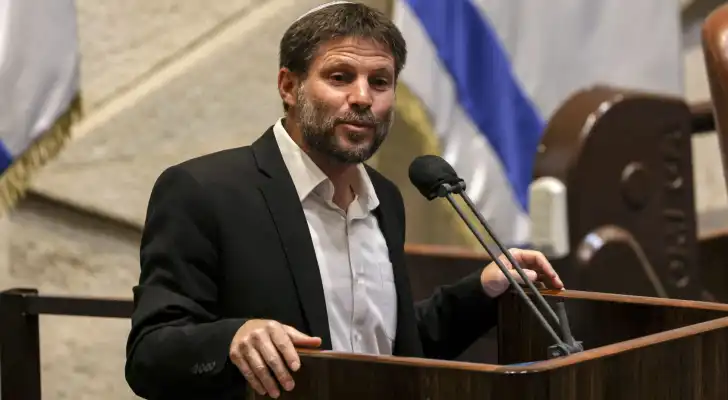
Israeli Right Wing Minister: A military government will be formed in Gaza and will be responsible for civilian issues

On Saturday evening, the Hebrew Channel 12 reported the allegations of the Minister of Finance in the occupation government, Bezalel Smotrich, who said, “A military government will be formed in Gaza and it will be responsible for civil issues.”


Earlier, Israeli Prime Minister Benjamin Netanyahu said that the occupation will not forget the atrocities that occurred on October 7th.


He stressed that they are determined to achieve all the goals of the war on the Gaza Strip, stressing: “We have no alternative to overwhelming victory and the return of our abductees in the Gaza Strip.”


He pointed out that the occupation has the right to defend itself and that no one can prevent them from doing so.


He stated that he would not retract any word he said regarding the State of Qatar, explaining that the coming massacre against their children is a matter of time, so they must eliminate Hamas.


ARAB AND WORLD

Sat 27 Jan 2024 9:31 pm - Jerusalem Time

Netanyahu: “We are obligated to achieve the goals of the war and recover the kidnapped people, and no one will stop us.”

Netanyahu considered that "Israel has the right to defend itself, as we are fighting a just war that was imposed on us, and after the elimination of Hamas in Gaza, there will be no party that will teach its children to eliminate Israel and the entire Israeli people."


Israeli Prime Minister Benjamin Netanyahu said during a press conference on Saturday evening, "We are obligated to achieve the goals of the war, including eliminating Hamas, returning the kidnapped people, and ensuring that Gaza will not pose a threat to Israel. There is no alternative to achieved victory. We are committed to victory and we will achieve that."


He touched on the decisions of the International Court of Justice by saying, "There are those who came to the court to accuse us of committing genocide. South Africa came there in the name of Hamas, and the fact that this claim is being discussed proves that many around the world do not know anything about the Holocaust."


Netanyahu considered that "Israel has the right to defend itself, as we are fighting a just war that was imposed on us, and after the elimination of Hamas in Gaza, there will be no party that will teach its children about terrorism and eliminate Israel and the entire Israeli people."


He added, "If we do not eliminate Hamas, the next attack will be a matter of time, and therefore it is important that we complete the mission while there are voices within us that question our determination. These voices are a small minority, they are wrong and misleading, and we will achieve absolute victory."


Regarding investigations during the war, he said, “Examination and investigations should take place after the war and not in the midst of it. It is wrong for officers, leaders and politicians to be busy searching for lawyers, as the government will decide on this issue when the time comes and not those affiliated with it.”


He spoke about relations with Egypt and about Qatar, saying, “Relations with Egypt are ongoing and natural, as each of us has our own interests and there is a need to say certain things. They are concerned about their interests and we are as well. As for Qatar, I will not go back on a single word I said while it is hosting Hamas is funded and has pressure on it, and it has pledged that medicines will reach the kidnapped people.”


He continued, "We will assassinate Hamas leaders, and the day after the war ends, Hamas will be leaderless and without military capabilities."

ARAB AND WORLD

Sat 27 Jan 2024 9:26 pm - Jerusalem Time

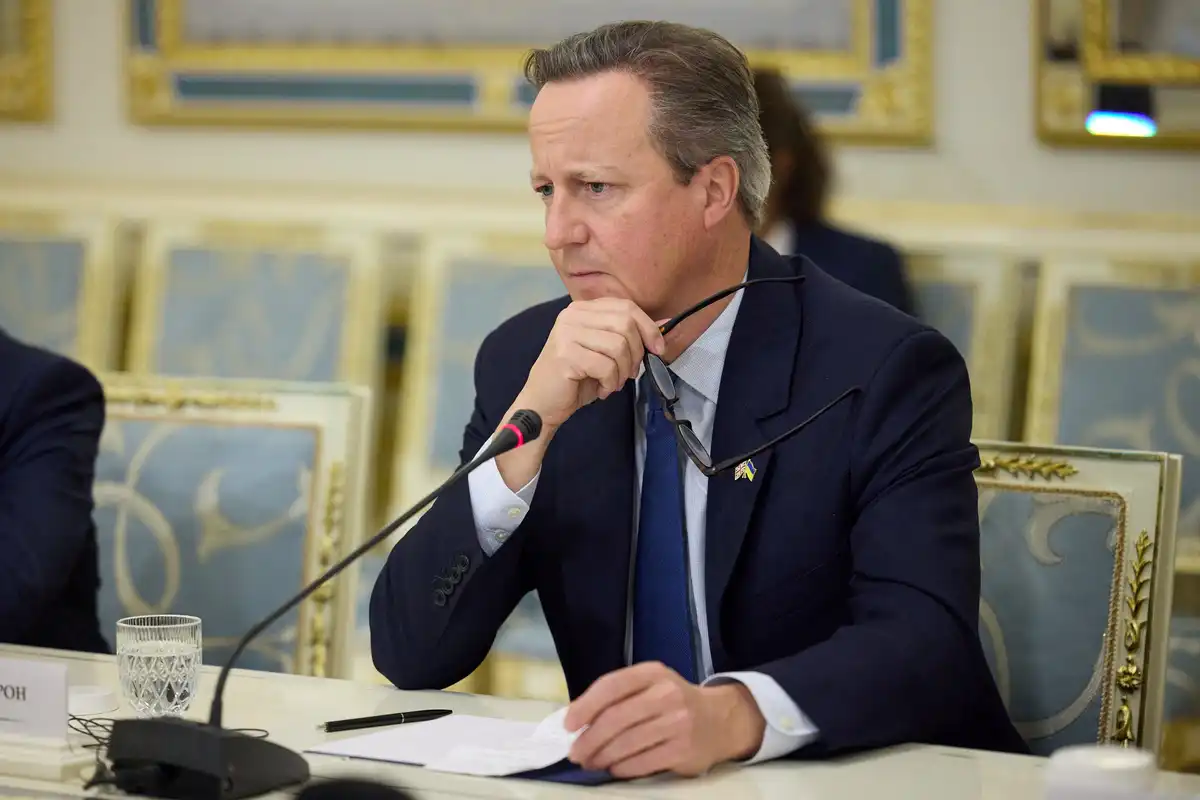
Financial Times: A British 5-point plan to end the war between Hamas and Israel

The Financial Times newspaper revealed that the British government proposed a five-point plan to end the war between Hamas and Israel, and explained that British Foreign Secretary David Cameron discussed the plan this week with Palestinian and Israeli leaders.


The newspaper pointed out that Britain's plan calls for stopping hostilities, releasing hostages, and negotiating a permanent ceasefire. It also calls for defining a political horizon for establishing a Palestinian state and forming a competent government to manage the West Bank and Gaza.


The British plan includes a proposal for Hamas leaders to leave Gaza to another country.

PALESTINE

Sat 27 Jan 2024 9:15 pm - Jerusalem Time

“Gaza Government”: The number of journalists killed has risen to 120

The government media office in Gaza announced, on Saturday evening, that the number of journalists killed by the Israeli occupation army since the beginning of its war on the Strip on October 7, 2023 had risen to 120 journalists.


The office said, in a brief statement: “The number of journalist killed has risen to 120 since the start of the genocidal war on the Gaza Strip, after the death of our colleague Iyad Ahmed Al-Rawag, a broadcaster and presenter on Sawt Al-Aqsa Radio, at the hands of Israeli treachery in the Nuseirat camp in the middle of the Strip.”


On January 18, the office announced that the number of journalists killed in the Gaza Strip had risen to 119, with the killing of Wael Abu Fununa, Director General of Al-Quds Satellite Channel, in an Israeli bombing that targeted Gaza City.


On Monday, the government office said in a statement that Israel “assassinates journalists in an attempt to distort the Palestinian narrative and obscure the truth.”


It pointed out in his statement that since the beginning of the war, Israel has arrested about 10 journalists whose names are known.

ARAB AND WORLD

Sat 27 Jan 2024 9:02 pm - Jerusalem Time

Qatari Prime Minister discusses in Washington a ceasefire agreement in Gaza

Qatari Prime Minister and Foreign Minister Sheikh Mohammed bin Abdul Rahman Al Thani heads to Washington as part of a tour to discuss a new prisoner exchange agreement and a ceasefire in Gaza.


According to the American newspaper Al-Monitor, the Qatari Prime Minister and Foreign Minister will meet with senior members of the US administration and senior lawmakers.


Sheikh Mohammed bin Abdul Rahman's visit to Washington comes after an expected visit to the French capital, Paris, during which he will join talks with the participation of the United States, Egypt and Israel to try to reach an agreement regarding the release of detainees in the Gaza Strip, amid leaks indicating the possibility of reaching an agreement between the Islamic Resistance Movement ( Hamas) and Israel.


A security source from a country participating in the negotiations confirmed information reported by the American newspaper The Washington Post, stating that President Joe Biden intends in the near future to send CIA Director Williams Burns to Europe to help reach an “ambitious” agreement that includes the release of Israeli detainees in the Gaza Strip, and a ceasefire for the longest period since the start of the war.


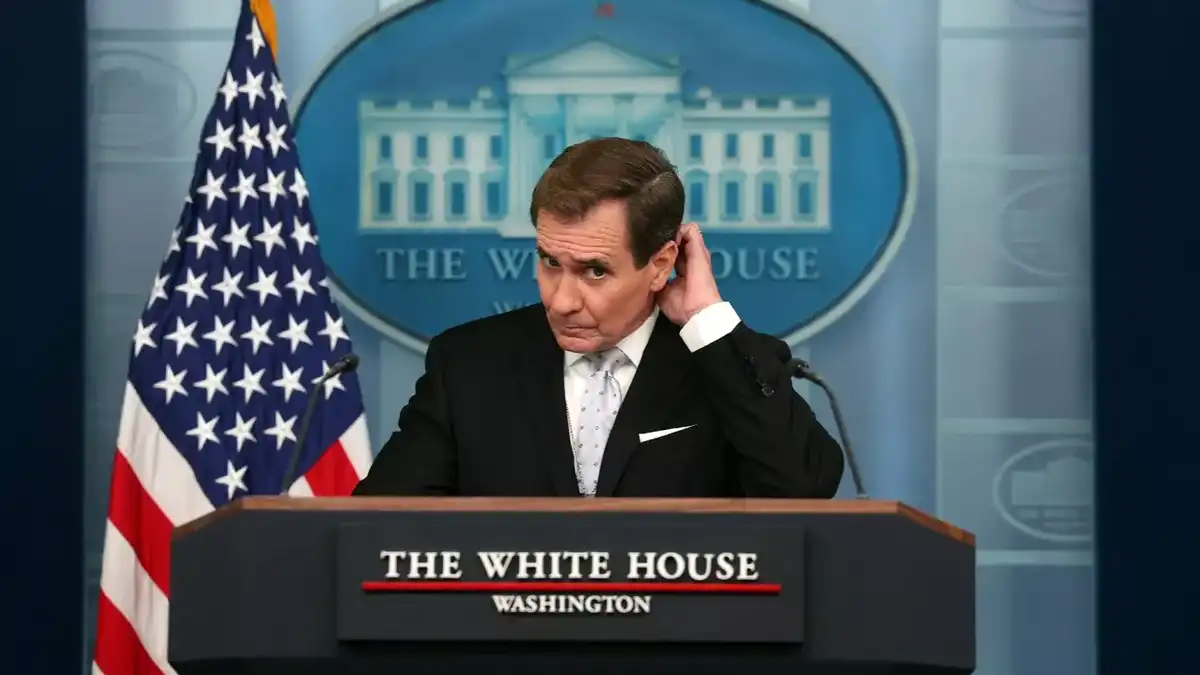
Yesterday, Friday, the White House expressed its hope for progress in talks to release detainees, and White House National Security Council spokesman John Kirby said that President Biden discussed with the Emir of Qatar, Sheikh Tamim bin Hamad Al Thani, and Egyptian President Abdel Fattah Al-Sisi, the latest developments in Israel and Gaza. Including ongoing efforts to release detainees in the Strip.


Leaks and conditions

These movements coincide with leaks indicating the possibility of reaching an agreement between Hamas and Israel. Al Jazeera's correspondent stated that the two ministers in the Israeli War Council, Benny Gantz and Gadi Eisenkot, confirmed that the return of detainees in the Gaza Strip is a top priority, during a meeting with the families of the prisoners.


The Israeli newspaper Haaretz quoted an informed source as saying that Hamas and Israel had reached understandings on most of the terms of the prisoner exchange deal agreement, and the outstanding issue is whether or not there will be a ceasefire at the end of the truce, as it will last for 35 days and will include the release of all Israeli prisoners.


Israeli Channel 12 said that the Hamas movement set conditions before agreeing to a new prisoner exchange deal, and explained that the conditions include:


- 100 Palestinian prisoners for every Israeli prisoner.

- Complete withdrawal of the Israeli army from the Gaza Strip.

- A truce between 10 and 14 days before releasing any Israeli prisoner.

- A two-month cooling-off period between each stage of the deal.


On the seventh of last October, the Palestinian resistance launched an attack on Israeli military points and settlements around the Gaza Strip, during which about 1,200 Israelis were killed, about 5,431 were wounded, and at least 239 were captured, of whom Israel recovered about 105 in an exchange deal and a temporary truce with the Hamas movement that lasted. 7 days and ended in early December 2023.


Since that day, the Israeli occupation army has been waging a devastating war on the Gaza Strip, leaving more than 26,000 dead, most of them women and children, according to the Ministry of Health in the Strip, and causing massive destruction and an unprecedented humanitarian disaster, according to the United Nations.

ARAB AND WORLD

Sat 27 Jan 2024 7:52 pm - Jerusalem Time

Haaretz: ICJ ruling will create a major headache for Netanyahu with his right-wing ministers

The Israeli newspaper "Haaretz" published a report stating that Israeli Prime Minister Benjamin Netanyahu should be concerned about the ruling issued by the International Court of Justice.


The report said that yesterday, Friday, the court fired a warning shot at Israel regarding the genocide issue, and expected that the court’s orders would create a major headache for Netanyahu with his far-right ministers, who strongly oppose any steps to reduce the severity of the war.


It explained that the court's ruling indicates that it believes that Israel is on the verge of violating the United Nations Genocide Convention, which it signed.


Politicians' statements

The report indicated that it was expected that the International Court would use the inflammatory statements of Israeli politicians. Such as: Defense Minister Yoav Gallant and President Isaac Herzog to make its case that Israel must take action to prevent what would amount to genocide.


It said that temporary orders, also known as emergency measures, are essentially a temporary judicial order aimed at changing behavior, and requiring the defendant state to take concrete, measurable steps to prevent the creation of conditions that might lead to genocide, even if they are not proven. “Intent” – the most important element – or even before embarking on a discussion of genocide.


The report went on to say that, unlike “intent,” which is difficult to determine, issuing interim orders is much easier; Because it requires a relatively low threshold, all South Africa had to do was prove that the conditions for genocide existed through Israeli statements and threats, and by virtue of the scope and size of the military operation, given the density of the population in Gaza.


Just a confession

Haaretz confirmed that the mere fact that Israel recognizes the jurisdiction of the World Court means that it actually agrees to abide by its temporary orders, and the President of the Court also confirmed the binding nature of these orders.


If Israel does not comply with the steps issued, the court may refer the case to the UN Security Council, where Israel expects an American veto, unless the court’s decision is consistent with declared American policy. Friday's ruling appears to make the possibility of a US veto less likely.


Haaretz added that the mere mention of Israel, even in relation to the mere “accusation” of genocide, is a farce, and a very bad thing for Israel.


ARAB AND WORLD

Sat 27 Jan 2024 7:12 pm - Jerusalem Time

The United States is working on a post-war plan in Gaza

A US State Department official said on Friday that the United States hopes that a new agreement between Israel and Hamas to release hostages held by the movement will create space for talks to achieve a more permanent regional peace agreement, including an independent Palestinian state, presenting a long-term vision while its negotiators make shuttle tours in the region.


The official said that while no agreement is imminent, there are "many promising signs" that it is close.


CIA Director William Burns, who helped reach a previous agreement to release Israeli hostages in the Gaza Strip, is scheduled to join new talks on the hostage deal in the coming days.


This follows efforts by White House Middle East Coordinator Brett McGurk to release nearly all of the remaining hostages held by Hamas in exchange for a ceasefire that could last for at least two months.


Secretary of State Antony Blinken recently spoke with McGurk and Burns about the talks, said the senior State Department official, who requested anonymity while discussing private talks.


The ideal outcome would be a ceasefire to open the way for talks on the issues raised by Blinken during his recent trip to the Middle East, which include normalization talks between Israel and other countries in the region, as well as a multinational plan to settle the conflict, and the reconstruction of Gaza after the end of the Israeli war on Gaza.


Negotiators between Hamas and Israel have put forward a detailed proposal to both sides for a permanent ceasefire, (according to two people familiar with the talks), although there are many obstacles. The proposal was sent to Hamas and Israel via Qatar, which mediates between the two sides with the support of the United States.


It is noteworthy that the White House said on Friday that President Joe Biden spoke with the Emir of Qatar, Sheikh Tamim bin Hamad Al Thani, regarding efforts to release an estimated 100 hostages still being held by Hamas, and he also spoke with Egyptian President Abdel Fattah El-Sisi.


US officials refused to provide general details about the talks. National Security Council spokesman John Kirby said Friday that McGurk was returning from the region after a "good set of discussions" with his regional counterparts.


“We continue to do everything we can to facilitate another hostage transaction,” Kirby said. "We should not expect any imminent developments."


Underlying the talks is a growing sense of concern within the administration about Israeli Prime Minister Benjamin Netanyahu, who continues to reject the insistence of the United States and its allies that the Palestinians obtain their own state. Netanyahu also angered Qatar after Israeli television broadcast an audio that it said said Qatar's role in the hostage talks was problematic because of its ties with Hamas.


American officials are pushing for the Palestinian Authority, which exercises limited self-rule in parts of the occupied West Bank (and also ruled Gaza until Hamas expelled it in 2007), to play a major role in governing Gaza after the war, along with the idea of forming an international force to help in the security administration in the enclave for a temporary period.


However, Israeli Prime Minister Benjamin Netanyahu rejected the idea of the Palestinian Authority sharing the governance of Gaza after the war, ruled out accepting an international peacekeeping force in the Strip, and insisted that only Israeli forces could guarantee his country's security.


In its weekly magazine on Saturday, the Financial Times quoted Palestinian Prime Minister Muhammad Shtayyeh as saying that the Palestinian Authority is working with American officials on a plan to manage Gaza once the war between Israel and Hamas ends.


Shtayyeh said that he does not believe that Israel is capable of destroying Hamas and that his preferred solution is for Hamas to become a junior partner under the umbrella of the Palestine Liberation Organization and help build an independent Palestinian state in the West Bank, Gaza and East Jerusalem.


“If [Hamas] is ready to reach an agreement and accept the political program of the Palestine Liberation Organization, there will be room for talk,” Shtayyeh told the newspaper. Shtayyeh also said in an interview with Bloomberg: “The Palestinians should not be divided.”


“We need to put a mechanism in place, something we are working on with the international community. There will be huge needs in terms of relief and reconstruction to heal the wounds.”

PALESTINE

Sat 27 Jan 2024 6:37 pm - Jerusalem Time

West Bank: Israeli settlers steal land and put mobile homes on it northwest of Salfit

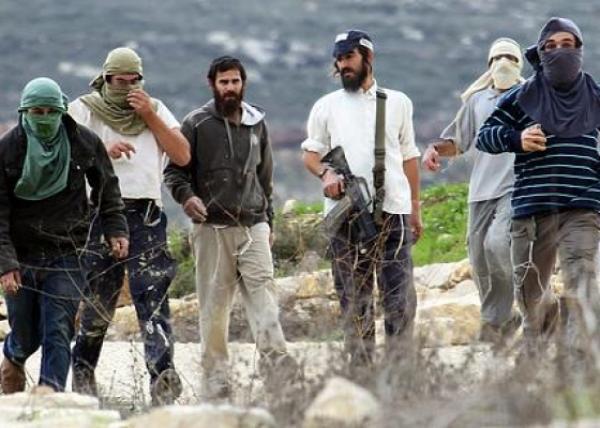
Today, Saturday, Israeli settlers placed a number of mobile homes (caravans) on citizens’ lands in the town of Derastiya, northwest of Salfit, with the aim of expanding the settlement outpost in the Al-Qaada area.


According to local sources, settlers added mobile homes (caravans) in the targeted Al-Qaada area, west of the town. This is within the framework of expanding the settlement outpost, after seizing the land, noting that the area is constantly subjected to attacks by the occupation forces and settlers.


It added that the Israeli bulldozers are continuing their demolition work to expand the outpost.


The sources added that the settlers expelled the citizens from the area, and fired live bullets at them, in order to prevent them from reaching their lands and preventing them from returning to them.

OPINIONS

Sat 27 Jan 2024 6:08 pm - Jerusalem Time

GAZA WAR: Reading the ICJ Order Regarding ‘Genocide’

IDN- In Depth News

IDN- In Depth News

Opinion Writer

By A.L.A. Azeez

With regard to the Order delivered by the International Court of Justice indicating Provisional Measures against Israel in the case brought by South Africa under the provisions of the UN Genocide Convention, questions galore on different aspects addressed. A particular question pertains to why the ICJ has not indicated a specific provisional measure ordering Israel to “Cease-Fire”.


It is important to refer to Article 51 of the UN Charter for guidance in this context.


Article 51 states:

“Nothing in the present Charter shall impair the inherent right of individual or collective self-defense if an armed attack occurs against a Member of the United Nations until the Security Council has taken measures necessary to maintain international peace and security.”

This makes it clear that every UN member state has an inherent right to self-defense, which cannot be ‘restricted’ under International Law except as may be decided by the Security Council in terms of the above-cited Charter provisions.

There is, of course, an array of International Humanitarian Law instruments which regulate the conduct of a war. Nevertheless, these instruments do not  provide for “ceasefire” directly in relation to any war.  It is because their provisions become applicable only when a war has begun and is active. Accordingly there is no clear humanitarian law obligation upon a party to a war to ‘cease fire’ during a war situation. Any “ceasefire” observed by a party to a war is considered as part of a military practice, not as a matter of legal obligation.

Violations of humanitarian law committed by a party during the conduct of an armed conflict, however, is quite a different matter, which should be dealt with according to the International Humanitarian Law, and in the case of parties to the Statute of the International Criminal Court (Rome Statute), according to the provisions of the Rome Statute.

It may be noted that the case before the International Court of Justice is not about violations of the International Humanitarian Law per se, even as it cites such violations in its support. It is specifically about the violation of the provisions of the Genocide Convention to which both Israel and South Africa are parties.

In exercising its ‘Provisional Measures’ power, the ICJ has decided not to indicate any measure which could perceivably violate the right of a state provided for in the UN Charter (Article 51). Israel’s right to self-defense is therefore not ‘impaired’ by this decision.

What is deducible from all this?

The ICJ appears to have made it clear that  theoretically (& legally) speaking you have your right to self-defense, but it cannot be exercised in such a way that violates Article 2 of the UN Genocide Convention, or its other provisions which specify what and what  would amount to “genocide”.

Maybe the ICJ Order in this instance is a middle ground reached within its ranks where different opinions may have existed on the whole gamut of issues brought before it. It is perhaps the reason that the Order has granted most provisional measures sought by South Africa except ‘immediate ceasefire’, and has gone on to add one more to the list, ordering Hamas to release all hostages in its captivity (Israel, of course, had demanded, while making its defense at the ICJ, that it is Hamas which should be made responsible for acts of genocide against Israeli people and that Hamas should release all hostages in its captivity forthwith).

In short, by its order on provisional measures,  the Court appears to have accepted the basic premise of the South African case, that there is a probable risk of acts of genocide being committed by Israel, although the actual determination on merit as to whether acts of genocide were indeed committed would be made in its final judgement, which is several years away.

It is interesting that, in order to arrive at the opinion that there is a probable risk of the commission of acts of genocide, the Court has extensively quoted the UN Secretary General and heads of other international organizations and agencies. This includes in particular the letters addressed by the Secretary General to the UN Security Council drawing its urgent attention to the situation in Gaza and the worsening humanitarian conditions there, especially highlighting the gradual collapse of the healthcare system (hospitals) in Gaza.

The moral implications of the ICJ Order, in my considered view, are especially on the Security Council. It implies that the Security Council was warned by the Secretary General of the emerging humanitarian catastrophe in Gaza from time to time. A possible reading of this observation is that the Security Council had all the information required for it to act in prevention of a humanitarian disaster (read: in prevention of alleged acts of genocide) from occurring, in exercising its power to maintain “international peace and security” but it has not done so decisively. But the reality is that the Security Council has not “acted” decisively due to the US veto.

It may be unrealistic to expect, but it needs to be stressed, nevertheless, that the onus of demonstrating to the world that it has not failed miserably in its duty now falls squarely back on the Security Council. With the ICJ Order staring in its face, whether the Security Council would still choose to go in the same direction it used to in relation to the violation of the rights of Palestinians under occupation, remains open.

 [IDN-InDepthNews]


ARAB AND WORLD

Sat 27 Jan 2024 6:03 pm - Jerusalem Time

Independent: The International Justice decision represents a disaster for Israel

Whatever one's opinion on the merits of the genocide charge, the interim ruling issued by the International Court of Justice yesterday against Israel constitutes, also from an objective standpoint, a "disaster" for Tel Aviv.


In this context, today's Independent editorial commented that from now on, every time an Israeli minister, spokesperson or diplomat appears in public, or in a private meeting with their counterparts, they will have to confront the blatant charge of genocide.


In addition, the charge was not made casually by an “extremist” Islamic faction or an anti-Semitic Western politician, but by the highest court in the international community, and was presented in sober and considered terms citing relevant evidence that cannot be easily dismissed.


The British newspaper believes that the words of the President of the World Court, Judge Joan Donghue, will weaken the desire of Israel's allies to support it and alienate those countries in the Middle East, such as Saudi Arabia, the Emirates, Jordan and Egypt, with which Israel is trying to establish and maintain normal relations.


Israel has lost more of its moral cause in a war it considers existential. America in particular will be dismayed and disappointed, as is likely to be expected from the court's ruling.

Compliance with international law

If Israel wants to live in peace and stability - according to the Independent's opinion - it must maintain the support of its near and distant allies, and it must remain within the framework of international law. This is why what the ICJ says is important.


The newspaper added that although the ruling was only temporary, Israel should not have found itself in potential violation of the 1946 United Nations Convention on the Prevention and Punishment of the Crime of Genocide, and now finds itself in contempt of the most sacred international agreements.


The Independent continued that if Benjamin Netanyahu's government had responded to the warnings of its friends and allies weeks ago regarding stopping the escalation of the war on Gaza and the subsequent killing of more than 25,000, the wounding of 63,000, and the displacement of 1.7 million people, South Africa's case would have been much weaker, and the Court of Justice might have rejected this. Accusations.


It is not wise now for Israel to attack the UN court and challenge the “temporary measures” it demanded, because its rulings are legally binding, and deliberately ignoring them will make Israel’s position worse, according to the newspaper.


Israel should therefore refrain from disparaging the Court of Justice or South Africa, and must comply with the Court's instructions on the protection of civilians and the prevention of genocide. This effectively means ending the war, allowing a humanitarian ceasefire for a longer period, and not calling the Palestinians with inhumane names such as “human animals.”


The Independent concluded its editorial by saying that there is a need for a radical change in Israel's strategy, and Netanyahu must not be stubborn about complying with international law.


Source: Independent +Aljazeera

ARAB AND WORLD

Sat 27 Jan 2024 5:58 pm - Jerusalem Time

Two American writers: “Israeli exceptionalism” in American politics must end

An article on the American "Hale" website stated that the International Court of Justice's ruling that it was "reasonable" that Israel had engaged in genocide in Gaza confirms the need to review the current American policy regarding handing over to Israel American weapons used in its attacks on Gaza.


The site's writers, Laura Lumby and William de Hartung, said that the court's ruling should mean abandoning giving Israel special treatment when it comes to enforcing current US human rights laws regarding arms transfers.


They explained that “Israeli exceptionalism” in US military aid has always been an open secret, as for decades violations of human rights standards and American laws by Israel were not taken into account, partly due to the feeling that the allocation of annual “Camp David” aid to Israel -Now $3.3 billion annually- cannot be canceled under any circumstances.


They noted that this may be about to change in light of the International Court of Justice's decision.


like never before

They stated that something unprecedented happened last week, which is that the US Senate requested further scrutiny by the State Department regarding the military aid paid by American taxpayers to Israel.


The writers called for the need for Israel to adhere to the same standards as other countries receiving American weapons, saying that the US Departments of State and Defense have repeatedly violated laws passed by Congress in an attempt to ensure that American taxpayers are not involved in serious human rights violations by recipient countries.


A prime example, say William and Laura, is that Israel's de facto exemption from the Leahy Laws, named after their author, former Senator Patrick Leahy, requires the Departments of State and Defense to halt U.S. transfers of military aid to "any unit of the security forces of a country foreigner if the Secretary of State has reliable information that this unit has committed a gross violation of human rights.


Despite the crimes

The article goes on to state that despite numerous “alleged” murders in the West Bank by Israeli security forces, including the killing of a Palestinian-American journalist, the US government has never found a single flagrant violation of the operation of the law.


The article drew attention to the fact that the British newspaper "The Guardian" explained that the US State Department had established a special operation for Israel to circumvent the "Leahy Law", unlike other countries, where a credible allegation of a violation by a unit of the army, police, or other national security forces is sufficient to prevent That unit will provide American assistance until the matter is decided.


He said that the text on this exceptional situation was recorded in a 2021 agreement signed by a senior official in the US State Department and the Israeli ambassador to the United States. By referring to Israel's "strong, independent, and effective legal system, including its military justice system," the agreement appears to grant Israel an exemption when it comes to applying the Leahy Law.


where is the problem?

The leading Israeli human rights organization "B'Tselem" confirmed that the problem is that Israel uses the military law enforcement system as a whitewashing mechanism aimed at preventing any criticism of its policies and the actions of its army in the West Bank, adding that the percentage of soldiers' convictions is close to zero, even for the most serious violations. .


The article demanded that the US Senate openly discuss Israel's use of US weapons in Gaza, and the possibility of enforcing relevant US laws, adding that failure to do so threatens to make both Congress and the State Department irrelevant to foreign policy, even as doing so erodes... American democracy.


Source: Hill + Aljazeera

ARAB AND WORLD

Sat 27 Jan 2024 5:46 pm - Jerusalem Time

Wall Street Journal: Cairo is seriously considering withdrawing its ambassador from “Israel”

The Wall Street Journal quoted Egyptian officials as saying that Cairo had warned Tel Aviv against any attacks on the Philadelphia axis and any waves of displacement of Palestinians.


The American newspaper pointed out on Saturday that Egyptian leaders are always keen to show their full support for the Palestinians and for the establishment of an independent Palestinian state, in addition to Cairo’s constant warning against displacing the Palestinians from their land.


The newspaper reported that Cairo seriously considered withdrawing its ambassador from Tel Aviv, and that Egyptian President Abdel Fattah al-Sisi rejected several attempts by Netanyahu to talk to him.


It also stated that Egyptian-Israeli relations are at their lowest levels in two decades.


The newspaper said that the Gaza war imposes a reckoning on the sensitive Egyptian-Israeli relations, explaining that Egypt was the first Arab country to recognize Israel in 1979.


Relations between the two parties were rarely cordial. Civilians from both countries rarely meet far from the Red Sea resorts.

ARAB AND WORLD

Sat 27 Jan 2024 5:37 pm - Jerusalem Time

New York Times: How are leaders and diplomats trying to end the Gaza war?

The American New York Times newspaper reported today, Saturday, that senior American, Israeli, and Arab officials are seeking to formulate three parallel but interconnected paths that would end the war in Gaza, put the final touches on its status in the post-war phase, and, most ambitiously, determine Commitments to establish a Palestinian state.


The newspaper said, senior officials from at least 10 different administrations are trying to formulate a set of interesting deals to end the Gaza war and answer the contentious question of how the region will be governed after the fighting stops.


It added: “The narrowest scope of the main discussions focuses on reaching a ceasefire between Israel and Hamas. This will include the exchange of more than 100 Israeli hostages held by Hamas in exchange for a ceasefire and thousands of Palestinians detained in Israeli prisons.”


The second track focuses on restructuring the Palestinian Authority, the semi-independent body that administers parts of the Israeli-occupied West Bank. American and Arab officials are discussing reforming the PA leadership and assuming control of Gaza after the end of the war and handing over power from Israel and Hamas.


In the third track, American and Saudi officials are pressuring Israel to agree to the conditions for establishing a Palestinian state in exchange for Saudi Arabia establishing official relations with Israel for the first time ever.


It noted that the demands and outcomes discussed in all three processes are linked to each other, and the talks are often viewed as long-term snapshots. Israeli officials said the war began with a Hamas attack on October 7 that killed about 1,200 people. The Israeli counterattack led to the deaths of more than 26,000 Palestinians in Gaza, according to officials in the Ministry of Health there. President Biden has given Israel full support for the war.


It continued: “Significant obstacles must be overcome in each set of negotiations. Most important, the Israeli government says it will not allow full Palestinian sovereignty, which raises doubts about whether progress can be made on key fronts.”


The Israeli military campaign has not succeeded in destroying Hamas, so it is unclear how Hamas can be persuaded to step down while it still controls part of Gaza.


And the United States is the power that is trying to tie it all together. A senior State Department official said Brett McGurk, the White House's top official for the Middle East, was in the region last week, and Secretary of State Antony Blinken spoke with him several times by phone during a trip in Africa. The Biden administration wants to ensure that a senior US official speaks face-to-face at all times with Israeli and Arab leaders.


Officials are discussing many ideas, most of which are temporary, long-term, or strongly opposed by some parties. Several controversial proposals are:


1. Transferring power within the Palestinian Authority from the current president, Mahmoud Abbas, to a new prime minister, while allowing Mr. Abbas to retain a ceremonial role.

2. Sending an Arab peacekeeping force to Gaza to support the new Palestinian administration there.

3. Pass a resolution in the United Nations Security Council, with the support of the United States, that would recognize the Palestinians’ right to establish their own state.


Below is a roadmap for the three tracks, based on interviews with more than a dozen diplomats and other officials involved in the talks, all of whom spoke anonymously in order to discuss them more freely.

1. Hostages and ceasefire

The Americans believe that ending the war is the first thing the parties must achieve. These talks coincide with negotiations for the release of more than 100 hostages who were taken during the attack that occurred on October 7 and held by Hamas and its allies. Hamas has said it will not release the hostages until Israel agrees to a permanent ceasefire, a position that conflicts with Israel's stated goal of fighting until Hamas is pushed out of Gaza.


Officials from the United States, Israel, Egypt and Qatar are discussing an agreement that would halt the fighting for up to two months. In November, the parties agreed to a short truce that led to Hamas releasing more than 100 hostages.


In one proposal, the hostages would be released in stages over a pause of up to 60 days in exchange for the release of Palestinians detained by Israel. Some officials suggested releasing Israeli civilians first, in exchange for the release of Palestinian women and minors held by Israel. The captured Israeli soldiers will then be exchanged for Palestinian activist leaders serving long-term sentences.


Diplomats from various parties say they hope that more detailed discussions can be held during the truce period about a permanent truce that could include the withdrawal of most or all Israeli forces, the departure of Hamas leaders from the Strip and the transfer of power to the Palestinian Authority. . Currently, both Israel and Hamas have rejected some of these conditions.


To try to move these negotiations forward, William Burns, Director of the CIA, intends to meet in Europe in the coming days with his Israeli, Egyptian and Qatari counterparts.


Some observers hope that the international court's call on Friday for Israel to comply with the Genocide Convention will give momentum and political cover to Israeli officials pushing internally to end the war.


2. Reform of the Palestinian Authority

The Palestinian Authority briefly took control of Gaza after Israeli forces left in 2005, but Hamas forced it from power two years later. Now, some want power to return to Gaza and play a role in post-war governance. To make this idea more attractive to Israel, which opposes it, there is a push by the United States, Jordan, Egypt, Saudi Arabia and other Arab countries to reform the authority and change its leadership.


Under its current president, Mahmoud Abbas (88 years old), the authority is widely viewed as corrupt and authoritarian. The mediators are encouraging him to take a more ceremonial role and cede executive power to a new prime minister who can oversee the reconstruction of Gaza and reduce corruption. American officials say the goal is to make the administrative authority more acceptable to a future Palestinian state. Israeli officials also stress that the authority needs to change its education system, which they say does not promote peace, and end welfare payments to those convicted of violence against Israelis.


Some of Abbas's critics want him to be replaced by Salam Fayyad, the Princeton University professor who is credited with modernizing the authority during his prime ministership a decade ago, or Nasser al-Qidwa, the former Palestinian envoy to the United Nations who broke with Abbas three years ago. But diplomats say Abbas is pushing for a candidate with greater influence over him, such as Mohamed Mustafa, his longtime economic adviser.


Some officials have suggested forming an Arab peacekeeping force to help the new Palestinian leader maintain order in Gaza after the war. Israeli officials reject this idea, but they have proposed the idea of establishing a multinational force under Israel's supervision in the Strip. American diplomats told the Israelis this month that Arab leaders opposed their idea.


3. Saudi normalization with Israel

In the most ambitious set of talks, the Biden administration has revived discussions with Saudi Arabia to get the Saudis to agree to establish formal diplomatic relations with Israel.


The tripartite agreement was under discussion before the October 7 attacks, and Saudi Crown Prince Mohammed bin Salman appeared ready for it because the Biden administration was offering a US-Saudi defense treaty, cooperation on a civilian nuclear program and more arms sales. US officials say that under this arrangement, the Saudis would have accepted relatively minor Israeli concessions on the Palestinian issue in exchange for Saudi recognition.


This recognition will be an important political victory for American and Israeli leaders because of Saudi Arabia’s status as a leading Arab and Islamic country.


But since the war began, Saudi Arabia and the United States have raised the price for Israel, and are now insisting that Israel commit to a process that leads to the establishment of a Palestinian state and includes Palestinian rule in Gaza. US officials also told the Israelis that Saudi Arabia and other Arab countries would not agree to provide money for Gaza's reconstruction unless Israeli leaders committed to a path leading to the establishment of a Palestinian state.


These new terms were expressed publicly for the first time by Mr. Blinken after he met with Prince Mohammed at a desert camp in Saudi Arabia this month. He handed it over to Israeli Prime Minister Benjamin Netanyahu after he traveled from there to Tel Aviv. He repeated it again in a public talk in Davos, Switzerland, as did Jake Sullivan, the White House national security adviser.


Mr. Netanyahu has publicly rejected this proposal, and recently pledged to maintain Israeli military control over the entire West Bank and Gaza Strip. Many Israelis support this, although some American officials question whether this is an opening negotiating position on Mr. Netanyahu's part.

In order to reassure the Saudis and Palestinians, some officials proposed a United Nations Security Council resolution, with the support of the United States, that would enshrine the Palestinians’ right to sovereignty. But the idea has not yet gained momentum.


There is also the question of whether the Biden administration is able to deliver the Senate-approved mutual defense treaty to Prince Mohammed. Some Democratic senators have already raised concerns about this. It is expected that the chances of Republican senators opposing this decision will increase as the US presidential elections approach in November.

PALESTINE

Sat 27 Jan 2024 4:32 pm - Jerusalem Time

West Bank: Israel has arrested 6,305 Palestinians since October 7

The number of Palestinian detainees in the West Bank has risen to 6,305 since last October 7, after the Israeli army arrested 20 citizens on Friday and Saturday.


The Prisoners and Ex-Prisoners' Affairs Authority and the Palestinian Prisoners' Club said in a joint statement that the total number of arrests after October 7 rose "to about 6,305, including those who were arrested from homes, through military checkpoints, those who were forced to surrender themselves under pressure, and those who were held hostage."


The authority and the club added, “The Israeli occupation forces arrested at least (20) citizens from the West Bank from yesterday morning until Saturday morning, including former prisoners.”


The arrests were distributed among the governorates of Jenin, Nablus (north), Ramallah, Jerusalem, Jericho (centre), and Hebron (south).


Since the start of its devastating war on the Gaza Strip on October 7, 2023, the Israeli army has intensified its operations in the West Bank and expanded its incursions and raids into Palestinian cities, villages and camps.

ARAB AND WORLD

Sat 27 Jan 2024 4:00 pm - Jerusalem Time

Four Western countries suspend their funding to UNRWA, and Hamas condemns

Today, Saturday, Italy, Canada and Australia announced the suspension of their funding for the United Nations Relief and Works Agency for Palestine Refugees (UNRWA) after the United States took the same step, following Israeli allegations of the participation of some of the agency’s employees in the Al-Aqsa Flood operation carried out by the Palestinian resistance.


While the Islamic Resistance Movement (Hamas) condemned what it described as "the Israeli campaign of incitement against international institutions."


Italian Foreign Minister Antonio Tayani wrote on the “X” platform that the Italian government suspended funding for UNRWA after what he described as a “brutal attack” on Israel last October 7, indicating that some of Rome’s allies had already taken the same decision.


In turn, Australian Foreign Minister Penny Wong expressed "deep concern" about the accusations leveled against UNRWA, and wrote on the X platform, "We are communicating with our partners, and we will temporarily suspend the payment of funds."


It added, "We applaud UNRWA's immediate response, including terminating contracts (with employees), as well as announcing an investigation into the accusations against the organization."


For his part, Canadian Minister of International Development Ahmed Hussein said yesterday, Friday, that “Canada has temporarily suspended any additional funding for UNRWA while it conducts an in-depth investigation into these accusations.”


“Canada takes these accusations very seriously, and is closely engaging with UNRWA and other donors on this issue,” he wrote on the X platform.


Yesterday, Friday, the United States announced a “temporary suspension” of all future funding to this UN agency, which is at the heart of distributing aid to civilians in Gaza amid the raging war waged by the Israeli army on the Strip.


Hamas condemns

On the other hand, the Hamas movement said - in a statement - that it strongly condemns the Israeli campaign of incitement against UN institutions, which contributes to “relief for our people who are subjected to genocide,” as it put it.


It added that the latest incitement campaign was “the hollow accusation against the World Health Organization, of what they called collusion with the Hamas movement, by repeating the false claim about the movement’s use of hospitals in military operations.”


It added that the incitement against UNRWA comes "with the aim of cutting off its funding and depriving the Palestinian people of their right to the services of these international agencies."


Yesterday, the World Health Organization denied the accusations leveled against it by Israel of “collusion” with Hamas during the aggression on the Gaza Strip.


In the same context, Israeli Foreign Minister Yisrael Katz said - today - that his country will seek to prevent UNRWA from working in the Gaza Strip after the end of the war, after Tel Aviv accused employees of the UN agency of participating in the attack on October 7, 2023.


Katz wrote on the X platform that the Foreign Ministry aims to ensure that “UNRWA is not part of the stage” that follows the war, adding that he will seek to mobilize support from the United States, the European Union, and other major donors.


PALESTINE

Sat 27 Jan 2024 3:02 pm - Jerusalem Time

Gaza: Rain exacerbates the suffering of displaced from the war and floods their tents

In light of the Israeli aggression on the Gaza Strip, which continues for the 113th day, heavy rains have increased the suffering of the Palestinian residents displaced from their homes, who are residing in tents they set up in different areas.


Shelter centers and areas where tents were set up in several governorates in Gaza witnessed a rise in rain levels, causing the tents to be submerged in water, and some of them to be blown away and torn.


In a camp in the city of Rafah, south of the Gaza Strip, families are making attempts to remove the water that has largely infiltrated their tents, using a small bucket, but to no avail.


Some pictures and videos spread on social media showing tents flying and drowning as a result of water leakage, which exacerbated the suffering faced by the displaced in their camps.


Akram Haboush (47 years old), who was displaced from the Al-Rimal neighborhood in Gaza City and set up his tent in the city of Rafah, south of the Gaza Strip, told Xinhua News Agency, “The heavy rains flooded my tent and the tents of the displaced with water, causing us to drown and to drown our bedding and clothes.”


Haboush, who supports two children, and whose son was martyred in the war, added, "There are many tents that are not fit to shelter the displaced, who were exposed to rainwater accumulations throughout the last night, without any shelter to provide them with protection from the cold and rain."


He pointed out, "The rains are continuing, and we are making serious efforts to protect ourselves from rainwater by placing some additional nylon bags on the tent, but to no avail, as the water is leaking greatly."


He added: "There is no safe place, no shelter that we can resort to for protection from the water. We are in a tragic situation in every sense of the word. We hope that the war will end soon, and we can return to our homes."


For his part, the spokesman for the Civil Defense Service in Gaza, Mahmoud Basal, said in a statement, “The heavy rains in the Gaza Strip caused the drowning of large numbers of displaced people’s tents in various areas in the Strip.”


He added: "We warn of sewage leaking into citizens' homes and shelter centers due to weather conditions, heavy rains, and the lack of hours for pumping sewage due to occupation practices."


Basal warned of major floods in many low-lying areas and tents, after receiving more than a thousand drowning signals in various governorates.


The Civil Defense spokesman called for "the need to provide more fuel to operate the treatment and sewage pumps."


In the governorates of the Gaza Strip, tens of thousands of Palestinians displaced from their areas of residence reside in tents made of nylon and mattresses.


The city of Rafah in the south of the Gaza Strip, which the Israeli army called on the residents of the Strip to go to, is witnessing the establishment of the largest camp for the displaced near the border with Egypt.


The United Nations said that 100,000 Palestinians were forced by the Israeli bombing of the central regions and Khan Yunis to head to the Rafah area, near the Egyptian-Palestinian border.


Today (Saturday), the Ministry of Health in Gaza announced that the death toll of Palestinians in Gaza had risen to 26,257.


The Health Ministry said in a statement, “The Israeli occupation committed 18 massacres against families in the Gaza Strip, claiming 174 dead and 310 wounded during the past 24 hours.”


It pointed out that "the toll of the Israeli aggression has risen to 26,257 dead and 64,797 wounded since the seventh of last October."


OPINIONS

Sat 27 Jan 2024 11:44 am - Jerusalem Time

Justice will take its course, however!!!

op-ed Al Quds dot com

op-ed Al Quds dot com

Opinion Writer

Yesterday afternoon, Friday, the International Court of Justice in The Hague issued its decisions and opinions regarding a lawsuit filed by South Africa against Israel for committing a genocidal war against the Palestinians in the Gaza Strip. The court acknowledged that it has the authority to rule on emergency measures requested by South Africa in the complaint submitted against Israel’s crimes. Noting that it will not reject the lawsuit as Israel requested, the court may take a historic decision condemning Israel for committing genocidal massacres, but that will take a long time that may extend to months or years.
Yesterday, the court issued a preliminary ruling and emergency measures against Israel, accusing it of violating the United Nations Convention on Genocide. The court decided:
- Take all measures to prevent any acts that could be considered genocide
-Ensuring that the Israeli army does not carry out any acts of genocide
-Prevent and punish any public statements or comments that could incite the commission of genocide in Gaza
- Take all measures to ensure the arrival of humanitarian aid
- Not getting rid of any evidence that could be used in the case against Israel.
- Submit a report to the court within a month on the extent of its implementation of these measures and provisions.
These decisions, as described by Sami Abu Zuhri, head of the Hamas political department, in press statements to Reuters, “express an important development that contributes to isolating Israel and exposing its crimes in Gaza, with a call to oblige it to implement court decisions.” Or what Foreign Minister Riyad al-Maliki said that Palestine welcomes the temporary measures. Which the court ordered, and that the court’s judges evaluated the facts and ruled in favor of humanity and international law, and that no state is above the law.
Among the measures requested by South Africa is an immediate halt to the Israeli military operation and its aggression, which destroyed large areas of the Gaza Strip, causing the death of more than 26,000 citizens, wounding nearly 70,000, and displacing hundreds of thousands from their homes amidst stories of suffering, starvation, and everything related to the humanitarian catastrophe that the Gaza Strip is experiencing.
It is true that the court recognized the right of the Palestinian people to international protection, that the Palestinians constitute a national ethnic group protected under the Convention on the Prevention of the Crime of Genocide, and that more than 93% of the population of the Gaza Strip are unable to access food, expressing its concern about the fall of more victims in Gaza, criticizing the Israeli statements like the Israeli Army Minister and the Israeli President called for cutting off water and electricity, denying medicine and food to the citizens of Gaza, and considering them as “human animals,” and a number of other sharp criticisms of the Israeli violations. 

However, the court’s failure to indicate the necessity of allowing the citizens of Gaza to return to their homes, in addition to not demanding that Israel stop its immediate aggression, detracts from it the value of practical and actual decisions that will expose Gaza to more obstacles and suffering and will keep it under bombardment and destruction. This is what was indicated by the Israeli Prime Minister, who defied the court’s decision, saying: Israel will continue the war until the end.
Despite all of the above, it can be said that the resolutions expressed a clear condemnation of Israel and that it will not be able to escape the culture of crime on which it is based, and that justice will apply to everyone, noting that the decisive vote of 15 votes to two and 16 votes to one indicates an international consensus on Israel’s intentions towards genocide.
All greetings and appreciation to South Africa, the country to which we raise our hats in respect and gratitude for its courageous and bold step. Ultimately, we declare that our people are fighting for their human and legitimate rights, and the occupation must recognize these rights, no matter how extreme its aggression and crimes against a living people who will not die.

OPINIONS

Sat 27 Jan 2024 11:05 am - Jerusalem Time

It May be Genocide, But it Won’t Be Stopped

CHRIS HEDGES

CHRIS HEDGES

Opinion Writer

The ruling by the International Court of Justice was a legal victory for South Africa and the Palestinians, but it will not halt the slaughter.

The International Court of Justice (ICJ) refused to implement the most crucial demand made by South African jurists: “the State of Israel shall immediately suspend its military operations in and against Gaza.” But at the same time, it delivered a devastating blow to the foundational myth of Israel. Israel, which paints itself as eternally persecuted, has been credibly accused of committing genocide against Palestinians in Gaza. Palestinians are the victims, not the perpetrators, of the “crime of crimes.” A people, once in need of protection from genocide, are now potentially committing it. The court’s ruling questions the very raison d'être of the “Jewish State” and challenges the impunity Israel has enjoyed since its founding 75 years ago.  

The ICJ ordered Israel to take six provisional measures to prevent acts of genocide, measures that will be very difficult if not impossible to fulfill if Israel continues its saturation bombing of Gaza and wholesale targeting of vital infrastructure. 

The court called on Israel “to prevent and punish the direct and public incitement to commit genocide.” It demanded Israel “take immediate and effective measures to enable the provision of urgently needed basic services and humanitarian assistance.” It ordered Israel to protect Palestinian civilians. It called on Israel to protect the some 50,000 women giving birth in Gaza. It ordered Israel to take “effective measures to prevent the destruction and ensure the preservation of evidence related to allegations of acts within the scope of Article II and Article III of the Convention on the Prevention and Punishment of the Crime of Genocide against members of the Palestinian group in the Gaza Strip.” 

The court ordered Israel to “take all measures within its power” to prevent the crimes which amount to genocide such as “killing, causing serious bodily and mental harm, inflicting on the group conditions of life calculated to bring about its physical destruction in whole or in part, and imposing measures intended to prevent births within the group.”

Israel was ordered to report back in one month to explain what it had done to implement the provisional measures.

Gaza was pounded with bombs, missiles and artillery shells as the ruling was read in The Hague — at least 183 Palestinians have been killed in the last 24 hours. Since Oct. 7, more than 26,000 Palestinians have been killed. Almost 65,000 have been wounded, according to the Palestinian Ministry of Health. Thousands more are missing. The carnage continues. This is the cold reality. 

Translated into the vernacular, the court is saying Israel must feed and provide medical care for the victims, cease public statements advocating genocide, preserve evidence of genocide and stop killing Palestinian civilians. Come back and report in a month. 

It is hard to see how these provisional measures can be achieved if the carnage in Gaza continues.

“Without a ceasefire, the order doesn’t actually work,” Naledi Pandor, South Africa’s minister of international relations, stated bluntly after the ruling. 

Time is not on the side of the Palestinians. Thousands of Palestinians will die within a month. Palestinians in Gaza make up 80 percent of all the people facing famine or catastrophic hunger worldwide, according to the United Nations. The entire population of Gaza by early February is projected to lack sufficient food, with half a million people suffering from starvation, according to the Integrated Food Security Phase Classification, drawing on data from U.N. agencies and NGOs. The famine is engineered by Israel. 

At best, the court — while it will not rule for a few years on whether Israel is committing genocide — has given legal license to use the word “genocide” to describe what Israel is doing in Gaza. This is very significant, but it is not enough, given the humanitarian catastrophe in Gaza. 

Israel has dropped almost 30,000 bombs and shells on Gaza — eight times more bombs than the U.S. dropped on Iraq during six years of war. It has used hundreds of 2,000-pound bombs to obliterate densely populated areas, including refugee camps. These “bunker buster” bombs have a kill radius of a thousand feet. The Israeli aerial assault is unlike anything seen since Vietnam. Gaza, only 20 miles long and five miles wide, is rapidly becoming, by design, uninhabitable.

Israel will no doubt continue its assault arguing that it is not in violation of the court’s directives. In addition, the Biden administration will undoubtedly veto the resolution at the Security Council demanding Israel implement the provisional measures. The General Assembly, if the Security Council does not endorse the measures, can vote again calling for a ceasefire, but has no power to enforce it. 


Defense for Children International - Palestine v. Biden was filed in November by the Center for Constitutional Rights against President Joe Biden, Secretary of State Antony Blinken and Secretary of Defense Lloyd Austin. The case challenges the U.S. government’s failure to prevent complicity in Israel’s unfolding genocide of the Palestinian people. It asks the court to order the Biden administration to cease diplomatic and military support and comply with its legal obligations under international and federal law. 

The only active resistance to halt the Gaza genocide is provided by Yemen’s Red Sea blockade. Yemen, which was under siege for eight years by Saudi Arabia, the United Arab Emirates, France, Britain and the U.S., experienced over 400,000 deaths from starvation, lack of health care, infectious diseases and the deliberate bombing of schools, hospitals, infrastructure, residential areas, markets, funerals and weddings. Yemenis know too well — since at least 2017 multiple U.N. agencies have described Yemen as experiencing “the largest humanitarian crisis in the world” — what the Palestinians are enduring. 

Yemen’s resistance — when the history of this genocide is written — will set it apart from nearly every other nation. The rest of the world, including the Arab world, retreats into toothless rhetorical condemnations or actively supports Israel’s obliteration of Gaza and its 2.3 million inhabitants.

The Israeli newspaper Yedioth Ahronoth reported that the U.S. has sent 230 cargo planes and 20 ships filled with artillery shells, armored vehicles and combat equipment to Israel since the attacks of Oct. 7, in which some 1,200 Israelis were killed. U.S. weapons and military equipment are being shipped to Israel — which is running out of munitions — from the British base RAF Akrotiri in Cyprus, according to the U.K. investigative website Declassified UK. The Israeli newspaper Haaretz reported that more than 40 U.S. and 20 British transport aircraft, along with seven heavy-lift helicopters, have flown into RAF Akrotiri, a 40-minute flight from Tel Aviv. Germany reportedly plans to provide 10,000 rounds of 120mm precision ammunition to Israel. If the court rules against Israel, these countries will be recognized by the world’s most important international court as accomplices to genocide.


The ruling was dismissed by Israeli leaders.

Prime Minister Benjamin Netanyahu, seeking to paint the decision not to demand a ceasefire as a victory for Israel, said “Like every country, Israel has an inherent right to defend itself. The vile attempt to deny Israel this fundamental right is blatant discrimination against the Jewish state, and it was justly rejected. The charge of genocide leveled against Israel is not only false, it’s outrageous, and decent people everywhere should reject it.”

“The decision of the antisemitic court in The Hague proves what was already known: This court does not seek justice, but rather the persecution of Jewish people,” National Security Minister Itamar Ben-Gvir said. “They were silent during the Holocaust and today they continue the hypocrisy and take it another step further.”

The ICJ was founded in 1945 following the Nazi Holocaust. The first case it heard was submitted to the court in 1947.

“Decisions that endanger the continued existence of the State of Israel must not be listened to,” Ben-Gvir added. “We must continue defeating the enemy until complete victory.”

The court, which rejected Israel’s arguments to dismiss the case, acknowledged “that the military operation being conducted by Israel following the attack of 7 October 2023 has resulted, inter alia, in tens of thousands of deaths and injuries and the destruction of homes, schools, medical facilities and other vital infrastructure, as well as displacement on a massive scale.” 

The ruling included a statement made by the U.N. Under-Secretary-General for Humanitarian Affairs and Emergency Relief Coordinator, Martin Griffiths, who on Jan. 5, called Gaza “a place of death and despair.” The court document went on:

. . . Families are sleeping in the open as temperatures plummet. Areas where civilians were told to relocate for their safety have come under bombardment. Medical facilities are under relentless attack. The few hospitals that are partially functional are overwhelmed with trauma cases, critically short of all supplies, and inundated by desperate people seeking safety.

A public health disaster is unfolding. Infectious diseases are spreading in overcrowded shelters as sewers spill over. Some 180 Palestinian women are giving birth daily amidst this chaos. People are facing the highest levels of food insecurity ever recorded. Famine is around the corner.

For children in particular, the past 12 weeks have been traumatic: No food. No water. No school. Nothing but the terrifying sounds of war, day in and day out.

Gaza has simply become uninhabitable. Its people are witnessing daily threats to their very existence — while the world watches on.

The court acknowledged that “an unprecedented 93% of the population in Gaza is facing crisis levels of hunger, with insufficient food and high levels of malnutrition. At least 1 in 4 households are facing ‘catastrophic conditions’: experiencing an extreme lack of food and starvation and having resorted to selling off their possessions and other extreme measures to afford a simple meal. Starvation, destitution and death are evident.” 

The ruling, quoting Philippe Lazzarini, the Commissioner-General of the United Nations Relief and Works Agency for Palestine Refugees in the Near East (UNRWA), continued:

Overcrowded and unsanitary UNRWA shelters have now become ‘home’ to more than 1.4 million people,” the ruling read. “They lack everything, from food to hygiene to privacy. People live in inhumane conditions, where diseases are spreading, including among children. They live through the unlivable, with the clock ticking fast towards famine.

The plight of children in Gaza is especially heartbreaking. An entire generation of children is traumatized and will take years to heal. Thousands have been killed, maimed, and orphaned. Hundreds of thousands are deprived of education. Their future is in jeopardy, with far-reaching and long-lasting consequences.

The court also referred pointedly to comments made by multiple senior Israeli government officials advocating genocide, including the president and minister of defense. Statements made by government and other officials form a crucial element of the “intent” component when seeking to establish the crime of genocide.

It quoted Israeli Defense Minister Yoav Gallant who declared — two days after the Hamas-led attack of Oct. 7 — that he ordered a “complete siege” of Gaza City with “no electricity, no food, no fuel” being permitted. 

“I have released all restraints . . . You saw what we are fighting against. We are fighting human animals. This is the ISIS of Gaza,” Gallant told Israeli troops massing around Gaza the following day. “This is what we are fighting against…Gaza won’t return to what it was before. There will be no Hamas. We will eliminate everything. If it doesn’t take one day, it will take a week, it will take weeks or even months, we will reach all places.”

The ICJ quoted Israel’s President Isaac Herzog as saying, “It is not true this rhetoric about civilians not aware, not involved. It is absolutely not true. They could have risen up. They could have fought against that evil regime which took over Gaza in a coup d’état. But we are at war. We are at war. We are defending our homes.” Herzog continued “We are protecting our homes. That’s the truth. And when a nation protects its home, it fights. And we will fight until we’ll break their backbone.”

Today’s decision was read out by the ICJ’s current president, Judge Joan Donoghue, an American lawyer who used to work at the U.S. State Department and the Department of the Treasury before she joined the World Court in 2010.

“In the Court’s view, the facts and circumstances mentioned above are sufficient to conclude that at least some of the rights claimed by South Africa and for which it is seeking protection are plausible,” it read. “This is the case with respect to the right of the Palestinians in Gaza to be protected from acts of genocide and related prohibited acts identified in Article III, and the right of South Africa to seek Israel’s compliance with the latter’s obligations under the Convention.”

It is clear from the ruling that the court is fully aware of the magnitude of Israel’s crimes. This makes the decision not to call for the immediate suspension of Israeli military activity in and against Gaza all the more distressing.  

But the court did deliver a devastating blow to the mystique Israel has used since its founding to carry out its settler colonial project against the indigenous inhabitants of historic Palestine. It made the word genocide, when applied to Israel, credible.

OPINIONS

Sat 27 Jan 2024 11:03 am - Jerusalem Time

Unsourced Allegations Feed Israel’s ‘Masada Complex’

Foreign Policy

Foreign Policy

Opinion Writer

The Israeli public is convinced the world is against it.

By Simon Frankel Pratt,

As the civilian cost of Israel’s war in Gaza continues to mount, advocates have waged massive information campaigns to give Palestinian suffering and victimhood due attention. The view that Israel is actively perpetuating a genocide is increasingly prevalent, held by groups ranging from governments to growing numbers of American Jews to experts on genocide and atrocity crimes. Allegations of Israeli wrongdoing range from well-evidenced accounts of indiscriminate force, failure to respect the flag of surrender, and prisoner abuse, to alarming but less well-evidenced claims of mass executions or even of organ harvesting. In response to a case brought by South Africa, the International Court of Justice has made an interim ruling that Israel must take measures to prevent acts of possible genocide while the case continues.

But maintaining an appropriate sense of skepticism, without dismissing real atrocities, is important whoever the perpetrators are. Allegations should be investigated, but care should be taken to distinguish between substantiated and unsubstantiated claims. Defenders of Palestinians’ rights to the protections accorded civilians in war may not think this skepticism is important when it comes to Israeli military actions. Substantial evidence already suggests the operations of the Israel Defense Forces (IDF) could violate the laws of war, and one way to hold Israel accountable is to believe Palestinians when they testify that crimes have occurred.

Yet while eschewing all skepticism in favor of horror at the carnage is understandable, it does not link up to the diplomatic and domestic levers that could cause Israel to change the intensity of its military action, improve humanitarian aid flows, and restrain its soldiers. Israelis have become dangerously convinced that the world is deeply biased against their country. Spreading unsubstantiated allegations contributes to that belief—and allows Israelis to dismiss foreign criticism too easily. This is a serious problem, as Israeli public support will be crucial for pressuring the Israeli government to further reduce the intensity of its military action and develop solutions to the humanitarian crisis the war has now produced.

Disinformation has been a consistent and serious problem in this war. From the outset, footage of atrocities and violence from other conflicts has been shared as though it was depicting Israeli and Palestinian victims. Some pro-Israel commentators have claimed that genuine images and videos of dead Palestinian children are in fact hoaxes, products of an imagined “Pallywood” industry producing fake victims, while even major media outlets repeat unsubstantiated claims made by the Israeli government, ranging from a now-disputed guard rosters in underground facilities to the discovery of alleged Hamas suicide vests for children.

Others, including journalists and academics, have denied or dismissed the sexual torture and rape committed by Hamas attackers on Oct. 7 or claimed that large portions of Israel’s civilian dead were killed by Israel’s own security forces. Many expert commentators have discussed how difficult it is for members of the public to know what is happening when falsehoods circulate and every claim of victimhood is contested.

Much of the Israeli public has been conditioned by its politicians and media, for decades, to view foreign critics as implacably hostile, prejudiced, and uninterested in their right to safety. Audiences refusing to accept claims of Hamas atrocities, perhaps jaded by Israel’s own unconfirmed allegations, and willing to accept thinly evidenced claims of monstrous behavior by the IDF affirm this perception and make Israel less likely to deescalate. Put simply, if foreign critics deny Israeli suffering and believe Israel guilty of every alleged wrongdoing, they alienate everyone in Israel, including those otherwise sympathetic to calls for restraint.

One political scientist has referred to this as a “Masada complex,” in which the Israeli public imagines itself to be a besieged people facing death, with no option but resistance even to the point of suicide. Indeed, Israeli youth for generations went on pilgrimages to Masada, as part of the country’s collective memory of Jewish historical resistance. Generational Holocaust trauma and victimhood are socialized and collectivized in Israel. Perpetual sensitivity to the possibility of Jewish genocide has led to a militaristic society in which the IDF and the political elite are intertwined. For Israelis, statecraft is a redemptive project as much as it is an institutional one, aimed at restoring agency and political self-awareness to the Jewish people, while geopolitics carry a perpetual awareness of the apocalypse. The upshot of all this is a “security concept” fixated on overwhelming military power and anxious about the very survival of the Jewish people.

Israelis believe foreign audiences have dismissed the genocidal threat posed by Hamas while unreasonably inflating the destruction the IDF has inflicted. Lampooned in sketches by Israel’s famous comedy show Eretz Nehederet, Israelis believe foreign media is quick to believe the worst about Israel in any dispute over a mass death event during war while treating Hamas as legitimate and reasonable representatives rather than monstrous terrorists.

When observers deny the rape of Israeli women on Oct. 7, Israeli audiences view this as a denial of Hamas’s genocidal desire or intent, because Hamas’s massacre as similar to the Holocaust or earlier pogroms—a perception shared by Jews elsewhere as well. Indeed, for Israeli audiences, refusal to admit the true violence of Hamas’s attack may itself be an attempt to provide cover for genocide or indicate the desire to see one carried out without interference. When observers accept without hesitation that Israel is carrying out unlimited violence in Gaza, some Israelis even see this as a resurrection of the blood libel, analogous to Christian propaganda about Jewish ritual sacrifices and clandestine killings of gentile children. These reactions are the product of long-standing cultural trauma and memory—an underappreciated commonality Israelis share with Palestinians. The result is that Israelis, a majority of whom strongly support their war on Hamas as a security necessity in the face of a genocidal adversary, are insensitive to foreign horror and outrage over the conduct and effects of their military operation.

Scholars of international relations would identify this as a matter of “ontological security.” Nearly 20 years ago, pathbreaking research used psychoanalytic methods to identify the ways that anxiety, identity, and cultural commitments can lead countries and communities to pursue policies that make them less safe from violence or more isolated internationally. The insight of scholars such as Jennifer Mitzen and Brent Steele was that “security of the self” requires remaining true to one’s worldview, even when this involves painful material sacrifices. Israel’s fortress mentality, tendency for apocalyptic anxiety, and hyperawareness of past genocide have all contributed to a tendency to see any concession as total rather than limited. To concede anything is to concede everything.

OPINIONS

Sat 27 Jan 2024 10:30 am - Jerusalem Time

The ICJ Ruling’s Hidden Diplomacy

Foreign Affairs

Foreign Affairs

Opinion Writer

By David Kaye

With one eye on the law and the other on its power, the International Court of Justice at The Hague has issued a preliminary ruling in favor of South Africa’s claim that Israel’s military assault on Gaza may plausibly be characterized as genocide. In a nearly unanimous vote, the court’s international panel of 17 judges ordered that Israel must do everything it can to prevent acts of genocide, clamp down on domestic incitement to genocide, and ensure immediate and effective humanitarian aid for Palestinians in Gaza.

Some may read the ICJ’s order as a limited legal intervention that refuses South Africa’s principal request for a ruling that would end Israel’s devastating campaign. The judges even offered an olive branch to the Israeli government, pointedly emphasizing that all parties to the conflict in Gaza “are bound by international humanitarian law” and calling for the “immediate and unconditional release” of the more than 100 Israeli hostages that remain in the custody of Hamas and other groups in Gaza. 

But the court’s ruling also contains a hidden ambition: it challenges all states—and especially the United States—to take international law seriously at a time of increasing violence and conflict and decreasing respect for the authority of international legal institutions. Indeed, at a time when the Biden administration’s efforts to limit the war’s harm to civilians seem to be flailing, the court threw it a lifeline, a path to a new policy toward the conflict that is rooted in international norms. The White House should embrace the court’s ruling, deploying it as a new diplomatic tool to end Israel’s military operation and force Hamas to release the hostages it still cruelly and unconscionably holds in Gaza. 

A MOMENTOUS MIDDLE GROUND

The January 26 ruling marks only the beginning of the ICJ case. South Africa’s claim against Israel will likely involve years of litigation over jurisdiction and the ultimate merits of the claim of genocide—litigation that the court has now authorized to go forward. In the meantime, how the United States and Europe respond to the court’s ruling is more important than the decision itself. If Washington and other Western powers simply circle around the Israeli flag, they risk doing further damage to international law and the so-called rules-based international order that they have embraced in previous ICJ cases, such as Ukraine’s 2022 claim against Russia’s aggression and the Gambia’s 2019 genocide claim against Myanmar for its treatment of the Rohingya. They also risk further alienating a large number of governments around the world, including much of the global South, that have supported the court in the past and that broadly back the South African case. Indeed, a rhetorical attack on the court’s ruling would have domestic political consequences for U.S. President Joe Biden as he begins a difficult election campaign, given the widespread disillusionment of the Arab-American community that has already resulted from the administration’s seemingly unconditional embrace of Israel since Hamas’s October 7 attack. 

The stakes are particularly high considering the relative restraint of the ICJ ruling and the middle ground it takes. A more aggressive order would have badly complicated a U.S. response. For instance, had the court acceded to South Africa’s request that it order an end to Israel’s military operation, Israel and the United States would have almost certainly dismissed the court and the measures it adopted. Although ICJ President Joan Donoghue’s careful reading of the judgment reflected the gravity of the situation in Gaza, she did so in tempered language, avoiding some of the vivid evocation of destruction and death that South Africa employed in its 84-page claim and in its three hours of oral argument before the court in mid-January. Alternatively, the court could have dismissed South Africa’s claim and adopted Israel’s moral outrage that it even had to answer to the claim of genocidal intent following Hamas’s atrocities—an approach that would have flown in the face of overwhelming world concern for the extraordinary loss of life in Gaza. 

Instead, as most close observers expected, the court rested its order on the cold black letters of its own law. It carefully located its own jurisprudence in the context of recent ICJ cases dealing with claims of genocide and issued six so-called preliminary measures—the courts version of injunctive relief—that broke no new legal ground and, in effect, restated Israel’s obligations under international law. On each of the major threshold questions the court followed its own rules closely. Drawing on the template of similar past cases, the judges agreed that South Africa had met the low burden of showing that the court would likely have jurisdiction to entertain a genocide claim against Israel while emphasizing that this finding did not mean that the court has established that any violations of the Genocide Convention have in fact occurred. 

More explosively, and yet equally rooted in ICJ jurisprudence, the court walked through a series of UN findings about the devastation in Gaza after more than three months of Israel’s campaign, finding that the “rights claimed by South Africa, and for which it is seeking protection, are plausible”—the low bar South Africa had to cross for the court to issue provisional measures. In reading the judgment, Donoghue also noted statements by “senior Israeli officials”—including Israeli Defense Minister Yoav Gallant and Israeli President Isaac Herzog—that South Africa and others characterized as dehumanizing if not genocidal. The court responded to South Africa’s claim of urgency, another threshold requirement in the jurisprudence, with perhaps its most serious statement: “In these circumstances, the court considers that the catastrophic humanitarian situation in the Gaza Strip is at serious risk of deteriorating further before the court renders its final judgment.”  

The court’s order is, despite its apparent moderation, damning. It has allowed litigation to move forward on South Africa’s claim that Israel is committing genocide in Gaza, placing a virtual sword of Damocles over not only Israel in its future conduct in Gaza, but also those, such as the United States, that have given it such strong support. It has found plausible South Africa’s assertion that Palestinian rights must be protected against genocidal acts. Even Israel's appointee to the court, Judge Aharon Barak, joined the demands that Israel must prevent public and direct incitement to genocide and take “immediate and effective measures” to enable humanitarian assistance. These are very serious outcomes that reflect global legal concern about the humanitarian situation in Gaza. 

At the same time, the power of the court’s ruling lies in the judges’ careful efforts to isolate it from the language of politics or advocacy and anchor it in legal precedent. And the court’s substantive decision not to seek what it genuinely has no power to enforce without UN Security Council backing—an end to Israel’s military operation—gives the measures it has called for all the more importance. The orders are binding on the parties, as the court notes. But what the court is demanding, in effect, is for Israel to uphold what many already recognize as its existing obligations under the Genocide Convention. 

WHAT WASHINGTON MUST DO

In the weeks before the court’s January 26 ruling, the United States joined Israel in characterizing the South African case as without merit. The United States could make that argument in court, if it so decides, as an intervenor in the case as it moves forward. But the issue raised by the ICJ’s preliminary ruling is different. The Biden administration now faces an acute dilemma that cannot be resolved with superficial statements about the need for humanitarian access to Gaza. The court’s challenge to the United States is that geopolitics alone cannot be the means by which the conflict is wound down. International law must play a crucial role, and legal obligations have meaning. Failure by the United States to uphold these almost universally acknowledged legal standards, moreover, would seriously undercut its own legitimacy as a leader of the rules-based global order. 

The court has given the United States and Europe a new tool to demand that Israel change its approach in Gaza. The ruling offers the Biden administration an opportunity to emphasize its strong displeasure, backed by international law, with the dehumanizing rhetoric that has come from members of Israel’s right-wing cabinet. And it provides Washington with an opportunity to press Prime Minister Benjamin Netanyahu to do more than merely restate Israel’s aims to “eradicate” Hamas and to hold accountable those in his coalition and in the military who use the language of destruction of Gaza and its Palestinian population.


But more than that, the United States should respond to the decision by acknowledging the foundational point that Israel has an obligation to prevent acts that can be characterized as genocidal. The administration need not share South Africa’s view that Israeli acts are in fact genocidal—a view that the ICJ itself has not and ultimately may not uphold. But it does need to wrestle with the fact that the court, in a ruling backed by an overwhelming majority, has expressed serious legal concern with Israeli actions. Even as it supports Israel’s right to self-defense, the United States can bolster the court’s demands for concrete Israeli steps to prevent and punish violence against civilians in Gaza and the rampant destruction of the infrastructure that makes Gaza livable. 

The United States is no mere bystander, either to Israeli military action or to the enforcement of international law. Indeed, Washington has deployed the power of the ICJ’s authority in the past, launching the modern era’s use of the court for real-time international justice when it brought an ICJ claim against Iran in 1979, demanding that it release the American hostages held at the U.S. embassy in Tehran. The court has given the United States an opportunity to reaffirm that historic commitment, and the Biden administration should take it.

ARAB AND WORLD

Sat 27 Jan 2024 10:26 am - Jerusalem Time

US doubles down on dismissing genocide claim despite ICJ ruling

The White House has brushed aside the ICJ's demand for Israel to cease its genocidal acts and reiterated its support for Israel

The White House has brushed aside the ICJ ruling that Israel must prevent genocidal acts against Gaza and will continue to double down on its unconditional support for Israel's war in Gaza, Friday's White House press briefing revealed.  

US national security spokesperson John Kirby reiterated Israel's "right to defend itself" despite the ICJ's same-day interim decision accusing Israel of genocidal acts in Gaza. 

In response to a question from the press on whether the Biden administration "stands by the words characterising those allegations (South Africa's genocide case against Israel) as meritless, counterproductive and completely without any basis and fact whatsoever", Kirby replied "Yes."

The spokesperson then revealed the White House's complete disregard for the ICJ's interim ruling, stating that "it has not been found that they are committing genocide, we have no indication that that is going on, that they are deliberately exterminating the people of Gaza".

A member of the press then pointed out that over 100 countries are calling for a ceasefire, as well as a majority of the American public, according to recent polling. The reporter then asked whether the ICJ ruling has not presented further evidence that the Biden administration's policy on Israel's war in Gaza is "out of touch with what Americans and the world demands of US leadership". Kirby replied that "the president believes that the people of Gaza deserve to live in peace and security" but that a general ceasefire is "not the best approach". 

"We will continue to give Israel the support it needs", he reiterated.

Kirby declared that while "the right number of civilian casualities is zero", he added that there is "no indication that validates a claim of genocidal intent or action by the IDF".

Israel's bombing campaign and ground invasion after the 7 October Hamas-led attack has claimed over 26,000 lives in three months. On 9 October, Israel's defence minister Yoav Gallant described Palestinians as "human animals" and vowed to "act accordingly". 

Since then, genocidal phrases such as "erase Gaza", "the monsters in Gaza" and "wiping out the enclave" have made the rounds among Israeli politicians. 

The ICJ ruling

The International Court of Justice (ICJ) delivered an interim ruling calling on Israel to refrain from impeding the delivery of aid into Gaza and improve the humanitarian situation. 

It also ordered Israel to take all measures within its power to prevent acts of genocide in the besieged enclave and prevent and punish incitement to genocide.

However, it did not order Israel to halt military operations in Gaza, one of South Africa's key demands in the case it brought to The Hague earlier this month.

“The court recalls that its orders on provisional measures have binding effect and thus create international legal obligations for any party to whom the provisional measures are addressed," the court said on Friday, adding that Israel would be obliged to report to the court within a month on what it was doing to uphold the measures.

It also called for the release of the remaining captives taken by Hamas during its 7 October attack in southern Israel. More than 100 people remain in captivity while over 200 were initially taken, but some were released in an exchange deal.

While the court is not expected for some time to rule on whether Israel is committing genocide in its war on the besieged enclave, it ruled on Friday on several of the nine interim measures South Africa requested.

The nine interim measures requested by South Africa included an immediate cessation of military operations in Gaza, preventing forcible displacement of Palestinians, ceasing any restrictions on humanitarian aid entering the enclave, refraining from committing genocide and inciting it, and preventing the destruction of evidence of alleged crimes in Gaza. 

The ICJ only has jurisdiction over states and can therefore give orders to Israel, but not to Hamas, a non-state entity. 

Friday's ruling by the ICJ is legally binding. However, there is little The Hague-based court can do to enforce compliance. States could potentially call on the UN Security Council to implement separate sanctions on Israel if it failed to comply with the ICJ's orders. 

The Israeli government has previously said that not even The Hague could stop it from restoring “security to both the south and the north” of the country. Israeli Prime Minister Benjamin Netanyahu responded to the ICJ ruling on Friday in a video message.   He said that the ruling amounted to "discrimination" as Israel was fighting a “just war like no other” and would continue to “defend itself".

OPINIONS

Sat 27 Jan 2024 10:22 am - Jerusalem Time

War on Gaza: What happens after ICJ's interim ruling on South Africa's case against Israel?

Middle East Eye

Middle East Eye

Opinion Writer

By Areeb Ullah and Nader Durgham


The ruling ordered Israel to prevent acts of genocide against Palestinians and to allow aid, but stopped short of ordering a ceasefire

The International Court of Justice on Friday ruled that Israel must prevent civilian harm in Gaza and ensure no acts of genocide take place in the besieged enclave.

In the interim ruling, the ICJ called on Israel to facilitate the delivery of aid into Gaza and prevent and punish incitement to genocide.

This ruling falls short of South Africa's request for measures that would have called for a halt to all military operations in Gaza by Israel.

“The court recalls that its orders on provisional measures have binding effect and thus create international legal obligations for any party to whom the provisional measures are addressed," the court said on Friday.

It added that Israel would be obliged to report to the court within a month on what it was doing to uphold the measures.

The court also called on Hamas and other armed groups to immediately release all the hostages they are holding.

Speaking outside the Hague, South Africa's Foreign Minister Naledi Pandor said she was not "disappointed" by the world court's measures, and said provisions put forward by the ICJ would need a ceasefire to work. 

But what does Friday's interim ruling mean now for the war in Gaza, and will Israel adhere to it?

No mechanism to enforce compliance

While rulings from the ICJ are legally binding, the court cannot enforce them, as no mechanism can be used to force compliance. 

In the short term, states can ask the UN Security Council to act and implement separate sanctions aimed at forcing a noncompliant state to follow the court’s orders.

In the genocide case against Israel, should the latter refuse to comply, there would still be a risk of the US vetoing any Security Council decisions aimed at enforcing ICJ rulings.

The Israeli government has previously said that not even The Hague could stop it from restoring “security to both the south and the north” of the country.

Since 7 October, following a surprise Hamas-led attack on southern Israeli towns, the Israeli air and ground offensive has destroyed much of the densely populated Gaza Strip and killed more than 26,000 Palestinians, the majority of them women and children.

Israel has previously refused to comply with ICJ rulings that labelled its separation barrier with the occupied West Bank as illegal under international law. 

What broader effect could the ruling have?

Even if not enforced, a favourable ruling on some or all of South Africa’s provisional measures could apply pressure on Israel and allied governments.

“At this stage, it means only that South Africa has established that there is a plausible risk of genocide, not that there is genocide,” Juliette McIntyre, lecturer in law at the University of South Australia, told Middle East Eye. 

“It may have ripple effects for other states; it is an internationally wrongful act to aid or assist in the commission of other wrongful acts, such as genocide.

“States may withdraw military or other support for Israel in order to avoid this. States also have a duty to prevent genocide, which they may take more seriously once the Court has established that it’s a plausible risk.”

How will Israel's allies react?

It remains unclear how Israel's key allies, namely the United States and European allies, will react to the ICJ ruling. 

Martin Konecny, who runs the European Middle East Project, said in previous cases, like the ICJ's ruling against Myanmar, Ukraine and Syria, "western states stressed that ICJ provisional measures are binding and must be fully implemented. 

"Western government responses to the ICJ order should be measured against [previous] precedents," Konecny said on X. 

"I have little doubt that countries like Belgium, Spain, Ireland and Slovenia will be consistent with their previous positions. Far less clear about the US, UK, Germany and others." 

The European Union said it expected Israel and Hamas to fully comply with the rulings of the International Court of Justice.