






Less talk. Until 8 PM tomorrow, Washington time, 2 AM Wednesday, Palestine time, Trump extended the deadline he set for Iran, which was scheduled to end this evening, before showering it with "hell" if it did not respond to his conditions included in the fifteen-point "surrender document," which Tehran had previously rejected, and responded yesterday by rejecting the ultimatum. The world stands on tiptoe today, holding its breath, awaiting what the eccentric man will do, his face fluctuating in the sky of the crisis that has entered its second month, with no sign of de-escalation on the horizon, while ambiguity shrouds the option of a "ground invasion" with which the "real estate mogul" threatens Kharg Island to control it and obtain immense wealth, as he said. In a post resembling him, the "inflated ego" tweeted yesterday with abusive words, threatening Tehran with difficult days ahead, according to a timeline that begins with bombing energy facilities and destroying bridges, before returning the country and its people to the Stone Age. While opinion polls indicate his popularity is eroding, his temperature rises, his anger increases, his uproar accelerates, and his nervousness intensifies, so he dismisses the Attorney General for her role in exposing Epstein's files, and overthrows Chief of Staff "Randy George" in favor of strengthening the position of the "Fox News anchor" he brought in to compete with the generals in managing the most complex conflicts on the ground. The overthrow of the professional general conceals a conflict with the ignorance, recklessness, and madness that governs and controls decision-making in the White House, and with those who lead the great power with "incantations" and "political sorcery" and rush into the battle of "Armageddon." Hundreds of planes and warships and tens of thousands of soldiers have completed their positioning in the region, signaling a wide ground campaign, similar to the one Iraq was subjected to in 2003, with the aim of creating "soft zones" in the vast Persian plateau. The pre-Islamic poet Zuhair bin Abi Salma said: "And war is nothing but what you have known and tasted, and it is not about the rumored حديث." And an ancient military commander who experienced wars and lived through their horrors said: "All pre-prepared military plans fall with the firing of the first bullet."

ARAB AND WORLD
Mon 06 Apr 2026 12:44 pm - Jerusalem Time
Widespread Criticism of Trump Following 'Obscene' Threats to Iran and Use of Religious Rhetoric
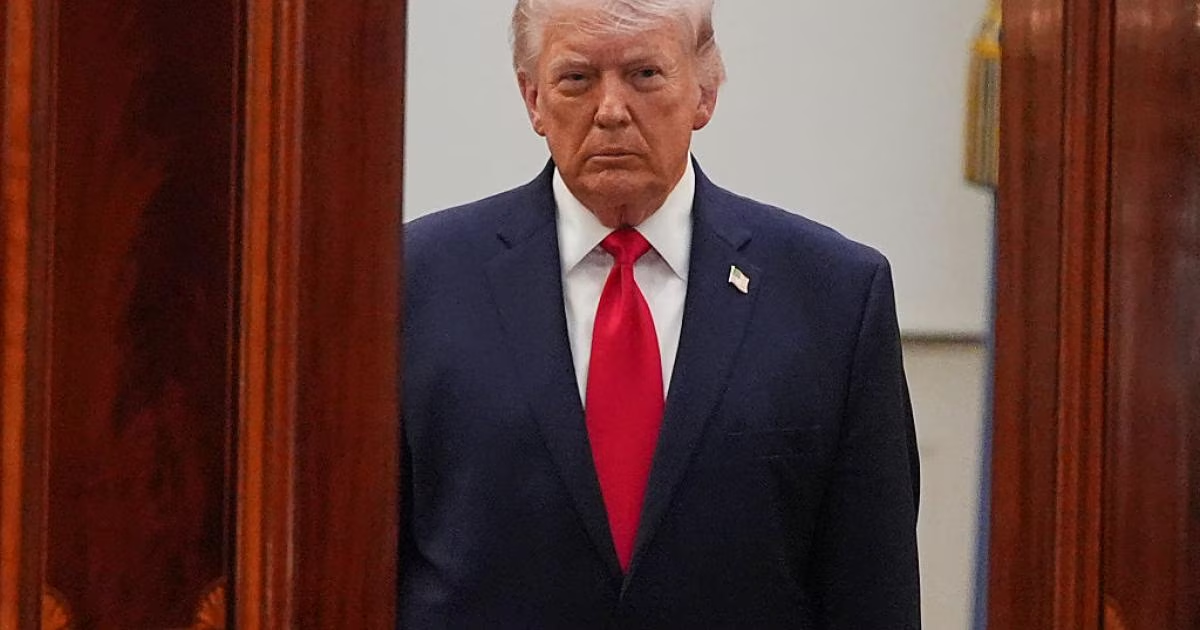
The intensity of criticism directed at US President Donald Trump has escalated within political circles in Washington, following posts he published on social media platforms that included language described as obscene towards Iran. The threats were not limited to verbal aspects but also included explicit warnings of targeting vital Iranian facilities and infrastructure, including bridges and power generation stations, should Tehran continue to reject American demands.
Informed sources reported that this harsh tone provoked the indignation of both Trump's allies and adversaries, with observers considering it a departure from the customary diplomatic protocol of the presidency. Democratic Party representatives believe that this approach reflects a state of deep frustration within the current administration due to the faltering efforts to extract substantial concessions from the Iranian side regarding its controversial nuclear program.
For his part, the Senate Minority Leader launched a scathing attack on the President, describing his recent statements as evidence of a loss of control over foreign political discourse. In the same context, Senator Chris Murphy warned that such threats open the door to a comprehensive military confrontation that could lead to a large number of casualties, emphasizing the need to return to sound diplomatic paths.
Opposing voices within the Republican Party were not absent from the scene, as a number of party leaders expressed their concern about the impact of this language on the global perception of the United States. Media sources indicated that a segment of American voters has become disgruntled with the use of profanity in official speeches, asserting that the presidency requires a decorum that reflects the prestige of the state and its international standing.
Furthermore, the use of religious symbolism in military contexts sparked a new wave of controversy, especially after describing the rescue of an American pilot in Iran as an 'Easter miracle.' This description, echoed by Trump and senior officials in his administration, was considered by critics an attempt to imbue military operations with a sacred character, raising serious concerns about the intertwining of religious doctrine with strategic military decision-making.
Human rights and religious organizations condemned this trend, warning of the danger of exploiting religious sentiments to justify armed conflicts or incite violence against other countries. These organizations affirmed in separate statements that the involvement of religion in political conflicts represents a dangerous precedent that could lead to deviations in the doctrine of the US military and the orientations of field commanders in conflict zones.
In light of these developments, American lawmakers called for an official investigation into reports indicating the infiltration of extremist religious interpretations within some military circles to justify the option of war. These parliamentary moves come in an attempt to put an end to what opponents describe as 'the politicization of religion' and its use as a tool to pass political and military agendas that could drag the region into an uncalculated conflict.
These statements mean a readiness for further escalation and additional casualties in the region.
ARAB AND WORLD
Mon 06 Apr 2026 12:43 pm - Jerusalem Time
Pakistani Mediation to End the Conflict: A Two-Phase Plan to Open the Strait of Hormuz and Ceasefire
Informed sources revealed that both Tehran and Washington have received a diplomatic plan aimed at ending mutual hostilities, with expectations of it coming into effect within the next few hours. This initiative primarily aims to secure the reopening of the Strait of Hormuz to international navigation and prevent the region from sliding into a comprehensive and destructive confrontation.
The sources clarified that Pakistan played a pivotal role in drafting this political framework, having delivered the draft to both parties during the past night hours. The Pakistani vision relies on a gradual strategy, starting with an immediate and comprehensive ceasefire as a confidence-building step, followed by detailed negotiations to reach a final agreement.
The incoming reports emphasized the necessity of reaching a final agreement on all terms of the plan today to ensure that diplomatic efforts do not collapse. The initial understandings are to be formulated into a formal memorandum of understanding, with Islamabad overseeing the completion of its legal and political procedures as the sole channel of communication.
In a related context, international press reports indicated that the United States and Iran, with the participation of regional mediators, are discussing a parallel proposal that includes a 45-day humanitarian and military truce. This timeframe aims to provide a suitable environment for negotiating a permanent end to the war, away from the pressures of field military operations.
The first phase of this proposal includes a complete freeze on all offensive activities, with the possibility of extending the truce if the parties show seriousness in reaching radical solutions. The second phase focuses on drafting a peace treaty or security agreement that ensures no return to military escalation in the near future.
These rapid diplomatic moves come under significant time pressure, especially after recent statements by US President Donald Trump, which carried a clear tone of threat. Trump had set a deadline ending Tuesday evening, demanding the full opening of the Strait of Hormuz or facing strikes targeting vital infrastructure.
Observers believe that Pakistani mediation represents the last chance to avoid direct confrontation, especially since it enjoys relative acceptance from the conflicting parties due to its ability to accurately convey messages. Global capitals are awaiting the results of these deliberations, given the extreme strategic importance of the Strait of Hormuz in global energy supplies and the stability of the international economy.
Despite cautious optimism, challenges remain regarding the technical details of the ceasefire and the international monitoring mechanisms that may be imposed later. The gamble now is on the extent of the leadership's response in Tehran and Washington to the draft agreement, and their ability to make mutual concessions that end the current state of tension.
All elements must be agreed upon today, and the initial understanding will be drafted as a memorandum of understanding to be finalized through Pakistan.
OPINIONS
Mon 06 Apr 2026 8:17 am - Jerusalem Time
Public Rejection of Iran War Escalates in the United States as it Enters its Sixth Week Amid Fears of Conflict Expansion
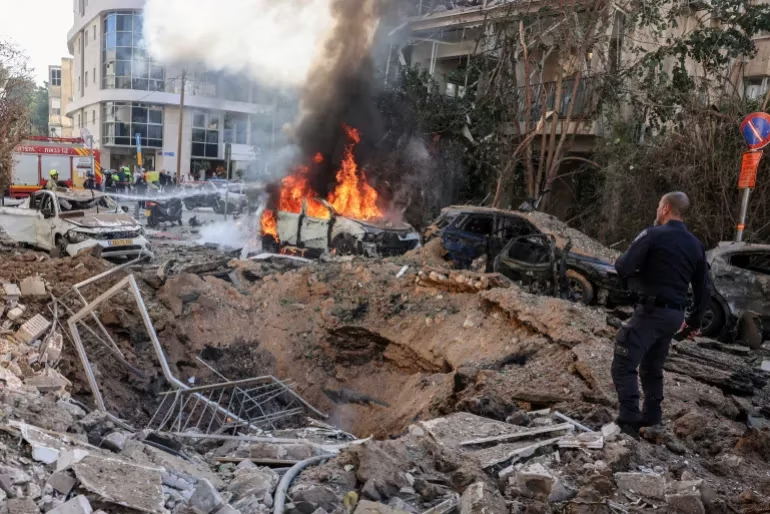
Washington – Said Arikat – 4/6/2026
As US military operations against Iran continue since their launch on February 28, 2026, under the name "Operation Overwhelming Fury," recent opinion polls reveal an unprecedented widening of American opposition to this war, as it enters its sixth week, an indicator reflecting a growing gap between the US administration's policies and domestic public opinion.
According to poll data published in early April, this war is among the US military operations that have generated the most public rejection since their inception in modern history. A CNN poll conducted on April 1 showed that about 66% of Americans oppose, to varying degrees, the decision to resort to military action against Iran. A joint poll by Reuters and Ipsos also showed that two-thirds of Americans prefer a swift end to military intervention, even if the stated objectives are not fully achieved.
These results reflect a general trend towards caution regarding involvement in a prolonged conflict, especially with rising concerns about the possibility of sending ground troops, an option that President Donald Trump's administration has not ruled out yet. Data indicates that more than 75% of Americans oppose the deployment of ground troops in Iran, a clear indication of the historical sensitivity associated with extended wars in the Middle East.
In the same context, a Pew Research Center poll showed that 40% of Americans believe the war makes the United States less safe, compared to only 22% who believe it enhances the country's security, reflecting a decline in confidence in the effectiveness of current military operations.
Reasons for Escalating Opposition
Observers link this public rejection to several intertwined factors, primarily direct economic repercussions. Global oil prices have seen a sharp rise since the outbreak of the conflict, which has been reflected in fuel prices within the United States, exceeding $4 per gallon in late March, increasing living pressures on citizens.
The ambiguity surrounding the US strategy also contributes to public anxiety, as estimates indicate that about 67% of voters believe the administration lacks a clear plan to manage or end the conflict. This concern is exacerbated by warnings of broader regional repercussions, especially amid tensions related to the Strait of Hormuz, a vital artery for global energy supplies.
Field Developments and Political Escalation
On the ground, recent days have witnessed a remarkable escalation in political and military rhetoric, with President Trump giving Iran a deadline ending on Tuesday, April 7, to reopen the Strait of Hormuz, threatening "severe" consequences, including targeting vital infrastructure such as power plants and bridges.
In contrast, estimates of human casualties within Iran vary, but human rights reports, including those published by the "Hrana" agency (concerned with human rights), indicate thousands of deaths since the start of operations.
Regarding military operations, US forces announced on April 5 their success in rescuing a crew member of an F-15E aircraft, who had been lost inside Iranian territory since Friday, in an operation described as complex and sensitive.
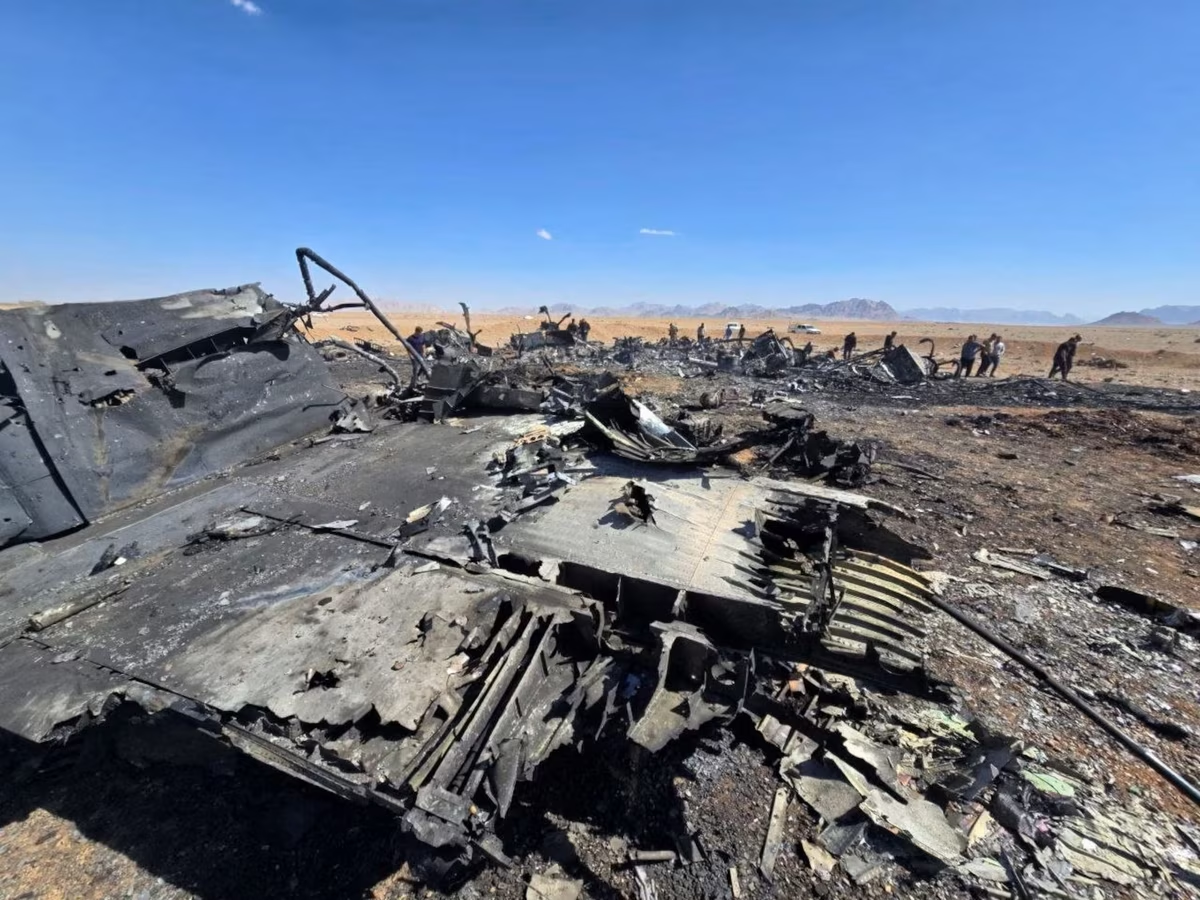
Despite President Trump's announcement of the operation's success, its behind-the-scenes details revealed a heavy price paid by the United States, represented by the bombing and destruction of two of its most advanced aircraft. While US commando teams successfully reached and secured the pilot, the force faced a fatal obstacle after the front wheels of two military transport aircraft sank into the sand of the desert runway, according to the American account revealed by the New York Times.
After desperate attempts to free the two aircraft, forces were forced to request alternative planes. Before withdrawing at sunrise, American fighters bombed and completely destroyed the stranded aircraft.
The decision was governed by an extremely sensitive "strategic necessity." The Wall Street Journal explained that the destroyed aircraft were MC-130J models, highly advanced aircraft, each costing more than $100 million.
This exorbitant material cost to save a single individual opened the door to a more serious strategic question in military decision-making circles: If Iran's sands cost America hundreds of millions of dollars and nearly thwarted a limited rescue operation, what price will Washington pay if it decides to launch a large-scale ground attack?
This development comes amid continued airstrikes and growing fears of the conflict escalating into a broader regional confrontation, which could involve multiple parties in the Middle East, exacerbating anxiety within and outside the United States.
The widespread public rejection of the war with Iran reflects a structural shift in the American public mood towards the use of military force, especially after bitter experiences in Iraq and Afghanistan. Americans are now more inclined to measure the cost of wars not only by strategic criteria but also by their direct economic and social repercussions. The absence of a clear and achievable goal also reinforces doubts about the utility of this conflict. This shift may impose increasing constraints on decision-makers in Washington and limit their ability to continue open-ended military operations without genuine and sustained public support.
The economic dimension also plays a central role in shaping public opposition to the war, as rising fuel and basic commodity prices directly link foreign policy to the living conditions of the American citizen. With increasing reliance on global energy, any disruption in the Strait of Hormuz becomes a direct threat to the American economy. This interconnectedness enhances public sensitivity to external crises and makes it difficult for the administration to justify continued military operations without providing a clear vision for reducing economic damage or ensuring market stability in the short and medium term.
The recent escalation in American rhetoric, especially the threat to target Iranian infrastructure, reflects a transition from limited military pressure to a strategy that may carry risks of conflict expansion. Such steps could push regional parties to engage directly or indirectly, opening the door to a multi-front war. In the absence of a clear international consensus, Washington may find itself facing increasing diplomatic isolation. This scenario raises serious questions about the US administration's ability to achieve its goals without sliding into a long and costly political and military conflict.
PALESTINE
Mon 06 Apr 2026 8:17 am - Jerusalem Time
Washington and Tel Aviv's Goals in the War on Iran: A Struggle for Influence and the Future of the Regional Order

International calls from opinion leaders and humanitarian organizations are escalating to stop the war waged by the United States and Israel on Iran and Lebanon, amidst widespread destruction threatening the stability of the entire region. As the war enters its sixth week, the true motives appear to go beyond the declared slogans, with Washington's desire to curb the growing Chinese influence, which relies primarily on Iranian oil supplies, becoming prominent.
Observers believe that US President Donald Trump recognizes the strategic importance of Tehran as the owner of the second-largest oil reserves in OPEC and the main supplier to major Asian powers such as Japan and South Korea. Therefore, targeting Iran essentially represents an American attempt to restore unipolarity and absolute control over global energy markets and their supply routes.
On the ground, Iran's closure of the Strait of Hormuz has paralyzed the movement of more than 20% of global oil exports, posing a real dilemma for the US administration. Despite Trump's calls for NATO countries to undertake the task of forcibly opening the strait, hesitation prevails in military circles for fear of sliding into an all-out confrontation with uncertain outcomes.
Through this war, the United States seeks to achieve five strategic objectives, foremost among them overthrowing the political regime in Tehran and dismantling its military capabilities. Washington also aims to undermine Iran's allies in Palestine, Lebanon, Iraq, and Yemen, to ensure the protection of Israeli and American interests in the vital West Asian region.
The nuclear file stands out as one of the primary drivers of the conflict, with Washington demanding a complete halt to the uranium enrichment program and control over Iran's estimated 450 kilograms of enriched uranium. The US administration also seeks to dismantle the long-range ballistic missile system, which has become a direct threat to American bases and their allies in the region.
In the context of economic restructuring, the American plan aims to integrate a 'demilitarized' Iran into the international economic system to control its rare mineral resources. This coincides with efforts to establish the India-Middle East-Europe Economic Corridor (IMEC), connecting India to the Gulf states and Europe via Israel, to serve as a strategic alternative to routes controlled by Tehran.
For his part, Israeli Prime Minister Benjamin Netanyahu faces increasing internal pressure, having attacked the Supreme Court for allowing anti-war demonstrations in Tel Aviv. Netanyahu considered these movements to weaken the home front at a sensitive time, comparing the freedom to demonstrate with the restrictions imposed on religious rituals during Passover.
Field sources reported that Israeli police used force to disperse protest gatherings, resulting in the arrest of 17 people and a demonstrator suffering a heart attack requiring urgent medical intervention. These protests reflect a decline in public confidence in the war's trajectory, after opinion polls showed a significant drop in support compared to the beginning of military operations.
Amidst the current military stalemate, reports indicate that Trump may face extremely dangerous options, including greenlighting the use of tactical weapons or weapons of mass destruction. These extreme options aim to force the Iranian leadership to submit to American conditions, despite warnings of their catastrophic ethical and political repercussions for the US administration.
Political readings suggest that Iran has so far managed to absorb the initial shock of the war, relying on cyber and military capabilities that surprised Western intelligence circles. Experts believe that Tehran may have set a 'strategic trap' for its enemies, exploiting their ignorance of the extent of defensive capabilities it has developed during years of siege.
On the regional level, mediation efforts led by countries such as Turkey, Pakistan, and Egypt failed to bridge the gap between Washington and Tehran, as negotiations reached a dead end. The Iranian side insists on rejecting American conditions, affirming its readiness for a long-term confrontation that may witness new military surprises on the ground.
Analysts believe that the failure to achieve a quick resolution could lead to a resounding political defeat for Trump and his Republican party in the upcoming midterm elections in November. Netanyahu faces the same fate, as the continuation of the war without tangible results threatens the collapse of his ruling coalition and the fall of his government in the elections scheduled for October.
The current conflict represents a historical turning point that could lead to the birth of a new world order, ending the era of unipolarity led by the United States. If Iran withstands, it may emerge from this confrontation with a greater ability to impose its conditions, including imposing sovereign fees on navigation in the Strait of Hormuz to compensate for its losses.
In conclusion, the region faces open scenarios, where major economic interests intertwine with geopolitical ambitions, in a war described by observers as a 'bone-crushing battle' that will define the contours of influence in the Middle East for decades to come, amidst global anticipation of what the coming days will bring in terms of field and diplomatic developments.
The raging confrontation is not merely a struggle to protect interests, but a strategic attack aimed at building a new regional order under broader American hegemony.
ARAB AND WORLD
Mon 06 Apr 2026 8:17 am - Jerusalem Time
Mystery surrounds Trump's disappearance from public view as White House denies hospitalization
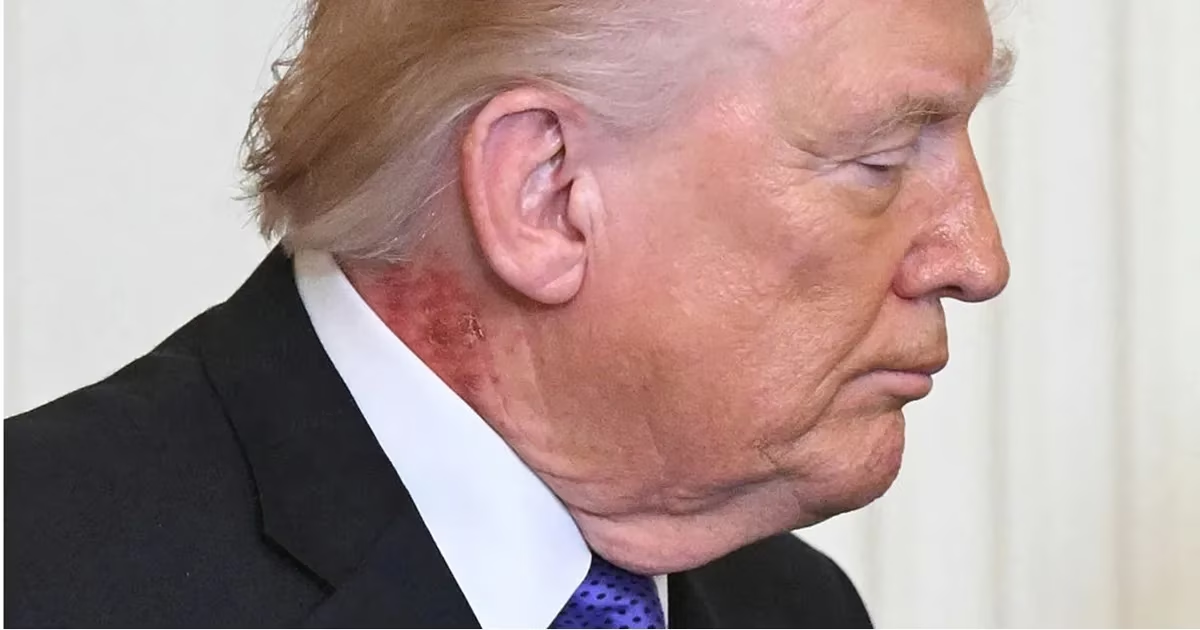
A state of widespread controversy has prevailed across social media platforms and international media outlets regarding the health status of US President Donald Trump, following unconfirmed reports suggesting his presence at the 'Walter Reed' National Military Medical Center. These suspicions arise amid an unusual absence of the President from the public scene since the middle of last week, which has opened the door to multiple interpretations about the reasons for this sudden disappearance.
The intensity of speculation was further fueled by the exceptional measures taken by the White House on Saturday evening, where the US administration informed accredited reporters and photographers of a decision to ban coverage or photography of the President's departure from his residence. This measure coincided with Trump remaining in Washington and not heading to spend his usual weekend, which observers considered an indicator of an emergency that prevented the President from appearing directly before the cameras.
In contrast, Steven Cheung, the White House communications coordinator, quickly denied all rumors related to the President's deteriorating health or his hospitalization for treatment. Cheung affirmed in press statements that Trump continues his official duties intensely inside the Oval Office, emphasizing that his agenda is busy with files that serve the American people during the current Easter holiday.
For his part, John Bolton, the former National Security Advisor, offered a different reading of the situation, suggesting that Trump's absence might be due to psychological pressures and a state of political 'panic'. Bolton explained in statements to American media that recent military developments, represented by the downing of two aircraft and the loss of an American pilot in Iran, have put the administration in a critical predicament requiring difficult decisions.
The US President has not appeared publicly since the speech he addressed to the nation last Wednesday evening, which prompted his political opponents to question his mental state and his ability to manage current crises. Despite this visual absence, his activity on social media platforms has not completely ceased, as he directed sharply worded warning messages to the Iranian leadership via his private platform.
Trump indicated in a post on his 'Truth Social' platform on Saturday morning that 'time is running out' for Tehran, in a clear reference to the ongoing military escalation in the region. However, analysts believe that relying solely on text messages without field appearances reinforces the hypothesis of a health or security impediment preventing the President from direct communication with the public and the press.
Political circles in Washington are awaiting any anticipated official appearance to break the state of ambiguity surrounding the White House, especially with increasing public pressure to know the truth. Reports from informed sources continue to suggest that the coming hours may witness a more detailed clarification about the President's activities to end the wave of rumors that has swept American and international circles.
No president has ever worked harder than President Trump for the American people, and he is working tirelessly in the Oval Office.
ANALYSIS
Mon 06 Apr 2026 8:17 am - Jerusalem Time
Five Motivations That Favor Escalation in the Military Confrontation with Iran
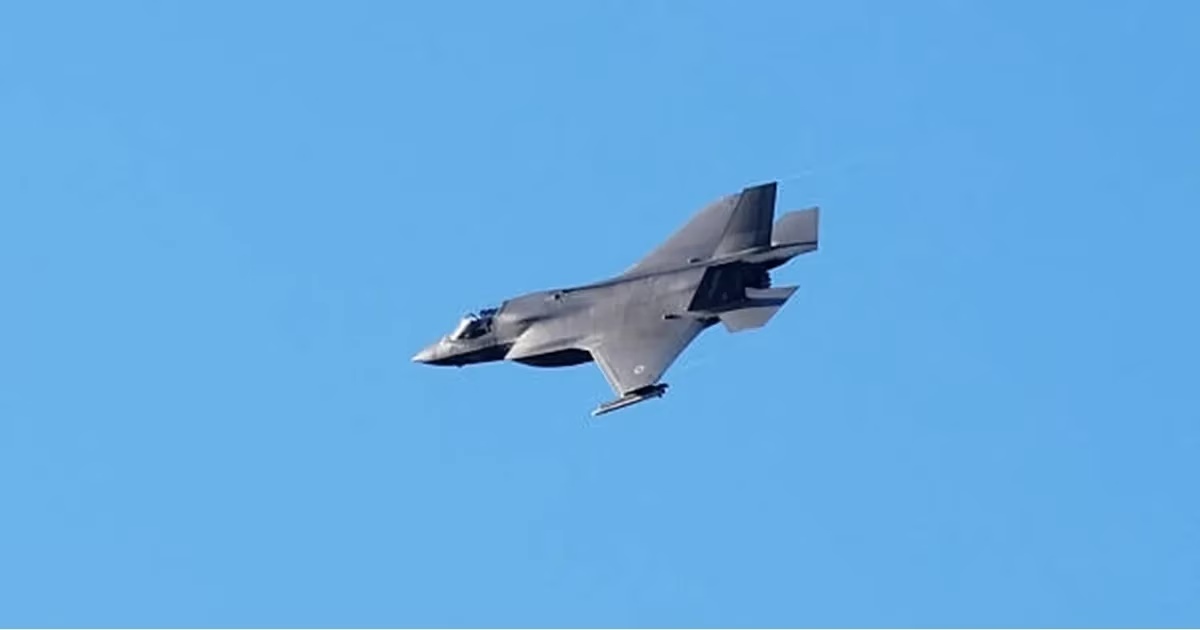
As the war on Iran enters its sixth week, the strategic question arises about the trajectory of this confrontation and its future in light of the complex field data. Tehran has managed to absorb the initial military shock, thwarting the bets on a quick resolution promoted by US President Donald Trump and Israeli Prime Minister Benjamin Netanyahu.
Current indicators confirm that the Iranian regime has not fallen nor has it submitted to the new American conditions, and the bet on street movements or the activity of separatist organizations has not achieved the desired results. This resilience has put the American administration in front of difficult choices, especially with the Iranian military power remaining active and capable of maneuvering.
Today, the war faces three main paths: either a unilateral American declaration of the end of operations, reaching an agreement through difficult negotiations, or continuing to escalate and expand the scope of the conflict. Although a political solution remains the most likely path in the long run, current data does not support this direction soon.
There are factors that might push Trump to consider ending the war, including internal pressures and severe economic consequences, especially the threats facing energy supplies through the Strait of Hormuz. However, these pressures do not seem sufficient to force the White House to retreat, especially given its commitment to Israel's security.
The negotiation path, however, seems stalled due to the absence of common ground and mutual distrust between Washington and Tehran so far. Despite mediation efforts by regional countries such as Turkey, Egypt, and Pakistan, mutual messages have hit a dead end due to reciprocal conditions.
The first factor driving escalation is the failure to achieve the stated strategic objectives of the war, primarily undermining Iran's nuclear and missile program. From a military perspective, stopping operations now means admitting failure to change Tehran's regional behavior or overthrow its political system.
The second factor relates to the 'narrative of victory,' where both Trump and Netanyahu need to present a tangible achievement to their domestic fronts before any electoral challenges. Stopping at the current situation does not give either of them a chance to claim a decisive victory, which makes them lean towards the option of continuing to extract greater concessions.
The multiplicity of fronts constitutes the third factor complicating the scene, with Lebanese Hezbollah and other forces in the region effectively entering the confrontation. This interconnectedness between fronts makes any bilateral agreement between Washington and Tehran difficult to achieve without addressing intertwined and highly sensitive regional issues.
In contrast, Iran's internal and leadership situation shows unexpected cohesion after the initial strikes, which gave it the ability to regain the initiative. The Iranian leadership believes that continued attrition may strengthen its negotiating cards, especially regarding global economic pressure by disrupting maritime navigation.
The fifth and final factor is the Israeli position, which fears any sudden 'flip' in President Trump's decisions. Netanyahu is striving with all his might to ensure the continuation of military momentum and narrow diplomatic options, fearing an agreement that does not fully meet Israeli security aspirations.
The divergence of interests between Washington and Tel Aviv regarding the conditions for ending the war opens the door for further field escalation to impose new realities. Israel is pushing to exploit the historic opportunity to strike Iranian capabilities in an irreparable way, which requires more time than the deadline Trump might grant.
Regionally, neighboring countries are watching the outcomes of this conflict with extreme caution, fearing a slide into a comprehensive regional war that spares no one. The international isolation that Washington suffers in this war further complicates the situation, but it has not prevented it from continuing military pressure so far.
Considering these combined factors, the chances of de-escalation seem very slim in the foreseeable future, and the likely scenario is an increase in the intensity of mutual strikes. The absence of direct and effective communication channels makes military miscalculation a potential spark for expanding the scope of the confrontation to include other international parties.
In conclusion, the war on Iran is likely to continue and escalate regardless of verbal threats or announced deadlines. The current scene indicates that the two aggressor parties are stuck in a strategy that does not guarantee them a quick victory, while Tehran is betting on the factor of time and the attrition of its adversaries.
Iran realizes that it cannot defeat the United States militarily, but Washington and Tel Aviv are also incapable of achieving a decisive and complete victory.
PALESTINE
Mon 06 Apr 2026 8:16 am - Jerusalem Time
Political Earthquake in Washington: Absolute Support for Israel Becomes an Electoral Burden Within the Democratic Party

The repercussions of the ongoing war on the Gaza Strip have begun to impose a new political reality within the United States, where absolute support for Tel Aviv is no longer a consensus as it once was. With the clear emergence of genocidal features, the movement has shifted from American streets and student demonstrations to the corridors of decision-making in Washington, creating a deep division within the Democratic Party.
International press reports indicate that the language of Democratic Party leaders in Congress has shifted towards a stricter stance on Israeli policies, particularly regarding settlement expansion and military operations. This change reflects increasing internal pressures demanding an end to political dependency that could drag the United States into broader regional confrontations, especially with Iran.
Notable positions have emerged from influential Democratic figures, including Gavin Newsom, who did not hesitate to describe Israel as an 'apartheid state,' directing sharp criticism at Prime Minister Benjamin Netanyahu. These statements reflect unprecedented boldness in calling things by their names within the American political elite, which had avoided such descriptions for decades.
For his part, Senator Chris Murphy held the Israeli side responsible for attempting to embroil Washington in direct military conflicts in the region, warning of the cost of this entanglement. Observers believe that this discourse represents a growing trend that rejects prioritizing Israeli interests over American national security and the strategic interests of the United States.
The shift was not limited to the progressive wing alone but extended to include prominent Jewish figures who were considered pillars of traditional support, such as Rahm Emanuel and J.B. Pritzker. These individuals announced their distancing from 'AIPAC,' considering that this lobbying group no longer represents the orientations they wish to be associated with under current policies.
In a related context, Representative Alexandria Ocasio-Cortez continues to lead a strong opposition front within Congress, accusing Israel of committing massacres and systematic genocide in Gaza. These accusations resonate widely among the younger generation in the Democratic Party, who now view the Palestinian issue from a human rights and social justice perspective.
Recent opinion polls reinforce this trend, with an NBC News poll revealing shocking figures for the traditional establishment, as 67% of Democrats expressed sympathy for Palestinians. In contrast, the percentage of those who view Israel positively dropped to only 13%, a sharp decline of about 34% compared to last year.
Political analysts believe that this radical change in popular bases will directly affect the electoral map for 2028, where candidates will find themselves forced to balance the legacy of traditional support with the demands of a new generation that rejects funding wars. Blind support has become a 'political trap' threatening the professional future of many aspiring to high office.
At the level of public interaction, questions are increasing about the price the United States pays for this alliance, with sources indicating that the public debate has begun to shift towards financial and moral accountability. Activists believe that continuing this approach could isolate the United States internationally, and they liken the world's view of it to a negative historical view of previous regimes.
In conclusion, it appears that the American political scene is heading towards redefining its relationship with the Middle East, where Israel is no longer the 'sacred cow' that cannot be touched. The increasing pro-Palestinian demonstrations and the adoption of their slogans within progressive circles confirm that the change is not just a passing wave, but a structural transformation in the identity of the modern Democratic Party.
Support for Israel is now out of the ordinary within the modern Democratic Party, and the political discourse is changing in an unprecedented way.
PALESTINE
Mon 06 Apr 2026 8:16 am - Jerusalem Time
8 Martyrs in Raids on Beirut and Metn, Hezbollah Targets Military Barge with Cruise Missile

The intensity of field tensions in Lebanon escalated with the death of eight martyrs and the injury of dozens in a new wave of Israeli airstrikes targeting populated areas. Medical sources reported that the shelling focused on the Jnah area in Beirut's southern suburbs, as well as the Ain Saadeh hills in the Metn district, leading to widespread property destruction and panic among civilians.
Regarding the details of the deadly toll, official sources confirmed that the Jnah area raid alone resulted in the martyrdom of five people, including a girl under fifteen years old and two Sudanese nationals. The raid also caused injuries to 52 others, including eight children, who were transferred to nearby hospitals for necessary treatment.
In the Metn district, warplanes targeted the Ain Saadeh hills area, resulting in the martyrdom of three citizens, including two women. Field reports indicated that the shelling also caused three injuries among women, while rescue teams continue to remove rubble and search for potential survivors in the targeted sites.
According to data from the Lebanese Ministry of Health, the total number of victims of the ongoing Israeli aggression since early March has risen alarmingly. Official statistics recorded up to Sunday evening the martyrdom of 1461 people and the injury of 4430 others, amid continuous violent shelling targeting Lebanese villages and towns daily.
On the ground, Israeli warplanes launched a series of intensive raids, totaling eight, on various neighborhoods in Beirut's southern suburbs since the morning hours. The targets included the neighborhoods of Ruwais, Bir Hassan, Musharrafieh, and Hay Madi, reflecting an expansion of Israeli military operations deeper into Lebanese territory.
In response, Hezbollah announced an escalation of its military operations, confirming 23 qualitative attacks against Israeli targets since dawn on Sunday. The most prominent of these operations was targeting a military barge in the Mediterranean Sea using a naval 'cruise' missile, after a precise monitoring and tracking operation that lasted for several hours.
Hezbollah clarified in its statement that the targeted barge was stationed 68 nautical miles off the Lebanese coast and was preparing to carry out attacks. While the party confirmed achieving a direct and accurate hit, Hebrew media sources claimed that the shelled vessel belonged to the British Navy, which contradicts the Lebanese narrative.
Regarding ground and border confrontations, Hezbollah intensified its shelling of northern settlements, targeting the settlements of Nahariya and Metulla with successive rocket salvos. It also announced targeting ten gatherings of occupation soldiers and vehicles, including sites in the Malkia settlement and the Ajal plateau, in addition to fierce clashes in the towns of Ainata and Khiam in southern Lebanon.
The operations also included targeting nine military sites and strategic infrastructure, including the Meron air surveillance base, the Zar'it barracks, and a logistical base belonging to the occupation army. Rocket barrages hit the settlements of Yesud HaMa'aleh, Ma'alot-Tarshiha, Katzrin, and the occupied city of Safed, activating sirens dozens of times.
For its part, Hebrew sources acknowledged material damage after a drone launched from Lebanon fell on a house in the 'Shomrat' settlement in northern occupied Palestine. This coincided with sirens sounding in a wide area of the Upper and Western Galilee, amid a state of security and military alert among occupation forces to confront the increasing attacks.
We targeted an Israeli military barge 68 nautical miles off the Lebanese coast with a naval cruise missile after precise monitoring.
PALESTINE
Mon 06 Apr 2026 8:16 am - Jerusalem Time
Gaza aggression death toll exceeds 72,000 martyrs amid continued siege under the rubble

Medical sources in the Gaza Strip revealed today, Saturday, a new and painful update to the toll of victims of the ongoing aggression, as the number of documented martyrs rose to 72,291, while the number of injured reached 172,068 since October 7, 2023. These figures come amid the continuation of military operations targeting civilians and infrastructure in various areas of the Strip.
According to official data issued by hospitals, medical facilities received two martyrs and 25 new injuries during the past twenty-four hours. Statistics also indicated that the period following October 11 alone witnessed the martyrdom of 715 and the injury of 1,968 others, while teams were able to recover 756 bodies from various areas that had been bombed earlier.
The sources warned that the announced figures do not reflect the true extent of the tragedy, due to the presence of hundreds of victims trapped under the rubble of destroyed buildings or whose bodies are lying in rough roads. They confirmed that civil defense and ambulance crews face a complete inability to reach these areas due to the field restrictions imposed by the occupation and the continuation of direct targeting, which makes the final enumeration of victims an almost impossible task at present.
A number of victims are still under the rubble and in the streets, as ambulance and civil defense crews are unable to reach them.
ARAB AND WORLD
Mon 06 Apr 2026 8:16 am - Jerusalem Time
Trump sets 'Tuesday' deadline for Iran: Imminent agreement or total destruction of facilities
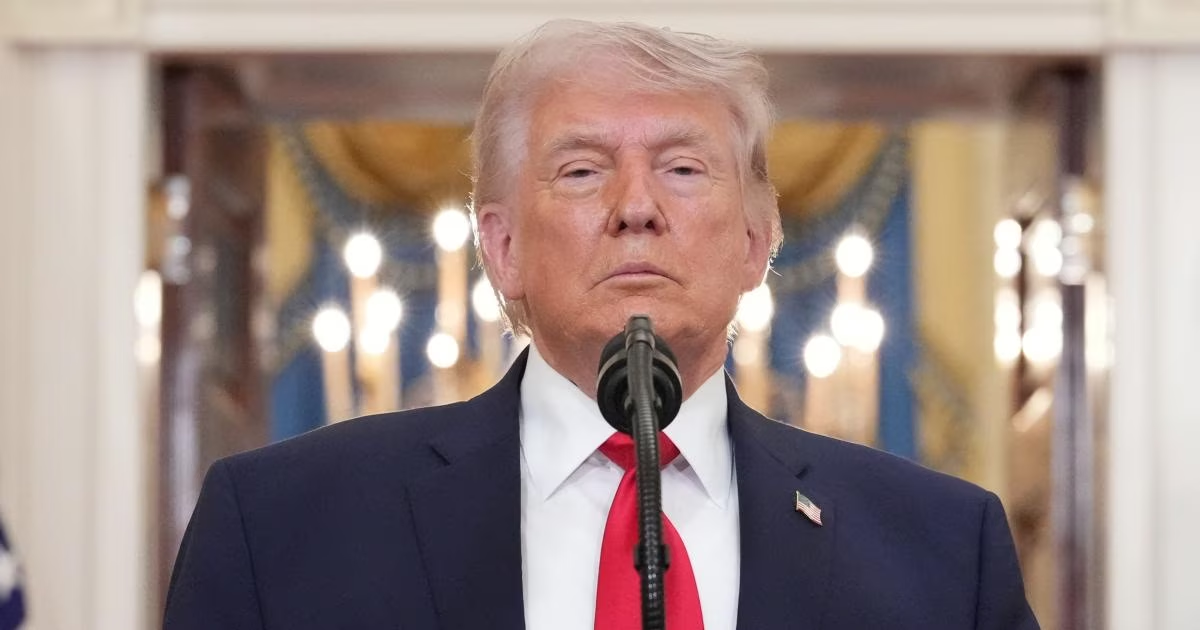
A state of ambiguity and anticipation overshadowed the international political scene following a brief post by former US President Donald Trump on his 'Truth Social' platform, in which he set a decisive time at 8:00 PM Tuesday, Eastern Time. This announcement came at the peak of the ongoing military escalation between Washington and Tehran, opening the door to widespread speculation about the nature of the next step, whether it would be an announcement of a sudden diplomatic agreement or the beginning of a comprehensive destructive phase.
These developments come in the context of the open military confrontation that began on February 28, with Israeli and American forces launching military operations against Iranian targets. In response, Tehran continues its retaliations by launching barrages of missiles and drones towards the occupied territories, in addition to targeting what it describes as American interests in the Arab region, which has led to casualties and severe material damage.
According to media sources, the time set by Trump corresponds to midnight Wednesday GMT, and comes after a series of contradictory statements he made to American media. While he hinted in his interview with 'Axios' at the possibility of reaching an imminent agreement with the Iranian leadership by Tuesday, he later confirmed to 'Fox News' that there was a good chance of achieving a diplomatic breakthrough in the coming hours.
However, the tone of diplomatic optimism quickly turned into severe threats, with Trump vowing to 'blow up everything' in Iran and take full control of its oil resources if negotiations failed. In statements to the 'Wall Street Journal', he stressed that Tehran would face dire consequences, including the loss of all power stations and vital facilities in the country if it did not back down from its current positions.
Trump directly linked his threats to the necessity of reopening the Strait of Hormuz to international navigation by the specified deadline on Tuesday evening, describing it as the 'hour of truth'. He wrote in a harsh tone, warning Iranian officials of the consequences of continuing to close the strait, asserting that the alternative would be living in an unimaginable military 'hell', as he put it in his recent posts.
In another widely debated post, Trump described Tuesday as 'the day of power stations and bridges', indicating that the anticipated strikes would be in a single package and would be unprecedented in the history of contemporary conflicts. This escalatory language reflects the extent of pressure exerted by the American side to impose new conditions on the ground before the expiration of the deadline set by the former president.
For its part, Tehran was not slow to respond to these threats, with Iranian Parliament Speaker Mohammad Bagher Ghalibaf warning that the entire region is at risk of burning due to what he described as Trump's reckless moves. Ghalibaf considered that these policies reflect complete subservience to the orders of Israeli Prime Minister Benjamin Netanyahu, warning of the repercussions of any uncalculated military adventure.
In a related context, the Iranian Central Military Command issued a statement describing Trump's ultimatum as an 'incapable, tense, and unbalanced' act, affirming the readiness of the armed forces to deal with any emergency. The statement indicated that such threats would not deter Tehran from continuing its defensive strategy in the region, describing the former US president's statements as an expression of political confusion.
Major General Ali Abdollah Ali Abadi, commander of the Khatam al-Anbiya Central Headquarters, also stated that 'the gates of hell' would open on American forces if any military folly was committed against Iranian facilities. Ali Abadi affirmed that the Iranian response would be swift and comprehensive, and would not be limited to one front, further complicating the field and political scene hours before the anticipated deadline.
World capitals are awaiting the outcome of the coming hours, amid fears of the region sliding into a comprehensive regional war that transcends the limits of the current confrontation. While some hope that Trump's threats are merely a tool of pressure to achieve negotiating gains, field movements and mutual military statements indicate that all possibilities remain on the table for escalation.
Open the damn strait, you crazy bastards, or you will live in hell.
PALESTINE
Mon 06 Apr 2026 8:16 am - Jerusalem Time
Easter Burdened with Wounds: A Siege on Jerusalem and Regional War Drums Loom Over Christian Celebrations

Christians around the world, on Sunday, observed Easter and Palm Sunday according to both Western and Eastern calendars, in an atmosphere overshadowed by fears of expanding regional conflicts. Pope Leo XIV of the Vatican called on leaders of the international community to adopt the option of peace, criticizing the international indifference towards thousands of victims who fall daily due to raging wars.
In St. Peter's Square in the Vatican, the Pope presided over the Easter Mass for the first time since his ascension to the Holy See in May of last year. In his message, he affirmed that true peace cannot be imposed through instruments of war or the logic of force, but is achieved only through sincere dialogue and human encounter that transcends the desire to control others.
His Holiness warned of the danger of becoming accustomed to scenes of violence and surrendering to the results of hatred generated by armed conflicts. He pointed out that the world has become oblivious to the dire economic and social consequences afflicting peoples, calling for a global awakening of conscience to end the divisions that fuel the fire of conflicts in several regions of the world.
In the Palestinian territories, the city of Bethlehem witnessed varied celebrations, where churches following the Western calendar observed Easter, while Eastern churches celebrated Palm Sunday. The main Mass was held in St. Catherine's Church for Latins, adjacent to the Church of the Nativity, with the presence of priests and worshippers who offered prayers for the end of the ordeal.
In the occupied city of Jerusalem, the usual joyful manifestations were absent due to the strict military measures imposed by the Israeli occupation authorities. Occupation forces prevented thousands of Palestinian Christians from reaching the Church of the Holy Sepulchre, after setting up checkpoints and iron barricades in the alleys of the Old City and on the roads leading to the holiest Christian sites.
Local sources reported that Israeli police subjected the few worshippers who were allowed to pass to precise and provocative inspections. These restrictions come at a time when the occupation authorities continue to close the blessed Al-Aqsa Mosque and the Church of the Holy Sepulchre for the thirty-seventh consecutive day, leading to a complete paralysis of religious life in the city.
The Latin Patriarch of Jerusalem, Cardinal Pierbattista Pizzaballa, was forced to hold Easter Mass behind closed doors inside the Church of the Holy Sepulchre with a very limited number of clergy present. Eyewitnesses described the atmosphere inside the Old City as a military barracks, where occupation forces prevented worshippers who gathered outside from entering, awaiting an opportunity to pray.
On the northern front, Christians in southern Lebanon are living in tragic conditions under the weight of siege and mutual shelling between the Israeli army and Hezbollah. Christian-majority villages, such as the border town of Debel, face almost complete isolation as a result of ongoing military operations that have turned the holiday into an occasion for steadfastness and survival.
Field sources reported from residents of the border villages that the sounds of explosions did not subside throughout the holiday hours, forcing residents to stay in their homes and rely on scarce humanitarian aid. Despite these circumstances, residents affirmed their determination to remain on their land and perform their religious rituals with the simple means available under shelling.
These field developments come amid an escalation of military confrontation that began in late February, casting a dark shadow over all aspects of life in the region. This tension was clearly reflected in the movement of pilgrims and religious tourism, which completely stopped in the holy cities due to security risks.
It is worth noting that the coincidence of the Western and Eastern holidays in April 2026 was supposed to be an occasion to unite prayers, but the political and military reality imposed a different agenda. The calls for peace that emanated from the Vatican, Bethlehem, and Jerusalem remain pending, awaiting international action to end the cycle of violence plaguing the region.
Peace is not imposed by force, but by dialogue, and not by the will to control others, but by encountering them.
ISRAELI AFFAIRS
Mon 06 Apr 2026 8:16 am - Jerusalem Time
Clash of Wings in the Israeli Opposition: Eizenkot and Bennett Lead the 'Change Bloc' Race
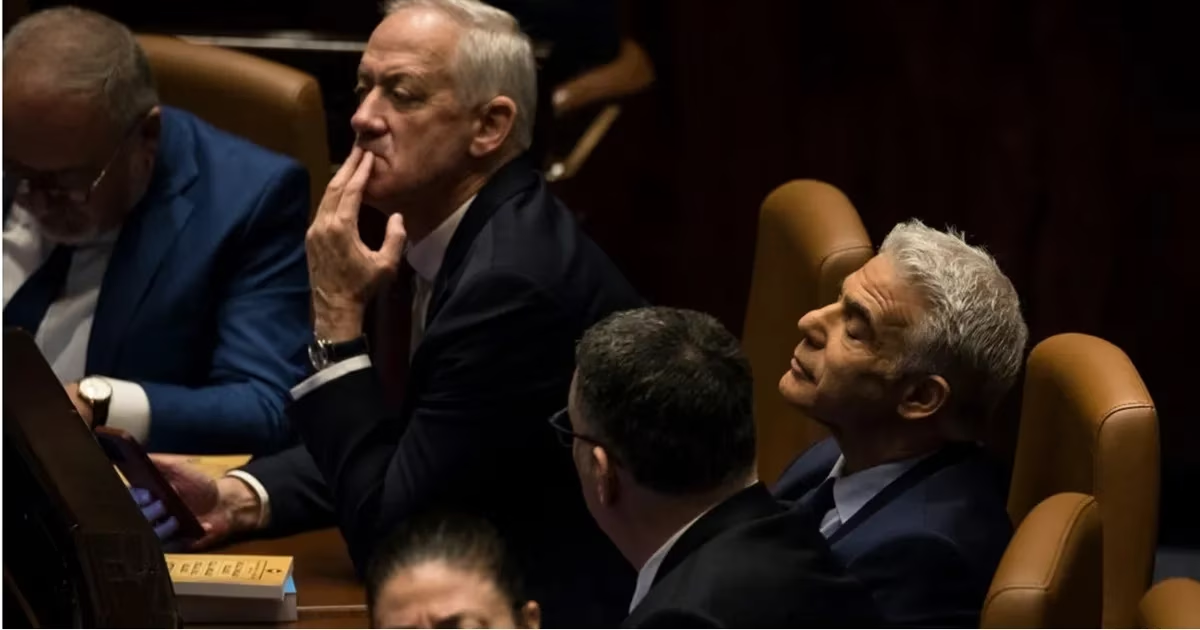
The pace of political movements within the Israeli arena is accelerating as the 26th Knesset elections, scheduled for next October, draw near. The features of the conflict within the opposition appear more complex and exciting, as various forces seek to organize their ranks and determine the identity of those who will qualify for the final stages of the electoral race.
Analytical sources reported that the Israeli opposition is experiencing a difficult labor, where victories intertwine with defeats and severe disappointments. With about half a year remaining until the elections, the outlines of the forces that have succeeded in advancing, and those that have fallen behind, threatening to completely exit the political map, have begun to become clear.
The opposition 'Change Bloc' is currently divided into two main wings: the right and the center-left, each with its own calculations and balances. Three strong names stand out in the right wing, competing for leadership: Naftali Bennett, Avigdor Lieberman, and Gideon Sa'ar, amidst failed attempts to unite some of these poles.
The current stage witnessed Avigdor Lieberman displacing his rival Gideon Sa'ar from the path to the top, especially after the latter's popularity declined in opinion polls. This decline pushed Sa'ar and his 'New Hope' party to split and return to the Likud party, in a move described as an attempt at political survival after barely passing the electoral threshold.
In contrast, Naftali Bennett managed to strengthen his position in opinion polls, surpassing Lieberman in the 'semifinal' of the opposition right-wing camp. Data shows that a coalition combining Bennett and Lieberman could double the number of seats, despite Lieberman's insistence that he is the best candidate for the next premiership.
Observers believe that Lieberman's association with the opposition does not stem from an ideological difference with the ruling right, but rather is the result of a sharp personal tension with Benjamin Netanyahu. Lieberman still adopts extremist right-wing policies, and in some matters, he even surpasses the current coalition in extremism, especially in his support for the judicial overhaul project.
As for the center-left wing, the scene is no less heated, with former partners Benny Gantz and Gadi Eizenkot confronting each other. The competition focuses on the votes of the State Camp, the party that Gantz founded and led for a long time before the balance of power within it began to shift surprisingly.
Opinion polls had given Gantz about 38 seats following the October 7 attack, but this momentum gradually began to fade over time. With his position declining, Eizenkot demanded to take over the party's leadership, which Gantz refused, ultimately leading to Eizenkot's resignation and the start of an independent political path.
During the harsh war months, Gantz's approval rating recorded a significant decline from which he has not been able to recover until now, according to informed sources. In contrast, Gadi Eizenkot's stock rose sharply in opinion polls, enabling him to surpass traditional opposition leaders such as Yair Lapid and Yair Golan.
Eizenkot currently appears as the de facto leader of the center-left current, ready to enter the final competition against Naftali Bennett for the leadership of the Change Bloc. This sudden rise of Eizenkot in the polls has disrupted traditional calculations and placed him in a strong rival position against Bennett's ambitions to return to the premiership.
Analyzes confirm that Eizenkot has an additional advantage, which is the widespread popular movement supporting him in recent opinion polls. However, Bennett still maintains an advanced position, making the competition between them largely dependent on the mistakes either of them might make in the coming months.
The scene requires all candidates in the Change Bloc to persevere until the end and acknowledge the legitimacy of whoever takes first place to ensure the bloc's unity. However, Yair Lapid is still singing a different tune, warning against trusting his rivals and demanding to be the sole option for leading the opposition.
Despite Lapid's continuous attempts to establish his legitimacy, the gaps between him and Eizenkot in terms of suitability for the premiership have begun to narrow significantly. This fierce competition reflects the state of division and the search for a strong alternative that can confront Netanyahu's continued dominance of the Israeli political scene.
Ultimately, the next six months will remain crucial in determining the shape of the final alliances that will contest the Knesset elections. Opposition leaders will have to balance their personal ambitions with the strategic goal of bringing about real change in the hierarchy of Israeli power.
The Israeli opposition is witnessing many surprises and political intrigues that could even risk displacing traditional forces from the political map.
ISRAELI AFFAIRS
Mon 06 Apr 2026 8:16 am - Jerusalem Time
Netanyahu attacks Israeli Supreme Court over anti-war protests against Iran
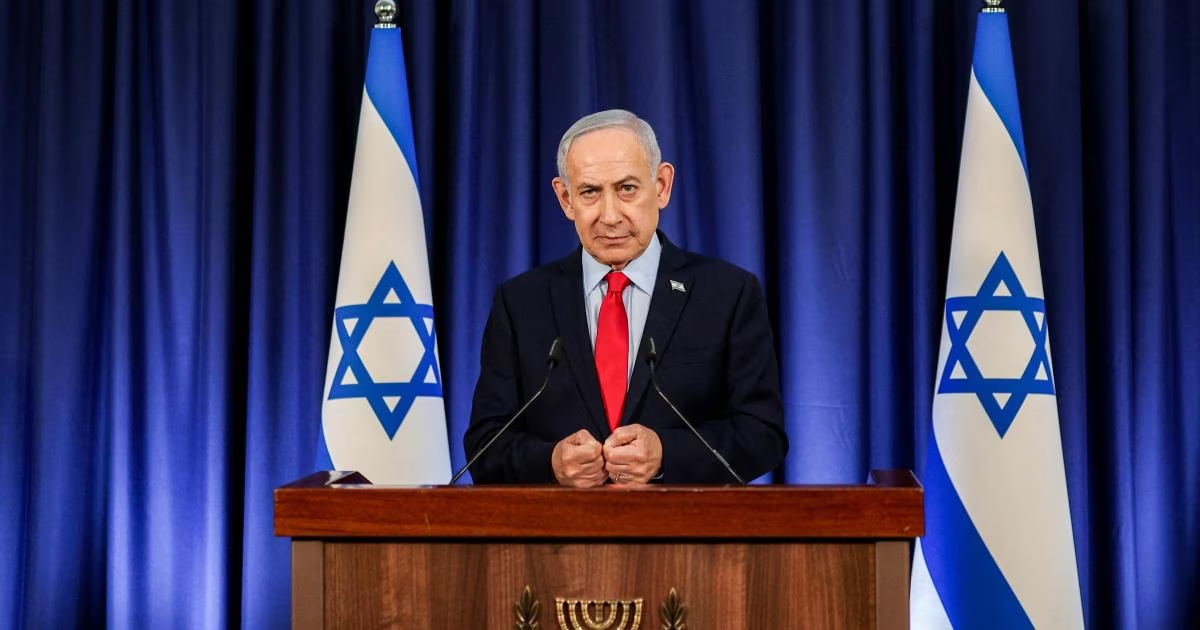
Israeli Prime Minister Benjamin Netanyahu launched a sharp attack on the Israeli Supreme Court, following its decision to allow protest demonstrations rejecting the continuation of the war against Iran. Netanyahu described this measure as 'unbelievable', considering that the judiciary is providing cover for political movements at a sensitive time for the Hebrew state.
Netanyahu's statements came via the 'X' platform the day after protests in Tel Aviv, where Israeli police intervened to forcibly disperse gatherings and arrested at least 17 participants. Press sources reported that clashes erupted in Habima Square, leading to a state of chaos that required urgent intervention by medical teams.
The Israeli Prime Minister used this incident to draw a comparison between freedom of demonstration and freedom of worship, noting that authorities impose restrictions on Jewish prayers at the Western Wall during the Passover holiday. Netanyahu stressed that while freedom of demonstration is guaranteed, it should not overshadow religious rights, which are no less important in the Israeli perspective.
Netanyahu emphasized in his speech that security powers in emergency situations must remain exclusively in the hands of the military establishment, specifically the army's Home Front Command. He clarified that this body is the only one authorized to assess the situation and determine the necessary security arrangements to protect the public, away from judicial interventions that may hinder security operations.
On the ground, medical sources revealed that one of the demonstrators suffered a severe heart attack during the dispersal of the protest in Tel Aviv, where Magen David Adom teams performed cardiopulmonary resuscitation on him at the scene. The injured person was transferred to the hospital for treatment, where his condition was later described as stable despite the seriousness of the incident, which coincided with the stampede of protesters.
According to field estimates, about 300 Israelis participated in the Tel Aviv demonstration, while about 150 others in the northern city of Haifa expressed their rejection of current military policies. These numbers reflect a division in Israeli society, although opinion polls initially indicated widespread support for military operations against Tehran.
Data issued by the Institute for National Security Studies at Tel Aviv University indicates that the approval rate for the war reached 80% in its early days, but this rate began to decline significantly as the conflict entered its second month. This decline comes amid the continued exchange of rocket barrages and drones between Israel and Iran since the outbreak of direct confrontation last February.
Unbelievable, while Jews are prevented from praying at the Western Wall during the holiday, the Supreme Court allowed a left-wing demonstration in Tel Aviv.
OPINIONS
Mon 06 Apr 2026 8:08 am - Jerusalem Time
Rescue and Reckoning: America’s Strategic Blind Spot
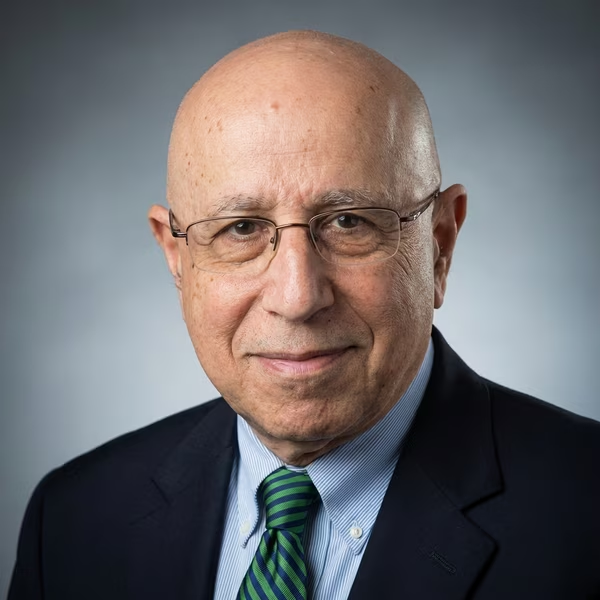
By: Said Arikat
April 6, 2026
News Analysis
Washington, D.C- In a dramatic episode that captures both the sophistication and contradictions of contemporary warfare, U.S. special operations forces—working in close coordination with the Central Intelligence Agency—executed a high-risk mission to rescue an American airman downed deep inside Iranian territory. The operation has been widely celebrated in Washington as a remarkable feat of precision, coordination, and courage. Yet beyond the operational triumph lies a more unsettling reality: the mission reveals not only the reach of American military power, but also its strategic limitations and ethical ambiguities in an era defined by protracted and increasingly opaque conflicts.
The incident began with the downing of a U.S. F-15E fighter jet over rugged mountainous terrain during an active combat sortie over Iran. While one crew member was quickly recovered, the weapon systems officer was left stranded—injured, isolated, and surrounded by hostile forces, including Iranian units and local armed groups conducting an intensive search. What followed was not merely a rescue effort but a race against time with profound geopolitical stakes. The prospect of an American serviceman falling into Iranian custody raised the specter of intelligence compromise, propaganda exploitation, and rapid escalation between two adversaries already locked in a volatile confrontation.
To cast this mission as unprecedented, however, would be historically misleading. The United States has conducted similarly daring—and arguably more perilous—rescues under even more constrained conditions. On June 8, 1995, U.S. forces extracted F-16 pilot Scott O’Grady from hostile territory in Bosnia, six days after his aircraft was shot down. Surviving with minimal supplies while evading Bosnian Serb forces, O’Grady’s rescue required a complex Marine Corps operation conducted under constant threat of enemy air defenses. That episode, like the current one, demonstrated not only technical capability but also institutional resolve, reminding us that such feats are part of a longer tradition rather than a wholly new threshold of military prowess.
Central to the recent mission’s success was the seamless integration of military and intelligence capabilities. The Central Intelligence Agency’s role extended far beyond surveillance; it orchestrated a sophisticated deception campaign within Iran, spreading false narratives that the downed airman had already been extracted. This tactic diverted search efforts and created a narrow operational window. While effective, such reliance on disinformation underscores a broader transformation in warfare, where controlling perception can be as decisive as controlling territory. It also raises enduring ethical questions about the normalization of deception as a primary instrument of statecraft.
Technological superiority played a decisive role as well. Advanced surveillance systems, real-time data analysis, and precision sensing enabled U.S. forces to locate the stranded airman in what one official described as a “needle in a haystack” scenario. Yet this capability highlights a striking paradox: the same military apparatus that can pinpoint an individual in near-impossible terrain continues to struggle with articulating a coherent strategy to end the broader conflict in which such incidents occur. Tactical brilliance coexists with strategic drift.
The final phase of the operation—authorized directly by President Donald Trump—involved the most perilous maneuver. Rescue helicopters penetrated Iranian airspace at low altitude to evade detection, coming under ground fire that injured several personnel. Despite these risks, the team successfully secured the airman and executed a rapid extraction. As a discrete military action, the mission achieved its objective with impressive efficiency. But its significance cannot be assessed in isolation from the wider strategic environment.
Indeed, the rescue provided a symbolic boost to a U.S. administration navigating the pressures of an ongoing and undefined conflict. Recovering a single serviceman carries immense moral and political weight, reinforcing the military’s commitment to leaving no one behind. However, such victories risk sustaining a narrative of dominance that obscures deeper structural challenges. They can create the illusion of progress in a conflict where the underlying dynamics remain unresolved.
The operation also reflects a broader transformation in warfare itself. The battlefield now extends into the informational domain, where narratives, misinformation, and psychological operations shape outcomes alongside kinetic force. The deception campaign exemplifies this shift, illustrating how success increasingly depends on the manipulation of perception. Yet this evolution carries risks: as adversaries adapt, the informational domain may become an arena of escalating competition, amplifying uncertainty and increasing the likelihood of miscalculation.
Equally significant is the precedent set by the mission’s geographic scope. The downing of an American aircraft and the subsequent rescue operation inside Iran mark a notable escalation in direct engagement. Although the incident ended without catastrophic losses, it underscores the fragility of the current equilibrium. Each such intrusion risks triggering retaliatory actions that could spiral beyond control in an already volatile region.
Yet if the operation reflects the precision of American military power, President Donald Trump’s rhetoric reveals a starkly different dimension—one marked not by discipline, but by excess. In a post on Truth Social, the president warned that if Iran did not reopen the Strait of Hormuz by a fixed deadline, the United States would “totally destroy” the country. The language was crude, maximalist, and strikingly indifferent to the norms of responsible statecraft.
That indifference is made more troubling by a basic strategic fact: Iran is not a nuclear-armed state. This is not a case of mutual nuclear deterrence between equals, but a sweeping threat directed at a non-nuclear country. The imbalance sharpens the sense that the rhetoric is less about deterrence than about coercion untethered from proportionality, projecting dominance at the expense of credibility.
Such language carries real strategic risk. By framing policy in the form of ultimatums, the president narrows the space for de-escalation while increasing the likelihood of reciprocal escalation. It encourages defiance rather than compromise, particularly in a region where sovereignty and dignity are deeply intertwined with political decision-making. In this sense, the rhetoric is not merely undisciplined—it is counterproductive.
Moreover, tone matters in international politics. When the leader of the United States adopts language that appears impulsive or openly punitive, it risks eroding allied confidence while hardening adversarial resolve. It introduces a dangerous form of ambiguity—one that obscures intent rather than clarifies it, increasing the risk of miscalculation.
This dissonance between operational discipline and rhetorical volatility encapsulates a central paradox of American power. On the battlefield, the United States demonstrates unparalleled capability to act decisively. In the political arena, however, that precision is often undermined by messaging that amplifies risk rather than containing it.
In the final analysis, the rescue stands as both a testament to American military prowess and a cautionary tale about its limits. It is a story of audacity and competence, but also of ambiguity and unresolved tension. The enduring question is not whether the United States can execute such missions, but whether it can align its tactical excellence with a coherent and credible strategy—one grounded less in threats of destruction than in the difficult work of preventing it.
PALESTINE
Sun 05 Apr 2026 11:46 pm - Jerusalem Time
Israeli 1970 Law: A Settlement Arm to Swallow East Jerusalem Neighborhoods and Displace Their Residents

Palestinian neighborhoods in occupied East Jerusalem face a growing existential threat due to an arsenal of old laws and documents used by settler groups to seize properties. The Judicial and Administrative Arrangements Law of 1970, known as 'Yemeni Jewish Property,' stands out as a key tool in this systematic process aimed at undermining the Palestinian presence in the Holy City.
The roots of this crisis date back to the late 19th century, when Jewish donors established what is known as the 'Benvenisti' endowment to purchase lands in the Silwan area to house Jews who came from Yemen. A residential nucleus known as the 'Yemeni Village' was formed at that time, but the British authorities evacuated its residents in 1938 due to security tensions, and the land has remained registered under the endowment's name ever since.
Following the occupation of East Jerusalem in 1967, Palestinian families began to settle in neighborhoods such as Batn al-Hawa and Sheikh Jarrah, relying on official ownership contracts and purchase certificates from local owners or with permits from the Jordanian administration. The residents were unaware that these properties were located within the boundaries of lands historically registered under Jewish endowments, which made them vulnerable to complex legal persecutions later on.
The issuance of the 1970 law created a stark double standard in the occupation's judicial system, as it allowed Jews to claim properties they lost before 1948 in East Jerusalem. In contrast, the same law deprives Palestinians of any similar right to reclaim their properties and homes from which they were displaced in the western part of the city, thus entrenching a policy of racial discrimination.
The 'Ateret Cohanim' settler association is the actual driver of these lawsuits, especially after it obtained guardianship rights over the 'Benvenisti' endowment in 2001. Since then, the association has exploited historical documents to file hundreds of eviction cases against Palestinian families, claiming that their presence is illegal and that the rights belong to the settlers.
The period between late 2025 and early 2026 witnessed a dangerous turning point, as the Israeli Supreme Court rejected appeals filed by Palestinian families against their eviction decisions. This judicial rejection gave the green light to settlers to carry out widespread forced seizures, supported by police forces that secure the evictions.
In addition to the judicial path, settler associations follow convoluted methods to strengthen their control, including using shell companies and intermediaries to register properties indirectly. These entities also exert financial and psychological pressure on families by offering tempting offers to leave or burdening them with court expenses and repeated legal letters.
These systematic measures have transformed the law from a regulatory framework into a political and demographic tool aimed primarily at expanding settlements in the heart of Arab neighborhoods. Instead of providing protection to residents who have lived in their homes for decades, the judicial system has become a platform to justify forced displacement and change the historical character of Jerusalem.
Ultimately, the 1970 law represents the cornerstone of the strategy to change the demographic reality of East Jerusalem by exploiting old endowment properties. Entire neighborhoods are currently being reshaped in favor of settlers, in clear violation of all international conventions that prohibit the occupying power from changing the features of the occupied land or displacing its residents.
The law has transformed from a tool for reclaiming alleged historical ownership into a political platform aimed at changing Jerusalem's demographic identity.
ISRAELI AFFAIRS
Sun 05 Apr 2026 11:46 pm - Jerusalem Time
Hebrew Report: Iranian Control of the Strait of Hormuz Shifts International Balance of Power

Hebrew press sources reported that Iran has managed to unprecedentedly strengthen its grip on oil exports in the Arabian Gulf region, a first in decades. Reports clarified that Tehran exploited its advanced military capabilities to impose a new reality, enabling it to achieve massive economic gains since the outbreak of the recent confrontation.
Maariv newspaper stated that these financial gains allowed Tehran to accelerate the rebuilding of its strategic industries that were previously damaged. These operations include the rapid development of missile systems and nuclear programs, which has given it the political audacity to claim sovereignty over the international Strait of Hormuz.
Data indicates that Iran doubled its oil revenues during the first month of the war compared to any previous periods in recent years. This increase reflects the nature of the economic campaign managed by Tehran, which appears to transcend traditional military solutions that international powers might resort to.
Sources confirmed that the US administration has begun to realize the difficulty of confronting this Iranian strategy or imposing control over the situation on the ground. Tehran had prepared for such scenarios for many years, developing precise plans to paralyze oil exports from the Gulf, which supplies 15% of global consumption.
Iranian capabilities extend to missiles and drones with a range of up to 2000 kilometers, giving it the ability to disrupt navigation in the Arabian Sea and the Gulf of Oman. Observers believe that hitting just one ship would be enough to completely halt navigation due to insurance companies ceasing coverage for transiting vessels.
The report cited the example of the Houthis in Yemen, who managed to disrupt international navigation despite possessing significantly fewer military capabilities than Iran. The newspaper considered that control over international energy corridors is a strategic weapon that currently surpasses the impact of possessing nuclear weapons.
Historically, the report compared the current situation to the Turkish closure of the Dardanelles Strait during World War I, which prevented supplies from reaching Russia. This British failure at the time to control the waterways led to the resignation of prominent military and political leaders due to heavy human losses.
Internationally, the International Energy Agency announced that the world is facing an oil supply disruption not seen since the 1973 embargo. This comes as exports from major countries such as Saudi Arabia, Iraq, Kuwait, and the UAE through the Gulf have ceased due to the current blockade.
Estimates indicate that approximately 800 ships are currently trapped in the Arabian Gulf, with the United States lacking sufficient military capability to lift this blockade. The global rise in oil prices has effectively lifted sanctions on Iran, allowing it to sell its production more freely.
China accounts for about 90% of Iranian oil exports, while supplies from other Gulf countries to global markets have ceased. Tehran has begun to impose new trade conditions, including reducing discounts granted to China and imposing protection fees on other countries signing bilateral agreements.
On the ground, the Iranian Revolutionary Guard fully controls export operations from Kharg Island, where it enforces a strict passage system. Transiting vessels are required to obtain special passwords and security escort from Revolutionary Guard boats to ensure their passage through the Strait of Hormuz.
Reports documented the loading of five giant oil tankers in one day with a total cargo of 7.7 million barrels, generating huge daily revenues. Sources predicted that annual revenues would exceed one trillion dollars, giving Tehran immense financial capacity to fund its military operations and heavy industries.
In a notable shift, US President Donald Trump backed down from his previous threats to attack Iranian oil fields, expressing willingness to cooperate on the Strait. Analysts believe that this approach could change the balance of power in the region and place neighboring countries in a critical geopolitical situation in the face of escalating Iranian influence.
The report concluded that the Strait of Hormuz has transformed from an open international passage into a zone of influence where Tehran exercises de facto policies. The biggest challenge for Western military planners remains finding a practical solution that ensures energy flow without sliding into an all-out confrontation with uncertain outcomes.
Control over energy exports from the Arabian Gulf is a stronger winning card than nuclear weapons in the current conflict.
PALESTINE
Sun 05 Apr 2026 11:45 pm - Jerusalem Time
Jerusalem Governorate: 7 attempts to smuggle 'sacrifices' into Al-Aqsa detected in the most dangerous escalation in decades

The Jerusalem Governorate confirmed in an official statement issued on Sunday evening that occupied Jerusalem witnessed a dangerous and unprecedented escalation during the ongoing Jewish Passover holiday. Official sources clarified that seven attempts by settler groups to bring live 'Passover sacrifices' into the courtyards of the blessed Al-Aqsa Mosque were documented, noting that this number is the highest recorded since the occupation of the city in 1967.
According to the report issued by the Governorate, groups of settlers managed to reach the outskirts of the Old City with sacrifices in two separate attempts, as part of a frantic endeavor to impose new Judaization rituals within the Al-Aqsa Sanctuary. Palestinian authorities warned that these movements represent the peak of employing religious rituals as a colonial tool aimed at entrenching the narrative of the 'alleged Temple' and changing the status quo in the Mosque.
The Governorate indicated that extremist organizations adopting the ideology of 'building the Temple' have begun using advanced technological techniques, including artificial intelligence, to manage intensive propaganda campaigns aimed at mobilizing extremists. These campaigns aim to incite settlers to forcibly impose the sacrifice ritual inside Al-Aqsa, exploiting the full protection provided by the occupation forces for these provocative movements that target the feelings of Muslims.
In a related context, the occupation authorities continue to impose a strict siege on the holy sites in the occupied city, with the Al-Aqsa Mosque and the Church of the Holy Sepulchre remaining closed for the 37th consecutive day. The occupation authorities claim to impose a 'state of emergency' to prevent Palestinian worshipers from reaching their holy sites, which has led to the emptiness of the Al-Aqsa Mosque courtyards of worshipers for the fifth consecutive Friday, a scene reflecting the extent of the practiced constriction.
In the face of this bitter reality, popular and Jerusalemite calls have escalated for the necessity of mobilization and steadfastness towards the military checkpoints surrounding the Old City to break the imposed security cordon. Jerusalemite activists stressed the importance of popular pressure to reopen Islamic and Christian holy sites and reject the systematic closure policy aimed at emptying the city of its original inhabitants and facilitating settler incursions.
The Jerusalem Governorate called on the international community and human rights organizations to take urgent and effective action to stop the imposition of new Judaization realities in the holy city. It affirmed in its statement that ensuring the protection of the Islamic and Arab identity of the holy sites is an international responsibility, warning that silence on these violations gives the occupation a green light to continue its policies that violate international laws and conventions.
Finally, the Governorate concluded its warning by emphasizing that the continued closure of Al-Aqsa, coinciding with allowing settlers to desecrate it with sacrifices and pagan rituals, is a blatant aggression that pushes the region towards a comprehensive explosion. It stressed that this religious and political 'thuggery' requires decisive intervention to end the Israeli encroachment on holy sites and prevent the conflict from turning into a religious war whose repercussions cannot be controlled.
Slaughtering sacrifices inside Al-Aqsa represents a moral prelude to the material establishment of the alleged Temple over the entire area of the blessed Mosque.
ISRAELI AFFAIRS
Sun 05 Apr 2026 11:45 pm - Jerusalem Time
Israeli Assessments Reveal Potential Understandings with Syria to Reshape Security Reality in Lebanon
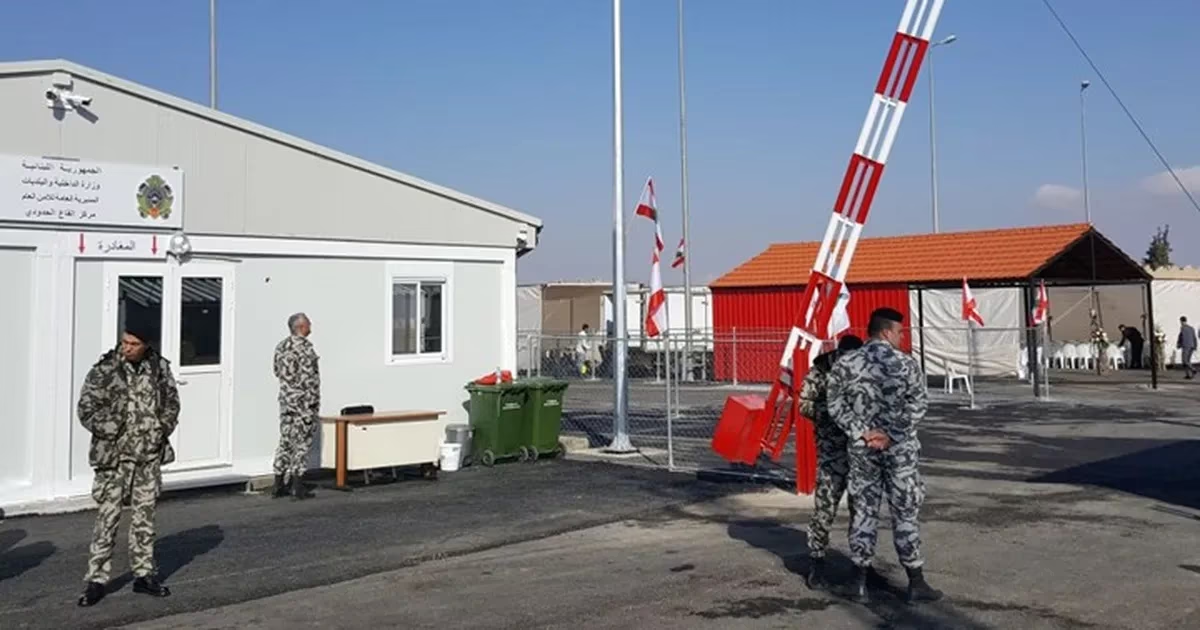
Security and political assessments within Israel have revealed a radical shift in the regional vision towards the Lebanese file, as current readings indicate that the continued inability of the Lebanese state to curb Hezbollah's influence opens the door to unprecedented understandings with Syria. These trends come amid a sharp decline in American and Western trust in official institutions in Beirut, pushing for the search for alternatives capable of imposing a new security reality on the ground.
Hebrew press reports stated that the absence of an effective Lebanese partner, both politically and militarily, has strengthened the conviction among decision-making circles in Tel Aviv of the necessity to find alternative regional paths. Sources explained that American disappointment with Lebanon has reached deep levels, with a growing belief that the Lebanese government has failed to meet the minimum of its security and political obligations towards the international community.
Israeli readings indicate that the Lebanese army is now seen as a force incapable of confrontation, and some assessments go further by accusing it of avoiding direct conflict with Hezbollah. These sources confirm serious concerns about the infiltration of pro-Hezbollah elements into the ranks of the military establishment, making reliance on it in any future security arrangements impractical.
In light of this reality, a conclusion is crystallizing within Israeli circles that ending the threat on the northern front requires a radical treatment of Hezbollah's military structure. Assessments emphasize the need to work towards the complete disarmament of southern Lebanon and to ensure the absence of any armed presence of Hezbollah in border areas that pose a direct threat to Israeli settlements in the Galilee.
In this context, a sensitive vision emerges, suggesting that the only forces capable of effectively confronting Hezbollah are Israel and Syria in its new phase. This approach does not mean building a traditional alliance, but rather a strategic convergence of interests that views the current Syrian leadership as a natural adversary to Hezbollah's influence, making it a potential partner in managing the complex Lebanese file.
The proposed scenario for discussion includes a division of security roles, where the Israeli army takes operational control in southern Lebanon to prevent any border threats, while Syrian forces conduct operations in northern and inner Lebanon against Hezbollah strongholds. This proposal is seen as an alternative option resulting from the failure of all previous diplomatic and political paths that attempted to contain the situation.
Informed sources reported that these understandings may include sensitive border and sovereignty issues, including the Mount Hermon file, within the framework of a broader settlement aimed at reshaping the security environment in the region. Despite the boldness of this proposal, sources confirm that it does not aim to overthrow the Lebanese regime as much as it focuses on definitively neutralizing Hezbollah's military arsenal.
Available information confirms the existence of multi-level dialogue channels between Israel and Syria, taking place away from the spotlight and potentially with American mediation in some aspects. Although these contacts have not yet reached the level of announced official negotiations, they reflect a serious search for practical solutions that go beyond traditional formulas that have proven to be failures over the past years.
Observers believe that this Israeli approach represents an attempt to impose a new reality in the absence of a decisive Western role that provides direct military support to the Lebanese army to confront Hezbollah. According to the Israeli vision, the emergence of serious international action might change these calculations, but current indicators do not suggest an international will for direct intervention in the internal Lebanese conflict.
As for the American position, assessments indicate a state of hesitation, as Washington prefers to avoid this complex path but at the same time no longer relies on Beirut's capabilities. It is believed that American frustration with unfulfilled Lebanese promises may push the United States to implicitly accept these regional understandings if they prove effective in undermining Hezbollah's influence.
Israeli sources emphasize that the ultimate goal is not to control Lebanese territories, but to ensure that they are not used as a platform for launching missile attacks or infiltration operations. Tel Aviv considers that any arrangement that does not guarantee Hezbollah's permanent removal from the borders is a temporary arrangement that will not lead to long-term stability in the northern region.
Ultimately, this scenario remains subject to field developments and the extent to which regional parties respond to these rapid changes. With the escalation continuing, all options remain open to the Israeli decision-maker, who appears ready to break traditional rules in order to achieve his strategic security goals regarding the Lebanese front.
From an Israeli perspective, the only two parties capable of confronting Hezbollah are Israel and the new Syria led by Ahmed al-Sharaa.
PALESTINE
Sun 05 Apr 2026 11:45 pm - Jerusalem Time
Evangelical Beliefs and the Trump Administration: How 'End Times' Prophecies Shape Washington's Policy?

Recent journalistic analyses have revealed the escalating influence of the Evangelical Christian movement in shaping the direction of American policy, where religion is no longer merely a cultural backdrop but a primary driver of military and political decisions. An investigative report indicated that President Donald Trump's administration is witnessing an unprecedented overlap between religious beliefs related to 'end times' and foreign strategies, especially concerning the conflict with Iran and absolute support for the Israeli occupation.
The name of Defense Secretary Pete Hegseth stands out as one of the most prominent figures embodying this trend, as he belongs to the 'Reformed Evangelical Church Partnership' denomination. Hegseth adopts a discourse that integrates militarism and doctrine, portraying armed operations as part of a 'spiritual war' aimed at protecting what he describes as the Christian nation and conquering its enemies, which was clearly evident in his public prayers within the Pentagon where he called for 'overwhelming violence' against adversaries.
Analytical readings suggest that Hegseth does not recognize the authority of international law or human rights conventions in times of war, considering biblical law as the sole and binding reference. This approach poses legal and ethical challenges for the American military establishment, as extremist religious interpretations are prioritized over constitutional and international obligations governing armed conflicts.
In a related context, President Trump appeared in a speech addressed to the nation justifying military escalation against Iran, using claims about Iran's nuclear program that intelligence sources described as inaccurate. This discourse seems aimed at solidifying the war narrative among the evangelical electoral base, which views confronting Iran as a religious necessity before it is a political or security one.
Organizations such as 'Christians United for Israel' (CUFI), founded by Pastor John Hagee, play a pivotal role in mobilizing support for right-wing policies. Hagee, who has widespread influence over millions of evangelicals, promotes the idea that supporting the Israeli occupation is a biblical duty that paves the way for the Second Coming of Christ, which explains the continuous pressure to launch preemptive wars in the region.
Unlike traditional Christian Zionism, which focuses on 'the Rapture' and tribulations, Hegseth's movement belongs to a more aggressive vision that seeks to establish 'God's kingdom' on Earth through military force. This imperial vision sees American expansion as a divine tool, making diplomacy a secondary option compared to the language of bullets and overwhelming military operations that know no mercy.
Internally, the 'Heritage Foundation' stands out as an intellectual arm of this movement through 'Project 2025,' which seeks to reshape American society according to a 'natural family' perspective. This agenda includes strict restrictions on abortion rights, fighting minority rights, and promoting white Christian identity as a fundamental pillar of the state, thereby deepening societal division within the United States.
Regarding immigration, white evangelicals appear as the fiercest supporters of deportation and border repression policies, stemming from a perception that racial diversity threatens the 'Christian nation.' These individuals believe that restoring America necessarily means returning to an old social structure that marginalizes civil rights gained by minorities over the past decades.
On the other hand, cracks have begun to appear within the 'MAGA' base due to overwhelming Israeli influence, with figures like Candace Owens leading a movement that questions the utility of foreign wars for Israel. This internal conflict reflects a divergence between right-wing Catholics and evangelicals regarding foreign policy priorities and the extent to which national American interests should be sacrificed for religious prophecies.
On the opposing front, progressive and pro-Palestinian groups are trying to exploit these contradictions within the Republican Party, planning to spend millions of dollars in swing districts. These moves aim to highlight the financial and human costs of wars pushed by the religious right and to attract voters who reject unjustified military intervention.
Sources indicate that Senator Bernie Sanders and other progressive figures support candidates who openly oppose war with Iran, making the upcoming elections a real test of the impact of foreign policy issues on American voters. The conflict here is between a leftist vision advocating for peace and international justice, and a right-wing religious vision pushing for open military confrontations.
The infrastructure of the Christian Right is not just a fleeting phenomenon; it is a complex network comprising law schools, media institutions, and social media platforms that work in harmony to spread its ideology. This system aims to prepare a new generation of judges, lawyers, and politicians who believe in integrating the Bible into the civil and military laws of the state.
Observers believe that traditional media failed to appreciate the seriousness of this movement, treating Trump's relationship with evangelicals as a temporary alliance of convenience rather than a deep ideological integration. This failure to understand led to a lack of public oversight over policies that could lead to international disasters due to mystical motives not based on tangible political reality.
In conclusion, the overlap between the 'sacred' and the political in Washington continues to portend a period of global instability, where strategic decisions become tools to fulfill religious prophecies. As these figures continue to dominate the scene, the question remains about the ability of American democratic institutions to curb this trend and prevent the country from sliding into religious wars under a political guise.
Hegseth believes he is fighting a spiritual and actual war to conquer the enemies of a Christian nation, and he sees biblical law as the only binding reference for him.
ARAB AND WORLD
Sun 05 Apr 2026 11:43 pm - Jerusalem Time
Former US Intelligence Agent Warns Against the Illusion of Regime Change in Iran Through Military Force
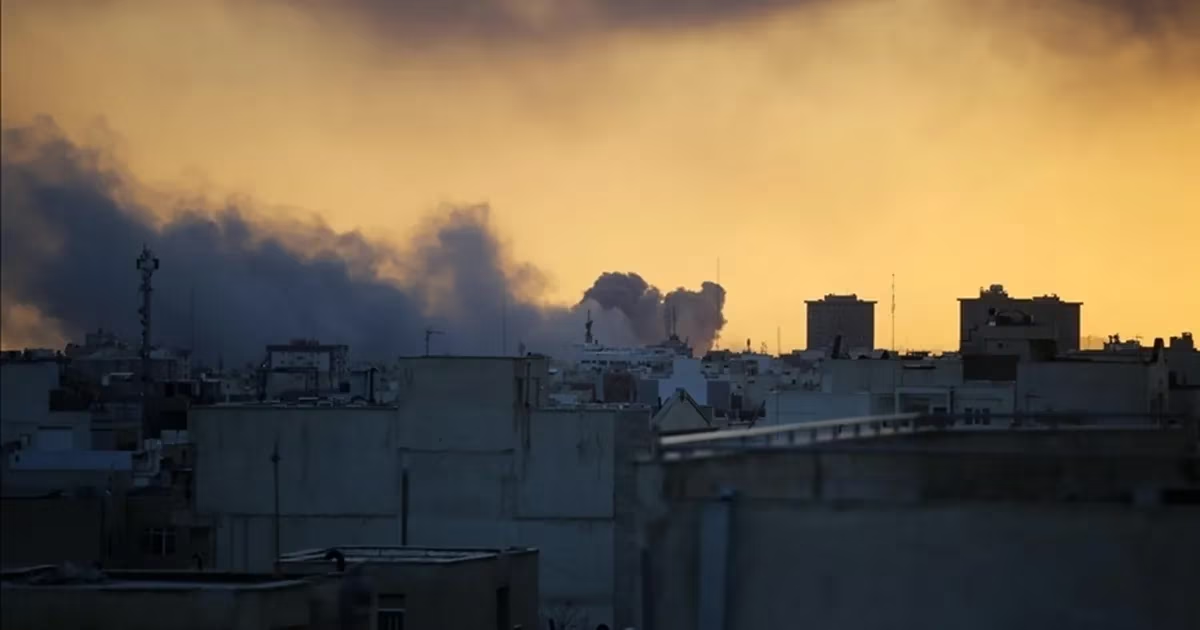
Johnny Gannon, a former CIA agent, affirmed that efforts to change the regime in Tehran face deep structural complexities, warning against being drawn into the idea that military force alone is sufficient to create sustainable political transformation. Gannon explained in an analytical article that there is a significant gap between achieving battlefield victories and reshaping the political culture of a country the size of Iran.
The former intelligence official, who spent more than two decades in covert operations, pointed out that Washington and its allies must avoid falling into the trap of political illusions. He considered that the ability to destroy targets from the air does not necessarily mean the ability to rebuild human and political structures from closed meeting rooms in the American capital.
In his reading of the Iranian internal situation, Gannon noted that the institutions of power, represented by the Revolutionary Guard and the army, remain largely cohesive, as their economic and existential interests are linked to the survival of the current regime. He believes that the tools of repression and control are still effective enough to thwart any immediate attempts at radical change from within.
The article touched upon the Gulf stance, explaining that the United States' partners, foremost among them the UAE, fear the repercussions of a 'wounded' Iranian regime that might resort to suicidal options. A long war could disrupt navigation in the Strait of Hormuz and threaten the security of investments in vital economic centers such as Dubai and Abu Dhabi.
Gannon warned that any ill-considered escalation could push Tehran towards using 'asymmetric response,' through proxies or cross-border covert operations. This scenario would place the region before an exorbitant cost that goes beyond mere direct military operations, threatening regional stability for many years.
Regarding the opposition, the author believes that the Iranian diaspora suffers from sharp divisions that prevent it from presenting a unified and acceptable alternative internally. He also pointed out that the 'Mujahedin-e Khalq' organization lacks the popular base and credibility necessary to lead a transitional phase within Iranian territory.
As for Reza Pahlavi, the son of the former Shah, Gannon explained that despite his widespread fame in Western circles, he lacks loyalty within Iranian security and military institutions. Without this loyalty, any talk of an actual transfer of power remains mere wishful thinking that finds no resonance on the ground.
The article emphasized the necessity for the United States to adhere to ethical standards to reduce risks to Iranian civilians, calling for a transparent investigation into the bombing incident of the 'Minab' school. He stressed that acknowledging error and apologizing if American responsibility is proven is essential to preserve what remains of goodwill among the Iranian people.
Gannon reviewed historical lessons, recalling the coups led by Washington in Iran in 1953 and in Guatemala in 1954, asserting that they proved the limits of covert action. While these operations can remove a specific leader, they rarely succeed in building political legitimacy or a stable system that enjoys popular acceptance.
The intelligence analyst warned that exceeding the stated goals of the current US administration could drag the region into a comprehensive regional war. He considered that the attempt to 'engineer' the Middle East through hard power has proven its repeated failure due to a misunderstanding of the complex nature of the balance of power in the region.
In conclusion of his analysis, Gannon called for adopting a strategy of 'strategic patience,' which relies on gradually weakening the regime's capabilities while reducing the pace of direct bombing. He believes that this path requires close coordination with regional allies who will be on the front lines to face any future consequences.
The article concluded that history teaches us that demolishing regimes is much easier than building their alternatives, and that change in Iran may eventually happen, but it must come from within. He stressed that the wisest course is to maintain smart pressures without sliding into military adventures with uncertain outcomes.
The challenge for Washington is how to capitalize on gains without falling into the illusion that pressure alone can lead to regime change.
OPINIONS
Sun 05 Apr 2026 11:37 pm - Jerusalem Time
Military Daring and Strategic Ambiguity: The Rescue of an American Pilot in Iran Reveals the Limits of Power
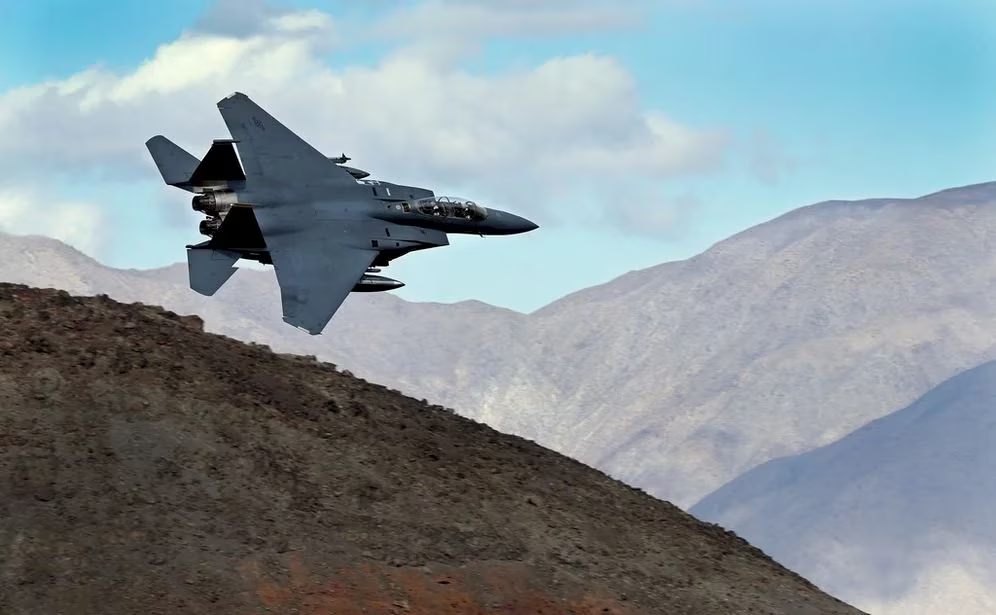
Washington – Said Arikat – 5/4/2026
News Analysis
In a striking military development that reflects the nature and complexities of modern warfare, US special forces, in close coordination with the Central Intelligence Agency (CIA), successfully carried out a high-risk rescue operation for an American pilot whose plane crashed inside Iranian territory, as reported by "The Washington Post." However, this success, presented as an exceptional achievement, opens the door to a deeper critical reading, extending beyond the operational dimension to what it reflects in terms of strategic and ethical dilemmas in conflict management.
The incident began with the downing of a US F-15E fighter jet in a rugged mountainous area while it was carrying out blatant aggression in Iran, leading to the ejection of its crew. While the first pilot was quickly rescued, the weapon systems officer found himself alone, injured, and surrounded by a hostile environment, at a time when Iranian forces and local groups were combing the area in search of him. At that moment, according to experts, the issue became a race against time, not only to save an individual's life but to avoid serious political and intelligence repercussions if he were captured.
In this context, the coordination between the US military and the CIA emerged as a crucial element in managing the operation. However, this coordination was not limited to intelligence gathering but also included the use of strategic deception tools, by spreading misleading narratives within Iran claiming that the pilot had already been evacuated. This tactic contributed to diverting search efforts and gave US forces a time window to act. Yet, this approach raises questions about the limits of using deception in conflicts, especially when it becomes a central tool in managing operations, reflecting an increasing shift towards "narrative warfare" where truth itself becomes part of the battle.
In parallel, the operation relied on advanced intelligence capabilities, including surveillance, sensing technologies, and data analysis, which enabled the pilot's location to be pinpointed in a narrow mountain gorge. One official described this mission as akin to finding a "needle in a haystack," a description that summarizes the magnitude of the challenge. However, this technical superiority highlights a striking paradox: while Washington can locate an individual in complex terrain in record time, it still lacks a clear strategy to end a conflict whose scope is expanding and whose cost is escalating.
According to the newspaper, President Donald Trump issued orders to execute the "extraction" operation after confirmation, initiating the most dangerous phase. Rescue helicopters entered Iranian airspace at low altitudes, attempting to evade detection, but came under ground fire, injuring several soldiers. Despite this, forces managed to reach and secure the pilot before executing a rapid evacuation, in a scene reflecting a high level of operational efficiency and field daring.
However, this tactical success cannot be separated from its broader context. On the one hand, it provided the US administration with a moral victory amidst an ongoing war, and on the other hand, it highlighted the fragility of the strategic situation. The recovery of a single soldier, no matter how important, does not address the roots of the conflict but may be used to reinforce a narrative of military superiority, thereby justifying continued involvement in an open conflict without a clear horizon for resolution.
The operation also reveals a qualitative shift in the nature of warfare, where confrontation is no longer confined to the traditional battlefield but has extended into the information space. The disinformation campaign led by the CIA played a pivotal role in the mission's success, reflecting the growing importance of psychological operations in contemporary conflicts. However, this shift opens the door to an escalating intelligence race, which may push adversaries to develop more complex counter-methods, increasing the likelihood of escalation and making crisis containment more difficult.
Furthermore, the downing of an American aircraft inside Iranian territory, and the subsequent deep rescue operation, indicates an unprecedented level of direct confrontation between the two sides. Although the operation ended without serious losses, it raises questions about the limits of escalation and the possibilities of retaliation in a highly tense regional environment. Every such penetration could be viewed as a precedent, opening the door to reciprocal reactions that are difficult to control.
The rescue operation of the American pilot reflects a complex mix of military success and strategic confusion. It demonstrates the United States' ability to conduct precise operations in hostile environments, but at the same time reveals the limits of this capability when it comes to managing long-term conflicts. While the operation is celebrated as a heroic achievement, a critical reading places it in a broader context, where tactical successes proliferate without translating into sustainable political solutions.
Thus, the operation, with all its daring and complexity, appears to be an example of the paradox of American power in modern warfare: a superior ability to decide in the moment, versus a continuous inability to decide the course. Between these two extremes, the big questions remain unanswered, while the war continues to produce more facts that are difficult to contain or predict their outcomes.
In conclusion, President Donald Trump's discourse emerges as an additional factor complicating the picture, as it is still largely characterized by confusion and disarray, as reflected in his contradictory statements regarding the war and its objectives. While he celebrates and exaggerates military successes, he returns to affirm his desire to avoid wars or reduce foreign involvement, creating a clear gap between rhetoric and practice. This discrepancy not only weakens the clarity of US strategy but also confuses allies and gives adversaries conflicting signals, which may exacerbate miscalculation and increase the likelihood of uncalculated escalation in a highly fragile environment.
ISRAELI AFFAIRS
Sun 05 Apr 2026 11:36 pm - Jerusalem Time
Olmert opens fire on occupation leaders: We are committing ethnic cleansing in the West Bank and will be dragged to The Hague
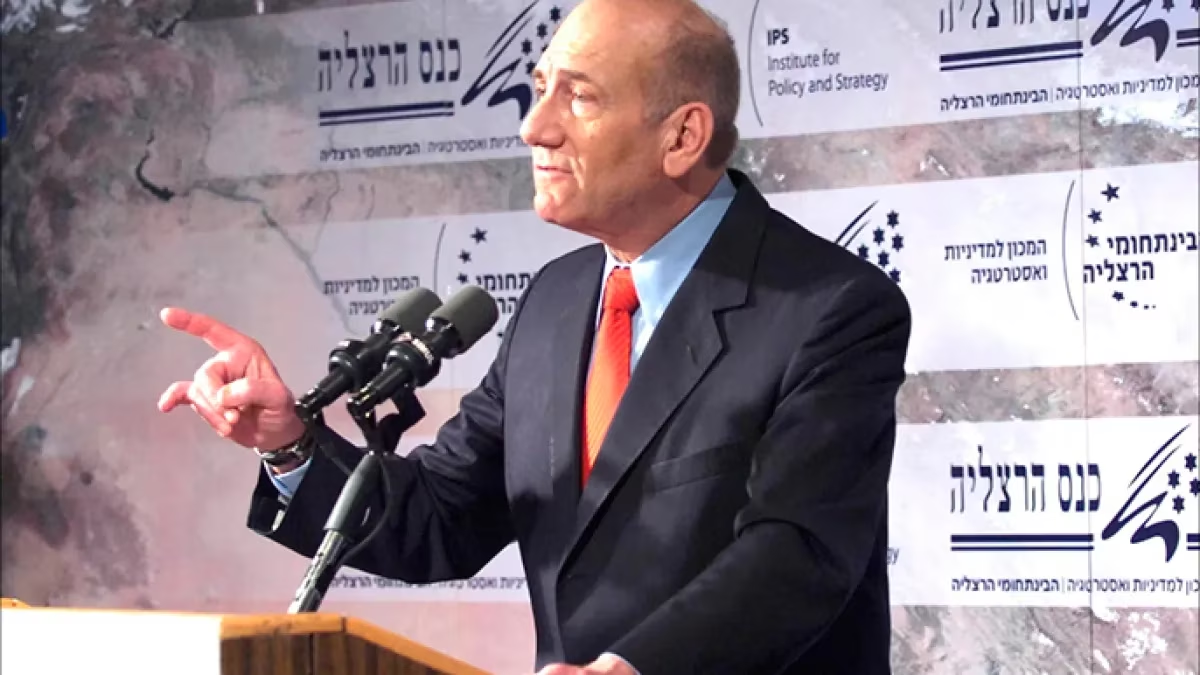
Former Israeli Prime Minister Ehud Olmert launched an unprecedented attack on Israeli policies in the occupied West Bank, describing what is happening as murder, ethnic cleansing, and crimes against humanity. Olmert affirmed in media statements that these systematic practices against Palestinians will not go unpunished internationally, indicating that the occupying state is on the verge of a harsh legal confrontation before international judicial bodies.
Olmert explicitly warned that those who commit these acts and those responsible for providing political and military cover for them will soon find themselves behind bars at the International Criminal Court in The Hague. He considered that the continuation of violations in the West Bank represents a moral and legal decline that threatens the future of the entity and places it in suffocating international isolation, especially in light of the increasing reports documenting these transgressions.
In a direct and sharp message, Olmert addressed both Israeli Chief of Staff Eyal Zamir and Police Commissioner Danny Levy, demanding their immediate intervention to stop what he described as a catastrophe. He stressed that the silence of military and security leaders on the crimes of settlers and field units will make them partners in the criminal responsibility that international courts will consider later.
These statements come amid an escalation of Israeli attacks in West Bank cities and villages since October 2023, which included field killings, widespread demolition of homes, and forced displacement of residents. This wave of violence has resulted in the martyrdom of 1,340 Palestinians and the injury of about 11,750 others, in addition to arrest campaigns that affected nearly 22,000 Palestinian citizens.
On the international legal front, political circles are awaiting the repercussions of the arrest warrants issued by the International Criminal Court in November 2024 against Benjamin Netanyahu and Yoav Gallant. The Israeli leadership faces accusations of committing war crimes and crimes against humanity, charges that were reinforced after the court's appeals chamber rejected the Israeli appeals submitted to stop the investigations.
In a related context, the effects of the genocide war in the Gaza Strip continue to cast a shadow over the scene, despite the ceasefire agreement that came into effect in October 2025. That war left enormous destruction affecting 90% of the civilian infrastructure, with a heavy toll of victims exceeding 72,000 martyrs, amid UN estimates that reconstruction requires a huge budget of up to 70 billion dollars.
Olmert's position reflects a state of deep internal division within the Israeli political and security elite regarding the feasibility of extremist policies in the West Bank. These warnings coincide with increasing international fears of the current government's intention to proceed with plans to officially annex the West Bank, which could lead to a complete explosion of the situation in the region.
Save the country from this catastrophe.. You will come to The Hague.
OPINIONS
Sun 05 Apr 2026 11:51 am - Jerusalem Time
Emotion and Politics: The Dominance of Passion Over Rationality in the Arab and Palestinian Streets
In the heart of the Arab and Palestinian streets, politics appears to be a mirror of identity, geography, and ongoing conflict, more than a field for rational analysis and logical criticism. Politics is not merely programs, projects, or laws; for many, it represents a criterion of loyalty and belonging, and sometimes a criterion of ethics and conscience. From this, it becomes clear that emotion often precedes reason, and that critical rational analysis remains in the shadows, almost marginal in the face of a wave of popular emotions. This phenomenon is not superficial but deeply rooted in a long context of continuous conflicts, especially in Palestine and Lebanon, where politics intertwines with identity, religion, and history in a way that makes every political stance emotionally charged. When the Palestinian issue is presented in the media, the viewer is not just a recipient of information but participates in an emotional experience accumulated over decades: the pain of losing land, the scene of destruction, the cries of children, images that speak of violation and injustice. This emotional interaction, humanly natural, transforms in the street into a criterion for judging politics and leaders, and it overrides rational analysis, which requires objective detachment from momentary emotion.
In the Palestinian context specifically, there are elements that increase the dominance of emotion in political discourse. First, the prolonged conflict and the depth of ongoing violations, which create a continuous state of anger and collective psychological pressure. Second, the lack of trust in official institutions and institutional analysis, which makes people more reliant on direct emotional narratives, whether from the media, social networks, or even daily popular discourse. Third, the confusion between ethics and politics, where a person's stance on a particular issue becomes an ethical criterion before it is a political one. Any complex criticism of plans or policies is sometimes understood as betrayal or a weakness in loyalty to the cause. Modern media, especially social media, plays a dual role. Emotional content spreads faster, creates a wave of support or anger, and makes rational discourse seem slow and unattractive. Emotional images and videos, impactful speeches, and even sarcastic memes become more powerful tools in shaping public opinion than long articles and objective analyses.
But does this mean that Arab or Palestinian society is incapable of rational analysis? Certainly not. There are circles and fields where rationality and critical analysis clearly appear: academic institutions, closed discussions, some specialized newspapers and magazines, and intellectual forums. The problem is not the absence of the ability for critical thinking, but rather the environment that makes emotional discourse the loudest and most influential voice in the political sphere. In the dominance of emotion, it is not limited to the superiority of passion over analysis, but it reaches the point of criminalizing reason. Any attempt to understand reality rationally or offer calm criticism is sometimes understood as betrayal, subservience, or weakness in loyalty to the cause. Here, the political mind becomes suppressed and hidden, observing from afar, waiting for an opportune moment, fearing collision with the popular chorus or the emotionally charged public discourse. In such an environment, political debate turns into a theatrical display of emotion, while rational analysis becomes a luxury or indulgence not appreciated by the street, and perhaps even condemned by itself. Reason is in a constant state of leakage: it speaks in small circles, in closed conversations, or on a few platforms, while emotional discourse dominates public squares and every media or social outlet.
The result, unfortunately, is not neutral. The dominance of emotion over rationality in politics makes popular decisions susceptible to temporary feelings, and makes it difficult to build consensus on long-term policies. Political debate becomes a stage for the accumulation of emotions and slogans, rather than a space for analyzing options, comparing outcomes, or formulating implementable solutions. And in the ongoing conflict, this cycle continues: conflict feeds emotion, emotion influences politics, and politics in turn reproduces conflict.
True criticism does not mean belittling this emotion. It reflects society's sensitivity to fundamental issues and its belief in justice and rights. But at the same time, it indicates an urgent need to strengthen critical political culture, create spaces for calm discussion, and teach tools for objective analysis. In the absence of this culture, emotion remains the dominant factor in shaping politics, the street, and popular decision-making, and politics becomes a field for the accumulation of emotions, not an arena for rational logical analysis.
In the end, the Arab and Palestinian streets remain governed by their emotions, but it is an emotion with a dual weight: on one hand, it mobilizes society and makes real issues tangible, and on the other hand, it restricts critical reason and transforms political debate into an arena for shouting and bickering instead of analysis and planning. This fragile balance between emotion and reason is not just a phenomenon, but an existential challenge for politics itself. If the recurring cycles of emotion, emotional mobilization, and direct rejection of any critical voice continue, society faces the risk of entrenching the politics of the emotional moment at the expense of long-term rational decision-making. However, if some thinkers, leaders, and media professionals succeed in creating spaces for open discussion and presenting rational analysis in a way that the masses understand, the equation may gradually change, and the political mind may be able to emerge from its hiding place and participate in shaping decisions, without being condemned or accused of betrayal. Thus, the bigger question remains open: Will politics in this part of the world remain only a mirror of emotion, or will reason find its way into public debate, balancing the legitimate feeling of anger with the ability for rational planning? The Arab and Palestinian political future depends on the answer, and on society's ability to transform emotion from a dominant force into a partner in the process of political thinking, especially in a time when war, history, identity, and rights intertwine in a single, unyielding fabric.
PALESTINE
Sun 05 Apr 2026 11:47 am - Jerusalem Time
On Palestinian Child's Day.. 64,616 Orphaned Children in the Strip

Gaza - "Al-Quds" Dot Com - (WAFA) - The Ministry of Social Development in the Gaza Strip revealed shocking figures, as the number of children who lost one or both parents rose to 64,616 children. This number represents a huge leap from the 17,000 orphans registered before the start of the war waged by the Israeli occupation on the Gaza Strip in October 2023.The ministry indicates that "these children live in unprecedented humanitarian conditions, facing challenges that go beyond parental loss, including forced displacement, loss of shelter, disruption of health and educational services, and a severe shortage of food and medicine."In one of the scattered tents on the sands of Al-Mawasi, south of the Gaza Strip, seven-year-old child Ola Abu Jameh starts her day by drawing a house she once had and innocently murmuring: "My train, my train, take me home."That house no longer exists in eastern Khan Yunis; Israeli shelling leveled it to the ground, along with everyone in it: the father, mother, and two siblings. Today, the child lives with her sick grandmother.She is not alone in this fate; she is one of more than 64,000 Palestinian children who have lost one or both parents since the start of the war on Gaza three years ago, as Gaza's children face a completely different reality: a reality of loss, displacement, illness, and slow death.In one of the scattered tents on the sands of Al-Mawasi, south of the Gaza Strip, seven-year-old child Ola Abu Jameh starts her day by drawing a house she once had and innocently murmuring: "My train, my train, take me home."That house no longer exists in eastern Khan Yunis; Israeli shelling leveled it to the ground, along with everyone in it: the father, mother, and two siblings. Today, the child lives with her sick grandmother.She is not alone in this fate; she is one of more than 64,000 Palestinian children who have lost one or both parents since the start of the war on Gaza three years ago, as Gaza's children face a completely different reality: a reality of loss, displacement, illness, and slow death.Child Aya Al-Najjar, who lost her father in the bombing of their home in Khan Yunis city, south of the Gaza Strip, recounts in a childish voice heavy with bitterness: "We had a home, we lived there and were happy, we laughed and played. Suddenly, when the war came, our house was bombed and my father was martyred, everything changed."She adds with a bitterness befitting a ten-year-old: "Children around the world live safely with their parents. My father was martyred, and I wish to live in peace with my mother and siblings, to have a home, and to feel safe."The numbers are even harsher when we look at the scale of human losses. By February 2026, the Ministry of Health in Gaza announced the martyrdom of 21,289 children since the start of the war, in addition to more than 44,500 injured.Among the martyrs, there are 274 newborns and 876 infants under one year old, according to data from the Palestinian Central Bureau of Statistics.When we asked 12-year-old Celine Saeed about her dreams, she didn't talk about playing or traveling, but about a school desk. "The best thing is to sit in class and see the teacher and the blackboard, and hold a pen again."Celine is one of the lucky ones. She enrolled in one of the schools, which are tent classrooms in displacement centers in the southern Gaza Strip. These schools barely cover a small part of the needs of more than 700,000 children deprived of formal education due to the occupation's war on the Gaza Strip.UNICEF estimates that about 90% of schools in Gaza have been damaged or completely destroyed during the Israeli aggression on Gaza.In a rare humanitarian scene, 11 premature babies returned to the Gaza Strip in March 2026, after spending more than two years away from their families, following their evacuation from Al-Shifa Hospital in November 2023 during its storming by the Israeli army.These children, who were born in harsh conditions and whose incubators had their electricity cut off by the occupation, were transferred to Egypt to receive medical care, without their families knowing their fate for many months.One of these children is "Sham" (two years old), whom her mother, Rawand Al-Wadiya, embraced for the first time since her birth. The mother says: "It's an indescribable feeling the moment I saw my daughter. I had been waiting for her for a long time. My tears did not stop, as if a part of my heart had returned after a long absence."Even infants were not spared the effects of the war. Health data showed that one in five newborns needs intensive care due to low birth weight, resulting from maternal malnutrition, chronic stress, and poor health care during pregnancy.As for 12-year-old Adam Shaqaliya, he experienced repeated displacement: "We were displaced from the north to Khan Yunis, then we returned to the north, and after that, we were displaced to the south again. Every time we reach a place, an evacuation order comes from the occupation. We pack our belongings and leave. There is no stability, and no place where we feel safe."It is worth noting that more than 1.9 million people in the Gaza Strip have been displaced, most of them multiple times, under intense Israeli shelling of their homes and cities and evacuation orders issued by the occupation to head to areas west of the Strip, forcing them to live in dilapidated tents and overcrowded schools, suffering from severe hunger, a shortage of clean water, and the spread of diseases such as hepatitis and skin diseases. They have been cut off from the most basic necessities of life: electricity, medicine, and dignity, and many have lost their children due to cold, shelling, or malnutrition, while their suffering worsens day by day due to poor living conditions.Elementary school student Reem Moussa summarizes the suffering of an entire generation by saying: "Instead of standing in the morning queue at school, I now stand in the soup kitchen queue to get food. I wish I could be like children around the world. I learn, I play, I have toys. And I don't wait every day for food or water."In addition, medical figures alone are not enough to describe the psychological state of Gaza's children. A report by the United Nations Population Fund (UNFPA) describes what is happening as a "deep mental health emergency."According to the fund's data, 96% of children in Gaza feel that death is imminent, while about 61% of adolescents and youth suffer from post-traumatic stress disorder, 38% suffer from depression, and 41% suffer from anxiety.Mohammed Zaaroub, a displaced child in Al-Mawasi, Khan Yunis, says with great sadness: "I was seven years old when our house turned into a pile of stones when occupation planes bombed it. I lost my father, mother, and younger sister under the rubble, and I only found my torn doll among the dust. Every night I dream that they are returning, then I wake up to the sound of planes and bullets. I no longer fear death, but I fear forgetting their faces."The Ministry of Social Development called for "urgent intervention from local and international institutions, with a focus on monthly orphan care, rebuilding destroyed childhood facilities, and providing intensive psychological support programs."However, with the occupation's continued closure of crossings and restriction of aid entry, these calls remain captive to reality. Gaza's children do not only need a day to be remembered, but a future to live in where they feel safe.Behind every child in Gaza is a story. A story of a postponed dream, a lost home, and a departed father. But despite all this, these children still hold onto their kites, raising their arms to the sky, insisting on life.It is worth noting that on April 5, 1995, during the first Palestinian Child Conference, the late President Yasser Arafat announced the State of Palestine's commitment to the International Convention on the Rights of the Child, making this date immortalized in the memory of generations as Palestinian Child's Day.This anniversary comes this year while the Israeli occupation machine continues its killing and war on the Gaza Strip since October 2023.
PALESTINE
Sun 05 Apr 2026 11:46 am - Jerusalem Time
Aoun confirms negotiation is not surrender, Hezbollah announces targeting Israeli warship
Lebanese President Joseph Aoun affirmed that the negotiation process aimed at stopping Israeli aggression does not represent surrender or a concession of national rights, indicating that the state is moving diplomatically with international powers to stop what he described as Israeli madness. Aoun explained in a speech on the occasion of Easter that there are parties seeking to drag the country into the abyss of war and sedition, emphasizing the necessity of national awareness at this delicate stage.\n\nThe Lebanese President considered civil peace a red line, warning that any attempt to stir up sectarian strife directly serves the interests of the Israeli occupation. He pointed out that freedom of expression must be disciplined under the ceiling of national security, describing some current behaviors as social savagery that threatens the stability of Lebanese society, which is weary of repeated wars.\n\nAoun strongly defended the role of the military establishment in protecting the country, expressing regret for the attacks targeting the Lebanese army by some parties. He affirmed that the army carries out its national duties away from political agendas, stressing that without the sacrifices of the military personnel, citizens would not have been able to stay in their homes under the current security conditions.\n\nOn the ground, Hezbollah announced the execution of a qualitative operation targeting an Israeli military warship off the Lebanese coast, the first time it has announced targeting naval vessels since the current escalation began. The party explained in an official statement that the operation was carried out using a naval cruise missile, targeting the warship 68 nautical miles away while it was preparing to carry out attacks on Lebanese territory.\n\nIn the context of the aerial escalation, Israeli aircraft launched intense raids targeting the town of Kfarhatta in southern Lebanon, resulting in one martyr, several injured, and widespread property damage. The town had been subjected to a series of intense night attacks following forced evacuation orders issued by the occupation army, leading to the martyrdom of a displaced family who had sought refuge in the town to escape the shelling.\n\nIsraeli raids also targeted the town of Siddiqin in the Tyre district, where medical and local sources reported three martyrs and several injured as a result of direct targeting of residential areas. This coincided with another raid targeting the town of Zrarieh, as part of a wide aerial campaign that included various areas of southern Lebanon and the southern suburbs of Beirut.\n\nRegarding ground operations, occupation forces carried out systematic demolition and bombing operations of homes in several border villages, including Naqoura, Debel, Alma al-Shaab, Qawzah, Bayada, and Shamaa. Field sources stated that the occupation burned and destroyed commercial shops, and used bulldozers and heavy machinery to demolish a hotel near the UNIFIL headquarters in Naqoura.\n\nIn a significant development, the Israeli army threatened to target the Masnaa border crossing between Lebanon and Syria, claiming it was used to transport combat means and weapons. This threat led to the evacuation of the General Security headquarters at the crossing and a complete halt to its operations, further tightening the noose on movement and vital supplies to Lebanon.\n\nThese developments come at a time when the occupation army has issued new evacuation warnings to residents of seven neighborhoods in the southern suburbs of Beirut, signaling a new wave of intense shelling on the area. The Lebanese capital is experiencing a state of anticipation and anxiety with the continued intensive overflight of warplanes and drones over various Lebanese regions.\n\nField reports indicate that the "scorched earth" policy pursued by the occupation in border villages aims to create a buffer zone devoid of residents and urban landmarks. Ambulance and civil defense teams continue their attempts to reach the targeted areas to retrieve victims, despite the significant difficulties resulting from continuous shelling and targeting of main roads.\n\nInternationally, warnings continue about the region sliding into a comprehensive war, with Washington calling on its citizens to leave Lebanon immediately as military operations escalate. In contrast, the Lebanese government insists on adhering to diplomatic paths and Resolution 1701 as a framework for a solution, despite continuous Israeli intransigence and the expansion of targeting to include civilians and infrastructure.\n\nNegotiating with Israel is not surrender or concession, and civil peace in Lebanon is a red line that cannot be crossed.
OPINIONS
Sun 05 Apr 2026 11:45 am - Jerusalem Time
Riyadh Quietly Redistributes Power

What Donald Trump said was not merely a slip of the tongue; rather, it was a frank expression of a political mindset that views allies as extensions of influence, not as partners. His statements regarding Mohammed bin Salman carried an unprecedented tone of condescension, as if the relationship between the United States and Saudi Arabia could be reduced to a "commander and commanded" equation. However, what followed was not a traditional reaction, but a calculated silence, reflecting not neutrality so much as a quiet transition to another level of political action, where interests are managed away from emotion, and balances are reconfigured without fanfare. In this context, the energy file stands out as the clearest entry point for understanding this shift; the East-West pipeline extending to Yanbu is no longer merely an economic project, but has become a sovereign tool that enhances decision-making independence, with a capacity of approximately seven million barrels per day, a capacity that often approaches the Kingdom's total oil exports. Thus, the centrality of the Strait of Hormuz, through which about a fifth of global oil trade passes, recedes from being a critical pressure point to merely one option among many, a clear indication that power is no longer just in production, but in the ability to control its routes and overcome geopolitical bottlenecks. However, this transformation is not limited to oil, but extends to reshaping the network of regional relations in a more flexible and balanced way; the Saudi role intersects with Turkey, Pakistan, and Egypt within a formula that does not amount to a traditional alliance as much as it reflects a multi-level "engineering of interests," combining a population weight exceeding four hundred million people, diverse military capabilities, and control over vital passages such as the Suez Canal. In this framework, the goal does not appear to be replacing one ally with another, but expanding the circle of options so that no country remains hostage to a single axis or a single umbrella. In the south, Bab al-Mandab remains a pivotal element in the security and energy equation, as millions of barrels pass through it daily, along with a significant percentage of global trade, making any stability there a necessity that transcends narrow political calculations. Hence, any de-escalation in Yemen, including indirect understandings with the Houthis, falls within a risk management approach, not conflict resolution, especially given Iran's presence as an influential player in the region's balances, whether through direct or indirect tools. Within this complex scene, the features of a deeper transformation in the nature of the relationship with the United States become clear, as it no longer represents the sole guarantor of regional security, but has become part of a broader network of relationships, within a gradual transition from unilateral dependence to rebalancing. It is precisely here that the paradox manifests itself; while American discourse tended towards condescension, the facts on the ground indicated the formation of a more pluralistic world, less subject to the hegemony of a single pole. Accordingly, the Saudi response was not a political statement, but a comprehensive practical path: reducing reliance on the Strait of Hormuz, enhancing alternatives via Yanbu, expanding the network of regional partnerships, and working to de-escalate tension hotspots affecting global trade routes. In this sense, the insult transforms into a transient event in a broader context that redefines the very concept of power, so that it is not measured by immediate reactions, but by the ability to transform pressures into opportunities, and provocation into strategic repositioning. In a world bustling with statements, the most effective nations seem to be those that prefer to say less... and do more; history is not written by what is said in moments of emotion, but by what quietly changes on the ground. And only here can one understand how silence, when deliberate, reflects not weakness, but a strength capable of reshaping balances without raising its voice.
OPINIONS
Sun 05 Apr 2026 11:45 am - Jerusalem Time
The Sin of Hostility Towards Arabs
The American-Israeli evil alliance managed to: 1- Destroy Iran's capabilities and infrastructure. 2- Drag Arabs, against their will, to be a party to the war and confrontation against Iran. The joint attack on Iran was not desired or favored by the Gulf Arab countries and Jordan, and they had no interest in it. Many of these countries have expressed this politically and practically on more than one occasion. The Israeli colony worked to ignite the war against Iran and expand it to include, according to its interests, an Arab-Iranian clash, by forcing Arabs to be in the conflicting trench with Tehran. Narrow-mindedness on the part of the extremist decision-makers in the Iranian capital led them to respond to the American-Israeli deception and trap. They lost sight of priorities, their focus weakened, and their compass of goals went astray, by targeting sites within Arab countries with Iranian shelling and harming the security and sovereignty of the Arab Gulf countries and Jordan. The solidarity visit of His Majesty the Head of State to the UAE on Monday (16/2/2026) aimed to express an understanding of the common interests between the two countries, giving them the attention they deserve, their rejection of any attacks on either party, and their emphasis on the option of seeking ways to de-escalate the prevailing tension in the Arab East region. The Arab countries, as stated in the Jordanian-Emirati statement: "were not a party to the war (on Iran), nor did they start it, but rather tried to contain the crisis and prevent the region from sliding into conflict," as we have no interest in it, and no party benefits from it except the Israeli colony, which sought this war for the sake of: First: Ending, weakening, and distracting Arab and international attention from the massacres, killings, ethnic cleansing, and genocide committed by the Israeli colony's forces against the Palestinian people in the Gaza Strip. Second: Completing the steps of Israeli hegemony and control over the Arab East after the overthrow of the regimes of Saddam Hussein and Bashar al-Assad, and the assassination and killing of Hezbollah and Hamas leaders. Third: Punishing Iran for standing with the Palestinian struggle and against the Israeli colony, and for being the party that still constitutes a leverage and rejection from a position of strength and capability against Israeli occupation, expansion, and colonialism. Iran fell into the trap and committed a political folly and a poor choice of military action by attacking the Arab Gulf countries. By doing so, it fell into the Israeli trap, by pushing Arab countries to indirectly choose to be in the Israeli trench against Iran, through exposing Arab countries to Iranian shelling and Arab confrontation of Iranian attacks, to protect their sovereignty, citizens, and attacked institutions. Iranian apology first and cessation of aggression and encroachment on Arab countries second, and adherence to what Iranian President Masoud Pezeshkian said, that the Gulf countries are brothers and Iran has no interest in attacking them or clashing with them, and that it must realize that it has no interest in losing the Arabs, and that they should not stand with it. The relations based on good neighborliness and the intertwining of common interests between us necessitate a reconsideration, they must make a fundamental change in their political and security behavior.
OPINIONS
Sun 05 Apr 2026 11:45 am - Jerusalem Time
A confused speech by an arrogant and troubled president
The speech delivered by President Trump last Wednesday morning, a "talk to the nation," saw the White House attempt to organize a campaign to explain and clarify what President Donald Trump said in his "talk to the nation." They sought to portray it as a responsible speech that explained the current situation to the public and provided important information to counter the campaign that included members of parliament, public figures, and media personnel. This campaign described the speech as ridiculous, trivial, empty, and a boring repetition of what he had previously said in dozens of statements and tweets. No one volunteered for a mission described as "suicidal" given the declining confidence in Trump's approach to managing a war he claims he won and ended, removing Iran from the map. He then says that Iran must open the Strait of Hormuz and that he is ready for a ceasefire with them. Then he says that he is not concerned with opening the Strait of Hormuz and that those concerned with it should open it themselves. Without embarrassment, as a head of state, he talks about his intention to commit war crimes by destroying civilian facilities that international law prohibits targeting during war. Chuck Schumer, the leader of the Democratic minority in the US Congress, described the speech as pathetic and the most scattered, declining, and trivial speech in the history of American presidents. He did not clearly define the goals of the war, nor the vision and mechanisms for how to exit it. Meanwhile, Democratic Congressman Chris Cullen described the speech as the most dangerous for America and the world. Democratic Congressman Chris Murphy said about this speech that the American president is detached from reality, with no clear plan, just unbalanced talk lacking seriousness. In his speech, US President Donald Trump said three contradictory things in his "talk to the nation." First, he delivered a speech paving the way for announcing the end of the war: "We executed what we planned, we destroyed, we ended the threat" — language to close a file and build an image of complete victory that allows for an exit without internal political cost. Second, he issued a threat that opens the door to escalation: "If Hormuz is not opened, we will open the gates of hell," language to continue and escalate the war. Third, he denied involvement: "We don't care about Hormuz and have no connection to it," language of detachment that allows for backing down from escalation if necessary. This is not verbal chaos, but three possible paths presented simultaneously. The first indication is that the speech does not stem from a completed decision, but from the absence of a decision. Because combining "we have accomplished and it's over" with "we will open the gates of hell" and "we have no connection to Hormuz" means that the White House has not made up its mind between exiting or escalating, and that the president keeps all doors open until the last moment. Therefore, contradiction becomes a tool. Trump also said that the path is not closed, but suspended until a deadline ending on Monday. Here, the deadline becomes the essence of the strategy: not a date for resolution, but a testing ground. What is being tested until Sunday evening? First, the ability of mediators to achieve a breakthrough. Will the mediation process succeed in producing a concrete step to de-escalate tension, exchange binding messages, or a negotiating framework that justifies settling for a victory speech and withdrawal? If a limited but buildable breakthrough is achieved, the option of "unilateral victory" becomes possible: declaring the end of the mission while keeping deterrence lines open. Second, the image of victory and strength domestically. Trump needs to test whether the media narrative (destruction figures, decisive strikes) is enough to convince the public that he has achieved the goal. If this image stabilizes, he can politically close the front without further escalation. But if the image appears shaky, it will require a dose of escalation to re-establish the impression. Third, the public's ability to bear the cost of prices. Including Hormuz in the speech is not a detail; it is a direct test of the American domestic (and allies') tolerance for rising energy prices in exchange for a sense of strength. If prices rise quickly and are accompanied by economic anxiety, the margin for escalation narrows. If the impact remains limited or tolerable, it expands. Fourth, the oil price's reaction to the escalation hypothesis. This is the most sensitive indicator. The threat to open the "gates of hell" is implicitly linked to the possibility of supply disruptions. If the market shows sharp jumps with every sign of escalation, then the barrel imposes a political ceiling on military decisions. If the reaction remains controlled, escalation becomes a less costly option. Three possibilities crystallize by the end of the deadline: exiting with a victory speech: solidifying the "mission accomplished" narrative and moving to a measured de-escalation, while keeping the threat as a deterrent tool. This option requires a mediating breakthrough, a convincing image of victory, and a relatively stable market, or going to escalation by activating the "gates of hell" language if mediators fail and the image of victory appears insufficient, assuming that the market cost is tolerable. Here, the threat turns into action. And the possibility of extending the deadline on Sunday eve: which is most consistent with the structure of the speech. Through a new extension that allows for continued testing: pressure without commitment, promises without resolution, and managing time instead of making a decision. It is clear from the series of dismissals taking place in the American administration, which included the Chairman of the Joint Chiefs of Staff, the Attorney General, and other military and security leaders, that we are facing a moment of restructuring in the American decision-making apparatus, and it apparently includes leaders opposed to the continuation of the war on Iran. These dismissals and resignations at this time are closer to clearing the leadership path before a potential escalatory leap. As for a ground invasion, if it occurs, its goal will not be a final resolution but rather a redefinition of the rules of the game by force and imposing a new ceiling for negotiation under fire, although this option is unlikely due to its exorbitant military and economic costs and its major repercussions on oil and gas prices, financial markets, stock exchange prices, and the global economy.
OPINIONS
Sun 05 Apr 2026 11:45 am - Jerusalem Time
Luigi Barlassina : The Patriarch Who Anticipated Events and Defended Justice and Truth in the Holy Land
In these days, we are living through Holy Week, as the world's attention turns to Jerusalem, where the Way of the Cross and the Church of the Holy Sepulchre are, and where prayers are offered for peace, justice, and tranquility, and where the Holy Land has tasted the might of Herod's tyranny. In this spiritual atmosphere, we find it appropriate to recall and introduce new generations to the Patriarch of the Holy City for Latins, the late Patriarch Luigi Barlassina, who played a pivotal role on both the spiritual and social levels, as well as in the intellectual and political spheres, during the first half of the twentieth century. At that stage, projects of expulsion and replacement in Palestine were at their peak, and he was among the first to sound the alarm bells, warning of the repercussions of these schemes. Luigi Barlassina was the Latin Patriarch of Jerusalem during one of the most difficult periods in the history of the Holy Land, from his election in 1920 until his death in 1947 due to a heart attack. His years were characterized by continuous defense of the land and its people, while ensuring that the Holy See was kept informed of the events and challenges facing the Church and Palestinian society, and meticulously documenting everything that was happening daily. Luigi Barlassina was born on April 30, 1872, in Turin, Italy, and lost his father at an early age. His mother raised him in an atmosphere of piety and devotion, with a special emphasis on great reverence for the Virgin Mary, a devotion that characterized him throughout his life. He was ordained a priest on December 22, 1894, and was appointed auxiliary bishop of the Patriarch of Jerusalem in 1918, then patriarchal vicar general and apostolic administrator, before being elected Patriarch in 1920, becoming the main voice of the Latin Church in Jerusalem for 27 years. The Patriarch was known for his generous and humble personality, refusing official titles such as "His Beatitude" or "Monsignor," preferring to be called "Abouna" (Our Father), because he wanted to be a true father to souls. From the beginning of his service, he showed great interest in youth and education, establishing groups and initiatives that combined religious and physical education. He also focused on preaching and developing schools and churches, leaving a clear impact on the local community. He was the one who founded the first ecclesiastical university college in West Jerusalem, which is known today as Terra Santa College or Cardinal Ferrari College. On the spiritual level, Patriarch Barlassina was faithful to the tradition of worship. He gave the title "Our Lady of Palestine" to the Virgin Mary and established a shrine in the Râfat monastery, adorned with a statue and inscriptions of the Angel's greeting in 280 languages, so that these symbols would remain a testament to his deep love for the Holy Land and its people. He also restored the seminary in Beit Jala after it was damaged in World War I, securing Catholic education for young people, and following up on students' affairs even after the renovation was completed, composing ecclesiastical and liturgical books for them, and visiting them regularly. He also contributed to promoting religious celebrations, most notably the reorganization of the Palm Sunday procession in 1933, after it had been banned for more than 700 years, on the occasion of the Holy Year, where worshippers set off from the Mount of Olives carrying palm fronds to the courtyard of St. Anne's Church, in a scene that affirmed Jerusalem's spiritual and historical centrality. The Patriarch dedicated long hours to writing and correspondence in several languages, documenting political, social, economic, and religious events, leaving a valuable legacy that reflects his wisdom, insight, and deep loyalty to the Holy Land and its people. In this context, he sent several messages to Christian parishioners in particular, warning of the disintegration of the social fabric due to what he described as a newly introduced moral decline, and what might result from it in terms of moving away from the traditions and culture of society. Since 1917, with the announcement of the Balfour Declaration and the beginning of the British Mandate, the Patriarch noticed what was being plotted in Palestine, and his positions were firm, clear, and unwavering. He bravely defended the Palestinian people and their land, which earned him great enmity and attempts to remove him from his position. He fiercely defended the preservation of the historical status quo, as there were serious attempts by the British Mandate to violate the "Status Quo." There are several letters in the archives of the Ministry of Foreign Affairs, written by the Patriarch to the presidency, warning of these attempts. Many documents in the archives of the Secretariat of the Holy See have documented these facts, including an unsigned letter addressing the issue of the Patriarch's removal from Jerusalem, which influential capitals and groups sought. Despite all these campaigns, the Patriarch did not stop performing his mission. He wrote daily to the Holy See, informing them of events in Palestine, warning of the dangers threatening the Holy Land and ecclesiastical interests, and demanding effective intervention to prevent the deterioration of conditions and protect the Holy Land from attempts to seize it from its indigenous inhabitants, and expressing his great concern for the Christian presence in historical Palestine. He also monitored the increasing support for the Jewish Agency, pointing out that it was at the expense of the inhabitants of the Holy Land, and at the same time he firmly confronted any attempts to sow discord or conflict between Muslims and Christians. In one of his letters to Cardinal Pietro Gasparri, Secretary of State of the Vatican, according to protocol number 158/22 mentioned above, he stressed the importance of urgent intervention to protect the rights of the inhabitants and preserve the unity of religious communities in Palestine. In an honorable stance witnessed by history, Patriarch Barlassina, in the last moments, proceeded to purchase the lands of the Tayasir and Tubas areas, at the request of Haj Amin al-Husseini at the time, to prevent the leakage of the area's lands. Patriarch Barlassina truly loved the Holy Land and its people, and bravely defended the Church and its honor, achieving a rare balance between personal humility and firmness in positions, so that his name remains etched in history as a symbol of loyalty, justice, and the defense of truth and the oppressed. Anyone who reviews the archives of the Latin Patriarchate in Jerusalem or the historical archives of the Secretariat of State in the Vatican – Section for Relations with States and International Organizations – will discover the honorable positions of the Patriarch and fully realize the centrality of the Latin Patriarchate of Jerusalem and its pivotal role in the Holy Land, a role that the Patriarchate continues to adopt to this day. * Ambassador of Palestine to the Holy See