ARAB AND WORLD

Tue 20 Feb 2024 11:43 am - Jerusalem Time

Prince William's first comment on the occupation war against Gaza...and this is what he will do

In Prince William's first comment on the Gaza war, the heir to the British throne acknowledged the "human suffering" in the Palestinian Strip, saying that he would undertake a number of activities to reflect his "acknowledgment of the human suffering" resulting from the conflict in Gaza and the Middle East, and drawing attention to the rise of anti-Semitism on the Gaza Strip. World level.


Kensington Palace said that Prince William (41 years old) will meet with those involved in providing humanitarian support in the region, and listen to accounts of the situation on the ground, and the Prince of Wales will also visit a synagogue to listen to young people involved in tackling hatred and anti-Semitism.


Prince William's comment on the Gaza war


In 2018, Prince William became the first among the senior members of the British royal family to make an official visit to Israel and occupied Palestine.


With his father, King Charles, currently absent from official public duties while undergoing treatment for cancer, Prince William is expected to make some high-profile engagements. This comes as his wife, Kate, is also recovering from abdominal surgery.


“The Prince and Princess are deeply concerned by the events that occurred in late 2023, and continue to hold all the victims, their families and friends in their hearts and minds,” William’s office said in a statement.


The war began last October, after the Palestinian resistance launched Operation “Al-Aqsa Flood” in response to the occupation’s violations against the Palestinians.


Since last October 7, the Israeli occupation has been waging a devastating war on the Gaza Strip, leaving thousands of victims, most of them children and women, according to Palestinian and UN statements, which led to Israel being tried before the International Court of Justice for “genocide crimes” for the first time since its founding.


ARAB AND WORLD

Tue 20 Feb 2024 11:41 am - Jerusalem Time

UN warnings of an “explosion” in the number of child deaths in Gaza

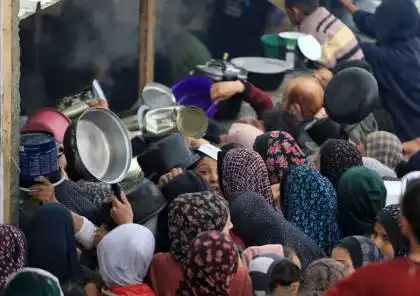
The United Nations has warned that the alarming food shortage and the rapid spread of diseases may lead to an “explosion” in the number of child deaths in the Gaza Strip.


After 20 weeks of Israel's war against Hamas, UN agencies said that food and clean water had become "very scarce" in the besieged Palestinian enclave, and that almost all young children were suffering from infectious diseases.


Ted Chaiban, deputy executive director of UNICEF, said Gaza is about to witness “an explosion in preventable child deaths, which could double the already unbearable level of child mortality.”


At least 90 percent of children under the age of five in Gaza are affected by one or more infectious diseases, according to a report issued by UNICEF, the World Health Organization and the World Food Programme. 70 percent had had diarrhea in the past two weeks, a 23-fold increase compared to 2022.


Rafah, one of the most densely populated places on Earth, now houses half of Gaza's population, many of whom have been displaced multiple times due to the war.

For his part, Mike Ryan, in charge of emergency situations at the World Health Organization, said: “Hunger and disease are a deadly combination,” adding: “Hungry, weak, and severely traumatized children are more vulnerable to disease. Sick children, especially those with diarrhea, cannot absorb nutrients well.


According to a United Nations assessment, more than 15% of children under the age of two, or one in six, suffer from “acute malnutrition” in northern Gaza, and are almost completely deprived of humanitarian aid.


UN agencies warned that “this data was collected in January, and the current situation is likely to be more serious.”


In the southern Gaza Strip, 5 percent of children under the age of two suffer from acute malnutrition, according to the assessment.


The UN agencies said that “this deterioration in the nutritional situation” of people within three months is “unprecedented in the world.”


The death toll from the Israeli military operations in the Gaza Strip rose on Monday to 29,029 dead and 69,028 wounded since October 7.

ARAB AND WORLD

Tue 20 Feb 2024 11:23 am - Jerusalem Time

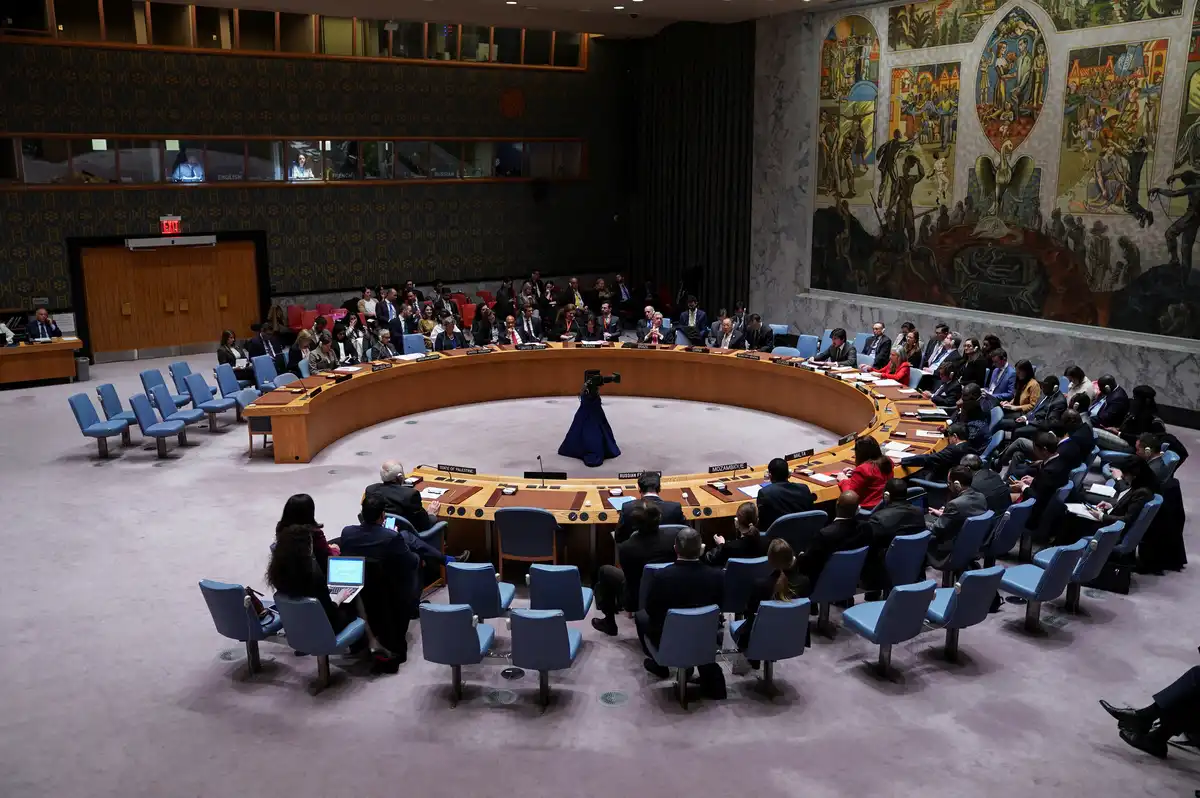
The Arab group calls on the Security Council to stop the Gaza war, and America calls for a “temporary halt.”

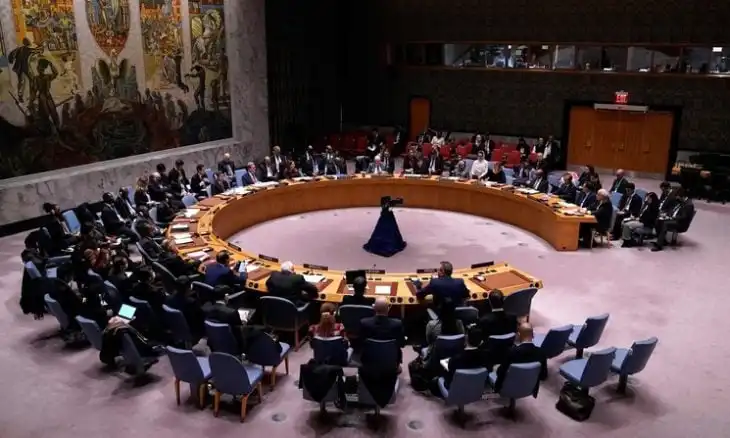
The Arab group at the United Nations requested support for the draft resolution submitted by Algeria for a ceasefire in the Gaza Strip, which is scheduled to be voted on in the UN Security Council on Tuesday. In return, the United States presented a draft resolution supporting a temporary ceasefire.


The Arab group said in a statement, on Monday evening, that the draft resolution submitted by Algeria would support the negotiations conducted by the United States, Egypt and Qatar, contrary to American claims.


It added that the UN Security Council must take steps and not ignore the calls of the international community and global public opinion.


Ite indicated that any justification would not be sufficient to explain the failure of the UN Security Council, issuing a call to all members of the Security Council to support the Algerian draft resolution calling for an urgent humanitarian ceasefire in Gaza.


On Sunday, Algeria announced that it had submitted a “non-amendable” draft resolution to the UN Security Council calling for an immediate ceasefire in the Gaza Strip, to be put to a vote next Tuesday.


American proposal

In the same context, Reuters said that it had seen a draft of a US draft resolution in the UN Security Council that “affirms support for a temporary ceasefire in Gaza as soon as possible.”


Washington has so far opposed the use of the word ceasefire in any United Nations action regarding the Israeli war on the Gaza Strip.


The draft resolution also states: “Under the current circumstances, any major ground attack on Rafah will cause further harm to civilians, and may lead to their displacement to neighboring countries.”


The American draft stated that such a step “would have serious implications for regional peace and security, and therefore the necessity of not proceeding with such a major ground attack under the current circumstances must be emphasized.”


It is not yet clear if or when the draft resolution will be put to a vote.


European invitation

In a related context, European Union foreign policy official Josep Borrell told reporters - yesterday, Monday - that 26 out of 27 European Union member states are calling for an “immediate humanitarian truce” that leads to a “sustainable ceasefire” in Gaza.


Borrell added that those countries agreed to "demand an immediate humanitarian truce that would lead to a sustainable ceasefire, the unconditional release of hostages and the provision of humanitarian assistance."


Borrell did not name which EU member state did not agree to the statement, but diplomats say Hungary blocked a similar statement a few days ago.


The Israeli army is preparing to launch a military ground operation in the city of Rafah, south of Gaza, where about a million and a half Palestinians are gathered, the majority of whom have left their cities in the northern Gaza Strip, due to the continuous Israeli bombing since the seventh of last October.


Since the seventh of last October, the Israeli occupation army has been waging a devastating war on the Gaza Strip, which led to the death of about 29,000 people and more than 68,000 injured, in addition to the destruction of various cities and the displacement and starvation of the population.

PALESTINE

Tue 20 Feb 2024 11:11 am - Jerusalem Time

"International Justice" resumes its public hearings on the legal consequences arising from the occupation

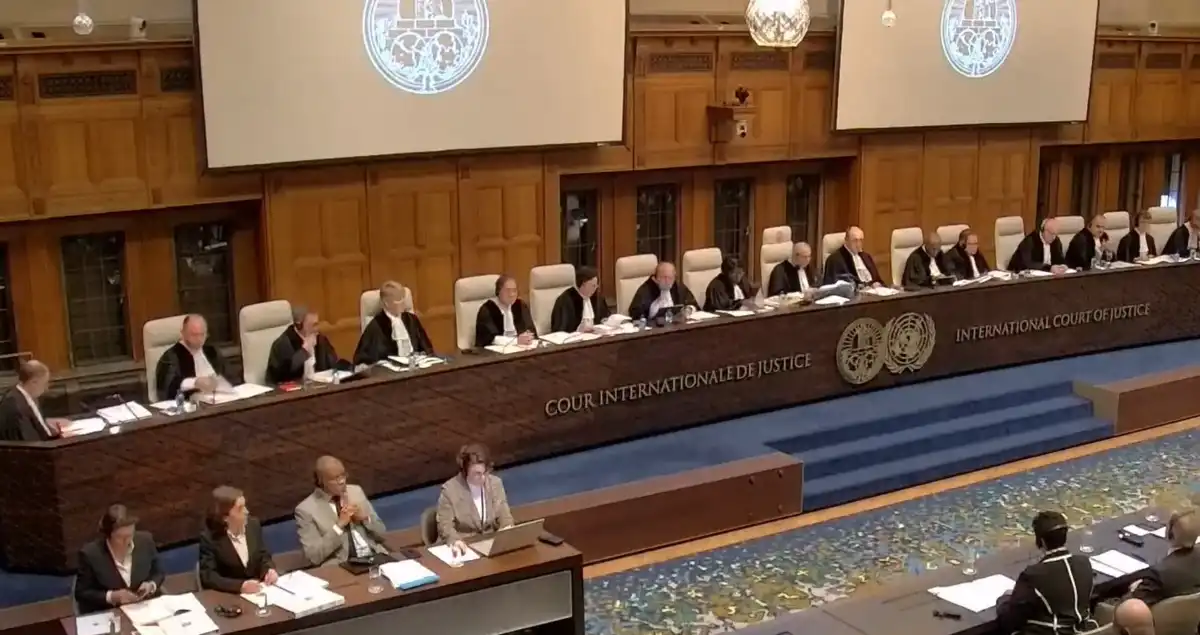
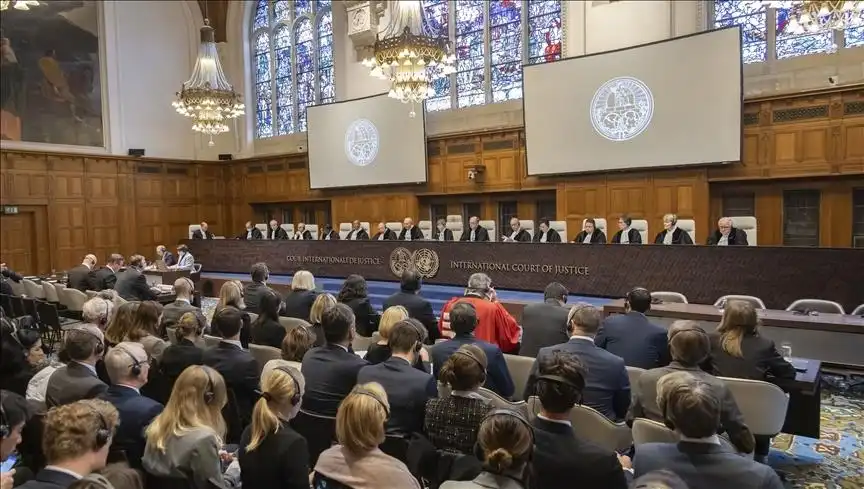
Today, Tuesday, the International Court of Justice in The Hague resumed its public hearings on the legal consequences arising from Israel’s policies and practices in the occupied Palestinian territory, including East Jerusalem.


Yesterday, the court heard the State of Palestine’s plea, presented by the Minister of Foreign Affairs and Expatriates, Riyad Al-Maliki, and the legal team of the State of Palestine, which included: Professor Andre Zimmerman, Faul Rackler, Professor Philip Sander, international law expert Ambassador Namira Negm, and the Permanent Representative of Palestine to the United Nations Riyad Mansour and Alain Pele.


Today, the court is scheduled to hold two public sessions, in the morning and in the evening, to hear briefings from the countries that submitted written pleadings earlier, namely: South Africa, Algeria, Saudi Arabia, the Netherlands, Bangladesh, Belgium, Belize, Bolivia, Brazil, and Chile.


The public sessions will continue for six days, between February 19 and 26, to listen to briefings from 52 countries, in addition to the African Union, the Organization of Islamic Cooperation, and the League of Arab States.


The hearings come in the context of the United Nations General Assembly’s request to obtain an advisory opinion from International Justice on the effects of the Israeli occupation that has continued for more than 57 years.


On November 11, 2022, the Fourth Committee of the United Nations General Assembly, the Special Committee on Political Issues and Decolonization, adopted a draft resolution submitted by the State of Palestine to request a legal advisory opinion and advisory opinion from the International Court of Justice, on the nature of the existence of the Israeli colonial occupation. In the territory of the State of Palestine, including Jerusalem.


This is the second time that the United Nations General Assembly has asked the International Court of Justice, also known as the World Court, to issue an advisory opinion related to the occupied Palestinian territory.


In July 2004, the General Assembly requested a legal advisory opinion on Israeli actions in the territory occupied in December 2003 regarding the construction of the apartheid wall in the West Bank, including East Jerusalem.


A few months later, in July 2004, the court found that construction of the wall contravened international law and must stop, and that the parts that had been built must be dismantled.


Although advisory opinions issued by the International Court of Justice are non-binding, they carry significant moral and legal authority and could eventually become part of the norms of international law.

PALESTINE

Tue 20 Feb 2024 10:47 am - Jerusalem Time

War on Gaza: Dozens of Palestinians killed and wounded in the bombing of various areas in Gaza Strip

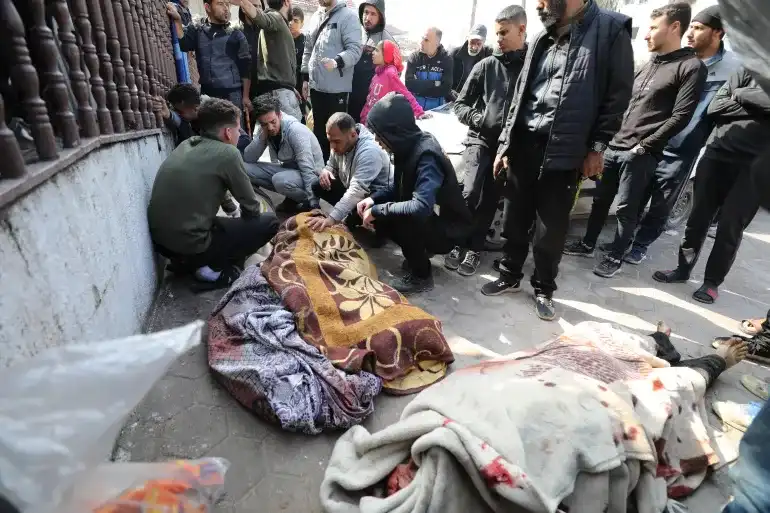
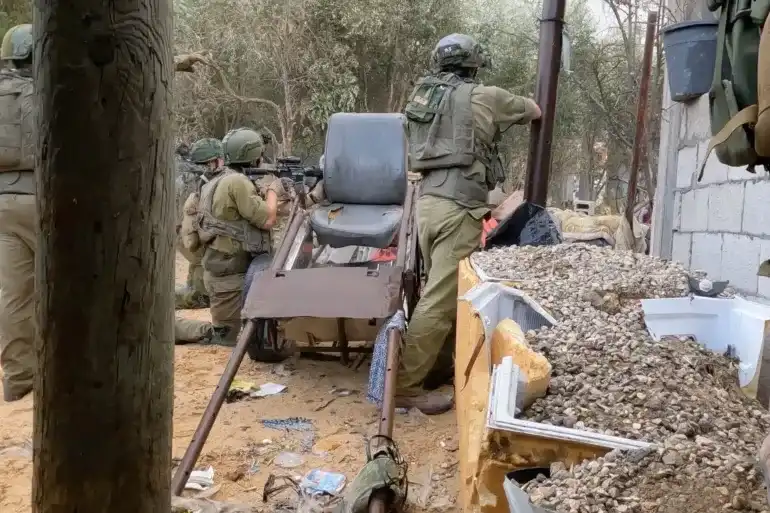
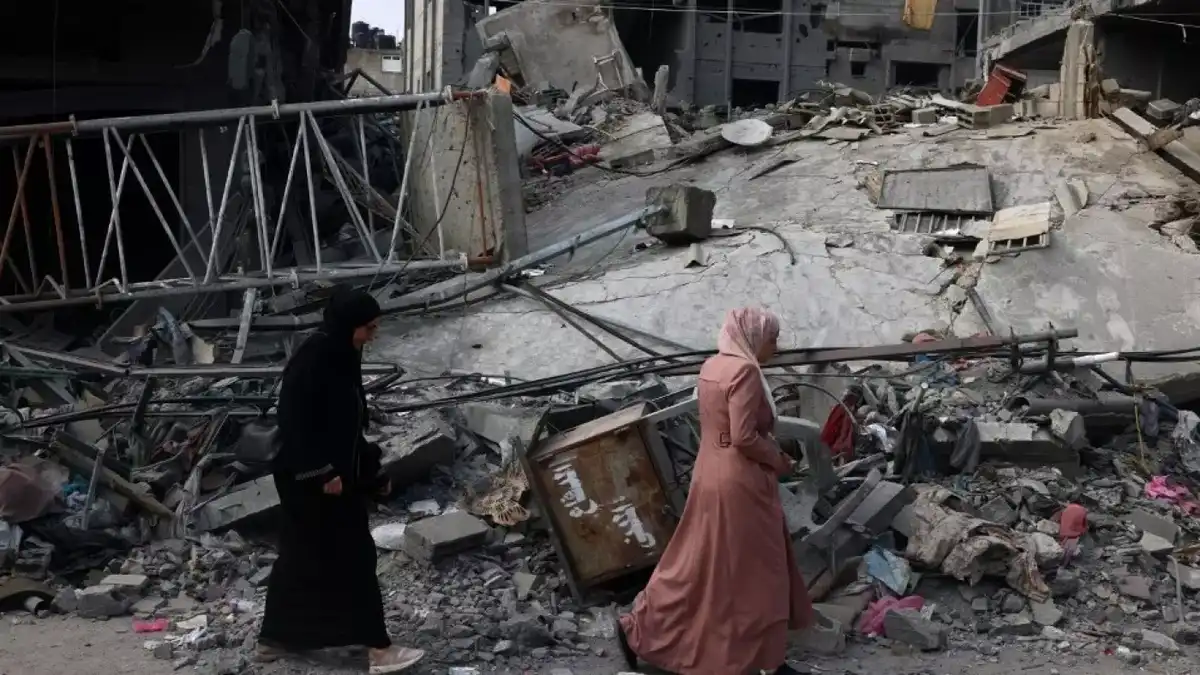
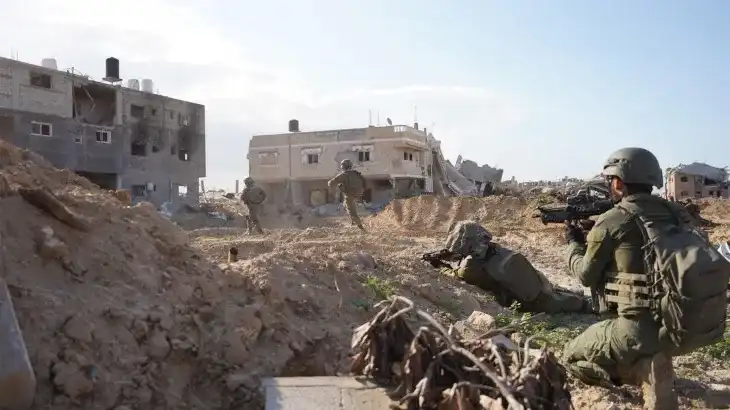
On the 137th day of its aggression against the Gaza Strip, the Israeli forces continued to bomb many areas in the Strip with warplanes, artillery, and gunboats, committing several massacres, which resulted in the death and injury of dozens of citizens, most of them women and children.

According to local sources, a large number of citizens were killed and others were injured in missile and artillery shelling and gunfire from Israeli marches on the Al-Zaytoun neighborhood, southeast of Gaza City.

The sources said that large Israeli military vehicles entered the Al-Zaytoun neighborhood from the Tal Al-Hawa area west of the city, and Mahmour Salah al-Din to the south, and were stationed near the intersection of Street 8 and Salah al-Din Street amid bombardment by Israeli warplanes and the firing of artillery shells that hit a number of citizens’ homes. Which led to at least 15 killed and dozens of wounded.

It added that Israeli "Capter" drones opened fire on citizens moving between the alleys and side streets in the neighborhood, pointing out that the Israeli incursion into the Al-Zaytoun neighborhood caused the forced displacement of thousands of citizens towards the western areas of Gaza City, specifically to Al-Shifa Hospital and the vicinity of the hospital in Al-Rimal neighborhood.

Israeli warplanes, artillery, and tanks launched raids and fired shells at a number of residential neighborhoods in the city of Khan Yunis, south of the Gaza Strip, resulting in 6 dead and 15 wounded.

The Israeli war machine continues its operations in Nasser and Al-Amal hospitals, west of the city, amid tragic conditions for the wounded, patients, and medical staff in Nasser Hospital.

In Rafah, the Israeli army bombed a number of shells in the center and west of the city, causing injuries among the displaced.

In the central Gaza Strip, Israeli warplanes bombed several homes in the Nuseirat, Bureij, and Maghazi camps, and in Deir al-Balah, killing 4 citizens and wounding about 10 others. They were transferred to Al-Aqsa Martyrs Hospital in the center of the Gaza Strip.

The Israeli army fired fire and shells at citizens waiting for humanitarian aid west of Gaza City.

Three citizens were killed tonight in an Israeli bombing targeting the Nuseirat camp, in the central Gaza Strip.

Eyewitnesses reported that the Israeli forces bombed a house in the camp, leading to the death of three citizens. They were transferred to Al-Aqsa Martyrs Hospital in Deir Al-Balah.

In the same context, Israeli artillery bombed the Al-Shaaf area east of Al-Shuja'iya, while occupation gunboats bombed the coast of Gaza City.

In an infinite toll, the number of killed has risen to more than 29,092, the majority of whom are women and children, and the wounded to more than 68,883, since the start of the Israeli aggression on the Gaza Strip on the 7th of last October.

OPINIONS

Tue 20 Feb 2024 10:42 am - Jerusalem Time

Equation: Have you run out of credit, Israel?

Hamdi Farrag

Hamdi Farrag

Opinion Writer

Every day that passes, in its search for complete and absolute victory, Israel loses something new of its assets, whether material or moral, military or political, popular or partisan, immediate or future, regional or international, tactical or strategic, so much so that it is as if we are about to hear the traditional phrase on mobile phones: You have run out of credit.

On the 136th day of the genocidal aggression in Gaza, we stop at two events, the first happened, and the second has not happened yet. The first is related to Yahya Al-Sinwar with his family as he was escaping in one of the tunnels. It was filmed by one of Hamas’ cameras on the 10th of last October, that is, three days after the Al-Aqsa flood, that is, 133 days before today, and this old tape was treated with great attention. Security, politically and media wise, much more than what was done with his shoe, and although the person who appeared in the tape may not be Yahya Sinwar, because he was filmed from behind, and the way he walked did not resemble Sinwar’s walk, Israel presented the tape on It is one of her achievements, ignoring that it is an old tape. About this, the famous journalist Nahum Barnea says in Yediot Aharonot: “Over the course of an entire day, they fed the Israelis a story about a tape recorded about Sinwar in a tunnel. The coward not only flees in terror from our crawlers that are plowing the land above him, but also sends his wife and children ahead of him to They die before him. On October 10, that is, 17 days before the ground move, Sinwar would not have fled anywhere because he had no reason to do so.” Barnea concludes that an officer stopped him and told him, “I fear that the greatest harm from the events of October 7 will be the harm to the values of Israeli society. Hamas will corrupt us, and this war will give birth to another Israel, a vengeful, violent, fanatical mob.”

The second event that has not happened yet is the month of Ramadan, which Israel treats as a frightening thing or a suspicious object that will attack it after about twenty days. It is another matter entirely. It is a holy month for about two billion Muslims, in which they fast during the day and pray at night. They tolerate, love, and sympathize. And they show mercy, on the condition that God accepts their fasting - certainly not all Muslims are like that - but Israel, the owner of the first heavenly religion, views it as a widespread evil, the Corona epidemic, for example, or a second flood of a new type, which it links to Al-Aqsa Mosque as a place, and begins planning to prevent about a million. A believer can seclude themselves in it during their fast. They begin by classifying their ages, political identities, and hometowns, whether they are “Israeli Arabs,” or a citizen of the unified capital, Jerusalem, or from the West Bank.
As for those from Gaza, how do you know what Gaza is? They have been deprived of entering it during Ramadan and other than Ramadan for 17 years, and this year in particular, we have been starving them day and night, for five months. Is your balance running out, Israel?

PALESTINE

Tue 20 Feb 2024 9:26 am - Jerusalem Time

The Security Council votes today on a draft resolution to stop the war on Gaza

Today, Tuesday, the UN Security Council will vote on a draft resolution calling for an immediate ceasefire in Gaza for humanitarian reasons, submitted by Algeria on behalf of the Arab Group.


Algeria had initially distributed the draft at the end of last month, but some permanent members demanded negotiations on the resolution, while the United States threatened to use its veto power, and distributed an alternative draft for voting in the coming days.


The Algerian project calls for stopping the war on Gaza, and asking the parties to the conflict to comply with their obligations under international law and protect civilians and civilian objects.


The American project stipulates “a temporary ceasefire when conditions permit,” and stresses “the urgent need for a plan to ensure the protection of civilians and avoid their displacement in the event of a major military attack in Rafah.”


In order for any proposal to be approved in the Security Council, it must receive the support of at least nine votes and not use the veto by the United States, France, Britain, Russia, or China.


The Israeli forces have continued their aggression on land, sea and air against the Gaza Strip since the 7th of last October, which resulted in the death of 29,092 citizens, the majority of whom were women and children, and the injury of more than 68,883 others, an infinite toll.

ARAB AND WORLD

Tue 20 Feb 2024 9:12 am - Jerusalem Time

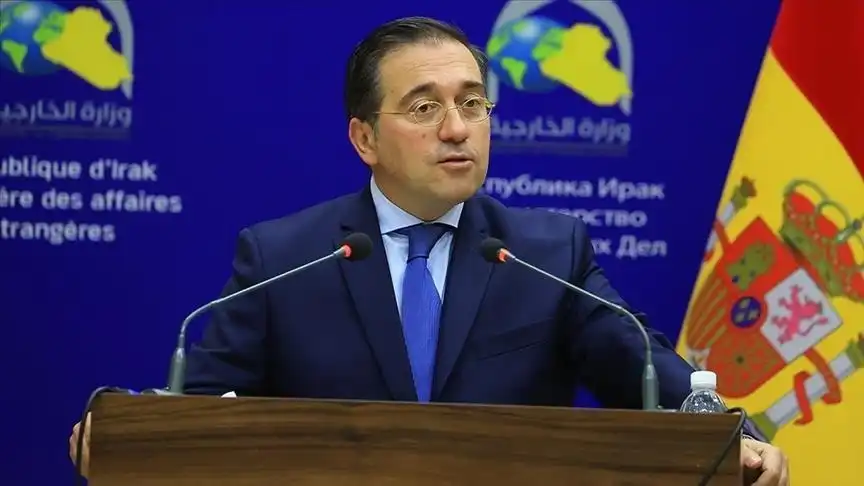
Spain supports the two-state solution and calls for the protection of the Palestinians

Spanish Foreign Minister Jose Manuel Albarez said that Madrid supports the European consensus on implementing the two-state solution, stressing the need to protect Palestinian civilians during the ongoing Israeli war on the Gaza Strip.


This came in an article written by Albarez entitled “Spain is an active element in dialogue, understanding and peace,” for the local foreign affairs magazine Politica Exterior.


Albarez stressed that there are elements that must be taken into account in Spain's international activities, the first of which is peace, and he stated that peace in the Middle East must be guaranteed by saying, "The peoples of Israel and Palestine have the same right to a future of peace and security."


He stressed that "Spain supports the European consensus on implementing the two-state solution that will guarantee peace, and that reactive diplomacy is not enough. Rather, there is a need for active, proactive and visionary diplomacy that supports economic, political and cultural initiatives, and this must be implemented as a matter of necessity."


Albarez pointed out that the civilian population must be protected and their access to basic needs must be ensured as a result of the Israeli attacks on Gaza, noting that Spain tripled its cooperation with Palestine during this period.


The Spanish Foreign Minister continued: "Therefore, we called for a ceasefire for humanitarian reasons and proposed holding a peace conference."

ARAB AND WORLD

Tue 20 Feb 2024 8:27 am - Jerusalem Time

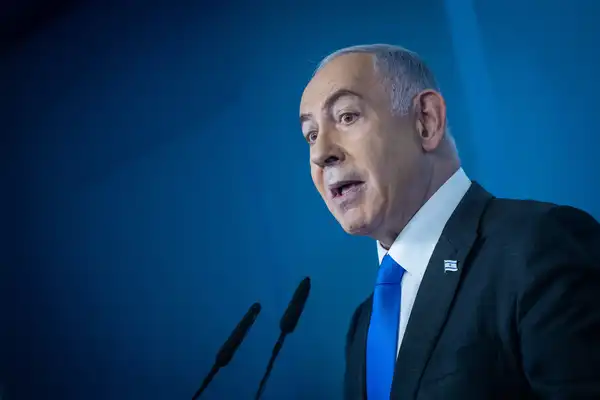
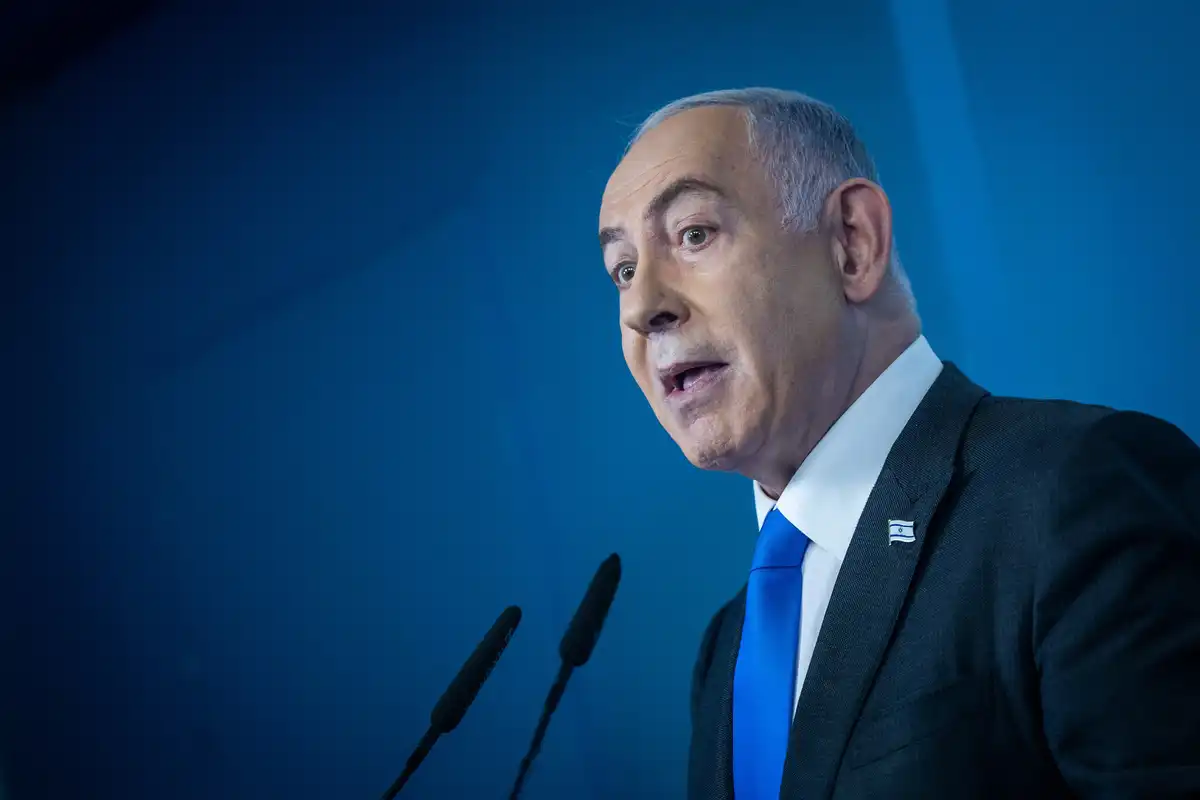
Netanyahu decides to submit his government’s decision rejecting the Palestinian state project for approval by the Knesset

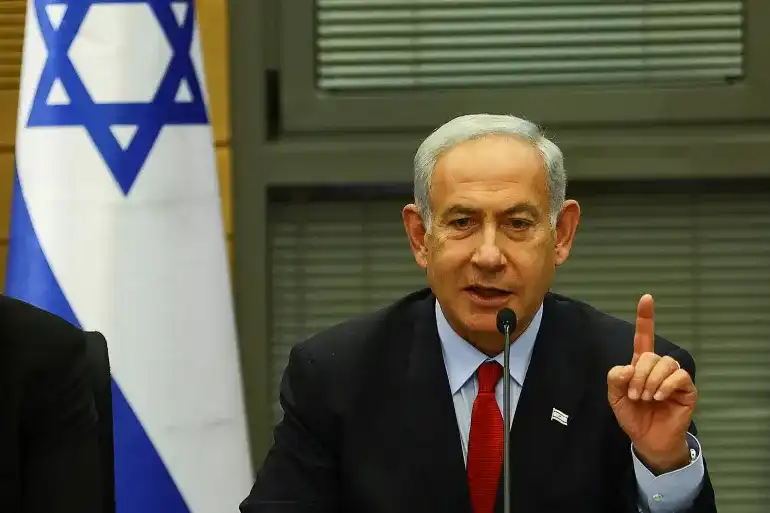
Netanyahu decides to submit the decision issued by his government regarding the Palestinian state project, which expresses Israeli rejection of “international dictates regarding the permanent settlement” with the Palestinians, or moves to recognize the Palestinian state, for approval by the Knesset; He stresses that Israel will maintain security control over western Jordan.


Israeli Prime Minister Benjamin Netanyahu announced that he had decided to submit his government’s decision rejecting the Palestinian state project, including what he describes as “international dictates” regarding the settlement and “unilateral recognition” of an independent Palestinian state, for approval by the Knesset, stressing that Israel “will retain control.” Absolute security over the entire area west of Jordan, including the West Bank and the Gaza Strip, whether with or without a permanent settlement with the Palestinians.


This came in a video statement issued by Netanyahu, this evening, Monday, in which he referred to a “consensus” in his government coalition regarding “the position that rejects Israel’s submission to international dictates regarding such an existential issue,” pointing to “international pressure of a new kind” represented by “ Attempting to impose the establishment of a Palestinian state on Israel unilaterally.”


Netanyahu considered that a Palestinian state “would endanger the existence of the State of Israel.” Netanyahu said, in the statement, that "for five months he has been conducting an unprecedented political battle. It has allowed our fighters the freedom to work to achieve all the goals of the war," referring to the war that Israel has been waging against Gaza for 136 days.


He added, "During this period, we resisted many international pressures that aimed to stop the war before achieving all its goals." He continued, "But in the past few days we are witnessing a new type of pressure: Attempting to impose on us the establishment of a Palestinian state unilaterally would jeopardize the existence of the State of Israel.”


He stressed that his government “categorically rejects this,” and added, “For this reason, I submitted to the government a proposal for a resolution stating that Israel will oppose the attempt to impose the establishment of a Palestinian state on it unilaterally.” He said, “Despite the difference of opinions within the government regarding the permanent settlement, this The proposal received unanimous consent from all participants in the government.”


He added, "We are all united behind the position that rejects Israel being subject to international dictates regarding such an existential issue." He continued, "I welcome this, and I will present the proposal that was approved for approval by the General Assembly of the Knesset today (Monday). I am sure that it will receive an overwhelming majority."


He considered that a decision issued by the Knesset, along with the government’s decision in this regard, “will make clear to the world that there is a very broad unity within Israel against the international attempt to impose a Palestinian state on it.” He addressed the Israeli citizens, saying: “Everyone knows that I am the one who stopped the establishment of the state for decades which would jeopardize our existence.”


He added, "My position was and remains clear. It has become stronger after the seventh of last October," and stressed that "in any case, whether with or without a permanent settlement, Israel will maintain absolute security control over the entire region west of Jordan. This includes Of course, Judea and Samaria (the occupied West Bank) and the Gaza Strip.”


He said, "Even those with different opinions agree that after October 7, we must make decisions regarding our existence and our future ourselves, and therefore I call on all Zionist parties to vote in favor of the proposal that we will present to the Knesset tonight."

ARAB AND WORLD

Tue 20 Feb 2024 8:16 am - Jerusalem Time

International horror at the exposure of Gazan girls to rape and execution by Israeli officers

The United Nations Population Fund expressed its horror at reports of Israeli officers stripping Palestinian women and girls in Gaza of their clothes and subjecting them to rape or execution. UN agencies also warned of an “explosion” in the number of child deaths in Gaza.


The Fund added in a post on its account on the X platform that reports indicate that Palestinian women and girls in Gaza have been beaten, arrested, humiliated, raped, or executed by Israeli officers.


The UN Fund stressed that "women and girls are not targets."


Earlier yesterday, UN rapporteurs expressed grave concern over reports of rape and threats of sexual assault by Israeli forces during their arbitrary detention of Palestinian women and girls.


This came in a joint statement signed by United Nations rapporteurs, in which they described the reported human rights violations against women and girls in Palestine, which is subject to siege and intense Israeli attacks, as horrific.


Since the seventh of last October, Israel has been waging a devastating war on the Gaza Strip, leaving tens of thousands of victims, most of them children and women, according to Palestinian and UN data, which led to Israel being tried before international justice on charges of genocide for the first time since its founding.


Shocking numbers about the conditions of children

The United Nations also warned on Monday that alarming food shortages, rampant malnutrition, and the rapid spread of diseases are factors that could lead to an “explosion” in the number of child deaths in the Gaza Strip.


United Nations agencies confirmed that food and clean water have become a "very scarce" currency in the besieged Palestinian enclave, and that almost all young children suffer from infectious diseases.


Ted Chaiban, deputy executive director of UNICEF, said Gaza is about to witness “an explosion in preventable child deaths, which could double the already unbearable level of child mortality.”


At least 90% of children under the age of five in Gaza are affected by one or more infectious diseases, according to a report issued by UNICEF, the World Health Organization and the World Food Program.


70% had had diarrhea in the past two weeks, a 23-fold increase compared to 2022.


For his part, Mike Ryan, in charge of emergency situations at the World Health Organization, said that “hunger and disease are a deadly combination,” and that “hungry, weak and severely traumatized children are more vulnerable to disease.”


According to a United Nations assessment, more than 15% of children under the age of two, or one in six, suffer from “acute malnutrition” in northern Gaza, and are almost completely deprived of humanitarian aid.


UN agencies warned that “this data was collected in January, and the current situation is likely to be more serious.”


In the southern Gaza Strip, 5% of children under the age of two suffer from acute malnutrition, according to the assessment.


The UN agencies said that “this deterioration in the nutritional status” of people within 3 months is “unprecedented in the world.”


The death toll from the Israeli military operations in the Gaza Strip rose on Monday to more than 29,000 martyrs and about 70,000 wounded since October 7, according to the Ministry of Health in Gaza.


Source: Al Jazeera + Anatolia

ARAB AND WORLD

Tue 20 Feb 2024 8:12 am - Jerusalem Time

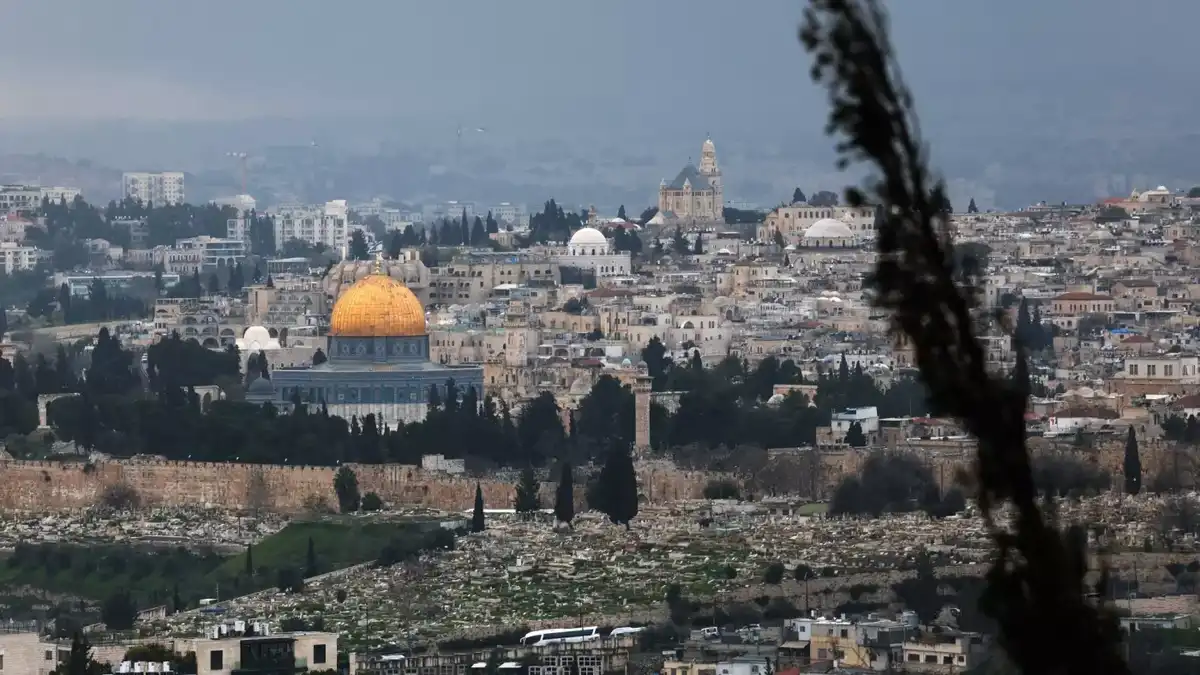
Israel seeks to 'provoke' Palestinians by limiting Al-Aqsa entry during Ramadan

Prime Minister Benjamin Netanyahu's decision to restrict Muslims from sacred mosque is aimed at prolonging conflict and changing status quo, Palestinians say


Israel's plans to restrict Palestinian Muslim worshippers access to al-Aqsa Mosque during the holy month of Ramadan is aimed at provoking the global Muslim community and prolonging Israel's military operations in Gaza, Palestinian political and religious figures have told Middle East Eye. 

A proposal put forward by Itamar Ben Gvir, Israel's far-right national security minister, to limit the entry of Palestinian citizens of Israel into the mosque was accepted by Prime Minister Benjamin Netanyahu during a meeting with senior officials on Sunday, according to a Haaretz report. 

The limitations will be based on criteria such as age and gender, the details of which are to be decided in the coming days. 

Ben Gvir reportedly recommended that only Palestinian citizens of Israel above the age of 70 should be allowed into the mosque during Ramadan, while Israeli police recommended entry for those aged over 45.

The Shin Bet security agency opposed the decision and instead favoured unrestricted access for Palestinian citizens of Israel, a source at the meeting told Haaretz. 


Ben Gvir also proposed a complete ban on Palestinians from the occupied West Bank worshipping at al-Aqsa during the month. No decision was made on those from the West Bank. 

The far-right minister additionally proposed allowing Israeli police to raid al-Aqsa if Palestinian flags are waved or if worshippers "support terrorism", but the idea was rejected at Sunday's meeting. 

Sami Abu Shehadeh, a former member of Israel's parliament, told Middle East Eye: "The first crime in my opinion is the linkage given to the month of Ramadan, that is a month of worshipping and fasting, with violence." 

Abu Shehadeh, a Palestinian citizen of Israel, is the leader of the Balad party and was elected to parliament as part of the Joint Arab List bloc between 2019 and 2022. 

"We have a historical experience of more than 1,400 years that did not involve any violence during Ramadan, but what changed?" he asked. 

"What changed is the existence of this fascist right-wing government and its policies. Their attacks on worshippers and the people during this blessed month is what creates a nervous atmosphere." 

Ramadan is due to begin on 10 March and will last either 29 or 30 days. 

"Over the last few years, restrictions definitely happened," Sheikh Kamal al-Khatib, a prominent Palestinian religious figure in Israel, told MEE, citing the cutting off of loudspeakers and the closing of communal areas such as Damascus Gate.

"But for the situation to reach the announcement of a decision [limiting entry to al-Aqsa] a month prior to Ramadan, that of course represents a blatant religious war declared and conducted by Netanyahu’s government."

'It is a war on two billion Muslims, through targeting the third holiest mosque' - Kamal al-Khatib, religious leader

During the holy month last year, Israeli forces used stun grenades and fired tear gas on worshippers at the mosque, before arresting hundreds of people. 

And in May 2021, hundreds of Palestinians were injured after Israeli forces stormed the compound and attacked worshippers during Ramadan with tear gas, rubber-coated steel bullets and stun grenades. 

The raids, as well as Israeli incursions in the occupied East Jerusalem neighbourhood of Sheikh Jarrah, sparked a major Israeli assault on the besieged Gaza Strip. At least 256 Palestinians were killed in Gaza, including 66 children.

Khatib said that Israeli security services have long warned that restrictions on access to al-Aqsa would be dangerous for Israel's security and its relationship with Arab countries in the region.

Last year's violent Israeli crackdown at the mosque was strongly condemned by Arab countries, including Saudi Arabia and Egypt. 

'Two birds with one stone'

Abu Shehadeh said Netanyahu and Ben Gvir had an "interest in igniting the atmosphere". 

"They work, consciously, on provoking the people, the worshippers and the Muslims in Jerusalem, inside of Israel, in the West Bank and the world," he added. 

"Because the continuation of the war and the continuation of this state of violence serves Netanyahu’s interest to stay in power." 

Khatib held a similar view, stating that restrictions would "hit two birds with one stone". 

"As long as there is conflict and things are escalating, no elections will be held, therefore there will be no trial for Netanyahu, as so many Israelis are demanding these days," he said, referring to a string of corruption allegations against the prime minister. 

"The second bird is, if the government manages to execute this decision, there is no doubt that it will be an advanced step towards imposing the temporal and spatial partition in Al Aqsa mosque," Khatib added. 

Al-Aqsa Mosque is an Islamic site where unsolicited visits, prayers and rituals by non-Muslims are forbidden, according to decades-long international agreements. 

But Israeli settler groups, in coordination with authorities, have long violated the delicate arrangement and facilitate raids of the site, and performed prayers and religious rituals.

Palestinians have described the development as "Judaisation" of the mosque. They fear that restrictions on their entry to the site is laying the groundwork for the mosque to be divided between Muslims and Jews, similar to how the Ibrahimi Mosque in Hebron was divided in the 1990s.

"The decision to prevent Muslims from entering Al-Aqsa Mosque is invalid and conflicts with freedom of worship," Ekrima Sabri, the former Grand Mufti of Jerusalem, said on Monday. 

Khatib believes that Israeli actions related to al-Aqsa did not just target millions of Palestinians and Arabs. 

"It is a war on two billion Muslims, through targeting the third holiest mosque [in the world]," he said. 

ARAB AND WORLD

Tue 20 Feb 2024 8:08 am - Jerusalem Time

Palestinian women and girls in Israeli detention raped and sexually assaulted, UN experts say

By Katherine Hearst

The rapporteurs also condemned incidents of 'arbitrary executions' of women and children during Israel's war on Gaza

 assault of Palestinian women and girls held in Israeli detention.

The independent experts, part of the UN’s fact-finding and monitoring mechanisms of the Human Rights Council, confirmed in a statement receiving reports of Palestinian female detainees being subjected to “multiple forms of sexual assault,” with at least two detainees reportedly raped, while others were allegedly threatened with rape and sexual violence. 

They also described women being strip-searched by male Israeli officers and noted the circulation of degrading images of detainees online by Israeli soldiers.

The statement also cited at least one report of a woman allegedly being held in a cage in the wind and rain.

According to the statement, “hundreds” of Palestinian women and girls have been arbitrarily detained since 7 October and subjected to “inhumane and degrading treatment,” including sexual assault, beatings, and the denial of food, medicine and period products.


The experts also expressed “shock” over reports of arbitrary executions of Palestinian women and children who were taking shelter or fleeing Israeli aggression.

“Some of them were reportedly holding white pieces of cloth when they were killed by the Israeli army or affiliated forces,” the experts said.


'Those responsible for these apparent crimes must be held accountable and victims and their families are entitled to full redress and justice' - UN panel of experts


In January, a video published by Middle East Eye revealed Hala Rashid Abd al-Ati being shot dead while her grandson was waving a white flag as they attempted to flee from Gaza City.

The statement stressed that an unknown number of Palestinian women and children have reportedly gone missing after contact with the Israeli military. 

The experts added that they had received “disturbing reports of at least one female infant forcibly transferred by the Israeli army into Israel, and of children being separated from their parents, whose whereabouts remain unknown”.

Israel rejected the allegations as "despicable and unfounded."

"It is clear that the co-signatories are motivated not by the truth but by their hatred for Israel and its people," the Israeli authorities said in a statement.

Codification of a trend

The experts called for an independent investigation into the allegations which they said “amount to serious crimes under international criminal law that could be prosecuted under the Rome Statute.”

“Those responsible for these apparent crimes must be held accountable and victims and their families are entitled to full redress and justice,” they added.

In December, the Palestinian Authority's Commission of Detainees and Ex-Detainees Affairs confirmed at least 142 females - including senior women and infants - are currently held in Israeli jails. 

In a joint statement with the Palestinian Prisoners' Club, the commission warned that "horrific crimes" have been carried out against the female prisoners. 

Women and girls constitute 70 percent of deaths in Gaza since 7 October, whereas, in the period from 2008 to 7 October 2023, women and girls represented less than 14 percent of the 6,542 Palestinian deaths documented by the UN.

“The sanctioned slaughter of tens of thousands of civilians in Gaza, of whom 70 percent are women and children, cannot be seen as anything but the codification of a trend that has been a long time coming: our official entry into a space and time that has no due consideration for the lives, dignity and humanity of women and children. Period,” Reem Alsalem, the special rapporteur on violence against women and girls wrote for Middle East Eye in January.

The Hamas-led attack on southern Israel on 7 October killed 1,139 people, most of them civilians. Approximately 240 people were taken back to Gaza as captives.

Israel's subsequent attack on Gaza has killed nearly 30,000 Palestinians, most of them women and children, and destroyed most of the enclave's civilian infrastructure and homes. 

Israel's ferocious bombardment of civilian targets has prompted South Africa to bring a case before the International Court of Justice accusing Israel of committing genocide against the Palestinian people in Gaza.

The court on 26 January declared provisional measures that require Israel to prevent and punish genocidal acts and incitement. 

OPINIONS

Tue 20 Feb 2024 8:02 am - Jerusalem Time

War on Gaza: As Greens we demand a ceasefire, no more arms to Israel and a boycott

Middle East Eye

Middle East Eye

Opinion Writer

By Carla Denyer

With another ceasefire vote in Parliament this week, the Conservatives and Labour will once again be seen as complicit in Israel's mass killing if they do not support it


The relentless death toll in Gaza continues to rise, with no end in sight. And with Israel poised to launch an all-out attack on Rafah, thousands more innocent civilians could be slaughtered, a top UN official has warned. To date, around 70 percent of those killed have been women and children.

The Green Party has long called for an immediate ceasefire, the release of all hostages, and the facilitation of humanitarian aid into Gaza. 

As party leaders, Adrian Ramsay and I have used our platform to lobby the government and opposition to reconsider their positions, including writing to the foreign secretary and shadow foreign secretary, speaking at events, and raising the issue on television and radio programmes whenever we get the chance.

As the Palestinian death toll heads inexorably towards 30,000, and with no signs that Israel is willing to end the bloodshed, now is the time for the UK to scale up actions against the Israeli government until the killing stops. 

This onslaught, unprecedented for both the number of people killed and the indiscriminate nature of the killing, has galvanised people into action. Many Green Party members and supporters have joined crowds of hundreds of thousands of people at peaceful protests across the country. A number of councils have passed motions, often proposed by Green Party councillors, calling for an immediate ceasefire.


Since last October, I have attended and spoken at rallies in my home city of Bristol and in London to call for an immediate ceasefire. Over time, the strength of feeling in my city against the death and destruction in Gaza has only grown. 

I was particularly struck by a school strike for Palestine, which saw young people take a stand for a day to mark the thousands of children killed in Gaza - more than 12,000 at the latest count. 

Justice for Palestinians

The children said they contacted the four Labour MPs who represent Bristol, asking to meet them and deliver their petition, but sadly none of the MPs responded. In their absence, the children asked me to receive the petition, and I committed to doing everything I could to amplify their voices.

I took the petition to a Bristol City Council meeting, and formally asked the mayor to write to the foreign secretary and shadow foreign secretary on behalf of the council and ask them to support a ceasefire.

I also visited Wael Arafat, a British Palestinian man who began a hunger strike in late October after his sister and her children were killed in an Israeli air strike in Gaza City. My heart broke when I heard about the traumatic and utterly unfair sequence of events he has experienced: he lost his parents as a small child, came to the UK as a young refugee, and has now seen many of his remaining friends and family killed. 

You might expect this experience to create an angry and embittered man, but from my conversation with Arafat in the hospital that afternoon, it was clear that he does not desire any type of revenge or retaliation. 

Only outside pressure will make Israel stop its mass killing. There are many steps the UK government could and should take

He just wants peace, and for the Palestinian people to be treated fairly and equally by the Israeli government, the UK government and the international community. Arafat told me he feels ignored by his MP and by the UK government. I was relieved to hear that he has now started eating again, but his message of peace is still so relevant. 

Unfortunately, the representatives in our city have not moved their position. I have publicly urged Bristol’s four Labour MPs to listen to the people of Bristol and join the Greens in calling for a ceasefire. None have agreed, although full credit goes to the 56 Labour MPs who rebelled against the party diktat and backed a ceasefire in parliament last November. 

Labour faces another test this week, when MPs will again vote on a motion calling for an “immediate” ceasefire. Keir Starmer has shifted his position slightly, telling delegates to Scottish Labour’s conference over the weekend that he wants to see a "ceasefire that lasts… now". However, his refusal to call for an "immediate" ceasefire will make for a challenging week in the Commons for Labour.

Catastrophic implications

The Israeli government is refusing to heed warnings about the catastrophic implications of its assault on Gaza, and especially of an all-out attack on Rafah. Decisions made by the UK government - above all its failure, month after month, to call for an immediate ceasefire - have made it complicit in the killing.  

The Green Party believes that the UK government must now not only call for an immediate ceasefire, but take specific actions against the Israeli government of Prime Minister Benjamin Netanyahu.

Firstly, there must be an end to all arms sales. Israel relies on certain weapons parts manufactured in the UK, including for the F-35 Joint Strike Fighter. A Dutch court recently ordered the state to cease the export of F-35 parts to Israel. We call on the UK government to follow suit, and also to cease all military collaboration with Israel, including allowing Israeli use of British bases and RAF intelligence flights over Gaza.

Secondly, we need to see the implementation of measures in line with the boycott, divestment and sanctions (BDS) movement across the UK economy. This would include excluding Israel from international sporting and music events; withdrawing all public money from funds with investments in Israel; and ending beneficial trade arrangements with Israel. 

Thirdly, we would encourage UK authorities, including the Metropolitan Police and Director of Public Prosecutions, to pursue perpetrators of war crimes committed where UK citizens are the victims, or where UK citizens are potential perpetrators.

Finally, we can increase the pressure on Israeli leaders by introducing targeted sanctions against key individuals. This should include travel bans and asset freezes on Israel’s leadership and cabinet members, in particular those calling for new settlements in Gaza and the annexation of the occupied West Bank.

It is clear that only outside pressure will make Israel stop its mass killing. There are many steps the UK government could and should take to pressure Israel to stop the killing. If it refuses to act, it is implicitly condoning the appalling carnage in Gaza.

ARAB AND WORLD

Tue 20 Feb 2024 7:49 am - Jerusalem Time

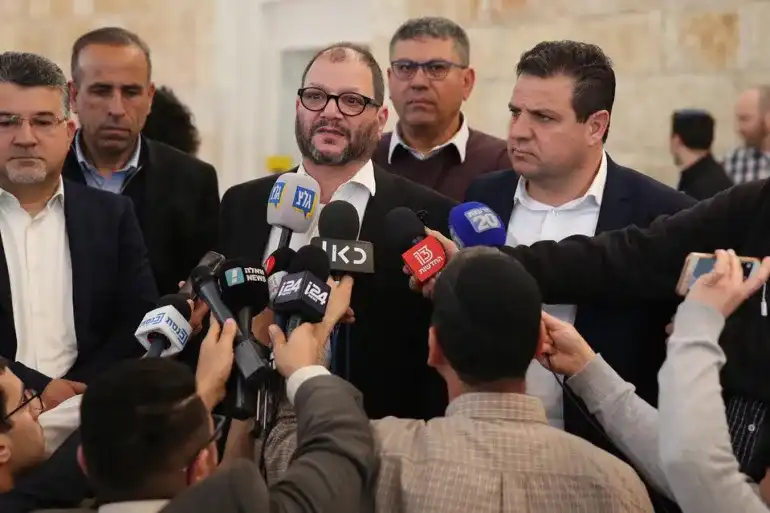
Israeli Knesset fails to dismiss a representative who supported South Africa’s complaint

Representatives from the Israeli National Religious Alliance failed, on Monday, to obtain the necessary majority to remove a member of the Knesset belonging to the far left because of his support for a lawsuit before the International Court of Justice accusing Israel of committing genocide in Gaza.


85 out of 120 representatives in the Knesset voted in favor of removing Ofer Kassif in a plenary session, that is, 5 votes less than the required supermajority of 90 votes.


The unusual vote to remove a sitting member of parliament reflects anger in Israel over a lawsuit filed by South Africa before the International Court of Justice, which says the Israeli war on Gaza amounts to genocide.


Kassif, whose communist party the Democratic Front for Peace and Equality sits in the opposition ranks on a joint list with the leftist Arab Movement for Change party, signed an open letter supporting the accusations against Israel but denied allegations that he supports Hamas.


According to the Knesset statement, Kassif said in the debate that preceded the vote, “This impeachment request is based on a blatant lie, which is that I support the armed struggle of Hamas.”


He added, "I am not ready to accept the government's claims about what is happening in Gaza literally."


Commenting on this, Finance Minister Bezalel Smotrich denounced those who did not support Kassif’s dismissal, and said in a statement, “Anyone who leaves a Knesset member who supports terrorism and incites against Israel in a time of war has lost his way.”


The number of Palestinians killed in Gaza as a result of the Israeli war since the seventh of last October - when the Palestinian resistance unleashed the “Al-Aqsa Flood” - has approached 30,000, in addition to about 69,000 wounded, and significant destruction to civilian buildings and facilities.


Source: Agencies

OPINIONS

Tue 20 Feb 2024 5:15 am - Jerusalem Time

War on Gaza: Why Israel will never 'finish the job'

Middle East Eye

Middle East Eye

Opinion Writer

By David Hearst

Israel has only two alternatives: to follow Ben Gvir and Smotrich in their quest to turn a war over land into a religious war, or discuss with the Palestinians how they can share the land as equals

The widely trumpeted determination of the Israeli war cabinet to occupy Rafah, where 1.4 million Palestinians forcibly ejected from the north and centre of Gaza are sheltering, masks growing doubts about what they will achieve when they get there.

Prime Minister Benjamin Netanyahu is not alone in insisting: "We’re going to do it. We’re going to get the remaining Hamas terrorist battalions in Rafah." Opposition leader Benny Gantz is also pushing for it: "To those who say the price is too high, I say clearly: Hamas has a choice. They can surrender, release the hostages, and the residents of Gaza can celebrate Ramadan."

This braggadocio is for domestic consumption.

It has taken the Israeli army four months to fight their way down a piece of land 41-km long and up to 12-km wide. In contrast, it took just over five weeks for the US-led coalition to capture Baghdad in 2003. Israel has used as much munition in four months as the US did in seven years in Iraq. 


Obviously, something has gone badly wrong. 


Either Israeli soldiers are not the stormtroopers they thought they were, or the resistance of Hamas and other fighters has been unexpectedly stiff. One thing is for sure: Israel’s forces have not been fighting with one hand tied behind their back. 

Summing up the mood of the country, Likud MK Nissim Vaturi said in the Knesset last week, "whoever received a bullet probably deserves it." And the army has been trying to deliver just that. 

Mass exodus conditions

The bombing, artillery and drone strikes have been tailor-made to terrorise civilians and to create the conditions for a mass exodus. Mass casualties and attacks on critical infrastructure are war aims, they are not collateral damage. The International Court of Justice clearly recognised this in imposing an order on Israel to comply with the Genocide Convention. 

Beneath the bluster, there are glimpses of a darker reality to the ground campaign.

Israel’s military intelligence, for one, believes that Hamas will survive as a militant group capable of mounting operations against them. It says that "authentic support" for Hamas remains high among the Palestinians in Gaza.

Israeli journalist Ilana Dayan of Channel 12 reported that these conclusions were presented to political leaders a week ago by senior army officers, Shin Bet officials, and members of the National Security Council. "In this regard, at least," she suggested, "there won’t be absolute victory."

So even if Israel forced Hamas out of Gaza, and I don't believe it can, will it have won?

Many outside Israel reached that conclusion four months ago.


Other questions are just as pressing for the Israeli high command: do they have the troops to mount a major operation in Rafah and reoccupy the Philadelphi Corridor, without having to call up more reservists? A certain amount of war fatigue must be setting in.

A second set of issues is the situation with neighbouring Egypt. Thus far President Abdel Fattah el-Sisi has been playing ball with Israel over the Rafah border. Sisi is allowing Israel to dictate the flow of aid into Gaza and is preparing for an influx of refugees. The Sinai Foundation for Human Rights said Egyptian authorities are preparing a 10km buffer zone to receive displaced Palestinians. 

But the reoccupation of the Philadelphi Corridor, a 14-km long buffer zone along the border, would be a breach of the peace treaty Egypt signed with Israel in 1979, although not enough to make Egypt tear it up. 

The biggest fear of Egyptian military intelligence is the infiltration of militants into Sinai, which already has an insurgency firmly embedded there. 

Waves of resistance

A third factor affecting an imminent ground invasion of Rafah is Washington. 

Like Ukraine, Israel has realised that its firepower vastly exceeds its own stocks of munitions. This has to be constantly replenished from the US. It is in President Joe Biden’s hands to stop or restrict this flow of weapons, especially as he seems to have drawn a red line over the need to evacuate Rafah’s refugees.

There is no sign Biden has pulled this lever so far. Quite to the contrary. But that does not mean, as the US presidential election approaches, he won’t threaten to.

It's therefore just as possible that the loud threats to mount a bloody ground offensive on Rafah are, for now at least, part of the continuing on-off negotiations with Hamas over a ceasefire and exchange of Israeli hostages and Palestinian prisoners.

But let’s put all the above to one side.

Let’s assume that the time will come when Israel controls the whole of the Gaza Strip. What will it have achieved, other than well over 30,000 deaths?

The first mistake Netanyahu is making is in thinking that if he wipes out what he assumes to be the last four battalions of Hamas in Rafah, it will be game over.

Hamas is not an army with a finite number of fighters. It's an insurgency, an idea, that can be transferred from one family to another, one generation to another, or indeed one movement to another. The PLO under Arafat were secular. Hamas is Islamist.

It makes little difference which side carried the torch, but the torch itself continues to burn. Hamas is under no illusions that it can win militarily against a much larger conventional force.

But neither did the Algerians, nor the African National Congress (ANC), nor the Irish Republican Army (IRA) win on the battlefield. All fought their way to the negotiating table. So even if Israel forced Hamas out of Gaza, and I don't believe it can, will it have won?

Israel has declared victory a number of times in this 75-year conflict. It declared victory in 1948 by expelling 700,000 Palestinians from their cities and villages.

Israel thought it had dashed three Arab forces in 1967. Ariel Sharon declared victory 15 years later when he forced Yasser Arafat and the PLO out of Beirut. Five years after that, the First Intifada erupted.

When peace negotiations collapsed, the Second Intifada broke out. Israel again thought it could crush the Palestinian national cause by surrounding Yasser Arafat in his headquarters in Ramallah, and poisoning him. Was that a victory?

Today, Israel thinks it can crush Hamas in Gaza by killing four men among whom Yehia Sinwar and Mohammed Deif occupy a special place.

The list of Palestinian leaders killed in this conflict is already long. Izz ad-Din al-Qassam, a Muslim preacher and a leader in the Arab nationalist struggle, was killed by the British in 1935.

Kamal Udwan, one of the top leaders in Fatah and the PLO, was killed during an Israeli raid in Lebanon in 1973; Khalil al-Wazir, a top Arafat aide, assassinated at his home in Tunis by Israeli commandos; Ahmed Yassin, Hamas' spiritual leader, was killed when an Israeli helicopter fired a missile at him as he was being wheeled from dawn prayer in Gaza City.

Also, Abdel Aziz al-Rantisi, co-founder of Hamas, was killed by missiles fired from an Apache helicopter; Fathi Shaqaqi, founder and secretary-general of the Palestinian Islamic Jihad (PIJ) who was shot five times in Malta by two Mossad agents; and Abu Ali Mustafa, the general secretary of the Popular Front for the Liberation of Palestine (PFLP).

But what have these killings achieved, except to bring on another, and stronger wave of resistance, to usher in another generation of fighters hardened by history at the hands of their occupiers?

The memory of massacres

History is fuelled by collective memory. The memory of massacres of the war in 1948, like Tantura or Sabra and Shatila in 1982 were passed on by word of mouth. There was no internet at the time, and little to no video footage. Words were powerful enough to inspire future generations to resist.

Israel has made much use of a video compilation of the killings carried out by Hamas and other fighters from Gaza on the kibbutzniks on 7 October.

If that video rightly horrifies its viewers, just imagine what effect four months of social media clips of the massacres that Israeli forces have carried out in Gaza will have on future generations of Palestinians. 

The Nakba or Catastrophe that Israel has conducted in Gaza in the last four months is incomparably better documented than the Nakba of 1948. Those images will stay on the internet forever. Why should Israel think that this Nakba will evaporate in popular consciousness when it's done with fighting? 

The population of Jordan is 11.15 million, just over half of whom are Palestinians descended from the refugees expelled from the West Bank, East Jerusalem and Gaza. 

Even if you discount the East Bank Jordanian tribes - and they have been as vocal about Gaza as the Palestinians have been - that means there are three times as many Palestinians in Jordan as there are in Gaza. They are angry, relatively well off, and have access to a burgeoning arms market. Furthermore Jordan has porous borders with Syria and Iraq where Iran-backed groups are itching to become involved. 


This makes Jordan the ideal recruiting ground for the next wave of Palestinian fighters. 

Now who, in their right minds, would seek to pacify their southern border from enemy attack, at the cost of re-energising the much longer eastern border? Who would exchange 60km of insecure border for 482km?

A blind sense of victimhood

Israel and its supporters only see its own history and listen to their own voice. It cannot see what it's like to be on the receiving end of their ever-expanding state. 

It cannot see that the Palestinians in Rafah who have been displaced multiple times in their exodus south, are themselves the descendants of refugees from the towns and cities that today form part of Israel - Beersheva, Yaffa, the Naqab.

If Israel succeeds in Gaza, there is not a Palestinian in Israel, East Jerusalem, or the West Bank that does not think they will be next

It cannot see the powerful symbolism of what it is doing. In trying to crush Gaza, it is trying to crush the Palestinian nation as a whole. If Israel succeeds in Gaza, there is not a Palestinian in Israel, Occupied East Jerusalem, or the West Bank that does not think they will be next.

Israel's sense of victimhood and historical destiny blinds it to the suffering it causes. In its eyes, there can only be one victim of history - a Jewish one.

There is no room for anyone else in this worldview. Palestinians are not just invisible, they don't exist. But the Palestinian national cause surely does. 

Last year, Netanyahu all but declared the end of the conflict with the impending signature of Saudi Arabia on the Abraham Accords. Barely weeks later Israel was embroiled in the longest war it has fought since 1947. Today this war has propelled the Palestinian cause right to the top of the world’s human rights agenda.

And yet like a gambler rolling the dice for ever higher stakes, Netanyahu’s army has gone from one hospital to another, failing to find Hamas' lair, but destroying Gaza’s health system just as surely. It has gone from north to south declaring victory is imminent.

Benny Morris, the former left-wing revisionist historian turned hawk, told the Frankfurter Algemeiner that he disliked Netanyahu intensely: "He’s a crook. But he’s right that the war should continue until Hamas is crushed, if only because around the region, we will be seen as losers if we don’t complete the job."

I have news for Morris, the historian. Israel will never "finish the job".

It has only two alternatives - to follow Itamar Ben Gvir and Bezalel Smotrich in their quest to turn a war over land into a religious war, or to sit down with a leadership Palestinians are free to choose to discuss how they can share the land as equals.

I know which choice I would make.

 

ARAB AND WORLD

Tue 20 Feb 2024 5:11 am - Jerusalem Time

China sends a new message to "Israel" regarding the invasion of Rafah

China called on Israel to stop its military operations in the city of Rafah, south of the Gaza Strip, “as soon as possible,” in order to prevent the humanitarian situation from worsening.


Chinese Foreign Ministry spokeswoman Mao Ning responded to a question about China's position on the ongoing Israeli attacks on the city of Rafah by saying: "China is closely monitoring developments in Rafah. We oppose and condemn acts committed against civilians and international law."


It added: "We call on Israel to stop military operations as soon as possible, and to do everything in its power to avoid casualties among innocent civilians, and to prevent a more devastating humanitarian catastrophe in Rafah."


Last Tuesday, China urged Israel to stop its military operations and do “everything possible” to avoid civilian casualties in Rafah.


For his part, a member of the Israeli war government, Benny Gantz, warned that if Hamas did not release all the hostages before Ramadan, the Israeli army would launch a ground attack on Rafah, where 1.4 million Palestinians had gathered.


At the same time, human rights institutions expressed their concern about the situation of the displaced in the city of Rafah in light of reports of Israel’s intention to invade the city, where more than half of the population of the Gaza Strip gathered after the destruction in the northern Strip.


Israeli Prime Minister Benjamin Netanyahu continues to confirm his intention to carry out a ground attack in Rafah, despite calls directed at him by part of the international community to withdraw from this plan.

ARAB AND WORLD

Tue 20 Feb 2024 5:09 am - Jerusalem Time

America proposes a draft resolution in the Security Council that supports a temporary ceasefire in Gaza

Reuters reported on Monday that the United States proposed a UN Security Council resolution supporting a "temporary ceasefire in the Gaza Strip as soon as possible."


The proposal states: “Under the current circumstances, a major ground attack in Rafah would further harm and displace civilians, and perhaps even neighboring countries. Such a move would have serious consequences for regional peace and security, so such action should not continue.” "The major ground attack under the current circumstances."


It is unclear if and when this resolution will be put to a vote. The United States formulated this proposal in response to an Algerian proposal, which last week asked the Security Council to vote on a resolution for an immediate ceasefire on humanitarian grounds in Gaza.

ARAB AND WORLD

Mon 19 Feb 2024 8:17 pm - Jerusalem Time

Brazil withdraws its ambassador from Tel Aviv and expels the Israeli ambassador

Reuters announced that Brazilian President Lula da Silva withdrew his country's ambassador from Israel.


These developments come after da Silva accused - yesterday, Sunday - Israel of committing “genocide” in the Gaza Strip, likening what it is doing there to the “Holocaust” during World War II.


Later, the Israeli Foreign Ministry announced that it had summoned the Brazilian ambassador to “reprimand” him.


In this context, the Hebrew Channel 13 said, “Brazil expelled the (Israeli) ambassador today, Monday, and withdrew its ambassador from (Israel), in protest against (the war on Gaza).”


Yesterday, Sunday, Brazilian President Lula da Silva accused the Israel of committing “genocide” in the Gaza Strip, likening what it was doing there to the “Holocaust” during World War II.


The Brazilian president told reporters in Addis Ababa, where he attended an African Union summit, that “what is happening in the Gaza Strip is not a war, it is genocide.”


He added, “It is not a war of soldiers against soldiers. It is a war between a highly prepared army and women and children.”


He stressed that this “did not happen at any other stage in history,” before adding, “In fact, it had already happened when Hitler decided to kill the Jews.”


Since October 7, the Israeli army has continued its aggression against the Gaza Strip, with American and European support, as its aircraft bomb the vicinity of hospitals, buildings, towers, and Palestinian civilian homes, destroying them above the heads of their residents, and preventing the entry of water, food, medicine, and fuel.


OPINIONS

Mon 19 Feb 2024 5:24 pm - Jerusalem Time

Hebrew Medi: Bad news from Washington

N12 channel

N12 channel

Opinion Writer

By Amos Yadlin

Last week, I visited Washington, and during that time, I met officials at the political and professional levels, in both the administration and Congress, major research institutes, senior journalists, and influencers of public opinion. In the discussion and meeting rooms, during many previous visits to Washington, I have always felt the stability of the relationship and friendship between the two allies, even when there were differences of opinion between them. This time, I felt that something had cracked in American confidence in Israel.


Doubts in Washington are deepening regarding the nature of relations with Israel, and those related to the question of whether Israel's policies serve American strategic interests, but also whether these policies serve Israeli strategic interests themselves. These feelings toward Israel prevail among those considered to be part of the American “mainstream,” and not only among parts of the progressive left in the Democratic Party.

It is surprising, somewhere, that this worrying mentality in Washington comes precisely after the “massacre” that occurred on October 7, and in light of the unprecedented mobilization of the United States, under great guidance and leadership from Biden, to support Israel politically and militarily on all fronts. The confrontation that was imposed on her. In many of the meetings, those I spoke to repeated their questions regarding the reasons that lead the Israeli government to choose public conflict with the American administration that stands by its side in its darkest situations, saying that it is appropriate today for Israel to hold a dialogue with this administration regarding partnership in determining the future of the region. And the future of the Palestinian arena within it, in a way that guarantees the Israeli security interest.


The US administration is deeply aware of the importance of dismantling Hamas, and also realizes that Israel will not be able to stop the war, especially at a time when 134 kidnapped persons are being held in Gaza. Moreover, and in a way that contradicts the most important Western countries, the administration also recognizes the need to carry out military activity in Rafah, and does not reject it at all, but demands solutions for the 1.4 million Gazans who remain there.

Washington is also making efforts to give Israel more time and continue its support, even if this incurs heavy political costs, which President Biden will pay in this election year. At the same time, the administration expects the Israeli government to coordinate its position with it, and it expects it, in particular, to ensure the entry of humanitarian aid in sufficient volume, and to make military activities in the Gaza Strip precise in order to reduce civilian casualties (losses that would exacerbate pressures On the administration), in addition to curbing nationalist violence [settler violence] in the West Bank. However, the administration doubts Israel's ability to achieve the goals it set for the war through military effort alone, without working politically in parallel to create an alternative to Hamas in Gaza.


What is seen as Israeli avoidance of making practical and political decisions regarding the “next day” in Gaza and the region raises deep frustration in Washington, and makes it difficult for it to continue supporting Israel in the war, and this political vacuum has been entered by other parties in the American administration, and Europe, And the moderate Arab countries are pushing towards recognition of a Palestinian state.


The United States has a great interest in the region’s problems. Israel does not exploit this interest


It is clear that Israel has no interest in the Palestinian people, large sectors of whom support Hamas's "crimes" on October 7, enjoying international legitimacy and a "prize" represented by recognition of a Palestinian state. The way to prevent such scenarios from being achieved is to conduct a constructive dialogue with the American administration regarding a common regional vision, in cooperation with the camp of moderate Arab countries, including Saudi Arabia. Within the framework of this dialogue, Israel must stipulate, when looking to reach any political solution, that the entity be The Palestinian politician is disarmed, and is not allowed to engage in “terrorist” activity from his lands, and stops paying salaries to “saboteurs” and incitement against Israel. Most of these conditions are accepted by the Americans, as well as by moderate Arabs, and Israel has a historic opportunity to consolidate them in international discourse.

The American strategy, to get out of the crisis in Gaza and the Middle East, depends on the immediate implementation of an exchange deal that would lead to a truce in the war, and allow for several measures to be taken, including: accelerating comprehensive reforms in the Palestinian Authority (according to Biden’s vision of the “renewed” authority), Stabilizing the situation in the West Bank on the eve of Ramadan, which is considered a sensitive month, and the Jewish holidays that follow it, and beginning to create an authoritarian alternative to the Hamas movement in Gaza, while recruiting the Gulf states, and pushing towards a political settlement with Lebanon, based on Security Council Resolution No. 1701, which will prevent the outbreak of a large-scale war between Israel and Hezbollah.


According to the American perception, achieving security stability in the Levant is a guarantee of the United States’ success in calming the Red Sea and the Gulf, and preventing it from sliding into a large-scale military confrontation with Iran’s supporters in the region, especially the Houthis in Yemen and the Shiite militias in Iraq, a confrontation that could The United States suffers the loss of more American soldiers in the region, and the scope of things could expand into a direct confrontation with Iran.

According to the administration, all of these matters, in parallel with the launch of a political movement that brings together Israel and the Palestinians, and forms a political horizon, will allow pushing towards normalization between Israel and Saudi Arabia, and the formation of the moderate camp in the Middle East, so that it constitutes a counterweight to the escalating threats from Iran and its supporters. 


The US administration is working under an intense and stressful timetable, against the backdrop of the approaching US elections, and estimates within the administration indicate that the window to push towards normalization could close within the next few weeks.


This administration is ready to enter into an in-depth dialogue with Israel regarding the delineation of the general strategic lines of the region, and to invest a lot of attention, such as the effort expended in normal days in competing with China. However, the Israeli government’s reactions and measures are viewed in Washington as rejectionist and ungrateful, and in situations like these, the tendency in Washington seems to be increasing toward pushing for steps from above Israel’s head. 

The mounting civilian casualties in the Gaza Strip have led to the launch of several measures aimed at ensuring Israel is committed to its obligations to use American weapons in accordance with international law, while preserving human rights. The United States, in cooperation with Arab countries, is coordinating multiple steps as part of its preparations for the next day in Gaza, and what are seen as gaps in addressing the problems of national crimes in the West Bank [settler attacks] have led to the imposition of sanctions against settlers. 

The Washington Post indicates that the administration is working with Arab countries on a political initiative to push for a two-state solution, while Washington is also preoccupied with the issue of the possibility of achieving a “small American-Saudi deal,” without “Israel and Congress,” and without the need for approval. on her.


Will Israel thwart the broad American move?

Despite the negative direction in which relations with Washington are drifting, it is important to emphasize that the administration still has a deep willingness to listen to a clear vision from Israel regarding the directions it seeks and the political goals it seeks to achieve historical experience proves that Israel has a wide ability to influence the actions of American administrations, based on the branching channels of communication that exist between the two countries at all levels, and because of the deep alliance that exists between them.


Therefore, the Israeli government’s willingness to enter into a deep and serious dialogue with the administration will allow it to influence the policies of the United States, and even shape them, according to vital Israeli interests. Similar to ensuring that Israel maintains broad security control and powers in the area west of the Jordan River in any future political settlement, these powers were completely clear to the administration, even before October 7, and their clarity has increased afterward. 

This is in addition to disarming any Palestinian political entity in Gaza and the West Bank, in addition to preserving the freedom of Israeli security action in the field in order to continue dismantling Hamas cells, for several reasons, including preventing the emergence of the “Hezbollah model” in Gaza, that is, the model that within its framework, the movement continues to achieve its military growth under a Palestinian national unity government that enjoys international legitimacy.

On the other hand, the continuation of the policy of confronting the American administration could obscure Israeli interests, and may even harm them in multiple contexts through the political “Iron Dome” that America provides in various international organizations, especially in the Security Council, in addition to effective protection from missiles launched in our direction from Yemen, in addition to military patience, freedom of movement and deterrence, and we do not forget economic assistance, the provision of advanced technologies, regional integration, influence in curbing the Iranian nuclear threat, and other interests.

The bottom line: It is not too late to change direction, and work in understanding and cooperation with the Biden administration, especially since Israel has no alternative to strong American support, something that became very clear after October 7. 

On the other hand, if Israel continues to follow the current confrontational approach with the US administration, it will be seen as sabotaging the strategic interests of the United States and interfering in internal politics in Washington, and the damage that will be caused to Israel’s standing in the United States will make us deeply regret it.


OPINIONS

Mon 19 Feb 2024 5:19 pm - Jerusalem Time

Hebrew Newspaper: Netanyahu's escape from the negotiating table

Yedioth Ahronoth

Yedioth Ahronoth

Opinion Writer

By Nahum Barnea

There is no nicer way to say the following: What is being published about the negotiations with Hamas are lies, with which the Prime Minister’s Office is trying to fool the minds of the public; On the eve of the last round in Cairo, Netanyahu retracted the previous directives he had given to the Israeli crew, without explaining to him what was the reason for the change. “Did Netanyahu think that tactical toughness would push Hamas to show flexibility in its position? Or did he feel panicked by the progress of the negotiations, so he moved strategically to thwart them?” If this was his intention, he succeeded; Today, there are no negotiations. 

The head of the CIA, who came to Israel to try to bring the negotiations out of the coma, came out of his meeting with Netanyahu empty-handed, and in fairness, it should be said that what he brought from Cairo was not promising at all.

There are restaurants where the chefs are more passionate about the food than the customers, and this applies to the deal that has matured in Washington, Doha, and Cairo. The mediators invest a huge amount of energy, but Hamas does not panic, surrender, or submit, while Netanyahu talks a lot about feelings, morals, and security, but he works according to internal political considerations.

The Israeli delegation recruited the best people the security establishment has ever produced: Reserve Major Generals Nitzan Alon and Polly Mordechai, the head of the Mossad, David Barnea, the head of the Shin Bet, Ronen Bar, the former head of the Strategic Division in the Israeli army, Brigadier General Oren Sater, and others. 

They are waging a struggle on five fronts: facing Hamas, the mediators, facing the political level, facing the Israeli army, and the families of the kidnapped, and the goal is one, which is to recover the kidnapped. The fronts differ, as each one has its own purposes and rules of the game, and one of the important goals that The crew achieved it, but it did not receive public attention towards the forces on the ground, as it prevented a military operation in advance that could endanger the lives of the kidnapped, and this is a struggle to save lives.

The Israeli army’s control of western Khan Yunis revealed the fact that there were a large number of kidnapped persons near senior Hamas officials as human shields, and this is good news. Conditions in these locations are relatively better. 

The less good news is that the army's advance led to the flight of senior officials in the movement to other locations, and the kidnapped people who were there were taken to less secure and organized places in the Rafah area, and the risk of being injured in the exchange of fire increased, as did the danger to their health and food.

In Israel, people are still convinced that the kidnapped men and women are alive, and that their physical condition is relatively good, and the problem that raises concern is their emotional and psychological condition. There is a price for their 140 days in captivity in constant fear, and every additional day in captivity exacerbates the problem.

The Rafah issue was mixed with this problem, as Netanyahu and Gallant threatened that Rafah would be the next stage in the ground operation. Regarding the deal, the threat was effective; It aroused the fear of the Egyptian and American mediators, and contributed to accelerating communications, but words are one thing and actions are another. The organized movement of more than 1.3 million displaced Palestinians to the north requires a long and complex diplomatic and logistical effort. Hamas understood this difficulty, as did the mediators, and the threat to occupy Rafah was frozen.

The White House formulated a solution to this impasse. Instead of being satisfied with a small deal for the kidnapped people in exchange for prisoners, they went for a huge deal. It is the liberation of all the kidnapped and prisoners, the reconstruction of the Gaza Strip, the expulsion of Hamas, Israel’s participation in an alliance with Sunni Arab countries, as well as a US-Saudi defense agreement, an achievement for Biden in confronting the progressive wing of his party, and the resumption of negotiations for the establishment of a Palestinian state. There is no small deal without a big deal, and no big deal without a small deal, and it is true that the road to a Palestinian state is still long, but it is possible to try.

In this way, they turned Netanyahu into an enemy for freeing the kidnapped people. According to his point of view, every progress in the negotiations constitutes a direct threat to the continuation of his rule, and if Abu Mazen enters, Ben Gvir will leave, and he believed that. Netanyahu agreed to send the delegation to Cairo in order to maintain appearances before the families of the kidnapped and the American administration. It is no wonder that Nitzan Alon decided to remain in the country, as the Israeli delegation was neutralized in everything related to the negotiations.

The center moved from Cairo to Washington; Netanyahu and his envoy, Drmer, are trying to do with Biden what they did with Obama. The drama will be great, but it will not bring back any of the kidnapped.

Yesterday, the Prime Minister issued a decision rejecting any imposed settlement with the Palestinians, and rejecting unilateral recognition of their independence. The settlement can only be through direct negotiations, and the decision was taken unanimously, which is a funny thing in itself, because most of the ministers who publicly oppose any negotiations with the Palestinians of any kind Whether directly or indirectly, they voted with the decision. Netanyahu himself had previously used a veto on the negotiations, and preferred to cooperate with Hamas, and Gantz could have told him: “Leave this empty talk and focus on liberating the kidnapped.” But he feared losing votes in the polls.

ARAB AND WORLD

Mon 19 Feb 2024 5:09 pm - Jerusalem Time

Netanyahu's office: We do not recognize the legitimacy of the ongoing discussion in "International Justice"

Israeli Prime Minister Benjamin Netanyahu's office said on Monday that his country "does not recognize the legitimacy of the ongoing discussion at the International Court of Justice in The Hague, which is examining the legal consequences of its practices in the occupied Palestinian territories, including East Jerusalem."


He added in a statement, "Israel does not recognize the legitimacy of the ongoing discussion in the International Court of Justice in The Hague regarding the legitimacy of the occupation," as he put it.


Netanyahu's office claimed that the discussion was "a move aimed at harming Israel's right to defend itself against existential threats."


He claimed that "the discussion in The Hague comes within the framework of the Palestinian attempt to dictate the results of the political settlement without negotiations."


The Prime Minister's Office stressed that Israel "will continue to fight this attempt," stressing that "the government and the Knesset (Parliament) are united in rejecting this wrong trend," he said.


On Monday, the International Court of Justice began hearings that will continue until February 26 for the pleadings of 50 countries, in implementation of the United Nations General Assembly’s request for the court in 2022 to issue an advisory opinion on the legal consequences of Israeli practices in the occupied Palestinian territories.


Among those countries are Turkey, Saudi Arabia, Algeria, Egypt, the Emirates, and Jordan, in addition to the United States, Britain, Canada, Russia, and China, according to the court’s website.


In a similar advisory opinion, the International Court of Justice ruled in 2004 that the construction of the separation wall in the occupied West Bank was illegal, and demanded that Israel remove it from all Palestinian territories, including East Jerusalem and its suburbs, with compensation for those affected. But Tel Aviv did not implement what the court requested.


On January 26, the International Court of Justice ordered Israel to take measures to prevent genocide against Palestinians and improve the humanitarian situation in Gaza, but it did not order a ceasefire.


The court continues to consider this lawsuit filed by South Africa, accusing Tel Aviv of committing “genocide,” and this is the first time, since its establishment in 1948, that Israel has been subjected to a trial before this court, which is the highest judicial body in the United Nations.

ARAB AND WORLD

Mon 19 Feb 2024 2:09 pm - Jerusalem Time

Hebrew media: The Israeli approach to Gaza is dangerous and there is a potential for explosion in Occupied Jerusalem

Israeli news channels focused in their daily discussions on the warnings of former and current Israeli officials about the approach adopted by Israel in its war on the Gaza Strip, and about the dangers of restricting the entry of Muslim worshipers from the occupied West Bank to the blessed Al-Aqsa Mosque during the month of Ramadan.


The former head of the National Security Council, Giora Eilanda, described the Israeli approach in dealing with the Gaza Strip as “dangerous,” and said that this approach said 4 months ago that “we will fight only militarily and close the way to any kind of political initiative to end the war, and we will fight until absolute victory.” “It is not clear what it is.”


“In my opinion, this path is dangerous,” Isela added in an interview with Channel 12, stressing that the whole world wants the war in Gaza to end.


Regarding the link between Lebanon and Gaza from an Israeli point of view, the former head of the Israeli National Security Council said that the Secretary-General of the Lebanese Hezbollah, Hassan Nasrallah, “will not agree to a ceasefire, and he will also not agree to any political settlement on the border between Israel and Lebanon as long as the war continues.” In Gaza it continues.”


The former Israeli official said, "If the war in Gaza continues for many months - as Israeli officials say - there is a very high possibility that we will reach a comprehensive war with Lebanon, and I do not think that this is an Israeli interest in 2024."


Restricting entry to Al-Aqsa

Discussions on Israeli channels also focused on developments in the scene at Al-Aqsa Mosque, as Channel 13 reported that several discussions were held by the Israeli security services during the past days regarding the possibility of restricting Muslims’ access to Al-Aqsa Mosque to include residents of the West Bank.


The channel's correspondent for political affairs, Moria Asraf-Wolberg, confirmed that the Israeli Internal Security Agency (Shin Bet) conveyed, within the framework of those discussions, "a severe warning to the political level, stating that if this matter happens and the entry of Arabs inside the country is also restricted, this may lead to a dangerous flare-up of the situation, and it may become explosive." "The Jerusalemites are more dangerous than what will happen in the West Bank."


Kan 11's police affairs correspondent reported that the Israeli police proposes to deploy a permanent police force in Al-Aqsa Mosque Square.


On another topic, Israeli Channel 12 touched on the efforts of the Israeli Minister of National Security, Itamar Ben Gvir, to arrest the leader of the Palestinian National Authority, Jibril Rajoub, on the pretext that he did not condemn in his statements what happened last October 7.


According to the same channel, “Ben Gvir issued instructions to the police to consider whether it was possible to initiate a criminal procedure against Rajoub on charges of incitement to terrorism.” It said that the military prosecution called for a return to the Shin Bet and considered the arrest of Rajoub a very dangerous matter, but Ben Gvir said, “No one has immunity from accountability for incitement, even if it is Jibril Rajoub who should be arrested.”


Source: Al Jazeera

ARAB AND WORLD

Mon 19 Feb 2024 2:06 pm - Jerusalem Time

A famous writer stands in solidarity with Gaza at the BAFTA Awards: Stop the massacre

The famous British screenwriter Paul Lafferty expressed his solidarity with Gaza, which has been subjected to a devastating Israeli war, since October 7, 2023.

At the British Academy of Film and Television Arts (BAFTA) Awards ceremony, on Sunday evening, Lafferty, while taking souvenir photos, raised a banner reading: “Gaza... Stop the massacre.”

On Sunday, the capital, London, witnessed the distribution of the BAFTA Awards, in which the film “Oppenheimer,” which revolves around the manufacture of the atomic bomb during World War II, won the largest number of awards, including “Best Film,” “Best Director,” and 5 other awards.


Since last October 7, Israel has been waging a devastating war on the Gaza Strip, which has left tens of thousands of victims, most of them children and women, according to Palestinian and UN data, which led to Israel being tried before the “International Justice” on charges of “genocide crimes” for the first time since its founding.


PALESTINE

Mon 19 Feb 2024 12:20 pm - Jerusalem Time

War on Gaza: More than 29 thousand Palestinians killed as a result of ongoing Israeli aggression

The death toll from the ongoing Israeli aggression on the Gaza Strip has risen to 29,092 killed and 69,028 injured since October 7th.


According to the Ministry of Health, the Israeli army committed 9 massacres against families in the Gaza Strip, claiming 107 killed and 145 injured during the past 24 hours.

The Ministry indicated that a number of victims are still under rubble and on the roads, and Israel prevents ambulance and civil defense crews from reaching them.

PALESTINE

Mon 19 Feb 2024 11:34 am - Jerusalem Time

UN experts: Concerned about Palestinian women being exposed to serious violations

On Monday, United Nations experts expressed their concern about documented allegations of grave human rights violations that Palestinian women and girls continue to be subjected to in the Gaza Strip and the West Bank.


The experts explained that the information and reports they received indicate that there are Palestinian women and girls who have been subjected to arbitrary execution in Gaza, often alongside family members, including their children.


They said, "We were shocked by reports of the deliberate targeting and 'extrajudicial' killing of Palestinian women and children in places where they had taken refuge or while trying to flee. According to what was reported, some of them were carrying pieces of white cloth when they were killed by the Israeli army and its forces."


The experts also expressed their deep concern about the arbitrary detention of hundreds of Palestinian women and girls, including human rights defenders, journalists and humanitarian workers, in Gaza and the West Bank since October 7.


“Many of them were reportedly subjected to inhuman and degrading treatment, as they were deprived of food, medicine, and menstrual pads, and were subjected to severe beatings.


The report stated that on at least one occasion, Palestinian women detained in Gaza were held in a cage in the rain, cold, and without food.


The experts added, “We are particularly distressed by reports that detained Palestinian women and girls were also subjected to multiple forms of sexual assault, such as being stripped naked and searched by male Israeli army officers.” At least two female Palestinian detainees were reported to have been raped, while it was reported that others were threatened with rape and sexual assault.


It was also reported that the Israeli army took photos of female detainees in humiliating conditions and published them on the Internet.


The experts expressed concern about reports that an unknown number of Palestinian women and children, including girls, had disappeared after meeting the Israeli army in Gaza, saying: “There are alarming reports of at least one infant who was forcibly transferred to Israel by the Israeli army.” In addition to children who have been separated from their parents, and their whereabouts remain unknown.”


They added, “We remind the Israeli government of its obligations to uphold the rights to life, safety, health and dignity of Palestinian women and girls, and to ensure that no one is subjected to violence, torture, ill-treatment or degrading treatment, including sexual violence.”


The experts also called for an independent, impartial, prompt, comprehensive and effective investigation into these allegations, and for Israel’s cooperation in these investigations.


“Taken together, these allegations may constitute flagrant/serious violations of international human rights and humanitarian law, amounting to serious crimes under international criminal law, and can be prosecuted under the Rome Statute,” the experts said.


They added, “Those responsible for these apparent crimes must be held accountable, and the victims and their families are entitled to full redress and justice.”


The experts are: Special Rapporteur on the issue of violence against women and girls, its causes and consequences, Reem Al-Salem, Special Rapporteur on the situation of human rights in the Palestinian territories occupied since 1967, Francesca Albani, Dorothy Estrada Tank (Chair), Claudia Flores, Ivana Krstić, Haina Lo, and Laura Nirenkende. Working Group on Discrimination against Women and Girls.

PALESTINE

Mon 19 Feb 2024 11:18 am - Jerusalem Time

West Bank: Israeli settlers smashed the windows of 10 vehicles and damaged their tires in Nablus

At dawn on Monday, settlers smashed the windows of 10 vehicles and damaged their tires, during a raid on vehicles in the town of Huwwara, south of Nablus.


According to local sources, ten settlers riding in two vehicles in the center of the town of Huwwara smashed the windows of the ten vehicles and damaged their tires with stones and sticks, then fled.

ARAB AND WORLD

Mon 19 Feb 2024 11:14 am - Jerusalem Time

Israel says will launch Rafah offensive by Ramadan if hostages in Gaza not released

Israel has threatened to invade Gaza’s Rafah by the start of Ramadan if Hamas does not return the remaining hostages by then, despite international pressure to protect Palestinian civilians sheltering in the southern city.

With prospects for truce talks dimmed, the United States and other governments, as well as the United Nations, have issued increasingly urgent appeals to Israel to call off its planned offensive on Rafah.

For the latest updates on the Israel-Palestine conflict, visit our dedicated page.

The Israeli government says the city on the Egypt border is the last remaining stronghold in Gaza of the Palestinian militant group Hamas. But it is also where three-quarters of the displaced Palestinian population has fled, taking shelter in sprawling tent encampments without access to adequate food, water or medicine. “The world must know, and Hamas leaders must know -- if by Ramadan our hostages are not home, the fighting will continue everywhere, including the Rafah area,” Benny Gantz, a retired military chief of staff, told a conference of American Jewish leaders in Jerusalem on Sunday. “Hamas has a choice. They can surrender, release the hostages and the civilians of Gaza can celebrate the feast of Ramadan,” added Gantz, a member of the three-person war cabinet.

Ramadan, the Muslim holy month, is expected to begin around March 10.Gantz said the offensive will be carried out in coordination with American and Egyptian partners to “minimize the civilian casualties as much as possible.”

But where Palestinians can go after four months of war have flattened vast swathes of the Strip remains unclear. “There’s no safe place. Even the hospital is not safe,” Ahmad Mohammed Aburizq told AFP from the morgue of a Rafah hospital where mourners gathered around a loved one wrapped in a white body bag." That’s my cousin -- he was killed in Al-Mawasi, in the ‘safe area’. And my mother was killed the day before.” 


‘Total victory’

For weeks, international mediators have sought to broker a truce-for-hostages deal that would pause fighting for six weeks. Israeli Prime Minister Benjamin Netanyahu has played down the possibility of an impending breakthrough, calling Hamas’s demands “delusional.” Even if a deal is struck, he insists the campaign to eliminate Hamas from Gaza will not be completed until clearing Rafah. “Deal or no deal, we have to finish the job to get total victory,” he said at the Jerusalem conference on Sunday.

With international pressure piling on Israel, the UN’s top court will open a week of hearings from Monday examining the legal consequences of the country’s 57-year occupation of Palestinian territories.

The hearings, requested by the UN General Assembly, are separate from South Africa’s high-profile case alleging Israel is committing genocide in its current Gaza offensive. 

At the UN’s Security Council, the United States signaled it would veto the latest UN draft resolution seeking an immediate ceasefire should it come to a vote this week.

Ambassador Linda Thomas-Greenfield said the resolution would jeopardize the ongoing truce talks, as well as the broader aim of “an enduring resolution of hostilities.” 

Western governments have increasingly pushed for unilateral recognition of a Palestinian state to be part of that wider peace process, but Israel’s government on Sunday unanimously adopted a declaration rejecting such recognition. “After the terrible massacre of October 7, there can be no greater reward for terrorism than that and it will prevent any future peace settlement,” Netanyahu said.


Hamas has meanwhile threatened to suspend its involvement in any ceasefire negotiations unless relief supplies reach Gaza’s north, where aid agencies have warned of looming famine.


‘Crying from hunger’

On Sunday morning, dozens of Israelis blocked Gaza-bound aid trucks from entering through the Nitzana crossing with Egypt, AFP reporters and the Palestinian Red Crescent Society said. 

Gazans say they are going so hungry they are grinding animal feed into flour. “My children are starving, they wake up crying from hunger. Where do I get food for them?” a northern Gazan woman told AFP.

The UN agency for Palestinian refugees said nearly three in four people are drinking contaminated water. “The speed of deterioration in Gaza is unprecedented,” it said.

After a week-long siege, the largest hospital still functional in Gaza is no longer operational, according to the World Health Organization.

At least 20 of the 200 patients still at the Al-Nasser Hospital urgently require relocation to other facilities, WHO chief Tedros Adhanom Ghebreyesus said, adding that his organization “was not permitted to enter” the site. Seven patients, including a child, have died there since Friday due to power cuts, and “70 medical staff including intensive care doctors” have been arrested, according to the Hamas-run health ministry.

Israeli military spokesman Richard Hecht said diesel and oxygen supplies had been delivered on Saturday and a temporary generator was running. Israeli troops in Khan Younis were still operating around the hospital on Sunday after the military said it had “located additional weapons.” Israel has concentrated its military operations in Khan Younis, just a few kilometers from Rafah and the hometown of Hamas’s Gaza leader Yahya Sinwar, who is accused of orchestrating the October 7 attack.

The Hamas assault that launched the war killed about 1,160 people in Israel, mostly civilians, according to an AFP tally of Israeli figures.


Militants also took about 250 hostages, 130 of whom remain in Gaza, including 30 presumed dead, according to Israel.

Israel’s retaliatory campaign in Gaza has killed at least 28,985 people, mostly women and children, according to the territory’s health ministry. 

Source: Alarabya

PALESTINE

Mon 19 Feb 2024 11:13 am - Jerusalem Time

Hebrew Newspaper: Netanyahu froze the occupation of Rafah and prisoner exchange negotiations

The political analyst for Yedioth Ahronoth newspaper, Nahum Barnea, said on Monday that Israel has, in the meantime, frozen the plan to occupy Rafah, because such a military operation is conditional on the transfer of about 1.3 million displaced people in the city to its north, and this requires long and complex diplomatic and logistical efforts, according to a report by the political analyst in Yedioth Ahronoth newspaper, Nahum Barnea, on Monday.


He added that the Israeli political leadership is convinced that most of the hostages in the Gaza Strip are alive and that their health condition is relatively good, but “the worrying problem is their emotional and psychological state, after nearly 140 days in captivity, and in a constant state of panic. Any other day exacerbates this problem.”


According to Barnea, reports about negotiations versus Hamas regarding a prisoner exchange deal are “lies through which the office of Prime Minister Benjamin Netanyahu misleads the public.” On the eve of the last round of negotiations in Cairo, Netanyahu retracted previous instructions he had given to the Israeli negotiating team, without explaining the reason for this reversal.


It is likely that Netanyahu believed that “a tactical tightening would soften Hamas’ positions or vice versa, and he was terrified by the progress of the negotiations and worked strategically to thwart them. If this was his intention, he succeeded. There are no negotiations currently. And the attempt of CIA chief William Burns, "Bringing the negotiations out of hibernation failed."


Barnea considered that the American, Qatari and Egyptian mediators were presenting proposals and wasting a lot of energy in the negotiations, but Hamas “did not respond, did not panic, and did not surrender. Also, the Israeli political level did not respond to the mediators. Netanyahu talks a lot about emotions, morals, and security, but he acts according to internal political considerations.”


He added that the Israeli military operation in Khan Yunis "revealed" that a large number of hostages were held close to the Hamas leadership, and that their conditions were relatively good.


"The advance of the Israeli army prompted the Hamas leadership to move to other locations, and they took the kidnapped persons with them to less safe places, in the Rafah area. The risks of being injured in an exchange of fire increased, as did the risks to their health and food."


Barnea reported, “The White House has crystallized a solution to this impasse. Instead of a small deal, exchanging kidnapped people for prisoners, it turned to a giant deal: freeing kidnapped people and prisoners, rebuilding the enclave, smoothly deporting Hamas, integrating Israel into an alliance with the Sunni Arab countries, and an American-Saudi defense contract, an achievement for Biden in exchange for the progressive wing of his party, as well as the resumption of negotiations on establishing a Palestinian state. There is no small deal without the big deal, and there is no big deal without the small deal. The Palestinian state is still far away, but it is possible to try.”


He continued that with a solution like this, the Americans turned Netanyahu into “the enemy of liberating the kidnapped. From his point of view, any progress in the negotiations poses an immediate threat to the continuation of his rule. He agreed to send the Israeli crew to Cairo in order to maintain an appearance only in exchange for the families and the American administration. The Israeli crew was neutralized with everything related to negotiations."


Barnea pointed out, "The center of events is moving from Cairo to Washington. Netanyahu and his envoy, Ron Dermer, will try to deal with Biden as they dealt with Obama. This will be a wonderful drama, but it will not bring any kidnapped person back home."

ARAB AND WORLD

Mon 19 Feb 2024 11:03 am - Jerusalem Time

Hebrew Newspaper: Package deal with the United States: Benjamin Netanyahu recognizes a Palestinian state in exchange for normalization with Saudi Arabia

Prime Minister Benjamin Netanyahu is in the process of studying approval of the American proposal. It is the recognition of a Palestinian state in exchange for a historic turning point regarding Saudi Arabia.


According to an informed political source, the plan stipulates that the Americans unilaterally recognize the Palestinian state, while Israel expresses its opposition to this matter, and declares that the permanent agreement that will include a Palestinian state is only discussed in direct negotiations, and accepting the American step aims to achieve a historic political breach regarding Saudi Arabia.


Last Thursday, the Washington Post reported that the Biden administration intends to officially recognize the Palestinian state within a few weeks. This step received sharp criticism from a large number of ministers in the government, under the pretext that it exposes Israel to danger, especially after the October 7 attack. October 1st.


But the Prime Minister responded late, and moderately, to the step that Washington intends to take. On Saturday evening, Netanyahu told reporters: “Israel absolutely rejects international dictates regarding the permanent settlement with the Palestinians, which must only take place through direct negotiations between the two parties, and without preconditions.” He added: "Israel will continue to refuse to unilaterally recognize the Palestinian state, as such recognition, after the 'massacre' of October 7, offers a reward to 'terrorism' that we have never seen before, and will prevent any future solution to peace."


A political source explains that the delay in Netanyahu’s response, and the short form he chose, are the result of the understanding with the American administration, within which Netanyahu expresses his opposition to unilateral recognition of the Palestinian state, and his agreement to hold negotiations on a future solution without preconditions.


With this formula, Netanyahu hopes that the Americans will be able to convince Saudi Arabia that Israel has come a long way in the Palestinian issue. In return, Riyadh would be prepared for historic recognition of Israel.
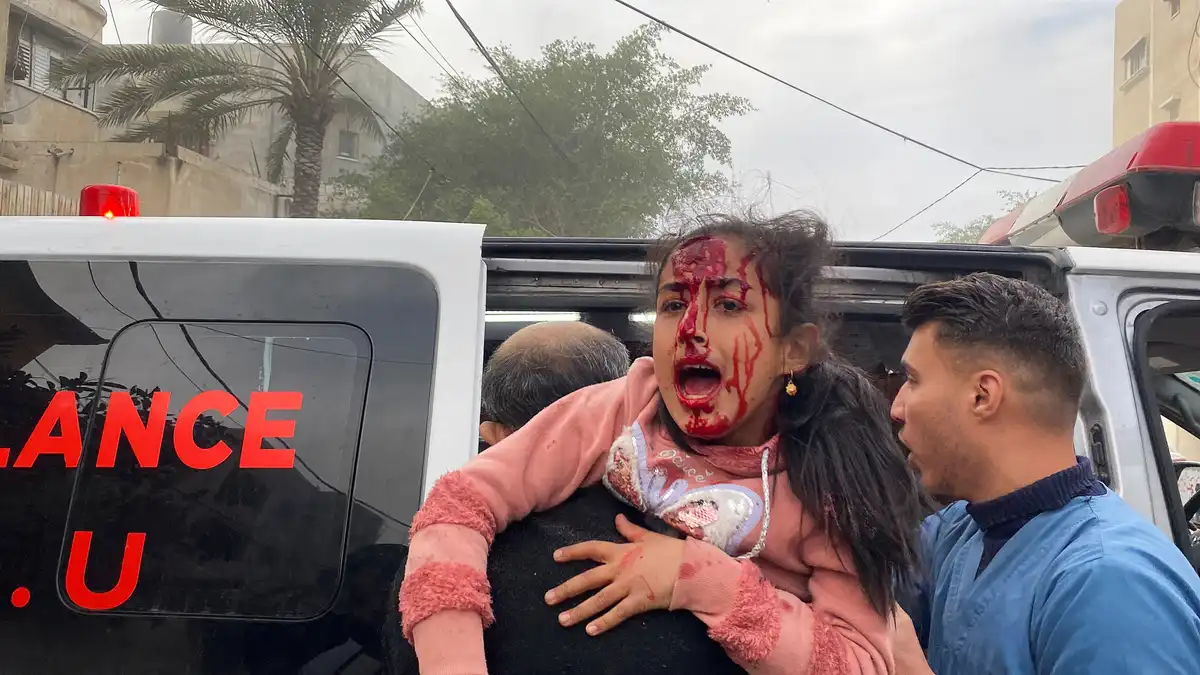
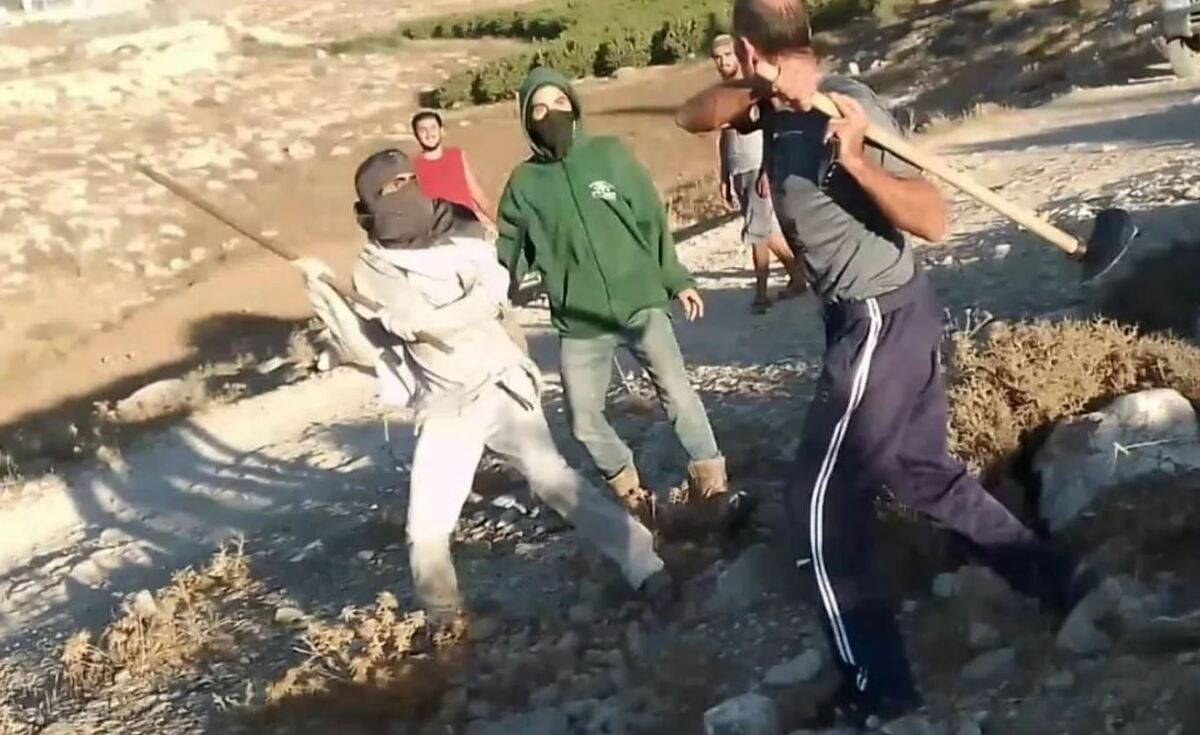

It should be noted that Netanyahu has not taken a final decision in this direction, and he is seriously examining it with Minister Drmer, through whom the talks with the Americans are taking place.


What must be mentioned is that Israel has opposed for decades the trend of Western countries towards unilaterally recognizing the Palestinian state. In Jerusalem's estimation, such recognition is permissible, and reduces the Palestinians' desire to conduct negotiations with Israel, because the international community extracts concessions from it unilaterally.


A political source stated that if the American move comes into effect, it will constitute a severe political blow, and in his estimation, many Western countries will follow Washington’s example and recognize the Palestinian state. However, there is great importance to the formula of recognition if it specifies what the territory of this state is, its capital, and who will control the security field there, in addition to other aspects.

ARAB AND WORLD

Mon 19 Feb 2024 10:35 am - Jerusalem Time

The Rafah newlyweds were killed 3 days after the wedding

Maryam and Abdullah are newlyweds who were not given time by the Israeli occupation. Only three days after their wedding, they were killed in the bombing of a family rest house in the “Khirbet Al-Adas” area in the city of Rafah, south of the Gaza Strip.


They were not alone, as others were martyred with them, and the rescue teams found only 7 people, including one dead and one wounded, while the fate of the rest of the displaced remained unknown due to the intensity of the bombing.


Despite mounting regional and international warnings of possible catastrophic repercussions, the Israeli occupation army is preparing to invade Rafah, the southernmost part of the Gaza Strip on the border with Egypt, where there are at least 1.4 million Palestinians, including 1.3 million displaced persons whom Israel pushed from the north and center of the Gaza Strip to its south, claiming that it is an area Safe.


The Israeli war on the Gaza Strip has entered its 136th day, with the number of dead since the beginning of the war rising to about 29,000 Palestinians.


Source: Al Jazeera