OPINIONS

Fri 23 Feb 2024 9:46 am - Jerusalem Time

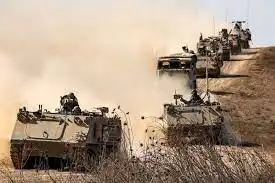
How Israel Fights And Why Military Prowess Doesn’t Guarantee Strategic Success

Foreign Affairs

Foreign Affairs

Opinion Writer

By Shashank Joshi

On a hot, dry afternoon, a wave of aircraft surges into the sky. They are hunting the enemy’s surface-to-air missile batteries. The SAM batteries scoot around every ten minutes—aerial surveillance photos taken earlier in the day are useless. But the attackers have a solution. They send in decoy drones, simulating the radar cross section of jets, prompting the SAM operators to turn on their radars. As they light up, another set of drones beams back real-time video footage. The video is sent to a cutting-edge command-and-control computer that knows which attacking plane—100 are airborne at the peak of the battle—is where and armed with what. This orchestra of air power, conducted by an algorithm, smashes the SAMs.

The scene is not from the pages of military science fiction, nor is it from the war in Ukraine. Instead, this lopsided battle, known as Operation Mole Cricket 19, took place between Israel and Syria more than 40 years ago, in the early days of Israel’s 1982 invasion of Lebanon. For Edward Luttwak and Eitan Shamir, the authors of The Art of Military Innovation, the battle exemplifies the sort of military inventiveness at which Israel excels.

Luttwak is an eccentric 81-year-old strategist who consults for governments and has written books on the grand strategy of the Roman Empire, an irreverent guide to launching a coup, and several tomes on warfare. This most recent book’s acknowledgments nod to his picaresque career: he thanks various Israeli generals, one of whom helped him wander the Sinai front in the Yom Kippur War of 1973, another who let him tag along in the invasion of Lebanon, and a third whom he cryptically describes as having invited him “to participate in the design of a special operations unit.” Shamir runs the Begin-Sadat Center for Strategic Studies, a think tank in Israel.

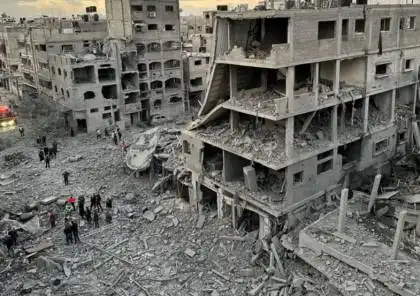
It is awkward timing for a book extolling Israeli military prowess. On October 7, Israel’s armed forces were caught by surprise, suffering a terrorist attack that resulted in the bloodiest day for Israel since its independence in 1948 and the bloodiest for Jews anywhere since the Holocaust. In an assault led by the Palestinian militant group Hamas, around 1,200 people were killed, including 332 Israeli soldiers, and some 240 were taken hostage, including an estimated 18 soldiers. The resulting war has had mixed results for Israel. Hamas has been weakened but not destroyed. The group has enjoyed a surge of popularity among Palestinians in the West Bank, and much of Gaza lies in ruins.

Yet despite its failures on October 7, Israel’s military has punched above its weight since its founding. Luttwak and Shamir chalk up the success of the Israel Defense Forces to its ability to innovate, explained not only by operating in an environment of constant peril but also by its relaxed culture and streamlined structure. The authors give too much credence to innovation and technology, however, and understate three aspects of war. One is the interplay between technology and tactics: the IDF’s secret weapon has been its ability to adapt swiftly on the battlefield when crisis strikes. The second is that Israel’s apparent superiority in weaponry and intelligence has sometimes bred complacency about the intentions and capacity of its adversaries—a complacency that was exposed, brutally, on October 7. A third, and one admittedly beyond the purview of this book, is that tactical and operational innovation—designing a superb tank, building a new missile-defense system at breakneck speed, or discovering novel ways to use these weapons—alone cannot win a war.


LEAN, MEAN, FIGHTING MACHINE

Luttwak and Shamir’s basic proposition is simple. In 1962, Israel had a largely agricultural economy, virtually no electrical or mechanical industry, and a population less than half that of Sicily. By 1973, it had developed the world’s first sea-skimming missile and used it to sink 19 Egyptian and Syrian vessels. Less than a decade later came the computerized aerial blitzkrieg over Lebanon. These were not one-offs. Israel developed world-class tanks, pioneering tank-protection methods, and air defense systems that are the envy of the world. Israel has sold arms to China, India, and the United States, and officers from many of the world’s militaries flock to Israeli training centers.

The secret of this success, according to Luttwak and Shamir’s engaging and eclectic book, begins with the IDF’s egalitarianism. One of the first things that foreign military officers notice about the IDF is its laid-back culture. Most officers, other than defense attachés abroad, wear field dress rather than gold-braided uniforms. Soldiers address officers by their first names, and saluting is unusual. Women fill roles such as combat instructor that are normally performed in other armies by what the authors call “ultramasculine drill sergeant types.” The reliance on reservists also means that know-how can move from the civilian world into the military more easily than in other countries.

Such a relaxed atmosphere makes it easier for good ideas to flow up. Luttwak and Shamir’s book is full of compelling details, one of which emerges from their account of Israel’s stunning eve-of-war air offensive against Egypt in 1967. In the space of around four hours, the Israeli air force destroyed the bulk of the Egyptian, Jordanian, and Syrian air forces on the ground—some 450 planes in all—paving the way for Israel’s ground forces to win a sweeping victory in less than a week of fighting. The conventional wisdom was that attacking jets should swoop at dawn or dusk, when the approaching planes would be less visible to observers on the ground. A 19-year-old Israeli corporal familiar with the routines of Egyptian pilots argued that the attack should instead take place at 8 AM, when the pilots took their breakfast. His commanders listened, and the attack was a spectacular success.

Another reason that Israel’s military excels at innovation is the relative youth of its members. Israel’s full-time army is small and promotes personnel quickly. Luttwak and Shamir note that Israeli officers tend to be a decade younger than their American or European counterparts. The United Kingdom’s Royal Air Force, which has fewer fighter jets than Israel, is led by a four-star general with several three-stars and more than a dozen two-stars under him. By contrast, Israel’s air force is commanded by a two-star major general, served by a far slimmer staff that has no choice but to devolve authority downward.

The result of this compressed hierarchy is that big decisions are made by officers in their 30s who are “much less shaped by the past and much more open to the future,” according to the authors. In combat, junior commanders can take the initiative without meddling from phalanxes of staff officers at higher levels. During the IDF’s first large-scale offensive, in 1948, the IDF general staff ordered Yigal Allon, the frontline commander, to drive out Egyptian forces; the instructions they gave him fit on a single page.

The structure and history of Israel’s military have also contributed to its success. Israel’s armed forces emerged in 1948 from the two major Jewish militias that had fought the British and the Arabs. Instead of re-creating the model of Western militaries, with separate—and feuding—armies, navies, and air forces, the fledgling IDF opted for a single service with one commander. One benefit was that funds for research and development were not diluted among separate branches that, as in the United States, might otherwise have designed and built the same weapons in parallel.

The absence of a standalone air force—Israel instead had a lesser “air command,” now an “air and space arm,” subordinate to the general staff—was particularly important. In other countries, pilots have resisted the notion that they ought to be removed from cockpits in favor of remotely piloted or uncrewed aircraft, which allow for smaller airframes, longer flights, and riskier missions. Israel, then a poor country of a few million people, pioneered the use of drones in the 1970s. Eighteen years later, during the first Gulf War, a conflict in which technology had a starring role, the United States had no drones, the authors point out, other than those that the U.S. Navy and Marine Corps imported from Israel.


MOVE FAST AND WIN WARS

These cultural factors play out in a context of constant threat. Since its establishment, Israel has fought five large conventional wars, including the present one in Gaza, and many smaller campaigns between them. The specter of war accelerates innovation. Consider the case of the Iron Dome missile defense system. During the October 7 attack and in the months since, Hamas has launched more than 10,000 rockets into Israeli territory. But only a handful of people have died in those strikes, thanks in large part to Iron Dome, which tracks incoming rockets, works out where they will land, and intercepts those that are headed for built-up areas or other valuable targets.

The Lebanese militant group Hezbollah compelled Israel to develop this system after the militants fired 4,000 rockets at Israel in 2006. “As happened repeatedly and on all sides during the second world war,” write Luttwak and Shamir, “groups of engineers and scientists personally committed to an urgent national mission that might avert the deaths of loved ones achieved a critical mass of dynamic creativity otherwise not only unattainable but unimaginable.” Most missile projects take 15 to 20 years to reach fruition, so developing such a sophisticated system in such a short time—Israel managed to create Iron Dome in four years, from 2007 to 2011, albeit with significant financial help from the U.S. government—was “unheard of,” they write, given that the system’s radar, software, and interceptor missiles were all entirely new.

Iron Dome also illustrates how the line between bottom-up initiative and outright insubordination is often blurred. Danny Gold, the head of an IDF weapons agency in the early years of the twenty-first century, pushed ahead with the design and manufacture of the system despite instructions not to, which were rooted in intense skepticism in the IDF about whether it would be economical. According to Luttwak and Shamir, Israel’s state auditor saw it as a case of “sustained, piratical insubordination, budgetary misappropriation, and administrative irregularity on the largest scale.” But after Iron Dome was completed, Gold was promoted and honored by the state. Another case in point: in the 1973 war, an IDF commander named Ariel Sharon disobeyed orders by leading his troops across the Suez Canal and into Egyptian territory. But when his operation was later deemed to be a success, he was forgiven and celebrated—and eventually became prime minister.

Persistent danger has also encouraged Israel to improvise. In the 1940s, Jewish militias (and later the IDF) were starved of weapons from abroad. But they managed to get their hands on 3,000 ten-ton U.S. “half-tracks”—lightly armored vehicles with wheels at the front and tank-like tracks at the back. Some carried troops. Others had Czechoslovakian guns bolted on. The United States retired its half-tracks as soon as it could, but Israel was still using them in Lebanon in the 1980s. The IDF similarly recycled Soviet tanks it captured in its wars against its Arab neighbors, raising an entire division out of such second-hand kit, allowing it to keep up with far larger Arab armies. Bigger, better-resourced, and more complacent militaries would not have bothered.


SENSE, NOT SENSORS

Luttwak and Shamir believe that technological innovation is the key to military success. Big “macroinnovations,” as they call them, “not merely new and improved versions of what already existed, but weapons or techniques that did not exist at all until then,” such as the digitized drone-enabled assault in 1982, can be revolutionary because they catch an enemy by surprise before it has time to prepare a response—what the authors refer to as a “countermeasure holiday.”

But their own argument shows that what matters is not the invention of new gadgets but how they are combined and used. The United States had pilotless aircraft before Israel did, long before the attack on Syrian SAMs, but it was Israel that turned U.S. target-practice drones into revolutionary decoys in 1973. A similar story took place ahead of World War II. The United Kingdom had tanks first, but it was Germany that exploited them to the fullest. And Germany’s blitzkrieg against France in May 1940 was devastating not because tanks, aircraft, and artillery were novel weapons but because they had been stitched together in what would come to be called “combined arms” tactics.

The precise relationship between technology and warfare lies at the heart of many of the most important debates in military science over the past 50 years. In the 1990s, American thinkers argued that a “revolution in military affairs” was underway, in which new sensors, precision-guided weapons, and computer networks to connect the two would enable a new sort of blitzkrieg, one demonstrated by the U.S. victory over Iraq in 1991.

What matters is not the invention of new gadgets but how they are combined and used.

But some scholars have questioned the primacy of technology in such military outcomes. In a seminal book, Military Power, the political scientist Stephen Biddle argues that what really mattered was tactics. Well-drilled armies built around small, cohesive units capable of using the terrain for cover and concealment could still survive in the face of modern weaponry. Biddle points to the example of al Qaeda’s ability to evade massive U.S. bombardment in Afghanistan’s eastern Shah-i-Kot Valley and Arma mountains in March 2002. One dug-in al Qaeda command post was ringed by five craters caused by large U.S. precision-guided bombs. Its garrison survived and had to be cleared out by infantry.

The war in Ukraine has given a twist to that debate. The technologies of the revolution in military affairs have, in one sense, fulfilled their promise. Sensors are better than ever and have proliferated widely—Ukraine has access to radar satellites, capable of spotting Russian tanks in woodland, that most large military powers could only have dreamed of 25 years ago. Artificial intelligence is fusing data such as electronic emissions detected by satellites and mobile phone signals to find high-value targets, including Russian generals and Hamas leaders.

Yet in Ukraine, at least, the result has not been a fluid war of shock and awe. The frontlines seem viscous. Ukraine’s counteroffensive last year resulted in paltry territorial gains. In October 2023, Valery Zaluzhny, Ukraine’s top general, gave his own diagnosis for this state of affairs. “Just like in the First World War, we have reached the level of technology that puts us into a stalemate,” he said. “We see everything the enemy is doing and they see everything we are doing. In order for us to break this deadlock we need something new, like . . . gunpowder.”

The problem is that this is a dangerously deterministic way of looking at technology. Zaluzhny was right in suggesting that new—perhaps hitherto undiscovered—means of clearing mines, jamming drones, or locating Russian artillery batteries would smooth the path out of the stalemate. But as Biddle has pointed out in these pages, the same technological environment can produce dramatically different outcomes. In World War I, Germany’s initial invasion of Belgium and France made huge progress despite the existence of the same machine guns and artillery that later produced the Battle of the Somme in 1916, in which the Allies advanced a mere seven miles at the cost of more than one million casualties on all sides. Later, in its spring offensive of 1918, Germany took 4,000 square miles of ground without using tanks.


RISK AND RETURNS

Luttwak and Shamir argue that the culture of the IDF has encouraged bold and daring tactics, often involving tremendous risks. That is partly because smaller armies facing larger foes must rely on guile over brawn. It is also to do with which skills are rewarded. “In the IDF the commando element . . . is not peripheral,” they write, “because many senior officers are promoted from the commando units.” Israel’s prime minister and defense minister are former special forces officers. The IDF’s chief of staff, as well as his predecessor, were both paratroopers.

Israel’s early leaders, experimenting with armored warfare, opted to send troops to West Germany’s military schools—not without some reluctance—rather than British ones because they believed they had more to learn from a military that had managed dynamic maneuvers in the deserts of North Africa during World War II, an environment similar to the Negev desert, as opposed to a military that, in the IDF’s estimation, had relied on firepower, attrition, and superior numbers.

Many of Israel’s greatest military triumphs have indeed come from audacious tactics such as the aerial bolt from the blue in 1967 and Sharon’s dash across the canal six years later. But the same attributes that produced such successes have also contributed to Israeli vulnerabilities. In October 1973, Israel convinced itself that Egypt would not launch an attack. That was, in large part, a political misjudgment, but one rooted in deeper pathologies. Israeli military intelligence, AMAN, failed to predict not just the war but also Egypt’s innovative tactics and the training that had occurred since its defeat in 1967. “A common factor behind all these failings,” writes the journalist Abraham Rabinovich, in his book on the war, “was the contempt for Arab arms born of that earlier war, a contempt that spawned indolent thinking.”

The question, one left unaddressed by Luttwak and Shamir, is whether technology reinforced that complacency. In 1973, AMAN experts believed they would be able to provide a warning four to six days before the beginning of war, thanks to battery-powered signals-intelligence devices planted in the sand outside Cairo and in the hills west of Suez City. But these sensors were switched on too late and did not alert Israeli officials to the coming assault.

Luttwak and Shamir argue that the debacle of 1973 reinforced the IDF’s culture of egalitarianism. In Unit 8200, Israel’s equivalent of the U.S. National Security Agency, even rookies are free to contact senior officers regardless of the chain of command. AMAN established a “devil’s advocate” department that reports directly to the head of military intelligence. Yet there is now copious evidence that such dissenting channels failed in the months before October 7, when Israeli sentries and junior intelligence officers picked up many signs of an impending Hamas attack, such as exercises to blow up the border fence and enter kibbutzim, only for their warnings to be dismissed as “imaginary scenarios.”

It is too early to say conclusively why senior officers were so resistant to evidence for a likely attack. Intelligence failures are complex, but many of the factors at work in the lead-up to October 7 likely echo those that afflicted the IDF in 1973: a rigid political conception of what the enemy would or would not do, a systematic underestimation of the enemy’s competence to conduct a military raid deep into Israel, and a conviction that high-tech means of surveillance and defense, such as vibration sensors and border cameras strung along the perimeter with Gaza, would be adequate.

Even world-beating innovation and adaptation will get an army only so far.

Indeed, focusing on Israel’s successes can distract from what really matters: the response to failures. Israel’s armor corps was shocked in 1973 by the onslaught it faced from new Soviet antitank weapons and Arab tanks. The IDF eventually realized that its tanks were vulnerable by themselves, so it placed mortars on them to fire at locations where antitank squads might be hiding and used smoke to obscure their own positions. Tank losses fell quickly. Israel’s success was not in having the best weapons or the boldest commanders—welcome as these are—but in swift adaptation under fire.

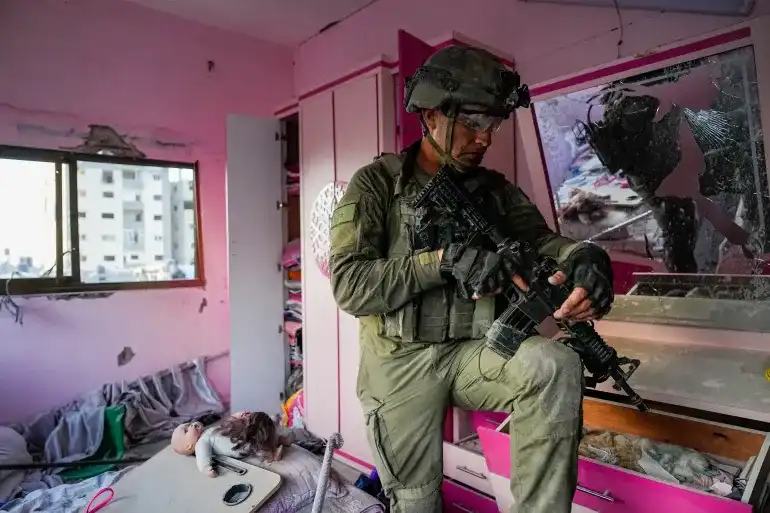
For all that, even world-beating innovation and adaptation will get an army only so far. Israel’s offensive in Gaza exemplifies many of the strengths that Luttwak and Shamir highlight. Israel has deployed cutting-edge drones, one of the world’s most advanced armored personnel carriers (the Eitan), and an artificial intelligence system (Gospel) capable of identifying at least 100 potential targets per day—all capabilities that would be envied by larger and better-resourced armies.

These technologies have doubtless helped the IDF advance deep into Gaza, kill over 9,000 Hamas fighters, and keep its own casualties down to fewer than three Israeli soldiers killed per day, a remarkably low tally by the standards of grueling urban warfare. But wars are fought for political reasons, and waging them well is not just about winning battles, which Israel has always done proficiently, but translating those victories into political outcomes, which it has not.

Innovation is not enough to root out and destroy an enemy that has spent almost two decades burrowing in and under dense urban areas. Nor does it help to persuade Israel’s Arab neighbors to underwrite the reconstruction of postwar Gaza and participate in its governance. Luttwak and Shamir rightly praise the IDF for “striving to surprise the enemy by novel schemes of action, inevitably by accepting major and sometimes extravagant risks.” If only Israel’s political leaders were willing to take the same bold leaps into the unknown.


OPINIONS

Fri 23 Feb 2024 9:40 am - Jerusalem Time

The Palestinian Authority And The PLO

Nabil Amr

Nabil Amr

Opinion Writer


Regardless of the polls showing a decline in popular support, and despite ongoing excavation efforts to dig up a body to run things after this war, particularly in Gaza, bets are on the Palestinian Authority and the Palestine Liberation Organization once again. Both are organs of a single body that enjoys Palestinian, regional, and international legitimacy.

The President of the PA has met this development by expressing his readiness - on behalf of both the PA and the PLO - to take on the responsibility of governing Gaza, provided that this responsibility encompasses the Palestinian entity in its entirety: the West Bank, Gaza, and Jerusalem, i.e., all of the territory that it is presumed will (as it indeed should) become Palestine. Plans for a Palestinian state are currently being discussed by the entire world, including the United States and half of Israel, and this is not idle talk but a serious project. Implementation on the ground, as well as official recognition by those who have so far refused to recognize this state, are now subject matter of this dialogue, not just slogans or principles.

On what is commonly referred to as "the day after," the wisdom of betting on the Palestinian Authority and the PLO will be determined by the Palestinians themselves. They must lift themselves up without directives from anyone and prepare the domestic scene for the negotiation process. That means ensuring the necessary popular and partisan support, with the integration of every faction into the Palestine Liberation Organization a priority in its political program and the negotiation process.

This does not preclude opposition within parliament (the Palestinian National Council), and Hamas should have seats in this parliament, whether Council members are appointed through an agreement between the factions or elected. Either way, elections must eventually be held after the war, to reinforce the representatives of the Palestinian people's legitimacy, which has seriously eroded over the past few years.

The PA cannot go back to governing Gaza, which it considers to have never left despite the coup against it, so long as a single Israeli soldier remains in the strip. National unity through the emergence of a state is another requisite for its return. Indeed, the PA's experience in the West Bank and the unhealthy relationship with the Israelis that developed during, before, and after the collapse of Oslo, should be a lesson, and the same mistakes should not be repeated.

The framework according to which the PA was responsible for running Area A and partially responsible for Area B, while it was absent from Area C, gave Israel everything it wanted for nothing in return. Settlement building continued and expanded, and the wonton, cost-free occupation persisted, with and without security coordination. The arrangements of the Oslo Accords turned the PA into a policing arm of the occupation in the eyes of Palestinians, which is a crucial factor in explaining its loss of support and prestige.

As Mahmoud Abbas is very well aware, the PA, along with the Fatah movement and the Palestine Liberation Organization, needs to be reformed in a whole host of ways, whether the negotiation process begins tomorrow or the day after tomorrow. Such reforms are not only needed to bolster their influence over these talks and turn them into serious actors, but also because these bodies manage the lives of millions of Palestinians in the West Bank, Gaza, and Jerusalem. This administration must, with or without a settlement, improve in a manner that makes Palestinians' lives easier and provides them with the means to remain resilient and stay on their land, as well as to remain committed to their national movement, which will not abandon its responsibilities in leading the Palestinian people towards their objectives and granting them their rights, which have been recognized by the entire world.

After the war on Gaza, with everything it can be credited and blamed for, with all the challenges it has created, foremost among them are rebuilding an area that has been totally destroyed, reconstituting a political system that has eroded and collapsed due to a lack of renewal, and reunifying a nation whose division left it split...

After the war, Palestinians will be on the frontlines leading the efforts to achieve these goals. The better and more convincing the performance, the less hesitant the world be to support Palestinians and strive in earnest work for the establishment of a Palestinian state, whose emergence alone could mitigate all the repercussions of a conflict. Only through this state could fragments of this nation exhausted by wars and calamities be brought together and finally achieve its aspirations. We should not ignore the fact that this is now what the whole world wants.

ARAB AND WORLD

Fri 23 Feb 2024 9:36 am - Jerusalem Time

Israel is looking for “the right people” to run Gaza

Political sources in Tel Aviv revealed that representatives of the Israeli army and government leadership recently met with a number of local Palestinian figures in Gaza City, and discussed the possibility of forming local leaderships to replace the Hamas movement in managing civil affairs in general and distributing humanitarian aid in particular, and the importance of Searching for “the right people”.


The Israeli “Channel 12” said that the government has begun developing a model for local government in Gaza, as part of Israel’s preparation for the “day after” the war, and that the army has begun the process of cleaning up the Al-Zaytoun neighborhood in Gaza City with the aim of launching a model that allows the residents of the Strip to manage this neighborhood away from “ agitation".


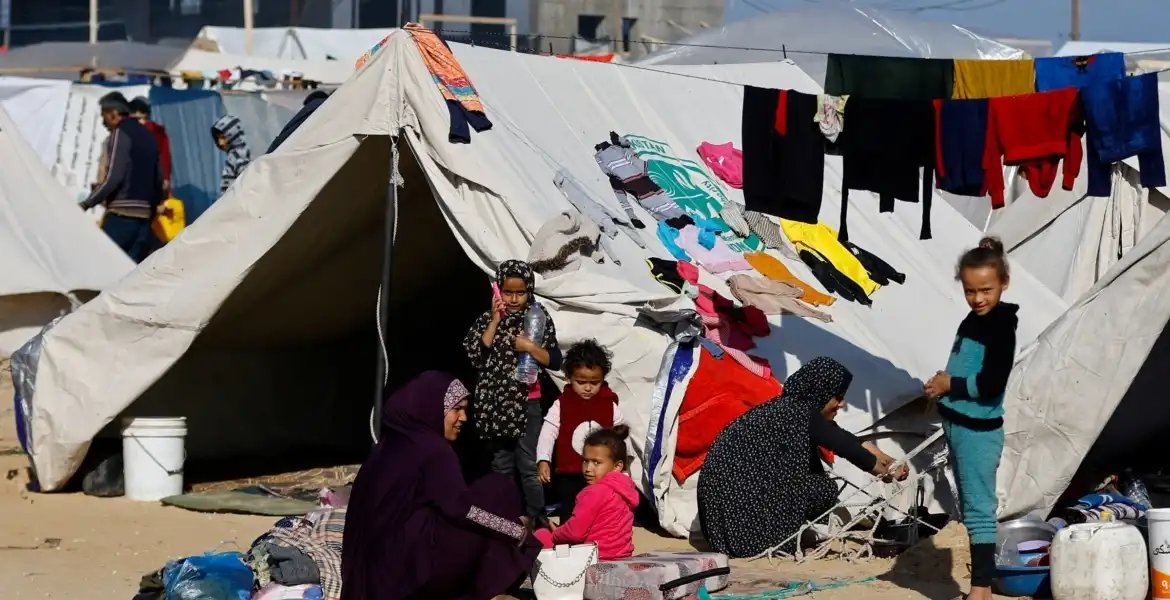
Channel 12 added, “The Israeli challenge in this plan is to provide protection for the project so as to prevent (Hamas) from disrupting the process.” It explained that the army began “cleaning up” the Al-Zaytoun neighborhood by completely destroying and bulldozing the buildings, and paving the way for the establishment of a large neighborhood of tents. In this model, Israel also focuses on the need to fundamentally change the education curriculum in the Gaza Strip’s schools, especially with regard to content that incites hatred of Israel and Jews.


Reuters quoted an Israeli official as saying that the planned “humanitarian enclaves” will be launched in the areas from which Hamas was removed in the Gaza Strip, but their ultimate success will depend on Israel achieving the goal of destroying Hamas in the Gaza Strip.


For its part, Hamas said that the Israeli plan would also exclude any employee on the Palestinian Authority’s payroll, making the plan “an Israeli reoccupation of Gaza that is doomed to failure.”


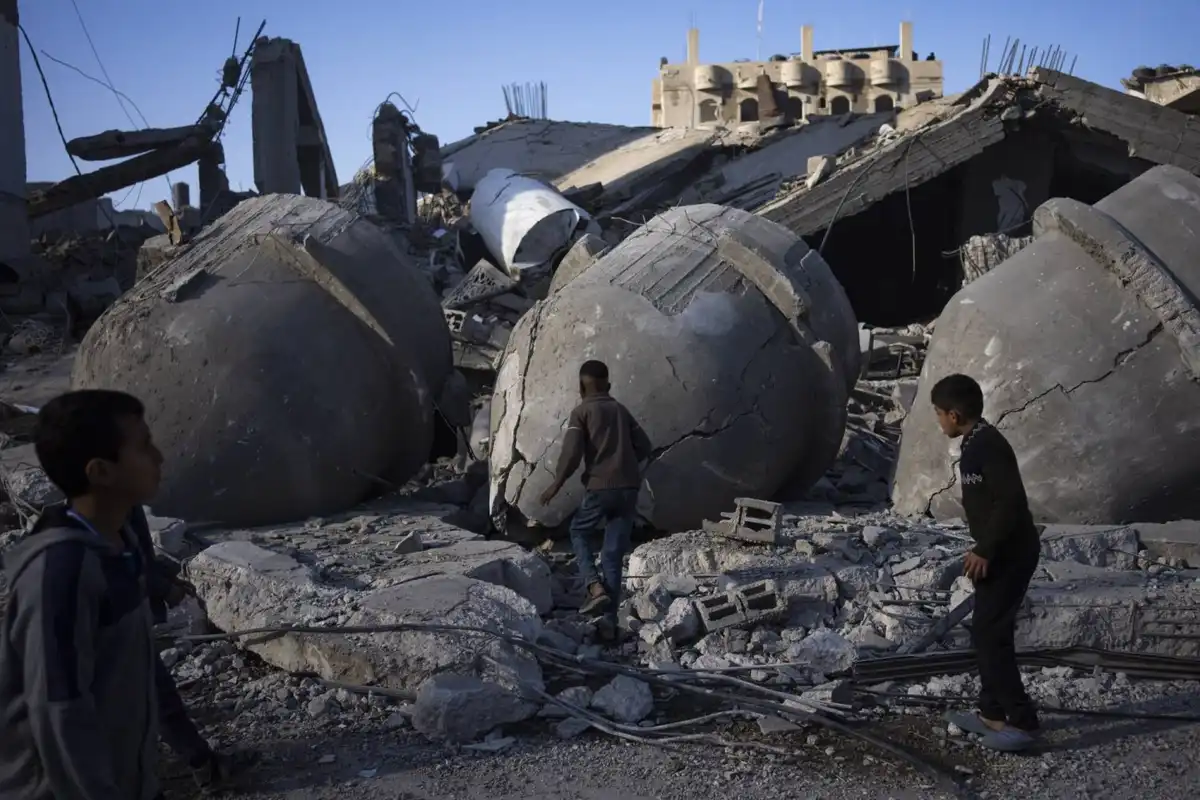
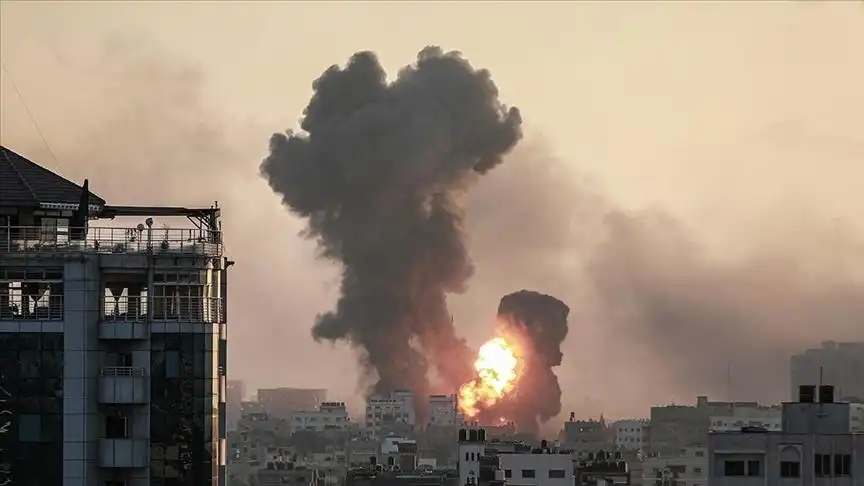
On the ground, Israeli strikes and heavy bombardment on the city of Rafah flattened a mosque and destroyed homes in what residents described as one of the worst nights they had experienced so far. An Israeli strike demolished Al-Farouq Mosque in the center of Rafah, turning it into rubble and rubble, and the facades of nearby buildings were shattered. The authorities said that the Israeli army bombed four homes south of Rafah and three in the city center.

OPINIONS

Fri 23 Feb 2024 9:21 am - Jerusalem Time

US leverage over Israel moves by ‘millimeters’ as it looks to secure hostage deal

Middle East Eye

Middle East Eye

Opinion Writer

The worsening humanitarian crisis in Gaza and Israeli threat to launch a ground offensive in Rafah expose Washington's limited appetite to wield its leverage


By Sean Mathews

The worsening humanitarian crisis in Gaza and the Israeli threat to launch a ground offensive in Rafah expose the US’s limited appetite to wield its unrivalled leverage against Israel, even as it impedes Washington's policy goals. 

On Thursday, the White House's top Middle East advisor, Brett McGurk, arrived in Israel as the UN painted a picture of lawlessness and hunger stalking Gaza. 

New data released by the UN showed a staggering decline in aid entering the enclave. The daily average of aid trucks reaching Gaza between 9 to 20 February was just 57, compared to 200 in January. The plunge comes as humanitarian workers warn that the besieged enclave is on a "very rapid path towards famine”.

Coaxing Israel to allow more aid into Gaza is just one dilemma facing McGurk. The primary is pushing for a deal to pause fighting in Gaza so an exchange of captives can be held between Israel and Hamas.   

Reaching a truce that would free the roughly 130 hostages Hamas is still believed to hold has become the main axis on which US diplomacy revolves. 


From Washington’s perspective, such a deal would give the US space to deescalate tensions with Iran-backed groups like Hezbollah and Yemen’s Houthis, surge aid into Gaza, and provide a political reprieve going into an election for Biden as he faces stiff criticism among progressives over his support of Israel, current and former US officials have told MEE.

Biden wants the deal to be extended to a “sustained pause in the fighting" which the White House believes will give them space to start early conversations with Arab allies about a two-state solution and a final settlement to the conflict. 

Israeli war cabinet minister Benny Gantz said the talks had raised the "possibility of progress”, but they could face a reckoning if Israel follows through on its pledge to launch a full-scale ground invasion of Rafah, the southern Gaza border town where 1.5 million Palestinians are sheltering in squalid conditions.

Israel has given Hamas a deadline of early March to release the hostages or face an onslaught in Rafah. But Hamas has shown little willingness to move beyond its demand of a permanent ceasefire and the release of thousands of Palestinians held in Israeli jails.

Prime Minister Benjamin Netanyahu has called those demands "delusional".

US leverage with Hamas, designated a terror organisation by Washington, is limited. It is negotiating with the group via Qatar and Egypt. 

The administration’s push to avert a Rafah offensive and seal a hostage deal comes as many say the US is conducting diplomacy with one hand tied behind its back, handicapping the full weight of leverage it can deploy against Israel to achieve its policy goals. 

“Until the Biden administration makes more effective use of US leverage, there will continue to be a big gap between what they ask of the Netanyahu government and what that government actually does,” Democratic Senator Chris Van Hollen, told Middle East Eye.


Moving by millimeters

President Joe Biden threw the US’s full weight behind Israel’s military campaign after 7 October, when Hamas and other armed Palestinian groups killed about 1,139 people and took 250 hostages back to Gaza.

Washington’s unconditional support for Israel was in part the gut reflex of a US president who has championed himself as an ally of Israel his entire political life. But it was also described by US officials as a way for Washington to maintain influence in the conflict, and better shape the political and humanitarian impacts of the war.

Instead, as fighting grinds on with no end in sight, Netanyahu has baulked at most US initiatives.

In addition to threatening a ground invasion of Rafah and constricting Gaza aid, he has flatly rejected US calls to support political talks on the creation of an independent Palestinian state. Meanwhile, the Israeli army is constructing a buffer zone in Gaza that goes against US demands to maintain the territorial integrity of Gaza. 

Israel’s actions have fuelled tensions with the administration. The most visible sign of that has been an increase in Biden's public criticism.

In December, he said the US’s closest Middle East ally was conducting an “indiscriminate bombing” of Gaza, and earlier in February said the military campaign was “over the top”.

That came amid a White House media leak in which Biden had called Netanyahu an “asshole”.

Besides the public rhetoric, the US says it was reviewing reports that Israel harmed civilians in Gaza under guidelines to monitor countries receiving US arms.

But Brian Katulis, a senior fellow at the Middle East Institute, described the administration’s approach as “moving by millimeters".

“None of this amounts to a policy change by the Biden administration,” he told Middle East Eye, “and despite gaps on key issues, it hasn’t changed the administration's first priority which is to back Israel’s right to self defence".


Investment trap

Former and current US officials have told MEE there is no appetite within the administration to wield the US’s most powerful lever of influence against Israel: arms transfers .

Washington is Israel's biggest military patron, sending about $3.8bn in military aid to Israel each year. Since October, the White House has twice bypassed Congress to rush military assistance to Israel, removing another lever, the potential for Congressional oversight, that could slow down arms transfers.

And even as Biden has criticised Israel in recent months, he has publicly lobbied Congress to approve an additional $14bn in military aid.


'The administration understands that it is in an investment trap' 

- Aaron David Miller, Carnegie Endowment


Besides putting it at odds with calls from its Arab and Muslim partners to demand an immediate ceasefire, the gap between the administration's rhetoric and actions has frustrated some of its closest western allies.

Earlier this month, EU foreign policy chief Josep Borrell took a veiled swipe at the US when he said: “if you believe that too many people are being killed [in Gaza], maybe you should provide less arms in order to prevent so many people being killed”.


But Biden is far from alone.

Even lawmakers in Congress who have been critical of Israel are unwilling to restrict arms sales, or at the very least, condition military assistance on the US's stated policy objectives. 

The defence bill allocating $14bn in aid to Israel, and tens of billions more for Ukraine, passed the Senate by a vote of 70 to 29.

Katulis said proponents of cutting military aid to Israel misjudge how profoundly Hamas’s 7 October attack shook senior US administration officials.

The US's unconditional embrace of Israel since 7 October also means they are now intimately tied to the successes and failures of its offensive in Gaza. 

“The administration understands that it is in an investment trap. They are so tethered to the Israeli war that creating an open breach with Netanyahu will leave them with no policy,” Aaron David Miller, a former US Middle East negotiator now at the Carnegie Endowment for International Peace, previously told MEE.


As the war grinds on, it has seeped out beyond Gaza's borders, morphing into a shadowy proxy contest between Tehran and Washington over who calls the shots in the Middle East. 

In Yemen, Houthi rebels are waging war against commercial shipping, in what they say is solidarity with Palestine. Israel is exchanging near daily fire with Hezbollah along the Lebanese border and Iran-backed groups in Syria and Iraq are attacking US forces. 

Hamas also receives training and support from Iran, making it a Mediterranean linchpin in Tehran’s so-called "axis of resistance", in the view of multiple US officials who have spoken with MEE. 

“The US is engaged in active combat in Yemen, Iraq, and Syria against Iran-backed forces,” Katulis said. “Ultimately when it comes to the wider chessboard in the region, the US and Israel are aligned.”


'Israel raises the price'

The White House is also weighing domestic politics. 

Restricting arms sales or conditioning them on an immediate ceasefire may help restore confidence in Biden among progressive voters and Arab and Muslim Americans in the key swing state of Michigan. But it would also lead to backlash from Israeli lobbying groups, just as Biden gears up for a likely general election against Donald Trump.

 “Israel is very good at raising the price politically," Frank Lowenstein, the former special envoy for Israeli-Palestinian negotiations in the Obama administration, told MEE.

While Biden has faced fire on the progressive left for his unconditional support of Israel, he could face pressure from Republicans in Congress for not doing enough to back Israel. 

“The way to look at Biden’s tools of leverage with Israel is not what the administration can theoretically use against the Israelis, but what are the costs and benefits of doing so," Lowenstein said. 

With arms transfers off the table as a lever of power, the US has few tangible tools at its disposal. One arena where the US can cajole and coax Israel is the United Nations, Lowenstein said.


Venting at the UN

On Tuesday, the US vetoed a UN Security Council resolution calling for an immediate ceasefire in Gaza. It marked the fourth time the US has weilded its veto power to shield Israel from resolutions and amendments criticising it. 

US ambassador to the UN Linda-Thomas Greenfield defended the vote, saying that calls for an immediate ceasefire without a demand for Hamas to release the roughly 130 hostages it is believed to hold would derail negotiations for a deal.

Humanitarian and aid groups slammed the US move, while Russia and China gloated at Washington’s isolation on the world stage.

The vote was 13-1, with the United Kingdom abstaining and the US casting the lone veto.

In response, the US drafted its own resolution.

It offers Washington’s sharpest formal criticism of Israel to date.

According to the draft resolution viewed by MEE, it calls for “a temporary ceasefire in Gaza as soon as practicable” and “lifting all barriers to the provision of humanitarian assistance at scale”.

The text also underlines Washington’s frustration with Israel’s threat to invade Rafah, demanding it “not proceed” with a major ground offensive there, which could “result in further harm to civilians and their further displacement including potentially into neighbouring countries”.

“It is a shot across Bibi’s bow in a way,” Lowenstein said. “The Israelis are extremely sensitive about the UN. They view it as a hostile body and rely on the US to protect them there.”

But Katulis said the small shift in tone underscored the limits of the conditions the US is willing to impose on Israel. 

“The UN does have impact, but is it practical in shaping a pause in fighting? The UN tends to be an arena for people to vent.”

OPINIONS

Fri 23 Feb 2024 9:14 am - Jerusalem Time

War on Gaza: Why Palestinians doubt western promises of an independent state

Middle East Eye

Middle East Eye

Opinion Writer

By Fareed Taamallah

As Israel continues to exterminate the population of Gaza, recent talk in western capitals about Palestinian statehood feels like a blatant hoax

As a number of western countries, including the United States, weigh their options for potentially recognising a Palestinian state, the Israeli government has publicly rejected any international attempt to impose a solution.

As Palestinians, we have suffered for decades from the Israeli occupation, theft of our lands, and killing and displacement of our people. Based on our long and bitter experience with the US and its allies, we have great doubts about the seriousness of their stated intentions.

Have western governments finally noticed the elephant in the room? Have they sincerely recognised the necessity of ending the occupation and injustice, or is this whole exercise little more than a palliative to absorb the anger of public opinion? 

The recent statements by western governments about recognising a Palestinian state are very broad, with no clear timetable or practical measures to force Israel’s compliance.

Palestinians cannot go back to an endless process like Oslo, which yielded no tangible results - and Israel should not be given veto power over the establishment of a Palestinian state.


There are also many questions about the composition of our long-awaited state and its borders. Would it stand in accordance with UN Resolution 181, which delineated precise borders, or would it be based on the Trump-era “deal of the century”, which envisaged the creation of Palestinian bantustans and gave Israel a green light to annex much of the occupied West Bank?

The fate of Israel’s illegal settlements, inhabited by hundreds of thousands of settlers, is also unclear. Would they be removed? Would they become citizens of the new Palestinian state? 

And where would the capital of the new Palestinian state be - in Jerusalem, which the US previously recognised as Israel’s capital? What about the right of return for millions of Palestinian refugees? 


Lack of trust

While western governments have been vague on the potential borders of a Palestinian state, they are clear on its ultimate function: a demilitarised nation that lives “in peace” with Israel, which is heavily armed and has a nuclear arsenal. 

As Palestinians, we do not place much trust in western talk of a Palestinian state, especially as the US continues to veto a ceasefire in Gaza. History has shown the West’s lack of seriousness in this regard, amid a litany of broken promises.

In the 1990s, the Oslo Accords set a five-year timeframe for the recognition of an independent Palestinian state. Instead, the building of Israeli settlements, along with more killing and displacement of Palestinians, continued apace.

It is not likely that we are seeing a surprise awakening from these western powers, which still support Israel's criminal war on the people of Gaza

Western capitals repeated the promise of a Palestinian state with the “road map for peace”, proposed by the Quartet on the Middle East (the US, EU, Russia and the UN), which set a 2005 deadline for a final settlement. But to this day, Israeli settlement-building and occupation continues. 

And as the US in 2017 recognised Jerusalem as the capital of Israel and pressured other countries to do the same, the world seemed to forget about the prospect of a Palestinian state. It no longer factors into the “Greater Middle East project”, whose new features were defined by the Abraham Accords.

The irony is that recent talk of a Palestinian state is coming from the same western countries that have participated in the genocidal war against the Palestinian people in Gaza, and rejected the notion of accountability for Israel at the International Court of Justice. The UK and US are collectively responsible for most of the disasters that have befallen the Middle East over the past century.

It is not likely that we are seeing a surprise awakening from these western powers, which still support Israel’s criminal war on the people of Gaza. Rather, this might be part of a plan to save Israel “from itself”, and to absorb public anger over Israel’s daily crimes against defenceless civilians in Gaza.


Saving face

Israel will be offered incentives and rewards in exchange for stopping the massacre of Palestinians in Gaza. The largest of these will be normalisation with Saudi Arabia and integration within the region. 

All this talk of a Palestinian state likely aims to save face for the Arab regimes complicit in the Israeli-western war against the Palestinian people, and to shield them from future repercussions, with the ultimate goal of resuming the Israeli-Arab normalisation process. Saudi Arabia is the likeliest candidate to join the day after the war stops.

Riyadh has conditioned normalisation on finding a “solution” to the Palestinian issue. Recent talk in Washington, London and Paris on this issue is mainly directed at the Saudi regime, pushing it towards the normalisation train. This would definitively break the boycott of Israel in the Arab and Islamic world. 

This would serve the interests of Israel, the western countries that support it, and the Arab states that are eager to normalise with it. It would consecrate Israel as an advanced military and economic base for western hegemony over the region.

If these countries were honestly interested in establishing a Palestinian state, they would have taken the initiative years before this genocidal war. Globally, around 140 countries recognise Palestinian statehood, but this goal has been obstructed by the western states now using this issue as a political tool. 

If the recent talk is actually serious, then a Palestinian state must be recognised immediately, without waiting on Israel’s approval. If the West has learned from past mistakes, it would move to stop the war on Gaza, freeze settlement activity in the occupied West Bank, and ensure the application of international law. 

Talking about the recognition of a Palestinian state while the population of Gaza is being exterminated feels like a blatant hoax. What exposes this deception is giving Israel a veto over the establishment of a Palestinian state, even as Prime Minister Benjamin Netanyahu has vowed to reject “international diktats” and said Israel would “maintain full security control over all territory west of the Jordan River”.

We cannot expect western countries to pressure the extremist rulers of Israel to accept a Palestinian state, when they have so far failed - if they have even tried - to pressure Tel Aviv to stop the genocidal war it has been waging against Palestinians for more than four months.

ARAB AND WORLD

Fri 23 Feb 2024 9:09 am - Jerusalem Time

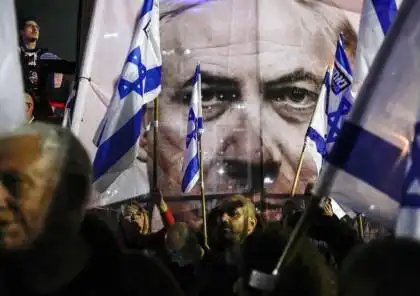
Netanyahu presents his plan for the day after the war on Gaza

The Israeli Broadcasting Corporation reported that Prime Minister Benjamin Netanyahu presented to the security cabinet a document of principles regarding policy for the day after the Gaza war.


The Commission (officially) said that Netanyahu's document includes Israel's preservation of freedom to operate in the entire Gaza Strip without a time limit, and also includes the establishment of a security zone in the Strip adjacent to Israeli towns.


The Commission noted that Netanyahu's document also stipulates that Israel will maintain the southern closure on the border between Gaza and Egypt, and also includes a clause that UNRWA will be closed and that it be replaced by other international relief agencies.


The Israeli Broadcasting Corporation confirmed that the ministers of the small security ministerial council did not vote to approve Netanyahu’s document.


For his part, the Axios news website reported that Netanyahu also wants to implement a plan for what he calls “rooting out extremism” in all religious, educational, and social care institutions in the Gaza Strip.


The document also stipulates, according to Axios, that this plan will be implemented “as much as possible with the participation and assistance of Arab countries that have experience in strengthening the fight against extremism on their territories,” as he put it.


The document stresses that the reconstruction of the Gaza Strip will not be possible until the demilitarization process is completed and the process of “de-radicalization” begins, a position that Netanyahu has not expressed publicly before. It also states that “reconstruction plans will be implemented with funding and leadership from countries acceptable to Israel,” according to Axios.


The document does not clearly specify who Netanyahu envisions ruling Gaza after the war, but it says that “local elements with administrative experience” will be responsible for civil administration and public order in Gaza.


Mobilize consensus

Axios also quoted an aide to Netanyahu as saying that the goal of the proposed document is to present principles that would gain the greatest possible consensus.


He added that consultations in the Israeli Cabinet would likely lead to changes before approving the document, he said.


More than once, Netanyahu stressed that he wants “Israeli security control” over Gaza after the war. In his previous statements, he also said, "The day after the war, Gaza must be demilitarized, and there is only one force that can be responsible for that, and that is the Israeli army."


He also affirmed on more than one occasion his categorical rejection of the Palestinian Authority taking over the duties of government in the Gaza Strip after the war.


Netanyahu's statements in this regard contradict the American position, and the drawn scenarios sparked a dispute between him and US President Joe Biden.


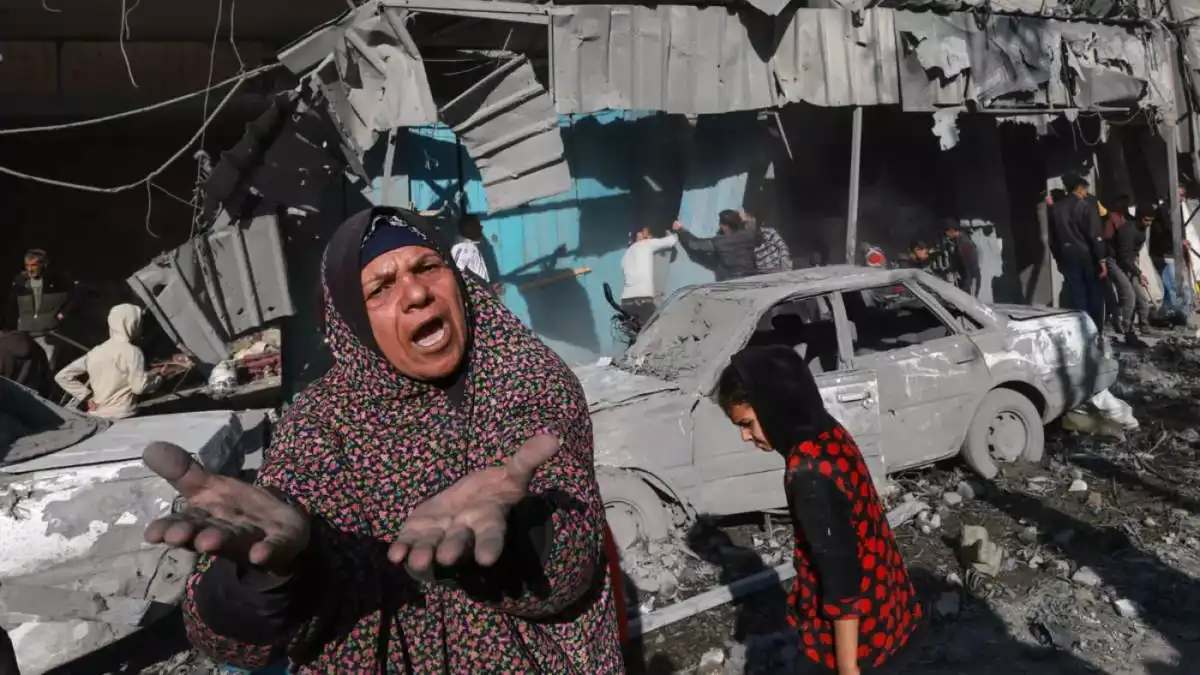
Since the seventh of last October, Israel has been waging a devastating war on Gaza, which led to the death of more than 29,000 people and the injury of more than 68,000, in addition to the destruction of various cities and the displacement and starvation of the Strip’s population of about 2.2 million.


Source: Al Jazeera + agencies

PALESTINE

Thu 22 Feb 2024 10:50 pm - Jerusalem Time

Government media in Gaza: 40 citizens killed in Israeli bombing in the center of the Strip

The Government Information Office in Gaza said that 40 citizens were killed and more than 100 were wounded as a result of the Israeli raids that targeted 4 homes in Deir al-Balah in the central Gaza Strip.


In a statement, the office held the US administration, the international community, and the occupation fully responsible for these ongoing crimes.


He called on the countries of the free world to stop the genocidal war waged by the Israeli army against civilians, children and women immediately and urgently.

PALESTINE

Thu 22 Feb 2024 10:33 pm - Jerusalem Time

West Bank: A Palestinian was killed and others were injured in the Jenin camp

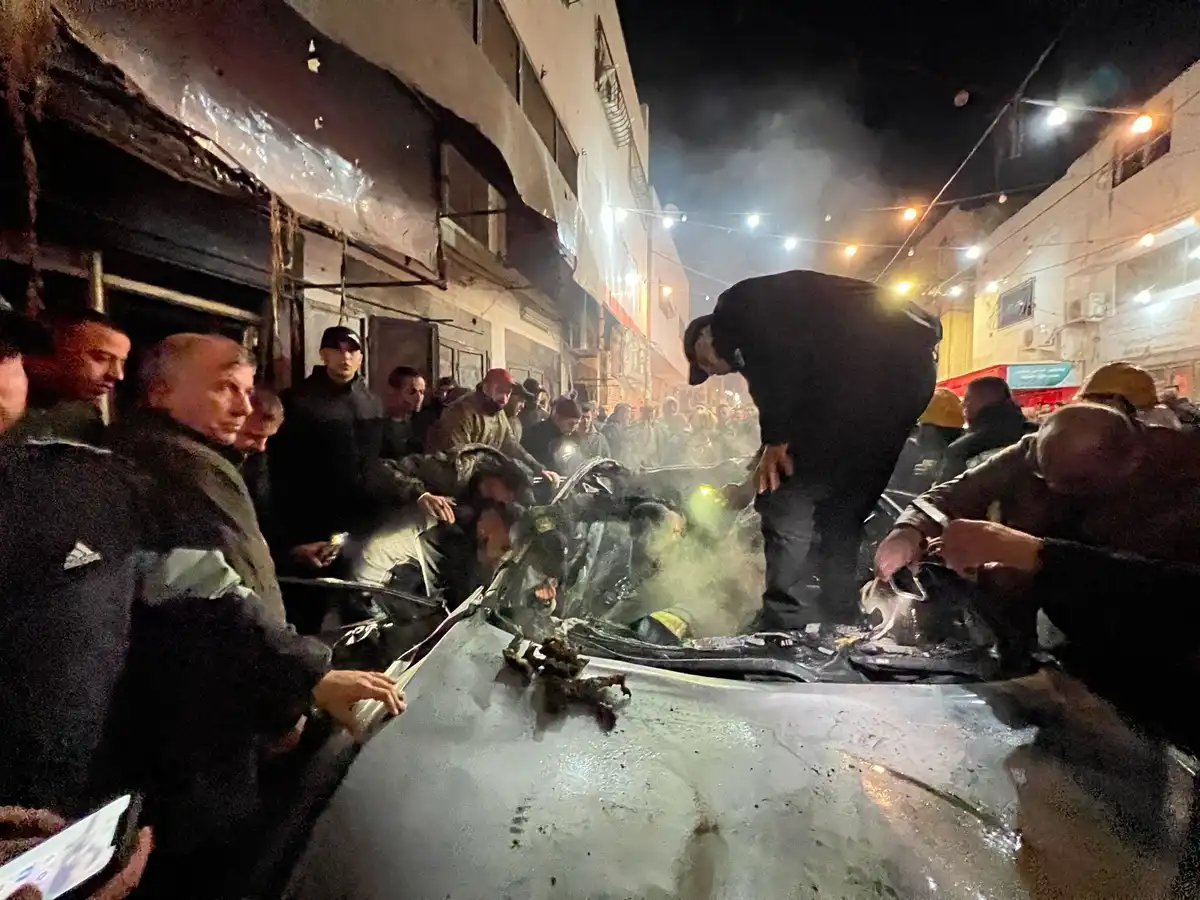
A citizen was killed and four others were injured, Thursday evening, as a result of the Israeli forces targeting a vehicle in the Jenin camp.


According to local sources, one killed and four injuries arrived at Jenin Governmental Hospital, including a critical injury, as a result of targeting the vehicle.

PALESTINE

Thu 22 Feb 2024 6:09 pm - Jerusalem Time

West Bank: Israeli forces arrest two children and a young man north of Ramallah

Today, Thursday, Israeli forces arrested two children and a young man from the town of Sinjil, north of Ramallah.


According to local sources, an occupation army force stormed a house on the outskirts of the town of Sinjil and arrested the two children, Omar Najeh Masalma and Daniel Youssef Asfour, both under ten years old.


The Israeli forces also arrested the young man, Muhammad Rizq Masalma, from the same house, who is the uncle of the child Omar.

ARAB AND WORLD

Thu 22 Feb 2024 5:56 pm - Jerusalem Time

World Bank: The Palestinian economy is witnessing one of the largest shocks in history

The World Bank said that the Palestinian economy is exposed to one of the largest shocks in history, as a result of the Israeli war on the Gaza Strip and its repercussions in the West Bank.


In its latest analysis of the effects of the aggression in the West Bank and Gaza Strip, the bank reported today, Thursday, that “the Palestinian economy witnessed one of the largest shocks recorded in modern economic history, as the gross domestic product in Gaza declined by more than 80% in the fourth quarter of 2023. And by 22% in the West Bank during the same period.


The bank said, “Poverty was already high in Gaza before the outbreak of war, as more than half of families relied on aid as their main source of income. At present, almost all residents of Gaza live in extreme poverty and face a severe lack of food security. Poverty levels are also rising in the West Bank, due to the noticeable economic slowdown and restricted public financial capabilities, which affects the effectiveness of social protection programs.” The World Bank expects that poverty levels in the Palestinian territories at the end of 2023 will exceed the levels recorded in 2020, during the peak of restrictions related to the Corona pandemic.


Yesterday, the bank announced a grant worth $30 million to pay the salaries of public school teachers in the West Bank, in addition to another grant worth $35 million announced last December, to support the provision of food, water, and health services in emergency situations to residents of Gaza.

The bank said: The sharp decline in economic activity, including trade, along with the lack of clearing revenues since October 2023, has exacerbated the already severe public financial crisis, which has severely affected the provision of public services, and this grant ($30 million) will support the payment of... Salaries of teachers and staff in public schools, to help ensure that students do not miss out on basic education.

The bank added: Given that 40% of the population is under 15 years old, education is one of the largest items of public sector spending in the West Bank. The sharp decline in revenues has led to the reduction or deferral of wages for public sector employees. Teacher salaries have fallen by almost half since October.

ARAB AND WORLD

Thu 22 Feb 2024 5:52 pm - Jerusalem Time

Hebrew Newspaper: The Paris summit with Israeli participation and Washington does not want a war during Ramadan..

The administration of US President Joe Biden is pushing for a ceasefire in the Strip before the start of Ramadan on March 10, as US officials believe that releasing prisoners will be the only possible way to bring the first truce closer, which may also put an end to the war.


Yedioth Ahronoth newspaper reported today, Thursday, that moving the talks from Cairo to Paris is “more than just moving the place,” and that the goal is to return to the deal plan that was agreed upon in the Paris talks at the beginning of this month and progress from this point.


The current plan, according to the newspaper, provides for the exchange of Palestinian and Israeli prisoners, a truce that will last for several weeks, and a change in the deployment of Israeli army forces in the Gaza Strip. However, there has not yet been an agreement on the number of prisoners who will be released, the duration of the truce, and the locations of the deployment of Israeli forces. The discrepancy between the initial positions of Israel and Hamas is also large.


Meanwhile, there are estimates that Israel will send a delegation to the Paris summit, which will be held on Saturday with the participation of CIA Director William Burns, Qatari Prime Minister Mohammed Al Thani, and Egyptian Intelligence Chief Abbas Kamal. Earlier, sources in Israel warned that if Hamas continued to pose major obstacles to the deal, Israel would not send a delegation to the summit.


A source familiar with the talks told CNN that the next two weeks of negotiations, before the start of Ramadan, will be “decisive.”


Washington fears that Israel's aggressive military offensive during Ramadan will only increase tensions throughout the region.


US officials reportedly specifically warned Israel against heading south towards Rafah, where some 1.5 million Gazans have fled. They said that ensuring the safety of these citizens is an "impossible mission."


Reportedly, it is not clear to the parties involved in the discussions to what extent Prime Minister Benjamin Netanyahu prefers a truce in the fighting to the Rafah process. "Netanyahu does not seem ready to make any agreement at the moment," the diplomat said. Despite some progress in recent weeks, deal talks are now more complex than the first round of negotiations, the sources said.


It was also reported that in the new deal talks that took place in Cairo last week, with the participation of the chiefs of US and Egyptian intelligence and the prime minister of Qatar, the Israeli delegation headed by Mossad chief David Barnea participated and was willing to discuss only the humanitarian aid aspects of the deal, not the other components.


Meanwhile, Hamas indicates its interest in “reaching urgent understandings,” while a delegation of the movement’s senior officials is in Cairo. A member of the Hamas political bureau, Muhammad Nazzal, said yesterday: “We are seeking to reach a ceasefire, and there is a fierce battle, whether on the ground or in the negotiations. A Hamas delegation is in Cairo to negotiate a new deal.”


In Israel, they are still impatiently awaiting the answers that the mediators will receive from the Hamas delegation present in the Egyptian capital, Cairo, in preparation for the possible resumption of negotiations on the exchange deal. The answers are supposed to arrive in Israel the next day.


According to information obtained by Yedioth Ahronoth from reliable sources, the Hamas leadership in Qatar received a message a few days ago from the movement’s leadership in the Gaza Strip. The message was delivered after a long break between the two leaderships. The countries mediating the issue of the potential kidnapping deal have been led to estimate that it is not possible to contact Hamas leader in Gaza, Yahya Sinwar.

This message comes amid international efforts to advance the deal while 134 Israeli prisoners are still being held by Hamas in Gaza. It appears from the leadership's message in Gaza that Hamas should mainly discuss a partial "humanitarian" deal, not a comprehensive deal.

It also appears from the leadership’s message in Gaza that it is possible to reduce the demands regarding the number of released security prisoners in Israel, while at the same time also reducing the demands regarding the number of released security prisoners in Israeli prisons, as well as the international guarantees demanded by Hamas regarding the restoration of the Gaza Strip, Israel’s withdrawal from its lands, and the cessation of hostilities by the Israeli army.

Source: Sama News

PALESTINE

Thu 22 Feb 2024 5:35 pm - Jerusalem Time

War on Gaza: The Israeli forces blew up a residential square south of Khan Yunis

Today, Thursday, the Israeli army blew up a residential square containing dozens of homes in the city of Khan Yunis, south of the Gaza Strip.


According to local sources, huge explosions were heard from the city of Rafah in the far south of the Gaza Strip, resulting from the Israeli army bombing citizens’ homes in the southwestern areas of the city of Khan Yunis.


For its part, the Al-Qassam Brigades, the military arm of the Hamas movement, announced in a statement that it targeted an Israeli special force stationed inside a house with an anti-fortified TBG missile in the city of Khan Yunis.


Al-Qassam said that its fighters "clashed with members of the Israeli force with machine guns, and were killed and wounded north of the Al-Amal neighborhood, west of the city of Khan Yunis."

OPINIONS

Thu 22 Feb 2024 5:06 pm - Jerusalem Time

Not “total victory,” but complete submission to the Messianic delusions will result in a lot of blood

Haaretz

Haaretz

Opinion Writer

By Ehud Olmert

Former Israeli PM

The most important goal for the duo Ben Gvir and Bezalel Smotrich is not to occupy the Gaza Strip. Even settlement in the devastated Gaza is not the highest goal of this obsessed, messianic group that has taken control of the state of Israel. Gaza is the introduction, and it serves as the model upon which this group wants to build the real battle to which they aspire. The battle will be on the West Bank and the Al-Aqsa Mosque campus.

The ultimate goal of this group is to cleanse the West Bank of its Palestinian residents, evacuate Al-Aqsa Mosque of Muslim worshipers, and annex the territories to the State of Israel. The road to achieving this goal is filled with blood. Israeli blood inside the state, and in the areas it has controlled for about 57 years, and Jewish blood in many places in the world. Of course, in addition to a lot of Palestinian blood in the West Bank and Jerusalem, and if there is no other solution - among the Arabs in Israel as well. This goal cannot be achieved without a very widespread violent confrontation. Armageddon. A major war, in the south, Jerusalem, and the West Bank, and also on the northern borders, if necessary.

A war like this will strengthen the belief that we are fighting for our lives and our existence. In the existential war, many unbearable things can be done, and the hill youth are proving, day after day, that they include people who can do this. This group of lunatics succeeded in winning the first stage, in preparation for the chaos and all-out war they want, as it appears here. They took control of the government of Israel and turned its president into their servant. The possibility that they could topple the government, expel its president and prevent him from running the affairs of state, is not a crazy idea. This path is happening these days, one stage after another.

In the beginning, Ben Gvir and Smotrich decided to sacrifice the hostages in order to prevent a successful end to the military campaign that had, so far, achieved remarkable goals for the army, even if the price was great. It is clear that we are far from "complete victory." A victory like this is not possible. Even if the battle continues for several months, the price we pay is not worth the “vision” of a victory that cannot actually be achieved.

Continuing the military battle now will push the army into Rafah - and this is what they hope for. Such a step would put the peace agreement with Egypt in real and immediate danger. There is no doubt that Egypt, Jordan, and the UAE, as well as the Palestinian Authority and Saudi Arabia, wish to dismantle Hamas. However, Egypt knows very well that there is a great possibility that the continuation of the Israeli military operation will lead to the rise of the “Muslim Brotherhood.” Egypt saw well how the Egyptian regime, which imposed itself through its decisive military control and prevented extremist fundamentalist parties from rising, could not withstand the demonstrations of hundreds of thousands in Tahrir Square in Cairo. Only great efforts, with quiet support from the international community, allowed moderate parties, headed by President Abdel Fattah El-Sisi, to take control of power in Egypt, and to lead it as a political and military force that helps advance stability in the Middle East.

Sisi and the military leadership will not risk letting things spiral into chaos, from which it will be difficult to emerge. The continuation of the military battle in Rafah, where more than a million Palestinians are gathered, will be the fuse that ignites the streets in Egypt, and after that, in Jordan as well - another country whose relationship with Israel is essential to our security.

Before things get worse, we will be faced with a group of moderate Arab countries that will lose confidence in the ability to create relations based on cooperation with Israel.

Even the United States - an ally that was remarkably mobilized to help Israel during an unprecedented crisis, when the government was in shock and its president had lost his ability to make decisions and his sense of responsibility - will take steps that undermine Israel's ability to continue to manage the two battles, military and political, and its economic stability.

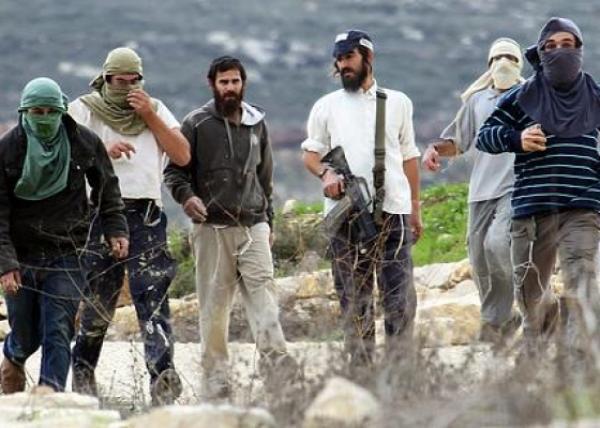
In light of these scenarios, Benjamin Netanyahu decided to set fire to Al-Aqsa Mosque. When confrontations begin for the freedom of worship of Muslim citizens of Israel and Palestinians from the West Bank and Jerusalem, a massive wave of terrorism will break out. The risks are high because of the decision, especially in light of the sense of responsibility and solidarity shown by Arab citizens of Israel, when their country was in a state of crisis. Instead of respecting the solidarity of the Arab community, Netanyahu and Ben Gvir provoke and incite against them. Every rational person sees this unpreventable dynamic. Ben Gvir and Smotrich, along with thousands of violent hilltop youth in the West Bank, who still maintain self-control, understand this.

What they are doing can only be explained by understanding that this is what they want. This is what they wish for. When the wave of “terrorism” breaks out, these Messianic people will explain to us that “terrorism” must be curbed. Thus, war will break out in all areas of the West Bank.

This is without talking about the northern border. We could try to reach understandings with Lebanon on border issues, and this could lead to a ceasefire that has pushed tens of thousands of Israelis from their homes. Through correct and precise management, without constant statements and threats, an equation can be created that allows Hezbollah to present something resembling an achievement, by resolving a dispute that has been ongoing for years regarding some points on the border, and thereby justify its withdrawal to the Litani line. This will allow Israel to restore a sense of security to the residents of the Galilee and return them to their homes for an additional 17 years of calm, as happened after the Second Lebanon War.


However, Ben Gvir and Smotrich do not want to calm the northern border. The war there will reinforce their claim that there is no solution except by annihilating all enemies, on all fronts and in all regions - regardless of the price of this confrontation. The Prime Minister knows that things are going downhill because of his absolute submission to the crazy group that controls his government. He sees, he understands, but he continues to cooperate.

Ultimately (and perhaps at the beginning as well), Netanyahu is willing to give up the hostages and undermine the peace agreements with Egypt and Jordan, even though they are the essential pillar of security in the State of Israel. He is prepared to destabilize relations with the United States, to the point of a public crisis with the president most committed to Israel's security in history, Joe Biden. Netanyahu understands that the continuation of this adventurous course of affairs will lead to Israel's isolation in the international community as we have never known it before.

Despite the difficult circumstances, there is no escaping the saying: Netanyahu, this will end in a lot of blood. Look, I warned you.

PALESTINE

Thu 22 Feb 2024 5:01 pm - Jerusalem Time

Israel is waging a war of starvation in prisons

Today, Thursday, the Commission for Ex-Prisoners’ Affairs warned of the starvation policy pursued by Israel through its prison administration against male and female prisoners inside prisons and detention centers, which has led to them losing tens of kilograms of their weight.


According to its lawyers, who visited a number of prisoners in the Israeli prisons over the past few days, the average loss of each prisoner ranged between 15-20 kilograms, and this indicates the seriousness of the policy used against the prisoners, and its negative effects on their reality and future.


The authority explained that the quantities of food provided to the prisoners are much less than the minimum required, in addition to its poor quality and intentional contamination, which exposes them to various diseases, as this actually appeared on some of them.


It added that the number of sick prisoners has doubled significantly, with them being deprived of medicines and treatment, especially with the onset of the harsh winter this year, which has exacerbated their suffering.


The Commission stated that the Israeli authorities had deliberately used starvation as a daily punishment since October 7th.


The Commission’s legal staff explained the immoral and inhumane policy in the prison administration’s dealings with male and female prisoners, including forcing prisoners to kneel and lower their heads toward the ground, in addition to cursing, provoking, and beating them, with a focus on verbal and psychological insults, and insulting mothers, sisters, and God.


The Commission demanded an end to this crime, and this exclusivity of male and female prisoners, and called on everyone to intervene to force the occupation authorities to deal with them as prisoners of liberation movements, to whom international agreements and covenants apply.


This campaign against prisoners comes as an extension of the starvation war carried out by the occupation authorities against our people stationed in the Gaza Strip, where Israel deprives them of the most basic necessities of life, such as water, food and medicine, in addition to their exposure to daily bombing and genocide.


ARAB AND WORLD

Thu 22 Feb 2024 4:43 pm - Jerusalem Time

Bloomberg: Israel secretly admits that it does not have a plan to evacuate the Palestinians from Rafah, but it insists on doing so

The American "Bloomberg" agency revealed that Israeli officials are determined to move forward with the evacuation of Palestinians from Rafah, although they privately acknowledge that they "do not have a specific strategy for how to do so."


The agency also added, in a report on Thursday, February 22, 2024, that Israeli officials: “They do not know how long the evacuation of the Palestinians will take, nor the destination to which people are supposed to go after their evacuation from the city of Rafah.”


Israeli Prime Minister Benjamin Netanyahu also said in a telephone interview with the American Bloomberg Agency, on Wednesday, February 21, that he had ordered the Israeli occupation army to develop a plan to evacuate civilians, and was waiting for this plan to be presented to him.


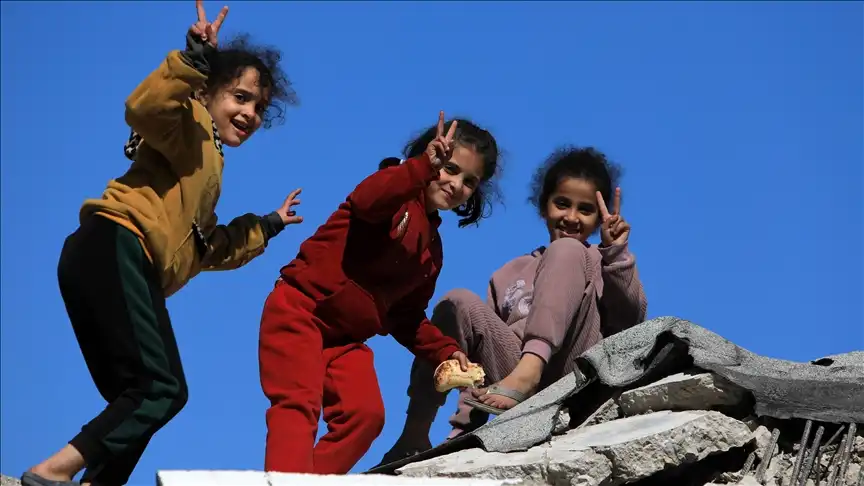
Meanwhile, the residents of Gaza, who suffered greatly from the war, were stranded, and many of them began to live in tents and in the streets, facing the ravages of hunger and disease.


While the Ministry of Health in Gaza estimates that forcing the displaced in Rafah to return to their destroyed areas will increase the death toll, which has already exceeded 29 thousand dead in 4 months.


However, Israeli leaders see the invasion of Rafah as an important milestone that has further consequences in the course of the war, and they believe that with this step they are very close to dismantling the military structure of the Hamas movement and finding the remaining 100 detainees.


They claim that these goals can only be achieved by invading Rafah, as Israeli officials believe that the city contains between 5 and 8 thousand Hamas fighters and leaders, and that they are taking shelter in tunnels with Israeli detainees.


Informed sources also told the agency that officials in Israel are determined to carry out the military operation in Rafah, no matter what happens. Opinion polls show that many Israelis support Netanyahu in his intention to launch a military operation in Rafah.


Israeli officials said that the advent of Ramadan would not hinder them from seeking to achieve their military goals. They stress that the closer the declaration of victory over Hamas comes, the more citizens will begin to feel safe again, and it will become possible for discussions on regional security plans to begin.


The Israeli army also claimed that Hamas has five combat brigades in Gaza, and that it had defeated two of its brigades in the Gaza and northern governorates, and a third brigade in the areas surrounding the city of Khan Yunis, south of Gaza, and that the fourth and fifth brigades had gathered most of their remaining forces in Rafah.


While Yaakov Amidror, the former Israeli National Security Advisor, said: “We have reached the end of the beginning,” and “Completing operations in Khan Yunis will take another week. Then our forces will move to Rafah in March, to fight there until the end of April. “We can then move to forming smaller forces, as is the case in the north.” He expected fighting to continue at a low pace for the rest of the year.


The "plan" to evacuate Palestinians from Rafah

This comes as the American newspaper "Washington Post" revealed what it said were the details of the "evacuation plan" prepared by the Israeli occupation authorities in order to evacuate the Palestinians from Rafah before the ground attack that Israel plans to carry out in the city in the southern Gaza Strip.


On Thursday, February 15, the American newspaper quoted an Israeli official as saying that the planning process to evacuate the city of Rafah of the displaced Palestinians, whose number exceeded one million three hundred thousand, “is underway and a final plan has not yet been approved.”


The newspaper also quoted the source as saying that Israel’s proposal to establish a series of camps on the sea coast in Gaza did not succeed in calming the critics, in reference to the criticism directed at the occupation and the warning of a humanitarian catastrophe in the event of a military invasion of Rafah.


While the Israeli source explained to the American newspaper that the plan to evacuate the city of Rafah includes establishing 15 camps on the seashore, each with 25,000 tents, to which hundreds of thousands of displaced Palestinians will be transferred from the city of Rafah before launching the military operation.


On the other hand, military analysts told the American newspaper that Israel intends to request assistance from Egypt in providing health care and other aid in the camps, and that its location opens the possibility of providing aid from the sea.


While the newspaper quoted the Israeli source as saying that the Israeli Military Cabinet opposed a proposal allowing the transfer of displaced Palestinians in Rafah to the northern Gaza Strip before the military operation in Rafah, despite the withdrawal of the Israeli occupation forces from the region.


As Israel prepares to carry out a ground military operation in Rafah, voices calling for it to stop continued, and the World Food Program warned on Thursday that “the expansion of hostilities in the city of Rafah in the far south of the Gaza Strip threatens a humanitarian catastrophe and obstructs relief operations.”

ARAB AND WORLD

Thu 22 Feb 2024 4:35 pm - Jerusalem Time

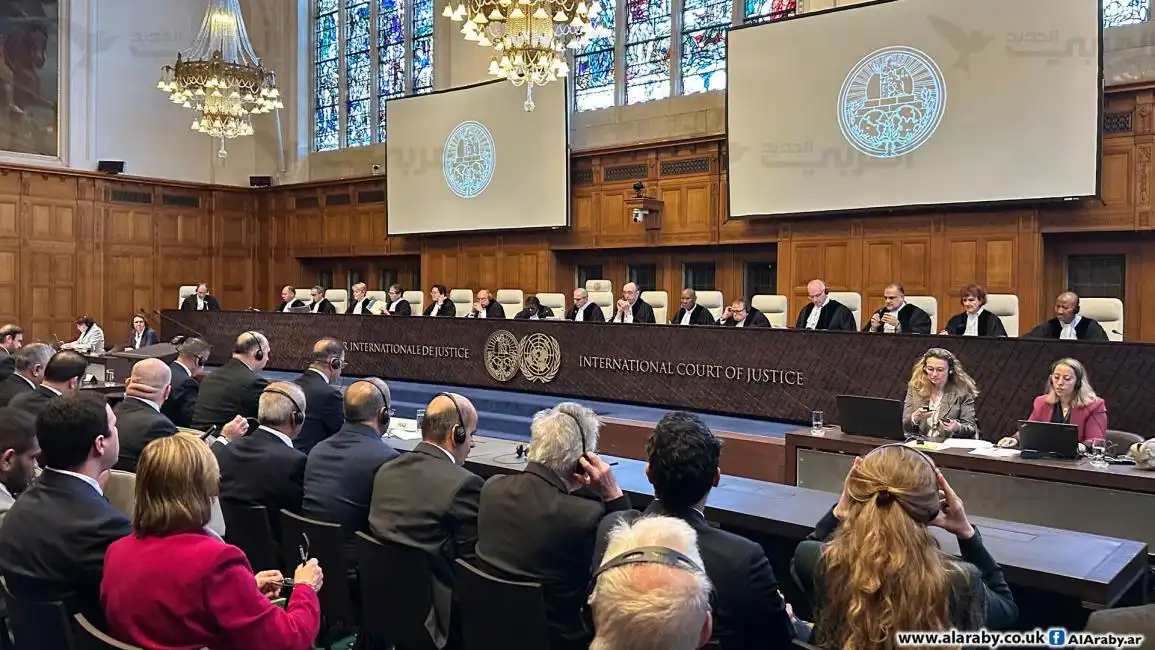
The fourth session of ICJ on the consequences of the Israeli occupation

Today, Thursday, the International Court of Justice, the highest court of the United Nations, continues hearings on the legal consequences of the Israeli occupation, on its fourth day.


Six sessions will be held at the International Court of Justice in a row from Monday, February 19, until Monday of next week, during which each state will provide an oral intervention lasting half an hour, on its point of view on the procedural and substantive issues arising, with the aim of the court later issuing an advisory opinion.


Yesterday, Wednesday, the United States of America defended the continuation of the occupation, and considered in its plea before the court that the international justice system’s adoption of an advisory opinion demanding that Israel end its occupation immediately “harms the negotiations and does not take into account the security threats to Israel.”


All the details of the fourth session at the International Court of Justice:


Jordan: Israel is violating international law and the occupation must end

Jordanian Foreign Minister Ayman Safadi considered, before the International Court of Justice, that Israel is violating international law, the occupation is illegal, and must end, pointing out that Israel refuses to recognize the right to self-determination of the Palestinians, and the measures on the ground kill every chance for peace.


He said: “As an occupying power, Israel is obligated to protect civilians and preserve heritage sites,” adding: “Israel destroys heritage sites, annexes lands, demolishes Palestinian homes, expels them from their homes and cities, restricts prayer in Al-Aqsa Mosque, and changes the Arab identity of Jerusalem.”


He stressed that there cannot be peace without Palestinian self-determination and international recognition of a Palestinian state with East Jerusalem as its capital, within the 1967 borders, which can live alongside Israel in peace.


He stressed that Jordan will not hesitate to preserve the identity of Jerusalem and the holy places in Jerusalem, and its role in protecting the places historically.


For his part, Jordanian Minister of Justice Ahmed Ziadat said that Jordan has a historic and internationally recognized role in preserving the holy places in Jerusalem, speaking about a number of historical decisions about recognizing the role of the Hashemites and Jordan in preserving the Islamic and Christian holy places in Jerusalem.


He reviewed a number of Israeli violations in occupied Jerusalem since 1967, including the demolition of the Moroccan Quarter and the replacement of the historic Mughrabi Gate.


In turn, Michael Wood, representing Jordan, spoke, saying: “A small number of countries said that the court should not establish a framework within the advisory opinion, as we believe that there are no grounds for claiming that, because any solution that must occur must be based on international law.” .


He continued that the right to self-determination is within international law, and the only way to achieve self-determination is to end the occupation, adding: “Israel and its policies also violate the law of occupation, by building settlements, and the basic law in Israel stipulates settlement and the strengthening of Jewish supremacy,” noting that “Israeli officials are demanding settlement in Gaza and the West Bank, changing the reality on the ground and preventing the establishment of a verifiable and independent Palestinian state.”


He stressed that Israel and its discriminatory laws violate its role as an occupying power in preserving civilians, violate international law, including apartheid, use excessive force even in peaceful demonstrations against the occupation, target journalists and ambulance forces, and target children, and have failed to prevent these crimes.


Japan: We believe in a peaceful solution and respect for international law

Director of the Legal Department at the Japanese Ministry of Foreign Affairs, Tomahiro Makinagi, confirmed before the International Court of Justice that Japan believes that the two-state solution is through the establishment of a Palestinian state living in peace alongside Israel, and believes in a peaceful solution, not violence, and respect for international law.


He said: “Japan considers that the request placed before the court is a necessary and important question for peace and stability in the region, and it provides a framework for the international community,” citing a number of United Nations decisions on international law related to the situation in Palestine, stressing the need to respect them and adhere to the decisions of the Council. Security.


Then Oxford University Professor Dapo Akande spoke, presenting an intervention related to legal obligations regarding the right to self-defense and the use of territory by force, pointing out that the use of force with the aim of annexing territory cannot be compatible with self-defense, noting that Japan says that the use of force In occupied territories is illegal. He said: "Annexing lands can never be compatible with the right to self-determination."


Representative of Ireland: We support the two-state solution

Ireland's representative before the International Court of Justice, Rose Fanning, considered that what happened on October 7 does not give legitimacy to Israel to use excessive force in Gaza, and there are controls that must be followed in international law in response, considering that any solution to a conflict between two peoples requires each people to respect the rights of The other, therefore, is that Ireland supports the two-state solution.


He pointed out that Ireland believes that the question posed by the General Assembly is a legal question, and an advisory opinion must be given on it, noting that his country encouraged Israel, during its communication with the government, to participate in this lawsuit.

He said: "Israel has been occupying the Palestinian territories since 1967, and accordingly, international law must apply during the occupation, and military law as well." He continued: “In our written intervention, we said: Israel used different meanings of the law to control the Palestinian territories, with the aim of building settlements, and encouraged a large number of its citizens to move to the settlements, and their number reached 700,000 settlers, and allocated special laws to the occupied Palestinian areas for civil and military control.”


He pointed out that Israel continues to destroy property in the occupied territories to expand its settlements, without any military justification, and the goal is to expand settlement, and this is in violation of the Geneva Declaration.


He continued: “Regarding the annexation question: Israeli construction in the settlements proves that Israel is seeking to annex the land, and as for Ireland,” he pointed out that Israel has been working for decades on an annexation policy, and as for Ireland, Israel is already involved in annexing the lands, and changing the reality on the ground.


This course of annexation violates international law. If Israel does not officially announce the annexation, this does not mean that it does not happen on the ground.


Fanning stressed that Ireland supports the right of the Palestinians to self-determination, and the occupation must be ended and those affected by it compensated, pointing out that the solution must be based on international law and the principle of the right to self-determination, saying: “Ireland calls for relying on this principle in answering the General Assembly’s request.” to the United Nations.


Iraq: The machine of killing, extermination and starvation must be stopped

The head of the legal department at the Iraqi Ministry of Foreign Affairs, Ambassador Haider Al-Barrak, said in his intervention before the International Court of Justice, “The Palestinian people have been suffering for 7 decades, and we are certain that your decision will be a hope for all oppressed people around the world,” praising South Africa’s role in its step in the court against Israeli occupation.


He added: "Iraq believes that the court's opinion will provide the legal framework for achieving peace in Palestine and the Middle East region, especially since the court approved in previous events decisions and opinions about the rights of Palestinians, such as the decision in 2004 regarding the apartheid wall."


He stressed the need to stop the killing machine against the Palestinian people, and prevent violations and policies of extermination and starvation against the Palestinian people, pointing out that international law and international human rights law touched on the situation of Palestine in many declarations, including the Geneva Declaration.


While he stressed that the Israeli occupation deals with the Palestinians in violation of international law, and targets homes, civilians, hospitals, and schools, and we see this in Gaza, he recalled that the Geneva Declaration says that civilians must be protected during wars.


He touched on what is happening in Jerusalem, considering that it aims to change demographics and empty the city of its original people and replace them with extremists and racists, stressing the need to hold the Israeli occupation accountable for its actions and violation of the Geneva Declaration and international human rights law.


Iran: What is happening in Palestine undermines the people’s right to self-determination

Iranian Deputy Foreign Minister for International Relations Raza Najafi considered, before the International Court of Justice, that the practices of the Israeli occupation confirm the intention to make it a permanent occupation, noting that the legal framework for the right to self-determination for a people is guaranteed in a number of international laws and in the Charter of the United Nations.


He pointed out that the demographic reality of the Palestinians in Palestine has changed dramatically since the British Mandate, and Jewish settlement began to establish a Jewish state, and the majority of Palestinians were displaced in several countries, indicating that this happened by force, and this is considered a war crime according to the decisions of the International Criminal Court.


He explained that what is happening in the city of Jerusalem undermines the Palestinians’ right to self-determination, stressing that building settlements, preventing freedom of movement for Palestinians, and changing the demographic reality are all matters that also undermine Palestinians’ self-determination.


He continued: “The right to sovereignty over resources and land is part of the right to self-determination,” noting that it has been recognized that the Palestinians have the right to have sovereignty and manage their resources as part of their self-determination, reminding that the Palestinians are deprived of that because of the occupation that controls water and other resources. .


He stressed that every country and international institution has a duty to take action to stop Israeli crimes in Gaza, pointing out that this court must play a role in implementing international law and bringing hope to the Palestinians that justice can be achieved, adding: “It is forbidden to leave the Palestinians alone these days.” This is a moral responsibility,” he said, stressing Iran’s commitment to the right of self-determination for the Palestinians.


China: The International Court of Justice must accept the case

Legal Adviser at the Chinese Ministry of Foreign Affairs, Ma Xinmin, said before the International Court of Justice that his country supports working with the principles of international law, noting that the Palestinians are waiting for justice to be achieved, and China supports the Palestinians in achieving their rights, and supports the two-state solution through negotiations.


He believed that the International Court of Justice should accept the case, considering that there is no reason to reject it, saying that China submitted written papers last July, saying why the case should not be rejected.


He continued: “The advisory opinion depends on international law, and it can set a framework for the negotiations, and is consistent with the decisions of the General Assembly,” indicating that it will not establish a new framework, but rather will find a place for it in a previous framework for the negotiations, which was in Oslo. .


While he said that China supports the existence of legal evidence to support the course of negotiations, he stressed that the right to self-determination is a fundamental right in international law and human rights, noting that the Palestinian people have proven that they are under the control of an external force, and the right to self-determination for the Palestinians must be achieved within United Nations resolutions and opinions. The advisory opinion for the court must include: Palestinian unity, territorial integrity, freedom to have political representation, freedom to build and develop an economy, culture, and social system, and control of resources.

The Chinese official touched on the legality of the occupation of the Palestinian territories, saying that the use of force by the occupier to annex lands and strengthen the occupation is illegal, pointing out that China encourages the two parties to negotiate for a peace agreement so that the two peoples can live side by side.


ARAB AND WORLD

Thu 22 Feb 2024 4:30 pm - Jerusalem Time

Israeli intelligence analyst: "Israel’s international standing is deteriorating at an accelerating pace."

The intelligence affairs analyst for the Yedioth Ahronoth newspaper, Ronen Bergman, described the atmosphere that prevailed at the Munich Security Conference, held in recent days, due to the war on Gaza, as indicating that “Israel is at the peak of a transformation that is becoming more aggravated and intense, and is taking place at a rapid pace.” "At the end of it, it will be an isolated, outcast, boycotted and hated state."


He added that this impression transcended any platform, discussion, or side conversation in the corridors of the conference, and that the Israeli officials who attended the conference, led by the head of state, Isaac Herzog, were divided into two groups: “Those who suffer from deep depression, and those who believe that there is hope, are obligated to fight.” In all cases, they are obligated to show calm and immunity towards the outside, because someone has to be a little optimistic.”


Bergman quoted an Israeli official, whom he described as “very senior,” saying, “I wish someone from here, from Munich, would raise a red flag to try to explain the seriousness of the situation to the citizens of the State of Israel, and perhaps to its leaders as well.”


The same official added, "I am concerned because the transformations that we see here, in all the events at the conference, this erosion in the perception of us, the decline into the abyss, with the collapse of Israel's international standing, will turn into a free fall. This is how things are at the abyss. You see the tip of the cliff, and you make every effort." Great efforts are made to stop or at least delay getting there, and to cling to any stone or pile of dirt, down to the last speck of dirt, but if you do not succeed in stopping and reach there, then it is free to fall from there to the bottom.”


The Israeli official continued, "I fear that we are clinging to this grain of dirt, at the high point at the tip of the cliff, and if we do not stop here, then at the next Madrid conference we will look back and say that this year we took a big step forward, into the abyss of death."


Bergman pointed to a tweet posted by the Prosecutor at the International Criminal Court in The Hague, Karim Khan, that: “To all those involved: My office is vigorously investigating any war crime that appears to have been committed. Anyone who violates the law will bear responsibility.”


Commenting on Khan’s tweet, the senior Israeli official said, “This is a major warning to Israel before opening an investigation and perhaps before filing indictments. There is a comprehensive political collapse and it has begun to be expressed in the legal arena, through American and British sanctions, hints of declaring recognition of a Palestinian state, and a court decision in Netherlands bans arms sales to Israel, Italy stops arms sales, credit rating downgrades, and now plaintiff’s statement.”


Bergman quoted a senior European Union official as saying that he "expects that the Union will soon join, through its own blacklist," the American, British and French blacklists that impose sanctions on settlers. He pointed out, "From here, it will be a short way to include politicians and perhaps officers in the Israeli army as well on similar lists."


Bergman added that an important and well-known European leader who is supportive of Israel said to the senior Israeli official, “I truly stand by your side, and it is important that you defeat Hamas, but my pretexts are over. How will I be able to defend you while officials in your government want to return to settlement in Gaza, and are calling for "Genocide and war crimes, transfer and erasure of towns, and the prime minister does not say anything. If you do not change direction soon, you will find yourselves alone and at least in some areas you will be in a situation from which it will be very difficult for you to return and be a normal state."

Source: Sama News


ARAB AND WORLD

Thu 22 Feb 2024 4:07 pm - Jerusalem Time

A US Congress representative: “All children in Gaza must be killed”

US Congressman Andy Ogles said, “All children in Gaza must be killed,” in response to an activist’s question about the United States’ responsibility for the killing of children in Gaza since the start of the Israeli war on the Strip on October 7.


In a video widely circulated on social media, an activist asked the Republican representative from Tennessee, saying: “I saw pictures of children’s bodies torn apart (in Gaza), and the tax money I pay funds the bombing of those children.”


Ogles replied, "I think we should kill them all, if that makes you better."

As of Thursday, the Israeli war on Gaza left “29,410 killed and 69,465 injured, most of them children and women,” in addition to thousands missing under the rubble, according to the Palestinian authorities.


In a statement on Wednesday evening, the American Muslim Advisory Council (AMAC) condemned the US representative’s statements, saying that they amounted to “a call for the extermination of the Palestinian people.”


The statement published on the “X” platform said: “Such rhetoric is not only abhorrent, but also contradicts our values as a country.”


The council stressed that "this cannot be tolerated."


The Advisory Council, which was established in Tennessee in 2012, works to promote the interests of the Muslim community in the state, whose number is estimated at more than 700,000 people, according to state government data.

PALESTINE

Thu 22 Feb 2024 4:01 pm - Jerusalem Time

West Bank: Israeli settlers fire bullets at Palestinian citizens south of Hebron

Today, Thursday, settlers fired live bullets at citizens, while Israeli forces arrested two foreign activists in Masafer Yatta, south of Hebron.


According to local sources, a group of armed settlers fired live bullets at two citizens and chased them while they were trying to reach the Shaab al-Butm area in Masafer Yatta, but no injuries were reported.


The Israeli forces also arrested two foreign activists who accompanied the sheep shepherds in solidarity with them against the attacks of settlers and occupation forces, in the Wadi al-Jawaya area.

OPINIONS

Thu 22 Feb 2024 3:17 pm - Jerusalem Time

Gaza dehumanizes us

L'Orient le Jour

L'Orient le Jour

Opinion Writer

By Fifi ABOU DIB

Soon 30,000 dead, but the number is nothing, is no longer anything. It is a moving machine that blindly razes everything that obstructs its passage. There is nothing, or nothing more, human at his command, and the living are indifferent to him. Death is a contagion. It does not only win the bodies of those it carries away. She sucks in the hearts of those she has horrified. Once, twice, ten times we cry over images. There is this déjà vu that obsesses us. We know what this suffering means. That of childless mothers, dismembered children, disabled people for life to whom life will not do any favors. The suffering of starvation and cold. Kids who collect handfuls of sand mixed with a little flour and stuff them in their pockets, miserable pittance. There comes a time when the tears run out, the interest fades. Anger and the impulse to act give way to resignation. There would therefore be an inevitability of human monstrosity.

Civilization is at best a myth, at worst a pretension. During the Great War, ninety-three German celebrities published an “Appeal to the Civilized World” to whitewash the Germany of William II of the atrocities of its armies in Belgium and France. “Without our militarism, our civilization would have been destroyed long ago,” the petition read. The paradox mentioned had no other effect than to add an intellectual debacle to the moral debacle of the empire. At that time, illustrators peppered newspapers with drawings based on the stories of displaced people who sought refuge in towns and villages still spared by the fighting. A few pencil lines showing two armed troops and a dislocated child, with the caption "He was seven years old", were enough to convey all the horror of the advance of the troops, burning, stealing, raping, pillaging, crushing everything on their path.

For a long time, and still today, explicit images were banned in the media which prided themselves on this self-censorship as a form of elegance towards their readers and spectators. We took into account image rights and respect for the dead. When an attack took place in England, France or Spain, you were barely shown an ambulance parked in front of a nondescript place, surrounded by a security cordon. The social media regulator, for its part, gives a modestly veiled image with the option of seeing it or not accompanied by the “graphic content” warning. And still you tap on this eye icon. Not even hurt ! And you see them, these poor torn bodies, and on top of them, poorer bodies still leaning over this meat in which they see love torn away, a tender presence that has become intangible. And it doesn't matter to you anymore. A little over four months will have been enough. Two seasons and soon spring, and here is the great specter of indifference and oblivion which taunts a population cornered in a congruous corner, a heel of its land, only waiting for the coup de grace. But the blows no longer have grace. The slower the death inflicted, the more time the assassin sheds his or her crime. What will happen to Gaza when someone decides to announce the end of the war? What will happen to Lebanon, already burned in its south and which does not know how far the dangerous little fire which is devouring it will rise? If the tears have dried, don't let the ink dry. Let us bear witness that humans exist and that they can be good. Civilization needs traces.

ARAB AND WORLD

Thu 22 Feb 2024 3:11 pm - Jerusalem Time

ICJ: Countries demand the application of international law and others justify the Israeli occupation

The International Court of Justice held its third day of hearings, in which 52 countries attempted to discuss and examine the legal consequences of the policies and practices of the Israeli occupation in the Palestinian territories.


Although these legal measures are not directly related to the ongoing war on the Gaza Strip, they seek to intensify pressure on Israel and highlight its control over East Jerusalem, the West Bank, and the besieged Strip since 1967.


This session was distinguished by the participation of the United States, Russia, and France - members of the Security Council - among the 11 countries that addressed the international justice system. The American, French and Hungarian position - in particular - reflected a response in line with Israel's vision and its denunciation of the measures taken against it.


French justification

Not all countries opposed the Israeli occupation this time, as Diego Colas (Director of Legal Affairs at the French Foreign Ministry) claimed that what Israel is doing to “suppress the Palestinian resistance” justifies its occupation of the West Bank and East Jerusalem. He believed that the occupation is a realistic situation and its duration does not make it illegal, which means that it is not wrong in itself, according to his claim.


However, the French official acknowledged that Israel must grant the Palestinians protection and rights, stressing that his country will never recognize the forced seizure of lands in the West Bank and that it reiterates its condemnation of statements that promote the rebuilding of settlements in Gaza and the transfer of their residents outside.


"The two-state solution alone will satisfy Israel's right to security and the legitimate aspirations of the Palestinians for an independent and viable state. To this end, Paris calls for the resumption of the peace process in a decisive and credible manner," Colas said, adding, "This requires security and international arrangements capable of taking sovereign measures."


Regarding the advisory opinion expected by the international justice, Paris believes that the scope of the court’s proceedings must be “precisely defined” and provide an opinion that “does not go beyond what is necessary.”


For its part, the United States called on international judges not to issue a ruling requiring Israel’s immediate withdrawal from the occupied Palestinian territories, considering that Israel’s security must be taken into account.


The US State Department's acting legal advisor, Richard Visek, said that "Israel should not be legally obligated to immediately and unconditionally withdraw from the occupied territories" and that "any move towards its withdrawal from the West Bank and Gaza requires taking into account its real security needs."


Visek added that the UN Security Council and the UN General Assembly have paved the way for a peaceful solution through negotiations, which will essentially be about exchanging land for peace.

The two-state solution

Visek stressed that Washington supports the two-state solution, rejecting the arguments presented by other countries that ending the decades-long illegal Israeli occupation is a basic and necessary condition for ensuring peace and a permanent political solution.


The Hungarian point of view was clearly biased towards the Israeli occupation, as its spokesman, Gergo Kocsis, reiterated the need to be free from Israel’s accountability and praise the “Abraham Accords,” blaming the Islamic Resistance Movement (Hamas).


The second representative of Hungary, Attila Hedig, considered that “the actions brought before this distinguished court may directly contribute to the escalation of the conflict” and that “the potential use of the court in the communications war could leave narrow dividing lines and could continue to inflame tensions in one of the most dangerous conflicts in history.” the talk".


As for Russia, it called for the establishment of a Palestinian state, stressing that “a two-state solution through negotiation, with an independent and viable Palestinian state that coexists peacefully with Israel, would be the best recipe for putting an end to Israeli violations, creating guarantees that they will not be repeated, and reparating the damage.”


Russian envoy Vladimir Tarabrin criticized Israel, the United States and their Western allies, whom he accused of imposing "collective punishment" on the Palestinians in the Gaza Strip. The delegate said that what happened after October 7 does not justify the collective punishment of Palestinians by the occupation army.


Tarabrine strongly condemned the defense of violence against civilians under the name of "national protection", which the Israeli government takes as a protection against it amid the noise of legal terms directed against it.


He pointed out that the settlement policy had caused irreparable harm to Palestine's right to self-determination, and that "both parties must resume negotiations" in cooperation with all countries and organizations to make this possible, recalling the mediating role played by his country.


The Russian envoy stressed that Israel is obligated to stop violating international law because “its settlements contradict the principle of the inadmissibility of seizing land by force,” explaining that violations include land confiscation, demolition, and violence by settlers.


Rejection of occupation

On the other hand, Colombian representative Andrea Jiménez Herrera said that what is happening in Gaza provides “a map of horror and destruction as a result of the scorched earth policies pursued by Israel,” describing the conditions in the Strip as “death and despair.”


In turn, the Egyptian delegation touched on the numerous restrictions imposed on Palestinians, including travel restrictions imposed on those unable to reach Area C of the occupied West Bank.


Egypt's Legal Representative Yasmine Moussa stressed that the prosperity, stability and peace of the Middle East cannot happen without upholding justice and the rule of law, that "the prolonged Israeli occupation is illegal" and that "history will judge us on how we respond today."


Cuba's ambassador to the United Nations, Anayansi Rodriguez Camejo, told the court that Israel - as the occupying power - and its allies must bear responsibility for "the legal consequences resulting from the continued non-compliance with international law."


He warned that describing Israel's actions against the Palestinians as apartheid would ignore "the intention to exterminate the Palestinian people as an ethnic or religious group to which the right to self-determination applies."


It is noteworthy that Israel did not attend the hearings and sent a 5-page written statement in which it claimed that the court’s advisory opinion would be “harmful” to attempts to resolve the conflict, given that the questions asked by the UN General Assembly are “biased.”


Without referring to the accusation of genocide or the term apartheid, the Security Council member states - in the hearings - did not call in any part of their statements for an immediate end to the Israeli occupation of the Palestinian territories, as if the plight of more than two million Palestinians in the Gaza Strip would remain a thorny issue at the heart of global diplomacy. She is doomed to wait indefinitely.


Source: Al Jazeera


ARAB AND WORLD

Thu 22 Feb 2024 3:07 pm - Jerusalem Time

An Israeli informant spread lies about Biden and his son

Information from the US Department of Justice revealed that Alexander Smirnov, who is accused of fabricating deceptive and harmful information about President Joe Biden and his son, admitted - during interviews conducted with him by the Federal Bureau of Investigation (FBI) now - that he had recently met with foreign intelligence officials.

Smirnov had revealed to the FBI that the president and his son Hunter requested a bribe worth $10 million from a Ukrainian energy company in order to protect them from a criminal investigation, which Republicans used to launch an investigation to hold Biden accountable, but it has now been shown that Smirnov was the one who fabricated this scandal.

Federal law enforcement authorities have warned that Smirnov - an Israeli citizen and former FBI informant who is now accused of fabricating corruption allegations against Biden and his son - has begun spreading new lies that endanger the upcoming US elections, which was exposed after his meetings with Russian intelligence officials.

According to what was presented by the office of Chief Prosecutor David Weiss in the case of Biden Jr., who requested the pretrial detention of Smirnov, the latter had contacts with a number of foreign intelligence agencies and intended to leave the United States only two days after his arrest last week.After his arrest, Smirnov revealed to law enforcement that officials linked to Russian intelligence had a role in spreading the story about Hunter Biden.
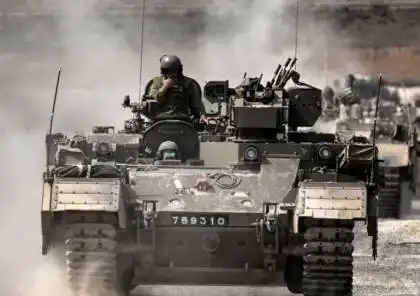

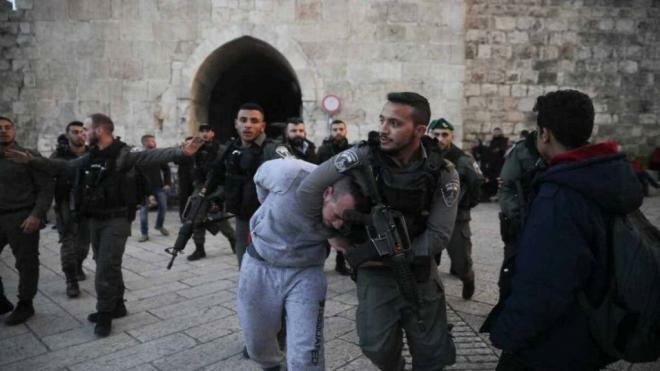
Court documents also indicate that Smirnov admitted to having several interactions with a Russian intelligence official, adding that this person is the son of a former Russian government official, and leads two groups charged with carrying out assassinations in a foreign country, a Russian delegate to another country, and a person linked to a specific Russian intelligence agency.


Prosecutors indicated that Smirnov's expected travel was intended to hold informal talks with Russian intelligence officials, among others. They warn that his attempts to spread misinformation about the president continue.


Prosecutors confirm that Smirnov “does not limit his misleading information to the 2020 elections, as after his meeting with Russian intelligence officials in November 2023, he presented new lies whose goal was the upcoming American elections.” They add that in light of this situation, there is a great risk that he will escape accountability for his actions, which he says are due to his hatred for Biden.


On one occasion, Smirnov confirmed that Russian intelligence officials, operating from a “club” inside a hotel, intercepted multiple calls made by senior American officials. These intercepted calls could serve as potential "compromises" for the Russian government in the 2024 elections, depending on the chosen candidates.


The file - which was submitted on this case last Tuesday - also lists several other alleged meetings and details of Smirnov's meetings with Russian intelligence officials. Prosecutors assert that these meetings were not innocent at all.
Smirnov was indicted by a grand jury for making false accusations against FBI agents in June 2020. The charges revolve around his alleged interactions with an executive from the energy company Burisma in Ukraine, where Hunter worked as an attorney before joining its board of directors.

The former informant told FBI agents that Bursima executives admitted to appointing Biden Jr. with the aim of protecting themselves from various issues related to his father as Vice President at the time.


Smirnoff fabricated lies to clients, suggesting that Burisma's top brass had confided to him that Hunter's appointment was a shield against trouble, thanks to his father's influence.


The allegations have been highlighted, appearing in assertions by Republican members of Congress amid the impeachment inquiry into the president.


Source: Yedioth Ahronoth+ Aljazeera

ARAB AND WORLD

Thu 22 Feb 2024 2:07 pm - Jerusalem Time

The Washington Post: 10% of those killed in Gaza war are Americans

The American newspaper, The Washington Post, reported that 10% of those killed in the war since the start of the ground invasion in Gaza were Americans, even though they constitute less than 2% of Israel’s population.

23 Americans were killed while serving in the occupation army or Israeli police forces, 21 of them inside Gaza, while another died on the northern border with Lebanon, and another died in Jerusalem while serving in the Israeli border police.


It is noteworthy that the American website “The Intercept” reported that the administration of US President Joe Biden has deployed an air force team in Israel to help identify targets.


The site reported that a document obtained indicates that the US Air Force sent officers specializing in a “precise type” of intelligence information (information used to launch air strikes and fire long-range artillery weapons) to “Israel” in late November.

PALESTINE

Thu 22 Feb 2024 2:04 pm - Jerusalem Time

Israel is criticized by ICJ, and China affirms the right to resistance

Today, Thursday, several countries denounced, during the ongoing hearings at the International Court of Justice in The Hague, the continued Israeli occupation of the occupied Palestinian territories and its violation of international law.


Today, the court heard the interventions of many representatives of countries, including China, Iraq and Iran, and 52 countries are scheduled to give their opinions during the sessions on the legal consequences of the Israeli occupation of the Palestinian territories.


The public hearings began last Monday and will continue for a week, based on the resolution issued by the United Nations General Assembly at the end of 2022.


The decision asked the court to issue a non-binding “advisory opinion” on “the legal consequences arising from Israel’s policies and practices in the occupied Palestinian territory, including East Jerusalem.”


Israel will not participate in the hearings, but submitted a text dated July 24, 2023 urging the court to decline to issue an opinion on the case.


Most of the countries that have expressed their opinion so far called on Israel to end its occupation of the Palestinian territories, but the United States defended it, and its representative said yesterday that the court should not conclude that Israel is legally obligated to immediately and unconditionally withdraw from the occupied territories.


Armed resistance

China's spokesman said before the International Court of Justice that armed resistance is a right of colonized peoples and does not contradict international law.


He added that Israel does not have the right to defend itself because its occupation of Palestinian territories is illegal, while it reserves the right to take some security measures.


The Chinese spokesman added that achieving justice for the Palestinian issue was long overdue, and that it should not be denied.

China has repeatedly called for an end to the Israeli war on the Gaza Strip, and also called for the implementation of the two-state solution leading to the establishment of a Palestinian state.


Violation of international law

Other interventions before the International Court of Justice focused on highlighting Israeli violations of international law.


The representative of Iraq said that the occupation is working to completely isolate the Palestinians, and called for Israel to be held accountable for its crimes and to bear its responsibility for violating human rights.


He called on the court to take all measures to preserve a dignified and safe life for the Palestinians in which they enjoy all human rights.


The representative of Iraq expressed his country's deep concern about the human suffering as a result of what he described as the barbaric acts carried out by the Israeli occupation against civilians in the Palestinian territories.


For his part, Iran's representative before the Court of Justice said that the Israeli occupation has and continues to violate the Palestinians' right to self-determination.


He added that the occupation grossly violated international law through demographic changes, noting that Israel has been practicing forced displacement of Palestinians since 1948.


The Iranian representative pointed out that there are two million and 200 thousand in Gaza who live without food, water, or health care.

For his part, the representative of Ireland said that Israel continued to illegally destroy and annex Palestinian lands to expand settlements, noting that, as an occupying state, it is obligated to respect international law.


The Palestinian delegation, headed by Foreign Minister Riyad al-Maliki, intervened yesterday and stressed in his testimony that the Israeli occupation is a colonial regime that practices apartheid.


The Court of Justice issued a decision on January 26 of last year obligating Israel to take “temporary measures” to protect the Palestinians in Gaza, and to comply with the Genocide Convention, until the content of the lawsuit filed by South Africa accusing Israel of committing genocide against the Palestinians in Gaza is decided. .

PALESTINE

Thu 22 Feb 2024 1:48 pm - Jerusalem Time

West Bank: Israel has arrested 7,170 Palestinian citizens since October 7

The Prisoners' and Ex-Prisoners' Affairs Authority and the Prisoners' Club said that the Israeli forces have arrested about 7,170 citizens from the West Bank since the start of the aggression on the Gaza Strip, on the seventh of last October.


The Commission and the Prisoner’s Club explained, in a press statement today, Thursday, that the ongoing and escalating arrest campaigns in an unprecedented manner come within the framework of the comprehensive aggression against our people and the ongoing genocide in Gaza, after the seventh of October, as it targeted all groups of children and women, the elderly, and the sick, in an unprecedented manner.

Since yesterday evening, the Israeli forces have arrested at least 18 citizens from the West Bank, including a woman, two children, and former detainees.


PALESTINE

Thu 22 Feb 2024 1:46 pm - Jerusalem Time

West Bank: Israeli forces arrest 6 Palestinian citizens in Bethlehem and Ramallah

This Thursday afternoon, Israeli forces arrested 6 citizens in Bethlehem and Ramallah.

According to local sources, the Israeli forces stormed the village of Beit Taamr, east of Bethlehem, and surrounded the home of citizen Issa Ali Salah Zawahra, who they claim that his two sons Muhammad and Kazem carried out a shooting attack near the Zaeem military checkpoint east of Jerusalem. They raided it and arrested him, his son Jaafar, and his two daughters. Zainab and Balqis.


They pointed out that the Israeli forces are currently besieging the house of citizen Azzam Ahmed Al-Wahsh, under the pretext of his son Ahmed participating with the two other young men in the shooting operation.


In Ramallah, Israeli special units of the "Musta'arabin" kidnapped the head of the Student Council, Saleh Majed Hassan, and the student Amr Zaloum, from in front of the western entrance to the Birzeit University campus.

ARAB AND WORLD

Thu 22 Feb 2024 1:46 pm - Jerusalem Time

How does Israel’s occupation of Palestine work?

Why do some call it an ‘apartheid’ and what does the occupation look like in practice?

Hearings have started at the International Court of Justice (ICJ) in The Hague on Monday in a landmark case in which 52 countries are jointly presenting evidence about the legal consequences of Israel’s occupation of Palestinian territories.

The case stems from a request from the United Nations General Assembly (UNGA) on December 30, 2022. A majority of UNGA members voted to seek the court’s opinion on the legal consequences of the continuing Israeli occupation of Palestine. The hearings will last until February 26.

A panel of 15 judges is expected to take about six months to issue a non-binding, advisory opinion on the request, which also asks them to consider the legal status of the occupation and its consequences.

Israeli Prime Minister Benjamin Netanyahu rejected the legitimacy of the ongoing proceedings at The Hague in a statement released by his office on Monday.

Netanyahu appeared to suggest he would disregard any ruling against Israel by the ICJ when he added that Israel will maintain full “security control” over areas that are west of the Jordan River. “Of course, this includes Judea and Samaria, and the Gaza Strip,” the statement added. “Judea and Samaria” refers to the West Bank.


What has happened in the hearings so far?

On Monday, Palestine presented its case at the ICJ. “We call on you to confirm that Israel’s presence in the occupied Palestinian territory is illegal,” Riyad Mansour, the Palestinian representative to the United Nations, said during an emotional speech.

“A finding from this distinguished court … would contribute to bringing [the occupation] to an immediate end, paving a way to a just and lasting peace,” he said. “A future in which no Palestinians and no Israelis are killed. A future in which two states live side by side in peace and security.”

International law expert Paul Reichler, representing Palestine in the hearings, told the court that the policies of Israel’s government “are aligned to an unprecedented extent with the goals of the Israeli settler movement to expand long-term control over the occupied West Bank, including East Jerusalem, and in practice to further integrate those areas within the territory” of Israel. He deemed the occupation “gravely unlawful”.

On Tuesday, other countries including South Africa, Saudi Arabia and Belgium presented arguments. Representatives from the countries condemned Israeli occupation, deeming it violent and illegal.

On Wednesday, several more nations including the US, Russia, Egypt and Hungary were giving their points of view.

Canadian officials announced at the last minute that they would not be presenting in oral proceedings on Tuesday, but did not give a reason. The court is expected to hear varying opinions, however.

The way in which each country voted in the UN General Assembly in the 2022 vote that prompted this case may be indicative of their approach in upcoming days in The Hague. The United States, United Kingdom and Canada voted against referring the case, whereas Brazil, Spain and Switzerland abstained.

What constitutes an ‘occupation’?

Article 42 of the 1907 Hague Regulations, pertaining to conduct in warfare, states that “territory is considered occupied when it is actually placed under the authority of the hostile army”. The regulations state that occupation is only permitted to be provisional, temporary control and is only meant to last while armed conflict lasts.

International law, including the Hague Regulations and the Geneva Convention, which pertains to conduct during armed conflict and protects civilians not taking part in hostilities, sets out provisions that protect the rights of those living under occupation.


Is Israel breaking international law on occupation?

Under international law, an occupying power is supposed to introduce as few changes as possible and not alter the status quo of the territory from before it was occupied. The occupier is also supposed to adhere to regulations including the protection of occupied peoples’ property and allowing the flow of humanitarian aid.

An occupying power should not move its own people into the territory it is occupying, under international law.

Israel has been criticised on many occasions for failing to adhere to these principles during its occupation of the Palestinian territories. Over the decades, for example, more and more illegal settlements have been built and there are now around 750,000 Israeli settlers living on Palestinian land.

Palestinians who are arrested and charged with crimes in the West Bank are tried in military courts, rather than civil ones. There are also many thousands of Palestinian prisoners being held in detention without charge.

Furthermore, international humanitarian agencies say Israel has prevented humanitarian aid trucks from reaching parts of Gaza.


How did the occupation of the West Bank come about?

Israel occupied the West Bank and East Jerusalem after the Six-Day War in 1967. These regions were formerly under Jordanian control.

Israel made its annexation of East Jerusalem official when it passed the Jerusalem Law in 1980, stating that East and West Jerusalem combined were the capital of Israel.

Despite several peace efforts such as the 1993 Oslo Accords and the 2000 Camp David negotiations since then, Israel has not withdrawn from the West Bank. The Oslo Accords resulted in the creation of the Palestinian Authority (PA), which was supposed to be temporary. The West Bank was divided into Areas A, B and C in 1995, denoting how much control the PA has in each. A final agreement, which was supposed to be reached five years later, never came into existence.


Was Israel occupying Gaza before the war began last October?

Israel occupied Gaza, which had been under the control of Egypt, in 1967.

However, in 2005, Israel technically withdrew from Gaza under then-prime minister Ariel Sharon’s disengagement plan, pulling out 9,000 Israeli settlers, when the situation there became too tense.

Israel and its supporters, therefore, claim it was no longer occupying Gaza.

However, the Gaza Strip has been under an Israeli land, air and sea blockade since 2007, which is why the UN, Amnesty International and other aid organisations and think-tanks still refer to Gaza as an “occupied territory”.


Does Israel’s policies towards  Palestinians constitute apartheid?

At the ICJ hearings this week, South Africa accused Israel of practicing an “extreme form of apartheid” against Palestinians. It isn’t alone.

Many commentators have used the word “apartheid” in connection with Israel’s occupation of Palestine. The word literally means “apartness” in Afrikaans – a policy of separation. Apartheid was implemented against Black residents of South Africa from the 1940s until its abolition in the early 1990s.

According to the 1998 Rome Statute to the International Criminal Court and the 1973 International Convention on the Suppression and Punishment of the Crime of Apartheid, apartheid consists of three main elements.

Among those who describe the Israeli treatment of Palestinians as “apartheid” are Amnesty International and Human Rights Watch. When Amnesty issued a report in 2022, its secretary general, Agnes Callamard, stated: “Whether they live in Gaza, East Jerusalem and the rest of the West Bank, or Israel itself, Palestinians are treated as an inferior racial group and systematically deprived of their rights.”

The report found that policies of segregation, dispossession and exclusion across all the territories under its control “clearly amount to apartheid”.

Palestinians in Israel and the occupied territories face at least 65 discriminatory laws, according to Adalah, a human rights law group in Israel.


What is life like under Israeli occupation?

Under occupation, the West Bank is rife with military checkpoints and patrols. Movement by Palestinian residents is severely restricted under Israel’s permit regime in the West Bank and for movement in and out of Gaza. Under this system, Palestinians are required to obtain permits to move between the West Bank, Gaza and East Jerusalem. These permits can be extremely difficult to obtain. Palestinians are often subjected to violence and theft from settlers with little or no recourse to justice.

Military raids, roadblocks, violence by settlers and curfews have become much more severe since October 7, and Palestinians are living under curfews – often shot at by armed settlers who are supported by Israeli forces if they leave their homes or even move too close to their windows.

Israeli forces regularly destroy infrastructure including private property in the West Bank. Typically, the reasons given for this include the owner not having the correct permits – which are often nearly impossible to obtain – to own the property.

Between 2009 and February this year, Israeli authorities demolished 10,472 Palestinian-owned structures in the West Bank, displacing 15,825 Palestinians, according to the UN Office for the Coordination of Humanitarian Affairs (OCHA).


Who are the settlers?

Illegal Israeli settlers have also been causing the displacement of Palestinians, by taking over land and farmland in the West Bank and destroying Palestinian property, for decades.

On the first day of the ICJ hearings, legal representative Reichler argued that Israel’s goal is to permanently acquire Palestinian territory, which is why forces and settlers violently expel Palestinian citizens from their homes.

While the Israeli government officially stopped building new settlements in the West Bank after signing the Oslo Accords in 1993, the settlements continued to expand. In 2021, the government started building settlements again.

Now, the Israeli government actively enables settlements by providing settlers with financial incentives to move into Palestinian territory, including lower costs of living. The government itself has built and funded houses for settlements in the West Bank.

The number of Israeli settlers living in Palestinian territory has dramatically increased over the past few years. As of February 11 this year, the number of settlers in the West Bank, excluding East Jerusalem, stands at 517,407, up from 502,991 a year earlier.

The Israeli settlements are considered illegal under international law as they violate the Fourth Geneva Convention, which bans an occupying power from transferring its own population to the area it occupies. Settlements also exist in East Jerusalem, where some 350,000 Palestinians live. 


Where is the separation wall?

In 2002, Israel constructed a 708km (440 mile)-long separation wall (also known in Arabic as “the apartheid wall”) through the West Bank.

Only around 15 percent of the wall follows the 1967 Green Line, the demarcation line between Israel and the West Bank as stated in the 1949 Armistice Agreements between Israel and its neighbours – Egypt, Jordan, Lebanon and Syria – following the 1948 Arab–Israeli War. The rest (85 percent of the wall) encroaches into Palestinian territory.

In 2004, the ICJ made a nonbinding ruling that the construction of this wall was in violation of international law. It called for its dismantling and ordered Israel to pay reparations for any damage caused by its construction. Two decades after that ruling, however, the wall still stands, slicing up Palestinian communities and cutting residents off from their lands, critical infrastructure and services.

Ghassan Daghlas, a Palestinian official who monitors settlement activity in the northern West Bank, told Al Jazeera in 2019 that Israel’s violation of the ruling demonstrated that it considers itself above international law and was unafraid to show this to the global community.

What does the international community say about the occupation?

Israel occupied East Jerusalem at the end of the 1967 war. It made its annexation of East Jerusalem official when it passed the Jerusalem Law in 1980, saying that East and West Jerusalem combined were the capital of Israel.

In 1980, however, the UN Security Council (UNSC) ruled the Jerusalem Law “null and void” in UNSC Resolution 478.

Most of the international community still considers East Jerusalem and the West Bank to be Palestinian territory illegally occupied by Isreal. Palestinians want East Jerusalem to be the capital of any future Palestinian state.

No major country in the world recognises unified Jerusalem as Israel’s capital, with the exception of the US. On December 6, 2017, former US President Donald Trump recognised Jerusalem as the capital and moved the US embassy there. While a majority of countries have their embassies in Tel Aviv, Guatemala, Honduras, Kosovo and Papua New Guinea also have their embassies in West Jerusalem.

Russia recognises West Jerusalem as the capital of Israel, and East Jerusalem as “the capital of the future Palestinian state”. In 2022, Australia reversed its recognition of West Jerusalem as Israel’s capital.

Israel also unilaterally annexed the Syrian Golan Heights in 1981, a move recognised in 2019 by the US, the only country in the world to do so.

In 1988, the UN General Assembly recognised Palestine’s declaration of independence. In 2012, the UNGA passed a resolution granting Palestine “non-member observer state” status, effectively acknowledging it as a sovereign state.

The United Nations has 193 member states. Of those, 162 (84 percent) recognise Israel and 138 (72 percent) recognise the State of Palestine.


International recognition

The United Nations has 193 member states. Of those, 162 (84%) recognise Israel and 138 (72%) recognise the State of Palestine.

 SOURCE: AL JAZEERA

PALESTINE

Thu 22 Feb 2024 1:43 pm - Jerusalem Time

War on Gaza: Continuous Israeli bombing on the city of Rafah and Al-Zawaida

Seven citizens were killed, and others were injured, today, Thursday, in the Israeli army bombing of the city of Rafah, south of the Gaza Strip.

Local sources reported that the Israeli aircraft targeted several homes and a mosque in the city of Rafah, killing seven citizens and wounding dozens.

The city of Rafah is the last refuge for the displaced in the stricken Strip. Since the beginning of the ground operation launched by Israel on the Gaza Strip on the 27th of last October, citizens have been asked to go from the north and center of the Strip to the south, claiming that they are “safe areas,” but they were not spared from the bombing. 

In the Al-Zawaida area, 4 citizens were killed as a result of the Israeli bombing a house belonging to the Thabet family in the town.


The local sources pointed out that more than 30 Palestinians killed as a result of the Israeli bombing of citizens’ homes in the central Gaza Strip, since yesterday evening, while 97 citizens were killed and 132 others were injured during the past 24 hours.


In an infinite toll, the death toll in the Gaza Strip rose to 29,410, the majority of whom were children and women, and injuries to 69,465, since the start of the Israeli occupation aggression on the seventh of last October.

ARAB AND WORLD

Thu 22 Feb 2024 1:36 pm - Jerusalem Time

Israel military’s top lawyer warns troops over ‘improper conduct’ in Gaza

Action may be taken against soldiers who have crossed ‘criminal threshold’ with unjustified use of force, looting.

The Israeli military’s top lawyer has issued an unprecedented warning to troops against “improper conduct” in Gaza which includes the unjustified use of force and looting among other “criminal” actions.

Major-General Yifat Tomer-Yerushalmi, the military advocate general, issued the warning in a letter on Wednesday, as reported by the Haaretz newspaper, saying it was “difficult to exaggerate” the “severity” of the soldiers’ actions over nearly five months of the war.

Their actions include “inappropriate statements that encourage unacceptable actions”, the “unjustified use of force”, “destruction of civilian property” and “looting”, according to Tomer-Yerushalmi, which were in “violation of orders” and had crossed the “criminal threshold”.

Entitled Fighting and Victory According to the Law, the letter underlined that soldiers’ actions “deviate from orders and disciplinary boundaries” and did not meet the military’s values, ultimately causing “strategic damage” to Israel in the international arena.

Tomer-Yerushalmi signalled that several cases were being investigated, after which the Military Advocate General Corps would decide if criminal or disciplinary measures need to be taken.

“These acts and statements, on the part of individuals who do not represent the collective, are contrary to the [Israeli military] as a professional, moral, and dignified army, and they have no place in the [Israeli military],” she wrote.


Last month, a United Nations human rights official called for an end to the mistreatment of Palestinian detainees by Israeli forces in the Gaza Strip, who were subjected to weeks of imprisonment in secret locations, physical abuse and humiliation.

Several videos shared by the Israeli army since the war began show hundreds of Palestinian men stripped to their underwear, sitting outdoors in the cold, sometimes blindfolded. In a few videos, women and children were also seen.

Soldiers have also filmed themselves mocking Palestinians and posting the videos on social media as they press on with their offensive in Gaza which has killed more than 29,000 Palestinians since the current conflict erupted on October 7.

Other troops have posted videos of themselves stealing from Palestinian homes in Gaza, with the Government Media Office in the enclave saying this month that at least $25m in cash, gold and valuables was looted in the first three months of the war.


Conduct of war

The letter comes amid rising international pressure on Israel over a no-limits offensive that has devastated the Gaza Strip. In recent weeks, several countries, including Australia, Canada, New Zealand, Spain and Ireland, have warned Israel to halt its plans for a ground offensive in the border city of Rafah, where an estimated 1.4 million Palestinians are currently sheltering.

South Africa lodged a case against Israel at the International Court of Justice in December, alleging it was perpetrating genocide against Palestinians in Gaza. Judges stopped short of a ceasefire ruling, but ordered Israel to do all it can to prevent death, destruction and any acts of genocide in the strip.

Tomer-Yerushalmi’s comments came a day after Herzi Halevi, the Israeli military’s chief of staff, emphasised values in the conduct of the war in a letter to army commanders, saying the army was not “on a killing spree”, “not acting out of revenge nor carrying out genocide in Gaza”.

“We conduct ourselves as like human beings and unlike our enemies we maintain our humanity. We must make sure not to use force where this is not necessary, to distinguish between terrorists and non-combatants, not to take anything that does not belong to us – a souvenir or weapons, and not to film revenge videos,” he said.


SOURCE: AL JAZEERA AND NEWS AGENCIES

OPINIONS

Thu 22 Feb 2024 1:30 pm - Jerusalem Time

The world’s moral failure in Gaza should shame us all

Martin Griffiths

Martin Griffiths

Opinion Writer

The G20 members must use their political leadership and influence to help end the war in Gaza.


As the Group of 20 (G20) meets in Brazil this week, the reported death toll in the Gaza hostilities is nearing the 30,000 mark. I hope this gives the foreign ministers convening in Rio de Janeiro a reason to reflect on what their countries have or have not done to stop this.

To say that the war in Gaza is pitiless and is an example of utter humanitarian failure is not news. There is no need to restate the obvious. Instead, allow me – on behalf of my humanitarian colleagues – to warn you not just about today but what I fear for tomorrow.

What has been unfolding in Gaza for the past 138 days is unparalleled in its intensity, brutality and scope. Tens of thousands of people killed, injured or buried under the rubble. Entire neighbourhoods razed to the ground. Hundreds of thousands of people displaced, living in the most abject conditions even as winter sets in. Half a million people on the brink of famine. No access to the most basic needs: food, water, health care, latrines. An entire population is being stripped of its humanity.

The atrocities befalling the people of Gaza – and the humanitarian tragedy they are enduring – are there for the world to see, documented by brave Palestinian journalists too many of them have been killed while doing so. No one can pretend not to know.

No one can pretend not to know either that humanitarian agencies are doing their best: Nearly 160 of our colleagues have been killed, yet our teams continue to deliver food, medical supplies and safe drinking water. We are doing everything we can, despite the security risks, the collapse of law and order, the access constraints and the personal tragedies. Despite the defunding of the largest UN organisation in Gaza. And despite the deliberate attempts to discredit us.

The humanitarian community which I represent has just released a plan outlining what we need to increase the flow of aid into and across Gaza. None of it is unreasonable: security guarantees; a better humanitarian notification system to reduce risks; telecommunication equipment; removal of unexploded ordnance; use of all possible entry points.

But although I have often said that hope is the currency of the humanitarian, I have little hope that the authorities will give us what we need to operate. I want nothing more than to be proven wrong.

We know without a shadow of a doubt that humanitarian agencies will be blamed – we are already being blamed – for the lack of aid in Gaza, despite the courage, commitment and sacrifice of all our teams there.

But make no mistake: The deprivations that the people of Gaza have been enduring are so severe that no amount of aid is enough.

The obstacles we are facing every step of the way are so enormous that we can only provide the bare minimum.

The October 7 attacks on Israel are horrific – I have condemned them repeatedly and will continue to do so. But they cannot justify what is happening to every single child, woman and man in Gaza.

So my message to the G20 foreign ministers this week is clear: We have been pleading with Israel, as the occupying power in Gaza, to facilitate aid delivery – to little or no avail.

We have been calling for the immediate and unconditional release of all hostages – to little or no avail.

We have been urging the parties to abide by their obligations under international humanitarian and human rights law – to little or no avail.

We have been exhorting countries which have stopped funding UNRWA to reverse their decision – to little or no avail.

Today, we implore you, G20 members, to use your political leadership and influence to help end this war and save the people of Gaza. You have the power to make a difference. Use it.

Your silence and lack of action will only lead to more women and children thrown into the open graves of Gaza.

Humanitarian agencies are doing everything they can. Are you?