PALESTINE

Tue 07 Apr 2026 7:44 am - Jerusalem Time

Details of an Israeli Military Failure: Hezbollah Ambush Foils Attempt to Cross Litani River

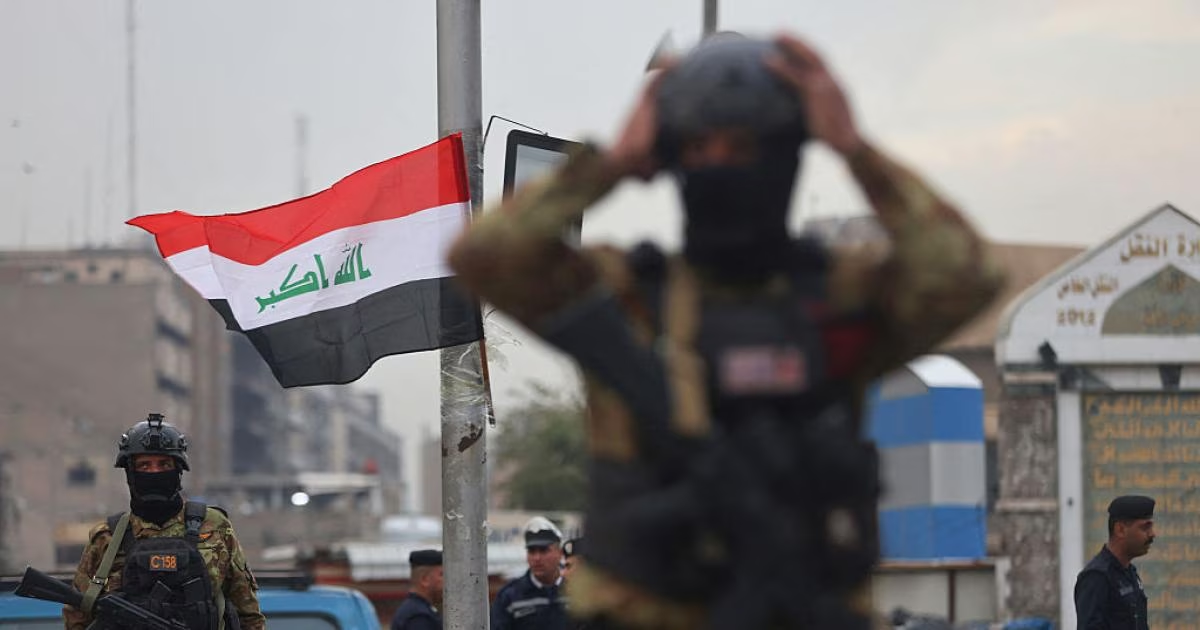
Hebrew media outlets have revealed precise details of a failed military operation carried out by the Israeli occupation army deep in southern Lebanon late last March. Investigations showed that a special force fell into a well-laid ambush by Hezbollah fighters during a failed attempt to cross the Litani River, which led to the mission's failure and inflicted significant human and material losses on the force.

According to media sources citing the military investigation, the operation, which began on March 27, aimed to seize strategic points in the Beaufort area. A joint force participated in this mission, including an elite group from the 890th Paratrooper Battalion along with elements from the 'Yahalom' unit, specialized in engineering and difficult tasks.

The investigations revealed that the Israeli force underwent intensive training and preparations for about 36 hours before the field movement began, including securing logistical equipment and boats for crossing. Upon execution, the forces were surprised by a barrage of mortar shells and rockets launched by Hezbollah fighters with high precision, which deprived the occupation of the element of surprise in the first minutes of the confrontation.

The fierce engagement resulted in the death of Sergeant 'Moshe Yitzhak Hakohain' and the injury of about twenty other soldiers with varying degrees of severity, including field officers who were leading the force. Sources stated that the intensity of the fire forced the commanders into a state of operational hesitation between completing the mission or immediate withdrawal to save the remaining soldiers.

Regarding the withdrawal details, reports indicated that the 'Yahalom' engineering unit was forced to leave the site under heavy bombardment, leaving behind sensitive military equipment including bulldozers and rubber boats. The paratrooper battalion remained in the area for a short period to provide fire cover for the evacuation of the wounded, which was carried out with great difficulty amidst continuous targeting by the resistance.

The Israeli military command decided to halt the entire operation more than an hour after the confrontation began, describing the withdrawal as 'tactical' to preserve the force. This revelation comes amid escalating field tensions and the ongoing aggression launched by the occupation on various areas of Lebanon since early last March.

Statistics indicate that the recent Israeli aggression has resulted in nearly 1,500 martyrs, in a wave of escalation that began after the assassination of the Iranian Supreme Leader and the violation of ceasefire understandings. The occupation army claims that its ground and air operations aim to establish a buffer security zone, but field realities show fierce resistance hindering its progress.

It is worth noting that this failed operation reflects the magnitude of the field challenges faced by the occupation army in its attempts to penetrate southern Lebanon by land, despite air superiority. Sources confirm that leaving military equipment on the battlefield is a professional failure added to the failure to achieve the strategic objectives of the long-planned military operation.

The military investigation showed that the Yahalom unit withdrew from the site, leaving behind military equipment and bulldozers under intense fire.

ISRAELI AFFAIRS

Tue 07 Apr 2026 7:44 am - Jerusalem Time

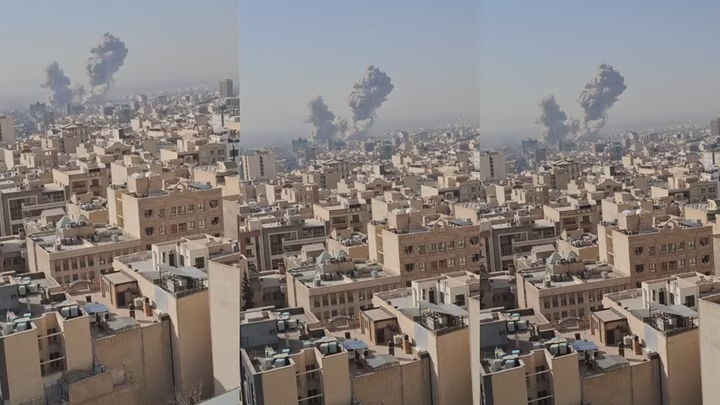
Death toll from Iranian missile strike on Haifa rises to 4

The Israeli occupation authorities confirmed, early Monday morning, that the death toll from the Iranian missile attack targeting the city of Haifa had risen to four people. This announcement came after rescue teams were able to recover two additional bodies from under the rubble of a residential building that sustained a direct hit yesterday, Sunday.

Earlier, medical sources affiliated with the occupation had indicated that two people were killed immediately after the attack, before others were reported missing at the scene. With search and rescue operations continuing under the rubble, the bodies of the missing were found, raising the final death toll from this specific targeting.

Media sources reported that heavy explosive warheads fell in multiple areas of occupied Haifa, causing widespread fires in various locations. Fire and rescue teams rushed to deal with the raging fires, amid a state of security and military alert in the northern region.

For its part, the occupation police announced that explosives experts had gone to several points in the Carmel area to examine the remnants of the missiles and explosive warheads that had fallen. The police clarified that the attack caused severe damage to a number of residential buildings and vehicles, leading to some facilities being temporarily out of service.

In a related context, the Israeli Home Front activated early warning systems in wide areas, including central Israel, after detecting the launch of missiles from Iran. A state of panic prevailed among settlers as sirens blared, with thousands taking refuge in fortified shelters for fear of direct hits.

Press reports stated that the explosive warheads and shrapnel were distributed across at least 10 locations within the city of Haifa, reflecting the intensity of the missile attack and its ability to bypass air defenses. Sources indicated that the extent of the destruction in some locations was unprecedented compared to previous attacks.

Regarding human casualties, ambulance crews confirmed that 11 Israelis were injured to varying degrees, with one described as very serious due to flying shrapnel. Field treatment was also provided to four other people who suffered severe panic attacks due to the sound of the violent explosions that shook the city.

According to technical data circulated by Hebrew sources, the missile that directly hit the five-story building carried an explosive warhead weighing approximately 450 kilograms. This large weight of explosives explains the partial collapse that occurred in the building and the difficulty of extracting those trapped under the rubble.

Informed sources quoted rescue teams as saying that operations continued throughout the night in complex conditions due to damage to the infrastructure of the targeted building. The sources explained that the delay in announcing the final toll was due to the need to confirm the identity of the bodies recovered early this morning.

This escalation comes amid increasing regional tensions, as the latest attack demonstrated the ability of Iranian missiles to reach vital targets deep within major cities. Political and military circles are monitoring the repercussions of this attack, amid expectations of reactions that could further ignite the situation on the ground.

Rescue teams recovered two bodies early Monday from under the rubble of a building in Haifa that was hit by a direct Iranian missile attack.

ARAB AND WORLD

Tue 07 Apr 2026 7:44 am - Jerusalem Time

Iran Demands Compensation to End War and Open Strait of Hormuz: The Conflict of 'Legal Reparations' and Military Threats

The military confrontation between Iran and the American-Israeli coalition has entered its sixth week, amidst a striking Iranian insistence on placing the 'compensation' issue at the forefront of any potential political negotiations. The Iranian leader, Mojtaba Khamenei, affirmed in his first official statement that his country will not relinquish its right to full reparations for damages resulting from what Tehran described as unlawful attacks.

The Iranian leadership stressed that retaliation for the dead and material losses will remain open until fully achieved, threatening to take unilateral measures to confiscate assets belonging to the aggressor states. Khamenei clarified that the refusal to pay compensation would be met with the destruction of enemy properties of equivalent value, indicating Tehran's intention to escalate qualitative military operations.

In the context of economic pressure, Tehran directly linked the resumption of navigation in the strategic Strait of Hormuz to compensation for its financial losses. Sources reported that a new transit system would be imposed, with a portion of its revenues allocated to cover reconstruction costs, at a time when restrictions remain on Western vessels with rare exceptions.

For his part, Mohsen Rezaei, a member of the Expediency Discernment Council, affirmed that any talk of a ceasefire remains contingent on the lifting of comprehensive sanctions and the payment of compensation. Observers believe that this rigid stance aims to establish a legal characterization of the war as aggression outside international frameworks, obliging the aggressor to financial and legal consequences.

On the diplomatic front, a notable Qatari move emerged in the corridors of the United Nations, where Doha demanded that Tehran bear its full legal responsibilities for the damages resulting from the recent escalation. These moves reflect growing regional concern over the continued closure of vital waterways and its impact on global energy security.

Legally, Iranian demands are based on the 'Responsibility of States for Internationally Wrongful Acts' document issued by the United Nations in 2001, which stipulates the necessity of providing 'full reparation.' This reparation includes restitution (restoring the previous state), financial compensation for human and material losses, and moral satisfaction through an official apology.

Despite the clarity of these rules in international law, they lack direct enforceability unless issued by the International Court of Justice in a binding judgment. Historically, the United States refuses to recognize any decisions that affect its sovereignty or that of its ally Israel, describing international courts as politicized and ineffective platforms.

Considering the historical American record, it is clear that Washington has not paid explicit compensation for wars it described as legitimate, but rather resorted to financial settlements in exchange for land. In the Mexican-American War of 1848, Washington paid $15 million for border demarcation and the annexation of new territories, which was repeated with Spain for the Philippine Islands in 1898.

On the ground, fears are growing that the US administration may resort to tactical nuclear weapons to break the current military stalemate after six weeks of fighting. Former US President Donald Trump had threatened Iran with a military 'hell' if an agreement ensuring the opening of the Strait of Hormuz was not reached within a few hours.

The war has caused severe economic shocks in the region, with Egypt recording an outflow of foreign investments estimated at $9 billion since the start of military operations. The cost of Egyptian energy imports has also doubled to $1.1 billion per month, increasing pressure on government debt, which has exceeded 82% of GDP.

In local markets, the repercussions of the war were reflected in the prices of basic commodities and precious metals, with the price of 21-carat gold in Egypt soaring to record levels of 7150 Egyptian pounds. Experts attribute this rise to the state of uncertainty and disruption in global supply chains due to the closure of waterways in the Gulf.

Iran relies on its resilience on possessing the second-largest oil reserves in OPEC and its ability to disrupt global trade through the Strait of Hormuz. Despite some ships, such as the French vessel (CMA CGM), being allowed to pass recently, navigation remains at the mercy of complex political understandings.

Reports indicate that Iranian forces succeeded in shooting down three American military aircraft during pilot rescue operations described by Washington as daring. These direct clashes further complicate the compensation issue, as each party believes it has the right to claim reparations for its human and material losses.

Ultimately, the gap between Tehran's demands and Washington's refusal seems to portend a prolonged conflict with no immediate prospect of a solution. If international mediations fail to find a middle ground on 'transit fees' in Hormuz, the region may drift towards a comprehensive confrontation that transcends the limits of the current conflict.

We will demand compensation from the enemy, and if they refuse, we will take from their funds as much as we deem appropriate, and if that is not possible, we will destroy their property to the same extent.

ARAB AND WORLD

Tue 07 Apr 2026 7:44 am - Jerusalem Time

Bloody Regional Escalation: Deaths in Erbil, Missile Interceptions in Saudi Arabia, and Anticipation of a UN Resolution on Hormuz

Erbil Governorate, the capital of the Kurdistan Region of Iraq, woke up on Tuesday morning to a new human tragedy, as a civilian couple was killed when an explosive-laden drone fell on their home. Security sources in the region's counter-terrorism apparatus confirmed that the drone came from the Iranian border and fell in the village of Zarka Zawi, affiliated with the Darashakran sub-district.

Erbil Governor Omed Khoshnaw strongly condemned this attack targeting a safe residential area, describing it in official statements as a war crime and a blatant violation of international conventions. This incident comes amidst an unprecedented wave of security escalation hitting the region since the outbreak of direct military confrontations in late February.

In a related context, field sources reported hearing violent explosions on Monday evening around Erbil International Airport, which houses a base for military advisors of the international coalition. Hours before, air defenses announced the thwarting of a missile attack targeting the US Consulate, where four missiles were shot down before reaching their targets.

The attacks were not limited to diplomatic facilities, as the Ministry of Peshmerga announced that its headquarters was subjected to a coordinated attack by four explosive-laden drones on Monday night. In a statement, the ministry criticized what it described as federal silence, demanding Baghdad take practical and serious steps to deter these repeated aggressions that undermine the region's security.

On the southern front, the Saudi Ministry of Defense announced the success of air defense forces in intercepting and destroying seven ballistic missiles that were directed towards the eastern region of the Kingdom. The ministry indicated that the missile debris fell near vital energy facilities, confirming that specialized teams are conducting a precise assessment of the damage caused by the shrapnel.

The spokesperson for the Saudi Ministry of Defense, Major General Turki Al-Maliki, stated that the armed forces continue to confront threats targeting global energy security and civilian facilities. For weeks, the Kingdom has been subjected to intensive missile and drone attacks, with regional parties accused of being behind them to destabilize the region.

Diplomatically, all eyes turn to the corridors of the UN Security Council on Tuesday, where a draft resolution aimed at securing freedom of navigation in the Strait of Hormuz is scheduled for a vote. This move comes after arduous negotiations led by Bahrain with Gulf support to amend the resolution's wording to ensure international consensus against maritime threats.

The latest version of the draft resolution condemns attacks targeting commercial vessels and calls for coordinating international defensive efforts to escort tankers and ensure their safe passage. The text also directly calls on Iran to cease all actions that impede traffic in this vital waterway through which a large portion of global energy supplies pass.

The UN resolution warns that the Council is prepared to take additional stringent measures against any party attempting to undermine freedom of navigation or threaten international trade. These diplomatic moves come at a very sensitive time, as the international community races against time to avoid a full-scale explosion of the situation in the Middle East.

In Washington, US President Donald Trump raised the stakes of his threats, setting a deadline ending Tuesday night for the full reopening of the Strait of Hormuz to international navigation. In statements described as the most severe, Trump threatened to completely destroy Iran if it did not comply with the specified deadline and stop threatening commercial vessels.

The region has been in a state of maximum military alert since the US-Israeli attack on Iranian targets on February 28th. Since then, armed factions in Iraq have been carrying out almost daily attacks targeting what they describe as enemy bases, in response to the strikes their sites have suffered.

Observers believe that the killing of civilians in Erbil and the targeting of energy facilities in Saudi Arabia represent a dangerous shift in the conflict's trajectory, as the human and economic costs have begun to rise significantly. Concerns are growing about the region sliding into a comprehensive regional war whose global repercussions cannot be controlled.

With the Security Council vote approaching and the zero hour set by the White House, anticipation remains the dominant factor in global decision-making capitals. While major powers seek to contain the crisis politically, field developments in Iraq and Saudi Arabia indicate that the language of weapons still dominates the volatile regional scene.

The attack on civilian homes in Erbil constitutes a blatant violation of international law and a full-fledged war crime.

ARAB AND WORLD

Tue 07 Apr 2026 7:43 am - Jerusalem Time

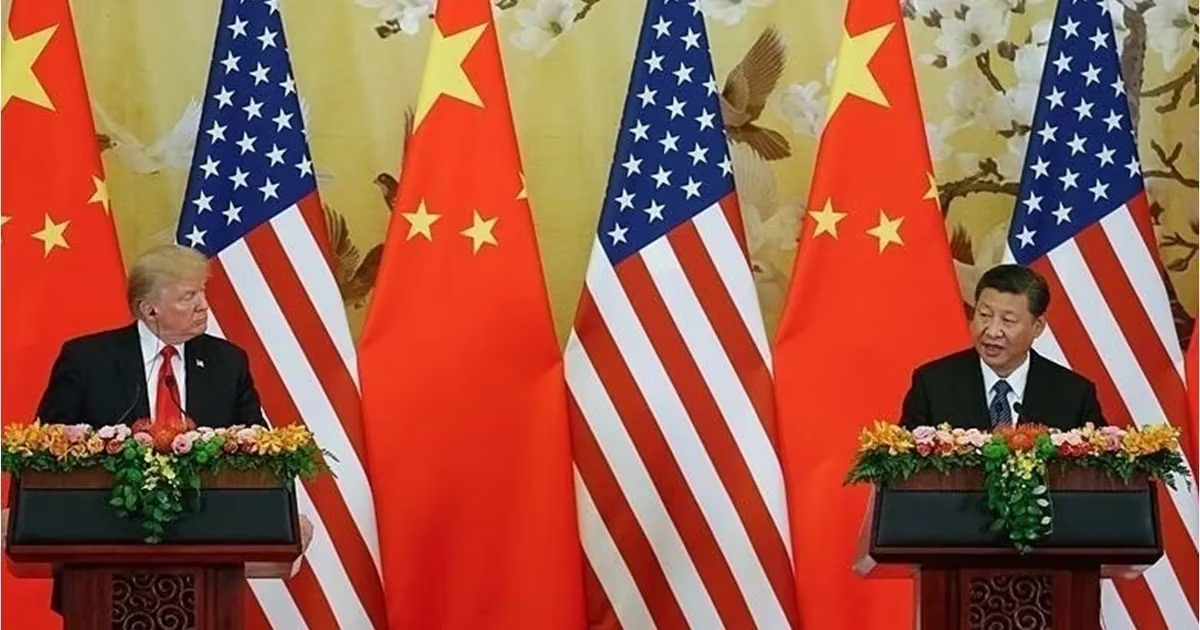
Between Strategic Ambiguity and Cautious Neutrality: How China Navigates its Compass in the War on Iran?

Amidst the escalating pace of the American-Israeli war on Iran, fundamental questions arise about China's true stance on this raging conflict. While digital platforms are abuzz with speculation about secret Chinese support for Tehran, Beijing remains committed to a policy of strategic ambiguity as a rising power competing with American hegemony in the region.

A recent study of the discourse of the Chinese state channel (CGTN Arabic) revealed that the war received only 20% of the news coverage, which is a departure from the usual media practice in major crises. This trend reflects a deliberate editorial policy that prioritizes economic, technological, and development issues over military conflicts.

Beijing's approach to the Iranian crisis maintains international balance and is not affected by momentary changes, preferring not to slide into sharp public positions. The limited publication allows the Chinese administration greater ability to control political messages directed to the world, which is the essence of its digital diplomacy.

It is noticeable that Chinese media discourse avoids focusing on the humanitarian dimensions associated with victims and destruction, preferring to focus on economic and developmental frameworks. This unemotional approach indicates that China does not place the humanitarian file among its political priorities in Middle East conflicts, but rather acts according to calculations of hard interests.

Although China is the most prominent importer of Iranian oil and is directly affected by the closure of the Strait of Hormuz, it avoids showing any signs of economic weakness. Through this apparent cohesion, Beijing seeks to present itself as a resilient state that does not care about challenges, despite the significant pressures imposed by rising global energy prices.

China's current stance towards Iran is consistent with its previous policy in the Ukrainian crisis, where it is keen not to directly engage in conflicts involving Western powers. This continuity in approach confirms Beijing's desire to observe the attrition of major powers while maintaining a safe distance that guarantees it freedom of movement in the future.

Digital analyses showed that Iran is present as a major political actor in Chinese coverage, but in measured proportions that do not suggest direct bias at first glance. In contrast, the presence of the United States and Israel in positive discourse declines, revealing a hidden tendency to support the Iranian narrative in the face of the Western alliance.

The declared Chinese neutrality represents a characteristic of the closed political system that meets the temporary needs of a rising power awaiting the opportune moment to clearly express its positions. Chinese media sources report events without building explicit positions, which contributes to reinforcing Beijing's image as an objective and rational party far from sharp alignments.

On the ground, the war entered its sixth week amidst unprecedented escalation, including Iran targeting sites in the UAE and Kuwait in response to American attacks. Tehran also announced the downing of three American military aircraft during complex operations, further complicating the military scene in the region.

In contrast, US President Donald Trump threatened to make Iran face 'hell' within 48 hours unless an agreement is reached to ensure the opening of the Strait of Hormuz. International concerns are growing about the US administration resorting to the tactical nuclear weapon option to break the military stalemate imposed by Iranian forces on the ground.

Economically, the war caused violent shocks to neighboring countries, with Egypt recording the exit of huge foreign investments estimated at about 9 billion dollars. The cost of Egyptian gas imports also doubled to 1.1 billion dollars per month, and gold prices jumped to record levels due to global uncertainty.

Iran currently controls almost completely the navigation in the Strait of Hormuz, imposing strict restrictions that exclude only Chinese and Indian ships. Recently, the first Western ship belonging to the French company (CMA CGM) was allowed to pass, in a move observers considered an attempt to ease increasing international pressures.

China's tendency to reinforce the negativity of the American narrative towards the war is clearly evident through the distribution of news trends between positive and negative. While Iran is presented in a balanced manner, negativity towards American and Israeli moves stands out, reflecting Beijing's desire to undermine Western influence in a soft way.

In conclusion, China manages its policy in this crisis with a high degree of caution and media professionalism that ensures it strengthens international confidence in its positions. This crisis reveals that Chinese diplomacy relies on strategic patience, awaiting the moment that allows it to transform from a neutral observer to a dominant player in the new international system.

China follows a policy of ambiguity that hides behind it orientations that are not yet ready to be announced, as its discourse shows a hidden bias towards Iran against negativity towards American action.

PALESTINE

Tue 07 Apr 2026 7:43 am - Jerusalem Time

12 Martyrs in Intense Raids on Gaza Strip Since Monday Dawn

Israeli occupation forces escalated their attacks on the Gaza Strip since dawn on Monday, resulting in the martyrdom of 12 people in various areas, with the most intense focusing on the central part of the Strip. Medical sources confirmed that the aerial raids and artillery shelling targeted civilian gatherings and transportation, leading to injuries of varying severity that were transferred to available medical centers.

In field details, the occupation forces committed a massacre in Al-Maghazi camp in the central Strip, where 10 citizens were martyred in a direct targeting of the eastern area of the camp. Local sources stated that the bodies of the martyrs were distributed to Al-Awda Hospital in Nuseirat and Al-Aqsa Martyrs Hospital in Deir al-Balah, amidst harsh health conditions suffered by these facilities.

As for the southern part of the Strip, a citizen was martyred by occupation bullets that targeted two vehicles in the city of Khan Yunis, specifically near Street (5). In Gaza City, a child was martyred as a result of a raid that targeted an electric bicycle in the Sheikh Radwan neighborhood, while civil defense teams are still facing extreme difficulties in recovering other victims from under the rubble due to the continuous shelling and prevention of access to the targeted areas.

The total toll of the occupation's aggression since October 7, 2023, has reached 72,302 martyrs and 172,090 injured.

ARAB AND WORLD

Tue 07 Apr 2026 7:43 am - Jerusalem Time

Israeli-American Readiness for Widespread Strikes Against Iran as Trump's Deadline Nears

The region has entered a highly dangerous phase as the deadline set by US President Donald Trump for the Iranian leadership approaches, with Israel and the United States elevating military coordination to its highest levels. Informed sources reported that the air forces of both countries are finalizing plans to cripple vital infrastructure in Iran should the deadline expire without Tehran responding to American demands.

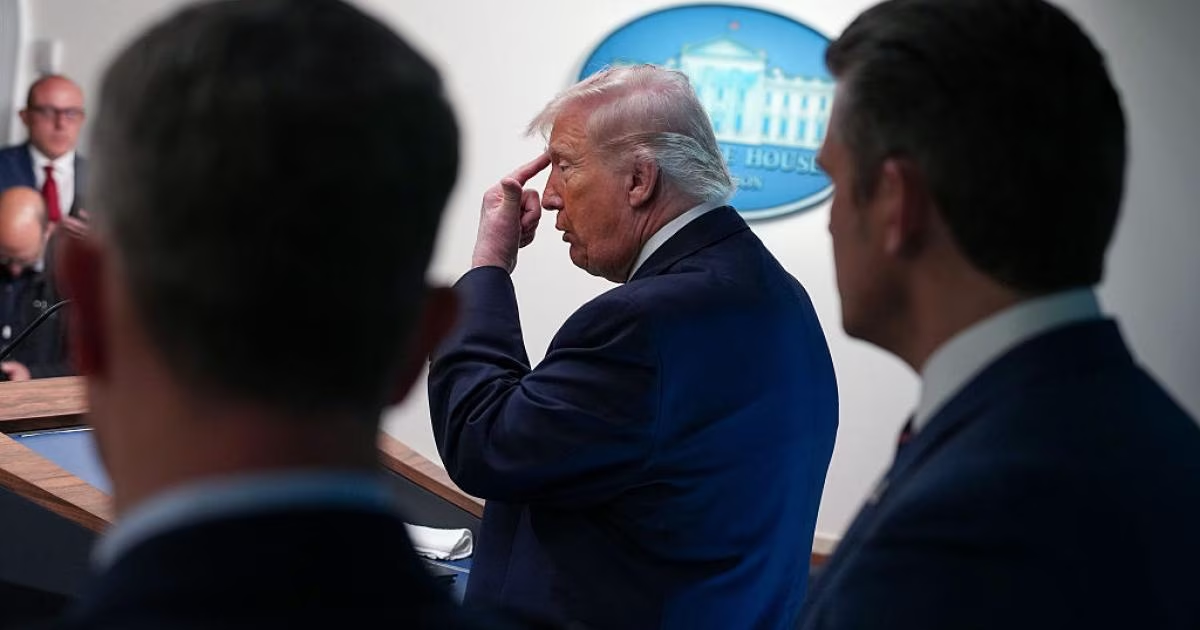
US President Donald Trump affirmed that ongoing talks have not yielded the desired results so far, emphasizing that the military option is now ready for immediate implementation. Trump clarified in statements from the White House that specific targets include power generation stations, bridges, and strategic civilian facilities, aiming to exert maximum pressure to force Tehran to open the Strait of Hormuz.

For his part, US Secretary of Defense Pete Hegseth stated that air operations would witness an unprecedented escalation starting this Monday, confirming that the strikes would be the most violent since the confrontation began. Hegseth indicated that the intensity of fire would double on Tuesday, coinciding with the expiration of the specified deadline, to ensure the precise achievement of military objectives.

In the context of field developments, the US Secretary of Defense revealed details of the rescue of an F-15 fighter jet pilot who had crashed over Iranian territory last Friday. He explained that the pilot managed to hide and communicate with friendly forces before a complex rescue operation successfully recovered him on Sunday, providing a morale boost to the forces involved in the air operations.

On the other hand, Tehran responded with a sharp escalatory tone, with Iranian Foreign Minister Abbas Araghchi conducting a series of international contacts, including with his counterparts in Qatar and Japan. Araghchi considered American threats to target civilian and energy facilities as a full-fledged 'war crime' and an attempt to annihilate the Iranian people, calling on the international community to intervene to stop this recklessness.

Iranian military leaders stressed that any American or Israeli aggression would be met with an 'earthquake-like' response that would extend beyond Iran's geographical borders to include energy facilities throughout the region. Sources in Tehran confirmed that the Iranian armed forces have established a target bank including vital facilities within the occupied territories, warning that any infringement on Iran's sovereignty would mean the outbreak of a comprehensive regional war.

Tehran maintained its strategic stance on the Strait of Hormuz, considering it a sovereign deterrent that cannot be relinquished under the weight of threats or sanctions. Media sources indicated that Tehran views control over the Strait as a key leverage in the global energy equation, which explains the American insistence on opening it as a prerequisite to avoid military escalation.

In a notable development, Iran's 'Khatam al-Anbiya Headquarters' hinted at the possibility of activating resistance fronts in the region, including threatening to close the Bab al-Mandab Strait through Tehran's allies. This move aims to divert American and Israeli efforts and create an international navigation crisis that would increase economic pressure on the US administration, which seeks to secure global trade routes.

In Tel Aviv, Israeli sources reported that the security establishment is cautiously awaiting the coming hours, amid fears that Trump might back down at the last minute from the decision for a comprehensive attack. Despite this caution, the Israeli Broadcasting Corporation confirmed that the Israeli army is on high alert, awaiting the American 'green light' to commence joint attacks on Iranian targets.

Israeli Prime Minister Benjamin Netanyahu is scheduled to hold a small security meeting with senior army and Mossad commanders to assess the field situation and coordinate next steps with Washington. The meeting will focus on potential Iranian response scenarios and how to protect the Israeli home front from anticipated missile barrages should a major confrontation erupt.

These developments come after approximately 40 days of continuous military operations targeting various Iranian facilities, which sources described as a prelude to the current decisive phase. These operations have resulted in significant losses among Iranian leaders, further complicating the political and military landscape in the region and pushing it to the brink.

It is worth noting that the direct confrontation that erupted in late February resulted in dramatic shifts, most notably the assassination of Supreme Leader Ali Khamenei and a number of senior security officials. This leadership vacuum, despite Tehran's attempts to fill it, has left the Iranian regime facing existential challenges in the face of continuous American and Israeli military pressure.

In contrast, Tehran continued its retaliatory operations by launching swarms of drones and ballistic missiles towards Israeli targets and American bases in the region. Although Tehran affirmed that its strikes target only military interests, field reports indicated civilian casualties in some Arab countries as a result of these missile barrages.

As the zero hour approaches on Tuesday, anticipation remains the dominant sentiment in world capitals, where observers fear that any miscalculation could lead to an uncontrollable regional explosion. All eyes remain on the White House and whether Trump will proceed with his threats to completely destroy Iranian infrastructure in a single night.

Monday will be the day of the most violent air strikes, and Tuesday will be even more intense.

ARAB AND WORLD

Tue 07 Apr 2026 7:43 am - Jerusalem Time

14 Martyrs in a Series of Intense Israeli Raids on Southern and Eastern Lebanon

Lebanese territories witnessed another bloody day on Monday, as at least 14 people were martyred in a series of Israeli airstrikes targeting various areas in the south and east of the country. These attacks come as part of the ongoing military escalation since the beginning of March, with the raids hitting residential areas and vital facilities.

In the Tyre district, official sources reported the martyrdom of three individuals as a result of an airstrike that targeted the town of Tayr Debba, causing widespread destruction at the targeted site. The raids also targeted the town of Al-Hammadiya, where a drone targeted a motorcycle, resulting in the immediate martyrdom of its driver amidst intense overflights by warplanes.

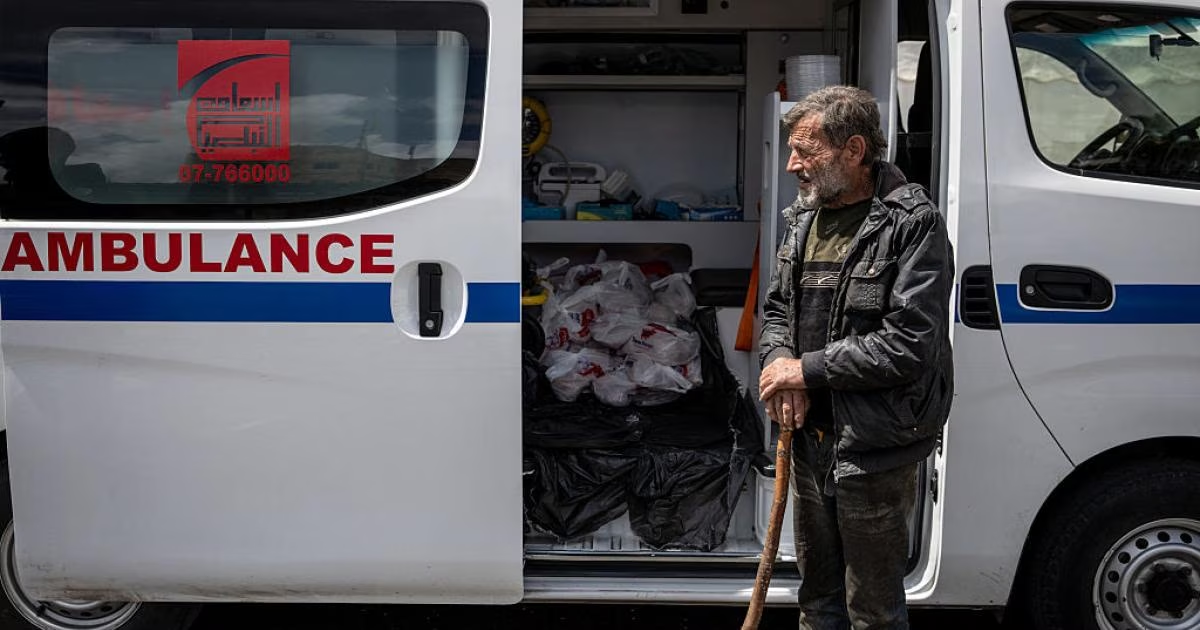
The ambulance sector was not spared from direct targeting, as two paramedics affiliated with the Islamic Health Authority were martyred in a raid carried out by an Israeli drone on the town of Haris in the Bint Jbeil district. In the same town, a second raid led to the martyrdom of two other people, indicating the occupation's intensification of its strikes against medical teams and civilians.

In a related context, the Lebanese Ministry of Health announced the martyrdom of a paramedic from the Al-Risala Health Ambulance Association and the injury of four others with varying degrees of severity. This targeting occurred while ambulance teams were carrying out their humanitarian duties in the town of Siddiqin in the Tyre district, raising the toll of victims among medical personnel.

As for the Nabatieh district, an Israeli drone targeted a civilian car in the town of Kafr Rumman, leading to the martyrdom of four people inside. This coincided with another raid that targeted the town of Burghuz in the Hasbaya district, resulting in the martyrdom of one person and the injury of three others who were subsequently transferred to nearby hospitals.

The raids extended to include the Western Beqaa region, where warplanes carried out a violent raid on the town of Maydoun, causing extensive material damage to properties. These attacks come at a time when the occupation army claims to be targeting Hezbollah sites, while field data confirms civilian casualties in most locations.

In the capital Beirut, Israeli warplanes flew at low altitude over the southern suburb, causing a state of panic among the remaining residents. This overflight was followed by an airstrike targeting a neighborhood, shortly after Israeli warnings were issued demanding residents to evacuate the area immediately.

The occupation army issued new evacuation orders covering more than 40 towns in southern Lebanon, demanding residents to move to areas north of the Zahrani River. These warnings are considered a prelude to new waves of intense shelling, as the areas targeted for displacement constitute about 10% of the total area of Lebanese territory.

For its part, the Chief of Staff of the occupation army pledged to intensify military operations and expand the scope of airstrikes in the coming phase. These threats are accompanied by field movements indicating the occupation's intention to continue military pressure by destroying infrastructure and residential areas in border villages and the Lebanese interior.

According to the latest updates from the Lebanese Ministry of Health, the total number of aggression victims since March 2nd has risen to 1497 martyrs and 4639 injured. Lebanese hospitals are under immense pressure due to the continuous influx of injured, amidst official warnings of a severe shortage of medical supplies and basic necessities.

Hospitals' needs are increasing and challenges are escalating amid continued aggression and rising numbers of victims.

ARAB AND WORLD

Tue 07 Apr 2026 7:43 am - Jerusalem Time

Qatar attacks Iranian 'tampering' with regional security, Trump threatens 'hours of hell'

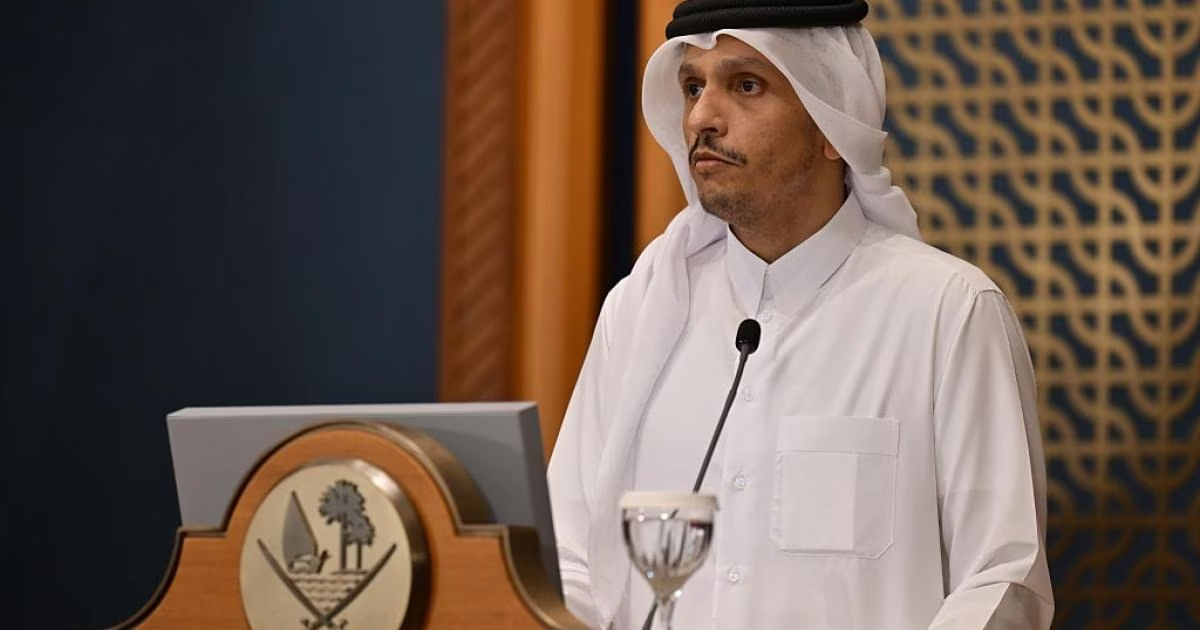
The State of Qatar expressed its strong condemnation of what it described as Iran's continuous targeting of Doha and the countries of the region, stressing that this behavior represents a direct threat to regional security. This came during a phone call received by the Qatari Prime Minister and Minister of Foreign Affairs, Sheikh Mohammed bin Abdulrahman Al Thani, from his Iranian counterpart, Abbas Araghchi, to discuss the accelerating developments in the region.

The Qatari Prime Minister stressed during the talks that a comprehensive and lasting diplomatic solution remains the only option and the optimal path to resolve the current crises. He clarified that escalation towards countries that have chosen neutrality and distanced themselves from armed conflicts is an unacceptable tampering with the stability of the region and the capabilities of its peoples, calling for the necessity of prioritizing the language of reason.

In a related context, the Qatari Ministry of Foreign Affairs affirmed in an official statement that targeting civilian infrastructure and the interests of peoples is a condemned and rejected behavior under any circumstances and by any party. Doha called on all active parties to respect international law and adhere to diplomatic standards to spare civilians the consequences of destructive armed conflicts.

These Qatari warnings come at a time when the relationship between Washington and Tehran is witnessing unprecedented tension, with US President Donald Trump setting a deadline ending on Tuesday evening. Trump threatened to take decisive military action against Tehran if the Strait of Hormuz, which is the global energy lifeline, remains closed.

The US President stated in a very strong tone that the United States has military plans ready for implementation aimed at completely paralyzing Iranian capabilities. Trump indicated that the US armed forces are capable of destroying all vital bridges and power generation stations deep within Iranian territory within a short period not exceeding four hours.

Trump explained in a press conference that the given deadline aims to push Tehran towards a new agreement that guarantees freedom of navigation and regional stability, hinting that power stations will be permanently out of service. International circles are cautiously monitoring the coming hours before the expiration of the American deadline, amid fears of a comprehensive confrontation.

For its part, Doha continues its intensive diplomatic efforts to de-escalate and prevent the region from sliding into a widespread regional war. Sources confirm that the Qatari position focuses on the necessity of protecting the national sovereignty of the Gulf states and rejecting any attempts to drag them into conflicts that do not serve the stability of the Middle East.

Iranian escalation towards countries that have distanced themselves from the war represents tampering with the region's security and disregard for its stability.

PALESTINE

Tue 07 Apr 2026 7:43 am - Jerusalem Time

Ben Gvir storms Al-Aqsa Mosque amid continued closure to worshippers for the 38th day

On Monday evening, Israeli National Security Minister Itamar Ben Gvir carried out a new raid on the courtyards of the blessed Al-Aqsa Mosque, taking advantage of the strict restrictions imposed by the occupation authorities on the entry of Palestinian worshippers. This provocative step comes as the decision to close the mosque to Muslims enters its thirty-eighth consecutive day, depriving thousands of worshippers from performing their religious rituals.

Sources from the Islamic Endowments Department in occupied Jerusalem clarified that Ben Gvir entered the mosque through the Mughrabi Gate and toured its courtyards to the Chain Gate area under intense security guard. This raid is the fifteenth for the far-right minister since he assumed his duties in the current government at the beginning of 2023, reflecting an escalating approach towards holy sites.

For its part, the Ministry of Endowments and Religious Affairs condemned this behavior, describing it as a dangerous measure that violates the religious and spiritual sanctity of Al-Aqsa Mosque, especially in light of its deliberate emptying of worshippers. The ministry stressed in a statement that what the far-right government is doing represents a blatant aggression and a heinous crime aimed at changing the status quo in the holy city.

In a related context, Hamas leader Abdul Rahman Shadid considered that the timing of the raid with the continued closure reflects the occupation's desire to impose full sovereignty and Judaize the place. Shadid pointed out that this organized behavior is one of the most dangerous threats Al-Aqsa has faced recently, as the occupation seeks to leave it an easy prey for repeated settler incursions.

The roots of the current closure date back to February 28, when the occupation authorities used ongoing regional tensions as a pretext to prevent gatherings inside Al-Aqsa Mosque and the Church of the Holy Sepulchre. Despite these restrictions, the Israeli police recently announced that limited prayers would be allowed inside the Church of the Holy Sepulchre only, following a wave of international criticism and European pressure that followed the prevention of senior Christian leaders from celebrating Palm Sunday.

Observers and Palestinians believe that these measures fall within a broader plan to Judaize occupied Jerusalem and erase its Arab, Islamic, and Christian identity. The occupation authorities continue to exploit the current political circumstances to intensify their attacks on holy sites, amid warnings that these provocations could lead to an unprecedented explosion of the field situation in the city.

Ben Gvir's storming of Al-Aqsa amid its continued closure represents an escalation of the occupation's arrogance and its attempts to impose the reality of Judaization and full sovereignty over it.

PALESTINE

Tue 07 Apr 2026 7:43 am - Jerusalem Time

International Peace Council Gives Hamas 90 Days to Fully Disarm

International press reports have revealed an intensive diplomatic move led by the 'International Peace Council' headed by Donald Trump, where the Council issued a formal and decisive ultimatum to the Hamas movement, demanding that it fully disarm. This ultimatum includes a strict timeline aimed at dismantling all military infrastructure in the Gaza Strip, including the complex network of tunnels operated by the movement, as a preemptive step towards any comprehensive political settlement.

These international pressures come as a fundamental condition for moving forward with the comprehensive reconstruction plan for the Strip, which falls under the second phase of the 'October Agreement' previously agreed upon. The plan proposes a timeline that begins with the surrender of heavy weapons and missile systems, in addition to revealing maps of sensitive military sites within a period not exceeding ninety days from the date of the announcement.

According to informed sources, the proposal expands to include the collection of light weapons from individuals and groups through an international financial compensation program dedicated to this purpose. This initiative essentially aims to prepare the ground for empowering a Palestinian administration composed of technocratic competencies to take charge in Gaza, away from any armed manifestations that might hinder the future stabilization process.

Regarding field movements, the international initiative linked the full withdrawal of the Israeli occupation army from urban centers and cities to the actual and tangible commitment to the disarmament process under direct international supervision. The movement currently faces increasing regional pressures to accept these conditions, amidst warnings of new and comprehensive military rounds that Washington might launch if rejection continues, with hints of decisive military options.

On a parallel front, actual arrangements have begun for the formation of what is called an 'international stabilization force' that will be under the command of American military personnel, to ensure that no armed activity returns within the Strip after the agreement is implemented. This development places the Gaza Strip at a historical and fateful crossroads, where the coming weeks will determine the form of governance and security in the region, and the extent of international parties' ability to impose a new political reality that ends decades of armed conflict.

The initiative aims to empower a new technocratic Palestinian administration to take charge of the Strip's affairs, while linking the Israeli withdrawal to the actual commitment to disarmament.

OPINIONS

Tue 07 Apr 2026 7:37 am - Jerusalem Time

Material Strength, Strategic Weakness: Rethinking U.S. Power After Iran

By: Said Arikat


April 7, 2026


News Analysis


Washington, D.C- U.S. President Donald Trump escalated tensions sharply on Monday, issuing a stark threat to Iran: unless Tehran effectively surrenders, Washington would begin, as early as Tuesday night at 8:00 p.m., (Washington time) a campaign to destroy “every bridge, every power station, everything.” The thuggish bellicosity of the statement notwithstanding, the United States does possess such destructive capacity. Yet exercising it would almost certainly trigger a global economic crisis unprecedented in the 21st century, while cementing America’s status—alongside Israel in the eyes of many—as a pariah, lawless power willing to dismantle the norms it once claimed to uphold.


When John Wertheimer appeared on Al Jazeera’s “The Bottom Line” with host Steve Clemons on April 3, 2026, the central question was deceptively simple: will the ongoing war with Iran diminish American power?


It is the kind of question that invites dramatic answers. Wars, especially difficult and protracted ones, are often framed as decisive turning points in the fate of great powers. Yet a sober assessment suggests something far less sensational but analytically sharper: the war in Iran is unlikely to significantly alter the United States’ position in the global balance of power. What it may erode, however, is something subtler and more fragile—America’s credibility, judgment, and ability to translate power into influence.


At the core of this argument lies a foundational insight from structural realism: a state’s power is rooted primarily in material capabilities, including economic strength, technological sophistication, and demographic weight. By these measures, the United States remains extraordinarily resilient. A single conflict, even a costly and poorly managed one, is unlikely to meaningfully dent these structural foundations.


History offers a compelling parallel. The United States suffered a decisive and humiliating defeat in the Vietnam War, a conflict that fractured domestic consensus and damaged Washington’s global standing. Yet this setback did not produce lasting decline. Within less than fifteen years, the United States emerged victorious in the Cold War, cementing its position as the world’s sole superpower. The lesson is clear: even disastrous battlefield outcomes do not automatically reorder the global hierarchy of power. Structural advantages tend to endure across crises and generations.


If the Iran war is unlikely to weaken American power in absolute or relative terms, it is nevertheless exposing a more immediate and consequential vulnerability: the erosion of the United States’ ability to project that power effectively.


Power, after all, is not merely about possession. It is about conversion. It must be translated into influence, deterrence, and leadership. And here, the current moment is far more troubling.


The conduct of the war, combined with the broader foreign policy approach under Trump, raises serious questions about strategic competence. Military setbacks are not merely tactical failures; they are signals. Allies and adversaries alike interpret them as indicators of judgment, reliability, and resolve. When Washington appears unable to achieve its objectives—or worse, unclear about what those objectives are—it invites doubt that lingers long after the fighting subsides and shapes future calculations.


More damaging still is the broader pattern of behavior accompanying the war. The sidelining of diplomacy, the disparagement of allies, and the erosion of international institutions collectively weaken what has long been America’s greatest strategic asset: its network of partnerships.


Power in the modern international system is deeply relational. The United States does not act alone; it operates through alliances, institutions, and shared norms. By undermining these pillars through rhetoric or neglect, Washington reduces its own capacity to mobilize collective action. This is not a marginal cost. It strikes at the very mechanism through which American power has historically been amplified and sustained across regions and crises.


Credibility, often treated as an abstract concept, functions in practice as a form of strategic capital. It shapes how threats are perceived, how assurances are received, and how coalitions are built. The Iran war is steadily depleting that capital—not because the United States is losing power in the traditional sense, but because it is demonstrating inconsistency between rhetoric and results, and between commitments and actions.


This distinction matters. A state can remain materially dominant while becoming politically and strategically constrained. In such a scenario, rivals need not surpass the United States; they need only exploit its self-inflicted limitations, inconsistencies, and strategic overreach in key arenas of competition.


The unfolding situation presents a paradox. The United States is likely to emerge from the Iran war still occupying the top tier of the global power hierarchy. Its economy will remain vast, its military formidable, and its demographic base comparatively stable when measured against other major powers.


And yet, it may find itself less able to shape outcomes, less able to rally allies, and increasingly reliant on costly unilateral action to achieve limited objectives. The architecture of American power will stand, but its usability will be diminished in practice.


The debate sparked on The Bottom Line ultimately underscores a critical distinction often overlooked in public discourse: losing a war is not the same as losing power, but it can mark the beginning of losing influence in ways that are harder to reverse.


The Iran war is unlikely to end American primacy. But it may well redefine how that primacy is exercised, constrained, and perceived across the international system. For a superpower, that difference is everything, shaping the limits of American leadership for years to come.

ARAB AND WORLD

Mon 06 Apr 2026 5:19 pm - Jerusalem Time

Israeli aggression targets the heart of Iran's petrochemical industry, Katz vows more

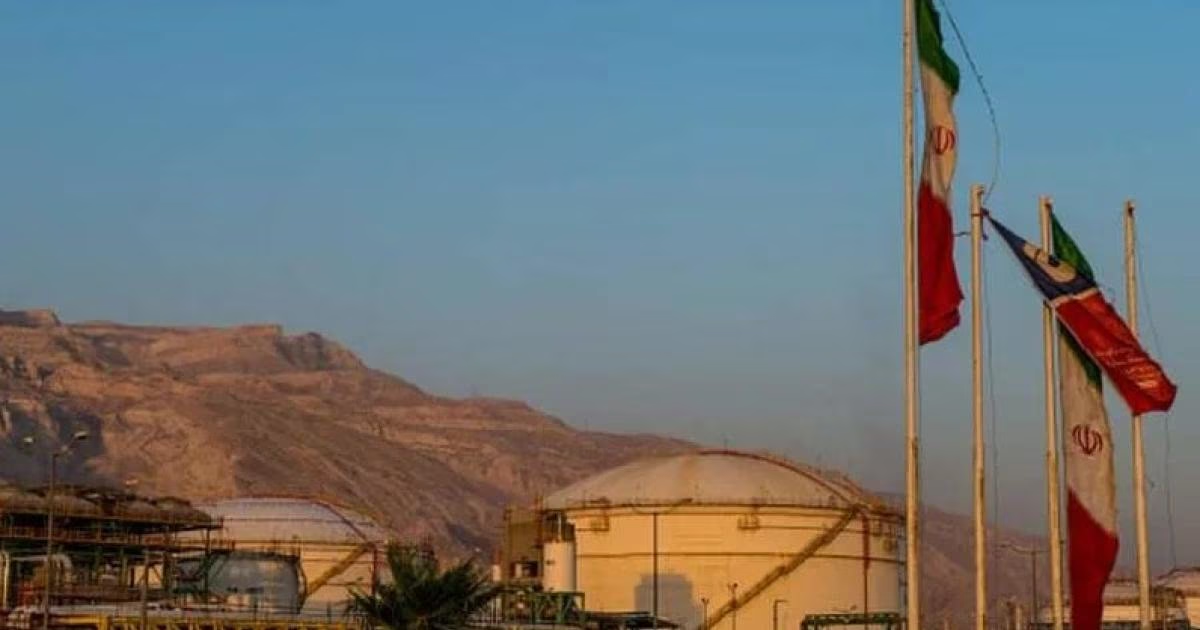
Israeli Defense Minister, Israel Katz, announced today, Monday, that the air force carried out a military strike, which he described as powerful and extensive, targeting a strategic petrochemical facility in the city of Asaluyeh, located in southwestern Iran. Katz confirmed in an official statement that this facility is the largest of its kind in the Islamic Republic, noting that the attack comes as part of a series of operations aimed at undermining the economic and military capabilities of the Iranian regime.

The Israeli minister explained in a video statement that the targeted facility in Asaluyeh contributed about 50% of the total national production of petrochemicals in the country. He considered that disabling this vital facility represents a paralysis of a large part of the Iranian industry, on which the state relies to provide hard currency and finance various sectors, including military activities.

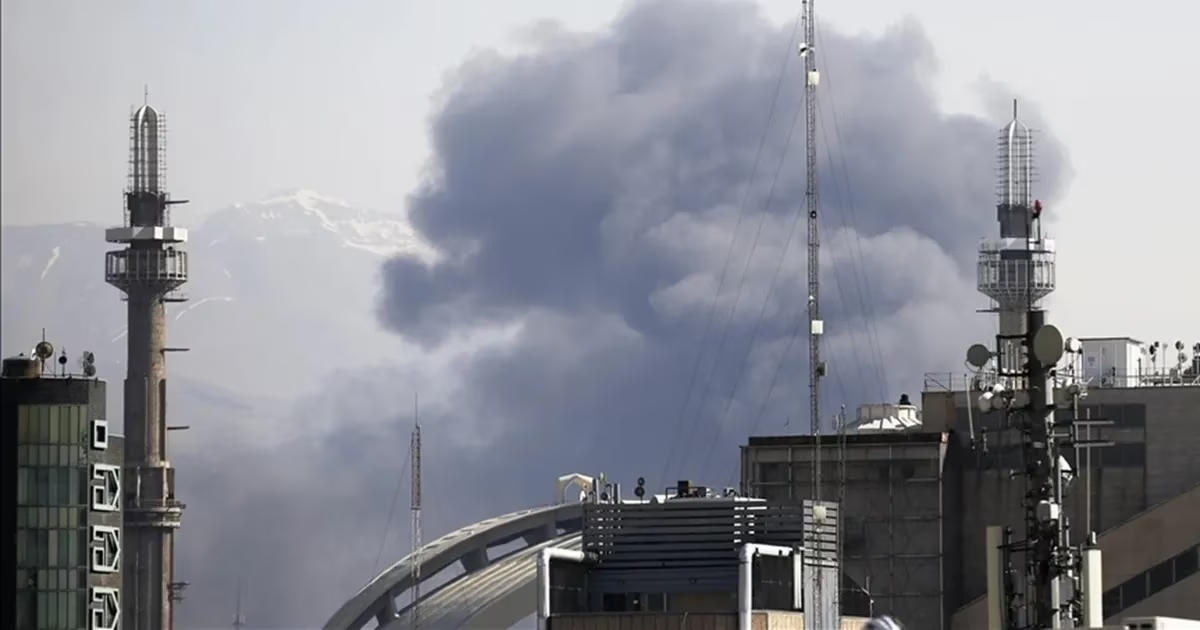
Coinciding with the Asaluyeh attack, field reports indicated other airstrikes targeting a massive petrochemical complex in the Mahroodasht area near the city of Shiraz in the south of the country. Sources stated that these coordinated attacks targeted vital joints in the energy infrastructure, leading to rising smoke plumes from the targeted sites and widespread disruption of associated essential services.

Katz claimed that the two bombed facilities together produce approximately 85% of Iran's total petrochemical exports, confirming their complete incapacitation due to severe damage. The Israeli official estimated the economic value of these losses at tens of billions of dollars, describing it as a devastating blow that will directly affect the Iranian state budget.

In an attempt to justify targeting civilian and economic facilities, the Israeli Defense Minister claimed that the petrochemical industry is the main driver for financing the activities of the Iranian Revolutionary Guard and building military power. He indicated that destroying these resources aims to dry up the funding sources used by Tehran to develop its armament programs and support its allies in the region.

For its part, official Iranian media acknowledged the attack, with Fars news agency quoting officials in Bushehr province as saying that production units in the Asaluyeh complex were damaged. Iranian sources explained that the bombing directly targeted companies supplying the complex with electricity, water, and oxygen, causing production operations to halt due to the interruption of vital supplies to the main units.

Regarding the attack on the Mahroodasht complex near Shiraz, local authorities confirmed control over a fire that broke out at the site after the airstrikes, claiming that the damage was minor and did not lead to comprehensive destruction of the facility. These statements come at a time when technical agencies are trying to assess the actual extent of the damage and work to restore essential services to the affected industrial complexes.

Media sources from Tehran reported that the targeting of Asaluyeh facilities in the South Pars field was not the first of its kind in recent weeks, as the region has witnessed escalating tensions and an exchange of strikes. Sources indicated that these operations come in the context of reciprocal responses that included targeting oil and gas facilities in several countries in the region, which Tehran accuses of being linked to American and Israeli interests.

Earlier, the Iranian armed forces carried out a series of military operations as part of what they described as the 'True Promise 4' wave, during which they targeted strategic sites in Haifa, Beersheba, and Tel Aviv. Iranian attacks also included drone manufacturing facilities and commercial ships, in addition to harassing a US helicopter carrier in the Indian Ocean to force it away from Iranian coasts.

It is worth noting that this escalation comes amid widespread aggression launched by Israel and the United States against Iran since late February, a conflict that has resulted in thousands of casualties and widespread infrastructure destruction. The beginning of this aggression witnessed a dramatic development with the assassination of Supreme Leader Ali Khamenei in an airstrike, pushing the region to the brink of a comprehensive regional war whose repercussions are still unfolding.

The two facilities, which together produce about 85% of Iran's petrochemical exports, are now completely out of service, a severe economic blow.

PALESTINE

Mon 06 Apr 2026 5:19 pm - Jerusalem Time

Two martyrs in Gaza and Khan Yunis: Occupation continues its violations of the ceasefire agreement

Israeli occupation forces continue their field violations of the ceasefire agreement in effect in the Gaza Strip, as two Palestinians were martyred in separate attacks that targeted the north and south of the Strip today, Monday. Medical and local sources reported that the targeting focused on populated and vital areas, leading to injuries among civilians, including children.

In the details of the aggression, young man Mohammed Daoud was killed and a child sustained various injuries as a result of shelling carried out by an Israeli drone targeting a gathering of citizens in the Sheikh Radwan neighborhood north of Gaza City. Eyewitnesses explained that the drone fired at least one missile at civilians who were trying to go about their daily lives amidst the fragile calm.

In the southern Strip, a Palestinian was martyred and others were injured due to intense gunfire by the occupation army targeting a group of civilian vehicles east of the town of Al-Qarara, northeast of Khan Yunis City. The body of the martyr was transferred to Al-Aqsa Martyrs Hospital in the central region, while Nasser Medical Hospital received the injuries resulting from the attack.

Field sources confirmed that army forces stationed east of Salah al-Din Street opened fire on Palestinian vehicles in an area outside their agreed-upon deployment and control within the terms of the ceasefire. This development represents a serious escalation in the nature of the violations committed by Tel Aviv daily since October 10th.
For its part, the Ministry of Health in the Gaza Strip announced a comprehensive update of the casualties of the ongoing aggression since October 7, 2023, indicating that the number of martyrs has risen to 72,302. The number of injured also increased to 172,090, amidst harsh health conditions suffered by the dilapidated medical system in the Strip.

The ministry explained in its daily report that hospitals received 7 martyrs and 17 injuries during the past twenty-four hours as a result of the ongoing Israeli attacks. Official data indicated that the period following the announcement of the ceasefire alone witnessed the martyrdom of 723 people and the injury of about 1,990 others in various governorates.

In a related context, medical teams noted that they were able to retrieve 759 bodies from under the rubble in recent weeks, confirming that large numbers of martyrs are still under the debris and in difficult-to-reach areas. Ambulance and rescue teams face extreme difficulties in reaching the victims due to continued direct targeting and a lack of necessary heavy equipment.

The total number of martyrs since the ceasefire came into effect last October has risen to 723, amidst continued field violations.

PALESTINE

Mon 06 Apr 2026 5:19 pm - Jerusalem Time

Bloody Israeli raids on southern Lebanon and Tel Aviv admits failure of assassination attempt in Beirut

The South and Nabatieh governorates in Lebanon witnessed a bloody military escalation today, Monday, as Israeli warplanes launched a series of intense airstrikes accompanied by heavy artillery shelling. These attacks resulted in a number of martyrs and wounded, in addition to massive destruction that affected residential neighborhoods and infrastructure in several border and deep towns.

In a remarkable development, the Israeli army radio admitted to carrying out a failed assassination attempt yesterday, Sunday, in the capital Beirut, targeting an element belonging to the Quds Force. This admission comes amid the continuation of aerial operations striking various areas, attempting to reach military or leadership targets deep within Lebanese territory.

On the ground, the Lebanese Ministry of Health announced the martyrdom of four citizens in a raid that targeted the town of Kafr Rumman, while warplanes completely destroyed a residential building in the northern neighborhood of the town of Doueir in the Nabatieh district. The raids also targeted the towns of Siddiqin and Zibdin, while drones targeted the town of Hanaway, exacerbating the humanitarian situation in those areas.

In the context of targeting medical personnel, the Public Health Emergency Operations Center reported that the occupation forces directly targeted a team of paramedics belonging to the Islamic Health Authority in the town of Haris. This attack led to the martyrdom of two paramedics and serious injuries to a colleague, in a blatant violation of international conventions protecting medical teams.

For its part, the Lebanese Ministry of Health condemned these attacks, which it described as systematic against the health sector, affirming that it continues to document these crimes to file lawsuits before international courts. The ministry stressed in its statement the necessity of holding the occupation leaders accountable for their continuous violations of international humanitarian law during armed conflicts.

In the Nabatieh district as well, local sources mourned the mayor of Abba and a police officer in the municipality who were killed in an Israeli raid that targeted the area, in addition to two other martyrs in the same location. Another raid targeted a civilian car in the town of Toul, resulting in the martyrdom of two people and injuries of varying severity to an entire family, including two children.

Field sources reported that the intensity and escalating pace of Israeli raids, especially in the eastern sector, have hindered the work of rescue teams and accurate damage assessment operations. The sources indicated that the town of Hadatha alone was subjected to more than seven airstrikes since the early morning hours, as part of the scorched-earth policy pursued by the occupation.

Regarding ground confrontations, field reports confirmed the stagnation of Israeli army attempts to advance towards the strategic city of Bint Jbeil for more than a week. The invading forces face fierce resistance from Hezbollah elements, who continue to deliver precise strikes against troop concentrations and their vehicles at direct contact points.

Field data indicate that the Israeli ground operation has entered a state of stalemate and stagnation in the areas previously reached by the forces. The occupation army currently relies on destructive methods, including blowing up residential blocks and bulldozing main roads, in a desperate attempt to change the geographical and field reality on the border.

In a related context, Haaretz newspaper quoted sources in the Israeli army confirming that the forces deployed in southern Lebanon have reached their final designated lines according to approved plans. The sources explained that the army is currently leaning towards a defensive deployment option without sliding into a wider ground operation deep inside Lebanese territory.

Despite the reinforcement of military presence in border areas, the Israeli military command is cautious about expanding the ground offensive for fear of incurring additional human losses. The current forces are stationed in fortified defensive positions, with continued reliance on air and artillery weapons to strike targets in Lebanese villages and towns.

In the Tyre district, the town of Majdal Zoun was subjected to heavy artillery shelling coinciding with intense airstrikes that included the western and central sectors of the South. These attacks caused the closure of main roads between villages, increasing the difficulty of displacement or the arrival of relief aid to those besieged in those areas.

Lebanese resistance continues to carry out its defensive operations, as Hezbollah announced targeting concentrations of occupation soldiers in border positions with rocket salvos and artillery shells. These operations come in response to the continuous aggressions against civilians and Lebanese villages, and as an affirmation of the resistance's readiness to repel any new advance attempt.

The scene in southern Lebanon remains open to all possibilities, amid the continuation of violent airstrikes and the occupation's failure to achieve significant ground breakthroughs. Attention is turning to international diplomatic movements, while the field continues to assert itself through the steadfastness of Lebanese villages and the resistance's confrontation of infiltration attempts.

Systematic Israeli attacks on the health sector constitute a clear violation of international humanitarian law, which mandates the protection of medical workers.

OPINIONS

Mon 06 Apr 2026 5:18 pm - Jerusalem Time

The war did not weaken Iran… rather, it may grant it a new position in the world

A month after the outbreak of war between Iran on one side, and the United States and Israel on the other, this confrontation is no longer just a fleeting military event. Instead, it has transformed into a pivotal moment that has reshaped many prevailing perceptions from before its outbreak, and redrawn the mental image of Iran for the world.

In the early days of the war, there was a nearly entrenched perception among many observers and countries that Iran, as a Middle Eastern state, might face a fate similar to what happened in Iraq, Libya, or Syria. This involved intense military pressure leading to the disruption of the regime, followed by its destabilization, culminating in a state of chaos and internal collapse. The prevailing belief was that merely disrupting the regime would be enough to push it towards disintegration.

However, reality turned out to be completely different. Iran did not collapse; instead, it stood firm and demonstrated a clear ability to manage the war wisely, carefully read its adversaries, and deal with their plans intelligently and without confusion. This steadfastness was not merely a military capability but transformed into a psychological and political factor, both internally and externally. Internally, the Iranian regime's conviction that it stands on solid ground and represents a state resistant to defeat was strengthened. As the war continued without a decisive breakthrough against it, this conviction began to solidify further.

Externally, similar convictions began to form—though not fully declared—among many international parties. The world realized that Iran is not just a country that can be easily subdued, but an entity possessing geopolitical components, strategic depth, and demographic weight that cannot be underestimated, making the idea of a swift resolution unrealistic.

In contrast, the United States and Israel entered this war with the aim of singularly demonstrating power and imposing a clear deterrence equation. Israel also sought to drag the United States into a direct confrontation with Iran, as part of a strategy aimed at achieving a swift resolution on the ground and imposing hegemony. But after a month of fighting, the results appear to be more complex than expected. Instead of the war weakening Iran, it has—so far—contributed to solidifying its existence as an undeniable regional power, and perhaps as an international actor that imposes itself on everyone's calculations, making it necessary for the world to deal with it on this basis.

From these premises, Iran's stubbornness on de-escalation issues and its unresponsiveness to mediators' proposals, and even its negotiations from a position of strength, can be understood. The more the United States is drained, the more Iran's strategic and political capital increases. Ultimately, this scene closely resembles the recklessness and miscalculations of Donald Trump and Benjamin Netanyahu in their actions, which gave Iran greater room to act flexibly and achieve gains on the ground.

It can now be said that the American strategy and its plans may backfire. Instead of weakening Iran, it seems they may make it stronger, by giving it a broader strategic dimension at the political and international levels, even though it will continue to face real military and economic pressures. In other words, the war may relatively reduce its military capabilities, but it grants it greater strategic depth, an undeniable international image, and places it on the path to ranking among major powers, and perhaps grants it a new position in the world.

Based on these arguments, and if the United States realizes these dimensions of the war's outcomes, the danger of sliding into a comprehensive war becomes probable, especially if accompanied by direct ground intervention or the use of unconventional weapons, with the possibility of NATO joining the conflict, as its member states will not allow an escalation that threatens their interests or regional stability, which further complicates the scene and transforms the conflict into a wider confrontation.

In this context, the first month of the war shows that Iran has managed to establish itself as an unbreakable state, forcing everyone—internally and externally—to re-evaluate the balance of power in the region. While the attempts by the United States and Israel to drag it towards rapid collapse failed, reality showed that merely using military force against it does not guarantee the desired results.

From this, it can be said that Benjamin Netanyahu's goals of reshaping the Middle East, and Donald Trump's goals of reformulating the international system to serve US interests, may have been achieved "but" not in their favor, but quite the opposite. Iran's steadfastness and the war's demonstration of its adaptability and intelligent management have created a new and opposing scenario to their calculations, causing them concern and dread. Ultimately, this is the natural price of recklessness and underestimating the opponent's strength and strategies in depth.

OPINIONS

Mon 06 Apr 2026 3:47 pm - Jerusalem Time

Revisions in Islamic Political Jurisprudence: Towards Restoring the Nation's Authority and Confronting the Legitimacy of 'Al-Shawka'

Ramallah - “Alquds ” dot com

Ramallah - “Alquds ” dot com

Opinion Writer

The Tunisian researcher and writer Dr. Abdel Majid Al-Najjar continues to present a series of critical and in-depth readings on the structure of Islamic political jurisprudence, questioning the usefulness of adhering to historical interpretations that no longer meet the demands of contemporary reality. Through these revisions, Al-Najjar aims to restore the concept of 'the nation's authority' and its inherent right to choose its representatives, away from the concepts of dominance and coercion that prevailed in later eras.

The revisions primarily address the concept of 'Al-Shawka' (the thorn/military might), which was historically used to install rulers and impose a new political reality, disregarding the will of the people. The researcher believes that this mechanism, in many jurisprudential texts, transformed from an exceptional measure to avert strife into a legitimate rule that legitimizes the rule of the overcomer, thus undermining the nation's role in the political contract.

Al-Najjar points out that the legitimization of 'the rule of coercion' was not present in the early stages of political jurisprudence, such as in Al-Mawardi's writings, but rather emerged and became entrenched among later jurists like Imam Al-Nawawi. These jurists based their views on the necessity of preserving the unity of Muslims and their cohesion, even if the ruler had seized power with his soldiers without a pledge of allegiance or legitimate succession.

The series reviews the roots of this confiscation of the right to choose, referring to narrations from Imam Ahmad ibn Hanbal stating that the imamate is established by coercion and dominance and does not require a contract. Al-Najjar believes that these fatwas were circumstantial, dictated by the political challenges of that time, but over time, they transformed into a permanent legislation lacking strong support from religious texts or the practices of the Rightly Guided Caliphate.

Returning to the texts of revelation, the researcher emphasizes that the Holy Quran made 'Shura' (consultation) a binding principle in managing the nation's affairs, as stated in His saying, 'And their affair is [determined by] consultation among themselves.' This means that the appointment of a ruler, being one of the most important matters for Muslims, must be subject to the principle of popular participation and general consent, not to material or military coercion.

Al-Najjar also cites other verses that assigned the authority of execution and legislation to the nation as a whole, indicating that the ruler is merely an agent authorized by it to implement its will. There are no indications in these texts that grant 'Ahl al-Hall wal-Aqd' (people of binding and loosing) or those with military power an exclusive right to determine the nation's destiny apart from its free collective will.

In a reading of the Prophet's Sunnah, the Prophet's stance during the Hawazin delegation stands out, where he refused to make a decision without consulting the general populace through their 'leaders.' This prophetic behavior establishes the necessity of surveying the opinion of the popular base on crucial issues, which was followed by the Rightly Guided Caliphs in many situations before political practice later deviated.

The article discusses the issue of 'succession' (walayat al-ahd) which was prevalent in political jurisprudence, explaining that some contemporary jurists such as Muhammad Salim Al-Awa and Abd al-Wahhab Khallaf re-adapted it. They believe that Abu Bakr's covenant to Omar, or Omar's to the six, was not a binding contract in itself, but merely a 'nomination' presented to the nation to have its final say through a general pledge of allegiance.

Al-Najjar warns that continued recognition of 'military might' as a legitimate path to governance opens the door wide to tyranny and usurpation of power. Prioritizing the balance of power over the balance of right makes military conflict a means to attain the imamate, which historically led to great corruption and strife far exceeding what the jurists sought to avoid.

The researcher recalls the stance of Imam Ali ibn Abi Talib, may Allah be pleased with him, who insisted that truth and popular consent are the basis of legitimacy. He believes that Imam Ali's insight aimed to block the path to future tyranny, even if adhering to this principle led to temporary harms, because the harm of permanent tyranny is far greater to the nation's entity.

In a related context, Al-Najjar criticizes the absence of independent chapters for public freedoms in inherited political jurisprudence, where most rulings tended to restrict freedom of thought and expression. He cites the stance of Imam al-Haramayn al-Juwayni, who established the obligation to resist those with dissenting opinions with the sword, a trend that left a deep negative impact on the collective consciousness of Muslims to this day.

The article also calls for the necessity of renewing jurisprudence related to 'citizenship,' considering that traditional divisions between believers and dhimmis are no longer compatible with the reality of the modern state. It emphasizes the importance of developing rulings based on equality and justice among all members of society regardless of their ideological affiliations, so that citizenship becomes the basis of rights and duties.

Dr. Al-Najjar concludes his revisions by emphasizing that this renewal is not an intellectual luxury, but an urgent necessity to reform political life in Islamic societies. He believes that this revision is of particular importance for Muslim minorities in the West, who need a political jurisprudence that aligns with the values of participation and freedom prevalent in those societies.

Rebuilding the Islamic intellectual and political foundation on the principles of justice and popular participation is the essential gateway to any true renaissance. Without reviewing these traditional rulings that legitimize tyranny or restrict freedoms, the nation will remain unable to keep pace with global developments and build modern states that respect human dignity and inherent rights.

Legitimizing the mechanism of 'Al-Shawka' in the contract of imamate abolishes the nation's right to choose, and grants this right to the overcomer, which opens a door to tyranny that is difficult to close.

ARAB AND WORLD

Mon 06 Apr 2026 3:46 pm - Jerusalem Time

International mediation efforts to hold direct negotiations between Washington and Tehran falter

International press reports revealed today, Monday, that diplomatic efforts led by mediators from Turkey, Egypt, and Pakistan, aimed at pushing Iran to sit at the negotiating table with the United States, have faltered. These intensive moves aim to reach an agreement that ends the current state of war or at least ensures a temporary ceasefire in the region.

Sources indicated that the American administration showed possible flexibility regarding waiving some of its previous demands in order to make progress in the negotiation process. However, these attempts still face significant obstacles due to the parties' adherence to their initial positions, making it difficult to reach tangible understandings at present.

In a related context, informed officials reported that the Iranian side categorically rejected a proposal to reopen the strategic Strait of Hormuz in exchange for a temporary cessation of hostilities. Tehran believes that the current American demands to end the war are unacceptable and do not meet its minimum political and security conditions.

Tehran informed international mediators that it is unwilling to hold any meetings with American officials in the Pakistani capital, Islamabad, in the coming period. This rigid Iranian stance comes amid a conviction among the Iranian leadership that Washington is not serious about reaching a formula for a permanent and comprehensive ceasefire.

For his part, a high-ranking Iranian official stressed that his country will not succumb to an ultimatum policy or external pressures aimed at extracting field concessions. He affirmed that the proposal to open the Strait of Hormuz cannot be exchanged for a temporary calm, noting that Tehran is currently studying a framework presented by Pakistan but will not rush to make a decision.

Regarding diplomatic initiatives, Pakistan has prepared an integrated framework to end hostilities, which was delivered to both Tehran and Washington in recent hours. This proposal is based on a two-phase approach, the first beginning with an immediate and comprehensive ceasefire, followed by a second phase to draft a final and comprehensive agreement.

Sources indicate that Pakistan is currently acting as the sole and direct communication channel between the two parties in an attempt to bridge views and avoid further military escalation. Mediators are seeking to reach an agreement on all essential elements of the initiative as quickly as possible to formulate them into a formal memorandum of understanding.

Despite both parties receiving the Pakistani plan, doubts still surround the possibility of its actual implementation due to the lack of mutual trust. Informed sources insist that the success of any initiative requires full agreement on all technical and political details before announcing any field de-escalation.

Regional and international capitals are cautiously monitoring the results of these diplomatic moves, especially given the significant impact of the continued closure of the Strait of Hormuz on global energy supplies. The current bet remains on the ability of mediators to find a middle ground that ensures a cessation of fighting without compromising the red lines set by each party.

Tehran will not reopen the Strait of Hormuz in exchange for a temporary ceasefire, and will not succumb to ultimatums or pressure to make a decision.

OPINIONS

Mon 06 Apr 2026 3:46 pm - Jerusalem Time

Efforts to Stop War Between Washington and Tehran via "Islamabad Agreement": Immediate Truce and Comprehensive Negotiations

Said Erikat

Opinion Writer

Washington – Saeed Erikat – 6/4/2026

Reuters quoted an informed source on Monday that Iran and the United States have received a comprehensive proposal to end hostilities, which could take effect immediately and lead to the reopening of the Strait of Hormuz, one of the most vital passages for global oil supplies.

The source explained that Pakistan has prepared a political and security framework to de-escalate, which was exchanged with both Tehran and Washington overnight, and includes a two-phase approach: the first is an immediate ceasefire, followed by negotiations to reach a comprehensive and lasting agreement. The source stressed the need to agree on all elements of the plan on the same day, noting that the initial understanding will be drafted into a memorandum of understanding completed electronically via Pakistan, which currently serves as the primary communication channel between the parties.

Axios had previously revealed ongoing talks between the United States and Iran, with the participation of regional mediators, to discuss a 45-day truce, as part of a two-phase bilateral deal that could lead to a permanent end to the war, based on American, Israeli, and regional sources.

In the same context, the source stated that Pakistani Army Chief, Asim Munir, held intensive contacts "all night" with US Vice President JD Vance, Special Envoy Steve Witkoff, and Iranian Foreign Minister Abbas Araghchi, in an attempt to bridge viewpoints and push the proposal towards implementation.

According to the plan, the ceasefire begins immediately, allowing for the reopening of the Strait of Hormuz, with a grace period of 15 to 20 days to complete a broader agreement. The proposal bears the preliminary name "Islamabad Agreement" and includes a regional framework specific to the Strait, with final face-to-face negotiations organized in the Pakistani capital.

So far, no official comment has been issued by either the American or Iranian sides, and the spokesperson for the Pakistani Ministry of Foreign Affairs, Tahir Andrabi, refrained from making any statements. In contrast, Reuters quoted Iranian officials confirming Tehran's pursuit of a permanent ceasefire, conditioned on guarantees preventing it from future attacks by the United States or Israel, noting that it has received messages through mediators, including Pakistan, Turkey, and Egypt.

The final agreement is expected to include Iranian commitments not to seek nuclear weapons, in exchange for sanctions relief and the release of frozen financial assets. However, two Pakistani sources indicated that Iran has not yet provided a clear commitment to the proposal, despite the escalating pace of political and military contacts.

In the absence of an official response from China, which also supports diplomatic efforts, efforts to contain the escalation continue, especially with growing concerns about disruptions to navigation in the Strait of Hormuz. This comes at a time when US President Donald Trump is publicly pushing for a quick ceasefire, warning of serious repercussions if the conflict continues.

Military escalation has directly impacted global energy markets, with investors anticipating any developments that could affect oil flow through the Strait, increasing price volatility.

The Pakistani initiative reveals a significant shift in regional mediation balances, as traditional powers are no longer solely controlling de-escalation paths. Islamabad's entry as a sole communication channel reflects relative trust from both sides, but it also places it before a difficult test in managing complex balances involving Washington, Tehran, and Beijing. The success of this initiative depends on Pakistan's ability to provide practical guarantees, especially regarding the security of the Strait of Hormuz, which is a crucial element in convincing the parties of the seriousness of the agreement.

The focus on a phased truce reflects an international understanding that ending the war all at once may be unrealistic in the current circumstances. Therefore, the actual goal seems to be to "buy time" to de-escalate and prevent a slide into a wider confrontation. However, this approach carries risks, as a temporary truce could turn into a mere tactical pause exploited by the parties to reposition themselves. The success of the first phase requires strict monitoring mechanisms and clear guarantees to prevent its rapid collapse.

The fate of this agreement is closely linked to the Iranian nuclear program, which remains the most sensitive knot in any settlement. Proposing the equation of "nuclear commitments for sanctions relief" brings back the model of previous agreements, but it faces greater challenges today due to the erosion of trust between the parties. Moreover, the introduction of the factor of releasing frozen assets provides Tehran with a significant economic incentive, but it may provoke internal opposition in the United States, threatening the sustainability of any potential agreement.

OPINIONS

Mon 06 Apr 2026 3:46 pm - Jerusalem Time

The Psychology of the 'Spoiled President': A Reading on Trump's Rise and the Phenomenon of the Sole Leader

Ramallah - “Alquds ” dot com

Ramallah - “Alquds ” dot com

Opinion Writer

American Professor Jeffrey Sachs conveys a grim medical and psychological view of US President Donald Trump's personality, pointing to conclusions by psychiatrists confirming his suffering from a severe mental disorder. These reports describe Trump as an impulsive personality afflicted with megalomania and paranoia, rendering him incapable of making rational decisions, which could push the United States towards catastrophic confrontations.

Trump's scandals and behaviors do not seem strange given his early upbringing and professional background; he is a president who came from the worlds of betting, gambling, wrestling rings, and beauty pageants. This professional path, far from traditional political corridors, made him an exceptional media personality, entering the political scene with tools alien to internationally recognized diplomatic norms.

The article considers Trump a model of the 'psychopath' who does not hesitate to use vulgar language in his speeches, as recently happened on his 'Truth Social' platform. This behavior reflects the image of the spoiled president who sees himself as America's savior, while surrounding himself with an aura of religious and social sanctity that sometimes reaches the point of performing strange promotional rituals.

In comparing the Biden and Trump eras, a sharp division appears in American society regarding identity and values, as Biden sought to adopt controversial social and genetic policies. This direction made broad segments of the 'founding whites' feel threatened, leading them to prefer a president who seeks to change geographical and political maps rather than tamper with genetic and social identity.

The writer likens Trump's situation in America to that of the 'only male' who arrives after a long wait in popular heritage, where he receives excessive pampering that prevents him from political maturity. This leadership style relies on the constant display of power and boasting before adversaries and allies alike, turning international politics into an arena for intellectual adolescence.

This phenomenon is not limited to the United States but extends to other international leaders such as Russian President Vladimir Putin, who is described as a strong man born from suffering. Putin, who restored the glory of the tsars and united the Russian nation, now finds himself stuck in the quagmire of the Ukrainian crisis, a paradox that reflects the limits of individual power in the face of complex realities.

The creation of the 'child president' or spoiled leader is systematically done through media that exaggerates the leader's image and portrays him as the sole savior of the nation after ages of weakness. This reproduction of 'virile' leaders always comes as a reaction to periods of rule described as lenient or hesitant, as happened in the transition from Yeltsin to Putin in Russia.

In the Egyptian scene, the article highlights the shift from a rule characterized by religious piety to a military rule described as harsh, where the writer believes that the media contributed to creating the image of the 'male' for the new ruler. This ruler, who sometimes threatens his opponents with soft language, appears in other situations begging for support from major international powers, specifically from the American administration.

This dependency is evident in the discourse directed at Trump, where he is seen as the sole force capable of stopping wars in Gaza and Iran and securing the basic needs of allied countries. This contradiction between the image of the strong internally and the dependent externally reflects the leadership crisis in the Arab region, which always looks for a 'father' in Washington.

As for northern Syria, the experience of the 'Rojava Kingdom' led by Mazloum Abdi appears as another model of leadership that stands out as a unique case in the history of the Kurdish region. Despite the imported party roots, control over vast areas and great wealth has made this leadership an 'only son' who enjoys exceptional international support under complex regional circumstances.

The phenomenon of the 'awaited male' in politics often leads to leaders remaining in a state of political infancy, where they are controlled by the intoxication of power that surpasses any loss of consciousness in its effect. This self-absorption makes it difficult for these leaders to realize the extent of the dangers they surround their peoples and countries with, given their possession of weapons of mass destruction.

The United States, once known for its established institutions, has transformed into a country whose decisions are reduced to a single individual characterized by vulgarity and impulsiveness in his international stances. This transformation poses major questions to the world about the future of democracy in light of the rise of populist figures who rely on tickling emotions rather than sound political programs.

In contrast, the article presents a vision of other countries accused of theocracy but possessing institutions and consultation, in reference to the disparity between the mental image and political reality. This contradiction clarifies that the true strength of nations lies in the stability of their institutions and not in the charisma of the 'male' leader who may lead his country to the abyss.

In conclusion, the writer warns against being drawn into the creation of illusory leaders who feed on political and social vacuum, considering that the world is living in an era of 'child presidents'. The continuation of this approach to governance threatens the collapse of the international system, where the destinies of peoples become hostage to personal whims and psychological disorders of leaders who do not realize the magnitude of the responsibility placed upon them.

Psychiatrists concluded that Trump suffers from a severe mental disorder, describing him as an impulsive personality incapable of rational thought.

OPINIONS

Mon 06 Apr 2026 3:46 pm - Jerusalem Time

The Autumn of Unipolarity: Towards Sovereign Engineering in a Multipolar World

Ramallah - “Alquds ” dot com

Ramallah - “Alquds ” dot com

Opinion Writer

History does not appear as a calm river, as some imagine, but rather as the product of difficult labor from silent earthquakes accumulating within empires until they reach the moment of truth. Today, we are not merely observing a military withdrawal or a fleeting diplomatic retreat; rather, we are witnessing a structural crack in a system that long believed it represented the end of history.

History has awakened to write a new chapter, influenced by the dust of Eastern conflicts and the collapse of dominant currency thrones. The blade of absolute deterrence has broken on the rock of a new reality, as the secrets of power have leaked from the hand of the monopolist who believed technology was exclusive to their genes, reaching the hands of rising and empowered forces.

International prestige is no longer measured solely by the size of traditional military budgets, but by the intelligence of innovation that has challenged the pride of aircraft carriers. This transformation heralds the birth of a new regional security formulated by self-determination, far from external tutelage or dependence on major powers that have begun to lose their control.

In financial corridors, the paper empire is experiencing its final autumn, as the dollar has begun to lose its luster as a whip for international sanctions. The fires of inflation and accumulated debts are pushing the world towards a search for real assets and new economic spaces led by the rising Eastern poles on the global stage.

Transitioning from a debt-based economy to a resilience-based economy represents the core of the next phase, where there is no sovereignty for those whose decisions tremble behind global stock market screens. True sovereignty lies in linking the earth's resources to the decision of an independent national mind, far from the fluctuations of markets controlled by traditional powers.

However, the greatest danger does not come only from outside, but from the internal weakness that gnaws at the central nerve of the United States' power. While Washington tries to extinguish the raging fires at the world's edges, the fires of internal polarization are unprecedentedly igniting within its social and political fabric.

The division within the United States has reached a stage of existential deadlock, where constitutional institutions have become unable to mend the deep societal rift. This erosion from within threatens the imperial structure, hinting at a bleak horizon marred by the specter of bitter internal clashes that weaken the ability for global leadership.

In this scenario, foresight is not complete with observation alone; it requires the courage for self-engineering to transform strategic exposure into a sovereign fortress. This demands decisive procedural paths that begin with departing from the square of permanent dependency towards functional parity in international relations with all parties.

Diversifying partners in light of the rising Eurasian dawn is a strategic necessity for Arabs to be partners in formulating new international rules. The region should not remain merely an arena for the clash of major powers, but an actor that asserts its interests in a world that no longer recognizes a single pole.

Financial liberation represents the second pillar in this engineering, through organic disengagement from declining currencies and the establishment of inter-exchange platforms. Relying on the true value of resources protects people's savings from the expected major crash in the old global financial system.

Localizing survival is the third side of the triangle of existence, as it must be realized that bread, weapons, and digital code are the basis of sovereignty. He who does not produce his weapons remains hostage to the decision of the external supplier, and he who does not own the seeds of his land remains dependent on the ports of others and their political will.

The current imperial retreat leaves a huge geopolitical vacuum that represents a final warning siren for regional powers. This vacuum must either be filled by a sovereign bloc that possesses the mastery of science and protects its data with national algorithms, or everyone will remain waiting for a new master to fill the vacuum according to their own interests.

The sun of tutelage has set, and opportunities for true independence have emerged. History, in its great upheavals, shows no mercy to the hesitant or those standing on the threshold of waiting. Doors open only to those who possess the insight to read the threads of dawn and prepare for a multipolar world that is not managed by dictates.

The next decade is the final testing ground for national will. Either participate in formulating the rules of the new era or remain merely an echo of others' conflicts. Sovereignty today is a condition for survival in an international jungle that respects only those who possess the keys to their food, medical, and digital security.

Sovereignty today is not a luxury, but a condition for survival in an international jungle that respects only those who possess the keys to their food, the secret of their medicine, and the code of their digital security.

ARAB AND WORLD

Mon 06 Apr 2026 3:46 pm - Jerusalem Time

Experts: Europe refuses to engage in a 'ground adventure' against Iran and fears energy and migration repercussions

Experts in international and political affairs believe that European capitals will not be drawn into any direct ground confrontation against Iran, despite the increasing pressure exerted by the administration of US President Donald Trump. This assessment comes at a sensitive time with the approaching deadline set by Trump for Tehran regarding the Strait of Hormuz, amidst fears of a military escalation that could go beyond airstrikes to a ground intervention.

Professor and researcher at the Sorbonne University, Mohamed Hneid, explained that there is a categorical European rejection of participating in what he described as 'the unilateral American adventure'. He pointed out that some countries have taken strict sovereign stances by refusing to allow their airspace to be used for the passage of military aircraft or to carry out landing operations, expressing their unwillingness to engage in a conflict in whose details they were not consulted.

Hneid considered that the deteriorating economic situation in the old continent, and the depletion of resources in the Russian-Ukrainian war, makes it impossible for Europe to open a new front. European countries believe that their interest lies in stopping current wars and addressing their internal problems, such as the rise of the far-right and fierce trade competition with China and the United States.

In the context of analyzing American policy, Hneid pointed out that Washington has historically involved its NATO allies in its ground wars to reduce human and material costs on itself. He cited what happened in Afghanistan, Iraq, and Syria, where allies bore the consequences of military interventions that were primarily aimed at strengthening American hegemony over resources and international decision-making.

Regarding economic threats, the researcher noted that Trump's attempts to entice Europe by controlling Iranian oil on 'Kharg' island will not succeed in changing the European position. Trade relations between the two sides are already strained due to the tariffs imposed by Trump, and any military escalation will inevitably lead to a cut in energy supplies and an exacerbation of the living crisis in Europe.

For his part, the former advisor to the Tunisian Minister of Foreign Affairs, Manar Mohamed Al-Skandrani, affirmed that Europe has learned lessons from its bitter past experiences with American administrations. He explained that Europeans feel that Washington abandons them as soon as its interests are achieved, and sometimes even blames them for failures, as is currently happening in the Ukrainian file.

Al-Skandrani noted the radical shift in American decision-making during the Trump era, where it moved from a cumulative institutional framework to an erratic individual decision. This shift makes it difficult for European countries, which rely on established institutions and strict international law, to follow a leadership whose next steps or ultimate goals cannot be predicted.

Al-Skandrani warned that any ground war on Iran would open the doors to regional chaos wide open, leading to unprecedented waves of migration towards European shores. He considered that geography imposes a different reality on Europe than the distant United States, as any disturbance in the Middle East immediately reflects on the security and stability of the old continent.

Regarding the Israeli role, the former advisor pointed out that Tel Aviv seeks to dismantle major regional powers such as Iran, Turkey, and Egypt to impose its full hegemony. He believes that the 'Greater Israel' project does not require direct geographical occupation as much as it requires transforming surrounding countries into weak and warring entities, which Europe realizes the danger of to its interests with the Arab world.

Al-Skandrani stressed that the battle with Iran is not only military, but an existential battle related to global energy security and the vital Strait of Hormuz. Any disruption in navigation in this strait would mean an economic catastrophe for Europe, which is already suffering from an unprecedented energy crisis, making participation in the war a completely irrational step.

He explained that the current European position is not due to military weakness, but rather a precise rational calculation of supreme strategic interests. Europe realizes that being drawn behind the American-Israeli vision at this time would mean economic and political suicide, especially in light of the existing tensions with Russia on its eastern borders.

Experts also pointed out that lobbies associated with major companies may try to pressure some European governments, but political elites have begun to realize the extent of the damage. Absolute support for American projects no longer benefits European peoples, but rather increases their isolation and exacerbates their internal and social crises.

The analysis concluded that the geographical and political gap between Washington and Brussels is widening regarding the Iranian file, as Europe sees diplomacy and de-escalation as the only way to maintain its security. In contrast, the American administration continues to pressure through the language of threats and sanctions, which puts the historical alliance between the two sides of the Atlantic to a real and unprecedented test.

Finally, the question remains about Europe's ability to withstand these pressures if the spark of confrontation actually ignites. However, current indicators confirm that the major capitals of the continent will not provide a 'blank check' for any ground military action that could end in a humanitarian and economic catastrophe for which only the European peoples will pay the price.

Europe realizes that this war is not its war, it has no stake in it, and entering a conflict of this magnitude does not serve its strategic interests.

ANALYSIS

Mon 06 Apr 2026 3:46 pm - Jerusalem Time

Between professional vision and 'stands' fanaticism.. How does the Arab street read the Iranian-Israeli confrontation?

The region is witnessing an unprecedented military escalation as the confrontation between Iran, on one hand, and Israel and the United States, on the other, enters its fifth week. Field sources reported intense raids on Sunday night and Monday dawn targeting strategic sites and residential neighborhoods in Tehran, Isfahan, and Qom, resulting in dozens of casualties, including children, amidst the ongoing war that began on February 28th.

Amidst this military dust, a sharp division emerges in the Arab street that transcends traditional political analysis, reaching a stage akin to a 'great sedition'. Each side believes its position is the absolute truth, transforming the existential conflict into something resembling football matches between 'Al-Ahly and Zamalek', where there is no room to hear the other opinion or accept pluralism in media discourse.

Major media institutions face a tremendous challenge in maintaining their professional balance in front of an audience that demands their viewpoint be fully adopted. While some attack the hosting of figures who align with the Iranian vision, others launch a counter-attack when voices critical of Tehran's policies appear, putting news platforms in direct confrontation with accusations of treason and loss of credibility.

The culture of 'cheering' has moved from the stands to the screens, where viewers now seek what satisfies their political whims, not what conveys objective truth. This behavior has turned the political analyst into a mere echo of public desires, as if news programs have become political versions of 'listeners' choice' programs, which threatens the essence of journalistic work based on uncovering facts.

On the ground, reports revealed the killing of 13 people in an attack targeting the Baharestan residential area, in addition to the killing of the commander of the Air Defense College in Isfahan. These bloody developments increase the intensity of polarization, as those affected by previous Iranian policies in Syria and Iraq find it difficult to sympathize with Tehran, while others believe that the Israeli danger is the sole threat that must be confronted.

Statistics issued by the Pentagon indicate that more than 11,000 targets inside Iranian territory have been struck since the start of operations. Despite this enormous military pressure, sources confirm that Tehran still retains the ability to repair its missile facilities and reactivate bunkers within hours, despite the daily missile launch rate dropping to less than 40 missiles.

The current crisis has revealed a fragility in collective awareness regarding the concept of 'news' and 'opinion'. Social media platforms have contributed to turning every page owner into a political analyst who rejects news simply because it does not align with their preferences, which opens the door wide to the spread of fake news and the loss of direction in evaluating current events away from emotions.

In comparison with previous crises such as the invasion of Iraq, it appears that the public was more mature in accepting other opinions despite the bitterness of defeat. Today, however, the intensity has reached the point of direct incitement against journalists and institutions that try to adhere to professional rules, which reflects a decline in public dialogue tools within Arab societies.

Intellectual elites play a negative role in this scene, as some of them are swept away by demagoguery to gain public favor or settle personal scores. Instead of rationalizing the debate, these individuals contribute to formulating accusations of treason and collaboration, which deepens the gap and makes it impossible to build a unified Arab vision towards the accelerating regional challenges.

Despite the scathing criticism, major news channels still dominate viewership, proving that the public, despite its anger, knows deep down where to find reliable news. The biased viewer looks for a 'mouthpiece' that represents them, but returns to professional platforms to know the reality of military and political developments on the ground.

Finding excuses for some tense positions seems logical given the historical wounds in the region; the Syrian whose country was destroyed or the Iraqi who suffered from interventions cannot be forced to see the scene with one eye. However, turning this suffering into a tool to suppress professional media work ultimately serves the enemies of the nation who benefit from the fragmentation of awareness.

Iran, for its part, has given its opponents objective justifications through its regional policies that have raised the concerns of neighboring countries. Had it adopted a different policy, it might have pulled the rug out from under those inciting against it, and would not find itself today in confrontation with a camp that sees 'American and Israeli evil' as a parallel or even less severe threat than its own.

Amidst the continued civilian casualties, as happened in the targeting of Sharif University's gas station and the disruption of services to entire neighborhoods in Tehran, the need for media that honestly conveys human suffering without engaging in axis conflicts increases. Truth is the first casualty in wars, and professionalism is the only remaining shield to protect it.

In conclusion, this war remains a difficult test not only for military capabilities but also for the ethical and professional system in the Arab world. It is either a slide towards destructive 'populism' that negates reason, or adherence to journalistic values that differentiate between conveying reality and promoting agendas, in a time when honesty has become a rare commodity amidst the noise of missiles and statements.

This battle seems to need a 'mouthpiece' rather than a media platform that tries to be bound by the rules of professional practice amidst a division resembling the fanaticism of football stadiums.

ARAB AND WORLD

Mon 06 Apr 2026 3:45 pm - Jerusalem Time

Jan Morris in a New Biography: Literary Genius and Human Contradictions Behind the Legend

A recent critical reading shed light on the new biography of the late British historian and writer Jan Morris, prepared by writer Sara Wheeler under the title 'Jan Morris: A Life'. This biography reveals the features of an exceptional personality who managed to engrave her name in the memory of world literature, yet remained burdened with deep human contradictions that affected her immediate surroundings.

Morris's career began in the mid-20th century when she was known as James Morris, where her star shone as an adventurous journalist for 'The Times'. Her name was historically associated with the global scoop she achieved when covering the first successful ascent of Mount Everest in 1953, an achievement that opened the doors to widespread fame for her.

Morris's ambitions did not stop at field journalism; she transitioned to become one of the most prolific writers, especially in the fields of history and travel literature. Her works exceeded fifty books, characterized by a unique narrative style and an exceptional ability to describe places and analyze the cultural identities of peoples and cities.

The 1970s marked the most prominent turning point in Morris's personal and professional life, as she made the decision to undergo gender transition, which she later documented in her famous book 'Conundrum'. This book was not just an autobiography; it became rich material for cultural and social debate in Britain and beyond, placing her in confrontation with diverse intellectual currents.

Despite the fame she gained as an advocate for what she called 'the religion of kindness', the new biography reveals a different side of Morris in her private dealings. According to family testimonies included in the book, her children suffered from her domineering behavior and emotional absence, which created a large gap between her public image as a gentle writer and her reality as a mother.

Her daughter, Suki, described the experience of motherhood with Morris in harsh words, indicating that individual ambition and self-focus always overshadowed family obligations. These testimonies redraw the features of the literary legend and confront the reader with questions about the human cost paid by creators in order to achieve their selves.

In contrast, the long and complex marriage between Morris and her wife Elizabeth stands out as one of the most astonishing and enduring aspects of her life. Their relationship continued despite all radical transformations, in a unique blend of emotional commitment and loyalty to old vows, as Elizabeth dedicated her life to preserving the family unit.

The exchanged letters cited in the biography indicate a deep love between the two parties, but this love did not prevent the emergence of sharp tensions resulting from Morris's desire to break free from traditional constraints. This relationship reflects the nature of the internal conflicts experienced by those around Morris in light of her continuous transformations.

The critical reading of the biography concludes that Morris was an exceptionally complex personality, who cannot be confined to molds of veneration or condemnation. She was the great writer who inspired millions, and at the same time, the human being who placed her personal success above all else, making her human image appear fragile in the face of the brilliance of her achievements.

The biography raises a fundamental question about the role of literature when it becomes a means of expressing shocking identity conflicts with human nature. Can creativity stemming from sharp psychological conflicts remain inspiring for future generations, or does it remain confined to the individual experience of its author and her own contradictions?

Considering the Western context in which Morris grew up, we find that she challenged a traditional patriarchal society that imposed strict restrictions on women's identity and status. Her literary achievements at that time represent a rare experience in breaking historical constraints, which contributed to opening new horizons for understanding the female experience in the West.

The development that women have achieved in Western societies today was not a coincidence, but rather the result of the accumulation of sacrifices by women like Morris and others. Nevertheless, the feminine dimension in her writings remains a محور of creativity, as she used her own experience to explore the human self in a depth that transcends traditional frameworks.

When comparing Morris's experience with Arabic literature, we find interesting intersections with female writers such as Nazik Al-Malaika, Fadwa Touqan, and May Ziadeh. These writers also faced societies that imposed restrictions on freedom of expression, and were forced to engage in bitter internal struggles between their personal ambitions and the social obligations imposed on them.

Ultimately, Jan Morris's experience remains a living example that genius does not protect its owner from error or contradiction. Whether in the Western or Arab context, true creativity is that which dares to reveal the fragility of the human soul and transform suffering into works that transcend the boundaries of time and place.

As Jan Morris's achievements expanded, the fragility of her human image and her emotional gap with her surroundings increased.

PALESTINE

Mon 06 Apr 2026 3:45 pm - Jerusalem Time

Visual Sovereignty: A New Israeli Strategy to Judaize the Public Landscape in the West Bank

The occupied West Bank is facing a new wave of settlement practices that go beyond military field control, reaching what experts describe as 'visual occupation'. These moves aim to impose a new cultural and identity reality through the intensive spread of Israeli religious and political symbols in public spaces and vital areas.

Field reports over the past two weeks have monitored an unprecedented spread of Israeli flags on main roads, in addition to the erection of religious symbols such as the 'menorah' and the Star of David on hilltops and in public squares. These steps come in the context of persistent attempts to normalize the settlement presence and make it an integral part of the daily landscape in the West Bank.

Informed sources reported that these practices fall under the 'visual sovereignty' strategy, which aims to prepare the psychological and political atmosphere for actual annexation and the permanent entrenchment of settlements. These moves coincide with the naming of Palestinian cities and villages with biblical names in an attempt to reinforce the alleged Israeli historical narrative about the region.

In a related context, the Wall and Settlement Resistance Commission revealed a sharp escalation in settler attacks, with approximately 443 attacks recorded since late February. Settlers have exploited the regional unrest to intensify their attacks on Palestinian communities, aiming to terrorize residents and push them towards forced displacement from their lands.

Hassan Breijieh, director of the Wall Resistance Commission office in the southern West Bank, confirmed that what is happening is the use of 'soft power' to impose Israeli sovereignty. He explained that these operations are not spontaneous, but rather an organized plan that enjoys full support from the right-wing government, which provides legal and security cover for the settlers.

Breijieh pointed out that the phenomenon has dangerously evolved to include the takeover of Palestinian public buildings and service facilities and the raising of Israeli flags over them by force of arms. He cited as an example what happened in the town of Huwara, south of Nablus, where educational institutions were stormed, the Palestinian flag was removed, and symbols of the occupation were placed in its stead.

Observers warned that these measures are being carried out under the direct protection of the occupation army and police, which limits the areas of movement and growth for Palestinians. Breijieh stressed that Palestinian steadfastness on the ground remains the only obstacle to completing this project, which aims to liquidate the issue geographically and visually.

For his part, Alaa Rimawi, an expert in Israeli affairs, analyzed this phenomenon, considering that it carries multi-directional political messages. The first message targets Palestinians to frustrate them and make them feel that the land has become part of the Zionist project, while the second aims to strengthen settlers' sense of belonging to the place.

The third message is directed at the international community, through which Israel seeks to impose a 'fait accompli' that will be difficult to change in any future negotiations. Rimawi believes that the ultimate goal is to reach what can be called a 'settlers' state' in the West Bank, by isolating Palestinian communities and encircling them with Israeli symbols.

The religious dimension plays a pivotal role in this strategy, as Palestinian geographical locations are linked to Jewish religious narratives to confer false legitimacy on settlements. This includes changing the names of historical cities, such as naming Nablus 'Shechem' and Hebron 'Hebron', in an attempt to rewrite the geographical history of the region.

This policy also extends to archaeological sites and shrines, such as 'Joseph's Tomb' in Nablus, which settlers claim is a sacred religious site for them. Despite archaeologists' confirmations that the site is only a few centuries old and belongs to a Muslim sheikh's tomb, the occupation insists on using it as a pretext for repeated incursions.

The occupation authorities also use names derived from Arabic and Canaanite roots to name new settlements, in a process of cultural deception aimed at stealing local heritage. An example of this is the 'Brokhin' settlement, which derived its name from the Palestinian town of Broqin, reflecting the depth of attempts to usurp spatial identity.

This 'visual occupation' represents an advanced stage of the settlement project that seeks to transform the West Bank into isolated enclaves devoid of their Arab identity. This policy complements the economic and field pressures exerted by the occupation to reduce the Palestinian presence in areas classified as 'C'.

In conclusion of the scenic reading, it appears that the battle in the West Bank is no longer limited to land ownership alone, but has extended to consciousness and visual memory. Adherence to Palestinian national symbols and the preservation of historical names of sites remain an essential part of popular resistance to confront Judaization schemes.

Through the spread of flags and symbols, settlers seek to entrench their presence on the ground as part of an organized plan led by the right-wing government.

ARAB AND WORLD

Mon 06 Apr 2026 3:45 pm - Jerusalem Time

Iran War: Proposal for 20-day ceasefire and injuries in Haifa due to rocket attack

The widespread military confrontation launched by the United States and Israel against Iran has entered its thirty-seventh day, amidst a remarkable escalation on the ground and political movements behind the scenes. Informed sources revealed a proposal that includes a two-phase plan aimed at temporarily halting combat operations for up to 20 days, in an attempt to contain the escalating conflict.

On the ground, Iranian media sources announced the execution of a rocket strike targeting sites deep within Israeli territory. Hebrew sources confirmed that the rockets caused material damage and human injuries, with 11 injured individuals transported to hospitals in the city of Haifa after a rocket directly hit a populated area.

These developments come at a sensitive time in the war, as international pressure to reach a formula to end hostilities is increasing, while mutual rocket barrages continue to shape the explosive field situation between the warring parties.

Media sources reported that 11 people were injured with varying degrees of severity after a rocket fell in the occupied city of Haifa.

PALESTINE

Mon 06 Apr 2026 3:45 pm - Jerusalem Time

On Palestinian Child's Day: Human rights organizations demand an end to the systematic targeting of children in occupation prisons

Three Palestinian human rights organizations have issued an urgent appeal to put an end to what they described as the 'systematic targeting' practiced by the Israeli occupation authorities against Palestinian childhood. The Prisoners' Affairs Commission, the Palestinian Prisoners' Society, and Al-Dameer Foundation, in a joint statement on the occasion of Palestinian Child's Day, demanded the immediate and unconditional release of all minors held in Israeli detention centers.

The human rights sources confirmed that child prisoners are subjected to grave violations and harsh detention conditions that lack the most basic human necessities, considering these practices a blatant violation of the International Convention on the Rights of the Child. The statement stressed that the continued detention of children constitutes a crime against humanity that requires urgent international action to hold the occupation leaders accountable for these transgressions.

Official statistics indicate that occupation forces have arrested more than 1,700 children in the West Bank governorates since the start of the genocide war on October 7, 2023. Approximately 350 children remain in detention to this day, facing difficult psychological and physical conditions inside cells that lack healthcare and educational provisions.

The human rights report described the moments of arrest as a deliberate 'first shock,' often beginning with violent raids on homes in the early hours of dawn amidst soldiers' shouts and intimidation of families. Children are led away with their hands bound and eyes blindfolded, leaving deep and long-lasting psychological effects on their development and future behavior.

In a serious development, the organizations revealed that the number of children held under 'administrative detention' has reached unprecedented levels in the history of the prisoner movement, with their number reaching 180 children by the end of 2025. These children are thrown behind bars without formal charges or fair trials, based on what is called a 'secret file' that denies the defense access to it.

The targeting is not limited to detention but extends to a comprehensive war of extermination in the Gaza Strip, where updated reports indicate the martyrdom of approximately 21,283 children since the aggression began. Children and women constitute more than 60% of the total war victims, reflecting the occupation's deliberate targeting of the most vulnerable groups in Palestinian society.

Regarding injuries, more than 44,000 children suffer from varying injuries, including 10,500 children who sustained permanent disabilities that will accompany them throughout their lives, in addition to 1,000 cases of limb amputations. The tragedy is exacerbated by the deaths of 157 children due to malnutrition and systematic starvation, and 25 children who died as a result of the harsh cold in displacement tents.

Concerning the educational reality, the aggression has resulted in the destruction of 90% of educational facilities in the Gaza Strip, depriving approximately 700,000 students of their right to education during the current academic year. This systematic ignorance is accompanied by the need for one million children in the Strip for intensive psychological and social support to cope with symptoms of depression and anxiety resulting from the horrors of war.

In the West Bank, the past two years have seen the martyrdom of 237 children by occupation bullets, coinciding with an escalation in demolition operations, forced displacement, and settlement expansion. These figures come at a time when children constitute about 43% of the total Palestinian society, meaning that the occupation directly targets the demographic future of the Palestinian people.

The human rights organizations concluded their statement by emphasizing that international silence regarding these crimes gives the occupation a green light to continue its violations. They called on the international community and UN institutions to exert real pressure to ensure the protection of Palestinian childhood and compel Israel to respect international laws that protect minors in conflict zones.

The detention of Palestinian children in occupation prisons is an unlawful violation that amounts to war crimes and crimes against humanity under international law.

PALESTINE

Mon 06 Apr 2026 3:45 pm - Jerusalem Time

Injuries and Burning of Homes and Vehicles in a Wide Settler Attack South of Nablus

Ten Palestinian citizens were injured early Monday morning as a result of a series of attacks carried out by groups of settlers on towns located south of Nablus city in the northern occupied West Bank. The attacks focused on the village of Al-Lubban Al-Sharqiya and a neighboring Bedouin community, where settlers used physical violence and set fire to citizens' properties under indirect protection from field conditions.

Yacoub Owais, head of the Al-Lubban Al-Sharqiya village council, stated that settlers targeted a Bedouin community north of the village, resulting in injuries, two of which were transferred to the hospital for treatment. Owais explained that the attackers set fire to about ten vehicles and two homes, with one home completely consumed by the flames, amid attempts to steal sheep from the area.

In a related context, another group of settlers stormed the town of Qusra, where they set fire to a Palestinian vehicle before dozens of young men from the town confronted them. Field confrontations erupted, forcing the settlers to withdraw from the area, amidst an escalation in the pace of these attacks targeting Palestinian villages and communities adjacent to settlements since October 2023.

In parallel with the settler attacks, Israeli occupation forces tightened their military measures in the Hebron Governorate, closing all entrances to the town of Beit Ummar with earth mounds. The forces fired tear gas and sound bombs heavily inside the town's neighborhoods, declaring it a closed military zone, which completely hindered the movement of citizens.

In the Tulkarm Governorate, occupation forces carried out a raid in the town of Deir al-Ghusun to the north, resulting in the arrest of young Ahmed Qa'dan, known as 'Al-Jazairi,' after searching his home and tampering with its contents. Local sources reported that the military force stormed the town at dawn and took the detainee to an unknown destination, as part of a campaign targeting activists and young men in the area.

The arrest campaign also extended to the Ramallah and Al-Bireh Governorate, where occupation forces raided the Al-Masyoun neighborhood and arrested 23-year-old Mo'men Afana. In the town of Kober, north of Ramallah, 30-year-old Mohammed Faraj Zibar was arrested after his home was stormed and thoroughly searched, while forces detained four children in the Jabal Al-Taweel area of Al-Bireh for several hours before releasing them.

These developments come amid a continuous escalation in the cities and villages of the West Bank, with statistics indicating that more than 1140 Palestinians have been killed and about 11750 others injured since October 7, 2023. These figures coincide with widespread arrest campaigns that have affected nearly 22,000 citizens, amidst warnings from international organizations regarding the worsening humanitarian and security situation.

Observers believe that the systematic settler attacks aim to displace Bedouin and rural communities and expand settler control over Palestinian lands. These attacks vary between killing, injury, and systematic demolition of homes, placing the international community before its responsibilities to stop the ongoing violations against unarmed civilians in the occupied territories.

Settlers attacked a Bedouin community and assaulted citizens, also setting fire to vehicles and homes and attempting to steal livestock.

ARAB AND WORLD

Mon 06 Apr 2026 12:44 pm - Jerusalem Time

Assassination of the Head of Iran's Revolutionary Guard Intelligence in a US-Israeli Raid

The Iranian Revolutionary Guard officially confirmed the killing of Major General Majid Khademi, who served as the head of the Guard's intelligence organization, as a result of airstrikes carried out by US and Israeli forces early this Monday. The military statement issued by Tehran described the attack as a terrorist and criminal act targeting one of the country's most prominent security minds, emphasizing that Khademi represented a fundamental pillar in Iran's defense system.

The late Major General had assumed the duties of heading the intelligence apparatus on June 19, 2025, succeeding Major General Mohammad Kazemi, who was also killed in previous Israeli airstrikes. This operation comes amidst an unprecedented military escalation in the region, with recent strikes targeting vital centers belonging to the Iranian military command.

Khademi was considered one of the rare intelligence figures who combined long field experience with high academic achievement, having spent nearly half a century in service to the military establishment. He rose through sensitive positions that enabled him to oversee the most complex security files, making him a constant target for intelligence agencies hostile to Tehran throughout the past decades.

According to official sources, Major General Khademi's resume includes his leadership of the 'Information Protection' organization affiliated with the Revolutionary Guard, in addition to leadership roles in the Iranian Ministry of Defense. He also enhanced his standing as a strategic expert by obtaining two doctorates in national security and defense sciences, which qualified him to lead structural transformations in the intelligence apparatus during the last year.

The Revolutionary Guard's statement indicated that Khademi's security legacy will remain a 'strong barrier' in the face of external threats surrounding the Islamic Republic. The military leadership considered his absence a great loss, but at the same time affirmed that security institutions are capable of overcoming this blow and continuing their missions in protecting the system and the homeland.

These field developments come in the context of the open confrontation that began since late February, which resulted in thousands of deaths and injuries among Iranians. These confrontations have affected the highest echelons of power in Iran, including the assassination of the late Supreme Leader Ali Khamenei and a number of senior political and military leaders in the country.

Reports from Tehran indicate that Khademi's killing may lead to new changes in Iranian security tactics, especially since the man was responsible for sensitive files related to countering foreign espionage. International circles are awaiting the nature of the potential Iranian response to this operation, which targeted the head of the intelligence pyramid during one of the most critical periods in modern Iranian history.

The roles and achievements recorded by Khademi will remain immortal and a strategic reference for the Iranian intelligence community.

ARAB AND WORLD

Mon 06 Apr 2026 12:44 pm - Jerusalem Time

Diplomatic Movement to End the War: A Two-Phase Pakistani Proposal on Tehran's Table

Responsible sources revealed intensive diplomatic efforts led by Pakistan to reach a formula that ends the current military confrontation, as Tehran received a two-phase proposal for a ceasefire. A senior Iranian official confirmed that his country is carefully studying the offer, while emphasizing the Islamic Republic's rejection of reopening the Strait of Hormuz in exchange for only a temporary truce, given Tehran's lack of conviction in Washington's seriousness for a permanent cessation of hostilities.

The Pakistani proposal, which represents the only channel of communication between the two parties, relies on a gradual approach that begins with an immediate and comprehensive ceasefire as a first step to build trust. This step is supposed to be followed by the signing of an initial memorandum of understanding that establishes a final and comprehensive agreement to be completed within a period ranging from 15 to 20 days, ensuring an end to the state of tension in international waterways.

Leaked information indicates that the initiative includes essential provisions related to the Iranian nuclear file, where the option of Tehran abandoning its program in exchange for a full lifting of economic sanctions imposed on it is proposed. The proposal also includes the release of all frozen Iranian assets abroad, points that are still subject to extensive deliberations within decision-making circles in Iran and no final agreement has been reached on them yet.

On the diplomatic front, sources reported that the Iranian capital witnessed extensive activity in recent hours, as Foreign Minister Abbas Araghchi held a series of contacts with his counterparts in the region and the world. These moves aim to explain the Iranian position and clarify the conditions Tehran sets for accepting any political settlement that guarantees its sovereign rights and ends the ongoing state of hostility.

The sources clarified that the official Iranian position is based on the premise that the other party initiated the military escalation, and therefore Tehran rejects any formula that appears to be a surrender or a retreat from national constants. The Iranian leadership affirms that any American attempt to achieve political gains that it failed to extract on the battlefield will be met with outright rejection, considering that time pressures will not affect the quality of the decision made.

Tehran stipulates in its vision for a final solution that the cessation of war must be comprehensive for all fronts related to the conflict, to ensure that confrontations do not resume in other areas in the future. Iran also demands the inclusion of a clear clause regarding the payment of financial and in-kind compensation for the enormous losses inflicted on its infrastructure and facilities as a result of the military operations launched by hostile forces during the past period.

Despite the momentum surrounding the Pakistani proposal, Tehran has not yet issued any official statement confirming receipt of the draft or setting a date for a final response. Extreme caution prevails in Iranian political circles, where observers believe that the devil is in the details, especially regarding the mechanisms for verifying the lifting of sanctions and guarantees that Washington will not withdraw from any future agreement.

If the proposal is accepted, the Strait of Hormuz is expected to witness an immediate resumption of international navigation, which will alleviate the global energy crisis caused by the war. Regional and international powers are awaiting the results of this mediation, which could constitute a historic turning point in the course of Iranian-American relations, or lead to further escalation if the parties fail to bridge their views on outstanding issues.

Iran will not succumb to pressure to set deadlines or make decisions under duress, and what Washington failed to achieve on the ground it will not gain through politics.