







The military confrontation between Iran and the American-Israeli coalition has entered its sixth week, amidst a striking Iranian insistence on placing the 'compensation' issue at the forefront of any potential political negotiations. The Iranian leader, Mojtaba Khamenei, affirmed in his first official statement that his country will not relinquish its right to full reparations for damages resulting from what Tehran described as unlawful attacks.
The Iranian leadership stressed that retaliation for the dead and material losses will remain open until fully achieved, threatening to take unilateral measures to confiscate assets belonging to the aggressor states. Khamenei clarified that the refusal to pay compensation would be met with the destruction of enemy properties of equivalent value, indicating Tehran's intention to escalate qualitative military operations.
In the context of economic pressure, Tehran directly linked the resumption of navigation in the strategic Strait of Hormuz to compensation for its financial losses. Sources reported that a new transit system would be imposed, with a portion of its revenues allocated to cover reconstruction costs, at a time when restrictions remain on Western vessels with rare exceptions.
For his part, Mohsen Rezaei, a member of the Expediency Discernment Council, affirmed that any talk of a ceasefire remains contingent on the lifting of comprehensive sanctions and the payment of compensation. Observers believe that this rigid stance aims to establish a legal characterization of the war as aggression outside international frameworks, obliging the aggressor to financial and legal consequences.
On the diplomatic front, a notable Qatari move emerged in the corridors of the United Nations, where Doha demanded that Tehran bear its full legal responsibilities for the damages resulting from the recent escalation. These moves reflect growing regional concern over the continued closure of vital waterways and its impact on global energy security.
Legally, Iranian demands are based on the 'Responsibility of States for Internationally Wrongful Acts' document issued by the United Nations in 2001, which stipulates the necessity of providing 'full reparation.' This reparation includes restitution (restoring the previous state), financial compensation for human and material losses, and moral satisfaction through an official apology.
Despite the clarity of these rules in international law, they lack direct enforceability unless issued by the International Court of Justice in a binding judgment. Historically, the United States refuses to recognize any decisions that affect its sovereignty or that of its ally Israel, describing international courts as politicized and ineffective platforms.
Considering the historical American record, it is clear that Washington has not paid explicit compensation for wars it described as legitimate, but rather resorted to financial settlements in exchange for land. In the Mexican-American War of 1848, Washington paid $15 million for border demarcation and the annexation of new territories, which was repeated with Spain for the Philippine Islands in 1898.
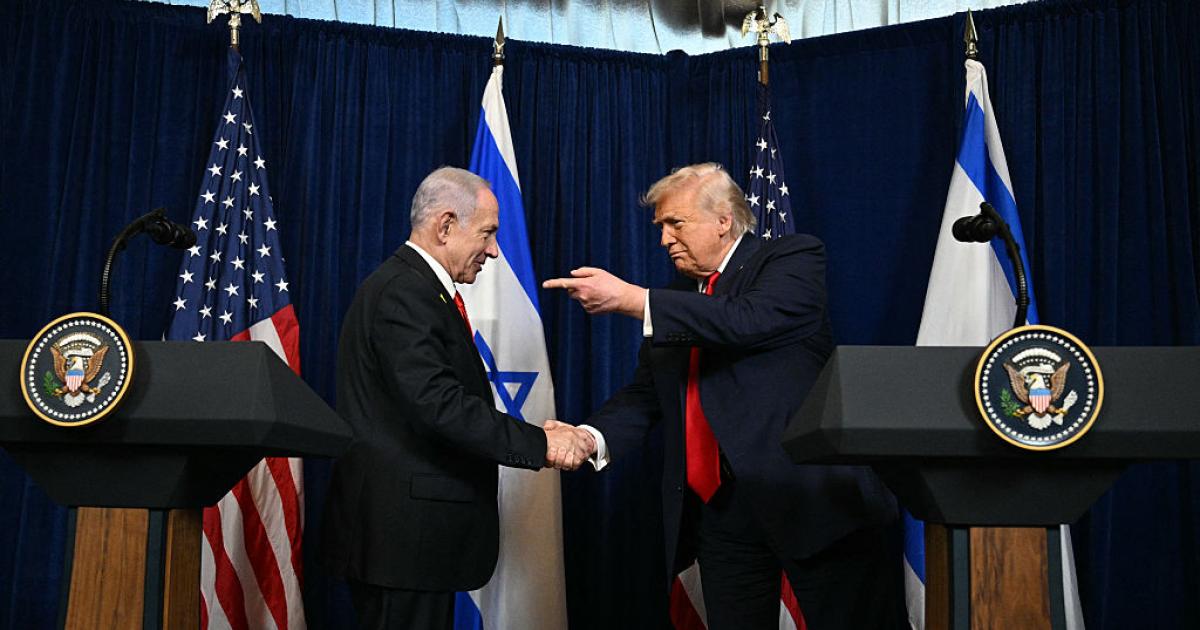
On the ground, fears are growing that the US administration may resort to tactical nuclear weapons to break the current military stalemate after six weeks of fighting. Former US President Donald Trump had threatened Iran with a military 'hell' if an agreement ensuring the opening of the Strait of Hormuz was not reached within a few hours.
The war has caused severe economic shocks in the region, with Egypt recording an outflow of foreign investments estimated at $9 billion since the start of military operations. The cost of Egyptian energy imports has also doubled to $1.1 billion per month, increasing pressure on government debt, which has exceeded 82% of GDP.
In local markets, the repercussions of the war were reflected in the prices of basic commodities and precious metals, with the price of 21-carat gold in Egypt soaring to record levels of 7150 Egyptian pounds. Experts attribute this rise to the state of uncertainty and disruption in global supply chains due to the closure of waterways in the Gulf.
Iran relies on its resilience on possessing the second-largest oil reserves in OPEC and its ability to disrupt global trade through the Strait of Hormuz. Despite some ships, such as the French vessel (CMA CGM), being allowed to pass recently, navigation remains at the mercy of complex political understandings.
Reports indicate that Iranian forces succeeded in shooting down three American military aircraft during pilot rescue operations described by Washington as daring. These direct clashes further complicate the compensation issue, as each party believes it has the right to claim reparations for its human and material losses.
Ultimately, the gap between Tehran's demands and Washington's refusal seems to portend a prolonged conflict with no immediate prospect of a solution. If international mediations fail to find a middle ground on 'transit fees' in Hormuz, the region may drift towards a comprehensive confrontation that transcends the limits of the current conflict.
We will demand compensation from the enemy, and if they refuse, we will take from their funds as much as we deem appropriate, and if that is not possible, we will destroy their property to the same extent.
Share your opinion
Iran Demands Compensation to End War and Open Strait of Hormuz: The Conflict of 'Legal Reparations' and Military Threats