PALESTINE

Sun 25 Feb 2024 12:17 pm - Jerusalem Time

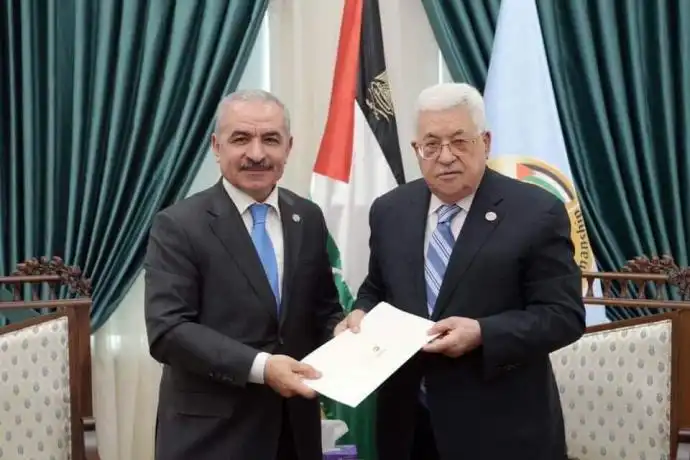
Sources deny to "Al-Quds" the formation of a new Palestinian government

Informed sources denied, on Sunday, that a new Palestinian government had been formed.


Sources close to the Palestinian presidency told Al-Quds.com that no new government has been formed to succeed the government of Prime Minister Muhammad Shtayyeh.


Sky News Arabia quoted sources today that the formation of a new government will be announced within days.


Recently, several conflicting reports were received about this, but informed sources denied them.

PALESTINE

Sun 25 Feb 2024 12:16 pm - Jerusalem Time

Washington Post: Gaza doctors between displacement, arrest and death

The anesthesiologist, after 4 months of harsh work and atrocities, did not want to leave his work at Nasser Hospital last month when Israeli tanks approached him, but he knew that doctors in Gaza would face one of three things at the time of war with the invading army: either displacement or arrest or death.


With these sentences, The Washington Post - in a report written by Miriam Berger - summarized the fears of the anesthesiologist who fled Khan Yunis, for fear that he would be accused of supporting Hamas, be forced to take off his clothes and sit blindfolded, and be exposed to the images of humiliation he saw published online, and the violations he heard of what Palestinian residents of Gaza were subjected to in Israeli secret detention sites, especially since he has 6 children and a large family in Rafah that depends on him.


The doctor described his experience to the Washington Post, on condition of anonymity, for his safety. He said by phone from Rafah that he fled the hospital sadly on January 26, and joined the growing cadre of displaced medical workers in the Gaza Strip, and is now living in Nylon tent.


Detained and displaced doctors

The anesthesiologist fled with three other medical workers, but he was the only one who was able to reach Rafah after his companions returned to the hospital in fear. He says, “There were a lot of gunshots and a lot of destruction, and I had to leave because I have a large family that I am responsible for.” .


The anesthesiologist believes that his three colleagues are now among 70 doctors, nurses and medical technicians who were taken by Israeli forces from Nasser Hospital and detained, according to the Ministry of Health in Gaza, indicating that he may have crossed the checkpoints because he was carrying a child who he found alone in the chaos of the escape.


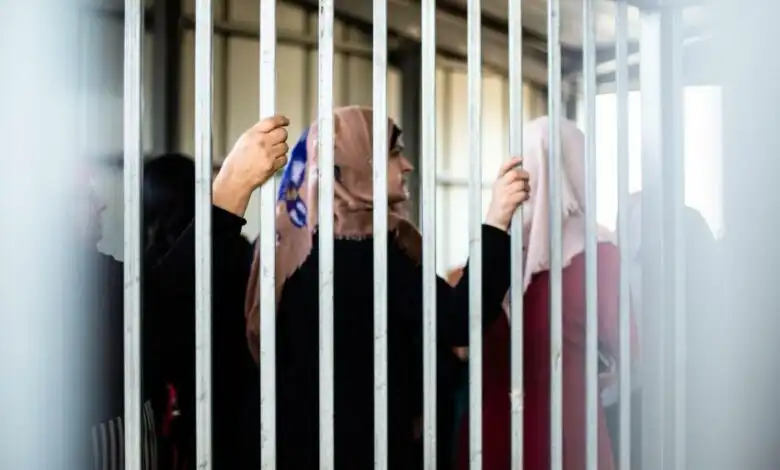
There are more than 100 medical workers in Israeli prisons, and their whereabouts and exact condition are not known.


The Ministry of Health believes that the rest are displaced, and Ministry official Ahmed Shatat said that most of the doctors have fled their homes to the south, and most of them live in tents, devoting their days to trying to find food and water so that they and their families can survive.


Many doctors - according to the newspaper - fear returning to the medical sector and its severe crises, as the Gaza Strip’s population of 2.2 million people stands on the brink of famine - according to the United Nations - and infectious diseases are spreading among them, and analysts and relief workers warn that hunger and disease could kill more people than Israeli weapons.


There is no health system

A small number of hospitals and medical facilities in Gaza are still open, even partially, the newspaper says.


Christopher Lockyer, Secretary-General of Doctors Without Borders, asked the UN Security Council: “How can we sustain any kind of response when medical workers are being targeted, attacked and vilified for helping the wounded? There is no health system to speak of.” In Gaza, the Israeli army dismantled hospitals, one by one.”


Israel says that doctors and hospitals provide cover for fighters of the Islamic Resistance Movement (Hamas), but Palestinian doctors and international medical volunteers confirmed that they saw no sign of armed activity.


Human rights groups also say that Israeli raids on medical facilities and medical professionals violate international law, and are disproportionate to any threat posed by militants who may have been in hospitals.


Israel retains the authority to detain Gazans without charge under the 2002 Unlawful Combatants Law, a form of administrative detention that human rights groups say violates international law.


“The detention of these doctors can be seen as an extension of attacks on hospitals and medical facilities, which are supposed to be protected under international law,” said Badour Hassan, a researcher at Amnesty International.


Some displaced doctors have set up free clinics in camps and shelters for the displaced. The anesthesiologist works several days a week at Al-Najjar Hospital in Rafah. He does not feel safe, especially when the Israeli army announced that it is heading towards Rafah. “If something happens to Rafah, where can we go?” ".

ARAB AND WORLD

Sun 25 Feb 2024 11:47 am - Jerusalem Time

Spain confirms that it will not sell weapons to Israel as long as its war on Gaza continues

Spanish Foreign Minister Jose Manuel Albarez confirmed that his country will not sell weapons to Israel as long as it continues its war on the Gaza Strip.


This came in a press conference at the United Nations headquarters in New York City, USA, on Friday.


Albarez pointed out that Spain did not grant any new license to sell weapons to Israel after last October 7, adding: “We will not sell weapons to Israel as long as the current situation continues.”


He stressed that Spain announced its intention to provide financial funding worth 3.5 million euros for the benefit of the United Nations Relief and Works Agency for Palestine Refugees (UNRWA).


Since last October 7, Israel, which is on trial before the International Justice Commission on charges of committing “genocide” against the Palestinians, has been waging a devastating war on Gaza that, as of Friday, has left “29,514 killed and 69,616 injured, most of them children and women,” in addition to thousands. Missing people under the rubble, according to the Palestinian authorities.


ARAB AND WORLD

Sun 25 Feb 2024 11:41 am - Jerusalem Time

Israeli analysis: Netanyahu's plan for the "next day" is not applicable

“The ambiguity of (the plan) stems from a lack of desire to make decisions and an attempt to maneuver between internal political imperatives. The result is general policy lines that express the ideal situation that Israel wants... and Netanyahu wants to manage the conflict, not resolve it.”


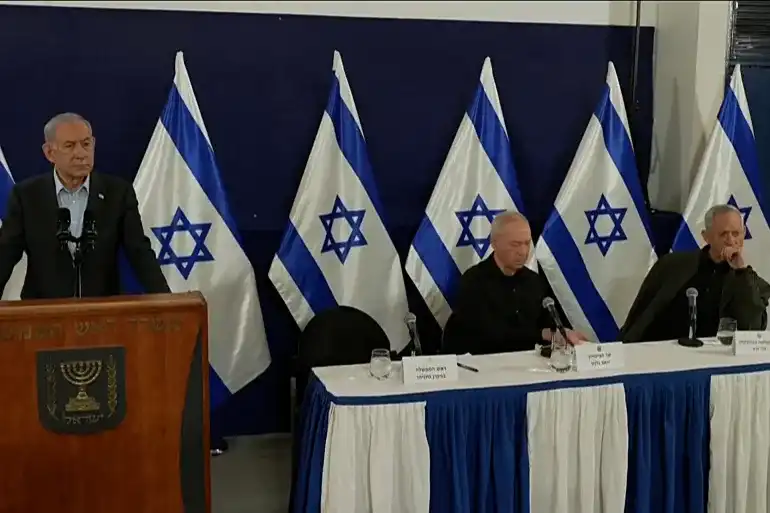
Experts and analysts questioned the seriousness of the “the next day” plan proposed by the Israeli Prime Minister, Benjamin Netanyahu, during the political-security cabinet meeting, last Thursday-Friday night. They also pointed out that the plan is not implementable and aims to satisfy Netanyahu’s partners in the government, especially the extreme right, which are represented by Ministers Bezalel Smotrich and Itamar Ben Gvir.


Netanyahu presented his plan in light of international pressure, especially American, on him to hold deliberations within his government about the future of the Gaza Strip after the war, and at a time when the Biden administration is putting forward a broad regional plan that includes the future of the Strip and the establishment of a Palestinian state, which Netanyahu rejected and described as “external dictates on Israel."


The researcher in Palestinian affairs at Tel Aviv University, Dr. Michael Milstein, in an article published by Yedioth Ahronoth newspaper today, Sunday, noted that Netanyahu’s plan involves “ambiguity stemming from a lack of desire to make decisions and an attempt to maneuver between internal political imperatives. The result is general lines of policy that express the ideal situation that Israel wants, but It lacks details required for an actual translation or an insightful confrontation with the necessities of reality.”


He pointed out that “‘The Day After’ is not as close as the impression prevails in Israeli discourse. Yahya Sinwar is still alive, the fighting in Gaza continues, a large part of Hamas’ military system has held out, and the movement itself maintains general control even in places where the army has operated.” "The goals of the document (Netanyahu's plan) can be achieved only in the event of the collapse of Hamas' rule, and it is not currently possible to talk about when and how this goal will be achieved."


Milstein added, "Most of the problem is found in the second section of the document, which deals with the civil and political aspect, which Israel has been deterred from since before October 7. The great ambiguity exists in the description of ‘local entities with administrative experience and not involved in terrorism’, which are supposed to implement civilian control instead of Israel, as well as in the fact that the Palestinian Authority is not mentioned as a potential partner, nor has it been claimed that it is not so. It seems that this matter would satisfy both the coalition members as well as the international community, which is increasing its pressure on Israel.”


Milstein believed that this ambiguity reinforces the suspicion that “decision makers are seriously considering the possibility of establishing a regime in Gaza based on "Hama’il" clans, which is considered to be the most influential force today in Palestinian society.”


He warned, “Apart from not drawing the bitter lessons of the past, most notably the ‘village ties’ that collapsed about 40 years ago, this concept does not seem to take into account the changes that have occurred in Palestinian society.”  At the forefront is the growth of a middle class and a young generation who face difficulty in viewing the mukhtars and sheikhs as an attractive leadership. This also obligates Israel to deal with dozens of addresses that would turn into armed militias according to the Somali or Libyan model, thus preventing the establishment of a new and stable regime in Gaza.


Milstein stressed that what Netanyahu’s plan describes as “eliminating extremism in the Palestinian establishment” is “a goal that has failed to be achieved in the Middle East, especially the American attempt in Iraq, and Israel is unable to implement this on its own, and is obligated to push the Palestinians for such a step, which requires to one active address. He added that Netanyahu's plan "cannot form the basis of a workable plan of action."


Deputy Editor-in-Chief of Haaretz newspaper, Noa Landau, indicated that the impression from Netanyahu's plan document, which came under the title "The Day After Hamas," is that the "day after" is very similar to the "day before" the war on Gaza. She added, "As is the case with Hamas's rule, the document's goal is essentially to use enthusiastic, meaningless words in order to hide the truth."


She added that Netanyahu's plan is to "return Gaza to an Israeli siege, perhaps even tighter. Netanyahu's plan for a political settlement is that he has no such plan and no plan for the next day. He wants to 'manage the conflict' without ever resolving it."

ARAB AND WORLD

Sun 25 Feb 2024 11:34 am - Jerusalem Time

“An official document to ICJ ”... Israel announces the implementation of the court’s orders regarding Gaza

Israel will send an official document to the International Court of Justice announcing the implementation of the orders issued by the court following a lawsuit filed by South Africa accusing Tel Aviv of committing genocide in Gaza.


The court issued 6 orders, including a request to submit a detailed report on February 26 explaining how the orders were implemented.


Hebrew media reported that Prime Minister Benjamin Netanyahu directed the drafting of a “very high-level document” outlining the steps to implement the orders, including transferring humanitarian aid to the residents of Gaza and preserving evidence relevant to the case.


It reported that the Ministries of Justice and Foreign Affairs have drafted the Israeli response document, and the document will be sent to the court after Netanyahu approves it.


The Israeli response includes an affirmation that the cases for which the orders were issued will be implemented in any case, even without the court issuing them.


The media indicated that the Israelis were encouraged that the court actually rejected South Africa's demands to issue nine arrest warrants against Israel.


Israel was also asked, by a vote of 15 to two, to “effectively and immediately ensure” that the Israeli army does not commit genocide, while it was asked, by a vote of 16 to one, to “take all measures in its power to prevent and punish incitement to genocide.”


In addition, Israel must, by a vote of 16 to one, take “immediate and effective measures” to enable the provision of basic services and humanitarian assistance to the Palestinian population in Gaza.


Tel Aviv was also asked, by a vote of 15 to two, to take “effective measures” to prevent destruction and preserve evidence related to the accusations against it.


On January 26, the International Court of Justice ordered Israel to take measures to prevent genocide against Palestinians and improve the humanitarian situation in the Gaza Strip, but the decision did not include a “ceasefire.”


The decision was issued during a session held by the International Court of Justice in The Hague, Netherlands, to decide on South Africa’s request calling on Tel Aviv to take precautionary measures in the “genocide” lawsuit filed against Israel.

PALESTINE

Sun 25 Feb 2024 11:34 am - Jerusalem Time

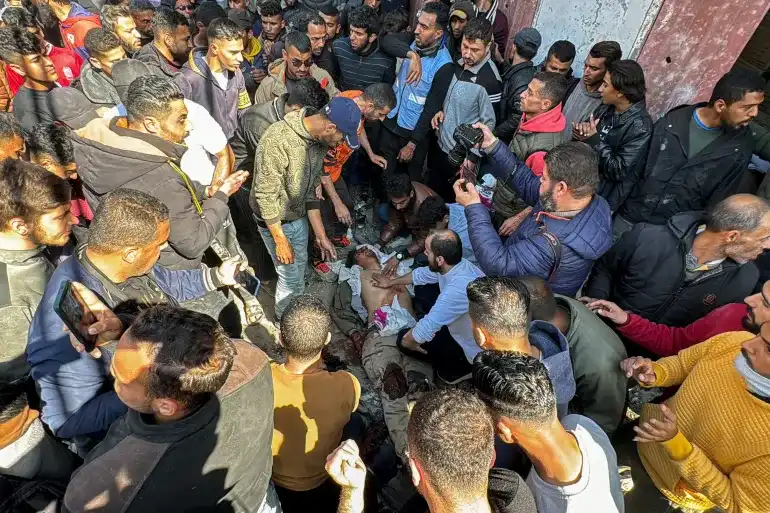
Within 24 hours...Israel committed 7 massacres in the Gaza Strip, killing 86 people

The Israeli army committed 7 massacres against families in the Gaza Strip, leaving 86dead and 131 wounded, during the past 24 hours.


According to the Ministry of Health, there are still a number of victims under the rubble and on the roads, and the occupation prevents ambulance and civil defense crews from reaching them.


The Ministry indicated that the toll of the Israeli aggression had risen to 29,692 martyrs and 69,879 injuries since the seventh of last October.

PALESTINE

Sun 25 Feb 2024 11:06 am - Jerusalem Time

West Bank: Israeli settlers steal sheep northwest of Jericho

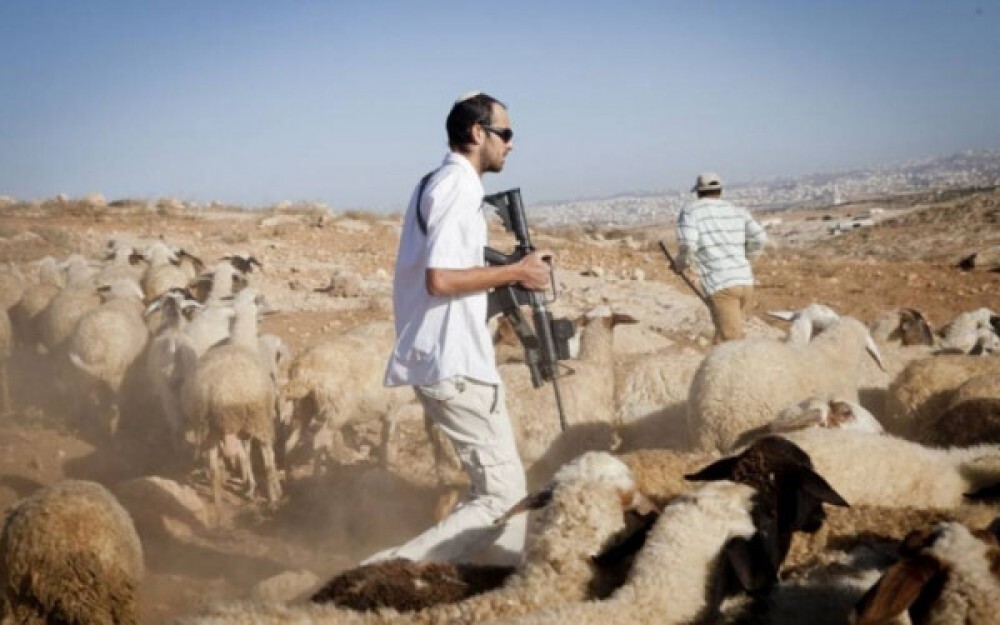
Today, Sunday, settlers stole sheep from the Arab Mlihat community, northwest of the city of Jericho.


According to local sources, a group of settlers stormed the community and stole 30 sheep, belonging to Suleiman Atallah Malihat.


Families in Bedouin communities rely mainly on raising livestock, grazing, and purchasing agricultural tractors, to help them continue life in areas where Israel does not allow infrastructure.


Statistics indicate that during the past year 2023, the Israeli forces and settlers seized 43 agricultural tractors, 293 vehicles, and 296 heads of livestock.

ARAB AND WORLD

Sun 25 Feb 2024 9:46 am - Jerusalem Time

Washington Post: The White House is retreating from its policy regarding West Bank settlements

The White House has reversed its West Bank policy, calling Israeli settlements illegal, The Washington Post reported.


On Friday, the newspaper quoted a White House official as saying that the decision came in response to reports that the far-right government of Israeli Prime Minister Benjamin Netanyahu was planning further settlement expansion.


US Secretary of State Anthony Blinken had confirmed that Israeli settlement expansion “would be inconsistent with international law.”


“Our administration maintains its strict opposition to settlement expansion,” Blinken said in a press conference from Argentina on Friday. In our opinion, this weakens Israel’s security, not strengthens it.”


On Thursday, far-right Israeli Finance Minister Bezalel Smotrich announced plans to build 3,000 new settlement units, and said that these plans are part of “deepening our eternal grip on the entire Land of Israel.”


Source: Al Jazeera Mubasher + Washington Post

ARAB AND WORLD

Sun 25 Feb 2024 9:32 am - Jerusalem Time

Axios: Washington called on Israel to stop targeting Hamas police in Gaza

The Axios news website quoted American and Israeli officials as saying, “The American administration asked Israel to stop targeting civilian police members of the Islamic Resistance Movement (Hamas) in the Gaza Strip who accompany aid trucks in the Strip.”


American officials said that President Joe Biden's administration is increasingly concerned about the possibility of Gaza becoming a new Mogadishu, after the security vacuum and desperation opened the door for armed gangs to attack and loot humanitarian aid trucks.


According to the sources, Israel rejected the American request, because one of its goals in the war is to ensure that Hamas no longer runs the Gaza Strip.


The Biden administration warned that a complete collapse of law and order would significantly worsen the humanitarian crisis in the Strip, the officials added.


Axios said that US Defense Secretary Lloyd Austin discussed with his Israeli counterpart last Thursday American concerns, and stressed the need to find a way to provide security for aid trucks entering the Strip.


Direct targeting

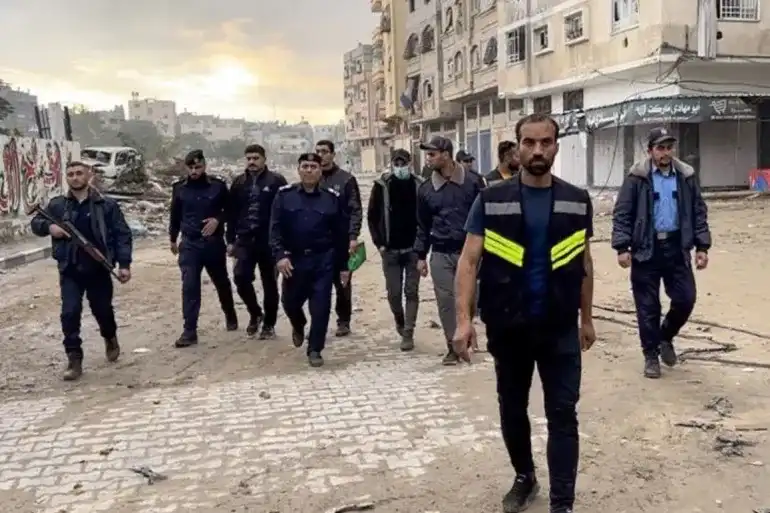
Last week, 9 Palestinian police officers were killed as a result of an Israeli bombing while they were providing humanitarian aid in Rafah, south of the Gaza Strip.


Members of the Palestinian police appeared remarkably in several areas of Gaza, despite the ongoing fierce battles between resistance factions and the Israeli occupation army in several areas in the south and north of the Strip.


The Associated Press had quoted Gazan citizens and a Hamas official as saying that the movement had begun deploying police forces and civil servants near government offices and hospitals in the north and south of the Strip, and had also begun disbursing their monthly salaries.


The American agency interpreted the reappearance of Hamas police in Gaza City as evidence of the movement's steadfastness, despite the air and ground raids launched by Israel against it during the past four months.


The military spokesman for the Israeli occupation army, Daniel Hagari, said a month before the withdrawal that they had completed the dismantling of the military structure of the Hamas movement in the northern and central Gaza Strip, and had killed thousands of militants, and that they were close to eliminating the movement’s fighters in Khan Yunis in the southern Gaza Strip.


Since the seventh of last October, Israel has been waging a devastating war on the Gaza Strip that has left tens of thousands of civilian victims, most of them children and women, in addition to an unprecedented humanitarian catastrophe and massive destruction of infrastructure, which led to Tel Aviv appearing before the International Court of Justice on charges of “ Genocide".

ARAB AND WORLD

Sun 25 Feb 2024 9:30 am - Jerusalem Time

Israeli War Council agrees to send a delegation to Doha to discuss the prisoner deal

Yesterday, Saturday, the Israeli War Council gave the green light to send a delegation to Qatar to continue the discussions that took place in recent days in Paris, with the aim of reaching a truce agreement in Gaza that includes the release of Israeli detainees held by resistance factions in Gaza, according to what officials and local media reported.


The Council met last night after the Israeli delegation returned from talks in Paris, to discuss the release of hostages and a ceasefire agreement in the Israeli war on Gaza.


Israeli media reported overnight that the delegation will head to Doha in the coming days to continue these negotiations with the aim of agreeing on a truce for several weeks that includes the release of detainees in Gaza in exchange for the release of Palestinian prisoners in Israel.


National Security Advisor Tzachi Hanegbi had spoken about a war council meeting in Israel after the delegation’s return from Paris, to discuss the release of detainees held by resistance factions in Gaza, and a ceasefire agreement in the war on the Gaza Strip.


He said in press statements that members of the War Council “will meet by phone” to listen to an update on the discussions related to the war on the Gaza Strip.


Paris talks

On Friday, talks began in the French capital with the participation of the head of the Israeli Foreign Intelligence Service (Mossad), David Barnea, the head of the CIA, William Burns, the Prime Minister of Qatar and the Minister of Foreign Affairs, Sheikh Mohammed bin Abdul Rahman Al Thani, and the head of Egyptian Intelligence, Abbas Kamel, in an attempt to reach a deal. For the exchange of prisoners between Israel and Hamas.


Hanegbi stated during an interview with N12 news channel that there is likely room to “move forward towards an agreement,” without giving further details.


Israel insists on releasing all the prisoners who were detained in the attacks of last October 7, but Hanegbi pointed out that "an agreement like this does not mean the end of the war."


Tel Aviv estimates that there are about 134 Israeli prisoners in Gaza, while it holds at least 8,800 Palestinians in its prisons, according to official sources from both parties.


Rafah invasion

Meanwhile, Israeli Prime Minister Benjamin Netanyahu said that he will begin consultations to expand the battles towards Rafah, including the evacuation of residents, adding that his government is working to reach an additional agreement to release Israelis detained by resistance factions in Gaza.


Netanyahu added that he will meet at the beginning of this week with members of the Ministerial Council to approve field plans for work in Rafah, including developing a plan to evacuate the civilian population from there.


Netanyahu had rejected Hamas's conditions, pledging to continue the military campaign until "complete victory" was achieved.


He also reiterated the need for his forces to launch an attack on Rafah, south of Gaza, despite major fears of its repercussions on hundreds of thousands of civilians who fled there to escape the battles in the rest of the Strip.


Netanyahu added that after the Paris negotiations, the Council of Ministers will gather to approve operational plans in Rafah, including the evacuation of the civilian population.


He said, "We are working to obtain another plan to release the prisoners detained in Gaza, as well as to complete the elimination of Hamas forces in Rafah," at a time when the United Nations warns of a humanitarian catastrophe in the city.


On Saturday, Israeli Chief of Staff Herzi Halevy toured the Gaza Strip and stressed that military action is the only effective way to recover the hostages.

ARAB AND WORLD

Sun 25 Feb 2024 8:12 am - Jerusalem Time

Paris proposal: 40 detainees in exchange for hundreds of prisoners and a 6-week truce

A state of optimism prevails in Israel following the return of the negotiating delegation from Paris. While a senior official denied that a final agreement with Hamas regarding a prisoner exchange deal was close to being reached, reports revealed understandings on a number of issues as the talks continued.


Israeli reports stated that the talks held in the French capital, Barbs, succeeded in activating efforts aimed at concluding a prisoner exchange deal between Israel and the Hamas movement and agreeing on a truce in the Gaza Strip, while the Israeli Prime Minister, Benjamin Netanyahu, continues his attempts to pressure the Hamas movement by linking... Negotiations and the imminent Israeli invasion of the city of Rafah, south of the Gaza Strip.


The Israeli Ministerial Council for Political and Security Affairs met tonight by telephone, and the member ministers received updates from the negotiating delegation that returned on Saturday morning from Paris, regarding the developments witnessed in the talks. Accordingly, the cabinet voted to send an Israeli delegation to the Qatari capital, Doha, within days. Next, to continue diplomatic efforts to try to reach a deal.


According to Israeli reports, the Cabinet approved sending a low-level delegation to the Qatari capital, to continue the talks that began on Friday in Paris in an attempt to reach a prisoner exchange deal. Netanyahu had explained in a statement that the cabinet would discuss “the next steps in the negotiations” tonight.


Netanyahu said that he would invite the Israeli Ministerial Council for Political and Security Affairs (the expanded cabinet) to meet next week, “to approve operational plans for the operation in Rafah, including the evacuation of the civilian population from there,” referring to a planned Israeli invasion of the area to which more than One million Palestinians.


Netanyahu stressed that "the combination of military pressure and firm negotiations will lead to the release of the hostages, the elimination of Hamas, and the achievement of all the goals of the war."


According to Israeli Channel 13, the most prominent points that were agreed upon in Paris relate to the exchange mechanism, the list of prisoners, the number of days of the truce, and issues related to the humanitarian aid that will be allowed into the Gaza Strip.


The most prominent matters that were agreed upon in Paris:


- The release of about 40 Israeli prisoners in the Gaza Strip, including women, the elderly and the sick, in exchange for the release of hundreds of Palestinian prisoners in Israeli prisons.

- ⁠Israeli agreement to release a larger number of prisoners than previously agreed upon, in exchange for the release of “certain categories” of Israeli prisoners in the Gaza Strip.

- A 6-week truce in the Gaza Strip

- Israeli readiness to discuss the release of prisoners liberated in the “Shalit deal” who were re-arrested by the occupation during the recent period, according to what the channel reported from a foreign source.

- Israeli agreement to show flexibility on humanitarian issues - whether with regard to the reconstruction of the Gaza Strip or with regard to the return of residents to the northern Gaza Strip.

- Israel will not commit to ending the war or to a permanent ceasefire.

In turn, the Israeli Broadcasting Authority (“Kan 11”) stated that the exchange equation would be 10 Palestinian prisoners on average, for every Israeli prisoner who would be released, while it indicated that the truce equation would be one day for every Israeli prisoner who would be released.


According to the Walla website, the first phase of the exchange deal will include Israeli female soldiers, and that different numbers of prisoners will be released for each Israeli prisoner, based on the “category of the prisoner,” as a larger number of prisoners will be released in exchange for female soldiers, and that may It includes prisoners with high sentences.


According to the Ynet website, the deal will include the release of between 200 and 300 Palestinian prisoners in Israeli prisons, in exchange for 35 to 40 Israeli detainees in the Gaza Strip. While no official Israeli body has confirmed that the talks have led to an agreement on the number or names of the prisoners who will be released.


A high-ranking Israeli official said, this evening, Saturday, that Israel is still far from reaching a prisoner exchange deal with Hamas, within the framework of the new round of negotiations that took place in the French capital, Paris, stressing that “Hamas has backed down from some of its demands.”


The statements of the Israeli official, who appears to be from circles close to the Israeli Prime Minister, Benjamin Netanyahu, came in a media briefing, following the return of the Israeli negotiating delegation, this morning, from Paris, amid reports of “progress” in the discussions.


The Israeli official said, "We are still far from reaching a deal, but Hamas has backed down from some of its demands, following the firm positions expressed by Prime Minister Netanyahu."


'Cautious optimism'


Earlier today, the Israeli media reported that the Israeli delegation returned from Paris with “cautious optimism” about the possibility of moving forward towards reaching an agreement before the month of Ramadan.


The Israeli Broadcasting Corporation (“Kan 11”) quoted sources familiar with the negotiations as saying, “A new framework was agreed upon during the Paris talks. There is progress and the agreement could be signed soon. The negotiations should not take a long time.”


"Kan 11" reported that "Israel received messages from mediators indicating that Hamas is interested in moving forward with the negotiations," and an Israeli official indicated "progress on the issue of releasing (Palestinian) prisoners, and soon the names will be discussed as well."

However, the official stressed the need to maintain “transparency” in dealing with the families of Israeli prisoners in the Gaza Strip, considering that “in the end, we are conducting negotiations with a terrorist organization and everything can change.”


The Israeli "war cabinet" is scheduled to meet this evening, so that the negotiating delegation can inform it of the latest developments. Meanwhile, the Walla website, citing two informed sources, said that “the Paris talks witnessed progress on the issues of the number and identity of Palestinian prisoners” who will be included in the first phase of the agreement, which consists of three stages.


Israeli reports unanimously agreed that the negotiations were generally "good and positive" and witnessed a reduction in gaps on a number of issues, including details related to the release of Israeli detainees in the Gaza Strip in exchange for Palestinian prisoners and the days of the truce.


Despite the optimism prevailing in Israel, there are no confirmations from Hamas, which did not participate in the Paris talks, that it may accept the broad lines that were agreed upon. Israeli reports stated that the talks will continue in the coming days.


For his part, Hamas leader Abdel Rahman Shadid told Al-Arabi TV, saying: “We are neither a part nor a party in the Paris meetings, and we have not been informed of any progress, and this is a unilateral announcement.”


Other Hamas sources added, "The facts indicate that Israel has backed away from its commitments in the previous Paris meeting, and we have no information about the Paris meeting or the existence of positive indicators in the occupation's positions."


As part of the discussions in Paris, on Friday, the head of the Mossad, David Barnea, met with the head of the US Central Intelligence Agency (CIA), William Burns, the head of the Qatari government, Mohammed bin Abdul Rahman Al Thani, and the head of Egyptian intelligence, Abbas Kamel.


PALESTINE

Sun 25 Feb 2024 8:02 am - Jerusalem Time

War on Gaza: Dozens of Palestinian citizens were killed and injured in Israeli bombing

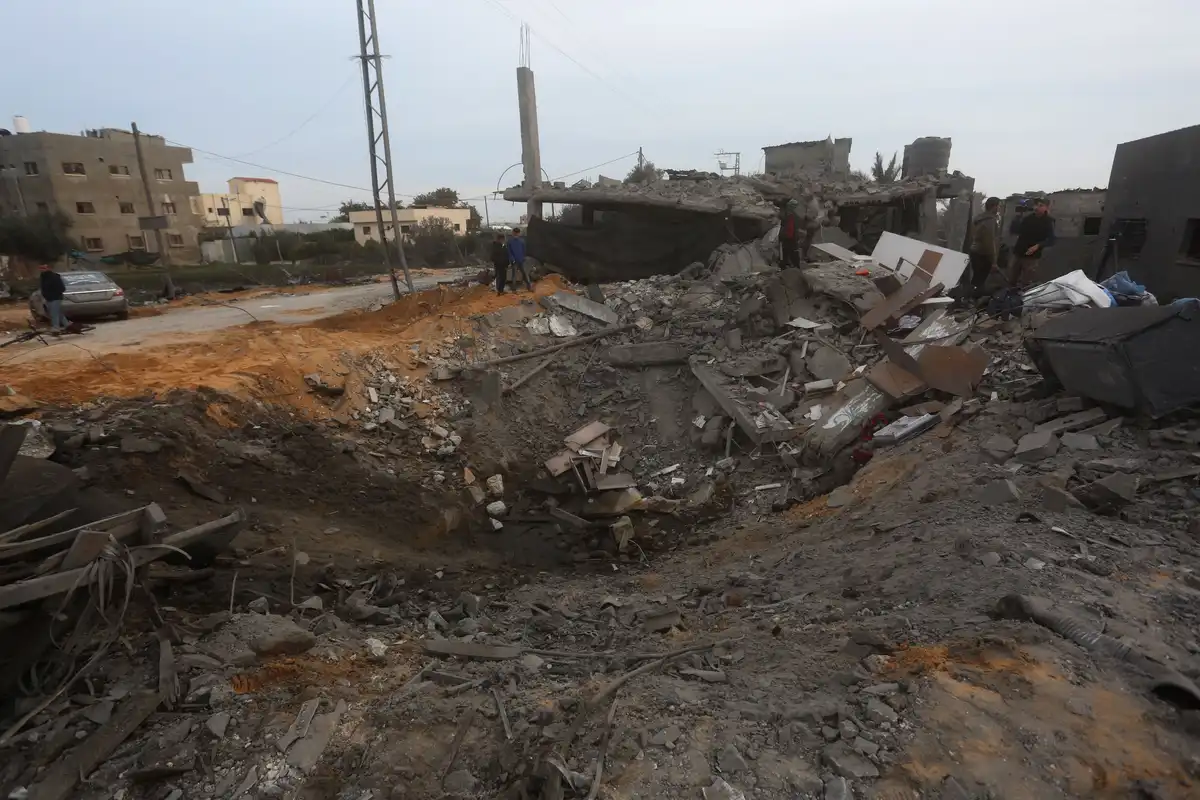
Dozens of citizens, including children and women, were killed and injured in the ongoing Israeli aggression against the Gaza Strip, for the 142nd day in a row.


Medical sources reported that a number of citizens were killed and others were injured with various injuries, following renewed Israeli artillery shelling on the western areas of the city of Khan Yunis, and on the Al-Sabra neighborhood in Gaza City.


A citizen was also killed and others were injured in an Israeli raid that targeted a house in the Al-Shaaf area, east of Gaza City, coinciding with shooting from Israeli drones and artillery shelling on the eastern neighborhoods of the city.


The Al-Zaytoun neighborhood, south of Gaza City, witnessed violent clashes and explosions were heard.


In Beit Lahia, local sources said that one dead was recovered as a result of the bombing of a house, and many missing people are still under the rubble.


Two citizens were killed, and 4 others were injured, yesterday evening, Saturday, as a result of the Israeli bombing of Al-Shati camp, west of Gaza.


Local sources reported that Israeli warplanes targeted a gathering of citizens in Al-Shati camp, killing two citizens and seriously wounding four others.


The Ministry of Health said in a statement, "The Israeli army committed 8 massacres against families in the Gaza Strip, claiming 92 dead and 123 injuries during the past 24 hours."


In an infinite toll, the number of killed has risen to 29,606 people and 69,737 wounded since the start of the aggression on the Gaza Strip on the seventh of last October.


ARAB AND WORLD

Sun 25 Feb 2024 8:00 am - Jerusalem Time

Time Magazine: Rafah is a turning point in the war on Gaza

A report published by the American "Time" magazine confirmed that Israel's allies in the United States and Europe have largely avoided calling for a ceasefire because they believe that this would be tantamount to depriving it of its right to "eradicate" the Islamic Resistance Movement (Hamas) from Gaza.


Writer Yasmine Sarhan said in her report that in light of the deteriorating humanitarian situation in the besieged Gaza Strip, with increasing calls to stop the war, and with the death toll approaching 30,000, pressure has mounted on Israel and its supporters to change course.


The first shifts - according to the Time report - came from Australia, Canada and New Zealand, which on February 15 issued a joint statement calling for an “immediate humanitarian ceasefire,” indicating that the Israeli ground attack on Rafah would be “devastating.”


Also, 26 of the 27 member states of the European Union - with the exception of Hungary - echoed these concerns, calling for the establishment of “an immediate humanitarian truce that would lead to a sustainable ceasefire” in Gaza.


The tide has changed

Meanwhile, in the United Kingdom, the opposition Labor Party - which is expected to form the country's next government - announced that it also supports an "immediate humanitarian ceasefire," adding that the attack on Rafah "must not happen." This is in contrast to the ruling Conservative Party led by Prime Minister Rishi Sunak, which opposes a complete ceasefire.


Time quoted the Palestinian ambassador to Britain, Hossam Zomlot, as saying, “The tide has changed,” noting that although he encouraged a change in rhetoric among Western governments, “the starting point was completely unbalanced.”


He added that many still need to match their words with their actions, especially the United States and the United Kingdom, which expressed their regret over the lack of humanitarian aid reaching Gaza, while at the same time they stopped funding the United Nations Relief and Works Agency for Palestine Refugees (UNRWA).


Time said that the imminent Israeli invasion of Rafah prompted such a response, which reflects the concerns of many countries, international institutions and humanitarian organizations about what could happen if the attack continues.


UN bodies and international medical research centers warn that tens of thousands of Gazans will die in the coming months if escalation occurs.


Political trading

According to the American magazine, these warnings did not convince Israel not to launch its attack, which Prime Minister Benjamin Netanyahu described as a necessary step in the country's goal of achieving "complete victory."


In the United States, there are growing concerns about the impact of the war and US President Joe Biden’s handling of it on his re-election chances. In the United Kingdom, a vote on a non-binding ceasefire resolution on Wednesday eventually turned into political infighting within Parliament.


Source: Time

ARAB AND WORLD

Sat 24 Feb 2024 10:59 pm - Jerusalem Time

Egyptian sources: Cairo is establishing a second camp for displaced Palestinians in Khan Yunis

Egyptian sources reported today (Saturday) the start of establishing a second camp for displaced Palestinians in the city of Khan Yunis in the southern Gaza Strip, as part of Egypt’s efforts to alleviate the suffering of the residents of the Strip.


The Egyptian Cairo News satellite channel quoted sources as saying, “Egypt has begun establishing camp for the displaced No. 2 in Khan Yunis, with a capacity of 400 tents, accommodating about 4,000 people, and equipped with electricity and toilets.”


The sources explained that the camp will be completed by the end of this week, as part of Egypt's efforts to alleviate the burden on the Palestinians.


It pointed out that "establishing the camp will be followed by (establishing) a field hospital in the (Palestinian) city of Rafah and another camp north of Deir al-Balah, in addition to allocating two aid distribution centers in Rafah."


Egypt had previously established a camp in Khan Yunis that included 1,050 tents and full food for the Palestinians.


Since October 7, Israel has been waging a large-scale war against the Islamic Resistance Movement (Hamas) in the Gaza Strip, during which more than 29,000 Palestinians have been killed so far, according to the authorities in the Strip, after the movement launched an unprecedented attack on southern Israel that it called a “flood.” Al-Aqsa" claimed the lives of more than 1,200 Israelis, according to the Israeli authorities.

PALESTINE

Sat 24 Feb 2024 10:59 pm - Jerusalem Time

Nablus: Israeli settlers attack the town of Huwwara

This Saturday evening, settlers attacked the town of Huwwara, south of Nablus.


Local sources reported that a group of settlers attacked the Country Swimming Pool area in the town of Huwwara, while the Israeli soldiers protected them and fired bullets at the citizens.


PALESTINE

Sat 24 Feb 2024 10:59 pm - Jerusalem Time

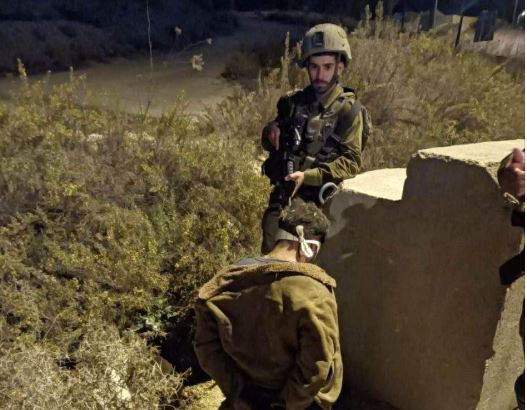
West Bank: Israeli forces detain eight Palestinian citizens and beats them in Hebron

Tonight, Israeli forces detained eight citizens and beat them in the city of Hebron.


Local sources said: The Israeli forces detained: Muhammad Farhat Jaber (55 years old), Mohi Hammad Jaber (50 years old), Hamza Rabi Al-Tamimi (45 years old), and Obaida Farhat Jaber (20 years old), and the brothers Rabi’, Taqi, Dabaa, and Mahmoud Ahdi. Al-Jaabari, abused them, beat them, and interrogated them.


The residents of Wadi Al-Husayn and Haret Jaber are constantly subjected to harassment by the colonialists and the occupation army, and abuse of their children, especially while students are going and returning from school.


ARAB AND WORLD

Sat 24 Feb 2024 5:37 pm - Jerusalem Time

Retired Israeli general: There is complete chaos in our army that the media does not talk about

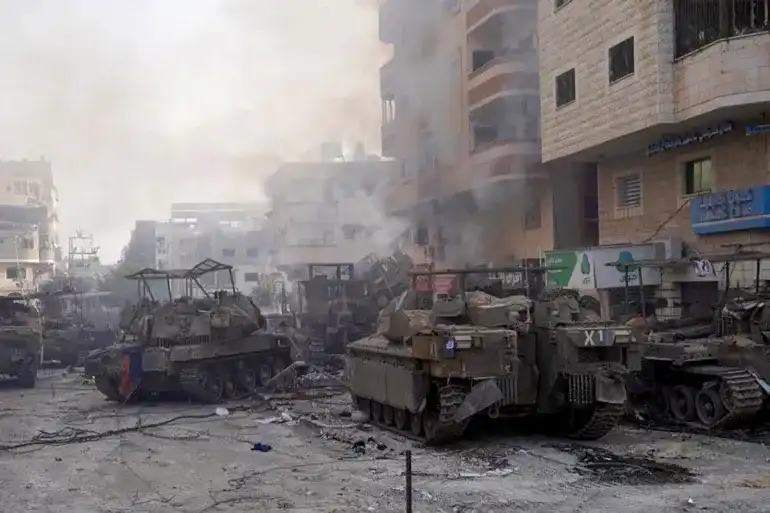
The Israeli newspaper "Maariv" quoted retired Israeli General Yitzhak Brick as saying that he spoke about what he called "total chaos" among soldiers in the Gaza Strip that is not being talked about in the media, related to equipment and logistical services.


Brik said that he had received complaints from soldiers regarding equipment malfunctions and shortages, and added that dozens of damaged tanks were still stuck waiting to be towed out of the sector.


He added that Israeli Prime Minister Benjamin Netanyahu was informed after October 7 that the army was not ready for war immediately due to the presence of soldiers who had not trained for 5 years, in addition to the shortage of equipment.


A few days ago, Israeli Army Radio revealed that Chief of Staff Herzi Halevy decided to launch internal investigations into all units into the events of last October 7, expecting the investigations to continue for 3 months and to extend to all army units.


According to the official website of the Israeli army, the losses of the Israeli occupation forces since the start of its war on Gaza amounted to 576 people, 237 of whom were killed since the beginning of the ground operation in the Gaza Strip on October 27, while about 2,962 were wounded, including 453 soldiers who were seriously injured.


The Israeli army is waging an aggression against the Palestinians in the Gaza Strip that has, as of Saturday, left 29,606 dead and 69,737 injured, most of them children and women, in addition to thousands missing under the rubble.


Source: Al Jazeera + Maariv

ARAB AND WORLD

Sat 24 Feb 2024 5:35 pm - Jerusalem Time

International newspapers: Netanyahu’s plan for Gaza combines occupation and collective punishment

International newspapers and news sites shed light on Israeli Prime Minister Benjamin Netanyahu's plan for the day after the war on the Gaza Strip, and American dissatisfaction with the settlement plans that the Israeli government intends to begin implementing in the West Bank.


Netanyahu had previously presented to the security mini-ministerial council (the cabinet) a document of principles related to the policy of the day after the Gaza war, which includes - according to the Israeli Broadcasting Authority - several provisions, including Israel’s preservation of freedom to operate in the entire Gaza Strip without a time limit, and it also includes the establishment of a security zone. In the sector adjacent to Israeli towns.


The New York Times wrote that Netanyahu's plan "completely contradicts everything that the administration of US President Joe Biden has been seeking to achieve for months."


An article published by the newspaper saw that Netanyahu's choice to reveal his plan in the hours before the start of the Paris negotiations on the prisoner exchange deal "is not a coincidence, but rather an intentional matter, the aim of which is to focus the public debate on the path that the Israeli prime minister wanted."


In the same context, the Financial Times found that Netanyahu’s plan for Gaza after the war “expresses a clear desire to regain control of the Strip, through a combination of occupation methods and collective punishment.”


According to the newspaper, the plan, which was contained on one page, was worded ambiguously, and one of its goals was to tickle the feelings of right-wingers who support Netanyahu, pointing to the apathy with which the plan was met in Europe and America.


The Al-Monitor website focused on the Israeli military operation in Rafah, south of the Gaza Strip, and quoted a source close to Israeli war council member Benny Gantz as saying that the operation could be carried out within a month or two, “but the hostages do not have this time, with many killed and injured.” "The site comments that the controversy over Rafah is a microcosm of the larger controversy regarding the war, which has entered its fifth month.


On the other hand, The Washington Post revealed great dissatisfaction in the American administration with the settlement plans that the Israeli government intends to begin implementing in the West Bank. The newspaper explained that this dissatisfaction explains the Biden administration’s decision to consider Israeli settlement in the West Bank contradictory to international law, in retreat from a decision taken by the previous administration, led by Donald Trump.


The Washington Post quoted American officials who described the Israelis’ determination to proceed with settlement plans, after all the American support for them, as a disregard for the American administration.


Source: Al Jazeera

ARAB AND WORLD

Sat 24 Feb 2024 5:15 pm - Jerusalem Time

AIPAC blackmails the US Congress and makes it support the genocide in Gaza

The American Israel Public Affairs Committee (AIPAC), the most powerful Israel lobby in the United States, (among more than 25 Israel lobby organizations) will allocate $100 million this campaign season for the 2024 elections, to help elect pro-Israeli genocide candidates to Congress. American. This makes AIPAC the largest financial spender on a single issue in the primaries: defeating anyone who criticizes Israel.


For AIPAC, priority No. 1 is ousting the most vocal critics of Israel's genocidal war on Gaza. Target No. 1 was Democratic Representative (of Palestinian origin) Rashida Tlaib, the most outspoken advocate in Congress for Palestinian human rights. AIPAC has offered a whopping $20 million each to Hill Harper and Nasser Baydoun (of Lebanese origin) to run in the 2024 Democratic primary against Rashida, a fifth of AIPAC's total electoral support funds.


Both Harper and Beydoun rejected AIPAC's offer and leaked the dollar amount they were offered, apparently to discourage others from taking what they called "blood money." It was harder than AIPAC realized to force a Democrat from Arab Detroit to accept $20 million to support a plausible genocide of Palestinians.


AIPAC has had more success in its attempt to oust New York Democratic Rep. Jamaal Bowman, one of the few US lawmakers to call for a ceasefire. AIPAC recruited pro-Israel George Latimer to run in the Democratic primary against Bowman, giving Latimer more than $600,000, or about 42% of his entire campaign budget. After AIPAC, Bowman's second-largest contributor was Bradley Tusk, who provided the maximum amount of $6,600.


The Israeli lobby "AIPAC" is also actively seeking to defeat Democratic Representative Cori Bush (from Missouri), which is the main sponsor of the House of Representatives resolution that prompts President Biden to call for a ceasefire. This has been AIPAC's most impressive success story to date. Wesley Bell, AIPAC's handpicked pro-genocide candidate to oust Bush, was leading her by 22% in a Feb. 7-9 poll of 401 likely 2024 Democratic voters.


AIPAC is also trying to oust Representative Summer Lee of Pennsylvania. Bhavini Patel (of Indian origin) appears to have been recruited to this end, although Patel has not publicly acknowledged this. However, in December 2022, Jewish Insider reported that Patel “was initially viewed by some pro-Israel supporters in Pittsburgh as a potential contender for Lee’s next run, according to what Al-Quds reviewed.”


For Patel, AIPAC's money is already paying off, as she recently posted photos on her Instagram account of herself participating in pro-Israel rallies. In February 2024, Patel told her supporters on a fundraising call that she could help take down a "progressive pro-Palestine group" by tapping support from right-wing Hindu and pro-Israel supporters.


The American Israel Public Affairs Committee (AIPAC) has long been on the mission of engineering a pro-Israel, pro-apartheid US Congress, and now, embarrassingly, it is trying to engineer a pro-genocide US Congress in Gaza.


In the 2022 midterm elections, for example, AIPAC spent $30 million on candidates to ensure their support with billions each year in unconditional military aid to Israel, even though that meant supporting the 109 members of the US House of Representatives (GOP) who voted To cancel the 2020 elections, and oust Biden.


“AIPAC believes that the end of American democracy represents a price worth paying if it means the continuation of Jewish supremacy in Israel and Palestine,” according to election researcher Zachary Foster.


It is noteworthy that in 2012, AIPAC contributed to the victory of Hakeem Jeffries (New York State) over the defeat of Charles Barron for the Democratic seat in Congress in 2012 with donations of no less than $475,000. AIPAC and Jeffries also accused Barron of anti-Semitism because he described Gaza as a concentration camp.


Today, Hakeem Jeffries is the Democratic minority leader in the House of Representatives and opposes placing any conditions at all on the billions of dollars sent to the Israeli occupation army each year, something he emphasized in an interview on February 4, 2024. “This makes Jeffries directly complicit.” "With the genocide committed by Israel. Actions in Gaza," according to Foster.


“AIPAC’s power and influence over the US Congress means that many of our elected representatives enter politics for the sole reason that they are willing to remain silent about Israeli war crimes,” Foster adds. “The result has been that a small group of people, representing a small minority of US citizens, have been and continue to be "Engineering US Congressional support for plausible genocide."

ARAB AND WORLD

Sat 24 Feb 2024 2:57 pm - Jerusalem Time

Israeli Newspaper: Israel, US, Egypt, Qatar agree upon updated Paris hostage deal outline

The war cabinet is expected to receive an update from the negotiating team and decide on further steps, which may happen as early as tonight.


During the meeting in Paris between the representatives of the United States, Israel, Egypt, and Qatar, a new and updated outline for the deal for the release of hostages was agreed upon - this is what two sources familiar with the contents of the talks said on Saturday.


The Israeli delegation, which included the head of the Mossad, David Barnea, the head of the Shin Bet, Ronan Bar, and representatives of the IDF, Maj.-Gen. Nitzan Alon, and Maj.-Gen. Oren Seter, returned to Israel early Saturday morning.


Two sources familiar with the contents of the talks stated today that there has been progress in the negotiations to the extent that it might allow a transition to negotiations on the details of the agreement, such as the number and identity of the prisoners who will be released as part of a deal. Egypt, Qatar agree upon updated Paris hostage deal outline


Now, the war cabinet is expected to receive an update from the negotiating team and decide on further steps, which may happen as early as tonight.


A source familiar with the negotiations emphasized that progress to more detailed negotiations depends on the ability of the mediators to get Hamas to agree to the new framework established at the meeting in Paris.


An opportunity to negotiate

Yesterday, Prime Minister Benjamin Netanyahu said that the decision to send a delegation to the talks in Paris was intended to give an opportunity to negotiate a deal for the release of the abductees.


Finance Minister Bezalel Smotrich added and said that he believed that dealing with hostages now would bring an end to the war and prevent the destruction of Hamas.

The war cabinet approved the departure of the negotiating team after President Biden's senior adviser, Brett McGurk, visited Israel yesterday.


During his talks in Israel, McGurk said that progress had been made in the negotiations between the Qatari and Egyptian mediators and Hamas regarding a possible hostage deal, and therefore, it is important that Israel send a delegation to the talks in Paris and conduct serious negotiations, according to three sources who commented on the details.


ARAB AND WORLD

Sat 24 Feb 2024 2:39 pm - Jerusalem Time

German lawyers sue Scholz, alleging complicity in Gaza ‘genocide’

By Cathrin Schaer

Lawyers representing Palestinians file criminal complaint against the chancellor and other top politicians as Germany remains committed to Israel.

A group of lawyers is filing a criminal complaint with the German federal prosecutor against senior German politicians, including Chancellor Olaf Scholz, accusing them of “aiding and abetting” the genocide they say is being committed by Israel in Gaza.

The case against several members of the country’s Federal Security Council, which directs national security policy and authorises weapons exports, was announced on Friday.

In addition to Scholz, Foreign Minister Annalena Baerbock, Economics Minister Robert Habeck, Finance Minister Christian Lindner and others stand accused.

The lawyers behind the case represent families of two Palestinians with roots in the Gaza Strip, including that of Palestinian-German migration scholar Nora Ragab.

“We, Palestinians in the diaspora, will not stand by and watch a genocide being committed against our families and our people,” Ragab said in a statement. “We will use all means at our disposal. … Today we aim to hold the German government accountable for its complicity in the genocide in Gaza.”

The European Legal Support Center, the Palestine Institute for Public Diplomacy and the UK-based Law for Palestine are among the civil society organisations backing the case.

In a jointly written statement, they said: “The German state is one of the countries that has shown some of the strongest political and material support to Israel in its assault on the Gaza Strip and the Palestinians.”

Alexander Gorski, one of the lawyers supporting the case, acknowledged that “from a legal point of view and given the political landscape in Germany, this case will be a difficult one.”

“But we believe it’s our responsibility as people working in the judicial sector to try to do something,” he told Al Jazeera. “We are seeing a genocide being livestreamed around the world, and despite this, the Israeli government is still being supported by other countries and is still receiving weapons from them.”

After the October 7 attacks by Hamas, during which 1,139 people were killed in southern Israel, the Israeli government retaliated with a military campaign in Gaza that has to date killed more than 29,000 Palestinians, the majority of them women and children.

Israel has said it wants to crush Hamas, which governs the densely populated strip, but after four months of war, the devastating civilian toll is causing alarm among world leaders.

In late January, the United Nations’ top court, the International Court of Justice, or ICJ, found it was “plausible” that Israel was committing acts in Gaza that violated the international Convention on Genocide.

Since the court’s decision, Germany and all other third-party states should have been trying to stop Israel from committing such acts, the lawyers behind Friday’s case said.

However since October, many German officials have “incited” genocide with their statements, they alleged.

The legal case will also focus on German weapons exports to Israel.

These increased significantly in 2023, compared with the previous year, and most of that increase was approved by the German government after October 7.

Despite the ICJ ruling, Germany has “already agreed in principle” to send more tank ammunition to Israel, they said.

SOURCE: AL JAZEERA

PALESTINE

Sat 24 Feb 2024 2:39 pm - Jerusalem Time

Israeli media: The Paris talks on prisoners are good

Yedioth Ahronoth newspaper quoted Israeli officials as saying that the Paris talks were good and lasted longer than expected, indicating that there is a way to go in the talks.


Israeli media also reported from sources familiar with the exchange negotiations that the agreement in Paris was concluded according to new broad lines.


The sources said that there is progress that may allow a move to negotiate the details.


Yesterday, Friday, talks began in Paris to discuss reaching an exchange and calm deal in the Gaza Strip, with the participation of Egypt, Qatar, the United States, and an Israeli delegation headed by Mossad chief David Barnea.


ARAB AND WORLD

Sat 24 Feb 2024 2:27 pm - Jerusalem Time

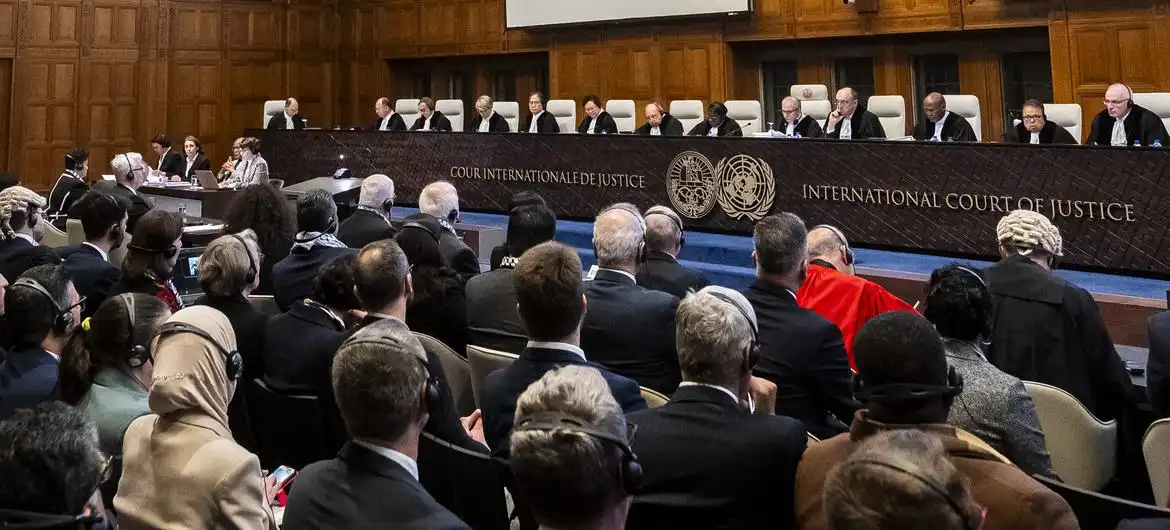
Occupied Palestinian Territories: 1st days of hearings at the International Court of Justice

This is a first in the history of the International Court of Justice (ICJ): 52 States and three international organizations, the Organization of Islamic Cooperation (OIC), the African Union (AU) and the League of Arab States , submitted their written comments as well as the oral presentations of their representatives in a case.


The proceedings concern an advisory opinion requested from the ICJ in December 2022, before the current conflict in Gaza, by the United Nations General Assembly on "the legal consequences of Israel's policies and practices in the Occupied Territories, including Jerusalem- East ".


Questions asked by the UN General Assembly

The two specific questions posed by the UN General Assembly to the ICJ are as follows:


“What are the legal consequences of Israel's continued violation of the Palestinian people's right to self-determination, its occupation, colonization and prolonged annexation of the Palestinian territory occupied since 1967, including measures aimed at changing the demographic composition , the character and status of the holy city of Jerusalem, and Israel's adoption of related discriminatory laws and measures? »


“How do Israel's policies and practices impact the legal status of the occupation and what are the legal consequences for all States and the United Nations? »


This report provides a non-exhaustive overview of the points of view of the different speakers during the first three days of hearings (February 19-21). The rest will be presented after the hearings close on February 26.


Palestine's plea

Palestine presented its arguments for three hours on February 19. Riyad al-Maliki, foreign minister of the Palestinian National Authority, began with these words: “I stand before you as 2.3 million Palestinians in Gaza, half of them children, are besieged and bombed, killed and massacred, starved and displaced; while more than 3.5 million Palestinians in the West Bank and East Jerusalem are subjected to the colonization of their territory and the racist violence that enables it, while 1.7 million Palestinians in Israel are treated as second-class citizens area and foreigners unwelcome in their ancestral land, and that 7 million Palestinian refugees continue to be denied the right to return home.


Riyad al-Maliki called for “an end to Israel’s impunity, a moral, political and legal imperative.” Successive governments in Israel have left Palestinians with only three choices: displacement, subjugation or death. These are the choices: ethnic cleansing, apartheid or genocide. But our people are here to stay, and are not going to give up their rights.”


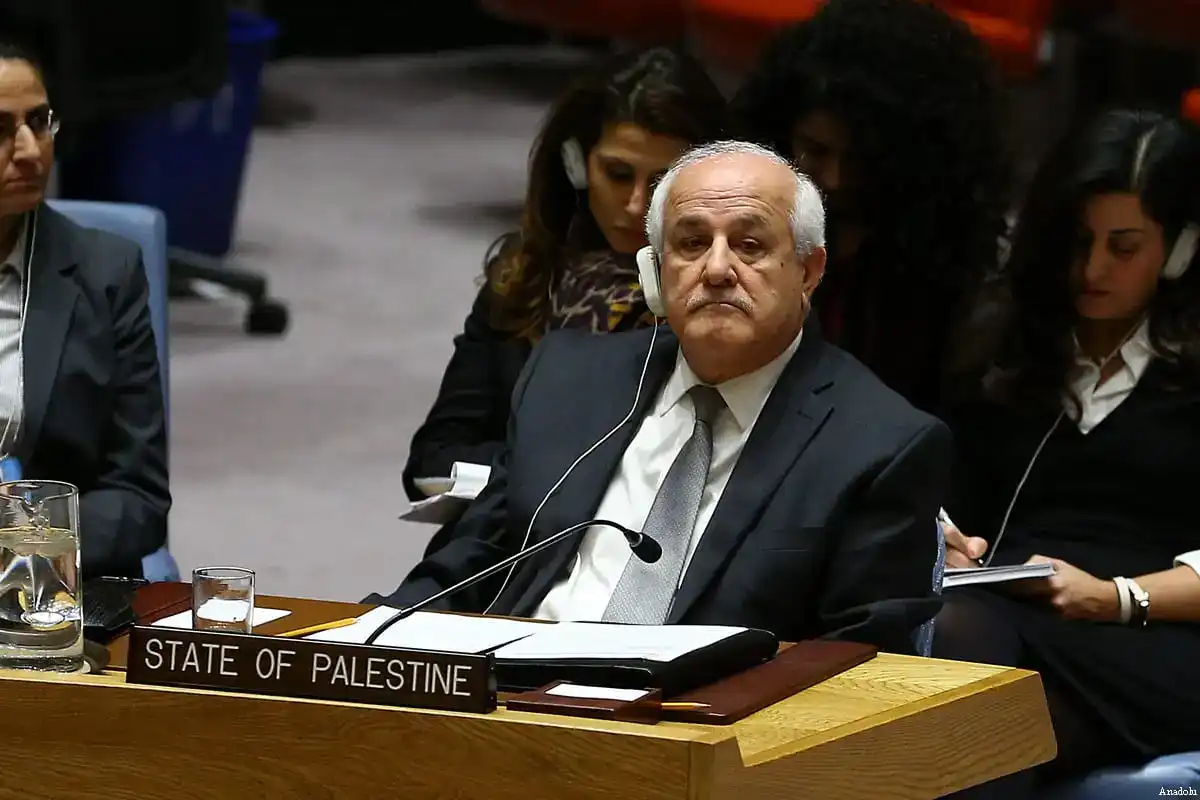
The jurists and diplomats who defended Palestine formed an international team of renowned experts, with law professor Andreas Zimmermann (Germany), Paul S. Reichler (United States), diplomat Namira Negm (Egypt), lawyer Philippe Sands (France, United Kingdom), jurist Alain Pellet (France) and Riyad Mansour, Permanent Representative of Palestine to the United Nations.


Practices described as “apartheid” by South Africa

South Africa, which filed a complaint with the ICJ in December against Israel for "genocide in Gaza", a separate case on which the ICJ indicated provisional measures on January 26, was the first to speak out after Palestine.


After “decades of apartheid colonialism and settler settlement,” Vusimuzi Madonsela, South Africa's ambassador to the Netherlands, declared on February 19, “a fair solution for all those who legally qualify for living in historic Palestine should be negotiated with the assistance of the international community.”


The diplomat drew a parallel between the situation in Palestine and the struggle of South Africans against apartheid, an “institutionalized regime of discriminatory laws” which today ensures “Israeli and Jewish domination”. He called for the “immediate, unconditional and total withdrawal of Israeli troops” from the Occupied Territories.

Many criticisms of Israel

Chile recalled being home to the largest Palestinian community outside the Middle East, and a large Jewish community, the third largest in Latin America. Israel “does not consider itself nor act as a temporary occupier,” its practices amounting to “annexation,” according to Santiago.


Algeria estimated that Israel “aims a point of no return” in the Occupied Territories, to “rule out any possibility of creating a Palestinian state”. Through the voice of law professor Ahmed Laraba, Algiers asked the ICJ to put an end to Israel's "impunity" as an "oppressor", by reminding it of "a law which is not that of revenge, but justice.”


Saudi Arabia, for its part, criticized Israel for “the dehumanization” of Palestinians, treated as “disposable objects” in Gaza. A situation which shows “how the illegality of the Israeli occupation for more than 50 years can degenerate into the ugliest consequences”. In addition, Saudi Arabia accuses Israel of “continuing to ignore the provisional measures ordered by the Court” on January 26 as part of the South African complaint for “genocide”.


“International law cannot be an a la carte menu, but must apply equally to all,” said Lana Nusseibeh, Assistant Minister for Political Affairs and Permanent Representative of the United Arab Emirates (UAE) to the United Nations.


Cuba extended its criticism to the United States, and asked the ICJ to take into account American “complicity” in the policies carried out by Israel, including in the supply of weapons to Israel.


The right to self-defense addressed by the Netherlands…

The Netherlands recalled the foundations of the right to self-determination of peoples, as well as the legal framework for the use of force and the right to self-defense in the event of attack.


René J. M. Lefeber, legal advisor to the Dutch Ministry of Foreign Affairs, recalled that "the occupation of a territory can be legitimate within the framework of the right to self-defense, in response to an armed attack", even if that -this does not come from a State but from an armed group.


He also recalled the obligation to respect international humanitarian law and to put an end to its violations, hoping that the ICJ could contribute to bringing peace to the Middle East.


…and contested by Egypt

Egypt highlighted the seriousness of the current situation, including in Rafah where “Israel continues its policy of mass expulsion of Palestinian civilians, while the Security Council repeatedly fails to call for a ceasefire, in callous disregard for Palestinian life.”


Aligned with the Palestinian plea, Egyptian representative Jasmine Moussa, Legal Advisor to the Egyptian Foreign Minister's Office, said: “The Middle East region yearns for peace, stability and a just resolution, comprehensive and lasting solution to the Israeli-Palestinian conflict, based on the principles of international law and the establishment of a viable Palestinian state, along pre-1967 lines, with East Jerusalem as its capital.”


Egypt has challenged Israel's use of the right to self-defense, accusing it of having committed a "war of aggression" in 1967 and then continued "decades of occupation" contrary to international law. “The argument that a state can resort to self-defense against territory under its own military occupation and effective control is counterintuitive,” continued Jasmine Moussa. (…) Israel cannot invoke self-defense to maintain a situation created by its own illegal conduct.”


France recalls Israel’s “right to defend itself” in accordance with international law

Returning first to “the very heavy context in which these hearings take place”, since the attack carried out by Hamas in Israel on October 7, Diégo Colas, Director of Legal Affairs at the French Ministry of Europe and Affairs foreign countries, recalled on February 21 in the name of France “the right of Israel to defend itself and its population with the aim of preventing such attacks from happening again. This right must be exercised in strict compliance with international law, and in particular international humanitarian law.


While Israeli operations and bombings are causing thousands of civilian victims in Gaza, France has clearly, consistently and repeatedly affirmed this demand.”


He added that “respect for international law, in particular international humanitarian law, by all stakeholders, is the only possible horizon of peace. »

“The colonization policy must stop”, according to France

France reiterated its condemnation of the colonization policy accelerated since 2004 by Israel, “which must stop”. On measures aimed at changing the demographic composition of the occupied territories, France "reiterates its condemnation of comments promoting the installation of colonies in Gaza and the transfer of the Palestinian population of Gaza out of this territory", which would constitute "a very serious violation of international law.


On the Statute of Jerusalem, proclaimed one and indivisible as the capital of the State of Israel by the fundamental law of Israel of July 30, 1980, France mentioned “Security Council resolution 478 of 1980, which recalls that The adoption of this fundamental law does not call into question the application of the 4th Geneva Convention (on the protection of civilians). There is therefore no doubt that the unilateral status imposed by Israel on Jerusalem is null and void under international law. »


In addition, “France considers that it is appropriate to maintain unchanged the historical status quo on the holy places in Jerusalem”. On the question of reparations, “France considers that this obligation extends to all damage done to the Palestinian population”, by proceeding with “restitutions and failing that, compensation”.


Egypt, Bolivia, Colombia, Cuba and Brazil also mention reparations

Bolivia, which broke off its relations with Israel on November 1, 2023, denounced a situation of “apartheid” and “atrocities amounting to the crime of genocide” in Gaza. She pleaded for “Israel’s reversal of its illegal settlement policy” in the Occupied Territories, with reparations and compensation as a result.


According to Colombia, Israel must cease all occupation and colonization, but also carry out reparations. “Israel has an obligation to compensate, in accordance with applicable rules of international law, any legal person who has suffered any form of material or immaterial damage resulting from its occupation of the Palestinian territories.”


Like Egypt, Cuba mentioned the principle of reparations for damage caused to the Palestinians. Brazil, which along with Bolivia and Colombia supported South Africa's complaint against Israel for "genocide", also stated the principle of reparations, without going into details.


A negotiated two-state solution

Brazil especially insisted on February 20 on the need to move towards a negotiated two-state solution in “one of the most pressing unresolved conflicts on the international agenda for decades”.


From Brazil's point of view, "the importance of the issue and the seriousness of the situation were indisputable, even before October 7, 2023. The tragic events of that date and the disproportionate and indiscriminate military operations that followed, however, show clearly that conflict management alone cannot be considered an option. The two-state solution with an economically viable Palestinian state living alongside Israel is the only way to bring peace and security to Israelis and Palestinians.”


The United States in favor of a political settlement within the framework established by the UN

Richard C. Visek, Legal Advisor at the American Department of State, began by recalling “the horror of the terrorist attacks of October 7, 2023” and a context marked by “the ongoing conflict between Israel and Hamas, which has consequences severe, widespread and tragic for Palestinian civilians in Gaza.


He recalled the efforts of the United States to “not only resolve the current crisis but also move beyond it, by advancing a political settlement that will lead to lasting peace in the region, including lasting security for Israelis and Palestinians, and a path to a Palestinian state.”


The American expert focused his presentation on the fact that stakeholders must return to the framework set by the Security Council and the United Nations General Assembly to resolve the conflict – a two-state solution. He then discussed the role of the ICJ in preserving this framework, so as to make a negotiated solution always possible.


“The occupation must end,” says Russia

“The occupation must end,” said Vladimir Tarabrin, ambassador of the Russian Federation to the Netherlands, following many countries. Russia also advocates the negotiated two-state solution. On February 21, she highlighted two important points in her eyes: “Israel’s persistent denial of the Palestinians’ right to self-determination” and “the colonization policy pursued by Israel since 1967.”

“This has effectively undermined the prospects of a negotiated solution. (…) The number of Israeli settlers in the West Bank, including Jerusalem, is more than 700,000. (…) In 2023, Israel's settlement activities have broken speed records: according to the latest report from the Secretary General of the "At the UN, plans for more than 24,700 housing units have been advanced, approved or contracted, more than double the 11,700 in 2022, which was already a remarkable figure in itself."


Russia also hopes that the ICJ can contribute to the solution of the conflict by stipulating that both parties “are subject to the obligation” to resume peace negotiations.


This article was produced by the United Nations Information Center for Western Europe based in Brussels.


PALESTINE

Sat 24 Feb 2024 2:24 pm - Jerusalem Time

Palestine to seek full UN membership, envoy says

Palestine will seek full UN membership and may ask member states to sign a statement welcoming its admission, the Palestinian ambassador to the United Nations said yesterday.

“We will intensify these discussions and we will use a variety of things, including we might have a statement and solicit signatures from member states welcoming and supporting the admission of the State of Palestine to membership before in fact going to the (UN) Security Council and to submit a resolution calling for recommendation to admit the state of Palestine as a member of the UN,” Riyad Mansour told reporters in New York.

His remarks came a day after Israel’s parliament, the Knesset, voted 99-11 to back a decision by Prime Minister Benjamin Netanyahu’s government to reject any unilateral recognition of Palestinian statehood.

“It’s only us, the Palestinian people, who will determine our right to self-determination, including the independence of our state. We will not negotiate that principle with anyone and we will not ask for permission from anyone to do so,” Mansour said.

Palestine will expedite the process in the UN General Assembly of asking the international community to take practical measures to force Israel to lift its siege on Gaza, such as asking countries not to send or sell weapons and ammunition to Israel, or asking them not to give visas to settlers, he added.


The State of Palestine was accepted as an observer state of the UN General Assembly in 2012, allowing its envoy to participate in debates and UN organisations but without a vote.

According to the UN Charter, states are admitted to membership in the UN by a decision of the General Assembly upon the recommendation of the Security Council.

“It was the international community that decided to create two states in Palestine since 1947. It is the duty of the international community along with the Palestinian people to complete that exercise by admitting the state of Palestine to membership,” Mansour said.

Instead of obeying the provisional orders from the International Court of Justice (ICJ), Mansour said Israel is going further in denying Palestine, including its right to exercise self-determination.

OPINIONS

Sat 24 Feb 2024 2:17 pm - Jerusalem Time

Hebrew Media: Netanyahu's paper was prepared to calm the Americans, Ben Gvir and Smotrich

N12 Channel

N12 Channel

Opinion Writer

By Yaron Avraham and Nir Dvori

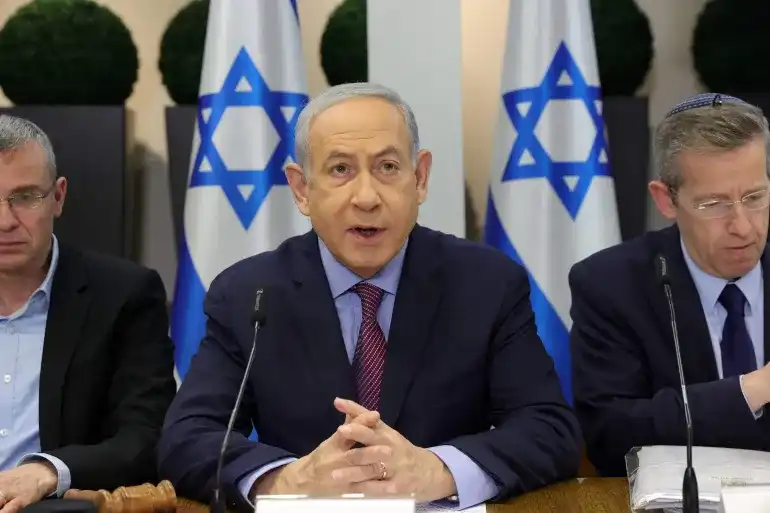
Before the end of the Cabinet meeting, the Prime Minister distributed to his ministers the “The Day After the War” document, which explains what the Gaza Strip will look like after the war. This document contains nothing new, according to the comments of the majority of Cabinet members, and the question that arises now is: Why did it take so long to prepare such a document? Yesterday, an official source in the cabinet told Channel 12 that “Netanyahu wrote the document only to calm the Americans, but its content is intended not to anger Smotrich and Ben Gvir.” The source also claimed that Netanyahu knows that no one can rule the Strip except Hamas or Fatah.

What remains now is to know how the United States will respond to this document, and how the moderate Arab countries, which are conducting negotiations with the aim of reaching a normalization treaty with Israel, will react. What must be emphasized here is that when one reads the “The Day After the War” document drafted by Netanyahu, one feels that it is only a summary of his numerous press conferences, and is not considered a political plan.

In his document, Netanyahu spoke about the issue of security control over the Gaza Strip, which, of course, represents an Israeli consensus. He stressed that the control will be carried out by “local parties with administrative experience,” not identified with “terrorist” countries, or parties supporting “terrorism.” This trend did not surprise the members of the cabinet, as Defense Minister Yoav Galant used the term “local parties,” and so did Minister Gantz, who formulated a similar plan. In fact, Netanyahu himself issued closed-door instructions to the army to assign these agencies to organize humanitarian aid.

Shortcomings of the “Day After the War” plan

One of the major problems with this paper is that it is called "The Day After the War", although it does not look at the long term, but rather focuses on the short term. In order to determine what will actually happen the next day, a series of difficult decisions must be made, the most important of which is: Who will seize power in the Gaza Strip in the end? Meanwhile, we only know who is prohibited from receiving judgment, without any idea who deserves to receive it.

Soon, a pilot project will begin in the Zaytoun neighborhood, a neighborhood dominated by two clans identified with the Fatah movement. These two clans are known to be scary, and Hamas itself fears them. There is a possibility that these two clans will lead the distribution of humanitarian aid in Gaza, and thus Israel will be able to consider whether the model of governing the Strip by local elements will actually work. However, this is still not enough, as every rational person realizes that people like this are not capable of managing the sector, but rather their ability to help lies in helping to solve time-bound problems. This issue is very complex, and requires in-depth thinking.

It is important here to add that the “day after the war” is not as close as some people think. In practice, it seems that the military campaign against Rafah will not begin before the end of March, despite Netanyahu's attempts to accelerate the military plan. The reason for the postponement is that a campaign of this size requires coordination with the Americans and reaching understandings, in addition to coordination with the Egyptians, and a series of activities within the sector itself, in addition to the issue of refugees and the required evacuation of civilians from the region. This step cannot be done without adequate planning, and must be organized and carefully managed.

ARAB AND WORLD

Sat 24 Feb 2024 2:13 pm - Jerusalem Time

Israeli media: We are in days where everything is capable of exploding

A number of analysts and experts in security affairs in Israel warned - during their discussions and analyzes on Israeli channels - of the repercussions of the expected measures by the Israeli government against those praying in Al-Aqsa Mosque during the month of Ramadan.

Channel 12 military affairs correspondent Nir Devori said, “There is a fear that the front that everyone fears will break out, especially before Ramadan, will open, and which has become more likely to explode,” warning of an attack that Palestinians might carry out in retaliation for what is happening in the Gaza Strip or because of the debate over Al-Aqsa Mosque. Who said that it unites all Palestinian arenas.

Devori added, "There are a large number of alerts and warnings about operations these days, and this forces Israel to increase military barriers and strengthen the prevention of operations."


He believed that everything was very likely to explode because of Al-Aqsa Mosque, and "this is what requires the Israeli side to have a sound mind and cool nerves in management and decision-making."


An Israeli soldier was killed and 8 others were injured of varying severity - last Thursday - in an operation carried out by Palestinians at a military checkpoint near the Maale Adumim settlement, east of occupied Jerusalem.


The Israeli channel "Kan 11" highlighted Jordan's position, and said that they in Jordan are very concerned about the restrictions that Israel plans to impose on Muslim worshipers in Al-Aqsa Mosque during the month of Ramadan.


The same channel reported, "The Jordanian warning to Israel was presented to a large number of international bodies, given that it is the custodian of the holy places in Jerusalem, and also in accordance with the peace agreement between Jordan and Israel."


For his part, the head of the National Security Research Institute, Major General Tamir Hayman, warned that the situation was heading towards heating up, and he spoke on Channel 12 about the accumulated pressure in the West Bank, attributing this to a difficult economic crisis in light of the Palestinian workers stopping work, in addition to the Palestinian Authority. It does not receive Palestinian tax revenues withheld by Israel.


Hayman said, "We are on the verge of explosive days, and we need a lot of caution," stressing that Al-Aqsa Mosque is a "known detonator."


Israeli Channel 12 - through its affairs correspondent, Gal Khin - provided what it said was data on the number of operations carried out by Palestinians against Israelis.


It revealed that since the beginning of the war on Gaza until today, 199 serious operations have occurred, that is, stabbings, ramming, shootings, and explosive devices, most of which occurred last October. The correspondent said that the Israeli Internal Security Service (Shin Bet) thwarted 626 similar operations before they were carried out.


Source: Al Jazeera

OPINIONS

Sat 24 Feb 2024 2:08 pm - Jerusalem Time

Silence of the damned

CHRIS HEDGES

CHRIS HEDGES

Opinion Writer

Our leading humanitarian and civil institutions, including major medical institutions, refuse to condemn the genocide committed by Israel in Gaza. This exposes their hypocrisy and complicity.


There is no functioning health care system left in Gaza. Babies are dying. Children's limbs are amputated without anesthesia. Thousands of cancer patients and those who need dialysis lack treatment. The last cancer hospital in Gaza has stopped operating.


An estimated 50,000 pregnant women do not have a safe place to give birth. They undergo caesarean sections without anesthesia. Abortion rates have risen by 300 percent since the start of the Israeli attack. The wounded are bleeding to death. There is no sanitation or clean water.


Death industry

Hospitals were bombed and destroyed. Nasser Hospital, one of the last functioning hospitals in Gaza, is “on the verge of collapse.” Clinics were destroyed, along with ambulances, about 79 in Gaza and more than 212 in the West Bank. About 400 doctors, nurses, medics and healthcare workers have been killed, more than the total of all healthcare workers killed in conflicts around the world combined since 2016. More than 100 others have been detained, interrogated, beaten, tortured or have disappeared. Israeli soldiers.


Israeli soldiers routinely enter hospitals to carry out forced evacuations – forces entered Al Amal Hospital in Khan Yunis and demanded that doctors and displaced Palestinians leave – in addition to arresting detainees, including the wounded, patients and staff. Israeli soldiers - disguised as hospital workers and civilians - entered Ibn Sina Hospital in Jenin in the West Bank and assassinated three Palestinians as they slept.


Cuts in funding for the United Nations Relief and Works Agency for Palestine Refugees in the Near East (UNRWA) – collective punishment for alleged involvement in the October 7 attack on 12 of UNRWA’s 13,000 workers – will accelerate the disaster, shifting attacks and starvation The lack of health care and the spread of infectious diseases in Gaza led to an unprecedented wave of intentional death industry.


The false accusations - which include the accusation that 10 percent of all UNRWA employees in Gaza have ties to militant Islamist groups - appeared in the Wall Street Journal. Reporter Carrie Keller Lane served in the Israel Defense Forces. Given the numerous lies Israel has used to justify the genocide, including “beheaded children” and “mass rape,” it is reasonable to assume that this may be another fabrication.


The vital United Nations agency, UNRWA, is all that stands between Palestinians in Gaza and starvation. A handful of countries, including Ireland, Norway and Turkey, maintain their funding.


Eight UNRWA employees accused of participating in the October 7 attack in southern Israel, in which 1,139 people were killed and 240 were kidnapped, were shot. Two were suspended. UNRWA promised to conduct an investigation. These represent 0.04 percent of UNRWA employees.


Israel seeks to destroy not only Gaza's healthcare system and infrastructure, but also UNRWA, which provides food and aid to two million Palestinians. The goal is to make Gaza uninhabitable and ethnically cleanse the 2.3 million Palestinians in Gaza. Hundreds of thousands are already starving. More than 70 percent of housing was destroyed. More than 26,700 people were killed, and more than 65,600 people were injured. Thousands are missing. About 90 percent of Gaza's population was displaced before the war, with many living in the open. Palestinians are forced to eat grass and drink polluted water.


A destructive plan

“It will be impossible to win the war if we do not destroy UNRWA, and this destruction must begin immediately,” Noga Arbel, a former Israeli Foreign Ministry official, said during a debate in the Israeli parliament on January 4.


“UNRWA is an organization that perpetuates the Palestinian refugee problem,” Prime Minister Benjamin Netanyahu said in 2018. It also reinforces the narrative of the so-called “right of return” with the aim of eliminating the State of Israel, and thus UNRWA must disappear.


An unnamed senior Israeli official praised the suspension of funding for UNRWA, but insisted on Wednesday that the government was not calling for its closure.


More than 152 UNRWA staff in Gaza – including school principals, teachers, health workers, a gynecologist, engineers, support staff and a psychologist – have been killed since the start of the Israeli attacks. More than 141 UNRWA facilities were bombed. The death toll is the largest loss of personnel during any conflict in the history of the United Nations.


The destruction of healthcare facilities and the targeting of doctors, nurses, paramedics and staff is shameful. It means that the most vulnerable, the sick, infants, injured and elderly, and those who care for them, are often sentenced to death.


Palestinian doctors are calling on doctors and medical organizations from around the world to denounce the attack on the healthcare system and mobilize their institutions in protest.


“The world must condemn the actions against medical professionals that are taking place in Gaza,” writes Al-Shifa Hospital director Mohammed Abu Salamiya, who was arrested by the Israelis along with other health staff in November 2023 while being evacuated with a WHO convoy, and who remains detained. “This correspondence is a call to every human being, all medical communities and all healthcare professionals around the world to support the cessation of these destructive activities in and around hospitals, which is a civil obligation in accordance with international law, the United Nations and the World Health Organization.”

But these institutions—with some notable exceptions, such as the American Public Health Association, which has called for a ceasefire—have either remained silent or—as in the case of Dr. Matthew Wynia, director of the Center for Bioethics and Humanities at the University of Colorado—excuse Israeli war crimes. These doctors – who somehow find it acceptable that a child is killed in Gaza every 10 minutes on average – are complicit in genocide and contributing to the violation of the Geneva Convention. They support death and are not messengers of life.


Moral bankruptcy

Robert Jay Lifton wrote in his book The Nazi Doctors: Medical Murder and the Psychology of Genocide that “genocidal projects require the active participation of educated professionals—doctors, scientists, engineers, military commanders, lawyers, clergy, university professors, and other educators—who unite not only to create the grounds for extermination collectivism, but much of the ideological rationale, moral climate and organizational process.”


A group of 100 Israeli doctors in November 2023 defended the bombing of hospitals in Gaza, claiming they were used as command centers for Hamas, a charge that Israel has been unable to verify.


Deans of American medical schools and leading medical organizations, especially the American Medical Association, have joined the ranks of universities, law schools, churches, and the media to turn their backs on the Palestinians. It closed a discussion on the ceasefire resolution among its members and called for “medical neutrality,” although it abandoned “medical neutrality to denounce Russia’s invasion of Ukraine.”


There is a cost to condemning this genocide, a cost they are not willing to pay. They are afraid of being attacked. They fear ruining their careers. They fear losing funding. They fear losing status. They fear persecution. They fear social isolation. This fear makes them complicit.


What about those who speak? They are described as anti-Semitic and supporters of terrorism. George Washington University clinical psychology professor Lara Sheehy has been fired from her job. Former head of Human Rights Watch, Kenneth Roth, was denied a fellowship at the Carr Center for Human Rights Policy at Harvard University; Because of his "alleged bias against Israel."


San Francisco professor Rabab Abdel Hadi has been sued for supporting Palestinian rights. Shahad Abu Salama was suspended from Sheffield Hallam University in the UK after a vicious smear campaign, although the institution later settled her claim that she was discriminated against. Professor Jasbir Puar at Rutgers University is a constant target of the Israel lobby and endures constant harassment. Medical students and faculty in Canada face suspension or expulsion if they publicly criticize Israel.


The danger is not only condemning Israeli crimes. More importantly, the danger is the moral bankruptcy and cowardice of institutions and their leaders.


Racist ideology

This brings me to Dr. Rupa Maria, a professor of medicine at the University of California, San Francisco, whose calls to stop bombing hospitals and study the impact of Zionism as a racist ideology unleashed a torrent of vitriolic attacks against her, attacks that were implicitly endorsed by her medical school.


She has been slandered as an anti-Semite and targeted by Mission Canary, a Zionist organization that seeks to distort and destroy the careers of students and faculty who criticize Israel and advocate for Palestinian rights. She canceled speaking engagements and received death threats and messages such as: "Kill yourself, you whining redneck," and "White people are the greatest people on earth. You know it."


History will not forgive us and will not judge us kindly. But he will honor those who, despite the threats and siege, found the courage to say no.

Source: Aljazeera

PALESTINE

Sat 24 Feb 2024 12:55 pm - Jerusalem Time

West Bank: The number of Palestinians arrested by Israeli has risen to more than 7,210 since October 7

The Palestinian Prisoners' Affairs Authority and the Prisoners' Club said that the total number of arrests since October 7 has risen to more than 7,210 detainees.


They explained in a press statement today, Saturday, that this number of arrests includes those who were arrested from homes, through military checkpoints, those who were forced to surrender themselves under pressure, and those who were held hostage.


They pointed out that the Israeli forces arrested at least 22 citizens from the West Bank, including journalist Sami Al-Saei, two children, and former prisoners, from yesterday evening until this morning.


The arrests were concentrated in the Bethlehem governorate, while the rest of the arrests were distributed in the governorates of Hebron, Ramallah, Tulkarm, Nablus, and Jerusalem, and were accompanied by widespread acts of abuse, severe beatings, and threats against detainees and their families, in addition to widespread acts of sabotage and destruction of citizens’ homes.


It is noteworthy that Israel continues to carry out the crime of enforced disappearance against Gaza detainees 141 days after the aggression and genocide, as the occupation refuses to provide human rights institutions, including the competent international and Palestinian ones, with any information regarding their fate and places of detention to this day, including the martyrs among the Gaza detainees.


It is noteworthy that the data related to arrest cases includes those who were kept in detention by Israel and those who were later released.


PALESTINE

Sat 24 Feb 2024 9:26 am - Jerusalem Time

Liberated female prisoners from Gaza: They forced us to take off our clothes constantly

Freed prisoner Hanan Faisal Musa, who was recently released by the Israeli authorities after 51 days of detention, said that she was subjected to physical and verbal harassment during her detention in the Israeli prisons, explaining that the most prominent of these violations were the continuous naked searches of female prisoners throughout the day and forcing the female prisoners to remove their clothes in a humiliated manner during inspection.

She added in an interview with Al Jazeera Mubasher that she and the rest of the female prisoners were subjected to continuous interrogation that sometimes reached 12 hours a day, and that the interrogation was conducted with them while they were blindfolded and handcuffed.

She confirmed that she was subjected to a torrent of insults and insults in the ugliest terms by the occupation soldiers, to the point that made her ashamed of herself because of this constant amount of insults, in addition to being forced to take off her clothes and strip naked continuously every time she was searched.

Prisoner Nabila Miqdad agreed with her colleague Hanan Faisal, as she confirmed that the first eight days of detention were very difficult due to the constant shackle of their hands and feet, and leaving them in the cold with no adequate cover.

When asked about the harshest periods of detention, she replied that the most difficult were the times of strip searches, where they were forced to completely remove their clothes, in addition to insults and obscene words, especially when they were performing prayer, which caused her shortness of breath many times in prison, in addition to the bad psychological state. Which forced her to take tranquilizer pills inside prison until now.

As for the prisoner Nadia Al-Helou, who spent 43 days in the Israeli prisons, she stated that the Israeli forces arrested her from the Bureij camp during her displacement, where they told her that they would transfer her to the south, only to discover several hours later that she was detained inside Israel.

Regarding the violations she was subjected to in prison, she says that she suffered constant insults, insults, and beatings, especially when she answered during the investigation in a way that the investigator did not like.

Another prisoner spoke to Al Jazeera Mubasher, but she refused to mention her name, as she said that she was detained for 47 days, and was arrested from a school for displaced people from the Sheikh Radwan neighborhood in front of all her family members in a scene she described as “terrible.”

As for the violations that she was subjected to, they did not differ from those of her colleagues. She confirmed that she suffered beatings, insults, and curses, in addition to the prison guards’ practice of psychological warfare against her, as they told her that she would never see her family again, and would never return to Gaza.

The United Nations Population Fund expressed its horror at reports of Israeli officers stripping Palestinian women and girls in Gaza of their clothes and subjecting them to rape or execution.

He added, "Reports indicate that Palestinian women and girls in Gaza have been beaten, arrested, humiliated, raped, or executed at the hands of Israeli officers."

ARAB AND WORLD

Sat 24 Feb 2024 9:24 am - Jerusalem Time

Netanyahu's plan after the war: managing Gaza without Hamas or the Authority

The Israeli Broadcasting Authority reported that Prime Minister Benjamin Netanyahu presented to the security cabinet a document of principles regarding policy for the day after the Gaza war.

The commission said that Netanyahu's document includes Israel's preservation of freedom to operate in the entire Gaza Strip without a time limit, and also includes the establishment of a security zone in the Strip adjacent to Israeli towns.

The Commission noted that Netanyahu's document also stipulates that Israel will maintain the southern closure on the border between Gaza and Egypt, and also includes a clause that UNRWA will be closed and that it be replaced by other international relief agencies.

The Israeli Broadcasting Corporation confirmed that the ministers of the small security ministerial council did not vote to approve Netanyahu’s document.

For his part, the Axios news website reported that Netanyahu also wants to implement a plan for what he calls “rooting out extremism” in all religious, educational, and social care institutions in the Gaza Strip.

The document also stipulates, according to Axios, that this plan will be implemented “as much as possible with the participation and assistance of Arab countries that have experience in strengthening the fight against extremism on their territories,” as he put it.

The document stresses that the reconstruction of the Gaza Strip will not be possible until the disarmament process is completed and the process of “de-extremism” begins, a position that Netanyahu has not expressed publicly before. It also states that “reconstruction plans will be implemented with funding and leadership from countries acceptable to Israel,” according to Axios.

The document does not clearly specify who Netanyahu envisions ruling Gaza after the war, but it says that “local elements with administrative experience” will be responsible for civil administration and public order in Gaza.

Mobilizing consensus...

Axios also quoted an aide to Netanyahu as saying that the goal of the proposed document is to present principles that would gain the greatest possible consensus.

He added that consultations in the Israeli Cabinet would likely lead to changes before approving the document, he said.

More than once, Netanyahu stressed that he wants “Israeli security control” over Gaza after the war. In his previous statements, he also said, "The day after the war, Gaza must be demilitarized, and there is only one force that can be responsible for that, and that is the Israeli army."

He also affirmed on more than one occasion his categorical rejection of the Palestinian Authority taking over the duties of government in the Gaza Strip after the war.

Netanyahu's statements in this regard contradict the American position, and the drawn scenarios sparked a dispute between him and US President Joe Biden.

Since the seventh of last October, Israel has been waging a devastating war on Gaza, which led to the death of more than 29,000 people and the injury of more than 68,000, in addition to the destruction of various cities and the displacement and starvation of the Strip’s population of about 2.2 million.