PALESTINE

Sun 26 Jan 2025 1:14 pm - Jerusalem Time

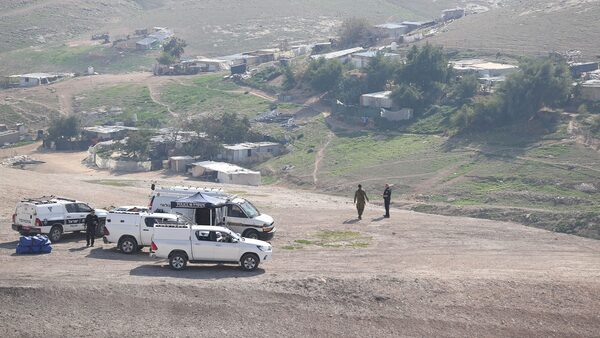
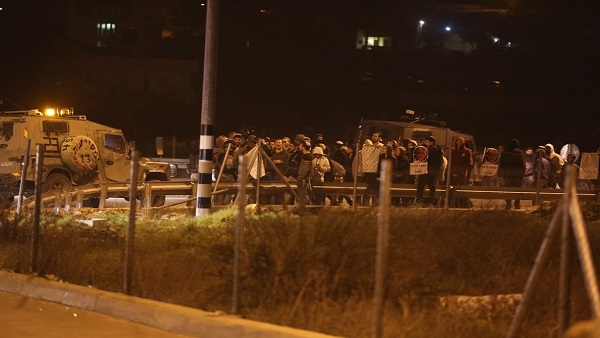
Israeli occupation threatens to demolish 45 inhabited homes in the village of Al-Nu'man, east of Bethlehem

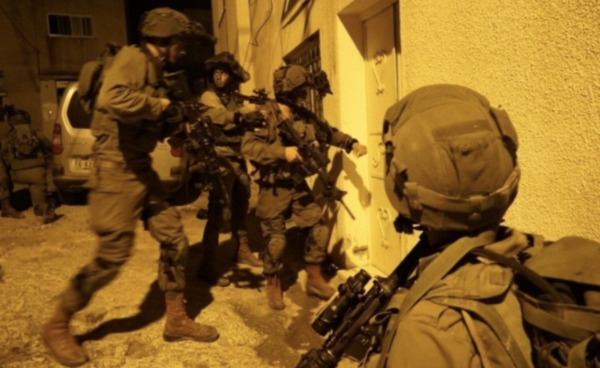
Today, Sunday, the Israeli occupation authorities notified the demolition of 45 homes in the village of Al-Nu'man, east of Bethlehem.


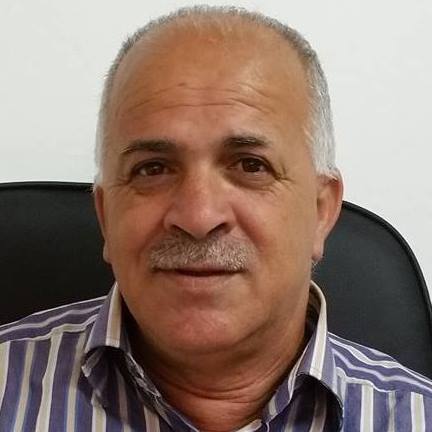
The head of the Al-Nu'man village council, Jamal Al-Dar'awi, told the "Wafa" agency that the occupation forces, accompanied by employees from the occupation municipality in Jerusalem, stormed the village and posted notices on the facades of 45 inhabited houses, including their demolition under the pretext of lacking a license, noting that they were built before 1948, and the last house was built in 1993.


Al-Darawi added that the occupation policy aims to displace the village’s residents and annex it to the borders of the occupation municipality in Jerusalem, pointing out that a year and a half ago, the occupation military court decided to impose the “Arnona” property tax on all the houses in the village, which had been notified of demolition 6 times previously, while between 30-60 thousand shekels were paid for each house.

According to the Wall and Settlement Resistance Commission, the occupation authorities issued 903 demolition notices against Palestinian facilities last year under the pretext of lack of permits, distributed in the Hebron governorate with 180 notices, the Jericho and Jordan Valley governorate with 140 notices, and then the Bethlehem governorate with 126 notices, during which 20 notices were issued targeting the eastern Bethlehem wilderness.

She noted that the occupation authorities carried out a total of 684 demolition operations during the year 2024, during which 903 facilities were demolished in the West Bank, including the city of Jerusalem, and 4,332 people were affected as a result, including 2,320 children.

The demolitions were concentrated in the Jerusalem governorates with 190 demolitions, then the Hebron governorate with 172 demolitions, and the Bethlehem governorate with 68 demolitions.

OPINIONS

Sun 26 Jan 2025 1:12 pm - Jerusalem Time

Between two agreements... the temptation and seduction of comparison

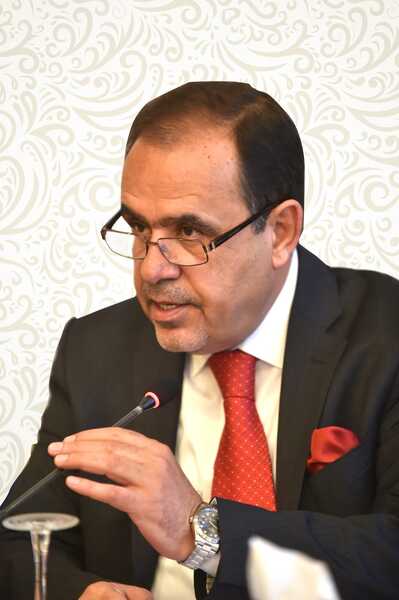
Written by: Oraib Al-Rantawi, Director General of the Jerusalem Center for Political Studies

Written by: Oraib Al-Rantawi, Director General of the Jerusalem Center for Political Studies

Opinion Writer


Fifty days separated the conclusion of the ceasefire agreement in Lebanon (November 27, 2024) and the signing of a similar agreement on the Gaza front (January 17, 2025), which were enough to fall into the temptation of comparing and enticing the two agreements, and to pass judgments, and sometimes, to shoot down the first agreement, based on the merits of the second.

Some of what was said and written was objective and serious, and brought to mind the diversity and similarity of contexts, but some of it went in the direction of settling scores, and plotting against opponents and competitors, and in a few cases, it revealed an effort to “present credentials” for the next stage, and fill “leadership vacancies,” existing and potential.

The temptation to compare is completely legitimate, and even falls within the context of “human nature” and cognitive curiosity driven by a sustained instinctive tendency to make comparisons, projections, and analogies. However, if comparisons go beyond their contexts and cognitive aims, they fall into the forbidden and into the trap of “temptation”: “Your companion has neither strayed nor has he gone astray.” I think that the silence of the cannons, even though the possibility of them breaking the walls of sound and silence is still present, tempts us to open some pages of review and re-evaluate the position and assessment.

I begin by acknowledging, with the “reviewers,” that the Gaza agreement came with the scent of victory, more than the Lebanon agreement did. I do not want to reach what others have gone to, such as saying, for example, that the Lebanon agreement came with the taste of defeat. I will suffice here by repeating what the godfather of the agreement, who no one can accuse of sympathizing with Hezbollah and the Lebanese resistance, Amos Hochstein, said in his description of the November 27 agreement: Hezbollah has not been defeated, but it no longer poses a “strategic threat” to “Israel,” nor is it capable of providing “strategic support” to the Assad regime.

This was just before the fall of the regime on December 8. This is perhaps a more accurate assessment of the outcome of the support front and the battle to defend Lebanon: Hezbollah did not win, but it was not defeated.

Comparing the two agreements requires noting a number of fundamental differences in the environments, context, and circumstances surrounding the signing of each of them. We will suffice here to talk about some of them:

First: Unlike Hezbollah, Hamas launched the flood on October 7, on its own offensive initiative, even if it described it as a defensive-preemptive battle. It was the one who decided to fire the first bullet, it was the one who chose its timing, and it was the one who benefited from the element of “strategic surprise” and employed it to the fullest extent, before things got out of hand and developments in the field and politics went beyond control and beyond the limits of expectation and imagination.

Hezbollah opened the support front willingly, not under duress, but it was not consulted about the timing, and perhaps it was not fully prepared. Before and after, it lacked the element of surprise, and it did not have the opportunity to prepare its incubators and bases for the repercussions and shocks that awaited it.

Here we open parentheses and ask, as a call for review and evaluation, whether the decision of “gradual support”, governed by previous and established rules of engagement, was a sound decision, or whether it was necessary to open the front wide open, to avoid the scenario of “the white bull that was eaten on the day the black bull was eaten”, or - and this is something that is being strongly raised these days, especially in Lebanon - to be satisfied with support, politically, morally and logistically, as much as possible, and not to go to open fire?

In the context of the review, it is necessary to take into account the consequences and repercussions of each of these three options, and how they would have been reflected on the party’s position, image and status, and its leadership role in Lebanon and the region, and what effects would have been received by its incubating environment in particular, and Lebanon and Lebanese society in general. This article is not intended to address this topic, but pointing it out seems unavoidable.

Second: Hezbollah opened the support front in an unfavorable Lebanese and regional political and social environment. The decision to open fire was not “popular,” at least among other Lebanese components, and perhaps among some popular circles of the Shiite component. What made matters worse was that prolonging the war played against the interests of the resistance, not only in Lebanon, but also in Palestine and in various support axes as well. Moreover, the Israeli barbarism, supported and covered by the United States and Europe, doubled the bills of the war and its humanitarian cost, so the party and its leadership were suffering under a torrent of pressures.

Here too, we open parentheses to point out, in the context of review and re-evaluation, the question: The impact of Hezbollah’s involvement in the Syrian crisis on the party’s status, popularity, cohesion, and the strength of its security defenses in the face of breaches and targeting, especially after all the information that was revealed following the fall of the regime in Damascus, specifically in terms of the extent of the intelligence breaches, Western, Arab, Turkish, Russian (and others), at the top of the security-military-political pyramid in Syria.

Hamas did not face such a situation. It fought among its people, with the support of its social environment, and with overwhelming support from the Palestinian people in all places where they live. Even its local opponents were swept away by the flood into the narrowest corners.

Hamas fought an unjust occupation and siege that weighed heavily on its people. As for Lebanon, the battle was a battle to support a brother, and not a war to liberate an occupied homeland or parts of it. This explains, at least in part, the party’s behavior on the ground, and its tendency to avoid escalation and adhere to the rules of engagement that “Israel” has violated time and time again.

Third: Hamas lost a group of its influential political and field leaders; it lost them over separate stages, unlike the party, which lost most of its first and second-tier leaders, both political and military, in a short period of time, which left a huge leadership vacuum.

Hamas's leadership is distributed between inside and outside, while the party's leadership is centered in Beirut and its suburbs. "Israel" has been preparing for war on the party since the end of the last round in 2006, as it is the greatest strategic threat, in contrast to a view of Hamas and Gaza that is blinded by arrogance and haughtiness, and misled by the greatest strategic deception, which Hamas managed with all efficiency and competence. The leadership gaps in Hamas were quickly bridged and filled, despite the enormity of the loss. The leadership gaps in the party still exist, and the matter has not been resolved by filling the gaps in the chain of command, control and command, as it is unlikely that anyone will fill the void left by the absence of Sayyed Hassan Nasrallah.

Fourth: Hamas had the opportunity to seize a card that would have the greatest impact in determining the course of the battles, the direction of the war, and its outcomes. It would also have a strong presence at the negotiating and mediation tables for a ceasefire, and I mean the card of prisoners and detainees, which the party did not have in this war.

Despite some attempts to downplay the importance of this paper, the Hamas leadership was the most aware of its importance. And here we see the impact of this factor, not with regard to the terms of the agreement and the details of its stages, but with regard to the structure of Israeli society and its cohesion, and the “social contract” that has regulated the relationship of the settlers with their “state” since its establishment, and even before its establishment. Comparing the two agreements, while ignoring the impact of this pressing paper, is an unfair comparison, and not objective.

Fifth: Hamas managed the negotiations on its own behalf and on behalf of all the Palestinian resistance factions. This situation was not available to the party, which negotiated on behalf of others, including its allies and rivals, as well as the official Lebanese establishment. The party’s priorities were not necessarily identical to those of the mediators and negotiators. It is true that the party accepted, under the circumstances we know, the agreement, and its ministers in the government ratified it, and it cannot evade responsibility for it. However, it is also true that the outcome will inevitably be determined if the negotiator is the resistance fighter himself, or if someone else volunteers or is asked to play the role on his behalf, even if he is one of the closest associates.

Sixth: The enormity of the humanitarian catastrophe in Gaza, the historical status of the Palestinian “injustice,” and the strength of the Palestinian “narrative” generated a regional and international momentum pushing toward an agreement.

As for the Lebanese support front, sympathy, both internationally and Arab, was directed towards Lebanon, the “victim of its resistance,” as they say, and not towards Hezbollah. It is true that part of the global solidarity movement with the Palestinians was not directed towards Hamas and Jihad, but it is also true that the chapters of heroism written by the resistance were always in its interest, as a liberation movement and fighters for freedom, at least at the level of peoples and some governments. This situation was not available for Lebanon, nor for Hezbollah, where sympathy was conditional on the party’s compliance with the requirements of the state. As for Palestine, sympathy was focused on the demand to enable the Palestinians to have their own state, and none other than “Israel” stands as a major obstacle in the way of its embodiment.

Comparing the two agreements is permissible, and even necessary, to understand the differences and similarities in the contexts. However, it becomes fishing in troubled waters, settling scores and settling disputes, if it ignores the differences in the circumstances surrounding each of them. It becomes “dipping out of the box” or a case of “necessitating what is not necessary.”

PALESTINE

Sun 26 Jan 2025 11:00 am - Jerusalem Time

A Palestinian shot dead by Israeli occupation forces in the middle of Rafah city

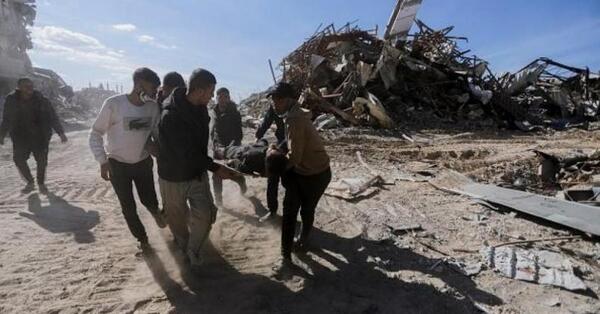
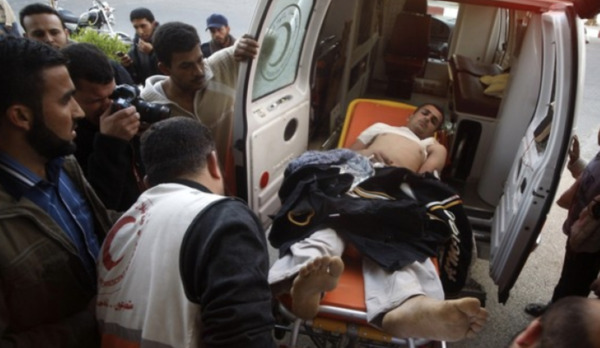
A citizen was killed this morning, Sunday, by the bullets of the occupation army near the Martyrs Square in the center of Rafah city, south of the Gaza Strip.


The official WAFA news agency reported that a citizen was killed by the occupation forces' bullets after being shot by the occupation forces' snipers stationed on the Salah al-Din axis.


Since yesterday, dozens of citizens have been injured while waiting to return to the northern Gaza Strip, which was scheduled for yesterday, but the occupation continues to obstruct their return.


OPINIONS

Sun 26 Jan 2025 9:59 am - Jerusalem Time

On Losing and Costly Bets

Dr. Ali Al Jarbawi

Dr. Ali Al Jarbawi

Opinion Writer

Within the framework of the traditional concept of imposing a transfer of power engineered by external parties, leading to the replacement of an undesirable party with another desirable party, many parties, Israeli, regional and international, are active in the process of searching for an acceptable alternative to replace the Hamas movement in ruling the Gaza Strip after the war ends, or more accurately, for the war to end. The positions of all these parties intersect, for reasons and goals that are not necessarily identical, in rejecting the return of the ruling system in the Gaza Strip to its previous state, i.e. for the Hamas movement’s control over it and its monopolization of it. Therefore, and in order to launch the “day after” phase of the war, which comes after the implementation of the stages of the temporary ceasefire, these parties are currently busy searching for possible alternatives to rule the Strip. While Netanyahu and his right-wing government insist on dismantling Hamas’s military and authoritarian capabilities, and refuse to replace it with the Palestinian Authority, regional parties find it an objective necessity to involve the Authority in governing the Strip to cover their contribution to the equation of governing and reconstructing the Strip during the transitional period. However, these parties stipulate that in order to move forward in this direction, the Palestinian Authority must rehabilitate itself by introducing deep structural changes to its structure and methods of operation. In the meantime, these parties propose either forming a Palestinian national consensus government or an autonomous committee to manage the Strip. It seems that the Trump administration will not oppose the regional approach if the appropriate conditions are met. So far, the Palestinian Authority does not agree to either proposal: It does not want to move towards a national consensus government, most likely because it may provide an outlet for Hamas to participate in governing, not only in the Gaza Strip, but also in the West Bank. It also does not want to agree to the formation of a committee to manage Gaza, even for a transitional period, because that may lead to the permanent separation of the Strip from the rest of the occupied territory, and end the possibility of establishing a Palestinian state. Moreover, the Authority refuses to comply with the external conditions imposed on it, considering that they are considered blatant interference in its internal affairs, and insists that it is carrying out a process of self-reform.


With the urgency of the matter, and the continued efforts of external parties to agree on the most appropriate equation for governing the Strip during the next phase, an important question arises: What is the Authority counting on if it continues to refuse to deal with external demands? Will it not be excluded, or circumvented, in the upcoming arrangements?


Contrary to all opposing estimates, it seems that the Authority is betting on the impossibility of being bypassed in this matter, and believes that its adherence to its position will ultimately lead to others fulfilling its demand to extend its rule over the Strip. In this regard, it relies on basic assumptions. First, there is an external consensus that the rule in Gaza will not return to what it was before the outbreak of the war. Second, any future arrangement for governing Gaza cannot succeed without the presence of a Palestinian party that is, for various reasons, at the center of the scene. Third, there is no current or future acceptance of Hamas regionally or internationally, which means that, with the results of the war, it will be and remain outside the future political scene. Fourth, the Palestinian Authority is the original legitimate authority to govern the occupied territory according to the agreements signed with Israel, and reinforced by the testimony of regional and international parties. The conclusion based on these assumptions may be what dispels the Authority’s concerns and gives it confidence that there is no alternative to it to be the appropriate Palestinian party to fill the governance vacuum in Gaza. If this conclusion is reinforced by sending a direct message expressing full and open readiness to deal positively with whatever proposal the Trump administration will come up with to resolve the conflict, the Authority will be able to feel comfortable and neglect the need to quickly respond to the external demands pouring in on it, especially from Arab parties, and rely on the fact that its presence in the upcoming political scene in Gaza is a foregone conclusion. Therefore, the Authority has nothing to do but stand firm and be patient, as there is no alternative to it, and the ball will eventually fall into its court.

The Palestinian Authority can rely on this conclusion, as it is the most likely to be drawn from the set of assumptions mentioned above, in order to cling to its position of rejecting the two proposed proposals for the future governance arrangement in Gaza. But can it be asserted that this is the only set of assumptions that can be deduced from the facts surrounding the current Palestinian situation, and that there is no other set of assumptions that could lead to a different conclusion? For the purposes of analysis, another set of assumptions can be cited that should be examined, as they are no less reliable than those included in the first set, and could produce a different result from the one on which the Authority bases its position. First, if the Trump administration adopts the “two-state solution,” it will most likely be in a version consisting of stages, the first stages of which are limited to a promise to establish a Palestinian state in the Gaza Strip. Second, Israel’s continued rejection of the extension of the Palestinian Authority’s authority to Gaza could support this Trumpian version of the “two-state solution,” which means the importance of having a different governing authority in the Strip than the one in the West Bank. Third, Israel’s use of massively destructive military force has not been able to end Hamas’s control of Gaza, and conventional wisdom says that excluding the force on the ground is much more difficult than simply expressing a desire for this to happen. It is true that Hamas cannot return to governing Gaza as it was before all the changes brought about by the war, but it is also true that its existence as a force that still controls the situation in the Strip, and its possession of the “disruptive power” of any ruling equation that attempts to exclude it, makes the possibility of excluding it from the arrangements for the future governance of Gaza a nearly impossible task. Fourth, political movements constantly aim to maintain the continuity of their existence, and therefore are always ready to adapt their goals and adjust their situations to the changes that befall them. Being targeted by a devastating war that negatively affected not only its structure and military capabilities, but also its supporting forces in the entire region, Hamas may pick up on the requirements of the next stage and carry out the required transformation towards focusing on the political sphere, which could open the horizon for it to open the doors of Western capitals that have been closed to it until now, and qualify it from the point of view of these capitals, after a transitional period, to participate in the next authority in the Strip, if not to return to take it over. This may seem like an impossibility, but one must not only consider what is currently happening in the region, specifically in Syria, but also what happened in the past in terms of transformation that led to the Palestine Liberation Organization’s recognition of Israel and the signing of the Oslo Accords with it. Often, ambiguous wars impose results, meaning that one party does not win overwhelmingly over the other, a “moment” in which the interests of parties that have fought but have not yet reconciled converge, which opens the door for them to the possibility of making transformations that lead to approaches that end in reaching agreements. In the current state of the Palestinian-Israeli conflict, divergent interests may converge on encouraging Hamas to quickly transition to the political track and integrate it in some way into the ruling authority in Gaza, especially if the Strip will be the center of the future Palestinian state. Although it may seem out of the context of the current expectations, the production of a “renewed Hamas” may be faster than the Authority’s ability to present its renewed version, which could limit the process of transferring power in the Strip to changing the nature of Hamas, not replacing it with another. In this case, the Authority’s bet on the inevitability of the conclusion drawn from the first set of assumptions will not only be wrong, but will also lead to losing results.

In this context, it is worth noting that there are no permanent constants or continuous guarantees in politics, because its factors are constantly moving and changing. Today's enemy can easily become tomorrow's friend, and vice versa. Therefore, it is not permissible to build positions and adopt policies based on considering the positions and orientations of others as fixed and unchanging axioms. Rather, attention must be paid, and care must be taken to take into account that political positions and orientations are not beliefs that cannot be changed, but rather they change with the direction of the winds of constantly shifting interests. Therefore, there are no permanent enemies or permanent friends. What can be concluded from the previous review is that relying on a set of "appropriate" assumptions in building a political position may not be useful in the face of the possibility of achieving another set of opposing assumptions. It is also worth noting that if each party to the internal Palestinian conflict goes towards achieving its own interests, it will lead to disastrous results for the Palestinian national cause. The best way to overcome the difficult phase ahead of us is the shortest, and it can be summed up by achieving the minimum level of immunity necessary to support the Palestinian position, by reaching the necessary internal understandings that allow for the formation of a national salvation government whose mission revolves around paralyzing the Palestinian situation from the state of internal fragmentation and external targeting it is facing. This is the minimum required, and if we fail to achieve it, then there is no one to blame but ourselves.

ARAB AND WORLD

Sun 26 Jan 2025 9:26 am - Jerusalem Time

Trump: Jordan, Egypt should take more Palestinian refugees

US President Donald Trump said he is pressuring Jordan, Egypt and other Arab countries to take in more Palestinian refugees from Gaza, after Israel's war on the territory caused a humanitarian crisis.


Trump told reporters aboard Air Force One about his call yesterday with Jordan's King Abdullah II that he praised Jordan for successfully accepting Palestinian refugees, adding, "I told him I would like you to take more Palestinians because I look at the entire Gaza Strip right now and it's in chaos, it's a real mess. I would like him to take people."


"I would like Egypt to receive people as well," he added, saying he would speak to Egyptian President Abdel Fattah el-Sisi today.


The Israeli war on Gaza has killed more than 47,000 Palestinians, according to the Gaza Health Ministry, and has led to accusations of genocide and war crimes, which Israel denies. The war has also displaced almost all of the Strip's population and created a food crisis.


In a related matter, Trump indicated that his first foreign visit might be to Saudi Arabia, despite the tradition of American presidents visiting Britain first.


He explained that the last time he traveled to Saudi Arabia was because the kingdom agreed to buy billions of dollars worth of American goods.


"If the offer was right, I would do it again," he continued.

Source: Agencies

OPINIONS

Sun 26 Jan 2025 9:13 am - Jerusalem Time

25-1-25, a day in History

op-ed "AlQuds" dot com

op-ed "AlQuds" dot com

Opinion Writer


Yesterday, January 25, 2025, the Palestinian resistance, along with our great Palestinian people, recorded a day in history amidst manifestations of pride and honor in Palestinian pride, which was embodied in its most wonderful form, through the release of Palestinian prisoners on whom Israel imposed unjust sentences after imprisoning them for very long periods, most of whom were prisoners serving life sentences.

The will of our people was embodied in its highest and most noble form through the Palestinian achievements that took place yesterday, which we are proud of, as 200 prisoners were freed from the torments of prisons, Israeli torture measures, and very long periods of imprisonment. Despite the deportation of a large number of them to Egypt, and then their destination will be other foreign countries, the joy of liberation and getting rid of the yoke of occupation and years of oppression and humiliation was equal to the important event, in a deal that is the most qualitative in the history of the prisoner movement, given that it includes this distinguished number of freed prisoners.

As usual, Israel sought in every way to spoil the joy of the release of the Palestinian generals of patience, some of whom spent decades in prison, starting with procrastination and delaying the release process, passing through imposing strict measures around the prisons from which the buses of the released departed, and reaching the process of chasing their families and storming their homes, and preventing any signs of reception, in conjunction with the policy of attacking the families and suppressing them with tear gas bombs.

The image of Palestinian victory was evident, amidst popular and public support at all stations, Gaza, the West Bank, including Jerusalem, and Egypt, where the Palestinians imposed their rhythm, on a day that will remain engraved in the records of pride. All of this, and Israel does not want to see signs and banners of victory, but it found itself in front of a noisy popular aura, and in front of a people who love life.

Yesterday, the Palestinian resistance presented a distinguished show during the process of handing over and liberating the four Israeli female soldiers, carrying many expressive and powerful messages that shook the foundations of the political and military systems of Israel, starting from the huge crowd of fighters and activists who appeared in their military uniforms, amidst an organization backed by a seasoned administration and conscious leadership, through which it appeared as a state capable of presenting itself with confidence and presence to world public opinion, with a message of respect for the rights of Israeli female prisoners through their appearance in military uniform, after their arrest in this uniform, and presenting gifts to them, and allowing them to perform the farewell salute to the resistance, and showing them in a number of videotapes while they were on the Gaza sea, and their thanking the resistance for the good treatment, as it was proven, and by the occupation’s admission, that they are in very good health, at a time when not even the least optimistic were expecting this scenario.

The resistance has proven that it is an integrated and organized entity, and that it is not a criminal or terrorist gang made up of a few elements, as Israel seeks to portray it, at a time when Israel, through its prison administration, army, police and other agencies, has continued its campaigns of abuse against Palestinian prisoners, and has turned their lives in detention centers and prisons into an unbearable hell, all in the shadow of a harsh aggression that has shown no mercy to our people in Gaza and the West Bank alike.

The messages of our people and our resistance have reached the entire world, and they contain all the national, moral and humanitarian meanings, and we will continue to repeat to all of humanity forever:

If the people one day want life

Fate must respond

The night must end

The chains must be broken

OPINIONS

Sun 26 Jan 2025 9:13 am - Jerusalem Time

Gates and barriers of oppression, humiliation and violation of dignity

Rassem Obaidat

Rassem Obaidat

Opinion Writer


Give me a people from the world's peoples who can live in a geographical area, the size of the West Bank, which you can normally travel from north to south by car in 4 hours. This distance is in the shadow of 900 gates and military checkpoints that besiege the West Bank and cut it off geographically and demographically, 146 of which were built after October 7, 2023, and 17 of which were built since the beginning of this year. Today, you need a week of travel. It is enough for you to travel to seven European countries, without it being stored in your memory. Is it possible for you to return to your home? Or will you remain suspicious that the occupation soldiers stationed at the checkpoints might close it and tell you to go back where you came from, and any discussion with these arrogant and spiteful people might cost you your life.

These barriers and gates, which now require the creation of special pages on groups or social networking sites, about the status of those gates and barriers, which want to "tame" your mind and awareness, so that you can control and organize your life according to the times of their opening and closing, and they not only violate your dignity, kill your humanity, and make you feel that an animal has more value than you, and that you are required to die alive as a Palestinian, and to get used to humiliation and degradation, without complaining or grumbling, these are soldiers and guards of "God's chosen people", they have the right to do anything to you, and your life is worthless to them, and if they shoot you and kill you, the accusation is ready, an attempted stabbing or running over, and the masters of the Black House in Washington are ready to adopt their narrative and promote it and defend it.

Worse still, if you are going to cross the crossing or the checkpoint on foot, you are forced to pass through revolving barriers, similar to “chicken coops”, controlled by soldiers and security men filled with hatred and malice, so that you are searched manually and electronically with a “magnometer”, and your passage is subject to the mood of the officer or soldier, and it is very easy for him to tell you to “go back”, meaning go back, and any argument or refusal could cost you your life by being shot, or exposing yourself to detention or arrest.

There are workers, employees and even students who go out in the early hours of dawn, hoping to reach their work, jobs, educational and health institutions, or for treatment, but they fail to reach them on time, despite the hours of waiting that go on and on, extending for long hours, or upon reaching the checkpoint, it is suddenly closed, after hearts have reached throats, and have become on the verge of an internal explosion, the result of psychological pressure that humans cannot bear.


I believe that this is consistent with the vision, convictions, concepts, and sayings of lies, deception, fraud, and misleading that the Americans and the colonial Western countries are trying to promote, about freedom, democracy, justice, human rights, the right to move, the right to worship, and the right to access hospitals and medical centers for treatment. However, because the Palestinians, according to the theories of “aggressive” and “savage” capitalist globalization, are among the peoples that the theorists of globalized capitalist thought, from Fukuyama and his book on “The End of History,” say that capitalism in its highest imperialist phase is “the highest degree of civilization, humanity, and development.” The owner of the same theory, idea, position, narrative, and story is Samuel Hemington in his book on “The Clash of Civilizations,” who sees us and the peoples of the Third World as barbaric and savage peoples who cannot be civilized, and therefore God granted them, according to the Talmudic, biblical, and Christian, Anglican, Zionist thought, the right to exterminate us and get rid of us, so that security, stability, and peace may prevail. In the world, we as Palestinians are not like the Ukrainian people. Our eyes are not blue, our skin is not white, and our hair is not blond, so that they would rush to America and the colonial West to stand by our side and prevent our extermination and killing. Rather, they would send all kinds of their weapons in order to finish us off, believing in the divine promise that we must be gotten rid of.

I think that our people do not only deserve the name of the people of giants, but they are the people of giants. Imagine when the livelihood of the Palestinian is restricted, and he is denied a work permit, which he is forced to obtain from the occupying state, in order to reach his place of work or job in Jerusalem or inside Palestine - 48 - or Israeli institutions and various Israeli economic sectors, you find him gambling and risking his life, in order to provide food for hungry mouths, waiting for him to feed them and milk, and so he climbs the apartheid walls that are more than 8 meters high and surrounded by barbed wire, and on them are cameras and watchtowers, and military patrols that conduct continuous patrols around this wall, and whoever you see climbing this wall, or succeeding in crossing it, is exposed to being shot at, and in the best of cases, arrested, and subjected to severe beatings.

These gates and barriers, called death ambushes, have increased and multiplied, by a decision of the occupation’s Finance Minister Smotrich, and with the approval of Netanyahu and former Minister of War Galant, under the pretext of protecting the settlers and the settlement roads. This means disrupting the lives of the Palestinians, and crowding them at the barriers and roads for long periods of time, and the resulting psychological pressure, and a malicious occupation attempt to transfer this suffering and torment to internal fighting and disputes between the Palestinians themselves, where the long wait and prevention makes a person lose his temper and lose his nerves.


Give me a people capable of enduring all this suffering that the Palestinian people are experiencing, under the checkpoints and gates of death, and under the “savagery” and “encroachment” of the settlers and herds of settlers out of control, practicing all forms of oppression and abuse against the Palestinian people, throughout the length and breadth of the West Bank, killing and wounding citizens, closing roads, burning homes and property and even places of worship, cutting down trees and stealing crops, seizing lands and establishing settlement outposts.

I wish that US President Trump, his leadership and the colonial Western European leaderships would come to live the tragedies and suffering of the Palestinian people for just one day, free from their tendency towards superiority and racial superiority and their Zionism that is superior to the leaders of Zionism themselves.

OPINIONS

Sun 26 Jan 2025 9:12 am - Jerusalem Time

The war on the West Bank is the worst since the setback

Dr. Aql Salah

Dr. Aql Salah

Opinion Writer


After the announcement of the Balfour Declaration in 1917, and the beginning of the preparation for planting the Zionist entity in Palestine, and passing through the occupation of Palestine in 1948, and the official announcement of the establishment of the State of Israel on the land of Palestine, reaching the occupation of what remained of Palestine in 1967, and the occupation of parts of neighboring Arab countries, and the ongoing Palestinian resistance and uprisings, reaching the signing of the Oslo Accords in 1993; which failed to put an end to the ongoing conflict due to Israel's failure to abide by any of the provisions of the agreement, although it does not grant the Palestinians an independent state. In 2000, the United States of America tried to pressure the late President Yasser Arafat at Camp David II to give up all the essential issues whose solution was postponed to the final stage of Oslo, represented by Jerusalem, refugees, borders, water, and the establishment of the state; After that, President Arafat became convinced that Israel did not want to abide by the simplest terms, so he worked to ignite the second intifada, which was caused by the American and Israeli position. Since that time, the Palestinian struggle has been in a phase of ebb and flow, but it has not stopped, and this is due to human nature resisting occupation.

Here, questions arise after 77 years of the occupation of Palestine, which we may not find satisfactory answers to in the near future; questions about the future of the independent Palestinian state, and about the fate of the West Bank in light of settlements, about everything that Palestine has gone through and is going through; in an effort to gain a deeper understanding of these complex questions, even if we have not decided to reveal answers to them, as our attempts extended to compare the past and the present in terms of policy and actual practices on the ground, and what are their goals, specifically the goals of the extreme right-wing government in the West Bank, which resulted in a historical review of the Palestinian struggle in the West Bank and its future, each of which reflects an aspect of official and unofficial Palestinian policy, and at the same time addresses occupation practices and settler practices. These questions are what prompted us to research and write a series of articles that address these topics. Perhaps raising a question about the feasibility of continuing the Palestinian struggle is one of the most prominent cognitive responses that we often resort to in response to those who do not find any benefit in resisting the occupation, as if one of the aspects of the crises that the West Bank is experiencing is a war on the national culture and the culture of resisting the occupation by all means permitted by international law that allow resistance to the occupation until freedom and independence are achieved. We should not be preoccupied with the feasibility of resistance in light of settlements, barriers, and the brutal practices of the settlers, as much as we should be preoccupied with raising the issue of Palestinian unity and unity behind resisting settlements, and confronting the practices of the army and settlers and their principles that express the biblical understanding that states that the West Bank is part of the “Land of Israel.” These practices are not new, but rather began with the occupation and before the “Al-Aqsa Flood”, which was launched to respond to these practices against the Palestinian people, and targeting prisoners in prisons through the enactment of dozens of laws and decisions taken by the resigned Israeli Minister of Security, Itamar Ben-Gvir, who was skilled in punishing prisoners, and bringing in police dogs to suppress prisoners and deprive them of the most basic rights internationally legislated, as their lives became hell, which raises a fundamental question: “Was Hamas able to liberate prisoners, specifically life prisoners, through the Battle of the Flood?”

The issue of prisoners serving life sentences has taken up a great deal of attention among the leadership of the Flood, specifically the duo, the martyr leader Yahya Sinwar and the martyr leader Saleh al-Arouri, who were released from the occupation prisons and pledged to liberate the prisoners. This is what happened, and they paid with their lives in exchange for the historic decision to wage the Battle of the Flood, which came after the acceleration of events and attacks on Al-Aqsa and the prisoners, and the settlement encroachment in the West Bank, including killings and burning of villages and towns, as happened in Huwara, Al-Mughayyir, Turmus Ayya, Al-Bireh, Barqa Ramallah, Barqa Nablus, Jinsafut and Al-Funduq, and the systematic Israeli policy of assassinations of influential field leaders in the northern West Bank. This is what can be concluded from the call of the head of the Israeli "Shabak", Ronen Bar, to take broad steps to change the reality in the West Bank and eliminate the phenomenon of armed groups there.

This was implemented in a crazy way on January 20, 2025, where all entrances to Palestinian cities, towns and villages were closed with iron gates, cement blocks and earth mounds, as the West Bank turned into a large prison for the Palestinians, and inside this prison there are sections, as every city, town and village is a section of this Israeli prison, and the occupation continues to place new gates and barriers, and there are more than 120 gates installed in all areas of the cities and villages of Hebron in an unprecedented manner since 1967, and the Bethlehem Governorate is closed with more than 98 gates besieging its cities and villages, and dozens of gates are also present in Ramallah, and in the Nablus Governorate alone there are 136 gates, and more than 60 earthen mounds and 10 fixed barriers in its vicinity, and dozens of gates and barriers in the Jenin, Tulkarm and Qalqilya governorates tighten the noose on the Palestinians, as the number of barriers in the West Bank has reached more than 800 barriers, and the Wall and Settlement Resistance Commission recorded thousands of attacks by settlers On the West Bank during the past year alone. Even the only gate to any town that the Israeli army opens is quickly closed by the settlers, as happened on January 21, 2025, when settlers closed the entrance to Wadi al-Shajna, the only entrance to the city of Dura that was opened by the Israeli army.

It is as if the war is moving to the West Bank, and this indicates that Netanyahu and his government do not want any calm. Netanyahu moves from one front to another, and all the occupation plans and practices aim to annex the West Bank and subjugate the Palestinian people. What has been happening since January 21, 2025, in the Jenin camp and the northern West Bank, from a large and dangerous military operation, is evidence that Israel is racing against time to end the resistance in the northern West Bank in order to re-settle the three evacuated settlements in Jenin, "Sanur, Ganim, and Kadim", after the return of the fourth settlement, "Homesh", where bulldozers work day and night to build settlement homes. Israel aims through this military operation on the Jenin camp and the West Bank to record an achievement, after it failed miserably in Gaza, and is trying to restore the image of the Israeli soldier who was unable to win and crush the resistance, as Netanyahu used to say at the beginning of the war. This soldier was confronted by the resistance, which was able to dispel his image that he was painting as "the invincible army".

Netanyahu and his government give the order to the Israeli army to launch a massive military operation whose title is killing, arresting and destroying, all while the settlers are burning Palestinian villages and towns, and a few meters away the army is storming the village of Azzun, arresting dozens of them in a humiliating manner. This is an exchange of roles and the protection of the settlers by the army. All of this is in the war on the West Bank in order to push towards the voluntary displacement of the Palestinian people through killing, burning and oppression, and creating an environment that repels the Palestinian people. This says that Israel is unable to absorb the release of prisoners sentenced to life imprisonment, so it is taking revenge on the West Bank, and wants to extinguish the joy among the Palestinians, and at the same time wants to raise the morale of the army and Israeli society, after the abject failure to achieve the goals of the war in Gaza, and to force Netanyahu to sign the exchange deal on the conditions of the resistance.

This brings us back to the topic of the level of stupidity that has been rampant in the minds of Israeli leaders over the past 77 years of not recognizing the legitimate rights of the Palestinian people, and leading to more brutal practices against the Palestinian people who have not and will not raise the white flag, all of which increases the Palestinian people’s determination to resist the occupation in order to establish their independent state. In the end, the state of resistance can only end by eliminating the cause, which is the occupation; Israel must put an end to its stupidity, arrogance, and brutal practices and recognize the legitimate rights of the Palestinian people.

*Palestinian writer and researcher specializing in ideological movements.

OPINIONS

Sun 26 Jan 2025 9:05 am - Jerusalem Time

Netanyahu's dilemma and defeat

Hamada Faraana

Hamada Faraana

Opinion Writer


Netanyahu has become shaken, his actions and alliances are contradictory, and his political projects are conflicting. On the one hand, he is a prisoner between the movements of the Israeli street demanding the continuation of the ceasefire, the implementation of the steps of the truce deal, and the release of prisoners, according to the exchange equation. In confirmation of this trend, he receives instructions issued by the firm American President Trump to cease the fire and implement the steps of the truce, through the American advisor and the President’s envoy, Steve Witkoff.

On the other hand, he is under internal pressure from the right-wing and religious extremist coalition parties to reject a ceasefire, reject a prisoner exchange, and continue the war.

On the third hand, the military and security establishment, whose leaders are resigning, faces protest, negligence, or a desire for priorities other than those demanded by the coalition government parties.

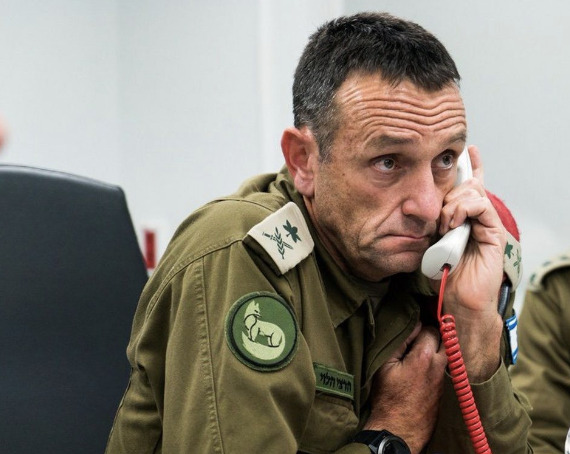
The resignation of the Chief of Staff of the Army, Herzi Halevi, and with him the commander of the southern military region adjacent to the Gaza Strip, Yaron Falkman, and before them the resignation of the head of the military intelligence service "Aman" affiliated with the army, Aharon Halifa.

The war generals resign one after the other, or as their journalistic circles say, one of them falls after the other, against the backdrop of failures. They were exposed to an unprecedented failure on October 7, 2023, which constituted a shock or surprise that had not happened before, with the exception of the October War in 1973, by Egypt and Syria, which led to the trial of Golda Meir on the basis of negligence.

A political conflict between Netanyahu's coalition team in the government on the one hand and the military establishment and the three security institutions: Aman, Shabak and Mossad, on the other hand, against the backdrop of the October 7 operation.

Netanyahu refuses to form a civilian and military investigation committee, under the pretext that he is still in a state of war, and that it will not stop until he achieves complete victory, but he failed to achieve his goal, and his failure increased and accumulated with the ceasefire, and the release of Palestinian prisoners "whose hands are stained with Jewish blood," according to the description of Ben Gvir, who withdrew from the government because of this, and Smotrich, who threatens to withdraw and bring down the government against the backdrop of these results.

Netanyahu is using all pretexts and arguments to evade the formation of an official investigation committee that will lead to his trial for negligence, and he will be overthrown on the basis of negligence on October 7, as happened to Golda Meir in 1973, and as happened to Menachem Begin in 1982 following the Israeli invasion of Lebanon.

Netanyahu is evading internal responsibilities, just as he is evading international demands, especially from the International Court of Justice and the International Criminal Court, against the backdrop of crimes, ethnic cleansing and the deliberate killing of Palestinian civilians in the Gaza Strip. He has turned and will turn into a war criminal, despite all the support that President Trump can provide him. The blatant crimes against civilians and the comprehensive destruction of the Gaza Strip are serious evidence that no one can hide. Here is Steve Witkoff, President Trump’s advisor, who will come to see what happened in the Gaza Strip, and thus he will stand practically and realistically and see what happened to the Gaza Strip and its suffering people.

OPINIONS

Sun 26 Jan 2025 9:02 am - Jerusalem Time

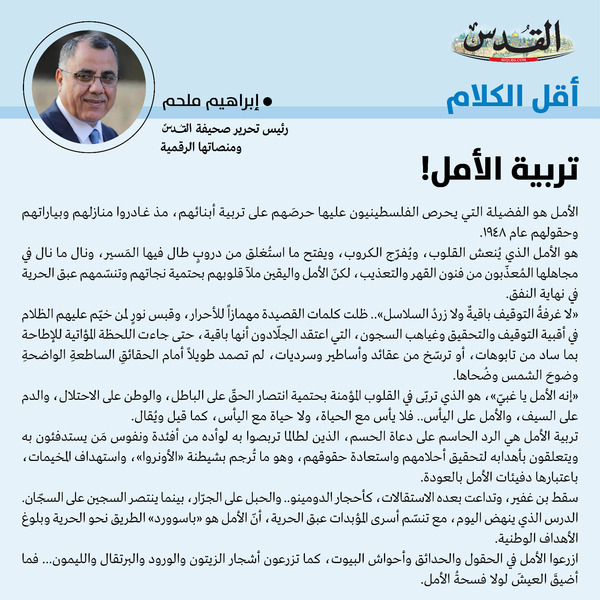
Raising hope!

Ibrahim Melhem

Ibrahim Melhem

Opinion Writer


Hope is the virtue that Palestinians have been keen on, as keen as they are on raising their children, ever since they left their homes, orchards and fields in 1948.

It is the hope that revives hearts, relieves distress, and opens closed paths that have been walked for a long time, and in whose depths the tormented have suffered the arts of oppression and torture. But hope and certainty filled their hearts with the inevitability of their salvation and their inhalation of the scent of freedom at the end of the tunnel.

"Neither the detention room nor the chains will remain." The words of the poem remained a spur to the free, and a beacon of light for those who were enveloped in darkness in the detention and investigation cells and the depths of the prisons, which the executioners believed would remain, until the right moment came to overthrow the prevailing taboos, or the entrenched beliefs, myths and narratives, which did not stand up for long in the face of the bright and clear facts as clear as the sun and its brightness.

"It's hope, you idiot," is what was raised in the hearts of those who believe in the inevitability of the victory of truth over falsehood, the homeland over occupation, blood over the sword, and hope over despair. There is no despair with life, and no life with despair, as it has been said and is said.

Nurturing hope is the decisive response to the advocates of decisiveness, who have always been lying in wait to extinguish it from the hearts and souls of those who warm themselves in it and cling to its eyelashes to achieve their dreams and restore their rights. This was translated into demonizing UNRWA and targeting the camps, considering them hotbeds of hope for return.

Ben Gvir fell, and after him the resignations began to fall like dominoes... and the rope is on the tractor, while the prisoner triumphs over the jailer.

The lesson that emerges today, as life sentence prisoners breathe in the scent of freedom, is that hope is the “password” on the path to freedom and achieving national goals.

Plant hope in fields, gardens and backyards, just as you plant olive trees, roses, oranges and lemons... Life would be so narrow without the space of hope.

PALESTINE

Sun 26 Jan 2025 9:00 am - Jerusalem Time

Netanyahu Can't Get Away With It... The Deal Besieges the Killers

Awni Al-Mashni: Any Israeli government, regardless of its orientations, cannot contradict the American desire to stop the war

Dr. Aql Salah: Israeli military, economic and political pressures make it difficult for Netanyahu to stop implementing the deal

Dr. Tamara Haddad: The success of the first phase does not necessarily guarantee the completion of the two subsequent phases of the exchange deal under strict Israeli conditions

Noman Abed: Implementing the first phase requires continuous American and mediator pressure to ensure transition to the second and third phases

Dr. Saad Nimr: Netanyahu is living on “borrowed time” and is trying to keep Smotrich in the government, but the opposition will not give him a safety net after the deal ends

Dr. Abdul Majeed Suwailem: Netanyahu has lost his popular and political support, and his ruling coalition will not be able to hold out for long and may collapse by next March


Despite the progress of the first phase of the ongoing deal between Israel and Hamas, regarding the release of prisoners and a ceasefire in the Gaza Strip, challenges regarding reaching the final stages of the deal remain, especially in light of the internal differences within the Israeli government coalition and the increasing international pressure on Israeli Prime Minister Benjamin Netanyahu.

In separate interviews with “I,” writers, political analysts, specialists, and university professors believe that American pressure plays a pivotal role in pushing the deal forward and reaching the second phase of the deal, which will address more sensitive issues such as disarmament and the management of the Gaza Strip, and may face major obstacles due to strict Israeli conditions and disagreements within the government coalition.

Netanyahu faces serious internal challenges, he points out, as National Security Minister Itamar Ben-Gvir withdrew from the government over his rejection of the deal, while Finance Minister Bezalel Smotrich threatens to withdraw if his demands regarding the West Bank are not met. These disagreements could lead to the disintegration of the government coalition, especially with the increasing internal and external pressure on Netanyahu, who is trying hard to keep his government together through political maneuvering and new promises.


The war on Gaza has reached its end and the deal will continue


Writer and political analyst Awni Al-Mashni believes that the war in Gaza has reached its end, and that the deal that was reached will continue despite the difficulties that may be faced in the second phase of negotiations.

Al-Mashni points out that American pressure, especially after President Donald Trump came to power, was a major factor in pushing the parties towards calm and ending the war, due to the American administration’s special interests in the regional and international agenda.

Al-Mashni explains that the US administration, which arms and supports Israel and covers up the mass massacres being committed in Gaza, is now exerting great pressure on the Israeli government to stop the war.

Al-Mashni stresses that any Israeli government, regardless of its orientations, cannot contradict the American desire to stop the war, which makes the continuation of the war difficult in light of these American demands and pressures.

Al-Mashni points out that the first phase of the deal will continue, but the second phase will be more complex and difficult, as it will address more sensitive issues such as the future of Gaza, Hamas rule, and security issues.

Al-Mashni expects that the negotiations at this stage will continue for a longer period than expected, but he ultimately confirms that the war in Gaza has reached its end, and that the deal will find its way to the light despite the difficulties.

On the other hand, Al-Mashni points out that the Israeli war in Gaza did not achieve the desired goals of the Israeli right, as the residents of Gaza were not displaced, and Hamas’ rule was not ended or its existence eliminated, which makes it impossible for the war to continue to achieve more military gains.

Al-Mashni asserts that the steadfastness of the Palestinian people in Gaza was remarkable, as they fought under extremely complex and difficult circumstances, which led to the war ending without Israel achieving a decisive victory for either side, but it left Israel in a situation in which it could not move forward in achieving its military goals.

Regarding the internal Israeli political situation, Al-Mashni points out that Israeli Prime Minister Benjamin Netanyahu is primarily seeking to maintain his government coalition, which is the most important goal for him at this stage, as Netanyahu’s remaining in power is the highest goal for him, and it is more important than freeing prisoners, stopping the war, or any other goal.

Al-Mashni explains that Netanyahu faces major challenges within his government coalition, especially from the Israeli right, which is demanding more stringent goals in the war.

However, Mashni believes that Netanyahu will be able to create new opportunities to preserve his coalition, by shifting the conflict from Gaza to the West Bank, where he can market the war as not over yet, but rather moving to a new phase.

Al-Mashni points out that transferring the war to the West Bank is a clever attempt by Netanyahu to market the war to stay in power, especially since the West Bank is considered more important to the extremist Zionist ideology than Gaza.

Al-Mashni points out that Netanyahu can pass the war on the West Bank as an alternative to the war in Gaza, which allows him to maintain his government coalition.

Al-Mashni believes that Netanyahu is playing a professional political game to maintain his coalition, and that even with the end of the war in Gaza, he will be able to maintain the balance of his government.

Al-Mashni points out that any reasons for the collapse of the government coalition will be related to internal issues such as recruitment and the budget, and not to the war on Gaza or Lebanon.

Mashni believes that Netanyahu has clear answers regarding the war in Gaza and Lebanon, but he faces major challenges on issues such as the conscription law and the budget, which could weaken his government coalition.

However, Mashni believes that Netanyahu will be able to keep his coalition together as long as possible, using all the political tools available to him.


Israeli society showed broad support for the deal.


Writer and political researcher Dr. Aql Salah believes that the current deal between Israel and the Palestinian resistance will continue until its end, in light of the increasing pressure from Israeli society and the military establishment on the Israeli government, especially on Prime Minister Benjamin Netanyahu.

Salah points out that Israeli society has shown broad support for the deal, which will play a pivotal role in pushing Netanyahu to continue implementing it.

Salah explains that Netanyahu faces a difficult situation with the families of the Israeli prisoners, especially in the second phase of the deal, which includes the release of Israeli soldiers, officers and leaders.

Salah confirms that the Israeli military establishment views these prisoners differently from its view of civilian prisoners in the first phase, which increases pressure on Netanyahu to complete the deal.

Salah points out that the Israeli military establishment had been pushing to complete the deal and stop the war since the beginning of the war, due to the heavy human losses suffered by the Israeli army.

Salah points out that international, military, political, economic and Israeli societal pressures make it difficult for Netanyahu to stop implementing the deal.

Salah expects the exchange process to continue as agreed upon, without any obstacles to its continuation.

However, Salah points out that Netanyahu, who is known for breaking promises and trying to obstruct the deal for 15 months, may try to slow down implementation for a limited period of time to obtain concessions from the Palestinian resistance, especially regarding the issue of prisoners serving life sentences and some leaders that Israel considers a “red line.”

Salah stresses that international pressure, especially from US President Donald Trump, who considers himself the main achiever of this deal, will play a major role in forcing Netanyahu to continue implementing the agreement.

Salah points out that Trump has confirmed on more than one occasion that this deal is one of his achievements, which makes it difficult for Netanyahu to back down from it.


The second phase will be more complex and important.


Salah believes that the second phase of the deal will be more complex and important than the first phase, as it will include the release of Palestinian leaders who have great influence among the Palestinian people, in addition to high-ranking Israeli prisoners.

Salah expects that compromises will be reached at this stage, despite Netanyahu's attempts to pressure to reduce the ceiling of the resistance's demands.

Regarding the internal political situation in Israel, Salah points out that the continuation of Netanyahu's government coalition depends largely on the continuation of the deal.

However, Salah points out that Smotrich's withdrawal from the government, or his threat to withdraw, could lead to the disintegration of the government coalition.

Salah confirms that Smotrich will try to blackmail Netanyahu to obtain additional gains, especially with regard to the West Bank, even though Netanyahu has no other cards to give to Smotrich.

Salah believes that the investigation committee that will be formed to investigate the failures of the war after October 7, 2023, in Israel will play a major role in determining Netanyahu's political future.

Salah expects that this committee will lead to the disintegration of the government coalition and push Israel towards early elections, which may mean the end of Netanyahu's political era and the beginning of a new phase in Israeli politics and the emergence of new parties and coalitions.


Major challenges facing the second and third phases


Writer and political researcher Dr. Tamara Haddad believes that the success of the first phase does not necessarily guarantee the completion of the subsequent phases of the exchange deal, especially in light of the strict Israeli conditions and security requirements imposed on Hamas.

Haddad explains that the first phase of the deal, which will last for 42 days, focuses on releasing the living Israeli prisoners, who number 33 so far, in addition to bringing humanitarian aid into the Gaza Strip.

Haddad points out that this stage is on the right track, as Hamas was able to present an initial list of living hostages to the mediators, which reflects an initial agreement between the two parties to complete this stage.

However, Haddad pointed out that the second and third stages of the deal face major challenges, especially with regard to the Israeli requirements that focus on disarming the resistance in the Gaza Strip.

Haddad confirms that Israel is setting disarmament as a basic condition for moving to the second stage, which is considered a major dilemma for Hamas, which sees weapons as a major tool for confronting the occupation and keeping itself strong.

Haddad believes that the third stage, which is related to reconstruction and management of the Gaza Strip, is one in which Israel wants a Palestinian administration close to the international community, capable of managing relief, administrative and living aspects.

Haddad points out that the presence of Hamas in power is an obstacle to reconstruction, as many European countries refuse to provide financial support for reconstruction as long as Hamas holds the reins of power in the Strip.

Haddad stresses that internal Palestinian consensus is a crucial factor in the success of any reconstruction process, noting that the Palestinian Authority is the best option to manage the Gaza Strip, especially in light of the absence of an internationally agreed-upon Palestinian administration.

Haddad points out that the presence of the Palestinian Authority in Gaza will remove the pretext from Israel to continue the fighting, and will allow the entry of aid and reconstruction to proceed normally.

On the other hand, Haddad points out that the presence of Hamas in the Gaza Strip is considered a justification for Israel to continue the fighting, especially in light of the internal crises facing Benjamin Netanyahu's government.

Haddad explains that Netanyahu considers continuing the fighting with Hamas a means of saving his government from collapse, especially in light of the internal divisions and judicial investigations that his government is facing.

Haddad stresses that Hamas' continued presence in power will mean the continuation of wars and divisions, which will hinder any real efforts to rebuild and improve the lives of citizens in the Gaza Strip.

Haddad calls for putting the Palestinian house in order and choosing a Palestinian administration that is agreed upon by the Palestinians and the international community, as a basic step to cut off the pretexts for Israel and ensure the successful completion of the stages of the deal.

Haddad stresses that the success of the second and third phases of the deal requires American, Egyptian and Qatari pressure to push the two parties towards consensus, especially in light of the security and political challenges that hinder any real progress in the peace process.


Netanyahu may return to war and genocide after the end of the first stage


Writer and political analyst specializing in international relations, Noman Abed, believes that the increasing American pressure is what pushed Israeli Prime Minister Benjamin Netanyahu to accept the deal after his government failed to achieve its military and political goals in the Gaza Strip.

Abed explains that Israel, after more than 15 months of military operations and a war of "genocide", has not been able to achieve its declared goals, but what happened was to punish the Palestinian people and take revenge on them in a systematic manner after the attacks of October 7.

Abed points out that the Israeli government used negotiations as a tool for evasion, while it was implementing a policy of ethnic cleansing and pressuring the Palestinians to force them to leave or emigrate outside their homeland, in addition to attempts to dismember the Gaza Strip and seize parts of its lands, especially in the north.

Abed believes that the administration of US President Joe Biden gave Israel enough time to achieve its goals, and despite that, the occupation government failed to force the Palestinians to surrender or displace them completely.

Abed asserts that this failure, along with the cases filed against Netanyahu and his former defense minister in international courts, led to increased international isolation of Israel and placed it under great pressure, which prompted the US administration to intervene directly to pressure Netanyahu to accept the exchange deal.

Abed points out that the current deal, despite its importance, does not address the amount of bloodshed in the Gaza Strip, nor does it address the ongoing violations in the West Bank, including East Jerusalem.

Abed stresses that implementing the first phase of the deal requires continuous American pressure to ensure the transition to the second and third phases, which are considered more sensitive and require effective intervention from international mediators.

Abed warns that Netanyahu and his government may return to the policy of war and genocide once again after the end of the first phase of the deal, especially if it is not forced to continue completing the deal, stressing that the complete success of the deal requires a real cessation of aggression and giving the opportunity for reconstruction and stopping settlements and assassinations.

Abed expects that Netanyahu's failure to achieve his goals will lead to the collapse of his government and Israel's entry into early elections, especially in light of the trials awaiting him due to his failure in the October 7 attacks and various corruption cases, but international and local pressure may be the decisive factor in ending Netanyahu's political era.


Netanyahu has no option to stop the deal at this stage


Dr. Saad Nimr, a professor of political science at Birzeit University, believes that the exchange deal between Israel and Hamas will continue until its end, despite the challenges and disagreements within the Israeli government coalition regarding it.

Nimr explains that the first phase of the deal, which includes a 42-day ceasefire and the release of 33 Israeli prisoners in exchange for a large group of Palestinian prisoners, is proceeding according to what was agreed upon, due to internal and external pressure on Israeli Prime Minister Benjamin Netanyahu.

Nimr points out that Netanyahu does not have the option of stopping the deal at this stage, because that would mean returning to war, which would face strong opposition from the United States and countries supporting Israel.

Nimr believes that the second phase of the deal will be more complicated due to the issues related to disarmament and the management of the Gaza Strip, but international pressure will force Israel to move forward with implementing the agreement.

On the other hand, Nimr addresses the disagreements within the Israeli government coalition, as Ben Gvir announced his rejection of the deal and the ceasefire, and withdrew from the government.

Nimr points out that Ben Gvir publicly admitted that he and Smotrich had disrupted previous exchange deals, which led to the continuation of the massacres in the Gaza Strip. This admission sparked great controversy in Israel, and they were accused of causing further losses in the ranks of the Israeli army.

Nimer points out that Smotrich voted against the deal, but decided to remain in the government after he received guarantees to begin intensive military operations in the West Bank.

Nimr believes that Smotrich will remain in the government until the end of the first stage of the deal, but he may withdraw if the war in Gaza does not continue, and he may continue because he may consider attacking the resistance in the West Bank an alternative to it.

Nimr points out that Netanyahu is trying to postpone the collapse of his government by playing with time and provoking new crises, whether in Gaza or the West Bank.

Nimer asserts that Netanyahu is living on “borrowed time,” as he tries to keep Smotrich in the government through new promises, but he realizes that the Israeli opposition will not give him a permanent safety net after the deal ends, but will only give him that net when the deal is completed.

Nimr explains that the current stage is decisive, and that the end of the first stage of the deal will reveal the fate of the Israeli government and the course of future events.


Netanyahu has lost the ability to maneuver politically.


Writer and political analyst Dr. Abdul Majeed Suwailem believes that Israeli Prime Minister Benjamin Netanyahu is experiencing a severe political deterioration, trying through his evasions and military escalations in Gaza and Lebanon to divert the attention of Israeli public opinion from his growing internal crises.

Suwailem asserts that Netanyahu has lost the popular and political cover he relied on, and now has nothing but "reckless movements" in a desperate attempt to stop his political collapse.

Suwailem explains that Netanyahu, who is now classified as the “number one liar” in Israel according to local opinion polls, is suffering from a sharp decline in his popularity and a loss of trust even from those closest to him.

Suwailem points out that Netanyahu is trying to create small crises here and there, whether in the Gaza Strip or on the Lebanese border, to divert attention from the dire conditions his government has reached, which is now besieged internally and externally.

Suwailem believes that Netanyahu is losing control of the internal situation in Israel, as political forces and even the Israeli street have begun to realize that his government is no longer able to manage crises effectively. He is desperately trying to salvage what remains of his popularity, but he will not be able to change the course of events or achieve any real results.

Regarding the ongoing exchange deal between Israel and Hamas, Suwailem points out that Netanyahu is trying to complicate the process through evasions and creating obstacles, but in the end he does not have the internal or external cover to return to war.

Suwailem asserts that Israeli society no longer believes in the ability of Netanyahu's government to achieve any military victories, especially after the failure of the Israeli army to achieve its goals during the war on Gaza.

Suwailem believes that Netanyahu has also lost the international support he relied on, as Arab countries have begun to adopt more firm positions in the face of his escalating policies.

Suwailem points out that the US administration, despite its traditional support for Israel, has begun to pressure Netanyahu to cool the atmosphere and complete the exchange deal, which means that Netanyahu no longer has the political cover he had previously enjoyed.

Suwailem expects that Netanyahu's government will not be able to hold out for long, noting that the ruling coalition may collapse by next March.

He confirms that Netanyahu has lost the ability to politically maneuver, which used to distinguish him, and is no longer able to convince the Israeli street or political forces with his speech.

Suwailem points out that recent opinion polls show that the bloc supporting Netanyahu ranges between 25 and 30% only, reflecting a significant decline in his popularity.

Suwailem believes that getting rid of Netanyahu's government is not only in the interest of the Palestinian people, but also in the interest of Israel and the international community. It is dangerous and its collapse will contribute to strengthening international peace and peaceful coexistence in the region and the world.


PALESTINE

Sat 25 Jan 2025 10:48 pm - Jerusalem Time

Injuries by occupation forces in the West Bank

A number of citizens were injured by Israeli occupation bullets, Saturday evening, in various towns in the West Bank.

In Nablus, a citizen was injured by Israeli occupation forces’ bullets during their raid on Balata camp.


Medical sources reported that a citizen arrived at the hospital with live bullet wounds, as a result of the occupation forces storming Balata camp, and his condition was described as critical.


The occupation forces stormed the Communications Roundabout area near Balata Camp and Jerusalem Street east of the city, and fired live bullets and tear gas canisters.


In Al-Bireh, the occupation forces stationed at the entrance to the "Psagot" settlement, built on the lands of citizens in Al-Bireh, fired live bullets at a citizen while he was in the Jabal Al-Tawil neighborhood, which resulted in his injury in the foot, and he was transferred to the hospital as a result.


In the same context, the occupation forces stormed the village of Ein Qiniya, west of Ramallah, without any arrests or clashes being reported.


PALESTINE

Sat 25 Jan 2025 9:33 pm - Jerusalem Time

Halevi's resignation... Will the dominoes fall to reach Netanyahu?

The differences that had been emerging between the Israeli political and military levels during the criminal war launched by the occupying state on the Gaza Strip following the October 7 attack, began to be translated into practical terms as soon as the first phase of the exchange deal and ceasefire began, in the form of resignations that included the Chief of Staff of the Israeli army, General Herzi Halevi, and the commander of the Southern Command, Yaron Finkelman, months after Prime Minister Benjamin Netanyahu dismissed his Minister of War, Yoav Galant.


Writers and political analysts who spoke to Al-Quds.com considered the resignation of Halevi and Finkelman a shock to the security and political establishments in Israel. It is not just a personal step, but rather reflects a deep internal crisis in Israel and a major shift in its security doctrine.


Netanyahu government seeks to get rid of current military leadership


Amir Makhoul, a researcher at the Progress Center for Policy, said that the resignation of Chief of Staff Herzi Halevi and Southern Command Commander Yaron Finkelman from their positions reinforces popular demands within Israel for Prime Minister Benjamin Netanyahu to resign, or for a committee of inquiry to be formed into the recent crises.


Makhoul explained that these resignations were expected, as they could have been dismissals or resignations due to pressure from the current government, which seeks to get rid of the current military leadership and hold it fully responsible for the failure of October 7, 2023.


Makhoul pointed out that the current Israeli government seeks to make a radical change in the identity of the Israeli army. This includes reformulating the army's "ethical code" and changing the foundations of its work and its type, in line with religious Zionist and far-right trends, and transforming it from a "people's army" to an army with the doctrine of the Greater Land of Israel.


According to Makhoul, the goal is to create an army that is completely loyal to the political leadership, including transferring all powers of the civil administration in the West Bank to the government, which was imposed by Finance Minister Bezalel Smotrich.


Creating an army prepared to use excessive violence against Palestinians


"These changes aim to create an army that is prepared to implement policies characterized by excessive violence against the Palestinians, including committing war crimes without concern or internal opposition, and without adhering to international law and its standards," Makhoul added.


He pointed out that there are clear changes in Israeli society regarding the number of deaths in the army, as the issue of soldiers' deaths has become less sensitive compared to the past, which is confirmed by serious Israeli analyses, unlike what was prevalent in the past decades.


Makhoul believes that the Israeli Prime Minister is seeking to exploit these changes to consolidate his rule and remain in power, especially by appointing military leaders loyal to his policies and priorities, such as Eyal Zamir, the strongest candidate for Chief of Staff.


He explained that in January 2023, Zamir presented a comprehensive action plan to the government aimed at dealing a major blow to Iran, undermining its political system and destroying its nuclear project.


Changes in the context of the judicial coup in Israel


Makhoul also pointed out that these changes come within the context of the judicial coup in Israel, which seeks to reduce the independence of national institutions such as the army and the judiciary.


He considered that these moves aim to eliminate any internal opposition to Netanyahu's policies and his extremist government.

Makhoul noted that the new army that the government seeks to form will be more prepared to impose the complete annexation of the West Bank, similar to its practices in Gaza.


He also warned that these policies could put the Israeli military in a confrontation with the International Criminal Court over possible war crimes.


Concluding his analysis, Makhoul pointed out that these radical changes could lead to a severe internal conflict in Israel, as there is a possibility that the term of this government will be limited, and may lead to early elections. However, he stressed that the biggest beneficiaries of these changes, if they are implemented, will be the far right, Netanyahu and his allies.


Expected resignations and their timing linked to the current truce


For his part, journalist and expert on Israeli affairs, Ismat Mansour, believed that these resignations were expected, and that they have been in effect suspended since the beginning of the events that followed October 7.


Mansour explained that the Chief of Staff and the leaders of the security system had previously announced that they personally bear responsibility for the mistakes, while committing to remain in their positions until those mistakes are addressed and corrected, including managing the battle.


He added: "The timing of the resignations came because of the current truce, the return of some of the prisoners from Gaza, in addition to pressures and changes in the government, such as changing the Minister of Defense.


Mansour pointed out that the attack launched by the Israeli right against the army leaders increased the feeling of these leaders that the time was right to resign, which reflects a state of mistrust between the political and security levels in Israel.

He added: "The resignation of the head of the security pyramid places great pressure on Prime Minister Benjamin Netanyahu, because it logically requires his resignation as the head of the political pyramid, as he also bears responsibility.


But he noted that Netanyahu is trying to evade this by refusing to open an official investigation into the events of October 7, and he recently dropped a parliamentary proposal to form an independent commission of inquiry.


Netanyahu fears being convicted in any independent external investigation


Mansour stressed that Netanyahu fears that any external and independent investigation would lead to his personal conviction, and perhaps legal action against him, especially since he bears great responsibility for Israeli policy towards Gaza since he assumed power for more than 13 years.


He also pointed out that his policies, which maintained the Palestinian division and contributed to managing the Gaza file, are what led to the results witnessed by Israel on October 7.


Mansour refused to consider the resignations a victory, pointing out that linking victory and defeat with resignations is not accurate, as the culture of resignation has an organizational dimension within the Israeli army and security system.


He explained that leaders such as Herzi Halevi stressed that their resignation from their positions was intended to establish a culture of bearing responsibility, as “whoever makes a mistake must bear responsibility and leave his position.”


Mansour concluded his speech by pointing out that these resignations also express an internal crisis and an implicit admission of failure in dealing with the events of October 7.


A deep rift in the Israeli political and security system


For her part, the specialist in Israeli affairs, Nevin Abu Rahmon, confirmed that Halevi’s resignation at this particular time, in addition to his personal responsibility for the abject failure to achieve the military objectives, may be a message to the Israeli political level that the war has exhausted itself, and can never be resumed on all fronts.


She said: "The voices coming out of the military leadership and some military analysts say that the army is paying the price for the procrastination that began in July when the terms of the agreement were presented and then called Biden's proposal until the agreement is approved."


Abu Rahmoun added: "During this period, the army was occupied and exhausted with tasks that it was not capable of carrying out, in light of the resistance's engagement, most notably the mission of recovering the Israeli prisoners. This is a great indication of the nature of the rift occurring deep within the Israeli political and security system."


Abu Rahmon considered this resignation of Halevi, and other resignations, as a shock to the Israeli security establishment, and also to the political establishment.


Halevi's resignation is a declaration of responsibility for the failures of October 7


She said: "For the military establishment, this resignation is a declaration of responsibility for the failures that occurred on October 7, which is described in the Israeli narrative as the greatest strategic failure since the establishment of the occupation state in 1948."


She stressed the importance of this resignation, as the military establishment announces its responsibility for this failure, so now the ball is in the hands of the political level, and the extent of its commitment to providing answers that fulfill the right of the failures and the successive responsibilities.


She added: The Israeli system may actually be able to overcome this stage through alternative leadership, but it will have repercussions on the level of the “war trials” equation, meaning that the existing disagreement will deepen over the repercussions of approving the deal, which constitutes an important element in the core of the discussion, with regard to stopping the war and sorting out the Israeli prices, or that it will be in the form of a truce, and then the war will resume as Netanyahu wishes.


She said: "The military establishment has said its word that the war has exhausted itself and that it is time to start the war trial and the need for a new phase."


Netanyahu wants a government investigation committee to control it


Abu Rahmoun continued: “We may be facing a critical stage, especially since in addition to Halevi’s resignation, there was also the resignation of the Southern District official who was directly responsible for the clash and the events that occurred. This is a great indication from the military establishment, which apparently raised its hand and learned its lessons.”


She stressed that this crisis in which Israel is currently in the midst of war and direct clashes between the resistance and Gaza has resulted in these resignations.


She added: "At the heart of the rift at the Israeli political and security level is the issue of taking responsibility for the failures of October 7, which are still pending, without anyone standing up and taking responsibility, led by Netanyahu.


She explained that when the idea of forming an official investigation committee to decide on this issue was launched, the disagreement deepened in terms of the principles and nature of the assigned committee.


She said: "Netanyahu wants it to be a government investigation committee so that the government can control its appointments and course of action, and the other direction is for it to be an official investigation committee that will then be appointed by the Supreme Court. In this issue, there is actually a postponed crisis in the nature of responsibilities in managing the battle and achieving the goals, and this also applies to all the accelerating events regionally."


The Palestinian people pay the highest price


In turn, former Knesset member and lecturer at the Arab American University in Jenin and Ramallah, Dr. Jamal Zahalka, said that the resignation of General Herzi Halevi is not just a personal step, but rather reflects a deep internal crisis in Israel and a major shift in its security doctrine. While the Israeli leadership is fighting over responsibility, the Palestinian people continue to pay the greatest price.


He added: "Halevy's resignation from the position of Chief of Staff of the Israeli army, which will take effect on March 6, has caused a political and security earthquake within Israel."


Zahalka said that this step came amid the ongoing controversy over responsibility for the security failure that occurred on October 7, known as the “Al-Aqsa Flood” shock.


He stressed that Halevi's resignation came after increasing pressure, especially from the extreme right-wing Israeli circles loyal to Prime Minister Benjamin Netanyahu, adding that they considered the resignation evidence that responsibility for the failure lies with the military level, while the opposition sought to hold Netanyahu personally responsible for the security failure, calling for early elections and the formation of a new government that enjoys the people's confidence.


Reshaping the military leadership according to Netanyahu’s whims


Zahalka pointed out that Halevi's resignation was not an isolated event, but was followed by other resignations in the upper ranks, such as the commander of the Southern Command, General Yaron Finkelman, and the former head of the Military Intelligence Directorate, General Aharon Haliwa. He expected Netanyahu to exploit this crisis to reshape the military leadership in line with his political agenda.


He said: "The most prominent candidate to succeed Halevi is General Eyal Zamir, who enjoys Netanyahu's trust, while his appointment is expected to face limited opposition. But surprises remain possible, especially with the possibility of appointing less experienced figures such as General Roman Goffman, with the support of the extreme right."


He pointed out that the Israeli security doctrine is undergoing a radical transformation after the October shock, as its traditional pillars such as deterrence, warning, and defense are being reconsidered.


Fear of adopting more aggressive and fierce policies


He stressed that the general trend points to adopting more aggressive and fierce policies based on deadly attacks and preemptive wars.


Zahalka believes that this shift reflects three main factors: First, the political influence of the extreme right, which seeks to control the security establishment. Second, a change in the security leadership to be more in line with the right’s ideology. Third, shifts in the security doctrine towards greater readiness to commit crimes and preemptive wars.


He continued: "Amidst these transformations, the Palestinian people remain the biggest victim. He said: "The internal Israeli disputes push the warring parties to compete to prove their loyalty to the Zionist state by increasing crimes against the Palestinians."


At the end of his statement to Al-Quds.com, Zahalka stressed that with the extreme right controlling the joints of the army and government, the region is facing a dangerous phase that may witness an escalation in violence against the Palestinians and an expansion of the scope of Israeli military operations.


October 7 exposed the weakness of the Israeli intelligence and military services


For his part, Dr. Ali Al-Awar, a specialist in resolving regional and international conflicts, said that October 7 and the “Al-Aqsa Flood” operation led by Hamas and its military wing, revealed the weakness of the Israeli intelligence and military agencies, along with the security establishment in Israel, which led to a series of resignations among senior military leaders.


Al-Awar explained that the resignation of the head of military intelligence (Aman), Haliva, was followed by the resignation of the commander of the Gaza Division and the commander of the Central Command, Yehuda Fuchs, then the Chief of Staff, Herzi Halevi, and the commander of the Southern Command. These resignations came in light of everyone being held responsible for the security and military failure in confronting the October 7 attack.


Al-Awar pointed out that these resignations reflect a sharp division between the political establishment, led by Prime Minister Benjamin Netanyahu, and the security establishment, which witnessed a clear rejection of Netanyahu's policies in managing the war on Gaza.


He stressed that a faction within the security establishment, led by Yoav Galant and some military leaders, saw the need to end military operations in Gaza after achieving their goals, but Netanyahu continued the war to serve his personal political interests.


Resignation as an alternative to military rebellion


Al-Awar stressed that the continuation of military operations in the northern Gaza Strip, despite the heavy losses in the ranks of the Israeli army, had prompted the army leaders to choose to resign as an alternative to military rebellion. Yair Golan, a former Israeli leader, also described the army's presence in Gaza as "absurd."


Al-Awar warned that these resignations could lead to radical changes in Israel, noting that they pave the way for the Israeli far right to control the army and police. He said that they are an indication of the beginning of change in Israel and the beginning of Israel's transformation from a democratic state to a dictatorial state, ruling out the fall of the Israeli government in light of the successive resignations.


He added: Netanyahu is working to weaken the law by appointing and dismissing security service leaders in a way that serves his political survival.


On another level, Al-Awar saw that Netanyahu's recent military campaign on the Jenin camp came as a "political token" to his partners in the government coalition, such as Smotrich and Ben Gvir, to ensure the continuation of the government.


He also pointed to an expected role for Saudi Arabia in the second phase of the political deal, which Netanyahu expects as a gift from former US President Donald Trump, and includes normalization with Riyadh.


He explained that the resignations of the security leaders reflect a deep internal division in Israel between the security and political institutions, noting that these transformations may reshape the nature of the state and its political future.


Regarding Netanyahu's refusal to open an investigation into the events of October 7, Al-Awar said that Netanyahu fears the formation of a security investigation committee, and is even demanding a political investigation committee, fearing for himself and being accused of failure on October 7.

PALESTINE

Sat 25 Jan 2025 9:28 pm - Jerusalem Time

Abu Marzouk's flirtation with Washington: a strategy or a tactic?

The statements of Musa Abu Marzouk, deputy head of Hamas's political bureau abroad, indicating the movement's readiness to communicate directly with Washington, raised many questions about the seriousness of this step and whether it represents a strategic shift in Hamas's policy, or is merely an attempt to improve its international image in the post-war period on the Gaza Strip.


In separate interviews with “I,” writers, political analysts, specialists, and university professors believe that Abu Marzouk’s statements may reflect Hamas’ desire to seek legal legitimacy and international recognition, especially in light of its de facto control over many aspects of life in Gaza. They also believe that this step may come within the framework of a new American policy under the leadership of President Donald Trump, who seeks to leave a legacy as a peacemaker.


However, they point out that the challenges are great for both sides. On the one hand, Hamas faces legal challenges because it is on the US terrorist list, in addition to fundamental issues, such as: recognizing Israel, renouncing violence and surrendering weapons. On the other hand, the US administration needs Congressional approval for any steps related to opening a dialogue with Hamas. These obstacles make it difficult to predict the success of any future dialogue, in addition to the existence of internal Palestinian divisions and the lack of a national consensus on how to deal with these developments.


Hamas's desire to seek legal legitimacy and international recognition


The writer, political analyst and professor of international relations at the Arab American University, Dr. Amjad Abu Al-Ezz, believes that the readiness of the Hamas movement to open a dialogue with the United States reflects the movement’s desire to seek legal legitimacy and international recognition, especially in light of its actual control over many aspects of life in the Gaza Strip.


Abu Al-Ezz explains that this step comes within the framework of a new era of American policy under the leadership of former President Donald Trump, who seeks to leave a legacy as a peacemaker.


Abu Al-Ezz points out that the United States has begun taking practical steps on the ground by sending security companies consisting of army forces and retired officers to the checkpoints in Netzarim, which indicates the need for understandings or preliminary agreements between the two parties that necessitate opening a dialogue.


Abu al-Ezz believes that Hamas wants to open lines of communication with the United States in search of legal legitimacy, and it may be part of a regional deal through which the movement is contained through certain understandings, such as avoiding war with Israel in exchange for allowing its representatives to participate in a government or some kind of agreement.


Abu Al-Ezz points out that Trump wants to deal with players on the ground, which opens the door to the possibility of opening a direct line between Hamas and the United States in the next phase, whether through tactical initiatives to strengthen the truce and release prisoners, or as part of a broader strategy to deal with the Middle East region.


Abu Al-Ezz points out that the challenges are great for both parties. On the one hand, Hamas faces legal challenges because it is on the US terrorism list, in addition to major issues, such as recognizing Israel, renouncing violence, and handing over weapons, which are issues that Hamas cannot easily make decisions on. On the other hand, Trump needs Congressional approval for any steps related to opening a dialogue with Hamas.


Abu Al-Ezz explains that the experience of dialogue with the United States is not new for the Palestinians, as the PLO began dialogue with Washington in the seventies, but this dialogue stopped because of Yasser Arafat’s refusal to condemn some Palestinian operations, pointing out that the Hamas movement is supposed to learn from the organization’s experience, but it faces major challenges in achieving a balance between its Palestinian project and its regional projects.


Abu Al-Ezz believes that Hamas must open a dialogue with the PLO to achieve consensus on all points, including resistance and relations with Israel and neighboring countries, instead of searching for channels with the United States of America.


Abu Al-Ezz stresses that any dialogue with the United States must be supported by a unified Palestinian legal umbrella, to avoid tactical maneuvers that could weaken the Palestinians in the long run.


Abu Al-Ezz calls for opening a comprehensive national dialogue to implement national unity on the ground, to block any plans and programs that may not be in line with the aspirations of the Palestinians and their legitimate political rights.


Abu Al-Ezz believes that President Mahmoud Abbas (Abu Mazen) can play a pivotal role at this stage by proposing an initiative for national dialogue that includes everyone, including Hamas, which pulls the rug out from under any dialogue channels that are not in line with the national consensus.


Abu Al-Ezz warns that rebuilding Gaza from a purely economic perspective may ignore the political and fundamental dimensions of the Palestinian issue, which raises questions about the extent to which this dialogue can meet the legitimate rights of the Palestinians without falling into any political trap.


Hamas was in great confusion regarding Witkoff's visit


Writer and political analyst Akram Atallah believes that Hamas was in great confusion regarding the visit of Steven Witkoff, the US special envoy to President Donald Trump, to the Gaza Strip. Hamas believed that Witkoff would visit Gaza at the head of an independent US delegation through the Rafah or Beit Hanoun crossings, without realizing that the visit would take place under Israeli security and administrative cover, and that Israel would be the one organizing this visit.


Atallah points out that this ambiguity prompted Hamas to announce its readiness to provide protection for the American delegation, a statement followed by another statement by Musa Abu Marzouk in which he confirmed the movement’s readiness to open a dialogue with the United States of America. These statements were based on a false assumption.


Atallah does not believe that the United States of America will open a dialogue with Hamas, for several reasons, including the firm American decision to end the movement’s rule in Gaza, which is consistent with the Israeli position.


Atallah points to tweets issued by US President Donald Trump and the US National Security Advisor, which stressed that “there is no place for armed organizations in Gaza,” and called for “separating Gaza from them and rebuilding it.”


These statements, according to Atallah, reflect a convergence in the American and Israeli vision regarding the necessity of ending Hamas' role as an armed resistance movement.


Atallah asserts that Hamas will face great difficulties even if the United States opens a dialogue with it, because the American conditions will contradict the nature and composition of the movement. It is expected that Washington will demand that Hamas give up its weapons and recognize Israel, conditions that contradict the functional role of Hamas as an Islamic resistance movement.


Atallah explains that "Hamas was established to resist the occupation, and if the United States strips it of its weapons, it will deprive it of its basic justification for existence."


Atallah points out that Hamas' recent statements about its readiness to dialogue with the United States came as a result of a false assumption, as the movement believed that the American envoy would arrive in Gaza through the Egyptian Rafah crossing, without realizing that the visit would take place under the guise of the Israeli occupation.


Atallah believes that Hamas faces a major dilemma, as any dialogue with the United States will require it to make fundamental concessions that contradict its basic principles. At the same time, the movement’s continued international isolation may increase its internal and external pressures, putting it in an existential predicament that is difficult to get out of without radical changes in its policy and strategy.


A deep political position stemming from Hamas's awareness of the magnitude of the crisis


Writer and political analyst Dr. Ahmed Rafiq Awad believes that Musa Abu Marzouk’s statements, which indicated the movement’s desire to open new channels of communication with the current US administration, are not merely a diplomatic compliment, but rather reflect a deep political position stemming from Hamas’s awareness of the magnitude of the crisis it faces.


Awad points out that after the catastrophic destruction that befell the Gaza Strip, and the tight military and political siege, Hamas feels that it is in an existential dilemma. This dilemma is not limited to the military or material aspect only, but extends to the political aspect, as Hamas feels that there are international and regional efforts aimed at “erasing” it from the political equation.


Awad points out that Hamas may be willing to adopt new policies, perhaps including becoming a fully political movement, or even relinquishing control of the Gaza Strip as part of a broader political settlement. These steps may be aimed at opening closed doors with the US administration and seeking new partners in the region, including the Palestinian Authority, in order to achieve Palestinian reconciliation that allows for deeper dialogue with the international community.


Dr. Awad raises fundamental questions about the future of Hamas: Can the movement transform into a purely political entity? Can it recognize Israel as part of a political settlement? Will it accept Arab or international administration of the Gaza Strip? These questions reflect the major challenges facing Hamas, especially in light of the enormous pressures it is under.


Awad believes that Hamas may deal with multiple scenarios that preserve its political and military existence, but he rules out that the movement will offer any reward to Israel, such as recognition, after the destruction that befell Gaza. However, Hamas may be prepared to deal with Arab and American proposals aimed at achieving long-term calm, or even participate in security and political arrangements that guarantee relative stability in Gaza.


Awad points out that one of the major challenges facing Hamas is how to build trust with the international and regional community. Even if the movement offers guarantees regarding its political intentions, it is difficult to believe them in light of its complex military and political history. Moreover, handing over weapons, which is one of the main international demands, may make Hamas very weak and unable to impose its conditions in any future negotiations.


Awad believes that Hamas may resort to dramatic options, including entering into a secret or public dialogue with the US administration, in order to preserve its political and military presence in the Gaza Strip. This dialogue may include painful settlements, but they may be necessary to ensure the movement’s survival under the current circumstances.


Awad points out that this trend may also be driven by current US policy, especially with the return of President Donald Trump to the political forefront. Trump, who is known for his quick deals and firmness, may represent an opportunity for Hamas to achieve quick political and security arrangements in the Gaza Strip.


But Awad warns that any separate dialogue between Hamas and the United States could negatively affect the unified strategic vision of the Palestinians, and weaken the idea of an independent Palestinian state. This dialogue could also create new divisions within the Palestinian political scene, complicating national reconciliation efforts.


Awad believes that Hamas stands at a crossroads, where it must balance between preserving its principles and gaining new international legitimacy, and this delicate balance may be the key to the movement’s survival in light of the changing political circumstances in the region and the world.


A qualitative development in political dynamics


Professor Dr. Jamal Harfoush, Professor of Scientific Research Methods and Political Studies at the University of the Academic Research Center in Brazil, points out that the statements of Musa Abu Marzouk, Deputy Head of the Political Bureau of the Hamas Movement Abroad, regarding the movement’s readiness to open a dialogue with the United States and provide protection for US President Donald Trump’s envoy, constitute a qualitative development in Palestinian and international political dynamics.


Harfoush explains that this step may open new horizons for different diplomatic paths, which may involve reshaping the relationship between the United States and Palestinian political movements.


Harfoush asserts that this initiative is considered an attempt by Hamas to expand the circle of international actors involved in the Palestinian cause, which may contribute to breaking the current stalemate.


Harfoush asserts that this development is an indication of a new flexibility adopted by Hamas, especially in light of the urgent need to improve the humanitarian and economic conditions in the Gaza Strip. This step may also reflect Hamas’ desire to present itself as an effective and responsible party capable of communicating with influential international parties.


In practical terms, Harfoush points out that the success of these tracks depends on the United States’ response to this offer, and its willingness to reconsider its traditional policies towards Hamas, as this step may constitute a gateway to rearranging the cards on the Palestinian scene if it is exploited wisely and knowledgeably.


Harfoush explains that Hamas, as a resistance movement, has its own political and military approach. Since its inception, it has adopted a position different from that of the Palestine Liberation Organization regarding recognition of Israel, while the PLO concluded the Oslo Accords in which it recognized Israel as part of the settlement process. Hamas’ position still focuses on the historical rights of the Palestinian people, and refuses to make any concessions regarding the principle of national sovereignty or the renunciation of lands.


However, Harfoush points out that Hamas today operates within a different political reality, which requires it to consider a strategy to achieve tangible gains for the Palestinian people while preserving national constants. Therefore, it can be said that if Hamas engages in any dialogue process, it may start from a position of re-evaluating the conditions and needs on the ground, without this meaning adopting positions identical to those of the PLO, but rather building different strategies that are consistent with its vision and principles.


Harfoush stresses that the well-known American conditions for dialogue, which include recognizing Israel, renouncing violence, and adhering to previous agreements, have always been an obstacle to any communication between Hamas and the American administration. However, politics is the art of the possible, and depends on flexibility and adapting to changes.


Harfoush asserts that Hamas, as is evident from the statements of its leaders, does not deal with these conditions in the form of absolute acceptance or rejection, but rather proceeds from a pragmatic approach that seeks to achieve the interests of its people within the available political framework. Likewise, the movement’s readiness to provide protection to an American envoy and his visit to Gaza may be an implicit message that there is a readiness for dialogue without abandoning the fundamental principles.


Harfoush believes that Hamas is unlikely to make initial concessions that contradict its national vision, but it may seek to find a formula of understanding that achieves a balance between the requirements of political reality and the inalienable rights of the Palestinian people. However, the question remains open about the extent to which the parties are able to create a dialogue environment that enables them to overcome preconditions and reach compromises that serve everyone.


Providing a realistic model for post-war politics


Writer and political analyst Suleiman Basharat believes that Hamas's readiness to open a dialogue with the United States reflects the movement's desire to present a realistic model for politics in the post-war period on the Gaza Strip.


Basharat explains that Hamas seeks not to antagonize the international community, but rather wants to appear as a force open to political solutions that can restore some rights to the Palestinian cause.


Basharat stresses that this step reflects political realism in international relations, especially in light of the new international structure with the arrival of US President Donald Trump, who carries political visions and projects that he wants to impose, whether the Palestinians accept them or not.


Basharat stresses that the political intelligence of the Palestinians lies in how to deal with this stage without excluding any of the Palestinian components.


Basharat points out that the future paths of the Palestinian cause require extreme caution and awareness, in addition to Palestinian unity and a comprehensive discourse that fully expresses Palestinian rights.


Basharat stresses that any future dialogue with any international party must start from a comprehensive Palestinian foundation and a comprehensive Palestinian understanding, which requires an internal Palestinian dialogue before opening any future doors with international parties.


Basharat warns that the Israeli measures in the West Bank and Gaza Strip indicate the existence of a future Israeli vision that may intersect with the American vision, which necessitates a unified Palestinian proposal to mitigate the damage that may be inflicted on the Palestinian cause.


Basharat stresses that there is an urgent need for a political umbrella that includes all Palestinians, which would be a basic title at this stage.


Basharat points out that major conflicts witness critical moments, as happened in the American war on Afghanistan and the Syrian situation, where political doors were opened to forces that were classified as terrorist, stressing that this does not mean that Hamas can be an alternative to the Palestine Liberation Organization, but rather there must be a comprehensive political umbrella for all Palestinians.


Basharat explains that the United States may try to subjugate Hamas to political tracks, but it will not deal with it based on good faith. Rather, it will impose a political track that Hamas may be forced to accept. He points out that Hamas balances between its principles and political realism, which puts it in a very sensitive phase.


He points out that the current stage is a stage of labor, and it is not possible to determine the path that the Palestinian issue will take, especially with the rapid changes at the internal Palestinian, regional and international levels.


Basharat believes that the American vision for the future of the Middle East and the Palestinian issue is still unclear, which makes it too early to judge the trends of this stage.


Basharat explains that Hamas faces great pressure in balancing its principles with political realism, especially in light of its fear of losing the support of its masses.


Basharat believes that this stage requires an internal Palestinian dialogue to create agreed-upon foundations from which to launch the next stage.


Basharat stresses that it is too early to talk about opening a comprehensive dialogue between Hamas and the United States, but he stresses that any future dialogue must start from a comprehensive Palestinian platform and a unified political discourse that fully expresses Palestinian rights.


Chances of direct dialogue remain slim in the near term.


Qusay Hamed, a professor of political science at Al-Quds Open University, believes that the statements made by Musa Abu Marzouk, deputy head of the Hamas political bureau abroad, to the New York Times about the movement’s readiness to open a comprehensive dialogue with the United States and facilitate Witkoff’s visit, reflect Hamas’s desire to remove obstacles to opening direct channels of dialogue with the Trump administration, and its readiness to agree on new arrangements regarding the Gaza Strip, including accepting the administration or rule of Gaza by an agreed-upon party, without direct participation from the movement. But in the broader context, Hamed believes that Hamas is sending messages to the United States and the international community that the movement is open to dialogue and a political approach, and that the policy of exclusion and siege, in addition to the military strikes launched by Israel during its war on the Gaza Strip, and the targeting of its political and military leadership, have all failed to eliminate the movement, and that Hamas has been able to reorganize its ranks and appear victorious.


Hamed points out that the chances of direct dialogue between Hamas and the United States are still slim in the near term, despite some dialogues related to completing the exchange deal and the "day after" arrangements in the Gaza Strip, which are being conducted through mediators.


Hamed points out that the US administration is aware of the difficulty of excluding Hamas from any future arrangements in Gaza, despite its attempts to reduce the movement's role in these arrangements.


Regarding the visit of Trump's envoy to Gaza, Hamed believes that the security complications associated with this visit may reduce the chances of its completion in the near future, especially since facilitating it requires coordination with Hamas, whether directly or indirectly, to provide security protection. Also, any visit of this type will be the subject of discussion between the US administration and Hamas through mediators.


As for Hamas’s involvement in a political process with Israel, Hamed believes that Hamas does not object to that, provided that it is a useful process that leads to the Palestinians achieving their hopes and aspirations for a state on the borders of June 4, 1967.


Hamed believes that Hamas has made great strides in defining its position on this issue, which will culminate in 2017 with the issuance of a general policy document in which it showed openness to establishing a Palestinian state on the 1967 borders, but the issues of recognizing Israel or giving up arms remain non-negotiable.


Hamed believes that the US linking acceptance of dialogue with Hamas to traditional conditions (recognizing Israel and abandoning military action) is illogical.


However, Hamed believes that the lines of communication between Hamas and the United States may indirectly intensify, especially in light of the new arrangements that the US administration is planning regarding the Gaza Strip.


Hamed believes that Abu Marzouk's statements, which came in an interview with an American newspaper, represent a diplomatic message directed to decision-makers in the United States, confirming that Hamas is still an influential political and military force in the Palestinian scene, and that excluding it from any future arrangements will be difficult, especially in light of Israel's failure to achieve its military goals in Gaza after more than 440 days of confrontations.

PALESTINE

Sat 25 Jan 2025 9:12 pm - Jerusalem Time

Updated: A Palestinian child dies of wounds sustained by occupation forces' bullets south of Jenin

The Ministry of Health announced, this evening, Saturday, the martyrdom of the child Laila Muhammad Ayman Al-Khatib (two and a half years old) as a result of her injury by Israeli occupation forces’ bullets, in the village of Triangle of Martyrs, south of Jenin.


The child Al-Khatib was shot in the head with live bullets during the occupation forces’ storming of the Martyrs’ Triangle earlier this evening. She was subsequently transferred to the hospital, where her condition was described as “critical.” Her death was announced as a result of her injuries. A woman was also shot in the hand with live bullets and bullet fragments in her head during the storming.


Special forces from the occupation army stormed the Martyrs' Triangle and surrounded a house there, deployed snipers in its vicinity and fired live ammunition, amidst the outbreak of clashes. They also detained a number of young men and interrogated them in the field.
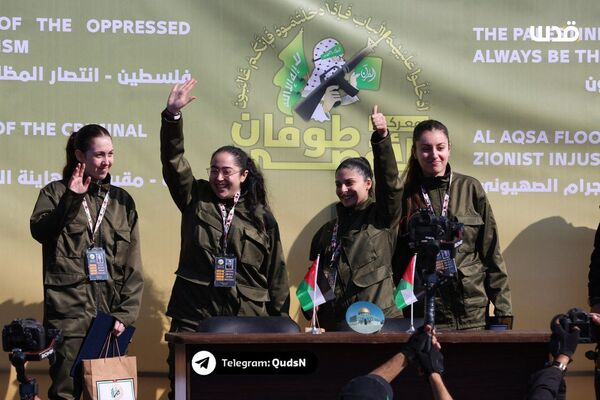
ARAB AND WORLD

Sat 25 Jan 2025 8:43 pm - Jerusalem Time

Trump Administration Halts Foreign Military Aid Despite Impact on U.S. Companies

Less than a week after taking office, it seemed clear that President Donald Trump had succeeded in changing Washington’s “policies,” not only domestically, but also abroad. Believing that the window before him might quickly close, he rushed in the first hours of entering the White House to sign a stream of executive orders, proving that his slogan “America First” was not just an election slogan. These policies soon dominated the world’s attention, from U.S. allies and rivals alike, as they tried to read how he would fulfill his election promises, make deals, and settle scores.
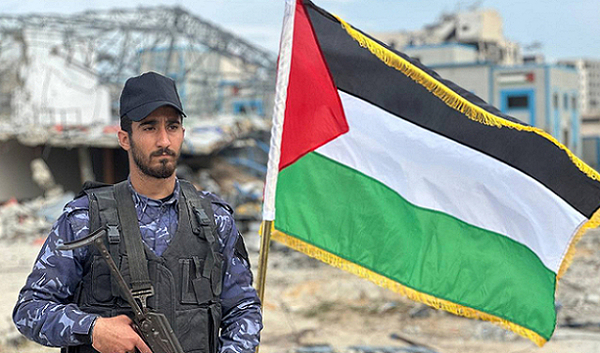

Stop foreign aid


Several US media outlets reported that Trump, during a meeting at the White House on Thursday night, told staff that he had made many promises during the campaign and now it was time to fulfill them. In implementation of the executive order he signed on Monday, which ordered a 90-day freeze on US foreign aid, US Secretary of State Marco Rubio issued an order on Friday to halt almost all US foreign aid, except for funding to Israel and Egypt, according to the internal memo. It stated that “no new funding to any entity shall be committed or any existing funding shall be extended until all new funding or extensions are reviewed and approved… in line with President Trump’s agenda.”


Israel and Egypt are among the largest recipients of U.S. military aid. Rubio’s memo notes that it is impossible for the new administration to assess whether existing foreign aid commitments are “non-duplicative, effective, and consistent with President Trump’s foreign policy.” While the memo excludes emergency food aid, it makes no mention of Ukraine, which under former President Joe Biden received billions of dollars in aid to defend itself against Russia. That suggests that aid has also been frozen, even though much of it went to U.S. arms manufacturers that were then sent to Kiev. The freeze could be highly contentious, since the money was already being recycled back to the United States, which is also a major source of Western weapons.


List of Rubio's Foreign Contacts


In another memo, Secretary of State Marco Rubio asked for a list of meetings or phone calls he planned to have, starting with China, followed by India, Australia, Japan, the Philippines, Israel, the “legitimate president” of Venezuela, Canada, Indonesia, the United Arab Emirates, Saudi Arabia, South Korea, Turkey, NATO, Costa Rica, Poland, Israel again, Egypt, China again, and Vietnam. The list, which refers to foreign policy priorities, includes eight with countries in the Indo-Pacific, five in the Middle East, three in the Americas, one with Turkey, one with Poland, and one with NATO.


Wang warns Rubio


On Friday, the Associated Press reported that Chinese Foreign Minister Wang Yi said he had his first phone call with new U.S. Secretary of State Marco Rubio, delivering a “subtle warning,” telling him: “You should behave properly.” “I hope you will behave accordingly,” Wang told Rubio, according to a statement from the Chinese Foreign Ministry, using a Chinese phrase typically used by a teacher or principal to warn a student or employee to behave well and take responsibility for their actions. The short statement appeared to be aimed at Rubio’s outspoken criticism of China and its human rights record when he was a U.S. senator, which led the Chinese government to impose sanctions on him twice in 2020. The Chinese minister’s statement can be interpreted differently, with the Foreign Ministry previously using the phrase “make the right choice” and “be very careful about what you say or do” instead of “act accordingly.”


US arms sales rise


While the US State Department released a report on US arms sales to foreign governments in 2024 on Friday, showing a 29 percent increase to a record $318.7 billion, Poland’s defense minister warned Europeans that they must spend more on defense to win the support of US President Donald Trump. The State Department report shows that the rise in US arms sales came as countries sought to replenish their stockpiles after sending weapons to Ukraine and preparing for major conflicts. The figures from the final year of President Joe Biden’s administration support expectations of stronger sales for US arms makers such as Lockheed Martin, General Dynamics and Northrop Grumman, whose shares are expected to rise as global instability worsens.


President Trump has repeatedly called on allies to spend more on defense, and he wants other NATO members to spend 5 percent of their gross domestic product on defense, a massive increase from the current target of 2 percent, a level that many NATO countries have yet to reach. Defense contractors are struggling to meet the surge in demand, which has been exacerbated by Russia’s invasion of Ukraine.


Spend more to get Trump to listen to you


Meanwhile, Polish Defense Minister Wladyslaw Kosiniak-Kamysz called on European countries to increase their military spending. “US President Donald Trump will not listen to your views on Ukraine unless you start seriously investing in your security,” he said in an interview on Saturday. “The recipe is simple: more defense spending, more investment in the military industry,” Kamysz said, according to Bloomberg. “Only then can Europe really have a seat at the negotiating table,” he added. The impact of Russia’s war on Ukraine is being felt in neighboring Poland and along NATO’s eastern flank, he added.


In addition to his demand for increased military spending, Trump threatened to impose tariffs on allies and adversaries in a virtual speech to the World Economic Forum in Davos, Switzerland. When the forum’s CEO, Borge Brende, mentioned during the virtual discussion with Trump that the US president had called Chinese leader Xi Jinping just days before his inauguration, Trump immediately corrected him, saying, “He called me,” making it clear that world leaders are communicating with him, not the other way around. Trump pledged during his campaign to punish drug traffickers with the death penalty and threatened China, Mexico and Canada with tariffs, though his first week in office passed without such action, allaying concerns.

PALESTINE

Sat 25 Jan 2025 8:19 pm - Jerusalem Time

Suffocation injuries during Israeli occupation's storming of the house of a released detainee south of Nablus

A number of citizens suffered from suffocation, Saturday evening, when the Israeli occupation forces stormed the home of a released detainee in the town of Qablan, south of Nablus.


According to local sources, the occupation forces stormed the house of the released detainee Anas Al-Aqraa, and assaulted the citizens who were waiting for him, with sound bombs and toxic tear gas, which led to suffocation injuries.

PALESTINE

Sat 25 Jan 2025 7:21 pm - Jerusalem Time

Two Palestinians were shot after Israeli occupation forces raided the house of the released prisoner Ashraf Zaghir in Kafr Aqab

Two citizens were injured by Israeli occupation forces' bullets, and another was arrested, on Saturday evening, after they stormed the town of Kafr Aqab, north of occupied Jerusalem, and raided the home of Ashraf Zaghir, the detainee released in the second batch of the ceasefire agreement.


Local sources said that the occupation forces stormed Kafr Aqab amidst gunfire, which resulted in the injury of two citizens with gunfire, and raided the house of the freed prisoner Ashraf Zaghir.


The Jerusalem Governorate stated in a brief statement that the occupation forces detained Zaghir after raiding his house and arresting his brother, Amir.


In a related context, the governorate added that the occupation forces stormed the town of Al-Ram, north of occupied Jerusalem, and the town of Al-Eizariya, south of it, and raided the home of the released prisoner Ibrahim Abu Sneineh and prevented the gathering to receive him.

PALESTINE

Sat 25 Jan 2025 6:17 pm - Jerusalem Time

Settlers burn a vehicle and assault citizens in Masafer Yatta

Today, Saturday, settlers attacked the homes of citizens in Khirbet al-Tuba in Masafer Yatta, south of Hebron.


According to local sources, a number of settlers attacked citizens' homes and caves in Khirbet al-Tuba, burned a vehicle belonging to citizen Ali Awad, and caused material damage to a number of homes and residences in the area.

PALESTINE

Sat 25 Jan 2025 5:30 pm - Jerusalem Time

Ghebreyesus: WHO has intensified its response in Gaza after the ceasefire

WHO Director-General Tedros Adhanom Ghebreyesus said the organization has intensified its health response in Gaza following the ceasefire agreement between Israel and Hamas.


This came in a post by Ghebreyesus on the "X" platform, on Friday, commenting on the ceasefire and prisoner exchange agreement that entered into force on January 19.


He explained that the World Health Organization has been working to expand the scope of its health response in Gaza since the ceasefire agreement in the Strip.


He pointed out that 70,000 liters of fuel were delivered to the Strip this week, which allows 20 health facilities and hospitals to remain partially operational in Gaza and ambulances to operate.


Ghebreyesus said that the World Health Organization delivered essential medical supplies from its stockpile in Gaza to 6 hospitals and medical points, and to 21 medical teams in the north and south of the Strip.


He pointed out that these resources are sufficient to provide "50,000 patients with maternity care, treatment for trauma, malnutrition and non-communicable diseases, and to improve infection prevention in health facilities."


Ghebreyesus stressed that conditions in Gaza are still difficult, noting that relief operations are still complex.


He explained that WHO teams continue their commitment to delivering urgently needed medical supplies and enabling the health system in Gaza to recover sooner.


On January 19, a ceasefire between Hamas and Israel came into effect. Its first phase will last for 42 days, during which negotiations will begin to begin a second and then a third phase, mediated by Egypt, Qatar, and the United States.


Earlier on Saturday, Hamas released four Israeli female soldiers and handed them over to the Red Cross, which in turn handed them over to the Israeli side, as part of the second batch of the first phase of the exchange deal and ceasefire in Gaza.

PALESTINE

Sat 25 Jan 2025 4:27 pm - Jerusalem Time

A citizen was injured by Israeli occupation forces’ bullets in the central Gaza Strip

A citizen was injured today, Saturday, by Israeli occupation forces' bullets in the central Gaza Strip.


According to local sources, the Israeli occupation forces fired live bullets directly at a citizen while he was with a group of citizens near the Wadi area on Rashid Coastal Street in the central Gaza Strip.


The occupation continues to violate the ceasefire agreement in the Gaza Strip, which came into effect last Sunday, January 19, by directly targeting citizens, a number of whom were martyred during the past few days, and others were injured.

PALESTINE

Sat 25 Jan 2025 4:05 pm - Jerusalem Time

Qatar: Mediators announce completion of second prisoner swap under Gaza deal

Mediators confirmed, on Saturday evening, the completion of the second prisoner exchange within the ceasefire agreement in the Gaza Strip, which included the handover of 4 female Israeli soldiers in exchange for the release of 200 Palestinian prisoners.


In a statement via the "X" platform, the Qatari Foreign Ministry said: "The mediators (Doha, Cairo and Washington) announce the completion of the handover of 4 detained Israeli women, one of whom holds Bulgarian citizenship, to the Israeli side, in exchange for the release of 200 Palestinian prisoners from Israeli prisons."


She added that this came within the framework of "the second exchange (of prisoners) since the start of the ceasefire."

PALESTINE

Sat 25 Jan 2025 2:51 pm - Jerusalem Time

Israeli occupation forces arrest a child after assaulting him south of Nablus

Today, Saturday, the Israeli occupation forces arrested a child after assaulting him in the village of Odala, south of Nablus.


Local sources reported that the occupation forces stormed the village of Odla amidst gunfire, and clashes erupted in the area. They arrested a child whose identity is not yet known, after assaulting him.

PALESTINE

Sat 25 Jan 2025 2:37 pm - Jerusalem Time

Israel releases the second batch of detainees within the ceasefire agreement

Today, Saturday, the Israeli occupation authorities released the second batch of detainees as part of the ceasefire agreement.


The second batch, according to the Prisoners and Freed Prisoners Affairs Authority and the Prisoners Club, includes 200 detainees with life sentences and long sentences, 121 prisoners with life sentences, and 79 prisoners with long sentences. 114 prisoners were released from Ofer Prison to Ramallah, 16 prisoners to the Gaza Strip, and 70 of them were deported outside Palestine.


Among those released was the “dean of Palestinian prisoners,” Mohammed al-Tous (67 years old), from the village of al-Jab’a, south of Bethlehem, who spent 39 years in the occupation’s prisons.


The occupation released the detainee Raed Al-Saadi (57 years old) from the town of Al-Silah Al-Harithiya, west of Jenin, who has been detained since 1989, and is the oldest detainee in the Jenin Governorate.


The occupation also released the brothers Nasser, Muhammad and Sharif Abu Hamid (Naji) from the Amari refugee camp in Ramallah, and they will be deported outside the country. They are among four brothers serving life sentences in the occupation prisons, while their fifth brother, Commander Nasser Abu Hamid, was martyred at the end of 2022, and the occupation is still holding his body to this day.


The occupation forces turned the area near Ofer prison into a closed military zone, prevented the gathering of detainees' families, and fired live ammunition and tear gas canisters at them.

Hundreds of citizens and relatives of detainees gathered at the Ramallah Recreational Complex to welcome the 114 prisoners released from Ofer Prison, in the presence of Ramallah and Al-Bireh Governor Laila Ghanem and a number of leadership members.

ARAB AND WORLD

Sat 25 Jan 2025 11:42 am - Jerusalem Time

Lebanese Army Holds Israel Responsible for 'Procrastination' in Withdrawal

The Lebanese army confirmed on Saturday its readiness to deploy in the border areas in the south of the country, and held Israel responsible for "delaying" the withdrawal under the ceasefire agreement with Hezbollah.


He stressed in a statement that his units continue to "implement the plan for operations to enhance deployment in the area south of the Litani River, upon assignment from the Council of Ministers, since the first day of the ceasefire agreement entering into force, according to successive and specific stages, in coordination with the five-member committee to supervise the implementation of the agreement (Mechanism) and the United Nations Interim Force in Lebanon - UNIFIL."


He added, "There was a delay in a number of stages as a result of the procrastination in the withdrawal on the part of the Israeli enemy, which complicates the task of the army's deployment, noting that it maintains readiness to complete its deployment immediately after the Israeli enemy withdraws."


Israel announced on Friday that the withdrawal of its forces from southern Lebanon "will continue" after the expiry of the sixty-day period stipulated in the agreement that began to be implemented at dawn on November 27, considering that Lebanon did not fully respect its obligations.


The office of Israeli Prime Minister Benjamin Netanyahu said in a statement that "the ceasefire agreement in Lebanon stipulates that the gradual withdrawal of Israeli forces must be implemented within 60 days, and the section was formulated in this way with the understanding that the withdrawal process may take more than 60 days."


He added that "the Israeli army's withdrawal is conditional on the deployment of the Lebanese army in southern Lebanon, and its full and effective implementation of the agreement, while Hezbollah withdraws beyond the Litani."


It is noteworthy that, according to the agreement, Israel must withdraw its forces from southern Lebanon within 60 days, i.e. by January 26, and this must be accompanied by strengthening the deployment of the Lebanese army and UNIFIL.


Hezbollah must also withdraw its personnel and equipment and retreat to the north of the Litani River, which is about 30 kilometers from the border, and dismantle any remaining military infrastructure in the south.


A five-member committee, including the United States, France, Lebanon, Israel and UNIFIL, monitors compliance with its provisions and deals with violations reported by each party.


On the eve of the expiration of the Israeli withdrawal deadline, the Lebanese army called on "residents to wait before heading towards the southern border areas, due to the presence of mines and suspicious objects left behind by the Israeli enemy."


He stressed that his units are working "to complete the engineering survey, open roads, and deal with unexploded ordnance, and are closely monitoring the operational situation, especially with regard to the ongoing violations of the agreement and attacks on Lebanon's sovereignty, in addition to the destruction of infrastructure and the demolition and burning of homes in border villages by the Israeli enemy."

PALESTINE

Sat 25 Jan 2025 11:25 am - Jerusalem Time

List of prisoners to be released by Israel today as part of the exchange deal

The Commission of Prisoners' Affairs and the Palestinian Prisoners' Club announced the names of the detainees to be released today, Saturday, as part of the second batch of the ceasefire agreement, which includes 200 detainees with life sentences and high sentences.


The list includes:

1- Ibrahim Khalil Ahmed Salah

2- Mahmoud Issa/ Mahmoud Ahmed Asaad

3- Abdul Latif Muhammad Lutfi Ahmed Hamada

4- Ahmed Mustafa Ahmed Al-Shaibani

5- Mohammed Awda Ishaq Shahada Awda

6- Nasr Mohammed Youssef Naji

7- Sherif Mohamed Youssef Nagi

8- Wael Naeem Ahmed Al-Jaghoub

9- Wassam Saeed Musa Al-Abbasi

10- Saleh Sobhi Daoud Dar Musa

11- Mohammed Nasr El-Din Saleh El-Melh

12- Salim Mohammed Salim Haji

13- Thabet Azmi Suleiman Mardawi

14- Mohammed Nabil Amer Mohammed Arqan

15- Imad Rashid Abdul Rahman Kamil

16- Rabi' Rafiq Sharif Abu Al-Rab

17- Jad Ibrahim Musa Maala

18- Ibrahim Mohammed Ahmed Halabiya

19- Mahmoud Sedky Suleiman Radwan

20- Saeed Abdullah Saeed Al-Banna

21- Ramadan Eid Ramadan Month

22- Khalil Muslim Muhammad Baraq’a

23- Iyad Yasser Mahmoud Masalma

24- Thaer Khaled Omar Awidat

25- Lily Ayoub Mohammed Abu Arjlieh

26- Yasser Mohammed Obaid Rabaya

27- Jihad Youssef Ismail Al-Najjar

28- Jasser Afif Mohammed Raddad

29- Samir Abdel Fattah Reda Tobasi

30- Basil Atef Mohammed Makhlouf

31- Zaid Ibrahim Ahmed Basisi

32- Yasser Mahmoud Abu Bakr

33- Mahmoud Ali Abdel Radaideh

34- Nafeth Nayef Salim Al-Hajj Hussein

35- Naji Ibrahim Hassan Basharat

36- Asaad Yousef Hamid Zaarab

37- Raef Ramez Helmy Al-Farra

38- Mohammed Qasim Ahmed Arda

39- Mohammed Mohammed Youssef Naji

40- Munif Muhammad Mahmoud Janadiyah

41- Shadi Abdel Samee Suleiman Zaid

42- Wael Mahmoud Mohammed Ali Qasim

43- Fahmy Eid Ramadan Monthly

44- Khaled Saber Mohammed Abu Amsha

45- Salah El-Din Mohammed Ibrahim Abu Jalboush

46- Mahmoud Hammad Mahmoud Shriteh

47- Ihab Ziad Abdel Fattah Al-Sharafa

48- Ibrahim Issa Khalil Ibrahim

49- Iyad Mahmoud Abdel Rahim Nassar

50- Ali Hassan Abdullah Al-Rajbi

51- Mohammed Shaker Allan Maala

52- Ahmed Mustafa Yassin Technician

53- Fahd Abdullah Mohammed Sawalhi

54- Mahmoud Attia Hassan Kleibi

55- Nour Mohammed Shukry Jaber

56- Iyad Ibrahim Hassan Jaradat

57- Yahya Hashem Abdel Fattah Al-Haimouni

58- Samer Abdel Samee Ahmed Al-Atrash

59- Mohammed Naeem Salman Qawasmeh

60- Mohammed Hussein Fayez Jaradat

61- Ahmed Dheeb Abdel Rahman Dahidi

62- Abdul Rahman Ghassan Mahmoud Washah

63- Youssef Abdel Latif Khader Mahdawi

64- Khaled Theeb Hassan Abu Hamad

65- Ammar Ahed Badie Al-Shoubaki

66- Ibrahim Youssef Ibrahim Attia

67- Youssef Atta Diab Ahmed Al-Hajj Mohammed Hamdan

68- Hossam Adnan Tawfiq Abed

69- Saed Abdul Samee Suleiman Zaid (Al-Kilani)

70- Fayez Abdul Majeed Jabr Hamed

71- Nasr Mohammed Youssef Daoud

72- Mohammed Hussein Awda Al-Barghouthi

73- Muhammad Samir Ahmed Rajabi

74- Mohammed Omar Abdullah Ahmed Zayed

75- Muhammad Sami Abdul Hamid Al-Ezza

76- Ahmed Saleh Ahmed Musa

77- Saeed Nasser Mahmoud Arar

78- Moatasem Mohammed Salim Salem

79- Ata Saeed Yaqoub Abu Ramouz

80- Hamza Salama Suleiman Abu Sawawin

81- Ahmed Badie Mustafa Hussein

82- Naaman Ali Ahmed Rayhan

83- Mohammed Zuhair Salem Abu Daraz

84- Mahmoud Kamel Mohammed Atawneh

85- Mohammed Abdel Khaleq Ahmed Abu Saada

86- Moataz Sobhi Hassan Zaarour

87- Ihab Hosni El Sayed El Jazzar

88- Salah Riyad Muhammad Mughadba

89- Riyadh Abdul Qader Radhi Arafat

90- Ibrahim Salim Musa Abu Sininiya

91- Tamer Rajih Issa Rajabi

92- Muhammad Jamil Hassan is sufficient

93- Shady Samir Abdel Wahab Halawa

94- Muhammad Mahmoud Tabab

95- Mansour Wajih Freez Bishara

96- Bakr Mohammed Salim Kharwish

97- Nasr Faisal Mohammed Badawi

98- Mohammed Ismail Hassan Al-Haroub

99- Ahmed Ibrahim Mohammed Abu Hamdeh

100- Muhammad Yunus Ali Abu Hanak

101- Mahmoud Samer Tawfiq Jabarin

102- Ezz El-Din Musa Deiryeh

103- Abdullah Mohammed Ahmed Hadia

104- Thaer Jamal Mohammed Taamra

105- Muhammad Murad Yasser Farhat

106- Hossam Mohammed Juma Khalil Zaanin

107- Omar Ismail Omar Wadi

108- Baha Daoud Ibrahim Awisat

109- Saeed Osama Issa Hermas

110- Mahdi Ayad Talib Akash

111- Musa Fawaz Musa Qabaitat

112- Muhammad Zuwaid Hamdi Al-Agha

113- Abdul Rahman Taha Abdul Rahman Balousha

114- Ayman Mohammed Ali Fawajra

115- Muhammad Ahmad Abdul Hamid Al-Tous

116- Raed Mohammed Sharif Al-Saadi

117- Ali Suleiman Saeed Al-Saadi

118- Hamza Mohammed Hassan Matrouk

119- Sedki Samer Sedki Jabr

120- Rami Ibrahim Naim Najjar

121- Younis Ali Abdel Moneim Al-Jabri

122- Mohammed Issa Mahmoud Al-Barbari

123- Anas Qasim Falah Aqraa

124- Zaid Ziad Jamil Amer

125- Abdul Aziz Hamad Mahmoud Marai

126- Ahmed Mohammed Abdullah Hadraj

127- Jawad Ziad Abdul-Mut’i Shalakhti

128- Arafa Abdul Rahman Rashid Abu Surur

129- Tamer Younis Ahmed Wreidat

130- Muqdad Muhammad Ibrahim Al-Hayeh

131- Mohammed Musa Mohammed Badr

132- Yasser Yassin Musa Al-Tarwa

133- Sohaib Jabara Ahmed Al-Faqih

134- Ashraf Jamal Abdel Qader Ammar

135- Mohammed Fahim Mahmoud Shalaldeh

136- Hamam Jamal Badawi Musalma Akram Faisal Muhammad Badawi

137- Akram Faisal Mohammed Badawi

138- Alaa Raed Saleh Zghair

139- Bilal Ahmed Adeeb Abu Zaid

140- Mahmoud Saeed Mohammed Abu Asba

141- Medhat Fawzy Moussa Abu Sanima

142- Tariq Abdel Fattah Khaled Yahya

143- Tamer Shawkat Ahmed Khader

144- Raed Mohammed Ibrahim Badwan

145- Taher Khamis Ahmed Matar

146- Ibrahim Gamal Mahmoud Hamad

147- Abdul Aziz Yahya Hamid Assistant

148- Omar Mohammed Shawkat Muhajna

149- Ali Abdel Nasser Ahmed Mahameed

150- Wael Hassan Fahid Abu Rida

151- Ashraf Mounir Hamed Al-Zaghir

152- Younis Ali Mohammed Masaeed

153- Ahmed Khaled Dawood Hamed

154- Omar Saleh Mohammed Faeq Al Sharif

155- Naseem Rashid Abdul Wadud Al-Zaatari

156- Abdullah Adnan Yahya Al-Sharbaty

157- Murad Walid Khaled Al-Barghouthi

158- Moayad Shukry Abdel Hamid Hammad

159- Hashem Nasser Ahmed Al-Sous

160- Ammar Sidqi Salim Abu Ghulus

161- Sajid Ahmed Salim Abu Ghulus

162- Jaafar Fawzi Qasim Abu Hanani

163- Bahjat Mahmoud Jamil Shakirat

164- Abdul Moez Dheeb Ibrahim Al-Jaba

165- Louay Shaher Shakib Al-Awiwi

166- Nael Mohammed Suleiman Yassin

167- Alaa Gabriel Mohammed Damanhouri

168- Mudar Musa Ahmed Abu Diya

169- Musa Adam Salem Akhlil

170- Abdel Nasser Mohamed Mahmoud Rizk

171- Aladdin Gamil Eid Ghanem

172- Muhammad Jabr Awda Al-Haroub

173- Khaled Zuhair Najmuddin Qatina

174- Baha' al-Din Ali Hassan al-Adam

178- Abdullah Munir Saleh Ishaq

179- Ishaq Taher Salah Arefa

180- Muhammad Mahmoud Abdul Razzaq Salaima

181- Amjad Mustafa Saleh Hamed

182- Ayham Bassem Ibrahim Sabah

183- Malik Ahmed Musa Hamed

184- Hamza Fayez Fawzy Abu Al-Filat

185- Ahmed Yaqeen Yousef Jabri

186- Ziad Reda Ahmed (Taher) Marai

187- Ali Mahmoud Abdullah Abu Hassan

188- Abdul Rahman Abdul Mahdi Muhammad Izz al-Din Barqan

189- Ahmed Amin Ahmed Hamed

190- Azzam Ezzat Shaaban Shalaldeh

191- Azmi Sahl Azmi Nafaa

192- Ismail Musa Muhammad Al-Hadidi

193- Ahmed Mohammed Mahmoud Al-Mashayekh

194- Sami's return, the return of Suwaidah

195- Basil Salem Mohammed Shawamreh

196- Thaer Jamal Mahmoud Khalaf

197- Ibadah Aziz Mustafa Abu Ras

198- Mahmoud Faisal Mahmoud Basharat

199- Mohammed Abdel Halim Abdel Hamid Salem

200- Ismail Ibrahim Ismail Abu Aram

201- Imad Darar Abdullah Aghbar

202- Ali Ahmed Mohammed Arouj

203- Imad Al-Din Tayseer Musa Tarda

PALESTINE

Sat 25 Jan 2025 11:16 am - Jerusalem Time

Al-Qassam Brigades releases 4 female captives in the second batch of the exchange deal

The Qassam Brigades, the military wing of Hamas, released four female prisoners today, Saturday, as part of the second batch of the prisoner exchange deal between Hamas and Israel.


The handover of the four female prisoners took place in Palestine Square in the center of Gaza City.


Four Palestinian resistance vehicles arrived at Palestine Square, with the four female prisoners inside, and they got out of the vehicles in military uniform.


The Red Cross received the four Israeli female soldiers after the signing ceremony on the handover platform between the Qassam Brigades and the Red Cross.


PALESTINE

Sat 25 Jan 2025 9:50 am - Jerusalem Time

Gaza Interior Ministry clarifies regarding the return of displaced persons to the north tomorrow

The Ministry of Interior and National Security in Gaza clarified, today, Saturday, the mechanism for the return of the displaced from the south and center of the Strip to its north.


The Ministry of Interior said in a statement, “The return of the displaced will be on Sunday, January 26, 2025, and will be…

Rashid Coastal Street is open to pedestrians only in both directions.


The ministry confirmed that Salah El-Din Street will be opened in one direction only for the return of vehicles of all types from south to north, noting that they will be subject to inspection before being allowed to cross the checkpoint.


She added: "Al-Rashid and Salah al-Din streets will be fully opened in both directions to pedestrians and vehicles on the 22nd day of the ceasefire agreement."

PALESTINE

Sat 25 Jan 2025 8:28 am - Jerusalem Time

Dead, wounded, demolished and burned homes in the ongoing occupation aggression on Jenin

The Israeli occupation army continues its aggression on the city of Jenin and its camp for the fifth consecutive day, leaving 14 dead and dozens of injuries, destroying, demolishing and burning a number of citizens' homes, and destroying the infrastructure there.


Several villages and towns in Jenin Governorate witnessed raids, sieges of homes, and arrests, including: Al-Silah Al-Harithiya, west of Jenin, and Mithalun and Qabatiya, south of Jenin, where the latter witnessed Israeli bombing from a drone on a vehicle, which led to the martyrdom of two young men.


The occupation bulldozers destroyed the entrance to the towns of Al-Yamoun and Al-Saylah Al-Harithiya to the west, in addition to bulldozing Jaffa Street, which connects the city of Jenin and its western villages.


The occupation forces launched a wide-scale arrest campaign that targeted a number of citizens from neighborhoods and homes in Jenin camp. They also raided the home of the detainee Zakaria al-Zubaidi and detained his wife and children. They also stormed the homes of his two brothers, Yahya and Jibril, in the Jaberbat area and vandalized their contents.


Our correspondent said that the occupation bulldozers destroyed and burned a number of citizens' homes in the southwestern area of the camp, to expand the area to its neighborhoods.


In the Al-Zahra and Al-Jabariyat neighborhoods, the occupation forced citizens to evacuate their homes and did not allow them to return to them before a month from the date of that date, while drones continued to fly in the skies of the camp and declared a curfew in it.


The occupation army continues to send military reinforcements into the city of Jenin and the entrances to the camp, while the Health Directorate issued a circular to patients who obtain medicines from its headquarters in Jenin, to go to the directorate’s centers in the towns of the governorate, due to the continued storming of the city and the difficulty of movement and travel.

PALESTINE

Sat 25 Jan 2025 8:24 am - Jerusalem Time

Two congressional sources: Hamas has recruited about 15,000 since the outbreak of the war

Two US congressional sources familiar with US intelligence said that the Islamic Resistance Movement (Hamas) has recruited between 10,000 and 15,000 since the beginning of the war in the Gaza Strip, indicating that the movement will continue to pose a threat to Israel.


Intelligence information indicates that a similar number of Hamas fighters have been killed since the beginning of the war, and this is the first time such official estimates have been issued.


The two sources familiar with the intelligence, which was included in a series of updates provided by US intelligence agencies in the final weeks of the Biden administration, added that while Hamas has been successful in recruiting new members, a large number of them are untrained young men who carry out simple security tasks.


The Office of the Director of National Intelligence declined to comment.


Former US Secretary of State Antony Blinken said on January 14 that the United States believes that the number Hamas has recruited is roughly the same as the number it has lost in Gaza, warning that this is “an indication of the continuing insurgency and the continuing war.”


Blinken did not provide further details on the assessment, but Israeli data says the total number of militants killed in Gaza is around 20,000.


Last Sunday, a ceasefire agreement between Hamas and Israel came into effect after a 15-month conflict. In its first phase, negotiations are underway to begin a second and then a third phase, mediated by Qatar, Egypt and the United States.