ARAB AND WORLD

Mon 27 Jan 2025 12:56 pm - Jerusalem Time

Safadi: All talk about an alternative homeland for the Palestinians is rejected

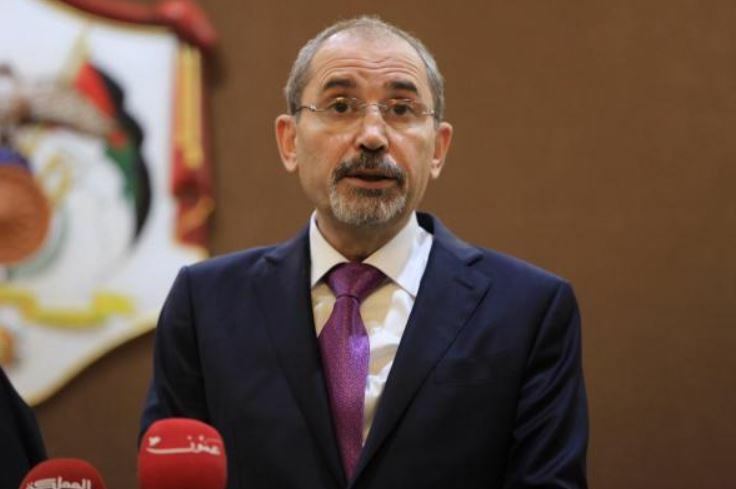
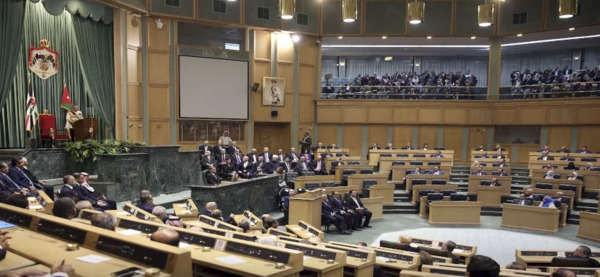
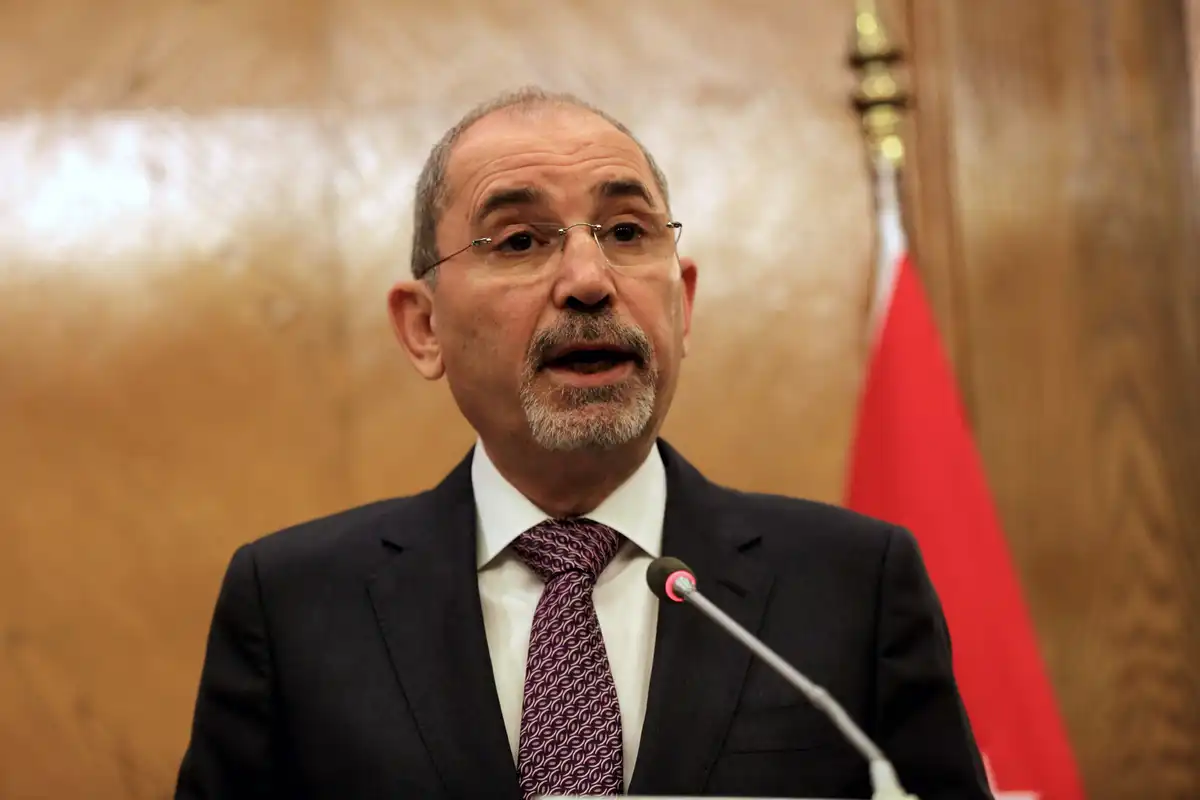
Jordanian Foreign Minister Ayman Safadi said on Monday that talk of an alternative homeland for the Palestinians is "unacceptable", after US President Donald Trump called for the transfer of Palestinians from the Gaza Strip to the Kingdom and Egypt.


This came in a briefing before the House of Representatives (the first chamber of parliament), according to the Jordanian Ministry of Foreign Affairs on its account on the "X" platform, the day after Trump's call to transfer Palestinians from Gaza to Egypt and Jordan, on the grounds of "the lack of suitable places to live in the Gaza Strip" as a result of the Israeli genocide.


Al-Safadi added: "His Majesty the King (Abdullah II) said it more than once, Jordan is for Jordanians and Palestine is for Palestinians, and the solution to the Palestinian issue is on Palestinian soil."


In his first term, specifically in 2020, Trump announced what was known as the “Deal of the Century,” which aimed to establish an alternative homeland for the Palestinians in Jordan, end the idea of a two-state solution at the expense of the Kingdom, and achieve the establishment of “one state of Israel” or “Greater Israel,” as they call it.


Following that, King Abdullah said: "As a Hashemite, how can I back down from Jerusalem?! Impossible. A red line. No to Jerusalem, no to an alternative homeland, no to settlement."


Al-Safadi stressed that "all talk about an alternative homeland, as King Abdullah II confirmed, is rejected. We do not accept it, we have not accepted it, and we will continue to confront it with all our capabilities."


Jordan and Egypt have shared the position of rejecting the displacement of Palestinians from Gaza since the first moment the Israeli war of extermination began on October 7, 2023, as Amman and Cairo said more than once that the issue is a “red line.”


Amman and Cairo reiterated their rejectionist position through official statements and declarations on Sunday.


On Saturday, Trump called in statements to reporters to transfer the Palestinians of Gaza to neighboring countries such as Egypt and Jordan, citing the "lack of habitable places in the Gaza Strip," on which Israel has waged a war of extermination for more than 15 months.


With American support, between October 7, 2023 and January 19, 2025, Israel committed genocide in the Gaza Strip, leaving about 159,000 Palestinians dead and wounded, most of them children and women, and more than 14,000 missing.


On January 19, a ceasefire agreement in Gaza and a prisoner exchange agreement between Hamas and Israel went into effect, mediated by Qatar and Egypt and supported by the United States.


On November 21, the International Criminal Court issued two arrest warrants for Israeli Prime Minister Benjamin Netanyahu and former Defense Minister Yoav Galant, on charges of committing war crimes and crimes against humanity against Palestinians in Gaza.


For decades, Israel has occupied lands in Palestine, Syria and Lebanon, and refuses to withdraw from them and establish an independent Palestinian state, with East Jerusalem as its capital, on the borders before the 1967 war.

PALESTINE

Mon 27 Jan 2025 12:44 pm - Jerusalem Time

Dozens of settlers storm Al-Aqsa Mosque courtyards under the protection of the occupation police

Dozens of Jewish settlers stormed the courtyards of the blessed Al-Aqsa Mosque in the occupied city of Jerusalem today, Monday, from the direction of the Moroccan Gate, under heavy guard from the Israeli occupation police.


The Islamic Endowments Department in Jerusalem reported in a statement that the settlers conducted provocative tours in the courtyards of the mosque and performed Talmudic rituals in its eastern area.


In contrast, the occupation forces continued to impose strict measures at the gates of the mosque, obstructing the entry of worshipers and confiscating their IDs.


Al-Aqsa Mosque is exposed daily, except for Fridays and Saturdays, to repeated violations and incursions by extremist settlers, under heavy protection from the occupation police, in an attempt to impose a new reality on the mosque through a plan for temporal and spatial division.

ARAB AND WORLD

Mon 27 Jan 2025 12:38 pm - Jerusalem Time

Israeli media: Netanyahu leaves for Washington on Saturday

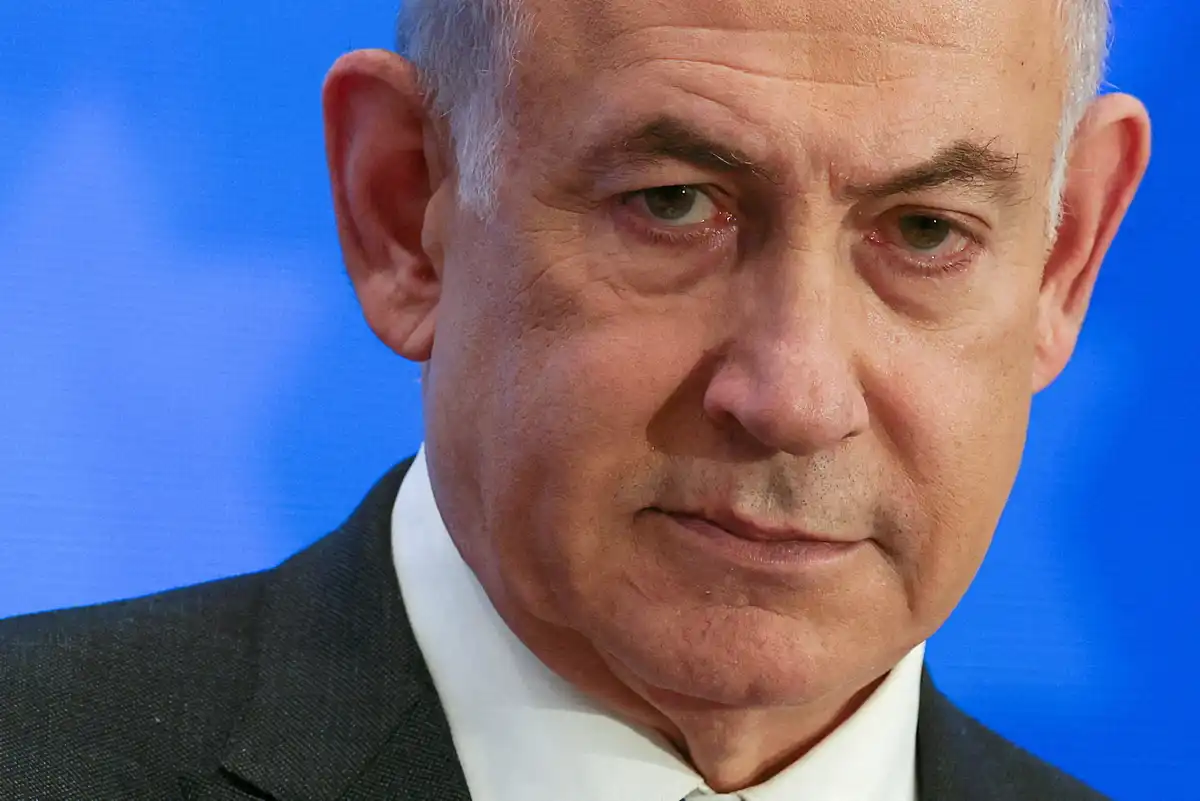
An Israeli newspaper said on Monday that Israeli Prime Minister Benjamin Netanyahu will leave for Washington next Saturday evening to meet with US President Donald Trump.


On November 21, 2024, the International Criminal Court issued arrest warrants for Netanyahu and former Defense Minister Yoav Galant, on charges of committing war crimes and crimes against humanity against Palestinians in the Gaza Strip.


124 countries that have signed the Rome Statute of the court are now obligated to arrest Netanyahu and Galant if they arrive, but the United States is not among them.


"Israel Today" newspaper said: "Prime Minister Benjamin Netanyahu is scheduled to leave for Washington on Saturday evening (February 1) to meet with President Donald Trump."


"The long-planned meeting, which initially included Netanyahu attending President Trump's inauguration (January 20), has been postponed," she added.


She attributed the postponement to "many factors, including the prime minister's recovery from prostate surgery and the start of his testimony in his trial" on corruption charges.


As of 10:00 GMT, no official Israeli or American statement has been issued regarding Netanyahu's visit to Washington.


Shortly after taking office, American presidents usually receive Israeli prime ministers, given the alliance between the two countries.


American administrations, whether Republican or Democratic, are keen to support Israel even if this raises criticism, as was embodied in the genocidal war that Tel Aviv waged on Gaza with American support.


The Israeli genocide in Gaza, between October 7, 2023 and January 19, 2025, resulted in approximately 159,000 Palestinian deaths and injuries, most of them children and women, and more than 14,000 missing persons.


For decades, Israel has occupied lands in Palestine, Syria and Lebanon, and refuses to withdraw from them and establish an independent Palestinian state, with East Jerusalem as its capital, on the borders before the 1967 war.

PALESTINE

Mon 27 Jan 2025 12:22 pm - Jerusalem Time

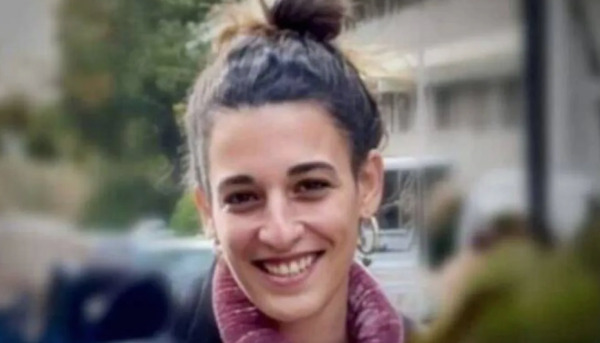
The return of thousands to northern Gaza was linked to her release... Who is Arbel Yehud?

The return of hundreds of thousands of Palestinians to the devastated northern Gaza Strip has hit a last-minute rift with Israel linking the move to the release of Israeli hostage Arbel Yehud.


Israel has set the opening of the Netzarim Corridor, which separates the southern Gaza Strip from its northern part, as a condition for the handing over of the hostage Yehud, claiming that Hamas did not abide by a condition in the truce agreement, which was not announced, requiring it to release the civilian hostages “first,” while a source from the Islamic Jihad movement said that Yehud was a soldier and not a civilian.


Under the terms of the ceasefire agreement between Israel and Hamas, Yehud was supposed to be among the first two groups of hostages released on Jan. 19 and Jan. 25, according to Israeli authorities. Israel had demanded Yehud’s release before the release of the captive female soldiers, four of whom were freed on Saturday.


The resistance movements in Gaza announced yesterday (Sunday) that the Jews are “alive and in good health.”


Who is Erbil Jews?

Yehud, 29, was kidnapped during the Hamas-led attack on October 7, 2023, from her home in Nir Oz, a village in southern Israel near the border of the Palestinian enclave. Yehud was kidnapped with her partner, Ariel Konio, who is also still in Gaza.


Yehud is the last civilian hostage Israel believes is likely alive. Another civilian woman, Sheri Bibas, remains in Gaza after being kidnapped from Nir Oz with her two young sons, Ariel, who was 4 at the time, and Kfir, who was 9 months old.


Yehud’s brother, Dolev Yehud, had been missing for several months and was also presumed to have been kidnapped. It later turned out that he had never reached Gaza: in June 2024, Israeli authorities declared him dead after his remains were identified in Nir Oz. The New York Times described the Israeli hostage at the center of the crisis as a test of the ceasefire agreement between Israel and Hamas.


According to the Hostages and Missing Families Forum, an Israeli organization that advocates for the release of hostages, Yehud works in a program at Groovy Tech, an educational center in southern Israel that focuses on space exploration and technology. According to the forum, Yehud had returned from a tour of South America shortly before the 2023 attack.


Israeli insistence

Israeli Prime Minister Benjamin Netanyahu's office said in a statement on Saturday that Israel "will not allow Gaza residents to cross into the northern part of the Gaza Strip until the release of civilian hostage Arbel Yehud, who was supposed to be released today (Saturday)," is arranged. Israel justified the decision not to release Yehud, whose release was considered a priority, and Hamas' failure to provide a list of the hostages, both living and dead.


Netanyahu later announced late Sunday that after negotiations with Hamas, the Palestinian movement would release three hostages on Thursday and three more on Saturday in exchange for allowing Gazans displaced from the enclave to return to the north of the strip. Netanyahu's office said in a statement that "after intensive and decisive negotiations (...) Hamas will release (...) Thursday (...) Arbel Yehud, soldier Agam Berger and another hostage," according to Agence France-Presse.


Civilian or conscript?

The Israeli Prime Minister's Office and Israeli media describe Yehud as an Israeli "civilian," while a source in Islamic Jihad, who is inside the Gaza Strip, told CNN on Saturday that Yehud was a soldier, adding that "she was detained by the Al-Quds Brigades (the military wing of Islamic Jihad) because she was a soldier trained in the Israeli military's space program."


In turn, a statement issued by the Resistance Committees in Palestine said: “We affirm our full commitment to the agreement reached on the issue of the captive Arbil Yahud.” The media official in the Resistance Committees in Palestine, Muhammad Al-Buraim, said in a statement that “the Zionist captive Arbil Yahud was captured by a joint group of mujahideen from the Al-Nasser Salah Al-Din Brigades, the military wing of the Resistance Committees in Palestine, and the Al-Quds Brigades, the military wing of the Islamic Jihad Movement in Palestine.”


Al-Brim added: “The resistance committees in Palestine and the Islamic Jihad Movement have shown great flexibility in order to reach solutions, through the Palestinian negotiating delegation, and to remove all obstacles to the return of our displaced people.” He continued, saying: “We are on our way to reaching a solution to this problem that was created by the Zionist enemy, in order to thwart the agreement and sabotage the efforts of the mediators.”


Later, the Al-Quds Brigades, the military wing of the Palestinian Islamic Jihad movement, said that guarantees had been conveyed to mediators that Arbil Yehud was alive and well. “We have provided what is necessary to remove Israel’s pretexts to obstruct the return of residents to northern Gaza, and we will implement what the leadership of the Islamic Jihad movement decides with the mediators regarding her release,” it said in a statement.


Under the agreement, Israel will release 30 Palestinian prisoners for every civilian hostage and 50 Palestinian prisoners for every Israeli female soldier released by Hamas.

ARAB AND WORLD

Mon 27 Jan 2025 12:15 pm - Jerusalem Time

Shin Bet: Arrest of two Israeli soldiers who leaked information to Iran

The Israeli General Security Service (Shin Bet) and the Israeli police arrested two Israelis suspected of carrying out missions for Iranian agents.


One of the suspects transferred classified material to an operator that he had obtained during his military service in the Air Defense Force, according to the Jerusalem Post.


In a coordinated operation between the Shin Bet and the Israel Police's National Crime Unit (Lahav 433), two residents of the Krayot area, Yuri Eliasov and Georgi Andreyev, were arrested in January on suspicion of involvement in security crimes.


Investigations also revealed that Ilyasov had been in contact with an Iranian agent for several months, carrying out security missions under the agent’s direction in exchange for financial compensation.

PALESTINE

Mon 27 Jan 2025 12:04 pm - Jerusalem Time

Israeli Undercover forces kidnap two brothers after one of them was injured south of Hebron

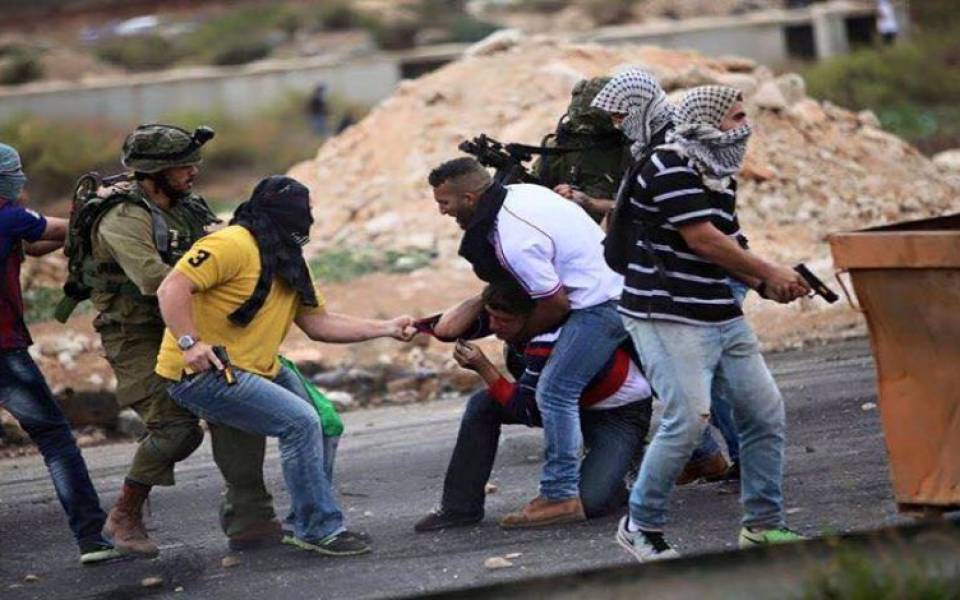
Today, Monday, the occupation's special forces, "Musta'ribeen", kidnapped two brothers after shooting one of them in the town of Dura, south of Hebron.


According to local sources, undercover soldiers infiltrated Dura in a fake civilian vehicle and kidnapped the young man, Muhammad Nabil Qazzaz, after shooting him in the foot with live bullets in front of his house. They also kidnapped his brother, Ahmad.

ARAB AND WORLD

Mon 27 Jan 2025 11:36 am - Jerusalem Time

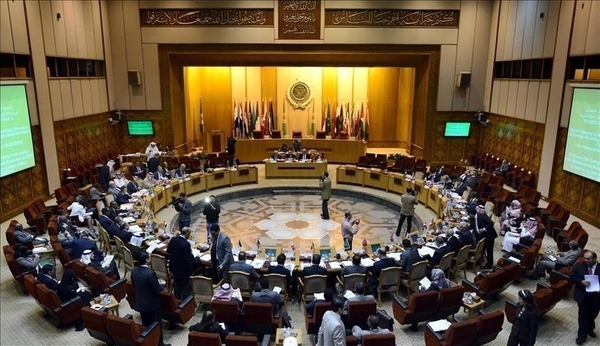
Arab League: Attempts to displace the Palestinian people are rejected and have proven to be a failure


The Arab League said on Sunday evening that "attempts to displace the Palestinian people from their land, through displacement, annexation or settlement expansion, have proven to have failed in the past, and are rejected and in violation of international law."


She stressed that "the forced displacement and deportation of people from their land can only be called ethnic cleansing."


On Saturday, US President Donald Trump called, in statements to reporters, for the transfer of Palestinians from the Gaza Strip to neighboring countries such as Egypt and Jordan, citing the "lack of habitable places in the Gaza Strip," against which Israel has waged a war of extermination for more than 15 months.


The Arab League explained, in a statement, that "circumventing these fixed principles and stable determinants, which have received Arab and international consensus, will only prolong the conflict and make peace more distant."


She stressed that "the just Palestinian cause is a cause of land and people, and that attempts to displace the Palestinian people from their land, through displacement, annexation or settlement expansion, have proven to have failed in the past."


The Arab League stressed that these attempts are "unacceptable and in violation of international law."


She stressed that "the forced displacement and deportation of people from their land can only be called ethnic cleansing."


She pointed out that "the current stage requires continuous work from everyone to consolidate the ceasefire and ensure its continuation, in preparation for immediately starting the reconstruction of Gaza and healing the wounds of its people who were exposed to 15 continuous months of brutal war, and the infrastructure of the Strip was exposed to unprecedented destruction in the history of modern wars."


The Arab League called on "all countries of the world that believe in the two-state solution as a path to peace, to work diligently and immediately to start a credible path to reach this solution, and implement it on the ground as soon as possible, considering that this solution is what guarantees the achievement of security and peace for the Palestinians, the Israelis, and all the peoples of the region and the world."


Earlier on Sunday, Egypt rejected in a statement by the Foreign Ministry the displacement of Palestinians, saying that it "rejects any infringement on the inalienable rights of the Palestinian people, whether through settlement or annexation of land, or by evacuating that land of its owners through displacement or encouraging the transfer or uprooting of Palestinians from their land, whether temporarily or long-term."


She considered this violation to "threaten stability, portend further spread of the conflict to the region, and undermine the chances of peace and coexistence among its peoples."


Jordanian Foreign Minister Ayman Safadi said in statements on Sunday: “Jordan’s rejection of displacement is constant and unchangeable and is necessary to achieve the stability and peace that we all want,” stressing that “the solution to the Palestinian issue is in Palestine, Jordan is for Jordanians, and Palestine is for Palestinians.”

ARAB AND WORLD

Mon 27 Jan 2025 11:24 am - Jerusalem Time

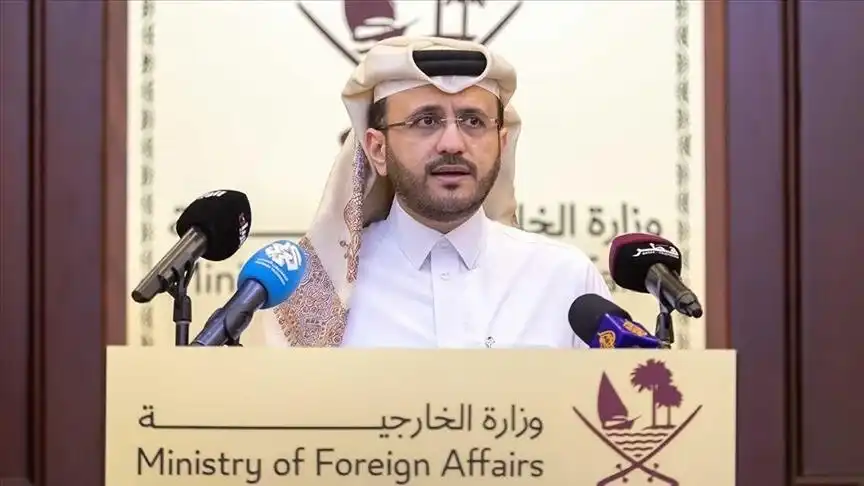
Qatar announces reaching understandings allowing the return of Gaza's displaced starting Monday

Qatar announced, on Sunday evening, new understandings between Hamas and Israel, according to which the displaced people of the Gaza Strip will return starting Monday morning, in exchange for handing over the hostage Arbil Yehud and others in the coming days.


This came according to a statement issued by the Qatari Foreign Ministry spokesman, Majed Al-Ansari.


The statement said, "Within the framework of the ongoing efforts led by the mediators, an understanding was reached between the two parties that Hamas will hand over the hostage Arbel Yehud and two other hostages before next Friday, and Hamas will also hand over 3 additional hostages on Saturday in accordance with the agreement."


The understandings also include "Hamas providing information on the number of hostages that will be released within the framework of the first phase of the agreement."


In return, the understandings include, according to the statement, that "the Israeli authorities will allow, starting Monday morning, the return of displaced citizens in the Gaza Strip from the south to the northern areas of the Strip."


Israel will also hand over “a list of the names of 400 people who have been arrested since October 7, 2023, every Sunday in the first stage.”


On Sunday, the government media office in the Gaza Strip said that tens of thousands of displaced Palestinians in the southern Gaza Strip are waiting for the opening of the "Netzarim" axis, to be able to return to their areas of residence, according to the ceasefire agreement that Israel is accused of evading commitment to.


Israeli Prime Minister Benjamin Netanyahu linked the return of hundreds of thousands of Palestinians in Gaza to the northern part of the Strip to the release of prisoner Arbel Yehud, according to a statement issued by his office on Saturday.


The main dispute lies in the classification of the prisoner. While the Palestinian factions insist that she is considered a "military" prisoner, Israel insists that she is a "civilian" prisoner, according to Hebrew media.


The Hebrew website "Walla" (private) says that the prisoner Arbel Yehud is being held by the military wing of the Islamic Jihad, and has been classified as a soldier because she was trained within the Israeli military space program.


For its part, Hamas confirmed through mediators that Arbel Yehud (29 years old) is alive and in good health, indicating that she will be released next Saturday, but Israel was quick to question this promise.


On January 19, a ceasefire between Hamas and Israel came into effect. Its first phase will last for 42 days, during which negotiations will begin to begin a second and then a third phase, mediated by Egypt, Qatar, and the United States.


With American support, between October 7, 2023 and January 19, 2025, Israel committed genocide in Gaza, leaving more than 158,000 Palestinian martyrs and wounded, most of them children and women, and more than 14,000 missing.

ARAB AND WORLD

Mon 27 Jan 2025 11:02 am - Jerusalem Time

Jordanian MPs: We affirm our complete rejection of the displacement of Palestinians from the Gaza Strip

Following US President Donald Trump's statements about proposals to transfer Palestinians from the Gaza Strip to Jordan and Egypt and displace them, the Jordanian House of Representatives said it completely rejects those calls.


The Jordanian parliamentarians said in a statement issued by them that "the Palestinian cause is going through a dangerous turning point. After the brutality of the occupier and the crimes and destruction it has committed, the illusions of displacement are emerging again, in continuous attempts that have not ceased to seek to liquidate the Palestinian cause and lose the hopes of establishing a state, and lose the future of generations, not only at the expense of years of legitimate Palestinian struggle, but also at the expense of Jordan and our sister Egypt. These are attempts that we affirm in the House of Representatives with one voice and in the name of the conscience and feelings of our great people, our complete rejection of them, as Jordan will not be an alternative homeland, and this homeland that has made sacrifices and endured wounds, harm and denial, will stand firm in the face of challenges no matter how severe and high they are."


He continued: “Talk about displacing the Palestinian people from Gaza, after the suffering and crimes they have endured, is not consistent with the values of justice and freedom advocated by democratic systems. No one has the right to determine the fate of Palestine except its steadfast people, and today, like other peoples of the world, they have the right to gain their freedom and establish their state on their national soil. The tampering and denial of the rights of the Palestinians will keep the region on a simmering state of tension and turmoil, and the entire region will not enjoy security and stability except through the establishment of a just and comprehensive solution that guarantees the full rights of our Palestinian brothers. Without that, the consequences will affect the region and the entire world.”


He added: "The keenness to stop the suffering of the people of Gaza is to support them with various forms of support, stop the brutal war machine, and put an end to the crimes of the extremist occupation government, not to propose solutions that serve the expansionist Zionist agenda that will only bring destruction and devastation to the region."


The statement continued: “As we stand in Jordan as one behind our leadership, army and security services, we affirm that the strength and cohesion of our front is the way to confront the dangers, and we say steadfastly: We remain faithful to the covenant with the land of the prophets and the holy places, continuing under the leadership of His Majesty King Abdullah II to fulfill our duty of conscience with brothers with whom we meet in the cause, concern and destiny, continuing to provide various types of assistance to our people in wounded Gaza, calling on the international community to support all efforts aimed at stopping the bloodshed and perpetuating the cessation of the war.”


He said: "Jordan has made every sincere effort to establish peace, and the calls to displace Palestinians to Jordan and Egypt cannot be explained except as a blow to all the values and principles that urged the continuity and expansion of peace, and the preservation of the security and stability of peoples. Accordingly, we in the House of Representatives will take every step that would strengthen our national position and its broad slogan: No to displacement, no to an alternative homeland, Palestine is for the Palestinians alone who decide their fate and we support them, and Jordan is for the Jordanians, a homeland for which we will sacrifice our souls and lives."

PALESTINE

Mon 27 Jan 2025 10:49 am - Jerusalem Time

A deal amidst genocide and bloodshed, analysts evaluate and question the high costs?

Amidst the bloodshed and destruction that has befallen the Gaza Strip, the recent “exchange deal” between the resistance and Israel stands out as one of the most complex and controversial deals in the history of the Palestinian-Israeli conflict.


In separate interviews with "I" dot com, writers and political analysts believe that this deal, which came in the shadow of an unequal war that resulted in the deaths of tens of thousands of martyrs and wounded, raises profound questions about the calculations of profit and loss, not only in terms of the number of prisoners released, but also in terms of the nature of the conflict and its future repercussions. While the deal is an unprecedented achievement for the resistance in breaking the conditions of the occupation, the human and material price paid remains the subject of questions about the fairness of the comparison between previous deals and the current reality.


They point out that the current deal is radically different from its predecessors, as this time it took place under the pressure of an unprecedented war of extermination, and while the resistance succeeded in achieving negotiating gains, such as the release of prisoners from categories that Israel had previously refused to negotiate about, the enormous human cost remains a deep wound in the Palestinian memory, pointing out that the deal comes as part of an agreement that was concluded, and is not separate from it.


A large number of martyrs, wounded and destruction


The writer and political analyst Dr. Omar Rahhal confirms that the human and material cost of the wars and deals witnessed by the Palestinian cause, whether the 2025 deal that cost nearly 50 thousand martyrs and thousands of wounded, compared to previous deals such as the Galilee deal in May 1985 that released 1,155 prisoners led by the Popular Front for the Liberation of Palestine - General Command, and the Fatah deal in 1982 that released 4,700 prisoners, are things that happen, but for the first time a deal takes place with this large number of martyrs, wounded and destruction.


Rahhal stresses that resistance is legitimate under occupation, and that responsibility for the victims lies with the Israeli occupation, not the resistance that defends its people.


Rahal points out that prisoner release deals have always been part of the Palestinian struggle, but they have never come at a human cost similar to what happened in 2025.


Rahhal explains that the Israeli war on the Gaza Strip is an asymmetric war, as Israel is classified as one of the strongest armies in the world, ranked 18th globally and first in the Middle East, and is a nuclear state supported by the United States, France, Britain, Germany and Italy. In contrast, 2.4 million Palestinians live in the Gaza Strip on an area of no more than 365 square kilometers, noting that the citizens of the Gaza Strip used to live on 40% of the total area of the Strip with a population density that is considered one of the highest in the world.


Rahhal points out that the weapons used by the occupation army in the Israeli wars are lethal weapons with great destructive power and are internationally prohibited, pointing out that the wars that took place between the countries of the world witnessed safe areas and humanitarian corridors, but what happened in Gaza was exceptional as there were no safe or neutral areas, but rather it was the most brutal war, and it revealed a mentality of revenge with racist dimensions, as civilian objects were targeted with direct instructions from the Israeli political and military levels.


Rahhal addresses the events of October 7, stressing that they are not an adventure, but rather part of the liberation struggle witnessed by peoples under occupation.


He points out that liberation movements in the world have always faced bloody and vengeful colonial powers, and that what happened in Gaza is the result of the brutality of the occupation, not the resistance.


Regarding the issue of prisoners, Rahhal confirms that the occupation bears responsibility for detaining prisoners for long periods, such as Muhammad al-Tous, who spent 39 years in captivity, and Karim and Maher Younis, who spent 40 years.


Rahhal points out that the resistance did not expect the war to last for a long time or to be this brutal, especially with the lack of preparedness to secure civilians in Gaza, which is something that must be paid attention to.


Rahhal stresses that the lessons learned from these wars must be taken into consideration, calling for unifying Palestinian efforts and creating a comprehensive political partnership that does not exclude any party.


Fateful decisions must be made collectively.


Rahhal points out that fateful decisions, whether in war or peace, must be taken collectively and not by one party, as happened in the Oslo Accords, in which the Palestinians went to peace without sufficient preparation. Therefore, today, more than ever, we need to strengthen national unity on the basis of full political partnership that does not exclude. This requires the PLO to call for a national rescue conference in which all Palestinians participate to come up with a unified national strategy that defines the features of the national salvation stage and the liberation process.


Rahhal stresses that resistance is legitimate, but the bloody results that occur are the result of the brutality of the occupation, not the resistance.

Rahhal calls for a re-evaluation of the tools and mechanisms that bring the Palestinians closer to achieving their national project, with the necessity of avoiding monopolization in making fateful decisions.


Any comparison between the current deal and previous ones is "unfair."


Writer and political analyst Nihad Abu Ghosh asserts that the current “prisoner exchange deal” between the Palestinian resistance and Israel is not just a traditional exchange, but rather forms part of a broader agreement to stop the war on Gaza, which came in exceptional circumstances of unprecedented military escalation and international bias towards Israel, amidst a global inability to bring in humanitarian aid.


Abu Ghosh explains that any comparison between the current deal and previous agreements is “unfair,” because this deal was carried out under the pressure of “daily massacres” and a “war of extermination” during which Israel dropped more than 90,000 tons of explosives on the Gaza Strip.


Abu Ghosh points out that the world has been unable to bring in “a truckload of medicine, shrouds or food,” and has even failed to transport the wounded, as the current deal is the result of “a huge battle unprecedented in Palestinian and world history since World War II,” stressing that the deal is part of a set of demands included in the agreement regarding a ceasefire in Gaza.


Abu Ghosh asserts that the current agreement includes several main axes: a ceasefire through a “sustainable calm,” the return of the displaced to their homes and the start of reconstruction operations, and the release of Palestinian prisoners, including categories that Israel had previously refused to negotiate over, such as the Jerusalem prisoners, the 1948 prisoners, and those it calls “those with Jewish blood on their hands.”


He points out that this is the first time that the resistance has succeeded in "breaking the Israeli conditions" related to the categories of prisoners, which represents a historical precedent in the negotiation process, as the occupation found a negotiator who adhered to the details, compared to previous agreements that were signed "without reading the details," as he put it.


Abu Ghosh asserts that the deal was the culmination of the resistance’s steadfastness, which “inflicted heavy losses on the occupation until the last moment,” noting that Israel sought to establish a new reality through the “Deal of the Century” and the “Abrahamic Peace,” which transformed the Palestinian issue into an “internal Israeli affair,” but the October 7, 2023 operation, which he describes as “defensive,” brought the issue back to the forefront of the world as a central issue in the Middle East.


Regarding the motives behind the operation, Abu Ghosh denies that it was the result of an “obsessive decision,” but rather considered it a “natural explosion” of 16 years of siege, in which travel, medical treatment, and work were intertwined with the continuous targeting of the return marches, and the prevention of the entry of 290 basic materials, including construction materials and medicines, which created “accumulated congestion” that led to the explosion.


Abu Ghosh warns that the next phase may be “more dangerous than genocide,” referring to the Zionist plans that are being discussed publicly, such as US President Donald Trump’s statements about “deporting Palestinians to Jordan and Egypt,” which he described as a “real tragedy” that threatens the entire Palestinian existence.


Abu Ghosh asserts that these plans are not linked to the results of the current war, but rather are an extension of an extremist Zionist strategy supported by an American administration that is completely biased towards the Israeli right.


Abu Ghosh stresses that the only solution to confront these challenges lies in "unifying the Palestinian ranks," noting that the internal division weakens the Palestinian position, which will lead to strengthening Arab and international solidarity.


Abu Ghosh believes that the war "is not over yet," as Israel is still trying to breach the terms of the agreement, while the Palestinians are preparing to face a fateful stage that includes all possibilities, from liquidating the issue through military force, which requires a unified Palestinian position.


The weaker party must work to exploit its strengths.


Writer and political analyst Daoud Kuttab confirms that the "Ahmed Jibril" operation in 1985 witnessed the release of 1,155 prisoners, and was preceded by the "Fatah" movement deal in which 4,700 prisoners were released, while the 2025 operation shows a huge human and material cost, which raises questions about the calculations of profit and loss in such operations.


Writers believe that the main problem in Operation "Noah's Flood" lies in the lack of control the resistance has when entering Israeli settlements and capturing civilians, especially women and children.


The writers explain that if the operation had been limited to targeting the army and men, the situation would have been less difficult, noting that this does not necessarily mean that Israel would be less fierce in its revenge.


Writers believe that the world will not allow it to act with the same degree of force as it did in previous operations, pointing out that the global media focus today is on the women and children of the Israeli prisoners, which increases international pressure on the Palestinian side.


Writers emphasize that the most important lesson lies in the possibility of demanding that the world and the Israeli side apply international law precisely, while the resistance itself violates it.


Writers point out that the Palestinian side, as the weaker party, must adhere to higher moral and legal standards, given the ability of the stronger party to use the media and politicians to its advantage.


He stresses that the weak party must work to exploit its strengths, which are the legitimacy of resisting the occupation, while avoiding targeting civilians or committing any violations that may weaken its moral and legal position before the international community.


A radical change in the circumstances surrounding exchange transactions


Writer and political analyst Talal Okal believes that the circumstances surrounding Palestinian prisoner release deals have changed radically since the 1980s until today, making it difficult to compare deals such as “Wafa al-Ahrar” or “Al-Aqsa Flood” with the current situation.


Awkal points out that the deal to release more than a thousand Palestinian prisoners in exchange for the Israeli soldier Gilad Shalit was completely different from the current situation, as those deals were not the result of large-scale wars as is the case today.


Awkal explains that the calculations of profit and loss in the current war are not limited to the number of prisoners released, but also include the nature of the war and its repercussions on the Palestinian national project.


Awkal stresses that talking about profit and loss, victory and defeat must be linked to understanding the nature of the current stage and the course of the conflict with the Israeli occupation.


Awkal points out that achieving freedom in the face of colonialism of this kind requires paying a heavy price, both materially and morally.


Awkal calls for contemplation of the material and moral losses incurred by the Israeli side, stressing that the extent of the catastrophe that befell the Gaza Strip must be understood within the framework of the major transformations in the conflict between “right and wrong.”


Awkal points out that the conclusions and judgments in this case are not subject to mathematics, but rather to the relationship of numbers to strategic shifts in the conflict.


Israel's declining international image and the cracking of its internal structure


Palestinian writer and political analyst Samer Anabtawi believes that the Israeli war on the Gaza Strip, which followed the October 7 attack, was “pre-planned” as part of the occupation’s strategy to liquidate the Palestinian cause through displacement and domination of the West Bank and Jerusalem.


Anbatawi points out that the recent prisoner exchange deal, despite its high bloody price, represents an unprecedented achievement for the Palestinian resistance in breaking the myth of the “invincible army,” in addition to revealing the decline of Israel’s international image and the cracking of its internal structure.


Anbatawi explains that the Israeli aggression on Gaza was not a random response to the events of October 7, but rather came as the culmination of a systematic policy that began with a 16-year siege, which aimed to pave the way for a military strike and create a catastrophic humanitarian reality that would lead to forced displacement, in the context of the Zionist project based on expansion and imposing complete dominance over Palestinian land.

Anbatawi says: “The siege was not a punishment for Hamas, but rather a tool to crush the will of the people of Gaza and dry up their sources of steadfastness, in preparation for a comprehensive military strike that coincided with the escalation of settlement activity in the West Bank and Jerusalem.”


Anbatawi acknowledges that "the price was heavy" due to the Israeli war on the Gaza Strip, with thousands of martyrs, wounded and detainees, and unprecedented destruction of infrastructure and buildings. Then came the exchange deal that led to the release of detainees with long sentences and life sentences, but it represents a precedent in the history of the conflict in terms of the number and quality of prisoners.


He says: "The Palestinian arena has not witnessed a deal of this size for decades, especially with the occupation's previous insistence on excluding prisoners serving life sentences."


Anbatawi points out that this deal is different from its predecessors, such as the “Ahmed Jibril” deal (1985), which took place in the context of the Lebanon war, while the resistance in Gaza succeeded by storming the settlements and penetrating the occupation’s security system.


Anbatawi points out that the war on Gaza is not separate from the broader scene in the West Bank, where the far-right Israeli government is accelerating the implementation of Judaization and de facto annexation plans, through intensifying settlements, daily assassinations, and restricting the movement of Palestinians around Al-Aqsa Mosque. He stresses that these measures, in addition to the systematic abuse of prisoners in the occupation’s prisons, represented a spark that led to the explosion of October 7 in response to the policy of “slow genocide.”


Anbatawi asserts that the occupation, despite its enormous military power, has paid a heavy price on several levels, as the fragility of the Israeli security system was exposed with the breach of the “Gaza envelope” lines, and the failure of the military machine to achieve its declared goals of eliminating the resistance. The international isolation of the occupation has also escalated with legal prosecution in the International Criminal Court and international courts, the growth of global boycott movements, the worsening of political and social crises in the occupying state, and the decline in confidence in the army’s ability to protect the settlements.


Anbatawi points out that the continued steadfastness of the people in Gaza despite the destruction, and the ability to achieve political gains and conclude the exchange deal, confirm that the resistance was able to change the equation despite the imbalance of power.


Anbatawi says: “Gaza’s steadfastness broke the might of the Israeli military machine and opened the door to a new phase of the conflict.”


Warning against the logic of "bartering" between submission and survival


Writer and political analyst Adnan Al-Sabah asserts that the “price of freedom” in the face of colonial projects is an idea rooted in the history of peoples who sacrificed blood for their independence and freedom, as peoples who gained their freedom did not make a mathematical calculation of the number of victims in exchange for liberation.


Al-Sabah says: “If the peoples of the earth thought about the blood on the altar of freedom, not a single people would have been liberated until today.”


Al-Sabah points to examples such as Algeria, which presented one and a half million martyrs, Bangladesh, which presented two and a half million martyrs, and Russia, which presented seven million in its revolutions and wars, noting that “only the aggressor thinks about the cost of domination, while the victim refuses to submit even if the price is high.”


Al-Sabah warns against the logic of “bartering” between submission and survival, saying: “Some peoples have paid a price for their submission that is greater than what they would pay for their freedom, but the lesson lies in choosing dignity over humiliation.”


Regarding the Palestinian reality, Al-Sabah stresses that "the first condition for victory is to put the internal house in order," affirming that the Palestinian divisions weaken the position in confronting the occupation.


Al-Sabah says: “The home front must be united, strong and have one vision, but we are still experiencing internal conflicts even in the midst of war, which is causing our cause greater losses.”


Al-Sabah believes that "internal contradictions exacerbate the suffering of the people," calling for an end to polarization and the building of a liberation strategy based on national consensus.


In comparing the “2025 Deal” that is currently taking place regarding stopping the war on the Gaza Strip and exchanging prisoners, with previous deals, Al-Sabah says: “The difference is fundamental and not just the issue of liberating prisoners; the challenge today affects the 1948 lands, which are a red line for Israel.”


Al-Sabah explains that “the attack on October 7 breached this line, which shook the image of the Israeli security system that sanctifies the sanctity of the lands of 1948,” noting that this was a major reason for the unprecedented retaliatory campaign against Gaza.


Al-Sabah points out that Israel did not only take revenge for the number of dead or prisoners, but also because the operation "stripped it of the illusion of immunity" and shook its people's confidence in its military institutions.


Al-Sabah calls on the Palestinians to "learn lessons," stressing that "victory begins with the people's belief in their right to freedom and their ability to pay the price," but he stresses that "this belief must be coupled with internal unity that besieges the occupation instead of besieging itself."

PALESTINE

Mon 27 Jan 2025 10:36 am - Jerusalem Time

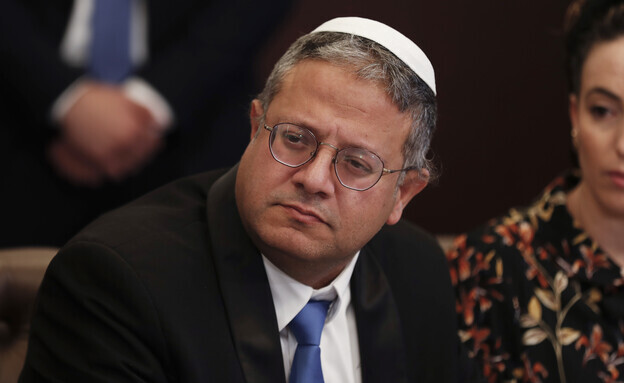
Ben Gvir on the return of Palestinians to northern Gaza: Complete Israeli surrender

Resigned Israeli National Security Minister Itamar Ben-Gvir said that the return of tens of thousands of displaced Palestinians from the southern Gaza Strip to the north on Monday morning is a "complete Israeli surrender."


The leader of the far-right Jewish Power party, via the X platform on Monday, denounced the opening of the Netzarim road this morning and the entry of tens of thousands of Palestinians into the northern Gaza Strip.


He stressed that these scenes represent "images of victory for Hamas, and another humiliating part of the reckless deal."


The return of the displaced began on Monday, the ninth day of a ceasefire and prisoner exchange agreement between Hamas and Israel that went into effect on January 19.


Ben-Gvir added: "This is not what complete victory looks like (as Israeli Prime Minister Benjamin Netanyahu claimed), this is what complete surrender looks like."


During the Israeli genocidal war on Gaza since October 7, 2023, Israeli Prime Minister Benjamin Netanyahu repeatedly spoke of his commitment to achieving what he described as “complete victory.”


Ben-Gvir, who resigned from Netanyahu's government in rejection of the agreement, continued: "We must return to war and destruction!"


Israel has turned Gaza into the world's largest prison, besieging it for the 18th year, and the war of extermination has forced about two million of its citizens, numbering about 2.3 million Palestinians, to flee in tragic conditions with a deliberate severe shortage of food, water and medicine.


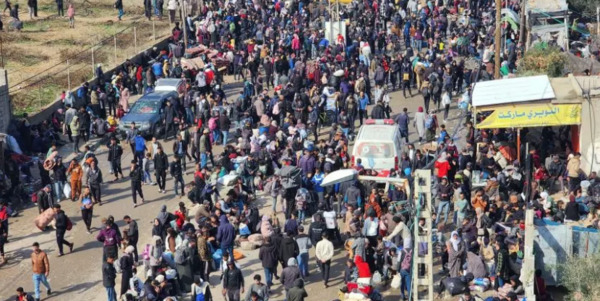
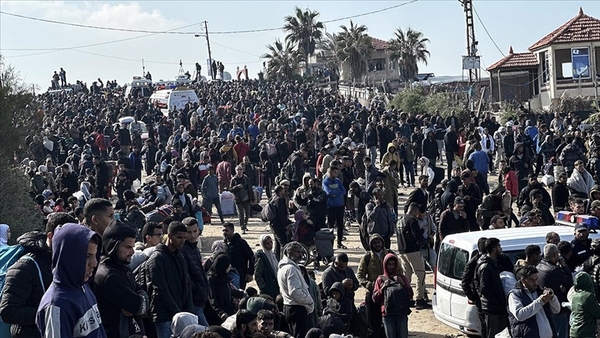
Since 7:00 local time (05:00 GMT), thousands of displaced Palestinians began returning on foot from the southern Gaza Strip to the northern and Gaza governorates via the Netzarim axis through the Rashid coastal road.


At 9:00 am, vehicles and cars are scheduled to start returning to the north via Salah El-Din Street, with cars undergoing inspection.


The first phase of the ceasefire agreement will last for 42 days, during which negotiations will take place to start a second and then a third phase, with the mediation of Egypt and Qatar and the support of the United States.


With American support, Israel committed genocide in Gaza between October 7, 2023 and January 19, 2023, leaving about 159,000 Palestinian martyrs and wounded, most of them children and women, and more than 14,000 missing.


On November 21, the International Criminal Court issued arrest warrants for Netanyahu and former Defense Minister Yoav Galant, on charges of committing war crimes and crimes against humanity against Palestinians in Gaza.


For decades, Israel has occupied lands in Palestine, Syria and Lebanon, and refuses to withdraw from them and establish an independent Palestinian state, with East Jerusalem as its capital, on the borders before the 1967 war.

PALESTINE

Mon 27 Jan 2025 10:27 am - Jerusalem Time

Trump Administration Officials: Rebuilding Gaza Much Easier with Its Population Gone

The Wall Street Journal quoted officials in the administration of US President Donald Trump as saying that rebuilding Gaza would be much easier if its residents left, and they spoke about the possibility of the Palestinians obtaining guarantees of return. The newspaper said that these statements appear to be an attempt to make the idea more politically acceptable to Arab countries.


Trump spoke to reporters about a plan to "cleanse" Gaza, which he described as a "destructive place." "I would like Egypt to take people. I would like Jordan to take people," he said, noting that he had discussed the issue with Jordan's King Abdullah II and was also scheduled to discuss it with Egyptian President Abdel Fattah el-Sisi.


Trump indicated that the transfer of Gaza residents could be "temporary or long-term," adding, "It's a place that is literally destroyed right now, everything is destroyed and people are dying there... So, I would rather reach out to a number of Arab countries and build housing in a different place where they might be able to live in peace."


The Wall Street Journal said that Trump administration officials have not yet clarified the precise details of the proposal, including how the more than two million Palestinians in the Strip would be transferred and whether they might eventually achieve their aspirations to rule their entire territory.


Officials said they saw Gaza as a wasteland filled with rubble and unexploded ordnance, and that rebuilding it would be much easier with its population gone.


“You can’t ask people to stay in an uninhabitable place for political reasons,” a senior Trump administration official said, suggesting that Palestinians could be guaranteed that they would eventually be able to return after negotiations with regional partners.


Support and reject

Gordon Sondland, who was Trump's ambassador to the European Union during his first term, called the proposal a "great idea" as long as there were "strong guarantees" to ensure Palestinians returned to their homes in Gaza.


In contrast, some of Trump's most loyal political allies have called the plan unrealistic. "The idea that all the Palestinians are going to leave and go somewhere else, I don't see that as practical," Republican Senator Lindsey Graham said.


The Wall Street Journal said that Egypt and Jordan had previously rejected any talk about receiving Palestinians, for reasons related to national security and the economic burden that might result from that, in addition to fear of being accused of supporting Israel’s annexation of Gaza if it prevented the Palestinians from returning.


The newspaper quoted former officials as saying that the decision of the extreme right in Israel to support Trump's proposal made it more difficult to obtain Arab support for the initiative.


"Egypt and Jordan accepting a large number of Palestinians from Gaza is an unlikely idea," a former senior US official added. "These were red lines for both countries before the Gaza crisis and are now even more severe red lines."


Egypt and Jordan expressed their rejection of Trump's proposal, and the Palestinian presidency expressed its rejection of projects to displace Palestinians in Gaza, considering it a "crossing of red lines." The Islamic Resistance Movement (Hamas) called on the American administration to "stop such proposals, which are in line with Israel's plans and clash with the rights and free will of our people."

PALESTINE

Mon 27 Jan 2025 10:22 am - Jerusalem Time

Netanyahu: Hamas are the new Nazis and we are committed to defeating them once and for all

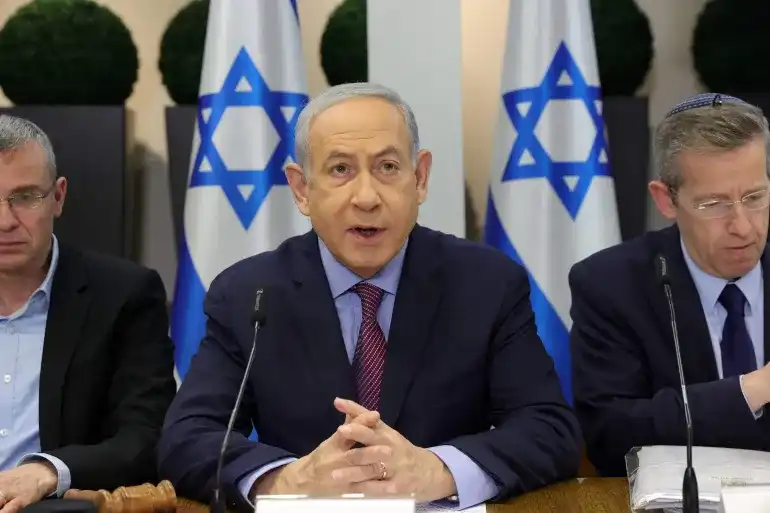
Israeli Prime Minister Benjamin Netanyahu has described members of the Islamic Resistance Movement (Hamas) as "neo-Nazis" and said he is committed to "defeating them once and for all."


Netanyahu considered - in a post on his account on the "X" platform today, Monday - that the International Criminal Court, which issued an arrest warrant against him, "was established in the shadow of the Holocaust, but its reputation was tarnished by its anti-Semitic attacks against Israel."

He pledged that Israel would "always remain a safe haven for Jews around the world."


Netanyahu's post came on the occasion of International Holocaust Remembrance Day, which falls on January 27, 1945, when Soviet soldiers liberated the German concentration and extermination camp in Nazi-occupied Poland.


Netanyahu faces an arrest warrant from the International Criminal Court, along with former Israeli Defense Minister Yoav Galant, for their role in the war of extermination on the Gaza Strip.


The Israeli Prime Minister had previously claimed that the occupation soldiers had found an Arabic copy of the books "Mein Kampf" by the Nazi German leader Adolf Hitler in the homes of civilians in Gaza. He said at the time, "This is what they raise their children on, and that is why I am determined to get rid of Hamas, and that it will no longer be a party calling for the destruction of Israel."

PALESTINE

Mon 27 Jan 2025 10:16 am - Jerusalem Time

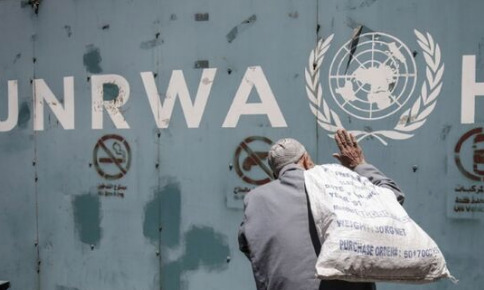
UNRWA, before the final warning, within days, the seals will be withdrawn!

In a letter addressed to UN Secretary-General Antonio Guterres, Israel's Ambassador to the United Nations, Danny Danon, gave the United Nations Relief and Works Agency for Palestine Refugees (UNRWA) a deadline to cease its activities in Jerusalem and vacate all buildings it occupies by Thursday, January 30, at the latest.


Last October, the Israeli Knesset finally approved, in the second and third readings, a law banning UNRWA’s activities inside the occupying state. This law is scheduled to enter into force at the end of this month.


UN officials, observers and analysts told "I" that these Israeli measures are a clear violation of international laws and the pledges and charters that Israel has historically signed. They stressed that the Israeli goal is to liquidate UNRWA, prevent its work and close its offices as a prelude to liquidating the refugee issue, considering that this Israeli measure "exposes the weakness of the United Nations and its lackluster and flawed position."


Breach of UNRWA's international and UN immunity


UNRWA spokesman Adnan Abu Hasna said that a letter was sent from the Israeli side to the UN Secretary-General, and a response will be received.


He pointed out that the lands on which UNRWA facilities are located, including the main headquarters in the Sheikh Jarrah neighborhood of Jerusalem, are occupied lands since 1967, stressing that an official statement will be issued later in this regard.


Abu Hasna considered the Israeli measures a clear violation of international laws and the pledges and covenants that Israel has historically signed with the United Nations, which require respecting the United Nations institutions and facilitating their work.


Abu Hasna added: These measures constitute a violation of the international and UN immunity enjoyed by UNRWA and other UN organizations.


Abu Hasna described this Israeli step as dangerous, considering it a precedent that could encourage other countries to enact local laws to ban UN organizations such as UNICEF, the World Health Organization, and the World Food Program. He considered this measure to be a fundamental blow to the international multilateral system that was established after World War II.


UNRWA expulsion enters critical phase towards implementation


In turn, Sami Mshasha, who follows UNRWA affairs and is its former official spokesman, said that with the letter of the Israeli ambassador to the United Nations to the Secretary-General, the stage of expelling the agency has entered the decisive stage towards implementation.


He added: The message confirms the intention and insistence on gradually dismantling UNRWA, starting with Jerusalem, and exposes the weakness of the United Nations and its weak and flawed position, which is content to emphasize that "there is no alternative to UNRWA," without presenting any clear plans to confront the repercussions of the decision.


Mshasha stressed that this "initial decision" exempts the United Nations from bearing its responsibilities with strong and deterrent plans.

He pointed out that the United Nations has surrendered, and the international community is either helpless, complicit in its silence, or adapting to the new reality.


He explained that the Israeli ambassador's letter speaks in all impudence about the fact that the 1967 "Komai-McClmore" agreement, which enabled UNRWA to operate in the occupied territories while guaranteeing its immunity and privileges, is a temporary agreement, and therefore will be cancelled at the end of this month.


“The request to evacuate the presidential headquarters in Sheikh Jarrah, which has great symbolic importance, and the large Qalandia Vocational Training Institute, both of which are targeted for the establishment of two settlement outposts, shows that the matter is not limited to these two sites only, but rather the decision will affect all UNRWA facilities and operations in Jerusalem, including its facilities in the Shuafat camp,” Mshasha added.

He stressed that the immediate implementation of evacuating the two headquarters at the end of the month would be a first step towards evacuating the remaining facilities in Jerusalem and its suburbs.


The financial crisis and its impact on the provision of basic services


Mshasha explained that UNRWA, through its Commissioner-General, confirmed the continuation of its work in the West Bank, Gaza, and its areas of operation in Jordan, Syria, and Lebanon, but its expulsion from Jerusalem is accompanied by systematic financial strangulation of the agency.


He pointed out that the current financial crisis greatly limits its ability to provide basic services, which will increase the economic suffering of refugees and cause large numbers of them to fall below the poverty line.


He continued: “UNRWA has requested a budget of $1.7 billion for 2025 to manage its basic services, in addition to $464 million for the emergency budget, but donor countries usually provide only about 50% of the requested amount. With the absence of American and Swedish support and the decline in Dutch and Swiss support, what will be available to the agency will be very small compared to the growing needs.”


Mshasha described the agency as a "lame duck" whose mandate as an international entity concerned with protecting the rights of Palestinian refugees has been eroded, noting that the Commissioner-General linked the future of UNRWA to a political solution linked to the two-state solution, instead of its commitment to its basic mandate linked to the right of return and compensation.


Mshasha stressed that this year will witness more systematic pressure on the agency, starting with its expulsion from Jerusalem, and the impact on its services in Areas C and B of the West Bank, in addition to the reduction of its educational, health and relief services in Gaza, which also faces major challenges due to the massive destruction that has affected more than 200 of its facilities.


Deteriorating conditions of refugees in Syria, Lebanon and Jordan


He pointed out that Palestinian refugees in Syria and Lebanon will face an exacerbation of their humanitarian crises, while the conditions of refugees in Jordan will worsen as a result of the economic hardship. At the same time, Israeli authorities are working to find alternatives to UNRWA to weaken and end its role.


Mish'sha concluded his statement to "Y" by calling for exploiting the powers of the UN Secretary-General, by activating Article 99 of the UN Charter to summon the Security Council and pressure Israel to stop its actions against "UNRWA".


Mshasha stressed that there is a chance to classify Israel as a rogue state or freeze its membership in the United Nations if it carries out its threats, but he added: “Perhaps the opportunity exists, but the intention is completely absent. The occupation won its war on the agency, and we, the people of the cause, with our silence and the absence of confrontation plans, are losing the agency and eroding the right of return with our own hands.”


UNRWA must continue operating as usual in Jerusalem


For his part, Dr. Ibrahim Abu Jaber, an expert in Israeli affairs, commented on the Israeli ambassador’s demand to vacate UNRWA’s headquarters in Jerusalem by January 31, saying that UNRWA must continue its work as usual in the city.


He pointed out that UNRWA provides important services to Palestinian refugee camps in the greater Jerusalem area, especially to refugees displaced since 1948.


Abu Jaber explained that UNRWA, as an international organization recognized by the United Nations, has the right to continue its work.


He added: "Although the Israeli entity withdrew its recognition of it and cancelled the 1967 agreement that regulated the work of UNRWA, it remains an international institution that enjoys the support of the United Nations, specifically from the General Assembly."


Abu Jaber pointed out the need to exert international pressure on Israel to change its approach, which would allow UNRWA to continue its work, especially after US President Donald Trump assumed the presidency of the United States of America, who exerted pressure on Netanyahu and forced him to sign the prisoner exchange deal with Hamas, which is currently taking place in the Gaza Strip.


Scenarios for the future of UNRWA in Jerusalem


He added: "There are multiple scenarios regarding the future of UNRWA in Jerusalem:

First, the continuation of UNRWA’s work: The organization continues to perform its tasks and services to Palestinian refugees in Jerusalem and the West Bank as usual.


Second, closing UNRWA offices in Jerusalem: if the Israeli authorities carry out their threats, which is a likely possibility in light of the racist policies of the current Israeli government.


Third, changing the way it works: UNRWA should work through other relief associations or institutions, whether Palestinian or international, as happened in the Gaza Strip.


Fourth, moving the headquarters to another location: UNRWA will move its headquarters to a new location and continue its work from there, either under its own name or under another name.


Fifth, ending UNRWA’s work in Jerusalem permanently: This is the zero-sum scenario that is expected to result in the complete closure of UNRWA’s offices and the end of its work in the city.


Abu Jaber concluded his statement to “I” by expressing his hope that “UNRWA” will continue to perform its work, hoping that international efforts will be achieved to protect the organization from attempts to end and restrict it.


Successive Israeli governments did not oppose the decision to establish UNRWA.


For his part, writer and journalist Abdul Marouf said that successive Israeli governments did not oppose the United Nations resolution in 1949 to establish the UNRWA for the relief and works of Palestinian refugees in their five places of refuge, with the aim of keeping the Palestinians busy with humanitarian aid, linking their fate to the United Nations institutions, and not adhering to national institutions and options.


He pointed out that the United Nations Relief and Works Agency (UNRWA) was established by UN General Assembly Resolution 302 (IV) on 8 December 1949 "to implement direct relief and works programmes" for Palestine refugees. The Agency began its operations on 1 May 1950, and these services included education, health, relief and social services.


"UNRWA has a humanitarian and development mandate to provide assistance and protection to Palestine refugees, pending a just and lasting solution to their plight," Marouf said.


He added: "In the early years of its establishment, the Palestinians looked at UNRWA with suspicion and doubt, fearing that this international organization would deviate towards settlement plans. The refugees have faced many settlement plans since the early fifties with UNRWA."


UNRWA is a witness to the humanitarian tragedy of refugees


But after the weakness and decline of the services of the Palestinian factions, and the decline of their field role among the refugees, after the year 1982, and the adoption of the option of settlement and negotiations with the Israeli occupation, the Palestinian factions and references returned to clinging to the Relief Agency (UNRWA), first, as a witness to the humanitarian tragedy of the Palestinian refugees, and second, to ensure the provision of aid and services to alleviate the state of poverty and destitution to which they are exposed.


The writer Marouf, who resides in Lebanon, confirmed that the existence of UNRWA means the existence of a cause, a tragedy, and rights for Palestinian refugees. Therefore, the Israeli authorities, with all their parties, see the need to liquidate UNRWA as a prelude to liquidating the Palestinian refugee issue, which would ensure their displacement to American, European, and Australian countries, or granting them the citizenship of the countries in which they reside.


He added: "The Israeli goal today is to liquidate UNRWA, prevent its work, and close its offices as a prelude to liquidating its role completely, as a step towards liquidating the Palestinian refugee issue as a link in the chain of liquidating the Palestinian issue, and facilitating the displacement of refugees to Western countries or granting them citizenship in the countries in which they reside."


The response of the Arab and international communities will be limited to condemnation!


He stressed that in light of the state of weakness that the Arab situation in general and the Palestinian situation in particular is going through, and the broad American influence in the United Nations and on the Arab authorities, it is clear that the occupation practices and restrictions on UNRWA will not witness more than statements of denunciation and condemnation, and the United Nations will not be able to put an end to the Israeli practices, harassment and decisions against UNRWA.


He said: "There is no doubt that there is an Israeli decision to weaken and liquidate UNRWA, albeit in successive steps, in all its places of work, and this is what will increase the humanitarian and national tragedy of the Palestinian refugees, and will expose them to more suffering, oppression and destitution, and will expose them to more loss.


He added: The response of the Arab and international community to the Israeli decisions will not go beyond statements and declarations of condemnation and denunciation. Those who were unable to stop the massacres and war of extermination that the Gaza Strip has been subjected to for a year and four months, and were unable to implement the decisions of international legitimacy since 1948, will not be able today to prevent Tel Aviv from implementing its decisions regarding UNRWA, preventing its work and closing its main headquarters in the Sheikh Jarrah neighborhood in Jerusalem.


Israeli incitement campaign against UNRWA and cutting off support for it


For his part, Adnan Al-Afandy, an expert in Israeli affairs, said: Last October, the Israeli Knesset finally approved, in the second and third readings, a law banning UNRWA’s activities inside the occupying state. This law is scheduled to enter into force at the end of this month.


He stressed that this decision was preceded by an official campaign of incitement from the occupying state over the past years, as well as the cutting off of support from Western countries to the agency, considering this "a liquidation of the refugee issue and a collective punishment of about 5.8 million Palestinian refugees in the homeland and diaspora, especially since the agency provides its health, educational and social services to millions of refugees inside and outside."


He pointed out that the Israeli ambassador to the United Nations, Danny Danon, demanded that UNRWA evacuate its headquarters in Jerusalem and cease its activities by Thursday, the 30th of this month, based on the law passed by the Knesset.


He said that the occupying state accused UNRWA of being infiltrated by Hamas members in the Gaza Strip, and that some of its employees participated in the attacks of October 7, 2023. Danon considered that UNRWA had breached its basic commitment to integrity and neutrality.

Al-Afandy expressed his belief that UNRWA will not stop its activities in Jerusalem, the West Bank and the Gaza Strip, especially since the Commissioner-General of the United Nations Relief and Works Agency for Palestine Refugees, Philippe Lazzarini, denounced this decision. Lazzarini said that the Israeli decision threatens to sabotage the ceasefire in Gaza, stressing the need for UNRWA to continue its work in Gaza and throughout the occupied Palestinian territories.


Al-Afandy pointed out that this decision was met with condemnation from the international community, especially from the High Representative of the European Union for Foreign Affairs and Security Policy, Josep Borrell, who stated that it is necessary for UNRWA to be able to carry out its work in the occupied Palestinian territories.


Harming UNRWA's activities and services to refugees


He explained that the continuation of UNRWA's work would be difficult and dangerous for its employees, as the occupying state would place many obstacles to prevent them from doing their work properly and preventing them from providing the services it provides throughout the occupied Palestinian territories.


He added: This scenario is the most likely in the future, which will greatly affect UNRWA's activities and the services it provides, especially in the Palestinian camps that depend heavily on its services in all areas of life.


Al-Afandy expected that this decision would have serious political implications for the issue of Palestinian refugees and the right of return, which is guaranteed by UN General Assembly Resolution No. 194.


He believed that this Israeli decision represents an attempt to erase the refugee issue and the right of return, and to strip it of international legitimacy.


He also pointed out that in recent days the occupation has been targeting Palestinian gatherings, especially camps, in a context that is consistent with Israeli law that prohibits UNRWA activities in places where Palestinians are present in all occupied territories.


Al-Afandy stressed that this decision has dimensions related to the occupation’s attempt to consolidate its control over occupied Jerusalem, especially since UNRWA provides services to more than 110,000 refugees in the fields of health, education, and others.


UNRWA does not have the ability to confront the de facto authority


For his part, Dr. Muhammad Halsa, an expert in Israeli affairs, said: “UNRWA will accept the Israeli decision, and there is actual evidence that it has begun to transfer its employees and cadres from the city of Jerusalem. It does not have the ability to confront the de facto authority and will not clash with it, especially since UNRWA, as well as the United Nations and its affiliated bodies, lack the executive tools that would enable it to prevent the Israeli decision, especially since it is a political decision and not a legal one.”


Halsa added: "This decision comes in the context of the ongoing Israeli war on international platforms and bodies, and within the framework of the right-wing government's measures seeking to pursue the issue of refugees and their rights."


He pointed out that there are persistent Israeli efforts to end the role of UNRWA, not because of the services it provides, nor because of the fabrications that Israel fabricated about the participation of UNRWA members in the events of October 7. These allegations were nothing more than a pretext to attack UNRWA, which represents an important political symbol for the idea of asylum, and its survival is a witness that reminds the world of the right of refugees to return to their homes.


The liquidation of UNRWA in Jerusalem carries complex symbolism


He stressed that the attack on UNRWA in the West Bank, Gaza Strip and Jerusalem is an attempt to bury the dream of the return of refugees. In Jerusalem in particular, the matter carries complex symbolism, as Halsa added: “I believe that Israel started in Jerusalem because it considers it its capital and the area of its absolute sovereignty, and if it can impose a fait accompli in Jerusalem, where the central leadership of these international institutions is, it will give it a free hand to end UNRWA’s work in the rest of the Palestinian territories.”


He pointed out that the voice of international platforms is weak, and no real measures have been taken to prevent Israel from implementing its steps, while UNRWA and its leadership are content with begging and wishing. UNRWA also did not resort to the Security Council to demand a halt to the Israeli measures, nor did it go to the International Criminal Court or others, which made it easier for Israel to pounce on it.

UNRWA is likely to evacuate its offices soon, and the alternative scenario, according to Israeli media, is for the Red Crescent to take over the services provided by UNRWA, as Israel believes that the Red Crescent does not carry political symbolism, and seeks to create other alternatives in coordination with its allies in the region.


OPINIONS

Mon 27 Jan 2025 10:15 am - Jerusalem Time

A message to Trump.. Palestinian people will not leave

op-ed - Al-Quds dot com

op-ed - Al-Quds dot com

Opinion Writer

It is only natural that the statements of the obsessed US President Donald Trump about the necessity of transferring one and a half million Palestinians from the Gaza Strip and settling them in Jordan and Egypt, would provoke angry Palestinian and Arab reactions, given that these statements pave the way for a clear conspiracy aimed at displacing our people from the Gaza Strip, and are consistent with the Israeli plans previously announced by a number of extremist Israeli ministers, most notably Itamar Ben-Gvir and Bezalel Smotrich when they called for the voluntary displacement of Palestinians from Gaza and encouraged them to do so.


As the Palestinian presidency and the national and Islamic action factions say, this matter constitutes a crossing of red lines. We affirm that the Palestinian people will not abandon their land and holy sites, and will not allow the repetition of the catastrophes that befell them in the years 1948 and 1967 and the current catastrophe, and will not leave.


While we extend our highest thanks, appreciation and gratitude to both the Hashemite Kingdom of Jordan and the Arab Republic of Egypt for their decisive roles and positions rejecting the displacement of our Palestinian people, our people, their leadership and their resistance will absolutely not accept any attempt to undermine the Palestinian constants, and they warn against the repercussions of such poisonous American and Israeli measures and steps, which lead to the severing of the ties of the Strip, the displacement of its people, the destabilization of the region and the infringement of the sovereignty of our state and other sister states.


Trump failed in his first term to implement the terms of the Deal of the Century, which he had been panting after for a long time, and he failed in the opportunistic normalization projects, and he failed to confront Iran, Russia and China. It seems that the euphoria of his overthrow of the old man Biden led him to believe that he was the master of the universe, so he distributed decrees, issued decisions and issued statements. But when he descends from his high tree, he will discover more challenges and complications. The Palestinian people, who have stood firm in the face of Israeli attempts to displace and uproot them from their land by force of American weapons, will overcome Trump’s poisonous statements and will thwart and defeat them, with their steadfastness and sacrifices. They are the ones who decide their fate, and they must be more determined than ever to cling to their land and homeland.


Our message to Trump, his administration, and everyone who joined him and applauded at his inauguration ceremony, and to all Israelis, is that our Palestinian people have sworn an oath and pledged to God not to leave, and that they are more determined than ever to cling to their land even if they are starved, killed, or cut off from water, food, electricity, and medicine. They are the owners of this land, and they will remain there forever.

OPINIONS

Mon 27 Jan 2025 10:07 am - Jerusalem Time

They treat the issue of displacement as if it were a charitable act.

 Dr. Ahmed Rafiq Awad

Dr. Ahmed Rafiq Awad

Opinion Writer

It is clear that the Americans are confused about which country to expel us to, and it is clear that they have abandoned the idea of deporting us to Indonesia; perhaps to make the deportation process successful, as Indonesia is a distant country, and its climate, food, and language do not resemble our climate, food, or language, and it is better to deport us to our surroundings and environment so that we do not face the strangeness of the place and the loneliness of the time. The Americans have returned once again to the broken record that was presented more than seventy years ago, and it continues to fail to this day, as if we are just tenants, or nomadic Bedouins, or gypsies living on the margins - with all due respect to every human soul that is satisfied with its way of life. Initiatives and ideas of deportation or expulsion are presented to us with the calm of academics, and the advice of psychiatrists, considering expulsion as an internal purifying treatment, and this claim is also presented by spiteful people who see expulsion as a final treatment for the Palestinian-Israeli conflict. On the one hand, the occupation is no longer the cause, but rather fate, and it is inevitable and natural. As for us, we are the problem, we are the outsiders, and we are the ones who must pay the price for defeat, globalization, encroachment, and religious extremism. The call for displacement from various parties seems like a reward for the atrocities of occupation, aggression against the global conscience, and shameless violation of international law. These calls for displacement assume that what is befalling us and what we are exposed to is not the work of an agent or a violent oppressive force, but rather more like a fire, flood, drought, or pandemic that is ravaging us, and we must leave in order to avoid or minimize the losses.


The call for displacement ignores the occupier, those who support him, those who supervise him, and those who feed him, and it empowers injustice, aggression, and occupation.


The US President's call for the Arab parties to receive the Palestinian people is a recipe for blowing up the region and igniting it again. It is a call that does not aim for peace or stability. Displacing a people from their entire historical land can only be a cause for new wars. Changing the demographics will inevitably result in a major imbalance that could translate into multiple reactions. Displacement is a regression from settlement initiatives and all the efforts of previous US administrations, a denial of what America itself pledged, a retreat from everything that has been built over decades, and a violation of the world's recognition of our state. It is a demolition and a violation of the hopes and aspirations of the Palestinian people for freedom, dignity, and an end to the occupation. It is also a call to blow up the situation around Israel, which means that Israel will pay the price for that sooner or later. The refugees of 1948 are the ones who founded the Palestine Liberation Organization, and they are the ones with whom Israel agreed on a settlement in 1994.


Lightness, naivety and simplification in dealing with thorny and sensitive issues also lead the person to destruction. The Palestinian-Israeli conflict is not just a conflict over borders, wealth or influence. It is a deep, extended conflict in which all matters are intertwined: religious, cultural, political, colonial and theological. It is a conflict of East and West, if you like, a conflict of the poor against the rich, if you like, a conflict of good and evil, if you like. The solution cannot be to displace the Palestinian from Gaza, then from the West Bank, and then this dilemma ends. This is a simplicity that borders on stupidity or foolishness.


This call, which completes or perfects the war of extermination, strikes deeply at the concept of Palestinian identity with all its cultural, geographical and struggle implications. This call will hurt our brothers in Jordan and Egypt, and will also make our brothers in Saudi Arabia reconsider their positions. Displacement does not only lead to the destruction of the Palestinian state, but also strengthens the occupation’s positions and improves its positions in a way that exempts it from providing solutions that qualify it to integrate into the region, unless America wants Israel to trade peace for much less than peace. Displacement - finally - is a solution at the expense of the Palestinian people, their rights, history and future. By the way, it will not stop with us, but may extend to other regions. Israeli media outlets have begun to talk about it and about it with great impudence. Are we really on the threshold of an Israeli-American era that will reconstruct the entire region?!

OPINIONS

Mon 27 Jan 2025 10:00 am - Jerusalem Time

The West Bank between the "Defensive Wall" and the "Iron Wall"

Ahmed Issa

Ahmed Issa

Opinion Writer


The Israeli occupation army's military campaign in the West Bank, which began in Jenin camp, continues for the seventh consecutive day. It began last Tuesday, January 21, 2025, and the army called it (the Iron Wall).


The West Bank was the scene of an Israeli military campaign in 2002, which the army called at the time “Defensive Shield,” and which was considered the largest military operation by the Israeli army in the West Bank since its occupation in 1967.

This article seeks to examine the compatibility and differences between the two operations in terms of the name, objectives and strategic contexts of each, then to review what Israel has achieved in terms of accomplishments, according to its expression, in the first operation, in an attempt to understand what Israel seeks to achieve in the current aggression, and whether it will succeed?


In terms of the compatibility between the two operations, it is evident first in geography, as the West Bank is their stage, and Jenin, especially its camp, is the starting point for the two operations, in addition to the apparent compatibility in calling each of them “the wall.”


As for the difference, the first aspect is evident in the nature of this wall, as in the first operation it was “protective”, that is, of a defensive nature, while in the second it was iron, that is, of an offensive nature more than defensive.


The second difference between the two operations lies in the objectives of each. Israel had declared at the time that the objective of Operation Defensive Shield was to eliminate the resistance infrastructure in the West Bank, including eliminating the structure of the Palestinian National Authority, which Israel considered an integral part of the structure of the Palestinian resistance, especially since the Fatah movement, the organization on which the PLO and the Palestinian Authority are based, had become deeply involved in the resistance through its military wing, which bore the name Al-Aqsa Martyrs Brigades.


The Israeli army reoccupied the entire West Bank, destroyed all the security (sovereign) institutions of the Authority, besieged the presidential headquarters (the Muqata’a) and destroyed most of its buildings. The most important thing in this regard was Israel’s audacity to assassinate President Yasser Arafat two years after the start of “Operation Defensive Shield.”


While there seems to be agreement between the goals of the two campaigns regarding the elimination of the resistance infrastructure, the difference this time, according to the official Israeli discourse, lies in the components of this infrastructure, as the Palestinian Authority, especially its security services, are not included in the resistance infrastructure. The second aspect of the difference lies in the declared goals of the "Iron Wall" campaign, as the Israeli Minister of Finance and Second Minister in the Ministry of Defense (Smotrich) announced that the goal of the operation is to impose the concept of Israeli security in the West Bank, while Netanyahu added that the goal of the operation is to pursue Iran's hands in the West Bank.


It is worth noting here that the Fatah movement, the Authority and its security services are not included in the structure of the Palestinian resistance according to the Israeli discourse regarding the military campaign. However, it is noteworthy that Israel does not hide its rejection and lack of trust in either of them, which appears clearly in Netanyahu’s famous phrase (neither Hamas nor Fatahstan), and appears even clearer in the statement of the Minister of Settlers Smotrich that the goal of Operation Iron Wall is to impose the Israeli security concept in the West Bank, which deprives the Palestinian Authority of embodying the Palestinian concept of security in the West Bank and prevents it from becoming an independent, sovereign state, and makes Palestinian security and its applications, according to Smotrich’s vision, an appendix or subordinate to the Israeli security concept.


There are many differences in the strategic contexts regulating the two campaigns, and they relate to the strategic environment (local, regional and international) for both the Palestinians and the Israelis. However, the most prominent of these is that the West Bank is considered a war front on which Israel has been waging a war of extermination for more than fifteen months, especially on the Gaza Strip, which Israel has called “Iron Swords,” which means that the war on the West Bank, which bears the name “Iron Wall,” is an extension of the war of extermination on Gaza. This means that eradicating the resistance, its applications and those who advocate it in Palestine is a declared primary goal of the war on the Palestinian front, whether the Gaza front or the West Bank front.


Another aspect of the difference between the two operations is evident in the Israeli vision for dealing with the Palestinian-Israeli conflict. It seems clear that the coalition that now governs Israel has replaced the strategy of political settlement of the conflict, which Israel did not deviate from during Operation Defensive Shield, with a strategy of extermination, cleansing and displacement, as happened in Gaza and is happening in Jenin now.


Another aspect of the difference lies in the American position on the conflict and its handling. During Operation Defensive Shield, specifically on June 24, 2002, the former American President (Bush Jr.) announced the Palestinians’ right to an independent Palestinian state of their own that lives alongside Israel in security and peace. During the current campaign on both Gaza and the West Bank, the American administration is participating with Israel in the extermination of the Palestinian people. It seems that its participation during the term of President Trump will be more severe than during the term of President Biden, which was evident in his choice of a team to work with him that is more right-wing than the extreme right that rules Israel led by Netanyahu. His statements, which were reported by Reuters yesterday, were about his request for some countries in the region to receive Palestinians from Gaza, which is no longer a suitable place to live.


Regarding what Israel achieved during the "Defensive Shield" campaign, it can be summarized as annexing large parts of the West Bank, destroying a large area of the Jenin camp, and assassinating President Yasser Arafat, which makes it legitimate to ask: Will it annex large areas of the West Bank to its sovereignty during Operation Iron Wall, which is an extension of the war of extermination on Gaza? Especially since Smotrich had announced that 2025 is the year of annexing the West Bank? Will Israel be satisfied with destroying the entire Jenin camp or will it move on to destroy other camps and villages in the West Bank? Will it return to the approach of a political solution to the conflict, or will it maintain the approach of decisiveness through extermination? Will it succeed in generating a new Palestinian leadership that adopts the concept of Israeli security in the West Bank according to Smotrich's announcement, which seems impossible, especially since the current Palestinian leadership headed by President Mahmoud Abbas, the last founder of the Palestinian national project, sees Israel as a fierce colonial settlement project that cannot succeed in Palestine.


It is worth noting here that a new Palestinian generation has grown up in the period extending from the “Defensive Wall” to the “Iron Wall,” and that the determination of this generation to confront genocide is clear and tangible, and more importantly, its insistence on steadfastness on its land is even clearer, which indicates very clearly that the “Iron Wall” is destined to fail, just as the “Defensive Wall” was, and that the genocidal military approach that Israel sees as the most effective approach to resolving the conflict with the Palestinians on this land brings nothing but failure to Israel and its citizens, which forces the Israelis, especially the Jews among them, to expand the circle of serious discussion among themselves about the feasibility of their colonial project from the beginning.


* Researcher specializing in Palestinian and Israeli national security research.

——

It is worth noting here that a new Palestinian generation has emerged in the period extending from the “Defensive Wall” to the “Iron Wall,” and that the determination of this generation to confront genocide is clear and tangible, and most importantly, its insistence on steadfastness on its land is even clearer.

PALESTINE

Mon 27 Jan 2025 9:21 am - Jerusalem Time

From the “Sinai Plan” to the “Deal of the Century”... Historical Milestones in Attempts to “Displace Palestinians”

Displacing Palestinians from their lands is an Israeli dream that the Hebrew state has not stopped thinking about since the Nakba of 1948. Every now and then, the idea is renewed, whether from within or from its ally America. The most recent attempt was President Donald Trump’s proposal to transfer residents of Gaza to Egypt and Jordan, the two Arab countries bordering the occupied Palestinian territories.


According to Asharq Al-Awsat’s monitoring, the calls varied between official statements and plans, especially American-Israeli, and usually ended in non-implementation, and some of them were accompanied by public “Egyptian-Jordanian-Arab” rejection, especially since the outbreak of the Gaza war on October 7, 2023.


Trump's proposal, which he put forward on Saturday and was met with popular and media rejection in Egypt, was considered by Palestinian historian Abdul Qader Yassin to be "not the first and will not be the last in the plans to displace the Palestinians," expecting that "unofficial rejection of these projects will increase, whether from Palestinian resistance movements or from Arab peoples."


Yassin told Asharq Al-Awsat that projects to settle Palestinians in Arab countries have had a recurring historical presence, especially since 1953, with what was known at the time as the “Sinai Plan,” as well as the “Al-Jazeera Project” in northern Syria, to settle Palestinian refugees in Lebanon, Syria, and Iraq, and the “Johnson Project” to settle Palestinians on the eastern and western banks around the Jordan River.


He stresses that "Washington and its ally Israel have historically repeatedly stood behind those projects that have been met with official Arab rejection, and at the popular level as well, especially the Palestinian one."


The Palestinians experienced “forced displacement” from their homeland in 1948, with the declaration of the establishment of the State of Israel, and the following year the United Nations established the United Nations Relief and Works Agency for Palestine Refugees (UNRWA) to respond to the needs of nearly three-quarters of a million Palestinians.


The year 1953 witnessed the introduction of the “Sinai Plan,” which was supported by Washington and included the “displacement of Palestinians” to that Egyptian area, according to historian Abdel Qader Yassin. July 1967 saw the machine of producing displacement attempts continue, through the Israeli politician and military man, Yigal Allon, presenting to his country’s cabinet a plan to impose a regional settlement aimed at deporting Palestinians to Jordan and Egypt, but it did not see the light of day.


In 1970, the commander of the southern region of the Israeli army, Ariel Sharon, who later became prime minister, adopted a plan to empty the Gaza Strip of its inhabitants, and transfer hundreds of them to Sinai and the city of Al-Arish, which were under Israeli occupation at the time, but it did not succeed in continuing.


The plans continued in 2000, when the Israeli military commander, Giora Eiland, presented a project that included Cairo offering concessions on land in Sinai in favor of a proposed Palestinian state, in exchange for privileges for Egypt, but it was not destined for success... This project was repeated four years later by the former president of the Hebrew University in Jerusalem, Joshua Ben Arieh, and it did not come out of the discussion for implementation either.


During Trump’s first term (2017-2020), media talk began in 2018 about an American plan to displace Palestinians under the so-called “Deal of the Century.” In March 2019, Jordan’s King Abdullah II announced his rejection of the idea of an “alternative homeland” and settlement, stressing that Palestine and Jerusalem are a red line, amid repeated official and media Egyptian positions rejecting displacement plans.


Trump officially revealed the deal during his first term in 2020, under the title “Peace on the Path to Prosperity,” and it was met with explicit Arab rejection, and was not achieved when the then-US president lost the presidential elections to his rival, Joe Biden.


The “Gaza War” was a new stage in the Israeli return to the “displacement plan,” as a paper published by the Israeli “Misgav” Institute on October 17, 2023, revealed calling for the deportation of Palestinians to Egypt. On the 14th of the following month, the extremist Finance Minister, Bezalel Smotrich, called for “voluntary immigration and absorption of the Arabs of Gaza in the countries of the world.”


In early 2024, former British Prime Minister Tony Blair denied a report by Israel’s Channel 12 about talks he was said to have held in Israel about “displacing Palestinians” from the Gaza Strip to Arab countries. In late November of the same year, Smotrich renewed his call to encourage Gazans to emigrate within two years.


On Saturday, Trump proposed an initiative for Egypt and Jordan to receive more Palestinian refugees from Gaza, amid widespread Palestinian rejection, especially from Hamas, while it received broad support from the Israeli right, led by the resigned Israeli Minister of National Security, Itamar Ben-Gvir, and Finance Minister, Bezalel Smotrich.


About the Middle East

OPINIONS

Mon 27 Jan 2025 9:16 am - Jerusalem Time

In the hands of fragrant memory

Ibrahim Melhem

Ibrahim Melhem

Opinion Writer

With feelings overflowing with reverence, and filled with faith and patience in the face of hardships and tribulations, Arabs and Muslims celebrate today the anniversary of the Isra and Mi'raj, while the defenders in the courtyards of Al-Aqsa offer the most precious of hearts and the sap of souls in defense of its sanctity, which the extremists of biblical fundamentalism have been targeting to Judaize it and impose temporal and spatial division in this mosque that is specific to Muslims, and in which they have no partner.


The fragrant occasion comes while blood is still flowing, wounds are still open, and hearts are trembling, due to the gloom of the scene and the bad turn of events in the Gaza Strip, amidst the Arabs and Muslims’ abandonment of supporting the defenders and establishing them in the vicinity of the place of the Isra and Mi’raj.


At this critical moment, the parties have no choice but to reach a common path that resolves the differences that have arisen between them and opens the door to a matrix of formulations and compromises that rely on the virtue of reviews and recalculations, and adherence to unity under the tent of the organization, the sole legitimate representative of the Palestinian people, far from the language of treason, and keenness not to provide pretexts to undermine the authority in the West Bank, which is the last bulwark against advocates of resolving the conflict, by spreading creative chaos to accelerate the implementation of plans for exile and displacement, taking advantage of Trump’s fluctuations and impulses, like a car without brakes on slippery ground.


Digging under the authority, hastening its collapse and dismantling its apparatuses in the West Bank, motivated by personal rivalry and factional enmity, constitutes a free service to biblical fundamentalism, which is rubbing its hands together, licking its lips and waiting to seize the opportune moment. Asking the authority’s apparatuses to confront brute force is contrary to wisdom, and presents a recipe for murder and genocide, and continuing the demonization in order to lift international cover from the authority in order to overthrow it and undermine the dreams of a state, while we recall how all the security headquarters in the West Bank and Gaza were destroyed, and hundreds of its members were killed in 2002.


How can it be right to accept a ceasefire in Gaza, while calling for igniting it in the West Bank, without national agreements, during which the Authority is being disrupted, to bring about reactions from a savage enemy that has reached the peak of madness, devoid of morals and laws, to inflict on the West Bank what it inflicted on Gaza, drawing encouragement from American natural breastfeeding, the features of which were revealed through Trump’s statements yesterday about displacement under the pretext of reconstruction?!


This is not a call to stop resistance, but rather a call to all factions of national action to search for other forms that enable the owners of the land to stand firm and lighten their burdens, forms that remove the pretexts and do not deprive the benefits.

PALESTINE

Mon 27 Jan 2025 9:13 am - Jerusalem Time

Hamas celebrates the return of Gaza's displaced... and Israel: "Whoever threatens us will pay the price"

Coinciding with the start of the return of displaced Palestinians to the northern Gaza Strip, today, Monday, Israel launched new threats.


Israeli Defense Minister Yisrael Katz warned that Tel Aviv will not allow a return to before October 7, 2023.


"high price"

He also stressed that the ministry will continue to strictly implement the ceasefire in the north and south of Gaza.


He also stressed in a statement that anyone who "threatens the Israeli army forces will pay a heavy price," as he put it.


"Displacement failure"

For its part, Hamas considered that "the return of the displaced to their homes proves once again the failure of the occupation to achieve its aggressive goals of displacing and breaking the will of steadfastness among the Palestinians."


It also stated in a statement that "the scenes of the crowds returning to the areas from which they were forced to flee, despite their destroyed homes, confirm the Palestinians' steadfastness in their land."


She called for intensifying the delivery of all aid and relief supplies to all areas of the Gaza Strip.


Thousands of displaced Palestinians began returning to the north after an agreement between Hamas and Israel, some of them dragging carts loaded with luggage towards the Netzarim checkpoint on Rashid Street, which runs along the Gaza coast.


This influx of crowds came after Israel prevented tens of thousands of Palestinians from returning from the south to the north through the crossing that divides the Strip into two parts, citing the failure to release prisoner Arbel Yehud, whose release it considered a priority, and Hamas’ failure to provide a list of prisoners, both living and dead.

PALESTINE

Mon 27 Jan 2025 9:02 am - Jerusalem Time

A young Palestinian was killed and two others were injured by tIsraeli army's bullets north of Jerusalem

A young man was killed on Sunday evening, and two others were injured by Israeli occupation forces’ bullets north of Jerusalem.


The Palestinian Ministry of Health announced in a statement that "one person was killed and two others were moderately injured by the occupation forces' bullets near Qalandia camp," without further clarification.


According to local sources, the shooting of the three young men took place near the Qalandia military checkpoint used to cross to and from Jerusalem.


Earlier on Sunday, Israeli forces stormed the Palestinian town of Al-Ram, north of occupied East Jerusalem, and fired tear gas bombs heavily at Palestinians.


The Jerusalem Governorate said in a statement that "the occupation forces are firing tear gas bombs intensively around the apartheid wall in the town of Al-Ram."

PALESTINE

Mon 27 Jan 2025 8:56 am - Jerusalem Time

Thousands of displaced people begin returning to northern Gaza via Rashid Street

Thousands of displaced people began returning to Gaza City and the northern Gaza Strip on Monday, via Rashid Coastal Street in the central Gaza Strip.


At exactly 9:00 am, the displaced will be allowed to move in vehicles to the north of the Strip, after subjecting them to inspection, through Salah al-Din Street.


Thousands spent the past two nights in the open on Rashid and Salah al-Din streets, despite the bitter cold, waiting for the occupation forces to allow them to return to their homes after forcing them to leave and move to the south.


Most of the displaced people walk back via Rashid Street, a distance of at least 7 kilometers.


Al-Rashid Coastal Street extends from the north of the Strip to its south, and during the 470-day war of extermination, it witnessed dozens of massacres committed by the occupation forces against citizens who were on their way to flee from the north to the south.


Between October 7, 2023 and January 19, 2025, the Israeli occupation forces launched an aggression on the Gaza Strip, which resulted in the martyrdom and injury of more than 158,000 people, most of whom were children and women, and left more than 14,000 missing.


The Israeli occupation aggression has caused the displacement of more than 85% of the citizens of the Gaza Strip, i.e. more than 1.93 million citizens out of 2.2 million, from their homes after their destruction. About 100,000 citizens have left the Strip since the beginning of the aggression.


About 1.6 million Gazans currently live in shelters and tents that lack the minimum requirements for human life, amidst massive and unprecedented destruction of infrastructure and citizens’ property.


PALESTINE

Mon 27 Jan 2025 8:53 am - Jerusalem Time

Israel continues its aggression on Jenin and its camp for the seventh consecutive day

The Israeli occupation continues its aggression on the city of Jenin and its camp for the seventh consecutive day, leaving 16 martyrs, dozens of injuries, and dozens of destroyed homes.


Last night, Israeli occupation bulldozers destroyed the Cinema Roundabout and its surroundings in the center of Jenin.


Local sources said that the occupation bulldozers destroyed citizens' commercial stalls around the roundabout and razed the street.


Yesterday, Sunday, the young man Abdul Jawad Al-Ghoul (26 years old) was martyred as a result of his injury by the occupation forces’ bullets last Tuesday.


The occupation forces continue to destroy, blow up and burn homes in Jenin camp, where they destroyed large parts of the Al-Damj neighborhood and Al-Bishr neighborhood, in addition to the Abdullah Azzam neighborhood and Talat Al-Ghabz, amid rising smoke due to the burning of a number of homes in parallel with the demolition operations. The occupation forces blew up two homes in the camp, one of which belongs to the Tawalbeh family.

The occupation army continues to send military reinforcements supported by bulldozers to the city of Jenin, with military vehicles positioned in front of Jenin Governmental Hospital, amid warplanes and drones flying in the sky of the city and the camp.


Director of Jenin Governmental Hospital, Dr. Wissam Abu Bakr, said that the destruction of the main street and the positioning of vehicles by the occupation forces makes it difficult for the medical staff to work.


He added that on the second day of the raid, the occupation bulldozed the hospital entrance and closed its entrances with dirt barriers, which hindered entry and exit. On the third day, we began working to remove the barriers and open the closure.


Abu Bakr stressed that the hospital staff is working with all their might to get through these difficult days, and to provide everything necessary for patients and those who want treatment, despite the difficulty of reaching them and the danger.


Jenin Governor Kamal Abu al-Rab confirmed yesterday that the occupation had blown up about 20 homes inside Jenin camp, and was working to divide the camp into four parts, by destroying streets, blowing up homes, and burning them.


The occupation army began an unprecedented aggression on the city and its camp since last Tuesday evening.

PALESTINE

Sun 26 Jan 2025 10:58 pm - Jerusalem Time

Al-Safadi: The Palestinians' stability on their land is a Jordanian constant that has not and will not change

Jordanian Deputy Prime Minister and Minister of Foreign Affairs and Expatriates Ayman Safadi stressed today, Sunday, that the stability of the Palestinians on their land is a Jordanian constant that has not changed and will not change.


This came in press statements, after his meeting with the Acting Special Coordinator for the Middle East Peace Process, Senior Coordinator for Humanitarian Affairs and Reconstruction in Gaza, Sigrid Kaag.


Safadi and Kach discussed efforts to consolidate the ceasefire in Gaza and bring in immediate and sufficient aid to confront the humanitarian disaster caused by the Israeli aggression on the Strip.


Safadi stressed the need to combine all efforts to establish a ceasefire and ensure the delivery of aid to all parts of the Gaza Strip.


Safadi also stressed that Jordan is continuing its efforts in coordination with its brothers and partners in the region, the United States, Europe and the rest of the influential countries in the international community, in order to launch a plan to implement the two-state solution that embodies the independent, sovereign Palestinian state on the lines of June 4, 1967, with East Jerusalem as its capital, to live in security and peace alongside Israel as the only way to achieve a just and comprehensive peace.


Safadi and Kach stressed the continuation of cooperation between Jordan and the United Nations in bringing aid into Gaza and achieving just peace, in accordance with the approved references, international law and international legitimacy resolutions.


In press statements after the meeting, Safadi said that he and the UN envoy held extensive talks that focused on joint efforts to consolidate the ceasefire in Gaza and to ensure the entry of immediate and sufficient humanitarian aid into the Strip, and that Jordan and the United Nations agree that this aid must flow sufficiently, immediately and permanently to confront the humanitarian catastrophe in Gaza.


Safadi pointed out that the talks also focused on efforts to achieve a just and comprehensive peace, the only way to which is the embodiment of an independent, sovereign Palestinian state on Palestinian national soil based on the two-state solution on the lines of June 4, 1967, with occupied Jerusalem as its capital.


He added: "I look forward to working with Kaag, who has just assumed her new duties, in addition to her previous duties as Humanitarian Coordinator. We agreed to activate our cooperation to bring in aid, including through Jordan, which we are proud to have played a role in and will continue to do, under the directives of King Abdullah II, to bring in the greatest amount of aid."


He added: "We are now in the stage of confirmation and work to ensure the stability of the ceasefire, and we will work with all our brothers in the region and our partners in the international community to advance with clear steps, and according to effective mechanisms to achieve a just and lasting peace."


Safadi said: "We in the Kingdom continue our engagement with everyone in order to achieve this peace, which constitutes a strategic Jordanian choice and a necessity for security and stability in the region."


He stressed that Jordan works "according to our constants that everyone knows: that the solution to the Palestinian issue is in Palestine; that Jordan is for Jordanians, and that Palestine is for the Palestinians; and that we all want to achieve security, stability, and peace in the region, and that the path to this security, stability, and peace is to fulfill the rights of the Palestinian people, so that the independent, sovereign Palestinian state can live in security and peace alongside Israel according to the two-state solution and based on international law, international legitimacy resolutions, and approved references."


Safadi stressed that "our constants in the Kingdom are clear. Keeping the Palestinians on their land is a Jordanian constant that has not changed and will not change. Hence our ongoing efforts to rebuild Gaza as well, until the living conditions that the Palestinian people deserve are provided after all this suffering, after all this destruction, and after all this killing."


He continued: “Our position that the two-state solution is the way to achieve peace is fixed and unchangeable. Our rejection of displacement is fixed and unchangeable. This is not only a fixed and steadfast position from which the Kingdom cannot deviate, but it is also a necessity in order to achieve the security, stability and peace that we all want, because resolving the Palestinian issue on just foundations that guarantee the rights of the Palestinian people is the way to achieve the security and stability that the region has been deprived of and which constitutes a right for all the peoples of the region.”


He stressed that "the peace that we want, that the region deserves, and that guarantees security and stability is the peace that peoples accept, that fulfills peoples' rights, and that specifically fulfills the right of the Palestinian people to live in freedom and dignity on their Palestinian national soil."


Safadi said: "The priority now is to consolidate the ceasefire, bring in aid, alleviate the suffering of our people in Gaza, and then launch a joint effort to achieve peace that guarantees the rights of the Palestinian people and embodies the independent Palestinian state that lives in security and peace alongside Israel, so that the entire region can enjoy security and peace."


He stressed the importance of cooperation with the United Nations, pointing to the joint efforts to bring in aid and the continuity of these efforts, so that aid enters Gaza without interruption, and so that "we begin, God willing, the reconstruction process, which is necessary to establish the Palestinian people on their land, and this is a Jordanian priority historically, presently, and continuously."


For her part, Kaag stressed that the United Nations is looking forward to enhancing joint cooperation with Jordan, especially in intensifying the delivery of humanitarian aid to the Gaza Strip, praising Jordan's role, led by King Abdullah II, in sending aid to the Strip through the Jordanian aid corridor.


She explained that the United Nations was able, through the Jordanian aid corridor and the constant support and commitments of the Jordanian government, to continue supporting Palestinian civilians in Gaza.


She stressed the need to establish a ceasefire in Gaza, in order to maintain the continuous delivery of humanitarian aid to civilians in the Strip.


Kach stressed that the United Nations is committed to facilitating the empowerment of all parties to find clear prospects and the political will necessary to achieve an independent and viable Palestinian state alongside Israel, despite the depth of the current crisis and humanitarian suffering in Gaza.

PALESTINE

Sun 26 Jan 2025 10:20 pm - Jerusalem Time

Suffocation injuries after Israeli occupation forces stormed southern Nablus

A number of citizens suffered from suffocation, Sunday evening, after the Israeli occupation forces stormed the town of Qablan, south of Nablus.


Deputy Mayor of Qablan, Abdul Rahman Abed, said that the occupation forces stormed the town and fired live bullets, sound bombs and toxic gas intensively, which led to a number of citizens suffering from suffocation.

ARAB AND WORLD

Sun 26 Jan 2025 10:08 pm - Jerusalem Time

After Trump's call, the Egyptian embassy in Washington confirms its rejection of the displacement of Palestinians to Sinai

The Egyptian Embassy in Washington reiterated, on Sunday evening, Cairo's rejection of the displacement of Palestinians to the Egyptian Sinai Peninsula.


This came hours after US President Donald Trump called on Egypt and Jordan to receive Palestinians from the Gaza Strip.


In a post on Facebook, the embassy quoted the title of an article by the Egyptian Ambassador to Washington, Moataz Zahran, published in the American newspaper The Hill on October 20, 2023.


"Egypt cannot be part of any solution that includes transferring Palestinians to Sinai," the embassy said. Opinion article by Ambassador Moataz Zahran published in The Hill.


The embassy was satisfied with this title in its publication, which it attached with a link to the article on the newspaper’s website.


The article was published on the 13th day of a genocidal war waged by Israel, with US support, against the Palestinians in the Gaza Strip on October 7, 2023.


Zahran said in his article: “There are voices calling on Egypt to open its borders and allow Palestinian refugees to seek safe haven in Sinai.”


He added: "Egypt's position is clear: it cannot be part of any solution that includes transferring Palestinians to Sinai."


Zahran stressed that "such a move would lead to a second Nakba, an unimaginable tragedy for a steadfast people (the Palestinians) who have an inseparable bond with the land of their ancestors."


The Nakba refers to the seizure of Palestinian lands by armed Zionist gangs, the displacement of about 700,000 Palestinians, and the establishment of the State of Israel on these lands in 1948.


The Egyptian embassy's post is the first official Egyptian response to Trump's call.


On Saturday, Trump called for the displacement of Palestinians from the Gaza Strip to neighboring countries such as Egypt and Jordan, claiming that “there are no suitable places to live in the Gaza Strip” as a result of the Israeli genocide.


Jordanian Foreign Minister Ayman Safadi confirmed, on Sunday, his country's rejection of any attempt to displace Palestinians.


Al-Safadi said, "Our constants are clear, and the stability of the Palestinians on their land is a Jordanian constant that has not and will not change."


He stressed that "the solution to the Palestinian issue is in Palestine, Jordan is for Jordanians, and Palestine is for Palestinians."


The Israeli war of extermination on Gaza left about 159 thousand Palestinians dead and wounded, most of them children and women, and more than 14 thousand missing, amidst massive destruction and deadly famine.


On November 21, the International Criminal Court issued arrest warrants for Israeli Prime Minister Benjamin Netanyahu and former Defense Minister Yoav Galant, on charges of committing war crimes and crimes against humanity against Palestinians in Gaza.


On January 19, a ceasefire and prisoner exchange agreement between Hamas and Israel began to be implemented, with the mediation of Qatar and Egypt and the support of the United States.


The first phase of the agreement is scheduled to last for 42 days, during which negotiations will take place to begin a second and then a third phase, leading to the end of the Israeli genocide and the withdrawal of the Israeli army from Gaza.


Israel has turned Gaza into the world's largest prison, besieging it for the 18th year, and the war of extermination has forced about two million of its citizens, numbering about 2.3 million Palestinians, to flee in tragic conditions with a deliberate severe shortage of food, water and medicine.


For decades, Israel has occupied lands in Palestine, Syria and Lebanon, and refuses to withdraw from them and establish an independent Palestinian state, with East Jerusalem as its capital, on the borders before the 1967 war.

ARAB AND WORLD

Sun 26 Jan 2025 10:02 pm - Jerusalem Time

Complaint demands arrest of Israeli minister visiting Poland

A complaint filed with Polish authorities has called for the arrest of Israeli Education Minister Yoav Kisch, who is visiting the country to participate in the International Holocaust Remembrance Day ceremony.


The Israeli Broadcasting Corporation said on Sunday that a number of Palestinians who hold Polish citizenship, with the support of local human rights organizations, filed a complaint with the Public Prosecution Office in Warsaw against the Israeli minister, demanding his arrest.


The agency added that Minister Kisch arrived in Poland over the weekend to attend “the 80th anniversary celebration of the liberation of Auschwitz,” after Israeli Prime Minister Benjamin Netanyahu decided not to attend.


The complaint said that Kish, who was a fighter pilot, bears responsibility for war crimes as a member of the Israeli government.


The Palestinians also filed a complaint against Netanyahu and his former Defense Minister Yoav Galant, against the backdrop of the International Criminal Court’s decision to issue arrest warrants against them.


This complaint comes as part of the protest against the Polish government's announcement that it will not arrest senior Israeli officials wanted by the International Criminal Court.


Last December, the Broadcasting Authority said that Netanyahu would not attend the commemoration of the liberation of the Auschwitz camp in Poland, for fear of being arrested.


The main ceremony is scheduled to take place at Auschwitz camp tomorrow, Monday.


On November 21, the International Criminal Court issued two international arrest warrants against Netanyahu and Galant on charges of committing war crimes and crimes against humanity during the war of extermination on the Strip since October 7, 2023.


PALESTINE

Sun 26 Jan 2025 9:18 pm - Jerusalem Time

Saraya Al-Quds: We have provided what is necessary to remove Israel's pretexts to obstruct the return of Gaza's displaced people

The Secretary of the Military Council of the Al-Quds Brigades, the armed wing of the Islamic Jihad Movement, Abu Hamad, confirmed on Sunday that they had provided what was necessary to remove the pretexts that Israel was fabricating to obstruct the return of the forcibly displaced Palestinians from the southern Gaza Strip to its northern part.


In recent days, the debate has intensified over the issue of the return of displaced Palestinians from the southern Gaza Strip to the northern Gaza Strip after Tel Aviv linked allowing their return to the release of the Israeli prisoner in the Gaza Strip, "Arbel Yehud."


During the Israeli war of extermination on Gaza, the Israeli army forced Palestinians in the Gaza and North governorates to head towards the south of the Strip, and set up a checkpoint in the Netzarim area in the middle of the Strip to prevent them from returning to their areas after being displaced.


Abu Ahmed said, in a post on the Al-Quds Brigades’ account on Telegram, that “the enemy is deliberately trying to spoil the lives of our people and take away their joy, and we have provided what is necessary to remove the pretexts that the enemy is fabricating to obstruct the return of our people to the northern Gaza Strip.”


He added: "The mediators (Egypt and Qatar) received guarantees confirming that the Zionist prisoner, Arbil Yehud, is alive and in good health."


He continued: "The date and agreement that the movement's political leadership decides with the mediators and adheres to regarding the release of the Arbil Jews will be implemented."


On Sunday, the government media office in the Gaza Strip said that tens of thousands of displaced Palestinians in the southern Gaza Strip are waiting for the opening of the "Netzarim" axis, to be able to return to their areas of residence, according to the ceasefire agreement that Israel is accused of evading commitment to.


Israeli Prime Minister Benjamin Netanyahu linked the return of hundreds of thousands of Palestinians in Gaza to the northern part of the Strip to the release of prisoner Arbel Yehud, according to a statement issued by his office on Saturday.


The main dispute lies in the classification of the prisoner. While the Palestinian factions insist that she is considered a "military" prisoner, Israel insists that she is a "civilian" prisoner, according to Hebrew media.


The Hebrew website Walla (exclusive) says that the prisoner, Arbel Yehud, is being held by the military wing of the Islamic Jihad, and has been classified as a soldier because she trained within the Israeli military space program.


For its part, Hamas confirmed through mediators that Arbel Yehud (29 years old) is alive and in good health, indicating that she will be released next Saturday, but Israel was quick to question this promise.


On January 19, a ceasefire between Hamas and Israel came into effect. Its first phase will last for 42 days, during which negotiations will begin to begin a second and then a third phase, mediated by Egypt, Qatar, and the United States.

PALESTINE

Sun 26 Jan 2025 8:30 pm - Jerusalem Time

Palestinian Presidency expresses its strong rejection and condemnation of any projects aimed at displacing our people from the Gaza Strip

The Palestinian presidency expressed its strong rejection and condemnation of any projects aimed at displacing our people from the Gaza Strip, "which constitutes a violation of the red lines that we have repeatedly warned against," stressing that the Palestinian people will not abandon their land and holy sites, and "we will not allow the repetition of the catastrophes that befell our people in the years 1948 and 1967, and that our people will not leave."


The presidency renewed its thanks to the Arab Republic of Egypt and the Hashemite Kingdom of Jordan for their decisive positions rejecting the displacement of the Palestinian people outside their homeland, and "thanks to all the brotherly and friendly countries that supported us in this position."


The presidency added that the Palestinian people and their leadership will absolutely not accept any policy that undermines the unity of the Palestinian land in the Gaza Strip and the West Bank, including East Jerusalem, stressing that any attempt to undermine Palestinian, Arab and international constants is completely rejected and unacceptable, calling on President Trump to continue his efforts to support efforts to establish and sustain a ceasefire, the complete withdrawal of Israeli occupation forces, the Palestinian Authority assuming its duties in the Gaza Strip, and focusing on achieving peace and establishing an independent Palestinian state.


The presidency said that the State of Palestine calls for focusing at this stage on consolidating and sustaining the ceasefire, continuing to provide humanitarian aid and helping our displaced people to return to their homes, providing shelter, electricity and water, rehabilitating educational and health facilities, and preparing for reconstruction, and "we are all confident that brotherly and friendly countries will do their duty to provide the necessary support for these noble humanitarian goals."


The Presidency stressed that the State of Palestine is ready to assume its full duties in the Gaza Strip, and to continue its efforts to achieve just peace in accordance with the vision of the two-state solution, based on international legitimacy resolutions and the Arab Peace Initiative.


The presidency said: "We warn of the repercussions of such a dangerous Israeli policy that contributes to severing the ties of the Gaza Strip and displacing its people, which will lead to destabilization and security, and affect the sovereignty of the State of Palestine and the sovereignty of neighboring Arab countries."


She added: "We reiterate once again that the Palestinian people and their legitimate leadership represented by the Palestine Liberation Organization are the ones who have the decision, destiny and future in order to preserve the national project and Palestinian identity."


The presidency indicated that President Mahmoud Abbas is making urgent contacts with the leaders of Arab and European countries and the United States of America in this regard, due to the seriousness of its repercussions on Palestine and the national security of the countries of the region.
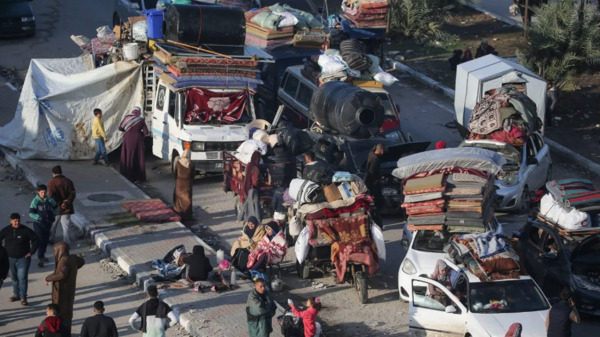
ARAB AND WORLD

Sun 26 Jan 2025 8:18 pm - Jerusalem Time

Hezbollah: The countries sponsoring the agreement are required to assume their responsibilities towards Israel’s violations

Hezbollah issued a statement describing the recent events as “a glorious day of God,” praising the steadfastness of the resistance people who once again proved their commitment to their land and the sovereignty of their homeland, and stressing that they are “a people rooted in their land who do not bow down to any threat or aggression.”


The statement stressed that the Lebanese people, with their heroic resistance, have renewed their defeat of the occupation since 2000 until today, stressing that "there is no place for an occupier in this blessed land that was watered with the blood of martyrs." It also pointed out that the scene of citizens returning to their villages, carrying pictures of martyrs and banners of resistance, embodies the highest meanings of steadfastness, endurance and victory.


The statement added: "The equation of the army, the people and the resistance that protects Lebanon is not just words, but a reality that the Lebanese live daily and embody through their steadfastness and sacrifices," calling on the Lebanese to stand as one with their people in the south to strengthen national solidarity and build true sovereignty whose title is liberation and victory.


Hezbollah called on the international community, especially the countries sponsoring the agreements, to assume their responsibilities regarding the Israeli violations and pressure the occupation to withdraw completely from Lebanese territory.


The party concluded its statement with a salute to the souls of the martyrs and wounded, whom it described as having "drawn with their blood the path to liberation and victory," stressing that these moments prove that Lebanon will remain a country of pride and dignity thanks to its people, resistance, and free sons.