PALESTINE

Tue 28 Jan 2025 6:56 pm - Jerusalem Time

After Trump's call to displace Gaza Palestinians, Qatar: Two-state solution is the only way

Qatari Foreign Ministry spokesman Majed Al-Ansari said on Tuesday that the two-state solution is the "only way" for the Palestinian people to obtain their rights.


This came at a press conference in Doha, in response to a question about US President Donald Trump's call to transfer Palestinians from Gaza to Egypt and Jordan.


Al-Ansari added that "Qatar's position has always been clear regarding the necessity for the Palestinian people to obtain their rights," stressing that "the two-state solution is the only way forward to achieve this goal."


The two-state solution means two states, Palestinian and Israeli, and it is the subject of Arab and international consensus, but Israel and the United States refuse to accept and implement it.


On Saturday, Trump called in statements to reporters to transfer the Palestinians of the Gaza Strip to neighboring countries such as Egypt and Jordan, citing the "lack of habitable places in the Gaza Strip" as a result of the Israeli genocide that lasted for more than 15 months with American support.


On Sunday, Egypt confirmed, in a statement by the Foreign Ministry, its rejection of "any infringement on the inalienable rights of the Palestinian people, whether through settlement or annexation of land, or by evacuating that land of its owners through displacement or encouraging the transfer or uprooting of Palestinians from their land, whether temporarily or long-term."


Jordanian Foreign Minister Ayman Safadi also stressed in a press conference on Sunday that "Jordan's rejection of displacement is constant and unchangeable and is necessary to achieve the stability and peace that we all want."


The United Nations also rejected the displacement of Palestinians from Gaza to neighboring countries, as its spokesman, Stephane Dujarric, said during a press conference on Monday: “We will be against any plan that leads to the forced displacement of Palestinians from Gaza, or leads to any kind of ethnic cleansing.”


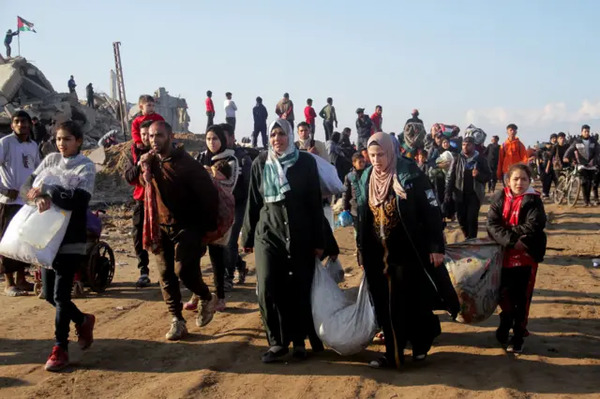
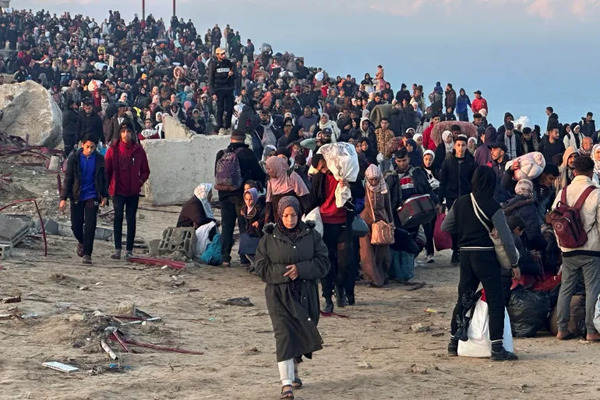
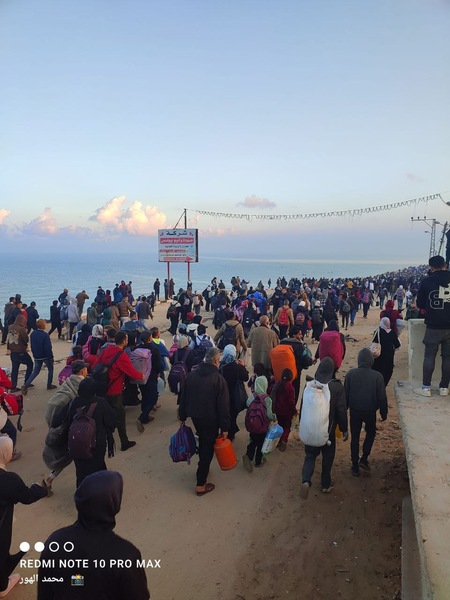
On Monday morning, tens of thousands of displaced Palestinians began returning from the south and center of the Strip to the Gaza and North Governorates from the Netzarim axis via Rashid coastal pedestrian streets and Salah al-Din (east) streets for vehicles after undergoing a security inspection.


ARAB AND WORLD

Tue 28 Jan 2025 6:03 pm - Jerusalem Time

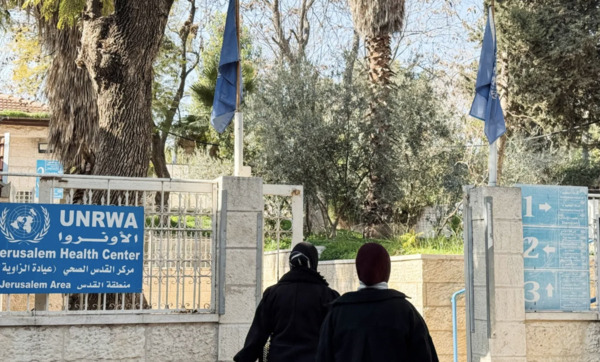
Israeli occupation intends to cut off all communications with UNRWA

The Israeli ambassador to the United Nations confirmed that Israel will cut off all contacts with the United Nations Relief and Works Agency for Palestine Refugees in the Near East (UNRWA) and any body acting on its behalf, after the Hebrew state repeatedly accused the UN agency of undermining its security.


Danny Danon said before a Security Council meeting on the matter that "Israel will end all cooperation and communication with UNRWA or any party acting on its behalf."


For his part, the Commissioner-General of the United Nations Relief and Works Agency for Palestine Refugees (UNRWA), Philippe Lazzarini, said today (Tuesday) before the UN Security Council: “The continued attack on UNRWA harms the lives and futures of Palestinians throughout the occupied Palestinian territory. It undermines their trust in the international community and jeopardizes any prospect of peace and security.”

PALESTINE

Tue 28 Jan 2025 5:06 pm - Jerusalem Time

A journalist was injured by shrapnel from Israeli occupation forces’ bullets in Tulkarm

Today, Tuesday, journalist Nagham Al-Zayet was injured by shrapnel from the occupation's bullets, while covering the occupation's aggression in the eastern neighborhood of Tulkarm.


Journalist Suhaib Abu Diak, who was accompanying her and a group of journalists, said that the occupation soldiers fired live bullets directly at them while they were standing at the Shahid intersection east of the city, which led to colleague Nagham being injured by bullet fragments in her right hand, and she was treated at the Red Crescent Center in the city.


The occupation forces had obstructed the work of journalists while they were covering the Israeli aggression on the city and its camp, and chased them and fired sound bombs at them, specifically in the western neighborhood, the northern entrance to the camp, and the eastern neighborhood.


In another context, Tulkarm Governor Abdullah Kamil announced, based on direct instructions from President Mahmoud Abbas, the opening of a number of dignity and emergency relief centers for families who were forcibly displaced by the occupation forces from Tulkarm camp.

PALESTINE

Tue 28 Jan 2025 4:03 pm - Jerusalem Time

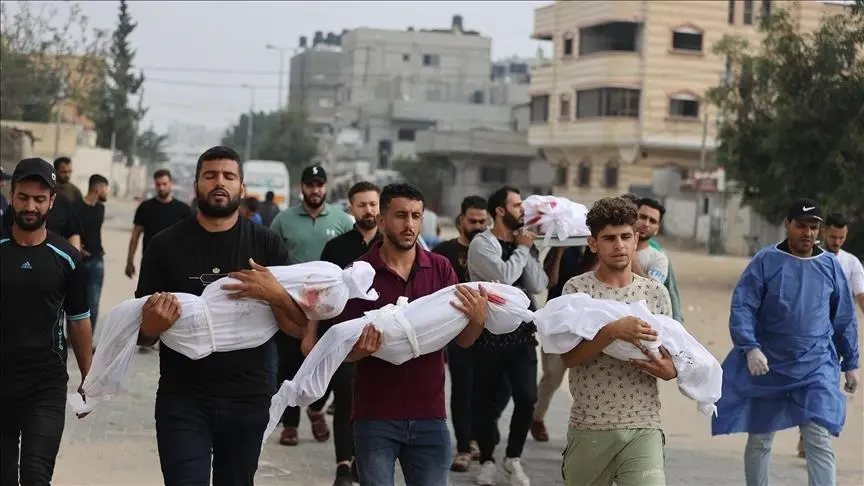
The death toll in the Gaza Strip has risen to 47,354 and the number of injuries to 111,563 since the beginning of the aggression

Medical sources announced today, Tuesday, that the death toll in the Gaza Strip has risen to 47,354, the majority of whom are children and women, since the start of the Israeli occupation aggression on October 7, 2023.


The sources added that the number of injuries has risen to 111,563 since the beginning of the aggression, while thousands of victims are still under the rubble.


It pointed out that 48 dead arrived at hospitals in the Gaza Strip, 37 of whom had their bodies recovered, and 80 injuries arrived at hospitals, as a result of the Israeli aggression on the Gaza Strip during the past 48 hours.


The sources explained that a number of victims are under the rubble and on the roads, and rescue teams are still unable to reach them.

ARAB AND WORLD

Tue 28 Jan 2025 2:13 pm - Jerusalem Time

ICJ President Accused of Plagiarism in Dissenting Opinion on Israeli Occupation

Julia Sebutinde, the current president of the International Court of Justice, has been accused of plagiarizing parts of her dissenting views in the court's advisory opinion on the Israeli occupation of Palestine.


In July of last year, a panel of 15 judges found that Israel’s decades-long occupation of Palestinian territory was “illegal,” and that its “near-total segregation” of people in the occupied West Bank violated international laws on “racial segregation” and “apartheid.”


While most of the judges agreed, Sebutinde rejected the court's findings, stating that the case should be settled through negotiations between the parties.


Palestine scholar Zachary Foster pointed out the alleged plagiarism in a post on X on Sunday, January 26, 2025.


In a dissenting opinion section, Sebutinde wrote: “Territorially, the name ‘Palestine’ was vaguely applied to an area that for 400 years before World War I had been part of the Ottoman Empire.


“In 135 CE, after crushing the second Jewish rebellion in the province of Judea or Judah, the Romans renamed that province “Syria Palestina” (or “Syria Palestina”). The Romans did this as a punishment, to spite the “Yehudim” (Jewish residents) and erase the connection between them and their province (known in Hebrew as Judah).


The name "Palestine" was used in reference to the people known as Philistines who were found along the Mediterranean coast.


The three sentences appear to be taken, almost verbatim, from a December 2021 article by Douglas J. Feith at the Hudson Institute.


Feith, a senior fellow at the Hudson Institute, a conservative, Likud-leaning think tank, was undersecretary of defense for policy in the administration of President George W. Bush from July 2001 to August 2005, setting U.S. strategy for the wars in Iraq and Afghanistan.


During that time, Feith was in charge of a key Pentagon office that produced "inappropriately written intelligence assessments prior to the March 2003 invasion alleging links between al-Qaeda and Iraq that were contradicted by the U.S. intelligence consensus."


In 1996, Feith co-wrote a policy paper for then-Israeli Prime Minister Benjamin Netanyahu that suggested that Israel consider removing Saddam Hussein from power in Iraq and engaging militarily with Syria using proxy forces.


Faith's Hudson Institute article is not cited in the bibliography for Sebutinde's dissenting opinion.


Foster noted in his article that Sebutinde also quoted several sentences from the Jewish Virtual Library, changing a few words.


“When the distinguished Arab-American historian, Professor Philip Hitti, testified against the partition of Mandatory Palestine before the Anglo-American Committee in 1946, he said, ‘There is no such thing as “Palestine” in history; not at all,’” Sebutinde wrote.


A very similar line on the Myths and Facts page of the Jewish Virtual Library reads: “When the distinguished Arab-American historian, Professor Philip Hitti of Princeton University, testified against partition before the Anglo-American Committee in 1946, he said: ‘There is no such thing as “Palestine” in history, ever.’”


The name "Palestine" was used in reference to the people known as Philistines who were found along the Mediterranean coast.


The three sentences appear to be taken, almost word for word, from a December 2021 article by Douglas J. Feith at the Hudson Institute.


Feith, a senior fellow at the Hudson Institute, a conservative think tank, was undersecretary of defense for policy in the administration of President George W. Bush from July 2001 to August 2005, where he developed U.S. strategy for the wars in Iraq and Afghanistan.


During that time, Feith was in charge of a key Pentagon office that produced "inadequately written intelligence assessments prior to the March 2003 invasion alleging links between al-Qaeda and Iraq that were contradicted by the U.S. intelligence consensus."


Missing citations


In 1996, Feith co-wrote a policy paper for then-Israeli Prime Minister Benjamin Netanyahu that suggested that Israel consider removing Saddam Hussein from power in Iraq, and engaging militarily with Syria using proxy forces.


Faith's Hudson Institute article is not cited in the bibliography for Sebutinde's dissenting opinion.


Middle East Eye has contacted the ICJ and Faith for comment.


Foster noted in his article that Sebutinde also quoted several sentences from the Jewish Virtual Library, changing some words.


“When the distinguished Arab-American historian, Professor Philip Hitti, testified against the partition of Mandatory Palestine before the Anglo-American Committee in 1946, he said, ‘There is no such thing as Palestine in history; not at all,’” Sebutinde wrote.


Foster highlighted four sentences from the dissenting opinion borrowed from the Jewish Virtual Library. The site was not mentioned in the Ugandan judge's citations.


The Jewish Virtual Library is part of the American-Israeli Cooperative Project, which says it "provides facts about the Arab-Israeli conflict" and combats "the delegitimization of Israel."


Dissenting voice


Sebutinde became president of the International Court of Justice earlier this month, challenging the court’s decision to appoint its former president, Nawaf Salam, as Lebanon’s next prime minister. In January of last year, the ICJ issued an interim ruling calling on Israel to refrain from obstructing aid deliveries to Gaza and to improve the humanitarian situation. It also ordered Israel to take all measures within its power to prevent genocide in the besieged enclave and to punish incitement to genocide, among other orders.


Sebutinde, described by Israeli media as “pro-Israel,” was the only judge on the 17-member panel to vote against all six measures adopted by the court. Israeli Justice Aharon Barak also voted against several of the measures.


The dissenting opinion prompted Uganda to distance itself from Sebutinde.


“The position taken by Justice Sebutinde is her individual and independent opinion and does not in any way reflect the position of the Government of the Republic of Uganda,” a government spokesman said in a statement at the time.


They added that Kampala supports the Non-Aligned Movement's position on the war, which was adopted at a summit in the Ugandan capital. The Non-Aligned Movement condemned Israel's war on Gaza and its killing of civilians.

ARAB AND WORLD

Tue 28 Jan 2025 1:45 pm - Jerusalem Time

The return of displaced persons continues.. Qatari Foreign Ministry: There has been no violation of the Gaza agreement

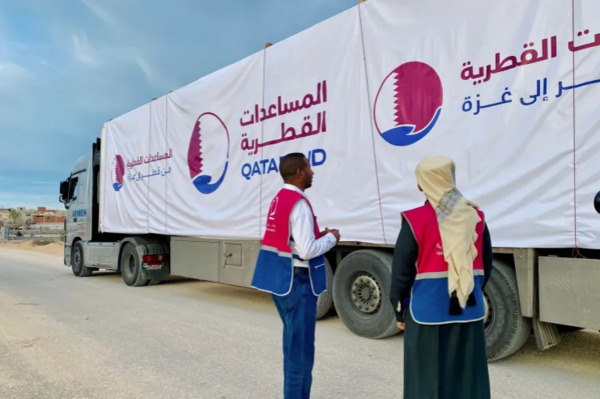
Qatari Foreign Ministry spokesman Majed Al-Ansari announced today, Tuesday, that the first batch of humanitarian aid entered the Gaza Strip yesterday, through the Erez (Beit Hanoun) crossing, as part of the ongoing airlift to support the Palestinians in the Strip.


Al-Ansari's statements came at a time when hundreds of thousands of forcibly displaced people in the central and southern Gaza Strip continue to return to their homes for the second day, in the northern Gaza Strip via Rashid Street on the coastal road in the western Gaza Strip and Salah al-Din Street in the east.

"Difficult logistical challenges"


The Qatari Foreign Ministry spokesman confirmed in a press conference in Doha that communication with the administration of US President Donald Trump is ongoing regarding the Palestinian issue and related regional issues, noting that negotiations on the second phase of the ceasefire agreement will begin on the 16th day of the start of the implementation of the agreement.


The spokesman pointed out that Qatar is closely monitoring the entry of aid into the Gaza Strip, despite the difficult logistical challenges it faces in this regard.


He added that Qatar had reached an agreement between Hamas and Israel to release the detainees, including Ehud Arbel and others, before Friday. He also revealed that Hamas had provided information about the prisoners, and that the issues that were hindering the return of the displaced to the north had been resolved.


Al-Ansari also said that the Qatari-Egyptian security committee responsible for inspecting cars and vehicles crossing to the north continues its work, but its role is limited to technical aspects only.

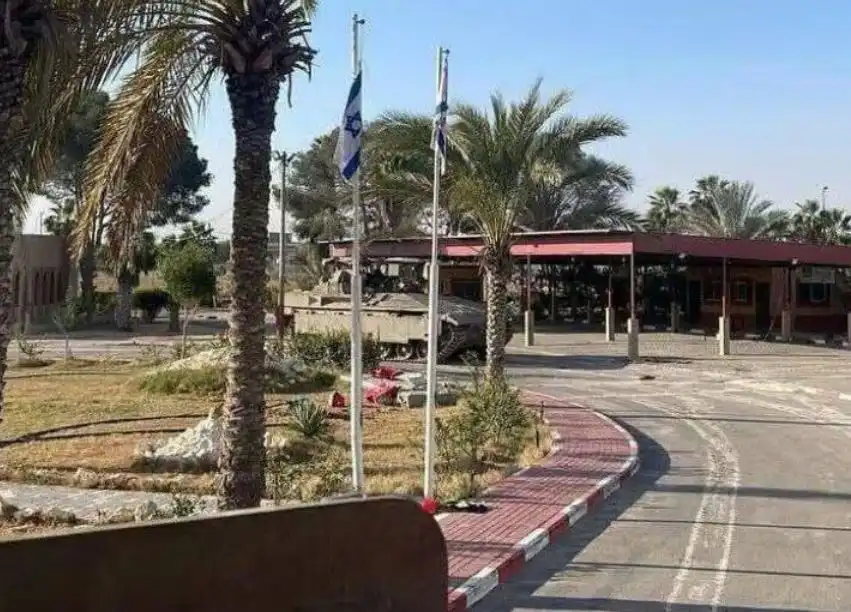
Regarding the Rafah crossing, the spokesman explained that there is currently no specific date for its opening due to the logistical challenges facing the process.

The spokesman stressed that Qatar and the mediating countries continue to monitor the implementation of the ceasefire agreement and are making every effort to ensure that both parties adhere to the agreement, noting that there has been no breach that could lead to escalation or failure of the agreement.

ARAB AND WORLD

Tue 28 Jan 2025 1:16 pm - Jerusalem Time

An official Egyptian source denies reports of a call between Trump and Sisi

A high-ranking official source denied, on Tuesday, what was reported by the media about a phone call between Egyptian President Abdel Fattah El-Sisi and American President Donald Trump.


He stressed that any phone call by the President of the Republic is announced in accordance with the custom with heads of state, especially with regard to a call at this level and at this critical time that the Middle East region is going through, and in light of the special importance that this represents in light of the distinguished relations that bring together the presidents of the two countries.


Earlier today, US President Trump said that he spoke with the Egyptian president about transferring Palestinians from Gaza, indicating that he had not backed down from the idea of transferring Palestinians out of the Strip, according to what was reported by news agencies and media outlets.

The US president said he told his Egyptian counterpart that he would like to have them "live in an area where they can live without turmoil or revolution... When you look at the Gaza Strip, it has been hell for many years," he said.


Cairo and Amman renewed their position rejecting any Israeli or other plans to transfer the residents of the Strip, considering it a second displacement campaign, after President Trump announced his intention to speak to the leaderships of the two countries about the possibility of transferring the people of Gaza.


In this regard, Egyptian Foreign Minister Badr Abdel Aati expressed his country's concern yesterday, Monday, regarding the displacement attempts targeting people in neighboring countries. He pointed to the deteriorating political and humanitarian conditions in the region, including conflicts, political crises and the negative effects of climate change.


He also stressed that these factors contribute to the growth of waves of displacement and migration, leading to an increase in the flow of migrants to Egypt, which already hosts more than 9 million migrants, refugees and people in refugee-like situations.


In turn, Hanfy Gebaly, Speaker of the Egyptian House of Representatives, stressed the House’s categorical rejection of any arrangements or attempts to change the geographical and political reality of the Palestinian issue, noting that the proposals to displace Palestinians are not limited to threatening the Palestinians alone, but rather represent a grave danger to regional security and stability.


The Egyptian statements came in conjunction with the Jordanian Foreign Minister Ayman Safadi’s renewal, yesterday, Monday, of the Kingdom’s rejection of any talk about the displacement of Palestinians, stressing that Jordan will continue to confront it.


Safadi said in a briefing before the House of Representatives that all talk about an alternative homeland for the Palestinians is rejected, stressing that his country will not accept it and will continue to confront it. He added that Jordan is for Jordanians, Palestine is for Palestinians, and the solution to the Palestinian issue is on Palestinian soil, according to his words.


It is noteworthy that US President Trump had told reporters that Egypt and Jordan should receive more Palestinians from the Gaza Strip, after the Israeli war caused the death of more than 47 thousand Palestinians, and turned most of the Strip into rubble.


PALESTINE

Tue 28 Jan 2025 12:14 pm - Jerusalem Time

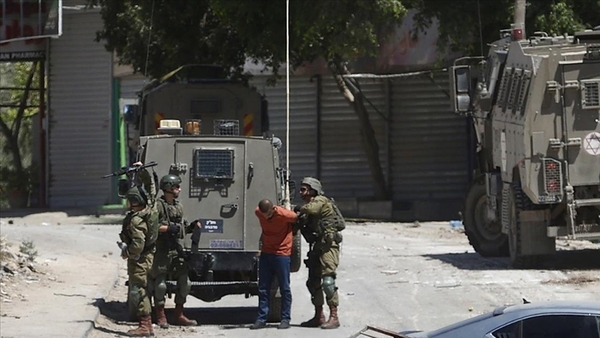
Israeli occupation forces arrest at least 25 citizens from the West Bank

Since yesterday evening until Tuesday morning, the Israeli occupation forces have arrested at least (25) citizens from the West Bank, including former prisoners.

The Commission of Prisoners' Affairs and the Prisoners' Club reported that the arrests were distributed across the governorates of Tulkarm, Hebron, Nablus, Ramallah, Bethlehem, and Jerusalem.

They pointed out that the occupation arrested dozens of citizens while continuing its military operation in the Jenin and Tulkarm governorates, amidst abuse, destruction of infrastructure, and vandalism and demolition of citizens' homes.

The occupation forces continue to carry out field investigations in several towns, in addition to the widespread abuse, attacks and threats against citizens, as well as acts of vandalism and destruction in citizens' homes.

PALESTINE

Tue 28 Jan 2025 12:14 pm - Jerusalem Time

Israeli occupation forces citizens east of Jenin camp to evacuate their homes

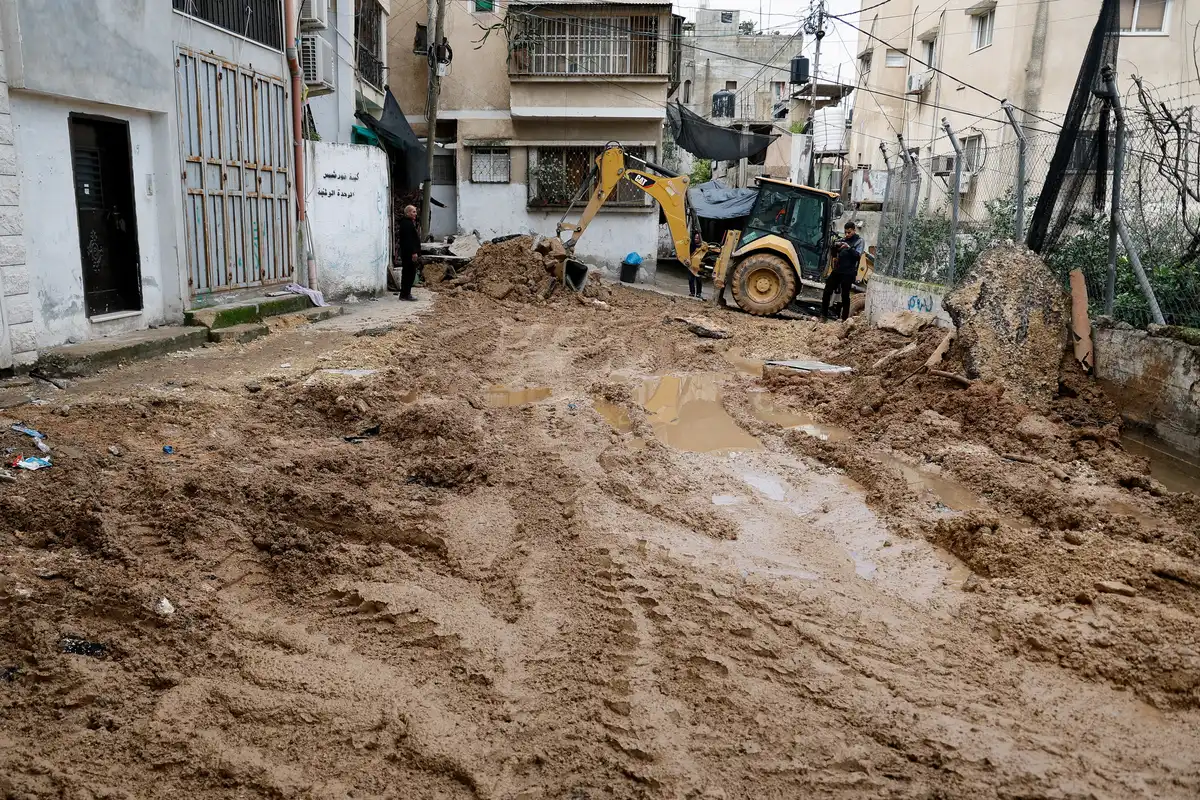
This Tuesday afternoon, the Israeli occupation forces forced citizens at the eastern entrance to Jenin camp to evacuate their homes.


Local sources reported that the occupation forces raided homes in the area known as Al-Hisan Roundabout, east of the camp, and forced citizens to evacuate their homes, in preparation for demolishing parts of them.


The occupation bulldozers continue to open roads deep inside Jenin camp, specifically in the area known as Mahyoub Street.


Bulldozing and destruction of infrastructure continue in the Al-Hawashin and Al-Aloub neighborhoods.


The occupation continues to send military reinforcements from the Jalameh checkpoint to the city of Jenin and its camp, while drones continue to fly in the skies of the camp.

For the eighth consecutive day, the occupation continues its aggression on the city of Jenin and its camp, leaving 16 martyrs, dozens of injuries and arrests, and the forced evacuation of families, in addition to the destruction and burning of 100 homes inside the camp, in light of the continued systematic destruction of the infrastructure, and preventing ambulance and civil defense crews from entering it.

OPINIONS

Tue 28 Jan 2025 10:50 am - Jerusalem Time

Glory bows to you…

op-ed "AlQuds" dot com

op-ed "AlQuds" dot com

Opinion Writer

Just as it is the Hajj season, the huge crowds of displaced people were overflowing like a huge human flood and crossing Rashid Street on foot, hastening their steps towards Gaza City and its north, amidst the chants of thanks to God, while convoys of cars and vehicles passed through Salah al-Din Street, where the number of returnees was estimated at about 300,000.

Yesterday was a memorable day when the displaced people, who left northern Gaza by an unjust Israeli decision, under artillery shelling, tank fire, starvation, displacement and ethnic cleansing campaigns, decided to return to the most affected area in the Strip, amid mixed feelings between sadness over the destruction and devastation that the situation has reached, and the loved ones they have lost, and the joy of returning to cling to the land and soil of Gaza, as this means a lot to them, how could it not, when Gaza is their destination, the cradle of their civilization and the symbol of their pride, amidst a tremendous determination to build, inhabit and live despite the lack of homes and tents, but their great will is the most prominent bet on their survival and steadfastness, despite all the harsh and difficult conditions in the northern Strip.

The historical and legendary scene of the return of the displaced to the northern Gaza Strip shattered Israel’s illusions and wishes to displace our people and expel them from their land. The return of thousands of displaced people from our expelled people is a living embodiment of the ability of this great people to liberate the land and the holy sites and achieve the dream of return, despite the occupation and its extremist leaders who were disturbed by yesterday’s scene, in which our people raised the slogan (all roads lead to Gaza).

Our great people have foiled the displacement plan and the military generals’ plan, which reflected to everyone the manifestations of managing the challenge and steadfastness through steadfastness in the position of not giving up a single grain of the homeland’s soil, and responding in the best way to the statements of US President Donald Trump and members of his administration from the White House poles, which are consistent in their content with the Israelis’ orientations aimed at displacing and expelling the Palestinians from the Gaza Strip, as this was announced publicly by the extremist Minister Smotrich, who admitted yesterday that he is working on developing a plan in cooperation with Netanyahu to displace the residents of Gaza, stressing the need to appoint an offensive chief of staff for the army to implement this mission completely and without hesitation, to prevent Hamas from controlling the Strip, and his return to the idea of encouraging the migration of the people of Gaza, and his opposition to the idea of stopping the war and resuming it after the end of the first stage of the ceasefire agreement.

The people of the Gaza Strip who returned today to northern Gaza say: Even if our hands and feet are cut off, we will march to you without fatigue or weakness. Peace be upon the homeland, and we say yes, for Palestine is not just a land, but rather an identity, a history, and an ongoing struggle for truth and dignity. Its people, who were falsely and slanderously described as terrorists, are the same people who presented the world with models of patience, sacrifice, and love of life.

Palestine continues to write a bright history that will not forget that this people is the owner of the land, and it is they who deserve to live with dignity, freedom and justice.

Glory kneels to you, the returning displaced people who cling to the land and its value... Congratulations to Gaza for you.

OPINIONS

Tue 28 Jan 2025 10:49 am - Jerusalem Time

Open letter to the President and Palestinian leaders

Jamal Zaqout

Jamal Zaqout

Opinion Writer

Trump’s arrogant statements or balloons about displacing Gazans to Egypt and Jordan were not the first, and they will not be the last. However, they cannot be ignored. At the very least, they carry within them a condescending view that reveals a concept that is endemic to reckless American policy that the Palestinians are nothing more than “a group of terrorists and an invented people,” as Republican presidential candidate Gingrich once said, and which was repeated at the time by Netanyahu’s and Trump’s protégé, American billionaire Sheldon Adelson, who said, “Read the history of those who call themselves Palestinians, and listen to what Gingrich said that the Palestinian people are invented.”

Trump's balloons, which intersect with the calls for Israeli fascism, do not only target the fate of our Palestinian people, but they also constitute an aggression against Arab national security, including an attempt to revive the "alternative homeland" policy in Jordan, which imposes the necessity of not only responding with firm positions to nip such conspiracies that target the fate of the Arab region and controlling its wealth for the benefit of Israel, which Trump himself considered to have a small geography that does not match its capabilities, thus calling for more control over Arab land, as he previously offered the occupied Golan Heights to it, and did not reject Israeli expansion into Syrian territory after the fall of the Assad regime.

These statements, despite their recklessness, confirm a number of facts, foremost of which is that Israeli expansionist ambitions are limitless and will not stop at the borders of annexing the West Bank or displacing our people from it and from the Gaza Strip, but rather extend east and south to various Arab capitals. The second fact is that the Palestinian people’s resistance to these expansionist ambitions constitutes a shield to defend not only the rights and destiny of the Palestinian people, but also the destiny of the entire Arab region. The third fact, which is confirmed by the will of the Palestinians regarding the extent of their attachment to their land and their belonging to every spot in it, was demonstrated by the queues of hundreds of thousands who waited for two days on Rashid Street and the so-called “Netzarim” junction, knowing full well that they will return to the ruins of destroyed homes, unfit water and electricity networks, and even schools, hospitals and roads that are not qualified to provide any service. The Palestinians have learned the lesson of the Nakba, as they imbibed it after the defeat of June 1967. However, today, as they are the owners of their fateful decision, they realize that survival and protecting the land are the essence of resisting the racist Zionist project. Finally, the fourth truth is that betting on Trump and refraining from formulating a national vision supported by the Arabs and the international community as a basis for any political movement, while waiting for what the author of the first deal of the century will present, will only lead to further self-erosion. Formulating a national vision has its internal requirements and requires comprehensive and bold reviews from everyone. Without it, we will remain ineffective, and the enormous sacrifices will go down the drain.

This is a final statement for the people whose adherence to their rights is only made more steadfast by the crimes and bloody plots of the fascist government in Tel Aviv. Every citizen of this people, who has been subjected to open genocide for more than sixteen months, has the right to be considered the true hero. Yes, the people are the leaders as long as the leadership appears to be alienated from their ability to endure in order to advance towards their national rights, which are achieved to the extent that the links of the Zionist settlement project are broken one by one, not surrendered to. The national project is an interconnected chain whose essence is survival, steadfastness, and a unified national leadership capable of supporting it to achieve this.

The big question, which I have always repeated in all my previous articles, is: Is what the dominant leadership is doing in the face of the major risks and challenges facing our people commensurate with those existential risks and challenges? Here, an open message must be directed to the president in his capacity, as well as to the Palestinian leaderships of all stripes.


It was natural to disagree about the effectiveness of what the resistance did on October 7, especially in terms of the correctness or misjudgment of the repercussions resulting from it, and the regional and international positions towards it, especially in terms of adopting the Zionist narrative and trying to Daeshize the resistance by mobilizing the "Hasbara" system, which quickly disintegrated in the face of the persistence of the fascist genocide committed by the leaders, army and society of the occupation. Unfortunately, this dismantling of the organized Zionist propaganda was not achieved through a Palestinian political, diplomatic and media effort that stems from a unified vision of a Palestinian discourse capable of dismantling the lies of that crumbling narrative. The narrative that the Palestinians won with was expensive, with what it included of scenes of victims, the blood of children, women and elderly people, and their destroyed homes, which the young men and women, journalists and female journalists of Gaza excelled in conveying to the peoples of the world in all parts of the universe, causing qualitative transformations in international public opinion, and even what can be considered a global uprising in awareness and demonstrations that swept the cities and capitals of the world. The hand triumphed over the awl. However, the Palestinian discourse remained scattered, so much so that the Hamas leadership delayed until March 2024 to convey its narrative about October 7. The UN Secretary-General preceded it when he considered that October 7 was nothing but the result of long-standing injustice and aggression that lasted for more than seventy-five years, while the Arab and even Palestinian leaderships remained silent in front of Macron during his visit to the region, as he called for the establishment of a regional alliance to eradicate Hamas and the resistance, as they had previously done with ISIS, in absolute bias towards the narrative of the fascist Zionist right, which was paving the way with that narrative to commit the most heinous crimes of genocide.

Once again, the direct response to the nonsense of Trump and the advocates of transfer in Israel comes at the hands of the people of the Strip who have always pledged to themselves in the songs of their revolution and uprisings, “We swear to God we will not leave.” But is such a pledge and the will to survive alone enough to defeat the displacement plans?

In a meeting I had with the martyr leader Ismail Haniyeh in March of last year, whom I bear witness before history that he was keen with his molars on unity and moving towards a realistic vision that would break all the artificial obstacles to its achievement, especially with regard to the unity of the national decision in the PLO, and moving towards a transitional government of consensus. This was from a position of awareness that the most difficult war would begin after the ceasefire, and that the Tel Aviv government would try to blackmail the Palestinian people in the dilemma of reconstruction and before that relief and shelter to achieve what it failed to accomplish through the crimes of genocide that imposed global isolation on it, especially among the peoples of the world and the international courts that are now pursuing the criminals of this genocide everywhere and for the first time in their history.


The open letter that should be addressed to the President and the Central Committee of Fatah: Why all this entrenchment and insistence on not implementing what was signed by all factions in Beijing, including the delegation of the Central Committee of Fatah headed by the Deputy Chairman of the movement? At a time when this declaration, which was supported by the People's Republic of China and many countries of the world, has also received unprecedented popular support? Is there still anyone in the leadership of the national movement and the Palestinian political system who believes that he can monopolize national decision-making and authority, or exclude others, no matter how powerful and influential he is?

In this context, we need the support of all Arab brothers to achieve such unity, as the danger of transfer is imminent and not just Kahanist delusions. This danger threatens their interests and national security, and is not limited to our brothers in Egypt and Jordan. Protecting Arab national security requires, among other things, making more efforts to strengthen and restore the unity of the Palestinian people and their comprehensive national institutions, on whose rock Trump’s nonsense, arrogance, and denial of our people’s right to remain and self-determination on their homeland, the homeland of our fathers and grandfathers, will be shattered.

OPINIONS

Tue 28 Jan 2025 10:48 am - Jerusalem Time

Rashid Street Return March

Hamada Faraana

Hamada Faraana

Opinion Writer

Tens of thousands of Palestinians are streaming together, in a continuous, massive march from their displacement sites, from the south and center of the Gaza Strip, towards Gaza City and to the northern areas of Jabalia, Beit Hanoun and Beit Lahia, to the sites of destruction and devastation, but they insist on their choice to return to their destroyed homes, which the occupation deliberately blew up and bombed, with the aim of displacing, deporting and displacing them.

On the morning of Monday, January 27, 2025, tens of thousands, even hundreds of thousands, poured into the streets in a march towards the north, as if their march and insistence on returning, since the implementation of the ceasefire decision and the implementation of the steps of the truce deal that began at dawn, carried the good news of their right to return to their homes.

As if it is the day of freedom, the day of return, the day of victory, an amazing people, presenting the opposite image, as if they are responding collectively, by them, by the people of Palestine in Gaza, responding collectively to the statements of US President Trump in his demand to displace the people of the Gaza Strip towards Egypt and Jordan, that they are heading from the south of the Gaza Strip, from the Egyptian-Palestinian border towards the north of the Strip afflicted with destruction, killing and deprivation, they are heading to Gaza, and from there to Beit Lahia, Beit Hanoun and Jabalia, which are completely destroyed, and yet they insist on returning to live on the ruins of their destroyed homes, by erecting a tent on their ruins, to start a new life, a defeat for the colony program that aimed to empty the Gaza Strip of its people and people through deliberate killing, and a systematic displacement program.

Indeed, they are making the dawn of steadfastness and perseverance, heralding the dawn of freedom, heralding the continuation of life towards the land and above it, towards the understanding and saying of their late poet Mahmoud Darwish, “On this land there is that which is worth living for,” and here they are making life and dignity to be a model for the rest of the components of their tormented, displaced people.

The Palestinians are paying the price of their freedom and independence, they are paying the price of their legendary steadfastness, with the choice of survival and steadfastness, and thwarting the plans of the colony’s generals, and its expansionist colonialist program and project, to establish their free, independent homeland on the land of Palestine, on the entire land of Palestine.

The people of Jabbarin, as described by their late leader Yasser Arafat, who restored their lost identity, and unified their struggle, jihad, organizations, and independent national identities with the factions within the framework of the Palestine Liberation Organization after he led and sparked the Palestinian revolution before the year of occupation in 1967, and became, on a Palestinian, Arab, and international level, the sole legitimate representative and the real, actual leader of the Palestinian people’s march towards Palestine, and achieved this with the first step, after the first Intifada in 1987, and hundreds of thousands returned with him to Palestine as a result of the Oslo Accords in 1993, and here is the march of his people renewed and leaping a step forward as a result of the Hamas movement’s initiative and the October 7, 2023 operation, which is considered the fourth step and station in the Palestinian struggle.

We, the sons of Jordan, and the Arabs, Muslims and Christians, are proud of them. We are proud that we and them are in one trench, for the sake of Jordan’s security, stability, progress and pluralism, and for the sake of the freedom of Palestine as its people deserve, in freedom, dignity and return.

OPINIONS

Tue 28 Jan 2025 10:48 am - Jerusalem Time

The Trump Administration in the Middle East, False Promises and a Distorted Fascist and Religious Ideological Vision

Marwan Emil Toubasi

Marwan Emil Toubasi

Opinion Writer

Since Donald Trump arrived at the White House for the second time, the rapid changes at all levels, international, regional and local. In light of that, Trump’s inauguration speech was a horrific display full of hatred and focus on national greatness and divine promise, like the emergence of any new historical trend, opinions vary about its meaning.

He attacked the previous administration, immigrants, and broad segments of Americans, along with Latin Americans and the rest of the world.

Trump took his inspiration from Hitler’s first radio address in 1933, where he attacked the old order and promised a new era of national greatness wrapped in the term “peace.” Trump has revisited this vision using the term “golden age,” but in practice it serves a growing fascist vision with economic dimensions in the face of today’s crisis of the capitalist system.

Hence, his administration has drawn up a distorted policy in the Middle East characterized by political hypocrisy, fascism, extremist ideological tendencies, in addition to trade deals, complete bias towards Israel and the idea of transfer. This policy has not only ignored Palestinian rights, but has also strengthened Israeli hegemony, while providing illusions through figures such as Mike Boulos and Jason Wefkoff. At the same time, US policies under the Trump administration have shown the absence of any real interest in supporting the establishment of an independent Palestinian state, which deepens Palestinian suffering and pushes towards the liquidation of the cause.


False promises and middlemen

In my view, Mike Boulos, the Lebanese billionaire and father-in-law of Tiffany Trump, played a role in promising the Palestinians that there was a real chance for a breakthrough under the Trump administration. These promises followed a well-worn American pattern of selling the Palestinians illusions, whereby illusory economic or political solutions are promoted without any real commitments. Likewise, Jason Levkoff, Trump’s Middle East envoy, sought to promote a mediation role with the Palestinians, even expressing a desire to visit Gaza. But in reality, these initiatives do not conflict with the administration’s policies, which seek to perpetuate the Israeli occupation and promote settlements in the West Bank, in addition to the annexation and annexation projects.


The Israeli hegemony project within the American strategy

The alliance between the United States and Israel is based on deep strategic interests, including religious and cultural determinants, which makes the idea of establishing an independent Palestinian state incompatible with American orientations. Israel represents a strategic base for Washington in the region, and thus strengthening its power serves American interests. In this context, the Trump administration’s support for Israeli settlements, the transfer of the US embassy to Jerusalem, and its recognition of it as the unified capital of Israel were steps that confirm that Washington sees continued Israeli hegemony as a long-term strategic option.

Approval of the decision of the Israeli occupation government to extend the presence of the occupation army in Lebanon after the expiration of the period according to the armistice agreement falls within this context, on the one hand.

On the other hand, it is also clear that Trump's agenda has completely excluded Jordan from its calculations. It is an economic siege that Trump wants to impose on Jordan to push it to conform to his political project in the region and receive Palestinians from Gaza on its lands, a project that Jordan officially put a brake on during President Trump's first term in the White House, and now the attempt is being made again under the policies of waving threats by cutting off aid.

On the other hand, the US ambassador to Israel, Mike Hagaby, and the US ambassador to the United Nations have clearly reflected these policies. Hagaby, a hardline evangelical, believes in the so-called “biblical right” of the Jews to the West Bank and refuses to call the Israeli communities there “settlements.” The US ambassador to the United Nations has likewise emphasized this right in her statements, reflecting the depth of ideological influence in US decision-making.


Ideological dimension and electoral influence

Trump’s policies cannot be separated from his electoral base, which is largely made up of Christian Zionists or evangelicals. These groups see support for Israel as a religious and ideological duty. For them, the “Greater Land of Israel” is part of their faith, which explains the unconditional support Israel enjoys from these circles. This opposing influence has played a major role in pushing the Trump administration to adopt policies that serve the Israeli project in its entirety at the expense of Palestinian rights.

Since taking office, Trump has also lifted sanctions on settlers, lifted a ban on bomb shipments to Israel, and called for the forced transfer of Palestinians with a proposal to “evacuate areas.”


Lack of interest in establishing a Palestinian state

If we look at Trump’s policy realistically, it becomes clear that his administration did not see any real interest in supporting the establishment of an independent Palestinian state or enabling the Palestinians to determine their fate, as all previous administrations did. The American interest focused on strengthening Israeli hegemony, whether through political steps such as the “Deal of the Century” that completely ignored legitimate Palestinian rights, or through normalizing relations between Israel and Arab countries such as the UAE and Bahrain, in addition to the Kingdom of Saudi Arabia, which is currently the top priority in the circle of American pressure to sign a normalization agreement with Israel.


The illusion of development and the mentality of deals

Trump approaches international issues, including the Palestinian issue, with a “transactional mentality.” Rather than focusing on achieving justice or addressing the political roots of the conflict, Trump views the region as a place for economic gain. His statements about Gaza as a “great tourism investment opportunity” are just one example of this narrow, commercial outlook, which minimizes the importance and reality of the Palestinian people’s suffering and turns their cause into a commercial project.


US Policies Towards Gaza and the New Initiative

At the same time, a recent statement by Trump emerged clarifying his vision for the post-war period in Gaza, where he suggested that Egypt and Jordan receive Palestinians from Gaza, saying: “We want to clean this place up completely,” which reflects his fascist thinking and further disdain for the Palestinian cause, and his insistence on turning it into another file far from the historical and political rights of the Palestinian people. These statements are in line with American trends that have no real intention to achieve peace or establish a sovereign Palestinian state or empower our people in their right to self-determination.

Trump’s policies towards the Middle East, especially the Palestinian issue, reflect a strategic approach that serves Israeli hegemony and the American role in the region that it seeks for various strategic considerations, while offering false promises to the Palestinians through political hypocrisy. In light of this reality, it has become necessary for us Palestinians to unite our ranks according to a clear strategic vision and work to rearrange internal, political and diplomatic priorities to confront the growing challenges, including overcoming the illusions associated with any positive role for a biased American administration that is a partner to Israel.

OPINIONS

Tue 28 Jan 2025 10:45 am - Jerusalem Time

Trump, displacement and the worst is yet to come!

Mohamed Gouda

Mohamed Gouda

Opinion Writer

There is no doubt that the statements of US President Donald Trump about the displacement of Palestinians from the Gaza Strip to the Arab Republic of Egypt and the Hashemite Kingdom of Jordan were not a coincidence or just empty and absurd statements or a slip of the tongue. In my opinion, these statements by the president of the largest country in the world have consequences, especially since since the first day of Trump’s inauguration, he spoke with complete frankness about Gaza and its geographical location and its beautiful sea, as a prelude to seizing the Strip by looking at it as a contractor, and as an economic and investment project.

In my opinion, this trend was revealed by the WikiLeaks leaks when they quoted the speech of US Vice President J.D. Vance, when he spoke about an American mandate for Gaza for 100 years with a contract similar to the status of Chinese Hong Kong with Britain.

I believe that these statements are dangerous and controversial, and reveal the policy and plans of US President Donald Trump towards Gaza and the region. They are a continuation of his previous diabolical project during his first term, and what was called the “Deal of the Century” at that time, the aim of which was for the Zionists to tighten their grip from the Euphrates to the Nile and achieve the dream of a greater state of Israel. Therefore, I believe that what is coming with Trump will be worse, and he will work to impose a new reality by force.

Therefore, it is urgently required to unify the solid Arab position, especially from the Arab Republic of Egypt and the Hashemite Kingdom of Jordan, to confront these plans that target the Palestinian existence, and bring down the Palestinian state project, thus ending the Palestinian issue completely.

Also, a unified, firm, and unambiguous Palestinian position is required, stating that there is no place for the Palestinians other than their homeland and land, and that they will not accept displacement under any pretext or excuse, and that it is time for the international community to pressure Israel to recognize the Palestinian presence on this land and the right to establish a Palestinian state on the borders of June 4, 1967, with Jerusalem as its capital, and to oblige it to implement all laws and treaties approved by international legitimacy that recognize the rights of the Palestinian people and their just cause, foremost among which is their right to self-determination and national independence.

OPINIONS

Tue 28 Jan 2025 10:44 am - Jerusalem Time

Equation: In the face of a complex, compound defeat that eats away at the bones and the greatness

Hamdy Farag

Hamdy Farag

Opinion Writer


It is truly unfortunate that during a truce period, we see scenes of violence no less violent than those during the genocidal war, for very trivial, strange and reprehensible reasons and pretexts, such as those related to the kidnapping of an Israeli woman whom Israel considers a civilian, while the Jihad movement considers her a military woman, meaning that Jihad wants 50 prisoners in return for her, while Israel wants…

Only 30 were released. Accordingly, Israel halted its withdrawal from the Netzarim camp and prevented hundreds of thousands of displaced persons from crossing to their homes, or more precisely what remained of their homes. These hundreds of thousands cannot return to the places they came from, because they brought their tents with them, so they remained in their lines waiting, and spent two nights in the open, and endured the screams of their children from hunger and cold. Is there any human, animal or imaginary logic that links the fate of one individual human being to the fate of half a million people?

If the issue was a matter of disagreement on paper and the table, of bickering, threats, procrastination and blackmail, we would say it is okay, but for the issue to jump to the point of applying torture to half a million displaced persons for more than 48 hours on the outskirts of a ruined, destroyed military area, with no water, no toilets, no restaurants, and no shelter to protect them from the cold and frost in the last part of the forty days of winter in Palestine, this is more than a person can bear and endure, especially when he knows that the reason for this is a soldier named “Erbil Jews.” Imagine half a million names like hers, as each of the displaced persons also has a name, a family, and an address. Imagine if we made a list of their names, how much time would it take us to write it, how much ink would we need, and how many notebooks?

Some will think that it is because she is Jewish or Israeli, and this is of course not true. Her Israel has deliberately killed her colleagues in resistance captivity more than once, and only coincidence is responsible for her remaining alive and well, and her family, along with the rest of the families, knows the true position of Netanyahu, along with Ben Gvir, who submitted his resignation, and Smotrich, who will soon submit it, on the subject of the truce and exchange.

The real reason for this stubborn obstinacy, or stubborn obstinacy, lies in the feeling of defeat, a complex and complicated defeat, the kind that enters the body and eats away at the bones and the greatness, exacerbated by Hamas’s treatment of the kidnapped female prisoners, who laugh out loud all the time, clean, radiant, with their hair uncovered, and braided in the most beautiful way possible, and with this Hamas has defeated “civilized democratic” Israel. With this, the worst day for Netanyahu, his government and his society has become Saturday, when three kidnapped people are handed over in exchange for a hundred prisoners or more, and for this reason he and his army go to prevent the Palestinians from rejoicing by force. With the resistance’s ability and patience and the people’s steadfastness and trust in this leadership, the morning of return has turned into a day of resurrection.

OPINIONS

Tue 28 Jan 2025 9:52 am - Jerusalem Time

Constitutional crisis in Israel

Ismail Muslimani

Ismail Muslimani

Opinion Writer


A constitutional and judicial crisis in Israel over the appointment of Judge Yitzhak Amit as President of the Supreme Court is due to Justice Minister Yariv Levin's rejection of the appointment, which has led to escalating tensions between the executive and judicial branches in the country.

Potential impacts of this crisis may include:

1. Suspending the work of the Supreme Court: The court can cancel laws passed by members of parliament if it finds that they conflict with the country’s basic laws.

2. Escalation of political tensions: This crisis could lead to internal unrest and disrupt efforts to reach peace agreements.

3. Impact on public confidence: This may lead to a loss of confidence in the institution of the Supreme Court and the judiciary in general.

Netanyahu and Justice Minister Yariv Levin's insistence on changing the judiciary is due to several reasons:

1. Restoring the balance between powers: The Israeli government sees the judicial amendments as aimed at restoring the balance between the executive, legislative and judicial powers. They believe that the Supreme Court interferes too much in political affairs and puts minority rights ahead of national interests.

2. Appointing judges: The proposed amendments give MPs greater power to appoint judges, which would increase the government’s influence in this area. This could help appoint judges whose orientation is in line with government policies.

3. Reducing the powers of the Supreme Court: The amendments aim to limit the powers of the Supreme Court to issue rulings against the legislative and executive branches. This could reduce the court’s ability to strike down laws passed by the Knesset.

4. Supporting democracy: Netanyahu and his allies believe that the judicial amendments will strengthen democracy in Israel by achieving a greater balance between powers and supporting businesses.

5. Criminal Cases: There are accusations that Netanyahu is seeking to exploit pressure on the judiciary to freeze or cancel his trial on corruption charges, which the prime minister denies.

Levin has been holding up the election process for a Supreme Court president for more than a year, in an attempt to prevent the appointment of Yitzhak Amit. Israel’s justice minister, who led the judicial coup behind the scenes, boycotted a meeting of the Judicial Appointments Committee in protest that the Supreme Court had forced him to hold the meeting. This boycott would make it difficult to administer the justice system and appoint additional judges.

Following the election, Levin wrote to the court administrator, saying: “I do not recognize Yitzhak Amit as president of the Supreme Court, and the procedures by which he was elected are fundamentally flawed and illegal.”

These reasons reflect the political and social tensions in Israel and illustrate the complexity of the current situation.

The constitutional and judicial crisis in Israel due to the appointment of Judge Yitzhak Amit as President of the Supreme Court may lead to a street split, if the disputes between the executive and judicial authorities continue. This crisis led to an escalation of political and social tensions in the country before the war, and now the division has increased, widening the gap between the different parties, and the lack of recognition of the judiciary is the beginning of the division. Will Netanyahu succeed in dismissing Levin? Or will the circle of civil war expand?

* Specialized in Israeli affairs

PALESTINE

Tue 28 Jan 2025 9:52 am - Jerusalem Time

Calls for displacement .. Trump keeps the stakes and reproduces the "deal"

Dr. Saeed Shaheen: Trump's statements about displacement come in the context of completing the projects that he failed to achieve during his first term

Mohamed Gouda: Trump's statements come within the framework of a larger plan aimed at liquidating the Palestinian cause by imposing a new reality by force

Sari Samour: Trump's statements may aim to explore different reactions and test possible solutions that serve Israeli interests

Nizar Nazzal: Palestinians face a real danger that requires comprehensive action to confront it, unify efforts and work to thwart displacement plans

Firas Yaghi: Trump is trying to reformulate the concept of the Palestinian issue according to a new vision that focuses on reducing the population of Gaza in line with Kushner’s vision


US President Donald Trump’s statements about the displacement of Palestinians from the Gaza Strip to Egypt and Jordan have sparked controversy and concern, amid warnings that they carry deep political and strategic dimensions that reflect the Trump administration’s orientations. Do these statements come within the framework of a larger plan aimed at liquidating the Palestinian cause by imposing a new reality by force? Or are they merely an attempt to explore international and regional reactions?

In separate interviews with “I”, writers, political analysts, specialists and university professors believe that Trump’s statements are not random, but may reflect a systematic policy aimed at changing the demographic map of the region. Since the first day of his inauguration, Trump has spoken about Gaza as an economic and investment project, not as a humanitarian and political issue. This vision is consistent with the plans of the extreme Israeli right, in preparation for implementing the “Greater Israel” project.

They stress that Egypt categorically rejects any projects aimed at settling Palestinians on its territory, while Jordan faces great sensitivity towards the settlement issue due to the presence of a large number of Palestinian refugees on its territory.

They believe that the Palestinian people, who have stood firm in the face of genocide and ethnic cleansing, will not surrender to threats of displacement. The Palestinian cause is an issue of existence and identity, which will not be easily abandoned and will remain alive, and no one will be able to eliminate it.


Trends rooted in the principles of Christian Zionism


Dr. Saeed Shaheen, Professor of Political Media at Hebron University, confirms that US President Donald Trump’s statements regarding the Palestinian-Israeli conflict reveal his orientations rooted in the principles of Christian Zionism, which he clearly adopts.

Shaheen believes that these principles form the basis for Trump's political behavior, pointing out that everything he issues reflects the tendencies of the extreme American far right, and serves the demands of biblical Zionism aimed at displacing the Palestinians, exploiting the state of Palestinian division and Arab dependence on the United States.

Shaheen believes that Trump's recent statements about displacing Palestinians to Jordan and Egypt come in the context of completing the projects that he failed to achieve during his first term, most notably accelerating the pace of normalization between Israel and Arab countries through the Abraham Accords.

Shaheen points out that the ultimate goal of these projects is to completely liquidate the Palestinian cause, by promoting normalization and swallowing up more Palestinian and Arab lands.

According to Shaheen, these plans also aim to implement the vision of the extreme Israeli right, represented by figures such as Bezalel Smotrich and Itamar Ben-Gvir, which seeks to empty the West Bank, Gaza Strip and Jerusalem of Palestinians, in addition to displacing the Palestinians inside Israel, stressing that these policies seek to change the demographic balance that is in favor of the Palestinians.

In a related context, Shaheen warns that these statements may threaten the sovereignty of Arab countries such as Jordan and Egypt, pointing out that Trump’s implementation of his plan, which is in line with the aspirations of the extreme Israeli right, may lead to tension in relations with these two countries, and perhaps destroy them completely, stressing that the matter depends on the extent of Jordan and Egypt’s ability to confront these plans and thwart them.

Shaheen points out that these statements may represent an opportunity for the Palestinian situation to achieve national unity, stressing that confronting these crazy plans requires ending the Palestinian division and strengthening cohesion between the various parties.

Shaheen praises the role of regional and international initiatives, such as the outcomes of the Moscow, Algiers and Beijing meetings, in strengthening Palestinian reconciliation, stressing that the Palestinians’ success in confronting these policies will depend largely on their ability to overcome their differences and unite their ranks.

Shaheen stresses that the US administration, in light of the influence it enjoys regionally and internationally, constitutes a dangerous tool in implementing plans to liquidate the Palestinian cause.

Shaheen stresses that confronting these policies requires collective action from Arab and Islamic countries, in addition to the cohesion of the Palestinian ranks, to confront any attempts aimed at undermining Palestinian rights and seizing more land.


Serious implications of Trump's statements


Writer and political analyst Mohamed Gouda warns of the dangerous repercussions of US President Donald Trump’s statements, in which he called for the displacement of Palestinians from the Gaza Strip to Egypt and Jordan, stressing that these statements are not just a slip of the tongue or passing statements, but rather reflect a systematic policy aimed at changing the geographical and political reality in the region, and completing the project that Trump began during his first term under the name “Deal of the Century.”

Joda points out that Trump's statements come within the framework of a larger plan aimed at liquidating the Palestinian cause, by imposing a new reality by force, and redrawing the demographic map of the region.

"Since the first day of his inauguration, Trump has talked about Gaza, its geographical location, and its beautiful sea, as if he viewed it as an economic and investment project, not as a humanitarian and political issue," Joda says.

Jodeh asserts that these statements reveal dangerous trends that were previously revealed through WikiLeaks leaks, where US Vice President J.D. Vance spoke about a project to impose an American mandate on Gaza for 100 years, similar to the situation that Hong Kong was in under British rule.

Joda stresses that such plans aim to weaken the Palestinian presence, bring down the Palestinian state project, and end the Palestinian cause completely.

Regarding Egypt and Jordan's position on these statements, Joda confirms that Cairo considers itself a guarantor of regional stability, and categorically rejects any projects aimed at settling Palestinians on its lands, whether in Sinai or elsewhere.

"Egypt always affirms its support for the two-state solution and its rejection of any plans that threaten its national security or change the demographic map in the region," Joda said.

"Such statements may lead to tension in relations between Cairo and Washington, especially if Egypt feels American pressure in this direction," Joda added.

As for Jordan, Joudeh points out that Jordan faces great sensitivity regarding the issue of settlement, as it is home to a large number of Palestinian refugees. Jordan also rejects any steps that add a new burden on it, and this may push it to take a tough stance towards the United States.

"King Abdullah II reiterates his rejection of such solutions that violate the national rights of the Palestinian people, and I expect that American sanctions will be imposed on Jordan as a result of its rejection of Trump's calls," Jodeh said.

Joda explains that Trump's statements aim to continue the policies of liquidating the Palestinian cause, by marginalizing the rights of Palestinians to return, self-determination, and statehood.

"These statements reinforce the Palestinian feeling of mistrust in the international community, and ignite more anger towards American policies, especially after previous decisions such as moving the American embassy to Jerusalem," Joda said.

Joda believes that such statements may lead to a reorganization of regional alliances, as countries affected by these ideas, such as Egypt and Jordan, come together to confront them. They will also weaken the calming efforts in Gaza, and may lead to greater escalation in the region as a result of popular anger and resistance to these projects.

He calls for a unified Arab position, especially from Egypt and Jordan, to confront these plans targeting the Palestinian existence.

"A solid and unified Arab position is required to confront these dangerous statements, which aim to completely end the Palestinian issue," Joda said.

Joudeh stresses the need for a unified and firm Palestinian position that rejects any form of displacement and affirms the right of the Palestinians to their land and homeland.

Joudeh stresses that the time has come for the international community to pressure Israel to recognize the Palestinian presence on this land and the right to establish a Palestinian state on the borders of June 4, 1967, with Jerusalem as its capital.

"Israel must be obligated to implement all laws and treaties approved by international legitimacy, which recognize the rights of the Palestinian people and their just cause, foremost among which is their right to self-determination and national independence," Joda said.

Joudeh warns that Trump's statements, if not met with decisive responses from Egypt, Jordan and the international community, could undermine efforts to achieve peace and exacerbate the humanitarian and political conditions in Palestine and the region as a whole.

Joda confirms that what is coming with Trump will be worse, and he will work to impose a new reality by force, which requires firm positions from all concerned parties.


A kind of "political fetish"


Writer and political analyst Sari Samour asserts that US President Donald Trump’s recent statements about Jordan and Egypt’s demand to receive Palestinians can be considered a kind of “political sleuthing,” noting that they may not necessarily express an actual plan, but may aim to explore different reactions and test possible solutions that serve Israeli interests.

Samour explains that the main goal of these statements is to push the various parties, especially the Palestinians, to present proposals that would primarily satisfy Israel.

Samour says: “Trump sees himself as more Israeli than the Israelis, and puts Israel’s interests above all else, which is reflected in the nature of his approach to dealing with the region.”

Samour points out that the absence of clear plans or complete visions for what comes after the statements is a prominent feature of these proposals.

Samour believes that "even Israel itself lacks a clear vision for the day after, which is evident in its previous failures, whether at the level of proposals or procedures, such as remaining in Netzarim, but Israel was forced to withdraw from it."

Samour stresses the danger of using the reconstruction file as a pressure card and political blackmail against the Palestinians, warning against linking the reconstruction of Gaza to conditions that harm the Palestinian national identity and resistance, and even the entire Palestinian existence.

“This point in particular represents a major future threat, as Gaza’s need for reconstruction could be exploited to force Palestinians to accept plans aimed at undermining their national rights,” Samour says.

Regarding the impact of Trump's statements on American relations with countries in the region, such as Egypt and Jordan, Samour confirms that the two countries receive significant American aid, which makes them vulnerable to Washington's pressure and blackmail.

"It is not possible to predict how Egypt and Jordan will respond to these proposals, especially in light of the continued American pressure," Samour says.

However, Samour stresses that the real bet in confronting these plans must be on the Palestinian people, specifically the people of Gaza, who are supposed to reject any attempts to pass these plans.

He says: "Trump's statements, if implemented, represent a clear threat to the Palestinian existence, and are not limited to Gaza only, but may extend to the West Bank."

Samour believes that these statements were supposed to be an incentive to unite the Palestinians in the face of common threats, but he regrets the lack of a unified national strategy so far.

“Despite the bloodshed in Gaza, we have not yet seen a joint national program to address what is happening,” Samour says. “We hope that Trump’s statements will sound a warning bell that will encourage everyone to come together and develop a unified national plan, but unfortunately the indicators do not suggest that.”


A project agreed upon between the Trump administration and the occupation government


Nizar Nazzal, a researcher specializing in Israeli affairs and conflict issues, warns of the danger of US President Donald Trump’s statements regarding the displacement of Palestinians from the Gaza Strip and the West Bank, stressing that they are not just random statements but rather reflect a comprehensive project agreed upon between the US administration led by Trump and the ruling class in Israel, headed by Israeli Prime Minister Benjamin Netanyahu.

Nazzal explains that Trump's statements regarding the displacement of the people of the Gaza Strip to Sinai or Jordan come within a major political plan that seeks to liquidate the Palestinian cause through the forced or voluntary displacement of the population.

Nazzal points out that these statements are in line with the ambitions of the extreme Israeli right, which seeks to keep the geography of historical Palestine free of Palestinians in favor of the Israelis, considering that Trump is offering Netanyahu the “great gift” in this context.

Nazzal believes that Trump, who is known for his nature as a businessman and comes from the heart of capitalism, deals with the Palestinian issue with the logic of deals, believing that the solution to the issue can only be achieved through the complete displacement of the Palestinians and granting Israel complete control over the historical Palestinian lands.

Nazzal confirms that these ideas are not new, but rather an extension of previous projects such as the “Deal of the Century,” which spoke of establishing an isolated Palestinian entity in Sinai.

Regarding the people of the Gaza Strip, Nazzal explains that Trump’s statements indicate an American-Israeli agreement to displace the residents of the Strip as a first step, in preparation for moving to talk about displacing the residents of the West Bank.

Nazzal points out that this approach reflects a comprehensive plan to empty the Strip of its people, using the pretext of rebuilding Gaza or finding temporary solutions, while the real goal is to implement the forced displacement project.

He stresses that this plan poses a major demographic threat to neighboring countries, especially Jordan, which currently has a large percentage of the population of Palestinian origin, reaching 70 percent.

Nazzal explains that the displacement of more Palestinians to Jordan will greatly affect the demographic balance within the Kingdom, posing a threat to its stability.

As for Egypt, Nazzal believes that the Egyptian state will stand firmly against this project, given the threat it represents to Egypt’s national and strategic security, stressing that Egypt, with its strong army and accumulated diplomatic experience, is capable of confronting any attempts targeting its security, pointing out that Egypt will not allow the establishment of an isolated Palestinian entity on its lands in Sinai.

Regarding relations between the United States and Arab countries, Nazzal explains that Trump’s statements may lead to a diplomatic drought between Washington and Egypt, but it is unlikely to reach the point of rupture. As for Jordan, the relationship between the two countries will remain, given the extent of their common interests, despite the possibility of limited tensions.

Nazzal points out that Trump's statements coincide with his efforts to normalize relations between Israel and Saudi Arabia, which reflects an American-Israeli desire to provide assurances to the Saudi side regarding the solution to the Palestinian issue that the displacement will be temporary until reconstruction is completed, even if that is at the expense of Palestinian rights.

Nazzal believes that Trump's statements do not only relate to the Gaza Strip, but also to the residents of the West Bank, as he spoke clearly about Jordan, which indicates an intention to expand the circle of displacement in the future.

On the Palestinian level, Nazzal points out that Trump's statements reflect an imminent danger to the Palestinian people, which requires a comprehensive mobilization to confront it.

Nazzal stresses that the Palestinians categorically reject any plans aimed at forcibly or voluntarily displacing them, pointing out that the gradual return of the displaced to the northern Gaza Strip, despite the circumstances of genocide, reflects the will of the Palestinians to cling to their land and their refusal to leave it.

Nazzal stresses that the Palestinian people realize that this displacement project represents an existential threat to them, whether in Gaza or the West Bank, and that confronting these plans requires national cohesion and a unified position, pointing out that the current Palestinian division constitutes a major obstacle to confronting these challenges.

Nazzal stressed that the Palestinians are facing a real and serious danger that requires comprehensive action to confront it, calling for unifying Palestinian efforts and working to thwart these plans that aim to liquidate the Palestinian cause.

Nazzal points out that the coming years will be very difficult for the Palestinians, in light of the presence of a biased American administration that seeks to impose radical solutions to the Palestinian-Israeli conflict, ignoring the national and historical rights of the Palestinian people.


Pressure from the Jewish lobby in the United States


Writer and political analyst Firas Yaghi warns that US President Donald Trump’s statements, in which he called for the displacement of Palestinians from the Gaza Strip to countries such as Egypt and Jordan, come as part of pressure from the Jewish lobby in the United States, especially the Zionist right, which fully supported Trump in the last elections.

Yaghi points out that these statements reflect the Trump administration’s orientations towards the Palestinian issue, but they remain part of plans that are not yet clear, but all their indications suggest that they are not in line with international legitimacy decisions and the concept of the two-state solution.

Yaghi explains that Trump has previously spoken about the possibility of transferring Palestinians to other countries, including Indonesia, and not just Egypt and Jordan.

Yaghi describes Trump's recent statements as "impudent" and aimed at imposing agendas that undermine the sovereignty of Arab countries, especially the Hashemite Kingdom of Jordan and the Arab Republic of Egypt.

Yaghi says: "Trump is trying to pressure the two Arab countries, but their rejectionist position was clear. The Palestinian people, who have stood firm in the face of genocide, ethnic cleansing and daily killing, will not surrender to Trump's threats."

Yaghi believes that Trump is trying, through his statements, to reformulate the concept of the Palestinian issue according to a new vision, focusing on reducing the population in the Gaza Strip, in line with the vision of his son-in-law, Jared Kushner, who sees Gaza as an area that can be transformed into a resort for multinational companies or for investment in oil and gas in the Mediterranean.

"Kushner envisions Gaza with a small population working as laborers, while the area is transformed into an economic project serving the interests of multinational external powers," he says.

Yaghi asserts that the systematic destruction carried out by Benjamin Netanyahu's extremist government in Gaza was aimed at making the area uninhabitable, as a prelude to introducing the idea of displacing the population and rebuilding the area according to the American vision.

He says: "Trump is talking about rebuilding Gaza, but he wants to transfer the Palestinian population, which is completely unacceptable. The Palestinian people are the original inhabitants of this land, and he will not leave it under any circumstances."

Yaghi points out that the Arab countries, especially Jordan and Egypt, have categorically rejected any attempts to displace the Palestinians, saying: “Jordanian Foreign Minister Ayman Safadi stressed that Jordan is for the Jordanians and Palestine is for the Palestinians, and this is a clear and unambiguous position. Egypt has also rejected displacement from the beginning, because it realizes that this means liquidating the Palestinian cause.”

Yaghi asserts that these statements by Trump will not lead to tension in relations between Arab countries and the United States, because they have not yet been presented as an official plan, but they will be met with strong Arab rejection if they are discussed in the Arab League, and even the Arab peoples will confront them, and just as the settlement conspiracies and military alliances have fallen, Trump’s conspiracy will fall.

Yaghi stresses that the Palestinian people, especially in the Gaza Strip, have made great sacrifices to remain on their land, and will not submit to any displacement attempts.

Yaghi says: “Whoever wants to displace the people of Gaza must know that they have given more than anyone else has given before in order to cling to their land, and the vast majority of the Palestinian people will remain clinging to their land.”

Yaghi believes that Trump is trying to frighten Arab countries through his statements, but he will not succeed.

He says: "Trump speaks as if he is a strong man who can impose what he wants, but we saw how Jordan and Egypt categorically rejected these ideas, and the Palestinian people are the ones who decide their fate, not Trump or any external force."

Yaghi asserts that all previous attempts to liquidate the Palestinian cause have failed, and that Trump will go as others have, but the Palestinian people will remain and the Palestinian cause will remain alive, because immigration is not included in the Palestinian dictionary. Whoever dreams of returning and works for the return cannot immigrate, neither voluntarily nor by force.


OPINIONS

Tue 28 Jan 2025 9:52 am - Jerusalem Time

He's the Palestinian, you idiot!

Ibrahim Melhem

Ibrahim Melhem

Opinion Writer

Carried on every grain of soil of the pure land of Gaza, and on every moment of pain and tragedy they endured on the path of suffering and the long road of Calvary, the tortured return, after about fifteen months of the war of extermination that destroyed the crops and the people.

Light and heavy, walking and on every lean camel, their hearts filled with faith and their tongues filled with supplication, the Gazans return to life, like a phoenix rising from the ashes to soar again, spreading their dreams, healing their wounds, and renewing their determination to continue on the path, despite the tragedy that has befallen hearts over the loss of loved ones on a difficult mountainous journey, as has been the story of the Palestinian since the first years of the Nakba, whose horrors were reproduced by the descendants of its perpetrators against the descendants of its victims.

The displaced return, cheering and glorifying God, as if they were on the pure plain of Arafat on the greatest day of Hajj, performing their rituals in the exodus to their homes, after having made sacrifices, not sacrifices, from the bottom of their hearts, for the loss of their fathers, mothers, sons, daughters, grandfathers, and grandmothers, who were forced to leave under the belts of fire and heavy American bombs.

Those who have returned endure the pain of their hearts and are patient with the hardships that befell them on the path of suffering. Some of them have passed away and their souls have flown on the path of Calvary, and some of them are still suffering from their pain, which will never leave their bodies nor be forgotten.

“My brothers and all my family died, but I have no share in being martyred with them,” said the 80-year-old woman, lying on the sand, after her strength had failed her from the effort of walking the Via Dolorosa… a phrase that sums up the store of pains that swell in the hearts of those who are patient from the resounding tragedy.

"It's the Palestinians, stupid," a phrase borrowed from former US President Bill Clinton's saying, "It's the economy, stupid," referring to the reasons for the strength and resilience of a superpower.

The million-strong return of Gazans yesterday is the natural response to the call for genocide incited yesterday by a journalist on an Israeli television channel, who was astonished by the scenes of the returnees, saying: “We should have eliminated two million Palestinians in Gaza.” It is also a quick response to the calls for displacement and the crimes of cleansing that were lightly uttered by the real estate man and dealmaker, who has returned to the White House once again, who harasses stable countries, just as he harasses his female victims, whom he has tried in vain to silence and buy their silence.
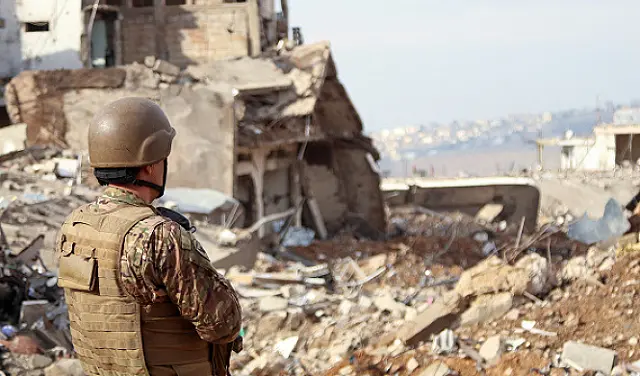
PALESTINE

Mon 27 Jan 2025 9:08 pm - Jerusalem Time

Israeli occupation causes widespread destruction to the infrastructure and citizens' property in the city of Tulkarm

This evening, Monday, the occupation bulldozers caused destruction and damage to the infrastructure and citizens' property in the center of Tulkarm city.


WAFA reported that the occupation bulldozers destroyed the surroundings of Gamal Abdel Nasser Square in the center of the city, the infrastructure and the main water network. The destruction also included sidewalks and entrances to shops in the area.

Bulldozers also destroyed a number of vehicles parked on the sidewalks of the city, specifically at the entrance to the Martyr Thabet Thabet Governmental Hospital, which is under a tight siege by the occupation forces.

In the same context, the occupation bulldozers are destroying and destroying the infrastructure in the Al-Muqata'a neighborhood at the western entrance to Tulkarm camp, while tightening the siege on it and deploying snipers in its vicinity.

The Palestinian Red Crescent Society reported that a young man (24 years old) was injured by live bullets in his foot in Tulkarm. The occupation forces stopped the ambulance, detained the medical crew and forced them to transfer the injured man to the "Tsna'oz" checkpoint west of the city, bringing the number of injuries caused by the occupation's bullets and shelling today to 6.

Two citizens were killed and four others were injured, Monday afternoon, when the Israeli occupation forces bombed a vehicle at the entrance to Nour Shams camp, east of Tulkarm.

He follows..

PALESTINE

Mon 27 Jan 2025 9:06 pm - Jerusalem Time

A child was killed and others were injured in an Israeli bombing west of Al-Nuseirat camp

A child was killed and others were injured on Monday evening, when the occupation forces bombed an animal-drawn cart west of the Nuseirat camp in the central Gaza Strip.

Al-Awda Hospital announced the arrival of the body of the child Nada Muhammad Al-Amoudi (5 years old) and three injuries from the Al-Jisr area west of Al-Nuseirat camp, as a result of the occupation’s bombing of the displaced people returning to areas north of the Gaza Strip.

Thousands of displaced people began returning today to Gaza City and the northern Gaza Strip, via Rashid Coastal Street in the central Gaza Strip, after the occupation army forcibly displaced them from their homes as a result of the genocidal war.

Between October 7, 2023 and January 19, 2025, the Israeli occupation forces launched an aggression on the Gaza Strip, which resulted in the martyrdom and injury of more than 158,000 people, most of whom were children and women, and left more than 14,000 missing.

The Israeli occupation aggression has caused the displacement of more than 85% of the citizens of the Gaza Strip, i.e. more than 1.93 million citizens out of 2.2 million, from their homes after their destruction. About 100,000 citizens have left the Strip since the beginning of the aggression.
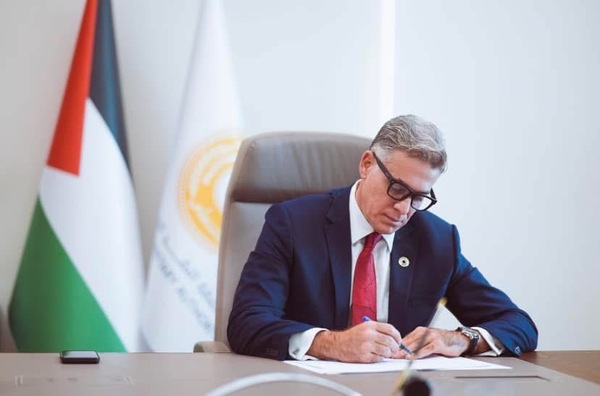
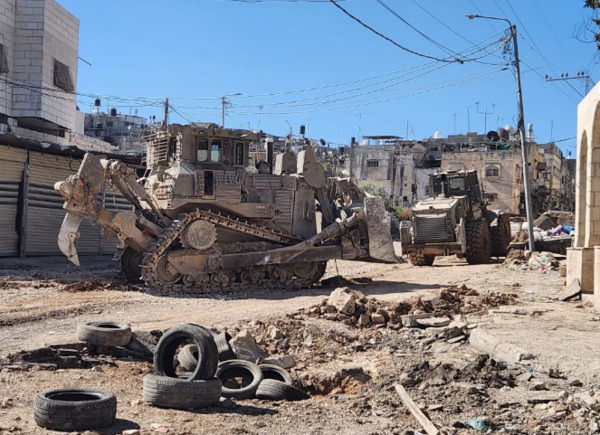
PALESTINE

Mon 27 Jan 2025 6:27 pm - Jerusalem Time

A deal amidst genocide and bloodshed... Analysts evaluate and question the high costs?


Dr. Omar Rahhal: We must re-evaluate the tools and mechanisms that bring the Palestinians closer to achieving their national project and avoid monopolizing the making of fateful decisions.

Nihad Abu Ghosh: The deal is the result of an unprecedented battle and part of a set of demands included in the agreement on the ceasefire in Gaza

Daoud Kuttab: The main problem in Operation “Noah’s Flood” lies in the resistance’s lack of control when entering settlements and capturing civilians.

Talal Okal: The calculations of profit and loss in the current war are not limited to the number of prisoners released, but also include the nature of the war and its repercussions.

Samer Anabtawi: The exchange deal, despite its high bloody price, is an unprecedented achievement for the resistance in breaking the myth of the “invincible army”

Adnan Al-Sabah: “The Price of Freedom” is a historical idea in the face of colonialism, and the peoples who were liberated did not provide a mathematical calculation of the number of victims


Ramallah - Exclusive to Al-Quds


Amidst the bloodshed and destruction that has befallen the Gaza Strip, the recent “exchange deal” between the resistance and Israel stands out as one of the most complex and controversial deals in the history of the Palestinian-Israeli conflict.

In separate interviews with “I”, writers and political analysts believe that this deal, which came in the shadow of an unequal war that resulted in the deaths of tens of thousands of martyrs and wounded, raises profound questions about the calculations of profit and loss, not only at the level of the number of prisoners released, but also at the level of the nature of the conflict and its future repercussions. While the deal is an unprecedented achievement for the resistance in breaking the conditions of the occupation, the human and material price paid remains the subject of questions about the fairness of the comparison between previous deals and the current reality.

They point out that the current deal is radically different from its predecessors, as this time it took place under the pressure of an unprecedented war of extermination, and while the resistance succeeded in achieving negotiating gains, such as the release of prisoners from categories that Israel had previously refused to negotiate about, the enormous human cost remains a deep wound in the Palestinian memory, pointing out that the deal comes as part of an agreement that was concluded, and is not separate from it.


A large number of martyrs, wounded and destruction


The writer and political analyst Dr. Omar Rahhal confirms that the human and material cost of the wars and deals witnessed by the Palestinian cause, whether the 2025 deal that cost nearly 50 thousand martyrs and thousands of wounded, compared to previous deals such as the Galilee deal in May 1985 that released 1,155 prisoners led by the Popular Front for the Liberation of Palestine - General Command, and the Fatah deal in 1982 that released 4,700 prisoners, are things that happen, but for the first time a deal takes place with this large number of martyrs, wounded and destruction.

Rahhal stresses that resistance is legitimate under occupation, and that responsibility for the victims lies with the Israeli occupation, not the resistance that defends its people.

Rahal points out that prisoner release deals have always been part of the Palestinian struggle, but they have never come at a human cost similar to what happened in 2025.

Rahhal explains that the Israeli war on the Gaza Strip is an asymmetric war, as Israel is classified as one of the strongest armies in the world, ranked 18th globally and first in the Middle East, and is a nuclear state supported by the United States, France, Britain, Germany and Italy. In contrast, 2.4 million Palestinians live in the Gaza Strip on an area of no more than 365 square kilometers, noting that the citizens of the Gaza Strip used to live on 40% of the total area of the Strip with a population density that is considered one of the highest in the world.

Rahhal points out that the weapons used by the occupation army in the Israeli wars are lethal weapons with great destructive power and are internationally prohibited, pointing out that the wars that took place between the countries of the world witnessed safe areas and humanitarian corridors, but what happened in Gaza was exceptional as there were no safe or neutral areas, but rather it was the most brutal war, and it revealed a mentality of revenge with racist dimensions, as civilian objects were targeted with direct instructions from the Israeli political and military levels.

Rahhal addresses the events of October 7, stressing that they are not an adventure, but rather part of the liberation struggle witnessed by peoples under occupation.

He points out that liberation movements in the world have always faced bloody and vengeful colonial powers, and that what happened in Gaza is the result of the brutality of the occupation, not the resistance.

Regarding the issue of prisoners, Rahhal confirms that the occupation bears responsibility for detaining prisoners for long periods, such as Muhammad al-Tous, who spent 39 years in captivity, and Karim and Maher Younis, who spent 40 years.

Rahhal points out that the resistance did not expect the war to last for a long time or to be this brutal, especially with the lack of preparedness to secure civilians in Gaza, which is something that must be paid attention to.

Rahhal stresses that the lessons learned from these wars must be taken into consideration, calling for unifying Palestinian efforts and creating a comprehensive political partnership that does not exclude any party.


Fateful decisions must be made collectively.


Rahhal points out that fateful decisions, whether in war or peace, must be taken collectively and not by one party, as happened in the Oslo Accords, in which the Palestinians went to peace without sufficient preparation. Therefore, today, more than ever, we need to strengthen national unity on the basis of full political partnership that does not exclude. This requires the PLO to call for a national rescue conference in which all Palestinians participate to come up with a unified national strategy that defines the features of the national salvation stage and the liberation process.

Rahhal stresses that resistance is legitimate, but the bloody results that occur are the result of the brutality of the occupation, not the resistance.

Rahhal calls for a re-evaluation of the tools and mechanisms that bring the Palestinians closer to achieving their national project, with the necessity of avoiding monopolization in making fateful decisions.


Any comparison between the current deal and previous ones is "unfair."


Writer and political analyst Nihad Abu Ghosh asserts that the current “prisoner exchange deal” between the Palestinian resistance and Israel is not just a traditional exchange, but rather forms part of a broader agreement to stop the war on Gaza, which came in exceptional circumstances of unprecedented military escalation and international bias towards Israel, amidst a global inability to bring in humanitarian aid.

Abu Ghosh explains that any comparison between the current deal and previous agreements is “unfair,” because this deal was carried out under the pressure of “daily massacres” and a “war of extermination” during which Israel dropped more than 90,000 tons of explosives on the Gaza Strip.

Abu Ghosh points out that the world has been unable to bring in “a truckload of medicine, shrouds or food,” and has even failed to transport the wounded, as the current deal is the result of “a huge battle unprecedented in Palestinian and world history since World War II,” stressing that the deal is part of a set of demands included in the agreement regarding a ceasefire in Gaza.

Abu Ghosh asserts that the current agreement includes several main axes: a ceasefire through a “sustainable calm,” the return of the displaced to their homes and the start of reconstruction operations, and the release of Palestinian prisoners, including categories that Israel had previously refused to negotiate over, such as the Jerusalem prisoners, the 1948 prisoners, and those it calls “those with Jewish blood on their hands.”

He points out that this is the first time that the resistance has succeeded in "breaking the Israeli conditions" related to the categories of prisoners, which represents a historical precedent in the negotiation process, as the occupation found a negotiator who adhered to the details, compared to previous agreements that were signed "without reading the details," as he put it.

Abu Ghosh asserts that the deal was the culmination of the resistance’s steadfastness, which “inflicted heavy losses on the occupation until the last moment,” noting that Israel sought to establish a new reality through the “Deal of the Century” and the “Abrahamic Peace,” which transformed the Palestinian issue into an “internal Israeli affair,” but the October 7, 2023 operation, which he describes as “defensive,” brought the issue back to the forefront of the world as a central issue in the Middle East.

Regarding the motives behind the operation, Abu Ghosh denies that it was the result of an “obsessive decision,” but rather considered it a “natural explosion” of 16 years of siege, in which travel, medical treatment, and work were intertwined with the continuous targeting of the return marches, and the prevention of the entry of 290 basic materials, including construction materials and medicines, which created “accumulated congestion” that led to the explosion.

Abu Ghosh warns that the next phase may be “more dangerous than genocide,” referring to the Zionist plans that are being discussed publicly, such as US President Donald Trump’s statements about “deporting Palestinians to Jordan and Egypt,” which he described as a “real tragedy” that threatens the entire Palestinian existence.

Abu Ghosh asserts that these plans are not linked to the results of the current war, but rather are an extension of an extremist Zionist strategy supported by an American administration that is completely biased towards the Israeli right.

Abu Ghosh stresses that the only solution to confront these challenges lies in "unifying the Palestinian ranks," noting that the internal division weakens the Palestinian position, which will lead to strengthening Arab and international solidarity.

Abu Ghosh believes that the war "is not over yet," as Israel is still trying to breach the terms of the agreement, while the Palestinians are preparing to face a fateful stage that includes all possibilities, from liquidating the issue through military force, which requires a unified Palestinian position.


The weaker party must work to exploit its strengths.


Writer and political analyst Daoud Kuttab confirms that the "Ahmed Jibril" operation in 1985 witnessed the release of 1,155 prisoners, and was preceded by the "Fatah" movement deal in which 4,700 prisoners were released, while the 2025 operation shows a huge human and material cost, which raises questions about the calculations of profit and loss in such operations.

Writers believe that the main problem in Operation "Noah's Flood" lies in the lack of control the resistance has when entering Israeli settlements and capturing civilians, especially women and children.

The writers explain that if the operation had been limited to targeting the army and men, the situation would have been less difficult, noting that this does not necessarily mean that Israel would be less fierce in its revenge.

Writers believe that the world will not allow it to act with the same degree of force as it did in previous operations, pointing out that the global media focus today is on the women and children of the Israeli prisoners, which increases international pressure on the Palestinian side.

Writers emphasize that the most important lesson lies in the possibility of demanding that the world and the Israeli side apply international law precisely, while the resistance itself violates it.

Writers point out that the Palestinian side, as the weaker party, must adhere to higher moral and legal standards, given the ability of the stronger party to use the media and politicians to its advantage.

He stresses that the weak party must work to exploit its strengths, which are the legitimacy of resisting the occupation, while avoiding targeting civilians or committing any violations that may weaken its moral and legal position before the international community.


A radical change in the circumstances surrounding exchange transactions


Writer and political analyst Talal Okal believes that the circumstances surrounding Palestinian prisoner release deals have changed radically since the 1980s until today, making it difficult to compare deals such as “Wafa al-Ahrar” or “Al-Aqsa Flood” with the current situation.

Awkal points out that the deal to release more than a thousand Palestinian prisoners in exchange for the Israeli soldier Gilad Shalit was completely different from the current situation, as those deals were not the result of large-scale wars as is the case today.

Awkal explains that the calculations of profit and loss in the current war are not limited to the number of prisoners released, but also include the nature of the war and its repercussions on the Palestinian national project.

Awkal stresses that talking about profit and loss, victory and defeat must be linked to understanding the nature of the current stage and the course of the conflict with the Israeli occupation.

Awkal points out that achieving freedom in the face of colonialism of this kind requires paying a heavy price, both materially and morally.

Awkal calls for contemplation of the material and moral losses incurred by the Israeli side, stressing that the extent of the catastrophe that befell the Gaza Strip must be understood within the framework of the major transformations in the conflict between “right and wrong.”

Awkal points out that the conclusions and judgments in this case are not subject to mathematics, but rather to the relationship of numbers to strategic shifts in the conflict.


Israel's declining international image and the cracking of its internal structure


Palestinian writer and political analyst Samer Anabtawi believes that the Israeli war on the Gaza Strip, which followed the October 7 attack, was “pre-planned” as part of the occupation’s strategy to liquidate the Palestinian cause through displacement and domination of the West Bank and Jerusalem.

Anbatawi points out that the recent prisoner exchange deal, despite its high bloody price, represents an unprecedented achievement for the Palestinian resistance in breaking the myth of the “invincible army,” in addition to revealing the decline of Israel’s international image and the cracking of its internal structure.

Anbatawi explains that the Israeli aggression on Gaza was not a random response to the events of October 7, but rather came as the culmination of a systematic policy that began with a 16-year siege, which aimed to pave the way for a military strike and create a catastrophic humanitarian reality that would lead to forced displacement, in the context of the Zionist project based on expansion and imposing complete dominance over Palestinian land.

Anbatawi says: “The siege was not a punishment for Hamas, but rather a tool to crush the will of the people of Gaza and dry up their sources of steadfastness, in preparation for a comprehensive military strike that coincided with the escalation of settlement activity in the West Bank and Jerusalem.”

Anbatawi acknowledges that "the price was heavy" due to the Israeli war on the Gaza Strip, with thousands of martyrs, wounded and detainees, and unprecedented destruction of infrastructure and buildings. Then came the exchange deal that led to the release of detainees with long sentences and life sentences, but it represents a precedent in the history of the conflict in terms of the number and quality of prisoners.

He says: "The Palestinian arena has not witnessed a deal of this size for decades, especially with the occupation's previous insistence on excluding prisoners serving life sentences."

Anbatawi points out that this deal is different from its predecessors, such as the “Ahmed Jibril” deal (1985), which took place in the context of the Lebanon war, while the resistance in Gaza succeeded by storming the settlements and penetrating the occupation’s security system.

Anbatawi points out that the war on Gaza is not separate from the broader scene in the West Bank, where the far-right Israeli government is accelerating the implementation of Judaization and de facto annexation plans, through intensifying settlements, daily assassinations, and restricting the movement of Palestinians around Al-Aqsa Mosque. He stresses that these measures, in addition to the systematic abuse of prisoners in the occupation’s prisons, represented a spark that led to the explosion of October 7 in response to the policy of “slow genocide.”

Anbatawi asserts that the occupation, despite its enormous military power, has paid a heavy price on several levels, as the fragility of the Israeli security system was exposed with the breach of the “Gaza envelope” lines, and the failure of the military machine to achieve its declared goals of eliminating the resistance. The international isolation of the occupation has also escalated with legal prosecution in the International Criminal Court and international courts, the growth of global boycott movements, the worsening of political and social crises in the occupying state, and the decline in confidence in the army’s ability to protect the settlements.

Anbatawi points out that the continued steadfastness of the people in Gaza despite the destruction, and the ability to achieve political gains and conclude the exchange deal, confirm that the resistance was able to change the equation despite the imbalance of power.

Anbatawi says: “Gaza’s steadfastness broke the might of the Israeli military machine and opened the door to a new phase of the conflict.”


Warning against the logic of "bartering" between submission and survival


Writer and political analyst Adnan Al-Sabah asserts that the “price of freedom” in the face of colonial projects is an idea rooted in the history of peoples who sacrificed blood for their independence and freedom, as peoples who gained their freedom did not make a mathematical calculation of the number of victims in exchange for liberation.

Al-Sabah says: “If the peoples of the earth thought about the blood on the altar of freedom, not a single people would have been liberated until today.”

Al-Sabah points to examples such as Algeria, which presented one and a half million martyrs, Bangladesh, which presented two and a half million martyrs, and Russia, which presented seven million in its revolutions and wars, noting that “only the aggressor thinks about the cost of domination, while the victim refuses to submit even if the price is high.”

Al-Sabah warns against the logic of “bartering” between submission and survival, saying: “Some peoples have paid a price for their submission that is greater than what they would pay for their freedom, but the lesson lies in choosing dignity over humiliation.”

Regarding the Palestinian reality, Al-Sabah stresses that "the first condition for victory is to put the internal house in order," affirming that the Palestinian divisions weaken the position in confronting the occupation.

Al-Sabah says: “The home front must be united, strong and have one vision, but we are still experiencing internal conflicts even in the midst of war, which is causing our cause greater losses.”

Al-Sabah believes that "internal contradictions exacerbate the people's suffering," calling for an end to polarization and the building of a liberation strategy based on national consensus.

In comparing the “2025 Deal” that is currently taking place regarding stopping the war on the Gaza Strip and exchanging prisoners, with previous deals, Al-Sabah says: “The difference is fundamental and not just the issue of liberating prisoners; the challenge today affects the 1948 lands, which are a red line for Israel.”

Al-Sabah explains that “the attack on October 7 breached this line, which shook the image of the Israeli security system that sanctifies the sanctity of the lands of 1948,” noting that this was a major reason for the unprecedented retaliatory campaign against Gaza.

Al-Sabah points out that Israel did not only take revenge for the number of dead or prisoners, but also because the operation "stripped it of the illusion of immunity" and shook its people's confidence in its military institutions.

Al-Sabah calls on the Palestinians to "learn lessons," stressing that "victory begins with the people's belief in their right to freedom and their ability to pay the price," but he stresses that "this belief must be coupled with internal unity that besieges the occupation instead of besieging itself."

PALESTINE

Mon 27 Jan 2025 6:24 pm - Jerusalem Time

EU Foreign Ministers Agree to Activate Monitoring Mission at Rafah Crossing

European Union foreign ministers agreed on Monday to resume monitoring at the Rafah border crossing between the Gaza Strip and Egypt, European foreign policy chief Kaya Kallas said.

"Everyone agrees that the EU Border Assistance Mission in Rafah (EUBAM Rafah) can play a crucial role in supporting the ceasefire," the EU foreign policy chief said.

"Today, EU foreign ministers agreed to redeploy the mission at the Rafah crossing between Gaza and Egypt, which will allow a number of injured people to leave Gaza and receive medical care," Kallas added.

ARAB AND WORLD

Mon 27 Jan 2025 5:38 pm - Jerusalem Time

Ceasefires in Gaza and Lebanon appear fragile, but all sides want them to continue


Experts believe the truces in Gaza and Lebanon are likely to hold for now, though their durability was tested to the limit over the weekend, because all sides want to avoid full-scale fighting for at least a few weeks.


In southern Lebanon, Israeli forces remained in place after a Sunday deadline for their withdrawal passed, amid Israeli allegations that Hezbollah had violated its pledge to leave the area. In Gaza, confusion over when Hamas would release Israeli soldier Arbel Yehud has prompted Israel to delay the agreed-upon return of displaced Palestinians to their homes in northern Gaza.


The crisis was quickly resolved, with Qatari Foreign Ministry spokesman Majed al-Ansari announcing on Sunday that Hamas would hand over three Israeli hostages before next Friday, including Arbel Yehuda. He wrote on his X account: “As part of the ongoing efforts led by mediators, an understanding was reached between the two parties that Hamas would hand over hostage Arbel Yehuda and two other hostages before next Friday.”


He added: "Hamas will also hand over three additional hostages on Saturday, in addition to providing information on the number of hostages who will be released as part of the first phase of the agreement."


But even as each side accuses the other of reneging on its deals, analysts say, all sides have a desire to maintain the truce, temporarily overlooking the other's transgressions.


Although Hezbollah is angry with Israel for keeping its forces in southern Lebanon, “it does not want to risk a devastating Israeli attack if it renews its rocket attacks on Israeli cities. Hamas also wants to retain power in Gaza and risks losing it if war resumes. Israel needs to maintain the current arrangement in Gaza long enough to free at least two dozen more hostages. Israeli leaders also seemed eager to appease President Trump, who campaigned on a promise to preserve peace in the Middle East,” according to the New York Times.


As for Lebanon, the White House announced that the truce there would be extended until February 18, although there was no immediate comment from Israel or Hezbollah. The Lebanese prime minister’s office confirmed the extension.


“They will succeed in the next few weeks — and beyond that is just guesswork, since these are agreements that depend on each side giving the other a certain amount of discretion and room to maneuver,” Aaron David Miller, a former U.S. negotiator in Middle East peace talks, was quoted as saying by the New York Times.


This room for maneuver ultimately allowed both truces (in Lebanon and Gaza) to hold over the weekend, even as Israeli occupation forces shot and killed civilians in Lebanon and Gaza who were trying to return to areas still under Israeli control.


The Lebanese Health Ministry said 22 people were killed by Israeli fire in southern Lebanon, while the Palestinian Wafa news agency said one person was killed in Gaza as large crowds gathered in both places near Israeli forces, demanding to return to their homes.


But by Monday morning, the confrontation in Gaza appeared to have subsided. In Lebanon, Hezbollah issued a statement praising residents trying to return and calling on foreign powers to force Israel to withdraw. But Hezbollah did not resume firing rockets.


Analysts say Hezbollah is unlikely to risk further losses while its leadership is eliminated and its patron, Iran, is weakened. The group’s main arms supply route, via Syria, was shut down in December when rebels ousted Syrian President Bashar al-Assad, a Hezbollah ally.


“Hezbollah’s leaders still have some rockets, they still have some guns, they can do something,” Hanin Ghaddar, a Lebanese analyst at the Washington Institute for Near East Policy, a foreign affairs think tank and one of the most important faces of the Israel lobby in the US capital, told the New York Times. “But it would be suicidal if they did that, because they know that any kind of attack by Hezbollah in Israel means that Israel will seize the opportunity to come back in full force and annihilate what’s left of them.”


Hezbollah may also be wary of losing support among its Shiite base, especially in next year’s parliamentary elections, Ghaddar said. Lebanon’s Shiite community paid the heaviest price for Hezbollah’s decision to go to war with Israel in October 2023 in solidarity with its ally Hamas. Shiite villages and towns in southern Lebanon bore the brunt of Israel’s air campaign and subsequent ground invasion.


With Hezbollah less likely to resume fighting, the Gaza ceasefire is the more fragile of the two, experts say. But it is not expected to face its biggest stress test until early March, when Hamas and Israel must decide whether to extend the agreement beyond the initial 42-day truce.


For now, Israel has indicated it wants to maintain the ceasefire to support a flow of hostage releases. But an extension would require both sides to agree to a permanent end to the war — a bridge that Israeli Prime Minister Benjamin Netanyahu has seemed unwilling to cross. Netanyahu’s coalition government relies on far-right lawmakers seeking permanent Israeli control of Gaza, and his administration could collapse if the war ends with Hamas still in power.


The terms of the agreement allow for some flexibility. The truce could continue beyond the 42-day mark as long as the two sides negotiate whether the arrangement should be made permanent.


But various US media outlets have quoted Israeli officials as saying that they will not remain stuck in endless, pointless negotiations, especially if Hamas stops releasing the hostages. Hamas is unlikely to continue releasing the hostages, its main bargaining chip, without an Israeli promise to permanently cease hostilities.


On this point, the New York Times quotes Mukhaimer Abu Saada, a Palestinian political scientist from Gaza: “Hamas wants a cease-fire but not at any price. They want a cease-fire that ends the war.”


Much may depend on President Trump’s willingness to persuade Netanyahu to reach a more permanent truce. Trump’s private messages to the Israeli prime minister were crucial in shaping the initial phase, but it remains to be seen whether the US president will maintain that position a few weeks from now.


“If Netanyahu succeeds in convincing Trump of the need to renew the war, then the war will probably be renewed,” Abu Saada said. “If Trump keeps his promise that he doesn’t want any wars and wants more peace – whether in Gaza, Ukraine or around the world – that’s a different matter.”

PALESTINE

Mon 27 Jan 2025 4:43 pm - Jerusalem Time

Governor of the Monetary Authority: The banking system will resume work in the Gaza Strip starting Tuesday morning

The Governor of the Palestine Monetary Authority, His Excellency Mr. Yahya Al-Shannar, announced the resumption of the banking system's work and provision of services in the Gaza Strip as of Tuesday morning, January 28, 2025. The branches will be re-operated in stages, and the first stage includes operating three to four branches in the Deir al-Balah and Nuseirat areas.


The Governor pointed out that the Monetary Authority is working with banks to increase the number of branches that will be opened to provide services to the public to include other areas in the north and south of the Strip, and that this is contingent on the availability of communication lines, electricity, employees and security, and that work is underway diligently to ensure the success of the operation and provision of services.


In the same context, and until paper currency is introduced to the sector, Al-Shannar urged the public to benefit from the electronic payment services provided by the Monetary Authority, especially the iBURAQ instant transfer system. These services are free, fast, easy and secure; pointing out that the iBURAQ system can be accessed through banking applications for banks and the electronic wallets application for payment services companies.

PALESTINE

Mon 27 Jan 2025 3:29 pm - Jerusalem Time

Israeli forces stormed Tulkarm city and its camp

This Monday afternoon, the Israeli occupation forces stormed the city and camp of Tulkarm.


According to local sources, a number of occupation military vehicles stormed the city from its southern and western entrances, patrolled its main streets, and were stationed in front of the entrances to the Martyr Thabet Thabet Governmental Hospital and the Israa Specialized Hospital in the western neighborhood of the city, where they obstructed the work of ambulances, stopped them, searched them, and subjected their crews to interrogation.


The sources added that the occupation forces surrounded Tulkarm camp, after discovering a special force of the occupation army hiding in the Al-Rabaia neighborhood in the camp, while it deployed its snipers in a number of tall residential buildings at the entrances to the camp and its surroundings, amidst heavy flying of reconnaissance aircraft at a low altitude.


The occupation forces stormed the Shuwaika suburb north of the city, the town of Anabta to the east, and Faroun to the south, and deployed their vehicles and foot patrols in various streets and neighborhoods, and obstructed the movement of citizens and vehicles.


This came after the occupation forces bombed a vehicle in front of the entrance to Nour Shams camp east of the city this afternoon, which led to the death of two young men and the injury of three citizens, ranging from minor to moderate.

ARAB AND WORLD

Mon 27 Jan 2025 3:18 pm - Jerusalem Time

New US Defense Secretary Renews US Commitment to Israel's Security

The new US Secretary of Defense, Pete Hegseth, stated during his call with Israeli Prime Minister Benjamin Netanyahu that the United States is determined to provide the capabilities that Tel Aviv needs "to defend itself," as he put it.


According to a statement by the US Department of Defense (Pentagon), Hegseth stressed that the United States, under the leadership of President Donald Trump, is determined to provide the capabilities that Israel needs "to defend its security," he said.


According to the statement, the phone call emphasized "developing common security goals in the face of ongoing threats and the strong ties between the two countries."


The statement indicated that Hegseth and Netanyahu agreed to remain in constant contact.


In contrast, a statement issued by the Israeli Prime Minister's Office confirmed that Netanyahu congratulated Hegseth on assuming his new position.


Earlier, Israeli officials said that Trump had lifted a ban on sending MK-84 bombs to Israel, which weigh about a ton.

PALESTINE

Mon 27 Jan 2025 2:29 pm - Jerusalem Time

The first batch of Qatari aid arrives in the Gaza Strip

The first batch of Qatari humanitarian aid entered the Gaza Strip today, Monday, through the Erez (Beit Hanoun) crossing in the northern Gaza Strip.


This aid comes as part of the land bridge launched by the State of Qatar to supply Gaza with fuel and humanitarian aid, which was launched earlier via the Kerem Shalom crossing.


The amount of aid that arrived amounted to 2,600 tons, and was provided by leading Qatari institutions, including the Qatar Development Fund, Qatar Charity, and the Qatar Red Crescent.


The aid includes essential food and medical supplies, aiming to alleviate the humanitarian suffering of the residents of the Strip, in light of the harsh conditions and escalating challenges left by the Israeli genocidal war, which lasted for 15 months.


The Qatari Ministry of Foreign Affairs stressed that this step reflects "Doha's firm commitment to supporting our Palestinian brothers in times of crisis," stressing the importance of intensifying international efforts to ensure the regular and sustainable delivery of aid to Gaza.


land bridge

Last Monday, Qatar announced the launch of a land bridge to supply the Gaza Strip with more than 12 million liters of fuel within 10 days, in implementation of the directives of the Emir of Qatar, Sheikh Tamim bin Hamad Al Thani.


The move came less than 24 hours after the ceasefire agreement between Israel and the Palestinian factions came into effect, which began on January 19.


The fuel sent will be used to light hospitals, provide power to shelters for the displaced and ensure the operation of basic services in the besieged Strip.


This humanitarian aid comes within the framework of the first phase of the ceasefire agreement. The three-phase agreement, which extends for 42 days, includes the entry of 600 trucks loaded with aid daily and the opening of the Rafah crossing 7 days after the agreement begins.

PALESTINE

Mon 27 Jan 2025 2:03 pm - Jerusalem Time

Palestinian Presidency: Displacement and alternative homeland projects are rejected and enhance instability and chaos in the region

The official spokesman for the Palestinian presidency, Nabil Abu Rudeineh, said that displacement and alternative homeland projects are rejected, and they reinforce the instability and chaos witnessed in the region, and the alternative is to achieve a just peace based on international legitimacy and the Arab Peace Initiative.


He added that our Palestinian people, who suffered from the woes of the 1948 and 1967 catastrophes, will absolutely not accept these projects, pointing out that the scenes of our people returning to their homes in northern Gaza despite the systematic destruction and crimes committed by the occupation forces confirm that this people will remain steadfast and firm on their land, and no one will be able to displace them from their homeland.


Abu Rudeineh pointed out that the Palestinian people's adherence to their land proved to everyone that the only solution that guarantees security and stability is to recognize the rights of the Palestinian people to end the occupation, embody the establishment of their independent Palestinian state with East Jerusalem as its capital, not to harm the unity of the Palestinian land in the Gaza Strip, the West Bank and East Jerusalem, and to preserve the holy sites.


The official spokesman for the presidency confirmed that President Mahmoud Abbas, since the first day of the aggression against our people and our land, has affirmed the firm Palestinian position on the necessity of stopping the aggression, preventing displacement, and not seizing any inch of the land of the Gaza Strip, and that the State of Palestine has political, legal and administrative jurisdiction over the Gaza Strip like the rest of the Palestinian land, pointing out that there is continuous coordination with the Arab Republic of Egypt and the Hashemite Kingdom of Jordan, which have stood with all determination to prevent displacement, and with all Arab and international countries and parties that have supported and backed the Palestinian position.


Abu Rudeineh said that what is required now is to establish and sustain the ceasefire, the complete withdrawal of the Israeli occupation forces, the assumption of the Palestine Liberation Organization's duties in the Gaza Strip, and the focus on achieving peace and establishing an independent Palestinian state. What is required of the new American administration is to support solutions that lead to achieving permanent peace and stability for the countries of the region and the world.

PALESTINE

Mon 27 Jan 2025 1:29 pm - Jerusalem Time

Sharp disagreements between families of detainees in Gaza and Ben Gvir during a Knesset session

Sharp disagreements erupted between a number of families of Israeli detainees in the Gaza Strip and the Minister of National Security, Itamar Ben-Gvir, today, Monday, during a session of the Knesset Foreign Affairs and Security Committee, according to what the Cairo News Channel reported from Hebrew media, a short while ago.


Ben Gvir said today that the war on Gaza must be resumed, adding that the opening of the Netzarim corridor and the return of tens of thousands to northern Gaza is a victory for Hamas.


The Israeli Minister of National Security also stressed that returning to northern Gaza is not an absolute victory, but rather an absolute surrender.

PALESTINE

Mon 27 Jan 2025 1:21 pm - Jerusalem Time

Updated: Two Palestinians killed and three others injured in the occupation's bombing of a vehicle near Nour Shams camp

Two citizens were killed and three others were injured, Monday afternoon, when the Israeli occupation forces bombed a vehicle at the entrance to Nour Shams camp, east of Tulkarm.

The Ministry of Health announced the arrival of two dead and three injured people with minor to moderate injuries to Tulkarm Governmental Hospital, as a result of the occupation bombing a vehicle at the entrance to Nour Shams camp, east of Tulkarm city.


According to local sources, a drone bombed the vehicle while it was passing through Nablus Street at the entrance to the camp, which led to it catching fire and killing citizens Ramez Damiri and Ihab Abu Atwi from Tulkarm camp, and injuring 3 other citizens.