PALESTINE

Sun 02 Feb 2025 12:18 pm - Jerusalem Time

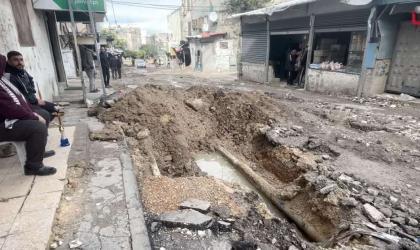
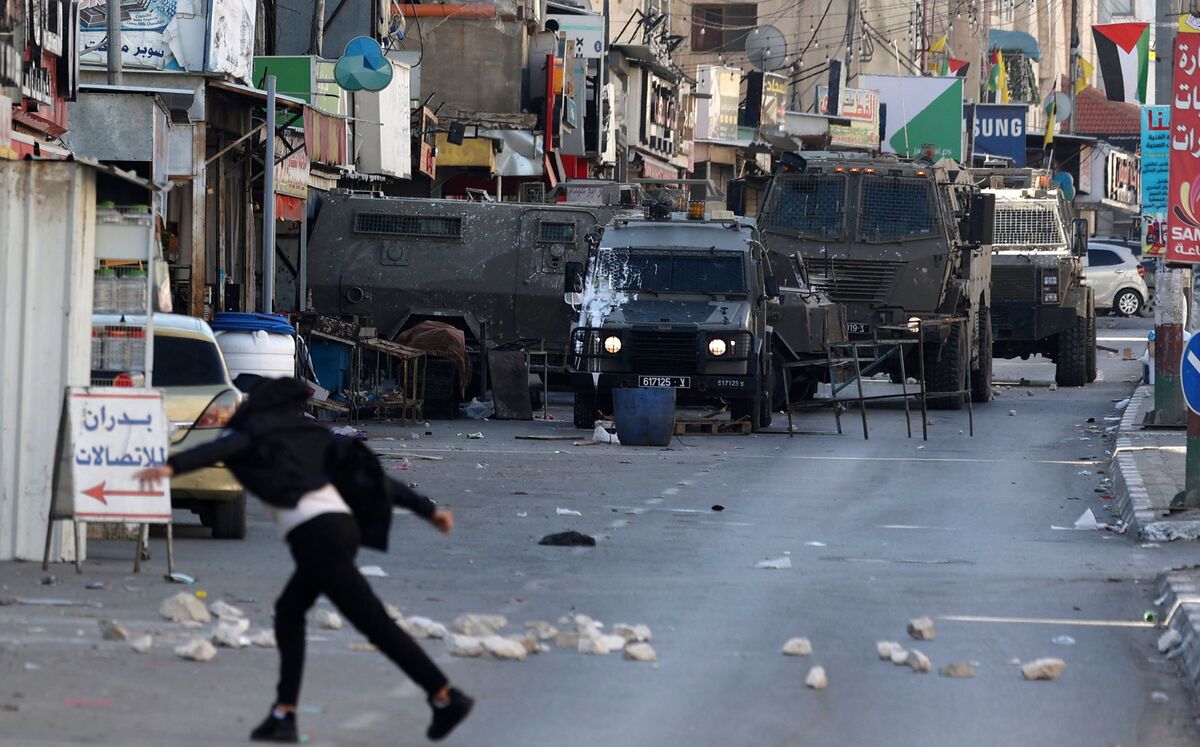
Severe damage to infrastructure during Israeli occupation's aggression around Al-Far'a camp

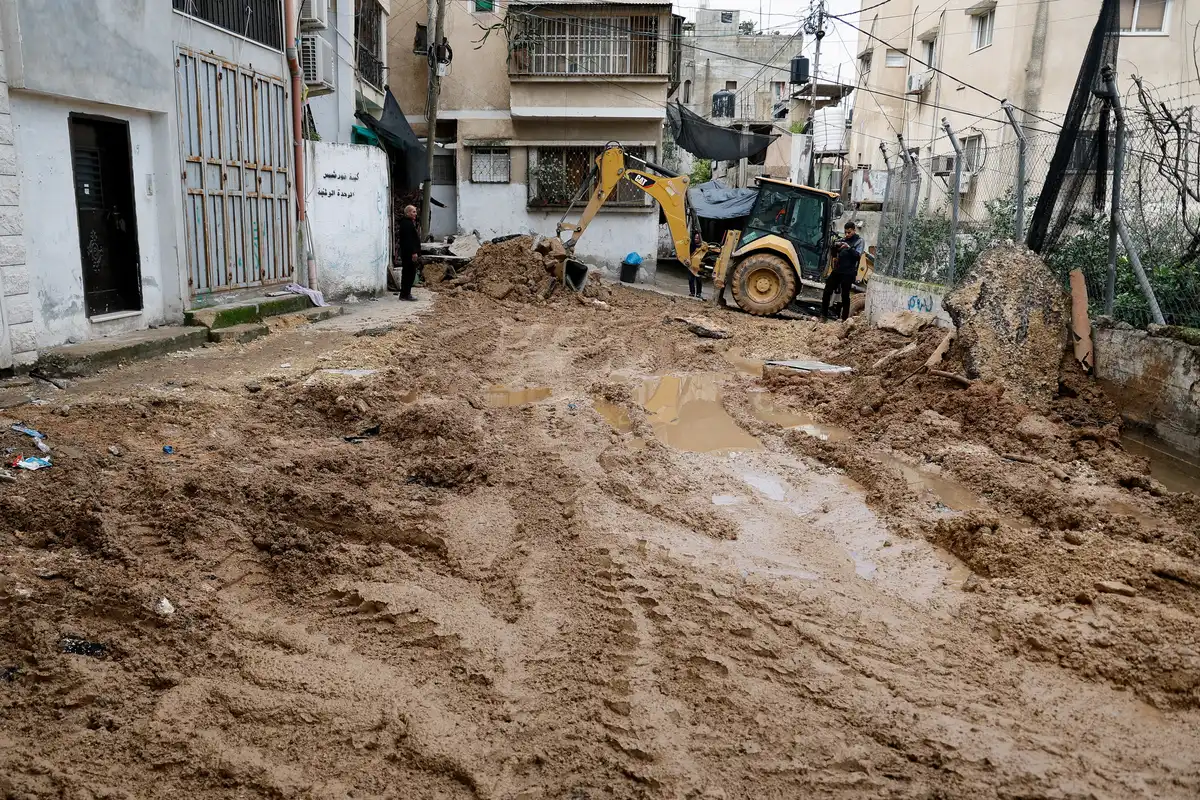
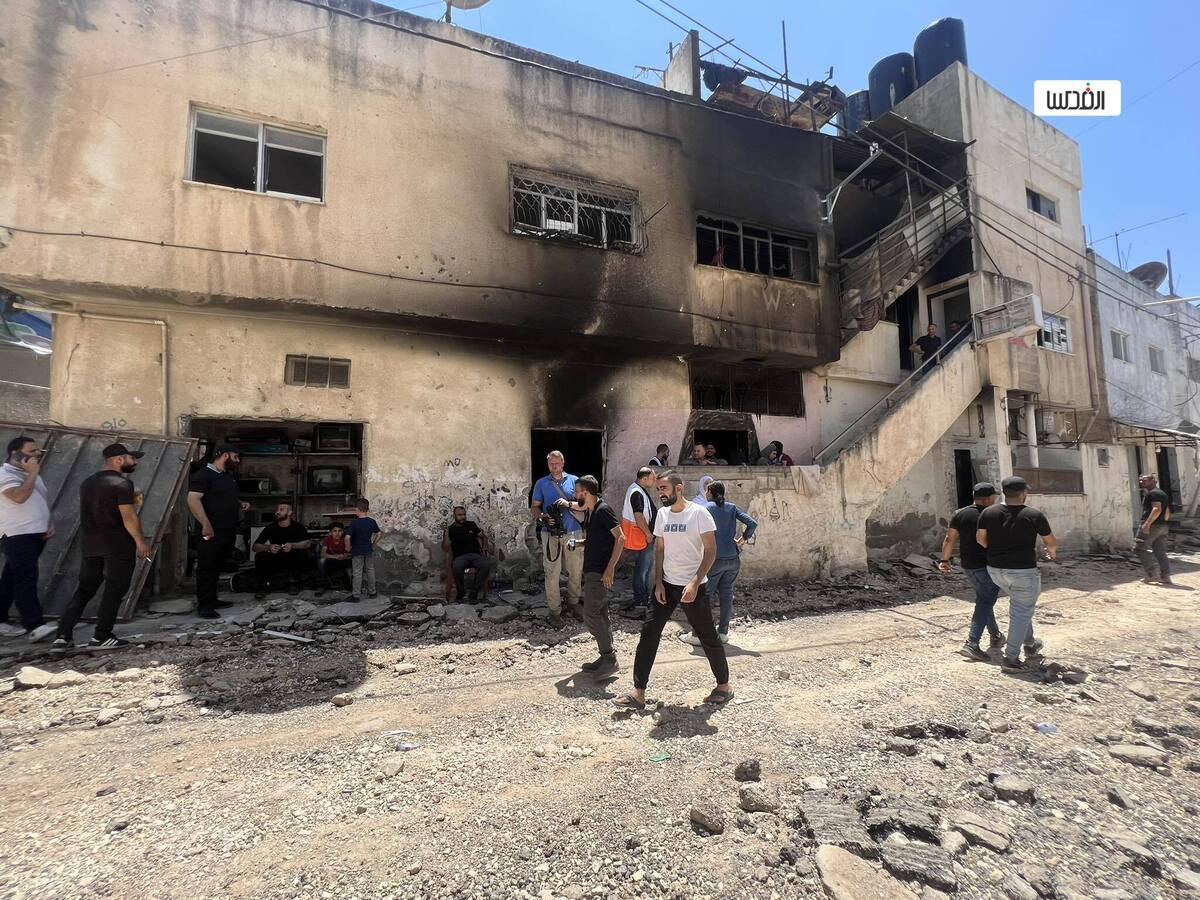
Today, Sunday, the Israeli occupation forces caused significant damage to the infrastructure surrounding the Far'a camp, south of Tubas.


Local sources reported that the occupation forces bulldozed parts of the main street leading to the camp from the southern side.


This coincides with a tight siege imposed by the occupation forces on Al-Far'a camp, by closing its entrances with earthen mounds, in addition to seizing many houses in the camp's vicinity and overlooking it and stationing themselves in them.


The occupation also continues to storm the outskirts of the town of Tamoun, southeast of Tubas, where the occupation forces are stationed on the southern outskirts of the town after forcing many families in the area to leave their homes, in addition to closing the road between the town of Tamoun and the village of Atouf from the eastern side with earth mounds.

ARAB AND WORLD

Sun 02 Feb 2025 11:26 am - Jerusalem Time

Washington Post: Israel builds settlement sites in southern Syria

The Washington Post revealed that Israel is building settlement sites in southern Syria, raising local fears of occupation.


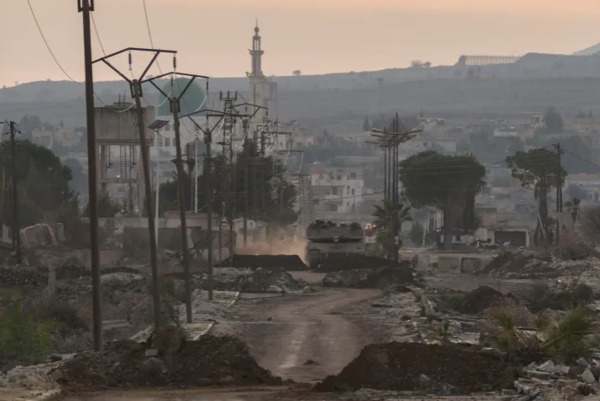
Satellite images obtained by The Washington Post show more than a half-dozen buildings and vehicles at a walled Israeli base near the village of Jubata al-Khashab in Quneitra province.


Israel also built an almost identical structure five miles to the south, both linked by new dirt roads to the Golan Heights, which Israel occupied in 1967.


The newspaper confirmed that the Israeli buildings and vehicles indicate a long-term presence, and not a temporary one as Israel claims.


The newspaper quoted the mayor of Jabata al-Khashab, Muhammad Marioud, as saying that the Israelis are building military bases.


He added that Israeli bulldozers destroyed fruit trees in the village and other trees located in part of a nature reserve in order to build the settlement outpost near Jubata al-Khashab, saying, "We told them that we consider this an occupation."


Israeli forces move back and forth in the 90-square-mile buffer zone, which is supposed to be demilitarized under a 1974 ceasefire agreement between Israel and Syria.


Custom design map of Syria Lebanon Golan Quneitra


Two monitoring bases

The two new construction sites, located inside what was until recently under Syrian control, appear to be forward observation bases, similar in structure and style to those in the Israeli-occupied part of the Golan Heights, said William Goodhand, an imagery analyst at Contested Ground, an independent research project that tracks military movements through satellite imagery in conflict zones.


The base at Jabata al-Khashab is more advanced, while the base to the south appears to be under construction, Goodhand said. The former will provide better visibility for troops, the latter will have better access to the area’s road network, as will the third base if it is built on cleared land to the south, he said.


The BBC had previously revealed Israeli construction in Jubata al-Khashab.


After the fall of the Syrian regime, Israel declared the collapse of the 1974 disengagement agreement, and seized the buffer zone in the Golan Heights, most of which it had occupied since 1967. It also established fixed points on Mount Hermon, including a helicopter landing pad, and said that its forces would remain there indefinitely.


The transitional authorities in Syria and several countries in the region and abroad demanded the withdrawal of the occupation forces from the areas they recently seized.


PALESTINE

Sun 02 Feb 2025 10:31 am - Jerusalem Time

An elderly Palestinian was killed by Israeli occupation forces in Jenin camp

The Palestinian Red Crescent announced, this Sunday morning, the death of an elderly man (70 years old) by Israeli occupation bullets at the entrance to Jenin camp.

PALESTINE

Sun 02 Feb 2025 9:53 am - Jerusalem Time

Israeli settlers bulldoze lands south of Hebron

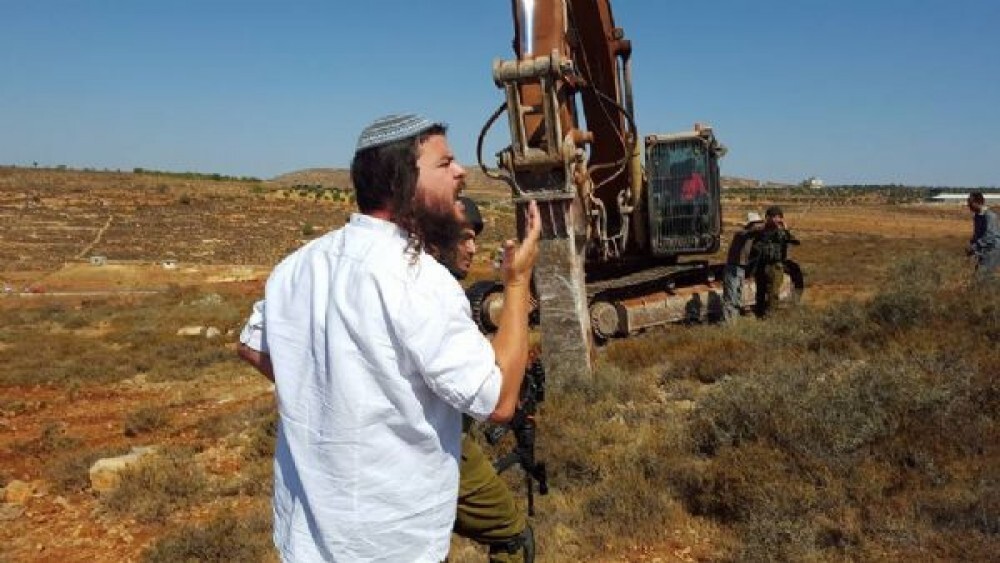
Today, Sunday, settlers carried out excavation and bulldozing operations on citizens' lands in Masafer Yatta, south of Hebron.


According to local sources, settlers carried out excavation and bulldozing works near citizens' homes in the village of Umm al-Khair in Masafer Yatta.


The sources indicated that the settlers had paved a colonial road last year between the village of Umm al-Khair and the area of the Tha’la Dam, bulldozed agricultural lands and set up tents near the dam.


He explained that the goal of the colonists is to seize more citizens' lands for the benefit of colonial expansion at the expense of citizens' lands.

PALESTINE

Sun 02 Feb 2025 9:33 am - Jerusalem Time

Israeli occupation forces families from the town of Tamoun in Tubas to evacuate

Today, Sunday, the Israeli occupation forces forced families from the town of Tamoun, southeast of Tubas, to leave their homes.


Local sources reported that the occupation forces forced several families to leave their homes on the southern outskirts of the town, and seized the keys to their homes.


She added that the occupation soldiers forced the citizens to leave their homes for ten days.


She explained that the area that the occupation is targeting and expelling its residents from their homes is a high area, located on the southern outskirts of the town, and it also overlooks the town and the Far’a area.


The occupation forces have been continuing their storming of Al-Far'a camp and its surroundings for hours, raiding citizens' homes in and around the camp, amidst an intensive deployment of infantry forces, while a military bulldozer is destroying parts of the main street leading to the camp from the southern side, amidst intensive flying of drones.

PALESTINE

Sun 02 Feb 2025 8:59 am - Jerusalem Time

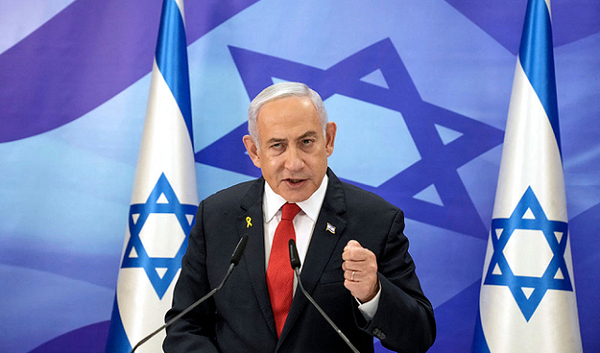
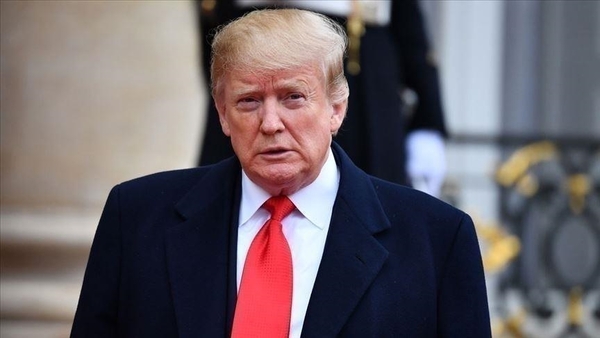
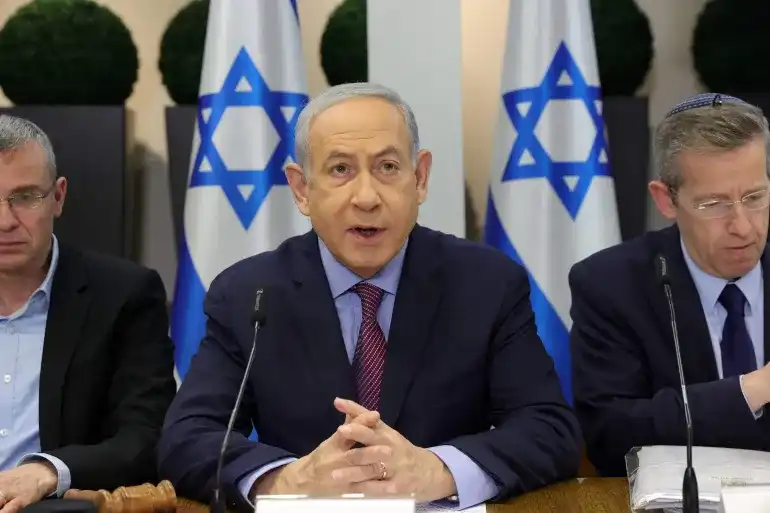
Netanyahu before meeting Trump: "We will change the Middle East and expand the circle of peace"

Israeli Prime Minister Benjamin Netanyahu said, before leaving for Washington to meet US President Donald Trump, today, Sunday, that joint work between them will contribute to "changing the Middle East and expanding the circle of peace through strength," as he put it.


Netanyahu added that the meeting will address strategic issues, including "eliminating Hamas," returning Israeli prisoners, and confronting what he described as "the Iranian axis, which poses a threat to the security of Israel and the entire world."


He stressed that cooperation with the Trump administration would enable Israel to strengthen its relations with the countries of the region, noting that cooperation between them would lead to "changing the Middle East, strengthening Israel's security, expanding the circle of peace, and achieving prosperity through strength."


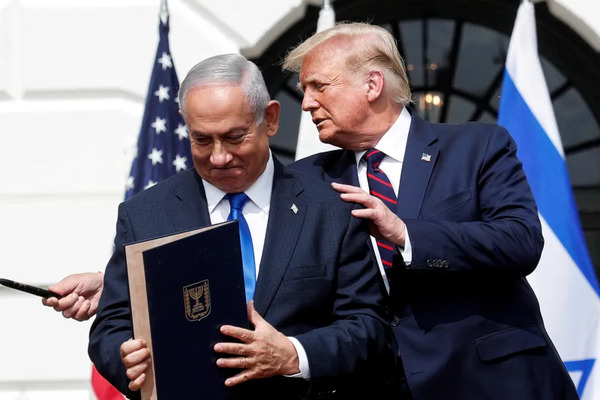
He considered the meeting to be of special importance as it was Trump's first meeting with a foreign leader since his inauguration as President of the United States of America and his return to the White House on January 20 for a second term.


The Israeli prime minister told reporters before leaving for Washington that Trump's decision to have Netanyahu be the first foreign leader to meet with him "reflects the strength of the alliance and the relationship between us, a relationship that led to the 'Abraham Accords' led by President Trump."


Netanyahu considered that the decisions he made during the war "changed the Middle East," adding that "by working together with Trump, we can change it even more for the better, expand the circle of peace, and achieve an unprecedented era of prosperity and peace through strength."


Netanyahu and Trump will discuss the ceasefire agreement in the Gaza Strip, the prisoner exchange with Hamas, and the normalization file between Israel and Saudi Arabia. While Netanyahu is in Washington, Justice Minister Yariv Levin will assume the duties of prime minister, while Defense Minister Yisrael Katz will serve as head of the cabinet.


The Israeli newspaper "Israel Today" reported that Netanyahu will discuss with Trump a "new American plan" aimed at a "mass evacuation" of Palestinians from the Gaza Strip. It added that "according to the American vision, a significant reduction in the population of the Strip will lead to the end of Hamas rule."

PALESTINE

Sun 02 Feb 2025 8:41 am - Jerusalem Time

Bullet injury.. Israeli occupation continues its aggression on Jenin and its camp

A young man was injured today, Sunday, by live bullets in the Al-Jabariyat neighborhood in the city of Jenin, during the ongoing Israeli occupation aggression on the city and its camp for the thirteenth consecutive day.


The Red Crescent Society reported that its crews in Jenin dealt with a live bullet injury to the thigh of a 45-year-old man in the Al-Jabriyat area.


Yesterday, Saturday, the child Ahmed Al-Saadi (16 years old) was martyred after the occupation bombed a group of young men in the eastern neighborhood of the city of Jenin, and two other young men were injured. Two hours later, the two young men Nour Al-Saadi and Tamam Al-Saadi were martyred and another was injured, after a motorcycle they were riding was bombed in the same neighborhood.


In Qabatiya, an occupation drone bombed a vehicle, killing two young men, Saleh Zakarneh and Abdul Alawneh. Thus, the number of martyrs in the governorate rose to 24, with dozens of injuries.


Following the bombing, occupation forces stormed the eastern neighborhood, amidst violent clashes.


The occupation forces arrested a young man after storming the town of Araba, south of Jenin.


The occupation continues to send its military reinforcements to the city of Jenin and its camp, from the Jalameh military checkpoint, while demolition operations continue in several neighborhoods of the Jenin camp.


The occupation forces forced the residents of Al-Safa building to evacuate their homes and turned it into a military barracks.


For his part, Jenin Mayor Muhammad Jarar said that nearly 15,000 people were displaced from Jenin camp and Al-Hadaf neighborhood, and were distributed in several villages and towns in the governorate.


He added that the city's hospitals are suffering from a severe water shortage after the occupation targeted and destroyed water lines, with nearly 35% of the city's residents suffering from a lack of water.


Jarar confirmed that about 100 homes were completely demolished in Jenin camp, which reflects a humanitarian disaster in the city and Jenin camp, noting that the goal of the operation is political and is due to the desire of the extreme right in the government to control the West Bank.


The Education Directorate announced yesterday, Saturday, that the attendance of public and private schools and kindergartens in the city and camp of Jenin will be electronic, while attendance will be in person in the rest of the towns and villages of the governorate, with the exception of the attendance of the town of Qabatiya and the village of the Triangle of Martyrs, where attendance for Sunday will be important and will be compensated for next Thursday.

OPINIONS

Sun 02 Feb 2025 8:38 am - Jerusalem Time

Netanyahu and the justifications for resuming the war

op-ed "AlQuds" dot com

op-ed "AlQuds" dot com

Opinion Writer

Before flying to the United States today to meet with US President Donald Trump next Tuesday, Israeli Prime Minister Benjamin Netanyahu has been very busy over the past few days discussing and examining how to resume the war and aggression on Gaza, through a meeting he held in his office the day before yesterday, Friday, through his recent decision last night to replace the leadership of the negotiating team and appoint his close minister Ron Dermer as head instead of David Barnea, the current head, and not ending with the final meeting last night to discuss sending the negotiating delegation to Doha on Monday.


While the resistance, through the arrangements and scenes of the Israeli prisoners, is keen to present the best way of organization and popular mobilization, and the ability to lead the Gaza Strip and formulate the day after the war in a purely Palestinian formulation, and send messages to Israel about Hamas’s ability to proceed at the same pace in all stages of the deal, in commitment to the national, literary and moral position with the mediators, and to implement and apply the outcomes of the ceasefire agreement as it should, the Israeli side seems disturbed by the system and the mechanisms of delivery that are carried out in accordance with international law and with respect for the dignity of the prisoners regardless of their beliefs. Therefore, Netanyahu has been seeking since the first day of the ceasefire to thwart the deal and blow it up, even before it reaches the second stage, under pressure from the extremist ministers in his government, in order to compensate for the failure to achieve the image of victory, after the resistance has proven its presence strongly.


Changing the course of negotiations from security to political by assigning the task of heading the Israeli negotiating team to Minister Dermer, who is close to Netanyahu, is a step with very complex consequences. According to Israeli sources, it could lead to sabotaging the deal, and perhaps blowing up its first stage, because Netanyahu is well aware that keeping Barnea as head of the delegation will give the ceasefire agreement greater momentum to preserve and continue it, while Dermer’s presence will keep the options open, including the ease of resuming the war.


Hence, during his visit to the United States, he will seek to secure Trump's support for any step that would allow Israel to resume the war. There is no doubt that the statements of the Forum of Families of Israeli Detainees, regarding the media campaign in Israel aimed at justifying the resumption of the war and blaming Hamas, prove that Netanyahu is serious in his intentions to sabotage the deal, abandon the Israeli prisoners, and sow discord among them. The families of the prisoners described his government as brutal, and that he will evade as he did during the era of former President Biden. Will Trump allow him to do so, and what is the reward that he will give him to maintain his presence at the head of the government? And keep the deal as it is until the end?


The answer is easy when you see this loud military campaign that Israel is waging in the northern West Bank, especially the Jenin and Tulkarm camps, and the martyrs who are rising daily, and the destruction of the infrastructure, and the burning, demolition and destruction of the homes of the camp residents, and their expulsion from the refugee camps, in addition to Trump’s own attempts to displace the Palestinians from the Gaza Strip in accordance with Israel’s orientations and desires.


This is not an easy price that Netanyahu seeks to reap during the visit, while extracting a veiled decision to return to war. Hence, we were not surprised yesterday by his statements that he made after the completion of the fourth installment of the first stage of the exchange deal, by claiming that he was keen to complete the exchange deal until the release of the last detainee, and in fact he does not want that, as the Israeli street testifies.


Will Netanyahu succeed in his efforts and maneuvers, as he did throughout the previous period with the elderly Biden, or will Trump (the former wrestler) stop him with a knockout blow, and preserve the ceasefire and the exchange deal from the tampering of those who tamper with it?

OPINIONS

Sun 02 Feb 2025 8:38 am - Jerusalem Time

Settler Colonialism: “It Ends With Us” in Palestine and Israel

Counter Punch

Counter Punch

Opinion Writer

Richard D. Wolff

My birth emerged from European capitalism’s fascistic catastrophe in the 1920s–1940s. That catastrophe also produced Israel’s experiment with settler colonialism in Palestine. This article refers to both these incidents to analyze the current Palestine-Israel catastrophe.

My reasons or qualifications to write such an article start with the fact that my maternal grandmother and grandfather were killed at the Nazis’ Mauthausen concentration camp. My father’s sister was killed in Auschwitz. My mother and her sister spent years in different concentration camps. Because of these events, my parents fled Europe and started a family in the United States. Like some other descendants of victims who witnessed such atrocities, I have tried to understand their victimization and the complex effects this had on my life directly and indirectly.

Descendants differ in their responses to what happened. Some turn inward seeking safety in a survival-focused disengagement from the larger world and its history. Some try for comfort by believing that part or all of the world has moved beyond the conditions that produced fascism’s victimizations. Some suffer long-simmering mixtures of impotence, rage, and fear that it will happen again. Among them are those who fight fascism wherever they see it reemerge and also those who perpetrate further cycles of victimization against others. Still others try to work out an understanding by writing articles and books.

Israel tried to operate settler colonialism on the pattern of earlier European settler colonialisms established around the world. That effort linked to me indirectly in a remarkably personal way. Without grasping why, I chose to participate in a program for Harvard and Radcliffe undergraduates that took 20 of us to East Africa in the early 1960s as volunteers for a summer of teaching. I began to learn there what settler colonialism meant. Further studies grew into my doctoral dissertation later at Yale based on research in the records of London’s Colonial Office and the British Museum. My resulting book, The Economics of Colonialism: Britain and Kenya, 1870–1930 (New Haven, Yale University Press, 1974), tried to analyze Kenya’s settler colonialist economy.

Britain had expelled the native population and reserved the nation’s fertile highlands for a few thousand of its white émigrés. In addition to land and police protection, Britain provided its émigrés with coffee seeds, transport, and a market to operate a Kenya-grown coffee export economy. The millions of Kenyan Blacks forcibly relocated into constricted reservations found them to be inadequate to sustain their lives. Their survival thus required them to do low-wage labor on the coffee plantations of the white settlers. Taxes on those low wages helped finance the British colonial government that enforced a ruthlessly exploitative settler colonial system. This economic and racialized apartness in Kenya paralleled the better-known apartheid in South Africa.

Such economic systems provoke constant resistance ranging from desperate individual and small group acts to mass movements to organized rebellions. These acts of resistance occurred in Kenya, South Africa, and elsewhere too. Britain routinely repressed them. In Kenya, eventually, organizers gathered around Jomo Kenyatta and mobilized the so-called Kenya Land and Freedom Army to rebel. Their fight widely came to be known as the 1950s Mau Mau uprising against the British government. That uprising’s death counts included 63 British military officers, 33 settlers, more than 1,800 native policemen and auxiliary soldiers, and the widely held guesstimate of more than 11,000 Kenyan rebels. The British repressed the rebellion, imprisoned Kenyatta, and loudly declared victory.

Britain’s victory, however, sounded the death knell for its Kenya colony. Mau Mau showed the British the rising levels of resistance and rebellion they would face indefinitely from the settler colonies they had created. British politicians saw these as mushrooming costs of the colonies they could not afford. Since the end of World War II, European colonialisms had been dissolving almost everywhere. British leaders could not escape accommodating the historical reality. Shortly after Mau Mau, Britain acknowledged Kenya’s national independence, freed Kenyatta, and accepted him as Kenya’s new leader. Independence ended Kenya’s settler colonialism.

The Kenya lesson in settler colonialism deeply impacted British leaders but proved one that Israeli leaders refused to learn from. Given the particular histories of Zionism and European Jews, most Israeli leaders were determined to impose settler colonialism on the Palestinian people and to preserve it by force.

Israeli leaders’ declaration of independence in May 1948 provoked immediate Palestinian and Arab resistance that has continued to this moment. Mass movements and broad rebellions have punctuated that resistance and enjoyed increasing external support (from Arab, Islamic, and other sources). The demise of previous European settler colonialisms left a legacy of immense difficulties for Israeli efforts to erect and sustain another.

One crucial aspect of their response to those difficulties was to form an alliance with a world power that could help defend its settler colonialism. The resulting close alliance with the United States positioned Israel as its front-line agent in the Middle East, the United States’s dominant military extension to where major global energy resources were located. Undercutting Israel’s early socialist, collectivist, and kibbutzim components was facilitated by the alliance with the United States. Most Zionist leaders willingly paid the price of this alliance. Another price was Israel’s military, economic, and political dependence on the United States. Finally, Israeli leaders cultivated strong cultural and family connections to financially and politically influential partner communities inside the U.S. and Europe. In these ways, Israeli leaders hoped that settler colonialism might survive and grow despite many examples in history that proved otherwise.

For some decades it seemed, to many inside and outside Israel, that its leaders’ strategy and connections might secure its settler colonialism. But then what happened in Kenya began to repeat itself in Israel (each in different conditions). Palestinians resisted, mass movements followed, and finally, powerful, organized rebellions arose. Israeli victories over each in turn proved to be mere preludes to later, higher forms of opposition with ever more global support. Israeli victories resembled those achieved by their British counterparts in Kenya.

It is equally clear now in Israel and Palestine that the prospect of endless warfare into the future is going to likely cost ever more lives and injuries, physical and psychical damages, and economic and political losses. The victims who survived Israel’s extreme violence in Gaza are already surfacing more motivated, better trained, and with more effective weapons to take up their fight. The children of those victims will likewise include many determined to end Israel’s settler colonialism.

History, and now time itself, is on the Palestinians’ side. Even a staunch Israeli supporter like former Secretary of State Antony Blinken had to admit a stark reality (although he neither admitted its historic meaning nor its political implications). He said, “Indeed, we assess that Hamas has recruited almost as many new militants as it has lost. That is a recipe for an enduring insurgency and perpetual war.”

Britain’s dying empire forced its acceptance of Kenya’s independence in 1963 and the end of its settler colonialism. The current decline of the United States empire is forcing something similar in Israel. After the latest and the worst Gaza war, Israel’s crucial ally is inching closer to the conclusion Britain reached in Kenya after the Mau Mau uprising.

For growing numbers of United States leaders, the risks and costs of its alliance with Israel are rising faster than the benefits. Many have been persuaded, including United States citizens, that providing Israel with funds and weapons rendered the United States “complicit in a genocide” and, therefore, isolated globally. The ceasefire imposed by Donald Trump has followed. Whether and how it functions and how Israel resists and evades the ongoing criticism will matter far less than the more basic trajectory underway now. History suggests that Benjamin Netanyahu or his successors will eventually be disconnected from the United States. Their lost alliance will hasten the end of Israel’s settler colonialism.

OPINIONS

Sun 02 Feb 2025 8:30 am - Jerusalem Time

No to displacement.. Yes to reconstruction

Bahaa Rahal

Bahaa Rahal

Opinion Writer

While US President Donald Trump insists on rejecting immigration to America and deporting immigrants from America to their countries, he proposes the immigration of the people of Gaza, sometimes to Jordan and Egypt, and other times to Albania. He is certain and aware that the people of the Gaza Strip want to return to their villages and cities from which they were forcibly displaced in 1948, and they are striving to do so as much as they can, and they have not and will not waive their right to return. So how can the new US president push immigrants in his country to return to their countries, while he seeks to displace the Palestinians from their land, homeland and country?


The scenes of the Gazans returning to the north like a roaring wave immediately after the deal goes into effect, is a clear message of reality, and the determination and patience of the people is the best response to what Trump has proposed, and another slap in the face of all plans of displacement, ethnic cleansing and genocide. It is one of the greatest scenes of the era that expresses the truth of the reality linked to an unquestionable adherence and clinging, despite the factors of the tragedy and its dire circumstances, and despite the genocide that made the Gaza Strip an unlivable place, as hospitals, universities, schools, homes, infrastructure and superstructure were destroyed, and missiles and bombs burned everything in the Gaza Strip, which became a piece of rubble, but the people of Gaza remain, determined to rebuild everything that was destroyed by the machine of war of extermination.


Trump began his first days in the White House with a spiteful statement that does not bode well, which means that the four years of relations with the United States of America will be like the previous ones, and it seems that they will be more conflicting in light of Trump’s continued attempt to impose his previous vision, represented by what is known as the Deal of the Century, which is based on stealing Palestinian national rights in favor of the occupation, and imposing new maps according to the occupation’s expansionist ambitions.


The old-new displacement plan was previously rejected by the Palestinians, and they reject it today as they renew their adherence to their land, determined to rebuild everything that was destroyed by the war and genocide machine. This is Gaza, where people lived through months of genocide in all its forms, and suffered death, hunger, thirst, and bitter cold, and never thought of emigrating. Rather, as soon as the first phase of the deal began, people returned to the northern Gaza Strip and the northern Gaza City in an unprecedented human rush. The scenes of return were messages of truth carried by the masses of returnees, meaning that there is no deportation or displacement, but rather the reconstruction of Gaza is the goal and what is required.


Stopping the war completely, rebuilding the Gaza Strip, and lifting the unjust siege on it is a duty of the entire world, and the Trump administration must work on this, and stop its statements about displacement, as there is no force on the face of this earth that can displace a people who were subjected to genocide and did not emigrate, but rather held on more to their rights, land, and homeland, and resisted all ethnic cleansing operations, and this is enough to bring down all hostile and suspicious plans and schemes.

OPINIONS

Sun 02 Feb 2025 8:23 am - Jerusalem Time

In the heart of Paris, Israeli settlers are putting the West Bank up for sale

Translation for "Alquds" dot com

Translation for "Alquds" dot com

Opinion Writer

By Marie Gréco


“A sales fair dedicated to Jews in France who are considering moving to Israel.” It is with these completely neutral words that the marketing agency Garkan presents on its Instagram account the Icube fair, dedicated to Israeli real estate, which was held twice in Paris during 2024.

Suspecting that exhibitors are selling apartments and houses in illegal colonies located on stolen land in the Palestinian territories, similar to what happens in the United States and Canada, Blast managed to get in twice. In March 2024, no exhibitor admitted to selling property in the Palestinian territories, a practice condemned by international law. Last September, however, the Garkan agency, whose offices are located in the suburbs of Tel Aviv, notably offered for sale apartments located in an Israeli colony in the West Bank.

Flashback. Sunday, September 8, 2024 in the morning, in the beautiful neighborhoods of Paris. On the chic Avenue Hoche, the Salons Hoche are hosting the Icube event dedicated to Israeli real estate. On this occasion, companies are selling properties located in Tel Aviv, Haifa, Eilat, and other Israeli cities. The authors of these lines are posing as potential buyers. One claims to be looking for a house for his father, while the other claims to be there only to accompany.

While, in an opinion of July 19, 2024, the International Court of Justice, the highest court of the UN, declared illegal the occupation and colonization of the Palestinian territories by Israel since 1967, we informed several agencies of our wish to buy a house in "Judea and Samaria", the name used by Israeli settlers to designate the West Bank. Among the exhibitors approached was obviously Garkan, the real estate marketing agency. Prudently, no exhibitor openly claims to sell such shady properties, this does not prevent us from asking for the contact details of interested people... and discreetly reconnecting.

Kedem Project

Thus, two weeks later, a man claiming to be from the Garkan company came back to us via WhatsApp. After making sure that we were still interested, he sent the presentation brochure of a project, called Kedem, and located in the Avnei Hefetz colony, in the heart of the Palestinian territories.

The PDF document shows a dozen buildings lined up, presented as future residential buildings that are to be completed in the coming years, and whose work is well advanced. Indeed, according to satellite images dated August 2023, the structures of several buildings have already emerged from the ground. By comparing these images with those of the same place in 2014, it appears that the Avnei Hefetz colony is expanding year by year, and is therefore encroaching on territory, threatening several Palestinian villages located nearby. According to an investigation by the Israeli newspaper Haaretz published in 2018, this territorial and real estate development of the colony is part of a broader project, supported by the most fervent supporters of colonization, aimed at establishing a million settlers in the West Bank alone (excluding East Jerusalem), compared to nearly 500,000 today. In this perspective, the Yesha Council, an association that represents settlers in the West Bank, advocates building apartment buildings with many apartments, rather than individual houses, in which the population density is lower. With its 900 planned housing units, the Kedem project is fully in line with this perspective, and has thus received significant support from the Yesha Council, according to Haaretz.

The Russian dolls of real estate colonization

In charge of selling the properties internationally, Garkan is not at the origin of these constructions. His client turns out to be the developer Harey Zahav, a key cog in Israel's colonial enterprise in the Palestinian territories. In an old version of its presentation text still available on its website, the company described itself as having "the mission of building colonies and neighborhoods in the region of Judea and Samaria". On this same site, twelve projects located in colonies are highlighted.


Eviction of squatters

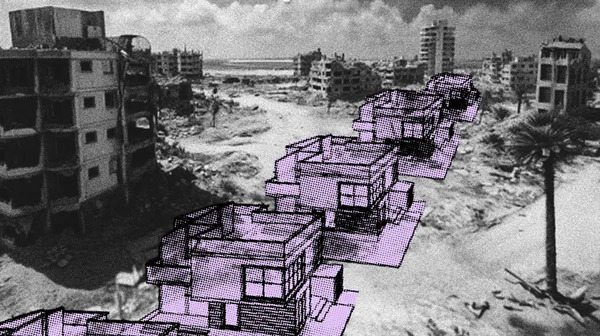
Harey Zahav is not a simple real estate developer: it is a distillation of Israeli colonial violence. On the company's Instagram account, for example, we find videos of Shlomo Warmstein, one of its directors, proudly filming himself in military uniform in the ruins of Gaza. There is also a photomontage showing sketches of homes lined up and superimposed on the ruins of Gaza. With this subtle caption: "A number of our employees have started working on the restoration, clearing of debris and eviction of squatters". The term "squatters" here refers to Palestinians from Gaza... The text also calls for the "return of Gush Katif", the name given by Israeli settlers to the colonies located in the Gaza Strip before their dismantling in 2005.


At the time, the Instagram post had provoked many outraged reactions around the world. Harey Zahav defended himself to our colleagues at Libération, explaining that the visual was a simple “parody” aimed at “opening a discussion.” The promoter added that the installation of Israelis in Gaza and the departure of the Palestinian population to neighboring Arab countries represented “the only solution for lasting peace.” This project, which constitutes ethnic cleansing, is shared up to the top of the Israeli state by the Minister of Finance Bezalel Smotrich, and by the now ex-Minister of National Security Itamar Ben Gvir, who resigned from his post on January 19 to protest against the ceasefire agreement in Gaza. The idea of expelling the population of Gaza in order to guarantee peace in the region also seems to be shared by Donald Trump, who mentioned this desire to “clean house” on January 28.

Tricolor benevolence

Despite the recurring condemnations by the French authorities of the colonization projects of the Palestinian territories and the desire to expel their population, neither the Paris Police Prefecture nor the Ministry of Foreign Affairs reacted to the sale of real estate located in the Israeli colonies during a fair taking place in the heart of Paris. The Prefecture was content to set up a security perimeter to ensure the smooth running of the event.

A surprising and recurring benevolence: according to information published on social networks by Icube, the organizer of the event, this is the 87th time that such a fair has been held in France. And several exhibitions of the same type have benefited from the sponsorship of the World Zionist Organization as well as the Jewish Agency for Israel, according to information also published on social networks by the organizers themselves.


The links displayed between Icube and these two organizations should have alerted the French authorities about the sale of property located in illegal Israeli colonies. Indeed, the World Zionist Organization and the Jewish Agency for Israel actively participate in the Israeli colonization policy in the Palestinian territories. In an article published on the Blast website last September, journalist Caroline Brenière analyzed the central role of the World Zionist Organization: "The Colonies Division [of the World Zionist Organization, Editor's note] is a non-governmental organization invested with governmental powers, which works in favor of the establishment and development of colonies."

It is cheaper to live in the West Bank

For its part, the Jewish Agency for Israel posts on its website a list of contacts to help newcomers to Israel integrate. It includes in particular an integration coordinator for the "region of Samaria", which corresponds to the northern part of the occupied West Bank. The sale of properties located in Israeli settlements at a fair in Paris is therefore not a simple private initiative of the real estate marketing agency Garkan and the developer Harey Zahav. According to Shai Parnes, spokesperson for the Israeli human rights NGO B’Tselem, it is a government project that has been going on for decades: “It is cheaper to live in the West Bank, housing is more affordable, settlers benefit from more subsidies. It is not surprising that they are trying to sell projects located in the settlements in Paris,” he denounces to Blast.

Beyond the political project of conquering Palestinian territories, the promoters of colonization also sell settlers a living environment. This is what emerges from the website dedicated to the Kedem project, created by Harey Zahav. It states that, by purchasing an apartment in Avnei Hefetz, settlers will be able to “have a coffee in [their] garden”, or even “send their children to quality educational institutions”. All this “just ten minutes from Route 6”, which crosses a large part of Israeli territory from north to south.

They benefit from infrastructure provided by the government

Israel has illegally occupied the West Bank, the Gaza Strip and East Jerusalem since the Six-Day War in 1967. And, according to the UN, at least 700,000 settlers live in the West Bank and East Jerusalem. A figure that has been on the rise since the start of the Israeli offensive against Gaza on October 7, 2023. “As of March 26 [2024], 4,780 new housing units for settlers had been approved in Area C of the West Bank, including East Jerusalem,” is given as an example in a report by the UN Committee on the Exercise of the Inalienable Rights of the Palestinian People published on August 31, 2024.

And although all of these settlements are considered illegal under international law, more than half of them are authorized under Israeli law. The others, also recognized as illegal by the Hebrew state, are considered “outposts.” “Most of the outposts are linked to existing settlements. And even if they are officially illegal under Israeli law, when you go there, you can see that they benefit from infrastructure provided by the Israeli government, such as water or electricity, for example,” says Shai Parnes indignantly. The Israeli authorities are thus often accused of playing a key role in the development of these outposts. In particular because these so-called “wild” colonies often end up being legalized. This was also the case recently: in June 2024, the Israeli war cabinet approved the legalization of five outposts in the West Bank. This had been condemned in particular by the heads of G7 diplomacy.

Establishing facts on the ground

It must be said that all of these colonies, legal or not in the eyes of the Israeli authorities, allow Israel to gradually establish itself as the only viable state on these lands. A political project clearly assumed by the Netanyahu government. According to information reported by the online daily Times of Israel in August 2024, Bezalel Smotrich, the Jewish state’s finance minister, assures that the colonization aims to “establish facts on the ground” to prevent the creation of a Palestinian state. “The entire territory between the sea and the Jordan is controlled by Israel. This includes both Israeli territory and the Palestinian territories. Israel does not even need to declare the annexation of the West Bank, since it already controls the territory. This is why B’Tselem says that it is a regime of apartheid and Jewish supremacy, with a policy of recovering as much Palestinian territory as possible, with as few Palestinians as possible living on it.” "This policy is not new; it has existed since at least 1967. So it is not just a problem with the current government, but rather Israel's policy for decades," notes the B'Tselem spokesperson.

The gradual erasure of Palestine

This blockage of any creation of a Palestinian state is sadly about to bear fruit. With very concrete consequences on the daily lives of Palestinians. “The settlers regularly burn the olive trees of Palestinian farmers, prevent them from feeding their livestock, take control of their land, prevent them from cultivating it, and consequently from feeding themselves. The farmers therefore lose money and sometimes have to leave. This is the goal sought by the settlers, who then recover the land to Judaize it,” analyzes Shai Parnes. The Avnei Hefetz colony, created by stealing land from a Palestinian village, and in which the project offered for sale at the Israeli real estate fair we visited is located, is a perfect illustration of this. By breaking the territorial continuity of the West Bank, the colony and its checkpoints have the effect of hindering the movement of the Palestinian population. This is what emerges from the data collected by B’Tselem. According to the organization, the road connecting two Palestinian villages, located on either side of the Avnei Hefetz settlement, is now inaccessible to Palestinians. In addition, the settlers have de facto control over agricultural land belonging to Palestinian farmers. Since October 7, 2023, the latter have been prevented from accessing their land.


According to the UN, this settlement policy, which is intensifying and accompanied by violence, risks “eliminating any practical possibility” of creating a Palestinian state and compromises “the chances of achieving a two-state solution.” Faced with this situation, B’Tselem is calling on the international community: “International law must now be respected. Condemnation is not enough. It is time to act,” says Shai Parnes.

Do the French authorities accept that an Israeli real estate fair, held in the heart of Paris, is participating in a project of colonization and annexation of Palestinian territories, in total violation of international law? Contacted several times, the Ministry of Foreign Affairs and the Prefecture did not respond to our requests. Despite our repeated requests, Icube, Garkan and Harey Zahav did not respond to our emails. Salons Hoche, contacted by telephone and email, also did not wish to answer our questions.

PALESTINE

Sun 02 Feb 2025 8:17 am - Jerusalem Time

Israeli raids and arrests in the West Bank

Today, Sunday, the Israeli occupation forces launched a campaign of raids and arrests in the West Bank.


In Ramallah, the two young men, Moanes Qatusa and Mohammed Hashem Qatusa, were arrested after raiding their homes in Deir Qadis, while the occupation forces stormed the town of Kafr Naama, west of Ramallah, and the village of Dura al-Qar’, northeast of Ramallah.


In Tulkarm, the occupation forces arrested Izz al-Din Jad Hajja from the town of Attil, and Musab Ziad Ghanem from the village of al-Jarushiya, after raiding their homes.


In Tubas, special forces from the occupation army infiltrated the Far'a camp, followed by military reinforcements from the Hamra military checkpoint. Other reinforcements were sent later, accompanied by a D9 bulldozer.


Infantry forces were deployed around the Far'a camp and raided several houses in its vicinity, in addition to the deployment of infantry inside the camp.


Coinciding with the ongoing storming of the camp and its surroundings, drones are flying at low altitude, and threatening leaflets have been dropped on the camp’s residents.


Red Crescent sources reported that the occupation forces prevented its crews from reaching a heart patient in Al-Far’a camp, and seized the keys to the ambulance.


The occupation forces also stormed the town of Tamoun, and local sources reported the deployment of infantry forces, in addition to raiding citizens' homes.


In Jenin, a citizen was injured by the occupation forces' bullets in the city's Al-Jabariyat neighborhood.

PALESTINE

Sun 02 Feb 2025 8:16 am - Jerusalem Time

Israeli violent settlers burn a mosque west of Jericho

Settlers burned down a mosque in the Arab al-Malihat community, northwest of Jericho, at dawn on Sunday.


According to local sources, a number of settlers poured flammable material and set fire to a mosque in the Arab al-Malihat community, which led to its complete burning. They also set fire to an agricultural tractor.


This attack comes as colonial outposts spread at the end of Al-Ma'rajat Road, northwest of the city of Jericho, and as part of a series of attacks aimed at displacing citizens and seizing their homes and properties.

OPINIONS

Sun 02 Feb 2025 8:16 am - Jerusalem Time

Israel, Trump, and the Gaza Deal: Can Netanyahu Survive Without War?

Foreign Affairs

Foreign Affairs

Opinion Writer

By Amos Harel

In the days since the January 19 cease-fire in Gaza, many Israelis have found themselves in an emotional storm almost as powerful as the shock of Hamas’s October 7, 2023, massacre. The difference, of course, is that this time the storm is driven not by sorrow and unspeakable horror but by joy and—for the first time in more than 15 months—the possibility of hope. Already, the fragile deal has come under considerable stress, and it could collapse in the weeks to come. Yet for the time being, the fighting has stopped in both Gaza and Lebanon, and hostages have begun to come home. As shown by the outpouring of reactions on social media and in the Israeli press, the vast majority of Israelis have greeted the deal as a cause for celebration—even those who opposed it for strategic or ideological reasons.

But the overwhelming response is not primarily about peace. Far more, it is about what the deal means for Israel’s embattled identity. The core issue for Israelis, which may not be fully grasped by outside observers, is that ever since the establishment of Israel in 1948, three years after the end of the Holocaust, the country has defined itself by its status as a safe haven for Jews. For more than 70 years, despite major wars and frequent challenges, it was able to maintain this foundational ideal. With the October 7 attacks, however, that status was ruptured. The belief that the army and other security agencies would always arrive in time to save Jews in distress was completely shattered. And for many Israelis, this failure persisted throughout more than 15 months of war, as the government proved unable to rescue or return a large number of the 251 hostages—Israelis and foreigners—that had been taken to Gaza.

Now, Israel has finally begun to repair these broken foundations. At the time of the cease-fire, there were 97 Israeli hostages—civilians and soldiers—about half of whom are believed to be alive. Seven, all of them women, have been released so far, and 26 more are to be returned in small groups over the next four and a half weeks. For many Israelis, the government and security forces can never atone for the lapses that allowed October 7 to happen. But the hostage deal does restore hope for the first time since the war began that the safe haven can be rebuilt to some extent.

Yet the deal comes at a high price. In exchange for the first 33 hostages, Israel has agreed to release approximately 1,700 Palestinian prisoners, including more than 200 who are serving life sentences for murdering Israelis. And that is only the first round of concessions. Once “Phase One” is completed, 64 hostages will still remain in Gaza, fewer than 30 of whom are believed to be alive. Their release will require the freeing of thousands more Palestinian prisoners, including many who are serving multiple life sentences. Those freed will also include prisoners whom Israelis view as “terrorist celebrities”—high-ranking figures in Palestinian militant groups responsible for orchestrating mass-casualty suicide bombings in the 1990s and the first decade of this century. These are prisoners no Israeli government has ever agreed to release before.


For Israeli Prime Minister Benjamin Netanyahu, all this presents a huge dilemma. He needs his far-right coalition partners to stay in power. But they adamantly oppose the cease-fire and—in contrast to a large majority of the Israeli public—are demanding that the war restart or they will resign. If new elections were held today, Netanyahu would probably lose. At the same time, the prime minister must also now contend with U.S. President Donald Trump, who is applying enormous pressure to get things done his way and says he will not tolerate having the war continue on his watch. Netanyahu is expected to meet Trump at the White House in early February.

What happens next, then, will depend primarily on the U.S. president. The incoming administration has big plans. For many months, Trump’s aides and advisers have been speaking about the regional arrangements Trump wants to establish. His main goal seems to lie in multibillion dollar technology and defense deals between the United States and Saudi Arabia. An accompanying step would be a grand Israeli-Saudi normalization deal, similar to the one the Biden administration tried to push through in the fall of 2023. (Hamas leaders later described thwarting that deal as one of their motivations for launching the October 7 attacks.) In order to achieve these goals, Trump will need the cease-fire in Gaza, along with its counterpart in Lebanon, to hold as long as possible—whether or not both sides are really interested in peace.

WAR GONE WRONG

The story behind the Gaza cease-fire is almost as long as the war itself. In November 2023, after concluding that the large number of women and children they had abducted were more of a liability than a strategic asset, Hamas’s leaders negotiated the first cease-fire for hostage deal with Israel, mediated by Egypt, Qatar, and the United States. At the time, Hamas hurried to offload those hostages in exchange for a negligible benefit compared to past such deals—three Palestinian prisoners, mostly women and minors, were released for every Israeli hostage.

In theory, after seven days, the initial exchange was supposed to lead to a second phase, in which the cease-fire would be extended and the remaining hostages would gradually be released in exchange for a higher price from Israel. But negotiations stalled on the seventh day, and contrary to the mediators’ expectations, fighting resumed, and the Israel Defense Forces (IDF) relaunched its massive ground invasion into central Gaza. Soon, that campaign expanded into the southern areas of the strip.

In the following months, despite repeated efforts, negotiations toward a new deal broke down. By May 2024, the Biden administration was so frustrated by the lack of progress by the Israeli government that President Joe Biden took the extraordinary step of announcing a cease-fire for hostage deal that he said had been approved in private by Israel. But Netanyahu nixed it. (In fact, it was essentially the same deal to which Israel has now agreed.) Still, throughout his final year in office, Biden generally provided Netanyahu with cover, mostly blaming Hamas for the breakdown of talks.

Many of the members of Israel’s own negotiating team, however, knew otherwise. They suspected Netanyahu was deliberately sabotaging the talks whenever they neared fruition, because he feared that his far-right coalition partners, Ministers Bezalel Smotrich and Itamar Ben-Gvir, would resign if the agreement were implemented. And if the government collapsed, Netanyahu himself faced growing legal jeopardy in the three corruption cases against him. Thus, by continually stonewalling a deal, the prime minister seemed to be prioritizing his own political and personal survival over bringing the hostages home.

The government’s apparent indifference to the hostages deepened Israelis’ frustration.

Meanwhile, the government’s continued failure to secure a deal produced a growing outcry among large segments of the Israeli public, led by the families of the hostages. In Tel Aviv, tens of thousands of people gathered in weekly protests, and a major square near the IDF headquarters was renamed “Hostages Square.” Hostage families and protest activists frequently blocked major roads. In every Israeli community, symbolic and less confrontational protest initiatives also emerged, such as displays of empty plastic chairs, yellow ribbons, and posters with giant photos of the hostages and the words, "What if it were your daughter?" The faces and personal stories of the hostages became familiar in almost every Israeli home, with many adopting a particular hostage to champion. The government’s apparent indifference toward the hostages—despite the IDF’s near-total military control of Gaza and the fact that many hostages were held within a few kilometers of IDF positions—only deepened the public’s frustration.

Throughout the entire span of the war, the military succeeded in rescuing just eight hostages from Gaza—only about three percent of the total. Meanwhile, dozens more were found dead, hidden by Palestinians in various locations within the strip. These results are astonishingly poor for a country that has long prided itself on its bold rescue missions. Consider the 1976 Entebbe operation, the raid in Uganda by Israeli commandos—and the raid in which the prime minister’s elder brother, Lieutenant Colonel Yonatan Netanyahu, was killed: the operation succeeded in rescuing 102 of the 106 hostages held by Palestinian militants. In the decades since, the risks involved in such operations have grown, for both the elite Israeli rescue forces and the hostages themselves.

As the war in Gaza dragged on without a deal, hope for the hostages diminished further. In June 2024, after Israeli forces rescued four hostages from the Nuseirat refugee camp in central Gaza, Hamas changed its instructions to hostage guards: if they detected any Israeli military activity nearby, they were told, they should execute the hostages to prevent their liberation. Two months later, this tragically occurred, when the captors of six Israeli civilians, after hearing the movement of IDF armored vehicles above them, murdered them. Among the victims was Hersh Goldberg-Polin, a young Israeli-American whose family’s extensive advocacy for his release elicited significant responses in Israel and the Western world. It was hard for many Israelis not to see this as the result of a failed war.

TRUMP OR A HARD PLACE

If the January 19 cease-fire has signaled a possible turning point, Israel’s crisis of confidence is a long way from being repaired. Israeli society is sharply polarized, and Netanyahu’s divisive persona will complicate the rebuilding process. Additionally, the government’s inability to make good on its promise to achieve “total victory” over Hamas despite the IDF’s overwhelming battlefield advantage and Netanyahu’s refusal to permit an independent investigation into the failures leading to October 7 pose substantial roadblocks to any national reconciliation.

Moreover, as part of the cease-fire, the government has made other significant concessions. The IDF has withdrawn from the security corridor it created in the center of Gaza to split the north and the south, and it has committed to withdrawing from the so-called Philadelphi corridor along Gaza’s southern border with Egypt, near Rafah, in the seventh week of the cease-fire. Israel will almost certainly insist on retaining some form of military presence in what it calls the security perimeter—a buffer zone extending about a kilometer beyond the border fence into Palestinian territory along the entire border.

These concessions, along with the release of Palestinian prisoners, have drawn harsh criticism from not only the far-right parties but also Netanyahu’s core supporters. Take Channel 14, the pro-Netanyahu TV network that resembles a mix of Fox News and Newsmax. Throughout the war, the network deflected all questions about the prime minister’s culpability for the catastrophic security failures on October 7 and justified every decision he made since then. But the reality of the cease-fire and the unprecedented concessions it has involved has upturned the Channel 14 narrative. Now, the network’s usual pro-government propaganda has given way to theological debates between loyalists and those who are suddenly critical. “If this were an agreement brought by [the former Israeli prime minister and current opposition leader] Yair Lapid, I would have opposed it,” admitted one of the journalists. “But since it’s Netanyahu, I support it.” Others on the right are more strident, calling the deal an “embarrassing surrender.”

Undeniably, the main factor in this new reality is Trump. What changed between July 2024, when Israel balked at a cease-fire agreement, and January, when it accepted more or less the same deal, is simple: Trump had won the election and was preparing to take office. Unlike his hardcore supporters, Netanyahu immediately understood the implications for Israel. Since the U.S. election, frantic discussions have taken place between Trump’s aides and Netanyahu. The Israeli cabinet member Ron Dermer, who is Netanyahu's closest confidant and his longtime key contact with Republican administrations, was dispatched multiple times to Washington and to Trump’s Mar-a-Lago estate. 

While Netanyahu’s supporters celebrated the appointments of staunch Israeli right-wing allies to senior U.S. positions, Netanyahu and Dermer noted Trump’s different priorities. Many of Trump’s advisers, they recognized, also hold isolationist tendencies and take a skeptical view of military interventions. The president himself has repeatedly stated both before and since his election that despite claims to the contrary, he intends to end wars rather than start new ones.

In Israel’s case, Trump’s immediate goal was to halt the war in Gaza as part of a hostage deal. As Inauguration Day approached, he repeatedly emphasized the urgency of the matter and even threatened to “open the gates of hell” if his demand was not met. In Israel, many interpreted this as a threat toward Hamas—or perhaps even more so toward Egypt and Qatar, the mediators in the negotiations. But Netanyahu may also have understood it as a message aimed at him.

By late December, Trump and Biden had reached an unusual understanding on Gaza: both administrations would work together to achieve a cease-fire by January 20. At that point, intense negotiations resumed in Doha, Qatar, between an Israeli delegation and representatives of the mediators and separately with the Hamas leadership abroad. In an extraordinary deviation from usual protocol for an administration not yet in power, Steve Witkoff, Trump’s designated Middle East envoy and a fellow New York real estate tycoon, joined the talks. Lacking any professional background in Middle Eastern affairs, Witkoff nevertheless brought a knack for dealmaking, and Israeli participants reported that as soon as he entered the room, negotiations gained momentum.

Netanyahu was torn between Trump’s pressure and threats from the far-right.

Then, on Friday, January 10, something remarkable happened. Witkoff, calling from Doha, urgently requested a Saturday morning meeting with Netanyahu in Jerusalem. Netanyahu, recovering from prostate surgery, rarely holds meetings on the Sabbath and tried to postpone it to Saturday night. But Witkoff insisted, and Netanyahu couldn’t shake him off. Israeli sources described their meeting in exaggerated terms, likening it to scenes from The Godfather. That same evening, Netanyahu authorized senior officials—Mossad Chief David Barnea, Shin Bet Director Ronen Bar, and IDF Prisoners and Missing Persons Coordinator Major General Nitzan Alon—to travel to Qatar for the first time in months. This time, he granted them a broader mandate for the negotiations. Eight days later, the deal was signed, going into effect the day before Trump’s inauguration.

Despite the significant concessions involved, Netanyahu has yet to openly discuss the deal with the Israeli public. Instead, he continues to send conflicting messages to different audiences. Netanyahu’s long-standing policy has always been the sum of all his fears—and this time, he was torn between Trump’s pressure and threats from the far right to dismantle his government. As of late January, it appeared that his fear of Trump has prevailed. But the matter is far from over. Although Ben-Gvir resigned from the government in protest over the deal, and Smotrich announced he would wait until Phase One of the agreement is complete, both have signaled they will rejoin the coalition if Netanyahu halts the deal’s implementation and resumes the war.

The day after the deal went into effect, Smotrich said in a radio interview that Biden had handed Netanyahu a letter allowing Israel to resume hostilities on the 43rd day of the agreement if Phase Two negotiations failed. The Israeli journalist Amir Tibon bluntly described the situation: “Netanyahu is deceiving Trump and preparing to sabotage the cease-fire agreement.” There are two ways he could do this, Tibon predicted: simply by delaying the Phase Two negotiations until time has run out or by setting off a violent escalation against Palestinians in the West Bank. Already, far-right Israeli activists have been rampaging through West Bank villages, torching property in protest of prisoner releases, and the Shin Bet is preparing for potential terror attacks by far-right activists who seek to derail the deal. Defense Minister Israel Katz, seen as a puppet of Netanyahu, stoked tensions further by announcing the release of several far-right settlers from administrative detention.

David Makovsky, an analyst at the Washington Institute for Near East Policy and a longtime Netanyahu observer, argues that the prime minister will try to carve out a middle ground. Netanyahu, he says, “will try to convince Trump to give him a few more weeks or months to complete the military operation against Hamas—then bank on the president-elect getting distracted by other matters.”

SPARKS IN THE ASHES

On January 19, Hamas tried to exploit the release of the first three hostages—Romi Gonen, Emily Damari, and Doron Steinbrecher—for a renewed show of strength. Dozens of members of its military wing, armed and masked, appeared before the cameras in central Gaza City, an area where they had hardly been seen since the previous cease fire because of IDF strikes. Around them, a restless crowd gathered. Palestinian residents swarmed the vehicle transporting the hostages to Red Cross personnel, and some even attempted to reach the car by force. Hamas militants waved their weapons to push them back, creating chaos at the scene. As the cameras moved slightly farther away, the limitations of Hamas’s capabilities became clear. Only a few hundred citizens had gathered in the area, and many of the surrounding buildings appeared destroyed.

Hamas has not been annihilated in Gaza, contrary to Netanyahu’s promises, and it continues to maintain some of its civilian responsibilities and military capabilities, despite the severe blows it suffered during the war. This is likely related to the prime minister’s insistent refusal to entertain any discussion of “the day after” in Gaza and his outright ban on drafting solutions that would involve the Palestinian Authority, which governs cities in the West Bank.

 Meanwhile, Gaza is in ruins—at least 70 percent of homes are uninhabitable—and the price paid by Palestinians has been enormous. According to the Palestinian Ministry of Health, controlled by Hamas, more than 47,000 Gazans have been killed in the war; the final figure could be much higher, as many bodies are still buried under the ruins. (The Palestinian Ministry of Health does not distinguish civilians from fighters. Israeli assessments claim that as many as 20,000 Hamas fighters have been killed.)

The current agreement, if it does not collapse, may allow Hamas to survive despite its weakened status and to quickly regain control of Gaza. But Netanyahu, under Trump’s threats, is not alone in recently softening his stance. The prolonged war has utterly exhausted the residents of Gaza, nearly 90 percent of whom have been displaced from their homes and forced to live in makeshift and temporary tent camps in the southern part of the strip. Some have been largely cut off from humanitarian and medical aid for months.

Hamas also faces a dramatic decline in external support. Hezbollah, its regional ally, suffered a devastating defeat in its war with the IDF last fall. And Hamas’s patron, Iran, has faced huge setbacks, including a heavy Israeli airstrike at the end of October 2024. A further blow to Iran’s “axis of resistance” came with the collapse of the regime of President Bashar al-Assad in Syria in December. As a result, by January, Hamas found itself nearly isolated and had little choice but to compromise. What is less clear is how long this rare alignment of priorities and pressures will last.

RIGHT-WING RECKONING?

With its own plans for the region at stake, the Trump White House is unlikely to stand back while Netanyahu’s right flank tries to bring down the cease-fire. Already, Trump’s wish list is starting to take shape: long-term calm in Gaza, a Saudi deal, normalization, and if possible, a deal to remove the Iranian nuclear threat. Trump will renew his “maximum pressure” against Tehran, which continues to advance its nuclear program despite the blows it has suffered. But at the moment he seems unlikely to back a preemptive strike on Iran’s nuclear facilities, as some in Netanyahu’s government have fervently hoped.

Instead, Trump will likely seek to leverage his close coordination with Netanyahu and, perhaps, the supply of precise munitions to the Israeli air force to signal to the Iranians that they would be better off compromising and signing a new nuclear deal, even though it will be much harsher than the one they reached with President Barack Obama in 2015. Trump’s move likely has another motivation related to his competitive nature and disdain for the Obama mythos. Sources in Washington claim that Trump seeks to win a Nobel Peace Prize in his first year of his second term as president. The path to this prize likely runs through Jerusalem, Riyadh, and Tehran more than it does through a peace agreement between Russia and Ukraine.

If Netanyahu moves forward with the deal, the government may fall.

One component of Trump’s emerging framework, the end of the war in Gaza, will be difficult for Israel’s far-right to accept. If Netanyahu moves forward with implementing the second stage of the deal, including a full withdrawal from the strip, his government will probably fall. And even if it somehow survives, miraculously, for a few more weeks until the end of March, it will likely collapse at that point, due to a developing political crisis concerning efforts to exempt all ultra-Orthodox (haredim) men from mandatory military service. Theoretically, Netanyahu could decide to pivot politically toward the Israeli center, ride Trump’s coattails, and declare that only he can achieve historic agreements while maintaining Israel’s security. Netanyahu will need to attempt all of this while his corruption trial continues in the background and another threat to his future grows—a campaign by the bereaved families of soldiers killed on October 7 to establish an independent investigative commission to examine the government’s failure to prevent the massacre.

Eran Halperin, an expert in political psychology at the Hebrew University of Jerusalem, has argued persuasively that the real reason Israel’s far-right opposes ending the war in Gaza is not political or ideological. “What truly drives the attempt to sabotage the deal,” he writes, is the concern that it will shatter “the fundamental link between the use of unlimited military force and the ability to provide security to Israel’s citizens.” In other words, the end of the war will ultimately force Israelis to acknowledge that Netanyahu’s right-wing government utterly failed to prevent October 7 or actually defeat the group that committed it, despite 15 months of brutal war.

During the last five years, Israelis have endured the COVID-19 pandemic, five election cycles, an attempt to pass very aggressive judicial reforms, and a war that began with a horrific massacre and spread to several arenas simultaneously. According to all indications, the coming year will not be any calmer. But during this time, it will likely become clear not only what Gaza’s fate will be but also what Israel’s role will be in the new Middle East envisioned by the incoming American president, even as that vision itself, like many of Trump’s ideas, is hard to figure out.

PALESTINE

Sun 02 Feb 2025 8:10 am - Jerusalem Time

Birth from the brazier of annihilation!

Joyful and tearful at the same time, those streaming shots on satellite TV screens, social media networks and groups, which capture in still and moving images the fleeting moments of meeting loved ones, where they embrace after a long separation, during which suspicions prevailed that they would never meet.


Throughout the years of pain in the ongoing history of national tragedy, copious blood has flowed in the river of life flowing with pain and sorrow, which has not yet stopped flowing.


There are images that no one would have imagined, when someone who has spent forty years, and was meant to spend the rest of his life behind bars, finds himself in an air-conditioned bus, which he has not ridden in decades, and in a few minutes embraces loved ones and friends, meeting whom was just a pipe dream.


In the opposite picture, the prison guards, with their leader Ben Gvir, stand clenching their teeth, blaming each other, and wondering about the slogans they raised, and the crimes they committed against those who went out today, against their will, to breathe the scent of freedom.


It is the birth from the censer of annihilation, through which those who endured pain, until their hearts reached their throats, emerge before God responded to them and saved them from the torment, just as He, glory be to Him, saved Jonah, peace be upon him, from the three layers of darkness.

OPINIONS

Sun 02 Feb 2025 8:03 am - Jerusalem Time

Mearsheimer: ‘The Israelis lost in Gaza’ | The Bottom Line


Despite the rhetoric, US President Donald Trump will not be able to ethnically cleanse Gaza nor resolve the Ukraine war, argues University of Chicago political scientist John Mearsheimer. Mearsheimer tells host Steve Clemons that Arab governments fear “the risk of being overthrown by their populations” should they bend to Trump’s desire to “clean out” the Palestinian people in Gaza. On Ukraine, Mearsheimer predicts a “frozen conflict” without a peace treaty, and warns that Trump should stop “slapping around” US allies if he wants their cooperation in Europe, Latin America and Asia.

PALESTINE

Sun 02 Feb 2025 7:59 am - Jerusalem Time

Trump's insistence on displacement...what he did not achieve in his first term, he will not achieve in the second

Dr. Amr Hussein: Trump’s calls to displace Palestinians are provocative.. and Egypt and Jordan categorically reject plans to liquidate the Palestinian cause

Dr. Tamara Haddad: Witkoff's visit to Gaza and his statements about reconstruction confirm that America and Israel want to impose harsh conditions on those who want to stay in Gaza

Khalil Shaheen: Trump's new policies threaten displacement and reshaping the demographic and economic reality of the Gaza Strip according to an American-Israeli vision

Dr. Saad Nimr: Jordan and Egypt will categorically reject displacement plans no matter what the cost, because they will not compromise their national security under any circumstances.

Dr. Aql Salah: The Palestinian people are capable of thwarting Trump and Netanyahu’s plans, provided they unify their ranks and strengthen Arab and international support

Noman Abed: Trump's insistence on displacement to Egypt and Jordan is a form of "political bullying" and US aid is being used as a tool of blackmail


Controversial statements by US President Donald Trump continue, in which he insists on displacing Palestinians from the Gaza Strip to Egypt and Jordan, in light of his efforts as an economic dealmaker to control the Strip and transform it into an investment project.


In separate interviews with “I”, writers, political analysts, specialists and university professors confirm that these calls were met with a categorical rejection from Cairo and Amman, which repeatedly confirmed their unwillingness to accept any plans aimed at liquidating the Palestinian cause through forced displacement or redrawing the demographic map of the region.


They point out that Egypt and Jordan refuse to be part of plans aimed at undermining their internal stability, stressing the need to strengthen regional and international efforts to find just solutions based on respect for Palestinian national rights, foremost among which is the establishment of an independent Palestinian state in accordance with international legitimacy resolutions, and the rejection of Trump’s plans calling for displacement that violate international laws.


Defending Arab constants


The Egyptian writer and political analyst specializing in international and strategic relations, Dr. Amr Hussein, describes the calls of former US President Donald Trump to displace the residents of the Gaza Strip to Egypt and Jordan as “provocative,” stressing that the two countries have categorically rejected these calls since the beginning of the Israeli aggression on Gaza, and until now the position remains firm, pointing out that the Egyptian people played a decisive role in supporting this position rejecting displacement.


Hussein explains that Trump, through these statements, seeks to cover up the failure of the Israeli army to achieve its military goals during the recent aggression on Gaza, which included returning Israeli prisoners, eliminating Hamas, and taking administrative control of the Strip.


Hussein asserts that Trump also wanted to stand by Israeli Prime Minister Benjamin Netanyahu, who is facing calls for accountability within Israel for his failures.


Hussein stresses that Egyptian President Abdel Fattah el-Sisi was clear in his rejection of calls for displacement, pointing out that Egypt will not be a "gateway to liquidating the Palestinian cause," but rather is working to find a just solution to the Palestinian cause based on the two-state solution.


Amr describes this solution as "the best", despite the Israeli far right's rejection of it, which, in his words, is leading Israel to "the abyss."


Hussein says: "We are facing an epic historical scene in order to defend the Arab constants, the first of which is the Palestinian cause," stressing that Egypt will continue to support the rights of the Palestinian people and will work to thwart any plans aimed at displacing them or liquidating their cause.


A systematic plan to impose a new status quo


Writer and political researcher Dr. Tamara Haddad warns that US President Donald Trump’s repeated calls to displace Palestinians from the Gaza Strip to Egypt and Jordan come within the framework of a systematic plan to impose a new fait accompli, noting that these calls aim to pressure the two countries to accept the displacement under threats of cutting off US aid and imposing other sanctions.


Haddad asserts that Trump, through repeating these calls, seeks to send a clear message to Egypt and Jordan that they must receive the Palestinians, considering that Trump’s recent statements reflect a systematic American policy aimed at reshaping the demographic reality in the Gaza Strip.


Haddad stresses that the first criterion for thwarting this plan is to put the Palestinian house in order internally, and to develop a unified political program that addresses the path of the “next day” in Gaza, including the return of the displaced to the northern part of the Strip as a clear message of rejection of forced displacement.


Haddad warns that delaying reconstruction in Gaza, whether by Israel or the United States, will put great pressure on the Palestinians, which may push them to “voluntarily” emigrate from the Strip due to the lack of hope for improving living conditions.


Haddad points out that forced displacement could become a reality if Israeli military operations return to Gaza, especially after Israeli Prime Minister Benjamin Netanyahu's meeting with Trump.


Haddad points out that the recent visit of US envoy Steve Witkoff to the Gaza Strip and his statements about reconstruction according to the Chinese model confirm that the United States and Israel want to impose harsh conditions on those who want to remain in Gaza, including living in peace, refusing to demand the right of return, and purchasing residential units in high-rise complexes that will be built by Israeli, Arab and American companies, and that those who remain in Gaza will be required to work in specific fields such as agriculture, tourism and technology.


To thwart this plan, Haddad calls for unifying the Palestinian ranks and developing a unified national political program, while seeking Arab and international support to reject displacement.


Haddad confirms that Egypt and Jordan will not accept the displacement despite American pressure, because they realize that the Palestinians leaving their lands will negatively affect their national security.


Haddad explains that receiving Palestinians in Egypt could be exploited by political Islam movements to destabilize the country, while in Jordan, where Palestinians constitute 70% of the population, it could lead to serious demographic and political changes.


Haddad points out that the United States has begun to look for other alternatives to receive the Palestinians, including Syria, which requires Arab and international opposition to this plan.


It calls for strengthening political and legal engagement with the international community, especially in the United Nations and the International Court of Justice, to reject forced displacement as a war crime.


Haddad stresses that the only solution to the Palestinian issue lies in finding a just solution based on the two-state solution, considering that any plans for displacement or reshaping the demographic reality in Gaza will lead to an exacerbation of the crisis and threaten regional stability.


Dangerous plans exploit the great destruction in Gaza


Writer and political analyst Khalil Shaheen warns that the US administration, led by President Donald Trump, is seeking to implement dangerous plans aimed at displacing Palestinians from the Gaza Strip and reshaping the demographic and economic reality of the Strip according to an American-Israeli vision, exploiting the massive destruction caused by the recent Israeli aggression.


Shaheen points out that expectations that Trump would make amendments to the “Deal of the Century” in his second term have come true, as Trump is now relying on the fait accompli imposed by Israel on the ground, especially in the Gaza Strip and the West Bank.


Shaheen argues that settlement expansion in the West Bank, including creeping, undeclared annexation, has dramatically changed the nature of the conflict. During his first term, Trump declared that the settlements were “not illegal,” and even allowed Israel to annex them, emphasizing that settlers would not be moved from any settlement or outpost, even those in areas that were supposed to be part of the Palestinian state.


Regarding the Gaza Strip, Shaheen asserts that the scene has changed radically after the extensive destruction carried out by Israel, which affected the infrastructure, homes, hospitals and vital facilities, making the Strip “unlivable.”


Shaheen confirms that Trump is relying on this reality in formulating his future policies, as he adopts a proposal calling for the displacement of the residents of Gaza and the reconstruction of the Strip according to a new urban and economic model.


High-rise residential complexes in the style of China


Shaheen points out that Trump is considering building high-rise residential complexes similar to the Chinese model, with dozens of floors, to accommodate a large number of Gaza residents, along with establishing economic and tourism projects along the coast.


He pointed out that these plans are linked to the displacement of more than half of the population of the Strip, as Gaza's economic and investment future will be linked to specific fields such as construction, tourism and high technology, which will reshape the demographic and economic reality in favor of Israel.


Regarding American pressure, Shaheen confirms that Trump will rely on the weapon of "reconstruction" to implement his plans, as funds for reconstruction operations in Gaza will be withheld unless they are linked to his plan.


Shaheen points out that Trump will exert pressure on Arab and international countries to prevent them from providing financial support for the independent reconstruction of Gaza, which will put the Palestinians before two choices: either accept the displacement plan, or live in inhumane conditions.


To confront these plans, Shaheen calls for accelerating reconstruction operations in Gaza, starting with the introduction of heavy machinery to remove rubble and pave roads, and moving on to the restoration of damaged, habitable homes.


Shaheen stresses that Egypt can play a pivotal role in this context, by using its expertise in the field of construction and rubble removal, with broad Arab and international support.


Shaheen points out that Israel is trying to disrupt the return of life to Gaza, especially in the northern areas, by preventing the entry of mobile homes (caravans) and heavy machinery, leaving tens of thousands of displaced people without shelter or basic services.


Shaheen stresses that accelerating reconstruction operations will hinder displacement plans and strengthen the steadfastness of the Palestinians in their land.

Shaheen calls for presenting a unified Palestinian vision for managing the Gaza Strip and the West Bank in a participatory manner, while strengthening international action to present the Palestinian issue in international forums, including the United Nations General Assembly and the International Court of Justice.


Shaheen stresses that confronting Trump's policies requires broad Arab and international action, while sending a clear message to the world that the Palestinians are capable of managing their affairs and confronting displacement plans.


Trump views Palestinian land as a commodity that can be invested in


Dr. Saad Nimr, a professor of political science at Birzeit University, confirms that US President Donald Trump is seeking to pressure Egypt and Jordan in order to consolidate the idea of displacing the Palestinians, as Trump views the Palestinian land not as a homeland with historical value and national identity, but rather as a commodity that can be invested in, just as advanced capitalism views everything as a product that can be sold.


Nimr points out that Trump spoke about establishing tourism projects in the Gaza Strip as profitable investments, and that he focused his communications on pressuring Egypt and Jordan without any consideration for the position of the Palestinians themselves.


Nimr stresses that the Palestinian people are the decisive factor in thwarting these plans, citing the Palestinians’ refusal to leave the northern Gaza Strip despite the massive destruction resulting from the military operations that lasted more than three months.


Nimr explains that about half a million displaced people returned to their homes as soon as they were allowed to do so, which indicates their deep attachment to their land despite the suffering and destruction.


Nimr points out that Egypt and Jordan will not submit to any American blackmail, even in the face of threats to cut off financial aid.


Nimr stresses that for Egypt, this issue represents a matter of national security, as it rejects the presence of more than a million Palestinians in Sinai, especially since these people may constitute a popular incubator for the Hamas movement, which is linked to the Muslim Brotherhood, something Cairo strongly rejects.


As for Jordan, Nimr points out that any approval of such plans would threaten the stability of the internal regime in Amman, especially with the strength of parties with an Islamic background such as the Muslim Brotherhood.


Nimr believes that Jordan and Egypt will categorically reject these plans, even if this results in economic losses or escalation of internal crises, because they will not compromise their national security under any circumstances.


Nimr stresses that official statements and positions are not enough, but rather there must be a clear and practical Arab rejection of these plans, supported by measures on the ground to confront any attempts to impose them.


Unifying ranks and enhancing Arab and international support


Writer and political researcher Dr. Aql Salah confirms that the Palestinian people, who have stood firm in the face of genocide and starvation crimes, have the ability to thwart the plans of US President Donald Trump and Israeli Prime Minister Benjamin Netanyahu, stressing the need to unify Palestinian ranks and enhance Arab and international support to confront these plans that threaten the future of the Palestinian cause.


Salah points out that the biggest challenge in confronting the displacement plans and reshaping the demographic reality in the Gaza Strip lies with the Palestinian people, who have proven their ability to withstand despite the extent of the crimes to which they have been subjected.

Salah calls for unifying Palestinian efforts by declaring a unified national program that includes all factions, including Hamas and Islamic Jihad, in addition to the Palestine Liberation Organization, to support the steadfastness of the Palestinian people at home and abroad.


Salah stressed the importance of action at the Arab, regional and international levels, calling on the Palestinian Authority to request an emergency Arab summit to take practical decisions that support the steadfastness of the Palestinian people.


Salah calls for addressing international organizations and human rights institutions to thwart Trump's plan, which contradicts international law and human rights, demanding a public and detailed condemnation of this plan, while stressing the need to find a just solution to the Palestinian issue based on the two-state solution.


Salah points out the importance of forming a joint Palestinian-Arab committee, including representatives from the Palestinian Authority, Egypt and Jordan, to coordinate efforts, positions and movements at all levels.


Salah stresses that this committee must work to unify the Arab position and push other Arab countries to support the Palestinian cause in an effective manner, including severing relations with the United States and Israel if the displacement plans continue.


Salah points out that the Egyptian and Jordanian positions so far reject the displacement plans, but he warns that the two countries' capabilities remain limited in the face of American pressure.


Salah calls for strengthening popular support in Egypt and Jordan, as the two countries move on the international stage to protect their sovereignty and reject violations of international law.


Salah stresses that what Trump is doing is in conflict with the principles of national sovereignty, and that this may lead to him being held accountable and tried for his violations of international law.


Salah stresses that the actual response to the displacement plans requires Egypt and Jordan to sever diplomatic relations with the United States and Israel, and withdraw their ambassadors from the two countries, as a symbolic and practical step to reject these plans.


Salah stresses that the rejection of displacement must be supported by practical steps that reflect the seriousness of the Arab position.


Salah warns that implementing the displacement plans will have disastrous consequences for Jordan and Egypt, as it will lead to political and social instability in both countries.


Salah calls on the Palestinian people to be aware and collectively reject these plans, with the Palestinian Authority moving at all levels to put an end to this destructive project.


Salah stresses that severing relations with the United States, which clearly sides with Israel, as well as withdrawing recognition of the State of Israel and severing security coordination in implementation of the decisions of the National and Central Councils, must be part of the Palestinian strategy to confront displacement plans.


Turning the Palestinian issue into a humanitarian issue


The writer and political analyst specializing in international relations, Noman Abed, confirms that the Israeli aggression on the Gaza Strip, which lasted for more than 15 months, is not related to a traditional military operation to confront the Palestinian resistance, but rather is part of a larger plan that aims to change the demography and geography of the Strip, displace the Palestinian people, and transform the Palestinian issue from a political issue to a humanitarian issue.


Abed points out that the systematic targeting of civilians and infrastructure in Gaza, including the destruction of hospitals and schools, and the obstruction of the delivery of humanitarian aid and medicines, confirms that the real goal of the aggression goes beyond military purposes.


Abed says: “What is happening in Gaza is not military operations to confront the resistance, but rather a plan to turn the Strip into a disaster area that is difficult to live in, and to reshape its demographics and geography to serve expansionist political goals.”


Abed points out that the events of October 7, 2023 were exploited to implement Israeli and American plans targeting the Palestinian cause in general, and the Gaza Strip in particular, noting that these plans aim to annex the West Bank and the Gaza Strip, not recognize the rights of the Palestinian people, and displace the people of Gaza to other countries.


Regarding the Egyptian and Jordanian positions, Abed stresses that Egypt and Jordan have always categorically rejected any attempts to displace the Palestinian people, noting that the official statements of the two countries reflect a clear rejection of these plans. However, Abed points out that these positions require practical steps on the ground, including confronting US policies that support Israel and dispensing with US aid if necessary.


Abed explains that the American insistence, especially by President Donald Trump, on displacing the people of Gaza to Egypt and Jordan is a form of “political bullying,” in which American aid is used as a tool for blackmail.

Abed says: “Trump, who is fighting to expel immigrants from the United States, is the same one who wants to displace the Palestinian people to other countries. This shows that the United States is only seeking to achieve its interests, without taking into account the rights of peoples or the independence of countries.”


Abed calls on Egypt and Jordan to strengthen their internal front, consolidate their international relations with other countries, and build regional and international alliances to confront American and Israeli policies.


Abed stresses that turning to international institutions, such as the United Nations, and investing in the international relations of these countries could constitute international pressure on the United States and Israel.


Abed says: “The positions announced so far by Egypt and Jordan are honorable positions, but they need practical support on the ground. There must be serious steps to confront American brutality and policies, and to support the Palestinian people in light of the aggression and ethnic cleansing they are being subjected to.”


PALESTINE

Sun 02 Feb 2025 7:51 am - Jerusalem Time

Driven by racist and fascist motives, Israel suppresses manifestations of joy and happiness

Qadura Fares: Israel is living in a state of frustration and failure, and the scenes of receiving the released prisoners embarrass it and expose its lies

Issa Qaraqe: Preventing celebrations of prisoners’ release reflects Israeli racism, hatred and fascism towards detainees and the Palestinian people

Hassan Abd Rabbo: The occupation seeks to steal the joy of the Palestinians and prevent the manifestations of celebration of the liberation of their prisoners to confirm that it has the highest authority

Dr. Ahmed Rafiq Awad: The difference between the image of those released from Hamas captivity and those released from Ben Gvir’s dungeons is a matter of moral and cultural elevation

Shurahbil Al-Gharib: Targeting the demonstrations of the release of prisoners aims to spoil the joy of the families over the release of their sons from the occupation’s prisons

Ismat Mansour: Israel does not want to give the Palestinian people moments of joy or a sense of accomplishment for fear of strengthening the spirit of resistance


The restrictions and punitive measures imposed by the occupation authorities on the manifestations of the Palestinian people’s celebration of the release of many of their prisoners under the exchange deal that is being implemented in stages and batches between Israel and the Palestinian resistance are not new, and are not only related to the post-October 7th period.


These practices carry, on the one hand, racist connotations, as the occupying state forbids the Palestinians from expressing their joy at the release of their sons from the darkness and prisons in which some of them have spent more than forty years, and on the other hand, a sense of defeat, because it was forced to release these people from its prisons, and it is the one that has handed down sentences against many of them that sometimes reach more than a thousand years, with all the illogicality in these sentences, in order to detain the bodies of even those who spend their time in prisons to complete their sentences in its refrigerators.


Writers and analysts who spoke to “I” saw that preventing celebrations of the release of prisoners reflects Israeli racism, hatred and fascism towards detainees and the Palestinian people, and that targeting the manifestations of the release of prisoners aims to spoil the joy of families over the release of their sons from the occupation’s prisons.


Israel seeks to sow despair and frustration in the hearts of the Palestinians


The head of the Prisoners and Freed Prisoners Affairs Authority, Qadura Fares, said that Israel always seeks to sow despair and frustration in the souls of the Palestinian people, pointing out that the scenes of receiving the freed prisoners embarrass the Israeli government and expose its lies, especially during the war of genocide.


He explained that Israel always seeks to sow despair and frustration in the souls of the Palestinian people, and therefore it is angry and disturbed to see these manifestations during the exchange process, because that embarrasses the government and the army, which told Israel many lies during the period of the genocidal war.


Fares added: "Israel is living in a state of frustration and failure, which is what is pushing it to take tense positions and obstruct the implementation of the agreements."


He also pointed out the huge difference between the health status of the released Palestinian prisoners, who are released in poor health, and the Israeli prisoners who receive humane treatment, which reflects the moral superiority of the Palestinians in dealing with prisoners compared to the occupation policies.


Moral superiority of the Palestinians over the occupiers


He said: If the enemy prisoners had come out of the war in a difficult condition, perhaps everyone would have understood that, considering that they were in the tunnels, suffocating, and in difficult conditions under a barrage of shelling. But the opposite is happening, and this confirms our moral superiority as Palestinians over them.


Regarding the fourth batch that took place yesterday, Fares explained that it is “part of the first phase, and despite the obstacles that Israel is putting in place, its continued implementation is a positive thing, as receiving successive batches of Palestinian prisoners enhances the hope of releasing more, and paves the way for the second phase of the agreement.”


He said: “For us, these are our children, and receiving successive batches of them brings joy and happiness, and we hope that all the terms of the agreement will be fully implemented, which will enhance our readiness to start the second phase. Success in the first phase is a contributing factor in completing the negotiations regarding the second phase.”


Regarding the Palestinian leaders Marwan Barghouti and Ahmed Saadat, Fares confirmed that "they were supposed to be released in the first stage, but Israel deliberately obstructed that, which made their fate linked to the negotiations of the second stage."


The Red Cross is required to intervene to reduce the occupation's violations


For his part, the former Minister of Prisoners, Issa Qaraqe, said that the occupation's prevention of celebrations and the joy of the prisoners and their families after their release in the last batches is evidence of "the extent of Zionist hatred and brutality" that appears in its treatment of the detainees.


He added: "This behavior is evident both before and after their release, as prisoners are exposed to harsh and difficult conditions, and their families are persecuted after their release.


Qaraqe stressed that this behavior reflects the racism, hatred and fascism adopted by the Israeli authorities towards detainees and the Palestinian people.


He added: The world must compare Israel's treatment of Israeli prisoners who are released in Gaza in a "moral and respectful" manner, and who come out in good health, with the brutal treatment of Palestinian prisoners, who are beaten until the last moment of release and suffer from deteriorating health as a result of torture and starvation.


He continued: Most Palestinian prisoners are admitted to hospitals after their release due to health damages caused by beatings and starvation, noting that the Israeli claims regarding respect for human rights are "false claims" and have no basis in truth.


He said: "The prisoners are the best witness to the extent of racism and oppression to which they are subjected.


Qaraqe' pointed out the role of the International Red Cross as a mediator in the prisoner handover process, calling on it to intervene effectively to reduce the occupation's violations against Palestinian prisoners. He referred to the testimonies of prisoners who spoke of harsh conditions, including being shackled, beaten and threatened during the transfer, despite the existence of international agreements and an international mediator.


The scene of the released prisoners is painful and harsh and reflects Israeli criminality


In turn, the specialist in prisoners' affairs, Hassan Abd Rabbo, said that the scene of the release of Palestinian prisoners from Israeli occupation prisons is a painful, harsh and very difficult scene, and indicates the nature of the inhumane and degrading treatment, and the Israeli crimes that have been practiced against prisoners over the course of decades, and the horror of these crimes has increased since October 2023.


He added: The bodies and faces of the released prisoners show signs of exhaustion, fatigue and extreme stress, in addition to cases of emaciation, as well as the violation of their dignity by shaving their heads. In addition to the beatings, physical assaults and humiliation until the last moments before they board the Red Cross buses.


Abdul Rabbo stressed that the prisoners are being threatened and intimidated by Israeli intelligence officers, in addition to continuous warnings, and this is accompanied by other measures against their families to prevent any manifestations of joy over their release, despite the heavy price paid by the Palestinian people, who have offered more than 55,000 martyrs, more than 120,000 wounded, and tens of thousands of homes, facilities, schools, buildings, universities, and institutions that were destroyed by the occupation in its aggression and genocide.


Abdul Rabbo pointed out that the Israeli occupation aims through all of this to steal the joy and prevent any manifestation of Palestinian celebration, to confirm that it has the highest authority in these lands, and that it can prevent any celebration by force through threats, arrests, raids, attacks, shooting and tear gas bombs.


Israeli prisoners appeared in good health


He said: Despite all these measures, the state of appreciation, honor, and pride in the steadfastness of the prisoners and the joy of their release remain present, even if public appearances have declined as a result of the threats and retaliatory measures practiced by the occupation.


Abdul Rabbo pointed to the condition of the prisoners who are released by the Palestinian factions in the Gaza Strip, as they appear to be in good health, which reflects the humane treatment they received, as they are treated based on values, ethics and humanity that greatly surpass the behavior of the Israeli occupation.


He stressed that since October 2023, Israel has deliberately escalated arbitrary measures against Palestinian prisoners, with direct instructions from the Israeli political level, embodied by the extremist Itamar Ben Gvir, by opening underground sections, encouraging those who tortured and killed prisoners, and even committed sexual assaults against them. It also provided them with legal and political protection from any legal prosecution.


Abdul Rabbo concluded by stressing that these scenes require the Palestinian negotiator, through mediators, to seriously consider them, in light of the ongoing crimes against the prisoners who are to be released, and the necessity of imposing obligations on the Israeli occupation within the exchange and negotiation process, in a way that ensures the application of international humanitarian law and the Third and Fourth Geneva Conventions in dealing with Palestinian prisoners.


The occupation prevented the celebration of its liberators due to racist reasons.


For his part, Dr. Ahmed Rafiq Awad, head of the Center for Future Studies at Al-Quds University, said that Israel targets the celebration of the liberators because it believes that the liberators should not be celebrated because, in its opinion, they are responsible for blood and “deaths.” Therefore, it is practically seeking to reduce the manifestations of joy because it believes that these people do not deserve to be celebrated.


He added: It also does not want to compare a Palestinian freedman with an Israeli prisoner, as there is a real distinction between the two parties in terms of people, blood and cultures. Unfortunately, this is rooted in Israeli thought, as there should be no equality between the two parties.


Awad said that when the International Criminal Court was attacked by Israel, one of the criticisms of it by Israel was that it equated Israel with Hamas, that is, between Israelis and Palestinians. Israel rejects this equating and completely prevents it.


On the other hand, he added, Israel fights manifestations of celebration because it has nothing in its culture that matches Palestinian joy. Israel is not good at celebrating, and therefore believes that others should not do so. As for manifestations of joy, in its view, they carry signs of victory, invincibility, willpower, and a desire to continue, all of which mean not surrendering, in addition to carrying feelings of intimacy, warmth, and a collective spirit. All of this, according to Awad, Israel seeks to completely prevent.


The release of prisoners is a victory over the Israeli regime


Awad pointed out that the released prisoner is not just someone who has been released from prison, but rather someone who has broken the Israeli security and judicial system. His release is not merely the end of his sentence, but rather a victory over the Israeli regime, because it is taking place against the will of the Israeli security and judicial system. This affects Israel’s prestige and power, which makes the joy resulting from the release of the released prisoners, in Israel’s view, a mockery of these security, military and judicial systems.


Awad pointed out that Israel's ban on the wedding is in fact a form of revenge and collective punishment, as banning the wedding is considered personal revenge, which is strange and difficult to imagine from a state that is a huge and powerful political entity. "But it is clear that this wedding really affects the prestige and existence of Israel."


He pointed out that the difference between the image of those released from Hamas captivity and those released from Ben Gvir's dungeons is a matter of moral and cultural elevation and the nature of the work carried out by each party. Therefore, we see the Israeli prisoner released without signs of torture or emaciation, but rather in a state of great familiarity with his family and a certain language, unlike the Palestinian prisoner who comes out to talk about his suffering from torture, illness and fatigue.


Awad said: “Despite the suffering, bombing and destruction that the Palestinian was subjected to, he kept the Israeli prisoner as he should, because he believes that this act is part of his values, culture and religion. Unlike the Israeli jailer who believes that the more he tortures the Palestinian prisoner, the more he can break him.”


Spoiling the families of prisoners and breaking their joy


In turn, writer and political analyst Shurahbil al-Gharib said that targeting the manifestations of the release of prisoners aims to spoil the joy of the families over the release and liberation of their sons from the occupation prisons, despite the fact that these releases come within the framework of a deal in which Israel pays a large bill, by releasing prisoners sentenced to life, which it had clearly insisted that it would not release. Today, this equation is reversed and they are being released as part of a prisoner exchange deal.


Al-Gharib added: The aim of these measures is to spoil the lives of the prisoners' families and ruin their joy in any way possible, by preventing all festive manifestations.


He pointed out the clear difference between what comes out of Ben Gvir's prisons and what comes out of the resistance prisons in Gaza, where the occupation treats Palestinian prisoners brutally, using torture methods that exceed all laws and customs that preserve the dignity of the prisoner.


Al-Gharib explained that the resistance views the issue of prisoners as a national issue that requires great effort, stressing that everyone who falls prisoner in the hands of the resistance is treated according to the teachings of Islam, far from insult, regardless of his religion or identity.


Al-Gharib concluded his speech by saying: “This treatment reflects the true face of the resistance, and refutes attempts to distort its image, as prisoners are treated with humane and ethical mechanisms, reflecting purity of hand, firmness of position, and clarity of goals, stressing that the main goal of the capture operations is to liberate Palestinian prisoners, far from any misleading claims and distortion of the image of the resistance after October 7.”


Israel suppresses Palestinian prisoner release celebrations to compensate for deal failure


Israel punishes Palestinians for coercion


Journalist and expert on Israeli affairs Ismat Mansour said that Israel seeks to obscure the clear difference between the conditions of releasing Palestinian prisoners and their Israeli counterparts, as the Palestinians are subjected to abuse until the last moment before their release, while the Israeli prisoners are released in good health despite the difficult conditions in Gaza.


Mansour explained that the Palestinian prisoners appear exhausted and tired, showing signs of emaciation and fatigue as a result of torture, malnutrition and lack of exposure to the sun, while the Israeli prisoners are treated with respect, protection and safety, which reflects the difference in culture and psychology between the two parties.


He pointed out that Israel is trying to suppress Palestinian celebrations of the release of prisoners, as it does not want to give the Palestinian people moments of joy or a sense of accomplishment, for fear of strengthening the spirit of resistance and rejection of the occupation.


He added that the Israeli government was forced to go ahead with the deal due to the balance of power on the ground, the presence of prisoners held by the resistance that it was unable to reach, and American pressure.


Mansour stressed that Israel, in an attempt to compensate for what he described as "the coercion that was exercised on it," resorts to punishing the Palestinians by suppressing any celebrations of the release of prisoners, considering this part of its ongoing attempts to obliterate the will of the Palestinian people and prevent them from expressing their joy at their national victories.

PALESTINE

Sun 02 Feb 2025 7:46 am - Jerusalem Time

Israeli occupation forces continue their aggression on Tulkarm and its camp for the seventh day

The Israeli occupation forces continued their aggression on the city of Tulkarm and its camp for the seventh consecutive day.


Last night, the occupation forces, accompanied by police dogs, raided citizens' homes in various neighborhoods of Tulkarm city and its suburbs, including the eastern neighborhood, the al-Tayah neighborhood, and the al-Rashid neighborhood in the Dhnaba suburb. They searched them, checked the identities of their residents, and subjected them to field interrogation, without any arrests being reported.


According to local sources, the occupation forces sent more military vehicles from the "Test'oz" camp west of Tulkarm, and from the Taybeh and Jabara checkpoints to the south, towards the city and its camp and imposed a tight siege on them, while continuing to besiege the Martyr Thabet Thabet Governmental Hospital and the Israa Specialized Hospital and obstructing the work of ambulances and medical crews.


She added that the city is witnessing a large deployment of infantry forces and snipers on the roofs of residential and commercial buildings that they have seized and turned into military barracks in the middle of the market and the western and eastern neighborhoods.

In Tulkarm camp, the occupation forces continue their siege, amidst a heavy deployment of occupation forces in all its neighborhoods and snipers on tall buildings inside and around it, raiding and searching homes and forcing their owners to leave them under threat of arms.


Local sources reported, quoting eyewitnesses from the camp, that the occupation forces have escalated the bombing of homes in the camp’s inner neighborhoods, and increased their pace with the arrival of a heavy bulldozer (D10), and began demolishing other homes and shops in the Al-Sawalmeh and Al-Hamam neighborhoods, leveling them to the ground.


She added that the occupation forces raided dozens of homes, destroyed their contents from the inside, and dug holes in their walls to use them in raiding adjacent homes, spreading fear and panic among their residents, not caring about the presence of children, the elderly and women, and forcing them to leave under threat of arms.


The occupation forces continue to seize tall buildings inside and around the camp, turning them into military barracks and sniper positions, while infantry units are widely deployed between homes and alleys. More families continue to be forcibly displaced from their homes, after being expelled by the occupation forces in various neighborhoods of the camp, and the occupation threatens them not to return to them.


The aggression caused complete destruction of the infrastructure and the interruption of basic services such as water, electricity, internet and communications, accompanied by a shortage of food, medical supplies, drinking water and baby milk.


Yesterday, Saturday, citizen Wahid Omar Wahid Madi (Sabbagh), 51 years old, was martyred due to his critical chest injury, after an occupation sniper shot him in the Qaqun neighborhood in the camp, bringing the number of martyrs during the ongoing aggression on the city and its camp to four.


In light of the ongoing storming of Tulkarm city and its camp, the Education Directorate announced the conversion of the second semester today, Sunday, to electronic remote attendance for the city and suburbs, while the rest of the governorate’s schools will be in-person attendance. The decision includes private schools and kindergartens.

ARAB AND WORLD

Sat 01 Feb 2025 9:02 pm - Jerusalem Time

Trump calls Sisi, receives invitation to visit Egypt, discuss regional crises

Egyptian President Abdel Fattah el-Sisi received a phone call on Saturday evening from his American counterpart, Donald Trump, inviting him to visit Egypt to strengthen the strategic relations between the two countries and discuss the complex crises in the Middle East.


Egyptian presidential spokesman Mohamed El-Shenawy said in a statement that "Sisi congratulated Trump again (during a phone call he received from him) on the occasion of his assuming power as President of the United States for a second term, which reflects the great confidence he enjoys among the American people and recognition of his capabilities."


He added that Sisi "invited Trump to visit Egypt as soon as possible, to strengthen strategic relations between the two countries and discuss the complex issues and crises that the Middle East is going through, which contributes to supporting the stability of the region, as well as to participate in the opening of the new Egyptian Museum."


An official date for the opening of the new Egyptian Museum has not yet been announced, but local media, including the private newspaper Al-Masry Al-Youm, reported that the proposed date is July 3, noting that the celebration will last for several days.


For his part, Trump extended an open invitation to Sisi to visit Washington and meet him at the White House, according to a statement by the Egyptian presidential spokesman.


The statement said that the call between the two presidents "addressed bilateral, regional and international issues, and emphasized the strategic relations between the two countries."


The call also witnessed an emphasis on "the necessity of strengthening economic and investment relations between Egypt and the United States, and cooperation in the field of water security," and "the two presidents' keenness to achieve peace and stability in the Middle East."


The Egyptian presidential spokesman said that the call "witnessed a positive dialogue between the two presidents, including the importance of continuing to implement the first and second phases of the ceasefire agreement and consolidating the ceasefire in the Gaza Strip, which was reached through Egyptian, Qatari and American mediation, and the necessity of intensifying the delivery of aid to the residents of Gaza."


In this context, Sisi stressed "the importance of reaching a lasting peace in the region," noting that "the international community is counting on President Trump's ability to reach a lasting and historic peace agreement that ends the state of conflict that has existed in the region for decades, especially with his bias towards peace, which he emphasized in his inauguration speech as a man of peace."


Al-Sisi stressed the "necessity of launching a peace process that leads to a permanent solution in the region."


At the end of the call, the two leaders agreed on "the importance of continuing communication between them, and coordination and cooperation between the two countries on issues of common interest."


They also agreed on "the need to intensify meetings between the concerned officials from both sides to continue to advance bilateral relations in all fields, and to study ways to move forward in addressing various issues, which reflects the strength and depth of the Egyptian-American strategic relations."


This call comes days after Trump proposed on January 26th to transfer the Palestinians of Gaza to neighboring countries such as Egypt and Jordan, and confirmed it on more than one occasion later, the last of which was on Friday, citing the “lack of habitable places in the Strip,” which Israel has annihilated for about 16 months.


Official Egyptian responses since Trump's proposal have avoided referring to it directly, and have generally emphasized the categorical rejection of the displacement of Palestinians from their country.


On Wednesday, Sisi stressed, in a press conference, that “the deportation or displacement of the Palestinian people is an injustice in which we cannot participate,” affirming his country’s determination to work with Trump to reach peace based on the two-state solution.


In addition, there were positions rejecting Trump's proposal from several parties, including Jordan, Iraq, France, Germany, the Arab League, the Organization of Islamic Cooperation, the United Nations, and the European Union.


Meanwhile, 6 Arab countries confirmed, in a ministerial meeting held in the Egyptian capital, Cairo, today, their rejection of Trump's plan to displace Palestinians from their lands, calling on the international community to implement the two-state solution.


The meeting was attended by the foreign ministers of Egypt, Saudi Arabia, the UAE, Qatar and Jordan, as well as the Secretary-General of the Executive Committee of the Palestine Liberation Organization, Hussein al-Sheikh, and the Secretary-General of the Arab League, Ahmed Aboul Gheit.

PALESTINE

Sat 01 Feb 2025 8:50 pm - Jerusalem Time

Israeli occupation continues its aggression on the city of Tulkarm and its camp

The Israeli occupation forces continued, on Saturday evening, to blow up and demolish more homes in Tulkarm camp, as part of their ongoing aggression against it and the city for the sixth consecutive day.


According to local sources, the occupation forces escalated their bombing of houses today in the inner neighborhoods of the camp, and increased their pace with the arrival of a heavy bulldozer (D10), and also demolished other houses and several shops in the neighborhoods of Al-Sawalma and Al-Hamam, razing them to the ground.


She added that the occupation forces raided dozens of homes, destroyed their contents, and made holes in their walls to storm the adjacent homes, spreading fear and panic among their residents, especially children, the elderly and women, and forced them to leave under threat of arms.


The occupation forces also continued to seize tall buildings inside and around the camp, turning them into military barracks and sniper positions, coinciding with the widespread deployment of infantry units among the houses and alleys.


Today, citizen Wahid Omar Wahid Madi "Sabbagh" (51 years old) was martyred as a result of his critical injury by an occupation sniper's bullet to the chest in the Qaqun neighborhood in the camp.


Local sources told WAFA that Sabbagh was injured when the door of his house was opened, and he fell to the ground and was left bleeding for about an hour and a half, because the occupation prevented Red Crescent ambulance crews from reaching him.


Today, more families continue to be forcibly displaced from their homes in various neighborhoods of the camp, after the occupation forces forced them to leave, in light of the worsening difficult humanitarian conditions caused by the ongoing aggression on the camp, which caused the complete destruction of the infrastructure and the interruption of basic services such as water, electricity, internet and communications, accompanied by a severe shortage of food, medical supplies, drinking water and baby milk.


The occupation forces arrested a number of citizens from the camp and the neighbouring suburb of Dhnaba, including: Muhammad Hadaydeh, Muhammad Jaluli, Adham Qawzah, Hamoudi Turkman, and Ayman Qawzah.


In Tulkarm, the occupation forces are still besieging the Martyr Thabet Thabet Governmental Hospital and the Israa Specialized Hospital, seizing the surrounding buildings, obstructing the work of ambulances and medical crews, and continuing to seize commercial and residential buildings in the city center and the western and eastern neighborhoods, turning them into military barracks and sniper locations.


The occupation soldiers are deployed on foot in various neighborhoods of the city, raiding citizens’ homes, searching between the houses and alleys, stopping vehicles and citizens, checking their identities, and abusing them, as happened with one of the citizens in the eastern neighborhood of the city earlier today.


In light of the ongoing storming of the city of Tulkarm and its camp, the Education Directorate announced that the second semester will be converted to electronic attendance for the city and suburbs tomorrow, Sunday, while the rest of the governorate’s schools will have in-person attendance. The decision includes private schools and kindergartens.


PALESTINE

Sat 01 Feb 2025 8:38 pm - Jerusalem Time

Hebrew media: Netanyahu discusses plans for the return of the Israeli army to Gaza

Israeli media revealed that Israeli Prime Minister Benjamin Netanyahu held a discussion session with senior defense officials about the plans for the Israeli occupation army to return to fighting in Gaza.


Channel 13 Israel said, "Before his meeting with Trump and the start of negotiations on the second phase of the hostage deal, Netanyahu holds a discussion session on returning to fighting."


She added that Netanyahu "held an unusual discussion yesterday (Friday) with senior defense officials, which dealt with plans to return to combat. The defense minister and the chief of staff also discussed the identity of the next chief of staff - and he is expected to be announced within the next 24 hours."


She explained that this discussion between Netanyahu and defense officials comes two days before the scheduled start of negotiations between Israel, Hamas and mediators regarding the second phase of the agreement, as well as before his departure to Washington to meet with US President Donald Trump.


Netanyahu is expected to visit the United States, where he will meet Trump on Tuesday, and return to Israel on Thursday, but Channel 13 sources reported that sources close to him said he may stay in Washington longer than planned due to a "busy schedule."


Negotiations on the second phase of the Gaza ceasefire agreement will begin on the 16th day of the first phase.


The second phase is expected to include the release of all remaining hostages, including male Israeli soldiers, and a permanent ceasefire with a complete withdrawal of Israeli soldiers from the Gaza Strip.


The third phase is expected to include the return of all remaining bodies of the dead Israeli hostages and the start of the reconstruction of Gaza under the supervision of Egypt, Qatar and the United Nations.

PALESTINE

Sat 01 Feb 2025 8:11 pm - Jerusalem Time

Water Authority: Work is underway to provide the fuel needed to operate water and sewage facilities north of Wadi Gaza

The Water Authority confirmed that work is still ongoing to provide the necessary quantities of fuel to operate the effective water and sanitation facilities in the northern Gaza Valley, to secure the needs of residents and displaced persons with clean water first, and to work on pumping stagnant water into rainwater collection ponds and sewage in parallel.


The Water Authority added in a press statement today, Saturday, that its crews worked today in cooperation with UNICEF to provide quantities of fuel estimated at 35 thousand liters, which were distributed to 41 water wells and sewage pumping stations, noting that these quantities were distributed to 18 water wells in Gaza City, 3 water wells in Beit Hanoun, as well as 11 water wells in Beit Lahia, in addition to 9 water wells in Jabalia.


She explained that, as part of its emergency interventions, it is working to exploit all operable wells by providing them with the necessary fuel, noting in this regard that the production capacity of these wells is limited, and comes within the urgent solutions to provide the minimum quantities of water for the displaced who returned from the south of the Strip to its north.


The Water Authority stressed that the process of providing fuel is not going smoothly, as the occupation has not allowed the supply of any amount of fuel allocated for water and sewage facilities in Gaza City for about a month, and for more than three months for water and sewage facilities in northern Gaza, which has constituted, and continues to constitute, a major obstacle to the continued provision of water services and their supply to citizens, in addition to obstructing the process of disposing of wastewater, which causes the spread of diseases.

PALESTINE

Sat 01 Feb 2025 7:50 pm - Jerusalem Time

Families of Israeli detainees in Gaza: Netanyahu and extremist ministers are trying to sabotage the exchange deal

The families of the Israeli detainees in Gaza reported that Netanyahu and the extremist ministers are trying to spoil the exchange deal, according to what was published by the Cairo News Channel website.


She stressed that many of our children were abandoned for political reasons, and if it weren't for Trump, they wouldn't be with us today.


She pointed out that Trump must do everything necessary to return the remaining detainees.


PALESTINE

Sat 01 Feb 2025 7:45 pm - Jerusalem Time

UNRWA: The Question of Fate about Health, Relief and Education Services


International employees of the United Nations Relief and Works Agency for Palestine Refugees (UNRWA) left the international organization’s headquarters in the Sheikh Jarrah neighborhood of Jerusalem after their Israeli permits expired, as the Israeli occupation’s decision to ban UNRWA’s work came into effect last Thursday, while local employees did not show up at the agency’s headquarters in the holy city.


The occupation authorities announced the seizure of the land on which the UNRWA headquarters is located in the Sheikh Jarrah neighborhood in occupied East Jerusalem, and the transformation of the site into a colonial outpost containing 1,440 housing units.


Politicians, writers and analysts who spoke to Al-Quds said that ending the agency’s work would lead to a deterioration in the living conditions of more than 110,000 Jerusalemite refugees living below the poverty line. They considered Israel’s success in implementing its decision to be a damning testimony and a stain on the forehead of the international system that claims to protect legitimacy.


The decision to ban UNRWA is invalid and deepens the suffering of Palestinian refugees


Hatem Abdel Qader, Secretary-General of the Islamic Christian Authority for the Support of Jerusalem and the Holy Sites, believes that the decision to ban UNRWA is a stain on the forehead of the Israeli occupation state, and confirms the terrorist nature of Israel and its legislative institutions.


He added that the decision is also a challenge to the international community and a disregard for international organizations, stressing that it is an illegal and invalid decision.


Abdul Qader pointed out that the decision will lead to a worsening of the living and humanitarian conditions of millions of Palestinian refugees who depend on UNRWA for education, health care, and food distribution.


He stressed that the agency must reject this decision, not comply with it, and continue its work, while pointing out at the same time the responsibility that falls on the international community.


The necessity of the intervention of the PLO and the Palestinian Authority


He explained that the international community must assume its legal and humanitarian responsibility to protect the role of UNRWA and ensure the continuation of its work until justice is achieved for the Palestinian people and their legitimate rights are realised.


He also called for the intervention of the Palestine Liberation Organization and the Palestinian National Authority to support the educational sector and educational institutions within the city of Jerusalem, and to prevent the Israeli occupation from controlling them, as ending the agency’s work aims to Judaize the educational sector, which includes thousands of Palestinian students, especially in Jerusalem.


He stressed the need to launch an international campaign, led by Arab and Islamic countries, to cancel this decision and pressure the international community to exert pressure on the Israeli occupation to back down from it.


Abdul Qader concluded his speech by stressing that the ball is now in the court of the United Nations and international organizations, which must defend their existence and legitimacy in the face of this Israeli arrogance and excess.


The occupation adopted two laws to strike UNRWA, not one


For his part, Sami Mshasha, an expert in international institutions, warned of the escalating risks facing Palestinians in the occupied territories, describing them as “complex, successive and cumulative,” and striking at the heart of national constants, most notably “Jerusalem as a Palestinian capital and the right of return,” which are being subjected to the most violent shock since the Nakba of 1948.


Mshasha pointed out that the Israeli occupation began implementing the Knesset law targeting the United Nations Relief and Works Agency for Palestine Refugees (UNRWA) in Jerusalem, as the occupation's Supreme Court refused to freeze the law, justifying its decision by saying that Jerusalem is considered a "sovereign area" according to Israeli legislation, despite its conflict with international law. He pointed out that the occupation government and its municipality in Jerusalem have made efforts over the past three months to find alternatives to UNRWA services.


Mshasha explained that the Israeli occupation adopted two laws to strike UNRWA, not one law, with a dual goal; the first targets Jerusalem, to establish it as the capital of the occupation and prevent any international presence that reflects a different international position. He added: "The law has already begun to be implemented, as about 500 employees were prevented from entering UNRWA headquarters in Jerusalem, and about 40 international employees were forced to leave the city. The UNRWA clinic in the Old City was also closed, leaving Jerusalemite patients without treatment alternatives.


The occupation follows a policy of "gradual nibbling" to liquidate UNRWA's existence


He pointed out that the occupation is following a policy of "gradual nibbling" in implementing this law, as it may keep UNRWA schools and the Qalandia Vocational Training Institute operating until the end of the current academic year, before closing them with the start of the new academic year next September.


He stressed that ending the agency's work would lead to a deterioration in the living conditions of more than 110,000 Jerusalemite refugees living below the poverty line.


“The first law is just a prelude to the second law, which aims to dismantle UNRWA’s ability to operate in the West Bank and Gaza Strip, by preventing it from importing its needs through Israeli ports, lifting its tax exemptions, imposing restrictions on issuing visas to its international employees, restricting the movement of its Palestinian employees, obstructing its work in areas classified as (B) and (C), and intensifying attacks on Palestinian camps in the West Bank,” Mish’sha added.


Mshasha pointed out that the occupation aims through these measures to eliminate UNRWA politically and symbolically, and gradually weaken the right of return, by replacing its services to ensure that there is no service vacuum. He stressed that UNRWA today suffers from political and service paralysis, in the absence of any international, Arab or Palestinian plan to protect it, stressing that there is a serious American effort to implement a plan to deport Palestinians from the Gaza Strip.


Seizing UNRWA headquarters reflects the inability of the international system


In turn, Nidal Al-Azzeh, Director of the Badil Resource Center for Palestinian Citizenship and Refugee Rights, said that the image and implications of the seizure of UNRWA headquarters are a condensed embodiment of the state of the Palestinian cause since the Nakba. On the one hand, this illegal and immoral seizure reflects Israeli arrogance in not respecting, and even treating with contempt, international law and international bodies.


He added: On the other hand, this seizure shows the extent of the inability of the international system, whether as bodies, institutions or countries, in the face of American hegemony and Western collusion.


Al-Azzeh stressed that Israel would not have been able to proceed with its measures without American support. The day before yesterday, the American representative to the Security Council thwarted the possibility of taking practical measures to prevent Israel from enforcing its laws. The delegation considered that the closure of UNRWA is a purely sovereign issue, and Israel has the right to dispose of it as it pleases.


He pointed out that other Western countries evaded their words or rejected the laws and were content to emphasize the importance of UNRWA, but in both cases they did not take any real action to pressure Israel to stop implementing its measures.


On the third hand, according to Al-Azza, this seizure calls for a serious Palestinian review of the strategy of appealing to international legitimacy to protect the rights of refugees and protect UNRWA, and prevent the liquidation of the entire issue.


He said: "The Palestinian people and their rights are in a very delicate phase that requires activating the maximum popular, institutional, organizational and political efforts, and employing the most effective struggle tools in order to stop the state of collapse and preserve rights.


He stressed the need not to be satisfied with the strategy of appeal, or bet on flawed diplomacy, or wait for the results of elections in Israel or America that are different from the usual.


He stressed the need for self-reliance, as the fault lies not in the unjust world, because it has always been unjust, nor in the double standards, which have historically been a policy designed to serve the interests of dominant countries and their allies. The fault lies in the failure to mobilize self-efforts.


An organized, continuous, escalating and pressuring popular movement is required.


Al-Azza believed that what was required was to prevent the implementation of the UNRWA replacement project, and that would be by prohibiting the work of any institution or country that assumes the responsibilities and tasks of UNRWA.


He said: What is required is for civil institutions and companies to refrain from dealing with the state and international donor institutions that have begun implementing the replacement project, adding: “What is required is an organized, continuous, escalating, and pressuring popular movement in various directions.


Al-Azzeh explained that dealing with the liquidation of UNRWA as a crisis is a flaw, and said: We need a Palestinian strategy for struggle, because the issue is not merely the continuation of education services, health care, social services programs, and emergency relief. These are services that other countries or institutions can provide, but what is more important is the international mandate of the responsible international body to preserve the political and legal dimensions of the refugee issue. Otherwise, the issue will be transformed into a humanitarian relief issue and nothing more.


The next stage will include banning UNRWA in the West Bank and Gaza Strip


Researcher and political analyst Adel Shadid believes that if the decision regarding the Relief Agency in the occupied city of Jerusalem is implemented, the next stage will also include its implementation in the West Bank and Gaza Strip, by controlling the entry of institutions, employees and members of the Relief Agency, and then controlling the aid that reaches them.


Shadid stressed that passing the law through the Knesset reflects two basic matters: First, that Israel is the one that decides through its parliament, not the United Nations or international institutions. Second, that this decision restores the complete occupation of the West Bank and Gaza Strip by controlling every detail of life, weakening the role of the Palestinian Authority, and preventing international institutions from working in accordance with United Nations resolutions, whose work cannot be stopped or closed except by a UN resolution after resolving the refugee issue and implementing International Resolution No. 194.


He pointed out that Israel believes that it can liquidate the refugee issue by ending the work of UNRWA.


Shadid added: “What is more dangerous than that, especially in the Gaza Strip, is that stopping the work of the Relief Agency - if it happens in the future - will lead to the creation of a state of vacuum and chaos, a vacuum that no international, local or regional institution is capable of filling or forming an alternative to.”
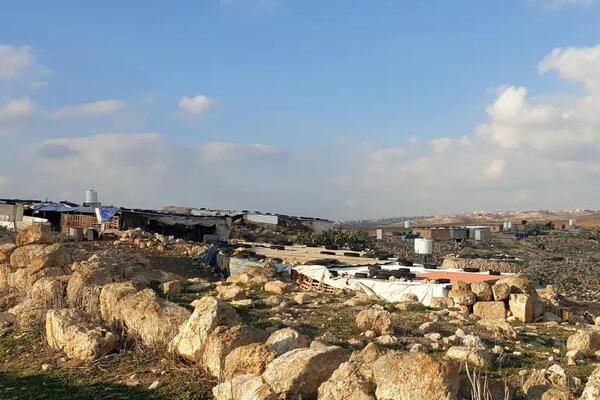

Increasing the suffering of the population in Gaza


He said: "From an Israeli perspective, this decision achieves two main goals: the first is the collapse of the ruling authority in the Gaza Strip, specifically Hamas, and increasing the suffering of the population through starvation and the spread of epidemics and diseases, which may lead, according to the Israeli vision, to the migration of the residents of the Gaza Strip abroad.


As for the liquidation of UNRWA in the Arab countries, Shadid believes that if Israel continues to pursue the international institution in Lebanon, Syria and Jordan, this means the final liquidation of the Palestinian cause by ending the refugee issue, especially since the refugees, the camps and the presence of UNRWA still represent the last witness to the catastrophe of the Palestinian people in 1948.


UNRWA is part of the United Nations and is responsible for its protection.


For his part, researcher and writer interested in Jerusalem affairs, Aziz Al-Assa, confirmed that UNRWA is an international organization affiliated with the United Nations, and therefore it is responsible for preserving it and protecting it from any attack.


He considered that what the occupation was doing constituted a blatant attack on a prestigious international organization with roots extending back eight decades and enjoying international immunity.


He added: "This attack constitutes another form of war crimes that the Palestinian people are being subjected to," noting that preventing the agency from performing its duties will lead to the complete deprivation of the Palestinians of its services, suddenly and without prior warning, which will lead to the collapse of the daily life system for the affected groups, who were forcibly displaced from their homes about eight decades ago.


Al-Assa pointed out that the agency is like a "seal holder" that preserves the right of return and compensation for this segment of the Palestinian people, which is a right guaranteed by international legitimacy.


The occupation will seek to control UNRWA schools and impose its curricula


He stressed that Israel's success in implementing its decision is a damning testimony and a stain on the forehead of the international system, which claims to protect legitimacy when it comes to weak peoples and nations, but stands by as a spectator when the aggressor is a force of injustice and occupation.


Regarding the repercussions of the decision on service institutions, Al-Assa indicated that the occupation will impose its control over the services that UNRWA was providing, and will impose its hostile conditions on the affected Palestinians, which will lead to the aggravation of their living conditions.


On the education front, Al-Assa expected that the occupation would seek to impose its control over UNRWA schools and impose Judaization curricula by force and intellectual terrorism, which requires urgent action from all Palestinian decision-makers to develop an emergency plan capable of filling the void that will be left by UNRWA’s forced withdrawal.


Al-Assa stressed that the absence of this national plan will allow the occupation to implement its plans aimed at Judaizing Jerusalem on the one hand, and creating a structural imbalance in Palestinian society in the West Bank and Gaza Strip on the other hand, calling for urgent Palestinian, Arab and international action to confront these looming dangers.


UNRWA cannot be replaced by any other humanitarian organization.


Dr. Ali Al-Awar, a specialist in resolving regional and international conflicts, believes that the Israeli position on the period allowed by the Israeli law, which was approved by the Knesset, to ban UNRWA’s activities in East Jerusalem and the West Bank is not new, but rather dates back to the first term of US President Donald Trump, who worked with Netanyahu to stop and freeze support for UNRWA, as part of a plan to dismantle it.


He said: "UNRWA provides humanitarian, educational and health services, in addition to its role in Palestinian camps in the Gaza Strip, the West Bank and East Jerusalem."


Al-Awar pointed out that after October 7, the Israeli decision came to ban the activities of the United Nations Relief and Works Agency for Palestine Refugees (UNRWA) in Jerusalem. He asked: "Is there an international body capable of carrying out UNRWA's tasks? Are there American bodies that can provide an alternative to it?" He answered: "In my estimation, UNRWA cannot be replaced by any other humanitarian organization, because it was established by a United Nations resolution in 1949."


He explained that Israel, by imposing a set of laws, ignores international law and the Fourth Geneva Conventions, noting that US President Donald Trump gave Israel additional power to control UNRWA headquarters in East Jerusalem.


Dismantling UNRWA serves the plan to liquidate the Palestinian cause


He added: "The Israeli extreme right is well aware that dismantling UNRWA and banning its activities in the West Bank and East Jerusalem serves the plan to liquidate the Palestinian cause and prevent the establishment of a Palestinian state, given UNRWA's connection to the Palestinian refugee issue, which is the core of the Palestinian-Israeli conflict, and includes the right of return approved by Security Council Resolution 194.


Al-Awar continued: "We are facing a legal problem, and perhaps Trump's presence in power again may allow Israel to continue its policies against UNRWA, by preventing its employees from reaching their places of work in East Jerusalem and the West Bank."


Regarding the repercussions of the Israeli decision to ban UNRWA in the West Bank and take control of its headquarters in East Jerusalem, Al-Awar said: “In my estimation, this Israeli behavior may lead to a state of turmoil in the West Bank and may ignite a third intifada, especially since the Palestinian camps in the West Bank and East Jerusalem depend on UNRWA to provide basic services, such as education and health.”
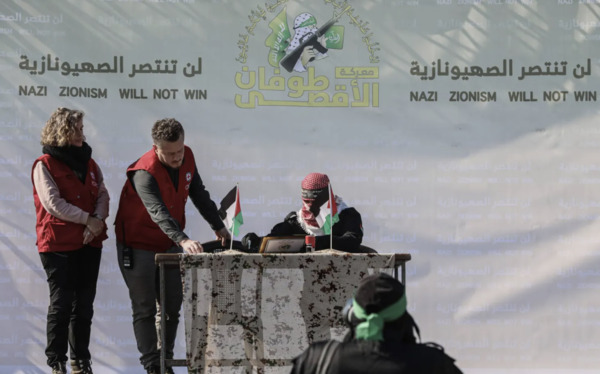

He stressed that Israel's decision could create a political and popular vacuum in the Palestinian street, expecting widespread Palestinian rejection of the decision and preventing UNRWA employees from reaching the West Bank camps.


Al-Awar concluded his speech by saying: “We are facing regional and international changes, but they are certainly linked to the fate of the Palestinian people. I believe that Israel’s control over UNRWA’s headquarters and the ban on its activities in the West Bank may be the spark that ignites a third Palestinian uprising.”

PALESTINE

Sat 01 Feb 2025 7:13 pm - Jerusalem Time

Israeli Occupation drone targets Palestinians in eastern Jenin

The Israeli occupation forces launched an aggression targeting Palestinians in the eastern neighborhood of Jenin, in the northern West Bank.


The Palestinian Red Crescent announced the death of a 14-year-old person, in addition to two injuries, as a result of the shelling in the eastern neighborhood of Jenin.


It added that the wounded are on their way to the hospital.

ARAB AND WORLD

Sat 01 Feb 2025 6:41 pm - Jerusalem Time

Israel burns homes, attacks towns in southern Lebanon

On Saturday, the Israeli occupation army burned houses in two towns in the Marjeyoun district in southern Lebanon, while an Israeli drone dropped two bombs on another town in the same district.


Thus, Israel committed 3 new violations of the ceasefire today, bringing its total violations of the agreement since it came into effect 68 days ago to 830 violations.


Israeli forces set fire to some houses in the towns of Rab Thalatheen and Adaisseh, and columns of smoke were seen rising densely in the skies over the two towns.


In the town of Taybeh, an Israeli drone dropped two bombs, but it is not yet clear what the target was or whether there were any casualties as a result of the attack.


In a related context, the municipality of Aitaroun, affiliated with the Bint Jbeil district in the Nabatieh Governorate (south), announced the entry of the Lebanese army into the northern part of the town, where it is working to clear it of explosives, mines, and foreign objects that are abundant in the neighborhoods.


The municipality added in a statement, "It is expected that the army will complete its deployment inside the town and in the surrounding area within the next two days, and it is noticeable that there are no Israeli movements inside the town."


The municipality called on residents to "not go to the town at the present time to preserve everyone's safety, and to give the Lebanese army a deadline to be able to clear the neighborhoods of explosive objects and other items."

ARAB AND WORLD

Sat 01 Feb 2025 6:19 pm - Jerusalem Time

Trump to discuss Gaza displacement scenarios and possible return to war with Netanyahu on Tuesday

After the Israeli offensive that killed more than 47,000 Palestinians, most of them children and women, and the near-total destruction of the besieged Gaza Strip, hundreds of thousands of Palestinians are returning in a solemn move to northern Gaza as part of the first phase of a long-awaited ceasefire agreement between Israel and Hamas.


While US President Donald Trump, who took the lead in brokering a ceasefire, said in his inauguration speech 24 hours after the truce began that he wanted to be a peacemaker, just hours after promising peace and unity, Trump’s actions and rhetoric changed. Immediately after his inauguration, he signed an executive order lifting sanctions that Biden had imposed on Israeli settlers in the West Bank with the aim of reducing violence against Palestinians.


“In the West Bank, Israeli settlers have been regularly attacking Palestinian civilians, forcing them off their land, doing things like burning farms and olive groves, and often hurting or killing Palestinians,” The Intercept’s Jonah Valdez described. “With Trump lifting those sanctions, Israel gets another license to continue its violent land grabs from Palestinians.”


In the days that followed, Trump suggested moving Palestinians from Gaza to Jordan and Egypt, saying, “We just have to clean this thing up.” Before the election, Trump had also floated the idea of rebuilding Gaza to rival Monaco as a tourist destination.


It is noteworthy that the brutal and continuous Israeli bombing destroyed or damaged 70 percent of all buildings and structures in Gaza.


Experts say it could take more than 20 years to clear the rubble caused by 15 months of devastating war. Another major problem with reconstruction, they believe, is that one of Gaza's largest aid providers, the United Nations Relief and Works Agency for Palestine Refugees (UNRWA), was banned from entering Gaza as of Thursday, January 30.


Meanwhile, Trump issued an executive order to halt foreign aid, raising concerns about future U.S. involvement in supporting the United Nations. This began under Biden, and Trump came in and issued this freeze on all foreign humanitarian aid.


While there is no indication that Trump will actually slow down support for the Israeli military, or resume shipping 2,000-pound bombs to Israel that have been known to take a devastating toll on civilians in Gaza, experts believe that as the first foreign leader to visit Trump after his inauguration, Benjamin Netanyahu, who will meet Trump at the White House on Tuesday, February 4, comes with a list of demands that he believes he deserves.


According to some, Netanyahu will demand a clear and strong commitment from Trump to support Netanyahu's return to war after the end of the truce deal phase in order to preserve his government coalition, especially since this has been announced by members of his government, such as Finance Minister Bezalel Smotrich, who announces this daily.


Netanyahu will discuss with Trump different scenarios for forcibly displacing Palestinians from Gaza to Egypt and Jordan.


US President Trump insisted on Thursday that Jordan and Egypt would accept the displaced from Gaza despite strong objections from the two Arab countries, threatening to use the support the United States provides to both countries as a means of blackmailing them.


It is noteworthy that a joint Arab statement on Saturday affirmed "continued full support for the steadfastness of the Palestinian people on their land and their adherence to legitimate rights in accordance with international law."


This came during a meeting in Cairo today at the level of foreign ministers, attended by Egypt, Jordan, the UAE, Saudi Arabia, Qatar, the Secretary-General of the Executive Committee of the Palestine Liberation Organization, and the Secretary-General of the Arab League.


The statement issued from Cairo stated, “We reject any infringement of these inalienable rights, whether through settlement activities, expulsion and demolition of homes, annexation of land, or by evacuating that land of its owners through displacement or encouraging the transfer or uprooting of Palestinians from their land in any way or under any circumstances or justifications.”


The joint statement added that the participants agreed to "emphasize the important and appreciated role of the United States in achieving this agreement, and look forward to working with the administration of US President Trump to achieve a just and comprehensive peace in the Middle East in accordance with the two-state solution, and to work to free the region from conflicts."


Regarding the Gaza agreement, the statement stressed "the importance of sustaining the ceasefire, ensuring the access of humanitarian support to all parts of the Gaza Strip and removing all obstacles to the entry of all humanitarian aid."

PALESTINE

Sat 01 Feb 2025 6:08 pm - Jerusalem Time

A young man was shot during clashes with the occupation forces east of Nablus

A young man was injured, Saturday evening, with live bullets, during clashes with the Israeli occupation forces in the town of Beit Furik, east of Nablus.


The Red Crescent reported that a young man (30 years old) was shot with live bullets in the abdomen and was transferred to the hospital for treatment.

PALESTINE

Sat 01 Feb 2025 5:09 pm - Jerusalem Time

Fourth prisoner exchange: 3 Israelis for 183 Palestinians

Hamas handed over 3 Israeli prisoners, and Tel Aviv released 183 Palestinian prisoners in exchange, in the latest prisoner exchange between the two sides, which is the fourth since the ceasefire was declared.


The operation, which appeared to be smooth and quick, took place days before the start of the second phase negotiations, the agreement on which would mean a final cessation of the war, and its failure would herald the return of the specter of war once again.


The Qassam Brigades, affiliated with Hamas, chose to hand over the Israelis at two stations: the first in Khan Yunis in the southern Gaza Strip, and the second in the Gaza port in Gaza City in the north, in messages the movement wanted to send to Israel and the world.


Qassam militants handed over Ofer Calderon, a French citizen with Israeli citizenship, and Yarden Bibas to the Red Cross in Khan Younis, and Keith Siegel, an American with Israeli citizenship, to the port of Gaza City. Bibas is Sheri’s husband and the father of Kfir and Ariel, who Hamas said in November 2023 were killed in an Israeli airstrike.


The handover did not witness any of the scenes that dominated the previous handover on Thursday, when Hamas members had difficulty separating the detainees from the crowds that gathered around them in Gaza.


The movement was keen to send multiple messages through the use of images, slogans and symbols during the handover process. In addition to the show of force by gunmen from different units in the Qassam Brigades, and the selection of sites that Israel had announced its control over and the dismantling of Hamas, the fighters raised pictures of the Qassam leader, Mohammed Deif, and others from the military council who were killed by Israel. A banner read: “We put our leaders before the soldiers,” and another large banner read: “Zionism will not win.”


Hamas deliberately displayed Israeli military symbols, such as the symbol of Unit 8200, which is affiliated with the Israeli military intelligence (Aman), and the symbol of Unit 414, which is affiliated with the Gaza Division in the Southern Command of the Israeli army, and symbols specific to the General Security Service (Shabak), and printed on all of them: “Zionism will not win.”


It also deliberately displayed a map with the name “Ra’im” written on it in Arabic and Hebrew, referring to the “Ra’im” kibbutz adjacent to the Gaza Strip, which Hamas occupied in the attack of October 7, 2023, and next to it were fighters carrying Israeli weapons that they had obtained during the attack.


Israel confirmed that it had received its prisoners, and said that they were in good health, unlike the Palestinian prisoners who were released in Ramallah and Gaza.


Israel released 183 Palestinians on Saturday, including 18 with life sentences, 54 with long sentences, and 111 from the Gaza Strip who were arrested after October 7, 2023.


The prisoners arrived in a Red Cross bus to Ramallah, amidst a large popular reception, and later the prisoners from the Gaza Strip arrived in the Strip.


The Palestinians carried the prisoners and paraded them through the streets of Ramallah in the West Bank and Khan Yunis in Gaza, amidst great joy, while drawn rifles appeared in Ramallah, which later turned out to belong to the Palestinian security services.


The Palestinian prisoners appeared to have lost a lot of weight and were in a difficult health condition. The Palestinian News Agency confirmed that a number of the released prisoners were transferred to Ramallah hospitals to receive treatment, after their health conditions deteriorated as a result of the attacks they were subjected to inside the prisons, especially before their release as part of the exchange deal.


The exchange deal, which took place on Saturday, is the fourth, and was carried out early, and the way was opened for the first group of Palestinians to cross from Gaza to Egypt through the Rafah crossing.


Palestinian sources told Asharq Al-Awsat that the first batch of wounded people in the Gaza Strip left on Saturday for Egypt via the Rafah land crossing, and included about 50 wounded people who will receive treatment in Al-Arish hospitals.


According to the sources, “the lists were prepared by the Ministry of Health in Gaza and were transferred through mediators to Israel, which in turn approved them and the names of those accompanying the wounded. Each patient was accompanied by a first-degree relative.”


Among the injured were Hamas members who were injured in the Israeli war on the Gaza Strip.


According to the agreement, the crossing will initially be opened to 50 wounded militants and 50 wounded civilians, along with their companions, with 100 others, most of them students, likely allowed to pass for humanitarian reasons.


So far, 18 detainees have been released, including five Thais released last Thursday, in exchange for 400 Palestinian detainees. Of the 251 detainees, 76 remain in Hamas custody, including the bodies of at least 34 hostages, who the Israeli military has confirmed were killed.


During the first phase of the ceasefire, 33 Israelis are scheduled to be released in exchange for about 2,000 Palestinians, while the second phase negotiations include the release of more than 60 Israelis from Gaza, including officers and soldiers.


The United States is pushing to actually enter the second phase, but many Israelis and Palestinians believe that Israeli Prime Minister Benjamin Netanyahu may fail the second phase negotiations, but they are betting that US President Donald Trump’s desire to end the war will eventually rein Netanyahu in.


Talks on the next phase are scheduled to begin next Monday, 16 days after the agreement goes into effect, before Netanyahu and Trump meet at the White House on Tuesday.