PALESTINE

Mon 17 Feb 2025 1:29 pm - Jerusalem Time

Prisoners Club: Israeli occupation's crimes against detainees have escalated in some prisons

The Palestinian Prisoners Club said that the escalating crimes of the Israeli occupation against detainees have not changed during the past month, but rather the intensity and frequency of raids in some prisons has increased.


The prison system and the occupation apparatuses at all levels continue to practice their systematic crimes against detainees. More than a year after the war of extermination and its disastrous effects and the systematic colonial erasure operations that accompanied it, the occupation prisons and camps are still the face of the war.


The Prisoners Club added in a statement issued today, Monday, that the cases of illness are increasing due to two main factors: the passage of more time with the continued detention of thousands in difficult and tragic conditions, in addition to the detention of more citizens, including the wounded and sick who need intensive health care. As for the basic crime of everything that happens in prisons, which is torture, it still constitutes the most prominent title of the detention conditions of detainees.


He reviewed a number of testimonies documented by the club’s lawyers from a number of prisons, which once again reflected the level of torture crimes, medical crimes, the crime of starvation, and the acts of assault and beating, whether at the moment of arrest or during the raids and repression, in addition to the systematic acts of humiliation and abuse through everything that exists in the prison structure.


Continued repression, raids and assaults on detainees

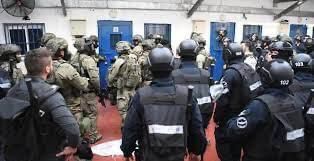
Detainee (A.D.) from Ofer prison reported that the pace of raids, attacks, and repression of the sections continues, and has recently increased, using police dogs and deliberately throwing bombs. Detainee (T.B.) reported that the raids are ongoing, and there is no change in the treatment of the prison administration, which practices humiliation and abuse against the detainees. - Once again - and repeatedly, the prison administration deliberately throws bombs inside the sections. Detainee (D.Y.) also stated that the repression forces stormed the section I am in, because the detainees refused to continue the process of (the number - or what is called the security check), in a humiliating and degrading manner, which is done by forcing them to kneel, especially since there are a number of sick detainees, so the repression forces attacked them and sprayed tear gas directly in their faces. Detainee (S.A.) was also attacked by the repression units, which resulted in his front teeth being completely broken, and despite the severe pain he is suffering, he is deprived of receiving treatment.


In another testimony about the repression, prisoner (N.H.) stated: “On 12/1/2025, the repression forces stormed the section where he was being held, and severely beat the detainees, and sprayed them with gas. He was among those who were severely beaten, which caused him to suffer fractures in his fingers and bruises. According to the lawyer who visited him, the bruises were clear on him. The prison administration did not stop there, but transferred him to the cells for 14 days, during which he was severely beaten every day. According to his testimony, he was beaten with batons, so he lost consciousness, and the beating caused wounds and bleeding in his face and ear. He was deprived of food for 3 days, and the mattress was taken away from him, and his clothes were also stripped.


In another testimony by the detainee (R.Y.): “I was severely beaten during my transfer from the Etzion prison to the Ofer prison, which caused me a deep wound in the head. They did not stop there, but even after stitching the wound, they did not clean it, and they did not provide the necessary treatment for it.”


A child in Ofer prison had to remove the stitches from his dental surgery with the help of his fellow children

The child (M.W.) said: “When I was arrested, I was undergoing dental treatment, and a number of molars had undergone surgery. I asked the prison administration many times to remove the stitches, especially since they had been there for a while, but there was no response, which prompted me to help the children in the prison to remove the stitches, in a primitive way. In the testimony of another child, the children were forced to knock on doors and walls, after the health condition of one of them in the section deteriorated, as he was suffering from breathing and throat problems. After several attempts, the child was taken to the clinic, but the prison administration stormed the (room - cell) and transferred a number of children to (other rooms - cells).


Detainee Mohammed Khudairat... one of the detainees suffering from cancer, which reflects the level of medical crimes practiced against them.


Khaderat was arrested from the town of Dhahiriya on June 1, 2024, shortly after undergoing a bone marrow transplant. He was still undergoing his treatment protocol. Before his arrest, it was decided that he would be provided with biological treatment doses, and he received two out of 14. However, the occupation continues to detain him in harsh and tragic conditions.


He told the Prisoners Club’s lawyer: “My health condition is getting worse, especially after I contracted scabies, which the prison system has turned into a tool for torturing us, and it has become a nightmare that haunts the cell we are in. I and a group of detainees, we all suffer from severe itching and blood is coming out of our bodies as a result of the itching, in addition to our inability to sleep.”


“The issue is no longer limited to not providing treatment for scabies, but even my cancer treatment. Since last October, I only underwent an MRI after many requests, and to this day I do not know the result, despite my many requests to explain the developments in my health condition, or even to see a doctor, but to no avail, as my condition is being treated with indifference. In addition to all of this, malnutrition also looms over the cells, as the detainees are literally dying of hunger, and we are not allowed to store the remaining food from the slices of bread. Whoever finds leftover slices of bread has their cell stormed and the detainees assaulted, which has affected my health condition, in addition to the severe cold we suffer from in light of the lack of sufficient clothing, as well as the overcrowding that is increasing day after day,” Khadirat continued.


  1. The Prisoners Club renewed its call for the international human rights system to move forward in taking effective decisions to hold the occupation leaders accountable for the war crimes they continue to commit against our people, and to impose sanctions on the occupation that would place it in a state of clear international isolation, and to restore to the human rights system its fundamental role for which it was created, and to put an end to the terrifying state of helplessness that it has suffered during the war of extermination and the ongoing aggression on the West Bank, and to end the state of exceptional immunity that the old colonial states granted to the occupying state of Israel, considering it above accountability, accountability and punishment.

PALESTINE

Mon 17 Feb 2025 1:23 pm - Jerusalem Time

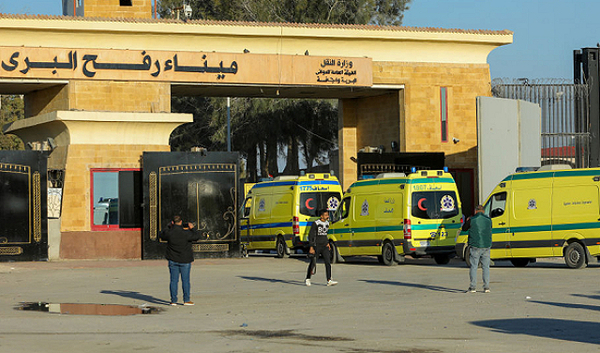
30,000 medical cases are waiting for their turn for treatment outside the Gaza Strip

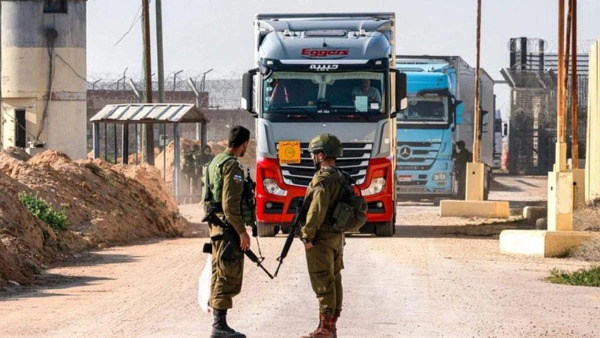
While Israeli Prime Minister Benjamin Netanyahu is stalling the implementation of the humanitarian protocol for the ceasefire agreement in Gaza and obstructing the entry of humanitarian aid, 30,000 patients are waiting their turn for treatment outside the Gaza Strip.


This accumulation of sick cases and waiting comes at a time when the Israeli occupation authorities are deliberately delaying sending approval lists to obstruct the evacuation of patients and the wounded to continue their treatment abroad.


It is evident from data collected by an institution and government offices in the Strip that half a million people injured by the war need urgent surgical operations, amid a severe shortage of medicines and medical equipment in the Strip.


Ahmed Al-Farra, head of the pediatric department at Nasser Medical Hospital, said that 20,000 patients and wounded people registered with the Ministry of Health need to travel for treatment outside the Strip, in addition to 10,000 other cases intending to register to travel for treatment.


He explained that the delay in medical transfers led to deaths, particularly among children with cancer, calling for urgent intervention to preserve the lives of patients and the wounded.


He confirmed that children died, "some of whom were close to recovery, meaning that their blood was about to be cleansed of cancer cells, but as a result of the delay in receiving the prescribed treatment doses, their health condition worsened, and some of them actually died."


In turn, the Director of the Oncology Department at the European Gaza Hospital, Zaki Al-Zaqzouq, pointed out that 10,000 cancer patients need to receive treatment doses, but they are not available because the occupation does not allow them to enter the Strip.


He explained that the number of cancer patients travelling is very small compared to the need, which necessitates the patients’ departure, adding that all medications related to painkillers and medications for blood cancer patients have almost run out.


Al-Zaqzouq stressed that this means a death sentence on the lives of patients who need urgent treatment, knowing that 60% of the total medical referrals before the war were for cancer patients due to the shortage of medicines and diagnostic tools.


For his part, the director of Al-Shifa Medical Complex in Gaza City, Muhammad Abu Salmiya, warned of Israel’s continued disruption of the humanitarian protocol, stressing that the occupation has stopped direct killing, while indirect killing is still ongoing.


Under the ceasefire agreement between Israel and Hamas, which went into effect on January 19, 300 people are allowed to leave each day, with the categories of people allowed to leave limited to 50 wounded during the war, each accompanied by 3 people, for a total of 150 travelers each day.


In addition to 50 patients in need of treatment abroad, each of whom is accompanied by only one person, their number becomes 100 travelers, in addition to 50 others under the category of humanitarian cases daily, but the occupation did not abide by what was agreed upon, according to government agencies.

PALESTINE

Mon 17 Feb 2025 12:50 pm - Jerusalem Time

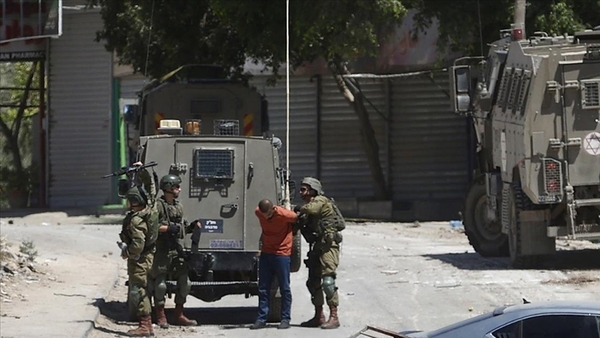
Israeli occupation detains a young man and assaults him in occupied Jerusalem

Today, Monday, the Israeli occupation forces detained a young man and assaulted him in the Bab al-Amud area in occupied Jerusalem.


Local sources reported that the occupation forces raided the aforementioned area, detained a young man, and severely beat him, causing him to suffer bruises and contusions.

PALESTINE

Mon 17 Feb 2025 12:11 pm - Jerusalem Time

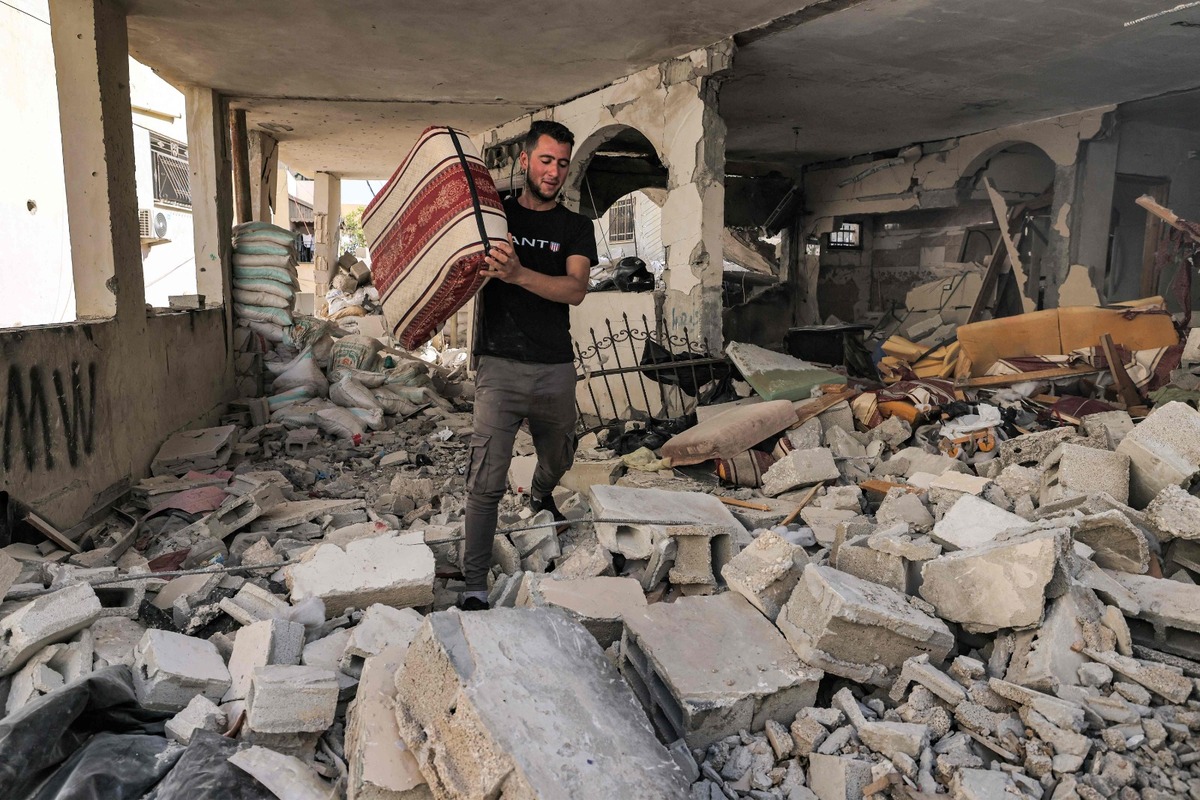
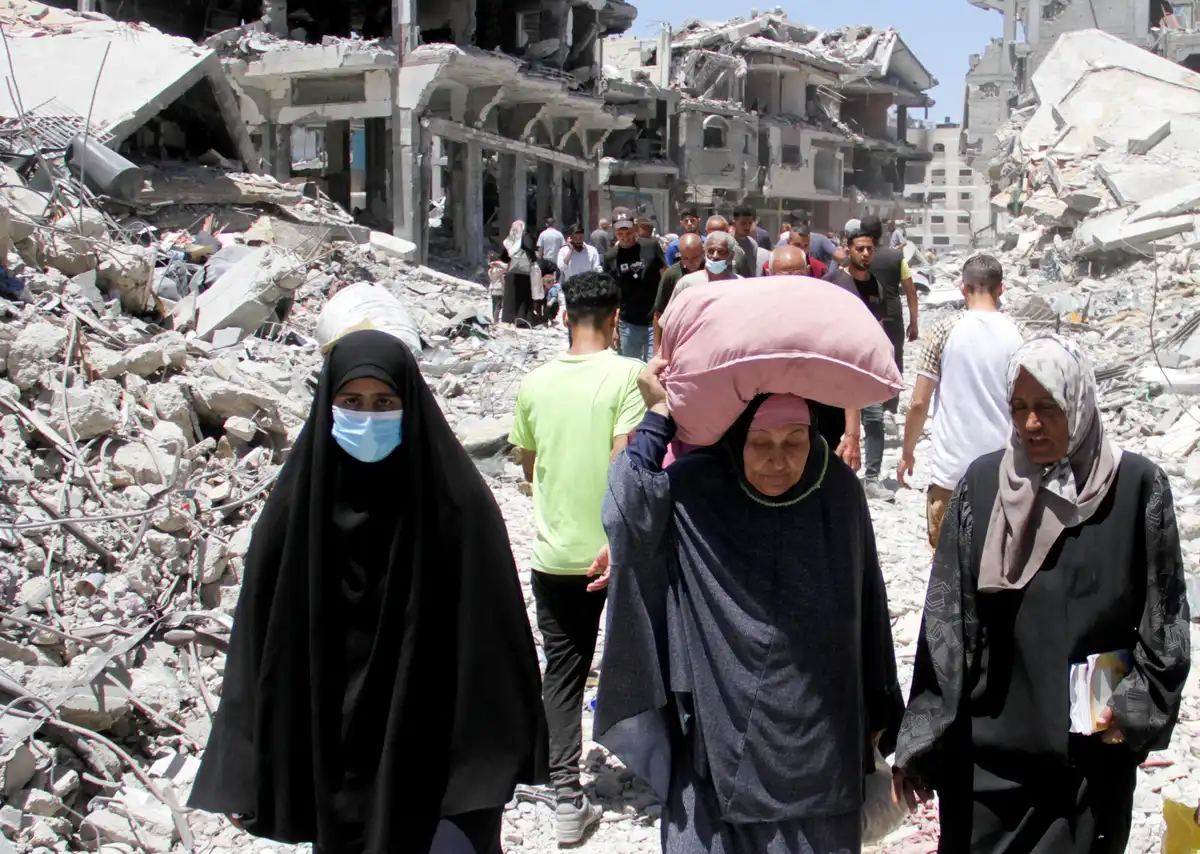
Jenin: Israeli occupation forcibly displaced more than 90% of the camp’s residents

The coordinator of the National and Islamic Forces in Jenin, Ragheb Abu Diak, said that the occupation forcibly displaced more than 90% of the residents of Jenin camp. More than 20,000 citizens were displaced and distributed throughout the governorate, its villages and towns, amidst a state of national and social solidarity.


Abu Diak pointed out in a statement to Voice of Palestine Radio that the local authorities are doing their duty to the fullest extent, as support committees have been formed within the civil and official committees, and legal persons, and efforts are being made to collect donations through committees, merchants and local authorities to confront the occupation’s policy against our people.


He added that the occupation completely and partially destroyed and damaged 470 homes.

ARAB AND WORLD

Mon 17 Feb 2025 10:47 am - Jerusalem Time

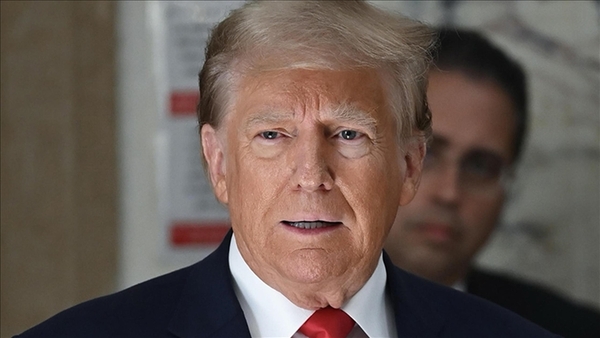
UN rapporteur: Trump's sanctions against the ICC obstruct international justice

The United Nations Special Rapporteur on the independence of judges and lawyers, Margaret Satterwaite, described the sanctions imposed by US President Donald Trump on the International Criminal Court as a direct attack on the international justice system.


In a press statement on Monday, Satterwitt discussed the inclusion of the court's prosecutor, Karim Khan, on the US sanctions list, the repercussions of these sanctions on the court's work, and the measures that member states must take to respond to this step.


"The ICC was established to ensure the rule of law in the face of conflict and violence," Satterwit explained.


She considered that "targeting an institution tasked with investigating the most serious international crimes, and punishing its senior officials through sanctions, is a direct attack on the rule of law and efforts to combat impunity."


She explained that "the impact of the sanctions will become more apparent in the coming months," adding that Trump's decision "allows for the imposition of severe sanctions on members of the court and its employees."


“So far, only Attorney General Karim Khan has been targeted, but the implications of these sanctions are much broader. For example, any financial transactions related to the court within the US banking system could be frozen, and visa restrictions could prevent him from carrying out his normal duties, such as traveling to different countries or meeting with UN officials,” she continued.

OPINIONS

Mon 17 Feb 2025 10:40 am - Jerusalem Time

Zamir and the threat of change

op-ed "AlQuds" dot com

op-ed "AlQuds" dot com

Opinion Writer

After the Israeli government approved yesterday the appointment of Eyal Zamir as Chief of Staff of the Occupation Army, Netanyahu was among the first to congratulate him, considering that Zamir will carry out the mission of changing, as Netanyahu claims, the face of the Middle East with his offensive approach.


Netanyahu has continued to talk about this since the beginning of the war on the Gaza Strip and the West Bank, waving the term “changing the Middle East,” which is a colonial term for an occupying entity that seeks to occupy more Arab lands adjacent to Palestine, primarily Lebanon and Syria. It was not surprising that Netanyahu and his Minister of Defense Katz congratulated the new Chief of Staff, describing the process of selecting him as professional and precise, and that it reflects great confidence in his extensive experience in the Israeli army.


Netanyahu's congratulations to Zamir more than once, and his admiration for what he described as his commitment to the army and Israel, and his support for this appointment, do not come out of nowhere, because Zamir will be obedient to Netanyahu's orders and requests, who has faced many problems and disagreements with the army leadership, especially with former Defense Minister Yoav Galant, and the pressure on a large number of leaders in the army in ways that force them to resign and abandon their duties, and the threat of dismissing the head of the Shin Bet, all appear to be successive episodes for Netanyahu to escape the failure of October 7, and prevent the formation of a national investigation committee, in addition to implementing everything dictated by the political level that wants to continue the war and abandon the exchange deal, and this will be acceptable to Zamir.


Zamir's appointment means the implementation of more military aggression campaigns in the West Bank, as the threat of this has become clear through the statements of recent days. Despite the failure of the Israeli army and its inability to achieve any military or political goal of the war on Gaza, many analysts are pinning hopes on Zamir to get the army out of its crisis, as they described him as an experienced general.


The Chief of Staff of the Israeli army is one of the most important leaders of the army, and he has broad powers to implement and translate military and political decisions. Accordingly, his offensive plans towards Iran and the region in general will be among the important goals he seeks to achieve, with the support and guidance of Netanyahu, who refused to disclose yesterday during his meeting with the US Secretary of State what he described as opening the gates of hell on Gaza, as the US President wants. However, what is certain is that with such a Chief of Staff, Netanyahu will not find it difficult to make all the decisions he wants, to continue the war on the West Bank and resume it on the Gaza Strip, while keeping the deception present by agreeing to send delegations to Cairo and Doha to negotiate without powers, all with the aim of activating the military option that will obstruct the second phase negotiations, and replace them with a new war, the goal of which is to displace and deport the Palestinians to achieve Trump's vision.

OPINIONS

Mon 17 Feb 2025 10:39 am - Jerusalem Time

Vance's Munich speech: delusion, superficiality and extremism

Ahmed Rafeeq Awad

Ahmed Rafeeq Awad

Opinion Writer

The speech delivered by Trump’s Vice President, J.D. Vance, at the Munich Security Conference was provocative, misleading, erroneous, and arrogant. Aside from the lukewarm reception that the speech received, and the criticism that was heaped upon it by official spokesmen in the European Union, I am here addressing that speech from a purely Palestinian perspective.

Before that, it must be said that the Europeans saw in that speech a real insult to them, as the man wanted to teach them a lesson in democracy, moral and human values. Instead of talking in detail about the challenges and security risks in Europe coming from Russia and China, he surprised them by talking about the internal risks represented by the inability to deal with opposing voices. Instead of talking about the settlement in Ukraine as a bleeding wound in the European body, he spoke to them about the need for openness and dialogue with the European fascist right. The man was truly provocative, and expressed a shallow and naive narrative of the risks facing the European Union and its peoples due to a failure to understand the full picture of the type of conflicts and the nature of the challenges.

His speech was a blow to the EU’s core principles, Bloomberg reported, adding that the speech was an angry, unsubdued attack in the name of free speech, and exposed the long-standing hostility that Trump and his top aides feel toward the EU.

J.D. Vance simply said that the United States is not guaranteed to protect Europe when needed, an explicit hint to push the European Union to increase defense spending, and a veiled threat that American protection will disappear if the old continent does not submit to Trump’s financial, political and security blackmail. The speech was revealing of the long-term European dependency and submission to the policies and dictates of the United States of America, a fact that has prompted several European parties to search for an independent European power or adopt a special defense policy to confront American plans in Ukraine and elsewhere.

This is how the Europeans read the speech of the US Vice President. They considered it an insult, a provocation, a lack of insight, and a lack of a comprehensive vision. For the Europeans, the speech was selfish, threatened internal peace, and exposed the shortcomings of European security.

As for us Palestinians, who were not mentioned in it, and were never referred to, this speech expresses the height of hypocrisy and duplicity. While Vance called for openness, partnership, tolerance of others, and the demolition of the “isolation walls,” as he called them, he and his administration are calling for the displacement of the Palestinian people, the dismantling of their state, the confiscation of their right to self-determination, and their erasure from the map. Vance’s speech truly expressed the great crisis of Western civilization, which is denying everything it called for and tried to promote to the world. It was a speech of complete downfall, in which its speaker expressed a hateful arrogance that preys on its friends and allies if they disagree with it. It was the speech of liberalism that has turned against itself and has come to see extremism as a pure moral position, and to see killing and displacement as humanitarian solutions, and to see occupation and confiscation as historical settlements. Vance's speech was a bankrupt speech intellectually, politically and security-wise, as it assumes a final correctness with no further correctness, and a final vision with no further vision. It is not possible for a person whose country has only been in existence for 300 years to teach ancient countries the meaning of democracy and freedom of expression, and correct their course by turning to fascism, which was overthrown nearly ninety years ago. When Vance sees only the leader of the far-right Alternative for Germany party, like his colleague Elon Musk, then the democracy that Vance and Musk call for is a democracy that will undoubtedly lead to a deep abyss.

OPINIONS

Mon 17 Feb 2025 10:37 am - Jerusalem Time

Egypt is the safety valve for the Palestinian cause against the displacement plan

Raed Abdel Fattah Mahna

Raed Abdel Fattah Mahna

Opinion Writer

Over the past decades, the foreign policy of the Arab Republic of Egypt has been driven by development and renewal, especially in the twentieth and twenty-first centuries.

Egyptian-Israeli relations were one of the decisive factors in the entire Middle East policy, and at the beginning of the twenty-first century the foreign policy of the Arab Republic of Egypt was and still is multi-directional and very active in addition to resolving the problem of the Arab-Israeli conflict, as the "country of the pyramids" pays great attention to the situation adjacent to its borders, as Cairo is interested in moderate regimes that do not participate in regional conflicts. In this regard, there is no doubt that Cairo's relations are fine with its Arab neighbors in the African continent - Libya and Sudan.

Egypt's foreign policy towards the Israeli-Palestinian conflict has been to emphasize that the core of the problem is the occupation of Palestinian territories by Israeli forces, violence against civilians, the construction of settlements in the occupied territories, and many other illegal actions by the Israeli government. The Egyptian position calls for the withdrawal of Israeli forces to the 1967 borders and the implementation of the legitimate right of the Palestinian people to establish their state. This reflects Egypt's position on the Palestinian issue, and its interest in reaching a political solution to this problem, which gives hope that Arab-Israeli relations will move from a world of confrontation to a world of mutual understanding, peaceful coexistence, and cooperation in the future.

This is what Egyptian President Abdel Fattah el-Sisi stressed in all his meetings and statements: “Establishing an independent Palestinian state is the best way to ensure the security of the Palestinian and Israeli peoples,” and that the Palestinians will never accept the presence of Israeli forces on their lands to protect Jewish settlements.

On the Palestinian track related to bridging the rift between the Palestinian brothers, Egypt has made great efforts to be the “sole effective mediator” in the dilemma of the internal Palestinian division, and has sponsored and held reconciliation conferences between the various Palestinian movements more than once in Cairo, and is still making efforts to reach a point of agreement that brings together the Fatah and Hamas movements in agreeing on a joint committee to manage the affairs of the Strip after the war on Gaza has stopped.

In light of the war of extermination and the Egyptian position, both at the official and popular levels, constantly confirms its position rejecting any attempts to displace the residents of the Gaza Strip, and this rejection reflects the role of Egypt and the Egyptian leadership, headed by President Abdel Fattah el-Sisi, for the rights of the Palestinians.

The displacement of the population is considered a violation of human rights, which leads to the exacerbation of humanitarian crises. Egypt realizes that any process of displacing Palestinians ends the Palestinian cause and deprives the Palestinian people of their right to self-determination and the establishment of their independent state.

On the other hand, Egypt considers any attempts to displace Palestinians will lead to instability in the entire region and create new crises.

Finally, the Egyptian diplomatic and humanitarian role in the Gaza Strip is pivotal in enhancing regional stability and alleviating human suffering by providing urgent aid to the people of Gaza, by opening the crossings, facilitating the entry of food and medical aid, and also continuing its efforts with international and Arab organizations to ensure the effective and rapid arrival of aid, as Egypt was and still is the safety valve for the Palestinian cause and the protective shield against the plan to displace the Palestinian people, especially since it was the main and effective player in mediation efforts between the Palestinians, and efforts to support the Palestinians in establishing their independent state, which reflects its deep commitment to the Palestinian cause and the rights of the Palestinian people.


OPINIONS

Mon 17 Feb 2025 10:33 am - Jerusalem Time

Trump's transformation in the second phase

Ramzi Awda

Ramzi Awda

Opinion Writer

Trump belongs to the conservative populist thought, as he has a special charisma that qualifies him to address the masses in simple but revolutionary language, capable of influencing public opinion on many issues that are sensitive to them, such as fighting corruption, controlling public funds, improving education, reducing taxes, and other issues. As for the Palestinian issue, he seeks in his second term to resolve or settle the conflict and win the Nobel Peace Prize, in addition, of course, to maintaining the security of Israel as an advanced American protectorate in the Middle East.

Trump introduced the theory of deals in the first phase of his administration in 2017 in order to resolve the Palestinian issue, as he introduced his famous deal, the deal of the century, according to which he cancelled the right of return and proposed the principle of land exchange or geographical annexation within the framework of the principle of demographic displacement. He also removed Jerusalem from the Palestinian state, which he stipulated in return for recognizing it, impossible conditions that would make it closer to expanded self-rule, not an independent, connected and sovereign state. When his deal failed in the face of the steadfastness of the Palestinian people and their leadership’s historical rejection of this deal, Trump shifted in the second phase of his administration this year to another principle, which is imposing peace by force, as stated by his Middle East advisor, “Witkov.” Working with this principle requires making peace, according to the American perspective - which is represented by the deal of the century - a realistic, sustainable and binding matter for all parties by imposing it by force on everyone. In order to impose this perspective, the Trump administration announced a set of political directions represented by the displacement of Palestinians from the Gaza Strip, the annexation of the West Bank, and the suspension of UNRWA grants. This administration also froze grants to the United States Agency for International Development (USAID) in the occupied Palestinian territories, in Egypt, and in Jordan, and threatened to cut off all types of aid to these countries.

What distinguishes the second phase of the Trump administration is its determination to pressure not only the Palestinians but also the Arab countries, as they are the environment that supports the steadfastness of the Palestinian people and their leadership in the face of the liquidation projects of the Palestinian cause. This shift was clearly evident in the meeting between Jordanian King Abdullah and Trump at the White House, when Trump insisted on presenting the theory of displacing the Gazans in the press conference that was not previously scheduled. However, the Jordanian monarch was smart and diplomatic in his responses, when he said that there is an Arab-Egyptian plan that will be adopted at the Riyadh and Cairo summits, and that it will express the Arab position to achieve stability and security in the region and the interests of all countries and partners. Leaks from Cairo indicate that the elements of this plan will include reconstruction starting from the south to the north, in addition to receiving the sick and wounded in a number of Arab countries.

In fact, the plan to displace the Gazans cannot be underestimated in its importance and seriousness, nor can it be considered a negotiating event or blackmail of Arab and Palestinian positions. Displacement has been present since the first day of the war on the Gaza Strip, and had it not been for the Palestinian and Egyptian rejection of this plan, which was presented as a temporary act to protect civilians, the displacement would have become a lived reality. In addition, the insistence of the Israeli occupation army on destroying the Gaza Strip and making it an uninhabitable place is a necessary step in implementing the plan for forced or voluntary displacement in the Strip. This is why we find that the destruction of buildings and property in the Gaza Strip was comprehensive, ranging from 90% of these buildings in the north of the Strip to 70% in the south. The United States was not far from this plan for genocide, as the Biden administration provided the occupation forces with thousands of smart and non-smart bombs with high weights, with the aim of destroying the residential areas of citizens. Despite some restrictions on the supply of these weapons imposed by the Biden administration as a result of the rise in popular demonstrations demanding an end to this aggression, the Trump administration lifted these restrictions. In fact, some leaks indicate that Trump’s electoral team coordinated with the Netanyahu administration on the displacement plan since last August, even before Trump’s victory in the elections was confirmed. According to a report published by the Times of Israel magazine, the displacement and reconstruction plan was presented in a study for the Trump team in early July by Joseph Pilzman, a professor at George Washington University, as an expert in economics and international relations and head of the Center of Excellence for Economic Studies for the Middle East and North Africa at the university.

Finally, I almost assert that confronting Trumpism in its second phase cannot be purely Palestinian, as was the case in the first phase of his rule when Trump proposed the Deal of the Century. In fact, the confrontation plan must be primarily Arab. For this reason, we are counting on the five-party summit meeting in Riyadh, which includes, in addition to Saudi Arabia, Egypt, Jordan, Qatar, and the Emirates. We are also counting on the Arab Summit that will be held in Cairo on February 27. It is clear that the decisions of these summits must go beyond the framework of condemnation, denunciation, and affirmation, as they must propose operational programs to confront the idea of displacement by developing models for economic pressure on the United States, freezing the Abraham Accords, rebuilding the Gaza Strip, and establishing Arab funds to enhance the steadfastness of Egypt, Jordan, and the Palestinian National Authority.


PALESTINE

Mon 17 Feb 2025 10:29 am - Jerusalem Time

Israeli occupation continues to obstruct aid to Gaza and anticipation of the second phase negotiations

On the 30th day of the ceasefire agreement in Gaza, Israel is obstructing humanitarian aid to the Strip, and continues to refuse to allow mobile homes and heavy equipment into Gaza, which Hamas demanded, and confirmed that it had received guarantees to implement it in order to complete the prisoner exchange payments.


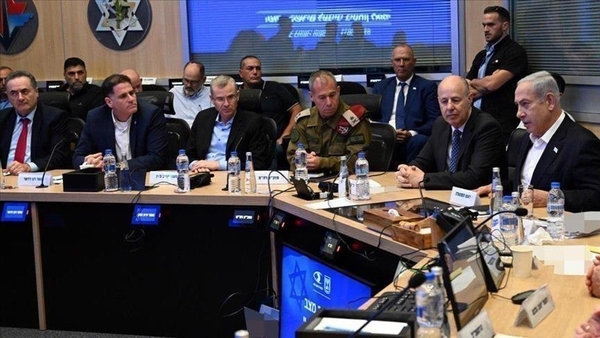
Various circles are anticipating the start of negotiations for the second phase of the Gaza agreement, as Israeli Prime Minister Benjamin Netanyahu announced that the cabinet will convene on Monday to discuss negotiations for the second phase of the agreement, and in parallel with that, the Israeli negotiating delegation will arrive in Cairo.


Netanyahu's announcement came after he spoke by phone with US President Donald Trump's Middle East envoy, Steve Witkoff, and met with US Secretary of State Marco Rubio in Jerusalem, where they discussed several issues, including Trump's plan to displace Gaza residents, and the second phase of the ceasefire and prisoner exchange agreement.


US President Donald Trump said it was up to Israel to decide whether to deal with Hamas over a prisoner swap, but only after consulting with him. He said Hamas had ultimately committed to releasing the Israeli prisoners, who he said appeared to be "in very good shape."


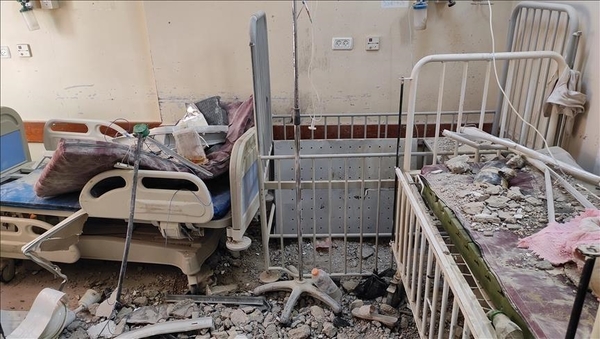
This comes at a time when the humanitarian suffering in Gaza is worsening, in light of the Israeli refusal to allow the entry of homes and mobile vehicles, obstructing the entry of relief aid, as hospitals suffer from a severe shortage of medicines and oxygen, after the Israeli army destroyed the central oxygen supply stations.


The Ministry of Health in Gaza said that "the destroyed stations, which number ten, were meeting the oxygen needs of vital departments such as operations, intensive care, emergency and nurseries, in addition to the needs of patients at home."

PALESTINE

Mon 17 Feb 2025 10:23 am - Jerusalem Time

Israeli occupation continues its aggression on Tulkarm and Jenin

The Israeli occupation army continues its aggression on Tulkarm and Jenin, amidst the destruction of infrastructure and property.


**Tulkarm**

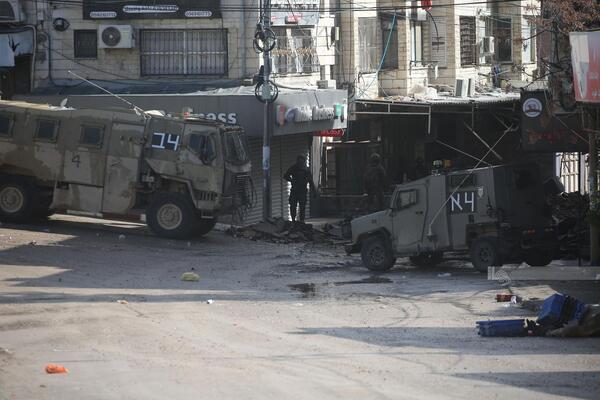
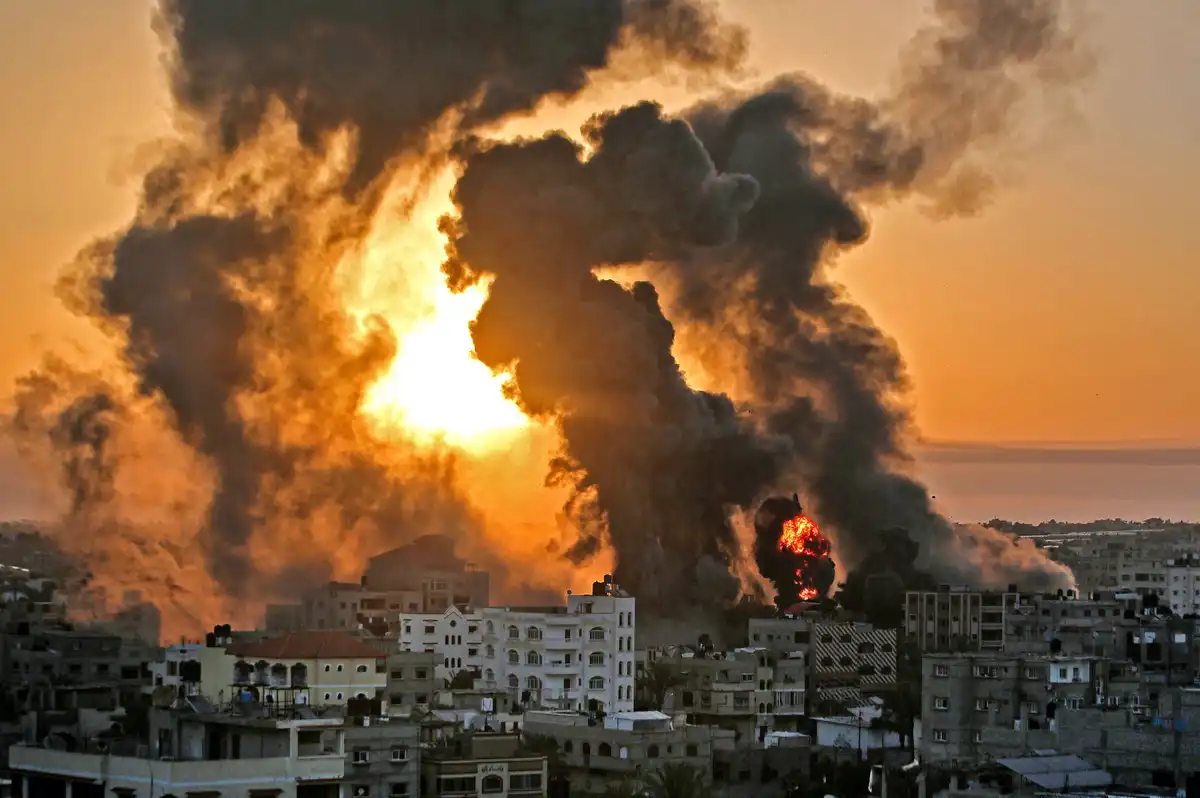
The Israeli occupation continues its aggression on the city of Tulkarm and its camp for the 22nd consecutive day, and the ninth day on the Nour Shams camp, amidst a military escalation accompanied by widespread destruction of infrastructure and demolition of homes.


Local sources said that the occupation forces sent additional military reinforcements of vehicles and infantry soldiers to the city and its two camps, amidst a heavy deployment on Nablus Street, which connects the Tulkarm and Nour Shams camps, coinciding with their seizure of two houses on the aforementioned street, and their conversion into a military barracks.


She added, quoting eyewitnesses, that the occupation army carried out a large-scale raid on homes in Tulkarm camp last night, searching them, destroying their contents, and subjecting residents who remained in their homes to field investigation.


Infantry soldiers were also deployed in large numbers inside the camp's alleys, which they turned into military barracks. A number of them were stationed in the Al-Hadaida neighborhood, while they fired live bullets randomly and fired flares, while the occupation bulldozers destroyed the infrastructure in the Al-Murabba'a neighborhood in the camp, which is now surrounded by rubble in all its roads and alleys.


Meanwhile, the occupation forces continue their tight siege on Nour Shams camp, which is witnessing a dangerous military escalation, as the occupation bulldozers continue to demolish homes, causing significant damage to infrastructure and property, accompanied by the firing of live ammunition and the sound of explosions.


Yesterday, Sunday, the occupation forces demolished at least three houses in the Al-Manshiya neighborhood on the main street of the camp, including the houses of the martyrs Muhammad Jaber and Imad al-Din Shahada, accompanied by searches and vandalism in the houses in the presence of their residents, which increases their suffering and the seriousness of the humanitarian situation.


The bulldozing also affected large parts of the roads in the Dhenaba suburb east of the city, including the area surrounding the Martyrs’ Cemetery, near the old mosque, in addition to destroying the Martyrs’ Monument and causing extensive damage to the infrastructure.


At the same time, the occupation forces continue to close the gate of the Jabara checkpoint at the southern entrance to the city of Tulkarm for the tenth consecutive day, isolating the city from the villages and towns of Al-Kafriyat and the rest of the West Bank governorates.


**fetal**

The Israeli occupation continues its aggression on the city of Jenin and its camp for the twenty-eighth consecutive day, leaving 25 martyrs, dozens of injuries, and widespread destruction of infrastructure and property.


Local sources reported that the occupation bulldozers began paving new streets in Jenin camp, extending from Mahyoub Street to Jouret Al-Dhahab neighborhood, and from the west of the new camp to Abdullah Azzam neighborhood, and from Al-Wahdan neighborhood towards Jouret Al-Dhahab, in addition to paving a road from the mountain area to the middle of the camp, and other streets were expanded inside the camp.

She added that the occupation closed part of Mahyoub Street with dirt mounds, and the occupation also closed the entrance to the new camp.


Local sources said that the occupation forces arrested more than 150 citizens in Jenin camp, and subjected dozens to field investigations, while a large force of foot soldiers raided a house belonging to the Al-Amer family in the vicinity of Al-Assir Mosque.


The occupation forces also stormed and searched the home of the martyrs Hamam and Harith Hashash in the Saada Forest in the city of Jenin, which had previously been notified of demolition last Friday, while the occupation forces continued to deploy in the Kharouba neighborhood and around the Battikha and Interior roundabouts, and around the Yahya Ayyash roundabout, where the occupation soldiers detained citizens, checked their identities, and searched their vehicles and bicycles.


As the aggression on Jenin camp continues, the massive destruction is revealed day after day in the homes, properties and shops of citizens in the neighborhoods and streets of the camp, while the occupation continues to send military reinforcements accompanied by bulldozers and fuel tankers to the entrances and surroundings of the camp. The occupation bulldozers also continue the work of destruction, demolition and opening streets in several neighborhoods of Jenin camp, and drones continue to fly at low altitudes in the skies of the camp.

ARAB AND WORLD

Mon 17 Feb 2025 10:20 am - Jerusalem Time

Trump: It's up to Israel what to do next in Gaza, but after consulting with me

US President Donald Trump said on Sunday evening that it was up to Israel what the next step in Gaza would be, but only after "consulting with me."


Trump told reporters, commenting on the release of the Israeli prisoners from the Gaza Strip, that "the good news is that they (the prisoners) are in very good condition."


On Saturday, the Palestinian resistance handed over 3 Israeli prisoners, one of whom holds American citizenship and the other Russian, to the International Committee of the Red Cross, which in turn transferred them to the Israeli army as part of the sixth batch of the deal.


In return, the Israeli occupation authorities released 369 prisoners, including 333 from Gaza, who were arrested after October 7, 2023, in addition to 36 prisoners serving life sentences.


Regarding his statement a few days ago about his invitation to the Israeli Prime Minister to do whatever he wanted in Gaza, Trump explained that this was due to “Hamas’ threat that it would not hand over the last batch of prisoners under the agreement.”


He added that Hamas had ultimately committed to releasing the Israeli prisoners, who he said appeared to be "in very good condition."


Trump stressed that "the decision on the next step will be for Israel in consultation with me."


Trump did not mention his plans to force the people of Gaza out to Egypt and Jordan so that he could take over Gaza and make it the Riviera of the Middle East.


But his Secretary of State Marco Rubio reiterated the White House's positions on Gaza, saying President Donald Trump "has been clear in his view" on the future of the territory.


Rubio said, in a joint press conference in Jerusalem with Israeli Prime Minister Benjamin Netanyahu, that Hamas must be eliminated, explaining, "Hamas cannot continue as a military force or a government... it must be eliminated."


"We should not repeat the mistakes of the past and Hamas cannot have a future in Gaza," he added.


The US official stressed that President Donald Trump believes that "used ideas cannot be repeated in Gaza."


Commenting on Trump's idea of taking over Gaza, he said, "The president was very bold in his view of what the future of Gaza should be, not the same boring ideas from the past, but something bold and something, frankly, that requires courage and vision. What cannot continue is the same repetition."


The US Secretary of State also spoke about the countries of the region and “the security challenges to Israel,” saying, “Syria should not be a platform for threatening other countries,” and he stressed that “the Lebanese government must disarm Hezbollah.”


Hamas and Islamic Jihad released three Israeli hostages on Saturday who had been held in the Gaza Strip since the October 7, 2023 attack, while Israel released 369 Palestinian prisoners from its prisons in the sixth exchange as part of the truce agreement.


US Middle East envoy Steve Witkoff revealed on Sunday that talks had been held with Israeli, Qatari and Egyptian officials regarding a ceasefire agreement in Gaza.


In an interview with Fox News, Witkoff said he had held separate talks on the issue with Israeli Prime Minister Benjamin Netanyahu, Qatari Prime Minister Mohammed bin Abdulrahman Al Thani, and Egyptian intelligence chief Hassan Rashad.


He stressed that "talks will continue to find out how to successfully reach the end of the second phase of the Gaza agreement."


The American official stated that the ceasefire agreement in Gaza "is still in place," revealing that an Israeli delegation will head to Doha to discuss the matter.


Witkov pointed out the possibility of "light shooting" in the Gaza Strip, "but it will not affect the steadfastness of this agreement so far."


The spokesman called for "fruitful talks" on the future of Gaza based on President Donald Trump's plan, saying the Strip had become "a difficult place to live in."


He said, "What I saw in Gaza is a warning... the Strip is completely destroyed... 30,000 unexploded materials and ammunition, which poses a threat to life there."


Asked about Trump's plan to seize Gaza and transfer its 2.2 million residents to Egypt and Jordan, Witkoff said, "We have the Egyptians saying they have a plan for Gaza, the Jordanians saying they have a plan for Gaza, and President Trump has said his plan... Maybe we should engage in productive talks about the future of Gaza."

ARAB AND WORLD

Mon 17 Feb 2025 10:15 am - Jerusalem Time

Has Trump backed down from his threat of “hell”? Analysts try to fathom the soul that “commands displacement”!

Dr. Hussein Al-Deek: Trump’s retreat from his hostile statements regarding Gaza reflects his failure to use what is known as “brinkmanship” diplomacy

Dr. Tamara Haddad: The retreat that appeared in Trump’s statements is tactical because implementing the first phase of the deal is in Israel’s interest

Sulaiman Basharat: Trump may have achieved his main goals of shocking the concerned parties and forcing them to modify their policies

Dr. Aql Salah: The major crisis is that Trump, as a mediator and guarantor of the agreement, encouraged Netanyahu to violate it, and this is a dangerous precedent in the role of international mediators.

Dr. Raed Al-Dabai: Trump was subjected to great pressure from his advisors, allies and partners, which prompted him to adopt a more cautious and coordinated stance with Israel

Sari Samour: Trump relies on maximum bargaining and tends to escalate, but retreats to diplomacy whenever he faces real resistance to his proposals

US President Donald Trump's retraction of his statements regarding the threat to the Gaza Strip raises questions about whether this retraction means a failure in implementing his policies, or is it merely a tactic aimed at achieving gains for Israel.


In separate interviews with “I,” writers, political analysts, specialists, and university professors believe that Trump’s retreat is not a strategic change, but a tactical one, and that Trump is still committed to implementing plans that could lead to fundamental changes in the Palestinian scene. They point out that the United States may withdraw from its role as a direct mediator in the negotiations, allowing Israel the freedom to make decisions that have a greater impact on the future of the Strip.


Writers, analysts, specialists and university professors confirm that political pressure from Arab countries and the Palestinian people had a major impact on changing the American position, which led to Trump backing down from his exaggerated threats, and that this change reflects the failure of the “brinkmanship diplomacy” approach that Trump relied on to pressure the concerned parties to achieve his goals.


They point out that fears are growing that Trump's statements may be merely a tool to impose a new political reality in Gaza, as Trump works to increase pressure on the Palestinian resistance to make concessions that may lead to changes in the political and military landscape of the region.

Trump backed down from his threats due to the unified Arab position

The writer and political analyst specializing in Israeli affairs, Dr. Hussein Al-Deek, believes that US President Donald Trump’s retreat from his threats regarding the Gaza Strip came as a result of the crystallization of a unified Arab position, stressing that the collective political will of Arab governments and peoples is capable of breaking American pressures and positions.


Al-Deek explains that the United States, despite its arrogance, is not an inevitable fate, and its policies can be confronted and thwarted if there is a firm and clear Arab position.


Al-Deek points out that Trump's retreat from his hostile statements regarding Gaza reflects his failure to use what is known as "brinkmanship" diplomacy, which is based on applying intense pressure to achieve political goals.


Al-Deek explains that this approach did not succeed in the face of the Arab position’s firmness in rejecting his statements, which confirmed to the world that Trump is a controversial and populist figure, and often issues narcissistic statements that cannot be implemented.


Regarding the issue of Israeli prisoners and detainees in the Gaza Strip, Al-Deek confirms that Hamas has shown a clear commitment to the signed agreement, which stipulates the release of three prisoners per week according to the specified plan, noting that any breach of this agreement came from the Israeli side with American support.


Al-Deek points out that the Israeli occupation did not adhere to the humanitarian aspect of the agreement, as it prevented the entry of equipment necessary to remove the rubble, and did not allow the entry of the agreed-upon mobile homes and tents.


Al-Deek confirms that Israel's approval of the deal came under great internal pressure, as Benjamin Netanyahu's government faces pressure from the Haredi parties and the Israeli street, in addition to the position of the military establishment, which has exhausted its goals in Gaza, which prompted Netanyahu to move forward with the agreement despite his hesitation.


Regarding the expected scenarios for the future of the agreement, Al-Deek explains that there are four possible scenarios: either completing the stages of the deal as planned, although this scenario seems weak due to Netanyahu’s procrastination in completing the first stage, especially since the second stage of negotiations has not yet begun, and there are less than two weeks left until the end of the first stage.


As for the second scenario, according to Al-Deek, it is related to the tour of US Secretary of State Marco Rubio in the Middle East, where he visited Tel Aviv, then a number of Arab countries, to discuss new arrangements aimed at expanding and extending the first phase of the agreement.


Al-Deek explains that this scenario has the support of Netanyahu, who convinced the Americans of it, but its success depends on Hamas’s position and the extent of Israel’s commitment to implementing the initial agreement.


Al-Deek points out that the third scenario is linked to the Arab summit scheduled to be held in Cairo on the 27th of this month.

Al-Deek points out that media reports speak of an Egyptian-Arab initiative regarding the management of the Gaza Strip, which includes the management of the Strip through Palestinian experts and technicians under Arab and international supervision, with the exclusion of Hamas from governance.


Al-Deek believes that this scenario is likely, given the Palestinian and Arab rejection of the plan to displace the people of Gaza, and the strong Israeli opposition to the return of the Palestinian Authority to the Strip.


Regarding the fourth scenario, according to Al-Deek, it is based on the return of military operations in the Gaza Strip after the end of the first phase of the agreement.


Al-Deek considers this scenario weak, justifying it by saying that the Trump administration views the region from the perspective of trade deals, not wars, and that the resumption of war will hinder the investment plans desired by the US administration, especially from the Gulf states.


Al-Deek points out that the upcoming meeting between Trump and Russian President Vladimir Putin in Saudi Arabia may contribute to strengthening US-Arab understandings and reduce the chances of military escalation.


Al-Deek stresses that the unified Arab position and regional understandings play a pivotal role in confronting American and Israeli policies, which makes Arab unity a key tool for protecting national and regional interests in the coming stage.

Trump has not backed down from his initial plans to displace the Gazans

Writer and political researcher Dr. Tamara Haddad confirms that US President Donald Trump has not backed down from his initial plans regarding the forced displacement of Palestinians in the Gaza Strip, but rather he is still determined to implement these plans.


Haddad points out that Trump has handed over the final decision to implement this deal to Israel, considering that the United States of America will remain part of ensuring the implementation of the agreements related to Gaza, but it is retreating from its role as a primary decision-maker. Therefore, Israel will have the freedom to make the final decisions regarding the deal, which reflects the complete intersection between Trump and the thinking of the Israeli government, which seeks to release the largest possible number of Israeli prisoners.


Haddad explains that the retreat that appeared in Trump's statements is not a strategic retreat, but rather a tactical one, as implementing the first phase of the deal, which includes releasing the prisoners, is in Israel's interest.


Haddad points out that this phase may extend for a longer period than expected, as Israel seeks to obtain the largest possible number of hostages, which will guarantee it a tool of pressure on the Palestinian side.


Haddad believes that the equation imposed in the first phase of the deal is a purely humanitarian equation, whereby humanitarian aid and residential caravans are brought in in exchange for the release of the Israeli hostages. Therefore, any progress towards the second or third phases of the deal will only be made under specific conditions set by Israeli Prime Minister Benjamin Netanyahu. Among these conditions is the demand to remove senior Hamas leaders from the Gaza Strip, in addition to ensuring that the Strip does not pose a future threat to Israeli national security.


Haddad points out that Israel does not want to enter the second and third stages of the deal at the present time, due to the security and economic obligations that may result from them, such as a complete withdrawal from Gaza and reconstruction.


Haddad points out that Israel does not want to carry out the reconstruction process quickly, as it believes that the Palestinian citizen may remain on his land even if the reconstruction is temporary, which strengthens his steadfastness.


Haddad believes that the main goal of the American and Israeli escalation is to impose a new reality in Gaza, with a focus on the humanitarian equation in exchange for releasing the hostages.


On the Arab level, Haddad stresses that there is an urgent need for a coordinated Arab plan to confront the Israeli and American plans related to displacement.


Haddad believes that the Arab plan may focus on removing Hamas from the political scene to remove pretexts from Israel and the United States of America, while stressing the necessity for this plan to be acceptable to Palestine, regionally and internationally.


Haddad explains that the situation in Gaza may lead to extending the first phase of the deal or to forming a transitional phase similar to the first phase, in an attempt by the Israeli and American parties to put more pressure on Hamas through the worsening humanitarian situation.


Haddad stresses that the political future in Gaza remains unclear, and that the situation requires urgent Arab coordination to confront the challenges facing the Palestinian cause.

Arab and regional movements have begun to present alternatives and plans.

Writer and political analyst Suleiman Basharat believes that Trump's high-profile statements regarding Gaza carry a primary goal of raising the bar in shocking the concerned parties with the aim of re-arranging priorities in line with the Israeli-American vision for the region.


According to Basharat, Trump wanted through these statements to introduce new variables into the ongoing conflict over Gaza, especially with regard to the future of the Strip after the war, and to restore the balance between the active forces in the region. His open threat to open the “gates of hell,” as he described it, and his confirmation of the possibility of disrupting the agreements if their path was not adhered to, were a pressure tool to force the parties to agree with Washington’s vision.


Basharat believes that the second goal of this escalation is to activate the populist discourse that resonates with the hardline Israeli right, which enhances the compatibility between the American and Israeli positions. In doing so, Trump wanted to make the Israeli position more in line with the American vision, which explains the escalation of the discourse and then the retreat from it after a short period.


With the US retracting some statements, Basharat believes that Trump may have achieved his main goals, which were to shock the concerned parties and force them to modify their policies, and thus the cards began to be rearranged according to the American vision.


Basharat points out that there are Arab and regional movements that have begun to present alternatives and plans to deal with the future situation in Gaza, which reflects the extent of the impact of American statements in igniting new dynamics in the region.


Basharat believes that it is very difficult for Trump to carry out his threats, as the Palestinians in Gaza have lost everything, and they have nothing to lose if they decide to reject what the United States is proposing. Moreover, the catastrophic humanitarian situation in the Strip has made it difficult for America to appear weak in the face of the destruction left by the war.


Basharat believes that the Palestinian resistance has proven its ability to absorb American and Israeli pressure, as it has dealt with events cautiously and realistically in order to avoid giving Israel or Trump a pretext to resume war or escalation.


According to Basharat, the resistance realizes that matters are no longer just improvised reactions, but have become part of precise political calculations that include Palestinian, international, and regional dimensions.


Basharat believes that the current situation is still ambiguous, and there is no real vision among the concerned parties about how to deal with Gaza after the war. Despite the passage of more than 15 months since the war, the parties have not reached final solutions regarding the political future of the Strip. However, there are visions and perceptions being discussed by these parties, but they will not be effective unless a consensus is reached between all parties.


Basharat explains that the most realistic scenario for the next stage indicates that there is a kind of balance between the Palestinian resistance and Israel, with the support of the United States. In this scenario, any proposed agreement will be an agreement between the Palestinian resistance and the international parties.


The other scenario, according to Basharat, is the crazy scenario in which Israel, led by Prime Minister Benjamin Netanyahu, may seek to exploit the hesitant American position to pressure other parties to achieve its political goals.


Basharat believes that the situation in the Gaza Strip will remain in a state of continuous instability, as long as the existing agreements will not be stable or easily enforceable, which makes them vulnerable to manipulation by the various parties and the introduction of changes that may empty the agreements of their content. Consequently, the Palestinian situation in Gaza will remain in a state of political escalation, until real agreements are reached that guarantee long-term stability.

Trump from mediator to direct party in pressure

Writer and political researcher Dr. Aql Salah believes that US President Donald Trump tried through his threatening statements to exert intense pressure on the resistance to accept the conditions of Israeli Prime Minister Benjamin Netanyahu, and despite that, Trump was aware that the resistance would not submit to these threats.


Salah points out that Trump also put pressure on Qatari and Egyptian mediators to influence the resistance, which led to the implementation of the sixth installment of the deal, but Israel reneged on its commitments and refused to allow aid into Gaza after that.


Salah asserts that the major crisis lies in the fact that Trump, who is supposed to be the mediator and guarantor of the agreement, is the one who encouraged Netanyahu to violate it, which represents a dangerous precedent in the role of international mediators, through this absolute support for Israel. Trump seeks to save Netanyahu from bearing the responsibility for disrupting the agreement and to place the responsibility on the resistance instead.


Salah points to Trump's shift from the role of mediator to a direct party in pressuring the resistance, with the aim of reducing its political and field achievements.


Salah explains that Israel yielded to the sixth batch due to increasing pressure from the Israeli street and the Trump administration, as Netanyahu seeks to achieve gains through negotiations that he did not achieve through war.


Salah expects the US pressure on the resistance to continue to push it towards a settlement that will grant Netanyahu a political achievement that will preserve the cohesion of his government coalition and provide a moral victory for Israel.


Salah warns that the seventh installment of the deal is at risk of being disrupted due to Israel’s refusal to allow in humanitarian aid, stressing that the resistance may refuse to complete the deal unless Israel abides by the terms of the agreement.

Salah believes that the next stage will be difficult, as its success is largely linked to the Israeli street’s movement to pressure its government.


Salah points out that the American arrangements for the post-war period in Gaza pose major challenges to the resistance, as it cannot rely on the role of mediators without clear guarantees to implement the agreed-upon humanitarian obligations.

Multiple angles to interpret Trump's threats

Dr. Raed Al-Dabai, head of the Political Science Department at An-Najah National University, believes that Trump’s retreat from his previous threats, which included “opening the gates of hell” if all Israeli hostages were not released by Saturday, can be interpreted from several angles.


Al-Dabai believes that the threats issued by Trump are in line with his populist and emotional personality. He is known for his escalatory and exaggerated style in his speeches, and thus his threats to Hamas were part of this approach that relies on shock and exaggeration in order to attract attention, without necessarily having a realistic plan to implement these threats.


Al-Dabai cites Trump’s previous experiences, where he made fiery statements and then retracted them when he discovered that they were not feasible or when he faced internal or external pressures. For example, during his first term in office, Trump issued threats against North Korea and China, but he later changed his positions after realizing that these threats could lead to counterproductive results.


Al-Dabai believes that Trump was subjected to great pressure from his advisors in the US administration, in addition to international pressure from allies and partners in the region, especially in the context of mediating the exchange deal, which prompted him to adopt a more cautious and coordinated position with Israel.


Al-Dabai believes that Trump was seeking to present himself as a firefighter for the world’s fires, especially with regard to the Palestinian file, as he had previously succeeded in stopping the ceasefire. Hence, the unraveling of things at this time, before the return of the detainees, contradicts the image he wants to establish about himself.


Al-Dabai believes that Israel, in contrast, chose to put its national interests above any other consideration, which explains its agreement to complete the prisoner exchange deal despite Trump’s threats.


Al-Dabai believes that this Israeli position reflects the effectiveness of indirect negotiations and a genuine desire to recover the detainees, which may be the result of internal pressure from the families of the hostages and from Israeli public opinion.


As for future scenarios, Al-Dabai believes that Hamas and Islamic Jihad have prisoners, especially those who are still alive, and that the second phase of the deal, which includes the release of intelligence officers, may put Israeli Prime Minister Benjamin Netanyahu under great pressure.


Al-Dabai believes that Netanyahu will make an effort to extend the first phase of the deal in order to avoid discussing the issue of stopping the war, which could affect the stability of his government coalition, but Al-Dabai points out that, in the end, Netanyahu will be forced to discuss the second phase of the deal, which includes a comprehensive ceasefire.


Regarding Netanyahu's position on stopping the war, Al-Dabai believes that the Israeli Prime Minister does not want a comprehensive ceasefire, because it means his exit from the governmental and political scene, but at the same time he does not have many options due to the increasing pressures from within and without.


According to Al-Dabai, the features of the second phase of the deal will be determined by a set of data and developments, including the position of the US administration, the pressure it may exert on Israel, in addition to developments in the military field.

He points out that Netanyahu is not the only player who decides under these circumstances, but will depend in the future on the balance of power at home and abroad to determine his directions.

Trump's personality is governed by a merchant's mentality

Writer and political analyst Sari Samour believes that US President Donald Trump's personality is governed by a merchant's mentality, as he is accustomed to making very high demands in order to obtain negotiating gains, which is reflected in his behavior towards Gaza.


Samour points out that this approach is derived from Trump's background in the real estate sector, where he relies on maximum bargaining to achieve his goals, despite the presence of American institutions that limit his decisions.


Trump tends to escalate, but retreats to diplomacy when he encounters real resistance to his proposals, Samour explains, citing his shift in positions on Russian President Vladimir Putin and North Korean leader Kim Jong Un, where he moved from threats to rapprochement after realizing their toughness.


Regarding the Israeli scene, Samour points out that there are undeclared arrangements between Washington and Tel Aviv that go beyond Trump's public statements, but he believes that the United States, at this stage, will not provide financial and military support to Israel with the same generosity that President Joe Biden has provided.


Samour explains that Israel seeks to resume the war in Gaza and cancel the second phase of the agreement or merge it according to its own terms, continuing to create crises to achieve its goals.


Samour warns of a catastrophic scenario in which Arab countries are pushed to offer bad solutions out of fear of Trump’s threats to displace the people of Gaza, as this fear may lead to the crystallization of ill-considered Arab plans that aim only to thwart the displacement plan.


Samour points out that there is a media reading that sees Trump’s statements as aiming to restore the image of the Arab regimes that received widespread criticism due to their silence during the events in Gaza, but he does not tend towards this opinion. Rather, he believes that Trump’s goal is to push the Arabs to formulate a political plan that may not include complete displacement, but rather partial displacement that carries dangerous consequences.


Sammour stresses the importance of Arab caution against being swept away by any ill-considered plans, emphasizing that the stage requires deep political awareness to confront dangerous scenarios of circumventing the Palestinian cause.


PALESTINE

Mon 17 Feb 2025 10:12 am - Jerusalem Time

Pulling the fuse from the detonator of displacement!

Dr. Rafat Sayed Ahmed: Stopping the Israeli-American ambitions in Gaza is through activating the Egyptian initiative for reconstruction without displacement

Dr. Mukhaimer Abu Saada: The steadfastness of the ceasefire is due to the efforts of the mediators and the pressure of the Israeli street to continue the exchange deal

Dr. Ali Al-Awar: The Israeli public is the one who holds the initiative now.. and an Israeli decision to stop the war will be officially announced within days

Abdul Nasser Abu Aoun: Releasing prisoners, especially those sentenced to life imprisonment, has a humanitarian and struggle dimension and enhances the feeling of victory among Palestinians

Ismat Mansour: The truce holds and the prisoners are regularly released despite the obstacles due to the existence of a common interest and a clear agreement between the parties

Adel Shedid: The second phase of the ceasefire agreement includes major political entitlements and is not limited to relief aspects or the release of prisoners

The atmosphere of tension and anticipation that prevailed after Hamas announced the suspension of the exchange deal in the middle of last week, in protest against the occupation state’s failure to abide by the terms of the agreement, specifically not allowing relief aid in the form of mobile homes, tents, cranes and large machinery, subsided with the completion of the exchange of the sixth batch of the first phase, following intensive intervention by the Egyptian and Qatari mediators, coinciding with the movements of the Israeli street to pressure the far-right government led by Benjamin Netanyahu to proceed with the implementation of the deal to restore their sons who have been detained in the Gaza Strip for more than sixteen months.


Hamas' decision to freeze the deal a few days ago provoked US President Donald Trump, who threatened hell if Hamas did not release all the prisoners at once. Israel responded with threats and intimidation, especially since Netanyahu, who was forced to resort to the exchange option after failing to recover his prisoners by excessive force, was not pleased with the spectacle accompanying the exchange operations, whether in the Gaza Strip, with the large presence of resistance fighters, or in Ramallah, where the prisoners were received massively after many years in the depths of prisons, in addition to the state of controversy within Israeli society about the war and its achieved goals.


Writers and analysts who spoke to "I" said that the ceasefire is holding thanks to the efforts of mediators and pressure from the Israeli street to continue with the exchange deal, but they believe that the second phase will be more complicated because it includes major political entitlements and is not limited to relief aspects or the release of prisoners. They explained that stopping Israeli-American ambitions in Gaza is done by activating the Egyptian initiative for reconstruction without displacement.

The exchange deal will be completed in at least its first and second stages.

Dr. Rifat Sayed Ahmed, the Egyptian strategic expert and nationalist thinker, said that the implications of the truce’s steadfastness lie first in the internal Israeli pressure from the opposition and from the prisoners’ families on the current government, so that the deal is completed at least in its two parts or its first and second stages, and then they move towards sabotage and destruction, as Netanyahu and Trump have predicted.


He pointed out that the deal will be done, and the prisoners, whether alive or dead, will be released, as well as the Palestinian prisoners in return.


Ahmed stressed that the Israeli and American greed in the Gaza Strip will not stop, but will continue, because there is a major goal hidden since the beginning of the war, which is to establish a two-Sea canal from Eilat to the Mediterranean Sea via northern Gaza, adding: This is an Israeli and American goal to continue a line linking India to the northern Mediterranean to transport goods, gas and oil, and it is a strategic line that America aspires to.


He pointed out that there is a demand that the Israeli north be secured, as well as the Israeli south, by the northern Gaza Strip, and this will require major security arrangements between the Israelis.


He stressed that stopping these historical ambitions, and the greed for Gaza gas, and other things, would be through activating the Egyptian initiative for reconstruction without displacement, which is the smart initiative launched by the Egyptian administration in cooperation with some Arab countries, most notably the Gulf countries.

The next Arab summit will be the "Gaza Summit"

Ahmed said, "This initiative will be presented at the upcoming Arab summit, which will be the 'Gaza Summit', scheduled for November 27. This agreement is likely to succeed in foiling the Israeli-American plan to displace the people of Gaza and then colonize it under the cover of reconstruction."


He explained that Trump said "a true word intended to be false", and Egypt understood that, so it took two axes: the first, postponing the visit of the Egyptian president so that he would not be humiliated in Gaza, and the second, activating the reconstruction card without displacement, because Egypt is convinced that this is possible. For example, Japan was destroyed in World War II, and so was Germany, the Japanese and Germans remained in their countries, and reconstruction was carried out, and they became among the largest and most important countries in the world, and what is important is sincerity of intention.


“We have the money, and it is Arab money, but the American-Israeli goal is to steal this money and colonize Gaza under the pretext of reconstruction with Arab money. So, we can lead this project ourselves, and the Arab leaders must realize that. Egypt has understood the danger to some extent, as the issue is no longer just occupation, but the danger has become to thrones, armies, and the foundations of government,” Ahmed added.


The Egyptian expert believes that the Arab countries, especially Egypt, understood that the main goal is thrones and armies, and that is why they presented this card, and its chances of success are there. But there is a more important variable, which is that the resistance and the people of Gaza will remain, and this is what Trump did not take into account. What is important is that Arab funds reach the reconstruction of Gaza, and the upcoming Arab summit represents a golden opportunity through which this card can be achieved, so that Gaza and its people remain, with its reconstruction anew.

Trump's threats are not the reason for the exchange process to continue

For his part, Dr. Mukhaimer Abu Saada, Professor of Political Science at Al-Azhar University in Gaza, said that the steadfastness of the ceasefire agreement until now is primarily due to two issues:


The first issue is the great and tremendous efforts being made by the mediators, especially Egypt and Qatar, to continue the ceasefire agreement and ensure its steadfastness.


He said: "As you know, US President Trump stated several days ago that if the Israeli hostages were not released by 12 noon on Saturday, hell would break loose in Gaza and the region.


He added: "I do not believe that Trump's statement is what led to the continuation of the prisoner exchange process, but rather I believe that the efforts made by Egypt and Qatar are the main reason behind it.


The second issue, according to Abu Saada, is that Netanyahu and the Israeli cabinet left the door ajar, as they did not fully abide by Trump’s statements, but rather said that if Hamas adhered to the ceasefire agreement and released three Israeli hostages, Israel would in turn abide by the ceasefire. This is due to pressure from the Israeli street, as the Israelis, especially the families of the hostages, began to move strongly and effectively, especially after the release of three hostages last week, who showed signs of weakness, emaciation and exhaustion.


He pointed out that there is great fear among the families of the hostages that their continued detention by the resistance may lead to their death or their non-return alive. Accordingly, these two reasons - the role of the mediators (Egypt and Qatar) and pressure from the Israeli street - are what led to the ceasefire agreement remaining in place, despite the incitement of extremists in Israel, such as Smotrich, Ben-Gvir and others, to not abide by it.

Netanyahu has been under pressure from mediators and families of detainees.

Abu Saada believes that these people consider Trump’s statements an opportunity that must be seized to return to war and displace the Palestinians. He added: However, it seems that Netanyahu was subjected to pressure from mediators and the families of the hostages, but it is still unknown whether the ceasefire agreement will hold until the second stage, or whether there is actually a second and third stage of the agreement. So, we will have to wait and see what happens in the sixth week of the first stage.


As for the Egyptian reconstruction plan, Abu Saada confirmed that it came in response to US President Trump’s plans that aim to displace the residents of Gaza and control it, then rebuild it and transform it, as he described it, into the “Riviera of the Middle East.”


He explained that Egypt, as the most concerned about the future of the Palestinian people and the Palestinian cause, takes this position based on a long history of support. Since the Nakba of 1948, Egypt has stood by the Palestinians and fought several wars for the Palestinian cause, and therefore its current position is not new, but rather an extension of its historical positions.

Displacement poses a threat to Egyptian national security

He added: "Egypt realizes that the displacement project will pose a threat to Egyptian national security, and will contribute to the dispersion of the Palestinian cause, and perhaps its complete liquidation. Therefore, Egypt is working on a plan to rebuild and build Gaza while preserving the presence of the Palestinian people on their land, and preventing their displacement."


Abu Saada confirmed that this plan will be adopted at the Arab Summit scheduled to be held at the end of this month, and then it will be presented to the United States as a project that enjoys broad Arab support.


He said: "This plan currently enjoys great support from Saudi Arabia, Jordan and other Arab countries, and when the Arab Summit is held, there will be an Arab rally around it to confront Trump's plans and the displacement.

73 Israeli prisoners held by Hamas and the resistance

In turn, Dr. Ali Al-Awar, a specialist in regional and international conflicts, said that the Israeli public is leading this stage, given the presence of 76 Israeli prisoners, noting that with the release of three prisoners on Saturday, 73 prisoners remain with Hamas and the resistance.


He added: "The Israeli public is the one who holds the initiative now, and it is the one who decides the nature of the next stage, given that Netanyahu bears full responsibility for the life of every Israeli prisoner, especially after it became clear that some prisoners are still alive, despite previous allegations that they were killed as a result of Israeli bombing."


Al-Awar continued: We are facing a new phase entitled "Israeli prisoners", where the Israeli public has begun to greatly influence the political and security decision inside Israel. Also, the withdrawal of the Israeli army from the "Netzarim" axis, and the withdrawal of the "Givati" Brigade from the northern Gaza Strip, reflect the existence of an Israeli decision to end the war, and there are only days left to officially announce this.

The truce holds despite Israeli violations

He pointed out that the truce is still holding despite the Israeli violations, noting that there are internal and external factors that contributed to its steadfastness, including the sixth batch of the prisoner exchange deal, which included 36 prisoners sentenced to life, in addition to 330 prisoners from the Gaza Strip, which makes it an important deal entitled "Prisoners sentenced to life breathe freedom."


Al-Awar explained that the truce held despite the fiery statements of a number of Israeli leaders, such as Israel Katz, Bezalel Smotrich, Itamar Ben-Gvir, and Benjamin Netanyahu, who adopted the positions of US President Donald Trump, who set 12 noon as the deadline for the return of all prisoners.


He pointed out that the Israelis alone read the Palestinian scene well, and realized that Hamas still exists in the Gaza Strip, and that returning to war would cost Israel a heavy price, both on the military level and in the number of civilian casualties.


He also stressed that the Israeli public has begun to realize that Trump is just a show president, making statements far from reality and far from the Palestinian-Israeli conflict, which has made him unable to provide real solutions to the conflict.


In another context, Al-Awar pointed out that Egypt's public rejection of the displacement plan proposed by Trump is evident in the position of President Abdel Fattah El-Sisi, who refrained from visiting the United States to meet Trump, which means the complete failure of this project.

An alternative Egyptian reconstruction plan to displacement

He also revealed that Egypt had presented an alternative plan for displacement, which included returning to Gaza and starting reconstruction immediately, which contributed to officially announcing the death of Trump's project.


He explained that 73 Israeli prisoners are still held by Hamas, and that Netanyahu cannot bear the legal and moral responsibility for their continued detention, which made 70% of the Israeli public demand the full implementation of the deal and moving forward with its second phase.
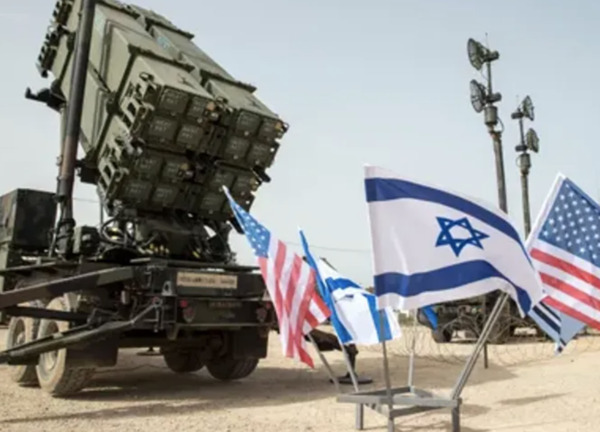

Al-Awar concluded his speech by stressing that these developments reflect the ability of the Israeli public to influence security and political decisions in Israel, which may lead to the full implementation of the agreement and the continuation of the truce between Hamas and Israel.

Success of regional and international efforts to prevent the explosion

For his part, journalist Abdel Nasser Abu Aoun stressed that the steadfastness and continuation of the truce in the Gaza Strip and the continued release of batches of Palestinian prisoners, especially those with life sentences, carry deep political and national implications.


He said: "The steadfastness to the ceasefire strongly reflects the success of regional and international diplomatic efforts in preventing the situation from exploding again, and it is an indication that there is a great political will seeking to maintain relative stability despite the challenges ahead.


Abu Aoun added: “As for the release of batches of prisoners, especially those with high sentences, it carries a struggle and humanitarian dimension, as it enhances the feeling of victory among the Palestinians, and confirms that the prisoners’ issues will remain present in any political or field negotiations.


He pointed out that the release of those sentenced to life in prison in particular indicates changes in the balance of negotiations, as some of the red lines that Israel had previously imposed are now being reduced under great political pressure.
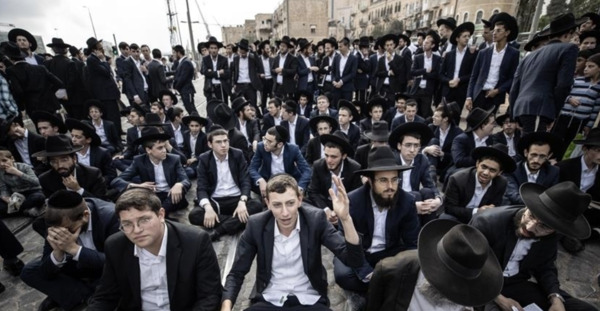
Reconstruction without compromising Palestinian demographics

Abu Aoun explained that, at the same time, the Egyptian plan for reconstruction without displacing the residents of Gaza comes as a confirmation of the Arab position supporting Palestinian rights.
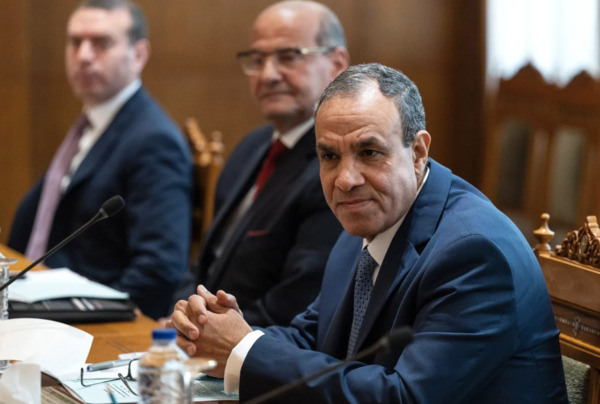

He believes that the reconstruction project without affecting the Palestinian demographics is a clear rejection of any attempts to impose a new reality of forced displacement or geographical change in the Strip, which is something that strengthens the steadfastness of the people and gives them hope of rebuilding what was destroyed by the aggression with Arab and regional coordination.


Abu Aoun stressed at the end of his statement that these developments show that Gaza is not alone, and that there is an ongoing political movement that seeks to preserve its national constants, at a time when the various parties are trying to impose their visions on the regional scene.

The second phase of the agreement will be more complicated.

Journalist and analyst specializing in Israeli affairs, Ismat Mansour, believes that the first phase of the agreement is nearing its end, while the parties are preparing to move to the second phase, which will be more complicated due to its political dimensions.


Mansour explained that the truce has held up so far and the prisoners are being released regularly despite the obstacles, due to a common interest and clear agreement between the parties, as the process depends on the exchange of prisoners and aid, which makes it relatively faster. However, the second phase will be more difficult, given the overlap of sensitive political issues, including the issue of governance in Gaza, the role of the Israeli army, and the future of the war, which will have repercussions on Netanyahu’s government and his political coalition, in addition to the situation in Gaza and reconstruction.


Mansour pointed out that the Egyptian reconstruction plan is directly linked to identifying the parties responsible for its implementation and financing, asking: "Who will supervise the reconstruction? Will it be financed in the presence of Hamas? And what is the fate of Hamas in this equation?" He stressed that the reconstruction plan essentially means a political plan for Gaza, which requires understandings with the Palestinian Authority and Hamas.

Combined Palestinian, Arab and international efforts

He added: "Egypt finds itself forced to search for answers to these questions and reach agreements between the Palestinian parties in the West Bank and the Gaza Strip, stressing the need for the Authority and Hamas to commit to making real efforts to overcome obstacles and prepare the conditions for a smooth transition to the second phase.


Mansour warned that any stumbling block at this stage could give Israeli Prime Minister Benjamin Netanyahu an excuse to disrupt the agreement, noting that everyone is currently seeking to abort the "Trump deal" that aims to displace the people of Gaza.


Mansour stressed that confronting these plans requires concerted Palestinian, Arab and international efforts to remove obstacles and block any attempts to thwart the agreement.

Moving to the second phase of the agreement will not be easy.

As for the specialist in Israeli affairs, Adel Shadid, he confirmed in turn that the steadfastness of the truce and the continued release of batches of prisoners reflects a common interest for all the resistance factions, headed by the Hamas movement, as well as for the occupation government and Israeli society, to make this stage at least successful.


Shadid explained that the Palestinian factions seek to complete all stages until reaching a complete military withdrawal and a final ceasefire.


He also pointed out that the mediators are serious about making the truce a success, despite the crisis it faced last week, especially after the controversial statements by US President Donald Trump, which raised fears of an escalation that threatens the entire region.


Despite the success of the implementation of the sixth batch of prisoner releases, Shadid warned that moving to the second phase of the agreement will not be easy, pointing to the possibility of the agreement collapsing in light of two main factors: first, the opposition of the hardline right wing within the Israeli government even to the first phase, and second, that the second phase includes major political entitlements, not limited to relief aspects or the release of prisoners or a partial withdrawal of Israeli forces, but rather includes a complete withdrawal and a final ceasefire, which makes it more complicated.

PALESTINE

Mon 17 Feb 2025 10:10 am - Jerusalem Time

With live ammunition!

The little girl, Janat Al-Mutawwar, was in her room, hugging her brother, who is five years younger than her, when she was struck in the eye by shrapnel from a bullet fired by the extermination army during its storming of Beit Einun in the city of Hebron, a few days ago, as bullets rained down in all directions, as if it were a war zone.


Like eight-year-old Janat, children in the cities, villages, towns and camps of the West Bank are subjected to daily terror by soldiers who have just returned from the war of extermination in Gaza, and who are consumed by a lust for killing, and have not yet had their fill of the blood of the victims, children and women, who were the hidden targets of the blazing fire.


Dozens of children and elderly people were injured with live ammunition during an occupation forces maneuver in Nablus, whose markets and streets are crowded with pedestrians and school students, while the soldiers were brutal and prevented ambulances from reaching the injured.


Yesterday, the repressive forces stormed Ofer prison with live ammunition, amid a media blackout on the terror and abuse that the detainees are subjected to, in addition to the pain and starvation they are enduring, which has led to the martyrdom of many of them under torture.


Day after day, the genocide continues in chapters in all the governorates of the West Bank, where killing, torture, displacement, bulldozing and demolition operations are taking place in the camps and towns, without these crimes moving the international community, which is governed by the laws of the jungle, shock and terror, to achieve profits from establishing the "Riviera" and major projects on the ruins, above the corpses and piles of rubble.


It is the decisive plan that Smotrich cut its opening ribbon in Hawara before the flood came, which he eagerly awaited, and opened his hungry eyes to nibble on more land, after emptying it of its inhabitants, to make it easier to digest.

PALESTINE

Mon 17 Feb 2025 9:56 am - Jerusalem Time

Two Palestinians succumbed to their wounds in the southern Gaza Strip

Two citizens died today, Monday, from injuries they sustained two days ago in the governorates of Rafah and Khan Yunis in the southern Gaza Strip.


Local sources reported that the two dead were injured by the occupation's bullets and shelling in Rafah and Khan Yunis.


Yesterday evening, Sunday, citizen Hani Awad Abu Halawa (the poet) was martyred due to wounds he sustained last Wednesday as a result of the occupation forces’ shelling east of Rafah city.


The occupation's gunboats fired their machine guns towards the shore of Khan Yunis city, south of the Strip, and towards the shore of Rafah, while the occupation's vehicles fired illumination bombs into the sky of the Al-Ezba area, west of Rafah.


The occupation forces, stationed east of Beit Hanoun town, north of the Gaza Strip, also fired machine guns at the citizens' lands in the town.


Since October 7, 2023, the Israeli occupation has launched a war of genocide on the Gaza Strip, resulting in the martyrdom of 48,271 citizens, the majority of whom were children and women, and the injury of 111,693 others, in an incomplete toll, as a number of victims are still under the rubble, and ambulance and civil defense crews cannot reach them.

PALESTINE

Mon 17 Feb 2025 9:46 am - Jerusalem Time

Israeli opccupation forces launch arrest campaign in the West Bank

This morning, Monday, the Israeli occupation forces launched a large-scale arrest campaign in the West Bank.


In Ramallah, the occupation forces stormed the village of Deir Abu Mash’al and arrested: Rani Abdul Fattah Al-Barghouthi (20 years old), Jouda Zakaria (17 years old), Yahya Zakaria (17 years old), Mahmoud Yahya Zahran (22 years old), Ali Muhammad Rabi’ Zahran (18 years old), the boy Nour Muhammad Shukri (16 years old), and the boy Ahmed Khalil Shukri (16 years old).


The occupation forces also stormed the village of Abu Shakhdem and arrested: the young man Ammar Ahmed Salim Abu Zaher (22 years old), and Muhammad Dheeb Rashid (55 years old). The occupation soldiers also assaulted the young man Basil Abu Zaher during the storming of his family’s home in the village, and he was transferred to the hospital.


The occupation forces also arrested Maher Muhammad Shriteh (36 years old) from the town of Al-Mazra’a Al-Sharqiya, east of Ramallah, and Anas Mishaal Al-Barghouthi from the town of Kobar, while the occupation forces stormed the villages and towns of Al-Mughayyir, Al-Janiya, and Ras Karkar, without any arrests being reported there.


In Nablus, the occupation forces stormed the village of Osarin and arrested the young man, Rayan Faisal Adili, after raiding his house, searching it and tampering with its contents.


Meanwhile, the occupation forces stormed the eastern area and the city center, and seized a vehicle from around the Old City.

PALESTINE

Sun 16 Feb 2025 10:20 pm - Jerusalem Time

Qatar confirms its rejection of the displacement of Palestinians from Gaza and warns of its repercussions

Qatar renewed, on Sunday, its rejection of the displacement of Palestinians from the Gaza Strip, stressing that these calls double their suffering and renew confrontations in the Palestinian territories.


This came during the reception of the Prime Minister and Minister of Foreign Affairs of Qatar, Mohammed bin Abdulrahman, for the Jordanian Minister of Foreign Affairs, Ayman Safadi, according to a statement by the Qatari Foreign Ministry, published on its account on the X platform.


The statement said that Bin Abdul Rahman received the Jordanian minister, who is visiting Doha, without specifying the date of arrival or the duration of the visit.


The statement indicated that the meeting discussed strengthening cooperation relations between the two countries, and discussed developments in the region, especially in the Gaza Strip, the occupied Palestinian territories, Syria and Lebanon, in addition to discussing a number of issues of common interest.


The Qatari minister stressed his country's categorical rejection of attempts to displace Palestinians from Gaza.


He warned that "such calls may lead to renewed confrontations in the occupied Palestinian territories and double the suffering of the Palestinians."


On February 4, Trump revealed during a press conference with Israeli Prime Minister Benjamin Netanyahu at the White House that his country intends to seize Gaza after displacing the Palestinians from it to other countries, including Egypt and Jordan.


Trump's plan for Gaza was widely rejected by Palestinians, Arabs and the international community, while it was met with great praise at the political level in Israel, including various trends.


ARAB AND WORLD

Sun 16 Feb 2025 10:02 pm - Jerusalem Time

"African Summit": The two-state solution is the only way to end the conflict and achieve stability

The Ethiopian capital, Addis Ababa, has witnessed the 28th African Union Summit over the past two days, amidst precise arrangements, including a security presence from the federal police in the city’s main streets, which were decorated with the flags of the participating countries.


This security alert came as a result of the state of emergency that Ethiopia has been experiencing since last October, due to the protests that took place in a number of cities in the Oromo and Amhara regions. However, the level of security arrangements did not negatively affect the workflow and flow of traffic for the delegations, which were also characterised by normality.


The African Summit was full of remarkable scenes in terms of events, organization and participation.


• Arrangement and organization:


The summit began with a closed session for the heads of state and government of African countries, the second time an African summit has begun with this type of session.

• The opening session was delayed by more than an hour and a half, which observers attributed to differences over the adoption of the summit agenda.

• The opening session took a long time, reaching two hours and a quarter, compared to previous summits, whose opening sessions did not take one hour.


*Media coverage and participation:


The summit was attended by 37 African presidents, three vice presidents, three deputy prime ministers, 49 foreign ministers and more than 4,000 other people, filling the African Union building and the Nelson Mandela Hall where the summit was held.

The participants were led by the new UN Secretary-General, Antonio Guterres, Palestinian President Mahmoud Abbas, and the summit guest, Cuban Vice President Salvador Valdes Mesa.

Ethiopian Prime Minister Hailemariam Desalegn (52 years old) was the youngest president among the participants, while the oldest was Zimbabwean President Robert Mugabe (93 years old).

The media participation was remarkable, with the attendance of 450 journalists from various local and international media agencies, including 380 from outside Ethiopia.


• First time participating faces


• Moroccan King Mohammed VI

He attended the summit for the first time since Morocco withdrew from the African Union 33 years ago in protest against the latter's acceptance of the membership of the Polisario Front, which demands the separation of the Sahara from Morocco.

The Moroccan King's presence in Ethiopia drew attention, despite his non-participation in the opening of the summit. He led a delegation of 400 figures and hosted a dinner for the African presidents and leaders who attended the summit.


• UN Secretary-General Antonio Guterres

He participated in the summit for the first time since assuming his new position early this year, succeeding the former Ban Ki-moon. He stole the spotlight at the summit and held side meetings with 18 heads of state.


• President of Gambia "Adama Barrow"

He assumed his new position days before the summit following a political crisis in the country after former President Yahya Jammeh refused to step down and hand power over to him, before the latter agreed to relinquish power after the success of mediation between Mauritanian President Abdel Aziz and Guinean President Condé.


• Ghanaian President Nana Akufo-Addo

He took office in the first week of last month after defeating former President John Dramani Mahama in elections held late last year.


• President of Seychelles Danny Mole

He took office last October following the resignation of former President James Michel, who was his first vice president.

• Participation of Cuban Vice President Salvador Valdes Mesa as a guest of honor at the 28th African Summit. In his speech, he expressed the spirit of brotherhood and sincerity with Africans and their pioneering role, praising Africa’s role in supporting his country. He said that his country looks forward to working with Africa in international forums.


Farewell to some characters and welcome others


• Outgoing Chairperson of the African Union Commission, Dlamini Zuma:


She delivered a brief speech during the opening session of the summit, which was her last after the end of her term, expressing Africa's aspiration to work with the UN Secretary-General in various fields, especially in peace and security, combating "terrorism", and resolving the conflicts witnessed by the continent in various regions of the continent.

Zuma called on the Liberian president to present her with an honorary medal at the end of her term on the podium, contrary to the established protocol for it to be presented by the session's president.

In a striking scene, Zuma danced in the Nelson Mandela Hall, while young men and women sang for Africa for more than two minutes.


• The new chairman of the African Union, Guinean President Alpha Condé


The summit elected 80-year-old Conde as president for the new 2017 session, succeeding Chadian President Idriss Deby.

Some considered his election to be in conflict with the summit's slogan, "Harnessing the demographic dividend through investment in youth."


• Chadian President Idriss Deby, the African Union chairman who handed over the presidency to his Guinean successor, was the star of the summit through his speeches and the compliments he received during other speeches at the summit.


Summit atmosphere


• For the first time, delegations from Egypt, Ethiopia and Djibouti were brought together, despite the recent tensions in relations between them.

• Egyptian President Abdel Fattah el-Sisi appeared, unusually, with a small number of his guards.

• 17 wives of presidents preceded their husbands in entering the Nelson Mandela Hall at the African Union headquarters in Addis Ababa, which hosted the summit.

• Sudanese President Omar al-Bashir was the last to arrive in Addis Ababa, and he shook hands with Ethiopian Prime Minister Hailemariam and spoke with him for more than a minute before the summit began.

• The applause was an expressive presence, as the participants interrupted the UN Secretary-General with applause when he criticized the US administration for preventing refugees from entering it.

• The audience also interrupted the Palestinian President with applause when he praised the position of the African Group (Senegal, Angola, and Egypt) in the Security Council for voting in favor of Resolution No. (2334), which condemns Israeli settlements.

• The leftist heritage in Africa is still strong as the Cuban vice president was warmly received and Zuma devoted parts of her speech to the late Cuban leader Fidel Castro.

• The Addis Ababa Summit was an all-male summit, with a low participation of women, who did not exceed 800.

• Ethiopia has regained its footing following the turmoil that preceded the summit, with Prime Minister Hailemariam meeting 21 heads of state and topping the list of side meetings.

• The summit’s slogan (Harnessing the demographic dividend through investment in youth) was well received by all speakers at the opening session, although youth constitute 60% of Africa’s population, they are absent from power.

• During the closed sessions that witnessed the election of the Commission’s Chairman and Deputy Chairman, hundreds stood outside the hall to follow what was happening inside, as tension prevailed as voting continued and unprecedented measures were imposed, preventing anyone from leaving the hall except for the presidents or foreign ministers to prevent leaks. The union succeeded in isolating journalists from reaching the halls.

• The African Union for the second time prevented observers from participating in the summit (75 member states are observers in the African Union), and only ambassadors accredited to Ethiopia were allowed to participate in the opening and closing sessions, with the exception of the Secretary-General of the United Nations, the Palestinian President, and the Cuban Vice President. The reasons for the decision were fear of interference in the electoral process witnessed by the African Union.

• The absence of the Secretary-General of the Arab League, Ahmed Aboul Gheit, from the African summit, although it is customary for the League’s representative to attend African summits.

• Morocco stole the spotlight at the summit and topped the news bulletin. The closed session to discuss Rabat’s return to the union witnessed tensions between supporters and opponents, while African wisdom prevailed and the decision to approve the return was made by consensus.


ARAB AND WORLD

Sun 16 Feb 2025 8:57 pm - Jerusalem Time

Bin Salman and Macron discuss regional and international developments

Saudi Crown Prince Mohammed bin Salman discussed, in a phone call with French President Emmanuel Macron, on Sunday, regional and international developments and ways to enhance security and stability.


The Saudi Press Agency (SPA) reported that the phone call received by Prince Mohammed bin Salman from Macron discussed ways to enhance areas of joint cooperation between the two countries.


The statement added that the two sides "discussed regional and international developments, and exchanged views on the latest developments and efforts made towards them to achieve security and stability."


These discussions come amidst the dangers looming over the Middle East peace process, especially with regard to the two-state solution between Palestine and Israel, which enjoys the support of the majority of the international community, against the backdrop of the US positions biased towards Israel, which have taken on a more hardline character since the beginning of President Donald Trump’s term last January, which represents a shift from Washington’s traditional approach to the Palestinian issue.


These positions included an American plan proposed by Trump, based on the United States seizing the Gaza Strip after displacing its residents, in addition to his administration’s announcement that a decision would soon be made regarding recognizing “Israeli sovereignty over the West Bank” or not.


While Trump did not explicitly clarify his position on the two-state solution, officials in his administration said that he "did not rule out this solution in the future."


The American plan regarding Gaza was widely rejected at the Palestinian, Arab and international levels.


Saudi Arabia affirms its commitment to establishing a Palestinian state on the borders of June 5, 1967, with East Jerusalem as its capital.


PALESTINE

Sun 16 Feb 2025 8:43 pm - Jerusalem Time

Jordan's King Renews Rejection of Displacement of Palestinians, Calls for Sustaining Ceasefire in Gaza

Jordan's King Abdullah II reiterated on Sunday his rejection of the displacement of Palestinians, stressing the importance of ensuring the sustainability of the ceasefire in the Gaza Strip.


This came during his meeting in Amman with a delegation from the US Congress headed by Senator Richard Blumenthal, according to a statement by the Royal Court.


According to the statement, the King stressed during the meeting the "importance of the strategic partnership between Jordan and the United States, and the keenness to strengthen it in all areas."


He also stressed the pivotal role played by the United States in supporting efforts to achieve a just and comprehensive peace in the region based on the two-state solution (Palestinian and Israeli).


The King reiterated Jordan's position rejecting any attempts to annex Palestinian territories or displace Palestinians from Gaza and the West Bank.


He called for "ensuring the sustainability of the ceasefire in Gaza, and strengthening the international humanitarian response."


On Tuesday, Egypt announced its intention to put forward a vision for the reconstruction of Gaza that guarantees the survival of the Palestinian people on their land, and in a manner consistent with the legitimate and legal rights of this people.


On February 4, US President Donald Trump revealed during a press conference with Israeli Prime Minister Benjamin Netanyahu at the White House that his country intends to seize Gaza after displacing the Palestinians from it to other countries, including Egypt and Jordan.


In line with Trump's plan, the Israeli government has begun preparing a plan that it claims aims for the "voluntary departure" of Palestinians from Gaza.


Trump's plan for Gaza was widely rejected by Palestinians, Arabs and the international community, while it was met with great praise at the political level in Israel, including various trends.


On January 19, the agreement went into effect. It includes 3 stages, each lasting 42 days. During the first, negotiations will be held to begin the second stage, with the mediation of Egypt and Qatar and the support of the United States.

PALESTINE

Sun 16 Feb 2025 7:55 pm - Jerusalem Time

Medical sources: Gaza Strip hospitals suffer from severe oxygen shortage

Medical sources in the Gaza Strip reported that the Strip’s hospitals are suffering from a severe shortage of oxygen after the occupation burned and destroyed the central stations for generating it, especially in the Al-Shifa Medical Complex, Al-Rantisi, Al-Durra, and Indonesian hospitals, Al-Nasr Complex, and the Sheikh Radwan Clinic station.


The same sources added that the 10 destroyed stations were meeting the oxygen needs of vital departments such as operations, intensive care, emergencies, and nurseries, in addition to the needs of patients at home.


She pointed out that the occupation's prevention of the entry of oxygen stations into the hospitals of the Strip will exacerbate the crisis to levels that threaten the lives of patients.


Since October 7, 2023, the Israeli occupation has launched a war of genocide on the Gaza Strip, resulting in the martyrdom of 48,271 citizens, the majority of whom are children and women, and the injury of 111,693 others, in an incomplete toll, as a number of victims are still under the rubble, and ambulance and civil defense crews cannot reach them, in addition to the complete destruction of the health and education systems, homes, facilities, and infrastructure, amid a severe shortage of medicines and medical equipment.


ARAB AND WORLD

Sun 16 Feb 2025 7:35 pm - Jerusalem Time

Axios: Trump wants to negotiate with Iran to reach a new nuclear deal

Axios news website quoted US officials as saying on Sunday that US President Donald Trump wants his Middle East envoy, Steve Witkoff, to negotiate with Iran to conclude a new nuclear agreement later this year.


The website quoted Israeli and Arab officials as saying that Witkoff "needs to become more familiar with the region and its conflicts."

PALESTINE

Sun 16 Feb 2025 7:24 pm - Jerusalem Time

The Prisoners Authority and the Prisoners Club hold the occupation fully responsible for the fate of thousands of detainees in Ofer Prison

The Commission of Prisoners' Affairs and the Palestinian Prisoners' Club held the administration of the Ofer prison fully responsible for the fate of thousands of detainees held there, following the announcement by the Israeli Prison Service of a wide-scale repression operation against them in the prison.


The Commission and the Club, in a statement issued on Sunday evening, issued an urgent appeal to the international human rights system to assume its responsibilities towards the systematic crimes practiced by the occupation prison system against detainees, most notably: crimes of torture, medical crimes, and starvation, in addition to the repression and raids that constitute one of the most prominent systematic policies used against detainees to abuse and torture them, and which have led to the martyrdom of detainees, specifically after the war of extermination, which constituted the bloodiest stage in the history of the prisoner movement.


It is noteworthy that the number of detainees in the occupation prisons is more than ten thousand detainees, and this data does not include all the detainees in Gaza in the camps affiliated with the occupation army, while 58 detainees were martyred in the occupation prisons since the Israeli aggression against our people in October 2023.

PALESTINE

Sun 16 Feb 2025 6:57 pm - Jerusalem Time

Israeli Cabinet to meet on Monday to discuss second phase of Gaza deal

Israeli Prime Minister Benjamin Netanyahu intends to convene a meeting of the security cabinet on Monday to discuss the second phase of the ceasefire and prisoner exchange agreement with Hamas.


On January 19, the agreement went into effect. It includes 3 stages, each lasting 42 days. During the first, negotiations will be held to begin the second stage, with the mediation of Egypt and Qatar and the support of the United States.


Israel is obstructing the start of negotiations for the second phase, which were supposed to begin on the sixteenth day of the agreement’s entry into force, and which reached its twenty-ninth day on Monday.


"Prime Minister Netanyahu informed Steve Witkoff, President Donald Trump's special envoy, in a phone call that he will convene the political-security cabinet tomorrow (Monday) to discuss the second phase of the agreement," Netanyahu's office said in a statement on Sunday.


The Hebrew newspaper Yedioth Ahronoth indicated that the statement from Netanyahu's office was issued shortly after a statement made by Witkov.


Witkov said that "fruitful and constructive" talks were held regarding the implementation of the "second stage," despite Netanyahu's denial that there were any current negotiations on this matter.

PALESTINE

Sun 16 Feb 2025 6:36 pm - Jerusalem Time

Statement issued by Hamas regarding the recent bombing of the southern Gaza Strip

The Islamic Resistance Movement, Hamas, issued a statement in which it said that "the treacherous bombing carried out by an occupation drone on Sunday morning east of the city of Rafah, which targeted police officers tasked with securing the entry of aid, resulting in the martyrdom of three of them, is a serious violation of the ceasefire agreement."


Hamas added in its statement that this violation of the ceasefire agreement is in addition to the occupation's denial and failure to abide by the terms of the agreement, the latest of which was the occupation's statements not to allow the entry of caravans and heavy machinery, which it had committed to and informed the mediators of at the end of last week.


Hamas pointed out the occupation's hesitation in starting the second phase negotiations, which confirms its lack of seriousness in adhering to the agreement that was sponsored by the mediators and witnessed by the world.


She explained that this revealed Netanyahu's intentions to obstruct the agreement and prisoner exchange operations, and his efforts to return to aggression and commit more crimes of genocide.


Hamas condemned the "brutal crime" and all violations in implementing the agreement and the humanitarian protocol.


It also held the occupation fully responsible for the repercussions of this, calling on the mediators to assume their responsibilities in obligating the occupation to fulfill all its obligations, intervening to stop its repeated violations of the ceasefire agreement, obligating it to implement the humanitarian protocol in all its provisions, and immediately starting negotiations for the second phase.

ARAB AND WORLD

Sun 16 Feb 2025 5:25 pm - Jerusalem Time

Heavy bomb shipment that Biden temporarily halted arrives in Israel

The Israeli Defense Ministry announced on Sunday that a shipment of about 1,800 heavy bombs from the United States that were being held by the previous US administration arrived in Israel last night.


The ministry said a ship carrying the 2,000-pound MK-84 ammunition docked at the port of Ashdod and was unloaded onto dozens of trucks and transported to Israeli air bases.


According to Israeli media, Defense Minister Yisrael Katz praised the arrival of the bombs, saying in a press statement: “The shipment of ammunition that arrived in Israel tonight, which was issued by the Trump administration, represents important equipment for the IDF and the air force and serves as further evidence of the strong alliance between Israel and the United States,” thanking US President Donald Trump and the US administration for their steadfast support for Israel.


The Times of Israel website quoted the Israeli Defense Ministry as saying that since the start of the war on October 7, 2023, more than 76,000 tons of military equipment have arrived in Israel on 678 transport planes and 129 ships, the vast majority from the United States.


The Biden administration rushed to send more than $22 billion in military aid to Israel throughout the fifteen months of Israel’s war of extermination on Gaza, between October 7, 2023 and January 19, 2025.


The Biden administration in late May briefly halted the expedited delivery of 2,000-pound bombs, requiring each transfer to go through the usual approval process for the type of bomb, as it does for other countries. The White House announced its decision to freeze one shipment of 1,800 2,000-pound bombs and 1,700 500-pound bombs, with then-President Joe Biden threatening to freeze additional offensive weapons if Israel launched a major military assault on the southern Gaza city of Rafah, where more than a million Palestinians were sheltering at the time.


But Israel invaded Rafah on May 6, and the United States did not stop the weapons as Israel had promised. Last July, the Biden administration sent 500-pound bombs after the Israeli occupation army entered Rafah.


The Biden administration has insisted that only the 2,000-pound bombs were being held back, due to concerns that Israel would use them in densely populated areas of Gaza, and that all other shipments had been processed.


On October 13, the United States warned Israel in a letter that it had a month to significantly alleviate the humanitarian crisis in Gaza due to the war or risk the United States withholding arms shipments. But the threat never materialized, as the Biden administration claimed on November 13 that Israel had taken some of the steps required of it, despite the fact that all humanitarian organizations confirmed that Israel had not fulfilled any of its commitments to allow aid in.


Shortly after taking office on January 20, Trump announced that he had lifted Biden’s ban on a 2,000-pound bomb shipment to Israel.

ARAB AND WORLD

Sun 16 Feb 2025 4:56 pm - Jerusalem Time

20 Haredim infiltrated into Lebanon

More than 20 ultra-Orthodox Jews (Haredim) have infiltrated Lebanese territory, Hebrew media reported on Sunday.


The Hebrew newspaper Yedioth Ahronoth reported that more than 20 Haredi Israelis infiltrated into Lebanese territory to reach the tomb of a rabbi located on the common border.


She added that the police arrested only 8 of them, while they were trying to reach the grave of Rabbi "Rashi", which is adjacent to the headquarters of the United Nations Interim Force in Lebanon (UNIFIL) on the "Blue Line" that marks the lines of Israel's withdrawal from Lebanon in 2000.


The police directed these Haredim to the police station of the Kiryat Shmona settlement in northern Israel for interrogation.


According to the newspaper, the intruders restored the rabbi's grave and tried to turn it into a place for prayer and worship.


The newspaper did not specify when these individuals began their infiltration, nor the period of time they spent inside Lebanon, and no official Lebanese statement was issued in this regard.


Earlier on Sunday, the newspaper reported that there were security estimates that the Israeli army would withdraw from southern Lebanon within days, coinciding with the deployment of the Lebanese army.


On Thursday evening, Lebanese Parliament Speaker Nabih Berri said: “The Americans informed me that the Israeli occupation will withdraw on the 18th of the month (next Tuesday) from the villages it still occupies in southern Lebanon.”


He added: But they also informed me that the Israeli army "will remain at 5 points, and I informed them in my name and in the name of President Joseph Aoun and Prime Minister Nawaf Salam, of our absolute rejection of that."


On Wednesday, for the second time, Israel announced its evasion of the deadline to withdraw from southern Lebanon by announcing its continued presence in the occupied territories even after February 18.


The Israeli army was supposed to complete its withdrawal from the areas it occupied in southern Lebanon at dawn on January 26, according to the deadline set in the ceasefire agreement between Beirut and Tel Aviv, which was 60 days starting from its entry into force on November 27, 2024.


The army did not set a new date for completing the withdrawal from southern Lebanon, but the official Israeli Broadcasting Authority reported that Tel Aviv had asked the international committee monitoring the agreement to extend the stay of its forces until February 28, i.e. for an additional ten days, which Beirut rejected.


This committee consists of Lebanon, Israel, the United States, France and UNIFIL.


Since the agreement came into effect, Israel has committed 923 violations in Lebanon, leaving 73 dead and 265 wounded, according to statistics from Anadolu Agency based on official Lebanese data.

ARAB AND WORLD

Sun 16 Feb 2025 4:44 pm - Jerusalem Time

Egyptian FM stresses the need to find a political horizon for the Palestinian-Israeli conflict

Egyptian Minister of Foreign Affairs and Immigration Badr Abdel Aati stressed, on Sunday, the necessity of finding a political horizon for the Palestinian-Israeli conflict, to get it out of the repeated cycles of violence, stressing the importance of establishing an independent state with the unity of the Palestinian territories in the West Bank and the Gaza Strip, based on the two-state solution.


This came during Minister Abdel-Ati’s reception, on Sunday, of a delegation from the US House of Representatives led by Representative Darrell Issa (California), Vice Chairman of the Foreign Affairs Committee, and including Representatives Sheila McCormick (Florida), Chuck Edwards (North Carolina), Jim Costa (California), and James Baird (Indiana), according to the spokesman for the “Foreign Ministry” Tamim Khalaf.


The spokesman stated in a press statement that the meeting comes within the framework of the extended dialogue between Egypt and Congress to support bilateral relations and exchange views on developments in the Middle East. He added that the meeting discussed the overall close bilateral relations between Egypt and the United States, ways to enhance the strategic partnership that extends for more than four decades, and support cooperation in various fields to achieve common interests, as Minister Abdel Aati praised the active interaction between Egypt and Congress.


The spokesman said that Abdel-Ati praised the role played by the current US administration in reaching a ceasefire agreement in Gaza, indicating the hope that the United States would continue its main role in implementing the stages of the agreement and ensuring the implementation of all its provisions by all parties.


The spokesman added that the meeting witnessed an exchange of views on the developments in Gaza, where the Foreign Minister provided a detailed explanation of the determinants of the Egyptian position on the Palestinian issue, highlighting the efforts made by Egypt to consolidate and implement the ceasefire agreement in Gaza and the exchange of hostages and prisoners in its three stages in cooperation with Qatar and the United States, stressing the need to continue the flow of humanitarian aid at an intensive and accelerated pace in light of the deteriorating conditions in the Strip.


Minister Abdel-Ati reviewed the intensive efforts exerted by Egypt to formulate an integrated vision to achieve early recovery and reconstruction in Gaza within the framework of a comprehensive, multi-stage program that ensures the Palestinians remain on their land, noting in this context that the vision is being implemented in coordination with the Palestinian Authority and Arab and Islamic countries and with the support of the international community.


The meeting also witnessed an exchange of assessments regarding developments in the region, where a discussion took place regarding developments in Lebanon. In this context, Minister Abdel Aati stressed the great importance of Israel's complete and undiminished withdrawal from southern Lebanon.

PALESTINE

Sun 16 Feb 2025 4:32 pm - Jerusalem Time

"Updated" A Palestinian child was injured by rubber-coated bullets and others suffocated in Al-Bireh

A child was injured, Sunday evening, after the Israeli occupation forces stormed the Umm Al-Sharait neighborhood in the city of Al-Bireh.


According to the Palestinian Red Crescent Society, its crews dealt with an injury to an 11-year-old child with rubber-coated bullets, and he was transferred to the hospital for treatment.


The association added that its crews dealt with two cases of suffocation due to the toxic gas fired by the occupation soldiers.


Local sources reported that an occupation army force consisting of 10 vehicles stormed the Umm Al-Sharait neighborhood, and positioned itself in the Al-Amin Square area, raided shops and fired sound bombs inside a number of them.