PALESTINE

Sun 09 Mar 2025 4:31 pm - Jerusalem Time

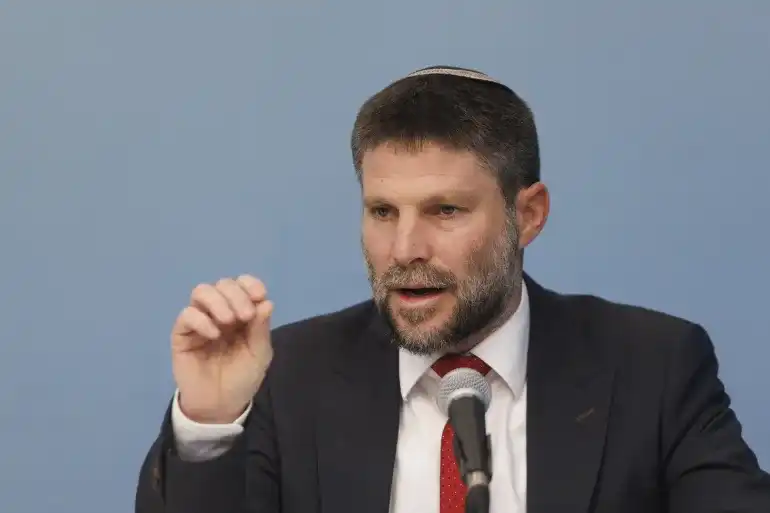
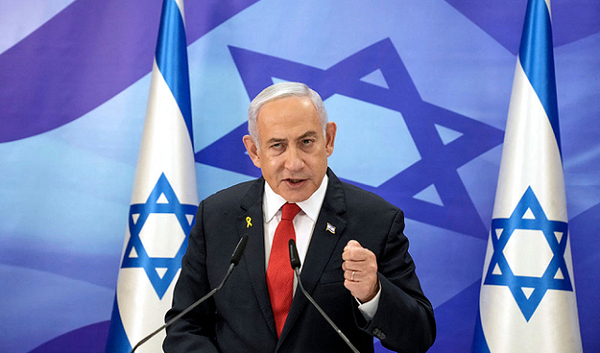
Smotrich: Trump's plan to displace Gaza residents is "taking shape"

Israeli Finance Minister Bezalel Smotrich said on Sunday that US President Donald Trump's controversial plan to transfer the residents of the Gaza Strip to other countries has begun to "crystallize."


“This plan is taking shape, with ongoing steps in coordination with the (US) administration… including identifying key countries and understanding their interests, both with the US and with us, and strengthening cooperation,” Smotrich said in the Israeli Knesset.


He pointed out that preparations are underway to establish a broad immigration authority to oversee the process.


Smotrich, who strongly supports resuming the war, noted that Trump's plan could change the entire region.


He said: “This plan will be able to bring about historic change in the Middle East and in the State of Israel.”


But he acknowledged the existence of great difficulties, expecting that implementing the plan would take a “very long time.”


According to the minister: “Every shekel (Israeli currency) we invest now in encouraging immigration will cost us much less than continuous fighting.”


Last week, Arab countries adopted a plan to rebuild Gaza without displacing Palestinians, in response to Trump's proposal.


The Arab proposal, which was rejected by both Israel and the United States, received European support.


For his part, US envoy to the Middle East Steve Witkoff praised the plan.


“We need more discussion about it, but it is a first step of good faith on the part of the Egyptians,” he said.


But the Israeli finance minister saw in Trump’s plan “an opportunity to end the conflict.”


He said: “Until today, the conflict has been going on for 76 years, we are looking for solutions… With the current administration (the Trump administration), we will do a lot.”

PALESTINE

Sun 09 Mar 2025 4:23 pm - Jerusalem Time

Trump envoy heads to Doha Tuesday to renegotiate terms of deal

US Special Envoy to the Middle East Steve Witkoff is expected to travel to Doha this week amid efforts to extend the ceasefire and release hostages between Israel and Hamas, Axios reported, citing US officials familiar with the matter.


The report comes after Israel confirmed that a negotiating team will leave for Qatar on Monday "at the invitation of US-backed mediators."


According to Axios, the Trump administration hopes to extend the first phase of the previously agreed-upon hostage deal, which expired last Saturday, through the end of Ramadan and the Jewish holiday of Passover.


This appears to be in line with an Israeli plan, so far rejected by Hamas, to pursue the terms of a possible second phase of the deal, which would require Israel to withdraw completely from Gaza and agree to a permanent end to the war in exchange for the remaining living hostages.


The talks in Doha with Witkov's attendance will be the first since US President Donald Trump took office on January 20, as the first phase of the ceasefire agreement was negotiated under his predecessor, President Joe Biden.


US President Donald Trump's envoy, Steven Witkoff, is also expected to travel to Saudi Arabia this week for talks on ending the war in Ukraine.


According to Axios (citing US officials), Witkoff will try to "mediate a new deal to release the hostages and a ceasefire between Israel and Hamas."


He also said that negotiators from Israel and Hamas as well as delegates from Qatar and Egypt are expected to begin ceasefire talks in Doha on Monday, before Witkoff arrives.


It remains unclear whether Trump's envoy, Witkoff, will meet with Hamas officials or only with Israeli negotiators and Qatari and Egyptian mediators.


Last week, the White House revealed that Trump's envoy for prisoner affairs, Adam Boehler, was holding direct talks with Hamas.


Witkov had rejected the Arab plan that emerged from the Cairo summit on March 4 for the future of Gaza, but on Thursday he somewhat backed down from his rejectionist position.


Shortly after the plan was presented by Egypt on Tuesday, White House National Security Council spokesman Brian Hughes issued a statement saying it did not address "the fact that Gaza is currently uninhabitable" and that US President Donald Trump stood by his plan to take control of Gaza.


But when asked about the Arab plan during a news conference outside the White House on Thursday, Witkoff told reporters that "there are a lot of compelling features in it."


"We need more discussion about it, but it is a good first step on the part of the Egyptians," he added.


“The important point is that what President Trump is talking about now in Gaza is now encouraging other people in the Middle East to come up with preemptive proposals for what we might consider,” Witkoff added, again noting that the goal of Trump’s plan to take control of Gaza was simply to push regional allies to come up with alternatives.


Asked if he accepted the Arab plan's idea that Gaza's reconstruction could take place while the Palestinians stayed, Witkoff replied: "We are now assessing everything there, and it is a bit early to comment."

PALESTINE

Sun 09 Mar 2025 3:09 pm - Jerusalem Time

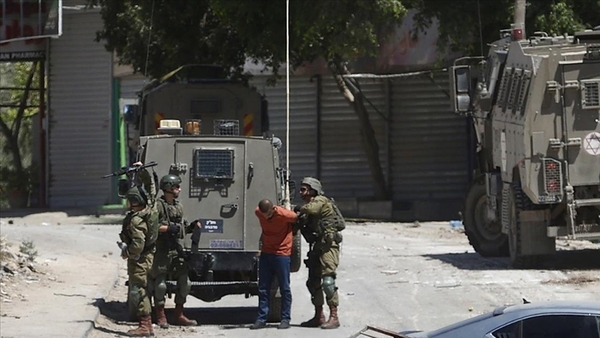
Israeli Occupation forces arrest two brothers south of Tubas

Today, Sunday, the Israeli occupation forces arrested two brothers from Al-Far'a camp, south of Tubas.


The director of the Prisoners Club in Tubas, Kamal Bani Odeh, reported that the occupation forces arrested the two brothers, Muhammad and Abdul Rahman Ibrahim Subh, during the storming of the camp after special units infiltrated it this morning.


The occupation forces detained several other citizens from the camp after raiding their homes, and later released them.

PALESTINE

Sun 09 Mar 2025 2:31 pm - Jerusalem Time

Smotrich: We are establishing an administration to implement Trump's plan to displace Palestinians from Gaza

Israeli Finance Minister Bezalel Smotrich announced on Sunday that work has begun on establishing an “immigration administration” to implement US President Donald Trump’s plan, which aims to displace Palestinians from the Gaza Strip and resettle them in a third country, under the pretext of “encouraging voluntary immigration.”


Smotrich's remarks came during a meeting of the right-wing parliamentary lobby group "Eretz Yisrael," which includes MKs from the coalition and opposition parties and works in partnership with the Yesha Settlement Council; he stressed the need to "seize the opportunity" to move forward with the plan.


"We must take this plan with all our might. The logistics are complicated, because we have to determine the destination of every person leaving the Strip. We are preparing for this under the leadership of Prime Minister Benjamin Netanyahu and Defense Minister Yisrael Katz," Smotrich said, noting that Katz had announced the establishment of a special department for this purpose.


Smotrich touched on the scale of the operations required to implement the plan, saying that it is a "huge logistical project. To get everyone out of Gaza, we will need to deport 5,000 people a day, seven days a week, for a whole year, or 10,000 people a day for six months."


For her part, Minister of Settlement and National Missions, Orit Struck, said that the security threat from Gaza can only be eliminated by implementing a broad immigration program for the residents of the Strip. She said: "Even if we are able to eliminate Hamas as a civil and military authority, we will not be able to eliminate the threat."


She considered that removing the security threat to Israel from the Strip will not happen "as long as we do not allow the majority of the population in Gaza to emigrate. These people only know how to think about eliminating us."


"This is where we are headed, and I say this as a member of the government and the cabinet; the government will bear responsibility," added Struck, who is also a member of the security cabinet.


In turn, the head of the Yesha settlement council and the head of the Binyamin settlement council, Yisrael Gantz, said during the “Land of Israel” lobby conference in the Knesset on Trump’s plan to emigrate from Gaza: “There is no difference between Hamas in Gaza and Hamas in Judea and Samaria – anyone who participates in or encourages terrorism cannot stay here. This is not just a security issue, but an existential necessity!”


“Israel is going through a historic moment – we have an American president who encourages us to think outside the box. We don’t need more proposals, we need to start implementing! It’s time for the government to take real steps to implement Trump’s vision,” he added.


Katz had indicated that this administration, which Smotrich spoke about, would include representatives from other government ministries and security agencies, and would oversee the implementation of a plan that would allow every Palestinian from Gaza who wants to leave to obtain a “package” that includes exit arrangements by sea, air or land.


"The plan includes broad-based assistance that will allow every person living in the Gaza Strip who wishes to voluntarily immigrate to a third country to receive a package that includes, among other things, special exit arrangements via sea, air, and land," Katz said.

OPINIONS

Sun 09 Mar 2025 10:50 am - Jerusalem Time

A false attack on American institutions

James Zogby

James Zogby

Opinion Writer


Last week started on a very troubling note. Elon Musk retweeted a vicious attack on more than a dozen U.S. entities that have received grants from USAID or the State Department over the past decade. Musk’s original post on X referred to these groups as “terrorism-related.” In his response to the post, Musk wrote: “As many have said, why pay terrorist organizations and countries to hate us when they are willing to do it for free?!”


The organizations listed in the original post appear to have been selectively chosen by someone who is hostile to Arabs and Muslims. He appears to have scanned the list of grantees and randomly selected entities that had the word “Arab” or “Muslim” in their names or that had done work in the Middle East. I don’t know all of the groups listed, but the ones I do know have been at the forefront of providing life-saving humanitarian assistance to refugees and victims of war or natural disaster, while also building better relationships between the United States and communities in need throughout the Middle East. Many of the organizations I identified on the list have equally impressive track records of service.


What was very disturbing to me was that my institute, the Arab American Institute, was number two on the list. This was disturbing for two reasons: first, because the accusation was completely false, and second, because it was an irresponsible threat.


The fact is that the Institute received a grant from the State Department in 2018 (during the first Trump administration) to create partnerships between Arab American elected officials, public servants, and local elected officials. Since its founding in 1985, the Arab American Institute has a proud track record of encouraging Arab Americans to run for local office. As our work has evolved, we have realized that many of these young leaders have never been to the Middle East, and if they have, it has only been to the countries where their families come from. I have long hoped to create a program that would allow them to learn about and understand the broader Arab world, as well as share their experiences and learnings in American political life with their counterparts in Arab countries. The initial phase of the program was so successful that the State Department supported its expansion to Morocco and then Jordan. It has been wonderful to see these young Arabs and Arab Americans working together in a collaborative spirit, discussing the problems they face in running their municipalities, and finding solutions to improve services for residents, such as garbage collection, community technology centers, and support for families with children with special needs. The program ends in 2023.


For someone with an anti-Arab or anti-Muslim bias to equate these efforts to build bridges between peoples with support for terrorism is unfathomably wrong. For someone of Musk’s stature to retweet this message and add a comment to it is unacceptably dangerous.


While the United States can be a welcoming and inclusive country, we must also recognize that we have a history of hatred and violence, and Arab Americans and supporters of Palestinian rights have been disproportionately targeted in recent decades. In 1985, after one of my former employees at the American-Arab Anti-Discrimination Committee was murdered, I was asked to testify before the U.S. Commission on Civil Rights and the U.S. Congress about the hatred and violence directed at our community.


In my testimony, I explained how the environment of hate crimes against Arab Americans is fueled by those who incite against us. I noted that when we are labeled terrorists or supporters of terrorism, it motivates some to use violence against us. I know this personally from the death threats I have received over the years.


In the past two decades alone, four people have been convicted for threatening my life, the lives of my family, and my employees. These threats were often accompanied by charges of terrorism or supporting terrorism.


So I take it seriously when someone as powerful and influential as Musk makes an irresponsible accusation against our institute. What’s even more disturbing is that his post has been viewed by nearly 20 million people, and it only takes one mentally ill person to read it and decide to carry out a violent act.


Some have advised us not to respond to Musk’s incitement, hoping it will fade away on its own. But I disagree. Ultimately, our best defense is to show how wrong he is and how dangerous his words are.

OPINIONS

Sun 09 Mar 2025 10:42 am - Jerusalem Time

Ramadan in Jerusalem under the hammer of occupation and the anvil of oppression

Abdullah Tawfiq Kanaan

Abdullah Tawfiq Kanaan

Opinion Writer


Muslims all over the world welcome the holy month of Ramadan with humble, worshipful hearts, and with sad eyes and consciences pained by what is happening in Jerusalem, Gaza, Jenin and all of occupied Palestine from the ongoing Israeli aggression and oppression, an occupation that does not care about international legitimacy and does not give weight to noble human morals or religious customs and beliefs. Tolerance, freedom of worship and respect for rituals are missing terms that are unknown to the dictionary of Israeli violations.


The Israeli occupation, as usual, paved the way for the month of Ramadan in Jerusalem with systematic measures targeting the city’s Arab and Islamic identity, by imposing restrictions such as limiting the number of people allowed to attend Friday prayers to only ten thousand worshipers, and within specific ages, in addition to what is called a test to measure the volume of the call to prayer, and the policy of daily storming by hundreds of settlers who are provided with guidance and protection services from the occupation police, in addition to blatant restrictions on Muslims entering Al-Aqsa Mosque, and placing obstacles in the way of efforts to organize Ramadan iftar tables.


The Royal Committee for Jerusalem Affairs, while explaining to world public opinion that the measures and crimes of the Israeli occupation are not limited to its restrictions imposed in the holy month of Ramadan, but rather are an occupation policy that exists at all times, the occupation’s exposure to the privacy of the month of Ramadan is a failed attempt to break the steadfastness and unity of the people of Jerusalem, and illegitimate steps to attempt to Judaize, Israelize and Hebraize the city, especially since reviewing the historical Palestinian and Jerusalemite memory reflects the close relationship between the month of Ramadan and Jerusalem, including the uprisings of struggle during it in the face of the arrogance of the Israeli occupation. Therefore, the occupation’s policy is, in essence, an unacceptable provocation of the feelings of millions of Muslims and free people in the world.


The Royal Committee for Jerusalem Affairs stresses that this year’s Ramadan comes within the framework of an international political climate characterized by increasing Israeli violations in occupied Palestine and the escalation of political and economic crises in the region and the world, including the repercussions of October 7 (Al-Aqsa Flood), which contributed, despite the occupation, to the return of the Palestinian cause as a basic file in diplomacy and international forums, and for recognition of the Palestinian state, condemnation of the aggression, and demanding that Israel abide by international law and the international resolutions issued to become the title of the current and future stage, but the matter still requires international will and effectiveness to support the Palestinian people.


The Royal Committee for Jerusalem Affairs affirms that Ramadan in Jerusalem, Gaza and all of occupied Palestine, with its Israeli oppression and brutality, is met with unified Arab and Islamic sentiments towards the necessity of supporting Palestine and Jerusalem. Hence, Jordan, its people and Hashemite leadership, which has the Hashemite guardianship over the Islamic and Christian holy sites in Jerusalem, see Ramadan as a symbol of steadfastness, struggle and unity among the people of Jerusalem and all of Palestine. So, a salute of reverence and pride to our people in Jerusalem and Palestine, and a salute to the families of the martyrs, prisoners and wounded, and to our people in Gaza who are suffering from aggression and siege. Jordan will remain faithful to its pledge during Ramadan and at all times, supporting and backing our people in Jerusalem and Palestine until the end of the occupation and their attainment of the right to self-determination and the establishment of their independent state with East Jerusalem as its capital on the 1967 borders.

PALESTINE

Sun 09 Mar 2025 10:09 am - Jerusalem Time

Raids and arrests campaign in the West Bank

Today, Sunday, the Israeli occupation forces launched a campaign of raids and arrests in the West Bank.


In Hebron, the occupation forces arrested: Hashem Abu Turki, Ihab and Adeeb Al-Qawasmeh, Musab Abu Ishkhedim, and Munther Khaled Al-Atrash, from the city of Hebron, Wassim Shaher Abu Asbah from the town of Halhul, Tamer Abdullah Abu Ta’ima from the town of Idhna, and Issa Muhammad Dhaher Say’ara from Kharas, after raiding and searching their homes, and tampering with their contents.


The occupation forces also raided Al-Ahli Hospital in Hebron and seized surveillance camera recordings.


In Ramallah, the occupation forces arrested the young man Bilal Maher from the town of Silwad to the east, and raided a commercial store and destroyed its contents.


These forces also arrested Omar Murad Nasser, Muhammad Badr Safi, Mustafa Ammar Nasser, Ahmed Muhammad Nasser, and Amir Nazmi Faqousa from the village of Deir Qadis to the west, after raiding their homes, searching them, and tampering with their contents.

PALESTINE

Sun 09 Mar 2025 10:06 am - Jerusalem Time

Israel continues its aggression on Tulkarm and its camps for the 42nd day

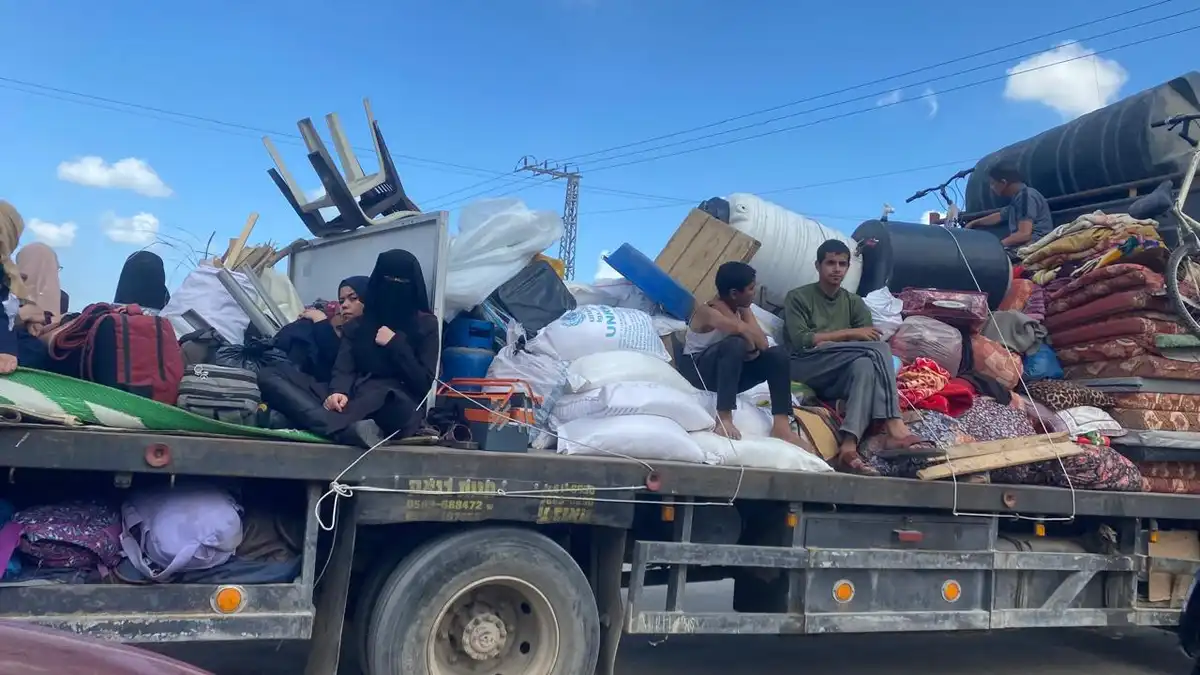
The Israeli occupation forces continue their aggression on the city of Tulkarm and its camp for the 42nd consecutive day, and for the 29th day on the Nour Shams camp, amid military reinforcements accompanied by a tight siege and forced displacement.

House raids and destruction.


Local sources said that the occupation forces sent military reinforcements towards the city, its two camps, and the Dhnaba suburb to the east, and deployed their vehicles and infantry squads in the streets and neighborhoods, and intercepted the movement of vehicles and citizens and subjected them to search and scrutiny of their identities.


She added, according to local sources, that the occupation forces deployed infantry squads last night in large numbers in the streets and neighborhoods of the Dhnaba suburb, and were stationed in the Attar platform area, stopped citizens' vehicles, checked their identities, especially the young men, and searched them, abused them, and assaulted them, especially the residents of the two camps, and arrested Nasser Izzat Tabikh and Muhammad Shabrawi, who are residents of Nour Shams camp, and Muhammad Abu Tahoun from Tulkarm camp.


The occupation forces also tightened their military measures in the suburb, especially the area adjacent to and overlooking the Tulkarm and Nour Shams camps. They intercepted a Red Crescent ambulance while it was on its way to evacuate a patient from the area, searched it, and forced its crews to leave.


The occupation forces continue their military deployment of heavy machinery and bulldozers in front of the houses and residential buildings that they seized and turned into military barracks, on Nablus Street, which connects the Tulkarm and Nour Shams camps, in conjunction with stopping passing vehicles and searching them, in addition to checking the identities of citizens and detaining them for interrogation.

In Tulkarm camp, the occupation forces intensified their raids on homes, especially in the airport neighborhood, vandalizing and destroying their contents, and abusing those present in them, at a time when there is comprehensive destruction in the infrastructure, and in the homes that were subjected to total and partial demolition, vandalism and burning, while the rest of them were converted into military barracks.


In Nour Shams camp, the occupation forces continue their tight siege on it, accompanied by storming homes in the Al-Mahjar neighborhood, where they proceeded to destroy their contents after searching them and subjecting their residents to field interrogation, coinciding with the destruction inflicted by their bulldozers on the infrastructure, and the complete demolition of homes in the Al-Manshiya neighborhood, as part of their plan to pave roads and change the geographical features of the camp.


The ongoing aggression on the city and its two camps resulted in the martyrdom of 13 citizens, including a child and two women, one of whom was eight months pregnant, in addition to the injury and arrest of dozens, and the forced displacement of more than 9,000 people from Nour Shams camp, and 12,000 people from Tulkarm camp.

PALESTINE

Sun 09 Mar 2025 9:50 am - Jerusalem Time

One Palestinian killed and two injured by Israeli forces east of Gaza City

A citizen was killed and two others were injured, this Sunday morning, by Israeli occupation soldiers’ bullets in the Shuja’iyya neighborhood, east of Gaza City.


According to local sources, the martyr and the two injured arrived at the Baptist Hospital in the city.

PALESTINE

Sun 09 Mar 2025 9:45 am - Jerusalem Time

UN rapporteur: Idea of mass deportation of Gaza residents 'mere fantasy'

The UN Special Rapporteur on the right to adequate housing, Balakrishnan Rajagopal, said that the idea of mass deportation of Palestinians from the Gaza Strip is “a mere fantasy .


He warned in a press interview last night that this would be considered "one of the biggest violations of international law in recent centuries."


During his speech, which comes on the sidelines of his participation in the 58th session of the United Nations Human Rights Council in Geneva (Switzerland), which began on February 24 and will continue until April 4, Rajagopal addressed the plan to forcibly displace Palestinians from the Strip, in addition to the ceasefire efforts in the Strip and the process of rebuilding it.


He stressed the difficulty of achieving an effective reconstruction process in Gaza, if the Israeli occupation continues, and the risk of a large-scale confrontation remains.

PALESTINE

Sun 09 Mar 2025 9:43 am - Jerusalem Time

Hamas agrees to an independent support committee to manage Gaza

Hamas called on Sunday for negotiations on the second phase of the ceasefire agreement in the Gaza Strip, saying there were "positive signals," while Israel announced that it would send a delegation to hold new talks tomorrow, Monday, in Doha.


A delegation from the movement met with Egyptian mediators in Cairo on Saturday to discuss the progress of the truce in the Strip, which went into effect on January 19, more than fifteen months after the Israeli war of extermination on the Gaza Strip.


Hamas said in a statement issued at dawn on Sunday that its delegation stressed the "necessity of adhering to all the terms of the agreement, and immediately going to start the second phase negotiations, opening the crossings, and re-entering relief supplies into the Strip without restrictions or conditions."


The movement explained that its delegation, led by "the head of the movement's leadership council in Cairo, Muhammad Darwish, met with the head of the Egyptian General Intelligence Service, Major General Hassan Rashad, where many important issues were discussed in a positive and responsible spirit, especially the progress of implementing the ceasefire agreement and the exchange of prisoners in its various stages."


The delegation of the movement's leadership expressed its "thanks and appreciation for the Egyptian efforts in the previous period, especially in confronting displacement plans, and its appreciation for the outcomes of the Arab Summit, especially the plan to rebuild the Gaza Strip, and the emphasis on the fixed rights of our Palestinian people."


The delegation stressed the movement's "approval of the formation of a community support committee of independent national figures to manage the Gaza Strip until the Palestinian house is put in order and general elections are held at all levels, national, presidential and legislative."


The movement's spokesman, Abdul Latif Al-Qanou, confirmed in a statement on Saturday evening that "the indicators are positive regarding the start of the second phase negotiations."


He added that "the efforts of the Egyptian and Qatari mediators are continuing to complete the implementation of the ceasefire agreement" which began on January 19 and whose first phase ended on March 1. However, he stressed "the need for the mediators to oblige Israel to implement the agreement."


The Cabinet discusses authorizing the Israeli delegation to Doha


For its part, Israel announced that it would send a delegation on Monday to Qatar, one of the mediating countries along with Egypt and the United States, "with the aim of advancing the negotiations," in a brief statement issued by the Israeli Prime Minister's Office.


The office of Israeli Prime Minister Benjamin Netanyahu said the delegation would head to Doha "at the invitation of the mediators and with the support of the United States" to try to overcome differences over the next stage that is supposed to lead to a final end to the war.


This afternoon, the cabinet will hold a "pre-scheduled meeting to discuss the mandate of the delegation that will head to Doha tomorrow." Channel 13 quoted a senior Israeli official this morning as saying, "There is American insistence on reaching an agreement, but so far there has been no tangible progress between the parties."


The Israeli delegation's visit will coincide with the presence of US Middle East envoy Steve Witkoff in the region, as he is scheduled to hold a meeting in Saudi Arabia next week with a Ukrainian delegation to discuss a truce with Russia.


The Israeli Public Broadcasting Corporation (Kan 11) reported this morning that “some progress has been made in the direct talks that the United States is conducting with Hamas regarding the continuation of the hostage deal,” referring to talks held by US President Donald Trump’s envoy for prisoner affairs, Adam Boehler, with Hamas leader Khalil al-Hayya in Doha.


The first phase of the ceasefire agreement lasted for six weeks. When it expired at the end of last week, Israel announced its desire to extend it until mid-April, based on an American proposal, while it disavowed the second phase of the agreement.


According to Israel, the proposal is based on releasing "half of the hostages, living and dead" on the first day of the extension's entry into force, and the rest of the prisoners (living or dead) will be released if a permanent ceasefire agreement is reached.


Israel demands "complete demilitarization" of the Strip, the exit of Hamas from Gaza, and the return of the remaining hostages before moving to the second stage.


In contrast, Hamas insists on remaining in the Strip, which it has been running since 2007, on the complete withdrawal of the Israeli army from Gaza, an end to the imposed blockade, reconstruction, and the provision of financial aid based on a plan approved by the recently held Arab summit.


On Saturday, more than 50 released Israeli prisoners and families of prisoners still held in the Gaza Strip called on Netanyahu to implement the agreement with Hamas "in full" and ensure the release of the remaining detainees in Gaza.


"The war could break out again within a week," the mother of one of the prisoners still being held in Gaza said at the weekly gathering of the Prisoners' Families Forum in Tel Aviv. "The war will not bring the hostages back, it will kill them. Only an agreement that will bring them all back at once will bring them back."


She accused Netanyahu of undermining the negotiations and using her son and "other hostages as pawns on his political chessboard."


US President Donald Trump on Wednesday gave Hamas a “final warning” to “immediately” release all prisoners, living and dead, it is holding and its leadership must leave the Gaza Strip, threatening the residents of the Gaza Strip with death “if you keep the hostages,” in a threat that came shortly after Washington confirmed that it had held direct contacts with the Palestinian movement.


He wrote on his platform, Truth Social, “To the people of Gaza: There is a beautiful future awaiting you, but not if you keep hostages. If you keep hostages, you are dead! Make the right decision.”


Trump sparked shock and outrage last month when he proposed that the United States take control of the Gaza Strip and rebuild the devastated area into a “Riviera of the Middle East” after deporting its 2.4 million residents elsewhere, especially Egypt and Jordan, with no plan for their return.


On Saturday morning, the Organization of Islamic Cooperation adopted, in an emergency meeting of foreign ministers in Jeddah, the Arab plan to rebuild Gaza without displacing Palestinians, to confront Trump’s proposal. The plan, drafted by Cairo, calls for rebuilding the Strip without displacing its residents, and for the Palestinian Authority to return to rule it.

PALESTINE

Sun 09 Mar 2025 9:38 am - Jerusalem Time

Trump's envoy heads to Doha Tuesday for renewed negotiations

US Special Envoy to the Middle East Steve Witkoff is expected to travel to Doha this week amid efforts to extend the ceasefire and release hostages between Israel and Hamas, Axios reported, citing US officials familiar with the matter.


The report comes after Israel confirmed that a negotiating team will leave for Qatar on Monday "at the invitation of US-backed mediators."


According to Axios, the Trump administration hopes to extend the first phase of the previously agreed-upon hostage deal, which expired last Saturday, through the end of Ramadan and the Jewish holiday of Passover.


This appears to be in line with an Israeli plan, so far rejected by Hamas, to pursue the terms of a possible second phase of the deal, which would require Israel to withdraw completely from Gaza and agree to a permanent end to the war in exchange for the remaining living hostages.


The talks in Doha with Witkov's attendance will be the first since US President Donald Trump took office on January 20, as the first phase of the ceasefire agreement was negotiated under his predecessor, President Joe Biden.


US President Donald Trump's envoy, Steven Witkoff, is also expected to travel to Saudi Arabia this week for talks on ending the war in Ukraine.


According to Axios (citing US officials), Witkoff will try to "mediate a new deal to release the hostages and a ceasefire between Israel and Hamas."


He also said that negotiators from Israel and Hamas as well as delegates from Qatar and Egypt are expected to begin ceasefire talks in Doha on Monday, before Witkoff arrives.


It remains unclear whether Trump's envoy, Witkoff, will meet with Hamas officials or only with Israeli negotiators and Qatari and Egyptian mediators.


Last week, the White House revealed that Trump's envoy for prisoner affairs, Adam Boehler, was holding direct talks with Hamas.


Witkov had rejected the Arab plan that emerged from the Cairo summit on March 4 for the future of Gaza, but on Thursday he somewhat backed down from his rejectionist position.


Shortly after the plan was presented by Egypt on Tuesday, White House National Security Council spokesman Brian Hughes issued a statement saying it did not address "the fact that Gaza is currently uninhabitable" and that US President Donald Trump stood by his plan to take control of Gaza.


But when asked about the Arab plan during a news conference outside the White House on Thursday, Witkoff told reporters that "there are a lot of compelling features in it."


"We need more discussion about it, but it is a good first step on the part of the Egyptians," he added.


“The important point is that what President Trump is talking about now in Gaza is now encouraging other people in the Middle East to come up with preemptive proposals for what we might consider,” Witkoff added, again noting that the goal of Trump’s plan to take control of Gaza was simply to push regional allies to come up with alternatives.


Asked if he accepted the Arab plan's idea that Gaza's reconstruction could take place while the Palestinians stayed, Witkoff replied: "We are now assessing everything there, and it is a bit early to comment."

PALESTINE

Sun 09 Mar 2025 9:35 am - Jerusalem Time

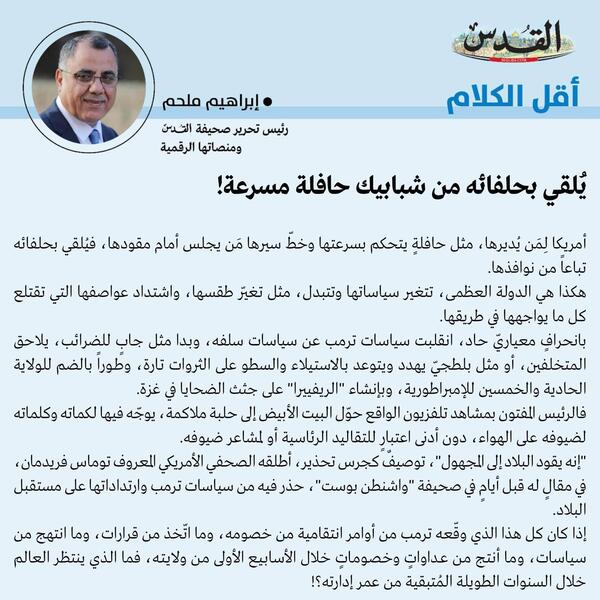
He throws his allies out of the windows of a speeding bus!


America belongs to whoever runs it, like a bus whose speed and route are controlled by whoever sits behind the wheel, throwing his allies one by one out of its windows.

This is how a great country is, its policies change and shift, like its weather changes and its storms intensify, uprooting everything that stands in its way.


With a sharp standard deviation, Trump’s policies have reversed those of his predecessor, and he has appeared like a tax collector, persecuting the backward, or like a thug who threatens and promises to seize and rob wealth at times, and at other times to annex the fifty-first state of the empire, and to establish a “Riviera” on the corpses of victims in Gaza.


The president, fascinated by reality TV, has turned the White House into a boxing ring, throwing punches and words at his guests on air, with no regard for presidential tradition or the feelings of his guests.


“He is leading the country into the unknown,” is a warning bell that was sounded by the well-known American journalist Thomas Friedman in an article he wrote a few days ago in the Washington Post, in which he warned of Trump’s policies and their repercussions on the country’s future.


If all of this that Trump signed in terms of retaliatory orders against his opponents, the decisions he made, the policies he adopted, and the hostilities and disputes he produced during the first weeks of his term, then what awaits the world during the long remaining years of his administration?!

PALESTINE

Sun 09 Mar 2025 9:33 am - Jerusalem Time

March 8th.. Guardians of our fire in the mill of extermination and the blazing fire

Rima Nazzal: The occupation used Palestinian women as a systematic tool of revenge after demonizing them and inciting against them because they give birth to resistance fighters

Amal Jumaa: The current war has left thousands of women missing and displaced, and has increased their suffering in light of the complex loss they are experiencing.

Dr. Sahar Al-Qawasmeh: There is a real fight against Palestinian women’s institutions that are subjected to pressure from the occupation and funders

Ilham Sami: Our responsibility is to rewrite history through March 8 to reflect our sacrifices and struggle for freedom and justice.

Amal Khreisha: The “Women, Peace and Security Agenda” adopted by the United Nations remained ink on paper despite calls to use all tools of international justice

Dr. Samah Jaber: Palestinian women suffer from double psychological trauma due to war and occupation, which requires developing a systematic plan to support them


International Women's Day falls on March 8th this year, amidst the systematic Israeli crimes against Palestinian women, which have left profound impacts on their psychological, social and economic lives, as a result of the recent aggressive Israeli war on the Gaza Strip and the West Bank.


According to activists and feminist officials in separate interviews with “I”, this brutal war has exacerbated women’s suffering, as they face double challenges due to the loss of loved ones, displacement, and deprivation of basic rights, such as health, education, and work.


Feminist activists and officials stress that human rights organizations and the international community bear a legal and moral responsibility to protect Palestinian women and children, but the reality indicates a great failure in this role. Despite documenting violations, international condemnations remain ink on paper in the absence of effective implementation mechanisms to hold criminals accountable, which encourages the occupation to continue its crimes without fear of consequences.


The catastrophic consequences of the current war on women


Rima Nazzal, a member of the General Secretariat of the General Union of Women and a member of the National Council, warns of the disastrous repercussions of the Israeli war of aggression on Palestinian women and their deliberate targeting, as evidenced by statistics, stressing that they bear the burdens of displacement and suffering like all members of society, but they face a double privacy that makes their suffering greater due to the women’s privacy and their increasing responsibilities, as their care burdens have increased and become heavier, amidst the lack of security and social and economic exposure.

She points out that the war of extermination in the Gaza Strip and the widespread destruction and displacement of the camps in the northern West Bank directly affected women, as thousands of women lost their husbands, children and relatives, which made them face many social, economic, humanitarian and health challenges.

According to Nazzal, statistics indicate that there are more than 20,000 widows in the Gaza Strip as a result of the Israeli war, which doubles their economic, social and psychological burdens.

Nazzal confirms that women in Gaza have borne the burden of providing food and basic necessities for their families, in light of the occupation’s policy that relies on starvation warfare by preventing humanitarian aid and preventing the entry of food and medical supplies.

Nazal explains that the destruction of the health infrastructure in the Gaza Strip has led to a serious health disaster, as pregnant women who need safe births are at great risk due to their unsafe births after the destruction of the health system and hospitals, as women have given birth in displacement centers and homes, which has put their lives and the lives of their children at risk in the absence of medical care.

In the context of crimes committed against women, Nazzal explains that the occupation used Palestinian women as a systematic tool of revenge, as they were subjected to killing, arrest, and brutal torture. Cases of harassment and rape committed by occupation soldiers were also documented, stressing that female detainees from the Gaza Strip were subjected to more severe torture motivated by revenge.

Nazzal confirms that there is systematic Israeli incitement against Palestinian women and their demonization, as Israeli figures have worked to demonize them and consider them responsible for giving birth to resistance fighters, and the incitement campaigns have reached the point of calling for the rape of Palestinian women, in a direct and clear targeting of Palestinian women as part of the psychological war and political and military revenge.

Regarding international positions, Nazzal criticizes the international neutrality and silence regarding what Palestinian women are exposed to, considering that these positions range between instability and ambiguity, as they have not risen to the level of responsibility required to stop Israeli crimes.

Nazzal points out that international institutions, despite their relative interaction, need to take more stringent positions, and move from the circle of neutrality to decisive positions that do justice to the victims, and work to hold Israeli war criminals accountable for the serious violations they commit in general and against Palestinian women in particular.


More than 12 thousand martyrs since October 7


Writer and media professional specializing in women's issues, Amal Juma, confirms that the entire Palestinian people are suffering from the violation of their right to life and survival, in light of the violent colonial attack they are being subjected to in the West Bank, Gaza, and Jerusalem.

Jumaa points out that Palestinian women suffer doubly, as the number of female martyrs since October 7, 2023 has exceeded 12,000, while this number doubles for children, leading to the disintegration and fragmentation of the Palestinian family and the loss of all its basic rights to life, health and education.

Jumaa asserts that women have lost all the necessities of life, including home, breadwinner, family, and food, at a time when they have become the ones relied upon to sustain the family and strengthen its pillars, just as happened in the 1948 Nakba and the wars and aggression that followed.

Jumaa points out that the current war has left thousands of women missing, displaced and homeless, which greatly increases their suffering, especially in light of the complex loss they are experiencing.

Jumaa explains that the most prominent suffering of women was represented by the difficult conditions of childbirth in the Gaza Strip, where there are no components of the necessary health care, and in many cases it is completely absent, in addition to women being exposed to multiple diseases, most notably malnutrition.

She stresses that the loss of mothers is the most difficult violation, as more than 17,000 children were orphaned as a result of losing their parents.

Jumaa points out that the local response in Gaza only meets the needs of women and children to a very limited extent, while the international community remains silent about what is happening.

Jumaa points out that despite the unofficial positions issued by some international non-governmental organizations, these positions remain insufficient to provide effective protection and relief to the Palestinian people, which deepens the suffering of women in the Palestinian territories.

Jumaa criticizes the decline in the positions of international institutions concerned with women’s rights, pointing out that international resolution 1325, which calls for the protection of women in conflict situations, has not been translated into practice in the Palestinian case.

She stresses that this resolution, which should be binding and implemented by the Security Council, has remained in the drawers and has not been translated into tangible steps to protect Palestinian women, which reflects a failure to implement international standards to protect women’s rights in Palestine.

Jumaa warns that the continuation of this situation will lead to the collapse of the idea of the international rights system as an effective body in protecting women’s rights, which will reinforce the troubled relationship between the Palestinians and the international community.


Serious violations and a bitter reality that is renewed every day


The General Director of Adwar Foundation for Social Change, Dr. Sahar Al-Qawasmeh, confirms that March 8th of this year comes in a painful context in the Palestinian territories, as the crimes of the Israeli occupation continue to increasingly affect the lives of Palestinian women.

She explains that women in various Palestinian territories, from the northern West Bank to the Gaza Strip, suffer from serious violations and a bitter reality that is renewed every day.

Al-Qawasmeh points out that women in the northern West Bank suffer from the effects of forced displacement due to the occupation’s practices, as homes have been demolished and families displaced. The greatest suffering lies in mothers losing their homes, which are the places that hold their memories, in addition to the suffering resulting from the lack of privacy and cleanliness, and their deprivation of sleep, in addition to the suffering of women and girls in particular who are disabled.

Al-Qawasmeh points out that women in the northern West Bank, particularly those displaced from the camps, face great difficulties in accessing education and health services, which further complicates their situation.

In the Gaza Strip, Al-Qawasmeh explains that women suffer from the loss of loved ones, some of whom have not yet been found, which increases the bitterness of life. Women in Gaza also suffer from difficulties in obtaining shelter and basic services as a result of the Israeli blockade, which deepens their suffering.

Al-Qawasmeh confirms that women in the Old City of Hebron live in harsh conditions, as their lives are exposed to dangers as a result of the practices of the occupation and settlers, including continuous attacks and threats. Women in Area C and Bedouin camps are also exposed to continuous attacks by the occupation army and settlers, in addition to the theft of sheep and agricultural crops, which constitute their main source of livelihood.

She points out that women in Jerusalem suffer from constant oppression, as they are forced to be “prisoners” for their children, as well as suffering from the occupation’s policies of demolishing homes and depriving them of access to holy places and the blessed Al-Aqsa Mosque.

Al-Qawasmeh confirms that under these circumstances, Palestine is witnessing a significant increase in poverty and unemployment rates after the last war on October 7, 2023, as women have lost many of their projects and businesses due to Israeli measures that prevent access to workplaces or the existence of obstacles to accessing their projects or marketing their products.

Despite the existence of periodic reports from women's organizations to international human rights organizations, Al-Qawasmeh confirms that these reports have not led to any effective response from the international community or real accountability for the occupation for its crimes, stressing that the global popular movement supporting the Palestinian cause must be invested in stopping the occupation's practices.

On the other hand, Al-Qawasmeh points to the weak funding of Palestinian women's institutions during this critical period, which hinders the provision of the necessary support to Palestinian women.

Al-Qawasmeh confirms that there is a real fight against Palestinian women’s institutions that are subjected to pressure from the occupation and funders, which limits women’s ability to strengthen their steadfastness and continue their struggle in the face of the occupation.


The falsity of global slogans about human rights and equality


Ilham Sami, a member of the Social Aid Society, confirms that March 8, International Women’s Day, comes this year to expose the falsehood of the global slogans that sing of human rights and equality, while standing helpless in the face of the ongoing crimes and violations against Palestinian women.

Sami stresses that "International Women's Day puts the global feminist movement to the test, especially in light of the international failure to face the killing, arrest and displacement of Palestinian women as a result of the policies of the Israeli occupation."

She points out that what is happening in Palestine reveals the colonial view of the countries of the North towards the women of the South, as these countries have not moved a finger in the face of the massacres and systematic violations practiced by Israel with the support of the imperialist powers.

Sami explains that women and children constitute about 70% of the martyrs in the Gaza Strip, in light of the war of extermination waged by Israel, which was not limited to deliberate killing, but also included arbitrary detention of women, as female prisoners suffer from inhumane detention conditions, including isolation, solitary confinement, deprivation of food and treatment, psychological and physical abuse, and even sexual assaults that reached the level of rape, according to human rights reports.

Sami points out that the occupation has carried out systematic displacement operations against the residents of northern Gaza, and destroyed women’s homes and economic projects, which has deprived them of sources of income and social security, not to mention the destruction of agricultural lands and the theft of resources, which has led to food insecurity.

In the northern West Bank, Sami points to the ongoing Israeli military escalation against the Jenin, Nur Shams, Tulkarm, Al-Far’a, Tamoun, and Tubas camps, and the Bedouin areas in the Jordan Valley, where these areas are subjected to daily attacks by the occupation forces and settlers who commit their crimes against people, trees, and animals, amidst the protection and support of the Israeli army.

Sami confirms that more than 40,000 Palestinians were forcibly displaced from the northern West Bank, which led to the dispersion of women from their homes, husbands, and children, in addition to the collapse of the necessities of life, as a result of the comprehensive destruction and the strict siege imposed by the occupation.

Sami points out that hospitals in Tulkarm and Jenin were directly targeted, depriving women of health care and basic medical services.

Sami criticizes the silence of the international community, saying: “The crimes taking place in Palestine have not risen to the level of serious action by international bodies, governments, and organizations to stop the occupation and end the suffering of the Palestinians. On the contrary, there are those who seek to justify the occupation’s violations by distorting the facts and issuing shameful statements condemning the Palestinian people instead of defending their rights.”

She points out that some UN organizations have limited their roles to providing humanitarian relief, ignoring the fact that the occupation is the root cause of all these crises.

Despite this failure, Sami asserts that free peoples have played a pivotal role in raising awareness about the Palestinian cause, as student movements in several countries have contributed to strengthening the boycott against Israel and pressuring governments to take stricter positions towards the occupation.

Sami calls on global feminist movements to support Palestinian women and recognize the rights of the Palestinian people to self-determination and the right of refugees to return, stressing the need to reformulate the concept of March 8 to be a platform for struggle that contributes to igniting a real revolution against colonialism and injustice, and raising the voice of Palestinian women in international forums.

“It is our responsibility as Palestinian women to make March 8 a platform for our voice, through which we rewrite history to reflect our sacrifices and our ongoing struggle for freedom and justice,” Sami says.


International failure to provide protection for Palestinian women


The General Director of the Palestinian Working Women's Society for Development, Amal Khreisha, confirms that with the advent of International Women's Day, Palestinian women in the Gaza Strip and the West Bank, including Jerusalem, face serious violations by the Israeli occupation, amid the failure of the international system to provide protection for them.

Khreisha explains that the war of extermination witnessed in the Gaza Strip claimed the lives of thousands of women and children, and that the siege imposed on Gaza, the closure of the crossings, and the prevention of the entry of aid after the ceasefire, exacerbated the suffering of Gazan women who face war crimes and serious violations that affected their health, psychological, economic, and political rights.

Khreisha points out that human rights reports issued by national and international bodies documented the martyrdom of 12,316 women out of 48,346 martyrs to date, while women and children constitute 70% of the victims, which reveals the extent of the systematic targeting of the most vulnerable groups. In addition, 70% of the missing in the Gaza Strip as a result of the Israeli aggression are women and children, with the number of missing persons reaching 14,222.

Khreisha points out that the occupation forces have arrested 450 women since the beginning of the war until February 25, 2025, while 18 female prisoners are still languishing in the occupation prisons, where they are subjected to physical and psychological torture, up to sexual violence, in a flagrant violation of international law.

Since October 7, 2023, the relevant institutions have documented (490) cases of arrest among women in various Palestinian territories, of whom 21 remain in Israeli occupation prisons currently.

As for the social impact of the war, 17,861 children were killed, causing an unprecedented humanitarian tragedy, while 13,901 women face a difficult reality after losing their husbands, becoming the sole breadwinners for their families, which forces them to bear heavy economic and educational burdens in the absence of any effective international support.

She touched on the escalation of Israeli crimes in the West Bank, where the occupation forces have intensified raids, arrests, house demolitions and forced displacement of residents, in addition to the spread of 898 military checkpoints and gates that impede the movement of Palestinians, which has particularly affected women and girls, whether in access to basic services or job opportunities.

Khreisha confirms that the occupation used sexual violence as a tool of oppression, as she documented cases of Palestinian girls being stripped at the Shuafat and Container checkpoints, in addition to the girls’ bodies being searched in a humiliating manner by Israeli soldiers, in a serious violation of human rights and human dignity.

She criticizes the failure of the international community to provide protection for Palestinian women and children, noting that the “Women, Peace and Security Agenda” adopted by the United Nations has remained ink on paper, despite repeated demands by the feminist movement to use all tools of international justice, including international humanitarian law and international criminal law, to hold Israeli war criminals accountable.

Khreisha explains that human rights efforts focused on documenting Israeli violations and raising the Palestinian voice in international forums, where advocacy and pressure campaigns were intensified in meetings with diplomatic missions and the European Union in Brussels and Strasbourg, to confront the fabricated Israeli narrative about the events of October 7.

Khreisha points to the role played by Palestinian women in relief work, developing economic initiatives, and providing psychological, health, and legal support to those affected, in addition to women’s efforts to pressure for achieving national unity and ending the division, considering this a basic condition for rebuilding the Palestine Liberation Organization as a comprehensive national liberation movement.

She explained that the United Nations will hold its 69th annual session of the Commission on the Status of Women during the period from March 8 to 21, with the participation of Palestinian women’s organizations and the Ministry of Women’s Affairs, where it will demand an end to the occupation by implementing the UN General Assembly resolution issued last September, which approved the end of the occupation within a year according to the advisory opinion of the International Court of Justice, and 124 countries voted in favor of it.

Khreisha confirms that the Palestinian delegation will work to convey the voice of women in the Gaza Strip, through live and recorded testimonies that highlight their suffering as a result of war, siege and occupation.

She points out that the global feminist movement has begun to take a more solidarity-oriented approach to the Palestinian cause, as the session is witnessing an atmosphere of popular support, in addition to the support of some governments, which establishes a joint feminist action that seeks to dismantle the foundations based on power and patriarchal thought, not justice, that govern the Security Council, and this was evident in the American veto in threatening peace and security in Palestine, the region and the world.

Khreisha affirms that the Palestinian women's movement will continue its struggle to end the occupation, achieve justice and accountability, calling on the international community to assume its legal and moral responsibilities towards Palestinian women, and stop complicity with the Israeli occupation, which continues its violations without deterrence.


Profound and long-lasting psychological, social and economic effects


Psychiatric consultant Dr. Samah Jabr confirms that women’s and children’s rights cannot be discussed in isolation from wars, especially in Palestine, where the impact of the violations practiced by the occupation against Palestinian women is exacerbated, leading to deep and long-term psychological, social and economic effects.

Jabr explains that wars leave deep psychological scars on all those who live in them, but women experience double the effects due to the additional social roles and responsibilities they bear during conflicts.

She stresses that Palestinian women suffer from double psychological trauma due to war and occupation, which requires developing a systematic plan to support them.

Jabr points out that women who experience severe psychological trauma as a result of major losses and bereavement often face long-term disorders such as depression, anxiety, panic, and complex loss. These disorders are reflected in their entire lives and their maternal role, as the mother may suffer from feelings of anxiety and inability to protect her children and provide them with the necessary security, which undermines her ability to perform her societal role.

Jabr stresses that wars increase the risk of women being subjected to physical and psychological gender-based violence, noting that oppressed societies that are unable to confront the occupying power may vent their anger on the weaker groups within them, such as women, children and other vulnerable groups.

Jabr explains that many women are reluctant to disclose the violence they experience during wars, due to fear of social stigma or a feeling that there is no legitimacy to talk about their suffering in light of the general devastation facing society.

Jaber points out that Palestinian women are not just victims, but rather makers of life amidst the destruction, playing key roles in caring for the family and rebuilding the social fabric, despite the systematic violations they are subjected to.

She stresses that war casts a dark shadow over their lives, as they are exposed to the loss of loved ones, displacement, torture, and deprivation of the right to health, education, and work.

Jabr spoke about the most prominent violations that Palestinian women are exposed to, including direct killing as a result of bombing, arbitrary arrest accompanied by torture and ill-treatment, and sexual abuse or threats thereof as a means of humiliating families and society.

Jabr points out the destruction of homes, which leaves women and children homeless and in harsh living conditions.

As for children, Jabr confirms that they are the most vulnerable victims, as they are deprived of their childhood and live in an environment saturated with fear and insecurity.

She points out that the bombing and destruction make children witness shocking scenes such as the bodies of their relatives under the rubble, or the arrest of their parents in front of their eyes, which leaves deep psychological effects that may last with them throughout their lives. In addition, the destruction of schools and infrastructure deprives them of their right to education, which increases the likelihood of their exposure to poverty and exploitation in the future.

Jabr criticizes the failure of the international community and human rights organizations to take decisive measures to protect Palestinian women and children, stressing that reports of violations are documented, but international condemnations remain “ink on paper” in the absence of effective implementation mechanisms, which encourages the occupation to continue its crimes without deterrence, noting that there is a clear duality in international standards for redressing victims.

She stresses that humanitarian organizations face major challenges in providing assistance to Palestinian women and children, as Israel prevents the entry of medical relief teams and food aid, which exacerbates the humanitarian situation.

Jaber stressed that protecting Palestinian women and children requires a radical change in the way this issue is dealt with, stressing that it is not enough to provide temporary aid or launch solidarity campaigns, but there must be actual accountability for war criminals through international courts, and the imposition of binding sanctions on the occupation, just as happens in human rights violations in other parts of the world.

She points out that empowering Palestinian women requires long-term programs to enhance their resilience, whether in the health, psychological or economic fields, calling for continuous global popular and institutional pressure, stressing that change does not come only from official decisions, but from the power of the street and solidarity movements that impose their agenda on decision-makers.

“Palestinian women have proven that they are capable of steadfastness and resistance, but the responsibility to protect them falls on everyone, because the issue is not only the issue of the Palestinians, but the issue of everyone who believes in justice and human dignity,” says Jaber.


ARAB AND WORLD

Sat 08 Mar 2025 10:19 pm - Jerusalem Time

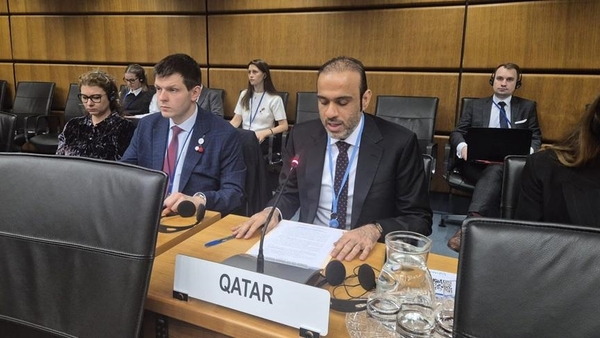
Qatar renews call to subject Israel's nuclear facilities to IAEA safeguards

Qatar renewed its call to intensify international efforts to subject all Israeli nuclear facilities to International Atomic Energy Agency safeguards.


This came in her speech before the quarterly session of the Agency's Board of Governors in Vienna, according to a statement by the Qatari Foreign Ministry on Saturday.


In his speech, Jassim Al Hammadi, Qatar's Permanent Representative to the United Nations and International Organizations in Vienna, stressed "the need for the international community and its institutions to implement their commitments under the resolutions of the UN Security Council, the UN General Assembly, the International Atomic Energy Agency, and the resolution of the 1995 Review Conference of the Non-Proliferation Treaty, which called on Israel to subject all its nuclear facilities to the Agency's safeguards system."


He pointed out that "some of these resolutions explicitly called on Israel to join the Non-Proliferation Treaty as a non-nuclear state."


He explained that "all countries in the Middle East region, with the exception of Israel, have become parties to the Non-Proliferation Treaty and have safeguards agreements in force with the Agency."


This is not the first time that Qatar has called for Israel to join the Nuclear Non-Proliferation Treaty and subject its nuclear facilities to International Atomic Energy Agency safeguards.


It had previously raised the same two demands during its participation in the 67th session of the General Conference of the International Atomic Energy Agency in Vienna in September 2023.


The quarterly session of the Agency's Board of Governors was held in Vienna from 3 to 7 March.


Israel is the only country in the Middle East that has not joined the Nuclear Non-Proliferation Treaty, and unofficial estimates indicate that it possesses a nuclear arsenal.


According to the Federation of American Scientists (FAS) in 2023, Israel is estimated to have about 90 nuclear warheads, with the potential to produce enough plutonium to make between 100 and 200 nuclear weapons.


The Israeli nuclear program began in the 1950s, with the establishment of the Negev Nuclear Research Center near Dimona.


This program was supported by Western countries, most notably France, which provided Israel with a nuclear reactor and reprocessing plant in Dimona during the late 1950s.


It is noteworthy that Western countries remain silent about the Israeli nuclear program, while they are exerting pressure on Iran and North Korea in this regard.

PALESTINE

Sat 08 Mar 2025 9:44 pm - Jerusalem Time

Israeli media: Talks between Washington and Hamas are taking place without Tel Aviv

The Times of Israel reported on Saturday that the United States has proposed that Hamas release 10 of its living prisoners in exchange for extending the ceasefire in the Gaza Strip for two months.


The newspaper added that the talks between the United States and Hamas are taking place without the participation of Israel and with Egyptian and Qatari mediation.


Earlier today, the Palestinian Quds News Network quoted Hamas spokesman Abdul Latif Al-Qanou as saying that there are “positive indications” regarding the completion of the implementation of the ceasefire in Gaza, and that Egyptian and Qatari mediators are making efforts to achieve this.

PALESTINE

Sat 08 Mar 2025 9:11 pm - Jerusalem Time

Injuries in Israeli settler attack south of Hebron

A number of citizens were injured, Saturday evening, when terrorist settlers attacked them in Masafer Yatta, south of Hebron.


According to local sources, armed settlers from the Susya settlement, built on the lands of Al-Masafir, under the protection of the occupation forces, attacked the residents of the Wadi Jaheesh community in Al-Masafir, including children and women, at the time of the Iftar meal and assaulted them, causing a number of them to suffer bruises, including Ibrahim Al-Nawajaa, who was assaulted with batons. He added that the settlers uprooted a number of trees in the area.


Makhamreh pointed out that the occupation forces had detained citizen Ahmed Khaled Al-Najjar, who is disabled, while he was herding sheep near his home in Khirbet Qawawis in Masafer Yatta.


According to a report by the Wall and Settlement Resistance Commission, the occupation forces and settlers carried out 1,705 attacks against our people and their property during the past month of February, where the occupation army carried out 1,475 attacks, while the settlers carried out 230 attacks, most of which were concentrated in the governorates of Nablus with 300 attacks, Hebron with 267 attacks, and Ramallah and Al-Bireh with 263 attacks.

ARAB AND WORLD

Sat 08 Mar 2025 8:58 pm - Jerusalem Time

Trump Administration Prepares to Restore and Expand Ban on Muslim Citizens Entering the United States

The New York Times revealed on Friday that the administration of US President Donald Trump is currently putting the finishing touches on a new ban on travel to the United States for citizens of certain countries that will be broader than the versions issued by Trump in his first term, according to officials familiar with the matter.
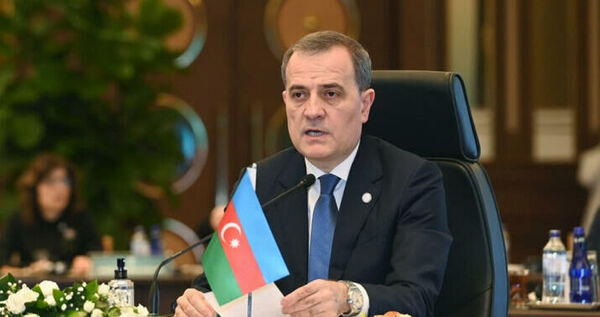

It is noteworthy that Trump's election campaign was launched in October 2015, and it arose from his call to ban Muslims from entering the United States and developed amid legal battles.


The two officials, who spoke on condition of anonymity to discuss sensitive internal deliberations, said a draft recommendation circulating within the executive branch proposes a “red” list of countries whose citizens Trump could bar from entering the United States.


The proposed red list is currently made up primarily of countries whose citizens were restricted under versions of President Trump’s previous travel ban, one official said. Last time, those countries (designated red) included Cuba, Iran, Libya, North Korea, Somalia, Sudan, Syria, Venezuela and Yemen.


The draft tentatively proposes adding Afghanistan to the group whose citizens would be barred from entering the United States, according to one official.


Shawn Van Diver, head of a nonprofit group that helps resettle Afghans who worked with U.S. forces during the war, said he learned from officials that Afghan citizens would be subject to a complete travel ban.


The group issued an emergency statement on Wednesday morning titled “Afghan Travel Ban Is Coming,” urging Afghans with valid visas who are currently outside the United States to return immediately. Later Wednesday, Reuters also reported that Afghanistan would be recommended a full travel ban.


The recommendations also include an “orange” group of countries whose access would be limited but not completely barred. For example, only certain types of visas might be issued — such as to relatively wealthy people traveling for business purposes, but not migrants or tourists — and the duration of visas could be shortened. Applicants would be required to undergo in-person interviews.


Countries in the third, or "yellow," category will be given 60 days to change some perceived deficiencies or be added to one of the other two lists, officials said.


These issues may include the United States not sharing information about incoming travelers, inadequate security practices for issuing passports, or selling citizenship to people from banned countries as a way to circumvent restrictions.


It is not clear whether people with existing visas will be exempt from the ban, or whether those visas will be revoked. Many Afghans have been approved for resettlement in the United States as refugees or under special visas granted to people who helped the United States during the war. It is also not clear whether green card holders, who have been approved for permanent residency, will be affected.
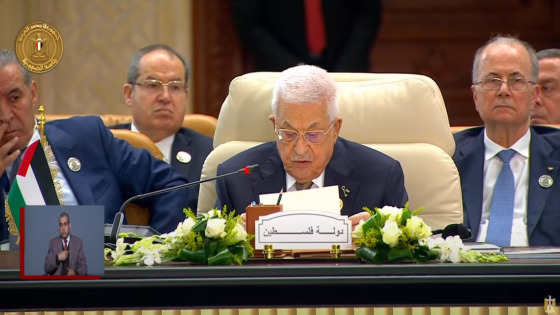

In one of several executive orders he issued on Inauguration Day, January 20, Trump directed the State Department to begin identifying countries “for which screening and verification information is deficient to the extent that it warrants a partial or full suspension of admissions of nationals from those countries.”


Trump gave the State Department 60 days to complete a report to the White House with such a list — meaning it is due in about two weeks. He directed the Justice Department, the Homeland Security Department and the Office of the Director of National Intelligence to work with the State Department on the project.


The State Department spokeswoman's office said in a statement that it was following Trump's executive order and was "committed to protecting our nation and its citizens by maintaining the highest standards of national security and public safety throughout our visa process," but also declined to comment specifically on internal deliberations.


The State Department’s Bureau of Consular Affairs has been tasked with taking the lead in coming up with an initial draft, according to people familiar with the matter, but the lists for each of the three categories are still in flux.


In addition to security professionals in other departments and intelligence agencies, regional bureaus at the State Department and U.S. embassies around the world are reviewing the draft. They are providing feedback on whether the shortcomings identified in particular countries are accurate or whether there is a political argument—such as not risking disruption to cooperation on other priorities—for reconsidering some of them.


President Trump’s policy of categorically banning entry from certain countries dates back to his 2015 campaign call for “a total and complete shutdown of Muslims entering the United States until our country’s representatives can figure out what’s going on.” After taking office in January 2017, Mr. Trump issued what became the first of a series of repeated bans. It initially focused on a handful of Muslim-majority countries but later included other low-income, non-white countries, including in Africa.


The first travel ban caused chaos, in part because Mr. Trump issued it without warning. Some people learned they were being denied entry only after they arrived in the United States. Major protests were held at airports against the new administration.

ARAB AND WORLD

Sat 08 Mar 2025 8:49 pm - Jerusalem Time

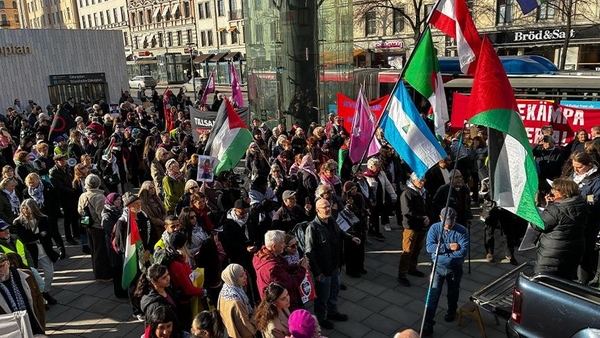
Stockholm witnesses protests against Trump's plan on Gaza

On Saturday, the Swedish capital, Stockholm, witnessed a massive demonstration in protest against US President Donald Trump's plan to seize the Gaza Strip and forcibly displace Palestinians from their lands.


In the Odenplan area of Stockholm, hundreds of activists and citizens gathered to express their solidarity with the people of Gaza, and their rejection of what they described as a colonial plan to forcibly deport Palestinians from their homeland.


The demonstrators held up banners reading "No to American imperialism, No to the Zionist occupation," carried anti-Trump posters, and chanted slogans rejecting "forced displacement," before heading to the Swedish Foreign Ministry headquarters.


Swedish activist Karl Kjellén told Anadolu Agency that he participated in the demonstration in protest against what he described as "the genocide being carried out by Israel in Gaza and the West Bank."


Criticizing Swedish support for Israel, Kälin added: “I strongly condemn the Swedish imperialist government’s support for the Israeli occupation.”


He continued: "Despite the calm atmosphere that has passed in recent weeks, the imperialists have revealed their true colors once again. Trump said it clearly, he wants to erase the Palestinians from Gaza and turn it into a tourist resort. This proves that these politicians do not carry any human values. We must support the Palestinians with all our strength to confront this plan."


On February 4, Trump sparked widespread controversy when he suggested that the United States take control of the Gaza Strip and turn it into the “Riviera of the Middle East,” after displacing the 2.4 million Palestinians there to other places, especially Egypt and Jordan, without any plans to return them.


In the face of this proposal, Arab leaders adopted an Egyptian plan to rebuild Gaza at the Cairo Summit last Tuesday, which guarantees the return of the Palestinian Authority to the Gaza Strip.


Despite the adoption of the Arab plan, the US State Department said on Thursday that the Egyptian plan does not meet the aspirations of the Trump administration, indicating the continuing dispute between Washington and Arab countries over the future of the Strip.


With American support, Israel committed genocide in Gaza between October 7, 2023 and January 19, 2025, leaving more than 160,000 Palestinians dead and wounded, most of them children and women, and more than 14,000 missing.

PALESTINE

Sat 08 Mar 2025 7:46 pm - Jerusalem Time

Netanyahu to hold situation assessment tonight on Gaza prisoner release negotiations

Israeli Prime Minister Benjamin Netanyahu will hold an assessment of the situation regarding the negotiations to release prisoners in the Gaza Strip on Saturday evening, on the eve of a scheduled meeting of the Security and Political Affairs Cabinet.


This was reported by the official Israeli Broadcasting Authority, at a time when Netanyahu continues to obstruct the transition to the second phase of the ceasefire agreement in Gaza and the exchange of prisoners, threatening to resume the war of extermination on the Strip.

PALESTINE

Sat 08 Mar 2025 7:34 pm - Jerusalem Time

Israeli forces arrest a journalist from Al-Aqsa Mosque courtyards

Three citizens were injured by Israeli occupation bullets, Saturday evening, on Salah al-Din Street in the central Gaza Strip.


According to local sources, an Israeli occupation drone opened fire on citizens on Salah al-Din Street near the Shuhada Junction in the central Gaza Strip, wounding three of them.


A citizen was also injured by the occupation forces' bullets in the town of Abasan al-Jadida, east of Khan Yunis, in the southern Gaza Strip.


Seven citizens were injured with varying degrees of injuries in an Israeli drone attack on a bulldozer that was removing the rubble of a house in the town of Beit Hanoun, north of the Strip. They were transferred to the Martyr Kamal Adwan Hospital.


Earlier, medical sources announced that the death toll in the Gaza Strip had risen to 48,453 martyrs, since the start of the Israeli aggression on October 7, 2023.


The same sources added that the number of injuries has risen to 111,860 since the beginning of the aggression, while a number of victims are still under the rubble and on the roads, and ambulance and rescue crews cannot reach them.


It pointed out that 7 martyrs (6 new martyrs due to the occupation's bombing, and the recovery of the body of a martyr) and 8 injuries arrived at the hospitals of the Gaza Strip during the past 48 hours.

PALESTINE

Sat 08 Mar 2025 6:33 pm - Jerusalem Time

Three Palestinians injured by Israeli forces bullets in central and southern Gaza Strip

Three citizens were injured by Israeli occupation bullets, Saturday evening, on Salah al-Din Street in the central Gaza Strip.


According to local sources, an Israeli occupation drone opened fire on citizens on Salah al-Din Street near the Shuhada Junction in the central Gaza Strip, wounding three of them.


A citizen was also injured by the occupation forces' bullets in the town of Abasan al-Jadida, east of Khan Yunis, in the southern Gaza Strip.


Earlier, medical sources announced that the death toll in the Gaza Strip had risen to 48,453 martyrs, since the start of the Israeli aggression on October 7, 2023.


The same sources added that the number of injuries has risen to 111,860 since the beginning of the aggression, while a number of victims are still under the rubble and on the roads, and ambulance and rescue crews cannot reach them.


She pointed out that 7 martyrs (6 new martyrs due to the occupation's bombing, and the recovery of the body of a martyr) and 8 injuries arrived at the hospitals of the Gaza Strip during the past 48 hours.


PALESTINE

Sat 08 Mar 2025 5:35 pm - Jerusalem Time

Palestinian MOFA appreciates the European Quartet statement on the Arab summit outcomes

The Ministry of Foreign Affairs and Expatriates praised the joint statement issued by the Foreign Ministers of France, Germany, Britain and Italy, which welcomed the Arab Reconstruction Plan and called for benefiting from its advantages.


The Ministry of Foreign Affairs warned in a statement issued today, Saturday, against any plans seeking to circumvent or bypass the outcomes of the Arab Summit.


It called on all countries to support and back the plan as adopted at the Arab Summit and the extraordinary meeting of the Foreign Ministers of the Organization of Islamic Cooperation, and to mobilize political and material support for its implementation, in a way that ensures the reconstruction of the Gaza Strip by Palestinian hands firmly on the ground without displacing them, on the path to embodying the State of Palestine and building its institutions.

PALESTINE

Sat 08 Mar 2025 5:29 pm - Jerusalem Time

A young Palestinian arrested during Israeli raid north of Hebron

Citizens suffocated on Saturday when the Israeli occupation forces stormed the town of Beit Ummar, north of Hebron, in the southern West Bank, where they arrested a young man after assaulting him.


According to local sources, the occupation forces stormed the center of Beit Ummar and Safa roundabout, which led to the outbreak of clashes, during which the occupation soldiers fired live and rubber bullets, sound bombs and toxic tear gas, as dozens of citizens suffered from suffocation due to inhaling the toxic gas, and were treated in the field.


The sources added that the occupation forces arrested the young man Ibrahim Ahmed Sami Sabarna (23 years old) from inside his uncle's shop where he works selling vegetables and fruits in the "Tarbiqa Triangle", noting that the occupation soldiers severely beat the young man Sabarna during his arrest, and took him to a camp inside the "Karmi Tzur" settlement built on citizens' lands south of Beit Ummar.


The town of Beit Ummar witnesses daily raids by the Israeli occupation, and the occupation soldiers are obstructing the movement of vehicles at Safa roundabout.

PALESTINE

Sat 08 Mar 2025 5:15 pm - Jerusalem Time

Israeli occupation bulldozes lands in Madama, south of Nablus

Today, Saturday, Israeli occupation bulldozers began razing lands in the village of Madama, south of Nablus.


According to local sources, the occupation bulldozers began to level areas of the village's lands and uproot olive trees near the colonial road, adding that the occupation forces had been notified of the seizure of these lands about a week ago.

ARAB AND WORLD

Sat 08 Mar 2025 4:04 pm - Jerusalem Time

Ded and wounded in Israeli raid on southern Lebanon

One person was killed and another was injured in an Israeli drone strike on southern Lebanon on Saturday.


A Lebanese source said that the march targeted a car in the Al-Jumaijma area, which led to the death of one person and the injury of another. He added that the ambulance teams were able to remove the body of the dead and transfer the injured person to the hospital for treatment.

PALESTINE

Sat 08 Mar 2025 3:54 pm - Jerusalem Time

EU welcomes to the Arab plan to rebuild Gaza

Four European countries welcomed the Arab comprehensive plan to rebuild the Gaza Strip, which was adopted by the emergency Arab summit in Cairo.

This came in a joint statement issued by the foreign ministers of France, Germany, Britain and Italy.

The European ministers announced their "welcome" to the Arab plan for the path of recovery and reconstruction of the Palestinian sector, and considered it to be "a realistic path."

The Arab plan includes forming a "Gaza Administration" committee to manage the affairs of the Strip for a transitional period of 6 months. The committee will be independent and composed of non-factional "technocrats" working under the umbrella of the Palestinian government.

In this regard, the European statement noted that the Arab plan "reflects a realistic path for the reconstruction of Gaza, and pledges - if implemented - a rapid and sustainable improvement of the catastrophic living conditions experienced by Palestinians in Gaza."

The statement called for recovery and reconstruction efforts in Gaza to be based on "a solid political and security framework acceptable to both Israelis and Palestinians, and that provides long-term peace and security" for all parties.

He praised the "important message" sent by Arab countries by developing a "jointly" recovery and reconstruction plan.

In their statement, the ministers stressed "their countries' commitment to working with the Arab plan (for reconstruction in Gaza), the Palestinians and Israel" to address security and governance issues in the Strip.

They urged all concerned parties to benefit from the advantages of the Arab plan and consider it a "starting point," according to the same statement.

They explained that the common position of the aforementioned countries is based on "supporting the central role of the Palestinian Authority and supporting the implementation of its reform agenda."

ARAB AND WORLD

Sat 08 Mar 2025 2:44 pm - Jerusalem Time

Azerbaijan's position on Palestine at the OIC meeting

AZERTAC reports that the Minister of Foreign Affairs of the Republic of Azerbaijan Mr. Jeyhun Bayramov took part in and addressed an emergency meeting of the Foreign Ministers of the Organization of Islamic Cooperation, held on March 7, 2025 in Jeddah, Saudi Arabia.


At the beginning of his speech, Minister Jeyhun Bayramov conveyed his best congratulations and wishes to the entire Islamic world on the occasion of the holy month of Ramadan.


The Azerbaijani minister stressed that the current humanitarian crisis in the Gaza Strip and Palestine, the mass casualties of innocent people, the destruction of infrastructure, and the shortage of food and water in the region remain a source of concern, and the use of force that causes the death of civilians is unacceptable, and he pointed out the importance of taking urgent and decisive steps to end this situation.


Minister Jeyhun Bayramov stressed that the principles of international law regarding sovereignty, territorial integrity and non-use of force should be given priority, and that Azerbaijan positively assesses the ceasefire reached in January, stressing the importance of avoiding steps that would lead to escalation and violation of the ceasefire in the current sensitive situation.


Minister Jeyhun Bayramov noted the importance of the ceasefire reached as the beginning of a sustainable peace process based on international law, including the legitimate aspirations of the Palestinian people. He stressed that Azerbaijan has always supported the resolution of the conflict on the basis of the "two-state" principle, the norms and principles of international law and relevant UN Security Council resolutions.


The Azerbaijani minister also pointed to the importance of humanitarian aid efforts and said that Azerbaijan, as a responsible member of the Organization of Islamic Cooperation and as the Chair of the Organization of Islamic Cooperation in 2026, is always ready to support the brotherly Palestinian people. He stressed that in addition to previous years, since 2023, when the escalation began, Azerbaijan has provided assistance in the amount of 2 million US dollars to alleviate the humanitarian situation of the Palestinian people. The minister added that the Republic of Azerbaijan has also taken the initiative to support the Palestinian people in the field of education and healthcare, and in this direction, the Heydar Aliyev International Scholarship has been allocated to 15 students from Palestine for the period 2024-2025, and Azerbaijan has pledged to build a school for 600 people in Palestinian Nablus.


Minister Jeyhun Bayramov stressed in his speech that his country supports the Egyptian plan to rebuild Gaza, which was approved during the emergency Arab summit on March 4, 2025.


During his speech, the Minister conveyed his congratulations on Syria's return to the OIC membership at today's meeting. Support was expressed for Syria's territorial integrity and sovereignty, as well as for the restoration of lasting peace and stability in the country.


PALESTINE

Sat 08 Mar 2025 1:31 pm - Jerusalem Time

Gaza: 6 ded in Israeli occupation's bombing during the past 48 hours

Medical sources announced today, Saturday, that the death toll in the Gaza Strip has risen to 48,453 deaad, since the start of the Israeli aggression on October 7, 2023.

The same sources added that the number of injuries has risen to 111,860 since the beginning of the aggression, while a number of victims are still under the rubble and on the roads, and ambulance and rescue crews cannot reach them.

It pointed out that 7 ded (6 new dead due to the occupation's bombing, and the recovery of the body of a dead) and 8 injuries arrived at the hospitals of the Gaza Strip during the past 48 hours.

PALESTINE

Sat 08 Mar 2025 11:47 am - Jerusalem Time

Outcomes of the Palestine Summit... The conclusion and the lessons

Dr. Khadir Al-Marshadi: The Arab delegation’s success in changing Washington’s position seems unlikely in the short term given the steadfast American support for Israel

Dr. Kholoud Al-Obaidi: The conference achieved two goals: a clear collective Arab stance against displacement from Gaza and a practical plan for reconstruction.

Dr. Rifat Sayed Ahmed: The card of severing relations and normalization with Israel must be used as a political pressure measure in the next stage

Dr. Munther Hawarat: The summit adhered to the principles of the two-state solution, rejected the idea of displacement, and supported the presence of a Palestinian leadership in the Gaza Strip

Aziz Al-Assa: The Arab Summit represented a state of unity of position and rallying around the Palestinian cause, which is rarely repeated in the history of summits.

Dr. Mukhaimer Abu Saada: A final solution must be found for the Gaza crisis, with continued Arab coordination to overcome differences and ensure the implementation of the reconstruction plan


Opinions and assessments of the outcomes of the emergency Arab summit in Cairo on March 4 varied between those who considered it a major achievement in terms of restoring the unity of the Arab position in response to the dangers facing the countries of the region, and not just the Palestinian issue, following the announcement of the US President’s plan to displace the residents of the Gaza Strip to Jordan and Egypt and later to Saudi Arabia under the pretext that the Strip had become an uninhabitable place, and therefore it would be difficult to rebuild it while its residents remained inside, and of course without allowing them to return after the reconstruction was completed.

The consensus of the participants in the Arab Summit, despite the absence of many Arab leaders, on the proposed Egyptian plan as an alternative to the American plan based on displacement and migration and turning the Gaza Strip into the “Riviera of the East” as Trump wants, has not yet been dealt with as a final result, in light of the American and Israeli rejection of it. There are those who fear that the Arab delegation that will meet the American president will not be able to convince him of it, in addition to the fear of American pressure on the “capable” countries, to dissuade them from providing the necessary funding for the Egyptian plan that calls for the reconstruction of the Gaza Strip within a few years while keeping its residents inside.

Writers and analysts who spoke to Al-Quds considered that the Arab summit represented a case of unity of position and rallying around the Palestinian cause, and that it achieved a clear collective Arab position against the displacement from Gaza and a practical plan for reconstruction. However, they saw that the success of the Arab delegation in changing Washington’s position seems unlikely in the short term due to the steadfast American support for Israel, and therefore the card of severing relations and normalizing relations with Israel must be used as a political pressure measure in the next stage.


A unified Arab position at the theoretical level only


Dr. Khadir Al-Marshadi, President of the International Institute for Arab Renewal - Iraq, said that the extraordinary Arab summit held in Cairo succeeded in presenting an Arab position that appeared to be unified only on the theoretical level, despite the absence of many Arab leaders from a conference that should have been the focus of their attention, as it came at a dangerous turning point in the conflict on the regional and international levels.

He explained that the Egyptian plan approved by the conference was intended to be a practical alternative to the US administration's orientations, and this alternative could receive international support, as the leaders who attended the summit believe, especially with the announcement of hosting an international conference to rebuild Gaza.

But Al-Murshidi pointed out that the Arab delegation’s success in changing Washington’s position seems unlikely in the short term, given the steadfast American support for Israel and Trump’s foreign policy record on the one hand, and the problematic American and Israeli decision to disarm the resistance, and even more so to expel Hamas from Gaza, which the resistance rejects and is right to do so after the great and enormous sacrifices made by the people of Gaza.

He continued, saying: In addition to this, there is a lack of confidence in the intentions of Israel and the United States and their position of refusing to recognize the right of the Palestinian people to establish their independent state with Jerusalem as its capital, which is the position that came in the Israeli response commenting on the outcomes of the summit when it indicated the impossibility of implementing the two-state solution project.


Elements of Arab economic and political power


On the other hand, Al-Marshadi said, “There may be a change in the American position in only one case, which is if the Arab countries continue to exert unified pressure and use their tools and elements of economic, political and diplomatic power to sever relations and stop normalization with sincerity, effectiveness and strong will, which unfortunately is not available in the Arab reality, because it requires coordination, will, clarity and non-subordination, which are the factors absent in Arab politics.”

Al-Marshadi stressed that the real impact of the summit may appear after the implementation of the stages of the agreement between Hamas and Israel, as well as what will result from the direct negotiations with the American envoy that were announced the day before yesterday, noting that this depends on the extent of the Arab countries’ commitment to implementing their decisions at the summit and their ability to confront American and Israeli pressures.

Al-Marshadi concluded his statement to Al-Quds by emphasizing that the dilemma facing any final solution to the conflict is limited to two main factors:

1- The two-state solution, which Israel explicitly rejects.

2- The resistance weapon, which is also rejected by Israel and America.

This is based on the current political dynamics in the region, which view both factors as a basic condition for any settlement of the Palestinian issue as a whole.


Effective solidarity diplomacy


For her part, Dr. Kholoud Al-Obaidi, a specialist in political science and international law, said that the question about Arab summits has a clear answer: it is an effective diplomatic solidarity act, noting that Arab summits are an annual, periodic tradition that Arabs have followed for decades and are an effective and successful means of achieving Arab solidarity and agreement on our Arab issues.

Al-Obaidi stressed that the emergency conference called for by the sisterly Arab Republic of Egypt in this context is important for the Arab countries themselves, which seek to strengthen their position, as they seek help from the Arab incubator.

She said: Palestine and Egypt sought the assistance of the Organization of the Islamic Conference, the European Council, and the presence of the Secretary-General of the United Nations, who stressed their rejection of displacement and support for the State of Palestine.

She pointed out that the conference achieved two goals: the first was a clear collective Arab position against the displacement from Gaza, and a practical plan for reconstruction and financial, material and political support to implement it.


Invitation to an international conference in Cairo


She added: The subsequent steps include calling for an international conference in Cairo for recovery and reconstruction in the Gaza Strip in cooperation with the United Nations and the international community, as well as calling on the Security Council to deploy international peacekeeping forces and hold legislative and presidential elections as soon as possible as part of its plan to preserve the lives of the Palestinian people.

Al-Obaidi described the meeting as successful firstly because it was practical and led by a Palestinian, Egyptian and Arab woman who has the potential and ability to rebuild.

Secondly, the financing project is available, unlike the American project, which does not have a source of financing.

Third, the conference had a good attendance, as some tried to detract from the conference due to absence.

She stressed that this issue should not please the enemy because the parties that were absent are more hardline parties, such as Algeria's position, and this is what the Foreign Minister confirmed in his speech.

She pointed out that those present represent the party that "accepts dialogue," and that there are more stringent Arab positions.

Al-Obaidi considered the absence of the King of Saudi Arabia, the Emirates and Kuwait, in my opinion, to have been coordinated with the Egyptian side for diplomatic purposes and not a lack of support for the project.

She said: The Saudi Crown Prince supported the Saudi Ministerial Council meeting and the Kingdom of Saudi Arabia enthusiastically supported the Arab project in Gaza.

She added: Syria's entry into the arena with a statement by President Ahmed Al-Sharaa reflects the extent of solidarity, saying, "Egypt and Syria are two wings of one bird."


Another conference in Saudi Arabia


She pointed out that another conference will be held in the Kingdom of Saudi Arabia with the attendance of the Gulf States and Egypt to emphasize security solidarity, which means that the Arab position is escalating and strengthening and must not retreat.

She said: The popular position and the security necessity indicate continued adherence to the decisions of the Cairo Conference and the emphasis on continuing to deliver aid and support to our dear people in Gaza.

She believes that the conference is worrying the Zionist entity, as the reality is that the Zionist entity was unable to achieve victory in the Gaza war by military means, but it is resorting to the United States to achieve gains.

She stressed that the Zionist project is a project of ethnic cleansing and the seizure of not only Gaza, but also at a stage in which the people of the West Bank will be displaced, the idea of a Palestinian state will be abolished, and the Arabs will submit completely to the Zionist project.

She explained that the response to this project does not tolerate half-solutions. It requires an Arab stance to repel the aggression, including military intervention. She said that we must not postpone the confrontation any longer.

Al-Obaidi concluded by saying: I wish the Arab response had been stronger during the war, and the Arab support for Gaza had been greater so that we could avoid the situation that the Arab regimes are facing now. Therefore, the Arabs have no choice but to challenge the Zionist project.


Holding the summit is an achievement in itself.


In turn, the Egyptian nationalist writer and thinker Dr. Rifaat Sayed Ahmed said that holding the summit in itself is a great achievement that is primarily credited to Egypt, which is aware of the great danger resulting from the plans of Israeli Prime Minister Benjamin Netanyahu and US President Donald Trump to displace Palestinians from Gaza to Sinai.

He pointed out that the summit presented a comprehensive 91-page plan, prepared by Egypt, to rebuild Gaza without displacing its residents. This plan received Arab approval, which makes it an obligation on the Arab League and all Arab countries.

He explained that the most prominent outcome of the summit was the general agreement to reject displacement in parallel with supporting reconstruction, stressing that this achievement reflects a unified Arab position towards the Palestinian issue.

Sayed Ahmed added that implementing these decisions on the ground faces many difficulties, the most prominent of which is the connection of most Arab countries, especially the Gulf countries, to the United States through oil, which represents the strongest deterrent weapon in the face of Washington and Tel Aviv.


The summit represents the summit of warning.


He also called for using the card of severing relations and normalizing relations with Israel as a political pressure measure in the next stage.

Sayed Ahmed pointed out that the current thinking is wishful thinking, expressing his hope that these decisions will be implemented despite the challenges, because the issue is no longer limited to Gaza or southern Lebanon, but has become a threat to the thrones and governments of Arab countries, especially in light of Netanyahu's greedy and Trump's crazy policies.

The Egyptian writer stressed that this summit represents a warning summit, warning that failure to implement its outcomes will leave the door open for the implementation of Trump and Netanyahu's plans, calling on Arab rulers to meet and immediately begin the reconstruction of Gaza according to the Egyptian plan, which is estimated to cost about 55 billion dollars.

The Egyptian nationalist thinker concluded his statement to Al-Quds by saying: “If the Arabs do not begin rebuilding Gaza immediately, the displacement plan will begin and will be implemented individually on the Arab countries. Their strength lies in their unity and in implementing this great plan.”


A practical vision for the reconstruction of the sector


Jordanian writer and analyst Dr. Munther Hawarat believes that the Arab Summit presented a practical vision for the reconstruction of the Gaza Strip, with a primary focus on reconstruction.

He pointed out that the summit adhered to the previous principles related to the two-state solution, rejected the idea of displacement, and supported the presence of a Palestinian leadership in the Strip.

Dialogues explained that the problem lies in US President Donald Trump's adherence to his position, either out of ignorance or by implementing a well-thought-out Israeli plan.

He asked: How can the Arabs influence Washington's viewpoint, given its statement that there are no real mechanisms for reconstruction as long as the population is still present?

He believes that collective Arab pressure and the use of international support, such as the Europeans and the Organization of Islamic Cooperation, may contribute to pushing Trump to change his position.

He added that Israel will work to obstruct the Arab move to rebuild Gaza, and may resort to re-igniting tension and aggression against the Strip under various pretexts and excuses.

Hawarat stressed that there is an Arab vision that can be crystallized and modified through negotiations, stressing the need to keep the channels of dialogue open.


Big deal for Israel


He pointed out that President Trump is seeking to achieve a great deal in favor of Israel, regardless of its impact on the Palestinians, but the Arabs have a great ability to establish constructive negotiations with the American administration, especially in light of the complexity of the field conditions in the event of a new aggression, which would be disastrous for the people of Gaza and the Palestinian cause as a whole.

He called for a serious and firm Arab position, with the use of available Arab pressure tools to influence the United States' conviction.

He concluded his interview by saying: “Although the current situation is bleak and uncomfortable, there are Arab parties that influence Washington and can use their influence to change the American position.”


Full Arab support for Palestinian demands


In turn, writer and researcher Aziz Al-Assa said that the Arab summit represented a state of Arab unity rarely repeated in the history of Arab summits, a state of rallying around the Palestinian cause, and full Arab political support for Palestinian demands for a permanent ceasefire.

Al-Assa explained that there is complete Arab consensus, including the Palestinian resistance, on the summit decisions that were directed towards rebuilding the Gaza Strip and restoring peace and stability to the Palestinians on their land, in the face of calls for displacement that the far-right organizations play to day and night.

He said: We have noticed the unity of the Israeli and American positions in rejecting the summit and its decisions, and this was reinforced by Israel’s blatant practice of starving and depriving the Gaza Strip of its water and cutting off its electricity, in full view of the summit, without anyone uttering a word.

He added: It is the responsibility of the Arab delegation heading to Washington to translate the decisions of this summit into actions at the dialogue table with the American presidency.

Al-Assa stressed that the bright side of the summit will evaporate, as if it never existed, if we submit to the American demands that always serve Israel's interests.


The Egyptian plan received broad Arab support.


Dr. Mukhaimer Abu Saada, Professor of Political Science at Al-Azhar University in Gaza, believes that the outcomes of the Arab Summit were good, especially with the adoption of an Egyptian plan to confront US President Donald Trump’s plan to displace Palestinians from Gaza, and to rebuild the Strip according to the vision of the US administration.

He stressed that the Egyptian plan had received broad Arab support, despite reservations from some countries such as Tunisia and Iraq, in addition to the absence of leaders of influential countries such as Saudi Arabia, the Emirates and some other Arab countries, which constitutes a problem in the Arab consensus.

He explained that the Egyptian plan aims to rebuild Gaza without displacing its residents, which has received support and welcome from most Arab countries.

Abu Saada pointed out that the biggest challenge lies in the position of the US administration, as the spokesman for the US National Security Council stated that the Arab plan does not address the current problem in Gaza, which is the destruction of the Strip and its unfitness for life.


The final US response has not yet been issued.


He added: "This statement was premature, and the final response from the US administration has not yet been issued, stressing the need to wait to know the official US position."

He pointed out that the US President indicated in one of the meetings that the idea of displacement is merely a proposal, and will not be imposed by force, especially in light of the Egyptian, Jordanian, Palestinian and Arab rejection of this plan.

Abu Saada stressed that there are existing Arab differences regarding disarming Hamas and the resistance factions before reconstruction, as some Arab countries fear returning to the confrontation square after the reconstruction of the Strip, as happened in previous times.

Abu Saada concluded his statement to Al-Quds by stressing the need to find a final solution to the Gaza crisis, along with the importance of continuing Arab coordination to overcome differences and ensure the implementation of the reconstruction plan away from any displacement plans.