PALESTINE

Mon 10 Mar 2025 12:55 pm - Jerusalem Time

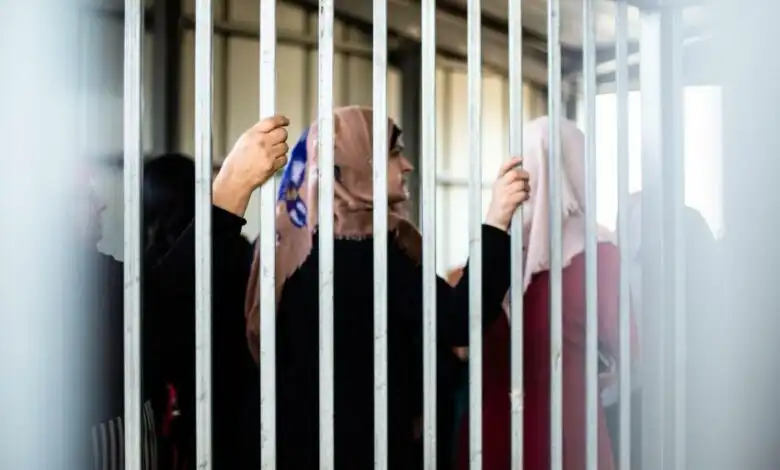
Palestinian female prisoners in Israeli "Al-Damon" suffer harsh detention conditions

The Commission of Prisoners' Affairs and Liberated Prisoners reported that female prisoners in Al-Damon prison are suffering greatly and are being held in extremely harsh detention conditions, coinciding with the holy month of Ramadan.


The female detainees who were visited by the Commission’s lawyer agreed that the prison administration informed them of the wrong times for breaking their fast during the holy month of Ramadan, in addition to the fact that the food provided to them was spoiled and scarce.


The Commission's lawyer said that the detainee, Nour Muhammad, from Nablus, has been detained in Al-Damon Prison since 12/5/2024.


According to her testimony during the visit, she said: “The situation in the prison is very bad, especially during the month of Ramadan, as the female prisoners do not get a suhoor meal, in addition to the rooms being searched almost daily at suhoor time, and they are also taken out to the yard in the early morning hours, when the weather is very cold.


Prisoner Karmel Khawaja (19 years old) from Ni’lin, still detained, was arrested on 3/2/2025, and reported that the conditions in the prison are bad, and there is a severe shortage of clothing.


The prisoner, Fidaa Asaf (49 years old), is a resident of Qalqilya. She is a blood cancer patient. Since her arrest two weeks ago, she has not been presented to a specialist doctor or a hospital, nor has she been given medication, despite a court decision issued on 3/6/2025, which obligates the prison administration in “Al-Damon” to present her to a doctor and a hospital. The prison administration deliberately does not give her the medication she used to take daily.


Prisoner Asaf also complained about the poor quality and quantity of food in Al-Damon prison.


Another prisoner reported that her colleagues were harassed by the female prison guards during strip searches in Damoun. The prison administration also intentionally told them the wrong breakfast time, as they were told that the Maghrib call to prayer was at 5:30 p.m. In addition, the female prison guards intentionally searched the rooms at the time of Suhoor and threw their Suhoor meals on the floor.


She noted that the food provided to them was spoiled and unfit for human consumption.

PALESTINE

Mon 10 Mar 2025 12:21 pm - Jerusalem Time

Smotrich: Zamir plans to resume the war in a completely different way than Halevi

Israeli Finance Minister Bezalel Smotrich said on Monday that Israel will resume the war on Gaza with great force, claiming that negotiations with Hamas over a prisoner exchange have not progressed, although Smotrich himself opposes such negotiations and calls for an immediate resumption of the war.


Smotrich said in an interview with the Israeli public radio "Kan" that "the new Chief of Staff (Eyal Zamir) began his term planning completely differently than his predecessor. He wants a much more intensive, fast and severe war with the aim of occupying the Gaza Strip, completely annihilating Hamas and returning the kidnapped soldiers. We will do this differently. We will not return to the stupidity of the previous Chief of Staff," Herzi Halevi.


According to Smotrich, "We will have to recruit another (reserve forces) and continue the effort, in order to finish the mission this time. We will not stop in the middle."


Smotrich described direct talks between the United States and Hamas as an "absolute mistake," and claimed that the US envoy for prisoner affairs, Adam Boehler, who held talks with Hamas leaders, was acting "naively," and that Boehler's plan was "nonsense."


Smotrich denied reports that he received information from senior army officers, contrary to the usual procedures and not through reports submitted by the army to the government, about the operations of the Israeli army.


Smotrich accused former IDF Chief of Staff Halevi of "not telling the whole truth to the cabinet and sometimes not telling the truth, and he is a bad strategic man."


He added that Halevi "silences opinions" in the political-security cabinet's deliberations, saying, "I asked to invite the deputy chief of the general staff, the commander of the Northern Command and the head of the Military Intelligence Directorate, who are the most important people in the war in the north, and the chief of the general staff strongly opposed it. This is very dangerous. The chief of the general staff (i.e. Halevi) did not speak with his deputy and the head of the manpower directorate for months."


Smotrich continued, "The attempt to silence opinions that are not from within the army is dangerous in my view.

And when there are no deliberations within the General Staff, and when they bury ideas and plans, if they propose different plans to me for consideration, this seems to me to be the most correct thing to do.”

PALESTINE

Mon 10 Mar 2025 12:16 pm - Jerusalem Time

762 arrests, including 90 children, last month

Prisoners’ institutions said that the number of arrests in February 2025 reached (762), the highest of which was in Jenin and its camp. The number of arrests among women reached (19), and children (90), in addition to the escalating field investigations that affected hundreds of citizens during the month.


The prisoners’ institutions reported that the number of martyrs whose identities were announced reached four, two of whom were announced during the month of February: Musab Haniyeh, who was martyred on January 5, 2025, and his martyrdom was announced on February 24, 2025, and Raafat Abu Fanouneh, who was martyred on February 26, 2025.


She pointed out that since October 7, 2023, the number of detainees in the West Bank has reached (15,640) cases of arrest, and that this data includes those who were kept in detention by the occupation, and those who were later released, while there is no data on cases of arrest in Gaza.


She pointed out that the number of arrests among women after October 7, 2023, reached more than (490) arrests (this statistic includes women who were arrested from the 1948 territories, and arrests among women from Gaza who were arrested from the West Bank), and this data does not include the number of women who were arrested from Gaza, whose number is estimated in the dozens.


Since the beginning of the aggression on Jenin and its camp, the number of arrests has reached about (300), and since the beginning of the aggression on Tulkarm and its camps, it has reached about (200).


It is noteworthy that this data does not include the number of arrests from Gaza due to the crime of enforced disappearance imposed by the occupation on Gaza detainees, but it had admitted that it had arrested thousands from Gaza, and released hundreds of them later.

PALESTINE

Mon 10 Mar 2025 12:00 pm - Jerusalem Time

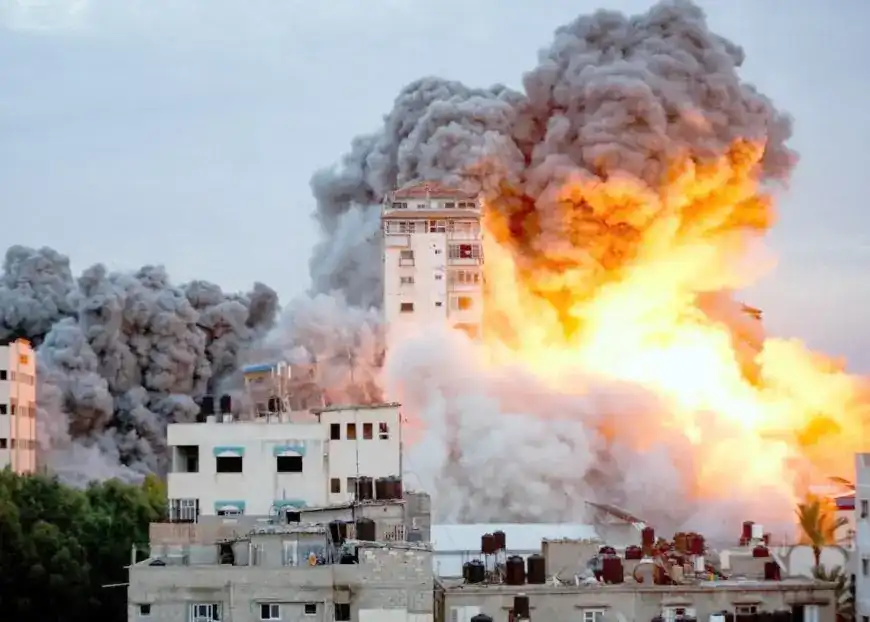
9 Palestinians killed in 24 hours in Gaza, the death toll from the aggression rises to 48,467

The Ministry of Health in Gaza announced today, Monday, that the death toll in the Gaza Strip has risen to 48,467, the majority of whom are children and women, since the start of the Israeli occupation aggression on October 7, 2023.


The ministry added in a brief statement that the number of injuries has risen to 111,913 since the start of the aggression, while a number of victims are still under the rubble, and ambulance and civil defense crews cannot reach them.


It pointed out that 9 dead (5 of whom had their bodies recovered, and 4 new dead) and 16 injuries arrived at Gaza Strip hospitals during the past 24 hours.

PALESTINE

Mon 10 Mar 2025 11:59 am - Jerusalem Time

Israeli occupation and its settlers detain a number of farmers west of Bethlehem

Today, Monday, the Israeli occupation forces and its settlers detained a number of farmers in the town of Nahalin and the village of Husan, west of Bethlehem.


Local sources reported that a group of settlers attacked farmers under the protection of the occupation forces in the Baniyas area, which is a land shared between beekeepers and Husan, while they were pruning vines, and prevented them from continuing their work, before the occupation forces detained them. Among them were: Atef Abdullah Safi and his son Haitham, Muhammad Mahmoud Safi, Jamal Muhammad Safi, and two from the village of Husan.

PALESTINE

Mon 10 Mar 2025 11:26 am - Jerusalem Time

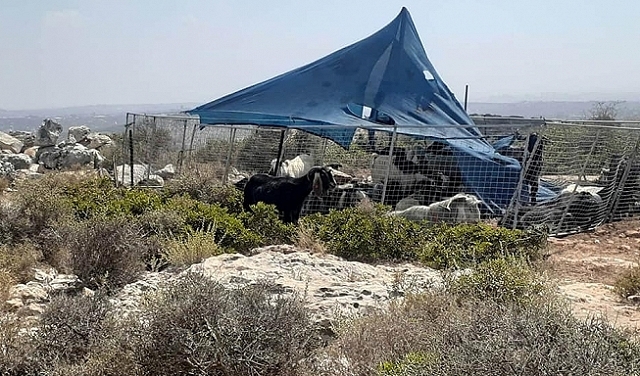
Nablus: Israeli Settlers set up tents on Huwara lands

Today, Monday, settlers set up tents in the lands of Hawara, south of Nablus.


Head of the Public Relations Department in the Huwara Municipality, Rana Abu Haniya, said that settlers set up tents and plastic houses on the top of Mount Ras Zeid, in the Za’tara Basin.


She pointed out that these lands were bulldozed and worked on by the settlers for more than a month.


It is noteworthy that last month, settlers carried out 230 attacks, concentrated in the governorates of Nablus and Hebron, with 43 attacks each, Ramallah with 38, and Jerusalem with 25, while they carried out 68 acts of vandalism and theft of Palestinian property, which affected vast areas of land.

OPINIONS

Mon 10 Mar 2025 11:14 am - Jerusalem Time

Burning mosques in Palestine

Hamada Faraana


On 3/7/2025, the colony forces deliberately and intentionally burned and vandalized the historic Al-Nasr Mosque in Nablus at dawn on Friday, which demonstrates the extent of the Israeli Zionist Jewish hatred and malice towards Islam and Muslims, Arabs and Arabism, Palestine and Palestinians, humanity and all its human values. Hatred, malice, extremism, aiming to transform, cancel and erase Islamic, Christian, Arab Palestinian Palestine, and to Judaize, Israelize, Hebraize and Zionize it. This is the reality of the conflict between the Palestinian pluralistic democratic national project based on respect for religion, nationalism, values and the right of man to life, according to his belief in what he believes, and respect for others, in the face of the expansionist, unilateral, aggressive, occupying, and substitutionary colonial project: the Israeli colony.

The Palestinian-Israeli conflict is based on two terms: land and people. They were able to occupy the entire map of Palestine, but they strategically failed to expel and displace the entire Palestinian people, as there remained on the entire land of Palestine, a Palestinian people, exceeding seven million Palestinian Arabs, and therefore they seek to reduce the Arab Palestinian Islamic Christian presence from the land of Palestine. They work to destroy the lives of the Palestinians and make their land, institutions, universities and schools repel them, and therefore they destroyed universities, schools, mosques, churches and all institutions in the Gaza Strip. In their crazy, extremist war on the Gaza Strip since October 8, 2023, they destroyed more than a thousand mosques, foremost among them the Great Omari Mosque in Gaza City, which is the oldest mosque in historical Palestine, which was built in the Middle Ages. It was targeted on Friday 8-12-2023 by airstrikes. The Khalid bin al-Walid Mosque in Khan Yunis was also subjected to similar destruction on Wednesday 8-11-2023. On Tuesday 7-12-2023, the Sayyid Hashim Mosque was subjected to an airstrike. It was destroyed. It is known that this mosque contains the shrine of the grandfather of the Prophet Muhammad, peace be upon him, Hashim bin Abd Manaf, which is the reason why the city of Gaza is called Gaza Hashim.

In the West Bank, 15 mosques have been attacked by the colony forces and by extremist Jewish settlers since the beginning of this year 2025. According to the Palestinian Ministry of Endowments, the settlers bulldozed the entrance to the Abdul Rahman Mosque in the village of Zeita Jama'in. The occupation forces also demolished the Arab al-Ramadin Mosque in Qalqilya. The settlers attacked the mosque in the town of Urif and smashed its windows. In a similar crime, the al-Taqwa Mosque in al-Shanwana in the village of Yatta, the al-Qazzazin Mosque in Hebron, and the al-Sunniyya Mosque in the Old City of Hebron were attacked by throwing bottles of alcohol into its courtyards. The occupation forces also attacked the Salah al-Din Mosque in Abu Dis and vandalized its contents, and stormed the Sakaka Mosque in Salfit.

They killed and destroyed because they failed to end the Palestinian Arab presence on the land of the Gaza Strip, and here they are transferring their crimes, racism and fascism from the Strip to the land of the Palestinian West Bank. They destroyed the camps, and here they are targeting the mosques, their history, their heritage, and what they represent in terms of values and motives for cohesion, steadfastness and faith, and that Palestine belongs to its people, it was, will remain and will return, through survival and steadfastness first, and through struggle, sacrifices and continuous combat work second.

Rebuilding mosques and churches is a national mission as well as a religious one, which is called for by everyone who believes that the mosque has a high status, a role, a meeting place, and a message from heaven and for heaven, and for Muslims on earth, just as the church is a source of terror for the colony and its program because it is also based on loyalty to the homeland, since Jesus Christ was the first Palestinian martyr, as the late martyr President Yasser Arafat used to say.


.........

In their crazy extremist war on the Gaza Strip since October 2023, they have destroyed more than a thousand mosques, most notably the Great Omari Mosque in Gaza City. In the West Bank, 15 mosques have been attacked by the colony's forces and settlers.

PALESTINE

Mon 10 Mar 2025 11:10 am - Jerusalem Time

A Palestinian citizen was injured by Israeli occupation forces’ bullets in the southern Gaza Strip

A citizen was injured, this Monday morning, by Israeli occupation army bullets in the southern Gaza Strip.


The citizen was injured in the city of Rafah, specifically in the Tal al-Sultan area, west of the city.

OPINIONS

Mon 10 Mar 2025 11:09 am - Jerusalem Time

Trump's goals for direct negotiations with Hamas

Written by: Mohammed Ghazi Al-Jamal

The United States’ direct negotiations with Hamas is a development with significant implications for the negotiation process to end the war in the Gaza Strip, as it opens a path in which Israel’s ability to influence it is less than it was previously. This explains Israel’s apparent reservations about it.


While the occupying state received this development with reservation and fear, Netanyahu's office confirmed, in a statement, its knowledge of Washington's holding of direct talks with Hamas, and said that Israel had expressed its opinion to the Americans regarding those talks.


This is a formulation that indicates a hidden dissatisfaction with this matter. In the same context, the newspaper "Israel Today" quoted an informed source as saying that "Israel is very concerned about the Trump administration's direct talks with Hamas."


The difference between direct and indirect negotiation

The US administration has traditionally been careful to avoid engaging in direct talks with Hamas, which it has designated as a terrorist organization since 1997. American politicians have been repeating the slogan, “We do not negotiate with terrorists,” since the 1970s, on the pretext of not strengthening the legitimacy of these organizations, even though they have repeatedly violated this rule.


Trump invited Taliban representatives to Camp David in 2019 in an attempt to reach a peace deal, but canceled the meeting after Taliban attacks continued. Israel also negotiated with the Palestine Liberation Organization, with American support, during the Oslo Accords in 1993. This led to the PLO being recognized as a legitimate entity, despite having previously been designated a terrorist organization.

In this context, the US administration was communicating with Hamas through European officials, or through former US government officials, such as former US President Jimmy Carter, and diplomat Robert Malley, during periods when he was out of government work.


Through this tactic, the United States also seeks to avoid making any commitments or positions of a fixed nature, as what mediators or retired officials say is generally not binding on the US administration.


In the current state of war, direct negotiation provides an opportunity to increase the effectiveness of the negotiation, especially in light of the Trump administration’s distinction between US interests and Israeli interests.


Event context

The role of a set of data appears in the context of the event, including:


1- The Trump administration’s orientation towards giving priority to direct American interests, whether in terms of prisoners or in terms of the view of the war in Gaza and its broader repercussions.


This trend is evident in the White House spokeswoman’s justification for direct negotiations, saying: “Dialogue and talking to people around the world is in the best interests of the American people,” which President Trump has emphasized, believing it to be “a good faith effort to do what is right for the American people.”


2- The US administration’s fears of Netanyahu’s efforts to involve it in wars that do not serve US interests. The Israeli escalation last year put the region on the brink of a regional war, after the bombing of the Iranian consulate in Damascus, and the subsequent exchange of airstrikes between the two countries.


While the United States has in recent years avoided engaging in large-scale military confrontations in the region, as this would drain its resources and distract it from confronting its most important threat, which is the economic and military rise of China, which is pushing towards a decline in the United States’ position in the international system.


Trump's position on the war in Ukraine confirms this isolationist and cautious tendency to spend on wars far from the United States.


This is also the position of his right-wing team, as his deputy, Vance, was one of 15 Republican senators who voted against the US aid package to Israel on April 24, 2024, which Trump, at the time, led a campaign to delay until another package related to the borders was approved.

3- Israel’s failure to achieve its declared war goals, and the steadfastness of the Palestinian resistance despite the various tactics used by the occupation, and despite the unprecedented American political cover, which causes political and financial exhaustion, which prompts the American administration to search for new ways to achieve its interests, and avoid wasting more time waiting for a solution that Israel is unable to achieve on its own.


4- In a broader historical context, this behavior is consistent with American history and a European legacy of containing the conflict in Palestine through negotiations with both parties, from the British Mandate over Palestine to the present.


Political meaning and implications

The most important political meaning of direct negotiations is to disengage the American and Israeli tracks regarding prisoners, as there are now two tracks representing two parties with divergent interests.


In light of this disparity, the declared priority is American interests, not Israeli interests, even though there are many common interests between the two parties.


The most prominent repercussions of this development can be summarized as follows:


Weakening the Israeli negotiating position, as the US administration’s negotiations with both parties to the conflict reduce Israel’s influence in determining the political and military course of the war.

In this context, Trump's tough statements towards Hamas do not change the reality of the decline in the American position, but rather are an expression of interaction with the new negotiating position, and the pursuit of gains through exaggerating threats.


This is something that happened before, and then was reversed, when he gave Hamas a short deadline to release all prisoners, on February 10, and then referred the reaction to the Israeli side.


On the other hand, the goal of these statements may be to deny Trump's administration the accusation of weakness, at a time when it is forced to negotiate with an organization it considers a terrorist organization, a behavior that strengthens the political standing of the movement.


Trump had threatened Hamas on Wednesday, in what he called its "final warning," to end the movement if it did not immediately release all Israeli prisoners it holds and return the dead among them.

“This is your final warning! To the leadership, it is time to leave Gaza, you still have a chance. Also, to the people of Gaza, there is a beautiful future ahead, but not if you hold hostages. If you do, you are dead!” Trump wrote on Truth Social. Trump said there would be “hell” later if the prisoners were not released.


Increasing the chance of reaching a ceasefire agreement for a relatively long period, due to the emphasis on not being dependent on the orientations of the extreme Israeli right.

Strengthening the political legitimacy of Hamas as a party leading the Palestinian struggle, and negotiating with the US administration. Even if the negotiations are focused on field issues, it opens the door for the movement to be presented as a representative of the Palestinian people, expressing this people’s adherence to their rights and freedom, and their steadfastness in the face of attempts to subjugate them and liquidate their cause.

The risk of a direct clash with the US administration is increasing, given Trump’s highly personal behaviour and exaggerated reactions.

In general, the impact of this variable remains limited in the long term, due to the existence of a joint American-Israeli position towards liquidating the Palestinian cause in general, and undermining the Hamas movement in particular. Although it opens a breach in the wall of American-Israeli coordination, which was behind the continuation of the war for fifteen months. From Al Jazeera.


OPINIONS

Mon 10 Mar 2025 11:08 am - Jerusalem Time

China and Arab National Security

Dr. Alaa Al-Deek


After reading Dr. Iyad Barghouti's article entitled Arab National Security... I am "Palestine", Father, which was published in Al-Quds newspaper on March 8, 2025, I found that this article has scientific value and a national vision par excellence, not only at the Palestinian level, but also at the regional and international levels. Accordingly, this article must be given attention by experts and researchers in Palestinian affairs and international relations in order to analyze and explain the important points contained therein, so that they may become general plans and policies for many regional and international countries that seek to protect security, peace, justice and equality towards others. This is what encouraged me to write this article, which will analyze four main issues: Israel's disregard for the Arab regimes and its official announcement of imposing a new concept to rebuild a new Middle East as if it were the decision-maker. The Trump administration's disregard for Arab positions and its continued support for Israel and approval of all its future plans for the region. The official Arab position towards the unity of position and the serious endeavor to resolve the Palestinian issue with a comprehensive and just solution in accordance with what was stated in the Arab Peace Initiative in 2002. Finally, the interest in the effectiveness of Chinese diplomatic efforts to resolve the Palestinian issue and the insistence on building a more just and equitable multilateral international system, and this requires a firm and joint Arab-Palestinian position in all international forums in this regard.

It is noticeable that the current Israeli government, especially after Trump took office in the White House on January 20, does not pay any attention to the official positions of the Arab regimes regarding the Arab-Israeli conflict or the developments taking place in Palestine, as Israel announced the cessation of aid to Gaza and the naming of the West Bank "Judea and Samaria" in preparation for its annexation, and also stressed the need to rebuild a new Middle East in line with its new security and strategic vision. In addition, Israel welcomed Trump's call to deport the Palestinians, and Israel has already taken the initiative to seriously consider opening the door to voluntary immigration for Palestinians who wish to do so. Not to mention the identical American and Israeli positions regarding the day after the war on Gaza, which is to manage and control Gaza. Accordingly, the official Arab position has not yet affected those future policies and initiatives from the American and Israeli sides towards the region and Palestine. Therefore, the Arabs and Palestinians must rethink other ways to protect their national gains and national security, away from betting on a possible change in the Israeli-American position in the future.

This certainly comes in conjunction with Trump's announcement of his new policies towards the Arab region and Palestine, the most important of which is threatening the Palestinians with a comprehensive war and the expected hell if all detainees are not released, controlling Gaza after the war, calling for the displacement of Palestinians to Jordan, Egypt or other countries, re-exporting banned weapons to Israel, and defending Israel in international forums. This position makes Israel uninterested in peace and considers it a waste of time. It is also an incentive for it to complete its future plans regarding the region, especially towards Syria, Lebanon and Palestine. Accordingly, the American position today is considered a green light for Israel to practice its expansionist and colonial policies in the region and Palestine, which may threaten international security and peace and hinder international efforts aimed at enhancing stability and calm in the region and Palestine.

Regarding the official Arab position towards unity of opinion and serious efforts to resolve the Palestinian issue in a comprehensive and just manner in accordance with the Arab Peace Initiative of 2002, the Arabs are still not in agreement and united regarding the idea of normalization with Israel. There are Arab countries that have normal relations with Israel, and some do not have direct relations with Israel but adopt a moderate approach in their statements towards others. This contradicts what was stated in the Arab Peace Initiative of 2002, which was approved by the Arabs at the Arab Summit in Beirut to settle the Palestinian issue, and which stipulated the establishment of an independent and sovereign Palestinian state in accordance with international law, so that the Arabs can then establish normal relations with Israel. On the other hand, the Arabs and Palestinians continue to offer good intentions and kindness to the Trump administration and their allies in the region, as happened at the last Arab summit held in Cairo recently, where they expressed their thanks and appreciation for America's efforts to establish security, peace and stability in the region. It never occurred to anyone that America would send weapons to Israel to strike Gaza, Lebanon and Syria, call for the displacement of Palestinians and control of the Gaza Strip, and threaten to turn the lives of Palestinians into hell if they do not comply with American-Israeli demands. Therefore, the security, peace and stability they are talking about do not exist. They also stressed the need to achieve peace and resolve the Palestinian issue, stop the war and provide aid, and reject displacement and reconstruction, and they considered it the highest and fixed goal for them. But will America and Israel commit to that? The reality is completely different. In contrast, we will not see any talk about the importance of effective Chinese diplomatic efforts to achieve security, stability and peace in the Arab region and thus support and care for Arab national security from the challenges it faces, noting that China and the Arabs agreed in December 2022, during the first China-Arab summit in Riyadh, to cooperate jointly to build a community of shared destiny in the new era, and to support the global security initiative proposed by Chinese President Xi Jinping in April 2022, which aims to enhance security and peace for a shared future.

Finally, regarding the effectiveness of China's diplomatic efforts to resolve the Palestinian issue and its insistence on building a multilateral international system and reforming global governance to be more just and equitable, which requires a firm and common Arab-Palestinian position in all international forums in this regard. China is a friendly and partner country, and in June 2023, a strategic partnership agreement was announced in various sectors and fields. There is no doubt that the official and popular Chinese position towards the justice of the Palestinian cause and the achievement of the Palestinian people's goals of self-determination on their Palestinian land, and China's efforts to achieve reconciliation and national unity among all Palestinian parties, is a firm, resolute and continuous position. In his last meeting with the Chinese Foreign Minister and member of the Political Bureau of the Communist Party of China, Mr. Wang Yi, before the Third Session of the National Congress and the Fourteenth National People's Congress of China on March 7, 2025, he stressed the justice of the Palestinian cause and that the Gaza Strip belongs to the Palestinians and is an integral part of the Palestinian territories, and China adheres to the principle of "the rule of Palestine by the Palestinians." "The world has not enjoyed peace, security and safety without achieving stability in the Middle East region, and this has not been achieved without a just and comprehensive solution to the Palestinian issue," he added. He also stressed that China is a strategic partner of Arab countries and a sincere friend of Arab brothers, and China is firmly committed to supporting the peoples of the region and their will to achieve justice, peace and development. Regarding the efforts to achieve Palestinian reconciliation, he reiterated the need to implement the Beijing Agreement by strengthening oneself through solidarity and overcoming differences in the interest of the national cause. Accordingly, the Chinese position and Chinese diplomatic efforts towards settling the Palestinian issue and Arab issues are effective and continuous through firmness of position and performance with the aim of protecting peace and justice. Therefore, China's position as an important international party in the international equation is considered an effective and real role that will contribute to enhancing security and peace, protecting Arab national security and achieving justice for the Palestinian issue.

In conclusion, the Arabs and Palestinians should not exaggerate in their compliance, loyalty and re-betting on the American position to bring peace and stability to Palestine and the region and thus protect their national security, because the Americans and their allies have not brought security, peace and stability to anyone as long as their interests and unilateral policies are above all considerations. On the other hand, the Arabs and Palestinians should nurture and support the positions of their loyal friends and partners, such as China and other countries that support the just Arab causes, "the Palestinian cause", without hesitation or fear.


..................

The official and popular Chinese position on the justice of the Palestinian cause and the achievement of the Palestinian people's goals of self-determination on their Palestinian land, and China's efforts to achieve reconciliation and national unity among all Palestinian parties, is a firm, resolute and continuous position.

OPINIONS

Mon 10 Mar 2025 11:08 am - Jerusalem Time

Hamas's contradictory statements: a tactic or a division?

Dr. Ramzi Awda


Hamas leader and political bureau member Musa Abu Marzouk made press statements that sparked widespread controversy inside and outside Hamas circles. In an interview with the New York Times, Abu Marzouk indicated that he would not have supported the October 7 attack had he known the extent of the destruction that would befall the Gaza Strip, expressing the Hamas leadership’s openness to discussing the future of its weapons in the Strip. As a result of these statements, which radically contradicted what Hamas leaders such as Khaled Meshaal, Khalil al-Hayya, and Ghazi Hamad called “the victory of the Al-Aqsa flood” and “changing history,” Hamas, through its spokesman Hazem Qassem, considered that these statements do not represent the movement’s position. Osama Hamdan and Sami Abu Zuhri also stressed the strength of Hamas and its adherence to its weapons, and rejected any attempts to exchange aid for handing over Hamas’ weapons.

In fact, we have become accustomed to the contradictory statements of the Hamas leadership on many historical occasions, especially in light of crises. Hamas signed all reconciliation agreements with Fatah, and it joined the government of national consensus after the Beach Agreement in 2014, but it was never prepared to hand over its weapons to this government. In the same context, the movement agreed in the Beijing and Moscow understandings to recognize the Palestine Liberation Organization as the sole legitimate representative of the Palestinian people, and announced its desire and will to join the organization, but it did not take any practical steps to achieve this. Rather, it insisted that the idea of its joining the organization must be based first on its continued rule over the Gaza Strip, and secondly, that its joining the organization must be based on the restructuring of the organization. Not only that, but the movement has not spoken in any official statement about the PLO or the Palestinian National Authority since October 7 until this moment. Later, it preferred to negotiate with Israel alone through mediators or even through direct negotiations with the new American administration in a way that provoked everyone, given that it had always considered the United States an enemy of the Palestinian people, just like Israel. In addition, Hamas obstructed the formation of the support committee proposed by Cairo because it refused to have the Palestinian National Authority as its reference. On the other hand, when its formation was announced at the Arab Summit, Khalil al-Hayya welcomed its establishment, but Hamas inside formed an opposing committee to this committee, and claimed that it represented the outcome of the national consensus.

Therefore, it can be concluded that Hamas uses contradictory statements as a political tactic that guarantees it can circumvent national, regional and international political pressures on the one hand, and also makes it more capable of maneuvering in reconciliation negotiations or truce deal negotiations with Israel on the other hand. At present, it seems that these contradictory statements by Hamas leaders have gone far beyond political tactics, and may even herald a split within its ranks, especially since they are accompanied by the displacement plan and the American warning to hand over all Israeli detainees and leave Gaza.

In fact, in a previous article I predicted a split within Hamas as a result of the October 7 defeat and the genocide taking place in the Gaza Strip and the West Bank. This split can be explained as follows:

1- Hamas inside feels let down by the leaders outside who live in luxury hotels in regional capitals and give grand speeches, while they are the ones who have given and continue to give almost everything in the last war, and whose homes were destroyed and whose sons were killed. Therefore, while we find that Hamas outside the Gaza Strip’s statements seemed more moderate and open to handing over the Strip, we find that Hamas inside the Gaza Strip deployed what remained of its armed militias in all the cities of the Gaza Strip and tried to control the Rafah crossing, and sought to control aid and redistribute and sell it in a way that gives Hamas inside great independence at a time when Hamas outside the Gaza Strip was unable to provide them with anything throughout the war.

2- The expansion of the masses’ rejection of the return of Hamas rule in the Strip. The Gazans realized that the last war destroyed almost everything for them, and they held the responsibility for this great destruction on Hamas’s irrational rule and on their wrong calculations in the October 7 decision. Not only that, but they also realized that there is no chance for reconstruction in Gaza as long as Hamas continues to rule. All this has placed a great responsibility on Hamas’s leadership inside and outside. The outside has become more rational in surrendering weapons and making concessions, while the leadership inside realizes that they will lose everything and will not be able to compensate for their losses if they hand over the administration of the Strip to the Palestinian National Authority or any other party.

3- After Trump’s recent threats, there is no room for maneuver, tactics, or tricks. Hamas inside will enter into a second devastating war and displacement if it does not make concessions, and it will not be able to resist the American-Israeli determination to destroy everything that remains in Gaza, while Hamas abroad will be exposed to a large wave of assassinations, persecution, confiscation of funds, arrests, restrictions on movement, and the closure of its offices, which it cannot bear in light of the Arab countries’ aversion to Hamas and holding it responsible for the events, to the point that they avoided mentioning it at all in the decisions of the Arab Summit in Cairo.

In conclusion, it seems that Hamas is not in its best condition now, and what feeds our belief that a split is imminent is the silence of its leader, Khalil al-Hayya, about separating all these contradictions in positions. While al-Hayya enjoys great influence in Hamas domestically, he has not yet had the courage to apologize to the Palestinian people for involving them in a destructive and ill-considered war that gave the occupation a justification to destroy the Strip and displace its people. He has also not yet had the courage to announce that Hamas has relinquished control of the Strip and handed it over to the Palestinian National Authority. This silence will not prevent history from holding him responsible for giving Israel a justification to continue its aggression against the Palestinian people in the Strip once again. Now is the moment for Khalil al-Hayya to show courage and responsibility so that he can actually and verbally comply with the decisions of the Arab Summit and prevent Israel from displacing the Palestinian people in the Strip.


....................

It can be concluded that Hamas uses contradictory statements as a political tactic that ensures it can circumvent national, regional and international political pressures on the one hand, and also makes it more capable of maneuvering in reconciliation negotiations or truce deal negotiations with Israel on the other hand.

OPINIONS

Mon 10 Mar 2025 11:07 am - Jerusalem Time

Don't lose your bearings in understanding the conflict with Zionism

Dr. Mustafa Barghouti


In the midst of the intense conflict taking place on the land of Palestine and its surroundings, misunderstandings arise from time to time in the understanding of the nature of the opponent facing the peoples of the region, foremost among them the Palestinian people.

Of course, conceptual confusion always leads to policy disruption and confusion, or to the promotion of misleading ideas to justify weakness in the face of challenges.

In order not to lose the strategic vision amidst tactical reactions and fleeting and temporary emotions, the following basic rules must be clarified to understand the behavior of the leaders of Israel and the Zionist movement in general.

First, Israel is not just an entity created by certain historical circumstances, but rather a colonial settlement project based on the imaginary Talmudic idea that Palestine, Jordan, large parts of Egypt, Syria, Lebanon, Iraq, and northern Saudi Arabia are the Greater Land of Israel that God promised to the Jews thousands of years ago, even though only a small number of them lived there for a short period of time. There is no place within the borders of the “imagined Greater Israel” for the Palestinian people or any other peoples.

This project - the idea - is the basic reference established in the brain and mind of all leaders of the Zionist movement from its right to its left, if there is one, and it is the ideological basis for all Israeli policies, practices and wars.

Secondly, the implementation of the idea is subject to the balance of power, and may involve temporary solutions and pauses, during which Israel and the Zionist movement will be forced to accept it due to the existing balance of power, such as peace agreements with some Arab countries or temporary armistice agreements. However, all pauses and temporary agreements do not in any way cancel the aforementioned basic project, but rather serve to achieve its ultimate goals.

Thirdly, the Zionist project, since its first contemporary beginnings, has been and continues to be linked to Western colonial states and projects that saw it as a natural strategic ally to control the peoples and wealth of the region and the Middle East in general, and to prevent the crystallization of an organized and unified force in it, and saw it as the source of strength and support without which it is impossible to implement the Zionist project and transform it from an idea into reality.

The interaction between the Zionist idea and the colonial powers began in the days of Napoleon Bonaparte and his campaign in the region, and extended through flirting with the German Emperor, and even tried with the Ottoman Empire, which rejected him, but the deepest and strongest alliances that succeeded were with the Zionist evangelical thought in Britain, and after that in the United States, in which the Zionist movement found its desire and the strongest sources of support and material, intellectual and ideological backing for it.

Since its inception, the Zionist movement has continued to play a functional colonial role to serve colonial and imperial interests in the region and the world. It was the striking arm and claw of British and French colonialism in the 1956 aggression against Egypt and the Algerian revolution, and then in 1967 to strike the Arab liberation movement. It was the greatest ally of the dictatorial Shah of Iran and the trainer of the repressive SAVAK apparatus. It participated in the kidnapping and liquidation of the Moroccan activist Ben Barka, and became the closest ally of the racist apartheid regime in South Africa... and the list goes on.

Fourth, although important parts of the Zionist movement, especially in the thirties and forties of the last century, wore leftist cloaks to serve their purposes, due to the global balance of power at the time, and the inclinations of Jewish groups towards leftist thought due to their exposure to anti-Semitic persecution as minorities in Europe, the Zionist ideology remained essentially a fundamentalist religious ideology, and the fanatical and extremist Talmudic Zionist thought constituted one of the most important drivers of its behavior at this stage. Indeed, the extremist Israeli religious parties became one of the most important elements influencing Israeli policies, its settlement expansion, and its aggressive military tendencies.

Fifth, the Zionist movement has never been a local movement, but rather a global movement that works tirelessly to recruit and exploit Jews all over the world and is now recruiting large parts of Zionist evangelicals, especially in the United States and Britain, and exploiting their financial and economic influence to control elections and their results in Western countries in particular, but not exclusively. The most prominent example of this is what the Zionist lobby does to influence legislative and presidential elections in the United States.

Sixth, as the conflict with the Palestinian people and the peoples of the region intensified, a dangerous shift took place in the Zionist movement, whose ideology had always been characterized by extreme racism, towards fascism. The genocide that was and is being carried out in the Gaza Strip, the projects of comprehensive ethnic cleansing of the Palestinian people, and other war crimes such as collective punishment and starvation can only be explained as the product of a dangerous fascist ideology and policy that the world has not witnessed since World War II. This shift is completely consistent with similar shifts in other Western countries towards right-wing, racist, and fascist fanaticism.

Seventh, the ongoing settlement and settlement expansion in the West Bank is not a passing phenomenon, or limited to an extremist group, but rather it is the actual application of the entire settlement project that repeats in the West Bank, including Jerusalem, what it did in terms of settlement expansion and re-engineering of the geographical and demographic reality in the 1948 territories. It is doing the same thing in the occupied Golan and will implement it in any geographical area it is able to occupy and control.

Eighth, the Zionist movement and the rulers of Israel are constantly prepared to launch the most severe and fierce attacks against anyone who resists their original plan, regardless of the form of resistance, whether armed, popular, peaceful, or even intellectual and verbal. These attacks use not only force and armed violence, but also media and incitement systems and lobbies, whose influence is often stronger than military tools, to impose the dominance of the Zionist narrative of the ongoing conflict, to mobilize support and endorsement for Israel and the Zionist movement, and to suppress the forces and movements that support the struggle of the Palestinian people. Demonizing the opponent, distorting his image, and branding him as a terrorist are the most important tools of the campaigns launched against anyone who resists the Zionist project.

What we see today of incitement and demonization of Hamas and other resistance forces, and through that the demonization of the entire Palestinian people, is just an example of behavior that was repeated with other forces in the past. If Hamas had acquiesced and accepted, for example, the Oslo Accords and recognized Israel, and accepted coexistence with the occupation and settlement, Israeli behavior toward it would have changed, but that would not guarantee its survival or the survival of the Palestinian people in Palestine. Before Hamas, the Fatah movement and other Palestinian forces and the PLO were described as terrorists, and are still classified as terrorists in the US Congress, because they participated in resisting the Zionist project. Everyone remembers how the late martyr Yasser Arafat became a symbol of Zionist attacks, despite his approval of the Oslo Accords, only to discover later that it was a trap, and how he was classified as the greatest terrorist after he was awarded the Nobel Peace Prize, then he was besieged and isolated until he was assassinated.

There is no room here to go into more detail in explaining these eight mentioned rules, but it is indispensable to understand them deeply and comprehend their content for anyone who wants to understand, deal with, or participate in the existential conflict taking place in Palestine and the region.

The fundamental problem in the official Palestinian behavior, and the behavior of many regional parties, is the continued attachment to the illusion of a compromise solution with the Zionist movement, which has said and done everything possible, and carried out all possible crimes, to convey its message that there is no room for compromise solutions with the Palestinian people. It has even destroyed every project in that direction, including the Oslo Accords, which it used temporarily to change the balance of power in its favor. Although the title of the declared strategy of the current Israeli rulers, as well as the leaders of the Zionist opposition, is to resolve the conflict with the Palestinian people, and end their presence on the land of historic Palestine.

The illusion of compromise is accompanied by another illusion: that the United States can be an honest broker in the ongoing conflict, despite its constant affirmation in deeds and words that it is Israel’s strategic ally. This does not mean that it is not possible to sometimes take advantage of the tactical gaps and differences that appear from time to time between Israel and the United States, but that is one thing and considering the United States a fair broker is another.

There is only one explanation for clinging to illusions that have been repeatedly proven to be false, which is a lack of understanding of reality at best, or inability, fear, or inaction in confronting the irreplaceable task in the ongoing conflict, which is adopting a unified strategy to change the balance of power in favor of the Palestinian people and the Arab peoples, by confronting the aggressive Zionist project, instead of trying in vain to hide from confronting it and confronting its destructive effects.


.....

Before Hamas, the Fatah movement, other Palestinian forces, and the PLO were described as terrorists, and are still classified as terrorists in the US Congress, because they were participating in resisting the Zionist project.

PALESTINE

Mon 10 Mar 2025 10:50 am - Jerusalem Time

Israeli army claims to investigate use of Gazans as human shields

The Israeli Military Police claims that it has recently begun investigating the Israeli army's use of Palestinian civilians as human shields during the war on the Gaza Strip, which puts their lives at grave risk, in flagrant violation of international law and treaties, and constitutes a war crime.


The Israeli military police, at the behest of the military prosecution, are investigating only six cases in which Palestinian civilians were used as human shields, despite the prevalence of this crime among Israeli forces during the war.


The investigation follows a report by the International Red Cross in January and international pressure on Israel, which has used Gazan civilians as human shields since almost the start of the war. The Israeli military describes these Gazan civilians as “shawish,” meaning “servants” and “slaves,” Haaretz reported Monday.


The Red Cross report documents indiscriminate killings of Gazan civilians led by senior Israeli officers.


The Red Cross handed over to the commander of the Southern Command of the Israeli army, Yaron Finkelman, testimonies given by residents of the Gaza Strip who were forced to form human shields, after threatening that they and their families would be targeted if they did not carry out the orders of the Israeli army in this regard, some of which were documented with photos and video clips.


The Red Cross confirmed in its report that at least nine such crimes, committed by Israeli forces between December 2023 and January 2025, are reliable and confirmed testimonies, while the newspaper quoted many Israeli soldiers confirming that they had witnessed crimes of using civilians as human shields, and that “the Nahal, Givati and Commando Brigades are responsible for most of the cases that were investigated and found to be reliable.”


The newspaper pointed out that all the crimes of using Gazans as human shields are similar, and include arresting civilians for a period ranging from days to weeks, and forcing them under threat to cooperate in carrying out operations, through physical and psychological abuse, then releasing them and returning them to the Gaza Strip, and some of them were re-arrested and others were injured during this operation.


Civilians were initially asked to set fire to residential buildings, apartments and warehouses, and sometimes they were sent inside burning buildings to make sure the fire had spread throughout them, "and if it had not spread, their mission was to set fire to the whole place," according to the newspaper.


The newspaper pointed out that the use of Gazan civilians as human shields increased after Israeli army dogs were killed or lost their operational capabilities, the transfer of combat engineering unit soldiers who are experts in dismantling mines from the Strip to Lebanon, the breakdown of engineering machinery, and a shortage of professional drivers.


“Civilians replaced all of these (soldiers) and were spontaneously assigned to plant explosives in civilian buildings and Hamas centers that the IDF sought to destroy,” the newspaper said. Sometimes they were asked to ensure that there were no Palestinian fighters or mines in the tunnels. “In other cases, according to the testimonies, they planted mines in order to blow up infrastructure in Gaza, without protective armor or basic experience in planting mines,” the newspaper said.


Israeli forces also sent Gazan civilians to clinics, hospitals and humanitarian areas to report to the forces on whether there were fighters there, while they were forced to wear medical uniforms and were admitted to health facilities.


According to the newspaper, in one case, Palestinian fighters shot a Palestinian who the Israeli army had turned into a human shield, after they believed he was a "collaborator" with the army. In other cases, Israeli forces sent Gazan civilians on filming missions before demolishing buildings, and sometimes used civilians as translators.


The Red Cross report said that while civilians who were used as human shields in homes seized by Israeli forces were handcuffed, blindfolded, beaten, humiliated, and denied food and water. In one case, Israeli soldiers shot a civilian because he refused their request to enter a place suspected of being booby-trapped and occupied by Palestinian gunmen.


The newspaper confirmed that the Israeli security apparatus was aware of this phenomenon, including the Chief of Staff of the Army, Herzi Halevi, the Commander of the Southern Command, and the Military Prosecution.


The newspaper quoted an Israeli soldier as saying, “In the Israeli army, they know that this was not a one-time event carried out by a young, stupid company commander who decided to do it himself. This was carried out with the knowledge of at least a brigade commander. Many soldiers demanded an explanation for this action, but the officers prevented any discussion about it. They said that our lives are much more important than their lives (the lives of the Palestinians), and in the end it is better for our soldiers to be alive and for the mine to explode on them,” meaning the Palestinians.


The newspaper confirmed that it was clear from the statements of Israeli soldiers who warned against using Gazan civilians as human shields that "the army's high command silenced them" and that they were considered to be obstructing "the course of the war and the preservation of the forces."


An Israeli soldier described how two Palestinians were turned into shields, saying, “One was in his 20s and the other was 16. We were told, ‘They were used as human shields.’ One officer said, ‘Don’t beat them too much because we need them to open a place that the soldiers need to get to.’”


The newspaper quoted an Israeli soldier as saying that the Palestinians used by the Israeli army as human shields "are civilians who are not suspected of anything, and they are not taken for interrogation, and it is not clear to us how they are selected. Sometimes they are used for long weeks and transferred from one unit to another. They sleep in a stairwell inside a building that has been taken over by military units, and are often guarded by a soldier. They eat if someone accidentally throws them something to eat. They serve the forces by carrying heavy loads."


“They are constantly subjected to violence, especially when they are new and have to be subdued,” the same soldier added. “But even the old ones among them are subjected to violence and humiliation, and it often becomes extreme. An officer passes by and hits them on the head with a helmet. Any soldier who hears something or is just angry can go up to them and beat them up, in the presence of the officers. Almost any military force has a ‘shawish’ in its custody.”

PALESTINE

Mon 10 Mar 2025 10:13 am - Jerusalem Time

Notices of demolition of homes, destruction of property and seizure of property in Jerusalem

Today, Monday, the Israeli occupation forces destroyed commercial stalls and seized their contents at the entrance to the town of Anata, while notifying the demolition of facilities and homes in the town of Issawiya, northeast of Jerusalem.


Local sources reported that the occupation soldiers seized some stalls and destroyed others.


The sources indicated that the occupation raided Issawiya and threatened several facilities and homes with demolition. In addition, foot soldiers from the occupation army stormed Shuafat camp.


It is noteworthy that the occupation authorities notified 93 facilities of demolition, concentrated in Nablus Governorate with 25 notifications, then Tulkarm Governorate with 24 notifications, Hebron with 13, and Tubas with 8 notifications.

PALESTINE

Mon 10 Mar 2025 10:10 am - Jerusalem Time

Israeli occupation continues to close the Kerem Shalom and Erez crossings for the ninth day

The Israeli occupation authorities continue to close the Kerem Shalom and Beit Hanoun (Erez) crossings, located north and south of the Gaza Strip, for the ninth consecutive day, with a complete halt to the entry of aid.


This comes after the decision of the Israeli Prime Minister, Benjamin Netanyahu, to stop all goods and supplies to the Gaza Strip, starting from 3/2/2025.


A group of more than thirty independent UN experts has declared that Israel is resuming the "militarization of famine" in the Gaza Strip, "by taking a decision to violate" the ceasefire agreement and suspending the entry of humanitarian aid.


In a statement, the Human Rights Council experts, including the UN Special Rapporteur for the Palestinian Territory, Francesca Albanese, said that “Israel, as the occupying power, remains at all times obliged to ensure the provision of adequate food, medical supplies and other relief services.”


"By deliberately cutting off vital supplies, including those for sexual and reproductive health and assistive devices for people with disabilities, Israel is once again weaponizing aid," the UN experts said.

PALESTINE

Mon 10 Mar 2025 10:05 am - Jerusalem Time

For the 43rd day... Israeli aggression continues on Tulkarm and its camps

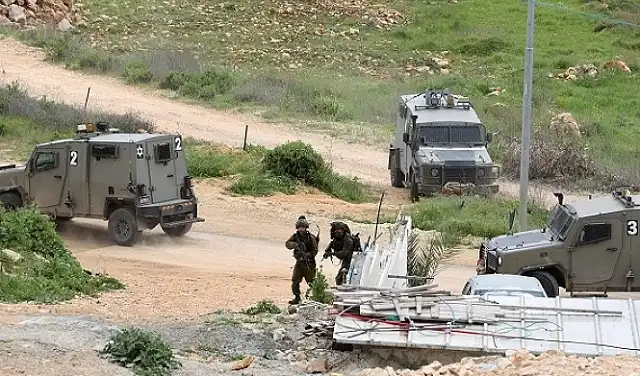
The Israeli occupation forces continue their aggression on the city of Tulkarm and its camp for the 43rd consecutive day, and on the Nour Shams camp for the 30th day, amid military reinforcements, siege and extensive raids on homes.


Local sources said that the occupation forces sent military reinforcements towards the city and its two camps, and deployed infantry squads in the camps' alleys and surroundings, amidst the firing of live ammunition and sound bombs to terrorize the citizens.


The occupation forces also continue their military deployment in front of the houses and residential buildings that they seized and turned into military barracks, on Nablus Street, which connects the Tulkarm and Nour Shams camps, while stopping and searching passing vehicles, in addition to checking the identities of citizens and detaining them for interrogation, some of whom are subjected to abuse, especially young men.


In Tulkarm camp, the occupation forces intensified their foot patrols in all its neighborhoods, and were stationed in the Shuhada, Al-Khidmat and Al-Murabba’a neighborhoods, and raided homes and shops after breaking down their doors, blowing them up and vandalizing their contents, while firing bullets randomly, at a time when the camp is suffering from comprehensive destruction in the infrastructure, and in the homes that were subjected to total and partial demolition, vandalism and burning, while the rest of them were turned into military barracks.


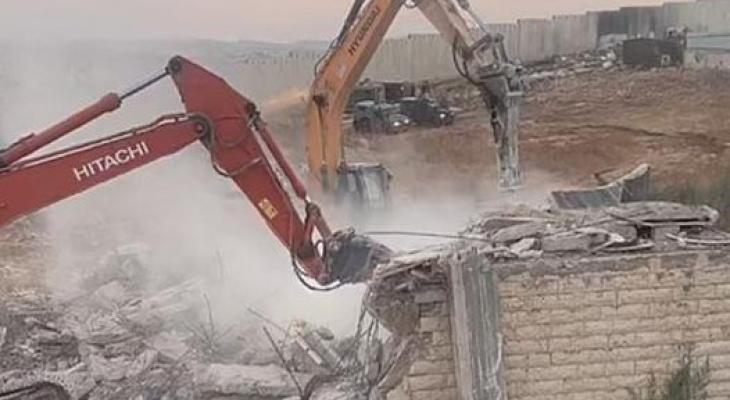
In Nour Shams camp, the occupation forces continue their tight siege on it, as the aggression enters its second month, accompanied by storming homes in the Damj neighborhood, where they proceeded to destroy their contents after searching them and subjecting their residents to interrogation, amidst the sounds of gunfire, coinciding with the destruction inflicted by their bulldozers on the infrastructure, and the complete demolition of homes in the Manshiyya neighborhood, which affected more than 28 homes, as part of their plan to pave roads and change the geographical features of the camp.


The ongoing aggression on the city and its two camps resulted in the martyrdom of 13 citizens, including a child and two women, one of whom was eight months pregnant, in addition to the injury and arrest of dozens, and the forced displacement of more than 9,000 people from Nour Shams camp, and 12,000 from Tulkarm camp.

PALESTINE

Mon 10 Mar 2025 9:29 am - Jerusalem Time

Raids and arrests in the West Bank

This morning, Monday, the Israeli occupation forces launched a campaign of raids and arrests in the West Bank.


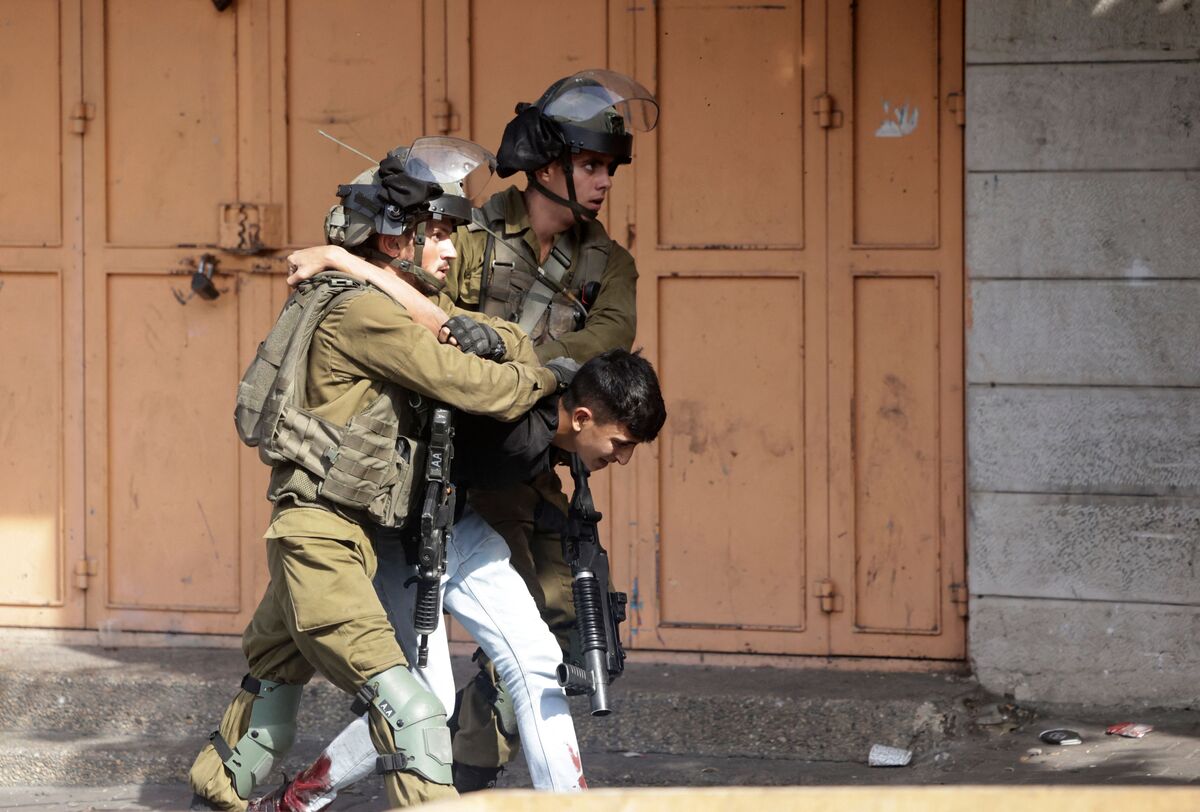
In Hebron, she was arrested.   The occupation forces released the prisoners: Amjad Al-Hamouri, Saeed, Othman, Nidal, Moataz Al-Qawasmi, Munther Al-Jubeh, Yousef Abu Hussein, Muhammad Abu Hadid, and Ashraf Badr, after raiding and searching their homes in the city of Hebron.


The occupation forces also raided a number of citizens’ homes in the town, searched them, and wreaked havoc on their contents, and arrested: Amer Nidal Amer Abu Maria, and Majd Zuhair Muqbil.


Meanwhile, these forces stormed Kifah Muqbil's house and seized his wife's vehicle.


In the same context, the occupation forces threw tear gas bombs in the Al-Dhahr area, during the pre-dawn meal, towards citizens’ homes, which caused suffocation, and they were treated in the field.


In Nablus, occupation jeeps stormed the eastern and central areas of the city, raided a house in the vicinity of the eastern complex, searched it, tampered with its contents, and fired live bullets inside, causing damage inside.


The occupation forces also searched a number of houses in the Old City and its surroundings, and at Zawata roundabout to the west, and ransacked their contents. No injuries or arrests were reported.


In Bethlehem, the occupation forces arrested the freed prisoner Khaled Aziz Al-Fahar (42 years old) from the village of Dar Salah to the east, and Adi Abu Mufreh (32 years old) from the town of Janata to the east, after raiding and searching their homes.


In Ramallah, the occupation forces arrested the two young men, Omar Akram Sharaka and Suleiman Omar Nakhleh, during a large-scale raid campaign carried out in the camp.


In the same context, the occupation forces raided several homes during their storming of the town of Silwad to the east, the villages of Jifna to the north, and Kharbatha to the west, without any arrests being reported.


In Qalqilya, the occupation forces stormed the city from its southern entrance and spread out in several neighborhoods, including "Ghayatha, Kafr Saba, and Khallet Nofal", and arrested the citizen Imad Jaber in his thirties, and also arrested the wife of the prisoner Ahmed Salmi, "Umm Yamen", after raiding their homes, searching them and wreaking havoc in them.


ARAB AND WORLD

Mon 10 Mar 2025 9:29 am - Jerusalem Time

US envoy: An agreement soon with Hamas to release prisoners in Gaza

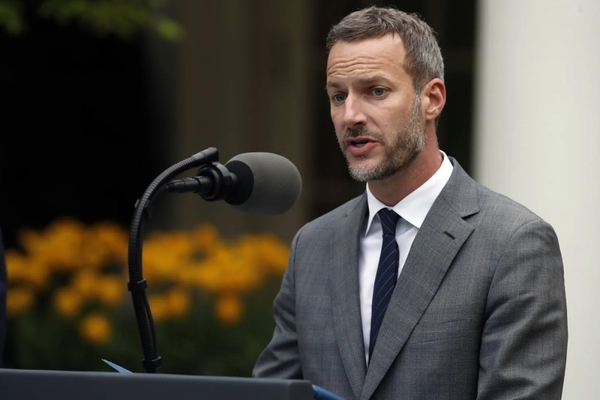
US President Donald Trump's hostage envoy, Adam Boehler, defended his direct talks with Hamas officials on CNN Sunday, rejecting intense criticism from Israel and its supporters in the United States.


“We have a real chance of some movement forward, of seeing the hostages home in the next few weeks,” said Boehler, a Jewish American with a successful business background (who served in the first Trump administration), in a series of interviews with American media.


"The people I've met with from Hamas are regular people, they don't have horns coming out of their heads, they're like us, and they're nice people," he said on "State of the Union" with host Jake Tapper, stressing that "they're not agents of Israel; we have our own interests."


In response to Tapper's question (in the CNN interview), Boehler said that Hamas's proposal for a "long-term truce" may be on the horizon, "where Hamas lays down its weapons, where it agrees that it will have no future political role in Gaza."


Some of Boehler’s comments have upset senior Israeli officials, who told The Times of Israel they were surprised to hear the envoy’s comment that the United States “is not an agent of Israel.” In a series of interviews Sunday, the US special envoy for prisoner affairs, Adam Boehler, revealed the contents of his meeting with Hamas in Qatar.


Boehler had disclosed the proposal that Hamas had presented to the Americans in direct talks he had with its senior officials. He revealed that the United States does not rule out concluding a "truce" between Hamas and Israel for a few years.


Envoy Boehler said Hamas "offered a deal that included the release of all prisoners on both sides, including a ceasefire of five to 10 years, where Hamas would disarm, and the United States, along with other countries, would help ensure that there would be no more tunnels, no more military activity, and that Hamas would no longer engage in politics."


The direct talks between the United States and Hamas, held in parallel with indirect negotiations mediated by Qatar and Egypt, focused on the release of American hostages still held in Gaza, although Boehler stressed that the ultimate goal was the release of all hostages.


“We were not prepared to sit for two weeks,” Boehler told Israel’s Channel 12, declining to say when his meetings with Hamas would begin or how many meetings had taken place. Asked by Channel 12 whether he “realistically” believed that “Hamas would eventually agree to lay down its arms and not be part of the political future of Gaza,” he replied: “I believe so.”


While his meetings focused on the only living American hostage, Aidan Alexander, along with the bodies of four dead American captives, Buehler stressed that the talks were aimed at reaching a broader deal for all hostages.


“There is no need to fear that the president of the United States, or I, or anyone in our administration will forget about you,” he told the Israeli public.


Hamas has not yet pledged to lay down its weapons or give up political power.

OPINIONS

Mon 10 Mar 2025 9:28 am - Jerusalem Time

It was a pearl, but it became a graveyard!

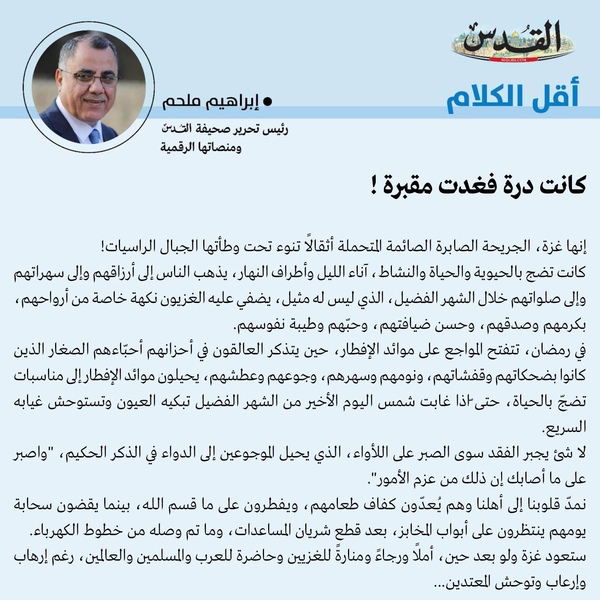
Ibrahim Melhem

Ibrahim Melhem

Opinion Writer

It is Gaza, the wounded, patient, fasting, enduring burdens that make the steadfast mountains groan under its weight!

It was full of vitality, life and activity, day and night. People went to their livelihoods, to their evening gatherings and to their prayers during the holy month, which is unparalleled. The Gazans add a special flavour to it from their souls, with their generosity, honesty, hospitality, love and goodness of soul.

In Ramadan, sorrows bloom at the Iftar tables, when those stuck in their sorrows remember their beloved children who, with their laughter and jokes, their sleep and wakefulness, their hunger and thirst, turned the Iftar tables into occasions full of life, until when the sun sets on the last day of the holy month, the eyes weep for him and mourn his swift absence.

Nothing can mend loss except patience in the face of hardship, which refers the afflicted to the medicine in the wise remembrance, “And be patient over what befalls you. Indeed, that is of the matters [worthy] of determination.”

We extend our hearts to our people as they prepare their basic food and break their fast with what God has allotted, while they spend the rest of their day waiting at the doors of bakeries, after the lifeline of aid was cut off, and the electricity lines were connected.

Gaza will return, even after a while, as a hope, a beacon for the Gazans, and a presence for Arabs, Muslims, and the world, despite the terrorism, intimidation, and brutality of the aggressors...

PALESTINE

Mon 10 Mar 2025 9:23 am - Jerusalem Time

Gaza Ceasefire: Waiting for Negotiations Developments, Israeli Delegation Heads to Doha

Israel continues its violations of the ceasefire agreement in Gaza, while evading the implementation of the requirements of the second phase of it, as its drones and vehicles fire daily, targeting Palestinian homes and gatherings; while it has cut off the only electricity line from it to Gaza, while the Palestinians rely mainly on generators and fuel to provide themselves with electricity.


The only electricity line from Israel to Gaza operates the Gaza sewage treatment plant, and as a result, Gazans will be forced to discharge their sewage into the sea, which could have serious environmental consequences.


An Israeli delegation will head to the Qatari capital, Doha, on Monday to discuss the second phase of negotiations, after the office of Prime Minister Benjamin Netanyahu announced that the delegation would be sent to "advance the negotiations."


The US envoy for prisoners' affairs, Adam Boehler, announced on Sunday that his meeting with Hamas officials was "very useful," expressing his confidence that an agreement could be reached "within weeks. I believe there is an agreement through which all the hostages can be released, not just the Americans. I understand the fear and concern of the Israelis. We are not agents of Israel."


For its part, Hamas stated that several meetings were held between the movement's leaders and the American envoy in Doha, which addressed how to implement the agreement that aims to end the war and the necessity of obligating Israel to what it signed and entering directly into the second phase of the agreement and implementing all the requirements resulting from it.

ARAB AND WORLD

Sun 09 Mar 2025 10:12 pm - Jerusalem Time

One dead and two injured in Israeli occupation's bombing of Kfar Kila, south Lebanon

A Lebanese soldier was killed and two others were injured on Sunday evening in an Israeli bombardment of the town of Kfar Kila, south of Lebanon.


The Lebanese News Agency reported that the Public Health Emergency Operations Center of the Ministry of Public Health announced that the Israeli occupation attacks on citizens in the town of Kfar Kila led to the martyrdom of a soldier and the injury of two other people, one of whom is in critical condition.


Since the ceasefire agreement came into effect on November 27, 2024, Israel has committed more than a thousand violations of the agreement, leaving more than 84 martyrs and at least 284 wounded, according to official Lebanese data.


The Israeli aggression on Lebanon began on October 8, 2023, and turned into a large-scale war on September 23, leaving 4,115 martyrs and 16,909 wounded, including a large number of children and women, in addition to the displacement of about 1.4 million people.


Israel has evaded completing its withdrawal from southern Lebanon by February 18, as stipulated in the agreement. It has carried out a partial withdrawal and continues to occupy 5 main Lebanese points, without announcing an official date for its withdrawal from them until now.

PALESTINE

Sun 09 Mar 2025 9:38 pm - Jerusalem Time

Smotrich: There are logistical complications in implementing Trump's plan on Gaza

Israel's far-right Finance Minister Bezalel Smotrich said on Sunday that there are logistical complications in implementing US President Donald Trump's plan for Gaza.


Smotrich explained: "If we remove 5,000 people a day from Gaza, it will take a year to implement the Trump plan."


Last February, US President Donald Trump announced his plan for Gaza, which includes the US taking over the Strip and redeveloping it into the “Riviera of the Middle East.”


The plan includes removing nearly 50 million tons of rubble and unexploded ordnance, and resettling about two million Palestinians elsewhere, without allowing them to return to Gaza.


This plan was widely criticized by the United Nations, the European Union, and Arab and Islamic countries, as it was considered a violation of international law and a contribution to the forced displacement of Palestinians.


In contrast, an Arab summit, supported by the European Union, proposed investing 50 billion euros to rebuild Gaza without displacing the population, but the United States rejected this initiative and considered it inappropriate.

PALESTINE

Sun 09 Mar 2025 9:30 pm - Jerusalem Time

Two injured Israeli occupation bullets west of Hebron

Two young men from the town of Idhna, west of Hebron, were injured on Sunday evening by Israeli occupation forces.


The director of the Palestinian Red Crescent in the town of Idhna, Muammar Tamimi, said that the occupation forces handed over two young men to the Red Crescent after they shot them with live bullets near the racist separation and expansion wall built west of the town.


The medical supervisor at Al-Ahli Hospital said that the young man, Saddam Muhammad Badawi Tamizi, arrived at the hospital with a bullet wound to his stomach. He was admitted to the operating room, describing his condition as stable, while the young man, Muhammad Akram Al-Masry (32 years old), was transferred to Al-Meezan Hospital due to being wounded by several bullets in his feet.

PALESTINE

Sun 09 Mar 2025 9:03 pm - Jerusalem Time

Israeli Settlers besiege worshipers east of Nablus

This evening, Sunday, settlers surrounded citizens while they were performing the Isha and Tarawih prayers in the Khirbet Tana mosque, which is part of the Beit Furik lands, east of Nablus.


According to local sources, a group of settlers stormed the ruin and surrounded the mosque while dozens of citizens were performing prayers.

PALESTINE

Sun 09 Mar 2025 7:20 pm - Jerusalem Time

Gaza Truce: Stalled Agreement Awaits Results of Doha Round

A new round of talks to consolidate the truce in the Gaza Strip and efforts to resolve the deadlock over the ceasefire agreement that has been ongoing since early March will begin in Qatar on Monday, without deciding on the option of entering the second phase of the “deal” or extending it, amid accusations from both sides of the crisis of obstructing it.


The tour comes one day before the arrival of Washington’s Middle East envoy, Steve Witkoff, to the region, in developments that, according to experts who spoke to Asharq Al-Awsat, carry greater opportunities to extend the truce and postpone the stalled second phase, especially with Israeli Prime Minister Benjamin Netanyahu’s rejection of this step, which he believes will affect his government.


Experts expected that the participation of the American official would enhance the chances of success of this opportunity.


With the end of the first phase of the deal, early this March, with the release of 33 hostages, including 8 dead, and 1,800 Palestinian prisoners, Hamas refused, according to a statement issued by Netanyahu’s office, to accept the “Witkoff Framework,” which extends for about 50 days and includes the release of half of the living and dead hostages on the first day of the continuation of the talks, while Israel agreed to it, according to the statement.


According to the American website Axios, Witkoff is expected to travel to Doha on Tuesday in an attempt to broker a new agreement, and will join mediators from Egypt and Qatar the day after negotiators from Israel and Hamas began indirect talks. Meanwhile, Netanyahu’s office announced in a statement issued on Sunday that Israel will send a delegation to Qatar to “advance the negotiations.”


The Trump administration is seeking a deal that would release all remaining prisoners, extend the ceasefire beyond Ramadan and Easter, and possibly lead to a long-term truce that could end the war, according to Axios.


For its part, Hamas confirmed in a statement on Sunday that a delegation from its leadership, headed by the head of the movement’s leadership council, Mohammed Darwish, met in Cairo with the head of the Egyptian General Intelligence Service, Hassan Rashad. The two sides discussed the implementation of the ceasefire agreement and the exchange of prisoners in its various stages “in a positive spirit,” while the movement stressed the need to adhere to all the terms of the agreement and immediately go to the second phase negotiations, open the crossings, and allow relief supplies to enter the Strip without restrictions or conditions.


According to the estimates of the analyst specializing in Israeli affairs, Dr. Saeed Okasha, Witkov’s participation “carries an opportunity to avoid the agreement’s failure,” and he expects that the Doha round will in any case go to extending the first stage, and not to go to a second stage in which Hamas might accept concessions that include releasing some hostages in exchange for Israel releasing some Palestinians sentenced to heavy sentences.


Palestinian political analyst specializing in Hamas affairs, Ibrahim al-Madhoun, says: “The Israeli occupation seems to have been forced to go to the second phase of negotiations, but it is putting up obstacles that are obstructing progress towards them, so there is anticipation for the results of the Doha round,” in which Witkoff will participate.


The "Doha Round" comes after talks in Cairo that included Hamas's approval to form a "community support committee" of independent national figures to manage the Gaza Strip until general elections are held at all levels, national, presidential and legislative, according to a statement by the movement on Sunday.


On Sunday, the Israel Hayom newspaper quoted a political source as saying that the Witkoff plan, which Israel agreed to, “will be the starting point for the talks, with Israel showing flexibility if the talks develop positively.”


Hamas’s approval of the “Support Committee” does not guarantee that it will be implemented, especially since Israel will not agree easily and will set conditions, according to Okasha’s estimates, noting that Cairo and Doha’s efforts will continue in the direction of maintaining the agreement, even if it is decided to implement it in stages or extend it for periods, especially since reaching a final settlement and agreeing on the situation on the day after the war does not seem imminent, given “the current Israeli obstacles and Hamas’s inability to impose anything in light of its current weakness.”


In contrast, Al-Madhoun believes that “the occupation, after the direct dialogue between the United States and Hamas, felt anxious and was subjected to pressures that pushed it to negotiate to complete the second phase,” noting that Hamas, by agreeing to establish the “Community Support Committee,” confirms that it is interested in ending the war, is working to reassure the United States, and is keen to strengthen its relations with Cairo, Doha, and other Arab capitals.


Al-Madhoun expects three possibilities for these negotiations: the first is the failure of the negotiations due to Israel’s lack of readiness to make any new concessions and its forced entrance to the negotiating table, in addition to a second possibility that includes a partial agreement that includes reaching a limited second stage that includes a swap deal in which Israel releases half or a third of the prisoners, without it being a comprehensive deal, in exchange for implementing partial withdrawals from Gaza, facilitating travel, strengthening the humanitarian protocol, increasing the entry of materials into the Strip, and supervising vital projects such as electricity, water, and building hospitals.


The third possibility is to reach a “comprehensive agreement.”

PALESTINE

Sun 09 Mar 2025 6:38 pm - Jerusalem Time

Israel draws up new war plans to pressure Hamas


The Wall Street Journal reported on Sunday that the threat by US President Donald Trump and his envoy to the Middle East, Steve Witkoff, to resume the war on Gaza and kill its people, if Hamas does not release all remaining detainees, coincides with the development of actual plans to implement such a war.


Israel has drawn up plans for a series of escalatory steps to gradually increase pressure on Hamas now that talks to extend a ceasefire for an additional seven weeks in exchange for the release of prisoners have stalled, resuming the 16-month war on the Gaza Strip.


The steps began last week with Israel blocking humanitarian supplies from entering Gaza. Bezalel Smotrich, Israel’s hardline finance minister, said the measures were discussed at a cabinet meeting late last week, and that the next steps would include cutting off electricity and water.


“If these steps fail, Israel could resort to a campaign of airstrikes and tactical raids against Hamas targets,” an Israeli security analyst familiar with the plan told the Wall Street Journal. “Israel could then displace hundreds of thousands of Palestinians who used the cease-fire to return to their homes in the northern part of the Gaza Strip,” the analyst said. “Ultimately, Israel could invade Gaza with a much larger military force than it has deployed so far in the conflict, aiming to hold the territory it effectively occupies while attacking the remnants of Hamas, people familiar with the plan said.”


Many in Israel feel that another invasion of Gaza is unavoidable.


The newspaper quotes Michael Makovsky, a former Pentagon official who is now president of the Jewish Institute for National Security of America, a Washington-based think tank, as saying: “There is a determination to come back and eliminate Hamas no matter what. I believe Israel will go in forcefully and decisively.”


The plan comes as Israel and Hamas have reached a pivotal stage in the talks, with the two rivals holding diametrically opposed positions on key issues in the war, hampering efforts to keep negotiations going.


The United States and Israel want Hamas to release dozens of hostages it still holds, which Hamas has said it will only do under the terms of the ceasefire agreement it signed with Israel on January 15, which went into effect on January 19, and to abide by the three agreed-upon stages.


As an interim step, Israel is offering to extend the ceasefire for a month or so if Hamas continues to release hostages held in Gaza and has set a Saturday deadline for Hamas to comply. Arab mediators said that if Hamas does not do so, Israel has warned negotiators in the ceasefire talks that it will gradually escalate its punishment of Hamas to the point of returning to full-scale war.


The mediators said Hamas insists on opening talks on ending the war and refuses to discuss disarmament.


On Wednesday, Trump warned Hamas and the people of Gaza in a social media post that if they did not immediately release all remaining hostages in Gaza, “you are dead!” A day later, Trump and his envoy Witkoff suggested that the United States and Israel take joint action against Hamas. Some Israeli security analysts say Israel is in a much better position to enter Gaza than it was at the start of the war. Its ammunition stockpiles have been replenished, the restrictions and pressures imposed on it by the Biden administration have been lifted, and it no longer needs to keep large numbers of troops trapped on its northern border to protect against an attack by Hezbollah.


“Israel has destroyed much of Hamas’s fighting force and much of its infrastructure, including weapons-making facilities and key tunnels that connect important military sites. Foreign aid to the group has been cut off, and Israel believes it has killed 20,000 fighters, including senior commanders. While Hamas has managed to recruit thousands, they are inexperienced and will have difficulty training without becoming targets,” the paper claims.


The analyst, who has been briefed on Israel's plan, said the initial stages of escalation could take up to two months, during which time Israel could begin to remobilize its forces for a major invasion of Gaza with enough forces to hold the ground.


The newspaper quotes Yaakov Amidror, the former Israeli national security adviser, as saying: "There is no way to eliminate Hamas without occupying Gaza." Amidror said that Israel would need at least six months to a year to subdue Hamas.


Despite its weakened state, Hamas is likely to survive another round of fighting, said Tahani Mustafa, a senior Palestinian analyst at the International Crisis Group, a conflict resolution organization. “I think there has been an underestimation of Hamas’ numbers, its operational capacity, how it has managed to sustain such a long-term insurgency,” she said. “And in terms of its numbers, it doesn’t necessarily seem to be diminishing. I think its recruitment has gone up a lot.”


Hamas is deeply unpopular in Gaza, Tahani said, but the violence of the war and the lack of an alternative ensures its support.


Any effective takeover of Gaza would require Israel to dismantle the rest of Hamas’s extensive tunnel system, much of it still intact, in a laborious and destructive process, analysts said. Without a clear alternative to Hamas and a way to win over Gazans, some warned, Israel would remain mired in a long war of attrition.


Israel will face challenges in returning to war while Hamas still holds 59 hostages, including as many as 24 believed to be alive. Israel has acknowledged that at least 14 have been killed in military activity, including airstrikes. Israeli opinion polls have shown that a strong majority of the public supports moving to the next stage of the ceasefire, which would return the remaining living hostages to their homes in exchange for a permanent end to the war.

PALESTINE

Sun 09 Mar 2025 5:44 pm - Jerusalem Time

Israeli occupation blows up a house in Jenin, northern West Bank

The Israeli occupation forces blew up a house on Mahyoub Street in Jenin, north of the West Bank.


The Israeli occupation forces continued their aggression on the city of Tulkarm and its camp for the 42nd consecutive day, and for the 29th day on the Nour Shams camp, amid military reinforcements accompanied by a strict siege, forced displacement, and raids on and destruction of homes.


The Palestinian News Agency (WAFA) reported today, Sunday, that the occupation forces sent military reinforcements towards the city, its two camps, and the Dhnaba suburb to the east, and deployed their vehicles and infantry squads in the streets and neighborhoods, and intercepted the movement of vehicles and citizens and subjected them to search and scrutiny of their identities.


The agency quoted local sources as saying that the occupation forces deployed infantry squads last night in large numbers in the streets and neighborhoods of the Dhnaba suburb, and were stationed in the Attar platform area, stopped citizens’ vehicles, checked their identities, especially the young men, and searched them, abused them, and assaulted them, especially the residents of the two camps. They arrested Nasser Izzat Tabikh and Muhammad Shabrawi, who are residents of Nour Shams camp, and Muhammad Abu Tahoun from Tulkarm camp.


The occupation forces also tightened their military measures in the suburb, especially the area adjacent to and overlooking the Tulkarm and Nour Shams camps. They intercepted a Red Crescent ambulance while it was on its way to evacuate a patient from the area, searched it, and forced its crews to leave.


The occupation forces continue their military deployment of heavy machinery and bulldozers in front of the houses and residential buildings that they seized and turned into military barracks, on Nablus Street, which connects the Tulkarm and Nour Shams camps, in conjunction with stopping passing vehicles and searching them, in addition to checking the identities of citizens and detaining them for interrogation.


PALESTINE

Sun 09 Mar 2025 5:21 pm - Jerusalem Time

Statement issued by Hamas regarding developments related to the ceasefire agreement

A Hamas leadership delegation headed by Mohammed Darwish, head of the movement's leadership council, met with the head of the Egyptian General Intelligence Service, Major General Hassan Rashad, in Cairo, where a number of prominent issues related to the ceasefire agreement and prisoner exchange were discussed, according to a statement issued by Hamas.


According to the statement, the Hamas delegation expressed its thanks and appreciation for the Egyptian efforts made to confront the displacement plans, and also expressed its support for the outcomes of the Arab Summit, especially the plan to rebuild the Gaza Strip.


The delegation stressed the need to adhere to all terms of the agreement, stressing the importance of starting the second phase negotiations immediately, including opening the crossings and allowing humanitarian aid into the Strip without restrictions.


The Hamas delegation also announced its approval to form a community support committee of independent national figures to manage the Gaza Strip until the general Palestinian elections are held.

PALESTINE

Sun 09 Mar 2025 4:57 pm - Jerusalem Time

Netanyahu government cuts electricity to Gaza Strip

The Israeli occupation authorities announced, on Sunday evening, a complete power outage in the Gaza Strip, in continuation of its ongoing violations of the ceasefire agreement, which it is trying to evade by all means.


This came according to a decision issued by Israeli Energy Minister Eli Cohen, who is considered loyal to Prime Minister Benjamin Netanyahu.


In the brief decision, issued in the name of the Ministry of Energy, Cohen said that he was authorized, by virtue of the powers entrusted to him, to stop selling electricity to the Gaza Strip, which would lead to an immediate halt in the flow of electricity to the Strip.


This comes in light of threats issued by US President Donald Trump and his Middle East envoy, Steve Witkoff, to resume the war on the Strip if Hamas does not comply with Israeli demands. Meanwhile, Israeli reports in recent days have indicated that the occupation is planning to implement escalation stages that include cutting off electricity and water, launching air strikes, and eventually reoccupying parts of Gaza as part of a large-scale war, once again.


In contrast, on the same day, former National Security Minister Itamar Ben-Gvir called for bombing humanitarian aid warehouses in Gaza, stressing that Israel "must starve Hamas fighters and their supporters" of civilians before resuming the war of extermination on the Strip.


With the end of the first phase of the prisoner exchange agreement, the Israeli government decided to evade the obligations of the ceasefire agreement in the Gaza Strip and the prisoner exchange agreement, which entered into force on January 19, and continues to refuse to negotiate the second phase, while announcing the cessation of the entry of aid into the Gaza Strip.


Netanyahu had said in a video statement in English, issued late Sunday evening, in which he thanked US President Donald Trump for his support for Israel, stressing that Tel Aviv had adopted the "Witkoff Plan" for the release of hostages in the Gaza Strip, which stipulates the release of half of them on the first day and the other half on the last day, and he said that "Hamas opposed this and set completely unacceptable conditions."


On that day, Netanyahu referred to stopping aid to the Gaza Strip, claiming that "Hamas is stealing humanitarian supplies and preventing (Gaza residents) from receiving them," adding that "Israel will take additional steps if Hamas continues to hold hostages."

PALESTINE

Sun 09 Mar 2025 4:52 pm - Jerusalem Time

Suffocation injuries during Israeli occupation's storming of Qusra, south of Nablus

This evening, Sunday, a number of citizens suffered from suffocation, after the Israeli occupation forces stormed the town of Qusra, south of Nablus.


According to local sources, the occupation forces stormed the town from the north, amid heavy firing of gas and sound bombs, which led to a number of citizens suffering from suffocation.


The town witnesses daily repeated raids by the occupation forces, who continuously fire bullets, tear gas and sound bombs.