The first day of the fourth round of negotiations between the Lebanese and Israeli sides concluded in the American capital, Washington, on Tuesday evening. This round comes amidst complex field conditions and a wide-ranging Israeli military escalation targeting Lebanese territories. The delegations are scheduled to continue their meetings on Wednesday to complete the discussed issues.
This round is a continuation of a negotiation process sponsored by the United States of America, preceded by three intensive rounds held during April and May. These direct meetings aim to find a permanent formula for halting the combat operations that have ravaged the border region and led to the displacement of thousands of civilians from their villages.
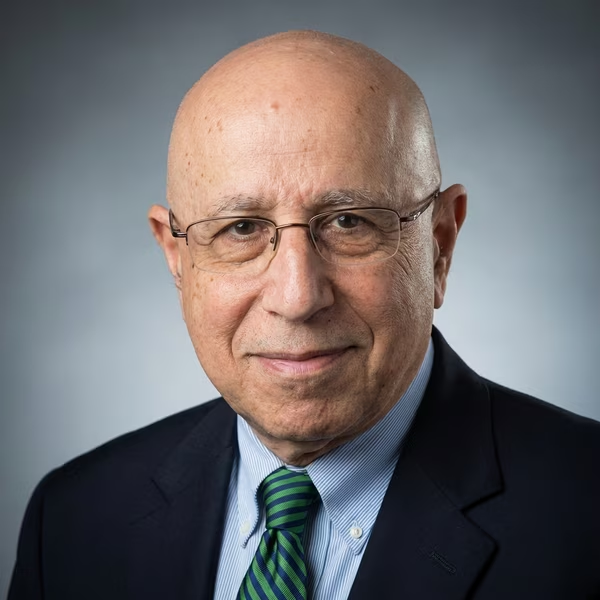
For his part, the US Ambassador to Lebanon, Michel Issa, expressed remarkable optimism after the conclusion of the first day's deliberations, confirming in press statements from outside the US State Department headquarters that the talks are moving in a positive direction. Issa pointed to strong indicators that give hope for the possibility of reaching a final agreement between Beirut and Tel Aviv very soon.
In a related context, media sources revealed that the opening session of this round lasted for more than seven continuous hours of technical and political discussions. The discussions primarily focused on the issue of solidifying the fragile ceasefire that came into effect in mid-April, which faces major challenges threatening its collapse before its extension expires next July.
Lebanese Prime Minister Nawaf Salam affirmed in an official statement that the top priority for the Lebanese state is to solidify the ceasefire in all areas without exception. Salam stressed that the negotiation path represents the rational and least costly option for the Lebanese people in confronting the war machine, considering it the fastest way to restore national sovereignty.
Salam added in his statement that unifying national efforts under the umbrella of the state is the only guarantee to end the Israeli occupation and ensure the return of the people of the south to their cities and villages from which they were forcibly displaced. He called on all internal parties to support the official Lebanese position at this sensitive stage in the country's history to ensure the extraction of national rights.
On the internal Lebanese front, Hezbollah continues to express its strong opposition to these direct negotiations, describing them as a kind of political concession that does not serve the interests of the resistance. In contrast, the official authorities in Beirut insist on the necessity of exhausting all diplomatic means to stop the aggression and protect civilians from indiscriminate shelling.
On the ground, Israeli military operations did not stop despite the ongoing dialogue in Washington, as field sources reported a series of airstrikes and artillery shelling on border villages. These repeated violations resulted in civilian casualties and widespread destruction of infrastructure and residential homes, further complicating the negotiation scene.
In response to these attacks, military operations continued from the Lebanese side, with rocket volleys and drones targeting positions and gatherings of the occupation army in the Galilee region and northern occupied Palestine. These field developments confirm the fragility of the current calm and the urgent need for the parties to reach a binding agreement that ends the ongoing attrition.
Political circles are awaiting the results of the second day of negotiations, amidst significant international pressure to end the conflict and prevent its escalation into a comprehensive regional war. The bet remains on the ability of American mediation to bridge views on the contentious points related to final security and border arrangements.
Negotiations are the least costly option for Lebanon and the Lebanese, and our path through them is shorter to end the occupation and return the displaced.