







The US administration's decision to change Tom Barrack's title from Special Envoy to Syria to Special Presidential Envoy for Syria and Iraq has raised widespread questions about the legal and political dimensions of this move. This change comes at a time when relations between Washington and Damascus are undergoing radical transformations, coinciding with Barrack retaining his original position as the US Ambassador to Ankara, the Turkish capital.
Informed sources clarified that this measure primarily aims to overcome legal complexities within the US decision-making circles. Laws governing the work of special envoys require explicit approval from Congress if the official remains in their position for more than one year, which the White House sought to avoid by changing the job title.
Observers believe that the US President preferred to use his direct executive powers to appoint Barrack as a presidential envoy, rather than engaging in lengthy and complex discussions with lawmakers in Congress. This step ensures Barrack's continuity in leading the Syrian file without interruption, while expanding the scope of his duties to include the Iraqi file as well, within a comprehensive regional vision.
In a related context, the US President affirmed that this step aims to enhance strategic cooperation with the governments of Syria and Iraq, praising Barrack's diplomatic performance during the past period. The White House indicated that US relations with both countries are steadily growing, necessitating a high-level diplomatic representation with broad powers.
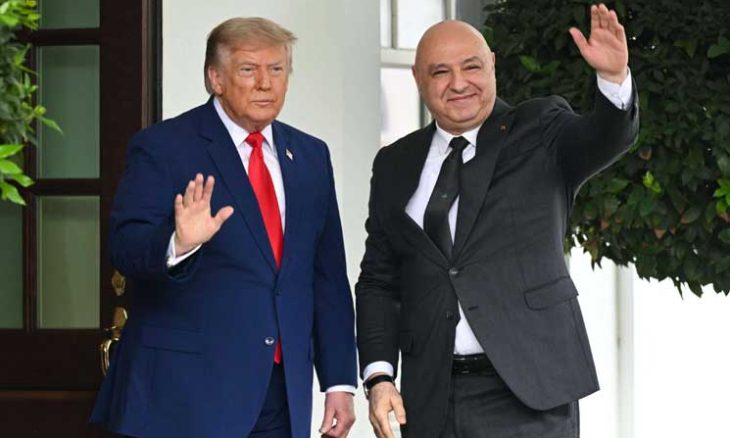
A notable diplomatic development occurred with a phone call between Syrian President Ahmed Al-Sharaa and his American counterpart, Donald Trump. The call discussed ways to develop bilateral relations and address issues of common interest, reflecting the seriousness of both parties in moving relations to a new phase of direct coordination.
For his part, Farouk Bilal, President of the Syrian-American Council, described the current developments as unprecedented and not witnessed in the region for six decades. He explained that the past year saw diligent efforts from Damascus and Washington to connect government institutions with each other, going beyond traditional diplomatic channels to direct technical coordination.
Bilal pointed out that communication channels are now open between the US State Department and its Syrian counterpart, in addition to similar coordination between the US Treasury Department and the Syrian Ministry of Finance. This level of institutional communication reduced the need for a traditional special envoy position, and necessitated elevating the status to a presidential envoy who oversees these ties.
In a different interpretation, Hisham Nashawati, founder of the 'Syria Road to Freedom' organization, considered the new position a political promotion for Barrack, reflecting the administration's absolute confidence in his abilities. He affirmed that the abolition of the special envoy position and its replacement with a presidential envoy means that Barrack has become the de facto guardian of implementing Trump's vision in the Fertile Crescent region.
Nashawati noted that congressional procedures limit the term of envoys to six months, renewable once, which made the change an administrative necessity to ensure Barrack's continued presence. Instead of appointing a new official, the administration chose to promote the current official to ensure stability in foreign policy towards the Syrian and Iraqi files.
Reports indicate that this change may be related to the end of the 'crisis' status that had accompanied the Syrian file in American circles for many years. The current trend leans towards normalizing institutional relations and dealing with the Syrian state as a strategic partner in the region, away from the previous language of escalation.
In a parliamentary move supporting this trend, Congressman Joe Wilson called for the immediate abolition of Syria's designation as a state sponsor of terrorism. Wilson considered that recent positive developments, especially Barrack's appointment as a presidential envoy, necessitate updating US laws to keep pace with the new political reality.
Analysts believe that merging the Syrian and Iraqi files under the supervision of a single envoy reflects Washington's desire to create a balanced regional bloc that cooperates on security and energy issues. Tom Barrack, described as the architect of modern relations between Washington and Damascus, appears to be the most qualified person to manage this complex balance.
The shift from 'crisis management' to 'partnership building' is clearly evident in the nature of the tasks entrusted to Barrack in his new position, where he will work to strengthen economic and security ties. Sources confirm that the coming period will witness more reciprocal visits and agreements that enshrine this new diplomatic approach of the US administration.
In conclusion, Tom Barrack remains the central link in Trump's policy towards the Middle East, combining fieldwork in Ankara with strategic planning in Damascus and Baghdad. This complex role grants him broad influence to shape the features of the next phase in Arab-American relations in a way that serves the common interests of both parties.
Trump's trust in Tom Barrack qualified him to be the guardian of the US administration's vision for the region and the implementer of its strategy in Syria and Iraq.
Share your opinion
Reshaping the American Role in the Region: Tom Barrack as Presidential Envoy to Syria and Iraq