PALESTINE

Wed 09 Apr 2025 1:23 pm - Jerusalem Time

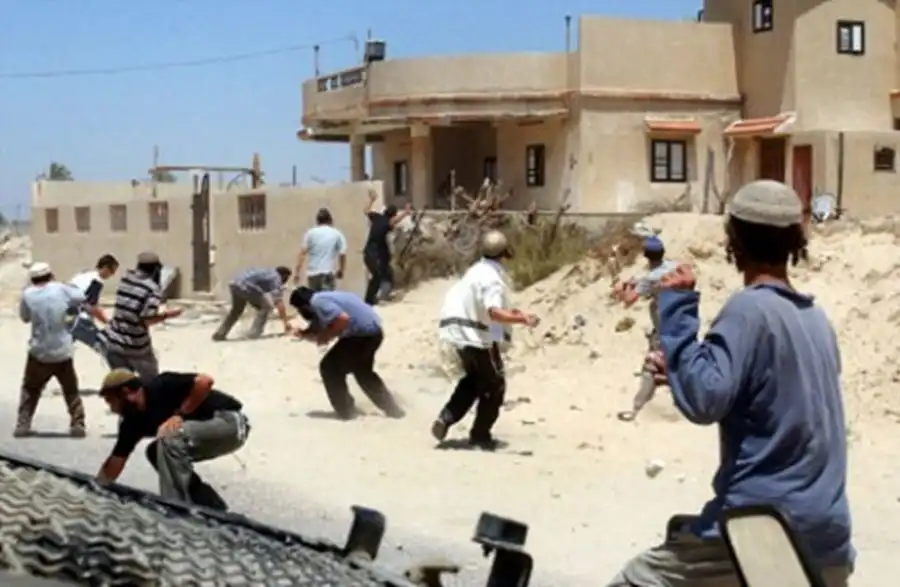
Israeli Settlers bulldoze land and steal gas cylinders in the West Bank

Settlers bulldozed land and stole gas cylinders in the West Bank on Wednesday.


In Bethlehem, settlers began bulldozing agricultural land in the Khallet al-Qatn area on Wednesday.


Local sources reported that settlers began bulldozing 150 dunams of land belonging to the Suwais family.


In Tulkarm, settlers attacked the home of citizen Mufleh Hamad in the town of Ramin, east of Tulkarm, and stole gas cylinders from it.


Ramez Mufleh, the homeowner's son, told local sources that they woke up to the sounds of a group of settlers storming the house's backyard, stealing four gas cylinders, and attempting to steal their vehicle. The family and other neighborhood residents confronted them, enabling them to escape in their vehicles, preventing further thefts.

PALESTINE

Wed 09 Apr 2025 1:21 pm - Jerusalem Time

UNRWA: The Israeli blockade has a devastating impact on Gaza's children.

The United Nations Relief and Works Agency for Palestine Refugees (UNRWA) said on Wednesday that children in Gaza are suffering "devastating" effects as a result of the Israeli occupation's continued closure of the Strip's crossings to the entry of aid and commercial supplies for the sixth week.


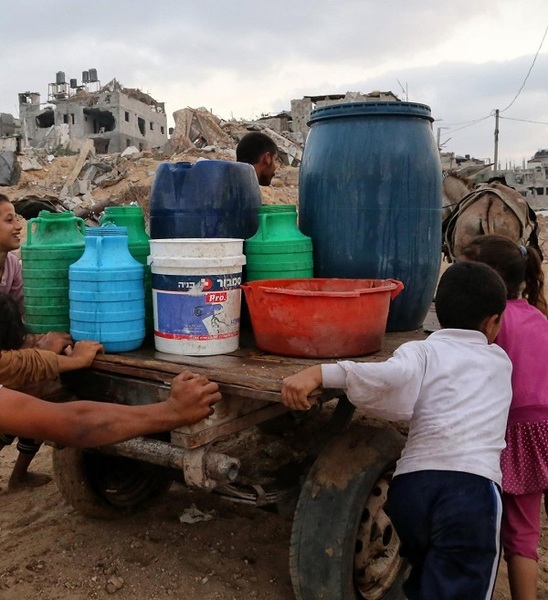
This came in a post by UNRWA on the X platform, accompanied by a photo of two children helping to pull a cart carrying several containers filled with water.


Since March 2, Israel, the occupying power, has prevented the entry of essential supplies, including food, water, and other supplies, into the Gaza Strip following its closure of the crossings, causing a humanitarian disaster and exacerbating famine and thirst.


"In northern Gaza, children aren't looking for their toys or pens, but for water. They're not going to school, they're pushing carts around in search of something to quench their thirst," UNRWA said.


She explained that Israel's imposition of a blockade and the suspension of the entry of aid and commercial supplies into Gaza for the sixth week have led to "an increasing scarcity of clean water, food, shelter, and medical care."


She stressed that the continued Israeli blockade has had a "devastating" impact on the children of Gaza.

The water crisis in Gaza is worsening due to the interruption of water supplies from the Israeli company Mekorot to Gaza City, which constitutes 70% of the total available supply.


The UN agency called for an immediate ceasefire in the Gaza Strip.

PALESTINE

Wed 09 Apr 2025 12:49 pm - Jerusalem Time

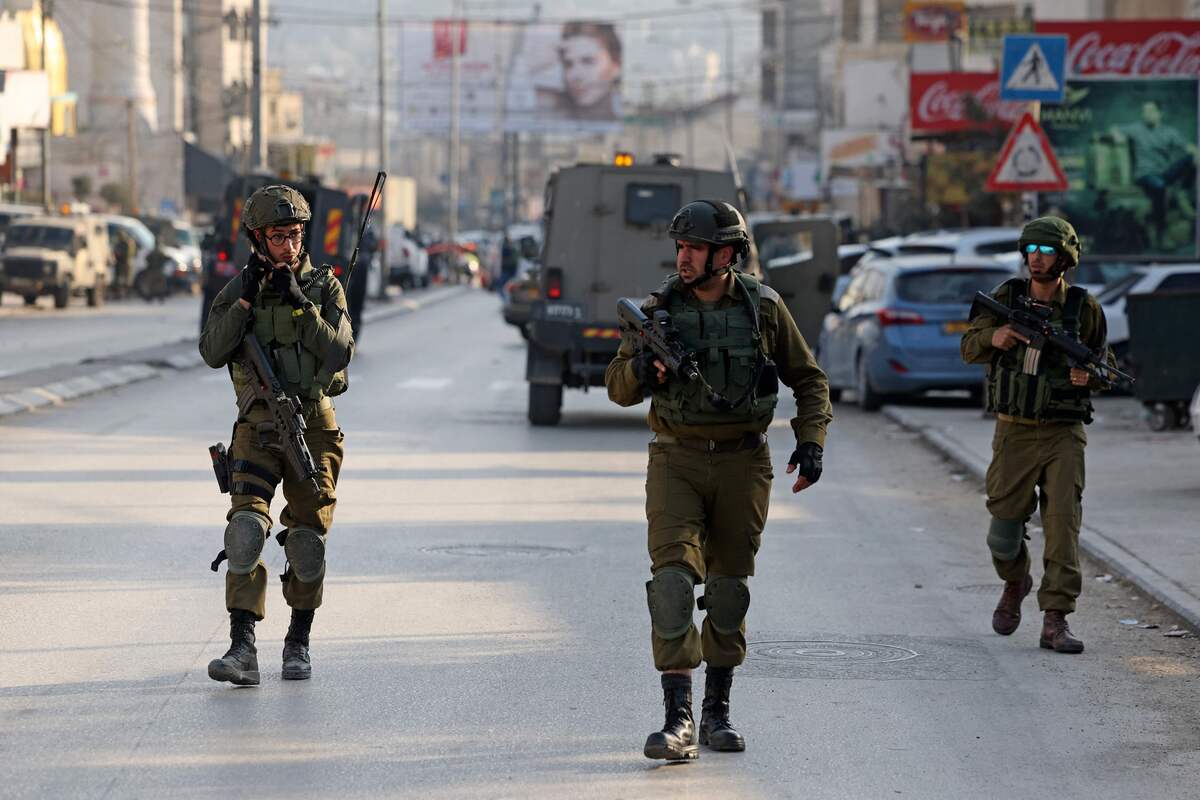
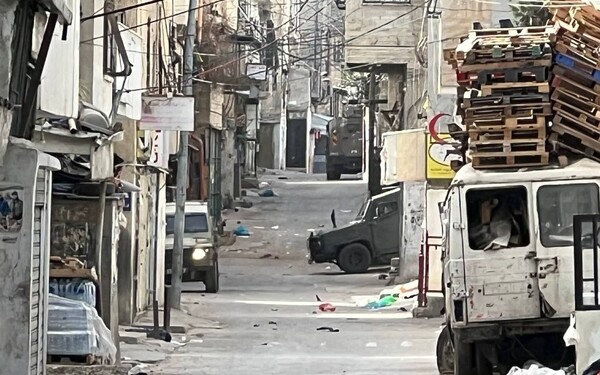
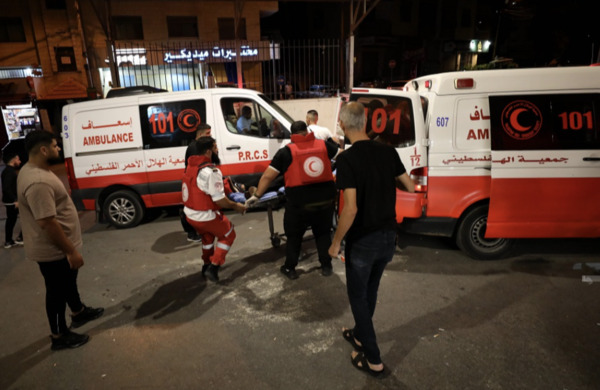
Two people were injured by Israeli occupation forces' bullets during the ongoing raid on Balata camp.

Two citizens, one of them a child, were injured by Israeli occupation forces' bullets during the ongoing raid on Balata camp, east of Nablus.


The Palestinian Red Crescent Society reported that it treated two injuries, one from live bullets to the pelvis and foot, and the other to a child from live bullet shrapnel in the thigh.


She noted that she was facing difficulty in reaching patients in the camp, as the occupation prevented her crews from moving.


Israeli occupation forces have continued their raids on Balata refugee camp since early this morning, launching a campaign of arrests and extensive searches of citizens' homes.


Local sources reported that the occupation forces had turned some homes into military barracks and observation points after forcing their residents to evacuate them at dawn today.


The sources reported that since the early hours of the morning, the occupation forces have been raiding all the houses in the Al-Jammasin and Maghdousha neighborhoods, and have begun raiding and searching the houses in the Al-Badoud neighborhood, and are conducting field investigations with the citizens, while they have arrested a number of citizens, including: Mahmoud Abu Siris, Iyad Abu Hamdan, Wael Hanoun, Mahmoud Yousef Abu Maryam, Jaber Abu Hamada, Ayman Marshood, and the mother of the martyr Mahmoud Abu Hamada.


Press sources reported that the occupation forces targeted journalists on the outskirts of the camp, throwing sound bombs and tear gas at them, resulting in one of them being injured in the foot by a bomb.

PALESTINE

Wed 09 Apr 2025 12:32 pm - Jerusalem Time

368 violations committed by Israeli occupation and settlers in Salfit last month

The Salfit Governorate said it had documented 368 violations committed by the Israeli occupation and settlers against citizens and their property in the governorate during the month of March.


Governor Mustafa Taqatqa said that the policy of house raids, incursions, checkpoints, closures, arrests, and settler attacks has witnessed a significant escalation in the governorate recently. The governorate recorded 89 incursions, 108 raids on homes and facilities, and the occupation carried out approximately 48 detention and arrest operations. Meanwhile, 12 attacks on citizens and their property were monitored, in addition to the seizure of 4 vehicles and property.


Taqatqa added that settlers carried out 17 attacks on citizens and their property, and that the occupation forces set up 33 temporary checkpoints and closed the entrances to towns and villages with iron gates 25 times. He added that there are gates and entrances that have remained closed since the start of the aggression on the Gaza Strip.


He pointed out that the occupation bulldozers proceeded to level 95 dunums of citizens' land in Bidya, Iskaka and Salfit for the benefit of the colonizers, and uprooted and destroyed 220 olive trees in Bidya, Haris and Salfit.


The report also documented the occupation's seizure of two dunams and 791 meters of land in the village of Haris, and the delivery of two notices to stop work and construction in Haris and Yasuf. Meanwhile, the occupation and settlers carried out about seven acts of sabotage, including smashing vehicle windows by throwing stones at them, and vandalizing the contents of homes after raiding them. In addition, a boy was injured by occupation bullets in the town of Bidya, and 15 others sustained injuries and bruises as a result of settler attacks.

PALESTINE

Wed 09 Apr 2025 12:08 pm - Jerusalem Time

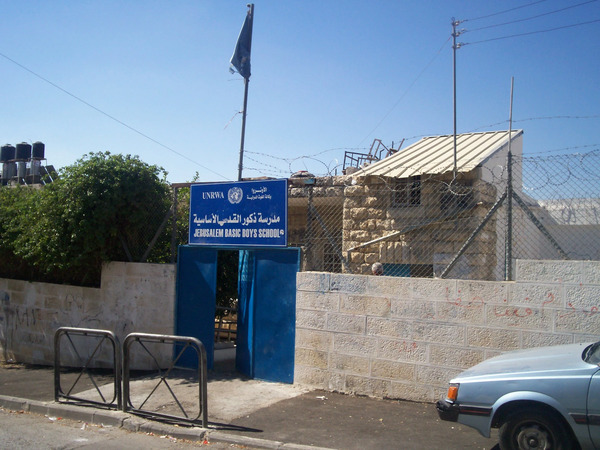
Statement issued by the Palestinian Education Coalition regarding the closure of UNRWA schools in occupied Jerusalem.

Amid the ongoing escalation targeting the Palestinian educational infrastructure, the unjust step taken by the Israeli occupation authorities to close UNRWA schools in the Shuafat refugee camp in occupied Jerusalem constitutes a flagrant violation of educational and humanitarian rights recognized by international conventions and reveals a premeditated intent to undermine one of the most important pillars of Palestinian resilience: the right to education.


This arbitrary decision does not fall within the framework of an administrative or regulatory matter, as the occupation claims. Rather, it comes within the context of a systematic policy aimed at undermining the Palestinian presence in Jerusalem by emptying the city of its educational institutions and depriving its children of their most basic guaranteed rights, foremost among which is the right to a quality, safe, and sustainable education. It is, in essence, a blatant violation of international conventions, foremost among them the Universal Declaration of Human Rights, the International Covenant on Economic, Social and Cultural Rights, and United Nations resolutions that have repeatedly emphasized that education is an inalienable right, especially in times of conflict and displacement.


The closure of UNRWA schools constitutes a historic setback that shakes the very essence of the Palestinian entity. The impact goes beyond depriving thousands of children of their legitimate right to education; it extends to undermine the foundations of the Palestinian social fabric, threatening its unity and stability. This decision, which appears to be a mere administrative measure on the surface, opens the door wide to cycles of marginalization and fuels despair in the hearts of young people, preparing them for a bleak future that limits their hopes and leads them toward violence, extremism, and displacement. It not only strikes at the present but also destroys the dreams of future generations and sows doubt in the feasibility of progress, contributing to the dismantling of the societal fabric and undermining the foundations of security, development, and stability.


Stemming from its national and moral responsibility, the Educational Policy Cooperative, as one of the arms of the Palestinian Education Coalition, and believing that education is the first line of defense for identity and dignity, affirms that what is happening in Jerusalem cannot be separated from a systematic political project aimed at emptying the city of its educational and cultural institutions.


While we emphasize that the closure of UNRWA schools is not merely an administrative measure, but a serious violation of international agreements, we warn that this decision not only threatens the future of thousands of children, but also threatens the collapse of the social protection system and fuels feelings of marginalization and delinquency among the rising generations, opening the door to the spread of violence, extremism, and delinquency.


Based on the above, the Palestinian Education Coalition calls on all national forces, civil society institutions, and international bodies, most notably UNESCO and UNICEF, to assume their moral and humanitarian responsibilities and work to:

• Stop these unjust policies that affect the essence of the right to education.

• Ensure the continuation of education services for refugee children without politicization or diminution.

• Enabling UNRWA to perform its historical and humanitarian role in caring for refugees, based on Resolution 302 issued by the United Nations General Assembly.

Protecting the right to education in Jerusalem is not only a national responsibility, but a true test of the international community's commitment to the principles of justice and human rights. Attacking educational institutions in Jerusalem, Gaza, Jenin, or other Palestinian cities is a direct assault on the future of future Palestinian generations and a blatant attempt to separate Palestinians from their roots and identity.

Hence, we, in the Palestinian Education Coalition, call upon all active forces to close ranks and intensify efforts in defense of the right to education, and to adhere to international conventions as a legal and moral lever to guarantee this right and protect it from tampering and political blackmail.


ARAB AND WORLD

Wed 09 Apr 2025 11:51 am - Jerusalem Time

Iran sticks to its terms in nuclear talks, US renews warnings

Iranian Foreign Minister Abbas Araghchi asserted that a nuclear agreement with the United States is possible during the talks scheduled for Saturday in Oman if the United States demonstrates genuine will. Meanwhile, the United States reiterated its emphasis on taking President Donald Trump's warnings seriously.

Araghchi added, in a statement to Iranian state television during his official visit to Algeria, that next Saturday's talks with Washington will be indirect and without any preconditions, explaining that his country is prepared to remove the ambiguity surrounding its nuclear program.

He said that Iran is confident in the peaceful nature of its nuclear program and sees no problem in building further trust "as long as this process does not constitute a constraint on us or an obstacle to its goals."

Araghchi stressed that the primary goal of negotiations with Washington is to lift sanctions.

Araghchi added that the form of negotiations, whether direct or indirect, is not of primary importance, explaining that the effectiveness of the negotiations, the seriousness of both parties, and their willingness to reach an agreement are more important.

He stated that the format of the negotiations is linked to multiple issues, so it was decided that they should be indirect. He added that Tehran does not believe in negotiations in which the other party imposes its demands through threats and pressure.

Iran's Tasnim News Agency reported that Araghchi will head the Iranian delegation to the upcoming talks in Oman next Saturday, while the US delegation will be headed by Trump's Middle East envoy, Steven Witkoff.

Iranian government spokeswoman Fatemeh Mohajerani said that Tehran and Washington will hold indirect talks in Amman. She added in a press conference that Tehran believes in the principle of dialogue and has previously emphasized that it will engage in negotiations if it is treated with respect.

Asked whether the indirect negotiations would turn into direct negotiations, she explained that the negotiation process must begin to determine what this path would be.

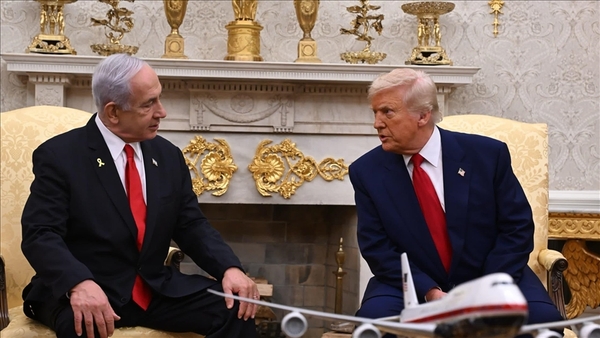
Earlier, during his reception of Israeli Prime Minister Benjamin Netanyahu, the US President announced for the first time that the US would hold direct talks with Iran, adding that the success of these negotiations would be positive for Iran, otherwise it would be in "great danger."

Trump said, "Iran cannot have a nuclear weapon. If the talks don't succeed, I think it will be a very bad day for Iran." He emphasized that "neither Washington nor Israel wants to get involved in any conflict as long as it can be avoided."

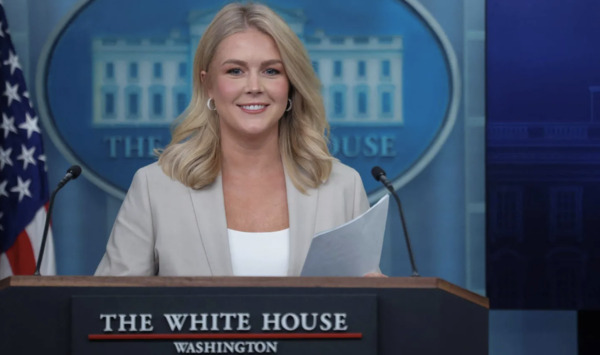
"The Iranians are now coming to the negotiating table, and they understand the importance of taking President Trump's warnings seriously," a State Department spokeswoman told Fox News.

PALESTINE

Wed 09 Apr 2025 11:18 am - Jerusalem Time

Israeli occupation continues its aggression on Tulkarm, amidst destruction and devastation.

The Israeli occupation forces continued their aggression on the city of Tulkarm and its camp for the 73rd consecutive day, and on the Nour Shams camp for the 60th day, amidst widespread raids, arrests, and acts of vandalism and terror that targeted the city's neighborhoods and suburbs, Tuesday night and Wednesday morning.


Local sources reported that the occupation forces stormed the city from its southern entrance with two Eitan armored vehicles and a number of military vehicles, and patrolled its main streets, passing through Al-Alimi Street in the west, and Al-Younis Roundabout in the northern neighborhood, reaching the Shuweika and Artah suburbs, before withdrawing later along the same road.


She added that the occupation forces raided the home of the Hashesh family in the Shuweika suburb and began searching.


The city also witnessed intense activity by occupation forces, particularly in the eastern neighborhood, the Peace Roundabout, and the old Nablus Garage Street. Israeli forces drove against traffic, stopping vehicles across the street to prevent vehicles from passing, amid intense firing of live ammunition and sound bombs to terrorize civilians.


Israeli occupation forces also took up positions around the Thabet Thabet Governmental Hospital, specifically in the area close to Tulkarm refugee camp and the Awad family's office. They arrested and detained the young men, subjecting them to field investigations, without recording any arrests from the area.


In a related context, the occupation forces arrested three young men at dawn today from different areas of the city and its suburbs: Muhammad Abu Zant while he was near the old Nablus garage street, Suhaib Abu Laifa from his home in the southern suburb of Kafa, and Amara Marai from the Rashid neighborhood in the eastern suburb of Dhnaba.


The occupation forces also raided the Ezbet al-Tayah suburb, southeast of Tulkarm, and stormed the home of Abdul Hamid al-Sudani, carrying out extensive searches that included vandalism and destruction of the home's contents.


Israeli occupation forces dispatched military reinforcements to the Tulkarm and Nur Shams refugee camps, deploying infantry units inside their neighborhoods, storming and vandalizing homes, converting a number of them into military barracks, and firing live ammunition. Explosions were heard from time to time.


In Nour Shams camp, occupation forces deployed in the Jabal al-Nasr area, raiding residents' homes while firing sound bombs inside, and repeated explosions were heard in the area.


The occupation forces continue to seize homes and residential buildings on Nablus Street and the city's northern neighborhood, transforming them into military barracks with their vehicles stationed around them. Meanwhile, they are restricting citizens' movement on the street, sections of which have been closed off with earth mounds in both directions.


Last night, Israeli occupation forces set up a flying checkpoint at the Jabara Bridge gate at the southern entrance to the city, subjecting vehicles to a thorough search and inspecting passengers' IDs and mobile phones. A second iron gate was also installed at the Anab military checkpoint east of the governorate, obstructing the movement of vehicles coming from the West Bank governorates to or from Tulkarm.


The occupation's systematic and ongoing aggression on the city of Tulkarm and its two camps resulted in the martyrdom of 13 citizens, including a child and two women, one of whom was eight months pregnant. Dozens were also injured and arrested, and more than 4,000 families were forcibly displaced from the Tulkarm and Nur Shams camps, along with dozens of families from the northern neighborhood of the city after their homes were seized and a number of them converted into military barracks.


The aggression also caused widespread destruction to the infrastructure, including homes, shops, and vehicles, which were completely and partially demolished, burned, vandalized, looted, and stolen. The occupation forces completely destroyed 396 homes and partially destroyed 2,573 others in the Tulkarm and Nur Shams camps, in addition to closing their entrances and alleys with earth mounds.

OPINIONS

Wed 09 Apr 2025 11:11 am - Jerusalem Time

Israeli Newspaper: The prospect of a new nuclear agreement could spark deep concern in Jerusalem

Ynet

Ynet

Opinion Writer

Michael Oren

My mother, a seasoned family therapist, used to say, "The apparent problem is not the real problem." That is, matters that appear more urgent are often used to mask a deeper, more threatening problem. This was the case with the hastily convened emergency summit between President Trump and Prime Minister Netanyahu.

The apparent problem was the trade tariffs imposed by the United States on Israel. It is true that they are serious and could cost Israel more than $2 billion at a time when it cannot afford such losses. However, the tariffs were not the reason Netanyahu rushed to Washington. The real problem is Iran.

During the two leaders' joint press conference yesterday in the Oval Office, Trump surprised his guest with a brief announcement: "We are in direct talks with Iran." It is important to note that the US president has never hidden his desire to talk with Iran. Indeed, immediately upon his return to the White House last January, he sent a letter to Iran's Supreme Leader Ali Khamenei, inviting him to resume talks. But Trump has now revealed that the talks are at their peak, announcing that "there will be a very big meeting" next Saturday. Most surprisingly, these talks are direct between the United States and Iran.

This step was not dared by President Biden, who had hoped to revive the 2015 agreement. Biden's negotiating team refrained from meeting directly with the Iranians, using intermediaries to convey messages.

It is highly likely that Israel was aware of these direct talks, and Netanyahu did not publicly oppose them in his Oval Office statements. Nevertheless, the prospect of a new nuclear agreement is causing deep concern in Jerusalem. The key questions are: How long will the talks take? What is their ultimate goal? Is the goal to reach an agreement that is slightly better than the 2015 agreement, limited to a temporary freeze on Iran's nuclear program? And, ultimately, what will the United States' position be if the talks fail? These questions are of paramount importance to Israel's security. The Iranians are experts at negotiations and will almost certainly try to extend them as long as possible to allow Russia to repair and improve their air defense systems, which the Israeli Air Force destroyed. They will likely agree to a slightly better deal than the 2015 agreement, but they will retain their nuclear infrastructure and reactors. They will demand the lifting of the harsh sanctions reimposed by Trump and the removal of the credible military threat that has been put back on the table.

While Israel works to resolve the apparent issue of tariffs, it must focus on obtaining answers to the real problem: renewed talks between the United States and Iran. We must obtain clear guarantees regarding the talks and their ultimate goals. We must make clear that the only agreement Israel will accept is one that dismantles Iran's nuclear infrastructure, not one that merely freezes it.

Only such an agreement can guarantee Israel's vital security interests and consolidate its military achievements in the region. It must be emphasized that only such an agreement serves the interests of Israel and the entire Middle East, as well as those of the United States itself.

OPINIONS

Wed 09 Apr 2025 11:09 am - Jerusalem Time

Israeli Newspaper: Is the army capable of admitting to the massacre it committed against the aid convoy in Rafah?

Haaretz

Haaretz

Opinion Writer

Rogel Alpher

On the night of March 23, a Palestinian convoy, including an ambulance and fire engines, approached an army force in Rafah. The soldiers opened fire, killing 15 aid workers, including paramedics. Several days later, the bodies and mangled vehicles were found buried in the sand. These are the facts everyone agrees on.

The soldiers claimed that the vehicles were moving suspiciously, that they felt threatened, that the dead, for the most part, were linked to Hamas, that they were collected and buried temporarily to prevent dogs and hyenas from eating their bodies, and that Hamas systematically uses rescue vehicles to transport militants. In contrast, Palestinian eyewitnesses claim that the emergency vehicles were marked by their flashing lights, as is customary, and that the victims were executed by shooting at close range, with some bodies found with their limbs bound.

Recently, media outlets in the United States and Britain published information and testimonies supporting the Palestinian account. The New York Times published a video clip found on a mobile phone in the possession of one of the paramedics, which clearly shows that the convoy clearly identified itself: the emergency lights were on when the forces opened fire. The clip shows the sound of gunfire gradually approaching over a period of five minutes, and at one point, soldiers are heard passing by the paramedics, while the paramedic who filmed the video prays for his life. He was later found shot in the head. Apparently, the testimonies raise allegations of a massacre of aid workers, a war crime, but the Israeli military continues to deny it. In this context, it is worth noting that the force that opened fire was from the Golani Brigade, and on the eve of re-entering the Gaza Strip, a Golani battalion commander told his soldiers: "Everyone we encounter is an enemy. We identify someone, and we eliminate him." Chief of Staff Eyal Zamir ordered an investigation. But can the IDF admit that it committed a massacre against aid workers? Can the IDF spokesperson appear on television and say, in Hebrew and English, that the army apologizes for the killing of 15 innocent aid workers? Can he admit that some of them were tied up and executed at point-blank range? Can he admit that the soldiers lied? Such a public admission, including a commitment to the international community to stop treating Palestinian rescue and aid teams as Hamas operatives, would make it much more difficult for the new Chief of Staff to act in the Gaza Strip as he did on the night of March 18, when he ordered a massive airstrike that ended in the indiscriminate killing of hundreds of innocent Palestinian children, women, and men. This would force not only the army, but all of Israeli society, to recognize that not everyone encountered is an enemy, and that it is not permissible to exterminate everyone we see. But Israeli society is incapable of acknowledging this, and a reaction similar to the Elor Azaria affair [the soldier accused of shooting a wounded Palestinian man in the head as he lay on the ground] would erupt: Public opinion and the government would cry out that restricting the army's actions for legal reasons endangers soldiers' lives. According to the Israeli view, all residents of Gaza are "monsters," even those who work for aid organizations, even their own children. Everyone deserves a bullet to the head at point-blank range, or a missile in the living room. Since the army claims that Hamas uses rescue vehicles to transport militants, every rescue vehicle is automatically considered a target to be destroyed, whether its emergency lights are on or not. There is no sympathy for the Gazans. Even for the Gazan who actually works for a relief organization, whose legs were shackled and who was shot in the head at point-blank range while praying for life. The deep problem, which no investigation can fix, is that Israeli society views the massacre not as a war crime, but as an act of self-defense.

ARAB AND WORLD

Wed 09 Apr 2025 10:55 am - Jerusalem Time

Signed by 950 pilots: The Israeli army is trying to prevent the publication of a petition calling for refusal to serve in the military.

IDF Chief of Staff Eyal Zamir and Air Force Commander Tomer Bar are attempting to prevent the publication of a petition signed by 950 reserve and retired fighter pilots calling for a refusal to serve in the military. The petition is being circulated against the government's continued push for a "judicial reform" plan to weaken the judiciary and its decision to dismiss Shin Bet chief Ronen Bar and Attorney General Gali Baharav-Miara.


The day before yesterday, Air Force Commander Bar held a meeting with senior reserve Air Force officers to prevent the publication of the petition. Former Air Force commanders Eliezer Shkedi, Dan Halutz, and Ido Nehushtan also participated in the meeting, Yedioth Ahronoth reported Wednesday.


Zamir entered the meeting with the officers who initiated the petition "with the aim of supporting the Air Force commander" against those described as "trying to draw the Air Force into political protests," according to the newspaper. He told those gathered, "Give support to Tomer Bar, don't repeat the mistakes of the past, and I expect you to strengthen the Air Force."


Zamir added, "I expect former Air Force commanders to support Tomer Bar, not encourage refusal to serve, and not involve the Air Force in political protests."


The newspaper quoted one of the petition's initiators, a former fighter pilot, as saying about the petition: "The document, unlike what has been published so far, does not address refusal to comply with service. It is not directed at the army at all, but rather is a clear call to the government to return all the kidnapped, even at the price of stopping the war. It has not yet been decided whether and when the petition, along with the names of its signatories, will be published. I must make it clear that it is important for the petition's initiators not to harm the air force."


The petition, which was leaked to the media, read: "We, the reserve and retired soldiers of the air force, demand the return of the kidnapped soldiers home without delay, even at the price of an immediate cessation of hostilities. In the meantime, the war primarily serves political and personal interests, not security interests. Continuing the war does not serve any of its declared goals and will lead to the deaths of the kidnapped soldiers, Israeli soldiers and innocent civilians, and will erode the reserve force."


The petition added: "As has been proven in the past, the kidnapped soldiers can only be returned peacefully through an agreement, while military pressure leads to the deaths of kidnapped soldiers and endangers our soldiers. We call on all Israeli citizens to join this movement and demand everywhere and by any means: Stop the fighting and return the kidnapped soldiers – now. Every day that passes endangers their lives. Any further moment of hesitation is a disgrace."


The Air Force commander threatened reserve personnel with dismissal if they signed the petition, as the signatures on the petition are not yet official and have not been officially published, according to Haaretz.


Since the beginning of the war on Gaza, the Israeli military has dismissed members of the reserve forces who signed petitions urging them to refuse service due to the threat they pose to the lives of Israeli prisoners in Gaza. This includes a reserve fighter pilot who announced last month that he would not report for duty in protest against the resumption of the war on Gaza.

PALESTINE

Wed 09 Apr 2025 10:29 am - Jerusalem Time

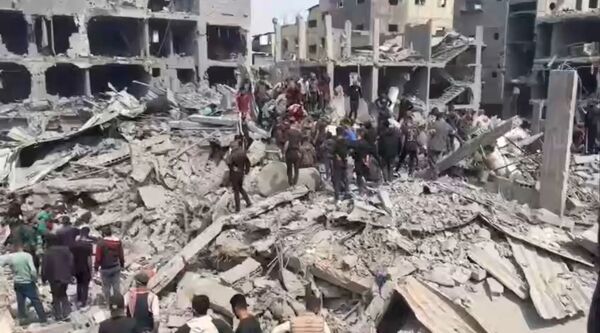
29 Palestinians killed and more than 60 wounded in the Shuja'iyya massacre

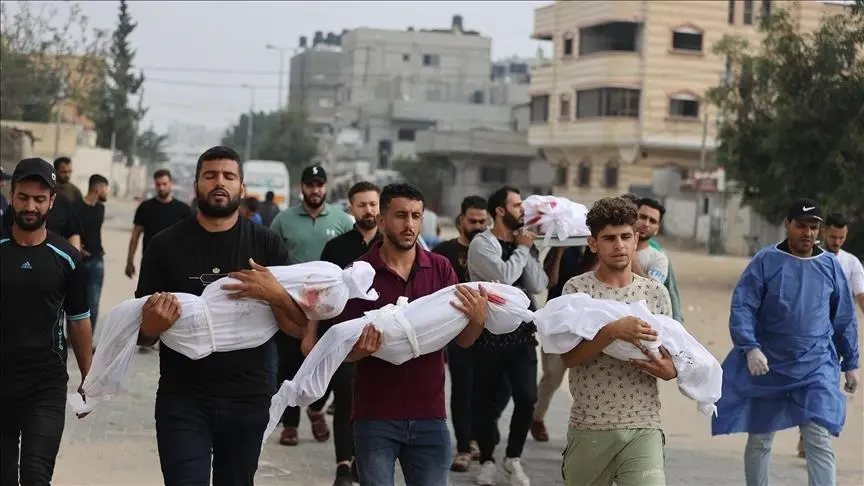
  1. This morning, Wednesday, the Israeli occupation committed a new massacre in the Shuja'iyya neighborhood, east of Gaza City.


The occupation forces bombed a residential building near Al-Hawashi Mosque, killing 29 people and wounding more than 60 others. The search for the missing continues.


The Ministry of Health in Gaza announced on Wednesday that the death toll in the Gaza Strip has risen to 50,846, the majority of whom are children and women, since the start of the Israeli occupation's aggression on October 7, 2023.


It added that the death toll from the conflict has risen to 115,729 since the start of the aggression, while a number of victims remain trapped under the rubble, unable to be reached by ambulances and civil defense teams.


It noted that 36 dead, including three whose bodies were recovered, and 41 injuries arrived at Gaza Strip hospitals over the past 24 hours.


It is noteworthy that the death toll and injuries since March 18, 2025 has reached 1,482 dead and 3,688 injuries.

PALESTINE

Wed 09 Apr 2025 10:11 am - Jerusalem Time

Occupied West Bank: Israeli occupation forces families to leave their homes in Balata camp

Israeli occupation forces stormed Balata refugee camp, east of Nablus, at dawn on Wednesday, forcing some families to leave their homes.


Security and local sources reported that large forces from the occupation army stormed several neighborhoods inside the camp, deployed snipers on the rooftops of some houses, and closed all entrances to the camp.


The same sources added that the occupation forces forced some families to leave their homes and exit the camp. They also raided a large number of homes, searched them, and ransacked their contents. They arrested three citizens: Ahmed Abu Hamada, Khalil Abu Lail, and Mahmoud Abu Siris.


She pointed out that the occupation forces imposed a curfew inside the camp.


The occupation forces also assaulted a 15-year-old child during the raid on Balata camp, east of Nablus, noting that he had been injured by occupation bullets earlier.


It is noteworthy that the aggression on the camp has been ongoing inside Balata camp since the early hours of the morning.

PALESTINE

Wed 09 Apr 2025 10:06 am - Jerusalem Time

Raids and arrests in the West Bank and the occupied territories

Israeli occupation forces launched a campaign of raids and arrests in the West Bank on Wednesday.


In Bethlehem, occupation forces stormed Husan, stationed themselves in several areas, raided and searched citizens' homes, and arrested a number of young men and children, taking them to the courtyard of Abu Bakr al-Siddiq Mosque, where they were interrogated before being released.


In Hebron, occupation forces raided the town of Yatta, south of Hebron, with their military vehicles, and arrested Samir Muhammad Buhais, Jibril Ahmad Makhamreh, and Naaman Ismail Shanran, after raiding and searching their homes.


The occupation forces also arrested Osama Abdullah Al-Sallal, from the town of Bani Naim, at a military checkpoint set up at the entrance to Farsh Al-Hawa in Hebron.


Media activist in the town of Beit Ummar, north of Hebron, Muhammad Awad, said that the occupation forces raided the town and arrested high school student Ahmed Musa Issa Zaqeq (17 years old) after severely beating him in front of his family.


The occupation forces also set up several military checkpoints at the entrances to Hebron, its towns, villages, and camps, and closed a number of main and secondary roads with iron gates, cement blocks, and earth mounds.


Inside the occupied territories, Israeli police arrested Raja Ighbariya, a leader in the "Sons of the Country" movement, today, Wednesday, in the city of Umm al-Fahm, inside the 1948 territories.


Local sources reported that Israeli police raided his home this morning, seizing some of its contents before taking him to Kishon Prison.

PALESTINE

Wed 09 Apr 2025 10:02 am - Jerusalem Time

Olmert: Netanyahu supports settler crimes in the West Bank

Former Israeli Prime Minister Ehud Olmert said on Tuesday that Prime Minister Benjamin Netanyahu "supports the heinous crimes" committed by settlers against Palestinians.

He added in statements to Israeli Army Radio that Netanyahu, as prime minister, "supports the heinous crimes committed by the hilltop youth in the Palestinian territories" and that the government also turns a blind eye to them.

The "Hilltop Youth" are a far-right group of settlers who attack civilians by shooting, setting fire to property, uprooting trees, and establishing outposts.

Since the start of the war of extermination on the Gaza Strip in November 2023, the Israeli army and settlers have escalated their attacks in the West Bank, resulting in the deaths of more than 945 citizens, the injury of nearly 7,000, and the arrest of 15,800.

OPINIONS

Wed 09 Apr 2025 9:53 am - Jerusalem Time

Money between employment for liberation and investment in tragedy

Amin Al-Hajj

Amin Al-Hajj

Opinion Writer


Every time a case is brought against a Palestinian in American or other courts, the old-new question resurfaces: Who holds whom accountable? How did Palestine, the perpetual victim, become a perpetual defendant? And when will this global schizophrenia and hypocrisy, which views the victim as a threat and the executioner as a legitimate partner, end?

In recent years, we have witnessed a wave of lawsuits filed against Palestinian individuals or institutions, who describe themselves as "victims of Palestinian terrorism," under various pretexts. The most recent of these was the accusations against Bashar al-Masri of involvement in financing infrastructure that "served" Hamas in Gaza or was "used" in the October 7 attack. Regardless of the details of the case, its timing, and its purpose—important as all of that is—the bigger picture remains that the same countries that are prosecuting Palestinians on flimsy charges are the same countries that are supplying the occupation with weapons, the latest technology, and intelligence and political support, without any lawsuits being filed against them.

So what about the American weapons that tore apart the bodies of Gaza's children? What about the "smart" bombs that targeted hospitals and killed aid workers? What about the Western governments that openly fund the occupation and grant it diplomatic cover to escape punishment? Isn't this direct support for terrorism, even by their own standards? Why doesn't the Palestinian Authority utilize all its legal and diplomatic tools to hold these countries, their leaders, and their companies accountable, as the occupation does when it sues Palestinians? Why aren't lawsuits filed on behalf of every drop of blood spilled? Why aren't lawsuits filed on behalf of every family wiped out, every child dismembered, every woman buried under rubble, every journalist burned on camera, every prisoner slaughtered? And on behalf of the hospitals, universities, and institutions razed to the ground based on mere "suspicion"? Why isn't an army of lawyers and volunteers around the world recruited to flood the courts and the international judicial system with tens of thousands of lawsuits? Where is the Palestinian legal and political defense system around the world?

At the heart of this equation, another, more cruel paradox appears: Zionist money versus Palestinian money, and Zionist businessmen versus Palestinian businessmen, not to mention Muslims and Arabs. The former has been transformed - for decades - into a strategic weapon, supporting settlements, financing Judaization, and being used as a bridge to normalization and a means of pressure, with the media and political systems it owns and operates. It builds political influence, blackmails decision-makers, and harnesses all its capabilities to serve the occupation with ferocity and consistency, until it has become an actual partner in it and in building a "Greater Israel." They are not ashamed to support it or finance settlements, but rather boast about it, are rewarded for it, and are received with great enthusiasm in the capitals of Arabs and Muslims.

On the other hand, we find in the Palestinian scene a class of businessmen - some of them old, many of them new - who have exploited our people's crises, and ridden the wave of their suffering, turning it into a means of making money without any consideration. What happened and is happening in Gaza today is the best evidence of that. Some of them have immersed themselves in our people's blood, their sustenance, and their medicine, breathing from the lungs of their catastrophe, and feeding off their pain and suffering. They have turned the tears of children into booty, and the groans of the bereaved and the suffering into a "selling" commodity.

Before that, Palestinian money was – in many cases – hostage to personal interests, networks of favoritism and corruption, benefiting from “privileges” offered by the occupation on the one hand, or through rapprochement with circles of political influence on the other, which led it towards “safe” investments, far from the dream of our people and the essence of our national project. Some of its owners were involved in projects that directly served the occupation, and some participated, silently or openly, in establishing infrastructure that “revived” the settlements, or provided logistical services to them, without any religious, moral or national scruples. While our people were being driven to unemployment and groaning under the burden of the siege in Gaza and the West Bank, its workers were “forced” to build what we are supposed to be working to demolish and uproot, because alternatives are not available. This is not a reading of justification, but rather a description of a complex reality with its details.

This reality was not merely a coincidence. The occupation has long worked to create an economic "system" that has made Palestinians "renewable" fuel for it, a factor in its occupation "project," a consumer or promoter of its settlement goods, and even an actor—whether willingly or unwillingly—in the service of its own survival.

But it would not have succeeded in this without the absence of a Palestinian economic resistance policy, in action, not words, which politicians have repeatedly spoken about, and which was the subject of public speeches that inflamed our emotions, when they presented us with dozens of plans and promises, the last of which was the eighteenth government, when it “told us,” in its first months of pregnancy – for the concerns of our people – that is, in October 2019, that it had actually begun implementing the model of “gradual disengagement” from the occupation, in all areas. We stood for a long time and applauded a lot, but it quickly evaporated at the first test, and turned into mere slogans, raised at festivals and forgotten in decision-making rooms. It “left” the day it left, after five lean years, leaving our economy more fragile and exposed than before, and even more “connected” and “dependent.” This is because it – and the seventeen governments that preceded it – over the course of three decades, did not build an alternative national economy, did not support agriculture and industry, and did not promote the culture of boycott and self-reliance as it should have. It left our workers prey to unemployment and poverty, vulnerable to bargaining, and the homeland became a map drawn by aid.

Therefore, every Palestinian, today and every day, refuses to be the only one in the dock while the killers and their supporters escape accountability, or to have justice exploited to serve the "powerful," or for international courts to become tools for legitimizing the occupation, rather than exposing it and its crimes.

Even if it is belated, what we need today is a comprehensive awakening, in which funds are redirected toward liberation, in which legal tools are built to prosecute the occupation and its supporters—individuals and governments—across every land, under every sky, in every court and country, and in which the fig leaf of a global system that supplies the killer with weapons and then condemns the victim because she is still breathing or alive is dropped.


Why isn't an army of legal professionals and volunteers around the world recruited to flood the international courts and judicial system with tens of thousands of lawsuits? Where is the Palestinian legal and political advocacy system around the world?

PALESTINE

Wed 09 Apr 2025 9:31 am - Jerusalem Time

Updated: Israeli occupation begins demolitions in the West Bank and Jerusalem.

Today, Wednesday, the Israeli occupation forces blew up the home of the martyr Mujahid Mansour in the town of Deir Ibzi', west of Ramallah.


In Ramallah, occupation forces raided the home of martyr Mujahid Mansour in the town of Deir Ibzi' and proceeded to rig it with explosives before detonating it, after a raid that lasted for several hours.


Local sources reported that the occupation forces forced a number of families to evacuate their homes in the area surrounding the house.


The sources pointed out that the occupation forces fired live bullets at the martyr Mansour's house after it was blown up.


It is noteworthy that the martyr Mansour was killed by the occupation forces on March 22, 2024.


In occupied Jerusalem, the Israeli occupation authorities forced a citizen to demolish his home in the town of Beit Safafa on Wednesday.


Local sources reported that the occupation municipality forced citizen Alaa Alian to demolish his two-story home.


The occupation authorities force citizens, particularly in Jerusalem, to demolish their homes on their own, claiming they lack permits. Those who refuse to do so have their homes demolished by bulldozers, and the owner is subjected to heavy costs.


The Israeli municipality in Jerusalem refuses to grant Palestinians building permits and demolishes or forces them to demolish their homes. This practice violates international law and humanitarian principles that guarantee the right to housing. This practice is part of the Israeli occupation's systematic practice of forcibly displacing Palestinians from Jerusalem in exchange for expanding settlements in and around the city.


In Beit Hanina, occupation forces demolished a horse stable he owned in the town of Beit Hanina. In August 2022, occupation forces demolished a wedding hall he owned in the town of Issawiya, northeast of Jerusalem. He noted that his losses are estimated at millions of shekels.


In the northern Jordan Valley, the occupation forces demolished a 10,000 cubic meter water tank serving the area's farmers, under the pretext of unlicensed construction.


The border town of Deir al-Balah is known for its irrigated agriculture. Over the past two years, the occupation has destroyed a number of water pumps and demolished solar panels used to power them. Settlers have also stolen agricultural equipment and damaged irrigation networks for the area's irrigated crops.

OPINIONS

Wed 09 Apr 2025 9:30 am - Jerusalem Time

Trump and Netanyahu vs. Humanity

Baha Rahal

Baha Rahal

Opinion Writer

The Trump-Netanyahu meeting at the White House offered nothing new. Rather, it contained sinister assertions that the two men agreed on a policy of genocide and ethnic cleansing, and repeated the delusion of mass expulsion from Gaza and its subsequent appropriation, in accordance with Trump's wishes and Netanyahu's ambitions.

A harmonious meeting between two allies came to confirm both sides' agreement to continue killing us and perpetuating the genocide, ignoring the voices of bereaved mothers, the tears of children, or the calls of the world that watches from afar, motionless, as if they were not witnessing the hundreds of thousands of martyrs and wounded.

The meeting was not merely a political gathering; it was a clear declaration of their disregard for all human values and a blatant disregard for the daily suffering of the people of Gaza under bombardment and destruction. Moreover, the statements they made, even though cloaked in diplomacy, carried within them the promise of more bloodshed and the harbinger of more devastation, destruction, and siege.

In front of the cameras, they smiled, shook hands, and exchanged pleasantries, while on the other side of the world, bodies were being pulled from the rubble, mothers were saying goodbye to their children, and the night in Gaza was darker than ever. Trump did not see those images and that suffering, but rather saw it with the eyes of a thieving investor who aspires to own Gaza and displace its people.

This meeting is not a passing event, but rather a stark reminder that we are facing an alliance that sees us only as numbers to be erased, land to be stolen, and rights to be silently buried.

This is the policy of the new US administration headed by Donald Trump, which is not ashamed to support the occupation by all means and methods. Rather, it is intent on arming it and justifying its crimes, and falsely claims to be defending "peace" while sowing chaos and fueling conflict. Trump, who views the Palestinian cause as a mere bargaining chip, treats Palestinian blood as if it is worthless, and treats the tragedy as if it is an opportunity to strike deals and counter-deals, all based on endless colonial ambitions.

As for Netanyahu, he found in Trump an ideal partner for the same project: the project of uprooting an entire people, erasing their identity, and redrawing the map of the land by force and arrogance. While houses collapse on their owners' heads, and electricity and water are cut off from innocents, they are building a shared dream together, built on the ruins of a people, the remains of a homeland, and the blood that never dries.

What is happening is not just a human tragedy, but a full-fledged crime, a crime the world clearly sees but chooses to remain silent about. The eerie silence, the silence that kills twice: once with shells, once with indifference. What a miserable time this is, amidst what we are witnessing, living, and seeing.


...........


In front of the cameras, they smiled, shook hands, and exchanged flowery phrases, while on the other side of the world, bodies were being pulled from the rubble, mothers were saying goodbye to their sons, and the night in Gaza was darker than ever.

PALESTINE

Wed 09 Apr 2025 9:28 am - Jerusalem Time

Extremist Temple groups publish an imaginary image of the altar being built in place of the Dome of the Chain and for the ritual of offering animal sacrifices on it.

Storming of Al-Aqsa Mosque: 256 settlers and 4 members of the Antiquities Authority under the protection of the occupation, and calls for action.

Extremist Temple groups publish an imaginary image of the altar being built in place of the Dome of the Chain and for the ritual of offering animal sacrifices on it.

The Jerusalem Governorate stated that Al-Aqsa Mosque will remain purely Islamic, no matter how many crimes extremists commit and no matter how intense the attempts at forgery.


Yesterday, the blessed Al-Aqsa Mosque witnessed a massive storming by 256 settlers and four employees of the Israeli Antiquities Authority, under heavy protection from the occupation police and special forces. This storming comes amid escalating calls for mobilization and solidarity by religious and national authorities to confront the alleged escalation of the Temple groups during the so-called Hebrew Passover.

The raid coincided with statements by extremist National Security Minister Itamar Ben-Gvir, who announced the resumption of settler incursions into Al-Aqsa Mosque after Eid al-Fitr. Temple groups also published an imaginary image showing the minister carrying a living sacrifice inside Al-Aqsa Mosque, in an attempt to inflame the religious sentiments of their constituency.

As part of these efforts, Temple activists launched a campaign to smuggle animal sacrifices into Al-Aqsa Mosque, in an attempt to build religious momentum in preparation for the planned raids coinciding with the Jewish Passover holiday, which begins at sunset on Saturday, April 12, 2025, and continues until sunset on Saturday, April 19.

Extremist activist Arnon Segal also posted a new image depicting a mythical biblical altar at the site of the Dome of the Chain, with an imaginary animal sacrifice ritual. The image depicts the altar as if it had been built on the site, surrounded by a number of "temple priests" presumably leading prayers according to biblical legend, with a small lamb being prepared as a sacrifice.

The image shows the legendary stone altar as if it had been built on the site of the Dome of the Chain, to the east of the Dome of the Rock. It was surrounded by a number of "temple priests," a class that led prayers in the alleged temple according to biblical legend. They lit the fire to which the sacrifice was offered, according to that legend. A small lamb is seen in the image being prepared for sacrifice.

Temple groups promote the baseless, delusional claim that the Dome of the Chain was built specifically to obliterate the features of the legendary biblical altar. Between 2010 and 2013, they worked to disrupt a project to renovate the tiles that cover it from above, claiming that this project "obliterates traces of the biblical altar."

Extremist Temple groups are seeking to establish the ritual of animal sacrifice in Al-Aqsa Mosque as part of their effort to change its identity by performing all the biblical rituals there. They consider this to be a "spiritual foundation of the Temple" that paves the way for its physical establishment. The Passover sacrifice occupies the position of the pinnacle of the rituals they seek to impose for two reasons: First, it is the pinnacle of the biblical rituals in the alleged Temple, according to biblical legend...


The second consideration is their belief that it is a gateway to divine salvation. These groups believe that the blood of this sacrifice is one of the elements linked to God's approval and will to send a savior to perform the great miracle by which "the Lord will subjugate the nations to the people of Israel." This is perhaps the central motivation of the "Temple Groups," as salvation groups. Their political work aims to hasten divine salvation, which they view as the only gateway to resolving religious and political conflict in the region and the world.


On the second day of Eid al-Fitr, talk of the Red Cow was renewed across several media outlets and activists from the Christian Zionist movement in the United States, and the imminent ritual of slaughtering the Red Cow. Despite claims that the ritual of purification with the ashes of the Red Cow has not been performed for two thousand years, according to biblical and Talmudic sources that speak of this legend, these sources claim that the date on which this ritual was performed was the second of the Hebrew month of Nisan, which this year was the second day of Eid al-Fitr, Monday, March 31, 2025.

The extremist Temple organizations and the religious Zionist movement call for the realization of the legend of the Red Heifer and the circumvention of the rabbinic prohibition on storming the blessed Al-Aqsa Mosque. The officially accepted rabbinic opinion is based on the fact that any Jew entering the Temple must be completely pure, including purity from the impurity of the dead, from which no Jew is exempt today. Purity from this can only be achieved through the ritual of purification with the ashes of the Red Heifer. Since this ritual has not been performed, the official rabbinate prohibits Jews from participating in storming the blessed Al-Aqsa Mosque, which the rabbinate claims is the site of the alleged Temple. This reduces the number of Zionist Jews participating in the storming.


The so-called Temple organizations are counting on circumventing this ban by finding the red cow and performing the ritual of purification with it on the Mount of Olives, such that the number of those storming Al-Aqsa will reach thousands daily, paving the way for them to obliterate its identity and establish the Temple in its place. They also view the appearance of the red cow and the ritual of purification with its ashes as one of the signs of the coming of the savior and the beginning of the era of divine miracles, which is the goal to which these organizations are dedicated, and it is the common goal that unites Jewish religious Zionism with the Western Christian Zionist movement.

The Temple Institute and the extremist organization “Bon Yisrael” devoted all their efforts to realizing this myth. They worked to revive the priestly class that is supposed to carry out the purification ritual and to produce the tools and clothing required for it. They also seized a plot of land on the Mount of Olives opposite the Dome of the Rock. Meanwhile, the Ministry of Jerusalem Affairs in the extremist Israeli government worked to rehabilitate the road and pedestrian paths to it. They also worked to bring in five red cows by air from the American state of Texas in October 2022, hoping that they would reach the age of two years, fulfilling all the biblical conditions: pure red, having not given birth, been milked, ridden, drawn by a waterwheel, or been scratched. This was achieved in February 2024, which prompted these groups to launch a broad campaign with their allies from Christian Zionism to carry out the purification ritual on April 11, 2024. This was not possible for them to complete for several reasons, the most important of which was the political situation during the war at the time.

Today, these sources say that two of the five cows no longer meet the biblical requirements, and the Talmudic deadline for their slaughter has arrived for the second time since their arrival and their reaching the required age. It should be noted here that the websites of the Temple organizations have not published any explicit calls for the ritual slaughter and purification of the cows. However, their allies in Christian Zionism are talking about the possibility of holding the purification ritual, and some of their sources indicate that this ritual may be held secretly and without prior announcement.

Dozens of settlers stormed the Al-Aqsa Mosque yesterday under heavy protection from the occupation police, amid calls for mobilization, solidarity, and the confrontation of the Temple Mount groups during the so-called Hebrew Passover holiday.

The Islamic Waqf Department reported that the morning raids involved 92 settlers, 95 students from extremist religious schools and Torah colleges, and four employees from the Israel Antiquities Authority. 320 foreign tourists also stormed Al-Aqsa Mosque through the Mughrabi Gate without coordination with the Waqf Department, some of whom joined the settlers on their tours and listened to explanations from representatives of the alleged Temple Mount group.

The settlers carried out the raids in groups, each led by a follower of the alleged Temple. They provided explanations about the alleged Temple and conducted provocative tours and Talmudic prayers in the eastern area of the mosque.

In the second raid, after the noon prayer, Amnon Friedman, the chief rabbi of the alleged Temple community, participated in the raids, as part of a second group that included 65 settlers, in addition to 21 tourists.

Israeli police tightened their security measures at the gates of Al-Aqsa Mosque and around the Old City of Jerusalem, obstructing the entry of worshippers during settlement tours. Extremist Temple groups had called on settlers to escalate their attempts to bring in and slaughter Passover sacrifices into and around the mosque, a week before the official start of the holiday on the 13th of this month.

These calls come amid escalating attempts by settlers to impose their religious rituals on Al-Aqsa Mosque, amid Palestinian warnings of the repercussions of such a move on the situation in the holy city.

In contrast, Palestinian religious and national bodies have issued calls to mobilize the largest possible number of worshippers at Al-Aqsa Mosque, especially in the coming days leading up to the Jewish Passover holiday.

The calls emphasized the importance of maintaining a strong presence at Al-Aqsa Mosque from the early hours of dawn to thwart settler plots and prevent any attempts to bring in offerings or perform Talmudic rituals.

Jerusalemite authorities and religious authorities warned that these attempts represent a dangerous escalation aimed at Judaizing Al-Aqsa Mosque and imposing new facts on the ground. They emphasized that defending Al-Aqsa Mosque is a religious and national duty that calls for increased attendance at the mosque during this sensitive period.

Extremist Temple groups have called on settlers to escalate their attempts to bring in and slaughter Passover sacrifices in and around the mosque, a week before the official start of the holiday on the 13th of this month.

These calls come amid escalating attempts by settlers to impose their religious rituals on Al-Aqsa Mosque, amid Palestinian warnings of the repercussions of such a move on the situation in the holy city.

For its part, the Jerusalem Governorate considered the extremist "Temple Groups" intention to slaughter the "Passover sacrifice" inside and around the blessed Al-Aqsa Mosque in occupied Jerusalem a dangerous escalation that comes in the context of persistent and frantic attempts to target Islamic and Christian holy sites, most notably Al-Aqsa.

The governorate said in a statement that these calls, which coincide with photos and parades published by prominent figures in these settler groups, with direct support and incitement from ministers and officials in the occupation government, headed by extremist Itamar Ben-Gvir, represent a provocation and a blatant violation of Muslims' feelings, and an assault on their religious rights in one of their holiest sanctities, which represents a purely Islamic site recognized by all international laws and all UNESCO and UN resolutions.

The governorate warned that this frantic effort to perform "biblical rituals" inside Al-Aqsa Mosque constitutes a serious assault on the historical and legal status quo (State of Israel), and constitutes a clear violation and interference in the Hashemite custodianship and the official Jordanian role in managing Islamic endowments and holy sites in the Holy City, including the blessed Al-Aqsa Mosque and its courtyards.

"These dangerous attempts are part of a systematic religious war waged by colonialist organizations supported by the occupation government, with the aim of Judaizing Al-Aqsa Mosque and dividing it temporally and spatially, paving the way for complete control over it. These practices will only lead to an explosion in the situation in Jerusalem and the entire region, dragging it toward waves of violence and perhaps a religious war with dire consequences."

The Jerusalem Governorate held the occupation government fully responsible for these calls and any escalation that might result from them. It called on the international community, as well as Arab and Islamic countries, to intervene immediately to curb these extremist groups and prevent Jerusalem from being transformed into an arena for religious conflict by Israel's aggressive policies.

She stressed that "Jerusalem, with its holy sites, is not a place for Talmudic rituals, and the blessed Al-Aqsa Mosque will remain purely Islamic, no matter how severe the crimes committed by extremists and no matter how intense the attempts at forgery and seizure."

PALESTINE

Wed 09 Apr 2025 9:27 am - Jerusalem Time

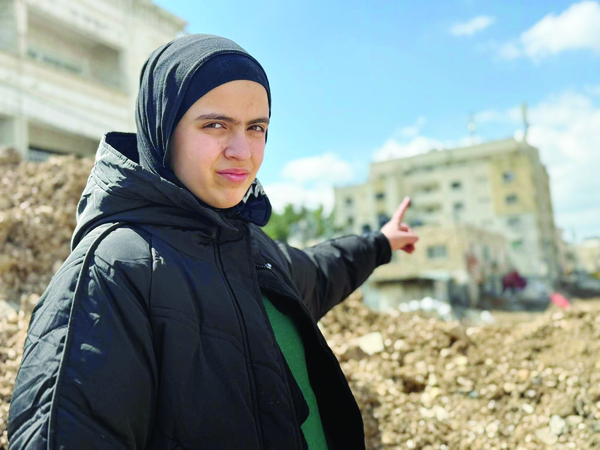
Tishreen, a child from Jenin, tells Quds News about her suffering as a result of displacement after her family was forcibly expelled from their home.

For the past three months, the displaced girl has been repeatedly visiting the buffer zone near her family's home, located within the city limits of Jenin and adjacent to the besieged camp. She feels grief and sadness over being expelled from their home and prevented from returning for about a month.

Twelve-year-old Tishreen told a Quds correspondent that her family lives in the house from which she was displaced six years ago. She has lived the most beautiful days of her life there, filled with memories and happy moments.

She added: "Suddenly, our lives changed and turned into suffering and torment from the moment the occupation forces raided their home, constantly making their lives miserable and turning them upside down."

She continued, "Not a period of time goes by without the occupation forces raiding our home. We have lost our sense of security and stability, and we are constantly gripped by fear and anxiety."

These practices, despite their impact on their lives, made them cling to their homes, insist on living there, and endure the harsh conditions and suffering.

Tishreen adds, "The great disaster that turned our lives into hell began when we prepared everything for the holy month of Ramadan. Then the occupation forces stormed the building we live in, raided our home, and demanded that we evacuate immediately.

With difficulty, Tishreen continued speaking to the Al-Quds correspondent, fighting back tears as she stopped in front of the Al-Qanari building where her family's home is located on the fourth floor. "Without justification or reason, we were surprised by heavily armed soldiers surrounding the building located at the main entrance to Jenin camp. They asked us to leave immediately," she said.

She added, "My father refused to leave and told them our house is located within the city limits of Jenin, but they threatened to kill him if he did not leave."

What Tishreen and her family experienced is typical of the suffering of dozens of families forced to leave their homes, despite their homes being located within the Jenin municipality. While the occupation forces and bulldozers continued to destroy infrastructure, streets, and demolish homes and businesses inside Jenin camp, the aggression extended to areas within the city limits.

Tishreen says, "I consider the period of our displacement and homelessness to be the most difficult days of my life. What law allows me to be close to our home, which is only a few meters away, and which I cannot reach and live a normal life like other people?"

Like other displaced people who were forcibly uprooted and displaced by the occupation, Tishreen can only be patient and pray to God to relieve their distress and stop the aggression against Jenin and its camp.

PALESTINE

Wed 09 Apr 2025 9:25 am - Jerusalem Time

A new Egyptian proposal...an attempt to open a truce window that would stop the killing and ease the suffering of the people.

Dr. Amjad Bashkar: The real solution lies in a comprehensive deal based on the principle of "all for all" and ending the war, not temporary agreements that do not address the roots of the conflict.

Suleiman Basharat: The Egyptian proposal for a ceasefire in the Gaza Strip is a pivotal and important point in the developments of the regional and international political scene.

Adnan Al-Sabah: Egypt has begun to take the initiative with an effective role that gives it increasing international influence and a real opportunity to achieve a political breakthrough soon.

Dr. Amr Hussein: The success of the Egyptian proposal depends on the position of the occupation, which continues to evade its obligations, relying on American protection.

Sari Samour: The chances of success of the new Egyptian proposal depend on American pressure on Israel, which is currently unavailable.

Daoud Kuttab: The proposal may provide some relief for the people of Gaza, but it does not constitute a radical solution to any of the existing political or military problems.


Regional and international political activity is intensifying amid the catastrophic situation on the ground in the Gaza Strip. The new Egyptian proposal and Cairo's attempts to advance a ceasefire in the Gaza Strip coincide with the Cairo summit bringing together Jordan's King Abdullah II, Egyptian President Abdel Fattah el-Sisi, and French President Emmanuel Macron, as well as a phone call from US President Donald Trump. This raises questions about the proposal's success this time around.

According to circulating information, the proposal calls for the release of nine living Israeli prisoners, including US soldier Idan Alexander, in addition to the return of three bodies of US prisoners. In exchange, the proposal includes the release of 300 Palestinian prisoners, including 150 serving life sentences, along with the release of 2,200 prisoners from the Gaza Strip.

The proposal also includes extending the truce for 70 days, resuming negotiations on the second phase of the agreement, allowing the entry of humanitarian aid and fuel into the Gaza Strip, opening the crossings, and providing full information on the remaining Israeli prisoners held by the resistance.

In separate interviews with Al-Quds, writers, political analysts, specialists, and university professors believe that this proposal and the Egyptian initiative, which was presented as an interim solution that includes a temporary ceasefire and a prisoner exchange deal, reveal Egypt's desire to play a pivotal role. However, its success remains contingent on the extent of the American response and pressure on Israel, which continues its military operation driven by political protection from Washington.

Despite the escalating diplomatic activity, writers, analysts, specialists, and university professors explain that many are approaching the Egyptian proposal with caution, given the absence of any indication of a genuine Israeli intent to stop the war and the continued ambiguous American rhetoric.

They believe that the tripartite summit in Cairo, which brought together Egypt, Jordan, and France, appeared to be an attempt to garner European support for the initiative. However, the clarity of the White House's position remains the decisive factor. Without American political will to enforce a ceasefire, the proposal remains vulnerable to marginalization or temporary exploitation to reshuffle political cards.

In Gaza, the humanitarian situation is worsening, but according to writers, analysts, specialists, and university professors, the Egyptian initiative appears to be a temporary window of hope amidst a tragic landscape. However, it does not address the roots of the conflict nor guarantee that fighting will not resume after the truce ends, unless it is accompanied by a comprehensive agreement that ends the war and establishes a future vision for the next phase.


The Trump administration controls the fate of war and peace.


Political science professor Dr. Amjad Bashkar says that the developments taking place in the Gaza Strip for more than a month represent a practical implementation of US President Donald Trump's statements, who previously spoke of "opening the gates of hell." He points out that the US administration, specifically Trump, is the one shaping and directing the current situation in Gaza, controlling the fate of war and peace there.

Bashkar points out that the United States is not content to simply observe the ongoing brutality and genocide in Gaza, but is also in charge and directing it according to a vision that serves its interests. Washington can order Israeli Prime Minister Benjamin Netanyahu to halt the aggression or continue it.

Bashkar explains that "the American position is what sets Israel's red lines and limits its scope for maneuver. This was clearly evident in the previous prisoner release deal, where Netanyahu quickly responded to American pressure and completed the deal despite his reluctance to do so."

Bashkar believes that the Israeli occupation has received political cover from Washington to turn the negotiating table and commit daily massacres in the Gaza Strip without any real international deterrent. He emphasizes that these crimes are justified daily before the international community, amid American silence that indicates direct support.


Fears of losing Israeli prisoners


In his assessment of the American position, Bashkar explains that Washington is well aware that it holds the key to ending the war, but Trump appears reluctant to show that Israel has failed to achieve its military objectives, given fears that the resistance could lose Israeli prisoners, which would place additional pressure on the American leadership.

"Israel remains convinced that further military and humanitarian pressure will lead to the resistance's acceptance of its terms, despite American reservations about the length of the operation without tangible results," Bashkar says. "Trump has given Netanyahu the green light to continue, but that doesn't mean there are no limits to this mandate. Trump also wants to close this file before his visit to the region next month, specifically to Saudi Arabia."

Bashkar believes that Israel's failure to achieve its goals may push Trump to impose an agreement on Netanyahu, or force him to engage in serious negotiations aimed at reaching a prisoner swap deal.

Bashkar points out that Netanyahu cannot refuse any direct request from Trump, and that if the latter decides to force negotiations, the deal will happen.

Bashkar points out that Netanyahu, on the other hand, is seeking to buy more time to prove that military and humanitarian pressure will force the resistance to surrender, but he realizes that any agreement would carry significant internal risks that would threaten the fragile composition of his government.


The Egyptian proposal will not end the war.


Regarding the latest Egyptian proposal, Bashkar believes it will not lead to an end to the war, noting that the resistance understands that an agreement, even if it includes the release of nine Israeli prisoners, will not achieve a ceasefire. Rather, it will merely postpone the crisis and buy time, with a strong possibility of a return to fighting immediately after the ceasefire expires.

Bashkar asserts that the real solution to ending the war lies in a comprehensive deal based on the "all for all" principle—the release of all Israeli prisoners in exchange for Israeli prisoners and a complete end to the war—not in reaching temporary agreements that fail to address the roots of the conflict.

Regarding the recent summit in Cairo, which brought together the leaders of Egypt, Jordan, and France, with Trump participating by telephone, coinciding with Netanyahu's visit to the White House, Bashkar explains that the summit certainly addressed the war on Gaza, but it is not expected to be decisive or lead to a final agreement.

"The tripartite meeting may be a step toward advancing the revised Egyptian proposal, but it cannot be considered a breakthrough moment for the deal, because the key remains in the hands of the United States alone," Bashkar says. "Any progress on this issue requires genuine American will and direct pressure on Netanyahu."

Bashkar asserts that the Cairo summit holds special symbolism at the Arab level, as Egypt and Jordan seek to align themselves with the European position, represented by France, to form a front in support of Arab mediation. However, success remains contingent on a serious American will and a clear decision to stop the war and push for a deal that ends the conflict.


Egyptian-American agreement or coordination


For his part, writer and political analyst Suleiman Basharat says that the new Egyptian proposal for a ceasefire in the Gaza Strip, and its specific timing, represents a pivotal and important point in the developments of the regional and international political scene, especially in light of the presence of Israeli Prime Minister Benjamin Netanyahu in Washington, and the holding of a tripartite summit between Egyptian President Abdel Fattah el-Sisi, King Abdullah II of Jordan, and French President Emmanuel Macron, coinciding with a joint phone call with US President Donald Trump.

Basharat explains that this coincidence indicates the existence of some sort of Egyptian-American consensus or coordination, in an attempt to bridge the gap between the proposal presented by Witkoff and the previous Egyptian proposal, which Hamas accepted but Israel rejected.

Basharat asserts that this movement can be viewed positively, as it reflects a regional effort, specifically an Egyptian-Jordanian one, to "cool down" the war in the Gaza Strip, preventing it from escalating or expanding geographically and potentially impacting neighboring countries and the entire region.

Basharat points out that the recent general strike could serve as a "wake-up call" to political regimes, indicating that the people of the region stand on the brink of a popular explosion if there is no real hope of halting the ongoing war.


Netanyahu may be forced to accept the Egyptian proposal.


Regarding Israeli Prime Minister Benjamin Netanyahu's position, Basharat says, "He does not appear willing to stop the war, but he may be forced to accept the Egyptian proposal as a result of mounting American pressure. At the same time, he may later seek to renege on the agreement by inventing various pretexts in an attempt to reach an end to the war on the terms he desires."

Basharat links this political path to the expected action by the US administration, explaining that President Donald Trump's upcoming visit to the region, which will begin in the Gulf states, specifically Saudi Arabia, is an important indicator. Basharat notes that Trump will not begin this tour without signs of a cooling of the situation in Gaza, noting that the US administration is now seeking to devote itself to two main issues: the Iranian nuclear issue and the major economic challenges facing the United States, especially after raising tariffs on imports.

Basharat believes that the next few days will be decisive in shaping regional and international trends, and that failure to reach an agreement within the next week could open the door to a longer confrontation and more severe escalation.

Basharat points out that Palestinian movements, particularly the visit of the Fatah delegation to Cairo, may contain proposals related to managing the future Palestinian political situation, both in Gaza and regarding the Palestinian cause more broadly, reflecting the magnitude of the challenges that will determine the future of the next phase.


The situation in Gaza has reached its tragic peak.


For his part, writer and political analyst Adnan Al-Sabah asserts that the situation in the Gaza Strip has reached its peak of tragedy, warning that the continuation of the current situation portends a global crime that transcends political and humanitarian boundaries.

Al-Sabah explains that the international community is now more convinced of the need to reach a radical solution to end the ongoing catastrophe in Gaza, especially with the worsening suffering of the population, who are facing famine, disease, pollution, and a lack of the most basic necessities of life.

Al-Sabah emphasizes that the Israeli occupation no longer has any more crimes to commit against the people of the Gaza Strip, as its crimes have crossed all red lines. This comes at a time when a dangerous famine is looming, threatening the lives of hundreds of thousands, alongside the spread of disease, amid a complete absence of any real humanitarian solutions.

Al-Sabah believes that the continuation of this catastrophe places the entire world before a moral test, noting that leaving an entire people to face death by hunger, thirst, and disease constitutes a collective crime that cannot be overlooked.

Al-Sabah points out that the current Egyptian initiative appears more serious than ever, noting that Cairo is the party most affected by what is happening, as it is Gaza's direct neighbor and therefore bears a greater burden than any other country in the region.


Effective regional and international action is required.


Al-Sabah asserts that Egypt has begun to take the initiative with an effective role and profound strategic dimensions, which gives this initiative increased international influence and a real opportunity to achieve a political breakthrough soon.

Al-Sabah highlighted the importance of the tripartite summit that included Jordanian King Abdullah II, Egyptian President Abdel Fattah el-Sisi, and French President Emmanuel Macron, as well as the phone call that included US President Donald Trump. These calls reflect broad diplomatic momentum that will enhance the chances of a solution.

Al-Sabah notes that the Cairo summit, coinciding with a meeting in Washington between Trump and Israeli Prime Minister Benjamin Netanyahu, constituted a pivotal axis in the current efforts, amid a general sense that all parties have reached a dead end: neither the Palestinian people are capable of persevering any longer, nor has the occupation achieved its declared goals, nor have the Arab states been able to appease their people, nor has Washington been able to impose its vision by force.

Al-Sabah warns against US President Donald Trump's continued rhetoric about displacing Gaza's residents and imposing US tutelage over the territory. He considers this a strategic goal pursued by Washington, which may not be easy to deter without effective regional and international action.


An Israeli plan to empty Gaza of its population


For his part, Egyptian writer and political analyst Dr. Amr Hussein, a specialist in international and strategic relations, says that the massacre perpetrated by the Israeli occupation forces at a UNRWA clinic in Jabalia camp represents further evidence of the occupation's approach to imposing a policy of genocide against Palestinians in the Gaza Strip, as part of a systematic plan aimed at ethnic cleansing and paralyzing all aspects of life within the Strip.

Hussein explains that these crimes are part of an Israeli plan aimed at emptying Gaza of its population, using a comprehensive scheme based on the so-called "Giora Eiland Plan," which involves dismembering the Strip, preventing geographical contiguity, and then forcibly displacing its population.

Hussein points out that the occupation is seeking to implement this mass displacement with unlimited support from the United States, which provides it with political and legal cover and prevents any real international accountability for its crimes.


Details of the new Egyptian initiative


Hussein elaborates on the details of the new Egyptian initiative aimed at halting the Israeli aggression on the Gaza Strip, noting that it includes a proposal to release 220 Palestinian prisoners serving long sentences and life sentences, along with approximately 2,200 Palestinian detainees, in exchange for the Palestinian resistance handing over nine Israeli prisoners, along with a temporary truce for 70 days.

Hussein notes that the Egyptian initiative is witnessing diplomatic activity, with a Hamas delegation visiting Cairo to consult with Egyptian officials on the initiative's provisions, amid indications of the movement's recent flexibility in dealing with Egyptian proposals.

Hussein stresses that the chances of success of the proposal and initiative remain hostage to the position of the Israeli occupation, which continues to evade its commitments, relying on American political protection.


The occupation continues its arrogance and aggression.


Writer and political analyst Sari Samour says that the new Egyptian proposal for a ceasefire in the Gaza Strip, being discussed in the media, does not yet reflect a genuine Israeli intention to halt its aggression. He points out that "the occupation continues its arrogance and aggression," and that it seeks not only to displace the population of the Strip, but also to "commit genocide against the Palestinians there," as the number of martyrs continues to rise daily.

Samour explains that what is happening today, a year and a half after the Israeli aggression on the Gaza Strip, amounts to "the stage of the Holocaust," considering that Israel is continuing to carry out these massacres despite the presence of prisoners who may be exposed to danger due to its deadly bombs. He asks, "If it is doing all this before receiving its prisoners, what will happen after it receives them?"

Samour believes that Israel will resume the massacre even after a prisoner exchange deal is concluded, describing it as "horrible and frightening," and stressing the need to rethink this Egyptian proposal in a different way.

Samour believes that the chances of success of this new Egyptian proposal "depend on American pressure on Israel, which is currently unavailable," noting that the occupation has previously only accepted agreements or truces under direct pressure from Washington.


complete domination and imposition of surrender on the region


Samour calls for a more assertive Egyptian stance, criticizing Cairo for not yet taking concrete steps, such as recalling the Israeli ambassador or halting Egypt's media attacks on the Palestinian resistance.

Samour believes this proposal cannot be separated from recent regional movements and summits, which brought together the leaders of Egypt, Jordan, and France, as well as contact with US President Donald Trump. He points out that there is a regional trend toward "neutralizing the Gaza, Syria, and Lebanon front," perhaps as a prelude to a large-scale or limited aggression against Iran.

In his reading of Israeli strategy, Samour notes that the occupation is no longer content with normalization agreements like the "Abraham Accords," but has moved to "a stage of complete domination and imposing surrender on the region." He explains that Israel seeks an alliance led by itself and does not accept any partnership formula. Samour says, "Israel clearly states that it will retain the lands it occupied in Syria, and continues the war in Gaza without displacement, but rather with systematic killing. This is the heart of the matter."

Samour warns that accepting the Egyptian proposal, even if it is implemented, does not guarantee an end to the massacre, asking: "What happens after the 70-day period of the agreement expires? Will Israel not resume the massacre? This is the real danger."


Living conditions in the Gaza Strip have reached a "very difficult stage."


In turn, writer and political analyst Daoud Kuttab says that the current Egyptian proposal for a ceasefire in the Gaza Strip reflects the existing "balance of power," which Hamas must take into account, especially given the difficult humanitarian conditions in the Gaza Strip.

Writers explain that the new Egyptian proposal, despite its limitations, may provide "calm, nourishment, and hope," even if this hope only extends to a few days of temporary calm.

Writers point out that living conditions in the Gaza Strip have reached a "very difficult stage," necessitating a swift return to a ceasefire, even if only temporarily. They believe that this proposal may provide some relief for the people of the Gaza Strip amid the blockade and destruction, but it does not constitute a radical solution to any of the existing political or military problems.

In analyzing the Israeli occupation's position on the proposal, the authors question Tel Aviv's commitment to any future truce, wondering whether Israel will respect the ceasefire terms or violate them "the moment Hamas releases the Israeli prisoners."

Writers stress that this proposal does not represent a final settlement, but rather "merely a short respite from the fighting, allowing food to enter and temporarily alleviating the suffering."

Writers believe that any real breakthrough will require greater international will and effective pressure on Israel to ensure its commitment to the terms of any potential agreement.





ARAB AND WORLD

Wed 09 Apr 2025 9:23 am - Jerusalem Time

Poll: 53% of Americans now have a negative view of Israel

According to a new Pew Research Center poll, fewer Americans see the war between Israel and Hamas as important to them personally—or important to U.S. national interests—than they did early last year.


Additionally, public views of Israel have become more negative over the past three years. More than half of American adults (53%) now express a negative opinion of Israel, up from 42% in March 2022—before the October 7, 2023, Hamas militant attack and the subsequent Israeli invasion of the Gaza Strip.


Americans' confidence in Israeli Prime Minister Benjamin Netanyahu also remains relatively low (32%), according to the new poll. The poll was conducted March 24-30—just prior to Netanyahu's recent visit—among a nationally representative sample of 3,605 American adults.


A slight majority of Americans (54%) say the Israel-Hamas war is very or somewhat important to them personally. This is down from 65% who said the same in January 2024, a few months after Hamas's October 7, 2023, attack.


Republicans and Democrats appear to be roughly equally likely to describe the conflict as personally important. In both parties, people age 50 and older are more likely than younger adults to say the conflict is personally important to them. But among Republicans, the gap between older and younger adults (18 percentage points) is wider than it is among Democrats (10 percentage points). Younger Republicans are more likely than older Republicans to say they are unsure whether the war is personally important to them (17% and 7%, respectively).


Jewish Americans in particular are more likely to say the conflict is personally important to them, with 93% saying so, including 74% who consider it very important.


Large shares of Muslims (68%) and white evangelical Protestants (66%) say the conflict is very or somewhat important to them personally. Smaller shares of Catholics (56%) and religiously unaffiliated adults (47%) say they feel this way.


How important is the war between Israel and Hamas to US national interests? When Americans were asked how important the war between Israel and Hamas is to US national interests, similar patterns emerged:


* 66% of American adults view the war as very or somewhat important to U.S. national interests, down 9 percentage points from last year.


* Republicans and Democrats are roughly equally likely to consider the war important to the U.S. national interest.


*Older Americans are generally more likely than younger Americans to view the conflict as important to the national interest.


* Majorities in most religious groups large enough to be analyzed describe the conflict as important to U.S. national interests, including 92% of Jewish Americans, 75% of white evangelical Christians, and 66% of Muslim Americans.


Opinions on how Trump is handling relations with the Israelis and Palestinians


Americans are roughly evenly split on whether Trump is too favorable to the Israelis (31%) or strikes the right balance between Israelis and Palestinians (29%). Only 3% say Trump is too favorable to the Palestinians, while 37% are unsure.


Jewish Americans are also divided on this question: 36% say Trump is too favorable to Israelis, while 43% say he is striking the right balance. Only 2% say he is too favorable to Palestinians. 17% are unsure. By comparison, in February 2024, when the Pew Research Center asked about former President Joe Biden's approach, Jewish adults were less likely to say Biden is too favorable to Israelis (13% vs. 36% for Trump) and more likely to say he is too favorable to Palestinians (18% vs. 2% for Trump). Jewish Americans were more likely to say Biden is striking the right balance than Trump (45% vs. 43%). Seven-in-ten Muslim Americans say Trump is too favorable to Israelis, a share largely unchanged from the share who said Biden was too favorable to Israelis last February.


A majority of Americans (53%) now express a somewhat or very negative opinion of Israel. This represents an 11-point increase in negative views since March 2022, when the Center last asked this question. The share of American adults expressing very negative views of Israel has nearly doubled during this period, from 10% in 2022 to 19% in 2025.


Democrats are more likely than Republicans to express negative views of Israel (69% vs. 37%). In 2022, 53% of Democrats and 27% of Republicans held negative views of Israel.


Both younger and older Democrats have become more negative toward Israel over this three-year period, but negative views among younger Democrats have increased by 9 percentage points, compared to a 23 percentage point increase among older Democrats.


Among Republicans, most of this shift in attitudes came among younger adults. Republicans under 50 are now more likely to have a negative view of Israel than a positive one (50% vs. 48%). In 2022, they were significantly more likely to view Israel favorably than unfavorably (63% vs. 35%).


Views of Israel vary widely among American religious groups large enough to analyze them.


Muslims and the religiously unaffiliated—those who say they are atheists or “nothing in particular”—hold particularly negative views of Israel (81% unfavorable and 69% unfavorable).


White non-evangelical Protestants are roughly evenly split in their views (50% unfavorable, 47% favorable).


American Jews and white evangelical Protestants hold mostly favorable views of Israel. About seven-in-ten in each group express a favorable opinion, including 42% of Jews and 36% of white evangelicals who express a very favorable opinion.


From 2024: Views on Israelis and Palestinians, the Israeli government, the Palestinian Authority, and Hamas


Opinions about Netanyahu


According to the poll, conducted ahead of Israeli Prime Minister Benjamin Netanyahu's recent visit, a slim majority of Americans (52%) have no confidence in Netanyahu's ability to "do the right thing on world affairs," while 32% express confidence in him. This is largely unchanged from last year, although the percentage of Americans with little or no confidence in Netanyahu increased significantly between 2023 and 2024.


Republicans appear to be significantly more optimistic about the Israeli leader's handling of world affairs than Democrats (51% confident versus 15%). Older Republicans are particularly optimistic: Those 50 and older are nearly twice as likely as those under 50 to trust Netanyahu (70% versus 32%).


Among Democrats, majorities of younger and older adults lack confidence in Israel's prime minister. (In both parties, younger people are less likely to have heard of Netanyahu than older people.)


More than half of white evangelical Protestants (who are considered the strongest supporters of Israel) say they are confident in Netanyahu's handling of world affairs (58%).


In most other religious groups large enough to be analyzed, opinions are more divided or broadly negative. For example, 53% of American Jews lack confidence in Netanyahu's leadership, while 45% do. Among American Muslims, 87% have little or no confidence in him—including 74% who have no confidence at all.


Views on the possibility of peaceful coexistence between Israel and a Palestinian state


Less than half of Americans (46%) now believe it is possible to find a way for Israel and an independent Palestinian state to coexist peacefully—often called the “two-state solution.” This is down from 52% in a poll conducted in late 2023.


Today, Democrats appear more likely than Republicans (56% vs. 36%) to see the possibility of peaceful coexistence between Israel and a Palestinian state.


Younger Americans are also more likely than older ones to say that peaceful coexistence between the two sides is possible.


Opinions on the two-state solution are sharply divided among American Jews and American Muslims alike. About half of Jews (47%) say it is possible, while 52% say it is not. Among Muslims, 56% say it is possible, and 43% oppose it.


Opinions on whether the United States should seek control of the Gaza Strip? Trump has stated that the United States should control the Gaza Strip. In a new Pew Center poll, 38% of Americans believe the president is unlikely to pursue this policy.


The idea is also widely popular: 62% of Americans oppose US control of Gaza—including 49% who strongly oppose it—while 15% support Trump's proposal, and 22% say they are unsure.


Jewish Americans support the proposal slightly more than most other religious groups analyzed. Among Jewish adults, 32% say they support Trump's idea, while 64% oppose it. (Jewish Americans are less likely than most other U.S. religious groups to say they are unsure about this matter.)

ARAB AND WORLD

Wed 09 Apr 2025 9:22 am - Jerusalem Time

AIPAC attacks Democrats who voted to halt arms sales to Israel with millions of dollars.

The American Israel Public Affairs Committee (AIPAC), the most powerful Israeli lobby in the US capital, has launched a massive advertising campaign against lawmakers who supported Senate resolutions aimed at halting arms sales to Israel.


The 30-second digital ads—which will run on streaming sites and social media—will air in 11 states where senators voted in favor of measures introduced by Senator Bernie Sanders (I-Vt.), which sought to block $8.8 billion in offensive bombs and other munitions. The measures were overwhelmingly defeated, with only 15 Democrats supporting them.


An AIPAC spokesperson declined to comment to the media on whether the ads were part of a broader strategy to target senators facing primary or general election challenges.


“Bernie Sanders is putting the safety and security of the Jewish state at risk while it wages a seven-front war against Iran and Iranian-backed terrorists,” AIPAC spokesman Marshall Whitman said in an email. “These ads will educate constituents of senators who voted with Bernie Sanders to undermine America’s partnership with our democratic ally.”


“Experts say such votes are counterproductive and will prolong wars,” says the narrator in one ad targeting Senator Chris Van Hollen of Maryland, accusing him of voting to “weaken” Israel. The ad, first reported by Politico, also cites a recent Gallup poll stating that “94% of Democrats see the importance of defending our allies,” though the poll question asked whether the United States should play a role in world affairs.


This vote—similar to the failed resolutions passed by some liberal Jewish organizations last November—suggested a growing willingness among Democrats, in the midst of the Gaza war, to challenge the historic bipartisan consensus on unconditional support for Israel. Senator Jon Ossoff of Georgia, whose support for some restrictions on Israel last November prompted Democratic donors and Jewish leaders in his state to encourage Republicans to challenge him in 2026, voted against Sanders's resolutions.


AIPAC's influence in Washington


While the Israeli government deals directly with US administrations, it has traditionally relied on AIPAC to mobilize support for Israel, pressure Congress on key issues, and blackmail members and leaders of Congress.


The organization has often been described as "powerful" by its critics, in part because it directs its 4 million members to make political donations to candidates based solely on their pro-Israel voting record.


But most American Jews vote Democratic, and AIPAC has been criticized for supporting the right-wing Israeli government's policies on the Israeli-Palestinian conflict, Israel's war of annihilation in Gaza, and for engaging in an aggressive campaign—led by Israeli Prime Minister Benjamin Netanyahu—against the 2015 nuclear deal with Iran. AIPAC spent nearly $30 million trying to thwart the agreement, negotiated by former President Barack Obama, before it was approved by the Senate. The group has also been criticized in recent years for running digital ads that defame progressive members of Congress critical of Israel. The American Israel Public Affairs Committee (AIPAC) has bolstered its reputation by rejecting Netanyahu's campaign rhetoric and alliances with right-wing extremists, and by emphasizing bipartisan support for Israel.

PALESTINE

Tue 08 Apr 2025 11:06 pm - Jerusalem Time

Two young men were injured by Israeli occupation forces' bullets west of Ramallah.

Two young men were shot by Israeli occupation forces on Tuesday evening in the village of Shuqba, west of Ramallah.


According to local sources, occupation forces stormed the village, raided a house, positioned snipers on its roof, and fired live ammunition and sound bombs at residents, wounding two young men with live bullets.


The sources added that the occupation forces detained the two injured youths after they were injured and prevented ambulance crews from providing them with first aid before allowing them to be transported.


The Red Crescent said in a brief statement that its crews received the two injured people and that they were being transferred to the hospital for treatment.

ARAB AND WORLD

Tue 08 Apr 2025 10:25 pm - Jerusalem Time

White House: Muscat talks with Iran will be direct

The White House confirmed Tuesday that the talks between the United States and Iran scheduled for Saturday in Oman will be direct, after Tehran rejected any alternative format for indirect negotiations.


US President Donald Trump announced the talks on Monday, after repeatedly threatening Iran with military action if it did not accept a new agreement since returning to the White House in January.


Washington confirmed that Steve Witkoff, Trump's special envoy, will lead the negotiations. "Special Envoy Witkoff will be there," State Department spokeswoman Tammy Bruce told reporters.


Trump said Saturday's planned talks in Oman would be direct, but Iranian Foreign Minister Abbas Araghchi reiterated Tehran's position on Tuesday that the negotiations should be indirect, citing what he described as US pressure and threats. Araghchi told the Islamic Republic News Agency (IRNA) that "there will be no negotiations in any other form. Indirect negotiations ensure real and effective dialogue."


He added that the talks will be led by him and US President Donald Trump's Middle East envoy, Steve Witkoff, with Omani Foreign Minister Badr al-Busaidi mediating.


White House Press Secretary Caroline Leavitt denied Iran's insistence that the discussions would be indirect.


"Saturday's talks will be live," Levitt added, noting that she had no further details.


A source familiar with US plans for the talks confirmed that the discussions will be comprehensive in their quest to reach a nuclear agreement and will not be technical in nature. The source added to Reuters: "Things are still in the making."


This came as US Energy Secretary Chris Wright warned of tightening sanctions on Iran if it does not reach an agreement with President Donald Trump regarding its nuclear program.


"I certainly expect very severe sanctions on Iran, and I hope they will push it to abandon its nuclear program," he added in an interview with CNBC.

PALESTINE

Tue 08 Apr 2025 9:44 pm - Jerusalem Time

Israeli occupation forces stormed the town of Ni'lin, west of Ramallah.

Israeli occupation forces stormed the town of Ni'lin, west of Ramallah, on Tuesday evening.


According to local sources, an Israeli army force raided the town of Ni'lin, without any arrests or raids being reported.


In this context, sources reported that occupation forces detained two young men at a military checkpoint they had set up at the entrance to the town of Turmus Ayya, northeast of Ramallah, and later released them.

PALESTINE

Tue 08 Apr 2025 8:44 pm - Jerusalem Time

6 Palestinians killed in the bombing of a tent for displaced people in Khan Yunis

Six civilians, including three children, were killed Tuesday evening when Israeli warplanes bombed a tent housing displaced people in Khan Yunis, south of the Gaza Strip.


According to local sources, Israeli aircraft bombed a tent housing displaced persons in the Al-Mawasi area of Khan Yunis, killing six civilians, including three children, and wounding others.


The occupation forces also bombed a house near the Al-Zeitoun Martyrs Center in the Al-Zeitoun neighborhood, southeast of Gaza City.

PALESTINE

Tue 08 Apr 2025 8:05 pm - Jerusalem Time

Guterres: Gaza has become a killing field, and we will not participate in measures that do not respect humanity and neutrality.

UN Secretary-General António Guterres said that more than a month has passed without a drop of aid entering Gaza, and "as aid runs out, the Pandora's Box is reopening." He explained that the Gaza Strip has become a killing field, and that civilians are trapped in an endless cycle of death.


In press statements at UN headquarters on Tuesday, Guterres said that UN agencies and their partners are ready and determined to provide relief. However, the newly proposed "approval mechanisms" proposed by the Israeli occupation authorities for aid delivery threaten to impose further control over aid and significantly reduce it "down to the last calorie and cornmeal."


The Secretary-General said that the world may be at a loss for words to describe the situation in Gaza, "but we will never run away from the truth. The current path leads to a dead end, a situation that is completely unacceptable under international law and history. The risk of the West Bank becoming another Gaza only makes the situation worse."


Guterres said, "We will not participate in any measure that does not fully respect the fundamental principles of humanity, impartiality, independence, and neutrality. Unhindered humanitarian access must be guaranteed, and all humanitarian workers must be afforded the protection they are entitled to under international law."


The Secretary-General stressed the need to respect the sanctity of United Nations premises and assets and reiterated his call for an independent investigation into the killing of humanitarian workers, including UN staff.


The United Nations said that at least 408 humanitarian workers, including more than 280 from UNRWA, have been killed in Gaza since October 2023.


"I would like to say a special word about those heroic humanitarian workers in Gaza," Guterres said. "They are under fire, but they are doing everything they can to continue on the path they have chosen – to help people."


He added, "For weeks, the weapons fell silent, the obstacles were removed, and we were able to deliver life-saving supplies to virtually all parts of the Gaza Strip. All of this ended with the collapse of the ceasefire."


The Secretary-General stressed the need for complete clarity on the current situation, stating that claims that there is sufficient food in Gaza to feed all Palestinians in the Strip are far removed from the reality on the ground.


He also made clear that Israel, as the occupying power, has an unequivocal obligation under international law. He quoted the Fourth Geneva Convention, which states that "the occupying power has the duty to ensure the food and medical supplies of the population... and to maintain the medical and hospital establishments and services, public health and hygiene in the occupied territory... If the whole or part of the population of an occupied territory is not adequately supplied, the occupying power shall approve and facilitate relief plans... by all means at its disposal."


Guterres said that none of this is happening today, as no humanitarian supplies are entering Gaza, while food, medicine, and shelter supplies are piling up at crossing points, and vital equipment remains stuck there.


The Secretary-General stressed the need to adhere to core principles. He said, "UN Member States must comply with their obligations under international law. Justice and accountability must be met when those obligations are not met."


Guterres stressed that the time has come to end the dehumanization of civilians, protect them, ensure life-saving relief, and resume the ceasefire.

ARAB AND WORLD

Tue 08 Apr 2025 7:40 pm - Jerusalem Time

Macron from Arish: Gaza is not a real estate project

French President Emmanuel Macron said that Gaza is "two million people under siege" and not a "real estate project."


Macron condemned on Tuesday the targeting of relief crews and humanitarian workers in Gaza, two weeks after 15 paramedics were killed in Rafah in the southern Gaza Strip.


During a visit to the city of El Arish, located 50 kilometers from the Rafah crossing between Gaza and Egypt, Macron strongly condemned the occupation's attacks and demanded that the full truth be revealed regarding the suffering of the paramedics.


ARAB AND WORLD

Tue 08 Apr 2025 7:16 pm - Jerusalem Time

Netanyahu: I agreed with Trump to prevent Iran from possessing nuclear weapons.

Israeli Prime Minister Benjamin Netanyahu announced on Tuesday that he had agreed with US President Donald Trump to prevent Iran from obtaining nuclear weapons, claiming his intention to eliminate Hamas.


Netanyahu said in press statements prior to his return from Washington: "I agreed with President Trump to prevent Iran from possessing nuclear weapons, and this can be achieved through an agreement or through the military option," according to the Hebrew newspaper Yedioth Ahronoth.


The United States, its ally Israel, and other countries accuse Iran of seeking to produce nuclear weapons, while Tehran says its program is designed for peaceful purposes, including electricity generation.


Israel is the only country in the region that possesses a nuclear weapons arsenal, which is not subject to international oversight, and has continued to occupy Arab lands in Palestine, Syria, and Lebanon for decades.


On Monday evening, during a press conference with Netanyahu following their meeting, Trump announced a meeting with Iran next Saturday, describing it as "direct negotiations."


Iranian Foreign Minister Abbas Araqchi later said that the Sultanate of Oman would host the meeting, but described it as "indirect talks."


In addition to Iran, Netanyahu said Tuesday that the second issue he discussed with Trump was the Gaza Strip.


With full American support, Israel has been committing genocide in Gaza since October 7, 2023, leaving more than 166,000 Palestinians dead and wounded, most of them children and women, and more than 11,000 missing.


Netanyahu claimed that he was determined to eliminate Hamas and return Israeli prisoners held by Palestinian factions in the Gaza Strip.


Tel Aviv estimates that there are 59 Israeli prisoners in the Gaza Strip, 24 of whom are still alive. Meanwhile, more than 9,500 Palestinians are languishing in its prisons, suffering torture, starvation, and medical neglect, many of whom have died, according to Palestinian and Israeli human rights and media reports.


By the end of March 1, 2025, the first phase of a ceasefire and prisoner exchange agreement between Hamas and Israel had concluded. The agreement, which had entered into force on January 19, 2025, was brokered by Egypt and Qatar and supported by the United States, and the Palestinian movement had adhered to it.


But Netanyahu, who is wanted by international justice, evaded the start of the second phase and resumed the genocide in Gaza on March 18, in response to the most extreme wing of his right-wing government, according to Hebrew media.


The Israeli occupation has besieged Gaza for the 18th year, leaving approximately 1.5 million of its 2.4 million Palestinian citizens homeless after the war of extermination destroyed their homes. The Strip has entered a state of famine due to Tel Aviv's closure of the crossings to humanitarian aid.

PALESTINE

Tue 08 Apr 2025 7:11 pm - Jerusalem Time

Israeli occupation escalates its military measures and harasses citizens at the Beit Furik checkpoint.
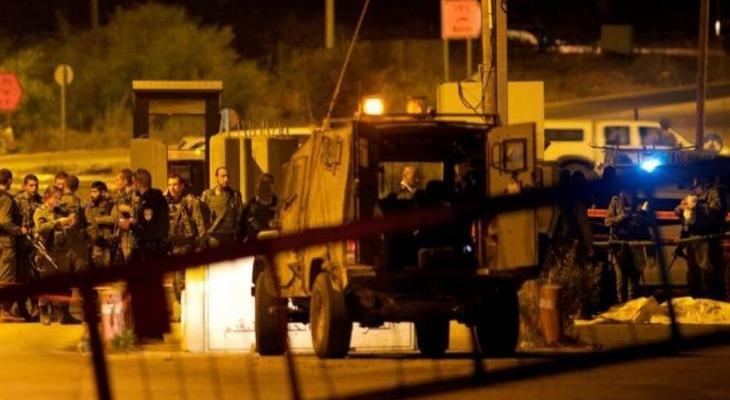
The occupation forces escalated their measures at the Beit Furik checkpoint on Tuesday evening.


According to local sources, occupation soldiers forced citizens to get off a bus at the checkpoint, abused them, forced them to raise their hands for a period of time, searched them, and detained them for a period of time.


It's worth noting that Nablus Governorate is experiencing a tight siege, following the installation of more than ten checkpoints by the occupation forces at the city's entrances, with the Beit Furik checkpoint being considered the most difficult.