ARAB AND WORLD

Wed 09 Apr 2025 10:56 pm - Jerusalem Time

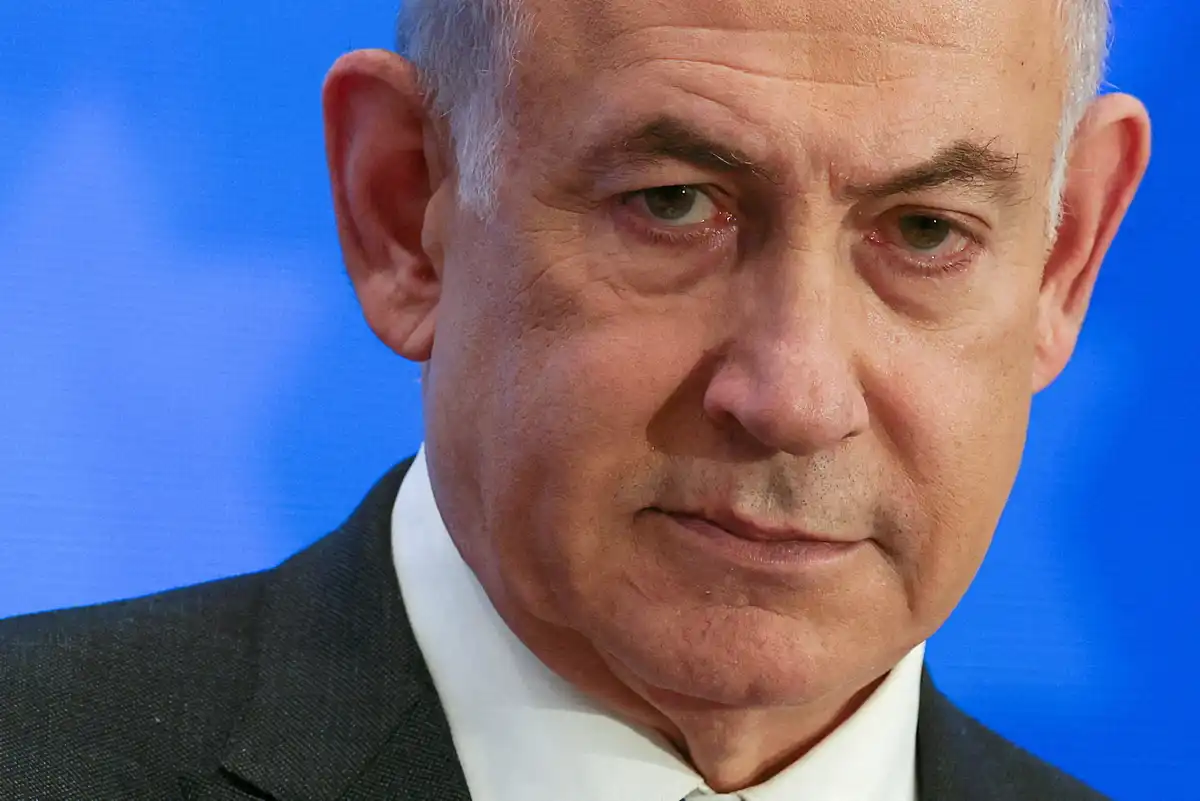
Netanyahu meets new CIA director in Jerusalem

Israeli Prime Minister Benjamin Netanyahu met with the new director of the US Central Intelligence Agency (CIA), John Ratcliffe, in Jerusalem on Wednesday, according to a statement from Netanyahu's office.


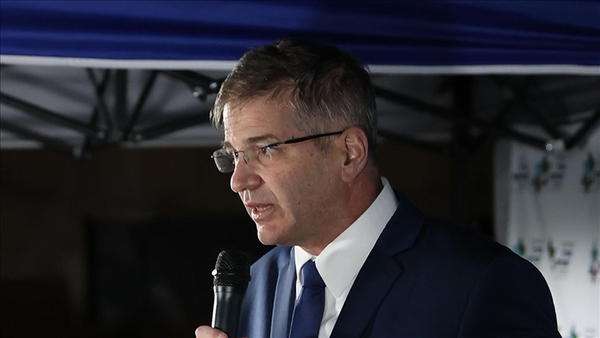
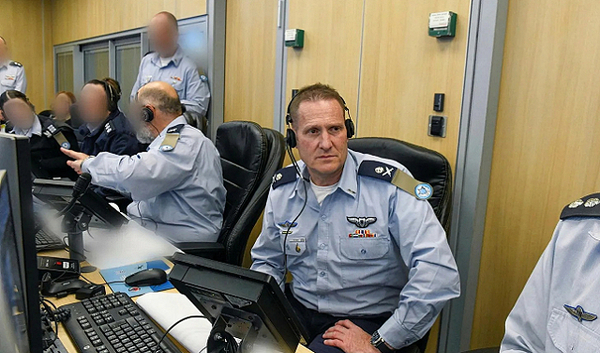
According to Agence France-Presse, the statement said that "Prime Minister Benjamin Netanyahu met Wednesday evening with CIA Director John Ratcliffe, in the presence of Mossad Director David Barnea," days before scheduled talks between Washington and Tehran, and amid ongoing attempts to revive the ceasefire in Gaza.


Netanyahu returned from Washington on Wednesday morning following a meeting at the White House, where President Donald Trump surprisingly announced that the United States would begin direct, high-level talks with Iran regarding its nuclear program next Saturday.


But the Israeli Prime Minister said following the announcement that a "military option" would become "unavoidable" if talks between Washington and Tehran continued for a long period.


"We agree with Trump that Iran should not possess a nuclear weapon," he added in a video statement shortly before his return to Israel.


He added, "This could be achieved through an agreement that guarantees the dismantling of Iranian nuclear facilities under American supervision... and that would be good." However, "the second option, if that's not the case, is for them to stall the discussions, and then there's no escape from the military option."


During their meeting, the two leaders also said that new negotiations are underway to secure the release of more hostages held by Hamas in Gaza.


The United States, Qatar, and Egypt brokered a fragile ceasefire agreement, the first phase of which went into effect on January 19.


The ceasefire held until March 18, when Israel resumed intensive military operations in Gaza.


The truce allowed for the return of 33 Israeli hostages, 8 of whom were killed, in exchange for the release of approximately 1,800 Palestinians held in Israeli prisons.

ARAB AND WORLD

Wed 09 Apr 2025 9:58 pm - Jerusalem Time

Israeli minister calls for immediate dismissal of soldiers who called for an end to the war on Gaza

Israeli Education Minister Yoav Kisch called Wednesday evening for the immediate dismissal of approximately 1,000 Air Force reserve officers and soldiers, including pilots, who signed a letter calling for an end to the war on Gaza, describing their signatures as "shameful."


In a post on X, Kish said, "Involving the army in political disputes is what led to the greatest disaster that befell the State of Israel," referring to October 7, 2023.


He added: "The method of sending messages and threatening to refuse service is shameful and unacceptable."


"Anyone who signs such a letter, while still serving in the reserves, should be dismissed immediately," he continued.


Earlier on Wednesday, air force commanders threatened about 1,000 aircrew officers and soldiers, including pilots, with dismissal from service if they did not withdraw their signatures on a letter calling for an end to the war on Gaza, according to Hebrew media.


Haaretz reported that "970 Israeli Air Force aircrew members signed a letter opposing the war but not calling for a refusal to serve."

PALESTINE

Wed 09 Apr 2025 9:56 pm - Jerusalem Time

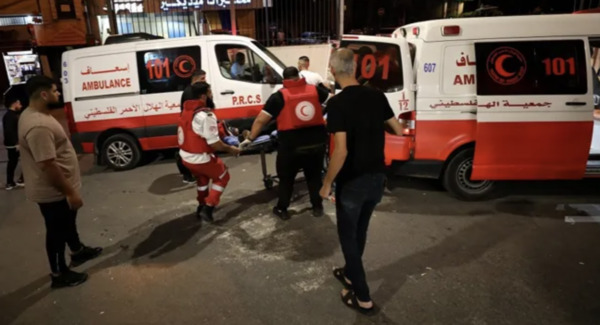
Six Palestinians were injured by Israeli occupation forces' bullets during a raid on Balata camp.

Six citizens were injured by live and rubber bullets fired by Israeli occupation forces on Wednesday evening during the ongoing raid on Balata refugee camp, east of Nablus.


The director of the Red Crescent's emergency and ambulance center in Nablus, Amid Ahmed, said that ambulance crews treated six injuries caused by Israeli occupation forces' gunfire, four of which were shot with live ammunition and were transferred to the hospital, and two with rubber-coated metal bullets.


He stated that a child was injured in the face after being directly targeted with a tear gas bomb, and that five citizens suffered bruises as a result of being beaten by occupation soldiers, while 50 citizens suffered suffocation as a result of inhaling toxic gas.


Ahmed confirmed that ambulance crews evacuated 21 patients, including four children, from inside the camp to hospitals.


Our correspondent reported that occupation forces stormed Balata camp in the early hours of Wednesday morning, amid widespread deployment inside the camp and the closure of its entrances. They forced a number of families to flee their homes, and destroyed and vandalized the contents of several homes inside the camp.


PALESTINE

Wed 09 Apr 2025 9:37 pm - Jerusalem Time

Katz: We will work to sever the Gaza Strip and seize more territory.

Israeli Defense Minister Yisrael Katz confirmed that the occupation will escalate the fighting throughout the Gaza Strip if Hamas continues to refuse to release the detainees in the near future.


Katz pointed out that the occupation will work to sever the Gaza Strip and control more lands, including annexing them to the security buffer zones.


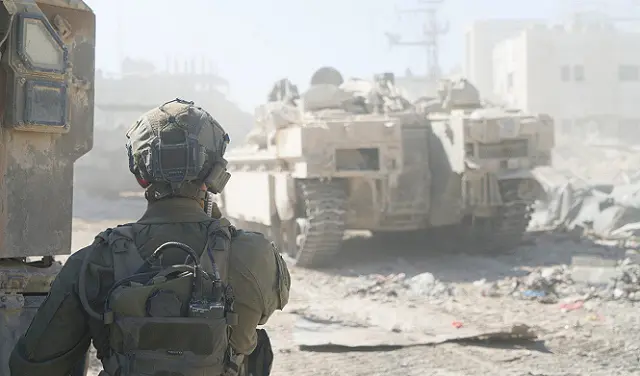
During a visit to the Morag axis in the southern Gaza Strip, accompanied by the commander of the Southern Command, Katz added that his government is working to encourage the voluntary migration of Gaza residents in accordance with President Trump's vision.


He explained that the army is controlling areas of the Gaza Strip to include them in the buffer zones, which will make Gaza smaller and more isolated.


Katz addressed the residents of Gaza, saying: "Expel Hamas and return the captives. This is the only way to stop the war."

He also stressed that the occupation will remain present in the Philadelphi Corridor and the buffer zone under any circumstances, even if a swap deal is reached.

ARAB AND WORLD

Wed 09 Apr 2025 9:17 pm - Jerusalem Time

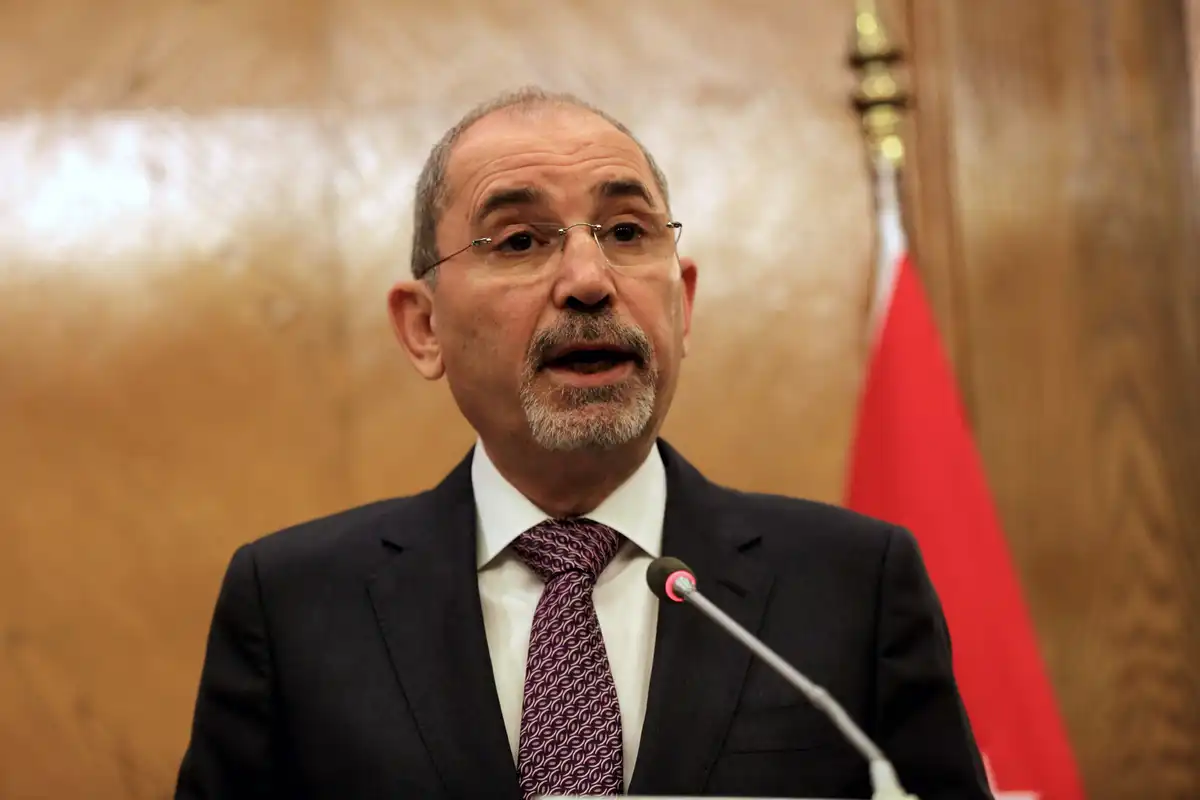
Safadi: The Gaza Strip is suffering from an unprecedented humanitarian disaster.

Jordanian Foreign Minister Ayman Safadi said on Wednesday that the Gaza Strip is suffering from an unprecedented humanitarian disaster, calling for an end to the aggression against it.


This came during his reception, in two separate meetings, of delegations from the American organization "Churches for Peace in the Middle East" and peace process experts from the European Union missions accredited to the United Nations in New York.


According to a statement issued by the Jordanian Foreign Ministry, Safadi stressed the "necessity of halting the Israeli aggression on the Gaza Strip and opening the crossings designated for the entry of aid into the Strip, which is suffering from an unprecedented humanitarian disaster."


He also stressed "the importance of halting the dangerous escalation in the West Bank and Israeli violations of Islamic and Christian holy sites in Jerusalem, and respecting the legal and historical status quo there."

PALESTINE

Wed 09 Apr 2025 8:16 pm - Jerusalem Time

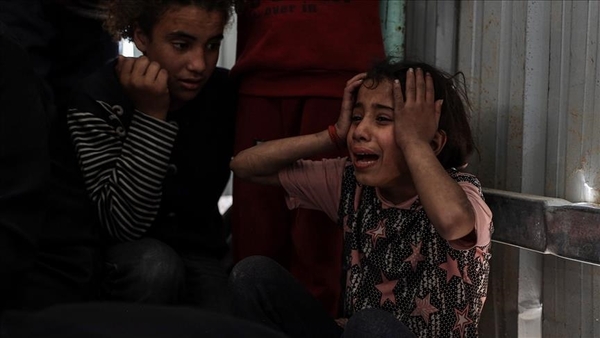
Gaza Health: 60,000 children suffer from severe malnutrition amid ongoing blockade

The Ministry of Health in Gaza announced that approximately 60,000 children in the Strip suffer from severe malnutrition, exposing them to serious health complications.


This comes as the Israeli blockade on humanitarian aid to the Gaza Strip continues, with no aid delivered since March 2, 2025.


The ongoing blockade has exacerbated the situation in Gaza, home to 2.3 million people, with essential supplies such as food, medical aid, and water severely restricted. The Ministry of Health has warned that the lack of proper nutrition, clean water, and the continued ban on vaccines, particularly against polio, will further deteriorate the health conditions of children in the Strip.


The situation has become catastrophic, with 21 nutrition centers closed, and approximately 350 children suffering from severe malnutrition facing difficulty receiving essential care. The United Nations and the World Food Programme have confirmed that the humanitarian situation in Gaza is rapidly deteriorating, with hundreds of thousands of residents suffering from hunger.


Furthermore, the Israeli occupation forces disrupted the water supply by stopping the flow of water from the Israeli company Mekorot, which provides approximately 70% of Gaza's water needs.


For its part, the United Nations confirmed that there is no evidence that Hamas is diverting aid, as Israel claims. Humanitarian circles warned that every day without essential supplies brings Gaza closer to a devastating famine crisis.


As the war escalates, the situation of Gaza's children is becoming increasingly desperate, as the international community calls for urgent action to address the growing humanitarian catastrophe.

PALESTINE

Wed 09 Apr 2025 7:56 pm - Jerusalem Time

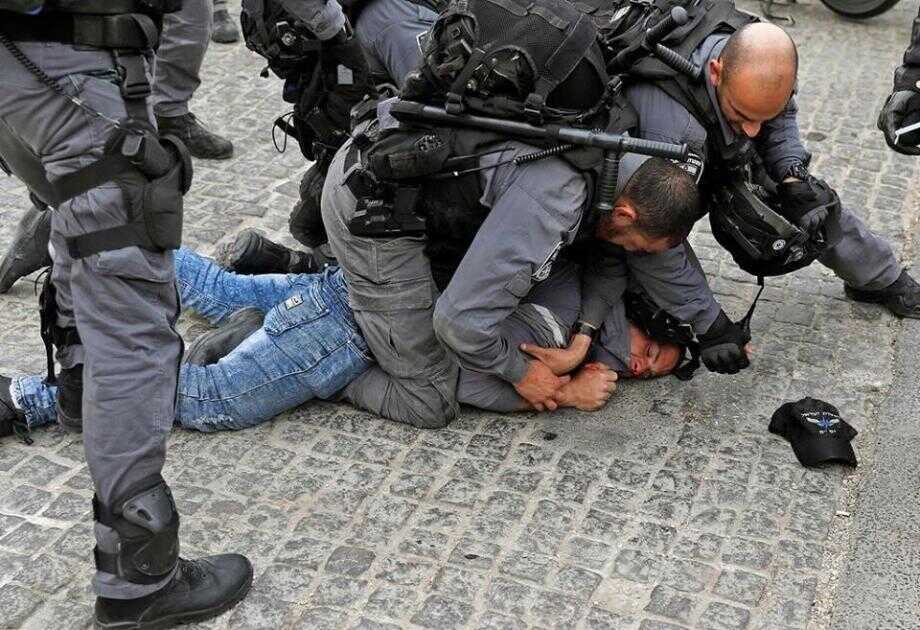
Israeli occupation forces assaulted citizens in Issawiya, Jerusalem.

Israeli occupation forces attacked citizens in the town of Issawiya, northeast of occupied Jerusalem, on Wednesday evening, deploying snipers on rooftops.


According to local sources in the town, large forces of Israeli occupation police stormed the town, deployed throughout its neighborhoods, assaulted residents, and sprayed them with wastewater.

ARAB AND WORLD

Wed 09 Apr 2025 7:41 pm - Jerusalem Time

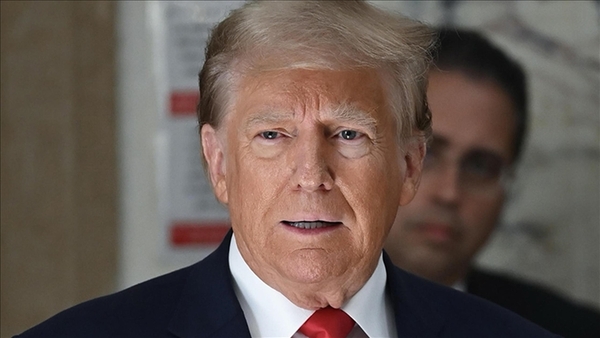
Trump seeks a better nuclear deal than Obama's


In 2016, when Donald Trump was running for president and pressed for details on how he would handle some of the world's most thorny security issues, he had a simple formula for curbing Iran's nuclear program, which he summed up by saying then-President Barack Obama's negotiating team should have gotten up from the table and left in a huff. "The Iranians would have come begging," Trump told New York Times reporters at the time. "It's a deal that would have been much better if they had walked away twice." "They negotiated very badly."


Now, the newspaper argues, at a time when the Iranians are much closer to being able to produce a weapon than they were when the last agreement was negotiated—in part because Trump himself upended the agreement in 2018—the president has an opportunity to demonstrate how it should have been done.


According to reports, so far, the gap between the two sides appears enormous. The Iranians appear to be seeking an updated version of the Obama-era nuclear deal, which limited Iran's stockpile of nuclear material. The Americans, meanwhile, want to dismantle Iran's massive nuclear fuel enrichment infrastructure, its missile program, and Tehran's longstanding support for Hamas, Hezbollah, and other proxy forces.


What is missing is time.


Senator Jeanne Shaheen (D-NH), the ranking Democrat on the Foreign Relations Committee, who called Trump's decision to withdraw from the Iran nuclear deal (May 2028) a "grave mistake," said Tuesday that "it is imperative that we reach an agreement quickly." She added, "Iran's nuclear program is advancing every day, and with the expiration of the snapback sanctions, we are at risk of losing one of our most important points of leverage."


It's worth noting that the so-called "snapback" sanctions, which quickly reimpose UN sanctions on Iran, are set to expire on October 18.


Pressure is now mounting on Trump to reach a tougher deal on Iran than the one agreed upon under the Obama administration, which will be the benchmark for determining whether President Trump has achieved his goals. To add to the pressure, his administration is already threatening the possibility of military strikes if the talks do not go well, although it leaves unclear whether the United States, Israel, or a joint force would carry out those strikes.


White House spokeswoman Caroline Levitt threatened on Tuesday that there would be "hell to pay" if the Iranians did not negotiate with Trump.


"The Iranians will be surprised when they discover they're not dealing with Barack Obama or John Kerry," said Senator Jim Risch, R-Idaho, chairman of the Foreign Relations Committee, referring to former Secretary of State John Kerry, who oversaw the negotiations for the first agreement in 2015. "This is a completely different ball game" under Trump.


Negotiations begin on Saturday, led by Steve Witkoff, the president's friend and fellow New York real estate developer, who is said to be leading the US team. Witkoff, who is also handling negotiations on Gaza and Ukraine, has no known background in the complex technology of nuclear fuel enrichment or the many steps involved in making a nuclear bomb.


The newspaper says that the first question Witkoff will face is the scope of the negotiations. The deal concluded under Obama addressed only the nuclear program. It did not address Iran's missile program—which was subject to separate UN restrictions, which Tehran ignored—or its support for movements designated by the US as terrorist organizations (such as Hamas, Hezbollah, and the Houthis).


On this point, National Security Advisor Michael Waltz stated that any new agreement with the Trump administration must address everything, and that Iran's massive nuclear facilities must be completely dismantled—not simply left in place, operating at a very slow pace, as they were in the 2015 agreement.


"Iran has to abandon its program in a way that the whole world can see," he said on CBS's "Face the Nation" last March. He spoke of "total dismantling," a situation that would leave Iran largely defenseless: no missiles, no proxy forces, and no path to a nuclear bomb.


Trump stated on Monday that talks with Iran would be "direct," meaning that American negotiators would interact with their Iranian counterparts. It's worth noting that, so far, the Iranians have a different narrative: Iranian Foreign Minister Abbas Araghchi published an op-ed in the Washington Post on Tuesday in which he said his country was "prepared for indirect negotiations with the United States." Araghchi said that the United States must first pledge to take the military option against Iran off the table.


“They (the Iranians) clearly say they want to talk,” Jim Walsh, a research associate at the Massachusetts Institute of Technology’s Security Studies Program, told the newspaper. “But there’s negotiation, and then there’s surrender. Is this a list of demands, or are we going to get attacked (from the Iranian perspective)? That won’t work.” The negotiating environment is higher stakes than it was during the Obama administration. Iran’s nuclear program has advanced since Trump withdrew from the previous agreement (May 2018); today, Iran is producing uranium enriched to 60% purity, just short of bomb-grade. U.S. intelligence agencies have concluded that Iran is exploring a faster, if more primitive, approach to developing a nuclear weapon that could take months, rather than a year or two, if its leadership decides to race to a bomb.


But in other respects, according to the newspaper, Iran's negotiating position is weaker.


Israel claims to have destroyed nearly all of Iran's air defenses protecting its nuclear facilities last October, and that Iran's regional proxies, Hezbollah and Hamas, are significantly weakened and unable to threaten Israel with retaliation if Iranian facilities are attacked.

PALESTINE

Wed 09 Apr 2025 7:09 pm - Jerusalem Time

UNESCO unanimously adopts two resolutions in favor of Palestine, and the Foreign Ministry welcomes them.

The Executive Board of the United Nations Educational, Scientific and Cultural Organization (UNESCO), at its 221st session held today, Wednesday, in Paris, unanimously adopted two resolutions on the State of Palestine: occupied Palestine and cultural and educational institutions. UNESCO considers these resolutions to be among the most important tools for preserving the rights of the Palestinian people, particularly in light of the crimes and violations committed by Israel, the illegal occupying power, particularly in the Gaza Strip, and its disregard for international law and international humanitarian law.


The two resolutions call for a halt to excavations, works, and projects in occupied Jerusalem, in and around the Old City, and at the Ibrahimi Mosque in Hebron, and for a halt to all settlement activities, including the construction of the wall and the construction of roads for settlers, violations of freedom of movement and freedom of access to places of worship, and other measures aimed at altering the character and composition of the occupied Palestinian territory, including the social fabric of Palestinian society.


The two resolutions affirmed that the World Heritage Sites of the occupied city of Jerusalem and its walls, Al-Aqsa Mosque, and the Old City of Hebron, including the Ibrahimi Mosque/Cave of the Patriarchs, are an integral part of the territory of the State of Palestine and its cultural heritage, and require special protection from destruction, alteration, or the deployment of military forces therein.


In a statement, the Ministry of Foreign Affairs and Expatriates welcomed the two decisions, stressing the need to implement the advisory opinion of the International Court of Justice, its decision issued by the General Assembly, and other UN resolutions and precautionary measures issued by the Court. It also rejected the policy of double standards and international complicity in granting the occupation immunity and preventing accountability for international crimes, including the crime of genocide.


The Foreign Ministry stressed that the adoption of these resolutions remains a testament to the international community's ability to fulfill its responsibilities toward peoples, their heritage, and their history, which are threatened by Israeli colonialism.


It also pointed out the importance of these decisions in confronting attempts to forge and deliberately destroy Palestinian historical, heritage and cultural sites, as well as other violations of World Heritage sites and attempts to change the historical and legal identity, including in the occupied city of Jerusalem, its walls, and Al-Aqsa Mosque, including excavations and the electric elevator project, which includes digging tunnels in the Old City of Jerusalem, and the roof of the Ibrahimi Mosque/Cave of the Patriarchs in Hebron, which constitutes a deliberate interference that undermines the exceptional universal value of the site, its integrity and the ecological balance of the site, in addition to its ongoing blockade and systematic destruction of the Gaza Strip and violations of "settlement expansion" in the World Heritage site called "Palestine: Land of Olives and Vines from Battir, south of Jerusalem."


The Ministry of Foreign Affairs commended the role of the sisterly Hashemite Kingdom of Jordan in particular, and the positions of sisterly and friendly countries that support the unanimous adoption of these resolutions. It called on the international community and UNESCO to take the necessary clear and practical steps to stop Israel, the colonial occupation authority, from its crimes. The Ministry of Foreign Affairs explained that the failure to implement UNESCO resolutions, the provisions of international law, and relevant United Nations resolutions encourages and allows the occupying authorities to continue their crimes in the Gaza Strip and works to create the conditions for the continuation of violations, killings, and the crime of genocide that directly target civilians, journalists, students, schools, and the destruction of cultural and holy sites.


The Ministry of Foreign Affairs called for the dispatch of a UNESCO monitoring mission and the dispatch of a representative of the Director-General to Jerusalem to investigate the deliberate Israeli acts of sabotage and submit reports to the relevant authorities to prevent the situation from deteriorating further.

PALESTINE

Wed 09 Apr 2025 6:15 pm - Jerusalem Time

The Israeli occupation army significantly expands the buffer zone in Gaza.

The Israeli occupation army has significantly expanded its buffer zone along the border with the Gaza Strip. It is planned to include the entire city of Rafah (approximately 20 percent of the Palestinian enclave's area).


According to the Times of Israel, forces are currently working to establish a so-called "Morag" corridor between Rafah and Khan Yunis, and the military issued evacuation warnings for the entire Rafah area several weeks ago.


Once the Morag Corridor is fully established, the army's buffer zone in southern Gaza will extend from the Egyptian border (the Philadelphi Corridor area) to the outskirts of Khan Yunis, a distance of approximately 5 kilometers, encompassing the entire city of Rafah.


The Israeli military's buffer zone is also being expanded elsewhere along the Gaza border, from several hundred meters to about two kilometers in most areas.


PALESTINE

Wed 09 Apr 2025 6:12 pm - Jerusalem Time

A dead and injuries in Israeli occupation's bombing of Khan Yunis

A citizen was killed and others were injured when Israeli warplanes bombed Khan Yunis, south of the Gaza Strip.


According to local sources, Israeli warplanes bombed the Qizan Abu Rashwan area south of the city, killing Yahya Abdul Hamid Ashour and wounding others.


In the same context, two citizens were injured when an Israeli drone dropped a bomb on Al-Jami'in Street in the town of Khuza'a, east of Khan Yunis.


Medical sources reported that 45 civilians were killed in Israeli airstrikes on the Gaza Strip since dawn today, including 35 in the Shuja'iyya neighborhood in eastern Gaza.

ARAB AND WORLD

Wed 09 Apr 2025 5:56 pm - Jerusalem Time

Beijing urges Chinese tourists to "fully assess risks" before traveling to the US.

Beijing has urged Chinese tourists to "fully assess the risks" before traveling to the United States, amid the escalating trade war between China and the United States.


US President Donald Trump called for "calm" on Wednesday, saying, "Everything will be fine," amid the escalating trade war he launched and its repercussions on global markets.


"Stay calm! Everything will be just right. The United States of America will be bigger and better than ever before," Trump wrote on his social media platform, Truth Social.


ARAB AND WORLD

Wed 09 Apr 2025 5:16 pm - Jerusalem Time

An emergency session of the Security Council to discuss Israel's attacks on Syria

The UN Security Council is scheduled to hold an emergency session on Thursday to discuss Israeli attacks on Syria.


The Permanent Mission of Algeria to the United Nations stated that the session will be held at the request of Algeria and Somalia, members of the Security Council.


The statement indicated that the emergency session will discuss the Israeli attacks on Syria, and will be held on Thursday at 10:00 a.m. local time (14:00 GMT).


Since 1967, Israel has occupied most of the Syrian Golan Heights. Taking advantage of the new situation in the country following the fall of Bashar al-Assad's regime, Israel occupied the Syrian buffer zone and declared the collapse of the 1974 disengagement agreement between the two sides.


For months, Israel has been launching airstrikes on Syria on an almost daily basis, killing civilians and destroying Syrian military sites, vehicles, and ammunition, even though the country's new administration has not threatened Tel Aviv in any way.


Syrian factions took control of the country on December 8, ending 61 years of brutal Baath Party rule and 53 years of Assad family rule.

PALESTINE

Wed 09 Apr 2025 5:02 pm - Jerusalem Time

Israeli occupation forces stormed the towns of Sa'ir and Beit Ummar, north of Hebron.

Israeli occupation forces stormed the towns of Sa'ir and Beit Ummar, north of Hebron, on Wednesday.


According to local sources, occupation forces stormed Sa'ir, northeast of Hebron, deployed in the Wadi Khanis area, and raided the home of a citizen from the Al-Froukh family.


In the northern town of Beit Ummar, these forces stormed the Dahr area towards Shaab al-Sir, deployed along the roads and around citizens' homes, and raided the Awad family home, without any arrests being reported.


The occupation forces set up a military checkpoint at the entrance to the village of Kharsa in the south, preventing citizens from moving and searching their vehicles.

PALESTINE

Wed 09 Apr 2025 4:40 pm - Jerusalem Time

Five dead in new Israeli bombing of the Shuja'iyya neighborhood in eastern Gaza.

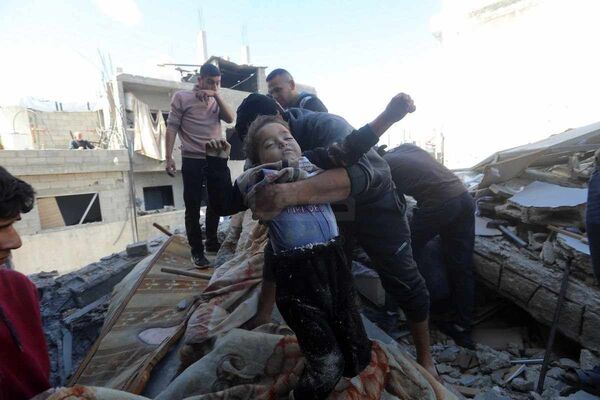
Five civilians were killed and others injured on Wednesday in a new Israeli airstrike on the Shuja'iyya neighborhood east of Gaza City. The airstrikes came just hours after the occupation committed a massacre there that left 30 civilians dead, including eight children, and at least 50 others injured.


Local sources reported that five civilians were killed and others were injured in a new Israeli airstrike on the Shuja'iyya neighborhood. Meanwhile, ambulance and rescue crews, assisted by local residents, continue to search for missing persons under the rubble of the Abu Amsha family home, which was bombed by the Israeli occupation earlier today. The attack killed at least 30 civilians, including eight children, and injured approximately 50 others.


Since resuming its genocide in Gaza on March 18, the Israeli occupation has killed approximately 1,500 civilians and injured thousands more, most of them children and women.


Since October 7, 2023, Israel, the occupying power, has been committing genocide in the Gaza Strip, leaving more than 166,000 dead and wounded, most of them children and women, and more than 11,000 missing.

ARAB AND WORLD

Wed 09 Apr 2025 4:08 pm - Jerusalem Time

The tripartite summit is an Arab-European attempt to achieve a breakthrough and implement the Arab plan for the next day.

Hani El Gamal: The tripartite summit between Egypt, Jordan, and France is an important step toward clarifying ambiguities in the Egyptian-Arab plan for the reconstruction of Gaza.

Abdul Maarouf: These summits will not achieve their desired results, Netanyahu will not stop his plans, and Israel's aggressive fire is now threatening the countries of the region.

Dr. Hassan Marhej: The actual results of the summit remain hostage to many factors, including the reactions of the concerned parties and the international community.

Imad Abu Awad: The reasons for the continuation of the war remain, with no indications of a declared end, especially from within Israel.

Dr. Munther Hawarat: The summit is an attempt to break through the Israeli-American position, which insists on continuing negotiations under pressure and siege.


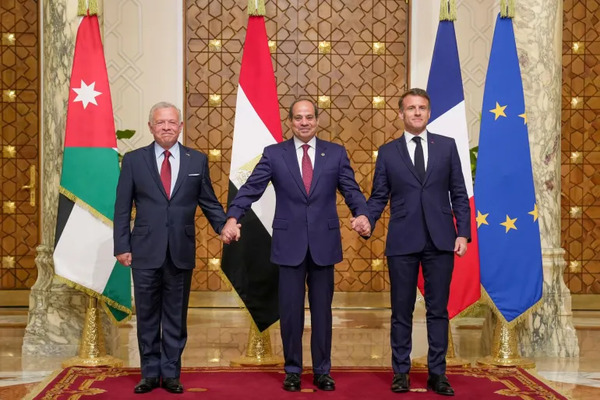
While US President Donald Trump was meeting with Israeli Prime Minister Benjamin Netanyahu, whom he had hastily summoned to the White House, Egyptian President Abdel Fattah el-Sisi, Jordanian King Abdullah II, and French President Emmanuel Macron held a trilateral summit in Cairo on Monday, April 7, where the three leaders discussed the dire situation in Gaza.

Is there a link between Trump's urgent meeting with Netanyahu at the White House and the tripartite summit in Egypt? Can the summit influence developments on the ground, particularly in halting the war of extermination and allowing humanitarian aid into the Strip? This is especially true given the occupying state's persistence in its aggression and the war of extermination it is waging against defenseless civilians in the stricken Gaza Strip, benefiting from the unlimited support provided by the United States and its President, Donald Trump.

Political writers and analysts who spoke to Al-Quds said that the summit's actual outcomes remain contingent on numerous factors, including the reactions of the relevant parties and the international community. They noted that the reasons for the continuation of the war remain unchanged, with no clear indications of an end, particularly from within Israel.

Some analysts viewed the summit as an attempt to break the Israeli-American position, which insists on continuing negotiations under pressure and blockade. They noted that it is an important step toward clarifying ambiguities in the Egyptian-Arab plan for the reconstruction of Gaza.

It is noteworthy that, in the final statement of the trilateral summit, the three leaders called for an immediate return to the ceasefire to protect Palestinians and ensure their immediate and full receipt of emergency humanitarian assistance. They also called for the implementation of the ceasefire agreement signed on January 19, which stipulated the release of all hostages and detainees and the guarantee of everyone's security. The leaders emphasized the importance of protecting civilians and humanitarian aid workers, and ensuring full access to aid—obligations that must be fulfilled under international law and international humanitarian law.

The three leaders expressed their grave concern over the deteriorating humanitarian situation in the West Bank and East Jerusalem, and called for an end to all unilateral measures that undermine the viability of a two-state solution and increase tensions. They also stressed the need to respect the historical status quo of the holy sites in Jerusalem.

The leaders expressed their rejection of the displacement of Palestinians from their land and any attempt to annex Palestinian territories. They emphasized the need for international support for the Gaza Reconstruction Plan, adopted by the Arab Summit held in Cairo on March 4 and adopted by the Organization of Islamic Cooperation on March 7. They discussed mechanisms for its effective implementation with regard to security and governance.


Who will be entrusted with managing the sector?


Egyptian political analyst Hani El-Gamal said that the tripartite Cairo summit between Egypt, Jordan, and France represents an important step toward clarifying some of the ambiguities in the Egyptian-Arab plan for the reconstruction of Gaza, most notably the entity that will be entrusted with administering the Gaza Strip after the cessation of military operations.

Al-Jamal pointed out that among the questions being raised are: Will the authority in Gaza be the same as the authority in the West Bank? Or is there a trend toward a geographical distribution of control among the factions, whether the Palestinian Authority or Hamas? According to Al-Jamal, the summit also seeks to clarify the mechanism for using aid: Will it be administered by an independent committee composed of Egypt and some Arab and European countries, under UN auspices, or will it be in the hands of the Palestinian Authority, through the "community support" committee proposed by Egypt, which includes a group of Palestinian technocrats to manage the Strip for a transitional period of six months, before handing it over to the Palestinian Authority?

He added that Macron's visit to Egypt, specifically to the Arish area, was intended to address Israel's intransigence regarding the entry of humanitarian aid. He noted that this could represent a French move in favor of the Palestinian and Arab sides, particularly in pressuring Israel, and perhaps also through communication channels with the United States.


France supplies arms to Israel


Al-Jamal believed that this step could translate into concrete actions, such as threatening to halt the supply of certain types of weapons to Israel, particularly those used against unarmed civilians.

He said: "The summit may represent a shift in the French position toward recognizing a Palestinian state, following Spain's example, or at least a reconsideration of European positions involved in supporting Israel, especially Hungary, which recently hosted Netanyahu, in defiance of international resolutions issued against him."

He continued: The summit reveals ambiguous European positions and may represent an opportunity to capitalize on the existing rift between Europe and the United States, whether regarding tariffs or disagreements over the Russia-Ukraine war.

He pointed out that this Arab-European rapprochement could contribute to supporting the Palestinian cause, and that the summit coincides with an anticipated meeting between Netanyahu and Trump in the United States, potentially placing the Palestinian issue at the forefront of the meeting's agenda.

He believed that Trump might attempt to impose a timeframe for achieving Israel's goals, including reaching humanitarian negotiations leading to the release of hostages, particularly those holding American citizenship.


The absence of the Palestinian side from the summit


Regarding the Palestinian side's absence from the summit, Al-Jamal explained that the dispute between the Palestinian Authority and Hamas, and the lack of a unified vision representing the Palestinians, was what prevented their participation. Although the Palestinian Authority is the legitimate representative, it has no actual presence in the Gaza Strip, which is controlled by Hamas, which is classified by the European Union as a terrorist organization. This makes a meeting with the French president impossible.

"Egypt and Jordan play the role of mediator and spokesperson for the Palestinian cause, given their geographic and political locations," Al-Jamal said. "Egypt also plays the role of the main mediator in negotiations between Hamas and Israel."

Al-Jamal concluded his statement by pointing out that the goal of all these moves is to reach a Palestinian consensus on how to govern the Gaza Strip on the "day after," whether by disarming Hamas or integrating it under the umbrella of the Palestinian Authority, with the political and military leadership under the banner of Fatah and the PLO. This could constitute the only legitimate cover for Hamas's continued presence in Gaza, whether through a consensus figure or by avoiding the expulsion of its leaders from the Strip, as Israel and the United States desire, and perhaps even targeting them in the countries to which they would head.


Summits and appeals did not succeed in stopping the war


For his part, writer and political analyst Abdul Maarouf said that this is not the first time that international or regional conferences have been held to find just solutions to the Palestinian issue in general, and to halt the war of extermination waged by the Israeli occupation army in the Gaza Strip since October 8, 2023. Appeals have also been made over these long months, and statements have been issued condemning the horror of the Israeli aggression against the people, trees, and stones of the Strip.

He added: "All the conferences and appeals launched from around the world, and the cries of the children of the Gaza Strip, did not deter Benjamin Netanyahu's government, nor did they push him to stop the war that has claimed tens of thousands of victims, hundreds of thousands of wounded, and millions displaced. The Israeli government has continued its massacres, flouting all international laws, resolutions, and charters."

Marouf stressed that the Netanyahu government is determined to continue its aggression, war, and massacres in the Gaza Strip until it achieves its declared and undeclared goals, beginning with the destruction of life in the Strip and the displacement or dispersal of its population across the world.

He explained that in order to achieve these illegitimate, aggressive goals, the Netanyahu government did not just expand the war of extermination and commit massacres with the most heinous machines of death and destruction, but rather went further, as it confirmed that it would work to implement a plan to displace the residents of the Gaza Strip to other Arab countries, foremost among them the Arab Republic of Egypt and the Hashemite Kingdom of Jordan. In doing so, Netanyahu once again struck at the agreements signed with the Egyptian and Jordanian sides, which poses a grave danger not only to the Palestinians, but also to the neighboring countries. This is what aroused the anger and concern of the official authorities in Cairo and Amman, first and foremost, because of what this displacement to their lands represents, and the resulting security, social and economic crises.


Countries concerned with the risks of Palestinian displacement


Marouf pointed out that this is what prompted Egypt to hold an emergency Arab summit recently, and the day before yesterday to convene a meeting including Jordan and France. Jordan is one of the countries concerned with the risks of Palestinian displacement, and therefore is interested in meetings and conferences that address this complex issue.

He added, "Because the call to displace the residents of the Gaza Strip came as a decision by the Netanyahu government following the directives announced by US President Donald Trump to wipe out and crush the Gaza Strip, and in conjunction with these American directives, Egypt and Jordan turned to another international sponsor, namely France."

Marouf asked: Is France capable of putting an end to Israel's war of extermination against the Gaza Strip? Will the French-Egyptian-Jordanian summit prevent Netanyahu and his successor, Trump, from displacing the population of the Strip?

He replied: Of course not. If that were effective, the war of extermination and displacement would not have continued for all these months without a real deterrent, but rather with suspicious Arab and international silence.


All countries in the region are in Israel's circle of fire.


Marouf believes that Netanyahu's announcement this time, and Trump's subsequent announcement, touched on other countries and the sovereignty of Arab states that had believed they were immune from Netanyahu's fire. However, after the announcement of a plan to displace the people of the Gaza Strip to Egypt or Jordan, everyone in the axis countries became subject to Tel Aviv's infernal schemes.

Marouf predicted that these summits would not achieve their desired results, and that Netanyahu, with Trump's support, would not stop pursuing his now-well-known schemes, which, as a result, have become a threat to the security of the region's countries, peoples, and regimes. This has prompted the Israeli government to break its silence and hold conferences in the hope of salvaging what can be salvaged from the brutality of the aggression and the Trump-Netanyahu schemes.

Marouf believes that the absence of the Palestinian Authority from this tripartite summit is unfortunately due to the Authority being outside the Gaza Strip's throes, and Hamas, which has gambled with its future and the future of the entire Palestinian cause, has not been able to control the Palestinian arena under its banner. Hamas has been the sole authority in deciding war and negotiations, which has weakened the Palestinian Authority. For more than a year and a half, it has been unable to stop the war of extermination, which has made the Palestinian Authority's role secondary to Hamas's "bravado" and the aggression and massacres of Benjamin Netanyahu, supported by Donald Trump.


The holding of the summit is linked to the developments of the war on Gaza.

For his part, Middle East expert Dr. Hassan Marhej said that the timing of the Egyptian-French-Jordanian summit in Cairo can be placed within the context of the complex circumstances surrounding the situation in Gaza. He pointed out that this summit confirms the urgent need for a solution to the Israeli-Palestinian conflict and the fear of escalating regional developments in light of the Yemeni player's involvement in the developments, in addition to American intentions to target Iran and its nuclear program. Consequently, there are developments sweeping the region, which portends an expansion of the circle of fire regionally.

Marhej expected that this summit would address several main topics, including:

1. Ceasefire: Discussions addressed ways to achieve a ceasefire between the conflicting parties. Leaders may seek to pressure all parties to commit to a cessation of hostilities, but achieving a real breakthrough in this area depends on the willingness of the concerned parties to accept peace processes, particularly the Israeli side and the US administration behind it.

2. Humanitarian aid: The summit likely discussed providing humanitarian aid to affected civilians in Gaza, where many are suffering from a severe shortage of basic necessities, especially in light of the resumption of Israeli bombing, which is the most urgent matter at this time.

3. Diplomatic efforts: The summit may seek to enhance regional and international diplomatic efforts to comprehensively resolve the conflict and open channels for dialogue between the concerned parties.


The absence of the Palestinian side is a form of exclusion.


Regarding the absence of the Palestinian side from the summit, Marhej pointed out that this has important implications:

* Political exclusion: The absence of Palestinians from the summit reflects a sense of exclusion from decisions affecting their fate, which could exacerbate frustration and a loss of confidence in international initiatives.

* Leadership challenges: This may also point to internal challenges within the Palestinian leadership, as their absence could be seen as a sign of lack of coordination or division among the various factions.

* Impact on credibility: The absence of Palestinians may affect the credibility of the summit's outcomes, as any solutions or decisions may be deemed incomprehensive if the Palestinian side is not included in the talks.

Marhej concluded his statement to Al-Quds by saying, "In general, the actual results of the summit remain subject to many factors, including the reactions of the relevant parties and the international community."


Growing regional and international activity


Political analyst Imad Abu Awad believes that the tripartite summit in Cairo comes amid growing regional and international pressure to deliver humanitarian aid and restore a degree of calm, as a prelude to implementing a political plan aimed at achieving strategic objectives.

He pointed out that these goals, for example, include bringing the war to an end, but that in parallel with or through this, efforts are being made to politically eliminate Hamas's presence in the Gaza Strip and ensure sustainable calm in the region.

Abu Awad emphasized that US President Donald Trump was neither absent nor detached from the summit's atmosphere, especially since he met with Israeli Prime Minister Benjamin Netanyahu, an important part of the process.


Just "anesthetic needles"


He added: "We are facing an attempt to find a formula for calm, but this formula, in my opinion, will not be able to achieve a sustainable state of calm. Rather, it is merely a "numbing needle" and a patchwork, nothing more."

He said the reasons for the continuation of the war remain, with no indications of an announced end, especially from within Israel.

He emphasized that Israel has no problem accepting a temporary humanitarian truce, which may be sponsored by a prisoner exchange or an attempt to change the political reality in the Gaza Strip. However, none of this will be achieved through an Israeli declaration of an end to the war; Israel will not pursue this path.

As for the Palestinian absence from the summit, Abu Awad believes it reflects an Arab and international consensus that the internal Palestinian situation has produced a leadership lacking a vision or strategy. Therefore, any decisions taken regionally or internationally will be accepted by a leadership that has no control over its own affairs.


An important summit at the regional and Palestinian levels


For his part, Jordanian political writer Dr. Munther Hawarat emphasized the importance of the summit on both the regional and Palestinian levels, particularly with regard to Gaza.

He said the summit addressed the ceasefire and the possibility of enforcing it so that Palestinians can receive humanitarian aid, in addition to rejecting the displacement of Palestinians, condemning the Israeli aggression on Gaza, and the importance of rebuilding the Gaza Strip.

Dialogues sees this summit as an attempt to breach the Israeli-American position, which insists on continuing negotiations under pressure and siege.

He questioned whether the summit would be successful, noting that France, as a permanent member of the UN Security Council, is expected to exercise and leverage this influence, both at the Security Council level and at the regional level.

He explained that Israel is committed to its position, clearly supported by the United States, and will not give in easily unless it receives strong concessions. No real breakthrough will be achieved on the ceasefire issue.

He said: "This reflects Israel's commitment to its strategy toward Gaza and Palestine, which consists of destroying and dismantling Hamas, in addition to seeking the release of prisoners. However, it appears that the strategic plan goes beyond this, to include the displacement of Palestinians as well."

Hawarat emphasized that the Palestinians' absence from the summit reflects the complexity of the Palestinian arena, and that this absence may have been intentional, to avoid creating tensions between the parties and to ensure that matters proceed more smoothly.



PALESTINE

Wed 09 Apr 2025 3:38 pm - Jerusalem Time

The Israeli army is working to annex the Rafah area and turn the Gaza Strip into an Israeli enclave.

The Israeli military is working to transform the area between the Philadelphi Corridor and the Morag Corridor in the southern Gaza Strip, which includes the city of Rafah and its adjacent neighborhoods and constitutes one-fifth of the Strip's area, into a "buffer zone" that Israel intends to annex. This area was previously home to approximately 200,000 residents before the war on Gaza. Following Israel's resumption of hostilities last month, the military demanded that the remaining residents leave the area and head for the Khan Yunis and Al-Mawasi areas.


Since the beginning of the war, the Israeli army has refrained from including entire cities in a "buffer zone," which included areas along the Gaza Strip's border with Israel. The decision to turn the Rafah area into a "buffer zone" came after the Israeli political echelon decided to resume the war on March 18, and against the backdrop of Prime Minister Benjamin Netanyahu's statement that Israel "will take over large areas in the Gaza Strip," according to what the newspaper Haaretz reported on Wednesday, citing Israeli security sources.


This area covers approximately 75 square kilometers, representing one-fifth of the Gaza Strip's area. Isolating it would turn the Strip into an enclave within Israel, completely isolating it from the Egyptian border.


According to Israeli security sources, the goal of this plan is to exert renewed pressure on Hamas. The Israeli military believes that Hamas's leadership may be present in the Rafah area, and there is a growing realization within the military that "Israel will not receive international support, not even from the United States," for an ongoing war on Gaza. Israeli ministers' threats to block humanitarian aid to the Strip will translate into actual policy.


The Israeli army is currently expanding the "Morag Axis" by destroying buildings along it, and it will be hundreds of meters wide and even more than a kilometer wide in certain locations.


According to Israeli security sources, it has not yet been decided whether the entire area will be controlled as a "buffer zone," prohibiting civilians from entering it, as is the case in other buffer zones in the Gaza Strip, or whether all buildings there will be razed to the ground and the city of Rafah wiped out.


The newspaper noted that this plan is not limited to the Rafah area alone, and that the Israeli army is seizing positions in the "buffer zones" along the Gaza Strip's border with Israel, "as a preliminary step."


The newspaper quoted an Israeli officer who participated in the destruction of buildings in the "buffer zone" surrounding the Gaza Strip and in the "Netzarim axis" as saying, "There is nothing more to demolish in the buffer zone (surrounding the Gaza Strip), and any place in it is not suitable for human habitation, and there is no need to send a large number of soldiers to these areas."


An Israeli reserve soldier said, "The army is demolishing what it has already demolished, without anyone knowing how long this will continue, what the objective of the military operation is, or what operational achievement the forces are required to accomplish the mission," according to the newspaper.


An officer was quoted as saying, "All the houses in Gaza are on the verge of collapse. We lost many soldiers in collapsed buildings, and it took us hours to rescue them from the rubble of what had once been buildings. If the IDF commanders don't realize that soldiers are prepared to fight, but not to die in unnecessary operational incidents, then they can expect to be surprised."


According to Israeli soldiers' testimonies, the Gaza Military Division has drawn a map of areas in the "buffer zone" surrounding the Strip in red, yellow, and green colors, indicating that more than 80% of the buildings in this area have been completely destroyed. This map is updated from time to time. The colors include residential buildings, greenhouses, barns, and factories. One soldier said that this map has turned the demolition of buildings into a competition between Israeli forces.


A reserve officer in the Armored Brigade noted, "There is no clear system of open-fire instructions at any stage. We decided that any movement of people is suspicious. Find someone moving and shoot him without distinguishing between civilians and combatants. No one in the army cared about this. We decided that everyone was suspicious, and there were no signs in the area to distinguish between Palestinians" whether they were civilians or combatants.

PALESTINE

Wed 09 Apr 2025 3:25 pm - Jerusalem Time

Israeli occupation forces blew up a house in Nour Shams camp, east of Tulkarm.

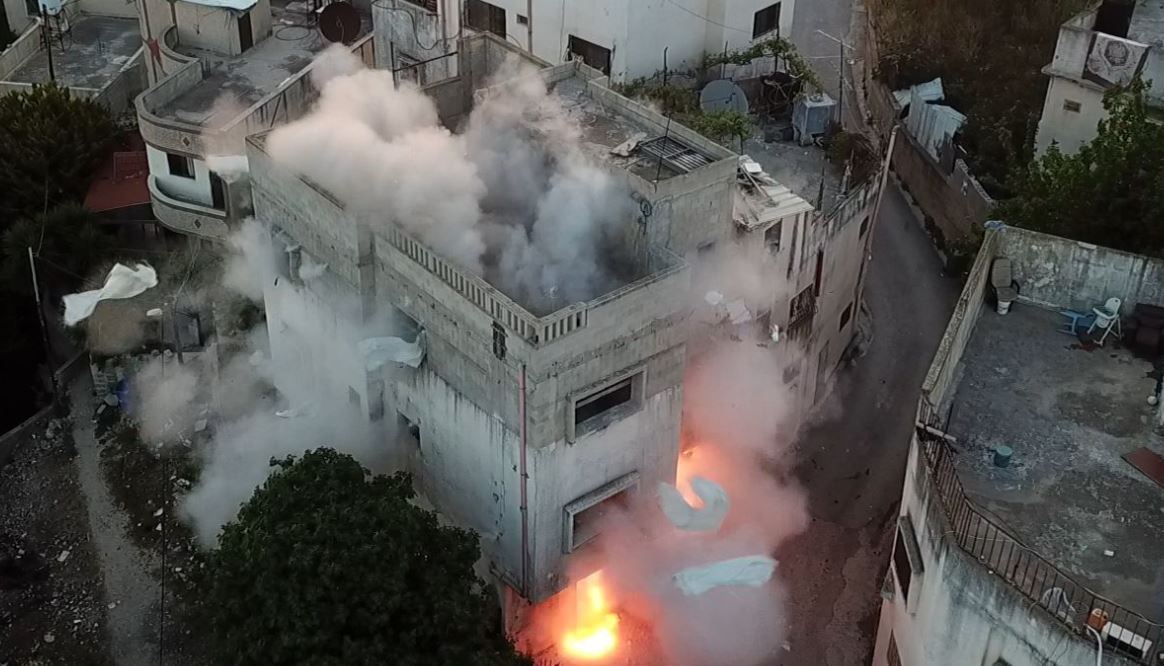
Israeli occupation forces blew up a house in Nour Shams camp, east of Tulkarm, on Wednesday, coinciding with the ongoing aggression against it for 60 days.


Local sources reported that the occupation forces blew up a house in the Al-Manshiya neighborhood of the camp, accompanied by the sound of a huge explosion that was heard throughout the area, with heavy smoke rising.


Official estimates indicate that the occupation has completely destroyed 396 homes in Tulkarm and Nur Shams camps since the start of its aggression against them and the city, and has partially destroyed 2,573 homes, forcibly displacing more than 4,000 families.

PALESTINE

Wed 09 Apr 2025 2:24 pm - Jerusalem Time

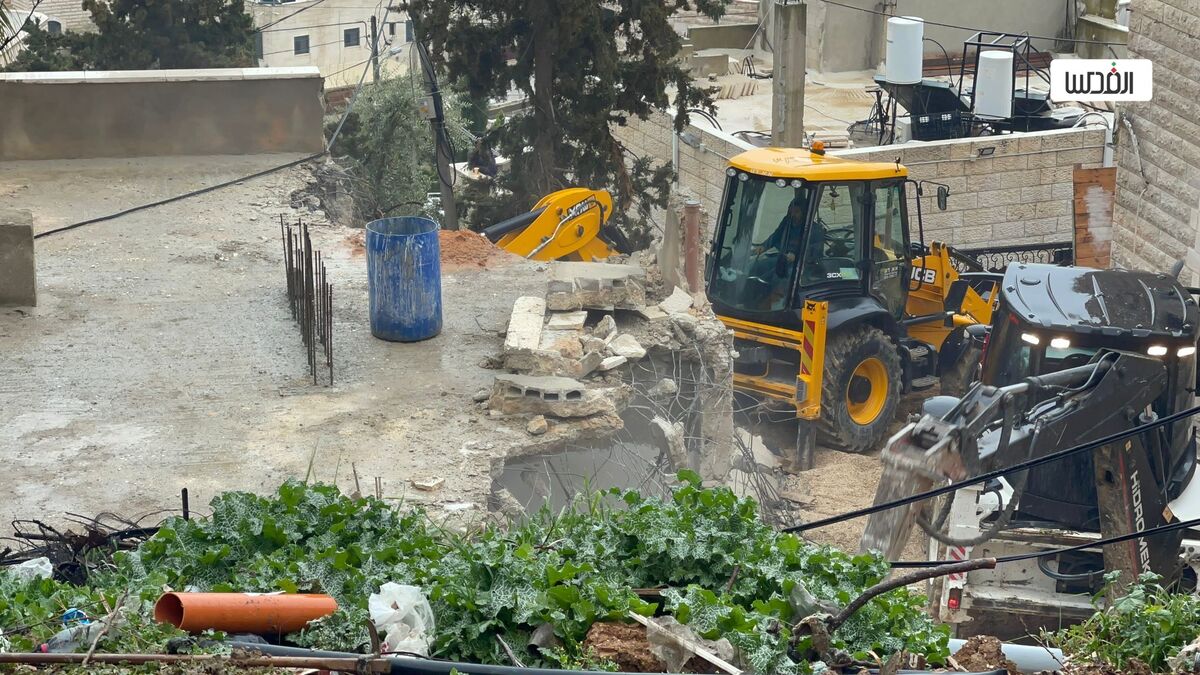
Israeli Occupation forces demolish homes in Jenin camp

Israeli occupation forces demolished homes in Jenin camp on Wednesday.


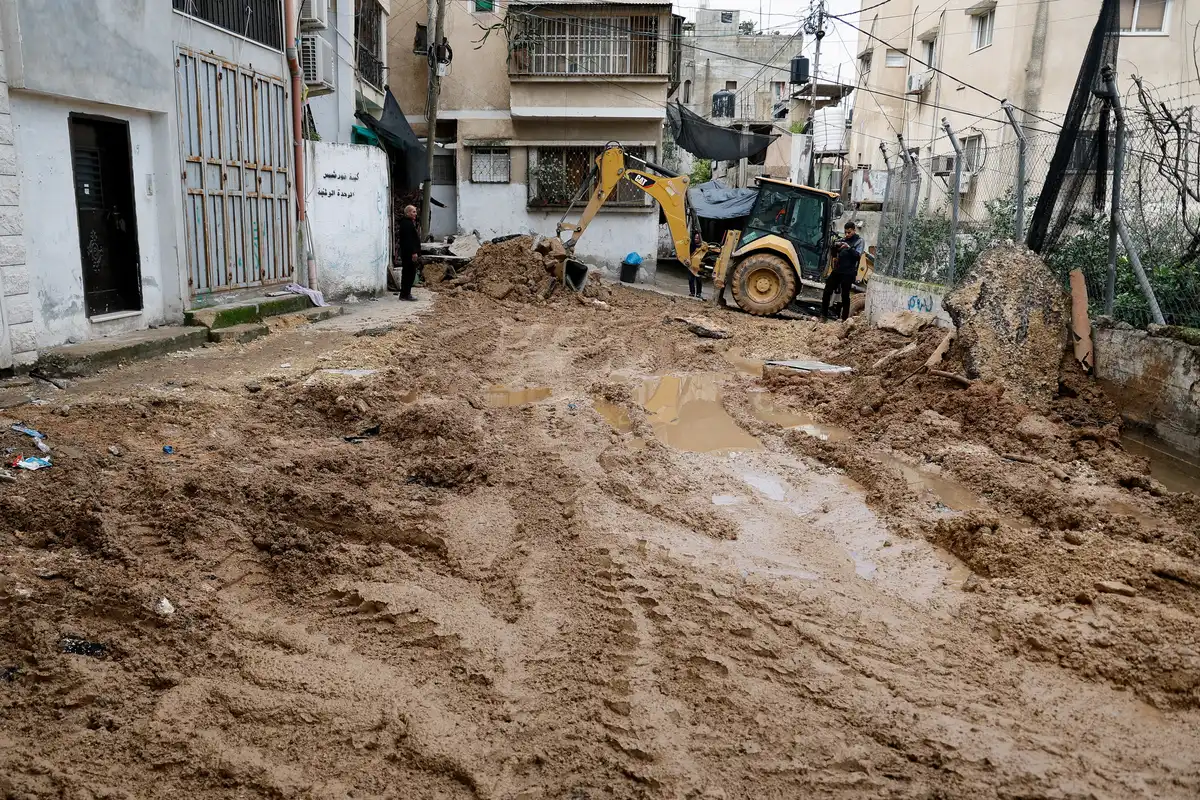
Local sources reported that Israeli bulldozers demolished homes in the Al-Damj neighborhood of Jenin camp as the Israeli aggression against the camp continues.


According to the Jenin Municipality, estimates indicate that the occupation has demolished approximately 600 homes in the camp since the beginning of its aggression 79 days ago, in addition to rendering 3,200 housing units uninhabitable.

OPINIONS

Wed 09 Apr 2025 2:01 pm - Jerusalem Time

Is it time to submit to the popular will?

Written by: Jamal Zaqout

Written by: Jamal Zaqout

Opinion Writer

In recent weeks, calls have been growing for the resistance forces to "withdraw Israel's pretexts" for continuing its war of extermination. At first glance, such calls may appear to stem from a "concern for the lives of innocents in the Gaza Strip," some of whom are now hastening death, awaiting its inevitability. This may be the case, however, when those behind these calls clarify their positions, demanding that the resistance forces surrender their weapons and accept Witkoff's proposals, which are in line with Netanyahu's Israeli conditions, and when these people demonstrate for the first time, however limited in number, in central Ramallah, this is not to save Gaza from the fascist war of extermination, but rather to demand the withdrawal of the resistance forces from their homeland, describing them as terrorists, for there is more to the story. This is nothing more than an identification with the Israeli position, which has long sought to place responsibility for the ongoing extermination on the forces of "Palestinian terrorism," as these people describe it. This is simply an attempt to exonerate war criminals, whatever the intentions of these misguided ones (with an open "l" or "the misguided ones" with a closed "l").

In recent weeks, voices have been calling for the creation of a vice-president position, as if the priority today is not the unity of the people and all their forces to stop the war of extermination, heal the people's wounds, and liberate the will of our people, not just the wealth of this people, from Israeli piracy. Some see the call to resist annexation plans as an absurd act and an agenda seeking to destroy the West Bank, just as Gaza is being destroyed.

It is incomprehensible that the question of who will be the next president, which has long been an Israeli-initiated bargaining chip for further blackmail attempts at the leadership, would suddenly turn into a demand, or even a condition, for some Arab parties. These parties are not satisfied with the constitutional declaration issued by the president, stating that the Speaker of the National Council shall assume the presidency until presidential elections are held within ninety days, extendable only for another ninety conditional days. Furthermore, the rush to convene the Central Council, which has usurped the powers of the National Council, to amend the law in order to pass this amendment comes despite the fact that the Council was only called for consultation, not for a formal meeting, throughout the war of extermination, and the mobilization of the people's forces and energies required to confront it and confront its goals. It also aims to discuss mechanisms for implementing the National Consensus Agreement (the Beijing Declaration), which received popular consensus as a savior for confronting the war of extermination, annexation, and the comprehensive and final liquidation of our people's cause and national rights.

Amidst this extremely gloomy atmosphere, which, if it persists, will only lead to distorting popular awareness, the Secretary of the Fatah Freedom Central Committee, Jibril Rajoub, made statements during a visit by a delegation from the movement to Cairo, including the Speaker of the Palestinian National Council, Rawhi Fattouh, and former Prime Minister Mohammad Shtayyeh. Rajoub requested that Cairo host a Palestinian national conference, stating that the movement's delegation had presented Cairo with ideas for "building a Palestinian national partnership" that includes Hamas. This clearly demonstrates everyone's awareness of the existential dangers that threaten not only the entire national movement in all its branches, but also the national destiny as a whole. This call, which must include all political and social forces and prominent national figures, including representatives from civil society and the youth and women's sectors, requires that the implementation of the Beijing Declaration, which stipulates the formation of a national unity government and the activation of the unified leadership framework of the Palestine Liberation Organization, be at the forefront of its priorities. This is not only to respond to the next day's statement, but also to address the Gaza issue in all its dimensions, starting with stopping the war and providing relief to its people, ending with the reconstruction of the Strip. This also includes strengthening our people's ability to withstand the war to uproot the West Bank camps, liquidate the refugee issue, complete the Judaization of occupied Jerusalem, confront plans to annex the West Bank, and confront the illusion of resolving the conflict by liquidating our people's national rights.

With this position, the Fatah delegation to Cairo seizes what could be considered the last opportunity to halt the insane war led by the fascist government in Tel Aviv. This is the path to unifying discourse and position, and the serious follow-up required to culminate in an action plan and a unified framework that will bring us all back to the right path. The leadership of Hamas, Islamic Jihad, the Popular Front for the Liberation of Palestine, and other political and social forces must not only welcome this position, which aligns with their declared positions throughout the war of extermination and their urgent need for it, as they confront, along with our people, the war of extermination and the plans to uproot our people from their homeland, in a manner that goes beyond the Nakba of 1948. Rather, the resistance forces must take the initiative to place the entire Gaza Strip file under the responsibility of the new national consensus government, in accordance with national consensus in the face of Israeli conditions that aim to liquidate the culture of resistance, not just its weapons. This must be agreed upon nationally.

This certainly does not absolve us from exercising all forms of popular pressure, including the call by all forces, figures, and initiatives that have long called for unity, to organize a popular conference that includes all those prepared to engage in accomplishing this noble mission of unity within the framework of comprehensive national institutions capable of restoring hope to our people.
With this, and only with this, we have returned to the right path, where we resort to a common word, and most importantly to the will of our people and their supreme national interests, and to providing them with everything they need for their steadfastness and ability to survive and confront the liquidation plans, as well as resorting to their will through the ballot box as a natural and constitutional right to elect their leadership and representatives, and obligating them to unity and solidarity in bearing the national responsibility to save their fate in this country.
PALESTINE

Wed 09 Apr 2025 1:23 pm - Jerusalem Time

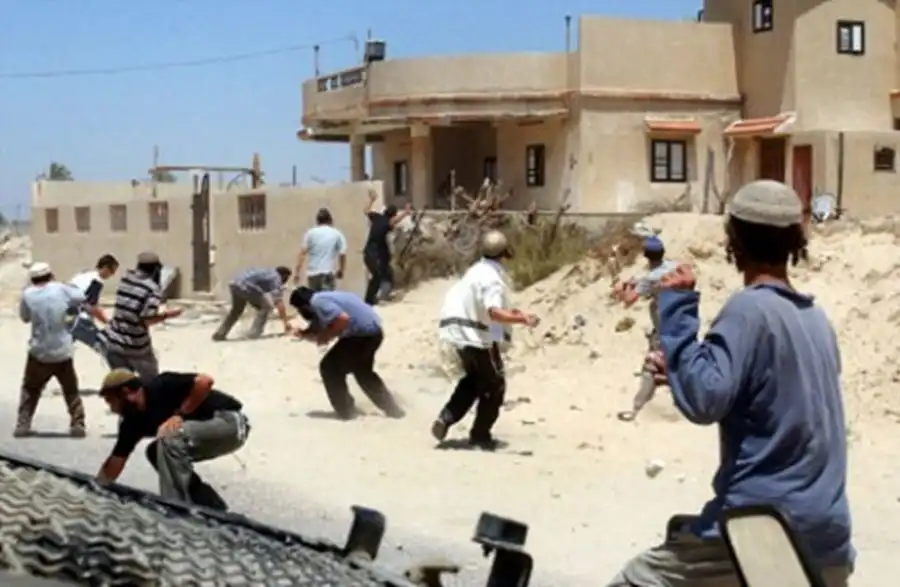
Israeli Settlers bulldoze land and steal gas cylinders in the West Bank

Settlers bulldozed land and stole gas cylinders in the West Bank on Wednesday.


In Bethlehem, settlers began bulldozing agricultural land in the Khallet al-Qatn area on Wednesday.


Local sources reported that settlers began bulldozing 150 dunams of land belonging to the Suwais family.


In Tulkarm, settlers attacked the home of citizen Mufleh Hamad in the town of Ramin, east of Tulkarm, and stole gas cylinders from it.


Ramez Mufleh, the homeowner's son, told local sources that they woke up to the sounds of a group of settlers storming the house's backyard, stealing four gas cylinders, and attempting to steal their vehicle. The family and other neighborhood residents confronted them, enabling them to escape in their vehicles, preventing further thefts.

PALESTINE

Wed 09 Apr 2025 1:21 pm - Jerusalem Time

UNRWA: The Israeli blockade has a devastating impact on Gaza's children.

The United Nations Relief and Works Agency for Palestine Refugees (UNRWA) said on Wednesday that children in Gaza are suffering "devastating" effects as a result of the Israeli occupation's continued closure of the Strip's crossings to the entry of aid and commercial supplies for the sixth week.


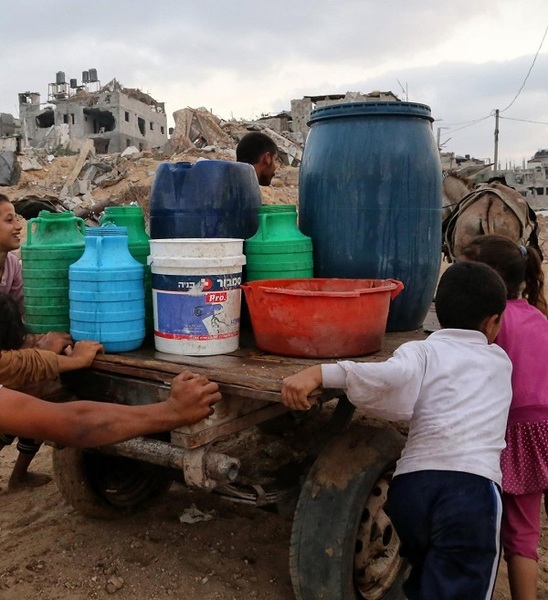
This came in a post by UNRWA on the X platform, accompanied by a photo of two children helping to pull a cart carrying several containers filled with water.


Since March 2, Israel, the occupying power, has prevented the entry of essential supplies, including food, water, and other supplies, into the Gaza Strip following its closure of the crossings, causing a humanitarian disaster and exacerbating famine and thirst.


"In northern Gaza, children aren't looking for their toys or pens, but for water. They're not going to school, they're pushing carts around in search of something to quench their thirst," UNRWA said.


She explained that Israel's imposition of a blockade and the suspension of the entry of aid and commercial supplies into Gaza for the sixth week have led to "an increasing scarcity of clean water, food, shelter, and medical care."


She stressed that the continued Israeli blockade has had a "devastating" impact on the children of Gaza.

The water crisis in Gaza is worsening due to the interruption of water supplies from the Israeli company Mekorot to Gaza City, which constitutes 70% of the total available supply.


The UN agency called for an immediate ceasefire in the Gaza Strip.

PALESTINE

Wed 09 Apr 2025 12:49 pm - Jerusalem Time

Two people were injured by Israeli occupation forces' bullets during the ongoing raid on Balata camp.

Two citizens, one of them a child, were injured by Israeli occupation forces' bullets during the ongoing raid on Balata camp, east of Nablus.


The Palestinian Red Crescent Society reported that it treated two injuries, one from live bullets to the pelvis and foot, and the other to a child from live bullet shrapnel in the thigh.


She noted that she was facing difficulty in reaching patients in the camp, as the occupation prevented her crews from moving.


Israeli occupation forces have continued their raids on Balata refugee camp since early this morning, launching a campaign of arrests and extensive searches of citizens' homes.


Local sources reported that the occupation forces had turned some homes into military barracks and observation points after forcing their residents to evacuate them at dawn today.


The sources reported that since the early hours of the morning, the occupation forces have been raiding all the houses in the Al-Jammasin and Maghdousha neighborhoods, and have begun raiding and searching the houses in the Al-Badoud neighborhood, and are conducting field investigations with the citizens, while they have arrested a number of citizens, including: Mahmoud Abu Siris, Iyad Abu Hamdan, Wael Hanoun, Mahmoud Yousef Abu Maryam, Jaber Abu Hamada, Ayman Marshood, and the mother of the martyr Mahmoud Abu Hamada.


Press sources reported that the occupation forces targeted journalists on the outskirts of the camp, throwing sound bombs and tear gas at them, resulting in one of them being injured in the foot by a bomb.

PALESTINE

Wed 09 Apr 2025 12:32 pm - Jerusalem Time

368 violations committed by Israeli occupation and settlers in Salfit last month

The Salfit Governorate said it had documented 368 violations committed by the Israeli occupation and settlers against citizens and their property in the governorate during the month of March.


Governor Mustafa Taqatqa said that the policy of house raids, incursions, checkpoints, closures, arrests, and settler attacks has witnessed a significant escalation in the governorate recently. The governorate recorded 89 incursions, 108 raids on homes and facilities, and the occupation carried out approximately 48 detention and arrest operations. Meanwhile, 12 attacks on citizens and their property were monitored, in addition to the seizure of 4 vehicles and property.


Taqatqa added that settlers carried out 17 attacks on citizens and their property, and that the occupation forces set up 33 temporary checkpoints and closed the entrances to towns and villages with iron gates 25 times. He added that there are gates and entrances that have remained closed since the start of the aggression on the Gaza Strip.


He pointed out that the occupation bulldozers proceeded to level 95 dunums of citizens' land in Bidya, Iskaka and Salfit for the benefit of the colonizers, and uprooted and destroyed 220 olive trees in Bidya, Haris and Salfit.


The report also documented the occupation's seizure of two dunams and 791 meters of land in the village of Haris, and the delivery of two notices to stop work and construction in Haris and Yasuf. Meanwhile, the occupation and settlers carried out about seven acts of sabotage, including smashing vehicle windows by throwing stones at them, and vandalizing the contents of homes after raiding them. In addition, a boy was injured by occupation bullets in the town of Bidya, and 15 others sustained injuries and bruises as a result of settler attacks.

PALESTINE

Wed 09 Apr 2025 12:08 pm - Jerusalem Time

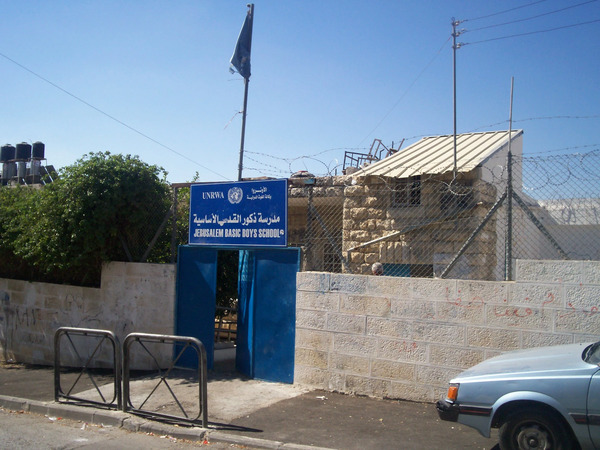
Statement issued by the Palestinian Education Coalition regarding the closure of UNRWA schools in occupied Jerusalem.

Amid the ongoing escalation targeting the Palestinian educational infrastructure, the unjust step taken by the Israeli occupation authorities to close UNRWA schools in the Shuafat refugee camp in occupied Jerusalem constitutes a flagrant violation of educational and humanitarian rights recognized by international conventions and reveals a premeditated intent to undermine one of the most important pillars of Palestinian resilience: the right to education.


This arbitrary decision does not fall within the framework of an administrative or regulatory matter, as the occupation claims. Rather, it comes within the context of a systematic policy aimed at undermining the Palestinian presence in Jerusalem by emptying the city of its educational institutions and depriving its children of their most basic guaranteed rights, foremost among which is the right to a quality, safe, and sustainable education. It is, in essence, a blatant violation of international conventions, foremost among them the Universal Declaration of Human Rights, the International Covenant on Economic, Social and Cultural Rights, and United Nations resolutions that have repeatedly emphasized that education is an inalienable right, especially in times of conflict and displacement.


The closure of UNRWA schools constitutes a historic setback that shakes the very essence of the Palestinian entity. The impact goes beyond depriving thousands of children of their legitimate right to education; it extends to undermine the foundations of the Palestinian social fabric, threatening its unity and stability. This decision, which appears to be a mere administrative measure on the surface, opens the door wide to cycles of marginalization and fuels despair in the hearts of young people, preparing them for a bleak future that limits their hopes and leads them toward violence, extremism, and displacement. It not only strikes at the present but also destroys the dreams of future generations and sows doubt in the feasibility of progress, contributing to the dismantling of the societal fabric and undermining the foundations of security, development, and stability.


Stemming from its national and moral responsibility, the Educational Policy Cooperative, as one of the arms of the Palestinian Education Coalition, and believing that education is the first line of defense for identity and dignity, affirms that what is happening in Jerusalem cannot be separated from a systematic political project aimed at emptying the city of its educational and cultural institutions.


While we emphasize that the closure of UNRWA schools is not merely an administrative measure, but a serious violation of international agreements, we warn that this decision not only threatens the future of thousands of children, but also threatens the collapse of the social protection system and fuels feelings of marginalization and delinquency among the rising generations, opening the door to the spread of violence, extremism, and delinquency.


Based on the above, the Palestinian Education Coalition calls on all national forces, civil society institutions, and international bodies, most notably UNESCO and UNICEF, to assume their moral and humanitarian responsibilities and work to:

• Stop these unjust policies that affect the essence of the right to education.

• Ensure the continuation of education services for refugee children without politicization or diminution.

• Enabling UNRWA to perform its historical and humanitarian role in caring for refugees, based on Resolution 302 issued by the United Nations General Assembly.

Protecting the right to education in Jerusalem is not only a national responsibility, but a true test of the international community's commitment to the principles of justice and human rights. Attacking educational institutions in Jerusalem, Gaza, Jenin, or other Palestinian cities is a direct assault on the future of future Palestinian generations and a blatant attempt to separate Palestinians from their roots and identity.

Hence, we, in the Palestinian Education Coalition, call upon all active forces to close ranks and intensify efforts in defense of the right to education, and to adhere to international conventions as a legal and moral lever to guarantee this right and protect it from tampering and political blackmail.


ARAB AND WORLD

Wed 09 Apr 2025 11:51 am - Jerusalem Time

Iran sticks to its terms in nuclear talks, US renews warnings

Iranian Foreign Minister Abbas Araghchi asserted that a nuclear agreement with the United States is possible during the talks scheduled for Saturday in Oman if the United States demonstrates genuine will. Meanwhile, the United States reiterated its emphasis on taking President Donald Trump's warnings seriously.

Araghchi added, in a statement to Iranian state television during his official visit to Algeria, that next Saturday's talks with Washington will be indirect and without any preconditions, explaining that his country is prepared to remove the ambiguity surrounding its nuclear program.

He said that Iran is confident in the peaceful nature of its nuclear program and sees no problem in building further trust "as long as this process does not constitute a constraint on us or an obstacle to its goals."

Araghchi stressed that the primary goal of negotiations with Washington is to lift sanctions.

Araghchi added that the form of negotiations, whether direct or indirect, is not of primary importance, explaining that the effectiveness of the negotiations, the seriousness of both parties, and their willingness to reach an agreement are more important.

He stated that the format of the negotiations is linked to multiple issues, so it was decided that they should be indirect. He added that Tehran does not believe in negotiations in which the other party imposes its demands through threats and pressure.

Iran's Tasnim News Agency reported that Araghchi will head the Iranian delegation to the upcoming talks in Oman next Saturday, while the US delegation will be headed by Trump's Middle East envoy, Steven Witkoff.

Iranian government spokeswoman Fatemeh Mohajerani said that Tehran and Washington will hold indirect talks in Amman. She added in a press conference that Tehran believes in the principle of dialogue and has previously emphasized that it will engage in negotiations if it is treated with respect.

Asked whether the indirect negotiations would turn into direct negotiations, she explained that the negotiation process must begin to determine what this path would be.

Earlier, during his reception of Israeli Prime Minister Benjamin Netanyahu, the US President announced for the first time that the US would hold direct talks with Iran, adding that the success of these negotiations would be positive for Iran, otherwise it would be in "great danger."

Trump said, "Iran cannot have a nuclear weapon. If the talks don't succeed, I think it will be a very bad day for Iran." He emphasized that "neither Washington nor Israel wants to get involved in any conflict as long as it can be avoided."

"The Iranians are now coming to the negotiating table, and they understand the importance of taking President Trump's warnings seriously," a State Department spokeswoman told Fox News.

PALESTINE

Wed 09 Apr 2025 11:18 am - Jerusalem Time

Israeli occupation continues its aggression on Tulkarm, amidst destruction and devastation.

The Israeli occupation forces continued their aggression on the city of Tulkarm and its camp for the 73rd consecutive day, and on the Nour Shams camp for the 60th day, amidst widespread raids, arrests, and acts of vandalism and terror that targeted the city's neighborhoods and suburbs, Tuesday night and Wednesday morning.


Local sources reported that the occupation forces stormed the city from its southern entrance with two Eitan armored vehicles and a number of military vehicles, and patrolled its main streets, passing through Al-Alimi Street in the west, and Al-Younis Roundabout in the northern neighborhood, reaching the Shuweika and Artah suburbs, before withdrawing later along the same road.


She added that the occupation forces raided the home of the Hashesh family in the Shuweika suburb and began searching.


The city also witnessed intense activity by occupation forces, particularly in the eastern neighborhood, the Peace Roundabout, and the old Nablus Garage Street. Israeli forces drove against traffic, stopping vehicles across the street to prevent vehicles from passing, amid intense firing of live ammunition and sound bombs to terrorize civilians.


Israeli occupation forces also took up positions around the Thabet Thabet Governmental Hospital, specifically in the area close to Tulkarm refugee camp and the Awad family's office. They arrested and detained the young men, subjecting them to field investigations, without recording any arrests from the area.


In a related context, the occupation forces arrested three young men at dawn today from different areas of the city and its suburbs: Muhammad Abu Zant while he was near the old Nablus garage street, Suhaib Abu Laifa from his home in the southern suburb of Kafa, and Amara Marai from the Rashid neighborhood in the eastern suburb of Dhnaba.


The occupation forces also raided the Ezbet al-Tayah suburb, southeast of Tulkarm, and stormed the home of Abdul Hamid al-Sudani, carrying out extensive searches that included vandalism and destruction of the home's contents.


Israeli occupation forces dispatched military reinforcements to the Tulkarm and Nur Shams refugee camps, deploying infantry units inside their neighborhoods, storming and vandalizing homes, converting a number of them into military barracks, and firing live ammunition. Explosions were heard from time to time.


In Nour Shams camp, occupation forces deployed in the Jabal al-Nasr area, raiding residents' homes while firing sound bombs inside, and repeated explosions were heard in the area.


The occupation forces continue to seize homes and residential buildings on Nablus Street and the city's northern neighborhood, transforming them into military barracks with their vehicles stationed around them. Meanwhile, they are restricting citizens' movement on the street, sections of which have been closed off with earth mounds in both directions.


Last night, Israeli occupation forces set up a flying checkpoint at the Jabara Bridge gate at the southern entrance to the city, subjecting vehicles to a thorough search and inspecting passengers' IDs and mobile phones. A second iron gate was also installed at the Anab military checkpoint east of the governorate, obstructing the movement of vehicles coming from the West Bank governorates to or from Tulkarm.


The occupation's systematic and ongoing aggression on the city of Tulkarm and its two camps resulted in the martyrdom of 13 citizens, including a child and two women, one of whom was eight months pregnant. Dozens were also injured and arrested, and more than 4,000 families were forcibly displaced from the Tulkarm and Nur Shams camps, along with dozens of families from the northern neighborhood of the city after their homes were seized and a number of them converted into military barracks.


The aggression also caused widespread destruction to the infrastructure, including homes, shops, and vehicles, which were completely and partially demolished, burned, vandalized, looted, and stolen. The occupation forces completely destroyed 396 homes and partially destroyed 2,573 others in the Tulkarm and Nur Shams camps, in addition to closing their entrances and alleys with earth mounds.

OPINIONS

Wed 09 Apr 2025 11:11 am - Jerusalem Time

Israeli Newspaper: The prospect of a new nuclear agreement could spark deep concern in Jerusalem

Ynet

Ynet

Opinion Writer

Michael Oren

My mother, a seasoned family therapist, used to say, "The apparent problem is not the real problem." That is, matters that appear more urgent are often used to mask a deeper, more threatening problem. This was the case with the hastily convened emergency summit between President Trump and Prime Minister Netanyahu.

The apparent problem was the trade tariffs imposed by the United States on Israel. It is true that they are serious and could cost Israel more than $2 billion at a time when it cannot afford such losses. However, the tariffs were not the reason Netanyahu rushed to Washington. The real problem is Iran.

During the two leaders' joint press conference yesterday in the Oval Office, Trump surprised his guest with a brief announcement: "We are in direct talks with Iran." It is important to note that the US president has never hidden his desire to talk with Iran. Indeed, immediately upon his return to the White House last January, he sent a letter to Iran's Supreme Leader Ali Khamenei, inviting him to resume talks. But Trump has now revealed that the talks are at their peak, announcing that "there will be a very big meeting" next Saturday. Most surprisingly, these talks are direct between the United States and Iran.

This step was not dared by President Biden, who had hoped to revive the 2015 agreement. Biden's negotiating team refrained from meeting directly with the Iranians, using intermediaries to convey messages.

It is highly likely that Israel was aware of these direct talks, and Netanyahu did not publicly oppose them in his Oval Office statements. Nevertheless, the prospect of a new nuclear agreement is causing deep concern in Jerusalem. The key questions are: How long will the talks take? What is their ultimate goal? Is the goal to reach an agreement that is slightly better than the 2015 agreement, limited to a temporary freeze on Iran's nuclear program? And, ultimately, what will the United States' position be if the talks fail? These questions are of paramount importance to Israel's security. The Iranians are experts at negotiations and will almost certainly try to extend them as long as possible to allow Russia to repair and improve their air defense systems, which the Israeli Air Force destroyed. They will likely agree to a slightly better deal than the 2015 agreement, but they will retain their nuclear infrastructure and reactors. They will demand the lifting of the harsh sanctions reimposed by Trump and the removal of the credible military threat that has been put back on the table.

While Israel works to resolve the apparent issue of tariffs, it must focus on obtaining answers to the real problem: renewed talks between the United States and Iran. We must obtain clear guarantees regarding the talks and their ultimate goals. We must make clear that the only agreement Israel will accept is one that dismantles Iran's nuclear infrastructure, not one that merely freezes it.

Only such an agreement can guarantee Israel's vital security interests and consolidate its military achievements in the region. It must be emphasized that only such an agreement serves the interests of Israel and the entire Middle East, as well as those of the United States itself.

OPINIONS

Wed 09 Apr 2025 11:09 am - Jerusalem Time

Israeli Newspaper: Is the army capable of admitting to the massacre it committed against the aid convoy in Rafah?

Haaretz

Haaretz

Opinion Writer

Rogel Alpher

On the night of March 23, a Palestinian convoy, including an ambulance and fire engines, approached an army force in Rafah. The soldiers opened fire, killing 15 aid workers, including paramedics. Several days later, the bodies and mangled vehicles were found buried in the sand. These are the facts everyone agrees on.

The soldiers claimed that the vehicles were moving suspiciously, that they felt threatened, that the dead, for the most part, were linked to Hamas, that they were collected and buried temporarily to prevent dogs and hyenas from eating their bodies, and that Hamas systematically uses rescue vehicles to transport militants. In contrast, Palestinian eyewitnesses claim that the emergency vehicles were marked by their flashing lights, as is customary, and that the victims were executed by shooting at close range, with some bodies found with their limbs bound.

Recently, media outlets in the United States and Britain published information and testimonies supporting the Palestinian account. The New York Times published a video clip found on a mobile phone in the possession of one of the paramedics, which clearly shows that the convoy clearly identified itself: the emergency lights were on when the forces opened fire. The clip shows the sound of gunfire gradually approaching over a period of five minutes, and at one point, soldiers are heard passing by the paramedics, while the paramedic who filmed the video prays for his life. He was later found shot in the head. Apparently, the testimonies raise allegations of a massacre of aid workers, a war crime, but the Israeli military continues to deny it. In this context, it is worth noting that the force that opened fire was from the Golani Brigade, and on the eve of re-entering the Gaza Strip, a Golani battalion commander told his soldiers: "Everyone we encounter is an enemy. We identify someone, and we eliminate him." Chief of Staff Eyal Zamir ordered an investigation. But can the IDF admit that it committed a massacre against aid workers? Can the IDF spokesperson appear on television and say, in Hebrew and English, that the army apologizes for the killing of 15 innocent aid workers? Can he admit that some of them were tied up and executed at point-blank range? Can he admit that the soldiers lied? Such a public admission, including a commitment to the international community to stop treating Palestinian rescue and aid teams as Hamas operatives, would make it much more difficult for the new Chief of Staff to act in the Gaza Strip as he did on the night of March 18, when he ordered a massive airstrike that ended in the indiscriminate killing of hundreds of innocent Palestinian children, women, and men. This would force not only the army, but all of Israeli society, to recognize that not everyone encountered is an enemy, and that it is not permissible to exterminate everyone we see. But Israeli society is incapable of acknowledging this, and a reaction similar to the Elor Azaria affair [the soldier accused of shooting a wounded Palestinian man in the head as he lay on the ground] would erupt: Public opinion and the government would cry out that restricting the army's actions for legal reasons endangers soldiers' lives. According to the Israeli view, all residents of Gaza are "monsters," even those who work for aid organizations, even their own children. Everyone deserves a bullet to the head at point-blank range, or a missile in the living room. Since the army claims that Hamas uses rescue vehicles to transport militants, every rescue vehicle is automatically considered a target to be destroyed, whether its emergency lights are on or not. There is no sympathy for the Gazans. Even for the Gazan who actually works for a relief organization, whose legs were shackled and who was shot in the head at point-blank range while praying for life. The deep problem, which no investigation can fix, is that Israeli society views the massacre not as a war crime, but as an act of self-defense.

ARAB AND WORLD

Wed 09 Apr 2025 10:55 am - Jerusalem Time

Signed by 950 pilots: The Israeli army is trying to prevent the publication of a petition calling for refusal to serve in the military.

IDF Chief of Staff Eyal Zamir and Air Force Commander Tomer Bar are attempting to prevent the publication of a petition signed by 950 reserve and retired fighter pilots calling for a refusal to serve in the military. The petition is being circulated against the government's continued push for a "judicial reform" plan to weaken the judiciary and its decision to dismiss Shin Bet chief Ronen Bar and Attorney General Gali Baharav-Miara.


The day before yesterday, Air Force Commander Bar held a meeting with senior reserve Air Force officers to prevent the publication of the petition. Former Air Force commanders Eliezer Shkedi, Dan Halutz, and Ido Nehushtan also participated in the meeting, Yedioth Ahronoth reported Wednesday.


Zamir entered the meeting with the officers who initiated the petition "with the aim of supporting the Air Force commander" against those described as "trying to draw the Air Force into political protests," according to the newspaper. He told those gathered, "Give support to Tomer Bar, don't repeat the mistakes of the past, and I expect you to strengthen the Air Force."


Zamir added, "I expect former Air Force commanders to support Tomer Bar, not encourage refusal to serve, and not involve the Air Force in political protests."


The newspaper quoted one of the petition's initiators, a former fighter pilot, as saying about the petition: "The document, unlike what has been published so far, does not address refusal to comply with service. It is not directed at the army at all, but rather is a clear call to the government to return all the kidnapped, even at the price of stopping the war. It has not yet been decided whether and when the petition, along with the names of its signatories, will be published. I must make it clear that it is important for the petition's initiators not to harm the air force."


The petition, which was leaked to the media, read: "We, the reserve and retired soldiers of the air force, demand the return of the kidnapped soldiers home without delay, even at the price of an immediate cessation of hostilities. In the meantime, the war primarily serves political and personal interests, not security interests. Continuing the war does not serve any of its declared goals and will lead to the deaths of the kidnapped soldiers, Israeli soldiers and innocent civilians, and will erode the reserve force."


The petition added: "As has been proven in the past, the kidnapped soldiers can only be returned peacefully through an agreement, while military pressure leads to the deaths of kidnapped soldiers and endangers our soldiers. We call on all Israeli citizens to join this movement and demand everywhere and by any means: Stop the fighting and return the kidnapped soldiers – now. Every day that passes endangers their lives. Any further moment of hesitation is a disgrace."


The Air Force commander threatened reserve personnel with dismissal if they signed the petition, as the signatures on the petition are not yet official and have not been officially published, according to Haaretz.


Since the beginning of the war on Gaza, the Israeli military has dismissed members of the reserve forces who signed petitions urging them to refuse service due to the threat they pose to the lives of Israeli prisoners in Gaza. This includes a reserve fighter pilot who announced last month that he would not report for duty in protest against the resumption of the war on Gaza.