PALESTINE

Mon 28 Apr 2025 12:23 pm - Jerusalem Time

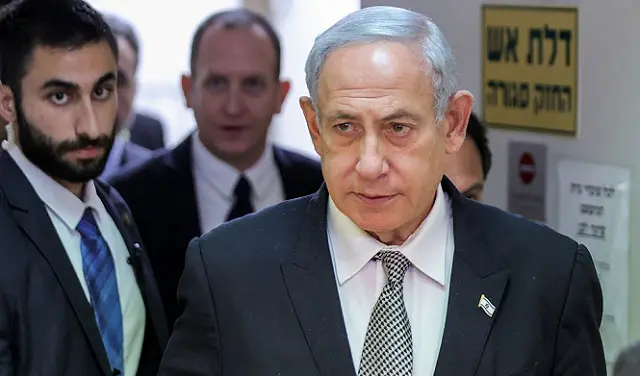
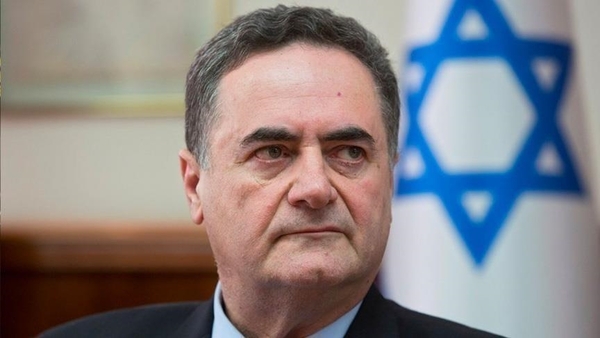
Netanyahu appears for the 25th time before the Tel Aviv District Court to answer corruption charges.

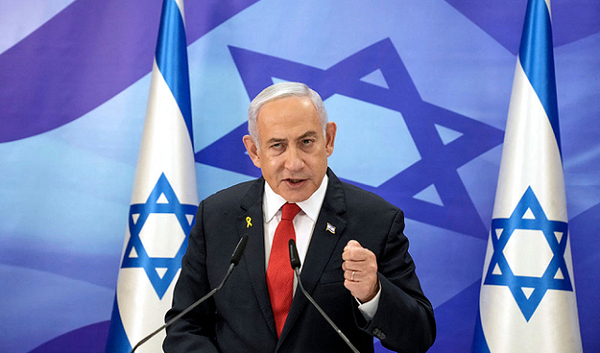
Israeli Prime Minister Benjamin Netanyahu appeared for the 25th time in Tel Aviv District Court on Monday to answer corruption charges against him.

The Israeli newspaper Yedioth Ahronoth reported on its website that Netanyahu appeared before the court for the 25th time since December 10, 2024.

The court convenes twice a week to hear Netanyahu's responses to the charges of bribery, fraud, and breach of trust against him.

The court decided last week to conclude hearings on Netanyahu's responses on May 7.

According to the court's decision, Netanyahu will also appear in court tomorrow, Tuesday, and on May 6 and 7.

Last Tuesday, Yedioth Ahronoth reported: "The judges in Prime Minister Benjamin Netanyahu's trial have authorized his lawyer, Amit Hadad, to hold four additional sessions in the main testimony phase, which will conclude on May 7."

She added, "After the testimony phase ends, Netanyahu's cross-examination will begin," without providing further details.

Netanyahu faces charges of corruption, bribery, and breach of trust in what are known as Cases 1000, 2000, and 4000. Former Attorney General Avichai Mandelblit filed the indictment in late November 2019.

"Case 1000" concerns allegations that Netanyahu and members of his family received expensive gifts from wealthy businessmen in exchange for various benefits and assistance.

In "Case 2000," he is accused of negotiating with Arnon Mozes, publisher of the privately owned Hebrew newspaper Yedioth Ahronoth, to obtain positive media coverage.

The more serious "Case 4000" concerns the alleged facilitation of favors to the former owner of the Israeli Walla news website, Shaul Elovitch, who was also an executive at the Bezeq telecommunications company, in exchange for positive media coverage.

Netanyahu's trial in these cases began in 2020 and is still ongoing. He denies the charges, claiming they are a "political campaign aimed at ousting him."

PALESTINE

Mon 28 Apr 2025 11:58 am - Jerusalem Time

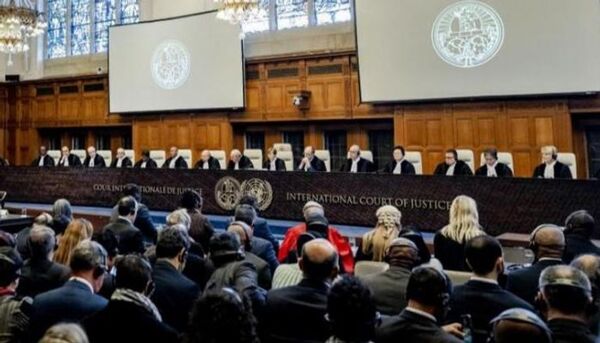
ICJ Opens Hearings on Israel’s Obligations in Gaza

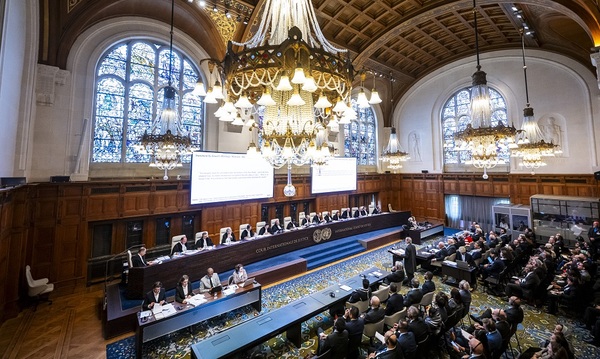
The International Court of Justice will begin on Monday a week of hearings dedicated to Israel’s humanitarian obligations towards the Palestinians. This comes after more than 50 days of Israel imposing a total blockade on aid entering the war-torn Gaza Strip.

United Nations representatives will start a marathon that lasts five days at the International Court of Justice, the highest court of the United Nations in The Hague, Netherlands, at 10 a.m. local time (08:00 GMT), before a panel of 15 judges.

Palestine will be the first to present its arguments on this day.

38 Legal SubmissionsThis week, 38 other countries will present their arguments, including the United States, China, France, Russia, Saudi Arabia, as well as the Arab League, the Organization of Islamic Cooperation, and the African Union.

In December, the United Nations General Assembly, by a large majority, adopted a resolution presented by Norway asking the International Court of Justice to issue an advisory opinion.The resolution calls for the Court to clarify what Israel must do regarding the presence of the United Nations, its agencies, international organizations, or third countries “to ensure and facilitate the urgent delivery of essential supplies for the survival of Palestinian civilians without obstacles.”

Israel controls all international aid flows that are vital for the survival of 2.4 million Palestinians in the Gaza Strip, which is suffering from an unprecedented humanitarian crisis.Israel cut off this aid on March 2, just days before a fragile ceasefire collapsed after 15 months of continuous fighting.

“Man-Made Famine”The UN Commissioner-General for Palestinian Refugees (UNRWA), Philippe Lazzarini, condemned on Friday the "man-made famine driven by political motives."According to the United Nations, about 500,000 Palestinians have been displaced since the end of the two-month ceasefire.Israel resumed air and ground attacks on March 18, resulting in what the UN described as “perhaps the worst” humanitarian crisis in the Gaza Strip since the war began following Hamas's attack on Israel on October 7, 2023.While advisory opinions of the International Court of Justice are not legally binding, this advisory opinion could increase diplomatic pressure on Israel.

In January 2024, the International Court of Justice urged Israel to prevent any potential acts of genocide and to allow the entry of humanitarian aid into Gaza.In March 2024, following a request by South Africa, which accuses Israel of genocide, the Court called for new Israeli measures to address the "famine" spreading in the Palestinian enclave.

“Frustration”Haris Horimajic, a PhD student at the Graduate Institute in Geneva, said that “the parties involved in the conflict have shown little commitment to respecting international law.”He added, “The request for an advisory opinion reflects widespread frustration at the lack of meaningful dialogue to address the catastrophic situation in Gaza.”

The International Court of Justice had issued an advisory opinion in July 2023, in which it considered Israel’s occupation of Palestinian territories “illegal” and called for it to end as soon as possible.

The October 7 attack resulted in 1,218 Israeli casualties, most of them civilians, according to official Israeli figures cited by AFP.Since then, Israeli military retaliatory operations have led to the death of at least 52,243 people in Gaza, most of whom were civilians, according to Gaza's Ministry of Health, which the UN considers reliable.At least 2,111 Palestinians have been killed since March 18.

إذا كنت بحاجة إلى مزيد من التوضيحات أو التعديلات في الترجمة، لا تتردد في إخباري!

OPINIONS

Mon 28 Apr 2025 11:41 am - Jerusalem Time

Dismantling the Saudi-Israeli Normalization Agreement

Translation for "Alquds" dot com

Translation for "Alquds" dot com

Opinion Writer

Marwan Muasher


Perhaps the most important feature of the Saudi-American relationship today is Riyadh's desire to separate two tracks: the desire to strengthen the political, economic, and security relationship with Washington, on the one hand, and the Saudi-American disagreement over the possibility of reaching a normalization agreement with Israel, on the other. While the Trump administration wants to link the two tracks, Saudi Arabia prefers to deal with them completely separately. The main question today is whether Trump will accept this separation.

From the first Trump administration through the Biden administration, US-Saudi negotiations have focused on linking the signing of a normalization agreement between Saudi Arabia and Israel to Riyadh receiving three things from the United States: a peaceful nuclear program, a mutual defense agreement obligating America to defend Saudi Arabia in the event of an external threat, and advanced American weapons. However, Saudi Arabia also stipulated that Israel commit to a path leading to a two-state solution. Throughout the Biden years, the United States has continued to insist that a Saudi-Israeli agreement is within reach, despite Israel's public and repeated refusal to accept any commitment to a two-state solution, even a verbal one. Of course, no agreement was reached, contrary to repeated American statements. However, after October 7, and after Israel's clear measures to kill and displace Palestinians from Gaza, as well as its attempt to annex parts, if not all, of the West Bank, it became clear that Saudi Arabia was not willing to accept such a normalization agreement, and that its stance, both declared and undeclared, towards Israel had recently hardened significantly.


Where are the talks today? In light of Riyadh's inability and unwillingness to conclude an agreement with Israel, it appears that it is moving toward concluding bilateral agreements with the United States regarding some of the other Saudi demands from Washington. This month, the US Secretary of Energy announced a separate Saudi-American agreement on a path leading to a Saudi peaceful nuclear program, meaning that this Saudi demand is no longer linked to a comprehensive agreement that includes normalization with Israel. The Trump administration also announced its intention to sign a deal with the Kingdom to purchase advanced American weapons worth more than $100 billion. This is the second Saudi demand, which will also be included in an agreement separate from the normalization process. This means the United States has accepted two of the three Saudi conditions for strengthening relations with Washington. As for the third demand, a mutual defense agreement, which is facing significant difficulties in passing Congress, especially from Democrats, Saudi Arabia appears to have abandoned it at this stage for several reasons. Most importantly, obtaining the two-thirds majority required to ratify the agreement is extremely difficult, especially if it does not include clear progress in the peace process. Furthermore, Saudi-Iranian relations have greatly improved today, reducing Saudi Arabia's need for such an agreement with the United States.

President Trump will visit Riyadh on May 12th. He will likely hear a strong Saudi desire to strengthen relations with Washington and not link it to a normalization agreement with Israel, which Riyadh has come to realize is impossible at this stage. What is currently happening is that Saudi demands for such an agreement are being dismantled and treated piecemeal, without linking them together. The main question remains the nature of the American response. Will Trump be satisfied with the arms deal, as well as Saudi Arabia's willingness to invest hundreds of billions of dollars in the American economy, and abandon his stated goal of including Saudi Arabia in the Abraham Accords, which is possible? Or will he insist on such a normalization agreement and pressure Riyadh to accept it? In the latter case, will the Kingdom maintain its position of rejecting such an agreement in light of Israeli intransigence? If that happens, the US-Saudi relationship may experience some tension in the coming period. Therefore, Trump's visit to the Kingdom next month is of particular importance, the results of which will be reflected not only in the Saudi-US relationship, but also in the entire region.

Source, Al Quds Al Arabi

Mon 28 Apr 2025 11:04 am - Jerusalem Time

Could Marwan Barghouthi be the solution, not the problem?

Marwan Barghouthi is in prison already 23 years. He is the most popular Palestinian leader. I know Marwan since 1996 from the many meetings that he participated between Palestinian and Israeli politicians and security personnel that I organized before the second intifada.  Since he was arrested in 2002, I have had many opportunities to communicate with him though people who met with him in prison. Since the beginning of the Gaza war, Marwan, like all of the Palestinian security prisoners have been cut off from the world.  He has been moved repeatedly to several different prisons. He has been in solitary confinement much of the time, even in the dark.  According to what I have heard he has been physically abused and even starved.  My last direct communication with him was in June 2023. He then wrote that he was still committed to Palestinian Israeli peace based on the two states solution. He still believed that Palestinians had the right to use arms against the illegal occupation, but the armed struggle, he wrote, was their last resort. The more favorable path would be diplomacy and negotiations. He, at that point believed that with the changing dynamics in the region that it would be possible to reach a regional peace agreement that would provide Palestinians with freedom in a state of their own and also provide Israel with security through regional alliances. I don’t know if he has changed his positions since the beginning of the war on October 7, 2023. I have asked his family and his lawyer if it is possible to get a letter to him. They said that it was impossible.  He also has no access to newspapers – Palestinian or others, but I decided to publish this letter to him in Al Quds newspaper in Arabic with the hope that he might learn about it and maybe even find a way to respond. 


Dear Marwan,


I hope that this letter gets to you.  I know that you are experiencing hell in prison along with all of the other security prisoners. I imagine that you are experiencing worse conditions than for the average prisoner because of your important senior status.


The Palestinian people are facing the worst crisis in their entire history. The Palestinian ship is floating in the sea with no direction and the captain is too busy with his own interests to even notice what is happening to his people on his watch. The Palestinian people need a new leader and you seem to be the person that they want. It is time for you to come out of your shell of silence and to put forth a plan that can save your people, and by the way, it will also save my people at the same time.  What I am writing is the kind of statement that I hope you would agree to make.  It is based on things that you have communicated in the past and I hope that you still believe in this – perhaps even more now than before because of the horrors of the last 18 months. I believe that by you publishing the kind of plan that I am presenting, the pressure from inside of Israel, the region and the rest of the world will increase substantially on Israel to release you. 


Marwan, you now have to become to solution to Palestinian suffering.  That means you have to understand that Gaza has to come first. If the war in Gaza does not end and if stabilization and reconstruction of Gaza does not begin, the current Israeli government will remain in power and the horrors of Gaza that we already see coming to the West Bank will continueand increase as well.  It is time to adopt a Palestinian strategy that puts the Palestinian people and the Palestinian rights for freedom in the position of the most peace-loving people in the world. I know and recognize that this is very hard to do.  After Hamas’s crimes against humanity and war crimes, Israel committedcrimes against humanity war crimes in Gaza and eventually at some time in the future, there will have to be a process of truth and recognition. But now it not the time for that. Now is the time to end the war and to get Israel out of Gaza, despite the huge increase in justifiable fear and hate between the two peoples. 


Israel will not leave Gaza without the hostages being released and as long as Hamas in in charge in Gaza and remains armed. You are probably the only person who can seriously challenge Hamas to end their control over Gaza and to end their military presence. 


With the plan I am offering, the occupation does not end, obviously, but I think that with this plan, you can free Gaza as a first step that will lead to serious changes on the Israeli side as well those that will bring a change of government in Israel and hopefully a renewed genuine peace process – because both peoples have no other real option. Here is the statement that I propose that you issue: 


I, Marwan Barghouthi am prepared to immediately assume the responsibilities of governing the Gaza Stirp under the following conditions:


  1. I will be appointed by President Mahmoud Abbas to lead a Palestinian professional government for Gaza, independent from the Palestinian Authority, until after Palestinian national elections when Gaza, the West Bank and East Jerusalem will be united. 
  2. I will establish a professional government for Gaza made up of credible and capable Palestinians without the formal participation of any of the Palestinian factions, including Hamas and Islamic Jihad.
  3. My government will establish a Palestinian security force that will enforce law and order and will create stability and will not be engaged in any attacks against Israel. 
  4. I will invite the Arab countries to send to Gaza a temporary Arab security presence to assist in the establishment of law and order and stability.
  5. The Gaza government will disarm all militants in Gaza from all factions. No one in Gaza aside from the Palestinian government security force will be allowed to hold arms. 
  6. The Gaza government will destroy all of the underground tunnels and bunkers in Gaza.
  7. The Gaza government will ensure the release of all of the Israeli and foreign hostages in Gaza, dead and alive. 
  8. The Gaza government will be in charge of the reconstruction of Gaza.
  9. The Gaza government will declare a permanent truce with the State of Israel. 
  10. The Gaza government will be recognized as an independent Palestinian territory, the first phase of a fully independent State of Palestine. Gaza’s borders will be recognized as sovereign Palestinian borders. 
  11. I will call for the State of Palestine to receive full recognition and membership in the United Nations. 


The conditions for all of this to happen include:


  1. The war in Gaza will come to an end. 
  2. Israel will withdraw all of its forces from Gaza to the recognized international border.
  3. The Gaza government will accept that a “no-go” security perimeter will be established on the Gaza side of the Gaza-Israel border in which Israel will issue a policy of shooting any non-coordinated entrance into the perimeter. The “no-go” zone policy will end in agreement between the Gaza government and Israel when the Gaza government is capable to ensure the no threats to Israel exist on that. 
  4. There will be a release of an agreed number and names of Palestinian prisoners by Israel.
  5. Israel and Egypt will reopen the border crossings into Gaza for the free movement of people and goods. The Gaza government has no objection to international inspectors to be located at the border crossings for an agreed period of time.
  6. The Gaza government will work with the international community to establish a seaport in Gaza for the entry and exit of goods and people.  The Gaza government agrees to an international inspection mechanism at the Gaza seaport.
  7. When conditions are right and in agreement with Israel and Egypt, the Gaza International airport will be reopened. 
  8. Palestinian and international banks will be allowed to reopen for business in Gaza.   The banks can be monitored by a credible international inspection mechanism against money laundering and the transference of money for terrorism.  
  9. With the issuance of this statement, Israel will agree to release me from prison and to send me to Gaza, after being appointed by President Abbas to head the Gaza Government. 


PALESTINE

Mon 28 Apr 2025 10:46 am - Jerusalem Time

NYPD investigates clashes during Ben-Gvir's visit


The New York Police Department has opened an investigation into a series of incidents that resulted from clashes between pro-Palestinian and pro-Israel protesters during a visit by Israeli National Security Minister Itamar Ben-Gvir, in which two women protesting against the visit were assaulted.

New York City Mayor Eric Adams said on social media that police are investigating a series of clashes between protesters on Thursday, which began when a group of anti-Israel protesters surrounded the world headquarters of a synagogue in Brooklyn.

He added that initial reports indicate that one anti-visit protester was isolated from her group and harassed by pro-Israel protesters, sustaining injuries. He pointed to another incident in which a second woman was cornered and "subjected to vile threats by pro-Israel protesters."

Adams said police are working to identify those involved in the attack, and one person has been arrested. He added that "hate has no place" in New York City.

The New York Times reported that chants of "Death to Arabs" were chanted and that in one incident, hundreds of men and boys surrounded a woman, shouting racist and sexist obscenities.

Amid the quarrel between the two groups, Israeli Defense Minister Ben-Gvir's speech was canceled.


Human rights defenders have expressed concerns about rising Islamophobia, anti-Arab bias, and anti-Semitism during the Israeli war on the Gaza Strip that followed the October 7 attack (Operation Protective Edge).

Last Monday, Ben-Gvir arrived in the United States, his first visit as minister since assuming his duties in late 2022.

Ben-Gvir's office said he would meet with officials in the United States, but as of Thursday, no American officials had met with him.

The previous US administration, headed by Joe Biden, boycotted Ben-Gvir, leader of the far-right Jewish Power party, due to his opposition to peace and his calls for war, starvation and displacement of Palestinians, and the establishment of settlements in the Gaza Strip after its occupation.

Upon his arrival in the United States, Israelis criticized Ben-Gvir for his opposition to the prisoner exchange agreement and ceasefire in Gaza, according to videos posted on social media.

With American support, Israel has been committing genocide in Gaza since October 7, 2023, leaving more than 168,000 Palestinians dead and wounded, most of them children and women, and more than 11,000 missing.

Source: Agencies


OPINIONS

Mon 28 Apr 2025 10:32 am - Jerusalem Time

In Palestine, politics is dying

Dr. Ibrahim Nairat

Dr. Ibrahim Nairat

Opinion Writer

In the spring of 2025, the Palestinian political landscape appears more fragile than ever. Between ongoing divisions, institutional paralysis, and the loss of popular confidence, Palestinian politics appears to be entering a slow demise, with roles and responsibilities eroding in favor of stagnation and calcification.

After years of division between Gaza and the West Bank, the idea of a unified national project has eroded. Elections are absent, legislative institutions have fallen silent, and factions have become administrative entities rather than forces for political change. What was previously called the "Palestinian political system" no longer enjoys real legitimacy in the eyes of a broad segment of the population, especially among the younger generations, who view the old political parties as symbols of failure and division.

The Palestinian Authority in the West Bank continues to erode internally under the weight of administrative and economic divisions, while Hamas in Gaza governs under a stifling blockade that makes it more concerned with survival than building a genuine national project. In both cases, politics has become little more than crisis management, with no real prospect of renewing legitimacy or achieving national unity.

The Israeli occupation, in turn, is exploiting this reality, continuing to expand settlements and undermining any prospects for a genuine political solution. In light of the lack of Palestinian unity and the world's preoccupation with its internal crises, the national project is retreating step by step, while time accelerates in favor of facts on the ground that are difficult to change later.

Amid this political turmoil, a new and dangerous phenomenon has emerged: the Palestinian leadership's detachment from the pulse of the street. Decision-making centers are no longer based on live interaction with the people's demands and daily concerns. Instead, they operate within narrow internal calculations, driven more by fear of collapse or loss of control than by the drive for renewal or change.

Today, while calls to think outside the box and explore new horizons are growing, the leadership appears trapped within its old boxes. It no longer measures its presence through a public referendum, but rather through its ability to manage a renewed crisis with minimal losses. In the absence of a unified national project, political renewal has become a mere survival tactic, not a strategy for building a future.

Thus, politics gradually loses its true essence: to be a tool for representing the will of the people and fulfilling their aspirations. In the absence of this essence, "politics" becomes merely the management of successive crises... until it is devoid of any real capacity to influence or change.


Elements of the failure of the Palestinian political leadership


This bitter reality did not arise from a single moment, but rather from the accumulated failure of both political leaderships: those who called for armed resistance and those who adopted peaceful methods.


First: The failure of advocates of armed resistance

  • Lack of a comprehensive political strategy: relying on military responses without a clear vision for the post-confrontation period.
  • Transforming resistance into an end rather than a means: continuing the fighting without linking it to concrete political goals.
  • Loss of popular support: due to the high human cost and the siege.
  • Regional and international isolation: Failure to gain real political support for the cause.
  • Narrow factionalism: prioritizing the interests of organizations over the interests of the national project.
  • Stagnation of the tools of struggle: reliance on traditional means without developing parallel paths such as popular resistance and diplomacy.

Second: The failure of advocates of peaceful methods

  • Over-reliance on external factors: waiting for solutions from the international community despite its lack of genuine will.
  • Negotiating from a position of weakness: without having effective leverage.
  • Corruption and ossification of institutions: This has weakened people’s confidence in the peaceful process.
  • Lack of a clear national project: the inability to present a comprehensive and convincing vision.
  • Detached from the pulse of the street: The leadership has become an isolated class.
  • Adapting to the status quo: This has turned the political struggle into mere crisis management without a real attempt to break the deadlock.


Palestinian politics may not yet be completely dead, but it is clearly dying. As this disconnection from the people and this intellectual stagnation persist, the national project itself is threatened with extinction.

Only a renewal of political thought and the rebuilding of institutions on truly democratic and representative foundations can restore hope to Palestinian politics. Only a deep connection to the pulse of the street and the renewal of tools of peaceful or armed resistance within a comprehensive national vision can revive the dream of an independent Palestinian state.

Continuing on this sterile approach will only lead to the death of politics... and perhaps to the loss of Palestine itself.

ARAB AND WORLD

Mon 28 Apr 2025 10:14 am - Jerusalem Time

Israel's war on Gaza threatens the stability of Egypt and Jordan


According to a report in the Wall Street Journal on Sunday, two of Israel's regional partners, Jordan and Egypt, are facing growing anger among their people as the Israeli military expands its war against Hamas in Gaza, and far-right politicians in Israel have floated the idea of deporting Palestinians from the territory.


In a sign of mounting pressure, the Jordanian government on Wednesday imposed a blanket ban on the Muslim Brotherhood, the Islamist political movement with significant influence in parts of the Arab world. Several members of the group were arrested earlier this month on charges of planning attacks against Jordanian national security. The Brotherhood has denied any connection to the alleged plots.


The Jordanian capital, Amman, has witnessed repeated protests, including public criticism of the government and its relationship with Israel. Protesters have sometimes gathered near the US and Israeli embassies, where they have clashed with Jordanian forces.


While Egypt has maintained a tight grip on the Palestinians, it has occasionally allowed Egyptians to vent their anger in carefully managed demonstrations that have focused solely on solidarity with the Palestinians—without criticizing the government of President Abdel Fattah el-Sisi. The unrest poses a challenge to the leadership of the two Arab states, which are vital security partners of the United States in the region. Israel also relies on Cairo and Amman to crush non-state armed groups and secure its longer borders. In Israel's other neighbors, Lebanon and Syria, Hezbollah and Palestinian factions have long held sway and have used those countries to launch attacks on Israel.


The newspaper says: "The Hashemite Kingdom of Jordan and Sisi's rule in Egypt are caught in some of the most sensitive and troubling situations in the region. Sisi seized power in a coup that ousted a president backed by the Muslim Brotherhood."


It is noteworthy that after a series of wars between the 1940s and 1970s, Egypt and Jordan signed peace treaties with Israel in 1979 and 1994, respectively. This peace brought government-level trade, security, and intelligence coordination, as well as diplomatic relations, but it did not extend to broad segments of the Jordanian and Egyptian populations, who widely view Israel as a sworn enemy. Israel's war of extermination in Gaza further strained this fragile and cold peace, as Arab states were forced to appease their own peoples' discontent while maintaining and reaping the economic and security benefits of their relations with Israel.


Some members of the right-wing Israeli government pushed for the transfer of Palestinians from the West Bank to Jordan, and Palestinians in Gaza to Egypt's Sinai Peninsula. This fueled popular anger over the war raging in these two countries, prompting Amman and Cairo to confront Israel.


Egyptian officials warned Israel that Cairo could go as far as suspending the 1979 peace treaty if Palestinians were pushed into Sinai. Jordanian Foreign Minister Ayman Safadi said that displacing Palestinians to Jordan would be considered an act of war.


"Jordan's survival depends on what Israel does, and what the Egyptian regime does," Joost Hiltermann, a special advisor with the Middle East program at the International Crisis Group, a think tank, told the newspaper. "If Israel pushes Palestinians from Gaza into Sinai, and the regime fails to stem the tide, it could collapse." If Israel pushes West Bank Palestinians into Jordan, it could spell the end of the Hashemite Kingdom of Jordan.


Egypt accused Israel of violating its treaty by seizing a corridor along its border (the Philadelphi Corridor) and openly reinforced its military presence in the Sinai Peninsula. It refused to accredit the newly appointed Israeli ambassador to Egypt and has not sent a new ambassador to Israel. Sisi also refuses to speak with Israeli Prime Minister Benjamin Netanyahu by phone, according to Egyptian officials. For its part, Jordan recalled its ambassador from Israel at the beginning of the war.


The newspaper says, "Israel is concerned about instability in Egypt, and particularly in Jordan, which constitutes a barrier to Iran and its proxies to the east, and views the kingdom's stability as essential to its security. Both countries are important regional security partners for Israel."


Millions of Jordanians are of Palestinian origin, and many express deep support for the Palestinian cause, and even for Hamas, which itself emerged from the Muslim Brotherhood in the 1980s.


Support also extends to the Muslim Brotherhood. The Islamic Action Front, its political arm in Jordan, swept last year's parliamentary elections and now holds the largest bloc in the House of Representatives. The party's future remains uncertain, as Jordan's crackdown on the Brotherhood makes the country's intolerance toward the group comparable to that of Saudi Arabia, the United Arab Emirates, Egypt, and many other countries in the region.


The newspaper quotes Neil Quilliam, an associate fellow at the Chatham House think tank specializing in international affairs, as saying: "There is no doubt that Israel's war on Gaza played a major role in mobilizing support" for the Islamic Action Front. "The outcome was a shock to the government."


Despite opposition from a large portion of their populations, the Jordanian and Egyptian governments have quietly maintained their relationship with Israel through security coordination and trade, including energy and water, which are scarce in Jordan.


It's worth noting that Jordan, Egypt, and Israel are among the top five recipients of US foreign aid in the world, and these countries maintain strong military ties with the United States. Jordan hosts US forces and last year assisted the US in shooting down Iranian missiles bound for Israel, sparking criticism of the monarchy.


In Egypt, as in Jordan, says Hiltermann, an analyst with the International Crisis Group, “the public sympathizes strongly with the people of Gaza.”


As is the case elsewhere in the region, regimes express this view, but they take a different perspective. The Egyptian government despises the Muslim Brotherhood, and thus Hamas, and needs Israeli support and technology.


However, Egypt has cracked down on pro-Palestinian solidarity campaigns, fearing that such activity could fuel dissent that could escalate into demonstrations that threaten the regime. Late last year, Egyptian criminal courts renewed the detention of more than 170 pro-Palestinian activists arrested in connection with the protests.


In Jordan, the Muslim Brotherhood and its affiliates have been among the most prominent groups organizing recurring protests. Analysts say the blanket ban on the group, which also prohibits attendance at or coverage of its protests, aligns Jordan with the Egyptian approach.


"The Muslim Brotherhood has the ability to mobilize the street, and this worries the government," Hassan Abu Haniya, an Amman-based expert on Islamist groups, told the newspaper. "People want serious action—severing ties (with Israel), sanctions, and severe consequences. But the state is tightening the noose on the Brotherhood, either to intimidate people or to expel them."

OPINIONS

Mon 28 Apr 2025 9:37 am - Jerusalem Time

The Israeli army is facing its biggest refusal crisis in decades

972+ Magazine

972+ Magazine

Opinion Writer

ByMeron Rapoport


Over 100,000 Israelis have reportedly stopped showing up for reserve duty. While their reasons differ, the scale demonstrates the war’s waning legitimacy.


No one can state precise numbers. No political party or leader calls for it explicitly. But anyone who has spent time at anti-government protests or on Hebrew-language social media in recent weeks knows it to be true: it is becoming increasingly legitimate to refuse to report for military service in Israel — and not only among the radical left.

In the lead-up to the war, talk of refusal — or more precisely, “ceasing to volunteer” for the reserves — had become a significant feature of the mass protests against the Israeli government’s judicial overhaul. At the height of those protests, in July 2023, over 1,000 pilots and Air Force personnel declared that they would stop showing up for duty unless the legislation was halted, leading to warnings from senior military officials and the head of the Shin Bet that the judicial overhaul endangered national security. 

The Israeli right continues to argue to this day that those refusal threats not only encouraged Hamas to attack Israel but also weakened the army. But in truth, all the threats disappeared into the ether on October 7, with the protesters overwhelmingly and enthusiastically volunteering to enlist.


For 18 months, the vast majority of Israel’s Jewish population has rallied around the flag in support of the onslaught on Gaza. But particularly after the government decided to collapse the ceasefire last month, cracks have started to appear. 

In recent weeks, the media has reported a significant decline in soldiers showing up to reserve duty. Although the exact numbers are a closely guarded secret, the army informed Defense Minister Israel Katz in mid-March that the attendance rate stood at 80 percent, compared to around 120 percent immediately after October 7. According to Kan, Israel’s national broadcaster, that number was a fudge: the true rate is closer to 60 percent. Other reports speak of attendance rates of 50 percent or lower, with some reserve units resorting to trying to recruit soldiers via social media.


 “Refusal comes in waves, and this is the biggest wave since the First Lebanon War in 1982,” Ishai Menuchin, one of the leaders of the refuser movement Yesh Gvul (“There is a Limit”) which was founded during that war, told +972.

Like conscription into the regular forces at age 18, it is compulsory for Israelis to serve in the reserves when summoned until the age of 40 (though this can vary depending on rank and unit). During wartime, the army is heavily dependent on these forces.

At the start of the war, the army stated that it had recruited around 295,000 reservists on top of the roughly 100,000 soldiers in regular service. If reports about 50-60 percent attendance in the reserves are accurate, that means over 100,000 people have stopped showing up for reserve duty. “That’s a huge number,” Menuchin noted. “It means the government will have a problem continuing the war.”

“October 7 initially created a feeling of ‘Together we will win,’ but that has now eroded,” said Tom Mehager, an activist who refused to serve during the Second Intifada and now runs a social media page that posts videos of past refuseniks explaining their decision. “To attack Gaza, three planes are enough — but refusal still draws red lines. It forces the system to understand the limits of its power.”

‘Day after day, I see refusal declarations’

The majority of those defying enlistment orders appear to be what’s known as “gray refusers” — people who have no real ideological objection to the war but rather have grown demoralized, weary, or fed up that it is dragging on for so long. Alongside them are a small but growing minority of reservists who refuse on ethical grounds. 

According to Menuchin, Yesh Gvul has been in contact with over 150 ideological refusers since October 2023, while New Profile, another organization supporting refuseniks, has dealt with several hundred such cases. But whereas teenagers who refuse the compulsory draft for ideological reasons are subject to prison sentences of several months, Menuchin is aware of only one reservist who was punished for their recent refusal — receiving a sentence of two weeks of probation. 

“They’re afraid to put refusers in prison, because if they do, it could bury the model of the ‘people’s army,’” he explained. “The government understands this, and therefore it doesn’t push too hard; it suffices with the army dismissing a few reservists, as if that will solve the problem.”


As a result, Menuchin finds it difficult to estimate the true scale of this phenomenon. “During the Lebanon War, our assessment was that for every refuser who went to prison, there were another eight to 10 ideological refusers,” he says. “So if 150 or 160 people have declared that they won’t go to the army for ideological reasons, it’s reasonable to estimate that there are at least 1,500 ideological refusers. And that’s just the tip of the iceberg [given the far larger number of non-ideological refusers].”

However, according to Yuval Green — who refused to continue serving in Gaza after disobeying an order to set fire to a Palestinian home, and who now leads an anti-war movement called “Soldiers for the Hostages” with 220 reservists signed on to its refusal statement — this binary categorization doesn’t tell the whole story.

“There are more and more people who may not necessarily care about Palestinians but no longer feel at peace with the goals of the war,” he explained. “I call this ‘gray-ideological refusal.’ I have no way of knowing how many there are, but I’m sure it’s a lot. 

“In the past, people I knew were really angry with me [for calling for refusal],” Green continued. “Now I feel much more understanding. We’ve become more relevant. The media is covering us; we were invited to Channel 13 and Channel 11. Day after day, I see refusal declarations.”

Recent examples abound. Last week, Haaretz published an op-ed by the mother of a soldier who stated: “Our children will not fight in a messianic war of choice.” Another op-ed in the same newspaper by an anonymous soldier declared: “The current war in Gaza is meant to buy political stability with blood. I will not take part in it.”

Others are less explicit, but the effect is similar. In a recent interview, former Supreme Court Justice Ayala Procaccia stopped short of endorsing refusal but called for “civil disobedience.” On April 10, nearly 1,000 Air Force reservists published an open letter demanding a hostage deal that would end the war; they were soon joined by hundreds of reservists in the Navy and the elite intelligence squad Unit 8200. Prime Minister Netanyahu responded: “Refusal is refusal — even when it is said implicitly and in laundered language.”


 ‘The legitimacy of the regime is in danger’

Yael Berda, a sociologist at the Hebrew University and a left-wing activist, explained that the declining willingness to show up for reserve duty stems first and foremost from economic concerns. She referred to a recent survey by the Israeli Employment Service which found that 48 percent of reservists reported a significant loss of income since October 7, and 41 percent said they were fired or forced to leave their jobs due to extended periods in the reserves. 

Menuchin also attributes significant weight to economic factors, but offers an additional explanation: “Israelis don’t want to feel like suckers, and they’re now reaching a point where they feel they’re being exploited. They see others getting exemptions, and they wager that if something happens to them, no one will support them or their families. There’s a feeling of abandonment: they see the families of the hostages crowdfunding just to survive. The bottom line is that the state isn’t really there, and that’s becoming clear to more and more Israelis.

“There’s a lot of despair,” Menuchin continued. “People don’t know where this is heading. You see the rush for foreign passports — even before October 7 — and the search for ‘better’ places to emigrate to. There’s a growing retreat into concern for one’s own interest group. And above all, the hostages are not being brought back.”

When it comes to ideological refusal, Berda identifies several categories. “One type of refusal stems from ‘What I saw in Gaza,’ but that’s a minority,” she explained. “Another type is loss of faith in the leadership, especially when the government didn’t do everything it could to bring the hostages back. There’s an intolerable gap between what the government said it was doing and what it actually did. And this gap causes people to lose trust.”

An additional category, Berda continued, is “disgust with the discourse of sacrifice” promoted by the religious far-right, led by the likes of Itamar Ben Gvir and Bezalel Smotrich. “It’s a kind of backlash against the settlers’ narrative that says it’s good to sacrifice your life for something bigger,” Berda explained. “People are reacting to the notion that the collective is more important than the individual by saying: ‘The state’s goals are important, but I have my own life.’”

While noting that refusal threats were a major part of the anti-government protests of 2023, Berda asserted that “now, after the collapse of the ceasefire, it can be said that the entire protest movement opposes the continuation of the war on the basis that it is Netanyahu’s war. This is definitely new; there’s never been such a rupture, where the legitimacy of the regime is in danger.

“In 1973, they said Golda [Meir] was incompetent, that she made mistakes, but no one doubted her loyalty,” Berda continued. “During the First Lebanon War, there were doubts about the loyalty of [Ariel] Sharon and [Menachem] Begin, but that was on the margins. Now, especially in light of the “Qatargate” affair, people are convinced that Netanyahu is willing to destroy the state for his personal gain.”

Nevertheless, the wave of refusal and non-attendance has not yet brought the army to its knees. “People are saying: ‘There’s the government, and there’s the state,’” Berda explained. “These people still go to serve because they cling to the state and its security institutions — because if they don’t believe in them, they’ll have nothing left.

“The public understands that the moment trust in the army breaks, the story’s over — and that’s frightening,” she went on. “They’re afraid of being involved in bringing down the army because that would make them complicit. Bibi is forcing Israelis into [what they see as] a terrible choice. No matter what you do, you’ll be complicit in a crime: either the crime of genocide or the crime of dismantling the state.”


 

OPINIONS

Mon 28 Apr 2025 9:33 am - Jerusalem Time

What is the role of Israelis in the Palestinian liberation movement?

972+ Magazine

972+ Magazine

Opinion Writer

The history of anti-colonial organizing shows there is room for joint struggle — but only if the partnership aims to promote true equality and justice.


By Fadi Shabita


Like many popular struggles for liberation throughout history, the Palestinian fight against Israeli apartheid is defined by a confrontation between two distinct sides: oppressor and oppressed. Yet, like in almost every other instance — from the South African anti-apartheid movement to Algerian resistance to French colonialism — some individuals from within the ruling side have blurred this divide, choosing to oppose the mechanisms of domination and disassociate themselves from the actions of their own society.

This recurring phenomenon has consistently forced liberation movements to address difficult questions: Should they embrace dissenting voices from the oppressor’s camp or regard them with suspicion? Does active solidarity from the other side strengthen their movement or risk undermining it?

Today, the approximately 7 million Jews and 7 million Palestinians who live between the Jordan River and the Mediterranean Sea are effectively under total Israeli control. While all of Israel’s Jewish residents, including settlers in the West Bank, enjoy full rights as citizens, Palestinians are divided into several categories — all inferior in status to Israeli Jews by varying degrees. 


In the West Bank, where Israel is well on its way to annexation, the settler population has grown from 100,000 during the Oslo Accords to approximately 700,000 today. Many of the settlers are armed, backed by the state, and hold positions of political and military power. Leaders of the messianic right, once cautious in revealing their true intentions, now openly promote ethnic cleansing and Jewish supremacy.

One of the main tactics used to cover up this ongoing and accelerated colonization is to present it as conflict based on “misunderstandings” or “prejudices” between Israelis and Palestinians. This is an attempt to normalize oppression while shifting the discussion towards “relations” between people. But it’s clear that as a Palestinian, I’ll have negative feelings towards Israelis as long as they continue taking over my land and live in my house. First, we’ll need to address this colonial reality — and only then can we talk about our relations and feelings.

Just like young Palestinians did not choose to be born in the West Bank, in Gaza, or in exile, young Israelis, some already the third or fourth generation of colonial settlement, did not choose to be born into this political reality. Nevertheless, they must choose how to respond: Will they take part in it, preserve its mechanisms of oppression, and benefit from the privileges it grants them? Or will they choose to resist it — and potentially at great personal cost?


Identifying allies

In French Algeria, although the indigenous population led their own liberation struggle, a small group of French communists, leftists, and intellectuals supported the National Liberation Front (FLN) and even sacrificed their lives for Algerian independence. Groups like the Jeanson Network, and individuals like Fernand Iveton and Henri Maillot, aided the FLN by smuggling weapons, funding operations, and participating in armed resistance.

Others, like lawyer Gisèle Halimi, defended FLN members in court and exposed French torture practices. Influential intellectuals including Jean-Paul Sartre and Simone de Beauvoir wrote powerful critiques of colonialism; Sartre, in particular, became a target of the pro-colonial OAS for his outspoken support for Algerian independence. Viewed as traitors by French authorities, these activists are remembered in Algeria as important allies who stood against the dominant colonial view of the French state and settler population.

Similarly, in apartheid-era South Africa, a minority of white activists joined the Black liberation struggle, and several became key figures; Joe Slovo led the ANC’s military wing, journalist Ruth First was assassinated for her activism, and Helen Suzman challenged apartheid from within parliament. Most Black South African leaders, led by Nelson Mandela, endorsed interracial cooperation, insisting the fight was against apartheid, not white people. And for many of its members, the ANC’s multi-racial stance helped show that apartheid wasn’t universally accepted, even among the white citizenry. 

This approach faced skepticism from more militant factions, who questioned whether white allies could truly transcend their privilege, feared security breaches, or doubted their revolutionary commitments. Yet many white activists proved their dedication, with some paying the ultimate price. After apartheid ended, South Africa’s Truth and Reconciliation Commission honored the contributions of these white allies, many of whom helped shape the new democratic state.

When considering the Israeli-Palestinian context, it is first important to identify the Israelis who are potential allies in the Palestinian struggle. What has historically been referred to as the “Zionist left” mostly comprised political organizations that, while sometimes advocating to end the occupation, fundamentally accepted Israel’s ethno-national framework. Their rhetoric, which consistently called to “preserve Israel’s Jewish character,” inherently denied the right of return for Palestinians displaced in 1948. In doing so, these Israelis have aimed to maintain Israel’s Jewish-supremacist structure while attempting to prevent its slide into overt apartheid, a development that could damage the Jewish state’s international image. 

Rather than challenging Zionism’s colonial foundations, the distinction between this “left” and Israel’s messianic right has ultimately been about tactics: whether the 1948 ethnic cleansing had sufficiently secured Jewish dominance, or whether additional expulsion of Palestinians — from the West Bank and Gaza, and even Israel’s internationally recognized borders — remained necessary.


By comparison, radical Israeli groups such as Matzpen, Yesh Gvul, Ta’ayush, and Combatants for Peace have refused ethno-nationalist supremacy altogether. From leading protests and refusing military conscription to conducting solidarity work with Palestinians in the occupied territories, these organizations have devoted their energies to fighting Israeli occupation through nonviolent resistance. In the past (though to a much lesser extent today), these groups maintained ties with Palestinian organizations and were even acknowledged by the PLO as potential allies. Israeli activists who joined demonstrations in the West Bank and previously in Gaza have at times paid a steep personal price, even as their numbers within Israeli society have steadily diminished.

Conditions for co-resistance

The crucial question is not whether there is room for joint struggle with Israelis, but what conditions must exist to ensure that such cooperation truly promotes liberation and equality.

First, any Israeli Jew who chooses to take part in the struggle for Palestinian liberation must recognize that they are not an “external supporter,” but someone taking responsibility for a system from which they benefit and which operates in their name. While the Palestinian fights for their own freedom and national liberation, the role of the Israeli is to actively refuse complicity in maintaining the apartheid regime and the ongoing injustices it commits. This is a partnership grounded in shared political and practical goals, but it is not symmetrical — each side has a distinct role shaped by its own historical and national reality.

Second, there must be full recognition of the historical injustice caused to the Palestinian people with the establishment of the State of Israel, including their expulsion and dispossession from their land. This recognition must be accompanied by a real willingness to act to correct the injustice — including through the redistribution of land and other resources to account for Palestinian dispossession, without depriving Jewish Israelis in the process. Such a utopian arrangement may be hard to imagine now, but when there is true political will, practical pathways for redistributive justice can be found.

Third, there must be mutual recognition of both peoples’ right to live in the land. For Palestinians, this right stems from their place as the indigenous population, including those who were expelled and remain in exile, as well as the Jewish-Palestinian minority that lived here before the first Zionist settlements. For Israeli Jews, it is derived from their long-term presence in the land over several generations.

Fourth, the belief that Jewish control is an existential necessity must be abandoned. The idea that a Jewish state is essential to the survival of Jews in this land is not only mistaken, but sustains a system of oppression. Indeed, ethnic supremacy ensures the continuation of Palestinian resistance, as long as we are denied equality in our own homeland. A just and peaceful future requires recognizing Palestinians and Jews as two equal peoples, and building a political partnership instead of maintaining a regime of Jewish domination. Justice and equality are not favors granted from one side to another — they are shared interests. Only a society that dismantles ethnic privilege can provide true stability and security.

Fifth, a new political structure must be created, one that reflects the existence and cultural, political, and material needs of both peoples living between the river and the sea, alongside other minority communities. This structure must address and rectify the historical injustice inflicted upon Palestinians, not by creating new injustices, but through a fair redistribution of power and resources.

The number of Israelis who hold and act upon these principles remains very small today. Most Israelis, whether they acknowledge it or not, are participants in the apartheid system. Still, it is vital that the Palestinian position remains principled and rooted in clear values. The path forward should respect and encourage joint resistance, but only on a foundation of sound principles. This is a struggle against apartheid, and it must be waged in partnership with all who truly oppose it.


PALESTINE

Mon 28 Apr 2025 9:03 am - Jerusalem Time

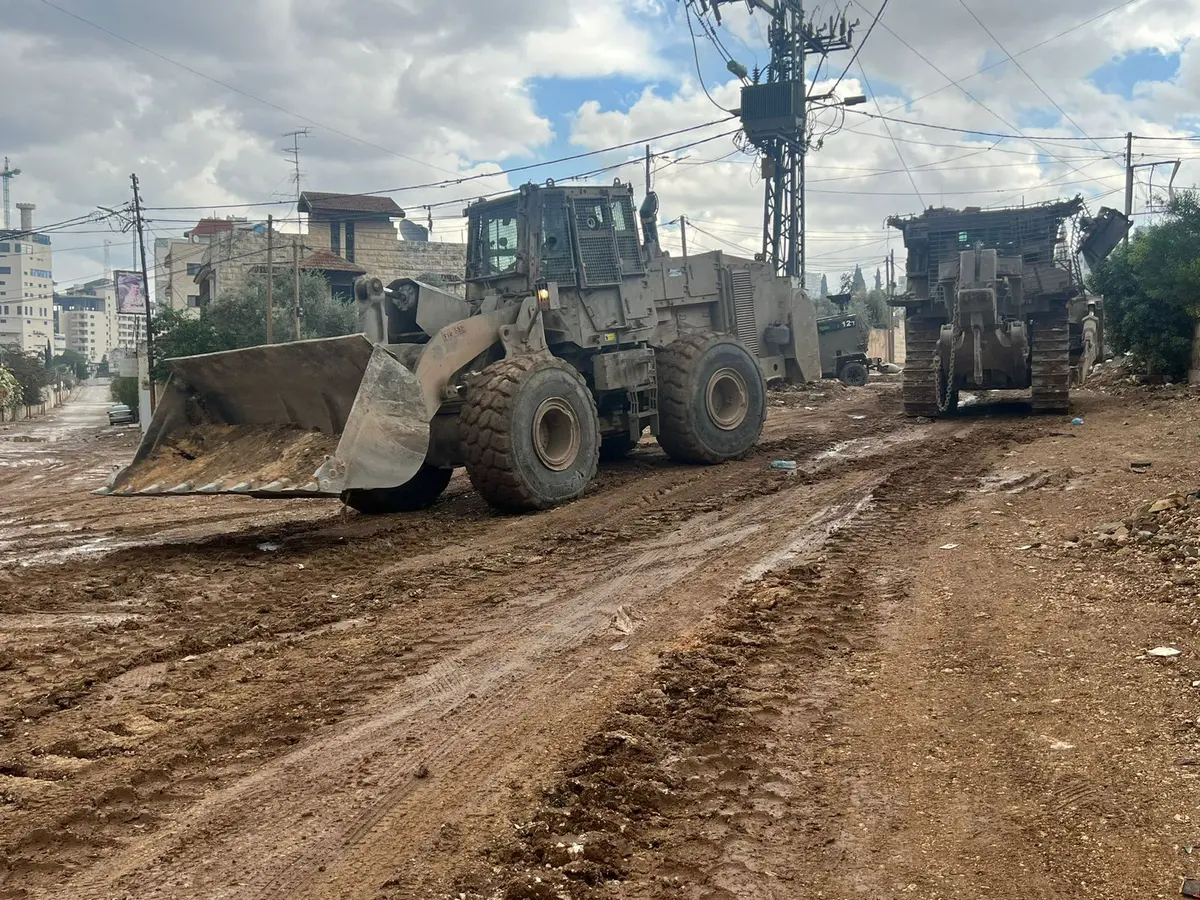
Israeli occupation forces arrested seven Palestinian citizens from the Hebron Governorate.

Today, Monday, the Israeli occupation forces arrested seven citizens from the Hebron Governorate.


Security sources reported that the occupation forces raided several neighborhoods in the city of Hebron and arrested the freed prisoner Imad Haitham Al-Qawasmi, from the Sheikh neighborhood, Elias Ayman Al-Jundi, the freed prisoner Jalal Yaghmour, and from the town of Dura in the south, Yousef Musa Qazzaz, and assaulted his family members with rifle butts, and Malek Nidal Ibroish, and from the town of Sa'ir east of Hebron, Muhammad Maher Al-Froukh, and Amjad Nimer Al-Froukh, and abused them, and searched their homes and ransacked their contents.


They also raided Al-Fawwar refugee camp, south of Hebron, and the raid included intense and indiscriminate firing of live ammunition at homes, causing material damage to some. No injuries or arrests were reported.

The occupation forces also stormed the town of Adh Dhahiriya, south of Hebron, and conducted searches of citizens' homes.

OPINIONS

Mon 28 Apr 2025 9:03 am - Jerusalem Time

Humanitarian and non-humanitarian aid

Dr. Ahmed Rafiq Awad

Dr. Ahmed Rafiq Awad

Opinion Writer

The United States has lifted UNRWA's immunity, thus paving the way for its prosecution and condemnation, making attacks on UN bodies a common occurrence. This portends the liquidation of the bodies of that international organization, one by one, leading to the closure of the International Criminal Court and the Supreme Court, as well as the Human Rights Council, UNESCO, UNICEF, and others. These are the bodies that Israel fought and prevented from operating in the Gaza Strip in particular, so that these bodies would be unable to assist, provide aid, or at least monitor and document.

Israel has effectively prevented Palestinians from enjoying the same rights and privileges enjoyed by other nations. Therefore, Israel has prevented all these international bodies from providing their services, tightening the siege on the Palestinian people and persecuting them away from the eyes of the world. This allows Israel to monopolize the complete narrative and present it to the world as Israel wants and sees it.

Accordingly, Israel has spread the word among the people that food is sufficient for another month in the Gaza Strip, and that the aid provided is either being hoarded by Hamas or stolen and then sold at high prices. Not only that, but there are those who smuggle weapons, money, or dual-use materials into that aid. Over the course of a year and a half, Israel has been able to transform the issue of humanitarian aid into a global issue, rather than just a punitive tool used in a very inhumane manner. This is because Israel has made the provision of aid, its quantity, types, and methods of delivery, a method of negotiation, political, and security blackmail of the first degree, and has made the issue of feeding the Palestinian people a matter in which major and regional powers intervene.

Moreover, Israel has turned this aid into a pretentious, blatant display of moral scrutiny and emotional accountability. Israeli propaganda has spread the message that the cabinet is discussing how to provide aid to the people of Gaza—after personal pressure from Trump—to prevent famine there, as if there were no famine there. For well-known reasons, Israelis have begun discussing the means of providing this aid: Will it be through the occupation army, or through intermediary security companies? This public Israeli discourse is not for God's sake, as they say, but rather part of this propaganda aimed at whitewashing Israel's image, absolving it of moral and legal accountability, and cleansing the conscience and freeing it from the accusations of starving people in the Gaza Strip. This is similar to the "concern" expressed by some fighter pilots regarding the large number of civilians who fall in every sortie over the Gaza Strip. This "concern" is not fear or a moral outpouring, but rather hypocrisy and an attempt to evade international accountability, or it is part of that moral image that Israel is trying in vain to present to the world, without any success whatsoever, since most parties in the world know that the Israeli media machine, with all its arms, lies and fabricates, and the latest of these was the false narrative, modified several times, about the killing of nine paramedics, through the killing of Shireen Abu Akleh, and ending with the Salah al-Din axis tunnel, which was nothing more than a water drain, according to what former Defense Minister Galant stated.

Gaza is starving in plain sight, and Israel has managed—for reasons well known—to silence, bribe, or threaten most parties and platforms. As a result, these parties and platforms have been content to turn their backs on what is happening in Gaza or to discuss it without hinting at punishment or even loudly criticizing it. As for our Arab world, it has been content and distracted by either blaming or demonizing the victim, or leaving it to the imams of mosques to offer disciplined supplications that do not smack of hatred or incitement.

Gaza is starving, and not just starving, it is being denied and forgotten. The crossings and spaces have been closed, and the planes, agencies, countries, and even individuals have disappeared. Gaza has been left to its hunger, death, and suffering. Israel has managed to numb awareness around it and to blind the eyes and ears to the scenes of killing and destruction. It has worked in every way we know and those we do not know to convince the world that what it is doing is part of self-defense, and that what is happening in the Gaza Strip is necessary in order to implement this saying. In this regard, the new, religious, and enthusiastic American ambassador tweeted when he was asked to pressure Israel to allow the entry of humanitarian aid. He said with great enthusiasm and reassurance as well: Pressure Hamas.

Today, Gaza is suffering from murder, hunger, threats of expulsion, and the denial of the right to exist, as well as denial and oblivion.


...........


Israel has effectively prevented Palestinians from enjoying the same rights enjoyed by other nations. Therefore, Israel has prevented all these international bodies from providing their services, tightening the siege on the Palestinian people and persecuting them away from the world's attention.


OPINIONS

Mon 28 Apr 2025 9:00 am - Jerusalem Time

Has Netanyahu's decline begun?

Rasim Obeidat

Rasim Obeidat

Opinion Writer

Even now, it's impossible to say with certainty that Netanyahu's demise has begun, despite all the signs and precursors suggesting that Netanyahu, who has always been endowed with charisma, is capable of overcoming his crises by exporting them, of dismantling the traps set for him by the Israeli opposition, and of escaping crises both internally and externally.

Netanyahu lived in the euphoria of his victories and achievements, with what he achieved from July 2024 to September 2024, with the assassination of the resistance leaders of Hezbollah and Hamas, Ismail Haniyeh in Tehran, and then His Eminence Sayyed Nasrallah, Safi al-Din, and a large number of military and security leaders of Hezbollah and Hamas, foremost among them Yahya Sinwar, head of the Hamas Political Bureau. This was known as the deadly triple package that targeted Hezbollah, the bombing of the pager and ICOM devices, which put a large number of the party’s personnel and auxiliary forces out of service, the series of assassinations of leaders, the destruction of the incubator environment, the “Dahiya doctrine,” as well as the burning of the incubator environment, the “Jabalia doctrine.” This was followed by success in bringing about geostrategic change in Syria, represented not in the overthrow of the Syrian regime, but in the overthrow of the Syrian state, placing it under Israeli and Turkish influence, and the final removal of Syria from the axis of resistance, as well as the removal of Iran and Hezbollah from Syria, the weakening of the Russian presence, and the cutting off of Hezbollah’s lifeline from the supply of weapons. From Iran and Syria, through the control of the new Syrian regime's army over the Syrian-Lebanese crossings, and the closure of the airport by the new Lebanese regime to any Iranian military, material, or in-kind aid to Hezbollah and the resistance.
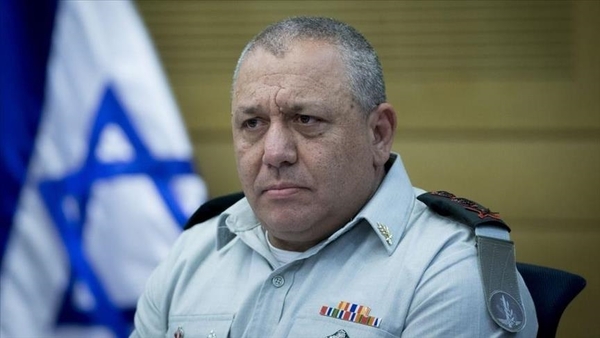

At this particular stage, it seems that Netanyahu's situation is at its worst, and that his rise is now heading towards a sharp decline, after having lived through the peak of his victories, achievements and boasting. Today, everything is moving against what Netanyahu and America want, which has provided him with everything to overcome the existential threat to his country, through unprecedented military and financial support, active participation in the war alongside him, and providing him with legal and political cover in all international institutions, reaching the point of imposing sanctions on anyone who verbally touches the "sacred cow" or demands that it be punished for its crimes and blatant violation of international and humanitarian law.

But this American scenario did not remain the same. The United States, which had given Netanyahu sufficient time to achieve his military and security objectives in the Gaza Strip, recover his prisoners, and eliminate Hamas and the Palestinian resistance, was unable to achieve those objectives. Rather, the more his army sank deeper into the sands of Gaza, the more he paid a heavy price in the blood of his army and officers.

America is stuck in its war with Yemen. Despite all the bombing, raids, weapons used in the bombing, and destroyers brought to the region to participate in the war on Yemen, it has not succeeded in breaking the Yemenis' resolve or withdrawing them from their support front. America has not succeeded in opening the Red Sea to ships carrying goods to Israel, nor in stopping the bombing of Yemen of vital military and economic targets deep inside Israel. Therefore, America has become convinced that its salvation from the Yemen complex lies in a ceasefire in the Gaza Strip, the terms of which the Palestinian resistance accepts. Trump now wants to reach an agreement with Iran, without responding to Netanyahu's cries of war. He wants to devote himself to his trade and economic war with China. Therefore, he accepted Iran's conditions, that the agenda of the indirect Iranian-American negotiations not include anything technical or political, except for the Iranian nuclear file, and only what relates to its military aspect, without addressing other files, such as the ballistic missiles file, the suicide drones file, Iran's regional role, and its support for Palestinian and Arab resistance forces.

The American war on Yemen revealed the limitations of American military power in changing the political scene, but its intervention succeeded in removing the existential threat from Israel. However, the weight of the humanitarian and prisoner issues shifted to Washington, and in parallel with the change in the American scene, we are witnessing a stumbling block in the direction of the military scene. The ongoing war on the Gaza Strip and the threat of Israeli war leaders to expand it, if the resistance and Hamas do not raise the banner of surrender and accept the Israeli conditions to disarm it, remove its leaders, exclude Hamas from the military and civilian scenes, and release the prisoners, will prevent even the entry of air to the Gaza Strip. However, the facts on the ground indicate that the more the occupation army delves deeper into the sands and swamp of Gaza, the more its army suffers losses of its soldiers and officers. This is clear from the qualitative operations in Beit Hanoun, Shujaiya, Rafah-Tel Sultan, and others, which confirms that the resistance is restoring and rehabilitating its military capabilities and compensating for the loss in the human side by recruiting thousands of young people to its ranks. In contrast, on the Israeli side, there is a deficit in combat units, a rebellion in the reserves, and protest petitions of thousands. The military is against the war, and the result is a massive hemorrhage within the ranks of the occupation army, a result that is likely to escalate the longer the war continues.

Israeli media reported on a conflict between army officers. They said that "the blood of our soldiers is not cheap," and criticized the ongoing war on the Gaza Strip without a clear goal or significant security achievement, while "soldiers are exposed to danger daily."

In this context, Israel's Channel 14 revealed anger among senior Israeli army officers, quoting them as saying, "A decision must be made: either destroy Gaza or leave it. The blood of soldiers is not cheap."

Meanwhile, the military correspondent for Channel 12 says, "The army has been operating in Gaza without a clear objective since the ceasefire ended."

He added, "There is no large-scale military operation, nor any real political movement," noting that "the fighters are exposed to danger daily without any significant security achievements or progress in returning prisoners."

Former Prime Minister Barak said that this war is futile and serves only Netanyahu's political interests. He warned of the imminent danger to the occupying state and its future, while former Prime Minister Bennett said that Netanyahu is putting his own interests above the public interest.

Inside Israel, the circle of protest is expanding further, and the legal cases against Netanyahu and his government are escalating, especially before the Supreme Court. Former Shin Bet chief Ronen Bar has joined the ranks of witnesses, ready to go all the way in pursuing Netanyahu with court cases. Meanwhile, public opinion polls indicate a horrific decline in the popularity of the war, which has become Netanyahu's own. What was striking was what Channel 13 reported yesterday, which stated that only 25.1% of Israelis support continuing the war on the Gaza Strip, and 63.7% of Israelis support ending the war and returning all prisoners. This is an unprecedented percentage, as the percentage of supporters of Netanyahu and the war remained at the threshold of 38% during the worst previous stages for Netanyahu.

Despite all the developments that suggest the Netanyahu era is on its way out, Netanyahu's dispatch of Mossad chief Barnea to Doha and the negotiations he is conducting to reach a comprehensive deal may lead Netanyahu to accept early elections, which would return him to power and lift the "sword" of religious and nationalist Zionism hanging over his neck: Smotrich and Ben-Gvir. The days are ripe with developments.


.....................


The US war on Yemen revealed the limitations of US military power in changing the political landscape. However, its intervention succeeded in removing the existential threat from Israel, but the weight of the humanitarian and prisoner issues shifted to Washington.


OPINIONS

Mon 28 Apr 2025 8:57 am - Jerusalem Time

That's it

Baha Rahal

Baha Rahal

Opinion Writer

We wrote to be their voice, we wrote to tell the world about the horrors of what people are living under the genocide, how they died, how they were bombed, how their limbs were amputated, how much hunger and thirst they lived, how much fear lurked for them in the chapters of the war that has not ended, while they continue to experience all kinds of torment, oppression and death, and live the horror of reality and the strangeness of events, and the curse of displacement, tents and shelters. We thought that if this world did not hear the voices and did not see the pictures, it would certainly read what was happening, and it remained incumbent upon us to print with our words the scenes of genocide. We never thought that our words would end and that the language of speech would cease, and the war of genocide did not end, and we never thought that what we were counting on, a civilized world with international and UN charters and international law, would intervene to stop the massacre, and that it would not abandon its humanitarian duty. No one could have imagined this grave moral downfall, which has silenced most international institutions, which have adopted this foolish neutrality.

The ink has dried, but the bloodshed in Gaza has not stopped, nor has the ongoing suffering, unjust siege, and great devastation. All that remains for us is to silently carry all the pain inside us, and to count the disappointments that have befallen us from this fake world, which has remained silent and evaded its responsibilities, while the people of Gaza live under the weight of genocide, siege, and the woes of death and constant hunger, which is intensifying and increasing with the passage of time, in these days burdened with calamities and uncertain destinies.

Words are no longer able to console a child searching for his mother under the rubble, or to calm the heart of a mother carrying her newborn's shroud and crying bitterly, or a wife gathering the remains of her husband that were scattered by the bombing, or the grief of men who die unjustly and oppressively. When the pictures shattered, the lights went out, and only the truth remained screaming in the face of this mute world, words could no longer add more than what was said. Death has become daily bread, fear an incessant companion, and the massacres an endlessly repeated scene. We have often said that the story is over, for the horrific scenes that are conveyed in sound and image are greater than words can describe, the magnitude of the pain cannot be reduced to a few lines, and the distance of fear and horror is greater than the meanings of language, and in the face of the reality of the situation, words are silent.

We said that we are witnesses to what happened and is happening, and that the least you can do is to feel for the victims, to write for them and about them, to tell stories to soothe their bleeding wounds and their eternal pain, to tell the world the horrors of the occupation’s brutality and bloodshed, to describe the ugliness with words, and that duty dictates that the voices of the bereaved, the stories of the oppressed, the displacement of the survivors, the hunger of the children, the oppression of the men, and the sin of the world’s silence not be absent.

We wrote about the bonds that bind us together, hoping that the human conscience would move and awaken, so that the genocide would stop, and with it the ethnic cleansing projects would stop, and the chapters of the massacre that have not ended would come to an end. Rather, the occupation and its extremist government insist on continuing it, and on moving forward on the path of destruction and devastation. This is the reality of Gaza, where every detail is surrounded by death: its air, its soil, its sea, and even the dreams of its children, whose limbs were amputated before they grew up, to experience a moment of embrace.

We wrote, waiting for the day we would wake up to write "Good morning Gaza," hoping for a morning without planes and tanks besieging it, and we are certain that that morning will come, no matter how long we wait.


.....

Words are powerless to console a child searching for his mother under the rubble, or to calm the heart of a mother carrying her newborn's shroud and crying bitterly, or a wife gathering the remains of her husband that were scattered by the bombing, or the grief of men who die of oppression and injustice.


OPINIONS

Mon 28 Apr 2025 8:56 am - Jerusalem Time

The half-salary state... when bureaucracy rules a people without sovereignty

Amin Al-Hajj

Amin Al-Hajj

Opinion Writer

In a small corner of this crowded world, the undisputed center of the universe, where its impact is felt in everything, in international politics, global trade, and financial markets, it is indeed a small corner, but it is large enough for generations to fight over it, the Arab and Islamic worlds on one side, and the Western world on the other, and between them, a Western colonial and settlement project weighs heavily on its chest, with boundless ambitions.

In one corner of this small corner, there is a Palestinian Authority, resembling a state in every way except sovereignty: a president and a vice president, ministers and general managers, pictures on the walls, strict protocols, luxurious offices, official seals, speeches and slogans. Almost everything is present, with only the essence missing: freedom and independence.

In this fragile "state," employees have been receiving half a salary or a little more for years. Half a salary for a full life; for waiting at checkpoints, eating a daily meal of humiliation, enduring the high cost of living, and remaining silent about monopoly, favoritism, and corruption. Intermittent and incomplete salaries, and we might be right to say that the banks are collecting what's left of them. We all know that this is due to the withholding of clearing funds. Nevertheless, administrative decrees have not stopped issuing new appointment decisions or inventing formal titles.

In this country, the national dream is summed up in a hymn sung by a tearful, barefoot child, and in an official news bulletin announcing to the people a new decree, or a visit from one official to another, and iron-armored convoys where they shake hands warmly as if they came from the two poles of the icy earth, amidst a crowded audience of cameras, everyone wants to document the historic moment, even though both may need secret permission to cross to the meeting place again, as no one moves freely, and even those who are preceded or surrounded by cars with tinted windows need coordination or permission to cross from one governorate to another. Nevertheless, this administrative system insists on displaying the manifestations of power, lavish conferences, solemn celebrations, resounding titles, promotions and medals... All of this takes place on a land suffocated by gates and barriers, and sealed off by a single settler who came from the ends of the earth, and above all, a people who are being slaughtered from vein to vein, killed with fire and iron, whether in the south or the north, settled in the plains or inhabited the mountains, some of them suffering from death and poverty, and all of them suffering from the absence of a horizon, The ambiguity of the future, which seems suspended between an occupation that will not go away and an authority that will not be liberated.

In this evolving spot, power is not measured by its ability to liberate the land or protect the people, but by the number of ministries, meetings, and length of processions. The state has become a skillfully staged theatrical spectacle. Officials gather around a table decorated with flowers, exchanging flowery phrases and fake smiles, then they all disperse to our shared misery, where there is a scene of “no sovereignty,” “no freedom,” and “no power.” The occupation continues, as if there is no state here. Settlements expand, as if there is no authority here. Checkpoints strangle the Palestinian’s day, as if there is no peaceful resistance here. All of this happens as if there are no people here.
Yet, in another corner of this absurd scene, protocol meetings are held, and enormous budgets are being spent. These should have been spent protecting a threatened village, supporting a farmer uprooted with his trees, or another displaced with his livestock. Previously, international institutions warned of an imminent economic collapse and repeatedly issued reports about a catastrophic situation. But there, not long ago, the Palestinian Authority continues to construct a paper illusion. This disconnect between the appearance of governance and the essence of reality is not merely an administrative flaw; it is a reproduction of the reality of the occupation, and a domestication of national liberation ambitions into petty administrative ambitions. Liberation has come to mean the unhindered movement of official convoys through checkpoints, not the removal of these checkpoints. In the "half-salary state," the dream no longer lies in independence, but in obtaining a full salary, a work permit within the settlements, a card that allows easy movement, or perhaps an opportunity to escape a life of double suffocation, without equality between its two sides: the suffocation of the occupation and the suffocation of a bureaucracy divorced from reality.

Thus, the nation's greatest issue is transformed into a salary crisis, the national project into an agenda, and resistance into written interventions in official reports. The state remains confined to paper, and the citizen a prisoner behind the bars of reality. In real states, authority is built to serve the people, but in the land of half a salary, the people are merely a silent backdrop for an authority that struggles with the appearance of a state without possessing its soul.


.....


In this fragile "state," employees have been receiving half a salary or a little more for years. Half a salary for a full life; for waiting at checkpoints, eating a daily meal of humiliation, enduring the high cost of living, and remaining silent about monopoly, favoritism, and corruption.

PALESTINE

Mon 28 Apr 2025 8:55 am - Jerusalem Time

Gaza Trade: Economic System Collapses, Prices Soar 527%

The Chambers of Commerce and Industry in the Gaza Strip announced yesterday, Sunday, the collapse of the Strip's economic system and a 527% increase in prices due to the blockade imposed by the Israeli occupation and the prevention of the entry of goods and aid.


The chambers said in a statement read by A'ed Abu Ramadan, head of the Gaza Chamber of Commerce and Industry, during a press conference that the Gaza Strip is experiencing catastrophic humanitarian and economic conditions, with the complete closure of the crossings continuing for the 59th consecutive day, with no signs of a quick resolution.


She added that this deliberate closure has deprived more than two million people of essential relief aid, leading to severe shortages of food, medicine, and fuel, amid an unprecedented deterioration in health and living conditions across the Strip.


The statement noted that this comes in parallel with the continued complete ban on private sector trucks entering the country, which has led to a near-total paralysis of economic activity, halted import and export operations, disrupted supply chains, and led to unprecedented increases in the prices of basic commodities.


The Chamber of Commerce emphasized that what is happening in Gaza today is deliberate starvation and thirst being used as a weapon against civilians en masse.

He explained that the Israeli blockade has had catastrophic and unprecedented repercussions on all aspects of life in the Gaza Strip, causing a near-total paralysis of commercial activity and the disruption of import and export operations, leading to the depletion of basic commodities and a sharp rise in the prices of those that remain. According to studies conducted by the Gaza Chamber of Commerce, the price index for basic commodities had risen by 527% last week compared to what it was before the closure, which began in October 2023.

Consequently, according to the statement, the living conditions have reached a critical stage, with unemployment rates rising to more than 85%, poverty rates exceeding 90%, and a complete lack of any source of income that would guarantee a minimum standard of living.

The Chambers of Commerce called on the international community and humanitarian organizations to take immediate and serious action to halt the war and end this unjust siege, and not simply issue supportive statements, despite their importance.

It also called for the immediate and permanent opening of all crossings to the movement of goods and individuals, without conditions or restrictions, and for ensuring the flow of goods and humanitarian and economic needs within a clear and transparent mechanism for relief organizations and the Palestinian private sector.

The Chambers of Commerce reiterated their categorical rejection of the mechanism by which private sector trucks were previously introduced, as they were subject to monopoly and extortion by unofficial entities seeking to make financial gains at the expense of citizens and merchants by imposing illegal and exaggerated fees. The Chambers emphasized that these unethical practices contribute to deepening the crisis and increasing the burden on citizens.

It also affirmed its complete rejection of the aid distribution mechanism proposed by the Israeli occupation, some details of which have been leaked, which calls for the Israeli army or private companies affiliated with it to militarize aid distribution to specific geographic areas and discriminate between beneficiaries. It reiterated its confidence in the United Nations' mechanisms for distributing aid in Gaza and around the world.

Chambers of Commerce called for concerted efforts to begin the stages of economic and societal recovery and development.

The Chambers of Commerce, as an independent body concerned with economic affairs, renewed their call to re-authorize the private sector to import trucks and to regulate the mechanism for importing goods according to a transparent and fair framework that ensures oversight and accountability, prevents exploitation, and ensures that aid and essential supplies reach those who deserve them without hindrance.

ARAB AND WORLD

Mon 28 Apr 2025 8:54 am - Jerusalem Time

Death toll rises to 40... Iran denies any military material caused the port explosion.

Following the massive explosion at Iran's largest commercial port in southern Iran, authorities denied the presence of any shipments containing materials for manufacturing missile fuel at the port at the time of the incident, following reports that a military shipment was responsible.

Defense Ministry spokesman Reza Talaei Nik denied reports of missile fuel being imported through the port.

"According to investigations and documents, no imported or exported cargo was of military use in the area of the fire at Rajaee Port," he told state television, describing foreign reports as baseless.

For his part, MP Ebrahim Rezaei, spokesman for the Iranian Parliament's National Security and Foreign Policy Committee, published a statement on the X platform, saying, "According to initial reports, what burned in the Rajaee Port incident was not related to the country's defense domain."

Rezaei did not provide any additional details on this issue.

The explosion coincided with a meeting between Iran and the United States in the Sultanate of Oman as part of the third round of negotiations on Iran's accelerating nuclear program.

State media reported that the death toll had risen to 40, with at least 10 identified, while the number of injured exceeded 800.

Private security firm Ambrey indicated that the port received chemicals used in the manufacture of rocket fuel in March, as part of a shipment of ammonium perchlorate sent by China to Iran via two ships, according to what the Financial Times revealed last January.

The New York Times, citing a source close to the Iranian Revolutionary Guard, reported that the explosive material was sodium perchlorate, a key component of solid rocket fuel. The source spoke on condition of anonymity due to the sensitivity of the matter.

Ambrey indicated that these materials were intended to replenish Iran's stockpile of missile fuel, which was consumed during the recent attacks on Israel during the war in Gaza. She said, "Information indicates that mishandling of the solid fuel shipment intended for Iranian ballistic missiles led to the fire."

Ship tracking data analyzed by the Associated Press showed that one of the ships suspected of carrying the chemicals was in the area last month, although Iran has not officially acknowledged receiving the shipment.

PALESTINE

Mon 28 Apr 2025 8:53 am - Jerusalem Time

Hamas criticizes the appointment of Sheikh as vice president, describing it as a "response to external dictates."

Hamas criticized the Palestine Liberation Organization's (PLO) Executive Committee's approval of the appointment of Hussein al-Sheikh as Deputy Chairman of the Executive Committee and Vice President of the State of Palestine on Sunday. Hamas described the decision as a "response to external dictates" and a "consolidation of an approach of exclusivity and exclusion." The move was officially welcomed by several Arab countries.


In a press release issued by the movement, Hamas expressed its rejection of the appointment decision, viewing it as "a reprehensible step that departs from national consensus and the will of the Palestinian people."


She added that the decision "reflects the insistence of the PLO's powerful leadership on disabling its institutions, rather than serving as a unifying umbrella for our people's struggle and its vital forces."


The movement stressed that "our people's priority is to stop the aggression, the war of extermination, and starvation, and to unify efforts to confront the occupation and settlements, not to distribute positions and divide the power pie to please external parties," calling on factions and forces to "reject this step and adhere to rebuilding the PLO on national and democratic foundations, far from dictates and guardianship," according to the statement.


PALESTINE

Mon 28 Apr 2025 8:52 am - Jerusalem Time

Likud demands investigation into incitement to kill and behead Netanyahu

The Likud party released a photo from a demonstration in Tel Aviv showing a protester in an art installation surrounded by "severed heads" allegedly of Prime Minister Benjamin Netanyahu.


Likud wrote: "Where is the enforcement of the law by the Attorney General and Ronen Bar? This is madness - an artistic performance that incites the murder and beheading of the prime minister."


It should be noted that opening an investigation into suspicions of incitement to murder requires the approval of the Israeli Attorney General. At this time, it is unclear whether the police plan to request an investigation into the documented protester.


Israeli Minister: Our condition for a ceasefire is Hamas's resignation and disarmament.

Tel Aviv - Agencies - Israeli Army Radio quoted Israeli Minister of Construction and Housing Ze'ev Elkin as saying, "Israel is prepared to immediately cease fighting in Gaza in exchange for the return of the kidnapped soldiers."

"Our condition for a ceasefire is that Hamas step down from power and disarm," Al-Kain added.

He pointed out that Hamas is not prepared to disarm and that no aid to the Gaza Strip should be imposed.


PALESTINE

Mon 28 Apr 2025 8:47 am - Jerusalem Time

It refused to disarm... Sources told Al-Quds: Hamas presented a long-term truce offer in Cairo, extending for 10 years.

A large, high-level leadership delegation from Hamas visited Cairo on Saturday and held talks and discussions described as extremely important with the Egyptian mediator.


The Hamas delegation included: Mohammed Darwish, head of the movement's Supreme Leadership Council, and council members: Khaled Meshaal, head of Hamas abroad; Dr. Khalil al-Hayya, head of Hamas in the Gaza Strip; Azhar Jabareen, head of Hamas in the West Bank; and Nizar Awadallah, secretary of the Supreme Leadership Council.


The delegation held talks with Egyptian officials in Cairo for more than ten consecutive hours, according to informed sources following the talks, who spoke to Al-Quds newspaper.


This round of meetings between the Hamas delegation and the Egyptian mediator aims to revive the ceasefire agreement in Gaza, which Israel unilaterally violated last month by resuming its bombing of the Gaza Strip.


Informed sources told Al-Quds newspaper that the Hamas delegation came to discuss Israel's response to the movement's vision, which it presented in the past few days to Egyptian and Qatari mediators. The vision stipulates a ceasefire and an end to the war and a prisoner exchange based on a comprehensive deal, including a full withdrawal, reconstruction, lifting the blockade, a prisoner exchange, and the commencement of the independent community committee to administer Gaza, which had previously been agreed upon, to carry out its duties.


Sources reported that Hamas's vision included a proposal to sign a long-term truce, potentially extending from five to ten years, with regional and international guarantees.


The vision stipulates that after agreement on this framework, the situation will return to what it was before March 2, 2025, in terms of the cessation of military operations, the withdrawal of Israeli occupation forces to what they were in accordance with the agreement signed on January 17, 2025, and the re-entry of relief aid in accordance with the signed humanitarian protocol.


Hamas's vision, discussed yesterday between the Hamas delegation and Egyptian officials, is in line with the speech delivered on April 17 by Khalil al-Hayya, in which he expressed the movement's readiness to begin negotiations on the comprehensive package. In his speech, he stressed Hamas's opposition to the partial agreements, which he said Netanyahu and his government are exploiting as a cover for their political agenda based on continuing the war of extermination and starvation, even if the price is sacrificing all their prisoners, as stated in al-Hayya's speech.


Over the past few weeks, he had presented Hamas with a short-term proposal, extending for 45 days, aimed at paving the way for talks on a permanent ceasefire.


This proposal appears to eliminate key elements of the framework from the original three-stage agreement signed by Hamas and Israel last January, which would have resulted in a full withdrawal of Israeli forces from Gaza and a permanent ceasefire.


Drafts of the new proposal previously presented to Hamas by the mediators included major changes that Hamas did not accept, including disarming Gaza and expelling its remaining military leadership abroad.


According to the draft proposal presented to Hamas, once the agreement is signed, Israel will halt its military attacks and overflights, in exchange for Hamas releasing Israeli-American dual national Idan Alexander as a special gesture to the United States.


On the second day of the agreement, Hamas will release five living Israeli prisoners in exchange for 66 Palestinians serving life sentences and 611 others arrested by Israel in Gaza over the past 18 months. These prisoners will be released simultaneously according to an agreed-upon mechanism, without any military parades or festive scenes as in the past.


Following this initial exchange, the Israeli military will begin withdrawing its forces from Rafah and northern Gaza. Under the original agreement, Israel was scheduled to begin a full withdrawal of its forces at the end of the first phase. Under the new proposal presented by the mediators, Israel will not return its forces to their March 2 positions, leaving them stationed in various locations in Gaza without a clear timetable for a full withdrawal.


According to the proposal presented to Hamas, Israel will also lift its comprehensive blockade on the Strip on the second day of the agreement, and the flow of humanitarian aid will resume under the previously agreed-upon "Humanitarian Protocol." This includes the delivery of an unspecified amount of equipment and supplies needed to establish shelters for the displaced.


On the third day of the proposed agreement presented to Hamas, negotiations will begin under the supervision of mediators regarding the arrangements necessary for a permanent ceasefire. The proposal stipulates that this process should be completed within 45 days, with the possibility of extending it through the exchange of additional prisoners. By the end of the negotiations, all 59 remaining Israeli prisoners, alive and dead, will be returned to Israel, and a large number of Palestinians held by Israel will be released.

The proposal stated: "The mediators (the United States, Egypt, and Qatar) will make every effort to ensure the completion of the above-mentioned negotiations to reach an agreement on permanent ceasefire arrangements, in line with their commitment to achieving this goal."

The issue of a permanent ceasefire and a ceasefire, which Hamas demands and emphasized in its vision presented to mediators and which was discussed during Saturday's talks between the senior Hamas leadership delegation and Egyptian officials under the single package agreement, remains the most intractable obstacle to the success of these negotiations. The proposal presented to Hamas calls for its acceptance of the continued military occupation of Gaza, its disarmament, and the exile of its military leadership abroad.


While the original ceasefire agreement of January 17 stipulated a full withdrawal of Israeli forces from Gaza in the second phase, the new proposal from the mediators refers only to an Israeli military redeployment and an agreed-upon "security perimeter."

Hamas has repeatedly affirmed its commitment to the January 2025 framework agreement and rejected Israeli attempts to impose any new conditions or demands. However, Hamas has expressed its willingness to engage in an interim agreement provided that it obligates Israel to return to the original framework previously signed.


The proposal presented by the mediators to Hamas also includes a highly complex point, one of the most controversial issues on the Palestinian and Arab streets. The proposal calls for the disarmament of the factions in the Gaza Strip. Hamas has repeatedly emphasized that it will not lay down its weapons until a Palestinian state is established and a national army is formed, joined by all the military wings of the Palestinian resistance forces and factions. Meanwhile, Israel insists that it will not agree to end the war in Gaza and halt the genocide unless Hamas surrenders, disarms, and exiles its military leaders.


Saturday's talks in Cairo come just days after the Qatari Prime Minister and Foreign Minister held a series of meetings in Washington with senior US officials, including US Secretary of State Marco Rubio.


An Egyptian official familiar with the discussions between the Hamas delegation and Egyptian officials said, "The current proposal presented by Egypt to Hamas is largely in line with the proposal Hamas agreed to on March 29, but which Israel rejected."


The source concluded that the new conditions set by Israel regarding disarmament and the lack of a clear path to complete the Israeli withdrawal from Gaza faced strong resistance from Hamas negotiators yesterday, leaving matters at a standstill between Hamas’s vision and insistence on a comprehensive package agreement and a complete and permanent ceasefire to end the war, with a long-term truce that could extend for the next ten years, and the partial proposal proposed by Israel for 45 days with the fulfillment of the conditions for Hamas to disarm itself and the rest of the Palestinian resistance forces, and the expulsion of the remaining Hamas military leadership outside the Gaza Strip.

ARAB AND WORLD

Sun 27 Apr 2025 10:15 pm - Jerusalem Time

ICJ will begin tomorrow examining the occupation's decision to ban UNRWA activities.

The International Court of Justice will begin hearings tomorrow, Monday, in the lawsuit filed by Turkey and 39 other member states of the Organization of the Islamic World, the Arab League, the African Union, and the United Nations against Israel over its decision to ban the activities of UNRWA.


At the end of last year, 137 countries voted in favor of referring this case to the International Court of Justice, while only 12 countries opposed it.


The hearings will last for five days, and the judges will hear submissions from all countries participating in the case.

PALESTINE

Sun 27 Apr 2025 8:42 pm - Jerusalem Time

Netanyahu: Refusal to recognize the Jewish state is the cause of the conflict in the region that has existed for 100 years.

Israeli Prime Minister Benjamin Netanyahu claimed that the biggest obstacle to achieving peace is the Palestinians' refusal to recognize "Israel" as a Jewish state.


Netanyahu claimed that efforts to continue the peace agreements had faltered due to the positions of a number of Arab countries that worked against the occupying entity, noting that the Palestinians were among these parties.


He added that the conflict in the region has been ongoing for a hundred years due to this ongoing refusal to recognize the Jewish character of the state.


He also claimed that establishing a Palestinian state is a ridiculous idea and we have seen what the Palestinian state has brought about in Gaza.


He claimed that the Palestinians do not want to establish a state alongside "Israel" but rather a state within Israel.


Israeli Prime Minister Benjamin Netanyahu accused Iran of seeking to alter the balance of power in the Arab world and turn it against the occupying entity. He noted that the normalization agreements signed by Tel Aviv with several Arab countries were met with organized Iranian attempts to sabotage them.


Netanyahu said that "Iran has pledged to destroy Tel Aviv because it is the primary obstacle to its quest for hegemony in the Middle East," stressing that his government is working to recover the remaining hostages and the bodies of those killed from Gaza.


Netanyahu also noted that his government was under intense American pressure, explaining that President Joe Biden's administration had threatened to halt arms supplies to the occupation if it decided to invade Gaza. He added, "We made it clear to the Americans that we are not a vassal state."


Netanyahu claimed that international media coverage was misleading, and that he was trying to portray the military operations as deliberately targeting civilians.

PALESTINE

Sun 27 Apr 2025 8:08 pm - Jerusalem Time

Israeli occupation continues its aggression on Jenin and its camp for the 97th day.

The Israeli occupation forces continued their aggression on the city of Jenin and its camp for the 97th consecutive day, amidst bulldozing and burning homes, and converting others into military barracks.


The director of the Jenin Municipality's public relations department, Bashir Matahin, told WAFA on Sunday evening that the occupation forces forced 20 families to leave their homes in the Zahraa area near the camp, turning them into military barracks.


Matahen added that Israeli infantry forces stormed several neighborhoods and streets in the city, terrorizing residents, and raiding and searching dozens of homes, without any arrests being reported.


He pointed out that the occupation forces are continuing their demolition operations inside the camp amid a complete blackout, noting that the occupation forces have completely destroyed about 600 homes, and that the remaining homes in the camp have been partially destroyed and are no longer habitable. He also noted that the camp has been surrounded by four iron barriers (gates) and earth mounds, and has been transformed into a closed military zone that is prohibited to approach.


Al-Matahen stated that the number of displaced people from the camp and the city has exceeded 22,000, and that the number of homes that were forcibly evacuated in the city has reached 380 homes, noting that the Al-Jabariyat area, Al-Shaheeda Shireen Abu Akleh Street, and Wadi Burqin (housing buildings) have been completely evacuated, in addition to the entire camp’s homes, which number 3,470 homes, and partial evacuation in the Al-Zahraa neighborhood and Khallet Al-Ghabash areas.


Since the beginning of the occupation's aggression on the city of Jenin and its camp, 39 citizens have been martyred, dozens have been wounded, and dozens have been arrested.

PALESTINE

Sun 27 Apr 2025 7:05 pm - Jerusalem Time

Israeli occupation forces bombed the southern suburbs of Beirut.

Israeli occupation forces bombed the southern suburb of the Lebanese capital, Beirut, on Sunday evening.


Israeli aircraft launched a violent airstrike on a building in the Hadath area of the southern suburb, without any reported casualties. The airstrikes were preceded by three warning airstrikes.


The targeted area had witnessed a massive displacement of its residents following the occupation army's threat to bomb the building.

ARAB AND WORLD

Sun 27 Apr 2025 6:37 pm - Jerusalem Time

With Trump's support, Israel insists on keeping its forces in the buffer zones in Gaza after any truce.

Israeli Defense Minister Israel Katz said this week that Israeli forces will remain in the buffer zones they have established in Gaza even after the end of the war, in remarks that could complicate efforts to revive a truce in the devastated enclave.


Israel violated the ceasefire between Hamas and Israel, brokered by Egypt, Qatar, and the United States, which went into effect on January 19 and lasted for two months. Israeli forces resumed their offensive on March 18, seizing new areas of land across the Strip and once again displacing hundreds of thousands of residents.


The areas now controlled by Israel include vast tracts of land along the Gaza border, as well as the so-called Netzarim Corridor separating north and south, and a new buffer zone in the south. Together, these areas constitute 30% of Gaza's territory, according to the Israeli military. Explaining what he described as "Israel's policy in Gaza," Yisrael Katz said that "unlike in the past, [the IDF] will not evacuate cleared and confiscated areas." He added, "The IDF will remain in the security zones as a buffer zone between the enemy and population centers in any temporary or permanent situation in Gaza, as is the case in Lebanon and Syria"—where Israel recently took control of large areas.


Katz's remarks, which also reiterated Israel's insistence that "the disarmament of Hamas and the disarmament of Gaza" be conditions for ending the war, widen the significant gaps between Israel and Hamas at a time when mediators are trying to revive the truce.


Hamas has repeatedly insisted on the necessity of Israeli forces withdrawing as part of any permanent cessation of hostilities and has resisted calls to disarm. It reiterated this position after Katz's announcement.


Katz's remarks mark the latest in a series of toughenings in Israel's approach since it resumed its war last month, cutting off food, fuel, medicine, and humanitarian aid to the 2.2 million people living in the Strip. Israeli officials claim their stance is the only way to force Hamas to surrender and release the 59 hostages it is holding in Gaza—less than half of whom are believed to be still alive. However, UN officials and aid organizations have warned that the renewed fighting and the comprehensive blockade have exacerbated the catastrophic humanitarian situation.


The Israeli assault on Gaza has killed more than 52,000 people, according to Palestinian officials, displaced most of the population—many times over—and reduced much of it to rubble.


According to the Financial Times, Israeli Prime Minister Benjamin Netanyahu is exploiting an idea proposed by US President Donald Trump, which he launched from the White House (in the presence of Netanyahu) on February 4th. The idea concerns the expulsion of Palestinians from the Gaza Strip, the seizure of the territory, and the opening of the way for American real estate companies to transform the Strip into luxury apartments. This idea was popular with Israeli Prime Minister Benjamin Netanyahu and members of his extremist coalition, and gave him the green light to escalate the Israeli war of extermination on Gaza.


Netanyahu described the idea, which was denounced around the world as "ethnic cleansing," as "the only viable plan to open the way to a different future" for the region.


Residents expressed fear that the idea would be implemented after Israel violated a two-month truce.


Israel has imposed a 55-day ban on food and humanitarian aid and announced a "voluntary emigration unit" to encourage residents to emigrate, while expanding what it calls safe zones where it will keep soldiers even after the war ends.


Israel's escalation of the war received support from US President Trump. His new ambassador to Israel, Mike Huckabee, supported the idea of blocking aid to the Gaza Strip, urging the international community to increase pressure on Hamas.


Many Gazans could not have imagined the situation would devolve, having hoped that a ceasefire would lead to the end of the war and the start of reconstruction efforts. The newspaper cited statements by UN Secretary-General António Guterres, who described Gaza as a "death field."

OPINIONS

Sun 27 Apr 2025 6:36 pm - Jerusalem Time

Sound and Fury: U.S. tariffs backfire as protests rage

Xinhua- "Al Quds" dot com

Xinhua- "Al Quds" dot com

Opinion Writer

While the U.S. government is roiling the world with tariffs, it is ordinary Americans, especially low-income households, that will be disproportionately affected.


by Xin Ping

Furious protesters have rallied across all 50 U.S. states, honking horns and chanting "Hands Off!" in response to Washington's erratic trade policies, especially the on-again, off-again tariff hikes.

The swirl of uncertainty surrounding these tariffs has sent the stock market on a roller-coaster ride, leaving small investors anxious. The Cboe Volatility Index, Wall Street's "fear gauge," has hit an all-time high since the COVID pandemic as investors fret about the fallout.

Apart from the stock market, higher prices at grocery stores await U.S. consumers. As a tariff tsunami is on the horizon, the prices of imported goods will creep up, for importers will pass their higher costs on to customers. Retail giants like Walmart, squeezed by shrinking profit margins, asked Chinese suppliers for discounts -- only to be rebuffed. The cost of U.S. protectionism is not to be paid by Chinese companies. Whoever started the whole thing should face the consequences.

While the U.S. government is roiling the world with tariffs, it is ordinary Americans, especially low-income households, that will be disproportionately affected. Yale University's Budget Lab estimates that fresh produce prices could jump by 4 percent, with overall food costs rising 2.8 percent. While wealthier Americans rush to buy big-ticket items such as luxury cars -- now subject to sweeping tariffs as well -- lower-income families are stockpiling essentials, fearing empty shelves.

The irony cuts deeper as some U.S. media outlets cheer "faster inventory turnover" in supermarkets, turning a blind eye to the anxiety gripping America's working class. No wonder the nationwide fury.


A FLAWED FORMULA AND A BIG LOSS

America's tariff calculations make no sense. The method is said to account for trade deficits, non-monetary barriers and currency manipulation. Yet all it did was dividing the U.S. trade deficit by a country's exports to America. Many key economic factors are missing, and the amateurism is glaring.

Math aside, these tariffs are a bad idea. No short-term gains are worth the long-term damage.

The United States may have three Rs in mind with these tariffs: revenue, restriction and reciprocity, according to economist Douglas A. Irwin, who argues in Trade Policy in American Economic History that tariffs are levied to "raise revenue for the government, to restrict imports and protect domestic producers from foreign competition, and to reach reciprocity agreements that reduce trade barriers."

These are unattainable goals.

Higher business costs and inflation will strain government finance. U.S. manufacturers struggle to secure affordable supplies elsewhere, leaving them stuck in squeezed supply chains. And Washington's zero-sum logic is completely at odds with reciprocal arrangements.

Instead of the 3Rs, America will get one big L: Loss for the government, businesses and the people. Stagflation -- stagnant growth plus inflation -- is the only destination.


WASHINGTON MUST CHANGE COURSE

The world isn't taking this lying down. China and the European Union have announced retaliatory tariffs -- a defensive move. Together, China and the EU account for about 42 percent of global trade according to WTO data for 2023, dwarfing the U.S. share of 13 percent. A full-blown trade war would be disastrous for Washington.

After a phone call with Chinese Premier Li Qiang, European Commission President Ursula von der Leyen called for a "negotiated resolution" to provide "stability and predictability" for the global economy.

The United States must abandon its self-destructive tariff crusade before it drags the global economy deeper into chaos. The world needs cooperation, not confrontation. Washington's recklessness hurts everyone, including itself.


Editor's note: Xin Ping is a commentator on international affairs, writing regularly for Xinhua News Agency, Global Times, China Daily, CGTN, etc. He can be reached at [email protected].

PALESTINE

Sun 27 Apr 2025 6:23 pm - Jerusalem Time

Israeli occupation says it intercepted a drone heading from the east towards its territory.

The Israeli occupation army said on Sunday that it intercepted a drone that was en route from the east towards Israeli territory.


He added in a statement that his air force "intercepted (Sunday evening) a drone that was on its way to Israeli territory from the east."


"The alarms were not activated according to the established policy," he continued.


The army did not specify the source of the drone launch.

ARAB AND WORLD

Sun 27 Apr 2025 6:06 pm - Jerusalem Time

Axios: Trump administration is exploring options to resume dialogue with North Korea.

Axios reported on Sunday, citing a senior US official and three other informed sources, that the United States has held internal consultations and contacted external experts to explore the possibility of resuming dialogue with North Korea.


"We are bringing together government agencies to understand the current situation in North Korea. Much has changed over the past four years. We are assessing the situation and discussing possible paths, including direct engagement," the US official said.


Axios reported that the Swedish ambassador to North Korea, who represents US interests there, visited Washington last week for consultations with US officials and experts.


A source familiar with the visit said it was primarily intended to "test Washington's waters" regarding the idea of re-engaging with Pyongyang.


Officials from the State Department and the National Security Council participated in several closed-door sessions with experts on North Korea, one of which addressed the identification of potential North Korean negotiators if talks resume, according to Axios.

ARAB AND WORLD

Sun 27 Apr 2025 5:27 pm - Jerusalem Time

Qatar: Israel must be forced to allow aid into Gaza.

Qatari Foreign Minister Sheikh Mohammed bin Abdulrahman Al Thani said on Sunday that his country does not accept the use of starvation and aid as "weapons against the Palestinian people in Gaza," calling for action to "force Israel to allow aid into" the Strip.


This came during a joint press conference with his Turkish counterpart, Hakan Fidan, in the Qatari capital, Doha, as part of the latter's official visit to the country.


At the press conference, the Qatari Foreign Minister said, "We continue our efforts with our partners to end the war in Gaza."


He added, "We cannot accept the use of starvation and humanitarian and relief aid as a weapon against the brotherly Palestinian people. We must work with our allies to compel Israel to allow aid into the country."


The Gaza Strip, with a population of approximately 2.4 million, is almost entirely dependent on humanitarian aid, which has been completely halted since March 2, when Israel closed the Kerem Shalom, Zikim, and Beit Hanoun crossings.


The minister expressed Qatar's concern over "the collapse of the ceasefire agreement in Gaza and Israel's resumption of its aggression, which has left more casualties and destruction and exacerbated the suffering of more than two million Palestinians."


He said, "Despite the obstacles that amount to political blackmail, we continue to work with Egypt and the United States to advance toward the second phase of the Gaza ceasefire agreement and its full implementation."


The Qatari Foreign Minister added: "We worked through our mediation to bring viewpoints closer together, but we were met with a torrent of malicious rumors. Our country is clear in its dealings, and the facts have proven the allegations against us to be false."


Since the beginning of the genocide in Gaza, Qatar has been playing a mediating role with Egypt and the United States to stop it, and has succeeded in concluding two truces, one in late December 2023 and the other in January 2025.


In early March 2025, the first phase of a ceasefire and prisoner exchange agreement between Hamas and Israel concluded. The agreement, which took effect on January 19, 2025, was brokered by Egypt and Qatar and supported by the United States.


On March 18, Israel reneged on the agreement and resumed its genocidal war on the Gaza Strip, despite Hamas's commitment to all terms of the agreement.


With full American support, Israel has been committing genocide in Gaza since October 7, 2023, leaving more than 168,000 Palestinians dead and wounded, most of them children and women, and more than 11,000 missing.

PALESTINE

Sun 27 Apr 2025 5:05 pm - Jerusalem Time

Eisenkot: The war in Gaza did not achieve any of its goals.

Former Israeli Chief of Staff Gadi Eisenkot said on Sunday that the ongoing war of extermination in the Gaza Strip "has not achieved any of its goals," calling for elections to be held "as soon as possible."


This came in statements made by Eisenkot, who served as Chief of Staff from 2015 to 2019, at a conference at the Misgav Defense Research Institute, according to the Hebrew newspaper Israel Hayom.


"A commission of inquiry must be formed to begin its work investigating events from a decade ago, and I propose that it begin on the day I assumed the position of chief of staff," said Eisenkot, a member of the Knesset (parliament) for the opposition Blue and White party.


He added: "Israel set nine goals for the war (which he did not mention), and over time added more goals, and none of them were achieved, and this is unacceptable."


He revealed that American officers came to Israel (he did not specify when) to verify the strategic plan for the war, adding: "There was nothing."


Speaking about the beginning of the war, Eisenkot said, "I sat in the War Cabinet for eight months, and it became clear to me that any chief of staff is subject to the authority of the government."


Eisenkot and the leader of the "State Camp" party, Benny Gantz, joined the government formed by Netanyahu on October 11, following the outbreak of the war. This government became known as the emergency government, and as a result of this move, a small war cabinet (the War Council) was established. However, they withdrew from it in June 2024, in protest against Netanyahu's policies.


He continued, "Holding elections as soon as possible is essential to restore confidence in the government."


He stressed that "it is impossible for those who were the top command of the Israeli army on October 7 to remain in their positions."


In early March 2025, the first phase of a ceasefire and prisoner exchange agreement between Hamas and Israel concluded. The agreement, which went into effect on January 19, 2025, was brokered by Egypt and Qatar and supported by the United States, and the Palestinian movement adhered to it.


However, Netanyahu disavowed the start of the second phase and resumed the genocide in the Gaza Strip on March 18, in deference to the most extreme faction within his right-wing government, according to Hebrew media.


With American support, Israel has been committing genocide in Gaza since October 7, 2023, leaving more than 168,000 Palestinians dead and wounded, most of them children and women, and more than 11,000 missing.

PALESTINE

Sun 27 Apr 2025 4:48 pm - Jerusalem Time

Israeli Settlers storm northern Ramallah

Settlers stormed the outskirts of the town of Kobar, north of Ramallah, on Sunday evening, using motorcycles and tractor-trailers, terrorizing residents.


According to local sources, settlers have been raiding the town's "Daak" area almost daily. A group of settlers stormed the town and roamed the agricultural fields before withdrawing without any reported attacks on civilians.