PALESTINE

Tue 06 May 2025 11:50 am - Jerusalem Time

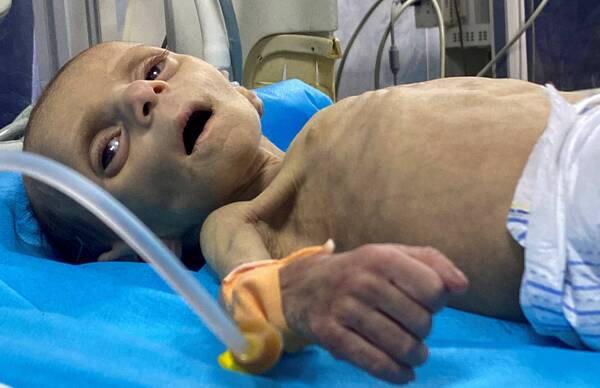
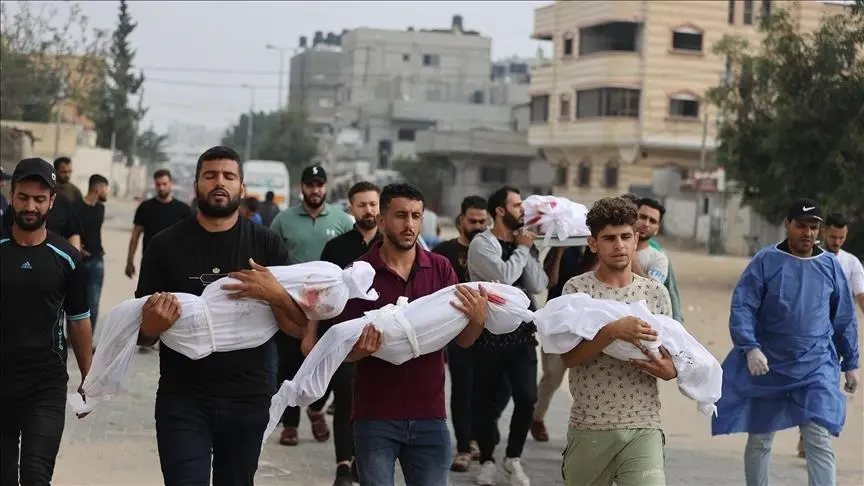
UNRWA: 66,000 children in the Gaza Strip suffer from severe malnutrition.

The United Nations Relief and Works Agency for Palestine Refugees (UNRWA) said on Tuesday that more than 66,000 children in the Gaza Strip are suffering from severe malnutrition due to Israel's continued starvation policy, which has closed the crossings and prevented the entry of relief aid for more than two months.


UNRWA spokesperson Adnan Abu Hasna added in a statement that "hundreds of thousands of Palestinians eat one meal every two or three days."


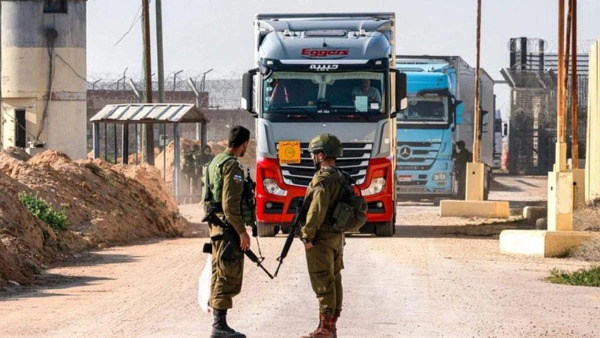
Since March 2, the occupation authorities have closed the crossings with the Gaza Strip to the entry of food, relief, medical aid, and goods, causing a significant deterioration in the humanitarian situation of Palestinians, according to government, human rights, and international reports.


According to medical sources, the death toll from famine has risen to 57 since the start of the aggression, warning of a likely increase given the closure of crossings and the prevention of relief aid for more than two months.


Palestinian government and UN officials have repeatedly warned of the dangers of Israel's continued closure of the crossings, preventing the entry of essential supplies including food, medicine, fuel, and water into the Gaza Strip for two months.


According to a report by the Hebrew news website Walla on Monday, the Israeli government's security cabinet approved a plan the day before yesterday to resume the entry of humanitarian aid into the Gaza Strip via an international fund and private companies. This mechanism has sparked widespread rejection from the Palestinian side and international institutions, who consider it a violation of humanitarian principles.


Commenting on the plan, the International Humanitarian Country Team in the Occupied Palestinian Territory said, "Israel has sought to shut down the current aid distribution system run by the United Nations and its humanitarian partners. This plan is inconsistent with international humanitarian principles, dangerous, and pushes civilians into military zones to obtain rations, threatens lives, and further entrenches forced displacement."


The Humanitarian Team is a strategic body led by the United Nations, comprising representatives of UN agencies and Palestinian and international NGOs, and operates under the supervision of the UN Humanitarian Coordinator for the occupied Palestinian territory.


UN Secretary-General António Guterres and Emergency Relief Coordinator Tom Fletcher have previously announced that the organization will not participate in any plan that does not adhere to the universal humanitarian principles of humanity, impartiality, independence, and neutrality.


Since October 7, 2023, the Israeli occupation forces have been waging a relentless aggression against the Gaza Strip. To date, this has resulted in the deaths of 52,567 civilians, the majority of whom are children and women, and the injury of 118,610 others, according to a preliminary toll. A number of victims remain under the rubble and on the streets, unable to be reached by ambulances and rescue teams.

PALESTINE

Tue 06 May 2025 11:32 am - Jerusalem Time

The Israeli army intends to establish three aid distribution centers in Rafah.

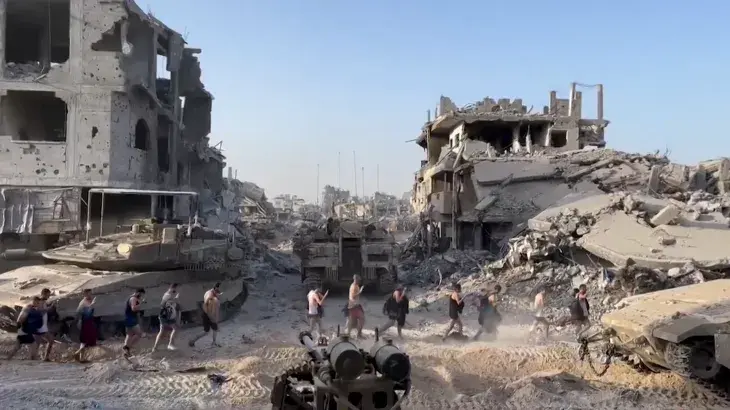
As part of its plans for a large-scale ground invasion of the Gaza Strip, the Israeli army intends to establish three food distribution centers for Gazans. All of these centers will be located in the Rafah area in the southern Gaza Strip.


The army claims that the mechanism it has put in place prevents Hamas from accessing these supplies.


According to this mechanism, food distribution to Gazans will take place in the area between the Morag and Philadelphi axes. The area will be "cleared," meaning free of Palestinian fighters. It will be controlled by the Israeli army, and Palestinians will only enter after being searched "to ensure that Hamas elements do not enter," Israeli Army Radio reported Tuesday.


The radio station added that there will be no other food distribution centers throughout the Strip. "No aid will be distributed anywhere else," which would accelerate the displacement of residents from the north of the Strip to the south.


Israel is considering establishing a single temporary food distribution center in the northern Gaza Strip, initially, which will be closed later after residents of the northern Gaza Strip are displaced to the southern Gaza Strip.


The food distribution mechanism is based on allowing a family representative to come to a distribution center and obtain a quantity of food for his family only.


The Israeli security service calculated the amount of food needed, claiming that "the average family in the Gaza Strip needs approximately 70 kilograms of food per week to survive," according to the radio.


Each family representative in the Strip will receive "sufficient food for their family to prevent famine in the Strip."


The food will be distributed through registers managed by American charities and private companies, with the claim that "this way, the aid will reach families and citizens."


The radio quoted Israeli security sources as saying, "We believe this is the best mechanism to ensure that aid does not reach Hamas."


Three UN agencies last week urged Israel to end the humanitarian aid embargo that is putting the population of the Gaza Strip at risk of starvation.


It should be noted that Israel has been preventing the entry of humanitarian aid into the Gaza Strip since March 2nd. No food, medicine, or fuel has entered the Strip since then, and most of the water sources in the Strip are unfit for drinking.


An Israeli "political source in the Prime Minister's Office" said yesterday that the decisions taken by the political-security cabinet the day before yesterday included the possibility of distributing humanitarian aid "if needed." Cabinet ministers were told that at this stage there is enough food in Gaza, contrary to reports from all international relief organizations operating in the Strip, confirming that Israel is deliberately starving the people of Gaza.


The Commissioner-General of the United Nations Relief and Works Agency for Palestine Refugees (UNRWA), Philippe Lazzarini, condemned Israel's blocking of humanitarian aid since March 2, asserting that it is causing a "politically motivated, man-made famine."


On Friday, the World Food Programme announced that it had "delivered its last remaining food stocks to hot meal kitchens in the Gaza Strip. These kitchens are expected to run out of food completely in the coming days."


PALESTINE

Tue 06 May 2025 11:28 am - Jerusalem Time

100 days and Israeli occupation continues its aggression on Tulkarm and its two camps

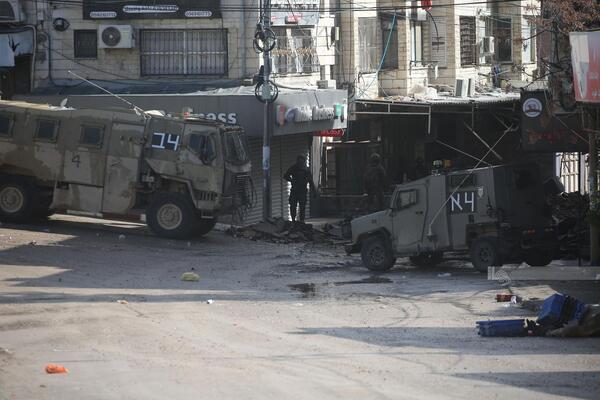
The Israeli occupation forces continue their aggression against the city of Tulkarm and its camp for the 100th day, and against the Nur Shams camp for the 87th day, amid ongoing field escalation that has caused significant human and material losses to property and infrastructure, and ongoing provocations against civilians.


Our correspondent said that last night and this morning, the city witnessed intensive movements of occupation vehicles and infantry units, as they patrolled the main streets and neighborhoods, specifically around the Martyr Thabet Thabet Roundabout and the streets of Al-Haddadin, Al-Alimi, Nablus and Shuwaika. They obstructed the movement of citizens and vehicles, amid provocative acts, abuse against them, and the firing of live bullets and sound bombs.


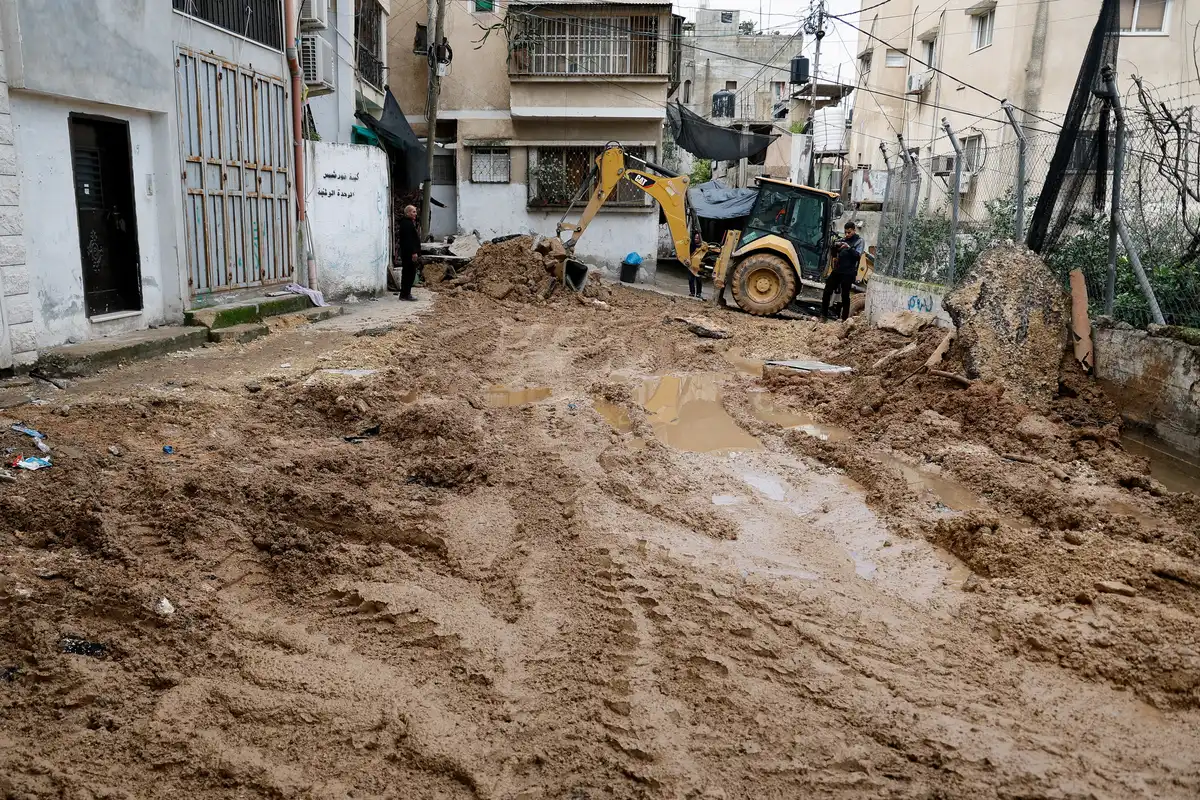
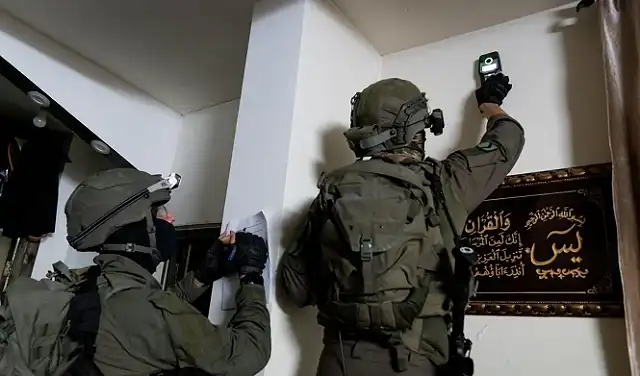
She added that the occupation forces raided a number of homes and arrested the two young men, Ahed Fathallah Al-Hamshari, from his home in the eastern neighborhood. He is an officer in the Civil Defense, and Wissam Issam Odeh from his home in the southern neighborhood. They also raided the home of former detainee Hadi Al-Hamshari, the director of political and national guidance in Tulkarm, searched it and vandalized its contents. Over the course of the 100 days, the city and its two camps, Tulkarm and Nour Shams, and their suburbs, have been subjected to a stifling siege, repeated raids, and systematic attacks on citizens' homes and infrastructure. This has turned the camps and residential neighborhoods in some areas of the city into military barracks, after seizing a number of them, displacing their residents, and accompanying the comprehensive destruction of infrastructure and property, and closing their entrances with earth mounds.


This escalation coincided with the occupation's commencement of its plans to change the features and demographic composition of the two camps, emptying them of their residents. Last Thursday, it notified the demolition of 106 homes and residential buildings in the two camps, including 58 in Tulkarm camp and 48 in Nour Shams camp. Yesterday, it began demolishing 15 residential buildings in the Manshiyya neighborhood of Nour Shams camp.


In implementation of this plan, the occupation announced last night its intention to demolish 19 additional buildings, comprising more than 50 residential units, in the al-Jami' and al-Maslakh neighborhoods of Nour Shams camp. The occupation gave residents two hours this morning to evacuate their belongings.


Despite residents having obtained prior coordination to enter their homes in the camp for evacuation, they are being obstructed by the occupation forces, who chase them, detain them for hours, threaten them, and fire live ammunition and sound bombs at them, including Red Crescent Society crews and support teams.


Tulkarm Governor Abdullah Kamil considered the Israeli occupation forces' demolition of 15 housing units in Nour Shams camp to be "true sadism," stemming from the criminal mentality the occupation has adopted against our people everywhere. This has exacerbated the suffering of citizens, exacerbated the crisis of forced displacement, and forced displacement from their homes under flimsy pretexts unrelated to any security concerns.


He renewed his call to the international community, human rights organizations, and diplomatic missions to take immediate action and break the silence to stop this aggression against the city of Tulkarm and its two camps.


Meanwhile, the occupation forces continue to seize homes and residential buildings on Nablus Street and the adjacent northern neighborhood, converting them into military barracks after forcibly evacuating their residents. The occupation forces also positioned their vehicles and bulldozers in the vicinity.


The occupation's ongoing aggression and escalation against the city of Tulkarm and its two camps resulted in the martyrdom of 13 citizens, including a child and two women, one of whom was eight months pregnant. Dozens were also injured and arrested, and the infrastructure, homes, shops, and vehicles were completely and partially demolished, burned, vandalized, looted, and robbed.


The aggression also resulted in the forced displacement of more than 4,200 families from the Tulkarm and Nur Shams camps, comprising more than 25,000 citizens. It also resulted in the complete destruction of 396 homes and the partial destruction of 2,573 others, in addition to the closure of their entrances and alleys with earth mounds.

PALESTINE

Tue 06 May 2025 11:23 am - Jerusalem Time

Details of the first visit to Gaza detainees underground in Ramla prison revealed.

The Commission of Prisoners' Affairs and the Prisoners' Club reviewed new testimonies, adding to the already shocking and horrific record of testimony about the details experienced by Gaza detainees during their arrest, interrogation, and transfer from prison to prison and from camp to camp over the course of several months of detention.


The Commission and the Prisoners' Club revealed the first visits to Gaza detainees in the section located under the Nitzan-Ramla prison, or what is called the "Rakefet" section, which the occupation has designated for prisoners called "elite" prisoners, who are part of those visited and are classified by the occupation as "illegal combatants."


They addressed the systematic crimes committed against Gaza detainees, which were, in their entirety, crimes of torture that they experienced moment by moment since their arrest. These testimonies were obtained through visits, the first of their kind that legal teams were able to conduct recently, during which a group of detainees were visited under strict conditions and a high level of supervision in the "Rakefet" section, located within the Nitzan-Ramla prison.


An underground visit to Gaza detainees in the Rakefet section

In the details of the visit that took place to a group of detainees, the visit began with the legal teams entering the entrance of an old warehouse-like building. A door was opened, which is the entrance to an underground staircase, according to what the lawyers described, full of cockroaches and holes in the ground and walls. The visits took place accompanied by prison guards and under strict supervision, during which the lawyers were informed that it was forbidden to tell the detainees anything related to their families, or anything that was happening outside. Signs of terror and fear were evident on the bodies of the detainees who were visited. At first, there were great difficulties in starting a conversation with any detainee, due to the level of supervision imposed on the visit. However, after attempts made by the lawyers, they were able to reassure the detainees and confirm to them that they were lawyers who had come to visit them.


They reviewed some of the detainees' testimonies, including the shocking details they contained. These are an extension of dozens of testimonies and statements obtained from Gaza detainees since the beginning of the genocide.


The testimony of the detainee (S.J.): “I was arrested in December 2023, and I was immediately transferred to the investigation that lasted for 6 days, which were the most intense and difficult, during which I was subjected to the (disco) and (pampers) investigation, and throughout the 6 days I only heard very loud music, and throughout these days I was forced to use (diapers) to relieve myself, they were changed only twice, and I was deprived of food, and the water was very little, half a cup a day, and throughout the investigation period I was handcuffed and blindfolded, and later I was transferred from the (Sde Teiman) camp to (Ashkelon) prison, where I stayed for 45 days, then I was transferred to the (Moscobiyya) detention center for (85) days, then to (Ofer) prison, and finally to the “Rakefet” section in (Nitzan) prison Ramle.”


The detainee pointed out that the detention conditions in the "Rakefet" section in Ramleh are the most difficult compared to all the prisons he was transferred to during his detention. In each cell, there are three prisoners, one of whom sleeps on the floor. The exit to the "furah" (prison yard) takes place every other day, during which we remain handcuffed, knowing that this area is not exposed to the sun. Throughout their time in the "furah", they are subjected to humiliation and degradation, and they are also forbidden to raise their heads throughout the "furah".

We don't know when the sun rises and when it sets.


Detainee (W.N.): “I was arrested in December 2024. The occupation army interrogated me before transferring me to a camp in the Gaza Strip. I was interrogated by intelligence, threatened, and beaten. Later, I was transferred to Ramla prison. Today, I suffer from health problems and severe pain in my body. What increases my suffering is that we are forced to sit on our knees for long periods. I was also sexually assaulted by being beaten with a scanner on sensitive parts of my body. Today, we are completely isolated from the outside world. We do not know when the sun rises or sets. We are provided with worn and damaged clothes, but we are forced to wear them. We are denied underwear. In addition to all of this, they force us to curse our mothers. We are subjected to beatings and oppression. The beating during my transfer to prison caused one of my fingers to be broken. It is known that the prison guards use the method of breaking fingers, and this has happened to more than one detainee.”


Finger breaking is a method of torturing detainees.

In this context, the detainee (Kh. D.) indicated that he was subjected to a “disco” investigation, and later to an investigation by the occupation intelligence, and this was repeated 3-4 times. They deliberately hung him on a chair for long periods, and threw him on the floor while handcuffed. The investigation continued for 30 days in the cells of Ashkelon prison, and throughout this period he was subjected to severe beatings. Today he suffers from scabies, which he contracted during his detention in Ofer prison, and the disease continued with him after he was transferred to Ramla prison. Today, in addition to scabies, he suffers from severe chest pains that increase in severity as a result of the handcuffing operations that are carried out from behind. The detainee indicated that the prison administration punishes prisoners by breaking their thumbs.


Cameras inside the cells document the detainees' movements around the clock.

“As for the detainee (A.G.), he said: “I was detained for (35) days in the (Sde Timan) camp. I was subjected to a (disco) investigation for five days. When I was arrested, I was suffering from an injury and did not receive any treatment. I had a high fever at the beginning of the detention, and I was screaming all the time from the severity of the pain in my body. In addition, I suffer from heart problems and I lost consciousness several times. They were satisfied with just confirming that I was alive. In the first stage of detention, I did not have clothes or a blanket, so I felt very cold because I was detained in a (barrack) open from several sides, which exacerbated my suffering. For 15 days, my hands were tied and my eyes were blindfolded all the time. Then I was later transferred to the (Rakefet) section in the (Ramla) prison. In all the rooms here, there are cameras that document our movements constantly. We are forbidden from praying, and they threaten us with death all the time. The process of taking us out to the break is an opportunity for the prison guards to assault us with severe beatings and insult us while our hands are tied. We never see the sun, we are forced to curse our mothers, and the jailer decides when and for how long we can shower. Every three days, each cell is given a roll of toilet paper, and the amount of food is very small. We know it's dawn because the jailers pull out the mattresses and blankets.


Rakefet Prison - Ramle is one of the prisons and camps that the occupation has established since the genocide or reopened again to detain detainees from Gaza. The most prominent of them are: (Sde Teiman), (Anatot), (Ofer) camp, (Rakefet), and another camp that was opened for detainees from the West Bank, which is (Manashe) camp. These camps were the most prominent headlines for torture crimes, as the occupation turned them into spaces for torturing detainees physically and psychologically on the spot.


It is noteworthy that the number of Gaza detainees recognized by the Israeli Prison Service as of the beginning of April 2025 amounted to 1,747, classified as "illegal combatants." This figure does not include all Gaza detainees held in Israeli military camps, but only those under the administration of the prisons.

OPINIONS

Tue 06 May 2025 11:09 am - Jerusalem Time

Both Israelis and Palestinians have lost their future.

Translated by Al-Quds.com

Translated by Al-Quds.com

Opinion Writer

American Foreign Policy magazine

By Steven Cook, Foreign Policy staff writer and senior fellow for Middle East and Africa studies at the Council on Foreign Relations


This article examines the implications of the war in Gaza for the future of Palestinians and Israelis, explaining how the conflict has complicated the political landscape and deepened the existing stalemate. It discusses the impact of Hamas's attack and the Israeli response on the prospects for a two-state solution or any political settlement. It also highlights the shifts within Israeli society and Israel's growing international isolation. A full translation of the article follows:

When the ceasefire in Gaza went into effect earlier this week, the joy across the conflict lines was palpable even from 6,000 miles away. While the complex, three-phase agreement is unlikely to be fully implemented, it will save lives, return some hostages home, and provide Palestinians in Gaza with much-needed humanitarian aid. The initial release of hostages and prisoners also offers a moment to reflect on the broader consequences of the war, most notably how the conflict has not only altered the trajectories of Israeli and Palestinian societies but has also forced them to regress in significant ways.

There is no doubt that Hamas has achieved a number of notable accomplishments since launching its offensive, dubbed "Operation Protective Edge," on October 7, 2023. It has drawn the Israeli army into a fierce battle in the Gaza Strip, undermining the international legitimacy of Israel's military and the state it defends. The Palestinian issue has not been at the forefront of regional and international politics with such intensity since the announcement of the Clinton Parameters and the attempts to salvage the Oslo process at the Egyptian resort of Taba in early 2001.

But at the same time, when Hamas sent its fighters across the separation wall between Israel and the Gaza Strip, it set the Palestinian issue back decades, perhaps a generation or more. There was a time, not so long ago, when it was possible to imagine a Palestinian state in the West Bank and Gaza Strip. With the peace process irretrievably broken, some observers believed that a “one-state reality,” uniting the Palestinian territories with Israel, might lead to a “one-state solution” in which Palestinians and Israelis would live together. Regardless of the viability of either solution, Hamas’s 15-month-old quest to turn its vision into reality—liberating Palestine from Metulla to Eilat and from the Jordan River to the Mediterranean Sea—made both the two-state and one-state solutions impossible.

In addition to the bloodshed perpetrated by Hamas, international outrage over what Israelis view as legitimate self-defense has diminished the number of Israelis who still believe Palestinian nationalism and Zionism can be reconciled. The Palestinians may have the right to a state, but given the power imbalance, the Israelis have the power to prevent them from achieving it. After October 7, this prospect seems closer than ever.

While Palestinians in the West Bank and Gaza are rejoicing over the ceasefire, they remain politically disoriented and feel that no one truly represents them. Although Hamas's popularity rises during the conflict with Israel, it declines when the harshness of life under its rule becomes clear to those living in Gaza. It is difficult not to conclude from the past two decades that Hamas's approach to holy resistance has brought Palestinians nothing but more pain and suffering. Yes, there is renewed international sympathy for the Palestinian cause, but the world has long recognized the importance of achieving justice for Palestinians, without this translating into tangible achievements.

There may be other, better options for Palestinians. A vibrant Palestinian grassroots movement is seeking new means of political representation, exploiting the past fifteen months of violence to strengthen ties between the Palestinian cause and international networks of progressives, NGOs, humanitarians, and academics. This is an interesting development, but much of the energy of these movements appears to be directed more toward delegitimizing Israel than toward building a new Palestinian political reality. Given the devastation in Gaza and the existential nature of the Israeli-Palestinian conflict highlighted by the Hamas attack and the Israeli response, the most lasting achievement of this attack may be the perpetuation of statelessness for Palestinians.

For Israelis, the era of “bourgeois Israel” is over. The Israel of Nike stores, luxury bicycle studios, Maseratis cruising the Ayalon Highway, and glass towers built thanks to the successes of Silicon Valley will remain, but there is a shift in the general mood among Israel’s Jewish citizens. The terror attack that targeted kibbutzim and southern towns 15 months ago has swept Israel back into a different era, one of vulnerability and uncertainty. The collective trauma has been compounded by the incomprehensible hostility Israelis have faced from governments and public opinion in the West.

Israelis have long believed they have overcome their historical isolation, but the intensity of the negative sentiments displayed by the international community toward wounded Israel has been shocking, as if UN Resolution 3379, which defined Zionism as a form of racism, had never been repealed. In the coming years, Israel will face increasing hostility from influential, though not necessarily powerful, elements within the UN system and the NGO world, who have proven their allegiance to a broad anti-Zionist front. Although Israel enjoys diplomatic relations with most countries in the world, the war in Gaza has reopened the question of its international acceptance and legitimacy.

But the consequences of the war extend beyond the hostility of bureaucrats at the UN, Amnesty International, Human Rights Watch, and governments such as Ireland and Spain. Calls for boycott, divestment, and sanctions seem unlikely to achieve real success, given that Israel is so deeply embedded in the global economy, particularly in the high-tech and healthcare sectors. But Israelis, whose security has been strengthened and whose economy has been helped by the United States, will have to contend with higher defense budgets and increased hostility from some members of the US Democratic Party, who will be required to continue supporting security assistance to Israel. This may not have much effect while the Republican Party controls the executive branch and Congress, but Democrats will not remain out of power forever, and the Israeli military's operations in Gaza, which have killed more than 47,000 Palestinians (according to the Gaza Ministry of Health), have had a profound impact on the US Congress. The bipartisan consensus on support for Israel's security was already fraying before the Hamas attack, and the violent Israeli response on October 7 may have shattered it completely.

But what does this mean for the future of Israelis and Palestinians? It means almost nothing. Many analysts said at the outset of the war, “Out of crisis comes opportunity.” This sounds good, but it’s just words. The most likely scenario has always been a return to the status quo ante of October 6, 2023, rather than any positive shift that would enhance the chances of peace. As the release of Gonen, Damari, and Steinbrecher has made clear, Hamas still maintains its grip on Gaza, foreshadowing further Israeli blockades and periodic periods of intense violence. Meanwhile, Palestinians and Israelis are further away from achieving their national goals than ever before.

OPINIONS

Tue 06 May 2025 11:05 am - Jerusalem Time

Trump's first 100 days on the international stage

American Foreign Policy magazine

American Foreign Policy magazine

Opinion Writer

This dossier includes a series of articles by ten scholars, diplomats, and editors specializing in international affairs, including Richard Haass, Jennifer Rubin, Robert Malley, and others. They seek to assess the foreign policies pursued by US President Donald Trump during the first 100 days of his second term. The dossier covers a range of topics, from economic and trade policies to traditional military alliances, shifts in relations with China and Russia, positions on Middle East crises, and the moral and diplomatic implications of Washington's retreat from its traditional leadership role. Based on this content, the following text provides an analytical reading of the most prominent features of this phase of US foreign policy, as manifested during the first 100 days of President Trump's second term.

With Donald Trump's return to the White House at the beginning of this year, the United States and the world entered a new phase of tensions and radical transformations. The president, long known for breaking norms and challenging institutions, returned to power in an international context more complex than that of his first term: a protracted war in Ukraine, rising Chinese influence, and waning allies' confidence in the liberal international order. During the first 100 days of his second term, Trump implemented a sharp and rapid foreign policy that targeted both Washington's adversaries and its traditional allies. It appeared as though he sought to reshape the global order not through construction, but rather through pressure, dismantling, and nationalist retreat.

An "America First" Economy, But at What Cost?

From the first day of his second term, Trump reaffirmed his core slogan: "America First." This time, however, he implemented this principle through more aggressive economic measures than before. He imposed heavy tariffs on strategic imports from China, Mexico, and Canada, and renewed the threat of tariffs on the European auto sector, a move that caused financial markets to panic.

Relations with China have also entered a period of unprecedented tension in decades, with tariffs exceeding 100% imposed on technology imports, while Beijing responded by halting the supply of rare earths, threatening to disrupt global supply chains. At the same time, other countries, such as India and Brazil, have begun taking measures to protect themselves from waves of US secondary sanctions, revealing Washington's loss of prestige as a regulatory power in global trade.

Domestically, US markets have not been spared the repercussions of these policies. Prices have seen significant increases, particularly in industrial and food products, and some confidence indicators in the manufacturing sector have declined, marking the first sign that the protectionist approach may not lead to the growth boost Trump promised his voters.

Dismantling alliances and replacing them with immediate deals

Trump's first 100 days in his second term were not only filled with economic measures but also saw major shake-ups in relations with traditional allies. The US president continued to pressure European countries to increase their contributions to NATO, threatening to reduce US defense commitments, sparking growing concern in Berlin and Paris. In Asia, the US administration exerted financial and political pressure on Japan and South Korea, demanding that they fully fund the US military presence or face withdrawal. In return, the two countries began increasing their defense coordination with Australia and India, indicating a search for a regional balancer away from US pressure.

In Latin America, Trump used the immigration issue as a tough bargaining chip, deporting thousands of migrants and imposing strict security conditions on cooperation with Mexico and Central American countries. On the diplomatic front, US development aid has declined significantly, paving the way for China to strengthen its economic presence in the region. In short, Trump has replaced the logic of an alliance based on trust and continuity with the logic of a temporary deal and immediate interest, eroding US influence even among its closest allies.

The Middle East between escalation and contraction

In the Middle East, Trump's policies in his second term appeared to be an extension of his previous approach, but without a clear strategic vision. He continued to provide unconditional support for Israel, while endorsing the annexation of parts of the West Bank. At the same time, he exerted behind-the-scenes pressure to halt military operations in Gaza for fear of a broader regional escalation. Trump offered no new political initiative on the Palestinian issue, instead refreezing aid to the Palestinian Authority and tightening the noose on international institutions operating in the occupied territories. On the Iranian issue, he returned to the language of maximum sanctions, without hinting at any alternative diplomatic path, contenting himself with media and cyber escalation.

This strategic blunder has created a diplomatic vacuum in one of the world's most fragile regions. Russia has reactivated its channels with both Iran and Syria, while China has increased its investments in Gulf infrastructure, without facing a decisive US response. This demonstrates that the US retreat from the region was not planned but rather improvised, opening the door to other regional and international actors.

The erosion of US moral leadership

Perhaps the most profound shift in Trump's foreign policy is the decline of so-called American "moral leadership," which has long been based on the principles of human rights and democracy. Over the past 100 days, there has been no clear US position on the violations in Myanmar, the repression in Iran, or the restriction of freedoms in some allied regimes. Democracy and civil society support programs have also declined, and funding for international organizations has been reduced, while the Trump administration has strengthened its ties with authoritarian regimes under the pretext of combating terrorism or protecting economic interests.

This shift in rhetoric and behavior has eroded the United States' image as a moral authority, leading many people, and even some Western elites, to view Washington as a self-interested force not much different from its major power rivals.

conclusion

The first 100 days of Trump's second term have clearly revealed the contours of a new, slowly emerging world order, with the traditional American role as a center of stability and leadership declining. Policies based on escalation, isolation, and the delegitimization of allies and partners are not building influence, but rather dismantling it. While Trump may achieve some domestic political gains in the short term, the world has already begun to reorganize its alliances and strategies, freeing itself—at least partially—from the grip of traditional American hegemony. Therefore, the greatest danger lies not in Trump's decisions themselves, but in the logic that governs them, a logic that views the international system as nothing more than a platform for deals, rather than a network of shared interests and principles.


PALESTINE

Tue 06 May 2025 9:50 am - Jerusalem Time

The Israeli army warns of the deaths of prisoners from thirst and hunger due to the expansion of the war.

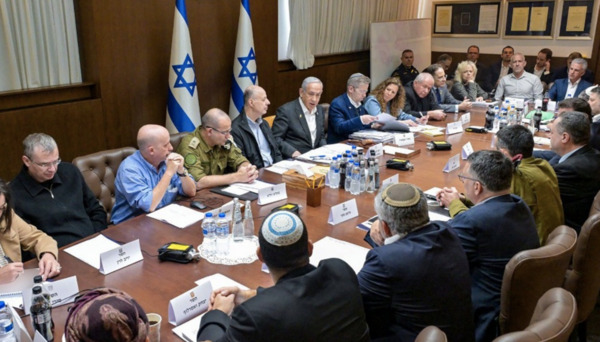
The Israeli military warned that expanding the war on Gaza, as decided by the political-security cabinet on Sunday, could lead to the deaths of Israeli prisoners held in the Gaza Strip who are still alive.


Security officials said during a cabinet meeting that there is a possibility that Palestinian fighters holding Israeli captives will flee areas that will be invaded by the Israeli army and leave the Israeli captives in tunnels without food and water, leading to their deaths within days, according to Haaretz newspaper on Tuesday.


The Israeli military also warned that as military operations in the Gaza Strip expand, the likelihood of aid reaching the locations where these prisoners are being held will diminish.


The newspaper added that there is widespread concern within the security establishment that Hamas will attempt to hide the bodies of Israeli captives in wells and bunkers, which would be difficult for the army and Shin Bet to locate. In such a scenario, the bodies may never be found, should Hamas members with knowledge of the captives' whereabouts be killed.


Contrary to the position of the political echelon and claims by Israeli Prime Minister Benjamin Netanyahu that the primary objective of the war is "victory over our enemies," the Israeli military claims that the return of prisoners is the most important objective of the war.


Israeli army spokesman Ephraim Deveren said yesterday that "the ultimate goal of the military operation is to return the kidnapped soldiers, and then to eliminate and defeat Hamas rule, but the kidnapped soldiers come first."


But Deveren added, "The Israeli army is subordinate to the political echelon and operates in full coordination with it. The plans have been presented to the political echelon, and I repeat that the goal of the war is to free the kidnapped soldiers and eliminate Hamas. These two goals are interconnected, and this is what we believe and for this we work."


Channel 13 quoted Israeli Chief of Staff Eyal Zamir yesterday as telling ministers during security discussions that expanding the war "could lead to the loss of the kidnapped soldiers."


But Netanyahu reiterated yesterday that the expansion of the war would take place in accordance with the military plans Zamir presented to the cabinet. This was echoed by a "political source in the Prime Minister's Office," who said that the military plans unanimously approved by the cabinet and presented by Zamir aim to "defeat Hamas in Gaza and return the kidnapped soldiers, and are fully consistent with the prime minister's statements in recent months."


Amid the lack of clarity over the goal of expanding the war, and whether it is to free prisoners or "eliminate Hamas," an Israeli security source said yesterday that the political-security cabinet, during its meeting, issued an ultimatum to Hamas: either agree to a prisoner exchange deal by the time of US President Donald Trump's visit to the Middle East in two weeks, or Israel would launch a large-scale invasion of the Gaza Strip with the aim of defeating Hamas.


Since the beginning of the war, Netanyahu had refused to reach a ceasefire and prisoner exchange agreement. He yielded to American pressure at the beginning of this year and agreed to such an agreement, which went into effect on January 19. However, at the end of the first phase of the agreement, he resumed the war on Gaza on March 18.


Netanyahu and his government subsequently rejected proposals put forward by Hamas and by the mediators in the negotiations, including American proposals. He insisted that the primary goal was to "eliminate Hamas" and then release the Israeli prisoners. This followed his refusal to stop the war and withdraw the Israeli army from the Gaza Strip, as Hamas demanded. The cabinet, the day before yesterday, decided to occupy the entire Gaza Strip.


PALESTINE

Tue 06 May 2025 9:47 am - Jerusalem Time

Hamas leader: No negotiations are meaningful in light of the starvation war.

Hamas Political Bureau member Bassem Naim asserted that there is "no point" in any ceasefire negotiations in light of Israel's "starvation war" in the Gaza Strip, calling on the international community to pressure the Israeli government to halt the starvation.


Naim said, "There is no point in any indirect negotiations with the Israeli occupation, nor is there any point in engaging in any new ceasefire proposals, in light of the war of starvation and the war of extermination that the Israeli occupation is waging against the Palestinian people in the Gaza Strip."


He added, "The international community is required to pressure the government of (Benjamin) Netanyahu to stop the crime of starvation, thirst, and killing in Gaza," according to what was reported by Agence France-Presse, quoting him.


Naim added, "The international community, primarily UN institutions, has deemed Israel's starvation policy a war crime," stressing that "efforts must be made to immediately deliver aid to the Gaza Strip in light of the expanding famine."

ARAB AND WORLD

Tue 06 May 2025 9:41 am - Jerusalem Time

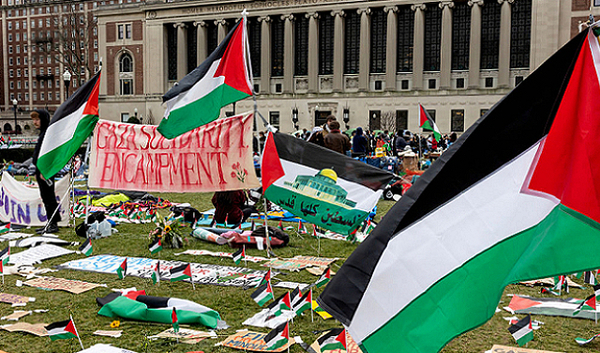
Protests at US universities denounce the arrest of Palestine supporters

Coordinated protests were held at Columbia, Georgetown, and Tufts universities in the United States, denouncing the arrest of academics and students who supported the Palestinian cause.


The protests demanded the release of Georgetown University scholar Badar Khan Suri, Palestinian activist Mahmoud Khalil, a graduate student at Columbia University, and Turkish doctoral student Rumeisa Ozturk at Tufts University, all of whom were detained for their support of Palestine.


Dr. Nader Hashemi, a Middle East politics expert at Georgetown University who participated in the protest, said the detainees were detained without charges, describing it as a policy aimed at silencing pro-Palestinian freedom of expression, according to Anadolu Agency.


Hashemi said he met with Badar Khan Suri, who was arrested in March and is being held at a Texas detention center. He noted that his prison conditions are difficult, with him only allowed two hours of fresh air per week.


He added that Suri is trying to teach his friends the ideas of the late Indian leader Mahatma Gandhi in prison, stressing that his detention is significantly contributing to "conveying the truth about the genocide in Gaza to the world."


"If they can do this to one academic, they can do this to all of us," said Dr. Elliott Cola, associate professor in the Department of Arabic and Islamic Studies at Georgetown University, who participated in the protest.


Kula noted that the "growing atmosphere of fear" on campus has caused deep anxiety among immigrant students and academics.


Students and academics at Georgetown, Columbia, and Tufts universities continue to hold demonstrations every Monday, demanding the release of Badar Khan Suri, Mahmoud Khalil, and Rumeisa Ozturk.


On March 8, US authorities arrested Mahmoud Khalil, who led solidarity protests at Columbia University last year to denounce Israel's genocide in the Gaza Strip.


As of March, the United States had revoked the visas and legal status of more than 1,000 students. Several students have filed lawsuits against the Trump administration over the revocations, and temporary orders have been issued to restore the legal status of a small number of students.


Protests in support of Palestine, which began at Columbia University, spread to more than 50 universities across the country, and police detained more than 3,100 people, most of them students and faculty members.


Since October 7, 2023, and with full American support, Israel has been committing genocide in the Gaza Strip, killing and wounding more than 170,000 of its residents, the majority of whom are children and women. More than 11,000 people have been declared missing.

OPINIONS

Tue 06 May 2025 9:14 am - Jerusalem Time

It Was Never About Hostages. It Was Never About Hamas.

Ramallah - “Al-Quds” dot com

Ramallah - “Al-Quds” dot com

Opinion Writer

By Caitlin Johnstone 


Benjamin Netanyahu said on Thursday that freeing the Israeli hostages in Gaza was not his top priority, suggesting instead that defeating Hamas should take precedence over a hostage deal.

“We have many objectives, many goals in this war,” Netanyahu said. “We want to bring back all of our hostages. That is a very important goal. In war, there is a supreme objective. And that supreme objective is victory over our enemies. And that is what we will achieve.”

Nothing the prime minister said here is true or valid — unless by “enemies” he means “all Palestinians in the Gaza Strip”.

Netanyahu has been fairly transparent about the fact that Israel’s ultimate goal in Gaza is neither freeing the hostages nor defeating Hamas, but seizing Palestinian territory and removing its Palestinian inhabitants. He has openly said that Israel will occupy Gaza via military force, completely ruling out the possibility of any form of Palestinian government for the enclave. He has openly said he wants to enact President Donald Trump’s ethnic cleansing plan for Gaza, which explicitly entails removing “all” Palestinians and never allowing them to return.

So they’ve made this perfectly clear. This isn’t about Hamas, except insofar as an armed resistance group will make it difficult to forcibly remove all Palestinians from Gaza. And it certainly isn’t about hostages.

And yet, bizarrely, this is how the western political-media class continues to frame this onslaught. They call it Israel’s “war with Hamas”, when it’s nothing other than an undisguised ethnic cleansing operation. They prattle on about October 7, hostages, and terrorism, even though it has already been made abundantly clear that this has nothing to do with any of those things. They act as though the admission was simply never made.

There is absolutely no excuse for continuing to babble about hostages and Hamas after the US and Israel said the goal is the complete ethnic cleansing of Gaza. They told you what this is really about. They said it. With their face holes. They said it right to you. End of debate.

Israel has been seeking ways to purge Gaza of Palestinians for generations. That’s all this has ever been about. Not October 7. Not hostages. Not Hamas. Not terrorism. Everything about Israel’s operations in Gaza have indicated that their real goal is to remove Palestinians from a Palestinian territory and not to free hostages or defeat Hamas. And then when Trump took office, they started openly admitting it.

How is this not the whole entire conversation every time Gaza comes up? How is this not the beginning, middle and end of every single discussion?

This is like a cop looking right into someone’s phone camera while strangling a black man to death and saying “I am killing this man because I am racist and I want to kill black people,” and then afterward everyone’s still saying “resisting arrest” and “we don’t know what happened before the video started recording”. He said what he was doing and what his motives were with his own mouth.

You don’t get to babble about Hamas, October 7 or hostages in defense of Israel’s actions in Gaza anymore. That is not a thing. If you want to defend Israel’s actions in Gaza, the sole topic of conversation is whether or not it’s okay to forcibly purge an entire population from their historic homeland by systematically bombing, shooting and starving them while destroying their civilian infrastructure, solely because of their ethnicity.

That is what the discussion is about. Not anything else. That and that only.


PALESTINE

Tue 06 May 2025 9:02 am - Jerusalem Time

Twenty years after the start of security sector reform, what sustainable security sector reform do we want?

The decree-law on referring officers with the rank of brigadier general to early retirement constituted a partial reform to address the issue of the imbalance in the accumulation of senior ranks.

The decree-law was incomplete and carried within it the aim of killing the decree-law itself when it stipulated the exception in Article Four thereof.

Excluding officers who hold the rank of brigadier general and occupy a leadership position gives the possibility of interventions, appeasement, and mediation to keep those close to them.

The decree-law was generous in terms of the mechanism for calculating retirement salaries and benefits, but it increases the burden on the public treasury and the retirement fund.


The Thabat Center for Research and Opinion Polls has issued the third policy paper in its 2025 series. These papers address domestic and foreign policy issues of concern to Palestinian society and decision-makers.


introduction


President Mahmoud Abbas's issuance of a decree-law retiring officers with the rank of brigadier general in the Palestinian security forces into early retirement reveals two points: first, the president's desire for reform in the security sector, and second, an existing flaw in the security sector's structure, particularly regarding military ranks and their large number within security institutions.


Although this step will eliminate some of the existing flaws in the "inverted pyramid" organizational structure of the security sector, this reform process will not be successful without a comprehensive overhaul of the security sector, to prevent a recurrence of the issue of retiring a large number of officers in this manner, given the extremely difficult financial situation. Twenty years ago, Al-Quds newspaper reported that President Mahmoud Abbas issued a decision to retire 1,000 officers on April 4, 2005, the beginning of his presidential term. Twenty years later, he decided to retire a large number of officers with the rank of brigadier general, and there is talk of retiring officers of various ranks in the coming days.


This referral to retirement comes amidst multiple Arab pressures to reform the Palestinian Authority, represented by the demand of the emergency Arab Summit "Palestine Summit" (and noting that reform efforts within the State of Palestine and the Palestine Liberation Organization are necessary steps to enable Palestinian national institutions to perform their duties effectively in the face of challenges, maintain the unity of national decision-making, and enhance the Palestinian people's ability to persevere and achieve their legitimate aspirations for freedom and independence). At the same time, it appears to come amid preparations for the transition of power and the distancing of centers of power and influence from using the remnants of their extensions in the security services.


International experiences in the security sector reform process indicate that the success of the reform process depends on the availability of four supporting conditions: (1) The reform process must be comprehensive and gradual at multiple levels. (2) It must establish a new doctrine based on the concept of the interests of citizens and the protection of democracy, not only the protection of the security of the state or the ruling party. (3) The security apparatus reform process must be part of an integrated strategy to strengthen the rule of law and raise professionalism, accountability, and transparency in the work of state agencies in general. (4) There must be political will and an agreed-upon work program among the various parties to the reform process in general and security sector reform in particular.


This paper aims to contribute to the discussion on security sector reform, in a way that serves the interests of citizens. This reform must be sustainable and prevent a recurrence of crises. It must establish rules and mechanisms that prevent the calcification of security sector institutions, on the one hand, and maintain the renewal of professional leadership in accordance with Palestinian law and the professionalism of security institutions, to maintain public order and protect citizens' interests. It must also offer recommendations that contribute to enhancing professionalism in the work and system of the Palestinian security sector.


This paper concludes that comprehensive reform of the Palestinian security sector requires legal, institutional, and cultural changes. It also identifies critical issues and offers targeted recommendations to enhance transparency, professionalism, and alignment with democratic governance. These reforms also aim to build a security sector that is accountable to civilian leadership, committed to public service, and based on the rule of law.


The law referring officers to the rank of brigadier general... a partial and incomplete reform


The decree-law on early retirement for officers with the rank of brigadier general in the Palestinian security forces, issued by President Mahmoud Abbas, constituted a partial reform to address the issue of the overcrowding of the senior rank of brigadier general in the security services. Under the decree-law, approximately 1,500 officers holding this rank were referred, noting that some had been eligible for the rank of major general years ago based on the time scale used for moving from one military rank to another. This decree-law only addressed those over the age of 55, although there are also others under the age of 55 who hold this rank; some of whom are unemployed or lack a place within the "structures" of the security institutions.


The decree-law was also truncated and carries within it the killing of the purpose of the decree-law itself when it stipulated the exception in Article 4 thereof: “Officers who hold the rank of brigadier general and occupy a leadership position in the organizational structure shall be exempted from the provisions of Article (3) contained in this decree-law by a decision issued by the Supreme Commander of the Palestinian Security Forces for this purpose.” This gives the possibility of interventions, appeasement, mediation or the whims of some security forces leaders to keep those close to them without professional foundations under the heading of work necessities.


In contrast, the decree-law is generous in its mechanism for calculating retirement pensions and benefits for those covered by its provisions. The retirement pension will be linked to the last salary received, unlike the Retirement Law, which stipulates that the retirement pension is based on the average of the last 36 salaries, with the addition of the period required to reach the mandatory retirement age of "sixty years" stipulated in the General Retirement Law. This means that the maximum retirement pension will be 80% of the last salary received by the retired officer under this decree-law. While the financial outcome of this decision is fair to retirees, it increases the burden on the public treasury, the General Retirement Fund, taxpayers, and future generations. Therefore, decisions related to group retirement require further financial analysis and actuarial study of such retirement.


Areas of reform in the security sector


There is no doubt that the implementation of security sector reform is not solely dependent on the will and determination of the Palestinian Authority. Success or failure here depends not on the government's own capabilities, but rather on external actors such as the international community, donors, and Israel, particularly given the Israeli occupation's policies aimed at weakening the PA and its institutions.


Any plan to reform the Palestinian security sector that aspires to succeed, transform the reform process into a reality, and prevent a recurrence of the failures of the reform process that began in 2005 requires careful and in-depth consideration of the reasons for the failure that plagued the implementation of the reform process. It requires learning from these failures to overcome the obstacles, challenges, and difficulties that hindered the implementation of the planned reforms, and drawing inspiration from the strengths that accompanied the successes achieved.


It also requires that the reform process be implemented within a clear, comprehensive vision, including a program supported by specific measures, according to precise timelines and assignments to specific entities with the authority to implement reform and corrective measures. This reform process also requires community participation to strengthen popular ownership, which requires the defense of reform by various societal groups. This is to limit resistance from groups and individuals affected by the reform, especially since they are usually members of the influential elite and those holding the reins of decision-making.


The six areas of reform required within the framework of a comprehensive security sector reform process include: (1) Security policy document. (2) Legislative reform. (3) Institutional reform. (4) Political reference. (5) Parliamentary and administrative oversight. (6) Promoting a culture of protecting democracy among members of the security establishment.


(1) Security Policy Document

Over the past thirty years, official Palestinian authorities have not adopted a security policy document (white paper), which includes the guiding principles of the security doctrine, the national security policy, and the pillars of national security that govern the work of the security establishment. This document serves as an expression of the state's general policy to ensure control and stability of the internal and external security of the state and society. This document is supposed to define the security doctrine of the security establishment, which includes the threats and challenges facing Palestinian security. It is supported by the enactment of laws, and is based on the needs and priorities of internal security at each stage, in application and implementation, and takes into account the regional and international reality and numerous external commitments.


Recommendation: 1. Adopt the security policy document (white paper) as a comprehensive national reference for integrating the work of the security sector agencies and institutions and aligning them with the general policy of the State of Palestine in accordance with the political phases. 2. Adopt the security doctrine by a decision of the Palestinian government, clarifying the challenges, threats, alliances, and their forms. For example, Israel poses an existential threat to the Palestinian people, which is a fundamental issue in the nature of the security doctrine. However, the cost of eliminating this danger is greater than this threat, which requires that the security policy document address this threat and how to reduce and mitigate its risks to Palestinian security.


(2) Legislative reform

The consistency of legislation with the Basic Law and with each other, and the avoidance of adopting legislation that contradicts each other, constitutes a fundamental element in the process of legislative reform of the security sector. In 2005, the Legislative Council adopted the Security Forces Service Law No. 8 of 2008. However, in 2007, Decree-Law No. (11) of 2007 was issued regarding Preventive Security, which contravened the principles established by the Security Forces Service Law. The Decree stipulated that the head of the Preventive Security Service would assume the presidency of the agency for four years, extendable for one year. The Security Forces Service Law, meanwhile, stipulated that the heads of the main security agencies (Internal Security, General Intelligence, and the Commander-in-Chief of National Security) would serve for three years, extendable for an additional year.


The General Intelligence Law of 2005, which stipulated that the term of the head of the agency (3 years + 1 year), was amended in Decree-Law No. 4 of 2023 for an unlimited period, many years after the expiration of the legal term of the head of the agency. The amendment of the Security Forces Service Law in 2024 also contravened the original Palestinian legislator's intent, which was included in the Security Forces Service Law of 2005. The time limits for ending the term of the heads of the security agencies were abolished, the service term of those with the rank of brigadier general or higher who head a security agency was extended for an additional three years beyond the mandatory retirement age of sixty, and a new agency was added to the main agencies, which plays a pivotal role in producing leaders of the security agencies.


Recommendation: (1) The necessity of reviewing security legislation in line with the Security Forces Service Law of 2005 and correcting all situations that arose as a result of subsequent amendments. (2) Completing the construction of the legal system for all security and military agencies and bodies, including the issuance of laws regulating the work of each agency and the organizational regulations stipulated in the laws and work manuals related to the work of the security agencies. (3) Limiting the term of all heads of security agencies and bodies to three years, with the possibility of extending them for only one year, even if they are under the legal mandatory retirement age of sixty years, in accordance with the General Retirement Law.


(3) Institutional reform

This aspect includes five main issues. The first examines the entirety of the institutions that comprise the security sector, with a view to re-integrating a number of security agencies to achieve operational harmony and prevent conflicts of authority. In this regard, the Security Forces Service Law was issued in 2005, consistent with President Mahmoud Abbas's vision at the beginning of his term. These include the National Security and Internal Security Forces, in addition to the General Intelligence Service. However, the decree-law amending the Security Forces Service Law for the year 2024 added a new agency, the Presidential Guard, on the one hand, and modified the nature of the authority of some security agencies, on the other.


Second: Reviewing the organizational structures of military and security agencies, institutions, and bodies. Over the past few years, significant progress has been made in approving and regulating structures within the security agencies, and in developing job descriptions that align with the functions assigned to each security and military agency. However, it appears that the accumulation of senior military ranks has eroded these structures, making it necessary to revisit the sustainability of work and hierarchy in accordance with the general rules of hierarchy within the military apparatus.


The third issue relates to senior leadership and supervisory ranks to prevent the continued existence of an inverted pyramid within the security establishment. Despite the irregularity of the publication of promotions for officers and personnel of the Palestinian security forces, the widespread accumulation of senior military ranks within the security services has contributed to the continued existence of an inverted pyramid within the security establishments, as the number of officers is higher than the number of individuals and non-commissioned officers. This stems from two issues: (1) The security establishment's continued reliance on graduates of military and police colleges, whether from Al-Istiqlal University or colleges abroad, without taking into account the necessary numbers, on the one hand, and the appointment of prisoners and detainees to the officer category, on the other hand. (2) The continuation of promotions based on chronological merit without implementing the provisions of Law No. 8 of 2005 regarding promotions to senior ranks, in accordance with the provisions of Articles 39, 40, and 41 for lieutenant colonels, colonels, and brigadier generals, and the provisions of Article 42 of the original law regarding the rank of major general, which has created a large number of these ranks.


Fourth: The continued appointment of heads of security agencies and military bodies from outside them. The appointments of heads of security agencies since 2007 indicate that the president has appointed most of the heads of security agencies, whether subordinate to the Minister of Interior or subordinate to the president, from outside the same agencies. This has frustrated officers in the upper ranks, leading to a decline in competitiveness among officers or a desire to maximize their work and discipline, due to the lack of hope of reaching the highest ranks within the same agency. Furthermore, no clear governance rules have been established for the mechanism for appointing heads of security and military agencies, which would enhance the integrity of appointments at this level of senior ranks in the security sector.


Fifth: It relates to the extension of the term of the heads of security agencies. The term of some heads of security agencies has extended to approximately 18 years in recent years, others to approximately 16 years, and some to eight years, which has prevented a number of officers in these agencies from transferring or assuming senior management. Furthermore, Decree-Law No. 7 of 2024 amending the Security Forces Service Law No. 8 of 2005 allows, by decision of the Supreme Commander, the extension of the service of any officer holding the rank of Major General or above, after reaching the age of sixty, for a period not exceeding three years, provided that they hold one of the following positions: 1. Commander-in-Chief, Commander of the National Security Forces, and Commander of the Military Intelligence Service. 2. Commander of the Presidential Guard. 3. Directors-General of the Internal Security Forces.


Moreover, extending or prolonging the tenure of security chiefs prevents renewed vision and the ability to keep pace with technical and technological developments. It also fosters frustration among senior officers, reducing initiative. This will likely result in security chiefs remaining in office for many years, especially since some of those appointed in the recent wave of security chief appointments are in their early fifties.


Recommendations: First: Integrate a number of security agencies to achieve harmony in work and prevent conflicts of authority. 1. Integrate the Intelligence Service and the Preventive Security Service into an agile, professional, and effective information service, whereby officers and personnel of the Preventive Security Service are distributed among the General Intelligence Service and the Palestinian Police Service according to their specialization, field of work, and the tasks assigned to them in their original agencies, in accordance with the Security Forces Service Law. 2. Incorporate all military agencies into the National Security Service, including the Military Intelligence Service, the Presidential Guard, and other military bodies.

Second: Review the structure of the security services and establish the job grade (military rank) with the job description in each military agency and body after the merger process, in a way that regulates the existence of senior salaries in the security services and determines their number for each agency and body so that they become fixed and do not increase.


Third: 1. Review the recruitment mechanisms in the security and military establishment by determining the desired annual number of graduates of military and police colleges, whether at Al-Istiqlal University or colleges abroad. 2. Change the rank categories when recruiting college graduates, starting with the rank of assistant, to ensure the ability to benefit from those joining the security services in field work, while adopting and adopting a system and financial benefits that grant them salaries or pensions equivalent to the rank of lieutenant in the old financial system. 3. Implement the provisions of the law related to promotions to senior ranks in accordance with the provisions of Articles 39, 40, and 41 regarding colonels and brigadier generals, and the provisions of Article 42 of the original Law 42 regarding the rank of major general, to prevent the escalation of the number of military ranks and in line with the structure and needs of each agency and body. 4. The necessity of linking the promotion of officers from the rank of lieutenant colonel to major general by selection, subject to the fulfillment of the conditions of "qualification and vacancy." 5. Adopt professional and competent standards in the selection of members of the security services, and prevent the interference of their members or officials in politics.


Fourth: 1. The necessity of establishing an integrity committee for appointments in the security sector, independent of the executive branch, and made up of influential figures, headed by the President or a Supreme Court judge, and a number of others known for their integrity and professionalism, who will be appointed for a specific period of time to consider nominations for positions as heads or general managers in the security and military agencies. 2. The necessity of “taking into account” the appointment of heads of security and military agencies and bodies from among the members of the agency or authority, in order to enhance competitiveness among officers in the same agency, and for efforts to be made by officers to be chosen to head the agency or authority.


Fifth: The necessity of adhering to the periods specified in the Civil Service Law for the Security Forces, the special laws for the security services, and the provisions of Article 42 of Law No. 8 of 2005 regarding service in the security forces, and canceling the amendment made pursuant to Decree-Law No. 7 of 2024 regarding amending the Service Law in the Security Forces.


(4) The political reference “the civilian reference for the security sector”

Political authority means that the government is responsible for security policy and its authority is based on the philosophy that political bodies are primarily representatives of the people, as they are directly elected or approved by the elected body that represents the will of the citizens or are authorized on their behalf. The security establishment is subject to the command of the political authority, regardless of the political color of the government, and implements its instructions (the security services do not interfere in political decisions, and the heads of the security services do not assume political or partisan duties). The loyalty of the security establishment and its members is to the constitution, and it maintains the democratic system and serves the interests of the citizens.


This means that the Minister of Interior and the Minister of National Security are responsible for the work of the security establishment, in accordance with the will of the Palestinian legislator in the Security Forces Service Law. The concept of the Commander-in-Chief of the Palestinian Security Forces, as stipulated in Article 39 of the Amended Basic Law of the Palestinian Authority, has two implications. First, it refers to the head of state, regardless of whether he has military experience. Second, it refers to the head of state having the authority to declare war and peace, as is the case in the international context from which this title is derived. This definition indicates that the army reports to the Minister of Defense, who is responsible before Parliament or has obtained the confidence of Parliament. The same applies to civilian security agencies such as the police and civil defense. General Intelligence, on the other hand, reports to either the President or the Prime Minister, who is the head of the executive authority and is responsible for declaring a state of war and peace, depending on the nature of the political system. However, the amendment made pursuant to Decree-Law No. 7 of 2024 amending the Security Forces Service Law grants the Commander-in-Chief executive powers that fall under the purview of the minister(s) responsible before Parliament. This also contradicts the meaning of the text contained in Article 39 of the Amended Basic Law of 2003.


Recommendations: 1. The necessity of abolishing the texts related to the reference to the Supreme Commander stipulated in Decree-Law No. 7 of 2024 amending the Security Forces Service Law No. 8 of 2005.


2. Re-authorize all security institutions and military bodies, with the exception of the General Intelligence Service, to the Palestinian government through the Minister/Ministers of Interior and National Security.


(5) Parliamentary and administrative oversight

Palestine faces the problem of the absence of a legislative council (parliament), which is supposed to monitor the work of the government and state institutions. Meanwhile, the Central Council has failed to fulfill its duties, in accordance with its decision at its thirty-first session, held on February 6-8, 2022, regarding the necessity of the Central Council exercising its constitutional powers and oversight mandate over the executive bodies of the PLO, its agencies and institutions, the Palestinian National Authority, and the work of unions, syndicates, and associations in accordance with the laws regulating their work.


In contrast, the State Audit Bureau has made significant progress in implementing the provisions of Article 31 of the State Audit Bureau Law and its amendments, which stipulate that all security agencies are subject to the oversight of the State Audit Bureau. As for some exceptional cases consistent with the nature of the special tasks of the security apparatus, although they are not subject to the oversight of the agencies referred to in this clause, they are subject to a special type of oversight, the nature and mechanisms of which are determined by law.


Recommendation: 1. The necessity of holding general elections, particularly legislative elections, or activating the Central Council for Government Oversight, including security institutions, to enhance parliamentary oversight of government and security sector activities. 2. Developing the role of the Financial and Administrative Audit Bureau in overseeing the security sector.


(6) Strengthening the culture of protecting democracy among members of the security establishment.

Article 89 of the Palestinian Security Forces Service Law refers to the concept of the public interest: "A public position in any security force is an assignment for those in charge, the goal of which is to serve the nation and citizens in the public interest, in accordance with the laws, regulations, decisions, and instructions. Officers must observe the provisions of this law and the regulations, decisions, and instructions issued pursuant thereto." The same article stipulates that officers must implement orders issued to them accurately and faithfully within the limits of applicable laws, regulations, and instructions. Every officer bears responsibility for the orders he issues and is responsible for the proper conduct of work within the limits of his jurisdiction. Protecting democracy also means that the policy of mobilization and moral guidance within the security services adopts the concept of commitment to the rule of law, Palestinian human rights and dignity, and prohibits manifestations of partisanship or politicization among security personnel, in accordance with the provisions of Articles 90 and 169 of the Security Forces Service Law, and prohibits engaging in politics, expressing political opinions, or belonging to parties or associations with political objectives.


Despite significant efforts by the Ministry of Interior and security and military agencies and bodies to provide training on the Code of Conduct for Security and Military Services and integrity issues, it is unclear whether any effort has been made to promote a culture of public interest that protects democracy, especially given that many recent speeches and videos indicate a lack of this culture among a number of officers and personnel in the security services.


Recommendation: 1. The need to review training and education mechanisms within security sector institutions to enhance the culture of protecting democracy among security personnel, including respect for the rules of public law and the protection of public freedoms. This includes amending laws related to the work of security and military agencies and bodies. 2. Preventing the involvement of officers and personnel of security agencies in partisan activities, and preventing the participation of security chiefs in partisan and official political institutions.


Thabat Center for Research and Opinion Polls


A research institution, established in 2023 as an independent center for research, public policy studies, and public consultations. It is an emerging institution dedicated to optimal investment in research, surveys, data collection, representative sampling methodologies, data analysis, report writing, research papers, and experts in various fields to achieve the highest levels of accuracy and credibility.


The Center undertakes numerous research activities, including preparing studies and applied research related to current Palestinian policies; conducting opinion polls on the political, social, and economic conditions of Palestinian society; providing consultations and institutional and programmatic evaluations of local government and the private sector; holding conferences, lectures, and briefs on current affairs; and other activities.


Thabat Center for Research and Opinion Polls is committed to objectivity and scientific integrity, and optimal investment in experts supervising political, governance, economic, and field research, and experienced researchers in the field.


PALESTINE

Tue 06 May 2025 8:57 am - Jerusalem Time

A frenzied settlement offensive in the West Bank... redrawing Palestinian geography according to a map of brutal force.

Suhail Khalil: What is happening represents landmines planted by the occupation on the path to establishing a Palestinian state and undermines any efforts towards a comprehensive peace process based on the two-state solution.

Sylvia Abu Laban: Israel is working to complete the administrative infrastructure for annexing the West Bank by transferring powers from the Civil Administration, a military body, to the Settlement Administration.

Aseel Malihat: The danger of the project lies in its timing, as it comes at a time when the world is preoccupied with successive crises, the international community is silent, and the international community is failing.

Adel Shadid: Preventing the settlement project in the West Bank can only be achieved through struggle, and the reality of the West Bank for years does not allow for a popular and peaceful struggle.

Dimitri Diliani: We are facing a colonialism that is redrawing Palestinian geography according to the map of brutal military force, not according to the logic of law or the course of history.


While the official international community continues its deafening silence on the ongoing Israeli crimes of ethnic cleansing and war of extermination in Gaza, the occupying state is proceeding with its expansionist settlement project in the West Bank, in implementation of the "decisive plan" devised by extremist Finance Minister Bezalel Smotrich. This plan is being rapidly implemented, aiming to permanently block the possibility of establishing a Palestinian state within any potential political settlement.


Writers, experts, and analysts who spoke to Al-Quds emphasized that what is happening is like landmines planted by the occupation in the path to establishing a Palestinian state, undermining any efforts toward a comprehensive peace process based on a two-state solution. They pointed out that preventing the settlement project in the West Bank can only be achieved through struggle, and that the reality on the West Bank for years has prevented the existence of either popular or peaceful struggle.


They explained that Israel is working to complete the administrative infrastructure for annexing the West Bank by transferring powers from the Civil Administration, a military body, to the Settlement Administration, adding: "We are facing a colonialism that is redrawing Palestinian geography according to the map of brutal military force, not according to the logic of law or the course of history."


They stressed that the project's seriousness lies in its timing, as it comes at a time when the world is preoccupied with successive crises, amidst the global silence and inaction of international institutions.


Settlement expansion, bypass roads, and industrial zones


Settlement affairs expert Suhail Khaliliya said that the settlement project currently being discussed, which is likely to change the landscape of the West Bank, is actually based on three main pillars.


He explained that the first pillar is settlement expansion through construction and the approval of settlement projects. The number of settlement units approved has reached approximately 40,000 since the current government took office. This expansion, during the same period, has been accompanied by the demolition of more than 4,000 Palestinian homes and facilities across the West Bank.


The second pillar, according to Khalil, is the bypass road network, which currently exceeds 960 kilometers in length.


He pointed out that the government has allocated a budget estimated at $2 billion to expand this network and pave new roads for the settlements, including agricultural and pastoral roads, in addition to constructing tunnels and bridges to facilitate the movement of settlers and separate the road networks designated for them from those used by Palestinians.


He added that the third pillar relates to settlement industrial zones, which are a major attraction for settlers.


23 settlement industrial zones


He explained that the West Bank currently includes 23 settlement industrial zones occupying an area of more than 20,000 dunams of Palestinian land, while plans have been prepared to establish 35 additional industrial zones on a new area exceeding 25,000 dunams.


He pointed out that these areas constitute a serious source of pollution to the Palestinian environment, including lands and water basins, given the lack of any oversight or accountability over their management.


Khaliliya explained that the above was crowned by the transfer of civil administration powers from the occupation army to a civilian authority headed by extremist Finance Minister Bezalel Smotrich, with the participation of representatives from the Settlements Council. In addition, National Security Minister Itamar Ben-Gvir established what is known as the "Settlers' Army," which was provided with weapons and training.


He also pointed to ongoing efforts to recruit ultra-Orthodox (Haredim) religious groups into the ranks of the occupation army, not only to bolster military power in its aggression against the Gaza Strip, but also as part of preparations to hand over the security file in the West Bank to the Settlements Council.


Khaliliya emphasized that what is happening represents, in fact, landmines planted by the occupation in the path to establishing a Palestinian state, undermining any efforts toward a comprehensive peace process based on the two-state solution.


In concluding his remarks, Khaliliya considered that Israeli policies are consolidating the nucleus of a self-governing settler state, seeking to share the West Bank with the Palestinians while maintaining the upper hand for the settlers, as part of a systematic policy to impose a fait accompli.


Very dangerous facts and data


For her part, political activist Sylvia Abu Laban said that over the past two years, since the rise of the far-right coalition government headed by Benjamin Netanyahu to power in the occupation, extremely dangerous facts and data have begun to emerge on the ground in the West Bank, indicating that the colonial seizure and annexation projects have reached their most extreme stages, represented by the escalation of forced displacement projects.


She added: "Today, approximately 740,000 Israeli settlers live in settlements in the West Bank, including 240,000 living in occupied Jerusalem. Israel has accelerated settlement construction in the West Bank, including Jerusalem, to advance its interests and implement its annexation plans."


She emphasized that the establishment of a record number of illegal outposts has now become the appropriate tool for implementing Smotrich's annexation plans, in addition to the sharp increase in settler activity, road closures, and unprecedented measures to legalize and finance illegal outposts.


Abu Laban explained that the Israeli government is working to complete the administrative infrastructure for annexing the West Bank by transferring powers from the Civil Administration, a military body, to the newly established Settlement Administration, a civil and political administration under the direct authority and control of extremist Minister Smotrich. Israel has also designed a new set of measures to tighten its control over the occupied Palestinian territories and consolidate the annexation of Area C in the West Bank by 2025.


She said: These steps include completing the transfer of authority from the army to an administration under Smotrich's leadership, and appointing a civilian deputy who has been given the powers of the head of the Civil Administration regarding settlements.


Mechanisms to confront the settlement project


Regarding how to confront the settlement project, Abu Laban added: "Smotrich's plan to annex the West Bank poses an existential threat to Palestinian rights, as it aims to consolidate Israeli control by altering the demographic, legal, and geographic reality. The plan includes unprecedented settlement expansion, the legalization of illegal outposts, and the restriction of Palestinian freedoms, undermining any possibility of establishing a viable Palestinian state."


She believes that the settlement plan must be confronted through:

1- Strengthening national unity among Palestinian factions to confront challenges in a unified manner.

2- Supporting popular and peaceful resistance in the West Bank to protect lands and property.

3- International and legal pressure through the International Court of Justice and the United Nations to impose sanctions on Israel and hold it accountable for its violations of international law and Security Council Resolution No. 2334 (2016), which affirms that the settlements constitute a violation of international law, calls for a halt to their activities, and stresses the need for a negotiated settlement based on the 1967 borders, and related resolutions.

4- Strengthening international isolation, activating legal accountability mechanisms, and intensifying efforts within the United Nations, the Security Council, and the General Assembly to issue resolutions condemning the de facto annexation steps and demanding their cessation.

5- Exposing and revealing the mechanisms of actual annexation in the media and internationally by documenting violations and publishing them in the media to expose the policies of ethnic cleansing and creeping annexation.


Preserving Palestinian identity and resisting forced displacement


She said: "In the absence of a just political solution, the priority must be to preserve Palestinian identity and resist forced displacement, while continuing to demand the right to self-determination in accordance with international law."


Regarding the implications of this if implemented, Abu Laban pointed out that Smotrich presents his vision as a "realistic, geopolitical, and strategic" plan. He claims that it is based on an analysis of reality and its roots, and supported by realistic, historical, democratic, security, and political considerations. He believes it is the only solution "with real value" compared to all other proposed solutions. The plan aims to respond to any attempts and projects calling for the partition of the country or the transfer of lands to the Palestinians under any future political settlement, to erase the Palestinian narrative, and to impose the Israeli narrative, dissolving it in the Palestinian mindset that no Arab state or sovereignty will be established under any circumstances, and that it is the Land of Israel.


Abu Laban explained that his proposal is based on a "radical shift" in political thinking, a 180-degree departure from previous Zionist policies. He believes that most political plans from the right and left have perpetuated and managed the conflict, not resolved it. He presents his plan as a solution to the "root of the problem" and the root of the failure of all "political solutions," past and present.


Living on the edge of the sword


She continued: Smotrich also denies the existence of "Palestine" or the "Palestinian people," and claims that the Palestinians are merely an anti-Zionist movement that arose in reaction to the Zionist project. He believes that the continued existence of two opposing national aspirations in a small geographical area will lead to "living by the sword" for years to come, and that peace can only be achieved if one side abandons its national ambition. He believes that the side that must abandon it is the "Arab side," because the Jews "will not give up" their national project of establishing the sole Jewish state. He believes that his plan is not fundamentally different from Benjamin Netanyahu's plan, which proposes an "incomplete state" for the Palestinians, without real sovereignty or control over borders, an army, and space, and therefore not an actual state.


Abu Laban concluded her remarks by saying: “The Israeli occupation policy is rapidly and, in many respects, irreversibly eliminating the possibility of establishing a viable two-state solution. It will contribute to the perpetuation of deteriorating Palestinian living conditions, make the realization of Palestinian political and national aspirations impossible, and deprive Palestinians of any independence or absolute sovereignty. This is an option that the Palestinians cannot accept. The Palestinian leadership must reassess the effectiveness of the call for a two-state solution and consider other options.”


comprehensive strategic plan


For her part, journalist Aseel Malihat, media officer at Al-Baydar Organization for Defending Rights, said that the settlement project planned by the Israeli occupation in the West Bank, which the National Bureau for Defending Land and Resisting Settlements has warned against, is not merely a process of urban expansion or the construction of housing units. Rather, it is part of a comprehensive strategic plan aimed at redrawing the map of the West Bank to serve the long-term colonial occupation project and to eliminate any prospect of establishing an independent, sovereign Palestinian state.


Malehat noted that the new settlement project is part of a series of systematic measures pursued by the occupation authorities aimed at altering the demographic and geographic character of the occupied Palestinian territories, whether through land confiscation, the establishment of illegal settlement outposts, or the construction of bypass roads that serve the settlements and separate Palestinian villages from each other, facilitating the imposition of a reality of division and isolation, and ending the geographical contiguity between Palestinian cities.


She pointed out that implementing this project would create facts on the ground that would enable the occupation to effectively annex large parts of the West Bank, even if this is not officially announced.


Expansionist plans and attacks on Palestinians


She added that these plans are being pursued in parallel with widespread repression against Palestinian citizens and forced displacement in the Jordan Valley and Jerusalem, in an attempt to create an environment that repels Palestinians, undermine their resilience, and transform them into isolated human islands in disjointed cantons.


Malehat explained that the danger of this project also lies in its timing, as it comes at a time when the world is preoccupied with successive crises, amidst a deafening international silence, and the failure of international community institutions to shoulder their legal and moral responsibilities to protect the Palestinian people from Israeli colonial policies, which constitute a flagrant violation of the Fourth Geneva Convention, international humanitarian law, and United Nations resolutions, particularly Resolution 2334, which condemns settlements and considers them illegal.


Malihat added that the occupation would not have persisted with its settlement projects had it not been for its awareness of the lack of international accountability, the lack of deterrence tools, and the fact that it is treated as a "state above the law."


She stressed that the occupation is exploiting every moment of political vacuum, internal Palestinian division, and international silence to impose new facts on the ground that undermine the Palestinian national project.


A comprehensive Palestinian movement is required.


Malehat called for a comprehensive Palestinian movement, beginning with reorganizing the internal situation and unifying the national front against settlements. She then moved on to activating all legal, diplomatic, and media tools of confrontation, immediately resorting to international institutions to prosecute the occupation for its crimes, and working to mobilize the international community and address the people, not just governments. This is because today's battle is a battle for awareness and public opinion, as much as it is a battle for existence and a struggle on the ground.


Malehat emphasized that the media's role at this stage must be exceptional, not limited to simply transmitting news, but extending beyond that to deconstructing the colonial narrative and presenting the Palestinian narrative with clarity and force.


She stressed the need for Palestinian, Arab, and international media, especially independent media, to be partners in exposing the crimes committed against the Palestinian people and revealing the true objectives of these projects, which aim to transform Palestine into a map of settlements and besiege everything Palestinian.


Journalist Aseel Malihat concluded her speech by saying: “We, at Al-Baidar Organization for Defending Rights, believe that this phase requires collective responsibility and a unified national stance that is not subject to compromise or narrow calculations. We have no choice but to resist in all its legitimate forms, and to cling to our land, identity, and rights, because what is being proposed is not a construction project, but rather a project of uprooting. Our people, who faced the Nakba, the Naksa, and the occupation with their legendary steadfastness, will continue their struggle until liberation, return, and the establishment of their independent state on all Palestinian national soil, with Jerusalem as its capital.”


The struggle needs someone to lead it


For his part, Israeli affairs expert Adel Shadid said that preventing the settlement project in the West Bank can only be achieved through struggle.


He pointed out that the struggle needs someone to lead it, explaining that the reality on the West Bank for years does not allow for a field struggle, or even a popular and peaceful struggle.


He stressed that despite the repeated talk about popular resistance, popular resistance has not been practiced by either the Authority or the Fatah movement.


Shadid believes that this settlement project is ongoing, and he sees no possibility of preventing it. As we mentioned, it can only be prevented by an international resolution, which is unavailable and unthinkable, or by field struggle, which is also completely unthinkable.


He strongly warned against implementing the dangerous settlement project, which would completely change the topographical and demographic features of the West Bank and alter the pressure structure in the West Bank.


Shadid added that this issue would also lead to the engineering of the West Bank in a way that would accelerate the encirclement and siege of all Palestinian communities and achieve actual annexation, without media or decisions, but rather by creating a new reality on the ground that would be difficult to reverse.


Underground settlement roads in the West Bank


Writer and political analyst Dimitri Diliani said: "The settlement roads being built underground in the occupied West Bank are no less dangerous than the houses being demolished above them, because we are facing a colonialism that is redrawing Palestinian geography according to the map of brutal military force, not according to the logic of law or the course of history."


Diliani warned of the essence of the accelerating settlement project in Jerusalem and the rest of the occupied West Bank, which is now fueled by the international blackout and regional preoccupation with the open war of extermination in Gaza.


He said, "The occupation is not satisfied with military force to impose its control, but rather employs planning and infrastructure tools as a new form of silent aggression, which leads to a political geography that severs the ties between Palestinian cities and villages."


A deliberate attempt to redefine Palestinian existence


Diliani asserts that the roads being paved today in the West Bank are strategic extensions of the creeping annexation project, which seeks to transform the Palestinian presence into isolated enclaves, besieged by settlements, outposts, and pastoral farms. These are cultivated as facts on the ground, unrecognized by law, but which find in the international community's silence a de facto legitimacy.


Dalyani concludes by emphasizing that what is happening in the occupied West Bank is a deliberate attempt to redefine Palestinian existence itself, such that Palestinians become guests in a geography over which they have no authority, no sovereignty, and no access except by begging for permits from the occupying authority. These are not roads connecting the settlements, but knives severing the arteries of Palestinian life.

PALESTINE

Tue 06 May 2025 8:56 am - Jerusalem Time

Palestinian Ministry of Education organizes a conference on the psychological and social effects of the occupation's violations on students.

Yesterday, Monday, the Ministry of Education and Higher Education organized its fifth guidance conference, "The Psychological and Social Impacts of the Occupation's Violations on Palestinian Students." Under the slogan "We Persist to Recover," the conference was attended by official and prominent figures, specialists, academics, students, researchers, and those interested in guidance and mental health, among others.


In his speech on behalf of the Minister, Prof. Dr. Amjad Barham, Undersecretary of the Ministry of Education, Dr. Nafie Assaf, stressed the importance of maintaining hope among students despite the ongoing practices and violations of the occupation in all areas. He recalled the suffering of children and students in Gaza, Jerusalem, Jenin, and Tulkarm, and their deprivation of their right to education and safe access to their schools and universities. He emphasized the need for the Ministry and local and international partners to stand with and support students, and to provide them with psychological and social support.


Assaf highlighted the importance of this unique conference, held under difficult circumstances and challenges, and the need to invest in its outcomes and follow up on its recommendations and outcomes. He also praised the efforts of all those involved, partner institutions, and all advocates for the rights of Palestinian children.


For his part, the head of the conference's preparatory committee, Dr. Mohammed Shaheen, delivered a speech in which he stated that mental health is a key pillar of public health, pointing to the psychological and social impacts of the occupation's aggression on the Palestinian people, particularly children and school students. He reviewed the results of specialized studies indicating that students are losing their ability to concentrate due to these violations, and highlighted the tasks of the conference committees, thanking the researchers and organizers of the conference and highlighting the importance of holding it on a regular basis.


For her part, Jerusalemite student Batala Al-Khatib discussed the suffering of Palestinian students on their commute to and from school due to the occupation's unfair barriers and practices, as well as its attempts to distort and obliterate the Palestinian curriculum, which impacts students' collective national identity, memory, and academic achievement. She called for protection and advocacy for Palestinian children and students.


The Gazan student, Abdul Rahman Al-Rayes, gave a speech in which he expressed the suffering of the students of Gaza.


For her part, Khadija Zahran, Director of the Policy and Legislation Oversight Department at the Independent Commission for Human Rights, presented a human rights-based approach to the reality of the occupation's violations in light of the genocide and aggression against the West Bank. She addressed the most prominent violations, human rights and legal aspects, and called on international organizations and relevant parties to strengthen protection of Palestinian children's rights and hold the occupation accountable for its escalating crimes.


Following the official opening, a dialogue session was organized, moderated by Dr. Wahid Jubran, in which Dr. Nafeh Assaf, Prof. Dr. Nabil Al-Jundi, a lecturer at Hebron University, Dr. Asaad Ramlawi, Director of the World Education Foundation, Mai Jalal, a student from the Unified School Parliament from Tulkarm, and Mira Dahman, a student from one of the virtual schools in Gaza, spoke. The session included content and a narrative of the overall violations that our students are exposed to, the nature of the interventions, especially the launch of virtual schools for Gaza students, the Ministry’s plans to rescue and compensate for educational losses, and a focus on the training aspect of educational cadres in dealing with violations, among other important topics.


The conference included several specialized sessions in which participants presented summaries of their research papers and influential experiences on the effects of the occupation and its psychological, social, and academic impact on students.


At the conclusion of the conference, Dr. Rafaa Al-Ramahi read the closing statement, which included several recommendations, the most prominent of which were: the need to provide specialized psychological and social support to students affected by the occupation's violations; attention to developing students' psychological and social resilience; the importance of integrating psychosocial support into the Palestinian educational system through staff training, strengthening the role of educational counselors in schools, and intensifying their preventive and therapeutic interventions, especially in areas most vulnerable to violations; activating the role of the family and local community in supporting students psychologically and socially through awareness-raising sessions and training for parents on how to deal with their children exposed to trauma or pressure; and calling for serious international action to expose the occupation's crimes against Palestinian students and work to guarantee their right to education.

PALESTINE

Tue 06 May 2025 8:37 am - Jerusalem Time

Gaza under fire: Dead and wounded in ongoing raids on the Strip

Five civilians were killed and others, including children and women, were injured in Israeli airstrikes targeting various locations in the Gaza Strip early Tuesday morning.


Palestinian Red Crescent paramedics reported that two citizens were killed and others injured when Israeli warplanes bombed the Hamdan family home near the al-Sawarah School, north of the town of al-Zawaida in the central Gaza Strip. The wounded were transferred to al-Aqsa Martyrs Hospital in Deir al-Balah.


Sources also reported the death of a child and the injury of others, following an Israeli drone strike that targeted a tent housing displaced persons in the Al-Mawasi area west of Khan Yunis, south of the Gaza Strip. The displaced persons were transferred to Nasser Hospital in the city.


In the Nuseirat refugee camp in the central Gaza Strip, two citizens were killed and others injured this morning as a result of an Israeli bombardment that targeted the Hamdan family's home.


The neighborhoods of Zeitoun, Shuja'iyya, and Tuffah, east of Gaza City, witnessed Israeli artillery shelling, coinciding with the firing of military vehicles at civilian homes east of the city.


More than 50 people were killed and dozens more injured, including children and women, as Israeli airstrikes and shelling continued across the Gaza Strip on Monday.


Since October 7, 2023, the Israeli occupation forces have been waging an ongoing aggression against the Gaza Strip. To date, this has resulted in the deaths of 52,567 civilians, the majority of whom are children and women, and the injury of 118,610 others. This is a preliminary toll, with a number of victims still under the rubble and on the streets, unable to be reached by ambulances and rescue teams.

PALESTINE

Tue 06 May 2025 8:28 am - Jerusalem Time

Three citizens injured and another arrested north of Ramallah

Three citizens were injured and suffered fractures at dawn on Tuesday, and a young man was arrested during an Israeli occupation forces raid on the town of Abwein, north of Ramallah.


The Palestinian Red Crescent reported that occupation soldiers assaulted three citizens, causing them bruises and fractures. First aid was provided to them on the spot.


In the same context, occupation forces arrested the young man, Mahdi Fawaz Khalaf, after raiding his home and destroying its contents during the raid on the town.

ARAB AND WORLD

Mon 05 May 2025 10:20 pm - Jerusalem Time

Trump pledges to help deliver food to Palestinians in Gaza

US President Donald Trump reiterated his pledge to help deliver food to Palestinians in Gaza when asked at the White House on Monday about Israel's intention to launch a large-scale attack on the Strip.


Trump did not express his opinion on the Israeli operations.

Israeli Prime Minister Benjamin Netanyahu said earlier Monday that the new offensive on Gaza would be an intensive military operation aimed at defeating the Palestinian Hamas movement, but he did not specify the extent of territory Israel would control in the Strip.


"The residents will be moved for their own safety," Netanyahu added in a video posted on the X platform. He stated that Israeli soldiers will not enter Gaza, launch raids, and then withdraw. "The intention is the opposite," he continued.

Netanyahu explained: "We sat down late last night in the cabinet and decided to carry out a powerful operation in Gaza. This was the chief of staff's recommendation, to proceed, as he said, to defeat Hamas. He believes this will also help us free the hostages, and I agree with him."


He continued, "We will not back down from this effort, and we will not abandon anyone. This is what we are doing." He concluded, "We will not discuss the details, because we have already discussed the details on both issues: what we are doing for the hostages, and what we are doing to defeat Hamas."

PALESTINE

Mon 05 May 2025 9:24 pm - Jerusalem Time

Gaza government: Gaza hospitals on the brink of collapse within 48 hours

The Government Media Office in Gaza warned Monday evening of an "imminent disaster" threatening the lives of thousands of sick and wounded people in the Strip due to Israel's denial of access to fuel stores allocated to hospitals by international and UN organizations.


The government office said in a statement titled "Urgent Warning": "Gaza Strip hospitals are on the brink of collapse within 48 hours due to the Israeli occupation's prevention of international organizations from accessing fuel and the ongoing blockade."


The government office explained that fuel depots allocated to hospitals and belonging to international organizations are located in areas classified by Israel as "red zones," meaning access to them is prohibited.


The government office considered this a "continuation of the crime of siege and deliberate starvation" committed by the army in the Gaza Strip, in conjunction with its ongoing air and ground attacks since October 7, 2023.


PALESTINE

Mon 05 May 2025 8:37 pm - Jerusalem Time

A young Palestinian was injured by Israeli occupation forces' bullets east of Nablus.

A young man was shot by Israeli occupation forces on Monday evening during clashes that erupted east of Nablus.


According to local sources, a young man was shot in the lower back with live ammunition during clashes that erupted near the old and new Askar camps. He was subsequently taken to the hospital.


The occupation forces stormed the popular housing area and the area between the old and new Askar camps, firing live ammunition, tear gas, and sound bombs, which led to clashes in the area.

PALESTINE

Mon 05 May 2025 7:59 pm - Jerusalem Time

Gaza Health Ministry: More than 51 dead in the Gaza Strip in 24 hours

The Ministry of Health in the Gaza Strip announced on Monday that more than 51 dead and 119 wounded had arrived at hospitals in the Strip over the past 24 hours, as a result of the ongoing Israeli aggression.


The ministry explained in its daily statistical report that a number of victims remain under the rubble and on the streets, with ambulance and civil defense crews unable to reach them due to the ongoing Israeli bombardment.


The ministry confirmed that the death toll since the start of the aggression on October 7, 2023, has risen to 52,567, while the number of wounded has reached 118,610. It added that 2,459 martyrs and 6,569 wounded have fallen since the occupation resumed its aggression on March 18.


ARAB AND WORLD

Mon 05 May 2025 7:51 pm - Jerusalem Time

Al-Houthi: 3 US airstrikes on the Al-Sawad area, south of Sana'a.


The Houthi group announced, on Monday evening, a new US aggression, with three airstrikes targeting the Al-Sawad area, south of the Yemeni capital, Sanaa.


The Houthi-affiliated Al Masirah satellite channel reported in a breaking news report that "a US aggression targeted the Al Sawad area with three airstrikes," without providing further details regarding casualties or damage.


On Monday morning, the Houthi group announced that 14 citizens were injured in a raid launched by the US aggression yesterday evening (Sunday) on Al-Arbaeen Street in the Saawan area in the Shu'ub district, and another citizen was injured on Airport Street in the Bani Al-Harith district in the capital, Sana'a.


This comes at a time when the Houthi group has been subjected to intense US aggression since mid-March, targeting dozens of sites and resulting in the deaths and injuries of hundreds of civilians. According to the group, Washington has launched 1,300 airstrikes and naval bombardments on Yemen since then.


Despite the resumption of US airstrikes against Yemen following President Donald Trump's orders for the military to launch a "major offensive" against the Houthis, the group continues to carry out military operations targeting targets in Israel and US targets in the Red Sea.

PALESTINE

Mon 05 May 2025 7:29 pm - Jerusalem Time

The European Union calls on Israel to reverse its expansion of its war on Gaza.

European Commission spokesman Anwar al-Anoni called on Israel to reverse its plan to expand its war on the Gaza Strip.


"The European Union is concerned about the expansion of the war on Gaza, which could lead to further loss of life and further suffering for the Palestinian people," al-Anuni said at a press conference in Brussels on Monday.


He added, "The European Union called for immediate access and distribution of humanitarian aid, as well as the restoration of electricity to Gaza and the restoration of basic services."


Al-Anuni also called on Israel to lift its blockade on Gaza to allow the distribution of humanitarian aid.

ARAB AND WORLD

Mon 05 May 2025 7:05 pm - Jerusalem Time

Trump: I had a very fruitful call with Erdogan, and we discussed Syria and Gaza.

US President Donald Trump said he had a fruitful phone call with his Turkish counterpart, Recep Tayyip Erdogan, that covered several issues, including Syria and Gaza.


This came in statements made by the US President via the social media platform "Truth Social" regarding a phone call he had with President Erdogan on Monday.


Trump confirmed that he had a very fruitful call with the Turkish president, stating that they discussed numerous issues, including Syria, Gaza, and the Russian-Ukrainian war.


He stated that President Erdogan had invited him to visit Türkiye and that he would also visit Washington.


Trump noted that his relationship with the Turkish president was excellent during the four years of his first term, from 2016 to 2020.


He pointed out that they worked together during that period on many issues.


He added, "I look forward to working with President Erdogan to end the senseless war between Russia and Ukraine."


PALESTINE

Mon 05 May 2025 6:30 pm - Jerusalem Time

Netanyahu: We have decided to carry out a powerful operation in Gaza to eliminate Hamas.

Israeli Prime Minister Benjamin Netanyahu announced that his government has decided to launch a powerful, large-scale military operation in the Gaza Strip, with the goal of eliminating Hamas and, according to his claims, recovering those held captive in the Strip.


In remarks following a meeting of the security cabinet, Netanyahu said, "We have decided to proceed with the recommendation of the Chief of Staff to carry out a broad military operation aimed at completely eliminating Hamas. This operation will contribute to the return of the kidnapped soldiers," he claimed.


He added that Tel Aviv intends to move civilians in Gaza from targeted areas "for their protection," claiming that the Israeli occupation army will take measures to remain in any area captured during the operation, with the aim of preventing a repetition of what he described as past mistakes.


In another context, Netanyahu indicated that "after the war ends, a comprehensive investigation must be opened that includes everyone and extends to all levels," indicating the intention to review political and military performance during the war.

PALESTINE

Mon 05 May 2025 6:21 pm - Jerusalem Time

Israeli occupation forces carry out demolitions in Khirbet al-Deir in the northern Jordan Valley.

Today, Monday, the Israeli occupation forces carried out demolitions in Khirbet al-Deir in the northern Jordan Valley.


The official in charge of the Jordan Valley file in Tubas Governorate, Moataz Basharat, explained that the demolitions affected homes, facilities, and residential and agricultural outbuildings belonging to brothers Iyad and Mahmoud Hafez Daraghmeh, leaving the two families homeless.


He added that the occupation forces demolished two brick and cement homes belonging to the two families, each measuring 150 square meters. They also demolished and destroyed all of the families' agricultural outbuildings, including several livestock pens and their associated tools, as well as water lines and tanks.


The demolition also affected a room and a solar panel assembly that supplies the entire residential complex.

PALESTINE

Mon 05 May 2025 5:29 pm - Jerusalem Time

The Israeli occupation authorities approve a plan to escalate the military campaign on Gaza.


Israel's security cabinet met on Sunday and approved plans to escalate the military campaign against Gaza. Prime Minister Benjamin Netanyahu's logic appears to be that victory over Hamas will come from a barrage of greater military force in the coming weeks.


"We are not yet finished with the war. We will carry out this operation with a united army, with a strong army and soldiers of great determination," Netanyahu declared on Sunday, as his security cabinet signed off on expanding the scope of the fighting.


But it is not clear how the additional reinforcements will fundamentally change the dynamics we have witnessed over the course of 18 months of war, in which hundreds of thousands of soldiers attacked Hamas fighters and besieged the population of Gaza, but failed to achieve Israel's goals of destroying the armed group or releasing all the hostages.


It remains uncertain whether the Israeli military will reinforce its presence in Gaza before President Trump arrives in the Middle East next week for meetings in Saudi Arabia, Qatar, and the United Arab Emirates. Two reservists, speaking on condition of anonymity because they were not authorized to comment to the media, said they received call-up orders starting in June.


Since the collapse of a two-month ceasefire in March, Israel has blocked the flow of food, medicine, and other humanitarian aid into Gaza. The Israeli Air Force has already resumed its heavy bombardment of the Strip.


Now, the government is preparing to expand its ground offensive as well, with the aim of reentering Gaza's cities and forcing Hamas to accede to Israel's demand that it permanently lay down its weapons.


The question is whether a return to this type of fighting represents a roadmap for ending hostilities or merely an escalation of a deadly conflict with dire consequences for the Palestinians and the Israeli hostages still held by Hamas.


According to Tamir Hayman, who served as head of Israeli military intelligence for four years, attempts to pressure Hamas with overwhelming force have “exhausted” after more than a year and a half of war. “Eliminating Hamas as a terrorist organization by military force alone is extremely difficult,” said Hayman, executive director of the Institute for National Security Studies, a Tel Aviv think tank. He added that Israel would be better off ending the war with Hamas, which has been significantly weakened and can be controlled after the fighting ends. The Israeli military has not provided details on how reserve forces will be deployed. But two Israeli officials, who requested anonymity to comment on military plans, say it will involve several brigades seeking to achieve so-called operational superiority in several parts of Gaza.


The Trump administration sought a new ceasefire, but Hamas demanded an end to the war and the withdrawal of Israeli forces from Gaza, while Israel insisted on Hamas's disarmament, a demand the movement rejected.


The call-up of Israeli soldiers is also a message to Netanyahu's hardline supporters, some of whom are dismayed that the military has not completed its mission to eliminate Hamas. The promise of a more vicious phase of the war may make good domestic policy for him. But other voices, such as Yair Lapid, the leader of the Israeli opposition, have expressed deep skepticism about this strategy. "I fear that the intensity of the fighting will determine the fate of the hostages," Lapid told Army Radio. "What's the point? Why are they calling up reservists? Extending regular service without setting a goal—that's not how you win a war."


In a statement issued on Monday, the organization representing the hostages' families urged the government not to expand the war.


"The expansion of military operations puts every hostage at grave risk," the families said. "We appeal to decision-makers: Prioritize the hostages. Reach an agreement. Bring them home—before it's too late."

PALESTINE

Mon 05 May 2025 5:05 pm - Jerusalem Time

Lieberman: The cabinet's decision to escalate the war on Gaza harms Israel's security.

Former Israeli Defense Minister Avigdor Lieberman criticized the Security Cabinet's decision on Monday to expand the war on the Gaza Strip, saying the decision "harms national security."


Last night, the cabinet approved a plan to expand the genocide against the Palestinians, including occupying and remaining in the Gaza Strip, continuing the starvation plan, and denying humanitarian aid, according to the Israeli Broadcasting Authority.


Commenting on the decision, the Knesset Channel quoted Lieberman as saying: "The government is prepared to pay any price for the sake of power, even if the price is the lives of hostages (Israeli prisoners) or the lives of soldiers."


"The war that has been decided upon is a war for power," added Lieberman, who heads the right-wing opposition party Yisrael Beiteinu.


He continued: "This stems from purely political considerations, for the sake of the government's survival. This is what most members of the IDF General Staff and the General Security Service (Shin Bet) believe."


Earlier today, Benjamin Netanyahu's government announced the expansion of the ground incursion into the Gaza Strip to include—according to a political source—occupying and controlling its territory. This came after the cabinet approved the plan on Sunday evening, according to the Israeli Broadcasting Authority.


She added, "The operation is likely to last for several months and include several phases, starting with expanding ground operations in specific areas and then moving to other areas within the Gaza Strip."


In turn, former Defense Minister and leader of the opposition National Union party, Benny Gantz, said, "Unfortunately, the government is busy dividing the people, not winning the war," according to the Knesset Channel.


Channel 12 quoted Gantz as saying: "We will not wake up one morning to discover that Hamas has been eliminated, as the prime minister says, but if we continue to waste time, we may wake up one morning to discover that we have no living hostages."


On October 7, 2023, Hamas attacked 11 military bases and 22 settlements adjacent to the Gaza Strip, killing and capturing Israelis. This attack was in response to the "daily crimes of the Israeli occupation against the Palestinian people and their holy sites, especially Al-Aqsa Mosque." The attack was dubbed "Operation Al-Aqsa Flood."


The announcement of the expansion of the war on Gaza sparked a wave of criticism from the families of Israeli prisoners, who described the plan as "a concession to the abductees and a disregard for national security and national cohesion."


The families added in a statement: "The government admits that it chose the territories over the return of the detainees, contrary to the will of more than 70 percent of the Israeli people."


The families' statement continued: "This decision will go down in history as a grave mistake that will be mourned for generations," according to the commission.


Tel Aviv estimates that there are 59 Israeli prisoners in the Gaza Strip, 24 of whom are still alive. Meanwhile, more than 9,900 Palestinians are languishing in its prisons, suffering torture, starvation, and medical neglect, many of whom have died, according to Palestinian and Israeli human rights and media reports.


In early March, the first phase of a ceasefire and prisoner exchange agreement between Hamas and Israel concluded. The agreement, which went into effect on January 19, was brokered by Egypt and Qatar and supervised by the United States, and the Palestinian movement adhered to it.


However, Netanyahu disavowed the start of his second phase and resumed the genocide in Gaza on March 18, responding to the most extreme faction within his right-wing government to protect his own interests, according to Hebrew media.


Since resuming its genocide in Gaza, Israel has killed 2,459 Palestinians and injured 6,569 others, most of them children and women, the Gaza Health Ministry reported Monday.


Since October 7, 2023, Israel, with full American support, has been committing genocide in Gaza, leaving more than 171,000 Palestinians dead and wounded, most of them children and women, and more than 11,000 missing.

ECONOMY

Mon 05 May 2025 4:52 pm - Jerusalem Time

The General Assembly of Arab Palestinian Investment Company (APIC) ratifies the distribution of 5 million shares as stock dividends to its shareholders and the issuance of new corporate bonds valued at over USD 100 million

The General Assembly of Arab Palestinian Investment Company (APIC) ratifies the distribution of 5 million shares as stock dividends to its shareholders and the issuance of new corporate bonds valued at over USD 100 million


A group of people sitting in chairs in front of a screenAI-generated content may be incorrect.


May 5, 2025, Ramallah, Palestine


Arab Palestinian Investment Company convened its ordinary and extraordinary general assembly meetings on Monday, May 5, 2025, in Ramallah, Palestine. The meetings were chaired by Chairman and CEO Tarek Aggad, and attended by members of the company’s Board of Directors, representatives from the Ministry of National Economy, the Palestine Capital Market Authority, the legal counsel of the company and many of its shareholders.


In its ordinary meeting, the general assembly ratified the recommendation of APIC's Board of Directors to distribute stock dividends totaling five million shares, representing approximately 3.22% of the current paid-in capital of the company of USD 155 million, thus increasing it to reach the authorized capital of USD 160 million. The stock dividends, which will be distributed to registered shareholders on May 4, 2025, hold a market value of approximately USD 9 million.

In its extraordinary meeting, the general assembly ratified the issuance of a five-year bonds in three tranches, US dollars, Jordanian dinars and euros with a total combined value exceeding USD 100 million.

In his remarks, Aggad acknowledged that 2024 was an exceptionally challenging year for Palestine, marked by the ongoing devastating war in Gaza and the intensification of Israeli attacks in the West Bank. These circumstances led to a sharp decline in commercial activity across multiple economic sectors, adversely affecting most of APIC’s subsidiaries. Aggad emphasized that despite the considerable obstacles in Palestine and in other markets where the group operates—primarily in Turkey, where it incurred non‑cash losses under International Accounting Standard No. 29 due to the country’s hyperinflationary classification—APIC still delivered acceptable profits for its shareholders. The group recorded total revenues of USD 1.12 billion, an EBITDA of approximately USD 64.5 million, and net profits of USD 8.11 million, representing around 57% decrease compared to 2023.


Aggad added that APIC expanded its operations in Palestine, despite the harsh and challenging conditions, by acquiring a 51% stake in Reema Hygienic Paper Company. APIC's investment underscored its unwavering commitment to supporting local industries and employment in Palestine.


About APIC

APIC is a public shareholding investment company listed on the Palestine Exchange (PEX: APIC). It holds diversified investments across the manufacturing, trade, distribution and service sectors in Palestine, Jordan, Saudi Arabia, the United Arab Emirates, Iraq and Turkey through its group of subsidiaries: Siniora Food Industries Company; Unipal General Trading Company; Palestine Automobile Company; Medical Supplies and Services Company; National Aluminum and Profiles Company (NAPCO); Reema Hygienic Paper Company; Sky Advertising and  Promotion Company; Arab Leasing Company and Arab Palestinian Storage and Cooling Company, employing over 3,400 staff through its group of subsidiaries. For more information, visit https://apic.ps/


ARAB AND WORLD

Mon 05 May 2025 4:46 pm - Jerusalem Time

Spain supports the United Nations with 500,000 euros to investigate war crimes in Gaza.

Spanish Foreign Minister José Manuel Albares announced on Monday that his country will provide an additional €500,000 to the Office of the United Nations High Commissioner for Human Rights (OHCHR) to support its efforts to investigate human rights violations and war crimes in the Gaza Strip.


This came during his presentation of the new foreign action plan for the period 2025-2028, which was approved by the Spanish government on April 1, before the Foreign Relations Committee of the Spanish Parliament.


Albares explained that his country emphasized during the International Court of Justice sessions the need for Israel to comply with international law and international humanitarian law, and that Israel must cooperate with United Nations institutions and meet the basic needs of the Palestinian people.


He added, "The situation in Gaza is unacceptable in any way. Israel, by preventing humanitarian aid from entering Gaza for weeks, has caused an unprecedented famine."


The Spanish minister stressed the need to deliver urgent humanitarian aid to save the lives of innocent Palestinian civilians, affirming that his country stands ready to send aid as soon as the appropriate conditions allow.


Since March 2, Israel has closed the Gaza Strip's crossings to the entry of food, relief, medical aid, and goods, causing a significant deterioration in the humanitarian situation for Palestinians, according to government, human rights, and international reports.


In early March, the first phase of a ceasefire and prisoner exchange agreement between Hamas and Israel concluded. The agreement, which went into effect on January 19, 2025, was brokered by Egypt and Qatar and supported by the United States, and the Palestinian movement adhered to it.


However, Israeli Prime Minister Benjamin Netanyahu, who is wanted by the International Criminal Court, evaded the start of the second phase and resumed the genocide in Gaza on March 18, in deference to the most extreme faction within his right-wing government, to further his own political interests, according to Hebrew media.


With full American support, Israel has been committing genocidal crimes in Gaza since October 7, 2023, leaving more than 170,000 Palestinians dead or wounded, most of them children and women, and more than 11,000 missing.

ARAB AND WORLD

Mon 05 May 2025 4:26 pm - Jerusalem Time

Berlin: Gaza belongs to the Palestinians, and we reject its permanent occupation.

German Foreign Ministry spokesman Sebastian Fischer stated that his country rejects Israel's plans to permanently occupy the Gaza Strip, stressing that the Strip "belongs to the Palestinians."


In a press statement on Monday, Fisher said that media reports about Israel's intention to "take control" of the northern Gaza Strip are "worrying."


He said, "Gaza belongs to the Palestinians, and we reject permanent occupation," and that there can be no solution outside Palestinian administration.


Fisher called on all parties to continue efforts "to achieve a ceasefire, release hostages, and resume humanitarian aid."


He continued: "Lasting peace can only be achieved through negotiations, ending the suffering of civilians, and releasing hostages."


On Monday, Israeli Finance Minister Bezalel Smotrich said that Tel Aviv will not withdraw from the Gaza Strip after completing its occupation, even if it is in exchange for the release of prisoners held by Palestinian factions.


The leader of the far-right Religious Zionism party said in a speech at the Bisheva conference in West Jerusalem: "From the moment the maneuver (the anticipated expansion of the genocide) begins, there will be no withdrawal from the territories we have occupied, not even in exchange for the release of the kidnapped soldiers."


** Freedom Alliance ship targeted off Malta


Regarding the attack on a Freedom Alliance ship off the coast of Malta, the German spokesperson stated that they do not have detailed information about the attack, and that the incident requires an investigation.


He added: "In principle, shooting at a civilian ship is unacceptable and must be condemned."


The aid ship, part of the Freedom Flotilla Coalition, created through international initiatives and campaigns from around the world to stop Israeli attacks on the Gaza Strip, was attacked by drones on Friday.


The attack caused a hole in the ship's hull and a fire in its bow, according to coalition sources.


Since March 2, Israel has closed the Gaza Strip's crossings to the entry of food, relief, medical aid, and goods, causing a significant deterioration in the humanitarian situation for Palestinians, according to government, human rights, and international reports.


With full American support, since October 7, 2023, Israel has been committing genocidal crimes in Gaza, leaving more than 170,000 Palestinians dead or wounded, most of them children and women, and more than 11,000 missing, amid massive destruction.

PALESTINE

Mon 05 May 2025 3:37 pm - Jerusalem Time

Israeli occupation forces begin demolishing homes in Nour Shams camp, east of Tulkarm.

Today, Monday, Israeli bulldozers began demolishing a number of residential buildings in the Al-Manshiya neighborhood in the Nour Shams camp, east of Tulkarm.


Local sources said that the occupation forces deployed a heavy D10 bulldozer to the camp this afternoon, and began demolishing homes and destroying their surroundings, as the aggression continues for the 86th consecutive day.


She added that last night, the occupation forces informed five families whose homes are threatened with demolition—Abu Harb, Al-Alajma, Abdullah, and Shehada—that they must evacuate their homes, which comprise 15 residential units, between 8:00 a.m. and 12:00 p.m., in preparation for their demolition.


This escalation came after the occupation forces notified, last Thursday evening, the demolition of 106 buildings and homes in the two camps, including (58) buildings in Tulkarm camp, and (48) homes in Nour Shams camp.


Since the early hours of this morning, occupation forces have detained a number of camp residents who were heading home to retrieve their personal belongings, despite having obtained prior coordination to enter. They also detained Palestinian Red Crescent Society (PRCS) personnel who were present to support the residents, after the team's director refused a physical search by occupation soldiers, citing the absence of female soldiers.


The ongoing aggression has forced the displacement of more than 4,200 families from the Tulkarm and Nur Shams camps, comprising over 25,000 residents. It has also completely destroyed 396 homes and partially destroyed 2,573 others, in addition to blocking their entrances and alleys with earth mounds.