PALESTINE

Sun 31 May 2026 11:04 pm - Jerusalem Time

Gaza Civil Defense warns of summer catastrophe: War has not stopped, and the alleged truce has seen thousands of violations

The spokesman for the Civil Defense in the Gaza Strip, Major Mahmoud Bassal, issued strong warnings about the humanitarian and service conditions reaching unprecedented catastrophic levels. Bassal affirmed that military operations have not actually stopped on the ground despite all the circulating talk about a ceasefire, pointing out that the Strip faces increasing risks with the approach of summer.

Field sources reported that recent Israeli raids targeted the Gaza port area, a vital outlet for thousands of residents fleeing psychological and living pressures. This targeting resulted in a large number of casualties and injuries among civilians who were present in the crowded area, with the injured being transferred to Al-Shifa Medical Complex.

Targeting was not limited to the port area but also included artillery shelling that hit the Al-Zaytoun neighborhood east of Gaza City, leading to additional injuries that were transferred to Al-Ahli Arab Hospital. The spokesman clarified that these attacks come in the context of ongoing daily military operations that directly target civilians in various areas of the Strip.

The Civil Defense revealed a heavy toll of casualties during the four days of Eid al-Adha, with the number of dead exceeding 30 people, with women and children constituting the largest proportion among them. These figures reflect the continuation of the escalating military approach despite religious occasions, exacerbating the state of sadness and suffering experienced by the residents of the besieged Strip.

In a shocking statistic, Bassal indicated that the occupation committed more than 3,000 violations since the announcement of the alleged truce, resulting in 938 deaths and more than 2,800 injuries. He stressed that the percentage of children and women exceeded 38% of the total victims during this period, which refutes claims of a real de-escalation on the ground.

Regarding field work, the spokesman affirmed that Civil Defense teams continue to perform their duties with their very limited and dilapidated capabilities. He stressed that this equipment is no longer sufficient to face the increasing challenges, especially in light of the severe shortage of fuel, oils, and spare parts necessary to operate humanitarian machinery.

The Civil Defense warned that the onset of summer will severely exacerbate the humanitarian crisis, especially with the spread of thousands of tents in overcrowded shelters that lack infrastructure. He explained that residents' reliance on primitive alternatives for cooking and heating due to the absence of cooking gas increases the likelihood of catastrophic fires breaking out inside these canvas tents.

Bassal strongly criticized the absence of an international response to the repeated appeals launched by service and medical institutions and municipalities in the Gaza Strip in recent months. He said that all concerned parties have sounded the alarm about the tragic reality, but international action still does not rise to the scale of the rapidly deteriorating catastrophe.

The spokesman denied any tangible improvement in living conditions, affirming that talk of sufficient aid flow does not reflect the bitter reality experienced by the residents. He pointed out that the basic needs of citizens and service institutions are still completely uncovered, with the continued policy of starvation and a severe shortage of vital supplies.

The Civil Defense expressed its astonishment at the silence of the international community and mediators regarding the documented suffering with sound and image, calling on them to assume their legal and moral responsibilities. It demanded the urgent need for intervention to support the service system and protect civilians from flagrant violations that affect the most basic human rights to life and safety.

Regarding urgent needs, Bassal explained that the widespread destruction of infrastructure and homes has left residents in need of all basic necessities of life. This includes housing, furniture, and medical services, in addition to the urgent need to evacuate the wounded whose conditions require specialized treatment outside the besieged Gaza Strip.

The spokesman concluded his statements by warning that the continuation of the current situation means exposing Gaza residents to the risk of 'slow death' amidst the rubble, scattered waste, and food shortages. He stressed that the absence of comprehensive and urgent solutions will lead to an uncontrollable explosion of the situation, in light of the continued siege, restrictions, and land confiscation.

Talk of sufficient aid flow does not reflect reality, and the occupation has committed thousands of violations since the announcement of the alleged truce.
ARAB AND WORLD

Sun 31 May 2026 11:04 pm - Jerusalem Time

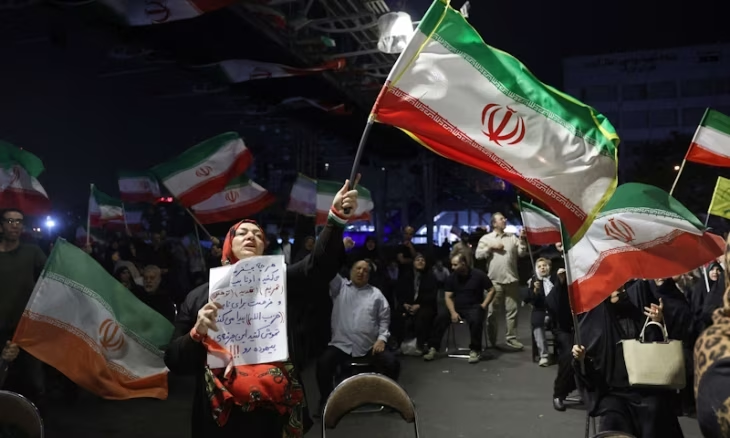
Details of a Draft Iranian-American Understanding on the Security of the Strait of Hormuz and Frozen Funds Revealed

Official media sources in Tehran reported the revelation of details of what they described as an "unofficial text" of an understanding being negotiated between Iran and the United States through Pakistani mediation. The sources confirmed that this document has not yet reached its final form, as it is still undergoing precise stages of review and scrutiny between the concerned parties.

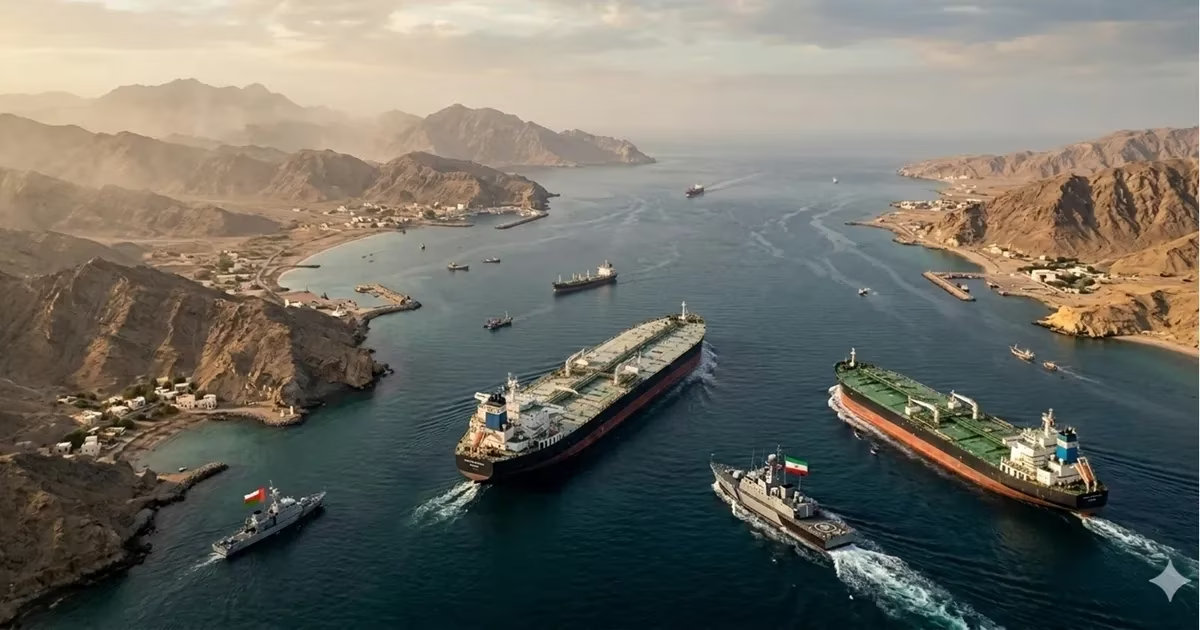
The circulated draft includes features of new security arrangements in the strategic Strait of Hormuz region, in addition to establishing clear mechanisms for the release of a portion of Iran's frozen assets abroad. These moves come within the framework of ongoing discussions between Tehran and Washington to de-escalate tensions and resolve outstanding issues.

The clause related to redrafting navigation rules in the Strait of Hormuz is one of the most prominent points of the unofficial understanding. The draft proposes that the Islamic Republic become the exclusive authority for determining the nature of vessels permitted to pass through. This measure aims to enhance Iranian sovereignty over the waterway, which is considered the world's energy lifeline.

The leaked draft stipulates that any vessel whose cargo is classified as posing a threat to Iranian national security, or whose ultimate beneficiary is proven to be a party hostile to Tehran, will lose its status as a commercial vessel. Consequently, these vessels will not be allowed to use the designated shipping lanes for international transit in the region.

The proposed formula also grants Iranian authorities broad powers, including drawing maritime traffic routes and imposing fees for navigation services they provide. These powers extend to providing necessary security protection and addressing all environmental damage that may result from heavy vessel traffic in the strait.

Under these details, all passing vessels will be required to submit detailed data to a specialized center affiliated with the Iranian naval force, including information on cargo, ownership, and final destination. This data will be used to assess security risks, with Tehran reserving the right to conduct on-site inspections when absolutely necessary.

In the economic aspect of the understanding, the draft indicated a US commitment to allow Iran full access to approximately $12 billion of its frozen assets within a period not exceeding 60 days. This clause aims to alleviate economic pressures and provide urgently needed financial liquidity for the Iranian government.

The sources clarified that the released funds will be transferable and spendable through banking channels and banks independently designated by Tehran without additional restrictions. Through this condition, Iran seeks to ensure that the technical and legal obstacles encountered in previous agreements for the release of its funds are not repeated.

This financial issue was a key focus of discussions held by a high-level Iranian delegation in the Qatari capital, Doha, with the participation of the Central Bank Governor. That visit aimed to obtain international guarantees preventing the re-freezing of these funds or their classification as unusable assets.

For his part, Hossein Ghorbanzadeh, a member of the economic negotiating team, confirmed that Tehran has already obtained technical guarantees during the Doha meetings to ensure the actual utilization of the expected liberated assets. He stressed that the Iranian side attaches great importance to implementation mechanisms to ensure that the funds reach the targeted accounts without external interference.

Despite the momentum of the published details, sources in Tehran emphasized that the document is still in the stage of an "unofficial understanding" and has not yet become a binding agreement. They indicated that the continuation of negotiations means the possibility of amending some clauses in line with the country's supreme strategic and economic interests.

The circulated draft includes features of new security arrangements in the Strait of Hormuz, along with mechanisms for the release of a portion of Iran's frozen assets.

PALESTINE

Sun 31 May 2026 11:04 pm - Jerusalem Time

Young man martyred by occupation bullets near Al-Ram town, north of Jerusalem

The Palestinian Ministry of Health announced today, Sunday, the martyrdom of a young Palestinian man who succumbed to serious injuries he sustained from Israeli occupation forces' bullets in the Al-Ram area, north of occupied Jerusalem. Medical sources clarified that teams at Palestine Medical Complex in Ramallah tried to save his life, but he passed away due to his severe injuries.

According to official data issued by the ministry, the martyr is the young man Imad Haroun Eshtayeh, 26 years old, from the village of Salem, located east of Nablus. Eshtayeh was subjected to direct gunfire by occupation soldiers stationed near the apartheid wall in Al-Ram town.

Local sources indicated that the occupation forces targeted the young man with live ammunition, which led to him being directly hit in the thigh area, and he was subsequently transferred to the hospital in critical condition before his martyrdom was announced. This incident comes amid escalating tensions and continuous Israeli aggressions against Palestinian citizens in various areas of the West Bank and Jerusalem.

The young man Imad Haroun Eshtayeh was martyred due to his injuries from live bullets in the thigh after occupation forces opened fire on him near the Al-Ram wall.

PALESTINE

Sun 31 May 2026 11:03 pm - Jerusalem Time

Australian activists sue the occupation before the International Criminal Court for torture in the Freedom Flotilla

Australian activists have taken an advanced legal step by internationally prosecuting the Israeli occupation authorities, submitting a formal complaint to the International Criminal Court in The Hague. These legal moves come against the backdrop of violations they were subjected to during their participation in an aid flotilla that was heading to the besieged Gaza Strip earlier this year.

Media sources reported that the submitted complaint file includes a package of compelling evidence, among them live testimonies from survivors and detailed medical reports documenting the physical and psychological condition of the activists. The file also included legal statements confirming that the participants were subjected to various forms of torture and systematic ill-treatment during their detention by Israeli forces.

The incident dates back to the moment the Israeli navy intercepted the flotilla's ships in the open sea, where those on board were taken to detention centers within the occupied territories. The complainants assert that this period witnessed serious transgressions that violate international conventions and international humanitarian law, which protects civilians and activists.

For its part, the 'Global Freedom Flotilla' group, which organized the journey, clarified that the accusations directed at the occupation are not limited to individual ill-treatment but extend to legal descriptions such as war crimes and crimes against humanity. The organizers stressed the necessity for international justice to take its course to hold those responsible for these violations accountable and ensure they are not repeated.

In a related context, legal reports attached to the complaint indicated that the material evidence and documented testimonies place the International Criminal Court before the responsibility of investigating the behavior of the occupation army towards peaceful activists. The legal team for the Australians seeks to transform these statements into a binding judicial path that leads to the issuance of arrest warrants or an official investigation.

On the other hand, press sources reported reactions from the occupation authorities, who quickly denied these accusations entirely and in detail. The Israeli narrative claimed that all participants in the flotilla received treatment consistent with international standards, alleging that no cases of abuse or torture occurred during the detention period.

Despite the Israeli denial, organizers and activists insist that the discrepancy in narratives necessitates the opening of an independent and transparent international investigation to ascertain the circumstances of what happened behind closed doors in the interrogation centers. Observers believe that the activists' recourse to the International Criminal Court represents additional pressure on the international judicial system to consider ongoing Israeli violations.

The case is currently in the hands of the Prosecutor of the International Criminal Court to assess the evidence presented and the extent of the court's jurisdiction to hear it. These developments come at a time when international action condemning the siege imposed on the Gaza Strip and repeated attacks on humanitarian blockade-breaking convoys is increasing.

What has been submitted to the Court includes documented accusations of committing war crimes and crimes against humanity against international activists.

OPINIONS

Sun 31 May 2026 11:03 pm - Jerusalem Time

Erosion of American Hegemony: A Reading into the Causes of Value Collapse and the Geopolitical Rise of Alternative Axes

Throughout history, empires are subject to a constant law indicating that collapse always begins from within before its chapters are completed by external blows. This internal decay manifests in multiple forms, most notably an imbalance in ethics and the transformation of extravagance and waste into a daily culture that consumes the nation's resources and blinds its insight to existential challenges.

The contemporary reality in the United States and Europe is witnessing a state of systematic extravagance that goes beyond traditional financial corruption to reach the core of the value system. This phenomenon is evident in shocking figures, where athletes receive hundreds of millions of dollars, while entire countries suffer from GDPs that do not reach these figures.

In contrast, stark ethical contradictions emerge when comparing spending on entertainment and pornography industries, which exceed 100 billion dollars, with the tragic reality in conflict zones. While billions are burned in celebratory shows, a child dies in Gaza every 15 minutes, and a child loses their life in Africa every 10 seconds due to hunger.

US military spending, exceeding 900 billion dollars annually, represents another aspect of this structural imbalance in global resource management. Despite the enormity of this amount, which surpasses the budgets of 11 countries combined, it is often directed towards endless wars of attrition, where advanced weapons end up in the hands of the groups Washington was fighting.

The United States has succeeded in employing its technological and financial hegemony through the dollar and giant internet companies to impose its will on the world. However, using this power as a tool to spy on allies and starve populations through economic sanctions has led to the erosion of ethical credibility, which is a fundamental pillar of leadership.

History confirms that power devoid of ethics is doomed to perish, no matter how great its technological or military might. Systematic injustice and the use of 'smart bombs' to destroy entire cities in Iraq and Afghanistan under false intelligence pretexts sowed the seeds of popular hatred and loss of trust in the international system led by Washington.

Former US President Donald Trump's confessions about Russia and India being lost to China were not just a slip of the tongue. Rather, they are an open acknowledgment of a deep geopolitical shift reflecting the failure of American diplomacy to maintain the traditional balance of power in the face of the growing rise of Eastern axes.

A new axis is forming today, comprising China, India, and Russia, representing a massive human bloc of three billion people. This bloc is not just a demographic weight; it extends over a geographical area exceeding 40 million square kilometers, making it an economic and military force that cannot be ignored in the balance of energy and food.

International trust in the dollar-linked financial system has begun to decline rapidly as a result of its repeated use as a political weapon. This has prompted major countries such as Russia, China, and India to seek monetary alternatives, by reducing dollar reserves and adopting local currencies in major trade exchanges.

Washington mastered the use of the 'stick' through sanctions, coups, and military interventions, but failed to offer a sustainable and convincing economic 'carrot'. This imbalance has led many countries to turn towards the Chinese model, which offers massive infrastructure investments without harsh political conditions or moral lectures.

The bitter experiences of Washington's allies in Afghanistan, Libya, and Ukraine reinforced the conviction that relying on the West might be a losing bet. Emerging powers saw how local allies were abandoned and countries were left to sink into chaos after their resources were depleted, prompting them to seek more stable alliances.

In our current era, global leadership is no longer limited to military superiority; it requires a combination of credibility and mutual benefits. America, which focused on taking and punishing, neglected the principle of fair giving, which has made unilateral hegemony a fading reality before the eyes of the world in favor of a new multipolarity.

Empires that drown in desires, squander their resources in futile wars, and betray their allies sign their own collapse. The current shifts in the balance of power are not just possibilities; they are a reality shaped by the accumulation of strategic and ethical errors over decades.

In conclusion, the international scene is heading towards a post-American hegemony phase, where missiles or military bases are no longer sufficient to mend the cracks. True leadership requires an ethical vision and justice in distribution, which the current system, which worshiped pleasure and display at the expense of mercy and justice, lacked.

Empires do not fall only from the outside due to their enemies; they rot from within first, and then external blows come to finish what remains.

PALESTINE

Sun 31 May 2026 11:03 pm - Jerusalem Time

Israeli plan to control 70% of Gaza and impose 'voluntary displacement'

International press reports have revealed an escalation of Israeli plans aimed at completely redrawing the geographical and demographic map of the Gaza Strip. Sources indicated that Benjamin Netanyahu's government is exploiting impunity to cross red lines week after week, amidst official promises to acquire vast areas of the Strip.

In public statements that sparked widespread controversy, Israeli Prime Minister Benjamin Netanyahu affirmed during a speech in the 'Kfar Adumim' settlement in the occupied West Bank that his army currently controls about 60% of Gaza's area. He indicated that the next goal is to reach 70%, disregarding the ceasefire understandings signed in October 2025.

Netanyahu boasted before an audience of settlers that his forces had tightened their grip on vital joints in the Strip, considering the increase in control area from 50% to 60% as just the beginning. He responded to calls from the audience for full control by saying: 'We will start with 70%', a clear indication of his intention to undermine any possibility of establishing a contiguous Palestinian entity.

In parallel with the field expansion, Defense Minister Israel Katz announced the start of implementing what he described as the 'voluntary migration' plan for the Strip's residents. This step comes after the occupation announced the assassination of military leaders in Hamas, which paved the way for launching projects essentially aimed at ethnic cleansing and emptying the land of its indigenous inhabitants.

Data indicates that the Israeli security cabinet had secretly approved last March the establishment of a specialized administration to organize the exit of Palestinians. This administration works to facilitate the departure of residents through crossings without granting them any guarantees or rights of return in the future, which observers see as forced displacement disguised as administrative procedures.

On the ground, the term 'Yellow Line' emerges as a new tool for racial segregation within the Strip, separating areas under Israeli military control from densely populated areas. This tactic aims to reduce the vital space available to Palestinians to its lowest levels, making survival in Gaza almost impossible due to the lack of basic necessities of life.

On the internal political front, Netanyahu seeks through this escalation to strengthen his electoral position before a possible early election next August. The Prime Minister faces pressure from his allies in the far-right, such as Itamar Ben-Gvir and Bezalel Smotrich, who have been directing general policy towards more settlement and annexation.

In contrast, a new political alliance has emerged, bringing together Naftali Bennett and Yair Lapid under the name 'Biyachad' (Together) with the aim of overthrowing Netanyahu. Despite the ideological contradiction between the two poles of the alliance, they agree on the necessity of changing the current leadership, without offering real guarantees for changing aggressive policies towards Palestinians in Gaza and the West Bank.

Reports from the field confirm that more than two million Palestinians are currently living amidst the rubble in the remaining area, which does not exceed 40% of the Strip. Living conditions there are described as catastrophic, with families lacking the most basic services, while Israeli raids continue to claim civilian lives despite truce agreements.

According to medical sources, more than 850 martyrs have fallen since the ceasefire came into effect, most of them women and children. These figures reveal the falsehood of Israeli claims of adherence to the truce, as military operations continue under the guise of 'expanding the security zone' and strengthening control over strategic axes within Gaza.

On the northern front, the Israeli escalation did not stop at Gaza's borders but extended to southern Lebanon in a clear violation of international agreements. Sources reported that the Israeli army crossed the Litani River at the end of May, in a move aimed at imposing a new geographical reality seeking to make the river a permanent security border for the occupation.

Amidst this complex scene, it appears that international initiatives, including the 'Peace Council' proposal associated with Donald Trump, have not gone beyond empty promises. The council, announced in Davos for the reconstruction of Gaza, has not signed any actual contracts yet, and the promised funds have not reached their beneficiaries, exacerbating the suffering of the displaced.

Analysts believe that the absence of real pressure from the US administration and the inability of the European Union to impose tangible sanctions have encouraged Tel Aviv to proceed. The laxity in official Arab positions has also contributed to giving the occupation government the green light to reshape the region according to its own colonial vision.

What is happening today in Gaza is a process of demographic and geographical engineering taking place in full view and hearing of the entire world without deterrence. While the international community is preoccupied with diplomatic rhetoric, Israeli bulldozers and military vehicles continue to gnaw at Palestinian lands, turning the Strip into a large prison with an area shrinking day by day.

My directive is to reach 70% of Gaza's territory; we are holding Hamas by the throat now.

ARAB AND WORLD

Sun 31 May 2026 11:03 pm - Jerusalem Time

Netanyahu describes control of Beaufort Castle as a 'decisive turning point' amid deadly raids in southern Lebanon

Israeli Prime Minister Benjamin Netanyahu today, Sunday, considered his forces' control over the historic Beaufort Castle in southern Lebanon to be a 'decisive turning point' in the course of ongoing military operations against Hezbollah. Netanyahu affirmed in a video statement that Tel Aviv is currently working on all open fronts in Lebanon, Gaza, and Syria to ensure its security.

Netanyahu stressed in his statements that the return to Beaufort Castle carries symbolic and military connotations different from previous times, describing the Israeli forces as more determined and stronger. He added that the current operations aim to break what he called the 'barrier of fear' within the framework of a comprehensive confrontation with armed organizations in the region.

For his part, Israeli Defense Minister Yoav Gallant affirmed that the army will not withdraw from the strategic castle site in the foreseeable future, indicating the occupation's intention to transform it into a pillar within a new 'security zone'. Gallant explained that control over this high ground gives Israeli forces a necessary field advantage to secure the northern borders.

Earlier on Sunday, the Israeli army spokesman announced the completion of control over Beaufort Castle and the Wadi al-Salouqi area. This advance came as part of a wide-ranging military operation launched days ago, aimed, according to Israeli claims, at destroying Hezbollah's infrastructure and expanding the front lines of defense.

Beaufort Castle represents a highly important strategic stronghold in Lebanese geography, overlooking vast areas of the south and Galilee. It is worth noting that Israeli forces had withdrawn from this castle in 2000, after years of occupation within what was known as the occupied border strip.

On the humanitarian and field level in Lebanon, the Lebanese Ministry of Health reported a massacre targeting medical teams in the city of Tyre. An Israeli airstrike on the vicinity of Hiram Hospital resulted in injuries to 13 health facility workers, in addition to extensive material damage to the building and medical equipment.

The towns of Deir al-Zahrani, al-Sharqiyah, Zibdin, and Nabatieh witnessed a series of violent raids that resulted in martyrs and wounded among civilians. Warplanes directly targeted residential neighborhoods and civilian buildings, leading to a new wave of displacement and widespread destruction of private and public property.

In response, Hezbollah launched a series of intensive military operations, firing rocket barrages and swarms of kamikaze drones towards northern Israel. The targets focused on sensitive military sites in the vicinity of the cities of Acre and Haifa, in addition to gatherings of occupation soldiers along the border line.

Media sources quoted security assessments within Israel indicating that Hezbollah is moving to expand its range of fire to include deeper and more vital targets. These assessments come amid the continued Israeli ground incursion, which portends a transition of the confrontation to a more violent and widespread phase in the coming days.

Despite the announced field progress, there is a state of doubt within Israeli military circles about the effectiveness of these operations in stopping aerial threats. Reports indicated that control over geographical locations has not yet succeeded in significantly reducing Hezbollah's ability to launch rockets and drones towards Israeli depth.

Today we returned to Beaufort Castle in a different way, we returned united, determined, and stronger than ever.

PALESTINE

Sun 31 May 2026 11:03 pm - Jerusalem Time

Occupation forces 7 Jerusalemite families to self-demolish their homes in Qalandia

Seven Palestinian families in the town of Qalandia, located north of occupied Jerusalem, were forced to demolish their homes with their own hands, in response to orders issued by the Israeli occupation authorities. The occupation municipality justified its decisions by citing 'building without a permit,' a tactic it employs to constrict Palestinian presence in the holy city and target residential and agricultural structures.

The timing of the demolitions exacerbated the suffering of the residents, as the decision was issued on the first day of Eid al-Adha, with families given a final deadline ending on the fourth day of the Eid. Citizens were compelled to carry out the demolitions themselves to avoid paying exorbitant demolition costs and financial fines imposed by the occupation mechanisms if they were to carry out the task, which could amount to astronomical sums beyond the residents' means.

Imad Awadallah, one of those affected by the decision, stated that the families had exhausted all available legal avenues through courts and lawyers to prevent the demolition, but the occupation authorities rejected all appeals. Awadallah confirmed that the demolition resulted in the displacement of 40 to 50 citizens, who are now homeless and do not know their next destination due to the lack of housing alternatives.

The affected individuals revealed the extent of the financial burdens they incurred in an attempt to protect their homes, having paid approximately 450,000 shekels, equivalent to 160,000 dollars, in the current month alone, which included fines, 'Arnona' taxes, and lawyer fees. Despite this significant financial commitment, the occupation bulldozers and administrative pressures did not cease until the homes were razed to the ground.

Residents explained that the option of self-demolition was 'bitter,' but it was necessary to prevent the occupation from imposing additional amounts that could pursue them for many years. Jerusalemites face extreme difficulties living outside their city due to work and education commitments, while the costs of renting an alternative apartment with taxes amount to approximately 15,000 shekels per month, an amount beyond the capacity of the displaced families.

For his part, Nael Awadallah, head of the Qalandia Village Council, stated that the families were faced with two difficult choices, especially given the presence of severe medical conditions and special needs among the residents of those homes. He pointed out that the successive warnings received by the residents did not take into account the sanctity of Eid or the harsh humanitarian conditions these families are experiencing.

In a further escalation, sources from the Jerusalem Governorate reported that the occupation authorities were not content with demolishing walls and roofs, but also forced homeowners on Sunday morning to bring a bulldozer to remove all remaining features and rubble. These measures aim to ensure that the site is no longer suitable for habitation and to guarantee the complete evacuation of the area from any Palestinian urban presence.

This incident comes within the context of a systematic policy pursued by the occupation authorities to displace Palestinians from Jerusalem, where building permits are almost completely denied to Arabs, while surrounding settlements expand. Human rights organizations consider forcing residents to demolish their homes with their own hands to be the peak of human and legal violations practiced by the occupying power.

According to documented reports issued by the Jerusalem Governorate, this year has witnessed a dangerous escalation in demolition operations, with more than 200 homes and structures destroyed since its beginning. Demolition operations vary between demolition by occupation mechanisms or forced self-demolition, reflecting the accelerating pace of silent ethnic cleansing in the neighborhoods and towns of occupied Jerusalem.

We were forced to demolish with our own hands to avoid severe penalties and fines imposed by the occupation if its mechanisms carried out the demolition, even though we left no legal means untried.

PALESTINE

Sun 31 May 2026 11:02 pm - Jerusalem Time

Escalation of Settler Attacks in the West Bank: Injuries from Hit-and-Run, Stabbing, and Property Theft in Several Governorates

Groups of settlers have escalated their field attacks targeting Palestinian citizens and their properties in various areas of the occupied West Bank since last night until this Sunday morning. Field sources reported that these violations varied between direct physical assaults and targeting livestock and agricultural resources, resulting in various injuries among citizens.

In Nablus Governorate, sources recorded that a student from the village of Ammuriya sustained various injuries after being deliberately run over by a settler while she was walking to her school, 'Banaat Al-Lubban Secondary School'. This attack coincided with another group of settlers infiltrating the village of Jalud at dawn, where they stole a transport cart belonging to a citizen before fleeing towards the surrounding settlement outposts.

The road between the towns of Beita and Aqraba also witnessed a violent attack on Saturday evening, where a 21-year-old young man was severely beaten by a group of settlers, necessitating his transfer to the hospital for treatment. The attackers did not stop there; they also detained a number of passing Palestinian vehicles in the area and sprayed citizens and children with burning pepper spray.

In the town of Qusra, southeast of Nablus, a citizen was injured after being stabbed with a sharp object during an attack carried out by settlers on the outskirts of the town. This incident comes in the context of continuous attempts by settlers to terrorize local residents and impose a new geographical reality through direct attacks on the urban areas of Palestinian villages.

As for Ramallah Governorate, popular protection committees monitored intensive movements of settlers this Sunday morning in the eastern areas of the town of Taybeh. Settlers released their herds of cattle and camels into pastures and agricultural lands belonging to a Bedouin community in the area, in a move aimed at destroying crops and restricting the livelihoods of residents.

In a related context, settlers stormed the vicinity of the Abu Awwad family home in the town of Turmus Ayya, north of Ramallah, yesterday evening, where they brought their sheep into the courtyards surrounding the residential home. These scenes were repeated in several areas adjacent to settlements, where settlers seek to transform the surroundings of Palestinian homes into grazing areas belonging to them under the protection of occupation forces.

In Salfit Governorate, a number of Palestinian youths gathered in the western area of the town of Deir Ballut to confront settlers' attempts to storm agricultural lands. The youths succeeded in thwarting the field movements that aimed to destroy agricultural properties in that area, amidst local calls to raise the level of alert to confront any potential attacks.

Human rights reports indicate that the pace of these attacks has significantly increased in recent hours, with settlers now using various methods including hit-and-run, stabbing, and theft. These reports confirm that the primary goal of these practices is to exert economic and psychological pressure on Palestinians to push them to leave their lands for settlement expansion.

In response to this escalation, civil society organizations and popular committees in various West Bank governorates launched urgent calls to escalate popular resistance and collectively confront settler attacks. These bodies emphasized the necessity of activating night watch committees and protecting public and private properties, especially in villages and towns surrounded by settlement outposts from which these attacks originate.

These practices come within the systematic economic tightening policy to push residents towards displacement from their lands.

PALESTINE

Sun 31 May 2026 11:02 pm - Jerusalem Time

Student Protests Interrupt Linda Greenfield's Speech at NYU Condemning Gaza War

The graduation ceremony of the Colin Powell School for Civic and Global Affairs at City University of New York witnessed a wave of loud protests, as a large number of graduates interrupted the speech of former US Ambassador to the United Nations, Linda Thomas-Greenfield. This student action came as an expression of categorical rejection of Greenfield's political stances, especially those related to her tenure in President Joe Biden's administration, which was characterized by broad support for Israeli military operations in the Gaza Strip.

During Greenfield's speech, student chants rose inside the hall, and Palestinian flags and banners condemning the war were raised, clearly disrupting the ceremony. Student sources confirmed that the protest was not fleeting, but continued for more than 40 consecutive minutes, as participants insisted on delivering their message rejecting the honoring of figures who contributed to shaping US foreign policies supporting the occupation.

The protesters raised slogans demanding an immediate cessation of the war and an end to all forms of military and political support provided by the United States to Israel. Students also renewed their demands for the university administration to respond to the escalating academic movement, which calls for divestment from companies involved in supporting the Israeli war effort or those that profit from the continuation of the conflict in the Palestinian territories.

The organizers of the protest revealed proactive steps they took before the ceremony, including launching a collective petition demanding that the college administration replace Greenfield with another speaker whose name is not associated with controversial policies. The organizers explained that hosting the former ambassador represents a disregard for the feelings of thousands of students who reject human rights violations in Gaza, considering her presence on the graduation platform to be inconsistent with the civic values taught by the college.

Student criticism focused primarily on Greenfield's role in the UN Security Council, specifically Washington's repeated use of the veto against international draft resolutions calling for a ceasefire. Protesters believe that these diplomatic positions directly contributed to prolonging human suffering in the Strip and providing political cover for the continuation of military operations that have left thousands of civilian casualties.

The interruption lasted for more than 40 minutes, in an expression of rejection of hosting a figure who defended American policies supporting Israel during the war.

PALESTINE

Sun 31 May 2026 11:01 pm - Jerusalem Time

Horrific Testimonies Document Field Executions and Abuses by Militias Cooperating with the Occupation in Al-Maghazi Camp

The devastated alleys in the eastern areas of Al-Maghazi refugee camp in the central Gaza Strip are witnessing a new chapter of terror, as local sources reported the emergence of armed groups operating in direct coordination with Israeli occupation forces. These groups, which have established secret headquarters in abandoned homes, have begun to pursue and conduct field investigations against residents who refused to evacuate their afflicted neighborhoods.

Signs of this security infiltration began on April 7th, when a militia led by a man named Shawqi Abu Naseera attempted to establish a foothold deep within the residential areas east of the camp. Residents confronted this encroachment with peaceful attempts to prevent the armed men from entering their homes, but the confrontation quickly turned into a bloody massacre that resulted in the killing of 12 citizens within a few hours.

Despite the temporary withdrawal of these groups after the incident, they infiltrated again at dawn on the day of Arafat, exploiting the calm in the area to carry out widespread raids and abductions. Eyewitnesses confirmed that the armed men fortified themselves inside the home of citizen Iyad Abdel Jawad, turning it into a closed center for detention and torture away from legal or family oversight.

In a scene reflecting the extent of security coordination, an armed group stormed the home of elderly Abdul Rahman Al-Shanti, where he was forced at gunpoint to make a phone call with an Israeli intelligence officer. During the call, he was interrogated about his personal data and details of his previous work, before being ordered to remain confined to his home and turn off his phone for hours under strict surveillance.

Violations did not stop at interrogation but extended to violent abductions, as the militias raided the home of the Abdullah Al-Bashiti family and forcibly took their three sons. Neighbors reported that the armed men issued explicit threats to the young men's father, assuring him that his meeting with his son Saleh would be the last, which indeed happened a few hours after the abduction.

Following the withdrawal of the armed force from the area, residents found the body of young Saleh Al-Bashiti inside an abandoned house, bearing signs of brutal torture. According to testimonies, the young man was found hanged with a piece of cloth and suffering from bullet wounds throughout his body, in a field execution crime that shook the foundations of the camp, which is already suffering from the ravages of continuous shelling.

In a related context, field sources documented cases of deliberate humiliation practiced by these groups against besieged families, as happened with the Abu Shahada family. One of the armed men brandished his weapon in the face of the head of the family, forcing him to break his fast on the day of Arafat and smoke a cigarette under threat, in an attempt to impose absolute control and break the will of the residents.

This security breakdown by the militias coincided with intense air cover from Israeli reconnaissance planes that did not leave the skies of the area. In one of the raids that coincided with the movements of the armed men, a direct missile targeted the home of the Al-Maghari family, leading to the destruction of large parts of it and the fall of martyrs and wounded unarmed civilians.

Among the victims of the shelling were young Youssef Al-Maghari and his cousin Fadi, in a tragedy that added more pain to the residents of the neighborhood. Youssef, who was nicknamed 'the coming groom' after his brother's wedding weeks earlier, did not live long enough to fulfill his dream, as his picture on the wedding card turned into an obituary poster distributed in the sad alleys of the camp.

These successive events raise serious questions about the role of these armed groups that move freely in areas of contact with the occupation forces. Observers believe that turning civilian homes into interrogation and execution centers represents a blatant violation of all national and humanitarian norms, and puts the lives of thousands of remaining residents in Gaza at stake.

Residents of eastern Al-Maghazi today live in a state of forced silence, as the spread of armed men prevents any attempt to fully document the crimes or reach the abducted whose fate remains unknown. The fear of the 'ready bullet' threatened by militia elements now haunts anyone who tries to object to the violation of the sanctity of homes.

The converging testimonies collected by journalistic sources confirm that what is happening is not just individual incidents, but a systematic approach aimed at intimidating the popular base and facilitating the tasks of the occupation. The stories of torture inside closed rooms in abandoned homes remain a testament to the most complex phase in the history of the field conflict within the Strip.

With the continued absence of legal oversight, residents demand the intervention of relevant authorities to stop the encroachment of these militias and protect civilians from field executions. The camp, which stood firm against the military war machine, today finds itself facing internal stabs carried out by hands that have agreed to work as tools in the hands of Israeli intelligence.

The tragedy of the Al-Bashiti, Al-Maghari, and Abu Shahada families are just examples of what happens in the dark away from the cameras. With every new dawn, residents of Al-Maghazi fear the return of iron ladders and masked faces that bring nothing but death, interrogation, and humiliation, amidst a war of extermination that does not differentiate between aerial bombardment and field execution.

The armed men told the father of young Saleh Al-Bashiti in a harsh tone that this would be the last time he would see his son, before he was found dead with signs of torture.

PALESTINE

Sun 31 May 2026 11:01 pm - Jerusalem Time

Israeli Escalation Calculations in Lebanon: A Race Against Time and Attempts to Escape Hezbollah's Attrition

The Israeli occupation forces continue their intensive military operations on the Lebanese front, where the escalation has included widespread destruction and displacement of residents in areas south and north of the Litani River. These moves aim to expand the so-called 'Yellow Line' and occupy strategically and morally valuable positions, in an attempt to break the state of attrition imposed by Hezbollah.

Data indicates that this escalation is the result of complex political and military calculations, most notably Tel Aviv's desire to preempt any potential agreement between Washington and Tehran that could lead to a ceasefire. Through these operations, Israel seeks to inflict the greatest possible damage on Lebanese infrastructure, not just on Hezbollah's military capabilities.

The current Israeli strategy relies on expanding the scope of displacement and pressuring the party's popular base, hoping to push the Lebanese interior towards an internal confrontation or the dismantling of the resistance's weapons. However, observers believe that these pressures have not yet succeeded in achieving a strategic breakthrough that would end the costly bleeding for the army.

The military escalation reflects an attempt by Benjamin Netanyahu's government to absorb the growing public anger against what is described as a 'ceasefire agreement' that has practically turned into a war of attrition. The government faces accusations from broad circles of restricting the army's hand in response to pressures from the US administration, which has led some to demand harsher strikes, including the capital Beirut.

The state of tension within Israeli society has escalated after realizing the gap between the statements of military leaders and the reality on the ground, as it became clear that underestimating Hezbollah's capabilities was wrong. The party succeeded in changing the field equations, especially through drone tactics that the occupation army has been unable to find radical solutions for.

As an indication of the state of confusion on the ground, reports spread about individual attempts by Israeli soldiers to buy fishing nets from the city of Tiberias at their own expense to use them to protect their vehicles from drones. This ironic reality was reflected in a caricature in 'Haaretz' newspaper describing the most advanced army in the world as searching for primitive tools to confront aerial threats.

Electoral calculations play a pivotal role in Netanyahu's decisions, as opinion polls show a decline in his coalition and the possibility of its collapse in any upcoming elections. Netanyahu, who calls himself the 'master of security,' is trying to cling to power by using excessive force and field expansion to restore his image before the electorate.

A hidden tension also emerges between the political and military levels since the events of October 7, as army commanders fear appearing hesitant or weak before the public. This apprehension pushes the military establishment towards involvement in broader ground operations, despite warnings against repeating previous experiences that did not achieve their ultimate goals in Lebanon or Gaza.

Regarding political stances, Israeli observers directed sharp criticism at the continuous reliance on military force without a clear political vision or a strategy for agreement. They warned that complete reliance on a policy of destruction and displacement will not end the continuous bleeding on the fronts that have been open for many months.

Despite these warnings, the far-right government led by Netanyahu, Katz, and Ben Gvir is proceeding with escalating the field situation, relying on an arrogant discourse that focuses on tactical achievements. Analysts believe that this discourse primarily aims to cover up the failures in decisively ending the battle with the resistance in Lebanon.

In the context of boasting about gains, Security Minister Israel Katz considered that the control of Shaqif Castle and raising the Israeli flag over it represents a clear message to enemies about the loss of their strategic positions. Katz affirmed that the war is not over yet, stressing Israel's determination to completely destroy Hezbollah's military power.

For his part, Benjamin Netanyahu continued to use threatening language, indicating that his army is striking deep into Lebanon, Beirut, and the Beqaa to achieve moral and psychological gains. These statements come within the framework of attempts to boost the morale of Israelis who suffer from the continuous sirens and explosions in the northern regions.

Field reports reveal a wide gap between government promises of 'absolute victory' and the bleeding reality on the ground in the Upper Galilee and border areas. This disparity exacerbates the state of frustration among settlers who find themselves at the mercy of missile and drone attacks despite all military operations.

In conclusion, it appears that the current Israeli escalation is a mixture of escaping forward and an attempt to improve negotiation terms in any future settlement. With the continued absence of a political vision, the Lebanese front remains susceptible to further explosion given the occupation government's insistence on the language of force as the only option.

Whoever threatens us loses their strategic positions; we are determined to destroy Hezbollah's power, and the war is not over.

PALESTINE

Sun 31 May 2026 11:01 pm - Jerusalem Time

Al-Aqsa Martyrs Hospital Enters 'Circle of the Impossible' After Generators Stop

Dr. Raed Hussein, director of Al-Aqsa Martyrs Hospital in the Gaza Strip, issued a final warning about the imminent complete cessation of the hospital's operations due to a severe electricity supply crisis and the breakdown of all main and backup generators. Hussein confirmed that this crisis has begun to affect vital departments in the health institution, primarily the operating rooms, which are now unable to receive surgical cases.

During a press conference held today, Sunday, the hospital director revealed that four generators, which constituted the main backbone for power generation, have gone out of service during the past period, noting that the last generator the hospital relied on completely stopped yesterday. This dramatic development has led to a near-total paralysis of the essential services provided by the hospital to citizens and displaced persons in the central region.

Hussein explained that the hospital administration tried to manage the crisis over the past week by cutting power to some departments and distributing electrical loads to the remaining generators to ensure a minimum level of care. However, the breakdown of one of the remaining backup generators directly led to the cessation of operations in the operating rooms since yesterday evening, Saturday, putting the lives of the wounded and sick at risk.

According to the press statement, the hospital's main generators had been out of service since the first year of the war, with the medical facility relying on only three backup generators throughout the past months. With successive malfunctions, only two generators remained, rotating between morning and evening shifts, before the crisis escalated to its current collapse stage.

The hospital director pointed out that the institution was operating at only half its production capacity last year due to limited available electrical power. He warned that the continuation of the current situation necessarily means moving to a stage of shutting down intensive care units, dialysis units, and incubators for premature babies, which are departments where patients cannot survive without continuous electricity.

Hussein stressed that the hospital administration is 'sounding the alarm' as the crisis reaches unprecedented levels of danger, especially since Al-Aqsa Martyrs Hospital is the only government facility still operating in the Central Governorate. The hospital provides medical services to more than half a million people, including original residents and hundreds of thousands of displaced persons who have sought refuge in the area.

Medical sources stated that the hospital has not been able to operate at full capacity for more than a year, but it has endured through makeshift solutions and load distribution. However, successive technical failures and the lack of necessary spare parts have left the health institution with only one option: forced closure if there is no urgent intervention from international bodies.

In the context of proposed solutions, Dr. Hussein called for the necessity of extending a direct electricity line to the hospital, emphasizing that this measure is technically possible, especially after electricity reached the desalination plant in Deir al-Balah city. He considered this solution to be the only one that guarantees the stability of the health system, away from recurring generator crises and fuel shortages.

He also issued an urgent appeal to international and humanitarian organizations to intervene immediately to provide new electrical generators capable of withstanding the hospital's enormous operational pressure. He explained that the actual needs exceed one megawatt of power, and the hospital urgently needs at least two large generators to ensure the uninterrupted provision of life-saving medical services.

Regarding the ability to endure, Hussein said that setting a time limit for continued operation has become impossible given the deterioration of current generators and the lack of essential oils and spare parts for maintenance. He added that local companies are no longer able to repair generators that have completely gone out of service, making the complete cessation of services something that could happen at any moment.

Regarding dealing with the influx of wounded, he confirmed that medical teams have been working in the 'circle of the impossible' for years, having been forced to cancel many services or transfer patients to other distant hospitals. He warned that the decline in the hospital's capacity would push patients to seek treatment in areas they might not reach alive due to ongoing field difficulties.

This collapse comes at a time when the Ministry of Health is suffering from a severe deficit, with the depletion rate of essential medicines reaching 47% and medical consumables 59%. The health sector in Gaza is experiencing a state of complete paralysis due to the direct targeting of infrastructure and fuel shortages, which has transformed hospitals into primitive medical centers lacking the most basic treatment requirements.

We have begun the countdown to the continuation of work inside the hospital, and I fear that we will hold another conference soon to announce the cessation of all services.

PALESTINE

Sun 31 May 2026 11:01 pm - Jerusalem Time

Resistance factions reject 'Mladenov's map' and warn of the collapse of truce understandings in Gaza

Palestinian resistance factions issued a strongly worded official statement addressing political and field developments related to the ceasefire agreement in the Gaza Strip. The factions affirmed that the continuation of Israeli military operations represents a clear retreat from the international understandings recently reached, putting the entire agreement at risk.

The factions called on the international guarantor parties and mediators to intervene immediately and urgently to compel the Israeli side to implement the required obligations without procrastination. They stressed that the current phase requires a decisive stance to ensure the implementation of the field and humanitarian commitments stipulated in the truce provisions, to prevent the collapse of the political process.

The statement clarified that completing all provisions of the first phase of the agreement is a fundamental condition that cannot be bypassed before moving on to discussing any subsequent phases. The factions considered that the policy of procrastination pursued by the occupation aims to undermine the chances of truce stability and keep the Strip in a state of permanent tension.

In their assessment of the field conditions, the factions indicated that the continuation of assassinations and targeting of Palestinian police personnel falls within a systematic plan to destabilize internal security. They added that the restrictions imposed on food supplies and the tightening of the siege directly aim to pressure the population and push them towards forced migration options.

The factions expressed their categorical rejection of the so-called 'Mladenov's map' proposed for managing the Gaza Strip, describing it as a tool for political blackmail. They criticized linking reconstruction files and the entry of fuel and vital aid to conditions affecting the resistance's weapons, affirming that this path is rejected outright.

The statement warned against attempts to put the 'technocrat committee' in direct confrontation with the Palestinian street, considering that this step could deepen internal division and serve Israeli objectives. The factions called on the committee members to side with the supreme national interests and refuse to engage in schemes aimed at isolating Gaza administratively and politically.

The factions also demanded the necessity of rejecting subservience to the schemes proposed within the so-called 'Peace Council,' warning against its use as a legal cover to re-engineer the security reality in the Strip. They affirmed that any attempt to pass dependent formulas under the banner of reconstruction would be met with widespread popular and factional rejection.

The factions concluded their statement by emphasizing the right of the Palestinian people to self-determination and to manage their internal affairs away from external interventions that impose humiliating conditions. They stressed that the resistance will remain vigilant against any attempts to circumvent citizens' rights or exploit their humanitarian needs to achieve political gains for the occupation.

Mladenov's map represents a mechanism for political and humanitarian blackmail by linking reconstruction to conditions of disarming the resistance.

ARAB AND WORLD

Sun 31 May 2026 11:17 am - Jerusalem Time

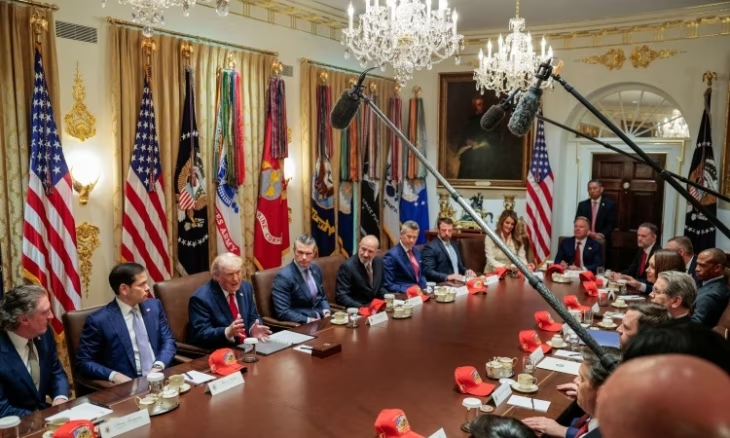
Threat to 'blow up' and talk of granite: Behind the scenes of a 'chaotic' Trump administration meeting

International press reports shed light on the behind-the-scenes of the recent US government meeting chaired by Donald Trump, describing the scene as closer to a chaotic show than a formal decision-making session. Sources stated that the meeting, which included senior officials, witnessed a strange overlap between serious military threats and unusual side jokes.\n\nWriter Holly Baxter, in an analysis published by The Independent, considered that the atmosphere in the room, with figures such as Defense Secretary Pete Hegseth and Vice President J.D. Vance present, seemed like an out-of-control television episode. She noted that the tension was palpable in Trump's tone, despite his repeated attempts to show indifference to current political challenges.\n\nIn the context of discussing foreign policy, Trump made a shocking statement towards the Sultanate of Oman, threatening to 'blow it up' if it did not comply with his directives, a phrase that passed with frightening speed amidst the astonishment of those present. This fleeting threat reflects, according to observers, a new pattern of American diplomacy based on direct pressure and harsh military language.\n\nThe meeting was not limited to threats, but in parts, it turned into something resembling a discussion session for private construction projects, where Trump delved into explaining precise engineering details. The President spoke at length about the types of granite, colors, and rubber quality he wished to use in renovation and construction projects in Washington, including the idea of creating a 'Triumphal Arch'.\n\nBaxter sarcastically described this sudden shift in the meeting's agenda, likening it to a meeting of a retired community discussing a routine maintenance budget. The President seemed engrossed in construction details unrelated to the tasks of senior administration, while officials listened silently to these long and tedious explanations.\n\nRegarding internal relations, a strange dynamic emerged during the meeting between Trump and his new Defense Secretary, Pete Hegseth, as the President patted the Secretary's muscles in front of the cameras. Trump addressed the audience, saying: 'He loves war... I don't love it, but he loves it,' a remark reflecting the personal nature of their relationship.\n\nHegseth, for his part, tried to maintain his military composure, but he appeared in an awkward position as he received the President's playful remarks, which were described as resembling a grandfather's interaction with his grandson. When given the opportunity to speak, the Secretary launched into an enthusiastic speech focusing on destructive power and military might, detailing the 'Epic Fury' operation in Iran.\n\nTrump's reaction to his Defense Secretary's enthusiastic speech was brief and calm, merely saying 'good job,' in a manner that suggested dismissiveness or congratulating a child on an exaggerated display. This contrast in positions showed a gap in vision between the President, who tends towards personal showmanship, and his Secretary, who adopts an extreme offensive rhetoric.\n\nAs for Vice President J.D. Vance, he appeared during the meeting as the man tasked with saving morality and public order in the United States. Vance engaged with other officials in attacking protesters and immigrants, using language charged with anger and incitement, which gave the session a sharp ideological character.\n\nDuring the meeting, Trump touched upon his internal political situation, repeatedly emphasizing that he was not concerned about the upcoming midterm congressional elections. Analysts believe that this repeated insistence on disinterest hides a real concern about his declining popularity, especially after recent polls showed restlessness even within Republican bases.\n\nA striking aspect of the meeting was Trump's ability to reveal his political fears by constantly denying them, a style that has become known in his public speeches. While he spoke about the stability of his administration, reports indicated the existence of cracks resulting from his controversial policies on thorny international issues such as the Iranian file.\n\nThe analytical reading of the meeting concluded that the United States is now being managed according to the President's volatile personal rhythm, oscillating between following news broadcasts and focusing on construction sites. This pattern of administration raises widespread international concern, as it drags major powers towards unexpected paths characterized by impulsiveness and sudden hostility.\n\nThe transformation of these strange scenes into a daily routine within the White House is what causes real terror among political circles in Washington and beyond. The meeting, which was supposed to discuss major strategies, ended with a threat to a friendly country and talk about rubber quality, reflecting a state of confusion at the pinnacle of American power.\n\n"The Sultanate of Oman will act like everyone else, or we will have to blow it up."

ARAB AND WORLD

Sun 31 May 2026 11:17 am - Jerusalem Time

Israeli plan to empty southern Lebanon: Turning evacuation orders into permanent displacement

Day after day, the outlines of a systematic Israeli plan aimed at emptying the southern Lebanon region of its inhabitants are becoming clear, by transforming military evacuation orders from temporary measures into a reality of permanent displacement. This strategy relies on repeated warnings and expanding their geographical scope to include areas not previously targeted, reflecting the occupation's desire to create a buffer zone devoid of population.

In a new field development, the Israeli occupation army issued urgent warnings to residents of 13 villages and towns in southern Lebanon, demanding them to immediately leave their homes and head to areas north of the Zahrani River. These orders included the towns of Maroun al-Ras, Loubieh, Ansariyeh, Zifta, Tuffahta, and Maydoun, in addition to other villages including Zrarieh, Meifdoun, Choukine, and Zebdine, in a move that coincided with the Eid al-Adha holiday.

Informed sources reported that the occupation seeks to establish a state of permanent evacuation by preventing residents from returning to their homes even after the direct military operations end. These orders have gone beyond small villages to include major cities such as Tyre and Nabatieh, where comprehensive evacuation instructions were issued for entire cities without setting any timelines that would allow civilians to return to their neighborhoods.

Recently, the absence of focused warnings targeting specific buildings has been noted, replaced by general evacuation orders for residential blocks and major cities. This shift in military tactics indicates the occupation's intention to destroy the infrastructure and social fabric in those areas, under the guise of pursuing Hezbollah's military capabilities and preventing their use in combat operations.

These Israeli moves come at a time when the intensity of military escalation is increasing, as the occupation army uses the presence of military installations within civilian neighborhoods as a pretext for bombing and displacement operations. Field reports confirm that this policy aims to pressure the popular base and change the demographic composition in border areas and those close to the front line.

In a related context, leaks from Israeli security and political cabinet sessions revealed tendencies to adopt a more aggressive approach towards Lebanon. Chief of Staff Eyal Zamir called for the use of increased military force to deter drone attacks, emphasizing the need to escalate military operations inside Lebanese territory to impose new equations in the ongoing conflict.

Through this field escalation, the Israeli leadership seeks to impose facts on the ground that will be difficult to overcome in any future political negotiations. Observers believe that Tel Aviv is trying to improve its negotiating terms by gaining fire and human control over large areas in the south, exploiting the state of international anticipation and diplomatic initiatives led by the United States.

Despite the security justifications put forward by Israel, the reality on the ground indicates a process of spatial cleansing aimed at completely isolating southern Lebanon from its surroundings. Fears are growing that these areas will turn into scorched earth uninhabitable, complicating voluntary return efforts for hundreds of thousands of displaced people in the absence of international guarantees.

In conclusion, the scene in southern Lebanon remains hostage to rapid military developments and differing official positions regarding the course of escalation. As Israel continues to implement its displacement plan, the need for a firm Lebanese and international stance emerges to prevent the temporary displacement from turning into a new catastrophe added to the record of conflicts in the region.

Israel seeks to reshape the field reality in southern Lebanon and impose new facts before any potential settlement.

PALESTINE

Sun 31 May 2026 11:15 am - Jerusalem Time

Warnings of a plan to Judaize 'Solomon's Pools' in Bethlehem after an official raid by occupation ministers

The historical area of Sultan Suleiman the Magnificent's Pools in the village of Artas, south of Bethlehem, witnessed a dangerous escalation on the ground, following a widespread raid carried out by Israeli occupation forces accompanied by groups of settlers. Prominent political officials participated in this raid, led by Finance Minister Bezalel Smotrich and Knesset member Zvi Sukkot, amidst strict military measures imposed around the three pools, which led to clashes with Palestinian citizens who tried to confront the raid.

Sources reported that the occupation forces prevented citizens from reaching the area and obstructed movement, to ensure that settlers desecrated the archaeological site by swimming in the pool waters and performing Talmudic rituals. This step comes in the context of a systematic policy aimed at controlling Palestinian historical landmarks and giving them a Jewish character, exploiting the political cover provided by far-right ministers in the Israeli government.

For his part, Minister Smotrich made statements that raised widespread fears about the future of the site, claiming that the pools date back to what he described as the 'Hasmonean era' two thousand years ago, asserting that their presence under full Palestinian control (Area A) is a historical mistake. Smotrich explicitly confirmed that work is currently underway to transfer the site's affiliation to Area C, which is under Israeli security and administrative control, in preparation for extending full sovereignty over it and facilitating settlement projects there.

In the face of these plans, popular activities and Palestinian families in Bethlehem launched calls for general mobilization and intensive presence in the vicinity of the historical pools to protect them from Judaization. Palestinians insist on adhering to the site's Arab and Islamic identity, stressing that permanent presence in the area is the only way to thwart the occupation's attempts to steal history and falsify geographical facts in the heart of the governorate.

It is worth noting that Sultan Suleiman's Pools are considered among the most important water and archaeological landmarks in Palestine, having been established by the Ottoman Sultan Suleiman the Magnificent in the year 943 AH to secure water for Jerusalem and Bethlehem. These pools can hold about 2.4 million cubic meters of water flowing from three main water springs, and for centuries they have constituted the water lifeline for the region and a tourist and historical destination embodying Islamic civilization in Palestine.

Including these pools within the areas under Palestinian control was an inaccurate decision, and the goal is to transfer their affiliation to Area C.

PALESTINE

Sun 31 May 2026 11:15 am - Jerusalem Time

Official Report Reveals Volume of Canadian Military Exports to the Occupation in 2025

Recent official data released by Global Affairs Canada has revealed new details about the extent of military and technological cooperation between Ottawa and Tel Aviv. The report, published on Saturday, indicated that the value of Canadian exports of military and technical equipment to the Israeli occupation amounted to approximately 14.7 million Canadian dollars during the past year 2025. This value is equivalent to nearly 10.7 million US dollars, raising questions about the nature of this equipment amidst ongoing regional tensions.

According to the official documents included in the report, the Canadian government relied on 50 military export permits to facilitate these shipments to Tel Aviv during the past year. These figures highlight the continuity of military-related trade flows despite popular and political pressures demanding a halt to military support for the occupation. The data shows that these exports included advanced technologies and equipment integral to defense and security industries.

In an attempt to clarify the official position, the report stressed that Canadian authorities have adhered to the decision not to approve the export of any lethal weapons that could be used in military operations within the Gaza Strip. This ban, according to official sources, has been in effect since January 8, 2024, with the government affirming that this approach remains in place to date. This measure aims to avoid direct involvement in the humanitarian violations witnessed in the besieged Strip.

Former Canadian Foreign Minister, Mélanie Joly, had previously announced in early 2024 a temporary suspension of all export permits for military and technological materials and equipment. This decision came in the wake of increasing international and human rights pressures calling on Ottawa to take a firm stance on the military escalation in the Palestinian territories. However, the announced figures for 2025 indicate that the suspension did not cover all forms of technological and military cooperation.

In a related context, current Foreign Minister Anita Anand affirmed in statements made in August 2025 that her country is committed to a policy of not selling weapons to the occupation. Anand clarified that this approach represents a consistent strategy for the Canadian state that began in early 2024 and will not change under current circumstances. These statements aim to reassure the international community and the Canadian public about the government's commitment to international laws governing arms trade.

The Canadian government faces widespread criticism from human rights organizations that view the continued export of military technological equipment as a loophole allowing indirect support for the occupation's war machine. These organizations consider the distinction between weapons used in Gaza and those not used there to be practically inaccurate. These bodies demand a comprehensive and complete halt to all forms of military exchange to ensure non-contribution to crimes committed against civilians.

The revelation of these exports comes at a sensitive time, as the occupation continues to launch widespread attacks on several regional fronts, further complicating the political landscape. This data coincides with field reports indicating repeated violations of ceasefire agreements in the Gaza Strip, resulting in daily civilian casualties. Observers believe that continued Canadian technological support could be understood as implicit support for these aggressive policies.

In conclusion, the report highlights the contradiction between official Canadian political rhetoric calling for de-escalation and trade figures reflecting continued security partnership. With 50 active permits remaining in 2025, it appears that there is still a long way to go before a complete severance of military ties. The question remains about the impact of these exports on the balance of power and the deteriorating humanitarian situation in the occupied Palestinian territories.

The Canadian government has not approved the export of any weapons that could be used in the Gaza Strip since early 2024, emphasizing the continuation of this restrictive stance.

PALESTINE

Sun 31 May 2026 11:15 am - Jerusalem Time

Field escalation in Lebanon: Hezbollah bombs Safed, Beirut condemns scorched-earth policy

Lebanese Prime Minister Nawaf Salam affirmed that the Israeli occupation is pursuing a policy of comprehensive destruction targeting cities and towns in southern Lebanon, stressing that these practices aim to uproot national memory and erase the history of the population through mass displacement. Salam explained in press statements that Tel Aviv's scorched-earth policy will not bring it the desired security or stability.\n\nSalam pointed out that the Lebanese government is making every effort in the political track to achieve an immediate ceasefire and ensure the withdrawal of occupation forces and the return of displaced persons to their homes. He stressed Lebanon's categorical rejection of turning its lands into an arena for settling regional scores or a mailbox for messages from international powers, affirming that the state is currently leading negotiations on behalf of all Lebanese people.\n\nRegarding the negotiation track, the Lebanese Prime Minister considered that the ongoing negotiations are the least costly option at present, although they do not guarantee inevitable results and do not mean surrender. These political stances come amid an escalation in military operations on the Lebanese-Palestinian border and the expansion of mutual targeting between the two sides.\n\nOn the ground, medical and security sources reported the martyrdom of a Lebanese citizen and the injury of another as a result of an airstrike carried out by occupation aircraft on the town of Al-Loubieh in the Sidon district. The raids also targeted the towns of Al-Qleileh, Balat, and Machghara in the western Beqaa, causing widespread destruction to property and infrastructure in the targeted areas.\n\nIn a remarkable development, the Lebanese Army announced the injury of two of its members as a result of an Israeli drone targeting the Abba road in the Nabatieh district. This coincided with field reports of additional injuries in a similar raid that targeted the Qaaqaiyat al-Jisr area, raising the number of casualties among military personnel and civilians in recent hours.\n\nFor its part, Hezbollah carried out a wide military response targeting the occupied city of Safed with a rocket barrage, which is the first time the party's rockets have reached this city since last April. Media sources confirmed that the barrage targeted infrastructure belonging to the occupation army, as part of the response to the continuous aggressions against Lebanese villages.\n\nIsraeli media acknowledged detecting the launch of at least five rockets towards Safed, and air defense systems claimed to have intercepted one while the rest fell in different areas. This attack activated sirens in wide areas of the Upper Galilee, causing panic among settlers.\n\nHezbollah's response was not limited to Safed, but also included targeting the Shomera barracks using an attack drone that achieved a direct hit, according to a statement by the party. The party also announced targeting an Israeli military force that was stationed in a barracks in the border settlement of Liman, affirming the continuation of its operations as long as the aggression continues.\n\nField sources reported that sirens also sounded in Nahariya and its surroundings in the Western Galilee, in addition to the settlements of Misgav Am and Metula. This escalation came after detecting the launch of rockets and drones from Lebanese territory, where the occupation army claimed to have intercepted one drone and another exploded near the border.\n\nObservers believe that Hezbollah's shelling of Safed represents an attempt to impose a "cities for cities" equation in response to Israeli threats to shell the city of Tyre. This strategy aims to create a deterrent balance that prevents the occupation from going too far in targeting major urban centers deep inside Lebanon.\n\nAnalyzes indicate that the party's targeting of Israeli forces in the south comes as a direct response to the systematic demolition operations carried out by the occupation army in border villages. Through diversifying its targets between military sites and settlements, the party is trying to pressure the Israeli leadership to stop its ground advance.\n\nIn contrast, Israeli Security Minister Yisrael Katz insists that Tel Aviv will not submit to any equations imposed by Hezbollah, claiming that the era of implicit understandings has ended. However, the Israeli leadership faces sharp internal criticism due to what Hebrew media describes as succumbing to some rules of engagement imposed by the party on the ground.\n\nMilitary experts link Hezbollah's expansion of its operations deep inside Israel to the occupation's attempts to cross the Litani River. Ali Al-Sabaity, director of the Arab Center for Dialogue, considered that this escalation represents a "deterrence equation" aimed at curbing the momentum of the occupation army and preventing it from achieving additional ground gains in the southern arena.\n\nThe situation in southern Lebanon continues to worsen with the absence of any immediate prospect for a political solution, amid the insistence of each party on establishing new balances of power. The Lebanese front remains open to all possibilities with the continuation of intense airstrikes and missile responses that have begun to reach strategic cities in northern Israel.\n\nTel Aviv will not gain security or stability through the scorched-earth policy, and the Lebanese state will spare no effort to achieve a ceasefire.

PALESTINE

Sun 31 May 2026 11:15 am - Jerusalem Time

The Little Pilgrim: A Journey of Loyalty from the Alleys of Hebron to the Plains of Mecca

In a journey that was not part of her professional plans, Palestinian journalist Iman found herself among the convoy of pilgrims heading from Hebron to Mecca in the spring of 2026. Iman, who spent years of her life in Israeli prisons and was long prevented from traveling, undertook this journey in response to a spiritual calling after her professional travel plans were disrupted by regional tensions between Israel and Iran.

The story began when her mother, Hajjah Karima, submitted her daughter's name in the Hajj lottery, which was contested by some 30,000 Palestinians from the West Bank and Jerusalem. When the Ministry of Endowments announced the names of 6,600 winners in February, Iman's name appeared, prompting a search for a 'replacement' for her mother. However, new laws and restrictions prevented this, leading the daughter to realize that she was the one called to visit the Sacred House of God.

The journey was not merely a geographical transfer, but was laden with deep social symbolism for the people of Hebron; Iman carried bread, olive oil, and za'atar from the land of Palestine in her bag. This meal, which extended from her home in Hebron to the courtyard of the Grand Mosque, was shared by pilgrims of various nationalities, in a ritual that elderly Palestinian women are keen to observe, linking the land of the Isra' and Mi'raj to the Ancient House.

The title 'Little Pilgrim' has been associated with Iman's family since her grandfather Mohammed performed Hajj in 1958, a title that the granddaughter inherited today as she follows in his footsteps in the holy lands. Iman recalls how bidding farewell to pilgrims in Palestine used to turn into a national and religious celebration, where walls were painted, feasts were held, and women's voices rose in 'tahneen' (a traditional farewell song) longing for the Kaaba.

The hours of departure were not free from the annoyances of the occupation, as the occupation army stormed the city of Dura in Hebron just hours before the convoy set off. This raid forced some pilgrims, including Iman's aunt, to climb over house walls to reach the buses, a scene that encapsulates the challenges Palestinians face even in performing their religious rituals.

At the King Hussein Bridge, Palestinian pilgrims faced the arduous triple inspection system imposed by the political reality, where travelers pass through Palestinian, Israeli, and Jordanian checkpoints. Iman describes the sight of elderly people undergoing thorough and humiliating inspections by occupation soldiers as the height of human oppression, especially as they were on their way to perform a sacred religious duty.

While Iman was experiencing the joy of arrival, the pain of deprivation pursued thousands of Palestinians in the Gaza Strip who were prevented from performing Hajj for the third consecutive year. The closure of the Rafah crossing since October 2023 has deprived more than 10,000 Palestinians of their share in Hajj, and dozens have died while waiting for the road to Mecca to open.

The flying experience was the first in Iman's life, who is over thirty, after arrest and security bans prevented her from leaving the country for many years. From the airplane window, she compared civil aviation, which opens up the horizons of the world, with Israeli warplanes, which Palestinians only know as a means of death and destruction in the skies of their besieged cities.

At Jeddah Airport, Iman felt the narratives of isolation that the occupation tries to impose on Palestinians fade away, as she found great hospitality from staff and pilgrims once her identity was known. This ethnic and linguistic diversity in Hajj reshaped the concept of 'globalism' in her mind, affirming that the difference in languages is a strength that supports the Palestinian right and does not weaken it.

During her stroll on 'Ibrahim Al-Khalil' street in Mecca, the Al-Aqsa Mosque was not absent from the Palestinian journalist's imagination, who once lived in Abu Dis and saw it with her naked eye behind the wall. She spoke of the geographical gap created by the occupation, where reaching Jerusalem from the West Bank became more difficult than reaching distant international capitals due to checkpoints and the wall.

Iman contemplated the administrative and operational system of the Grand Mosque, from crowd management to cleanliness and expansions, wishing to transfer this expertise to the Al-Aqsa Mosque after its liberation. She compared the sovereignty enjoyed by the Grand Mosque in Mecca with the restrictions that prevent Palestinians from even renovating basic facilities in the Al-Aqsa Mosque under the weight of the occupation.

The side conversations among Palestinian pilgrims in the circumambulation area often revolved around 'Liberation Day' and how to manage the millions of Muslims who would flock to Jerusalem. This future vision reflects a deep belief that the Hajj experience is an organizational and spiritual school that Palestinians will need to manage their holy sites in the near future.

On the Day of Arafat, Iman recorded her wishes and the wishes of her neighbors in Hebron who entrusted her with their prayers before the Kaaba, carrying the concerns of a people suffering under siege and aggression. The journey that began with a professional setback ended with a spiritual certainty, linking the suffering of the companion Khabbab ibn al-Aratt in ancient Mecca with the contemporary suffering of Palestinians in seeking victory and freedom.

'The Little Pilgrim' will return to her city of Hebron, carrying with her images and memories documenting a journey of loyalty to the land and holy sites, affirming that the distance between Mecca and Jerusalem is not just kilometers. It is a journey of faith and steadfastness that begins from the besieged alleys of the West Bank to circumambulate the Kaaba, and returns laden with hope for a prayer soon in the liberated courtyards of the Al-Aqsa Mosque.

This place was the core of the Islamic call and the core of all history to which I belong as a Muslim woman and through which I try to build my life.

PALESTINE

Sun 31 May 2026 11:15 am - Jerusalem Time

Modified proposal in Cairo to save Gaza truce amid Hamas's adherence to its conditions and Israeli intransigence

The Islamic Resistance Movement (Hamas) has received an official invitation to participate in a new round of talks to be hosted by the Egyptian capital, Cairo, before the end of this week. This round is based on a modified proposal drafted by the Egyptian and Qatari mediators in a last-ditch effort to bridge the gap between the movement and the Israeli occupation authorities, with the aim of preventing the complete collapse of the ceasefire agreement, which has been stalled for weeks.

Hamas insists on the full implementation of the provisions of the first phase of the agreement as a fundamental basis that cannot be bypassed before moving to any subsequent phases. The movement's vision includes a comprehensive cessation of hostilities and the withdrawal of occupation forces beyond the 'Yellow Line', ensuring the return of calm and relative stability to the affected areas in the Strip.

On the humanitarian side, the movement demands an increase in the pace of aid to reach 600 trucks daily, distributed to all areas of the Gaza Strip without exception. The demands also include the full reopening of the Rafah border crossing for the movement of individuals and goods, and the entry of heavy machinery necessary for clearing rubble and beginning urgent relief operations.

On the political and field levels, the issue of managing the Strip stands out; Hamas demands that administrative tasks be handed over to an agreed-upon Palestinian national committee. In contrast, the occupation government continues to impose complex conditions, foremost among them 'disarming the factions', a clause on which Tel Aviv conditions any progress in the second phase of the agreement or the gradual withdrawal of its forces.

Field data indicates an Israeli reversal of previous understandings, especially after Benjamin Netanyahu's statements about controlling large areas of the Strip. These statements coincide with threats made by the occupation's Minister of War, Yoav Gallant, regarding plans to displace residents, which further complicates the diplomatic scene and puts negotiations on the brink.

For his part, a Hamas leader affirmed that the continuation of aggression and the war of extermination represents the biggest obstacle to any real progress, pointing to the martyrdom of 20 people during the past forty-eight hours. The movement criticized the absence of real pressure from the current US administration on the occupation government to force it to abide by what was previously agreed upon in Sharm El Sheikh.

The movement faces what it describes as a systematic 'starvation war' practiced by the occupation through closing crossings and rationing the entry of basic materials, amid complete international silence. Hamas considers that this policy aims to pressure the popular base of the resistance and extract political concessions under the weight of the escalating humanitarian suffering in all governorates of Gaza.

In a related context, new international accusations emerged from the 'Peace Council', where a report submitted to the Security Council indicated serious difficulties hindering reconstruction plans. International sources accused Hamas of obstructing these efforts due to its rejection of disarmament demands, which the movement considered a political cover to justify the occupation's continuous violations of the truce.

All eyes are now on Cairo, where mediators are exerting all their political weight to formulate a practical and mutually acceptable exchange formula. The coming days will determine the fate of this round, either reaching a sustainable calm that ends the suffering of the residents, or returning to the square of comprehensive field escalation that threatens the security of the entire region.

Hamas insists on implementing all provisions of the first phase of the agreement as a prerequisite that cannot be discussed before moving to the second phase.

PALESTINE

Sun 31 May 2026 11:15 am - Jerusalem Time

Violent Dutch Police Assault on Palestinian Family Sparks Widespread Outrage

Social media platforms were flooded with a massive wave of anger and condemnation following the circulation of a video documenting brutal treatment by Dutch police officers towards a Palestinian refugee family. The shocking scenes showed officers violently throwing a pregnant woman to the ground and using excessive force against her and her husband, raising major human rights questions about the standards of dealing with asylum seekers on the European continent.

The tragic incident occurred inside an asylum seekers' center in the 'Campweg' area of the town of Zevenaar, near the capital Amsterdam, where security forces initially intervened to arrest a young Palestinian man. When his pregnant wife tried to inquire about his condition and the possibility of staying by his side, a police officer attacked her and forcefully threw her to the ground, ignoring her clearly visible health condition, which dramatically escalated the situation.

The police did not stop at throwing the woman down; they escalated their repressive measures by using fierce police dogs against the husband who tried to protect his partner from the assault. Sources reported that the arrested young man is Wissam Reda Fathi Miqdad, 30 years old, a refugee from the Gaza Strip who was suffering from severe psychological pressure due to the forced deportation procedures pursued by the Dutch authorities.

Available information indicates that the Dutch authorities classify Miqdad as a 'threat to public security' and seek to deport him to Egypt, at a time when he was expressing deep concern for the fate of his family members trapped in the Gaza Strip. In contrast, the police tried to justify their violent behavior by claiming they responded to reports that the young man was committing acts of sabotage and making threats using a sharp object inside the shelter center.

Despite the harsh scene and the physical assault the mother endured, the victim's family later delivered reassuring news, confirming that the woman was able to give birth to her baby safely after the incident. This happy ending was widely welcomed by sympathizers who followed the case with concern, considering the baby's survival a miracle given the violence her mother was subjected to shortly before birth.

In the face of increasing media and human rights pressure, the Dutch authorities were forced to officially announce the opening of a comprehensive and extensive investigation to determine the circumstances of the incident and evaluate the officers' conduct. The investigation aims to determine the legality of using excessive force and police dogs against an unarmed family, especially in the presence of a pregnant woman, which legal experts considered a blatant violation of international human rights conventions.

Opinions were divided in the Dutch street and among social media users, with the vast majority condemning this behavior, which they described as 'barbaric,' while some tried to defend the official police narrative. This incident once again highlights the suffering of Palestinian refugees in exile and the complex conditions they face in European detention and asylum centers.

One of the officers violently grabbed the pregnant woman and threw her to the ground, even though she only approached to ask about the fate of her arrested husband.

PALESTINE

Sun 31 May 2026 11:14 am - Jerusalem Time

'Shami Neighborhood' Plan.. A New Israeli Attempt to Uproot Khan al-Ahmar and Determine the Fate of East Jerusalem

The Israeli occupation's attempts to empty the Khan al-Ahmar area, east of occupied Jerusalem, were not merely administrative procedures; they reached the point of offering huge financial incentives and offers of foreign nationalities to the residents. Citizen Eid Khamis Jahalin, one of the dignitaries of the area, recounts the details of his summons to meet Israeli officers who offered him millions of dollars in exchange for signing an evacuation of the Bedouin communities, which was met with a categorical refusal based on the legacy of five generations who have inhabited this land.

In a serious legal development, sources in the Jerusalem Governorate revealed that the occupation authorities had deposited a new settlement plan known as the 'Shami Neighborhood'. This project, deposited in late March 2026, aims to transform about 170 dunams of Abu Dis town lands from their agricultural and pastoral character into a crowded urban residential neighborhood, in preparation for the forced transfer of Bedouin community residents to it and the dismantling of their social structure.

The Israeli plan aims to impose an urban density of up to 12 housing units per dunam, with buildings reaching six stories high. Local sources confirm that this urban pattern is completely incompatible with the nature of Bedouin life based on grazing and open spaces, describing the proposed units as 'cement boxes' aimed at killing their cultural and economic identity.

The 'Shami Neighborhood' project is organically linked to the larger settlement plan known as (E1), through which the occupation seeks to connect the 'Ma'ale Adumim' settlement with the city of Jerusalem. This geographical link will practically separate the central and northern West Bank from its south, undermining any future opportunity for a geographically contiguous Palestinian state, and making Khan al-Ahmar the last stumbling block before this project.

In the context of political escalation, Israeli Finance Minister Bezalel Smotrich issued a decision this May to uproot 26 Bedouin communities inhabited by about 4856 Palestinians. The decision includes the forced transfer of these residents to specific areas in Al-Eizariya or Nuweima near Jericho, in a systematic ethnic cleansing campaign aimed at full control over the Jerusalem wilderness and expanding settlement influence.

Amidst this siege, daily stories of resilience led by women and youth in Khan al-Ahmar emerge to preserve their survival. Nisreen Jahalin, a university student from the village, transformed her modest home into a classroom to provide free lessons for children, in an attempt to compensate for the severe shortage of educational services and the psychological pressures imposed by the occupation and settlers on the younger generation in the area.

The 'Tire School', built in 2009 from mud and car tires, is a symbol of Palestinian defiance in the face of continuous demolition orders. Today, about 170 students in this school cautiously watch the horizon, fearing the arrival of occupation bulldozers that threaten to turn their only educational edifice into rubble, as part of the policy of ignorance and displacement pursued by the Civil Administration of the occupation army.

Residents describe the living reality in Khan al-Ahmar as 'clinical death', as the area lacks the most basic health and essential services. The only health clinic lacks medicines and equipment, and the doctor only visits twice a week, making emergencies and births risky ventures, especially in light of military checkpoints and repeated settler attacks.

Since 2018, the occupation has classified the Khan al-Ahmar area as a closed military zone, tightening the noose on the movement of residents and their livestock, which represent their only source of livelihood. These measures coincide with the escalation of attacks by settler 'hilltop youth' groups, who practice daily terror including stealing sheep, shooting, and physical assault on shepherds under the protection of occupation soldiers.

In the face of this existential threat, the twenty-six Bedouin communities have developed an internal solidarity system and an early warning network to alert each other to any suspicious movements by the occupation or settlers. This social cohesion has become the only safety valve for residents who feel let down by international institutions, whose actions they describe as 'symbolic' and not commensurate with the crime committed against them.

Hajj Muhammad Ibrahim, a resident of the area whose ancestors were displaced from the Negev in 1948, confirms that the idea of leaving again is not in the residents' dictionary. He says that staying under the sun and in the open is easier for them than moving to 'cement cemeteries' next to landfills, emphasizing that Khan al-Ahmar is the first line of defense for the Arab identity of Jerusalem.

Technical reports indicate that the residents of Khan, through specialized engineers, submitted more than 17 organizational plans to develop their village in its current locations since 2013. However, the occupation authorities rejected all these plans without discussion, proving that the primary goal is not 'urban development' as the occupation claims, but rather control over the land and emptying it of its original owners.

The battle in Khan al-Ahmar goes beyond housing; it is a struggle over narrative, history, and the Bedouin identity that the occupation is trying to erase. Residents believe that their forced transformation from Bedouin life to an urban lifestyle is an attempt to kill their spirit of resistance and resilience, and to turn them into cheap labor in settlements after losing their livestock and pastoral lands.

In conclusion of their message to the world, the residents of Khan emphasize that the will to survive is stronger than political decisions written on paper. They affirm that the fall of Khan al-Ahmar necessarily means the fall of the eastern gate of Jerusalem and the liquidation of the Palestinian cause in its cradle, which drives them to cling to every stone and tent in the face of the Israeli war and displacement machine.

A Bedouin in the desert is like a fish in water; if you take it out, it dies. Our displacement attempts are an execution of a way of life and an identity deeply rooted in history.

PALESTINE

Sun 31 May 2026 11:14 am - Jerusalem Time

The occupation controls Beaufort Castle and crosses the Litani River amidst fierce battles

The Israeli occupation army escalated its military operations in southern Lebanon, launching a wide-ranging ground and air operation targeting the heights of Shqif and the Wadi al-Salouqi area. These movements come as the occupation seeks to deepen its penetration into Lebanese territory and impose a new reality on the northern border.

The occupation army officially announced its control over the historic Beaufort Castle, indicating that its forces succeeded in crossing the Litani River and deploying in areas north of it. This step is considered a strategic shift in the current confrontation, as Israeli forces have bypassed the defensive lines that were in place in recent weeks.

In contrast, field sources confirmed that Hezbollah continues to confront Israeli advance attempts, with the party broadcasting footage documenting the destruction of a 'Merkava' tank in the vicinity of the town of Zawtar al-Sharqiya. The Lebanese resistance stressed that it is fighting fierce battles to prevent the occupation forces from stabilizing in the areas they recently reached.

Regarding human casualties, the occupation army admitted the killing of one of its soldiers and the injury of four others with varying degrees of wounds following an attack carried out by a drone targeting a gathering of forces in the south. This coincided with the activation of sirens in several border settlements due to intense rocket barrages launched from Lebanon.

Military sources reported that the Israeli incursion reached the outskirts of the city of Nabatieh, after controlling the towns of Shqif Arnoun and Zawtar al-Sharqiya located north of the Litani. This ground advance was accompanied by heavy air and artillery cover targeting surrounding villages and towns to pave the way for military vehicles.

For its part, Hezbollah announced the execution of more than 20 military operations in recent hours, including targeting eight settlements and military bases in occupied northern Palestine. The party's fighters also set up tight ambushes for the invading forces, confirming the use of qualitative and composite weapons in the confrontation operations.

On the ground, Israeli artillery shelling did not stop targeting the towns of Baraachit, Al-Ghandouriya, and Al-Sultaniya in the Bint Jbeil district, in addition to the Sayyad houses in Tyre. Warplanes also launched violent raids targeting the vicinity of the Nabih Berri Governmental Hospital, causing extensive material damage and a state of panic among civilians.

In the political context, Israeli National Security Minister Itamar Ben-Gvir called for intensifying military strikes and demanding the 'crushing' of the southern suburb of Beirut. Ben-Gvir considered that the destruction of the suburb is the only way to pressure Hezbollah and stop its rocket attacks that paralyze life in the north.

Former Prime Minister Naftali Bennett joined the chorus of inciters, criticizing the Netanyahu government's performance in managing the conflict, and demanding that the suburb 'tremble' to restore security. These statements reflect a state of confusion and internal pressure in Israel as a result of the continued rocket barrages despite the ground operations.

Internally, the occupation authorities imposed strict security measures, including suspending educational activities and closing beaches in areas near the Lebanese border. These decisions came after intelligence reports warned of an imminent escalation in Hezbollah attacks in response to crossing the Litani River.

Despite an announced ceasefire agreement since last April, the field reality indicates a collapse of understandings with the expansion of the war. Confrontations continue on several fronts amidst international fears of the region sliding into a comprehensive war whose consequences cannot be controlled.

The Dahiyeh must tremble until security returns to the north.

PALESTINE

Sun 31 May 2026 11:14 am - Jerusalem Time

Occupation Soldiers' Testimonies: 'The Yellow Line' in Gaza a Death Trap and the Truce Just a Joke

Rare testimonies from Israeli occupation army reservists have unveiled a horrific reality on the ground in the Gaza Strip, where they confirmed the continuation of systematic killings despite the ceasefire agreement being in effect. One soldier described the current situation as 'a joke,' indicating that military instructions permit targeting any Palestinian approaching what is known as the Yellow Line, which has turned the buffer zone into an execution ground.

A soldier in his twenties recounted shocking details about his comrades' celebration after targeting a civilian vehicle carrying Palestinians near an army-controlled area, which led to the death of all its occupants. The soldier explained that such incidents have become routine and common since the fragile truce came into effect last October, confirming that the field has turned into something like a 'jungle' governed by no laws.

According to statements from three soldiers reported by journalistic sources, a state of severe confusion prevails among the forces deployed in the Strip due to the lack of clarity regarding the actual boundaries of the Yellow Line. The soldiers indicated that the ambiguity surrounding this imaginary line made it easy for field commanders to justify killings under the pretext of security threats, despite the absence of clear markers defining prohibited areas.

The testimonies revealed a double standard among military commanders, who showed formal commitment to the agreement in front of the media, while in closed sessions they expressed their fervent desire for combat operations to continue. The soldiers pointed out that the rapid pace of operations and long distances prevented the identification of targeted individuals, leading to civilian casualties without any scrutiny.

Regarding military positioning, the occupation army redeployed within a buffer zone defined by the Yellow Line, which gave it effective control over more than half of the Gaza Strip's area. Despite promises of subsequent withdrawals according to the agreement, the reality on the ground indicates a reinforcement of military presence and the construction of permanent fortifications suggesting long-term intentions to stay.

The soldiers confirmed that the Yellow Line was not visible in most areas, while it was marked in limited spots with barrels and yellow signs that civilians could not clearly see from a distance. This deliberate ambiguity made any Palestinian movement in those areas a legitimate target for snipers and combat units that treat every approach as a threat requiring physical elimination.

Statistics related to Israeli violations since the announcement of the ceasefire on October 10, 2025, indicate the martyrdom of 929 people and the injury of 2811 others. The largest percentage of these casualties occurred in areas near the Yellow Line, confirming that the policy of shooting to kill has never stopped despite the declared truce.

In another testimony from a soldier who participated in a second combat tour, he explained that the information on which military strikes are based lacks accuracy and often relies on 'intuition and guesswork.' He added that coordinates were determined based on the last place a person was seen, without confirming their identity or the nature of their activity, which significantly increased the chances of targeting innocent people.

For its part, human rights sources quoted the 'Breaking the Silence' organization as saying that the rules of engagement currently applied in Gaza are extremely loose and give soldiers a green light to kill. The organization documented explicit instructions issued to fighters in the field to 'kill anyone who crosses the line, whatever the cost,' which explains the significant increase in the number of casualties during the truce period.

One soldier expressed his feeling of psychological burden as a result of his service in Gaza, confirming that the main message he received from his commanders was that 'human life has no value.' He explained that the army placed the responsibility of knowing the boundaries of the Yellow Line on the Palestinians themselves, despite the impossibility of this amidst the rubble and destruction that completely changed the features of the Strip.

The testimonies mentioned that snipers initially fired warning shots, but orders quickly evolved to direct and immediate use of lethal force. Commanders justified this shift by the need to protect forces from any potential threat, even if this threat was merely a guess not based on any material evidence of a weapon or hostile intent.

A firm belief prevails among occupation soldiers that Israel does not plan an imminent withdrawal from Gaza but seeks to establish a new reality that guarantees it permanent control. These convictions align with statements by Prime Minister Benjamin Netanyahu, who explicitly announced that the army currently controls 60% of the Strip, with plans to raise this percentage to 70%.

Images from the field show small yellow cubes placed amidst tons of rubble, which are the only markers separating the areas of occupation deployment and the places where residents are allowed to be present. This fragile and ambiguous demarcation reflects the occupation's strategy of creating 'death zones' that lack the minimum standards for distinguishing between civilians and combatants.

These leaked testimonies place the international community before its responsibilities regarding the occupation's continuous violations of ceasefire agreements and international humanitarian law. While political leaders speak of de-escalation, the soldiers' confessions reveal an unstoppable killing machine, relying on guesswork and intuition to harvest the lives of unarmed Palestinians.

It was a jungle... The orders were clear after the ceasefire: If anyone crosses the line, shoot them immediately.

OPINIONS

Sun 31 May 2026 11:14 am - Jerusalem Time

The impending Iran deal reveals the limits of American power and the decline of Trump's bets

Washington's Message

Washington – Said Arikat – 31/5/2026

News Analysis

As Washington and Tehran approach a new understanding aimed at solidifying a ceasefire and reopening the Strait of Hormuz to international navigation, the gap between the ambitious goals announced by US President Donald Trump at the start of the confrontation with Iran and the results his administration now appears willing to accept is increasingly evident. After months of military and political escalation, the crisis is not heading towards an Iranian surrender or regime change, but rather towards a negotiated settlement primarily seeking to contain tension and prevent a wider regional explosion.

When Trump chose direct confrontation with Iran, it was accompanied by high-pitched rhetoric about eliminating the Iranian threat, definitively ending its nuclear program, and even opening the door to the possibility of regime change in Tehran. However, the course of events quickly revealed that the stated goals were far grander than the practical ability to achieve them. Iran did not collapse politically, nor did its security and military institutions disintegrate, nor did military and economic pressures succeed in forcing it to accept unconditional surrender.

Today, American priorities appear distinctly different. Instead of talking about overthrowing the regime or politically restructuring Iran, Washington is focusing on ensuring the stability of global energy markets, reopening the Strait of Hormuz, and securing freedom of maritime navigation. This shift not only reflects a reprioritization but also represents an implicit acknowledgment that the war did not achieve the strategic goals promoted at its outset, and that the cost of its continuation now outweighs the expected gains.

During the crisis, the closure of the Strait of Hormuz contributed to widespread disruptions in international energy markets, which impacted fuel prices, supply chains, and inflation in the United States and around the world. Therefore, reopening the Strait has become an urgent American goal, even though freedom of navigation existed before the confrontation began. This paradox leads many to question whether the war achieved actual strategic gains, or if it ended by bringing the parties back to a point close to where they started.

This paradox is even more pronounced in the nuclear file. Trump, who built a significant part of his political discourse on attacking and withdrawing from the 2015 nuclear deal during his first term, arguing it was a weak agreement, now finds himself facing the possibility of accepting a new understanding that may not differ significantly in essence from the previous agreement. Some observers even believe that current circumstances may grant Tehran a better negotiating position than it had years ago, after it managed to expand its nuclear program and enhance its technical capabilities during the escalation phase.

Furthermore, the military strikes targeting Iranian nuclear facilities did not resolve the debate about the future of the nuclear program. Current estimates indicate that Iran still retains technical capabilities and significant stockpiles of highly enriched uranium, meaning that the military option has not succeeded in ending the problem at its roots, and that a political solution remains the only available path to manage this complex issue.

Conversely, the Iranian leadership emerged from the confrontation seeking to present itself internally and externally as a party that withstood American and Israeli pressures. Instead of showing signs of regime collapse or institutional disintegration, the Iranian state demonstrated a significant ability to absorb blows and reorganize its political and military tools. Therefore, Tehran today seems convinced that it entered any upcoming negotiations from a better negotiating position than it had at the beginning of the crisis.

The challenge for Trump is not limited to negotiating with Iran but extends to the American domestic front. The president, who promised a decisive victory, faces increasing criticism from Republican and conservative figures who believe that any agreement allowing Iran to retain enrichment capabilities, however limited, represents a retreat from previous commitments. His critics also fear that his administration might end up adopting an approach similar to that pursued by former President Barack Obama, an approach that has been a constant target of Republican attacks for years.

These developments once again reveal the limits of military power in achieving major political goals. From Iraq to Afghanistan, American experiences have shown that military superiority does not necessarily translate into lasting political success. In the Iranian case, Washington's bets clashed with the reality of a state possessing entrenched institutions, considerable military capabilities, and extensive regional influence networks, which made the cost of confrontation high while its political results remained limited.

The repercussions of this review are not confined to the American-Iranian relationship. The setback faced by the project to contain Iran also reflects on a broader vision that Washington sought to establish in recent years, based on reshaping regional balances and expanding the circle of Arab-Israeli normalization through the Abraham Accords. However, the continuation of the Israeli war on Gaza and the escalation of popular Arab anger towards Israeli policies have made achieving new breakthroughs more difficult and weakened the bets on re-engineering the region according to the visions promoted by successive US administrations.

Ultimately, the anticipated agreement may succeed in reducing tension and preventing a wider regional war, but it simultaneously reveals a political reality that is difficult to ignore: after months of escalation, threats, and military operations, Washington has not achieved the maximum goals it announced at the beginning of the confrontation. Instead of imposing its conditions on Tehran, it finds itself returning to the negotiating table in search of a politically manageable settlement. Therefore, the potential deal appears, more than an American victory, an expression of the limits of military power when it clashes with the realities of politics, geography, and regional power balances.

ARAB AND WORLD

Sun 31 May 2026 11:13 am - Jerusalem Time

Trump tightens conditions on Tehran, sends new proposal to end war

American media sources reported that President Donald Trump took a surprising step by sending a new and stricter proposal to the Iranian leadership, aiming to set final conditions to end the current state of tension and war. This move comes at a time when indicators suggested the imminent conclusion of a final agreement between Washington and Tehran after intensive rounds of negotiations.

Reports clarified that the amendments introduced by Trump included a significant tightening of the basic terms of the agreement, as he returned the revised framework to the Iranian side for review and study. According to informed officials, this step reflects the White House's desire to extract additional concessions before the official signing of any binding document.

Although the full details of the amendments have not been officially disclosed, informed sources confirmed that the US President requested a review of specific clauses in the draft that had received initial consensus between the two delegations. This decision came after a high-level meeting held in the White House Situation Room to discuss the diplomatic path with Iran.

Sources stated that Trump expressed a desire to conclude the agreement soon, but stipulated that the clauses related to Iran's nuclear program be more firm and clear. The new American approach focuses on ensuring that Tehran cannot return to enriching uranium at levels that threaten regional or international security.

Trump's new demands have launched an additional round of technical and political negotiations that are expected to last for several days between mediators. The American side seeks to obtain precise and comprehensive details regarding the mechanisms of monitoring and control over the enriched uranium stockpiles currently held by Iran.

In addition to the nuclear file, the US President demanded an amendment to the legal and political formulations related to reopening the Strait of Hormuz and ensuring navigation security there. This waterway is a vital artery for the global economy, through which about a fifth of the world's daily oil supplies flow.

Intelligence and political assessments in Washington indicate that Iran's response to these tightened proposals may arrive within the next three days. The question remains about Tehran's willingness to accept these additional conditions, which may be considered a retreat from what was previously agreed upon.

Trump was awaiting a final signature on the original proposal, but he preferred to wait and conduct in-depth consultations with his security team before making the final decision. This hesitation reflects internal pressures or a desire to improve negotiation terms at the last minute to ensure a long-term agreement.

Trump stressed in his statements that no agreement would pass without firm guarantees preventing Iran from developing nuclear weapons definitively. The White House also places the issue of freedom of navigation in international waterways as a top priority that cannot be compromised in any comprehensive political settlement.

Amid these developments, international capitals are awaiting the results of this new round of American pressure, and whether it will lead to a breakthrough or complicate the scene. The region remains in anticipation, awaiting Iran's official stance, which will determine the course of events in the next phase.

Our priorities for any agreement include Iran's agreement not to develop nuclear weapons and the reopening of the Strait of Hormuz, through which approximately 20% of global oil supplies pass.

OPINIONS

Sun 31 May 2026 11:13 am - Jerusalem Time

How Israeli Prisons Became a Stage for War Crimes Against Palestinians

Discussions about Israeli violations against Palestinian prisoners and detainees are no longer mere individual testimonies or scattered human rights accounts; they have become documented in official international reports issued by the United Nations itself. The latest report by UN Secretary-General António Guterres did not merely point to abuses or “isolated incidents,” but placed Israeli security forces on the “blacklist” of entities responsible for sexual violence in conflicts and committing war crimes.This is not just a symbolic or political issue, but a serious legal and moral condemnation of a state that claims to be the “only democracy in the Middle East,” while facts reveal that torture, humiliation, and sexual assaults have become systematic tools against Palestinians, especially after October 7.The UN report clearly explained the types of crimes documented, such as rape, gang rape, sexual assaults, forced nudity, threats of rape, and the filming of some assaults. These are not individual transgressions by rogue soldiers, but recurring patterns that occurred within known detention camps, prisons, and interrogation centers, such as “Sde Teiman,” “Megiddo,” “Ofer,” and “Nafeha,” meaning that the issue is linked to an entire institutional structure that allowed these crimes to happen, and perhaps encouraged them through silence, protection, and lack of accountability.This system was not limited to security agencies alone but extended to include clear complicity by Israeli medical personnel within these facilities and camps, who contributed either by remaining silent and covering up the effects of torture, or by refraining from providing necessary humanitarian care, which proves full partnership in the crime.Therefore, the most dangerous aspect of the report is not just the scale of the crimes, but the explicit reference to a “culture of impunity.” When a criminal case against soldiers accused of brutally assaulting a Palestinian detainee is dismissed despite the existence of recordings and medical reports, the message sent to soldiers and security agencies is clear: you can do anything to Palestinians without fear of punishment.The filming of these assaults is no longer just blind internal documentation; through deliberate leaks to the media, it has become a tool for psychological warfare and to break Palestinian morale, and to satisfy an extremist Israeli public that now sees the torture of Palestinians as a source of schadenfreude and entertainment, reflecting a comprehensive societal moral collapse.The report directly held the Israeli Prison Service, the Israeli army, and the “Yamam” unit responsible for committing sexual crimes and torture against Palestinians, particularly within detention centers and prisons. The report documented dozens of cases of conflict-related sexual violence in 2025, involving men, women, and children from Gaza and the West Bank, confirming that the violations included rape, gang rape, sexual torture, forced nudity, assault on genitals, and threats of rape against detainees.Here, the official political and legislative patronage of these crimes is clearly evident, openly led by Israeli National Security Minister Itamar Ben-Gvir. Under his direct supervision, prisons have become a declared tool of abuse and revenge, including reducing food quantities to the point of starvation, banning visits, severe deprivation of medical treatment, and even pushing for legislation aimed at executing prisoners, thereby granting torturers official legal and political cover from the highest echelons of power.The data in the report reveals that a number of victims suffered repeated assaults that caused injuries and severe bleeding, while some were deprived of medical treatment, reflecting the extent of brutality practiced within Israeli detention centers. The report also warned that the absence of accountability and the dismissal of charges against soldiers involved in assaulting Palestinian detainees, despite the existence of recordings and medical reports, deepens the “culture of impunity” and encourages the repetition of these crimes.Thus, Israeli prisons are no longer just places of detention; according to international reports, they have transformed into organized spaces for torture, humiliation, and physical and psychological abuse against Palestinian prisoners.Since the beginning of the war on Gaza, the rhetoric of revenge and incitement within Israel has escalated unprecedentedly. Politicians, media figures, rabbis, and soldiers have openly spoken of Palestinians as “human animals” or “enemies that must be crushed.” In this climate, violations against prisoners are no longer merely acts of torture aimed at extracting information, but have become part of a doctrine of collective humiliation, collective punishment, and the dehumanization of Palestinians.The report also reveals another extremely dangerous aspect: the targeting of journalists and human rights defenders, reflecting Israel’s attempt to impose a blackout on what is happening inside detention centers. Israel has prevented investigation committees and international observers from accessing detention centers and has threatened detainees to prevent them from testifying, which confirms that the occupation realizes the seriousness of its actions and is trying to prevent their documentation.Despite the gravity of what was stated in the report, the most important question remains: what next? Experience with Israel over the past decades confirms that international condemnations often remain without real enforcement tools or accountability, especially given continuous American and Western protection. Therefore, the danger lies not only in the continuation of crimes but in the transformation of international silence into an actual partner in their production.What is happening to Palestinian prisoners and detainees is not a marginal human rights issue, but part of a comprehensive war against Palestinians, which includes killing, starvation, destruction, displacement, and torture. Sexual assault here is not an isolated incident but a tool of war, humiliation, and psychological and physical breaking, falling within the crimes unequivocally prohibited by international law.The inclusion of Israel on the UN blacklist constitutes a major political and moral blow to its international image, but at the same time, it reveals the extent of the tragedy experienced by thousands of Palestinian detainees away from the cameras. Unless these reports are translated into real legal actions and international prosecutions, Israeli prisons will remain open places for torture and abuse, and Palestinians will continue to pay the price for the absence of international justice. In the absence of real accountability, Israeli prisons become a permanent part of the war machine against Palestinians; delayed justice here means nothing but more victims.

ARAB AND WORLD

Sun 31 May 2026 11:13 am - Jerusalem Time

US moves to involve Gulf states in funding Iran's reconstruction

International press reports have revealed quiet diplomatic moves led by the administration of US President Donald Trump, aimed at involving Arab Gulf states in funding Iran's reconstruction. This step comes as part of efforts to reach a final agreement that ends the state of military conflict that erupted last February between Tehran on one side, and Washington and Tel Aviv on the other.

Press sources stated that the Iranian side has set clear financial conditions within the draft preliminary agreement, with Tehran demanding the return of approximately $24 billion of its frozen assets abroad. The Iranian proposal stipulates that half of this amount be transferred immediately upon the signing of the official memorandum of understanding between the concerned parties.

Given President Trump's hardline stance on direct financial transfers from the US Treasury to Tehran, his presidential team is looking for innovative funding alternatives. Attention is turning to regional countries, including Qatar, to play a mediating role in transferring these funds and ensuring their arrival within the agreed frameworks.

Leaked information indicates that current discussions between Washington and Gulf capitals revolve around the possibility of establishing a massive investment fund dedicated to reconstruction. The proposed value of this fund is estimated at approximately $300 billion, with regional countries contributing to compensate for the structural damage caused by recent military operations.

For its part, the White House affirmed that the US approach to the agreement does not mean compromising Washington's strategic interests in the region. US officials clarified that any understandings reached will be conditional on achieving clear gains for the United States and ensuring that pre-established red lines are not crossed.

The decision-making circles in Washington had witnessed a lengthy National Security Council meeting that lasted for about two hours to discuss developments in the Iranian file. Participants in the meeting stressed that President Trump is focused on drafting an agreement that ensures regional stability without incurring direct financial burdens from the US budget.

The roots of the current crisis date back to February 28th, when a widespread military confrontation began, including reciprocal strikes on several fronts. Tehran then responded by targeting sites belonging to the Israeli occupation and American interests in the region, leading to an unprecedented escalation in the pace of tension.

In an attempt at economic pressure, Iranian authorities announced last March the closure of the Strait of Hormuz to international navigation, stipulating prior coordination for the passage of ships. Tehran considered this measure a natural response to what it described as joint aggression, directly threatening global energy supplies.

On the ground, the United States has imposed a strict naval blockade on vital Iranian ports since mid-April. This blockade aims to dry up Iranian income sources and pressure the political leadership to accept the negotiation terms put forward by the US administration.

Despite the intensity of the escalation, international efforts succeeded in reaching a temporary ceasefire agreement on April 8th, opening the door for the diplomatic path. Since then, intensive negotiations have been taking place behind the scenes to solidify this calm and transform it into a sustainable agreement that includes all outstanding issues.

President Trump recently announced significant progress in drafting most of the provisions of the anticipated agreement with the Iranian side. He indicated that final arrangements are currently being completed in coordination with Washington's allies in the Middle East to ensure the comprehensiveness of the proposed solution.

The agreement currently being finalized includes a fundamental clause related to the full and unrestricted reopening of the Strait of Hormuz to international navigation. This point is a priority for the US administration to ensure the flow of oil and gas to global markets and alleviate the severity of the economic crisis resulting from the war.

The issue of financial compensation and reconstruction remains the most prominent obstacle to final signing, as Tehran insists on obtaining major financial guarantees. American diplomacy is now seeking to balance these demands with internal rejection in Washington of funding adversaries, by shifting the financial burden to regional investment funds.

President Trump will conclude an agreement that is only good for the United States and respects its red lines.

PALESTINE

Sun 31 May 2026 11:13 am - Jerusalem Time

National Committee for Gaza Administration Warns Against Plans to Divide the Strip and Adheres to Geographical Unity

The National Committee for the Administration of the Gaza Strip issued a decisive official statement, unequivocally denying all circulating media reports regarding the administration of the Strip. The committee warned against attempts to legitimize the geographical separation between Gaza's areas, emphasizing that these rumors aim to undermine the unity of the Palestinian position under the current circumstances.

The committee stressed in its statement its complete rejection of what is being circulated regarding the approval of dividing the Strip into eastern and western areas, describing those reports as completely unfounded. It affirmed that its executive tasks and powers are designed to include all areas of the Strip without exception, to ensure a dignified and stable life for the residents, away from fragmentation projects.

In a related context, the committee reiterated its rejection of subordination to any external parties or projects aimed at dismantling the unity of the Strip, declaring its categorical refusal to deal with armed militias stationed in the eastern areas. It clarified that the exercise of its field duties is directly linked to ending the security clearance file by the occupation authorities, to ensure a safe and stable working environment.

On the diplomatic front, the committee expressed its aspiration for more serious international action to save the political process, which is suffering from severe stagnation due to what it described as the intransigence of the operations room in Washington. The committee called on mediators and the American administration to exert real pressure on all concerned parties, with the aim of reaching the second phase of a comprehensive ceasefire agreement.

The committee concluded its statement by emphasizing that any attempt to impose a new military reality, such as the 'Yellow Line' operations revealed by international press reports, will not deter it from adhering to the geographical unity of the Strip. It indicated that the stability of the region depends on ending the occupation and stopping interventions that seek to divide Palestinian land and scatter the efforts of the national administration.

We will never accept being a tool in a project to divide the Strip or dismantle its geographical and political unity.