







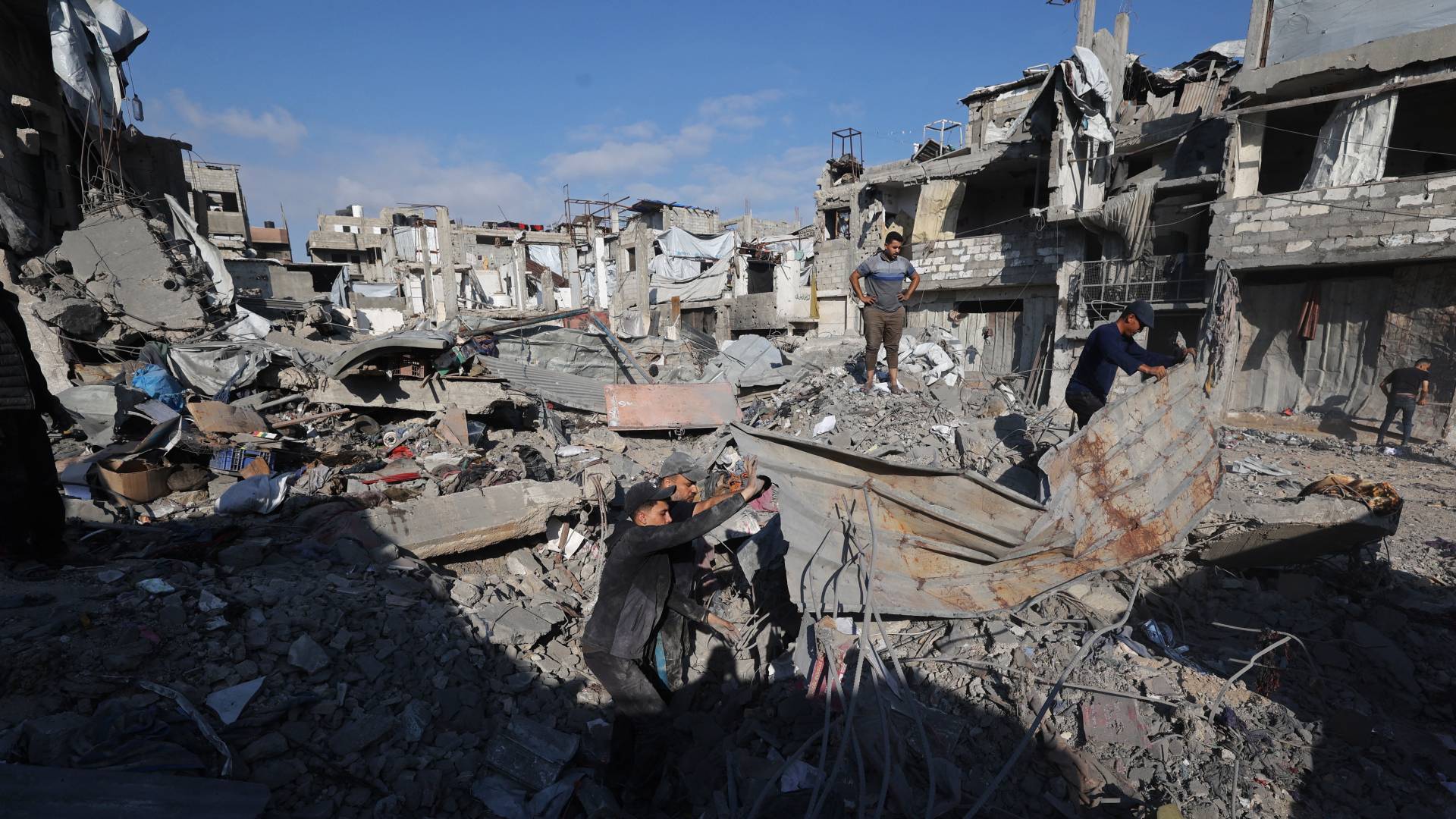
The Israeli occupation forces continue their intensive military operations on the Lebanese front, where the escalation has included widespread destruction and displacement of residents in areas south and north of the Litani River. These moves aim to expand the so-called 'Yellow Line' and occupy strategically and morally valuable positions, in an attempt to break the state of attrition imposed by Hezbollah.
Data indicates that this escalation is the result of complex political and military calculations, most notably Tel Aviv's desire to preempt any potential agreement between Washington and Tehran that could lead to a ceasefire. Through these operations, Israel seeks to inflict the greatest possible damage on Lebanese infrastructure, not just on Hezbollah's military capabilities.
The current Israeli strategy relies on expanding the scope of displacement and pressuring the party's popular base, hoping to push the Lebanese interior towards an internal confrontation or the dismantling of the resistance's weapons. However, observers believe that these pressures have not yet succeeded in achieving a strategic breakthrough that would end the costly bleeding for the army.
The military escalation reflects an attempt by Benjamin Netanyahu's government to absorb the growing public anger against what is described as a 'ceasefire agreement' that has practically turned into a war of attrition. The government faces accusations from broad circles of restricting the army's hand in response to pressures from the US administration, which has led some to demand harsher strikes, including the capital Beirut.
The state of tension within Israeli society has escalated after realizing the gap between the statements of military leaders and the reality on the ground, as it became clear that underestimating Hezbollah's capabilities was wrong. The party succeeded in changing the field equations, especially through drone tactics that the occupation army has been unable to find radical solutions for.
As an indication of the state of confusion on the ground, reports spread about individual attempts by Israeli soldiers to buy fishing nets from the city of Tiberias at their own expense to use them to protect their vehicles from drones. This ironic reality was reflected in a caricature in 'Haaretz' newspaper describing the most advanced army in the world as searching for primitive tools to confront aerial threats.
Electoral calculations play a pivotal role in Netanyahu's decisions, as opinion polls show a decline in his coalition and the possibility of its collapse in any upcoming elections. Netanyahu, who calls himself the 'master of security,' is trying to cling to power by using excessive force and field expansion to restore his image before the electorate.
A hidden tension also emerges between the political and military levels since the events of October 7, as army commanders fear appearing hesitant or weak before the public. This apprehension pushes the military establishment towards involvement in broader ground operations, despite warnings against repeating previous experiences that did not achieve their ultimate goals in Lebanon or Gaza.
Regarding political stances, Israeli observers directed sharp criticism at the continuous reliance on military force without a clear political vision or a strategy for agreement. They warned that complete reliance on a policy of destruction and displacement will not end the continuous bleeding on the fronts that have been open for many months.
Despite these warnings, the far-right government led by Netanyahu, Katz, and Ben Gvir is proceeding with escalating the field situation, relying on an arrogant discourse that focuses on tactical achievements. Analysts believe that this discourse primarily aims to cover up the failures in decisively ending the battle with the resistance in Lebanon.
In the context of boasting about gains, Security Minister Israel Katz considered that the control of Shaqif Castle and raising the Israeli flag over it represents a clear message to enemies about the loss of their strategic positions. Katz affirmed that the war is not over yet, stressing Israel's determination to completely destroy Hezbollah's military power.
For his part, Benjamin Netanyahu continued to use threatening language, indicating that his army is striking deep into Lebanon, Beirut, and the Beqaa to achieve moral and psychological gains. These statements come within the framework of attempts to boost the morale of Israelis who suffer from the continuous sirens and explosions in the northern regions.
Field reports reveal a wide gap between government promises of 'absolute victory' and the bleeding reality on the ground in the Upper Galilee and border areas. This disparity exacerbates the state of frustration among settlers who find themselves at the mercy of missile and drone attacks despite all military operations.
In conclusion, it appears that the current Israeli escalation is a mixture of escaping forward and an attempt to improve negotiation terms in any future settlement. With the continued absence of a political vision, the Lebanese front remains susceptible to further explosion given the occupation government's insistence on the language of force as the only option.
Whoever threatens us loses their strategic positions; we are determined to destroy Hezbollah's power, and the war is not over.

Share your opinion
Israeli Escalation Calculations in Lebanon: A Race Against Time and Attempts to Escape Hezbollah's Attrition