PALESTINE

Fri 12 Jun 2026 8:16 pm - Jerusalem Time

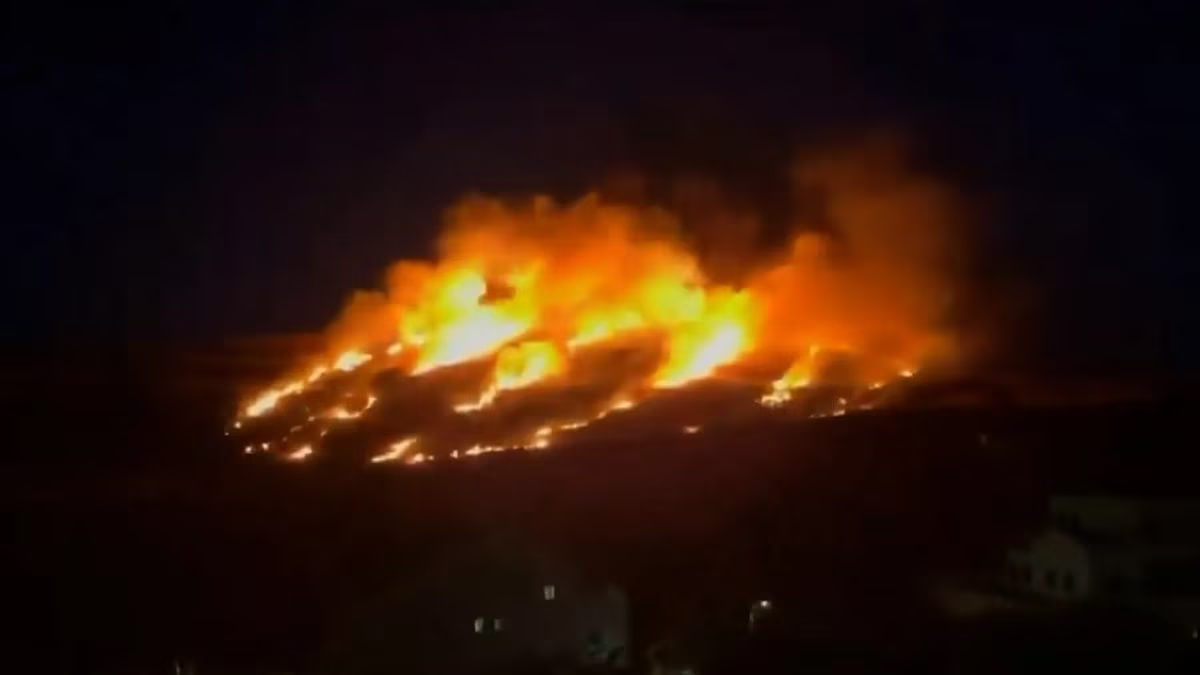
Field escalation in southern Lebanon: Ambush in Wadi Hassan and fierce clashes in the Shemaa axis

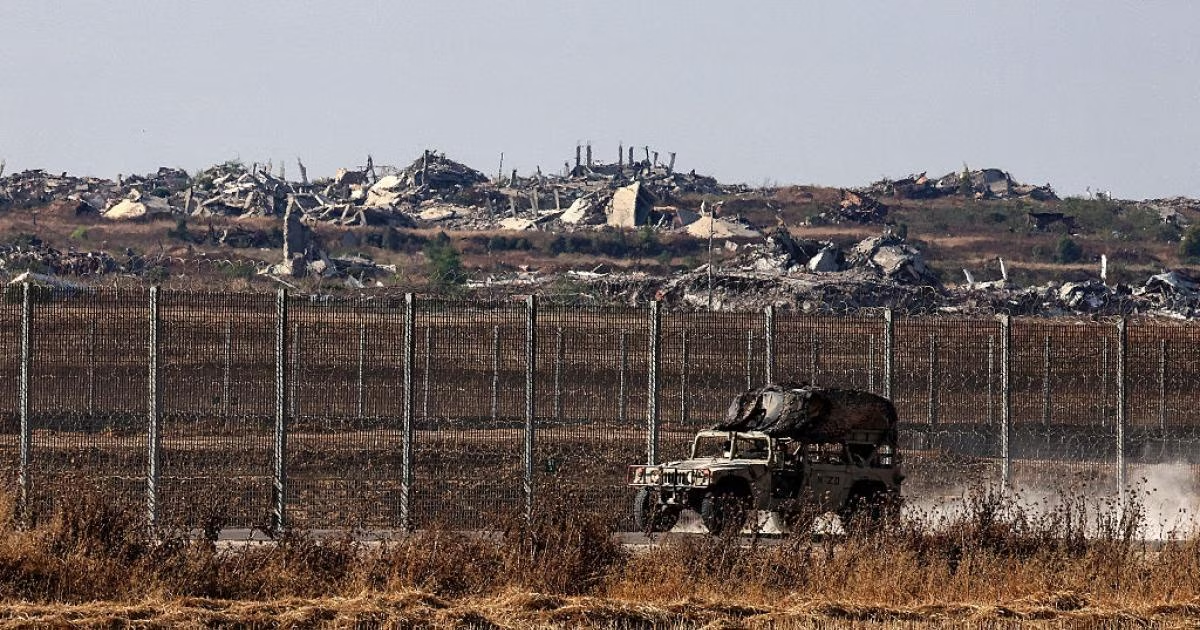
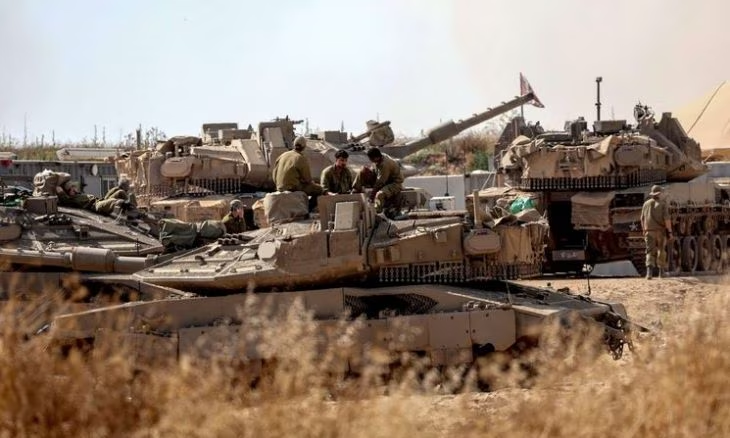
The Israeli occupation army announced the implementation of wide-ranging military operations inside the town of Debbin in southern Lebanon, indicating that its forces had reached a depth of 12 kilometers in recent weeks. This announcement coincided with new threats to evacuate the towns of Sarafand, Tuffahta, and Mazraat Sinai, as part of expanding the scope of aggressive operations in the southern regions.

On the ground, sources reported the activation of sirens in the settlement of Metulla, located near the Lebanese border, following suspicion of a drone infiltrating from Lebanese territory. These developments come amidst continued Israeli violations of ceasefire agreements, as warplanes launched raids targeting the Litani River basin and the Khardali area.

In the town of Al-Shihabiya, occupation aircraft carried out a violent airstrike, while the town of Ma'araka was directly targeted, leading to the destruction of residential buildings. Civil defense teams affiliated with the Islamic Message Association worked to rescue three injured people from under the rubble, while search operations are still ongoing for presumed missing persons under the debris.

Israeli aggressions also included the town of Majdal Zoun in the Tyre district, where raids targeted residential neighborhoods and open areas. These attacks come at a time when the occupation is trying to consolidate its advances in the western sector of southern Lebanon, amidst fierce resistance from the defenders of the border villages.

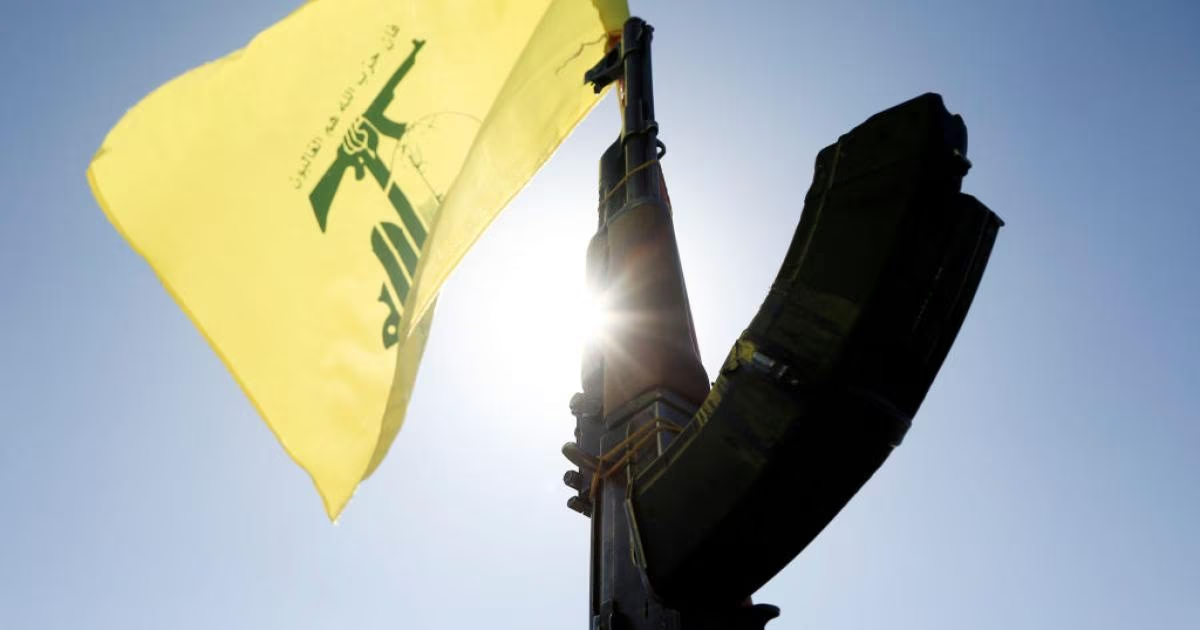
For its part, Hezbollah announced the implementation of a tight ambush targeting an Israeli force in the Wadi Hassan area near Majdal Zoun. The party explained that this point represents a strategic corridor that the occupation is trying to use to reach the eastern neighborhoods of the town, confirming direct casualties among the advancing force.

As part of ongoing attrition operations, Hezbollah fighters targeted gatherings of soldiers and vehicles of the occupation army in the town of Shemaa using rockets and artillery shells. The party's statements mentioned that these operations aim to prevent Israeli forces from settling in the areas they recently infiltrated.

Also, the Deir Sirian area witnessed an attack by two suicide drones targeting a military vehicle and a Merkava tank, leading to their destruction. Field sources confirmed that the party is intensifying the use of unmanned aerial vehicles to strike the rear supply lines of the occupation forces advancing towards the front villages.

The Shemaa - Tayr Harfa - Majdal Zoun axis is currently considered one of the most inflamed battlefronts in southern Lebanon, where the occupation seeks to control the commanding hills. Reports indicated that the resistance is focusing its strikes in this area to hinder flanking attempts carried out by Israeli armored units.

Journalistic sources explained that the pace of confrontations is mainly concentrated in the districts of Tyre and Nabatieh, where the targeting extended to the areas of Al-Qantara and Al-Bayada. Despite a relative decrease in the intensity of airstrikes compared to previous days, artillery shelling and direct clashes are still ongoing intermittently and violently.

In the city of Tyre, signs of life gradually began to return to the old quarter despite the massive destruction left by the recent Israeli shelling. This area had been subjected to forced evacuation orders, but a number of residents chose to return to their homes and inspect their properties shortly after displacement.

Field tours observed the reopening of some shops and cafes in the old neighborhoods of Tyre, in a clear challenge to the displacement policy practiced by the occupation. Returning residents expressed their determination to stay in their city, noting that the displacement was temporary and under the pressure of intense shelling that targeted historical landmarks.

Testimonies from residents spoke of the extent of suffering during the days of displacement, with one citizen confirming that she left her home for the first time since the escalation began. She pointed out that returning, despite the dangerous conditions, gives residents a sense of psychological stability and the ability to face the repercussions of the ongoing war.

Regarding limited economic activity, fishermen in the port of Tyre gradually began to return to the sea to practice their profession and secure their daily livelihood. Residents of the old quarter called on the rest of the displaced to return to their homes, affirming that the will to live is stronger than the attempts of intimidation and psychological warfare waged by the occupation army.

In conclusion, the field scene in southern Lebanon remains open to all possibilities, given the occupation's insistence on expanding its ground incursion and the corresponding intensive defensive operations. Humanitarian efforts continue to retrieve victims and rehabilitate what can be repaired in areas that experience cautious calm from time to time.

The ambush targeted an Israeli force attempting to advance in the Wadi Hassan area, in a step to hinder any ground incursion and keep the occupation under pressure.
PALESTINE

Fri 12 Jun 2026 8:16 pm - Jerusalem Time

Outrage in the British health sector against proposals to ban Palestinian symbols

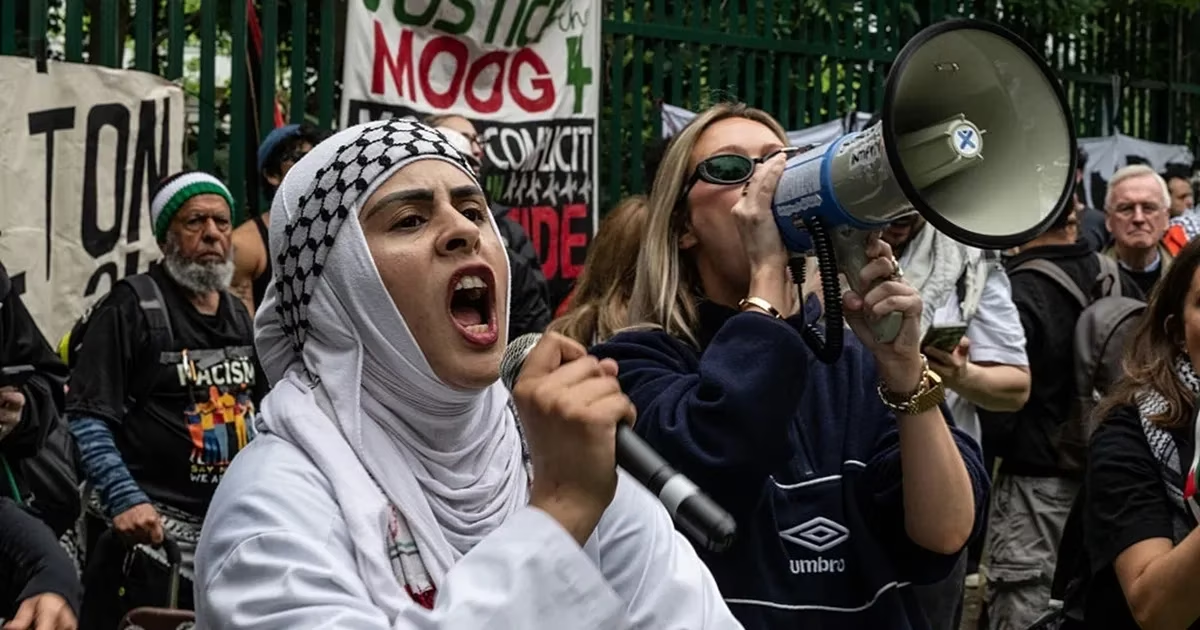
Official British recommendations calling for a ban on political symbols within the National Health Service (NHS) have sparked a massive wave of objections from organizations and associations representing healthcare workers. These bodies considered the proposed measures to be directly aimed at restricting freedom of expression and preventing employees from showing solidarity with humanitarian causes, especially the Palestinian cause.

Sources reported that a coalition of medical groups called on the British government to withdraw what they described as alarming censorship. This came in response to the Department of Health's endorsement of a review conducted by Lord John Mann, the government's adviser on antisemitism, which focused on hate speech within official health institutions.

Lord Mann's review included recommendations to impose mandatory antisemitism training for approximately 1.5 million NHS employees. The proposals also included an explicit ban on displaying any political symbols in the workplace and prohibiting participation in protest marches while wearing official work uniforms.

For its part, the medical coalition, which includes associations representing Muslim and South Asian doctors, issued a statement warning against implementing these recommendations without serious consideration of the evidence or consultation with affected communities. Sources revealed that major medical bodies, such as the British Islamic Medical Association, did not participate in drafting these proposals despite their names appearing in the list of acknowledged entities.

The coalition described the proposed restrictions as a blatant infringement on matters of personal conscience and lawful discourse that falls outside the scope of professional conduct. They pointed out that these measures could exacerbate the racist practices faced by ethnic minority employees in the health service compared to their colleagues.

In a related context, Roger Kline, a former investigator for the General Medical Council, considered the review a missed opportunity to address real racism. Kline affirmed that the report completely ignored the phenomenon of Islamophobia, which creates a racial hierarchy that unfairly places some issues above others.

Kline, a Jewish academic, stressed that sharp criticism of Israeli policies cannot be considered antisemitism in any way. He described the proposed mandatory training as an absurd act that could lead to counterproductive results and create a climate of fear among senior staff in the health sector.

Reports indicate that many doctors are already under investigation by the General Medical Council due to their pro-Palestinian stances. These investigations included social media posts and statements made by doctors during their participation in peaceful demonstrations condemning the war on Gaza.

Among the prominent cases, Dr. Ranjit Brar, a vascular surgeon in London, was temporarily suspended from work due to a speech in which he criticized Israeli practices. Although he was released without criminal charges, he still faces professional prosecution on charges of racism, which he described as political harassment due to his opposition to genocide.

In another incident, Dr. Tamara Ali faced a complaint from a patient due to a small Palestinian flag and a solidarity badge in her clinic in Scotland. The doctor said she felt extremely isolated after the complaint compared the Palestinian flag to Nazi symbols, without her colleagues intervening to defend her right to expression.

Currently, the 'Healthcare Workers Against Censorship' campaign is seeking a judicial review to challenge the General Medical Council's procedures. This legal action aims to protect doctors from being re-investigated after their acquittal, as happened in the case of the British-Palestinian surgeon Ghassan Abu Sittah.

Retired doctor Jonathan Fluxman criticized what he described as the British government's exploitation of antisemitism as a weapon to suppress the pro-Palestinian movement. He pointed out that British foreign policy supporting Israel is clearly reflected in administrative decisions within national health institutions.

Fluxman highlighted the stark contradiction in the Department of Health's standards, which had raised the Israeli flag on its building and tweeted solidarity with Ukraine in previous times. He affirmed that demanding doctors to be neutral towards what he described as genocidal crimes is morally unacceptable given the doctors' standing in society.

Finally, the 'Healthcare Workers for Palestine' group affirmed that Mann's review threatens the long-standing humanitarian traditions of the NHS. The group announced that it is considering all available legal options to counter these proposals that seek to silence medical professionals.

You can ban pins and political symbols, but you cannot ban the clarity of people's moral principles.

ARAB AND WORLD

Fri 12 Jun 2026 8:16 pm - Jerusalem Time

Between the language of war and de-escalation deals... The Middle East awaits the outcomes of the American-Iranian understanding

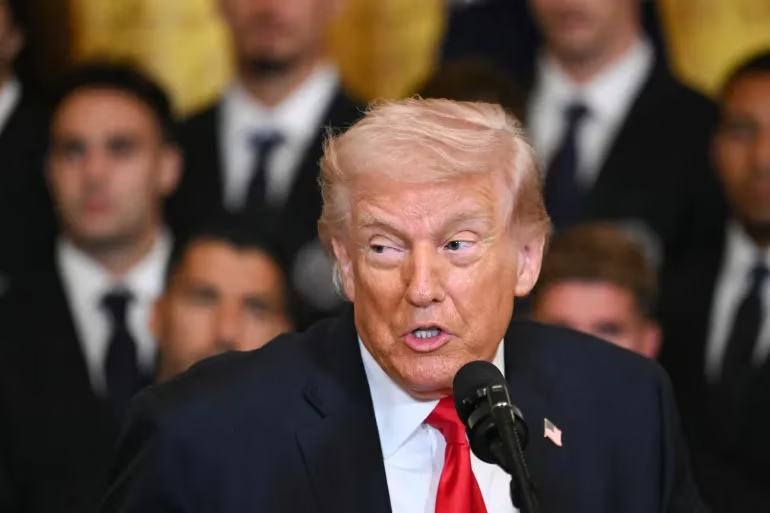
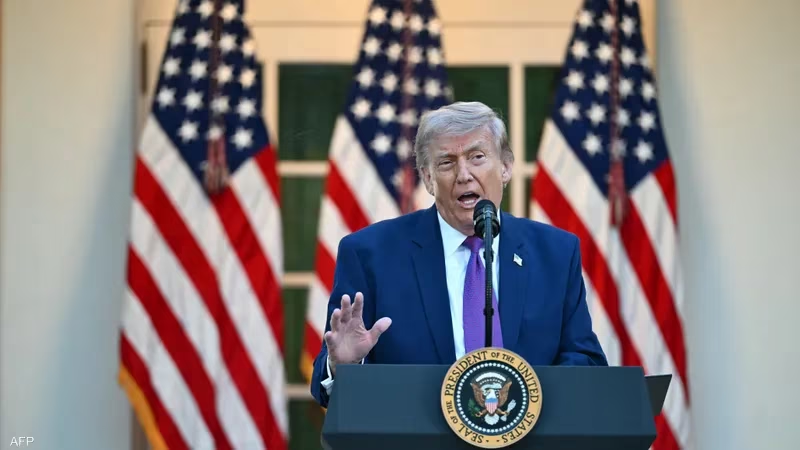
The region is experiencing a state of sharp fluctuation between the drums of war beating and talk of imminent diplomatic deals, as US President Donald Trump quickly moved from threatening to strike vital facilities on Iran's Kharg Island to announcing tangible progress in negotiations. This dramatic shift led to the cancellation of previously scheduled military strikes, reflecting the nature of the current moment, which lacks military decisiveness or stable peace.

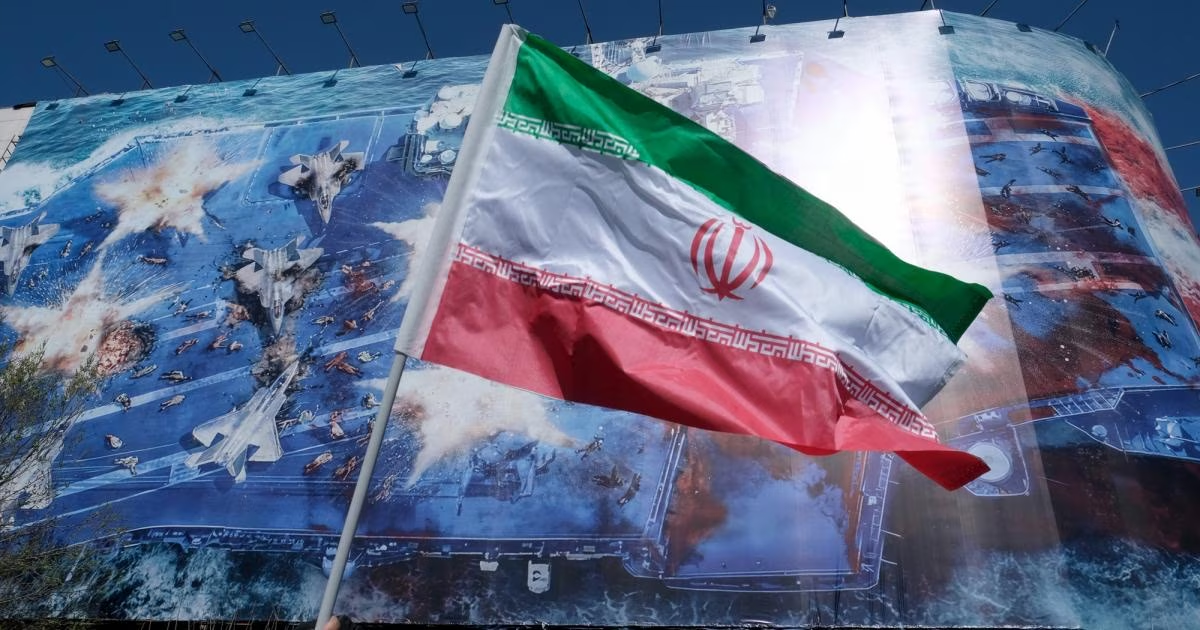
For its part, Tehran adopts a cautious discourse, emphasizing the continuation of discussions without a final decision being made yet, stressing its desire to end the state of 'no war, no peace.' Iranian President Masoud Pezeshkian clarified that his country will not accept negotiations under threat, indicating Iran's adherence to rules of engagement that prevent offering free concessions despite increasing economic and military pressures.

On the ground, escalation has not ceased despite open diplomatic channels, as US forces launched raids on Iranian sites after accusing Tehran of shooting down an 'Apache' helicopter near the Strait of Hormuz. Iran responded by targeting bases in the region, while regional parties entered the fray with Bahrain announcing the interception of Iranian drones, proving that the field remains the primary driver of negotiation terms.

Iran's current strategy relies on the principle of 'remaining under pressure,' as Tehran bets that the inability of US and Israeli military power to undermine the regime gives it additional leverage. Iran uses sensitive issues such as navigation security in the Strait of Hormuz and global energy prices as pressure tools to make any comprehensive confrontation costly for the global economy and the American domestic front.

In contrast, American influence faces a difficult test in its attempt to balance military force and diplomatic mediation, as Washington seeks to prevent Iran from acquiring nuclear weapons and securing international navigation. However, contradictions appear in Washington's ability to control the course of the conflict, especially with differing priorities between it and its ally Israel, which seeks to achieve battlefield gains before any agreement.

Reports and sources indicate the existence of a draft understanding that may be signed in Geneva, including a 60-day ceasefire and the reopening of the Strait of Hormuz to international navigation. The draft also includes provisions related to lifting oil sanctions and releasing frozen Iranian funds, which Washington sees as a way out of the current crisis, while other parties view it with extreme caution.

Israel, for its part, distanced itself from these understandings, as Benjamin Netanyahu's office confirmed that Tel Aviv is not a party to the memorandum proposed between Washington and Tehran. This position reflects Israel's desire to continue military operations to weaken the capabilities of Iran and its regional allies, especially Hezbollah in Lebanon, before entering any political framework that might freeze the current situation.

And the Strait of Hormuz remains the beating heart of this confrontation, where Washington demands guarantees of freedom of navigation as a basic condition for any de-escalation, while Tehran links this issue to ending the naval blockade imposed on it. The strait has transformed from a waterway into a political card that directly links the war to global fuel prices, election calculations, and international markets.

Lebanon is not far from these calculations, as Lebanon represents an integral part of the Iranian deterrence system, and any regional understanding will necessarily reflect on the southern front. Tehran is trying to prevent Lebanon from being turned into a solitary attrition arena, linking the fate of de-escalation in the Gulf to the cessation of Israeli military operations on Lebanese territory.

Countries such as Qatar and Pakistan play active roles in mediation to bridge viewpoints and close gaps in the proposed text of the agreement, despite the fluctuating American positions that the Iranian side describes as unstable. Mediators aim to reach a formula that guarantees the minimum demands of both parties to avoid the region sliding into a comprehensive confrontation that no one desires.

Inside Washington, Trump faces pressure from conservative currents and pro-Israel figures who question the utility of the agreement and consider it a concession to Tehran. However, the current US administration seems to prefer the diplomatic path that offers a quick 'political achievement' to ease regional tensions and lower energy prices.

The absence of a single, clear path for the conflict leaves the region in a vicious circle, where every military strike changes the terms of negotiation, and every political statement reshapes the field. This collective inability to control the course of the war pushes parties to seek temporary exits that prevent maximum cost without any party appearing to be the loser.

Ultimately, it seems that the bet on a quick military decisive victory has collided with the limits of air power and Iran's ability to absorb strikes and turn them into negotiating gains. While Iran's military infrastructure has been damaged, it has not been exhausted to the point of surrender, making the 'gray area' the preferred arena for managing the conflict currently.

The region remains at a very delicate stage, as possible understandings are still fragile and prone to collapse with any miscalculation on the ground or political setback. While the world awaits the G7 meeting in Geneva, the question remains whether this deal will withstand Israel's battlefield ambitions and Iran's domestic concerns.

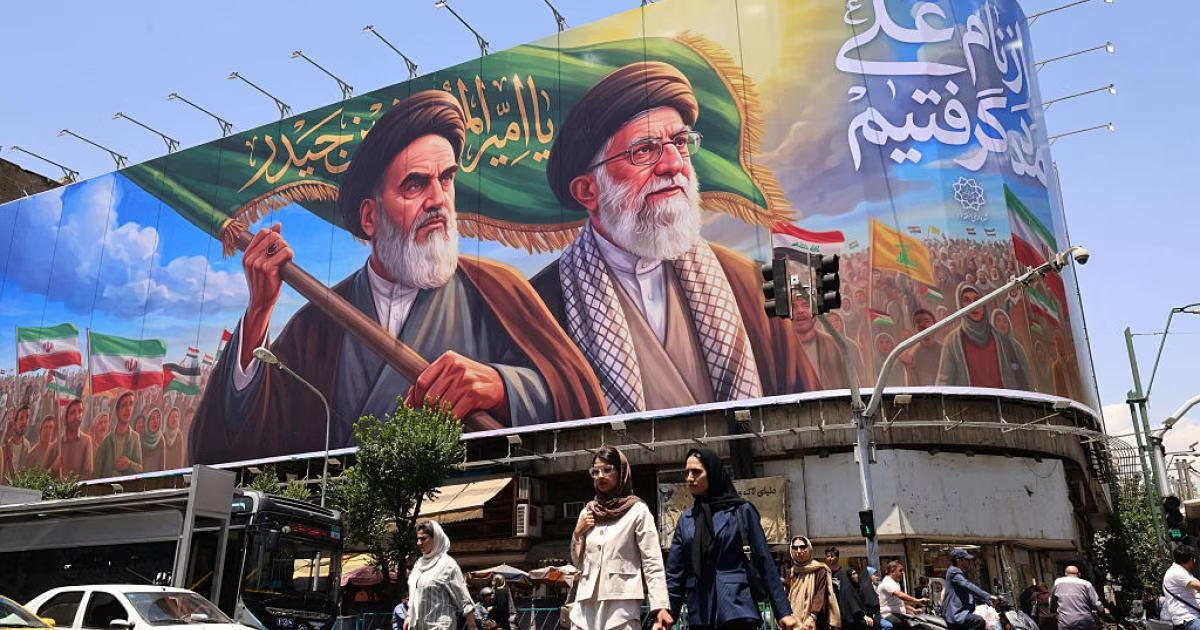
Iranian President Masoud Pezeshkian: Our country wants to get out of the state of 'no war, no peace' but will not succumb to threats or pressures.

OPINIONS

Fri 12 Jun 2026 8:16 pm - Jerusalem Time

Imminent US-Iranian Agreement: Trump Announces "End of War" Amidst Iranian Skepticism and Questions About the Deal's Price

Washington Message

Washington – Said Arikat - 12/6/2026

In a development that could redraw the political and security landscape in the Middle East, the United States and Iran are nearing the signing of an interim agreement aimed at establishing a ceasefire between the two parties, reopening the Strait of Hormuz, and paving the way for broader negotiations on Iran's nuclear program. US President Donald Trump describes this step as the end of the war, while Tehran continues to approach it with clear caution, asserting that a final decision has not yet been made.

According to informed diplomatic sources, the two sides have reached a draft memorandum of understanding, the text of which has been almost finalized, awaiting final ratification from Iranian officials. Information indicates that the signing ceremony may take place in Geneva, Switzerland, in the coming days, possibly as early as Sunday.

This development comes as G7 nations prepare for an important meeting next week, amidst increasing international pressure to prevent the region from sliding into a broader confrontation that threatens the global economy and international energy security.

While Trump announced on Thursday evening that he had canceled planned military strikes against Iran after reaching a common understanding, asserting that all concerned parties had agreed to the agreement "in principle and details," the Iranian Foreign Ministry quickly affirmed that no final agreement had yet received the green light from the Iranian leadership.

Leaked information reveals an agreement that goes beyond merely halting direct military actions between Washington and Tehran. According to the Iranian "Mehr" agency, the agreement also includes ending military operations in Lebanon, fully reopening the Strait of Hormuz within thirty days of its signing, in addition to releasing a first installment of frozen Iranian funds amounting to $12 billion out of $24 billion that will gradually be made available to Tehran.

The agreement also includes, according to the same sources, lifting sanctions imposed on Iranian oil and petrochemical exports, granting Iran access to its frozen assets abroad, as well as a US pledge not to interfere in Iranian internal affairs and to remove US forces from areas near the Iranian border.

The nuclear file, which has been the core of tension between the two parties for many years, does not seem to have been resolved yet. The agreement only stipulates the launch of sixty-day negotiations to reach a final settlement on Iran's nuclear program, without referring to details related to uranium enrichment levels or future international monitoring mechanisms.

Notably, Iran's ballistic missile program, as well as Tehran's relationship with its regional allies, including Lebanese Hezbollah, are not included in the proposed negotiations, reflecting the extent of mutual concessions that both parties seem willing to accept to avoid a return to military confrontation.

US sources indicate that Vice President JD Vance may participate in the upcoming signing ceremony in Europe, which would give the agreement additional political weight and reflect the Trump administration's desire to market the agreement as a major strategic achievement before entering a new political phase.

However, despite its promises of de-escalation, the agreement faces numerous challenges, most notably the stance of regional powers who see any easing of pressure on Iran as strengthening its regional influence, in addition to the presence of currents within the United States and Iran that oppose making concessions to the other side after many years of conflict, sanctions, and military threats.

Trump Seeks Political Victory More Than a Historical Settlement

It appears that the primary motive behind Trump's push for the agreement is not solely related to the desire for regional stability, but also to the need to achieve a significant political accomplishment that can be presented to the American public as evidence of the success of the "pressure then negotiate" policy. After months of military escalation and mutual threats, it has become difficult for the US administration to justify the continuation of open confrontation without a clear political horizon. Therefore, the agreement offers Trump an opportunity to appear as the man who avoided a costly war, even if the fundamental issues that sparked the crisis remain unresolved.

Israel the Biggest Loser from Any US-Iranian Rapprochement

If the agreement is signed in its circulated form, Israel may find itself facing a new strategic reality that does not align with the vision advocated by Prime Minister Benjamin Netanyahu for years. The agreement does not address Iran's ballistic missile program or the network of regional allies associated with Tehran, and it opens the door to easing sanctions and the re-flow of financial resources to Iran. This would undermine Israeli efforts to keep Iran under maximum isolation and pressure, and expose the limits of Netanyahu's ability to influence US decisions when Israeli interests conflict with Washington's strategic calculations.

The Middle East Between an Opportunity for De-escalation and the Risks of Postponing Crises

Despite the positive atmosphere surrounding the agreement, the core of the conflict has not yet been resolved; rather, it has been postponed to the negotiating table. Disputes over Iran's nuclear program still exist, and issues related to regional influence and ballistic missiles were not even raised within the framework of the current understanding. This means that the agreement may succeed in buying time and temporarily reducing tension, but it does not guarantee addressing the deep causes of the crisis. Consequently, the region stands before a real opportunity for de-escalation, but it remains a fragile opportunity that could quickly collapse if subsequent negotiations fail to address the most sensitive and complex issues.

PALESTINE

Fri 12 Jun 2026 10:10 am - Jerusalem Time

Maps of Silent Creep: How Israel is Redrawing the Borders of Control in Gaza, the West Bank, Lebanon, and Syria?

The Arab territories surrounding occupied Palestine are witnessing an accelerating Israeli military and settlement creep, exceeding traditional control boundaries through strategies ranging from temporary military lines to fixed strongholds. Recent reports reveal systematic movements to shrink the areas available to Palestinians, Lebanese, and Syrians, as logistical routes and earth barriers transform into new geographical borders, imposing a fait accompli on the ground.

In the Gaza Strip, what is known as the 'Yellow Line' has transformed from a temporary arrangement following the October 2025 ceasefire into a physical barrier longitudinally dividing the Strip. Satellite analyses indicate that Israel now effectively controls an area ranging between 54% and 60% of the Strip's total area, with political directives issued to expand this percentage to 70% through extensive demolition and bulldozing operations.

Satellite images show yellow concrete blocks penetrating up to 940 meters deep into the Strip's territories, especially in the areas of Rafah, Khan Yunis, and Shuja'iyya. The occupation forces have constructed 48 military sites connected by a complex logistical road network, including the upgrading of military bases in Jabalia and the establishment of buffer zones 300 meters deep behind the declared lines.

On the northern front, Israel has adopted a similar model through what it called the 'Forward Defense Line' within southern Lebanon, extending from Naqoura in the west to Shebaa Farms in the east. Field sources now confirm that military movements have exceeded this line, reaching the areas of Nabatieh and the vicinity of the Litani River, where the army announced its control over the strategic Beaufort Castle for the first time since 2000.

Official Lebanese data indicates the massive destruction caused by Israeli operations, with thousands of airstrikes and hundreds of systematic demolition operations of residential buildings. This pattern of destruction aims, according to observers, to create a geographically depopulated area that ensures long-term security control beyond the concept of transient military operations.

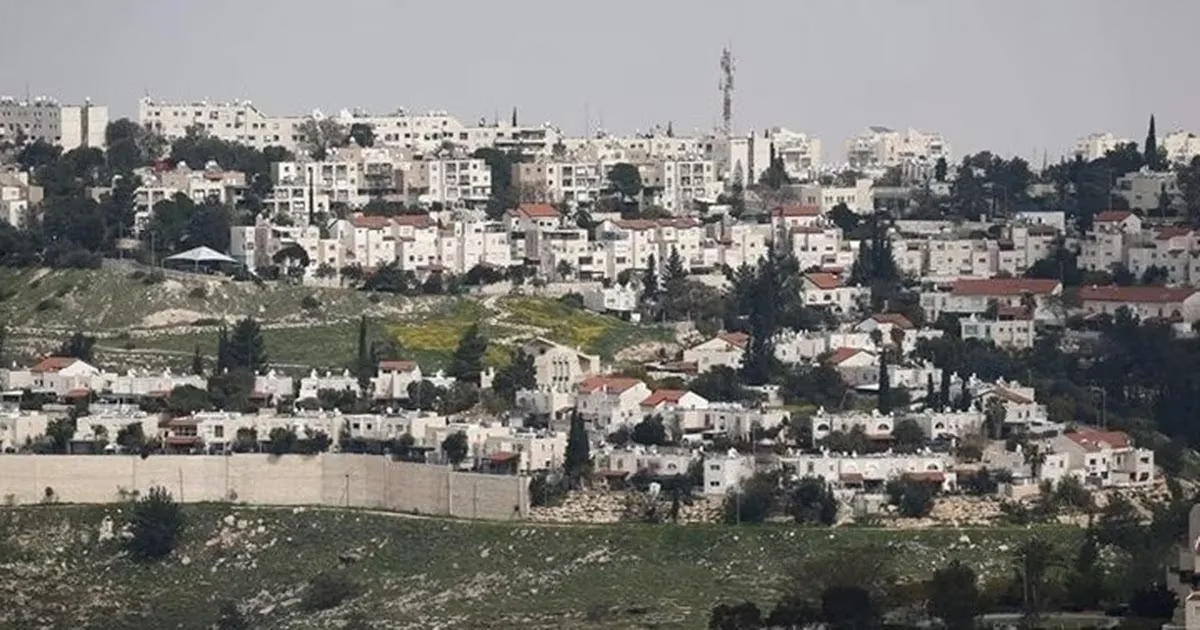
In the West Bank, settlement expands like a geographical 'tumor' supported by massive government funding exceeding $350 million for the establishment of 61 new de facto settlements. This plan focuses on sensitive areas in the Jordan Valley and the southern Hebron hills, with the aim of creating geographical continuity between existing settlements and isolating Palestinian communities into fragmented enclaves.

Jenin city stands out as a stark example of this transformation, where the Israeli army established a permanent military post near its camp, a first of its kind within areas classified as 'A'. This step is accompanied by military confiscation orders for lands in the Jabriyat neighborhood, indicating a clear intention to transform temporary military presence into permanent bases controlling the heights overlooking the city.

Human rights reports reveal the use of 'military confiscation orders' as a legal tool to accelerate the legitimization of settlement outposts and to construct bypass roads connecting them to the Israeli interior. More than 140 military confiscation orders have been documented over the past two years, the vast majority of which were used to serve settlement projects and convert abandoned bases into inhabited civilian settlements.

In occupied Jerusalem, 'silent annexation' operations are underway through pushing plans to build more than 33,000 new housing units in East Jerusalem, targeting the neighborhoods of Sheikh Jarrah, Silwan, and Batan al-Hawa. These projects, such as the 'E1' project, aim to completely isolate Jerusalem city from its Palestinian surroundings in the West Bank, and to transform Arab neighborhoods into isolated islands amidst a settlement environment.

Occupation authorities in Jerusalem use multiple tools including home demolitions, family evictions, and moving military checkpoints deeper into the West Bank to change the municipal boundaries of the city. Human rights organizations have monitored the demolition of dozens of homes in the Bustan and Sur Baher neighborhoods, coinciding with the allocation of huge budgets to protect settlers who are being planted within densely populated Palestinian neighborhoods.

On the Syrian front, Israeli forces have exploited field changes to strengthen their military presence behind the 1974 disengagement line, especially around Mount Hermon and the Quneitra countryside. Occupation patrols conduct periodic incursions into villages in the Yarmouk basin and the western Daraa countryside, where they establish temporary checkpoints and carry out search and arrest operations targeting Syrian citizens in those areas.

Reports from Quneitra indicate that Israeli incursions are no longer limited to observation but have included control over farms and villages such as 'Abu Madhra' and 'Al-Asha'. This undeclared military expansion aims to create a security sphere of influence that guarantees Israel freedom of movement and rapid intervention deep into Syria, away from previous international agreements.

These simultaneous movements on various fronts reflect a comprehensive Israeli strategy to redraw the region's map to serve its security and demographic interests. By transforming 'temporary lines' into a tangible reality, Israel succeeds in seizing thousands of square kilometers of Arab land amidst international silence or mere condemnation statements that do not change the reality on the ground.

In conclusion, analysts believe that what is happening is a process of 'geographical engineering' aimed at ending any future opportunity for the establishment of a contiguous Palestinian state, and securing Israel's borders through buffer zones carved out of the sovereignty of neighboring countries. The biggest challenge for Palestinians and Arabs remains how to confront this creep that recognizes neither international borders nor signed agreements.

The occupation is moving in one direction towards shrinking the available space for Palestinians and Arabs, by establishing areas of influence that gradually transform from temporary military measures into a permanent settlement reality.

PALESTINE

Fri 12 Jun 2026 10:10 am - Jerusalem Time

The occupation separates a mother from her children in Jenin days before their imprisoned father's freedom

Israeli occupation forces stormed the town of Silat al-Harithiya, west of Jenin city, at dawn today, carrying out widespread raids and searches targeting citizens' homes. The military operation focused on the home of prisoner Sharif Tahaineh, where soldiers abused family members and detained them in harsh conditions before arresting his wife, Hana Tahaineh, and taking her to an unknown location.

Local sources reported that occupation soldiers deliberately tampered with the contents of the house and destroyed parts of it, and also confiscated personal belongings, including mobile phones and sums of money. The sources indicated that the invading force refused to disclose the reasons for the arrest, contenting themselves with exerting psychological and physical pressure on the six children who witnessed their mother being restrained and abducted.

Ahmad Tahaineh, the son of the detained mother, recounted the harsh moments, confirming that soldiers surrounded the house from all sides before breaking down the doors and entering violently. He explained that female soldiers blindfolded his mother and tightly bound her hands with iron restraints, preventing the children from bidding her farewell or approaching her at gunpoint, in a scene reflecting the brutality of dealing with civilians.

This operation comes at a time when the family was awaiting the release of their imprisoned father, Sharif Tahaineh, 56, who has been held for two years in occupation prisons. Observers believe that the timing of the mother's arrest aims to spoil the family's joy at their father's impending freedom, turning moments of anticipation into a new nightmare haunting the young children.

The family now faces difficult humanitarian challenges, as the burden of caring for six individuals falls on the eldest son in the forced absence of both parents. The children, the youngest of whom is Owais, suffer from severe psychological trauma that has led him to isolate himself and refuse food and study, expressing his deep sorrow at the loss of his mother's embrace, who was the pillar and jewel of the home.

Human rights reports indicate that the occupation authorities have adopted the policy of arresting spouses as a tool for psychological pressure and collective punishment against Palestinian families. This policy aims to dismantle the social fabric and intimidate citizens, and it violates all international conventions that guarantee the protection of the family and the rights of children to live under the care of their parents.

In a related context, institutions concerned with prisoner affairs confirmed that the number of detainees in occupation prisons has witnessed a significant increase, reaching about 9,500 prisoners. Among these detainees are 95 Palestinian women who face difficult detention conditions, in addition to 360 children who suffer from systematic deprivation of their most basic educational and humanitarian rights.

The suffering of the Tahaineh family continues as a model for hundreds of Palestinian families whose unity is torn apart by the occupation through repeated arrests and night raids. Hope remains dependent on international human rights interventions to stop these violations and ensure the return of mother Hana to her children, who are now watching the door, awaiting the return of both their father and mother.

Life is very difficult without a father and mother, and the occupation deliberately stole our joy at our father's impending freedom.

ARAB AND WORLD

Fri 12 Jun 2026 10:10 am - Jerusalem Time

Iran confirms readiness of understanding text with Washington and denies finality of agreement so far

The Iranian Ministry of Foreign Affairs announced in an official statement that the ongoing negotiations with the United States of America have not yet reached their final form, despite significant progress in drafting the text. The ministry clarified that the text of the understanding is largely technically ready, but the official announcement awaits the completion of final political reviews.

This Iranian stance came in response to statements by US President Donald Trump, who described the current understandings as a wonderful settlement that has entered its final stages. Trump indicated that the potential agreement could be completed in the coming days, emphasizing that Washington has already begun arrangements for the post-military de-escalation witnessed in recent hours.

Diplomatic sources revealed that mediation efforts led by both the State of Qatar and the Republic of Pakistan played a pivotal role in bridging the views between Tehran and Washington. These parties are currently working to overcome the last obstacles preventing official signing, amidst cautious optimism about the possibility of ending the escalating military tension in the region.

The Iranian Foreign Ministry stressed that the supreme authorities in the state will meticulously and carefully examine all clauses of any potential understanding before announcing the final official position. It added that most of the agreement's texts had been settled in previous rounds, but attempts by the American side to add new demands at the last minute led to a delay in the final resolution.

In a related context, Tehran considered that the circulating news about setting the time and place for signing the agreement are nothing more than premature media speculations. It affirmed that the current priority is to ensure the achievement of Iranian national interests and to guarantee the commitment of all parties to the agreed-upon clauses without any breach or differing interpretations.

For his part, US President Donald Trump announced via his Truth Social platform the cancellation of air strikes and attacks that were planned against Iranian targets. Trump claimed that these proposed understandings had received the approval of multiple regional parties, including Israel, which led him to decide to halt the imminent military operations.

Trump explained that his decision to cancel the bombing was based on high-level discussions that reached the highest levels of leadership in Iran and received their initial approval. He indicated that the United States was prepared to launch broader and more violent attacks, but the diplomatic path succeeded at the last minute in sparing the region a comprehensive confrontation.

In occupied Jerusalem, the office of Israeli Prime Minister Benjamin Netanyahu reported that the latter discussed with Trump the details of the memorandum of understanding currently being prepared with the Iranian side. Netanyahu welcomed the US administration's pledges that any final agreement would oblige Tehran to dismantle its uranium enrichment infrastructure and dispose of all its enriched materials.

The past hours had witnessed a dangerous field escalation, as the US Central Command (CENTCOM) announced the start of strikes against targets deep inside Iran. These strikes came under direct guidance from President Trump before their cessation was later announced following the new political understandings declared by the White House.

In response, the Iranian Revolutionary Guard Corps retaliated by launching missile salvos and drones targeting what it described as military bases in neighboring countries, including Kuwait, Bahrain, and Jordan. Tehran affirmed that this response came as a warning message against any use of foreign bases in the region to launch attacks on its territory, which further complicated the field situation before de-escalation was reached.

The agreement with Washington has not yet become final, the text of the understanding is almost ready, and the supreme authorities will examine the clauses before the official position.

PALESTINE

Fri 12 Jun 2026 10:09 am - Jerusalem Time

Israel Imposes Impossible Conditions in Cairo Negotiations, Demands Transformation of Resistance into Political Parties

Informed Palestinian sources revealed negative developments in the ceasefire negotiations hosted by the Egyptian capital, Cairo, where Israel imposed new conditions described as impossible. The sources explained that these conditions brought the talks back to square one after there had been tangible progress and agreement between Palestinian factions and mediators on comprehensive proposals.

The sources stated that the new Israeli position is to demand the complete transformation of the structure of Palestinian resistance factions into political parties only, and the abolition of any military programs or wings they may have. This request includes the removal of any provisions in the factions' literature related to armed struggle, without Israel offering any reciprocal commitments for a full withdrawal or agreement to the establishment of a Palestinian state.

Until Wednesday morning, the negotiations had seen an initial agreement on drafting a statement supported by the US, linking the calming of the Gaza Strip with a comprehensive solution leading to an independent state. This agreement included developing 'Mladenov's paper' to move from the 'disarmament' formula, which Hamas rejected, to the 'weapon containment' formula under the supervision of a national authority responsible for security.

The mechanism agreed upon stipulates that the process of containing weapons will be carried out by the 'National Committee for Gaza Management' gradually and simultaneously with the stages of Israeli withdrawal from the Strip. This solution was reached to overcome the obstacle previously set by Israel, which demanded the disarmament of areas east and west of the 'Green Line' as a prerequisite for any military movement backward.

During the sessions, Palestinian factions expressed serious concerns about the role of local militias receiving direct support from Israeli occupation forces in contact areas. Reports indicated that these groups carried out infiltration and arrest operations against Palestinian citizens, transferring them to Israeli interrogation centers, which threatens any future security stability if their activities continue.

In a related context, Taher Al-Nono, media advisor to the head of the political bureau of the Hamas movement, affirmed that the factions had prepared a joint draft for a unified and responsible national response. He explained that this response deals with the provisions of the roadmap presented by the mediators to complete the implementation of the US President's plan for Gaza, while adhering to national constants and guarantees of withdrawal.

Sources reported that the efforts made by the mediating trio (Egypt, Qatar, and Turkey) focused on discussing articles eight and nine of Mladenov's plan to reach acceptable approaches. The mediators aim to integrate the first phase of the fragile calm, which began last October, with the second phase to ensure a permanent and comprehensive cessation of Israeli aggression.

For his part, Egyptian Foreign Minister Dr. Badr Abdel Aty indicated that the current meetings in Cairo seek to implement the second phase of the American calm plan. Abdel Aty stressed continuous coordination with Doha and Ankara to advance the political track, affirming Egypt's categorical rejection of any attempts to liquidate the Palestinian issue or displace the population.

Despite the ongoing rounds of negotiations, Israel continues its daily violations of the first phase agreement by carrying out raids and bloody attacks in various areas of the Strip. These aggressions since last October 10 have led to the martyrdom of more than 980 people and the injury of thousands, in addition to tightening the siege and preventing the entry of medical and food aid.

Palestinian factions demanded the immediate activation of the humanitarian protocol and the entry of sufficient quantities of relief for Gaza residents who are suffering catastrophic conditions. They also stressed the importance of strong international intervention to stop military attacks that threaten the complete collapse of the negotiation process, with the necessity of enabling the National Committee to assume its duties in managing the Strip.

On the international diplomatic front, a leading delegation from the Hamas movement, headed by Mousa Abu Marzook, held in-depth discussions in the Russian capital, Moscow, with Foreign Ministry officials. The meetings addressed ways to unify international efforts to end the war and its consequences, where the delegation briefed the Russian side on the details of Israeli crimes committed in Gaza, Jerusalem, and the West Bank.

During its visit to Moscow, the Hamas delegation affirmed the movement's keenness to establish a ceasefire that ensures an end to the suffering of the Palestinian people and the achievement of their legitimate rights. The delegation stressed that any agreement must ultimately lead to self-determination and the establishment of an independent Palestinian state, rejecting any plans to impose new realities on the ground.

For his part, the Russian Deputy Foreign Minister reiterated his country's firm and supportive stance on Palestinian rights, emphasizing Moscow's keenness to push negotiation tracks to achieve stability. The Russian official pointed to continued communication with the movement and diplomatic efforts to prevent a return to a full-scale war and create a just political horizon for the issue.

As of now, no date has been set for the end of the current round of talks in Cairo, amid Israeli intransigence and attempts to impose conditions that affect the core of Palestinian national action. Political circles are monitoring the ability of mediators to overcome the new obstacle set by the occupation government to hinder reaching a final agreement that ends the aggression.

Israel demanded that the resistance factions completely transform their work and programs into political factions only, with the aim of abolishing their national structure and composition.

OPINIONS

Fri 12 Jun 2026 10:09 am - Jerusalem Time

"Peace" of the Lupine

Ramallah - “Alquds ” dot com

Ramallah - “Alquds ” dot com

Opinion Writer

Once upon a time, there was a revolution!

..That was decades ago; when adventure was a must, it tasted like rain on dry lips.

And his game was wild and dangerous, and perhaps he built his dream on soft sand. He defied his parents' advice, and heard the fire that ignited in his chest, like a swift blaze consuming with its redness all injustice and darkness. And he wanted to illuminate the plundered lands, with madness and raging, boundless fires, and salt had not yet reached his tears, or approached his innocent wounds.

Once upon a time, there was a revolution! It awakened the heedless, so they recognized themselves. And everyone believed it, and did not notice that it was slipping towards the margins of darkness, dimness, corruption, loss, and abandonment.. with the presence of brilliant individual experiences that resonated with their suns in the horizons. And our friend was a fedayeen among those who believed in complete liberation, so he gave all he had, and burned his ships, to continue fighting the occupiers, without let-up or retreat, and in all arenas and battles.

They said about him, because of his purity and honesty: He seems to be the ascetic who was present at the moment they wrote the book sent down from heaven! And that he is one of those who are born in darkness and die in light. And our friend knew that contemplation is a crossroads, while regret is a dead end.. and that his homeland is all the smiling faces of the earth.

So what happened?

The leaders shook hands with their enemies, and embraced them, and it became clear that this was not "peace" as much as it was a strategic alignment with the opposing front, which cut off the heads of our cities, and burned our fields, so peace became funeral par excellence.

Our friend felt betrayed! And he returned to the homeland, among those who returned, partially, to some of the homeland, exhausted, fragmented, besieged.. And he found himself in the depths of confusion.. So he joined, like others, the security forces, with the rank of major, thinking that this, perhaps, would constitute a new arena for political engagement with the enemy, even in the weakest available forms. But what happened, later, made him leave the apparatus, rather, they dismissed him from his position, and pushed him out of the institution, on the pretext that he was not pleased with anything nor fasting in Rajab! So what does it mean for his escort to become higher in rank than him? For his relative is the deputy commander of the apparatus! And why protest against some of the luxury enjoyed by senior officers, such as buildings, cars, petty cash, and privileges? And is talking to officers of the other party a national crime? Did we not conclude a peace agreement with them, and coordination with them is necessary? As for those incidents carried out by extremists from the enemies.. they do not warrant all this anger! These are things that happen between disputants.. Is there no one among us who blew up, sabotaged, and objected? And there is no need for those bombastic speeches that incite, doubt, and accuse! Where is realism? And where is the sense of responsibility? And where is the necessary discipline? He belongs to the decades of outdated nationalist speeches, and lacks a sense of modernity, which requires a new network and language, which are indispensable.. for us to survive.

And so; the fedayeen found himself out of context, and his registration was cancelled, so his salary was cut off, and he ended up on the sidewalk! Which prompted him to work here and there, as a hired hand in the shops of the ambitious people.. So he preferred to be independent, and need pushed him, so he bought a small cart, and put a bucket of lupine on it, and began to call out: (Lupine.. lupine..) in the streets.

He would stand near gatherings, celebrations, and stadiums, selling his lupine, and returning home exhausted.. And he would hide from those looking at him, as the road had led him to this tragic fate. And he decided to remain silent, for there was no point in "barking", in their opinion, for the caravan moves on.

And it happened that the conference was held, and I was a participating member in it, so I wore my best clothes, and tied the kuffiyeh around my neck, and headed to the attendees. And at the gate, or before it, that is, in the square leading to the hall, I heard the call (Lupine..) so it stopped me? I did not recognize him, at first, for his thick beard had turned white, and he wore a cap, and half of his face was hidden behind glasses.. But I was certain that it was him in flesh and blood, and his call (Lupine.. lupine..) was trembling, its letters breaking and blurring! So I froze in my place, and could not believe that this fierce, daring, pure fedayeen was standing behind the cart, calling out to collect a few pennies, especially since he was standing at the entrance to the square leading to the conference hall of the faction he belonged to, and that the "fedayeen" who would pass in front of him would not recognize him, and would disdain to stop to buy lupine, and many of them would arrive in luxurious vehicles.

But he knows! And he knows them one by one.. and they pass by, surrounded by escorts and cameras. And after an hour; the echo of the conference speeches mingled with the calls of the vendor.. so the square was filled with "Lupine lupine.. peace peace..".. so he overturned the cart with everything in it, and roared with a cracked, rough voice.. and no one would understand what was happening?

The security men and conference guards panicked, and rushed towards him, scolding him, and pushing him, rudely, and almost beat him..

And once upon a time, there was.

PALESTINE

Fri 12 Jun 2026 10:09 am - Jerusalem Time

Between bidding farewell to a martyr and welcoming a prisoner... Al-Jaafrawi's mother returns to Gaza after a treatment journey in Doha

Mrs. Randa Al-Jaafrawi, the mother of the martyred journalist Saleh Al-Jaafrawi and the preacher Naji Al-Jaafrawi, arrived in the Gaza Strip after a long treatment journey she spent in the Qatari capital, Doha. Al-Jaafrawi affirmed that the decision to return was not made on the spur of the moment, but came after deep thought and an urgent desire to reunite her family and stand by her children amidst the current circumstances the Strip is experiencing.

For more than two years, Al-Jaafrawi's thoughts of returning to her homeland never ceased, despite the reports she received about the immense destruction left by the ongoing Israeli aggression. She explained that the communication of the Strip's residents with her immediately upon her arrival reflected people's need for models that reinforce their steadfastness, as many told her that her return gave them a glimmer of hope amidst the rubble of homes and the loss of loved ones.

Al-Jaafrawi made the decision to return with two of her daughters immediately after the completion of the treatment protocol for which she traveled, emphasizing that her primary motive was to participate in the daily life details of her family. She noted that her longing doubled to see her grandchildren who were born during her forced absence, as she did not have the opportunity to embrace them or meet them face-to-face throughout that period.

Al-Jaafrawi described her time outside Gaza as a state of continuous existential anxiety, as she followed the bloody events through screens with a heart heavy with fear for the fate of her children and grandchildren. She considered that the experience of following from abroad was much harsher than living under bombardment, due to her inability to directly reassure or provide moral support to her family in critical moments.

In her discussion of the turning points in her life, Al-Jaafrawi recalled the day she described as the most complex and painful, the day she lost her son Saleh as a martyr. In a rare tragic paradox, Al-Jaafrawi was burying her son's body in the morning hours, while at the same time she was anticipating the arrival of her other son Naji, who was released by the occupation from the prisons of injustice on the same day.

This stark contradiction between deep sorrow and incomplete joy created a major emotional shock, as feelings of farewell mingled with feelings of welcome within a few hours. Sources close to the family indicated that crying was the only language through which the mother expressed both situations, as tears of farewell at Saleh's grave mingled with tears of meeting Naji, who returned from the harsh experience of captivity.

Today, the Al-Jaafrawi family seeks cohesion and to face the repercussions of the war with a spirit of steadfastness, affirming that staying in Gaza is the only option despite all the tragedies. Observers in the Strip believe that Randa Al-Jaafrawi's return represents a strong symbolic message that Palestinians are clinging to their land, and that Gaza will remain a homeland worth sacrificing for, no matter how great the challenges or how high the costs.

My return to the Strip gave people an exceptional feeling of hope amidst a sea of destruction and loss.

OPINIONS

Fri 12 Jun 2026 10:09 am - Jerusalem Time

Gaza: Between the Gambles of the Past and the Requirements of the Future

The question today is no longer: What does Hamas want? But rather, what does the Palestinian people need? Between these two questions lies the distance separating factional calculations from the requirements of the national cause, and between the organization's gambles and the entitlements of a people facing one of the most dangerous stages in its contemporary history.

After long months of war, destruction, massacres, siege, and starvation, and after Gaza has turned into an open arena for death, devastation, and unprecedented human suffering, there is no longer time for more political maneuvers or regional gambles, whose limited impact and inability to protect the Palestinian people or stop their continuous bleeding have been proven by facts.

Gaza has paid a price beyond any society's capacity to endure.

Tens of thousands of victims and wounded, entire cities and neighborhoods razed to the ground, and a social and economic infrastructure systematically destroyed, while threats to the very existence of Palestinians continue through displacement projects and the reshaping of the demographic and political reality of the Strip to serve the goals of the extremist Israeli right.

In this context, the ongoing negotiations appear to be more than just a discussion about temporary arrangements, prisoner exchanges, or managing a transitional phase; they concern the fate of Gaza and the future of the entire Palestinian cause.

Therefore, any unjustified delay or any attempt to improve political positions at the expense of national necessities could have a heavy cost for the Palestinian people and their cause.

What is alarming is not only the continuation of the war but also the persistence of some parties in believing that some regional variable will turn the equations upside down, or that external gambles can compensate for internal losses.

Experience has shown that regional powers, no matter how much they raise slogans of support and assistance, act according to their national interests and private calculations, and not according to the priorities of the Palestinian people alone.

It is the Palestinians who always pay the price when calculations are wrong or illusions are inflated.

From here, it becomes legitimate to ask: What have the Palestinians gained from the continuation of these gambles? Has the so-called axis of support succeeded in preventing the destruction of Gaza, protecting its people, or stopping the massacres against them? Have grand slogans been able to provide Palestinians with security, food, protection, or a political horizon?

The painful answer lies in the reality of Gaza itself.

Events have proven that possessing weapons alone is not enough to protect peoples if it is not part of a comprehensive national strategy that combines politics, resistance, diplomacy, and the ability to manage conflict with wisdom and responsibility.

It has also proven that monopolizing national decision-making, whatever its motives or justifications, ultimately leads to weakening the internal front and fragmenting Palestinian elements of strength.

Therefore, what is required today is not to search for exits that save the face of this party or that, but to search for an exit that saves Gaza, protects the Palestinian people, and preserves what remains of the Palestinian national project. The cause is bigger than any faction, and Gaza is bigger than any authority, administration, or political influence.

The current moment imposes on everyone, especially the Hamas movement, a courageous and responsible review of the entire experience, away from arrogance or escaping forward. Review is not a defeat, but a condition for national revival.

As for insisting on the same policies despite the catastrophic results, it is an insistence on error and a waste of possible salvation opportunities.

The Palestinian people today do not need an organizational or factional victory, but a national victory that restores consideration to the unity of the cause, the unity of representation, and the unity of political decision. And above all, they need a leadership that places their interests above its own, their future above its calculations, and their right to remain on their land above all other considerations.

Gaza has reached a moment of truth. A moment that forces everyone to choose between continuing in the spiral of gambles that have exhausted their purposes, and siding with the logic of reason and national responsibility.

History does not hold political forces accountable for their intentions or their slogans, but for the results of their decisions.

The question remains suspended before the Hamas movement and before all Palestinian forces: Will the interest of the Palestinian people and the salvation of Gaza be the compass, the reference, and the goal, or will factional calculations and external gambles remain the rulers of the decision?

The answer to this question will not only determine the future of Gaza but may determine the future of the entire Palestinian cause.

OPINIONS

Fri 12 Jun 2026 10:08 am - Jerusalem Time

The Municipal Dilemma: Strategic Planning, Potholes, and Asphalt

In many of our towns, people wait years for asphalt to reach their streets. And when paving finally begins, residents feel that the municipality has done something that directly touches their daily lives: dust decreases, vehicle movement improves, and a portion of the hidden cost that families used to pay every day from their nerves, money, and car maintenance is reduced.

But this feeling barely settles before people wake up to the sounds of excavators breaking the new asphalt—this time to extend a water network. The street is opened again, dust returns, traffic is disrupted, and the situation continues for months. After backfilling, another entity comes later to carry out a third job, and the scene repeats, and the street is never the same.

In one case I observed, the period between paving the road and re-excavating it was less than six weeks. The roads department did not know that the water department would dig, and the water department did not know that the road had just been paved. Each department carried out its work according to its approved plan, and each was right within its scope.

And this is precisely where the defect lies: not in the efficiency of the departments, but in the void between them. The flaw does not occur within the department, but in the area that planning is supposed to govern.

Within the municipality, the planning process often proceeds in a known path: each department—roads, water, sewage, electricity, organization—is asked to write what it deems appropriate for its scope, projects, and success indicators. These inputs are then collected into a single document titled “The Municipality’s Strategic Plan.” Each department completes its part in terms of drafting, and then the document moves to its final cover, while the governing questions remain pending.

This is what I call the ritualism of planning: an institutional pattern in which strategic planning is practiced as a formal, periodic ritual that performs symbolic functions—gaining legitimacy and complying with administrative requirements—without leading to a governing decision, or an actual rearrangement of priorities, or a binding allocation of resources, or a tangible change in executive behavior.

In many cases, the plan is merely a compilation of activities and projects distributed over a period of time, without a real diagnosis of challenges, without a clear selection of priorities, and without a binding connection between departments, roles, and resources. Each department works within its plan as if it does not share the same street with others.

And the question that reveals the flaw is simple: What should be implemented first? What should stop? And what should not start before others? At this question, the problem appears: many goals, many projects, while the fundamental defect is the absence of a governing priority that translates into binding decisions for all departments. In this void, each department moves according to its internal logic, preserving its path, budget, and scope, and planning shifts from the function of setting direction to merely collecting and formally coordinating inputs.

Henry Mintzberg accurately described this situation in his book “The Rise and Fall of Strategic Planning” (1994), when he deconstructed what he called “the grand fallacy”: the illusion that combining the plans of units together produces a coherent strategy. Planning—as he showed—may improve the arrangement of what exists, but it does not set direction or create integration; for combining correct parts does not necessarily produce a whole that functions as a single system. Each plan was acceptable in itself, but their sum did not work together.

And the dilemma of “paving then digging” is merely the simplified image of this defect: individual works that are correct, but contradictory in their totality, because the integration that should have linked them was absent from the beginning.

The first thing that must be addressed is to restore the function of planning to its proper place within the municipality. Planning needs a governing framework that defines priorities at the level of the entire town, not at the level of each individual department, and translates them into binding operational decisions, controls the interdependence between departments, and prevents moving to implementation before addressing arrangement and conflict. Only then will the street stop being an arena where departments meet for the first time—after the conflict has become a reality under the asphalt.

OPINIONS

Fri 12 Jun 2026 10:08 am - Jerusalem Time

After the factions approved the amended roadmap... Will Israel obstruct the implementation procedures?

The roadmap announced by the representative of the Peace Council did not receive positive confirmed responses from the Palestinian factions, nor did they reject it. Instead, they requested some clarifications from Mladenov and the mediators. This prompted the mediators in Egypt, Turkey, and Qatar to expedite the presentation of bridging approaches to both parties, so that the roadmap plan proposed by Mladenov to implement President Trump's plan to end the war in Gaza would become acceptable to all parties and implementable without obstacles. Consequently, the mediators are striving to implement the provisions of its stages. Communications continued between the mediators and the factions in more than one capital, in Ankara and Cairo. The goal of these communications was to present approaches that bridge the gaps between Hamas on one side and the Peace Council on the other, until Cairo was able to present a paper of approaches to the factions on June 7th. This paper aimed to advance the roadmap that Mladenov had presented earlier. At that time, the factions had agreed to the map but requested some clarifications on some of the fifteen points, the most important of which was the eighth item dedicated to the issue of the factions' weapons in Gaza and the mechanism for settling this issue through gradually inventorying the weapons and storing them in containers under the supervision of an international stability force and the national committee for managing the sector, provided that the settlement coincides with Israel's withdrawal from the yellow line and its gradual retreat.

The Egyptian paper presented included solutions to many of the points that had been discussed by the factions. Consequently, the factions, in their meeting in Cairo, were able to make progress towards adopting this paper after making some important formulations for certain provisions. These formulations were discussed with the mediators, the head of Egyptian intelligence, the head of Turkish intelligence, and the Prime Minister of Qatar, Sheikh Mohammed bin Abdulrahman. Hamas requested two additional days to discuss the final wording of the provisions of the amended roadmap, with a clear and positive 'yes' response expected from Hamas and the factions.

The truth is that the Egyptian paper provided a detailed clarification of many points, the most important of which was adopting a national formula for neutralizing weapons instead of handing them over to Israel. The weapons held by the factions would be inventoried and placed in containers under the responsibility of the national committee for managing the sector and under the supervision of an international stability force. This point was one of the most sensitive, and reaching approaches regarding it opened the way for settling the remaining points and linking them to a timeline. The synchronization in implementation between the inventory of weapons and the Israeli withdrawal from the yellow line, the arrival of the national committee to manage the sector to assume its duties, and the dismantling of the militias formed and armed by Israel was one of the most important features of the paper and reduced the points of contention regarding its provisions.

The mediators took into account that Hamas would clearly accept the paper and that representatives of the eight factions who came to Cairo would sign it. Everyone knows that after the approval of Hamas and the factions, the implementation of the agreement depends on the approval of Israel and the American administration, knowing that the mediators were in full contact with the American administration and were kept informed step by step of all developments and the progress of the mediators' discussions with the factions. Therefore, the mediators asked the Hamas leaders in Cairo to await Israel's final response to the paper. However, here we say that moving to implementation requires clear Israeli approval without obstacles, procrastination, or conditions, especially regarding the withdrawal from the yellow line and creating the atmosphere for the deployment of an international stability force, because it is customary for Israel to place significant obstacles during the implementation of any agreement. If the American administration does not use its powers to pressure Israel to accept the Egyptian paper and expedite its implementation, then the mediators' paper is meaningless, and the approval of Hamas and the factions will not make a difference. We fear that Israel will not agree to the paper, especially after Hamas's approval. In this case, Israel might request amendments to some agreed-upon points and their rephrasing, which the factions might consider a clear manipulation of the paper. Here, the role of the mediators becomes finding a new approximate formula, and this requires new rounds of negotiations.

The responsibility for overcoming all anticipated obstacles that Israel might place in the way of the agreement falls on the Peace Council, because it will lead the implementation of the agreement and the end of the war in Gaza. Israel is represented in the Council, especially since the issue that blocked the completion of the implementation of the first and second phases of President Trump's plan is the issue of resistance weapons, as Israel claims. The Egyptian paper found a final and clear solution to this issue with the approval of the factions and the supervision of an international stability force. Therefore, Israel only needs to approve. However, if Israel, especially Netanyahu, who aspires to win the new elections, believes that if he agrees to the Egyptian approaches paper and gives approval for the army to withdraw from Gaza, even gradually, this may not contribute to him getting the votes needed to form a new government coalition, especially since many right-wing parties that form the coalition with Likud always recommend not withdrawing from Gaza and staying there for years, especially the religious parties led by Itamar Ben-Gvir and Bezalel Smotrich, the Jewish Power and Religious Zionism, because they consider Gaza to be Israeli land and the opportunity has come to reclaim it and displace its inhabitants either voluntarily or by force.

The biggest test now facing the Peace Council lies in pressuring Israel to accept what Hamas has accepted through the mediation of Egypt, Turkey, and Qatar, and raising the necessary funds for the Peace Council to carry out its tasks in ending the war in Gaza and achieving the necessary peace, security, and stability for the reconstruction of the sector, which needs more than 80 billion dollars. The Council does not have any of these billions because the financial fund of the fund is completely empty, and some countries have even frozen their financial contributions and have not paid them yet.

The most important challenge in this equation is the completion of the formation of the international stability force, which has not yet been formed, and the provision of all necessary logistical support for its work, either due to the lack of clarity of its tasks or Israel's interference in its formation. This may hinder the implementation of the plan to some extent, and I believe that this is an area that member states of the Peace Council must quickly fill and close its subsidiary paths that allow Israeli intervention to obstruct the implementation of the roadmap and achieve peace in Gaza.

PALESTINE

Fri 12 Jun 2026 10:08 am - Jerusalem Time

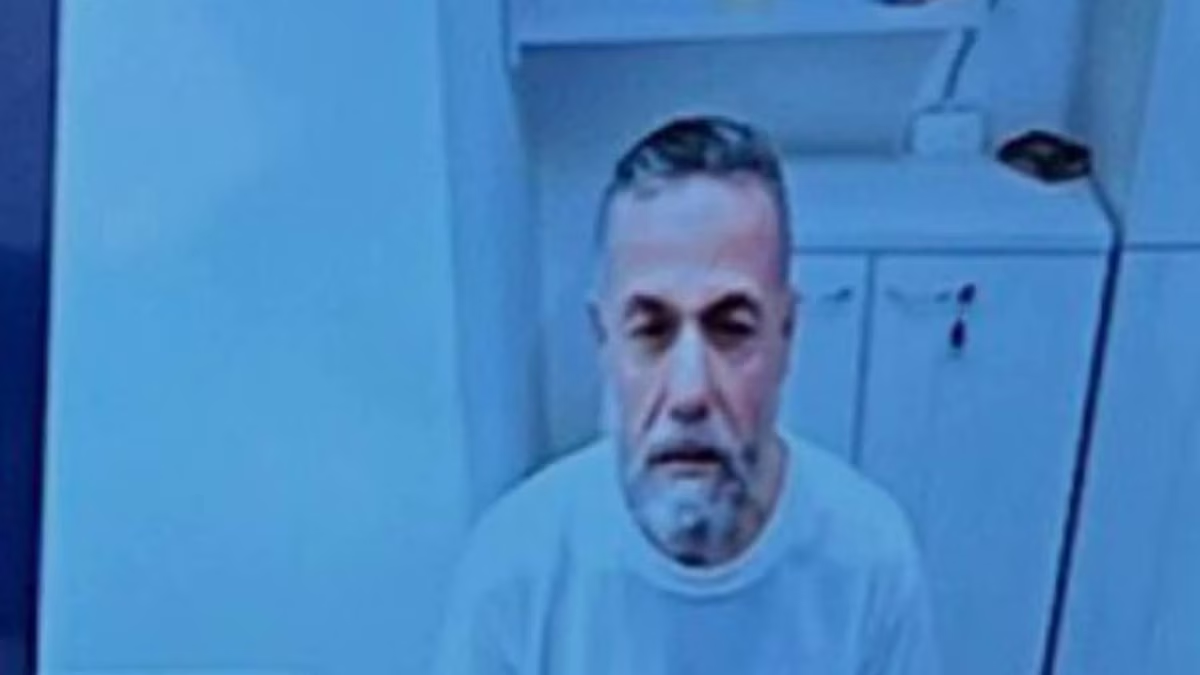
First image of the director of Kamal Adwan Hospital, the captive Hussam Abu Safiya, appearing in the occupation courts

Media platforms and Palestinian activists today circulated the first image of the director of Kamal Adwan Hospital in the northern Gaza Strip, Dr. Hussam Abu Safiya, during his presence in the Supreme Court hall of the occupation in occupied Jerusalem. The Palestinian doctor appeared in the image wearing prison uniform and handcuffed, showing signs of severe physical exhaustion reflecting the extent of suffering he faces behind bars.

Sources close to Abu Safiya's family and human rights activists reported that signs of torture and ill-treatment were clearly visible on his body during the court session. These developments come amidst his continued detention since late 2024, where he lives in harsh detention conditions lacking the minimum international humanitarian and legal standards that protect medical personnel.

The details of Dr. Abu Safiya's case date back to December 27, 2024, when occupation forces arrested him during a wide-ranging raid targeting Kamal Adwan Hospital. At that time, the hospital was the only lifeline and the last medical facility providing services to the besieged citizens in the northern Gaza Strip before it was forcibly put out of service.

Legally, the occupation authorities continue to detain the hospital director without filing a formal indictment or bringing him to a fair trial, based on what is known as the 'Unlawful Combatant Law'. This controversial law allows prison authorities to administratively extend the detention of Palestinians for long and indefinite periods, depriving them of the right to effective legal defense.

In a related context, the defense team for the captive doctor revealed that they had filed an appeal with the Supreme Court demanding an immediate end to his arbitrary detention, affirming the invalidity of the procedures taken against him. In a retaliatory move to this legal action, the prison administration transferred Dr. Abu Safiya to solitary confinement in 'Nafeh' desert prison, in an attempt to increase psychological and physical pressure on him.

The occupation is holding the Palestinian doctor without any formal charges or trial, under the so-called Unlawful Combatant Law.

PALESTINE

Fri 12 Jun 2026 10:08 am - Jerusalem Time

International Report: Israeli Army Responsible for Half of Explosive Weapon Victims Worldwide in 2025

The Explosive Weapons Monitor released its comprehensive annual report for 2025, revealing a heavy toll of bloodshed due to the use of lethal weapons in armed conflicts around the world. The report confirmed that the Israeli army topped the list of entities causing civilian casualties, with more than half of the globally recorded deaths resulting from the use of explosive weapons attributed to it, especially in light of the ongoing aggression on the Gaza Strip.

According to documented statistics collected by the Monitor, which includes a coalition of dozens of international non-governmental organizations, at least 22,600 civilians were killed or injured in 65 countries during the monitored year. The causes of these injuries varied between aerial bombardment, drone attacks, and the explosion of internationally prohibited anti-personnel mines and cluster bombs.

The report stressed that Israeli forces bear direct responsibility for 56% of all civilian deaths worldwide, a record figure reflecting the scale of violence practiced in the Palestinian territories. Researchers noted that despite the announcement of a ceasefire on October 10, 2025, the Gaza Strip remained a scene of almost daily Israeli raids, leading to continued bloodshed.

In a related context, the report reviewed shocking data on the targeting of children, citing reports from 'Save the Children' which confirmed the killing of approximately 20,000 children in Gaza since the war began in October 2023. The Monitor explained that the occupation army developed its killing tools through the use of modern and destructive technologies, including booby-trapped and killer robots that targeted densely populated residential areas.

The violations were not limited to traditional bombing; the report also observed a massive leap in the use of drones to target shelters, with attacks on displacement camps in Gaza and the West Bank increasing by about fivefold. The number of these incidents rose from 64 incidents in 2024 to 303 documented incidents in 2025, reflecting a systematic approach to terrorizing civilians fleeing death.

Globally, the report indicated that countries such as Ukraine, Myanmar, Syria, and Sudan also experienced devastating human losses, with government forces in those areas responsible for 85% of incidents harming civilians. In Ukraine, in particular, drone attacks on educational institutions saw a sharp increase of over 350% during the same year.

The Monitor warned that the announced figures represent the confirmed minimum, suggesting that the actual toll is likely much higher due to the difficulty of field documentation in active conflict zones. It also drew attention to the 'silent death' resulting from the indirect consequences of infrastructure destruction, such as hospitals ceasing to operate and the collapse of water and sanitation networks due to systematic bombardment.

For its part, human rights sources from 'Handicap International' stated that the deliberate use of explosives in populated areas aims to deprive residents of basic necessities of life. The sources explained that the destruction of schools, hospitals, and humanitarian aid convoys is occurring at increasing and unprecedented rates, constituting a blatant violation of international humanitarian law and conventions for the protection of civilians.

The report concluded by noting a worrying increase in attacks on the relief sector, with assaults on humanitarian aid operations rising by 52% to over 2,500 incidents. Educational institutions, including schools and universities, also recorded 1,416 attacks, an increase of 64% over the previous year, threatening a complete collapse of service systems in conflict-affected areas.

The use of explosive weapons in populated areas systematically deprives civilians of essential services, as schools and hospitals are destroyed at increasing rates.

ARAB AND WORLD

Fri 12 Jun 2026 10:08 am - Jerusalem Time

Controversial Medical Report: 22 Specialist Doctors Participated in Trump's Latest Examination

The latest medical report issued by the White House regarding the health status of US President Donald Trump has sparked a wave of interest and questions in political and medical circles. The report revealed the participation of 22 specialist doctors in evaluating his condition, which represents the highest number recorded in a medical examination for a US president during a single visit.

This number significantly exceeded all recorded figures for medical examinations of previous presidents, and also surpassed the number of specialists who supervised Trump's own examinations during his first term. Press sources indicated that this expansion of the medical team reflects exceptional attention to monitoring the health status of the president, who is approaching his eighth decade.

For his part, cardiologist Jonathan Reiner, who has extensive experience working with previous administrations, stated that this number is exceptional by all standards. Reiner questioned the nature of the specialties that necessitated the presence of such a large number of doctors, and the reasons for this intensive evaluation at this particular time.

In contrast, the President's physician, Sean Barbabella, sought to reassure the public by confirming that the evaluation results proved Trump to be in excellent health. Barbabella explained that the examination falls within a comprehensive preventive framework aimed at ensuring the continued efficiency of the President in performing his executive duties without any health obstacles.

The White House stated in an official statement that the use of such a large number of doctors reflects a modern, multidisciplinary approach to healthcare for senior officials. The administration affirmed that this procedure is consistent with the best international medical practices followed in caring for leading figures to ensure the accuracy of the results.

US administration officials revealed that the medical team was not limited to military personnel but also included experts from prestigious universities such as Harvard and Duke. Officials stressed that the administration follows a principle of full transparency in this matter, asserting that they have nothing to hide regarding the President's health status.

Despite these assurances, there are still ambiguous points that pique the curiosity of observers, including Trump undergoing a second medical examination at Walter Reed Military Medical Center last year. This procedure is unusual in presidential protocol, as presidents usually suffice with one annual examination unless health emergencies arise that require intervention.

The absence of the drug 'Finasteride' from recent medical reports also drew the attention of analysts; this drug was regularly used by Trump to prevent hair loss. This change in prescriptions raised questions about whether there was a change in the President's general medication protocol or other health reasons behind it.

These developments come at a sensitive time, as President Trump prepares to complete his eightieth year on June 14th. This age, along with his predecessor Joe Biden, places him among the oldest presidents to lead the United States in its modern history, making health a public issue par excellence.

Returning to historical records, a clear upward trend in the number of doctors overseeing the health of US presidents over the decades is evident. In 1989, President George H.W. Bush underwent an examination involving only five specialists, a small number compared to what we see today in modern presidential examinations.

At the turn of the millennium, the number rose to 12 specialist doctors during President George W. Bush's era in 2001. This increase reflects the development in medical technology and the increased complexity of preventive examinations aimed at early detection of any potential health disorders in leaders.

During Trump's first term, the medical team consisted of about 13 specialist doctors, whose specialties included cardiology, pulmonology, gastroenterology, and orthopedics. Over time, this number continued to rise to 14 specialists last year, before jumping to 22 in the latest evaluation.

Despite public and political interest, American laws remain flexible regarding the privacy of presidential medical records, as there is no legal obligation to publish them in full. The matter is usually left to the discretion of the President and his administration to determine the amount of information shared with the public and the media.

Meanwhile, lawmakers from both parties, Democratic and Republican, continue to push for legislation that ensures greater health transparency. Some proposals include establishing an independent and neutral medical committee responsible for periodically assessing the physical and mental fitness of presidents, away from political tug-of-war.

“It’s an extraordinary number, and the question is what specialties do these doctors represent and why was there a need for such a large number?”

OPINIONS

Fri 12 Jun 2026 10:07 am - Jerusalem Time

When Silence Becomes a Partner in Tragedy: A Reading of Francesca Albanese's "When the World Sleeps"

Washington Message

Washington - Said Arikat - 12/6/2026

There are books that are read and then put away, and books that leave a fleeting impression on memory, but there are rare books that haunt their reader long after the last page, denying them the comfort of returning to their previous certainties. Francesca Albanese's book "When the World Sleeps" belongs to this rare category. Between its covers, we find not just a new narrative about Palestine, but a moral confrontation with one of the most disturbing questions of our time: How can the world witness such human suffering and then continue its life as if nothing happened?

I closed the last page of the book, but the book did not close its doors within me. One question kept echoing insistently: What happens to the world's conscience when human pain becomes familiar? And how does tragedy, through repetition, silence, and political impotence, turn into a mere fleeting news item in the daily news cycle?

This question is the beating heart of Albanese's work. It is also what gives the book its uniqueness and importance.

"When the World Sleeps" is not a political book in the traditional sense, although it addresses one of the most complex and controversial political issues in the world. It is, above all, an attempt to reclaim the human from the ruins of cold geopolitical language that for decades reduced Palestine to maps, negotiations, UN resolutions, and power balances. At a time when international institutions were accustomed to talking about "conflict," "political process," and "crisis management," Albanese brings the reader back to the first and simplest truth: there are human beings living, dying, and suffering under this reality every day.

This work was written at one of the bloodiest and darkest moments in the contemporary history of the region, resulting in a coherent blend of autobiography, legal reflection, human testimony, and ethical thought. Through ten personalities who had a decisive impact on shaping her consciousness, Albanese weaves a narrative that transcends the boundaries of political analysis to touch upon major questions related to justice, memory, and human responsibility.

These individuals are not just fleeting characters in the book, but mirrors reflecting different facets of tragedy and resilience together. Palestinians and Jews, activists, thinkers, and ordinary individuals, are united by one truth: they all experienced, in different ways, the effects of injustice, violence, and displacement. Through their stories, Albanese refuses to reduce Palestine to a manageable political conflict, insisting on seeing it as a daily human experience lived by millions under the weight of occupation, deprivation, and fear.

And herein lies one of the book's most prominent strengths. Much of what has been written about Palestine has fallen captive to one of two contradictory tendencies: either a dry political language that loses the human presence, or a noisy ideological discourse lacking depth and complexity. Albanese, however, succeeds in escaping both pitfalls. She writes with the precision of a legal researcher, and with the sensitivity of someone who has spent many years listening to the voices of the marginalized and oppressed. Therefore, her language appears clear without simplification, emotional without vulgarity, and sharp without losing its balance.

The book's title summarizes its central idea in the most eloquent way. Tragedy, in the author's view, lies not only in the occurrence of injustice but in the world's habituation to it. The problem is not that atrocities happen, but that they now happen before everyone's eyes without provoking enough anger, action, or accountability. Palestinians, according to this perception, are not only victims of occupation and violence, but victims of a global system that has become accustomed to seeing them suffer without feeling an urgent need to change the reality that produces this pain.

One of the most important features of the book is its ability to combine law and ethics in a single narrative. Albanese, as an expert in international law, discusses concepts of occupation, apartheid, forced displacement, collective punishment, and genocide, but she does not allow these concepts to remain mere technical terms. Each legal concept is linked to a human face, a life story, and a concrete experience. The law here does not speak of numbers and statistics, but of flesh-and-blood human beings.

This human dimension is most clearly evident in the chapters dealing with the children of Gaza. Children do not appear as anonymous victims in news reports, but as individuals with names, dreams, features, and a future that awaited them. The story of the child Hind Rajab stands out as one of the most painful testimonies in the book, not only because of the tragic nature of her end, but because it reveals the extent to which the world has become capable of watching the highest degrees of human suffering without being met by a real will to intervene or change.

Nevertheless, the book does not succumb to despair. Despite the magnitude of the pain it documents, it remains imbued with a deep belief in the value of human solidarity and the ability of conscience to awaken. For this reason, Albanese gives ample space to Jewish voices, thinkers, and Holocaust survivors who refused to exploit historical tragedy to justify new injustice. These testimonies acquire special importance because they refute attempts to conflate criticism of Israeli state policies with anti-Semitism, and affirm that defending Palestinian rights does not contradict respect for Jewish memory or opposition to hatred in all its forms.

The personal honesty with which the author writes about herself also draws attention. She does not speak from the position of an expert insulated by academic distance, but reveals the frustration that accompanies working within international institutions, the psychological toll paid by those who dedicate their lives to confronting injustice, and the feeling of helplessness in the face of repeated tragedy. This personal dimension gives the book additional human warmth and makes it closer to a testimony than to a report.

Literarily, the work is characterized by elegant language and a style that moves smoothly between personal reflection, political analysis, and legal advocacy. Some of its pages seem closer to meditations on grief, memory, and moral responsibility, while other pages appear as a precise and coherent indictment against a global system that applies principles of justice with clear selectivity.

The publication of this book comes at a historical moment witnessing significant shifts in the global discourse on Palestine. New generations, especially in the West, are more willing to question traditional narratives that have long dominated public debate, and more sensitive to the contradiction between declared principles and actual practices in international politics. From this perspective, the book appears as an expression of an emerging moral awakening as much as it is a documentation of the tragedy itself.

But the true value of this work lies in the fact that it does not allow the reader to remain a spectator at a safe distance. It does not ask for fleeting sympathy or temporary pity, but rather imposes a moral confrontation with oneself. After finishing the reading, the question is no longer about Palestine alone, but becomes a question about the nature of our world and the limits of our shared humanity: What happens to a human being when they get used to seeing tragedy? And what happens to the international community when silence becomes its natural response to injustice?

"When the World Sleeps" is not just a book about Palestine. It is, in essence, a moral indictment of an entire era. An era that saw, knew, and understood, and then often chose to turn its back.

Hence its true importance.

It not only tells the story of the victims but also holds the witnesses accountable.

In a time filled with propaganda, polarization, and media noise, Francesca Albanese offers something increasingly rare: a voice driven by a moral compass more than by political calculations. Whether the reader agrees with all her conclusions or disagrees with them, this book remains an important contribution to documenting Palestinian suffering, and to holding accountable a world that is still unable to confront that suffering with the honesty and courage it deserves.

And perhaps for this very reason, the book remains present in the mind after it ends. It does not offer the reader the comfort of final answers, but leaves them with an open and disturbing question: If the world is truly asleep, who will wake it up?

OPINIONS

Fri 12 Jun 2026 10:07 am - Jerusalem Time

Iran and Washington Between the Fire of Escalation and Opportunities for Agreement: What After the New American Strikes?

With the renewal of American strikes on targets inside Iran, the question that occupies the region and the world returns: How will Tehran respond? Are we facing a new round of war, or a calculated escalation aimed at improving negotiation terms?

The recent American strikes were not just an isolated military operation, but came in the context of a continuous pressure strategy adopted by the Trump administration, based on combining military force, the known Trumpian arrogance, economic sanctions, and political threats. Washington wants Iran to pay the price for its rejection of American conditions regarding the nuclear program, ballistic missiles, and its regional role, but at the same time, it does not seem willing to slide into a comprehensive war that could drag the entire region into an open confrontation. Recent American statements indicate that the strikes may continue unless Tehran responds to American demands or returns to the negotiating table with new conditions.

As for Iran, it finds itself facing a complex equation. It cannot ignore the American strikes because that would be interpreted internally and regionally as a retreat and a loss of deterrent prestige. However, at the same time, it realizes that entering into a direct and comprehensive war with the United States could present it with enormous military and economic challenges.

For this reason, it seems that the Iranian response will lean towards a policy of "calculated response." That is, inflicting painful strikes on the United States or its allies without reaching a level that necessitates an open war. Some features of this approach have already begun to appear through targeting bases and sites associated with American forces in the region, sending a clear message that any aggression will not go without cost.

Among the most sensitive cards Iran possesses is the Strait of Hormuz card, which Washington seeks to strip it of this powerful pressure card. This vital maritime passage constitutes a major artery for the flow of global energy, and any disruption to its movement immediately reflects on international markets and oil prices. The past few hours have witnessed an escalation related to the Strait, which reflects Tehran's awareness of the importance of this card in the equation of conflict with Washington.

However, what distinguishes Iranian behavior historically is that the response is not always immediate or direct. Often, the Iranian leadership prefers to wait and choose the appropriate timing and place for a response, achieving the greatest political and military impact with the least possible cost. Therefore, the absence of a major response in the first hours does not necessarily mean that Iran has decided to retreat, but may be part of more complex calculations.

In contrast, it seems that Trump seeks to achieve more than one goal at a time. He wants to show firmness to American public opinion, impose more pressure on Iran, improve Washington's negotiating position, and perhaps test the limits of Iranian resilience and endurance. However, the problem facing the American administration is that military strikes alone do not guarantee the achievement of political goals, especially when it comes to a country that has proven over the past decades its ability to adapt to pressures, sanctions, and indirect wars.

While the region does not seem to be heading towards a world war or a comprehensive confrontation in the near term, it is certain that it has entered a new phase of dangerous escalation. Iran will likely respond, and the United States will continue to pressure, while the real danger remains in a miscalculation or a reaction that exceeds the drawn boundaries, turning the conflict from a war of attrition and mutual pressures into a wide regional confrontation whose paths and outcomes are difficult to control.

The question today is not whether Iran will respond, but how, where, and when this response will be, because the answer to these questions will determine the shape of the Middle East in the next phase, and perhaps also determine whether the region will return to the negotiating table or slide into a new chapter of open wars.

In conclusion, the essence of the conflict is not about an American strike here or an Iranian response there, but a battle of wills over shaping the future Middle East. Washington seeks to impose a new regional order whose political, security, and economic threads it controls, while Tehran believes that retreating today will not only mean losing a round, but losing a position and role it has accumulated over decades of conflict and confrontation.

Therefore, the region stands at a pivotal moment that may not be measured by the results of military strikes as much as by the ability of each party to impose its political equation. Wars are not always decided by the number of missiles and planes, but by the extent of the adversaries' ability to break each other's will. And so far, Washington does not seem capable of completely subjugating Iran, nor does Tehran seem capable of expelling American influence from the region.

And between these two contradictory goals, the Middle East remains an arena open to dangerous possibilities, where any small spark can turn into a widespread fire, and a single decision or miscalculation can ignite a confrontation whose results will not be limited to the parties to the conflict, but will affect the entire region, and perhaps the world, which is anxiously watching a frantic race between the logic of power and the logic of survival.

PALESTINE

Fri 12 Jun 2026 10:07 am - Jerusalem Time

Settler calls for occupation of Palestinian villages, and her husband reveals: Authorities armed us like an army

The intensity of settler incitement in the occupied West Bank escalated after an Israeli settler woman and her husband appeared in a television interview, during which they made extreme statements clearly calling for the displacement of Palestinians from their villages. The interview included justifications for using excessive force against Palestinian civilians, with claims of exclusive settler ownership of the land, reflecting the growing radical approach among settler groups.

The settler woman, during her speech, expressed her ambition to see the Israeli army and settlers completely control Palestinian villages and expel their residents. She claimed that this measure represents a restoration of what she described as 'historical right,' demanding the removal of legal and security restrictions on settler movements deep within populated Palestinian areas.

In the context of justifying the attacks, the settler woman stated that the practice of violence is not an end in itself, but she considered it a 'necessary means' to protect the settlement project and expand its influence. She strongly attacked all international and local voices that criticize settler behavior, calling for them to be granted full immunity and official support to implement their initiatives aimed at controlling more land.

For his part, the settler's husband revealed serious details regarding the official support that settler groups receive from the Israeli authorities. He explained that they receive heavy military equipment, including advanced machine guns, bulletproof vests, and helmets, which transforms them into a parallel military force operating in the field.

The husband confirmed that settlers undergo organized military training under the supervision of official bodies, emphasizing that they now operate 'as a full-fledged army.' He indicated that this readiness aims to suppress any Palestinian movement and secure settlement expansion in areas that were previously beyond their reach.

These statements come at a sensitive time when the West Bank is witnessing an unprecedented escalation in home demolitions and agricultural land leveling operations. These attacks coincide with preventing Palestinian farmers from accessing their fields, especially in areas adjacent to settlements and illegal outposts supervised by extremist youth.

These positions have sparked a wave of widespread anger and criticism, with observers considering them conclusive evidence of a 'role-swapping' policy between the army and settlers. International parties warned that such incitement fuels a cycle of violence and undermines any remaining chances for stability in the region, amid official silence regarding these transgressions.

Current statistics indicate the presence of about 750,000 settlers distributed among 141 official settlements and 224 illegal settlement outposts in the West Bank and East Jerusalem. These communities continue to expand despite categorical international rejection, as the United Nations and all major powers consider settlement a grave violation of international law.

At the end of the interview, the settlers emphasized the necessity of continuing to concentrate in the new areas they recently controlled, considering their armed presence as the only guarantee to impose a new reality on the ground. This vision reflects the magnitude of the challenges faced by Palestinians in light of the growing armed settler militias that enjoy political and military cover.

We are like an army; the authorities provide us with machine guns, bulletproof vests, and helmets, in addition to intensive military training.

PALESTINE

Fri 12 Jun 2026 10:06 am - Jerusalem Time

UN Report: Settler Violence in West Bank Reaches Record Levels with 6 Attacks Daily

The United Nations has expressed its deep concern over the sharp escalation in attacks by Israeli settlers in the occupied West Bank, describing this increase as reaching unprecedented record levels. The international organization affirmed that these attacks have become a daily and direct threat to the lives and property of Palestinians in various governorates.

UN reports issued by the Office for the Coordination of Humanitarian Affairs (OCHA) documented more than a thousand attacks by settlers since the beginning of this year, 2026. Sources clarified that these assaults resulted in casualties and injuries among civilians, in addition to causing severe damage to private property and public facilities.

Stéphane Dujarric, Spokesperson for the UN Secretary-General, indicated that settler violence has affected more than 230 areas and population centers across the West Bank. Dujarric explained that last week alone saw more than 30 Palestinian citizens injured as a result of organized attacks targeting their livelihoods and infrastructure.

The UN report revealed that the daily average of attacks resulting in injuries or material damage has reached six attacks, which is the highest historical rate recorded within a single year. These figures reflect the extent of lawlessness practiced by settler groups under the protection or complicity of Israeli authorities.

This wave of violence, along with severe movement restrictions, has led to the forced displacement of more than 2,200 Palestinians since the beginning of this year. House demolitions carried out by Israeli authorities have also displaced hundreds more, exacerbating the humanitarian crisis in areas classified as 'C'.

On the international level, several countries, including Australia, Canada, France, Norway, and Britain, have taken punitive measures against networks that support and finance settler violence. These sanctions aim to limit the ability of these groups to carry out their systematic assaults against Palestinian villages and towns.

For his part, Moayyad Shaaban, head of the Wall and Settlement Resistance Commission, warned of the Israeli government's transition to an intensive implementation phase of the settlement project. He explained that the current Netanyahu government, since taking office at the end of 2022, has approved the establishment of 103 new settlement sites to enhance control over the land.

In a related context, Amnesty International called for urgent global action to stop what it described as a 'sharp acceleration in the pace of ethnic cleansing' in the West Bank. The organization stressed the need to cut all forms of support for the occupation system that seeks to annex the West Bank and entrench an apartheid regime.

Data from the 'Peace Now' movement revealed the allocation of massive budgets totaling approximately 51 million dollars for preparing plans to build dozens of new settlements. These moves come within the framework of a government plan aimed at increasing the number of settlers, who currently exceed 750,000 distributed across hundreds of settlements and outposts.

The West Bank has witnessed a military escalation and simultaneous settler attacks since October 2023, aimed at pushing Palestinians towards forced displacement. Settler groups are exploiting the current circumstances to expand their influence at the expense of Palestinian lands, amidst international silence that observers see as encouraging the continuation of these violations.

The current rate of settler attacks causing injuries or damage averages six attacks per day, which is the highest ever recorded in a single year.

OPINIONS

Fri 12 Jun 2026 10:02 am - Jerusalem Time

Congress Is Quietly Moving to Integrate the U.S. and Israeli Militaries


By: Said Arikat


June 12, 2026


News analysis


Washington, D.C- Buried deep within the 2027 National Defense Authorization Act (NDAA) is a provision that could fundamentally reshape the military relationship between the United States and Israel.


Section 224, titled the United States-Israel Defense Technology Cooperation Initiative, seeks to synchronize defense research, development, testing, production, and industrial cooperation between the two countries. Supporters describe it as a logical extension of an already close alliance. Critics see something far more consequential: a framework that could further entrench Israeli influence over U.S. foreign and defense policy.


As Responsible Statecraft’s Ben Freeman noted, the initiative could leave the American political system even more vulnerable to the priorities of an Israeli government that has repeatedly sought to draw Washington deeper into Middle Eastern conflicts.


Opposition quickly emerged in Congress. Representative Ro Khanna (D-CA) introduced an amendment to remove the provision, arguing that Americans are tired of Israeli Prime Minister Benjamin Netanyahu dictating U.S. policy choices. His effort failed in the House Armed Services Committee.


Progressive lawmakers echoed those concerns. Senator Bernie Sanders argued that Americans do not want additional military support for Israel, while Representative Thomas Massie (R-KY) pledged to introduce an amendment striking the measure altogether.


Former State Department official Josh Paul, who resigned over the Biden administration’s Gaza policy and later co-founded the political action committee A New Policy, warned that the proposal extends beyond technology sharing.


“This integration of the U.S. and Israeli defense industrial bases would expose our most sensitive technologies to a country with a documented history of industrial espionage,” Paul argued. More importantly, he said, it could give Israel leverage over U.S. foreign policy by creating American dependence on Israeli supply chains.


The NDAA provision did not emerge in isolation. Earlier this year, lawmakers introduced the bipartisan United States-Israel Framework for Upgraded Technologies, Unified Research, and Enhanced Security (FUTURES) Act of 2026. The legislation would authorize $150 million annually for joint military technology development.


Supporters, including Senator Kirsten Gillibrand (D-NY), describe the initiative as a long-term investment in shared security interests. The effort has also been championed by pro-Israel organizations such as AIPAC and the Foundation for Defense of Democracies.


Yet the legislation coincides with a broader effort by Israel to redefine its security relationship with Washington.


The current ten-year memorandum of understanding governing U.S. military assistance to Israel expires in 2028. At the same time, discussions are reportedly underway between the Trump administration and Israel’s Defense Ministry regarding a new security framework.


For months, Netanyahu has publicly argued that Israel should eventually move beyond direct U.S. military assistance. In a recent interview with 60 Minutes, he said he wanted to reduce the financial component of U.S.-Israeli military cooperation to zero, allowing Israel to purchase weapons independently rather than relying on American aid.


At first glance, the proposal appears to lessen Israel’s dependence on Washington. In reality, critics argue that it merely changes the mechanism of support.


On June 3, Representatives Marlin Stutzman (R-IN) and Abraham Hamadeh (R-AZ) introduced a resolution endorsing Netanyahu’s vision of transitioning the relationship toward mutual defense cooperation and joint economic investment. The measure praised Israel’s military contributions and framed the partnership as a model for the future.


According to The Washington Post, Netanyahu personally approved the initiative before it reached the House floor and openly praised its direction. He later reinforced his support in a public letter.


Analysts argue that Section 224 should be viewed within this larger strategic shift. Rather than ending American subsidization of Israel’s military sector, they contend, it would transform aid into a more integrated system of co-production and joint development.


“Netanyahu’s proposal will not end taxpayer support for Israel,” said Josh Ruebner, policy director at the Institute for Middle East Understanding according to Mondoweiss. “It will increase it.”


Instead of American taxpayers financing weapons transfers to Israel, Ruebner argues, they could end up funding Pentagon purchases of Israeli weapons and technologies. Such an arrangement would likely increase revenues for Israeli defense companies while further intertwining the two countries’ military-industrial sectors.


The broader vision behind this transformation has become increasingly explicit. In a recent Guardian article, analysts Eli Clifton and Ian Lustick highlighted a report titled Israel 2048: A Blueprint for a Rising Asymmetric Geopolitical Power.


The report imagines an unprecedented level of U.S.-Israeli military integration as part of a global struggle against Russia, China, and what it portrays as a broader ideological coalition threatening Western dominance.


Clifton and Lustick argue that the document envisions Israel not merely as a regional ally but as a dominant Middle Eastern power capable of conducting preventive wars against rivals and serving as Washington’s principal strategic partner in preserving a U.S.-led international order.


They contend that such ambitions reveal the influence of well-funded ideological networks and think tanks that have long sought to align American and Israeli strategic interests.


One of the report’s co-authors is David Wurmser, a longtime neoconservative strategist who previously advised Vice President Dick Cheney and former National Security Adviser John Bolton. Wurmser also helped draft the 1996 “Clean Break” report, which advocated abandoning the Oslo peace process, removing Iraqi leader Saddam Hussein, and containing Syria militarily. The report was originally prepared for Netanyahu during his first term as prime minister.


Israel’s search for a new strategic framework may also reflect changing political realities inside the United States.


Public support for Israel has declined significantly in recent years. An April Pew survey found that 60 percent of Americans now hold unfavorable views of Israel, including roughly eight in ten Democrats. Skepticism is also rising among younger Republicans. According to the same poll, 57 percent of Republicans under 50 view Israel unfavorably, up from 50 percent a year earlier.


Those trends help explain why Israeli officials have reportedly explored new long-term security arrangements tailored to an increasingly skeptical American public and an evolving “America First” political environment.


“It is clear that public opinion in the United States has undergone a transformation when it comes to perceptions of Israel,” Paul observed. “Even Israel’s strongest supporters recognize that the era of the blank check may not be sustainable indefinitely.”


Whether Section 224 ultimately survives the legislative process or not, the debate surrounding it reveals a larger reality: the issue is no longer simply the size of U.S. aid to Israel. It is the effort to institutionalize a far deeper military, industrial, and strategic integration—one that could shape American foreign policy long after the current aid framework expires.

PALESTINE

Thu 11 Jun 2026 11:43 pm - Jerusalem Time

Under settler fire.. the Christian town of Taybeh in the West Bank faces an organized attack and widespread assaults

Israeli settler attacks on the town of Taybeh, located east of Ramallah, have taken center stage in the occupied West Bank, following an organized assault targeting lands and properties last Tuesday evening. Videos circulated by activists showed massive fires engulfing agricultural crops, amidst widespread popular and international outrage over the targeting of the town, which is considered the last fully Christian village in the region.

Local sources reported that a group of settlers deliberately set fire to large areas of Jabal al-Musays, near the vital gas station in the town. Father Bashar Fawadleh, the Latin parish priest in Taybeh, confirmed that the fires spread to citizens' properties, amid desperate attempts by residents to control the blaze and protect their homes from the continuous spread of flames.

Occupation authorities initially obstructed the access of Palestinian civil defense teams to the fire site, citing incomplete security coordination procedures required to enter the area. This deliberate obstruction allowed the fires to spread more widely, increasing the extent of material losses in agricultural lands that Palestinian families rely on for their daily livelihoods.

The assault was not limited to burning lands but extended to direct physical attacks against young men from the town who tried to extinguish the fires using private water tankers. Sources reported that settlers surrounded the young men and assaulted them, also causing severe damage to two vehicles and stealing personal belongings, all under the protection and presence of occupation forces who did nothing to stop the attackers.

Testimonies from within the town documented live ammunition being fired at citizens on three separate occasions during the attack, threatening the lives of dozens of local community members. Human rights organizations described this behavior as part of a escalating pattern of systematic violence aimed at displacing Palestinians from their lands and destroying the elements of their steadfastness in the targeted villages and towns.

Taybeh holds significant symbolic and historical importance, inhabited by Christians of Latin Catholic, Greek Orthodox, and Melkite denominations, who have maintained a continuous religious presence since the early centuries. Historians and activists link the town to the historical 'Ephraim' mentioned in the Gospels, making its targeting an assault on a global Christian heritage spanning thousands of years in the Holy Land.

Internationally, the attack sparked angry reactions, with Marjorie Taylor Greene, a former member of the U.S. Congress, criticizing the silence of Christian communities in the West regarding what Palestinian Christians are subjected to. She noted that many are unaware of the reality of the atrocities committed on the ground, considering what is happening in Taybeh a painful truth that exposes the falsity of claims about protecting minorities.

For his part, UN Secretary-General António Guterres warned of the repercussions of escalating settler violence in the West Bank, pointing out that home demolitions and illegal settlement expansion threaten stability. Guterres affirmed in UN reports that the continuation of these policies entrenches the occupation and pushes towards forced displacement operations that lack any legal or moral validity.

National and religious events in Taybeh concluded their statement by emphasizing that the town's suffering reflects a painful reality witnessed across all areas of the West Bank without real international deterrence. The statement stressed that steadfastness on the land is the only response to attempts of settler terrorism, calling on international institutions and churches worldwide to take immediate action to protect holy sites and authentic Palestinian communities.

What happened is not an isolated incident, but a link in a continuous chain of settler violence that seeks to terrorize an entire community whose only fault is its existence on the land of its ancestors.

PALESTINE

Thu 11 Jun 2026 11:43 pm - Jerusalem Time

Outrage in London over Israeli real estate exhibition promoting sale of land in occupied settlements

The intensity of political and human rights criticisms in the British capital, London, has escalated against the organization of an Israeli real estate exhibition. Reports have revealed the involvement of participating companies in settlement projects within the occupied West Bank and Jerusalem. The British government faces increasing pressure to investigate the legality of this event and prevent its occurrence, given its explicit violation of international law and the official stances of the United Kingdom.

Journalistic sources reported that the 'Grand Israeli Real Estate Exhibition,' scheduled for June 14th, is being shrouded in complete secrecy by its organizers regarding its location. This secrecy came after a list of participating companies, published by event officials, was observed to include names of real estate entities directly involved in the construction and development of illegal settlements.

Among the companies that have sparked controversy, 'Harry Zahav' real estate development company stands out, openly promoting properties in the 'Negohot' settlement built on Hebron lands. The list also includes the 'Meshulam Levenstein' engineering group, responsible for implementing residential and commercial complexes in the 'Homat Shmuel' settlement built on occupied East Jerusalem lands.

Participation was not limited to construction companies but also included marketing agencies such as 'Tifush Sheli,' which offers residential units in the 'Ma'ale Adumim' settlement. These activities are part of a settlement economic system that seeks to attract foreign investments to confiscated Palestinian lands, which human rights organizations consider an entrenchment of the occupation policy.

In the British Parliament, Labour MP Richard Burgon directed direct questions to Foreign Secretary Yvette Cooper about the government's intention to ban this exhibition. Cooper responded that authorities are closely monitoring the details of this event, emphasizing that any violation of British law will be met with strict legal follow-up to ensure compliance with international standards.

For its part, the British Foreign Office issued a statement affirming that Israeli settlements are illegal and pose a threat to security and peace. The ministry pointed to the recent update of business risk guidelines to clarify the prohibition of British citizens and companies from engaging in any financial or economic activities within these illegal settlements.

In contrast, the exhibition organizers attempted to defend the event by claiming that all properties on display are located only within the 'Green Line.' The organizers described the criticisms directed at them as 'absurd claims' driven by hostile political stances, despite previous evidence of their promotion of settlements such as 'Gush Etzion' before they were recently removed from the website.

The leader of the British Green Party, Zack Polanski, expressed his condemnation of London hosting an event that promotes the sale of looted land at a time when settler violence is escalating. Polanski called on London Mayor Sadiq Khan to intervene immediately to prevent the exhibition, stressing the city's need not to tolerate any complicity in the displacement of the Palestinian people.

In turn, former Labour leader Jeremy Corbyn described the exhibition as an 'unreasonable and illegal' act, noting that the occupying power is selling land it does not own. Corbyn called on the British community to reject these practices that contribute to the displacement of Palestinians and disregard international resolutions related to the status of occupied territories.

On the legal front, the International Centre for Justice for Palestinians demanded an urgent investigation and sent official letters to the London police and the Ministries of Interior and Business. The center affirmed that turning the occupation into a real estate investment opportunity is a grave violation, reminding the Interior Minister of her legal powers to prevent such provocative events.

Amnesty International joined those calling for immediate action, urging the British government to take concrete measures to prevent the exhibition from taking place. The organization clarified that allowing such activities sends wrong messages about the UK's commitment to human rights and international law in the occupied Palestinian territories.

In a related context, independent MPs revealed that the exhibition is not merely a neutral commercial event but a tool for marketing Israeli settlement policies. MP Shaukat Adam affirmed that silence on this exhibition amounts to implicit approval of the illegal activities carried out by the occupation authorities in the West Bank.

The crisis did not stop at the exhibition but extended to the revelation of British charities transferring more than £28 million to settlements. MP Melanie Ward filed a formal complaint with the Charity Commission, demanding a halt to this financial flow that indirectly supports settlement expansion.

Prime Minister Keir Starmer concluded the debate by affirming that no charity should support settlements, while the fate of the real estate exhibition remains shrouded in mystery. Human rights and political circles are awaiting the practical steps that the British authorities will take as the scheduled date for the controversial event approaches.

Palestinian land is not for sale, and occupation is not a real estate investment opportunity; rather, it is a blatant violation of international law.

PALESTINE

Thu 11 Jun 2026 11:43 pm - Jerusalem Time

Colombian President attacks Israeli Foreign Minister: I am not antisemitic and I reject the war of extermination

Colombian President Gustavo Petro launched a scathing attack on Israeli Foreign Minister Gideon Sa'ar, accusing him of resorting to personal insults to compensate for the absence of convincing political and legal arguments regarding the ongoing aggression in the Gaza Strip. Petro affirmed that his position, rejecting what he described as a 'genocidal war,' stems from his country's commitment to the principles of international law and universal human rights.

In a strongly worded message published on his official accounts, the Colombian President clarified that Sa'ar is trying to fill the void in his political logic by resorting to insults, citing the ideas of the German philosopher Arthur Schopenhauer on the weakness of argument. Petro added that he feels proud when the insult comes from a government accused of committing major crimes, emphasizing that he represents a free people who do not accept dictates.

Petro categorically rejected the repeated Israeli accusations of antisemitism against him, considering this accusation to lack historical and scientific accuracy. He pointed out that Arabs and Jews share the same Semitic roots, explaining that the peoples descended from the language in which ancient historical stories in the region were written are Semitic peoples par excellence.

The Colombian President continued his speech by emphasizing that Arab peoples are Semitic just as the Jewish peoples who historically lived in Palestine were, including Jesus Christ. He affirmed his belief in the human values advocated by Christ, noting that this belief prevents him from sliding into any form of racial or religious hatred.

Petro stressed that his opposition to the war in Gaza is not linked to the religious identity of the perpetrators or victims, but rather stems from the fact that what is happening constitutes a crime against humanity according to international standards. He explained that defending Palestinian rights is a moral and legal duty imposed by global conscience in the face of blatant violations.

In the context of political solutions, the Colombian President reiterated his support for the establishment of an independent and fully sovereign Palestinian state living side by side with Israel. He called for a return to the 1967 borders as a fundamental basis for achieving a just and comprehensive peace that ends decades of conflict and occupation in the region.

Petro also affirmed that he never diminishes the scale of the tragedy suffered by Jews during the Nazi Holocaust in Europe, but rather draws harsh lessons from it to prevent its recurrence. He said that remembering the Holocaust aims to protect humanity from falling into the trap of racism and xenophobia that could lead to new catastrophes.

The Colombian President linked the Nazi Holocaust to the history of the enslavement of African peoples, warning of the emergence of signs of a 'new global Holocaust' targeting migrants and the vulnerable in modern times. He noted that current extremist political discourses are reproducing the ideas that paved the way for the rise of fascism in the last century.

Petro warned of the danger of the spread of hate speech through social media and the use of digital algorithms to fuel ethnic conflicts. He affirmed that warning the world of these dangers does not in any way mean belittling the suffering of Jews, but rather is an investment of the lessons of history in protecting the future of humanity.

In a striking escalation, Petro accused the Israeli government of attempting to directly interfere in Colombia's internal affairs and influence the results of the upcoming elections. He addressed Sa'ar, demanding that he stop building alliances with suspicious parties and former drug traffickers for the purpose of manipulating the democratic process.

The Colombian President based his accusations on reports and audio recordings attributed to former officials in the region, which underwent precise digital forensic examinations. He indicated that this evidence shows systematic attempts to use money and artificial intelligence technologies to mislead Colombian public opinion and destabilize the country.

Petro affirmed that the Colombian people have sufficient awareness to recognize attempts to manipulate their freedom, stressing that his country does not attack anyone but rejects subservience. He added that national sovereignty is a red line that cannot be crossed under any political or security pretext.

The President concluded his message by speaking about the Latin identity that takes 'life and freedom' as its basic motto, recalling the struggle of the Haitian people against slavery and its impact on the history of the region. He explained that the Colombian flag with its three colors symbolizes the Caribbean sun and liberation from all forms of colonialism.

Petro stressed in his concluding remarks that the peoples of Latin America always side with the culture of life and reject the policies of death and destruction that some try to impose internationally. He affirmed that defending human values in Palestine is an integral part of defending human dignity everywhere.

I feel proud of your insult when it comes from a government that committed genocide in Gaza, while I am a free man and belong to a free people.

OPINIONS

Thu 11 Jun 2026 11:43 pm - Jerusalem Time

Trump announces agreement with Iran is near, postpones military strike

Urgent: Washington's Message

Washington – Said Arikat – 11/6/2026

In a remarkable development that could redraw the equations of conflict in the Middle East, US President Donald Trump announced that an agreement with Iran had been reached, confirming that the official announcement of its signing would be made soon, after weeks of military tension and mutual threats of using force between Washington and Tehran.

Trump said in a post on the "Truth Social" platform that discussions with the Islamic Republic of Iran had reached the highest levels of Iranian leadership and received the necessary approvals, adding that he had decided to cancel the military strikes and bombing operations that were scheduled against Iran this evening, in a move that reflects a sudden shift from the brink of military confrontation to the path of political settlement.

The US President indicated that the "final points" of the agreement had been agreed upon "in principle and in precise details," and that several regional and international parties participated in the consultations or approved their outcomes, including Israel, Saudi Arabia, the UAE, Qatar, Turkey, Pakistan, Bahrain, Kuwait, Jordan, and Egypt.

Despite the confident tone used by Trump, the announcement was not accompanied by any official confirmation from the Iranian side, which left question marks about the maturity of the announced understandings, and whether Tehran views them as a final agreement or merely an initial framework for continuing negotiations.

Trump also affirmed that the US naval blockade imposed on Iranian ports would remain "in full force" until the agreement is finalized, which observers considered a clear indication that negotiations have not yet reached the stage of full implementation, and that Washington still retains key leverage to ensure Iran's commitment to what is agreed upon.

These developments come after a period of dangerous escalation that witnessed repeated American threats to target Iranian facilities, in exchange for Iranian warnings of retaliation for any attack. However, both sides seemed more inclined in recent days to contain the crisis, especially amid fears that any direct clash could ignite a wide regional confrontation involving the Gulf, Iraq, Syria, and Lebanon.

Circulating data indicates that the document on the negotiating table revolves around extending the current fragile ceasefire and creating conditions for broader negotiations on the Iranian nuclear program, in addition to other security and regional issues that have long been a source of disagreement between the two sides.

However, previous experiences lead many to treat the American announcement with caution. Trump has previously spoken more than once about the imminent conclusion of an agreement with Iran, before negotiations faltered or collapsed due to accumulated disagreements over sanctions, the nuclear program, and Tehran's regional role.

The history of the relationship between the Trump administration and Iran is also full of sudden shifts between escalation and de-escalation. On more than one occasion, the US President threatened to use military force against Iran, before returning to prefer the negotiating path, which led his opponents to believe that military threats were part of a negotiating pressure strategy rather than a prelude to an all-out war.

Observers believe that the success of the agreement, if it actually happens, will not only depend on direct US-Iranian understandings, but also on the ability of regional parties to accept new balances that may result from it. Israel, which considers the Iranian nuclear program an existential threat, will seek to ensure that any agreement does not allow Tehran to maintain capabilities that could be developed for military purposes in the future.

In contrast, Iran will seek to obtain tangible gains in exchange for any concessions it makes, whether through easing economic pressures or ending some forms of blockade and sanctions that have burdened its economy in recent years.

Although Trump's announcement may open a window of hope for reducing tension in the region, the path to a lasting agreement is still fraught with obstacles. The gap between Washington's and Tehran's demands has not completely disappeared, and the internal calculations of both sides may make any understanding vulnerable to shaking at the first political or security test.

Trump between the logic of force and the allure of diplomatic achievement

The American announcement reveals a strategic dilemma that Trump has faced in recent months. The US President wanted to maintain the image of a decisive leader capable of using force, but at the same time, he realized that any widespread war with Iran could turn into a costly conflict with uncertain outcomes. Therefore, military threats seemed to be used as a means to push Tehran towards negotiation rather than a final option. If the agreement succeeds, Trump will try to present it as a victory for diplomacy backed by force, not a retreat from confrontation.

Iran tries to turn pressures into political gains

The Iranian leadership is likely to view any potential agreement as an opportunity to break the cycle of isolation and economic pressures that have escalated in recent years. Tehran's acceptance of continued negotiation does not necessarily mean a retreat from its declared principles, but may reflect a conviction that easing sanctions and restoring some economic activity are urgent national priorities. From this perspective, Iran will seek to portray itself as a party that withstood military and economic pressures and then extracted a settlement that preserves its fundamental interests, rather than appearing as a party that succumbed to American dictates.

The Middle East faces a test of postponed stability

Beyond the details of the agreement itself, the importance of the current development lies in its potential to establish a new phase of conflict management in the region. Arab and Gulf states, along with Turkey and Pakistan, seem concerned about avoiding any widespread confrontation that could threaten the regional economy and global energy security. However, the success of this path requires more than just a ceasefire; it needs to address the root causes of tension, ranging from the Iranian nuclear file to intertwined regional conflicts. Therefore, the current announcement may be the beginning of a long path towards stability, or merely a temporary truce preceding a new round of escalation.

PALESTINE

Thu 11 Jun 2026 11:42 pm - Jerusalem Time

Hamas announces factional agreement in Cairo on the second phase of Trump's plan

Hussam Badran, a member of the political bureau of the Islamic Resistance Movement (Hamas) and a member of its negotiating delegation, revealed that the meetings between Palestinian forces and factions in the Egyptian capital, Cairo, are proceeding positively and constructively. Badran explained that there is a state of consensus on a unified national position regarding the proposed roadmap for implementing the second phase of US President Donald Trump's plan, emphasizing the importance of unity at this sensitive stage.

The Hamas leader indicated that the movement continues its consultations with mediators with a high sense of responsibility, seeking to make the current round of negotiations successful and protect the capabilities of the Palestinian people. He affirmed that the primary goal of these moves is to thwart the occupation's plans aimed at imposing a new reality, considering that what has been achieved so far represents real progress that can be built upon to reach tangible results.

In a related context, Badran called for the necessity of international pressure to compel the Israeli occupation to stop its continuous violations and crimes in the Gaza Strip, and to fully adhere to its obligations. These statements come at a sensitive time when political circles are awaiting the outcomes of the Cairo dialogues, which aim to arrange internal affairs and deal with the international proposals put forward to end the conflict.

On the ground, medical sources reported the continued fall of victims due to ongoing Israeli breaches of the ceasefire agreement in effect since October 10, 2025. According to Ministry of Health data, these violations have led to the martyrdom of 981 people and the injury of more than three thousand Palestinians since the truce began, which puts the agreement before existential challenges in light of the continuous military escalation.

Thursday witnessed a new escalation, as two Palestinians were martyred and others injured in raids carried out by occupation drones on various areas in the Gaza Strip. One of the drones targeted the new camp area north of Nuseirat camp, leading to the martyrdom of citizen Islam Hassan Saleh, while young Obai Farwana was martyred after a direct shelling targeted the roof of his house in the Maghribi area of Gaza City.

In the northern Strip, a woman was seriously injured by gunfire from occupation forces targeting the Al-Atatra area west of Beit Lahia town, and civilians in the Al-Zaytoun neighborhood were also injured after a suicide drone exploded. This coincided with intense artillery shelling targeting the eastern areas of Khan Yunis city, while warships participated in targeting the southern coasts with shells and heavy machine guns.

These field and political developments come amidst a catastrophic humanitarian reality experienced by the Strip since the start of the war of annihilation in October 2023, which has left nearly 73,000 martyrs and 173,000 injured. Reports indicate that the Israeli aggression has caused the destruction of approximately 90% of the civilian infrastructure, making political consensus efforts in Cairo an urgent necessity to stop the bloodshed and rebuild.

This round has achieved real progress that can be built upon, and we call for compelling the occupation to stop its crimes in Gaza and fulfill its obligations in full.

ARAB AND WORLD

Thu 11 Jun 2026 8:52 pm - Jerusalem Time

Reports of Financial Mediation: Abu Dhabi Transfers $3 Billion to Iran to De-escalate Tensions with the Occupation

Consistent media sources have revealed details of recently concluded undisclosed understandings, which led to the transfer of huge sums of money from the Emirati capital Abu Dhabi to Tehran. The information indicates that the value of the transferred funds amounted to approximately $3 billion, in a step primarily aimed at containing the escalating military tension in the region and preventing the confrontation between Iran and the Israeli occupation state from sliding into more dangerous levels.

According to air navigation tracking data, an "Emirati Royal Jet" aircraft (A6-RJF) was used to transport these financial assets, landing at Mehrabad Airport in the Iranian capital on Tuesday morning. This flight comes at a time when Iranian airspace is subject to strict restrictions, yet the aircraft completed its route directly from Abu Dhabi to Tehran following a round of intensive diplomatic discussions.

Informed sources indicated that this operation was preceded by diplomatic moves led by a Qatari delegation last Monday to exchange messages between the concerned parties. The understandings stipulate that Tehran will halt its direct attacks against Israeli targets, in exchange for a pledge from the occupation not to expand the scope of military operations or air strikes on Lebanese territory, indicating a regional desire to impose a temporary calm through financial and political channels.

The transferred amount will be in exchange for Iran's agreement to stop its direct attacks against the occupation state, coinciding with Tel Aviv's commitment not to expand strikes on Lebanon.

PALESTINE

Thu 11 Jun 2026 8:51 pm - Jerusalem Time

For the first time since Oslo.. The occupation establishes a permanent military base in the heart of Jenin

Hebrew press sources revealed a dangerous field development, represented by the Israeli occupation army beginning to establish its first permanent military site in the city of Jenin, north of the West Bank. This step is the first of its kind since the signing of the Oslo Accords, as a permanent base is being built within Area (A), which is nominally under full Palestinian control.

Occupation authorities acknowledged in official legal documents that the commander of the Central Region signed an order in early May last year to confiscate private lands in the 'Al-Jabriyat' area. This area is characterized by a strategic high location directly overlooking Jenin refugee camp, which gives the occupation forces the ability to monitor and control permanently with a long-term vision.

This military acknowledgment comes in response to a petition submitted by human rights organizations against the continued forced displacement of more than 33,000 Palestinian citizens from the Jenin, Tulkarm, and Nour Shams camps. Occupation forces continue to prevent displaced families from returning to their homes since the launch of the large-scale military operation called 'Iron Wall' at the beginning of this year.

The area of land seized to build the base is about seven dunams, through which the occupation seeks to organize the permanent deployment of its forces away from temporary movements. Observers link this step to the Israeli government's efforts to rebuild settlements that were previously evacuated in the northern West Bank after the disengagement law was canceled.

For its part, the occupation army claims that the land confiscation order will remain in effect until next October to ensure what it calls 'freedom of military action' and to secure the movements of its soldiers in the area. However, human rights circles confirmed that this response lacks any legal justification that legitimizes harming the rights of thousands of families who have become homeless as a result of destruction and displacement policies.

Human rights and international reports describe the current situation in the northern West Bank as the largest wave of forced displacement witnessed by Palestinians since 1967, especially with the comprehensive bulldozing of the camps' infrastructure. This systematic targeting has turned large areas in Jenin and Tulkarm into uninhabitable areas under the ongoing military siege.

These field developments place the region before a new security reality aimed at imposing a permanent military cordon on the northern Palestinian governorates and changing the rules of engagement that have been in place for decades. With continued local monitoring, fears are growing that this base could be a starting point for settlers to return to the vicinity of Jenin city, which could ignite new waves of direct confrontation.

This is the first time since the signing of the Oslo Accords that the occupation has built a permanent base within Area 'A' under full Palestinian control.

PALESTINE

Thu 11 Jun 2026 8:51 pm - Jerusalem Time

Israeli plan to establish first permanent military site within Area (A) near Jenin refugee camp

Hebrew press reports, based on official documents, revealed the Israeli occupation army's intention to construct a permanent military site in the vicinity of Jenin refugee camp in the northern occupied West Bank. This step represents a first of its kind, as the proposed site is located within areas classified as (A), which are theoretically under the full control of the Palestinian Authority according to the Oslo Accords signed between the two sides.

Informed sources reported that the commander of the occupation army in the West Bank had actually approved, during the past month, a decision to confiscate a strategic plot of land characterized by its elevation and direct oversight of the alleys of Jenin camp. This measure aims to transform military operations from temporary incursions to a permanent and sustainable security presence, thereby strengthening the occupation's military grip on the area.

In a related context, field sources confirmed that the occupation forces continue to carry out extensive bulldozing and changes to the urban landscape around Jenin camp, coinciding with preventing dozens of displaced families from returning to their homes. These measures are accompanied by an escalation in the pace of home demolitions and the opening of new security corridors within residential neighborhoods to facilitate the movement of military vehicles.

Reports from the Wall and Settlement Resistance Commission stated that the occupation authorities have escalated the pace of seizing Palestinian lands, with the documentation of the confiscation of approximately 393 dunams in various areas of the West Bank. These confiscations were notably concentrated in the Jenin Governorate, which lost about 90 dunams of its land to new expansion plans.

Observers believe that these moves fall within a comprehensive Israeli strategy aimed at reshaping the geographical and demographic reality in the northern West Bank. Through imposing these facts on the ground, the occupation seeks to bypass all previous political understandings and transform Palestinian refugee camps into isolated areas surrounded by permanent military observation points.

Jenin and its camp have been witnessing an unprecedented military escalation for months, with repeated incursions targeting infrastructure, road networks, and electricity. The latest step of establishing the military base confirms Palestinian fears of the occupation's intention to impose a direct and continuous security control system, undermining any presence of the Palestinian Authority in those areas.

The plan is the first of its kind within an area classified as (A) under the Oslo Accords, indicating a trend towards establishing a long-term military presence.

PALESTINE

Thu 11 Jun 2026 8:51 pm - Jerusalem Time

Palestinian Workers' Struggle Union documents occupation violations against workers and demands urgent international action

Ramallah: The Executive Office of the Palestinian Workers' Struggle Union issued a comprehensive documentary report monitoring the extent of grave and systematic Israeli violations against Palestinian workers since October 7, 2023, affirming that the occupation did not merely launch a widespread aggressive war, but also expanded the scope of targeting to include the Palestinian economic and social infrastructure, foremost among them the working class, which constitutes one of the main pillars of national steadfastness and economic development.

The report, which was based on field union monitoring, human rights and union data, and direct testimonies from affected workers and their families, clarified that the occupation authorities have pursued systematic policies during the past period targeting the right to work and livelihoods, by closing crossings and checkpoints, canceling work permits, and imposing strict restrictions on the movement of Palestinian workers, which caused an unprecedented living and economic crisis.

The report indicated that thousands of workers in the Gaza Strip were martyred or injured as a result of direct shelling that targeted workplaces, markets, and shelters, while union organizations documented dozens of cases of shooting at Palestinian workers in the West Bank, in addition to many of them suffering serious injuries and being deprived of necessary treatment and healthcare.

Regarding arrests, the report confirmed that the occupation authorities escalated arrest campaigns and direct targeting of Palestinian workers, with more than 12,000 workers arrested since October 2023, and many of them subjected to arbitrary detention, ill-treatment, and humiliation, as part of a policy aimed at exerting economic and social pressure on the Palestinian working class and weakening its productive capacity.

The report showed that the occupation arbitrarily canceled more than 150,000 work permits inside the 1948 territories, which led to hundreds of thousands of Palestinian families losing their primary sources of income, and caused widespread damage to the construction, agriculture, transport, and other sectors that primarily depend on daily labor.

The report noted that these policies led to an exacerbation of unemployment, poverty, and food insecurity, especially in the Gaza Strip, where unemployment rates reached catastrophic levels, in parallel with a significant increase in the prices of basic materials, a decline in individual income, and an erosion of the purchasing power of working families.

The report also addressed the environmental and living impacts resulting from the Israeli aggression, pointing to the destruction of large parts of the infrastructure in the Gaza Strip, the targeting of agricultural lands and uprooting thousands of fruit trees, and the confiscation of large areas of land, which directly affected male and female workers in the agricultural sector, and Palestinian food security in general.

The Union rejected Israeli claims attempting to justify these measures under the pretext of security necessities, affirming that what Palestinian workers are subjected to represents a systematic policy of collective punishment and a blatant violation of international humanitarian law and international labor agreements, and aims to undermine the elements of economic and social steadfastness of the Palestinian people.

The report called for launching a comprehensive national emergency plan to protect Palestinian workers, establishing a permanent national fund to support affected families, and strengthening employment and social protection programs, in addition to activating Arab and international roles in supporting Palestinian workers and holding the occupation accountable for its continuous violations.

Mohammed Alloush, Secretary-General of the Palestinian Workers' Struggle Union, affirmed that targeting Palestinian workers constitutes a direct targeting of the elements of national steadfastness and the right of the Palestinian people to a dignified life, development, and freedom.

He stressed that the Palestinian trade union movement will continue to document these violations and expose them before international institutions and human rights organizations, and work to mobilize the broadest union and human rights solidarity with the cause of Palestinian workers.

Alloush added that the Workers' Struggle Union will remain biased towards workers' issues and a defender of their legitimate rights, calling on the international community, the International Labor Organization, and global trade unions to assume their legal and moral responsibilities, and to work diligently to stop Israeli violations against Palestinian workers, hold those responsible accountable, and ensure the right of Palestinian workers to decent work, a dignified life, and social justice.