PALESTINE

Wed 12 Nov 2025 9:18 am - Jerusalem Time

4 titles for the second phase in the Gaza agreement.. Is the transition to it approaching?

In recent days, there have been intense movements in multiple directions to prepare for the transition to the second phase of the agreement in Gaza, which began its first phase with a ceasefire on October 10, and then the start of a prisoner exchange deal.

The Israeli occupation has sought during the past period not to fulfill its commitments in the first phase of the agreement, but rather conditioned the transition to the second phase on the delivery of all the bodies of its soldiers present in Gaza. However, American pressure on Tel Aviv has increased to begin the second phase.

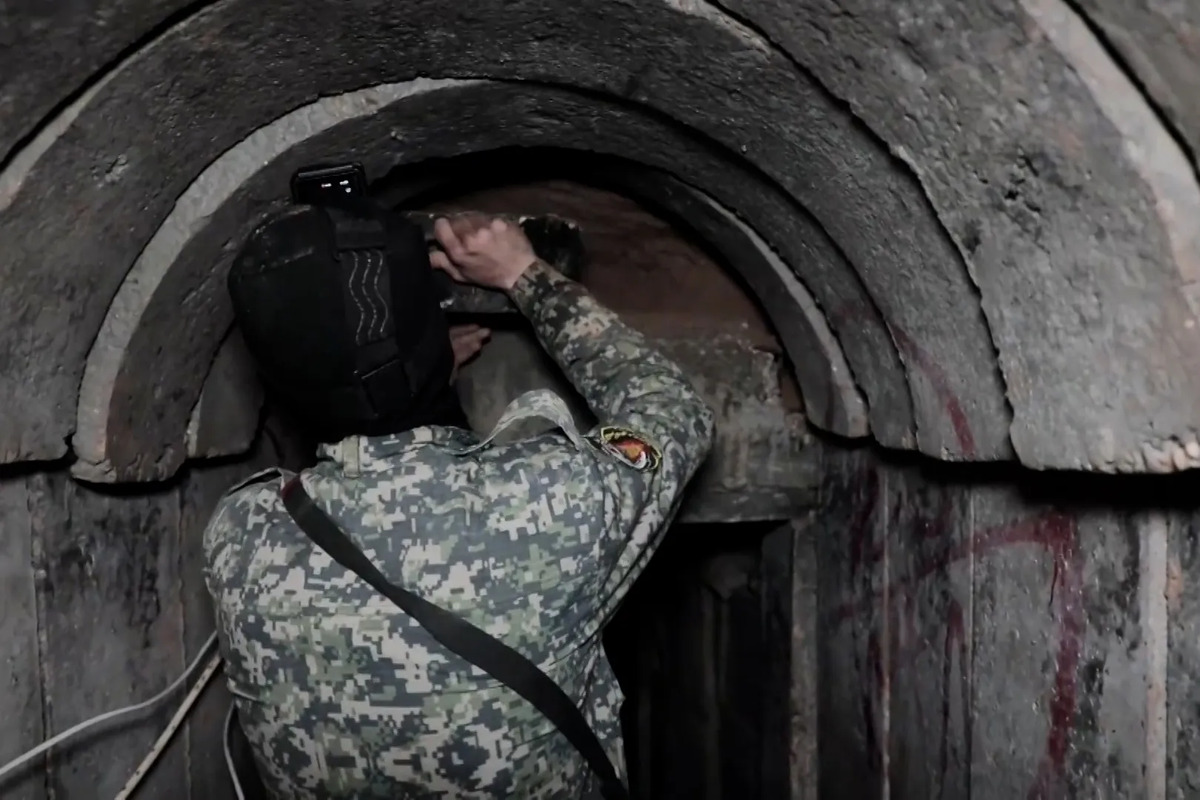
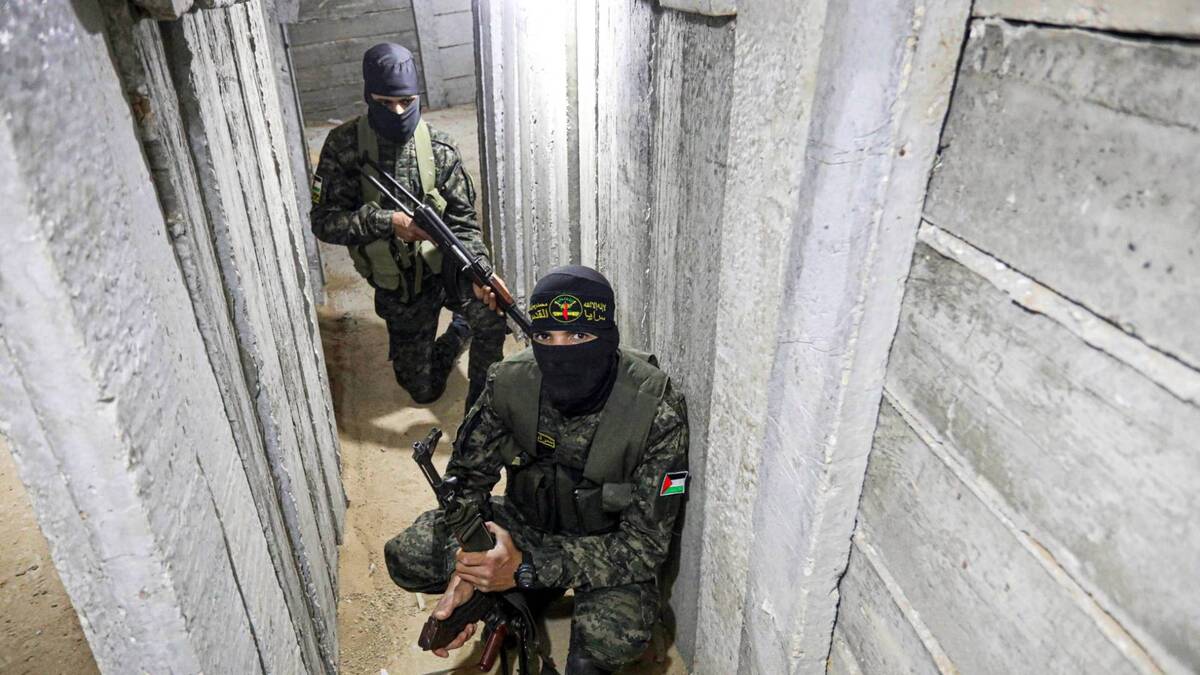
The authority indicated that the visit of senior figures from the administration of U.S. President Donald Trump to Tel Aviv, specifically U.S. envoy Jared Kushner, is in this direction, in addition to discussing issues that threaten the ceasefire agreement in Gaza, particularly the matter of fighters in the tunnels of Rafah.

The occupation speaks of the existence of 4 remaining bodies of Israeli soldiers in Gaza, which the Al-Qassam Brigades, the military wing of Hamas, confirm that retrieving them requires additional technical teams and equipment.

If the intensive efforts to transition to the second phase of the agreement succeed, its features revolve around 4 main points: the management of Gaza by an independent Palestinian authority of competencies, the deployment of an international stability force to monitor the agreement, disarmament in Gaza, and the Israeli withdrawal to the red line.

Each of these four points carries complex challenges, making the efforts to achieve them extremely difficult, and threatening to explode the ceasefire agreement in Gaza.

Palestinian journalist Hani Al-Maghari confirmed that the second phase of the ceasefire agreement includes arrangements that will make it difficult for the Israeli Prime Minister Benjamin Netanyahu to return to aggression under any circumstances.

Al-Maghari added that the Egyptian presence in Gaza goes beyond humanitarian roles, transitioning to overseeing the day after the aggression, including preparations for the technocratic government to assume its duties.

Writer and political analyst Wissam Afifa touched on the Egyptian preparations for the second phase, indicating that attention is turning to an anticipated visit by an Egyptian delegation to the Gaza Strip.

Afifa noted that the discussion about the visit will not be short or merely protocol, but will include in-depth meetings with Palestinian factions to discuss arrangements for post-ceasefire.

He pointed out that this movement coincides with Kushner's presence in Tel Aviv, reflecting the intersection of American and Egyptian paths.

Afifa viewed Kushner's meeting with Netanyahu as part of the desperate American attempts to transition to the second phase of Trump's plan for Gaza.

He added that the firm rejection from Egypt, Qatar, Turkey, and other countries to participate in any combat mission against Hamas confines this force to the realm of separation and humanitarian monitoring.

PALESTINE

Wed 12 Nov 2025 12:32 am - Jerusalem Time

Israeli concerns about the Security Council bill regarding Gaza the next day

While the direct American intervention in enforcing the ceasefire agreement in Gaza continues, and although the resolution project promoted by the American administration in the Security Council indeed provides rare international legitimacy for disarming Gaza and placing a moderate Arab stabilization force in charge, its extreme ambiguity allows Hamas a significant security loophole that enables it to maintain its authority until the next day, which is the source of concern for the occupation.

Amos Yadlin, the former head of Israeli intelligence, Aman, and Noa Shusterman Dvir, head of the Palestinian program at the "Israeli Institute," stated that "the resolution project promoted by the American administration in the Security Council aims to be a fundamental pillar in implementing Trump's plan for Gaza, with the goal of granting broad international legitimacy to the steps outlined in the plan, through the formation of a temporary Palestinian technocratic government, the establishment of an international stabilization force, the formation of a peace council, and the gradual transfer of control to the Palestinian Authority only after the agreed-upon reforms are completed."

They added in a joint article published by Channel 12 and translated by "Arabi21" that "Israel has clear and important military objectives, which include dismantling Hamas, disarming it, disarming Gaza, and ensuring that it does not pose a security threat. These objectives can be mitigated in a Security Council resolution, and unlike Trump's 20-point plan, which was signed in October by the United States, Turkey, Qatar, and Egypt, the resolution must pass a vote in a forum that includes 15 members, including Pakistan and Algeria, without the permanent members, especially China and Russia, exercising their veto against it."

PALESTINE

Wed 12 Nov 2025 12:24 am - Jerusalem Time

Reports: The U.S. military is considering building a military base to accommodate 10,000 personnel near the Gaza Strip.

Reports have revealed that the U.S. military is studying the possibility of establishing a military base in the vicinity of the Gaza Strip, with plans for its capacity to reach around 10,000 personnel.

Information indicated that the U.S. Navy has requested cost estimates from several companies to establish a "temporary independent military base" near the strip.

The required specifications state that there should be office space of 10,000 square feet (approximately 929 square meters), with the base capable of serving ten thousand personnel for twelve months.

PALESTINE

Wed 12 Nov 2025 12:20 am - Jerusalem Time

Israel.. Conflicting reports about an agreement with Washington to evacuate "Hamas" members from Rafah.

Conflicting reports emerged in Israel on Tuesday evening regarding a settlement with Washington that would allow for the "safe" passage of about 200 fighters from the Hamas movement stranded in the city of Rafah in southern Gaza Strip.

The city of Rafah is located within areas controlled by the Israeli army east of what is known as the "yellow line," as stipulated in the ceasefire agreement that began implementation on October 10.

In contrast, Palestinians are allowed to move in areas west of this line, but they face daily Israeli violations, resulting in hundreds of deaths and injuries.

The crisis of the stranded Hamas members in Rafah erupted due to two security incidents following the agreement, the first on October 19 and the second on the 28th of the same month, in which Israel claimed clashes occurred with Palestinian militants and accused Hamas of violating the agreement.

However, the Izz ad-Din al-Qassam Brigades, the armed wing of Hamas, stated in its first response to the clashes that "communication has been cut off with the remaining members of its groups in Rafah since the return of the war in March."

A report published by the "Cairo News" channel previously indicated that Israel is trying to exploit this crisis to undermine the agreement.

The newspaper "Yedioth Ahronoth" claimed, citing an unnamed Israeli official in the security cabinet, that Prime Minister Benjamin Netanyahu reached a settlement with U.S. envoy Jared Kushner regarding the stranded Hamas members in Rafah.

The Israeli official told the newspaper: "A settlement was reached between Netanyahu and Kushner to evacuate about 200 (Palestinian fighters) stranded in the tunnels of Rafah."

He clarified that "under the settlement, Israel must allow their safe evacuation" outside Palestinian territories.

The official reported that no country has yet agreed to receive these stranded individuals, without mentioning the names of the countries that were offered the matter.

The newspaper pointed to Hamas's desire to evacuate its fighters stranded in the al-Jinina neighborhood of Rafah.

As of 18:00 GMT, no official statement had been issued on this matter from Tel Aviv, Washington, or Hamas.

In contrast, the official Hebrew broadcasting authority stated that "a disagreement has arisen between the United States and Israel" regarding the resolution of the crisis of the Hamas members stranded in one of the tunnels in Rafah.

The broadcasting authority added that Kushner "sent a message to Israel confirming the necessity of releasing all the militants" to areas west of the "yellow line" where Palestinians are in control.

It further stated: "According to him (Kushner), they will be released unarmed, and this will be considered part of the disarmament of the sector."

According to the broadcasting authority, Israel "opposed this proposal," quoting an unnamed Israeli source as saying: "This is an innocent proposal, and the weapons will be waiting for them in their homes."

Regarding Washington's position, the broadcasting authority stated that the United States "is not concerned with Hamas or Islamic Jihad; all it cares about is that this agreement holds."

It continued: "For Washington, killing these militants would lead to the collapse of the agreement and return Israel to war, and this will not happen and is unacceptable to President (Donald) Trump."

It expressed its expectations for both parties to reach a solution to this crisis, given the American desire not to allow Israel to cause the collapse of the agreement "by blowing up the tunnel or pumping water into it and destroying it," according to the broadcasting authority.

This was also reported by the newspaper "Israel Hayom," which quoted an unnamed Israeli political source as saying: "Contrary to reports, no agreed solution has been reached regarding the militants in Rafah."

These developments came hours after sources close to Netanyahu denied that he had made commitments to Washington regarding the stranded Hamas fighters in Rafah, according to what the broadcasting authority reported at the time.

Israeli media had stated that this issue was discussed in the meeting between Netanyahu and Kushner in West Jerusalem on Monday evening.

Israeli officials are calling for the surrender of these fighters and their transfer to Israel for interrogation, or their killing if they refuse to surrender.

Meanwhile, the Izz ad-Din al-Qassam Brigades confirmed on Sunday that "there is no principle of surrender or handing oneself over to the enemy in its dictionary."

It held in a statement published at the time, Israel responsible for any clashes that occur with its stranded members in Rafah.

For two years since October 8,

OPINIONS

Tue 11 Nov 2025 8:56 pm - Jerusalem Time

Setting the narrative straight

After this terrible war, there must be an “epiphany” on both sides that will make us look ahead, focused and sober, towards creating a new reality in which our energies will be invested in rebuilding our lives and communities based on the acceptance of the very simple principle (but probably very difficult to accept) that everyone who lives between the River and the Sea is entitled to the same right to the same rights. Until both sides recognize the legitimacy of the existence of the other side as a people with an equal right to live here in the common homeland – in the Land of Israel, in the Land of Palestine, the killing, terror, destruction, hatred and desire for revenge will not end.


Obviously, those who brought us to this point must go home. Neither the Israeli leadership nor the Palestinian leadership has the right to continue to lead us. They brought us, all of us to this point and they must go. We Israelis must get out of the delusion that we can rule over another people for fifty-six years and expect to have peace, or to imprison two million people in a closed, small and dense area like the Gaza Strip with abject poverty and with a very young population devoid of any hope for a better future and expect to have quiet. The Palestinians must get out of the illusion that the Jewish people have no connection to this land, that they are occupying foreigners whose existence as a people in this place is illegitimate. This is the meaning of having the same right for the same rights. This is the foundation on which we can build together instead of continuing to kill and destroy.


The day after tomorrow, when the war ends and Gaza will be completely occupied by Israel again. The extremist voices in Israel calling for resettlement in Gaza must be shut down immediately. The delusionary Israeli messianic voices calling for mass deportation of Palestinians in Gaza must be stopped even with the threat of arrest because mass deportation is clearly a war crime. There is no way that Egypt or Jordan will accept Palestinian refugees and any attempt by Israel to deport the Palestinian residents of Gaza towards the borders will end in the complete cancellation of the peace agreements between Israel and Egypt and Jordan and deep regional turmoil.


The plan for the day after tomorrow must be worked out today with all its complicated components. A lot of local, regional, and international agreements will be needed so that it will be possible to get out of the disasters we have experienced and bring us to a more promising future for both nations. In the first step there must be an unequivocal Israeli announcement that at the first possible moment Israel will withdraw from the Strip and redeploy on the border between Gaza and Israel and not in Gaza itself. 

There are five essential elements for creating a situation in Gaza that together, in coordination and even in parallel, must occur in order to have a chance for stability, security, reconstruction and development in Gaza, and even a realistic renewed peace process.

The five components are:

 1. Palestinian leadership heading the process of stabilization in Gaza while carrying out deep reforms in the Palestinian Authority, including democratic elections for the parliament that must win the legitimacy of the Palestinian people. 

2. Stationing a multinational Arab force invited by the Palestinian government and led by the Palestinian security forces with a limited mandate of the United Nations Security Council. 

3. International commitment to a peace process designed to bring about a two-state solution. 

4. International mobilization for the financing and reconstruction of the Gaza Strip and accelerated economic development of the Palestinian state. 

5. New leadership in Israel and Palestine


The basic premise of the entire plan proposed here is that Hamas as a military and governmental force no longer exists. The idea of Hamas and the public support for it will still exist and there is no military way to fight against this. Ideas and ideology need to be challenged with better ideas and ideology. The intention of the plan detailed here is to replace the ideas of resistance and the sanctity of death for Palestine with the possibility of living for Palestine and a well-founded hope that the future will bring independence, freedom and life with dignity.

The first and second components – the Palestinians and an Arab multinational force Under Palestinian leadership on behalf of the Palestinian Authority, a multi-national Arab force will be sent to Gaza at the invitation of the Palestinians with a mandate from the UN Security Council for a period of one year with the possibility of renewal for two periods of six months. The role of this force will be to stabilize the territory at the same time that the Palestinian Authority takes government responsibility for the government offices of Gaza.


The international community must mobilize to promote the end of the Israeli occupation, to reconnect Gaza and the West Bank, to recognize the State of Palestine, to accept the State of Palestine as a full member of the United Nations. An international peace conference should be convened where it will be decided to establish a path for negotiations between the State of Israel and the State of Palestine in a regional framework, rather than Israeli-Palestinian bilateral negotiations. The negotiation framework will include the countries of the region: Egypt, Jordan, the United Arab Emirates, Bahrain, Saudi Arabia, Morocco and more. The regional forum will help Israel and the Palestinians settle the border between them and determine a plan for border management. Regional agreements for stability, security, economic development, energy, water, climate treatment, etc. will be discussed and agreed on. The permanent regional forum will be established that will oversee the implementation of agreements an assist with dispute resolution in real time. 

The fourth component – Gaza reconstruction and economic development The US will lead a process of international recruitment for the construction and rehabilitation of Gaza and the economic development of the State of Palestine and regional cooperation. The ambition should be to mobilize all the countries of the world interested in stabilizing the Middle East region, including rival countries such as China, in order to ensure the existence of the Palestinian state in the shortest period of time. Chinese participation in Gaza is important because there is no country in the world that knows how to build infrastructure as quickly and efficiently as China. 

The fifth element – new Israeli and Palestinian leadership The Palestinian people and the Israeli people must choose new leaders because whoever brought us to today’s situation is not fit to continue leading. The new generation of leaders are unknown today but they will arise. It is important that the Palestinians have the opportunity to choose leaders who will be legitimate in the eyes of the people, therefore Israel must carefully consider the possibility of releasing Marwan Barghouti from prison to allow him to compete for leadership. Barghouthi still supports the two-states solution to the conflict and for the past twenty years consistently comes out on top in all Palestinian polls. Israeli officials should already open a dialogue with Marwan Barghouti in order to know how he can integrate into the rebuilding Gaza and the State of Palestine as a state living in peace with Israel. Likewise, there are other Palestinian leaders with abilities and connections to the Palestinian public who are living in exile who may want to return to their homeland and take part in the construction of their independent state. 

Within Israel, the public’s shift to the right was a deliberate result of a political strategy that succeeded in maintaining the division between the two parts of Palestine while making moves that convinced the public that there is no partner for peace among the Palestinians. The Palestinian leadership cooperated, unintentionally, and Benjamin Netanyahu succeeded with very generous cooperation from the international community to erase the Palestinian issue from the global agenda. In all the rounds of elections in Israel, the only real existential issue facing Israel – the continued control over the Palestinian people, was not at all presented to the public when we went to elect our leaders. From the left to the extreme right, the issue of peace with the Palestinians, an end to the occupation, negotiations with the Palestinians, did not appear and there was almost no dispute about it among the many parties that competed to receive voter support. When there was no Palestinian partner in front of us, it was very easy not to talk about a future of the Israeli-Palestinian conflict and what seemed to be a very distant chance of peace. 

After October 7th we cannot continue to ignore our control over another nation and delude ourselves that we can continue to deny independence and freedom to the Palestinian people. The nightmare we went through must lead us to what I call “the Belfast moment” the time when we (on both sides) stand up and say no more. The Israeli public and the Palestinian publics will be rightly suspicious of the idea of peace and the viability of the two-states solution. There is very little trust, if any at all between Israelis and Palestinians. Negotiations and possible agreements must be built on the assumption that the parties will breach their obligations (as was the case in the Oslo process). 

Two new elements must be built into the infrastructure of any new political process: the end goal is two states for two peoples, in contrast to Oslo where there was no defined and agreed end-game, and a robust and stable third-party mechanism for monitoring and verifying the fulfillment of obligations by both parties. Clearly defined milestones must be determined before steps with risks are taken. The milestones are points that will allow the parties to wait before moving forward until the full fulfillment of previous obligations. After a failed peace process we must not make the same mistakes we did in the past, we must learn lessons from what failed. In general, future agreements must be much smarter and based on much more suspicion than ever before, thus the chance of success will be greater. 

If after the disaster of October 7th we do not change direction towards the settlement of the conflict between us and the Palestinian people, it will be just another round, the hardest of all, but just another in the circle of blood that must come to an end.


Now back to today: 

Our leaders, the so-called experts, to Arab affairs journalists, and other know-it-alls, all said that Hamas would never return all of the hostages – this was their insurance policy. They said that Hamas would never return the soldiers – especially not Hadar Golden. They said that Hamas would never agree to end the war until Israel withdrew completely from Gaza. They say that Hamas will never give up power. They say that Hamas will never agree to give up their weapons. They say that a new non-Hamas government in Gaza will be controlled by Hamas. Most of those people making these predictions and assessments have no idea, yet they are the people setting the narrative and responsible for framing Israeli public opinion. I said back in September 2024 that Hamas was prepared to make the same kind of deal that they made last month, but no one would listen. So thousands more were killed in Gaza, tens of living hostages were killed, about 100 Israeli soldiers were killed and the war went on for at least a year more than it should have. 


They were wrong in the past, and in my opinion, they are wrong today. 


First, and I have addressed this several times – Hamas has breached the agreement, without a doubt, but so has Israel – every day since the ceasefire began. Israeli breaches are substantive, yet almost no one in Israel reports on them. Yes, Israel has the right to continue to destroy terror infrastructure in the part of Gaza that Israel still controls. But no, Israel does not have the right to destroy all other non-military infrastructure and homes.  Israel has allowed less thanone-third of the agreed-on humanitarian aid into Gaza since the ceasefire began. This is why the United States is going to take over the issue of humanitarian aid that must enter Gaza. The US Command Center in Kiryat Gat is getting more pro-active and more nations from around the world are joining the ranks of those engaged in this work.


According to YNET of today https://www.ynetnews.com/article/sjaysuxewg “ US plans $500 millionbase near Gaza border to support cease-fire, Israeli sources say… the facility would be used by international forces operating in Gaza to help maintain the cease-fire and could accommodate several thousand soldiers.” The United States is not going to let the ball drop here and allow the war to resume, nor will the US allow Hamas to regroup and have control over Gaza.  There is a United States “full court press” on Israel and on Hamas. The constant flow of US officials from President Trump down is on a Bibi-sitting mission to make sure that Israel does not do anything that would enable the war to re-start.  They are doing the same thing on the Hamas side with constant attention and pressure on Qatar, Egypt, and Turkey to ensure Hamas compliance with the agreement. 


The latest version of the UN Security Council Resolution has been circulated to the UNSC Members (I think it is version number 3 but I understand that many changes have been made to the original version). The 20-point plan of President Trump is now attached to the Resolution as an Annex and that is to ensure that the process will move forward to address the broader issue of the Israeli-Palestinian conflict. There are constant talks taking place and soon decision will be made on the constitution of the non-Hamas technocratic government in Gaza and as I understand with some kind of political, perhaps executive level of Palestinian governance to provide the political legitimacy of the new Gaza governing body.  There will be international supervision of this process and of the process of reconstruction, but my understanding is that Gaza will be ruled by Gazans for the people of Gaza. 


The process of decommissioning of Hamas weapons will also happen. I believe that what is happening with the talks about the 100-200 Hamas combatants inside of the tunnel on the side of Gaza that Israel controls may become the first step of decommissioning Hamas weapons.  This does not mean that this will be the model – but it would become the first step.


When there is a new Palestinian governing body with a newly established Palestinian police-security force, and the ISF – the International Security Force is deployed and working in Gaza, the United States will ensure the full withdrawal of Israeli forces from Gaza.  That will most likely happen in stages, but will end up on the international border. 


It is essential now that the United States and the international community focus a lot more attention on what is happening in the West Bank.  While Trump has said that “annexation is off the table” there is fact a process of defacto annexation taking place. Settler violence supported by the Israeli army and the Israeli police is unhinged and could easily lead to the explosion of Palestinian violence in the West Bank that no one in their right mind wants. The United States must force Israel to release to the Palestinian Authority more than $2 billion in tax and customs money that Israel collects for the PA according to the 1995 Paris Protocol. The United States must also force the Israeli government to stop the settler violence against Palestinians, and their land and property. The US must force Israel to renew family and Red Cross visits to Palestinian prisoners who have been tortured by Ben Gvir’s Prison Authority over the last two years. Israel must be held to the standard of international law with regards to Palestinian prisoners.


Understanding that with the current government of Israel, a genuine peace process on the two states solution is not possible – the United States must adopt the policy of “do no harm” until the political realities in Israel and Palestine do enable talks on the two states solution. During this period, the United States can work with the regional partners to put into place the regional architecture for security and economic development that will ensure Israel’s security within the two-states solution, and Palestine’s freedom and the chance for economic prosperity and development for all countries of the region. 



PALESTINE

Tue 11 Nov 2025 8:12 pm - Jerusalem Time

Israeli talk about a "settlement" for the deportation of 200 fighters from the Rafah

The newspaper Yedioth Ahronoth quoted a senior official from Israel's security cabinet saying that Prime Minister Benjamin Netanyahu and U.S. envoy Jared Kushner reached an agreement to evacuate 200 fighters from Hamas who are trapped in the tunnels of Rafah in southern Gaza.

The official explained that the agreement stipulates that Israel will allow the fighters to be transferred safely, without additional details.

He stated that no country has yet agreed to receive them.

Recently, the issue of Palestinian resistance fighters trapped inside the tunnels in the devastated city of Rafah has emerged, becoming central to efforts aimed at moving to the next phase of the ceasefire agreement, which came into effect on October 10.

Israel has exploited the issue of these fighters to create a crisis as part of its efforts to impose obstacles that prevent the swift implementation of the agreement.

The Al-Qassam Brigades, the military wing of the Islamic Resistance Movement (Hamas), confirmed that these fighters are its members who remained in an area controlled by the occupation forces in Rafah.

The fighters are located in tunnels within the "yellow line" area, which is the boundary to which the occupation forces withdrew under the first phase of the ceasefire agreement, and the entire city of Rafah falls within this area.

Israel estimates the number of fighters trapped in the area to be between 150 and 200, while neither Hamas nor Al-Qassam provides any estimates in this regard.

PALESTINE

Tue 11 Nov 2025 6:56 pm - Jerusalem Time

Hebrew media: Netanyahu and Kushner reached an agreement to relocate Hamas fighters trapped in the Rafah tunnels to a third country.

The Hebrew newspaper Yedioth Ahronoth reported from a source familiar with the security cabinet that details of a new recommendation to address the issue of Hamas fighters located in the Rafah tunnels have emerged.

The source confirmed that Prime Minister Benjamin Netanyahu and American official Jared Kushner reached a settlement that stipulated the expulsion of the fighters trapped in the Rafah tunnels to a 'third country.'

He pointed out that no country has agreed to receive them so far.

ARAB AND WORLD

Tue 11 Nov 2025 5:07 pm - Jerusalem Time

The American positioning near Gaza: between the potential base and the reservation about direct involvement.

Washington  - "Al-Quds" dot com – Said Arikat

Israeli media leaks have intensified regarding the United States' intention to establish a massive military base on the Israeli border with the Gaza Strip, in a move said to pave the way for the formation of an international force overseeing the post-war phase. While Israeli sources confirm that Washington is moving forward with this plan, the U.S. military leadership insists that there is no intention to send troops or establish bases within the Gaza Strip itself.

According to leaked information, the proposed project could cost around $500 million, and is expected to accommodate thousands of American and international soldiers as part of a support and stabilization mission aimed at protecting any new civilian administration in Gaza after a ceasefire. These reports state that the base would serve as a main command center for any multinational force tasked with monitoring security and reconstruction, within arrangements being negotiated between Washington and Tel Aviv.

A source in Washington: Talk of a large base is premature

It is noted that an informed source in Washington told a correspondent for Al-Quds newspaper that discussing a "large American military base similar to U.S. bases abroad is premature." The source, who requested anonymity, added that "the United States has a small and permanent military presence in Israel, which changes in size according to strategic priorities, for years," but it is not of the type that can be described as a "large base." He explained: "The United States is cautious about becoming a direct party in the conflict between Palestinians and Israelis; however, the Trump administration is certainly interested in having an international force to maintain the truce in Gaza, under its direct supervision."

Official U.S. position: No military presence inside Gaza

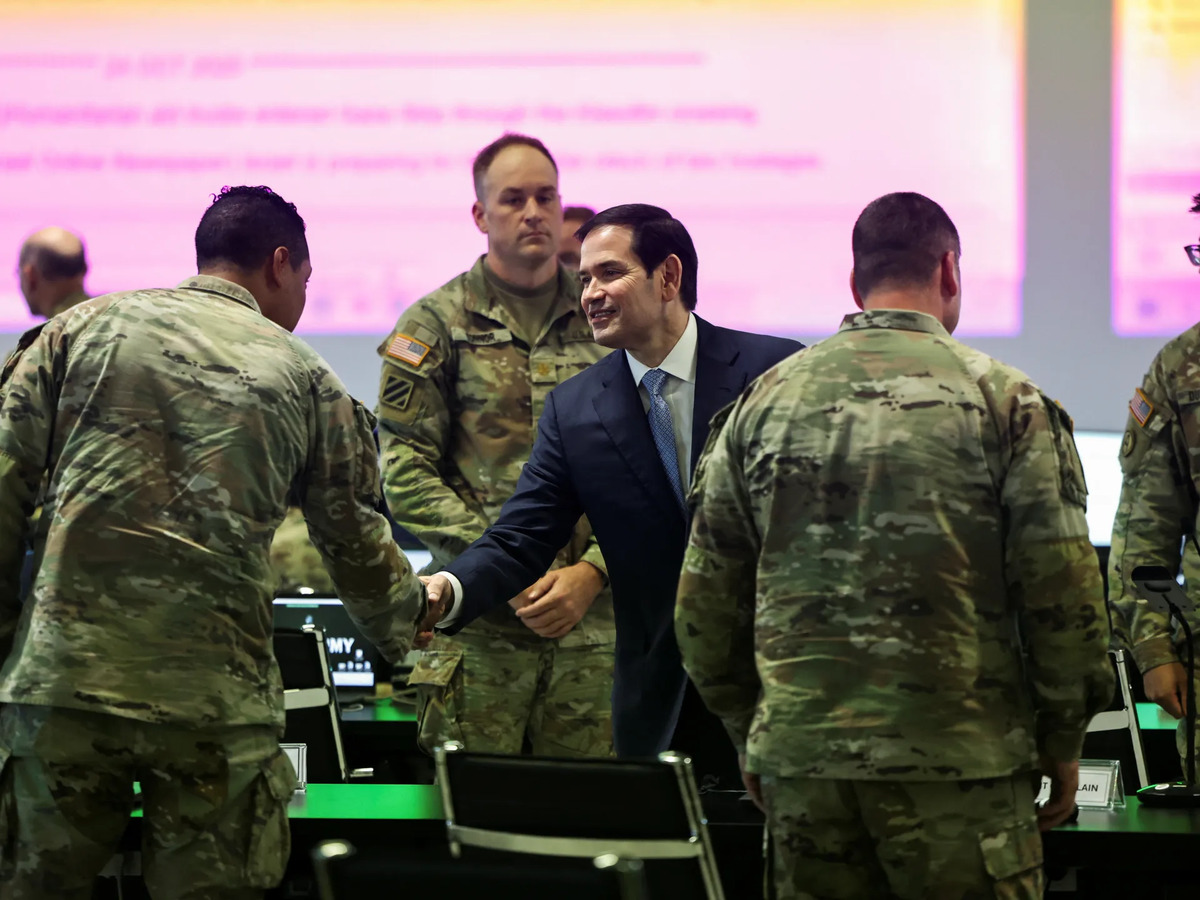
In contrast, U.S. officials reject the Israeli narrative regarding the construction of a base near the Gaza Strip. The U.S. Central Command (CENTCOM) announced in a statement issued in late October the establishment of a civil-military coordination center in southern Israel, near the city of Kiryat Gat, to monitor humanitarian and security activities related to Gaza. The statement clearly confirmed that "U.S. forces will not enter Gaza," while CENTCOM commander Admiral Brad Cooper emphasized that "there will be no American troops on the ground inside the Strip."

Sources in the U.S. Department of Defense also indicate that current activities are focused on logistical and humanitarian support, particularly through the temporary floating port established by the United States off the coast of Gaza to facilitate the entry of aid, a project announced by President Joe Biden in 2024. Additionally, American investments exceeding one and a half billion dollars have been observed in the development of Israeli bases and command centers near the southern border, which is considered an indication of the expansion of U.S. military infrastructure in the region.
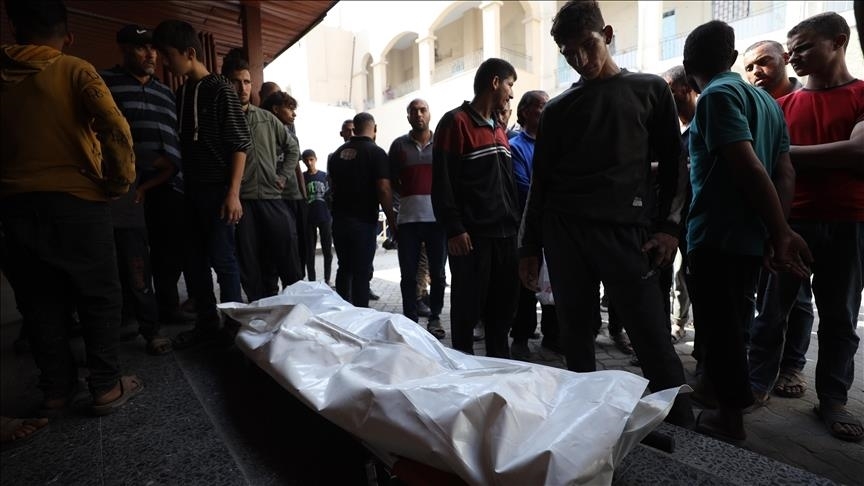
Strategy "Close to Gaza"

The data indicates that Washington is adopting what can be described as a "close positioning policy to Gaza," meaning establishing a supportive military infrastructure in the adjacent Israeli territories, allowing it to exert direct influence on the situation within the Strip without violating its commitments not to deploy U.S. forces inside it. This approach grants the U.S. administration a dual margin: to play a leading role in reconstruction efforts and ensure stability, while simultaneously avoiding direct military involvement or bearing long-term security repercussions.

Analysts believe that this positioning falls within a dual containment strategy: containing chaos within Gaza and containing the regional expansion of any forces that might benefit from the security vacuum. The presence of a U.S. military base near the Strip would serve as a deterrent message to regional adversaries and provide a platform for monitoring and controlling the air and maritime domains of southern Palestine.

The strategic and regional dimension

Any U.S. base near Gaza raises important questions about relations with the Palestinian Authority and Egypt. The Palestinian Authority may consider this positioning a potential intervention in its sovereignty or a threat to its authority in the Strip, while Egypt views any U.S. military movement near its southern borders as sensitive for security reasons, especially in Sinai. Therefore, it is expected that Washington will attempt to keep the base within the framework of international humanitarian and security support to reduce friction, while maintaining control over developments in Gaza.

From a broader perspective, the potential base can be seen as part of a larger U.S. strategy aimed at enhancing American influence in the Middle East after the recent war, controlling the paths of reconstruction and security stabilization in Gaza, while retaining deterrent capability against any potential regional threats, whether from Iran or armed groups on the ground.

Summary of the scene

While Israeli sources confirm that Washington is considering establishing a major base near Gaza, official American sources deny any decision of this kind. However

PALESTINE

Tue 11 Nov 2025 5:06 pm - Jerusalem Time

"Reuters" warns: The danger of "dividing Gaza" looms on the horizon as the transition to the second phase of Trump's plan falters.

The likelihood of dividing the Gaza Strip has become increasingly probable in light of the stalled efforts to advance U.S. President Donald Trump's plan to end the war.

Multiple sources have reported that the plan has 'effectively stalled,' and any efforts for reconstruction are now likely to be limited only to the area under occupation control.

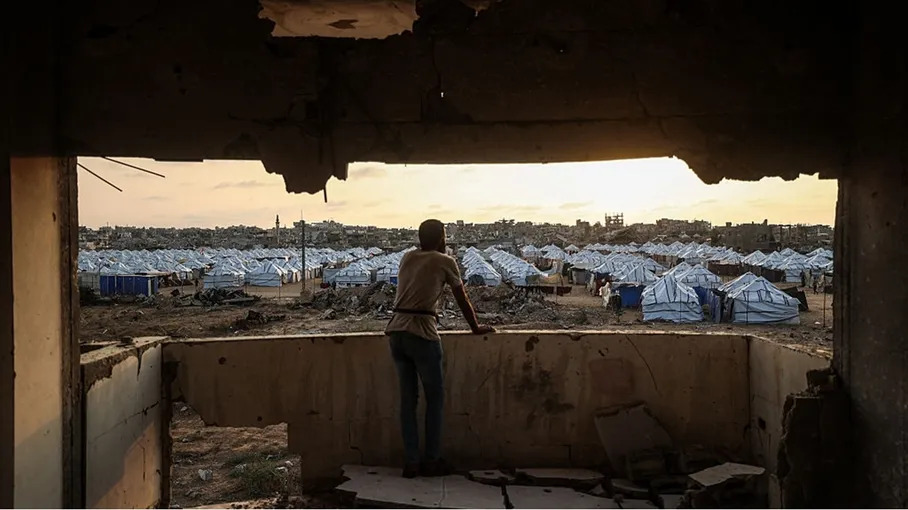
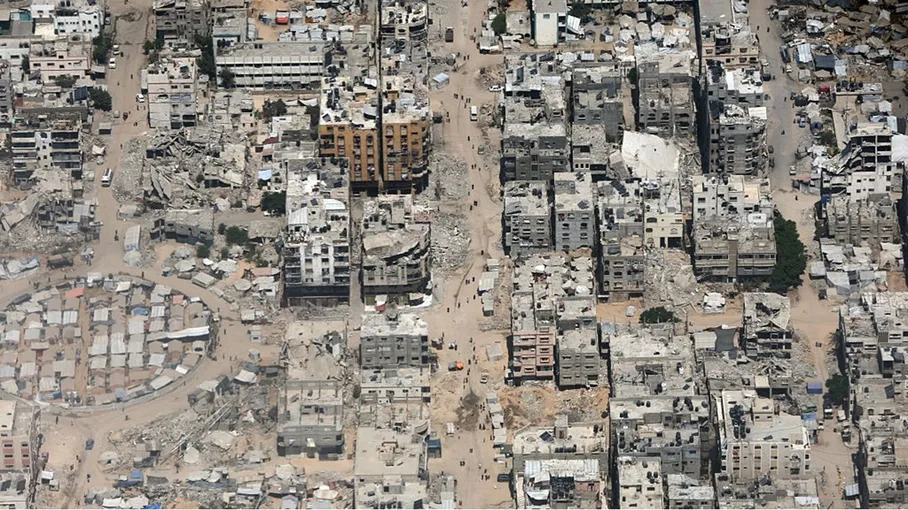
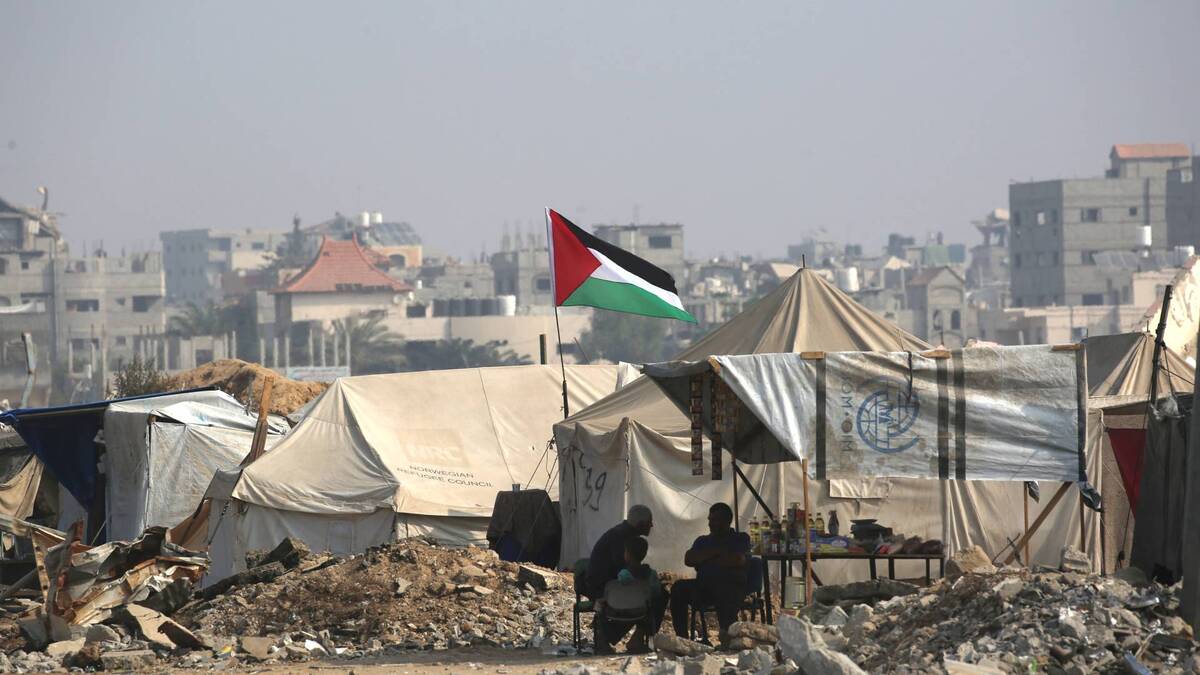
Almost all of the approximately two million residents of the strip are living crammed in temporary tents or amidst the ruins of shattered cities.

PALESTINE

Tue 11 Nov 2025 5:04 pm - Jerusalem Time

The Israeli army kills a Palestinian in Gaza, claiming he crossed the "yellow line."

The Israeli army killed a Palestinian on Tuesday in southern Gaza, claiming he crossed the "yellow line."

It was claimed in a statement that a person was spotted crossing the "yellow line" and approaching the army forces operating in southern Gaza, posing a "direct threat" to them.

It added: "Immediately upon the observation, the forces present in the field eliminated him to remove the threat," without announcing his identity or the fate of his body.

Since the announcement of the ceasefire agreement coming into effect on October 10, the Israeli army has reported several similar operations in an attempt to justify its repeated violations.

The "yellow line" is the line to which the Israeli army withdrew as part of the implementation of the first phase of U.S. President Donald Trump's plan to end the war on Gaza, and it constitutes more than half of the area of the strip.

The Israeli genocide that Tel Aviv began on October 8, 2023, and continued for two years, has resulted in over 69,000 dead and 170,000 injured, most of whom are women and children.

However, Tel Aviv has violated the agreement dozens of times, killing and injuring hundreds of Palestinians, in addition to violating the humanitarian protocol related to aid and the entry of necessary equipment to remove tons of rubble due to the Israeli destruction.

PALESTINE

Tue 11 Nov 2025 4:44 pm - Jerusalem Time

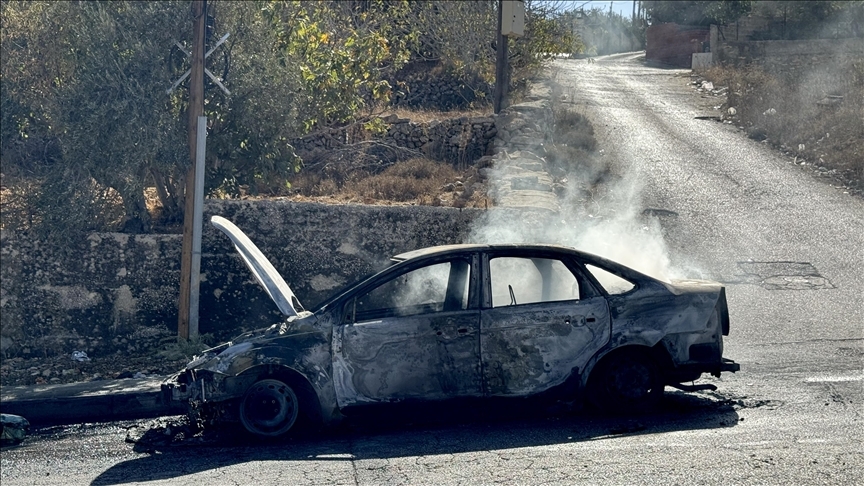
Settlers burn Palestinian homes and vehicles in the northern West Bank.

Israeli settlers set fire on Tuesday to homes and vehicles belonging to Palestinian citizens in the northern occupied West Bank, according to eyewitnesses.

The witnesses said that a group of settlers stormed the "Ladan" area located between the towns of Beit Lid and Deir Sharaf west of Nablus, and set fire to tin houses, tents, and vehicles owned by residents from the Palestinian Bedouins.

They clarified that the fire completely consumed a number of homes and vehicles before Palestinian firefighting crews arrived at the site, amid the presence of the Israeli occupation army, which provided protection to the settlers.

Various areas of the West Bank have witnessed an unprecedented escalation in settler attacks on Palestinians and their properties since the outbreak of the Israeli war on the Gaza Strip on October 7, 2023, especially around Nablus, Ramallah, and Hebron.

These attacks fall within a broad Israeli escalation wave in the West Bank by the army and settlers, since Tel Aviv began, with American support, a genocidal war in the Gaza Strip on October 8, 2023.

The attacks in the West Bank have resulted in the deaths of at least 1,069 Palestinians and injuries to about 10,000, in addition to the arrest of more than 20,000 Palestinians, including 1,600 children.

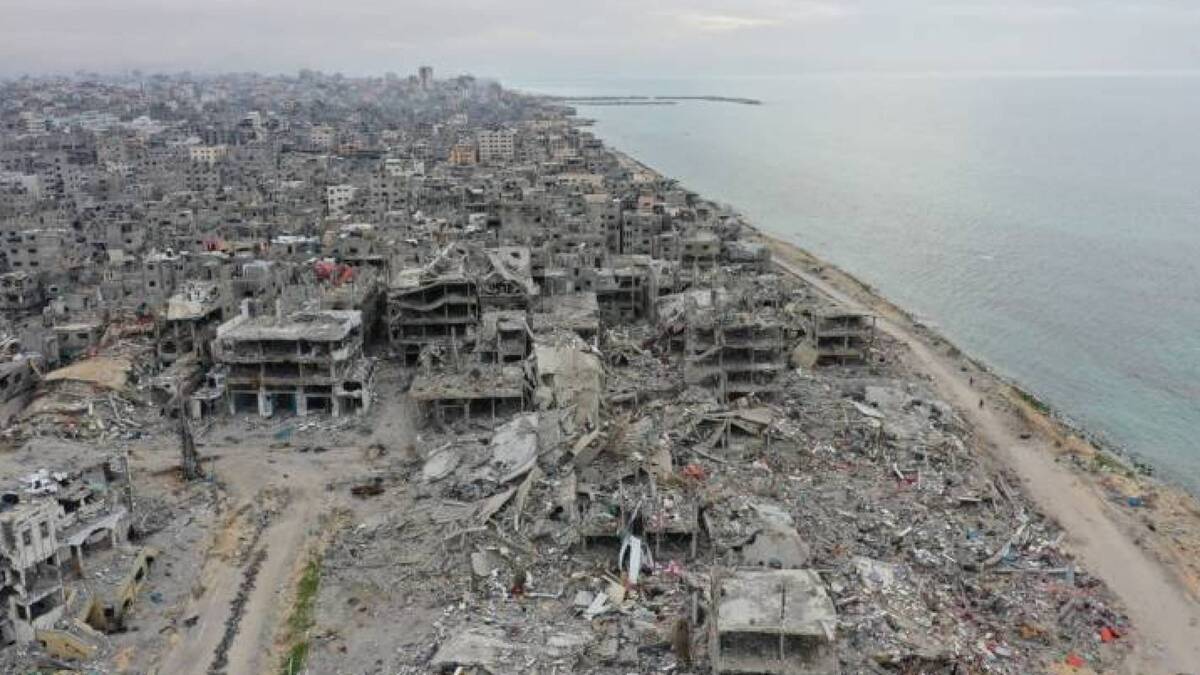
Meanwhile, the genocide in Gaza over two years has left 69,169 Palestinian dead and 170,685 injured, most of whom are children and women, with destruction affecting 90 percent of the civilian infrastructure, with reconstruction costs estimated by the United Nations at about $70 billion.

Since October 10, a ceasefire agreement has been in effect between Hamas and Israel, but the latter violates it daily, resulting in hundreds of Palestinian deaths and injuries, in addition to restricting the entry of food and medical supplies.

For decades, Israel has occupied Palestine and lands in Syria and Lebanon, refusing to withdraw and establish an independent Palestinian state with East Jerusalem as its capital, based on the borders prior to the 1967 war.

PALESTINE

Tue 11 Nov 2025 3:42 pm - Jerusalem Time

The Israeli army notifies of the demolition of 7 agricultural warehouses south of the West Bank.

The Israeli army stormed the town of Nahalin in the southern occupied West Bank on Tuesday and issued notices for the demolition of 7 agricultural warehouses.

Eyewitnesses reported that Israeli forces invaded the areas of Khillat al-Adas, Wadi Salim, and Baniyas in the town of Nahalin, west of Bethlehem, and delivered demolition notices for 7 agricultural warehouses on the grounds of construction without a permit in area 'C'.

Witnesses confirmed that the warehouses are built on private land. The Oslo II Agreement, signed in 1995, classified the West Bank into 3 areas: 'A' under full Palestinian control, 'B' under Israeli security control and Palestinian civil and administrative control, and 'C' under Israeli civil, administrative, and security control, with the latter constituting about 60 percent of the West Bank's area.

According to the Wall and Settlement Resistance Commission, Israel has carried out 1,014 demolition operations in the West Bank, including East Jerusalem, affecting 3,679 facilities, including 1,288 inhabited homes, 244 uninhabited homes, and 962 agricultural facilities, among others, since October 2023.

The Israeli army and settlers have killed at least 1,069 Palestinians in the West Bank and injured about 10,700 others, in addition to displacing around 50,000 and arresting more than 20,500, according to Palestinian government sources.

PALESTINE

Tue 11 Nov 2025 3:26 pm - Jerusalem Time

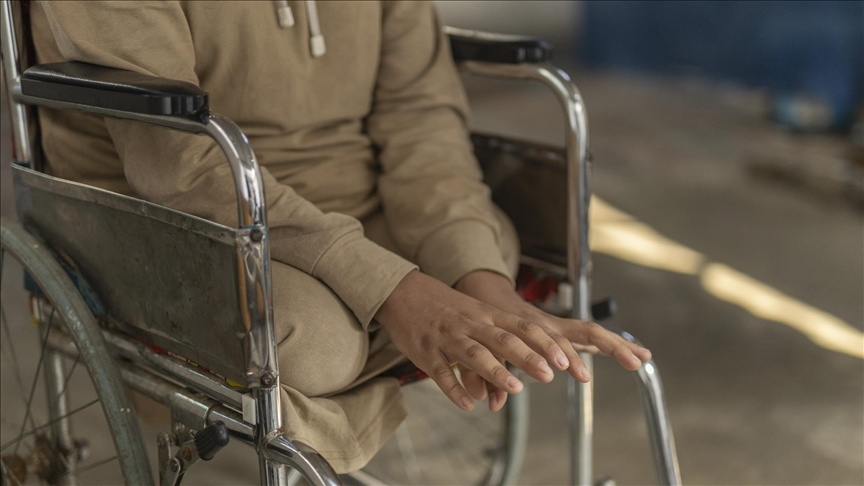
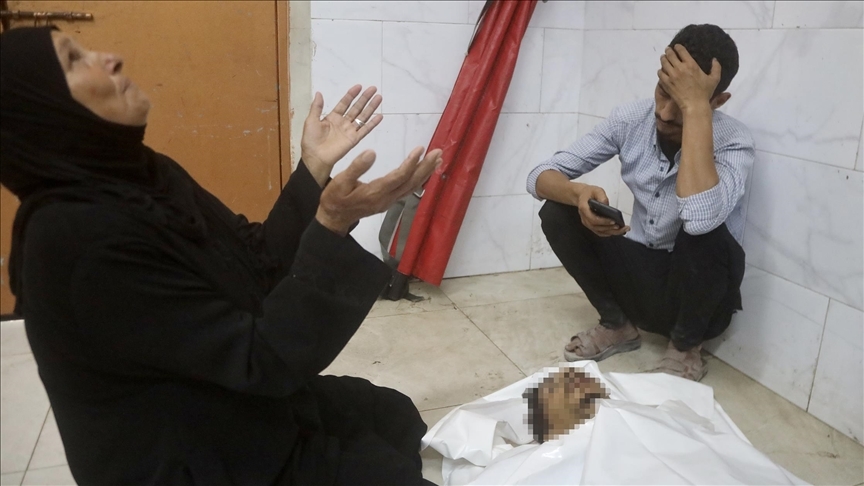
Gaza Health: Registration of 6,000 amputations due to Israeli genocide over two years

The Ministry of Health in Gaza announced on Tuesday that 6,000 amputations have been recorded over two years of Israeli extermination in the sector, indicating that they need urgent long-term rehabilitation programs.

The ministry stated in a statement: "6,000 recorded amputation cases in the Ministry of Health need urgent long-term rehabilitation programs."

It added: "The percentage of children among the total number of amputation cases is estimated at 25 percent, and the percentage of women is 12.7 percent," noting that "the lack of medical resources and supportive tools increases the suffering of the injured amputees."

The ministry continued: "These figures reflect a deep humanitarian suffering experienced by thousands of injured individuals and their families and highlight the urgent need for rehabilitation services and psychological and social support, especially for children who find themselves facing permanent disabilities at an early age."

The ministry called on "all international and humanitarian organizations and institutions working in the field of health and rehabilitation to intensify their efforts and expand their urgent interventions to meet the needs of the injured and enable them to receive the necessary care, in line with the scale of the humanitarian disaster facing the Gaza Strip."

PALESTINE

Tue 11 Nov 2025 2:46 pm - Jerusalem Time

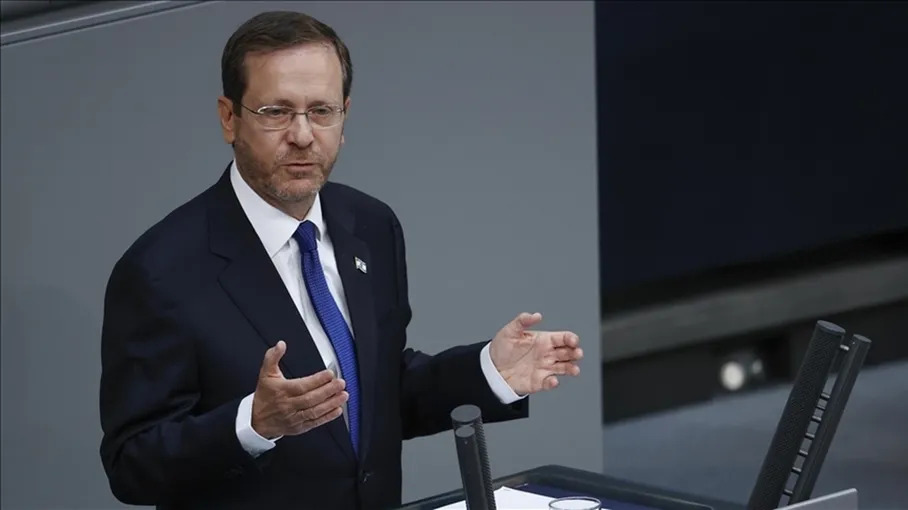
The occupation's president speaks about a canceled UN resolution equating Zionism with racism.

The President of the Israeli occupation, Isaac Herzog (a ceremonial position), published an article on the occasion of the 50th anniversary of the United Nations General Assembly Resolution 3379, which equated Zionism with racism, a resolution that was revoked in 1991. He considered that the United Nations has become "a center of anti-Semitism in the world."

Herzog stated in the article published by the newspaper "Israel Hayom": He sees "the oppressors of our people generation after generation, as they march in a long journey toward oblivion. I stand before you representing a strong and prosperous people, who have endured despite all hardships, and will continue to endure even after this disgraceful spectacle and its perpetrators."

He added, "The pieces of this resolution, which was worth no more than the paper it was written on, were scattered on the podium when my father tore it to shreds at the end of his opening speech - which was chosen as one of the speeches that changed the world."

Sixteen years later, the battle over the resolution bore fruit when U.S. Ambassador Thomas Pickering brought my father, who was then the president, the United Nations resolution that annulled that resolution. The ambassador reminded him that this paper should no longer be torn.

He considered, "In fact, this resolution, that malicious comparison between Zionism and racism, is destined for the dustbin of history. But a generation has passed and a generation has come, and here are new faces and voices joining again the procession of folly, who excel in hatred and ignorance."

Once again, we see with anxious hearts how they are turning the United Nations, which was born as an anti-Nazi alliance, into a center of anti-Semitism in the world, as my father diagnosed.

He noted, "Fifty years have passed since we warned that the United Nations promotes an agenda stating that 'in the Middle East, from the Atlantic Ocean to the Arabian Gulf, only one existence is allowed, which is the Arab existence.'

No other people, no matter how deep their roots in the region, will be allowed to enjoy their right to self-determination.

He showed related news and said, "Once again - unfortunately - we hear with anxious hearts, and with a louder voice since the massacre of October 7, voices attempting to undermine our people's right to self-determination and self-defense in our ancient homeland, carrying within them a nightmarish vision of a Middle East free of Jews, from the sea to the river."

Herzog clarified, "In every generation, we see how hatred of Jews manifests, and in every generation, we are asked to confront it firmly, defend our people's rights and our state, and struggle - in security and diplomatic arenas, including the political and legal spheres - for our right to self-determination and independence."

We are fighting for our deep and ancient roots in our homeland, and for the cultural, technological, and spiritual fruits that the Jewish state and democracy have nurtured from within during 77 years of independence, which will continue to bear fruit.

He claimed, "We are fighting alongside our Jewish brothers and sisters around the world, who feel how waves of hatred and anti-Semitic ignorance seep into their daily lives, manifesting in increasingly severe violence, exclusion, and persecution."

We are fighting with representatives of the international community, who realize, as my father brilliantly stated, that the issue at hand "is not Israel or Zionism. The issue is the continued existence of this organization, which is dragged by an alliance of tyrants and racists to the lowest levels of distrust."

He said, "We see how speakers at the United Nations, in parliaments around the world, and in violent and controversial demonstrations at universities and in central squares, use 'a false lexicon based on political clichés,' as my father said, to justify the worst imaginable injustices."

He concluded by saying, "As in those days, so in this time - in the face of those who seek to distort reality, in the face of those who try to hide and uproot our national roots, and in the face of those who use seemingly enlightened language to justify dark and racist global views - we are once again called to defend the righteousness of our path, expose lies and folly, and combat the evil spirit and dangerous ideology that is once again spreading in the United Nations, until it is also sent to the abyss of oblivion.

PALESTINE

Tue 11 Nov 2025 2:02 pm - Jerusalem Time

Yedioth: America plans to build a massive military base near Gaza

Israeli newspaper Yedioth Ahronoth revealed that the United States plans to establish a massive military base worth $500 million near the Gaza border to support the ceasefire that came into effect on October 10th.

The newspaper quoted Israeli officials as saying that the base could accommodate thousands of soldiers, noting that the construction of this base reflects greater U.S. involvement in Gaza and, more generally, in the Israeli-Palestinian conflict.

Israeli sources stated that this military facility could be used by an "international stabilization force" that is expected to be formed by a decision from the United Nations Security Council and deployed in Gaza.

According to the same sources, U.S. officials discussed the plan with the Israeli government and military in recent weeks.

Yedioth Ahronoth reported that U.S. military presence remains limited so far, explaining that this base—if built—would be the first large-scale U.S. military facility in Israel and would express an increased commitment from Washington to establish stability following the recent war on Gaza.

It added that 200 U.S. soldiers have been deployed at the U.S.-led Civil-Military Coordination Center in Kiryat Gat, Israel, following the implementation of the ceasefire agreement in Gaza.

According to the newspaper, the establishment of the U.S. military base would represent a significant escalation of U.S. activity in Israel, coming amid steps that have already reduced Israel's operational independence in Gaza, particularly regarding the coordination of humanitarian aid deliveries.

In this context, it noted statements from Israeli officials that the operations coordination center is expected to take "full control over the distribution of humanitarian aid" in Gaza, which marginalizes the role of the other coordination center affiliated with the Israeli government.

The Israeli newspaper stated that the establishment of a costly U.S. military base would spark a political debate in the United States, as many Republicans oppose expanding U.S. military presence abroad, especially amid the federal budget crisis.

PALESTINE

Tue 11 Nov 2025 1:58 pm - Jerusalem Time

Gaza Health: The death toll from the Israeli genocide rises to 69,182.

The Ministry of Health in the Gaza Strip announced on Tuesday that the death toll from the genocide initiated by Israel on October 8, 2023, has risen to 69,182 Palestinian fatalities and 170,694 injuries.

This was stated in its daily statistical report regarding the number of dead and wounded among Palestinians in Gaza due to the Israeli genocide. The ministry reported that hospitals in the sector received '3 martyrs and one injury' within 24 hours.

It did not mention the circumstances surrounding the deaths of the three Palestinians and the injury of the fourth, but previous data from the government media office in Gaza and the 'Hamas' movement confirm that Israel has committed dozens of violations of the ceasefire agreement that came into effect on October 10, 2025.

LATEST NEWS

Tue 11 Nov 2025 12:34 pm - Jerusalem Time

Occupation forces blow up four houses in Aytaroun, southern Lebanon.

Israeli occupation forces infiltrated the town of Aytaroun in southern Lebanon early this Tuesday morning and proceeded to blow up houses, continuing Israel's violations of the ceasefire agreement.

The Lebanese news agency reported that "a force from the Israeli occupation army infiltrated the Khanouq area in the town of Aytaroun early this morning and proceeded to rig four houses with explosives and detonate them."

The agency also stated that "an enemy drone dropped a bomb on the town of Al-Dahira, with no injuries reported."

Israel continues to occupy five Lebanese hills in the south that it seized during the last war, in addition to other Lebanese areas it has occupied for decades.

PALESTINE

Tue 11 Nov 2025 9:08 am - Jerusalem Time

An Israeli conference shares "lessons learned" from the Gaza war with global and Arab armies.

The Israeli Broadcasting Authority reported that the Israeli occupation army is set to hold its first international conference next week, with representatives from Arab countries participating, to present "insights and lessons learned" from the genocide against the Gaza Strip and the ground maneuvers.

The authority mentioned the intention to hold the conference in a brief news report, but the "Bhadri Hadreem" website (in the Hadreem rooms) stated that the conference, which is expected to be attended by representatives from about 20 armies, including Arab countries, aims to enhance security cooperation and bolster "Israel's" international standing.

It clarified that participants will take a "tour of the Gaza envelope area and meet fighters and civilians who participated in the battles." It added, "The Israeli army plans to hold its first international conference next week, which is expected to be attended by representatives from about 20 armies, including Arab countries, and the conference will present the lessons learned from the Gaza Strip war and the ground maneuvers."

It was mentioned that "this conference, led by the ground forces and the War Doctrine Division (TabL), will allow senior Israeli army officials to share their insights gained during two years of fighting with their counterparts, and enhance cooperation with foreign armies. In addition to the military aspect, the event also aims to strengthen Israel's diplomatic relations worldwide."

It was explained that this comes "as Israel's standing has eroded due to the war, anti-state protests, genocide accusations, and the suspension of security cooperation with Israel by several countries."

It was noted that "military delegations will attend lectures, visit the Gaza envelope area, and meet fighters and civilians who participated in the battles defending Israeli towns on October 7."

PALESTINE

Tue 11 Nov 2025 6:22 am - Jerusalem Time

Question and Answer.. How are Palestinian prisoners tried in the occupation's prisons?

Since the occupation of the West Bank in 1967, hundreds of thousands of Palestinians have undergone military trials, far from justice, and many have received unjust sentences based on Israeli military orders and laws inherited from the British Mandate era.

According to the Israeli human rights organization "B'Tselem," the jurisdiction of military courts covers "security" offenses related to resisting the occupation, as well as offenses related to issues that "threaten public order," including traffic violations.

The organization states in its reports that detention until the judicial procedures are completed, meaning until the trial is concluded and a verdict is issued, is considered one of the most problematic procedures in the performance of military courts.

It adds that the performance of these courts "appears - superficially - to be judicial like in regular courts, as there is a prosecutor and a defense lawyer, there are legal procedures and laws and regulations, and there are judges who write decisions and rulings in embellished legal terms.

However, behind these respectable appearances operates one of the fiercest instruments of occupation.

It adds, "The judges and military prosecutors are always Israelis, soldiers in military uniforms, and Palestinians in all cases stand there in the category of suspicion or accusation and in most cases in the category of conviction."

How many Palestinian prisoners are in the occupation's prisons? By the end of October 2025, the number of prisoners and detainees in Israeli prisons exceeded 9,250, the majority of whom are held as administrative detainees, according to the Palestinian Prisoners' Club.

Of the total number, only 1,242 prisoners (about 13%) have received sentences, 3,368 are administrative detainees (36%), and 1,205 are classified by the occupation as "illegal combatants."

Where are the prisoners tried and what is the structure of those courts? There are two primary military courts in the West Bank: Ofer Court located in Ofer Prison west of Ramallah, and Salem Court near Jenin.

There is also a military appeals court located in Ofer Camp, which oversees the primary courts.

The military courts that decide on detention procedures during the investigation phase are located in the interrogation centers of the Israeli General Security Service (Shabak), which are: Jalameh, Petah Tikva, Ashkelon, and the Moscow facility in Jerusalem.

The two military courts that decide on administrative detention are located, one in Ofer Camp and the other in Negev Prison.

Since 2009, there has been a military court for minors operating in "Ofer" Camp.

The courts hold sessions either in person with the presence of the prisoner, which imposes great hardship on the prisoners, as some may take days to be transferred to West Bank courts, or there are sessions held in absentia, and others via closed-circuit television.

Are there real hearings for Palestinian prisoners? The proceedings of the trial vary depending on the accused, as they may either be administrative detainees under a secret file, or under a file registered as a case in court, each with its own procedures.

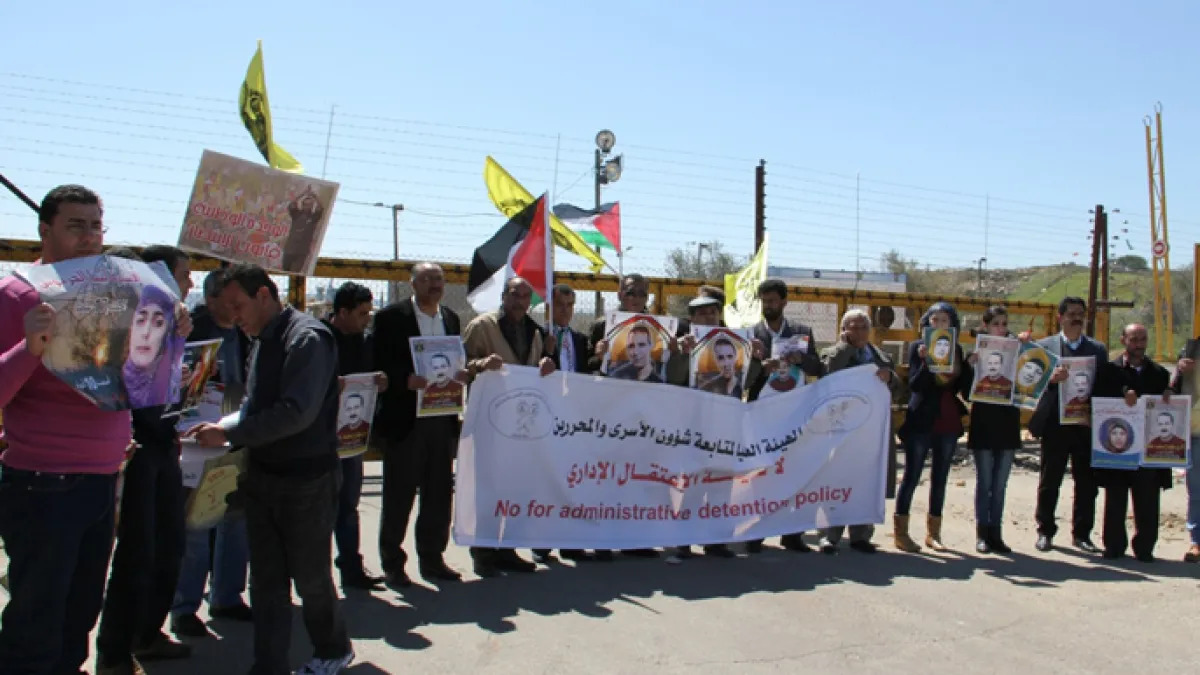
Administrative detention: According to the Prisoners' Club, the order for administrative detention is issued by the occupation's intelligence and the Minister of Defense under the pretext of having materials or a secret file claiming that the detainee poses a threat to "security."

The duration of the administrative detention order can reach 6 months and can be extended for years, either continuously or non-continuously.

According to the club, military trials in administrative detention are "formal and sham courts, as deliberations take place far from the principles of fair trials, even though all court appearances are present, including a judge, a lawyer, a prosecutor, and a detainee."

In the case of administrative detainees, no indictment is presented, and there is not enough space for defense and cross-examination of witnesses.

The prisoner or their lawyers are also prohibited from accessing the secret file, and the decision to extend or cancel the detention order in the future remains the prerogative of the intelligence services.

Trials with indictments: This includes prisoners who are accused and convicted and those who have cases opened against them, and they undergo litigation procedures.

In this classification, the prisoner has the right to appoint a lawyer to represent them, and family members of the prisoners may be allowed to attend their trial sessions, and in most cases, lawyers resort to plea bargains to save time and due to the futility of litigation, alleviating the burden on prisoners who face mistreatment when brought to court sessions.

What is the role of lawyers? In administrative detention

PALESTINE

Tue 11 Nov 2025 6:10 am - Jerusalem Time

An Israeli call to avoid repeating the mistakes of the Gaza war during the upcoming confrontation with Hezbollah.

When all signs indicate that a renewed confrontation with Hezbollah is approaching, Israeli calls have increased to discuss the time to rid themselves of the illusions that accompanied the fighting against Hamas, and the repeated talk of absolute victories that have not found their way to implementation on the ground.

Michael Milstein, head of the Palestinian Studies Forum at the Dayan Center at Tel Aviv University, noted that "after about a year of recording one of the most significant achievements in the Iron Swords War, represented by the fatal blow to Hezbollah, which posed a long-term strategic threat to Israel and served as a central stronghold for Iran in the Middle East, the need to return to a broad campaign in Lebanon has become essential to ensure that the attack of October 7, 2023, does not repeat itself, as preventing any emerging threat in Lebanon is a matter of time."

He added in an article published by Yedioth Ahronoth, translated by 'Arabi21', that "the continued availability of a mix of the party's motivations, the support provided by Iran, and the difficulty of disarming it means the emergence of a troubling threat to the occupation, as a lot of weapons are smuggled into Lebanon; the party is being rehabilitated, including appointing leaders and recruiting new elements, which means they will not agree over time to absorb the equation imposed by Israel."

Milstein explained that "the broad consensus regarding the war that erupted in Lebanon until last year, and that which may soon be required, stems from the fact that the conflict in this arena is based on specific and sober goals, and a political effort complementing the military effort, unlike the campaign in Gaza, which was already successful militarily, but failed strategically by invoking illusions, wishes, partisan considerations, empty slogans, and plans of illusions that collapsed with the end of the war, along with harmful adventures like the attack on Qatar."

He pointed out that "all these Israeli behaviors during the war significantly harmed Israel's international standing, accompanied by an internal debate about the campaign's objective, ending with American implementation, limiting its scope, and placing it before realities, most of which are unsuitable for it. Therefore, in the face of a potential campaign in Lebanon, Israel must adhere to the policy it adopted against the party since October 7, 2023, and avoid adopting the characteristics of the war in Gaza."

He emphasized that "it is essential for the potential upcoming war with the party to have specific limits in time and place, and to be based on achievable goals, focusing on 'cleansing' the area south of the Litani from security threats, which may require renewed ground maneuvers in southern Lebanon, alongside attacks throughout the rest of the state, including Beirut, instead of the empty slogans used in the war against Hamas."

The writer also urged the occupation to "maintain extensive coordination with the international system, so that Israel does not face severe pressures as happened in the Gaza Strip, where its sole responsibility and freedom of action are gradually being violated, because the complete disarmament of the party, as is also claimed for Hamas, is a justified goal, but it requires deep thinking regarding its feasibility, and in both cases, it is not certain that the maximum ambition will be achieved unless that area in southern Lebanon is occupied, and the army decides to stay in these territories for a long time."

Milstein added that "on the other hand, there are goals that are not ideal, but may be the worst at the moment: in the case of Hamas, preventing escalation through actual control of the Philadelphi Corridor and the Rafah crossing, and implementing the Lebanese model for ongoing threats, until Israel decides to launch a broad campaign against Hamas in the future; and in the case of the party, ensuring freedom of action, cleansing southern Lebanon of threats, and enhancing international pressures, and the Lebanese government must act decisively against the party, without excessive expectations at this stage."

He noted that "it is easy to mock and claim that this is defeatism in the spirit of October 6, but it is advisable to arm oneself with a sober and critical stance, which was not present before October 7, and after it, and to understand that insisting on illusions, as appeared in Gaza, leads to a quagmire, which did not end in more severe harm thanks to the intervention of President Donald Trump."

He clarified that "it is interesting, by the way, that the demand for the complete disarmament of Hamas and the party is often raised by those Israelis who created the concept of October 7, and believed that the DNA of extremist Islamic elements could be changed through economic temptation, a gap that will never be realized, of course, and they now cling to the belief that through military pressure it would be possible to force the movement and

PALESTINE

Mon 10 Nov 2025 10:00 pm - Jerusalem Time

Gaza Government: Israel violated the ceasefire 282 times and killed 242 Palestinians.

The government media office in Gaza stated on Monday that Israel has committed 282 violations of the ceasefire since it began on October 10, resulting in the deaths of 242 Palestinians and injuries to more than 620 others.

The office added in a statement: "The Israeli occupation continues to brazenly and systematically violate the ceasefire agreement, having committed more than 282 violations since the decision came into effect, resulting in the martyrdom of 242 civilians and the injury of 620 others."

The statement considered these violations to be "a blatant violation of all international norms and treaties."

The ceasefire agreement between Hamas and Israel came into effect on October 10, mediated by Egypt, Qatar, and Turkey, with American sponsorship as part of a multi-phase plan.

The office clarified that "the occupation carried out 88 shooting operations targeting civilians directly, and 12 incursions of its vehicles into residential neighborhoods, exceeding what is known as the yellow line."

It pointed out that "the occupation executed 124 bombing and targeting operations and 52 demolition operations of civilian buildings, in addition to the arrest of 23 citizens in various areas of the Gaza Strip."

The office condemned these violations and held Israel "fully responsible for their humanitarian and security repercussions."

It confirmed that the continuation of the violations "poses a clear threat to the spirit of the agreement and constitutes a violation of the occupation's commitments to the international community and the guarantor countries."

The office called on U.S. President Donald Trump "and the guarantor countries and mediators to assume their responsibilities and exert real pressure on the occupation to compel it to immediately stop its violations and respect its commitments that it signed."

It also called at the same time "to expedite the complete and permanent opening of the crossings, and to facilitate the entry of food, aid trucks, and commercial trucks as clearly stipulated in the agreement and not partially."

According to the government media office, "the average number of aid trucks entering daily does not exceed 24 percent, amounting to 145 trucks, from the number of trucks that the agreement stipulated should enter daily, which is 600 trucks."

On another note, the office called for "the entry of treatments, medicines, and medical supplies, and the opening of the Rafah crossing to evacuate more than 22,000 injured and sick individuals for treatment abroad."

Since May 2024, Israel has occupied the Palestinian side of the Rafah crossing, destroying and burning its buildings, and preventing Palestinians from traveling, which has plunged them, especially the sick, into a major humanitarian crisis.

The office indicated that "these individuals need more than half a million surgical operations, which the medical teams in the Gaza Strip cannot perform in light of the humanitarian disaster that our Palestinian people are experiencing."

It demanded the entry of shelter materials "such as tents, plastic covers, and tarpaulins, coinciding with the onset of winter, to ensure the prevention of exacerbating the disaster faced by more than 2.4 million people in the Gaza Strip."

The ceasefire agreement ended two years of the genocide war that Israel began on October 8, 2023, with American support, resulting in 69,179 Palestinian deaths and more than 170,000 injuries.

PALESTINE

Mon 10 Nov 2025 9:16 pm - Jerusalem Time

The United Nations condemns the settlers' attacks on Palestinians in the West Bank.

The United Nations condemned on Monday the assaults by Israeli settlers on Palestinian citizens and journalists in the occupied West Bank.

This came in statements made by Farhan Haq, the spokesperson for UN Secretary-General Antonio Guterres, during the daily press conference.

In response to a question about whether the Secretary-General condemns the settlers' attacks on Palestinians and journalists in the West Bank, Haq said: "Yes, we condemn the assaults by the settlers."

Haq emphasized that the United Nations rejects assaults on journalists worldwide and sees no justification for Israel to prevent international journalists from entering the Gaza Strip.

Regarding the ongoing Israeli military maneuvers in the West Bank and the Jordan Valley, Haq simply stated that the United Nations has clearly expressed its concern about those activities.

On Monday, the Israeli army launched military maneuvers in the occupied West Bank and the Jordan Valley, which will last for three days.

The West Bank, including Jerusalem, has witnessed a comprehensive Israeli escalation for two years, resulting in the deaths of at least 1,069 Palestinians and injuries to about 10,000 others, along with the arrest of more than 20,000 people, including 1,600 children.

PALESTINE

Mon 10 Nov 2025 8:46 pm - Jerusalem Time

Diplomatic sources reveal that Washington has distributed a revised resolution to Security Council members supporting a plan to end the war in Gaza.

Informed diplomatic sources revealed that the United States has begun distributing a "revised" draft resolution to the member states of the United Nations Security Council that supports a plan to end the war in Gaza.

The new draft includes American support for a comprehensive plan aimed at ending the conflict in the Gaza Strip, outlining detailed features for the "next day" phase after the war.

According to leaks, the revised version urges "all parties" involved to begin implementing this plan "immediately and fully."

The American draft prominently welcomes the proposal to establish a "Peace Council," which the text describes as a "transitional governing body" tasked with overseeing the management of the sector's affairs.

To ensure security conditions on the ground, the draft resolution permits the formation of an "international stabilization force," which will be placed under "unified command."

Sources indicated in exclusive statements that these forces will operate in direct coordination with both Egypt and Israel to achieve two main objectives: disarmament operations and providing effective protection for civilians.

The amended text presents what the sources described as "clearer conditions and sequence" for the process of the Israeli army's withdrawal from the sector.

It clarified that this withdrawal will be "phased," linked to timelines and progress made in "disarmament criteria."

At the same time, the draft stipulates a "temporary security presence" around Gaza, which will last only until "potential threats" are fully "neutralized."

Administratively, the draft grants the proposed "Peace Council" the authority to establish "temporary executive bodies" responsible for managing civil authority and public services.

The text allows for the existence of this council until the end of 2027, contingent upon "other measures" that the Security Council may take in the future.

It emphasizes that the council "will govern in accordance with international legal principles."

Humanitarianly and economically, the draft calls for the "full and immediate resumption" of aid flow, to be coordinated with United Nations organizations.

It also urges the World Bank and donor entities to expedite the establishment of a specialized "fund" to support reconstruction efforts in the sector.

The resolution calls on governments and organizations to provide the necessary contributions, whether in personnel or funding, to ensure the "Peace Council" can fulfill its duties.

PALESTINE

Mon 10 Nov 2025 7:42 pm - Jerusalem Time

Field testimonies about settlers' attempts to kill journalists in the West Bank.

I was screaming: For God's sake, stop hitting me and I will leave the place, but to no avail; he only became more brutal each time. With these words, journalist Ranin Suwafta described what happened to her during her reception at the emergency department of Rafidia Government Hospital in Nablus after she was subjected to a horrific assault by settlers while covering the olive harvest season in the town of Beita in the northern West Bank.

Suwafta explains that the journalists present for the coverage were direct targets for the settlers, and that the assault on her was "with the intent to kill." The residents of Beita village south of Nablus went to pick their olives in the Al-Qamas mountain area accompanied by foreign activists, before being attacked by a group of settlers with sticks and stones, primarily targeting the press crews, including Suwafta.

Suwafta says she could not withdraw quickly due to the weight of her journalistic equipment and protective gear and the difficult terrain of the area, so she fell to the ground, surrounded by more than five settlers who began to beat her violently on the exposed parts of her body, especially her right hand that was holding the camera.

She adds, "The more I hurt, the harder they hit, focusing on my head and hands," as shown in the video that circulated of her inside the emergency department.

Suwafta was taken to the hospital with direct injuries to her right hand and side, while doctors confirmed her need for a long treatment journey after diagnosing three fractures in her elbow, in addition to being hit by a stone in her head that shattered her helmet.

She remarks, "The protective press gear is what saved my life from death."

Throughout her years working as a news photographer, Suwafta has faced multiple assaults from Israeli forces, including injuries from live and rubber bullets, beatings, choking, detention, and obstruction of coverage, but the recent assault by settlers was "the harshest ever" for her and her colleagues who were with her.

Photographer Nasser Ishtiyeh was also among the injured. He says, like Suwafta, that the settlers targeted the unprotected areas, where he was hit by a large stone in his neck while documenting the assault on his colleague, causing damage to a major nerve, in addition to bruises on his right hand from repeated falls while trying to withdraw.

Ishtiyeh recounts that he arrived in the area around 11 AM to cover the support of foreign activists for the residents of Beita in picking olives, before being attacked by dozens of settlers (between 30 and 40 settlers) in less than half an hour, all of whom were armed with sticks and stones and directly targeting journalists and activists.

Ishtiyeh agrees with his colleague Suwafta that this assault is one of the most difficult during his 33 years spent in fieldwork and covering events from the first intifada to today, during which he has been injured dozens of times by occupation forces.

He points out that he was subjected to a similar assault just two months ago in the Jordan Valley, where settlers stole his lens, smashed his vehicle, and assaulted him directly, prompting him to avoid coverage in areas where settlers are prevalent.

He adds, "Settler assaults are the most dangerous... They are groups not governed by law and cannot be pursued or punished."

Alongside Suwafta and Ishtiyeh, Al Jazeera correspondent Mohammed Al-Atrash and photographer Louay Al-Saeed were injured, in addition to Xinhua Agency photographer Nabil Bouitel.

Journalist Ayman Al-Noubani, a member of the Palestinian Journalists' Syndicate, states that assaults by settlers on journalists have escalated dangerously over the past year, threatening their lives and hindering their work, especially in areas where settler assaults on Palestinians are recurrent.

He adds in his remarks, "We have witnessed attempts to kill journalists... Unfortunately, no one can today protect the Palestinian journalist during their coverage, movement, or daily work."

According to the syndicate's monitoring, around 100 assaults on journalists by settlers occurred over the past three years, most of which concentrated in recent months, including the fatal assault on Anadolu Agency photographer Issam Al-Rimawi and the burning of photographer Jaafar Ishtiyeh's vehicle to prevent him from covering.

Al-Noubani points to the syndicate's efforts through its partnerships with the International Federation of Journalists, the Arab Journalists' Union, and international institutions to expose these assaults and pressure to stop them, but "the assaults continue and are becoming more violent, and no one is able to protect the Palestinian journalist on

PALESTINE

Mon 10 Nov 2025 7:36 pm - Jerusalem Time

Palestine calls for the inclusion of the "Atarot Kohanim" settlement on terrorism lists.

On Monday, Palestine called on the countries of the world to include the organization "Ateret Cohanim" and other Israeli settlement organizations in national terrorism lists, due to their involvement in crimes of displacement and the implementation of plans aimed at Judaizing East Jerusalem.

This came in a statement from the Ministry of Foreign Affairs and Expatriates, commenting on the evacuation of Palestinian properties in Jerusalem for the benefit of Israeli settlers.

The Palestinian Foreign Ministry stated that "Ateret Cohanim is one of the most dangerous terrorist organizations and Zionist settlement associations operating in occupied Jerusalem."

It called for "the inclusion of Ateret Cohanim and all settlement associations involved in crimes of displacement and settlement in their national terrorism lists, and for sanctions to be imposed on their members and financiers, in accordance with international law and relevant United Nations resolutions."

The ministry clarified that it "continues to monitor and follow the activities of the organization and its financiers inside and outside the occupied Palestinian territories, and is working to place it on terrorism lists, due to the real danger it represents to the rights of Palestinian Jerusalemites in their city."

The settlement organization was established in 1978 to promote and strengthen Jewish settlement in Jerusalem, specifically in the Old City and its surroundings.

The Foreign Ministry added that the organization "has been leading plans to Judaize Palestinian neighborhoods for decades, especially in the town of Silwan and the Old City, through the theft of Palestinian properties and assets by fraudulent means using false pretexts, and under the protection of the racist and biased Israeli judiciary."

The ministry condemned "the Israeli occupation government's decision to evacuate the property of the Shweiki and Awad families in the Batn al-Hawa neighborhood of Silwan (on Sunday) for the benefit of the terrorist organization known as Ateret Cohanim."

On Sunday, the Jerusalem governor stated that the Israeli authorities "forcibly evacuated" a property belonging to the Shweiki and Awad families after a large-scale raid and siege of the "Batn al-Hawa" neighborhood, explaining that this comes "as part of a plan for forced displacement targeting Jerusalemite families for the benefit of settlement associations."

The Palestinian Foreign Ministry held "the Israeli occupation government fully responsible for the repercussions of this decision."

It affirmed that "settlement and forced displacement constitute a war crime and a crime against humanity according to the Rome Statute of the International Criminal Court."

The Foreign Ministry mentioned that it has directed Palestinian ambassadors and its diplomatic missions around the world to "expose this crime, mobilize international positions rejecting it, and call on countries to assume their legal and moral responsibilities in protecting Palestinian families from the forced displacement policies pursued by the occupation authorities in the city of Jerusalem."

The ministry emphasized that "what the illegal occupying authority is doing in East Jerusalem, through its agents from Zionist and settlement associations and its racist courts, constitutes a blatant violation of international humanitarian law, especially the Fourth Geneva Convention and the Rome Statute."

It clarified that this also represents "an extension of the policy of ethnic cleansing manifested in the crime of forced displacement aimed at emptying the holy city of its original inhabitants and replacing them with colonial settlers."

In conjunction with the Israeli genocide war on the Gaza Strip over the past two years, the West Bank, including Jerusalem, is witnessing a comprehensive Israeli escalation that has resulted in the deaths of at least 1,069 Palestinians and the injury of about 10,000 others, and the arrest of more than 20,000 people, including 1,600 children.

PALESTINE

Mon 10 Nov 2025 7:32 pm - Jerusalem Time

The Israeli occupation destroys hundreds of archaeological sites in Gaza and steals thousands of artifacts.

The cultural memory of the Gaza Strip has not escaped the Israeli destruction machine that has ravaged all aspects of life for two years. The occupying army has destroyed more than 300 archaeological sites in various areas of the Strip, in a systematic attempt to erase the historical identity of the Palestinians and their deep roots in this land.

During a field tour of several destroyed archaeological sites in the old city of Gaza, it became clear that the deliberate targeting included historical landmarks spanning different eras, while some official entities are trying to begin restoring what remains amid a severe shortage of resources and equipment.

Gaza is not just a geographical space where its people are subjected to killing and displacement; it is a historical land that holds a cultural and civilizational heritage that has also been subjected to systematic Israeli destruction, where archaeological landmarks that have stood for centuries have turned into ruins and ashes.

The Pasha Palace, built during the reign of the Mamluk Sultan Al-Zahir Baybars, stands as a testament to the magnitude of the disaster. The occupying army completely destroyed it along with its archaeological artifacts that adorned the halls of its ancient museum.

A responsible official at the Pasha Palace site revealed that before the Israeli invasion, the place housed more than 17,000 archaeological pieces, but the occupying army stole all the contents of the palace, and no piece has been found since its withdrawal from the area.

This is a devastating loss. The official explained that the stolen pieces belong to multiple historical periods, including the Byzantine and Roman eras, various Islamic periods, and even the late Ottoman era, representing a significant loss to the human heritage in the region.
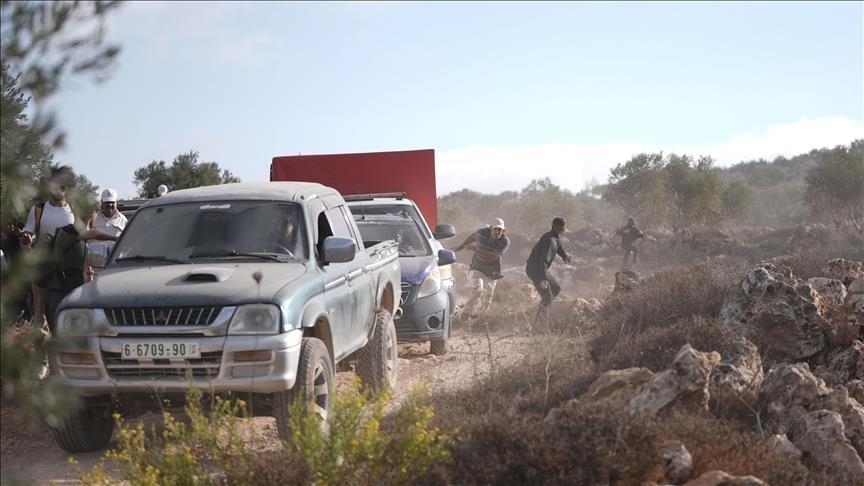
As for the Great Omari Mosque, one of the oldest and most prestigious archaeological mosques in the Strip, it was also subjected to bombing and destruction over two years of Israeli aggression, and the destruction was not limited to its courtyards and facilities alone.

The destruction also extended to the library that housed rare volumes and books within the mosque, in addition to the adjacent Qaisariyah market, which was completely destroyed by the occupation forces, causing the place to lose its historical and cultural significance.

In another location, the features of the ancient Samara bath, dating back to the Ottoman era, have disappeared. It was the last archaeological bath in Gaza, a historical landmark, a medical pilgrimage, and a refuge for the people of the Strip before it was struck by systematic Israeli bombing.

The occupying army did not stop at killing and displacing Palestinians; it sought to destroy their civilizational and historical heritage in an attempt to erase the human identity that proves their deep roots in this land for thousands of years.

This crime against Palestinian heritage constitutes a blatant violation of international laws that prohibit targeting archaeological and cultural sites, at a time when the occupation continues its comprehensive war against everything related to the Palestinian existence.

PALESTINE

Mon 10 Nov 2025 6:54 pm - Jerusalem Time

Palestinian organizations warn of potential executions of hundreds of detainees in Israel.

Nine Palestinian human rights organizations warned on Monday of Israel committing mass executions against prisoners if the proposed death penalty law presented to the Knesset is approved, noting that Tel Aviv is already practicing execution in various forms even before the law is enacted.

This came in a "position paper" issued by the nine Palestinian human rights organizations regarding the Israeli bill to impose the death penalty on Palestinian prisoners, of which a copy was received.

At the beginning of November, the Knesset's National Security Committee approved the proposal to be voted on in the first reading in the parliamentary general assembly, which sparked Palestinian, regional, and international criticism.

The proposal stipulates "the imposition of the death penalty on any person who intentionally or through negligence causes the death of an Israeli citizen out of racial hatred or to harm Israel."

Earlier on Monday, Channel 15 reported that "the death penalty bill is expected to be put to a vote in the first reading today."

The Palestinian organizations stated that the most dangerous aspect of the new legislative draft is that "it applies retroactively, which is unprecedented in any legislative process, especially in criminal laws, where they take effect immediately after issuance and publication."

They added that "this project may be formulated, according to the poles of the Israeli government, including Minister of National Security Itamar Ben Gvir, to legislate the execution of mass executions that could affect hundreds of Palestinian detainees from the elite members of the Al-Qassam Brigades who were arrested on October 7, 2023, or thereafter."

Hamas surprised Tel Aviv on October 7, 2023, with an unprecedented attack on dozens of military bases and settlements surrounding the Gaza Strip, resulting in the deaths and injuries of hundreds of Israelis.

The Palestinian human rights organizations considered that "the essence of what the proposed legislation aims for is to respond to motives of revenge or retribution, not to deter or prevent future crimes."

They continued that the ongoing discussions about this legislation, whether in the media or in some human rights circles, "give a misleading and deceptive image, as it portrays Israel as a state among those that do not apply the death penalty, and that it had abolished this penalty and is moving towards reinstating it against Palestinian detainees."

They added that Israel "has not actually stopped executing that penalty against Palestinians in the occupied Palestinian territories for decades."

They clarified that Israel "has practiced and continues to commit thousands of extrajudicial executions against Palestinians through various means, the most prominent of which are: assassinations, sniper operations, shooting at military checkpoints, shooting at participants in peaceful protests in the West Bank, and killing detainees."

The Palestinian organizations noted that the law that applies only to Palestinians "reveals another aspect of the system of racial discrimination in Israel, as it will not include the execution of the death penalty against an Israeli who kills a Palestinian."

The organizations that signed the paper are: Al-Mezan Center for Human Rights, the Palestinian Center for Human Rights, Al-Haq Foundation, the Addameer Prisoner Support and Human Rights Association, the Palestinian Authority for Prisoners and Released Prisoners Affairs, the Addameer Foundation for Human Rights, the Palestinian Independent Commission for Human Rights, the Palestinian Prisoners Club, and the Jerusalem Center for Legal Aid and Human Rights.

According to Israeli legislation, any bill must be voted on in three readings in the Knesset before it becomes a valid law.

More than 9,250 Palestinian prisoners are held in Israeli prisons, including children and women, suffering from torture, starvation, and medical neglect, with many of them killed, according to Palestinian and Israeli human rights and media reports.

Israel has intensified its targeting of prisoners since it began, with U.S. support, a campaign of genocide against Palestinian citizens in the Gaza Strip on October 8, 2023.

This genocide stopped with a ceasefire agreement that came into effect on October 10, but Israel violates it daily, resulting in hundreds of deaths and injuries, in addition to preventing the entry of sufficient food and medical supplies.

The genocide has resulted in more than 69,000 Palestinian deaths and over 170,000 injuries, with destruction affecting 90 percent of the civilian infrastructure in the sector.

For decades, Israel has occupied Palestine and lands in Syria and Lebanon, refusing to withdraw from them and to establish an independent Palestinian state, with East Jerusalem as its capital, on the borders prior to the 1967 war.

PALESTINE

Mon 10 Nov 2025 6:40 pm - Jerusalem Time

"The World Health Organization" confirms that there are more than 16,000 patients in Gaza in need of travel.

The World Health Organization confirmed that there are more than 16,000 patients in the Gaza Strip waiting to be evacuated for treatment abroad, amid the catastrophic humanitarian conditions in the region and the destruction of hospitals and medical facilities during the Israeli genocide that lasted for two years.

The organization called in a statement for ensuring the flow of humanitarian aid without any obstacles through all crossings leading to the Gaza Strip, given the serious deterioration of health and humanitarian conditions.

It urged more countries to receive patients and injured individuals from Gaza for treatment, emphasizing that the health system in Gaza is facing complete collapse due to the ongoing blockade and shortages of medical supplies and fuel.

It mentioned that "thousands of injured individuals need urgent surgeries that cannot be performed within the Strip," noting that facilitating their transfer to hospitals outside Gaza has become a pressing humanitarian issue.

It pointed out that its medical supplies are ready at the border and called for the urgent and sustainable reopening of all crossings.

It clarified that the Rafah crossing in the southern part of the Strip is "a vital outlet for medical evacuation and a main entry point for health supplies to Gaza."

Since May 2024, Israel has occupied the Palestinian side of the Rafah crossing, destroying and burning its buildings and preventing Palestinians from traveling, which has plunged them, especially patients, into a major humanitarian crisis.

The World Health Organization confirmed that "Egypt remains one of the main destinations for patients needing urgent care," while simultaneously calling for "more countries to receive Gazan patients for treatment."

It stated that it has transferred about 4,000 patients through Rafah for treatment in Egypt and beyond, adding: "There are still 16,500 patients waiting for evacuation."

During the genocide committed by the Israeli occupation army over two years, it deliberately targeted Gaza's hospitals and health system, rendering most of them out of service, which endangered the lives of patients and the injured, according to Palestinian and international data.

Since October 10 of last year, Tel Aviv and Hamas have reached a ceasefire agreement in the Gaza Strip, which is violated daily by the occupation army, resulting in hundreds of martyrs and injured individuals.

For two years, the Israeli occupation army, with American support, committed genocide in the Gaza Strip, resulting in 69,169 Palestinian martyrs and 170,685 injured, most of whom are children and women.

PALESTINE

Mon 10 Nov 2025 5:20 pm - Jerusalem Time

Important statement from Hamas regarding the ceasefire in Gaza

The Islamic Resistance Movement "Hamas" issued a detailed and comprehensive press statement on Monday evening, November 10, 2025, regarding the occupation's violations of the ceasefire agreement signed in Sharm El-Sheikh, one full month after its implementation began.

The movement and resistance forces affirmed their complete and precise commitment, in good faith, to implement the agreement from the outset, such as the release of living detainees.

The statement pointed to the difficulty of the arduous efforts to search for the bodies of prisoners that have been vaporized or lost due to the war, the destruction of infrastructure, and the lack of excavation equipment that the occupation prevents from entering. However, they managed to reach 24 bodies (out of 28) and provided the coordinates of other bodies under the occupation's control.

The occupation has not ceased to undermine the agreement since its inception, as 271 Palestinians were martyred as a result of shelling and deliberate gunfire, with more than 91% of them being civilians, and 58% of the martyrs being children, women, and the elderly, reflecting a systematic policy of killing against the defenseless.

The occupation also continued to arrest Palestinians (35 detainees), including fishermen, with 29 of them still in custody.

The occupation continues its violations in the humanitarian and military field, as it has not adhered to the temporary withdrawal line, but rather exceeded the yellow line by an area estimated at about 33 km², and placed concrete blocks inside the temporary line.

The occupation deliberately violated the terms of aid entry, as the actual aid did not exceed 40% of the agreed quantity, and prevented the entry of more than six thousand shipments for UNRWA.

The closure of the Rafah crossing since 18/03/2025 constitutes a direct violation of the agreement, which has exacerbated the suffering of those stranded.

The occupation also continued to manipulate the delivery of the list of detainees and missing persons, which numbers more than 1,800 missing from Gaza.

The statement called on mediators and guarantors to take immediate and serious action to compel the occupation to stop the aggression, lift the siege, and open the crossings.

ARAB AND WORLD

Mon 10 Nov 2025 4:42 pm - Jerusalem Time

Gaza after the war: Blair and Kushner lead the American "commercial peace" project.

Washington – "Al-Quds" dot com - Said Arikat 

With the start of the ceasefire sponsored by the United States between Israel and Hamas on October 10, the administration of President Donald Trump is moving towards what it calls the "new peace plan," which is essentially a massive economic project for the reconstruction of Gaza and transforming it into an attractive investment area for global capital.

This "peace" is not based on political reconciliation as much as it bets on the "opportunities" left by the destruction, through giant real estate and commercial projects led by former British Prime Minister Tony Blair, while Jared Kushner, Trump's son-in-law, returns to a position of influence as the de facto commissioner for post-war management, putting his experience in the "Deal of the Century" and normalization agreements to serve the "peace through development" project.

Blair: From the Iraq War to the "Peace Council" in Gaza

Since the war on Iraq and its occupation in 2003, Blair has not left the Middle Eastern stage. He led Britain into war based on claims of weapons of mass destruction, earning him the reputation of a "war criminal." Today, after two decades, he returns to oversee what is called the "Peace Council" in Gaza, tasked with managing the economic reconstruction of the afflicted sector.

When he was a special envoy for the Quartet in 2009, he boasted of securing Israel's approval for a new Palestinian telecommunications company, but documents revealed that the deal included a Palestinian concession to drop the case of Israeli war crimes at the United Nations after the "Cast Lead" operation. That incident early on revealed how justice is replaced by deals, and politics by investment.
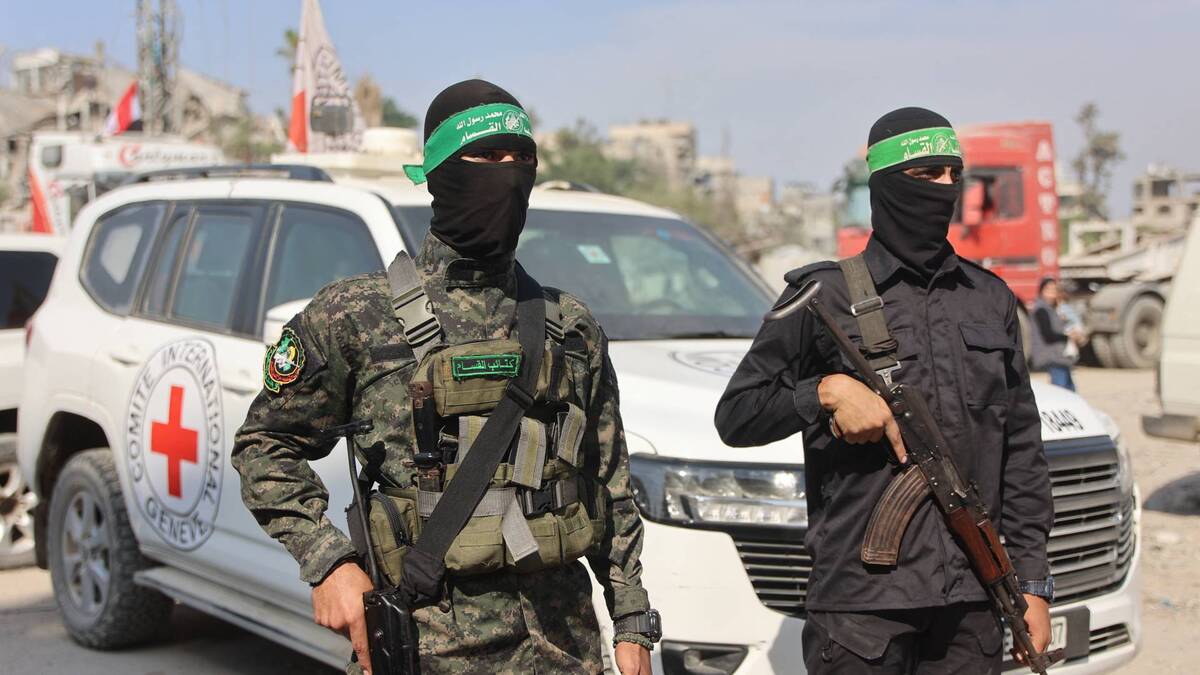
"Making Gaza Safe for American Capitalism"

After leaving the premiership, Blair immersed himself in a complex network of business and consulting, serving as a consultant for JPMorgan with a million-dollar annual salary, and for companies like PetroSaudi and Zurich Insurance for hefty commissions, while simultaneously being a peace envoy.

In 2017, he consolidated his charitable and business institutions under one umbrella, the "Tony Blair Institute for Global Change" (TBI), which expanded to include about 900 employees in 45 countries, with revenues exceeding $145 million by 2022.

His opponents criticize the institute as an "international lobby" serving the interests of major corporations and wealthy states, using titles like "good governance" and "digital transformation." Reports confirm that representatives of the institute participated in a meeting last July to discuss visions for "post-war Gaza," which included plans to transform the sector into a "special economic zone" featuring projects like "Trump Riviera" and "smart manufacturing zones" similar to Elon Musk's projects. The most alarming proposal involves "compensating half a million Palestinians to leave Gaza" to prepare the ground for real estate investors.

Money and Technology: The Alliance of Interests

Behind Blair's expansion are major funders, most notably Larry Ellison, the extreme Zionist who recently bought TikTok, and the founder of the giant Oracle Corporation, who donated about $300 million to the Blair Institute. Ellison, known for his close ties to Israel, has funded controversial projects, including support for the occupation army and financing excavations in occupied East Jerusalem.

Blair promotes digital projects in health and education as tools for transparency, but in practice, they expand the dominance of donor corporations and open the door to the privatization of public sectors – and Gaza could be the next stop.

This trend reflects Blair's vision for the "post-conflict" phase, where rubble turns into investment opportunities, and afflicted communities are managed as profitable economic projects under international supervision.

Jared Kushner Returns to the Forefront

In this context, Jared Kushner returns to play the role he excels at: turning politics into investment.

Kushner, who crafted the "Deal of the Century" (2020) under Netanyahu's instructions and contributed to normalization agreements between Israel and several Arab countries, is now seeking to integrate Gaza into his broader "peace through development" project, benefiting from his network of relations in Silicon Valley and the Gulf.

Through his real estate companies and investment funds, he is working to attract capital to develop projects in Gaza and link them to the Israeli economic system, so that the region becomes subject to indirect American-Israeli oversight.

While Blair takes center stage as the "international director," Kushner works behind the scenes "as the engineer" ensuring the continuity of American influence and corporate interests in controlling Gaza's natural resources, foremost among them the offshore gas that has been a point of contention