PALESTINE

Sun 14 Jun 2026 7:56 am - Jerusalem Time

Internal Pressures Push British Labour Government Towards Radical Shift on Palestine Issue

Expectations are rising in British political circles about a fundamental shift in the approach of Keir Starmer's Labour government towards the crisis in the Middle East. This anticipation is driven by the successes achieved by the Green Party in local elections based on a pro-Gaza agenda, as well as increasing pressure from the party's grassroots.

Sources reported that activists supportive of the Palestinian cause are observing a change in the general mood within government corridors, especially with recent opinion polls reflecting an overwhelming desire among Labour Party members to take punitive measures against the occupation. These demands include a comprehensive ban on arms shipments to Israel, which puts the current leadership to a real test against its declared principles.

Observers believe that this relative optimism among activists reflects a shift in the balance of political power, despite the legal challenges faced by some protest movements. Analysts suggest that the possibility of Starmer's future departure from the premiership could open the door for more radical leaders in their handling of the Palestinian issue.

Wes Streeting and Andy Burnham emerge as preferred candidates to succeed Starmer, as both have a record of statements calling on the Labour Party to make greater efforts to support Palestinian rights. Despite their current reservations about describing what is happening as genocide, Streeting has previously accused Israel of committing overt war crimes.

Streeting, the former Shadow Health Secretary, had sparked controversy within the shadow cabinet after circulating a file prepared by British doctors working in the occupied territories documenting humanitarian atrocities. This move led to tensions with Starmer, who accused him of attempting to leak documents to influence public opinion, revealing the depth of internal division over Gaza.

In a related context, figures show that 87% of Labour Party members support a ban on trade with illegal Israeli settlements in the West Bank. A survey conducted by Medical Aid for Palestinians also revealed that 78% of members demand an immediate and complete halt to arms exports, putting the government in direct confrontation with its electoral base.

Emily Thornberry, Chair of the Foreign Affairs Committee, criticized the government's slowness in taking effective steps after recognizing the state of Palestine last autumn. Thornberry said the government had lost its diplomatic momentum, questioning the next steps to end the stalemate and stop Israeli threats to divide the West Bank.

Thornberry pointed out that the humanitarian situation in the Gaza Strip has become unbearable, yet international action remains insufficient. She called on Britain to use its diplomatic authority to convene international meetings aimed at imposing a complete Israeli withdrawal and ending the siege imposed on the civilian population.

For his part, Brian Privett, Executive Director of the 'British Palestine Project,' considered that change within the government is imminent and inevitable. He explained that the disparity between the leadership's handling of the Ukrainian crisis compared to the Palestinian issue has created a credibility gap, both legal and moral, that is difficult to bridge without decisive decisions.

At a specialized conference, experts and former officials discussed ways to convince Israeli society that occupation does not provide security but undermines it. There was a consensus on the need to move from hollow diplomatic statements to practical measures, such as imposing a complete trade ban on settlement products and publishing the government's response to the International Court of Justice's rulings.

Vincent Fean, former British Consul General in Jerusalem, warned of Europe losing its diplomatic control over the issue to the American administration. Fean stressed the need for Britain to regain its leadership role in the region by adopting independent policies consistent with international law and human rights.

Chris Doyle, Director of the Council for Arab-British Understanding, criticized the 'deep concern' policy pursued by the British Foreign Office without tangible actions on the ground. He said that Gaza has become a pivotal issue for an entire generation of Britons who will not accept continued complicity or silence towards what they describe as ethnic cleansing crimes.

Former Israeli negotiator Daniel Levy suggested that Britain should focus on undermining the system of impunity enjoyed by the Israeli leadership. Levy affirmed that individual sanctions on some settlers are insufficient; rather, the political and economic system that directly fuels the occupation must be targeted.

Levy concluded by referring to the South African experience, where the apartheid system was undermined by offering a political alternative that ensured security for all while ending injustice. He called on Britain to contribute to drafting a new freedom charter for Palestinians that ends decades of military occupation and expansionist settlement.

There is an imminent radical change within the British government, and it would be surprising if it did not happen because most dynamics are moving in one direction towards supporting Palestinian rights.

PALESTINE

Sun 14 Jun 2026 7:56 am - Jerusalem Time

Israeli Incitement to Destroy Dahiyeh and Tactical Withdrawal of the Lebanese Army from a Southern Barracks

The far-right Israeli Finance Minister, Bezalel Smotrich, renewed his inflammatory calls for widespread destruction in Beirut's southern Dahiyeh. Smotrich demanded the demolition of ten residential buildings in Dahiyeh for every shooting targeting northern Israel, emphasizing the need to implement this threat immediately.

These statements come at a time when the Lebanese front is witnessing escalating tension despite existing understandings for a ceasefire. The Israeli minister, in a post on 'X', considered a violent response as the only way to prevent Hezbollah from exploiting the field situation to harm northern areas.

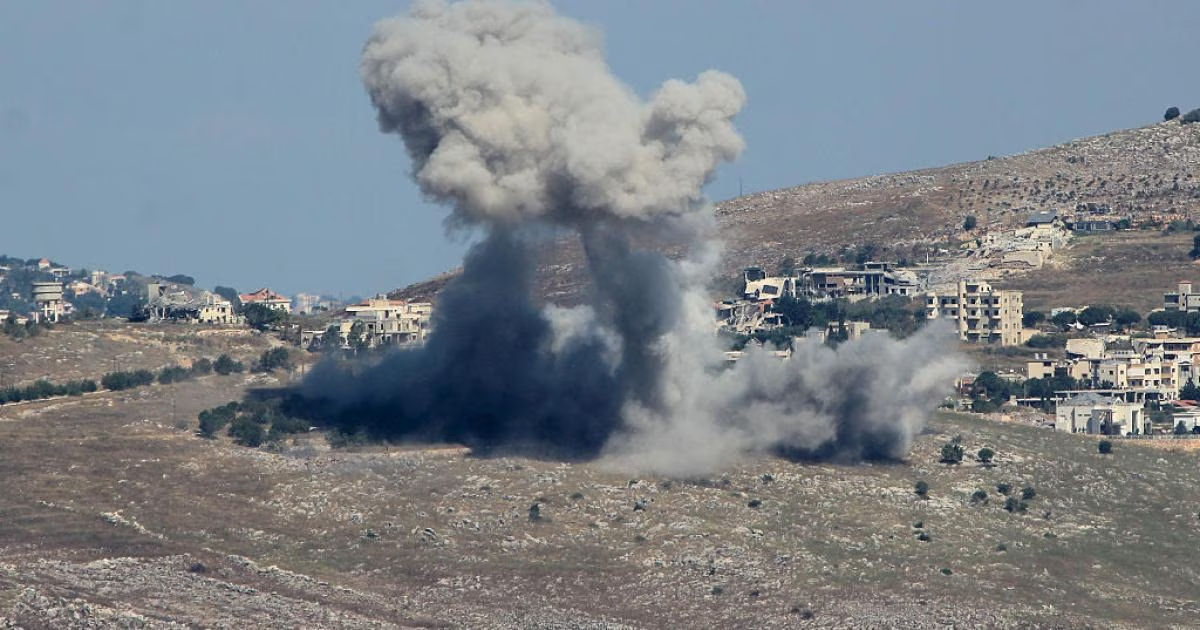
On the ground, sources reported the complete withdrawal of Lebanese Army forces from the Al-Maabar military barracks located in the town of Kafr Tibnit in the south of the country. This move comes amid complex security conditions in the border areas and increasing possibilities of widespread military escalation.

Military analysts described the Lebanese Army's withdrawal as a tactical evacuation dictated by the current field data on the ground. Experts explained that this measure is purely precautionary, aiming to avoid direct confrontations given the Israeli side's superior firepower and air superiority.

Military readings indicated that the Lebanese Army's current missions focus on maintaining internal security and implementing the state's political decisions. There is no official mandate or political decision from Beirut to engage in a direct military confrontation with the Israeli occupation army at this moment.

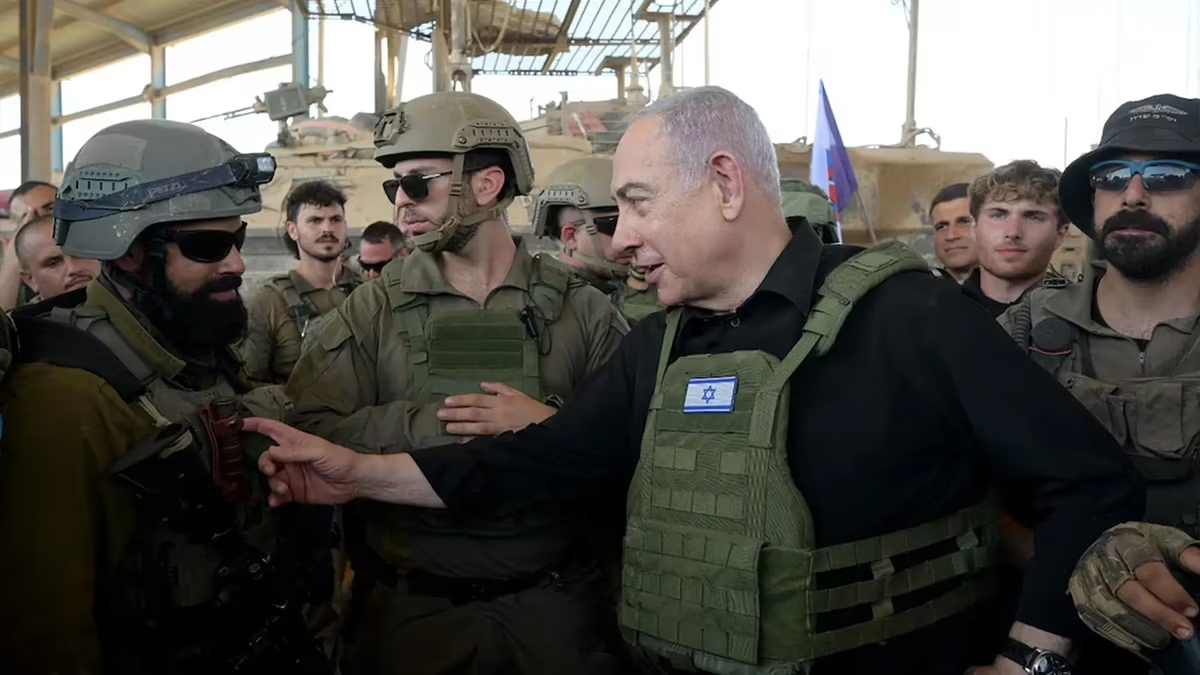
On the Israeli political front, media sources reported that Prime Minister Benjamin Netanyahu is holding a meeting of the mini-cabinet 'the Security Cabinet' on Sunday evening. The meeting will discuss the rapidly evolving regional situation, especially in light of recurring news about an anticipated agreement between Washington and Tehran.

Hebrew reports indicate that the security establishment in Tel Aviv has begun preparing for the possibility of political directives to halt ground advances in southern Lebanon. This potential direction is linked to the ongoing crystallization of international understandings led by the United States to de-escalate the situation in the region.

Beirut is experiencing a state of political anticipation, as the Lebanese government sees the necessity of not depleting the army's capabilities in battles that do not serve direct political decisions. Recent military movements are viewed as part of a repositioning, awaiting the outcome of international diplomatic efforts.

It is worth noting that Israeli aggression on Lebanese territories records daily violations of the fragile ceasefire agreement that began last April. Washington had previously announced an extension of this agreement until early July in an attempt to contain the conflict.

The scene in southern Lebanon remains open to all possibilities, between Israeli threats of expanding destruction and defensive field movements. All eyes are now on the results of the Security Cabinet meeting and what decisions it may bring that could affect the course of military operations and political agreements.

Hezbollah must not be allowed to exploit the situation to harm the north; the only way is for ten buildings in the southern Dahiyeh to fall for every shot fired towards our territories.

LATEST NEWS

Sun 14 Jun 2026 7:56 am - Jerusalem Time

Anticipated Memorandum of Understanding Between Tehran and Washington: Will it Draw a Roadmap to End the War in the Region?

The Islamic Republic of Iran stands at a pivotal historical moment where military calculations intertwine with political paths, as eyes turn towards the signing of a memorandum of understanding with the United States of America. This anticipated agreement may put an end to open confrontations on multiple fronts and establish new security and political arrangements extending from the Strait of Hormuz to the Lebanese arena.

Data indicates that Tehran seeks, through this memorandum, to transition from the logic of field confrontation to a comprehensive political settlement equation. This move comes amidst internal questions about the strategic gains Iran has achieved from the recent escalation, and the extent to which diplomacy can solidify these gains in a written agreement that guarantees its vital interests.

For his part, former Iranian diplomat Dr. Hadi Afkahi explained that the proposed memorandum covers fundamental issues raised by Tehran, foremost among them the complete cessation of military operations, including Lebanon and the countries of the Axis of Resistance. The clauses also include lifting economic sanctions imposed on the country and regulating the rights of managing the Strait of Hormuz in consultation and coordination with the Sultanate of Oman.

Informed sources confirmed that the first phase of the understanding will focus on humanitarian and economic aspects, while more complex files will be postponed to a second phase. This phase includes the Iranian nuclear program file and the fate of enriched uranium stockpiles, issues that require international guarantees and precise inspection mechanisms demanded by Washington.

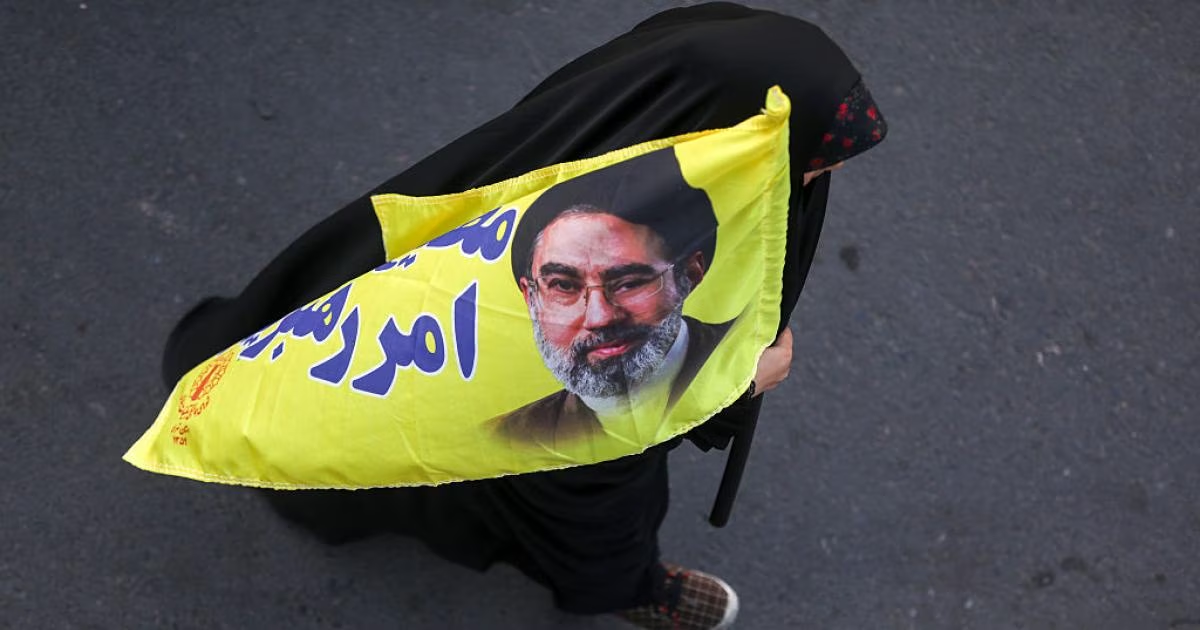
Regarding the timeline, there is a kind of caution in Tehran towards the final formulations of the agreement to avoid any potential manipulation of legal terms. The final decision is subject to careful review by the Supreme National Security Council, before being submitted for final ratification by Supreme Leader Mojtaba Khamenei to ensure political consensus.

On the other hand, observers believe that the agreement represents a 'negotiated truce' for 60 days, aiming to test the intentions of the parties and shift the conflict from the military field to diplomatic tables. Academic Hussein Riyouran pointed out that the specter of war still looms if the two parties fail to reach tangible results during this sensitive transitional period.

The proposed roadmap relies on 14 basic clauses that guarantee mutual commitments, so that every step taken by Tehran to de-escalate is met by an American step to alleviate pressure. This balance aims to build lost trust between the two sides and provide political cover for both parties before domestic public opinion in Washington and Tehran.

On the economic front, Iran prioritizes the unfreezing of funds to alleviate the living crisis and reassure the Iranian public of the utility of the negotiation path. In this context, a pivotal Qatari role emerged by expressing readiness to provide a financial 'advance' to Tehran, to be settled later once American restrictions on Iranian assets abroad are lifted.

According to leaked information, the US administration also agreed to allow Iran to freely export its oil during the 60-day negotiation period. This step would inject immediate cash liquidity into the Iranian economy, strengthening the position of the Iranian negotiator and giving him room for maneuver in pending political files.

In contrast, Israel continues to adopt an escalatory rhetoric, with its official sources affirming adherence to the option of unilateral action if it feels an imminent nuclear threat. This Israeli position represents one of the biggest challenges facing the US-Iranian understanding, as Tel Aviv fears that the agreement could legitimize Tehran's regional influence.

Between the rhetoric of victory promoted by circles in Tehran and the language of necessity adopted by Washington, the Middle East remains at a historical crossroads. Either this memorandum succeeds in formulating a new relationship between Iran and the world, or it is merely a warrior's respite preceding a new round of confrontations that could redraw the balance of power in the region.

The current agreement is a 14-point roadmap, where each Iranian step is met by a parallel American step within the framework of mutual arrangements.

PALESTINE

Sun 14 Jun 2026 7:56 am - Jerusalem Time

Fears of undermining the Gaza agreement: Is Netanyahu seeking to impose a new reality on the ground?

Field indicators in the Gaza Strip are escalating, reflecting an Israeli approach that contradicts the supposed path of de-escalation, as violations expand and control on the ground advances instead of moving towards phases of ending the war. Observers believe that these moves represent a systematic attempt to empty the agreement of its content and repurpose it to achieve military objectives that Tel Aviv failed to accomplish during intensive operations.\n\n"The Islamic Resistance Movement (Hamas) accused the Israeli side of shifting what is known as the 'Yellow Line' westward, coinciding with continued bombing operations and the prevention of vital aid. These facts raise serious questions about the fate of the agreement, and whether the Israeli government is moving to reformulate the truce according to its own conditions, away from the original commitments.\n\n"It appears that the core of the current dispute has gone beyond procedural details to affect the nature of the agreement itself, as Israel acts as if it is in a race against time to expand its geographical influence within the Strip. While the first phase is expected to alleviate the humanitarian catastrophe, Israeli focus is on imposing realities on the ground that will make any binding political settlement difficult in the future.\n\n"In this context, political readings indicate that the problem lies not in scattered violations, but in a comprehensive approach aimed at hindering Gaza's ability to recover. This approach includes obstructing the humanitarian protocol and preventing reconstruction efforts, which keeps the Strip in a state of permanent attrition used as leverage in negotiations.\n\n"Tel Aviv is currently seeking to confine the discussion to the issue of resistance weapons, shifting the agreement's center of gravity from ending the war and humanitarian suffering to complex security files. This fundamental shift primarily serves the Israeli agenda, making the implementation of other provisions secondary in the calculations of the Netanyahu government.\n\n"For its part, Palestinian factions believe that this approach is characterized by clear selectivity, where binding provisions for withdrawal and lifting the siege are ignored in favor of adhering to what serves the strategic interests of the occupation. Accordingly, the agreement, from the Palestinian perspective, turns into a tool to achieve war outcomes instead of being a comprehensive framework for ending it.\n\n"Fears are growing with successive Israeli statements about remaining in 'security zones' within Gaza and expanding the scope of military control. This trend reflects a desire to reshape the geopolitical landscape of the Strip, making any future withdrawal a complex and politically and militarily costly process.\n\n"Experts in Israeli affairs link these policies to a deeper goal of changing the demographic map and weakening the basic components of life. Continuous living restrictions and systematic military pressure may turn the idea of displacement from a political slogan into a reality imposed by the lack of living options in the devastated areas.\n\n"Concerns also arise about exploiting the disarmament file to create a state of internal chaos, by attempting to strip national forces of their capabilities while local groups supported by the occupation emerge. Factions fear that this path will lead to internal conflicts that reshape the Palestinian scene in a way that serves the Israeli security vision.\n\n"On the international level, American positions appear closer to adopting the Israeli perspective, where the faltering implementation of the agreement is directly linked to the issue of Hamas's weapons. This position explains Washington's reluctance to exert real pressure on Israel to compel it to abide by humanitarian provisions and withdraw from populated areas.\n\n"In light of this reality, the meetings of Palestinian factions in Cairo came as an attempt to fortify the national position and prevent the passage of unilateral formulas. Palestinian forces stressed the need to defend the original philosophy of the agreement, which is based on mutual and simultaneous commitment between all parties.\n\n"Despite the factions showing flexibility on sensitive issues such as heavy weapons arrangements, they link this to ending humanitarian restrictions and stopping attrition policies. Palestinian awareness is growing that the real danger lies in the agreement remaining a formal cover while being emptied of its practical content on the ground.\n\n"Palestinian forces are betting on the role of regional mediators to restore the lost balance in the negotiation process, especially since these mediators previously succeeded in modifying international proposals. The factions demand greater pressure on the American administration to compel Tel Aviv to respect its commitments and prevent the policy of imposing a fait accompli.\n\n"The agreement stands today at a critical crossroads: either it regains its path as a real entry point for ending the war and relieving the population, or it remains merely a political maneuver. If the current approach continues, Netanyahu will continue to use de-escalation as a cover to complete what he failed to achieve through direct military force.\n\n"An agreement that does not stop the bombing and does not allow recovery becomes a cover for managing the crisis, not for solving it.

PALESTINE

Sun 14 Jun 2026 7:56 am - Jerusalem Time

Including a sanitation worker... 3 martyrs in Israeli raids targeting Khan Yunis and Al-Bureij refugee camp

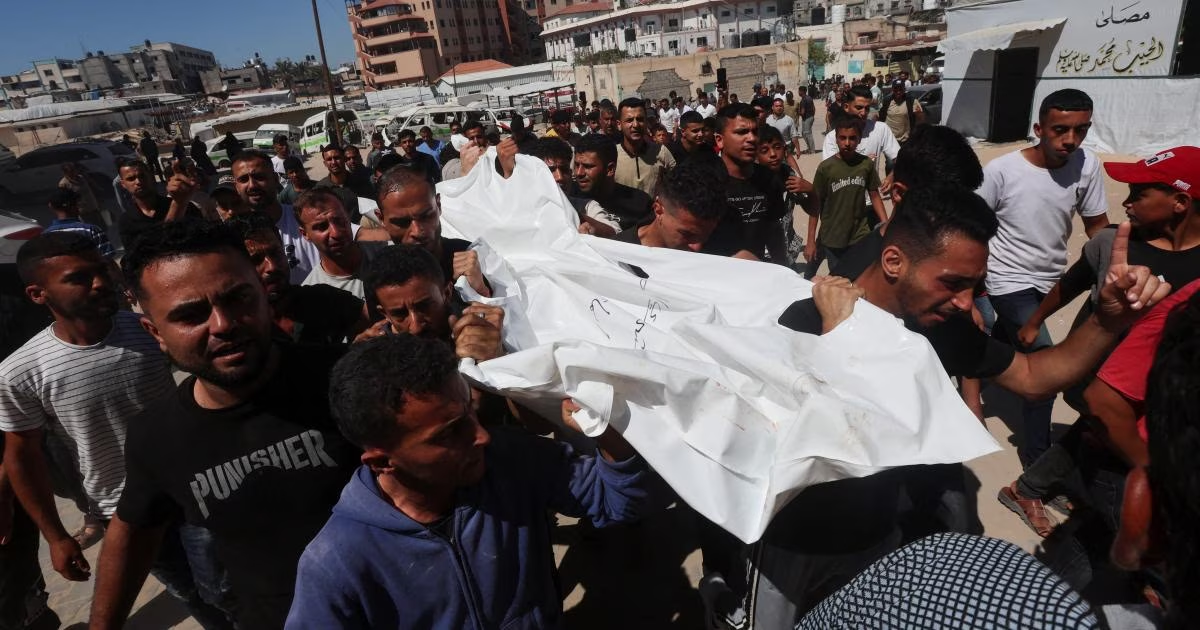
Israeli attacks on the Gaza Strip continued today, Saturday, as two airstrikes resulted in the martyrdom of three Palestinian citizens and the injury of others. The targeting focused on areas in the southern and central parts of the Strip, reflecting the ongoing escalation despite existing understandings, amid public concern about the increasing pace of drone raids targeting civilian gatherings.

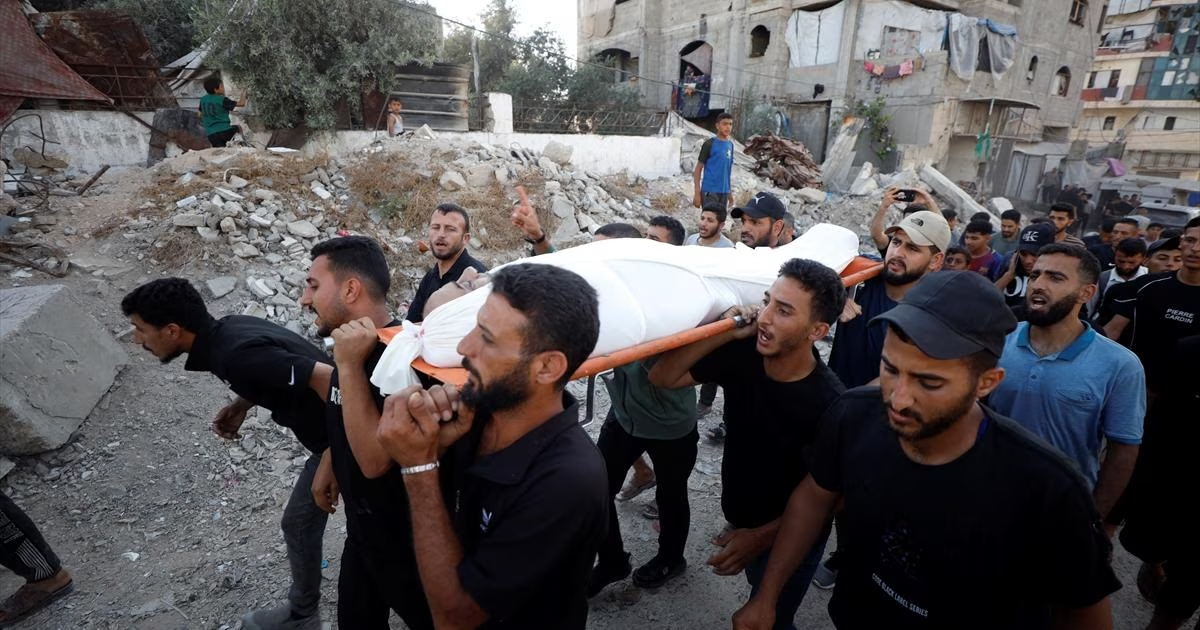
In details of the aggression, medical sources at Nasser Hospital reported the arrival of the bodies of two martyrs due to shelling carried out by an occupation drone targeting a gathering of citizens in the Al-Amal neighborhood in Khan Yunis city. The raid also caused moderate injuries to a child, who was transferred for necessary treatment amid difficult health conditions suffered by the medical sector.

In another raid, occupation aircraft targeted a landfill located near the Al-Bureij refugee camp in the central Gaza Strip, leading to the martyrdom of a sanitation worker and the injury of a colleague. Local sources confirmed that the martyr was performing his professional duty of collecting waste for Al-Bureij municipality at the moment of his direct targeting by Israeli aircraft, in a new crime targeting service personnel.

These developments come in the context of a series of continuous Israeli violations of the ceasefire agreement announced on October 10, 2025. According to data from the Ministry of Health in Gaza, these violations have so far led to the martyrdom of 983 people and the injury of more than 3122 others, putting the agreement on the verge of complete collapse.

For its part, the Israeli occupation army admitted in a statement issued on Friday to killing 20 Palestinians in various areas of the Gaza Strip during the past week. The occupation claimed in its justification for these operations that those targeted belonged to the Hamas and Islamic Jihad movements, which are the pretexts it usually uses to justify targeting populated areas and civilians.

Regarding the total toll, official statistics indicate that the ongoing genocide since October 2023 has resulted in approximately 73,000 martyrs and more than 173,000 injured. These staggering figures reflect the magnitude of the humanitarian catastrophe that has befallen the Strip, amid international silence and an inability to stop the Israeli killing machine that has spared no one.

In addition to human losses, Israeli military operations have caused widespread destruction affecting about 90% of the civilian infrastructure in the Gaza Strip. This systematic destruction includes water and electricity networks, roads, and public facilities, making daily life for the remaining residents a continuous struggle for survival in the absence of basic services.

The martyr was one of the sanitation workers in Al-Bureij municipality, and the Israeli aircraft targeted him while he was working at the landfill.

ARAB AND WORLD

Sun 14 Jun 2026 7:55 am - Jerusalem Time

Arrangements for an imminent 'electronic' signing between Washington and Tehran: Outlines of an agreement to end the war and outstanding issues

Diplomatic circles are witnessing rapid movements between Washington and Tehran to reach the signing of a memorandum of understanding aimed at ending ongoing military operations in the region. This step comes amid cautious optimism, tinged with many complexities related to the nuclear program and international navigation in the Strait of Hormuz, in addition to the issue of frozen Iranian funds.

Informed sources reported that there is a strong tendency to complete the signing ceremony electronically and remotely, to overcome logistical obstacles related to the US administration's schedule. These unconventional arrangements are due to the limited time available to US Vice President J.D. Vance before President Donald Trump departs to participate in the G7 summit scheduled for the next two days.

On the Iranian side, the Ministry of Foreign Affairs maintains a more reserved tone, with its spokesperson, Ismail Baqaei, confirming that there are no current plans for official delegations to visit European or regional capitals. Estimates in Tehran suggest that the signing may take place early next week, with an emphasis that the memorandum represents an initial 'roadmap' and not a comprehensive final settlement.

Highly enriched uranium stands out as one of the most sensitive points in the ongoing negotiations, with Iranian Foreign Minister Abbas Araqchi stating that technical details will be finalized within 60 days. Tehran insists that the only acceptable proposal for it is to reduce the level of uranium enrichment within its national facilities, categorically rejecting the idea of transferring it outside the country.

In contrast, sources quoted a senior American official as saying that the agreement aims to initiate a process of 'destroying or removing' Iran's stockpile of sensitive nuclear materials. Washington considers the next two months crucial for determining the technical mechanisms of this process, especially since some of these materials are located in sites that have been subjected to previous military strikes.

Regarding the economic aspect, US President Donald Trump clarified that frozen Iranian funds will not be delivered in cash as happened in previous administrations. Attention is focused on the possibility of allowing Tehran to use part of its assets in Qatari banks to secure specific humanitarian and commercial needs under international supervision.

The anticipated agreement also includes vital provisions related to the full reopening of the Strait of Hormuz to international navigation to ensure the stability of global energy supplies. Through negotiations, Iran seeks to obtain recognition of its right to impose fees on transit ships in exchange for logistical services, which has been a long-standing international legal dispute.

The Lebanese file remains the most ambiguous in these understandings, as Tehran links the success of the agreement to the cessation of ongoing Israeli aggression on Lebanese territories. Sources confirm that Iran is pushing to integrate the de-escalation file between Hezbollah and Israel as an integral part of any desired regional stability in the next phase.

In contrast, Israeli Security Minister Yisrael Katz issued strong warnings, emphasizing that Tel Aviv may be forced to act unilaterally to protect its national security, away from international understandings. Katz stressed that the Israeli army will not withdraw from the positions it controlled in Lebanon, Syria, and Gaza, which puts the agreement to a difficult field test.

Iranian doubts are increasing about the extent of the US administration's commitment to implementing its pledges after the signing stage, which prompts Tehran to avoid raising popular expectations. Observers believe that the historical distrust between the two parties may turn the memorandum of understanding into merely a temporary 'political truce' prone to collapse at the first technical or military clash.

Regional officials following the negotiations indicated that the agreement will include a gradual lifting of economic sanctions imposed on Tehran in exchange for concrete steps in the nuclear file. An official announcement is expected in the coming days if the final technical obstacles related to drafting the final provisions are overcome.

These developments come at a time when global markets are suffering from severe disruptions due to the closure of vital waterways and rising prices of fertilizers and food. The opening of the Strait of Hormuz represents a major international interest that may push major powers to pressure all parties to make this understanding a success despite strong Israeli opposition.

On the ground, battles in southern Lebanon and the northern West Bank continue to cast a shadow over the political scene, as the occupation refuses to make any geographical concessions. This Israeli intransigence may hinder the transformation of the memorandum of understanding into a permanent peace agreement, limiting it to limited security arrangements aimed at cooling down the fronts.

Ultimately, the region appears to be on the cusp of a major transitional phase that may redraw political alliances in the Middle East. The timing of the electronic signing, if it occurs, will be a signal to start a race against time to resolve outstanding issues within the sixty-day period set by both parties as a test of intentions.

Iranian officials view the memorandum as merely a roadmap or broad outlines for ending the war, not a final agreement that resolves all outstanding issues.

OPINIONS

Sat 13 Jun 2026 10:50 pm - Jerusalem Time

Trump announces signing of Hormuz agreement on Sunday… Tehran questions timing and reveals deep disagreements over settlement terms

Washington's Message

Washington – Said Arikat – 6/13/2026

US President Donald Trump's announcement of the imminent signing of an initial agreement with Iran to halt confrontation and reopen the Strait of Hormuz sparked a wave of questions about the prospects for success of the anticipated understanding, after Tehran quickly questioned the timing set by the US President, and at the same time revealed fundamental differences with Washington regarding the nature and content of the agreement.

Trump said via his “Truth Social” platform that an initial sixty-day memorandum of understanding would be signed electronically on Sunday, stressing that the agreement would immediately lead to the reopening of the Strait of Hormuz to international shipping. However, Iranian Foreign Ministry spokesman Ismail Baqaei denied that the signing would take place on that date, explaining that the agreement “will not be signed tomorrow,” referring to Sunday, without ruling out the possibility of its completion in the following days.

This early contradiction reveals the continued crisis of confidence between the two sides, despite increasing talk of their approaching an understanding that could put an end to the most dangerous confrontation the region has witnessed in years. While Trump seeks to present the agreement as a major political and diplomatic achievement, Tehran prefers to keep expectations low, fearing being held responsible for any potential setback in the negotiations.

In an indication of ongoing mediation efforts, Pakistani Prime Minister Shehbaz Sharif announced that preparations for the electronic signing were underway over the weekend, to be followed by technical talks between the concerned parties. This indicates that the agreement is still in a transitional phase that requires executive and technical arrangements before it turns into a stable and applicable understanding.

But the most important disagreement is not about the timing, but about the essence of the agreement itself. According to officials in the Trump administration, the understanding includes ending Iran's nuclear program and removing its enriched uranium stockpile, conditions that Washington considers fundamental to any lasting settlement. Trump also stressed that the agreement would not include any financial transfers or payments to Iran in exchange for the signing.

In contrast, Iranian Foreign Minister Abbas Araqchi presented a completely different narrative, asserting that the initial agreement is nothing more than a framework for a ceasefire and creating conditions for broader and more comprehensive negotiations. Tehran also expects, according to information circulating in diplomatic circles, the lifting of US naval restrictions imposed in the region, while continuing its role in managing the affairs of the Strait in coordination with the Sultanate of Oman.

This discrepancy reflects a fundamental difference in the two sides' vision of the agreement. Washington speaks of a strategic settlement addressing the nuclear file and regional navigation security, while Tehran views the understanding as a temporary truce that prevents a slide into a wider war and gives it an opportunity to continue negotiating from a position of strength.

These developments came days after a dangerous military escalation in the waters of the Gulf. The US Central Command announced the downing of a number of attack drones that it said Iran launched towards commercial vessels in the Strait of Hormuz. These incidents served as a reminder of the magnitude of the risks threatening one of the world's most important maritime passages, through which a large percentage of global oil and gas exports pass.

International markets hope that the anticipated agreement will contribute to restoring stability to energy markets, which have been repeatedly shaken by the crisis. The full reopening of the Strait would ease pressure on oil prices and maritime shipping, and give the global economy a much-needed breather amid increasing geopolitical tensions.

Nevertheless, optimism remains cautious. Previous experiences between Washington and Tehran have shown that reaching initial understandings does not necessarily mean their success in withstanding political and security complexities. Moreover, the most sensitive issues, foremost among them Iran's nuclear program, economic sanctions, and Iran's regional role, are still far from being resolved.

Thus, it seems that the anticipated agreement, if indeed signed, will not represent the end of the crisis as much as it will be the beginning of a new phase of negotiation and political bargaining. The gaps between the two sides are still wide, and true success will not be measured by the signing date or the accompanying political celebrations, but by the ability of both sides to transform the temporary de-escalation into a sustainable settlement that addresses the roots of the conflict instead of postponing its explosion.

Trump between Political Achievement and Implementation Test

Trump seeks to use the anticipated agreement as proof of his ability to manage international crises through pressure and negotiation rather than open wars. However, the real challenge lies not in announcing the agreement, but in ensuring its implementation. The recent history of US-Iranian relations is full of understandings that collapsed under the weight of political differences and conflicting interpretations. Therefore, any attempt to present the agreement as a final victory may be premature, especially given the continued disagreement over its most basic provisions.

Iran Tries to Establish a New Equation

Tehran seems keen to exploit the crisis to redefine the rules of engagement with it in the Gulf. It does not want the agreement to appear as a response to American pressure, but rather seeks to portray it as international recognition of its role and influence in the region's security. Hence its insistence on maintaining some forms of administrative and political presence in the Strait of Hormuz, in addition to its refusal to make fundamental concessions on sensitive issues before obtaining tangible gains related to sanctions and restrictions imposed on it.

Strait of Hormuz Remains Hostage to Tensions

The crisis has once again proven that the Strait of Hormuz remains the most dangerous choke point in the global economy. The mere threat of its closure or restriction of navigation is enough to disrupt international markets and raise energy prices. Therefore, the international community is following the current negotiations with great concern, not only because of their political dimensions, but also because of their direct economic repercussions. Moreover, any failure to establish de-escalation could plunge the world into a new spiral of financial and commercial turmoil.

Temporary Truce or Beginning of Lasting Peace?

Despite the positive atmosphere that accompanied the announcement of the agreement, the reality indicates that most of the elements of disagreement between Washington and Tehran still exist. The nuclear program, sanctions, regional influence, and maritime security arrangements are all unresolved issues. Therefore, it seems that the discussion currently revolves around a temporary truce rather than a comprehensive peace agreement. If the de-escalation period is not used to address these issues, the coming months may turn into merely a short break before a new round of escalation.

PALESTINE

Sat 13 Jun 2026 10:49 pm - Jerusalem Time

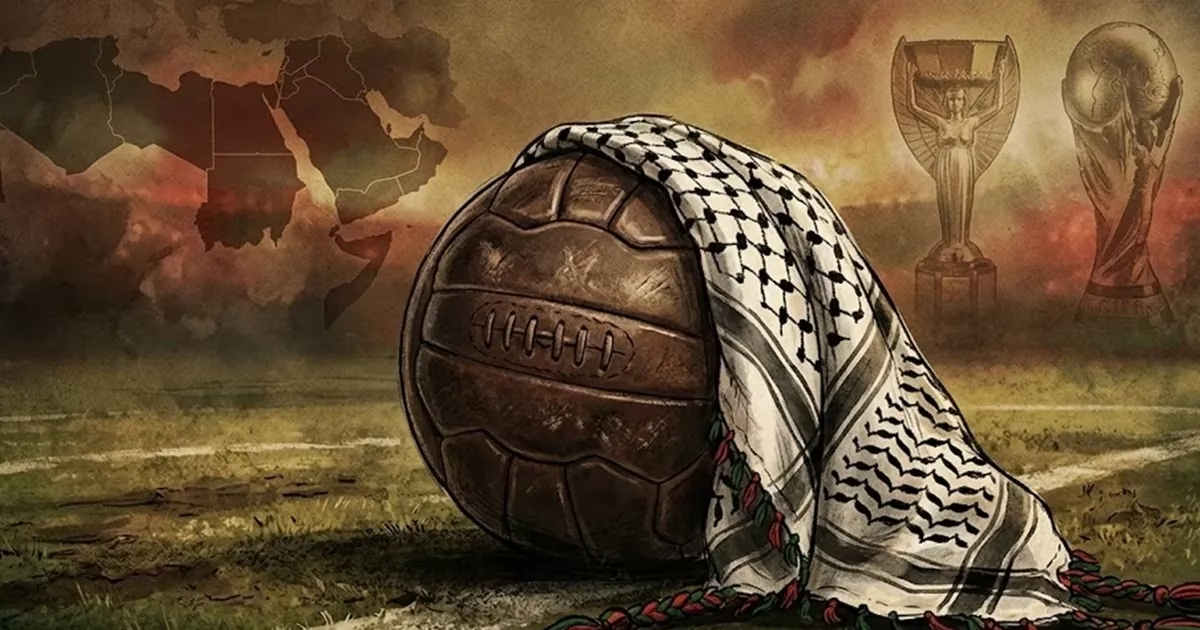
From Boycott to Continental Expulsion: The History of Arab Stances Against Sports Normalization in the World Cup

Arab national teams are preparing to inaugurate a new historical phase in the 2026 World Cup, hosted by the United States, Canada, and Mexico, where Arab countries will record their largest participation since the tournament began nearly a century ago, with eight teams. This qualitative increase benefits from the new system approved by FIFA, raising the number of participants to 48 teams, which has granted broader opportunities for different continents compared to the first editions that were limited to a very small number of slots.

Looking back at history, a significant contrast emerges between the current facilities and the strict principled stances taken by Arab countries in the 1950s. In the 1958 World Cup qualifiers, many Arab countries preferred to sacrifice their rare chances of reaching the global finals rather than engage in any sports activity that would normalize relations with the Israeli occupation, at a time when the tournament included only 16 teams and lacked a fair seat distribution system among continents.

The qualifiers for the 1958 Sweden edition witnessed a unified Arab and Islamic stance against the occupation's attempts to infiltrate the global arena through the joint qualifiers for Asia and Africa. At that time, the current continental system had not yet crystallized, as the two continents were merged into a single qualification path granting one seat to eight teams, which sparked a series of political withdrawals that disrupted FIFA's calculations at the time.

The spark of withdrawals began with Turkey, which protested the classification criteria, followed by a decisive stance from Indonesia, which refused to face the occupation team on its home ground or host it, and suggested playing on neutral ground. With the occupation's rejection of this proposal, Indonesia announced its official withdrawal, leaving both Egypt and Sudan facing the direct prospect of playing against the occupying entity in the advanced stages of the qualifiers.

Historical sources indicate that the sports leadership in Egypt preempted the situation and announced a complete withdrawal from the qualifiers before facing Sudan, and the Sudanese side immediately took a similar step. This collective stance led to the 'virtual' qualification of the occupation team from the Asia and Africa group without playing a single match, which put it in an embarrassing position before international laws that prohibit qualification without actual competition.

Faced with this dilemma, FIFA refused to grant direct qualification to the occupation and decided to organize an exceptional playoff match between it and the Wales team from the European continent. That encounter resulted in the occupation's loss in both legs by a total of four goals to nil, failing to reach the Sweden World Cup, and the will of the Arab boycott triumphed, preventing it from exploiting legal loopholes to be present in the international arena.

The boycott in the 1958 qualifiers was not just a fleeting event, but rather laid the foundation for a coordinated Arab sports policy that later moved into the corridors of continental federations. The following decades witnessed intensive sports diplomatic moves led by Arab countries, especially Kuwait, with the aim of isolating the occupation sportingly and correcting the course within the Asian Football Confederation, which was founded with Israeli participation and support from the Shah's regime in Iran.

Sports records confirm that the occupation was a founding member of the AFC in 1954 and participated in several editions of the Asian Cup, even winning its title in 1964 in the absence of effective Arab presence at that time. With Arab countries gaining independence and joining international federations, the confrontation began to take on an official and institutional character both on and off the field, as Arab clubs successively withdrew from continental tournaments.

Among the most prominent of these stances was the withdrawal of the Lebanese club Homenetmen against Hapoel Tel Aviv, followed by the famous stance of the Iraqi club Al-Shorta, which refused to play the final of the Asian Club Championship against Maccabi Tel Aviv, preferring to sacrifice the continental title rather than shake hands with representatives of the occupation. These individual stances by clubs created significant popular and official pressure that pushed towards finding a radical solution to the occupation's presence on the yellow continent.

Ahmed Al-Saadoun, president of the Kuwait Football Association in the late 1960s, led a broad diplomatic campaign to unify the Arab position within the AFC. Al-Saadoun succeeded in convincing countries such as Bahrain, Jordan, Qatar, the UAE, and Syria to join the continental federation to form a voting bloc capable of making crucial decisions, which was indeed achieved during the Asian Games in Tehran in 1974.

In 1976, during a historic conference held in the Malaysian capital Kuala Lumpur, Arab efforts succeeded in issuing an official decision to expel Israel from the Asian Football Confederation. 17 countries voted in favor of the decision, while 13 countries opposed it and 6 countries abstained from voting, a pivotal moment that reshaped the sports map on the continent and officially ended the occupation's presence there.

Al-Saadoun later revealed in testimonies the extent of the pressures and communications made with Asian federations to explain the justice of the Palestinian cause and the necessity of isolating the entity practicing occupation. He clarified that the move was not merely emotional but was based on a legal and organizational strategy that leveraged the weight of the rising Arab countries at that time to impose a new reality that rejected sports normalization in all its forms.

As a result of this expulsion, the Israeli Football Association remained in international isolation for many years without official activity in any continent, before being accepted as a member of the Union of European Football Associations (UEFA) in 1992. This accession came despite the occupation not being geographically part of the European continent, in an international attempt to save it from the isolation imposed by firm Arab stances.

Today, with the number of Arab teams in the World Cup reaching eight, the sports community recalls that era when the political stance took precedence over sporting ambition. The story of the 1958 qualifiers and the expulsion of the occupation from Asia remains a testament that Arab sports have always been at the heart of the conflict, and that stadiums have never been separate from the issues of the nation and the rights of the Palestinian people.

The Arab stance in the 1958 qualifiers was not merely a sports withdrawal, but an affirmation of political principles for which Arabs sacrificed historical opportunities for qualification.

PALESTINE

Sat 13 Jun 2026 6:30 pm - Jerusalem Time

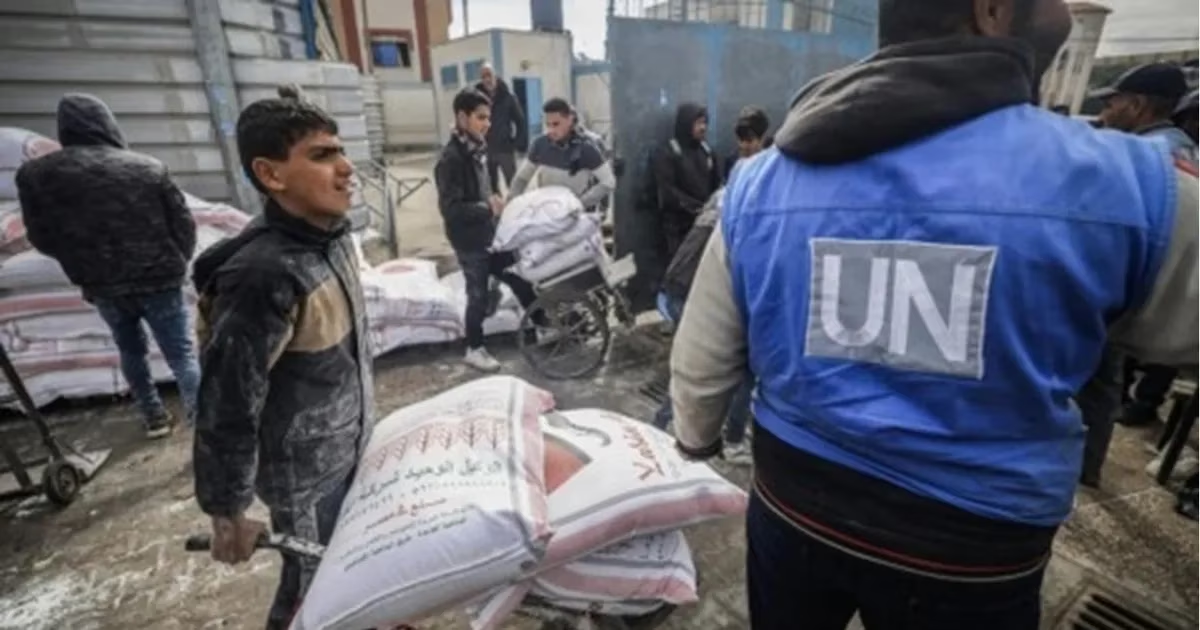
Human Rights Organization Accuses 'UNRWA' of Succumbing to Occupation After Dismissing 70 Employees in Gaza

The Arab Organization for Human Rights in the UK expressed its strong condemnation of the decision by the United Nations Relief and Works Agency for Palestine Refugees (UNRWA) to immediately terminate the services of 70 employees in the Gaza Strip. The organization considered this action to be based entirely on allegations issued by the Israeli occupation authorities without providing any concrete evidence to support them, representing a serious retreat from standards of employment justice.

The organization clarified in a statement that the decision, signed by the Acting Commissioner-General, Christian Saunders, on June 11, came despite the agency's explicit admission that it had not received any documents proving the charges against the employees. It noted that UNRWA had repeatedly requested sufficient information from the Israeli side, but its requests were met with disregard, yet it proceeded with the dismissal procedures.

The statement emphasized that the dismissal decision is not merely an administrative measure, but a blatant violation of international law and the rights of workers guaranteed by UN standards. The organization affirmed that depriving dozens of employees of their sole source of income amidst the humanitarian catastrophe in the Gaza Strip is a collective punishment affecting dozens of Palestinian families already suffering from the ravages of war.

Human rights sources pointed out that UNRWA tried to justify the move by stating it was not a disciplinary measure and did not imply proof of charges, but the results on the ground confirm the opposite. The organization warned that this approach establishes a dangerous legal and administrative precedent that allows for targeting international personnel based on unproven political rumors, thereby weakening the immunity of humanitarian organization workers.

The organization recalled that this behavior falls within a recurring pattern of systematic Israeli incitement against the agency and its staff, which previous international investigations failed to prove. It noted that the UN Office of Internal Oversight Services conducted extensive investigations in 2024 and found no evidence to incriminate the employees targeted by Israeli accusations at that time.

The statement also noted the international legal position, where the International Court of Justice concluded in October 2025 that Israel had not provided sufficient evidence to support its claims regarding UNRWA employees' affiliation with Palestinian factions. The organization believed that ignoring these legal findings and succumbing to political pressures transforms the agency from a protector of refugees into an entity responsive to the dictates of the occupation.

The organization strongly criticized a UN agency's reliance on intelligence reports from a state accused of committing grave violations, considering that this undermines the principle of humanitarian neutrality. It added that the independence of international institutions is in real danger when their employment decisions become hostage to external security pressures primarily aimed at liquidating the refugee issue.

The organization indicated that the current international environment has failed to provide the necessary political protection for UNRWA, making it vulnerable to financial and political blackmail. Despite the agency's acknowledgment of its weak intelligence capabilities and reliance on state cooperation, this does not justify sacrificing the rights and professional future of employees without proper legal justification.

The organization questioned the utility of attempts to appease the occupation authorities, at a time when the Israeli government continues to enact legislation aimed at completely banning UNRWA's activities. It affirmed that administrative concessions will not stop the Israeli campaign aimed at ending the agency's role as an international witness to the ongoing Palestinian Nakba for decades.

The human rights organization demanded that the UNRWA Commissioner-General immediately reverse the dismissal decisions and reinstate all employees to their positions with full guarantee of their rights. It called for the necessity of forming an independent investigation committee to examine the pressures faced by the administration to make such decisions that affect the integrity of UN work in the occupied territories.
In the same context, the organization warned that international silence towards targeting UNRWA is no longer a neutral stance, but has become an indirect encouragement for the occupation to continue its pressures. It considered that weakening the agency at this critical time serves agendas seeking to liquidate legitimate Palestinian rights and revoke the refugee status of millions of Palestinians.

It is worth noting that since the start of the aggression on Gaza, UNRWA has faced a fierce campaign that led to the suspension of its funding by several Western countries based on unproven Israeli claims. This financial crisis has threatened the agency's ability to provide relief, health, and educational services to millions of refugees who depend entirely on it.

International reports confirm that UNRWA remains the backbone of humanitarian work in Gaza, and any harm to its functional structure will exacerbate human suffering. Human rights organizations believe that targeting employees is part of a broader strategy to undermine the legal and political status of Palestinian refugees in international forums.

The organization concluded its statement by emphasizing that UNRWA is not just a service provider, but a symbol of international responsibility towards the refugee issue until a just solution is found. It called on the international community to provide a financial and political safety net for the agency that protects it from blackmail and ensures the continuation of its humanitarian mission away from political interference.

The reliance of a UN agency on intelligence information provided by an occupying state accused of grave violations undermines the principle of humanitarian neutrality and threatens the independence of international institutions.

PALESTINE

Sat 13 Jun 2026 6:27 pm - Jerusalem Time

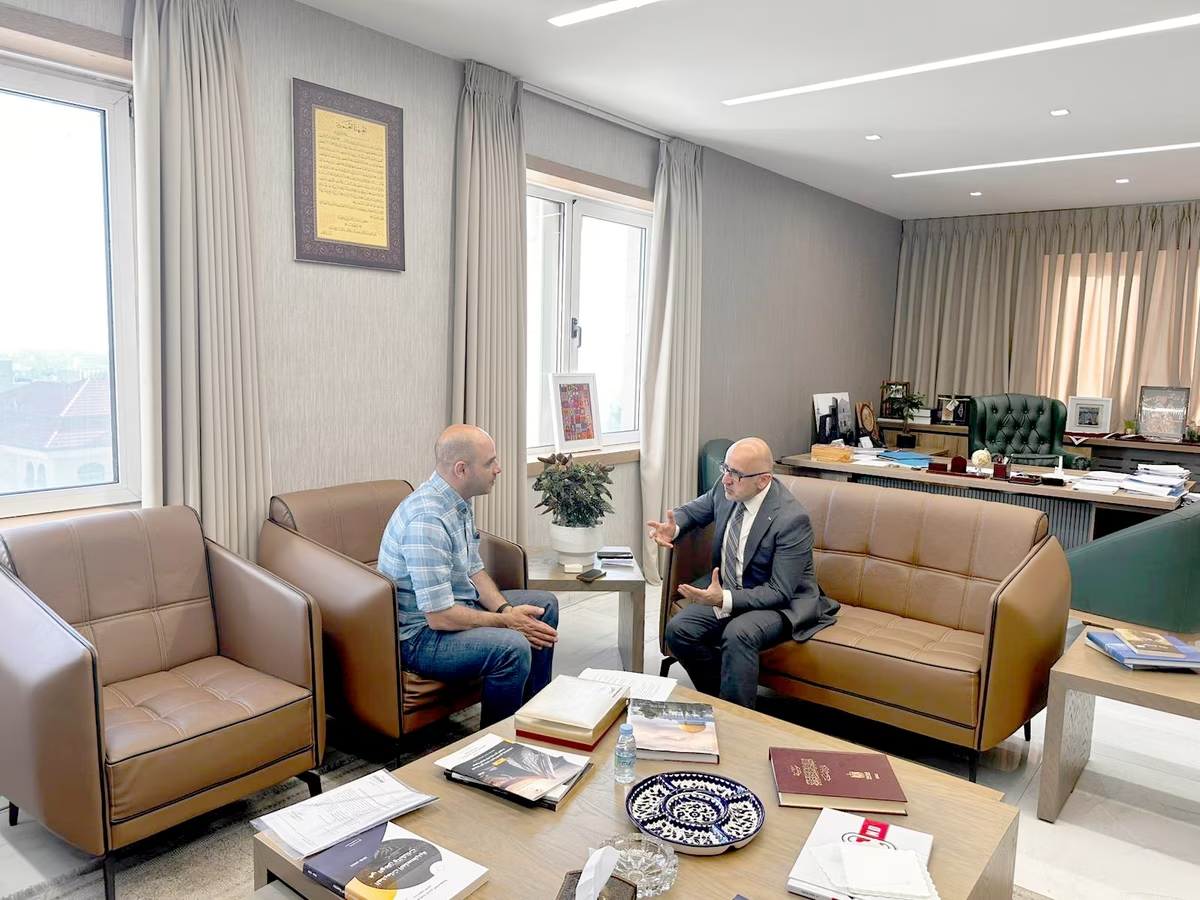
Minister of Finance and Planning Dr. Estefan Salameh in a special meeting with "Al-Quds": "Yaboos" is the nucleus of an integrated digital government portfolio that will be a lever for community resilience

PALESTINE

Sat 13 Jun 2026 6:27 pm - Jerusalem Time

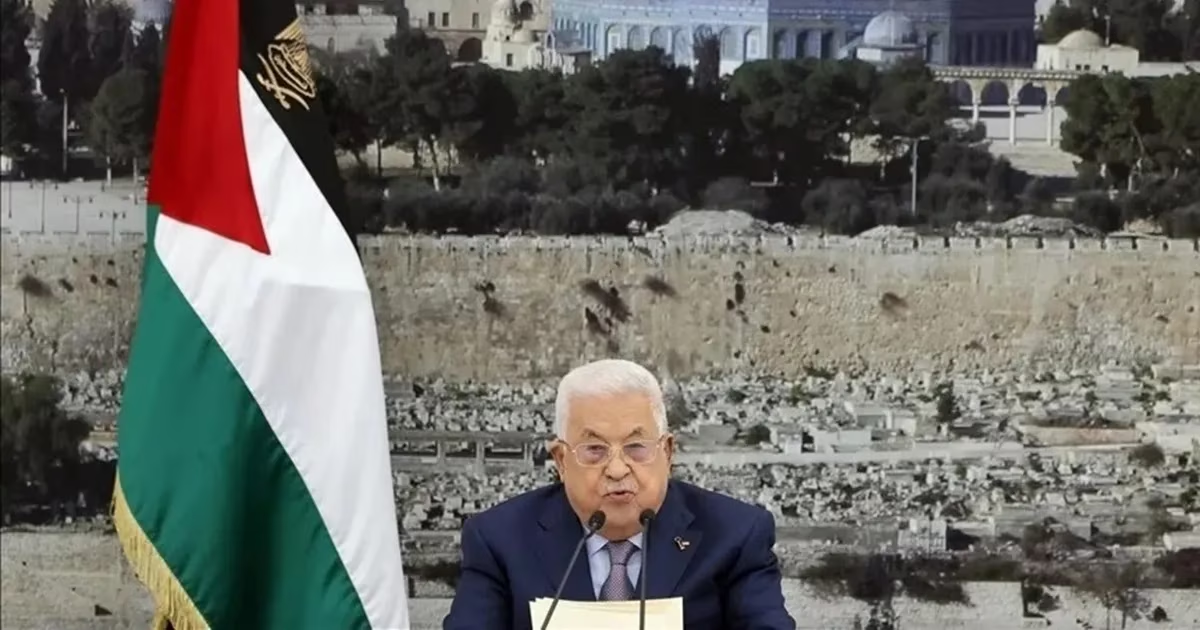
Erosion of Powers and Legitimacy: The Palestinian Authority Facing the New Civil Administration

Since the occupation of the West Bank and Gaza Strip in 1967, Israel exercised its control through military governors and direct orders, before attempting to circumvent Palestinian national institutions through projects such as 'Village Leagues' in the 1970s. With the failure of these attempts, the occupation established the 'Civil Administration' in 1981 to be the civilian arm of the army in managing the affairs of the Palestinian population.

The Oslo Accords in 1993 established a temporary self-governing authority for a transitional period not exceeding five years, considering the West Bank and Gaza as a single territorial unit. Despite the expiration of this period without official renewal, the Authority continued to perform its limited tasks in the areas of health, education, and police, while the occupation retained sovereign and legislative powers.

Legal facts confirm that the powers transferred to the Authority were derived from Israeli Military Order No. (7) of 1995, which made its existence dependent on the military will of the occupation. With the rise of the Israeli right, successive Netanyahu governments began a systematic plan to nullify the effects of Oslo and undermine the idea of an independent Palestinian state.

2002 witnessed a radical shift with the re-activation of the Civil Administration and the bypassing of joint liaison committees, leading to 2018 where its powers were expanded to become the direct reference for the population. This path was completed in 2023 with the appointment of ministers from the settlers to directly oversee the affairs of the West Bank, which practically ended the Authority's role as a political facade.

In a move that is the most dangerous in decades, the Israeli government issued in February 2026 Decision No. 3559, which stipulates the re-settlement and registration of lands in areas classified as 'C'. This decision nullifies the occupation's recognition of the Palestinian Land Authority, and removes vast areas from the Authority's influence in favor of the direct settlement project.

This Israeli encroachment was accompanied by a severe internal legitimacy crisis, as jurists believe that the Authority lacks a solid constitutional basis in the Palestinian system. The Central Council that authorized its establishment is considered a temporary institution, and the absence of elections since 2006 has led to the erosion of the political legitimacy of existing institutions.

The decision to dissolve the Legislative Council in 2018 increased the concentration of powers in the hands of the presidency, which now governs through 'decrees by law' that raise widespread legal controversy. This institutional vacuum weakened the Palestinian position before the international community, and transformed the alleged state institutions into structures lacking real popular representation.

On the ground, the role of the Palestine Liberation Organization declined in favor of the Authority, which deprived Palestinians of their unifying political umbrella in the diaspora and at home. Despite the symbolic international recognition of the State of Palestine, the reality on the ground shows an absolute Israeli refusal to deal with any designation beyond the limited 'Palestinian Authority'.

Reports indicate that the continued existence of the Authority is closely linked to the security services it provides to the occupation, which arouses widespread popular resentment. Security coordination in the West Bank, and the prevention of the emergence of armed resistance movements, are considered the main pillars that prevent the occupation from completely dismantling the Authority so far.

In the Gaza Strip, the Authority's actual influence has been absent since 2007, and attempts to restore the territorial unity stipulated by Oslo have not succeeded. With the outbreak of the recent war of extermination, a huge gap emerged between the position of the Palestinian leadership and the aspirations of the street, especially with the continued pursuit of resistance fighters in the West Bank.

The 'Homeland Protection' operation carried out by the security services in 2024 was a turning point in the relationship with factions and the people, as it was considered direct security cooperation against civilians. These practices led to the collapse of the popular legitimacy of the leadership, which is now accused of being detached from the tragic reality experienced by Palestinians under bombing and siege.

Internationally, the Palestinian leadership is marginalized in major negotiations concerning the fate of the Gaza Strip and the future of the desired state. Regional and international solutions are being engineered that bypass the Authority, placing about 40% of the Palestinian people under hybrid administrative systems that serve the security interests of the occupation and international powers.

The state of legal and political vacuum experienced by Palestinian institutions is the result of internal and external policies that have led to the destruction of the tools of legitimacy. A leadership that undermines the institutions it relies on contributes to nullifying its eligibility to represent the Palestinian people before international forums and in facing existential challenges.

In conclusion, observers believe that everything issued by a structure lacking legal eligibility and popular representation is null and void and does not entail national obligations. Restoring Palestinian rights requires rebuilding national authority on democratic and struggle-based foundations, away from the constraints of agreements that the occupation has effectively torn apart.

The true origin of the Authority was Military Order No. (7) of 1995, which is considered its actual birth certificate under the umbrella of the occupation.

PALESTINE

Sat 13 Jun 2026 6:27 pm - Jerusalem Time

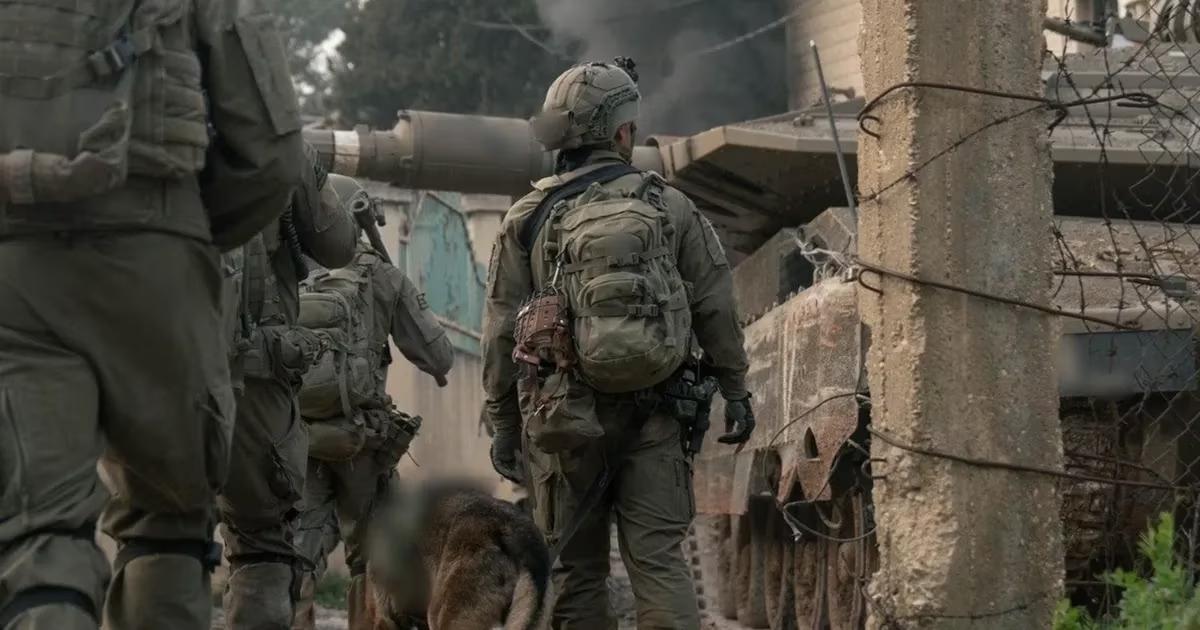
Testimonies from Occupation Soldiers: The Drone Nightmare Haunts Us in Lebanon, and the Fighting There Differs from Gaza

Media sources reported complex details from officers and soldiers in the Israeli occupation army regarding the course of military operations in southern Lebanon, where they described the fighting there as facing unprecedented challenges. The forces of the 36th Division concluded their field missions after a month of fierce battles, awaiting political decisions regarding the next phase of military escalation on the northern front.

Military sources claimed that the division completed its specified objectives, including reaching points about three kilometers from the strategic city of Nabatieh. Field commanders considered crossing the Litani River a fundamental shift in the course of operations, as it allowed forces to advance and carry out deeper attacks within Lebanese territory, despite increasing security risks.

Officers in the multi-dimensional unit acknowledged that the main threat facing soldiers is the suicide drones that fly in the sky around the clock. They explained that these drones impose a state of constant alert, as forces are forced to take cover inside buildings immediately upon receiving warnings that occur approximately once every hour.

Occupation soldiers spoke of a radical difference between fighting in the Gaza Strip and fighting in southern Lebanon, noting that Hezbollah fighters deliberately avoid direct confrontation. While fighters in Gaza approached forces, fighters in Lebanon rely on remote-controlled weapons and anti-tank missiles from long distances.

A sniper in the occupation army indicated that the Lebanese terrain and dense vegetation give fighters a significant advantage in concealment and maneuver. He affirmed that Israeli forces feel threatened from all directions, as fighters remain hidden day and night, making it difficult to detect or target them without advanced technological means.

Elite forces on the front lines live in complete isolation from the outside world, as soldiers are prohibited from carrying personal phones to maintain operational secrecy. Communication with command is done through specific communication devices, which adds psychological pressure on soldiers who describe this war as completely different from previous traditional wars.

Soldiers' testimonies confirmed that Hezbollah fighters show a high ability to learn from mistakes and develop their combat tactics after every blow they receive. This continuous adaptation forces the occupation army to constantly search for technical and military solutions to face the renewed obstacles that fighters place in the field daily.

The multi-dimensional unit, responsible for detecting and destroying fighter positions, considers the mission increasingly difficult over time due to the operational discipline of the other side. Soldiers claimed that they are trying to develop their own methods to keep pace with changes in Hezbollah's tactics, but the element of surprise always remains in favor of the defenders of the land.

Regarding human losses, occupation soldiers claimed that adherence to strict instructions contributed to reducing casualties, despite their admission that fighters are constantly searching for them inside villages and towns. A state of uncertainty continues to dominate the soldiers who do not know when or from where the next strike will come, whether from the sky or from behind the trees.

One soldier described the field situation as a struggle with a 'ghost enemy,' where no traces of fighters appear except through the shells and drones that fall over their heads. He added that reliance on technology has not fully succeeded in bridging the gap created by the deep knowledge of the local people of their mountainous and rugged terrain.

Reports indicate that the occupation army is re-evaluating its field strategies based on lessons learned from the first month of fighting, especially regarding confronting drone swarms. The northern front remains a significant drain on forces that have come to realize that military decisive action in Lebanon requires heavy costs that were not anticipated.

In conclusion, these testimonies reflect a state of frustration and anxiety among Israeli forces who find themselves facing an unconventional combat pattern based on prolonged attrition. As operations continue, the question remains about the occupation's ability to withstand the pressure of drones and missiles that relentlessly pursue its soldiers in every inch of southern Lebanon.

In Lebanon, it is extremely difficult to find the enemy; we do not see them with our own eyes, but only the means they use against us, and this makes the war more difficult.

LATEST NEWS

Sat 13 Jun 2026 6:27 pm - Jerusalem Time

Between economic pressures and security stakes... Will Turkey finalize its full return to the Western camp?

Turkish foreign policy has recently witnessed a gradual shift, re-emphasizing the importance of its historical partnership with the Western camp, after years of attempting to balance between Moscow and Washington. Researcher Gönül Tol, in an analysis published by 'Foreign Affairs' magazine, believes that this new direction is not merely a political maneuver, but rather a result of economic, security, and geopolitical pressures that have forced Ankara to re-evaluate its strategic positioning.

Historically, Turkey's position within the Western system was solidified since the mid-20th century through its membership in the Council of Europe and the North Atlantic Treaty Organization (NATO). However, the Justice and Development Party's (AKP) rise to power in 2002 initiated a new phase of pursuing 'strategic independence,' which manifested in expanding ties with Russia in the energy and defense sectors, raising the ire of traditional Western allies.

The major paradox in Turkish-Russian relations began with the crisis of the downed Russian jet in 2015, when Ankara felt disappointed by NATO's response and the withdrawal of 'Patriot' batteries. This feeling of uncertainty towards allies pushed President Recep Tayyip Erdoğan towards mending relations with Vladimir Putin, leading to the controversial 'S-400' missile system deal, which resulted in Turkey's exclusion from the 'F-35' fighter jet program.

The Russian invasion of Ukraine in 2022 revealed the complexities of this path, as Ankara attempted to play a mediating role while supplying Kyiv with drones and closing the straits. At the same time, Turkey became an economic lifeline for Moscow by refusing to join Western sanctions, which raised the volume of trade between the two countries to record levels exceeding $60 billion.

The energy sector is one of Russia's most prominent tools of influence in Turkey, especially with the 'Akkuyu' nuclear power plant project managed by 'Rosatom'. This energy dependence granted Moscow long-term influence within a vital infrastructure of a NATO member state, which has been a constant source of concern for Western capitals that have cautiously observed the Turkish-Russian rapprochement.

The shift towards the West began to crystallize clearly with the exacerbation of internal economic crises in Turkey before the 2023 elections, as the country suffered from hyperinflation and a collapse in currency value. The February 2023 earthquake disaster further increased financial burdens, making continued tension with Western trading partners, especially the European Union, a costly and unsustainable option.

In the context of economic repositioning, Ankara took practical steps to restore international investor confidence by appointing economic experts known for their traditional orientations. This coincided with a serious move to reduce reliance on Russian gas, by diversifying sources and moving towards importing liquefied natural gas from the United States through long-term contracts.

Geopolitically, the fall of the Assad regime in Syria in late 2024 contributed to reducing Turkey's need for Russian mediation, which was essential for managing the Syrian file. This field change, along with the withdrawal of American forces from northern Syria, removed major obstacles that had poisoned relations between Ankara and Washington for many years.

Military developments in the region, especially missile confrontations related to Iran, have highlighted the importance of NATO's defensive umbrella for Turkey. The alliance's systems have proven effective in protecting Turkish airspace, while the Russian 'S-400' system remained inactive, raising internal questions about the strategic viability of relying on Russian weaponry.

Sources indicate that military cooperation with NATO has regained significant momentum, with negotiations resuming on advanced European air defense systems. Germany has also begun to strengthen its military presence in Turkey by deploying additional Patriot batteries, a clear indication of the thawing of defense relations between Ankara and Berlin.

Turkey is currently planning to deepen its military integration into the alliance by establishing a multinational corps by 2028 and actively participating in Black Sea security. These moves reflect Ankara's desire to restore its role as a key pillar on NATO's eastern flank, away from the axis policy it pursued in the past decade.

In contrast, Moscow views this Turkish shift towards the West with increasing concern, which explains the absence of high-level visits by Putin to Ankara for years. Turkish officials have become more explicit in criticizing Russian policies, with public support for Ukraine's aspirations to join NATO.

Despite this rapprochement with the West, Turkey does not appear to be entirely abandoning its ambition to pursue an independent foreign policy, but it has become aware of the limits of maneuver. Economic interests linked to Western markets, and the need for advanced defense technology, compel Turkish decision-makers to remain within the Western orbit to ensure the stability of the state.

The analysis concluded that the experience of recent years has proven that building a complete strategic alternative through Russia was fraught with risks and insufficient to meet Turkey's major needs. Consequently, Ankara finds itself today returning to 'square one' in its relationship with the West, driven by political pragmatism that places national security and economic prosperity above ideological slogans.

President Erdoğan's attempts to build an independent balance between East and West ultimately clashed with the realities of economics and security, pushing Ankara to approach the NATO alliance once again.

OPINIONS

Sat 13 Jun 2026 6:26 pm - Jerusalem Time

Psychology of Politics: Why is Cairo apprehensive about the new transformations in Syria?

Ramallah - “Alquds ” dot com

Ramallah - “Alquds ” dot com

Opinion Writer

International relations are not always subject to the logic of pragmatism and major interests, especially in the Arab region where political psychology plays a pivotal role. Interpreting political stances and phenomena sometimes requires delving into the psychological turmoil of decision-makers, away from traditional strategic calculations that may not explain current behaviors.

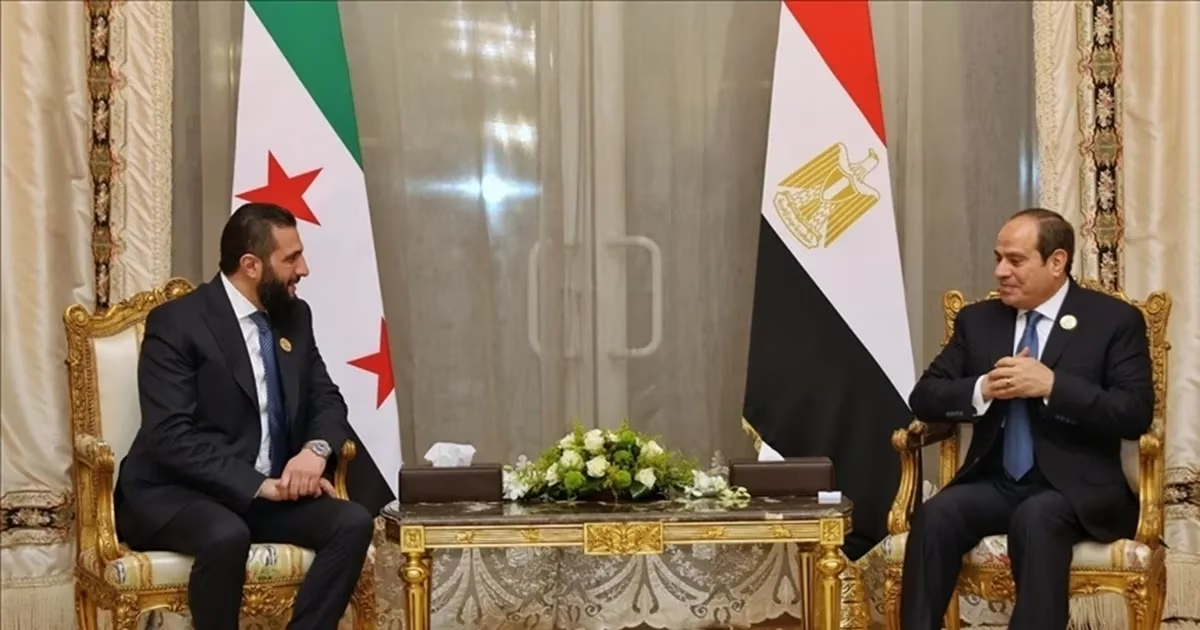
This situation is evident in Egypt's recent stance towards Syria, where the Ministry of Foreign Affairs in Cairo refused to accredit the credentials of Syrian Ambassador Mohamed Taha Al-Ahmad. Al-Ahmad holds the position of Director of Arab Affairs in the Syrian Foreign Ministry, but his rejection came without direct explanation, raising questions about the future of relations between the two countries.

Historically, the 1961 Vienna Convention regulates the procedures for appointing ambassadors, which begin with the selection of the candidate and end with the presentation of credentials to the head of the receiving state. Although states have the right to refuse, it is rare for the development of bilateral relations between two countries of the stature of Egypt and Syria to be linked to the appointment of a specific person to the diplomatic mission.

Looking at previous experiences, we find that diplomatic relations can continue despite dissatisfaction with mission personnel, as happened between Jordan and Syria in 2009. At that time, the Assad regime appointed a controversial security figure as ambassador to Amman, and despite Jordanian reservations, higher interests prevented taking stances that would lead to a diplomatic rupture.

Since 2013, security concerns have been the sole criterion governing Cairo's view of the Syrian file, with secret security cooperation emerging with the former regime. This cooperation was primarily based on converging interests in confronting Islamist movements, which made the Egyptian stance less severe towards Damascus compared to other Arab countries.

Today, after the fall of the former regime and the changing landscape in Damascus, it appears that security considerations still govern the Egyptian vision, but with a different nuance. Analyses suggest that the current stance may be linked to personal and political considerations that go beyond the direct strategic interests of the Egyptian state.

The divergence in Arab positions is clearly evident when comparing Egyptian and Saudi behavior towards the recent Syrian transformations. Despite the shared animosity towards radical Islam, Riyadh took a different path. This divergence indicates that calculations in Cairo are influenced by internal factors related to the legitimacy of the ruling model and its fear of alternatives.

The core of Egyptian apprehension, according to analytical readings, lies in the success of the new Syrian experiment in presenting a stable and successful governance model. This success could restore credibility and confidence to forms of governance that Cairo sought to overcome, which could reflect on the aspirations of the Egyptian and Arab streets in general.

If the issue were only about the presence of opposition Egyptian figures in Syria, it would have been more appropriate for Cairo to approach Damascus to exert direct pressure. Building strong relations with the new authority gives Egypt greater ability to influence sensitive security files, instead of a policy of coolness and distance.

Risking the loss of relations with a country the size of Egypt is not in the interest of the new rulers in Syria, no matter how important the figures they have. The Egyptian state remains a fundamental pillar in the regional system, and cooperation with it is a strategic necessity for any regime seeking legitimacy and stability in the region.

The recovery phase in Syria requires openness to major regional powers, especially Egypt and Saudi Arabia, in addition to Turkey and Qatar. This regional quartet is the only guarantee for Syria to restore its position, and Egypt remains the strongest and most capable party to exert actual influence in this path.

New rulers in Damascus must realize that Egypt is greater than any personal considerations, and its position is a necessity for every Arab country seeking to rise from the rubble. Complying with some Egyptian demands, even if they seem difficult, may be a necessary price to secure the necessary Arab cover for the transitional phase.

Ultimately, the question remains about the extent of Egyptian diplomacy's ability to overcome psychological and political apprehensions in favor of a comprehensive pragmatic vision. The stability of Syria serves Egypt's national security interests, and diplomatic rupture or coolness will only serve parties seeking to keep the region in a state of flux.

The future of relations between Cairo and Damascus will remain hostage to the balances between internal fears and external interests, and while awaiting the outcome of upcoming diplomatic moves, the file of the new Syrian ambassador remains an indicator of the depth of the gap that needs bridges of mutual trust.

The Egyptian position is linked to personal considerations and the fear of the success of the Syrian governance experiment, which could restore confidence in this model in the eyes of the Arab street.

ARAB AND WORLD

Sat 13 Jun 2026 6:26 pm - Jerusalem Time

Killed and wounded in Ukrainian drone attack targeting a port in southern Russia

Local authorities in southern Russia announced casualties as a result of an attack carried out by Ukrainian drones targeting vital port facilities. Veniamin Kondratyev, governor of the Krasnodar region, confirmed that one person was killed and three others were injured as a result of falling debris from the drones that targeted the area, causing immediate material and human damage.

The aerial attack caused a massive fire to break out inside a naval station in the city of Temryuk, located on the Sea of Azov, a strategic area near the Kerch Strait. Russian firefighting teams rushed to the scene of the incident, where about 96 civil defense personnel participated in extinguishing the fire and preventing its spread to adjacent facilities.

For its part, the Russian army reported that air defense systems were able to repel a wide wave of attacks during Friday night into Saturday. According to official data, 177 Ukrainian drones were shot down in various areas, reflecting the intensity of the aerial operations carried out by Kyiv deep inside Russia recently.

These strikes come within the framework of an escalating Ukrainian strategy aimed at striking Russia's logistical and energy infrastructure. Ukrainian forces are focusing their attacks on oil refineries, fuel depots, and ports, seeking to undermine Moscow's financial and military capabilities amid the ongoing war, which has entered its fourth year.

Commenting on these developments, Russian President Vladimir Putin considered that the intensification of Ukrainian raids carries political and social objectives that go beyond military damage. Putin indicated during a meeting with officers in the Kremlin that these attempts seek to destabilize Russian society and create a state of internal confusion.

The Russian President stressed that his country will firmly confront these threats, affirming that economic and military pressures will not succeed in achieving their goals. Field and aerial confrontations continue between the two sides, as drones have become a major weapon in targeting sites far from direct contact lines.

Increasing Ukrainian raids aim to create division in Russian society, sow confusion, and inflict damage on the economy.

PALESTINE

Sat 13 Jun 2026 6:26 pm - Jerusalem Time

Widespread Injuries and Arrests During Occupation Raids in West Bank Cities

The Bethlehem Governorate witnessed a field escalation today, Saturday, following the Israeli occupation forces' raid on Dheisheh Camp, south of the city, where they fired a barrage of toxic and tear gas canisters at citizens and their homes. Military vehicles were stationed around the camp's entrance and along the Jerusalem-Hebron road, leading to violent confrontations that resulted in dozens of injuries among local residents.

Medical sources confirmed that ambulance crews dealt with approximately 30 cases of suffocation due to inhaling toxic gas, while one girl's condition necessitated her urgent transfer to the hospital for necessary treatment. This coincided with the occupation forces closing the southern entrance to the town of Al-Khader, known as the 'Nashash' area, which is the main artery connecting to the Hebron Governorate, causing traffic paralysis and hindering citizens' movement.

In the Nablus Governorate, a young man with a disability was shot by occupation forces stationed at the entrance to the town of Duma to the south, in a new assault added to the series of violations against vulnerable groups. Local sources reported that the occupation continued to restrict the villages and towns surrounding Nablus by setting up sudden military checkpoints, searching vehicles, and checking the identities of passersby.

As for Bethlehem city, the occupation forces carried out a night raid that started from the direction of Beit Jala city, and included positioning themselves at vital points such as 'Bab Al-Zqaq', Al-Radi intersection, and the Russian roundabout. Despite the intensive military deployment in these neighborhoods, no home raids or arrests were reported within the city center during those late hours of the night.

In the context of the arrest campaign, a special Israeli force raided Qaddura Camp in Ramallah city and abducted a young man before withdrawing, while arrests in the town of Al-Zababdeh, south of Jenin, included two children, Amir and Reda Al-Abbadi, after searching their parents' home and tampering with its contents. These operations reflect a systematic policy aimed at intimidating Palestinian families by targeting children and youth in their homes.

In an incident that sparked widespread outrage, occupation forces stormed a wedding hall in the town of Anata, northeast of occupied Jerusalem, where they arrested the young man 'Abu Jaber Halawa' during his wedding ceremony. Israeli forces turned the joy into a state of tension and confrontation after raiding the hall and terrorizing the guests, before taking the groom to an unknown destination.

Moving to the Hebron Governorate, occupation vehicles raided the village of Al-Tabaqa west of Dura and the village of Al-Burj, where soldiers carried out extensive searches accompanied by assaulting a number of young men and abusing the residents. In Tulkarm, the raids included the towns of Allar and Balaa, in addition to Nur Shams Camp, as part of the daily military activity aimed at tightening the noose on all governorates of the West Bank.

Medical sources reported that their teams dealt with 30 cases of suffocation in Dheisheh Camp, including a girl who was transferred to the hospital for treatment.

OPINIONS

Sat 13 Jun 2026 6:26 pm - Jerusalem Time

Outside Western Summer Calculations.. A Striking Absence of Arabic Literature and Current War Issues

Ramallah - “Alquds ” dot com

Ramallah - “Alquds ” dot com

Opinion Writer

Recent cultural lists on reading trends in the West for the current summer season have revealed a literary landscape that noticeably shies away from hot political issues and direct wars. Despite the bloody conflicts the world is witnessing in Gaza, Ukraine, and Sudan, the recommendations favored retreating into themes of personal memory and historical exile, far from engaging with the bitter human reality of these conflicts.

The selections, in which an elite group of writers and thinkers participated, showed a clear dominance of themes of identity and diaspora, with the memoirs of Austrian writer 'Stefan Zweig' standing out as a historical testimony to the collapse of old Europe and the rise of fascism. Analysts considered that the return to these texts reflects a desire to understand the present through the mirror of the past, without getting involved in analyzing contemporary geopolitical conflicts that shape global consciousness today.

In a related context, cultural sources drew attention to the shocking absence of translated Arabic literature from these lists, despite the momentum witnessed in the literatures of other regions such as Africa and Latin America. This absence raises fundamental questions for Arab cultural institutions about their ability to penetrate global circles of influence and criticism, and to convey the voice of the Arab creator to the Western reader who seems preoccupied with other literary horizons.

History was strongly present in the historians' recommendations, with works such as 'This Small World' by researcher Nandini Das focusing on deconstructing narrow national narratives in favor of a more comprehensive vision of the world in past centuries. These choices come in an attempt to reconstruct traditional perceptions of the past and understand the roots of contemporary civilization by evoking the experiences of Babylon and Alexander the Great.

Regarding social issues, feminism linked to environmental crises emerged as one of the main themes on the list, with novelist Tehimah Anam recommending the book 'Feminism for a Burning World'. This work calls for collective action linking women's rights and confronting climate change, reflecting a shift in feminist literature towards issues of cosmic existence and existential crises threatening the planet.

Autobiographical memoirs also recorded a notable presence, with prominent writers recommending works exploring experiences of disability and hybrid identity, such as Raymond Antrobus's memoirs which dealt with deafness and Jamaican-British roots. These hybrid texts, which blend social investigation with personal biography, are attracting readers more than traditional novels, due to their ability to touch reality in a documentary style.

It is noteworthy that the religious dimension was almost completely absent as an independent intellectual topic in these recommendations, despite the growing role of religion in contemporary international conflicts and identity discussions in Europe. It seems that the Western cultural elite prefers to address issues of general values from a secular or individual perspective, ignoring the deep civilizational influences of the religious component in shaping political and social attitudes.

In contrast, issues of migration and race were present through the recommendations of novelist Zadie Smith, who highlighted African diaspora literature and documented half a century of creativity in this field. Novelist Gary Shteyngart also addressed the experience of immigrants in the United States through a satirical novel, indicating that Western interest is focused on immigrants 'within' their societies rather than on the tragedies of peoples in their homelands.

Analyzes indicate that summer reading in the West is no longer just a means of fleeting entertainment, but has become a window for understanding major transformations from identity crises to questions of social justice. However, this understanding remains incomplete as long as the voices of victims in burning conflict zones continue to be ignored, and as long as Arabic literature remains far from global platforms of recognition and nomination.

When comparing this reality with the Arab cultural environment, the absence of 'summer reading' traditions as an institutional act directed at the public is clearly evident, as media outlets are preoccupied with festivals and celebratory events. This disparity leads to the transformation of culture in the Arab region into a fleeting event instead of being a knowledge project that accumulates awareness and stimulates critical interaction with contemporary issues.

The absence of Arabic literature from these lists is not just a coincidence, but a reflection of the weakness of systematic translation movements and the absence of cultural strategies capable of marketing Arab creative products. While Asian literatures succeed in asserting themselves, the Arab writer remains confined to narrow local circles, or to limited translations that do not reach the 'most read' or 'most influential' lists.

The book 'The Dead Said' by writer Doireann Ní Ghríofa presented a model of literature that reconstructs the voices of the marginalized through the archive of mental asylums, which reinforces the trend of literature towards 'the document'. This type of writing proves that the contemporary reader seeks truth mixed with fiction, which is abundant in Arab reality but lacks an effective cultural mediator to convey it globally.

In conclusion, this year's selections reflect a cultural scene where the boundaries between thought, history, and literature are receding, but it remains an incomplete scene in its geographical and human comprehensiveness. Ignoring major wars and ancient literatures like Arabic literature makes these lists an expression of a Western 'cultural bubble', recycling its self-interests away from the real pains of the world.

The question remains open about the responsibility of Arab cultural institutions in changing this reality, by supporting creators and revitalizing the reverse translation movement. Without a strong presence in these international forums, the Arab voice will remain absent from shaping global consciousness, and Arabic literature will remain a distant echo that does not reach the ears of readers in the capitals of cultural decision-making.

Despite the clear presence of African literature, translated Arabic literature appears completely absent from the scene, raising questions about the position of Arab culture in the global translation market.

PALESTINE

Sat 13 Jun 2026 6:26 pm - Jerusalem Time

Famine intensifies in Gaza: Charitable kitchens unable to meet the needs of thousands of displaced people

The humanitarian crisis in the Gaza Strip is escalating rapidly, with charitable kitchens becoming the last and only refuge for thousands of displaced families to secure a livelihood. This increasing reliance comes at a time when the region is experiencing a severe shortage in the flow of humanitarian aid and a significant decline in the activities of both international and local relief organizations.

Field sources from within the displacement camps west of Gaza City reported harsh scenes of queuing and jostling in front of food distribution points in the 'Ansar' camps. Citizens are forced to wait from the early hours of dawn, hoping to get a limited meal, amidst a growing sense of despair due to the severe shortage of basic food supplies.

For his part, the general director of the 'Ansar' camps, Abu Muhammad Al-Mansi, confirmed that the reduction in support for food programs has driven huge numbers of people towards the kitchens, making the pressure far exceed their operational capacity. Al-Mansi explained that these initiatives, which were designed to serve a narrow scope, have now become a destination for displaced people from multiple and distant geographical areas.

Al-Mansi pointed to diligent efforts to establish additional distribution points in an attempt to alleviate congestion and reduce the risks resulting from jostling. He issued an urgent appeal to the international community and donor institutions for the necessity of resuming full support for relief programs, describing the living conditions inside the camps as having reached an indescribable level of bitterness.

In a testimony reflecting the depth of the tragedy, a displaced woman spoke about her daily suffering, as her son was martyred and her husband suffers from amputation of his limbs, making her the sole breadwinner searching for food. She said that she stands for long hours in extended queues, but often returns to her tent 'empty-handed' without getting a piece of bread or a meal.

Other citizens described their conditions as extremely harsh, with one of them indicating that he waited for more than five continuous hours to get a small amount of food that was not enough to feed his family. The displaced demanded the necessity of opening the crossings and introducing basic needs regularly, stressing that what is currently available covers only a small part of the actual needs.

Field reports also observed large numbers of children and adolescents waiting in long queues amidst severe overcrowding. Observers warned of the danger of these children being injured as a result of jostling around large cooking pots and crowded distribution points, in the absence of sufficient organization due to the massive size of the crowds.

Displaced families spend most of their day on a difficult journey that begins with searching for water sources and ends with long waits in front of the kitchens, without a real guarantee of getting food in the end. This crisis remains likely to explode further unless immediate intervention is made to increase the pace of food aid and expand the scope of relief work in the northern and central parts of the Strip.

The kitchen, which used to serve a limited number of people, now receives displaced people from multiple areas, which has led to unprecedented overcrowding that exceeded our capacity.

PALESTINE

Sat 13 Jun 2026 6:25 pm - Jerusalem Time

Dutch investigation wins European award after documenting occupation's sniping of Gaza children

Dutch journalists Maud Effting and Willem Feenstra, working for 'De Volkskrant' newspaper, won the 'Distinguished Journalism Award' within the prestigious European Press Prizes. This recognition came in appreciation of their in-depth investigative report titled 'What the Wounds Tell,' which exposed grave violations committed by the Israeli occupation army against children in the Gaza Strip during the ongoing genocide war.

The journalists called on the international community and human rights organizations to pay greater attention to the data and testimonies they collected during the investigation. They affirmed that the work revealed recurring patterns of fatal injuries among children, necessitating legal prosecution and international pressure to stop these crimes, which are documented by medical personnel returning from the field.

Journalist Maud Effting explained that the idea for the investigation stemmed from the practical impossibility for international journalists to enter the Gaza Strip due to strict Israeli restrictions. This media blockade prompted the team to search for alternative sources who had experienced the events, and international doctors became the 'last witnesses' who were able to see the atrocities firsthand and convey them to the world.

The investigation's methodology focused on a pivotal question posed to doctors who worked in the Strip's hospitals: the number of children under the age of fifteen they had seen with single, direct gunshot wounds to the head or chest. This type of injury leaves no doubt that it resulted from deliberate sniping operations and not merely random shrapnel or collateral fire.

Effting pointed out that the multiple testimonies collected confirmed that the nature of the wounds and entry points left by bullets in the children's bodies clearly indicated precisely directed gunfire. She stressed that these scientific and medical findings deserve in-depth study by global public opinion as they are conclusive evidence of targeting the most vulnerable civilians.

For his part, journalist Willem Feenstra stated that doctors returning from Gaza did not consider their mission over with the end of their medical shifts; rather, they felt a moral responsibility to convey the truth. He explained that many of these doctors became eyewitnesses documenting extraordinary events and war crimes that require precise documentation to ensure that perpetrators do not escape punishment.

The investigation team did not limit itself to the oral accounts of doctors but subjected every testimony to a rigorous verification process that included reviewing supporting medical documents. The journalists asked sources to provide them with photographs, videos, laboratory test results, X-rays, in addition to clinical records and daily notes they had made during their work.

To ensure the highest standards of professional accuracy, the team enlisted independent forensic medical experts from the Netherlands and Belgium to analyze images and medical data. Specialists in military affairs were also consulted to understand the implications of projectiles and recurring patterns of injuries, which confirmed the hypothesis of direct targeting of children in fatal areas of the body.

Feenstra affirmed that the team was aware of the sensitivity of the issue and the political pressures that might result from its publication, especially given the global polarization regarding the war on Gaza. Nevertheless, the Dutch newspaper committed to supporting the journalists and protecting their independence, emphasizing the role of investigative journalism in uncovering facts, no matter how painful or controversial.

The newspaper and publishers faced criticism and pressure from pro-occupation parties, but the editorial board firmly stood behind the investigation due to the strength of the evidence presented. Feenstra considered that the existence of a courageous media institution is the fundamental pillar that allows journalists to tackle complex issues affecting human rights in conflict zones.

This investigation's importance comes at a time when statistics indicate the martyrdom and injury of tens of thousands of Palestinians, with massive destruction affecting health and civilian infrastructure. International medical testimonies emerge as a tool to break the information blockade imposed by the occupation by preventing foreign journalistic teams from accessing the heart of the events.

The journalists considered that the European award is not just a personal tribute but an acknowledgment of the importance of the Palestinian cause and the necessity of keeping violations in the spotlight. They affirmed that the difficult conditions in Gaza increase the responsibility of the press to search for reliable sources and scientifically verifiable testimonies to counter narratives of misinformation.

Feenstra concluded his statements by emphasizing that journalism remains the primary tool for holding those in power accountable and exposing crimes against humanity in democratic societies. He noted that the world is witnessing major crises that require in-depth professional coverage that goes beyond breaking news to reach the roots of facts and systematic violations.

The investigation 'What the Wounds Tell' represents a model of journalistic work that integrates science and field testimony to expose the practices of the occupation. This work remains a historical and legal document added to the record of evidence condemning the ongoing genocide in the Gaza Strip, placing the international community before its moral and legal responsibilities.

The pivotal question was to determine the number of children under 15 years old who sustained single gunshot wounds to the head or chest, injuries that clearly indicate directed fire.

ARAB AND WORLD

Sat 13 Jun 2026 6:25 pm - Jerusalem Time

Amal Movement Announces Rejection of 'Experimental Zones' Proposal and Insists on Full Israeli Withdrawal

Mustafa Fouani, head of the executive body of the Amal Movement, stressed the steadfastness of the movement's position regarding current field and political developments, affirming that the top priority lies in achieving an immediate and comprehensive ceasefire. Fouani clarified that any settlement must guarantee a full Israeli withdrawal from all occupied Lebanese territories, considering this a fundamental condition that cannot be waived in any negotiation process.

In statements to the media, Fouani revealed the categorical rejection by the Amal Movement and Hezbollah of what is known as the 'experimental zones' proposal, which was recently put forward behind the scenes of negotiations. He indicated that this proposal lacks national political cover and cannot be accepted as a partial solution that undermines full Lebanese sovereignty over its territories, especially under the current circumstances.

Regarding governmental affairs, Fouani affirmed that the Amal Movement will not withdraw from the current Lebanese government, noting that its continued presence aims to enhance internal dialogue and protect civil peace. He added that governmental participation at this time is a national necessity to confront major challenges and maintain Lebanese unity in the face of continuous external pressures.

Concerning the vision of Parliament Speaker Nabih Berri, Fouani explained that the official position demands an end to Israeli aggression by land, sea, and air without any preconditions. He also pointed out that Lebanese demands are clear and consist of returning matters to what they were before 2024, while ensuring the departure of the last Israeli soldier from the territories recently encroached upon.

Fouani described proposals promoting the continued presence of occupation forces in exchange for a limited withdrawal of the resistance as 'hybrid agreements' and totally rejected by national forces. He affirmed that the only acceptable option is a comprehensive withdrawal and enabling the Lebanese army to extend its control and sovereignty over every inch of Lebanon's international borders without exception.

Regarding the issue of weapons, Fouani stated that the discussion about the exclusivity of weapons in the hands of the state must fall within the framework of a comprehensive national dialogue that takes into account internal Lebanese balances. He indicated that the resistance will remain a natural and continuous response to the presence of occupation, as long as there are Lebanese territories under Israeli control, which requires a unified national defense strategy.

In conclusion, Fouani touched upon the continuous coordination with the Iranian side, affirming that Tehran supports the Lebanese position calling for an end to the war as an absolute priority. He clarified that any international understandings aimed at ending the aggression will be welcomed by Lebanon, provided that they guarantee Lebanon's sovereign rights and lead to lasting stability that protects the country from repeated attacks.

The experimental zones proposal is rejected by the Amal Movement and Hezbollah and does not enjoy political acceptance among the Lebanese circles concerned with the issue.

OPINIONS

Sat 13 Jun 2026 6:25 pm - Jerusalem Time

Exclusive CNN report reveals: Washington came close to a ground invasion of Iran to seize uranium before Trump backed down

Washington Message

Washington – Said Arikat – 6/13/2026

Washington – In an exclusive revelation that highlights the magnitude of the risks the region and the world were on the verge of facing, CNN reported that the US administration seriously considered implementing a ground military operation inside Iran with the aim of seizing its highly enriched uranium stockpile, before US President Donald Trump decided to freeze the plan for fear of catastrophic military and economic repercussions.

According to the report, the Chairman of the US Joint Chiefs of Staff, General Dan Kaine, cut short an official visit to Europe and hastily returned to the headquarters of the US Central Command in Tampa, Florida, on May 19, to receive urgent and secret briefings on a scenario of sending US special forces deep into Iran to seize nuclear materials that Washington considers the basis of any potential Iranian capability to produce a nuclear weapon.

This development reveals that the United States was much closer to a direct military confrontation with Iran than was publicly announced, despite repeated statements by Trump about the imminent conclusion of a political agreement with Tehran addressing the Iranian nuclear program and navigation security in the Strait of Hormuz.

After receiving the military briefings, Trump reviewed the available options, but military and intelligence assessments warned that any ground operation could provoke a widespread Iranian response, lead to a prolonged war, and threaten the global economy with an unprecedented wave of unrest. The US President also expressed growing concerns about the possibility of a large number of casualties among US forces, which could face public rejection within the United States.

The report indicates that the operation to seize Iranian uranium was not merely a limited strike or a swift commando operation, but rather required the deployment of hundreds of special forces personnel and the establishment of a broad military presence within Iranian territory. The report quoted an insider as saying that the mission would have practically meant an “invasion of Iran,” given the complexity of Iranian nuclear sites and the spread of nuclear materials within tunnels and fortified facilities under mountains.

Information confirms that Iran's stockpile of highly enriched uranium is distributed across several key sites, most notably Isfahan, Natanz, and Fordow, facilities that have previously been subjected to American and Israeli strikes, but these strikes did not succeed in completely eliminating the nuclear materials present there.

Doubts are growing within Western nuclear circles about the ability of any military operation to locate all Iranian nuclear materials and ensure their complete control under complex combat conditions. Experts believe that merely finding and safely transporting the materials represents a formidable challenge, in addition to the risks of ambushes, booby-trapped tunnels, and Iranian missile and drone attacks.

In parallel with the military risks, CNN reveals that Tehran has hinted at a highly dangerous economic option in the event of a breakdown in negotiations and a resumption of war. This option involves pushing the Houthi group to close the Bab al-Mandab Strait, one of the most important global trade routes, which could lead to widespread paralysis in international trade and a significant increase in energy and shipping prices.

These facts highlight the extent of the contradiction between the public political discourse that spoke of increasing opportunities for an agreement between Washington and Tehran, and the secret military preparations that were being discussed at the highest levels of American leadership. It also reflects that negotiations were not a complete alternative to military force, but rather proceeded in parallel with preparations for more dangerous options.

Although Trump ultimately halted the plan, the report confirms that the option of seizing Iranian uranium has not been permanently removed from the American options table. It appears that the US administration still considers the elimination of Iran's uranium stockpile one of its primary goals, either through negotiation or through harsher means if ongoing talks collapse.

In his last public comment, Trump appeared less enthusiastic about the military option, when he indicated that Iranian nuclear materials are buried under mountains, saying that no one would easily be able to access them. However, the facts revealed by CNN show that the American military establishment had gone much further than mere theoretical thinking, and that the region was a short distance from a confrontation that could have redrawn the map of the entire Middle East.

Limits of American Military Power

These leaks reveal that American military power, despite its immense superiority, faces practical limits when it comes to Iran. The country that succeeded in overthrowing regimes within weeks in Iraq and Afghanistan found itself hesitant before a seemingly limited mission of seizing a uranium stockpile. This is due to the nature of Iranian geography, the complexity of its nuclear infrastructure, and the expectations of an Iranian response. Thus, it becomes clear that possessing power does not necessarily mean the ability to use it without exorbitant cost, and that mutual deterrence has become a crucial factor in the calculations of both parties.

Contradiction between Negotiating Rhetoric and War Preparedness

The information also reveals a striking paradox in US policy towards Iran. While Washington was talking about opportunities for an imminent agreement, it was secretly considering one of the most dangerous military operations in years. This reflects that negotiations were not based on mutual trust, but on a mix of pressures, threats, and combat preparations. It also clarifies that American diplomacy often operates under the umbrella of military force, even when the language of dialogue appears to be the main theme of the political scene.

Global Economy Held Hostage to the Conflict

What is striking in the report is not only the possibility of military confrontation, but also the magnitude of the potential economic repercussions. The closure of the Strait of Hormuz or Bab al-Mandab does not threaten a specific party, but rather puts the entire global economy in front of a new crisis. This fact reflects the extent of the interconnectedness between regional security, energy markets, and international trade. It also confirms that any widespread war between Washington and Tehran will not remain confined within the borders of the Middle East, but will affect prices, supply chains, and economic growth around the world.

Trump's Dilemma Between Firmness and Cost

Trump finds himself facing a complex political and security equation. He wants to appear as a president capable of imposing his conditions on Iran and preventing it from acquiring advanced nuclear capabilities, but at the same time, he realizes that any major military adventure could turn into a political and strategic burden. The leaks reveal that his fears of human losses were not marginal, but were a key factor in freezing the operation. This reflects a growing realization within Washington that the American public is no longer willing to pay the price for long and costly wars in the Middle East.

PALESTINE

Sat 13 Jun 2026 6:24 pm - Jerusalem Time

Annie Ernaux.. Nobel Laureate in Literature in the Trenches of Defending Palestine, with the Keffiyeh as a Witness

Annie Ernaux, the first French woman to be awarded the Nobel Prize in Literature, was not merely a novelist recounting her childhood memories in Normandy; she transformed into a global cultural icon linking literature with steadfast political commitment. Ernaux recently appeared at an electoral rally for Jean-Luc Mélenchon, candidate for the 'La France Insoumise' movement, wearing a Palestinian keffiyeh, a clear visual message affirming her full alignment with Palestinian rights in the face of occupation.

This appearance with the keffiyeh was not a fleeting moment, but an extension of a long struggle Ernaux has waged against Israeli apartheid policies. Over the past decade, the French novelist has intensified her involvement in issues related to the Middle East, considering that the silence of intellectuals in the face of crimes committed in Gaza constitutes an unacceptable complicity.

Ernaux's political awareness stems from her upbringing in a small town in Normandy, where she experienced stories of war, occupation, and bombing that resonated in her family home. This background made her realize early on the meaning of oppression and injustice, which was later reflected in her anti-Israel stance, placing her at the forefront of Western intellectuals condemning the occupation's crimes in the Gaza Strip.

In 2018, Ernaux was among the most prominent signatories of a statement against the 'French-Israeli Cultural Season,' accusing Tel Aviv of using art to whitewash its image and crimes. She then believed that there was a moral duty for people of conscience to reject any form of cultural normalization with a state that practices systematic oppression against an unarmed people.

Her efforts did not stop there; in 2019, she led a widespread call to boycott the 'Eurovision' contest hosted by Tel Aviv, urging the French delegation to withdraw. She considered that participation in such events grants symbolic cover for the occupation to continue its settlement and aggressive policies in Jerusalem and the occupied territories.

With the escalation of Israeli aggression in 2021, Ernaux joined nearly 1,500 cultural figures in demanding the immediate dismantling of the Israeli 'apartheid' system. The message she signed emphasized the necessity of ending attacks against Palestinians and ending the occupation that disregards all international laws and conventions.

In early 2024, Ernaux continued her pressure by calling for a boycott of German cultural institutions that restricted freedom of expression in solidarity with Palestine. The French writer protested against the gagging policies practiced by some European countries against anyone who criticizes the genocide in the Gaza Strip.

In November 2024, Ernaux also topped a list of over six thousand international writers and publishers who called for a boycott of complicit Israeli cultural institutions. The signatories affirmed their commitment not to cooperate with publishing houses and festivals that justify the occupation or contribute to whitewashing the ongoing genocide.

Her support was not limited to statements but extended to defending international human rights figures, as she announced her support for UN Special Rapporteur Francesca Albanese in February 2025. Ernaux stood against French and German pressures that demanded Albanese's dismissal due to her bold reports describing what is happening in Gaza as genocide.

In a related context, Ernaux fiercely defended political prisoners, including the Lebanese activist Georges Abdallah, whom she described as a victim of the French state's judiciary. She considered that his continued imprisonment for many years brought shame to France, which later culminated in his release in July 2025 after widespread human rights pressure.

Literarily, Ernaux began her career in 1974 with the novel 'Cleaned Out,' and since then, she has been delving into the memory of class, body, and social transformations. Her works, such as the novels 'A Man's Place' and 'Shame,' are considered precise dissections of French society and its contradictions, which made her deservedly win the Nobel Prize, as certified by the Swedish Academy.

The Swedish Academy described Ernaux's writings as possessing 'courage and incisive acuity' in uncovering the collective constraints of personal memory, which explains her ability to connect the private and the public. She does not write only about herself, but about the 'forgotten' and marginalized classes who find in her words a voice that expresses their pains and aspirations.

French President Emmanuel Macron described her as 'the voice of the freedom of women and the forgotten of the century,' despite the radical difference in her political positions from his government's orientations. This paradox reflects the power of Ernaux's influence, who managed to command literary respect even from her political opponents in the French and international arenas.

Annie Ernaux remains a model of the organic intellectual who is inseparable from the issues of her time, seeing the Nobel Prize as a 'great responsibility' to continue bearing witness to justice. Through her Palestinian keffiyeh and her free pen, she affirms that true literature is that which sides with humanity in the face of instruments of oppression and destruction.

I dedicate the Nobel Prize to all who suffer, to all who struggle, and to those who are not recognized.

ARAB AND WORLD

Sat 13 Jun 2026 6:24 pm - Jerusalem Time

G7 Summit in France: Trump Imposes His Agenda Amidst International Anticipation for Washington-Tehran Agreement

World capitals are anticipating the start of the G7 summit in France next week, amidst a state of ambiguity surrounding the intentions of US President Donald Trump. Trump is expected to impose his own mood and timeline on the meeting, putting international partners on diplomatic alert.

The American President's mood at this summit is closely linked to developments in the hot files in the Middle East. Both Washington and Tehran, along with the Pakistani mediator, have expressed cautious optimism about the possibility of reaching an agreement to end the conflict after arduous rounds of negotiations.

Liana Fix, a researcher at the Council on Foreign Relations, believes that dealing with Trump in his current term is radically different from how it was previously. She stated in press remarks that leaders in Germany, France, Britain, and the rest of the allies have tasted the bitterness of American economic and diplomatic pressures.

With the exception of Japanese Prime Minister Sanae Takaichi, who enjoys special appreciation from the White House chief, most of the group's leaders have been subjected to harsh criticism. Member states fear a repeat of the diplomatic strong-arming scenarios that characterized previous meetings with the Republican President.

The summit comes at a sensitive time for Trump domestically, especially after the Supreme Court's decision to cancel his generalized tariffs. With his popularity declining in opinion polls, the US President may resort to external escalation to strengthen his position before the congressional elections next November.

In a move that raised concern in European capitals, Washington informed its allies of its intention to significantly reduce the American military presence on the old continent. This trend includes reducing the number of aircraft and warships allocated to NATO, in implementation of the 'America First' slogan.

Experts in international affairs believe that Trump will not show any flexibility towards his partners, but will continue his approach based on imposing his will. Jackson Gaines of the German Marshall Fund believes that the US President will try to overcome complex issues by exerting direct pressure to achieve his agenda.

For his part, French President Emmanuel Macron seeks to contain his American counterpart through special protocol arrangements at the Palace of Versailles. The Élysée is betting on Trump's fondness for lavish displays to persuade him to stay and actively participate in discussions, instead of leaving early as happened previously.

Paris went further in its attempts to appease, by adjusting the date of the summit to avoid conflicting with Trump's special occasions in Washington. These adjustments included taking into account the American President's 80th birthday celebrations, reflecting the extent of French effort to ensure the summit's success.

On another note, observers interpreted South Africa's absence from the list of invitees as a concession to Washington, despite official French denial. The current US administration accuses Pretoria of practices that provoke the White House, making its presence a contentious point that was avoided.

Despite the tensions, some of Trump's interests intersect with the topics proposed by France for discussion, especially regarding trade relations with China. Organizers hope that this agreement will be an entry point to calm the general atmosphere among the leaders of the seven major countries during the official sessions.

As for the Ukrainian file, it has witnessed a shift in the balance of power within the summit's corridors compared to last year. While Europeans felt the need to fully comply with American demands in exchange for military support for Kyiv, Ukraine is now less entirely dependent on Washington.

Ukrainian President Volodymyr Zelensky is scheduled to participate in a discussion session in the French city of Evian on the sidelines of the summit. Diplomatic circles are cautiously awaiting this meeting, especially after the stormy previous meetings between Zelensky and Trump at the White House.

Europeans have learned to hope for the best and prepare for the worst in their dealings with the current US administration.

ARAB AND WORLD

Sat 13 Jun 2026 6:24 pm - Jerusalem Time

Bloody Israeli Escalation in Southern Lebanon: Martyrs, Wounded, Direct Targeting of the Army, and Hezbollah Responds

Southern Lebanon witnessed a dangerous military escalation on Saturday, resulting in the martyrdom of five citizens and the injury of others, in an initial toll from a series of intense airstrikes and artillery shelling. The Israeli attacks targeted more than 30 locations in various towns and villages, causing widespread destruction to property and infrastructure. Among the martyrs was the mukhtar of the town of Al-Rihan, who died in a direct targeting of the town, which is part of the Jezzine district.

These rapid field developments come at a time when diplomatic reports speak of intense American-Iranian efforts to reach a comprehensive agreement. According to informed sources, there are endeavors to conclude an understanding in the coming hours that includes files related to Lebanon, Iran, and the Gulf states. However, the field appears to be moving in a direction contrary to de-escalation, with widespread Israeli violations continuing.

The Israeli occupation army issued forced evacuation orders for residents of more than 20 towns and villages in the South, demanding them to immediately head north of the Zahrani River. Lebanese circles considered these warnings a prelude to expanding the scope of aerial and artillery bombardment, in a clear violation of the fragile ceasefire agreement in effect since last April. These movements aim to empty the area of its residents and facilitate ground military operations.

In the Jezzine district, the losses were not limited to the martyrdom of the mukhtar of Al-Rihan; an employee of Electricité du Liban was injured in a raid carried out by a drone. The area was subjected to a series of violent airstrikes, specifically targeting the towns of Sajed and Kfarhouna. Field sources also reported that occupation aircraft carried out three raids near a Lebanese army checkpoint at the entrance to Kfarhouna, causing panic.

As for the Tyre district, drones and warplanes continued to target residential areas, where a citizen was martyred in the town of Ma'raka due to a precise airstrike. Intense artillery shelling targeted the outskirts of the towns of Srifa, Qalawiya, and Majdal Zoun, coinciding with intensive reconnaissance aircraft flights. War raids also included the vicinity of the historic town of Qana and the towns of Al-Bazouriya and Rashkananiyeh, leading to extensive material damage.

The Nabatieh Governorate received a significant share of the aggression, with one person martyred in a raid targeting the town of Kfar Roumman, while another raid completely destroyed a house in the same town. In the town of Deir Al-Zahrani, the shelling of a residential building led to the martyrdom of two people and the complete destruction of the facility. The neighborhoods of Nabatieh city and its outskirts were also subjected to continuous artillery shelling throughout the day, disrupting general movement in the city.

In a notable field development, the Lebanese army announced that one of its soldiers was seriously injured as a result of a deliberate targeting by an Israeli drone. The military statement clarified that the drone pursued the soldier while he was moving near Al-Najda Hospital in Nabatieh, then targeted him a second time on the Kfar Roumman road. This incident is part of a series of targetings that have affected the Lebanese army, leading to the martyrdom of 30 soldiers since last March.

On the operational front of the resistance, Hezbollah announced the execution of four qualitative attacks targeting occupation vehicles and forces infiltrating the South. Hezbollah used 'Ababil' kamikaze drones and guided missiles in its attacks, confirming direct hits among the enemy ranks. The operations focused on destroying advanced military vehicles that were moving in border contact areas.

A statement by Hezbollah clarified that its fighters were able to destroy a 'Yaghi' military vehicle at the riverbed on the outskirts of the town of Zawtar Al-Sharqiya using a kamikaze drone. A second operation targeted a 'Namera' vehicle at Talat Al-Sal'a in the town of Al-Qantara, which is one of the fortified vehicles relied upon by the occupation army. These operations reflect the resistance's ability to monitor and target Israeli movements with high precision.

In the Majdal Zoun area, Hezbollah fighters carried out two separate attacks; the first targeted a gathering of vehicles and soldiers with a concentrated missile barrage that caused audible explosions. The second attack targeted a military bulldozer that was carrying out fortification and bulldozing work in the vicinity of the town, where it was directly hit by a kamikaze drone. These strikes aim to hinder the occupation's attempts to establish new military points within Lebanese territory.

Official statistics indicate that the death toll from the ongoing Israeli aggression since early March has reached 3,711 martyrs and more than 11,000 wounded. These figures reflect the scale of the humanitarian catastrophe that Lebanon is experiencing amid the continued indiscriminate shelling of populated areas. Medical and civil defense teams face extreme difficulties in reaching targeted areas due to continued hostile overflights.

Also in the field, sources reported that occupation forces carried out extensive demolition operations inside the border town of Khiam, in an attempt to change the geographical features of the area. Khiam is considered a strategic point that has witnessed fierce battles in recent days, as the occupation tries to control its commanding hills. These demolitions coincide with artillery shelling targeting the outskirts of the town of Al-Sraira and the Al-Qatrani area in Western Bekaa.

The Israeli occupation seeks through this escalation to deepen its infiltration, which in some points has reached more than 10 kilometers away from the Blue Line. This infiltration is the deepest since the withdrawal of occupation forces from Southern Lebanon in 2000, which puts the region before open scenarios. Ground confrontations continue on several axes, amid desperate Israeli attempts to control strategic hills.

In conclusion, the situation in Southern Lebanon remains subject to international political tug-of-war and the inflamed field, with the absence of any real guarantees for civilian protection. While Lebanese await the results of diplomatic efforts between Washington and Tehran, the Israeli war machine continues to claim lives and destroy villages. The coming days remain crucial in determining the fate of the ceasefire agreement, which is now faltering under the weight of continuous raids.

An hostile Israeli drone targeted a soldier in the army while he was moving near Al-Najda Hospital in Nabatieh, then targeted him again, which led to his serious injury.

LATEST NEWS

Sat 13 Jun 2026 6:24 pm - Jerusalem Time

Tehran Rules Out Imminent Agreement with Washington, Reveals Plan for Strait of Hormuz Management

The Iranian Ministry of Foreign Affairs announced today, Saturday, that it rules out the signing of a memorandum of understanding with the United States of America within the next twenty-four hours, in response to news reports about an imminent agreement brokered by Pakistan. The ministry's spokesperson, Ismail Baghaei, confirmed that the signing would not take place tomorrow, Sunday, as rumored, emphasizing the need for caution in setting deadlines given the other party's hesitation in negotiations.

Baghaei clarified in statements reported by official media that the possibility of signing within the next few days remains open and not ruled out, but it is contingent on overcoming the remaining obstacles. He indicated that the memorandum being finalized in the Pakistani capital, Islamabad, primarily focuses on ending the war on all fronts, including the Lebanese arena, to ensure comprehensive regional stability.

For his part, Pakistani Prime Minister Shehbaz Sharif expressed great optimism about an impending settlement, confirming via the X platform that the parties are closer to a peace agreement than ever before. Sharif noted that his country is preparing for an immediate electronic signing once the agreement is finalized, to be followed by detailed technical talks next week to resolve outstanding issues.

In a related context, Iranian Foreign Minister Abbas Araghchi downplayed immediate expectations, stressing that a preliminary agreement cannot be confirmed unless all issues on the table are agreed upon. These statements reflect gaps in the proposed settlement formulations, as the narratives circulating in Iranian media significantly differ from the version promoted by political circles in Washington.

On the ground, the US Central Command (CENTCOM) accused Tehran of attempting to target commercial vessels in the Strait of Hormuz using one-way attack drones. Despite these accusations, CENTCOM affirmed that the strait remains open for international navigation, noting that it monitors Iranian movements in the vital region to ensure the flow of global energy supplies.

Coinciding with these developments, the UK Maritime Trade Operations (UKMTO) reported a security incident off the coast of Oman, where a tanker was hit by an unknown projectile in its bow. The authority stated that the crew was unharmed and the vessel continued its voyage to its next destination, confirming no environmental repercussions from the attack, which occurred a few miles off the Omani coast.

In a notable legislative move, the head of the National Security Committee in the Iranian Parliament, Ibrahim Azizi, announced the preparation of a comprehensive bill concerning transit arrangements in the Strait of Hormuz. Azizi described this plan as a permanent sovereign initiative comparable in historical importance to the decision to nationalize Iranian oil, indicating that Parliament seeks to legalize navigation management in a way that preserves supreme national interests.

Azizi added that the plan aims to ensure the security and development of the Gulf region and the Strait of Hormuz under direct Iranian supervision, in response to what he described as external threats. He affirmed that his country follows rational policies in the region but will not hesitate to respond to any threat to its sovereignty or obstruction of its rights in the waterways near its borders.

These political and military moves come after a period of intense tension that began last February, when direct confrontations erupted between Iran on one side and the United States and Israel on the other. That period witnessed reciprocal attacks targeting strategic interests, before a temporary ceasefire was reached last April through international mediation.

Since mid-April, the United States has imposed a strict blockade on Iranian ports, including vital facilities located on the Strait of Hormuz, exacerbating the economic crisis. Tehran responded to these measures by imposing strict restrictions on the passage of ships in the strait, requiring prior coordination with its maritime authorities to allow passage, which has kept international navigation in a constant state of anticipation.

Diplomatic sources indicate that negotiations in Islamabad seek to find a balanced formula between Iranian demands for lifting the blockade and American demands for ensuring navigation security and de-escalating military tensions. However, the disparity in statements between the Pakistani mediator and officials in Tehran suggests that the final moments of negotiation still face real challenges.

The Strait of Hormuz remains the sensitive nerve center in this confrontation, as any change in its management or navigation rules could lead to major repercussions on global energy prices. Major capitals are monitoring the results of the anticipated technical talks, with cautious hopes that these efforts will lead to a lasting agreement that ends the military and economic attrition in the region.

The prepared plan for ensuring the security and development of the Gulf and the Strait of Hormuz is a permanent initiative akin to oil nationalization.

PALESTINE

Sat 13 Jun 2026 6:24 pm - Jerusalem Time

Between the Anvil of Bombing and the Hammer of Hunger: Gaza Faces Annihilation Amidst International Silence

The drone noise no longer evokes the usual terror in the hearts of the remaining residents of the Gaza Strip, as eyes have grown accustomed to the sight of the sky raining down deadly shells at every moment. But a new danger has begun to gnaw at the last vestiges of life, represented by the dry cries of hunger emanating from the empty stomachs of children, and the helplessness of mothers searching through the rubble for a dry piece of bread or remnants of animal feed to sustain their little ones.

In the besieged northern part of the Strip, the tragedy has surpassed the limits of breaking news and escalating casualty figures, transforming into a silent war of starvation that is ravaging tender bodies, far from the world's attention. While diplomatic circles are busy analyzing the behind-the-scenes of negotiations and political mediations that are born and die on tables, an unprecedented humanitarian catastrophe, exceeding all expectations, is unfolding in the alleys of the destroyed camps.

Field reports indicate that markets in Gaza are completely devoid of basic goods, with flour, vegetables, and infant formula absent, amidst a complete shutdown of bakeries and exorbitant price increases. This bitter reality has made obtaining a simple meal a distant dream, at a time when the besieged feel they have fallen out of the calculations of humanity and the global conscience, which merely watches.

Occupation authorities impose a suffocating siege that prevents humanitarian aid trucks from reaching those in need, leaving the residents with two bitter choices: either death by missile shrapnel targeting homes, or slow wilting under the weight of hunger. This deadly duality has turned the Gaza Strip into an arena of repeated death that affects human existence and dignity around the clock.

On the ground, the Israeli war machine has not stopped targeting displacement centers and dilapidated hospitals, where the sound of explosions intertwines with the groans of the sick and wounded. Medical staff in the remaining hospitals suffer from a complete inability to provide even the simplest services; even clean drinking water has become unavailable, exacerbating the suffering of the injured and further complicating the collapsed health scene.

Medical sources from within the besieged hospitals confirmed that ward beds are no longer limited to bombing victims, but are filled with infants suffering from severe dehydration and extreme malnutrition. Medical teams daily record new deaths among fetuses and the elderly due to the lack of food and medicine essential for survival, amidst a complete international silence.

Under the preoccupation of regional powers with other issues, Gaza has transformed into a forgotten spot in the valley of bewilderment, where the page of its tragedy has been folded in many agendas to become merely a routine background on television screens. Nevertheless, death remains fresh in the narrow alleys, and hunger remains sharp as a blade, through which the besieged issue a final cry for dignity in the face of a world that claims humanity and leaves two million people facing annihilation.

Famine in Gaza is not just a shortage of supplies; it is a whip that crushes children's bones and leaves them as featureless human skeletons.

PALESTINE

Sat 13 Jun 2026 6:24 pm - Jerusalem Time

Land Occupation and Tourism Destruction.. A New Israeli Camp Swallows Jenin Lands

Residents of Aaba village and neighboring towns in the northern West Bank face an imminent danger threatening their agricultural lands and economic projects, following the occupation army's initiation of infrastructure preparation for a new camp. This camp is located on a vital road that serves as a lifeline for the eastern villages in Jenin city, portending a radical change in the region's geography and the security of its residents.

The new military facility extends over an area estimated at about 22 dunams of Aaba town's land, owned by citizens from the neighboring Qabatiya town. The occupation authorities had seized these areas under a military order issued in mid-May, as part of a plan to expand military presence in the region.

The concerns are not limited to the concrete walls that have begun to rise in the area but extend to include the destruction of agricultural greenhouses, sheep pastures, and tourist facilities that were preparing for the summer season. Residents fear that the camp's presence will lead to the closure of transportation routes and deprive them of access to their livelihoods, which they have established over many years.

In a field testimony, sources reported that the occupation army seized a modern summer house belonging to citizen Alaa Al-Asmar and converted it into an advanced military observation point. This building, which cost its owners about 1.5 million shekels, was seized before its owners could rent or use it for a single night at the beginning of the summer season.

Citizen Al-Asmar explained that a military force informed him of the temporary seizure of the 'chalet,' but the soldiers are still stationed there, threatening to turn the temporary damage into a permanent loss. He pointed out that customers and vacationers will refrain from coming to the area due to the intensive military presence and the resulting security risks.

For his part, Burhan Azmouty, head of the village council in Aaba, stated that the camp is located in the 'Al-Ahwad' area, directly adjacent to eastern Aaba town and Wadi Al-Daba' area. He confirmed that the majority of the lands surrounding the camp are planted with olive trees, which represent the backbone of the economy for Palestinian families in that region.

The village council warns of strict security restrictions that may prevent farmers from accessing their lands, even those far from the camp site. Sheep herders who depend on the adjacent valley will also be affected, forcing them to buy fodder at high prices due to the loss of natural pastures.

Regarding daily movement, sudden military checkpoints have begun to appear on the bypass road leading to Jenin city, hindering the movement of workers, students, and patients. Residents have been forced to resort to alternative, rough, and long roads, which has increased transportation costs and living burdens on citizens amid difficult economic conditions.

Activists specializing in settlement affairs believe that this camp cannot be separated from the major transformations that Jenin Governorate has recently witnessed. Activist Mufid Jalghoum pointed out that the occupation seeks to redraw the field reality by building military centers and towers and paving roads connecting various settlement sites.

Analyses indicate that the strategic goal of these moves is to pave the way for the return of settlers to the settlements evacuated in 2005, such as 'Ganim' and 'Kadim.' One of these settlements is located less than 200 meters from Aaba village, making the new camp a link in an integrated settlement project.

Experts warned that Jenin is entering a new phase of direct daily friction with the occupation army and settlers, beyond the classifications of the Oslo Accords for areas 'A,' 'B,' and 'C.' This new reality aims to tighten the noose on Palestinian villages and turn their outskirts into areas of constant surveillance and aggression under the pretext of security.

Official data issued by the Wall and Settlement Resistance Commission indicate a sharp escalation in military orders aimed at confiscating lands in Jenin Governorate. In May alone, about 393 dunams were targeted, most of which were allocated for establishing new military sites and points to enhance field control.

This escalation comes in a broader context that included documenting about 40,000 attacks carried out by occupation forces and settlers in the West Bank from October 2023 until the end of 2025. These systematic attacks led to the displacement of entire communities and the seizure of vast areas of agricultural and pastoral lands.

In light of these facts, it appears that the new camp in the 'Hadad' area is not just a temporary military facility but a tool to impose a new geographical reality. Palestinians in Jenin continue to resist these plans by all available means, despite the high cost they pay from their livelihoods and personal security.

The greatest fear is not related to the camp alone, but to its relationship with a broader path for the return of settlement north of Jenin, especially in the settlements of Ganim and Kadim.

PALESTINE

Sat 13 Jun 2026 6:23 pm - Jerusalem Time

International Report: Israeli Army Responsible for Half of Global Explosive Weapon Deaths in 2025

The Explosive Weapons Monitor released its annual report for 2025, including shocking data on casualties from bombing and military operations around the world. Human rights sources reported that the report documented the killing and injury of over 22,600 civilians as a result of the use of explosive weapons in 65 countries, reflecting a dangerous escalation in the intensity of armed conflicts and their impact on defenseless populations.

The report heavily highlighted the Israeli army's role in this toll, attributing 56% of all recorded civilian deaths globally from explosives solely to it. The Monitor explained that the vast majority of these victims fell during the ongoing aggression on the Gaza Strip, which has seen extensive use of destructive force in densely populated areas since late 2023.

In a related context, the report observed a massive increase in the use of drones to target displaced persons' camps in the Gaza Strip and cities in the occupied West Bank, with these attacks increasing fivefold between 2024 and 2025. The data confirmed that official government forces were largely responsible for the humanitarian tragedies, accounting for 85% of all explosive-related incidents in conflict zones.

Statistics also revealed a dangerous trend in targeting educational and relief facilities, with attacks on schools and universities increasing by over 60% compared to the previous year. Humanitarian operations were not spared from this escalation, as the report recorded a 50% increase in attacks on relief teams, hindering the delivery of essential aid to those affected in conflict areas.

The Monitor concluded in its report that these figures represent only what has been directly documented, suggesting that the actual number of victims is likely much higher than reported. It noted that indirect effects, such as the destruction of infrastructure, basic services, and hospitals, lead to additional deaths that are not usually included in immediate statistics of direct bombing casualties.

More than half of global deaths from explosive weapons were attributed to the Israeli army, particularly in the Gaza Strip.

PALESTINE

Sat 13 Jun 2026 6:23 pm - Jerusalem Time

New repressive measures in Ofer Prison and spread of skin diseases among prisoners

Palestinian human rights sources reported that the administration of the Israeli Ofer Prison has begun implementing a series of new and repressive measures against prisoners, which they described as humiliating and aimed at restricting them during their transfers to meet defense teams. The sources clarified that these new policies aim to isolate prisoners from the outside world and undermine the legal avenues pursued by lawyers to ensure the basic rights of detainees.

The new restrictions included reducing the time allocated for legal interviews to only a few minutes, which prevents the prisoner from adequately explaining their circumstances or providing their testimony. Prison authorities also installed surveillance cameras inside the meeting rooms, in a move considered a blatant violation of the privacy of communication between the prisoner and their lawyer, and a direct threat to the confidentiality of exchanged legal information.

On the health front, sources warned of a rapid deterioration in living conditions inside detention rooms, where a widespread resurgence of scabies (scabos) was observed among prisoners. This outbreak was accompanied by the appearance of severe emaciation and general weakness in the bodies of detainees, as a result of systematic starvation policies and deprivation of necessary medical care and essential medicines to combat the infection.

Concerned bodies issued urgent appeals to international institutions and human rights organizations for immediate intervention to stop these violations and pressure the occupation authorities to improve detention conditions. They affirmed that international silence regarding what is happening inside Ofer Prison and other prisons gives the green light for the continued abuse of prisoners who face harsh conditions that directly threaten their lives.

It is worth noting that the pace of Israeli violations has escalated unprecedentedly since October 2023, with more than 9,400 Palestinians currently behind bars, including hundreds of children and women. Human rights reports confirm that this period witnessed the martyrdom of dozens of prisoners as a result of systematic torture and deliberate medical neglect, which raises concerns about the fate of thousands of detainees in the absence of international oversight.

The new measures included reducing the duration of legal meetings to a few minutes, in addition to installing surveillance cameras inside the rooms designated for meetings.

ARAB AND WORLD

Sat 13 Jun 2026 6:23 pm - Jerusalem Time

Behind the Scenes of Trump's Retreat from a Ground Invasion of Iran to Seize Uranium

International media reports revealed secret details regarding US President Donald Trump's decision to halt a ground military operation aimed at invading Iranian territory. According to informed sources, the plan was directly intended to seize Tehran's stockpiles of enriched uranium and prevent it from developing military nuclear capabilities.

The sources stated that the Chairman of the US Joint Chiefs of Staff, Dan Kin, had made an urgent visit to the US Central Command (CENTCOM) headquarters in Florida to review the technical and logistical aspects of the operation. Kin had returned from a NATO meeting in Brussels on May 19 specifically to participate in this high-level meeting.

After reviewing the details of the plan, President Trump made a decisive decision to freeze the military operation, following intelligence and military warnings of its catastrophic consequences. The warnings included the possibility of a violent and unexpected reaction from Tehran, which could prolong the war and turn it into an uncontrollable, comprehensive regional conflict.

Furthermore, the US President expressed grave concern about the economic impacts of such a move, especially regarding energy prices and global market disruption. Reports indicated that fears of heavy human casualties for US forces in a direct ground confrontation were among the main reasons that prompted the White House to back down from the military option.

In contrast, Iranian authorities took strict defensive measures to protect their nuclear facilities, closing and fully securing uranium storage sites. Sources mentioned that the Iranian army planted landmines at the entrances to vital facilities and even detonated some tunnels leading to storage sites to ensure that no foreign forces could reach them.

These developments come after a period of military escalation that began last February, when the United States and Israel launched military operations against Iranian targets. Tehran responded with a series of attacks targeting American and Israeli interests, before both sides succeeded in reaching a temporary ceasefire agreement last April.

On the diplomatic front, strong indications emerged of an imminent final agreement to end the state of war between Washington and Tehran. US officials stated that both sides had agreed on a draft agreement text, and a preliminary agreement is expected to be signed in the coming days, paving the way for sustained de-escalation in the region.

For his part, Iranian Foreign Minister Abbas Araqchi affirmed that his country emerged from this confrontation in a stronger position than before. Araqchi explained in statements to state television that the anticipated agreement proves Tehran's victory in its conflict with the US administration, noting the possibility of minor adjustments to the final text before signing.

Despite the atmosphere of de-escalation, the US military announced the downing of Iranian drones targeting commercial vessels in the Strait of Hormuz on Friday night. US Central Command confirmed that the strategic waterway remains open to international navigation, despite recent targeting attempts in the region.

The proposed memorandum of understanding includes provisions related to the full reopening of the Strait of Hormuz and the lifting of the US naval blockade on Iranian ports. Sources also revealed that Washington conceded the condition of seizing or destroying enriched uranium, with the fate of these stockpiles to be decided during a sixty-day truce period under international supervision.

Iran is the victor in the war with the United States, and the preliminary agreement clearly shows that we emerged from the conflict stronger.