ARAB AND WORLD

Mon 16 Feb 2026 10:02 pm - Jerusalem Time

US Withdrawal from Syria: A Strategic Imperative Amid Shifting International Priorities

The political history of great powers indicates that attrition does not always occur through major military defeats, but rather by clinging to secondary fronts that no longer serve the vital interests of the state. The US military presence in Syria is currently going through this critical phase, where remaining in field positions has become less rational than making a deliberate strategic withdrawal decision.

Since the military intervention began in 2014 to confront ISIS, the United States has succeeded in dismantling the group's geographical structure and preventing its use of Syrian territory as a platform for international threat. However, the mission gradually expanded to include containing Iranian influence and managing complex balances, which transformed the military presence into a long-term commitment with low strategic returns.

International press reports during 2024 revealed serious discussions within the US Department of Defense about the future of forces deployed in northern Syria. These reviews come amidst rising security risks and changing global priorities imposed by new challenges in geographical areas more critical to US national security.

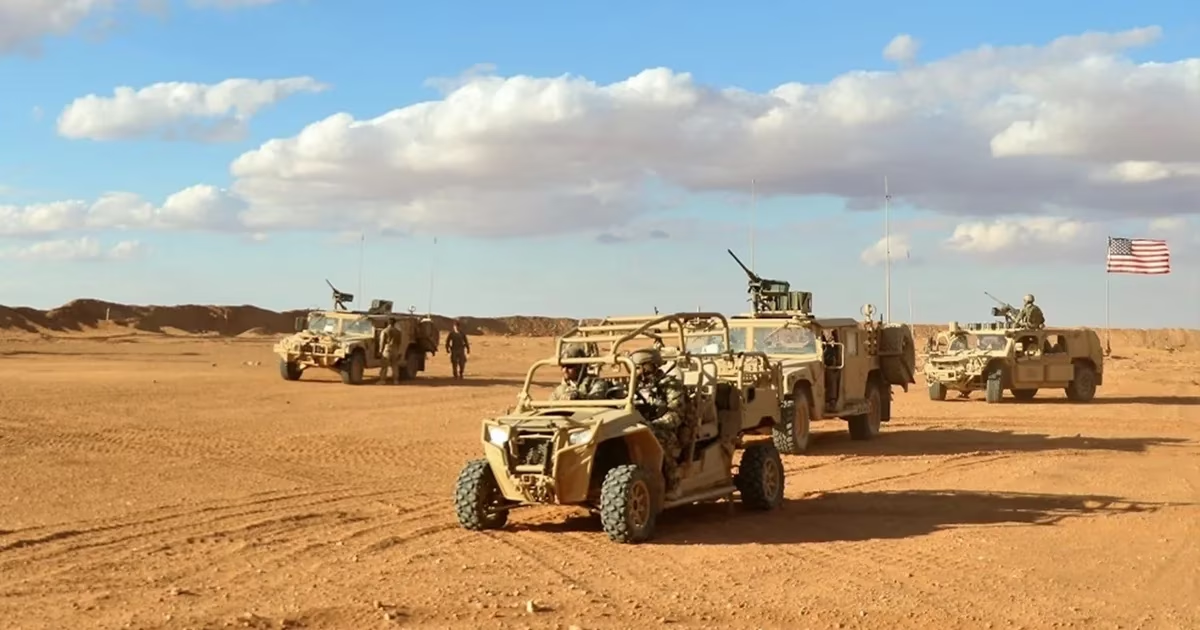
Official figures released by the Pentagon indicate that the number of US troops in Syria ranges between 800 and 900 soldiers, a limited but high-risk deployment. These forces have been subjected to more than 150 rocket and drone attacks since October 2023, raising the cost of operational protection to unprecedented levels.

Financially, billions of dollars are drained annually within the allocations for Operation 'Inherent Resolve' to support this limited military presence. This spending raises fundamental questions in Washington about the feasibility of continuing these costs at a time when the US administration seeks to rationalize military spending and direct it towards more vital operational theaters.

The shift in American strategic thinking has become evident in the national security documents for 2022 and 2023, where great power competition, primarily with China, topped the list of threats. This trend necessitates a transition from an open deployment model in the Middle East to a 'smart balancing' model that focuses on remote deterrence.

Experts believe that military and political resources are not limitless, and their allocation to low-priority theaters such as Syria may weaken the ability to deter in sensitive areas like Eastern Europe. Therefore, the presence in Syria appears to be a remnant of the 'War on Terror' era that no longer aligns with Washington's new grand strategy.

Regarding deterrence and credibility, some argue that withdrawal might be interpreted as a sign of weakness, but reality indicates that deterrence depends on actual capability, not symbolic presence. The United States possesses the ability to intervene rapidly from neighboring regional bases and employ advanced intelligence and cyber tools to manage balances without the need for a permanent physical presence.

Any decision for a US withdrawal will have a direct impact on the calculations of regional powers, foremost among them Israel, which views this presence as an indirect balance against Iranian expansion. However, Tel Aviv primarily relies on its own capabilities to carry out preemptive operations, which reduces the impact of the US field absence on it.

For Turkey, the Syrian file is linked to security concerns regarding Kurdish forces in the northeast, making it a key party in any future security arrangements. An organized withdrawal requires close coordination with Ankara to ensure that a security vacuum does not occur, which could lead to a new military escalation on the Turkish-Syrian border.

Jordan, in turn, is monitoring developments cautiously, as border security and preventing arms and drug smuggling operations are a top priority for Amman. Continued effective intelligence coordination remains an urgent Jordanian demand, whether the direct US presence continues or is replaced by internationally supported regional security arrangements.

From a purely strategic perspective, the US mission in Syria has exhausted its original justifications, and the military presence is no longer capable of decisively preventing Iranian influence. Instead, this presence exposes American soldiers to the risks of an uncalculated escalation that could drag Washington into conflicts it does not wish to engage in.

Safe and organized withdrawal requires parallel paths, including strengthening regional intelligence coordination to prevent the return of extremist organizations. Local security arrangements must also be supported to give regional powers greater responsibility in managing their affairs, with a readjustment of legal frameworks for the use of force when absolutely necessary.

In conclusion, the issue is not just about Syria, but about the United States' ability to redefine the concept of power in a multipolar world. Proving that a deliberate withdrawal is an act of strength, not a sign of weakness, will be the true test of the American role in the international system over the next decade.

A successful strategy is not one that avoids withdrawal, but one that knows when to end a mission that has exhausted its usefulness and no longer yields security returns commensurate with its cost.

PALESTINE

Mon 16 Feb 2026 10:02 pm - Jerusalem Time

Guterres Demands Occupation Immediately Reverse West Bank Land Registration Measures

The Secretary-General of the United Nations, Antonio Guterres, called on the occupation authorities to immediately and unconditionally reverse recent decisions related to the registration of vast areas of land in the occupied West Bank. This demand came through an official statement read by his spokesperson, Stéphane Dujarric, in which he affirmed the categorical UN rejection of any unilateral steps aimed at changing the legal or demographic reality in the occupied Palestinian territories.

Guterres stressed in his statements that the continuation of these settlement policies and administrative procedures on the ground not only constitutes a flagrant violation of international law but also directly contributes to regional instability. He pointed out that these practices contradict the legal opinions issued by the International Court of Justice, which affirm the illegitimacy of the settlement presence and related policies in the territories occupied in 1967.

The Secretary-General warned that the path currently being pursued by the occupation government places serious obstacles in the way of international peace efforts aimed at ending the conflict. He explained that these steps systematically undermine the possibility of establishing an independent and geographically contiguous Palestinian state, making the two-state solution option elusive amidst the continuous expansion of land confiscation and the legitimization of settlement outposts.

In a related context, sources reported that Palestinian forces considered these decisions an attempt to legitimize the theft of land under flimsy legal pretexts such as 'state land.' The sources affirmed that the occupation government's approval of such decisions is null and void and does not change the historical and legal reality of the land, calling on the international community to take practical steps beyond verbal condemnation to stop the settlement encroachment.

Current measures are illegal according to International Court of Justice opinions and directly undermine the chances of achieving a two-state solution.

PALESTINE

Mon 16 Feb 2026 10:02 pm - Jerusalem Time

European Union Decides to Participate as an Observer in the "Peace Council" in Washington

The European Commission officially announced its intention to participate in the work of the "Peace Council" established by US President Donald Trump, but only as an observer without formal membership. The European Union will be represented at these meetings by the Commissioner for Mediterranean Affairs, Dubravka Šuica, during the sessions scheduled to be held in the US capital, Washington, next Thursday, February 19.

The spokesperson for the European Commission, Guillaume Mercier, confirmed during a press conference held in Brussels that the European presence would focus primarily on the aspect related to the Gaza Strip within the meeting's agenda. He explained that this move comes as an expression of the European Union's firm commitment to supporting the stability of the ceasefire in the Strip and ensuring the implementation of understandings related to ending the conflict.

Despite this participation, the European Union expressed clear reservations and legal and administrative questions regarding the nature of the new council. Sources in the Commission indicated the need for further clarifications on the "scope of application" and the "governance" mechanisms followed, as well as the extent to which this new organization is compatible with the United Nations Charter and international legitimacy.

US President Donald Trump announced the establishment of the "Peace Council" in mid-January, as an executive tool linked to his proposed plan for the Gaza Strip. Although the UN Security Council welcomed its establishment through Resolution No. 2803 issued late last year, Trump's broad powers within the council, including the right of veto and the appointment of members, raised concerns that it was an attempt to bypass the traditional UN role.

The work of this council is based on the "Peace Plan" proposed by Trump in September 2025, which included twenty items aimed at ending military operations and disarming Palestinian factions in exchange for new security and political arrangements. These diplomatic moves come at a sensitive time, as the international community seeks to consolidate the foundations of the de-escalation that began last October after a long period of military escalation.

In a related context, political circles are monitoring the extent to which this council can make a real breakthrough in the file of reconstruction and a permanent political solution. With some field attacks continuing despite the ceasefire agreement, observers believe that European participation as an observer reflects Brussels' desire to remain close to decision-making centers while maintaining a legal distance that protects its diplomatic constants.

This participation does not mean EU membership in the Peace Council, but rather comes within the framework of our commitment to implementing the ceasefire in the Gaza Strip.

PALESTINE

Mon 16 Feb 2026 10:02 pm - Jerusalem Time

Lawsuit against the occupation authorities protesting the reduction of operating hours at Allenby Bridge

Mr. Nassar Nassar, Secretary of the Coordinating Council of Private Sector Institutions and Chairman of the General Union of Palestinian Industries, announced the initiation of formal legal proceedings against the occupation authorities. The lawsuit, filed on February 12, 2026, before the Central Court, included both the Airports Authority and the Civil Administration, in protest of the policies adopted in sharply and continuously reducing the operating hours of Allenby Bridge.

Nassar affirmed in his statements that this legal action stems from the necessity of protecting the fundamental rights of Palestinians, emphasizing that the issue goes beyond routine administrative disputes. He clarified that the main goal is to restore the dignity and freedom of movement for millions of travelers who suffer daily, in addition to mitigating the serious negative repercussions that have affected the structure of the national economy and the movement of exports.

Allenby Bridge is considered the only international land crossing available to West Bank residents to access the outside world via Jordan, in the absence of any other effective alternatives. More than three million Palestinian citizens rely on this vital facility, in addition to hundreds of thousands of Jerusalemites who face severe difficulties in movement and travel due to the imposed restrictive measures.

Nassar pointed out that the past two years have witnessed a significant and unjustified decline in operating hours, causing severe daily overcrowding at the entrances and exits. This reality has forced travelers to spend the night in difficult humanitarian conditions, in addition to citizens incurring additional financial and psychological burdens due to endless long queues.

The Palestinian official described the current situation at the crossing as no longer merely a transient seasonal circumstance, but has transformed into a permanent state that violates the internationally and locally guaranteed right to movement. He affirmed that the continuation of these restrictions constitutes a direct infringement on signed agreements, and turns travelers' lives into a journey of daily suffering that requires urgent legal intervention to stop it.

Nassar revealed previous attempts to communicate with the relevant authorities to demand a clear timetable for extending operating hours and operating the crossing at its full capacity. However, the Israeli responses were characterized by generality and evasion of practical commitments, citing security and operational considerations and a shortage of human resources, justifications that the Palestinian side rejected outright.

The lawsuit's legal basis relies on the responsibility of the Airports Authority as a public body obligated to manage crossings efficiently to provide adequate service to the public. The legal documents also refer to the obligations contained in the interim agreements of 1995, which set minimum operating hours for the crossing that far exceed what is currently in practice.

Nassar stressed that excuses related to budgets or operational shortages cannot be accepted as a permanent justification for infringing on the rights of millions of citizens to movement and travel. He considered that maintaining the smooth flow of movement is a legal and moral duty incumbent upon the authorities managing the crossing, and cannot be linked to narrow financial considerations at the expense of human dignity.

The effects of the restrictions were not limited to the movement of individuals, but also extended to the commercial crossing, where Palestinian exports destined for dozens of countries around the world were harmed. Nassar warned that the continuation of this situation threatens the growth of national industry and weakens the efficiency of supply chains, leading to enormous economic losses for the Palestinian private sector.

In conclusion of his statements, Nassar demanded the court to issue an order obliging the occupation authorities to extend operating hours to 24 hours a day, or at least return to the previous minimum limits. He affirmed the determination of Palestinian institutions to continue both legal and international tracks to ensure the achievement of these demands before the upcoming summer season, thereby ensuring the flow of goods and the freedom of travelers.

This lawsuit is not part of an administrative dispute, but rather concerns a fundamental right that affects the dignity and freedom of movement of millions of travelers annually and its repercussions on the national economy.

ISRAELI AFFAIRS

Mon 16 Feb 2026 10:02 pm - Jerusalem Time

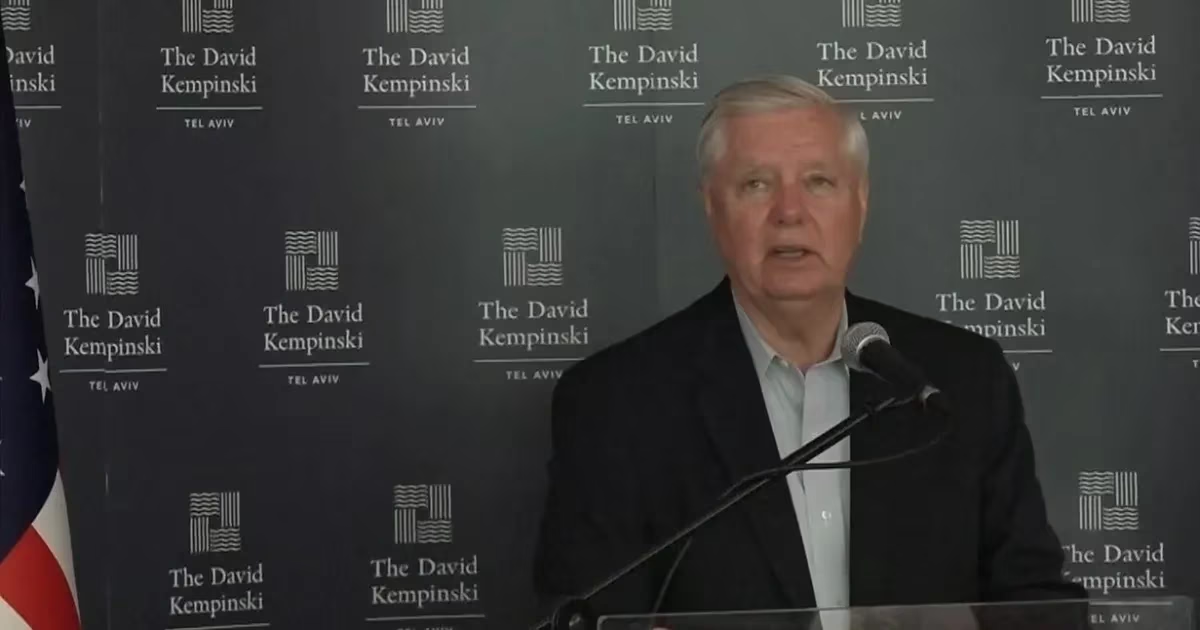
Graham from Tel Aviv: Washington and Israel are approaching a decisive confrontation with Iran

Prominent Republican Senator Lindsey Graham launched a sharp attack on the Iranian regime, considering that the United States and Israel are approaching a decisive moment to end what he described as Tehran's sponsorship of terrorism in the region. Graham affirmed during a press conference held in Tel Aviv that there is complete agreement and a unified vision between US President Donald Trump and Israeli Prime Minister Benjamin Netanyahu regarding ways to deal with Iranian threats.

Graham described Iranian Supreme Leader Ali Khamenei as a 'religious Nazi,' likening him to Adolf Hitler in his pursuit of imposing ideological hegemony, religious cleansing, and the destruction of the State of Israel. He pointed out that Iranian goals extend beyond regional borders to directly target vital US interests, making confrontation with it a strategic necessity for American national security.

The American senator considered that the continuation of the current leadership in Tehran represents the biggest obstacle to stability in the Middle East, expecting that the fall of the regime would lead to the collapse of the influence of its regional allies. He explained that forces such as Hezbollah, Hamas, and the Houthi group would lose their momentum and capabilities in the absence of Iranian support, which would pave the way for accelerating normalization processes in the region.

Regarding the options available to Washington, Graham indicated that the US administration is moving along two paths; the first is diplomatic, aiming to reach a settlement that protects common interests, and the second is military, to be resorted to if political solutions fail. He affirmed that President Trump always tends to achieve results at the lowest costs, but he will not hesitate to use the superior military force his country possesses.

Graham praised Israel's military capabilities, describing them as the most innovative and intelligent in dealing with complex security challenges. He stressed that the partnership between Washington and Tel Aviv would be at its highest level if circumstances necessitated resorting to the military option, affirming that the United States does not necessarily need to deploy ground forces inside Iranian territory.

In a related context, Graham touched upon the situation in the Gaza Strip, where he stressed that lasting peace in the region will not be achieved without the complete disarmament of Hamas. He explained that the continued military capabilities of the movement represent a continuous threat, indicating that Israel may be forced to return militarily to eliminate the movement if it refuses to abandon its weapons.

The Republican senator affirmed that any future political solution must deal with the West Bank and the Gaza Strip as a single unit under a framework that ensures security and stability. Graham believes that intensive military and political pressure is the only way to compel opposing parties to accept settlements that end the prolonged conflict in the Palestinian territories.

Graham expressed his deep skepticism about Iran's ability to adhere to any new diplomatic agreements, pointing out that any potential deal would face strict review by the US Congress. He explained that the Senate would exercise its full powers to have the final say in accepting or rejecting any commitments made by Tehran to the international community.

Graham conveyed the Israeli leadership's concerns about three basic issues: Iran's nuclear program, the development of cross-border ballistic missiles, and the continued support for armed groups. He considered that these issues pose an existential threat that requires high-level coordination between Washington and its allies to ensure that Tehran does not acquire weapons of mass destruction.

Graham concluded his remarks by emphasizing that the region is experiencing a 'rendezvous with history,' where the results of the current confrontation with Iran will determine the shape of the Middle East for decades to come. He expressed his support for the Iranian people in their quest for freedom, considering that the success of international pressures coinciding with internal movements may open the door to a new dawn that ends decades of oppression and tension.

We and Israel are on the verge of eliminating the largest state sponsor of terrorism in the region, and the Iranian leader seeks to destroy Israel and target Washington.

PALESTINE

Mon 16 Feb 2026 10:02 pm - Jerusalem Time

Ben Gvir Tramples Prisoners' Heads in Ofer: Systematic Escalation and 'Slow Genocide' Policies Inside Prisons

Since late 2022, Israeli occupation prisons have witnessed an unprecedented escalation in policies of repression and abuse, led by the far-right National Security Minister Itamar Ben Gvir. These policies reached their peak on Friday morning, February 13, 2026, when Ben Gvir stormed prisoners' cells in Ofer Prison near Ramallah, in a showy move aimed at bolstering his image among his extremist audience.

Human rights sources reported that Ben Gvir personally participated in the assault on prisoners, trampling on their heads during the repression operations carried out by special units. The raid was accompanied by extensive use of police dogs and stun grenades inside the sections, amidst Israeli media coverage that deliberately published scenes of humiliation to intimidate Palestinian society.

A lawyer who visited Section 26 in Ofer Prison conveyed harsh testimonies from prisoners, who confirmed that the raid took place during the evening security check and lasted for about fifteen minutes of continuous abuse. Ben Gvir aims to use these video clips to turn the suffering of prisoners into material for political propaganda, coinciding with his frantic efforts to pass the prisoners' execution law.

In the context of continuous threats, Ben Gvir warned prisoners against undertaking any protest movements during the holy month of Ramadan, threatening to intensify penalties to the maximum extent. The extremist minister boasted that prisons had become a 'real hell' under his tenure, considering the deprivation of prisoners' basic rights an effective means of achieving security deterrence.

Institutionally, the Israeli Prison Service announced last December its full adoption of Ben Gvir's policies, confirming no intention to alleviate the harsh detention conditions. Observers believe that this harmony between the political level and the executive body reflects the transformation of cruelty from individual practices to an official doctrine adopted by the occupation institutions.

In parallel with the field repression, the 'Jewish Power' party continues to push for the passage of the prisoners' execution law, which passed its first reading in the Knesset in November 2025. This legislation aims to legitimize killings and liquidations of prisoners under legal cover, turning prisons from detention centers into camps for slow, systematic extermination.

Medical and human rights reports indicate a complete collapse of the health system inside prisons, where deliberate medical neglect and starvation are rampant as tools of torture. Human rights organizations have recorded a sharp increase in deaths due to severe beatings and systematic sexual assaults suffered by detainees, especially those from the Gaza Strip.

The Palestinian Prisoner's Club announced an increase in the number of martyrs of the prisoner movement since the start of the war of extermination in Gaza to 88 martyrs, the latest of whom was paramedic Hatem Rayan. Data confirms that 52 of these martyrs are detainees from Gaza who died under torture, while the fate of dozens remains unknown due to the policy of enforced disappearance.

The total number of martyrs of the prisoner movement since 1967 has reached 325 martyrs, while the occupation authorities continue to detain the bodies of 96 prisoners who died inside prisons. This phase is considered the bloodiest in the history of the prisoner movement, where death has become an expected outcome of detention in the absence of international oversight.

As of early 2026, the number of prisoners in occupation prisons exceeded 9,300, including 350 children facing inhumane conditions. The number of administrative detainees also rose to 3,300 people, held without charge or trial, as part of the collective detention policy pursued by the occupation as a tool of political punishment.

In a new field escalation, occupation forces carried out a widespread arrest campaign in the West Bank, affecting at least 60 Palestinians from Sunday evening until Monday morning. The arrests included women, a journalist, and former prisoners, and were accompanied by widespread destruction of homes and intimidation of families before the arrival of Ramadan.

Statistics indicate that the number of arrests in the West Bank since October 2023 has exceeded 22,000 cases, a figure that reflects the scale of the frenzied attack against Palestinians. These arrests are carried out daily and systematically, with detainees subjected to harsh field interrogations and detention conditions that degrade human dignity.

Experts believe that the 'deterrence' policies promoted by Ben Gvir could lead to counterproductive results and ignite the situation in all Palestinian territories. The pressure exerted inside prisons, along with killings and starvation, creates a state of popular tension that cannot be contained, turning prisons into an open confrontation arena.

The project led by the far-right in Israel goes beyond the concept of traditional punishment to the extent of crimes against humanity according to international organizations' classifications. In light of the international community's silence, the occupation system continues to expand the 'triangle of death' consisting of torture, racist legislation, and field executions, threatening the lives of thousands of prisoners.

Prisons have become a real prison, not a hotel, and we will continue to work until the law for the execution of saboteurs is passed.

PALESTINE

Mon 16 Feb 2026 10:01 pm - Jerusalem Time

Using 'incitement' to justify oppression.. How is the occupation preparing to escalate its violations in Ramadan?

The Israeli occupation systematically seeks to link the holy month of Ramadan with concepts of 'violence and terrorism', in an attempt to distort the sanctity of the month and justify its continuous crimes against Palestinians. Israeli media arms work to broadcast content claiming tolerance, while forces on the ground practice the highest degrees of escalation, which was evident in the resumption of the war of extermination on March 17, 2025, which coincided with the middle of the holy month.

Media sources reported that the Israeli security system has completed extensive preparations in the occupied city of Jerusalem, in anticipation of what it described as escalating tension in the West Bank and the Old City. These preparations are centered around Al-Aqsa Mosque, where the occupation fears that large religious gatherings will turn into friction points and direct confrontation with its heavily deployed forces.

Proposed repressive measures include imposing strict restrictions on the ages and numbers of worshipers coming from the West Bank to reach Jerusalem, especially on Fridays. These security recommendations aim to reduce the Palestinian presence in Al-Aqsa Mosque under the pretext of preventing 'disorder', in parallel with a preemptive arrest campaign targeting activists in East Jerusalem.

On the ground, the occupation police began closing what it calls 'gaps' in the separation wall, especially in areas north of Jerusalem, Dahiyat al-Barid, and Beit Hanina. Border Guard forces are deployed around the clock to carry out ambushes and thorough vehicle inspections, in a step aimed at preventing any Palestinian who does not hold special entry permits from entering during the sensitive days of the month.

In a related context, Hebrew reports confirmed that the new Jerusalem Brigade commander intends to continue implementing the policies of the extremist National Security Minister Itamar Ben-Gvir, related to demolishing Palestinian homes. Demolition operations and their securing by reinforced forces are expected to continue even during Ramadan, exacerbating the state of tension and popular anger in the holy neighborhoods.

The occupation police face challenges in manpower, especially in the 'Yasam' unit responsible for dealing with protests in the Old City, which prompted it to call up reserve forces and reinforcements from other brigades. Security leaders acknowledge that this year's operational challenge appears complex in light of the ongoing war on Gaza and the escalation of operations in the West Bank.

Inside the occupation prisons, the Prisons Service announced a state of 'high alert', where prisoners were deprived of performing central prayers inside the sections. Rapid response units using motorcycles were created to accompany convoys and secure security prisons, with joint training conducted in Ofer Prison to simulate suppressing any prisoner protests.

Right-wing media outlets adopt a discourse that incites against Palestinian religious and political institutions, claiming that Hamas exploits Ramadan to turn it from a month of worship into a platform for incitement. These reports claim that Israeli intelligence is closely monitoring 'Laylat al-Qadr', alleging attempts to turn it into a time for widespread unrest and sedition.

Historically, the month of Ramadan has been associated with a series of bloody Israeli massacres, the latest of which was in March 2025 when more than 413 Palestinians were martyred in raids targeting civilians while they were preparing for Suhoor. These attacks coincided with a complete قطع of communication and internet services, which hampered rescue operations and the documentation of crimes committed against displaced families.

In 2014, the occupation launched the 'Protective Edge' aggression, which began on the tenth of Ramadan and lasted 51 days, committing more than 144 horrific massacres. Among the most prominent of these atrocities were the Shuja'iyya massacre and the UNRWA school, in addition to the famous Rafah massacre that occurred in early August, leading to the martyrdom of hundreds amid complete international silence.

Ramadan 2021 also witnessed the outbreak of the 'Sword of Jerusalem' battle in defense of Sheikh Jarrah neighborhood and Al-Aqsa Mosque, where about 250 martyrs fell during the confrontations. During that war, the occupation deliberately destroyed civilian infrastructure and bombed inhabited residential towers, in a policy of collective punishment that was repeated in all subsequent confrontations.

Since October 7, 2023, the Palestinian territories have entered a tunnel of genocidal war that has not stopped even during holidays and religious occasions. Ramadan 2024 passed under the weight of continuous bombing and hunger, with statistics recording thousands of martyrs and wounded, with thousands more remaining under the rubble amid a suffocating siege.

The occupation's strategy of 'securitizing' the month of Ramadan primarily aims to dehumanize and de-religiousize Palestinians and turn their worship practices into a 'security threat'. Israeli authorities use this description to justify the deployment of thousands of soldiers and turning Jerusalem into a military barracks, which deprives thousands of worshipers of their natural right to access holy sites.

In conclusion, the month of Ramadan remains in Palestinian memory a mixture of steadfastness and pain, where acts of worship intertwine with the sacrifices of martyrs. Despite the occupation's continuous attempts to distort the image of this month through its incitement machine, Palestinians insist on staying in Al-Aqsa Mosque and confronting displacement and Judaization policies by all available means.

The occupation tries to turn the religious occasion into a platform for security incitement to justify policies of oppression, displacement, and home demolitions.

ARAB AND WORLD

Mon 16 Feb 2026 10:01 pm - Jerusalem Time

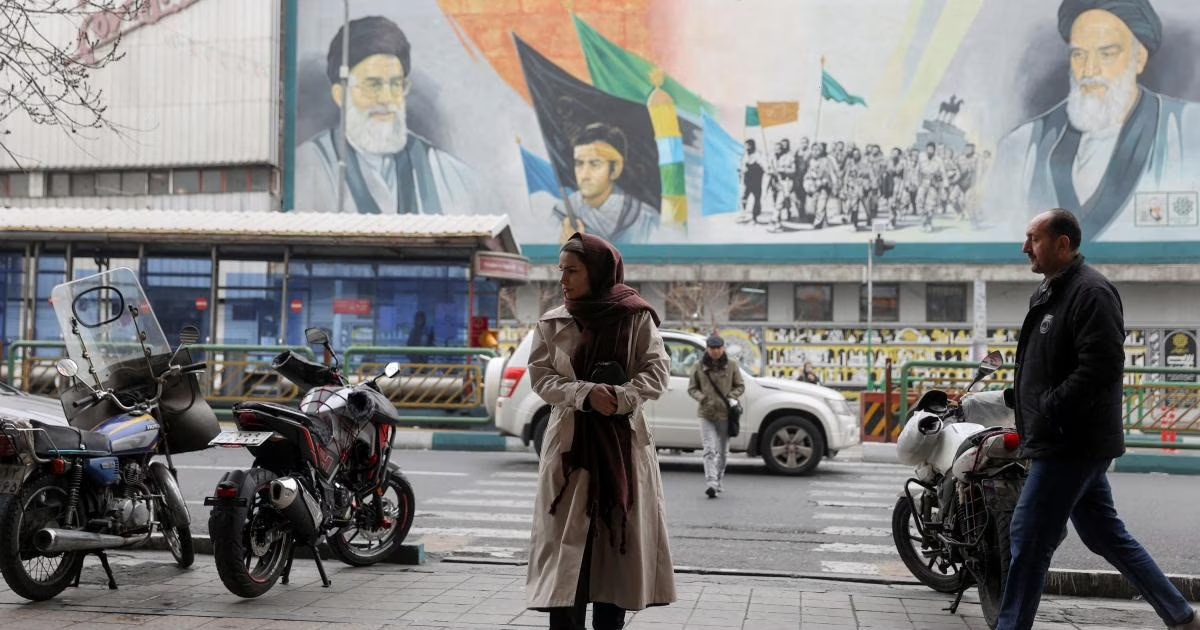
Tehran observes American 'realism' ahead of Geneva nuclear talks

The Iranian government announced its observation of a shift in the American approach to the nuclear issue, describing Washington's stance as having become more 'flexible and realistic' hours before a new round of talks. This assessment was made by the spokesperson for the Iranian Foreign Ministry, Ismail Baqaei, who based his conclusion on the results of preliminary meetings hosted by the Sultanate of Oman earlier this month.

Baqaei explained in statements reported by official media that Tehran is cautiously monitoring developments in the American position, emphasizing that his country defends its legitimate right to develop a nuclear program for peaceful purposes. These statements come at a time when Iran is seeking international recognition of its right to nuclear technology in accordance with the Non-Proliferation Treaty it signed.

For his part, US Secretary of State Marco Rubio affirmed that reaching a final agreement with Tehran represents a formidable challenge for the current US administration. Despite acknowledging the difficulty of the task, Rubio expressed optimism about the possibility of a diplomatic breakthrough, noting that American negotiators are on their way to Geneva to begin the anticipated meetings.

During a press conference held in the Hungarian capital, Budapest, Rubio indicated that President Donald Trump always leans towards negotiated solutions and peaceful outcomes. He considered diplomacy to remain the preferred option for the US administration, despite the complexities imposed by the nature of the political system in Tehran and escalating regional tensions.

In an interpretation of the nature of Iranian leadership, Rubio stated that decision-makers in Tehran base their political choices on ideological and theological foundations. This American perspective reflects the magnitude of the cultural and political gap that negotiators are trying to bridge during the indirect rounds hosted by Switzerland.

A crucial round of indirect talks is scheduled to begin tomorrow, Tuesday, in Geneva, where mediators seek to narrow the differences between the two sides. This round comes as a continuation of intensive diplomatic efforts that began in Muscat, aiming to defuse the long-standing nuclear crisis and avoid a comprehensive military confrontation.

Tehran adheres to its fundamental demand for the lifting of severe Western economic sanctions as a condition for restricting its nuclear activities. The Iranian leadership views sanctions as an illegal pressure tool aimed at undermining internal stability, asserting that it will not relinquish its scientific achievements in enrichment without tangible compensation.

In contrast, Washington sets a strict list of demands, including the complete cessation of uranium enrichment and the transfer of highly enriched stockpiles out of Iranian territory. The US administration also seeks to expand the scope of negotiations to include the ballistic missile program and Iranian support for armed groups in the region, which Tehran rejects outright.

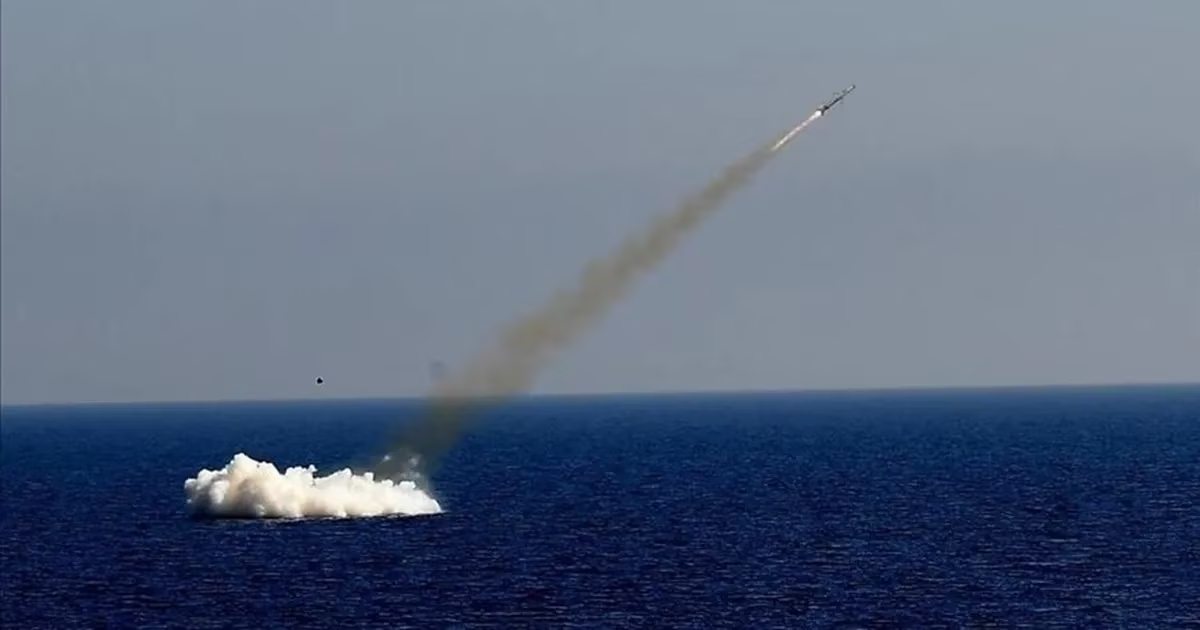
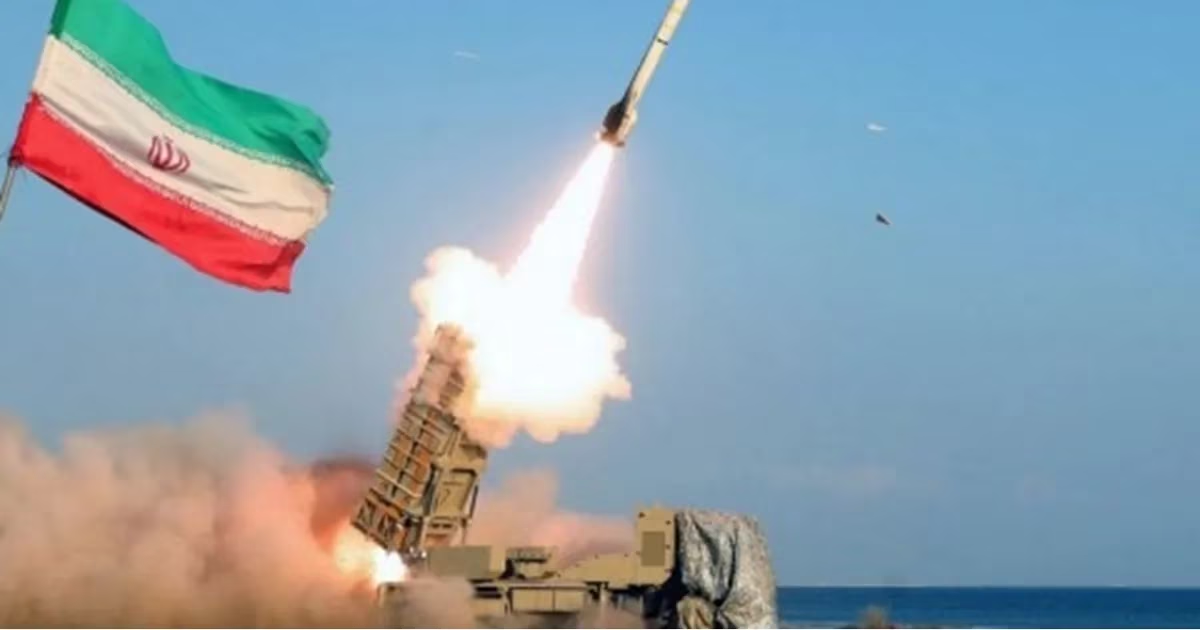
There is a state of apprehension in Iranian circles regarding American and Israeli movements in the region, with Tehran accusing both capitals of fabricating pretexts for military intervention. Iranian sources have warned that any military aggression, no matter how limited, will be met with a firm and harsh response that will affect the interests associated with the aggressors in the region.

While Israel and its allies accuse Iran of actively seeking to acquire a nuclear weapon that threatens regional security, Tehran insists that its objectives are purely civilian. The Iranian government affirms that its program is dedicated to generating electricity and meeting medical needs, noting that religious fatwas and international commitments prevent it from seeking to acquire weapons of mass destruction.

Considering the talks in the Sultanate of Oman, we can cautiously conclude that the American position on the Iranian nuclear issue has become more realistic.

PALESTINE

Mon 16 Feb 2026 10:01 pm - Jerusalem Time

By numbers and maps.. How did the occupation re-engineer the camps of the northern West Bank militarily?

An in-depth analysis of satellite images revealed unprecedented geographical and urban changes affecting the camps of the northern West Bank, specifically Jenin, Tulkarm, and Nur Shams. Visual data showed the transformation of these densely populated communities into what resemble military barracks and isolated islands as a result of systematic demolition operations and forced road construction carried out by the occupation army.

The technical analysis was based on comparative temporal maps and UN data, which clarified the extent of the bulldozing and the complete destruction of vital infrastructure. Officials in the UNRWA agency described the current scene in these camps as 'ghost towns,' emphasizing that the policy aims to erase the urban identity of the camp and dismantle its social fabric.

In Jenin camp, which is the primary target, images taken between November 2024 and January 2026 showed massive destruction, with at least 237 buildings razed to the ground. Statistics confirm that Jenin Governorate recorded double the number of demolished structures and displaced persons compared to neighboring areas, reflecting the intensity of military operations there.

Mamdouh Assaf, the director of Jenin Municipality, confirmed that the occupation forces deliberately bulldozed almost all the camp's streets and forcibly displaced entire neighborhoods under the threat of arms. These operations were not random but were subject to an engineering vision aimed at constructing a network of military roads exceeding 4 kilometers in length, which split the camp into two completely separate sections.

Satellite images detected the establishment of earth berms and tight ground barriers at all main entrances and exits of Jenin camp. This measure clearly indicates the imposition of a strict security cordon and a permanent military control pattern, aimed at monitoring entry and exit movements and restricting the freedom of movement of Palestinians within their residential areas.

In Tulkarm camp, the analysis revealed the application of the same military approach through the complete destruction of 181 buildings and the transformation of the cohesive urban block into 'isolated islands.' A network of internal roads, 2.5 kilometers long, was created, whose paths matched the demolished buildings, to facilitate the movement of heavy military vehicles deep inside the camp.

Tulkarm camp is considered one of the oldest camps established by UNRWA in the West Bank since 1950, but recent operations aimed to dismantle this historical legacy. The new wide roads separated residential communities from each other, making internal movement for residents fraught with risks and under constant surveillance.

As for Nur Shams camp, destruction affected about 48% of the total buildings according to official estimates, with the complete destruction of 111 buildings documented. Engineering operations focused on the densely populated northern part, where the occupation constructed roads 2.2 kilometers long to ensure its vehicles could reach the most complex urban areas.

Deep bulldozing operations in Nur Shams resulted in the comprehensive destruction of water, electricity, and sewage networks, making daily life almost impossible for the remaining residents. This policy aims to secure 'freedom of maneuver' for the army at the expense of the basic humanitarian needs of Palestinian refugees in the camp.

Field data indicates that the occupation adopted a consistent engineering pattern based on erasing traditional geographical features and replacing narrow alleys with wide streets. This forced change aims to break the resistance within the camps by exposing them militarily and facilitating continuous incursions and arrests.

On the human level, human rights reports documented the martyrdom of 84 Palestinians in Jenin and 17 in Tulkarm since the beginning of 2025, in addition to the arrest of about 2,300 citizens. This was accompanied by the conversion of hundreds of private homes into observation points and military barracks, forcing thousands of families into forced displacement with no prospect of return.

The analysis concluded that what the northern West Bank camps are witnessing is a comprehensive re-engineering of the geographical and demographic reality to serve the security objectives of the occupation. The transformation of the camps into divided security squares represents a blatant violation of international laws and places the international community before its responsibilities to protect civilians and UNRWA facilities.

What is happening is a systematic and relentless process of destruction that has turned the camps into ghost towns.

ECONOMY

Mon 16 Feb 2026 9:08 pm - Jerusalem Time

Middle East CEOs Lead Global Confidence Rankings as Strategic Investment Accelerates

Chief executive officers (CEOs) across the Middle East are entering 2026 with confidence levels that surpass many of their global peers.

PwC’s 29th Global CEO Survey shows that regional business leaders are optimistic about domestic economic prospects despite ongoing geopolitical tension and shifting global trade dynamics.

Eighty-eight percent of Middle East respondents expect economic growth in their territories to improve over the next 12 months.

Within the Gulf Cooperation Council (GCC), that figure rises to 93%, placing the bloc among the most confident business environments worldwide.

This confidence is not rooted in short-term commodity cycles. It reflects structural reform, institutional strengthening and deliberate capital deployment across diversified sectors.


Structural Reform Anchors Long-Term Growth


Executives in the region are prioritising transformation strategies designed to sustain growth beyond hydrocarbons.

Major national programmes in Saudi Arabia, the United Arab Emirates and other Gulf markets continue to direct investment towards renewable energy, logistics, advanced manufacturing and digital infrastructure.

These initiatives are reshaping economic foundations and expanding private-sector participation.

Survey findings reveal that Middle East CEOs recorded average revenue growth of 12% over the past year, compared with eight percent globally. Net profit margins are four percentage points higher than the global benchmark.

Such figures underline the operational advantages available in markets supported by policy clarity and capital access.

Cross-border investment remains central to corporate strategy. Eighty-eight percent of CEOs plan to invest outside their home markets, with nearly three-quarters of that investment expected to stay within the region.

These figures highlight growing intra-regional integration and deeper confidence in local value creation. Dealmaking momentum further reinforces this trajectory.

Almost 80% of Middle East CEOs intend to pursue a significant acquisition within the next three years. Strategic acquisitions are increasingly used to secure technology capabilities, enter adjacent industries and expand geographic reach.

The region’s growth story is therefore being driven by deliberate repositioning rather than passive expansion.


Technology at the Core of Competitiveness


Digital transformation continues to shape executive priorities. More than four-fifths of CEOs say their organisational culture enables artificial intelligence adoption.

Nearly 40% report that AI has already been integrated into demand generation, customer service and operational support.

Technology is no longer treated as a supporting function. It is embedded across enterprise value chains to improve efficiency, decision-making and customer engagement.

National AI strategies across the Gulf are closely aligned with corporate objectives, strengthening the link between public policy and private-sector competitiveness.

Cybersecurity investment is also accelerating. Fifty-seven percent of CEOs plan to significantly enhance enterprise-wide cybersecurity frameworks over the next three years.

Climate risk has emerged as another strategic consideration, prompting greater integration of sustainability metrics into long-term planning.

As digital infrastructure expands, adjacent technology-driven sectors are also attracting interest.

While gambling regulation remains limited in much of the Middle East, the broader online gaming and betting ecosystem is increasingly viewed through a diversification lens.

Comparison platforms such as haz-tayeb.com/en/ illustrate how Arabic-language digital betting environments are being developed within compliant jurisdictions, supported by secure payment systems and modern user interfaces.

Although still largely untapped across many territories, the sector highlights how technology-enabled industries are evaluated alongside more traditional investment segments.

For policymakers and investors, such industries reflect the region’s wider willingness to explore innovation-led revenue streams aligned with regulatory evolution and digital maturity.


Resilience Shapes Executive Mindset


Despite elevated confidence, Middle East CEOs remain sharply focused on risk. Geopolitical tension continues to rank as a leading concern, particularly in light of ongoing regional instability and global trade fragmentation.

Supply-chain resilience has become a boardroom priority. However, executives express strong belief in their organisations’ capacity to navigate disruption.

Forty-six percent say they can anticipate disruption before it occurs, while 60% are confident in their ability to lead an effective organisational response once disruption materialises.

More notably, 42 percent report that their organisations can create new business opportunities from periods of instability. This represents a shift from defensive risk management towards opportunity-driven resilience.

Recent tariff developments and trade tensions provide a practical example. Rather than retreating, many Middle East businesses have diversified supplier networks, strengthened alternative trade partnerships and accelerated localisation strategies.

As a result, 62% of regional CEOs expect little to no impact on profit margins from tariff measures, slightly exceeding the global average.

Experience navigating pandemic shocks, supply-chain constraints and prolonged geopolitical volatility have shaped a more adaptive leadership culture.

Resilience is increasingly treated as a competitive asset rather than a contingency plan.


Confidence Rooted in Execution


The survey ultimately portrays a region where optimism is grounded in measurable performance and strategic clarity.

Revenue growth, margin strength and active dealmaking indicate tangible progress. Technology integration continues to redefine enterprise capabilities.

Capital flows from Europe, Asia and North America remain robust, reinforcing the Middle East’s role as a key investment destination.

Executives are embedding risk management, cybersecurity enhancement and sustainability considerations into core strategy.

The combination of ambitious reform, disciplined execution and technological depth distinguishes the region from many slower-growing global markets.

OPINIONS

Mon 16 Feb 2026 5:48 am - Jerusalem Time

Netanyahu’s Gaza Disarmament Demand is a Blueprint for Total Control

February 16, 2026

News Analysis

On Sunday, Israeli Prime Minister Benjamin Netanyahu claimed there are “no heavy weapons” left in Gaza, portraying the remaining threat as limited to light arms held by factions and individuals. He then escalated the demand: Palestinians, he said, must surrender even personal weapons—explicitly including rifles such as the AK-47—as a condition for any post-war arrangement. Presented as a security requirement, the statement revealed a deeper political objective: removing the last meaningful constraint on Israel’s freedom of action in Gaza, namely the possibility that armed resistance could impose costs, uncertainty, or deterrence.


Netanyahu’s insistence on “disarming Hamas and other Palestinian groups” is not merely a battlefield condition. It functions as a strategic instrument designed to reshape Gaza’s future while narrowing Palestinian agency. In official Israeli rhetoric, disarmament is framed as the gateway to stability, reconstruction, and a “new Gaza.” In practice, however, it operates as a mechanism to eliminate the final obstacle to unilateral Israeli control over the territory’s security, borders, and political trajectory.


For Israel, armed Palestinian factions are not only a tactical problem but also a symbolic one. Weapons represent an alternative authority, and therefore an alternative claim to power. A disarmed Gaza would not simply be quieter; it would be structurally incapable of resisting a long-term Israeli security regime, whether through direct reoccupation, permanent buffer zones, or recurring raids. In that sense, disarmament becomes less about preventing immediate attacks and more about ensuring that no Palestinian entity can ever again generate leverage over Israel, militarily or politically.


This is why Netanyahu’s disarmament demand is consistently paired with his insistence that Israel must retain “security control” over Gaza indefinitely. Together, these conditions form a single architecture: Palestinians surrender force; Israel retains force. The result is not a reciprocal ceasefire framework but a one-sided security order in which Israel reserves the right to strike at will while Gaza is reduced to a managed population under permanent surveillance, coercive containment, and periodic military intervention.


Netanyahu’s formulation also offers him a politically useful narrative. He can claim Israel is pursuing demilitarization rather than conquest, and that any continued operations are simply the result of Palestinian refusal to comply. “Total disarmament” is an elastic slogan. It can justify continued attacks indefinitely because Israel can always argue that weapons remain, tunnels remain, or “terror infrastructure” remains. The war becomes self-perpetuating by definition: if the stated goal is absolute, then the absence of closure can always be blamed on the other side.


Yet the deeper issue is not only Netanyahu’s domestic calculus. It is the strategic logic embedded in the demand itself. Disarmament is being demanded in a context where Gaza has been devastated, governance structures shattered, and civilian life pushed toward collapse. In such conditions, the call for Palestinians to surrender even personal weapons resembles less a peace-building measure and more a demand for total submission: surrender first, and only then will relief, reconstruction, or political normalization be considered.


In classic demobilization processes, armed groups do not surrender weapons into a vacuum. They do so when there is a credible political settlement, external monitoring, and enforceable commitments that protect the population from reprisals. In Gaza, Palestinians are being asked to disarm while Israel explicitly reserves the right to continue military action and rejects any binding political horizon for Palestinian self-determination. This is not a recipe for stability. It is a blueprint for permanent domination.


Netanyahu’s explicit mention of personal weapons such as the AK-47 is especially revealing because it expands the disarmament demand beyond organized factions into the fabric of Palestinian society. It signals that Israel is not merely trying to dismantle Hamas as a governing and military structure, but also to eliminate the possibility of grassroots armed resistance. The objective is not simply to neutralize a movement; it is to neutralize a people’s capacity to resist at any level, including locally, spontaneously, or outside formal command structures.


This demand also cannot be separated from Israel’s broader approach in Gaza: mass displacement, the destruction of infrastructure, and the systematic weakening of any institutions capable of governing independently. Disarmament, in this framework, becomes the final step in a wider strategy: break political and social structures, then remove the means of resistance, then impose a new security regime. It is a sequence aimed not only at military defeat but at long-term political incapacitation.


Internationally, Netanyahu’s language is tailored to Western governments that prioritize “counterterrorism” framing. The demand is easy for many capitals to endorse rhetorically because it sounds like a reasonable security condition. Yet that endorsement often avoids the hard question: disarmament for what? If Gaza is disarmed but remains under siege, under military control, and without a political future, then disarmament is not a peace plan. It is a mechanism for ensuring Palestinians cannot resist the terms imposed upon them.


The political consequences are profound. A fully disarmed Gaza under indefinite Israeli security control would not be a sovereign territory or a viable political entity. It would be an enclave with no real capacity to protect itself, govern itself, or negotiate its future. That is not stabilization; it is the institutionalization of dependency and vulnerability.


Ultimately, Netanyahu’s disarmament demand should be read not as a technical security step but as a strategic lever. It is intended to eliminate deterrence, erase Palestinian leverage, and enable Israel to dictate the post-war order unilaterally. The central question is not whether weapons should exist in Gaza. The central question is whether Palestinians will be left with anything else at all.

ARAB AND WORLD

Mon 16 Feb 2026 5:41 am - Jerusalem Time

Rubio in Munich: Reshaping the Atlantic Alliance from a Civilizational Identity Perspective

US Secretary of State Marco Rubio's speech at the Munich Security Conference, held in mid-February, represented a fundamental turning point in American political discourse towards the European continent. Rubio did not merely present a traditional security overview but went further, offering a comprehensive ideological reframing of the transatlantic alliance, replacing global liberal concepts with a theory centered on Western civilizational identity.

These moves come in the context of the Trump administration's attempts in its second term to establish new international rules that transcend previous diplomatic norms. Observers believe that Rubio, through this proposal, seeks to impose a new American vision that redefines the concept of global leadership, considering Trump's return to power as ushering in an era of an undisputed sole superpower.

The US Secretary of State attempted in his speech to calm the fears of allies who had begun to seek alternative blocs as a result of strict American policies. Rubio clearly affirmed that Washington does not wish to separate from Europe but aims to revive a deeply rooted historical alliance, recalling the era of World War II and the subsequent joint construction.

Rubio stressed that the fate of the United States and Europe is organically and inextricably linked, not only in terms of security and politics but also from historical, cultural, and religious standpoints. He considered this interconnectedness to be the impregnable fortress that must protect Western interests in the face of increasing global challenges threatening the cohesion of Western societies.

Although the tone of the speech was less harsh compared to Trump's previous statements, it was not without sharp criticism of European liberal policies. Rubio indicated that excessive reliance on globalization led to the decline of manufacturing sectors in the West and opened the door to waves of migration that threatened the cultural identity of Western nations.

The US Secretary also directed explicit criticism at the current international system, questioning the usefulness of the United Nations and institutions that he believes no longer offer effective solutions to current crises. He considered that adherence to abstract liberal values sometimes takes precedence over the true interests of Western peoples, which the Trump administration seeks to fundamentally change.

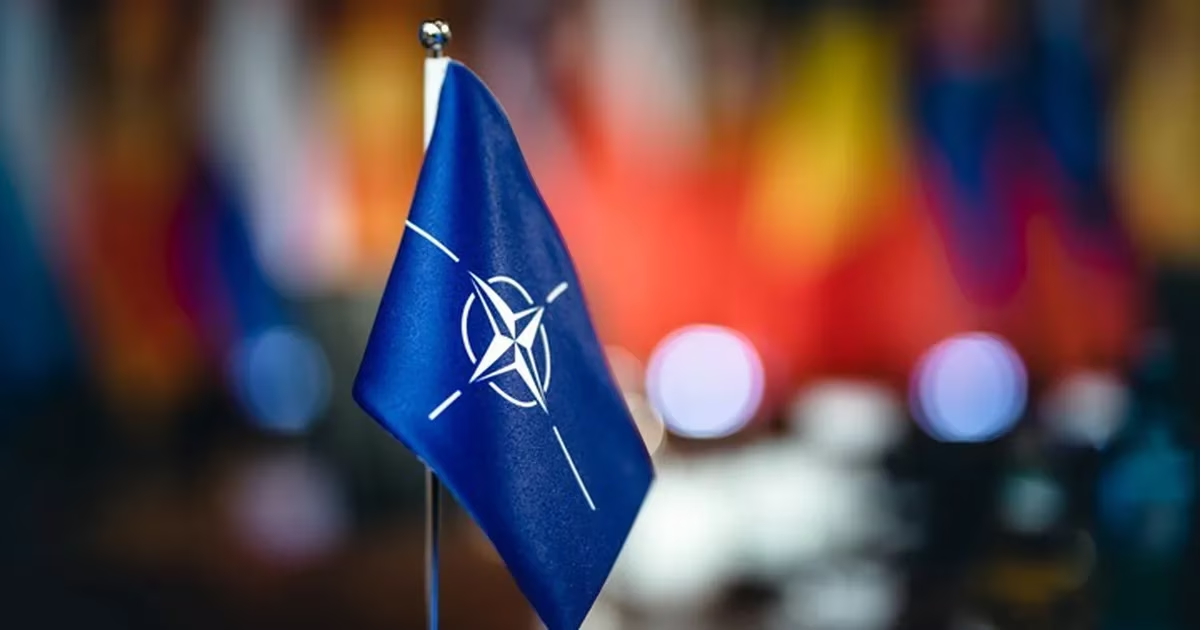
Regarding the North Atlantic Treaty Organization (NATO), Rubio's speech carried clear reassuring messages aimed at dispelling doubts about Washington's intention to withdraw from the alliance. He clarified that the US administration does not seek to divide NATO but aims to 'stimulate' it to be capable of defending civilization and common interests across the Atlantic.

These statements received a positive response from some European leaders, most notably European Commission President Ursula von der Leyen. Von der Leyen considered Rubio's speech to be an important basis for restoring trust between Washington and Brussels after periods of diplomatic and political tension.

For his part, German Foreign Minister Johann Wadephul described the speech as laying the groundwork for the strategic partnership that must be built upon in the future. The foreign ministers of France and Finland agreed with this approach, seeing Rubio's words as an opportunity to strengthen joint defense cooperation in light of accelerating geopolitical changes.

However, caution was not absent from the conference halls, as some European observers expressed concern about Washington's attempts to impose a new 'ideological dependency' on the continent. They believe that focusing on identity and civilization may be a means to attract Europe away from its political independence, which it has tried to strengthen in recent years.

Rubio deliberately played on the chord of shared history and defensive moments that brought the two sides together, in an attempt to stir the instinct of collective unity among Europeans. The strategic goal appears to be to prevent the old continent from escaping towards other international alliances that might change the global balance of power in a way that does not serve American interests.

The vision put forward by Rubio reflects the methodology of the Trump administration, which is effectively led by the duo Rubio and Kushner, who possess strong leverage to push through their agenda. This agenda relies on transforming the positions of allied countries to align with the American vision, even if it conflicts with some national interests of those countries.

Analyzes indicate that the Munich speech is just the beginning of a series of diplomatic moves aimed at reshaping the global order from an 'America First' perspective. Washington seeks to ensure Europe remains in its ideological and security orbit, while imposing new conditions related to defense contributions and economic policies.

In conclusion, Marco Rubio's speech remains an important political document that requires careful study of its vocabulary and deep implications, as it outlines the foreign policy of the world's greatest power. European reactions, whether welcoming or apprehensive, will play a crucial role in determining the shape of the transatlantic relationship over the next four years.

Under Trump, the United States wants to lead the rebuilding of the world, and the alliance with Europe must defend our common civilization.

ISRAELI AFFAIRS

Mon 16 Feb 2026 5:41 am - Jerusalem Time

Israeli concern over Turkish expansion in the energy sector and military deployment in Somalia

Israeli circles have expressed increasing concern over rapid Turkish movements in the energy sector, with Hebrew reports considering Ankara's expansion of its naval and military presence to have strategic dimensions that go beyond immediate economic interests. Sources indicated that the announcement by Turkish Energy Minister, Alparslan Bayraktar, about the exploration vessel 'Çagri Bey' beginning its operations in Somalia, represents a turning point in Turkish foreign influence.

The Turkish exploration vessel is scheduled to take a long route starting from Mersin port, passing through the Strait of Gibraltar and circumnavigating the African continent to reach Somali territorial waters. This step comes within a Turkish vision aimed at making 2026 a year full of major oil and gas discoveries, which will enhance Ankara's position as a regional player in the global energy market.

To secure these sensitive operations, the Turkish command has assigned advanced naval units, including the ships (TCG Sancaktar, TCG Gokova, and TCG Bafra), to escort the drilling vessel and provide the necessary logistical support. These forces will be deployed in strategic areas including the Gulf of Aden and the Arabian Sea until the end of February, to ensure the protection of seismic surveys and drilling operations from any potential threats.

In a related context, Minister Bayraktar affirmed that his country's top priority remains achieving complete energy self-sufficiency to end dependence on foreign sources. Turkey plans to double its natural gas production in the Black Sea fields this year, while expanding exploration to include the Rize, Giresun, Ordu, and Samsun regions, in search of new energy reserves.

Regarding nuclear energy, sources revealed that the 'Akkuyu' power plant project has reached its final stages, with the first reactor's completion rate reaching 99 percent. Electricity generation from this reactor is expected to begin this year, with the other three reactors gradually coming online to cover about 10 percent of Turkey's total electricity needs.

Turkey currently possesses the fourth-largest deep-water drilling fleet globally, after the addition of the seventh-generation vessels 'Çagri Bey' and 'Yildirim'. Current activity in Somalia relies on accurate data collected by the research vessel 'Oruç Reis' last year, which covered vast areas of Somali territorial waters through 3D surveys.

Turkish ambition is not limited to Somalia but extends to participating in international tenders in Libya and planning to start seismic surveys in Pakistan. Ankara has also strengthened its international partnerships by signing agreements with major global companies such as Exxon and Chevron, reflecting its desire to diversify its sources and expand its investment footprint in the global hydrocarbon sector.

On the military front, informed sources reported Turkey's deployment of three fighter jets in the Somali capital Mogadishu, following extensive logistical preparations including the construction of advanced aircraft hangars. This aerial presence aims to protect offshore drilling platforms and secure future plans for establishing a spaceport, in addition to supporting counter-terrorism efforts in the region.

Observers believe that the Turkish escalation in the Horn of Africa comes in response to regional and international moves, including Israel's recognition of the 'Somaliland' republic and Emirati activity in the Puntland and Jubaland regions. Ankara considers Somalia an indispensable strategic asset, having invested billions of dollars in infrastructure and training security forces to consolidate its influence in this vital region.

The goal set by President Recep Tayyip Erdoğan is to achieve complete energy self-sufficiency for Turkey to boost the national economy.

PALESTINE

Mon 16 Feb 2026 5:41 am - Jerusalem Time

Knesset Member and Settlers Storm Al-Aqsa, Occupation Expels 8 Jerusalemites and Demolishes Homes in Jerusalem

Dozens of Israeli settlers, led by Knesset member 'Amit Halevi', stormed the courtyards of the blessed Al-Aqsa Mosque in occupied Jerusalem today, Sunday, under heavy guard from the occupation police. These provocative actions come at a time when the holy city is witnessing an escalation in policies of restricting worshippers and expelling those stationed at the mosque.

Human rights sources from Wadi Hilweh Information Center reported that the number of settlers who stormed the mosque during the morning and evening periods reached 204 settlers. Knesset member Halevi used his presence inside the courtyards to attack the occupation police's decision to suspend evening incursions during the holy month of Ramadan, demanding their uninterrupted continuation.

In a related context, the occupation authorities issued administrative decisions to expel 8 Jerusalemite citizens from Al-Aqsa Mosque for varying periods, up to six months. The list included employees of the Al-Aqsa Reconstruction Committee and mosque guards, among them Hussam Sider, Ahmed Abu Aliya, and Fadi Aliyan, in a move aimed at emptying the mosque of its protectors.

Data issued by the International Jerusalem Foundation indicated that the systematic expulsion policy has affected more than a thousand Palestinians recently, with most of these decisions focusing on preventing entry to the mosque for half a year. These measures are part of the occupation's attempts to change the historical and legal status quo in the Noble Sanctuary.

For its part, Jordan strongly condemned the continuation of these violations, affirming through its Ministry of Foreign Affairs that Al-Aqsa Mosque, in its entirety, is a pure place of worship for Muslims. Amman stressed its absolute rejection of the actions of extremist Knesset members and ministers who seek to ignite conflict by desecrating Islamic and Christian holy sites in Jerusalem.

Regarding field demolitions, the occupation municipality forced two Jerusalemite families to self-demolish their homes in Silwan and the Old City on the pretext of building without a license. Citizen Moatasem Abu Tayeh was forced to dismantle his home with his own hands, displacing his family of five, to avoid paying the exorbitant demolition costs imposed by the occupation mechanisms.

Citizen Rami Al-Bakri also demolished his small home, which he built eight years ago, despite his commitment to paying exorbitant financial fines exceeding $13,000 over the past years. These cases reflect the tragedy of Jerusalemites who face continuous refusal to grant them building permits, leaving them with harsh choices between self-demolition or astronomical fines.

In another development, the Jerusalem Governorate distributed a statement confirming that citizens in the town of Anata, east of the city, received more than 20 eviction and demolition notices. These notices targeted residential, agricultural, and commercial structures, threatening to displace dozens of Palestinian families and cut off their only sources of livelihood in that vital area.

Field sources explained that the so-called 'Civil Administration' of the occupation army stormed the Bedouin communities of Wadi Al-Awaj and Wadi Sa'ab and delivered new demolition notices. These actions come within broader plans aimed at reducing the Palestinian presence in the eastern areas of the holy city in favor of settlement expansion.

Human rights organizations warned that these notices fall within the first phase of implementing the settlement plan known as 'E1'. This project aims to completely isolate Jerusalem from its surroundings in the West Bank and force Bedouin communities to forcibly relocate by tightening the noose on their livelihoods and legal status.

These measures coincide with the approaching holy month of Ramadan, during which the occupation usually intensifies pressure on Jerusalem residents to reduce the Palestinian presence in the Old City. Observers believe that the statements of Knesset members inside Al-Aqsa represent a green light for settlers to increase the pace of attacks in the coming weeks.

It is worth noting that Jordan retains the right to supervise religious affairs in Jerusalem under international agreements and the Hashemite custodianship recognized by Palestinians and internationally. Warnings continue that tampering with the status quo in Al-Aqsa could lead to an explosion of field conditions amid the occupation government's insistence on supporting extremist groups.

Israel has no sovereignty over occupied Jerusalem and its Islamic and Christian holy sites, and the incursions are a blatant desecration of the Noble Sanctuary.

PALESTINE

Mon 16 Feb 2026 5:41 am - Jerusalem Time

Shocking Confessions: Israeli Soldier Admits to Raping Women and Children in Gaza During Live Broadcast

Social media platforms were engulfed in a wave of outrage following the circulation of a live broadcast video on TikTok, in which an Israeli occupation soldier appeared, admitting to committing horrific atrocities in the Gaza Strip. The soldier, speaking arrogantly, explicitly confessed to committing rape and murder against Palestinian women and children during ongoing military operations in the Strip.

During a conversation with an American young man, the soldier did not hesitate to assert that killing is not the only crime committed by occupation soldiers. He added, in shocking terms: 'We also raped them.' These statements astonished the American interlocutor, who warned the soldier that such confessions would lead to a radical shift in American public opinion against Israel and its army.

The American young man warned the soldier about the international repercussions of these crimes, indicating that the United States might be forced to stop its military and political support for Israel if these violations continue. The young man clearly stated that the situation would worsen for Israelis once American support ceased, which was met with sarcasm from the soldier, who attacked the American administration and described President Trump as foolish.

In a desperate attempt to justify the crimes committed, the Israeli soldier displayed a picture of a Palestinian child holding a weapon, claiming it was found inside a house in Gaza. However, the American young man refuted this justification, asserting that children carrying weapons to confront an invading army is a natural reaction to the atrocities committed by the occupation, reminding the soldier of the extent of the destruction they had inflicted on the Strip.

The Israeli soldier admitted during the broadcast that he is currently inside the Gaza Strip, and when asked to show his surroundings, he acknowledged that the area no longer contained any residential landmarks. The soldier explained that the houses had been completely razed to the ground, describing the scene as everything being 'flat,' in a clear admission of the scorched-earth policy pursued by the occupation army.

When confronted with direct questions about the fate of the women and children who lived in those destroyed homes, the soldier initially tried to evade answering by asking the interlocutor to stop following the news. With the American young man's insistence on knowing the whereabouts of the civilians, the soldier reiterated his confession of murder and rape as a systematic act practiced by soldiers in the field.

The conversation concluded with a heated confrontation, where the American young man expressed his contempt for the actions admitted by the soldier and for the official Israeli stance, directing harsh criticism at the American government for continuing to support such violations. These confessions come at a time when international and human rights reports accusing the occupation army of committing genocide and grave human rights violations in Gaza are escalating.

Yes, don't worry, we also raped them, we don't just kill, we also rape.

PALESTINE

Mon 16 Feb 2026 5:41 am - Jerusalem Time

Trump announces $5 billion pledges for Gaza reconstruction as part of 'Peace Council' arrangements

US President Donald Trump announced that the countries under the umbrella of the 'Peace Council' have pledged over $5 billion to support humanitarian operations and the reconstruction of the Gaza Strip. Trump clarified via his platform 'Truth Social' that the official announcement of this aid will be made during the inaugural meeting of the Council, scheduled to be held in Washington on February 19, with broad international participation.

In addition to financial support, the US President indicated the commitment of member states to send thousands of personnel to participate in an international stabilization force aimed at assisting local police and maintaining security within the Strip. Trump emphasized in his statements the necessity for Hamas to commit to what he described as 'complete and immediate disarmament,' considering the Council to be the most influential tool in history for achieving regional stability.

On the ground, these political moves come at a time when occupation forces still control about 60% of the Gaza Strip, stationed behind what is known as the 'Yellow Line.' Despite the continuation of what is described as a nominal truce since last October, field reports indicate more than two thousand martyrs and injured, amid the destruction of 90% of residential facilities and infrastructure.

Regarding international participation, Romanian President Nicolae Dan and Albanian Prime Minister Edi Rama confirmed their attendance at the upcoming meeting next week. While Albania participates as a founding state, the Romanian side clarified that its presence would be as an observer, emphasizing support for international peace efforts and contributing to future reconstruction operations in the afflicted Strip.

In the context of Israeli representation, sources reported that Foreign Minister Gideon Sa'ar will represent the Israeli side in the Washington meetings, commissioned by Benjamin Netanyahu, who will only participate in the 'AIPAC' conference via video. This participation comes amid international criticism of the occupation government joining the Council, especially given the continued obstacles to implementing ceasefire phases.

Trump's plan faces major logistical and political challenges, as Washington stipulates the disarmament of the resistance as a prerequisite for starting reconstruction and deploying international forces. In contrast, a rubble crisis estimated at about 60 million tons emerges, in addition to the occupation's conditions that prevent the return of thousands of Palestinians who left the Strip before the events of October 7.

It is worth noting that the 'Peace Council,' established in mid-January, faces criticism regarding its funding mechanism, as Washington demanded permanent members pay one billion dollars for membership. This condition has raised concerns that the Council could turn into a paid version of the UN Security Council, leading some countries to hesitate to join or settle for observer status.

The Peace Council has unlimited potential to end the conflict in Gaza and achieve regional stability, and it will become the most influential international body in history.

PALESTINE

Mon 16 Feb 2026 5:40 am - Jerusalem Time

12 Dead, Including a Leader in Al-Quds Brigades, in a Series of Israeli Violations of the Ceasefire Agreement in Gaza

Tension escalated in the Gaza Strip following a series of Israeli airstrikes and artillery shelling that resulted in the martyrdom of 12 Palestinians since dawn today, Sunday. Field sources confirmed the assassination of Sami Al-Dahdouh, a leader in Al-Quds Brigades, the military wing of the Islamic Jihad movement, after targeting a gathering of citizens near the University College in the Tal Al-Hawa neighborhood, southwest of Gaza City, raising the death toll from Israeli violations of the ceasefire agreement in effect since last October.

In details of the field massacres, medical sources reported the martyrdom of 5 citizens in an airstrike that targeted a group of civilians southwest of Khan Yunis, while 4 others were martyred due to a drone shelling a displaced persons' tent in the Faluja area, west of Jabalia town. Al-Shifa Hospital also received a martyr and several injured who fell in an Israeli targeting of citizens near the Western Beit Lahia roundabout in the northern part of the Strip, amid continued indiscriminate artillery shelling on the Al-Tuffah, Al-Shujaiya, and Al-Zaytoun neighborhoods.

In parallel with the raids, the occupation army carried out extensive demolition and bombing operations of residential buildings northeast of Jabalia camp and around Al-Radea Street in Beit Lahia city, accompanied by intense gunfire from military vehicles. These developments come at a time when the occupation authorities claim to have monitored movements of Palestinian militants, which resistance factions considered an attempt to impose a new bloody reality and a blatant violation of the international understandings sponsored by the United States.

According to the latest data from the Ministry of Health, Israeli violations since the signing of the ceasefire agreement have resulted in the martyrdom of 601 Palestinians and the injury of more than 1600 others. These attacks add to the record of ongoing genocide for two years, which has left more than 72,000 martyrs and destruction affecting 90% of the Strip's infrastructure, with an estimated reconstruction cost of up to 70 billion dollars.

The occupation army committed hundreds of violations of the ceasefire agreement, resulting in the martyrdom of 601 Palestinians and the injury of 1607 since its inception.

ANALYSIS

Mon 16 Feb 2026 5:40 am - Jerusalem Time

Between History and Politics.. A Reading of the Complexities of the Iranian-American Scene

The strained relationship between the United States and Iran goes beyond the stated pretexts that have surfaced in recent weeks, as a clear contradiction appears in the context of events. From objecting to the handling of internal protests to the sudden return to the negotiating table, and then to military movements such as sending the aircraft carrier 'Gerald Ford', the scene seems disjointed and raises questions about the true objectives.

Arab interest in Iran is linked to deep historical roots, the most prominent pioneer of which was the late journalist Mohamed Hassanein Heikal, who paid early attention to Tehran since the oil nationalization crisis in the 1950s. Heikal documented his vision in his first book 'Iran Above a Volcano' in 1951, where he witnessed events from the heart of the Iranian capital and met with various active parties at that time.

This historical interest continued until the Iranian Revolution in 1979, when Heikal met Imam Khomeini in Paris before his triumphant return to Tehran. This connection indicates that Iran has always been at the heart of the concerns of political and journalistic circles close to decision-making centers in the Arab region, especially in Egypt.

In parallel with Heikal's efforts, the contributions of journalist Fahmy Howeidy emerged, who provided a deep ideological and intellectual reading of the Iranian interior. Observers note a great similarity in the jurisprudential and intellectual information between Howeidy's and Heikal's writings, which reflects the extent of journalistic effort made to understand the nature of the nascent regime in Tehran and its ideological orientations.

Regarding the nuclear file, observers believe that the atomic bomb has not been a traditional military weapon since its use in Hiroshima in 1945, but rather has become a political tool to impose international hegemony. This is clearly demonstrated in the balance of power between India and Pakistan, where nuclear weapons act as a political deterrent rather than a means of direct engagement.

The qualitative development in conventional and missile weapons has reduced the superior advantage of nuclear weapons in modern warfare. Recent confrontations have proven the ability of conventional missiles to achieve strategic goals and bypass advanced defense systems, making the focus on the 'nuclear bogeyman' merely a cover for negotiations with other dimensions.

Questions arise as to whether the American strategy aims to bring Iran back into the 'American orbit' to counter growing Chinese and Russian influence in Asia. However, this hypothesis seems far-fetched given the complexity of the economic and military ties that Tehran has forged with Eastern powers over the past decades.

Regarding the conflict with the Israeli occupation, analysis suggests that Tehran links its hostility to Tel Aviv with its general stance on American policies in the region. Despite available military capabilities, direct intervention remains subject to precise calculations related to Iranian national interests and avoiding comprehensive existential confrontations.

Operation 'Al-Aqsa Flood' constituted a historical turning point in the conflict, revealing the fragility of the Israeli occupation's internal front. Analysts believe that the real problem facing the Zionist entity is not only external threats but also internal disintegration that could lead to the collapse of the state from within.

Reports indicate that Israel has asked Washington to postpone any military action against Iran until it restores its defensive capabilities and internal front. This hesitation reflects a deep understanding that any widespread confrontation could open fronts that cannot be closed, seriously threatening the survival of the Zionist project in the region.

The political system in Iran possesses internal deterrence power derived from its ideological and ethnic composition, which makes it resistant to collapse through external pressures or limited strikes. History proves that external threats often lead to the cohesion of the Iranian internal front behind its political leadership.

The question remains about the nature of the 'desired outcome' from Iran at this sensitive stage of negotiations. Media frenzy and American military mobilization may be a means of pressure to achieve specific gains in regional files, far from the declared slogans about nuclear weapons or human rights.

Forecasting the future of the region after major transformations indicates that American and Israeli hegemony is undergoing a phase of strategic decline. What we see today as a 'staging' of military power may be nothing more than an attempt to delay historical entitlements that have begun to assert themselves on the ground since the October events.

In conclusion, the relationship between Washington and Tehran remains a political enigma governed by history, geography, and conflicting interests. While negotiations continue under the shadow of threat, the only certainty is that the region is being reshaped away from the old rules that prevailed for many years.

In the modern era, nuclear weapons are no longer a war tool as much as they are a political tool for inaugurating imperial powers.

PALESTINE

Mon 16 Feb 2026 5:40 am - Jerusalem Time

Palestinian Presidency: Converting West Bank Lands to 'State Property' is De Facto Annexation and Dangerous Escalation

The Palestinian Presidency issued a strongly worded statement warning of the catastrophic repercussions of the occupation government's decision to convert vast areas of West Bank land into what it calls 'state property'. The Presidency affirmed that this measure poses a direct threat to regional security and stability, and constitutes a blatant violation of all international laws and legitimate resolutions that criminalize settlements and deem them null and void.

In its official statement, the Presidency considered this rejected and condemned Israeli step as an explicit declaration of the beginning of the implementation of actual annexation plans for the occupied Palestinian land. It clarified that the primary goal of this policy is to entrench the reality of the occupation by expanding illegal settlements, which undermines the foundations of the political process and jeopardizes any future opportunities for achieving a just and comprehensive peace.

Official sources also indicated that this decision represents an effective termination of the agreements signed between the two sides, and is in absolute contradiction with UN Security Council resolutions, particularly Resolution No. 2334. It stressed that settlements in all their forms in the Palestinian territories, including East Jerusalem, lack any legal status and must be stopped and dismantled immediately in accordance with international will.

In a related context, the Palestinian Presidency affirmed that these unilateral measures will not grant the occupation any legal or historical legitimacy over a single speck of the land of the State of Palestine. It reiterated that the West Bank, Jerusalem, and the Gaza Strip are a single geographical unit and occupied territory under international law, and that attempts to change their demographic and geographical reality will not alter the fixed truth.

The Presidency concluded its statement by calling on the international community, especially the UN Security Council and the American administration, for urgent and immediate intervention to stop these accelerating Israeli violations. It called for obliging the occupation government to comply with international legitimacy resolutions and to halt the systematic escalation aimed at dragging the region towards more violence and tension, emphasizing the necessity of providing international protection for the Palestinian people and their land.

The rejected and condemned Israeli decision is considered a de facto annexation of Palestinian land, and a declaration of the beginning of the implementation of annexation plans, with the aim of entrenching the occupation through illegal settlement.

PALESTINE

Mon 16 Feb 2026 5:39 am - Jerusalem Time

Extremist Knesset Member Storms Al-Lubban Al-Sharqiya Girls' School and Threatens Teaching Staff

In a new escalation targeting Palestinian educational institutions, extremist Israeli Knesset member Tzvika Fogel, accompanied by a group of armed settlers, stormed Al-Lubban Al-Sharqiya Girls' Secondary School, located south of Nablus, this Sunday morning. The raid took place under heavy protection from occupation army forces, causing a state of panic and intimidation among students and teaching staff during official school hours.

Local sources reported that Fogel was accompanied by a group of armed settlers who carried out an extensive provocative tour in the schoolyards and facilities. The intruders began directly photographing classrooms and students, and also issued explicit threats to the teaching staff, in a move aimed at tightening the noose on the educational process in an area suffering from repeated attacks.

Following the withdrawal of the settlers from the school premises, the violations did not stop there. Occupation army forces then raided the village of Al-Lubban Al-Sharqiya and patrolled its streets. This military movement provides security cover for the settlers and exacerbates the state of tension experienced by the village and its educational institutions, which are located on the front lines with settlements.

For its part, the Ministry of Education and Higher Education expressed its strong condemnation of this attack, describing it as a blatant violation of all international conventions that guarantee the sanctity of schools. The ministry called on the international community and human rights organizations to intervene immediately to pressure the occupation authorities to stop these systematic practices that target the right of Palestinian students to access safe and stable education.

In the same context, the Director-General of Education in South Nablus, Samer Al-Jamal, stressed that the intimidation policy being used will not succeed in deterring the educational community from continuing its national and educational mission. Educational activists in the governorate appealed to international institutions for the urgent need to provide protection for the education sector in Nablus, emphasizing that international silence encourages the occupation to continue violating humanitarian laws.

Terrorizing female students constitutes a violation of all international laws, and these actions will not deter the educational community from carrying out its national mission.

ARAB AND WORLD

Mon 16 Feb 2026 5:39 am - Jerusalem Time

Iranian Warnings to Trump and Intensive American Moves Ahead of Anticipated Geneva Negotiations

US Secretary of State Marco Rubio revealed a high-level diplomatic move, as a delegation including envoys Steve Witkoff and Jared Kushner departed the United States to hold a series of crucial meetings related to the Iranian file. Rubio explained that the American administration understands the complexities of dealing with decision-making in Tehran, noting that previous attempts to conclude successful agreements have not borne fruit, but Washington will continue to strive for a diplomatic breakthrough.

Rubio stressed that the current focus is entirely on the negotiation track, affirming that any change in this strategy will be announced and clear to all as required by law. Regarding the intensive military presence in the region, the Secretary indicated that the American positioning primarily aims to secure and defend forces against any potential threats detected in previous times.

In contrast, the Chief of Staff of the Iranian Armed Forces, Major General Abdolrahim Mousavi, issued a strong warning to US President Donald Trump. Mousavi considered that entering a military confrontation with his country would deal a devastating blow to American global hegemony, describing any potential battle as a 'historical lesson' that would force Washington to reconsider its aggressive policies.

The Iranian military commander denounced the contradiction in American rhetoric, questioning the utility of brandishing the military option at a time when there is talk of a desire for negotiation. Mousavi affirmed that the language of threats would not work with Tehran, and that the American administration must choose one path instead of combining military pressure with diplomatic calls.

For his part, the spokesman for the National Security Committee in the Iranian Parliament, Ibrahim Rezaei, reviewed the features of his country's negotiating position ahead of the Geneva round. Rezaei affirmed that the Iranian team had prepared a comprehensive package of technical and political proposals, despite a state of pessimism due to previous experiences with the United States and what he described as Washington's repeated 'breach of promises'.

The Iranian official set red lines for the upcoming negotiations, announcing that Tehran would not accept discussing a halt to uranium enrichment or agreeing to transfer its enriched stockpile outside its borders. He indicated that the American side had shown understanding of these conditions in preliminary deliberations, which sets a specific framework for the anticipated technical discussions that will begin within days.

Rezaei also clarified that the agenda of the Geneva negotiations would be limited to the nuclear file and ways to de-escalate, and would not address the Iranian missile program or Tehran's regional influence under any circumstances. He stressed that the goal of presenting the package of proposals is to demonstrate good faith and avoid wasting time, while Iranian caution remains in place regarding American promises.

These political and military tensions come at a time when international circles are awaiting the start of a new round of negotiations in the Swiss city of Geneva next Tuesday. These talks are being mediated by the Sultanate of Oman, which seeks to bridge the views between the two parties and prevent the region from sliding into a comprehensive confrontation amid verbal escalation and field mobilization.

Trump must know that any battle against Iran will teach him a historical lesson, and will make him stop issuing threats in the world.

ISRAELI AFFAIRS

Mon 16 Feb 2026 5:39 am - Jerusalem Time

Severe Manpower Crisis: Occupation Army Faces a Shortage of 12,000 Soldiers

Hebrew press sources have revealed a deep crisis afflicting the Israeli military establishment, as the army faces a significant shortage of approximately 12,000 soldiers across various units and branches. This gap comes at a sensitive time when regional tensions are escalating and preparations for potential widespread confrontation are underway, placing additional pressure on the organizational structure of the armed forces.

Official data presented to the Knesset's Foreign Affairs and Defense Committee indicates that the shortage is not limited to administrative aspects but extends dangerously to field units. The army lacks approximately 7,500 soldiers in frontline combat positions, which doubles the burden on regular service soldiers and reserve forces that have been depleted over many long months.

This severe shortage comes amid ongoing intensive military operations on multiple fronts, starting from the Gaza Strip and the Lebanese and Syrian borders, extending to the continuous escalation in the West Bank. These field pressures have led the army to admit the deaths of 924 military personnel and the injury of over 6,400 others with varying degrees of wounds since the start of confrontations in October 2023.

Although the regular service personnel of the Israeli army are estimated at around 170,000 soldiers, supported by hundreds of thousands of reserve forces, the current gap directly affects operational readiness. Observers believe that the increasing reliance on reserves, whose numbers range between 400,000 and 460,000, has become an economic and social burden that cannot be ignored.

In an attempt to address this deficit, the army recently announced the formation of a new multi-task force aimed at enhancing field flexibility and covering manpower gaps. However, the majority of the elements of this force are from reserve forces, reflecting the ongoing structural dilemma in providing the necessary regular cadres for continuous combat missions.

These field developments are linked to complex political and diplomatic paths, as Israeli circles await the results of ongoing international negotiations in the region. Estimates suggest that any failure in the diplomatic path could lead to a wider explosion of the situation, making the bridging of the manpower shortage an urgent necessity that cannot be postponed.

It is worth noting that this internal crisis in the army coincides with the ongoing genocide war in the Gaza Strip, which has entered its second year, leaving immense human and material losses. While the occupation suffers from its numerical crisis, it continues its aggression, which has led to the martyrdom and injury of tens of thousands of Palestinians and the near-complete destruction of infrastructure in the Strip.

The army suffers from a deficit estimated at approximately 12,000 soldiers across various branches, including about 7,500 in combat positions.

PALESTINE

Mon 16 Feb 2026 5:39 am - Jerusalem Time

Israel approves 'settlement revolution' to register West Bank lands: Legal annexation ends post-1967 era

The Israeli government, today, Sunday, approved a draft resolution to begin the process of settling and registering vast areas of the occupied West Bank lands under the name 'state lands'. This step is a legal precedent that has not occurred since the occupation of the West Bank in 1967, as it officially opens the door for transferring ownership of these lands to Israeli authorities and allocating them to settlers and the army.

Under the new decision, the 'Authority for the Registration and Settlement of Real Estate Rights' affiliated with the Israeli Ministry of Justice has been authorized to operate within the West Bank, instead of the Civil Administration affiliated with the army. This administrative shift aims to establish ownership of vast areas in the name of 'the State of Israel' in official records, and to provide huge budgets to end legal disputes in favor of settlement expansion.

This move comes as part of a package of legislations approved by the Ministerial Committee for National Security (the Cabinet) on February 8, with the aim of overturning the legal reality in the West Bank. Among the most prominent features of this change is the abolition of the Jordanian law that prevented settlers from directly purchasing land, which facilitates seizure operations without the need for intermediaries.

Palestinian sources warned that the decision extends beyond Area C to reach Areas A and B, which are administratively subject to the Palestinian Authority, by expanding demolition and surveillance powers under the pretext of environmental and archaeological protection. The decision also includes liquidating the 'Hebron Protocol' by withdrawing licensing powers from its municipality around the Ibrahimi Mosque, which means a complete undermining of the agreements signed in 1997.

For his part, political analyst Suleiman Bisharat considered that these decisions represent a new stage aimed at separating Palestinians from their land and reshaping the relationship in favor of the settler. He explained that Israel seeks to model the Jerusalem experience in Hebron and the rest of the West Bank cities, by establishing a new colonial identity that erases the historical equation of Palestinian existence.

On the political level, observers believe that the decision aims to kill any possibility of a connected Palestinian political umbrella, in exchange for strengthening a Jewish entity that forms the nucleus of a 'settlers' state'. This is done by abolishing the Ottoman and Jordanian laws that for decades formed the basis of proving Palestinian ownership, and replacing them with the Israeli legal system.

In reactions, the Palestinian Authority described the decision as 'de facto annexation' and a dangerous escalation that violates UN Resolution 2334, stressing that these measures will not change the legal fact that the West Bank is occupied territory. Hamas, in a statement, also considered the step to be 'public theft' and a continuation of the policy of settlement encroachment that necessitates a comprehensive national confrontation.

Internationally, Jordan, Qatar, and Turkey expressed their strong condemnation of the Israeli decision, considering it a blatant violation of international law and the advisory opinion of the International Court of Justice. These countries called on the international community to take immediate action to stop the annexation and forced displacement operations carried out by the occupation authorities in the Palestinian territories.

This decision is expected to lead to an unprecedented acceleration in the pace of settlement construction, as the lands will become 'legally available' for marketing as official properties in Israeli records. There are also fears of widespread field clashes with the entry of Israeli inspection and enforcement teams into the heart of Palestinian cities and towns previously classified as Palestinian sovereign territories.

This radical shift closes the geographical gaps that could have formed the basis of a future Palestinian state, effectively ending the two-state solution project. The far-right in the Israeli government seeks, through this 'revolution', to impose a permanent sovereign reality that treats the West Bank as an integral part of Israel, bypassing all international conventions and resolutions.

This step represents a settlement revolution aimed at consolidating Israeli sovereignty and preventing illegal seizure of lands.

PALESTINE

Mon 16 Feb 2026 5:39 am - Jerusalem Time

4 Killed in Israeli Raid Targeting Displaced Persons' Tent within 'Yellow Line' Areas

Medical sources from Nasser Hospital reported the arrival of the bodies of four martyrs on Sunday, who fell as a result of an airstrike carried out by Israeli occupation aircraft. The raid targeted a tent sheltering displaced persons in the Faluja area, in a new field escalation that threatens the relative calm in those areas.

The sources clarified that the bombing occurred in a geographical range outside the direct deployment areas of the occupation army, specifically within the areas subject to the understandings of what is known as the 'Yellow Line'. This sudden attack caused a state of panic and confusion among thousands of displaced people who had sought refuge in those squares in search of safety.

This field development comes at a time when official statistics indicate that the death toll in the Gaza Strip has exceeded 72,000 martyrs since the start of the aggression, while rescue teams still face extreme difficulties in recovering the missing from under the rubble due to continued targeting and the occupation's obstruction of relief operations.

The targeting occurred within an area that is supposed to be subject to Yellow Line understandings, which caused a state of panic among the displaced.

ISRAELI AFFAIRS

Mon 16 Feb 2026 5:38 am - Jerusalem Time

Israeli security concerns about armed escalation in the first Ramadan after the Gaza war

Anxiety is escalating within the Israeli security establishment as the holy month of Ramadan approaches, with serious fears of a resurgence of Palestinian armed operations. This Ramadan is the first to come after the war on the Gaza Strip, which gives it a special character and doubles the security sensitivity for the occupation authorities.

Media sources reported that experts in Tel Aviv view the holy month as a permanent hotbed of tension in the Middle East, where it historically turns into fertile ground for what they describe as incitement to resistance. Security agencies are preparing to confront this scenario by reinforcing the presence of army and police forces in various hot spots to try to thwart any potential escalation.

Israeli propaganda expert, Gadi Ezra, stated that the current preparations are taking place amidst a continuous flow of intelligence warnings indicating intentions to carry out attacks. He explained that the Israeli army is monitoring the situation with extreme caution, emphasizing that the military establishment will not stand idly by in the face of attempts to ignite the situation on the ground.

Ezra pointed out in an analysis published by Hebrew newspapers that the countries of the region are currently preoccupied with shaping the features of the political reality for the day after the war. Despite this regional preoccupation, internal incitement and attempts to carry out operations still pose the most prominent challenge to the security decision-maker in Israel.

The analysis touched upon the fact that condemnations related to changing the status quo in Al-Aqsa Mosque no longer dominate the scene with the same previous force, due to the high level of media noise about other issues. Current discussions are now focusing more on the possibilities of a comprehensive regional war or arrangements for the return of the Palestinian Authority to the Gaza Strip.

Israeli observers believe that the coincidence of Ramadan with a crowded political agenda represents an opportunity to redefine security and political concepts towards Palestinians. The issue is no longer limited to geographical arrangements, but rather relates to how each party perceives the other and the nature of the ongoing existential conflict in the region.

Experts warned that the continuation of what they described as the 'cultural normalization' of resistance work among Palestinians makes armed confrontations legitimate in their eyes during Ramadan. Israeli circles fear that these operations will gain greater legitimacy in the Palestinian street, especially after the bloody events witnessed in Gaza recently.

Israeli analyses called for the necessity of addressing the roots of the problem instead of merely relying on temporary security solutions taken every year. It considered that confronting the cultural factors that fuel Palestinian resistance should become a long-term strategic political goal for the Israeli establishment.

Reports indicate that narratives encouraging the escalation of resistance in Ramadan are widely spread in curricula, media, and social media platforms. The Israeli side believes that monitoring these narratives and trying to neutralize them is a difficult and complex task, but necessary to break the annual cycle of violence.

Ezra stressed that the occupation cannot be content with curbing operations seasonally, but must engage in a 'public awareness' process that imposes clear red lines. This requires a systematic policy that goes beyond the coming month to include careful and continuous monitoring of changes in Palestinian society.

Analysts believe that the first Ramadan after the war has the potential to set a new tone in the conflict if Israel succeeds in achieving its security goals. However, field expectations remain open to all possibilities in light of the boiling situation in the occupied Palestinian territories.

In a related context, Israeli intelligence agencies continue to monitor the protocols of the October 7 attack and its psychological effects on the motivation to carry out new operations. This data is considered an essential part of the emergency plan being prepared to welcome the holy month and secure settlements and major cities.

The sources confirm that the biggest challenge lies in individual operations that are difficult to predict or thwart in advance through traditional technological means. Therefore, intensive military deployment remains the preferred option for the occupation to reduce the chances of success of any armed attack that may target its soldiers or settlers.

In conclusion, the month of Ramadan remains a real test of the occupation's ability to impose calm in the aftermath of the major war on Gaza. While Israel seeks to impose a new reality, the will of the Palestinian resistance remains the variable that disrupts all Israeli security calculations and estimations.

The coming Ramadan seems different; it is the first after the war, intelligence warnings are flowing, and the army is anticipating its arrival with concern and is not standing idly by.

PALESTINE

Mon 16 Feb 2026 5:38 am - Jerusalem Time

Netanyahu tightens conditions for disarmament in Gaza, Hamas affirms commitment to resistance

The Prime Minister of the occupation, Benjamin Netanyahu, reiterated that the Gaza Strip will not pose a security threat to his entity in the future, emphasizing that achieving this goal will be done by all available means. Netanyahu clarified in press statements after returning from Washington that his government will not allow a repeat of the events of October 7, making the disarmament of the Hamas movement a fundamental condition for the next phase.

Netanyahu raised the bar for his security demands to include disarming the resistance of light weapons, indicating the necessity of surrendering 'Kalashnikov' rifles, anti-tank missile launchers, and mortar shells. The Prime Minister of the occupation claimed that Palestinian factions no longer possess heavy weapons in the Strip, considering that controlling light weapons is the remaining step to ensure complete security.

In a related context, Netanyahu revealed a strategic direction to reduce reliance on American military supplies and work on building an independent defensive force capable of repelling attacks. He affirmed that relations with the United States will remain based on strategic partnership, but with enhanced self-capabilities of the occupation army to reduce the need for external support in long-term crises.

For its part, the Hamas movement responded to these statements through its leader Osama Hamdan, who affirmed that the issue of Palestinian weapons is not open for discussion as long as the occupation remains on the ground. Hamdan clarified that the resistance is committed to the principle of restoring national rights and achieving freedom, emphasizing that these weapons derive their legitimacy from international law and the will of the Palestinian people.

The Hamas leader denied any official tendency within the movement to freeze weapons or enter into a long-term truce in exchange for compromising the military capabilities of the resistance. He described talk of disarming as mere 'political debate' that does not reflect reality, stressing that the ultimate goal is to establish an independent Palestinian state with Jerusalem as its capital, which requires the retention of defense tools.

Hamdan demanded the complete withdrawal of occupation forces from the Gaza Strip and the deployment of international forces on the border lines for separation and to prevent any future violations of the ceasefire. He pointed out that the occupation has been practicing a policy of genocide for decades and does not need pretexts to continue its aggression, which makes the existence of real international guarantees a fundamental requirement before any other political discussions.

The movement accused the occupation authorities of obstructing all internationally agreed-upon relief and humanitarian pathways, including preventing the entry of medical aid and the rehabilitation of municipal institutions and hospitals. Hamdan also indicated that the occupation refuses to activate the agreed-upon administrative committee and continues to procrastinate regarding withdrawal to the lines specified in previous understandings that included exchange deals.

Resistance weapons are a national and legitimate right that cannot be compromised, and they are linked to the existence and demise of the occupation.

PALESTINE

Mon 16 Feb 2026 5:38 am - Jerusalem Time

Palestine Praises African Summit's Stance Rejecting Displacement and Supporting UN Membership

The Palestinian Ministry of Foreign Affairs and Expatriates expressed its profound appreciation for the positions adopted by the African Summit during its thirty-ninth session held in the Ethiopian capital, Addis Ababa. The Ministry affirmed in an official statement that the summit's outcomes reflect the African continent's historical commitment to supporting the just struggle of the Palestinian people to end the Israeli occupation and establish an independent state.

The African Summit, in its final communiqué, emphasized its absolute rejection of all Israeli plans aimed at forcibly displacing Palestinians from their lands, whether towards Egyptian or Jordanian territories. African leaders considered any attempt at forced displacement a blatant violation of international humanitarian law, necessitating urgent international action to stop it and protect civilians.

In a related context, the Summit reiterated its full support for the State of Palestine's efforts to obtain full membership in the United Nations, considering it a political and legal right that cannot be postponed. Sources indicated that the high-level presence of UN Secretary-General António Guterres at the Summit gave additional momentum to these demands, which aim to correct Palestine's legal status internationally.

The final statement of the African leaders warned of the serious repercussions of the ongoing Israeli blockade on the Gaza Strip, describing the humanitarian situation there as catastrophic and unprecedented. The Summit called on the international community to assume its responsibilities in breaking the blockade and providing urgent relief aid to the population suffering from the ravages of the ongoing aggression and the lack of basic necessities.

It is worth noting that Palestine currently holds the status of a 'non-member observer state' in the United Nations since the famous General Assembly resolution in November 2012, which enabled it to join many international organizations. These African moves complement the General Assembly's resolution in May 2024, which overwhelmingly supported Palestine's right to obtain full membership in the international organization.

The Palestinian Foreign Ministry concluded that this African consensus represents a strong message to the international community about the necessity of ending the occupation and recognizing the State of Palestine on the 1967 borders. The Ministry also praised the African Union's efforts in confronting pressures aimed at changing the positions of the continent's countries towards the Palestinian issue, emphasizing the depth of historical ties between the two sides.

The positions of the African Summit reflect the steadfast historical support for our people's inalienable rights, foremost among them self-determination.

PALESTINE

Mon 16 Feb 2026 5:38 am - Jerusalem Time

Prisoner's Club Condemns Israeli 'Abuse Displays' Against Detainees in Ofer Prison

The Palestinian Prisoner's Club expressed its strong condemnation of what it described as 'continuous displays of revenge' carried out by the occupation authorities against prisoners. This stance came after the circulation of video clips showing Israeli security personnel engaging in humiliating violations against detainees inside the Ofer military prison in the occupied West Bank. These practices are taking place under the direct supervision of the far-right National Security Minister Itamar Ben-Gvir, who continues to publicly incite against Palestinians.

The footage, broadcast by Hebrew right-wing media sources, showed about twenty riot police officers spread out in the prison corridors overlooking the cells. These officers brandished their weapons and detonated sound bombs to terrorize detainees in the morning hours. These provocative steps are part of a systematic policy of tightening restrictions adopted by the Israeli Prison Service for several months against Palestinian prisoners.

The video documented repression forces taking out five detainees with their hands tied behind their backs, where they were forcibly pinned to the ground face down in a humiliating position. These scenes are part of a series of assaults documented by international human rights organizations, including the United Nations High Commissioner for Human Rights. These measures aim to break the will of the prisoners and turn their daily lives into a continuous hell inside detention centers.

For his part, Abdullah Al-Zaghari, head of the Palestinian Prisoner's Club, affirmed that these filmed operations fall within the context of systematic political revenge against detainees. Al-Zaghari explained that Ben-Gvir's actions and the far-right government not only threaten the lives of prisoners and the Palestinian people but also constitute a stab in the back of international laws. He stressed the necessity of international community action to stop these blatant violations that occur in front of media cameras without deterrence.

In a related context, the extremist minister Itamar Ben-Gvir renewed his calls for imposing the death penalty on those he described as 'terrorists' among Palestinian prisoners. Ben-Gvir expressed his pride in transforming prisons from places that provide minimal rights into real centers of repression, claiming that Israel has brought about a radical transformation in dealing with detainees. These statements coincide with heated discussions within the Israeli Knesset to approve laws that legitimize the deliberate killing of prisoners.

Parliamentary reports indicate that the prisoner execution bill, submitted by a far-right lawmaker, has reached the final voting stages in the Knesset. This legislative trend reflects the escalating extremism within the ruling coalition led by Benjamin Netanyahu. Observers believe that these laws aim to liquidate the Palestinian issue by targeting national symbols behind bars.

In turn, the Hamas movement described what happened in Ofer prison as a 'new war crime' and a blatant challenge to all humanitarian conventions that protect the rights of prisoners. The movement stated in a communiqué that these practices will not weaken the prisoners' resolve but will increase the state of boiling in the Palestinian street. The movement warned against the consequences of continuing these policies, which could lead to an unprecedented explosion of the situation in all occupied territories.

Warnings are increasing from local and international non-governmental organizations regarding the escalating pace of torture and ill-treatment in Israeli prisons. Since the events of October 7, 2023, these organizations have documented horrific testimonies of systematic physical and psychological abuse. These bodies demand an independent international investigation into the conditions of Palestinian detention, especially in the absence of legal oversight over the security units led by Ben-Gvir.

Everything Ben-Gvir and the far-right government are doing not only poses a danger to prisoners but also affects the entire international human rights and legal system.

PALESTINE

Mon 16 Feb 2026 5:38 am - Jerusalem Time

Suffocating Health Crisis in Gaza: 20,000 Wounded and Sick Awaiting Evacuation Amidst Strict Restrictions at Rafah Crossing

The Palestinian Ministry of Health in the Gaza Strip launched an urgent appeal, confirming that more than 20,000 patients and wounded individuals are now on waiting lists to travel abroad for treatment. The Ministry explained that the health situation in the Strip has reached a critical stage due to the ongoing siege and the systematic targeting of the medical system.

Medical sources indicated that the partial and restricted operation of the Rafah land crossing is absolutely inadequate for the escalating humanitarian catastrophe. They affirmed that the numbers allowed to leave represent only a very small percentage of cases requiring advanced surgical interventions and specialized treatments unavailable in the besieged hospitals.

The waiting lists include extremely critical cases, among them those with complex injuries and patients suffering from cancer, heart disease, and kidney failure. The Ministry warned that delays in medical evacuations put the lives of these patients at risk and increase the likelihood of death due to a lack of necessary medicines and equipment.

In a related context, the Ministry revealed that it had received harsh testimonies from patients and wounded individuals who managed to leave, stating that they were subjected to unjustified harassment and complications by the occupation authorities. These testimonies included details about humiliating searches and deliberate delays that increased the physical and psychological suffering of travelers.

The occupation authorities had reopened the Palestinian side of the crossing on February 2nd, after militarily controlling it in May of last year. However, movement through the crossing remains subject to very strict restrictions that prevent the natural flow of aid and the exit of urgent humanitarian cases.

For its part, the United Nations Office for Human Rights documented serious violations suffered by those returning to the Strip, with reports of travelers being taken to Israeli military checkpoints. Human rights sources stated that these citizens were subjected to handcuffing and blindfolding, in addition to the confiscation of their personal belongings under threat.

Against the backdrop of these violations, international and Israeli human rights organizations, including the 'Adalah' and 'Gisha' centers, demanded an end to the abusive policies practiced at the crossing. These organizations considered the restrictions on the movement of Palestinians to be part of forced displacement policies and a violation of international laws and conventions.

Despite the massive destruction left by the war, some 80,000 Palestinians registered their names to return to the Gaza Strip, a step that reflects the popular insistence on rejecting displacement. These data confirm the Palestinians' determination to remain in their land despite 90 percent of the civilian infrastructure being out of service due to continuous shelling.

On the ground, occupation aircraft continued their raids on various areas of the Strip, resulting in the martyrdom of 12 citizens on Sunday alone. The raids targeted tents of displaced persons in the Faluja area west of Jabalia, in addition to attacks targeting the vicinity of the Turkish slaughterhouse west of Khan Younis and Beit Lahia.

Medical sources reported the martyrdom of 5 citizens in a direct targeting of a displaced persons' tent in Jabalia, while 5 others were killed in a similar raid in Khan Younis. Medical teams also recorded the martyrdom of citizens in the Tal al-Hawa neighborhood and Beit Lahia, amidst the continued intensive overflight of warplanes and drones in the Strip's airspace.

These developments come amidst continuous violations of the ceasefire agreement that began last October, with the Ministry of Health confirming the martyrdom of 601 people since that date. Palestinian forces described this escalation as a serious breach that threatens international efforts aimed at stabilizing the truce and providing relief to the population.

The Ministry of Health reiterated its demand for the international community to intervene immediately to open the Rafah crossing permanently and regularly without Israeli restrictions. It stressed that the right to treatment and travel is an internationally guaranteed right and should not be used as a tool for political pressure or collective punishment against civilians.

The Ministry also appealed to international humanitarian organizations to increase the pace of medical evacuations for critical cases and to provide safe passages for patients. It affirmed that the continuation of the current mechanism at the crossing poses an existential threat to thousands of wounded individuals who need precise surgical operations to save their lives or limbs from amputation.

It is worth noting that the war of genocide waged by the occupation with American support since October 2023 has left a heavy toll exceeding 72,000 martyrs and 171,000 wounded. The war has caused near-total destruction of the health system, making travel abroad the only remaining option for thousands of injured and sick people.

The partial operation of the Rafah crossing does not keep pace with the scale of the humanitarian catastrophe, and patients are subjected to humiliating Israeli harassment procedures.

PALESTINE

Mon 16 Feb 2026 5:27 am - Jerusalem Time

Netanyahu sets conditions for ending the threat in Gaza: complete disarmament and handover of tunnel maps

Israeli occupation Prime Minister Benjamin Netanyahu announced that his government's strategic goals in the Gaza Strip are currently focused on achieving a complete and comprehensive disarmament process. Netanyahu indicated that this step aims to end any military capabilities within the Strip to ensure long-term security stability from the Israeli perspective.

Netanyahu clarified in his statements that the requirements for the next phase include the occupation's control over all existing military arsenal, starting from individual weapons such as 'Kalashnikov' rifles, up to heavy and influential weapons such as mortars and anti-tank systems, stressing that disarming the Strip is indivisible.

In a related context, the occupation prime minister revealed an additional condition within the Israeli vision for the future of Gaza, which is the necessity of handing over detailed and accurate maps of all underground tunnel networks. He considered that revealing this military infrastructure is a mandatory passage to ensure that the Strip does not return to posing any future security threat, regardless of the means that will be followed to achieve this goal.

We want to seize all types of weapons, including Kalashnikov rifles, mortars, and anti-tank weapons.