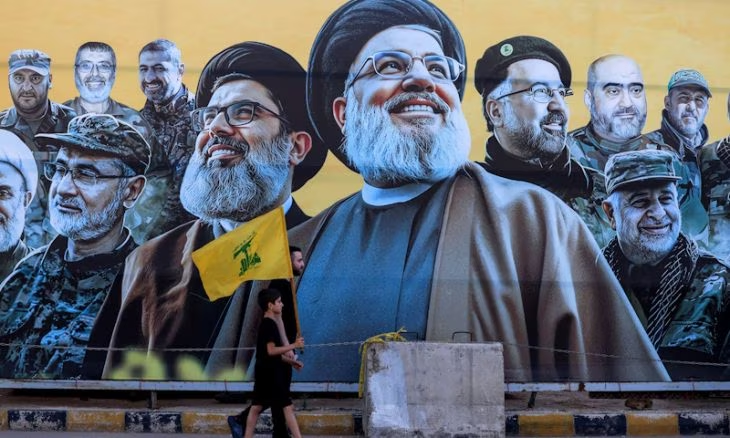







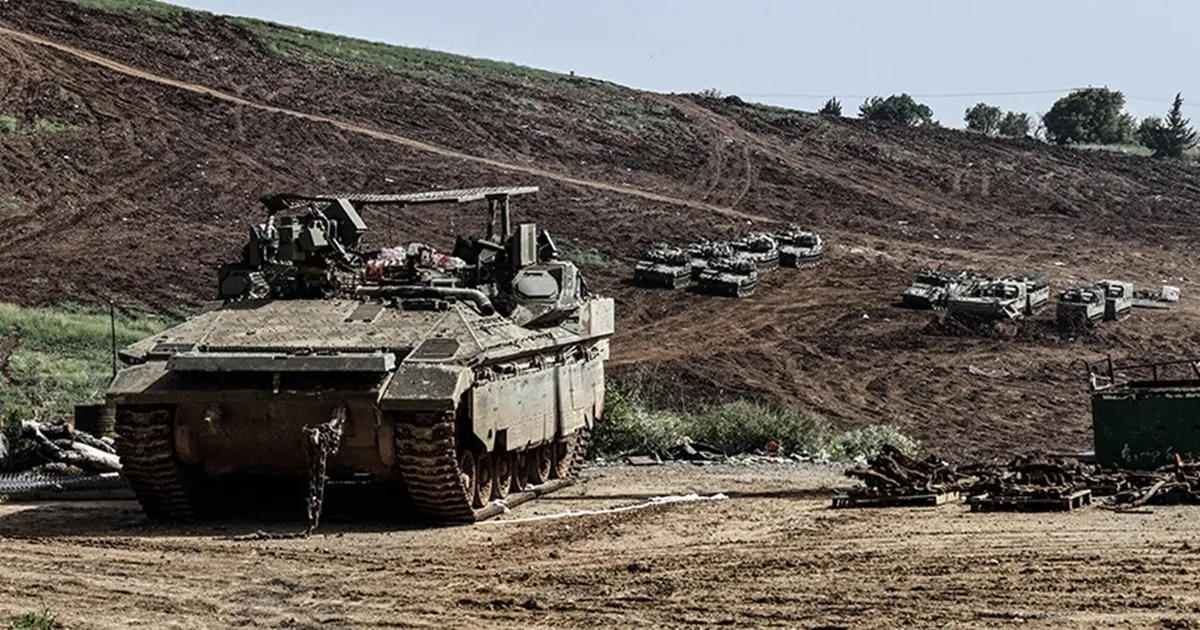
Informed sources revealed that the Israeli occupation army intends to begin reducing its military presence within Lebanese territory in the coming days. This step comes after the army announced the completion of specific offensive military missions, considering that there is no longer an operational necessity to keep large numbers of soldiers in the areas it penetrated.
These field movements coincide with a state of anticipation and concern prevailing in political circles in Tel Aviv due to the ongoing negotiations in Switzerland between Washington and Tehran. Despite official attempts to downplay these discussions, reports indicate that they primarily focus on ending the hostile situation on all fronts, especially the Lebanese front.
In contrast, conflicting statements emerge within the occupation government, reflecting a state of confusion; where Defense Minister Yisrael Katz affirmed that Israel will not withdraw from strategic sites such as Beaufort Castle and its surroundings. These positions express a current that rejects making any field concessions before ensuring strict security arrangements that meet Israeli conditions.
For his part, National Security Minister Itamar Ben-Gvir called for rejecting any ceasefire agreement or imposing restrictions on the Israeli army's movements in Lebanon. Ben-Gvir described the Lebanese state as a supporter of terrorism, emphasizing the necessity of keeping all Lebanese territories an open arena for Israeli military operations without international restrictions.
Observers believe that the imminent withdrawal from areas north of the Litani River represents a preemptive step aimed at extricating Israel from a growing strategic predicament. It appears that the Israeli leadership fears that the American administration will impose an agreement that forces it to a complete withdrawal, especially with information leaking about a US-Iranian mechanism to prevent clashes.
Israeli security agencies are anxiously monitoring the outcomes of the negotiation round in Switzerland, especially after optimistic statements from Iranian and American officials about substantial progress. Tel Aviv fears that any agreement could lead to the unfreezing of Iranian funds and the loss of leverage related to the nuclear and ballistic missile files.
Iranian Foreign Minister Abbas Araghchi indicated that Qatari and Pakistani mediation contributed to drafting a roadmap for sixty-day negotiations to determine the form of the final agreement. This diplomatic progress places Israel under increasing international pressure to accept a political settlement that ends the ongoing war of attrition on its northern borders.
Domestically, pressure is escalating on the Netanyahu government due to the high cost of continued military operations in southern Lebanon and the increasing human losses. Experts warn that the Israeli army has begun to repeat past mistakes by getting involved in a long-term guerrilla war that drains soldiers' capabilities and fuels public anger.
In a related context, press reports revealed a severe psychological crisis affecting Israelis, with the number of people officially diagnosed with psychological crises rising to about 70,000. This massive increase from 7,000 before October reflects the extent of societal trauma and the impact of multiple wars on the home front.
Military analysts in Tel Aviv propose a 'rescue plan' aimed at avoiding direct confrontation with the administration of US President-elect Donald Trump. The proposals include demanding that Washington pressure Tehran to rein in Hezbollah, in exchange for Israeli flexibility on the ceasefire and gradual withdrawal file.
There are also calls to strengthen the role of the Lebanese government and the Lebanese army to be a party to any future agreement, instead of leaving the arena for Iran and Hezbollah to impose their conditions. This approach aims to ensure that the Israeli withdrawal is part of an international political arrangement that saves the occupation's face.
General Dani Strenovich criticized the absence of well-thought-out strategic thinking in dealing with the Lebanese crisis, describing current decisions as based on intuition and improvisation. He stressed that excessive reliance on military force will not solve the complex political problems associated with Iranian influence in the region.
Strenovich believes that current Israeli behavior has contributed to strengthening the position of Hezbollah and Iran as the only parties capable of imposing a ceasefire. It was supposed, according to his vision, to grant the Lebanese government achievements that enhance its position as a political alternative, instead of weakening it through continuous military operations.
Ultimately, Israel finds itself between two difficult choices; either remaining in a state of continuous bleeding in southern Lebanon, or withdrawing to the 'Yellow Line' and appearing as the broken party. It seems that the decision to reduce forces is an attempt to maneuver between these successive field and political pressures.
Israel today stands before two bitter choices: either keep its army in Lebanon amid a state of bleeding, or withdraw and appear as a defeated fugitive.

Share your opinion
Israeli Moves to Reduce Forces in Lebanon Amid Anticipation of Switzerland Negotiations Outcomes