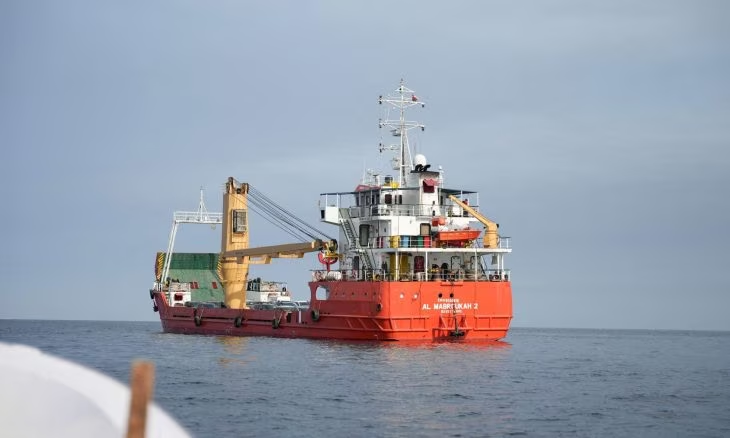







Iranian authorities announced today, Saturday, the full and strict military re-control of the Strait of Hormuz, the most important waterway for global energy trade. This decision came as a reversal of a previous step to open the passage, in response to what Tehran described as the continued naval blockade imposed by the United States of America on its ports.
The 'Khatam al-Anbiya' headquarters, which represents the central operations room of the Iranian armed forces, clarified that Tehran had shown good faith by allowing a limited number of tankers to pass. However, the statement affirmed that the American side continued to practice what it described as 'piracy and looting' under the guise of the blockade, which necessitated the re-imposition of strict restrictions on navigation.
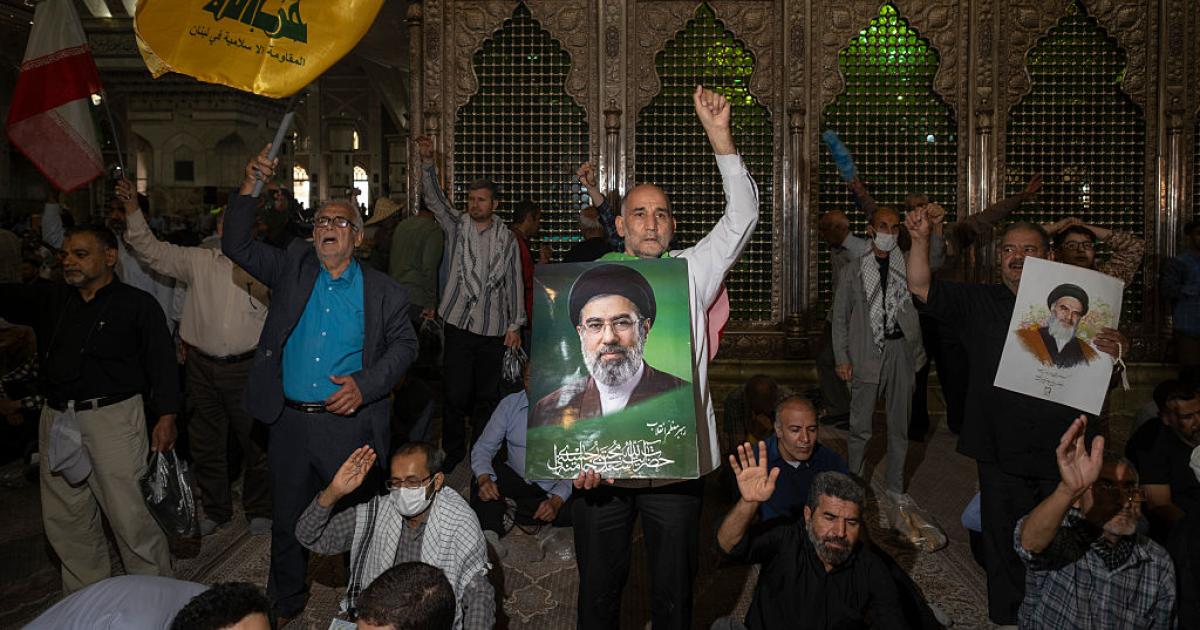
In his first statement since taking office, Iranian Supreme Leader Mojtaba Khamenei warned that his country's naval forces are on high alert to confront any hostile movement. Khamenei affirmed via social media platforms that Iranian fighters are ready to inflict new defeats on enemies, stressing that the navy will not compromise in protecting Iranian sovereignty.
On the ground, sources in the maritime security sector reported that at least two commercial vessels were subjected to gunfire while attempting to cross the strategic strait. Reports indicated that the attacks occurred at a time when tensions were at their peak following the Iranian announcement of closing the waterway to unauthorized international navigation.
For its part, the UK Maritime Trade Operations (UKMTO) reported receiving a report of an oil tanker being directly fired upon by two armed boats believed to belong to the Revolutionary Guard. The authority clarified that the incident occurred 20 nautical miles northeast of the Sultanate of Oman, where the armed men opened fire without any prior radio warning.
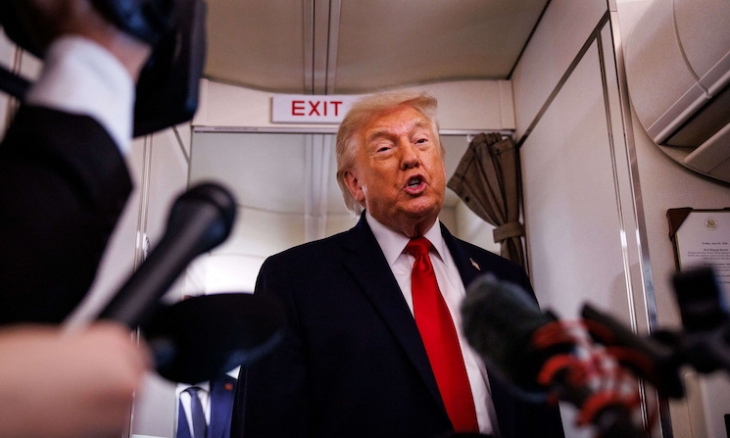
On the other hand, US President Donald Trump affirmed that the naval blockade imposed on Iran would remain fully in effect and would not be lifted except through a comprehensive agreement. Trump linked the lifting of restrictions to Tehran reaching a new agreement addressing its nuclear program and regional behavior, hinting at the option of aerial bombardment if there was no compliance.
Regarding the temporary truce, Trump indicated the possibility of not extending the ceasefire that was scheduled to facilitate negotiations between the two parties. The US President considered that Iran is still under an effective blockade, and that US forces are ready to take military action again if diplomatic efforts fail to achieve Washington's objectives.
For its part, the Iranian Foreign Ministry described the US blockade as a blatant violation of the two-week ceasefire agreement. Ministry spokesman Ismail Baqaei said that Tehran would respond appropriately to any interception of ships coming from its ports, considering US actions as undermining peace opportunities.
US Central Command data indicates that naval forces have ordered 21 commercial vessels to return and not complete their journey since the start of the blockade. These figures reflect the extent of economic and military pressure exerted by Washington to pressure the Iranian regime on thorny issues, foremost among them the nuclear issue.
In a separate development, the Iranian Civil Aviation Organization announced the reopening of parts of the country's airspace to international and domestic flights. The statement clarified that the eastern part is now available for international air navigation, while work is underway to gradually resume domestic flights after completing the necessary security arrangements.
Iran had completely closed its airspace in late February following widespread military confrontations launched by the United States and Israel. The partial opening of the airspace comes as an attempt to alleviate internal pressure and facilitate some logistical operations in light of the suffocating naval blockade imposed on the country.
On the diplomatic front, all eyes are on the Pakistani capital, Islamabad, where the first round of negotiations aimed at ending the war stalled. International parties are seeking to bring Washington and Tehran back to the negotiating table before the expiration of the temporary truce that began on April 8th.
The region has been experiencing extremely complex security conditions since the start of military operations on February 28, as the confrontations have caused a partial paralysis of trade movement. The Strait of Hormuz is a vital artery through which about a fifth of the world's crude oil and liquefied natural gas production passes, making its closure a direct threat to the global economy.
Observers believe that the recent escalation in the Strait of Hormuz puts the international community to a real test to prevent the region from sliding into a comprehensive war. While Washington adheres to a policy of maximum pressure, Tehran shows a willingness to risk closing the most important waterways to respond to what it describes as economic and military aggression.
The Islamic Republic had in good faith agreed to the passage of ships, but with the continuation of American piracy, control of the strait returned to its previous state under strict supervision.

Share your opinion
Iran Recloses Strait of Hormuz and Declares 'Strict Control' in Response to US Blockade