






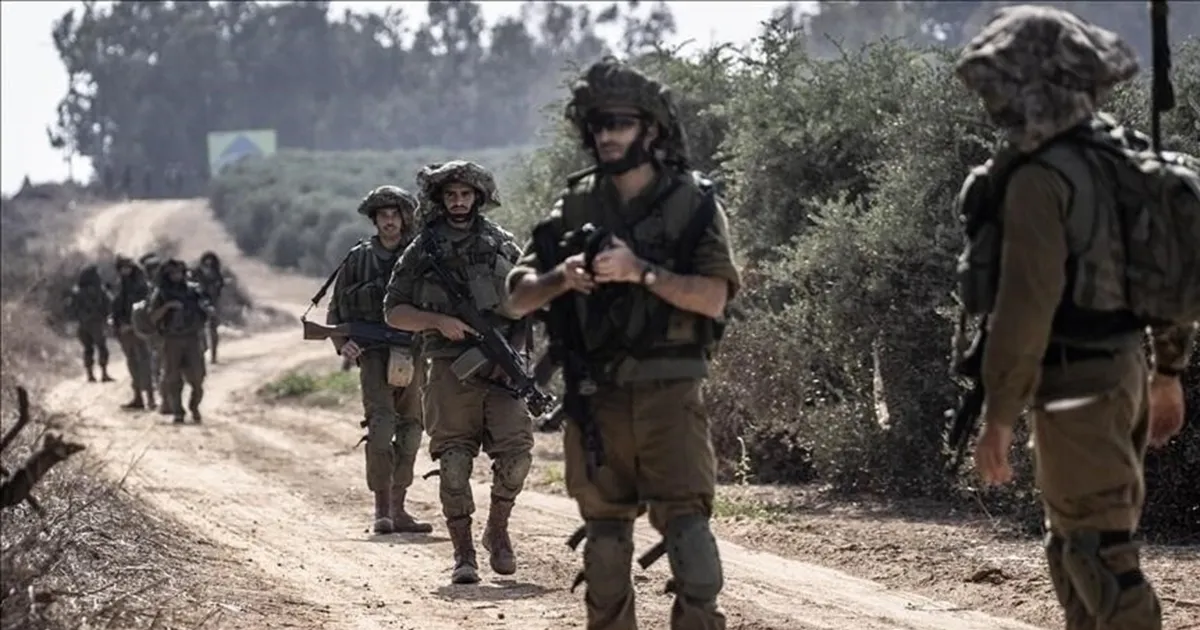
As the military confrontation between the American-Israeli axis and Iran enters its second month, it has become clear that bets on a 'lightning war' have fallen short in the face of a complex reality on the ground. Intensive air strikes have not succeeded in crippling Iran's missile capabilities; instead, the scene has transformed into what can be described as a 'centerless war' where fronts intertwine and red lines fall.
Field realities have proven the effectiveness of mutual deterrence, as Tehran has demonstrated military flexibility by launching ballistic missile salvos and kamikaze drones. These means have managed to penetrate advanced air defense systems and reach strategic and sensitive targets, including facilities in Dimona and Beersheba.
The conflict has shifted from its traditional pattern to a cross-border 'network pattern,' where American bases and vital waterways are now within direct targeting range. This shift means that any escalation in a specific geographical point could ignite a fire in areas thousands of kilometers away, making control over escalation almost impossible.
Political readings indicate that the declared objectives of the war have begun to shift from undermining the nuclear program to attempting regime change or completely reducing its regional influence. Through this strategy, Washington and Tel Aviv seek to impose absolute security hegemony that extends for decades to come by breaking Tehran's network of alliances in the region.
The joint strategy of the attacking axis relies on eliminating Iran's regional power surplus and leaving it wounded from the conflict. Current pressures also aim to force Arab countries to abandon 'positive neutrality' and engage directly in the war effort as supporting parties.
The danger of 'managed chaos' emerges as an alternative to an elusive military decisive victory, where the region is kept in a state of continuous turmoil to drain everyone's energies. This scenario ensures the continued need for the American security umbrella and provides cover for redrawing energy routes and global economic maps.
The real trap for Arab countries lies in turning their geography into arenas for settling scores and mailboxes for exchanged military messages. Opening airspace or using military bases puts Arab sovereignty at stake and makes infrastructure legitimate targets in the calculations of reciprocal retaliation.
The regional economy faces systematic bleeding due to the continued threat to energy facilities and oil tankers in the Arabian Gulf. These crises severely impact development projects and redirect budgets towards armament and defense instead of the welfare and economic prosperity achieved over decades.
Arab capitals are forced into a sharp polarization dilemma, choosing between engaging in the American-Israeli axis or silence, which could be interpreted as submission. This forced choice deprives Arab countries of their ability to maneuver and build multi-polar strategic partnerships that protect their national interests.
To avoid this slippery slope, there is a pressing need for strict adherence to the principle of 'sovereign neutrality' and a refusal to use Arab territories or airspace as a launching point for any military actions. This stance is an authentic defense of Arab national security, not an alignment with any party to the conflict.
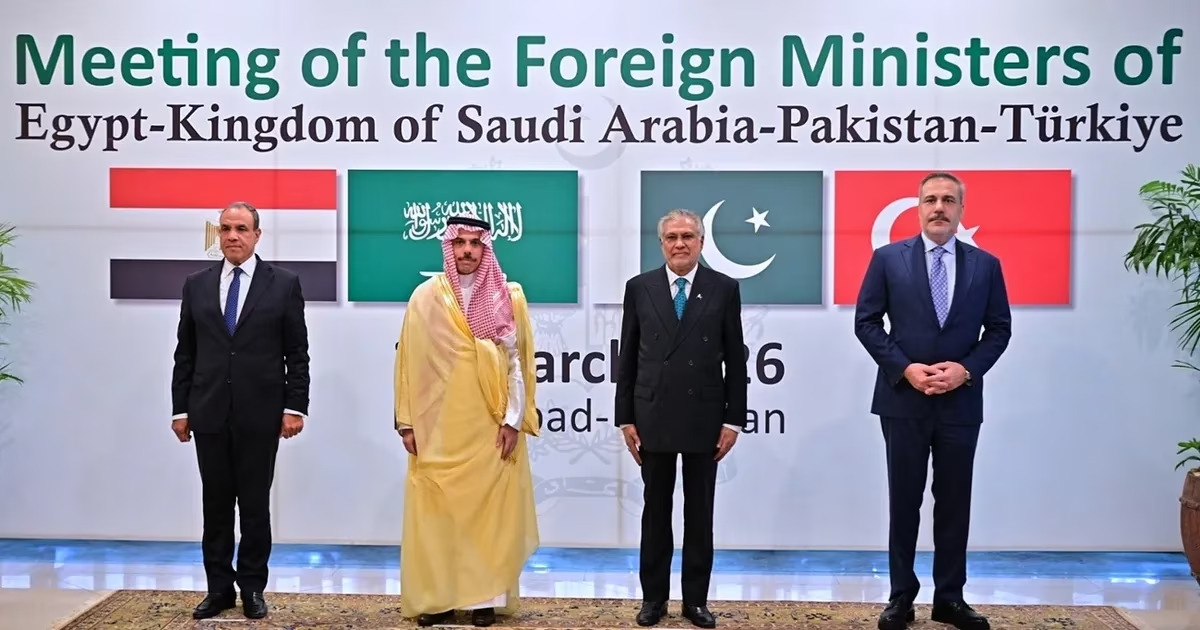
Supporting independent diplomatic tracks, such as the quadrilateral initiative involving Saudi Arabia, Egypt, Turkey, and Pakistan, is a necessary step to seize the initiative. A regional front must be formed to press for an immediate ceasefire and prevent Washington from monopolizing the decision of war and peace in the region.
Economic immunization requires activating emergency plans that go beyond monitoring energy prices to securing alternative trade routes and enhancing inter-Arab integration. Reducing reliance on volatile global markets grants Arab political decision-making greater independence in facing external pressures.
Maintaining open channels of communication with all parties, including Tehran and Washington, is a vital tool to avoid catastrophic surprises. This flexible diplomacy gives Arab capitals the ability to mediate and understand the true intentions of the warring powers in critical moments.
In conclusion, Arab countries must formulate a clear vision for the 'day after' the war to ensure that new external spheres of influence are not imposed. Sustainable stability will not be achieved through military adventures, but through a regional will that refuses to be fuel for the wars of others.
The region faces an exposed American-Israeli engineering attempt to redraw maps of influence to the beat of the drums of comprehensive confrontation.

Share your opinion
Scenarios of Comprehensive Confrontation: How Can Arab Capitals Avoid the 'Great Holocaust' Trap?