







Washington – Said Arikat – 3/30/2026
News Analysis
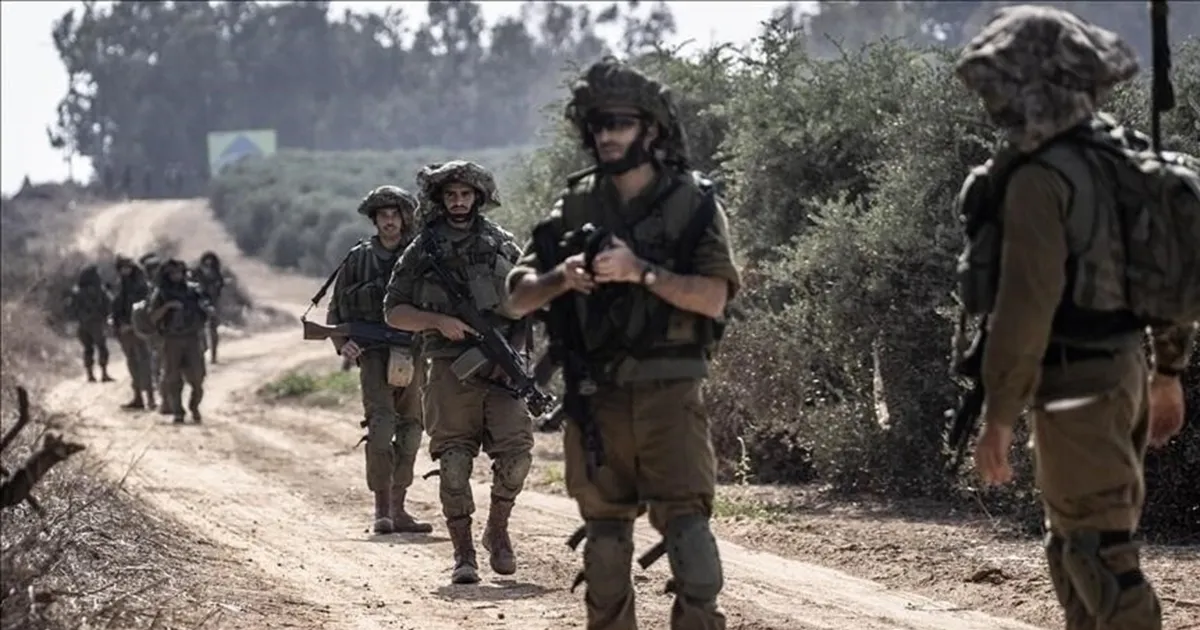
The situation in southern Lebanon is witnessing an accelerating military escalation, whose nature transcends limited operations towards a pattern closer to reshaping the geography of the conflict. With the destruction of vital bridges and residential homes, and the displacement of more than a million people, indicators point to an attempt to impose a new security reality by establishing an Israeli "security zone" extending over vast areas, for an indefinite period. This trend raises increasing fears of a repeat of the Gaza Strip scenario, where military operations turned into a long-term policy to redraw field control.
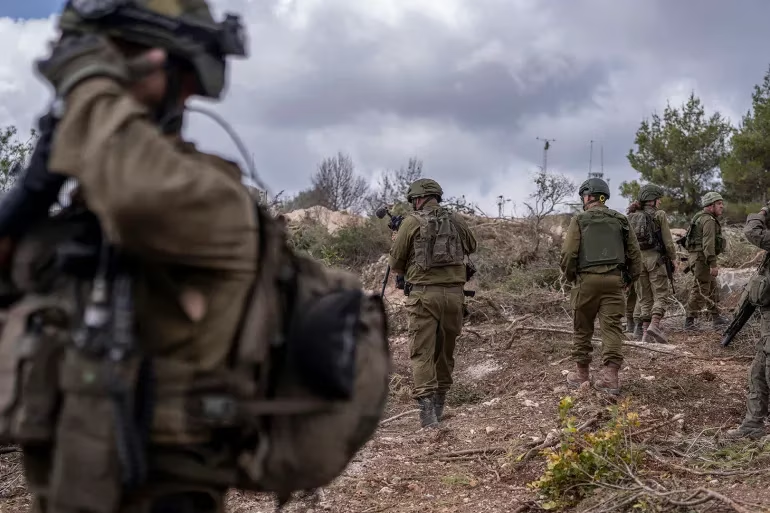
Satellite images (as published by the American network NBC News) clearly show the Israeli military presence inside southern Lebanon, including the reinforcement of existing bases and the deployment of tanks at strategic points. Moreover, targeting bridges, especially on the Litani River, does not appear to be merely a military tactic, but a step aimed at isolating the south from the rest of the country, which deepens the humanitarian crisis and complicates relief efforts. In this context, field data intersects with official Israeli statements confirming the intention of military presence, which puts Lebanon in front of the possibility of facing a new occupation reality.
The humanitarian deterioration also accompanies this escalation at an alarming pace. Testimonies from relief workers indicate repeated displacement of residents amid unexpected strikes, which reinforces the feeling of complete insecurity. UN officials have expressed their fear that southern Lebanon will turn into another version of Gaza, especially with the increasing number of casualties and the widening scope of destruction. These warnings reflect international concern about the situation sliding into an open humanitarian catastrophe.
In contrast, Israel justifies its operations by targeting "Hezbollah," within the framework of protecting its national security, especially after the escalation of regional tension related to the American-Israeli war on Iran. However, this justification faces sharp criticism from human rights organizations, which believe that the pattern of operations goes beyond military objectives to include widespread destruction of civilian infrastructure, which may amount to violations of international humanitarian law. Moreover, talk of the use of white phosphorus increases the intensity of the debate about the legitimacy of these operations.
Historically, what is happening today cannot be separated from the context of the long conflict in southern Lebanon, where Israel previously occupied the region until 2000, and the borders have witnessed repeated confrontations since then. However, what distinguishes the current phase is its overlap with broader regional conflicts, which raises the possibilities of it turning into an open multi-party conflict, especially with the continued tension between Israel and Iran.
In light of this scene, Lebanon appears to be at a critical crossroads; between internal pressures to disarm "Hezbollah" and external challenges represented by Israeli military operations, the state's ability to impose its full sovereignty is eroding. With the absence of a clear political horizon, fears of the conflict's continuation and expansion remain, which portends long-term repercussions for regional stability.
The Israeli strategy in southern Lebanon goes beyond mere military response to an attempt to impose a new deterrence equation based on "land for security." The creation of a permanent security zone reflects a shift from a policy of containment to a policy of direct control, which may reproduce the previous occupation experience but with different tools. This approach carries the risks of permanent escalation, as it may push local parties, especially Hezbollah, to adopt more aggressive strategies, creating a vicious cycle of violence that is difficult to break.
On the other hand, the humanitarian dimension stands out as one of the most complex aspects of the crisis. The systematic destruction of infrastructure, along with mass displacement, not only leads to immediate suffering but also threatens to cause long-term demographic changes. With the absence of clear reconstruction plans, affected areas may turn into demographic voids, which opens the door for reshaping the geography of the south to serve long-term strategic goals.
At the international level, reactions so far appear to have limited impact, despite explicit warnings from the United Nations. This reflects a state of impotence or hesitation in dealing with a conflict in which the local, regional, and international are intertwined. If this approach continues, the international community may find itself facing a new reality imposed by force, where "security zones" become a fait accompli, with all the serious repercussions that entails for the rules of international law and the future of stability in the Middle East.

Share your opinion
Southern Lebanon between the "Gaza Model" and the Field Reality: A War Expanding and Fears of a Long Occupation