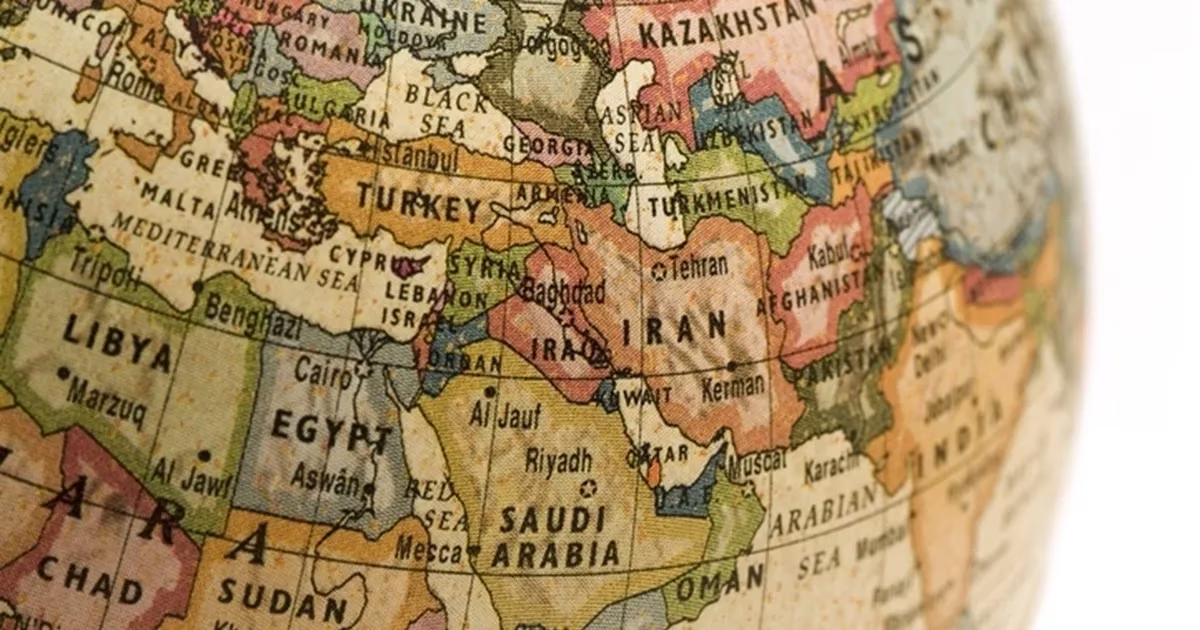







The fundamental dilemma in the Middle East lies in the absence of a governing authority for state actions, where political behavior is not only linked to material power balances but also to the existence of a strategic project that defines direction. The pivotal question that arises today is not what states do, but who holds the authority to direct; is it the state that formulates its project, or is it the project that reshapes the state?
In the Iranian model, the state emerges as an executive tool for an ideological project that preceded its institutional existence and precisely defined its functions. The Iranian Revolution established a governing vision that makes the state a means to achieve cross-border religious and political goals, which was codified in the constitution, granting the state a role beyond its traditional national framework.
This fusion between state and project is evident in the structure of Iranian authority, where there is a supreme decision-making center that dominates all executive and legislative institutions. This structure allows for the existence of parallel bodies such as the Revolutionary Guard, which operates with independent military and economic capabilities aimed at protecting the revolution and its continuity beyond the state's geographical borders.
Tehran's willingness to bear exorbitant economic costs without changing its strategic paths confirms that decisions are not based on narrow state interests. Rather, the Iranian actor moves within a vision aimed at reshaping the entire regional order, making the state move in the orbit of the project, not the other way around.
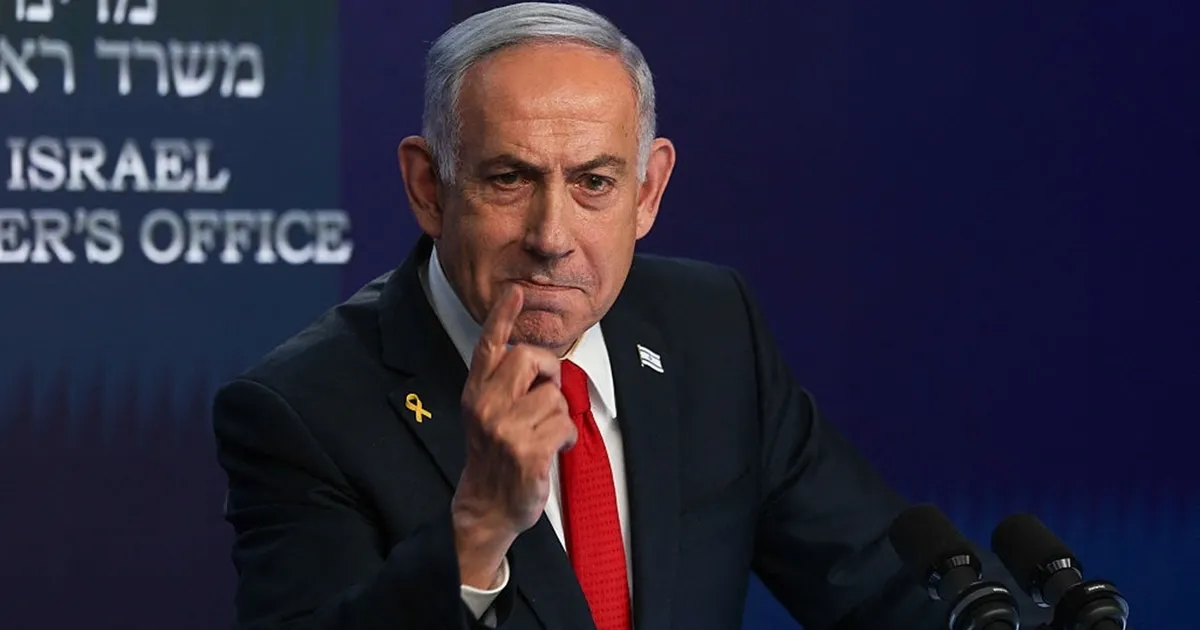
In contrast, the Israeli model presents a different case. Although the Zionist project preceded the state, it later transformed into an element within a strong institutional system. The Hebrew state succeeded in absorbing the project and redefining it according to the requirements of reality and available capabilities, making the idea subject to institutional control.
Decision-making in Israel relies on precise assessments of cost and benefit, where security and military institutions intertwine with economic and technological sectors. This interconnectedness gives the state high flexibility in adjusting its external behavior to ensure its sustainability, without being carried away by pure ideological motives that might threaten its stability.
In this context, the regional conflict for Israel remains subject to management and is not open to suicidal possibilities. The project has transformed from an absolute supreme authority to a functional tool within the state, enhancing its ability to maneuver within international and regional power balances without compromising its institutional entity.
As for the Arab case, a third pattern emerges, characterized by the absence of an authentic project and operating in a wide conceptual vacuum. Here, the state neither struggles with a project nor leads one; instead, it transforms into a bureaucratic and security apparatus that focuses its maximum energy on a single goal: preserving the survival and continuity of the existing regime.
Political readings indicate that the Arab state, in many of its models, suffers from an inflation of internal control tools versus a sharp weakness in producing strategic decisions. This structural imbalance has made it vulnerable to external penetration and linked its movements to international balances that impose limits on its movement and margins of maneuver.
In this vacuum, decisions are not produced from the womb of supreme national interests but are managed according to pressing circumstances and priorities imposed from outside. The state here does not define its position in the region; rather, its role is defined by other active powers, turning it into an arena for the struggle of foreign projects.
The absence of a governing value framework for the Arab state does not leave a neutral vacuum; instead, it opens the door for its resources to be re-employed within regional arrangements in which it does not participate in their making. In this case, the state loses its ability to initiate and merely reacts, making it a secondary actor in the complex equations of the region.
The analysis concludes that the strength of a state is not measured solely by its military arsenal but by its ability to produce a value framework that guides its movement and protects its sovereignty. A state led by a clear project enters conflicts knowing its goals, while a state that controls its project survives the continuous depletion of its resources.
As for states that lack a governing framework, they find themselves embroiled in conflicts whose timing or location they did not choose, and they pay exorbitant prices without achieving strategic gains. The loss of sovereignty in this perspective is not merely the result of military defeat but a consequence of the inability to define an independent national role.
In conclusion, the fundamental question in the region remains pending regarding the ability to possess political will before paths are imposed. True sovereignty lies in the ability to determine directions and make sovereign decisions, before the state turns into merely a manager of crises imposed upon it by others.
Sovereignty is not seized all at once; rather, it is emptied when the state stops producing its own direction and merely manages what is imposed upon it.


Share your opinion
The Dialectic of State and Project: How Are Power Balances Managed in the Middle East?